EP3925841A1 - Control system and control method for hybrid vehicle - Google Patents
Control system and control method for hybrid vehicle Download PDFInfo
- Publication number
- EP3925841A1 EP3925841A1 EP21172308.5A EP21172308A EP3925841A1 EP 3925841 A1 EP3925841 A1 EP 3925841A1 EP 21172308 A EP21172308 A EP 21172308A EP 3925841 A1 EP3925841 A1 EP 3925841A1
- Authority
- EP
- European Patent Office
- Prior art keywords
- learning
- hybrid vehicle
- vehicle
- unit
- server
- Prior art date
- Legal status (The legal status is an assumption and is not a legal conclusion. Google has not performed a legal analysis and makes no representation as to the accuracy of the status listed.)
- Withdrawn
Links
Images






Classifications
-
- B—PERFORMING OPERATIONS; TRANSPORTING
- B60—VEHICLES IN GENERAL
- B60W—CONJOINT CONTROL OF VEHICLE SUB-UNITS OF DIFFERENT TYPE OR DIFFERENT FUNCTION; CONTROL SYSTEMS SPECIALLY ADAPTED FOR HYBRID VEHICLES; ROAD VEHICLE DRIVE CONTROL SYSTEMS FOR PURPOSES NOT RELATED TO THE CONTROL OF A PARTICULAR SUB-UNIT
- B60W20/00—Control systems specially adapted for hybrid vehicles
- B60W20/10—Controlling the power contribution of each of the prime movers to meet required power demand
- B60W20/15—Control strategies specially adapted for achieving a particular effect
- B60W20/16—Control strategies specially adapted for achieving a particular effect for reducing engine exhaust emissions
-
- B—PERFORMING OPERATIONS; TRANSPORTING
- B60—VEHICLES IN GENERAL
- B60W—CONJOINT CONTROL OF VEHICLE SUB-UNITS OF DIFFERENT TYPE OR DIFFERENT FUNCTION; CONTROL SYSTEMS SPECIALLY ADAPTED FOR HYBRID VEHICLES; ROAD VEHICLE DRIVE CONTROL SYSTEMS FOR PURPOSES NOT RELATED TO THE CONTROL OF A PARTICULAR SUB-UNIT
- B60W20/00—Control systems specially adapted for hybrid vehicles
- B60W20/10—Controlling the power contribution of each of the prime movers to meet required power demand
- B60W20/15—Control strategies specially adapted for achieving a particular effect
-
- B—PERFORMING OPERATIONS; TRANSPORTING
- B60—VEHICLES IN GENERAL
- B60W—CONJOINT CONTROL OF VEHICLE SUB-UNITS OF DIFFERENT TYPE OR DIFFERENT FUNCTION; CONTROL SYSTEMS SPECIALLY ADAPTED FOR HYBRID VEHICLES; ROAD VEHICLE DRIVE CONTROL SYSTEMS FOR PURPOSES NOT RELATED TO THE CONTROL OF A PARTICULAR SUB-UNIT
- B60W10/00—Conjoint control of vehicle sub-units of different type or different function
- B60W10/04—Conjoint control of vehicle sub-units of different type or different function including control of propulsion units
- B60W10/06—Conjoint control of vehicle sub-units of different type or different function including control of propulsion units including control of combustion engines
-
- B—PERFORMING OPERATIONS; TRANSPORTING
- B60—VEHICLES IN GENERAL
- B60W—CONJOINT CONTROL OF VEHICLE SUB-UNITS OF DIFFERENT TYPE OR DIFFERENT FUNCTION; CONTROL SYSTEMS SPECIALLY ADAPTED FOR HYBRID VEHICLES; ROAD VEHICLE DRIVE CONTROL SYSTEMS FOR PURPOSES NOT RELATED TO THE CONTROL OF A PARTICULAR SUB-UNIT
- B60W10/00—Conjoint control of vehicle sub-units of different type or different function
- B60W10/04—Conjoint control of vehicle sub-units of different type or different function including control of propulsion units
- B60W10/08—Conjoint control of vehicle sub-units of different type or different function including control of propulsion units including control of electric propulsion units, e.g. motors or generators
-
- B—PERFORMING OPERATIONS; TRANSPORTING
- B60—VEHICLES IN GENERAL
- B60W—CONJOINT CONTROL OF VEHICLE SUB-UNITS OF DIFFERENT TYPE OR DIFFERENT FUNCTION; CONTROL SYSTEMS SPECIALLY ADAPTED FOR HYBRID VEHICLES; ROAD VEHICLE DRIVE CONTROL SYSTEMS FOR PURPOSES NOT RELATED TO THE CONTROL OF A PARTICULAR SUB-UNIT
- B60W10/00—Conjoint control of vehicle sub-units of different type or different function
- B60W10/24—Conjoint control of vehicle sub-units of different type or different function including control of energy storage means
- B60W10/26—Conjoint control of vehicle sub-units of different type or different function including control of energy storage means for electrical energy, e.g. batteries or capacitors
-
- B—PERFORMING OPERATIONS; TRANSPORTING
- B60—VEHICLES IN GENERAL
- B60W—CONJOINT CONTROL OF VEHICLE SUB-UNITS OF DIFFERENT TYPE OR DIFFERENT FUNCTION; CONTROL SYSTEMS SPECIALLY ADAPTED FOR HYBRID VEHICLES; ROAD VEHICLE DRIVE CONTROL SYSTEMS FOR PURPOSES NOT RELATED TO THE CONTROL OF A PARTICULAR SUB-UNIT
- B60W20/00—Control systems specially adapted for hybrid vehicles
-
- B—PERFORMING OPERATIONS; TRANSPORTING
- B60—VEHICLES IN GENERAL
- B60W—CONJOINT CONTROL OF VEHICLE SUB-UNITS OF DIFFERENT TYPE OR DIFFERENT FUNCTION; CONTROL SYSTEMS SPECIALLY ADAPTED FOR HYBRID VEHICLES; ROAD VEHICLE DRIVE CONTROL SYSTEMS FOR PURPOSES NOT RELATED TO THE CONTROL OF A PARTICULAR SUB-UNIT
- B60W20/00—Control systems specially adapted for hybrid vehicles
- B60W20/10—Controlling the power contribution of each of the prime movers to meet required power demand
- B60W20/11—Controlling the power contribution of each of the prime movers to meet required power demand using model predictive control [MPC] strategies, i.e. control methods based on models predicting performance
-
- B—PERFORMING OPERATIONS; TRANSPORTING
- B60—VEHICLES IN GENERAL
- B60W—CONJOINT CONTROL OF VEHICLE SUB-UNITS OF DIFFERENT TYPE OR DIFFERENT FUNCTION; CONTROL SYSTEMS SPECIALLY ADAPTED FOR HYBRID VEHICLES; ROAD VEHICLE DRIVE CONTROL SYSTEMS FOR PURPOSES NOT RELATED TO THE CONTROL OF A PARTICULAR SUB-UNIT
- B60W20/00—Control systems specially adapted for hybrid vehicles
- B60W20/20—Control strategies involving selection of hybrid configuration, e.g. selection between series or parallel configuration
-
- B—PERFORMING OPERATIONS; TRANSPORTING
- B60—VEHICLES IN GENERAL
- B60W—CONJOINT CONTROL OF VEHICLE SUB-UNITS OF DIFFERENT TYPE OR DIFFERENT FUNCTION; CONTROL SYSTEMS SPECIALLY ADAPTED FOR HYBRID VEHICLES; ROAD VEHICLE DRIVE CONTROL SYSTEMS FOR PURPOSES NOT RELATED TO THE CONTROL OF A PARTICULAR SUB-UNIT
- B60W20/00—Control systems specially adapted for hybrid vehicles
- B60W20/40—Controlling the engagement or disengagement of prime movers, e.g. for transition between prime movers
-
- B—PERFORMING OPERATIONS; TRANSPORTING
- B60—VEHICLES IN GENERAL
- B60W—CONJOINT CONTROL OF VEHICLE SUB-UNITS OF DIFFERENT TYPE OR DIFFERENT FUNCTION; CONTROL SYSTEMS SPECIALLY ADAPTED FOR HYBRID VEHICLES; ROAD VEHICLE DRIVE CONTROL SYSTEMS FOR PURPOSES NOT RELATED TO THE CONTROL OF A PARTICULAR SUB-UNIT
- B60W50/00—Details of control systems for road vehicle drive control not related to the control of a particular sub-unit, e.g. process diagnostic or vehicle driver interfaces
- B60W50/06—Improving the dynamic response of the control system, e.g. improving the speed of regulation or avoiding hunting or overshoot
-
- G—PHYSICS
- G06—COMPUTING OR CALCULATING; COUNTING
- G06N—COMPUTING ARRANGEMENTS BASED ON SPECIFIC COMPUTATIONAL MODELS
- G06N20/00—Machine learning
-
- B—PERFORMING OPERATIONS; TRANSPORTING
- B60—VEHICLES IN GENERAL
- B60W—CONJOINT CONTROL OF VEHICLE SUB-UNITS OF DIFFERENT TYPE OR DIFFERENT FUNCTION; CONTROL SYSTEMS SPECIALLY ADAPTED FOR HYBRID VEHICLES; ROAD VEHICLE DRIVE CONTROL SYSTEMS FOR PURPOSES NOT RELATED TO THE CONTROL OF A PARTICULAR SUB-UNIT
- B60W50/00—Details of control systems for road vehicle drive control not related to the control of a particular sub-unit, e.g. process diagnostic or vehicle driver interfaces
- B60W2050/0001—Details of the control system
- B60W2050/0002—Automatic control, details of type of controller or control system architecture
- B60W2050/0014—Adaptive controllers
-
- B—PERFORMING OPERATIONS; TRANSPORTING
- B60—VEHICLES IN GENERAL
- B60W—CONJOINT CONTROL OF VEHICLE SUB-UNITS OF DIFFERENT TYPE OR DIFFERENT FUNCTION; CONTROL SYSTEMS SPECIALLY ADAPTED FOR HYBRID VEHICLES; ROAD VEHICLE DRIVE CONTROL SYSTEMS FOR PURPOSES NOT RELATED TO THE CONTROL OF A PARTICULAR SUB-UNIT
- B60W50/00—Details of control systems for road vehicle drive control not related to the control of a particular sub-unit, e.g. process diagnostic or vehicle driver interfaces
- B60W2050/0001—Details of the control system
- B60W2050/0019—Control system elements or transfer functions
- B60W2050/0028—Mathematical models, e.g. for simulation
- B60W2050/0037—Mathematical models of vehicle sub-units
- B60W2050/0039—Mathematical models of vehicle sub-units of the propulsion unit
-
- B—PERFORMING OPERATIONS; TRANSPORTING
- B60—VEHICLES IN GENERAL
- B60W—CONJOINT CONTROL OF VEHICLE SUB-UNITS OF DIFFERENT TYPE OR DIFFERENT FUNCTION; CONTROL SYSTEMS SPECIALLY ADAPTED FOR HYBRID VEHICLES; ROAD VEHICLE DRIVE CONTROL SYSTEMS FOR PURPOSES NOT RELATED TO THE CONTROL OF A PARTICULAR SUB-UNIT
- B60W50/00—Details of control systems for road vehicle drive control not related to the control of a particular sub-unit, e.g. process diagnostic or vehicle driver interfaces
- B60W50/06—Improving the dynamic response of the control system, e.g. improving the speed of regulation or avoiding hunting or overshoot
- B60W2050/065—Improving the dynamic response of the control system, e.g. improving the speed of regulation or avoiding hunting or overshoot by reducing the computational load on the digital processor of the control computer
-
- B—PERFORMING OPERATIONS; TRANSPORTING
- B60—VEHICLES IN GENERAL
- B60W—CONJOINT CONTROL OF VEHICLE SUB-UNITS OF DIFFERENT TYPE OR DIFFERENT FUNCTION; CONTROL SYSTEMS SPECIALLY ADAPTED FOR HYBRID VEHICLES; ROAD VEHICLE DRIVE CONTROL SYSTEMS FOR PURPOSES NOT RELATED TO THE CONTROL OF A PARTICULAR SUB-UNIT
- B60W2510/00—Input parameters relating to a particular sub-units
- B60W2510/06—Combustion engines, Gas turbines
- B60W2510/0604—Throttle position
-
- B—PERFORMING OPERATIONS; TRANSPORTING
- B60—VEHICLES IN GENERAL
- B60W—CONJOINT CONTROL OF VEHICLE SUB-UNITS OF DIFFERENT TYPE OR DIFFERENT FUNCTION; CONTROL SYSTEMS SPECIALLY ADAPTED FOR HYBRID VEHICLES; ROAD VEHICLE DRIVE CONTROL SYSTEMS FOR PURPOSES NOT RELATED TO THE CONTROL OF A PARTICULAR SUB-UNIT
- B60W2510/00—Input parameters relating to a particular sub-units
- B60W2510/06—Combustion engines, Gas turbines
- B60W2510/0638—Engine speed
-
- B—PERFORMING OPERATIONS; TRANSPORTING
- B60—VEHICLES IN GENERAL
- B60W—CONJOINT CONTROL OF VEHICLE SUB-UNITS OF DIFFERENT TYPE OR DIFFERENT FUNCTION; CONTROL SYSTEMS SPECIALLY ADAPTED FOR HYBRID VEHICLES; ROAD VEHICLE DRIVE CONTROL SYSTEMS FOR PURPOSES NOT RELATED TO THE CONTROL OF A PARTICULAR SUB-UNIT
- B60W2510/00—Input parameters relating to a particular sub-units
- B60W2510/24—Energy storage means
- B60W2510/242—Energy storage means for electrical energy
- B60W2510/244—Charge state
-
- B—PERFORMING OPERATIONS; TRANSPORTING
- B60—VEHICLES IN GENERAL
- B60W—CONJOINT CONTROL OF VEHICLE SUB-UNITS OF DIFFERENT TYPE OR DIFFERENT FUNCTION; CONTROL SYSTEMS SPECIALLY ADAPTED FOR HYBRID VEHICLES; ROAD VEHICLE DRIVE CONTROL SYSTEMS FOR PURPOSES NOT RELATED TO THE CONTROL OF A PARTICULAR SUB-UNIT
- B60W2540/00—Input parameters relating to occupants
- B60W2540/10—Accelerator pedal position
-
- B—PERFORMING OPERATIONS; TRANSPORTING
- B60—VEHICLES IN GENERAL
- B60W—CONJOINT CONTROL OF VEHICLE SUB-UNITS OF DIFFERENT TYPE OR DIFFERENT FUNCTION; CONTROL SYSTEMS SPECIALLY ADAPTED FOR HYBRID VEHICLES; ROAD VEHICLE DRIVE CONTROL SYSTEMS FOR PURPOSES NOT RELATED TO THE CONTROL OF A PARTICULAR SUB-UNIT
- B60W2555/00—Input parameters relating to exterior conditions, not covered by groups B60W2552/00, B60W2554/00
- B60W2555/60—Traffic rules, e.g. speed limits or right of way
-
- B—PERFORMING OPERATIONS; TRANSPORTING
- B60—VEHICLES IN GENERAL
- B60W—CONJOINT CONTROL OF VEHICLE SUB-UNITS OF DIFFERENT TYPE OR DIFFERENT FUNCTION; CONTROL SYSTEMS SPECIALLY ADAPTED FOR HYBRID VEHICLES; ROAD VEHICLE DRIVE CONTROL SYSTEMS FOR PURPOSES NOT RELATED TO THE CONTROL OF A PARTICULAR SUB-UNIT
- B60W2556/00—Input parameters relating to data
- B60W2556/45—External transmission of data to or from the vehicle
-
- B—PERFORMING OPERATIONS; TRANSPORTING
- B60—VEHICLES IN GENERAL
- B60W—CONJOINT CONTROL OF VEHICLE SUB-UNITS OF DIFFERENT TYPE OR DIFFERENT FUNCTION; CONTROL SYSTEMS SPECIALLY ADAPTED FOR HYBRID VEHICLES; ROAD VEHICLE DRIVE CONTROL SYSTEMS FOR PURPOSES NOT RELATED TO THE CONTROL OF A PARTICULAR SUB-UNIT
- B60W2556/00—Input parameters relating to data
- B60W2556/45—External transmission of data to or from the vehicle
- B60W2556/50—External transmission of data to or from the vehicle of positioning data, e.g. GPS [Global Positioning System] data
-
- Y—GENERAL TAGGING OF NEW TECHNOLOGICAL DEVELOPMENTS; GENERAL TAGGING OF CROSS-SECTIONAL TECHNOLOGIES SPANNING OVER SEVERAL SECTIONS OF THE IPC; TECHNICAL SUBJECTS COVERED BY FORMER USPC CROSS-REFERENCE ART COLLECTIONS [XRACs] AND DIGESTS
- Y02—TECHNOLOGIES OR APPLICATIONS FOR MITIGATION OR ADAPTATION AGAINST CLIMATE CHANGE
- Y02T—CLIMATE CHANGE MITIGATION TECHNOLOGIES RELATED TO TRANSPORTATION
- Y02T10/00—Road transport of goods or passengers
- Y02T10/60—Other road transportation technologies with climate change mitigation effect
- Y02T10/62—Hybrid vehicles
-
- Y—GENERAL TAGGING OF NEW TECHNOLOGICAL DEVELOPMENTS; GENERAL TAGGING OF CROSS-SECTIONAL TECHNOLOGIES SPANNING OVER SEVERAL SECTIONS OF THE IPC; TECHNICAL SUBJECTS COVERED BY FORMER USPC CROSS-REFERENCE ART COLLECTIONS [XRACs] AND DIGESTS
- Y02—TECHNOLOGIES OR APPLICATIONS FOR MITIGATION OR ADAPTATION AGAINST CLIMATE CHANGE
- Y02T—CLIMATE CHANGE MITIGATION TECHNOLOGIES RELATED TO TRANSPORTATION
- Y02T10/00—Road transport of goods or passengers
- Y02T10/60—Other road transportation technologies with climate change mitigation effect
- Y02T10/70—Energy storage systems for electromobility, e.g. batteries
Definitions
- the present disclosure relates to control systems and control methods for hybrid vehicles.
- Hybrid vehicles are known in the art which include an internal combustion engine and an electric motor and whose drive mode is switchable between an electric vehicle (EV) mode and a hybrid vehicle (HV) mode.
- EV electric vehicle
- HV hybrid vehicle
- the internal combustion engine In the EV mode, the internal combustion engine is stopped and the electric motor is operated.
- the HV mode In the HV mode, the internal combustion engine and the electric motor are operated.
- a hybrid vehicle is known in which electric power is generated by regenerative control during deceleration operation to keep the state of charge (SOC) of a battery as high as possible before the hybrid vehicle enters a specific area (see, e.g., Japanese Unexamined Patent Application Publication No. 2012-111369 ( JP 2012-111369 A )).
- the SOC of the battery may become excessively low in the specific area, and the EV mode may not be able to be continued.
- the internal combustion engine has to be operated in order to keep the vehicle running in the specific area.
- the present disclosure provides a control system and a control method for a hybrid vehicle.
- a first aspect of the present disclosure relates to a control system for a hybrid vehicle.
- the control system for the hybrid vehicle includes: an on-board learning unit mounted on the hybrid vehicle and configured to perform a learning action; a position determination unit configured to determine whether the hybrid vehicle is located in a low emission area where operation of an internal combustion engine is supposed to be restricted; and a learning control unit configured to at least partially stop the learning action of the on-board learning unit when determination is made that the hybrid vehicle is located in the low emission area.
- the hybrid vehicle includes the internal combustion engine and an electric motor.
- a drive mode of the hybrid vehicle is switchable between an electric vehicle mode and a hybrid vehicle mode.
- the electric vehicle mode is a mode in which the internal combustion engine is stopped and the electric motor is operated
- the hybrid vehicle mode is a mode in which the internal combustion engine and the electric motor are operated.
- the learning control unit may be configured to entirely stop the learning action of the on-board learning unit when determination is made that the hybrid vehicle is located in the low emission area.
- the learning control unit may be configured to at least partially stop the learning action of the on-board learning unit when determination is made that an SOC of a battery of the hybrid vehicle is lower than a predetermined threshold, and may be configured not to stop the learning action of the on-board learning unit when determination is made that the hybrid vehicle is located in the low emission area and determination is made that the SOC of the battery is equal to or higher than the threshold.
- the learning control unit may be configured to increase a proportion of the learning action of the on-board learning unit that is stopped as the SOC of the battery decreases when determination is made that the hybrid vehicle is located in the low emission area and determination is made that the SOC of the battery is lower than the threshold.
- control system may further include a server learning unit mounted on a server located outside the hybrid vehicle, and configured to perform a learning action.
- the server learning unit may be configured to perform the learning action to be performed by the on-board learning unit using data sent from the hybrid vehicle to the server and send a learning result of the server learning unit to the hybrid vehicle, when the learning action of the on-board learning unit is stopped.
- the learning control unit may be configured to send the data from the hybrid vehicle to the server when determination is made that that the hybrid vehicle is located outside the low emission area.
- the learning control unit may be configured not to send the data from the hybrid vehicle to the server when determination is made that the hybrid vehicle is located in a non-adjacent area that is not adjacent to the low emission area, and may be configured to send the data from the hybrid vehicle to the server when determination is made that the hybrid vehicle is located outside the low emission area and determination is made that the hybrid vehicle is located in an adjacent area that is adjacent to the low emission area.
- the learning control unit may be configured to repeatedly send the data from the hybrid vehicle to the server when determination is made that the hybrid vehicle is located outside the low emission area.
- a second aspect of the present disclosure relates to a control method for a hybrid vehicle.
- the control method for the hybrid vehicle includes: performing a learning action by an on-board learning unit mounted on the hybrid vehicle; determining whether the hybrid vehicle is located in a low emission area where operation of an internal combustion engine is supposed to be restricted; and at least partially stopping the learning action of the on-board learning unit when determination is made that the hybrid vehicle is located in the low emission area.
- the hybrid vehicle includes the internal combustion engine and an electric motor.
- a drive mode of the hybrid vehicle is switchable between an electric vehicle mode and a hybrid vehicle mode.
- the electric vehicle mode is a mode in which the internal combustion engine is stopped and the electric motor is operated, and the hybrid vehicle mode is a mode in which the internal combustion engine and the electric motor are operated.
- the EV mode of the hybrid vehicle is reliably continued in the low emission area where the operation of the internal combustion engine is supposed to be restricted.
- a control system 1 for a hybrid vehicle of the first embodiment according to the present disclosure includes a hybrid vehicle 10 and a server 30 outside the hybrid vehicle 10.
- the hybrid vehicle 10 of the first embodiment includes an internal combustion engine 11, a motor generator (M/G) 12, a battery 13, at least one sensor 14, a Global Positioning System (GPS) receiver 15, a storage device 16, a communication device 17, and an electronic control unit 20.
- the internal combustion engine 11 is, e.g., a spark ignition engine or a compression ignition engine.
- the internal combustion engine 11 e.g., fuel injection valves, spark plugs, a throttle valve, etc.
- the motor generator 12 operates as an electric motor or a generator.
- the motor generator 12 is controlled based on signals from the electronic control unit 20.
- the drive mode of the hybrid vehicle 10 can be switched between an EV mode and an HV mode.
- the EV mode of the first embodiment according to the present disclosure the internal combustion engine 11 is stopped and the motor generator 12 is operated as an electric motor. In this case, the output of the motor generator 12 is transmitted to axles.
- the HV mode of the first embodiment according to the present disclosure the internal combustion engine 11 is operated and the motor generator 12 is operated as an electric motor. In this case, in one example, the output of the internal combustion engine 11 and the output of the motor generator 12 are transmitted to the axles. In another example, the output of the motor generator 12 is transmitted to the axles, and the output of the internal combustion engine 11 is transmitted to a generator (not shown) to operate the generator.
- Electric power generated by the generator is sent to the motor generator 12 or the battery 13.
- a part of the output of the internal combustion engine 11 and the output of the motor generator 12 are transmitted to the axles, and the rest of the output of the internal combustion engine 11 is transmitted to the generator.
- Electric power generated by the generator is sent to the motor generator 12 or the battery 13.
- regenerative control using the motor generator 12 as a generator is performed during, e.g., deceleration operation. Electric power generated by the regenerative control is sent to the battery 13.
- the battery 13 of the first embodiment according to the present disclosure is charged by electric power from the motor generator 12 operating as a generator or from the generator (not shown). In another embodiment (not shown), the battery 13 can also be charged by an external power supply. In the first embodiment according to the present disclosure, electric power is supplied from the battery 13 to the motor generator 12 operating as an electric motor, the electronic control unit 20, and other in-vehicle devices.
- the sensor 14 of the first embodiment according to the present disclosure detects various raw data.
- Examples of the sensor 14 of the first embodiment according to the present disclosure include a load sensor for detecting a required vehicle load that is represented by the amount of depression of an accelerator pedal, a throttle valve opening degree sensor for detecting the throttle valve opening degree of the internal combustion engine 11, a NOx sensor for detecting the NOx concentration in exhaust gas of the internal combustion engine 11, a rotational speed sensor for detecting the rotational speed of the internal combustion engine 11, a voltmeter for detecting the voltage of the battery 13, and an ammeter for detecting the current of the battery 13.
- Output signals of these sensors 14 are input to the electronic control unit 20.
- the GPS receiver 15 of the first embodiment receives a signal from a GPS satellite and detects information indicating the absolute position (e.g., latitude and longitude) of the vehicle 10 from the received signal.
- the position information of the vehicle 10 is input to the electronic control unit 20.
- the communication device 17 of the first embodiment according to the present disclosure can be connected to a communication network N such as the Internet.
- the electronic control unit 20 of the vehicle 10 of the first embodiment according to the present disclosure includes one or more processors 21, one or more memories 22, and an input and output (I/O) port 23.
- the one or more processors 21, the one or more memories 22, and the I/O port 23 are connected by a bidirectional bus so that they can communicate with each other.
- the memory 22 include, e.g., a read only memory (ROM), a random access memory (RAM), etc.
- the memory 22 has various programs stored therein, and various functions are implemented by executing these programs by the processor 21.
- the internal combustion engine 11, the motor generator 12, the sensor 14, the GPS receiver 15, the storage device 16, and the communication device 17 are connected to the I/O port 23 of the first embodiment according to the present disclosure so that they can communicate with the I/O port 23.
- the state of charge (SOC) of the battery 13 is calculated based on, e.g., the voltage and current of the battery 13.
- the server 30 of the first embodiment according to the present disclosure includes a storage device 31, a communication device 32, and an electronic control unit 40.
- the storage device 31 of the first embodiment according to the present disclosure has stored therein position information (e.g., latitude and longitude) of a low emission area where the operation of the internal combustion engine 11 is supposed to be restricted.
- FIG. 2 schematically illustrates an example of the low emission area LEZ of the first embodiment according to the present disclosure.
- the low emission area LEZ of the first embodiment according to the present disclosure is surrounded by a closed boundary or geofence GF.
- the low emission area LEZ is set in an urban area.
- the communication device 32 of the first embodiment according to the present disclosure can be connected to the communication network N.
- the vehicle 10 and the server 30 can therefore be connected to each other via the communication network N.
- the electronic control unit 40 of the server 30 of the first embodiment according to the present disclosure includes one or more processors 41, one or more memories 42, and an I/O port 43, and the one or more processors 41, the one or more memories 42, and the I/O port 43 are connected by a bidirectional bus so that they can communicate with each other.
- the storage device 31 and the communication device 32 are connected to the I/O port 43 of the first embodiment according to the present disclosure so that they can communicate with the I/O port 43.
- FIG. 3 is a functional block diagram of the vehicle 10 of the first embodiment according to the present disclosure.
- the electronic control unit 20 of the vehicle 10 includes a position information acquisition unit 20a, an on-board learning unit 20b, a learning result utilization unit 20c, a drive mode control unit 20d, and a learning control unit 20e.
- the position information acquisition unit 20a of the first embodiment according to the present disclosure acquires the position information of the vehicle 10 from the GPS receiver 15. The position information acquisition unit 20a sends this position information to the server 30.
- the on-board learning unit 20b of the first embodiment according to the present disclosure performs a learning action.
- the on-board learning unit 20b includes a raw data acquisition unit 20b1, a data preprocessing unit 20b2, and a learning calculation unit 20b3.
- the raw data acquisition unit 20b 1 of the first embodiment according to the present disclosure acquires raw data necessary for learning.
- the raw data include, e.g., the output of the sensor 14, the calculation result of the processor 21, etc.
- the data pre-processing unit 20b2 of the first embodiment according to the present disclosure preprocesses the raw data acquired by the raw data acquisition unit 20b1 to generate a data set suitable for learning.
- This preprocessing includes filtering, cleansing, normalization, standardization, etc.
- Examples of the data set include a data set suitable for supervised learning, a data set suitable for unsupervised learning, and a data set suitable for reinforcement learning.
- the learning calculation unit 20b3 of the first embodiment according to the present disclosure performs learning using the data set generated by the data preprocessing unit 20b2.
- supervised learning using a neural network is performed. That is, the weight of the neural network is repeatedly calculated until the difference between the output of the neural network when a certain value is input and the training data corresponding to the certain value becomes smaller than a convergence value.
- learning using random forest, learning using support vector machine, ensemble learning in which a plurality of calculation models is used in parallel or in series, etc. is performed.
- the learning results of the learning calculation unit 20b3 or the on-board learning unit 20b represent a calculation model.
- a calculation model is created or updated by the learning action of the learning calculation unit 20b3 or the on-board learning unit 20b.
- An example of the calculation model is a calculation model that outputs the NOx emission amount of the internal combustion engine 11 from the throttle valve opening degree, the engine speed, and the ignition timing.
- the raw data acquisition unit 20b1 acquires raw data necessary for learning, such as the throttle valve opening degree, the engine speed, and the ignition timing.
- Another example of the calculation model is a calculation model that outputs the degree of degradation of the battery 13 from the air temperature, the temperature of the battery 13, the discharge time of the battery 13, and the discharge energy of the battery 13 per unit time.
- the learning result utilization unit 20c of the first embodiment performs a predetermined process by using the learning results of the learning calculation unit 20b3 or the on-board learning unit 20b.
- the vehicle 10 such as the internal combustion engine 11, the motor generator 12, and an in-vehicle infotainment system (not shown), is controlled using the calculation model created or updated by the on-board learning unit 20b.
- the learning action of the on-board learning unit 20b of the first embodiment according to the present disclosure includes at least one of the functions of the on-board learning unit 20b, that is, at least one of acquisition of raw data by the raw data acquisition unit 20b1, preprocessing of data by the data preprocessing unit 20b2, and learning by the learning calculation unit 20b3.
- the drive mode control unit 20d of the first embodiment switches the drive mode between the EV mode and the HV mode.
- the EV mode is selected when the required vehicle load is lower than a predetermined set load, and the drive mode is switched to the HV mode when the required vehicle load becomes higher than the set load.
- the EV mode is also selected when the SOC of the battery 13 is higher than a predetermined set SOC, and the drive mode is switched to the HV mode when the SOC of the battery 13 becomes lower than the set SOC.
- the learning control unit 20e of the first embodiment according to the present disclosure controls whether to perform or stop the learning action of the on-board learning unit 20b.
- FIG. 4 is a functional block diagram of the server 30 of the first embodiment according to the present disclosure.
- the electronic control unit 40 of the server 30 includes a position determination unit 40a.
- the position determination unit 40a of the first embodiment according to the present disclosure determines from the position information of the vehicle 10 sent from the vehicle 10 to the server 30 and the position information of the low emission area LEZ stored in the storage device 31 whether the vehicle 10 is located in the low emission area LEZ.
- the position determination unit 40a creates instruction data according to the determination result and sends the instruction data to the vehicle 10.
- the vehicle 10 when the vehicle 10 acquires the position information of the vehicle 10, the vehicle 10 sends the position information of the vehicle 10 to the server 30.
- the position determination unit 40a of the server 30 receives the position information of the vehicle 10
- the position determination unit 40a determines from the received position information of the vehicle 10 and the position information of the low emission area LEZ stored in the storage device 31 whether the vehicle 10 is located in the low emission area LEZ.
- the position determination unit 40a determines that the vehicle is located outside the low emission area LEZ
- the position determination unit 40a creates instruction data including a learning permission instruction and sends the instruction data to the vehicle 10.
- the position determination unit 40a determines that the vehicle 10 is located in the low emission area LEZ
- the position determination unit 40a creates instruction data including a learning stop instruction and sends the instruction data to the vehicle 10.
- the learning control unit 20e of the vehicle 10 determines whether the received instruction data includes a learning stop instruction.
- the learning control unit 20e determines that the instruction data includes a learning permission instruction, the learning control unit 20e permits the learning action of the on-board learning unit 20b or the vehicle 10.
- the learning control unit 20e stops the learning action of the on-board learning unit 20b or the vehicle 10.
- the learning action of the on-board learning unit 20b is entirely stopped when the learning action of the on-board learning unit 20b is supposed to be stopped. This configuration significantly reduces power consumption of the vehicle 10.
- the learning action of the on-board learning unit 20b is partially stopped. In this case, the learning action of the on-board learning unit 20b is partially continued while limiting power consumption of the vehicle 10.
- at least one of the functions of the on-board learning unit 20b that is, at least one of acquisition of raw data by the raw data acquisition unit 20b1, preprocessing of data by the data preprocessing unit 20b2, and learning by the learning calculation unit 20b3, is stopped.
- the frequency for the on-board learning unit 20b to perform the learning action is made lower than normal frequency.
- the convergence value described above is made larger than a normal value.
- random forest is used for learning
- the number of decision trees is made smaller than a normal number of decision trees.
- ensemble learning is used for learning
- the number of learners to be used for ensemble learning is made smaller than a normal number of learners.
- the number of pieces of raw data or the number of pieces of preprocessed data to be used for the learning action is made smaller than a normal number of pieces of raw data or preprocessed data.
- the proportion of the learning action of the on-board learning unit 20b that is stopped is represented in the form of a numerical value between zero and 1. When the proportion is zero, the learning action is not stopped. When the proportion is 1, the learning action is entirely stopped.
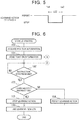
- FIG. 6 illustrates a routine for performing control of the vehicle 10 in the first embodiment according to the present disclosure. For example, this routine is repeated at predetermined set time intervals.
- step 100 the position information of the vehicle 10 is acquired.
- step 101 the position information of the vehicle 10 is then sent to the server 30.
- step 102 it is determined whether instruction data has been received from the server 30.
- Step 102 is repeated until it is determined that instruction data has been received from the server 30.
- the routine proceeds to step 103, and it is determined whether the instruction data includes a learning permission instruction or includes a learning stop instruction.
- step 104 When it is determined that the instruction data includes a learning permission instruction, the routine proceeds to step 104, and the learning action of the vehicle 10 is permitted. The routine then proceeds to step 106.
- step 105 When it is determined that the instruction data includes a learning stop instruction, the routine proceeds to step 105, and the learning action of the vehicle 10 is stopped. The process then proceeds to step 106.
- step 106 for example, the vehicle 10 is controlled using the learning results.
- the routine proceeds from step 105 to step 106, the vehicle 10 is controlled using the learning results obtained before the learning action is stopped.
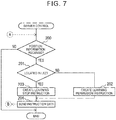
- FIG. 7 illustrates a routine for performing control of the server 30 in the first embodiment according to the present disclosure. For example, this routine is repeated at predetermined set time intervals.
- step 200 it is determined whether the position information of the vehicle 10 has been received from the vehicle 10. When it is determined that the position information of the vehicle 10 has not been received, the process cycle is ended. When it is determined that the position information of the vehicle 10 has been received, the routine proceeds to step 201, and it is determined whether the vehicle 10 is located in the low emission area LEZ. When it is determined that the vehicle 10 is located outside the low emission area LEZ, the routine proceeds to step 202, and instruction data including a learning permission instruction is created. The routine then proceeds to step 204. When it is determined that the vehicle 10 is located in the low emission area LEZ, the routine proceeds to step 203, and instruction data including a learning stop instruction is created. The routine then proceeds to step 204. In step 204, the instruction data is sent to the vehicle 10.
- the drive mode is switched to the EV mode or the HV mode based on the required vehicle load and the SOC of the battery 13. Accordingly, in order to maintain the EV mode in the low emission area LEZ or to prevent the drive mode from being switched to the HV mode in the low emission area LEZ, the driver of the vehicle 10 is required to adjust the required vehicle load (e.g., the amount of depression of the accelerator pedal), manage the SOC of the battery 13, etc. In another embodiment (not shown), when it is determined that the vehicle 10 is located in the low emission area LEZ, the drive mode control unit 20d automatically switches the drive mode to the EV mode and maintains the EV mode.
- the required vehicle load e.g., the amount of depression of the accelerator pedal
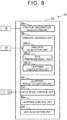
- the electronic control unit 20 of the vehicle 10 of the second embodiment according to the present disclosure includes an SOC acquisition unit 20f
- the SOC acquisition unit 20f acquires the SOC of the battery 13 from, e.g., the processor 21.
- the learning action of the vehicle 10 is at least partially stopped.
- This configuration reduces power consumption of the vehicle 10 and limits reduction in SOC of the battery 13.
- the SOC of the battery 13 is high, there is little need to limit power consumption of the vehicle 10.
- the learning action of the vehicle 10 when it is determined that the vehicle 10 is located in the low emission area LEZ and the SOC of the battery 13 is equal to or higher than a predetermined threshold SOCx, the learning action of the vehicle 10 is not stopped but is permitted. However, when it is determined that the vehicle 10 is located in the low emission area LEZ and the SOC of the battery 13 is lower than the threshold SOCx, the learning action of the vehicle 10 is stopped.
- the learning action of the vehicle 10 is entirely stopped regardless of the SOC of the battery 13.
- the proportion R is zero when the SOC of the battery 13 is equal to or higher than the threshold SOCx, as shown in FIG. 9 .
- the proportion R is 1 when the SOC of the battery 13 is lower than the threshold SOCx.
- the proportion R of the learning action of the vehicle 10 that is stopped is increased as the SOC of the battery 13 decreases. That is, as shown in FIG. 10 , the proportion R of the learning action of the vehicle 10 that is stopped is zero when the SOC of the battery 13 is equal to or higher than the threshold SOCx.
- the proportion R is increased as the SOC of the battery 13 decreases.
- the proportion R of 1 is maintained, and the learning action is entirely stopped. The higher the proportion R, the more power consumption of the vehicle 10 is limited.
- FIG. 11 illustrates a routine for performing control of the vehicle 10 in the second embodiment according to the present disclosure.
- the routine of FIG. 11 is different from the routine of FIG. 6 in the following points.
- the routine of FIG. 11 first, it is determined in step 100a whether the SOC of the battery 13 is lower than the threshold SOCx.
- SOC ⁇ SOCx the routine proceeds to step 100. Accordingly, when it is determined that SOC ⁇ SOCx and the vehicle 10 is located in the low emission area LEZ, the learning action of the vehicle 10 is stopped.
- SOC ⁇ SOCx the routine proceeds from step 100a to step 104.
- SOC ⁇ SOCx the learning action of the vehicle 10 is thus permitted regardless of whether the vehicle 10 is located in the low emission area LEZ.
- the stoppage of the learning action of the vehicle 10 when the SOC of the battery 13 is high, the stoppage of the learning action of the vehicle 10 is restricted.
- the stoppage of the learning action of the vehicle 10 is restricted when the required load of the vehicle 10 is low or when a large amount of electric power is generated by the regenerative control of the vehicle 10. In this case, the SOC of the battery 13 is unlikely to become excessively low.
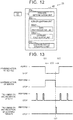
- the electronic control unit 40 of the server 30 of the third embodiment according to the present disclosure includes a position determination unit 40a, a server learning unit 40b and a learning result utilization unit 40c.
- the server learning unit 40b performs the learning action.
- the server learning unit 40b includes a data preprocessing unit 40b2 and a learning calculation unit 40b3.
- the data preprocessing unit 40b2, the learning calculation unit 40b3, and the learning result utilization unit 40c of the third embodiment according to the present disclosure are configured similarly to the data preprocessing unit 20b2, the learning calculation unit 20b3, and the learning result utilization unit 20c of the on-board learning unit 20b, respectively.
- the learning action of the vehicle 10 is at least partially stopped.
- satisfactory control may not be able to be performed as, e.g., a calculation model is not created or updated.
- the learning action to be performed by the vehicle 10 is performed by the server 30, and the learning results of the server 30 are sent to the vehicle 10.
- the internal combustion engine 11 is controlled using the received learning results.
- the position determination unit 40a of the server 30 determines that the vehicle 10 is located outside the low emission area LEZ
- the position determination unit 40a creates instruction data including a learning permission instruction and a data transmission instruction and sends the instruction data to the vehicle 10.
- the learning control unit 20e of the vehicle 10 receives the data transmission instruction
- the learning control unit 20e of the vehicle 10 sends data necessary for the learning action to the server 30.
- the data that is sent to the server 30 is, e.g., raw data acquired by the raw data acquisition unit 20b1.
- the data processing unit 40b2 of the server learning unit 40b When the data preprocessing unit 40b2 of the server learning unit 40b receives the raw data, the data processing unit 40b2 generates a data set suitable for learning from the raw data.
- the learning calculation unit 40b3 of the server learning unit 40b then performs learning using the data set generated by the data preprocessing unit 40b2. Thereafter, the learning calculation unit 40b3 sends the learning results to the vehicle 10.
- the learning result utilization unit 20c of the vehicle 10 When the learning result utilization unit 20c of the vehicle 10 receives the learning results, the learning result utilization unit 20c performs a predetermined process, for example, controls the internal combustion engine 11, using the learning results. Satisfactory control is thus continued in the vehicle 10 while limiting power consumption of the vehicle 10.
- the data that is sent from the vehicle 10 to the server 30 is a data set generated by the data preprocessing unit 20b2 of the vehicle 10.
- the server 30 does not need to include the data preprocessing unit 40b2.
- the server 30 when it is determined that the vehicle 10 is located outside the low emission area LEZ, data transmission from the vehicle 10 to the server 30 is repeatedly performed.
- the server 30 performs the learning action using the most recent data out of the received data.
- data necessary for the learning action is sent from the vehicle 10 to the server 30 when it is determined that the vehicle 10 is located in the low emission area LEZ.
- electric power is consumed for the data transmission. Accordingly, in the third embodiment according to the present disclosure, data is sent from the vehicle 10 to the server 30 when it is determined that the vehicle 10 is located outside the low emission area LEZ.
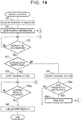
- FIG. 14 illustrates a routine for performing control of the vehicle 10 in the third embodiment according to the present disclosure.
- the routine of FIG. 14 is different from the routine of FIG. 6 in the following points.
- the routine proceeds from step 104 to step 104a, and it is determined whether the received instruction data includes a data transmission instruction. When the received instruction data does not include a data transmission instruction, the process cycle is ended. When the received instruction data includes a data transmission instruction, the routine proceeds to step 104b, and data necessary for the learning action is sent from the vehicle 10 to the server 30.
- step 105a the routine proceeds from step 105 to step 105a, and it is determined whether the learning results have been received from the server 30. Step 105a is repeated until it is determined that the learning results have been received. When it is determined that the learning results have been received, the routine proceeds to step 106. When the routine proceeds from step 105a to step 106, the learning results from the server 30 are used.
- FIG. 15 illustrates a routine for performing control of the server 30 in the third embodiment according to the present disclosure.
- the routine of FIG. 15 is different from the routine of FIG. 7 in the following points.
- the routine of FIG. 15 the routine proceeds from step 202 to step 202a, and a data transmission instruction is created. Thereafter, in step 202b, instruction data including the learning permission instruction and the data transmission instruction is sent to the vehicle 10. Subsequently, in step 202c, it is determined whether data necessary for the learning action has been received from the vehicle 10. Step 202c is repeated until it is determined that the data has been received.
- the routine proceeds to step 202d, and the data is stored in, e.g., the storage device 31. In one example, only the most recent data is stored.
- step 203a The routine of FIG. 15 proceeds from step 203 to step 203a, and instruction data including a learning stop instruction is sent to the vehicle 10. Thereafter, in step 203b, it is determined whether the learning action of the server 30 has not been performed. When it is determined that the learning action of the server 30 has not been performed, the routine proceeds to step 203c, and the learning action is performed. Thereafter, in step 203d, the learning results of the server 30 are sent to the vehicle 10. When the learning action of the server 30 has been performed or completed, the process cycle is ended. This is because no data for performing the learning action has been newly received.
- an adjacent area ADZ adjacent to the low emission area LEZ and a non-adjacent area NADZ located outside the adjacent area ADZ are defined outside the low emission area LEZ.
- the adjacent area ADZ is an area where the distance from the boundary GF of the low emission area LEZ is shorter than a predetermined value D.
- Position information of the adjacent area ADZ is stored in, e.g., the storage device 31 of the server 30.
- data necessary for the learning action will not be sent from the vehicle 10 to the server 30 when it is determined that the vehicle 10 is located in the non-adjacent area NADZ.
- the data necessary for the learning action will be sent from the vehicle 10 to the server 30 when it is determined that the vehicle 10 is located in the adjacent area ADZ.
- This configuration limits the number of times data is sent and received and limits power consumption required for the data transmission and reception.
- the data is sent from the vehicle 10 to the server 30 when it is determined that the vehicle 10 has entered the adjacent area ADZ from the non-adjacent area NADZ.
- the data is sent from the vehicle 10 to the server 30 when it is expected that the vehicle 10 will enter the low emission area LEZ.
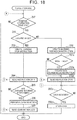
- FIG. 18 illustrates a routine for performing control of the server 30 in the fourth embodiment according to the present disclosure.
- the routine of FIG. 18 is different from the routine of FIG. 15 in the following points.
- the routine proceeds from step 202 to step 202x, and it is determined whether the vehicle 10 has entered the adjacent area ADZ from the non-adjacent area NADZ.
- the routine proceeds to step 202b, and instruction data is sent to the vehicle 10.
- the instruction data does not include a data transmission instruction.
- step 202x When it is determined in step 202x that the vehicle 10 has entered the adjacent area ADZ from the non-adjacent area NADZ, the routine proceeds to step 202a, and a data transmission instruction is created. Thereafter, in step 202b, instruction data including the data transmission instruction is sent to the vehicle 10.
- the learning results of the server 30 are sent to the vehicle 10 when it is determined that the vehicle 10 is located in the low emission area LEZ. In another embodiment (not shown), the learning results of the server 30 are sent to the vehicle 10 after the vehicle 10 leaves the low emission area LEZ. This configuration further limits power consumption when the vehicle 10 is located in the low emission area LEZ.
- the server 30 determines whether the vehicle 10 is located in the low emission area LEZ.
- the electronic control unit 20 of the vehicle 10 includes a position determination unit, and the position determination unit determines whether the vehicle 10 is located in the low emission area LEZ.
- the position information of the low emission area LEZ is stored in the vehicle 10.
- the position information of the low emission area LEZ is stored in the server 30, and the vehicle 10 receives the position information of the low emission area LEZ from the server 30 and determines whether the vehicle 10 is located in the low emission area LEZ.
Landscapes
- Engineering & Computer Science (AREA)
- Mechanical Engineering (AREA)
- Transportation (AREA)
- Combustion & Propulsion (AREA)
- Chemical & Material Sciences (AREA)
- Automation & Control Theory (AREA)
- Theoretical Computer Science (AREA)
- Software Systems (AREA)
- Medical Informatics (AREA)
- General Engineering & Computer Science (AREA)
- General Physics & Mathematics (AREA)
- Mathematical Physics (AREA)
- Computing Systems (AREA)
- Physics & Mathematics (AREA)
- Evolutionary Computation (AREA)
- Data Mining & Analysis (AREA)
- Computer Vision & Pattern Recognition (AREA)
- Artificial Intelligence (AREA)
- Human Computer Interaction (AREA)
- Hybrid Electric Vehicles (AREA)
- Electric Propulsion And Braking For Vehicles (AREA)
Abstract
A control system (1) for a hybrid vehicle (10) which includes an internal combustion engine (11) and an electric motor (12) and whose drive mode is switchable between an electric vehicle mode and a hybrid vehicle mode includes: an on-board learning unit (20b) mounted on the hybrid vehicle (10) and configured to perform a learning action; a position determination unit (40a) configured to determine whether the hybrid vehicle (10) is located in a low emission area (LEZ) where operation of the internal combustion engine (11) is supposed to be restricted; and a learning control unit (20e) configured to at least partially stop the learning action of the on-board learning unit (20b) when determination is made that the hybrid vehicle (10) is located in the low emission area (LEZ).
Description
- The present disclosure relates to control systems and control methods for hybrid vehicles.
- Hybrid vehicles are known in the art which include an internal combustion engine and an electric motor and whose drive mode is switchable between an electric vehicle (EV) mode and a hybrid vehicle (HV) mode. In the EV mode, the internal combustion engine is stopped and the electric motor is operated. In the HV mode, the internal combustion engine and the electric motor are operated.
- In view of exhaust emissions and noise, it is preferable to set the drive mode to the EV mode in a specific area such as a residential area. However, electric power is required to continue the EV mode in the specific area. A hybrid vehicle is known in which electric power is generated by regenerative control during deceleration operation to keep the state of charge (SOC) of a battery as high as possible before the hybrid vehicle enters a specific area (see, e.g., Japanese Unexamined Patent Application Publication No.
2012-111369 JP 2012-111369 A - However, in view of the battery capacity and the frequency of regenerative control, there is a limit to increasing the SOC of the battery. Accordingly, the SOC of the battery may become excessively low in the specific area, and the EV mode may not be able to be continued. In this case, the internal combustion engine has to be operated in order to keep the vehicle running in the specific area.
- The present disclosure provides a control system and a control method for a hybrid vehicle.
- A first aspect of the present disclosure relates to a control system for a hybrid vehicle. The control system for the hybrid vehicle includes: an on-board learning unit mounted on the hybrid vehicle and configured to perform a learning action; a position determination unit configured to determine whether the hybrid vehicle is located in a low emission area where operation of an internal combustion engine is supposed to be restricted; and a learning control unit configured to at least partially stop the learning action of the on-board learning unit when determination is made that the hybrid vehicle is located in the low emission area. The hybrid vehicle includes the internal combustion engine and an electric motor. A drive mode of the hybrid vehicle is switchable between an electric vehicle mode and a hybrid vehicle mode. The electric vehicle mode is a mode in which the internal combustion engine is stopped and the electric motor is operated, and the hybrid vehicle mode is a mode in which the internal combustion engine and the electric motor are operated.
- In the first aspect, the learning control unit may be configured to entirely stop the learning action of the on-board learning unit when determination is made that the hybrid vehicle is located in the low emission area.
- In the above aspect, in a case where determination is made that the hybrid vehicle is located in the low emission area, the learning control unit may be configured to at least partially stop the learning action of the on-board learning unit when determination is made that an SOC of a battery of the hybrid vehicle is lower than a predetermined threshold, and may be configured not to stop the learning action of the on-board learning unit when determination is made that the hybrid vehicle is located in the low emission area and determination is made that the SOC of the battery is equal to or higher than the threshold.
- In the above aspect, the learning control unit may be configured to increase a proportion of the learning action of the on-board learning unit that is stopped as the SOC of the battery decreases when determination is made that the hybrid vehicle is located in the low emission area and determination is made that the SOC of the battery is lower than the threshold.
- In the above aspect, the control system may further include a server learning unit mounted on a server located outside the hybrid vehicle, and configured to perform a learning action. The server learning unit may be configured to perform the learning action to be performed by the on-board learning unit using data sent from the hybrid vehicle to the server and send a learning result of the server learning unit to the hybrid vehicle, when the learning action of the on-board learning unit is stopped.
- In the above aspect, the learning control unit may be configured to send the data from the hybrid vehicle to the server when determination is made that that the hybrid vehicle is located outside the low emission area.
- In the above aspect, in a case where determination is made that the hybrid vehicle is located outside the low emission area, the learning control unit may be configured not to send the data from the hybrid vehicle to the server when determination is made that the hybrid vehicle is located in a non-adjacent area that is not adjacent to the low emission area, and may be configured to send the data from the hybrid vehicle to the server when determination is made that the hybrid vehicle is located outside the low emission area and determination is made that the hybrid vehicle is located in an adjacent area that is adjacent to the low emission area.
- In the above aspect, the learning control unit may be configured to repeatedly send the data from the hybrid vehicle to the server when determination is made that the hybrid vehicle is located outside the low emission area.
- A second aspect of the present disclosure relates to a control method for a hybrid vehicle. The control method for the hybrid vehicle includes: performing a learning action by an on-board learning unit mounted on the hybrid vehicle; determining whether the hybrid vehicle is located in a low emission area where operation of an internal combustion engine is supposed to be restricted; and at least partially stopping the learning action of the on-board learning unit when determination is made that the hybrid vehicle is located in the low emission area. The hybrid vehicle includes the internal combustion engine and an electric motor. A drive mode of the hybrid vehicle is switchable between an electric vehicle mode and a hybrid vehicle mode. The electric vehicle mode is a mode in which the internal combustion engine is stopped and the electric motor is operated, and the hybrid vehicle mode is a mode in which the internal combustion engine and the electric motor are operated.
- According to each aspect of the present disclosure, the EV mode of the hybrid vehicle is reliably continued in the low emission area where the operation of the internal combustion engine is supposed to be restricted.
- Features, advantages, and technical and industrial significance of exemplary embodiments of the invention will be described below with reference to the accompanying drawings, in which like signs denote like elements, and wherein:
-
FIG. 1 is a schematic overall view of a control system of a first embodiment according to the present disclosure; -
FIG. 2 schematically illustrates a low emission area of the first embodiment according to the present disclosure; -
FIG. 3 is a functional block diagram of a vehicle in the first embodiment according to the present disclosure; -
FIG. 4 is a functional block diagram of a server in the first embodiment according to the present disclosure; -
FIG. 5 is a timing chart illustrating the first embodiment according to the present disclosure; -
FIG. 6 is a flowchart of a vehicle control routine of the first embodiment according to the present disclosure; -
FIG. 7 is a flowchart of a server control routine of the first embodiment according to the present disclosure; -
FIG. 8 is a functional block diagram of a vehicle in a second embodiment according to the present disclosure; -
FIG. 9 is a graph illustrating an example of the proportion of a learning action that is stopped in the second embodiment according to the present disclosure; -
FIG. 10 is a graph illustrating another example of the proportion of the learning action that is stopped in the second embodiment according to the present disclosure; -
FIG. 11 is a flowchart of a vehicle control routine of the second embodiment according to the present disclosure; -
FIG. 12 is a functional block diagram of a server in a third embodiment according to the present disclosure; -
FIG. 13 is a timing chart illustrating the third embodiment according to the present disclosure; -
FIG. 14 is a flowchart of a vehicle control routine of the third embodiment according to the present disclosure; -
FIG. 15 is a flowchart of a server control routine of the third embodiment according to the present disclosure; -
FIG. 16 schematically illustrates a low emission area and an adjacent area of a fourth embodiment according to the present disclosure; -
FIG. 17 is a timing chart illustrating the fourth embodiment according to the present disclosure; and -
FIG. 18 is a flowchart of a server control routine of the fourth embodiment according to the present disclosure. - A first embodiment according to the present disclosure will be described with reference to
FIGS. 1 to 7 . Referring toFIG. 1 , acontrol system 1 for a hybrid vehicle of the first embodiment according to the present disclosure includes ahybrid vehicle 10 and aserver 30 outside thehybrid vehicle 10. - The
hybrid vehicle 10 of the first embodiment according to the present disclosure includes aninternal combustion engine 11, a motor generator (M/G) 12, abattery 13, at least onesensor 14, a Global Positioning System (GPS)receiver 15, astorage device 16, acommunication device 17, and anelectronic control unit 20. Theinternal combustion engine 11 is, e.g., a spark ignition engine or a compression ignition engine. The internal combustion engine 11 (e.g., fuel injection valves, spark plugs, a throttle valve, etc.) is controlled based on signals from theelectronic control unit 20. Themotor generator 12 operates as an electric motor or a generator. Themotor generator 12 is controlled based on signals from theelectronic control unit 20. - In the first embodiment according to the present disclosure, the drive mode of the
hybrid vehicle 10 can be switched between an EV mode and an HV mode. In the EV mode of the first embodiment according to the present disclosure, theinternal combustion engine 11 is stopped and themotor generator 12 is operated as an electric motor. In this case, the output of themotor generator 12 is transmitted to axles. In the HV mode of the first embodiment according to the present disclosure, theinternal combustion engine 11 is operated and themotor generator 12 is operated as an electric motor. In this case, in one example, the output of theinternal combustion engine 11 and the output of themotor generator 12 are transmitted to the axles. In another example, the output of themotor generator 12 is transmitted to the axles, and the output of theinternal combustion engine 11 is transmitted to a generator (not shown) to operate the generator. Electric power generated by the generator is sent to themotor generator 12 or thebattery 13. In still another example, a part of the output of theinternal combustion engine 11 and the output of themotor generator 12 are transmitted to the axles, and the rest of the output of theinternal combustion engine 11 is transmitted to the generator. Electric power generated by the generator is sent to themotor generator 12 or thebattery 13. In the first embodiment according to the present disclosure, in the EV mode and the HV mode, regenerative control using themotor generator 12 as a generator is performed during, e.g., deceleration operation. Electric power generated by the regenerative control is sent to thebattery 13. - The
battery 13 of the first embodiment according to the present disclosure is charged by electric power from themotor generator 12 operating as a generator or from the generator (not shown). In another embodiment (not shown), thebattery 13 can also be charged by an external power supply. In the first embodiment according to the present disclosure, electric power is supplied from thebattery 13 to themotor generator 12 operating as an electric motor, theelectronic control unit 20, and other in-vehicle devices. - The
sensor 14 of the first embodiment according to the present disclosure detects various raw data. Examples of thesensor 14 of the first embodiment according to the present disclosure include a load sensor for detecting a required vehicle load that is represented by the amount of depression of an accelerator pedal, a throttle valve opening degree sensor for detecting the throttle valve opening degree of theinternal combustion engine 11, a NOx sensor for detecting the NOx concentration in exhaust gas of theinternal combustion engine 11, a rotational speed sensor for detecting the rotational speed of theinternal combustion engine 11, a voltmeter for detecting the voltage of thebattery 13, and an ammeter for detecting the current of thebattery 13. Output signals of thesesensors 14 are input to theelectronic control unit 20. - The
GPS receiver 15 of the first embodiment according to the present disclosure receives a signal from a GPS satellite and detects information indicating the absolute position (e.g., latitude and longitude) of thevehicle 10 from the received signal. The position information of thevehicle 10 is input to theelectronic control unit 20. - Various data are stored in advance in the
storage device 16 of the first embodiment according to the present disclosure. Thecommunication device 17 of the first embodiment according to the present disclosure can be connected to a communication network N such as the Internet. - The
electronic control unit 20 of thevehicle 10 of the first embodiment according to the present disclosure includes one ormore processors 21, one ormore memories 22, and an input and output (I/O)port 23. The one ormore processors 21, the one ormore memories 22, and the I/O port 23 are connected by a bidirectional bus so that they can communicate with each other. Thememory 22 include, e.g., a read only memory (ROM), a random access memory (RAM), etc. Thememory 22 has various programs stored therein, and various functions are implemented by executing these programs by theprocessor 21. Theinternal combustion engine 11, themotor generator 12, thesensor 14, theGPS receiver 15, thestorage device 16, and thecommunication device 17 are connected to the I/O port 23 of the first embodiment according to the present disclosure so that they can communicate with the I/O port 23. In theprocessor 21 of the first embodiment according to the present disclosure, the state of charge (SOC) of thebattery 13 is calculated based on, e.g., the voltage and current of thebattery 13. - Referring to
FIG. 1 , theserver 30 of the first embodiment according to the present disclosure includes astorage device 31, acommunication device 32, and anelectronic control unit 40. - The
storage device 31 of the first embodiment according to the present disclosure has stored therein position information (e.g., latitude and longitude) of a low emission area where the operation of theinternal combustion engine 11 is supposed to be restricted.FIG. 2 schematically illustrates an example of the low emission area LEZ of the first embodiment according to the present disclosure. The low emission area LEZ of the first embodiment according to the present disclosure is surrounded by a closed boundary or geofence GF. For example, the low emission area LEZ is set in an urban area. - The
communication device 32 of the first embodiment according to the present disclosure can be connected to the communication network N. Thevehicle 10 and theserver 30 can therefore be connected to each other via the communication network N. - Like the
electronic control unit 20 of thevehicle 10, theelectronic control unit 40 of theserver 30 of the first embodiment according to the present disclosure includes one ormore processors 41, one ormore memories 42, and an I/O port 43, and the one ormore processors 41, the one ormore memories 42, and the I/O port 43 are connected by a bidirectional bus so that they can communicate with each other. Thestorage device 31 and thecommunication device 32 are connected to the I/O port 43 of the first embodiment according to the present disclosure so that they can communicate with the I/O port 43. -
FIG. 3 is a functional block diagram of thevehicle 10 of the first embodiment according to the present disclosure. Referring toFIG. 3 , theelectronic control unit 20 of thevehicle 10 includes a positioninformation acquisition unit 20a, an on-board learning unit 20b, a learningresult utilization unit 20c, a drivemode control unit 20d, and alearning control unit 20e. - The position
information acquisition unit 20a of the first embodiment according to the present disclosure acquires the position information of thevehicle 10 from theGPS receiver 15. The positioninformation acquisition unit 20a sends this position information to theserver 30. - The on-
board learning unit 20b of the first embodiment according to the present disclosure performs a learning action. The on-board learning unit 20b includes a raw data acquisition unit 20b1, a data preprocessing unit 20b2, and a learning calculation unit 20b3. - The raw
data 1 of the first embodiment according to the present disclosure acquires raw data necessary for learning. The raw data include, e.g., the output of theacquisition unit 20bsensor 14, the calculation result of theprocessor 21, etc. - The data pre-processing unit 20b2 of the first embodiment according to the present disclosure preprocesses the raw data acquired by the raw data acquisition unit 20b1 to generate a data set suitable for learning. This preprocessing includes filtering, cleansing, normalization, standardization, etc. Examples of the data set include a data set suitable for supervised learning, a data set suitable for unsupervised learning, and a data set suitable for reinforcement learning.
- The learning calculation unit 20b3 of the first embodiment according to the present disclosure performs learning using the data set generated by the data preprocessing unit 20b2. In one example, supervised learning using a neural network is performed. That is, the weight of the neural network is repeatedly calculated until the difference between the output of the neural network when a certain value is input and the training data corresponding to the certain value becomes smaller than a convergence value. In another example, learning using random forest, learning using support vector machine, ensemble learning in which a plurality of calculation models is used in parallel or in series, etc. is performed.
- In one example, the learning results of the learning calculation unit 20b3 or the on-
board learning unit 20b represent a calculation model. In other words, a calculation model is created or updated by the learning action of the learning calculation unit 20b3 or the on-board learning unit 20b. An example of the calculation model is a calculation model that outputs the NOx emission amount of theinternal combustion engine 11 from the throttle valve opening degree, the engine speed, and the ignition timing. In this example, the raw data acquisition unit 20b1 acquires raw data necessary for learning, such as the throttle valve opening degree, the engine speed, and the ignition timing. Another example of the calculation model is a calculation model that outputs the degree of degradation of thebattery 13 from the air temperature, the temperature of thebattery 13, the discharge time of thebattery 13, and the discharge energy of thebattery 13 per unit time. - Referring to
FIG. 3 , the learningresult utilization unit 20c of the first embodiment according to the present disclosure performs a predetermined process by using the learning results of the learning calculation unit 20b3 or the on-board learning unit 20b. In one example, thevehicle 10, such as theinternal combustion engine 11, themotor generator 12, and an in-vehicle infotainment system (not shown), is controlled using the calculation model created or updated by the on-board learning unit 20b. - The learning action of the on-
board learning unit 20b of the first embodiment according to the present disclosure includes at least one of the functions of the on-board learning unit 20b, that is, at least one of acquisition of raw data by the raw data acquisition unit 20b1, preprocessing of data by the data preprocessing unit 20b2, and learning by the learning calculation unit 20b3. - Referring to
FIG. 3 , the drivemode control unit 20d of the first embodiment according to the present disclosure switches the drive mode between the EV mode and the HV mode. In one example, the EV mode is selected when the required vehicle load is lower than a predetermined set load, and the drive mode is switched to the HV mode when the required vehicle load becomes higher than the set load. The EV mode is also selected when the SOC of thebattery 13 is higher than a predetermined set SOC, and the drive mode is switched to the HV mode when the SOC of thebattery 13 becomes lower than the set SOC. - The
learning control unit 20e of the first embodiment according to the present disclosure controls whether to perform or stop the learning action of the on-board learning unit 20b. -
FIG. 4 is a functional block diagram of theserver 30 of the first embodiment according to the present disclosure. Referring toFIG. 4 , theelectronic control unit 40 of theserver 30 includes aposition determination unit 40a. - The
position determination unit 40a of the first embodiment according to the present disclosure determines from the position information of thevehicle 10 sent from thevehicle 10 to theserver 30 and the position information of the low emission area LEZ stored in thestorage device 31 whether thevehicle 10 is located in the low emission area LEZ. Theposition determination unit 40a creates instruction data according to the determination result and sends the instruction data to thevehicle 10. - In the first embodiment according to the present disclosure, when the
vehicle 10 acquires the position information of thevehicle 10, thevehicle 10 sends the position information of thevehicle 10 to theserver 30. When theposition determination unit 40a of theserver 30 receives the position information of thevehicle 10, theposition determination unit 40a determines from the received position information of thevehicle 10 and the position information of the low emission area LEZ stored in thestorage device 31 whether thevehicle 10 is located in the low emission area LEZ. When theposition determination unit 40a determines that the vehicle is located outside the low emission area LEZ, theposition determination unit 40a creates instruction data including a learning permission instruction and sends the instruction data to thevehicle 10. When theposition determination unit 40a determines that thevehicle 10 is located in the low emission area LEZ, theposition determination unit 40a creates instruction data including a learning stop instruction and sends the instruction data to thevehicle 10. - When the
vehicle 10 receives the instruction data from theserver 30, thelearning control unit 20e of thevehicle 10 determines whether the received instruction data includes a learning stop instruction. When thelearning control unit 20e determines that the instruction data includes a learning permission instruction, thelearning control unit 20e permits the learning action of the on-board learning unit 20b or thevehicle 10. As a result, for example, the calculation model is accurately created or updated, and satisfactory control is maintained. When thelearning control unit 20e determines that the instruction data includes a learning stop instruction, thelearning control unit 20e stops the learning action of the on-board learning unit 20b or thevehicle 10. This configuration limits power consumption of thevehicle 10 when thevehicle 10 is located in the low emission area LEZ. The SOC of thebattery 13 is therefore less likely to fall below the set SOC. The EV mode is thus reliably continued in the low emission area LEZ. - That is, in an example of
FIG. 5 , it is determined until time ta1 that thevehicle 10 is located outside the low emission area LEZ. The learning action of thevehicle 10 or the on-board learning unit 20b is therefore permitted until time ta1. When it is determined at time ta1 that thevehicle 10 has entered the low emission area LEZ, the learning action of thevehicle 10 is stopped. When it is then determined at time ta2 that thevehicle 10 has left the low emission area LEZ, the learning action of thevehicle 10 is permitted again. - In one example, the learning action of the on-
board learning unit 20b is entirely stopped when the learning action of the on-board learning unit 20b is supposed to be stopped. This configuration significantly reduces power consumption of thevehicle 10. In another example, the learning action of the on-board learning unit 20b is partially stopped. In this case, the learning action of the on-board learning unit 20b is partially continued while limiting power consumption of thevehicle 10. For example, in order to partially stop the learning action of the on-board learning unit 20b, at least one of the functions of the on-board learning unit 20b, that is, at least one of acquisition of raw data by the raw data acquisition unit 20b1, preprocessing of data by the data preprocessing unit 20b2, and learning by the learning calculation unit 20b3, is stopped. Alternatively, the frequency for the on-board learning unit 20b to perform the learning action is made lower than normal frequency. Alternatively, when a neural network is used for learning, the convergence value described above is made larger than a normal value. When random forest is used for learning, the number of decision trees is made smaller than a normal number of decision trees. When ensemble learning is used for learning, the number of learners to be used for ensemble learning is made smaller than a normal number of learners. Alternatively, the number of pieces of raw data or the number of pieces of preprocessed data to be used for the learning action is made smaller than a normal number of pieces of raw data or preprocessed data. - The larger the number of functions of the on-
board learning unit 20b that are stopped, the higher the proportion of the learning action of the on-board learning unit 20b that is stopped. Alternatively, the lower the frequency for the on-board learning unit 20b to perform the learning action, the larger the convergence value, the smaller the number of decision trees, the smaller the number of learners, or the smaller the number of pieces of data to be used for the learning action, the higher the proportion of the learning action of the on-board learning unit 20b that is stopped. For example, the proportion of the learning action of the on-board learning unit 20b that is stopped is represented in the form of a numerical value between zero and 1. When the proportion is zero, the learning action is not stopped. When the proportion is 1, the learning action is entirely stopped. -
FIG. 6 illustrates a routine for performing control of thevehicle 10 in the first embodiment according to the present disclosure. For example, this routine is repeated at predetermined set time intervals. Referring toFIG. 6 , instep 100, the position information of thevehicle 10 is acquired. Instep 101, the position information of thevehicle 10 is then sent to theserver 30. Thereafter, instep 102, it is determined whether instruction data has been received from theserver 30. Step 102 is repeated until it is determined that instruction data has been received from theserver 30. When it is determined that instruction data has been received from theserver 30, the routine proceeds to step 103, and it is determined whether the instruction data includes a learning permission instruction or includes a learning stop instruction. When it is determined that the instruction data includes a learning permission instruction, the routine proceeds to step 104, and the learning action of thevehicle 10 is permitted. The routine then proceeds to step 106. When it is determined that the instruction data includes a learning stop instruction, the routine proceeds to step 105, and the learning action of thevehicle 10 is stopped. The process then proceeds to step 106. - In
step 106, for example, thevehicle 10 is controlled using the learning results. When the routine proceeds fromstep 105 to step 106, thevehicle 10 is controlled using the learning results obtained before the learning action is stopped. -
FIG. 7 illustrates a routine for performing control of theserver 30 in the first embodiment according to the present disclosure. For example, this routine is repeated at predetermined set time intervals. Referring toFIG. 7 , instep 200, it is determined whether the position information of thevehicle 10 has been received from thevehicle 10. When it is determined that the position information of thevehicle 10 has not been received, the process cycle is ended. When it is determined that the position information of thevehicle 10 has been received, the routine proceeds to step 201, and it is determined whether thevehicle 10 is located in the low emission area LEZ. When it is determined that thevehicle 10 is located outside the low emission area LEZ, the routine proceeds to step 202, and instruction data including a learning permission instruction is created. The routine then proceeds to step 204. When it is determined that thevehicle 10 is located in the low emission area LEZ, the routine proceeds to step 203, and instruction data including a learning stop instruction is created. The routine then proceeds to step 204. Instep 204, the instruction data is sent to thevehicle 10. - In the first embodiment according to the present disclosure, as described above, the drive mode is switched to the EV mode or the HV mode based on the required vehicle load and the SOC of the
battery 13. Accordingly, in order to maintain the EV mode in the low emission area LEZ or to prevent the drive mode from being switched to the HV mode in the low emission area LEZ, the driver of thevehicle 10 is required to adjust the required vehicle load (e.g., the amount of depression of the accelerator pedal), manage the SOC of thebattery 13, etc. In another embodiment (not shown), when it is determined that thevehicle 10 is located in the low emission area LEZ, the drivemode control unit 20d automatically switches the drive mode to the EV mode and maintains the EV mode. - Next, a second embodiment according to the present disclosure will be described with reference to
FIGS. 8 to 11 . The second embodiment according to the present disclosure is different from the first embodiment according to the present disclosure in the following points. As shown inFIG. 8 , theelectronic control unit 20 of thevehicle 10 of the second embodiment according to the present disclosure includes anSOC acquisition unit 20f TheSOC acquisition unit 20f acquires the SOC of thebattery 13 from, e.g., theprocessor 21. - In the first embodiment according to the present disclosure, when it is determined that the
vehicle 10 is located in the low emission area LEZ, the learning action of thevehicle 10 is at least partially stopped. This configuration reduces power consumption of thevehicle 10 and limits reduction in SOC of thebattery 13. However, when the SOC of thebattery 13 is high, there is little need to limit power consumption of thevehicle 10. - Therefore, in the second embodiment according to the present disclosure, when it is determined that the
vehicle 10 is located in the low emission area LEZ and the SOC of thebattery 13 is equal to or higher than a predetermined threshold SOCx, the learning action of thevehicle 10 is not stopped but is permitted. However, when it is determined that thevehicle 10 is located in the low emission area LEZ and the SOC of thebattery 13 is lower than the threshold SOCx, the learning action of thevehicle 10 is stopped. - In one example, when the SOC of the
battery 13 is lower than the threshold SOCx, the learning action of thevehicle 10 is entirely stopped regardless of the SOC of thebattery 13. When this is represented using the proportion R of the learning action of thevehicle 10 that is stopped, the proportion R is zero when the SOC of thebattery 13 is equal to or higher than the threshold SOCx, as shown inFIG. 9 . The proportion R is 1 when the SOC of thebattery 13 is lower than the threshold SOCx. - In another example, when the SOC of the
battery 13 is lower than the threshold SOCx, the proportion R of the learning action of thevehicle 10 that is stopped is increased as the SOC of thebattery 13 decreases. That is, as shown inFIG. 10 , the proportion R of the learning action of thevehicle 10 that is stopped is zero when the SOC of thebattery 13 is equal to or higher than the threshold SOCx. When the SOC of thebattery 13 is lower than the threshold SOCx, the proportion R is increased as the SOC of thebattery 13 decreases. In the example shown inFIG. 10 , when the SOC of thebattery 13 is lower than another threshold SOCy, the proportion R of 1 is maintained, and the learning action is entirely stopped. The higher the proportion R, the more power consumption of thevehicle 10 is limited. -
FIG. 11 illustrates a routine for performing control of thevehicle 10 in the second embodiment according to the present disclosure. The routine ofFIG. 11 is different from the routine ofFIG. 6 in the following points. In the routine ofFIG. 11 , first, it is determined instep 100a whether the SOC of thebattery 13 is lower than the threshold SOCx. When SOC < SOCx, the routine proceeds to step 100. Accordingly, when it is determined that SOC < SOCx and thevehicle 10 is located in the low emission area LEZ, the learning action of thevehicle 10 is stopped. When SOC ≥ SOCx, the routine proceeds fromstep 100a to step 104. When SOC ≥ SOCx, the learning action of thevehicle 10 is thus permitted regardless of whether thevehicle 10 is located in the low emission area LEZ. - In the second embodiment according to the present disclosure, when the SOC of the
battery 13 is high, the stoppage of the learning action of thevehicle 10 is restricted. In another embodiment (not shown), the stoppage of the learning action of thevehicle 10 is restricted when the required load of thevehicle 10 is low or when a large amount of electric power is generated by the regenerative control of thevehicle 10. In this case, the SOC of thebattery 13 is unlikely to become excessively low. - Next, a third embodiment according to the present disclosure will be described with reference to
FIGS. 12 to 15 . The third embodiment according to the present disclosure is different from the first embodiment according to the present disclosure in the following points. As shown inFIG. 12 , theelectronic control unit 40 of theserver 30 of the third embodiment according to the present disclosure includes aposition determination unit 40a, aserver learning unit 40b and a learningresult utilization unit 40c. Theserver learning unit 40b performs the learning action. Theserver learning unit 40b includes a data preprocessing unit 40b2 and a learning calculation unit 40b3. - The data preprocessing unit 40b2, the learning calculation unit 40b3, and the learning
result utilization unit 40c of the third embodiment according to the present disclosure are configured similarly to the data preprocessing unit 20b2, the learning calculation unit 20b3, and the learningresult utilization unit 20c of the on-board learning unit 20b, respectively. - In the first embodiment according to the present disclosure, when it is determined that the
vehicle 10 is located in the low emission area LEZ, the learning action of thevehicle 10 is at least partially stopped. However, while the learning action of thevehicle 10 is stopped, satisfactory control may not be able to be performed as, e.g., a calculation model is not created or updated. - Accordingly, in the third embodiment according to the present disclosure, when the learning action of the
vehicle 10 is stopped, the learning action to be performed by thevehicle 10 is performed by theserver 30, and the learning results of theserver 30 are sent to thevehicle 10. In thevehicle 10, for example, theinternal combustion engine 11 is controlled using the received learning results. - In the third embodiment according to the present disclosure, when the
position determination unit 40a of theserver 30 determines that thevehicle 10 is located outside the low emission area LEZ, theposition determination unit 40a creates instruction data including a learning permission instruction and a data transmission instruction and sends the instruction data to thevehicle 10. When thelearning control unit 20e of thevehicle 10 receives the data transmission instruction, thelearning control unit 20e of thevehicle 10 sends data necessary for the learning action to theserver 30. In this case, the data that is sent to theserver 30 is, e.g., raw data acquired by the raw data acquisition unit 20b1. - When the data preprocessing unit 40b2 of the
server learning unit 40b receives the raw data, the data processing unit 40b2 generates a data set suitable for learning from the raw data. The learning calculation unit 40b3 of theserver learning unit 40b then performs learning using the data set generated by the data preprocessing unit 40b2. Thereafter, the learning calculation unit 40b3 sends the learning results to thevehicle 10. - When the learning
result utilization unit 20c of thevehicle 10 receives the learning results, the learningresult utilization unit 20c performs a predetermined process, for example, controls theinternal combustion engine 11, using the learning results. Satisfactory control is thus continued in thevehicle 10 while limiting power consumption of thevehicle 10. - In another embodiment (not shown), the data that is sent from the
vehicle 10 to theserver 30 is a data set generated by the data preprocessing unit 20b2 of thevehicle 10. In this case, theserver 30 does not need to include the data preprocessing unit 40b2. - In an example of
FIG. 13 , it is determined until time tb1 that thevehicle 10 is located outside the low emission area LEZ. Data necessary for learning is therefore sent from thevehicle 10 to theserver 30 until time tb1. When it is determined at time tb1 that thevehicle 10 has entered the low emission area LEZ, the learning action of thevehicle 10 is stopped and the learning action of theserver 30 is started. Subsequently, when the learning action of theserver 30 is completed at time tb2, the learning results are sent from theserver 30 to thevehicle 10. When it is then determined at time tb3 that thevehicle 10 has left the low emission area LEZ, the learning action of thevehicle 10 is permitted again, and data transmission from thevehicle 10 to the server is also resumed. - In the third embodiment according to the present disclosure, when it is determined that the
vehicle 10 is located outside the low emission area LEZ, data transmission from thevehicle 10 to theserver 30 is repeatedly performed. Theserver 30 performs the learning action using the most recent data out of the received data. - In another embodiment (not shown), data necessary for the learning action is sent from the
vehicle 10 to theserver 30 when it is determined that thevehicle 10 is located in the low emission area LEZ. However, electric power is consumed for the data transmission. Accordingly, in the third embodiment according to the present disclosure, data is sent from thevehicle 10 to theserver 30 when it is determined that thevehicle 10 is located outside the low emission area LEZ. -
FIG. 14 illustrates a routine for performing control of thevehicle 10 in the third embodiment according to the present disclosure. The routine ofFIG. 14 is different from the routine ofFIG. 6 in the following points. In the routine ofFIG. 14 , the routine proceeds fromstep 104 to step 104a, and it is determined whether the received instruction data includes a data transmission instruction. When the received instruction data does not include a data transmission instruction, the process cycle is ended. When the received instruction data includes a data transmission instruction, the routine proceeds to step 104b, and data necessary for the learning action is sent from thevehicle 10 to theserver 30. - In the routine of
FIG. 14 , the routine proceeds fromstep 105 to step 105a, and it is determined whether the learning results have been received from theserver 30.Step 105a is repeated until it is determined that the learning results have been received. When it is determined that the learning results have been received, the routine proceeds to step 106. When the routine proceeds fromstep 105a to step 106, the learning results from theserver 30 are used. -
FIG. 15 illustrates a routine for performing control of theserver 30 in the third embodiment according to the present disclosure. The routine ofFIG. 15 is different from the routine ofFIG. 7 in the following points. In the routine ofFIG. 15 , the routine proceeds fromstep 202 to step 202a, and a data transmission instruction is created. Thereafter, instep 202b, instruction data including the learning permission instruction and the data transmission instruction is sent to thevehicle 10. Subsequently, instep 202c, it is determined whether data necessary for the learning action has been received from thevehicle 10.Step 202c is repeated until it is determined that the data has been received. When it is determined that the data has been received, the routine proceeds to step 202d, and the data is stored in, e.g., thestorage device 31. In one example, only the most recent data is stored. - The routine of
FIG. 15 proceeds fromstep 203 to step 203a, and instruction data including a learning stop instruction is sent to thevehicle 10. Thereafter, instep 203b, it is determined whether the learning action of theserver 30 has not been performed. When it is determined that the learning action of theserver 30 has not been performed, the routine proceeds to step 203c, and the learning action is performed. Thereafter, instep 203d, the learning results of theserver 30 are sent to thevehicle 10. When the learning action of theserver 30 has been performed or completed, the process cycle is ended. This is because no data for performing the learning action has been newly received. - Next, a fourth embodiment according to the present disclosure will be described with reference to
FIGS. 16 to 18 . The fourth embodiment according to the present disclosure is different from the third embodiment according to the present disclosure in the following points. In the fourth embodiment according to the present disclosure, as shown inFIG. 16 , an adjacent area ADZ adjacent to the low emission area LEZ and a non-adjacent area NADZ located outside the adjacent area ADZ are defined outside the low emission area LEZ. For example, the adjacent area ADZ is an area where the distance from the boundary GF of the low emission area LEZ is shorter than a predetermined value D. Position information of the adjacent area ADZ is stored in, e.g., thestorage device 31 of theserver 30. - In the third embodiment according to the present disclosure, when it is determined that the
vehicle 10 is located outside the low emission area LEZ, data necessary for the learning action is repeatedly sent from thevehicle 10 to theserver 30. However, only the most recent data is used for the learning action of theserver 30. Moreover, the learning action of theserver 30 will not be performed unless thevehicle 10 enters the low emission area LEZ. - Therefore, in the fourth embodiment according to the present disclosure, data necessary for the learning action will not be sent from the
vehicle 10 to theserver 30 when it is determined that thevehicle 10 is located in the non-adjacent area NADZ. The data necessary for the learning action will be sent from thevehicle 10 to theserver 30 when it is determined that thevehicle 10 is located in the adjacent area ADZ. This configuration limits the number of times data is sent and received and limits power consumption required for the data transmission and reception. - In particular, when it is determined that the
vehicle 10 has entered the adjacent area ADZ from the non-adjacent area NADZ, it is expected that thevehicle 10 will subsequently enter the low emission area LEZ. Therefore, in the fourth embodiment according to the present disclosure, the data is sent from thevehicle 10 to theserver 30 when it is determined that thevehicle 10 has entered the adjacent area ADZ from the non-adjacent area NADZ. In this case, the data is sent from thevehicle 10 to theserver 30 when it is expected that thevehicle 10 will enter the low emission area LEZ. - In an example shown in
FIG. 17 , it is determined until time tc1 that thevehicle 10 is located in the non-adjacent area NADZ. Data necessary for the learning action is therefore not sent from thevehicle 10 to theserver 30 until time tc1. When it is determined at time tc1 that thevehicle 10 has entered the adjacent area ADZ, the data is sent from thevehicle 10 to theserver 30. Subsequently, when it is determined at time tc2 that thevehicle 10 has entered the low emission area LEZ, the learning action of thevehicle 10 is stopped and the learning action of theserver 30 is started. When the learning action of theserver 30 is then completed at time tc3, the learning results are sent from theserver 30 to thevehicle 10. When it is then determined at time tc4 that thevehicle 10 has left the low emission area LEZ, the learning action of thevehicle 10 is permitted again. -
FIG. 18 illustrates a routine for performing control of theserver 30 in the fourth embodiment according to the present disclosure. The routine ofFIG. 18 is different from the routine ofFIG. 15 in the following points. In the routine ofFIG. 18 , the routine proceeds fromstep 202 to step 202x, and it is determined whether thevehicle 10 has entered the adjacent area ADZ from the non-adjacent area NADZ. When it is determined instep 202x that thevehicle 10 has not entered the adjacent area ADZ from the non-adjacent area NADZ, the routine proceeds to step 202b, and instruction data is sent to thevehicle 10. In this case, the instruction data does not include a data transmission instruction. When it is determined instep 202x that thevehicle 10 has entered the adjacent area ADZ from the non-adjacent area NADZ, the routine proceeds to step 202a, and a data transmission instruction is created. Thereafter, instep 202b, instruction data including the data transmission instruction is sent to thevehicle 10. - In the third embodiment and the fourth embodiment according to the present disclosure, the learning results of the
server 30 are sent to thevehicle 10 when it is determined that thevehicle 10 is located in the low emission area LEZ. In another embodiment (not shown), the learning results of theserver 30 are sent to thevehicle 10 after thevehicle 10 leaves the low emission area LEZ. This configuration further limits power consumption when thevehicle 10 is located in the low emission area LEZ. - In the above various embodiments according to the present disclosure, the
server 30 determines whether thevehicle 10 is located in the low emission area LEZ. In another embodiment (not shown), theelectronic control unit 20 of thevehicle 10 includes a position determination unit, and the position determination unit determines whether thevehicle 10 is located in the low emission area LEZ. In this case, in one example, the position information of the low emission area LEZ is stored in thevehicle 10. In another example, the position information of the low emission area LEZ is stored in theserver 30, and thevehicle 10 receives the position information of the low emission area LEZ from theserver 30 and determines whether thevehicle 10 is located in the low emission area LEZ. - In still another embodiment (not shown), at least two of the above various embodiments according to the present disclosure are combined.
Claims (9)
- A control system (1) for a hybrid vehicle (10), comprising:an on-board learning unit (20b) mounted on the hybrid vehicle (10) and configured to perform a learning action;a position determination unit (40a) configured to determine whether the hybrid vehicle (10) is located in a low emission area (LEZ) where operation of an internal combustion engine (11) is supposed to be restricted; anda learning control unit (20e) configured to at least partially stop the learning action of the on-board learning unit (20b) when determination is made that the hybrid vehicle (10) is located in the low emission area (LEZ), wherein:the hybrid vehicle (10) includes the internal combustion engine (11) and an electric motor (12); anda drive mode of the hybrid vehicle (10) is switchable between an electric vehicle mode and a hybrid vehicle mode, the electric vehicle mode being a mode in which the internal combustion engine (11) is stopped and the electric motor (12) is operated, and the hybrid vehicle mode being a mode in which the internal combustion engine (11) and the electric motor (12) are operated.
- The control system (1) according to claim 1, wherein the learning control unit (20e) is configured to entirely stop the learning action of the on-board learning unit (20b) when determination is made that the hybrid vehicle (10) is located in the low emission area (LEZ).
- The control system (1) according to claim 1 or 2, wherein in a case where determination is made that the hybrid vehicle (10) is located in the low emission area (LEZ), the learning control unit (20e) is configured to, at least partially stop the learning action of the on-board learning unit (20b) when determination is made that a state of charge of a battery (13) of the hybrid vehicle (10) is lower than a predetermined threshold, and is configured not to stop the learning action of the on-board learning unit (20b) when and is configured not to stop the learning action of the on-board learning unit (20b) when determination is made that the state of charge of the battery (13) is equal to or higher than the threshold.
- The control system (1) according to claim 3, wherein the learning control unit (20e) is configured to increase a proportion of the learning action of the on-board learning unit (20b) that is stopped as the state of charge of the battery (13) decreases when determination is made that the hybrid vehicle (10) is located in the low emission area (LEZ) and determination is made that the state of charge of the battery (13) is lower than the threshold.
- The control system (1) according to any one of claims 1 to 4, further comprising a server learning unit (40b) mounted on a server (30) located outside the hybrid vehicle (10), and configured to perform a learning action, wherein the server learning unit (40b) is configured to perform the learning action to be performed by the on-board learning unit (20b) using data sent from the hybrid vehicle (10) to the server (30) and send a learning result of the server learning unit (40b) to the hybrid vehicle (10), when the learning action of the on-board learning unit (20b) is stopped.
- The control system (1) according to claim 5, wherein the learning control unit (20e) is configured to send the data from the hybrid vehicle (10) to the server (30) when determination is made that that the hybrid vehicle (10) is located outside the low emission area (LEZ).
- The control system (1) according to claim 6, wherein in a case where determination is made that the hybrid vehicle (10) is located outside the low emission area (LEZ), the learning control unit (20e) is configured not to send the data from the hybrid vehicle (10) to the server (30) when determination is made that the hybrid vehicle (10) is located in a non-adjacent area that is not adjacent to the low emission area (LEZ), and is configured to send the data from the hybrid vehicle (10) to the server (30) when and is configured to send the data from the hybrid vehicle (10) to the server (30) when determination is made that the hybrid vehicle (10) is located in an adjacent area that is adjacent to the low emission area (LEZ).
- The control system (1) according to claim 6, wherein the learning control unit (20e) is configured to repeatedly send the data from the hybrid vehicle (10) to the server (30) when determination is made that the hybrid vehicle (10) is located outside the low emission area (LEZ).
- A control method for a hybrid vehicle (10), the control method comprising:performing a learning action by an on-board learning unit (20b) mounted on the hybrid vehicle (10);determining whether the hybrid vehicle (10) is located in a low emission area (LEZ) where operation of an internal combustion engine (11) is supposed to be restricted; andat least partially stopping the learning action of the on-board learning unit (20b) when determination is made that the hybrid vehicle (10) is located in the low emission area (LEZ), wherein the hybrid vehicle (10) includes the internal combustion engine (11) and an electric motor (12), and a drive mode of the hybrid vehicle (10) is switchable between an electric vehicle mode and a hybrid vehicle mode, the electric vehicle mode being a mode in which the internal combustion engine (11) is stopped and the electric motor (12) is operated, and the hybrid vehicle mode being a mode in which the internal combustion engine (11) and the electric motor (12) are operated.
Applications Claiming Priority (1)
| Application Number | Priority Date | Filing Date | Title |
|---|---|---|---|
| JP2020103721A JP7363676B2 (en) | 2020-06-16 | 2020-06-16 | Hybrid vehicle control system and control method |
Publications (1)
| Publication Number | Publication Date |
|---|---|
| EP3925841A1 true EP3925841A1 (en) | 2021-12-22 |
Family
ID=76250031
Family Applications (1)
| Application Number | Title | Priority Date | Filing Date |
|---|---|---|---|
| EP21172308.5A Withdrawn EP3925841A1 (en) | 2020-06-16 | 2021-05-05 | Control system and control method for hybrid vehicle |
Country Status (4)
| Country | Link |
|---|---|
| US (1) | US11491967B2 (en) |
| EP (1) | EP3925841A1 (en) |
| JP (1) | JP7363676B2 (en) |
| CN (1) | CN113799763A (en) |
Families Citing this family (1)
| Publication number | Priority date | Publication date | Assignee | Title |
|---|---|---|---|---|
| JP7363676B2 (en) * | 2020-06-16 | 2023-10-18 | トヨタ自動車株式会社 | Hybrid vehicle control system and control method |
Citations (4)
| Publication number | Priority date | Publication date | Assignee | Title |
|---|---|---|---|---|
| JPS6338655A (en) * | 1986-08-05 | 1988-02-19 | Nissan Motor Co Ltd | Air-fuel ratio control device |
| JP2012111369A (en) | 2010-11-25 | 2012-06-14 | Daimler Ag | Control device for hybrid electric vehicle |
| EP2741268A1 (en) * | 2011-08-04 | 2014-06-11 | Toyota Jidosha Kabushiki Kaisha | Vehicle-use information processing device and vehicle-use information processing method |
| WO2016202360A1 (en) * | 2015-06-15 | 2016-12-22 | Volvo Bus Corporation | Adapting a vehicle control strategy based on historical data related to a geographical zone |
Family Cites Families (17)
| Publication number | Priority date | Publication date | Assignee | Title |
|---|---|---|---|---|
| JP4073225B2 (en) * | 2002-03-19 | 2008-04-09 | 三洋電機株式会社 | Electronic album device |
| JP2007282177A (en) | 2006-03-17 | 2007-10-25 | Kobe Steel Ltd | Sound source separation apparatus, sound source separation program and sound source separation method |
| JP5116565B2 (en) | 2008-06-04 | 2013-01-09 | 本田技研工業株式会社 | Control device for hybrid vehicle |
| JP2009298278A (en) | 2008-06-12 | 2009-12-24 | Toyota Motor Corp | Vehicle for traveling in specific region |
| JP2010241396A (en) | 2009-04-10 | 2010-10-28 | Toyota Motor Corp | Hybrid vehicle power supply system |
| JP2012166618A (en) * | 2011-02-10 | 2012-09-06 | Toyota Motor Corp | Learning control device for vehicle |
| JP6331975B2 (en) * | 2014-10-31 | 2018-05-30 | 株式会社デンソー | Vehicle control device when stopped |
| DE102015203164A1 (en) * | 2015-02-23 | 2016-09-08 | Init Innovative Informatikanwendungen In Transport-, Verkehrs- Und Leitsystemen Gmbh | Method and device for determining the driving behavior of a vehicle driver |
| CN105824659A (en) * | 2015-07-30 | 2016-08-03 | 广东维沃软件技术有限公司 | Application program updating method and terminal equipment |
| US9925987B1 (en) * | 2015-12-11 | 2018-03-27 | Lytx, Inc. | Driving abnormality detection |
| JP6312913B1 (en) | 2017-09-01 | 2018-04-18 | ヤフー株式会社 | Information processing apparatus, information processing method, and information processing program |
| WO2019146169A1 (en) * | 2018-01-26 | 2019-08-01 | 住友電気工業株式会社 | Control device, control method, and computer program |
| JP2019133511A (en) | 2018-02-01 | 2019-08-08 | 本田技研工業株式会社 | On-vehicle device, in-vehicle notification method, and program |
| KR102569895B1 (en) | 2018-06-25 | 2023-08-23 | 현대자동차주식회사 | Hybrid vehicle and method of driving control for the same |
| GB2577681A (en) * | 2018-09-26 | 2020-04-08 | Ford Global Tech Llc | A vehicle control system and method |
| JP7363676B2 (en) * | 2020-06-16 | 2023-10-18 | トヨタ自動車株式会社 | Hybrid vehicle control system and control method |
| CN114248759B (en) * | 2020-09-24 | 2023-12-08 | 丰田自动车株式会社 | Control device and control method for hybrid vehicle |
-
2020
- 2020-06-16 JP JP2020103721A patent/JP7363676B2/en active Active
-
2021
- 2021-04-28 CN CN202110465371.7A patent/CN113799763A/en active Pending
- 2021-05-05 EP EP21172308.5A patent/EP3925841A1/en not_active Withdrawn
- 2021-06-02 US US17/336,308 patent/US11491967B2/en active Active
Patent Citations (4)
| Publication number | Priority date | Publication date | Assignee | Title |
|---|---|---|---|---|
| JPS6338655A (en) * | 1986-08-05 | 1988-02-19 | Nissan Motor Co Ltd | Air-fuel ratio control device |
| JP2012111369A (en) | 2010-11-25 | 2012-06-14 | Daimler Ag | Control device for hybrid electric vehicle |
| EP2741268A1 (en) * | 2011-08-04 | 2014-06-11 | Toyota Jidosha Kabushiki Kaisha | Vehicle-use information processing device and vehicle-use information processing method |
| WO2016202360A1 (en) * | 2015-06-15 | 2016-12-22 | Volvo Bus Corporation | Adapting a vehicle control strategy based on historical data related to a geographical zone |
Also Published As
| Publication number | Publication date |
|---|---|
| JP7363676B2 (en) | 2023-10-18 |
| US11491967B2 (en) | 2022-11-08 |
| JP2021195043A (en) | 2021-12-27 |
| US20210387611A1 (en) | 2021-12-16 |
| CN113799763A (en) | 2021-12-17 |
Similar Documents
| Publication | Publication Date | Title |
|---|---|---|
| US11162447B2 (en) | Vehicle predictive control system based on big data and method thereof | |
| Yang et al. | Driving-style-oriented adaptive equivalent consumption minimization strategies for HEVs | |
| JP7176376B2 (en) | vehicle controller | |
| US11654890B2 (en) | Vehicle control data generation method, vehicle controller, vehicle control system, and vehicle learning device | |
| KR101765635B1 (en) | System and method for driving mode conversion of hybrid vehicle | |
| CN103661361B (en) | Method of controlling a hybrid vehicle with a compression ignition engine | |
| US20210229687A1 (en) | Vehicle controller, vehicle control system, vehicle control method, and vehicle control system control method | |
| US11097718B2 (en) | Hybrid vehicle | |
| CN102991503A (en) | Method for controlling a vehicle | |
| US11981319B2 (en) | Method and system for improving fuel economy of a hybrid powertrain in a vehicle | |
| US9678495B2 (en) | Control apparatus for plug-in hybrid vehicle, and control method for the same | |
| US20220001852A1 (en) | Control system and control method for hybrid vehicle | |
| US20210402976A1 (en) | Method of Controlling Generator for Vehicle | |
| US20220252402A1 (en) | Route Planning Device, Route Planning Method, and Route Planning System | |
| US12054136B2 (en) | Vehicle control device, vehicle control method and recording medium | |
| US11738738B2 (en) | System and method for controlling shift of hybrid vehicle | |
| EP3925841A1 (en) | Control system and control method for hybrid vehicle | |
| Rizzoni et al. | Control strategies for parallel hybrid electric vehicles | |
| JP2015113075A (en) | Control apparatus of hybrid vehicle | |
| US20220089145A1 (en) | Control system for and control method of hybrid vehicle | |
| CN120756453A (en) | Vehicle energy management and control method, system and vehicle | |
| Bassett et al. | GPS based energy management control for plug-in hybrid vehicles | |
| JP2021110322A (en) | Traveling history determination device | |
| CN111964917B (en) | Vehicle control method, device and system and vehicle | |
| US20220250541A1 (en) | Alarm device, alarm system, and gate device, adapted for hybrid vehicle |
Legal Events
| Date | Code | Title | Description |
|---|---|---|---|
| PUAI | Public reference made under article 153(3) epc to a published international application that has entered the european phase |
Free format text: ORIGINAL CODE: 0009012 |
|
| STAA | Information on the status of an ep patent application or granted ep patent |
Free format text: STATUS: REQUEST FOR EXAMINATION WAS MADE |
|
| 17P | Request for examination filed |
Effective date: 20210519 |
|
| AK | Designated contracting states |
Kind code of ref document: A1 Designated state(s): AL AT BE BG CH CY CZ DE DK EE ES FI FR GB GR HR HU IE IS IT LI LT LU LV MC MK MT NL NO PL PT RO RS SE SI SK SM TR |
|
| B565 | Issuance of search results under rule 164(2) epc |
Effective date: 20211026 |
|
| STAA | Information on the status of an ep patent application or granted ep patent |
Free format text: STATUS: THE APPLICATION HAS BEEN WITHDRAWN |
|
| 18W | Application withdrawn |
Effective date: 20220901 |