EP3922328B1 - Thermally enhanced hub motor - Google Patents
Thermally enhanced hub motor Download PDFInfo
- Publication number
- EP3922328B1 EP3922328B1 EP21189213.8A EP21189213A EP3922328B1 EP 3922328 B1 EP3922328 B1 EP 3922328B1 EP 21189213 A EP21189213 A EP 21189213A EP 3922328 B1 EP3922328 B1 EP 3922328B1
- Authority
- EP
- European Patent Office
- Prior art keywords
- stator
- vehicle
- mandrel
- hub motor
- motor
- Prior art date
- Legal status (The legal status is an assumption and is not a legal conclusion. Google has not performed a legal analysis and makes no representation as to the accuracy of the status listed.)
- Active
Links
Images




Classifications
-
- A—HUMAN NECESSITIES
- A62—LIFE-SAVING; FIRE-FIGHTING
- A62C—FIRE-FIGHTING
- A62C27/00—Fire-fighting land vehicles
-
- B—PERFORMING OPERATIONS; TRANSPORTING
- B60—VEHICLES IN GENERAL
- B60L—PROPULSION OF ELECTRICALLY-PROPELLED VEHICLES; SUPPLYING ELECTRIC POWER FOR AUXILIARY EQUIPMENT OF ELECTRICALLY-PROPELLED VEHICLES; ELECTRODYNAMIC BRAKE SYSTEMS FOR VEHICLES IN GENERAL; MAGNETIC SUSPENSION OR LEVITATION FOR VEHICLES; MONITORING OPERATING VARIABLES OF ELECTRICALLY-PROPELLED VEHICLES; ELECTRIC SAFETY DEVICES FOR ELECTRICALLY-PROPELLED VEHICLES
- B60L50/00—Electric propulsion with power supplied within the vehicle
- B60L50/50—Electric propulsion with power supplied within the vehicle using propulsion power supplied by batteries or fuel cells
- B60L50/60—Electric propulsion with power supplied within the vehicle using propulsion power supplied by batteries or fuel cells using power supplied by batteries
- B60L50/64—Constructional details of batteries specially adapted for electric vehicles
-
- H—ELECTRICITY
- H02—GENERATION; CONVERSION OR DISTRIBUTION OF ELECTRIC POWER
- H02K—DYNAMO-ELECTRIC MACHINES
- H02K7/00—Arrangements for handling mechanical energy structurally associated with dynamo-electric machines, e.g. structural association with mechanical driving motors or auxiliary dynamo-electric machines
- H02K7/003—Couplings; Details of shafts
-
- B—PERFORMING OPERATIONS; TRANSPORTING
- B07—SEPARATING SOLIDS FROM SOLIDS; SORTING
- B07C—POSTAL SORTING; SORTING INDIVIDUAL ARTICLES, OR BULK MATERIAL FIT TO BE SORTED PIECE-MEAL, e.g. BY PICKING
- B07C3/00—Sorting according to destination
- B07C3/10—Apparatus characterised by the means used for detection ofthe destination
- B07C3/12—Apparatus characterised by the means used for detection ofthe destination using electric or electronic detecting means
-
- B—PERFORMING OPERATIONS; TRANSPORTING
- B60—VEHICLES IN GENERAL
- B60K—ARRANGEMENT OR MOUNTING OF PROPULSION UNITS OR OF TRANSMISSIONS IN VEHICLES; ARRANGEMENT OR MOUNTING OF PLURAL DIVERSE PRIME-MOVERS IN VEHICLES; AUXILIARY DRIVES FOR VEHICLES; INSTRUMENTATION OR DASHBOARDS FOR VEHICLES; ARRANGEMENTS IN CONNECTION WITH COOLING, AIR INTAKE, GAS EXHAUST OR FUEL SUPPLY OF PROPULSION UNITS IN VEHICLES
- B60K7/00—Disposition of motor in, or adjacent to, traction wheel
- B60K7/0007—Disposition of motor in, or adjacent to, traction wheel the motor being electric
-
- B—PERFORMING OPERATIONS; TRANSPORTING
- B62—LAND VEHICLES FOR TRAVELLING OTHERWISE THAN ON RAILS
- B62K—CYCLES; CYCLE FRAMES; CYCLE STEERING DEVICES; RIDER-OPERATED TERMINAL CONTROLS SPECIALLY ADAPTED FOR CYCLES; CYCLE AXLE SUSPENSIONS; CYCLE SIDECARS, FORECARS, OR THE LIKE
- B62K1/00—Unicycles
-
- B—PERFORMING OPERATIONS; TRANSPORTING
- B62—LAND VEHICLES FOR TRAVELLING OTHERWISE THAN ON RAILS
- B62K—CYCLES; CYCLE FRAMES; CYCLE STEERING DEVICES; RIDER-OPERATED TERMINAL CONTROLS SPECIALLY ADAPTED FOR CYCLES; CYCLE AXLE SUSPENSIONS; CYCLE SIDECARS, FORECARS, OR THE LIKE
- B62K11/00—Motorcycles, engine-assisted cycles or motor scooters with one or two wheels
- B62K11/007—Automatic balancing machines with single main ground engaging wheel or coaxial wheels supporting a rider
-
- B—PERFORMING OPERATIONS; TRANSPORTING
- B62—LAND VEHICLES FOR TRAVELLING OTHERWISE THAN ON RAILS
- B62K—CYCLES; CYCLE FRAMES; CYCLE STEERING DEVICES; RIDER-OPERATED TERMINAL CONTROLS SPECIALLY ADAPTED FOR CYCLES; CYCLE AXLE SUSPENSIONS; CYCLE SIDECARS, FORECARS, OR THE LIKE
- B62K11/00—Motorcycles, engine-assisted cycles or motor scooters with one or two wheels
- B62K11/02—Frames
-
- B—PERFORMING OPERATIONS; TRANSPORTING
- B62—LAND VEHICLES FOR TRAVELLING OTHERWISE THAN ON RAILS
- B62M—RIDER PROPULSION OF WHEELED VEHICLES OR SLEDGES; POWERED PROPULSION OF SLEDGES OR SINGLE-TRACK CYCLES; TRANSMISSIONS SPECIALLY ADAPTED FOR SUCH VEHICLES
- B62M7/00—Motorcycles characterised by position of motor or engine
- B62M7/12—Motorcycles characterised by position of motor or engine with the engine beside or within the driven wheel
-
- H—ELECTRICITY
- H02—GENERATION; CONVERSION OR DISTRIBUTION OF ELECTRIC POWER
- H02K—DYNAMO-ELECTRIC MACHINES
- H02K1/00—Details of the magnetic circuit
- H02K1/06—Details of the magnetic circuit characterised by the shape, form or construction
- H02K1/12—Stationary parts of the magnetic circuit
- H02K1/18—Means for mounting or fastening magnetic stationary parts on to, or to, the stator structures
- H02K1/187—Means for mounting or fastening magnetic stationary parts on to, or to, the stator structures to inner stators
-
- H—ELECTRICITY
- H02—GENERATION; CONVERSION OR DISTRIBUTION OF ELECTRIC POWER
- H02K—DYNAMO-ELECTRIC MACHINES
- H02K15/00—Processes or apparatus specially adapted for manufacturing, assembling, maintaining or repairing of dynamo-electric machines
- H02K15/02—Processes or apparatus specially adapted for manufacturing, assembling, maintaining or repairing of dynamo-electric machines of stator or rotor bodies
-
- H—ELECTRICITY
- H02—GENERATION; CONVERSION OR DISTRIBUTION OF ELECTRIC POWER
- H02K—DYNAMO-ELECTRIC MACHINES
- H02K5/00—Casings; Enclosures; Supports
- H02K5/02—Casings or enclosures characterised by the material thereof
-
- H—ELECTRICITY
- H02—GENERATION; CONVERSION OR DISTRIBUTION OF ELECTRIC POWER
- H02K—DYNAMO-ELECTRIC MACHINES
- H02K7/00—Arrangements for handling mechanical energy structurally associated with dynamo-electric machines, e.g. structural association with mechanical driving motors or auxiliary dynamo-electric machines
- H02K7/006—Structural association of a motor or generator with the drive train of a motor vehicle
-
- H—ELECTRICITY
- H02—GENERATION; CONVERSION OR DISTRIBUTION OF ELECTRIC POWER
- H02K—DYNAMO-ELECTRIC MACHINES
- H02K7/00—Arrangements for handling mechanical energy structurally associated with dynamo-electric machines, e.g. structural association with mechanical driving motors or auxiliary dynamo-electric machines
- H02K7/14—Structural association with mechanical loads, e.g. with hand-held machine tools or fans
-
- H—ELECTRICITY
- H02—GENERATION; CONVERSION OR DISTRIBUTION OF ELECTRIC POWER
- H02K—DYNAMO-ELECTRIC MACHINES
- H02K9/00—Arrangements for cooling or ventilating
- H02K9/22—Arrangements for cooling or ventilating by solid heat conducting material embedded in, or arranged in contact with, the stator or rotor, e.g. heat bridges
- H02K9/227—Heat sinks
-
- B—PERFORMING OPERATIONS; TRANSPORTING
- B60—VEHICLES IN GENERAL
- B60K—ARRANGEMENT OR MOUNTING OF PROPULSION UNITS OR OF TRANSMISSIONS IN VEHICLES; ARRANGEMENT OR MOUNTING OF PLURAL DIVERSE PRIME-MOVERS IN VEHICLES; AUXILIARY DRIVES FOR VEHICLES; INSTRUMENTATION OR DASHBOARDS FOR VEHICLES; ARRANGEMENTS IN CONNECTION WITH COOLING, AIR INTAKE, GAS EXHAUST OR FUEL SUPPLY OF PROPULSION UNITS IN VEHICLES
- B60K7/00—Disposition of motor in, or adjacent to, traction wheel
- B60K2007/0038—Disposition of motor in, or adjacent to, traction wheel the motor moving together with the wheel axle
-
- B—PERFORMING OPERATIONS; TRANSPORTING
- B60—VEHICLES IN GENERAL
- B60K—ARRANGEMENT OR MOUNTING OF PROPULSION UNITS OR OF TRANSMISSIONS IN VEHICLES; ARRANGEMENT OR MOUNTING OF PLURAL DIVERSE PRIME-MOVERS IN VEHICLES; AUXILIARY DRIVES FOR VEHICLES; INSTRUMENTATION OR DASHBOARDS FOR VEHICLES; ARRANGEMENTS IN CONNECTION WITH COOLING, AIR INTAKE, GAS EXHAUST OR FUEL SUPPLY OF PROPULSION UNITS IN VEHICLES
- B60K7/00—Disposition of motor in, or adjacent to, traction wheel
- B60K2007/0092—Disposition of motor in, or adjacent to, traction wheel the motor axle being coaxial to the wheel axle
-
- B—PERFORMING OPERATIONS; TRANSPORTING
- B62—LAND VEHICLES FOR TRAVELLING OTHERWISE THAN ON RAILS
- B62K—CYCLES; CYCLE FRAMES; CYCLE STEERING DEVICES; RIDER-OPERATED TERMINAL CONTROLS SPECIALLY ADAPTED FOR CYCLES; CYCLE AXLE SUSPENSIONS; CYCLE SIDECARS, FORECARS, OR THE LIKE
- B62K2202/00—Motorised scooters
-
- H—ELECTRICITY
- H02—GENERATION; CONVERSION OR DISTRIBUTION OF ELECTRIC POWER
- H02K—DYNAMO-ELECTRIC MACHINES
- H02K9/00—Arrangements for cooling or ventilating
- H02K9/22—Arrangements for cooling or ventilating by solid heat conducting material embedded in, or arranged in contact with, the stator or rotor, e.g. heat bridges
- H02K9/223—Heat bridges
-
- Y—GENERAL TAGGING OF NEW TECHNOLOGICAL DEVELOPMENTS; GENERAL TAGGING OF CROSS-SECTIONAL TECHNOLOGIES SPANNING OVER SEVERAL SECTIONS OF THE IPC; TECHNICAL SUBJECTS COVERED BY FORMER USPC CROSS-REFERENCE ART COLLECTIONS [XRACs] AND DIGESTS
- Y02—TECHNOLOGIES OR APPLICATIONS FOR MITIGATION OR ADAPTATION AGAINST CLIMATE CHANGE
- Y02T—CLIMATE CHANGE MITIGATION TECHNOLOGIES RELATED TO TRANSPORTATION
- Y02T10/00—Road transport of goods or passengers
- Y02T10/60—Other road transportation technologies with climate change mitigation effect
- Y02T10/64—Electric machine technologies in electromobility
-
- Y—GENERAL TAGGING OF NEW TECHNOLOGICAL DEVELOPMENTS; GENERAL TAGGING OF CROSS-SECTIONAL TECHNOLOGIES SPANNING OVER SEVERAL SECTIONS OF THE IPC; TECHNICAL SUBJECTS COVERED BY FORMER USPC CROSS-REFERENCE ART COLLECTIONS [XRACs] AND DIGESTS
- Y02—TECHNOLOGIES OR APPLICATIONS FOR MITIGATION OR ADAPTATION AGAINST CLIMATE CHANGE
- Y02T—CLIMATE CHANGE MITIGATION TECHNOLOGIES RELATED TO TRANSPORTATION
- Y02T10/00—Road transport of goods or passengers
- Y02T10/60—Other road transportation technologies with climate change mitigation effect
- Y02T10/70—Energy storage systems for electromobility, e.g. batteries
-
- Y—GENERAL TAGGING OF NEW TECHNOLOGICAL DEVELOPMENTS; GENERAL TAGGING OF CROSS-SECTIONAL TECHNOLOGIES SPANNING OVER SEVERAL SECTIONS OF THE IPC; TECHNICAL SUBJECTS COVERED BY FORMER USPC CROSS-REFERENCE ART COLLECTIONS [XRACs] AND DIGESTS
- Y02—TECHNOLOGIES OR APPLICATIONS FOR MITIGATION OR ADAPTATION AGAINST CLIMATE CHANGE
- Y02T—CLIMATE CHANGE MITIGATION TECHNOLOGIES RELATED TO TRANSPORTATION
- Y02T90/00—Enabling technologies or technologies with a potential or indirect contribution to GHG emissions mitigation
- Y02T90/10—Technologies relating to charging of electric vehicles
- Y02T90/16—Information or communication technologies improving the operation of electric vehicles
Definitions
- This disclosure relates to electric vehicles suitable for use in self-stabilizing electric vehicles.
- Magnetic hub motors include a central stationary stator to which a driving electrical current is applied, and an outer rotor that spins around the stator. These motors are useful for driving fans, wheels of vehicles, and the like. However, partly because the stator is typically enclosed, these motors have a likelihood to experience heat build-up. This heat build-up in the stator means that the full capacity of the motor cannot be utilized. For example, known hub motors that are capable of multiple kilowatts may have a power output limited to approximately 500 to 1000 Watts. Vehicles and other devices utilizing these motors are therefore limited as well.
- Apparatuses and methods relating to thermally enhanced hub motors disclosed herein overcome the problems described above through improved axle geometries, materials, and/or manufacturing processes.
- Benefits may include extending the performance envelope for a motor, reducing motor weight, reducing operating temperatures, increasing power output, and/or extending motor lifetime.
- Corresponding benefits are applicable to a vehicle or other device driven by these motors.
- an electric vehicle may comprise a board including a frame supporting first and second deck portions, each deck portion configured to receive a left or right foot of a rider oriented generally perpendicular to a direction of travel of the board; a wheel assembly including a rotatable ground-contacting element disposed between and extending above the first and second deck portions; a hub motor configured to rotate the ground-contacting element to propel the electric vehicle, the hub motor including a rotor; a stator disposed within the rotor; a motor casing housing the rotor and the stator; and an axle extending from the stator through the motor casing, the axle being coupled to the frame of the board; wherein the axle comprises aluminum.
- an electric vehicle may comprise a board including a frame supporting first and second deck portions, each deck portion configured to receive a left or right foot of a rider oriented generally perpendicular to a direction of travel of the board; a wheel assembly including a rotatable ground-contacting element disposed between and extending above the first and second deck portions; a hub motor configured to rotate the ground-contacting element to propel the electric vehicle, the hub motor including a rotor, a stator disposed concentrically within the rotor, such that the rotor is configured to rotate about the stator, and an axle portion coupled to the frame of the board, the axle portion having a central shaft extending axially from a mandrel fixed concentrically within the stator, an outer surface of the mandrel in direct contact with the stator; wherein the central shaft and the mandrel together form a unit consisting of a single material having a thermal conductivity substantially higher than the stator.
- an electric vehicle may comprise a board including a frame supporting first and second deck portions, each deck portion configured to receive a left or right foot of a rider oriented generally perpendicular to a direction of travel of the board; a wheel assembly including a rotatable ground-contacting element disposed between and extending above the first and second deck portions; a hub motor configured to rotate the ground-contacting element to propel the electric vehicle, the hub motor including a stator disposed concentrically within the ground-contacting element, and an axle portion having a central shaft extending axially from a mandrel fixed concentrically within the stator, an outer surface of the mandrel in direct contact with the stator, the central shaft and the mandrel comprising aluminum; wherein the axle portion of the hub motor is in thermal communication with the frame of the board.
- an electric hub motor having a high-thermal conductivity central axle and a vehicle utilizing such a hub motor are described below and illustrated in the associated drawings.
- a vehicle including a thermally enhanced hub motor and/or its various components may, but are not required to, contain at least one of the structure, components, functionality, and/or variations described, illustrated, and/or incorporated herein.
- the process steps, structures, components, functionalities, and/or variations described, illustrated, and/or incorporated herein in connection with the present teachings may be included in other similar devices and methods, including being interchangeable between disclosed embodiments.
- Thermal conductivity of a material refers to a property quantifying the ability of the material to conduct heat.
- Thermal conductivity may be abbreviated herein as k , and is typically measured in units of Watts per meter per Kelvin (W/(mK)). Heat transfer occurs at lower rates through materials with lower k , and at higher rates through materials with higher k .
- thermal conductivity may vary with temperature. Accordingly, comparisons between different materials should be understood to be in the context of substantially the same temperature or range of temperatures.
- a thermally enhanced hub motor may include a high- k central axle, relative to a k of the motor's stator, where a mandrel of the axle is interference fit into the stator.
- the mandrel and shaft of the axle have a thermal conductivity substantially higher than the stator, such that heat will be transferred from the stator, through the mandrel and shaft. This heat can then be transferred to a heat sink outside the motor.
- the hub motor includes an axle portion that is coupled to the frame of the vehicle.
- a central shaft of the axle portion extends axially from a larger mandrel fixed concentrically within the stator.
- the outer surface of the mandrel is in direct contact with the stator, to facilitate heat transfer between the two.
- the central shaft and the mandrel are unitary. In other words, the shaft and mandrel form a unit made out of a single material.
- the mandrels described below are generally cylindrical. However, the outer shape of the mandrel may have other shapes (e.g., octagonal or hexagonal prisms), have keyed (e.g., castellated) surfaces, and/or the like, or any combination of these.
- a convoluted or shaped mandrel surface may be helpful for alignment, or for increasing the contact surface area between the mandrel and a corresponding inner surface of the stator, thereby altering heat transfer and/or torque transfer characteristics.
- thermally enhanced hub motors as well as related apparatuses, systems, and methods.
- the examples in these sections are intended for illustration and should not be interpreted as limiting the entire scope of the present disclosure.
- Each section may include one or more distinct inventions, and/or contextual or related information, function, and/or structure.
- Vehicle 10 is a one-wheeled, self-stabilizing skateboard substantially similar to the electric vehicles described in U.S. Pat. No. 9,101,817 (the '817 patent). Accordingly, vehicle 10 includes a board 12 having a frame 14 supporting a first deck portion 16 and a second deck portion 18. Each deck portion 16, 18 is configured to receive a left or right foot of a rider oriented generally perpendicular to a direction of travel of the board, said direction of travel generally indicated at 20.
- Deck portions 16 and 18 may include any suitable structures configured to support the feet of a rider, such as non-skid surfaces, as well as vehicle-control features, such as a rider detection system, and the like. Illustrative deck portions, including suitable rider detection systems, are described in the '817 patent, as well as in U.S. Pat. Application No. 14/934,024 , the entirety of which is hereby included herein for all purposes.
- a shaft 36 of an axle portion 38 of hub motor 26 is coupled to frame 14, as shown in Fig. 1 .
- Shaft 36 is coupled to frame 14 such that the axle portion of the hub motor is in thermal communication with the frame of the board.
- the shaft may be directly attached to frame 14 (see description of Figs. 6-7 below), or may be coupled to the frame through a connection or mounting block 40 (also referred to as an axle mount).
- Shaft 36 may be bolted or otherwise affixed to mounting block 40, which in turn may be bolted or affixed to frame 14 (e.g., by bolts 42, 44).
- a through hole 46 may be provided in frame 14 for access to the connector of shaft 36 to block 40. Coupling of shaft 36 to frame 14 facilitates use of frame 14 as a heat sink.
- Rotor 60 is a generally cylindrical structure having a plurality of magnets 62 fixedly arranged around an inner wall 64.
- Magnets 62 may be permanent magnets, and may be generally rectangular, with long axes of the magnets extending along a length of the rotor.
- Rotor 60 may be configured to rotate around stator 56, leaving an air gap 66 between the two structures.
- Axle portion 38 is disposed concentrically within stator 56 in an interference fit.
- Axle portion 38 includes a mandrel portion 72 and shaft 36, an outer surface 74 of mandrel portion 72 being in direct contact with the stator.
- Fig. 5 is an isometric view of the mandrel and shaft of axle portion 38 isolated from remaining components of hub motor 26.
- Mandrel portion 72 may have a larger diameter than the shaft of the axle portion, as shown in Figs. 3-5 .
- Shaft 36 is a central shaft extending axially from mandrel portion 72, which is fixed concentrically within the stator.
- Shaft 36 may include one or more end apertures 80, which may be threaded, end chamfers 82, one or more stepped abutments 84, and/or a lateral recess 86.
- End apertures 80 and/or chamfers 82 may be utilized for facilitating the attachment of shaft 36 to a mounting structure, such as mounting block 40 or frame 14 (see additional discussion below regarding Figs. 6-7 ).
- Abutments 84 may include a slight step change in the diameter of shaft 36, and may be utilized for proper positioning and interfacing with one or more bearings, such as bearings 58.
- lateral recess 86 may function as a mounting surface for one or more electronic components and/or a through-way for electrical wiring (when installed in hub motor 26).
- frame members 92 and 94 each have an opening 96, 98, having angled walls 100 configured to receive a respective chamfered end of shaft 36'.
- Bolts 88 and 90 are used to draw their respective ends into the openings.
- the depths of openings 96 and 98 are such that chamfers 82' will abut against angled walls 100 before the end of the shaft bottoms out against the frame member.
- a gap 102 exists between the end of the shaft and the inner wall of the frame member. Accordingly, tightening of the end bolts causes the shafts to more firmly wedge into the openings.
- Chamfers 82' and angled walls 100 are configured such that the axle portion and stator of the hub motor are properly oriented and maintained in a proper orientation with respect to the remainder of the apparatus when shaft 36' is fixed to frame members 92 and 94.
- this section describes the results of a simulation of thermal effects in a standard-construction hub motor having a steel axle, as compared with a thermally enhanced hub motor in accordance with the present teachings. Additional features and benefits are also described.
- Motor 300 includes a rotor 302 having magnets 304, and a steel stator 306 having a central steel axle 308.
- Motor 400 includes a rotor 402 having magnets 404, and a steel stator 406 having an aluminum alloy axle portion 408 including a mandrel and shaft, substantially as described above.
- the 500 W was divided equally among the 27 coils/windings in each motor, such that each projection of the respective stator had an applied 18.5 W.
- Ambient temperature was assumed to be 25 C, and steady-state equilibrium conditions were simulated.
- Hub motor 400 is suitable for use in a vehicle such as vehicle 10, and has a substantially reduced stator, axle, and combined mass, as compared with the standard hub motor that would be used for the same application. See Table 1. TABLE 1 Motor 300: Standard Steel Axle Motor 400: Aluminum Alloy Mandrel Average Stator Temp. (C) 64 55.6 Average Magnet Temp. (C) 48 43.1 Stator Mass (g) 2627 1888 Axle Mass (g) 545 296 Total Mass (kg) 3.17 2.18
- Step 602 of method 600 includes operating a hub motor, such that an outer rotor rotates around an inner stator of the hub motor, thereby generating heat in the stator.
- the hub motor is coupled to a device, which may include a vehicle such as vehicle 10, described above.
- the hub motor may be configured to rotate a wheel of the vehicle.
- Step 604 of method 600 includes transferring at least a portion of the heat from the stator to a heat sink outside the motor. This is accomplished by conducting heat from the stator to the heat sink through an axle of the motor.
- the axle has a substantially higher thermal conductivity than the stator, and the heat sink comprises a portion of the device to which the hub motor is mounted.
- the axle may comprise aluminum or an aluminum alloy, while the stator comprises steel, such as electrical steel, having a much lower thermal conductivity ( k ).
- the heat sink which may be a portion of the device or vehicle, may comprise a material having a k that is substantially similar to the k of the axle.
- the portion of the device may function as the heat sink, and may comprise aluminum (e.g., an aluminum alloy).
- the heat sink may provide a significant volume and/or area useful for dissipating heat transferred to it by the axle.
Landscapes
- Engineering & Computer Science (AREA)
- Power Engineering (AREA)
- Mechanical Engineering (AREA)
- Chemical & Material Sciences (AREA)
- Combustion & Propulsion (AREA)
- Transportation (AREA)
- Manufacturing & Machinery (AREA)
- Public Health (AREA)
- Health & Medical Sciences (AREA)
- Business, Economics & Management (AREA)
- Emergency Management (AREA)
- Life Sciences & Earth Sciences (AREA)
- Sustainable Development (AREA)
- Sustainable Energy (AREA)
- Motor Or Generator Cooling System (AREA)
- Arrangement Or Mounting Of Propulsion Units For Vehicles (AREA)
- Manufacture Of Motors, Generators (AREA)
- Iron Core Of Rotating Electric Machines (AREA)
- Body Structure For Vehicles (AREA)
Description
- This disclosure relates to electric vehicles suitable for use in self-stabilizing electric vehicles.
- Electric motors are ubiquitous, found in everything from household appliances and toys to high-performance automobiles. These motors come in various forms and categories. Magnetic hub motors include a central stationary stator to which a driving electrical current is applied, and an outer rotor that spins around the stator. These motors are useful for driving fans, wheels of vehicles, and the like. However, partly because the stator is typically enclosed, these motors have a likelihood to experience heat build-up. This heat build-up in the stator means that the full capacity of the motor cannot be utilized. For example, known hub motors that are capable of multiple kilowatts may have a power output limited to approximately 500 to 1000 Watts. Vehicles and other devices utilizing these motors are therefore limited as well.
-
US-A-2003/0047369 discloses a moving apparatus provided with a drive wheel driven by human power and a drive wheel assist device.US-A-2004/0160141 discloses a stator ring for an electric motor.US-A-2014/0326525 discloses a self-stabilizing skateboard. - Apparatuses and methods relating to thermally enhanced hub motors disclosed herein overcome the problems described above through improved axle geometries, materials, and/or manufacturing processes. Benefits may include extending the performance envelope for a motor, reducing motor weight, reducing operating temperatures, increasing power output, and/or extending motor lifetime. Corresponding benefits are applicable to a vehicle or other device driven by these motors.
- Accordingly, the present disclosure provides an electric vehicle according to the appended set of claims. In some embodiments, an electric vehicle may comprise a board including a frame supporting first and second deck portions, each deck portion configured to receive a left or right foot of a rider oriented generally perpendicular to a direction of travel of the board; a wheel assembly including a rotatable ground-contacting element disposed between and extending above the first and second deck portions; a hub motor configured to rotate the ground-contacting element to propel the electric vehicle, the hub motor including a rotor; a stator disposed within the rotor; a motor casing housing the rotor and the stator; and an axle extending from the stator through the motor casing, the axle being coupled to the frame of the board; wherein the axle comprises aluminum.
- In some embodiments, an electric vehicle may comprise a board including a frame supporting first and second deck portions, each deck portion configured to receive a left or right foot of a rider oriented generally perpendicular to a direction of travel of the board; a wheel assembly including a rotatable ground-contacting element disposed between and extending above the first and second deck portions; a hub motor configured to rotate the ground-contacting element to propel the electric vehicle, the hub motor including a rotor, a stator disposed concentrically within the rotor, such that the rotor is configured to rotate about the stator, and an axle portion coupled to the frame of the board, the axle portion having a central shaft extending axially from a mandrel fixed concentrically within the stator, an outer surface of the mandrel in direct contact with the stator; wherein the central shaft and the mandrel together form a unit consisting of a single material having a thermal conductivity substantially higher than the stator.
- In some embodiments, an electric vehicle may comprise a board including a frame supporting first and second deck portions, each deck portion configured to receive a left or right foot of a rider oriented generally perpendicular to a direction of travel of the board; a wheel assembly including a rotatable ground-contacting element disposed between and extending above the first and second deck portions; a hub motor configured to rotate the ground-contacting element to propel the electric vehicle, the hub motor including a stator disposed concentrically within the ground-contacting element, and an axle portion having a central shaft extending axially from a mandrel fixed concentrically within the stator, an outer surface of the mandrel in direct contact with the stator, the central shaft and the mandrel comprising aluminum; wherein the axle portion of the hub motor is in thermal communication with the frame of the board.
- Features, functions, and advantages may be achieved independently in various embodiments of the present disclosure, or may be combined in yet other embodiments, further details of which can be seen with reference to the following description and drawings.
-
-
Fig. 1 is an isometric view of an illustrative electric vehicle having a thermally enhanced hub motor. -
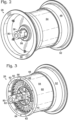
Fig. 2 is an isometric view of an illustrative hub motor suitable for use in the electric vehicle ofFig. 1 , among other applications. -
Fig. 3 depicts the hub motor ofFig. 2 with an end bell portion and motor windings removed to show various motor components. -
Fig. 4 is an end view of the hub motor ofFig. 3 . -
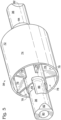
Fig. 5 is an illustrative axle portion suitable for use in a hub motor, such as the hub motor shown inFigs. 2-4 . -
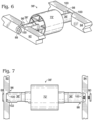
Fig. 6 is an isometric view of the axle portion ofFig. 4 coupled to a pair of illustrative frame members. -
Fig. 7 is a plan view of the axle portion and frame members ofFig. 5 . -
Fig. 8 is an isometric view of an extruded elongate member produced by an intermediate step in an illustrative manufacturing process. -
Fig. 9 is an end elevation view of the elongate member ofFig. 8 . -
Fig. 10 shows illustrative results of a thermal simulation of heat in a known hub motor having a steel axle. -
Fig. 11 shows illustrative results of a thermal simulation of heat in an enhanced hub motor in accordance with aspects of the present disclosure. -
Fig. 12 is a flow chart depicting steps in an illustrative method for manufacturing an electric hub motor. -
Fig. 13 is a flow chart depicting steps in an illustrative method for reducing heat in a hub motor. - Various aspects and examples of an electric hub motor having a high-thermal conductivity central axle and a vehicle utilizing such a hub motor, as well as related methods, are described below and illustrated in the associated drawings. Unless otherwise specified, a vehicle including a thermally enhanced hub motor and/or its various components may, but are not required to, contain at least one of the structure, components, functionality, and/or variations described, illustrated, and/or incorporated herein. Furthermore, unless specifically excluded, the process steps, structures, components, functionalities, and/or variations described, illustrated, and/or incorporated herein in connection with the present teachings may be included in other similar devices and methods, including being interchangeable between disclosed embodiments. The following description of various examples is merely illustrative in nature and is in no way intended to limit the disclosure, its application, or uses. Additionally, the advantages provided by the examples and embodiments described below are illustrative in nature and not all examples and embodiments provide the same advantages or the same degree of advantages.
- "Thermal conductivity" of a material refers to a property quantifying the ability of the material to conduct heat. Thermal conductivity may be abbreviated herein as k, and is typically measured in units of Watts per meter per Kelvin (W/(mK)). Heat transfer occurs at lower rates through materials with lower k, and at higher rates through materials with higher k. In metals, thermal conductivity may vary with temperature. Accordingly, comparisons between different materials should be understood to be in the context of substantially the same temperature or range of temperatures.
- In general, a thermally enhanced hub motor may include a high-k central axle, relative to a k of the motor's stator, where a mandrel of the axle is interference fit into the stator. The mandrel and shaft of the axle have a thermal conductivity substantially higher than the stator, such that heat will be transferred from the stator, through the mandrel and shaft. This heat can then be transferred to a heat sink outside the motor.
- The stator body of a hub motor typically includes a plurality of steel laminations. A central axle, according to the present teachings, may be constructed from an aluminum or magnesium alloy, thus having a substantially higher thermal conductivity than the lamination stack. The external heat sink may comprise an aluminum alloy or other suitable material, and may include a portion (e.g., a frame) of an apparatus to which the motor is mounted. Accordingly, heat from the stator will flow readily from the stator through the mandrel and shaft of the central axle, to the heat sink, thereby cooling the stator and facilitating improved motor performance characteristics.
- A vehicle or other apparatus having a thermally enhanced hub motor includes a frame to which the motor is directly or indirectly coupled. As is typical in a hub motor, the electric motor includes a rotor and a stator disposed concentrically within the rotor, such that the rotor is configured to rotate about the stator. In some examples, a tire or other ground-contacting element is coupled to the rotor, allowing the motor to propel the vehicle across a support surface.
- The hub motor includes an axle portion that is coupled to the frame of the vehicle. A central shaft of the axle portion extends axially from a larger mandrel fixed concentrically within the stator. The outer surface of the mandrel is in direct contact with the stator, to facilitate heat transfer between the two. The central shaft and the mandrel are unitary. In other words, the shaft and mandrel form a unit made out of a single material. The mandrels described below are generally cylindrical. However, the outer shape of the mandrel may have other shapes (e.g., octagonal or hexagonal prisms), have keyed (e.g., castellated) surfaces, and/or the like, or any combination of these. A convoluted or shaped mandrel surface may be helpful for alignment, or for increasing the contact surface area between the mandrel and a corresponding inner surface of the stator, thereby altering heat transfer and/or torque transfer characteristics.
- The following sections describe selected aspects of exemplary thermally enhanced hub motors as well as related apparatuses, systems, and methods. The examples in these sections are intended for illustration and should not be interpreted as limiting the entire scope of the present disclosure. Each section may include one or more distinct inventions, and/or contextual or related information, function, and/or structure.
- As shown in
Figs. 1-5 , this section describes an illustrative vehicle 10 having a thermally enhanced hub motor. - Vehicle 10 is a one-wheeled, self-stabilizing skateboard substantially similar to the electric vehicles described in
U.S. Pat. No. 9,101,817 board 12 having aframe 14 supporting a first deck portion 16 and asecond deck portion 18. Eachdeck portion 16, 18 is configured to receive a left or right foot of a rider oriented generally perpendicular to a direction of travel of the board, said direction of travel generally indicated at 20. - Vehicle 10 also includes a
wheel assembly 22.Wheel assembly 22 includes a rotatable ground-contacting element 24 (e.g., a tire, wheel, or continuous track) disposed between and extending above the first andsecond deck portions 16, 18, and ahub motor 26 configured to rotate ground-contacting element 24 to propel the vehicle. As shown inFig. 1 , vehicle 10 may include exactly one ground-contacting element. -
Frame 14 may include any suitable structure configured to rigidly support the deck portions and to be coupled to an axle of the wheel assembly, such that the weight of a rider may be supported ontiltable board 12 having a fulcrum at the wheel assembly axle.Frame 14 may include one ormore frame members 28, on whichdeck portions 16 and 18 may be mounted, and which may further support additional elements and features of the vehicle, such as a chargingport 30, and endbumpers 32, 34, as well as lighting assemblies, battery and electrical systems, electronics, controllers, and the like (not shown). -
Deck portions 16 and 18 may include any suitable structures configured to support the feet of a rider, such as non-skid surfaces, as well as vehicle-control features, such as a rider detection system, and the like. Illustrative deck portions, including suitable rider detection systems, are described in the '817 patent, as well as inU.S. Pat. Application No. 14/934,024 , the entirety of which is hereby included herein for all purposes. - A
shaft 36 of anaxle portion 38 ofhub motor 26 is coupled to frame 14, as shown inFig. 1 .Shaft 36 is coupled to frame 14 such that the axle portion of the hub motor is in thermal communication with the frame of the board. For example, the shaft may be directly attached to frame 14 (see description ofFigs. 6-7 below), or may be coupled to the frame through a connection or mounting block 40 (also referred to as an axle mount).Shaft 36 may be bolted or otherwise affixed to mounting block 40, which in turn may be bolted or affixed to frame 14 (e.g., by bolts 42, 44). A through hole 46 may be provided inframe 14 for access to the connector ofshaft 36 to block 40. Coupling ofshaft 36 to frame 14 facilitates use offrame 14 as a heat sink. - Turning to
Figs. 2-4 ,hub motor 26 is shown isolated from the remainder of vehicle 10.Hub motor 26 is suitable for use in any number of vehicles or other apparatuses, and is not limited to the present contextual example.Hub motor 26 is a brushless, direct-drive electric motor, and may be operated using any suitable electrical controls and wiring. For example, when used in vehicle 10, phase wires (not shown) may electrically connect one or more electric coils of the motor with one or more other electrical components of vehicle 10, such as a power stage, motor controller, battery, and the like (not shown). The one or more electrical components may drivehub motor 26 based on rider inputs to propel and actively balance vehicle 10. For example, the one or more electrical components may be configured to sense tilting ofboard 12 about a pitch axis, and to drivehub motor 26 to rotate element 24 in a similar direction about the pitch axis. -
Hub motor 26 has anouter motor casing 48 including a pair ofend bells central cylinder portion 54.Shaft 36 extends from astator 56 ofmotor 26, throughcasing 48, and the casing is supported on the shaft by one ormore bearings 58. In addition to forming an outer shell formotor 26 and a mounting surface for ground-contacting element 24,cylinder portion 54 ofcasing 48 is an outer wall of arotor 60 ofhub motor 26. Accordingly,cylinder portion 54 andcasing 48 as a whole are configured to rotate aboutstator 56 when the motor is operated. -
Rotor 60 is a generally cylindrical structure having a plurality ofmagnets 62 fixedly arranged around aninner wall 64.Magnets 62 may be permanent magnets, and may be generally rectangular, with long axes of the magnets extending along a length of the rotor.Rotor 60 may be configured to rotate aroundstator 56, leaving anair gap 66 between the two structures. -
Stator 56 is a generally cylindrical structure having a plurality of projections 68 (also referred to as teeth) forming slots therebetween.Projections 68 are configured to hold electrical windings or coils (not shown). Energizing the coils sets up a rotating magnetic field, which exerts a force onmagnets 62, thereby spinning the rotor.Stator 56 includes metal (usually steel) sheets orlaminations 70 layered together, an outermost of which can be seen inFig. 4 . These laminations typically comprise so-called electrical steel or silicon steel, and are collectively referred to as a lamination stack. Electrical steel and the lamination topology function to produce a magnetically permeable structure, while reducing core losses by interrupting induced eddy currents. However, the steel structure has a low thermal conductivity, and tends to retain heat, especially when enclosed inmotor casing 48. -
Axle portion 38 is disposed concentrically withinstator 56 in an interference fit.Axle portion 38 includes amandrel portion 72 andshaft 36, anouter surface 74 ofmandrel portion 72 being in direct contact with the stator. With continuing reference toFigs. 2-4 ,Fig. 5 is an isometric view of the mandrel and shaft ofaxle portion 38 isolated from remaining components ofhub motor 26.Mandrel portion 72 may have a larger diameter than the shaft of the axle portion, as shown inFigs. 3-5 .Shaft 36 is a central shaft extending axially frommandrel portion 72, which is fixed concentrically within the stator. The central shaft and the mandrel together form a unit, which consists of a single material having a thermal conductivity substantially higher than the stator. In some examples, this unit is made of aluminum, or of a single alloy of aluminum. In some examples, this unit is made of magnesium, or of a single alloy of magnesium. - Aluminum, for example, has a significantly higher thermal conductivity than does the steel of
stator 56, with aluminum being on the order of 205 W/(mK), while steel is typically less than 100. Similarly, magnesium has a thermal conductivity on the order of 156 W/(mK). In some examples, the thermal conductivity of the stator is less than approximately 100 W/(mK), and the thermal conductivity of the unit formed by the central shaft and the mandrel is greater than approximately 125 W/(mK) (e.g., greater than approximately 150 W/(mK)). -
Mandrel portion 72 has twoopposing end portions central shaft 36 extends axially from both of the end portions of the mandrel. In some examples,shaft 36 may extend from only one of the end portions, such as when a hub motor is side-mounted to a supporting structure, leaving one side free. -
Mandrel portion 72 is connected toshaft 36 by a plurality ofradial connectors 76, (also referred to as connection members) which run the length ofmandrel portion 72 and form a plurality oflengthwise cavities 78 therebetween.Radial connectors 76 are unitary with the mandrel portion and the central shaft, and are made of the same material (e.g., aluminum alloy). Althoughaxle portion 38 is shown in the drawings as having five suchradial connectors 76, more or fewer may be used. In some examples,mandrel portion 72 may be radially continuous withshaft 36, forming a solid structure without anycavities 78. -
Shaft 36 may include one ormore end apertures 80, which may be threaded, end chamfers 82, one or more steppedabutments 84, and/or alateral recess 86.End apertures 80 and/orchamfers 82 may be utilized for facilitating the attachment ofshaft 36 to a mounting structure, such as mounting block 40 or frame 14 (see additional discussion below regardingFigs. 6-7 ).Abutments 84 may include a slight step change in the diameter ofshaft 36, and may be utilized for proper positioning and interfacing with one or more bearings, such asbearings 58. Finally,lateral recess 86 may function as a mounting surface for one or more electronic components and/or a through-way for electrical wiring (when installed in hub motor 26). - As shown in
Figs. 6-7 , this section describes an alternative coupling betweenhub motor 26 and a frame or other mounting surface. An axle portion of a hub motor is shown inFigs. 6 and 7 , which is substantially identical toaxle portion 38, described above. Accordingly, the axle portion ofFigs. 6 and 7 will be referred to as axle portion 38', with primed reference numbers for its component elements corresponding to those ofaxle portion 38. Features and component elements of axle portion 38' not described directly below are understood to be substantially as described above. - Axle portion 38' may include end
bolts 88, 90, for coupling shaft 36' of the hub motor directly to a frame or other mounting support structure. In the example shown inFigs. 6 and 7 , axle portion 38' is attached to a pair offrame members Frame members Frame members - As depicted in
Figs. 6 and 7 ,frame members opening walls 100 configured to receive a respective chamfered end of shaft 36'.Bolts 88 and 90 are used to draw their respective ends into the openings. In this example, the depths ofopenings walls 100 before the end of the shaft bottoms out against the frame member. In other words, agap 102 exists between the end of the shaft and the inner wall of the frame member. Accordingly, tightening of the end bolts causes the shafts to more firmly wedge into the openings. Chamfers 82' and angledwalls 100 are configured such that the axle portion and stator of the hub motor are properly oriented and maintained in a proper orientation with respect to the remainder of the apparatus when shaft 36' is fixed to framemembers - As shown in
Figs. 8-9 , this section describes an intermediate article of manufacture suitable for use in the manufacturing of a mandrel and axle shaft for a thermally enhanced hub motor. -
Fig. 8 is an isometric view of anelongate cylinder 200 having anouter surface 202, along axis 204, and anouter diameter 206.Fig. 9 is an end elevation view ofcylinder 200, showing various dimensions thereof. As described below,cylinder 200 may be extruded as a single piece in the form shown inFig. 8 , and may comprise aluminum or magnesium. In some examples,cylinder 200 is made of an aluminum alloy or a magnesium alloy. -
Cylinder 200 includes anouter tube 208, which has aninner diameter 210, surrounding and connected to aninner shaft 212. At least one lengthwise cavity orgap 214 is formed between the outer tube and the inner shaft.Outer tube 208 is connected toinner shaft 212 by a plurality of radial members 216 (also referred to as radial connectors or spokes).Inner shaft 212 has anouter diameter 218, which is smaller thanouter diameter 206 andinner diameter 210.Inner shaft 212 is hollow, having a lengthwiseaxial aperture 220. - Referring back to
axle portion 38 ofFig. 5 , it may be understood thatcylinder 200 has the same structural form asmandrel portion 72. Similarly, it may be understood that the extruded form ofcylinder 200 may be machined to remove a portion ofouter tube 208 andradial members 216 to produceshaft 36. Accordingly, extrudedcylinder 200 may be an intermediate article in the manufacturing ofaxle portion 38, or the like. - As shown in
Figs. 10-11 , this section describes the results of a simulation of thermal effects in a standard-construction hub motor having a steel axle, as compared with a thermally enhanced hub motor in accordance with the present teachings. Additional features and benefits are also described. - This simulation was performed assuming 500 Watts (W) of total output in each of a prior art motor 300 (see
Fig. 10 ) and a thermally enhanced hub motor 400 (seeFig. 11 ).Motor 300 includes arotor 302 havingmagnets 304, and asteel stator 306 having acentral steel axle 308.Motor 400 includes arotor 402 havingmagnets 404, and asteel stator 406 having an aluminumalloy axle portion 408 including a mandrel and shaft, substantially as described above. - The 500 W was divided equally among the 27 coils/windings in each motor, such that each projection of the respective stator had an applied 18.5 W. Ambient temperature was assumed to be 25 C, and steady-state equilibrium conditions were simulated.
- As shown in
Figs. 10 and 11 , and in Table 1 below, significant differences were found between the thermal performances of the two motors. Average stator temperature instandard hub motor 300 was about 64 C, while average stator temperature in thermally enhancedmotor 400 was about 55.6 C. Moreover, the range of temperatures instator 306 was much wider than instator 406, due to the thinner walls and aluminum construction. As shown inFigs. 10 and 11 , the range of temperatures in the standard motor was approximately 2 C, while enhancedmotor 400 varied by less than half of a degree C. Thermally enhancedmotor 400 also experienced a reduced average temperature ofmagnets 404 as compared tomagnets 304. - Additional benefits are present in the thermally enhanced hub motor.
Hub motor 400 is suitable for use in a vehicle such as vehicle 10, and has a substantially reduced stator, axle, and combined mass, as compared with the standard hub motor that would be used for the same application. See Table 1.TABLE 1 Motor 300: Standard Steel Axle Motor 400: Aluminum Alloy Mandrel Average Stator Temp. (C) 64 55.6 Average Magnet Temp. (C) 48 43.1 Stator Mass (g) 2627 1888 Axle Mass (g) 545 296 Total Mass (kg) 3.17 2.18 - This section describes steps of an illustrative method for manufacturing a hub motor; see
Fig. 12 . Aspects of vehicles, hub motors, and/or intermediate articles of manufacture described above may be utilized in the method steps described below. Where appropriate, reference may be made to previously described components and systems that may be used in carrying out each step. These references are for illustration, and are not intended to limit the possible ways of carrying out any particular step of the method. -
Fig. 12 is a flowchart illustrating steps performed in an illustrative method, and may not recite the complete process or all steps of the method.Fig. 12 depicts multiple steps of a method, generally indicated at 500, which may be performed in conjunction with thermally enhanced hub motors according to aspects of the present disclosure. Although various steps ofmethod 500 are described below and depicted inFig. 12 , the steps need not necessarily all be performed, and in some cases may be performed in a different order than the order shown. - Step 502 of
method 500 includes extruding an elongate member out of relatively high-k material, such as an aluminum alloy or a magnesium alloy. The elongate member may be cylindrical, and may include an outer surface, a long axis, and a first outer diameter.Cylinder 200 ofFig. 8 is an example of an elongate member that may result fromstep 502. Accordingly, the extruded member may comprise an outer tube surrounding and connected to an inner shaft, such that at least one lengthwise cavity or gap is formed between the outer tube and the inner shaft. The outer tube may be connected to the inner shaft by a plurality of radial members, which may also be referred to as connectors, connector members, fins, or spokes. - Extrusion of the elongate member, as compared, for example, to casting methods, allows otherwise infeasible alloys of aluminum or magnesium to be utilized. These alloys may have higher thermal conductivities. The extrusion process also results in a more uniform grain structure in the metal, which further enhances the heat transfer capacity of the material.
- Step 504 of
method 500 includes machining a first end portion of the extruded member to produce a shaft extending coaxially from a remaining unmachined portion of the elongate member. The shaft may have a second outer diameter smaller than the first outer diameter. Step 504 may include additional machining, milling, lathing, and/or the like, and may produce an article such as the unitary mandrel and shaft shown inFig. 5 . - Step 506 of
method 500 includes inserting the elongate member into a corresponding central opening in a stator portion of an electric motor. The elongate member is inserted such that the elongate member is coupled to the stator portion in a concentric interference fit. When inserted, the shaft extends beyond the stator portion, as shown in the example ofFig. 3 . - In some examples,
step 506 may include inserting the elongate member (e.g., a mandrel) into the stator by pressing the elongate member into an opening of the stator. In some examples,step 506 may instead include compression shrink fitting, also referred to as cryo-fitting. In the compression shrink fitting examples, the elongate member may be cooled using a cryogen (e.g., liquid nitrogen) before insertion into the opening of the stator. Cooling the elongate member shrinks it slightly, resulting in a reduced outer diameter. Following insertion, a subsequent return of the elongate member to ambient temperature causes the elongate member to expand to its original size. The inner diameter of the stator opening is configured such that outward/lateral expansion of the elongate member results in a tight interference fit between the two components. This method may be preferred over press-fitting, as it results in less galling, scoring, and damage to the mating surfaces of the components, thereby resulting in better heat transfer. - Step 508 of
method 500, which is optional, may include installing the joined stator portion and elongate member into an electric motor. Step 508 may include inserting the stator assembly concentrically within an outer rotor of the motor. Step 508 may include encasing the rotor and stator in a motor casing, with the shaft(s) of the elongate member protruding through the motor casing. - This section describes steps of an illustrative method for reducing heat in a hub motor; see
Fig. 13 . Aspects of vehicles, hub motors, and/or intermediate articles of manufacture described above may be utilized in the method steps described below. Where appropriate, reference may be made to previously described components and systems that may be used in carrying out each step. These references are for illustration, and are not intended to limit the possible ways of carrying out any particular step of the method. -
Fig. 13 is a flowchart illustrating steps performed in an illustrative method, and may not recite the complete process or all steps of the method.Fig. 13 depicts multiple steps of a method, generally indicated at 600, which may be performed in conjunction with thermally enhanced hub motors according to aspects of the present disclosure. Although various steps ofmethod 600 are described below and depicted inFig. 13 , the steps need not necessarily all be performed, and in some cases may be performed in a different order than the order shown. - Step 602 of
method 600 includes operating a hub motor, such that an outer rotor rotates around an inner stator of the hub motor, thereby generating heat in the stator. The hub motor is coupled to a device, which may include a vehicle such as vehicle 10, described above. In some examples, the hub motor may be configured to rotate a wheel of the vehicle. - Step 604 of
method 600 includes transferring at least a portion of the heat from the stator to a heat sink outside the motor. This is accomplished by conducting heat from the stator to the heat sink through an axle of the motor. The axle has a substantially higher thermal conductivity than the stator, and the heat sink comprises a portion of the device to which the hub motor is mounted. For example, the axle may comprise aluminum or an aluminum alloy, while the stator comprises steel, such as electrical steel, having a much lower thermal conductivity (k). - The heat sink, which may be a portion of the device or vehicle, may comprise a material having a k that is substantially similar to the k of the axle. For example, the portion of the device may function as the heat sink, and may comprise aluminum (e.g., an aluminum alloy). The heat sink may provide a significant volume and/or area useful for dissipating heat transferred to it by the axle.
Claims (7)
- An electric vehicle (10) comprising:a frame (14);at least one wheel assembly (22) coupled to the frame (14) and including a rotatable ground-contacting element (24); anda hub motor (26) corresponding to each wheel assembly (22) and configured to rotate the corresponding ground-contacting element (24) to propel the electric vehicle (10), each hub motor (26) including: a stator (56) disposed concentrically within the ground-contacting element (24),wherein an axle portion (38) of the hub motor (26) has a central shaft (36) extending axially from a mandrel (72) fixed concentrically within the stator (56), the mandrel (72) having an outer diameter larger than the central shaft (36), an outer surface of the mandrel (72) in direct contact with the stator (56), the central shaft (36) and the mandrel (72) being made out of a single material having a thermal conductivity higher than a thermal conductivity of the stator (56), wherein the central shaft (36) and the mandrel (72) are formed as a single piece; andwherein the central shaft (36) is coupled to the frame (14), such that the axle portion (38) of each hub motor (26) is in thermal communication with the frame (14), and the mandrel (72) is connected to the central shaft (36) by a plurality of radial connectors (76) unitary with the mandrel (72) and the central shaft (36).
- The vehicle of claim 1, wherein the axle portion (38) of each hub motor (26) is directly coupled to the frame (14).
- The vehicle of claim 1, wherein the at least one wheel assembly (22) includes two wheel assemblies.
- The vehicle of claim 1, wherein the vehicle (10) is an electric scooter.
- The vehicle of claim 1, wherein the vehicle (10) is an electric bicycle.
- The vehicle of claim 1, wherein the vehicle (10) is a self-balancing electric vehicle.
- The vehicle of claim 1, wherein the mandrel (72) is disposed concentrically within the stator (56) in an interference fit.
Applications Claiming Priority (3)
| Application Number | Priority Date | Filing Date | Title |
|---|---|---|---|
| US15/063,071 US9598141B1 (en) | 2016-03-07 | 2016-03-07 | Thermally enhanced hub motor |
| EP17763721.2A EP3426363B1 (en) | 2016-03-07 | 2017-02-15 | Thermally enhanced hub motor |
| PCT/US2017/017946 WO2017155673A1 (en) | 2016-03-07 | 2017-02-15 | Thermally enhanced hub motor |
Related Parent Applications (2)
| Application Number | Title | Priority Date | Filing Date |
|---|---|---|---|
| EP17763721.2A Division-Into EP3426363B1 (en) | 2016-03-07 | 2017-02-15 | Thermally enhanced hub motor |
| EP17763721.2A Division EP3426363B1 (en) | 2016-03-07 | 2017-02-15 | Thermally enhanced hub motor |
Publications (2)
| Publication Number | Publication Date |
|---|---|
| EP3922328A1 EP3922328A1 (en) | 2021-12-15 |
| EP3922328B1 true EP3922328B1 (en) | 2025-04-09 |
Family
ID=57619715
Family Applications (2)
| Application Number | Title | Priority Date | Filing Date |
|---|---|---|---|
| EP21189213.8A Active EP3922328B1 (en) | 2016-03-07 | 2017-02-15 | Thermally enhanced hub motor |
| EP17763721.2A Active EP3426363B1 (en) | 2016-03-07 | 2017-02-15 | Thermally enhanced hub motor |
Family Applications After (1)
| Application Number | Title | Priority Date | Filing Date |
|---|---|---|---|
| EP17763721.2A Active EP3426363B1 (en) | 2016-03-07 | 2017-02-15 | Thermally enhanced hub motor |
Country Status (6)
| Country | Link |
|---|---|
| US (3) | US9598141B1 (en) |
| EP (2) | EP3922328B1 (en) |
| CN (3) | CN107171488B (en) |
| DE (1) | DE202017006969U1 (en) |
| TW (2) | TWI610518B (en) |
| WO (1) | WO2017155673A1 (en) |
Families Citing this family (47)
| Publication number | Priority date | Publication date | Assignee | Title |
|---|---|---|---|---|
| US20050211357A1 (en) * | 2002-07-28 | 2005-09-29 | Wenlin Ren | Inner tube with film |
| CN205269008U (en) * | 2013-05-06 | 2016-06-01 | 未来动力公司 | Electric vehicles, electric skateboards and self-balancing electric vehicles |
| US9211470B2 (en) | 2013-10-21 | 2015-12-15 | Equalia LLC. | Pitch-propelled vehicle |
| US10369453B2 (en) * | 2013-10-21 | 2019-08-06 | Equalia LLC | Pitch-propelled vehicle |
| CA2928797C (en) * | 2013-12-06 | 2022-04-12 | Innovated Transport Systems Ug (Haftungsbeschrankt) | Vehicle for the movement of a driver, comprising a ball rolling on a ground surface and in any desired direction |
| GB2531623B (en) * | 2015-05-29 | 2017-11-29 | Artemev Timur | Hub motor design |
| US10807659B2 (en) * | 2016-05-27 | 2020-10-20 | Joseph L. Pikulski | Motorized platforms |
| US10071303B2 (en) * | 2015-08-26 | 2018-09-11 | Malibu Innovations, LLC | Mobilized cooler device with fork hanger assembly |
| US9950243B2 (en) * | 2015-11-25 | 2018-04-24 | Inboard Technology, Inc. | Powered skateboard |
| US10040503B2 (en) * | 2016-01-15 | 2018-08-07 | Shane Chen | Foot placement sensor and self-balancing personal transportation device having same |
| USD827747S1 (en) * | 2016-03-14 | 2018-09-04 | Koofy Innovation Limited | Skateboard |
| CN107539035B (en) * | 2016-06-24 | 2020-07-07 | 酷飞创新有限公司 | Single wheel self-balancing vehicle with tires allowing carving and sliding movement |
| US10476360B2 (en) * | 2016-09-13 | 2019-11-12 | Indigo Technologies, Inc. | Axial flux motor having rotatably coupled coil stator assemblies and methods of using same |
| USD821517S1 (en) * | 2017-01-03 | 2018-06-26 | Future Motion, Inc. | Skateboard |
| JP6709292B2 (en) * | 2017-07-27 | 2020-06-10 | 納恩博(北京)科技有限公司Ninebot (Beijing) Tech Co.,Ltd. | Roller skating device and electric balance car |
| DE212018000376U1 (en) | 2017-12-07 | 2020-07-10 | Future Motion, Inc. | Descent controls for unicycle vehicles |
| US11050322B2 (en) | 2017-12-26 | 2021-06-29 | Hamilton Sundstrand Corporation | Flywheel energy storage with PM, induction, or variable reluctance machine |
| TWI647143B (en) * | 2017-12-28 | 2019-01-11 | Heat radiation structure of power wheel axle of electric locomotive | |
| DE102018102740A1 (en) * | 2018-02-07 | 2019-08-08 | Lsp Innovative Automotive Systems Gmbh | External stator for a rotary field machine (electric motor) with an inner rotor, with Statorzahngruppen, each having two mutually adjacent stator teeth |
| CN110138142A (en) * | 2018-02-09 | 2019-08-16 | 低碳动能开发股份有限公司 | The heat-dissipating structure of electric motor car power wheel wheel shaft |
| USD843532S1 (en) | 2018-02-23 | 2019-03-19 | Future Motion, Inc. | Skateboard |
| USD850552S1 (en) | 2018-02-23 | 2019-06-04 | Future Motion, Inc. | Skateboard |
| CN109131674B (en) * | 2018-08-13 | 2023-09-26 | 佛山科学技术学院 | a balancing car |
| CN109586538A (en) * | 2018-12-06 | 2019-04-05 | 上海航天控制技术研究所 | A kind of autonomous controllable high-precision height response electromechanical servo component |
| CN109398070A (en) * | 2018-12-12 | 2019-03-01 | 重庆龙科自动化机械设备研究院有限公司 | A kind of intelligent electric motor car rear-wheel motor wheel hub |
| WO2020146420A1 (en) | 2019-01-07 | 2020-07-16 | Future Motion, Inc. | Self-balancing systems for electric vehicles |
| USD897469S1 (en) * | 2019-03-11 | 2020-09-29 | Future Motion, Inc. | Foot pad for electric vehicle |
| USD881307S1 (en) * | 2019-03-11 | 2020-04-14 | Future Motion, Inc. | Fender for electric vehicle |
| USD881308S1 (en) * | 2019-03-11 | 2020-04-14 | Future Motion, Inc. | Fender for electric vehicle |
| USD890278S1 (en) * | 2019-03-11 | 2020-07-14 | Future Motion, Inc. | Electric vehicle |
| USD886929S1 (en) * | 2019-03-11 | 2020-06-09 | Future Motion, Inc. | Rear bumper for electric vehicle |
| USD890279S1 (en) * | 2019-03-11 | 2020-07-14 | Future Motion, Inc. | Electric vehicle with fender |
| USD890280S1 (en) * | 2019-03-11 | 2020-07-14 | Future Motion, Inc. | Rider detection sensor for electric vehicle |
| USD888175S1 (en) * | 2019-03-11 | 2020-06-23 | Future Motion, Inc. | Electric vehicle front |
| US11794090B2 (en) | 2020-01-08 | 2023-10-24 | Acme Land Surf Co., LLC | Wheeled vehicle and deck for wheeled vehicle |
| GB202014789D0 (en) | 2020-09-18 | 2020-11-04 | Ocado Innovation Ltd | A load handling device |
| US11123629B1 (en) | 2020-10-06 | 2021-09-21 | Future Motion, Inc. | Suspension systems for an electric skateboard |
| DE102021106341A1 (en) | 2021-03-16 | 2022-09-22 | Ebm-Papst Mulfingen Gmbh & Co. Kg | Electric motor with improved engine utilization |
| US11325021B1 (en) * | 2021-04-21 | 2022-05-10 | Float Supply LLC | Side rails for self-stabilizing, one-wheeled electric skateboards and related products |
| FI20215573A1 (en) * | 2021-05-14 | 2022-11-15 | Mirka Ltd | Rotor shaft arrangement, method for producing a rotor shaft arrangement and devices comprising the rotor shaft arrangement |
| US11273364B1 (en) | 2021-06-30 | 2022-03-15 | Future Motion, Inc. | Self-stabilizing skateboard |
| US11299059B1 (en) | 2021-10-20 | 2022-04-12 | Future Motion, Inc. | Self-stabilizing skateboard |
| US11890528B1 (en) | 2022-11-17 | 2024-02-06 | Future Motion, Inc. | Concave side rails for one-wheeled vehicles |
| US12187373B1 (en) | 2024-02-29 | 2025-01-07 | Future Motion, Inc. | Skateboard footpads having foot engagement structures and traction inserts |
| US12330736B1 (en) | 2024-10-11 | 2025-06-17 | Float Supply, LLC | Single wheeled vehicle with increased travel range |
| US12319377B1 (en) * | 2024-10-22 | 2025-06-03 | Float Supply, LLC | Single wheel vehicle rider presence detector |
| US12370828B1 (en) * | 2024-11-21 | 2025-07-29 | Float Supply, LLC | Axle with outer sleeve and electric vehicles having axle with outer sleeve |
Family Cites Families (127)
| Publication number | Priority date | Publication date | Assignee | Title |
|---|---|---|---|---|
| US1585258A (en) | 1923-02-08 | 1926-05-18 | Moore Inventions Corp | Pole monocycle |
| US2873515A (en) * | 1955-01-03 | 1959-02-17 | Smith Corp A O | Coil inserter |
| US3762488A (en) * | 1972-04-13 | 1973-10-02 | Fairfield Mfg | Wheel drive unit |
| US3812928A (en) | 1972-05-12 | 1974-05-28 | Allis Chalmers | Electric powered wheel |
| US4106786A (en) * | 1977-05-05 | 1978-08-15 | Earl Raymond Talbott | Recreational vehicle for use on sloping terrains |
| US4109741A (en) * | 1977-07-29 | 1978-08-29 | Gabriel Charles L | Motorized unicycle wheel |
| US4241931A (en) * | 1979-04-16 | 1980-12-30 | Healy Donald H | Automobile tire riding vehicle |
| US4330045A (en) * | 1979-09-14 | 1982-05-18 | Reliance Electric Company | Vehicle wheel mechanism |
| US4740001A (en) * | 1981-09-14 | 1988-04-26 | Torleumke Keith R | Sprag wheel |
| US4795181A (en) | 1988-04-04 | 1989-01-03 | Armstrong Robert B | Skateboard |
| US4997196A (en) | 1989-10-30 | 1991-03-05 | Wood John L | Illuminated skateboard |
| US5119277A (en) | 1990-09-04 | 1992-06-02 | David R. Ekedal | Illuminated skateboard |
| US5132883A (en) | 1991-07-15 | 1992-07-21 | Lumandier Monroe A | Illuminated railing for skateboards and the like |
| US5119279A (en) | 1991-08-01 | 1992-06-02 | Makowsky Gary R | Lighted drinking vessel |
| US5419406A (en) | 1991-10-24 | 1995-05-30 | Aisin Aw Co., Ltd. | Drive system for electric car |
| DE69316254T2 (en) * | 1992-03-19 | 1998-06-18 | Sanyo Electric Co | Motor and pedal powered bicycle |
| JP2993652B2 (en) | 1993-02-13 | 1999-12-20 | ユニテック 株式会社 | Electric play equipment |
| US6779621B2 (en) | 1993-02-24 | 2004-08-24 | Deka Products Limited Partnership | Riderless stabilization of a balancing transporter |
| US7090040B2 (en) | 1993-02-24 | 2006-08-15 | Deka Products Limited Partnership | Motion control of a transporter |
| US5701965A (en) | 1993-02-24 | 1997-12-30 | Deka Products Limited Partnership | Human transporter |
| US5691584A (en) * | 1993-09-09 | 1997-11-25 | Honda Giken Kogyo Kabushiki Kaisha | Wheel motor for vehicles |
| US6874591B2 (en) | 1994-05-27 | 2005-04-05 | Deka Products Limited Partnership | Speed limiting for a balancing transporter |
| US6827163B2 (en) | 1994-05-27 | 2004-12-07 | Deka Products Limited Partnership | Non-linear control of a balancing vehicle |
| US5513080A (en) | 1994-12-30 | 1996-04-30 | Magle; Thomas O. | Indirect lighting system for roller skates and skateboards |
| US6561294B1 (en) | 1995-02-03 | 2003-05-13 | Deka Products Limited Partnership | Balancing vehicle with passive pivotable support |
| US6050357A (en) | 1995-05-31 | 2000-04-18 | Empower Corporation | Powered skateboard |
| JP3682590B2 (en) * | 1996-05-24 | 2005-08-10 | ソニー株式会社 | Moving device and movement control method |
| JPH10311375A (en) * | 1997-05-07 | 1998-11-24 | Fanuc Ltd | Rotary body structure |
| US6034465A (en) * | 1997-08-06 | 2000-03-07 | Shurfle Pump Manufacturing Co. | Pump driven by brushless motor |
| US6199652B1 (en) * | 1997-12-11 | 2001-03-13 | Vectrix Corporation | Vehicle drive wheel assembly |
| AU758135B2 (en) | 1998-10-21 | 2003-03-13 | Deka Products Limited Partnership | Fault tolerant architecture for a personal vehicle |
| JP2000140190A (en) | 1998-11-11 | 2000-05-23 | Buoogu International:Kk | Power-priven skateboard |
| US6553271B1 (en) | 1999-05-28 | 2003-04-22 | Deka Products Limited Partnership | System and method for control scheduling |
| US6302230B1 (en) | 1999-06-04 | 2001-10-16 | Deka Products Limited Partnership | Personal mobility vehicles and methods |
| US7740099B2 (en) | 1999-06-04 | 2010-06-22 | Segway Inc. | Enhanced control of a transporter |
| US6789640B1 (en) | 2000-10-13 | 2004-09-14 | Deka Products Limited Partnership | Yaw control for a personal transporter |
| MXPA01012685A (en) | 1999-06-30 | 2002-06-04 | Deka Products Lp | Apparatus and method for a pitch state estimator for a personal vehicle. |
| JP2001140996A (en) * | 1999-11-18 | 2001-05-22 | Shoken Ri | Cycloidal speed reduction type electric wheel motor |
| US7533747B2 (en) * | 2000-01-26 | 2009-05-19 | E-Traction Europe B.V. | Wheel provided with driving means |
| US6408240B1 (en) | 2000-10-13 | 2002-06-18 | Deka Products Limited Partnership | Traction control for a personal transporter |
| US6538411B1 (en) * | 2000-10-13 | 2003-03-25 | Deka Products Limited Partnership | Deceleration control of a personal transporter |
| US6288505B1 (en) | 2000-10-13 | 2001-09-11 | Deka Products Limited Partnership | Motor amplifier and control for a personal transporter |
| US6965206B2 (en) | 2000-10-13 | 2005-11-15 | Deka Products Limited Partnership | Method and system for fail-safe motor operation |
| US6536788B1 (en) | 2000-10-30 | 2003-03-25 | Ferenc Kuncz | Skateboard integral interchangeable independent suspension truck-free with aerodynamic board design and rolling devices systems |
| US20020096380A1 (en) * | 2001-01-24 | 2002-07-25 | Ying-Chou Lai | Electric wheel axle drive structure with automatic clutch function |
| US6892439B1 (en) * | 2001-02-01 | 2005-05-17 | Encap Motor Corporation | Motor with stator made from linear core preform |
| EP1265341A1 (en) * | 2001-06-08 | 2002-12-11 | Chun-Pu Hsu | Wheel structure with inner stator and inside the stator integrated switches |
| US7900725B2 (en) | 2002-06-11 | 2011-03-08 | Segway Inc. | Vehicle control by pitch modulation |
| EP1534395A2 (en) | 2002-06-13 | 2005-06-01 | Pivit LLC | Safety balance device |
| US6836036B2 (en) * | 2002-06-14 | 2004-12-28 | Dube Jean-Yves | Electric motor with modular stator ring and improved heat dissipation |
| CA2492393A1 (en) | 2002-07-12 | 2004-01-22 | Deka Products Limited Partnership | Motion control for a transporter |
| FR2845009B1 (en) | 2002-10-01 | 2004-11-19 | Alain Bouvet | PROPULSION WHEEL BOARD |
| US6992452B1 (en) | 2002-12-02 | 2006-01-31 | Deka Products Limited Partnership | Dynamic current limiting |
| US20040212259A1 (en) * | 2003-04-24 | 2004-10-28 | Gould Len Charles | Wheel motor |
| JP2004336965A (en) * | 2003-05-12 | 2004-11-25 | Denso Corp | Rotor of rotating electric machine and rotor of magnet type alternator |
| US20060186617A1 (en) | 2003-07-11 | 2006-08-24 | Ryan Farrelly | Personal transportation device for supporting a user's foot having multiple transportation attachments |
| US7059613B2 (en) | 2003-07-11 | 2006-06-13 | Freeline Skates Inc. | Personal transportation device for supporting a user's foot having multiple transportation attachments |
| US7091724B2 (en) | 2003-07-23 | 2006-08-15 | Deka Products Limited Partnership | Model-based fault detection in a motor drive |
| JP4359594B2 (en) | 2003-08-07 | 2009-11-04 | ヤマハ発動機株式会社 | vehicle |
| WO2005016735A1 (en) | 2003-08-18 | 2005-02-24 | Canterprise Limited | A powered unicycle |
| JP2005073450A (en) * | 2003-08-27 | 2005-03-17 | Matsushita Electric Ind Co Ltd | Motor generator |
| US20050104470A1 (en) * | 2003-11-13 | 2005-05-19 | Perkins William P. | Integrated stator-axle for in-wheel motor of an electric vehicle |
| US20050139406A1 (en) * | 2003-12-31 | 2005-06-30 | Mcleese Eddie S. | Front wheel powered skate board with accessory engagable frame and suspension system |
| US7263453B1 (en) | 2004-01-21 | 2007-08-28 | Deka Products Limited Partnership | Shaft feedback sensor error detection |
| JP4290020B2 (en) | 2004-01-23 | 2009-07-01 | ヤマハ株式会社 | Mobile device and mobile device system |
| US7467681B2 (en) | 2004-04-28 | 2008-12-23 | Yamaha Hatsudoki Kabushiki Kaisha | Vehicle, vehicle control device and variable control method |
| US20090200877A1 (en) * | 2004-06-22 | 2009-08-13 | Yoshiaki Koshida | Stepping motor |
| US7138774B2 (en) | 2004-08-05 | 2006-11-21 | Yamaha Hatsudoki Kabushiki Kaisha | Vehicle control unit and vehicle |
| WO2006029044A2 (en) * | 2004-09-02 | 2006-03-16 | Crigler Daren W | Electric skateboard |
| TWI259638B (en) * | 2004-12-01 | 2006-08-01 | Ind Tech Res Inst | Structure of an electric motor |
| JP2007049844A (en) * | 2005-08-11 | 2007-02-22 | Shinano Kenshi Co Ltd | Outer-rotor motor |
| US7413281B2 (en) | 2005-10-11 | 2008-08-19 | Silverbrook Research Pty Ltd | Capper for a printhead maintenance station |
| US7579738B2 (en) * | 2005-10-31 | 2009-08-25 | Greenee Energy Inc. | Multi-phase electrical motor for use in a wheel |
| US20070194558A1 (en) | 2006-02-21 | 2007-08-23 | Stone Christopher A | Snowboards and the like having integrated dynamic light displays related to snowboard motion |
| USD567318S1 (en) | 2006-03-23 | 2008-04-22 | Freeline Sports, Inc. | Personal transportation device |
| US7811217B2 (en) * | 2006-04-28 | 2010-10-12 | Larry Richard Odien | Motorized apparatus and method for dynamic balancing exercise |
| US20070254789A1 (en) * | 2006-04-28 | 2007-11-01 | Larry Richard Odien | Motorized apparatus and method for dynamic balancing exercise |
| USD551592S1 (en) | 2006-06-30 | 2007-09-25 | Segway Inc. | Human transporter |
| ES2394660T3 (en) | 2006-08-11 | 2013-02-04 | Segway Inc. | Speed limitation in electric vehicles |
| US7979179B2 (en) | 2006-08-11 | 2011-07-12 | Segway Inc. | Apparatus and method for pitch state estimation for a vehicle |
| CN201038906Y (en) * | 2007-05-09 | 2008-03-19 | 宇泉能源科技股份有限公司 | Eccentric hub motor |
| US8052293B2 (en) | 2007-09-20 | 2011-11-08 | Nite Glow Industries, Inc. | Omnidirectionally illuminated sport board |
| GB2455302B (en) | 2007-12-04 | 2013-02-20 | H Grossman Ltd | Improved skateboard |
| JP4667478B2 (en) | 2008-02-26 | 2011-04-13 | 日立建機株式会社 | Traveling device |
| DE102008002274A1 (en) | 2008-06-06 | 2009-12-10 | Kuka Roboter Gmbh | Multi-directionally mobile vehicle and method |
| US8146696B2 (en) | 2008-09-02 | 2012-04-03 | Segway, Inc. | Methods and apparatus for moving a vehicle up or down a sloped surface |
| US8562386B2 (en) | 2008-10-10 | 2013-10-22 | Jakks Pacific, Inc. | Mobile skateboard-shaped toy with a flywheel |
| US8170780B2 (en) | 2008-11-06 | 2012-05-01 | Segway, Inc. | Apparatus and method for control of a vehicle |
| US20100143527A1 (en) * | 2008-12-17 | 2010-06-10 | Manu Mathai | Extrusion die and method for extruding a rotor shaft for a wind turbine generator |
| USD624136S1 (en) | 2009-02-13 | 2010-09-21 | Shane Chen | Wheel skate device |
| US8025300B1 (en) | 2009-08-20 | 2011-09-27 | Christopher Jordan | Sports board with rear brake |
| FR2949689A1 (en) | 2009-09-09 | 2011-03-11 | Stephane Pelletier | MOTORIZED VEHICLE |
| CA2728388A1 (en) | 2010-01-15 | 2011-07-15 | Michael G. Lewis | In-line off-road skateboard |
| DE102010001750A1 (en) * | 2010-02-10 | 2011-08-11 | ZF Friedrichshafen AG, 88046 | Arrangement for driving a vehicle wheel with a drive motor |
| EP2544944B1 (en) | 2010-02-26 | 2017-01-11 | Segway Inc. | Apparatus and methods for control of a vehicle |
| TWI465007B (en) * | 2010-05-11 | 2014-12-11 | Hoeganaes Ab | Bicycle motor hub |
| US8838308B2 (en) * | 2010-05-27 | 2014-09-16 | Boxx Corp. | Two wheeled vehicle with modular features |
| WO2011160040A2 (en) | 2010-06-17 | 2011-12-22 | Light Bohrd, LLC | Systems and methods for luminescent display |
| EP2582977A4 (en) | 2010-06-21 | 2017-05-03 | Equalaire Systems, Inc. | Rotary air connection with central valve for tire inflation system |
| JP5300830B2 (en) * | 2010-12-24 | 2013-09-25 | 株式会社シマノ | Bicycle hub with built-in motor |
| US8747271B2 (en) * | 2011-03-12 | 2014-06-10 | General Electric Company | Wheel rim assembly and method |
| US8540041B2 (en) * | 2011-03-21 | 2013-09-24 | Kuo-Hsin Su | Driving system for electric vehicle |
| WO2012137848A1 (en) * | 2011-04-06 | 2012-10-11 | 本田技研工業株式会社 | Drive device for vehicle |
| WO2013052707A1 (en) | 2011-10-04 | 2013-04-11 | Boosted Boards | Personal transport vehicle |
| JP5799731B2 (en) | 2011-10-12 | 2015-10-28 | 日産自動車株式会社 | Axle support structure |
| US20150298537A1 (en) * | 2011-11-15 | 2015-10-22 | Bionx Canda Inc. | Wheel motor configuration for vehicle motorization |
| CA2801441A1 (en) | 2012-01-06 | 2013-07-06 | D3, Llc | Intelligent lighting system for sporting apparatus |
| KR20130110037A (en) * | 2012-03-27 | 2013-10-08 | 레미 테크놀러지스 엘엘씨 | Ipm machine with thermally conductive compound |
| KR101552982B1 (en) * | 2012-07-12 | 2015-09-14 | 현대모비스 주식회사 | In-wheel motor and in-wheel working device |
| CN202847372U (en) * | 2012-10-29 | 2013-04-03 | 昆明理工大学 | Automatic side-tilting suspension frame |
| JP2014145405A (en) * | 2013-01-29 | 2014-08-14 | Samsung Electromechanics Japan Advanced Technology Co Ltd | Disk drive device |
| USD704786S1 (en) | 2013-02-20 | 2014-05-13 | Cheok Io Tang | Skateboard |
| US9616318B2 (en) * | 2013-03-15 | 2017-04-11 | Stealth Electric Longboards | Powered personal transportation systems and methods |
| TWM460006U (en) * | 2013-04-12 | 2013-08-21 | China Motor Corp | Hub motor with heat-dissipating housing and the heat-dissipating housing thereof |
| CN205269008U (en) * | 2013-05-06 | 2016-06-01 | 未来动力公司 | Electric vehicles, electric skateboards and self-balancing electric vehicles |
| EP2846440A1 (en) * | 2013-09-10 | 2015-03-11 | Siemens Aktiengesellschaft | Electric machine with a heat conduction device |
| US9211470B2 (en) * | 2013-10-21 | 2015-12-15 | Equalia LLC. | Pitch-propelled vehicle |
| US9643077B2 (en) * | 2013-10-21 | 2017-05-09 | Equalia LLC | Pitch-propelled vehicle |
| CN104742724A (en) * | 2013-12-31 | 2015-07-01 | 河南超微电动汽车有限公司 | Double-function motor |
| USD747668S1 (en) | 2014-02-10 | 2016-01-19 | Shane Chen | One-wheeled vehicle |
| US9327182B1 (en) | 2014-04-07 | 2016-05-03 | Frank Meak | Two wheeled recreational board |
| US20160059108A1 (en) * | 2014-08-29 | 2016-03-03 | Carl Francis Demolder | Universal Electric Skateboard Unit |
| US9393483B2 (en) * | 2014-09-05 | 2016-07-19 | Dynamic Labs, Llc | Motorized vehicle |
| USD746928S1 (en) * | 2014-10-20 | 2016-01-05 | Future Motion, Inc. | Skateboard |
| GB2547152B (en) * | 2014-11-05 | 2020-11-11 | Future Motion Inc | Rider Detection System |
| CN105109595B (en) * | 2015-09-14 | 2018-05-22 | 姚宇满 | Unilateral oilless bearing electrodynamic balance vehicle |
| USD768252S1 (en) | 2016-02-25 | 2016-10-04 | Equalia LLC | Pitch-propelled vehicle |
-
2016
- 2016-03-07 US US15/063,071 patent/US9598141B1/en active Active
- 2016-07-15 CN CN201610561672.9A patent/CN107171488B/en active Active
- 2016-07-15 CN CN201620752246.9U patent/CN205846956U/en active Active
- 2016-07-15 CN CN201810821006.3A patent/CN108933498B/en active Active
-
2017
- 2017-02-15 US US15/433,208 patent/US9653973B1/en active Active
- 2017-02-15 DE DE202017006969.5U patent/DE202017006969U1/en active Active
- 2017-02-15 EP EP21189213.8A patent/EP3922328B1/en active Active
- 2017-02-15 WO PCT/US2017/017946 patent/WO2017155673A1/en not_active Ceased
- 2017-02-15 EP EP17763721.2A patent/EP3426363B1/en active Active
- 2017-02-15 US US15/433,194 patent/US9755485B1/en active Active
- 2017-02-18 TW TW106105449A patent/TWI610518B/en active
- 2017-02-18 TW TW106134355A patent/TWI667866B/en active
Also Published As
| Publication number | Publication date |
|---|---|
| US20170257008A1 (en) | 2017-09-07 |
| CN108933498A (en) | 2018-12-04 |
| US9653973B1 (en) | 2017-05-16 |
| US9598141B1 (en) | 2017-03-21 |
| WO2017155673A1 (en) | 2017-09-14 |
| TWI667866B (en) | 2019-08-01 |
| EP3426363B1 (en) | 2023-08-09 |
| TWI610518B (en) | 2018-01-01 |
| CN205846956U (en) | 2016-12-28 |
| TW201733252A (en) | 2017-09-16 |
| CN108933498B (en) | 2020-04-07 |
| CN107171488A (en) | 2017-09-15 |
| EP3426363A1 (en) | 2019-01-16 |
| DE202017006969U1 (en) | 2019-01-10 |
| EP3922328A1 (en) | 2021-12-15 |
| TW201806290A (en) | 2018-02-16 |
| EP3426363A4 (en) | 2019-11-13 |
| US9755485B1 (en) | 2017-09-05 |
| CN107171488B (en) | 2018-08-28 |
Similar Documents
| Publication | Publication Date | Title |
|---|---|---|
| EP3426363B1 (en) | Thermally enhanced hub motor | |
| US10112680B2 (en) | Thermally enhanced hub motor | |
| JP3300200B2 (en) | Rotating electric machines and electric vehicles | |
| US11411450B2 (en) | Sealed axial flux motor with integrated cooling | |
| US6836036B2 (en) | Electric motor with modular stator ring and improved heat dissipation | |
| US8484828B2 (en) | Method for fabricating a rotor for an induction motor | |
| TWI268037B (en) | Integrated stator-axle for in-wheel motor of an electric vehicle | |
| US7714478B2 (en) | Electric rotary machine | |
| US20080278011A1 (en) | Stator assembly for use in a fluid-cooled motor and method of making the same | |
| KR20130141511A (en) | Coolant channels for electric machine stator | |
| US20140009013A1 (en) | Stator torque retention feature for a cast-in stator assembly | |
| US10483817B2 (en) | Rotor for an electric motor including a structure for retaining rotor segments and permanent magnets on a hub thereof | |
| KR20170125966A (en) | Rotor for an electrical machine | |
| US20150357883A1 (en) | High-speed high-power switched reluctance machine | |
| HK1236689B (en) | Thermally enhanced hub motor | |
| HK1236689A1 (en) | Thermally enhanced hub motor | |
| CN113809845A (en) | Electrical apparatus and associated carrier with improved heat resistance | |
| CN104907876A (en) | High-power electric spindle with multiple coaxial and series-wound motors | |
| JP2009195083A (en) | Stator cooling structure, stator manufacturing method, and rotating electric machine | |
| JP2000060057A (en) | Electric motor and method of manufacturing the same | |
| KR20250164962A (en) | Stator Core of Motor having Cooling Structure |
Legal Events
| Date | Code | Title | Description |
|---|---|---|---|
| PUAI | Public reference made under article 153(3) epc to a published international application that has entered the european phase |
Free format text: ORIGINAL CODE: 0009012 |
|
| STAA | Information on the status of an ep patent application or granted ep patent |
Free format text: STATUS: THE APPLICATION HAS BEEN PUBLISHED |
|
| AC | Divisional application: reference to earlier application |
Ref document number: 3426363 Country of ref document: EP Kind code of ref document: P |
|
| AK | Designated contracting states |
Kind code of ref document: A1 Designated state(s): AL AT BE BG CH CY CZ DE DK EE ES FI FR GB GR HR HU IE IS IT LI LT LU LV MC MK MT NL NO PL PT RO RS SE SI SK SM TR |
|
| B565 | Issuance of search results under rule 164(2) epc |
Effective date: 20211014 |
|
| STAA | Information on the status of an ep patent application or granted ep patent |
Free format text: STATUS: REQUEST FOR EXAMINATION WAS MADE |
|
| 17P | Request for examination filed |
Effective date: 20220614 |
|
| RBV | Designated contracting states (corrected) |
Designated state(s): AL AT BE BG CH CY CZ DE DK EE ES FI FR GB GR HR HU IE IS IT LI LT LU LV MC MK MT NL NO PL PT RO RS SE SI SK SM TR |
|
| GRAP | Despatch of communication of intention to grant a patent |
Free format text: ORIGINAL CODE: EPIDOSNIGR1 |
|
| STAA | Information on the status of an ep patent application or granted ep patent |
Free format text: STATUS: GRANT OF PATENT IS INTENDED |
|
| INTG | Intention to grant announced |
Effective date: 20241108 |
|
| GRAS | Grant fee paid |
Free format text: ORIGINAL CODE: EPIDOSNIGR3 |
|
| GRAA | (expected) grant |
Free format text: ORIGINAL CODE: 0009210 |
|
| STAA | Information on the status of an ep patent application or granted ep patent |
Free format text: STATUS: THE PATENT HAS BEEN GRANTED |
|
| AC | Divisional application: reference to earlier application |
Ref document number: 3426363 Country of ref document: EP Kind code of ref document: P |
|
| AK | Designated contracting states |
Kind code of ref document: B1 Designated state(s): AL AT BE BG CH CY CZ DE DK EE ES FI FR GB GR HR HU IE IS IT LI LT LU LV MC MK MT NL NO PL PT RO RS SE SI SK SM TR |
|
| REG | Reference to a national code |
Ref country code: GB Ref legal event code: FG4D |
|
| REG | Reference to a national code |
Ref country code: CH Ref legal event code: EP |
|
| REG | Reference to a national code |
Ref country code: DE Ref legal event code: R096 Ref document number: 602017088895 Country of ref document: DE |
|
| REG | Reference to a national code |
Ref country code: IE Ref legal event code: FG4D |
|
| REG | Reference to a national code |
Ref country code: NL Ref legal event code: MP Effective date: 20250409 |
|
| PG25 | Lapsed in a contracting state [announced via postgrant information from national office to epo] |
Ref country code: NL Free format text: LAPSE BECAUSE OF FAILURE TO SUBMIT A TRANSLATION OF THE DESCRIPTION OR TO PAY THE FEE WITHIN THE PRESCRIBED TIME-LIMIT Effective date: 20250409 |
|
| REG | Reference to a national code |
Ref country code: AT Ref legal event code: MK05 Ref document number: 1783051 Country of ref document: AT Kind code of ref document: T Effective date: 20250409 |
|
| PG25 | Lapsed in a contracting state [announced via postgrant information from national office to epo] |
Ref country code: PT Free format text: LAPSE BECAUSE OF FAILURE TO SUBMIT A TRANSLATION OF THE DESCRIPTION OR TO PAY THE FEE WITHIN THE PRESCRIBED TIME-LIMIT Effective date: 20250811 Ref country code: FI Free format text: LAPSE BECAUSE OF FAILURE TO SUBMIT A TRANSLATION OF THE DESCRIPTION OR TO PAY THE FEE WITHIN THE PRESCRIBED TIME-LIMIT Effective date: 20250409 Ref country code: ES Free format text: LAPSE BECAUSE OF FAILURE TO SUBMIT A TRANSLATION OF THE DESCRIPTION OR TO PAY THE FEE WITHIN THE PRESCRIBED TIME-LIMIT Effective date: 20250409 |
|
| REG | Reference to a national code |
Ref country code: LT Ref legal event code: MG9D |
|
| PG25 | Lapsed in a contracting state [announced via postgrant information from national office to epo] |
Ref country code: GR Free format text: LAPSE BECAUSE OF FAILURE TO SUBMIT A TRANSLATION OF THE DESCRIPTION OR TO PAY THE FEE WITHIN THE PRESCRIBED TIME-LIMIT Effective date: 20250710 Ref country code: NO Free format text: LAPSE BECAUSE OF FAILURE TO SUBMIT A TRANSLATION OF THE DESCRIPTION OR TO PAY THE FEE WITHIN THE PRESCRIBED TIME-LIMIT Effective date: 20250709 |
|
| PG25 | Lapsed in a contracting state [announced via postgrant information from national office to epo] |
Ref country code: PL Free format text: LAPSE BECAUSE OF FAILURE TO SUBMIT A TRANSLATION OF THE DESCRIPTION OR TO PAY THE FEE WITHIN THE PRESCRIBED TIME-LIMIT Effective date: 20250409 |
|
| PG25 | Lapsed in a contracting state [announced via postgrant information from national office to epo] |
Ref country code: BG Free format text: LAPSE BECAUSE OF FAILURE TO SUBMIT A TRANSLATION OF THE DESCRIPTION OR TO PAY THE FEE WITHIN THE PRESCRIBED TIME-LIMIT Effective date: 20250409 |
|
| PG25 | Lapsed in a contracting state [announced via postgrant information from national office to epo] |
Ref country code: HR Free format text: LAPSE BECAUSE OF FAILURE TO SUBMIT A TRANSLATION OF THE DESCRIPTION OR TO PAY THE FEE WITHIN THE PRESCRIBED TIME-LIMIT Effective date: 20250409 |
|
| PG25 | Lapsed in a contracting state [announced via postgrant information from national office to epo] |
Ref country code: AT Free format text: LAPSE BECAUSE OF FAILURE TO SUBMIT A TRANSLATION OF THE DESCRIPTION OR TO PAY THE FEE WITHIN THE PRESCRIBED TIME-LIMIT Effective date: 20250409 |
|
| PG25 | Lapsed in a contracting state [announced via postgrant information from national office to epo] |
Ref country code: RS Free format text: LAPSE BECAUSE OF FAILURE TO SUBMIT A TRANSLATION OF THE DESCRIPTION OR TO PAY THE FEE WITHIN THE PRESCRIBED TIME-LIMIT Effective date: 20250709 |
|
| PG25 | Lapsed in a contracting state [announced via postgrant information from national office to epo] |
Ref country code: IS Free format text: LAPSE BECAUSE OF FAILURE TO SUBMIT A TRANSLATION OF THE DESCRIPTION OR TO PAY THE FEE WITHIN THE PRESCRIBED TIME-LIMIT Effective date: 20250809 |
|
| PG25 | Lapsed in a contracting state [announced via postgrant information from national office to epo] |
Ref country code: LV Free format text: LAPSE BECAUSE OF FAILURE TO SUBMIT A TRANSLATION OF THE DESCRIPTION OR TO PAY THE FEE WITHIN THE PRESCRIBED TIME-LIMIT Effective date: 20250409 |
|
| REG | Reference to a national code |
Ref country code: DE Ref legal event code: R097 Ref document number: 602017088895 Country of ref document: DE |
|
| PG25 | Lapsed in a contracting state [announced via postgrant information from national office to epo] |
Ref country code: DK Free format text: LAPSE BECAUSE OF FAILURE TO SUBMIT A TRANSLATION OF THE DESCRIPTION OR TO PAY THE FEE WITHIN THE PRESCRIBED TIME-LIMIT Effective date: 20250409 Ref country code: SM Free format text: LAPSE BECAUSE OF FAILURE TO SUBMIT A TRANSLATION OF THE DESCRIPTION OR TO PAY THE FEE WITHIN THE PRESCRIBED TIME-LIMIT Effective date: 20250409 |
|
| PG25 | Lapsed in a contracting state [announced via postgrant information from national office to epo] |
Ref country code: CZ Free format text: LAPSE BECAUSE OF FAILURE TO SUBMIT A TRANSLATION OF THE DESCRIPTION OR TO PAY THE FEE WITHIN THE PRESCRIBED TIME-LIMIT Effective date: 20250409 |
|
| PG25 | Lapsed in a contracting state [announced via postgrant information from national office to epo] |
Ref country code: EE Free format text: LAPSE BECAUSE OF FAILURE TO SUBMIT A TRANSLATION OF THE DESCRIPTION OR TO PAY THE FEE WITHIN THE PRESCRIBED TIME-LIMIT Effective date: 20250409 |
|
| PG25 | Lapsed in a contracting state [announced via postgrant information from national office to epo] |
Ref country code: SK Free format text: LAPSE BECAUSE OF FAILURE TO SUBMIT A TRANSLATION OF THE DESCRIPTION OR TO PAY THE FEE WITHIN THE PRESCRIBED TIME-LIMIT Effective date: 20250409 Ref country code: RO Free format text: LAPSE BECAUSE OF FAILURE TO SUBMIT A TRANSLATION OF THE DESCRIPTION OR TO PAY THE FEE WITHIN THE PRESCRIBED TIME-LIMIT Effective date: 20250409 |
|
| PG25 | Lapsed in a contracting state [announced via postgrant information from national office to epo] |
Ref country code: IT Free format text: LAPSE BECAUSE OF FAILURE TO SUBMIT A TRANSLATION OF THE DESCRIPTION OR TO PAY THE FEE WITHIN THE PRESCRIBED TIME-LIMIT Effective date: 20250409 |
|
| PLBE | No opposition filed within time limit |
Free format text: ORIGINAL CODE: 0009261 |
|
| STAA | Information on the status of an ep patent application or granted ep patent |
Free format text: STATUS: NO OPPOSITION FILED WITHIN TIME LIMIT |
|
| REG | Reference to a national code |
Ref country code: CH Ref legal event code: L10 Free format text: ST27 STATUS EVENT CODE: U-0-0-L10-L00 (AS PROVIDED BY THE NATIONAL OFFICE) Effective date: 20260218 |
|
| 26N | No opposition filed |
Effective date: 20260112 |
|
| PGFP | Annual fee paid to national office [announced via postgrant information from national office to epo] |
Ref country code: GB Payment date: 20260128 Year of fee payment: 10 |
|
| PGFP | Annual fee paid to national office [announced via postgrant information from national office to epo] |
Ref country code: DE Payment date: 20260128 Year of fee payment: 10 |
|
| PGFP | Annual fee paid to national office [announced via postgrant information from national office to epo] |
Ref country code: FR Payment date: 20260209 Year of fee payment: 10 |