EP3920501A1 - Data protection with static resource partition for data processing accelerators - Google Patents
Data protection with static resource partition for data processing accelerators Download PDFInfo
- Publication number
- EP3920501A1 EP3920501A1 EP20214184.2A EP20214184A EP3920501A1 EP 3920501 A1 EP3920501 A1 EP 3920501A1 EP 20214184 A EP20214184 A EP 20214184A EP 3920501 A1 EP3920501 A1 EP 3920501A1
- Authority
- EP
- European Patent Office
- Prior art keywords
- accelerator
- host
- resources
- vmm
- vfs
- Prior art date
- Legal status (The legal status is an assumption and is not a legal conclusion. Google has not performed a legal analysis and makes no representation as to the accuracy of the status listed.)
- Granted
Links
Images



Classifications
-
- G—PHYSICS
- G06—COMPUTING OR CALCULATING; COUNTING
- G06F—ELECTRIC DIGITAL DATA PROCESSING
- G06F9/00—Arrangements for program control, e.g. control units
- G06F9/06—Arrangements for program control, e.g. control units using stored programs, i.e. using an internal store of processing equipment to receive or retain programs
- G06F9/46—Multiprogramming arrangements
- G06F9/50—Allocation of resources, e.g. of the central processing unit [CPU]
- G06F9/5061—Partitioning or combining of resources
- G06F9/5077—Logical partitioning of resources; Management or configuration of virtualized resources
-
- H—ELECTRICITY
- H04—ELECTRIC COMMUNICATION TECHNIQUE
- H04L—TRANSMISSION OF DIGITAL INFORMATION, e.g. TELEGRAPHIC COMMUNICATION
- H04L63/00—Network architectures or network communication protocols for network security
- H04L63/10—Network architectures or network communication protocols for network security for controlling access to devices or network resources
-
- G—PHYSICS
- G06—COMPUTING OR CALCULATING; COUNTING
- G06F—ELECTRIC DIGITAL DATA PROCESSING
- G06F21/00—Security arrangements for protecting computers, components thereof, programs or data against unauthorised activity
- G06F21/60—Protecting data
- G06F21/604—Tools and structures for managing or administering access control systems
-
- G—PHYSICS
- G06—COMPUTING OR CALCULATING; COUNTING
- G06F—ELECTRIC DIGITAL DATA PROCESSING
- G06F9/00—Arrangements for program control, e.g. control units
- G06F9/06—Arrangements for program control, e.g. control units using stored programs, i.e. using an internal store of processing equipment to receive or retain programs
- G06F9/44—Arrangements for executing specific programs
- G06F9/455—Emulation; Interpretation; Software simulation, e.g. virtualisation or emulation of application or operating system execution engines
- G06F9/45533—Hypervisors; Virtual machine monitors
- G06F9/45558—Hypervisor-specific management and integration aspects
-
- G—PHYSICS
- G06—COMPUTING OR CALCULATING; COUNTING
- G06F—ELECTRIC DIGITAL DATA PROCESSING
- G06F9/00—Arrangements for program control, e.g. control units
- G06F9/06—Arrangements for program control, e.g. control units using stored programs, i.e. using an internal store of processing equipment to receive or retain programs
- G06F9/46—Multiprogramming arrangements
- G06F9/50—Allocation of resources, e.g. of the central processing unit [CPU]
- G06F9/5005—Allocation of resources, e.g. of the central processing unit [CPU] to service a request
- G06F9/5027—Allocation of resources, e.g. of the central processing unit [CPU] to service a request the resource being a machine, e.g. CPUs, Servers, Terminals
-
- G—PHYSICS
- G06—COMPUTING OR CALCULATING; COUNTING
- G06F—ELECTRIC DIGITAL DATA PROCESSING
- G06F9/00—Arrangements for program control, e.g. control units
- G06F9/06—Arrangements for program control, e.g. control units using stored programs, i.e. using an internal store of processing equipment to receive or retain programs
- G06F9/46—Multiprogramming arrangements
- G06F9/50—Allocation of resources, e.g. of the central processing unit [CPU]
- G06F9/5061—Partitioning or combining of resources
-
- G—PHYSICS
- G06—COMPUTING OR CALCULATING; COUNTING
- G06N—COMPUTING ARRANGEMENTS BASED ON SPECIFIC COMPUTATIONAL MODELS
- G06N20/00—Machine learning
-
- G—PHYSICS
- G06—COMPUTING OR CALCULATING; COUNTING
- G06F—ELECTRIC DIGITAL DATA PROCESSING
- G06F9/00—Arrangements for program control, e.g. control units
- G06F9/06—Arrangements for program control, e.g. control units using stored programs, i.e. using an internal store of processing equipment to receive or retain programs
- G06F9/44—Arrangements for executing specific programs
- G06F9/455—Emulation; Interpretation; Software simulation, e.g. virtualisation or emulation of application or operating system execution engines
- G06F9/45533—Hypervisors; Virtual machine monitors
- G06F9/45558—Hypervisor-specific management and integration aspects
- G06F2009/4557—Distribution of virtual machine instances; Migration and load balancing
-
- G—PHYSICS
- G06—COMPUTING OR CALCULATING; COUNTING
- G06F—ELECTRIC DIGITAL DATA PROCESSING
- G06F9/00—Arrangements for program control, e.g. control units
- G06F9/06—Arrangements for program control, e.g. control units using stored programs, i.e. using an internal store of processing equipment to receive or retain programs
- G06F9/44—Arrangements for executing specific programs
- G06F9/455—Emulation; Interpretation; Software simulation, e.g. virtualisation or emulation of application or operating system execution engines
- G06F9/45533—Hypervisors; Virtual machine monitors
- G06F9/45558—Hypervisor-specific management and integration aspects
- G06F2009/45579—I/O management, e.g. providing access to device drivers or storage
-
- G—PHYSICS
- G06—COMPUTING OR CALCULATING; COUNTING
- G06F—ELECTRIC DIGITAL DATA PROCESSING
- G06F9/00—Arrangements for program control, e.g. control units
- G06F9/06—Arrangements for program control, e.g. control units using stored programs, i.e. using an internal store of processing equipment to receive or retain programs
- G06F9/44—Arrangements for executing specific programs
- G06F9/455—Emulation; Interpretation; Software simulation, e.g. virtualisation or emulation of application or operating system execution engines
- G06F9/45533—Hypervisors; Virtual machine monitors
- G06F9/45558—Hypervisor-specific management and integration aspects
- G06F2009/45583—Memory management, e.g. access or allocation
-
- G—PHYSICS
- G06—COMPUTING OR CALCULATING; COUNTING
- G06F—ELECTRIC DIGITAL DATA PROCESSING
- G06F9/00—Arrangements for program control, e.g. control units
- G06F9/06—Arrangements for program control, e.g. control units using stored programs, i.e. using an internal store of processing equipment to receive or retain programs
- G06F9/44—Arrangements for executing specific programs
- G06F9/455—Emulation; Interpretation; Software simulation, e.g. virtualisation or emulation of application or operating system execution engines
- G06F9/45533—Hypervisors; Virtual machine monitors
- G06F9/45558—Hypervisor-specific management and integration aspects
- G06F2009/45587—Isolation or security of virtual machine instances
-
- G—PHYSICS
- G06—COMPUTING OR CALCULATING; COUNTING
- G06F—ELECTRIC DIGITAL DATA PROCESSING
- G06F9/00—Arrangements for program control, e.g. control units
- G06F9/06—Arrangements for program control, e.g. control units using stored programs, i.e. using an internal store of processing equipment to receive or retain programs
- G06F9/44—Arrangements for executing specific programs
- G06F9/455—Emulation; Interpretation; Software simulation, e.g. virtualisation or emulation of application or operating system execution engines
- G06F9/45533—Hypervisors; Virtual machine monitors
- G06F9/45558—Hypervisor-specific management and integration aspects
- G06F2009/45595—Network integration; Enabling network access in virtual machine instances
-
- G—PHYSICS
- G06—COMPUTING OR CALCULATING; COUNTING
- G06F—ELECTRIC DIGITAL DATA PROCESSING
- G06F2209/00—Indexing scheme relating to G06F9/00
- G06F2209/50—Indexing scheme relating to G06F9/50
- G06F2209/509—Offload
Definitions
- Embodiments of the invention relate generally to data protection. More particularly, embodiments of the invention relate to systems and methods for data protection with static resource partition for data processing (DP) accelerators.
- DP data processing
- Sensitive transactions are increasingly being performed by data processing (DP) accelerators such as artificial intelligence (AI) accelerators or co-processors. This increases a need for better partition/isolation between DP accelerators.
- DP data processing
- AI artificial intelligence
- a malicious DPA installed into an existing cluster can obtain without permission AI models/data from other DPAs when a communication channel between DPAs is possible such that AI models and data processed by the DPAs may not be protected.
- the present disclosure provides a data processing, DP, accelerator, comprising: one or more statically partitioned resources; and one or more virtual functions, VFs, each associated with one of the one or more statically partitioned resources, wherein a virtual machine, VM, of a host is assigned with one of the one or more VFs to access the statically partitioned resources associated with the assigned VF, and wherein the VM has no access to the rest of the one or more statically partitioned resources of the DP accelerator.
- a data processing, DP, accelerator comprising: one or more statically partitioned resources; and one or more virtual functions, VFs, each associated with one of the one or more statically partitioned resources, wherein a virtual machine, VM, of a host is assigned with one of the one or more VFs to access the statically partitioned resources associated with the assigned VF, and wherein the VM has no access to the rest of the one or more statically partitioned resources of the DP accelerator.
- the present disclosure provides a data processing (DP) system, comprising: a host; and a DP accelerator coupled to the host, the DP accelerator comprising: one or more statically partitioned resources; and one or more virtual functions, VFs, each associated with one of the one or more statically partitioned resources, wherein a virtual machine, VM, of a host is assigned with one of the one or more VFs to access the statically partitioned resources associated with the assigned VF, and wherein the VM has no access to the rest of the one or more statically partitioned resources of the DP accelerator.
- a data processing (DP) system comprising: a host; and a DP accelerator coupled to the host, the DP accelerator comprising: one or more statically partitioned resources; and one or more virtual functions, VFs, each associated with one of the one or more statically partitioned resources, wherein a virtual machine, VM, of a host is assigned with one of the one or more VFs to access the statically partitioned resources associated
- the present disclosure provides a computer-implemented method, comprising: receiving, by a virtual function,VF, a request from an application to perform an instruction by a data processing, DP, accelerator using resources at the DP accelerator, wherein the receiving is a direct pass through communication from a virtual machine, VM, wherein the VF is assigned to only one VM and the VF is one of a plurality of VFs of the DP accelerator; performing the instruction using the DP accelerator resources based on the request and generates a result; determining one or more memory addresses of the VM to store the result; and transmitting the result to the VM using the VF based on the one or more memory addresses of the VM.
- VF virtual function
- DP data processing
- a data processing (DP) accelerator includes one or more statically partitioned resources and one or more virtual functions (VFs), each of the one or more VFs associated with one of the one or more statically partitioned resources.
- a virtual machine (VM) of a host is assigned one of the one or more VFs to access the statically partitioned resources associated with the assigned VF.
- the VM has no access to the rest of the one or more statically partitioned resources of the DP accelerator.
- a virtual function receives a request from an application to perform an instruction by a data processing (DP) accelerator using resources of the DP accelerator from a virtual machine (VM), where the receiving is a direct pass through communication, where the VF is dedicated to the VM and the VF is one of a number of VFs of the DP accelerator.
- the DP accelerator performs the instruction using the DP accelerator resources based on the request and generates a result.
- the DP accelerator determines one or more memory addresses of the VM.
- the DP accelerator transmits the result to the VM using the VF based on the one or more memory addresses of the VM.
- a data processing (DP) accelerator includes a resource management unit and one or more resources managed by the resource management unit.
- the DP accelerator includes one or more virtual functions (VFs) each associated with one of the one or more resources, where a virtual machine (VM) of a host is assigned one of the one or more VFs to access the resources associated with the assigned VF, and where the VM has no access to the rest of the one or more resources.
- VFs virtual functions
- a virtual function receives a request from an application for data processing (DP) accelerator resources, where the receiving is a direct pass through communication from a virtual machine (VM) and the VF is dedicated to the VM, where the VF is one of a plurality of VFs of the DP accelerator.
- the DP accelerator determines a first resource isolation of the DP accelerator that is assigned to the VF.
- the DP accelerator determines the first resource isolation does not meet a size of the request.
- the DP accelerator dynamically updates, by a resource management unit of the DP accelerator, the first resource isolation to a second resource isolation to meet the request size.
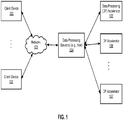
- FIG. 1 is a block diagram illustrating an example of system configuration for a host and data process (DP) accelerators according to some embodiments.
- system configuration 100 includes, but is not limited to, one or more client devices 101-102 communicatively coupled to DP server(s) 104 over network 103.
- Client devices 101-102 may be any type of client devices such as a personal computer (e.g., desktops, laptops, and tablets), a "thin" client, a personal digital assistant (PDA), a Web enabled appliance, a Smartwatch, or a mobile phone (e.g., Smartphone), etc.
- client devices 101-102 may be other servers.
- Network 103 may be any type of networks such as a local area network (LAN), a wide area network (WAN) such as the Internet, or a combination thereof, wired or wireless.
- LAN local area network
- WAN wide area network
- the Internet or a combination thereof, wired or wireless.
- Server (e.g., host) 104 may be any kind of servers or a cluster of servers, such as Web or cloud servers, application servers, backend servers, or a combination thereof. Server 104 further includes an interface (not shown) to allow a client such as client devices 101-102 to access resources or services (such as resources and services provided by DP accelerators via server 104) provided by server 104.
- server 104 may be a cloud server or a server of a data center that provides a variety of cloud services to clients, such as, for example, cloud storage, cloud computing services, machine-learning training services, data mining services, etc.
- Server 104 may be configured as a part of software-as-a-service (SaaS) or platform-as-a-service (PaaS) system over the cloud, which may be a private cloud, public cloud, or a hybrid cloud.
- the interface may include a Web interface, an application programming interface (API), and/or a command line interface (CLI).
- API application programming interface
- CLI command line interface
- a client in this example, a user application of client device 101 (e.g., Web browser, application), may send or transmit an instruction (e.g., artificial intelligence (AI) training, inference instruction, etc.) for execution to server 104 and the instruction is received by server 104 via the interface over network 103.
- server 104 communicates with DP accelerators 105-107 to fulfill the execution of the instruction.
- the instruction is a machine learning type of instruction where DP accelerators, as dedicated machines or processors, can execute the instruction many times faster than execution by server 104.
- Server 104 thus can control/manage an execution job for the one or more DP accelerators in a distributed fashion. Server 104 then returns an execution result to client devices 101-102.
- a DP accelerator or AI accelerator may include one or more dedicated processors such as a Baidu artificial intelligence (AI) chipset available from Baidu, Inc. or alternatively, the DP accelerator may be an AI chipset from NVIDIA, an Intel, or some other AI chipset providers.
- AI artificial intelligence
- each of the applications accessing any of DP accelerators 105-107 coupled to data processing server 104 may verify that the application is provided by a trusted source or vendor.
- Each of the applications may be launched and executed within a virtual machine (VM), or an execution environment (EE) or a container, or a VM within a container, specifically configured and executed by a central processing unit (CPU) of host 104.
- VM virtual machine
- EE execution environment
- CPU central processing unit
- FIG. 2 is a block diagram illustrating an example of a host in communication with data process (DP) accelerators according to one embodiment.
- system 200 provides a virtualized environment for host/server(s) and/or DP accelerators to share common and/or dedicated resources of the DP accelerators.
- host machine or server(s) 104 can be a system that host one or more virtual machines (VMs) 201A-201N and each VMs 201A-201N can host an operating system which can run user applications 203A-203N and drivers 205A-205N, respectively.
- the VMs 201A-201N may be managed by a virtual machine manager (VMM) 209.
- VMM virtual machine manager
- the VMM 209 (sometimes called a hypervisor) may run on hardware 213 (e.g., central processing unit (CPU), and optionally, security module(s) (e.g., trusted platform modules (TPMs)) of host machine 104.
- Host machine 104 is typically a CPU system which can control and manage execution jobs of user applications 203 on the host machine 104 and/or DP accelerators 105-107.
- host system 104 includes a hardware that has one or more CPU(s) 213 equipped with security module(s) (such as a trusted platform module (TPM)) within host machine 104.
- TPM trusted platform module
- a TPM is a specialized chip on an endpoint device that stores cryptographic keys (e.g., RSA cryptographic keys) specific to the host system for hardware authentication.
- Each TPM chip can contain one or more RSA key pairs (e.g., public and private key pairs) called endorsement keys (EK) or endorsement credentials (EC), i.e., root keys.
- EK endorsement keys
- EC endorsement credentials
- the key pairs are maintained inside the TPM chip and cannot be accessed by software.
- Critical sections of firmware and software can then be hashed by the EK or EC before they are executed to protect the system against unauthorized firmware and software modifications.
- the TPM chip on the host machine can thus be used as a root of trust for secure boot.
- the TPM chip including a secure boot can secure the VMM 209 from unauthorized accesses.
- VMM 209 may include drivers provided by a DP accelerator vendor specifying hardware descriptors of the DP accelerators 105-107 for the host 104 to communicate with the DP accelerators 105-107. Since communication channels 215 for DP accelerators 105-107 may be exclusively occupied by VMM 209, thus, communication channels 215 can be secured through the TPM chip.
- system 200 can include host system 104 and DP accelerators 105-107.
- DP accelerators 105-107 can include Baidu AI chipsets or any other AI chipsets such as NVIDIA graphical processing units (GPUs) that can perform AI intensive computing tasks.
- DP accelerators 105-107 are peripheral component interconnect express (PCIE) components.
- communication channels 215 include a PCIE channel.
- each of VMs 201A-201N can represent a secure execution environment or a standalone container, such as a Docker container.
- host machine 104 can instantiate one or more secure execution environments or standalone containers and each of VMs 201A-201N can be executed within the secure execution environments or standalone containers.
- the secure execution environments/containers may be enforced to be secure by TPM/CPU 213.
- Examples of a secure execution environment may be Intel software guard extensions (SGX), or AMD secure encrypted virtualization (SEV), or any non-secured execution environments.
- Intel SGX and/or AMD SEV can include a set of central processing unit (CPU) instruction codes that allows user-level code to allocate private regions of memory of a CPU that are protected from processes running at higher privilege levels.
- CPU central processing unit
- secure execution environments can protect user applications 203 and drivers 205, where user application 203 and drivers 205 may be provided by end users and DP accelerator vendors, respectively.
- drivers 205 can convert API calls to commands for execution, configuration, and/or control of the DP accelerators 105-107.
- DP accelerators 105-107 implement the single root I/O virtualization (SR-IOV) implementation standards to allow hardware-based virtualization.
- SR-IOV single root I/O virtualization
- the SR-IOV standard enables the efficient sharing of devices among virtual machines and is implemented in the hardware to achieve I/O performance that is comparable to native performance.
- the SR-IOV specification defines a standard that enables a virtual machine to be directly connected to an I/O device.
- a DP accelerator device such as an AI accelerator that is SR-IOV-enabled with appropriate hardware and OS support can appear as multiple, separate physical DP accelerator devices, each with its own PCIE configuration space.
- each of DP accelerators 105-107 has at least one physical function (PF) and one or more virtual functions (VFs).
- SR-IOV can use PF 231-233 to manage the SR-IOV and/or VF functions for the respective DP accelerators 105-107.
- the VFs/PF of the DP accelerator 105-107 can be mapped to a respective VM.
- the resource of the DP accelerator can then be accessed directly by the VMs via PF 231-233 and VFs 235-237.
- each of the VMs 201 has access to unique and/or shared resources of the DP accelerator 105-107.
- a VF is a lightweight PCIE function that shares one or more (dedicated or common) resources with a PF and/or other VFs that are associated with that PF.
- a physical function is a PCI function that supports the SR-IOV capabilities as defined by the SR-IOV specification.
- a physical function contains the SR-IOV capability structure and manages the SR-IOV functionality.
- a PF is a fully featured PCIE function that can be discovered, managed, and manipulated like a PCIE device.
- a PF can be used to configure and control a PCIE device.
- the VFs can be created by a PF. After creation, VF can be assigned directly to an I/O domain. This enables the VF to share the physical device and to perform I/O without central processing unit (CPU) and hypervisor overhead.
- CPU central processing unit
- drivers 205 can provide hardware input/output descriptors (not shown) of the physical functions (PFs) 231-233 and/or virtual functions (VFs) 235-237.
- VMs 201A-201N of host 104 can access the drivers 205 and communicate with the PFs 231-233 and/or VFs 235-237 via the hardware input/output descriptors within the drivers 205.
- the host machine 104 can be set up as follows: A memory-safe Linux distribution is installed onto a system equipped with TPM secure boot. The installation can be performed offline during a manufacturing or preparation stage. The installation can also ensure that user applications 203 are programmed using memory-safe programming languages.
- TPM secure boot After installation, the system can then boot up through a TPM-based secure boot.
- the TPM secure boot ensures only signed/certified hardware and VMM are launched in a kernel space that provides the accelerator services.
- a hypervisor or a virtual machine manager (VMM) is a computer software, firmware, or hardware that creates and runs virtual machines.
- a kernel space is a declarative region or scope where kernels (i.e., a predetermined set of (e.g., predefined) functions for execution) are identified to provide functionalities and services to user applications.
- TPM secure boot may fail to boot up and instead shuts down the system.
- VMM 209 may launch instances of VMs 201.
- user applications 203 and drivers 205 can be launched within an operating system of VMs 201.
- user application 203 and drivers 205 are statically linked and launched together.
- drivers 205 is launched in VMs 201 first and then user application 203 is dynamically loaded in VMs 201.
- user application 203 is launched in VMs 201 first, and then driver 205 is dynamically loaded in VMs 201.
- system 200 provides a hardware-based virtualization environment using one or more VMs situated at the host 104 and SR-IOV enabled DP accelerators having statically partitioned and/or resources.
- System 200 can include a TPM-based secure boot protection layer and a secure execution environment layer.
- system 200 can provide a memory safe user space by ensuring other applications on the host machine are implemented with memory-safe programming languages, which can further ensure a security within the applications by eliminating potential memory corruptions/vulnerabilities.
- system 200 can include applications that use side-channel free algorithms so to defend against side channel attacks, such as cache based side channel attacks.
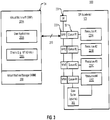
- FIG. 3 is a block diagram illustrating an example of a host in communication with a DP accelerator according to one embodiment.
- DP accelerator 105 may be statically partitioned into one or more partitions of resources and each of VFs (#1-4) 235 can be associated with a particular static partition of resources.
- resources 225 of DP accelerator 105 can be statically partitioned into four resource partitions 225A-225D by a manufacturer/vendor of the DP accelerator.
- Each static partition of resources may include a number of I/O resources, data computation processing units, graphics processing units, AI processing units, memory/cache, hard drive space, registers, etc.
- each static partition of resources is unique from other partitions of resources (or dedicated to a particular VF). In one embodiment, one static partition of resources cannot access another static partition of resources and VM assigned to one VF that corresponds to a static partition of resources cannot access another static partition of resources. In one embodiment, the static partitions are not amenable except for deleting and repartitioning of the static partitions.
- drivers 205A-205N provide a hardware input output descriptors for VM 201A-201N respectively to access the VFs 235/PF 231.
- each of VFs 235 may or may not share one or more resources of the DP accelerator 105 with the PF 231 and/or other VFs 235. This way, only a VM assigned to a particular VF can access resources associated with the VF. In other words, other VM cannot access the already assigned VF.
- the number of VFs is equal to the number of statically partitioned resources.
- a VMM or hypervisor
- hypervisor can automatically assign a VF to the VM.
- the hypervisor assigns a VF to a container containing the VM.
- hypervisor can no longer assign a VF to the VM. In this case, the hypervisor can queue the VM for a next available VF, or drop the assignment, or migrate the VM to another host server system (which may incur additional latency/processing cost for the user application) to use an available VF of the another host server system.
- DP accelerator 105 includes queues 301 and (optionally) data sorter 303.
- VF 235 e.g., VF #1
- VM 201A e.g., VM #1
- VF 235 e.g., VF #1
- the request can be an I/O type, machine learning, data processing, AI training, AI inference type of requests, etc.
- DP accelerator 105 can determine an identifier, such as a media access control (MAC) address, of the VM 201A based on the request.
- MAC media access control
- Data sorter 303 can then sort the result based on the identifier and send the result to a queue 301 (e.g., queue #1) that is associated with the MAC address. Queue 301 then queues the result to be transmitted from VF 235 (e.g., VF #1) to VM 201A (e.g., VM #1) using direct memory access.
- VF 235 e.g., VF #1
- VM 201A e.g., VM #1
- the DP accelerator 105 when the DP accelerator 105 completes the request, the DP accelerator 105 can determine one or more memory addresses at the VM to store a result of the request. Data sorter 303 can then sort the result based on the memory addresses and send the result to a queue 301 (e.g., queue #1) that is associated with the memory addresses of the VM. Queue 301 then queues the result to be transmitted from VF 235 (e.g., VF #1) to VM 201A (e.g., VM #1) using direct memory access.
- DMA direct memory access
- I/O input/output
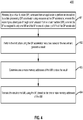
- FIG. 4 is a flow chart illustrating an example method for a DP accelerator according to one embodiment.
- Process 400 may be performed by processing logic which may include software, hardware, or a combination thereof.
- processing logic may be performed by host system, such as DP accelerator 105 of Figure 3 .
- processing logic e.g., VF
- VM virtual machine
- processing logic performs the instruction using the DP accelerator resources based on the request and generates a result.
- processing logic determines one or more memory addresses of the VM to store the result.
- processing logic transmits the result to the VM, using the VF, based on the one or more memory addresses of the VM.
- the instruction is an instruction to train an AI model or to perform an inference based on an AI model.
- the hardware I/O information of the VF is located at a driver of the VM at a host hosting the application running on the VM.
- the DP accelerator includes a SR-IOV pass through device.
- the VM of the host is initially assigned the VF by a virtual machine manager (VMM) of the host.
- VMM virtual machine manager
- data packets are transmitted between the VM and the VF corresponding to the VM without passing through the VMM. In one embodiment, data packets are transmitted between the VM and the VF corresponding to the VM via direct memory access (DMA) independent of a processing unit of the host.
- DMA direct memory access
- FIG. 5 is a block diagram illustrating an example of dynamically resource isolation for a DP accelerator according to one embodiment.
- DP accelerator 107 includes resources pool 505 and resource management unit 507.
- the resource management unit 507 can manage and enforce resources isolation for resources 227 of resources pool 505.
- resources pool 505 can dynamically instantiate a number of resource isolations 227A-227N in real-time.
- VFs 237 #1-4 may be associated with PF 233.
- resources pool 505 can instantiate n resource isolations 227A-227N for the VFs 237 #1-4, respectively.
- VM 201B can be assigned to any one of the four VFs 237 #1-4 (here, VF #2).
- VFs #1-4 can access any resource isolations 227A-227N according to a request from a VM at a VF assigned to the VM.
- Each resource isolation may include a number of I/O resources, data computation processing units, graphics processing units, AI processing units, memory/cache, hard drive space, registers, etc.
- DP accelerator 107 includes queues 501 and (optionally) data sorter 503.
- VF 237 e.g., VF #2
- VM 201B e.g., VM #2
- VF 237 e.g., VF #2
- the request can be an I/O type, machine learning, data processing, AI training, AI inference type of requests, etc.
- resource isolation from resource pool 505, such as resource 227B #2 may be dynamically instantiated for the request based on a size of the request.
- VM #2 in response to determining a larger number of resources is required for the request (or for subsequent requests), VM #2 transmits a control command to resource management unit 507 (via VMM 209 of Figure 2 ) to control the resource management unit 507 to dynamically update resource 227B #2.
- resource 227B #2 may be updated to have a larger number of resources based on the request size.
- the update may use resources available to or maintained by resource pool 505 (e.g., common resources (not shown) available to resource pool 505).
- DP accelerator 107 can determine an identifier, such as media access control (MAC) address, for the VM #2 based on the request.
- Data sorter 503 can then sort the result based on the identifier and send the result to a queue 501 (e.g., queue #2) associated with the identifier. Queue 501 then queues the result to be transmitted from VF 237 (e.g., VF #2) to VM 201B (e.g., VM #2) using direct memory access.
- VF 237 e.g., VF #2
- VM 201B e.g., VM #2
- DP accelerator 107 can determine one or more memory addresses at the VM to store a result of the request.
- Data sorter 503 can then sort the result based on the memory addresses and send the result to a queue 501 (e.g., queue #2) that is associated with the memory addresses of the VM. Queue 501 then queues the result to be transmitted from VF 237 (e.g., VF #2) to VM 201B (e.g., VM #2) using direct memory access.
- VF 237 e.g., VF #2
- VM 201B e.g., VM #2
- FIG. 6 is a flow chart illustrating an example method for a DP accelerator according to one embodiment.
- Process 600 may be performed by processing logic which may include software, hardware, or a combination thereof.
- processing logic may be performed by host system, such as DP accelerator 107 of Figure 5 .
- processing logic e.g., VF
- receives a request from an application for DP accelerator resources wherein the receiving is a direct pass through communication from a virtual machine (VM), wherein the VF is assigned to only one VM but not other VMs, and the VF is one of a plurality of VFs of the DP accelerator.
- processing logic determines a first isolation of the DP accelerator resources are assigned to the VF.
- processing logic determines the first isolation of resources does not meet a size of the request.
- processing logic dynamically updates, by a resource management unit of the DP accelerator, the first resource isolation to a second resource isolation to meet the request size.
- the request includes a request to train an AI model.
- the hardware I/O information of the VF is located at a driver of the VM at a host hosting the application.
- the DP accelerator includes a single root input output virtualization (SR-IOV) pass through device.
- the VM of the host is initially assigned the VF by a virtual machine manager (VMM) of the host
- data packets are transmitted directly between the VM and the VF assigned to the VM without passing through the VMM. In one embodiment, data packets are transmitted between the VM and the VF corresponding to the VM via direct memory access (DMA) independent of a processing unit of the host.
- DMA direct memory access
- components as shown and described above may be implemented in software, hardware, or a combination thereof.
- such components can be implemented as software installed and stored in a persistent storage device, which can be loaded and executed in a memory by a processor (not shown) to carry out the processes or operations described throughout this application.
- such components can be implemented as executable code programmed or embedded into dedicated hardware such as an integrated circuit (e.g., an application specific IC or ASIC), a digital signal processor (DSP), or a field programmable gate array (FPGA), which can be accessed via a corresponding driver and/or operating system from an application.
- an integrated circuit e.g., an application specific IC or ASIC
- DSP digital signal processor
- FPGA field programmable gate array
- such components can be implemented as specific hardware logic in a processor or processor core as part of an instruction set accessible by a software component via one or more specific instructions.
- Embodiments of the disclosure also relate to an apparatus for performing the operations herein.
- a computer program is stored in a non-transitory computer readable medium.
- a machine-readable medium includes any mechanism for storing information in a form readable by a machine (e.g., a computer).
- a machine-readable (e.g., computer-readable) medium includes a machine (e.g., a computer) readable storage medium (e.g., read only memory (“ROM”), random access memory (“RAM”), magnetic disk storage media, optical storage media, flash memory devices).
- processing logic that comprises hardware (e.g. circuitry, dedicated logic, etc.), software (e.g., embodied on a non-transitory computer readable medium), or a combination of both.
- processing logic comprises hardware (e.g. circuitry, dedicated logic, etc.), software (e.g., embodied on a non-transitory computer readable medium), or a combination of both.
- Embodiments of the present disclosure are not described with reference to any particular programming language. It will be appreciated that a variety of programming languages may be used to implement the teachings of embodiments of the disclosure as described herein.
Landscapes
- Engineering & Computer Science (AREA)
- Software Systems (AREA)
- Theoretical Computer Science (AREA)
- General Engineering & Computer Science (AREA)
- Physics & Mathematics (AREA)
- General Physics & Mathematics (AREA)
- Computing Systems (AREA)
- Computer Security & Cryptography (AREA)
- Computer Hardware Design (AREA)
- Mathematical Physics (AREA)
- Medical Informatics (AREA)
- Evolutionary Computation (AREA)
- Data Mining & Analysis (AREA)
- Computer Vision & Pattern Recognition (AREA)
- Artificial Intelligence (AREA)
- Signal Processing (AREA)
- Computer Networks & Wireless Communication (AREA)
- Automation & Control Theory (AREA)
- Health & Medical Sciences (AREA)
- Bioethics (AREA)
- General Health & Medical Sciences (AREA)
- Advance Control (AREA)
- Storage Device Security (AREA)
- Memory System Of A Hierarchy Structure (AREA)
Abstract
Description
- Embodiments of the invention relate generally to data protection. More particularly, embodiments of the invention relate to systems and methods for data protection with static resource partition for data processing (DP) accelerators.
- Sensitive transactions are increasingly being performed by data processing (DP) accelerators such as artificial intelligence (AI) accelerators or co-processors. This increases a need for better partition/isolation between DP accelerators.
- For example, a malicious DPA installed into an existing cluster can obtain without permission AI models/data from other DPAs when a communication channel between DPAs is possible such that AI models and data processed by the DPAs may not be protected.
- In a first aspect, the present disclosure provides a data processing, DP, accelerator, comprising: one or more statically partitioned resources; and one or more virtual functions, VFs, each associated with one of the one or more statically partitioned resources, wherein a virtual machine, VM, of a host is assigned with one of the one or more VFs to access the statically partitioned resources associated with the assigned VF, and wherein the VM has no access to the rest of the one or more statically partitioned resources of the DP accelerator.
- In a second aspect, the present disclosure provides a data processing (DP) system, comprising: a host; and a DP accelerator coupled to the host, the DP accelerator comprising: one or more statically partitioned resources; and one or more virtual functions, VFs, each associated with one of the one or more statically partitioned resources, wherein a virtual machine, VM, of a host is assigned with one of the one or more VFs to access the statically partitioned resources associated with the assigned VF, and wherein the VM has no access to the rest of the one or more statically partitioned resources of the DP accelerator.
- In a third aspect, the present disclosure provides a computer-implemented method, comprising: receiving, by a virtual function,VF, a request from an application to perform an instruction by a data processing, DP, accelerator using resources at the DP accelerator, wherein the receiving is a direct pass through communication from a virtual machine, VM, wherein the VF is assigned to only one VM and the VF is one of a plurality of VFs of the DP accelerator; performing the instruction using the DP accelerator resources based on the request and generates a result; determining one or more memory addresses of the VM to store the result; and transmitting the result to the VM using the VF based on the one or more memory addresses of the VM.
- Embodiments of the invention are illustrated by way of example and not limitation in the figures of the accompanying drawings in which like references indicate similar elements.
-
Figure 1 is a block diagram illustrating an example of system configuration for a host and data process (DP) accelerators according to some embodiments. -
Figure 2 is a block diagram illustrating an example of a host in communication with data process (DP) accelerators according to one embodiment. -
Figure 3 is a block diagram illustrating an example of static resource partitioning for a DP accelerator according to one embodiment. -
Figure 4 is a flow chart illustrating an example method for a DP accelerator according to one embodiment. -
Figure 5 is a block diagram illustrating an example of dynamically resource isolation for a DP accelerator according to one embodiment. -
Figure 6 is a flow chart illustrating an example method for a DP accelerator according to one embodiment. - Various embodiments and aspects of the invention will be described with reference to details discussed below, and the accompanying drawings will illustrate the various embodiments. The following description and drawings are illustrative of the invention and are not to be construed as limiting the invention. Numerous specific details are described to provide a thorough understanding of various embodiments of the present invention. However, in certain instances, well-known or conventional details are not described in order to provide a concise discussion of embodiments of the present inventions.
- Reference in the specification to "one embodiment" or "an embodiment" means that a particular feature, structure, or characteristic described in conjunction with the embodiment can be included in at least one embodiment of the invention. The appearances of the phrase "in one embodiment" in various places in the specification do not necessarily all refer to the same embodiment.
- According to a first aspect of the disclosure, a data processing (DP) accelerator includes one or more statically partitioned resources and one or more virtual functions (VFs), each of the one or more VFs associated with one of the one or more statically partitioned resources. A virtual machine (VM) of a host is assigned one of the one or more VFs to access the statically partitioned resources associated with the assigned VF. The VM has no access to the rest of the one or more statically partitioned resources of the DP accelerator.
- According to a second aspect of the disclosure, a virtual function (VF) receives a request from an application to perform an instruction by a data processing (DP) accelerator using resources of the DP accelerator from a virtual machine (VM), where the receiving is a direct pass through communication, where the VF is dedicated to the VM and the VF is one of a number of VFs of the DP accelerator. The DP accelerator performs the instruction using the DP accelerator resources based on the request and generates a result. The DP accelerator determines one or more memory addresses of the VM. The DP accelerator transmits the result to the VM using the VF based on the one or more memory addresses of the VM.
- According to a third aspect of the disclosure, a data processing (DP) accelerator includes a resource management unit and one or more resources managed by the resource management unit. The DP accelerator includes one or more virtual functions (VFs) each associated with one of the one or more resources, where a virtual machine (VM) of a host is assigned one of the one or more VFs to access the resources associated with the assigned VF, and where the VM has no access to the rest of the one or more resources.
- According to a fourth aspect of the disclosure, a virtual function (VF) receives a request from an application for data processing (DP) accelerator resources, where the receiving is a direct pass through communication from a virtual machine (VM) and the VF is dedicated to the VM, where the VF is one of a plurality of VFs of the DP accelerator. The DP accelerator determines a first resource isolation of the DP accelerator that is assigned to the VF. The DP accelerator determines the first resource isolation does not meet a size of the request. The DP accelerator dynamically updates, by a resource management unit of the DP accelerator, the first resource isolation to a second resource isolation to meet the request size.
-
Figure 1 is a block diagram illustrating an example of system configuration for a host and data process (DP) accelerators according to some embodiments. Referring toFigure 1 , system configuration 100 includes, but is not limited to, one or more client devices 101-102 communicatively coupled to DP server(s) 104 overnetwork 103. Client devices 101-102 may be any type of client devices such as a personal computer (e.g., desktops, laptops, and tablets), a "thin" client, a personal digital assistant (PDA), a Web enabled appliance, a Smartwatch, or a mobile phone (e.g., Smartphone), etc. Alternatively, client devices 101-102 may be other servers. Network 103 may be any type of networks such as a local area network (LAN), a wide area network (WAN) such as the Internet, or a combination thereof, wired or wireless. - Server (e.g., host) 104 may be any kind of servers or a cluster of servers, such as Web or cloud servers, application servers, backend servers, or a combination thereof.
Server 104 further includes an interface (not shown) to allow a client such as client devices 101-102 to access resources or services (such as resources and services provided by DP accelerators via server 104) provided byserver 104. For example,server 104 may be a cloud server or a server of a data center that provides a variety of cloud services to clients, such as, for example, cloud storage, cloud computing services, machine-learning training services, data mining services, etc.Server 104 may be configured as a part of software-as-a-service (SaaS) or platform-as-a-service (PaaS) system over the cloud, which may be a private cloud, public cloud, or a hybrid cloud. The interface may include a Web interface, an application programming interface (API), and/or a command line interface (CLI). - For example, a client, in this example, a user application of client device 101 (e.g., Web browser, application), may send or transmit an instruction (e.g., artificial intelligence (AI) training, inference instruction, etc.) for execution to
server 104 and the instruction is received byserver 104 via the interface overnetwork 103. In response to the instruction,server 104 communicates with DP accelerators 105-107 to fulfill the execution of the instruction. In some embodiments, the instruction is a machine learning type of instruction where DP accelerators, as dedicated machines or processors, can execute the instruction many times faster than execution byserver 104.Server 104 thus can control/manage an execution job for the one or more DP accelerators in a distributed fashion.Server 104 then returns an execution result to client devices 101-102. A DP accelerator or AI accelerator may include one or more dedicated processors such as a Baidu artificial intelligence (AI) chipset available from Baidu, Inc. or alternatively, the DP accelerator may be an AI chipset from NVIDIA, an Intel, or some other AI chipset providers. - According to one embodiment, each of the applications accessing any of DP accelerators 105-107 coupled to data processing server 104 (also referred to as a host) may verify that the application is provided by a trusted source or vendor. Each of the applications may be launched and executed within a virtual machine (VM), or an execution environment (EE) or a container, or a VM within a container, specifically configured and executed by a central processing unit (CPU) of
host 104. When an application is configured to access any one of the DP accelerators 105-107, a connection can be established betweenhost 104 and the corresponding one of the DP accelerators 105-107. -
Figure 2 is a block diagram illustrating an example of a host in communication with data process (DP) accelerators according to one embodiment. Referring toFigure 2 ,system 200 provides a virtualized environment for host/server(s) and/or DP accelerators to share common and/or dedicated resources of the DP accelerators. In one embodiment, host machine or server(s) 104 can be a system that host one or more virtual machines (VMs) 201A-201N and each VMs 201A-201N can host an operating system which can runuser applications 203A-203N anddrivers 205A-205N, respectively. The VMs 201A-201N may be managed by a virtual machine manager (VMM) 209. The VMM 209 (sometimes called a hypervisor) may run on hardware 213 (e.g., central processing unit (CPU), and optionally, security module(s) (e.g., trusted platform modules (TPMs)) ofhost machine 104.Host machine 104 is typically a CPU system which can control and manage execution jobs of user applications 203 on thehost machine 104 and/or DP accelerators 105-107. - In one embodiment,
host system 104 includes a hardware that has one or more CPU(s) 213 equipped with security module(s) (such as a trusted platform module (TPM)) withinhost machine 104. A TPM is a specialized chip on an endpoint device that stores cryptographic keys (e.g., RSA cryptographic keys) specific to the host system for hardware authentication. Each TPM chip can contain one or more RSA key pairs (e.g., public and private key pairs) called endorsement keys (EK) or endorsement credentials (EC), i.e., root keys. The key pairs are maintained inside the TPM chip and cannot be accessed by software. Critical sections of firmware and software can then be hashed by the EK or EC before they are executed to protect the system against unauthorized firmware and software modifications. The TPM chip on the host machine can thus be used as a root of trust for secure boot. - The TPM chip including a secure boot can secure the
VMM 209 from unauthorized accesses.VMM 209 may include drivers provided by a DP accelerator vendor specifying hardware descriptors of the DP accelerators 105-107 for thehost 104 to communicate with the DP accelerators 105-107. Sincecommunication channels 215 for DP accelerators 105-107 may be exclusively occupied byVMM 209, thus,communication channels 215 can be secured through the TPM chip. - Referring to
Figure 2 ,system 200 can includehost system 104 and DP accelerators 105-107. DP accelerators 105-107 can include Baidu AI chipsets or any other AI chipsets such as NVIDIA graphical processing units (GPUs) that can perform AI intensive computing tasks. In one embodiment, DP accelerators 105-107 are peripheral component interconnect express (PCIE) components. In one embodiment,communication channels 215 include a PCIE channel. - In one embodiment, each of
VMs 201A-201N can represent a secure execution environment or a standalone container, such as a Docker container. Here,host machine 104 can instantiate one or more secure execution environments or standalone containers and each ofVMs 201A-201N can be executed within the secure execution environments or standalone containers. The secure execution environments/containers may be enforced to be secure by TPM/CPU 213. Examples of a secure execution environment may be Intel software guard extensions (SGX), or AMD secure encrypted virtualization (SEV), or any non-secured execution environments. Intel SGX and/or AMD SEV can include a set of central processing unit (CPU) instruction codes that allows user-level code to allocate private regions of memory of a CPU that are protected from processes running at higher privilege levels. Here, secure execution environments can protect user applications 203 and drivers 205, where user application 203 and drivers 205 may be provided by end users and DP accelerator vendors, respectively. Here, drivers 205 can convert API calls to commands for execution, configuration, and/or control of the DP accelerators 105-107. - In one embodiment, DP accelerators 105-107 implement the single root I/O virtualization (SR-IOV) implementation standards to allow hardware-based virtualization. The SR-IOV standard enables the efficient sharing of devices among virtual machines and is implemented in the hardware to achieve I/O performance that is comparable to native performance. The SR-IOV specification defines a standard that enables a virtual machine to be directly connected to an I/O device. For example, a DP accelerator device, such as an AI accelerator that is SR-IOV-enabled with appropriate hardware and OS support can appear as multiple, separate physical DP accelerator devices, each with its own PCIE configuration space.
- In one embodiment, each of DP accelerators 105-107 has at least one physical function (PF) and one or more virtual functions (VFs). SR-IOV can use PF 231-233 to manage the SR-IOV and/or VF functions for the respective DP accelerators 105-107. The VFs/PF of the DP accelerator 105-107 can be mapped to a respective VM. The resource of the DP accelerator can then be accessed directly by the VMs via PF 231-233 and VFs 235-237. In this way, each of the VMs 201 has access to unique and/or shared resources of the DP accelerator 105-107. Note that a VF is a lightweight PCIE function that shares one or more (dedicated or common) resources with a PF and/or other VFs that are associated with that PF.
- A physical function (PF) is a PCI function that supports the SR-IOV capabilities as defined by the SR-IOV specification. A physical function contains the SR-IOV capability structure and manages the SR-IOV functionality. A PF is a fully featured PCIE function that can be discovered, managed, and manipulated like a PCIE device. A PF can be used to configure and control a PCIE device. The VFs can be created by a PF. After creation, VF can be assigned directly to an I/O domain. This enables the VF to share the physical device and to perform I/O without central processing unit (CPU) and hypervisor overhead.
- Referring to
Figure 2 , in one embodiment, drivers 205 can provide hardware input/output descriptors (not shown) of the physical functions (PFs) 231-233 and/or virtual functions (VFs) 235-237.VMs 201A-201N ofhost 104 can access the drivers 205 and communicate with the PFs 231-233 and/or VFs 235-237 via the hardware input/output descriptors within the drivers 205. - The
host machine 104 can be set up as follows: A memory-safe Linux distribution is installed onto a system equipped with TPM secure boot. The installation can be performed offline during a manufacturing or preparation stage. The installation can also ensure that user applications 203 are programmed using memory-safe programming languages. - After installation, the system can then boot up through a TPM-based secure boot. The TPM secure boot ensures only signed/certified hardware and VMM are launched in a kernel space that provides the accelerator services. Note, a hypervisor or a virtual machine manager (VMM) is a computer software, firmware, or hardware that creates and runs virtual machines. Note, a kernel space is a declarative region or scope where kernels (i.e., a predetermined set of (e.g., predefined) functions for execution) are identified to provide functionalities and services to user applications. In the event that integrity of the system is compromised, TPM secure boot may fail to boot up and instead shuts down the system.
- After secure boot,
VMM 209 may launch instances of VMs 201. Next, user applications 203 and drivers 205 can be launched within an operating system of VMs 201. In one embodiment, user application 203 and drivers 205 are statically linked and launched together. In another embodiment, drivers 205 is launched in VMs 201 first and then user application 203 is dynamically loaded in VMs 201. In another embodiment, user application 203 is launched in VMs 201 first, and then driver 205 is dynamically loaded in VMs 201. - In summary,
system 200 provides a hardware-based virtualization environment using one or more VMs situated at thehost 104 and SR-IOV enabled DP accelerators having statically partitioned and/or resources.System 200 can include a TPM-based secure boot protection layer and a secure execution environment layer. Furthermore,system 200 can provide a memory safe user space by ensuring other applications on the host machine are implemented with memory-safe programming languages, which can further ensure a security within the applications by eliminating potential memory corruptions/vulnerabilities. In one embodiment,system 200 can include applications that use side-channel free algorithms so to defend against side channel attacks, such as cache based side channel attacks. -
Figure 3 is a block diagram illustrating an example of a host in communication with a DP accelerator according to one embodiment. Referring toFigure 3 ,DP accelerator 105 may be statically partitioned into one or more partitions of resources and each of VFs (#1-4) 235 can be associated with a particular static partition of resources. Here, in this example,resources 225 ofDP accelerator 105 can be statically partitioned into fourresource partitions 225A-225D by a manufacturer/vendor of the DP accelerator. Each static partition of resources may include a number of I/O resources, data computation processing units, graphics processing units, AI processing units, memory/cache, hard drive space, registers, etc. - In one embodiment, each static partition of resources is unique from other partitions of resources (or dedicated to a particular VF). In one embodiment, one static partition of resources cannot access another static partition of resources and VM assigned to one VF that corresponds to a static partition of resources cannot access another static partition of resources. In one embodiment, the static partitions are not amenable except for deleting and repartitioning of the static partitions.
- In one embodiment,
drivers 205A-205N provide a hardware input output descriptors forVM 201A-201N respectively to access theVFs 235/PF 231. In one embodiment, each ofVFs 235 may or may not share one or more resources of theDP accelerator 105 with thePF 231 and/orother VFs 235. This way, only a VM assigned to a particular VF can access resources associated with the VF. In other words, other VM cannot access the already assigned VF. - In one embodiment, the number of VFs is equal to the number of statically partitioned resources. In one embodiment, when a VM is instantiated, a VMM (or hypervisor) can automatically assign a VF to the VM. In another embodiment, the hypervisor assigns a VF to a container containing the VM. In one embodiment, when the number of VMs connected to the resources is greater than the number of VFs, hypervisor can no longer assign a VF to the VM. In this case, the hypervisor can queue the VM for a next available VF, or drop the assignment, or migrate the VM to another host server system (which may incur additional latency/processing cost for the user application) to use an available VF of the another host server system.
- In one embodiment,
DP accelerator 105 includesqueues 301 and (optionally)data sorter 303. VF 235 (e.g., VF #1) can receive a request from aVM 201A (e.g., VM #1) that is assigned to VF 235 (e.g., VF #1). The request can be an I/O type, machine learning, data processing, AI training, AI inference type of requests, etc. When theDP accelerator 105 completes the request,DP accelerator 105 can determine an identifier, such as a media access control (MAC) address, of theVM 201A based on the request.Data sorter 303 can then sort the result based on the identifier and send the result to a queue 301 (e.g., queue #1) that is associated with the MAC address. Queue 301 then queues the result to be transmitted from VF 235 (e.g., VF #1) toVM 201A (e.g., VM #1) using direct memory access. - In another embodiment, when the
DP accelerator 105 completes the request, theDP accelerator 105 can determine one or more memory addresses at the VM to store a result of the request.Data sorter 303 can then sort the result based on the memory addresses and send the result to a queue 301 (e.g., queue #1) that is associated with the memory addresses of the VM. Queue 301 then queues the result to be transmitted from VF 235 (e.g., VF #1) toVM 201A (e.g., VM #1) using direct memory access. Here, direct memory access (DMA) is a method that allows an input/output (I/O) device to send or receive data directly to or from a main memory ofhost 104, bypassing a CPU ofhost 104. -
Figure 4 is a flow chart illustrating an example method for a DP accelerator according to one embodiment.Process 400 may be performed by processing logic which may include software, hardware, or a combination thereof. For example,process 400 may be performed by host system, such asDP accelerator 105 ofFigure 3 . Referring toFigure 4 , atblock 401, processing logic (e.g., VF) receives a request from an application to perform an instruction by a data processing (DP) accelerator using resources at the DP accelerator, where the receiving is a direct pass through communication from a virtual machine (VM), where the VF is dedicated to the VM (e.g., the VF is assigned to only one VM) and the VF is one of a number of VFs of the DP accelerator. Atblock 402, processing logic performs the instruction using the DP accelerator resources based on the request and generates a result. Atblock 403, processing logic determines one or more memory addresses of the VM to store the result. Atblock 404, processing logic transmits the result to the VM, using the VF, based on the one or more memory addresses of the VM. - In one embodiment, the instruction is an instruction to train an AI model or to perform an inference based on an AI model. In one embodiment, the hardware I/O information of the VF is located at a driver of the VM at a host hosting the application running on the VM.
- In one embodiment, the DP accelerator includes a SR-IOV pass through device. in one embodiment, the VM of the host is initially assigned the VF by a virtual machine manager (VMM) of the host.
- In one embodiment, data packets are transmitted between the VM and the VF corresponding to the VM without passing through the VMM. In one embodiment, data packets are transmitted between the VM and the VF corresponding to the VM via direct memory access (DMA) independent of a processing unit of the host.
-
Figure 5 is a block diagram illustrating an example of dynamically resource isolation for a DP accelerator according to one embodiment. Referring toFigure 5 , for one example,DP accelerator 107 includesresources pool 505 andresource management unit 507. Theresource management unit 507 can manage and enforce resources isolation forresources 227 ofresources pool 505. In one embodiment, resources pool 505 can dynamically instantiate a number ofresource isolations 227A-227N in real-time. For example,VFs 237 #1-4 may be associated withPF 233. In this case, resources pool 505 can instantiaten resource isolations 227A-227N for theVFs 237 #1-4, respectively.VM 201B can be assigned to any one of the fourVFs 237 #1-4 (here, VF #2). VFs #1-4 can access anyresource isolations 227A-227N according to a request from a VM at a VF assigned to the VM. Each resource isolation may include a number of I/O resources, data computation processing units, graphics processing units, AI processing units, memory/cache, hard drive space, registers, etc. - In one embodiment,
DP accelerator 107 includesqueues 501 and (optionally)data sorter 503. VF 237 (e.g., VF #2) can receive a request from aVM 201B (e.g., VM #2) that is assigned to VF 237 (e.g., VF #2) (assigned byVMM 209 of host 104). The request can be an I/O type, machine learning, data processing, AI training, AI inference type of requests, etc. Next, a resource isolation fromresource pool 505, such asresource 227B # - In one embodiment, in response to determining a larger number of resources is required for the request (or for subsequent requests),
VM # 2 transmits a control command to resource management unit 507 (viaVMM 209 ofFigure 2 ) to control theresource management unit 507 to dynamically updateresource 227B #resource 227B # - When the
DP accelerator 107 completes the request,DP accelerator 107 can determine an identifier, such as media access control (MAC) address, for theVM # 2 based on the request.Data sorter 503 can then sort the result based on the identifier and send the result to a queue 501 (e.g., queue #2) associated with the identifier. Queue 501 then queues the result to be transmitted from VF 237 (e.g., VF #2) toVM 201B (e.g., VM #2) using direct memory access. In another embodiment, when theDP accelerator 107 completes the request,DP accelerator 107 can determine one or more memory addresses at the VM to store a result of the request.Data sorter 503 can then sort the result based on the memory addresses and send the result to a queue 501 (e.g., queue #2) that is associated with the memory addresses of the VM. Queue 501 then queues the result to be transmitted from VF 237 (e.g., VF #2) toVM 201B (e.g., VM #2) using direct memory access. -
Figure 6 is a flow chart illustrating an example method for a DP accelerator according to one embodiment.Process 600 may be performed by processing logic which may include software, hardware, or a combination thereof. For example,process 600 may be performed by host system, such asDP accelerator 107 ofFigure 5 . Referring toFigure 6 , atblock 601, processing logic (e.g., VF) receives a request from an application for DP accelerator resources, wherein the receiving is a direct pass through communication from a virtual machine (VM), wherein the VF is assigned to only one VM but not other VMs, and the VF is one of a plurality of VFs of the DP accelerator. Atblock 602, processing logic determines a first isolation of the DP accelerator resources are assigned to the VF. Atblock 603, processing logic determines the first isolation of resources does not meet a size of the request. Atblock 604, processing logic dynamically updates, by a resource management unit of the DP accelerator, the first resource isolation to a second resource isolation to meet the request size. - In one embodiment, the request includes a request to train an AI model. In one embodiment, the hardware I/O information of the VF is located at a driver of the VM at a host hosting the application.
- In one embodiment, the DP accelerator includes a single root input output virtualization (SR-IOV) pass through device. In one embodiment, the VM of the host is initially assigned the VF by a virtual machine manager (VMM) of the host
- In one embodiment, data packets are transmitted directly between the VM and the VF assigned to the VM without passing through the VMM. In one embodiment, data packets are transmitted between the VM and the VF corresponding to the VM via direct memory access (DMA) independent of a processing unit of the host.
- Note that some or all of the components as shown and described above may be implemented in software, hardware, or a combination thereof. For example, such components can be implemented as software installed and stored in a persistent storage device, which can be loaded and executed in a memory by a processor (not shown) to carry out the processes or operations described throughout this application. Alternatively, such components can be implemented as executable code programmed or embedded into dedicated hardware such as an integrated circuit (e.g., an application specific IC or ASIC), a digital signal processor (DSP), or a field programmable gate array (FPGA), which can be accessed via a corresponding driver and/or operating system from an application. Furthermore, such components can be implemented as specific hardware logic in a processor or processor core as part of an instruction set accessible by a software component via one or more specific instructions.
- Some portions of the preceding detailed descriptions have been presented in terms of algorithms and symbolic representations of operations on data bits within a computer memory. These algorithmic descriptions and representations are the ways used by those skilled in the data processing arts to most effectively convey the substance of their work to others skilled in the art. An algorithm is here, and generally, conceived to be a self-consistent sequence of operations leading to a desired result. The operations are those requiring physical manipulations of physical quantities.
- It should be borne in mind, however, that all of these and similar terms are to be associated with the appropriate physical quantities and are merely convenient labels applied to these quantities. Unless specifically stated otherwise as apparent from the above discussion, it is appreciated that throughout the description, discussions utilizing terms such as those set forth in the claims below, refer to the action and processes of a computer system, or similar electronic computing device, that manipulates and transforms data represented as physical (electronic) quantities within the computer system's registers and memories into other data similarly represented as physical quantities within the computer system memories or registers or other such information storage, transmission or display devices.
- Embodiments of the disclosure also relate to an apparatus for performing the operations herein. Such a computer program is stored in a non-transitory computer readable medium. A machine-readable medium includes any mechanism for storing information in a form readable by a machine (e.g., a computer). For example, a machine-readable (e.g., computer-readable) medium includes a machine (e.g., a computer) readable storage medium (e.g., read only memory ("ROM"), random access memory ("RAM"), magnetic disk storage media, optical storage media, flash memory devices).
- The processes or methods depicted in the preceding figures may be performed by processing logic that comprises hardware (e.g. circuitry, dedicated logic, etc.), software (e.g., embodied on a non-transitory computer readable medium), or a combination of both. Although the processes or methods are described above in terms of some sequential operations, it should be appreciated that some of the operations described may be performed in a different order. Moreover, some operations may be performed in parallel rather than sequentially.
- Embodiments of the present disclosure are not described with reference to any particular programming language. It will be appreciated that a variety of programming languages may be used to implement the teachings of embodiments of the disclosure as described herein.
- In the foregoing specification, embodiments of the disclosure have been described with reference to specific exemplary embodiments thereof. It will be evident that various modifications may be made thereto without departing from the broader spirit and scope of the disclosure as set forth in the following claims. The specification and drawings are, accordingly, to be regarded in an illustrative sense rather than a restrictive sense.
Claims (15)
- A data processing, DP, accelerator (105, 106, 107), comprising:one or more statically partitioned resources (225, 227); andone or more virtual functions, VFs, (235, 237), each associated with one of the one or more statically partitioned resources (225, 227), wherein a virtual machine, VM, (201) of a host is assigned with one of the one or more VFs (235, 237) to access the statically partitioned resources (225, 227) associated with the assigned VF (235, 237), andwherein the VM (201) has no access to the rest of the one or more statically partitioned resources (225, 227) of the DP accelerator (105, 106, 107).
- The DP accelerator of claim 1, further comprising a single root input output virtualization, SR-IOV, pass through device.
- The DP accelerator of claim 1 or 2, wherein the VM (201) transmits data packets directly to the VF (235, 237) via hardware access to the VF (235, 237) using a VF driver (205) running on the VM (201).
- The DP accelerator of any one of claims 1-3, wherein the VF (235, 237) transmits data packets to the VM (201) via an I/O queue (301, 501) for the VF (235, 237).
- The DP accelerator of any one of claims 1-4, wherein a virtual machine manager, VMM, (209) of the host assigns VM (201) of the host to communicate with the VF (235, 237).
- The DP accelerator of claim 5, wherein VMM (209) of the host assigns at most one VF (235, 237) to the VM (201), and wherein if none of the one or more VFs (235, 237) are available for assignment, the VMM (209) waits for a next of the one or more VFs (235, 237) to become available for assignment, or the VMM (209) denies the assignment, or the VMM (209) migrates the VM (201) to another host to be assigned to a VF (235, 237) of the another host.
- The DP accelerator of any one of claims 1-6, wherein data packets are transmitted directly between the VM (201) and the VF (235, 237) assigned to the VM (201) without passing through the VMM (209).
- A data processing, DP, system, comprising:a host (104); anda DP accelerator (105, 106, 107) of any one of claims 1-7, the DP accelerator (105, 106, 107) being coupled to the host (104).
- A computer-implemented method, comprising:receiving (401), by a virtual function, VF, (235, 237), a request from an application to perform an instruction by a data processing, DP, accelerator (105, 106, 107) using resources at the DP accelerator (105, 106, 107), wherein the receiving is a direct pass through communication from a virtual machine, VM, (201), wherein the VF (235, 237) is assigned to only one VM (201) and the VF (235, 237) is one of a plurality of VFs (235, 237) of the DP accelerator (105, 106, 107);performing (402) the instruction using the DP accelerator resources based on the request and generates a result;determining (403) one or more memory addresses of the VM (201) to store the result;andtransmitting (404) the result to the VM (201) using the VF (235, 237) based on the one or more memory addresses of the VM (201).
- The computer-implemented method of claim 9, wherein the instruction is an instruction to train an AI model or to perform an inference based on an AI model.
- The computer-implemented method of claim 9 or 10, wherein the hardware I/O information of the VF (235, 237) is located at a driver of the VM (201) at a host hosting the application running on the VM (201).
- The computer-implemented method of any one of claims 9-11, wherein the DP accelerator (105, 106, 107) includes a SR-IOV pass through device.
- The computer-implemented method of any one of claims 9-12, wherein the VM (201) of the host is initially assigned the VF (235, 237) by a virtual machine manager, VMM, (209) of the host.
- The computer-implemented method of claim 13, wherein data packets are transmitted between the VM (201) and the virtual function corresponding to the VM (201) without passing through the VMM (209).
- The computer-implemented method of any one of claims 9-14, wherein data packets are transmitted between the VM (201) and the VF (235, 237) corresponding to the VM (201) via direct memory access, DMA, independent of a processing unit of the host.
Applications Claiming Priority (1)
| Application Number | Priority Date | Filing Date | Title |
|---|---|---|---|
| US16/891,458 US11822964B2 (en) | 2020-06-03 | 2020-06-03 | Data protection with static resource partition for data processing accelerators |
Publications (2)
| Publication Number | Publication Date |
|---|---|
| EP3920501A1 true EP3920501A1 (en) | 2021-12-08 |
| EP3920501B1 EP3920501B1 (en) | 2023-01-18 |
Family
ID=74095656
Family Applications (1)
| Application Number | Title | Priority Date | Filing Date |
|---|---|---|---|
| EP20214184.2A Active EP3920501B1 (en) | 2020-06-03 | 2020-12-15 | Data protection with static resource partition for data processing accelerators |
Country Status (3)
| Country | Link |
|---|---|
| US (1) | US11822964B2 (en) |
| EP (1) | EP3920501B1 (en) |
| CN (1) | CN113760525B (en) |
Families Citing this family (1)
| Publication number | Priority date | Publication date | Assignee | Title |
|---|---|---|---|---|
| CN117312233B (en) * | 2023-11-28 | 2024-02-23 | 苏州元脑智能科技有限公司 | Field programmable gate array chip, construction method thereof and accelerator equipment |
Citations (3)
| Publication number | Priority date | Publication date | Assignee | Title |
|---|---|---|---|---|
| US20150370595A1 (en) * | 2013-11-22 | 2015-12-24 | International Business Machines Corporation | Implementing dynamic virtualization of an sriov capable sas adapter |
| WO2018176393A1 (en) * | 2017-03-31 | 2018-10-04 | Intel Corporation | Techniques for virtual machine transfer and resource management |
| US20180321985A1 (en) * | 2017-05-02 | 2018-11-08 | Intel Corporation | High-performance input-output devices supporting scalable virtualization |
Family Cites Families (45)
| Publication number | Priority date | Publication date | Assignee | Title |
|---|---|---|---|---|
| US9264384B1 (en) * | 2004-07-22 | 2016-02-16 | Oracle International Corporation | Resource virtualization mechanism including virtual host bus adapters |
| CN1299207C (en) * | 2005-01-21 | 2007-02-07 | 清华大学 | Large scale resource memory managing method based on network under SAN environment |
| US7593404B1 (en) * | 2005-04-22 | 2009-09-22 | Sun Microsystems, Inc. | Dynamic hardware classification engine updating for a network interface |
| US9813283B2 (en) * | 2005-08-09 | 2017-11-07 | Oracle International Corporation | Efficient data transfer between servers and remote peripherals |
| US8295275B2 (en) * | 2006-03-20 | 2012-10-23 | Intel Corporation | Tagging network I/O transactions in a virtual machine run-time environment |
| JP4756603B2 (en) * | 2006-10-10 | 2011-08-24 | ルネサスエレクトロニクス株式会社 | Data processor |
| JP4934642B2 (en) | 2008-06-11 | 2012-05-16 | 株式会社日立製作所 | Computer system |
| US9396000B2 (en) * | 2010-06-25 | 2016-07-19 | Intel Corporation | Methods and systems to permit multiple virtual machines to separately configure and access a physical device |
| US8761187B2 (en) | 2011-06-14 | 2014-06-24 | Futurewei Technologies, Inc. | System and method for an in-server virtual switch |
| US20130042238A1 (en) | 2011-08-12 | 2013-02-14 | International Business Machines Corporation | Optimized Virtual Function Translation Entry Memory Caching |
| US20130055254A1 (en) * | 2011-08-31 | 2013-02-28 | Nokia Corporation | Methods and apparatuses for providing a virtual machine with dynamic assignment of a physical hardware resource |
| WO2013097901A1 (en) * | 2011-12-29 | 2013-07-04 | Telefonaktiebolaget L M Ericsson (Publ) | Virtual machine management using a downloadable subscriber identity module |
| US9542350B1 (en) * | 2012-04-13 | 2017-01-10 | Google Inc. | Authenticating shared interconnect fabrics |
| JP5954074B2 (en) * | 2012-09-20 | 2016-07-20 | 富士通株式会社 | Information processing method, information processing apparatus, and program. |
| JP6015342B2 (en) * | 2012-10-24 | 2016-10-26 | 富士通株式会社 | Information processing method, program, information processing apparatus, and information processing system |
| CN103049331B (en) * | 2012-12-06 | 2015-09-23 | 华中科技大学 | A kind of dynamic dispatching method of virtual functions |
| US9218303B2 (en) | 2012-12-14 | 2015-12-22 | Dell Products L.P. | Live migration of virtual machines using virtual bridges in a multi-root input-output virtualization blade chassis |
| US9298484B2 (en) | 2013-03-14 | 2016-03-29 | International Business Machines Corporation | Encapsulation of an application for virtualization |
| US9672167B2 (en) * | 2013-07-22 | 2017-06-06 | Futurewei Technologies, Inc. | Resource management for peripheral component interconnect-express domains |
| US9292686B2 (en) * | 2014-01-16 | 2016-03-22 | Fireeye, Inc. | Micro-virtualization architecture for threat-aware microvisor deployment in a node of a network environment |
| US9294567B2 (en) | 2014-05-02 | 2016-03-22 | Cavium, Inc. | Systems and methods for enabling access to extensible storage devices over a network as local storage via NVME controller |
| US9501245B2 (en) | 2014-05-02 | 2016-11-22 | Cavium, Inc. | Systems and methods for NVMe controller virtualization to support multiple virtual machines running on a host |
| US20160149877A1 (en) | 2014-06-05 | 2016-05-26 | Cavium, Inc. | Systems and methods for cloud-based web service security management basedon hardware security module |
| US9569242B2 (en) * | 2014-07-16 | 2017-02-14 | International Business Machines Corporation | Implementing dynamic adjustment of I/O bandwidth for virtual machines using a single root I/O virtualization (SRIOV) adapter |
| US9594649B2 (en) * | 2014-10-13 | 2017-03-14 | At&T Intellectual Property I, L.P. | Network virtualization policy management system |
| US10198288B2 (en) * | 2014-10-30 | 2019-02-05 | Oracle International Corporation | System and method for providing a dynamic cloud with subnet administration (SA) query caching |
| US10223159B2 (en) * | 2015-02-18 | 2019-03-05 | Red Hat Israel, Ltd. | Configuring virtual machine interfaces to provide access to a requested logical network based on virtual function availability and a virtual function capability option |
| EP3306870B1 (en) * | 2015-07-03 | 2019-09-11 | Huawei Technologies Co., Ltd. | Network configuration method, network system and device |
| US20170180325A1 (en) * | 2015-12-22 | 2017-06-22 | Intel Corporation | Technologies for enforcing network access control of virtual machines |
| US10353727B2 (en) | 2016-05-26 | 2019-07-16 | International Business Machines Corporation | Extending trusted hypervisor functions with existing device drivers |
| US10423437B2 (en) | 2016-08-17 | 2019-09-24 | Red Hat Israel, Ltd. | Hot-plugging of virtual functions in a virtualized environment |
| CN107894913B (en) * | 2016-09-30 | 2022-05-13 | 超聚变数字技术有限公司 | Computer system and storage access device |
| US10824455B2 (en) * | 2016-12-02 | 2020-11-03 | Nutanix, Inc. | Virtualized server systems and methods including load balancing for virtualized file servers |
| CN107005495B (en) * | 2017-01-20 | 2020-03-27 | 华为技术有限公司 | Method, network card, host device and computer system for forwarding data packets |
| US10241947B2 (en) * | 2017-02-03 | 2019-03-26 | Intel Corporation | Hardware-based virtual machine communication |
| US10972449B1 (en) | 2018-06-28 | 2021-04-06 | Amazon Technologies, Inc. | Communication with components of secure environment |
| US11556436B2 (en) | 2018-08-22 | 2023-01-17 | Intel Corporation | Memory enclaves using process address space identifiers in a scalable input/output (I/O) virtualization (S-IOV) architecture |
| US11669372B2 (en) * | 2018-12-13 | 2023-06-06 | Intel Corporation | Flexible allocation of compute resources |
| US11003484B2 (en) * | 2019-06-28 | 2021-05-11 | Intel Corporation | Inter-processor interrupt virtualization with pass-through of local interrupt controller |
| US11709712B2 (en) * | 2019-10-10 | 2023-07-25 | Baidu Usa Llc | Method and system for artificial intelligence model training using a watermark-enabled kernel for a data processing accelerator |
| US11574032B2 (en) * | 2019-11-14 | 2023-02-07 | Baidu Usa Llc | Systems and methods for signing an AI model with a watermark for a data processing accelerator |
| US11579928B2 (en) * | 2019-11-14 | 2023-02-14 | Baidu Usa Llc | Systems and methods for configuring a watermark unit with watermark algorithms for a data processing accelerator |
| US11582260B2 (en) * | 2019-11-14 | 2023-02-14 | Baidu Usa Llc | Systems and methods for verifying a watermark of an AI model for a data processing accelerator |
| US11481678B2 (en) * | 2019-11-14 | 2022-10-25 | Baidu Usa Llc | Systems and methods for learning new watermark algorithms for a data processing accelerator |
| US11544096B2 (en) * | 2020-02-27 | 2023-01-03 | Hewlett Packard Enterprise Development Lp | Virtual trusted platform modules |
-
2020
- 2020-06-03 US US16/891,458 patent/US11822964B2/en active Active
- 2020-12-11 CN CN202011439282.7A patent/CN113760525B/en active Active
- 2020-12-15 EP EP20214184.2A patent/EP3920501B1/en active Active
Patent Citations (3)
| Publication number | Priority date | Publication date | Assignee | Title |
|---|---|---|---|---|
| US20150370595A1 (en) * | 2013-11-22 | 2015-12-24 | International Business Machines Corporation | Implementing dynamic virtualization of an sriov capable sas adapter |
| WO2018176393A1 (en) * | 2017-03-31 | 2018-10-04 | Intel Corporation | Techniques for virtual machine transfer and resource management |
| US20180321985A1 (en) * | 2017-05-02 | 2018-11-08 | Intel Corporation | High-performance input-output devices supporting scalable virtualization |
Non-Patent Citations (1)
| Title |
|---|
| PATRICK KUTCH: "PCI-SIG SR-IOV Primer An Introduction to SR-IOV Technology Intel ? LAN Access Division", 1 January 2011 (2011-01-01), pages 1 - 28, XP055297475, Retrieved from the Internet <URL:http://www.intel.com/content/dam/doc/application-note/pci-sig-sr-iov-primer-sr-iov-technology-paper.pdf> [retrieved on 20160824] * |
Also Published As
| Publication number | Publication date |
|---|---|
| US11822964B2 (en) | 2023-11-21 |
| EP3920501B1 (en) | 2023-01-18 |
| CN113760525B (en) | 2024-12-10 |
| CN113760525A (en) | 2021-12-07 |
| US20210382756A1 (en) | 2021-12-09 |
Similar Documents
| Publication | Publication Date | Title |
|---|---|---|
| US12032980B2 (en) | Data protection with dynamic resource isolation for data processing accelerators | |
| US8656482B1 (en) | Secure communication using a trusted virtual machine | |
| US8464260B2 (en) | Configuration and association of a supervisory virtual device function to a privileged entity | |
| US9823868B2 (en) | Method and apparatus for virtualization | |
| CN114721768B (en) | Method for virtual machine migration with checkpoint authentication in a virtualized environment | |
| US11343082B2 (en) | Resource sharing for trusted execution environments | |
| US10713081B2 (en) | Secure and efficient memory sharing for guests | |
| JP7397557B2 (en) | Secure Execution Guest Owner Environment Control | |
| CN112948070B (en) | Method for processing data by a data processing accelerator and data processing accelerator | |
| US11036645B2 (en) | Secure userspace networking for guests | |
| EP3923535B1 (en) | Method for data protection in a data processing cluster with policy-based partition | |
| US11822964B2 (en) | Data protection with static resource partition for data processing accelerators | |
| US11687376B2 (en) | Method for data protection in a data processing cluster with dynamic partition | |
| US12265606B2 (en) | Direct assignment of physical devices to confidential virtual machines | |
| US11687629B2 (en) | Method for data protection in a data processing cluster with authentication | |
| US11847501B2 (en) | Method for data protection in a data processing cluster with partition |
Legal Events
| Date | Code | Title | Description |
|---|---|---|---|
| PUAI | Public reference made under article 153(3) epc to a published international application that has entered the european phase |
Free format text: ORIGINAL CODE: 0009012 |
|
| STAA | Information on the status of an ep patent application or granted ep patent |
Free format text: STATUS: REQUEST FOR EXAMINATION WAS MADE |
|
| 17P | Request for examination filed |
Effective date: 20201215 |
|
| AK | Designated contracting states |
Kind code of ref document: A1 Designated state(s): AL AT BE BG CH CY CZ DE DK EE ES FI FR GB GR HR HU IE IS IT LI LT LU LV MC MK MT NL NO PL PT RO RS SE SI SK SM TR |
|
| B565 | Issuance of search results under rule 164(2) epc |
Effective date: 20210503 |
|
| REG | Reference to a national code |
Ref country code: DE Ref legal event code: R079 Ref document number: 602020007673 Country of ref document: DE Free format text: PREVIOUS MAIN CLASS: H04L0029060000 Ipc: G06F0009500000 |
|
| GRAP | Despatch of communication of intention to grant a patent |
Free format text: ORIGINAL CODE: EPIDOSNIGR1 |
|
| STAA | Information on the status of an ep patent application or granted ep patent |
Free format text: STATUS: GRANT OF PATENT IS INTENDED |
|
| RIC1 | Information provided on ipc code assigned before grant |
Ipc: G06N 20/00 20190101ALI20220711BHEP Ipc: H04L 9/40 20220101ALI20220711BHEP Ipc: G06F 21/60 20130101ALI20220711BHEP Ipc: G06F 9/50 20060101AFI20220711BHEP |
|
| INTG | Intention to grant announced |
Effective date: 20220726 |
|
| GRAS | Grant fee paid |
Free format text: ORIGINAL CODE: EPIDOSNIGR3 |
|
| GRAA | (expected) grant |
Free format text: ORIGINAL CODE: 0009210 |
|
| STAA | Information on the status of an ep patent application or granted ep patent |
Free format text: STATUS: THE PATENT HAS BEEN GRANTED |
|
| AK | Designated contracting states |
Kind code of ref document: B1 Designated state(s): AL AT BE BG CH CY CZ DE DK EE ES FI FR GB GR HR HU IE IS IT LI LT LU LV MC MK MT NL NO PL PT RO RS SE SI SK SM TR |
|
| REG | Reference to a national code |
Ref country code: GB Ref legal event code: FG4D |
|
| REG | Reference to a national code |
Ref country code: DE Ref legal event code: R096 Ref document number: 602020007673 Country of ref document: DE |
|
| REG | Reference to a national code |
Ref country code: CH Ref legal event code: EP |
|
| REG | Reference to a national code |
Ref country code: AT Ref legal event code: REF Ref document number: 1545065 Country of ref document: AT Kind code of ref document: T Effective date: 20230215 Ref country code: IE Ref legal event code: FG4D |
|
| REG | Reference to a national code |
Ref country code: LT Ref legal event code: MG9D |
|
| REG | Reference to a national code |
Ref country code: NL Ref legal event code: MP Effective date: 20230118 |
|
| REG | Reference to a national code |
Ref country code: AT Ref legal event code: MK05 Ref document number: 1545065 Country of ref document: AT Kind code of ref document: T Effective date: 20230118 |
|
| PG25 | Lapsed in a contracting state [announced via postgrant information from national office to epo] |
Ref country code: NL Free format text: LAPSE BECAUSE OF FAILURE TO SUBMIT A TRANSLATION OF THE DESCRIPTION OR TO PAY THE FEE WITHIN THE PRESCRIBED TIME-LIMIT Effective date: 20230118 |
|
| P01 | Opt-out of the competence of the unified patent court (upc) registered |
Effective date: 20230526 |
|
| PG25 | Lapsed in a contracting state [announced via postgrant information from national office to epo] |
Ref country code: RS Free format text: LAPSE BECAUSE OF FAILURE TO SUBMIT A TRANSLATION OF THE DESCRIPTION OR TO PAY THE FEE WITHIN THE PRESCRIBED TIME-LIMIT Effective date: 20230118 Ref country code: PT Free format text: LAPSE BECAUSE OF FAILURE TO SUBMIT A TRANSLATION OF THE DESCRIPTION OR TO PAY THE FEE WITHIN THE PRESCRIBED TIME-LIMIT Effective date: 20230518 Ref country code: NO Free format text: LAPSE BECAUSE OF FAILURE TO SUBMIT A TRANSLATION OF THE DESCRIPTION OR TO PAY THE FEE WITHIN THE PRESCRIBED TIME-LIMIT Effective date: 20230418 Ref country code: LV Free format text: LAPSE BECAUSE OF FAILURE TO SUBMIT A TRANSLATION OF THE DESCRIPTION OR TO PAY THE FEE WITHIN THE PRESCRIBED TIME-LIMIT Effective date: 20230118 Ref country code: LT Free format text: LAPSE BECAUSE OF FAILURE TO SUBMIT A TRANSLATION OF THE DESCRIPTION OR TO PAY THE FEE WITHIN THE PRESCRIBED TIME-LIMIT Effective date: 20230118 Ref country code: HR Free format text: LAPSE BECAUSE OF FAILURE TO SUBMIT A TRANSLATION OF THE DESCRIPTION OR TO PAY THE FEE WITHIN THE PRESCRIBED TIME-LIMIT Effective date: 20230118 Ref country code: ES Free format text: LAPSE BECAUSE OF FAILURE TO SUBMIT A TRANSLATION OF THE DESCRIPTION OR TO PAY THE FEE WITHIN THE PRESCRIBED TIME-LIMIT Effective date: 20230118 Ref country code: AT Free format text: LAPSE BECAUSE OF FAILURE TO SUBMIT A TRANSLATION OF THE DESCRIPTION OR TO PAY THE FEE WITHIN THE PRESCRIBED TIME-LIMIT Effective date: 20230118 |
|
| PG25 | Lapsed in a contracting state [announced via postgrant information from national office to epo] |
Ref country code: SE Free format text: LAPSE BECAUSE OF FAILURE TO SUBMIT A TRANSLATION OF THE DESCRIPTION OR TO PAY THE FEE WITHIN THE PRESCRIBED TIME-LIMIT Effective date: 20230118 Ref country code: PL Free format text: LAPSE BECAUSE OF FAILURE TO SUBMIT A TRANSLATION OF THE DESCRIPTION OR TO PAY THE FEE WITHIN THE PRESCRIBED TIME-LIMIT Effective date: 20230118 Ref country code: IS Free format text: LAPSE BECAUSE OF FAILURE TO SUBMIT A TRANSLATION OF THE DESCRIPTION OR TO PAY THE FEE WITHIN THE PRESCRIBED TIME-LIMIT Effective date: 20230518 Ref country code: GR Free format text: LAPSE BECAUSE OF FAILURE TO SUBMIT A TRANSLATION OF THE DESCRIPTION OR TO PAY THE FEE WITHIN THE PRESCRIBED TIME-LIMIT Effective date: 20230419 Ref country code: FI Free format text: LAPSE BECAUSE OF FAILURE TO SUBMIT A TRANSLATION OF THE DESCRIPTION OR TO PAY THE FEE WITHIN THE PRESCRIBED TIME-LIMIT Effective date: 20230118 |
|
| REG | Reference to a national code |
Ref country code: DE Ref legal event code: R097 Ref document number: 602020007673 Country of ref document: DE |
|
| PG25 | Lapsed in a contracting state [announced via postgrant information from national office to epo] |
Ref country code: SM Free format text: LAPSE BECAUSE OF FAILURE TO SUBMIT A TRANSLATION OF THE DESCRIPTION OR TO PAY THE FEE WITHIN THE PRESCRIBED TIME-LIMIT Effective date: 20230118 Ref country code: RO Free format text: LAPSE BECAUSE OF FAILURE TO SUBMIT A TRANSLATION OF THE DESCRIPTION OR TO PAY THE FEE WITHIN THE PRESCRIBED TIME-LIMIT Effective date: 20230118 Ref country code: EE Free format text: LAPSE BECAUSE OF FAILURE TO SUBMIT A TRANSLATION OF THE DESCRIPTION OR TO PAY THE FEE WITHIN THE PRESCRIBED TIME-LIMIT Effective date: 20230118 Ref country code: DK Free format text: LAPSE BECAUSE OF FAILURE TO SUBMIT A TRANSLATION OF THE DESCRIPTION OR TO PAY THE FEE WITHIN THE PRESCRIBED TIME-LIMIT Effective date: 20230118 Ref country code: CZ Free format text: LAPSE BECAUSE OF FAILURE TO SUBMIT A TRANSLATION OF THE DESCRIPTION OR TO PAY THE FEE WITHIN THE PRESCRIBED TIME-LIMIT Effective date: 20230118 |
|
| PLBE | No opposition filed within time limit |
Free format text: ORIGINAL CODE: 0009261 |
|
| STAA | Information on the status of an ep patent application or granted ep patent |
Free format text: STATUS: NO OPPOSITION FILED WITHIN TIME LIMIT |
|
| PG25 | Lapsed in a contracting state [announced via postgrant information from national office to epo] |
Ref country code: SK Free format text: LAPSE BECAUSE OF FAILURE TO SUBMIT A TRANSLATION OF THE DESCRIPTION OR TO PAY THE FEE WITHIN THE PRESCRIBED TIME-LIMIT Effective date: 20230118 |
|
| 26N | No opposition filed |
Effective date: 20231019 |
|
| PG25 | Lapsed in a contracting state [announced via postgrant information from national office to epo] |
Ref country code: SI Free format text: LAPSE BECAUSE OF FAILURE TO SUBMIT A TRANSLATION OF THE DESCRIPTION OR TO PAY THE FEE WITHIN THE PRESCRIBED TIME-LIMIT Effective date: 20230118 |
|
| PG25 | Lapsed in a contracting state [announced via postgrant information from national office to epo] |
Ref country code: IT Free format text: LAPSE BECAUSE OF FAILURE TO SUBMIT A TRANSLATION OF THE DESCRIPTION OR TO PAY THE FEE WITHIN THE PRESCRIBED TIME-LIMIT Effective date: 20230118 |
|
| REG | Reference to a national code |
Ref country code: CH Ref legal event code: PL |
|
| PG25 | Lapsed in a contracting state [announced via postgrant information from national office to epo] |
Ref country code: LU Free format text: LAPSE BECAUSE OF NON-PAYMENT OF DUE FEES Effective date: 20231215 |
|
| PG25 | Lapsed in a contracting state [announced via postgrant information from national office to epo] |
Ref country code: MC Free format text: LAPSE BECAUSE OF FAILURE TO SUBMIT A TRANSLATION OF THE DESCRIPTION OR TO PAY THE FEE WITHIN THE PRESCRIBED TIME-LIMIT Effective date: 20230118 |
|
| REG | Reference to a national code |
Ref country code: BE Ref legal event code: MM Effective date: 20231231 |
|
| PG25 | Lapsed in a contracting state [announced via postgrant information from national office to epo] |
Ref country code: MC Free format text: LAPSE BECAUSE OF FAILURE TO SUBMIT A TRANSLATION OF THE DESCRIPTION OR TO PAY THE FEE WITHIN THE PRESCRIBED TIME-LIMIT Effective date: 20230118 Ref country code: LU Free format text: LAPSE BECAUSE OF NON-PAYMENT OF DUE FEES Effective date: 20231215 |
|
| REG | Reference to a national code |
Ref country code: IE Ref legal event code: MM4A |
|
| PG25 | Lapsed in a contracting state [announced via postgrant information from national office to epo] |
Ref country code: IE Free format text: LAPSE BECAUSE OF NON-PAYMENT OF DUE FEES Effective date: 20231215 |
|
| PG25 | Lapsed in a contracting state [announced via postgrant information from national office to epo] |
Ref country code: BE Free format text: LAPSE BECAUSE OF NON-PAYMENT OF DUE FEES Effective date: 20231231 |
|
| PG25 | Lapsed in a contracting state [announced via postgrant information from national office to epo] |
Ref country code: FR Free format text: LAPSE BECAUSE OF NON-PAYMENT OF DUE FEES Effective date: 20231231 |
|
| PG25 | Lapsed in a contracting state [announced via postgrant information from national office to epo] |
Ref country code: CH Free format text: LAPSE BECAUSE OF NON-PAYMENT OF DUE FEES Effective date: 20231231 |
|
| PG25 | Lapsed in a contracting state [announced via postgrant information from national office to epo] |
Ref country code: IE Free format text: LAPSE BECAUSE OF NON-PAYMENT OF DUE FEES Effective date: 20231215 Ref country code: FR Free format text: LAPSE BECAUSE OF NON-PAYMENT OF DUE FEES Effective date: 20231231 Ref country code: CH Free format text: LAPSE BECAUSE OF NON-PAYMENT OF DUE FEES Effective date: 20231231 Ref country code: BE Free format text: LAPSE BECAUSE OF NON-PAYMENT OF DUE FEES Effective date: 20231231 |
|
| PG25 | Lapsed in a contracting state [announced via postgrant information from national office to epo] |
Ref country code: BG Free format text: LAPSE BECAUSE OF FAILURE TO SUBMIT A TRANSLATION OF THE DESCRIPTION OR TO PAY THE FEE WITHIN THE PRESCRIBED TIME-LIMIT Effective date: 20230118 |
|
| PG25 | Lapsed in a contracting state [announced via postgrant information from national office to epo] |
Ref country code: BG Free format text: LAPSE BECAUSE OF FAILURE TO SUBMIT A TRANSLATION OF THE DESCRIPTION OR TO PAY THE FEE WITHIN THE PRESCRIBED TIME-LIMIT Effective date: 20230118 |
|
| PG25 | Lapsed in a contracting state [announced via postgrant information from national office to epo] |
Ref country code: CY Free format text: LAPSE BECAUSE OF FAILURE TO SUBMIT A TRANSLATION OF THE DESCRIPTION OR TO PAY THE FEE WITHIN THE PRESCRIBED TIME-LIMIT; INVALID AB INITIO Effective date: 20201215 |
|
| PG25 | Lapsed in a contracting state [announced via postgrant information from national office to epo] |
Ref country code: HU Free format text: LAPSE BECAUSE OF FAILURE TO SUBMIT A TRANSLATION OF THE DESCRIPTION OR TO PAY THE FEE WITHIN THE PRESCRIBED TIME-LIMIT; INVALID AB INITIO Effective date: 20201215 |
|
| PG25 | Lapsed in a contracting state [announced via postgrant information from national office to epo] |
Ref country code: TR Free format text: LAPSE BECAUSE OF FAILURE TO SUBMIT A TRANSLATION OF THE DESCRIPTION OR TO PAY THE FEE WITHIN THE PRESCRIBED TIME-LIMIT Effective date: 20230118 |
|
| PGFP | Annual fee paid to national office [announced via postgrant information from national office to epo] |
Ref country code: DE Payment date: 20250930 Year of fee payment: 6 |
|
| PGFP | Annual fee paid to national office [announced via postgrant information from national office to epo] |
Ref country code: GB Payment date: 20251001 Year of fee payment: 6 |