EP3920294B1 - Energieversorgungseinheit für ein brennstoffzellensystem, brennstoffzellensystem - Google Patents
Energieversorgungseinheit für ein brennstoffzellensystem, brennstoffzellensystem Download PDFInfo
- Publication number
- EP3920294B1 EP3920294B1 EP21175352.0A EP21175352A EP3920294B1 EP 3920294 B1 EP3920294 B1 EP 3920294B1 EP 21175352 A EP21175352 A EP 21175352A EP 3920294 B1 EP3920294 B1 EP 3920294B1
- Authority
- EP
- European Patent Office
- Prior art keywords
- supply unit
- housing
- power supply
- metal block
- measuring device
- Prior art date
- Legal status (The legal status is an assumption and is not a legal conclusion. Google has not performed a legal analysis and makes no representation as to the accuracy of the status listed.)
- Active
Links
Images



Classifications
-
- H—ELECTRICITY
- H01—ELECTRIC ELEMENTS
- H01M—PROCESSES OR MEANS, e.g. BATTERIES, FOR THE DIRECT CONVERSION OF CHEMICAL ENERGY INTO ELECTRICAL ENERGY
- H01M8/00—Fuel cells; Manufacture thereof
- H01M8/24—Grouping of fuel cells, e.g. stacking of fuel cells
- H01M8/2465—Details of groupings of fuel cells
-
- Y—GENERAL TAGGING OF NEW TECHNOLOGICAL DEVELOPMENTS; GENERAL TAGGING OF CROSS-SECTIONAL TECHNOLOGIES SPANNING OVER SEVERAL SECTIONS OF THE IPC; TECHNICAL SUBJECTS COVERED BY FORMER USPC CROSS-REFERENCE ART COLLECTIONS [XRACs] AND DIGESTS
- Y02—TECHNOLOGIES OR APPLICATIONS FOR MITIGATION OR ADAPTATION AGAINST CLIMATE CHANGE
- Y02E—REDUCTION OF GREENHOUSE GAS [GHG] EMISSIONS, RELATED TO ENERGY GENERATION, TRANSMISSION OR DISTRIBUTION
- Y02E60/00—Enabling technologies; Technologies with a potential or indirect contribution to GHG emissions mitigation
- Y02E60/30—Hydrogen technology
- Y02E60/50—Fuel cells
Definitions
- the present invention relates to an energy supply unit for a fuel cell system having the features of the preamble of claim 1.
- the invention also relates to a fuel cell system having an energy supply unit according to the invention.
- a fuel cell system must be supplied with electrical energy. Furthermore, the electrical energy generated with the aid of the fuel cell system must be supplied to a storage device and/or a consumer. In mobile applications, the fuel cell system is therefore connected to the existing vehicle electrical system.
- the connection can be made using a high-voltage plug or using a simple high-voltage cable. Instead of a high-voltage plug or high-voltage cable, the connection to the vehicle electrical system can also be implemented via a power supply unit (“Power Distribution Unit” or PDU).
- Power Distribution Unit or PDU
- An energy supply unit for a fuel cell system is usually combined with a current and/or voltage measuring device.
- the measuring device is installed in the power supply of the energy supply unit, in particular in current-carrying busbars.
- the measuring device has a reduced cable cross-section in which the heat loss is large. There is therefore a risk that a maximum temperature specified for the measuring device will be exceeded.
- At least part of the heat is dissipated via the busbars with which the measuring device is mechanically connected.
- the housing of the power supply unit can also be used to dissipate heat, provided that it is made of a material with good thermal conductivity and there is surface contact between the measuring device and the housing of the power supply unit - directly or indirectly via the busbars.
- the energy supply unit with the features of claim 1 is proposed to resolve the conflict of objectives.
- Advantageous developments of the invention can be found in the dependent claims.
- Furthermore, a fuel cell system with an energy supply unit according to the invention is specified.
- the energy supply unit proposed for a fuel cell system comprises a housing made of metal at least in some areas and a current and/or voltage measuring device connected to the housing, the current and/or voltage measuring device having at least one lug for connection to a busbar.
- the current and/or voltage measuring device preferably the at least one tab of the current and/or voltage measuring device, is only indirectly connected to a metallic area of the housing via at least one metal block in a heat-transferring manner.
- the current and/or voltage measuring device is connected to the at least one metal block ensures that the heat loss generated during operation is dissipated via the metal block. On the one hand, heat is released directly from the metal block to the environment. On the other hand, at least part of the heat is transferred from the metal block to the housing of the energy supply unit.
- the current and/or voltage measuring device is advantageously supported on the metal block via the at least one bracket.
- the heat loss is thus given off to the metal block via the tab.
- the current and/or voltage measuring device has at least two tabs on opposite sides, each of which is supported on a metal block. In this way, the current and/or voltage measuring device is optimally stabilized.
- the at least one further metal block also increases heat dissipation.
- An electrically insulating gap is preferably formed between the at least one metal block and the metallic area of the housing of the energy supply unit.
- the metal block is electrically insulated from the housing of the energy supply unit.
- an electrically insulating material is inserted between the at least one metal block and the metal area of the housing of the energy supply unit.
- a thin plastic body or an electrically insulating film can be inserted between the metal block and the metal area of the housing.
- the gap can be filled with an electrically insulating potting compound. This has the advantage that a tolerance compensation can be realized at the same time.
- the proposed electrical insulation of the at least one metal block from the housing of the energy supply unit leads to a slight deterioration in heat dissipation, this can be largely compensated for by the increase in surface area caused by the metal block. If the gap between the metal block and the housing of the power supply unit is filled with an electrically insulating material, mechanical prestressing of the Metal blocks compared to the housing of the surface contact can be improved, which also has an advantageous effect on the heat dissipation.
- the metallic area of the housing of the energy supply unit has a geometric shape for indirect connection to the current and/or voltage measuring device.
- the geometric shape makes it easier to connect the measuring device.
- additional surfaces for heat transfer are created.
- the geometric shape is preferably essentially cuboid. This creates flat contact surfaces.
- the geometric shape has a surface facing the current and/or voltage measuring device and at least one side surface arranged at an angle thereto for the direct or indirect contact of the at least one metal block. If at least two metal blocks are provided, they can be arranged on opposite sides of the geometric shape, so that their inner surfaces bear directly or indirectly on the side surfaces of the shape via electrical insulation. In this way, large heat transfer surfaces are created.
- the at least one metal block is preferably cuboidal and arranged lying flat against the side surface of the formation.
- the current and/or voltage measuring device is preferably connected to the at least one metal block via the at least one lug, furthermore preferably screwed.
- at least one hole for receiving a threaded bolt can be formed in the bracket.
- At least one further hole is preferably provided in the metal block.
- the connection via a screw connection facilitates assembly and, if necessary, also enables quick and non-destructive disassembly of the current and/or voltage measuring device.
- the tab can be welded to the metal block.
- the conductor rail is connected, preferably screwed, to the bracket and/or the metal block.
- the screw connection can, for example, be realized together with the screw connection between the bracket and the metal block, so that the same threaded bolt can be used. This saves material and working time, as both screw connections are made in one operation.
- the lug is preferably arranged between the conductor rail and the metal block in order to introduce the heat loss from the current and/or voltage measuring device directly into the metal block via the lug. Additional heat dissipation can be effected via the conductor rail, which is arranged on the side of the bracket facing away from the metal block.
- the busbar can be welded to the tab and/or the metal block.
- the metal block is connected, preferably screwed, to an area or part of the housing that is made of plastic.
- the part can be, for example, a plastic insert in the form of a frame, a beam or a packing.
- the part can also be permanently connected to the metallic area of the housing.
- the area or the part made of plastic electrically insulates the at least one metal block from the housing of the energy supply unit in the area where the metal block is attached to the housing. Because the area of attachment does not necessarily have to be the same as the area of heat transfer. In the preferred embodiment, these two areas fall apart.
- At least one threaded bushing preferably made of metal, for receiving a threaded bolt is integrated in the area or in the part of the housing that is made of plastic.
- the metal threaded bush optimizes the screw connection between the metal block and the area or part of the housing that is made of plastic.
- the housing be cooled, for example water-cooled.
- the fuel cell system proposed in addition to solving the conflict of objectives mentioned at the outset is characterized in that it comprises an energy supply unit according to the invention for supplying energy and for passing on electrical energy.
- the proposed fuel cell system has the same advantages as the energy supply unit according to the invention, so that reference is accordingly made to the description of the energy supply unit.
- the power supply unit comprises a housing 1 and an ammeter and/or voltage meter 2 attached to the housing 1.
- the ammeter and/or voltage meter 2 has a tab 3 on two opposite sides for attachment to the housing 1 and for attachment of busbars 4 .
- the electricity and/or voltmeter 2 is supported via the two tabs 3 on metal blocks 5, which are arranged on both sides of a geometric shape 9 of the housing 1 and connected or screwed to a part 10 of the housing 1, which is made of plastic.
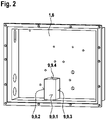
- the formation 9 is designed essentially cuboid. It has a surface 9.1, which faces the current and/or voltage measuring device 2, and three side surfaces 9.2, 9.3, 9.4, which are arranged perpendicularly to the surface 9.1, the two metal blocks 5 being arranged on the opposite side surfaces 9.2, 9.3 are.
- 2 shows the area 6 of the housing 1, which is made of a metallic material. The metallic material ensures good heat transfer.
- the 3 shows that the current and/or voltage measuring device 2 has no direct contact with the housing 1 of the energy supply unit, but a gap 13 remains between the measuring device 2 and the housing 1.
- the gap 13 is used for electrical insulation.
- a gap 7 also remains between the metal blocks 5 and the formation 9 of the housing 1.
- the gaps 7 are each filled with an electrically insulating material 8 in the present case.
- a thin plastic body can be arranged in each of the columns 7 .
- the two metal blocks 5 can be mechanically prestressed in relation to the plastic body in order to ensure optimum surface contact.
- busbars 4 are to be attached to the housing 1, the attachment - as in the figure 5 shown as an example - also done via a screw connection with the part 10 of the housing 1 made of plastic. Threaded bushings 11 are in turn inserted into part 10 to accommodate the threaded bolts 12 .
Landscapes
- Life Sciences & Earth Sciences (AREA)
- Engineering & Computer Science (AREA)
- Manufacturing & Machinery (AREA)
- Sustainable Development (AREA)
- Sustainable Energy (AREA)
- Chemical & Material Sciences (AREA)
- Chemical Kinetics & Catalysis (AREA)
- Electrochemistry (AREA)
- General Chemical & Material Sciences (AREA)
- Fuel Cell (AREA)
Description
- Die vorliegende Erfindung betrifft eine Energieversorgungseinheit für ein Brennstoffzellensystem mit den Merkmalen des Oberbegriffs des Anspruchs 1. Darüber hinaus betrifft die Erfindung ein Brennstoffzellensystem mit einer erfindungsgemäßen Energieversorgungseinheit.
- Ein Brennstoffzellensystem muss mit elektrischer Energie versorgt werden. Ferner muss die mit Hilfe des Brennstoffzellensystems erzeugte elektrische Energie einem Speicher und/oder einem Verbraucher zugeführt werden. In mobilen Anwendungen wird daher das Brennstoffzellensystem mit dem vorhandenen Bordnetz verbunden. Die Verbindung kann mit Hilfe eines Hochvoltsteckers oder mit Hilfe eines einfachen Hochvoltkabels hergestellt werden. Anstelle eines Hochvoltsteckers oder Hochvoltkabels kann die Verbindung mit dem Bordnetz auch über eine Energieversorgungseinheit (engl.: "Power Distribution Unit" bzw. PDU) realisiert werden. Die Offenlegungsschrift
DE 102016004283 offenbart eine Energieversorgungseinheit für ein Brennstoffzellensystem. - Eine Energieversorgungseinheit für ein Brennstoffzellensystem wird in der Regel mit einem Strom- und/oder Spannungsmessgerät kombiniert. Das Messgerät wird in die Stromführung der Energieversorgungseinheit, insbesondere in stromführende Stromschienen, eingebaut. Das Messgerät weist zur Strom- und/oder Spannungsmessung einen reduzierten Leitungsquerschnitt auf, im Bereich dessen die Verlustwärme groß ist. Es besteht daher die Gefahr, das eine für das Messgerät vorgegebene zulässige Maximaltemperatur überschritten wird. Zumindest ein Teil der Wärme wird über die Stromschienen abgeführt, mit denen das Messgerät mechanisch verbunden ist. Alternativ oder ergänzend kann auch das Gehäuse der Energieversorgungseinheit zur Abführung von Wärme genutzt werden, sofern dieses aus einem gut wärmeleitenden Material gefertigt ist und ein Flächenkontakt zwischen dem Messgerät und dem Gehäuse der Energieversorgungseinheit - unmittelbar oder mittelbar über die Stromschienen - besteht.
- Da gut wärmeleitende Materialien zugleich elektrisch leitend sind, muss zusätzlich für eine elektrische Isolierung gesorgt werden, um den erforderlichen Berührschutz zu gewährleisten. Die elektrische Isolierung beeinträchtigt jedoch die notwendige Wärmeabfuhr. Diesen Zielkonflikt gilt es zu lösen.
- Zur Lösung des Zielkonflikts wird die Energieversorgungseinheit mit den Merkmalen des Anspruchs 1 vorgeschlagen. Vorteilhafte Weiterbildungen der Erfindung sind den Unteransprüchen zu entnehmen. Ferner wird ein Brennstoffzellensystem mit einer erfindungsgemäßen Energieversorgungseinheit angegeben.
- Die für ein Brennstoffzellensystem vorgeschlagene Energieversorgungseinheit umfasst ein zumindest bereichsweise aus Metall gefertigtes Gehäuse sowie ein mit dem Gehäuse verbundenes Strom- und/oder Spannungsmessgerät, wobei das Strom- und/oder Spannungsmessgerät mindestens eine Lasche zur Verbindung mit einer Stromschiene aufweist. Erfindungsgemäß ist das Strom- und/oder Spannungsmessgerät, vorzugsweise die mindestens eine Lasche des Strom- und/oder Spannungsmessgeräts, lediglich mittelbar über mindestens einen Metallblock in wärmeübertragender Weise mit einem metallischen Bereich des Gehäuses verbunden.
- Das heißt, dass bei der vorgeschlagenen Energieversorgungseinheit kein direkter Kontakt des Strom- und/oder Spannungsmessgeräts mit dem Gehäuse der Energieversorgungseinheit besteht. Da kein direkter Kontakt besteht, ist der erforderliche Berührungsschutz gewährleistet. Zugleich stellt die Verbindung des Strom- und/oder Spannungsmessgeräts mit dem mindestens einen Metallblock sicher, dass die im Betrieb entstehende Verlustwärme über den Metallblock abgeführt wird. Zum Einen wird Wärme von dem Metallblock unmittelbar an die Umgebung abgegeben. Zum Anderen wird zumindest ein Teil der Wärme vom Metallblock auf das Gehäuse der Energieversorgungseinheit übertragen.
- Vorteilhafterweise ist das Strom- und/oder Spannungsmessgerät über die mindestens eine Lasche auf dem Metallblock abgestützt. Die Verlustwärme wird somit über die Lasche an den Metallblock abgegeben. Bevorzugt weist das Strom- und/oder Spannungsmessgerät mindestens zwei Laschen an sich gegenüberliegenden Seiten auf, von denen jede auf einem Metallblock abgestützt ist. Auf diese Weise ist das Strom- und/oder Spannungsmessgerät optimal stabilisiert. Der mindestens eine weitere Metallblock steigert zudem die Wärmeabfuhr.
- Bevorzugt ist zwischen dem mindestens einen Metallblock und dem metallischen Bereich des Gehäuses der Energieversorgungseinheit ein elektrisch isolierender Spalt ausgebildet. Auf diese Weise wird eine elektrische Isolierung des Metallblocks gegenüber dem Gehäuse der Energieversorgungseinheit erreicht. Alternativ oder ergänzend wird vorgeschlagen, dass zwischen dem mindestens einen Metallblock und dem metallischen Bereich des Gehäuses der Energieversorgungseinheit ein elektrisch isolierendes Material eingelegt ist. Beispielsweise kann ein dünner Kunststoffkörper oder eine elektrisch isolierende Folie zwischen dem Metallblock und dem metallischen Bereich des Gehäuses eingelegt sein. Ferner kann der Spalt mit einer elektrisch isolierenden Vergussmasse gefüllt werden. Diese besitzt den Vorteil, dass hierüber zugleich ein Toleranzausgleich realisierbar ist.
- Die vorgeschlagene elektrische Isolierung des mindestens einen Metallblocks gegenüber dem Gehäuse der Energieversorgungseinheit führt zwar zu einer geringfügigen Verschlechterung der Wärmeabfuhr, diese kann aber über die durch den Metallblock bewirkte Vergrößerung der Fläche weitgehend ausgeglichen werden. Sofern der Spalt zwischen dem Metallblock und dem Gehäuse der Energieversorgungseinheit durch ein elektrisch isolierendes Material ausgefüllt wird, kann durch eine mechanische Vorspannung des Metallblocks gegenüber dem Gehäuse der Flächenkontakt verbessert werden, was sich auch vorteilhaft auf die Wärmeabfuhr auswirkt.
- Gemäß einer bevorzugten Ausgestaltung der Erfindung weist der metallische Bereich des Gehäuses der Energieversorgungseinheit eine geometrische Ausformung zur mittelbaren Verbindung mit dem Strom- und/oder Spannungsmessgerät auf. Die geometrische Ausformung erleichtert die Anbindung des Messgeräts. Ferner werden zusätzliche Flächen zur Wärmeübertragung geschaffen. Vorzugsweise ist die geometrische Ausformung im Wesentlichen quaderförmig ausgebildet. Dadurch werden ebene Anlageflächen geschaffen. Alternativ oder ergänzend wird vorgeschlagen, dass die geometrische Ausformung eine dem Strom-und/oder Spannungsmessgerät zugewandte Oberfläche sowie mindestens eine winklig hierzu angeordnete Seitenfläche zur unmittelbaren oder mittelbaren Anlage des mindestens einen Metallblocks aufweist. Sofern mindestens zwei Metallblöcke vorgesehen sind, können diese auf sich gegenüberliegenden Seiten der geometrischen Ausformung angeordnet werden, so dass ihre Innenflächen jeweils unmittelbar oder mittelbar über eine elektrische Isolierung dem den Seitenflächen der Ausformung anliegen. Auf diese Weise werden großflächige Wärmeübertragungsflächen geschaffen.
- Ferner bevorzugt ist zur Optimierung der Wärmeübertragung der mindestens eine Metallblock quaderförmig ausgebildet und flach anliegend an der Seitenfläche der Ausformung angeordnet.
- Das Strom- und/oder Spannungsmessgerät ist vorzugsweise über die mindestens eine Lasche mit dem mindestens einen Metallblock verbunden, weiterhin vorzugsweise verschraubt. In der Lasche kann hierzu mindestens eine Bohrung zur Aufnahme eines Gewindebolzens ausgebildet sein. Mindestens eine weitere Bohrung ist vorzugsweise im Metallblock vorgesehen. Die Verbindung über eine Schraubverbindung erleichtert die Montage und ermöglicht im Bedarfsfall zudem eine schnelle und zerstörungsfreie Demontage des Strom- und/oder Spannungsmessgeräts. Alternativ kann die Lasche mit dem Metallblock verschweißt sein.
- Des Weiteren wird vorgeschlagen, dass die Stromschiene mit der Lasche und/oder dem Metallblock verbunden, vorzugsweise verschraubt, ist. Die Schraubverbindung kann beispielsweise zusammen mit der Schraubverbindung zwischen der Lasche und dem Metallblock realisiert werden, so dass derselbe Gewindebolzen verwendbar ist. Dies spart Material und Arbeitszeit, da beide Schraubverbindungen in einem Arbeitsgang hergestellt werden. Vorzugsweise ist dabei die Lasche zwischen der Stromschiene und dem Metallblock angeordnet, um die Verlustwärme des Strom- und/oder Spannungsmessgeräts über die Lasche direkt in den Metallblock einzuleiten. Über die Stromschiene, die auf der dem Metallblock abgewandten Seite der Lasche angeordnet ist, kann eine zusätzliche Wärmeabfuhr bewirkt werden. Alternativ kann die Stromschiene mit der Lasche und/oder dem Metallblock verschweißt sein.
- In Weiterbildung der Erfindung wird vorgeschlagen, dass der Metallblock mit einem Bereich oder einem Teil des Gehäuses verbunden, vorzugsweise verschraubt, ist, der bzw. das aus Kunststoff gefertigt ist. Das Teil kann beispielsweise ein Kunststoffeinsatz in Form eines Rahmens, eines Trägers oder eines Füllkörpers sein. Das Teil kann zudem fest mit dem metallischen Bereich des Gehäuses verbunden sein. Der Bereich bzw. das Teil aus Kunststoff bewirkt eine elektrische Isolierung des mindestens einen Metallblocks gegenüber dem Gehäuse der Energieversorgungseinheit im Bereich der Befestigung des Metallblocks am Gehäuse. Denn der Bereich der Befestigung muss nicht zwingend gleich dem Bereich der Wärmeübertragung sein. In der bevorzugten Ausgestaltung fallen diese beiden Bereiche auseinander.
- Vorteilhafterweise ist in den Bereich oder in das Teil des Gehäuses, der bzw. das aus Kunststoff gefertigt ist, mindestsens eine vorzugsweise metallische Gewindebuchse zur Aufnahme eines Gewindebolzens integriert. Die metallische Gewindebuchse optimiert die Schraubverbindung zwischen dem Metallblock und dem Bereich bzw. Teil des Gehäuses, das aus Kunststoff gefertigt ist.
- Zur weiteren Optimierung der Abfuhr der Verlustwärme des Strom- und/oder Spannungsmessgeräts über das Gehäuse der Energieversorgungseinheit wird vorgeschlagen, dass das Gehäuse gekühlt, beispielsweise wassergekühlt, ist.
- Das darüber hinaus zur Lösung des eingangs genannten Zielkonflikts vorgeschlagene Brennstoffzellensystem zeichnet sich dadurch aus, dass es eine erfindungsgemäße Energieversorgungseinheit zur Energieversorgung und zur Weitergabe von elektrischer Energie umfasst. Das vorgeschlagene Brennstoffzellensystem weist die gleichen Vorteile wie die erfindungsgemäße Energieversorgungseinheit auf, so dass dementsprechend auf die Beschreibung der Energieversorgungseinheit verwiesen wird.
- Die Erfindung wird nachfolgend anhand der beigefügten Zeichnungen näher erläutert. Diese zeigen:
-
Fig. 1 eine schematische Draufsicht auf eine erfindungsgemäße Energieversorgungseinheit mit eingebautem Strom- und/oder Spannungsmessgerät, -
Fig. 2 eine perspektivische Darstellung des Gehäuses der in derFig. 1 dargestellten Energieversorgungseinheit, -
Fig. 3 einen schematischen Längsschnitt durch die Energieversorgungseinheit derFig. 1 im Bereich des Strom- und/oder Spannungsmessgeräts, -
Fig. 4 einen schematischen Querschnitt durch die Energieversorgungseinheit derFig. 1 im Bereich des Strom- und/oder Spannungsmessgeräts und -
Fig. 5 einen schematischen Längsschnitt durch die Energieversorgungseinheit derFig. 1 im Bereich einer am Gehäuse befestigten Stromschiene. - Der
Fig. 1 ist eine erfindungsgemäße Energieversorgungseinheit (PDU) für ein Brennstoffzellensystem zu entnehmen. Die Energieversorgungseinheit umfasst ein Gehäuse 1 sowie ein am Gehäuse 1 befestigtes Strom- und/oder Spannungsmessgerät 2. Das Strom- und/oder Spannungsmessgerät 2 weist an zwei sich gegenüberliegenden Seiten jeweils eine Lasche 3 zur Befestigung am Gehäuse 1 sowie zur Befestigung von Stromschienen 4 auf. Das Strom- und/oder Spannungsmessgerät 2 ist dabei über die beiden Laschen 3 an Metallblöcken 5 abgestützt, die beidseits einer geometrischen Ausformung 9 des Gehäuses 1 angeordnet und mit einem Teil 10 des Gehäuses 1 verbunden bzw. verschraubt sind, das aus Kunststoff gefertigt ist. Auf diese Weise werden einerseits eine gute Wärmeabfuhr der im Betrieb des Strom- und/oder Spannungsmessgeräts 2 entstehenden Verlustwärme und andererseits eine elektrische Isolierung erzielt. - Wie der
Fig. 2 zu entnehmen ist, die das Gehäuse 1 der Energieversorgungseinheit zeigt, ist die Ausformung 9 im Wesentlichen quaderförmig gestaltet. Sie weist eine Oberfläche 9.1 auf, die dem Strom- und/oder Spannungsmessgerät 2 zugewandt ist, sowie drei Seitenflächen 9.2, 9.3, 9.4, die senkrecht zur Oberfläche 9.1 angeordnet sind, wobei an den sich gegenüberliegenden Seitenflächen 9.2, 9.3 die beiden Metallblöcke 5 angeordnet sind.Fig. 2 zeigt den Bereich 6 des Gehäuses 1, der aus einem metallischen Werkstoff gefertigt ist. Der metallische Werkstoff gewährleistet eine gute Wärmeübertragung. - Die
Fig. 3 zeigt, dass das Strom- und/oder Spannungsmessgerät 2 keinen direkten Kontakt zum Gehäuse 1 der Energieversorgungseinheit aufweist, sondern ein Spalt 13 zwischen dem Messgerät 2 und dem Gehäuse 1 verbleibt. Der Spalt 13 dient der elektrischen Isolierung. Zwischen den Metallblöcken 5 und der Ausformung 9 des Gehäuses 1 verbleibt ebenfalls jeweils ein Spalt 7. Die Spalts 7 sind vorliegend jeweils mit einem elektrisch isolierenden Material 8 gefüllt. Beispielsweise kann in den Spalten 7 jeweils ein dünner Kunststoffkörper angeordnet sein. Gegenüber dem Kunststoffkörper können die beiden Metallblöcke 5 mechanisch vorgespannt werden, um einen optimalen Flächenkontakt zu gewährleisten. - Wie der
Fig. 4 zu entnehmen ist, die einen Schnitt entlang der Schnittlinie A-A derFig. 3 zeigt, erfolgt die Befestigung der beiden Metallblöcke 5 am Gehäuse 1 nicht im Bereich der Ausformung 9, sondern über eine Schraubverbindung mit dem Teil 10 des Gehäuses 1, das aus Kunststoff gefertigt ist. In das Teil 10 sind hierzu metallische Gewindebuchsen 11 zur Aufnahme von Gewindebolzen 12 eingesetzt. - Sofern Stromschienen 4 an dem Gehäuse 1 zu befestigen sind, kann die Befestigung - wie in der
Fig. 5 beispielhaft dargestellt - ebenfalls über eine Schraubverbindung mit dem aus Kunststoff gefertigten Teil 10 des Gehäuses 1 erfolgen. Zur Aufnahme der Gewindebolzen 12 sind wiederum Gewindebuchsen 11 in das Teil 10 eingesetzt.
Claims (10)
- Energieversorgungseinheit für ein Brennstoffzellensystem, umfassend ein zumindest bereichsweise aus Metall gefertigtes Gehäuse (1) sowie ein mit dem Gehäuse (1) verbundenes Strom- und/oder Spannungsmessgerät (2), wobei das Strom- und/oder Spannungsmessgerät (2) mindestens eine Lasche (3) zur Verbindung mit einer Stromschiene (4) aufweist,
dadurch gekennzeichnet, dass das Strom- und/oder Spannungsmessgerät (2), vorzugsweise die mindestens eine Lasche (3) des Strom- und/oder Spannungsmessgeräts (2), lediglich mittelbar über mindestens einen Metallblock (5) in wärmeübertragender Weise mit einem metallischen Bereich (6) des Gehäuses (1) verbunden ist. - Energieversorgungseinheit nach Anspruch 1,
dadurch gekennzeichnet, dass zwischen dem mindestens einen Metallblock (5) und dem metallischen Bereich (6) des Gehäuses (1) ein elektrisch isolierender Spalt (7) ausgebildet und/oder ein elektrisch isolierendes Material (8) eingelegt ist. - Energieversorgungseinheit nach Anspruch 1 oder 2,
dadurch gekennzeichnet, dass der metallische Bereich (6) des Gehäuses (1) eine geometrische Ausformung (9) zur mittelbaren Verbindung mit dem Strom- und/oder Spannungsmessgerät (2) aufweist, wobei vorzugsweise die geometrische Ausformung (9) im Wesentlichen quaderförmig ausgebildet ist und/oder eine dem Strom-und/oder Spannungsmessgerät (2) zugewandte Oberfläche (9.1) sowie mindestens eine winklig hierzu angeordnete Seitenfläche (9.2, 9.3, 9.4) zur unmittelbaren oder mittelbaren Anlage des mindestens einen Metallblocks (5) aufweist. - Energieversorgungseinheit nach Anspruch 3,
dadurch gekennzeichnet, dass der mindestens eine Metallblock (5) quaderförmig ausgebildet ist und flach anliegend an der Seitenfläche (9.2, 9.3) der Ausformung (9) angeordnet ist. - Energieversorgungseinheit nach einem der vorhergehenden Ansprüche, dadurch gekennzeichnet, dass das Strom- und/oder Spannungsmessgerät (2) über die mindestens eine Lasche (3) mit dem mindestens einen Metallblock (5) verbunden, vorzugsweise verschraubt oder verschweißt, ist.
- Energieversorgungseinheit nach einem der vorhergehenden Ansprüche, dadurch gekennzeichnet, dass die Stromschiene (4) mit der Lasche (3) und/oder dem Metallblock (5) verbunden, vorzugsweise verschraubt oder verschweißt, ist, wobei vorzugsweise die Lasche (3) zwischen der Stromschiene (4) und dem Metallblock (5) angeordnet ist.
- Energieversorgungseinheit nach einem der vorhergehenden Ansprüche, dadurch gekennzeichnet, dass der Metallblock (5) mit einem Bereich oder einem Teil (10) des Gehäuses (1) verbunden, vorzugsweise verschraubt, ist, der bzw. das aus Kunststoff gefertigt ist.
- Energieversorgungseinheit nach Anspruch 7,
dadurch gekennzeichnet, dass in den Bereich oder in das Teil (10) des Gehäuses (1), der bzw. das aus Kunststoff gefertigt ist, mindestsens eine vorzugsweise metallische Gewindebuchse (11) zur Aufnahme eines Gewindebolzens (12) integriert ist. - Energieversorgungseinheit nach einem der vorhergehenden Ansprüche, dadurch gekennzeichnet, dass das Gehäuse (1) gekühlt, beispielsweise wassergekühlt, ist.
- Brennstoffzellensystem mit einer Energieversorgungseinheit nach einem der vorhergehenden Ansprüche zur Energieversorgung und zur Weitergabe von elektrischer Energie.
Applications Claiming Priority (1)
| Application Number | Priority Date | Filing Date | Title |
|---|---|---|---|
| DE102020206903.4A DE102020206903A1 (de) | 2020-06-03 | 2020-06-03 | Energieversorgungseinheit für ein Brennstoffzellensystem, Brennstoffzellensystem |
Publications (2)
| Publication Number | Publication Date |
|---|---|
| EP3920294A1 EP3920294A1 (de) | 2021-12-08 |
| EP3920294B1 true EP3920294B1 (de) | 2023-01-18 |
Family
ID=76059783
Family Applications (1)
| Application Number | Title | Priority Date | Filing Date |
|---|---|---|---|
| EP21175352.0A Active EP3920294B1 (de) | 2020-06-03 | 2021-05-21 | Energieversorgungseinheit für ein brennstoffzellensystem, brennstoffzellensystem |
Country Status (2)
| Country | Link |
|---|---|
| EP (1) | EP3920294B1 (de) |
| DE (1) | DE102020206903A1 (de) |
Family Cites Families (3)
| Publication number | Priority date | Publication date | Assignee | Title |
|---|---|---|---|---|
| DE102016004283A1 (de) * | 2016-04-07 | 2017-10-12 | Daimler Ag | Brennstoffzellenvorrichtung |
| DE102016013799A1 (de) * | 2016-11-18 | 2017-05-18 | Daimler Ag | Brennstoffzellenanordnung |
| JP7054661B2 (ja) * | 2018-08-23 | 2022-04-14 | 本田技研工業株式会社 | 燃料電池スタックのマウント構造 |
-
2020
- 2020-06-03 DE DE102020206903.4A patent/DE102020206903A1/de active Pending
-
2021
- 2021-05-21 EP EP21175352.0A patent/EP3920294B1/de active Active
Also Published As
| Publication number | Publication date |
|---|---|
| DE102020206903A1 (de) | 2021-12-09 |
| EP3920294A1 (de) | 2021-12-08 |
Similar Documents
| Publication | Publication Date | Title |
|---|---|---|
| EP1885025B1 (de) | Vorrichtung zum elektrischen Verbinden von mindestens zwei Hauptleitern eines Energieversorgungskabels, insbesondere Kabelabzweigklemme | |
| EP3605762B1 (de) | Anordnung mit einer stromschienenvorrichtung und einem stromrichtergehäuse sowie verfahren zu deren herstellung, stromrichter für ein fahrzeug und fahrzeug | |
| DE202011000434U1 (de) | Elektrische Verbindung zwischen zwei Busbars aus ebenen Leitern und einer zwischen den Leitern angeordneten Isolationsschicht | |
| WO2021001093A1 (de) | Aktiv gekühltes ladesteckverbinderteil | |
| EP1928059B1 (de) | Zusatzanschluss für Reihenklemmen | |
| DE102021125470A1 (de) | Kühleinheit, Batteriemodul und Batteriemodulanordnung | |
| WO2023151958A1 (de) | Kühlvorrichtung zur fluidkühlung einer passiven fehlerstromschutzeinrichtung | |
| EP3920294B1 (de) | Energieversorgungseinheit für ein brennstoffzellensystem, brennstoffzellensystem | |
| EP2400581B1 (de) | Montageeinrichtung für Batteriezellen | |
| DE2249000A1 (de) | Schienenkanalteilstueck | |
| EP3671964B1 (de) | Kontakt mit universellem verbindungsbereich | |
| DE102022120946A1 (de) | Vorrichtung zum elektrischen Verbinden elektrischer Komponenten, insbesondere eines elektrisch antreibbaren Fahrzeugs, mit einem kühlbaren Kontaktbereich | |
| DE102018215522A1 (de) | Zwischenkreiskondensator für eine Leistungselektronikanordnung sowie Leistungselektronikanordnung mit dem Zwischenkreiskondensator | |
| DE102020130182A1 (de) | Stromschiene zum führen von elektrischer energie in einem fahrzeug | |
| DE102021123489A1 (de) | Anschlussteil mit doppelten Stromschienen | |
| DE102012212907A1 (de) | Vorrichtung zur Verbindung zweier flach ausgebildeter Werkstücke und Verfahren zum Verbinden | |
| EP2820696B1 (de) | Batterie mit wenigstens zwei batteriezellen und mit wenigstens einem verbindungselement | |
| EP4518035A1 (de) | Anordnung mit einer stromschiene | |
| DE102019211227B4 (de) | Energieverteiler | |
| DE1910649A1 (de) | Sammelschienensystem mit Anschlussklemme | |
| EP4402744A1 (de) | Unterlegscheibe für einen elektrischen energiespeicher, elektrischer energiespeicher, anordnung sowie kraftfahrzeug | |
| DE202010008274U1 (de) | Elektrische Verbindung zwischen zwei Busbars aus ebenen Leitern und einer zwischen den Leitern angeordneten Isolationsschicht | |
| DE102022208468B3 (de) | Steckeradapter und elektronische Anordnung | |
| WO2023139155A1 (de) | Energieversorgungseinheit für ein brennstoffzellensystem, verfahren zur herstellung einer energieversorgungseinheit | |
| DE4221827C2 (de) | Elektrische Klemmanordnung |
Legal Events
| Date | Code | Title | Description |
|---|---|---|---|
| PUAI | Public reference made under article 153(3) epc to a published international application that has entered the european phase |
Free format text: ORIGINAL CODE: 0009012 |
|
| STAA | Information on the status of an ep patent application or granted ep patent |
Free format text: STATUS: THE APPLICATION HAS BEEN PUBLISHED |
|
| AK | Designated contracting states |
Kind code of ref document: A1 Designated state(s): AL AT BE BG CH CY CZ DE DK EE ES FI FR GB GR HR HU IE IS IT LI LT LU LV MC MK MT NL NO PL PT RO RS SE SI SK SM TR |
|
| B565 | Issuance of search results under rule 164(2) epc |
Effective date: 20211029 |
|
| STAA | Information on the status of an ep patent application or granted ep patent |
Free format text: STATUS: REQUEST FOR EXAMINATION WAS MADE |
|
| 17P | Request for examination filed |
Effective date: 20220608 |
|
| RBV | Designated contracting states (corrected) |
Designated state(s): AL AT BE BG CH CY CZ DE DK EE ES FI FR GB GR HR HU IE IS IT LI LT LU LV MC MK MT NL NO PL PT RO RS SE SI SK SM TR |
|
| GRAP | Despatch of communication of intention to grant a patent |
Free format text: ORIGINAL CODE: EPIDOSNIGR1 |
|
| STAA | Information on the status of an ep patent application or granted ep patent |
Free format text: STATUS: GRANT OF PATENT IS INTENDED |
|
| INTG | Intention to grant announced |
Effective date: 20220816 |
|
| RIN1 | Information on inventor provided before grant (corrected) |
Inventor name: HOWEY, FRIEDRICH Inventor name: DORN, HOLGER Inventor name: ESSLING, ROLF-PETER Inventor name: REINOEHL, MARKUS Inventor name: LUTZ, GERHARD |
|
| GRAS | Grant fee paid |
Free format text: ORIGINAL CODE: EPIDOSNIGR3 |
|
| GRAA | (expected) grant |
Free format text: ORIGINAL CODE: 0009210 |
|
| STAA | Information on the status of an ep patent application or granted ep patent |
Free format text: STATUS: THE PATENT HAS BEEN GRANTED |
|
| AK | Designated contracting states |
Kind code of ref document: B1 Designated state(s): AL AT BE BG CH CY CZ DE DK EE ES FI FR GB GR HR HU IE IS IT LI LT LU LV MC MK MT NL NO PL PT RO RS SE SI SK SM TR |
|
| REG | Reference to a national code |
Ref country code: GB Ref legal event code: FG4D Free format text: NOT ENGLISH |
|
| REG | Reference to a national code |
Ref country code: DE Ref legal event code: R096 Ref document number: 502021000388 Country of ref document: DE |
|
| REG | Reference to a national code |
Ref country code: CH Ref legal event code: EP |
|
| REG | Reference to a national code |
Ref country code: AT Ref legal event code: REF Ref document number: 1545178 Country of ref document: AT Kind code of ref document: T Effective date: 20230215 Ref country code: IE Ref legal event code: FG4D Free format text: LANGUAGE OF EP DOCUMENT: GERMAN |
|
| REG | Reference to a national code |
Ref country code: LT Ref legal event code: MG9D |
|
| REG | Reference to a national code |
Ref country code: NL Ref legal event code: MP Effective date: 20230118 |
|
| PG25 | Lapsed in a contracting state [announced via postgrant information from national office to epo] |
Ref country code: NL Free format text: LAPSE BECAUSE OF FAILURE TO SUBMIT A TRANSLATION OF THE DESCRIPTION OR TO PAY THE FEE WITHIN THE PRESCRIBED TIME-LIMIT Effective date: 20230118 |
|
| PG25 | Lapsed in a contracting state [announced via postgrant information from national office to epo] |
Ref country code: RS Free format text: LAPSE BECAUSE OF FAILURE TO SUBMIT A TRANSLATION OF THE DESCRIPTION OR TO PAY THE FEE WITHIN THE PRESCRIBED TIME-LIMIT Effective date: 20230118 Ref country code: PT Free format text: LAPSE BECAUSE OF FAILURE TO SUBMIT A TRANSLATION OF THE DESCRIPTION OR TO PAY THE FEE WITHIN THE PRESCRIBED TIME-LIMIT Effective date: 20230518 Ref country code: NO Free format text: LAPSE BECAUSE OF FAILURE TO SUBMIT A TRANSLATION OF THE DESCRIPTION OR TO PAY THE FEE WITHIN THE PRESCRIBED TIME-LIMIT Effective date: 20230418 Ref country code: LV Free format text: LAPSE BECAUSE OF FAILURE TO SUBMIT A TRANSLATION OF THE DESCRIPTION OR TO PAY THE FEE WITHIN THE PRESCRIBED TIME-LIMIT Effective date: 20230118 Ref country code: LT Free format text: LAPSE BECAUSE OF FAILURE TO SUBMIT A TRANSLATION OF THE DESCRIPTION OR TO PAY THE FEE WITHIN THE PRESCRIBED TIME-LIMIT Effective date: 20230118 Ref country code: HR Free format text: LAPSE BECAUSE OF FAILURE TO SUBMIT A TRANSLATION OF THE DESCRIPTION OR TO PAY THE FEE WITHIN THE PRESCRIBED TIME-LIMIT Effective date: 20230118 Ref country code: ES Free format text: LAPSE BECAUSE OF FAILURE TO SUBMIT A TRANSLATION OF THE DESCRIPTION OR TO PAY THE FEE WITHIN THE PRESCRIBED TIME-LIMIT Effective date: 20230118 |
|
| PG25 | Lapsed in a contracting state [announced via postgrant information from national office to epo] |
Ref country code: SE Free format text: LAPSE BECAUSE OF FAILURE TO SUBMIT A TRANSLATION OF THE DESCRIPTION OR TO PAY THE FEE WITHIN THE PRESCRIBED TIME-LIMIT Effective date: 20230118 Ref country code: PL Free format text: LAPSE BECAUSE OF FAILURE TO SUBMIT A TRANSLATION OF THE DESCRIPTION OR TO PAY THE FEE WITHIN THE PRESCRIBED TIME-LIMIT Effective date: 20230118 Ref country code: IS Free format text: LAPSE BECAUSE OF FAILURE TO SUBMIT A TRANSLATION OF THE DESCRIPTION OR TO PAY THE FEE WITHIN THE PRESCRIBED TIME-LIMIT Effective date: 20230518 Ref country code: GR Free format text: LAPSE BECAUSE OF FAILURE TO SUBMIT A TRANSLATION OF THE DESCRIPTION OR TO PAY THE FEE WITHIN THE PRESCRIBED TIME-LIMIT Effective date: 20230419 Ref country code: FI Free format text: LAPSE BECAUSE OF FAILURE TO SUBMIT A TRANSLATION OF THE DESCRIPTION OR TO PAY THE FEE WITHIN THE PRESCRIBED TIME-LIMIT Effective date: 20230118 |
|
| REG | Reference to a national code |
Ref country code: DE Ref legal event code: R097 Ref document number: 502021000388 Country of ref document: DE |
|
| PG25 | Lapsed in a contracting state [announced via postgrant information from national office to epo] |
Ref country code: SM Free format text: LAPSE BECAUSE OF FAILURE TO SUBMIT A TRANSLATION OF THE DESCRIPTION OR TO PAY THE FEE WITHIN THE PRESCRIBED TIME-LIMIT Effective date: 20230118 Ref country code: RO Free format text: LAPSE BECAUSE OF FAILURE TO SUBMIT A TRANSLATION OF THE DESCRIPTION OR TO PAY THE FEE WITHIN THE PRESCRIBED TIME-LIMIT Effective date: 20230118 Ref country code: EE Free format text: LAPSE BECAUSE OF FAILURE TO SUBMIT A TRANSLATION OF THE DESCRIPTION OR TO PAY THE FEE WITHIN THE PRESCRIBED TIME-LIMIT Effective date: 20230118 Ref country code: DK Free format text: LAPSE BECAUSE OF FAILURE TO SUBMIT A TRANSLATION OF THE DESCRIPTION OR TO PAY THE FEE WITHIN THE PRESCRIBED TIME-LIMIT Effective date: 20230118 Ref country code: CZ Free format text: LAPSE BECAUSE OF FAILURE TO SUBMIT A TRANSLATION OF THE DESCRIPTION OR TO PAY THE FEE WITHIN THE PRESCRIBED TIME-LIMIT Effective date: 20230118 |
|
| PLBE | No opposition filed within time limit |
Free format text: ORIGINAL CODE: 0009261 |
|
| STAA | Information on the status of an ep patent application or granted ep patent |
Free format text: STATUS: NO OPPOSITION FILED WITHIN TIME LIMIT |
|
| PG25 | Lapsed in a contracting state [announced via postgrant information from national office to epo] |
Ref country code: SK Free format text: LAPSE BECAUSE OF FAILURE TO SUBMIT A TRANSLATION OF THE DESCRIPTION OR TO PAY THE FEE WITHIN THE PRESCRIBED TIME-LIMIT Effective date: 20230118 |
|
| 26N | No opposition filed |
Effective date: 20231019 |
|
| PG25 | Lapsed in a contracting state [announced via postgrant information from national office to epo] |
Ref country code: MC Free format text: LAPSE BECAUSE OF FAILURE TO SUBMIT A TRANSLATION OF THE DESCRIPTION OR TO PAY THE FEE WITHIN THE PRESCRIBED TIME-LIMIT Effective date: 20230118 |
|
| REG | Reference to a national code |
Ref country code: BE Ref legal event code: MM Effective date: 20230531 |
|
| PG25 | Lapsed in a contracting state [announced via postgrant information from national office to epo] |
Ref country code: SI Free format text: LAPSE BECAUSE OF FAILURE TO SUBMIT A TRANSLATION OF THE DESCRIPTION OR TO PAY THE FEE WITHIN THE PRESCRIBED TIME-LIMIT Effective date: 20230118 Ref country code: MC Free format text: LAPSE BECAUSE OF FAILURE TO SUBMIT A TRANSLATION OF THE DESCRIPTION OR TO PAY THE FEE WITHIN THE PRESCRIBED TIME-LIMIT Effective date: 20230118 Ref country code: LU Free format text: LAPSE BECAUSE OF NON-PAYMENT OF DUE FEES Effective date: 20230521 |
|
| REG | Reference to a national code |
Ref country code: IE Ref legal event code: MM4A |
|
| PG25 | Lapsed in a contracting state [announced via postgrant information from national office to epo] |
Ref country code: IE Free format text: LAPSE BECAUSE OF NON-PAYMENT OF DUE FEES Effective date: 20230521 |
|
| PG25 | Lapsed in a contracting state [announced via postgrant information from national office to epo] |
Ref country code: IE Free format text: LAPSE BECAUSE OF NON-PAYMENT OF DUE FEES Effective date: 20230521 |
|
| PG25 | Lapsed in a contracting state [announced via postgrant information from national office to epo] |
Ref country code: BE Free format text: LAPSE BECAUSE OF NON-PAYMENT OF DUE FEES Effective date: 20230531 |
|
| PG25 | Lapsed in a contracting state [announced via postgrant information from national office to epo] |
Ref country code: BG Free format text: LAPSE BECAUSE OF FAILURE TO SUBMIT A TRANSLATION OF THE DESCRIPTION OR TO PAY THE FEE WITHIN THE PRESCRIBED TIME-LIMIT Effective date: 20230118 |
|
| PG25 | Lapsed in a contracting state [announced via postgrant information from national office to epo] |
Ref country code: BG Free format text: LAPSE BECAUSE OF FAILURE TO SUBMIT A TRANSLATION OF THE DESCRIPTION OR TO PAY THE FEE WITHIN THE PRESCRIBED TIME-LIMIT Effective date: 20230118 |
|
| REG | Reference to a national code |
Ref country code: CH Ref legal event code: PL |
|
| PG25 | Lapsed in a contracting state [announced via postgrant information from national office to epo] |
Ref country code: CH Free format text: LAPSE BECAUSE OF NON-PAYMENT OF DUE FEES Effective date: 20240531 |
|
| PGFP | Annual fee paid to national office [announced via postgrant information from national office to epo] |
Ref country code: GB Payment date: 20250522 Year of fee payment: 5 |
|
| PGFP | Annual fee paid to national office [announced via postgrant information from national office to epo] |
Ref country code: IT Payment date: 20250530 Year of fee payment: 5 |
|
| PGFP | Annual fee paid to national office [announced via postgrant information from national office to epo] |
Ref country code: FR Payment date: 20250523 Year of fee payment: 5 |
|
| PGFP | Annual fee paid to national office [announced via postgrant information from national office to epo] |
Ref country code: AT Payment date: 20250721 Year of fee payment: 5 |
|
| PG25 | Lapsed in a contracting state [announced via postgrant information from national office to epo] |
Ref country code: CY Free format text: LAPSE BECAUSE OF FAILURE TO SUBMIT A TRANSLATION OF THE DESCRIPTION OR TO PAY THE FEE WITHIN THE PRESCRIBED TIME-LIMIT; INVALID AB INITIO Effective date: 20210521 |
|
| PG25 | Lapsed in a contracting state [announced via postgrant information from national office to epo] |
Ref country code: HU Free format text: LAPSE BECAUSE OF FAILURE TO SUBMIT A TRANSLATION OF THE DESCRIPTION OR TO PAY THE FEE WITHIN THE PRESCRIBED TIME-LIMIT; INVALID AB INITIO Effective date: 20210521 |
|
| PGFP | Annual fee paid to national office [announced via postgrant information from national office to epo] |
Ref country code: DE Payment date: 20250716 Year of fee payment: 5 |
|
| PG25 | Lapsed in a contracting state [announced via postgrant information from national office to epo] |
Ref country code: TR Free format text: LAPSE BECAUSE OF FAILURE TO SUBMIT A TRANSLATION OF THE DESCRIPTION OR TO PAY THE FEE WITHIN THE PRESCRIBED TIME-LIMIT Effective date: 20230118 |