EP3920256B1 - Battery module and vehicle - Google Patents
Battery module and vehicle Download PDFInfo
- Publication number
- EP3920256B1 EP3920256B1 EP20889065.7A EP20889065A EP3920256B1 EP 3920256 B1 EP3920256 B1 EP 3920256B1 EP 20889065 A EP20889065 A EP 20889065A EP 3920256 B1 EP3920256 B1 EP 3920256B1
- Authority
- EP
- European Patent Office
- Prior art keywords
- sampling
- board
- thermally conductive
- battery
- circuit board
- Prior art date
- Legal status (The legal status is an assumption and is not a legal conclusion. Google has not performed a legal analysis and makes no representation as to the accuracy of the status listed.)
- Active
Links
Images



Classifications
-
- H—ELECTRICITY
- H01—ELECTRIC ELEMENTS
- H01M—PROCESSES OR MEANS, e.g. BATTERIES, FOR THE DIRECT CONVERSION OF CHEMICAL ENERGY INTO ELECTRICAL ENERGY
- H01M10/00—Secondary cells; Manufacture thereof
- H01M10/42—Methods or arrangements for servicing or maintenance of secondary cells or secondary half-cells
- H01M10/425—Structural combination with electronic components, e.g. electronic circuits integrated to the outside of the casing
-
- H—ELECTRICITY
- H01—ELECTRIC ELEMENTS
- H01M—PROCESSES OR MEANS, e.g. BATTERIES, FOR THE DIRECT CONVERSION OF CHEMICAL ENERGY INTO ELECTRICAL ENERGY
- H01M10/00—Secondary cells; Manufacture thereof
- H01M10/42—Methods or arrangements for servicing or maintenance of secondary cells or secondary half-cells
- H01M10/425—Structural combination with electronic components, e.g. electronic circuits integrated to the outside of the casing
- H01M10/4257—Smart batteries, e.g. electronic circuits inside the housing of the cells or batteries
-
- H—ELECTRICITY
- H01—ELECTRIC ELEMENTS
- H01M—PROCESSES OR MEANS, e.g. BATTERIES, FOR THE DIRECT CONVERSION OF CHEMICAL ENERGY INTO ELECTRICAL ENERGY
- H01M10/00—Secondary cells; Manufacture thereof
- H01M10/42—Methods or arrangements for servicing or maintenance of secondary cells or secondary half-cells
- H01M10/48—Accumulators combined with arrangements for measuring, testing or indicating the condition of cells, e.g. the level or density of the electrolyte
- H01M10/482—Accumulators combined with arrangements for measuring, testing or indicating the condition of cells, e.g. the level or density of the electrolyte for several batteries or cells simultaneously or sequentially
-
- H—ELECTRICITY
- H01—ELECTRIC ELEMENTS
- H01M—PROCESSES OR MEANS, e.g. BATTERIES, FOR THE DIRECT CONVERSION OF CHEMICAL ENERGY INTO ELECTRICAL ENERGY
- H01M10/00—Secondary cells; Manufacture thereof
- H01M10/42—Methods or arrangements for servicing or maintenance of secondary cells or secondary half-cells
- H01M10/48—Accumulators combined with arrangements for measuring, testing or indicating the condition of cells, e.g. the level or density of the electrolyte
- H01M10/486—Accumulators combined with arrangements for measuring, testing or indicating the condition of cells, e.g. the level or density of the electrolyte for measuring temperature
-
- H—ELECTRICITY
- H01—ELECTRIC ELEMENTS
- H01M—PROCESSES OR MEANS, e.g. BATTERIES, FOR THE DIRECT CONVERSION OF CHEMICAL ENERGY INTO ELECTRICAL ENERGY
- H01M10/00—Secondary cells; Manufacture thereof
- H01M10/60—Heating or cooling; Temperature control
- H01M10/65—Means for temperature control structurally associated with the cells
- H01M10/653—Means for temperature control structurally associated with the cells characterised by electrically insulating or thermally conductive materials
-
- H—ELECTRICITY
- H01—ELECTRIC ELEMENTS
- H01M—PROCESSES OR MEANS, e.g. BATTERIES, FOR THE DIRECT CONVERSION OF CHEMICAL ENERGY INTO ELECTRICAL ENERGY
- H01M50/00—Constructional details or processes of manufacture of the non-active parts of electrochemical cells other than fuel cells, e.g. hybrid cells
- H01M50/10—Primary casings; Jackets or wrappings
- H01M50/102—Primary casings; Jackets or wrappings characterised by their shape or physical structure
- H01M50/103—Primary casings; Jackets or wrappings characterised by their shape or physical structure prismatic or rectangular
-
- H—ELECTRICITY
- H01—ELECTRIC ELEMENTS
- H01M—PROCESSES OR MEANS, e.g. BATTERIES, FOR THE DIRECT CONVERSION OF CHEMICAL ENERGY INTO ELECTRICAL ENERGY
- H01M50/00—Constructional details or processes of manufacture of the non-active parts of electrochemical cells other than fuel cells, e.g. hybrid cells
- H01M50/10—Primary casings; Jackets or wrappings
- H01M50/147—Lids or covers
-
- H—ELECTRICITY
- H01—ELECTRIC ELEMENTS
- H01M—PROCESSES OR MEANS, e.g. BATTERIES, FOR THE DIRECT CONVERSION OF CHEMICAL ENERGY INTO ELECTRICAL ENERGY
- H01M50/00—Constructional details or processes of manufacture of the non-active parts of electrochemical cells other than fuel cells, e.g. hybrid cells
- H01M50/10—Primary casings; Jackets or wrappings
- H01M50/147—Lids or covers
- H01M50/148—Lids or covers characterised by their shape
- H01M50/15—Lids or covers characterised by their shape for prismatic or rectangular cells
-
- H—ELECTRICITY
- H01—ELECTRIC ELEMENTS
- H01M—PROCESSES OR MEANS, e.g. BATTERIES, FOR THE DIRECT CONVERSION OF CHEMICAL ENERGY INTO ELECTRICAL ENERGY
- H01M50/00—Constructional details or processes of manufacture of the non-active parts of electrochemical cells other than fuel cells, e.g. hybrid cells
- H01M50/20—Mountings; Secondary casings or frames; Racks, modules or packs; Suspension devices; Shock absorbers; Transport or carrying devices; Holders
- H01M50/204—Racks, modules or packs for multiple batteries or multiple cells
- H01M50/207—Racks, modules or packs for multiple batteries or multiple cells characterised by their shape
- H01M50/209—Racks, modules or packs for multiple batteries or multiple cells characterised by their shape adapted for prismatic or rectangular cells
-
- H—ELECTRICITY
- H01—ELECTRIC ELEMENTS
- H01M—PROCESSES OR MEANS, e.g. BATTERIES, FOR THE DIRECT CONVERSION OF CHEMICAL ENERGY INTO ELECTRICAL ENERGY
- H01M50/00—Constructional details or processes of manufacture of the non-active parts of electrochemical cells other than fuel cells, e.g. hybrid cells
- H01M50/20—Mountings; Secondary casings or frames; Racks, modules or packs; Suspension devices; Shock absorbers; Transport or carrying devices; Holders
- H01M50/262—Mountings; Secondary casings or frames; Racks, modules or packs; Suspension devices; Shock absorbers; Transport or carrying devices; Holders with fastening means, e.g. locks
-
- H—ELECTRICITY
- H01—ELECTRIC ELEMENTS
- H01M—PROCESSES OR MEANS, e.g. BATTERIES, FOR THE DIRECT CONVERSION OF CHEMICAL ENERGY INTO ELECTRICAL ENERGY
- H01M50/00—Constructional details or processes of manufacture of the non-active parts of electrochemical cells other than fuel cells, e.g. hybrid cells
- H01M50/20—Mountings; Secondary casings or frames; Racks, modules or packs; Suspension devices; Shock absorbers; Transport or carrying devices; Holders
- H01M50/284—Mountings; Secondary casings or frames; Racks, modules or packs; Suspension devices; Shock absorbers; Transport or carrying devices; Holders with incorporated circuit boards, e.g. printed circuit boards [PCB]
-
- H—ELECTRICITY
- H01—ELECTRIC ELEMENTS
- H01M—PROCESSES OR MEANS, e.g. BATTERIES, FOR THE DIRECT CONVERSION OF CHEMICAL ENERGY INTO ELECTRICAL ENERGY
- H01M10/00—Secondary cells; Manufacture thereof
- H01M10/42—Methods or arrangements for servicing or maintenance of secondary cells or secondary half-cells
- H01M10/425—Structural combination with electronic components, e.g. electronic circuits integrated to the outside of the casing
- H01M2010/4271—Battery management systems including electronic circuits, e.g. control of current or voltage to keep battery in healthy state, cell balancing
-
- H—ELECTRICITY
- H01—ELECTRIC ELEMENTS
- H01M—PROCESSES OR MEANS, e.g. BATTERIES, FOR THE DIRECT CONVERSION OF CHEMICAL ENERGY INTO ELECTRICAL ENERGY
- H01M2220/00—Batteries for particular applications
- H01M2220/20—Batteries in motive systems, e.g. vehicle, ship, plane
-
- Y—GENERAL TAGGING OF NEW TECHNOLOGICAL DEVELOPMENTS; GENERAL TAGGING OF CROSS-SECTIONAL TECHNOLOGIES SPANNING OVER SEVERAL SECTIONS OF THE IPC; TECHNICAL SUBJECTS COVERED BY FORMER USPC CROSS-REFERENCE ART COLLECTIONS [XRACs] AND DIGESTS
- Y02—TECHNOLOGIES OR APPLICATIONS FOR MITIGATION OR ADAPTATION AGAINST CLIMATE CHANGE
- Y02E—REDUCTION OF GREENHOUSE GAS [GHG] EMISSIONS, RELATED TO ENERGY GENERATION, TRANSMISSION OR DISTRIBUTION
- Y02E60/00—Enabling technologies; Technologies with a potential or indirect contribution to GHG emissions mitigation
- Y02E60/10—Energy storage using batteries
Definitions
- This application relates to the technical field of battery preparation, and in particular, to a battery module and a vehicle.
- a battery is a source of energy for an electric vehicle. To ensure high performance of the battery module and extend its service life, the battery module needs to be managed and controlled. A battery temperature exerts a relatively great impact on the battery in terms of battery capacity, voltage, internal resistance, charge and discharge efficiency, service life, safety, battery consistency, and the like. Therefore, the battery temperature needs to be monitored during use of the battery.
- a thermistor is generally used as a temperature sensor to measure the battery temperature.
- the battery temperature is collected in an indirect measurement manner, for example, by connecting other conductive metal parts such as an aluminum or copper plate to an electrode terminal.
- a terminal voltage of the thermistor is sampled and read by using a voltage divider method, and a temperature value can be calculated according to a resistance-temperature relationship.
- CN204029949U discloses a signal acquisition module for a power battery module including a circuit board, a signal acquisition terminal, and a temperature sensing element; the collecting terminal includes a protective cover and an electrical connecting piece connected to the protective cover.
- the protective cover is fastened on the surface of the circuit board and electrically connected to a circuit in the circuit board.
- the signal collecting terminal is connected to the circuit board through the protective cover; the temperature sensing element is located in a space formed by the protective cover and the circuit board, and the temperature sensing element is located on the circuit board
- the surface of the is insulated from the protective cover; the space formed by the protective cover and the circuit board is filled with a thermally conductive insulating material.
- EP3965210A1 discloses the battery module includes a second case and a plurality of battery units, and the battery units are disposed in the second case and are arranged side by side along a length direction (y direction) of the battery module.
- the battery module of the present application further includes: a circuit board, a heat-conducting element, and a temperature detection component.
- the circuit board is disposed above the top cover along a height direction of the battery module, and the circuit board is provided with a temperature collection circuit.
- a first end of the heat-conducting element is connected to the circuit board, and at least part of the heat-conducting element is in contact with the top cover.
- a first aspect of this application provides a battery module, including:
- thermometric element transmits the measured temperature signal of the thermally conductive sampling piece to the circuit board to implement sampling of the temperature of the battery cell.
- the thermally conductive sampling piece includes a sampling board.
- the sampling board includes a first sampling board fitting snugly with the battery top cover, a third sampling board connected to the circuit board, and a second sampling board that connects the first sampling board and the third sampling board.
- the sampling board is bent.
- the first sampling board and the third sampling board are located on two sides of the second sampling board respectively, and extend in a direction away from the second sampling board.
- an avoidance hole is disposed at a position of joint between the thermally conductive sampling piece and the circuit board, and the thermometric element is located in the avoidance hole.
- the stopper plate includes:
- the position limiting structure is disposed in pairs.
- the thermally conductive sampling piece is fixedly connected to the battery top cover by a fastener and/or a binder.
- a second aspect of this application provides a vehicle, including:
- a temperature sampling position is arranged on a surface of the battery top cover of the battery cell. Heat inside the battery cell can be quickly conducted to the battery top cover.
- the thermally conductive sampling piece is disposed on and fits snugly with the battery top cover.
- the thermometric element and the thermally conductive sampling piece are directly connected to the circuit board.
- the thermometric element detects the temperature of the thermally conductive sampling piece. In this way, the internal temperature of the battery cell can be reflected to the thermometric element through the thermally conductive sampling piece.
- the thermometric element transmits the measured temperature signal of the thermally conductive sampling piece to the circuit board to implement sampling of the temperature of the battery cell.
- thermometric element is connected to the battery top cover through the thermally conductive sampling piece.
- a heat conduction path between the thermometric element and the battery top cover is simple. This facilitates real-time and accurate collection of the temperature of the battery cell, and helps to solve the problem that the collected sample temperature differs sharply from the actual temperature inside the battery cell when the temperature of the battery cell is collected through an electrical connecting plate.
- the problems caused by an excessive temperature difference between the sample temperature and the actual temperature are mitigated, where the problems include: power of an electric vehicle is prematurely reduced, the capacity of the battery pack is not fully utilized, a cruising range is reduced, and even the electric vehicle is unable to be started.
- the vehicle according to this application includes the battery module according to this application, and possesses the same advantages as those of the battery module according to this application.
- a direction or positional relationship indicated by the directional terms such as “before”, “after”, “upper”, “lower”, “left”, “right”, “vertical”, “perpendicular”, “horizontal”, “top”, and “bottom” is generally a direction or positional relationship based on the illustration in the drawings, and is merely intended for ease or brevity of description of this application. Unless otherwise specified to the contrary, such directional terms do not indicate or imply that the indicated device or component is necessarily in the specified direction or necessarily constructed or operated in the specified direction. Therefore, such terms are not to be understood as a limitation on the protection scope of this application.
- the directional terms “in” and “out” used in connection with a part mean inward and outward directions relative to the contour of the part.
- a temperature difference between the measured sample temperature and an actual temperature inside a battery cell is relatively great.
- the temperature difference may reach ⁇ 5.0 °C.
- the temperature difference may reach ⁇ 10 °C, and errors are greater.
- An excessive temperature difference between the sample temperature and the actual temperature may cause a battery management system (BMS) of a battery pack containing the battery module to control the battery pack to reduce power prematurely, or even to cut off electricity. Consequently, the electric vehicle powered by the battery pack loses power, and a movement process of the electric vehicle is not controllable.
- BMS battery management system
- an embodiment of this application provides a battery module.
- the battery module includes a plurality of battery cells 1, a thermally conductive sampling piece, a thermometric element 9, and a circuit board 4.
- Each battery cell 1 includes a battery top cover 12.
- One end of the thermally conductive sampling piece fits snugly with and is fixedly connected to the battery top cover 12.
- the circuit board 4 is disposed above the battery top cover 12. Another end of the thermally conductive sampling piece is connected to the circuit board 4.
- the thermometric element 9 is electrically connected to the circuit board 4.
- the thermometric element 9 collects a temperature signal of the thermally conductive sampling piece and transmits the temperature signal to the circuit board 4.
- a temperature sampling position is arranged on a surface of the battery top cover 12 of the battery cell 1. Heat inside the battery cell 1 can be quickly conducted to the battery top cover 12.
- the thermally conductive sampling piece is disposed on and fits snugly with the battery top cover 12.
- the thermometric element 9 and the thermally conductive sampling piece are directly connected to the circuit board 4.
- the thermometric element 9 detects the temperature of the thermally conductive sampling piece. In this way, the internal temperature of the battery cell 1 can be reflected to the thermometric element 9 through the thermally conductive sampling piece.
- the thermometric element 9 transmits the measured temperature signal of the thermally conductive sampling piece to the circuit board 4 to implement sampling of the temperature of the battery cell 1.
- thermometric element 9 Internal heat of the battery cell 1 can be quickly conducted to the battery top cover 12, and the temperature of the battery top cover 12 is usually not inconsistent with the internal temperature of the battery cell 1 when working conditions are different.
- thermometric element 9 is connected to the battery top cover 12 through the thermally conductive sampling piece.
- the heat conduction path between the thermometric element 9 and the battery top cover 12 is simple. This facilitates real-time and accurate collection of the temperature of the battery cell 1, and helps to solve the problem that the collected temperature differs sharply from the actual temperature inside the battery cell 1 when the temperature of the battery cell 1 is collected through an electrical connecting plate.
- the problems caused by an excessive temperature difference between the sample temperature and the actual temperature are mitigated, where the problems include: power of an electric vehicle is prematurely reduced, the capacity of the battery pack is not fully utilized, a cruising range is reduced, and even the electric vehicle is unable to be started.
- FIG. 1 to FIG. 4 show a structure of a battery module according to an embodiment of this application.
- the battery module includes battery cells 1, a screw 2, a thermally conductive sampling piece 3, a circuit board 4, a thermometric element 9, side plates 7, end plates 8, and an electrical connecting plate (not shown in the drawing).
- the circuit board 4 is a flexible circuit board.
- the plurality of battery cells 1 are arranged in an array to form a battery module.
- 6 battery cells 1 are arranged in an array of 1 column and 6 rows.
- Two side plates 7 are disposed outside two opposite lateral faces of the battery module respectively.
- Two end plates 8 are disposed outside two opposite end faces of the battery module respectively.
- the two side plates 7 and the two end plates 8 define an accommodation space that accommodates the battery module.
- Each electrical connecting plate connects different battery cells 1.
- each battery cell 1 includes a housing 11, a battery top cover 12, an electrode assembly (not shown in the drawing), a top sheet 13, a positive terminal 14, a negative terminal 15, and an explosion-proof valve 16.
- the battery top cover 12 is disposed on a top of the housing 11, and combines with the housing 11 to define an accommodation portion that accommodates the electrode assembly.
- the positive terminal 14 and the negative terminal 15 are connected to a positive electrode and a negative electrode of the electrode assembly respectively, and protrude beyond the battery top cover 12.
- the explosion-proof valve 16 is located between the positive terminal 14 and the negative terminal 15.
- a temperature sampling region 121 is disposed on the battery top cover 12.
- the top patch 13 fits snugly with an upper surface of the battery top cover 12.
- a temperature collection opening is made on the top patch 13.
- a part of the battery top cover 12, which is exposed at the temperature collection opening, is the temperature sampling region 121.
- the temperature sampling region 121 is a square region arranged between the positive terminal 14 and the negative terminal 15.
- the thermally conductive sampling piece 3 fits snugly with and is fixedly connected to the temperature sampling region 121 located between the explosion-proof valve 16 and the negative terminal 15.
- the position and shape of the temperature sampling region may vary depending on actual situations.
- the thermometric element 9 is configured to collect the temperature of the thermally conductive sampling piece and form a battery temperature signal representing the temperature of the battery cell 1.
- the circuit board 4 is disposed above the battery top cover 12.
- the thermometric element 9 is connected to the circuit board 4, and transmits the battery temperature signal to the circuit board 4.
- thermometric element 9 includes a thermistor, and may be a negative temperature coefficient (NTC) surface mount device (SMD) thermistor.
- NTC negative temperature coefficient
- SMD surface mount device
- the thermally conductive sampling element may be made of metal or a thermally conductive non-metallic material.
- thermally conductive sampling piece 3 fits snugly with and is fixedly connected to the battery top cover 12. Another end of the thermally conductive sampling piece is connected onto the circuit board 4.
- the thermally conductive sampling piece includes a sampling board.
- the sampling board includes a first sampling board fitting snugly with the battery top cover, a third sampling board connected to the circuit board, and a second sampling board that connects the first sampling board and the third sampling board.
- the shape of the sampling board may be bent.
- the first sampling board and the third sampling board are located on two sides of the second sampling board respectively, and extend in a direction away from the second sampling board.
- the thermally conductive sampling piece 3 includes the sampling boards.
- the sampling board includes a first sampling board 3A, a second sampling board 3B, and a third sampling board 3C that are sequentially connected in a bent shape.
- the first sampling board 3A and the third sampling board 3C each extend from the second sampling board 3B toward a side away from a face of the second sampling board 3B.
- An extension direction of the first sampling board 3A is opposite to that of the third sampling board 3C.
- the first sampling board 3A fits snugly with the battery top cover 12, and the third sampling board 3C is connected to the circuit board 4.
- a threaded hole 122 is disposed on the battery top cover 12. As shown in FIG. 2 , the threaded hole 122 is located at a center of the temperature sampling region 121.
- a connecting hole 31 is disposed on the sampling board.
- the connecting hole 31 is disposed on the first sampling board 3A.
- the screw 2 is threaded through the connecting hole 31 to threadedly connect to the threaded hole 122 on the battery top cover 12.
- the first sampling board 3A may be fixedly connected onto the battery top cover 12 to implement fixed connection between the thermally conductive sampling piece and the battery top cover 12.
- a relative position between the first sampling board 3A and the third sampling board 3C can be adjusted by appropriately adjusting angles between the first sampling board 3A, the second sampling board 3B, and the third sampling board 3C.
- the relative position between the circuit board 4 and the battery top cover 12 is well suited. This helps the thermally conductive sampling piece 3 to fit closely with the battery top cover 12, helps to ensure temperature measurement effects, helps to prevent the thermally conductive sampling piece 3 from pulling the circuit board 4, and helps to prevent damage caused by the thermally conductive sampling piece 3 to the circuit board 4.
- an avoidance hole 32 is disposed at a position of joint between the sampling board and the circuit board 4, and the thermometric element 9 is located in the avoidance hole. As shown in FIG. 4 , the avoidance hole 32 is disposed on the third sampling board 3C. The thermometric element 9 is disposed on the circuit board 4 and located in the avoidance hole 32.
- the thermally conductive sampling piece includes a position limiting structure disposed at the avoidance hole on the sampling board.
- the position limiting structure is configured to limit a relative position between the thermometric element 9 and the thermally conductive sampling piece.
- a position limiting structure is further disposed on the thermally conductive sampling piece.
- the position limiting structure is configured to limit a relative position between the circuit board and the thermally conductive sampling piece.
- the position limiting structure may be disposed in pairs.
- the position limiting structure may include a stopper plate disposed on one side of the thermally conductive sampling piece.
- the stopper plate is snap-fastened to the circuit board 4.
- the stopper plate may include a first stopper plate and a second stopper plate.
- the first stopper plate is connected to the thermally conductive sampling piece, and extends toward a side away from the thermally conductive sampling piece.
- the second stopper plate is connected to the first stopper plate, spaced apart from the thermally conductive sampling piece, and snap-fastened to the circuit board.
- the position limiting structure includes a stopper plate 33 disposed on the sampling board and located on the side of the avoidance hole.
- the stopper plate 33 includes a first stopper plate 33A and a second stopper plate 33B that are sequentially connected.
- the first stopper plate 33A is connected to the sampling board and extends toward a side away from the face of the sampling board.
- the second stopper plate 33B is spaced apart from the sampling board, and extends from a side on which the avoidance hole 32 is located toward an opposite side of the avoidance hole 32.
- the thermometric element 9 is located between the second stopper plate and the circuit board 4.
- the third sampling board 3C is connected to a lower side of the circuit board 4, and the position limiting structure is located below the third sampling board 3C.
- the position limiting structure includes two stopper plates 33 disposed on two opposite sides of the avoidance hole 32. A spacing exists between the second stopper plates 33B of the two stopper plates 33.
- the thermally conductive sampling piece according to this embodiment may be integrally formed by using a whole strip-shaped board, and the sampling board and the position limiting structure are formed concurrently. After the battery module is assembled, the thermometric element 9 is located between the circuit board 4 and the second stopper plate 33B of the stopper plate 33.
- the thermally conductive sampling piece may be fixedly connected to the battery top cover 12 by a fastener and/or a binder.
- thermometric element 9 and the thermally conductive sampling piece may be connected onto the circuit board 4 by welding.
- the thermally conductive sampling piece 3 may directly contact the thermometric element 9 so as to transfer heat to the thermometric element 9.
- the heat of the thermally conductive sampling piece may also be transferred to the thermometric element 9 through a thermally conductive adhesive.
- the thermally conductive sampling piece and the thermometric element 9 are connected to the circuit board 4 concurrently.
- a region of connection between the thermally conductive sampling piece and the circuit board 4 is located around a region of connection between the thermometric element 9 and the circuit board 4.
- the stopper plate 33 facilitates limiting of the relative position between the thermally conductive sampling piece 3 and the circuit board 4 on the one hand, and helps to increase a heat exchange area between the thermally conductive sampling piece 3 and the thermometric element 9 on the other hand, thereby facilitating quick and accurate measurement of the battery temperature.
- the heat in the temperature sampling region 121 on the surface of the battery top cover 12 is conducted to the thermometric element 9 on the circuit board 4 through the thermally conductive sampling piece 3, thereby implementing real-time and accurate sampling of the temperature of the battery cell 1 and monitoring temperature changes of the battery cell 1.
- FIG. 5 to FIG. 6 show a structure of a battery module according to another embodiment of this application. This embodiment differs from other embodiments in a connection structure between a thermally conductive sampling piece 5 of the battery module and the battery top cover 12.
- the thermally conductive sampling piece 5 includes a sampling board.
- the sampling board includes a first sampling board 5A, a second sampling board 5B, and a third sampling board 5C that are sequentially connected. Both the first sampling board 5A and the third sampling board 5C extend toward a side away from a face of the second sampling board 5B. The first sampling board 5A and the third sampling board 5C extend in opposite directions. The first sampling board 5A fits snugly with the temperature sampling region 121. The third sampling board 5C is connected to the circuit board 4.
- an avoidance hole 52 is disposed at a position of joint between the sampling board and the circuit board 4. As shown in FIG. 6 , the avoidance hole 52 is disposed on the third sampling board 5C. The thermometric element 9 is disposed on the circuit board 4 and located in the avoidance hole 52.
- the thermally conductive sampling piece includes a position limiting structure disposed at the avoidance hole on the sampling board.
- the position limiting structure includes a stopper plate 53 disposed on the sampling board and located on the side of the avoidance hole.
- the stopper plate 53 includes a first stopper plate 53A and a second stopper plate 53B that are sequentially connected.
- the first stopper plate 53A is connected to the sampling board and extends toward a side away from the face of the sampling board.
- the second stopper plate 53B is spaced apart from the sampling board, and extends from a side on which the avoidance hole 52 is located toward an opposite side of the avoidance hole 52.
- the thermometric element 9 is located between the second stopper plate 53B and the circuit board 4.
- the position limiting structure includes two stopper plates 53 disposed on two opposite sides of the avoidance hole 52. A spacing exists between the second stopper plates 53B of the two stopper plates 53. After the battery module is assembled, the thermometric element 9 is located between the circuit board 4 and the second stopper plate 53B of the stopper plate 53.
- the first sampling plate 5A is fixedly connected to the battery top cover 12 by welding, so as to implement fixed connection between the thermally conductive sampling piece 5 and the battery top cover 12.
- FIG. 7 and FIG. 8 show a structure of a battery module according to still another embodiment of this application. This embodiment differs from other embodiments in a connection structure between a thermally conductive sampling piece 6 of the battery module and the battery top cover 12.
- the thermally conductive sampling piece 6 includes a sampling board.
- the sampling board includes a first sampling board 6A, a second sampling board 6B, and a third sampling board 6C that are sequentially connected. Both the first sampling board 6A and the third sampling board 6C extend toward a side away from a face of the second sampling board 6B. The first sampling board 6A and the third sampling board 6C extend in opposite directions. The first sampling board 6A fits snugly with the temperature sampling region 121. The third sampling board 6C is connected to the circuit board 4.
- an avoidance hole 62 is disposed at a position of joint between the sampling board and the circuit board 4. As shown in FIG. 8 , the avoidance hole 62 is disposed on the third sampling board 6C.
- thermometric element 9 is disposed on the circuit board 4 and located in the avoidance hole 62.
- the thermally conductive sampling piece includes a position limiting structure disposed at the avoidance hole on the sampling board.
- the position limiting structure includes a stopper plate 63 disposed on the sampling board and located on the side of the avoidance hole.
- the stopper plate 63 includes a first stopper plate 63A and a second stopper plate 63B that are sequentially connected.
- the first stopper plate 63A is connected to the sampling board and extends toward a side away from the face of the sampling board.
- the second stopper plate 63B is spaced apart from the sampling board, and extends from a side on which the avoidance hole 62 is located toward an opposite side of the avoidance hole 62.
- the thermometric element 9 is located between the second stopper plate 63B and the circuit board 4.
- the position limiting structure includes two stopper plates 63 disposed on two opposite sides of the avoidance hole 62. A spacing exists between the second stopper plates 63B of the two stopper plates 63. After the battery module is assembled, the thermometric element 9 is located between the circuit board 4 and the second stopper plate 63B of the stopper plate 63.
- a rivet stud 61 is disposed on the first sampling board 63A.
- a connecting hole that fits the rivet stud 61 is disposed in a temperature sampling region of the battery top cover 12. After the first sampling board 63A fits snugly with the battery top cover 12, the rivet stud 61 is passed into the connecting hole.
- the rivet stud 61 and the battery top cover 12 are riveted together with a riveting tool, thereby implementing fixed connection between the first sampling board 63A and the battery top cover 12 and implementing fixed connection between the thermally conductive sampling piece 6 and the battery top cover.
- the third sampling board of the thermally conductive sampling piece is located below the circuit board.
- the third sampling board of the thermally conductive sampling piece may also be located above the circuit board.
- the position limiting structure includes two stopper plates arranged oppositely. In an embodiment not shown in the drawing, the position limiting structure may include 1, 3, or more stopper plates.
- An embodiment of this application further provides a vehicle, including a power source and the battery module described above.
- the power source provides power to the vehicle
- the battery module is configured to provide electrical power to the power source.
Landscapes
- Chemical & Material Sciences (AREA)
- Chemical Kinetics & Catalysis (AREA)
- Electrochemistry (AREA)
- General Chemical & Material Sciences (AREA)
- Engineering & Computer Science (AREA)
- Manufacturing & Machinery (AREA)
- Microelectronics & Electronic Packaging (AREA)
- Battery Mounting, Suspending (AREA)
- Secondary Cells (AREA)
- Sealing Battery Cases Or Jackets (AREA)
Description
- This application relates to the technical field of battery preparation, and in particular, to a battery module and a vehicle.
- A battery is a source of energy for an electric vehicle. To ensure high performance of the battery module and extend its service life, the battery module needs to be managed and controlled. A battery temperature exerts a relatively great impact on the battery in terms of battery capacity, voltage, internal resistance, charge and discharge efficiency, service life, safety, battery consistency, and the like. Therefore, the battery temperature needs to be monitored during use of the battery.
- In related technologies, a thermistor is generally used as a temperature sensor to measure the battery temperature. The battery temperature is collected in an indirect measurement manner, for example, by connecting other conductive metal parts such as an aluminum or copper plate to an electrode terminal. A terminal voltage of the thermistor is sampled and read by using a voltage divider method, and a temperature value can be calculated according to a resistance-temperature relationship.
-
CN204029949U discloses a signal acquisition module for a power battery module including a circuit board, a signal acquisition terminal, and a temperature sensing element; the collecting terminal includes a protective cover and an electrical connecting piece connected to the protective cover. The protective cover is fastened on the surface of the circuit board and electrically connected to a circuit in the circuit board. The signal collecting terminal is connected to the circuit board through the protective cover; the temperature sensing element is located in a space formed by the protective cover and the circuit board, and the temperature sensing element is located on the circuit board The surface of the is insulated from the protective cover; the space formed by the protective cover and the circuit board is filled with a thermally conductive insulating material. -
EP3965210A1 discloses the battery module includes a second case and a plurality of battery units, and the battery units are disposed in the second case and are arranged side by side along a length direction (y direction) of the battery module. The battery module of the present application further includes: a circuit board, a heat-conducting element, and a temperature detection component. The circuit board is disposed above the top cover along a height direction of the battery module, and the circuit board is provided with a temperature collection circuit. A first end of the heat-conducting element is connected to the circuit board, and at least part of the heat-conducting element is in contact with the top cover. - A first aspect of this application provides a battery module, including:
- a plurality of battery cells, where each battery cell includes a battery top cover;
- a thermally conductive sampling piece, where one end of the thermally conductive sampling piece fits snugly with and is fixedly connected to the battery top cover; and
- a circuit board, disposed above the battery top cover, where another end of the thermally conductive sampling piece is connected to the circuit board; and
- a thermometric element, electrically connected to the circuit board, where the thermometric element is configured to collect a temperature signal of the thermally conductive sampling piece and transmit the temperature signal to the circuit board;
- a position limiting structure is disposed on the thermally conductive sampling piece. The position limiting structure is configured to limit a relative position between the circuit board and the thermally conductive sampling piece;
- the position limiting structure includes a stopper plate disposed on one side of the thermally conductive sampling piece. The stopper plate is snap-fastened to the circuit board.
- Therefore, an internal temperature of the battery cell can be reflected to the thermometric element through the thermally conductive sampling piece. The thermometric element transmits the measured temperature signal of the thermally conductive sampling piece to the circuit board to implement sampling of the temperature of the battery cell.
- In some embodiments, the thermally conductive sampling piece includes a sampling board. The sampling board includes a first sampling board fitting snugly with the battery top cover, a third sampling board connected to the circuit board, and a second sampling board that connects the first sampling board and the third sampling board.
- In some embodiments, the sampling board is bent. The first sampling board and the third sampling board are located on two sides of the second sampling board respectively, and extend in a direction away from the second sampling board.
- In some embodiments, an avoidance hole is disposed at a position of joint between the thermally conductive sampling piece and the circuit board, and the thermometric element is located in the avoidance hole.In some embodiments, the stopper plate includes:
- a first stopper plate, connected to the thermally conductive sampling piece, and extending toward a side away from the thermally conductive sampling piece; and
- a second stopper plate, connected to the first stopper plate, spaced apart from the thermally conductive sampling piece, and snap-fastened to the circuit board.
- In some embodiments, the position limiting structure is disposed in pairs.
- In some embodiments, the thermally conductive sampling piece is fixedly connected to the battery top cover by a fastener and/or a binder.
- A second aspect of this application provides a vehicle, including:
- a power source, where the power source provides power to the vehicle; and
- the battery module according to the first aspect of this application, where the battery module is configured to provide electrical power to the power source.
- Based on the battery module provided in this application, a temperature sampling position is arranged on a surface of the battery top cover of the battery cell. Heat inside the battery cell can be quickly conducted to the battery top cover. The thermally conductive sampling piece is disposed on and fits snugly with the battery top cover. The thermometric element and the thermally conductive sampling piece are directly connected to the circuit board. The thermometric element detects the temperature of the thermally conductive sampling piece. In this way, the internal temperature of the battery cell can be reflected to the thermometric element through the thermally conductive sampling piece. The thermometric element transmits the measured temperature signal of the thermally conductive sampling piece to the circuit board to implement sampling of the temperature of the battery cell.
- In some embodiments, the thermometric element is connected to the battery top cover through the thermally conductive sampling piece. A heat conduction path between the thermometric element and the battery top cover is simple. This facilitates real-time and accurate collection of the temperature of the battery cell, and helps to solve the problem that the collected sample temperature differs sharply from the actual temperature inside the battery cell when the temperature of the battery cell is collected through an electrical connecting plate.
- In some embodiments, because the temperature collection of the battery cell is more accurate and faster, the problems caused by an excessive temperature difference between the sample temperature and the actual temperature are mitigated, where the problems include: power of an electric vehicle is prematurely reduced, the capacity of the battery pack is not fully utilized, a cruising range is reduced, and even the electric vehicle is unable to be started.
- The vehicle according to this application includes the battery module according to this application, and possesses the same advantages as those of the battery module according to this application.
- Exemplary embodiments of this application are described below in detail with reference to drawings to make other features and advantages of this application clearer.
- To describe the technical solutions in the embodiments of this application more clearly, the following outlines the drawings to be used in the description of the embodiments of this application. Apparently, the drawings outlined below are merely some embodiments of this application, and a person of ordinary skill in the art may derive other drawings from the outlined drawings without making any creative efforts.
- The drawings described herein are intended to enable a further understanding of this application, and constitute a part of this application. The exemplary embodiments of this application and the description thereof are intended to interpret this application, but do not constitute any undue limitation on this application.
-
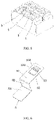
FIG. 1 is a schematic structural diagram of a battery module according to an embodiment of this application; -
FIG. 2 is a schematic structural diagram of a battery cell of a battery module according to the embodiment shown inFIG. 1 ; -
FIG. 3 is a schematic structural diagram of a composite structure formed by components such as a circuit board of a battery module and a thermally sampling piece connected to the circuit board according to the embodiment shown inFIG. 1 ; -
FIG. 4 is a schematic structural diagram of a thermally conductive sampling piece of a battery module according to the embodiment shown inFIG. 1 ; -
FIG. 5 is a schematic structural diagram of a battery module according to another embodiment of this application; -
FIG. 6 is a schematic structural diagram of a thermally conductive sampling piece of a battery module according to the embodiment shown inFIG. 5 ; -
FIG. 7 is a schematic structural diagram of a battery module according to another embodiment of this application; and -
FIG. 8 is a schematic structural diagram of a thermally conductive sampling piece of a battery module according to the embodiment shown inFIG. 7 . - The following clearly and fully describes the technical solutions in the embodiments of this application with reference to the drawings hereof. Apparently, the described embodiments are merely a part of but not all of the embodiments of this application. The following description of at least one exemplary embodiment is merely illustrative, and is in no way intended as a limitation on this application or the use thereof.
- Unless otherwise expressly specified, the relative arrangement of parts and steps, numerical expressions, and numerical values set forth in the embodiments do not limit the scope of this application. Understandably, for ease of description, the sizes of various parts shown in the drawings are not drawn to actual scale. The technologies, methods, and devices known to a person of ordinary skill in the related art may be described without going into details, but as appropriate, such technologies, methods, and device are regarded as a part of the granted specification. In all the examples shown and discussed herein, any specific values are construed as merely exemplary rather than restrictive. Therefore, values in other examples of the exemplary embodiment may be different. It needs to be noted that similar reference numerals and letters indicate similar items in the following drawings. Therefore, once an item is defined in one drawing, the item does not need to be further discussed in subsequent drawings.
- Understandably, in the context of this application, the terms such as "first" and "second" used to qualify parts are merely intended for ease of distinguishing the parts. Unless otherwise specified, no special meaning is ascribed to such terms. Therefore, the terms are not to be understood as a limitation on the protection scope of this application.
- Understandably, in the context of this application, a direction or positional relationship indicated by the directional terms such as "before", "after", "upper", "lower", "left", "right", "vertical", "perpendicular", "horizontal", "top", and "bottom" is generally a direction or positional relationship based on the illustration in the drawings, and is merely intended for ease or brevity of description of this application. Unless otherwise specified to the contrary, such directional terms do not indicate or imply that the indicated device or component is necessarily in the specified direction or necessarily constructed or operated in the specified direction. Therefore, such terms are not to be understood as a limitation on the protection scope of this application. The directional terms "in" and "out" used in connection with a part mean inward and outward directions relative to the contour of the part.
- When the battery temperature is measured by using the related technologies, a temperature difference between the measured sample temperature and an actual temperature inside a battery cell is relatively great. For a low-capacity battery cell, the temperature difference may reach ±5.0 °C. For a high-capacity battery cell, the temperature difference may reach ±10 °C, and errors are greater. An excessive temperature difference between the sample temperature and the actual temperature may cause a battery management system (BMS) of a battery pack containing the battery module to control the battery pack to reduce power prematurely, or even to cut off electricity. Consequently, the electric vehicle powered by the battery pack loses power, and a movement process of the electric vehicle is not controllable.
- As shown in
FIG. 1 to FIG. 8 , an embodiment of this application provides a battery module. The battery module includes a plurality ofbattery cells 1, a thermally conductive sampling piece, athermometric element 9, and acircuit board 4. - Each
battery cell 1 includes abattery top cover 12. One end of the thermally conductive sampling piece fits snugly with and is fixedly connected to thebattery top cover 12. Thecircuit board 4 is disposed above thebattery top cover 12. Another end of the thermally conductive sampling piece is connected to thecircuit board 4. Thethermometric element 9 is electrically connected to thecircuit board 4. Thethermometric element 9 collects a temperature signal of the thermally conductive sampling piece and transmits the temperature signal to thecircuit board 4. - In the battery module according to this embodiment of this application, a temperature sampling position is arranged on a surface of the battery top cover 12 of the
battery cell 1. Heat inside thebattery cell 1 can be quickly conducted to thebattery top cover 12. The thermally conductive sampling piece is disposed on and fits snugly with thebattery top cover 12. Thethermometric element 9 and the thermally conductive sampling piece are directly connected to thecircuit board 4. Thethermometric element 9 detects the temperature of the thermally conductive sampling piece. In this way, the internal temperature of thebattery cell 1 can be reflected to thethermometric element 9 through the thermally conductive sampling piece. Thethermometric element 9 transmits the measured temperature signal of the thermally conductive sampling piece to thecircuit board 4 to implement sampling of the temperature of thebattery cell 1. - Internal heat of the
battery cell 1 can be quickly conducted to thebattery top cover 12, and the temperature of thebattery top cover 12 is usually not inconsistent with the internal temperature of thebattery cell 1 when working conditions are different. In addition, thethermometric element 9 is connected to the battery top cover 12 through the thermally conductive sampling piece. The heat conduction path between thethermometric element 9 and thebattery top cover 12 is simple. This facilitates real-time and accurate collection of the temperature of thebattery cell 1, and helps to solve the problem that the collected temperature differs sharply from the actual temperature inside thebattery cell 1 when the temperature of thebattery cell 1 is collected through an electrical connecting plate. - Because the temperature collection of the
battery cell 1 is more accurate and faster, the problems caused by an excessive temperature difference between the sample temperature and the actual temperature are mitigated, where the problems include: power of an electric vehicle is prematurely reduced, the capacity of the battery pack is not fully utilized, a cruising range is reduced, and even the electric vehicle is unable to be started. - The following further describes embodiments of this application with reference to
FIG. 1 to FIG. 8 . -
FIG. 1 to FIG. 4 show a structure of a battery module according to an embodiment of this application. - As shown in
FIG. 1 , the battery module includesbattery cells 1, ascrew 2, a thermallyconductive sampling piece 3, acircuit board 4, athermometric element 9,side plates 7,end plates 8, and an electrical connecting plate (not shown in the drawing). Thecircuit board 4 is a flexible circuit board. - The plurality of
battery cells 1 are arranged in an array to form a battery module. For example, inFIG. 1 ,6 battery cells 1 are arranged in an array of 1 column and 6 rows. Twoside plates 7 are disposed outside two opposite lateral faces of the battery module respectively. Twoend plates 8 are disposed outside two opposite end faces of the battery module respectively. The twoside plates 7 and the twoend plates 8 define an accommodation space that accommodates the battery module. Each electrical connecting plate connectsdifferent battery cells 1. - As shown in
FIG. 2 , eachbattery cell 1 includes ahousing 11, abattery top cover 12, an electrode assembly (not shown in the drawing), atop sheet 13, apositive terminal 14, anegative terminal 15, and an explosion-proof valve 16. Thebattery top cover 12 is disposed on a top of thehousing 11, and combines with thehousing 11 to define an accommodation portion that accommodates the electrode assembly. Thepositive terminal 14 and thenegative terminal 15 are connected to a positive electrode and a negative electrode of the electrode assembly respectively, and protrude beyond thebattery top cover 12. The explosion-proof valve 16 is located between thepositive terminal 14 and thenegative terminal 15. Atemperature sampling region 121 is disposed on thebattery top cover 12. - The
top patch 13 fits snugly with an upper surface of thebattery top cover 12. A temperature collection opening is made on thetop patch 13. A part of thebattery top cover 12, which is exposed at the temperature collection opening, is thetemperature sampling region 121. - As shown in
FIG. 1 and FIG. 2 , in the battery module according to some embodiments, thetemperature sampling region 121 is a square region arranged between thepositive terminal 14 and thenegative terminal 15. In this embodiment, the thermallyconductive sampling piece 3 fits snugly with and is fixedly connected to thetemperature sampling region 121 located between the explosion-proof valve 16 and thenegative terminal 15. - In an embodiment not shown in the drawings, the position and shape of the temperature sampling region may vary depending on actual situations.
- The
thermometric element 9 is configured to collect the temperature of the thermally conductive sampling piece and form a battery temperature signal representing the temperature of thebattery cell 1. Thecircuit board 4 is disposed above thebattery top cover 12. Thethermometric element 9 is connected to thecircuit board 4, and transmits the battery temperature signal to thecircuit board 4. - For example, the
thermometric element 9 includes a thermistor, and may be a negative temperature coefficient (NTC) surface mount device (SMD) thermistor. The thermally conductive sampling element may be made of metal or a thermally conductive non-metallic material. - One end of the thermally
conductive sampling piece 3 fits snugly with and is fixedly connected to thebattery top cover 12. Another end of the thermally conductive sampling piece is connected onto thecircuit board 4. - In some embodiments, the thermally conductive sampling piece includes a sampling board. The sampling board includes a first sampling board fitting snugly with the battery top cover, a third sampling board connected to the circuit board, and a second sampling board that connects the first sampling board and the third sampling board. The shape of the sampling board may be bent. For example, in some embodiments, the first sampling board and the third sampling board are located on two sides of the second sampling board respectively, and extend in a direction away from the second sampling board.
- As shown in
FIG. 4 , the thermallyconductive sampling piece 3 includes the sampling boards. The sampling board includes afirst sampling board 3A, asecond sampling board 3B, and athird sampling board 3C that are sequentially connected in a bent shape. Thefirst sampling board 3A and thethird sampling board 3C each extend from thesecond sampling board 3B toward a side away from a face of thesecond sampling board 3B. An extension direction of thefirst sampling board 3A is opposite to that of thethird sampling board 3C. Thefirst sampling board 3A fits snugly with thebattery top cover 12, and thethird sampling board 3C is connected to thecircuit board 4. - To implement fixed connection between the thermally
conductive sampling piece 3 and thebattery top cover 12, a threadedhole 122 is disposed on thebattery top cover 12. As shown inFIG. 2 , the threadedhole 122 is located at a center of thetemperature sampling region 121. - As shown in
FIG. 4 , corresponding to the threadedhole 122, a connectinghole 31 is disposed on the sampling board. In this embodiment, the connectinghole 31 is disposed on thefirst sampling board 3A. After thefirst sampling board 3A is fitted snugly to thetemperature sampling region 121 of thebattery top cover 12, thescrew 2 is threaded through the connectinghole 31 to threadedly connect to the threadedhole 122 on thebattery top cover 12. Thefirst sampling board 3A may be fixedly connected onto the battery top cover 12 to implement fixed connection between the thermally conductive sampling piece and thebattery top cover 12. - On the thermally
conductive sampling piece 3 according to this embodiment, a relative position between thefirst sampling board 3A and thethird sampling board 3C can be adjusted by appropriately adjusting angles between thefirst sampling board 3A, thesecond sampling board 3B, and thethird sampling board 3C. In this way, the relative position between thecircuit board 4 and thebattery top cover 12 is well suited. This helps the thermallyconductive sampling piece 3 to fit closely with thebattery top cover 12, helps to ensure temperature measurement effects, helps to prevent the thermallyconductive sampling piece 3 from pulling thecircuit board 4, and helps to prevent damage caused by the thermallyconductive sampling piece 3 to thecircuit board 4. - In some embodiments, an
avoidance hole 32 is disposed at a position of joint between the sampling board and thecircuit board 4, and thethermometric element 9 is located in the avoidance hole. As shown inFIG. 4 , theavoidance hole 32 is disposed on thethird sampling board 3C. Thethermometric element 9 is disposed on thecircuit board 4 and located in theavoidance hole 32. - In addition, in some embodiments, the thermally conductive sampling piece includes a position limiting structure disposed at the avoidance hole on the sampling board. The position limiting structure is configured to limit a relative position between the
thermometric element 9 and the thermally conductive sampling piece. - In some embodiments, a position limiting structure is further disposed on the thermally conductive sampling piece. The position limiting structure is configured to limit a relative position between the circuit board and the thermally conductive sampling piece. The position limiting structure may be disposed in pairs.
- The position limiting structure may include a stopper plate disposed on one side of the thermally conductive sampling piece. The stopper plate is snap-fastened to the
circuit board 4. The stopper plate may include a first stopper plate and a second stopper plate. The first stopper plate is connected to the thermally conductive sampling piece, and extends toward a side away from the thermally conductive sampling piece. The second stopper plate is connected to the first stopper plate, spaced apart from the thermally conductive sampling piece, and snap-fastened to the circuit board. - As shown in
FIG. 4 , the position limiting structure includes astopper plate 33 disposed on the sampling board and located on the side of the avoidance hole. Thestopper plate 33 includes afirst stopper plate 33A and asecond stopper plate 33B that are sequentially connected. Thefirst stopper plate 33A is connected to the sampling board and extends toward a side away from the face of the sampling board. Thesecond stopper plate 33B is spaced apart from the sampling board, and extends from a side on which theavoidance hole 32 is located toward an opposite side of theavoidance hole 32. Thethermometric element 9 is located between the second stopper plate and thecircuit board 4. - In this embodiment, the
third sampling board 3C is connected to a lower side of thecircuit board 4, and the position limiting structure is located below thethird sampling board 3C. - As shown in
FIG. 4 , the position limiting structure includes twostopper plates 33 disposed on two opposite sides of theavoidance hole 32. A spacing exists between thesecond stopper plates 33B of the twostopper plates 33. The thermally conductive sampling piece according to this embodiment may be integrally formed by using a whole strip-shaped board, and the sampling board and the position limiting structure are formed concurrently. After the battery module is assembled, thethermometric element 9 is located between thecircuit board 4 and thesecond stopper plate 33B of thestopper plate 33. - In some embodiments, the thermally conductive sampling piece may be fixedly connected to the
battery top cover 12 by a fastener and/or a binder. - The
thermometric element 9 and the thermally conductive sampling piece may be connected onto thecircuit board 4 by welding. The thermallyconductive sampling piece 3 may directly contact thethermometric element 9 so as to transfer heat to thethermometric element 9. The heat of the thermally conductive sampling piece may also be transferred to thethermometric element 9 through a thermally conductive adhesive. The thermally conductive sampling piece and thethermometric element 9 are connected to thecircuit board 4 concurrently. A region of connection between the thermally conductive sampling piece and thecircuit board 4 is located around a region of connection between thethermometric element 9 and thecircuit board 4. The foregoing connection manner shortens a heat transfer path from thebattery cell 1 to thethermometric element 9, increases a heat transfer area, and helps to collect the battery temperature accurately and quickly. - The
stopper plate 33 facilitates limiting of the relative position between the thermallyconductive sampling piece 3 and thecircuit board 4 on the one hand, and helps to increase a heat exchange area between the thermallyconductive sampling piece 3 and thethermometric element 9 on the other hand, thereby facilitating quick and accurate measurement of the battery temperature. - In this embodiment, the heat in the
temperature sampling region 121 on the surface of thebattery top cover 12 is conducted to thethermometric element 9 on thecircuit board 4 through the thermallyconductive sampling piece 3, thereby implementing real-time and accurate sampling of the temperature of thebattery cell 1 and monitoring temperature changes of thebattery cell 1. -
FIG. 5 to FIG. 6 show a structure of a battery module according to another embodiment of this application. This embodiment differs from other embodiments in a connection structure between a thermallyconductive sampling piece 5 of the battery module and thebattery top cover 12. - As shown in
FIG. 6 , in this embodiment, the thermallyconductive sampling piece 5 includes a sampling board. The sampling board includes afirst sampling board 5A, asecond sampling board 5B, and athird sampling board 5C that are sequentially connected. Both thefirst sampling board 5A and thethird sampling board 5C extend toward a side away from a face of thesecond sampling board 5B. Thefirst sampling board 5A and thethird sampling board 5C extend in opposite directions. Thefirst sampling board 5A fits snugly with thetemperature sampling region 121. Thethird sampling board 5C is connected to thecircuit board 4. - As shown in
FIG. 6 , anavoidance hole 52 is disposed at a position of joint between the sampling board and thecircuit board 4. As shown inFIG. 6 , theavoidance hole 52 is disposed on thethird sampling board 5C. Thethermometric element 9 is disposed on thecircuit board 4 and located in theavoidance hole 52. - In some embodiments, the thermally conductive sampling piece includes a position limiting structure disposed at the avoidance hole on the sampling board.
- As shown in
FIG. 6 , the position limiting structure includes astopper plate 53 disposed on the sampling board and located on the side of the avoidance hole. Thestopper plate 53 includes afirst stopper plate 53A and asecond stopper plate 53B that are sequentially connected. Thefirst stopper plate 53A is connected to the sampling board and extends toward a side away from the face of the sampling board. Thesecond stopper plate 53B is spaced apart from the sampling board, and extends from a side on which theavoidance hole 52 is located toward an opposite side of theavoidance hole 52. Thethermometric element 9 is located between thesecond stopper plate 53B and thecircuit board 4. - As shown in
FIG. 6 , the position limiting structure includes twostopper plates 53 disposed on two opposite sides of theavoidance hole 52. A spacing exists between thesecond stopper plates 53B of the twostopper plates 53. After the battery module is assembled, thethermometric element 9 is located between thecircuit board 4 and thesecond stopper plate 53B of thestopper plate 53. - In this embodiment, the
first sampling plate 5A is fixedly connected to thebattery top cover 12 by welding, so as to implement fixed connection between the thermallyconductive sampling piece 5 and thebattery top cover 12. - For content not described in this embodiment, reference may be made to relevant description in the rest of this application.
-
FIG. 7 and FIG. 8 show a structure of a battery module according to still another embodiment of this application. This embodiment differs from other embodiments in a connection structure between a thermallyconductive sampling piece 6 of the battery module and thebattery top cover 12. - As shown in
FIG. 8 , in this embodiment, the thermallyconductive sampling piece 6 includes a sampling board. The sampling board includes afirst sampling board 6A, asecond sampling board 6B, and athird sampling board 6C that are sequentially connected. Both thefirst sampling board 6A and thethird sampling board 6C extend toward a side away from a face of thesecond sampling board 6B. Thefirst sampling board 6A and thethird sampling board 6C extend in opposite directions. Thefirst sampling board 6A fits snugly with thetemperature sampling region 121. Thethird sampling board 6C is connected to thecircuit board 4. - As shown in
FIG. 8 , anavoidance hole 62 is disposed at a position of joint between the sampling board and thecircuit board 4. As shown inFIG. 8 , theavoidance hole 62 is disposed on thethird sampling board 6C. - The
thermometric element 9 is disposed on thecircuit board 4 and located in theavoidance hole 62. - The thermally conductive sampling piece includes a position limiting structure disposed at the avoidance hole on the sampling board.
- As shown in
FIG. 8 , the position limiting structure includes astopper plate 63 disposed on the sampling board and located on the side of the avoidance hole. Thestopper plate 63 includes afirst stopper plate 63A and asecond stopper plate 63B that are sequentially connected. Thefirst stopper plate 63A is connected to the sampling board and extends toward a side away from the face of the sampling board. Thesecond stopper plate 63B is spaced apart from the sampling board, and extends from a side on which theavoidance hole 62 is located toward an opposite side of theavoidance hole 62. Thethermometric element 9 is located between thesecond stopper plate 63B and thecircuit board 4. - The position limiting structure includes two
stopper plates 63 disposed on two opposite sides of theavoidance hole 62. A spacing exists between thesecond stopper plates 63B of the twostopper plates 63. After the battery module is assembled, thethermometric element 9 is located between thecircuit board 4 and thesecond stopper plate 63B of thestopper plate 63. - As shown in
FIG. 8 , in this embodiment, arivet stud 61 is disposed on thefirst sampling board 63A. A connecting hole that fits therivet stud 61 is disposed in a temperature sampling region of thebattery top cover 12. After thefirst sampling board 63A fits snugly with thebattery top cover 12, therivet stud 61 is passed into the connecting hole. Therivet stud 61 and thebattery top cover 12 are riveted together with a riveting tool, thereby implementing fixed connection between thefirst sampling board 63A and thebattery top cover 12 and implementing fixed connection between the thermallyconductive sampling piece 6 and the battery top cover. - For content not described in this embodiment, reference may be made to relevant description in the rest of this application.
- This application is not limited to the foregoing embodiments. For example, in the above embodiments, the third sampling board of the thermally conductive sampling piece is located below the circuit board. However, depending on actual needs, the third sampling board of the thermally conductive sampling piece may also be located above the circuit board. For another example, in the above embodiments, the position limiting structure includes two stopper plates arranged oppositely. In an embodiment not shown in the drawing, the position limiting structure may include 1, 3, or more stopper plates.
- An embodiment of this application further provides a vehicle, including a power source and the battery module described above. The power source provides power to the vehicle, and the battery module is configured to provide electrical power to the power source.
- Finally, it needs to be noted that the foregoing embodiments are merely intended for describing the technical solutions of this application but not intended as a limitation on this application. Although this application is described in detail with reference to preferred embodiments, the scope of protection is defined in the appended claims.
Claims (8)
- A battery module, comprising:a plurality of battery cells (1), wherein each battery cell (1) comprises a battery top cover (12);a thermally conductive sampling piece (3), wherein one end of the thermally conductive sampling piece (3) fits snugly with and is fixedly connected to the battery top cover (12);a circuit board (4), disposed above the battery top cover (12), wherein another end of the thermally conductive sampling piece (3) is connected to the circuit board (4); anda thermometric element (9), electrically connected to the circuit board (4), wherein the thermometric element (9) is configured to collect a temperature signal of the thermally conductive sampling piece (3) and transmit the temperature signal to the circuit board (4)wherein a position limiting structure is disposed on the thermally conductive sampling piece (3), and the position limiting structure is configured to limit a relative position between the circuit board (4) and the thermally conductive sampling piece (3);characterized in thatthe position limiting structure comprises a stopper plate (33) disposed on one side of the thermally conductive sampling piece (3), and the stopper plate (33) is snap-fastened to the circuit board (4).
- The battery module according to claim 1, wherein the thermally conductive sampling piece (3) comprises a sampling board, and the sampling board comprises a first sampling board (3A) fitting snugly with the battery top cover (12), a third sampling board (3C) connected to the circuit board (4), and a second sampling board (3B) that connects the first sampling board (3A) and the third sampling board (3C).
- The battery module according to claim 2, wherein the sampling board is bent, the first sampling board (3A) and the third sampling board (3C) are located on two sides of the second sampling board (3B) respectively, and extend in a direction away from the second sampling board (3B).
- The battery module according to any one of claims 1 to 3, wherein an avoidance hole (32) is disposed at a position of joint between the thermally conductive sampling piece (3) and the circuit board (4), and the thermometric element (9) is located in the avoidance hole (32).
- The battery module according to claim 1, wherein the stopper plate (33) comprises:a first stopper plate (33A), connected to the thermally conductive sampling piece (3), and extending toward a side away from the thermally conductive sampling piece (3); anda second stopper plate (33B), connected to the first stopper plate (33A), spaced apart from the thermally conductive sampling piece (3), and snap-fastened to the circuit board (4).
- The battery module according to any one of claims 1 to 5, wherein the position limiting structure is disposed in pairs.
- The battery module according to any one of claims 1 to 6, wherein the thermally conductive sampling piece (3) is fixedly connected to the battery top cover (12) by a fastener and/or a binder.
- A vehicle, comprising:a power source, wherein the power source provides power to the vehicle; andthe battery module according to any one of claims 1 to 7, wherein the battery module is configured to provide electrical power to the power source.
Applications Claiming Priority (2)
| Application Number | Priority Date | Filing Date | Title |
|---|---|---|---|
| CN201921999711.9U CN210628357U (en) | 2019-11-19 | 2019-11-19 | Battery module and vehicle |
| PCT/CN2020/119093 WO2021098390A1 (en) | 2019-11-19 | 2020-09-29 | Battery module and vehicle |
Publications (3)
| Publication Number | Publication Date |
|---|---|
| EP3920256A1 EP3920256A1 (en) | 2021-12-08 |
| EP3920256A4 EP3920256A4 (en) | 2022-05-18 |
| EP3920256B1 true EP3920256B1 (en) | 2022-11-16 |
Family
ID=70759881
Family Applications (1)
| Application Number | Title | Priority Date | Filing Date |
|---|---|---|---|
| EP20889065.7A Active EP3920256B1 (en) | 2019-11-19 | 2020-09-29 | Battery module and vehicle |
Country Status (6)
| Country | Link |
|---|---|
| US (1) | US12294060B2 (en) |
| EP (1) | EP3920256B1 (en) |
| JP (1) | JP7422874B2 (en) |
| KR (1) | KR102707745B1 (en) |
| CN (1) | CN210628357U (en) |
| WO (1) | WO2021098390A1 (en) |
Families Citing this family (4)
| Publication number | Priority date | Publication date | Assignee | Title |
|---|---|---|---|---|
| CN210628357U (en) * | 2019-11-19 | 2020-05-26 | 宁德时代新能源科技股份有限公司 | Battery module and vehicle |
| CN112054144B (en) * | 2020-09-23 | 2023-05-09 | 上海兰钧新能源科技有限公司 | Soft package module and electric vehicle |
| CN117013105A (en) * | 2022-04-28 | 2023-11-07 | 宁德时代新能源科技股份有限公司 | Temperature measuring mechanism of battery, battery and power consumption device |
| JP2026028357A (en) * | 2024-08-07 | 2026-02-20 | 株式会社オートネットワーク技術研究所 | Temperature measuring unit, wiring module, and temperature measuring unit mounting structure |
Family Cites Families (19)
| Publication number | Priority date | Publication date | Assignee | Title |
|---|---|---|---|---|
| KR101386167B1 (en) * | 2012-11-27 | 2014-04-18 | 삼성에스디아이 주식회사 | Battery pack |
| JP5772885B2 (en) * | 2013-06-25 | 2015-09-02 | 三洋電機株式会社 | Battery system |
| US20150044511A1 (en) * | 2013-08-08 | 2015-02-12 | Samsung Sdi Co., Ltd. | Battery pack |
| JP6163261B2 (en) * | 2014-05-29 | 2017-07-12 | 日立オートモティブシステムズ株式会社 | Power storage module |
| CN204029949U (en) * | 2014-06-30 | 2014-12-17 | 深圳市比亚迪锂电池有限公司 | A kind of signal acquisition module of electrokinetic cell module and electrokinetic cell |
| JP6371420B2 (en) * | 2014-06-30 | 2018-08-08 | ビーワイディー カンパニー リミテッド | Battery module and battery module signal acquisition unit |
| KR200480647Y1 (en) * | 2014-08-25 | 2016-06-20 | 한국단자공업 주식회사 | Sensing apparatus for battery cell |
| JP2016162717A (en) * | 2015-03-05 | 2016-09-05 | 日立マクセル株式会社 | Battery pack |
| CN205985096U (en) * | 2016-09-09 | 2017-02-22 | 东莞塔菲尔新能源科技有限公司 | Power battery top cap pad pasting structure |
| EP3316384B1 (en) * | 2016-10-25 | 2019-02-20 | Samsung SDI Co., Ltd. | Battery module with a fixing for a temperature sensitive element |
| CN207183457U (en) * | 2017-07-27 | 2018-04-03 | 宁德时代新能源科技股份有限公司 | battery module |
| CN207116634U (en) * | 2017-09-06 | 2018-03-16 | 宁德时代新能源科技股份有限公司 | Battery modules |
| JP7259202B2 (en) * | 2018-03-08 | 2023-04-18 | ソニーグループ株式会社 | Battery packs and electronic devices |
| DE102018208340B4 (en) * | 2018-05-28 | 2025-05-08 | Bayerische Motoren Werke Aktiengesellschaft | Cell contacting arrangement for an energy storage module and method for contacting energy storage cells of an energy storage module |
| CN208723039U (en) * | 2018-10-17 | 2019-04-09 | 苏州淮电精创电子科技有限公司 | Voltage, temperature signal integral type acquisition module applied to battery modules |
| CN209200108U (en) * | 2019-01-23 | 2019-08-02 | 浙江近点电子股份有限公司 | A kind of battery temperature acquisition structure |
| CN114204147B (en) | 2019-06-28 | 2024-03-22 | 宁德时代新能源科技股份有限公司 | Battery module |
| CN210607433U (en) * | 2019-11-19 | 2020-05-22 | 宁德时代新能源科技股份有限公司 | Battery module and vehicle |
| CN210628357U (en) * | 2019-11-19 | 2020-05-26 | 宁德时代新能源科技股份有限公司 | Battery module and vehicle |
-
2019
- 2019-11-19 CN CN201921999711.9U patent/CN210628357U/en active Active
-
2020
- 2020-09-29 WO PCT/CN2020/119093 patent/WO2021098390A1/en not_active Ceased
- 2020-09-29 EP EP20889065.7A patent/EP3920256B1/en active Active
- 2020-09-29 JP JP2022527799A patent/JP7422874B2/en active Active
- 2020-09-29 KR KR1020227015227A patent/KR102707745B1/en active Active
-
2021
- 2021-12-29 US US17/564,972 patent/US12294060B2/en active Active
Also Published As
| Publication number | Publication date |
|---|---|
| KR20220078656A (en) | 2022-06-10 |
| US12294060B2 (en) | 2025-05-06 |
| JP2023501612A (en) | 2023-01-18 |
| KR102707745B1 (en) | 2024-09-20 |
| EP3920256A4 (en) | 2022-05-18 |
| WO2021098390A1 (en) | 2021-05-27 |
| US20220123376A1 (en) | 2022-04-21 |
| CN210628357U (en) | 2020-05-26 |
| JP7422874B2 (en) | 2024-01-26 |
| EP3920256A1 (en) | 2021-12-08 |
Similar Documents
| Publication | Publication Date | Title |
|---|---|---|
| EP3920256B1 (en) | Battery module and vehicle | |
| CN111430826B (en) | Battery module | |
| US12519148B2 (en) | Battery module, battery pack, and vehicle | |
| US20150023392A1 (en) | Battery pack | |
| KR102368305B1 (en) | Battery pack | |
| US12142740B2 (en) | Battery module and vehicle | |
| CN207183457U (en) | battery module | |
| CN209822826U (en) | Sampling device for battery module and battery module | |
| KR102512068B1 (en) | Battery module with thermocouple unit | |
| CN219677344U (en) | Battery device | |
| CN211350708U (en) | Battery module, battery pack and electric vehicle | |
| CN210607345U (en) | A lithium-ion battery cover | |
| CN109509929B (en) | Battery capable of monitoring battery operation parameters and battery pack | |
| CN222813720U (en) | Battery device | |
| TWI918562B (en) | Battery sensing module and battery module | |
| CN223771160U (en) | Battery | |
| US20250149664A1 (en) | Battery cell assembly including thermistor and method of manufacturing the same | |
| CN219873674U (en) | battery device | |
| CN219246884U (en) | Connection terminals and battery pack | |
| CN215644637U (en) | Battery module and battery pack having the same | |
| CN119315144A (en) | Battery module and electrical equipment having the battery module | |
| CN209329055U (en) | battery module | |
| CN120341522A (en) | Battery modules and battery packs | |
| CN118763367A (en) | Battery modules and battery packs | |
| JPS6310624Y2 (en) |
Legal Events
| Date | Code | Title | Description |
|---|---|---|---|
| STAA | Information on the status of an ep patent application or granted ep patent |
Free format text: STATUS: THE INTERNATIONAL PUBLICATION HAS BEEN MADE |
|
| PUAI | Public reference made under article 153(3) epc to a published international application that has entered the european phase |
Free format text: ORIGINAL CODE: 0009012 |
|
| STAA | Information on the status of an ep patent application or granted ep patent |
Free format text: STATUS: REQUEST FOR EXAMINATION WAS MADE |
|
| 17P | Request for examination filed |
Effective date: 20210830 |
|
| AK | Designated contracting states |
Kind code of ref document: A1 Designated state(s): AL AT BE BG CH CY CZ DE DK EE ES FI FR GB GR HR HU IE IS IT LI LT LU LV MC MK MT NL NO PL PT RO RS SE SI SK SM TR |
|
| A4 | Supplementary search report drawn up and despatched |
Effective date: 20220414 |
|
| RIC1 | Information provided on ipc code assigned before grant |
Ipc: H01M 50/284 20210101ALI20220408BHEP Ipc: H01M 50/262 20210101ALI20220408BHEP Ipc: H01M 50/209 20210101ALI20220408BHEP Ipc: H01M 50/15 20210101ALI20220408BHEP Ipc: H01M 10/48 20060101ALI20220408BHEP Ipc: H01M 10/42 20060101AFI20220408BHEP |
|
| REG | Reference to a national code |
Ref country code: DE Ref legal event code: R079 Ref document number: 602020006364 Country of ref document: DE Free format text: PREVIOUS MAIN CLASS: H99Z9999999999 Ipc: H01M0010420000 |
|
| GRAP | Despatch of communication of intention to grant a patent |
Free format text: ORIGINAL CODE: EPIDOSNIGR1 |
|
| RIC1 | Information provided on ipc code assigned before grant |
Ipc: H01M 50/284 20210101ALI20220810BHEP Ipc: H01M 50/262 20210101ALI20220810BHEP Ipc: H01M 50/209 20210101ALI20220810BHEP Ipc: H01M 50/15 20210101ALI20220810BHEP Ipc: H01M 10/48 20060101ALI20220810BHEP Ipc: H01M 10/42 20060101AFI20220810BHEP |
|
| STAA | Information on the status of an ep patent application or granted ep patent |
Free format text: STATUS: GRANT OF PATENT IS INTENDED |
|
| GRAS | Grant fee paid |
Free format text: ORIGINAL CODE: EPIDOSNIGR3 |
|
| DAV | Request for validation of the european patent (deleted) | ||
| DAX | Request for extension of the european patent (deleted) | ||
| INTG | Intention to grant announced |
Effective date: 20220915 |
|
| RAP3 | Party data changed (applicant data changed or rights of an application transferred) |
Owner name: CONTEMPORARY AMPEREX TECHNOLOGY CO., LIMITED |
|
| GRAA | (expected) grant |
Free format text: ORIGINAL CODE: 0009210 |
|
| STAA | Information on the status of an ep patent application or granted ep patent |
Free format text: STATUS: THE PATENT HAS BEEN GRANTED |
|
| AK | Designated contracting states |
Kind code of ref document: B1 Designated state(s): AL AT BE BG CH CY CZ DE DK EE ES FI FR GB GR HR HU IE IS IT LI LT LU LV MC MK MT NL NO PL PT RO RS SE SI SK SM TR |
|
| REG | Reference to a national code |
Ref country code: GB Ref legal event code: FG4D |
|
| REG | Reference to a national code |
Ref country code: CH Ref legal event code: EP |
|
| REG | Reference to a national code |
Ref country code: IE Ref legal event code: FG4D |
|
| REG | Reference to a national code |
Ref country code: DE Ref legal event code: R096 Ref document number: 602020006364 Country of ref document: DE |
|
| REG | Reference to a national code |
Ref country code: AT Ref legal event code: REF Ref document number: 1532323 Country of ref document: AT Kind code of ref document: T Effective date: 20221215 |
|
| REG | Reference to a national code |
Ref country code: LT Ref legal event code: MG9D |
|
| REG | Reference to a national code |
Ref country code: NL Ref legal event code: MP Effective date: 20221116 |
|
| REG | Reference to a national code |
Ref country code: AT Ref legal event code: MK05 Ref document number: 1532323 Country of ref document: AT Kind code of ref document: T Effective date: 20221116 |
|
| PG25 | Lapsed in a contracting state [announced via postgrant information from national office to epo] |
Ref country code: SE Free format text: LAPSE BECAUSE OF FAILURE TO SUBMIT A TRANSLATION OF THE DESCRIPTION OR TO PAY THE FEE WITHIN THE PRESCRIBED TIME-LIMIT Effective date: 20221116 Ref country code: PT Free format text: LAPSE BECAUSE OF FAILURE TO SUBMIT A TRANSLATION OF THE DESCRIPTION OR TO PAY THE FEE WITHIN THE PRESCRIBED TIME-LIMIT Effective date: 20230316 Ref country code: NO Free format text: LAPSE BECAUSE OF FAILURE TO SUBMIT A TRANSLATION OF THE DESCRIPTION OR TO PAY THE FEE WITHIN THE PRESCRIBED TIME-LIMIT Effective date: 20230216 Ref country code: LT Free format text: LAPSE BECAUSE OF FAILURE TO SUBMIT A TRANSLATION OF THE DESCRIPTION OR TO PAY THE FEE WITHIN THE PRESCRIBED TIME-LIMIT Effective date: 20221116 Ref country code: FI Free format text: LAPSE BECAUSE OF FAILURE TO SUBMIT A TRANSLATION OF THE DESCRIPTION OR TO PAY THE FEE WITHIN THE PRESCRIBED TIME-LIMIT Effective date: 20221116 Ref country code: ES Free format text: LAPSE BECAUSE OF FAILURE TO SUBMIT A TRANSLATION OF THE DESCRIPTION OR TO PAY THE FEE WITHIN THE PRESCRIBED TIME-LIMIT Effective date: 20221116 Ref country code: AT Free format text: LAPSE BECAUSE OF FAILURE TO SUBMIT A TRANSLATION OF THE DESCRIPTION OR TO PAY THE FEE WITHIN THE PRESCRIBED TIME-LIMIT Effective date: 20221116 |
|
| PG25 | Lapsed in a contracting state [announced via postgrant information from national office to epo] |
Ref country code: RS Free format text: LAPSE BECAUSE OF FAILURE TO SUBMIT A TRANSLATION OF THE DESCRIPTION OR TO PAY THE FEE WITHIN THE PRESCRIBED TIME-LIMIT Effective date: 20221116 Ref country code: PL Free format text: LAPSE BECAUSE OF FAILURE TO SUBMIT A TRANSLATION OF THE DESCRIPTION OR TO PAY THE FEE WITHIN THE PRESCRIBED TIME-LIMIT Effective date: 20221116 Ref country code: LV Free format text: LAPSE BECAUSE OF FAILURE TO SUBMIT A TRANSLATION OF THE DESCRIPTION OR TO PAY THE FEE WITHIN THE PRESCRIBED TIME-LIMIT Effective date: 20221116 Ref country code: IS Free format text: LAPSE BECAUSE OF FAILURE TO SUBMIT A TRANSLATION OF THE DESCRIPTION OR TO PAY THE FEE WITHIN THE PRESCRIBED TIME-LIMIT Effective date: 20230316 Ref country code: HR Free format text: LAPSE BECAUSE OF FAILURE TO SUBMIT A TRANSLATION OF THE DESCRIPTION OR TO PAY THE FEE WITHIN THE PRESCRIBED TIME-LIMIT Effective date: 20221116 Ref country code: GR Free format text: LAPSE BECAUSE OF FAILURE TO SUBMIT A TRANSLATION OF THE DESCRIPTION OR TO PAY THE FEE WITHIN THE PRESCRIBED TIME-LIMIT Effective date: 20230217 |
|
| P01 | Opt-out of the competence of the unified patent court (upc) registered |
Effective date: 20230516 |
|
| PG25 | Lapsed in a contracting state [announced via postgrant information from national office to epo] |
Ref country code: NL Free format text: LAPSE BECAUSE OF FAILURE TO SUBMIT A TRANSLATION OF THE DESCRIPTION OR TO PAY THE FEE WITHIN THE PRESCRIBED TIME-LIMIT Effective date: 20221116 |
|
| PG25 | Lapsed in a contracting state [announced via postgrant information from national office to epo] |
Ref country code: SM Free format text: LAPSE BECAUSE OF FAILURE TO SUBMIT A TRANSLATION OF THE DESCRIPTION OR TO PAY THE FEE WITHIN THE PRESCRIBED TIME-LIMIT Effective date: 20221116 Ref country code: RO Free format text: LAPSE BECAUSE OF FAILURE TO SUBMIT A TRANSLATION OF THE DESCRIPTION OR TO PAY THE FEE WITHIN THE PRESCRIBED TIME-LIMIT Effective date: 20221116 Ref country code: EE Free format text: LAPSE BECAUSE OF FAILURE TO SUBMIT A TRANSLATION OF THE DESCRIPTION OR TO PAY THE FEE WITHIN THE PRESCRIBED TIME-LIMIT Effective date: 20221116 Ref country code: DK Free format text: LAPSE BECAUSE OF FAILURE TO SUBMIT A TRANSLATION OF THE DESCRIPTION OR TO PAY THE FEE WITHIN THE PRESCRIBED TIME-LIMIT Effective date: 20221116 Ref country code: CZ Free format text: LAPSE BECAUSE OF FAILURE TO SUBMIT A TRANSLATION OF THE DESCRIPTION OR TO PAY THE FEE WITHIN THE PRESCRIBED TIME-LIMIT Effective date: 20221116 |
|
| REG | Reference to a national code |
Ref country code: DE Ref legal event code: R097 Ref document number: 602020006364 Country of ref document: DE |
|
| PG25 | Lapsed in a contracting state [announced via postgrant information from national office to epo] |
Ref country code: SK Free format text: LAPSE BECAUSE OF FAILURE TO SUBMIT A TRANSLATION OF THE DESCRIPTION OR TO PAY THE FEE WITHIN THE PRESCRIBED TIME-LIMIT Effective date: 20221116 Ref country code: AL Free format text: LAPSE BECAUSE OF FAILURE TO SUBMIT A TRANSLATION OF THE DESCRIPTION OR TO PAY THE FEE WITHIN THE PRESCRIBED TIME-LIMIT Effective date: 20221116 |
|
| PLBE | No opposition filed within time limit |
Free format text: ORIGINAL CODE: 0009261 |
|
| STAA | Information on the status of an ep patent application or granted ep patent |
Free format text: STATUS: NO OPPOSITION FILED WITHIN TIME LIMIT |
|
| 26N | No opposition filed |
Effective date: 20230817 |
|
| PG25 | Lapsed in a contracting state [announced via postgrant information from national office to epo] |
Ref country code: SI Free format text: LAPSE BECAUSE OF FAILURE TO SUBMIT A TRANSLATION OF THE DESCRIPTION OR TO PAY THE FEE WITHIN THE PRESCRIBED TIME-LIMIT Effective date: 20221116 |
|
| REG | Reference to a national code |
Ref country code: CH Ref legal event code: PL |
|
| PG25 | Lapsed in a contracting state [announced via postgrant information from national office to epo] |
Ref country code: LU Free format text: LAPSE BECAUSE OF NON-PAYMENT OF DUE FEES Effective date: 20230929 |
|
| PG25 | Lapsed in a contracting state [announced via postgrant information from national office to epo] |
Ref country code: LU Free format text: LAPSE BECAUSE OF NON-PAYMENT OF DUE FEES Effective date: 20230929 Ref country code: IT Free format text: LAPSE BECAUSE OF FAILURE TO SUBMIT A TRANSLATION OF THE DESCRIPTION OR TO PAY THE FEE WITHIN THE PRESCRIBED TIME-LIMIT Effective date: 20221116 Ref country code: MC Free format text: LAPSE BECAUSE OF FAILURE TO SUBMIT A TRANSLATION OF THE DESCRIPTION OR TO PAY THE FEE WITHIN THE PRESCRIBED TIME-LIMIT Effective date: 20221116 |
|
| REG | Reference to a national code |
Ref country code: IE Ref legal event code: MM4A |
|
| PG25 | Lapsed in a contracting state [announced via postgrant information from national office to epo] |
Ref country code: IE Free format text: LAPSE BECAUSE OF NON-PAYMENT OF DUE FEES Effective date: 20230929 |
|
| PG25 | Lapsed in a contracting state [announced via postgrant information from national office to epo] |
Ref country code: CH Free format text: LAPSE BECAUSE OF NON-PAYMENT OF DUE FEES Effective date: 20230930 |
|
| PG25 | Lapsed in a contracting state [announced via postgrant information from national office to epo] |
Ref country code: IE Free format text: LAPSE BECAUSE OF NON-PAYMENT OF DUE FEES Effective date: 20230929 Ref country code: CH Free format text: LAPSE BECAUSE OF NON-PAYMENT OF DUE FEES Effective date: 20230930 |
|
| REG | Reference to a national code |
Ref country code: DE Ref legal event code: R081 Ref document number: 602020006364 Country of ref document: DE Owner name: CONTEMPORARY AMPEREX TECHNOLOGY (HONG KONG) LI, HK Free format text: FORMER OWNER: CONTEMPORARY AMPEREX TECHNOLOGY CO., LTD., NINGDE CITY, FUJIAN, CN |
|
| REG | Reference to a national code |
Ref country code: GB Ref legal event code: 732E Free format text: REGISTERED BETWEEN 20240829 AND 20240904 |
|
| PG25 | Lapsed in a contracting state [announced via postgrant information from national office to epo] |
Ref country code: BG Free format text: LAPSE BECAUSE OF FAILURE TO SUBMIT A TRANSLATION OF THE DESCRIPTION OR TO PAY THE FEE WITHIN THE PRESCRIBED TIME-LIMIT Effective date: 20221116 |
|
| PG25 | Lapsed in a contracting state [announced via postgrant information from national office to epo] |
Ref country code: BG Free format text: LAPSE BECAUSE OF FAILURE TO SUBMIT A TRANSLATION OF THE DESCRIPTION OR TO PAY THE FEE WITHIN THE PRESCRIBED TIME-LIMIT Effective date: 20221116 |
|
| REG | Reference to a national code |
Ref country code: BE Ref legal event code: PD Owner name: CONTEMPORARY AMPEREX TECHNOLOGY (HONG KONG) LIMITED; CN Free format text: DETAILS ASSIGNMENT: CHANGE OF OWNER(S), ASSIGNMENT; FORMER OWNER NAME: CONTEMPORARY AMPEREX TECHNOLOGY CO., LIMITED Effective date: 20240807 |
|
| PG25 | Lapsed in a contracting state [announced via postgrant information from national office to epo] |
Ref country code: CY Free format text: LAPSE BECAUSE OF FAILURE TO SUBMIT A TRANSLATION OF THE DESCRIPTION OR TO PAY THE FEE WITHIN THE PRESCRIBED TIME-LIMIT; INVALID AB INITIO Effective date: 20200929 |
|
| PG25 | Lapsed in a contracting state [announced via postgrant information from national office to epo] |
Ref country code: HU Free format text: LAPSE BECAUSE OF FAILURE TO SUBMIT A TRANSLATION OF THE DESCRIPTION OR TO PAY THE FEE WITHIN THE PRESCRIBED TIME-LIMIT; INVALID AB INITIO Effective date: 20200929 |
|
| PGFP | Annual fee paid to national office [announced via postgrant information from national office to epo] |
Ref country code: DE Payment date: 20250805 Year of fee payment: 6 |
|
| PGFP | Annual fee paid to national office [announced via postgrant information from national office to epo] |
Ref country code: BE Payment date: 20250818 Year of fee payment: 6 Ref country code: GB Payment date: 20250807 Year of fee payment: 6 |
|
| PGFP | Annual fee paid to national office [announced via postgrant information from national office to epo] |
Ref country code: FR Payment date: 20250808 Year of fee payment: 6 |
|
| PG25 | Lapsed in a contracting state [announced via postgrant information from national office to epo] |
Ref country code: TR Free format text: LAPSE BECAUSE OF FAILURE TO SUBMIT A TRANSLATION OF THE DESCRIPTION OR TO PAY THE FEE WITHIN THE PRESCRIBED TIME-LIMIT Effective date: 20221116 |