EP3920145A2 - Verfahren und einrichtung zum erzeugen von bildern, vorrichtung, speichermedium und programmprodukt - Google Patents
Verfahren und einrichtung zum erzeugen von bildern, vorrichtung, speichermedium und programmprodukt Download PDFInfo
- Publication number
- EP3920145A2 EP3920145A2 EP21192749.6A EP21192749A EP3920145A2 EP 3920145 A2 EP3920145 A2 EP 3920145A2 EP 21192749 A EP21192749 A EP 21192749A EP 3920145 A2 EP3920145 A2 EP 3920145A2
- Authority
- EP
- European Patent Office
- Prior art keywords
- image
- insulator
- original
- insulator image
- area
- Prior art date
- Legal status (The legal status is an assumption and is not a legal conclusion. Google has not performed a legal analysis and makes no representation as to the accuracy of the status listed.)
- Withdrawn
Links
Images


Classifications
-
- G—PHYSICS
- G06—COMPUTING OR CALCULATING; COUNTING
- G06T—IMAGE DATA PROCESSING OR GENERATION, IN GENERAL
- G06T3/00—Geometric image transformations in the plane of the image
- G06T3/04—Context-preserving transformations, e.g. by using an importance map
-
- G—PHYSICS
- G06—COMPUTING OR CALCULATING; COUNTING
- G06T—IMAGE DATA PROCESSING OR GENERATION, IN GENERAL
- G06T11/00—2D [Two Dimensional] image generation
-
- G—PHYSICS
- G06—COMPUTING OR CALCULATING; COUNTING
- G06F—ELECTRIC DIGITAL DATA PROCESSING
- G06F18/00—Pattern recognition
- G06F18/20—Analysing
- G06F18/21—Design or setup of recognition systems or techniques; Extraction of features in feature space; Blind source separation
- G06F18/214—Generating training patterns; Bootstrap methods, e.g. bagging or boosting
-
- G—PHYSICS
- G06—COMPUTING OR CALCULATING; COUNTING
- G06F—ELECTRIC DIGITAL DATA PROCESSING
- G06F18/00—Pattern recognition
- G06F18/20—Analysing
- G06F18/24—Classification techniques
- G06F18/241—Classification techniques relating to the classification model, e.g. parametric or non-parametric approaches
- G06F18/2415—Classification techniques relating to the classification model, e.g. parametric or non-parametric approaches based on parametric or probabilistic models, e.g. based on likelihood ratio or false acceptance rate versus a false rejection rate
-
- G—PHYSICS
- G06—COMPUTING OR CALCULATING; COUNTING
- G06N—COMPUTING ARRANGEMENTS BASED ON SPECIFIC COMPUTATIONAL MODELS
- G06N3/00—Computing arrangements based on biological models
- G06N3/02—Neural networks
- G06N3/04—Architecture, e.g. interconnection topology
- G06N3/045—Combinations of networks
-
- G—PHYSICS
- G06—COMPUTING OR CALCULATING; COUNTING
- G06N—COMPUTING ARRANGEMENTS BASED ON SPECIFIC COMPUTATIONAL MODELS
- G06N3/00—Computing arrangements based on biological models
- G06N3/02—Neural networks
- G06N3/04—Architecture, e.g. interconnection topology
- G06N3/0464—Convolutional networks [CNN, ConvNet]
-
- G—PHYSICS
- G06—COMPUTING OR CALCULATING; COUNTING
- G06N—COMPUTING ARRANGEMENTS BASED ON SPECIFIC COMPUTATIONAL MODELS
- G06N3/00—Computing arrangements based on biological models
- G06N3/02—Neural networks
- G06N3/04—Architecture, e.g. interconnection topology
- G06N3/047—Probabilistic or stochastic networks
-
- G—PHYSICS
- G06—COMPUTING OR CALCULATING; COUNTING
- G06N—COMPUTING ARRANGEMENTS BASED ON SPECIFIC COMPUTATIONAL MODELS
- G06N3/00—Computing arrangements based on biological models
- G06N3/02—Neural networks
- G06N3/04—Architecture, e.g. interconnection topology
- G06N3/0475—Generative networks
-
- G—PHYSICS
- G06—COMPUTING OR CALCULATING; COUNTING
- G06N—COMPUTING ARRANGEMENTS BASED ON SPECIFIC COMPUTATIONAL MODELS
- G06N3/00—Computing arrangements based on biological models
- G06N3/02—Neural networks
- G06N3/08—Learning methods
-
- G—PHYSICS
- G06—COMPUTING OR CALCULATING; COUNTING
- G06N—COMPUTING ARRANGEMENTS BASED ON SPECIFIC COMPUTATIONAL MODELS
- G06N3/00—Computing arrangements based on biological models
- G06N3/02—Neural networks
- G06N3/08—Learning methods
- G06N3/088—Non-supervised learning, e.g. competitive learning
-
- G—PHYSICS
- G06—COMPUTING OR CALCULATING; COUNTING
- G06N—COMPUTING ARRANGEMENTS BASED ON SPECIFIC COMPUTATIONAL MODELS
- G06N3/00—Computing arrangements based on biological models
- G06N3/02—Neural networks
- G06N3/08—Learning methods
- G06N3/094—Adversarial learning
-
- G—PHYSICS
- G06—COMPUTING OR CALCULATING; COUNTING
- G06T—IMAGE DATA PROCESSING OR GENERATION, IN GENERAL
- G06T3/00—Geometric image transformations in the plane of the image
- G06T3/14—Transformations for image registration, e.g. adjusting or mapping for alignment of images
- G06T3/147—Transformations for image registration, e.g. adjusting or mapping for alignment of images using affine transformations
-
- G—PHYSICS
- G06—COMPUTING OR CALCULATING; COUNTING
- G06T—IMAGE DATA PROCESSING OR GENERATION, IN GENERAL
- G06T3/00—Geometric image transformations in the plane of the image
- G06T3/40—Scaling of whole images or parts thereof, e.g. expanding or contracting
-
- G—PHYSICS
- G06—COMPUTING OR CALCULATING; COUNTING
- G06T—IMAGE DATA PROCESSING OR GENERATION, IN GENERAL
- G06T3/00—Geometric image transformations in the plane of the image
- G06T3/40—Scaling of whole images or parts thereof, e.g. expanding or contracting
- G06T3/4038—Image mosaicing, e.g. composing plane images from plane sub-images
-
- G—PHYSICS
- G06—COMPUTING OR CALCULATING; COUNTING
- G06T—IMAGE DATA PROCESSING OR GENERATION, IN GENERAL
- G06T3/00—Geometric image transformations in the plane of the image
- G06T3/60—Rotation of whole images or parts thereof
-
- G—PHYSICS
- G06—COMPUTING OR CALCULATING; COUNTING
- G06T—IMAGE DATA PROCESSING OR GENERATION, IN GENERAL
- G06T5/00—Image enhancement or restoration
- G06T5/50—Image enhancement or restoration using two or more images, e.g. averaging or subtraction
-
- G—PHYSICS
- G06—COMPUTING OR CALCULATING; COUNTING
- G06T—IMAGE DATA PROCESSING OR GENERATION, IN GENERAL
- G06T7/00—Image analysis
- G06T7/0002—Inspection of images, e.g. flaw detection
- G06T7/0004—Industrial image inspection
-
- G—PHYSICS
- G06—COMPUTING OR CALCULATING; COUNTING
- G06T—IMAGE DATA PROCESSING OR GENERATION, IN GENERAL
- G06T7/00—Image analysis
- G06T7/10—Segmentation; Edge detection
- G06T7/11—Region-based segmentation
-
- G—PHYSICS
- G06—COMPUTING OR CALCULATING; COUNTING
- G06T—IMAGE DATA PROCESSING OR GENERATION, IN GENERAL
- G06T7/00—Image analysis
- G06T7/10—Segmentation; Edge detection
- G06T7/194—Segmentation; Edge detection involving foreground-background segmentation
-
- G—PHYSICS
- G06—COMPUTING OR CALCULATING; COUNTING
- G06V—IMAGE OR VIDEO RECOGNITION OR UNDERSTANDING
- G06V10/00—Arrangements for image or video recognition or understanding
- G06V10/70—Arrangements for image or video recognition or understanding using pattern recognition or machine learning
- G06V10/764—Arrangements for image or video recognition or understanding using pattern recognition or machine learning using classification, e.g. of video objects
-
- G—PHYSICS
- G06—COMPUTING OR CALCULATING; COUNTING
- G06V—IMAGE OR VIDEO RECOGNITION OR UNDERSTANDING
- G06V10/00—Arrangements for image or video recognition or understanding
- G06V10/70—Arrangements for image or video recognition or understanding using pattern recognition or machine learning
- G06V10/77—Processing image or video features in feature spaces; using data integration or data reduction, e.g. principal component analysis [PCA] or independent component analysis [ICA] or self-organising maps [SOM]; Blind source separation
- G06V10/774—Generating sets of training patterns; Bootstrap methods, e.g. bagging or boosting
-
- G—PHYSICS
- G06—COMPUTING OR CALCULATING; COUNTING
- G06V—IMAGE OR VIDEO RECOGNITION OR UNDERSTANDING
- G06V10/00—Arrangements for image or video recognition or understanding
- G06V10/70—Arrangements for image or video recognition or understanding using pattern recognition or machine learning
- G06V10/82—Arrangements for image or video recognition or understanding using pattern recognition or machine learning using neural networks
-
- G—PHYSICS
- G06—COMPUTING OR CALCULATING; COUNTING
- G06T—IMAGE DATA PROCESSING OR GENERATION, IN GENERAL
- G06T2200/00—Indexing scheme for image data processing or generation, in general
- G06T2200/32—Indexing scheme for image data processing or generation, in general involving image mosaicing
-
- G—PHYSICS
- G06—COMPUTING OR CALCULATING; COUNTING
- G06T—IMAGE DATA PROCESSING OR GENERATION, IN GENERAL
- G06T2207/00—Indexing scheme for image analysis or image enhancement
- G06T2207/20—Special algorithmic details
- G06T2207/20081—Training; Learning
-
- G—PHYSICS
- G06—COMPUTING OR CALCULATING; COUNTING
- G06T—IMAGE DATA PROCESSING OR GENERATION, IN GENERAL
- G06T2207/00—Indexing scheme for image analysis or image enhancement
- G06T2207/20—Special algorithmic details
- G06T2207/20084—Artificial neural networks [ANN]
-
- G—PHYSICS
- G06—COMPUTING OR CALCULATING; COUNTING
- G06T—IMAGE DATA PROCESSING OR GENERATION, IN GENERAL
- G06T2207/00—Indexing scheme for image analysis or image enhancement
- G06T2207/20—Special algorithmic details
- G06T2207/20112—Image segmentation details
- G06T2207/20132—Image cropping
-
- G—PHYSICS
- G06—COMPUTING OR CALCULATING; COUNTING
- G06T—IMAGE DATA PROCESSING OR GENERATION, IN GENERAL
- G06T2207/00—Indexing scheme for image analysis or image enhancement
- G06T2207/20—Special algorithmic details
- G06T2207/20172—Image enhancement details
-
- G—PHYSICS
- G06—COMPUTING OR CALCULATING; COUNTING
- G06T—IMAGE DATA PROCESSING OR GENERATION, IN GENERAL
- G06T2207/00—Indexing scheme for image analysis or image enhancement
- G06T2207/20—Special algorithmic details
- G06T2207/20212—Image combination
- G06T2207/20221—Image fusion; Image merging
-
- G—PHYSICS
- G06—COMPUTING OR CALCULATING; COUNTING
- G06T—IMAGE DATA PROCESSING OR GENERATION, IN GENERAL
- G06T2207/00—Indexing scheme for image analysis or image enhancement
- G06T2207/30—Subject of image; Context of image processing
- G06T2207/30108—Industrial image inspection
-
- G—PHYSICS
- G06—COMPUTING OR CALCULATING; COUNTING
- G06T—IMAGE DATA PROCESSING OR GENERATION, IN GENERAL
- G06T2207/00—Indexing scheme for image analysis or image enhancement
- G06T2207/30—Subject of image; Context of image processing
- G06T2207/30108—Industrial image inspection
- G06T2207/30164—Workpiece; Machine component
-
- G—PHYSICS
- G06—COMPUTING OR CALCULATING; COUNTING
- G06V—IMAGE OR VIDEO RECOGNITION OR UNDERSTANDING
- G06V2201/00—Indexing scheme relating to image or video recognition or understanding
- G06V2201/06—Recognition of objects for industrial automation
Definitions
- Embodiments of the present disclosure relate to the field of artificial intelligence, and particularly to computer vision and deep learning technologies, and may be applied in smart cloud and power grid inspection scenarios.
- An insulator is an industrial product, which is used to insulate and suspend a conductor in high-voltage and ultra-high voltage alternating current and direct current transmission lines.
- the insulator is an important part of a transmission line, and is the only electrical insulation member and an important structural support member. The performance of the insulator and the rationality of the configuration of the insulator directly affect the safe and stable operation of the line.
- the insulator may have a self-explosion problem due to various reasons. Therefore, it is important to automatically and accurately detect a self-explosion position of the insulator.
- deep learning it becomes a mainstream method to supervise the training for a deep learning model using a training sample set so as to automatically detect a self-explosion point.
- an image collection and a manual annotation are generally performed on the insulator in the transmission line, to obtain the training sample set and use the training sample set to train the deep learning model.
- Embodiments of the present disclosure provide a method and apparatus for generating an image, a device, a storage medium and a program product.
- embodiments of the present disclosure provide a method for generating an image, comprising: acquiring an original insulator image; performing an image transformation on the original insulator image to obtain a composite insulator image; and inputting the original insulator image and the composite insulator image into a pre-trained generative adversarial network to generate a target insulator image.
- embodiments of the present disclosure provide an apparatus for generating an image, comprising: an acquiring module, configured to acquire an original insulator image; a transforming module, configured to perform an image transformation on the original insulator image to obtain a composite insulator image; and a generating module, configured to input the original insulator image and the composite insulator image into a pre-trained generative adversarial network to generate a target insulator image.
- embodiments of the present disclosure provide an electronic device, comprising: one or more processors; and a memory, storing one or more programs, wherein the one or more programs, when executed by the one or more processors, cause the one or more processors to implement the method for generating an image provided by the first aspect.
- embodiments of the present disclosure provide a computer-readable medium, storing a computer program thereon, wherein the program, when executed by a processor, causes the processor to implement the method for generating an image provided by the first aspect.
- an embodiment of the present disclosure provides a computer program product, comprising a computer program, wherein the computer program, when executed by a processor, implements the method for generating an image provided by the first aspect.
- the original insulator image is first acquired. Then, the image transformation is performed on the original insulator image to obtain the composite insulator image. Finally, the original insulator image and the composite insulator image are inputted into the pre-trained generative adversarial network to generate the target insulator image.
- a method of automatically generating an insulator image is provided. The image transformation is performed on the original insulator image, and then, massive target insulator images are generated through the generative adversarial network.
- the original insulator image has an annotation, and thus, the generated target insulator images also have an annotation.
- the target insulator images have a high quality, and may be added to a training sample set of a deep learning model for a self-explosion detection. Accordingly, the cost problem of the manual collection and annotation is solved, and the development of the field of computer vision-based insulator self-explosion detection is effectively promoted.
- the deep learning model for the self-explosion detection is trained using the training sample set containing the massive target insulator images, and thus, the generalization and universality of the deep learning model may be ensured.
- Fig. 1 illustrates a flow 100 of an embodiment of a method for generating an image according to the present disclosure.
- the method for generating an image comprises the following steps: Step 101, acquiring an original insulator image.
- an executing body of the method for generating an image may acquire the original insulator image.
- an insulator is an industrial product, which is used to insulate and suspend a conductor in high-voltage and ultra-high voltage alternating current and direct current transmission lines.
- the insulator is an important part of a transmission line, and is the only electrical insulation member and an important structural support member.
- the performance of the insulator and the rationality of the configuration of the insulator directly affect the safe and stable operation of the line.
- the insulator adopted in the transmission line is mainly divided into two types. One type is a glass disc suspension insulator applied to a tension string, and the other type is a rod composite suspension insulator applied to a suspension string and a jumper string. In the long-term operation, the insulators of the two types exhibit different operating performance and characteristics.
- the original insulator image may be obtained.
- the original insulator image may comprise an insulator area and a background area.
- the insulators in different original insulator images may have different angles, colors and directions.
- the backgrounds in the different original insulator images may have different styles.
- Step 102 performing an image transformation on the original insulator image to obtain a composite insulator image.
- the executing body may perform the image transformation on the original insulator image to obtain the composite insulator image.
- the number of composite insulator images having different characteristics may be enriched.
- the image transformations may comprise, but not limited to, an image enhancement, an image recombination, and the like.
- the image enhancement may enhance useful information in an image.
- Some information is added to the image or data in the image is transformed by certain means, to selectively highlight an interested feature in the image or suppress some unwanted features in the image, such that the image is matched with visual response characteristics.
- the image recombination is to extract relevant display data in existing layers and recombine the data into an image of a new layer.
- Step 103 inputting the original insulator image and the composite insulator image into a pre-trained generative adversarial network, to generate a target insulator image.
- the above executing body may input the original insulator image and the composite insulator image into the pre-trained GAN (generative adversarial network), to generate the target insulator image.
- GAN generative adversarial network
- the GAN plays a very important role in the field of image generation.
- the GAN network is mainly composed of two parts, namely a generator G and a discriminator D.
- the generator G is a network generating an image, which receives a random noise z, and generates an image through the noise z, the image being denoted as G(z).
- the discriminator D is a discriminative network, which discriminates whether an image is "real.”
- An input parameter of the discriminator D is x, x representing an image.
- An output D(x) represents the probability that the image x is a real image. If D(x) is 1, it represents that the image is 100% real. If D(x) is 0, it represents that the image may not be real.
- the purpose of the generator G is to generate a real image as much as possible, to deceive the discriminator D.
- the loss function of the GAN is composed of two terms.
- x represents a real image
- z represents a noise inputted into the generator G
- G(z) represents an image generated by the generator G
- D(x) represents a probability that the discriminator D discriminates whether the real image is real. Since x is real, the closer to 1 this value is, the better the result of D is.
- D(G(z)) is a probability that the discriminator D discriminates whether the image generated by the generator G is real.
- the composite insulator image obtained through the image transformation has a relatively obvious mark.
- the style of the background of the composite insulator image is relatively simple, for example, light and weather conditions are relatively fixed. If the composite insulator image is directly used to train a deep learning model, the robustness of the deep learning model would be poor. Therefore, the GAN is selected to perform further processing on the composite insulator image, and thus, a more real image may be generated and the style migration between images may be realized.
- the original insulator image is first acquired. Then, the image transformation is performed on the original insulator image to obtain the composite insulator image. Finally, the original insulator image and the composite insulator image are inputted into the pre-trained generative adversarial network to generate the target insulator image.
- a method of automatically generating an insulator image is provided. The image transformation is performed on the original insulator image, and then, massive target insulator images are generated through the generative adversarial network.
- the original insulator image has an annotation, and thus, the generated target insulator images also have an annotation.
- the target insulator images have a high quality, and may be added to a training sample set of a deep learning model for a self-explosion detection. Accordingly, the cost problem of the manual collection and annotation is solved, and the development of the field of computer vision-based insulator self-explosion detection is effectively promoted.
- the deep learning model for the self-explosion detection is trained using the training sample set containing the massive target insulator images, and thus, the generalization and universality of the deep learning model may be ensured.
- the massive target insulator images may be automatically generated by using only a few original insulator images, and thus, the training sample set of the deep learning model is expanded.
- the position of the insulator and the position of the self-explosion point are recorded during the composition of the data, and thus, the manual annotation would not be required, thereby reducing the cost of the annotation and achieving a high accuracy rate.
- the generated target insulator images have more abundant scale, rotation and background information, which is conducive to improving the robustness and generalization of the model.
- the massive target insulator images may be generated. For example, if there are 40 original insulator images, the number of target insulator images generated through the method for generating an image provided in the embodiment of the present disclosure may reach 5000.
- the training for an insulator self-explosion recognition model is performed using the training sample set containing the 40 original insulator images and the 5000 target insulator images, thereby improving the accuracy rate of the detection of the model.
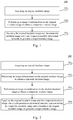
- Fig. 2 illustrates a flow 200 of an embodiment of the method for generating an image according to the present disclosure.
- the method for generating an image comprises the following steps: Step 201, acquiring an original insulator image.
- step 201 the particular operation of step 201 is described in detail in step 101 of the embodiment shown in Fig. 1 , which will not be repeatedly described here.
- Step 202 performing an image enhancement on the original insulator image to obtain a composite insulator image.
- an executing body of the method for generating an image may perform the image enhancement on the original insulator image to obtain the composite insulator image.
- the image enhancement may enhance useful information in an image. Some information is added to the image or data in the image is transformed by certain means, to selectively highlight an interested feature in the image or suppress some unwanted features in the image, such that the image is matched with visual response characteristics.
- Traditional image enhancement algorithms may comprise, but not limited to, up-sampling, down-sampling, a shift, a flip, a rotation, etc. for an image.
- the scene of the original insulator image is mostly in a suburb.
- the background of the image is relatively stable, and the diversity of the image is mainly concentrated in an insulator area. Due to a different shooting angle and a different shooting position, the insulator tends to present different shapes and different directions in the same background.
- the image enhancement may be implemented by transforming the insulator area.
- the transforming of the insulator area comprises the following steps.
- a segmentation is performed on the original insulator image, to obtain an insulator area and a background area.
- the insulator area is annotated in the original insulator image, and thus, the insulator area may be segmented from the original insulator image according to the annotation.
- the transformation for the insulator area may comprise, but not limited to, at least one of: random cropping and a scale transformation, a centrosymmetric transformation, or the like.
- the composite insulator image may have more abundant target scales.
- the target may have a plurality of pieces of abundant directional information.
- FIG. 3 illustrates a first schematic diagram of an enhancement of an insulator area.
- an insulator area 302 is first segmented from an original insulator image 301. Then, random cropping and a scale transformation are performed on the insulator area 302, to obtain a transformed insulator image 303. Finally, the transformed insulator image 303 is placed back to the corresponding position in the original insulator image 301, to obtain a target insulator image 304.
- FIG. 4 illustrates a second schematic diagram of the enhancement of the insulator area.
- an insulator area 402 is first segmented from an original insulator image 401 according to an annotation. Then, a centrosymmetric transformation is performed on the insulator area 402, to obtain a transformed insulator image 403. Finally, the transformed insulator image 403 is placed back to the corresponding position in the original insulator image 401, to obtain a target insulator image 404.
- the original insulator image is generally captured by an unmanned aerial vehicle from the upper air, and the insulator in the image has a plurality of angles.
- the image enhancement may be implemented by performing a rotation on the image.
- the rotation for the image comprises the following steps.
- a rotation angle is selected at random.
- a plurality of angle ranges may be set, and the rotation angle may be obtained by performing random sampling in each angle range.
- the plurality of angle ranges are preset and do not overlap with each other.
- the rotation direction may comprise, but not limited to, a counterclockwise rotation, a clockwise rotation, and the like.
- the original insulator image is rotated by the above rotation angle according to the rotation direction, to obtain a composite insulator image.
- a large number of insulator images may be composed in different angle ranges. At the same time, the uniformity of various angles is ensured, the risk of overfitting of a model is reduced, and the rotational invariance and generalization performance of the model are greatly improved.
- Fig. 5 is a schematic diagram of an image rotation enhancement.
- six angle ranges are first set, which are respectively a range from 0 to 20 degrees, a range from 20 to 40 degrees, a range from 40 to 60 degrees, a range from 60 to 80 degrees, a range of from 80 to 100 degrees, and a range from 100 to 120 degrees.
- random sampling is performed in each range to select a rotation degree, and a rotation direction is determined at random.
- an original insulator image 501 is rotated according to the rotation direction and the rotation angle, to obtain the composite insulator images 502, 503, 504, 505, 506 and 507.
- Step 203 performing an image recombination on the original insulator image to obtain a composite insulator image.
- the above executing body may perform the image recombination on the original insulator image to obtain the composite insulator image.
- the image recombination is to extract relevant display data in existing layers and recombine the data into an image of a new layer.
- the number of composite insulator images having different characteristics may be enriched.
- the number of the composite insulator images and the abundance of features may be greatly increased, which is very helpful in training the model.
- the insulator and the background are relatively independent.
- the image recombination may be implemented by freely combining the insulator and background of the original insulator image.
- the image recombination comprises the following steps: First, a target area is extracted from a first original insulator image in the original insulator image.
- the target area may be an arbitrary area of the first original insulator image, which may be a part of the insulator area, or may be a part of the background area.
- a transformed target area is fused into a second original insulator image in the original insulator image, to obtain the composite insulator image.
- the first original insulator image and the second original insulator image are different original insulator images.
- Fig. 6 is a schematic diagram of an insulator image recombination.
- a target area is first extracted from a first original insulator image 601.
- a scale transformation is performed on the target area 602 to obtain a transformed target area 602.
- the transformed target area 602 is fused into a second original insulator image 603 to obtain a composite insulator image 604.
- Step 204 inputting the original insulator image and the composite insulator image into a cycle generative adversarial network, and converting the composite insulator image into a domain of the original insulator image, to generate a target insulator image.
- the original insulator image and the composite insulator image are inputted to the Cycle-GAN (cycle generative adversarial network), and the composite insulator image is converted into the domain of the original insulator image, to generate the target insulator image.
- Cycle-GAN cycle generative adversarial network
- the input of the Cycle-GAN may refer to any two images, thus making a conversion between the images of two definition domains.
- the original insulator image and the composite insulator image may be regarded as the inputs of the two definition domains.
- the composite insulator image may be converted into the domain of the original insulator image, which eliminates the difference between the definition domains of a real image and a generated image, and realizes the style migration between the images.
- the insulator may have a self-explosion problem due to various reasons. It is important to automatically and accurately detect a self-explosion position of the insulator. With the development of deep learning, it becomes a mainstream method to supervise the training for a deep learning model using a training sample set so as to automatically detect a self-explosion point. In general, in order to ensure the performance of self-service settlement, a large number of images of the insulator and the self-explosion point are required to perform the training on the deep learning model, to ensure the generalization and universality of the model.
- the Cycle-GAN Since the number of manually collected original insulator images is extremely limited, it is required to use the Cycle-GAN to generate massive target insulator images, and add the target insulator images to the training sample set. In this way, the number and abundance of samples in the training sample set are greatly expanded, and the performance of the deep learning model is effectively improved. Moreover, the use of the Cycle-GAN may make the result of the image transformation more natural, and the transformation of the style of the image may be implemented, thereby making the generated target insulator images more real.
- the Cycle-GAN is a ring structure consisting mainly of two generators and two discriminators.
- Fig. 7 is a schematic structural diagram of a Cycle-GAN.
- the Cycle-GAN comprises a generator G, a generator F, a discriminator Dx, and a discriminator Dy.
- An image in a domain Y is generated after an input image x in a domain X passes through the generator G, and then, an input image in the domain X is reconstructed after the image passes through the generator F.
- An image in the domain X is generated after an input image y in the domain Y passes through the generator F, and then, an input image in the domain Y is reconstructed after the image passes through the generator G.
- the discriminator Dx is used to discriminate the image in the domain X
- the discriminator Dy is used to discriminate the image in the domain Y.
- the method for generating an image in this embodiment emphasizes the image transformation step and the image generation step. Accordingly, according to the scheme described in this embodiment, by performing the image enhancement and the image recombination on the original insulator image, the number of the composite insulator images having different characteristics may be enriched. By performing rendering and the style migration on the composite insulator images through the cycle generative adversarial network, the massive target insulator images may be generated.
- Fig. 8 is a block flow diagram of a method for generating an image.
- an image enhancement and an image recombination are first performed on an original insulator image.
- the image enhancement comprises random cropping and a scale transformation, and comprises a centrosymmetric transformation.
- the results of the image enhancement and the image recombination are inputted to a Cycle-GAN to perform a style migration.
- a target insulator image may be obtained.
- the input of the Cycle-GAN is two irrelevant images.
- the images before and after an image transformation are used as the input, to make the transformed image more natural, which is conducive to improving the robustness and generalization of a model.
- the present disclosure provides an embodiment of an apparatus for generating an image.
- the embodiment of the apparatus corresponds to the embodiment of the method shown in Fig. 1 , and the apparatus may be applied in various electronic devices.
- the apparatus 900 for generating an image in this embodiment may comprise: an acquiring module 901, a transforming module 902 and a generating module 903.
- the acquiring module 901 is configured to acquire an original insulator image.
- the transforming module 902 is configured to perform an image transformation on the original insulator image to obtain a composite insulator image.
- the generating module 903 is configured to input the original insulator image and the composite insulator image into a pre-trained generative adversarial network to generate a target insulator image.
- the transforming module 902 comprises: an enhancing sub-module, configured to perform an image enhancement on the original insulator image to obtain the composite insulator image; and/or a recombining sub-module, configured to perform an image recombination on the original insulator image to obtain the composite insulator image.
- the enhancing sub-module is further configured to: perform a segmentation on the original insulator image, to obtain an insulator area and a background area; perform a transformation on the insulator area to obtain a transformed insulator area; and stitch the transformed insulator area and the background area to obtain the composite insulator image.
- the transformation for the insulator area comprises at least one of: random cropping and a scale transformation, or a centrosymmetric transformation.
- the enhancing sub-module comprises: a selecting unit, configured to select a rotation angle at random; a determining unit, configured to determine a rotation direction at random; and a rotating unit, configured to rotate the original insulator image by the rotation angle according to the rotation direction, to obtain the composite insulator image.
- the selecting unit is further configured to: perform random sampling in a plurality of angle ranges to obtain the rotation angle, the plurality of angle ranges being preset and not overlapping with each other.
- the recombining sub-module is further configured to: extract a target area from a first original insulator image in the original insulator image; perform a scale transformation on the target area; and fuse a transformed target area into a second original insulator image in the original insulator image, to obtain the composite insulator image, the first original insulator image and the second original insulator image being different original insulator images.
- the generative adversarial network is a cycle generative adversarial network.
- the generating module is further configured to: input the original insulator image and the composite insulator image into the cycle generative adversarial network, and convert the composite insulator image into a domain of the original insulator image, to generate the target insulator image.
- the cycle generative adversarial network comprises a generator G, a generator F, a discriminator Dx and a discriminator Dy.
- An image in a domain Y is generated after an input image in a domain X passes through the generator G, and then, an input image in the domain X is reconstructed after the image in the domain Y passes through the generator F.
- An image in the domain X is generated after an input image in the domain Y passes through the generator F, and then, an input image in the domain Y is reconstructed after the image in the domain X passes through the generator G.
- the discriminator Dx is used to discriminate the image in the domain X
- the discriminator Dy is used to discriminate the image in the domain Y.
- the present disclosure further provides an electronic device, a readable storage medium, and a computer program product.
- Fig. 10 is a schematic block diagram of an exemplary electronic device 1000 that may be used to implement embodiments of the present disclosure.
- the electronic device is intended to represent various forms of digital computers such as a laptop computer, a desktop computer, a workstation, a personal digital assistant, a server, a blade server, a mainframe computer, and other appropriate computers.
- the electronic device may also represent various forms of mobile apparatuses such as personal digital processing, a cellular telephone, a smart phone, a wearable device and other similar computing apparatuses.
- the parts shown herein, their connections and relationships, and their functions are only as examples, and not intended to limit implementations of the present disclosure as described and/or claimed herein.
- the electronic device 1000 comprises a computation unit 1001, which may execute various appropriate actions and processes in accordance with a computer program stored in a read-only memory (ROM) 1002 or a computer program loaded into a random access memory (RAM) 1003 from a storage unit 1008.
- the RAM 1003 also stores various programs and data required by operations of the device 1000.
- the computation unit 1001, the ROM 1002 and the RAM 1003 are connected to each other through a bus 1004.
- An input/output (I/O) interface 1005 is also connected to the bus 1004.
- the following components in the device 1000 are connected to the I/O interface 1005: an input unit 1006, for example, a keyboard and a mouse; an output unit 1007, for example, various types of displays and a speaker; a storage device 1008, for example, a magnetic disk and an optical disk; and a communication unit 1009, for example, a network card, a modem, a wireless communication transceiver.
- the communication unit 1009 allows the device 1000 to exchange information/data with an other device through a computer network such as the Internet and/or various telecommunication networks.
- the computation unit 1001 may be various general-purpose and/or particular-purpose processing assemblies having processing and computing capabilities. Some examples of the computation unit 1001 comprise, but not limited to, a central processing unit (CPU), a graphics processing unit (GPU), various dedicated artificial intelligence (AI) computing chips, various processors that run a machine learning model algorithm, a digital signal processor (DSP), any appropriate processor, controller and microcontroller, etc.
- the computation unit 1001 performs the various methods and processes described above, for example, the method for generating an image.
- the method for generating an image may be implemented as a computer software program, which is tangibly comprised in a machine readable medium, for example, the storage device 1008.
- part or all of the computer program may be loaded into and/or installed on the device 1000 via the ROM 1002 and/or the communication unit 1009.
- the computer program When the computer program is loaded into the RAM 1003 and executed by the computation unit 1001, one or more steps of the above method for testing a stress based on a cloud service may be performed.
- the computation unit 1001 may be configured to perform the method for testing a stress based on a cloud service through any other appropriate approach (e.g., by means of firmware).
- the various implementations of the systems and technologies described herein may be implemented in a digital electronic circuit system, an integrated circuit system, a field programmable gate array (FPGA), an application specific integrated circuit (ASIC), an application specific standard product (ASSP), a system-on-chip (SOC), a complex programmable logic device (CPLD), computer hardware, firmware, software and/or combinations thereof.
- FPGA field programmable gate array
- ASIC application specific integrated circuit
- ASSP application specific standard product
- SOC system-on-chip
- CPLD complex programmable logic device
- the various implementations may comprise: being implemented in one or more computer programs, where the one or more computer programs may be executed and/or interpreted on a programmable system comprising at least one programmable processor, and the programmable processor may be a particular-purpose or general-purpose programmable processor, which may receive data and instructions from a storage system, at least one input device and at least one output device, and send the data and instructions to the storage system, the at least one input device and the at least one output device.
- Program codes used to implement the method of embodiments of the present disclosure may be written in any combination of one or more programming languages. These program codes may be provided to a processor or controller of a general-purpose computer, particular-purpose computer or other programmable data processing apparatus, so that the program codes, when executed by the processor or the controller, cause the functions or operations specified in the flowcharts and/or block diagrams to be implemented. These program codes may be executed entirely on a machine, partly on the machine, partly on the machine as a stand-alone software package and partly on a remote machine, or entirely on the remote machine or a server.
- the machine-readable medium may be a tangible medium that may comprise or store a program for use by or in connection with an instruction execution system, apparatus or device.
- the machine-readable medium may be a machine-readable signal medium or a machine-readable storage medium.
- the machine-readable medium may comprise, but is not limited to, an electronic, magnetic, optical, electromagnetic, infrared, or semiconductor system, apparatus or device, or any appropriate combination thereof.
- a more particular example of the machine-readable storage medium may comprise an electronic connection based on one or more lines, a portable computer disk, a hard disk, a random-access memory (RAM), a read-only memory (ROM), an erasable programmable read-only memory (EPROM or flash memory), an optical fiber, a portable compact disk read-only memory (CD-ROM), an optical storage device, a magnetic storage device, or any appropriate combination thereof.
- a portable computer disk a hard disk, a random-access memory (RAM), a read-only memory (ROM), an erasable programmable read-only memory (EPROM or flash memory), an optical fiber, a portable compact disk read-only memory (CD-ROM), an optical storage device, a magnetic storage device, or any appropriate combination thereof.
- the systems and technologies described herein may be implemented on a computer having: a display device (such as a CRT (cathode ray tube) or LCD (liquid crystal display) monitor) for displaying information to the user; and a keyboard and a pointing device (such as a mouse or a trackball) through which the user may provide input to the computer.
- a display device such as a CRT (cathode ray tube) or LCD (liquid crystal display) monitor
- a keyboard and a pointing device such as a mouse or a trackball
- Other types of devices may also be used to provide interaction with the user.
- the feedback provided to the user may be any form of sensory feedback (such as visual feedback, auditory feedback or tactile feedback); and input from the user may be received in any form, comprising acoustic input, speech input or tactile input.
- the systems and technologies described herein may be implemented in: a computing system comprising a background component (such as a data server), or a computing system comprising a middleware component (such as an application server), or a computing system comprising a front-end component (such as a user computer having a graphical user interface or a web browser through which the user may interact with the implementations of the systems and technologies described herein), or a computing system comprising any combination of such background component, middleware component or front-end component.
- the components of the systems may be interconnected by any form or medium of digital data communication (such as a communication network). Examples of the communication network comprise a local area network (LAN), a wide area network (WAN), and the Internet.
- a computer system may comprise a client and a server.
- the client and the server are generally remote from each other, and generally interact with each other through the communication network.
- a relationship between the client and the server is generated by computer programs running on a corresponding computer and having a client-server relationship with each other.
Landscapes
- Engineering & Computer Science (AREA)
- Theoretical Computer Science (AREA)
- Physics & Mathematics (AREA)
- General Physics & Mathematics (AREA)
- Evolutionary Computation (AREA)
- Artificial Intelligence (AREA)
- Software Systems (AREA)
- Health & Medical Sciences (AREA)
- Computing Systems (AREA)
- General Health & Medical Sciences (AREA)
- Computer Vision & Pattern Recognition (AREA)
- Data Mining & Analysis (AREA)
- Life Sciences & Earth Sciences (AREA)
- General Engineering & Computer Science (AREA)
- Biophysics (AREA)
- Mathematical Physics (AREA)
- Molecular Biology (AREA)
- Computational Linguistics (AREA)
- Biomedical Technology (AREA)
- Multimedia (AREA)
- Databases & Information Systems (AREA)
- Medical Informatics (AREA)
- Bioinformatics & Cheminformatics (AREA)
- Probability & Statistics with Applications (AREA)
- Evolutionary Biology (AREA)
- Bioinformatics & Computational Biology (AREA)
- Quality & Reliability (AREA)
- Image Analysis (AREA)
- Image Processing (AREA)
Applications Claiming Priority (1)
| Application Number | Priority Date | Filing Date | Title |
|---|---|---|---|
| CN202110233520.7A CN112967177B (zh) | 2021-03-03 | 2021-03-03 | 图像生成方法、装置、设备、存储介质以及程序产品 |
Publications (2)
| Publication Number | Publication Date |
|---|---|
| EP3920145A2 true EP3920145A2 (de) | 2021-12-08 |
| EP3920145A3 EP3920145A3 (de) | 2022-03-23 |
Family
ID=76276702
Family Applications (1)
| Application Number | Title | Priority Date | Filing Date |
|---|---|---|---|
| EP21192749.6A Withdrawn EP3920145A3 (de) | 2021-03-03 | 2021-08-24 | Verfahren und einrichtung zum erzeugen von bildern, vorrichtung, speichermedium und programmprodukt |
Country Status (3)
| Country | Link |
|---|---|
| US (1) | US20210383520A1 (de) |
| EP (1) | EP3920145A3 (de) |
| CN (1) | CN112967177B (de) |
Cited By (1)
| Publication number | Priority date | Publication date | Assignee | Title |
|---|---|---|---|---|
| CN114782370A (zh) * | 2022-04-25 | 2022-07-22 | 云南电网有限责任公司电力科学研究院 | 基于深度学习卫星遥感影像绝缘子串自动识别方法及设备 |
Families Citing this family (5)
| Publication number | Priority date | Publication date | Assignee | Title |
|---|---|---|---|---|
| CN113393453A (zh) * | 2021-06-28 | 2021-09-14 | 北京百度网讯科技有限公司 | 用于检测自爆绝缘子的方法、装置、设备、介质和产品 |
| CN113689517B (zh) * | 2021-09-08 | 2024-05-21 | 云南大学 | 一种多尺度通道注意力网络的图像纹理合成方法及系统 |
| CN115439845B (zh) * | 2022-08-02 | 2023-05-02 | 北京邮电大学 | 基于图神经网络的图像外推方法、装置、存储介质及终端 |
| CN116129092A (zh) * | 2023-04-18 | 2023-05-16 | 中科星图测控技术股份有限公司 | 一种基于WebGL技术的海量空间目标可视化系统和方法 |
| CN117830340B (zh) * | 2024-01-04 | 2024-08-27 | 中南大学 | 一种探地雷达目标特征分割方法、系统、设备及存储介质 |
Family Cites Families (3)
| Publication number | Priority date | Publication date | Assignee | Title |
|---|---|---|---|---|
| WO2020040734A1 (en) * | 2018-08-21 | 2020-02-27 | Siemens Aktiengesellschaft | Orientation detection in overhead line insulators |
| CN111862013B (zh) * | 2020-07-08 | 2024-02-02 | 湘潭大学 | 基于深度卷积神经网络的绝缘子检测方法、装置及设备 |
| CN111862078A (zh) * | 2020-07-31 | 2020-10-30 | 嘉应学院 | 一种基于深度学习的电力巡检智能缺陷检测方法 |
-
2021
- 2021-03-03 CN CN202110233520.7A patent/CN112967177B/zh active Active
- 2021-08-24 EP EP21192749.6A patent/EP3920145A3/de not_active Withdrawn
- 2021-08-26 US US17/412,435 patent/US20210383520A1/en not_active Abandoned
Cited By (1)
| Publication number | Priority date | Publication date | Assignee | Title |
|---|---|---|---|---|
| CN114782370A (zh) * | 2022-04-25 | 2022-07-22 | 云南电网有限责任公司电力科学研究院 | 基于深度学习卫星遥感影像绝缘子串自动识别方法及设备 |
Also Published As
| Publication number | Publication date |
|---|---|
| US20210383520A1 (en) | 2021-12-09 |
| CN112967177A (zh) | 2021-06-15 |
| CN112967177B (zh) | 2022-12-27 |
| EP3920145A3 (de) | 2022-03-23 |
Similar Documents
| Publication | Publication Date | Title |
|---|---|---|
| EP3920145A2 (de) | Verfahren und einrichtung zum erzeugen von bildern, vorrichtung, speichermedium und programmprodukt | |
| CN113139543B (zh) | 目标对象检测模型的训练方法、目标对象检测方法和设备 | |
| US20220129731A1 (en) | Method and apparatus for training image recognition model, and method and apparatus for recognizing image | |
| JP2023527615A (ja) | 目標対象検出モデルのトレーニング方法、目標対象検出方法、機器、電子機器、記憶媒体及びコンピュータプログラム | |
| CN113947147B (zh) | 目标地图模型的训练方法、定位方法及相关装置 | |
| US11756288B2 (en) | Image processing method and apparatus, electronic device and storage medium | |
| US20230008696A1 (en) | Method for incrementing sample image | |
| CN115861462B (zh) | 图像生成模型的训练方法、装置、电子设备及存储介质 | |
| CN115018805B (zh) | 分割模型训练方法、图像分割方法、装置、设备及介质 | |
| US12198236B2 (en) | Map data processing method and apparatus, and storage medium | |
| CN115457365A (zh) | 一种模型的解释方法、装置、电子设备及存储介质 | |
| CN114820871A (zh) | 字体生成方法、模型的训练方法、装置、设备和介质 | |
| EP4216079A1 (de) | Produkterkennungsverfahren, modelltrainingsverfahren, vorrichtung und elektronische vorrichtung | |
| US20220392101A1 (en) | Training method, method of detecting target image, electronic device and medium | |
| EP4123595A2 (de) | Verfahren und vorrichtung zur berichtigung von textbildern, trainingsverfahren und -vorrichtung, elektronische vorrichtung und medium | |
| JP7324891B2 (ja) | バックボーンネットワーク生成方法、装置、電子機器、記憶媒体およびコンピュータプログラム | |
| CN116012363A (zh) | 一种变电站刀闸开合识别方法、装置、设备及存储介质 | |
| CN114445682A (zh) | 训练模型的方法、装置、电子设备、存储介质及产品 | |
| CN114792355A (zh) | 虚拟形象生成方法、装置、电子设备和存储介质 | |
| US20230154077A1 (en) | Training method for character generation model, character generation method, apparatus and storage medium | |
| US20230206668A1 (en) | Vision processing and model training method, device, storage medium and program product | |
| US20250045878A1 (en) | Methods and systems for image generation | |
| CN114998678A (zh) | 模型训练方法、目标跟踪方法、装置 | |
| WO2025232383A1 (zh) | 图像分割模型训练方法、装置、电子设备及存储介质 | |
| CN118691608A (zh) | 舌头图像的处理方法、装置、设备和存储介质 |
Legal Events
| Date | Code | Title | Description |
|---|---|---|---|
| PUAI | Public reference made under article 153(3) epc to a published international application that has entered the european phase |
Free format text: ORIGINAL CODE: 0009012 |
|
| STAA | Information on the status of an ep patent application or granted ep patent |
Free format text: STATUS: REQUEST FOR EXAMINATION WAS MADE |
|
| 17P | Request for examination filed |
Effective date: 20210824 |
|
| AK | Designated contracting states |
Kind code of ref document: A2 Designated state(s): AL AT BE BG CH CY CZ DE DK EE ES FI FR GB GR HR HU IE IS IT LI LT LU LV MC MK MT NL NO PL PT RO RS SE SI SK SM TR |
|
| PUAL | Search report despatched |
Free format text: ORIGINAL CODE: 0009013 |
|
| AK | Designated contracting states |
Kind code of ref document: A3 Designated state(s): AL AT BE BG CH CY CZ DE DK EE ES FI FR GB GR HR HU IE IS IT LI LT LU LV MC MK MT NL NO PL PT RO RS SE SI SK SM TR |
|
| RIC1 | Information provided on ipc code assigned before grant |
Ipc: G06T 7/00 20170101ALI20220215BHEP Ipc: G06T 11/00 20060101AFI20220215BHEP |
|
| STAA | Information on the status of an ep patent application or granted ep patent |
Free format text: STATUS: THE APPLICATION HAS BEEN WITHDRAWN |
|
| 18W | Application withdrawn |
Effective date: 20240306 |