EP3920102B1 - Maschinenlernverfahren und maschinenlernsystem mit datenerweiterung, und speichermedium - Google Patents
Maschinenlernverfahren und maschinenlernsystem mit datenerweiterung, und speichermedium Download PDFInfo
- Publication number
- EP3920102B1 EP3920102B1 EP21177789.1A EP21177789A EP3920102B1 EP 3920102 B1 EP3920102 B1 EP 3920102B1 EP 21177789 A EP21177789 A EP 21177789A EP 3920102 B1 EP3920102 B1 EP 3920102B1
- Authority
- EP
- European Patent Office
- Prior art keywords
- parameter
- classification
- classification model
- hypernetwork
- hyperparameter
- Prior art date
- Legal status (The legal status is an assumption and is not a legal conclusion. Google has not performed a legal analysis and makes no representation as to the accuracy of the status listed.)
- Active
Links
Images





Classifications
-
- G—PHYSICS
- G06—COMPUTING OR CALCULATING; COUNTING
- G06F—ELECTRIC DIGITAL DATA PROCESSING
- G06F18/00—Pattern recognition
- G06F18/20—Analysing
- G06F18/24—Classification techniques
- G06F18/241—Classification techniques relating to the classification model, e.g. parametric or non-parametric approaches
-
- G—PHYSICS
- G06—COMPUTING OR CALCULATING; COUNTING
- G06N—COMPUTING ARRANGEMENTS BASED ON SPECIFIC COMPUTATIONAL MODELS
- G06N20/00—Machine learning
-
- G—PHYSICS
- G06—COMPUTING OR CALCULATING; COUNTING
- G06F—ELECTRIC DIGITAL DATA PROCESSING
- G06F18/00—Pattern recognition
- G06F18/20—Analysing
- G06F18/21—Design or setup of recognition systems or techniques; Extraction of features in feature space; Blind source separation
- G06F18/214—Generating training patterns; Bootstrap methods, e.g. bagging or boosting
-
- G—PHYSICS
- G06—COMPUTING OR CALCULATING; COUNTING
- G06N—COMPUTING ARRANGEMENTS BASED ON SPECIFIC COMPUTATIONAL MODELS
- G06N3/00—Computing arrangements based on biological models
- G06N3/02—Neural networks
- G06N3/04—Architecture, e.g. interconnection topology
-
- G—PHYSICS
- G06—COMPUTING OR CALCULATING; COUNTING
- G06N—COMPUTING ARRANGEMENTS BASED ON SPECIFIC COMPUTATIONAL MODELS
- G06N3/00—Computing arrangements based on biological models
- G06N3/02—Neural networks
- G06N3/04—Architecture, e.g. interconnection topology
- G06N3/045—Combinations of networks
-
- G—PHYSICS
- G06—COMPUTING OR CALCULATING; COUNTING
- G06N—COMPUTING ARRANGEMENTS BASED ON SPECIFIC COMPUTATIONAL MODELS
- G06N3/00—Computing arrangements based on biological models
- G06N3/02—Neural networks
- G06N3/04—Architecture, e.g. interconnection topology
- G06N3/0464—Convolutional networks [CNN, ConvNet]
-
- G—PHYSICS
- G06—COMPUTING OR CALCULATING; COUNTING
- G06N—COMPUTING ARRANGEMENTS BASED ON SPECIFIC COMPUTATIONAL MODELS
- G06N3/00—Computing arrangements based on biological models
- G06N3/02—Neural networks
- G06N3/08—Learning methods
-
- G—PHYSICS
- G06—COMPUTING OR CALCULATING; COUNTING
- G06N—COMPUTING ARRANGEMENTS BASED ON SPECIFIC COMPUTATIONAL MODELS
- G06N3/00—Computing arrangements based on biological models
- G06N3/02—Neural networks
- G06N3/08—Learning methods
- G06N3/09—Supervised learning
-
- G—PHYSICS
- G06—COMPUTING OR CALCULATING; COUNTING
- G06N—COMPUTING ARRANGEMENTS BASED ON SPECIFIC COMPUTATIONAL MODELS
- G06N3/00—Computing arrangements based on biological models
- G06N3/02—Neural networks
- G06N3/08—Learning methods
- G06N3/0985—Hyperparameter optimisation; Meta-learning; Learning-to-learn
-
- G—PHYSICS
- G06—COMPUTING OR CALCULATING; COUNTING
- G06N—COMPUTING ARRANGEMENTS BASED ON SPECIFIC COMPUTATIONAL MODELS
- G06N5/00—Computing arrangements using knowledge-based models
- G06N5/01—Dynamic search techniques; Heuristics; Dynamic trees; Branch-and-bound
-
- G—PHYSICS
- G06—COMPUTING OR CALCULATING; COUNTING
- G06N—COMPUTING ARRANGEMENTS BASED ON SPECIFIC COMPUTATIONAL MODELS
- G06N5/00—Computing arrangements using knowledge-based models
- G06N5/02—Knowledge representation; Symbolic representation
- G06N5/022—Knowledge engineering; Knowledge acquisition
Definitions
- the disclosure relates to a machine learning system, a machine learning method and a storage medium. More particularly, the disclosure relates to a machine learning system and a machine learning method involving data augmentation function.
- One of the important applications of computer vision is to detect or identify objects (such as human faces, vehicle license plates, etc.) contained in pictures or images.
- the object detection can be realized through feature extraction and feature classification.
- the object of the present invention is to improve the accuracy of a classification model and to reduce an over-fitting issue such that the overall model performance is improved.
- This object is solved by a machine learning system according to claim 1, a machine learning method according to claim 7 and a non-transitory computer-readable storage medium according to claim 15.
- Preferred embodiments are subject matter of the dependent claims.
- FIG. 1 is a schematic diagram illustrating a machine learning system 100 according to an embodiment of the disclosure.
- the machine learning system 100 includes a memory unit 120 and a processing unit 140.
- the processing unit 140 is coupled with the memory unit 120.
- the machine learning system 100 can be established by a computer, a server or a processing center.
- the processing unit 140 can be realized by a processor, a central processing unit or a computing unit.
- the memory unit 120 can be realized by a memory, a flash memory, a read-only memory (ROM), a hard disk or any equivalent storage component.
- the machine learning system 100 is not limited to include the memory unit 120 and the processing unit 140.
- the machine learning system 100 may further include other components required to operating the machine learning system 100 in various applications.
- the machine learning system 100 may further include an output interface (e.g., a display panel for displaying information), an input interface (e.g., a touch panel, a keyboard, a microphone, a scanner or a flash memory reader) and a communication circuit (e.g., a WiFi communication module, a Bluetooth communication module, a wireless telecommunication module, etc.).
- an output interface e.g., a display panel for displaying information
- an input interface e.g., a touch panel, a keyboard, a microphone, a scanner or a flash memory reader
- a communication circuit e.g., a WiFi communication module, a Bluetooth communication module, a wireless telecommunication module, etc.
- initial values of at least two parameters are stored in the memory unit 120.
- the machine learning system 100 decides how to perform data augmentation and label classification based on these two parameters (i.e., the hyperparameter HP and the hypernetwork parameter HNP), and further details will be discussed in following paragraphs.
- Data augmentation is a technology to increase the amount of training data. While training a machine learning model (or a machine learning model), it usually requires a lot of training data. By applying data augmentation to original training data, the original training data can be expanded to a larger amount of augmented training data, so as to avoid an over-fitting issue while training the deep learning model (or the machine learning model).
- the processing unit 140 is coupled with the memory unit 120.
- the processing unit 140 is configured to run a data augmentation model 142, a hypernetwork 144 and a classification model 146 based on corresponding software/firmware instruction programs.
- the data augmentation model 142 is configured to perform data augmentation on an inputted training sample to generate multiple augmented training samples. For example, when the inputted training sample includes one original image (e.g., a photo with a car running on a roadway in a daytime) and a training label corresponding to the original image (e.g., car, road or traffic light).
- the data augmentation model 142 is configured to perform a combination of one or more processes among horizontally flip, vertically flip, rotate, vertically shift, horizontally shift, zoom-in, zoom-out and brightness adjustment on the original image.
- the data augmentation model 142 processes the original image with different settings (e.g., applying different rotation angles or different zoom-in/zoom-out ratios) based on values of the hyperparameter HP to generate multiple data augmentation images of the multiple augmented training samples. Even though these data augmentation images are generated according to the original image, the pixel values in the data augmentation images are changed because of image processing. To the classification model 146, these data augmentation images are equivalent to different training samples, so as to extend the amount of the training samples and solve the insufficiency of the training samples.
- the classification model 146 can classify the input data (such as the aforementioned data augmentation images), for example, detecting that the input image contains vehicles, faces, license plates, text, totems, or other image-feature objects.
- the classification model 146 is configured to generate a corresponding label according to a classification result. It should be noted that the classification model 146 will refer to a classification model parameter while performing classification operations.
- the hypernetwork 144 is configured to convert the hyperparameter HP into the classification model parameter used by the classification model 146.
- the hypernetwork 144 determines how to convert the hyperparameter HP into the classification model parameters according to the hypernetwork parameter HNP.
- the hyperparameter HP determines how the data augmentation model 142 performs data augmentation, and also the hyperparameter HP is transformed by the hypernetwork 144 (into the classification model parameter) to determine how the classification model 146 performs classification operations.
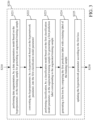
- FIG. 2 is a schematic diagram illustrating a machine learning method 200 according to an embodiment of the disclosure.
- the machine learning system 100 shown in FIG. 1 can be utilized to perform the machine learning method 200 shown in FIG. 2 .
- the initial values of the hyperparameter HP and the hypernetwork parameter HNP are obtained.
- the initial values of the hyperparameter HP and the hypernetwork parameter HNP can be obtained according to average values from historical training practices, manual-setting default values, or random values.
- step S220 the first classification model parameter is generated according to the hyperparameter and the hypernetwork parameter, and the hypernetwork parameters are updated based on a classification result about a training sample based on the first classification model parameter.
- the hypernetwork 144 (based on the hypernetwork parameter HNP) converts the hyperparameter HP into the first classification model parameter, and the hypernetwork parameter HNP is updated according to the classification result relative to the training sample based on the first classification model parameter. Further details about step S220 will be further described in following paragraphs with some examples.
- step S230 the second classification model parameters are generated according to the hyperparameter and the updated hypernetwork parameter, and the hyperparameters are updated according to another classification result about a verification sample based on the second classification model parameter.
- the hypernetwork 144 (based on the updated hypernetwork parameter HNP) converts the hyperparameter HP into the second classification model parameter, and the hyperparameter HP is updated according to the another classification result about the verification sample based on the second classification model parameter. Further details about step S230 will be further described in following paragraphs with some examples.
- step S220 the hypernetwork parameter HNP is updated first. Then, in step S230, the hyperparameter HP is updated based on the new hypernetwork parameter HNP.
- step S240 it is to determine whether a convergence condition is fulfilled. If the convergence condition has not been fulfilled, it returns to step S220 again, and continues to repeat steps S220 and S230 for updating the hypernetwork parameter HNP and the hyperparameter HP. Before the convergence condition is fulfilled, steps S220 and S230 are performed repeatedly for gradually updating the hypernetwork parameter HNP and the hyperparameter HP in an iterative manner.
- the convergence condition has been fulfilled (for example, an accuracy of the classification result given by the classification model 146 exceeds a threshold, a number of training rounds reaches a predetermined number of rounds, am amount of training samples reaches a predetermined amount of samples, or a time length of training duration reaches the predetermined time length, etc.), it means that the machine learning system 100 has completed the training, and the classification model 146 after training can be used to execute subsequent applications.
- the classification model 146 after the training can be used for object recognition, face recognition, audio recognition, or motion detection within input pictures, images or streaming data.
- FIG. 3 is a flowchart illustrating further steps S221 to S225 within step S220 in some embodiments.
- FIG. 4 is a schematic diagram illustrating steps S221 to S225 performed by components of the processing unit 140 in some embodiments.
- the initial value of the hyperparameter is the hyperparameter HP1
- the initial value of the hypernetwork parameter is the hypernetwork parameter HNP1.
- step S221 the data augmentation model 142 performs data augmentation on the training sample TD based on the hyperparameter HP1 to generate an augmented training sample ETD.
- step S222 the hypernetwork 144 converts the hyperparameter HP1 into the first classification model parameter MP1 based on the hypernetwork parameter HNP1.
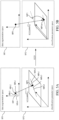
- FIG. 5A is a schematic diagram illustrating a conversion from the hyperparameter HP1 into the first classification model parameter MP1 by the hypernetwork 144 based on the hypernetwork parameter HNP1 in step S222.
- step S222 is executed to map a data point (i.e., hyperparameter HP1) in data augmentation space SP1 to a data point (i.e., the first classification model parameter MP1) in classification parameter space SP2.
- the data augmentation space SP1 for demonstration, is a plane coordinate system with two axes.
- one axis can represent a rotation angle during data augmentation, and the other axis can represent a ratio of size scaling during data augmentation.
- the data points located at different positions of the data augmentation space SP1 correspond to different settings of data augmentation.
- the classification parameter space SP2, for demonstration is a three-dimensional coordinate system with three axes, and the three axes can respectively represent three weight values of convolutional layers (in the classification model).
- the hypernetwork parameter HNP1 is used to determine how the hypernetwork 144 maps the hyperparameter HP1 within the data augmentation space SP1 onto the first classification model parameter MP1 within the classification parameter space SP2. If the hypernetwork parameter HNP1 changes, the hypernetwork 144 will map the hyperparameter HP1 onto another position within the classification parameter space SP2.
- the data augmentation space SP1 and the classification parameter space SP2 in FIG. 5A are illustrated with two axes and three axes respectively for demonstration.
- the disclosure is not limited thereto.
- the data augmentation space SP1 and the classification parameter space SP2 may have different dimension configurations.
- the classification parameter space SP2 is a high-dimensional space with more axes.
- the classification model 146 classifies the augmented training sample ETD based on the first classification model parameter MP1 to generate a first predicted label LPD1 corresponding to the augmented training sample ETD.
- step S224 the processing unit 140 executes a comparison algorithm for comparing the first prediction label LPD1 with a training label LTD of the training sample TD to generate a first loss L1.
- the processing unit 140 performs a cross-entropy calculation on the first predicted label LPD1 and the training label LTD to obtain the first loss L1.
- a value of the first loss L1 represents whether the classification result performed by the classification model 146 is accurate. If the first prediction label LPD1 generated by the classification model 146 is the same (or similar) to the training label LTD of the training sample TD, the value of the first loss of L1 will be small, and it means that the first classification model parameter MP1 currently adopted by the classification model 146 is more accurate. If the first prediction label LPD1 generated by the classification model 146 is different from the training label LTD of the training sample TD, the value of the first loss L1 will be larger, and it means that the first classification model parameter MP1 currently adopted by the classification model 146 is relatively inaccurate.
- step S225 the hypernetwork parameter HNP2 is updated according to the first loss L1.
- FIG. 5B is a schematic diagram illustrating the hypernetwork parameter HNP2 updated according to the first loss L1 in step S225 according to some embodiments of the disclosure.
- the first loss L1 is backward propagated to the classification model 146, so as to obtain an improved classification model parameter MP1m which can reduce (or minimize) the first loss L1.
- the improved classification model parameter MP1m is backward propagated to the hypernetwork 144, and an updated hypernetwork parameter HNP2 is obtained according to the backpropagation based on the improved classification model parameter MP1m.
- stochastic gradient descent (SGD) algorithm can be used to find the improved classification model parameter MP1m to reduce (or minimize) the first loss L1.
- the hypernetwork 144 (based on the updated hypernetwork parameter HNP2) will map the hyperparameter HP1 onto the improved classification model parameter MP1m.
- a plurality of exploration values are introduced in step S222, and these exploration values are used to form a plurality of exploration hyperparameters around the hyperparameter HP1, and each of the exploration values include slight difference in an axis (for example, the rotation angle increases/decreases by 0.5 degrees, the shifting distance increases/decreases by 1%, etc.).
- the hypernetwork 144 (based on the hypernetwork parameter HNP1) will map the exploration hyperparameters HPe1 ⁇ HPe4 formed by these exploration values onto four exploration classification model parameters MPe1 ⁇ MPe4 in the classification parameter space SP2.
- the exploration classification model parameters MPe1 ⁇ MPe4 are also adjacent to the original first classification model parameter MP1.
- the first classification model parameter MP1 can also be regarded as one of the exploration classification model parameters.
- the four exploration hyperparameters HPe1 ⁇ HPe4 will be mapped to the other four exploration classification model parameters MPe1 ⁇ MPe4.
- the amount of aforementioned exploration hyperparameters i.e., four exploration hyperparameters is given for demonstration, and the amount of exploration hyperparameters is not limited to four in practical applications.
- four exploration classification models will be generated according to the four exploration classification model parameters MPe1 ⁇ MPe4, and the four exploration classification models will classify the training sample TD respectively and produce four outcomes of the first prediction labels LPD1.
- the four outcomes of the first prediction labels LPD1 are compared with the training label LTD respectively, and correspondingly it will obtain four outcomes of the first losses L1 corresponding to the four exploration classification models respectively.
- the four outcomes of the first prediction labels LPD1 and the training label LTD are compared by cross-entropy calculation respectively for obtaining the first losses L1.
- step S225 the four exploration classification models and the four outcomes of the first losses L1 can be all taken in consideration while updating the hypernetwork parameter HNP1 into the hypernetwork parameter HNP2.
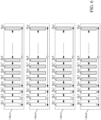
- each of the exploration classification models 146e1 ⁇ 146e4 includes n neural network structure layers SL1, SL2, SL3, SL4, SL5... SLn.
- each of the neural network structure layers SL1, SL2, SL3, SL4, SL5...SLn can be a convolution layer, a pooling layer, a linear rectification layer, a fully connected layer or other type of neural network structure layer.
- n is a positive integer.
- the total number of layers in the classification model can be determined according to application requirements (e.g., classification accuracy requirement, complexity of classification target, and diversity of input images).
- application requirements e.g., classification accuracy requirement, complexity of classification target, and diversity of input images.
- a common range of n can be ranged between 16 and 128, and the disclosure is not limited to a specific number of layers.
- the neural network structure layers SL1 and SL2 can be convolutional layers; the neural network structure layer SL3 can be a pooling layer; the neural network structure layers SL4 and SL5 can be convolutional layers; the neural network structure layer SL6 can be a pooling layer, the neural network structure layer SL7 can be a convolutional layer; the neural network structure layer SL8 can be a linear rectification layer; and the neural network structure layer SLn can be a fully connected layer, and the disclosure is not limited thereto.
- the neural network structure layers SL1 ⁇ SLn are divided into a first structure layer portion P1 and a second structure layer portion P2 after the first structure layer portion P1.
- the first structure layer portion P1 includes the neural network structure layers SL1 ⁇ SL3
- the second structure layer portion P2 includes the neural network structure layers SL4 ⁇ SLn.
- Each one of the exploration classification model parameters MPe1 ⁇ MPe4 for forming the exploration classification models 146e1 ⁇ 146e4 includes a first weight parameter content (configured to determine the operation of the first structural layer portion P1) and a second weight parameter content (configured to determine the operation of the second structure layer portion P2).
- the second structure layer portions P2 i.e., the neural network structure layers SL4-SLn
- the neural network structure layers SL4 ⁇ SLn among the four exploration classification models 146e1 ⁇ 146e4 are operating with the same logic.
- the neural network structure layer SL4 of the exploration classification model 146e1 and the neural network structure layer SL4 of the exploration classification model 146e2 use the same weight parameters and are operating with the same logic.
- the neural network structure layer SL5 of the exploration classification model 146e1 and the neural network structure layer SL5 of the exploration classification model 146e2 use the same weight parameters and are operating with the same logic, and so on.
- each one of the first structure layer portions P1 i.e., the neural network structure layers SL1 ⁇ SL3 of the four exploration classification models 146e1 ⁇ 146e4 has the first weight parameter content independent from others.
- the logic of the neural network structure layer SL1 ⁇ SL3 in one exploration classification model is different from the logic of the neural network structure layer SL1 ⁇ SL3 in another exploration classification model.
- the distribution of the first structure layer portion P1 and the second structure layer portion P2 shown in FIG. 6 is for demonstration, and the disclosure document is not limited thereto.
- the first structure layer portion P1 in each of the exploration classification models 146e1 ⁇ 146e4 at least includes a first convolutional layer.
- the first structure layer part P1 includes the neural network structure layer SL1 (i.e., the first convolutional layer), the first convolutional layers of the exploration classification models 146e1 ⁇ 146e4 have different weight parameters from each other.
- the rest of the neural network structure layers SL2 ⁇ SLn all belong to the second structure layer portion P2 (not shown in the figure), and the second structure layer part P2 includes a second convolutional layer and a fully connected layer.
- the second convolutional layer and the fully connected layer of the exploration classification models 146e1 ⁇ 146e4 have the same weight parameters across the classification models 146e1 ⁇ 146e4.
- the neural network structure layer SL1 since most of the neural network structure layers SL2 ⁇ SLn share the same weight parameters, only fewer neural network structure layer (e.g., the neural network structure layer SL1) uses independent weight parameters, the neural network structure is relatively simple while training, able to achieve a faster training speed, requires less computing resources, and also able to maintain accuracy according to experiment outcomes.
- FIG. 7 is a flowchart illustrating detailed steps S231 to S234 within step S230 in some embodiments.
- FIG. 8 is a schematic diagram illustrating steps S231 to S234 performed by components of the processing unit 140 in some embodiments.
- step S220 when the method enters step S230, as shown in FIG. 8 , the current value of the hyperparameter is still the hyperparameter HP1, and the current value of the hypernetwork parameter has been updated to the hypernetwork parameter HNP2.
- step S231 the hypernetwork 144 (based on the updated hypernetwork parameter HNP2) converts the hyperparameter HP1 into the second classification model parameter MP2.
- the classification model parameter MP2 is equal to the improved classification model parameter MP1m obtained in the aforesaid embodiments in FIG. 5B through back-propagation.
- FIG. 9A is a schematic diagram illustrating a conversion from the hyperparameter HP1 into the second classification model parameter MP2 in step S231 in some embodiments of the disclosure.
- step S231 is configured to map a data point (i.e., the hyperparameter HP1) in the data augmentation space SP1 onto a data point (i.e., the second classification model parameter MP2) in the classification parameter space SP2.
- step S231 the hypernetwork parameter HNP2 is used to determine how the hypernetwork 144 maps the hyperparameter HP1 in the data augmentation space SP1 onto the second classification model parameter MP2 in the classification parameter space SP2.
- step S232 the classification model 146 classifies a verification sample VD based on the second classification model parameter MP2 to generate a second prediction label LPD2 corresponding to the verification sample VD.
- step S233 the processing unit 140 executes a comparison algorithm to compare the second predicted label LPD2 with the verification label LVD of the verification sample VD for generating a second loss L2.
- the processing unit 140 performs cross-entropy calculation between the second predicted label LPD2 and the verification label LVD to obtain the second loss L2.
- a value of the second loss L2 represents whether the classification result performed by the classification model 146 is accurate. If the second prediction label LPD2 generated by the classification model 146 is the same (or similar) to the verification label LVD of the verification sample VD, the value of the second loss will be small, and it means that the second classification model parameter MP2 adopted by the current classification model 146 is more accurate. If the second prediction label LPD2 generated by the classification model 146 is different from the verification label LVD of the verification sample VD, the value of the second loss L2 will be larger, and it means that the second classification model parameter MP2 adopted by the current classification model 146 is relatively inaccurate.
- step S234 the hyperparameter HP1 is updated into the hyperparameter HP2 according to the second loss L2.
- FIG. 9B is a schematic diagram illustrating the updating of the hyperparameter HP2 according to the second loss L2 in step S234 in some embodiments of the disclosure.
- the second loss L2 is backward propagated to the classification model 146, so as to obtain an improved classification model parameter MP2m which can reduce (or minimize) the second loss L2.
- the improved classification model parameter MP2m is backward propagated to the hypernetwork 144, and an updated hyperparameter HP2 is obtained according to the backpropagation based on the improved classification model parameter MP2m.
- stochastic gradient descent (SGD) algorithm can be used to find the improved classification model parameter MP2m to reduce (or minimize) the second loss L2.
- the hypernetwork 144 (based on the hypernetwork parameter HNP2) will map the updated hyperparameter HP2 onto the improved classification model parameter MP2m.
- step S220 firstly, the hypernetwork parameter HNP1 is updated to the hypernetwork parameter HNP2.
- step S230 the hyperparameter HP1 is updated to the hyperparameter HP2 based on the hypernetwork parameter HNP2.
- step S230 is completed, if the convergence condition is not fulfilled yet, the method returns to step S220 based on the hyperparameter HP2, and perform steps S220 and S230 again with the hyperparameter HP2 and the hypernetwork parameter HNP2 as input conditions.
- the hyperparameters and hyperparameters can be updated again, and so on.
- the hypernetwork parameters and hyperparameters can be updated iteratively until the convergence conditions are fulfilled.
- the hyperparameter HP is configured to control the data augmentation operation of the data augmentation model 142, and the hyperparameter HP (through transformation by the hypernetwork 144) is also configured to control the classification operation of the classification model 146.
- different exploration classification models in the disclosure can share weights. By sharing weights, it can save storage and computing resources and accelerate the training speed.
- the machine learning system 100 of the disclosure may utilize the data augmentation model to increase the equivalent number of training samples TD, such that the training process of the classification model 146 does not require a large number of training samples TD, and the classification model 146 can still maintain high accuracy.
- the accuracy of deep learning mainly relies on a large amount of labeled training data.
- the performance of the classification model usually improves correspondingly.
- One of the ways to solve this problem is to allow experts to manually design parameters for data augmentation, such as rotation angle, flip method, or brightness adjustment ratio.
- the data augmentation with manually designed parameters has been commonly used to train the high-performance classification model for computer vision. If machine learning can be used in automatically finding the parameters for data augmentation, it will be more efficient and more accurate.
- HBA hypernetwork-based data augmentation
- Some embodiments of the disclosure adopt a weight sharing strategy to improve the speed and accuracy of calculation, and it can save time and resources for manually adjusting the parameters for data augmentation.
- the data augmentation can effectively improve the accuracy of the classification model and reduce the over-fitting issue. Therefore, automatic adjustment of parameters for data augmentation can improve the overall model performance.
- the machine learning method and the machine learning system in the disclosure can be utilized in various fields such as machine vision, image classification, or data classification.
- this machine learning method can be used in classifying medical images.
- the machine learning method can be used to classify X-ray images in normal conditions, with pneumonia, with bronchitis, or with heart disease.
- the machine learning method can also be used to classify ultrasound images with normal fetuses or abnormal fetal positions.
- this machine learning method can also be used to classify images collected in automatic driving, such as distinguishing normal roads, roads with obstacles, and road conditions images of other vehicles.
- the machine learning method can be utilized in other similar fields.
- the machine learning methods and machine learning systems in the disclosure can also be used in music spectrum recognition, spectral recognition, big data analysis, data feature recognition and other related machine learning fields.
- Another embodiment in the disclosure is a non-transitory computer-readable medium containing at least one instruction program, which is executed by a processor (for example, the processing unit 140 in FIG. 1 ) to perform the machine learning method 200 in the embodiments shown in FIG. 2 , FIG. 3 , and FIG. 7 .
- a processor for example, the processing unit 140 in FIG. 1
- FIG. 7 Another embodiment in the disclosure is a non-transitory computer-readable medium containing at least one instruction program, which is executed by a processor (for example, the processing unit 140 in FIG. 1 ) to perform the machine learning method 200 in the embodiments shown in FIG. 2 , FIG. 3 , and FIG. 7 .
Landscapes
- Engineering & Computer Science (AREA)
- Theoretical Computer Science (AREA)
- Physics & Mathematics (AREA)
- Data Mining & Analysis (AREA)
- General Engineering & Computer Science (AREA)
- Artificial Intelligence (AREA)
- Evolutionary Computation (AREA)
- General Physics & Mathematics (AREA)
- Software Systems (AREA)
- Computing Systems (AREA)
- Mathematical Physics (AREA)
- Computational Linguistics (AREA)
- Life Sciences & Earth Sciences (AREA)
- Health & Medical Sciences (AREA)
- Biomedical Technology (AREA)
- Biophysics (AREA)
- General Health & Medical Sciences (AREA)
- Molecular Biology (AREA)
- Computer Vision & Pattern Recognition (AREA)
- Bioinformatics & Cheminformatics (AREA)
- Bioinformatics & Computational Biology (AREA)
- Evolutionary Biology (AREA)
- Medical Informatics (AREA)
- Information Retrieval, Db Structures And Fs Structures Therefor (AREA)
- Image Analysis (AREA)
Claims (15)
- Machine-Learning-System (100), das aufweist:eine Speichereinheit (120), die zum Speichern von Anfangswerten eines Hyperparameters (HP) und eines Hypernetzwerkparameters (HNP) konfiguriert ist;eine Verarbeitungseinheit (140), die mit der Speichereinheit gekoppelt ist, wobei die Verarbeitungseinheit so konfiguriert ist, dass sie ein Hypernetzwerk (144), ein Klassifizierungsmodell (146), das so konfiguriert ist, dass es ein Bild durch Erfassen, dass das Bild ein oder mehrere Objekte enthält, klassifiziert und ein entsprechendes Label gemäß einem Klassifizierungsergebnis erzeugt, und ein Datenaugmentierungssmodell (142) ausführt, wobei die Verarbeitungseinheit so konfiguriert ist, dass sie Operationen ausführt zum:(a) (S220) Erzeugen eines ersten Klassifizierungsmodellparameters (MP1) durch das Hypernetzwerk gemäß dem Hyperparameter (HP1) und dem Hypernetzwerkparameter (HNP1), Erzeugen eines Klassifizierungsergebnisses durch das Klassifizierungsmodell auf Grundlage des ersten Klassifizierungsmodellparameters relativ zu einer Trainingsprobe (TD) und Aktualisieren des Hypernetzwerkparameters (HNP1, HNP2) gemäß dem Klassifizierungsergebnis, wobei die Operation (a), die durch die Verarbeitungseinheit ausgeführt wird, aufweist:(a1) (S221) Durchführen einer Datenaugmentierung durch das Datenaugmentierungsmodell auf Grundlage des Hyperparameters an der Trainingsprobe zum Erzeugen einer augmentierten Trainingsprobe (ETD), wobei das Datenaugmentierungsmodell verwendet wird, um eine Kombination von einer oder mehreren Bildverarbeitungen an der Trainingsprobe auf Grundlage von Werten des Hyperparameters durchzuführen, um die augmentierte Trainingsprobe zu erzeugen;(a2) (S222) Umwandeln des Hyperparameters durch das Hypernetzwerk auf Grundlage des Hypernetzwerkparameters in den ersten Klassifizierungsmodellparameter, wobei das Hypernetzwerk konfiguriert ist, um einen Datenpunkt des Hyperparameters in einem Datenaugmentierungsraum (SP1) auf einen Datenpunkt des ersten Klassifizierungsmodellparameters in einem Klassifizierungsparameterraum (SP2) auf Grundlage des Hypernetzwerkparameters abzubilden, wobei der Datenaugmentierungsraum (SP1) durch Achsen definiert ist, die verschiedene Einstellungen während der Datenaugmentierung repräsentieren, wobei der Klassifizierungsparameterraum (SP2) durch Achsen definiert ist, die Gewichtungswerte von Faltungsschichten in dem Klassifizierungsmodell repräsentieren;(a3) (S223) Durchführen einer Klassifizierung durch das Klassifizierungsmodell auf Grundlage des ersten Klassifizierungsmodellparameters an der augmentierten Trainingsprobe zum Erzeugen eines ersten Vorhersagelabels (LPD1), das der augmentierten Trainingsprobe entspricht, wobei der erste Klassifizierungsmodellparameter erste Gewichtungswerte von Faltungsschichten in dem Klassifizierungsmodell aufweist; und(a4) (S224, S225) Aktualisieren des Hypernetzwerkparameters gemäß einem ersten Loss (L1), der durch Vergleichen des ersten Vorhersagelabels mit einem Trainingslabel (LVD) der Trainingsprobe erzeugt wird;(b) (S230) Erzeugen eines zweiten Klassifizierungsmodellparameters (MP2) durch das Hypernetzwerk gemäß dem Hyperparameter (HP1) und dem aktualisierten Hypernetzwerkparameter (HNP2), Erzeugen eines weiteren Klassifizierungsergebnisses durch das Klassifizierungsmodell auf Grundlage des zweiten Klassifizierungsmodellparameters relativ zu einer Verifikationsprobe (VD) und Aktualisieren des Hyperparameters (HP1, HP2) gemäß dem weiteren Klassifizierungsergebnis, wobei der zweite Klassifizierungsmodellparameter zweite Gewichtungswerte der Faltungsschichten in dem Klassifizierungsmodell aufweist und sich zumindest ein Teil der zweiten Gewichtungswerte von den ersten Gewichtungswerten unterscheidet; und(c) (S240) Wiederholen der Operationen (a) und (b) zum Aktualisieren des Hypernetzwerkparameters und des Hyperparameters.
- Machine-Learning-System nach Anspruch 1, wobei die Operation (a2), die durch die Verarbeitungseinheit ausgeführt wird, aufweist:Umwandeln des Hyperparameters durch das Hypernetzwerk auf Grundlage des Hypernetzwerkparameters und einer Vielzahl von Erkundungswerten in eine Vielzahl von Erkundungsklassifizierungsmodellparametern (MPe1, MPe2, MPe3, MPe4);wobei die Operation (a3), die durch die Verarbeitungseinheit ausgeführt wird, aufweist:Bilden einer Vielzahl von Erkundungsklassifizierungsmodellen (146e1, 146e2, 146e3, 146e4) durch das Klassifizierungsmodell auf Grundlage der jeweiligen Erkundungsklassifizierungsmodellparameter und Durchführen einer Klassifizierung an der augmentierten Trainingsprobe durch die jeweiligen Erkundungsklassifizierungsmodelle zum Erzeugen einer Vielzahl von ersten Vorhersagelabeln (LPD1), die der augmentierten Trainingsprobe entsprechen; undwobei die Operation (a4), die durch die Verarbeitungseinheit ausgeführt wird, aufweist:Berechnen einer Vielzahl von ersten Lossen (L1) durch Vergleichen der ersten Vorhersagelabels mit dem Trainingslabel der Trainingsprobe; undAktualisieren des Hypernetzwerkparameters (HNP1, HNP2) gemäß den Erkundungsklassifizierungsmodellen und den ersten Lossen, die den Erkundungsklassifizierungsmodellen entsprechen.
- Machine-Learning-System nach Anspruch 2, wobei jedes der Erkundungsklassifizierungsmodelle (146e1, 146e2, 146e3, 146e4) eine Vielzahl von neuronalen Netzwerkstrukturschichten (SL1~SLn) aufweist, wobei die neuronalen Netzwerkstrukturschichten in einen ersten Strukturschichtabschnitt (P1) und einen zweiten Strukturschichtabschnitt (P2) nach dem ersten Strukturschichtabschnitt unterteilt sind, wobei jeder der Erkundungsklassifizierungsmodellparameter zum Bilden der Erkundungsklassifizierungsmodelle einen ersten Gewichtsparameterinhalt und einen zweiten Gewichtsparameterinhalt aufweist, wobei der erste Gewichtsparameterinhalt konfiguriert ist, Operationen des ersten Strukturschichtabschnitts zu bestimmen, und der zweite Gewichtsparameterinhalt konfiguriert ist, Operationen des zweiten Strukturschichtabschnitts zu bestimmen.
- Machine-Learning-System nach Anspruch 3, wobei die zweiten Gewichtsparameterinhalte, die auf die zweiten Strukturschichtabschnitte der Erkundungsklassifizierungsmodelle angewendet werden, die gleichen sind, wobei die zweiten Strukturschichtabschnitte der Erkundungsklassifizierungsmodelle mit der gleichen Logik arbeiten.
- Machine-Learning-System nach Anspruch 3, wobei der erste Strukturschichtabschnitt in jedem der Erkundungsklassifizierungsmodelle mindestens eine erste Faltungsschicht (SL1) aufweist, wobei die ersten Faltungsschichten unter den Erkundungsklassifizierungsmodellen voneinander verschiedene Gewichtsparameter aufweisen, wobei der zweite Strukturschichtabschnitt in jedem der Erkundungsklassifizierungsmodelle mindestens eine zweite Faltungsschicht (SL4) und mindestens eine vollständige Verbindungsschicht (SLn) aufweist, wobei die zweiten Faltungsschichten und die vollständigen Verbindungsschichten unter den Erkundungsklassifizierungsmodellen über die Erkundungsklassifizierungsmodelle hinweg gleiche Gewichtsparameter aufweisen.
- Machine-Learning-System nach Anspruch 1, wobei die Operation (b) (S230), die durch die Verarbeitungseinheit ausgeführt wird, aufweist:(b1) (S231) Umwandeln des Hyperparameters (HP1) durch das Hypernetzwerk auf Grundlage des aktualisierten Hypernetzwerkparameters (HNP2) in den zweiten Klassifizierungsmodellparameter (MP2);(b2) (S232) Durchführen einer Klassifizierung durch das Klassifizierungsmodell auf Grundlage des zweiten Klassifizierungsmodellparameters an der Verifikationsprobe zum Erzeugen eines zweiten Vorhersagelabels (LPD2), das der Verifikationsprobe entspricht; und(b3) (S233, S234) Aktualisieren des Hyperparameters (HP1, HP2) gemäß einem zweiten Loss (L2), der durch Vergleichen des zweiten Vorhersagelabels mit einem Verifikationslabel (LVD) der Verifikationsprobe erzeugt wird.
- Machine-Learning-Verfahren (200), wobei das Machine-Learning-Verfahren durch ein Machine-Learning-System (100) durchgeführt wird, das eine Verarbeitungseinheit (140) aufweist, wobei das Machine-Learning-Verfahren aufweist:(a) (S210) Erhalten von Anfangswerten eines Hyperparameters (HP) und eines Hypernetzwerkparameters (HNP);(b) (S220) Erzeugen eines ersten Klassifizierungsmodellparameters (MP1) gemäß dem Hyperparameter (HP1) und dem Hypernetzwerkparameter (HNP1), Erzeugen eines Klassifizierungsergebnisses durch ein Klassifizierungsmodell, das so konfiguriert ist, dass es ein Bild durch Erfassen, dass das Bild ein oder mehrere Objekte enthält, klassifiziert und ein entsprechendes Label gemäß einem Klassifizierungsergebnis erzeugt, auf Grundlage des ersten Klassifizierungsmodellparameters relativ zu einer Trainingsprobe (TD) und Aktualisieren des Hypernetzwerkparameters (HNP1, HNP2) gemäß einem Klassifizierungsergebnis auf Grundlage des ersten Klassifizierungsmodellparameters relativ zu einer Trainingsprobe durch die Verarbeitungseinheit (140), wobei der Schritt (b) aufweist:(b1) (S221) Durchführen einer Datenaugmentierung durch ein Datenaugmentierungsmodell auf Grundlage des Hyperparameters an der Trainingsprobe zum Erzeugen einer augmentierten Trainingsprobe (ETD), wobei das Datenaugmentierungsmodell verwendet wird, um eine Kombination von einer oder mehreren Bildverarbeitungen an der Trainingsprobe auf Grundlage von Werten des Hyperparameters durchzuführen, um die augmentierte Trainingsprobe zu erzeugen;(b2) (S222) Umwandeln des Hyperparameters durch ein Hypernetzwerk auf Grundlage des Hypernetzwerkparameters in den ersten Klassifizierungsmodellparameter, wobei das Hypernetzwerk konfiguriert ist, um einen Datenpunkt des Hyperparameters in einem Datenaugmentierungsraum (SP1) auf einen Datenpunkt des ersten Klassifizierungsmodellparameters in einem Klassifizierungsparameterraum (SP2) auf Grundlage des Hypernetzwerkparameters abzubilden, wobei der Datenaugmentierungsraum (SP1) durch Achsen definiert ist, die verschiedene Einstellungen während der Datenaugmentierung repräsentieren, wobei der Klassifizierungsparameterraum (SP2) durch Achsen definiert ist, die Gewichtungswerte von Faltungsschichten in dem Klassifizierungsmodell repräsentieren;(b3) (S223) Durchführen einer Klassifizierung durch das Klassifizierungsmodell auf Grundlage des ersten Klassifizierungsmodellparameters an der augmentierten Trainingsprobe zum Erzeugen eines ersten Vorhersagelabels (LPD1), das der augmentierten Trainingsprobe entspricht, wobei der erste Klassifizierungsmodellparameter erste Gewichtungswerte von Faltungsschichten in dem Klassifizierungsmodell aufweist; und(b4) (S224, S225) Aktualisieren des Hypernetzwerkparameters gemäß einem ersten Loss (L1), der durch Vergleichen des ersten Vorhersagelabels mit einem Trainingslabel (LVD) der Trainingsprobe erzeugt wird;(c) (S230) Erzeugen eines zweiten Klassifizierungsmodellparameters (MP2) gemäß dem Hyperparameter (HP1) und dem aktualisierten Hypernetzwerkparameter (HNP2), Erzeugen eines weiteren Klassifizierungsergebnisses durch das Klassifizierungsmodell auf Grundlage des zweiten Klassifizierungsmodellparameters relativ zu einer Verifikationsprobe (VD) und Aktualisieren des Hyperparameters (HP1, HP2) gemäß dem weiteren Klassifizierungsergebnis, wobei der zweite Klassifizierungsmodellparameter zweite Gewichtungswerte der Faltungsschichten in dem Klassifizierungsmodell aufweist und sich zumindest ein Teil der zweiten Gewichtungswerte von den ersten Gewichtungswerten unterscheidet; und(d) (S240) Wiederholen der Schritte (b) und (c) zum Aktualisieren des Hypernetzwerkparameters und des Hyperparameters.
- Machine-Learning-Verfahren nach Anspruch 7, wobei der Schritt (b2) aufweist:Umwandeln des Hyperparameters durch das Hypernetzwerk auf Grundlage des Hypernetzwerkparameters und einer Vielzahl von Erkundungswerten in eine Vielzahl von Erkundungsklassifizierungsmodellparametern;wobei der Schritt (b3) aufweist:Bilden einer Vielzahl von Erkundungsklassifizierungsmodellen (146e1, 146e2, 146e3, 146e4) durch das Klassifizierungsmodell auf Grundlage der jeweiligen Erkundungsklassifizierungsmodellparameter und Durchführen einer Klassifizierung an der augmentierten Trainingsprobe durch die jeweiligen Erkundungsklassifizierungsmodelle zum Erzeugen einer Vielzahl von ersten Vorhersagelabeln (LPD1), die der augmentierten Trainingsprobe entsprechen; undwobei der Schritt (b4) aufweist:Berechnen einer Vielzahl von ersten Lossen (L1) durch Vergleichen der ersten Vorhersagelabels mit dem Trainingslabel der Trainingsprobe; undAktualisieren des Hypernetzwerkparameters (HNP1, HNP2) gemäß den Erkundungsklassifizierungsmodellen und den ersten Lossen, die den Erkundungsklassifizierungsmodellen entsprechen.
- Machine-Learning-Verfahren nach Anspruch 8, wobei in dem Schritt (b4):
Berechnen der ersten Losse durch eine Kreuzentropieberechnung zwischen den ersten Vorhersagelabeln der jeweiligen Erkundungsklassifizierungsmodelle und dem Trainingslabel. - Machine-Learning-Verfahren nach Anspruch 8, wobei jedes der Erkundungsklassifizierungsmodelle (146e1, 146e2, 146e3, 146e4) eine Vielzahl von neuronalen Netzwerkstrukturschichten (SL1~SLn) aufweist, wobei die neuronalen Netzwerkstrukturschichten in einen ersten Strukturschichtabschnitt (P1) und einen zweiten Strukturschichtabschnitt (P2) nach dem ersten Strukturschichtabschnitt unterteilt sind, wobei jeder der Erkundungsklassifizierungsmodellparameter zum Bilden der Erkundungsklassifizierungsmodelle einen ersten Gewichtsparameterinhalt und einen zweiten Gewichtsparameterinhalt aufweist, wobei der erste Gewichtsparameterinhalt konfiguriert ist, Operationen des ersten Strukturschichtabschnitts zu bestimmen, und der zweite Gewichtsparameterinhalt konfiguriert ist, Operationen des zweiten Strukturschichtabschnitts zu bestimmen.
- Machine-Learning-Verfahren nach Anspruch 10, wobei die zweiten Gewichtsparameterinhalte, die auf die zweiten Strukturschichtabschnitte der Erkundungsklassifizierungsmodelle angewendet werden, die gleichen sind, wobei die zweiten Strukturschichtabschnitte der Erkundungsklassifizierungsmodelle mit der gleichen Logik arbeiten.
- Machine-Learning-Verfahren nach Anspruch 10, wobei der erste Strukturschichtabschnitt in jedem der Erkundungsklassifizierungsmodelle mindestens eine erste Faltungsschicht (SL1) aufweist, wobei die ersten Faltungsschichten unter den Erkundungsklassifizierungsmodellen voneinander verschiedene Gewichtsparameter aufweisen, wobei der zweite Strukturschichtabschnitt in jedem der Erkundungsklassifizierungsmodelle mindestens eine zweite Faltungsschicht (SL4) und mindestens eine vollständige Verbindungsschicht (SLn) aufweist, wobei die zweiten Faltungsschichten und die vollständigen Verbindungsschichten unter den Erkundungsklassifizierungsmodellen über die Erkundungsklassifizierungsmodelle hinweg gleiche Gewichtsparameter aufweisen.
- Machine-Learning-Verfahren nach Anspruch 7, wobei der Schritt (c) (S230) aufweist:(c1) (S231) Umwandeln des Hyperparameters (HP1) durch das Hypernetzwerk auf Grundlage des aktualisierten Hypernetzwerkparameters (HNP2) in den zweiten Klassifizierungsmodellparameter (MP2);(c2) (S232) Durchführen einer Klassifizierung durch ein Klassifizierungsmodell auf Grundlage des zweiten Klassifizierungsmodellparameters an der Verifikationsprobe zum Erzeugen eines zweiten Vorhersagelabels (LPD2), das der Verifikationsprobe entspricht; und(c3) (S233, S234) Aktualisieren des Hyperparameters (HP1, HP2) gemäß einem zweiten Loss (L2), der durch Vergleichen des zweiten Vorhersagelabels mit einem Verifikationslabel (LVD) der Verifikationsprobe erzeugt wird.
- Machine-Learning-Verfahren nach Anspruch 13, wobei der Schritt (c3) aufweist:
Berechnen des zweiten Losses durch eine Kreuzentropieberechnung zwischen dem zweiten Vorhersagelabel und dem Verifikationslabel. - Nicht-transitorisches computerlesbares Speichermedium (120), das mindestens ein Anweisungsprogramm speichert, das, wenn es durch eine Verarbeitungseinheit (140) ausgeführt wird, die Verarbeitungseinheit veranlasst, ein Machine-Learning-Verfahren (200) durchzuführen, wobei das Machine-Learning-Verfahren aufweist:(a) (S210) Erhalten von Anfangswerten eines Hyperparameters und eines Hypernetzwerkparameters;(b) (S220) Erzeugen eines ersten Klassifizierungsmodellparameters (MP1) gemäß dem Hyperparameter (HP1) und dem Hypernetzwerkparameter (HNP1), Erzeugen eines Klassifizierungsergebnisses durch ein Klassifizierungsmodell, das so konfiguriert ist, dass es ein Bild durch Erfassen, dass das Bild ein oder mehrere Objekte enthält, klassifiziert und ein entsprechendes Label gemäß einem Klassifizierungsergebnis erzeugt, auf Grundlage des ersten Klassifizierungsmodellparameters relativ zu einer Trainingsprobe (TD) und Aktualisieren des Hypernetzwerkparameters (HNP1, HNP2) gemäß einem Klassifizierungsergebnis auf Grundlage des ersten Klassifizierungsmodellparameters relativ zu einer Trainingsprobe, wobei die Operation (b), die durch die Verarbeitungseinheit ausgeführt wird, aufweist:(b1) (S221) Durchführen einer Datenaugmentierung durch das Datenaugmentierungsmodell auf Grundlage des Hyperparameters an der Trainingsprobe zum Erzeugen einer augmentierten Trainingsprobe (ETD), wobei das Datenaugmentierungsmodell verwendet wird, um eine Kombination von einer oder mehreren Bildverarbeitungen an der Trainingsprobe auf Grundlage von Werten des Hyperparameters durchzuführen, um die augmentierte Trainingsprobe zu erzeugen;(b2) (S222) Umwandeln des Hyperparameters durch das Hypernetzwerk auf Grundlage des Hypernetzwerkparameters in den ersten Klassifizierungsmodellparameter, wobei das Hypernetzwerk konfiguriert ist, um einen Datenpunkt des Hyperparameters in einem Datenaugmentierungsraum (SP1) auf einen Datenpunkt des ersten Klassifizierungsmodellparameters in einem Klassifizierungsparameterraum (SP2) auf Grundlage des Hypernetzwerkparameters abzubilden, wobei der Datenaugmentierungsraum (SP1) durch Achsen definiert ist, die verschiedene Einstellungen während der Datenaugmentierung repräsentieren, wobei der Klassifizierungsparameterraum (SP2) durch Achsen definiert ist, die Gewichtungswerte von Faltungsschichten in dem Klassifizierungsmodell repräsentieren;(b3) (S223) Durchführen einer Klassifizierung durch das Klassifizierungsmodell auf Grundlage des ersten Klassifizierungsmodellparameters an der augmentierten Trainingsprobe zum Erzeugen eines ersten Vorhersagelabels (LPD1), das der augmentierten Trainingsprobe entspricht, wobei der erste Klassifizierungsmodellparameter erste Gewichtungswerte von Faltungsschichten in dem Klassifizierungsmodell aufweist; und(b4) (S224, S225) Aktualisieren des Hypernetzwerkparameters gemäß einem ersten Loss (L1), der durch Vergleichen des ersten Vorhersagelabels mit einem Trainingslabel (LVD) der Trainingsprobe erzeugt wird;(c) (S230) Erzeugen eines zweiten Klassifizierungsmodellparameters (MP2) gemäß dem Hyperparameter (HP1) und dem aktualisierten Hypernetzwerkparameter (HNP2), Erzeugen eines weiteren Klassifizierungsergebnisses durch das Klassifizierungsmodell auf Grundlage des zweiten Klassifizierungsmodellparameters relativ zu einer Verifikationsprobe (VD) und Aktualisieren des Hyperparameters (HP1, HP2) gemäß dem weiteren Klassifizierungsergebnis, wobei der zweite Klassifizierungsmodellparameter zweite Gewichtungswerte der Faltungsschichten in dem Klassifizierungsmodell aufweist und sich zumindest ein Teil der zweiten Gewichtungswerte von den ersten Gewichtungswerten unterscheidet; und(d) (S240) Wiederholen der Schritte (b) und (c) zum Aktualisieren des Hypernetzwerkparameters und des Hyperparameters.
Applications Claiming Priority (1)
| Application Number | Priority Date | Filing Date | Title |
|---|---|---|---|
| US202063034993P | 2020-06-05 | 2020-06-05 |
Publications (2)
| Publication Number | Publication Date |
|---|---|
| EP3920102A1 EP3920102A1 (de) | 2021-12-08 |
| EP3920102B1 true EP3920102B1 (de) | 2024-10-30 |
Family
ID=76283633
Family Applications (1)
| Application Number | Title | Priority Date | Filing Date |
|---|---|---|---|
| EP21177789.1A Active EP3920102B1 (de) | 2020-06-05 | 2021-06-04 | Maschinenlernverfahren und maschinenlernsystem mit datenerweiterung, und speichermedium |
Country Status (6)
| Country | Link |
|---|---|
| US (1) | US12406182B2 (de) |
| EP (1) | EP3920102B1 (de) |
| JP (1) | JP7226696B2 (de) |
| KR (1) | KR102807416B1 (de) |
| CN (1) | CN113762327B (de) |
| TW (1) | TWI831016B (de) |
Families Citing this family (6)
| Publication number | Priority date | Publication date | Assignee | Title |
|---|---|---|---|---|
| JP7496499B2 (ja) * | 2020-11-30 | 2024-06-07 | パナソニックIpマネジメント株式会社 | 学習装置、学習方法、および故障予知システム |
| TWI817680B (zh) | 2021-12-21 | 2023-10-01 | 鴻海精密工業股份有限公司 | 影像擴增方法以及裝置 |
| KR102479679B1 (ko) * | 2021-12-31 | 2022-12-21 | 주식회사 애자일소다 | 데이터 증강과 오토 레이블링을 이용한 데이터 구축 장치 및 방법 |
| KR102656568B1 (ko) * | 2022-03-31 | 2024-04-12 | 주식회사 에임퓨처 | 데이터를 분류하는 방법 및 장치 |
| CN117877103B (zh) * | 2024-03-13 | 2024-05-24 | 宁波市眼科医院 | 一种基于深度元学习的角膜炎智能筛查方法 |
| TWI896157B (zh) * | 2024-06-04 | 2025-09-01 | 緯創資通股份有限公司 | 運算方法及其運算裝置 |
Family Cites Families (18)
| Publication number | Priority date | Publication date | Assignee | Title |
|---|---|---|---|---|
| JP6832504B2 (ja) * | 2016-08-08 | 2021-02-24 | パナソニックIpマネジメント株式会社 | 物体追跡方法、物体追跡装置およびプログラム |
| KR102336295B1 (ko) * | 2016-10-04 | 2021-12-09 | 한국전자통신연구원 | 적응적 프루닝 및 가중치 공유를 사용하는 컨볼루션 신경망 시스템 및 그것의 동작 방법 |
| WO2018081563A1 (en) | 2016-10-28 | 2018-05-03 | Google Llc | Neural architecture search |
| US11144828B2 (en) | 2017-06-09 | 2021-10-12 | Htc Corporation | Training task optimization system, training task optimization method and non-transitory computer readable medium for operating the same |
| JP6773618B2 (ja) * | 2017-09-04 | 2020-10-21 | 株式会社東芝 | 学習装置、情報処理装置、学習方法およびプログラム |
| KR102521054B1 (ko) * | 2017-10-18 | 2023-04-12 | 삼성전자주식회사 | 조기 중단에 기반한 심층 신경망의 연산 제어 방법 및 시스템 |
| KR101864286B1 (ko) | 2017-11-10 | 2018-07-04 | 주식회사 한컴엠디에스 | 머신 러닝 알고리즘을 이용하는 방법 및 장치 |
| WO2019208564A1 (ja) * | 2018-04-26 | 2019-10-31 | 日本電信電話株式会社 | ニューラルネットワーク学習装置、ニューラルネットワーク学習方法、プログラム |
| US10810996B2 (en) * | 2018-07-31 | 2020-10-20 | Nuance Communications, Inc. | System and method for performing automatic speech recognition system parameter adjustment via machine learning |
| JP7063393B2 (ja) * | 2018-10-05 | 2022-05-09 | 日本電気株式会社 | 教師データ拡張装置、教師データ拡張方法およびプログラム |
| CN110163234B (zh) * | 2018-10-10 | 2023-04-18 | 腾讯科技(深圳)有限公司 | 一种模型训练方法、装置和存储介质 |
| JP6569047B1 (ja) | 2018-11-28 | 2019-09-04 | 株式会社ツバサファクトリー | 学習方法、コンピュータプログラム、分類器、及び生成器 |
| CN109711481B (zh) * | 2019-01-02 | 2021-09-10 | 京东方艺云科技有限公司 | 用于画作多标签识别的神经网络、相关方法、介质和设备 |
| CN110110861B (zh) | 2019-05-09 | 2021-11-26 | 北京市商汤科技开发有限公司 | 确定模型超参数及模型训练的方法和装置、存储介质 |
| CN110231360B (zh) * | 2019-05-31 | 2020-06-26 | 华南农业大学 | 电镜像差的确定方法、消除方法及装置 |
| CN110580496A (zh) * | 2019-07-11 | 2019-12-17 | 南京邮电大学 | 一种基于熵最小化的深度迁移学习系统及方法 |
| CN110889489A (zh) * | 2019-11-08 | 2020-03-17 | 北京小米移动软件有限公司 | 神经网络的训练方法、图像识别方法及其装置 |
| CN111126564B (zh) * | 2019-11-27 | 2023-08-08 | 东软集团股份有限公司 | 一种神经网络结构搜索方法、装置及设备 |
-
2021
- 2021-06-04 CN CN202110621872.XA patent/CN113762327B/zh active Active
- 2021-06-04 TW TW110120430A patent/TWI831016B/zh active
- 2021-06-04 KR KR1020210072866A patent/KR102807416B1/ko active Active
- 2021-06-04 US US17/338,707 patent/US12406182B2/en active Active
- 2021-06-04 EP EP21177789.1A patent/EP3920102B1/de active Active
- 2021-06-04 JP JP2021094808A patent/JP7226696B2/ja active Active
Also Published As
| Publication number | Publication date |
|---|---|
| JP2021193564A (ja) | 2021-12-23 |
| JP7226696B2 (ja) | 2023-02-21 |
| EP3920102A1 (de) | 2021-12-08 |
| TW202147139A (zh) | 2021-12-16 |
| US20210383224A1 (en) | 2021-12-09 |
| CN113762327B (zh) | 2024-07-09 |
| KR102807416B1 (ko) | 2025-05-15 |
| KR20210152402A (ko) | 2021-12-15 |
| CN113762327A (zh) | 2021-12-07 |
| TWI831016B (zh) | 2024-02-01 |
| US12406182B2 (en) | 2025-09-02 |
Similar Documents
| Publication | Publication Date | Title |
|---|---|---|
| EP3920102B1 (de) | Maschinenlernverfahren und maschinenlernsystem mit datenerweiterung, und speichermedium | |
| US12499363B2 (en) | Learning to generate synthetic datasets for training neural networks | |
| CN112150821B (zh) | 轻量化车辆检测模型构建方法、系统及装置 | |
| US10275719B2 (en) | Hyper-parameter selection for deep convolutional networks | |
| CN113536920A (zh) | 一种半监督三维点云目标检测方法 | |
| KR20170140214A (ko) | 신경망을 위한 훈련 기준으로서의 필터 특이성 | |
| JP2022078310A (ja) | 画像分類モデル生成方法、装置、電子機器、記憶媒体、コンピュータプログラム、路側装置およびクラウド制御プラットフォーム | |
| KR20180044295A (ko) | 트레이닝된 머신 학습 모델의 성능을 개선시키는 방법 | |
| CN118279320A (zh) | 基于自动提示学习的目标实例分割模型建立方法及其应用 | |
| US12586350B2 (en) | Determining audio and video representations using self-supervised learning | |
| US12488221B2 (en) | Unsupervised pre-training of neural networks using generative models | |
| CN117010265A (zh) | 能够进行自然语言交互的自动驾驶模型及其训练方法 | |
| CN115147654A (zh) | 一种目标检测方法、装置、电子设备及存储介质 | |
| CN119251785A (zh) | 目标检测方法、装置、设备和存储介质 | |
| US20250036681A1 (en) | On-device artificial intelligence video search | |
| WO2024040546A1 (en) | Point grid network with learnable semantic grid transformation | |
| CN116311147A (zh) | 一种面向无人驾驶自学习目标识别的自优化方法 | |
| WO2025200079A1 (en) | Learnable encoder converting point cloud to grid for visual recognition | |
| US20260111705A1 (en) | Many-in-one elastic neural networks | |
| US20250322675A1 (en) | Reducing false-negatives in 3d object detection via multi-stage training | |
| US20240249538A1 (en) | Long-range 3d object detection using 2d bounding boxes | |
| US20250384574A1 (en) | Associating polylines for map generation | |
| US20260087224A1 (en) | Signoff-accurate vlsi gate sizing for simultaneous timing and power optimization using large language models | |
| WO2026001376A1 (zh) | 语义分割模型部署方法、语义识别方法、设备及存储介质 | |
| KR20260020927A (ko) | 그래프 뉴럴 네트워크들을 사용한 딥 뉴럴 네트워크 컴파일을 위한 프리프로세싱 |
Legal Events
| Date | Code | Title | Description |
|---|---|---|---|
| PUAI | Public reference made under article 153(3) epc to a published international application that has entered the european phase |
Free format text: ORIGINAL CODE: 0009012 |
|
| STAA | Information on the status of an ep patent application or granted ep patent |
Free format text: STATUS: REQUEST FOR EXAMINATION WAS MADE |
|
| STAA | Information on the status of an ep patent application or granted ep patent |
Free format text: STATUS: EXAMINATION IS IN PROGRESS |
|
| 17P | Request for examination filed |
Effective date: 20211008 |
|
| AK | Designated contracting states |
Kind code of ref document: A1 Designated state(s): AL AT BE BG CH CY CZ DE DK EE ES FI FR GB GR HR HU IE IS IT LI LT LU LV MC MK MT NL NO PL PT RO RS SE SI SK SM TR |
|
| B565 | Issuance of search results under rule 164(2) epc |
Effective date: 20211105 |
|
| 17Q | First examination report despatched |
Effective date: 20211117 |
|
| RBV | Designated contracting states (corrected) |
Designated state(s): AL AT BE BG CH CY CZ DE DK EE ES FI FR GB GR HR HU IE IS IT LI LT LU LV MC MK MT NL NO PL PT RO RS SE SI SK SM TR |
|
| P01 | Opt-out of the competence of the unified patent court (upc) registered |
Effective date: 20230602 |
|
| REG | Reference to a national code |
Ref country code: DE Ref legal event code: R079 Free format text: PREVIOUS MAIN CLASS: G06N0003040000 Ipc: G06N0003045000 Ref country code: DE Ref legal event code: R079 Ref document number: 602021020875 Country of ref document: DE Free format text: PREVIOUS MAIN CLASS: G06N0003040000 Ipc: G06N0003045000 |
|
| GRAP | Despatch of communication of intention to grant a patent |
Free format text: ORIGINAL CODE: EPIDOSNIGR1 |
|
| STAA | Information on the status of an ep patent application or granted ep patent |
Free format text: STATUS: GRANT OF PATENT IS INTENDED |
|
| RIC1 | Information provided on ipc code assigned before grant |
Ipc: G06N 3/09 20230101ALI20240628BHEP Ipc: G06N 3/0985 20230101ALI20240628BHEP Ipc: G06N 5/01 20230101ALI20240628BHEP Ipc: G06N 3/045 20230101AFI20240628BHEP |
|
| INTG | Intention to grant announced |
Effective date: 20240712 |
|
| GRAS | Grant fee paid |
Free format text: ORIGINAL CODE: EPIDOSNIGR3 |
|
| GRAA | (expected) grant |
Free format text: ORIGINAL CODE: 0009210 |
|
| STAA | Information on the status of an ep patent application or granted ep patent |
Free format text: STATUS: THE PATENT HAS BEEN GRANTED |
|
| AK | Designated contracting states |
Kind code of ref document: B1 Designated state(s): AL AT BE BG CH CY CZ DE DK EE ES FI FR GB GR HR HU IE IS IT LI LT LU LV MC MK MT NL NO PL PT RO RS SE SI SK SM TR |
|
| REG | Reference to a national code |
Ref country code: GB Ref legal event code: FG4D |
|
| REG | Reference to a national code |
Ref country code: CH Ref legal event code: EP |
|
| REG | Reference to a national code |
Ref country code: DE Ref legal event code: R096 Ref document number: 602021020875 Country of ref document: DE |
|
| REG | Reference to a national code |
Ref country code: IE Ref legal event code: FG4D |
|
| REG | Reference to a national code |
Ref country code: NL Ref legal event code: FP |
|
| REG | Reference to a national code |
Ref country code: LT Ref legal event code: MG9D |
|
| PG25 | Lapsed in a contracting state [announced via postgrant information from national office to epo] |
Ref country code: IS Free format text: LAPSE BECAUSE OF FAILURE TO SUBMIT A TRANSLATION OF THE DESCRIPTION OR TO PAY THE FEE WITHIN THE PRESCRIBED TIME-LIMIT Effective date: 20250228 Ref country code: HR Free format text: LAPSE BECAUSE OF FAILURE TO SUBMIT A TRANSLATION OF THE DESCRIPTION OR TO PAY THE FEE WITHIN THE PRESCRIBED TIME-LIMIT Effective date: 20241030 Ref country code: PT Free format text: LAPSE BECAUSE OF FAILURE TO SUBMIT A TRANSLATION OF THE DESCRIPTION OR TO PAY THE FEE WITHIN THE PRESCRIBED TIME-LIMIT Effective date: 20250228 |
|
| PG25 | Lapsed in a contracting state [announced via postgrant information from national office to epo] |
Ref country code: FI Free format text: LAPSE BECAUSE OF FAILURE TO SUBMIT A TRANSLATION OF THE DESCRIPTION OR TO PAY THE FEE WITHIN THE PRESCRIBED TIME-LIMIT Effective date: 20241030 |
|
| REG | Reference to a national code |
Ref country code: AT Ref legal event code: MK05 Ref document number: 1737644 Country of ref document: AT Kind code of ref document: T Effective date: 20241030 |
|
| PG25 | Lapsed in a contracting state [announced via postgrant information from national office to epo] |
Ref country code: BG Free format text: LAPSE BECAUSE OF FAILURE TO SUBMIT A TRANSLATION OF THE DESCRIPTION OR TO PAY THE FEE WITHIN THE PRESCRIBED TIME-LIMIT Effective date: 20241030 |
|
| PG25 | Lapsed in a contracting state [announced via postgrant information from national office to epo] |
Ref country code: ES Free format text: LAPSE BECAUSE OF FAILURE TO SUBMIT A TRANSLATION OF THE DESCRIPTION OR TO PAY THE FEE WITHIN THE PRESCRIBED TIME-LIMIT Effective date: 20241030 |
|
| PG25 | Lapsed in a contracting state [announced via postgrant information from national office to epo] |
Ref country code: NO Free format text: LAPSE BECAUSE OF FAILURE TO SUBMIT A TRANSLATION OF THE DESCRIPTION OR TO PAY THE FEE WITHIN THE PRESCRIBED TIME-LIMIT Effective date: 20250130 |
|
| PG25 | Lapsed in a contracting state [announced via postgrant information from national office to epo] |
Ref country code: GR Free format text: LAPSE BECAUSE OF FAILURE TO SUBMIT A TRANSLATION OF THE DESCRIPTION OR TO PAY THE FEE WITHIN THE PRESCRIBED TIME-LIMIT Effective date: 20250131 Ref country code: LV Free format text: LAPSE BECAUSE OF FAILURE TO SUBMIT A TRANSLATION OF THE DESCRIPTION OR TO PAY THE FEE WITHIN THE PRESCRIBED TIME-LIMIT Effective date: 20241030 Ref country code: AT Free format text: LAPSE BECAUSE OF FAILURE TO SUBMIT A TRANSLATION OF THE DESCRIPTION OR TO PAY THE FEE WITHIN THE PRESCRIBED TIME-LIMIT Effective date: 20241030 |
|
| PG25 | Lapsed in a contracting state [announced via postgrant information from national office to epo] |
Ref country code: PL Free format text: LAPSE BECAUSE OF FAILURE TO SUBMIT A TRANSLATION OF THE DESCRIPTION OR TO PAY THE FEE WITHIN THE PRESCRIBED TIME-LIMIT Effective date: 20241030 |
|
| PG25 | Lapsed in a contracting state [announced via postgrant information from national office to epo] |
Ref country code: RS Free format text: LAPSE BECAUSE OF FAILURE TO SUBMIT A TRANSLATION OF THE DESCRIPTION OR TO PAY THE FEE WITHIN THE PRESCRIBED TIME-LIMIT Effective date: 20250130 |
|
| PGFP | Annual fee paid to national office [announced via postgrant information from national office to epo] |
Ref country code: NL Payment date: 20250409 Year of fee payment: 5 |
|
| PG25 | Lapsed in a contracting state [announced via postgrant information from national office to epo] |
Ref country code: SM Free format text: LAPSE BECAUSE OF FAILURE TO SUBMIT A TRANSLATION OF THE DESCRIPTION OR TO PAY THE FEE WITHIN THE PRESCRIBED TIME-LIMIT Effective date: 20241030 |
|
| PGFP | Annual fee paid to national office [announced via postgrant information from national office to epo] |
Ref country code: DE Payment date: 20250402 Year of fee payment: 5 |
|
| PG25 | Lapsed in a contracting state [announced via postgrant information from national office to epo] |
Ref country code: DK Free format text: LAPSE BECAUSE OF FAILURE TO SUBMIT A TRANSLATION OF THE DESCRIPTION OR TO PAY THE FEE WITHIN THE PRESCRIBED TIME-LIMIT Effective date: 20241030 |
|
| PGFP | Annual fee paid to national office [announced via postgrant information from national office to epo] |
Ref country code: GB Payment date: 20250401 Year of fee payment: 5 |
|
| PG25 | Lapsed in a contracting state [announced via postgrant information from national office to epo] |
Ref country code: EE Free format text: LAPSE BECAUSE OF FAILURE TO SUBMIT A TRANSLATION OF THE DESCRIPTION OR TO PAY THE FEE WITHIN THE PRESCRIBED TIME-LIMIT Effective date: 20241030 |
|
| PGFP | Annual fee paid to national office [announced via postgrant information from national office to epo] |
Ref country code: FR Payment date: 20250401 Year of fee payment: 5 |
|
| PG25 | Lapsed in a contracting state [announced via postgrant information from national office to epo] |
Ref country code: RO Free format text: LAPSE BECAUSE OF FAILURE TO SUBMIT A TRANSLATION OF THE DESCRIPTION OR TO PAY THE FEE WITHIN THE PRESCRIBED TIME-LIMIT Effective date: 20241030 |
|
| PG25 | Lapsed in a contracting state [announced via postgrant information from national office to epo] |
Ref country code: SK Free format text: LAPSE BECAUSE OF FAILURE TO SUBMIT A TRANSLATION OF THE DESCRIPTION OR TO PAY THE FEE WITHIN THE PRESCRIBED TIME-LIMIT Effective date: 20241030 |
|
| PG25 | Lapsed in a contracting state [announced via postgrant information from national office to epo] |
Ref country code: CZ Free format text: LAPSE BECAUSE OF FAILURE TO SUBMIT A TRANSLATION OF THE DESCRIPTION OR TO PAY THE FEE WITHIN THE PRESCRIBED TIME-LIMIT Effective date: 20241030 |
|
| PG25 | Lapsed in a contracting state [announced via postgrant information from national office to epo] |
Ref country code: IT Free format text: LAPSE BECAUSE OF FAILURE TO SUBMIT A TRANSLATION OF THE DESCRIPTION OR TO PAY THE FEE WITHIN THE PRESCRIBED TIME-LIMIT Effective date: 20241030 |
|
| REG | Reference to a national code |
Ref country code: DE Ref legal event code: R097 Ref document number: 602021020875 Country of ref document: DE |
|
| PLBE | No opposition filed within time limit |
Free format text: ORIGINAL CODE: 0009261 |
|
| STAA | Information on the status of an ep patent application or granted ep patent |
Free format text: STATUS: NO OPPOSITION FILED WITHIN TIME LIMIT |
|
| PG25 | Lapsed in a contracting state [announced via postgrant information from national office to epo] |
Ref country code: SE Free format text: LAPSE BECAUSE OF FAILURE TO SUBMIT A TRANSLATION OF THE DESCRIPTION OR TO PAY THE FEE WITHIN THE PRESCRIBED TIME-LIMIT Effective date: 20241030 |
|
| 26N | No opposition filed |
Effective date: 20250731 |
|
| REG | Reference to a national code |
Ref country code: CH Ref legal event code: H13 Free format text: ST27 STATUS EVENT CODE: U-0-0-H10-H13 (AS PROVIDED BY THE NATIONAL OFFICE) Effective date: 20260127 |
|
| PG25 | Lapsed in a contracting state [announced via postgrant information from national office to epo] |
Ref country code: MC Free format text: LAPSE BECAUSE OF FAILURE TO SUBMIT A TRANSLATION OF THE DESCRIPTION OR TO PAY THE FEE WITHIN THE PRESCRIBED TIME-LIMIT Effective date: 20241030 |
|
| PG25 | Lapsed in a contracting state [announced via postgrant information from national office to epo] |
Ref country code: LU Free format text: LAPSE BECAUSE OF NON-PAYMENT OF DUE FEES Effective date: 20250604 |
|
| REG | Reference to a national code |
Ref country code: BE Ref legal event code: MM Effective date: 20250630 |
|
| PG25 | Lapsed in a contracting state [announced via postgrant information from national office to epo] |
Ref country code: IE Free format text: LAPSE BECAUSE OF NON-PAYMENT OF DUE FEES Effective date: 20250604 |
|
| PG25 | Lapsed in a contracting state [announced via postgrant information from national office to epo] |
Ref country code: BE Free format text: LAPSE BECAUSE OF NON-PAYMENT OF DUE FEES Effective date: 20250630 |
|
| PG25 | Lapsed in a contracting state [announced via postgrant information from national office to epo] |
Ref country code: CH Free format text: LAPSE BECAUSE OF NON-PAYMENT OF DUE FEES Effective date: 20250630 |