EP3920060B1 - Benutzersicherheitsanmeldedaten als ein element der funktionalen sicherheit - Google Patents
Benutzersicherheitsanmeldedaten als ein element der funktionalen sicherheit Download PDFInfo
- Publication number
- EP3920060B1 EP3920060B1 EP21177374.2A EP21177374A EP3920060B1 EP 3920060 B1 EP3920060 B1 EP 3920060B1 EP 21177374 A EP21177374 A EP 21177374A EP 3920060 B1 EP3920060 B1 EP 3920060B1
- Authority
- EP
- European Patent Office
- Prior art keywords
- identity
- employee
- safety
- record
- level
- Prior art date
- Legal status (The legal status is an assumption and is not a legal conclusion. Google has not performed a legal analysis and makes no representation as to the accuracy of the status listed.)
- Active
Links
Images











Classifications
-
- H—ELECTRICITY
- H04—ELECTRIC COMMUNICATION TECHNIQUE
- H04L—TRANSMISSION OF DIGITAL INFORMATION, e.g. TELEGRAPHIC COMMUNICATION
- H04L63/00—Network architectures or network communication protocols for network security
- H04L63/02—Network architectures or network communication protocols for network security for separating internal from external traffic, e.g. firewalls
- H04L63/0209—Architectural arrangements, e.g. perimeter networks or demilitarized zones
-
- G—PHYSICS
- G06—COMPUTING OR CALCULATING; COUNTING
- G06F—ELECTRIC DIGITAL DATA PROCESSING
- G06F21/00—Security arrangements for protecting computers, components thereof, programs or data against unauthorised activity
- G06F21/30—Authentication, i.e. establishing the identity or authorisation of security principals
- G06F21/31—User authentication
-
- G—PHYSICS
- G05—CONTROLLING; REGULATING
- G05B—CONTROL OR REGULATING SYSTEMS IN GENERAL; FUNCTIONAL ELEMENTS OF SUCH SYSTEMS; MONITORING OR TESTING ARRANGEMENTS FOR SUCH SYSTEMS OR ELEMENTS
- G05B19/00—Program-control systems
- G05B19/02—Program-control systems electric
- G05B19/418—Total factory control, i.e. centrally controlling a plurality of machines, e.g. direct or distributed numerical control [DNC], flexible manufacturing systems [FMS], integrated manufacturing systems [IMS] or computer integrated manufacturing [CIM]
- G05B19/4185—Total factory control, i.e. centrally controlling a plurality of machines, e.g. direct or distributed numerical control [DNC], flexible manufacturing systems [FMS], integrated manufacturing systems [IMS] or computer integrated manufacturing [CIM] characterised by the network communication
-
- G—PHYSICS
- G06—COMPUTING OR CALCULATING; COUNTING
- G06F—ELECTRIC DIGITAL DATA PROCESSING
- G06F21/00—Security arrangements for protecting computers, components thereof, programs or data against unauthorised activity
- G06F21/60—Protecting data
- G06F21/62—Protecting access to data via a platform, e.g. using keys or access control rules
- G06F21/6218—Protecting access to data via a platform, e.g. using keys or access control rules to a system of files or objects, e.g. local or distributed file system or database
-
- H—ELECTRICITY
- H04—ELECTRIC COMMUNICATION TECHNIQUE
- H04L—TRANSMISSION OF DIGITAL INFORMATION, e.g. TELEGRAPHIC COMMUNICATION
- H04L63/00—Network architectures or network communication protocols for network security
- H04L63/08—Network architectures or network communication protocols for network security for authentication of entities
- H04L63/0807—Network architectures or network communication protocols for network security for authentication of entities using tickets, e.g. Kerberos
-
- H—ELECTRICITY
- H04—ELECTRIC COMMUNICATION TECHNIQUE
- H04L—TRANSMISSION OF DIGITAL INFORMATION, e.g. TELEGRAPHIC COMMUNICATION
- H04L63/00—Network architectures or network communication protocols for network security
- H04L63/08—Network architectures or network communication protocols for network security for authentication of entities
- H04L63/0861—Network architectures or network communication protocols for network security for authentication of entities using biometrical features, e.g. fingerprint, retina-scan
-
- H—ELECTRICITY
- H04—ELECTRIC COMMUNICATION TECHNIQUE
- H04L—TRANSMISSION OF DIGITAL INFORMATION, e.g. TELEGRAPHIC COMMUNICATION
- H04L63/00—Network architectures or network communication protocols for network security
- H04L63/10—Network architectures or network communication protocols for network security for controlling access to devices or network resources
- H04L63/105—Multiple levels of security
-
- H—ELECTRICITY
- H04—ELECTRIC COMMUNICATION TECHNIQUE
- H04L—TRANSMISSION OF DIGITAL INFORMATION, e.g. TELEGRAPHIC COMMUNICATION
- H04L63/00—Network architectures or network communication protocols for network security
- H04L63/20—Network architectures or network communication protocols for network security for managing network security; network security policies in general
-
- G—PHYSICS
- G05—CONTROLLING; REGULATING
- G05B—CONTROL OR REGULATING SYSTEMS IN GENERAL; FUNCTIONAL ELEMENTS OF SUCH SYSTEMS; MONITORING OR TESTING ARRANGEMENTS FOR SUCH SYSTEMS OR ELEMENTS
- G05B19/00—Program-control systems
- G05B19/02—Program-control systems electric
- G05B19/04—Program control other than numerical control, i.e. in sequence controllers or logic controllers
- G05B19/042—Program control other than numerical control, i.e. in sequence controllers or logic controllers using digital processors
- G05B19/0423—Input/output
- G05B19/0425—Safety, monitoring
-
- G—PHYSICS
- G05—CONTROLLING; REGULATING
- G05B—CONTROL OR REGULATING SYSTEMS IN GENERAL; FUNCTIONAL ELEMENTS OF SUCH SYSTEMS; MONITORING OR TESTING ARRANGEMENTS FOR SUCH SYSTEMS OR ELEMENTS
- G05B19/00—Program-control systems
- G05B19/02—Program-control systems electric
- G05B19/418—Total factory control, i.e. centrally controlling a plurality of machines, e.g. direct or distributed numerical control [DNC], flexible manufacturing systems [FMS], integrated manufacturing systems [IMS] or computer integrated manufacturing [CIM]
-
- G—PHYSICS
- G05—CONTROLLING; REGULATING
- G05B—CONTROL OR REGULATING SYSTEMS IN GENERAL; FUNCTIONAL ELEMENTS OF SUCH SYSTEMS; MONITORING OR TESTING ARRANGEMENTS FOR SUCH SYSTEMS OR ELEMENTS
- G05B2219/00—Program-control systems
- G05B2219/30—Nc systems
- G05B2219/36—Nc in input of data, input key till input tape
- G05B2219/36542—Cryptography, encrypt, access, authorize with key, code, password
-
- G—PHYSICS
- G06—COMPUTING OR CALCULATING; COUNTING
- G06F—ELECTRIC DIGITAL DATA PROCESSING
- G06F2221/00—Indexing scheme relating to security arrangements for protecting computers, components thereof, programs or data against unauthorised activity
- G06F2221/21—Indexing scheme relating to G06F21/00 and subgroups addressing additional information or applications relating to security arrangements for protecting computers, components thereof, programs or data against unauthorised activity
- G06F2221/2141—Access rights, e.g. capability lists, access control lists, access tables, access matrices
-
- H—ELECTRICITY
- H04—ELECTRIC COMMUNICATION TECHNIQUE
- H04L—TRANSMISSION OF DIGITAL INFORMATION, e.g. TELEGRAPHIC COMMUNICATION
- H04L63/00—Network architectures or network communication protocols for network security
- H04L63/10—Network architectures or network communication protocols for network security for controlling access to devices or network resources
- H04L63/102—Entity profiles
-
- Y—GENERAL TAGGING OF NEW TECHNOLOGICAL DEVELOPMENTS; GENERAL TAGGING OF CROSS-SECTIONAL TECHNOLOGIES SPANNING OVER SEVERAL SECTIONS OF THE IPC; TECHNICAL SUBJECTS COVERED BY FORMER USPC CROSS-REFERENCE ART COLLECTIONS [XRACs] AND DIGESTS
- Y02—TECHNOLOGIES OR APPLICATIONS FOR MITIGATION OR ADAPTATION AGAINST CLIMATE CHANGE
- Y02P—CLIMATE CHANGE MITIGATION TECHNOLOGIES IN THE PRODUCTION OR PROCESSING OF GOODS
- Y02P90/00—Enabling technologies with a potential contribution to greenhouse gas [GHG] emissions mitigation
- Y02P90/02—Total factory control, e.g. smart factories, flexible manufacturing systems [FMS] or integrated manufacturing systems [IMS]
Definitions
- US 7 314 169 B1 relates to providing access restrictions to automation systems/devices.
- Authentication information provided by a requester upon being prompted by a user-challenge component can be directed to an access authority that is employed to administer and maintain access privileges for an industrial automation environment.
- the access authority can include an authentication component that reviews the provided requester authentication information and determines whether such requester is authorized to access an industrial system/device.
- a data store can include requesters that are authorized to access the industrial system/device as well as usernames, passwords, PINs, biometric information, etc. associated with such requesters.
- the access authority generates an access ticket that is utilized to grant the requester access to the industrial system/device.
- the access ticket can be delivered from the access authority to the industrial system/device over a trusted network, and any suitable security protocols can be employed in connection with such transfer.
- the access ticket can include restrictive attribute(s) that restrict the requester's access rights to the industrial system.
- US 2018/026954 A1 relates to techniques for performing two-factor authentication in a process plant that includes receiving, at a user interface device, a first type of identification information for a user from an identification device or a physical trait of the user.
- the user interface device also receives a second type of identification information for the user from knowledge-based information provided by the user.
- US 2019/182260 A1 relates to techniques for automatically providing access credentials to employees based upon the time and location of the employee when the request was made.
- US 9,043,600 B2 relates to a security model that provides interoperability with foreign security domains while remaining scalable to small embedded devices.
- a security token service is provided, which is configured to issue, renew, and/or validate security tokens in response to a token request.
- a communication protocol, corresponding message structures, and the security tokens are defined in accordance with protocol buffer definitions.
- a system comprising an identity provider interface component configured to receive an identity record obtained from a corporate-level employee information system, the identity record defining at least an identity of an employee of an industrial enterprise and a role of the employee; an enrollment component configured to, in response to receipt of validation data indicating approval of the identity record, enroll the identity record as a user credential record defining a degree of access to an automation system granted to the employee; a device interface component configured to receive, from an industrial device associated with the automation system, an identity request that specifies an identity of a user attempting to interact with the automation system; and security token component configured to, in response to determining that the identity specified by the identity request corresponds to the user credential record, generate a security token that, in response to execution on the industrial device, enforces the degree of access to the automation system defined by the user credential record, wherein the device interface component is further configured to send the security token to the industrial device.
- one or more embodiments provide a method, comprising receiving, by a safety authority system comprising a processor, an identity record retrieved from a corporate-level employee information system, the identity record defining at least an identity of an employee of an industrial enterprise and a role of the employee; in response to receiving validation data indicating authorization of the identity record, generating, by the safety authority system, a user credential record based on the identity record, wherein the user credential record defines a permitted level of interaction with an automation system granted to the employee; receiving, by the safety authority system from an industrial device associated with the automation system, an identity request that specifies an identity of a user requesting to interact with the automation system; in response to determining that the identity specified by the identity request corresponds to the user credential record, generating, by the safety authority system, a security token that, in response to execution on the industrial device, enforces the permitted level of interaction defined by the user credential record; and sending, by the safety authority system, the security token to the industrial device.
- a non-transitory computer-readable medium having stored thereon instructions that, in response to execution, cause a system to perform operations, the operations comprising receiving an identity record obtained from a corporate-level human resources system, the identity record defining at least an identity of an employee of an industrial enterprise and a role of the employee; in response to receiving validation data indicating that the identity record has been granted administrator approval, generating a user credential record based on the identity record, wherein the user credential record defines a degree of interaction with the automation system granted to the employee; receiving, from an industrial device associated with the automation system, an identity request that includes an identity of a user attempting to interact with the automation system; in response to determining that the identity specified by the identity request corresponds to the user credential record, generating a security token that, in response to execution on the industrial device, enforces the degree of interaction defined by the user credential record; and sending the security token to the industrial device.
- the terms "component,” “system,” “platform,” “layer,” “controller,” “terminal,” “station,” “node,” “interface” are intended to refer to a computer-related entity or an entity related to, or that is part of, an operational apparatus with one or more specific functionalities, wherein such entities can be either hardware, a combination of hardware and software, software, or software in execution.
- a component can be, but is not limited to being, a process running on a processor, a processor, a hard disk drive, multiple storage drives (of optical or magnetic storage medium) including affixed (e.g., screwed or bolted) or removable affixed solid-state storage drives; an object; an executable; a thread of execution; a computer-executable program, and/or a computer.
- affixed e.g., screwed or bolted
- components as described herein can execute from various computer readable storage media having various data structures stored thereon.
- the components may communicate via local and/or remote processes such as in accordance with a signal having one or more data packets (e.g., data from one component interacting with another component in a local system, distributed system, and/or across a network such as the Internet with other systems via the signal).
- a component can be an apparatus with specific functionality provided by mechanical parts operated by electric or electronic circuitry which is operated by a software or a firmware application executed by a processor, wherein the processor can be internal or external to the apparatus and executes at least a part of the software or firmware application.
- a component can be an apparatus that provides specific functionality through electronic components without mechanical parts, the electronic components can include a processor therein to execute software or firmware that provides at least in part the functionality of the electronic components.
- interface(s) can include input/output (I/O) components as well as associated processor, application, or Application Programming Interface (API) components. While the foregoing examples are directed to aspects of a component, the exemplified aspects or features also apply to a system, platform, interface, layer, controller, terminal, and the like.
- the terms "to infer” and “inference” refer generally to the process of reasoning about or inferring states of the system, environment, and/or user from a set of observations as captured via events and/or data. Inference can be employed to identify a specific context or action, or can generate a probability distribution over states, for example. The inference can be probabilistic-that is, the computation of a probability distribution over states of interest based on a consideration of data and events. Inference can also refer to techniques employed for composing higher-level events from a set of events and/or data. Such inference results in the construction of new events or actions from a set of observed events and/or stored event data, whether or not the events are correlated in close temporal proximity, and whether the events and data come from one or several event and data sources.
- the term "or” is intended to mean an inclusive “or” rather than an exclusive “or.” That is, unless specified otherwise, or clear from the context, the phrase “X employs A or B” is intended to mean any of the natural inclusive permutations. That is, the phrase “X employs A or B” is satisfied by any of the following instances: X employs A; X employs B; or X employs both A and B.
- the articles “a” and “an” as used in this application and the appended claims should generally be construed to mean “one or more” unless specified otherwise or clear from the context to be directed to a singular form.
- a “set” in the subject disclosure includes one or more elements or entities.
- a set of controllers includes one or more controllers; a set of data resources includes one or more data resources; etc.
- group refers to a collection of one or more entities; e.g., a group of nodes refers to one or more nodes.
- Industrial controllers their associated I/O devices, motor drives, and other such industrial devices are central to the operation of modern automation systems.
- Industrial controllers interact with field devices on the plant floor to control automated processes relating to such objectives as product manufacture, material handling, batch processing, supervisory control, and other such applications.
- Industrial controllers store and execute user-defined control programs to effect decision-making in connection with the controlled process.
- Such programs can include, but are not limited to, ladder logic, sequential function charts, function block diagrams, structured text, C++, Python, Javascript, or other such platforms.
- FIG. 1 is a block diagram of an example industrial environment 100.
- a number of industrial controllers 118 are deployed throughout an industrial plant environment to monitor and control respective industrial systems or processes relating to product manufacture, machining, motion control, batch processing, material handling, or other such industrial functions.
- Industrial controllers 118 typically execute respective control programs to facilitate monitoring and control of industrial devices 120 making up the controlled industrial assets or automation systems (e.g., industrial machines).
- One or more industrial controllers 118 may also comprise a soft controller executed on a personal computer, on a server blade, or another hardware platform, or on a cloud platform.
- Some hybrid devices may also combine controller functionality with other functions (e.g., visualization).
- control programs executed by industrial controllers 118 can comprise any conceivable type of code used to process input signals read from the industrial devices 120 and to control output signals generated by the industrial controllers 118, including but not limited to ladder logic, sequential function charts, function block diagrams, structured text, C++, Python, Javascript, etc.
- Industrial devices 120 may include input devices that provide data relating to the controlled industrial systems to the industrial controllers 118, output devices that respond to control signals generated by the industrial controllers 118 to control aspects of the industrial systems, or devices that act as both input and output devices.
- Example input devices can include telemetry devices (e.g., temperature sensors, flow meters, level sensors, pressure sensors, etc.), manual operator control devices (e.g., push buttons, selector switches, etc.), safety monitoring devices (e.g., safety mats, safety pull cords, light curtains, etc.), and other such devices.
- Output devices may include motor drives, pneumatic actuators, signaling devices (e.g., stack lights or other illuminated indicators, horns, message display boards, etc.), robot control inputs, valves, and the like.
- Some industrial devices, such as industrial device 120M may operate autonomously on the plant network 116 without being controlled by an industrial controller 118.
- Industrial controllers 118 may communicatively interface with industrial devices 120 over hardwired connections or over wired or wireless networks.
- industrial controllers 118 can be equipped with native hardwired inputs and outputs that communicate with the industrial devices 120 to effect control of the devices.
- the native controller I/O can include digital I/O that transmits and receives discrete voltage signals to and from the field devices, or analog I/O that transmits and receives analog voltage or current signals to and from the devices.
- the controller I/O can communicate with a controller's processor over a backplane such that the digital and analog signals can be read into and controlled by the control programs.
- Industrial controllers 118 can also communicate with industrial devices 120 over the plant network 116 using, for example, a communication module or an integrated networking port.
- Exemplary networks can include the Internet, intranets, Ethernet, EtherNet/IP, DeviceNet, ControlNet, Data Highway and Data Highway Plus (DH/DH+), Remote I/O, Fieldbus, Modbus, Profibus, wireless networks, serial protocols, OPC UA, field level communications (FLC), and the like.
- the industrial controllers 118 can also store persisted data values that can be referenced by the control program and used for control decisions, including but not limited to measured or calculated values representing operational states of a controlled machine or process (e.g., tank levels, positions, alarms, etc.) or captured time series data that is collected during operation of the automation system (e.g., status information for multiple points in time, diagnostic occurrences, etc.).
- some intelligent devices including but not limited to motor drives, instruments, or condition monitoring modules - may store data values that are used for control and/or to visualize states of operation. Such devices may also capture time-series data or events on a log for later retrieval and viewing.
- HMIs human-machine interfaces
- Industrial automation systems often include one or more human-machine interfaces (HMIs) 114 that allow plant personnel to view telemetry and status data associated with the automation systems, and to control some aspects of system operation.
- HMIs 114 may communicate with one or more of the industrial controllers 118 over a plant network 116, and exchange data with the industrial controllers to facilitate visualization of information relating to the controlled industrial processes on one or more pre-developed operator interface screens.
- HMIs 114 can also be configured to allow operators to submit data to specified data tags or memory addresses of the industrial controllers 118, thereby providing a means for operators to issue commands to the controlled systems (e.g., cycle start commands, device actuation commands, etc.), to modify setpoint values, etc.
- commands e.g., cycle start commands, device actuation commands, etc.
- HMIs 114 can generate one or more display screens through which the operator interacts with the industrial controllers 118, and thereby with the controlled processes and/or systems.
- Example display screens can visualize present states of industrial systems or their associated devices using graphical representations of the processes that display metered or calculated values, employ color or position animations based on state, render alarm notifications, or employ other such techniques for presenting relevant data to the operator. Data presented in this manner is read from industrial controllers 118 by HMIs 114 and presented on one or more of the display screens according to display formats chosen by the HMI developer.
- HMIs may comprise fixed-location or mobile devices with either user-installed or pre-installed operating systems, and either user-installed or pre-installed graphical application software.
- Some industrial environments may also include other systems or devices relating to specific aspects of the controlled industrial systems. These may include, for example, one or more data historians 110 that aggregate and store production information collected from the industrial controllers 118 and other industrial devices.
- Industrial devices 120, industrial controllers 118, HMIs 114, associated controlled industrial assets, and other plant-floor systems such as data historians 110, vision systems, and other such systems operate on the operational technology (OT) level of the industrial environment.
- Higher level analytic and reporting systems may operate at the higher enterprise level of the industrial environment in the information technology (IT) domain; e.g., on an office network 108 (which may be connected to the plant network 116 directly or via a firewall device 102) or on a cloud platform.
- IT information technology
- Such higher level systems can include, for example, enterprise resource planning (ERP) systems that integrate and collectively manage high-level business operations, such as finance, sales, order management, marketing, human resources, or other such business functions.
- ERP enterprise resource planning
- a Manufacturing Execution System can monitor and manage control operations on the control level given higher-level business considerations.
- Reporting systems which can also reside on the IT level, can collect operational data from industrial devices on the plant floor and generate daily or shift reports that summarize operational statistics of the controlled industrial assets.
- An industrial enterprise or business may also operate corporate-level systems on the IT level.
- Such corporate-level systems can include human resources (HR) systems 104 on which employee records are electronically stored and maintained.
- HR system 104 may comprise one or more servers or databases, or may execute on a secure cloud platform.
- An example employee record maintained by such HR systems 104 may comprise such information as an employee's name; residential address; hire date; current employment status; a department, facility, or location in which the employee works; a current work shift during which the employee is expected to be on-premises; a classification or role of the employee (e.g., operator, engineer, manager, finance officer, vice president, etc.); training records or certifications held by the employee; or other such employee-specific information.
- Businesses use such HR systems 104 to track workforce, manage payroll, maintain employee mailing lists, generate reports, or for other purposes.
- Some industrial enterprises may also maintain a security services system 106 that defines and enforces enterprise-wide security policies. Similar to HR systems 104, security services systems 106 can operate on one or more servers or on a cloud platform. Security services system 106 can serve as a corporate-level security authority, and in some cases may be integrated with the HR systems 104 in order to define and enforce access security policies for the enterprise; e.g., to define access policies for buildings that make up the industrial enterprise. Such systems 106 may define, for each building of the enterprise, which employees defined in the HR systems 104 are permitted to access that building. The security services system 106 may also interface with the buildings' access control systems to selectively lock or unlock doors of the buildings in accordance with the defined security policies.
- the security services system 106 may control the access control systems such that a door of a given building will only unlock if an employee identification system associated with the door (e.g., a badge reader, a biometric scanner, etc.) receives authenticated employee identification information that corresponds with an employee who is permitted to enter that building per the defined security policy.
- an employee identification system associated with the door e.g., a badge reader, a biometric scanner, etc.
- Some security services systems 106 may also manage IT-level network security; e.g., by acting as a certificate authority that regulates access to the corporate network (e.g., office network 108).
- the corporate network e.g., office network 108.
- an industrial automation system - comprising one or more industrial controllers 118, associated industrial devices 120, and the machinery that these monitoring and control devices operate - typically include associated safety systems that monitor for potentially unsafe scenarios and transition the automation systems to safe states in response to detection of a potentially hazardous condition.
- These safety systems can include a number of safety input devices designed to detect when a human has intruded within a protected area near a hazardous machine.
- safety input devices can include, for example, light curtains, photo-eyes, safety mats, optical safety sensors, or other such devices capable of detecting human presence within a protected area or a protected portion of a running machine.
- the safety input devices can be monitored by a safety relay or safety controller, which can disconnect power from the machine - or otherwise place the machine in a safe state (e.g., a slow operating state) - in response to detecting that one or more of the safety input devices has detected presence of a human within a protected area while the machine is operating.
- a safety relay or safety controller which can disconnect power from the machine - or otherwise place the machine in a safe state (e.g., a slow operating state) - in response to detecting that one or more of the safety input devices has detected presence of a human within a protected area while the machine is operating.
- SIL Safety Integrity Level
- Integrating user identity and role-based security policy with industrial control and safety system operation could improve performance of automation systems in a number of ways.
- an industrial automation system could enforce role-based access to certain protected hazardous areas or control functions, such that employees of a first role (e.g., maintenance personnel) are permitted to initiate certain machine functions that are prohibited to employees of other roles (e.g., operators). This could reduce instances of false trips (e.g., unnecessary initiation of safety actions by the safety system) while authorized maintenance personnel are carrying out maintenance activities on the running system that those personnel are qualified to perform safely.
- Role-based security policy can also limit performance of certain control or configuration actions - e.g., machine starting/stopping, changing of control or safety variables or setpoints (e.g., safe limited speed, torque, acceleration, or positioning), resetting of safety functions, etc. - to a limited subset of authorized personnel based on identity or role, thereby improving system performance by customizing control and safety actions according to role.
- control or configuration actions e.g., machine starting/stopping, changing of control or safety variables or setpoints (e.g., safe limited speed, torque, acceleration, or positioning), resetting of safety functions, etc. - to a limited subset of authorized personnel based on identity or role, thereby improving system performance by customizing control and safety actions according to role.
- an industrial safety system that supports role-based security could permit a first subset of authorized personnel to physically access certain hazardous zones while the associated automation system is running, while prohibiting other personnel from entering those zones while the system is running; e.g., by initiating a safety action that places the machinery in a safe state if the safety system detects an unauthorized person within the protected zone, while allowing the machinery to continue operating normally if the safety system detects presence of an authorized person within the protected zone.
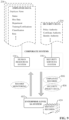
- FIG. 2 is a diagram depicting a typical segregation of the standard domain and safety domain of an industrial enterprise.
- the standard domain can be viewed as the corporate or enterprise level of the industrial business, comprising the systems and networks that operate in the IT environment of the corporate headquarters (or on a cloud platform accessible from the corporate headquarters via networks 122). Since human resources and security services are typically handled at an enterprise's corporate headquarters, human resource systems 104 and security services systems 106, which maintain employee data 206 and security data 204, respectively, operate in the standard (corporate) domain.
- the safety domain comprises the industrial automation and safety systems that operate on the plant floor, either in the same building as corporate headquarters or in a separate plant facility located remotely relative to the corporate headquarters. Typically, a clear delineation exists between the standard and safety realms, since industrial automation and safety is handled at the plant floor level, and the corporate level does not interact with manufacturing operations.
- the industrial control system must have access to employee identity information and associated security policy data.
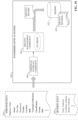
- One approach to achieving this - illustrated in FIG. 3a - would be to install a safety authority device 302 on the plant floor (in the safety domain) that maintains employee and security policy data 304.
- the identity and security policy data 304 stored on the safety authority device 302 could then be provided to the automation systems as needed. Since the employee and security policy data 304 would be maintained solely in the control domain, this information could be persisted and passed to the industrial control systems with safety integrity.
- the employee and security data 304 maintained on such a safety authority device 302 would have to be updated and managed separately from the corporate level systems 104 and 106, even though the safety authority device 302 would store information similar to that stored on those corporate level systems. This would necessitate redundant administrative efforts to ensure that employee data on the plant-floor authority device 302 remains up-to-date with the corporate records, and could result in safety gaps if the device 302 is not regularly updated to reflect changes to the employee records made on the corporate system.
- Another approach that would mitigate this issue would be to integrate the industrial control and safety systems with the corporate systems 104 and 106, allowing the existing employee data 206 and security data 204 maintained in the corporate systems 104 and 106 to be provided to the control and safety systems on the plant floor, as illustrated in FIG. 3b .
- corporate-level systems 104 and 106 are not typically designed to satisfy the safety requirements applicable to functional safety systems (e.g., safety requirements dictated by IEC 61508-2 and -3). Consequently, automation systems on the plant floor cannot be directly interfaced with corporate-level systems in this manner, since the lack of safety integrity on the corporate-level systems could render operation of the automation systems unsafe.
- one or more embodiments described herein provide a system for integrating security identity and policy with industrial control and safety.
- Embodiments of the system described herein can leverage existing employee identity and security policy data maintained on the corporate level of an industrial enterprise to manage identity- and/or role-based control and safety on the plant level.
- safety authority systems residing at the corporate level and the plant level of the industrial enterprise can coordinate to retrieve employee identity and security policy data from corporate-level systems (e.g., human resources and security services systems) and send this information to the plant level in a SII,-rated manner, allowing this data to be used as the basis for role- or identity-based machine control and safety.
- corporate-level systems e.g., human resources and security services systems
- Regulating functional safety on the plant floor based on user role can allow industrial safety systems to exercise a user-specific or role-specific degree of flexibility while remaining in compliance with SII, safety standards.
- the industrial safety architecture described herein leverages existing corporate-level employee identity information in connection with managing role-based security on the plant floor, employee identity and security policy can be easily integrated into functional safety on the plant floor, with the corporate-level systems serving as the sole originator of employee identity information.
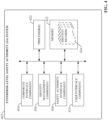
- FIG. 4 is a block diagram of an example enterprise-level safety authority (SA) system 402 according to one or more embodiments of this disclosure.
- SA enterprise-level safety authority
- Enterprise-level SA system 402 can include a corporate interface component 404, an identity management component 406, a safety authority interface component 408, a user interface component 410, one or more processors 420, and memory 422.
- one or more of the corporate interface component 404, identity management component 406, safety authority interface component 408, user interface component 410, the one or more processors 420, and memory 422 can be electrically and/or communicatively coupled to one another to perform one or more of the functions of the enterprise-level SA system 402.
- components 404, 406, 408, and 410 can comprise software instructions stored on memory 422 and executed by processor(s) 420.
- Enterprise-level SA system 402 may also interact with other hardware and/or software components not depicted in FIG. 4 .
- processor(s) 420 may interact with one or more external user interface devices, such as a keyboard, a mouse, a display monitor, a touchscreen, or other such interface devices.
- Corporate interface component 404 can be configured to communicatively interface with one or more corporate-level systems, such as human resources systems 104 or security services systems 106, and retrieve employee and security policy information from those systems.
- Identity management component 406 can be configured to process the employee and security policy information - e.g., by filtering or aggregating the information - and storing the processed employee and security policy information as identity records 424 on memory 422.
- Safety authority interface component 408 can be configured to communicatively interface with, and send identity records 424 to, a plant-level safety authority system (to be described below).
- User interface component 410 can be configured to exchange information between the enterprise-level SA system 402 and a client device having authorization to access the system 402.
- user interface component 410 can be configured to generate and deliver interface displays to the client device that allow the user to define processing to be performed by the identity management component 406, to define communication settings for interfacing the enterprise-level SA system 402 with the plant-level SA system, to define employee data filtering criteria, or to set other configuration settings of the system 402.
- the one or more processors 420 can perform one or more of the functions described herein with reference to the systems and/or methods disclosed.
- Memory 422 can be a computer-readable storage medium storing computer-executable instructions and/or information for performing the functions described herein with reference to the systems and/or methods disclosed.
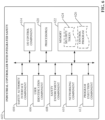
- FIG. 5 is a block diagram of an example plant-level safety authority (SA) system 502 according to one or more embodiments of this disclosure.
- Plant-level SA system 502 can include an identity provider interface component 504, an enrollment component 506, a security token component 508, a device interface component 510, a user interface component 512, one or more processors 520, and memory 522.
- one or more of the identity provider interface component 504, enrollment component 506, security token component 508, device interface component 510, user interface component 512, the one or more processors 520, and memory 522 can be electrically and/or communicatively coupled to one another to perform one or more of the functions of the plant-level SA system 502.
- components 504, 506, 508, 510, and 512 can comprise software instructions stored on memory 522 and executed by processor(s) 520.
- Plant-level SA system 502 may also interact with other hardware and/or software components not depicted in FIG. 5 .
- processor(s) 520 may interact with one or more external user interface devices, such as a keyboard, a mouse, a display monitor, a touchscreen, or other such interface devices.
- plant-level SA system 502 can serve as a logical entity that is embedded in another device, including but not limited to an edge device, an industrial controller, or an HMI terminal.
- Identity provider interface component 504 can be configured to communicatively interface the plant-level SA system 502 with an enterprise-level SA system 402 residing on a corporate level of an industrial enterprise, or in a cloud platform.
- Enrollment component 506 can be configured to enroll employee identification information with the system 502 based on identity records 424 received from the enterprise-level SA system 402 and store the enrolled information as user credential records 526.
- Security token component 508 can be configured to generate identity- or role-specific security tokens for delivery to an industrial automation system in response to a request from the automation system for user credentials.
- the security token defines a scope of access to be granted to a given user interacting with the automation system, in term of machine functions the user is permitted to perform or initiate, areas that the user is permitted to access without causing the automation system to initiate a safety response, etc.
- the security tokens can also be generated based in part on safety policy data 524 defined and stored on the plant-level SA system 502.
- Device interface component 510 can be configured to communicatively interface the plant-level SA system 502 with one or more industrial devices of one or more automation systems, allowing the system 502 to receive requests for security tokens from the industrial devices and to deliver security tokens to these devices.
- User interface component 512 can be configured to exchange information between the plant-level SA system 502 and a client device having authorization to access the system 502.
- user interface component 512 can be configured to generate and deliver interface displays to the client device that allow an authorized administrator to approve or reject identity enrollment requests, to define plant-level safety policy data 524, or to perform other administrative functions.
- the one or more processors 520 can perform one or more of the functions described herein with reference to the systems and/or methods disclosed.
- Memory 522 can be a computer-readable storage medium storing computer-executable instructions and/or information for performing the functions described herein with reference to the systems and/or methods disclosed.
- FIG. 6 is a block diagram of an example industrial controller 602 that supports integrated safety according to one or more embodiments of this disclosure.
- the industrial device depicted in FIG. 6 and described herein is assumed to be an industrial controller, such as a PLC or another type of controller, some or all of the identity-based safety components described in connection with FIG. 6 can also be implemented in other types of monitoring and/or control devices that operate as part of an industrial automation system or associated safety system, including but not limited to a safety relay or safety controller, a motor drive, an HMI terminal, a vision system, an industrial optical scanner, or other such device or system.
- Industrial controller 602 can include a safety authority interface component 604, a user identification component 606, a safety enforcement component 608, a networking component 610, a program execution component 612, an I/O control component 614, one or more processors 620, and memory 622.
- a safety authority interface component 604, a user identification component 606, a safety enforcement component 608, a networking component 610, a program execution component 612, an I/O control component 614, one or more processors 620, and memory 622 can be electrically and/or communicatively coupled to one another to perform one or more of the functions of the industrial controller 602.
- components 604, 606, 608, 610, 612, and 614 can comprise software instructions stored on memory 622 and executed by processor(s) 620.
- Industrial controller 602 may also interact with other hardware and/or software components not depicted in FIG. 6 .
- processor(s) 620 may interact with one or more external user interface devices, such as a keyboard, a mouse, a display monitor, a touchscreen, or other such interface devices.
- Safety authority interface component 604 can be configured to communicatively interface with a plant-level SA system 502 to facilitate exchange of data between the industrial controller 602 and the SA system 502. This exchange of data can include, for example, sending of user identity information from the industrial device to the SA system 502 and receipt of identity-specific security tokens 624.
- User identification component 606 can be configured to receive authenticated user identity information that uniquely identifies a user attempting to interact with the automation system of which industrial controller 602 is a component.
- this user identity information can be received from a dedicated identification device, and can comprise, for example, a user name and password combination, data read from a badge carried by the user (e.g., a radio-frequency identifier tag, a magnetic strip, etc.), biometric data, data stored on a personal device carried by the user (e.g., a universal serial bus device), or other suitable identification data.
- a dedicated identification device can comprise, for example, a user name and password combination, data read from a badge carried by the user (e.g., a radio-frequency identifier tag, a magnetic strip, etc.), biometric data, data stored on a personal device carried by the user (e.g., a universal serial bus device), or other suitable identification data.
- Safety enforcement component 608 can be configured to control operation of the industrial controller 602 in a manner consistent with the scope of access permitted by the security token 624 received from the plant-level SA system 502 and stored on memory 622. This can include, for example, permitting or denying requested actions attempted by the user relative to the automation system, such as initiating a machine operating mode, modifying a control variable or configuration setting, accessing a protected safety zone without causing the safety system to initiate a safety action, or other such actions.
- Networking component 610 can be configured to exchange data with one or more external devices over a wired or wireless network using any suitable network protocol.
- Program execution component 612 can be configured to compile and execute a user-defined control program 626 or executable interpreted code.
- the control program 626 can be written in any suitable programming format (e.g., ladder logic, sequential function charts, structured text, C++, Python, Javascript, etc.) and downloaded to the industrial controller 602.
- the control program 626 uses data values read by the industrial device's analog and digital inputs as input variables, or received via network component 610, and sets values of the industrial device's analog and digital outputs (or sets values of networked outputs) in accordance with the control program instructions based in part on the input values.
- safety enforcement component 608 may limit execution of one or more routines defined by the control program 626 based on the user-specific scope of access permitted by security token 624.
- I/O control component 614 can be configured to control the electrical output signals of the industrial device's digital and analog electrical outputs in accordance with the control program outputs, and to convert electrical signals on the industrial device's analog and digital inputs to data values that can be processed by the program execution component 612.
- the one or more processors 620 can perform one or more of the functions described herein with reference to the systems and/or methods disclosed.
- Memory 622 can be a computer-readable storage medium storing computer-executable instructions and/or information for performing the functions described herein with reference to the systems and/or methods disclosed.
- FIG. 7 is a block diagram of the example industrial environment 100 depicted in FIG. 1 , in which an enterprise-level SA system 402 and a plant-level SA system 502 are added to the architecture for integration of identity and security policy with industrial control.
- an enterprise-level SA system 402 resides on the enterprise or corporate level of the industrial enterprise and is networked to human resources system 104 and security service system 106 over office network 108.
- one or more of the enterprise-level SA system 402, the human resources system 104, or the security services system 106 may execute as cloud-based services on a cloud platform accessible via networks 122.
- a plant-level SA system 502 has been installed on plant network 116, allowing the plant-level SA system 502 to communicate with industrial controller 602 - e.g., industrial controllers 602a and 602b - over the network 116.
- data can be routed between plant network 116 and office network 108 via a firewall device 102a, allowing enterprise-level SA system 402 and plant-level SA system 502 to communicate across the networks (and any intervening networks not depicted in FIG. 7 ).
- the enterprise level may reside within the same facility as the control level.
- the corporate headquarters and its associated corporate-level systems - including human resources system 104 and security services system 106 - may reside and operate within an area of the same plant facility in which the control systems operate.
- the corporate headquarters may reside in a separate facility remote from the plant facility.
- plant-level SA system 502 may be configured to communicate with the enterprise-level SA system 402 over a public network securely accessible via firewall 102a, such as the Internet.
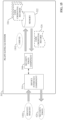
- FIG. 8 is a diagram illustrating a high-level overview of generalized data flows implemented by embodiments of the enterprise-level SA system 402 and plant-level SA system 502 to facilitate integration of identity and security policy into plant-floor control and safety.
- This figure depicts the generalized architecture by which the SA systems 402 and 502 integrate existing corporate-level employee and security policy data with control and safety systems on the plant floor.
- the enterprise-level SA system 402 and plant-level SA system 502 serve as the two major elements of the integration system, which bridge the standard and safety domains in order to integrate identity and security policy into the control and safety level while providing necessary isolation and configurability required by the plant-level automation systems.
- enterprise-level SA system 402 can access employee records 804 and/or security policy data 806 stored on human resources system 104 and security services system 106, respectively, and translate this information into identity records 424 for each employee.
- FIG. 9 is a diagram illustrating acquisition of employee and security policy data from corporate-level systems by the enterprise-level SA system 402.
- the enterprise-level SA system 402 can be a certified server or another type of computing device that is installed along with the human resources and security services infrastructure at the enterprise level, allowing the system 402 to monitor and retrieve relevant data from those corporate-level systems.
- human resources system 104 can store employee data 206 that identifies individuals employed by the industrial enterprise, and includes other relevant information about each employee.
- This employee data 206 is typically managed by human resources personnel who are not directly associated with the manufacturing or automation side of the industrial enterprise.
- information contained in the employee data 206, as well as relevant security information included in security data 204, can be leveraged by the enterprise-level SA system 402 to identify employees who are cleared to interact with automation systems on the plant floor to varying degrees.
- enterprise-level SA system 402 can be configured to monitor the human resources system 104 and security services system 106 for updates to employee records or security policies - or addition of new records - and retrieve relevant subsets of the employee data 206 and security data 204 as needed for creation of identity records 424 to be stored in a SIL-rated security database maintained on the SA system 402.
- FIG. 10 is a diagram illustrating processing of employee data 206 and security data 204 by the enterprise-level SA system 402 to yield identity records 424 according to one or more embodiments. Records of employee data 206 maintained by human resources can comprise a large amount of information for each employee, some of which may not be relevant to plant-floor control and safety.
- Employee-specific information maintained on the human resources system 104 can include, for example, the employee's name, address, employment status (e.g., active, retired, dismissed, etc.), hire date, role (e.g., operator, engineer, maintenance, accounting, vice president, etc.), a department or facility in which the employee works, a shift to which the employee is assigned, information regarding the employee's formal training or certifications, a work group to which the employee belongs, recorded times of access and departure, or other such information.
- Specifics of what types of information are maintained for each employee may vary depending on the particular human resources system 104 in use by the industrial enterprise, as well as the enterprise's security requirements.
- security services system 106 can serve as a security policy authority for the enterprise, and as such security data 204 can define corporate-level security policies to be enforced by associated building security systems.
- Example security policies can define, for respective buildings or building areas that make up the enterprise, which employees are permitted to access that building or area.
- security services system 106 can access employee data 206 stored on human resources system 104 in connection with defining and enforcing these security policies.
- Employee data 206 and security data 204 are conventionally only used for human resources and building security purposes, and are not typically leveraged within the context of industrial automation and functional safety systems.
- the corporate interface component 404 of enterprise-level SA system 402 can import employee data 206 from human resources system 104.
- Employee data 206 from the corporate perspective can contain a large amount of information for each employee. In many cases, only a subset of this available employee information will be of interest for automation and safety purposes. Accordingly, corporate interface component 404 can be configured to retrieve, for each employee, only a subset of the data items available for each employee (e.g., the bold-faced items of employee data depicted in FIG. 10 ) deemed relevant to functional safety considerations on the plant floor, and to pass this pre-filtered set of employee data 206 to the identity management component 406 for processing into identity records 424.
- corporate interface component 404 can retrieve the entirety of each record of employee data 206, and identity management component 406 can filter the employee data to retain only the employee information relevant to functional safety. This reduced or filtered set of employee data can simplify subsequent safety processing. In still other embodiments, this filtering can be performed later in the process by the plant-level SA system 502. In some embodiments, filtering criteria used to select a suitable subset of the employee data can be defined by a safety administrator (e.g., via the system's user interface component 410).
- corporate interface component 404 can retrieve all or selected subsets of this security data 204 deemed relevant to plant-floor safety.
- a security policy may define that only employees belonging to a certain defined group or department are permitted to enter a given facility or secure area. If an automation system operates within that facility, it can be assumed that employees who are not permitted to access the facility are also to be denied access to the automation system. Accordingly, identity management component 406 can record this information as a safety restriction in the relevant identity records 424 for those employees.
- identity management component Based on the employee data 206 and security data 204, identity management component generates identity records 424 for each individual employee, or for groups of employees, and stores these identity records in memory 422.
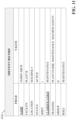
- FIG. 11 is an example identity record 424 that can be generated by identity management component 406 based on employee data 206 and/or security data 204 according to one or more embodiments.
- Each identity record 424 can be include a number of data fields and associated values. The example record 424 depicted in FIG.
- 11 includes fields for the employee's name, a facility in which the employee works (e.g., "Plant B"), a machine within the facility to which the user is assigned (e.g., "Machine 4"), an employment status (e.g., "active,” “retired,” disabled,” “on vacation,” etc.), a work shift during which the user is expected to be at the facility, and a classification of the employee (e.g., "Maintenance,” “Operator,” “Engineer,” “Human Resources,” “Accounting”, etc.).
- Additional classification-specific fields may also be included to further clarify the employee's role or qualifications within that classification, including but not limited to categories in which the employee has been trained (e.g., "Plant Floor,” “Maintenance,” “Machine Safety,” etc.), a group to which the employee belongs (e.g., "Group D"), or a role or level of the employee within the classification (e.g., "Role 4")
- the corporate interface component 404, identity management component 406, and memory 422 serve as a SIL-rated security database for storage of identity records 424 in accordance with the industrial safety requirements dictated by IEC 61508-2 and -3, or other prevailing industrial safety standards.
- some embodiments of enterprise-level SA system 402 can be configured to use redundant or diverse channels to read employee data 206 and security data 204 from the relevant corporate systems 104 and 106, ensuring that the identity records 424 maintained by the system 402 remain synchronized with the corporate records with a sufficiently high level of reliability.
- identity management component 406 can be configured to store duplicates of identity records 424 in two or more redundant memory locations, ensuring that loss of identity records 424 at one location does not cause the corresponding identity and security policy data to be lost.
- identity management component 406 can also execute record validation routines that, in the event that any corresponding redundant records do not match, determine which versions of the identity records 424 version accurately reflect the information stored on the corporate systems.
- identity management component 406 can be configured to periodically compare (via corporate interface component 404) the identity records 424 stored on system 402 with the corresponding source data stored on the corporate systems 104 and 106, and in response to detecting a difference between an identity record 424 and its source information on the corporate side, update the identity record 424 to reflect any changes made to the employee data 206 or the security data 204.
- detected differences between information contained in an identity record 424 and its source data can cause the identity management component 406 to log the detected difference in an audit log, and, in some embodiments, to issue a notification of the difference to an authorized administrator.
- SA system 402 can also employ strong error detection techniques (e.g., strong checksum routines) so that errors in stored identity records 424 are reliably detected and corrected.
- identity management component can be configured to apply a unique SIL-rated digital signature to each identity record 424 verifying the authenticity of the information contained in the record 424. This can prevent counterfeit identity information from being introduced into the system 402 and used to subvert identity-based safety protocols on the plant floor.
- the corresponding plant-level SA system 502 (to be described in more detail below) can be configured to enroll an identity record 424 on the control-level side only if the record 424 includes an authentic digital signature.
- enterprise-level SA system 402 can be configured to require review and approval of each new identity record 424 by an authorized safety administrator before allowing the identity record 424 to be registration in memory 422. Before allowing registration in this scenario, these embodiments of system 402 can be configured to first verify that the administrator approving the new record 424 is not the same person who created or modified the original record in the corporate systems 104 and 106, thereby enforcing a two-tiered approval and review process for creation and registration of identity records 424.
- enterprise-level SA system 402 acts as a SIL-rated source of validated identity and policy data originating on the corporate level (the standard domain), and can therefore serve as a SIL-compliant gateway to the control level (the safety domain) for delivering this information to the plant floor.
- enterprise-level SA system 402 communicatively connects to a plant-level SA system 502 that resides on the plant floor of the industrial facility in which the industrial automation systems operate.
- FIG. 12 is a diagram illustrating delivery of identity records 424 from the enterprise-level SA system 402 to the plant-level SA system 502.
- Plant-level SA system 502 acts as a local safety authority within the plant facility for identity- or security-based safety, based on identity and/or security information contained in the identity records 424.
- the safety authority interface component 408 of the enterprise-level SA system 402 communicates with the identity provider interface component 504 of the plant-level SA system 502 over a SIL-rated communications link (e.g., using black channel principles).
- enterprise-level SA system 402 sends (via safety authority interface component 408) the updated identity records 424 to the plant-level SA system 502 for local storage and processing.
- safety authority interface component 408 the updated identity records 424 to the plant-level SA system 502 for local storage and processing.
- changes or additions to employee information made on the enterprise or corporate level are enrolled in the plant-level SA system 502, so that this information can be used in connection with functional safety decisions on the plant floor.
- plant-level SA system 502 can be embodied as a specialized SIL-rated unit of industrial hardware mounted within a control cabinet on the plant floor.
- the plant-level SA system 502 can be implemented as a safety authority application that runs on IT hardware within the plant facility.
- the SA systems 402 and 502 can communicate via any intervening networks between the two systems, which may include plant network 16, office network 108, and/or a public network such as the internet or a cloud platform.
- identity records 424 comprise employee and security information obtained from corporate-level systems deemed relevant to functional safety considerations on the control level (the safety domain), including employee identities, their roles, training, enterprise-level security privileges (e.g., building or area access privileges), etc.
- Plant-level SA system 502 can be configured to process these identity records 424, alone or in conjunction with control-level safety policy data 524 defined on the system 502, to yield user credential records that serve as the basis for security tokens used to enforce user- or role-specific safety.
- FIG. 13 is a diagram illustrating processing performed by the plant-level SA system 502 on identity records 424 according to one or more embodiments.
- some embodiments of plant-level SA system 502 can require all identity records 424 to be reviewed by a human administrator before enrolling the information in the system 502.
- an enrollment component 506 of the plant-level SA system 502 issues a new identity notification 1304 directed to the administrator (e.g., a plant safety administrator).
- This notification 1304 can be delivered to a client device 1302 associated with the administrator via the system's user interface component 512.
- Notification 1304 conveys to the administrator that a new identity record 424 has been received and requires review.
- enrollment component 506 may be configured to reject any identity records 424 that do not include a verifiable digital certificate, and to notify the administrator that an invalid identity record 424 has been received.
- the administrator can interface with the system 502 via user interface component 512 to view the information contained in the identity record 424.
- the administrator who reviews identity records 424 on the plant-level SA system 502 will be a plant-level administrator as opposed to a corporate-level administrator. Since the authenticity and accuracy of the employee identities and their associated roles, training, and security privileges can be assumed to be accurate (due to the SII,-rated verifications carried out by the enterprise-level SA system 402), the administrator may review the identity records 424 primarily from the point of view of plant-level safety and security.
- an identity record 424 corresponding to a given employee may indicate that the employee's role and certifications qualify the employee to initiate a particular control action on an automation system that operates within the plant
- the plant-level safety administrator may choose to nevertheless deny the employee the ability to perform this control action due to mitigating circumstances known to the plant-level administrator (e.g., a desire to temporarily limit initiation of the control action to a selected few employees regardless of qualifications, recent actions by the employee that disqualify the employee from interacting with the automation system, etc.).
- the administrator may choose to approve enrollment of the identity record 424, thereby granting the corresponding employee the scope of safety-level access defined by the identity record 424.
- enterprise-level employee and security policy data is always verified with a human safety authority on the plant-floor level, providing safe assurances on all data enrolled in the plant-level SA system 502.
- enrollment component 506 can be configured to perform this filtering prior to sending the identity notification 1304 and performing subsequent processing on the record 424.
- enrollment component 506 Upon receipt of a validation notification 1306 from the administrator, enrollment component 506 generates a user credential record 526 for the employee based on the identity record 424 and any plant-level safety policy data 524 defined on the plant-level SA system 502.
- User credential record 526 can define, for its associated employee, a scope of safety-level access or interactions permitted to the employee relative to one or more automation systems, machines, or areas of the plant. These access or interaction permissions can be defined based solely on the employee and security policy information included in the identity records 424, or may be defined based on a correlation of the identity records 424 with plant-level safety policy data 524 (as described in more detail below).
- each user credential record 526 can comprise information that allows industrial automation and safety systems to determine whether the corresponding employee is permitted to access a particular protected area relative to a hazardous controlled machine, or to perform a requested control or maintenance action relative to the machine.
- Example safety functions that can be regulated by plant-level SA system 502 based on identity or role can include, but are not limited to, starting or stopping of a machine or manufacturing process, changing of control variables or setpoints for the machine or process, changing of safety variables on an industrial safety system (e.g., safe limited speed, safe limited torque, safe positioning, safe acceleration), accessing a protected or guarded zone near a machine while the machine is stopped, accessing the protected zone while the machine is running, resetting of safety functions after a safety trip, or other such functions.
- Plant-level SA system 502 regulates a user's ability to perform these safety functions based on the user's role or identity.
- Table 1 illustrate example safety function permissions as a function of employee role.
- employees identified as operators may be permitted to start and stop a machine, change a control setpoint for the machine, access a guarded zone while the machine is stopped, and reset safety functions. However, operators are prohibited from changing safety variables or accessing the guarded zone while the machine is running.
- Table 1 - Operator Role Security Function Permitted Start/Stop Machine YES Change Control Variables YES Change Safety Variables NO Access Machine Guarded Zone While Stopped YES Access Machine Guarded Zone While Running NO Reset Safety Functions YES
- Table 2 - Maintenance Technician or Controls Engineer Role Security Function Permitted Start/Stop Machine YES Change Control Variables YES Change Safety Variables NO Access Machine Guarded Zone While Stopped YES Access Machine Guarded Zone While Running YES Reset Safety Functions YES
- enrollment component 506 can generate a user credential record 526 for an employee based on the validated identity record 424 for that employee, either alone or in conjunction with defined plant-level safety policy data 524 defined on the plant-level SA system 502. Enrollment component 506 can derive an employee's safety permissions based in part on the employee's enterprise-level security privileges, certifications and training, role (e.g., operator, office staff, maintenance, etc.), facility, assigned machine, or other information contained in identity record 424.
- role e.g., operator, office staff, maintenance, etc.
- enrollment component 506 may set the user credential record 526 for that employee to prevent the employee from interacting with machines in other facilities, while selectively permitting interactions with machines within the employee's designated facility in accordance with the employee's role or identity. If the employee's identity record 424 specifies a particular machine or production area to which the employee is assigned, the employee's user credential record 526 can specify that the employee is not permitted to interact with machines outside the employee's assigned area, but is selectively permitted to interact with machines within the assigned area as deemed appropriate to the employee's role.
- the work shift to which the employee is assigned can also be used to define time-based safety permissives on the employee's interactions.
- the employee's identity record 424 indicates that the employee is assigned to the first work shift
- the employee's user credential record can specify that the employee is permitted to perform role-appropriate interactions with one or more machines in the employee's designated work area during this shift, but is to be prevented from performing these interactions during other shifts.
- the degree of interaction granted to the employee can be determined further based on the user's training or certifications, as defined in the identity record 424.
- the degree of safety access associated with different roles, certifications, or other categorizations can be defined by plant-level safety policy data 524 stored on the plant-level SA system 502.
- plant-level safety policy data 524 can define, from the control-level perspective, the types of access to be permitted for each type of user role (operator, maintenance, plant manager, office staff, etc.), or to be associated with each classification, certification, training level, etc.
- Plant-level safety policies defined by safety policy data 524 differ from enterprise-level security policies in that the scope of safety policies are specific to the plant floor environment in which the plant-level SA system 502 operates, and as such may depend on the particular industrial applications being carried out within the plant facility, or the particular types of machines operating within the plant. Accordingly, safety policy data 524 may define plant-specific and machine-specific actions that are permitted to each type of user role, with reference to specific systems, control actions, protected zones, or areas within the plant.
- Safety policy data 524 can also define customized safety privileges for scenarios in which the safety administrator wishes to override default safety access privileges that would otherwise be set based on the enterprise-level identity and security policy information. This can also allow an administrator to record individual capabilities (e.g., training or certifications) associated with a selected user that expand the user's safety function permissives beyond those of other users having a similar role.
- individual capabilities e.g., training or certifications
- safety policy data 524 can be leveraged in cases in which specific permitted interactions cannot be inherently derived from the enterprise-level identity and security policy information contained in the identity records 424 alone.
- an identity record 424 may comprise an employee's identity, role, security privileges and other enterprise-level information for the employee.
- enrollment component 506 can access safety policy data 524 to determine the scope of safety privileges associated with the role specified in the identity record 424 (or with the specific user if the safety policy data 524 defines custom safety privileges the employee), and generate a user credential record 526 for the employee defining these privileges.
- definition of plant-level safety policies can be limited to one or more plant-level administrators with appropriate administrator credentials that are verifiable by the SA system 502.
- the architecture achieved by integrating SA systems 402 and 502 into the industrial enterprise creates a SIL-compliant bridge between the corporate level and the plant-floor level, and allows existing user credentials stored on corporate-level HR systems to be transformed into the safety domain and passed to the control level, where these user credentials are used by the plant-level SA system 502 to implement role-based or identity-based industrial safety.
- the user credential records 526 are stored on the plant-level SA system 502 with proofs of integrity, yielding a SIL-rated identity-based safety system.
- FIG. 14 is a diagram illustrating an example procedure for identifying a user attempting to interact with an industrial automation system and provisioning of a security token 1408 by plant-level SA system 502 based on the user's credentials.
- an industrial automation system 1412 and its associated safety system comprising one or more industrial controllers 602 that support identity-based safety, associated industrial input and output devices 120, and machinery controlled by these industrial assets
- a user identity input device 1402 configured to obtain user identity information from a user and provide this identity information to the automation system (e.g., to industrial controller 602).
- Any suitable type of technology can be used to identify individuals attempting to interact with the automation system.
- user identity input device 1402 may be a badge reader configured to wirelessly read user electronic identification data stored on a badge 1410 worn or carried by the user (e.g., a radio frequency identification, or RFID, badge).
- a badge e.g., a radio frequency identification, or RFID, badge
- USB universal serial bus
- Other technologies that can be used by device 1402 can include, but are not limited to, fingerprint reading, iris scanning, facial recognition, or other biometric recognition technologies.
- User identity input device 1402 may also employ simpler identification technique such as user name and password entry.
- user identity input device 1402 can be configured to collect and combine multiple types of identity information from the user (e.g., a badge reader combined with facial recognition) to add an additional layer of security to, or improve the safety integrity of, the user identification process. Since user identification is being used in context of industrial safety, user identity input device 1402 can be configured to capture the user's identity with safety integrity, such that the device 1402 can detect, process, store, and transport the identity information via a safety-rated protocol.
- identity information e.g., a badge reader combined with facial recognition
- FIG. 14 depicts a separate user identity input device 1402 being used to collect user identification information
- the industrial controller 602 or another industrial device can include interfacing technology configured to reliably obtain the user's identification data.
- user identity input device 1402 passes the user identification data 1404 to the industrial controller 602.
- the controller's user identification component 606 can process this user identification information to generate an identity request 1406 that includes the user's identification, and send this identity request 1406 (via the controller's safety authority interface component 604) to the plant-level SA system 502 for identity validation using a safety-rated communication protocol.
- the controller 602 can be configured to execute identity query instructions that, in response to receipt of user identification data 1404, generates and sends the identity request 1406 in a manner similar to a messaging instruction.
- the controller's safety authority interface component 604 can also be configured to digitally sign the request 1406, or apply another type of verifiable authenticity credential, so that the plant-level SA system 502 can verify that the request 1406 was generated by an approved control device on the plant floor.
- FIG. 15 is a diagram illustrating processing of the identity request 1406 by the plant-level SA system 502.
- plant-level SA system 502 determines safety functions that the user is permitted to perform based on the user's identity, and returns a security token 624 to the industrial controller 602 that enforces these safety permissives.
- the security token component 508 verifies the authenticity of the request 1406 (e.g., based on a digital signature or another type of credential applied by the controller 602) and cross-references the user identity 1502 specified in the identity request 1406 with the user credential records 526 to identify the record 526 corresponding to the user identity 1502.
- the user credential record 526 comprises identity and security policy data for the user that has been imported from the corporate-level systems, including the user's role (e.g., operator, plant manager, maintenance, office staff, etc.); designated facility, production area, and/or machine; expected work shift; training and certifications; or other such information that can be used to determine which safety functions the user is permitted to perform (or prohibited from performing).
- User credential record 526 may also define specific safety functions that the user is permitted to perform based on the user's role or other qualifications.
- security token component 508 can determine one or more safety functions that the user is permitted to perform based on a cross-referencing of the identity, role, and training information defined in the user credential record 526 with the safety policy data 524 defined on the plant-level SA system 502, which can define specific permissible security functions associated with the user's role, training, etc. Based on this information, security token component 508 can specify these permitted safety functions in the security token 624.
- security token component 508 Based on the user credential record 526 associated with the user (and, in some embodiments, safety policy data 524), security token component 508 generates a security token 624 that, when executed on the industrial controller 602, enforces the identity- or role-based safety policies associated with the user. Device interface component 510 then sends the security token 624 to the controller 602 via the safety-rated communication channel.
- FIG. 16 is a diagram illustrating enforcement of identity-based or role-based safety in accordance with a user-specific safety token 624.
- the user interacts with automation system 1412 via a control cabinet 1604 in which is installed various user interface devices or systems, including but not limited to push buttons, position switches, indicator lights, a human-machine interface terminal, telemetric display devices, or other such interface devices and systems.
- various user interface devices or systems including but not limited to push buttons, position switches, indicator lights, a human-machine interface terminal, telemetric display devices, or other such interface devices and systems.
- the control devices that make up the automation system 1412 such as industrial controller 602
- other industrial assets that make up the automation system 1412 - e.g., the controlled industrial machines, I/O devices, telemetry devices, safety devices, etc. - reside outside the cabinet 1604.
- Example control commands 1602 can include, but are not limited to, machine start and stop commands, machine home commands, commands to clear faults, control setpoint modifications (e.g., changes to speeds, temperatures, flow rates, etc.), adjustments to safety parameters, commands to move a pneumatic or hydraulic actuator (e.g., a gripper, a pusher, etc.), commands to set an operating mode of the automation system 1412 (e.g., run mode, semi-automatic mode, a part change-over command, etc.) or other such commands.
- a pneumatic or hydraulic actuator e.g., a gripper, a pusher, etc.
- commands to set an operating mode of the automation system 1412 e.g., run mode, semi-automatic mode, a part change-over command, etc.
- FIG. 17 is a diagram illustrating enforcement of role-based security by the industrial controller 602 based on the security token 624 received from the plant-level SA authority 502.
- the industrial controller's program execution component 612 executes an industrial control program 626 (e.g., a ladder logic program, a function block diagram program, structured text, a sequential function chart program, etc.) that causes the industrial controller 602 to monitor and control an industrial machine or process in accordance with control routines defined by the program 626, as discussed above in connection with FIG. 1 .
- an industrial control program 626 e.g., a ladder logic program, a function block diagram program, structured text, a sequential function chart program, etc.
- Control commands 1602 issued by a user- e.g., via interaction with devices or systems mounted in control panel 1604 - can be received via the controller's I/O component 614 (e.g., as a hardwired signal received from user input devices such as push buttons, switches, pull cords, etc.) or via the controller's networking component 610 (e.g., as a data packet received from an HMI networked to the controller 602).
- the controller's I/O component 614 e.g., as a hardwired signal received from user input devices such as push buttons, switches, pull cords, etc.
- the controller's networking component 610 e.g., as a data packet received from an HMI networked to the controller 602
- the control command 1602 can act as an instruction to initiate a control action relative to the automation system, such as starting or stopping a machine or process, placing the machine in a selected operating mode, modifying a control setpoint or parameter (e.g., an operating speed, a process temperature, a flow rate, etc.), modifying a safety parameter, or other such commands.
- the plant-level SA system 502 can regulate the ability of the user to initiate these control actions, or perform other interactions relative to the automation system, as a function of the user's identity, role, certifications, etc.
- Security token 624 defines safety function permissions and restrictions 1702 associated with the identified user, and the safety enforcement component 608 interacts with the program execution component 612 to enforce these permissions and restrictions.
- safety enforcement component 608 when the controller 602 receives a control command 1602 attempting to modify a control setpoint, program execution component 612 only implements the setpoint modification if approved by the safety enforcement component 608, as dictated by the user-specific security token 624. Alternatively, if the security token 624 indicates that control setpoint modifications are not within the safety scope of the user currently interacting with the automation system, safety enforcement component 608 instructs the program execution component 612 to reject the request to alter the setpoint. In some embodiments, safety enforcement component 608 (or the plant-level SA system 502) can also generate and deliver a notification of the improper modification attempt to one or more administrators or log a record of the attempt.
- safety enforcement component 608 can instruct program execution component 612 to either implement or reject received control commands 1602 in accordance with the safety permissives defined by the security token 624.
- control commands 1602 are received via interaction with control panel devices
- safety enforcement component 608 can also regulate safety enforcement component 608.
- the ability to modify the control program 626 itself which may be done using a client device connected to the controller 602 via a programming port or the networking component 610, can be limited to users having engineering roles, and this restriction can be enforced by safety enforcement component 608 in a similar manner.
- the safety enforcement component 608 can be a component of a safety relay or safety controller that monitors safety input devices - e.g., emergency stop pushbuttons, pull cords, safety mats, light curtains, optical safety scanners, etc. - that make up a safety system associated with the automation system.
- the safety system can monitor for human presence within protected areas near hazardous machines controlled by the automation system, and initiate safety countermeasures that place the machines in a safe state in response to detecting human presence in these areas (e.g., by disconnecting power from the hazardous equipment, by placing the equipment in a slow or stopped operating mode, etc.).
- some safety policies may define that users of certain selected roles - e.g., maintenance personnel - are permitted to enter a protected area while the hazardous equipment is running.
- the role-specific security token 624 for a user currently interacting with the system can specify whether the user is permitted to access the protected area without causing a safety countermeasure to be initiated. If the security token 624 indicates that the user is permitted to enter the protected area without causing a safety countermeasure to be initiated, the safety enforcement component 608 can prevent the safety controller from placing the hazardous equipment in the safe state in response to detecting the user within the area.
- the lifespan of security token 624 can be controlled in different ways according to various embodiments.
- the current security token 624 can remain active on industrial controller 602 until subsequent user identification data 1404 is received at the controller 602, indicating that a different user is now interacting with the system.
- the controller 602 deletes or disables the current security token 1408 and requests a new security token 1408 from the plant-level SA system 502 in accordance with the new user identity.
- safety enforcement component 608 can delete or disable the current security token 1408 in response to detecting that the present user is no longer interacting with the automation system.
- the security token 624 can be granted a limited lifespan after deployment, such that the security token 624 is deleted or disabled after a defined time period has elapsed.
- the safety enforcement component 608 can regulate operation of the automation system in accordance with a default level of safety deemed appropriate for all types of users.
- the industrial controller 602 can be configured to refer to the plant-level SA system 502 in response to receipt of a control command 1602 in order to determine whether the user currently interacting with the system is permitted to perform the requested control action.
- the controller 602 can send the request to the plant-level SA system 502 together with the user identification data 1404.
- plant-level SA system 502 can determine whether the user is permitted to perform the requested action based on the user credential records, and return a response to the controller 602 to permit or deny the requested action.
- the identity-based industrial safety architecture described herein can be used to enforce role-based security across multiple distributed industrial facilities of an industrial enterprise using a common source of enterprise-level identity and security policy information.
- FIG. 18 is a diagram illustrating integration of the identity-based safety system within an industrial enterprise architecture comprising multiple geographically diverse plant facilities (Plants A-C) and a corporate headquarters facility. Each plant facility houses one or more automation systems that are monitored and controlled by industrial controllers 602. As described in previous examples, enterprise-level employee and security policy data is maintained at the corporate headquarters in HR and security services systems.
- Plants A-C geographically diverse plant facilities
- a corporate headquarters facility Each plant facility houses one or more automation systems that are monitored and controlled by industrial controllers 602.
- enterprise-level employee and security policy data is maintained at the corporate headquarters in HR and security services systems.
- a plant-level SA system 502 is installed at each plant facility, and each plant-level SA system 502 can remotely connect to an enterprise-level SA system 402 that resides at the corporate headquarters.
- the corporate headquarters and each plant facility can securely access a public or semi-public network 122 such as the Internet or a cloud platform via respective firewall devices 102 or other types of secure network infrastructure devices at each facility, allowing the plant-level SA systems 502 to communicate with the enterprise-level SA system 402 through this public or semi-public network 122.
- enterprise-level SA system 402 can retrieve enterprise-level employee identity and security policy information from corporate systems (e.g., human resources system 104 and security services system 106), generate identity records 424 based on this information, and send the identity records 424 to each of the plant-level SA systems 502 in a secure and SIL-compliant manner.
- the plant-level SA systems 502 can then use this enterprise-level information as the basis for enforcing plant-level safety policies based on user identity, role, training, etc., as described in previous examples.
- the corporate systems serve as the sole, central source of identity and security policy information used to enforce identity-based safety at all plant facilities.
- the particular safety policies enforced at each facility can be customized on the respective plant-level SA systems 502 (e.g., using safety policy data 523) to suit the particular industrial applications and machines operating at the respective facilities.
- the identity-based safety system can also be configured to maintain logs of detected safety events or interactions for auditing purposes. This can include recording both successful and unsuccessful attempts to access the automation system or perform a control or safety actions by both authorized and unauthorized users. These events can be logged locally at the industrial device (e.g., controller 602), on the plant-level SA system 502, or at the enterprise-level SA system 402.
- the safety system can also log attempts to change the enterprise-level identity or security policy information from the enterprise-level SA system 402, machine-to-machine interactions (e.g., an attempt by another industrial controller to send a command to controller 602 or another safety device), detailed operator behavior and resulting machine performance, maintenance operations (including downtime due to maintenance), or other such information.
- machine-to-machine interactions e.g., an attempt by another industrial controller to send a command to controller 602 or another safety device
- detailed operator behavior and resulting machine performance e.g., an attempt by another industrial controller to send a command to controller 602 or another safety device
- maintenance operations including downtime due to maintenance
- This audit information can be leveraged in various ways.
- the safety system can be configured to issue notifications to selected administrators, security personnel, or maintenance personnel if the audit information indicates an unauthorized attempt to access or control an automation system.
- analytic systems can leverage selected sets of the audit information in connection with performing forensic analysis of machine operation.
- Embodiments of the identity- and role-based safety systems described herein can beneficially enhance industrial safety systems with user authentication, affording these safety systems a user-appropriate degree of flexibility while remaining in compliance with SIL safety standards. Allowing safety permissives to be configured at a high degree of granularity as a function of user identity or role can potentially improve productivity by reducing occurrences of unnecessary safety system trips, and by simplifying maintenance tasks without sacrificing safety assurances.
- the identity-based safety system can discriminate between different humans who interact with the associated automation system and appropriately tune the control and safety system based on a current user's role, the system can allow a qualified service technician to enter a protected work cell and, rather than placing the control machinery within the work cell in a complete safe mode (e.g., a stopped or de-energized state), allow the motors to maintain a reduced safe operating or limited speed state for maintenance and diagnostic purposes.
- a complete safe mode e.g., a stopped or de-energized state
- the approach described herein can integrate user authentication using existing corporate-level employee and security policy data, allowing corporate-level systems without functional safety to serve as the ultimate authority for user identity.
- the system can dynamically detect changes to a user's corporate identity information and prohibit unvalidated identity information from being introduced into the plant for safety or standard systems without reestablishing the safety assurances.
- This approach also allows user authentication and access to be managed easily from existing corporate systems.
- FIGs. 19-22 illustrate various methodologies in accordance with one or more embodiments of the subject application. While, for purposes of simplicity of explanation, the methodologies shown herein is shown and described as a series of acts, it is to be understood and appreciated that the subject innovation is not limited by the order of acts, as some acts may, in accordance therewith, occur in a different order and/or concurrently with other acts from that shown and described herein. For example, those skilled in the art will understand and appreciate that a methodology could alternatively be represented as a series of interrelated states or events, such as in a state diagram. Moreover, not all illustrated acts may be required to implement a methodology in accordance with the innovation.
- interaction diagram(s) may represent methodologies, or methods, in accordance with the subject disclosure when disparate entities enact disparate portions of the methodologies.
- two or more of the disclosed example methods can be implemented in combination with each other, to accomplish one or more features or advantages described herein.
- FIG. 19 illustrates an example methodology 1900 for processing employee records and security policy data from corporate-level systems of an industrial enterprise for use in functional safety systems on the plant-level of the enterprise.
- a 1902 one or more corporate-level systems are monitored for updates to employee identity records or enterprise-level security policy information.
- This monitoring can be performed by an enterprise-level security authority (SA) system that operates at a corporate headquarters of the enterprise and is capable of accessing the identity records and security policy information from relevant corporate-level system (e.g., human resources systems, security services systems, etc.).
- SA enterprise-level security authority
- the employee identity records can comprise information on respective employees of the industrial enterprise, and this information can be maintained by human resources staff in a human resources database.
- This employee information can include, for example, the employee's name, address, role within the enterprise, work shifts, work locations (e.g., buildings, departments, plant facilities, production areas, etc.), work shifts, training or certifications, or other such information.
- the security policy information can be maintained as part of a security system that regulates access to buildings that make up the industrial enterprise, and can specify employees who are permitted to enter each building, or particular areas within a given building.
- the update may be originated, for example, by human resources personnel as part of the enterprise's protocol for maintaining updated records for all employees.
- the update may comprise addition of a new record for a new employee or modification of an existing employee's record to reflect a change in the employee's status (e.g., transfer to a new department or facility, a new certification or training experience, a change in the user's role, etc.).
- step 1904 If no updates are detected (NO at step 1904), the methodology returns to step 1902 and monitoring continues. Alternatively, if an update is detected (YES at step 1904), the methodology proceeds to step 1906, where the new or modified employee identity record or security policy information is retrieved from the corporate-level systems on which the change occurs.
- a subset of employee data contained in the employee identity records deemed relevant to functional safety on the plant-floor level is selected by the enterprise-level SA system.
- the SA system can perform filtering on the employee data to remove data items that are not relevant to functional safety considerations (e.g., the employee's home address, hire date, etc.), and to maintain data items that can be relevant to determinations of whether the employee should be permitted access to an automation system on the plant floor, and a scope of the permitted access (e.g., the employee's role, training, etc.).
- the enterprise-level SA system generates or updates an employee identity record based on the subset of the employee data selected at step 1908 and/or the updated security policy information.
- the employee identity record comprises the selected subset of employee data, and any enterprise-level security privileges (e.g., building or area access privileges) defined for the employee by the security policy information.
- the employee identity record is sent to a plant-level SA system that operates within an industrial facility of the enterprise.
- the plant-level SA system leverage information in the employee identity record to enforce role-based or identity-based safety for one or more industrial control and safety systems that operate in the plant facility.
- FIG. 20 illustrates an example methodology 2000 for enrolling employee identity and security policy information received from an enterprise or corporate level of an industrial enterprise in a plant-level security authority system for use in managing identity-based or role-based functional safety on the plant floor.
- an employee identity record from an enterprise-level SA system is received at a plant-level SA system that operates in an industrial facility.
- the employee identity record can comprise identity and security policy information for an employee of the industrial enterprise, and can be generated and sent to the plant-level SA system using methodology 1900 illustrated in FIG. 19 .
- a notification is generated by the plant-level SA system and directed to a plant-level safety administrator, the notification indicating that the employee identity record has been received.
- a determination is made as to whether authorization to enroll the employee identity record is received from the safety administrator. If the authorization is received (YES at step 2006), the methodology proceeds to step 2008, where a user credential record is generated and stored by the plant-level SA system based on the employee identity record.
- the user credential record defines a scope of role-based safety access permitted to the employee relative to one or more industrial automation systems within the industrial facility.
- the plant-level SA system can determine the permitted scope of safety access to be granted to the user based on information about the employee contained in the employee identity record (e.g., role, assigned plant facility and/or production area, training, etc.) as well as defined safety policies that define what control actions are permitted to respective different roles.
- employee identity record e.g., role, assigned plant facility and/or production area, training, etc.
- FIG. 21 illustrates an example methodology 2100 for processing an identity request received from an industrial device.
- an identity request is received at a plant-level safety authority system from an industrial device associated with an industrial automation system.
- the identity request specifies an employee requesting access to the automation system.
- a determination is made as to whether a user credential record corresponding to the employee identified by the identity request is stored on the plant-level SA system.
- the plant-level SA system can store a set of user credential records - generated using methodology 2000 illustrated in FIG. 20 - corresponding to respective employees of the industrial enterprise having some degree of access permission to interact with the automation system.
- the defined scope of permitted access can specify, for example, control actions that are permitted to be initiated by the identified employee, monitored zones near the automation system that the employee may enter without causing the automation system's safety system to stop the controlled machinery, or other such permitted interactions.
- the security token generated at step 2106 is sent to the industrial device to facilitate enforcement of the permitted safety permissives.
- FIG. 22 illustrates an example methodology 2200 for enforcing role- or identity-based functional safety by an industrial device.
- an industrial controller or other type of industrial device performs monitoring and control of an automation system in accordance with a default safety policy.
- the default safety policy may be a safety strategy considered safe for all users regardless of role or qualifications.
- the default may specify that human intrusion into any protected area near the automation system is to cause the controlled hazardous machinery to be de-energized by the safety system, or that no protected control interactions (e.g., initiation of a machine start, transitioning to a particular operating mode, etc.) are to be permitted unless the user provides a proof of identity associated with suitable safety credentials.
- authenticated user identity information is received at the industrial device.
- the identity information can be submitted by a user requesting access to the automation system.
- the identity information can be collected in any suitable format, including but not limited to identity data electronically stored on a badge and read by a badge reader, biometric data (e.g., fingerprint scanning, iris scanning, facial recognition, etc.), username and password entry, or other type of verifiable user identity information.
- biometric data e.g., fingerprint scanning, iris scanning, facial recognition, etc.
- the plant-level SA system can process the identity request and return a security token using methodology 2100 depicted in FIG. 21 .
- the security token defines a permitted scope of access to the automation system granted to the user specified by the identity request. If the security toke is received (YES at step 2210), the methodology proceeds to step 2210, where the industrial device performs monitoring and control of the automation system in accordance with the identity- or role-based safety policy defined by the security token. This can include, for example, permitting or restricting selected control actions that can be initiated by the user, permitting or denying the user the ability to enter a protected area near the machines controlled by the system without causing the safety system to disconnect power from the machines, or other such permissives.
- the term PLC or automation controller as used herein can include functionality that can be shared across multiple components, systems, and/or networks.
- one or more PLCs or automation controllers can communicate and cooperate with various network devices across the network. This can include substantially any type of control, communications module, computer, Input/Output (I/O) device, sensor, actuator, and human machine interface (HMI) that communicate via the network, which includes control, automation, and/or public networks.
- the PLC or automation controller can also communicate to and control various other devices such as standard or safety-rated I/O modules including analog, digital, programmed/intelligent I/O modules, other programmable controllers, communications modules, sensors, actuators, output devices, and the like.
- the network can include public networks such as the internet, intranets, and automation networks such as control and information protocol (CIP) networks including DeviceNet, ControlNet, safety networks, and Ethernet/IP. Other networks include Ethernet, DH/DH+, Remote I/O, Fieldbus, Modbus, Profibus, CAN, wireless networks, serial protocols, and so forth.
- the network devices can include various possibilities (hardware and/or software components). These include components such as switches with virtual local area network (VLAN) capability, LANs, WANs, proxies, gateways, routers, firewalls, virtual private network (VPN) devices, servers, clients, computers, configuration tools, monitoring tools, and/or other devices.
- VLAN virtual local area network
- WANs wide area network
- proxies gateways
- routers virtual private network
- VPN virtual private network
- FIGs. 23 and 24 are intended to provide a brief, general description of a suitable environment in which the various aspects of the disclosed subject matter may be implemented. While the embodiments have been described above in the general context of computer-executable instructions that can run on one or more computers, those skilled in the art will recognize that the embodiments can be also implemented in combination with other program modules and/or as a combination of hardware and software.
- program modules include routines, programs, components, data structures, etc., that perform particular tasks or implement particular abstract data types.
- inventive methods can be practiced with other computer system configurations, including single-processor or multiprocessor computer systems, minicomputers, mainframe computers, Internet of Things (IoT) devices, distributed computing systems, as well as personal computers, hand-held computing devices, microprocessor-based or programmable consumer electronics, and the like, each of which can be operatively coupled to one or more associated devices.
- IoT Internet of Things
- the illustrated embodiments herein can be also practiced in distributed computing environments where certain tasks are performed by remote processing devices that are linked through a communications network.
- program modules can be located in both local and remote memory storage devices.
- Computer-readable storage media or machine-readable storage media can be any available storage media that can be accessed by the computer and includes both volatile and nonvolatile media, removable and non-removable media.
- Computer-readable storage media or machine-readable storage media can be implemented in connection with any method or technology for storage of information such as computer-readable or machine-readable instructions, program modules, structured data or unstructured data.
- Computer-readable storage media can include, but are not limited to, random access memory (RAM), read only memory (ROM), electrically erasable programmable read only memory (EEPROM), flash memory or other memory technology, compact disk read only memory (CD-ROM), digital versatile disk (DVD), Blu-ray disc (BD) or other optical disk storage, magnetic cassettes, magnetic tape, magnetic disk storage or other magnetic storage devices, solid state drives or other solid state storage devices, or other tangible and/or non-transitory media which can be used to store desired information.
- RAM random access memory
- ROM read only memory
- EEPROM electrically erasable programmable read only memory
- flash memory or other memory technology
- CD-ROM compact disk read only memory
- DVD digital versatile disk
- Blu-ray disc (BD) or other optical disk storage magnetic cassettes, magnetic tape, magnetic disk storage or other magnetic storage devices, solid state drives or other solid state storage devices, or other tangible and/or non-transitory media which can be used to store desired information.
- tangible or “non-transitory” herein as applied to storage, memory or computer-readable media, are to be understood to exclude only propagating transitory signals per se as modifiers and do not relinquish rights to all standard storage, memory or computer-readable media that are not only propagating transitory signals per se.
- Computer-readable storage media can be accessed by one or more local or remote computing devices, e.g., via access requests, queries or other data retrieval protocols, for a variety of operations with respect to the information stored by the medium.
- Communications media typically embody computer-readable instructions, data structures, program modules or other structured or unstructured data in a data signal such as a modulated data signal, e.g., a carrier wave or other transport mechanism, and includes any information delivery or transport media.
- modulated data signal or signals refers to a signal that has one or more of its characteristics set or changed in such a manner as to encode information in one or more signals.
- communication media include wired media, such as a wired network or direct-wired connection, and wireless media such as acoustic, RF, infrared and other wireless media.
- the computer 2302 further includes an internal hard disk drive (HDD) 2314 (e.g., EIDE, SATA), one or more external storage devices 2316 (e.g., a magnetic floppy disk drive (FDD) 2316, a memory stick or flash drive reader, a memory card reader, etc.) and an optical disk drive 2320 (e.g., which can read or write from a CD-ROM disc, a DVD, a BD, etc.).
- HDD 2314 e.g., EIDE, SATA
- external storage devices 2316 e.g., a magnetic floppy disk drive (FDD) 2316, a memory stick or flash drive reader, a memory card reader, etc.
- an optical disk drive 2320 e.g., which can read or write from a CD-ROM disc, a DVD, a BD, etc.
- SSD solid state drive
- the drives and their associated computer-readable storage media provide nonvolatile storage of data, data structures, computer-executable instructions, and so forth.
- the drives and storage media accommodate the storage of any data in a suitable digital format.
- computer-readable storage media refers to respective types of storage devices, it should be appreciated by those skilled in the art that other types of storage media which are readable by a computer, whether presently existing or developed in the future, could also be used in the example operating environment, and further, that any such storage media can contain computer-executable instructions for performing the methods described herein.
- a number of program modules can be stored in the drives and RAM 2312, including an operating system 2330, one or more application programs 2333, other program modules 2334 and program data 2336. All or portions of the operating system, applications, modules, and/or data can also be cached in the RAM 2312.
- the systems and methods described herein can be implemented utilizing various commercially available operating systems or combinations of operating systems.
- Computer 2302 can optionally comprise emulation technologies.
- a hypervisor (not shown) or other intermediary can emulate a hardware environment for operating system 2330, and the emulated hardware can optionally be different from the hardware illustrated in FIG. 23 .
- operating system 2330 can comprise one virtual machine (VM) of multiple VMs hosted at computer 2302.
- VM virtual machine
- operating system 2330 can provide runtime environments, such as the Java runtime environment or the .NET framework, for application programs 2333. Runtime environments are consistent execution environments that allow application programs 2333 to run on any operating system that includes the runtime environment.
- operating system 2330 can support containers, and application programs 2333 can be in the form of containers, which are lightweight, standalone, executable packages of software that include, e.g., code, runtime, system tools, system libraries and settings for an application.
- computer 2302 can be enable with a security module, such as a trusted processing module (TPM).
- TPM trusted processing module
- boot components hash next in time boot components, and wait for a match of results to secured values, before loading a next boot component.
- This process can take place at any layer in the code execution stack of computer 2302, e.g., applied at the application execution level or at the operating system (OS) kernel level, thereby enabling security at any level of code execution.
- OS operating system
- a user can enter commands and information into the computer 2302 through one or more wired/wireless input devices, e.g., a keyboard 2338, a touch screen 2340, and a pointing device, such as a mouse 2342.
- Other input devices can include a microphone, an infrared (IR) remote control, a radio frequency (RF) remote control, or other remote control, a joystick, a virtual reality controller and/or virtual reality headset, a game pad, a stylus pen, an image input device, e.g., camera(s), a gesture sensor input device, a vision movement sensor input device, an emotion or facial detection device, a biometric input device, e.g., fingerprint or iris scanner, or the like.
- IR infrared
- RF radio frequency
- input devices are often connected to the processing unit 2304 through an input device interface 2344 that can be coupled to the system bus 2308, but can be connected by other interfaces, such as a parallel port, an IEEE 1394 serial port, a game port, a USB port, an IR interface, a BLUETOOTH ® interface, etc.
- an input device interface 2344 can be coupled to the system bus 2308, but can be connected by other interfaces, such as a parallel port, an IEEE 1394 serial port, a game port, a USB port, an IR interface, a BLUETOOTH ® interface, etc.
- a monitor 2344 or other type of display device can be also connected to the system bus 2308 via an interface, such as a video adapter 2346.
- a computer typically includes other peripheral output devices (not shown), such as speakers, printers, etc.
- the computer 2302 can operate in a networked environment using logical connections via wired and/or wireless communications to one or more remote computers, such as a remote computer(s) 2348.
- the remote computer(s) 2348 can be a workstation, a server computer, a router, a personal computer, portable computer, microprocessor-based entertainment appliance, a peer device or other common network node, and typically includes many or all of the elements described relative to the computer 2302, although, for purposes of brevity, only a memory/storage device 2350 is illustrated.
- the logical connections depicted include wired/wireless connectivity to a local area network (LAN) 2352 and/or larger networks, e.g., a wide area network (WAN) 2354.
- LAN and WAN networking environments are commonplace in offices and companies, and facilitate enterprise-wide computer networks, such as intranets, all of which can connect to a global communications network, e.g., the Internet.
- the computer 2302 When used in a LAN networking environment, the computer 2302 can be connected to the local network 2352 through a wired and/or wireless communication network interface or adapter 2356.
- the adapter 2356 can facilitate wired or wireless communication to the LAN 2352, which can also include a wireless access point (AP) disposed thereon for communicating with the adapter 2356 in a wireless mode.
- AP wireless access point
- the computer 2302 can include a modem 2358 or can be connected to a communications server on the WAN 2354 via other means for establishing communications over the WAN 2354, such as by way of the Internet.
- the modem 2358 which can be internal or external and a wired or wireless device, can be connected to the system bus 2308 via the input device interface 2342.
- program modules depicted relative to the computer 2302 or portions thereof can be stored in the remote memory/storage device 2350. It will be appreciated that the network connections shown are example and other means of establishing a communications link between the computers can be used.
- the computer 2302 can be operable to communicate with any wireless devices or entities operatively disposed in wireless communication, e.g., a printer, scanner, desktop and/or portable computer, portable data assistant, communications satellite, any piece of equipment or location associated with a wirelessly detectable tag (e.g., a kiosk, news stand, store shelf, etc.), and telephone.
- any wireless devices or entities operatively disposed in wireless communication e.g., a printer, scanner, desktop and/or portable computer, portable data assistant, communications satellite, any piece of equipment or location associated with a wirelessly detectable tag (e.g., a kiosk, news stand, store shelf, etc.), and telephone.
- This can include Wireless Fidelity (Wi-Fi) and BLUETOOTH ® wireless technologies.
- the communication can be a predefined structure as with a conventional network or simply an ad hoc communication between at least two devices.
- the sample computing environment 2400 includes a communication framework 2406 that can be employed to facilitate communications between the client(s) 2402 and the server(s) 2404.
- the client(s) 2402 are operably connected to one or more client data store(s) 2408 that can be employed to store information local to the client(s) 2402.
- the server(s) 2404 are operably connected to one or more server data store(s) 2410 that can be employed to store information local to the servers 2404.
- the terms (including a reference to a "means") used to describe such components are intended to correspond, unless otherwise indicated, to any component which performs the specified function of the described component (e.g., a functional equivalent), even though not structurally equivalent to the disclosed structure, which performs the function in the herein illustrated exemplary aspects of the disclosed subject matter.
- the disclosed subject matter includes a system as well as a computer-readable medium having computer-executable instructions for performing the acts and/or events of the various methods of the disclosed subject matter.
- exemplary is used to mean serving as an example, instance, or illustration. Any aspect or design described herein as "exemplary” is not necessarily to be construed as preferred or advantageous over other aspects or designs. Rather, use of the word exemplary is intended to present concepts in a concrete fashion.
Landscapes
- Engineering & Computer Science (AREA)
- Computer Security & Cryptography (AREA)
- General Engineering & Computer Science (AREA)
- Computer Hardware Design (AREA)
- Signal Processing (AREA)
- Computer Networks & Wireless Communication (AREA)
- Computing Systems (AREA)
- Theoretical Computer Science (AREA)
- General Physics & Mathematics (AREA)
- Physics & Mathematics (AREA)
- Health & Medical Sciences (AREA)
- General Health & Medical Sciences (AREA)
- Software Systems (AREA)
- Manufacturing & Machinery (AREA)
- Automation & Control Theory (AREA)
- Quality & Reliability (AREA)
- Biomedical Technology (AREA)
- Databases & Information Systems (AREA)
- Bioethics (AREA)
- Management, Administration, Business Operations System, And Electronic Commerce (AREA)
- Storage Device Security (AREA)
- Testing And Monitoring For Control Systems (AREA)
Claims (15)
- Ein System (502), aufweisend:einen Speicher (522), der ausführbare Komponenten speichert; undeinen Prozessor (520), der operativ mit dem Speicher gekoppelt ist und die ausführbaren Komponenten ausführt, wobei die ausführbaren Komponenten Folgendes umfassen:eine Identitätsanbieter-Schnittstellenkomponente (504), die so konfiguriert ist, dass sie einen Identitätsdatensatz empfängt, der von einem unternehmensweiten Mitarbeiterinformationssystem erhalten wird, wobei der Identitätsdatensatz mindestens eine Identität eines Mitarbeiters eines Industrieunternehmens und eine Rolle des Mitarbeiters definiert;eine Registrierungskomponente (506), die so konfiguriert ist, dass sie als Reaktion auf den Empfang von Validierungsdaten, die die Genehmigung des Identitätsdatensatzes anzeigen, den Identitätsdatensatz als einen Benutzerberechtigungsnachweis registriert, der einen dem Mitarbeiter gewährten Zugriffsgrad auf ein Automatisierungssystem definiert;eine Geräteschnittstellenkomponente (510), die so konfiguriert ist, dass sie von einem mit dem Automatisierungssystem verbundenen Industriegerät eine Identitätsanfrage empfängt, die eine Identität eines Benutzers angibt, der versucht, mit dem Automatisierungssystem zu interagieren, wobei die Identitätsanfrage digital signiert ist; undeine Sicherheitstoken-Komponente (508), die so konfiguriert ist, dass sie die Authentizität der Identitätsanforderung auf der Grundlage der digitalen Signatur überprüft und als Reaktion auf die Feststellung, dass die durch die Identitätsanforderung angegebene Identität dem Benutzerberechtigungsnachweis entspricht, ein Sicherheitstoken erzeugt, das als Reaktion auf die Ausführung auf dem Industriegerät den durch den Benutzerberechtigungsnachweis definierten Zugriffsgrad auf das Automatisierungssystem durchsetzt,wobei die Geräteschnittstellenkomponente ferner so konfiguriert ist, dass sie das Sicherheitstoken an das industrielle Gerät sendet, undwobei das System so konfiguriert ist, dass es den Identitätsdatensatz nur dann registriert, wenn der Identitätsdatensatz eine authentische digitale Signatur enthält.
- Das System nach Anspruch 1, wobeidie Registrierungskomponente so konfiguriert ist, dass sie den dem Mitarbeiter gewährten Zugriffsgrad auf das Automatisierungssystem als Funktion der Rolle des Mitarbeiters festlegt, unddie Rolle mindestens eine der folgenden ist: Bediener, Betriebsleiter, Steuerungsingenieur, Wartungstechniker, Sicherheitsbeauftragter, Büromitarbeiter oder Anlagenmitarbeiter.
- Das System nach Anspruch 2, wobei die Registrierungskomponente so konfiguriert ist, dass sie den dem Mitarbeiter gewährten Zugriffsgrad auf das Automatisierungssystem als weitere Funktion mindestens einer der folgenden festlegt: Zertifizierung oder Schulungserfahrung des Mitarbeiters, wie im Identitätsdatensatz angegeben.
- Das System nach einem der Ansprüche 1 bis 3, wobei der Benutzerberechtigungsnachweis als Zugriffsgrad mindestens eine Steuerungsaktion, die der Mitarbeiter einleiten darf, oder eine geschützte Sicherheitszone, die der Mitarbeiter betreten darf, ohne dass ein Arbeitssicherheitssystem eine Sicherheitsgegenmaßnahme einleitet, definiert.
- Das System nach einem der Ansprüche 1 bis 4, wobeider Identitätsdatensatz ferner eine für den Mitarbeiter geltende Sicherheitsrichtlinie definiert, wobei die Sicherheitsrichtlinie mindestens ein Gebäude oder einen Bereich des Industrieunternehmens definiert, zu dem der Mitarbeiter Zugang hat, unddie Registrierungskomponente so konfiguriert ist, dass sie den Grad des dem Mitarbeiter gewährten Zugangs zum Automatisierungssystem teilweise auf der Grundlage der Sicherheitsrichtlinie festlegt; und/oderdie Sicherheitsrichtlinie von einem Sicherheitsdienstsystem auf Unternehmensebene abgerufen wird.
- Das System gemäß einem der Ansprüche 1 bis 5, wobei mindestens ein Teil der in dem Identitätsdatensatz enthaltenen Daten von einem auf Unternehmensebene des Industrieunternehmens unterhaltenen Personalsystem erhalten wird.
- Das System nach einem der Ansprüche 1 bis 6, wobei das Industriegerät die Identitätsanfrage auf der Grundlage von Benutzeridentitätsdaten generiert, die über mindestens einen Ausweisleser, einen Iris-Scanner, ein Gesichtserkennungssystem, einen Fingerabdruckleser oder ein Passwort-Eingabegerät erhalten werden.
- Das System nach einem der Ansprüche 1 bis 7, wobeidie Identitätsanbieter-Schnittstellenkomponente so konfiguriert ist, dass sie einen Teil der Mitarbeiterdaten, die im Identitätsdatensatz enthalten sind, vor der Registrierung des Identitätsdatensatzes als Benutzerberechtigungsnachweis entfernt, undder Teil der Mitarbeiterdaten Informationen über den Mitarbeiter umfasst, die nicht dazu verwendet werden, den Grad des dem Mitarbeiter gewährten Zugriffs auf das Automatisierungssystem zu bestimmen.
- Das System gemäß einem der Ansprüche 1 bis 8, wobei die Registrierungskomponente so konfiguriert ist, dass sie den dem Mitarbeiter gewährten Zugriffsgrad auf das Automatisierungssystem teilweise auf der Grundlage von Sicherheitsrichtliniendaten bestimmt, die die Zugriffsgrade auf das Automatisierungssystem definieren, die den jeweiligen unterschiedlichen Mitarbeiterrollen gewährt werden; oder
wobei das Sicherheitstoken so konfiguriert ist, dass es das Industriegerät veranlasst, die Ausführung einer vom Mitarbeiter initiierten Steuerungsaktion zu verhindern, wenn festgestellt wird, dass das Sicherheitstoken dem Mitarbeiter die Initiierung der Steuerungsaktion untersagt. - Ein Verfahren, aufweisend:Empfangen (2002) eines Identitätsdatensatzes, der von einem unternehmensweiten Mitarbeiterinformationssystem abgerufen wird, durch ein Sicherheitsautoritätssystem, das einen Prozessor umfasst, wobei der Identitätsdatensatz mindestens eine Identität eines Mitarbeiters eines Industrieunternehmens und eine Rolle des Mitarbeiters definiert;als Reaktion auf den Empfang von Validierungsdaten, die eine Autorisierung zur Registrierung des Identitätsdatensatzes anzeigen, durch das Sicherheitsautoritätssystem einen Benutzerberechtigungsdatensatz auf der Grundlage des Identitätsdatensatzes erzeugt wird (2004), wobei der Benutzerberechtigungsdatensatz eine zulässige Interaktionsebene mit einem Automatisierungssystem definiert, die dem Mitarbeiter gewährt wird;Empfang (2102) einer Identitätsanfrage durch das System der Sicherheitsbehörde von einem mit dem Automatisierungssystem verbundenen Industriegerät, wobei die Identitätsanfrage eine Identität eines Benutzers angibt, der eine Interaktion mit dem Automatisierungssystem anfordert, und die Identitätsanfrage digital signiert ist;Überprüfung der Authentizität der Identitätsanfrage auf der Grundlage der digitalen Signatur;als Reaktion auf die Feststellung, dass die durch die Identitätsanforderung angegebene Identität dem Benutzerberechtigungsnachweis entspricht, Erzeugen (2106) eines Sicherheitstokens durch das Sicherheitsautoritätssystem, das als Reaktion auf die Ausführung auf dem Industriegerät die durch den Benutzerberechtigungsnachweis definierte zulässige Interaktionsebene erzwingt; undSenden (2108) des Sicherheitstokens durch das System der Sicherheitsbehörde an das industrielle Gerät,wobei der Identitätsdatensatz nur dann registriert wird, wenn der Identitätsdatensatz eine authentische digitale Signatur enthält.
- Das Verfahren nach Anspruch 10, wobeidas Erzeugen des Benutzerberechtigungsdatensatzes das Bestimmen des zulässigen Interaktionsniveaus umfasst, das dem Mitarbeiter auf der Grundlage der Rolle des Mitarbeiters gewährt werden soll, unddie Rolle mindestens eine von einem Bediener, einem Betriebsleiter, einem Steuerungsingenieur, einem Wartungstechniker, einem Sicherheitsbeauftragten, einem Büromitarbeiter oder einem Mitarbeiter des Facility-Managements ist; und/oderwobei das Erzeugen des Benutzerberechtigungsdatensatzes ferner das Bestimmen des zulässigen Interaktionsniveaus auf der Grundlage von mindestens einer Zertifizierung oder einer Schulungserfahrung des im Identitätsdatensatz angegebenen Mitarbeiters umfasst.
- Das Verfahren nach Anspruch 10 oder 11, wobei das Erzeugen des Sicherheitstokens Folgendes umfasst:Definieren mindestens einer Steuerungsaktion, die der Mitarbeiter einleiten darf, oder einer geschützten Sicherheitszone, die der Mitarbeiter betreten darf, ohne dass ein Arbeitssicherheitssystem eine Sicherheitsgegenmaßnahme einleitet, als zulässige Interaktionsebene mit dem Automatisierungssystem; undAufzeichnung der Kontrollaktion oder der geschützten Sicherheitszone im Sicherheitstoken.
- Das Verfahren nach einem der Ansprüche 10 bis 12, wobei das Erzeugen des Sicherheitstokens ferner das Definieren des zulässigen Interaktionsniveaus mit dem Automatisierungssystem auf der Grundlage von im Identitätsdatensatz enthaltenen Sicherheitsrichtlinieninformationen umfasst, wobei die Sicherheitsrichtlinieninformationen mindestens ein Gebäude oder einen Bereich des Industrieunternehmens definieren, auf das bzw. den der Mitarbeiter zugreifen darf; oder
wobeidas Erzeugen des Benutzerberechtigungsdatensatzes das Entfernen eines Teils der im Identitätsdatensatz enthaltenen Mitarbeiterdaten vor der Erzeugung des Benutzerberechtigungsdatensatzes umfasst undder Teil der Mitarbeiterdaten Informationen über den Mitarbeiter umfasst, die nicht zur Bestimmung des zulässigen Interaktionsniveaus mit dem Automatisierungssystem verwendet werden, das dem Mitarbeiter gewährt wird; oderwobei das Erzeugen des Benutzerberechtigungsdatensatzes das Bestimmen des zulässigen Interaktionsniveaus mit dem Automatisierungssystem umfasst, das dem Mitarbeiter gewährt werden soll, und zwar teilweise auf der Grundlage von Sicherheitsrichtliniendaten, die zulässige Interaktionsniveaus mit dem Automatisierungssystem spezifizieren, die den jeweiligen unterschiedlichen Mitarbeiterrollen gewährt werden. - Ein nicht-flüchtiges computerlesbares Medium, auf dem Anweisungen gespeichert sind, die als Reaktion auf die Ausführung ein System mit einem Prozessor veranlassen, Operationen auszuführen, wobei die Operationen Folgendes umfassen:Empfangen (2002) eines Identitätsdatensatzes, der von einem unternehmensweiten Personalverwaltungssystem erhalten wird, wobei der Identitätsdatensatz mindestens eine Identität eines Mitarbeiters eines Industrieunternehmens und eine Rolle des Mitarbeiters definiert;in Reaktion auf den Empfang von Validierungsdaten, die eine Autorisierung zur Registrierung des Identitätsdatensatzes anzeigen, Erzeugen (2004) eines Benutzerberechtigungsdatensatzes auf der Grundlage des Identitätsdatensatzes, wobei der Benutzerberechtigungsdatensatz einen Grad der Interaktion mit dem Automatisierungssystem definiert, der dem Mitarbeiter gewährt wird;Empfang (2102) einer Identitätsanfrage von einem mit dem Automatisierungssystem verbundenen Industriegerät, die eine Identität eines Benutzers enthält, der versucht, mit dem Automatisierungssystem zu interagieren, wobei die Identitätsanfrage digital signiert ist;Überprüfen der Authentizität der Identitätsanfrage auf der Grundlage der digitalen Signatur;Erzeugen (2106) eines Sicherheitstokens als Antwort auf die Feststellung, dass die durch die Identitätsanfrage angegebene Identität dem Benutzerberechtigungsnachweis entspricht, wobei der Sicherheitstoken als Antwort auf die Ausführung auf dem Industriegerät den durch den Benutzerberechtigungsnachweis definierten Interaktionsgrad erzwingt; undSenden (2108) des Sicherheitstokens an das industrielle Gerät,wobei der Identitätsdatensatz nur dann registriert wird, wenn der Identitätsdatensatz eine authentische digitale Signatur enthält.
- Das nicht-flüchtige computerlesbare Medium nach Anspruch 14, wobei das Erzeugen des Benutzerberechtigungsnachweises das Bestimmen des Interaktionsgrads auf der Grundlage der im Identitätsdatensatz angegebenen Rolle des Mitarbeiters umfasst.
Applications Claiming Priority (1)
| Application Number | Priority Date | Filing Date | Title |
|---|---|---|---|
| US16/894,076 US11522833B2 (en) | 2020-06-05 | 2020-06-05 | User security credentials as an element of functional safety |
Publications (2)
| Publication Number | Publication Date |
|---|---|
| EP3920060A1 EP3920060A1 (de) | 2021-12-08 |
| EP3920060B1 true EP3920060B1 (de) | 2024-12-04 |
Family
ID=76269587
Family Applications (1)
| Application Number | Title | Priority Date | Filing Date |
|---|---|---|---|
| EP21177374.2A Active EP3920060B1 (de) | 2020-06-05 | 2021-06-02 | Benutzersicherheitsanmeldedaten als ein element der funktionalen sicherheit |
Country Status (2)
| Country | Link |
|---|---|
| US (1) | US11522833B2 (de) |
| EP (1) | EP3920060B1 (de) |
Families Citing this family (12)
| Publication number | Priority date | Publication date | Assignee | Title |
|---|---|---|---|---|
| US11609974B2 (en) | 2020-08-10 | 2023-03-21 | Walmart Apollo, Llc | Methods and apparatus for automatic permission assignment |
| EP3955074A1 (de) * | 2020-08-12 | 2022-02-16 | Siemens Aktiengesellschaft | Verfahren und system zur sicheren verwaltung von operationen einer feldvorrichtung in einer industriellen umgebung |
| CN116802574A (zh) * | 2021-01-14 | 2023-09-22 | 住友电气工业株式会社 | 信息提供系统、服务器装置、信息提供方法以及信息提供程序 |
| CN114417317B (zh) * | 2021-12-17 | 2025-11-11 | 太原重工股份有限公司 | 一种动态验证停复机系统 |
| US20230206371A1 (en) * | 2021-12-27 | 2023-06-29 | Rockwell Automation Technologies, Inc. | Using software encoded processing for a safety/security application to achieve sil rated integrity for retrieving authentication credentials |
| US12607970B2 (en) | 2022-03-10 | 2026-04-21 | Rockwell Automation Technologies, Inc. | Using software encoded processing to achieve a SIL rating for safety applications executed in the cloud or in non-safety rated servers |
| DE102022111513A1 (de) * | 2022-05-09 | 2023-11-09 | Vega Grieshaber Kg | Füllstandsensor zum Aktivieren und Deaktivieren eines sicheren Betriebszustands |
| WO2024003135A1 (en) * | 2022-06-29 | 2024-01-04 | Basf Se | Method and system for controlling access to data in an industrial plant or in a database associated to the industrial plant |
| CN116996304A (zh) * | 2023-08-10 | 2023-11-03 | 沧州明珠塑料股份有限公司 | 一种智能管道管理云平台系统 |
| US12443753B2 (en) * | 2023-12-01 | 2025-10-14 | Tyco Fire & Security Gmbh | High assurance enrollment for identities |
| JP2025170615A (ja) * | 2024-05-07 | 2025-11-19 | 株式会社菊水製作所 | 成形品の製造現場の管理システム |
| DE102024118697A1 (de) * | 2024-07-02 | 2026-01-08 | KSB SE & Co. KGaA | Verfahren zum Betreiben eines Systems mit mehreren Teilsystemen, Computerprogrammprodukt sowie System |
Citations (1)
| Publication number | Priority date | Publication date | Assignee | Title |
|---|---|---|---|---|
| US9043600B2 (en) * | 2010-10-15 | 2015-05-26 | Rockwell Automation Technologies, Inc. | Security model for industrial devices |
Family Cites Families (6)
| Publication number | Priority date | Publication date | Assignee | Title |
|---|---|---|---|---|
| US7314169B1 (en) | 2004-09-29 | 2008-01-01 | Rockwell Automation Technologies, Inc. | Device that issues authority for automation systems by issuing an encrypted time pass |
| US9904579B2 (en) * | 2013-03-15 | 2018-02-27 | Advanced Elemental Technologies, Inc. | Methods and systems for purposeful computing |
| US9699610B1 (en) * | 2014-12-26 | 2017-07-04 | Groupon, Inc. | Location based discovery of real-time merchant device activity |
| US11756080B1 (en) * | 2014-12-31 | 2023-09-12 | Groupon, Inc. | Prescient and adaptive point-of-sale systems |
| US10554644B2 (en) | 2016-07-20 | 2020-02-04 | Fisher-Rosemount Systems, Inc. | Two-factor authentication for user interface devices in a process plant |
| US11140174B2 (en) | 2017-12-13 | 2021-10-05 | Jpmorgan Chase Bank, N.A. | Time and location controlled centralized access management system |
-
2020
- 2020-06-05 US US16/894,076 patent/US11522833B2/en active Active
-
2021
- 2021-06-02 EP EP21177374.2A patent/EP3920060B1/de active Active
Patent Citations (1)
| Publication number | Priority date | Publication date | Assignee | Title |
|---|---|---|---|---|
| US9043600B2 (en) * | 2010-10-15 | 2015-05-26 | Rockwell Automation Technologies, Inc. | Security model for industrial devices |
Also Published As
| Publication number | Publication date |
|---|---|
| US11522833B2 (en) | 2022-12-06 |
| EP3920060A1 (de) | 2021-12-08 |
| US20210385190A1 (en) | 2021-12-09 |
Similar Documents
| Publication | Publication Date | Title |
|---|---|---|
| US11522833B2 (en) | User security credentials as an element of functional safety | |
| EP4202733A1 (de) | Verwendung von softwarecodierter verarbeitung für eine sicherheitsanwendung zur erzielung sil-endoler integrität zum abrufen von authentifizierungsberechtigungen | |
| US12052137B2 (en) | Centralized security event generation policy | |
| JP7710835B2 (ja) | 構成エンジニアリングおよびランタイムアプリケーションの人プロファイルおよび指紋認証 | |
| US9300673B2 (en) | Automation system access control system and method | |
| EP3907640B1 (de) | Automatische endpunktsicherheitsrichtlinienzuweisung durch zero-touch-eintragung | |
| CN1737719B (zh) | 用于工业自动化系统的安全系统与方法 | |
| EP3660717B1 (de) | Dynamische autorisierung von angeforderten aktionen mittels adaptiver kontextbasierter anpassung | |
| US9118656B2 (en) | Systems and methods for multi-factor authentication | |
| US20040162996A1 (en) | Distributed security for industrial networks | |
| EP4152192A1 (de) | Bord-rückwandplatineneindringdetektionssystem und plattform zur ermöglichung von kontinuierlicher gefahrenerkennung | |
| CN110633572B (zh) | 对mes系统中的非预期操作进行安全防护检测的方法 | |
| US20190392658A1 (en) | Compact encoding of static permissions for real-time access control | |
| WO2018160687A1 (en) | A framework for access provisioning in physical access control systems | |
| EP3667526B1 (de) | Schnelle dateiauthentifizierung an automatisierungsvorrichtungen | |
| US20230288881A1 (en) | Using software encoded processing to achieve a sil rating for safety applications executed in the cloud or in non-safety rated servers | |
| US20250317464A1 (en) | Generative ai ops for cyber security threat detection | |
| CN109792441B (zh) | 跨安全层安全通信 | |
| Song | Analysis of the Feasibility and Benefit of Applying Zero Trust Paradigm to Operational Technology Systems | |
| Falk et al. | Monitoring Physical-World Access of Virtual Automation Functions |
Legal Events
| Date | Code | Title | Description |
|---|---|---|---|
| PUAI | Public reference made under article 153(3) epc to a published international application that has entered the european phase |
Free format text: ORIGINAL CODE: 0009012 |
|
| STAA | Information on the status of an ep patent application or granted ep patent |
Free format text: STATUS: THE APPLICATION HAS BEEN PUBLISHED |
|
| AK | Designated contracting states |
Kind code of ref document: A1 Designated state(s): AL AT BE BG CH CY CZ DE DK EE ES FI FR GB GR HR HU IE IS IT LI LT LU LV MC MK MT NL NO PL PT RO RS SE SI SK SM TR |
|
| B565 | Issuance of search results under rule 164(2) epc |
Effective date: 20211103 |
|
| STAA | Information on the status of an ep patent application or granted ep patent |
Free format text: STATUS: REQUEST FOR EXAMINATION WAS MADE |
|
| 17P | Request for examination filed |
Effective date: 20220517 |
|
| RBV | Designated contracting states (corrected) |
Designated state(s): AL AT BE BG CH CY CZ DE DK EE ES FI FR GB GR HR HU IE IS IT LI LT LU LV MC MK MT NL NO PL PT RO RS SE SI SK SM TR |
|
| STAA | Information on the status of an ep patent application or granted ep patent |
Free format text: STATUS: EXAMINATION IS IN PROGRESS |
|
| 17Q | First examination report despatched |
Effective date: 20230904 |
|
| GRAP | Despatch of communication of intention to grant a patent |
Free format text: ORIGINAL CODE: EPIDOSNIGR1 |
|
| STAA | Information on the status of an ep patent application or granted ep patent |
Free format text: STATUS: GRANT OF PATENT IS INTENDED |
|
| RIC1 | Information provided on ipc code assigned before grant |
Ipc: G05B 19/042 20060101ALN20240625BHEP Ipc: G05B 19/418 20060101ALN20240625BHEP Ipc: H04L 9/40 20220101ALN20240625BHEP Ipc: G06F 21/62 20130101ALI20240625BHEP Ipc: G06F 21/31 20130101AFI20240625BHEP |
|
| INTG | Intention to grant announced |
Effective date: 20240712 |
|
| RAP3 | Party data changed (applicant data changed or rights of an application transferred) |
Owner name: ROCKWELL AUTOMATION TECHNOLOGIES, INC. |
|
| GRAS | Grant fee paid |
Free format text: ORIGINAL CODE: EPIDOSNIGR3 |
|
| GRAA | (expected) grant |
Free format text: ORIGINAL CODE: 0009210 |
|
| STAA | Information on the status of an ep patent application or granted ep patent |
Free format text: STATUS: THE PATENT HAS BEEN GRANTED |
|
| AK | Designated contracting states |
Kind code of ref document: B1 Designated state(s): AL AT BE BG CH CY CZ DE DK EE ES FI FR GB GR HR HU IE IS IT LI LT LU LV MC MK MT NL NO PL PT RO RS SE SI SK SM TR |
|
| REG | Reference to a national code |
Ref country code: CH Ref legal event code: EP |
|
| REG | Reference to a national code |
Ref country code: DE Ref legal event code: R096 Ref document number: 602021022708 Country of ref document: DE |
|
| REG | Reference to a national code |
Ref country code: IE Ref legal event code: FG4D |
|
| REG | Reference to a national code |
Ref country code: LT Ref legal event code: MG9D |
|
| REG | Reference to a national code |
Ref country code: NL Ref legal event code: MP Effective date: 20241204 |
|
| PG25 | Lapsed in a contracting state [announced via postgrant information from national office to epo] |
Ref country code: HR Free format text: LAPSE BECAUSE OF FAILURE TO SUBMIT A TRANSLATION OF THE DESCRIPTION OR TO PAY THE FEE WITHIN THE PRESCRIBED TIME-LIMIT Effective date: 20241204 |
|
| PG25 | Lapsed in a contracting state [announced via postgrant information from national office to epo] |
Ref country code: FI Free format text: LAPSE BECAUSE OF FAILURE TO SUBMIT A TRANSLATION OF THE DESCRIPTION OR TO PAY THE FEE WITHIN THE PRESCRIBED TIME-LIMIT Effective date: 20241204 |
|
| PG25 | Lapsed in a contracting state [announced via postgrant information from national office to epo] |
Ref country code: BG Free format text: LAPSE BECAUSE OF FAILURE TO SUBMIT A TRANSLATION OF THE DESCRIPTION OR TO PAY THE FEE WITHIN THE PRESCRIBED TIME-LIMIT Effective date: 20241204 |
|
| PG25 | Lapsed in a contracting state [announced via postgrant information from national office to epo] |
Ref country code: ES Free format text: LAPSE BECAUSE OF FAILURE TO SUBMIT A TRANSLATION OF THE DESCRIPTION OR TO PAY THE FEE WITHIN THE PRESCRIBED TIME-LIMIT Effective date: 20241204 |
|
| PG25 | Lapsed in a contracting state [announced via postgrant information from national office to epo] |
Ref country code: NO Free format text: LAPSE BECAUSE OF FAILURE TO SUBMIT A TRANSLATION OF THE DESCRIPTION OR TO PAY THE FEE WITHIN THE PRESCRIBED TIME-LIMIT Effective date: 20250304 |
|
| PG25 | Lapsed in a contracting state [announced via postgrant information from national office to epo] |
Ref country code: LV Free format text: LAPSE BECAUSE OF FAILURE TO SUBMIT A TRANSLATION OF THE DESCRIPTION OR TO PAY THE FEE WITHIN THE PRESCRIBED TIME-LIMIT Effective date: 20241204 Ref country code: GR Free format text: LAPSE BECAUSE OF FAILURE TO SUBMIT A TRANSLATION OF THE DESCRIPTION OR TO PAY THE FEE WITHIN THE PRESCRIBED TIME-LIMIT Effective date: 20250305 |
|
| PG25 | Lapsed in a contracting state [announced via postgrant information from national office to epo] |
Ref country code: RS Free format text: LAPSE BECAUSE OF FAILURE TO SUBMIT A TRANSLATION OF THE DESCRIPTION OR TO PAY THE FEE WITHIN THE PRESCRIBED TIME-LIMIT Effective date: 20250304 |
|
| PG25 | Lapsed in a contracting state [announced via postgrant information from national office to epo] |
Ref country code: NL Free format text: LAPSE BECAUSE OF FAILURE TO SUBMIT A TRANSLATION OF THE DESCRIPTION OR TO PAY THE FEE WITHIN THE PRESCRIBED TIME-LIMIT Effective date: 20241204 |
|
| REG | Reference to a national code |
Ref country code: AT Ref legal event code: MK05 Ref document number: 1748892 Country of ref document: AT Kind code of ref document: T Effective date: 20241204 |
|
| PG25 | Lapsed in a contracting state [announced via postgrant information from national office to epo] |
Ref country code: SM Free format text: LAPSE BECAUSE OF FAILURE TO SUBMIT A TRANSLATION OF THE DESCRIPTION OR TO PAY THE FEE WITHIN THE PRESCRIBED TIME-LIMIT Effective date: 20241204 |
|
| PG25 | Lapsed in a contracting state [announced via postgrant information from national office to epo] |
Ref country code: PL Free format text: LAPSE BECAUSE OF FAILURE TO SUBMIT A TRANSLATION OF THE DESCRIPTION OR TO PAY THE FEE WITHIN THE PRESCRIBED TIME-LIMIT Effective date: 20241204 |
|
| PGFP | Annual fee paid to national office [announced via postgrant information from national office to epo] |
Ref country code: DE Payment date: 20250520 Year of fee payment: 5 |
|
| PGFP | Annual fee paid to national office [announced via postgrant information from national office to epo] |
Ref country code: GB Payment date: 20250520 Year of fee payment: 5 |
|
| PG25 | Lapsed in a contracting state [announced via postgrant information from national office to epo] |
Ref country code: IS Free format text: LAPSE BECAUSE OF FAILURE TO SUBMIT A TRANSLATION OF THE DESCRIPTION OR TO PAY THE FEE WITHIN THE PRESCRIBED TIME-LIMIT Effective date: 20250404 |
|
| PG25 | Lapsed in a contracting state [announced via postgrant information from national office to epo] |
Ref country code: PT Free format text: LAPSE BECAUSE OF FAILURE TO SUBMIT A TRANSLATION OF THE DESCRIPTION OR TO PAY THE FEE WITHIN THE PRESCRIBED TIME-LIMIT Effective date: 20250404 |
|
| PG25 | Lapsed in a contracting state [announced via postgrant information from national office to epo] |
Ref country code: EE Free format text: LAPSE BECAUSE OF FAILURE TO SUBMIT A TRANSLATION OF THE DESCRIPTION OR TO PAY THE FEE WITHIN THE PRESCRIBED TIME-LIMIT Effective date: 20241204 |
|
| PGFP | Annual fee paid to national office [announced via postgrant information from national office to epo] |
Ref country code: FR Payment date: 20250520 Year of fee payment: 5 |
|
| PG25 | Lapsed in a contracting state [announced via postgrant information from national office to epo] |
Ref country code: AT Free format text: LAPSE BECAUSE OF FAILURE TO SUBMIT A TRANSLATION OF THE DESCRIPTION OR TO PAY THE FEE WITHIN THE PRESCRIBED TIME-LIMIT Effective date: 20241204 Ref country code: RO Free format text: LAPSE BECAUSE OF FAILURE TO SUBMIT A TRANSLATION OF THE DESCRIPTION OR TO PAY THE FEE WITHIN THE PRESCRIBED TIME-LIMIT Effective date: 20241204 |
|
| PG25 | Lapsed in a contracting state [announced via postgrant information from national office to epo] |
Ref country code: SK Free format text: LAPSE BECAUSE OF FAILURE TO SUBMIT A TRANSLATION OF THE DESCRIPTION OR TO PAY THE FEE WITHIN THE PRESCRIBED TIME-LIMIT Effective date: 20241204 |
|
| PG25 | Lapsed in a contracting state [announced via postgrant information from national office to epo] |
Ref country code: CZ Free format text: LAPSE BECAUSE OF FAILURE TO SUBMIT A TRANSLATION OF THE DESCRIPTION OR TO PAY THE FEE WITHIN THE PRESCRIBED TIME-LIMIT Effective date: 20241204 |
|
| PG25 | Lapsed in a contracting state [announced via postgrant information from national office to epo] |
Ref country code: IT Free format text: LAPSE BECAUSE OF FAILURE TO SUBMIT A TRANSLATION OF THE DESCRIPTION OR TO PAY THE FEE WITHIN THE PRESCRIBED TIME-LIMIT Effective date: 20241204 |
|
| REG | Reference to a national code |
Ref country code: DE Ref legal event code: R097 Ref document number: 602021022708 Country of ref document: DE |
|
| PG25 | Lapsed in a contracting state [announced via postgrant information from national office to epo] |
Ref country code: SE Free format text: LAPSE BECAUSE OF FAILURE TO SUBMIT A TRANSLATION OF THE DESCRIPTION OR TO PAY THE FEE WITHIN THE PRESCRIBED TIME-LIMIT Effective date: 20241204 |
|
| PG25 | Lapsed in a contracting state [announced via postgrant information from national office to epo] |
Ref country code: DK Free format text: LAPSE BECAUSE OF FAILURE TO SUBMIT A TRANSLATION OF THE DESCRIPTION OR TO PAY THE FEE WITHIN THE PRESCRIBED TIME-LIMIT Effective date: 20241204 |
|
| PLBE | No opposition filed within time limit |
Free format text: ORIGINAL CODE: 0009261 |
|
| STAA | Information on the status of an ep patent application or granted ep patent |
Free format text: STATUS: NO OPPOSITION FILED WITHIN TIME LIMIT |
|
| REG | Reference to a national code |
Ref country code: CH Ref legal event code: L10 Free format text: ST27 STATUS EVENT CODE: U-0-0-L10-L00 (AS PROVIDED BY THE NATIONAL OFFICE) Effective date: 20251015 |
|
| 26N | No opposition filed |
Effective date: 20250905 |
|
| REG | Reference to a national code |
Ref country code: CH Ref legal event code: H13 Free format text: ST27 STATUS EVENT CODE: U-0-0-H10-H13 (AS PROVIDED BY THE NATIONAL OFFICE) Effective date: 20260127 |
|
| PG25 | Lapsed in a contracting state [announced via postgrant information from national office to epo] |
Ref country code: MC Free format text: LAPSE BECAUSE OF FAILURE TO SUBMIT A TRANSLATION OF THE DESCRIPTION OR TO PAY THE FEE WITHIN THE PRESCRIBED TIME-LIMIT Effective date: 20241204 |
|
| PG25 | Lapsed in a contracting state [announced via postgrant information from national office to epo] |
Ref country code: LU Free format text: LAPSE BECAUSE OF NON-PAYMENT OF DUE FEES Effective date: 20250602 |
|
| REG | Reference to a national code |
Ref country code: BE Ref legal event code: MM Effective date: 20250630 |
|
| PG25 | Lapsed in a contracting state [announced via postgrant information from national office to epo] |
Ref country code: IE Free format text: LAPSE BECAUSE OF NON-PAYMENT OF DUE FEES Effective date: 20250602 |
|
| PG25 | Lapsed in a contracting state [announced via postgrant information from national office to epo] |
Ref country code: BE Free format text: LAPSE BECAUSE OF NON-PAYMENT OF DUE FEES Effective date: 20250630 |
|
| PG25 | Lapsed in a contracting state [announced via postgrant information from national office to epo] |
Ref country code: CH Free format text: LAPSE BECAUSE OF NON-PAYMENT OF DUE FEES Effective date: 20250630 |