EP3919728B1 - Co2 turbine power generation system - Google Patents
Co2 turbine power generation system Download PDFInfo
- Publication number
- EP3919728B1 EP3919728B1 EP21177094.6A EP21177094A EP3919728B1 EP 3919728 B1 EP3919728 B1 EP 3919728B1 EP 21177094 A EP21177094 A EP 21177094A EP 3919728 B1 EP3919728 B1 EP 3919728B1
- Authority
- EP
- European Patent Office
- Prior art keywords
- turbine
- medium
- combustor
- generation system
- power generation
- Prior art date
- Legal status (The legal status is an assumption and is not a legal conclusion. Google has not performed a legal analysis and makes no representation as to the accuracy of the status listed.)
- Active
Links
Images

Classifications
-
- F—MECHANICAL ENGINEERING; LIGHTING; HEATING; WEAPONS; BLASTING
- F01—MACHINES OR ENGINES IN GENERAL; ENGINE PLANTS IN GENERAL; STEAM ENGINES
- F01D—NON-POSITIVE DISPLACEMENT MACHINES OR ENGINES, e.g. STEAM TURBINES
- F01D15/00—Adaptations of machines or engines for special use; Combinations of engines with devices driven thereby
- F01D15/10—Adaptations for driving, or combinations with, electric generators
-
- F—MECHANICAL ENGINEERING; LIGHTING; HEATING; WEAPONS; BLASTING
- F02—COMBUSTION ENGINES; HOT-GAS OR COMBUSTION-PRODUCT ENGINE PLANTS
- F02C—GAS-TURBINE PLANTS; AIR INTAKES FOR JET-PROPULSION PLANTS; CONTROLLING FUEL SUPPLY IN AIR-BREATHING JET-PROPULSION PLANTS
- F02C3/00—Gas-turbine plants characterised by the use of combustion products as the working fluid
- F02C3/34—Gas-turbine plants characterised by the use of combustion products as the working fluid with recycling of part of the working fluid, i.e. semi-closed cycles with combustion products in the closed part of the cycle
-
- F—MECHANICAL ENGINEERING; LIGHTING; HEATING; WEAPONS; BLASTING
- F02—COMBUSTION ENGINES; HOT-GAS OR COMBUSTION-PRODUCT ENGINE PLANTS
- F02C—GAS-TURBINE PLANTS; AIR INTAKES FOR JET-PROPULSION PLANTS; CONTROLLING FUEL SUPPLY IN AIR-BREATHING JET-PROPULSION PLANTS
- F02C6/00—Plural gas-turbine plants; Combinations of gas-turbine plants with other apparatus; Adaptations of gas-turbine plants for special use
- F02C6/04—Gas-turbine plants providing heated or pressurised working fluid for other apparatus, e.g. without mechanical power output
- F02C6/10—Gas-turbine plants providing heated or pressurised working fluid for other apparatus, e.g. without mechanical power output supplying working fluid to a user, e.g. a chemical process, which returns working fluid to a turbine of the plant
-
- F—MECHANICAL ENGINEERING; LIGHTING; HEATING; WEAPONS; BLASTING
- F05—INDEXING SCHEMES RELATING TO ENGINES OR PUMPS IN VARIOUS SUBCLASSES OF CLASSES F01-F04
- F05D—INDEXING SCHEME FOR ASPECTS RELATING TO NON-POSITIVE-DISPLACEMENT MACHINES OR ENGINES, GAS-TURBINES OR JET-PROPULSION PLANTS
- F05D2210/00—Working fluids
- F05D2210/10—Kind or type
- F05D2210/12—Kind or type gaseous, i.e. compressible
-
- F—MECHANICAL ENGINEERING; LIGHTING; HEATING; WEAPONS; BLASTING
- F05—INDEXING SCHEMES RELATING TO ENGINES OR PUMPS IN VARIOUS SUBCLASSES OF CLASSES F01-F04
- F05D—INDEXING SCHEME FOR ASPECTS RELATING TO NON-POSITIVE-DISPLACEMENT MACHINES OR ENGINES, GAS-TURBINES OR JET-PROPULSION PLANTS
- F05D2220/00—Application
- F05D2220/70—Application in combination with
- F05D2220/76—Application in combination with an electrical generator
-
- F—MECHANICAL ENGINEERING; LIGHTING; HEATING; WEAPONS; BLASTING
- F05—INDEXING SCHEMES RELATING TO ENGINES OR PUMPS IN VARIOUS SUBCLASSES OF CLASSES F01-F04
- F05D—INDEXING SCHEME FOR ASPECTS RELATING TO NON-POSITIVE-DISPLACEMENT MACHINES OR ENGINES, GAS-TURBINES OR JET-PROPULSION PLANTS
- F05D2260/00—Function
- F05D2260/60—Fluid transfer
- F05D2260/61—Removal of CO2
-
- F—MECHANICAL ENGINEERING; LIGHTING; HEATING; WEAPONS; BLASTING
- F05—INDEXING SCHEMES RELATING TO ENGINES OR PUMPS IN VARIOUS SUBCLASSES OF CLASSES F01-F04
- F05D—INDEXING SCHEME FOR ASPECTS RELATING TO NON-POSITIVE-DISPLACEMENT MACHINES OR ENGINES, GAS-TURBINES OR JET-PROPULSION PLANTS
- F05D2270/00—Control
- F05D2270/01—Purpose of the control system
- F05D2270/02—Purpose of the control system to control rotational speed (n)
- F05D2270/021—Purpose of the control system to control rotational speed (n) to prevent overspeed
-
- F—MECHANICAL ENGINEERING; LIGHTING; HEATING; WEAPONS; BLASTING
- F05—INDEXING SCHEMES RELATING TO ENGINES OR PUMPS IN VARIOUS SUBCLASSES OF CLASSES F01-F04
- F05D—INDEXING SCHEME FOR ASPECTS RELATING TO NON-POSITIVE-DISPLACEMENT MACHINES OR ENGINES, GAS-TURBINES OR JET-PROPULSION PLANTS
- F05D2270/00—Control
- F05D2270/01—Purpose of the control system
- F05D2270/09—Purpose of the control system to cope with emergencies
- F05D2270/091—Purpose of the control system to cope with emergencies in particular sudden load loss
Definitions
- Embodiments of the present invention relate to a CO 2 turbine power generation system.
- a CO 2 turbine power generation system is configured to generate power with a supercritical CO 2 working medium introduced to a single CO 2 turbine from a combustor.
- the medium discharged from the CO 2 turbine is supplied through a regenerative heat exchanger and so on to a CO 2 pump, where the pressure of the medium is boosted to a supercritical pressure.
- the medium whose pressure has been boosted to the supercritical pressure by the CO 2 pump flows into the combustor after heated in the regenerative heat exchanger by the heat of a medium discharged from the CO 2 turbine. Thereafter, the supercritical medium is introduced as the working medium from the combustor to the CO 2 turbine as described above.
- the CO 2 turbine power generation system thus forms a cycle in which the medium from the CO 2 turbine returns to the CO 2 turbine after sequentially flowing through its components.
- the execution of load rejection in the CO 2 turbine power generation system because of trouble in an electric power system or other reasons may cause the CO 2 turbine power generation system to reach an overspeed condition in which a rotary shaft of the CO 2 turbine rotates at an over-rotation speed exceeding a rated rotation speed.
- the over-rotation speed differs depending on each piping system, turbine layout, the volume of an internal structure, and a residual working fluid. If the over-rotation speed is high, rotary bodies such as a turbine rotor and rotor blades are given great force to have an increased possibility of incurring damage and the like. Examples of previously known CO 2 turbine power generation systems are derivable from US 10 450 958 B2 and US 2019/323351 A1 , which forms basis for the two-part form of independent claim 1.
- a problem to be solved by the present invention is to provide a CO 2 turbine power generation system that can be easily prevented from reaching an over-rotation speed condition. This problem is solved by means of a CO 2 turbine power generation system according to independent claim 1. Distinct embodiments are derivable from the dependent claims.
- a CO 2 turbine power generation system of an embodiment includes a combustor, a CO 2 turbine, a power generator, a regenerative heat exchanger, a cooler, a moisture separator, and a CO 2 pump.
- the CO 2 turbine is driven by a supercritical medium supplied from the combustor.
- the power generator is caused to generate power by the driving of the CO 2 turbine.
- the medium discharged from the CO 2 turbine flows into the regenerative heat exchanger.
- the cooler cools the medium flowing into the cooler from the CO 2 turbine through the regenerative heat exchanger.
- the moisture separator separates water from the medium discharged from the cooler.
- the CO 2 pump boosts a pressure of the medium from which the water has been separated by the moisture separator.
- the medium whose pressure has been boosted to the supercritical pressure by the CO 2 pump flows into the combustor after heated in the regenerative heat exchanger by heat of a medium discharged from the CO 2 turbine.
- the CO 2 turbine power generation system of the embodiment further includes a CO 2 medium shutoff valve installed in a medium flow path between the regenerative heat exchanger and the combustor. When load rejection is to be performed, the CO 2 medium shutoff valve closes to shut off the supply of the medium from the regenerative heat exchanger to the combustor.
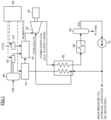
- FIG. 1 A CO 2 turbine power generation system according to an embodiment will be described using FIG. 1 .
- components of the CO 2 turbine power generation system of this embodiment are configured to form a semi-closed cycle that uses a supercritical CO 2 medium as a working medium.
- the components constituting the CO 2 turbine power generation system of this embodiment will be described in sequence.
- a supercritical medium (working CO 2 ) discharged from a combustor 81 is supplied to a CO 2 turbine 30. Then, the working medium expands to work in the CO 2 turbine 30, thereby causing a rotary shaft (turbine rotor) of the CO 2 turbine 30 to rotate.
- the medium discharged from the CO 2 turbine 30 flows into a regenerative heat exchanger 82.
- a power generator 40 is caused to generate power by the driving of the CO 2 turbine 30.
- a rotary shaft of the power generator (power generator rotor) is coupled to the rotary shaft of the CO 2 turbine 30, and the rotation of the rotary shaft of the CO 2 turbine 30 then rotates the rotary shaft of the power generator 40 to cause the power generation in the power generator 40.
- the medium discharged from the CO 2 turbine 30 and a medium discharged from a CO 2 pump 10 flow into the regenerative heat exchanger 82, where these mediums are heat-exchanged with each other.
- the medium discharged from the CO 2 turbine 30 is cooled by the heat exchange in the regenerative heat exchanger 82.
- the medium discharged from the CO 2 pump 10 is heated by the heat exchange in the regenerative heat exchanger 82 and is supplied to the combustor 81.
- a cooler 83 cools the medium heat-exchanged in the regenerative heat exchanger 82 after discharged from the CO 2 turbine 30. Consequently, in the cooler 83, water vapor contained in the medium discharged from the regenerative heat exchanger 82 is condensed.
- a moisture separator 85 is supplied with the medium discharged from the cooler 83.
- the moisture separator 85 separates, from the supplied medium, water (liquid-phase water) produced as a result of the condensation in the cooler 83.
- the separated water is discharged to the outside from the moisture separator 85. Consequently, in the moisture separator 85, a medium containing high-purity CO 2 is obtained.
- the CO 2 pump 10 is supplied with the medium being the high-purity CO 2 from the moisture separator 85 and boosts the pressure of the supplied medium to a supercritical pressure. Part of the medium whose pressure has been boosted by the CO 2 pump 10 is discharged to the outside to be used for storage, enhanced oil recovery, and so on, for instance.
- the amount of CO 2 discharged to the outside corresponds to an incremental amount of CO 2 in the combustion in the combustor 81.
- the remainder of the medium whose pressure has been boosted by the CO 2 pump 10 is supplied to the regenerative heat exchanger 82 to be heated as described above.
- part extracted from the middle of the regenerative heat exchanger 82 is supplied as a cooling medium (cooling CO 2 ) to the CO 2 turbine 30.
- the remaining medium having passed through the regenerative heat exchanger 82 is introduced to the combustor 81. That is, the medium whose pressure has been boosted by the CO 2 pump 10 is heated in the regenerative heat exchanger 82 by being heat-exchanged with the medium discharged from the CO 2 turbine 30 and thereafter flows into the combustor 81.
- a CO 2 medium shutoff valve V1 is installed in a medium flow path between the regenerative heat exchanger 82 and the combustor 81.
- the CO 2 medium shutoff valve V1 is intended to shut off the supply of the medium from the regenerative heat exchanger 82 to the combustor 81 when load rejection is to be performed.
- compressed oxygen produced from the air in an oxygen generator 80 is supplied to the combustor 81 through an oxygen shutoff valve V2.
- a fuel such as natural gas is supplied to the combustor 81 through a fuel shutoff valve V3.
- the fuel reacts with the oxygen to burn.
- the CO 2 turbine power generation system includes a control part 90 besides the above-described components.
- the control part 90 includes an arithmetic unit (not illustrated) and a memory device (not illustrated) and is configured such that the arithmetic unit performs arithmetic processing using a program stored in the memory device, though this configuration is not illustrated.
- the control part 90 controls the operations of the CO 2 medium shutoff valve V1, the oxygen shutoff valve V2, and the fuel shutoff valve V3.
- control part 90 fully closes the CO 2 medium shutoff valve V1 when the load rejection of shutting off a load to the power generator 40 is to be performed because of the occurrence of trouble in an electric power system or other reasons.
- the control part 90 thus makes the CO 2 medium shutoff valve V1 shut off the supply of the medium from the regenerative heat exchanger 82 to the combustor 81.
- control part 90 when the load rejection is to be performed, the control part 90 fully closes the oxygen shutoff valve V2 and also fully closes the fuel shutoff valve V3.
- the control part 90 thus makes the oxygen shutoff valve V2 shut off the supply of the oxygen from the oxygen generator 80 to the combustor 81 and also makes the fuel shutoff valve V3 shut off the supply of the fuel to the combustor 81.
- the CO 2 medium shutoff valve V1 closes to shut off the supply of the medium from the regenerative heat exchanger 82 to the combustor 81. This results in a reduction in the amount of the medium flowing from the combustor 81 to the CO 2 turbine 30, making it possible to prevent the CO 2 turbine 30 from reaching an overspeed condition.
- the medium remaining in the medium flow path (pipe) between the CO 2 medium shutoff valve V1 and the combustor 81 contributes to the over-rotation speed.
- the above embodiment describes the case in which the oxygen shutoff valve V2 and the fuel shutoff valve V3 are provided, but this is not restrictive.
- the oxygen shutoff valve V2 and the fuel shutoff valve V3 are desirably provided but are not indispensable.
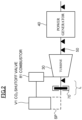
- FIG. 2 illustrates the arrangement relationship of the CO 2 turbine 30, the power generator 40, the combustor 81, and the CO 2 medium shutoff valve V1 out of the components of the CO 2 turbine power generation system of this embodiment.
- the CO 2 turbine 30 and the power generator 40 are coaxial, and the rotary shaft of the CO 2 turbine 30 and the rotary shaft of the power generator 40 are rotatably supported using radial bearings 50.
- the CO 2 turbine power generation system of this embodiment further includes a thrust bearing 70 as illustrated in FIG. 2 .
- the power generator 40 is installed on one end side (right side in FIG. 2 ) of the rotary shaft of the CO 2 turbine 30, and the thrust bearing 70 is installed on the other end side (left side in FIG. 2 ) opposite the one end side.
- the CO 2 turbine 30 is an axial flow turbine where the working medium flows from the thrust bearing 70 side toward the power generator 40 side, and the thrust bearing 70 is installed on an upstream side, of the CO 2 turbine 30, where the thermal expansion amount is large.
- the combustor 81 is disposed at a position that is upstream of the CO 2 turbine 30 and is more radially outward than the CO 2 turbine.
- the CO 2 medium shutoff valve V1 is installed in a space located on the other end side, of the CO 2 turbine 30, opposite the one end side where the power generator 40 is installed.
- the CO 2 medium shutoff valve V1 is installed in a space located more on the other end side than the thrust bearing 70.
- a wider space is easily available on the other end side of the CO 2 turbine 30 than on the one end side where the power generator 40 is installed. Therefore, in a case where a maintenance space SP where to perform the maintenance of the CO 2 medium shutoff valve V1 is set in a part located on the inner side of the CO 2 medium shutoff valve V1 in terms of the radial direction of the rotary shaft, the above-described arrangement allows for a wide space as the maintenance space SP. This can facilitate the disassembling and assembling of the CO 2 medium shutoff valve V1, enabling efficient maintenance work.
- FIG. 3 illustrates the arrangement relationship of the CO 2 turbine 30, the power generator 40, the combustor 81, and the CO 2 medium shutoff valve V1 out of the components of the CO 2 turbine power generation system.
- unstable vibration may occur.
- the unstable vibration is ascribable to the radial-direction displacement of the rotary shafts due to thermal expansion.
- this modification example on the other hand, the rotary shaft of the CO 2 turbine 30 and the rotary shaft of the power generator 40 are coupled using a diaphragm coupling 60 as illustrated in FIG. 3 . Therefore, the operation of the diaphragm coupling 60 enables the absorption of a thermal deformation amount of thermal expansion or thermal contraction in the axial direction of the CO 2 turbine 30. As a result, this modification example not only has the effect exhibited in the above-described embodiment but also can reduce the occurrence of the unstable vibration.
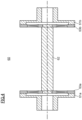
- the diaphragm coupling 60 includes a pair of flanges 61a, 61b and a center tube 62 sandwiched by the flanges 61a, 61b.
- a diaphragm 63a is between the flange 61a and the center tube 62
- a diaphragm 63b is between the other flange 61b and the center tube 62.
- the flange 61a is coupled to, for example, the rotary shaft of the power generator 40
- the other flange 61b is coupled to, for example, the rotary shaft of the CO 2 turbine 30.
- the diaphragms 63a, 63b are each formed of a metal thin plate, have high torsional stiffness for transmitting a rotational torque, and are shaped so as to be deformable in response to bending, compression, and so on. Therefore, the diaphragm coupling 60 is capable of accurately transmitting the rotational torque and owing to the elastic deformation of the diaphragms 63a, 63b, is also capable of absorbing the displacement of the rotary shafts caused by thermal elongation or the like.
- the diaphragm coupling 60 is configured to be contracted or elongated in the axial direction. Further, the diaphragm coupling 60 is configured such that the axis of the flange 61a and the axis of the other flange 61b become not coaxial with each other but parallel or tilted to each other. Note that the diaphragm coupling 60 is sometimes called a flexible coupling.
Landscapes
- Engineering & Computer Science (AREA)
- Chemical & Material Sciences (AREA)
- Mechanical Engineering (AREA)
- General Engineering & Computer Science (AREA)
- Combustion & Propulsion (AREA)
- Life Sciences & Earth Sciences (AREA)
- Sustainable Development (AREA)
- Chemical Kinetics & Catalysis (AREA)
- General Chemical & Material Sciences (AREA)
- Control Of Turbines (AREA)
Description
- Embodiments of the present invention relate to a CO2 turbine power generation system.
- A CO2 turbine power generation system is configured to generate power with a supercritical CO2 working medium introduced to a single CO2 turbine from a combustor.
- In the CO2 turbine power generation system, the medium discharged from the CO2 turbine is supplied through a regenerative heat exchanger and so on to a CO2 pump, where the pressure of the medium is boosted to a supercritical pressure. The medium whose pressure has been boosted to the supercritical pressure by the CO2 pump flows into the combustor after heated in the regenerative heat exchanger by the heat of a medium discharged from the CO2 turbine. Thereafter, the supercritical medium is introduced as the working medium from the combustor to the CO2 turbine as described above. The CO2 turbine power generation system thus forms a cycle in which the medium from the CO2 turbine returns to the CO2 turbine after sequentially flowing through its components.
- The execution of load rejection in the CO2 turbine power generation system because of trouble in an electric power system or other reasons may cause the CO2 turbine power generation system to reach an overspeed condition in which a rotary shaft of the CO2 turbine rotates at an over-rotation speed exceeding a rated rotation speed. The over-rotation speed differs depending on each piping system, turbine layout, the volume of an internal structure, and a residual working fluid. If the over-rotation speed is high, rotary bodies such as a turbine rotor and rotor blades are given great force to have an increased possibility of incurring damage and the like.
Examples of previously known CO2 turbine power generation systems are derivable fromUS 10 450 958 B2 US 2019/323351 A1 , which forms basis for the two-part form of independent claim 1. - A problem to be solved by the present invention is to provide a CO2 turbine power generation system that can be easily prevented from reaching an over-rotation speed condition.
This problem is solved by means of a CO2 turbine power generation system according to independent claim 1. Distinct embodiments are derivable from the dependent claims. -
-
FIG. 1 is a diagram schematically illustrating the overall configuration of a CO2 turbine power generation system according to an embodiment. -
FIG. 2 is a diagram schematically illustrating an arrangement relationship in the CO2 turbine power generation system according to the embodiment. -
FIG. 3 is a diagram schematically illustrating an arrangement relationship in a CO2 turbine power generation system according to a modification example of the embodiment. -
FIG. 4 is a sectional view schematically illustrating an example of a diaphragm coupling in the CO2 turbine power generation system according to the modification example of the embodiment. - A CO2 turbine power generation system of an embodiment includes a combustor, a CO2 turbine, a power generator, a regenerative heat exchanger, a cooler, a moisture separator, and a CO2 pump. The CO2 turbine is driven by a supercritical medium supplied from the combustor. The power generator is caused to generate power by the driving of the CO2 turbine. The medium discharged from the CO2 turbine flows into the regenerative heat exchanger. The cooler cools the medium flowing into the cooler from the CO2 turbine through the regenerative heat exchanger. The moisture separator separates water from the medium discharged from the cooler. The CO2 pump boosts a pressure of the medium from which the water has been separated by the moisture separator. Here, the medium whose pressure has been boosted to the supercritical pressure by the CO2 pump flows into the combustor after heated in the regenerative heat exchanger by heat of a medium discharged from the CO2 turbine. The CO2 turbine power generation system of the embodiment further includes a CO2 medium shutoff valve installed in a medium flow path between the regenerative heat exchanger and the combustor. When load rejection is to be performed, the CO2 medium shutoff valve closes to shut off the supply of the medium from the regenerative heat exchanger to the combustor.
- A CO2 turbine power generation system according to an embodiment will be described using
FIG. 1 . - As illustrated in
FIG. 1 , components of the CO2 turbine power generation system of this embodiment are configured to form a semi-closed cycle that uses a supercritical CO2 medium as a working medium. The components constituting the CO2 turbine power generation system of this embodiment will be described in sequence. - In the CO2 turbine power generation system of this embodiment, as the working medium, a supercritical medium (working CO2) discharged from a
combustor 81 is supplied to a CO2 turbine 30. Then, the working medium expands to work in the CO2 turbine 30, thereby causing a rotary shaft (turbine rotor) of the CO2 turbine 30 to rotate. The medium discharged from the CO2 turbine 30 flows into aregenerative heat exchanger 82. - A
power generator 40 is caused to generate power by the driving of the CO2 turbine 30. Here, a rotary shaft of the power generator (power generator rotor) is coupled to the rotary shaft of the CO2 turbine 30, and the rotation of the rotary shaft of the CO2 turbine 30 then rotates the rotary shaft of thepower generator 40 to cause the power generation in thepower generator 40. - The medium discharged from the CO2 turbine 30 and a medium discharged from a CO2 pump 10 flow into the
regenerative heat exchanger 82, where these mediums are heat-exchanged with each other. Here, the medium discharged from the CO2 turbine 30 is cooled by the heat exchange in theregenerative heat exchanger 82. On the other hand, the medium discharged from the CO2 pump 10 is heated by the heat exchange in theregenerative heat exchanger 82 and is supplied to thecombustor 81. - A
cooler 83 cools the medium heat-exchanged in theregenerative heat exchanger 82 after discharged from the CO2 turbine 30. Consequently, in thecooler 83, water vapor contained in the medium discharged from theregenerative heat exchanger 82 is condensed. - A
moisture separator 85 is supplied with the medium discharged from thecooler 83. Themoisture separator 85 separates, from the supplied medium, water (liquid-phase water) produced as a result of the condensation in thecooler 83. The separated water is discharged to the outside from themoisture separator 85. Consequently, in themoisture separator 85, a medium containing high-purity CO2 is obtained. - The CO2 pump 10 is supplied with the medium being the high-purity CO2 from the
moisture separator 85 and boosts the pressure of the supplied medium to a supercritical pressure. Part of the medium whose pressure has been boosted by the CO2 pump 10 is discharged to the outside to be used for storage, enhanced oil recovery, and so on, for instance. Here, for example, the amount of CO2 discharged to the outside corresponds to an incremental amount of CO2 in the combustion in thecombustor 81. Then, the remainder of the medium whose pressure has been boosted by the CO2 pump 10 is supplied to theregenerative heat exchanger 82 to be heated as described above. - Of the medium, part extracted from the middle of the
regenerative heat exchanger 82 is supplied as a cooling medium (cooling CO2) to the CO2 turbine 30. The remaining medium having passed through theregenerative heat exchanger 82 is introduced to thecombustor 81. That is, the medium whose pressure has been boosted by the CO2 pump 10 is heated in theregenerative heat exchanger 82 by being heat-exchanged with the medium discharged from the CO2 turbine 30 and thereafter flows into thecombustor 81. - In a medium flow path between the
regenerative heat exchanger 82 and thecombustor 81, a CO2 medium shutoff valve V1 is installed. The CO2 medium shutoff valve V1 is intended to shut off the supply of the medium from theregenerative heat exchanger 82 to thecombustor 81 when load rejection is to be performed. - Further, compressed oxygen produced from the air in an
oxygen generator 80 is supplied to thecombustor 81 through an oxygen shutoff valve V2. Together with the oxygen, a fuel such as natural gas is supplied to thecombustor 81 through a fuel shutoff valve V3. In thecombustor 81, the fuel reacts with the oxygen to burn. - The CO2 turbine power generation system includes a
control part 90 besides the above-described components. Thecontrol part 90 includes an arithmetic unit (not illustrated) and a memory device (not illustrated) and is configured such that the arithmetic unit performs arithmetic processing using a program stored in the memory device, though this configuration is not illustrated. - The
control part 90 controls the operations of the CO2 medium shutoff valve V1, the oxygen shutoff valve V2, and the fuel shutoff valve V3. - In this embodiment, the
control part 90 fully closes the CO2 medium shutoff valve V1 when the load rejection of shutting off a load to thepower generator 40 is to be performed because of the occurrence of trouble in an electric power system or other reasons. Thecontrol part 90 thus makes the CO2 medium shutoff valve V1 shut off the supply of the medium from theregenerative heat exchanger 82 to thecombustor 81. - Similarly, when the load rejection is to be performed, the
control part 90 fully closes the oxygen shutoff valve V2 and also fully closes the fuel shutoff valve V3. Thecontrol part 90 thus makes the oxygen shutoff valve V2 shut off the supply of the oxygen from theoxygen generator 80 to thecombustor 81 and also makes the fuel shutoff valve V3 shut off the supply of the fuel to thecombustor 81. - As described above, in the CO2 turbine power generation system of this embodiment, when the load rejection is to be performed, the CO2 medium shutoff valve V1 closes to shut off the supply of the medium from the
regenerative heat exchanger 82 to thecombustor 81. This results in a reduction in the amount of the medium flowing from thecombustor 81 to the CO2 turbine 30, making it possible to prevent the CO2 turbine 30 from reaching an overspeed condition. - Even after the CO2 medium shutoff valve V1 closes, the medium remaining in the medium flow path (pipe) between the CO2 medium shutoff valve V1 and the
combustor 81 contributes to the over-rotation speed. Here, the larger the amount of the medium remaining in the pipe flow path between the CO2 medium shutoff valve V1 and thecombustor 81, the higher the over-rotation speed. Therefore, the volume of the flow path between the CO2 medium shutoff valve V1 and thecombustor 81 is preferably small. Therefore, the CO2 medium shutoff valve V1 is preferably installed on a side closer to thecombustor 81 in the flow path between the combustor 81 and theregenerative heat exchanger 82. For example, the CO2 medium shutoff valve V1 is preferably installed immediately before thecombustor 81. - The above embodiment describes the case in which the oxygen shutoff valve V2 and the fuel shutoff valve V3 are provided, but this is not restrictive. The oxygen shutoff valve V2 and the fuel shutoff valve V3 are desirably provided but are not indispensable.
- A suitable arrangement relationship in the CO2 turbine power generation system of this embodiment will be hereinafter described using
FIG. 2. FIG. 2 illustrates the arrangement relationship of the CO2 turbine 30, thepower generator 40, thecombustor 81, and the CO2 medium shutoff valve V1 out of the components of the CO2 turbine power generation system of this embodiment. - As illustrated in
FIG. 2 , in the CO2 turbine power generation system of this embodiment, the CO2 turbine 30 and thepower generator 40 are coaxial, and the rotary shaft of the CO2 turbine 30 and the rotary shaft of thepower generator 40 are rotatably supported usingradial bearings 50. - The CO2 turbine power generation system of this embodiment further includes a
thrust bearing 70 as illustrated inFIG. 2 . Thepower generator 40 is installed on one end side (right side inFIG. 2 ) of the rotary shaft of the CO2 turbine 30, and thethrust bearing 70 is installed on the other end side (left side inFIG. 2 ) opposite the one end side. The CO2 turbine 30 is an axial flow turbine where the working medium flows from the thrust bearing 70 side toward thepower generator 40 side, and thethrust bearing 70 is installed on an upstream side, of the CO2 turbine 30, where the thermal expansion amount is large. Further, thecombustor 81 is disposed at a position that is upstream of the CO2 turbine 30 and is more radially outward than the CO2 turbine. - As illustrated in
FIG. 2 , the CO2 medium shutoff valve V1 is installed in a space located on the other end side, of the CO2 turbine 30, opposite the one end side where thepower generator 40 is installed. Here, the CO2 medium shutoff valve V1 is installed in a space located more on the other end side than thethrust bearing 70. - A wider space is easily available on the other end side of the CO2 turbine 30 than on the one end side where the
power generator 40 is installed. Therefore, in a case where a maintenance space SP where to perform the maintenance of the CO2 medium shutoff valve V1 is set in a part located on the inner side of the CO2 medium shutoff valve V1 in terms of the radial direction of the rotary shaft, the above-described arrangement allows for a wide space as the maintenance space SP. This can facilitate the disassembling and assembling of the CO2 medium shutoff valve V1, enabling efficient maintenance work. - An arrangement relationship in a CO2 turbine power generation system in a modification example of this embodiment will be described using
FIG. 3 . Similarly toFIG. 2 ,FIG. 3 illustrates the arrangement relationship of the CO2 turbine 30, thepower generator 40, thecombustor 81, and the CO2 medium shutoff valve V1 out of the components of the CO2 turbine power generation system. - In the case where the rotary shaft of the CO2 turbine 30 and the rotary shaft of the
power generator 40 are directly connected and the distance between the pair ofradial bearings 50 arranged between the CO2 turbine 30 and thepower generator 40 is short as illustrated inFIG. 2 , unstable vibration may occur. The unstable vibration is ascribable to the radial-direction displacement of the rotary shafts due to thermal expansion. - In this modification example, on the other hand, the rotary shaft of the CO2 turbine 30 and the rotary shaft of the
power generator 40 are coupled using adiaphragm coupling 60 as illustrated inFIG. 3 . Therefore, the operation of thediaphragm coupling 60 enables the absorption of a thermal deformation amount of thermal expansion or thermal contraction in the axial direction of the CO2 turbine 30. As a result, this modification example not only has the effect exhibited in the above-described embodiment but also can reduce the occurrence of the unstable vibration. - A specific structure of the
diaphragm coupling 60 will be described usingFIG. 4 . - As illustrated in
FIG. 4 , thediaphragm coupling 60 includes a pair offlanges center tube 62 sandwiched by theflanges diaphragm 63a is between theflange 61a and thecenter tube 62, and adiaphragm 63b is between theother flange 61b and thecenter tube 62. Theflange 61a is coupled to, for example, the rotary shaft of thepower generator 40, and theother flange 61b is coupled to, for example, the rotary shaft of the CO2 turbine 30. - In the
diaphragm coupling 60, thediaphragms diaphragm coupling 60 is capable of accurately transmitting the rotational torque and owing to the elastic deformation of thediaphragms - Specifically, the
diaphragm coupling 60 is configured to be contracted or elongated in the axial direction. Further, thediaphragm coupling 60 is configured such that the axis of theflange 61a and the axis of theother flange 61b become not coaxial with each other but parallel or tilted to each other. Note that thediaphragm coupling 60 is sometimes called a flexible coupling. - While certain embodiments have been described, these embodiments have been presented by way of example only, and are not intended to limit the scope of the inventions as defined in the appended claims. Indeed, the novel embodiments described herein may be embodied in a variety of other forms; furthermore, various omissions, substitutions and changes in the form of the embodiments described herein may be made without departing from the scope of the inventions as defined in the appended claims.
- 10...COz pump, 30...turbine, 40...power generator, 50...radial bearing, 60...diaphragm coupling, 61a...flange, 61b...flange, 62...center tube, 63a...diaphragm, 63b...diaphragm, 70...thrust bearing, 80...oxygen generator, 81...combustor, 82...regenerative heat exchanger, 83...cooler, 85...moisture separator, 90...control part, V1... CO2 medium shutoff valve, V2...oxygen shutoff valve, V3...fuel shutoff valve
Claims (4)
- A CO2 turbine power generation system comprising:a combustor (81);a CO2 turbine (30) driven by a supercritical medium supplied from the combustor (81);a power generator (40) caused to generate power by the driving of the CO2 turbine (30);a regenerative heat exchanger (82) into which the medium discharged from the CO2 turbine (30) flows;a cooler (83) for cooling the medium flowing into the cooler (83) from the CO2 turbine (30) through the regenerative heat exchanger (82);a moisture separator (85) for separating water from the medium discharged from the cooler (83); anda CO2 pump (10) for boosting a pressure of the medium from which the water has been separated by the moisture separator (85),wherein the medium whose pressure has been boosted to the supercritical pressure by the CO2 pump (10) flows into the combustor (81) after heated in the regenerative heat exchanger (82) by heat of a medium discharged from the CO2 turbine (30),the CO2 turbine power generation system is characterized bya CO2 medium shutoff valve (VI) installed in a medium flow path between the regenerative heat exchanger (82) and the combustor (81),wherein, when load rejection is to be performed, the CO2 medium shutoff valve (VI) is configured to closeto shut off the supply of the medium from the regenerative heat exchanger (82) to the combustor (81).
- The CO2 turbine power generation system according to claim 1, wherein the CO2 medium shutoff valve (VI) is installed on a side closer to the combustor (81) in the medium flow path between the regenerative heat exchanger (82) and the combustor (81).
- The CO2 turbine power generation system according to claim 1 or 2, wherein the power generator (40) is disposed on one end side of the CO2 turbine (30), the CO2 turbine power generation system further comprising a thrust bearing (70) disposed on another end side, of the CO2 turbine (30), opposite the one end side,
wherein the CO2 medium shutoff valve (VI) is installed on the other end side of the CO2 turbine (30). - The CO2 turbine power generation system according to any one of claims 1 to 3, further comprising a diaphragm coupling (60) provided between a pair of bearings located between the CO2 turbine (30) and the power generator (40).
Applications Claiming Priority (1)
| Application Number | Priority Date | Filing Date | Title |
|---|---|---|---|
| JP2020098597A JP2021191951A (en) | 2020-06-05 | 2020-06-05 | CO2 turbine power generation system |
Publications (2)
| Publication Number | Publication Date |
|---|---|
| EP3919728A1 EP3919728A1 (en) | 2021-12-08 |
| EP3919728B1 true EP3919728B1 (en) | 2024-02-14 |
Family
ID=76217762
Family Applications (1)
| Application Number | Title | Priority Date | Filing Date |
|---|---|---|---|
| EP21177094.6A Active EP3919728B1 (en) | 2020-06-05 | 2021-06-01 | Co2 turbine power generation system |
Country Status (3)
| Country | Link |
|---|---|
| US (1) | US11499445B2 (en) |
| EP (1) | EP3919728B1 (en) |
| JP (1) | JP2021191951A (en) |
Families Citing this family (3)
| Publication number | Priority date | Publication date | Assignee | Title |
|---|---|---|---|---|
| CN114810252A (en) * | 2022-04-06 | 2022-07-29 | 西安热工研究院有限公司 | Supercritical CO 2 Variable-load working medium charging and discharging system and method for generator set |
| US11952944B1 (en) | 2023-02-10 | 2024-04-09 | General Electric Company | Jet engine thermal transport bus pumps |
| US12416245B2 (en) * | 2023-11-07 | 2025-09-16 | Nuovo Pignone Tecnologie S.r.l. | Dual purpose energy plant |
Family Cites Families (12)
| Publication number | Priority date | Publication date | Assignee | Title |
|---|---|---|---|---|
| JPS5981532A (en) * | 1982-11-02 | 1984-05-11 | Hitachi Ltd | Abnormality diagnosis device for diaphragm coupling in shaft system |
| JP2672649B2 (en) * | 1989-06-05 | 1997-11-05 | 株式会社東芝 | Steam turbine in single-shaft combined cycle |
| JP3955145B2 (en) * | 1998-03-25 | 2007-08-08 | 日立造船株式会社 | Steam injection gas turbine power generation equipment |
| JP5291541B2 (en) * | 2009-06-01 | 2013-09-18 | 三菱重工業株式会社 | Solar gas turbine and solar gas turbine power generator |
| JP5840559B2 (en) * | 2011-04-28 | 2016-01-06 | アルストム テクノロジー リミテッドALSTOM Technology Ltd | Exhaust gas recirculation type gas turbine power plant operating method and exhaust gas recirculation type gas turbine power plant |
| US20120319410A1 (en) * | 2011-06-17 | 2012-12-20 | Woodward Governor Company | System and method for thermal energy storage and power generation |
| JP6013288B2 (en) | 2012-07-20 | 2016-10-25 | 株式会社東芝 | Turbine and power generation system |
| JP6038671B2 (en) * | 2013-02-01 | 2016-12-07 | 三菱日立パワーシステムズ株式会社 | Thermal power generation system |
| JP6220589B2 (en) | 2013-07-26 | 2017-10-25 | 8 リバーズ キャピタル,エルエルシー | Gas turbine equipment |
| DE102013223661B4 (en) * | 2013-11-20 | 2015-05-28 | Siemens Aktiengesellschaft | Method and device for energy conversion |
| JP6253489B2 (en) * | 2014-04-09 | 2017-12-27 | 株式会社東芝 | Axial flow turbine |
| JP6652662B2 (en) * | 2016-12-12 | 2020-02-26 | 東芝エネルギーシステムズ株式会社 | Turbine and turbine system |
-
2020
- 2020-06-05 JP JP2020098597A patent/JP2021191951A/en active Pending
-
2021
- 2021-06-01 EP EP21177094.6A patent/EP3919728B1/en active Active
- 2021-06-01 US US17/335,385 patent/US11499445B2/en active Active
Also Published As
| Publication number | Publication date |
|---|---|
| EP3919728A1 (en) | 2021-12-08 |
| JP2021191951A (en) | 2021-12-16 |
| US20210381391A1 (en) | 2021-12-09 |
| US11499445B2 (en) | 2022-11-15 |
Similar Documents
| Publication | Publication Date | Title |
|---|---|---|
| EP3919728B1 (en) | Co2 turbine power generation system | |
| EP2607633B1 (en) | Engine assembly and waste heat recovery system | |
| CN107429567B (en) | Turbine, Organic Rankine Cycle or Karina Cycle or Water Vapor Cycle Equipment | |
| EP3935266B1 (en) | Intercooled cascade cycle waste heat recovery system | |
| US20190293117A1 (en) | Closed Cycle Heat Engine | |
| US11300139B2 (en) | Air cycle machine with cooling air flow path | |
| EP4127435B1 (en) | Integrated hermetically sealed turboexpander-generator with overhung turbomachine | |
| JP2014510872A (en) | Sealing system for turbo expander used in organic Rankine cycle | |
| Cich et al. | Design of a supercritical CO2 compressor for use in a 10 MWe power cycle | |
| EP3859161A1 (en) | Rotary machine | |
| EP3848557B1 (en) | Gas turbine power generation system | |
| EP3056695B1 (en) | Single shaft combined cycle power plant shaft arrangement | |
| JP2006112374A (en) | Gas turbine equipment | |
| JPWO2020144854A1 (en) | Rotating machine | |
| BR102020024104B1 (en) | TURBINE WITH DOUBLE STAGE PRESSURE REDUCTION, TURBINE WITH TRIPLE STAGE PRESSURE REDUCTION AND TURBINE WITH QUADRUPLE STAGE PRESSURE REDUCTION | |
| JPH07158407A (en) | Steam turbine unit for single-shaft combined cycle plant | |
| Wittchow | 4 Steam turbines: 3 Fossil-fueled power plants |
Legal Events
| Date | Code | Title | Description |
|---|---|---|---|
| PUAI | Public reference made under article 153(3) epc to a published international application that has entered the european phase |
Free format text: ORIGINAL CODE: 0009012 |
|
| STAA | Information on the status of an ep patent application or granted ep patent |
Free format text: STATUS: REQUEST FOR EXAMINATION WAS MADE |
|
| 17P | Request for examination filed |
Effective date: 20210601 |
|
| AK | Designated contracting states |
Kind code of ref document: A1 Designated state(s): AL AT BE BG CH CY CZ DE DK EE ES FI FR GB GR HR HU IE IS IT LI LT LU LV MC MK MT NL NO PL PT RO RS SE SI SK SM TR |
|
| B565 | Issuance of search results under rule 164(2) epc |
Effective date: 20211021 |
|
| GRAP | Despatch of communication of intention to grant a patent |
Free format text: ORIGINAL CODE: EPIDOSNIGR1 |
|
| STAA | Information on the status of an ep patent application or granted ep patent |
Free format text: STATUS: GRANT OF PATENT IS INTENDED |
|
| INTG | Intention to grant announced |
Effective date: 20231002 |
|
| GRAS | Grant fee paid |
Free format text: ORIGINAL CODE: EPIDOSNIGR3 |
|
| GRAA | (expected) grant |
Free format text: ORIGINAL CODE: 0009210 |
|
| STAA | Information on the status of an ep patent application or granted ep patent |
Free format text: STATUS: THE PATENT HAS BEEN GRANTED |
|
| AK | Designated contracting states |
Kind code of ref document: B1 Designated state(s): AL AT BE BG CH CY CZ DE DK EE ES FI FR GB GR HR HU IE IS IT LI LT LU LV MC MK MT NL NO PL PT RO RS SE SI SK SM TR |
|
| REG | Reference to a national code |
Ref country code: GB Ref legal event code: FG4D |
|
| REG | Reference to a national code |
Ref country code: CH Ref legal event code: EP |
|
| REG | Reference to a national code |
Ref country code: DE Ref legal event code: R096 Ref document number: 602021009314 Country of ref document: DE |
|
| REG | Reference to a national code |
Ref country code: IE Ref legal event code: FG4D |
|
| REG | Reference to a national code |
Ref country code: LT Ref legal event code: MG9D |
|
| REG | Reference to a national code |
Ref country code: NL Ref legal event code: MP Effective date: 20240214 |
|
| PG25 | Lapsed in a contracting state [announced via postgrant information from national office to epo] |
Ref country code: IS Free format text: LAPSE BECAUSE OF FAILURE TO SUBMIT A TRANSLATION OF THE DESCRIPTION OR TO PAY THE FEE WITHIN THE PRESCRIBED TIME-LIMIT Effective date: 20240614 |
|
| PG25 | Lapsed in a contracting state [announced via postgrant information from national office to epo] |
Ref country code: LT Free format text: LAPSE BECAUSE OF FAILURE TO SUBMIT A TRANSLATION OF THE DESCRIPTION OR TO PAY THE FEE WITHIN THE PRESCRIBED TIME-LIMIT Effective date: 20240214 |
|
| PG25 | Lapsed in a contracting state [announced via postgrant information from national office to epo] |
Ref country code: GR Free format text: LAPSE BECAUSE OF FAILURE TO SUBMIT A TRANSLATION OF THE DESCRIPTION OR TO PAY THE FEE WITHIN THE PRESCRIBED TIME-LIMIT Effective date: 20240515 |
|
| REG | Reference to a national code |
Ref country code: AT Ref legal event code: MK05 Ref document number: 1657188 Country of ref document: AT Kind code of ref document: T Effective date: 20240214 |
|
| PG25 | Lapsed in a contracting state [announced via postgrant information from national office to epo] |
Ref country code: NL Free format text: LAPSE BECAUSE OF FAILURE TO SUBMIT A TRANSLATION OF THE DESCRIPTION OR TO PAY THE FEE WITHIN THE PRESCRIBED TIME-LIMIT Effective date: 20240214 Ref country code: RS Free format text: LAPSE BECAUSE OF FAILURE TO SUBMIT A TRANSLATION OF THE DESCRIPTION OR TO PAY THE FEE WITHIN THE PRESCRIBED TIME-LIMIT Effective date: 20240514 Ref country code: HR Free format text: LAPSE BECAUSE OF FAILURE TO SUBMIT A TRANSLATION OF THE DESCRIPTION OR TO PAY THE FEE WITHIN THE PRESCRIBED TIME-LIMIT Effective date: 20240214 |
|
| PG25 | Lapsed in a contracting state [announced via postgrant information from national office to epo] |
Ref country code: ES Free format text: LAPSE BECAUSE OF FAILURE TO SUBMIT A TRANSLATION OF THE DESCRIPTION OR TO PAY THE FEE WITHIN THE PRESCRIBED TIME-LIMIT Effective date: 20240214 |
|
| PG25 | Lapsed in a contracting state [announced via postgrant information from national office to epo] |
Ref country code: AT Free format text: LAPSE BECAUSE OF FAILURE TO SUBMIT A TRANSLATION OF THE DESCRIPTION OR TO PAY THE FEE WITHIN THE PRESCRIBED TIME-LIMIT Effective date: 20240214 |
|
| PG25 | Lapsed in a contracting state [announced via postgrant information from national office to epo] |
Ref country code: RS Free format text: LAPSE BECAUSE OF FAILURE TO SUBMIT A TRANSLATION OF THE DESCRIPTION OR TO PAY THE FEE WITHIN THE PRESCRIBED TIME-LIMIT Effective date: 20240514 Ref country code: NO Free format text: LAPSE BECAUSE OF FAILURE TO SUBMIT A TRANSLATION OF THE DESCRIPTION OR TO PAY THE FEE WITHIN THE PRESCRIBED TIME-LIMIT Effective date: 20240514 Ref country code: NL Free format text: LAPSE BECAUSE OF FAILURE TO SUBMIT A TRANSLATION OF THE DESCRIPTION OR TO PAY THE FEE WITHIN THE PRESCRIBED TIME-LIMIT Effective date: 20240214 Ref country code: LT Free format text: LAPSE BECAUSE OF FAILURE TO SUBMIT A TRANSLATION OF THE DESCRIPTION OR TO PAY THE FEE WITHIN THE PRESCRIBED TIME-LIMIT Effective date: 20240214 Ref country code: IS Free format text: LAPSE BECAUSE OF FAILURE TO SUBMIT A TRANSLATION OF THE DESCRIPTION OR TO PAY THE FEE WITHIN THE PRESCRIBED TIME-LIMIT Effective date: 20240614 Ref country code: HR Free format text: LAPSE BECAUSE OF FAILURE TO SUBMIT A TRANSLATION OF THE DESCRIPTION OR TO PAY THE FEE WITHIN THE PRESCRIBED TIME-LIMIT Effective date: 20240214 Ref country code: GR Free format text: LAPSE BECAUSE OF FAILURE TO SUBMIT A TRANSLATION OF THE DESCRIPTION OR TO PAY THE FEE WITHIN THE PRESCRIBED TIME-LIMIT Effective date: 20240515 Ref country code: FI Free format text: LAPSE BECAUSE OF FAILURE TO SUBMIT A TRANSLATION OF THE DESCRIPTION OR TO PAY THE FEE WITHIN THE PRESCRIBED TIME-LIMIT Effective date: 20240214 Ref country code: ES Free format text: LAPSE BECAUSE OF FAILURE TO SUBMIT A TRANSLATION OF THE DESCRIPTION OR TO PAY THE FEE WITHIN THE PRESCRIBED TIME-LIMIT Effective date: 20240214 Ref country code: BG Free format text: LAPSE BECAUSE OF FAILURE TO SUBMIT A TRANSLATION OF THE DESCRIPTION OR TO PAY THE FEE WITHIN THE PRESCRIBED TIME-LIMIT Effective date: 20240214 Ref country code: AT Free format text: LAPSE BECAUSE OF FAILURE TO SUBMIT A TRANSLATION OF THE DESCRIPTION OR TO PAY THE FEE WITHIN THE PRESCRIBED TIME-LIMIT Effective date: 20240214 |
|
| PG25 | Lapsed in a contracting state [announced via postgrant information from national office to epo] |
Ref country code: PT Free format text: LAPSE BECAUSE OF FAILURE TO SUBMIT A TRANSLATION OF THE DESCRIPTION OR TO PAY THE FEE WITHIN THE PRESCRIBED TIME-LIMIT Effective date: 20240614 Ref country code: PL Free format text: LAPSE BECAUSE OF FAILURE TO SUBMIT A TRANSLATION OF THE DESCRIPTION OR TO PAY THE FEE WITHIN THE PRESCRIBED TIME-LIMIT Effective date: 20240214 |
|
| PG25 | Lapsed in a contracting state [announced via postgrant information from national office to epo] |
Ref country code: SE Free format text: LAPSE BECAUSE OF FAILURE TO SUBMIT A TRANSLATION OF THE DESCRIPTION OR TO PAY THE FEE WITHIN THE PRESCRIBED TIME-LIMIT Effective date: 20240214 Ref country code: PT Free format text: LAPSE BECAUSE OF FAILURE TO SUBMIT A TRANSLATION OF THE DESCRIPTION OR TO PAY THE FEE WITHIN THE PRESCRIBED TIME-LIMIT Effective date: 20240614 Ref country code: PL Free format text: LAPSE BECAUSE OF FAILURE TO SUBMIT A TRANSLATION OF THE DESCRIPTION OR TO PAY THE FEE WITHIN THE PRESCRIBED TIME-LIMIT Effective date: 20240214 Ref country code: LV Free format text: LAPSE BECAUSE OF FAILURE TO SUBMIT A TRANSLATION OF THE DESCRIPTION OR TO PAY THE FEE WITHIN THE PRESCRIBED TIME-LIMIT Effective date: 20240214 |
|
| PG25 | Lapsed in a contracting state [announced via postgrant information from national office to epo] |
Ref country code: DK Free format text: LAPSE BECAUSE OF FAILURE TO SUBMIT A TRANSLATION OF THE DESCRIPTION OR TO PAY THE FEE WITHIN THE PRESCRIBED TIME-LIMIT Effective date: 20240214 |
|
| PG25 | Lapsed in a contracting state [announced via postgrant information from national office to epo] |
Ref country code: SM Free format text: LAPSE BECAUSE OF FAILURE TO SUBMIT A TRANSLATION OF THE DESCRIPTION OR TO PAY THE FEE WITHIN THE PRESCRIBED TIME-LIMIT Effective date: 20240214 |
|
| PG25 | Lapsed in a contracting state [announced via postgrant information from national office to epo] |
Ref country code: EE Free format text: LAPSE BECAUSE OF FAILURE TO SUBMIT A TRANSLATION OF THE DESCRIPTION OR TO PAY THE FEE WITHIN THE PRESCRIBED TIME-LIMIT Effective date: 20240214 Ref country code: CZ Free format text: LAPSE BECAUSE OF FAILURE TO SUBMIT A TRANSLATION OF THE DESCRIPTION OR TO PAY THE FEE WITHIN THE PRESCRIBED TIME-LIMIT Effective date: 20240214 |
|
| PG25 | Lapsed in a contracting state [announced via postgrant information from national office to epo] |
Ref country code: SK Free format text: LAPSE BECAUSE OF FAILURE TO SUBMIT A TRANSLATION OF THE DESCRIPTION OR TO PAY THE FEE WITHIN THE PRESCRIBED TIME-LIMIT Effective date: 20240214 |
|
| PG25 | Lapsed in a contracting state [announced via postgrant information from national office to epo] |
Ref country code: SM Free format text: LAPSE BECAUSE OF FAILURE TO SUBMIT A TRANSLATION OF THE DESCRIPTION OR TO PAY THE FEE WITHIN THE PRESCRIBED TIME-LIMIT Effective date: 20240214 Ref country code: SK Free format text: LAPSE BECAUSE OF FAILURE TO SUBMIT A TRANSLATION OF THE DESCRIPTION OR TO PAY THE FEE WITHIN THE PRESCRIBED TIME-LIMIT Effective date: 20240214 Ref country code: RO Free format text: LAPSE BECAUSE OF FAILURE TO SUBMIT A TRANSLATION OF THE DESCRIPTION OR TO PAY THE FEE WITHIN THE PRESCRIBED TIME-LIMIT Effective date: 20240214 Ref country code: EE Free format text: LAPSE BECAUSE OF FAILURE TO SUBMIT A TRANSLATION OF THE DESCRIPTION OR TO PAY THE FEE WITHIN THE PRESCRIBED TIME-LIMIT Effective date: 20240214 Ref country code: DK Free format text: LAPSE BECAUSE OF FAILURE TO SUBMIT A TRANSLATION OF THE DESCRIPTION OR TO PAY THE FEE WITHIN THE PRESCRIBED TIME-LIMIT Effective date: 20240214 Ref country code: CZ Free format text: LAPSE BECAUSE OF FAILURE TO SUBMIT A TRANSLATION OF THE DESCRIPTION OR TO PAY THE FEE WITHIN THE PRESCRIBED TIME-LIMIT Effective date: 20240214 |
|
| REG | Reference to a national code |
Ref country code: DE Ref legal event code: R097 Ref document number: 602021009314 Country of ref document: DE |
|
| PG25 | Lapsed in a contracting state [announced via postgrant information from national office to epo] |
Ref country code: IT Free format text: LAPSE BECAUSE OF FAILURE TO SUBMIT A TRANSLATION OF THE DESCRIPTION OR TO PAY THE FEE WITHIN THE PRESCRIBED TIME-LIMIT Effective date: 20240214 |
|
| PLBE | No opposition filed within time limit |
Free format text: ORIGINAL CODE: 0009261 |
|
| STAA | Information on the status of an ep patent application or granted ep patent |
Free format text: STATUS: NO OPPOSITION FILED WITHIN TIME LIMIT |
|
| PG25 | Lapsed in a contracting state [announced via postgrant information from national office to epo] |
Ref country code: IT Free format text: LAPSE BECAUSE OF FAILURE TO SUBMIT A TRANSLATION OF THE DESCRIPTION OR TO PAY THE FEE WITHIN THE PRESCRIBED TIME-LIMIT Effective date: 20240214 |
|
| 26N | No opposition filed |
Effective date: 20241115 |
|
| PG25 | Lapsed in a contracting state [announced via postgrant information from national office to epo] |
Ref country code: MC Free format text: LAPSE BECAUSE OF FAILURE TO SUBMIT A TRANSLATION OF THE DESCRIPTION OR TO PAY THE FEE WITHIN THE PRESCRIBED TIME-LIMIT Effective date: 20240214 |
|
| REG | Reference to a national code |
Ref country code: CH Ref legal event code: PL |
|
| PG25 | Lapsed in a contracting state [announced via postgrant information from national office to epo] |
Ref country code: LU Free format text: LAPSE BECAUSE OF NON-PAYMENT OF DUE FEES Effective date: 20240601 |
|
| PG25 | Lapsed in a contracting state [announced via postgrant information from national office to epo] |
Ref country code: IE Free format text: LAPSE BECAUSE OF NON-PAYMENT OF DUE FEES Effective date: 20240601 |
|
| PG25 | Lapsed in a contracting state [announced via postgrant information from national office to epo] |
Ref country code: CH Free format text: LAPSE BECAUSE OF NON-PAYMENT OF DUE FEES Effective date: 20240630 Ref country code: BE Free format text: LAPSE BECAUSE OF NON-PAYMENT OF DUE FEES Effective date: 20240630 Ref country code: SI Free format text: LAPSE BECAUSE OF FAILURE TO SUBMIT A TRANSLATION OF THE DESCRIPTION OR TO PAY THE FEE WITHIN THE PRESCRIBED TIME-LIMIT Effective date: 20240214 |
|
| PG25 | Lapsed in a contracting state [announced via postgrant information from national office to epo] |
Ref country code: FR Free format text: LAPSE BECAUSE OF NON-PAYMENT OF DUE FEES Effective date: 20240630 |
|
| REG | Reference to a national code |
Ref country code: BE Ref legal event code: MM Effective date: 20240630 |
|
| PGFP | Annual fee paid to national office [announced via postgrant information from national office to epo] |
Ref country code: DE Payment date: 20250402 Year of fee payment: 5 |
|
| PG25 | Lapsed in a contracting state [announced via postgrant information from national office to epo] |
Ref country code: CY Free format text: LAPSE BECAUSE OF FAILURE TO SUBMIT A TRANSLATION OF THE DESCRIPTION OR TO PAY THE FEE WITHIN THE PRESCRIBED TIME-LIMIT; INVALID AB INITIO Effective date: 20210601 |
|
| GBPC | Gb: european patent ceased through non-payment of renewal fee |
Effective date: 20250601 |
|
| PG25 | Lapsed in a contracting state [announced via postgrant information from national office to epo] |
Ref country code: HU Free format text: LAPSE BECAUSE OF FAILURE TO SUBMIT A TRANSLATION OF THE DESCRIPTION OR TO PAY THE FEE WITHIN THE PRESCRIBED TIME-LIMIT; INVALID AB INITIO Effective date: 20210601 |
|
| PG25 | Lapsed in a contracting state [announced via postgrant information from national office to epo] |
Ref country code: GB Free format text: LAPSE BECAUSE OF NON-PAYMENT OF DUE FEES Effective date: 20250601 |