EP3918419B1 - Vehicular forward camera module with integrated cooling fan - Google Patents
Vehicular forward camera module with integrated cooling fan Download PDFInfo
- Publication number
- EP3918419B1 EP3918419B1 EP20749328.9A EP20749328A EP3918419B1 EP 3918419 B1 EP3918419 B1 EP 3918419B1 EP 20749328 A EP20749328 A EP 20749328A EP 3918419 B1 EP3918419 B1 EP 3918419B1
- Authority
- EP
- European Patent Office
- Prior art keywords
- cooling fan
- fan assembly
- camera module
- housing portion
- metallic
- Prior art date
- Legal status (The legal status is an assumption and is not a legal conclusion. Google has not performed a legal analysis and makes no representation as to the accuracy of the status listed.)
- Active
Links
Images




Classifications
-
- G—PHYSICS
- G03—PHOTOGRAPHY; CINEMATOGRAPHY; ANALOGOUS TECHNIQUES USING WAVES OTHER THAN OPTICAL WAVES; ELECTROGRAPHY; HOLOGRAPHY
- G03B—APPARATUS OR ARRANGEMENTS FOR TAKING PHOTOGRAPHS OR FOR PROJECTING OR VIEWING THEM; APPARATUS OR ARRANGEMENTS EMPLOYING ANALOGOUS TECHNIQUES USING WAVES OTHER THAN OPTICAL WAVES; ACCESSORIES THEREFOR
- G03B17/00—Details of cameras or camera bodies; Accessories therefor
- G03B17/55—Details of cameras or camera bodies; Accessories therefor with provision for heating or cooling, e.g. in aircraft
-
- B—PERFORMING OPERATIONS; TRANSPORTING
- B60—VEHICLES IN GENERAL
- B60R—VEHICLES, VEHICLE FITTINGS, OR VEHICLE PARTS, NOT OTHERWISE PROVIDED FOR
- B60R11/00—Arrangements for holding or mounting articles, not otherwise provided for
- B60R11/04—Mounting of cameras operative during drive; Arrangement of controls thereof relative to the vehicle
-
- H—ELECTRICITY
- H04—ELECTRIC COMMUNICATION TECHNIQUE
- H04N—PICTORIAL COMMUNICATION, e.g. TELEVISION
- H04N23/00—Cameras or camera modules comprising electronic image sensors; Control thereof
- H04N23/50—Constructional details
- H04N23/51—Housings
-
- H—ELECTRICITY
- H04—ELECTRIC COMMUNICATION TECHNIQUE
- H04N—PICTORIAL COMMUNICATION, e.g. TELEVISION
- H04N23/00—Cameras or camera modules comprising electronic image sensors; Control thereof
- H04N23/50—Constructional details
- H04N23/52—Elements optimising image sensor operation, e.g. for electromagnetic interference [EMI] protection or temperature control by heat transfer or cooling elements
-
- H—ELECTRICITY
- H04—ELECTRIC COMMUNICATION TECHNIQUE
- H04N—PICTORIAL COMMUNICATION, e.g. TELEVISION
- H04N23/00—Cameras or camera modules comprising electronic image sensors; Control thereof
- H04N23/57—Mechanical or electrical details of cameras or camera modules specially adapted for being embedded in other devices
-
- B—PERFORMING OPERATIONS; TRANSPORTING
- B60—VEHICLES IN GENERAL
- B60R—VEHICLES, VEHICLE FITTINGS, OR VEHICLE PARTS, NOT OTHERWISE PROVIDED FOR
- B60R11/00—Arrangements for holding or mounting articles, not otherwise provided for
- B60R2011/0001—Arrangements for holding or mounting articles, not otherwise provided for characterised by position
- B60R2011/0003—Arrangements for holding or mounting articles, not otherwise provided for characterised by position inside the vehicle
- B60R2011/0026—Windows, e.g. windscreen
Definitions
- a vision system 10 for a vehicle 12 includes at least one exterior viewing imaging sensor or camera 14, such as a forward viewing imaging sensor or camera, which may be disposed at and behind the windshield 16 of the vehicle and viewing forward through the windshield so as to capture image data representative of the scene occurring forward of the vehicle ( FIG. 1 ).
- the system may include multiple exterior viewing imaging sensors or cameras, such as a forward viewing camera at the front of the vehicle, and a sideward/rearward viewing camera at respective sides of the vehicle, and a rearward viewing camera at the rear of the vehicle, which capture images exterior of the vehicle.
- the camera or cameras each include a lens for focusing images at or onto an imaging array or imaging plane or imager of the camera.
- the forward viewing camera may be disposed at the windshield of the vehicle and view through the windshield and forward of the vehicle, such as for a machine vision system (such as for traffic sign recognition, headlamp control, pedestrian detection, collision avoidance, lane marker detection and/or the like).
- the vision system 10 includes a control or electronic control unit (ECU) or processor that is operable to process image data captured by the camera or cameras and may detect objects or the like and/or provide displayed images at a display device for viewing by the driver of the vehicle.
- the data transfer or signal communication from the camera to the ECU may comprise any suitable data or communication link, such as a vehicle network bus or the like of the equipped vehicle.
- the camera module 14 includes an integrated active cooling fan assembly 18 that is attached at the lower outside surface of the lower housing cover 20 and that operates to force air over and around the camera module's body or housing to enhance cooling of the camera during operation.
- the camera module 14 includes a housing 21 (e.g., a metal or metallic housing) comprising an upper housing portion 22 (e.g., a metal or metallic upper housing portion) and the lower housing portion 20 (e.g., a metal or metallic lower housing portion), with a camera 24 partially disposed in the housing.
- the camera 24 comprises an imager circuit board having an imager thereat, and further comprises a lens barrel (accommodating a lens) that protrudes through an aperture of the upper housing portion (as shown in FIG. 2 ).
- the camera module includes a main or principle or primary circuit board 26 (as shown in FIG.
- the primary circuit board comprising an image processor 28 that processes image data captured by the camera (with the imager circuit board being electrically connected to the main circuit board via a flexible connector, such as a flexible ribbon cable or the like, whereby image data captured by the camera is provided to the primary or main circuit board via the flexible connector).
- a flexible connector such as a flexible ribbon cable or the like
- the cooling fan assembly is disposed at the lower housing portion such that, when an electrically powered motor of the cooling fan assembly is electrically powered, the electrically powered motor rotatably drives a plurality of fan blades about an axis of rotation such that the cooling fan directs airflow onto and along heat dissipating fins of the camera housing, such as at an exterior side of the lower housing portion.
- the heat dissipating fins are at least in part present at an outer-side location at the outer side of the lower housing portion that coincides with or is juxtaposed with the inner-side location of a thermal element (such as a thermally conductive paste or grease or the like) that thermally conductively connects the image processor with the inner side of the lower housing portion.
- a thermal element such as a thermally conductive paste or grease or the like
- the image processor is in thermally conductive connection with the heat dissipating fins via the thermal element and a wall thickness (of the lower wall or structure) of the lower housing portion at the location where the thermal element is disposed.
- the cooling fan assembly 18 includes a first exit duct 18a that, when the motor of the cooling fan assembly is electrically powered, directs airflow between and along heat dissipating fins 20a ( FIGS. 3 and 4 ) at the lower housing portion 20 that are at or near or thermally conductively connected to the processor 28.
- the cooling fan assembly comprises a low profile cooling fan assembly that does not protrude beyond the height of the heat dissipating fins at the outer side of the lower housing portion.
- the first exit duct 18a directs air at an end of and in a direction generally parallel to the heat dissipating fins 20a, such that the air moves along channels between adjacent fins to enhance cooling of the fins and thus of the camera module.
- the cooling fan assembly also includes a second exit duct 18b ( FIG. 3 ) that, when the motor of the cooling fan assembly is electrically powered, directs airflow between and along rear heat dissipating fins 19 ( FIGS. 3 and 4 ) at an outer side of a rear portion of the housing 21 (such as at a rear part of the upper housing portion and/or a rear part of the lower housing portion) that are at or near or thermally conductively connected to the imager circuit board.
- the imager circuit board is in thermally conductive connection with the rear heat dissipating fins via the thermal element and a wall thickness (of the lower wall or structure) of the rear portion of the housing at the location where the thermal element is disposed.
- the second exit duct 18b directs air at an end of and in a direction generally parallel to the heat dissipating fins 19, such that the air moves along channels between adjacent fins to enhance cooling of the fins and thus of the camera module.
- the first exit port or duct 18a ( FIG. 6 ) of the cooling fan assembly directs airflow onto and along heat dissipating fins of the camera module that are at or near or in contact with the processor 28 at the main circuit board 26 of the camera module.
- the cooling fan provides enhanced cooling of the heat dissipating fins of the camera module to enhance the dissipation of heat generated by the processor during operation of the camera.
- the second exit port or duct 18b of the cooling fan assembly directs airflow onto and along the rear surface of the camera module to cool the imager and imager circuit board of the camera 26 disposed at the housing.
- heat dissipating fins may be provided at the rear of the camera housing at or near or in thermal conductive contact with the imager circuit board or elements thereof.
- the cooling fan duct 18b directs airflow onto/into and along the heat dissipating fins of the camera module to enhance the dissipation of heat generated by the imager and camera circuitry during operation of the camera. As shown in FIGS.
- the second exit port or duct 18b directs the air 90 degrees (or other suitable angle, such as an angle greater than 45 degrees, to accommodate the shape or curvature of the camera housing) from along the bottom of the camera housing to along the rear of the camera housing (such as at a rear part of the upper housing portion and/or a rear part of the lower housing portion).
- the cooling fan assembly comprises a self-contained unit or module that includes the motor, fan blades and housing and exit ducts, whereby the cooling fan assembly is mounted at the lower housing portion of the camera module as a unit.
- the size and shape of the cooling fan assembly is selected based at least in part on the size and shape of the camera module housing and the location and configuration of the heat dissipating fins.
- the length of the camera module is preferably less than 100 mm, more preferably less than 80 mm, and more preferably less than 60 mm (shown, for example, as 77 mm in FIG.
- the fan assembly may have a width and length of less than 45 mm, preferably less than 30 mm, such as less than 25 mm (shown, for example, with a width of 30 mm in FIG. 6 ).
- the fan assembly may comprise a low profile fan assembly having a thickness that is preferably less than 12 mm, more preferably less than 7.5 mm, such as less than 5 mm (shown, for example, with a thickness of 6 mm in FIG. 7 ).
- the air flow generated or output by the fan assembly may be at a flow rate at least 0.7 cubic feet per minute (CFM), with the lower exit port (that directs air flow along and between the lower heat dissipating fins) output air at a flow rate of at least 0.2 CFM, preferably at least 0.3 CFM, and more preferably at least 0.5 CFM (such as, for example, 0.35 CFM as shown in FIG. 3 ), and with the rear exit port (that directs air flow along and between the rear heat dissipating fins) output air at a flow rate of at least 0.5 CFM, preferably at least 0.6 CFM, and more preferably at least 0.6 CFM (such as, for example, 0.53 CFM as shown in FIG. 3 ).
- the design and configuration of the cooling fan assembly can be adapted to provide desired flow rates at and along and between the respective heat dissipating fins.
- the exit ports 18a, 18b of the cooling fan assembly have their openings at an entrance to the respective heat dissipating fins, such that the air that is radially exiting the fan at the ports flows into and along and between the heat dissipating fins.
- the heat dissipating fins are generally the same length and terminate along a generally linear outlet port.
- the fins may be different lengths, with the ends of the heat dissipating fins forming a curve or other shape that generally corresponds to a curve or shape of the respective outlet port of the cooling fan assembly.
- the cooling fan assembly 118 when the motor is operated, directs air flow axially (in a direction parallel to the axis of rotation of the fan blade) toward the lower surface of the camera housing or lower housing cover 120, where the air may flow along heat dissipating fins 120a at the lower housing portion 120 (such as along and within channels defined between adjacent fins) that are at or near or thermally conductively connected to the processor so as to enhance cooling of the camera module during operation.
- the camera housing includes vent openings and the cooling fan assembly includes channels or ducts that direct air flow (generated when the fan motor is electrically powered) at cooling fins or components of the camera module to optimize airflow of the fan as well as to support natural convection around the camera module.
- the intake opening is at the end of the cooling fan assembly distal from the end of the assembly that interfaces with or attaches at the lower housing portion of the camera module, and thus allows for greater air intake when the motor is powered to drive/rotate the fan blades.
- the housing of the cooling fan assembly may include structure (see FIG. 10 ) over the motor and fan blades to prevent contact of the fan blades, such as during assembly and installation of the camera module.
- the camera or sensor may comprise any suitable camera or sensor.
- the camera may comprise a "smart camera” that includes the imaging sensor array and associated circuitry and image processing circuitry and electrical connectors and the like as part of a camera module.
Landscapes
- Engineering & Computer Science (AREA)
- Multimedia (AREA)
- Signal Processing (AREA)
- Physics & Mathematics (AREA)
- Electromagnetism (AREA)
- Mechanical Engineering (AREA)
- Aviation & Aerospace Engineering (AREA)
- General Physics & Mathematics (AREA)
- Studio Devices (AREA)
- Cooling Or The Like Of Electrical Apparatus (AREA)
Description
- The present invention relates generally to a vehicle vision system for a vehicle and, more particularly, to a vehicle vision system that utilizes a windshield mounted forward viewing camera at a vehicle.
- Use of imaging sensors in vehicle imaging systems is common and known. Examples of such known systems are described in
US 9896039 B2 US 9871971 B2 US 9596387 B2 US 9,487,159 B2 - Document
US 2017/0064877A1 discloses a driver assist system for a vehicle with a housing and a camera extending from the housing. A data processing circuit is arranged within the housing for processing and analyzing image data provided by the camera. A fluid filled heat sink transfers heat from the data processing circuit to the environment for cooling the data processing circuit. -
US 2017/0070652 A1 discloses an assistance system of a motor vehicle, with a camera and a camera housing. The camera housing has a cooling body with first cooling fins. The system further comprises a cap covering the camera housing, wherein the cap has a second cooling body with second cooling fins. - Documents
CN 106 059 287 A andUS 10 104 808 B2 - The present invention is defined by the appended claims.
-
-
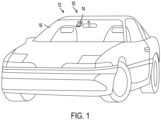
FIG. 1 is a perspective view of a vehicle with a vision system that incorporates a windshield mounted forward viewing camera module in accordance with the present invention; -
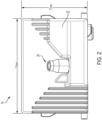
FIG. 2 is a top plan view of the camera module; -
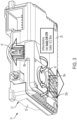
FIG. 3 is a rear perspective view of the camera module, showing the integrated cooling fan assembly at an underside of the camera module; -
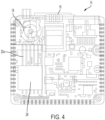
FIG. 4 is a bottom plan view of the camera module, with the housing shown in phantom to show interior details of the camera module; -
FIG. 5 is a top plan view of the circuit board of the camera module; -
FIG. 6 is a plan view of the cooling fan assembly; -
FIG. 7 is a side elevation of the cooling fan assembly; -
FIG. 8 is an upper perspective view of another camera module of the present invention; -
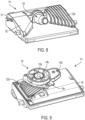
FIG. 9 is a lower perspective view of the camera module ofFIG. 8 ; -
FIG. 10 is a rear perspective view of the camera module ofFIG. 8 ; and -
FIG. 11 is an exploded view of the camera module ofFIG. 8 . - A vehicle vision system and/or driver assist system and/or object detection system and/or alert system operates to capture images exterior of the vehicle and may process the captured image data to display images and to detect objects at or near the vehicle and in the predicted path of the vehicle, such as to assist a driver of the vehicle in maneuvering the vehicle in a rearward direction. The vision system includes an image processor or image processing system that is operable to receive image data from one or more cameras and provide an output to a display device for displaying images representative of the captured image data. Optionally, the vision system may provide display, such as a rearview display or a top down or bird's eye or surround view display or the like.
- Referring now to the drawings and the illustrative embodiments depicted therein, a
vision system 10 for a vehicle 12 includes at least one exterior viewing imaging sensor orcamera 14, such as a forward viewing imaging sensor or camera, which may be disposed at and behind thewindshield 16 of the vehicle and viewing forward through the windshield so as to capture image data representative of the scene occurring forward of the vehicle (FIG. 1 ). Optionally, the system may include multiple exterior viewing imaging sensors or cameras, such as a forward viewing camera at the front of the vehicle, and a sideward/rearward viewing camera at respective sides of the vehicle, and a rearward viewing camera at the rear of the vehicle, which capture images exterior of the vehicle. The camera or cameras each include a lens for focusing images at or onto an imaging array or imaging plane or imager of the camera. Optionally, the forward viewing camera may be disposed at the windshield of the vehicle and view through the windshield and forward of the vehicle, such as for a machine vision system (such as for traffic sign recognition, headlamp control, pedestrian detection, collision avoidance, lane marker detection and/or the like). Thevision system 10 includes a control or electronic control unit (ECU) or processor that is operable to process image data captured by the camera or cameras and may detect objects or the like and/or provide displayed images at a display device for viewing by the driver of the vehicle. The data transfer or signal communication from the camera to the ECU may comprise any suitable data or communication link, such as a vehicle network bus or the like of the equipped vehicle. - Heat is generated during operation of the camera, such that, without enhanced cooling, maximum operating temperatures at the camera and/or associated electronics may be exceeded. For instance, the imager semiconductor junction temperature has to be below a threshold temperature to ensure necessary image quality. The
camera module 14 includes an integrated activecooling fan assembly 18 that is attached at the lower outside surface of thelower housing cover 20 and that operates to force air over and around the camera module's body or housing to enhance cooling of the camera during operation. - In the illustrated embodiment, the
camera module 14 includes a housing 21 (e.g., a metal or metallic housing) comprising an upper housing portion 22 (e.g., a metal or metallic upper housing portion) and the lower housing portion 20 (e.g., a metal or metallic lower housing portion), with acamera 24 partially disposed in the housing. Thecamera 24 comprises an imager circuit board having an imager thereat, and further comprises a lens barrel (accommodating a lens) that protrudes through an aperture of the upper housing portion (as shown inFIG. 2 ). The camera module includes a main or principle or primary circuit board 26 (as shown inFIG. 5 ) disposed in the housing, with the primary circuit board comprising animage processor 28 that processes image data captured by the camera (with the imager circuit board being electrically connected to the main circuit board via a flexible connector, such as a flexible ribbon cable or the like, whereby image data captured by the camera is provided to the primary or main circuit board via the flexible connector). Because of the amount of heat typically generated by the circuitry of the circuit boards during operation of the camera (and particularly the heat generated by the image processor of the primary circuit board during operation of the camera), the cooling fan assembly is disposed at the lower housing portion such that, when an electrically powered motor of the cooling fan assembly is electrically powered, the electrically powered motor rotatably drives a plurality of fan blades about an axis of rotation such that the cooling fan directs airflow onto and along heat dissipating fins of the camera housing, such as at an exterior side of the lower housing portion. The heat dissipating fins are at least in part present at an outer-side location at the outer side of the lower housing portion that coincides with or is juxtaposed with the inner-side location of a thermal element (such as a thermally conductive paste or grease or the like) that thermally conductively connects the image processor with the inner side of the lower housing portion. Thus, the image processor is in thermally conductive connection with the heat dissipating fins via the thermal element and a wall thickness (of the lower wall or structure) of the lower housing portion at the location where the thermal element is disposed. - For example, the
cooling fan assembly 18 includes afirst exit duct 18a that, when the motor of the cooling fan assembly is electrically powered, directs airflow between and along heat dissipating fins 20a (FIGS. 3 and4 ) at thelower housing portion 20 that are at or near or thermally conductively connected to theprocessor 28. The thermal element or paste or grease interface or thermally conductively connect the image processor with the inner or upper surface or side of the lower housing portion and thus with theheat dissipating fins 20a at the exterior or outer lower surface or side of the lower housing portion to enhance heat transfer from the processor. The cooling fan assembly comprises a low profile cooling fan assembly that does not protrude beyond the height of the heat dissipating fins at the outer side of the lower housing portion. Thefirst exit duct 18a directs air at an end of and in a direction generally parallel to the heat dissipating fins 20a, such that the air moves along channels between adjacent fins to enhance cooling of the fins and thus of the camera module. - The cooling fan assembly also includes a
second exit duct 18b (FIG. 3 ) that, when the motor of the cooling fan assembly is electrically powered, directs airflow between and along rear heat dissipating fins 19 (FIGS. 3 and4 ) at an outer side of a rear portion of the housing 21 (such as at a rear part of the upper housing portion and/or a rear part of the lower housing portion) that are at or near or thermally conductively connected to the imager circuit board. For example, a thermal element or paste or grease interface or thermally conductively connect the imager circuit board and the imager with the rear portion of the housing such as an inner surface or side of the rear portion of the housing and thus with the heat dissipating fins 19 (which are at least in part present at an outer-side location at the outer side of the rear housing portion that coincides with or is juxtaposed with the inner-side location of the thermal element that thermally conductively connects the imager circuit board with the interior side of the rear housing portion) to enhance heat transfer from the imager circuit board. Thus, the imager circuit board is in thermally conductive connection with the rear heat dissipating fins via the thermal element and a wall thickness (of the lower wall or structure) of the rear portion of the housing at the location where the thermal element is disposed. Thesecond exit duct 18b directs air at an end of and in a direction generally parallel to the heat dissipating fins 19, such that the air moves along channels between adjacent fins to enhance cooling of the fins and thus of the camera module. - As shown in
FIGS. 2-4 , thecooling fan assembly 18 comprises a low profile device that is integrated with the camera module. As shown, the cooling fan assembly is attached at the lower side or outer surface of thelower housing 20 of thecamera module 14. The cooling fan assembly draws air in at its lower side (such as at one or more inlet vents or openings at the lower part of the cooling fan assembly) and forces air through one or more exit ports or ducts toward targeted regions of the camera module to enhance or optimize cooling of the camera module (with the targeted regions optionally having heat dissipating fins or structure to further enhance or optimize the cooling of the camera module). - In the illustrated embodiment, the first exit port or
duct 18a (FIG. 6 ) of the cooling fan assembly directs airflow onto and along heat dissipating fins of the camera module that are at or near or in contact with theprocessor 28 at themain circuit board 26 of the camera module. Thus, the cooling fan provides enhanced cooling of the heat dissipating fins of the camera module to enhance the dissipation of heat generated by the processor during operation of the camera. - The second exit port or
duct 18b of the cooling fan assembly directs airflow onto and along the rear surface of the camera module to cool the imager and imager circuit board of thecamera 26 disposed at the housing. For example, heat dissipating fins may be provided at the rear of the camera housing at or near or in thermal conductive contact with the imager circuit board or elements thereof. Thecooling fan duct 18b directs airflow onto/into and along the heat dissipating fins of the camera module to enhance the dissipation of heat generated by the imager and camera circuitry during operation of the camera. As shown inFIGS. 3 and7 , the second exit port orduct 18b directs the air 90 degrees (or other suitable angle, such as an angle greater than 45 degrees, to accommodate the shape or curvature of the camera housing) from along the bottom of the camera housing to along the rear of the camera housing (such as at a rear part of the upper housing portion and/or a rear part of the lower housing portion). - The cooling fan assembly comprises a self-contained unit or module that includes the motor, fan blades and housing and exit ducts, whereby the cooling fan assembly is mounted at the lower housing portion of the camera module as a unit. The size and shape of the cooling fan assembly is selected based at least in part on the size and shape of the camera module housing and the location and configuration of the heat dissipating fins. For example, the length of the camera module is preferably less than 100 mm, more preferably less than 80 mm, and more preferably less than 60 mm (shown, for example, as 77 mm in
FIG. 2 ), while the width of the camera module is preferably less than 125 mm, more preferably less than 115 mm, and more preferably less than 105 mm (shown, for example, as 110 mm inFIG. 2 ). The fan assembly may have a width and length of less than 45 mm, preferably less than 30 mm, such as less than 25 mm (shown, for example, with a width of 30 mm inFIG. 6 ). The fan assembly may comprise a low profile fan assembly having a thickness that is preferably less than 12 mm, more preferably less than 7.5 mm, such as less than 5 mm (shown, for example, with a thickness of 6 mm inFIG. 7 ). The air flow generated or output by the fan assembly may be at a flow rate at least 0.7 cubic feet per minute (CFM), with the lower exit port (that directs air flow along and between the lower heat dissipating fins) output air at a flow rate of at least 0.2 CFM, preferably at least 0.3 CFM, and more preferably at least 0.5 CFM (such as, for example, 0.35 CFM as shown inFIG. 3 ), and with the rear exit port (that directs air flow along and between the rear heat dissipating fins) output air at a flow rate of at least 0.5 CFM, preferably at least 0.6 CFM, and more preferably at least 0.6 CFM (such as, for example, 0.53 CFM as shown inFIG. 3 ). The design and configuration of the cooling fan assembly can be adapted to provide desired flow rates at and along and between the respective heat dissipating fins. - As shown in
FIG. 3 , theexit ports - In the illustrated embodiment of
FIGS. 2 ,3 ,6 and 7 , the cooling fan assembly is configured to direct air radially out from the fan blades so that air is directed into passageways or flow paths defined at least in part by the heat dissipating fins and that receive the air flow at locations that are radially outboard from the fan blades. Optionally, however, the cooling fan assembly may be configured to direct air axially into or onto cooling fins or air flow paths. - For example, and such as shown in
FIGS. 8-11 , acamera module 114 includes ahousing 121 comprising an upper housing portion or cover 122 (e.g., a metal upper housing portion or cover) and a lower housing portion or cover 120 (e.g., a metal lower housing portion or cover), with acamera 124 partially disposed in the housing. Thecamera module 114 includes a main or principle orprimary circuit board 126 disposed in the metal housing, with the primary circuit board comprising an image processor that processes image data captured by the camera (with the image data captured by the camera being provided to the primary circuit board via a flexible connector, such as a flexible ribbon cable or the like). As can be seen with reference toFIG. 11 , the lens barrel of thecamera 124 is non-parallel to and forms an acute upward angle with the plane of theprimary circuit board 126. The camera module further includes an integrated activecooling fan assembly 118 that is attached at the lower outside surface of thelower housing portion 120 and that operates (via electrical powering of amotor 118a of the cooling fan assembly that rotatably drives a plurality offan blades 118b) to force air toward the camera module's body or housing to enhance cooling of the camera during operation. - Referring to
FIG. 9 , the coolingfan assembly 118, when the motor is operated, directs air flow axially (in a direction parallel to the axis of rotation of the fan blade) toward the lower surface of the camera housing orlower housing cover 120, where the air may flow alongheat dissipating fins 120a at the lower housing portion 120 (such as along and within channels defined between adjacent fins) that are at or near or thermally conductively connected to the processor so as to enhance cooling of the camera module during operation. A thermal element 130 (such as a thermally conductive paste or grease or the like) may interface or thermally conductively connect the image processor at theprimary circuit board 126 with the inner or upper side or surface of thelower housing portion 120 and thus with theheat dissipating fins 120a of thelower housing portion 120 to enhance heat transfer from the processor. Theheat dissipating fins 120a are at least in part present at an outer-side location at the outer side of thelower housing portion 120 that coincides with or is juxtaposed with the inner-side location of thethermal element 130 that thermally conductively connects the image processor with the inner side of the lower housing portion. - The cooling
fan assembly 118 may also direct air flow into a passageway along the rear of the camera housing (such as along and within channels defined between adjacent fins of theheat dissipating fins 119 at a rear portion of the housing, such as at a rear part of the upper housing portion and/or a rear part of the lower housing portion) that are at or near or thermally conductively connected to the imager circuit board. Another thermal element 132 (such as a thermally conductive paste or grease or the like) may interface or thermally conductively connect theimager circuit board 124a of thecamera 124 with an inner surface or side of the rear housing portion and thus with theheat dissipating fins 119 of the housing to enhance heat transfer from the imager circuit board. The rearheat dissipating fins 119 are at least in part present at an outer-side location at the outer side of the rear portion of the housing that coincides with or is juxtaposed with the inner-side location of where thethermal element 132 thermally conductively connects the imager circuit board with the inner side of the rear portion of the housing. - The air flow path and/or heat dissipating fins may be connected with or aligned or thermally connected to heat dissipating
fins 122a at theupper housing portion 122 to further enhance cooling of the camera module. Optionally, a thermal element 134 (such as a thermally conductive paste or grease or the like) may interface or thermally conductively connect circuitry or components of theprimary circuit board 126 to a lower or inner surface or side of theupper housing portion 122. - As shown in
FIGS. 9 and10 , the cooling fan assembly has a housing portion 118cthat circumscribes thefan blades 118b and includes attachment structure or flanges for attaching the cooling fan assembly at the lower housing portion of the camera module. The coolingfan housing portion 118c has an air inlet end and an air outlet or exit end, with its output or exit end (the end of the fan structure that faces the camera housing) at entrances to the respective heat dissipating fins, such that the air axially exiting the fan flows towards the lower camera housing and is diverted along and between the heat dissipating fins. In the illustrated embodiment, the lowerheat dissipating fins 120a are formed with shallower fin portions (fin portions that protrude a lesser amount from the outer surface of the lower housing portion than deeper fin portions) at the ends where the cooling fan assembly is mounted, such that air output by the fan flows into and along and between the heat dissipating fins along the lower housing portion (and between the output of the fan and the outer surface of the lower housing portion). Likewise, the rearheat dissipating fins 119 are formed with fin portions at the lower outer surface of the lower housing portion that are generally the same depth as the shallower fin portions of the lower heat dissipating fins, such that air output by the fan flows into and along and between the heat dissipating fins along the lower housing portion (and between the output of the fan and the outer surface of the lower housing portion) and into and along and between the rear heat dissipating fins at the rear portion of the housing. - The shallower fin portions of the lower heat dissipating fins and the lower portions of the rear dissipating fins may be configured so that their lower edges are generally co-planar such that the cooling fan assembly mounts to the lower housing portion with the output area of the fan at the generally planar construction provided by the fin portions. As can be seen with reference to
FIGS. 9 and10 , the cooling fan assembly attaches to the lower housing portion via a plurality of fasteners (such as, for example, three threaded fasteners or screws that are threaded into threaded bores or apertures at the lower housing portion), with air flow from the cooling fan (when the motor is electrically operated) being directed along and between theheat dissipating fins fins - The deeper fin portions of the lower
heat dissipating fins 120a (that protrude a greater amount from the outer surface of the lower housing portion than shallower fin portions) are configured to provide enhanced cooling of the camera module and may be of different lengths along the outer surface so that the ends of the deeper portions of the fins form a curvature or shape that generally corresponds with the curvature or shape of the cooling fan assembly. The output end of the fan assembly thus is disposed over an end or entry portion of the lower heat dissipating fins (at the shallower fin portions) and over an end or entry portion of the rear heat dissipating fins (with the axially flowing air flowing in a direction along the rear heat dissipating fins along the rear portion of the housing), so that the air flow that is axially output by the fan flows into and along and between the respective heat dissipating fins. - Optionally, the lower housing portion may be constructed with diverting fins or structure that diverts a desired amount or portion of the output air flow into and along and between the respective heat dissipating fins. For example, the diverting construction may be centrally located at the output end of the fan to divert generally equal parts of the output air flow to each set of heat dissipating fins, or the diverting construction may be more towards the rear heat dissipating fins so as to divert more of the output air flow into and along the lower heat dissipating fins, so as to provide enhanced cooling of heat generated by the imager processor during operation of the camera module.
- The cooling fan assembly includes a connecting
portion 118d that attaches at the lower surface of thelower housing portion 120, and that may provide for electrical connection (such as via amulti-pin connector 118e (FIG. 11 ) that plugs into or otherwise electrically connects to corresponding pins or terminals of or at the primary circuit board) to circuitry of the camera module when the cooling fan assembly is mounted or attached at the lower housing portion of the camera module. The cooling fan assembly may also include alignment pins orstructure 118f (FIG. 11 ) to align the cooling fan with the camera connector and with the mounting structure as the cooling fan assembly is moved into place at the lower housing portion of the camera module. Thus, when the camera module is installed in the vehicle and electrically connected to the vehicle power source (such as via amulti-pin connector 115 of the camera module electrically connecting to a plug or socket connector of a vehicle wire harness), the coolingfan motor 118a is electrically controlled or powered or operated to cool the camera module during operation of the camera module, such as when temperature at the camera module exceeds a threshold level, such as discussed below. - The cooling
fan assembly 118 comprises a self-contained unit or module that includes the motor, fan blades and housing, whereby the cooling fan assembly is mounted at the lower housing portion of the camera module as a unit. The cooling fan housing circumscribes the fan blades and motor (providing a cylindrical air passageway from an inlet end of the cooling fan to an outlet end of the cooling fan) and provides mounting structure for attaching the cooling fan assembly at the lower housing portion of the camera module). - The cooling fan assembly is thus attached (such as via two or more threaded fasteners or other external connection) at the camera module so that it can be removed and replaced or serviced without need for replacing the front camera module. The cooling fan assembly and the camera module may be configured such that electrical connection of the motor of the cooling fan assembly is made to circuitry of the camera module when the cooling fan assembly is attached at the lower housing portion. For example, electrical leads from the circuit board or electrical connector of the camera module may have terminals or contacts at the lower housing portion where the cooling fan assembly is mounted, such that electrical connection to the cooling fan assembly is made when the fan is attached or mounted at the lower housing portion. The electrical connection may provide electrical power and/or control to the motor of the cooling fan assembly via the circuitry of the camera module when the camera module is electrically connected to the vehicle power source (such as via a wire harness or the like). The lower housing portion of the camera module may include a socket or recess for receiving a portion of the integrated cooling fan assembly in its mounted or attached position. Optionally, the lower housing portion may include guide pins or the like for accurately positioning the cooling fan assembly (e.g., with respect to the terminals or contacts at the lower housing portion) as the cooling fan assembly is positioned at and attached or mounted at the lower housing portion.
- The cooling fan assembly may comprise a DC brushless motor with a 5V operating voltage, and may be pulse-width modulation (PWM) controlled. The cooling fan assembly may have a starting voltage of around 4 VDC and may have an operating current of 183 mA and a rated power consumption of 0.92 Watts. The cooling fan assembly, when the motor is electrically powered, may generate up to around 1.18 CFM airflow (or more) when operating in the range of around 6,300 RPM to around 11,700 RPM (9000 RPM +/- 30 percent). The operating temperature range may be around 0 degrees C to around 85 degrees C, with a storage temperature range of around -40 degrees C to around 90 degrees C. In a situation where the fan is locked by an external force while being electrically powered, an increase in coil temperature of the motor is prevented by temporarily turning off the electrical power to the fan motor. The fan may automatically restart when the locked rotor condition is released.
- The camera housing includes vent openings and the cooling fan assembly includes channels or ducts that direct air flow (generated when the fan motor is electrically powered) at cooling fins or components of the camera module to optimize airflow of the fan as well as to support natural convection around the camera module. With respect to the cooling
fan assembly 118, the intake opening is at the end of the cooling fan assembly distal from the end of the assembly that interfaces with or attaches at the lower housing portion of the camera module, and thus allows for greater air intake when the motor is powered to drive/rotate the fan blades. Optionally, the housing of the cooling fan assembly may include structure (seeFIG. 10 ) over the motor and fan blades to prevent contact of the fan blades, such as during assembly and installation of the camera module. - The cooling fan motor may comprise a variable speed fan motor that is controlled, e.g., by the control or controller or electronic control unit (ECU) or processor or the like, with a PWM line. The controller includes control circuitry and associated software. The PWM duty cycle may be software (SW) controlled, based on one or more inputs, such as, for example, an input based on an output of a vehicle ambient temperature sensor (that provides a temperature at or near or indicative of the temperature at the camera module), an input based on an output of a vehicle ambient light sensor (to detect sunload and thus to provide an output that is indicative of temperature at the windshield and camera module), and an input based on an output of one or more internal temperature sensors at more critical components. The fan may operate only with the necessary load and speed, in order to improve lifetime requirements based on targeted device under test (DUT) thermal mission profile.
- Optionally, other cooling elements or devices may also or otherwise be implemented to cool the camera module during operation. For example, a Peltier element may be disposed at some components to increase thermal dissipation. Optionally, the camera module may include integrated liquid cooling to enhance heat dissipation away from the camera module. Optionally, a cooling fan assembly may be disposed in the vehicle separate from the camera module, whereby a channel or duct guides and directs airflow from the separate cooling fan assembly to the camera module.
- The camera comprises a forward viewing camera, such as disposed at the windshield, and optionally at a windshield electronics module (WEM) or the like.
- The camera or sensor may comprise any suitable camera or sensor. Optionally, the camera may comprise a "smart camera" that includes the imaging sensor array and associated circuitry and image processing circuitry and electrical connectors and the like as part of a camera module.
- The system includes an image processor operable to process image data captured by the camera or cameras, such as for detecting objects or other vehicles or pedestrians or the like in the field of view of one or more of the cameras. For example, the image processor may comprise an image processing chip selected from the EYEQ family of image processing chips available from Mobileye Vision Technologies Ltd. of Jerusalem, Israel, and may include object detection software, and may analyze image data to detect vehicles and/or other objects. Responsive to such image processing, and when an object or other vehicle is detected, the system may generate an alert to the driver of the vehicle and/or may generate an overlay at the displayed image to highlight or enhance display of the detected object or vehicle, in order to enhance the driver's awareness of the detected object or vehicle or hazardous condition during a driving maneuver of the equipped vehicle.
- The vehicle may include any type of sensor or sensors, such as imaging sensors or radar sensors or lidar sensors or ultrasonic sensors or the like. The imaging sensor or camera may capture image data for image processing and may comprise any suitable camera or sensing device, such as, for example, a two dimensional array of a plurality of photosensor elements arranged in at least 640 columns and 480 rows (at least a 640 x 480 imaging array, such as a megapixel imaging array or the like), with a respective lens focusing images onto respective portions of the array. The photosensor array may comprise a plurality of photosensor elements arranged in a photosensor array having rows and columns. Preferably, the imaging array has at least 300,000 photosensor elements or pixels, more preferably at least 500,000 photosensor elements or pixels and more preferably at least 1 million photosensor elements or pixels. The imaging array may capture color image data, such as via spectral filtering at the array, such as via an RGB (red, green and blue) filter or via a red / red complement filter or such as via an RCC (red, clear, clear) filter or the like. The logic and control circuit of the imaging sensor may function in any known manner, and the image processing and algorithmic processing may comprise any suitable means for processing the images and/or image data.
Claims (11)
- A camera module (14, 114) for a vehicular vision system (10), said camera module (14, 114) comprising:a metallic housing (21, 121) comprising a metallic upper housing portion (22, 122) and a metallic lower housing portion (20, 120);a camera (24, 124) accommodated in said metallic housing (21, 121), said camera (24, 124) comprising an imager circuit board (124a) having an imager thereat, said camera (24, 124) comprising a lens barrel that accommodates a lens and that protrudes outside said metallic housing (21, 121) through an aperture of said metallic upper housing portion (22, 122);a primary circuit board (26, 126) accommodated in said metallic housing (21, 121), said primary circuit board (26, 126) having an upper side and a lower side, said primary circuit board (26, 126) having an image processor (28) disposed thereat, wherein said image processor (28) processes image data captured by said camera (24, 124), and wherein said image processor (28) is disposed at the lower side of said primary circuit board (26, 126) and is in thermal conductive connection via a thermal element (130) with an inner side of said metallic lower housing portion (20, 120);wherein an outer side of said metallic lower housing portion (20, 120) comprises heat dissipating fins (20a, 120a);wherein the heat dissipating fins (20a, 120a) are present at the outer side of said metallic lower housing portion (20, 120) at an outer-side location that is juxtaposed with an inner-side location where said image processor (28) is in thermal conductive connection via the thermal element (130) with the inner side of said metallic lower housing portion (20, 120);wherein the heat dissipating fins (20a, 120a) are in thermal conductive connection with said image processor (28);wherein said camera module (14, 114) is configured to be mounted at an in-cabin side of a windshield (16) of a vehicle (12) so as to have a field of view through the windshield (16) and forward of the vehicle (12);characterized ina cooling fan assembly (18, 118) attached at the outer side of said metallic lower housing portion (20, 120), said cooling fan assembly (18, 118) comprising an electrically powerable motor that, when electrically powered, rotatably drives a plurality of fan blades of said cooling fan assembly (18, 118);wherein said cooling fan assembly (18, 118), when the motor is electrically powered, directs airflow along and between the heat dissipating fins (20a, 120a) of the outer side of said metallic lower housing portion (20, 120);wherein said cooling fan assembly (18, 118) comprises a first exit duct (18a) that, when the motor of said cooling fan assembly (18, 118) is electrically powered, directs airflow along and between the heat dissipating fins (20a, 120a) of the outer side of said metallic lower housing portion (20, 120); andwherein said cooling fan assembly (18, 118) comprises a second exit duct (18b) that, when the motor of said cooling fan assembly (18, 118) is electrically powered, directs airflow along and between rear heat dissipating fins (19, 119) of an outer side of a rear portion of said metallic housing (21, 121), and wherein the rear heat dissipating fins (19, 119) are present at the outer side of said rear portion of said metallic housing (21, 121) at an outer-side location that is juxtaposed with an inner-side location where said imager circuit board (124a) is in thermal conductive connection via another thermal element (132) with an inner side of said rear portion of said metallic housing (21, 121).
- The camera module (14, 114) of claim 1, wherein an outer side of said metallic upper housing portion (22, 122) comprises upper heat dissipating fins (122a) that are in thermal conductive connection with the heat dissipating fins (20a, 120a) of the outer side of said metallic lower housing portion (20, 120).
- The camera module (14, 114) of claim 1, wherein said cooling fan assembly (18, 118) comprises a low profile cooling fan assembly (18, 118) that does not protrude beyond the height of the heat dissipating fins (20a, 120a) of the outer side of said metallic lower housing portion (20, 120).
- The camera module (14, 114) of claim 1, wherein said cooling fan assembly (18, 118) is at least partially received in a recessed region of said metallic lower housing portion (20, 120).
- The camera module (14, 114) of claim 1, wherein said cooling fan assembly (18, 118) is detachably attached at the outer side of said metallic lower housing portion (20, 120) via one or more fasteners.
- The camera module (14, 114) of claim 1, wherein electrical connection to said cooling fan assembly (18, 118) is made when said cooling fan assembly (18, 118) is attached at the outer side of said metallic lower housing portion (20, 120) via terminals of said cooling fan assembly (18, 118) electrically connecting to terminals of said camera module (14, 114) when said cooling fan assembly (18, 118) is attached at the outer side of said metallic lower housing portion (20, 120).
- The camera module (14, 114) of claim 1, wherein, when the motor of said cooling fan assembly (18, 118) is electrically powered, said cooling fan assembly (18, 118) directs air axially onto a portion of the heat dissipating fins (20a, 120a) of the outer side of said metallic lower housing portion (20, 120), whereby the air flows in a direction along and between the heat dissipating fins (20a, 120a).
- The camera module (14, 114) of claim 1, further comprising a controller having control circuitry and associated software, wherein said controller controls the motor of said cooling fan assembly (18, 118) responsive to one or more sensors.
- The camera module (14, 114) of claim 8, wherein the motor of said cooling fan assembly (18, 118) comprises a variable speed motor, and wherein said controller adjusts speed of the motor of said cooling fan assembly (18, 118) based on the one or more sensors.
- The camera module (14, 114) of claim 9, wherein at least one of the one or more sensors comprises an ambient light sensor that senses ambient light at the vehicle, and wherein said controller adjusts the speed of the motor of said cooling fan assembly (18, 118) based on the sensed ambient light at the vehicle.
- The camera module (14, 114) of claim 9, wherein at least one of the one or more sensors comprises a temperature sensor that senses a temperature at said camera module (14, 114), and wherein said controller adjusts the speed of the motor of said cooling fan assembly (18, 118) based on the sensed temperature at said camera module (14, 114).
Applications Claiming Priority (2)
| Application Number | Priority Date | Filing Date | Title |
|---|---|---|---|
| US201962797469P | 2019-01-28 | 2019-01-28 | |
| PCT/US2020/015306 WO2020159914A1 (en) | 2019-01-28 | 2020-01-28 | Vehicular forward camera module with integrated cooling fan |
Publications (3)
| Publication Number | Publication Date |
|---|---|
| EP3918419A1 EP3918419A1 (en) | 2021-12-08 |
| EP3918419A4 EP3918419A4 (en) | 2022-06-29 |
| EP3918419B1 true EP3918419B1 (en) | 2024-07-10 |
Family
ID=71841385
Family Applications (1)
| Application Number | Title | Priority Date | Filing Date |
|---|---|---|---|
| EP20749328.9A Active EP3918419B1 (en) | 2019-01-28 | 2020-01-28 | Vehicular forward camera module with integrated cooling fan |
Country Status (3)
| Country | Link |
|---|---|
| EP (1) | EP3918419B1 (en) |
| CN (1) | CN113366385B (en) |
| WO (1) | WO2020159914A1 (en) |
Families Citing this family (4)
| Publication number | Priority date | Publication date | Assignee | Title |
|---|---|---|---|---|
| US12120408B2 (en) | 2019-01-28 | 2024-10-15 | Magna Electronics Inc. | Vehicular forward camera module with cooling fan and air duct |
| EP3795425B1 (en) * | 2019-09-18 | 2024-10-30 | Magna Electronics Sweden AB | A camera arrangement for mounting in a vehicle |
| JP2022067299A (en) * | 2020-10-20 | 2022-05-06 | 株式会社デンソー | Imaging apparatus |
| DE102020129731B4 (en) | 2020-11-11 | 2023-08-17 | Dr. Ing. H.C. F. Porsche Aktiengesellschaft | camera body |
Family Cites Families (12)
| Publication number | Priority date | Publication date | Assignee | Title |
|---|---|---|---|---|
| JP2002271074A (en) * | 2001-03-08 | 2002-09-20 | Toshiba Corp | Cooling device and electronic equipment incorporating cooling device |
| US9487159B2 (en) | 2011-08-02 | 2016-11-08 | Magna Electronics Inc. | Vehicle vision system with camera module mounting bracket |
| US9596387B2 (en) | 2011-08-02 | 2017-03-14 | Magna Electronics Inc. | Vehicular camera system |
| US9871971B2 (en) | 2011-08-02 | 2018-01-16 | Magma Electronics Inc. | Vehicle vision system with light baffling system |
| JP6000751B2 (en) * | 2012-08-27 | 2016-10-05 | キヤノン株式会社 | Imaging device |
| US9896039B2 (en) | 2014-05-09 | 2018-02-20 | Magna Electronics Inc. | Vehicle vision system with forward viewing camera |
| DE102014209611A1 (en) * | 2014-05-21 | 2015-11-26 | Conti Temic Microelectronic Gmbh | Assistance system of a motor vehicle |
| AT515828B1 (en) | 2014-05-23 | 2022-02-15 | Fronius Int Gmbh | Cooling device and inverter housing with such a cooling device |
| EP3187934B1 (en) * | 2014-08-29 | 2018-11-07 | SZ DJI Technology Co., Ltd. | Image capturing module |
| US11395444B2 (en) * | 2015-08-24 | 2022-07-19 | Trw Automotive U.S. Llc | Cooling arrangement for a driver assist system |
| JP6304205B2 (en) * | 2015-11-11 | 2018-04-04 | トヨタ自動車株式会社 | In-vehicle imaging device |
| CN106059287B (en) * | 2016-08-16 | 2019-05-10 | 深圳市康灿汽车电源有限公司 | A kind of DC/DC converter |
-
2020
- 2020-01-28 CN CN202080011334.2A patent/CN113366385B/en active Active
- 2020-01-28 EP EP20749328.9A patent/EP3918419B1/en active Active
- 2020-01-28 WO PCT/US2020/015306 patent/WO2020159914A1/en not_active Ceased
Also Published As
| Publication number | Publication date |
|---|---|
| WO2020159914A1 (en) | 2020-08-06 |
| EP3918419A4 (en) | 2022-06-29 |
| CN113366385A (en) | 2021-09-07 |
| CN113366385B (en) | 2023-04-11 |
| EP3918419A1 (en) | 2021-12-08 |
Similar Documents
| Publication | Publication Date | Title |
|---|---|---|
| US11290622B2 (en) | Vehicular forward camera module with integrated cooling fan | |
| US12120408B2 (en) | Vehicular forward camera module with cooling fan and air duct | |
| EP3918419B1 (en) | Vehicular forward camera module with integrated cooling fan | |
| US11997392B2 (en) | Vehicular camera module | |
| US11997371B2 (en) | Vehicular cooling system for forward camera module | |
| US11539866B2 (en) | Vehicular camera with enhanced heat dissipation | |
| US10597002B1 (en) | Imaging system | |
| US11718243B2 (en) | Vehicular camera system with forward viewing camera | |
| US10609260B2 (en) | Assistance system for a motor vehicle | |
| CN108449533B (en) | vehicle camera system | |
| EP3435152B1 (en) | Vehicle-mounted image processing device | |
| CN110166737B (en) | Vehicle exterior monitoring device | |
| WO2013123161A1 (en) | Vehicle vision system with light baffling system | |
| US11833972B1 (en) | Vehicle overhead console with cooling fan | |
| EP3796085B1 (en) | Camera device | |
| US20240132003A1 (en) | Vehicular control system with fan and shroud for enhanced cooling at ecu | |
| US20250081411A1 (en) | Vehicular ecu with multi-channel cooling system | |
| US20240116332A1 (en) | Vehicular in-cabin heating system using adas ecu | |
| KR20250098757A (en) | Sensor Device for Vehicle |
Legal Events
| Date | Code | Title | Description |
|---|---|---|---|
| STAA | Information on the status of an ep patent application or granted ep patent |
Free format text: STATUS: THE INTERNATIONAL PUBLICATION HAS BEEN MADE |
|
| PUAI | Public reference made under article 153(3) epc to a published international application that has entered the european phase |
Free format text: ORIGINAL CODE: 0009012 |
|
| STAA | Information on the status of an ep patent application or granted ep patent |
Free format text: STATUS: REQUEST FOR EXAMINATION WAS MADE |
|
| 17P | Request for examination filed |
Effective date: 20210804 |
|
| AK | Designated contracting states |
Kind code of ref document: A1 Designated state(s): AL AT BE BG CH CY CZ DE DK EE ES FI FR GB GR HR HU IE IS IT LI LT LU LV MC MK MT NL NO PL PT RO RS SE SI SK SM TR |
|
| DAV | Request for validation of the european patent (deleted) | ||
| DAX | Request for extension of the european patent (deleted) | ||
| A4 | Supplementary search report drawn up and despatched |
Effective date: 20220527 |
|
| RIC1 | Information provided on ipc code assigned before grant |
Ipc: H04N 5/225 20060101ALI20220520BHEP Ipc: B60R 11/04 20060101ALI20220520BHEP Ipc: H05K 7/20 20060101ALI20220520BHEP Ipc: H05K 7/00 20060101ALI20220520BHEP Ipc: G03B 17/55 20210101AFI20220520BHEP |
|
| P01 | Opt-out of the competence of the unified patent court (upc) registered |
Effective date: 20230413 |
|
| REG | Reference to a national code |
Ref legal event code: R079 Free format text: PREVIOUS MAIN CLASS: G03B0017550000 Ref country code: DE Ref legal event code: R079 Ref document number: 602020033768 Country of ref document: DE Free format text: PREVIOUS MAIN CLASS: G03B0017550000 Ipc: H04N0023510000 |
|
| GRAP | Despatch of communication of intention to grant a patent |
Free format text: ORIGINAL CODE: EPIDOSNIGR1 |
|
| STAA | Information on the status of an ep patent application or granted ep patent |
Free format text: STATUS: GRANT OF PATENT IS INTENDED |
|
| RIC1 | Information provided on ipc code assigned before grant |
Ipc: G03B 17/55 20210101ALI20240131BHEP Ipc: B60R 11/04 20060101ALI20240131BHEP Ipc: H04N 23/57 20230101ALI20240131BHEP Ipc: H04N 23/52 20230101ALI20240131BHEP Ipc: H04N 23/51 20230101AFI20240131BHEP |
|
| INTG | Intention to grant announced |
Effective date: 20240305 |
|
| GRAS | Grant fee paid |
Free format text: ORIGINAL CODE: EPIDOSNIGR3 |
|
| GRAA | (expected) grant |
Free format text: ORIGINAL CODE: 0009210 |
|
| STAA | Information on the status of an ep patent application or granted ep patent |
Free format text: STATUS: THE PATENT HAS BEEN GRANTED |
|
| AK | Designated contracting states |
Kind code of ref document: B1 Designated state(s): AL AT BE BG CH CY CZ DE DK EE ES FI FR GB GR HR HU IE IS IT LI LT LU LV MC MK MT NL NO PL PT RO RS SE SI SK SM TR |
|
| REG | Reference to a national code |
Ref country code: CH Ref legal event code: EP |
|
| REG | Reference to a national code |
Ref country code: DE Ref legal event code: R096 Ref document number: 602020033768 Country of ref document: DE |
|
| REG | Reference to a national code |
Ref country code: LT Ref legal event code: MG9D |
|
| REG | Reference to a national code |
Ref country code: NL Ref legal event code: MP Effective date: 20240710 |
|
| PG25 | Lapsed in a contracting state [announced via postgrant information from national office to epo] |
Ref country code: PT Free format text: LAPSE BECAUSE OF FAILURE TO SUBMIT A TRANSLATION OF THE DESCRIPTION OR TO PAY THE FEE WITHIN THE PRESCRIBED TIME-LIMIT Effective date: 20241111 |
|
| REG | Reference to a national code |
Ref country code: AT Ref legal event code: MK05 Ref document number: 1703077 Country of ref document: AT Kind code of ref document: T Effective date: 20240710 |
|
| PG25 | Lapsed in a contracting state [announced via postgrant information from national office to epo] |
Ref country code: NL Free format text: LAPSE BECAUSE OF FAILURE TO SUBMIT A TRANSLATION OF THE DESCRIPTION OR TO PAY THE FEE WITHIN THE PRESCRIBED TIME-LIMIT Effective date: 20240710 |
|
| PG25 | Lapsed in a contracting state [announced via postgrant information from national office to epo] |
Ref country code: PT Free format text: LAPSE BECAUSE OF FAILURE TO SUBMIT A TRANSLATION OF THE DESCRIPTION OR TO PAY THE FEE WITHIN THE PRESCRIBED TIME-LIMIT Effective date: 20241111 Ref country code: NL Free format text: LAPSE BECAUSE OF FAILURE TO SUBMIT A TRANSLATION OF THE DESCRIPTION OR TO PAY THE FEE WITHIN THE PRESCRIBED TIME-LIMIT Effective date: 20240710 |
|
| PG25 | Lapsed in a contracting state [announced via postgrant information from national office to epo] |
Ref country code: NO Free format text: LAPSE BECAUSE OF FAILURE TO SUBMIT A TRANSLATION OF THE DESCRIPTION OR TO PAY THE FEE WITHIN THE PRESCRIBED TIME-LIMIT Effective date: 20241010 |
|
| PG25 | Lapsed in a contracting state [announced via postgrant information from national office to epo] |
Ref country code: FI Free format text: LAPSE BECAUSE OF FAILURE TO SUBMIT A TRANSLATION OF THE DESCRIPTION OR TO PAY THE FEE WITHIN THE PRESCRIBED TIME-LIMIT Effective date: 20240710 Ref country code: PL Free format text: LAPSE BECAUSE OF FAILURE TO SUBMIT A TRANSLATION OF THE DESCRIPTION OR TO PAY THE FEE WITHIN THE PRESCRIBED TIME-LIMIT Effective date: 20240710 Ref country code: GR Free format text: LAPSE BECAUSE OF FAILURE TO SUBMIT A TRANSLATION OF THE DESCRIPTION OR TO PAY THE FEE WITHIN THE PRESCRIBED TIME-LIMIT Effective date: 20241011 |
|
| PG25 | Lapsed in a contracting state [announced via postgrant information from national office to epo] |
Ref country code: BG Free format text: LAPSE BECAUSE OF FAILURE TO SUBMIT A TRANSLATION OF THE DESCRIPTION OR TO PAY THE FEE WITHIN THE PRESCRIBED TIME-LIMIT Effective date: 20240710 |
|
| PG25 | Lapsed in a contracting state [announced via postgrant information from national office to epo] |
Ref country code: LV Free format text: LAPSE BECAUSE OF FAILURE TO SUBMIT A TRANSLATION OF THE DESCRIPTION OR TO PAY THE FEE WITHIN THE PRESCRIBED TIME-LIMIT Effective date: 20240710 |
|
| PG25 | Lapsed in a contracting state [announced via postgrant information from national office to epo] |
Ref country code: AT Free format text: LAPSE BECAUSE OF FAILURE TO SUBMIT A TRANSLATION OF THE DESCRIPTION OR TO PAY THE FEE WITHIN THE PRESCRIBED TIME-LIMIT Effective date: 20240710 Ref country code: IS Free format text: LAPSE BECAUSE OF FAILURE TO SUBMIT A TRANSLATION OF THE DESCRIPTION OR TO PAY THE FEE WITHIN THE PRESCRIBED TIME-LIMIT Effective date: 20241110 |
|
| PG25 | Lapsed in a contracting state [announced via postgrant information from national office to epo] |
Ref country code: HR Free format text: LAPSE BECAUSE OF FAILURE TO SUBMIT A TRANSLATION OF THE DESCRIPTION OR TO PAY THE FEE WITHIN THE PRESCRIBED TIME-LIMIT Effective date: 20240710 |
|
| PG25 | Lapsed in a contracting state [announced via postgrant information from national office to epo] |
Ref country code: ES Free format text: LAPSE BECAUSE OF FAILURE TO SUBMIT A TRANSLATION OF THE DESCRIPTION OR TO PAY THE FEE WITHIN THE PRESCRIBED TIME-LIMIT Effective date: 20240710 Ref country code: RS Free format text: LAPSE BECAUSE OF FAILURE TO SUBMIT A TRANSLATION OF THE DESCRIPTION OR TO PAY THE FEE WITHIN THE PRESCRIBED TIME-LIMIT Effective date: 20241010 |
|
| PG25 | Lapsed in a contracting state [announced via postgrant information from national office to epo] |
Ref country code: RS Free format text: LAPSE BECAUSE OF FAILURE TO SUBMIT A TRANSLATION OF THE DESCRIPTION OR TO PAY THE FEE WITHIN THE PRESCRIBED TIME-LIMIT Effective date: 20241010 Ref country code: PL Free format text: LAPSE BECAUSE OF FAILURE TO SUBMIT A TRANSLATION OF THE DESCRIPTION OR TO PAY THE FEE WITHIN THE PRESCRIBED TIME-LIMIT Effective date: 20240710 Ref country code: NO Free format text: LAPSE BECAUSE OF FAILURE TO SUBMIT A TRANSLATION OF THE DESCRIPTION OR TO PAY THE FEE WITHIN THE PRESCRIBED TIME-LIMIT Effective date: 20241010 Ref country code: LV Free format text: LAPSE BECAUSE OF FAILURE TO SUBMIT A TRANSLATION OF THE DESCRIPTION OR TO PAY THE FEE WITHIN THE PRESCRIBED TIME-LIMIT Effective date: 20240710 Ref country code: IS Free format text: LAPSE BECAUSE OF FAILURE TO SUBMIT A TRANSLATION OF THE DESCRIPTION OR TO PAY THE FEE WITHIN THE PRESCRIBED TIME-LIMIT Effective date: 20241110 Ref country code: HR Free format text: LAPSE BECAUSE OF FAILURE TO SUBMIT A TRANSLATION OF THE DESCRIPTION OR TO PAY THE FEE WITHIN THE PRESCRIBED TIME-LIMIT Effective date: 20240710 Ref country code: GR Free format text: LAPSE BECAUSE OF FAILURE TO SUBMIT A TRANSLATION OF THE DESCRIPTION OR TO PAY THE FEE WITHIN THE PRESCRIBED TIME-LIMIT Effective date: 20241011 Ref country code: FI Free format text: LAPSE BECAUSE OF FAILURE TO SUBMIT A TRANSLATION OF THE DESCRIPTION OR TO PAY THE FEE WITHIN THE PRESCRIBED TIME-LIMIT Effective date: 20240710 Ref country code: ES Free format text: LAPSE BECAUSE OF FAILURE TO SUBMIT A TRANSLATION OF THE DESCRIPTION OR TO PAY THE FEE WITHIN THE PRESCRIBED TIME-LIMIT Effective date: 20240710 Ref country code: BG Free format text: LAPSE BECAUSE OF FAILURE TO SUBMIT A TRANSLATION OF THE DESCRIPTION OR TO PAY THE FEE WITHIN THE PRESCRIBED TIME-LIMIT Effective date: 20240710 Ref country code: AT Free format text: LAPSE BECAUSE OF FAILURE TO SUBMIT A TRANSLATION OF THE DESCRIPTION OR TO PAY THE FEE WITHIN THE PRESCRIBED TIME-LIMIT Effective date: 20240710 |
|
| REG | Reference to a national code |
Ref country code: DE Ref legal event code: R097 Ref document number: 602020033768 Country of ref document: DE |
|
| PG25 | Lapsed in a contracting state [announced via postgrant information from national office to epo] |
Ref country code: SM Free format text: LAPSE BECAUSE OF FAILURE TO SUBMIT A TRANSLATION OF THE DESCRIPTION OR TO PAY THE FEE WITHIN THE PRESCRIBED TIME-LIMIT Effective date: 20240710 Ref country code: RO Free format text: LAPSE BECAUSE OF FAILURE TO SUBMIT A TRANSLATION OF THE DESCRIPTION OR TO PAY THE FEE WITHIN THE PRESCRIBED TIME-LIMIT Effective date: 20240710 Ref country code: DK Free format text: LAPSE BECAUSE OF FAILURE TO SUBMIT A TRANSLATION OF THE DESCRIPTION OR TO PAY THE FEE WITHIN THE PRESCRIBED TIME-LIMIT Effective date: 20240710 |
|
| PG25 | Lapsed in a contracting state [announced via postgrant information from national office to epo] |
Ref country code: EE Free format text: LAPSE BECAUSE OF FAILURE TO SUBMIT A TRANSLATION OF THE DESCRIPTION OR TO PAY THE FEE WITHIN THE PRESCRIBED TIME-LIMIT Effective date: 20240710 |
|
| PG25 | Lapsed in a contracting state [announced via postgrant information from national office to epo] |
Ref country code: CZ Free format text: LAPSE BECAUSE OF FAILURE TO SUBMIT A TRANSLATION OF THE DESCRIPTION OR TO PAY THE FEE WITHIN THE PRESCRIBED TIME-LIMIT Effective date: 20240710 |
|
| PG25 | Lapsed in a contracting state [announced via postgrant information from national office to epo] |
Ref country code: SK Free format text: LAPSE BECAUSE OF FAILURE TO SUBMIT A TRANSLATION OF THE DESCRIPTION OR TO PAY THE FEE WITHIN THE PRESCRIBED TIME-LIMIT Effective date: 20240710 Ref country code: IT Free format text: LAPSE BECAUSE OF FAILURE TO SUBMIT A TRANSLATION OF THE DESCRIPTION OR TO PAY THE FEE WITHIN THE PRESCRIBED TIME-LIMIT Effective date: 20240710 |
|
| REG | Reference to a national code |
Ref country code: DE Ref legal event code: R082 Ref document number: 602020033768 Country of ref document: DE Representative=s name: EULER, MATTHIAS, DR., DE |
|
| PLBE | No opposition filed within time limit |
Free format text: ORIGINAL CODE: 0009261 |
|
| STAA | Information on the status of an ep patent application or granted ep patent |
Free format text: STATUS: NO OPPOSITION FILED WITHIN TIME LIMIT |
|
| 26N | No opposition filed |
Effective date: 20250411 |
|
| REG | Reference to a national code |
Ref country code: CH Ref legal event code: PL |
|
| PG25 | Lapsed in a contracting state [announced via postgrant information from national office to epo] |
Ref country code: SE Free format text: LAPSE BECAUSE OF FAILURE TO SUBMIT A TRANSLATION OF THE DESCRIPTION OR TO PAY THE FEE WITHIN THE PRESCRIBED TIME-LIMIT Effective date: 20240710 |
|
| PG25 | Lapsed in a contracting state [announced via postgrant information from national office to epo] |
Ref country code: LU Free format text: LAPSE BECAUSE OF NON-PAYMENT OF DUE FEES Effective date: 20250128 Ref country code: MC Free format text: LAPSE BECAUSE OF FAILURE TO SUBMIT A TRANSLATION OF THE DESCRIPTION OR TO PAY THE FEE WITHIN THE PRESCRIBED TIME-LIMIT Effective date: 20240710 |
|
| PG25 | Lapsed in a contracting state [announced via postgrant information from national office to epo] |
Ref country code: BE Free format text: LAPSE BECAUSE OF NON-PAYMENT OF DUE FEES Effective date: 20250131 |
|
| PG25 | Lapsed in a contracting state [announced via postgrant information from national office to epo] |
Ref country code: CH Free format text: LAPSE BECAUSE OF NON-PAYMENT OF DUE FEES Effective date: 20250131 |
|
| REG | Reference to a national code |
Ref country code: BE Ref legal event code: MM Effective date: 20250131 |
|
| PGFP | Annual fee paid to national office [announced via postgrant information from national office to epo] |
Ref country code: GB Payment date: 20251204 Year of fee payment: 7 |
|
| PGFP | Annual fee paid to national office [announced via postgrant information from national office to epo] |
Ref country code: FR Payment date: 20251128 Year of fee payment: 7 |
|
| PG25 | Lapsed in a contracting state [announced via postgrant information from national office to epo] |
Ref country code: IE Free format text: LAPSE BECAUSE OF NON-PAYMENT OF DUE FEES Effective date: 20250128 |
|
| PGFP | Annual fee paid to national office [announced via postgrant information from national office to epo] |
Ref country code: DE Payment date: 20251203 Year of fee payment: 7 |