EP3917816B1 - Method and system for controlling safety of ego and social objects - Google Patents
Method and system for controlling safety of ego and social objects Download PDFInfo
- Publication number
- EP3917816B1 EP3917816B1 EP20762239.0A EP20762239A EP3917816B1 EP 3917816 B1 EP3917816 B1 EP 3917816B1 EP 20762239 A EP20762239 A EP 20762239A EP 3917816 B1 EP3917816 B1 EP 3917816B1
- Authority
- EP
- European Patent Office
- Prior art keywords
- social
- safety
- ego
- vehicle
- ego vehicle
- Prior art date
- Legal status (The legal status is an assumption and is not a legal conclusion. Google has not performed a legal analysis and makes no representation as to the accuracy of the status listed.)
- Active
Links
Images


Classifications
-
- B—PERFORMING OPERATIONS; TRANSPORTING
- B60—VEHICLES IN GENERAL
- B60W—CONJOINT CONTROL OF VEHICLE SUB-UNITS OF DIFFERENT TYPE OR DIFFERENT FUNCTION; CONTROL SYSTEMS SPECIALLY ADAPTED FOR HYBRID VEHICLES; ROAD VEHICLE DRIVE CONTROL SYSTEMS FOR PURPOSES NOT RELATED TO THE CONTROL OF A PARTICULAR SUB-UNIT
- B60W60/00—Drive control systems specially adapted for autonomous road vehicles
- B60W60/001—Planning or execution of driving tasks
- B60W60/0015—Planning or execution of driving tasks specially adapted for safety
- B60W60/0016—Planning or execution of driving tasks specially adapted for safety of the vehicle or its occupants
-
- B—PERFORMING OPERATIONS; TRANSPORTING
- B60—VEHICLES IN GENERAL
- B60W—CONJOINT CONTROL OF VEHICLE SUB-UNITS OF DIFFERENT TYPE OR DIFFERENT FUNCTION; CONTROL SYSTEMS SPECIALLY ADAPTED FOR HYBRID VEHICLES; ROAD VEHICLE DRIVE CONTROL SYSTEMS FOR PURPOSES NOT RELATED TO THE CONTROL OF A PARTICULAR SUB-UNIT
- B60W30/00—Purposes of road vehicle drive control systems not related to the control of a particular sub-unit, e.g. of systems using conjoint control of vehicle sub-units
- B60W30/18—Propelling the vehicle
- B60W30/18009—Propelling the vehicle related to particular drive situations
- B60W30/18145—Cornering
-
- B—PERFORMING OPERATIONS; TRANSPORTING
- B60—VEHICLES IN GENERAL
- B60W—CONJOINT CONTROL OF VEHICLE SUB-UNITS OF DIFFERENT TYPE OR DIFFERENT FUNCTION; CONTROL SYSTEMS SPECIALLY ADAPTED FOR HYBRID VEHICLES; ROAD VEHICLE DRIVE CONTROL SYSTEMS FOR PURPOSES NOT RELATED TO THE CONTROL OF A PARTICULAR SUB-UNIT
- B60W30/00—Purposes of road vehicle drive control systems not related to the control of a particular sub-unit, e.g. of systems using conjoint control of vehicle sub-units
- B60W30/18—Propelling the vehicle
- B60W30/18009—Propelling the vehicle related to particular drive situations
- B60W30/18159—Traversing an intersection
-
- B—PERFORMING OPERATIONS; TRANSPORTING
- B60—VEHICLES IN GENERAL
- B60W—CONJOINT CONTROL OF VEHICLE SUB-UNITS OF DIFFERENT TYPE OR DIFFERENT FUNCTION; CONTROL SYSTEMS SPECIALLY ADAPTED FOR HYBRID VEHICLES; ROAD VEHICLE DRIVE CONTROL SYSTEMS FOR PURPOSES NOT RELATED TO THE CONTROL OF A PARTICULAR SUB-UNIT
- B60W60/00—Drive control systems specially adapted for autonomous road vehicles
- B60W60/001—Planning or execution of driving tasks
- B60W60/0011—Planning or execution of driving tasks involving control alternatives for a single driving scenario, e.g. planning several paths to avoid obstacles
-
- B—PERFORMING OPERATIONS; TRANSPORTING
- B60—VEHICLES IN GENERAL
- B60W—CONJOINT CONTROL OF VEHICLE SUB-UNITS OF DIFFERENT TYPE OR DIFFERENT FUNCTION; CONTROL SYSTEMS SPECIALLY ADAPTED FOR HYBRID VEHICLES; ROAD VEHICLE DRIVE CONTROL SYSTEMS FOR PURPOSES NOT RELATED TO THE CONTROL OF A PARTICULAR SUB-UNIT
- B60W60/00—Drive control systems specially adapted for autonomous road vehicles
- B60W60/001—Planning or execution of driving tasks
- B60W60/0015—Planning or execution of driving tasks specially adapted for safety
- B60W60/0017—Planning or execution of driving tasks specially adapted for safety of other traffic participants
-
- B—PERFORMING OPERATIONS; TRANSPORTING
- B60—VEHICLES IN GENERAL
- B60W—CONJOINT CONTROL OF VEHICLE SUB-UNITS OF DIFFERENT TYPE OR DIFFERENT FUNCTION; CONTROL SYSTEMS SPECIALLY ADAPTED FOR HYBRID VEHICLES; ROAD VEHICLE DRIVE CONTROL SYSTEMS FOR PURPOSES NOT RELATED TO THE CONTROL OF A PARTICULAR SUB-UNIT
- B60W60/00—Drive control systems specially adapted for autonomous road vehicles
- B60W60/001—Planning or execution of driving tasks
- B60W60/0027—Planning or execution of driving tasks using trajectory prediction for other traffic participants
-
- B—PERFORMING OPERATIONS; TRANSPORTING
- B60—VEHICLES IN GENERAL
- B60W—CONJOINT CONTROL OF VEHICLE SUB-UNITS OF DIFFERENT TYPE OR DIFFERENT FUNCTION; CONTROL SYSTEMS SPECIALLY ADAPTED FOR HYBRID VEHICLES; ROAD VEHICLE DRIVE CONTROL SYSTEMS FOR PURPOSES NOT RELATED TO THE CONTROL OF A PARTICULAR SUB-UNIT
- B60W60/00—Drive control systems specially adapted for autonomous road vehicles
- B60W60/001—Planning or execution of driving tasks
- B60W60/0027—Planning or execution of driving tasks using trajectory prediction for other traffic participants
- B60W60/00272—Planning or execution of driving tasks using trajectory prediction for other traffic participants relying on extrapolation of current movement
-
- G—PHYSICS
- G06—COMPUTING OR CALCULATING; COUNTING
- G06N—COMPUTING ARRANGEMENTS BASED ON SPECIFIC COMPUTATIONAL MODELS
- G06N3/00—Computing arrangements based on biological models
- G06N3/004—Artificial life, i.e. computing arrangements simulating life
- G06N3/006—Artificial life, i.e. computing arrangements simulating life based on simulated virtual individual or collective life forms, e.g. social simulations or particle swarm optimisation [PSO]
-
- G—PHYSICS
- G06—COMPUTING OR CALCULATING; COUNTING
- G06N—COMPUTING ARRANGEMENTS BASED ON SPECIFIC COMPUTATIONAL MODELS
- G06N3/00—Computing arrangements based on biological models
- G06N3/02—Neural networks
- G06N3/04—Architecture, e.g. interconnection topology
- G06N3/0499—Feedforward networks
-
- G—PHYSICS
- G06—COMPUTING OR CALCULATING; COUNTING
- G06N—COMPUTING ARRANGEMENTS BASED ON SPECIFIC COMPUTATIONAL MODELS
- G06N3/00—Computing arrangements based on biological models
- G06N3/02—Neural networks
- G06N3/08—Learning methods
-
- G—PHYSICS
- G06—COMPUTING OR CALCULATING; COUNTING
- G06N—COMPUTING ARRANGEMENTS BASED ON SPECIFIC COMPUTATIONAL MODELS
- G06N3/00—Computing arrangements based on biological models
- G06N3/02—Neural networks
- G06N3/08—Learning methods
- G06N3/092—Reinforcement learning
-
- G—PHYSICS
- G06—COMPUTING OR CALCULATING; COUNTING
- G06N—COMPUTING ARRANGEMENTS BASED ON SPECIFIC COMPUTATIONAL MODELS
- G06N5/00—Computing arrangements using knowledge-based models
- G06N5/04—Inference or reasoning models
- G06N5/048—Fuzzy inferencing
-
- G—PHYSICS
- G08—SIGNALLING
- G08G—TRAFFIC CONTROL SYSTEMS
- G08G1/00—Traffic control systems for road vehicles
- G08G1/16—Anti-collision systems
- G08G1/166—Anti-collision systems for active traffic, e.g. moving vehicles, pedestrians, bikes
-
- B—PERFORMING OPERATIONS; TRANSPORTING
- B60—VEHICLES IN GENERAL
- B60W—CONJOINT CONTROL OF VEHICLE SUB-UNITS OF DIFFERENT TYPE OR DIFFERENT FUNCTION; CONTROL SYSTEMS SPECIALLY ADAPTED FOR HYBRID VEHICLES; ROAD VEHICLE DRIVE CONTROL SYSTEMS FOR PURPOSES NOT RELATED TO THE CONTROL OF A PARTICULAR SUB-UNIT
- B60W2754/00—Output or target parameters relating to objects
- B60W2754/10—Spatial relation or speed relative to objects
-
- G—PHYSICS
- G06—COMPUTING OR CALCULATING; COUNTING
- G06N—COMPUTING ARRANGEMENTS BASED ON SPECIFIC COMPUTATIONAL MODELS
- G06N3/00—Computing arrangements based on biological models
- G06N3/02—Neural networks
- G06N3/04—Architecture, e.g. interconnection topology
- G06N3/045—Combinations of networks
Definitions
- the present invention relates to systems for controlling safety of vehicles and surrounding objects.
- Safety is a critical objective of autonomous driving systems (ADS) and advanced driver assistance systems (ADAS), including both the safety of the occupants of the controlled vehicles as well as the safety of others who are in the vicinity of such vehicles.
- ADS autonomous driving systems
- ADAS advanced driver assistance systems
- safety can be classed into two categories, namely egocentric or "ego" safety which is the safety of the controlled vehicle (e.g. the ego vehicle) and its occupants and “social” safety which is the safety of other objects that are acting within the environment of the ego vehicle.
- Some ADS and ADAS solutions employ a controlling agent for the ego-vehicle that has been trained using reinforcement learning (RL) techniques.
- RL reinforcement learning
- known RL techniques tend to be inherently egocentric.
- Multi-agent RL approaches may be used to account for the behavior of the agents controlling other objects, however such approaches can be inaccurate due to difficulties in determining or understanding the policy of the agents controlling the other objects. For example, it is difficult to determine if the driver of another vehicle is paying attention.
- US 2018/0086336 A1 discloses method of operating an autonomous vehicle, the method comprising: determining, at an automated driving controller (ADC), one or more planned driving corridors that are predicted to be drivable by the vehicle and safely separated from surrounding vehicles and other objects; determining, at a vehicle controller (VC), based on the one or more planned driving corridors, one or more vehicle trajectories which are predicted to avoid collisions with the surrounding vehicles and other objects; selecting, at the VC, one of the determined trajectories as active based on criteria of collision likelihood; sending steering, throttle, and braking commands from the VC to one or more respective actuator controllers within the vehicle to follow the active trajectory.
- ADC automated driving controller
- VC vehicle controller
- DE 102016007899 A1 discloses a method for operating a device for traffic situation analysis which processes input data relating to an at least partially autonomously operable motor vehicle.
- the input data comprises geographical map data describing an environment of the motor vehicle and environment data describing positions and/or directions of movement of further road users in the environment of the motor vehicle.
- the method comprises: determining movement space information describing a predicted movement space of the motor vehicle from the map data; determining movement path information describing at least one predicted movement path of at least one road user by applying a movement prediction model to the environment data; determining evaluation information describing the relevance for a traffic situation analysis of at least a partial movement space in dependence on the movement space information and the movement path information; and performing the traffic situation analysis for the or at least one partial movement space in dependence on the evaluation information.
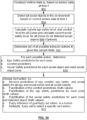
- a method for controlling safety of both an ego vehicle and at least one social objects in an environment the ego vehicle is operating in.
- the method includes receiving data representative of at least one social object and determining a current state of the ego vehicle based on sensor data.
- An ego safety value is predicted corresponding to the ego vehicle, for each possible behavior action in a set of possible behavior actions, based on the current state.
- a social safety value corresponding to the at least one social object in the environment of the ego vehicle is predicted, based on the current state, for each possible behavior action.
- a next behavior action for the ego vehicle is selected, based on the ego safety values, the social safety values, and one or more target objectives for the ego vehicle.
- the ego safety value indicates a probability that an obstacle will not be located in an ego safety zone of the ego vehicle if the possible behavior action is performed by the ego vehicle and the target policy followed thereafter.
- the social safety value indicates a probability, for the at least one social object, that the ego vehicle will not be located in a social safety zone of the social object if the possible behavior action is performed by the ego vehicle and the target policy followed thereafter.
- predicting the ego safety value for each possible behavior action is performed by a general value function (GVF) implemented by a trained neural network.
- GVF general value function
- Predicting the social safety value for each possible behavior action for each of the plurality of social objects is performed by a further GVF implemented by a trained neural network.
- the data received includes data representative of a plurality of social objects in the environment of the ego vehicle.
- the method includes, for each possible behavior action, predicting a respective social safety value for each of the plurality of social objects, each social safety value indicating a probability that the ego vehicle will not be located in a respective social safety zone of the respective social object if the possible behavior action is performed by the ego vehicle and the target policy followed thereafter.
- determining the current state comprises determining a velocity and direction of the ego vehicle, and a velocity, direction and position of each of the plurality of social objects.
- the ego safety zone includes a physical space that includes and extends beyond the ego vehicle in a direction of travel of the ego vehicle
- the social safety zone for a social object 308 includes and extends beyond the social object in a direction of travel of the social object.
- the social safety value corresponds to a plurality of social objects in the environment of the ego vehicle
- the social safety value indicates a probability that the ego vehicle will not be located in a respective social safety zone of any of the social objects if the possible behavior action is performed by the ego vehicle and the target policy followed thereafter.
- selecting the behavior action includes performing fuzzification of the ego safety value and the social safety value predicted for each of the possible behavior actions by mapping each of the ego safety values and the social safety values to a respective truth value; applying fuzzy inference on the truth values to generate a goal fuzzy set; and defuzzifying the goal fuzzy set to select the behavior action for the ego vehicle.
- a predictive safety control system is disclosed according to a second aspect of the invetion.
- the predictive safety control system includes a state module configured to determine a current state based on sensor data, and an ego safety predictor module configured to predict, based on the current state, for each possible behavior action in a set of possible behavior actions generated by an action module, an ego safety value corresponding to the ego vehicle, wherein the ego safety predictor module comprises a general value function, GVF, implemented by a trained neural network for predicting ego safety values.
- GVF general value function
- a safety controller is configured to select, based on the ego safety values, the social safety values predicted for each of the possible behavior actions, and one or more target objectives, a next behavior action for the ego vehicle, wherein, for each possible behavior action: the ego safety value indicates a probability that an obstacle will not be located in an ego safety zone of the ego vehicle if the possible behavior action is performed by the ego vehicle; and the social safety value indicates a probability, for the at least one social object, that the ego vehicle will not be located in a social safety zone of the at least one social object if the possible behavior action is performed by the ego vehicle.
- the systems and methods disclosed herein may in some circumstances reduce the safety risk of behavior actions taken at the ego vehicle on social objects such as other vehicles and pedestrians.
- the systems and methods of the present invention consider not only the safety of an ego vehicle, but also the safety of social objects.
- Social safety predictions and ego safety predictions as described in the present disclosure may in some applications be applied across a broad spectrum of environments including intersection handling, multi-lane highway driving, parking lots, school zones, and other complicated environments where the need for social safety is highly important.
- social safety and ego safety can be considered as separate components, thereby making it possible to assign different prioritize these safeties in an automated decision making process.
- the present application describes example embodiments of methods and systems with reference to a motor vehicle, such as a car, truck, bus, boat or ship, submarine, aircraft, warehouse equipment, construction equipment, tractor or other farm equipment.
- a motor vehicle such as a car, truck, bus, boat or ship, submarine, aircraft, warehouse equipment, construction equipment, tractor or other farm equipment.
- the teachings of the present application are not limited to any particular type of vehicle, and may be applied to vehicles that do not carry passengers as well as vehicles that do carry passengers.
- the teachings of the present application may also be implemented in mobile robot vehicles including, but not limited to, autonomous vacuum cleaners, rovers, lawn mowers, unmanned aerial vehicle (UAV), and other moving objects.
- UAV unmanned aerial vehicle
- Example embodiments are described for systems and methods that are directed towards enhancing ego safety and social safety in the context of a vehicle that includes an automated driver replacement or driver assistance system such as an ADS or ADAS.
- ego safety refers to the safety of an ego vehicle (i.e. the subject vehicle that is being controlled)
- social safety refers to the safety of social objects within the environment of the ego vehicle.
- a social object refers to an object other than the ego vehicle that is active (i.e. moving or dynamic as opposed to fixed in place) in the environment.
- social objects can include non-stationary objects such as, but not limited to, other vehicles, bicycles, scooters, pedestrians and animals.
- Example embodiments are directed to a behavior planner of a planning system of the ADS (or ADAS), in which the behavior planner is configured to predict the impact of potential behavior actions on the safety of the ego vehicle (e.g. ego safety) as well as on the safety of social objects in the environment of the ego vehicle (e.g. social safety).
- a suitable behavior action can be selected based on both the predicted ego safety and the predicted social safety determined for each behavior action in a set of possible behavior actions.
- the problem of improving safety for both the ego vehicle and social objects is addressed by configuring the behavior planner to consider the impact that particular behavior actions will have not only on the safety of the ego vehicle but also on social objects, and select a suitable behavior action that satisfies safety requirements for both the ego vehicle and the surrounding social objects.
- a predictive safety control system of the behavior planner is configured to assess both of the following questions: (a) if a given target policy is followed, will the ego vehicle be safe?; and (b) if the given target policy is followed will the ego vehicle make the social objects unsafe?.
- ego comfort in addition to ego safety and social safety predictions, can also be predicted for different types of behavior actions, and a particular behavior action selected based on the ego safety, social safety, and ego comfort predictions.
- ego comfort corresponds to a degree of physical and/or mental comfort of the occupants of the ego-vehicle.
- a certain behavior action may result in a rate of linear or angular acceleration of an ego vehicle that is safe, but which is physically or mentally uncomfortable for the occupants of the vehicle.
- the predictive functions used to make safety and optionally comfort predictions may be trained via reinforcement learning (RL) using the general value function (GVF) framework.
- GVF general value function
- An example of a GVF framework that can be implemented in example embodiments is described in: " R. Sutton, J. Modayil, M. Delp, T. Degris, P. Pilarski, A. White and D. Precup, "Horde: A scalable real-time architecture for learning knowledge from unsupervised sensorimotor interaction," in Proc. of 10th Intl.
- RL Reinforcement learning
- An example of RL is described in: D. Silver, A. Huang, C. Maddison, A. Guez, L. Sifre, G. Driessche, J. Samsungwieser, I. Antonoglou and V. Panneershelvam, "Mastering the game of Go with deep neural networks and tree search," Nature, vol. 529, no. 7587, pp. 484-489, 2016 .
- FIG 1 is a schematic diagram showing selected elements of a system 100 in which the methods and systems for controlling safety of vehicles and surrounding objects can be implemented according to example embodiments of the present application.
- the system 100 comprises a vehicle control system 115 embedded in a vehicle 105.
- the vehicle control system 115 shown in greater detail in Figure 2 , is coupled to a drive control system 150 and an electromechanical system 190 of the vehicle 105, as described below.
- the vehicle control system 115 can in various embodiments allow the vehicle 105 to be operable in one or more of a fully-autonomous, semi-autonomous or fully user-controlled mode.
- the vehicle 105 includes a plurality of environmental sensors 110 that collect information about the external environment surrounding vehicle 105 in which the vehicle 100 operates in, and a plurality of vehicle sensors 111 that collect information about the operating conditions of the vehicle 105.
- Environment sensors 110 may for example include electromagnetic (EM) wave based sensors such as digital cameras 112, light detection and ranging (LIDAR) units 114, and radar units 116 such as synthetic aperture radar (SAR) units.
- EM electromagnetic
- LIDAR light detection and ranging
- radar units 116 such as synthetic aperture radar (SAR) units.
- Cameras 112, LIDAR units 114 and radar units 116 are located about the vehicle 105 and are each coupled to the vehicle control system 115, as described below.
- the digital cameras 112, LIDAR units 114 and SAR units 116 are located at the front, rear, left side and right side of the vehicle 105 to capture information about the environment in front, rear, left side and right side of the vehicle 105.
- the digital cameras 112, LIDAR units 114 and radar units 116 are mounted or otherwise located to have different fields of view (FOVs) or coverage areas to capture information about the environment surrounding the vehicle 105.
- FOVs fields of view
- the FOVs or coverage areas of some or all of the adjacent environmental sensors 110 are partially overlapping. Accordingly, the vehicle control system 115 receives information about the external environment of the vehicle 105 as collected by cameras 112, LIDAR units 114 and radar units 116.
- the coverage areas are divided into zones, including for example a front zone, a back zone, and right and left side zones.
- one or more of cameras 112, LIDAR units 114 and radar units 116 are configured with on-board processing and can perform pre-processing of collected information before providing the collected information to other systems of the vehicle control system 115 as sensor data 182.
- Vehicle sensors 111 can include an inertial measurement unit (IMU) 118, an electronic compass 119, and other vehicle sensors 120 such as a speedometer, a tachometer, wheel traction sensor, transmission gear sensor, throttle and brake position sensors, and steering angle sensor.
- the vehicle sensors 111 when active, repeatedly (e.g., in regular intervals) sense information and provide the sensed information to the vehicle control system 115 as sensor data 182 in real-time or near real-time.
- the vehicle sensors 111 can include an IMU 118 that senses the vehicle's specific force and angular rate using a combination of accelerometers and gyroscopes.
- the vehicle control system 115 may also collect information about a position and orientation of the vehicle 105 using signals received from a satellite receiver 132 and the IMU 118.
- the vehicle control system 115 may determine a linear speed, angular speed, acceleration, engine RPMs, transmission gear and tire grip of the vehicle 105, among other factors, using information from one or more of the satellite receivers 132, and the vehicle sensors 111.
- the vehicle control system 115 may also comprise one or more wireless transceivers 130 that enable the vehicle control system 115 to exchange data and optionally voice communications with a wireless network such as a wireless wide area network (WAN) 210 of the communication system 100.
- the vehicle control system 115 may use the wireless WAN 210 to access a server 240, such as a driving assist server, via one or more communications networks 220, such as the Internet.
- the server 240 may be implemented as one or more server modules in a data center and is typically located behind a firewall 230.
- the server 240 is connected to network resources 250, which may provide supplemental data sources (for example local whether information or information collected by other environment sensors located in the environment the vehicle 105 is operating in, such as sensors located on or integrated into traffic lights, road signs, other vehicles, and the like) that may be used by the vehicle control system 115.
- supplemental data sources for example local whether information or information collected by other environment sensors located in the environment the vehicle 105 is operating in, such as sensors located on or integrated into traffic lights, road signs, other vehicles, and the like
- the communication system 100 comprises a satellite network 260 comprising a plurality of satellites in addition to the WAN 210.
- the vehicle control system 115 comprises the satellite receiver 132 ( Figure 2 ) that may use signals received by the satellite receiver 132 from the satellite network 260 to determine its position.
- the satellite network 260 typically comprises a plurality of satellites which are part of at least one Global Navigation Satellite System (GNSS) that provides autonomous geo-spatial positioning with global coverage.
- GNSS Global Navigation Satellite System
- the satellite network 260 may be a constellation of GNSS satellites.
- Example GNSSs include the United States NAVSTAR Global Positioning System (GPS) or the Russian GLObal NAvigation Satellite System (GLONASS).
- GLONASS Global Navigation Satellite System
- Other satellite navigation systems which have been deployed or which are in development include the European Union's Galileo positioning system, China's BeiDou Navigation Satellite System (BDS), the Indian regional satellite navigation system, and the Japanese satellite navigation system.
- FIG. 2 illustrates selected components of the vehicle 105 in accordance with an example embodiment of the present application.
- the vehicle 105 comprises a vehicle control system 115 that is connected to a drive control system 150 and an electromechanical system 190 as well as to the environmental sensors 110 and vehicle sensors 111.
- the vehicle 105 also comprises various structural elements such as a frame, doors, panels, seats, windows, mirrors and the like that are known in the art but that have been omitted from the present application to avoid obscuring the teachings of the present application.
- the vehicle control system 115 includes a processor system 102 that is coupled to a plurality of components via a communication bus (not shown) which provides a communication path between the components and the processor 102.
- the processor system 102 is coupled to a drive control system 150, Random Access Memory (RAM) 122, Read Only Memory (ROM) 124, persistent (non-volatile) memory 126 such as flash erasable programmable read only memory (EPROM) (flash memory), one or more wireless transceivers 130 for exchanging radio frequency signals with a wireless network 210, a satellite receiver 132 for receiving satellite signals from the satellite network 260, a real-time clock 134, and a touchscreen 136.
- the processor system 102 may include one or more processing units, including for example one or more central processing units (CPUs), one or more graphical processing units (GPUs), and other processing units.
- the one or more wireless transceivers 130 may comprise one or more cellular (RF) transceivers for communicating with a plurality of different radio access networks (e.g., cellular networks) using different wireless data communication protocols and standards.
- the vehicle control system 115 may communicate with any one of a plurality of fixed transceiver base stations (one of which is shown in Figure 1 ) of the wireless WAN 210 (e.g., cellular network) within its geographic coverage area.
- the one or more wireless transceiver(s) 130 may send and receive signals over the wireless WAN 210.
- the one or more wireless transceivers 130 may comprise a multi-band cellular transceiver that supports multiple radio frequency bands.
- the one or more wireless transceivers 130 may also comprise a wireless local area network (WLAN) transceiver for communicating with a WLAN (not shown) via a WLAN access point (AP).
- WLAN may comprise a Wi-Fi wireless network which conforms to IEEE 802.11x standards (sometimes referred to as Wi-Fi ® ) or other communication protocol.
- the one or more wireless transceivers 130 may also comprise a short-range wireless transceiver, such as a Bluetooth ® transceiver, for communicating with a mobile computing device, such as a smartphone or tablet.
- the one or more wireless transceivers 130 may also comprise other short-range wireless transceivers including but not limited to Near field communication (NFC), IEEE 802.15.3a (also referred to as UltraWideband (UWB)), Z-Wave, ZigBee, ANT/ANT+ or infrared (e.g., Infrared Data Association (IrDA) communication).
- NFC Near field communication
- IEEE 802.15.3a also referred to as UltraWideband (UWB)
- Z-Wave Z-Wave
- ZigBee ZigBee
- ANT/ANT+ ANT/ANT+
- infrared e.g., Infrared Data Association (IrDA) communication
- one or more or the wireless transceivers 130 enable the vehicle control system 115 to receive third party information produced by the vehicle control systems of other vehicles operating in or near an environment of the vehicle control system, which may for example include state information generated in respect of the other vehicles or information about how vehicle 105 is perceived by the other vehicles.
- third party information produced by the vehicle control systems of other vehicles operating in or near an environment of the vehicle control system, which may for example include state information generated in respect of the other vehicles or information about how vehicle 105 is perceived by the other vehicles.
- such information could be communicated through peer-to-peer signaling using a predetermined communications protocol, and in some examples the such information may be provide through an intermediate service (e.g. from a network resource 250).
- the vehicle control system 115 also includes one or more speakers 138, one or more microphones 140 and one or more data ports 142 such as serial data ports (e.g., Universal Serial Bus (USB) data ports).
- the system may also include other sensors such as tire pressure sensors (TPSs), door contact switches, light sensors, proximity sensors, etc.
- the drive control system 150 serves to control movement of the vehicle 105.
- the drive control system 150 may for example comprise a steering controller 152, and a speed controller 154, each of which may be implemented as software modules or control blocks within the drive control system 150.
- the steering controller 152 and speed controller 154 when in fully or semi-autonomous driving mode, receives navigation instructions from an autonomous driving system 170 (for autonomous driving mode) or a driving assistance system 166 (for semi-autonomous driving mode) and generate control signals to control one or more of the steering, braking and throttle of the vehicle 105.
- the drive control system 150 may include additional components to control other aspects of the vehicle 105 including, for example, control of turn signals and brake lights.
- the electromechanical system 190 receives control signals from the drive control system 150 to operate the mechanical components of the vehicle 105.
- the mechanical system 190 effects physical operation of the vehicle 105.
- the mechanical system 190 comprises a throttle 196 for controlling power applied to wheels by an engine, a steering system 192 for controlling the direction of the wheels and brakes 194 for applying braking force to the wheels.
- the engine may be a gasoline-powered engine, a battery-powered engine, or a hybrid engine, for example.
- Other components may be included in the mechanical system 190, including, for example, turn signals, brake lights, fans and windows.
- a graphical user interface (GUI) of the vehicle control system 115 is rendered and displayed on the touchscreen 136 by the processor 102.
- GUI graphical user interface
- a user may interact with the GUI using the touchscreen and optionally other input devices (e.g., buttons, dials) to select a driving mode for the vehicle 105 (e.g. fully autonomous driving mode or semi-autonomous driving mode) and to display relevant information, such as navigation information, driving information, parking information, media player information, climate control information, etc.
- the GUI may comprise a series of traversable content-specific menus.
- the memory 126 of the vehicle control system 115 has stored thereon sets of software instructions executable by the processor system 102 that configure the vehicle control system 115 to implement a number of systems 161 in addition to the GUI.
- the systems 161 includes an operating system 160, one or both of driving assistance system 166 for semi-autonomous driving (generally known as an advanced autonomous driver-assistance system (ADAS)), and autonomous driving system (ADS) 170 for fully autonomous driving.
- Both the driving assistance system 166 and the autonomous driving system 170 can include one or more of a navigation planning and control module, a vehicle localization module, parking assistance module, and autonomous parking module, vehicle state determination module as well as other modules.
- the systems 161 include a perception module 171 and a path planning module 173Systems 161 may also include other modules 174, which may include for example mapping module, navigation module, climate control module, media player module, telephone module and messaging module.
- the various systems and system modules are configured to interact during operation of the vehicle 105.
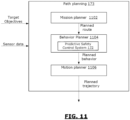
- the path planning module 173 includes a mission planner 1102, a behavior planner 1104 and a motion planner 1106.
- the behavior planner 1104 includes a predictive safety control system 172.
- the predictive safety control system 172 causes the operations of methods described herein to be performed.
- the memory 126 also stores a variety of data 180.
- the data 180 may comprise sensor data 182 received from the sensors 110, user data 184 comprising user preferences, settings and optionally personal media files (e.g., music, videos, directions, etc.), and a download cache 186 comprising data downloaded via the wireless transceivers 130, including for example data downloaded from network resources 250.
- the sensor data 182 may comprise image data representative of an image from each camera 112, LIDAR data representative of a point cloud from the LIDAR units 114, radar data from the radar units 116, and other sensor data from other vehicle sensors 120.
- System software software modules, specific device applications, or parts thereof, may be temporarily loaded into a volatile store, such as RAM 122, which is used for storing runtime data variables and other types of data or information.
- Data received by the vehicle control system 115 may also be stored in the RAM 122.
- specific functions are described for various types of memory, this is merely one example, and a different assignment of functions to types of memory may also be used.
- FIG 11 is a block diagram that illustrates further details of the path planning module 173. It should be understood that, in some examples involving machine learning, the path planning system 173, or components of the path planning module 173, may be trained outside of the vehicle 105 (e.g., in a simulator system). In examples discussed below, one or more of the mission planner 1102, and the motion planner 1106 may include a neural network that is trained in a simulator.
- path planning may be performed at three levels, namely at the mission level (e.g., performed by the mission planner 1102), at the behavior level (e.g., performed by the behavior planner 1104) and at the motion level (e.g., performed by the motion planner 1106).
- mission level e.g., performed by the mission planner 1102
- behavior level e.g., performed by the behavior planner 1104
- motion level e.g., performed by the motion planner 1106
- path planning determines a path for the vehicle 105 to travel from a first state (e.g., defined by the vehicle's current position and orientation, or an expected future position and orientation) to a target state (e.g., a final destination defined by the user).
- Path planning may also include determining one or more sub-paths to one or more intermediate target states.
- the path planning module 173 determines the appropriate path and sub-paths with consideration of conditions such as the drivable ground (e.g., defined roadway), obstacles (e.g., pedestrians and other vehicles), traffic regulations (e.g., obeying traffic signals) and user-defined preferences (e.g., avoidance of toll roads).
- path planning may be performed at different levels, for example at the mission level, behavior level and motion level.
- Mission level path planning is considered to be a higher (or more global) level of path planning
- motion level path planning is considered to be a lower (or more localized) level of path planning
- behavior level path planning is considered to be between mission and motion level.
- the output of path planning at a higher level may form at least part of the input for a lower level of path planning.
- the planned path may be defined as a series of points, each point defining a planned target position (e.g., x- and y-coordinates) of the ego vehicle 105. Each point may additionally define the planned speed, orientation, acceleration and/or angular speed of the vehicle 105, thus defining the planned state of the vehicle 105 at each target position.
- the planned path may thus define a set of locations (or more generally, a set of states) to be travelled by the vehicle 105 in the planned journey.
- Input data for mission planner 1102 may include, for example, GPS data (e.g., GPS coordinates that are used to determine the starting point of the ego vehicle 105), geographical map data (e.g., from an internal or external map database), traffic data (e.g., from an external traffic condition monitoring system), the final destination point (e.g., defined as x- and y-coordinates, or defined as longitude and latitude coordinates), as well as any user-defined preferences (e.g., preference to avoid toll roads).
- GPS data e.g., GPS coordinates that are used to determine the starting point of the ego vehicle 105
- geographical map data e.g., from an internal or external map database
- traffic data e.g., from an external traffic condition monitoring system
- the final destination point e.g., defined as x- and y-coordinates, or defined as longitude and latitude coordinates
- any user-defined preferences e.g., preference to avoid toll roads.
- the planned path output from the mission planner 1102 defines the route to be travelled to reach the final destination point from the starting point.
- the output of the mission planner 1102 may include data defining a set of intermediate target states (or waypoints) along the route.
- the intermediate target states may be defined at road intersections to indicate which road to take at each intersection, for example.
- the intermediate target states may be used for path planning at the behavior level.
- the behavior planner 1104 includes the predictive safety control system 172.
- the behavior planner 1104 receives the planned route from the mission planner 1102, including the set of intermediate target states (if any).
- the behavior planner 1104 generates a planned behavior action for the vehicle 105, in order to make driving decisions on a more localized and short-term basis than the mission planner 1102.
- the behavior planner 1105 may ensure that the vehicle 105 follows certain behavior rules (e.g., left turns should be made from the left-most lane).
- the predictive safety control system 172 is a sub-system of the behavior planner 1104 that includes instructions that are executable by a processor, such as the processor 102 of the vehicle control system 115.
- the predictive safety control system 172 may be invoked by the behavior planner 1104 to cause execution of the instructions of the predictive safety control system 172.
- the predictive safety control system 172 selects a behavior action.
- the behavior planner 11014 receives the selected behavior action from the predictive safety control system 172 to enable the behavior planner 1104 to generate a planned behavior action for the vehicle 105 that meets the target objectives.
- the planned behavior action is received by the motion planner 1106.
- the planned behavior action may be received by the motion planner 1106 as state input data.
- the motion planner 1106 should find a trajectory that satisfies the planned behavior action, and that navigates the environment in a relatively safe, comfortable, and speedy way.
- the motion planner 1106 provides a safe and robust navigation of the vehicle 105 in both structured and unstructured environments.
- a structured environment is generally an environment having well-defined drivable and non-drivable areas (e.g., a highway having clear lane markings), and which may have defined driving rules that all vehicles are expected to follow.
- the behavior planner 1104 includes the predictive safety control system 172.
- the predictive safety control system 172 of vehicle control system 115 of vehicle 105 is configured to predict the effect that particular behavior actions will have on the safety of the vehicle 105 (referred to hereinafter as ego vehicle 105) as well as on other social objects acting within the environment of the ego vehicle 105 and select a suitable behavior action that addresses safety requirements for both the ego vehicle 105 and the surrounding social objects.
- Figure 3 shows, from a bird's eye view, ego vehicle 105 approaching an intersection along with three social objects 308(1) 308(2) and 308(3) (referred to collectively or generically as social object(s) 308).
- the social objects 308 are all shown as vehicles, however the social objects may also include other types of active objects such as cyclists, pedestrians and animals.
- the safety zones are defined as three dimensional (3D) spaces relative to the respective ego vehicle 105 and social objects 308, and in this regard Figure 4 illustrates 3D forward ego safety zone z 310 in respect of ego vehicle 105, which as shown has a zone length z length , zone width z width , and zone z heght .
- one or more of the safety zone dimensions can be adaptively determined by the predictive safety control system 172 based on one or more properties of a sensed vehicle state, such as speed for example.
- some zone dimensions (for example height and width) may be based exclusively on predetermined vehicle dimensions.
- Figure 3 represents a potential left hand turn scenario. Based solely on the ego vehicle forward safety zone z 310, it appears that ego vehicle can safely make a left hand turn. However, when the forward social safety zone z 312(1) of social object 308(1) is considered, it can be determined that the predicted ego vehicle path 314 intersects with the forward social safety zone z 312(1). Accordingly, a decision can be made to brake and not make the left hand turn at the immediate time.
- predictive safety control system 172 is configured to select behavior actions with the objective of keeping the social objects 308 out of the ego safety zone (e.g. z 310) and keeping the ego vehicle 105 out of the social safety zones (e.g. z 312(1), 312(2) and 312(3)) of any of the social objects 308.
- An example architecture and operation of predictive safety control system 172 will now be provided with reference to Figure 5 , which illustrates a functional block diagram of predictive safety control system 172 accordingly to example embodiments.
- the predictive safety control system 172 includes a predictive perception unit 502, which is configured to make predictions 516 about possible future states based on a current state determined from sensor data received from environmental sensors 110 and vehicle sensors 111 (i.e., information about the environment the ego vehicle 105 operates in sensed by the sensors 110 and information about the ego vehicle 100 sensed by the vehicle sensors 111), and a safety controller 512, which is configured to select behavior actions based on the predicted future states.
- a predictive perception unit 502 which is configured to make predictions 516 about possible future states based on a current state determined from sensor data received from environmental sensors 110 and vehicle sensors 111 (i.e., information about the environment the ego vehicle 105 operates in sensed by the sensors 110 and information about the ego vehicle 100 sensed by the vehicle sensors 111)
- a safety controller 512 which is configured to select behavior actions based on the predicted future states.
- environmental state data s t , env included in ego vehicle state s t about the physical environment surrounding the ego vehicle 105 may be determined based on sensor data about the surroundings of the ego vehicle 105 as detected by embedded environmental sensors 110 (e.g. one or more of cameras 112, LIDAR units 114 and radar units 116).
- Environmental state data s t , env may for example include data about obstacles (e.g. stationary objects and social objects), road lanes, traffic lights, road side and overhead signs, road markings, road conditions and other detectable elements within the environment surrounding the ego vehicle 105.
- the current safety states and current comfort states are calculated only when training predictor modules 504, 506, 508.
- current ego safety states, current social object safety states and current comfort states can be used to generate respective cumulant signals (pseudo-reward signals) for training ego safety, social safety and comfort GVFs respectively that are used in example embodiments to implement the ego safety, social safety and comfort predictor modules 504, 506, and 508 (described in greater detail below).
- the predictive safety control system 172 is configured to define one or more ego safety zones z around ego vehicle 105 and one or more social safety zones z around any surrounding social objects 308.
- the safety zones z for ego-vehicle 105 are defined by ego safety function 516 and the safety zones z for respective social objects 308 are determined by social object safety function 517, and the safety states and are determined on a zone by zone basis.
- ego safety function 516 ( safe ) is a function that maps parameters concerning current ego vehicle state s t ⁇ S , parameters concerning safety h pref safe ⁇ H safe and the safety zone z ⁇ Z ego , represented as follows: safe : S ⁇ H safe ⁇ Z ego ⁇ 0,1
- the output of the ego safety state function 516 is a value between 0 and 1 that indicates the safety state of the ego vehicle 105 for the specific safety zone z, where 1 is safe and 0 is unsafe.
- Possible ego safety zones z include: omni-directional (safe or unsafe in all directions); specific spatial zones/areas around the vehicle; specific directions around the vehicle.
- direction of travel (e.g. front) safety zones such as those as discussed above in respect of Figure 3 and 4 are used for purposes of illustrating example embodiments.
- the ego safety state function 516 is configured to conclude that the ego safety state at time t for a zone z is safe if data from environmental sensors 110 indicates that no obstacles are located in the zone z.
- the safety parameters are selected to specify that ego safety zone z is safe at time t if LIDAR data representative of a point cloud received from Lidar units 114 indicates that less than a threshold number of data points fall within the boundaries of the ego safety zone z.
- the threshold could be 1 point, and in some example the threshold could be set higher to avoid false positives.
- the zone z ⁇ Z ego is a three dimensional zone oriented with respect to the ego vehicle 105.
- the predefined safety thresholds t spacing and d min can be based, within limits, on user input preferences h pref .
- social object safety function 517 is a function that maps the current state, the parameters of the detected social object, parameters concerning safety (such as human preferences in spacing) h pref safe ⁇ H safe and the social safety zone z ⁇ Z social to a social safety value in accordance with the following: socialsafe : S ⁇ O ⁇ H safe ⁇ Z social ⁇ 0,1
- the social safety value (i.e., the output of the above) is a value between 0 and 1 that indicates the safety level of the social object 308 in relation to a specific safety zone z for that social object 308 where 1 is safe and 0 is unsafe.
- the social object safety function 517 is configured to determine that the social obstacle safety state at time t is safe if sensor data received from environmental sensors 110 indicates that the ego vehicle 105 is not located in the social safety zone z of any of the social objects.
- social object safety function 517 may use social object state data generated by social object detector 514 to predict the social safety of that object.
- the social object safety function 517 may output a global social safety value that indicates a global safety value for all social objects in the surrounding environment. For example, a global social safety value could be determined based on one or more combinations of individual social safety values reaching a defined threshold.
- the social safety zone z for the social object 308 is defined based on coordinates given in reference to the ego vehicle 105; social safety zone z l is calculated by defining a bounding box is around the social object 308 and adding a safety distance z safe along the direction of travel to determine a safety region in front of the social object. Similar to ego-vehicle 105 as discussed above, the safety distance z safe can be a function of the social object's speed.
- states could also be determined for other possible zones z, including for example: an omni-directional safety zone (safe or unsafe in all directions); and other specific spatial zones/areas around the vehicle, including for example side zones and, in the case of objects enabled for 3D motion, vertical zones.
- omni-directional safety zone safe or unsafe in all directions
- other specific spatial zones/areas around the vehicle including for example side zones and, in the case of objects enabled for 3D motion, vertical zones.
- zone specific ego vehicle comfort state function 518 for the ego vehicle 105 is represented as: comfort : S ⁇ H comfort ⁇ Z ⁇ 0,1
- the comfort safety value (i.e., the output of the comfort state function) is a value between 0 and 1 that indicates the comfort level of the ego vehicle 105 (in relation to a specific zone) where 1 is comfortable and 0 is uncomfortable.
- RMS root mean square
- the safety, social safety and comfort functions are defined based on algorithms and criteria set by human experts.
- one or both of the safety and comfort thresholds may be based, within defined safety limits, on user input preferences ( h pref safe , h pref comfort ), may be automatically adjusted based on road and weather conditions received through network resources 250, or may be based on road surface conditions as sensed by cameras 112.
- the set 503 of predictor modules 504, 506, 508 includes ego safety predictor module 504, social safety predictor module 506 and, in at least some examples, a comfort predictor module 508.
- the state s t constructed by the state module 510 is used by predictor modules 504, 506, 508 to determine a set of action conditioned (AC) predictions 516 about the effects of various behavior actions on the environment of ego vehicle 105.
- the AC predictions 516 are behavior action conditioned in that the predictions indicate a predicted state for a future time that is conditional on a certain behavior action a t occurring.
- t1 can be from 1 to 5 seconds.
- predictive perception unit 502 receives, as an input from an action module 520 (which may be part of the behavior planner 1104), a set A of all possible behavior actions â t that can be taken by the ego vehicle 105 given the current vehicle state s t .
- the set A may include all behavior actions possible at defined intervals within a future time duration, for example all behavior actions possible at each second for the next 5 seconds.
- the behavior actions â t in the set A will each specify a target speed v t for speed controller 154.
- a target speed v t could be specified on the interval of [0, v max ] where 0 is stopped and v max is the maximum allowed target speed permitted by speed controller 154.
- the set A of all possible behavior actions is generated by action module 520 using known techniques.
- action module 520 is configured to select the set A of permissible behavior actions based on the planned route output by the mission planner 1102 and current state of the ego vehicle 105.
- all permissible behavior actions could include all physically plausible behaviors, and in some examples, the set of permissible behavior actions could be intelligently filtered to takes into account the local laws and eliminate illegal behaviors.
- the AC predictions 516 that are output by the set 503 of predictor modules 504, 506, 508 are provided to the safety controller 512, which selects a suitable behavior action to achieve one or more target objectives based on the AC predictions 516.
- Target objectives include one or more of a target speed v t , a target direction, a target safety, a target comfort, a target lane.
- predictive perception unit 502 provides a set of AC predictions 516 that effectively form an interactive model of the environment surrounding the ego vehicle 105, providing the safety controller 512 with the input needed for the safety controller 512 to select a behavior action to minimize a defined cost function or maximize total reward.
- the predictor modules 504, 506, 508 each include one or more respective predictor functions 604, 606, 608 that are implemented by learned agents based on machine learning algorithms trained through reinforcement learning (RL) (see for example the above identified papers by R. Sutton et. Al. and D. Silver et. al.).
- the predictor functions 604, 606 and 608 may be implemented as one or more learned agents in the form of trained neural networks that are implemented using one or more CPUs or GPUs of the processor system 102 of vehicle control system 115.
- a separate neural network is used for each predictor function 604, 606, 608, although in some embodiments at least some layers of a neural network may be used for multiple predictors - for example in some embodiments it is possible that one or more or all predictors may share the same inputs (state) along with 1 or more layers, meaning that it is possible for all predictors to be implemented in a single neural network with multiple diverging output branches for each prediction.
- the predictive perception unit 502 includes a total of
- predictor functions where
- the number of predictor functions is three as shown in Figure 6 , namely: front zone ego safety predictor GVF 604 ( f ego ); front zone social object safety predictor GVF 606 ( f social ); and front zone ego vehicle comfort predictor GVF 608 ( f comfort ).
- the comfort predictor module 508 and its corresponding predictor GVF 608 can be omitted.
- the predictor functions 604, 606, 608 collectively make predictions 516 about the environment, providing a predictive state space p t ⁇ P for the safety controller 512.
- the predictions 516 are action conditional "what-ifs" that evaluate the long term impact (e.g. for the next 1-5 seconds) of possible actions on ego safety, social safety, and comfort.
- the number of predictions collectively output by predictor modules 504, 506 and 508 and their respective predictor functions 504, 506, 508 is
- the ego safety predictor module 504 is configured to predict, based on the current vehicle state s t , future ego safety predictions p t ego a ⁇ t / z ego for each of a plurality of different possible behavior actions at.
- the ego safety predictor module 504 includes a predictor GVF f ego ( s t ,â t ,z ) for each ego safety zone.
- the specific data from the ego vehicle state space ( s t ) that is input to the front ego safety zone predictor GVF f ego ( s t , â t , z ) 604 may include, for a given time t : (1) physical ego vehicle operating state s t,op , including data for: ego vehicle speed v t , transmission gear, engine RPM, steering angle, throttle position, and brake position; and (2) ego vehicle environment state s t,env , which may for example include LIDAR data representative of a point cloud and/or other environmental data such as image data or radar data.
- the input may include an ego target speed v target and a target steering angle (or direction).
- the output safety prediction p t ego a ⁇ t / z ego for a safety zone is an ego safety value that indicates a probability that, based on a specific behavior action â t , the ego safety zone z will be free of both static and moving obstacles (such as another vehicle) at future time t+1.
- predicted ego safety p t ego a ⁇ t / z ego is represented as a probability value normalized between 0 and 1, where 0 is unsafe (e.g. 100% certain an obstacle will be in the ego safety zone) and 1 is safe (e.g. 100% certain no obstacle will be in the ego safety zone).
- the front zone ego safety predictor GVF f ego ( s t , â t , z ) 604 maps current state, safety preferences h pref safe ⁇ H safe , safety zone z ⁇ Z ego , and next behavior action â t ⁇ A to a value between 0 and 1 as shown: f ego : S ⁇ A ⁇ H safe ⁇ Z ⁇ 0,1
- the output of the front ego safety zone predictor GVF f ego ( s t , â t , z ) 604 for each behavior action is a scaler representation of the safety probability of the front ego safety zone.
- the current ego vehicle safety state safe may optionally also be included as an input to the ego vehicle safety predictor GVF 604.
- the current ego vehicle safety state safe is included as an input to the ego vehicle safety predictor GVF f ego 604 when training the predictor GVF f ego 604 to learn predictions, as described in greater detail below.
- the specific data from the ego vehicle state space ( s t ) that is input to the front social object safety zone predictor f i social ( s t ,â t ,o t i ,z ) 606 may include, for a given time t: (1) physical ego vehicle operating state s t,op , including data for: ego vehicle speed v t , transmission gear, engine RPM, steering angle, throttle position, ego vehicle dimensions, and brake position; (2) ego vehicle environment state s t,env , which may for example include LIDAR data representative of a point cloud and/or other environmental data such as image data or radar data; and (3) social object state o t i for each of the N t obj social objects, including, for each social object: relative position
- the front zone social vehicle safety predictor GVF f i social ( s t ,â t ,o t i ,z ) 606 maps current state, safety preferences h pref safe ⁇ H safe , social safety zone z ⁇ Z social , and next behavior action â t ⁇ A to a value between 0 and 1 as shown: f social : S ⁇ O ⁇ A ⁇ H safe ⁇ Z social ⁇ 0,1
- the output of the front ego safety zone predictor GVF f i social ( s t ,â t ,o t i ,z ) 604 for each social object for each behavior action is a scaler representation of the safety probability of the front social object safety zone.
- the current social object safety state socialsafe may optionally also be included as an input to the social object safety predictor GVF 606.
- the social object safety states socialsafe are included as an input to the social object safety predictor GVF 606 when training the predictor GVF to learn predictions, as described in greater detail below.
- the specific data from the ego vehicle state space ( s t ) that is input to the front ego vehicle safety zone predictor GVF f comfort ( s t , â t ) 608 may include, for a given time t: physical ego vehicle operating state s t,op , including data for: ego vehicle speed v t , transmission gear, engine RPM, steering angle, throttle position, brake position, as well as a short history of linear and/or sensor data indicative of acceleration of the ego vehicle 105 received from the vehicle sensors 111, such as the IMU 118 (e.g.
- the input may include an ego target speed v target and a target steering angle.
- z comfort ] indicates a probability that, based on a specific behavior action â t , the RMS acceleration of the ego vehicle 105 will fall within a comfort threshold at future time t + 1.
- predicted comfort is represented as a probability value normalized between 0 and 1, where 0 is uncomfortable (e.g. 100% certain ego vehicle will be outside comfort threshold) and 1 is comfortable (e.g. 100% certain ego vehicle comfort will be within threshold).
- comfort predictor module 508 may optionally also receive the current comfort state comfort ( s t , z ) as an input.
- the predictions p t are supplied to the safety controller 512 which is configured to select a next behavior action for the ego vehicle 105 to maximize safety, comfort and other goals.
- the safety controller 512 can be represented as a function f control that maps current state and current predictive state to the next behavior action as follows: f control : S ⁇ P ⁇ A
- the safety controller 512 can implement a number of different controllers.
- the safety controller 512 includes a fuzzy inference system (FIS) controller 702 to select a target speed v target and a classical PID controller 714 (which may for example be part of speed controller 154) to achieve the target speed v target .
- FIS controller 702 is configured to seek for the behavior action that satisfies the following linguistic statement: Behavior action to be taken will keep ego vehicle Safe AND behavior action to be taken with keep all social objects Safe AND behavior action to be taken will keep ego vehicle Comfortable
- FIS controller 702 is configured to treat the selection of a behavior action as a maximization problem, however a maximization is just one defuzzification approach that can be used. As shown in Figure 7 , in one example, FIS controller 702 implements the following modules or operations: (a) fuzzification module 720; (b) fuzzy reasoning module 722; and (c) defuzzification module 724.
- Fuzzification module 720 includes: (i) fuzzification function SAFE ego for mapping ego safety predictions p ego to fuzzy truth values m ego ; (ii) fuzzification function SAFE social for mapping social safety predictions p socia / for each social object to fuzzy truth values m social ; and (iii) fuzzification function COMFORT ego for mapping ego comfort predictions p comfort to fuzzy truth values m comfort .
- fuzzification functions SAFE ego , SAFE social , COMFORT ego map predictions p t to graded truth values, or values between 0 and 1 that denote the degree to which the safety prediction of a behavior action is considered safe to an end-user, as follows: Front safety SAF E ego : 0,1 ⁇ 0,1 Back safety SAF E social : 0,1 ⁇ 0,1 Front comfort COMFOR T ego : 0,1 ⁇ 0,1
- the mapping performed by fuzzification module 720 can be represented as: m ego a ⁇ t
- z ego SAF E ego p ego a ⁇ t
- z social , o t SAF E social p social a ⁇ t
- z social , o t m comfort a ⁇ t COMFOR T ego p comfort a ⁇ t where the truth values of ego, social and comfort are respectively denoted as m ego [ â t ], m social [ â t ] and m comtort [ â t ].
- ⁇ is a standard t-norm operator (common t-norms are min or product) and G [ â t ] is the goal fuzzy set.
- the goal fuzzy set G [ â t ] characterizes the statement (12) and denotes the membership value of each behavior action that satisfies the statement.
- COMFORTego can be omitted, however its inclusion may enable a selected behavior action sequence over time that results in a smoother ride for the ego vehicle 105.
- target speed v target can be a maximum desired speed that is as set by driving assistance system 166 or autonomous driving system 170, for example.
- the fuzzification functions Safe ego , Safe social , Comfort ego and fuzzy reasoning module 722 can be implemented using rules-based algorithms, and in some embodiments may be implemented as trainable functions learned via machine learning. In a rules-based implementation, fuzzification functions Safe ego , Safe social , Comfort ego and fuzzy reasoning module 722 may be configured using manual specifications to optimize goal fuzzy sets.
- the definitions used and rules applied by the fuzzification functions Safe ego , Safe social , Comfort ego and fuzzy reasoning module 722 to output goal fuzzy sets are selected to support the entire behavior action space so as to mitigate against scenarios where there may be no suitable behavior action found.
- the behavior command is issued to the motion planner 1106 to formulate a motion plan to be executed by the drive control system 150.
- SAFE ego in order to ensure ego safety is more important than social safety, a requirement may be set that SAFE ego ⁇ SAFE social , which means the truth values for ego safety must be higher than the truth values for social safety across the entire domain.
- An alternative simple interpretation for SAFE ego and SAFE social can be the identity function since the probabilistic predictions of safety can be also considered truth values.
- fuzzy sets may add flexibility to control the interpretation of the predictions from a system programmer point of view.
- ego vehicle safety predictor GVF 604 ( f ego ), social object safety predictor GVF 606 ( f social ), ego vehicle comfort predictor GVF 608 ( f comfort ) are trained using RL based on methodology disclosed in the above identified mentioned paper by R. Sutton et al.
- a cumulant (pseudo-reward) function, pseudo-termination function, and target policy is defined.
- ego safety predictor GVF is treated as a function learning problem.
- the function is realized as a standard feed forward neural network.
- state-action-reward-state-action (SARSA) learning is selected for training the ego and social safety predictor functions for improved learning stability.
- an expert policy can be used to collect data rather than using traditional off-policy RL learning.
- data collection involves creating turn scenarios such as shown in Figure 3 , parking lot scenarios such as shown in Figure 8 , and roadway scenarios such as shown in Figure 9 .
- ego vehicle and social objects can be controlled by respective controllers that control direction and speed of the ego vehicles and social objects with pre-defined rules and limits.
- training data is collected and used to train respective predictor GVFs that are enabled to predict a probabilistic future safety of the ego vehicle 105 and social objects where the behavior action is assumed to be relatively constant over short periods of time.
- the DCT system observes diverse enough behaviors and situations to enable the resulting safety and comfort predictor functions to be able to make meaningful predictions.
- the behavior of the ego vehicle and social objects are sufficiently uncorrelated to avoid the introduction of biases that may result in poor or even incorrect predictions.
- training occurs offline for greater stability and safety in learning; however, it should be noted that the trained GVFs that implement the predictor functions (once trained) can continuously collect and improve predictions in real-time using off-policy RL learning.
- a target policy with respect to an input action is inherently embedded into each of the ego vehicle safety predictor GVF 604 ( f ego ), social object safety predictor GVF 606 ( f social ) , ego vehicle comfort predictor GVF 608 ( f comfort ). Accordingly, during normal operation, the respective predictions that are output by these GVFs are based on the input state as well as the target policy embedded into the predictor functions.
- an ego safety prediction for a behavior action indicates a probability that the ego vehicle 105 will be safe based both on the current state and on the ego vehicle 105 following the target policy and the current state; social safety predictions for an behavior action indicate a probability that the social objects will be safe based both on the current state and on the ego vehicle 105 following the target policy; and ego comfort predictions for a behavior action indicate a probability that the ego vehicle 105 will be comfortable based both on the current state and on the ego vehicle 105 following the target policy.
- target policy can be following a set of behavior actions similar to the input behavior action for a future time duration.
- predictive safety control system 172 considers not only the safety of ego vehicle 105, but also the safety of other social objects 308.
- Social safety predictors work in tandem with ego safety predictors to address safety in a manner that can be applied across a broad spectrum of environments including intersection handling, multi-lane highway driving, parking lots, school zones, and other complicated environments where the need for social safety is highly important.
- predictive safety control system 172 focuses on determining whether actions of the ego vehicle 105 will make another moving object unsafe/safe rather than considering the global safety of another vehicle.
- Social safety and ego safety are considered as separate components, thereby making it possible to prioritize these safeties differently (e.g. to minimize the potential loss of life) and may enables a more general view of safety that better reflects how human's actually drive.
- the scenario of Figure 3 relates to controlling ego vehicle 105 to make an unprotected left turn at an intersection.
- a common solution involves classical behavior planning and motion planning methods including time to collision methods, however modeling the environment of an intersection with many actors (vehicles, pedestrians, etc) can be rather challenging.
- Some modern approaches include using reinforcement learning to issue commands to the motion planner like "turn left" or "yield". This very simple approach does not easily take into account the safety of social vehicles because the rewards for reinforcement learning methods are often ego centric as the agent does not easily observe the actions of the other agents.
- the most common approach to prevent the learned agent from cutting in front of other vehicles dangerously is to minimize braking of the social agents but this requires often inaccurate modelling of their behavior to determine how much they are braking.
- Multi-agent RL approaches can be used to consider the other agents however it is rather difficult to determine or understand the policy of the other agents including whether the other driver is actually paying attention (and thus is able to follow a safe policy and slow down if required).
- predictive safety control system 172 utilizes a definition of safety (definitions other than that described above can be applied in alternative embodiments) to predict the safety of the other vehicles (or more generally objects) and use both the ego safety and social safety to control the ego vehicle 105 in the intersection.
- predictive safety control system 172 may be able to predict the need to wait before executing an unprotected left turn in an intersection in order to keep other social objects 308 safe from ego vehicle 105 while still arriving at the destination lane in a timely manner.
- ego and social safety predictor functions are learned via reinforcement learning (RL) using the general value function (GVF) framework.
- Reinforcement learning may enable a way of dealing with the stochastic and unknown behavior of the other drivers by learning from experience or seeing drivers follow a variety of behaviors and the impact that has on determining whether they are safe from us.
- the objective of is to keep ego vehicle 105 out of the social safety zones 312 of social objects 308 and keep social objects 308 out of ego safety zone 310.
- unsafe situations may arise for the ego vehicle 105 that can be difficult if not impossible to completely avoid; under those conditions, priorities can be set with preference for either ego safety or social safety.
- prioritizing front safety of the ego vehicle 105 is logical since most rear-end collisions from the vehicle behind will not be the fault of the ego driver.
- the systems and methods disclosed herein may in some circumstances reduce the safety risk of behavior actions taken at the ego vehicle 105 on social objects 308 such as other vehicles and pedestrians.
- the predictive perception unit 502 makes predictions about the world (e.g. the environment ego vehicle 105 is operating in) using information obtained from the collection of on-board sensors 110, 111, and optionally external data sources such as other vehicles located in the environment a vehicle is operating in, or the cloud.
- the predictions are behavior action conditioned which allow the safety controller 512 to select behavior actions that meet the objectives of the safety controller 512.
- the world is represented to the safety controller 512 as behavior action-conditioned predictions that form an interactive model of the environment that includes information about how different behavior actions can manipulate the environment to minimize some cost function or maximize total reward.
- the predictive perception unit 502 generates predictions of ego safety and social safety, and these predictions depend on the next action to be taken in the environment.
- the predictions can be broken down into ego safety zones around the ego vehicle such as in front and behind (overlapping zones can be defined).
- Social safety zones are also defined around each social object 308, and safety probabilities predicted for these social safety zones with respect to the ego vehicle 105.
- the predictive perception unit 502 outputs predictions which include a probability of each ego safety zone being free of obstacles, including social objects 308 and static obstacles. Predictive perception unit 502 also outputs a probability of each social safety zone around each social object 308 being free of the ego vehicle 105. Static or non-social objects are ignored in the context of social safety.
- safety controller 512 is configured to maximize ego safety, social safeties, and optionally other goals like comfort, while balancing those goals with reaching the destination quickly and within boundaries such as speed limits.
- the safety controller 512 is configured to keep ego safety zones free of other obstacles (static and dynamic) while also keeping the safety zones assigned to the social objects 308 free of the ego vehicle 105 in order to improve the ego and social safety of ego vehicle 105 while it operates on the road.
- the safety controller 512 receives predictions from the predictive perception unit 502 and uses classical fuzzy inference to select a behavior action for the ego vehicle 105 to perform in the environment.
- the behavior action generated by the safety controller 512 can be provided to the motion planner 1106 a drive control system 150 to effect actuators of the ego vehicle 105 operating within the environment.
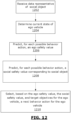
- FIG. 12 is a flow diagram further summarizing a method implemented by predictive safety control system 172 for controlling safety of both an ego vehicle and at least one social object in an environment of the ego vehicle, according to an example embodiment.
- the method includes receiving data representative of at least one social object 308 (Action 1202) and determining a current state of the ego vehicle 105 based on sensor data (Action 1204).
- An ego safety value is predicted corresponding to the ego vehicle, for each possible behavior action in a set of possible behavior actions, based on the current state (Action 1206).
- a social safety value corresponding to the at least one social object in the environment of the ego vehicle 105 is predicted, based on the current state, for each possible behavior action (Action 1208).
- a next behavior action for the ego vehicle 105 is selected, based on the ego safety values, the social safety values, and one or more target objectives for the ego vehicle 105 (Action 1210).
- the ego safety value indicates a probability that an obstacle will not be located in an ego safety zone 310 of the ego vehicle 105 if the possible behavior action is performed by the ego vehicle 105 and the target policy followed thereafter.
- the social safety value indicates a probability, for the at least one social object 308, that the ego vehicle 105 will not be located in a social safety zone 312 of the social object 308 if the possible behavior action is performed by the ego vehicle 105 and the target policy followed thereafter.
- the data received includes data representative of a plurality of social objects 308 in the environment the ego vehicle 105.
- the method includes, for each possible behavior action, predicting a respective social safety value for each of the plurality of social objects 308, each social safety value indicating a probability that the ego vehicle 105 will not be located in a respective social safety zone 312 of the respective social object 308 if the possible behavior action is performed by the ego vehicle 105 and the target policy followed thereafter.
- determining the current state comprises determining a velocity and direction of the ego vehicle 105, and a velocity, direction and position of each of the plurality of social objects 308.
- predicting the ego safety value for each possible behavior action is performed by a general value function (GVF) implemented by a trained neural network.
- GVF general value function
- Predicting the social safety value for each possible behavior action for each of the plurality of social objects is performed by a further GVF implemented by a trained neural network.
- the ego safety zone includes a physical space that includes and extends beyond the ego vehicle 105 in a direction of travel of the ego vehicle 105
- the social safety zone for a social object 308 includes and extends beyond the social object 308 in a direction of travel of the social object 308.
- the social safety value corresponds to a plurality of social objects 308 in the environment of the ego vehicle 105, the social safety value indicating a probability that the ego vehicle 105 will not be located in a respective social safety zone of any of the social objects 308 if the possible behavior action is performed by the ego vehicle 105 and the target policy followed thereafter.
- selecting the behavior action includes performing fuzzification of the ego safety value and the social safety value predicted for each of the possible behavior actions by mapping each of the ego safety values and the social safety values to a respective truth value; applying fuzzy inference on the truth values to generate a goal fuzzy set; and defuzzifying the goal fuzzy set to select the behavior action for the ego vehicle.
- predictive perception unit 502 includes a social object detector 514 that provides a social object state o i t for each detected social object.
- social object detector 514 is omitted and the state for each detected social object is not explicitly provided to the social safety predictor module 506.
- the social safety predictor GVF f social is configured to map social object safety from sensor data alone (e.g. from state data s t,env , without addition state data o i t from the social object detector).
- social object detector 514 may still be used during training.
- social safety predictor module 506 does not depend on an object detector 514 once deployed on an autonomous vehicle (e.g., the ego vehicle 105).
- p t a ⁇ t z ego z social p t comfort a ⁇ t
- p t social a ⁇ t z social for each behavior action available and ego and social safety zones respectively.
- only one ego safety zone and one social safety zone are considered, namely the zones are in the direction of travel for the ego vehicle and in the direction of travel for the social objects respectively (regardless of whether the direction of travel is forward or in-reverse).
- the cumulants used for training the ego safety GVF f ego 604 and the ego comfort GVF f comfort 608 are the same as those defined above.
- Learning this function mapping may, in some embodiments, enable social safety predictor GVF f social 606 to identify social threats without actually performing object detection explicitly.
- the safety controller 512 of the first embodiment is modified so that the goal fuzzy set is determined by: where m social ( â t
- z social SAF E social p social a ⁇ t
- this alternative removes the need for social object detector 514 post training when predictive safety control system 172 is deployed on an autonomous vehicle (e.g., the ego vehicle 105).
- the social safety predictor GVF f social 606 can be trained to identify objects that threaten social safety implicitly from LIDAR data representative of a point cloud or image data rather than passing the object parameters explicitly to the social safety predictor GVF f social 606. This has the advantage of being able to learn to predict social safety in environments where very accurate object detection may be available without the need for real-time object detection constraints.
- the social safety predictor GVF f social 606 can then be deployed in a real-time predictive safety control system 172 without needing an on-line object detector 514 which may sacrifice realtime accuracy by introducing latency.
- predictive safety control system 172 can be a standalone system that is used to record information and provide feedback.
- the predictive safety control system 172 could be used in a passive safety system that provides a monitoring and alert module that issues driver guidance.
- the output of the safety controller 512 may be used to trigger a message to the driver, for example a visual and/or audible message to "TURN LEFT".
- predictive safety control system 172 can be a stand-alone system or may be integrated into an autonomous driving system (i.e., the ADAS 166 or the ADS 170).
- systems, devices and processes disclosed and shown herein may comprise a specific number of elements/components, the systems, devices and assemblies may be modified to include additional or fewer of such elements/components.
- the embodiments disclosed herein may be modified to include a plurality of such elements/components.
- the present invention is described, at least in part, in terms of methods, a person of ordinary skill in the art will understand that the present invention is also directed to the various components for performing at least some of the aspects and features of the described methods, be it by way of hardware (DSPs, GPUs, ASIC, or FPGAs), software or a combination thereof. Accordingly, the technical solution of the present invention may be embodied in a non-volatile or non-transitory machine readable medium (e.g., optical disk, flash memory, etc.) having stored thereon executable instructions tangibly stored thereon that enable a processing device (e.g., a vehicle control system) to execute examples of the methods disclosed herein.
- a processing device e.g., a vehicle control system
Landscapes
- Engineering & Computer Science (AREA)
- Automation & Control Theory (AREA)
- Physics & Mathematics (AREA)
- Theoretical Computer Science (AREA)
- Mechanical Engineering (AREA)
- Transportation (AREA)
- Human Computer Interaction (AREA)
- Software Systems (AREA)
- General Physics & Mathematics (AREA)
- Computing Systems (AREA)
- Computational Linguistics (AREA)
- Artificial Intelligence (AREA)
- Evolutionary Computation (AREA)
- General Engineering & Computer Science (AREA)
- Data Mining & Analysis (AREA)
- Mathematical Physics (AREA)
- General Health & Medical Sciences (AREA)
- Biophysics (AREA)
- Biomedical Technology (AREA)
- Molecular Biology (AREA)
- Life Sciences & Earth Sciences (AREA)
- Health & Medical Sciences (AREA)
- Fuzzy Systems (AREA)
- Traffic Control Systems (AREA)
Description
- The present invention relates to systems for controlling safety of vehicles and surrounding objects.
- Safety is a critical objective of autonomous driving systems (ADS) and advanced driver assistance systems (ADAS), including both the safety of the occupants of the controlled vehicles as well as the safety of others who are in the vicinity of such vehicles. In this regard, safety can be classed into two categories, namely egocentric or "ego" safety which is the safety of the controlled vehicle (e.g. the ego vehicle) and its occupants and "social" safety which is the safety of other objects that are acting within the environment of the ego vehicle.
- Some ADS and ADAS solutions employ a controlling agent for the ego-vehicle that has been trained using reinforcement learning (RL) techniques. However, known RL techniques tend to be inherently egocentric. Multi-agent RL approaches may be used to account for the behavior of the agents controlling other objects, however such approaches can be inaccurate due to difficulties in determining or understanding the policy of the agents controlling the other objects. For example, it is difficult to determine if the driver of another vehicle is paying attention.
- For the foregoing and other reasons, improvements in systems that protect the safety of both an ego vehicle and its occupants as well as other objects acting in the ego vehicle's environment.
-
US 2018/0086336 A1 discloses method of operating an autonomous vehicle, the method comprising: determining, at an automated driving controller (ADC), one or more planned driving corridors that are predicted to be drivable by the vehicle and safely separated from surrounding vehicles and other objects; determining, at a vehicle controller (VC), based on the one or more planned driving corridors, one or more vehicle trajectories which are predicted to avoid collisions with the surrounding vehicles and other objects; selecting, at the VC, one of the determined trajectories as active based on criteria of collision likelihood; sending steering, throttle, and braking commands from the VC to one or more respective actuator controllers within the vehicle to follow the active trajectory. -
DE 102016007899 A1 discloses a method for operating a device for traffic situation analysis which processes input data relating to an at least partially autonomously operable motor vehicle. The input data comprises geographical map data describing an environment of the motor vehicle and environment data describing positions and/or directions of movement of further road users in the environment of the motor vehicle. The method comprises: determining movement space information describing a predicted movement space of the motor vehicle from the map data; determining movement path information describing at least one predicted movement path of at least one road user by applying a movement prediction model to the environment data; determining evaluation information describing the relevance for a traffic situation analysis of at least a partial movement space in dependence on the movement space information and the movement path information; and performing the traffic situation analysis for the or at least one partial movement space in dependence on the evaluation information. - The invention is set out in the appended claims.
- According to a first aspect of the invention, a method is disclosed for controlling safety of both an ego vehicle and at least one social objects in an environment the ego vehicle is operating in. The method includes receiving data representative of at least one social object and determining a current state of the ego vehicle based on sensor data. An ego safety value is predicted corresponding to the ego vehicle, for each possible behavior action in a set of possible behavior actions, based on the current state. A social safety value corresponding to the at least one social object in the environment of the ego vehicle is predicted, based on the current state, for each possible behavior action. A next behavior action for the ego vehicle is selected, based on the ego safety values, the social safety values, and one or more target objectives for the ego vehicle.
- In line with the invention, for each possible behavior action the ego safety value indicates a probability that an obstacle will not be located in an ego safety zone of the ego vehicle if the possible behavior action is performed by the ego vehicle and the target policy followed thereafter. The social safety value indicates a probability, for the at least one social object, that the ego vehicle will not be located in a social safety zone of the social object if the possible behavior action is performed by the ego vehicle and the target policy followed thereafter.
- Further according to the invention, predicting the ego safety value for each possible behavior action is performed by a general value function (GVF) implemented by a trained neural network. Predicting the social safety value for each possible behavior action for each of the plurality of social objects is performed by a further GVF implemented by a trained neural network.
- In at least some examples of the preceding aspects, the data received includes data representative of a plurality of social objects in the environment of the ego vehicle. In such examples, the method includes, for each possible behavior action, predicting a respective social safety value for each of the plurality of social objects, each social safety value indicating a probability that the ego vehicle will not be located in a respective social safety zone of the respective social object if the possible behavior action is performed by the ego vehicle and the target policy followed thereafter.
- In at least some examples of the preceding aspects, determining the current state comprises determining a velocity and direction of the ego vehicle, and a velocity, direction and position of each of the plurality of social objects.
- In at least some examples of the preceding aspects, the ego safety zone includes a physical space that includes and extends beyond the ego vehicle in a direction of travel of the ego vehicle, and the social safety zone for a
social object 308 includes and extends beyond the social object in a direction of travel of the social object. - In at least some examples of the preceding aspects, for each possible behavior action, the social safety value corresponds to a plurality of social objects in the environment of the ego vehicle, the social safety value indicates a probability that the ego vehicle will not be located in a respective social safety zone of any of the social objects if the possible behavior action is performed by the ego vehicle and the target policy followed thereafter.
- In at least some examples of the preceding aspects, selecting the behavior action includes performing fuzzification of the ego safety value and the social safety value predicted for each of the possible behavior actions by mapping each of the ego safety values and the social safety values to a respective truth value; applying fuzzy inference on the truth values to generate a goal fuzzy set; and defuzzifying the goal fuzzy set to select the behavior action for the ego vehicle.
- A predictive safety control system is disclosed according to a second aspect of the invetion. The predictive safety control system includes a state module configured to determine a current state based on sensor data, and an ego safety predictor module configured to predict, based on the current state, for each possible behavior action in a set of possible behavior actions generated by an action module, an ego safety value corresponding to the ego vehicle, wherein the ego safety predictor module comprises a general value function, GVF, implemented by a trained neural network for predicting ego safety values. The predictive safety control system also includes a social safety predictor module configured to predict, based on the current state, for each of the possible behavior actions, a social safety value corresponding to at least one social object in an environment of the ego vehicle, wherein the social safety predictor module comprises a further GVF implemented by a trained neural network for predicting the social safety values for each social object. A safety controller is configured to select, based on the ego safety values, the social safety values predicted for each of the possible behavior actions, and one or more target objectives, a next behavior action for the ego vehicle, wherein, for each possible behavior action: the ego safety value indicates a probability that an obstacle will not be located in an ego safety zone of the ego vehicle if the possible behavior action is performed by the ego vehicle; and the social safety value indicates a probability, for the at least one social object, that the ego vehicle will not be located in a social safety zone of the at least one social object if the possible behavior action is performed by the ego vehicle.
- In example embodiments, the systems and methods disclosed herein may in some circumstances reduce the safety risk of behavior actions taken at the ego vehicle on social objects such as other vehicles and pedestrians. The systems and methods of the present invention consider not only the safety of an ego vehicle, but also the safety of social objects. Social safety predictions and ego safety predictions as described in the present disclosure may in some applications be applied across a broad spectrum of environments including intersection handling, multi-lane highway driving, parking lots, school zones, and other complicated environments where the need for social safety is highly important. In some examples, social safety and ego safety can be considered as separate components, thereby making it possible to assign different prioritize these safeties in an automated decision making process.
-
-
FIG. 1 is a schematic diagram of systems relating to example embodiments. -
FIG. 2 is a block diagram of a vehicle comprising a vehicle control system in accordance with one example embodiment. -
FIG. 3 is a plan or bird's eye view illustrating an example of an ego vehicle with a corresponding ego safety zone and a plurality of social objects with corresponding social safety zones, approaching a road intersection. -
FIG. 4 is a three dimensional illustration of an ego safety zone. -
FIG. 5 is a block diagram of predictive safety control system according to an example embodiment. -
FIG. 6 is a block diagram of predictor modules of the predictive safety control system ofFIG. 5 , according to example embodiments. -
FIG. 7 is a block diagram of a safety controller of the predictive safety control system ofFIG. 5 . -
FIG. 8 is a plan or bird's eye view illustrating an example of an ego vehicle with a corresponding ego safety zone and a plurality of social objects with corresponding social safety zones, in a parking lot scenario. -
FIG. 9 is a plan or bird's eye view illustrating an example of an ego vehicle with a corresponding ego safety zone and a plurality of social objects with corresponding social safety zones, in a roadway scenario. -
FIG. 10 is a block diagram representing actions taken by the predictive safety control system ofFIG. 5 , according to example embodiments. -
FIG. 11 is a block is a block diagram of the path planning module in accordance with one example embodiment. -
FIG. 12 is a flow diagram of a method of controlling safety of both an ego vehicle and at least one social object in an environment the ego vehicle, according to an example embodiment. - The following is a list of selected acronyms and terms and their associated definitions that appear in this description:
- AC
- Action Conditioned
- ACC
- Adaptive Cruise Control
- Action
- A control decision for interacting with the environment realized by actuators
- ADAS
- Advanced Driver-Assistance System
- ADS
- Autonomous Driving System
- FIS
- Fuzzy Inference System
- GVF
- General Value Function
- MPC
- Model Predictive Controller
- MCTS
- Monte Carlo Tree Search
- RL
- Reinforcement Learning
- RPM
- Rotations Per Minute
- State
- A representation of the environment constructed from a collection of sensors
- TD
- Temporal Difference
- For convenience, the present application describes example embodiments of methods and systems with reference to a motor vehicle, such as a car, truck, bus, boat or ship, submarine, aircraft, warehouse equipment, construction equipment, tractor or other farm equipment. The teachings of the present application are not limited to any particular type of vehicle, and may be applied to vehicles that do not carry passengers as well as vehicles that do carry passengers. The teachings of the present application may also be implemented in mobile robot vehicles including, but not limited to, autonomous vacuum cleaners, rovers, lawn mowers, unmanned aerial vehicle (UAV), and other moving objects.
- Example embodiments are described for systems and methods that are directed towards enhancing ego safety and social safety in the context of a vehicle that includes an automated driver replacement or driver assistance system such as an ADS or ADAS. In this regard, ego safety refers to the safety of an ego vehicle (i.e. the subject vehicle that is being controlled), and social safety refers to the safety of social objects within the environment of the ego vehicle. As used herein, a social object refers to an object other than the ego vehicle that is active (i.e. moving or dynamic as opposed to fixed in place) in the environment. By way of example, social objects can include non-stationary objects such as, but not limited to, other vehicles, bicycles, scooters, pedestrians and animals. Example embodiments are directed to a behavior planner of a planning system of the ADS (or ADAS), in which the behavior planner is configured to predict the impact of potential behavior actions on the safety of the ego vehicle (e.g. ego safety) as well as on the safety of social objects in the environment of the ego vehicle (e.g. social safety). In example embodiments, a suitable behavior action can be selected based on both the predicted ego safety and the predicted social safety determined for each behavior action in a set of possible behavior actions. Accordingly, in at least some example embodiments the problem of improving safety for both the ego vehicle and social objects is addressed by configuring the behavior planner to consider the impact that particular behavior actions will have not only on the safety of the ego vehicle but also on social objects, and select a suitable behavior action that satisfies safety requirements for both the ego vehicle and the surrounding social objects. In example embodiments, a predictive safety control system of the behavior planner is configured to assess both of the following questions: (a) if a given target policy is followed, will the ego vehicle be safe?; and (b) if the given target policy is followed will the ego vehicle make the social objects unsafe?.
- In at least some examples, in addition to ego safety and social safety predictions, ego comfort can also be predicted for different types of behavior actions, and a particular behavior action selected based on the ego safety, social safety, and ego comfort predictions. In this regard, ego comfort corresponds to a degree of physical and/or mental comfort of the occupants of the ego-vehicle. By way of example, a certain behavior action may result in a rate of linear or angular acceleration of an ego vehicle that is safe, but which is physically or mentally uncomfortable for the occupants of the vehicle.
- The predictive functions used to make safety and optionally comfort predictions may be trained via reinforcement learning (RL) using the general value function (GVF) framework. An example of a GVF framework that can be implemented in example embodiments is described in: "R. Sutton, J. Modayil, M. Delp, T. Degris, P. Pilarski, A. White and D. Precup, "Horde: A scalable real-time architecture for learning knowledge from unsupervised sensorimotor interaction," in Proc. of 10th Intl. Conf, on Autonomous Agents and Multiagent Systems, Taipei, Taiwan, 2011." Reinforcement learning (RL) enables a way of dealing with the stochastic and unknown behavior of other vehicles by learning from experience, including observing changes in behavior of other vehicles and the impact that has on safety. An example of RL is described in: D. Silver, A. Huang, C. Maddison, A. Guez, L. Sifre, G. Driessche, J. Schrittwieser, I. Antonoglou and V. Panneershelvam, "Mastering the game of Go with deep neural networks and tree search," Nature, vol. 529, no. 7587, pp. 484-489, 2016.
-
Figure 1 is a schematic diagram showing selected elements of asystem 100 in which the methods and systems for controlling safety of vehicles and surrounding objects can be implemented according to example embodiments of the present application. Thesystem 100 comprises avehicle control system 115 embedded in avehicle 105. Thevehicle control system 115, shown in greater detail inFigure 2 , is coupled to adrive control system 150 and anelectromechanical system 190 of thevehicle 105, as described below. Thevehicle control system 115 can in various embodiments allow thevehicle 105 to be operable in one or more of a fully-autonomous, semi-autonomous or fully user-controlled mode. - The
vehicle 105 includes a plurality ofenvironmental sensors 110 that collect information about the externalenvironment surrounding vehicle 105 in which thevehicle 100 operates in, and a plurality ofvehicle sensors 111 that collect information about the operating conditions of thevehicle 105.Environment sensors 110 may for example include electromagnetic (EM) wave based sensors such asdigital cameras 112, light detection and ranging (LIDAR)units 114, andradar units 116 such as synthetic aperture radar (SAR) units.Cameras 112,LIDAR units 114 andradar units 116 are located about thevehicle 105 and are each coupled to thevehicle control system 115, as described below. In an example embodiment, thedigital cameras 112,LIDAR units 114 andSAR units 116 are located at the front, rear, left side and right side of thevehicle 105 to capture information about the environment in front, rear, left side and right side of thevehicle 105. Thedigital cameras 112,LIDAR units 114 andradar units 116 are mounted or otherwise located to have different fields of view (FOVs) or coverage areas to capture information about the environment surrounding thevehicle 105. In some examples, the FOVs or coverage areas of some or all of the adjacentenvironmental sensors 110 are partially overlapping. Accordingly, thevehicle control system 115 receives information about the external environment of thevehicle 105 as collected bycameras 112,LIDAR units 114 andradar units 116. In at least some examples, the coverage areas are divided into zones, including for example a front zone, a back zone, and right and left side zones. In at least some examples, one or more ofcameras 112,LIDAR units 114 andradar units 116 are configured with on-board processing and can perform pre-processing of collected information before providing the collected information to other systems of thevehicle control system 115 assensor data 182. -
Vehicle sensors 111 can include an inertial measurement unit (IMU) 118, anelectronic compass 119, andother vehicle sensors 120 such as a speedometer, a tachometer, wheel traction sensor, transmission gear sensor, throttle and brake position sensors, and steering angle sensor. Thevehicle sensors 111, when active, repeatedly (e.g., in regular intervals) sense information and provide the sensed information to thevehicle control system 115 assensor data 182 in real-time or near real-time. Thevehicle sensors 111 can include anIMU 118 that senses the vehicle's specific force and angular rate using a combination of accelerometers and gyroscopes. Thevehicle control system 115 may also collect information about a position and orientation of thevehicle 105 using signals received from asatellite receiver 132 and theIMU 118. Thevehicle control system 115 may determine a linear speed, angular speed, acceleration, engine RPMs, transmission gear and tire grip of thevehicle 105, among other factors, using information from one or more of thesatellite receivers 132, and thevehicle sensors 111. - The
vehicle control system 115 may also comprise one or morewireless transceivers 130 that enable thevehicle control system 115 to exchange data and optionally voice communications with a wireless network such as a wireless wide area network (WAN) 210 of thecommunication system 100. Thevehicle control system 115 may use thewireless WAN 210 to access aserver 240, such as a driving assist server, via one ormore communications networks 220, such as the Internet. Theserver 240 may be implemented as one or more server modules in a data center and is typically located behind afirewall 230. Theserver 240 is connected to networkresources 250, which may provide supplemental data sources (for example local whether information or information collected by other environment sensors located in the environment thevehicle 105 is operating in, such as sensors located on or integrated into traffic lights, road signs, other vehicles, and the like) that may be used by thevehicle control system 115. - The
communication system 100 comprises asatellite network 260 comprising a plurality of satellites in addition to theWAN 210. Thevehicle control system 115 comprises the satellite receiver 132 (Figure 2 ) that may use signals received by thesatellite receiver 132 from thesatellite network 260 to determine its position. Thesatellite network 260 typically comprises a plurality of satellites which are part of at least one Global Navigation Satellite System (GNSS) that provides autonomous geo-spatial positioning with global coverage. For example, thesatellite network 260 may be a constellation of GNSS satellites. Example GNSSs include the United States NAVSTAR Global Positioning System (GPS) or the Russian GLObal NAvigation Satellite System (GLONASS). Other satellite navigation systems which have been deployed or which are in development include the European Union's Galileo positioning system, China's BeiDou Navigation Satellite System (BDS), the Indian regional satellite navigation system, and the Japanese satellite navigation system. -
Figure 2 illustrates selected components of thevehicle 105 in accordance with an example embodiment of the present application. As noted above, thevehicle 105 comprises avehicle control system 115 that is connected to adrive control system 150 and anelectromechanical system 190 as well as to theenvironmental sensors 110 andvehicle sensors 111. Thevehicle 105 also comprises various structural elements such as a frame, doors, panels, seats, windows, mirrors and the like that are known in the art but that have been omitted from the present application to avoid obscuring the teachings of the present application. Thevehicle control system 115 includes aprocessor system 102 that is coupled to a plurality of components via a communication bus (not shown) which provides a communication path between the components and theprocessor 102. Theprocessor system 102 is coupled to adrive control system 150, Random Access Memory (RAM) 122, Read Only Memory (ROM) 124, persistent (non-volatile)memory 126 such as flash erasable programmable read only memory (EPROM) (flash memory), one or morewireless transceivers 130 for exchanging radio frequency signals with awireless network 210, asatellite receiver 132 for receiving satellite signals from thesatellite network 260, a real-time clock 134, and atouchscreen 136. Theprocessor system 102 may include one or more processing units, including for example one or more central processing units (CPUs), one or more graphical processing units (GPUs), and other processing units. - The one or more
wireless transceivers 130 may comprise one or more cellular (RF) transceivers for communicating with a plurality of different radio access networks (e.g., cellular networks) using different wireless data communication protocols and standards. Thevehicle control system 115 may communicate with any one of a plurality of fixed transceiver base stations (one of which is shown inFigure 1 ) of the wireless WAN 210 (e.g., cellular network) within its geographic coverage area. The one or more wireless transceiver(s) 130 may send and receive signals over thewireless WAN 210. The one or morewireless transceivers 130 may comprise a multi-band cellular transceiver that supports multiple radio frequency bands. - The one or more
wireless transceivers 130 may also comprise a wireless local area network (WLAN) transceiver for communicating with a WLAN (not shown) via a WLAN access point (AP). The WLAN may comprise a Wi-Fi wireless network which conforms to IEEE 802.11x standards (sometimes referred to as Wi-Fi®) or other communication protocol. - The one or more
wireless transceivers 130 may also comprise a short-range wireless transceiver, such as a Bluetooth® transceiver, for communicating with a mobile computing device, such as a smartphone or tablet. The one or morewireless transceivers 130 may also comprise other short-range wireless transceivers including but not limited to Near field communication (NFC), IEEE 802.15.3a (also referred to as UltraWideband (UWB)), Z-Wave, ZigBee, ANT/ANT+ or infrared (e.g., Infrared Data Association (IrDA) communication). - In at least some examples, one or more or the
wireless transceivers 130 enable thevehicle control system 115 to receive third party information produced by the vehicle control systems of other vehicles operating in or near an environment of the vehicle control system, which may for example include state information generated in respect of the other vehicles or information about howvehicle 105 is perceived by the other vehicles. In some examples, such information could be communicated through peer-to-peer signaling using a predetermined communications protocol, and in some examples the such information may be provide through an intermediate service (e.g. from a network resource 250). - The
vehicle control system 115 also includes one ormore speakers 138, one ormore microphones 140 and one ormore data ports 142 such as serial data ports (e.g., Universal Serial Bus (USB) data ports). The system may also include other sensors such as tire pressure sensors (TPSs), door contact switches, light sensors, proximity sensors, etc. - The
drive control system 150 serves to control movement of thevehicle 105. Thedrive control system 150 may for example comprise asteering controller 152, and aspeed controller 154, each of which may be implemented as software modules or control blocks within thedrive control system 150. Thesteering controller 152 andspeed controller 154, when in fully or semi-autonomous driving mode, receives navigation instructions from an autonomous driving system 170 (for autonomous driving mode) or a driving assistance system 166 (for semi-autonomous driving mode) and generate control signals to control one or more of the steering, braking and throttle of thevehicle 105. Thedrive control system 150 may include additional components to control other aspects of thevehicle 105 including, for example, control of turn signals and brake lights. - The
electromechanical system 190 receives control signals from thedrive control system 150 to operate the mechanical components of thevehicle 105. Themechanical system 190 effects physical operation of thevehicle 105. Themechanical system 190 comprises athrottle 196 for controlling power applied to wheels by an engine, asteering system 192 for controlling the direction of the wheels andbrakes 194 for applying braking force to the wheels. The engine may be a gasoline-powered engine, a battery-powered engine, or a hybrid engine, for example. Other components may be included in themechanical system 190, including, for example, turn signals, brake lights, fans and windows. - A graphical user interface (GUI) of the
vehicle control system 115 is rendered and displayed on thetouchscreen 136 by theprocessor 102. A user may interact with the GUI using the touchscreen and optionally other input devices (e.g., buttons, dials) to select a driving mode for the vehicle 105 (e.g. fully autonomous driving mode or semi-autonomous driving mode) and to display relevant information, such as navigation information, driving information, parking information, media player information, climate control information, etc. The GUI may comprise a series of traversable content-specific menus. - The
memory 126 of thevehicle control system 115 has stored thereon sets of software instructions executable by theprocessor system 102 that configure thevehicle control system 115 to implement a number ofsystems 161 in addition to the GUI. Thesystems 161 includes anoperating system 160, one or both of drivingassistance system 166 for semi-autonomous driving (generally known as an advanced autonomous driver-assistance system (ADAS)), and autonomous driving system (ADS) 170 for fully autonomous driving. Both the drivingassistance system 166 and the autonomous driving system 170 can include one or more of a navigation planning and control module, a vehicle localization module, parking assistance module, and autonomous parking module, vehicle state determination module as well as other modules. In example embodiment shown inFigure 2 , thesystems 161 include aperception module 171 and a pathplanning module 173Systems 161 may also includeother modules 174, which may include for example mapping module, navigation module, climate control module, media player module, telephone module and messaging module. In example embodiments the various systems and system modules are configured to interact during operation of thevehicle 105. - Referring to
Figure 11 , thepath planning module 173 includes amission planner 1102, abehavior planner 1104 and amotion planner 1106. Thebehavior planner 1104 includes a predictivesafety control system 172. The predictivesafety control system 172 causes the operations of methods described herein to be performed. - Referring again to
Figure 2 , thememory 126 also stores a variety ofdata 180. Thedata 180 may comprisesensor data 182 received from thesensors 110, user data 184 comprising user preferences, settings and optionally personal media files (e.g., music, videos, directions, etc.), and a download cache 186 comprising data downloaded via thewireless transceivers 130, including for example data downloaded fromnetwork resources 250. Thesensor data 182 may comprise image data representative of an image from eachcamera 112, LIDAR data representative of a point cloud from theLIDAR units 114, radar data from theradar units 116, and other sensor data fromother vehicle sensors 120. System software, software modules, specific device applications, or parts thereof, may be temporarily loaded into a volatile store, such asRAM 122, which is used for storing runtime data variables and other types of data or information. Data received by thevehicle control system 115 may also be stored in theRAM 122. Although specific functions are described for various types of memory, this is merely one example, and a different assignment of functions to types of memory may also be used. - Referring again,
Figure 11 is a block diagram that illustrates further details of thepath planning module 173. It should be understood that, in some examples involving machine learning, thepath planning system 173, or components of thepath planning module 173, may be trained outside of the vehicle 105 (e.g., in a simulator system). In examples discussed below, one or more of themission planner 1102, and themotion planner 1106 may include a neural network that is trained in a simulator. - Generally, path planning may be performed at three levels, namely at the mission level (e.g., performed by the mission planner 1102), at the behavior level (e.g., performed by the behavior planner 1104) and at the motion level (e.g., performed by the motion planner 1106).
- Generally, the purpose of path planning is to determine a path for the
vehicle 105 to travel from a first state (e.g., defined by the vehicle's current position and orientation, or an expected future position and orientation) to a target state (e.g., a final destination defined by the user). Path planning may also include determining one or more sub-paths to one or more intermediate target states. Thepath planning module 173 determines the appropriate path and sub-paths with consideration of conditions such as the drivable ground (e.g., defined roadway), obstacles (e.g., pedestrians and other vehicles), traffic regulations (e.g., obeying traffic signals) and user-defined preferences (e.g., avoidance of toll roads). - Path planning performed by the
path planning module 173 may be dynamic, and be repeatedly performed as the environment changes. Changes in the environment may be due to movement of the vehicle 105 (e.g.,vehicle 105 approaches a newly-detected obstacle) as well as due to the dynamic nature of the environment (e.g., moving pedestrians and other moving vehicles). - As mentioned above, path planning may be performed at different levels, for example at the mission level, behavior level and motion level. Mission level path planning is considered to be a higher (or more global) level of path planning, motion level path planning is considered to be a lower (or more localized) level of path planning, and behavior level path planning is considered to be between mission and motion level. Generally, the output of path planning at a higher level may form at least part of the input for a lower level of path planning.
- At each level of planning, the planned path may be defined as a series of points, each point defining a planned target position (e.g., x- and y-coordinates) of the
ego vehicle 105. Each point may additionally define the planned speed, orientation, acceleration and/or angular speed of thevehicle 105, thus defining the planned state of thevehicle 105 at each target position. The planned path may thus define a set of locations (or more generally, a set of states) to be travelled by thevehicle 105 in the planned journey. - Path planning at the mission level (more simply referred to as mission planning) relates to planning a path for the autonomous vehicle at a high, or global, level. The first state of the
ego vehicle 105 may be the starting point of the journey (e.g., the user's home) and the target state of theego vehicle 105 may be the final destination point (e.g., the user's workplace). Selecting a route to travel through a set of roads is an example of mission planning. Generally, the final destination point, once set (e.g., by user input) is unchanging through the duration of the journey. Although the final destination point may be unchanging, the path planned by mission planning may change through the duration of the journey. For example, changing traffic conditions may require mission planning to dynamically update the planned path to avoid a congested road. The user may also change the final destination point at any time during the journey. - Input data for
mission planner 1102 may include, for example, GPS data (e.g., GPS coordinates that are used to determine the starting point of the ego vehicle 105), geographical map data (e.g., from an internal or external map database), traffic data (e.g., from an external traffic condition monitoring system), the final destination point (e.g., defined as x- and y-coordinates, or defined as longitude and latitude coordinates), as well as any user-defined preferences (e.g., preference to avoid toll roads). - The planned path output from the
mission planner 1102 defines the route to be travelled to reach the final destination point from the starting point. The output of themission planner 1102 may include data defining a set of intermediate target states (or waypoints) along the route. The intermediate target states may be defined at road intersections to indicate which road to take at each intersection, for example. The intermediate target states may be used for path planning at the behavior level. - The
behavior planner 1104 includes the predictivesafety control system 172. Thebehavior planner 1104 receives the planned route from themission planner 1102, including the set of intermediate target states (if any). Thebehavior planner 1104 generates a planned behavior action for thevehicle 105, in order to make driving decisions on a more localized and short-term basis than themission planner 1102. For example, the behavior planner 1105 may ensure that thevehicle 105 follows certain behavior rules (e.g., left turns should be made from the left-most lane). In the embodiment shown inFigure 11 , the predictivesafety control system 172 is a sub-system of thebehavior planner 1104 that includes instructions that are executable by a processor, such as theprocessor 102 of thevehicle control system 115. The predictivesafety control system 172 may be invoked by thebehavior planner 1104 to cause execution of the instructions of the predictivesafety control system 172. When the instructions of the predictivesafety control system 172 are executed by theprocessor 102 of thevehicle control system 115, the predictivesafety control system 172 selects a behavior action. The behavior planner 11014 receives the selected behavior action from the predictivesafety control system 172 to enable thebehavior planner 1104 to generate a planned behavior action for thevehicle 105 that meets the target objectives. - The planned behavior action is received by the
motion planner 1106. As will be discussed further below, the planned behavior action may be received by themotion planner 1106 as state input data. Themotion planner 1106 should find a trajectory that satisfies the planned behavior action, and that navigates the environment in a relatively safe, comfortable, and speedy way. Themotion planner 1106 provides a safe and robust navigation of thevehicle 105 in both structured and unstructured environments. A structured environment is generally an environment having well-defined drivable and non-drivable areas (e.g., a highway having clear lane markings), and which may have defined driving rules that all vehicles are expected to follow. An unstructured environment is generally an environment in which drivable and non-drivable areas are less defined (or undefined) (e.g., an open field), and which may have fewer or no driving rules for expected vehicle behavior. Regardless of whether the environment is structured or unstructured, the environment may also be highly dynamic (e.g., pedestrians and other vehicles are each moving) and each dynamic obstacle may have different and independent behaviors. - In example embodiments, the
behavior planner 1104 includes the predictivesafety control system 172. The predictivesafety control system 172 ofvehicle control system 115 ofvehicle 105 is configured to predict the effect that particular behavior actions will have on the safety of the vehicle 105 (referred to hereinafter as ego vehicle 105) as well as on other social objects acting within the environment of theego vehicle 105 and select a suitable behavior action that addresses safety requirements for both theego vehicle 105 and the surrounding social objects. - In this regard, in example embodiments the predictive
safety control system 172 is configured to define one or more ego safety zones z aroundego vehicle 105 and one or more social safety zones z around any surrounding social objects, and select behavior actions with the objective of keeping social objects out of the ego-vehicle's safety zone(s) z and keeping the ego-vehicle out of the safety zones z of any of the social objects. An ego safety zone z is a physical space that extends beyond the dimensions ofego vehicle 105 in at least one direction, and a social safety zone z for a social object is a physical space that extends beyond the dimensions of that social object in at least one direction. - For illustrative purposes,
Figure 3 shows, from a bird's eye view,ego vehicle 105 approaching an intersection along with three social objects 308(1) 308(2) and 308(3) (referred to collectively or generically as social object(s) 308). InFigure 3 , thesocial objects 308 are all shown as vehicles, however the social objects may also include other types of active objects such as cyclists, pedestrians and animals. - As can be seen in
Figure 3 , dashed lines are used to indicate direction of travel safety zones defined for each of the vehicles by predictivesafety control system 172. In particular, a direction of travel egosafety zone z 310 is shown surroundingego vehicle 105, and direction of travel social safety zones z 312(1), 312(2) and 312(3) (referred to collectively or generically using reference numeral 312), are shown surrounding social objects 308(1) 308(2) and 308(3) (referred to collectively or generically using reference numeral 312), respectively. - In example embodiments, in addition to direction of travel safety zones (which will be referred to as front safety zones for convenience), other safety zones may also be defined for the
ego vehicle 105 and each of thesocial objects 308, including for example a back safety zone (i.e. opposite to the direction of travel) and right and left safety zones (i.e. in horizontal directions that are perpendicular to the direction of travel). In the case of vehicles that are capable of three dimensional movement (for example flight enabled vehicles and submarines), up and down safety zones may also be defined. In some examples, omnidirectional safety zones may be defined for theego vehicle 105 and each of thesocial objects 308. - In at least some examples, the safety zones are defined as three dimensional (3D) spaces relative to the
respective ego vehicle 105 andsocial objects 308, and in this regardFigure 4 illustrates 3D forward egosafety zone z 310 in respect ofego vehicle 105, which as shown has a zone length zlength, zone width zwidth, and zone zheght. As will be explained in greater detail below, one or more of the safety zone dimensions (for example zone length zlength) can be adaptively determined by the predictivesafety control system 172 based on one or more properties of a sensed vehicle state, such as speed for example. In some examples, some zone dimensions (for example height and width) may be based exclusively on predetermined vehicle dimensions. - As indicated by
arrow 314, which indicates a predicted path ofego vehicle 105 in response to a possible action,Figure 3 represents a potential left hand turn scenario. Based solely on the ego vehicle forwardsafety zone z 310, it appears that ego vehicle can safely make a left hand turn. However, when the forward social safety zone z 312(1) of social object 308(1) is considered, it can be determined that the predictedego vehicle path 314 intersects with the forward social safety zone z 312(1). Accordingly, a decision can be made to brake and not make the left hand turn at the immediate time. - Accordingly, in example embodiments, predictive
safety control system 172 is configured to select behavior actions with the objective of keeping thesocial objects 308 out of the ego safety zone (e.g. z 310) and keeping theego vehicle 105 out of the social safety zones (e.g. z 312(1), 312(2) and 312(3)) of any of thesocial objects 308. An example architecture and operation of predictivesafety control system 172 will now be provided with reference toFigure 5 , which illustrates a functional block diagram of predictivesafety control system 172 accordingly to example embodiments. - As shown in
Figure 5 , in example embodiments the predictivesafety control system 172 includes a predictive perception unit 502, which is configured to makepredictions 516 about possible future states based on a current state determined from sensor data received fromenvironmental sensors 110 and vehicle sensors 111 (i.e., information about the environment theego vehicle 105 operates in sensed by thesensors 110 and information about theego vehicle 100 sensed by the vehicle sensors 111), and asafety controller 512, which is configured to select behavior actions based on the predicted future states. - In example embodiments, the predictive perception unit 502 includes a
state module 510 and aset 503 of predictor modules 404, 406, 408. - The
state module 510 is configured to map sensor data received fromenvironmental sensors 110,vehicle sensors 111 and, in some examples, external resources (e.g. network resources 250 or other social objects) to a current vehicle state st of theego vehicle 105. The ego vehicle state st ∈ s (where S represents all possible state values) is a representation of the ego vehicle environment at a discrete time t, and includes numeric values (e.g. state data) describing aspects of the physical environment surrounding the ego vehicle 105 (s t,env ) and the physical vehicle operating parameters of theego vehicle 150 itself (st,op ). - In some examples, vehicle parameter state data st,op included in the ego vehicle state st about the physical operating parameters of the
ego vehicle 105 may be based on sensor data received fromvehicle sensors 111. Vehicle parameter state data st,op about the current physical operating parameters may include, for example: ego vehicle speed v; engine RPM; transmission gear; throttle position; brake position; steering angle; angular acceleration; linear acceleration; and vehicle pitch, yaw and roll. - In example embodiments, environmental state data s t,env included in ego vehicle state st about the physical environment surrounding the
ego vehicle 105 may be determined based on sensor data about the surroundings of theego vehicle 105 as detected by embedded environmental sensors 110 (e.g. one or more ofcameras 112,LIDAR units 114 and radar units 116). Environmental state data s t,env may for example include data about obstacles (e.g. stationary objects and social objects), road lanes, traffic lights, road side and overhead signs, road markings, road conditions and other detectable elements within the environment surrounding theego vehicle 105. In at least some examples, one or more of theenvironmental sensors 110 may have on-board processing capabilities that enable intelligent outputs such as distance measurements or speed measurements of nearby social objects, however in some examples such calculations may be performed by thestate module 510 based on less refined data fromsensors 110. By way of example,LIDAR units 114 may provide range images or point cloud data representative of a point cloud that provide 360 degree coverage of the physical environment (including for example social objects 308) surrounding theego vehicle 105. The surrounding environment data fromLIDAR units 114 may in some examples be supplemented with data from one or both ofcameras 112 andradar units 116. - In some examples, data about the surrounding environment of the
ego vehicle 105 may also be received through wireless transceiver(s) 130 from other resources, including for example data about weather or road conditions fromnetwork resources 250, and data received directly or indirectly from othersocial objects 308. By way of example, third-party vehicles in the environment may be configured to communicate information about one or more of their own perceived state (based, for example, on their own sensor data), planned behavior, or planned actions. - As noted above, the environmental state data st,env generated by
state module 510 about the physical environment surrounding theego vehicle 105 includes data about stationary objects and moving objects, includingsocial objects 308. In some examples, the data included in environmental state data s t,env may be limited to data that indicates the presence and location of obstacles in the environment of theego vehicle 105. In example embodiments, thestate module 510 is configured to generate additional state data in respect ofsocial objects 308. In this regard, in some example embodiments, thestate module 510 includes a social object detector function 514 that is configured to identifysocial objects 308 within the environment of theego vehicle 105, and generate a representative social object state


social objects 308 will typically vary, and in example embodiments, the social object detector function 514 is configured to limit the number
social objects 308 detectable within the environment of theego vehicle 105 is greater than K at time t, social object detector function 514 may be configured to generate SODIs

social objects 308. In example embodiments, social object detector function 514 may employ known object detection methods or receive object data from other modules that employ known object detection methods. An example of one suitable object detection method is described in: Joseph Redmon, Santosh Divvala, Ross Girshick, Ali Farhadi; You Only Look Once: Unified, Real-Time Object Detection; arXiv:1506.02640v5 9 May 2016. - Accordingly, in example embodiments the state data for
ego vehicle 105 at time t can be represented as st = st,env, st,op, Ot. - In example embodiments, some or all of the functionality of
state module 510 may be implemented by modules of systems of thevehicle control system 115 other than predictive perception unit 502. For example, the some or all of the functionality ofstate module 510 may be implemented in theperception system 171. - In example embodiments,
state module 510 is configured to calculate additional state data in addition to the ego vehicle state st described above. This calculated state data st,calc may for example include data indicating current ego vehicle safety, data indicating current social object safety, and optionally data indicating current ego vehicle comfort. In this regard, in exampleembodiments state module 510 includes anego safety function 516 for calculating an ego vehicle safety state for theego vehicle 105, a socialobject safety function 517 for calculating a social object safety state for each of thesocial objects 308, and acomfort function 518 for calculating a comfort state for theego vehicle 105. - In some examples, the current safety states and current comfort states are calculated only when
training predictor modules comfort predictor modules - As noted above in respect of
Figures 3 and 4 , the predictivesafety control system 172 is configured to define one or more ego safety zones z aroundego vehicle 105 and one or more social safety zones z around any surroundingsocial objects 308. In example embodiments, the safety zones z for ego-vehicle 105 are defined byego safety function 516 and the safety zones z for respectivesocial objects 308 are determined by socialobject safety function 517, and the safety states and are determined on a zone by zone basis. - In one example, ego safety function 516 (safe) is a function that maps parameters concerning current ego vehicle state st ∈ S, parameters concerning safety


- The output of the ego
safety state function 516 is a value between 0 and 1 that indicates the safety state of theego vehicle 105 for the specific safety zone z, where 1 is safe and 0 is unsafe. Possible ego safety zones z include: omni-directional (safe or unsafe in all directions); specific spatial zones/areas around the vehicle; specific directions around the vehicle. In the following description, direction of travel (e.g. front) safety zones such as those as discussed above in respect ofFigure 3 and 4 are used for purposes of illustrating example embodiments. - In one example embodiment, the ego
safety state function 516 is configured to conclude that the ego safety state at time t for a zone z is safe if data fromenvironmental sensors 110 indicates that no obstacles are located in the zone z. In a specific example, the safety parameters are selected to specify that ego safety zone z is safe at time t if LIDAR data representative of a point cloud received fromLidar units 114 indicates that less than a threshold number of data points fall within the boundaries of the ego safety zone z. In some examples, the threshold could be 1 point, and in some example the threshold could be set higher to avoid false positives. - Accordingly, in an example embodiment, the ego-
vehicle safety function 516 is defined as:
ego vehicle 105. The zone z ∈ Zego is a three dimensional zone oriented with respect to theego vehicle 105. In the illustrated example, as shown inFigure 4 , the length of the front ego safety zone is a function of speed such that zlength = zsafe + Vlength where zsafe = vtspacing + dmin ; where tspacing represents a predefined safe time threshold spacing between theego vehicle 105 and the object o; dmin is a predefined minimum safe distance between theego vehicle 105 and object o when stopped; vlength is the length of the vehicle; and v the speed of theego vehicle 105. - In example embodiments, the predefined safety thresholds tspacing and dmin can be based, within limits, on user input preferences hpref.
- In one example, social object safety function 517 (socialsafe) is a function that maps the current state, the parameters of the detected social object, parameters concerning safety (such as human preferences in spacing)


- The social safety value (i.e., the output of the above) is a value between 0 and 1 that indicates the safety level of the
social object 308 in relation to a specific safety zone z for thatsocial object 308 where 1 is safe and 0 is unsafe. In example embodiments, the socialobject safety function 517 is configured to determine that the social obstacle safety state at time t is safe if sensor data received fromenvironmental sensors 110 indicates that theego vehicle 105 is not located in the social safety zone z of any of the social objects. In example embodiments, socialobject safety function 517 may use social object state data generated by social object detector 514 to predict the social safety of that object. In some examples, rather than or in addition to predicting social safety in respect of social object, the socialobject safety function 517 may output a global social safety value that indicates a global safety value for all social objects in the surrounding environment. For example, a global social safety value could be determined based on one or more combinations of individual social safety values reaching a defined threshold. - In example embodiments, the social
object safety function 517 for asocial object 308 for social safety zone zl is defined as:

ego vehicle 105. The social safety zone z for thesocial object 308 is defined based on coordinates given in reference to theego vehicle 105; social safety zone zl is calculated by defining a bounding box is around thesocial object 308 and adding a safety distance zsafe along the direction of travel to determine a safety region in front of the social object. Similar to ego-vehicle 105 as discussed above, the safety distance zsafe can be a function of the social object's speed. - Although only the functions for front safety zones are set out above, as noted above in example embodiments states could also be determined for other possible zones z, including for example: an omni-directional safety zone (safe or unsafe in all directions); and other specific spatial zones/areas around the vehicle, including for example side zones and, in the case of objects enabled for 3D motion, vertical zones.
- In example embodiments, zone specific ego vehicle
comfort state function 518 for theego vehicle 105 is represented as:
- The comfort safety value (i.e., the output of the comfort state function) is a value between 0 and 1 that indicates the comfort level of the ego vehicle 105 (in relation to a specific zone) where 1 is comfortable and 0 is uncomfortable. In one example embodiment, ego vehicle
comfort state function 518 is defined as:

ego vehicle 105 received from an accelerometer sensor (for example an accelerometer sensor included in the IMU 118) at time t and θaccel is comfort threshold for measured acceleration or vibration in theego vehicle 105. - In some embodiments, the safety, social safety and comfort functions are defined based on algorithms and criteria set by human experts. In some examples, one or both of the safety and comfort thresholds (for example may be based, within defined safety limits, on user input preferences (

network resources 250, or may be based on road surface conditions as sensed bycameras 112. - As illustrated in
Figure 5 , theset 503 ofpredictor modules safety predictor module 504, socialsafety predictor module 506 and, in at least some examples, acomfort predictor module 508. The state st constructed by thestate module 510 is used bypredictor modules predictions 516 about the effects of various behavior actions on the environment ofego vehicle 105. TheAC predictions 516 are behavior action conditioned in that the predictions indicate a predicted state for a future time that is conditional on a certain behavior action at occurring. In example embodiments t1 can be from 1 to 5 seconds. - In this regard, in example embodiments, predictive perception unit 502 receives, as an input from an action module 520 (which may be part of the behavior planner 1104), a set A of all possible behavior actions ât that can be taken by the
ego vehicle 105 given the current vehicle state st . In some examples, the set A may include all behavior actions possible at defined intervals within a future time duration, for example all behavior actions possible at each second for the next 5 seconds. In example embodiments, the behavior actions ât in the set A will each specify a target speed vt forspeed controller 154. For example a target speed vt could be specified on the interval of [0, vmax ] where 0 is stopped and vmax is the maximum allowed target speed permitted byspeed controller 154. A target direction (e.g. a steering angle) may also be included in the behavior actions at (e.g. -1 = -50 degrees to +1 = +50 degrees, where 0 degrees is no angle). In example embodiments, the set A of all possible behavior actions is generated byaction module 520 using known techniques. In some example embodiments,action module 520 is configured to select the set A of permissible behavior actions based on the planned route output by themission planner 1102 and current state of theego vehicle 105. In some examples, all permissible behavior actions could include all physically plausible behaviors, and in some examples, the set of permissible behavior actions could be intelligently filtered to takes into account the local laws and eliminate illegal behaviors. - As will be described in greater detail below, the
AC predictions 516 that are output by theset 503 ofpredictor modules safety controller 512, which selects a suitable behavior action to achieve one or more target objectives based on theAC predictions 516. Target objectives include one or more of a target speed vt, a target direction, a target safety, a target comfort, a target lane. Accordingly, predictive perception unit 502 provides a set ofAC predictions 516 that effectively form an interactive model of the environment surrounding theego vehicle 105, providing thesafety controller 512 with the input needed for thesafety controller 512 to select a behavior action to minimize a defined cost function or maximize total reward. - Referring to
Figure 6 , in some embodiments thepredictor modules processor system 102 ofvehicle control system 115. In some examples, a separate neural network is used for eachpredictor function - Neural network (NN) based predictor functions 604, 606, 608 can be trained using different methods, however in an example embodiment RL is used to determine GVFs for each of the NN based predictor functions 604, 606 608 (also referred to herein as predictor GVFs). An example embodiment for training predictor functions 604, 606, 608 will be described in greater detail below. In some alternative embodiments, one or more of the predictor functions 604, 606, 608 are implemented by rule-based algorithms.
- In at least some example embodiments, the predictive perception unit 502 includes a total of |Zego | + |Zsocial | + |Zcomfort | predictor functions, where |Zego | is the number of ego vehicle safety zones, |Zsocial | is the number of social object safety zones, and |Zcomfort | is the number of ego vehicle comfort zones. For example, in the case where only front ego safety, front social object safety, and front ego vehicle comfort zones are considered, the number of predictor functions is three as shown in
Figure 6 , namely: front zone ego safety predictor GVF 604 (fego ); front zone social object safety predictor GVF 606 (fsocial ); and front zone ego vehicle comfort predictor GVF 608 (fcomfort ). In some embodiments, thecomfort predictor module 508 and its corresponding predictor GVF 608 can be omitted. - The predictor functions 604, 606, 608 collectively make
predictions 516 about the environment, providing a predictive state space pt ∈ P for thesafety controller 512. Thepredictions 516 are action conditional "what-ifs" that evaluate the long term impact (e.g. for the next 1-5 seconds) of possible actions on ego safety, social safety, and comfort. The mapping from the state space S= st, Ot to the predictive state space P that is performed by theset 503 ofpredictor modules 
- Each predictor functions 604, 606, 608 generates a vector of predictions, one for each possible behavior action

predictor modules 
- Each of the
predictor modules safety predictor module 504 is configured to predict, based on the current vehicle state st, future ego safety predictions
safety predictor module 504 includes a predictor GVF fego (st,ât,z) for each ego safety zone. In the illustrated example ofFigure 6 , only front zone ego safety predictor GVF fego (st ,ât ,z) 604 is illustrated. In an example embodiment, the specific data from the ego vehicle state space (st ) that is input to the front ego safety zone predictor GVF fego (st ,ât ,z) 604 may include, for a given time t: (1) physical ego vehicle operating state st,op, including data for: ego vehicle speed vt, transmission gear, engine RPM, steering angle, throttle position, and brake position; and (2) ego vehicle environment state st,env , which may for example include LIDAR data representative of a point cloud and/or other environmental data such as image data or radar data. For each possible input behavior action ât , the input may include an ego target speed vtarget and a target steering angle (or direction). In some examples, the output safety prediction
time t+ 1. In some examples, predicted ego safety
- In this regard, the front zone ego safety predictor GVF fego (st ,ât ,z) 604 maps current state, safety preferences


- The output of the front ego safety zone predictor GVF fego (st ,ât ,z) 604 for each behavior action is a scaler representation of the safety probability of the front ego safety zone.
- In some examples, the current ego vehicle safety state safe may optionally also be included as an input to the ego vehicle
safety predictor GVF 604. In example embodiments, the current ego vehicle safety state safe is included as an input to the ego vehicle safetypredictor GVF f ego 604 when training thepredictor GVF f ego 604 to learn predictions, as described in greater detail below. - The social object
safety predictor module 506 is configured to predict, based on the current ego vehicle state st and the social object state space Ot , future social object safety predictions pt social [ât |zsocial |oi t ] for each of
safety predictor module 506 includes a predictor GVF fi social (st,ât,ot i,z) 606 for each ego vehicle safety zone. In the illustrated example ofFigure 6 , only front zone social object safety predictor GVF fi social (st,ât,ot i,z) 606 is illustrated. In an example embodiment, the specific data from the ego vehicle state space (st ) that is input to the front social object safety zone predictor fi social (st,ât,ot i,z) 606 may include, for a given time t: (1) physical ego vehicle operating state st,op, including data for: ego vehicle speed vt, transmission gear, engine RPM, steering angle, throttle position, ego vehicle dimensions, and brake position; (2) ego vehicle environment state st,env, which may for example include LIDAR data representative of a point cloud and/or other environmental data such as image data or radar data; and (3) social object state ot i for each of the
ego vehicle 105 at future time t+1. In some examples, predicted social zone safety pt social [ât |zsocial |oi t ] is represented as a probability value normalized between 0 and 1, where 0 is unsafe (e.g. 100% certain ego vehicle will be in the social object safety zone) and 1 is safe (e.g. 100% certain ego vehicle will NOT be in the social object safety zone). - In this regard, the front zone social vehicle safety predictor GVF fi social (st,ât,ot i,z) 606 maps current state, safety preferences


- The output of the front ego safety zone predictor GVF fi social (st,ât,ot i,z) 604 for each social object for each behavior action is a scaler representation of the safety probability of the front social object safety zone.
- In some examples, the current social object safety state socialsafe may optionally also be included as an input to the social object
safety predictor GVF 606. In example embodiments, the social object safety states socialsafe are included as an input to the social objectsafety predictor GVF 606 when training the predictor GVF to learn predictions, as described in greater detail below. - In embodiments that include
comfort predictor module 508, thecomfort predictor module 508 can be configured in the same manner as egosafety predictor module 504, except thatcomfort predictor module 508 makes predictions in respect of ego vehicle comfort risk zones rather than safety zones. In this regard,comfort predictor module 508 is configured to predict, based on the current vehicle state st future vehicle comfort predictions pt comfort [ât |zcomfort ] for each of a plurality of different behavior actions ât . As noted above, the ego vehiclecomfort predictor module 508 includes a predictor GVF fcomfort (st,ât ) for each ego vehicle comfort zone. In the illustrated example ofFigure 6 , only front zone ego vehicle safety predictor GVF fcomfort (st,ât ) 608 is illustrated. In an example embodiment, the specific data from the ego vehicle state space (st ) that is input to the front ego vehicle safety zone predictor GVF fcomfort (st ,ât ) 608 may include, for a given time t: physical ego vehicle operating state st,op, including data for: ego vehicle speed vt, transmission gear, engine RPM, steering angle, throttle position, brake position, as well as a short history of linear and/or sensor data indicative of acceleration of theego vehicle 105 received from thevehicle sensors 111, such as the IMU 118 (e.g. last "K" RMS readings). For each possible input behavior action ât , the input may include an ego target speed vtarget and a target steering angle. In some examples, the vehicle comfort prediction pt comfort [ât |zcomfort ] indicates a probability that, based on a specific behavior action ât , the RMS acceleration of theego vehicle 105 will fall within a comfort threshold at future time t+1. In some examples, predicted comfort is represented as a probability value normalized between 0 and 1, where 0 is uncomfortable (e.g. 100% certain ego vehicle will be outside comfort threshold) and 1 is comfortable (e.g. 100% certain ego vehicle comfort will be within threshold). - In some example embodiments,
comfort predictor module 508 may optionally also receive the current comfort state comfort(st ,z) as an input. - Accordingly, the
AC predictions 516 that are output by the prediction perception unit 502 for each available behavior action ât at time t can be represented as:
- These
AC predictions 516 collectively provide a predictive state space pt ∈ P for thesafety controller 512. All of these predictions are action conditional "what-ifs" that can be used to evaluate the impact that different behavior actions will have on ego vehicle safety, social object safety and ego vehicle comfort. - The predictions pt are supplied to the
safety controller 512 which is configured to select a next behavior action for theego vehicle 105 to maximize safety, comfort and other goals. Thesafety controller 512 can be represented as a function fcontrol that maps current state and current predictive state to the next behavior action as follows:
- In example embodiments, the
safety controller 512 can implement a number of different controllers. In the presently disclosed example embodiment, as indicated inFigure 7 , thesafety controller 512 includes a fuzzy inference system (FIS)controller 702 to select a target speed vtarget and a classical PID controller 714 (which may for example be part of speed controller 154) to achieve the target speed vtarget. In example embodiments,FIS controller 702 is configured to seek for the behavior action that satisfies the following linguistic statement:
- In example embodiments,
FIS controller 702 is configured to treat the selection of a behavior action as a maximization problem, however a maximization is just one defuzzification approach that can be used. As shown inFigure 7 , in one example,FIS controller 702 implements the following modules or operations: (a)fuzzification module 720; (b)fuzzy reasoning module 722; and (c)defuzzification module 724. -
Fuzzification module 720 includes: (i) fuzzification function SAFEego for mapping ego safety predictions pego to fuzzy truth values mego; (ii) fuzzification function SAFEsocial for mapping social safety predictions p socia/ for each social object to fuzzy truth values msocial ; and (iii) fuzzification function COMFORTego for mapping ego comfort predictions pcomfort to fuzzy truth values mcomfort. Accordingly, in an example embodiment, fuzzification functions SAFEego, SAFEsocial, COMFORTego map predictions pt to graded truth values, or values between 0 and 1 that denote the degree to which the safety prediction of a behavior action is considered safe to an end-user, as follows:


- The mapping performed by
fuzzification module 720 can be represented as:


-
Fuzzy reasoning module 722 is configured to apply fuzzy inference in respect of the truth values mego [ât ], msocial [ât ] and mcomfort [ât ] to generate a goal fuzzy set that satisfies the following statement (16) (which is a restatement of linguistic statement (12):
- The goal fuzzy set G[ât ] characterizes the statement (12) and denotes the membership value of each behavior action that satisfies the statement.
Defuzzification module 724 is configured to produce a final behavior action by applying defuzzification to the goal fuzzy set G[ât ] to select a single best behavior action. Although different defuzzification methods existin example embodimentsdefuzzification module 724 is configured to select the behavior action with maximum membership. The defuzzification module returns the behavior action that maximizes the membership values as computed by
- In some example embodiments, COMFORTego can be omitted, however its inclusion may enable a selected behavior action sequence over time that results in a smoother ride for the
ego vehicle 105. - In example embodiments, target speed vtarget can be a maximum desired speed that is as set by driving
assistance system 166 or autonomous driving system 170, for example. The fuzzification functions Safeego, Safesocial, Comfortego andfuzzy reasoning module 722 can be implemented using rules-based algorithms, and in some embodiments may be implemented as trainable functions learned via machine learning. In a rules-based implementation, fuzzification functions Safeego, Safesocial, Comfortego andfuzzy reasoning module 722 may be configured using manual specifications to optimize goal fuzzy sets. In some embodiments, the definitions used and rules applied by the fuzzification functions Safeego, Safesocial, Comfortego andfuzzy reasoning module 722 to output goal fuzzy sets are selected to support the entire behavior action space so as to mitigate against scenarios where there may be no suitable behavior action found. In the case where behavior action space at an unprotected left turn is turn left or yield, the behavior command is issued to themotion planner 1106 to formulate a motion plan to be executed by thedrive control system 150. - In example embodiments, in order to ensure ego safety is more important than social safety, a requirement may be set that SAFEego ⊆ SAFEsocial, which means the truth values for ego safety must be higher than the truth values for social safety across the entire domain. An alternative simple interpretation for SAFEego and SAFEsocial can be the identity function since the probabilistic predictions of safety can be also considered truth values. However, in example embodiments, fuzzy sets may add flexibility to control the interpretation of the predictions from a system programmer point of view.
- As noted above, in example embodiments, ego vehicle safety predictor GVF 604 (fego ), social object safety predictor GVF 606 (fsocial ), ego vehicle comfort predictor GVF 608 (fcomfort ) are trained using RL based on methodology disclosed in the above identified mentioned paper by R. Sutton et al. To construct each GVF, a cumulant (pseudo-reward) function, pseudo-termination function, and target policy is defined. For constant values of the termination function, namely the discount factor γ, the time horizon for the prediction can be controlled via the relationship:

- The cumulant for predicting comfort is:

- The correction factor 1 - γ normalizes the sum of all future cumulants such that the total return fcomfort (st ,at ) is:

- The cumulant for predicting ego safety and social safety, respectively, are:


- A target policy of π(at |st ) = 1 for all behavior actions at and states st can be used for a scenario where selecting an appropriate target policy may be more challenging than building a simple versatile policy for data collection purposes. Defining an expert policy for data collection and training can result in more stable learning than using traditional off-policy learning with a specified target policy. In at least some example embodiments, data collection and learning can be done with a human expert driver.
- Although a number of different data collection and training (DCT) systems are possible, in one example, training of the ego safety predictor GVF is treated as a function learning problem. The function to be learned for predicting the front zone ego safety is:


- The function is realized as a standard feed forward neural network. The cumulant for predicting front ego safety is:


- The correction factor 1 - γ normalizes the sum of all future cumulants such that the front ego safety predictor GVF

- In the present example embodiment, state-action-reward-state-action (SARSA) learning is selected for training the ego and social safety predictor functions for improved learning stability. In example embodiments, an expert policy can be used to collect data rather than using traditional off-policy RL learning. In example embodiments, data collection involves creating turn scenarios such as shown in
Figure 3 , parking lot scenarios such as shown inFigure 8 , and roadway scenarios such as shown inFigure 9 . In each of the example scenarios, ego vehicle and social objects can be controlled by respective controllers that control direction and speed of the ego vehicles and social objects with pre-defined rules and limits. - In some, examples two types of DCT controllers may be used, namely a "basic controller" that ignores all other objects and only aims to achieve a target speed and a "baseline controller" that aims to achieve a target speed and target inter-vehicle spacing. Data collection for safety predictor training may, in example embodiments be gathered through actual road data, through simulation, or through a combination thereof. Training data coverage of the entire state and behavior action space is desirable for generalization and, in an example embodiment, is achieved through a slow random walk of each of the controller parameters to simulate sample behaviors under different policies such as very cautious following and tail-gating. In the present example, these parameters are target speed and target headway (e.g. inter-vehicle spacing). It is desirable that the policy remain relatively constant over small periods of time in order to enable the safety predictor to learn to generalize.
- Using safety predictor DCT systems, training data is collected and used to train respective predictor GVFs that are enabled to predict a probabilistic future safety of the
ego vehicle 105 and social objects where the behavior action is assumed to be relatively constant over short periods of time. - As noted above, other simulation systems or even a human expert can be used to collect the necessary data to train the predictor GVFs, so long as sufficient coverage of the state and behavior action spaces is provided to train a GVF that generalizes well. In example embodiments, during training the DCT system observes diverse enough behaviors and situations to enable the resulting safety and comfort predictor functions to be able to make meaningful predictions. In example embodiments, the behavior of the ego vehicle and social objects are sufficiently uncorrelated to avoid the introduction of biases that may result in poor or even incorrect predictions.
- In example embodiments, training occurs offline for greater stability and safety in learning; however, it should be noted that the trained GVFs that implement the predictor functions (once trained) can continuously collect and improve predictions in real-time using off-policy RL learning.
- As a result of the above training, a target policy with respect to an input action is inherently embedded into each of the ego vehicle safety predictor GVF 604 (fego ), social object safety predictor GVF 606 (fsocial ), ego vehicle comfort predictor GVF 608 (fcomfort ). Accordingly, during normal operation, the respective predictions that are output by these GVFs are based on the input state as well as the target policy embedded into the predictor functions. Thus: an ego safety prediction for a behavior action indicates a probability that the
ego vehicle 105 will be safe based both on the current state and on theego vehicle 105 following the target policy and the current state; social safety predictions for an behavior action indicate a probability that the social objects will be safe based both on the current state and on theego vehicle 105 following the target policy; and ego comfort predictions for a behavior action indicate a probability that theego vehicle 105 will be comfortable based both on the current state and on theego vehicle 105 following the target policy. In example embodiments, in this context, target policy can be following a set of behavior actions similar to the input behavior action for a future time duration. - In example embodiments, operation of predictive
safety control system 172 as described above is summarized as shown inFigure 10 , as follows: - (1) Receive sensor data (e.g. from
sensors 110, 111) at time t and map to state representation st (Action 802); - (2) Detect, based on current sensor data at time t, all social objects in the environment and determine social object states

- (3) Optionally (for example during training), calculate current ego safety level safe(st ,z) and comfort level comfort(st ) for all zones z ∈ Zego and calculate current social safety level social(st ,ot ,z) for all zones z ∈ Zsocial for all detected social objects ot ∈ O(Action 806);
- (4) Determine set of all possible behavior actions A given the current state st (Action 808);
- (5) For each possible behavior action (what-ifs) ∀ât ∈ A: a. calculate comfort predictions pcomfort [ât ] = fcomfort (st ,ât ); b. For each ego zone vz ∈ Zego , calculate Ego safety predictions pego[ât |z] = fego (st,at,z); c. For each social zone z ∈ Zsocial and detected object ot ∈ o, calculate social safety predictions psocíal [ât |z,ot ] = fsocial (st ,ât ,z,ot )(Action 810); and
- (6) Choose next behavior action fcontrol (st,pego[ât |zego] , pcomfort [ât ],psocial [â]zsocial,ot ]) = at as follows: a. Receive predictions of ego comfort pcomfort [ât ], ego safety pego [ât |zego ] and psocíal [ât |zsocial,ot ] for all ego and social zones and all social objects ot e O; b. Fuzzification of the comfort predictions (truth values) Cego [ât ] = COMFORTego (pcomfort [dt ]); c. Fuzzification of the ego safety predictions for each direction (truth values) mego [ât |zego ] = SAFEego (pego [ât |zego ]); d. Fuzzification of the social safety predictions for each direction and detected object (truth values) msocial [ât |zsocial,ot ] = SAFEsocial (psocial [ât |zsocial ,ot ]); e. Fuzzy inference of goal fuzzy set where Λ is a t-norm G[ât ] = mcomfort [ât ] A (Λ∀Z
ego ∈ Zego mego [ât |zego ] Λ (Λ∀Zsocial ∈Zsocial,∀ot ∈O msocial (ât |zsocial,ot )), and f. Defuzzify G(ât ) fuzzy set to select a specific next behavior action at (Action 812). - As will be appreciated from the above, predictive
safety control system 172 considers not only the safety ofego vehicle 105, but also the safety of othersocial objects 308. Social safety predictors work in tandem with ego safety predictors to address safety in a manner that can be applied across a broad spectrum of environments including intersection handling, multi-lane highway driving, parking lots, school zones, and other complicated environments where the need for social safety is highly important. In example embodiments, predictivesafety control system 172 focuses on determining whether actions of theego vehicle 105 will make another moving object unsafe/safe rather than considering the global safety of another vehicle. Social safety and ego safety are considered as separate components, thereby making it possible to prioritize these safeties differently (e.g. to minimize the potential loss of life) and may enables a more general view of safety that better reflects how human's actually drive. - The scenario of
Figure 3 relates to controllingego vehicle 105 to make an unprotected left turn at an intersection. A common solution involves classical behavior planning and motion planning methods including time to collision methods, however modeling the environment of an intersection with many actors (vehicles, pedestrians, etc) can be rather challenging. Some modern approaches include using reinforcement learning to issue commands to the motion planner like "turn left" or "yield". This very simple approach does not easily take into account the safety of social vehicles because the rewards for reinforcement learning methods are often ego centric as the agent does not easily observe the actions of the other agents. The most common approach to prevent the learned agent from cutting in front of other vehicles dangerously is to minimize braking of the social agents but this requires often inaccurate modelling of their behavior to determine how much they are braking. Multi-agent RL approaches can be used to consider the other agents however it is rather difficult to determine or understand the policy of the other agents including whether the other driver is actually paying attention (and thus is able to follow a safe policy and slow down if required). In contrast to common solutions, predictivesafety control system 172 utilizes a definition of safety (definitions other than that described above can be applied in alternative embodiments) to predict the safety of the other vehicles (or more generally objects) and use both the ego safety and social safety to control theego vehicle 105 in the intersection. - By predicting social safety, in some examples predictive
safety control system 172 may be able to predict the need to wait before executing an unprotected left turn in an intersection in order to keep othersocial objects 308 safe fromego vehicle 105 while still arriving at the destination lane in a timely manner. - As noted above, in example embodiments, ego and social safety predictor functions are learned via reinforcement learning (RL) using the general value function (GVF) framework. Reinforcement learning may enable a way of dealing with the stochastic and unknown behavior of the other drivers by learning from experience or seeing drivers follow a variety of behaviors and the impact that has on determining whether they are safe from us.
- In the example scenarios shown in
Figures 3 ,8 and 9 , the objective of is to keepego vehicle 105 out of thesocial safety zones 312 ofsocial objects 308 and keepsocial objects 308 out ofego safety zone 310. In some cases, unsafe situations may arise for theego vehicle 105 that can be difficult if not impossible to completely avoid; under those conditions, priorities can be set with preference for either ego safety or social safety. In the case of the highway lane scenario ofFigure 9 , prioritizing front safety of theego vehicle 105 is logical since most rear-end collisions from the vehicle behind will not be the fault of the ego driver. - In example embodiments, the systems and methods disclosed herein may in some circumstances reduce the safety risk of behavior actions taken at the
ego vehicle 105 onsocial objects 308 such as other vehicles and pedestrians. In example embodiments, the predictive perception unit 502 makes predictions about the world (e.g. theenvironment ego vehicle 105 is operating in) using information obtained from the collection of on-board sensors safety controller 512 to select behavior actions that meet the objectives of thesafety controller 512. In this regard, the world is represented to thesafety controller 512 as behavior action-conditioned predictions that form an interactive model of the environment that includes information about how different behavior actions can manipulate the environment to minimize some cost function or maximize total reward. - In the context of left turn problem of
Figure 3 , the predictive perception unit 502 generates predictions of ego safety and social safety, and these predictions depend on the next action to be taken in the environment. The predictions can be broken down into ego safety zones around the ego vehicle such as in front and behind (overlapping zones can be defined). Social safety zones are also defined around eachsocial object 308, and safety probabilities predicted for these social safety zones with respect to theego vehicle 105. - In example embodiments, as described above, the predictive perception unit 502 outputs predictions which include a probability of each ego safety zone being free of obstacles, including
social objects 308 and static obstacles. Predictive perception unit 502 also outputs a probability of each social safety zone around eachsocial object 308 being free of theego vehicle 105. Static or non-social objects are ignored in the context of social safety. - In example embodiments,
safety controller 512 is configured to maximize ego safety, social safeties, and optionally other goals like comfort, while balancing those goals with reaching the destination quickly and within boundaries such as speed limits. Thesafety controller 512 is configured to keep ego safety zones free of other obstacles (static and dynamic) while also keeping the safety zones assigned to thesocial objects 308 free of theego vehicle 105 in order to improve the ego and social safety ofego vehicle 105 while it operates on the road. Thesafety controller 512 receives predictions from the predictive perception unit 502 and uses classical fuzzy inference to select a behavior action for theego vehicle 105 to perform in the environment. The behavior action generated by thesafety controller 512 can be provided to the motion planner 1106 adrive control system 150 to effect actuators of theego vehicle 105 operating within the environment. -
FIG. 12 is a flow diagram further summarizing a method implemented by predictivesafety control system 172 for controlling safety of both an ego vehicle and at least one social object in an environment of the ego vehicle, according to an example embodiment. The method includes receiving data representative of at least one social object 308 (Action 1202) and determining a current state of theego vehicle 105 based on sensor data (Action 1204). An ego safety value is predicted corresponding to the ego vehicle, for each possible behavior action in a set of possible behavior actions, based on the current state (Action 1206). A social safety value corresponding to the at least one social object in the environment of theego vehicle 105 is predicted, based on the current state, for each possible behavior action (Action 1208). A next behavior action for theego vehicle 105 is selected, based on the ego safety values, the social safety values, and one or more target objectives for the ego vehicle 105 (Action 1210). - For each possible behavior action the ego safety value indicates a probability that an obstacle will not be located in an
ego safety zone 310 of theego vehicle 105 if the possible behavior action is performed by theego vehicle 105 and the target policy followed thereafter. The social safety value indicates a probability, for the at least onesocial object 308, that theego vehicle 105 will not be located in asocial safety zone 312 of thesocial object 308 if the possible behavior action is performed by theego vehicle 105 and the target policy followed thereafter. - In at least some example embodiments, in
Action 1202, the data received includes data representative of a plurality ofsocial objects 308 in the environment theego vehicle 105. The method includes, for each possible behavior action, predicting a respective social safety value for each of the plurality ofsocial objects 308, each social safety value indicating a probability that theego vehicle 105 will not be located in a respectivesocial safety zone 312 of the respectivesocial object 308 if the possible behavior action is performed by theego vehicle 105 and the target policy followed thereafter. - In some examples embodiments, determining the current state (Action 1204) comprises determining a velocity and direction of the
ego vehicle 105, and a velocity, direction and position of each of the plurality ofsocial objects 308. - According to this application, predicting the ego safety value for each possible behavior action (Action 1206) is performed by a general value function (GVF) implemented by a trained neural network. Predicting the social safety value for each possible behavior action for each of the plurality of social objects (Action 1208) is performed by a further GVF implemented by a trained neural network.
- In example embodiments, the ego safety zone includes a physical space that includes and extends beyond the
ego vehicle 105 in a direction of travel of theego vehicle 105, and the social safety zone for asocial object 308 includes and extends beyond thesocial object 308 in a direction of travel of thesocial object 308. - In further example embodiments, for each possible behavior action, the social safety value corresponds to a plurality of
social objects 308 in the environment of theego vehicle 105, the social safety value indicating a probability that theego vehicle 105 will not be located in a respective social safety zone of any of thesocial objects 308 if the possible behavior action is performed by theego vehicle 105 and the target policy followed thereafter. - In some example embodiments, selecting the behavior action (Action 1202) includes performing fuzzification of the ego safety value and the social safety value predicted for each of the possible behavior actions by mapping each of the ego safety values and the social safety values to a respective truth value; applying fuzzy inference on the truth values to generate a goal fuzzy set; and defuzzifying the goal fuzzy set to select the behavior action for the ego vehicle.
- In the example embodiment described above, predictive perception unit 502 includes a social object detector 514 that provides a social object state oi t for each detected social object. However, in an alternative example embodiment, social object detector 514 is omitted and the state for each detected social object is not explicitly provided to the social
safety predictor module 506. Rather, the social safety predictor GVF fsocial is configured to map social object safety from sensor data alone (e.g. from state data st,env, without addition state data oi t from the social object detector). In such embodiments, social object detector 514 may still be used during training. However, instead of generating
safety predictor module 506. In this way, the socialsafety predictor module 506 does not depend on an object detector 514 once deployed on an autonomous vehicle (e.g., the ego vehicle 105). - In this alternative embodiment, instead of equation (10), the predictive state pt at time t is represented as:

- For training purposes, the cumulants used for training the ego
safety GVF f ego 604 and the ego comfort GVF fcomfort 608 are the same as those defined above. However, the cumulant definition for
safety GVF f social 606 is replaced by a definition that employs a single cumulant for all objects detected. There are many ways to do this: one way is to use a logical and operator on all the social safety values, i.e:
- Another approach is to calculate the percentage of social objects that are safe:

- The latter (e.g. equation (27)) may be more challenging to train because it is more common for vehicles to be social safe than ego safe (the reason is because the
ego vehicle 105 has more control over its own safety than social safety and therefore the cumulants for (27) may not vary that much). This means that the training of the ego and social safety predictors still depends on the detection of all the objects in the scene. However, theGVF f social 606 is learning to predict without relying on an object to be detected explicitly when the solution is deployed on a vehicle. The function mapping for the social safety prediction is therefore:
- Learning this function mapping, may, in some embodiments, enable social safety
predictor GVF f social 606 to identify social threats without actually performing object detection explicitly. - The
safety controller 512 of the first embodiment is modified so that the goal fuzzy set is determined by:

- As noted above, this alternative removes the need for social object detector 514 post training when predictive
safety control system 172 is deployed on an autonomous vehicle (e.g., the ego vehicle 105). The social safetypredictor GVF f social 606 can be trained to identify objects that threaten social safety implicitly from LIDAR data representative of a point cloud or image data rather than passing the object parameters explicitly to the social safetypredictor GVF f social 606. This has the advantage of being able to learn to predict social safety in environments where very accurate object detection may be available without the need for real-time object detection constraints. The social safetypredictor GVF f social 606 can then be deployed in a real-time predictivesafety control system 172 without needing an on-line object detector 514 which may sacrifice realtime accuracy by introducing latency. - Although described herein as a system integrated into the
ADAS 166 or the ADS 170, in example embodiments, predictivesafety control system 172 can be a standalone system that is used to record information and provide feedback. In some example embodiments, the predictivesafety control system 172 could be used in a passive safety system that provides a monitoring and alert module that issues driver guidance. For example embodiments, in the case of a human driver controlled vehicle, the output of thesafety controller 512 may be used to trigger a message to the driver, for example a visual and/or audible message to "TURN LEFT". In this regard, predictivesafety control system 172 can be a stand-alone system or may be integrated into an autonomous driving system (i.e., theADAS 166 or the ADS 170). - The present invention is made with reference to the accompanying drawings, in which embodiments are shown. However, many different embodiments may be used, and thus the description should not be construed as limited to the embodiments set forth herein. Rather, these embodiments are provided so that this disclosure will be thorough and complete.
- Separate boxes or illustrated separation of functional elements of illustrated systems, modules and devices does not necessarily require physical separation of such functions, as communication between such elements may occur by way of messaging, function calls, shared memory space, and so on, without any such physical separation. As such, functions need not be implemented in physically or logically separated platforms, although they are illustrated separately for ease of explanation herein. Different devices may have different designs, such that although some devices implement some functions in fixed function hardware, other devices may implement such functions in a programmable processor with code obtained from a machine readable medium.
- Also, although the systems, devices and processes disclosed and shown herein may comprise a specific number of elements/components, the systems, devices and assemblies may be modified to include additional or fewer of such elements/components. For example, although any of the elements/components disclosed may be referenced as being singular, the embodiments disclosed herein may be modified to include a plurality of such elements/components.
- The scope is defined by the claims.
- Although the present invention is described, at least in part, in terms of methods, a person of ordinary skill in the art will understand that the present invention is also directed to the various components for performing at least some of the aspects and features of the described methods, be it by way of hardware (DSPs, GPUs, ASIC, or FPGAs), software or a combination thereof. Accordingly, the technical solution of the present invention may be embodied in a non-volatile or non-transitory machine readable medium (e.g., optical disk, flash memory, etc.) having stored thereon executable instructions tangibly stored thereon that enable a processing device (e.g., a vehicle control system) to execute examples of the methods disclosed herein.
Claims (12)
- A method for controlling safety of both an ego vehicle and at least one social object in an environment the ego vehicle is operating in, wherein the method comprises:receiving (1202) data representative of the at least one social object;determining (1204) a current state of the ego vehicle based on sensor data;predicting (1206), based on the current state, for each possible behavior action in a set of possible behavior actions, an ego safety value corresponding to the ego vehicle, wherein predicting (1206) the ego safety value for each possible behavior action is performed by a general value function, GVF, implemented by a trained neural network;predicting (1208), based on the current state, for each possible behavior action, a social safety value corresponding to the at least one social object in the environment of the ego vehicle, wherein predicting (1208) the social safety value for each possible behavior action for each of the plurality of social objects is performed by a further GVF implemented by a trained neural network; andselecting (1210), based on the ego safety values, the social safety values, and one or more target objectives for the ego vehicle, a next behavior action for the ego vehicle; wherein, for each possible behavior action: the ego safety value indicates a probability that an obstacle will not be located in an ego safety zone of the ego vehicle if the possible behavior action is performed by the ego vehicle and the target policy followed thereafter; and the social safety value indicates a probability, for the at least one social object, that the ego vehicle will not be located in a social safety zone of the social object if the possible behavior action is performed by the ego vehicle and the target policy followed thereafter.
- The method of claim 1, wherein the received data comprises data representative of a plurality of social objects, including the at least one social object, in the environment of the ego vehicle, the method includes, for each possible behavior action, predicting a respective social safety value for each of the plurality of social objects, each social safety value indicating a probability that the ego vehicle will not be located in a respective social safety zone of the respective social object if the possible behavior action is performed by the ego vehicle and the target policy followed thereafter.
- The method of claim 1, wherein, for each possible behavior action, the social safety value corresponds to a plurality of social objects in the environment of the ego vehicle, the social safety value indicates a probability that the ego vehicle will not be located in a respective social safety zone of any of the social objects if the possible behavior action is performed by the ego vehicle and the target policy followed thereafter.
- The method of any one of claims 1 to 3, wherein determining (1204) the current state comprises determining a velocity and direction of the ego vehicle, and a velocity, direction and position of each of the plurality of social objects.
- The method of any one of claims 1 to 4 wherein a size of one or both of the ego safety zone and the social safety zone is based on the current state.
- The method of claim 5, wherein the ego safety zone comprises a physical space that includes and extends beyond the ego vehicle in a direction of travel of the ego vehicle, and the social safety zone for the at least one social object includes and extends beyond the social object in a direction of travel of the social object.
- The method of any one of claims 1 to 6, wherein selecting (1210) the behavior action comprises: performing fuzzification of the ego safety value and the social safety value predicted for each of the possible behavior actions by mapping each of the ego safety values and the social safety values to a respective truth value; applying fuzzy inference on the truth values to generate a goal fuzzy set; and defuzzifying the goal fuzzy set to select the behavior action for the ego vehicle.
- The method of any one of claims 1 to 7, further comprising, for each behavior possible action, predicting, based on the current state, an ego comfort value corresponding to an acceleration of the ego vehicle, and selecting the behavior action is also based on the ego comfort values predicted for each possible behavior action.
- An predictive safety control system, wherein the system comprises:a state module (510) configured to determine a current state based on sensor data;
an ego safety predictor module (504) configured to predict, based on the current state, for each possible behavior action in a set of possible behavior actions generated by an action module (520), an ego safety value corresponding to the ego vehicle (105) wherein the ego safety predictor module comprises a general value function, GVF, implemented by a trained neural network for predicting ego safety values;a social safety predictor module (506) configured to predict, based on the current state, for each of the possible behavior actions, a social safety value corresponding to at least one social object (308) in an environment of the ego vehicle (105), wherein the social safety predictor module comprises a further GVF implemented by a trained neural network for predicting the social safety values for each social object; anda safety controller (512) configured to select, based on the ego safety values, the social safety values predicted for each of the possible behavior actions, and one or more target objectives, a next behavior action for the ego vehicle (105);wherein, for each possible behavior action: the ego safety value indicates a probability that an obstacle will not be located in an ego safety zone of the ego vehicle (105) if the possible behavior action is performed by the ego vehicle (105); and the social safety value indicates a probability, for the at least one social object (308), that the ego vehicle (105) will not be located in a social safety zone of the at least one social object (308) if the possible behavior action is performed by the ego vehicle (105). - The system of claim 9, wherein, for each possible behavior action, the social safety value corresponds to a plurality of social objects (308) in the environment of the ego vehicle (105), the social safety value indicating a probability that the ego vehicle (105) will not be located in a respective social safety zone of any of the social objects (308) if the possible behavior action is performed by the ego vehicle (105).
- A computer-readable medium comprising instructions which, when executed by a processor of a vehicle control system cause the vehicle control system to perform the method of any one of claims 1 to 8.
- A computer program product comprising instructions which, when executed by a processor of a vehicle control system cause the vehicle control system to perform the method of any one of claims 1 to 8.
Applications Claiming Priority (3)
| Application Number | Priority Date | Filing Date | Title |
|---|---|---|---|
| US201962811936P | 2019-02-28 | 2019-02-28 | |
| US16/803,386 US11364936B2 (en) | 2019-02-28 | 2020-02-27 | Method and system for controlling safety of ego and social objects |
| PCT/CN2020/077057 WO2020173489A1 (en) | 2019-02-28 | 2020-02-28 | Method and system for controlling safety of ego and social objects |
Publications (3)
| Publication Number | Publication Date |
|---|---|
| EP3917816A1 EP3917816A1 (en) | 2021-12-08 |
| EP3917816A4 EP3917816A4 (en) | 2022-04-06 |
| EP3917816B1 true EP3917816B1 (en) | 2024-11-27 |
Family
ID=72236016
Family Applications (1)
| Application Number | Title | Priority Date | Filing Date |
|---|---|---|---|
| EP20762239.0A Active EP3917816B1 (en) | 2019-02-28 | 2020-02-28 | Method and system for controlling safety of ego and social objects |
Country Status (5)
| Country | Link |
|---|---|
| US (1) | US11364936B2 (en) |
| EP (1) | EP3917816B1 (en) |
| CN (1) | CN113613980B (en) |
| FI (1) | FI3917816T3 (en) |
| WO (1) | WO2020173489A1 (en) |
Families Citing this family (21)
| Publication number | Priority date | Publication date | Assignee | Title |
|---|---|---|---|---|
| US11630679B2 (en) * | 2019-02-19 | 2023-04-18 | Optumsoft, Inc. | Using a lane-structured dynamic environment for rule-based automated control |
| EP4007977B1 (en) * | 2019-08-01 | 2024-10-02 | Telefonaktiebolaget Lm Ericsson (Publ) | Methods for risk management for autonomous devices and related node |
| US11072326B2 (en) | 2019-08-22 | 2021-07-27 | Argo AI, LLC | Systems and methods for trajectory based safekeeping of vehicles |
| US11643073B2 (en) * | 2019-10-24 | 2023-05-09 | Zoox, Inc. | Trajectory modifications based on a collision zone |
| US11420630B2 (en) | 2019-10-24 | 2022-08-23 | Zoox, Inc. | Trajectory modifications based on a collision zone |
| US11577757B2 (en) * | 2019-11-01 | 2023-02-14 | Honda Motor Co., Ltd. | System and method for future forecasting using action priors |
| US11884302B2 (en) * | 2019-11-15 | 2024-01-30 | Massachusetts Institute Of Technology | Social behavior for autonomous vehicles |
| EP4090567B1 (en) * | 2020-01-23 | 2024-11-06 | Baidu.com Times Technology (Beijing) Co., Ltd. | Cross-platform control profiling for autonomous vehicle control |
| GB2597346B (en) * | 2020-03-03 | 2022-12-21 | Motional Ad Llc | Control architectures for autonomous vehicles |
| US12228939B2 (en) * | 2020-06-26 | 2025-02-18 | Intel Corporation | Occupancy verification device and method |
| US12221118B2 (en) | 2020-09-04 | 2025-02-11 | Waymo Llc | Knowledge distillation for autonomous vehicles |
| US11912300B2 (en) * | 2020-09-30 | 2024-02-27 | GM Global Technology Operations LLC | Behavioral planning in autonomus vehicle |
| US11618444B2 (en) | 2020-10-01 | 2023-04-04 | Argo AI, LLC | Methods and systems for autonomous vehicle inference of routes for actors exhibiting unrecognized behavior |
| US12103560B2 (en) * | 2020-10-01 | 2024-10-01 | Argo AI, LLC | Methods and systems for predicting actions of an object by an autonomous vehicle to determine feasible paths through a conflicted area |
| US11731661B2 (en) | 2020-10-01 | 2023-08-22 | Argo AI, LLC | Systems and methods for imminent collision avoidance |
| FR3117971B1 (en) * | 2020-12-17 | 2024-01-19 | Renault Sas | Method of assisting in driving an autonomous motor vehicle on a road |
| CN112896187B (en) * | 2021-02-08 | 2022-07-26 | 浙江大学 | System and method for considering social compatibility and making automatic driving decision |
| CN115246415B (en) * | 2021-04-26 | 2025-08-08 | 深圳引望智能技术有限公司 | Decision-making method, device and vehicle |
| CN113460091B (en) * | 2021-08-23 | 2022-10-21 | 吉林大学 | Unprotected crossroad unmanned vehicle rolling optimization decision method |
| CN113799799A (en) * | 2021-09-30 | 2021-12-17 | 中国第一汽车股份有限公司 | Security compensation method and device, storage medium and electronic equipment |
| US12275414B2 (en) * | 2021-09-30 | 2025-04-15 | AyDeeKay LLC | Dynamic and selective pairing between proximate vehicles |
Family Cites Families (21)
| Publication number | Priority date | Publication date | Assignee | Title |
|---|---|---|---|---|
| JP4743275B2 (en) * | 2006-03-01 | 2011-08-10 | トヨタ自動車株式会社 | Own vehicle route determination method and own vehicle route determination device |
| US8571786B2 (en) | 2009-06-02 | 2013-10-29 | Toyota Jidosha Kabushiki Kaisha | Vehicular peripheral surveillance device |
| US20110106442A1 (en) | 2009-10-30 | 2011-05-05 | Indian Institute Of Technology Bombay | Collision avoidance system and method |
| US9014915B2 (en) * | 2011-07-25 | 2015-04-21 | GM Global Technology Operations LLC | Active safety control for vehicles |
| US9187091B2 (en) * | 2012-07-30 | 2015-11-17 | Ford Global Technologies, Llc | Collision detection system with a plausibiity module |
| KR101480647B1 (en) | 2013-11-15 | 2015-01-09 | 현대자동차주식회사 | Steering risk decision system for driving narrow road and method of the same |
| DE102014212898A1 (en) * | 2014-07-03 | 2016-01-07 | Robert Bosch Gmbh | Method for determining an emergency trajectory and method for partially automated or automated guidance of an ego vehicle |
| DE102014218565B4 (en) | 2014-09-16 | 2020-07-23 | Ford Global Technologies, Llc | Method and device for adaptive speed and / or distance control of a vehicle |
| US9751506B2 (en) * | 2015-10-27 | 2017-09-05 | GM Global Technology Operations LLC | Algorithms for avoiding automotive crashes at left and right turn intersections |
| US10026317B2 (en) * | 2016-02-25 | 2018-07-17 | Ford Global Technologies, Llc | Autonomous probability control |
| US9645577B1 (en) * | 2016-03-23 | 2017-05-09 | nuTonomy Inc. | Facilitating vehicle driving and self-driving |
| KR101786352B1 (en) * | 2016-05-27 | 2017-11-15 | 현대자동차주식회사 | Apparatus and Method for Controlling Lane Change Considering Order of priority |
| DE102016007899B4 (en) | 2016-06-28 | 2023-10-26 | Audi Ag | Method for operating a device for traffic situation analysis, motor vehicle and data processing device |
| US10377375B2 (en) | 2016-09-29 | 2019-08-13 | The Charles Stark Draper Laboratory, Inc. | Autonomous vehicle: modular architecture |
| US10324469B2 (en) * | 2017-03-28 | 2019-06-18 | Mitsubishi Electric Research Laboratories, Inc. | System and method for controlling motion of vehicle in shared environment |
| US20180374341A1 (en) | 2017-06-27 | 2018-12-27 | GM Global Technology Operations LLC | Systems and methods for predicting traffic patterns in an autonomous vehicle |
| US10935982B2 (en) * | 2017-10-04 | 2021-03-02 | Huawei Technologies Co., Ltd. | Method of selection of an action for an object using a neural network |
| US20190113919A1 (en) * | 2017-10-18 | 2019-04-18 | Luminar Technologies, Inc. | Controlling an autonomous vehicle using smart control architecture selection |
| US11511745B2 (en) | 2018-04-27 | 2022-11-29 | Huawei Technologies Co., Ltd. | Method and system for adaptively controlling object spacing |
| US10902726B2 (en) * | 2018-08-23 | 2021-01-26 | Intel Corporation | Rogue vehicle detection and avoidance |
| US12517511B2 (en) * | 2019-02-05 | 2026-01-06 | Nvidia Corporation | Combined prediction and path planning for autonomous objects using neural networks |
-
2020
- 2020-02-27 US US16/803,386 patent/US11364936B2/en active Active
- 2020-02-28 WO PCT/CN2020/077057 patent/WO2020173489A1/en not_active Ceased
- 2020-02-28 CN CN202080013237.7A patent/CN113613980B/en active Active
- 2020-02-28 FI FIEP20762239.0T patent/FI3917816T3/en active
- 2020-02-28 EP EP20762239.0A patent/EP3917816B1/en active Active
Also Published As
| Publication number | Publication date |
|---|---|
| US11364936B2 (en) | 2022-06-21 |
| US20200276988A1 (en) | 2020-09-03 |
| CN113613980A (en) | 2021-11-05 |
| WO2020173489A1 (en) | 2020-09-03 |
| CN113613980B (en) | 2023-02-03 |
| EP3917816A4 (en) | 2022-04-06 |
| EP3917816A1 (en) | 2021-12-08 |
| FI3917816T3 (en) | 2025-01-27 |
Similar Documents
| Publication | Publication Date | Title |
|---|---|---|
| US11364936B2 (en) | Method and system for controlling safety of ego and social objects | |
| US12459509B2 (en) | Method and system for adaptively controlling object spacing | |
| US11577746B2 (en) | Explainability of autonomous vehicle decision making | |
| US11714971B2 (en) | Explainability of autonomous vehicle decision making | |
| US11934194B2 (en) | Adaptive vehicle motion control system | |
| US11782438B2 (en) | Apparatus and method for post-processing a decision-making model of an autonomous vehicle using multivariate data | |
| US11027751B2 (en) | Reinforcement and model learning for vehicle operation | |
| US10026317B2 (en) | Autonomous probability control | |
| EP4222035B1 (en) | Methods and systems for performing outlet inference by an autonomous vehicle to determine feasible paths through an intersection | |
| CN114440908A (en) | Method and device for planning vehicle driving path, intelligent vehicle and storage medium | |
| US20170248952A1 (en) | Autonomous occupant attention-based control | |
| US20170248951A1 (en) | Autonomous confidence control | |
| US20170248953A1 (en) | Autonomous peril control | |
| US20170247040A1 (en) | Autonomous vehicle control transitioning | |
| JP2021504825A (en) | Autonomous vehicle operation management plan | |
| US9964952B1 (en) | Adaptive vehicle motion control system | |
| Kim et al. | Probabilistic threat assessment with environment description and rule-based multi-traffic prediction for integrated risk management system | |
| CN114763156A (en) | Method of cognitive situational awareness using event structure based on attention |
Legal Events
| Date | Code | Title | Description |
|---|---|---|---|
| STAA | Information on the status of an ep patent application or granted ep patent |
Free format text: STATUS: THE INTERNATIONAL PUBLICATION HAS BEEN MADE |
|
| PUAI | Public reference made under article 153(3) epc to a published international application that has entered the european phase |
Free format text: ORIGINAL CODE: 0009012 |
|
| STAA | Information on the status of an ep patent application or granted ep patent |
Free format text: STATUS: REQUEST FOR EXAMINATION WAS MADE |
|
| 17P | Request for examination filed |
Effective date: 20210830 |
|
| AK | Designated contracting states |
Kind code of ref document: A1 Designated state(s): AL AT BE BG CH CY CZ DE DK EE ES FI FR GB GR HR HU IE IS IT LI LT LU LV MC MK MT NL NO PL PT RO RS SE SI SK SM TR |
|
| A4 | Supplementary search report drawn up and despatched |
Effective date: 20220309 |
|
| RIC1 | Information provided on ipc code assigned before grant |
Ipc: B60W 60/00 20200101ALI20220302BHEP Ipc: B60W 30/16 20200101AFI20220302BHEP |
|
| DAV | Request for validation of the european patent (deleted) | ||
| DAX | Request for extension of the european patent (deleted) | ||
| STAA | Information on the status of an ep patent application or granted ep patent |
Free format text: STATUS: EXAMINATION IS IN PROGRESS |
|
| 17Q | First examination report despatched |
Effective date: 20240122 |
|
| GRAP | Despatch of communication of intention to grant a patent |
Free format text: ORIGINAL CODE: EPIDOSNIGR1 |
|
| STAA | Information on the status of an ep patent application or granted ep patent |
Free format text: STATUS: GRANT OF PATENT IS INTENDED |
|
| INTG | Intention to grant announced |
Effective date: 20240701 |
|
| GRAS | Grant fee paid |
Free format text: ORIGINAL CODE: EPIDOSNIGR3 |
|
| GRAA | (expected) grant |
Free format text: ORIGINAL CODE: 0009210 |
|
| STAA | Information on the status of an ep patent application or granted ep patent |
Free format text: STATUS: THE PATENT HAS BEEN GRANTED |
|
| AK | Designated contracting states |
Kind code of ref document: B1 Designated state(s): AL AT BE BG CH CY CZ DE DK EE ES FI FR GB GR HR HU IE IS IT LI LT LU LV MC MK MT NL NO PL PT RO RS SE SI SK SM TR |
|
| REG | Reference to a national code |
Ref country code: GB Ref legal event code: FG4D |
|
| REG | Reference to a national code |
Ref country code: CH Ref legal event code: EP |
|
| REG | Reference to a national code |
Ref country code: IE Ref legal event code: FG4D |
|
| REG | Reference to a national code |
Ref country code: DE Ref legal event code: R096 Ref document number: 602020042085 Country of ref document: DE |
|
| REG | Reference to a national code |
Ref country code: FI Ref legal event code: FGE |
|
| REG | Reference to a national code |
Ref country code: LT Ref legal event code: MG9D |
|
| REG | Reference to a national code |
Ref country code: NL Ref legal event code: MP Effective date: 20241127 |
|
| PG25 | Lapsed in a contracting state [announced via postgrant information from national office to epo] |
Ref country code: HR Free format text: LAPSE BECAUSE OF FAILURE TO SUBMIT A TRANSLATION OF THE DESCRIPTION OR TO PAY THE FEE WITHIN THE PRESCRIBED TIME-LIMIT Effective date: 20241127 Ref country code: PT Free format text: LAPSE BECAUSE OF FAILURE TO SUBMIT A TRANSLATION OF THE DESCRIPTION OR TO PAY THE FEE WITHIN THE PRESCRIBED TIME-LIMIT Effective date: 20250327 Ref country code: IS Free format text: LAPSE BECAUSE OF FAILURE TO SUBMIT A TRANSLATION OF THE DESCRIPTION OR TO PAY THE FEE WITHIN THE PRESCRIBED TIME-LIMIT Effective date: 20250327 |
|
| PG25 | Lapsed in a contracting state [announced via postgrant information from national office to epo] |
Ref country code: NL Free format text: LAPSE BECAUSE OF FAILURE TO SUBMIT A TRANSLATION OF THE DESCRIPTION OR TO PAY THE FEE WITHIN THE PRESCRIBED TIME-LIMIT Effective date: 20241127 |
|
| REG | Reference to a national code |
Ref country code: AT Ref legal event code: MK05 Ref document number: 1745442 Country of ref document: AT Kind code of ref document: T Effective date: 20241127 |
|
| PG25 | Lapsed in a contracting state [announced via postgrant information from national office to epo] |
Ref country code: BG Free format text: LAPSE BECAUSE OF FAILURE TO SUBMIT A TRANSLATION OF THE DESCRIPTION OR TO PAY THE FEE WITHIN THE PRESCRIBED TIME-LIMIT Effective date: 20241127 |
|
| PG25 | Lapsed in a contracting state [announced via postgrant information from national office to epo] |
Ref country code: ES Free format text: LAPSE BECAUSE OF FAILURE TO SUBMIT A TRANSLATION OF THE DESCRIPTION OR TO PAY THE FEE WITHIN THE PRESCRIBED TIME-LIMIT Effective date: 20241127 |
|
| PG25 | Lapsed in a contracting state [announced via postgrant information from national office to epo] |
Ref country code: NO Free format text: LAPSE BECAUSE OF FAILURE TO SUBMIT A TRANSLATION OF THE DESCRIPTION OR TO PAY THE FEE WITHIN THE PRESCRIBED TIME-LIMIT Effective date: 20250227 |
|
| PG25 | Lapsed in a contracting state [announced via postgrant information from national office to epo] |
Ref country code: LV Free format text: LAPSE BECAUSE OF FAILURE TO SUBMIT A TRANSLATION OF THE DESCRIPTION OR TO PAY THE FEE WITHIN THE PRESCRIBED TIME-LIMIT Effective date: 20241127 Ref country code: GR Free format text: LAPSE BECAUSE OF FAILURE TO SUBMIT A TRANSLATION OF THE DESCRIPTION OR TO PAY THE FEE WITHIN THE PRESCRIBED TIME-LIMIT Effective date: 20250228 Ref country code: AT Free format text: LAPSE BECAUSE OF FAILURE TO SUBMIT A TRANSLATION OF THE DESCRIPTION OR TO PAY THE FEE WITHIN THE PRESCRIBED TIME-LIMIT Effective date: 20241127 |
|
| PG25 | Lapsed in a contracting state [announced via postgrant information from national office to epo] |
Ref country code: PL Free format text: LAPSE BECAUSE OF FAILURE TO SUBMIT A TRANSLATION OF THE DESCRIPTION OR TO PAY THE FEE WITHIN THE PRESCRIBED TIME-LIMIT Effective date: 20241127 |
|
| PG25 | Lapsed in a contracting state [announced via postgrant information from national office to epo] |
Ref country code: RS Free format text: LAPSE BECAUSE OF FAILURE TO SUBMIT A TRANSLATION OF THE DESCRIPTION OR TO PAY THE FEE WITHIN THE PRESCRIBED TIME-LIMIT Effective date: 20250227 |
|
| PG25 | Lapsed in a contracting state [announced via postgrant information from national office to epo] |
Ref country code: SM Free format text: LAPSE BECAUSE OF FAILURE TO SUBMIT A TRANSLATION OF THE DESCRIPTION OR TO PAY THE FEE WITHIN THE PRESCRIBED TIME-LIMIT Effective date: 20241127 |
|
| PG25 | Lapsed in a contracting state [announced via postgrant information from national office to epo] |
Ref country code: DK Free format text: LAPSE BECAUSE OF FAILURE TO SUBMIT A TRANSLATION OF THE DESCRIPTION OR TO PAY THE FEE WITHIN THE PRESCRIBED TIME-LIMIT Effective date: 20241127 |
|
| PG25 | Lapsed in a contracting state [announced via postgrant information from national office to epo] |
Ref country code: EE Free format text: LAPSE BECAUSE OF FAILURE TO SUBMIT A TRANSLATION OF THE DESCRIPTION OR TO PAY THE FEE WITHIN THE PRESCRIBED TIME-LIMIT Effective date: 20241127 |
|
| PG25 | Lapsed in a contracting state [announced via postgrant information from national office to epo] |
Ref country code: RO Free format text: LAPSE BECAUSE OF FAILURE TO SUBMIT A TRANSLATION OF THE DESCRIPTION OR TO PAY THE FEE WITHIN THE PRESCRIBED TIME-LIMIT Effective date: 20241127 |
|
| PG25 | Lapsed in a contracting state [announced via postgrant information from national office to epo] |
Ref country code: SK Free format text: LAPSE BECAUSE OF FAILURE TO SUBMIT A TRANSLATION OF THE DESCRIPTION OR TO PAY THE FEE WITHIN THE PRESCRIBED TIME-LIMIT Effective date: 20241127 |
|
| PG25 | Lapsed in a contracting state [announced via postgrant information from national office to epo] |
Ref country code: CZ Free format text: LAPSE BECAUSE OF FAILURE TO SUBMIT A TRANSLATION OF THE DESCRIPTION OR TO PAY THE FEE WITHIN THE PRESCRIBED TIME-LIMIT Effective date: 20241127 |
|
| PG25 | Lapsed in a contracting state [announced via postgrant information from national office to epo] |
Ref country code: IT Free format text: LAPSE BECAUSE OF FAILURE TO SUBMIT A TRANSLATION OF THE DESCRIPTION OR TO PAY THE FEE WITHIN THE PRESCRIBED TIME-LIMIT Effective date: 20241127 |
|
| REG | Reference to a national code |
Ref country code: DE Ref legal event code: R097 Ref document number: 602020042085 Country of ref document: DE |
|
| PG25 | Lapsed in a contracting state [announced via postgrant information from national office to epo] |
Ref country code: SE Free format text: LAPSE BECAUSE OF FAILURE TO SUBMIT A TRANSLATION OF THE DESCRIPTION OR TO PAY THE FEE WITHIN THE PRESCRIBED TIME-LIMIT Effective date: 20241127 |
|
| PG25 | Lapsed in a contracting state [announced via postgrant information from national office to epo] |
Ref country code: MC Free format text: LAPSE BECAUSE OF FAILURE TO SUBMIT A TRANSLATION OF THE DESCRIPTION OR TO PAY THE FEE WITHIN THE PRESCRIBED TIME-LIMIT Effective date: 20241127 |
|
| REG | Reference to a national code |
Ref country code: CH Ref legal event code: PL |
|
| PLBE | No opposition filed within time limit |
Free format text: ORIGINAL CODE: 0009261 |
|
| STAA | Information on the status of an ep patent application or granted ep patent |
Free format text: STATUS: NO OPPOSITION FILED WITHIN TIME LIMIT |
|
| PG25 | Lapsed in a contracting state [announced via postgrant information from national office to epo] |
Ref country code: LU Free format text: LAPSE BECAUSE OF NON-PAYMENT OF DUE FEES Effective date: 20250228 |
|
| PG25 | Lapsed in a contracting state [announced via postgrant information from national office to epo] |
Ref country code: CH Free format text: LAPSE BECAUSE OF NON-PAYMENT OF DUE FEES Effective date: 20250228 |
|
| GBPC | Gb: european patent ceased through non-payment of renewal fee |
Effective date: 20250228 |
|
| 26N | No opposition filed |
Effective date: 20250828 |
|
| REG | Reference to a national code |
Ref country code: BE Ref legal event code: MM Effective date: 20250228 |
|
| PG25 | Lapsed in a contracting state [announced via postgrant information from national office to epo] |
Ref country code: GB Free format text: LAPSE BECAUSE OF NON-PAYMENT OF DUE FEES Effective date: 20250228 |
|
| PG25 | Lapsed in a contracting state [announced via postgrant information from national office to epo] |
Ref country code: FR Free format text: LAPSE BECAUSE OF NON-PAYMENT OF DUE FEES Effective date: 20250228 |
|
| PG25 | Lapsed in a contracting state [announced via postgrant information from national office to epo] |
Ref country code: BE Free format text: LAPSE BECAUSE OF NON-PAYMENT OF DUE FEES Effective date: 20250228 |
|
| PG25 | Lapsed in a contracting state [announced via postgrant information from national office to epo] |
Ref country code: IE Free format text: LAPSE BECAUSE OF NON-PAYMENT OF DUE FEES Effective date: 20250228 |
|
| PGFP | Annual fee paid to national office [announced via postgrant information from national office to epo] |
Ref country code: DE Payment date: 20260102 Year of fee payment: 7 |
|
| PGFP | Annual fee paid to national office [announced via postgrant information from national office to epo] |
Ref country code: FI Payment date: 20260213 Year of fee payment: 7 |