EP3917226A1 - Industrial machine system, method of communication, and wireless access point - Google Patents
Industrial machine system, method of communication, and wireless access point Download PDFInfo
- Publication number
- EP3917226A1 EP3917226A1 EP19911553.6A EP19911553A EP3917226A1 EP 3917226 A1 EP3917226 A1 EP 3917226A1 EP 19911553 A EP19911553 A EP 19911553A EP 3917226 A1 EP3917226 A1 EP 3917226A1
- Authority
- EP
- European Patent Office
- Prior art keywords
- wireless
- slave device
- communication
- synchronization packet
- network
- Prior art date
- Legal status (The legal status is an assumption and is not a legal conclusion. Google has not performed a legal analysis and makes no representation as to the accuracy of the status listed.)
- Withdrawn
Links
Images

Classifications
-
- H—ELECTRICITY
- H04—ELECTRIC COMMUNICATION TECHNIQUE
- H04L—TRANSMISSION OF DIGITAL INFORMATION, e.g. TELEGRAPHIC COMMUNICATION
- H04L67/00—Network arrangements or protocols for supporting network services or applications
- H04L67/01—Protocols
- H04L67/12—Protocols specially adapted for proprietary or special-purpose networking environments, e.g. medical networks, sensor networks, networks in vehicles or remote metering networks
- H04L67/125—Protocols specially adapted for proprietary or special-purpose networking environments, e.g. medical networks, sensor networks, networks in vehicles or remote metering networks involving control of end-device applications over a network
-
- H—ELECTRICITY
- H04—ELECTRIC COMMUNICATION TECHNIQUE
- H04L—TRANSMISSION OF DIGITAL INFORMATION, e.g. TELEGRAPHIC COMMUNICATION
- H04L7/00—Arrangements for synchronising receiver with transmitter
-
- H—ELECTRICITY
- H04—ELECTRIC COMMUNICATION TECHNIQUE
- H04W—WIRELESS COMMUNICATION NETWORKS
- H04W56/00—Synchronisation arrangements
-
- H—ELECTRICITY
- H04—ELECTRIC COMMUNICATION TECHNIQUE
- H04W—WIRELESS COMMUNICATION NETWORKS
- H04W56/00—Synchronisation arrangements
- H04W56/0005—Synchronisation arrangements synchronizing of arrival of multiple uplinks
-
- H—ELECTRICITY
- H04—ELECTRIC COMMUNICATION TECHNIQUE
- H04W—WIRELESS COMMUNICATION NETWORKS
- H04W56/00—Synchronisation arrangements
- H04W56/001—Synchronization between nodes
-
- H—ELECTRICITY
- H04—ELECTRIC COMMUNICATION TECHNIQUE
- H04W—WIRELESS COMMUNICATION NETWORKS
- H04W56/00—Synchronisation arrangements
- H04W56/001—Synchronization between nodes
- H04W56/0015—Synchronization between nodes one node acting as a reference for the others
-
- H—ELECTRICITY
- H04—ELECTRIC COMMUNICATION TECHNIQUE
- H04W—WIRELESS COMMUNICATION NETWORKS
- H04W4/00—Services specially adapted for wireless communication networks; Facilities therefor
- H04W4/30—Services specially adapted for particular environments, situations or purposes
- H04W4/38—Services specially adapted for particular environments, situations or purposes for collecting sensor information
-
- H—ELECTRICITY
- H04—ELECTRIC COMMUNICATION TECHNIQUE
- H04W—WIRELESS COMMUNICATION NETWORKS
- H04W4/00—Services specially adapted for wireless communication networks; Facilities therefor
- H04W4/80—Services using short range communication, e.g. near-field communication [NFC], radio-frequency identification [RFID] or low energy communication
-
- H—ELECTRICITY
- H04—ELECTRIC COMMUNICATION TECHNIQUE
- H04W—WIRELESS COMMUNICATION NETWORKS
- H04W84/00—Network topologies
- H04W84/02—Hierarchically pre-organised networks, e.g. paging networks, cellular networks, WLAN [Wireless Local Area Network] or WLL [Wireless Local Loop]
- H04W84/10—Small scale networks; Flat hierarchical networks
-
- H—ELECTRICITY
- H04—ELECTRIC COMMUNICATION TECHNIQUE
- H04W—WIRELESS COMMUNICATION NETWORKS
- H04W88/00—Devices specially adapted for wireless communication networks, e.g. terminals, base stations or access point devices
- H04W88/08—Access point devices
- H04W88/085—Access point devices with remote components
Definitions
- the present disclosure relates to an industrial machine system, a method of communication and a wireless access point.
- a method for the synchronization a method is known in which a master device transmits a synchronization packet (Sync) for every communication period, and a slave device updates (corrects) its own clock based on a reception timing of the synchronization packet.
- Sync synchronization packet
- the present disclosure is accomplished in view of the above-described problem, and is intended to provide an industrial machine system, a method of communication and a wireless access point that allow synchronization between a master device and a slave device to be achieved and high-precision control to be realized even when a wireless network is used.
- a first feature of the present disclosure is an industrial machine system that includes: a slave device that is an industrial machine component; and a master device that communicates with the slave device and controls the slave device.
- the slave device and the master device are synchronized via a first wireless network, and communicate communication data for controlling the slave device via a second wireless network which is different from the first wireless network.
- a second feature of the present disclosure is a method of communication of an industrial machine system.
- the industrial machine system includes: a slave device that is an industrial machine component; and a master device that communicates with the slave device and controls the slave device.
- the slave device and the master device are synchronized via a first wireless network.
- the slave device and the master device communicate communication data for controlling the slave device via a second wireless network which is different from the first wireless network.
- a third feature of the present disclosure is a wireless access point to be used in an industrial machine system.
- the industrial machine system includes: a slave device that is an industrial machine component; and a master device that communicates with the slave device and controls the slave device.
- the wireless access point is connected to the master device via a wired network and includes: a wireless synchronization packet generation part that generates a wireless synchronization packet with a wireless synchronization period synchronized with at least one of a control period and a communication period of the master device; a first wireless communication part that transmits the wireless synchronization packet generated by the wireless synchronization packet generation part to the slave device via a first wireless network; and a second wireless communication part that communicates via a second wireless network the communication data communicated with the master device via the wired network.
- the wireless synchronization packet generation part generates the wireless synchronization packet with the wireless synchronization period based on a first synchronization packet received with a first communication period from the master device via the wired network.
- a fourth feature of the present disclosure is a wireless access point to be used in an industrial machine system.
- the industrial machine system includes: a slave device that is an industrial machine component; and a master device that communicates with the slave device and controls the slave device.
- the wireless access point is connected to the slave device via a wired network and includes: a first wireless communication part that receives via a first wireless network a wireless synchronization packet generated by a wireless synchronization packet generation part that generates the wireless synchronization packet with a wireless synchronization period synchronized with at least one of a control period and a communication period of the master device; the synchronization part that transmits to the slave device via the wired network a second synchronization packet for synchronizing at least one of a control period and a communication period of the slave device based on the wireless synchronization packet; and a second wireless communication part that communicates via a second wireless network the communication data communicated with the slave device via the wired network.
- an industrial machine system, a method of communication and a wireless access point can be provided that allow synchronization between a master device and a slave device to be achieved and high-precision control to be realized even when a wireless network is used.
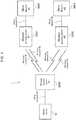
- the industrial machine system 1 includes a master device 10, a wireless access point #0 (30#0), a wireless access point #1 (30#1), a wireless access point #2 (30#2), a slave device #1 (50#1), and a slave device #2 (50#2).
- the master device 10 is an industrial machine component that communicates with the slave devices #1/#2 and controls the slave devices #1/#2, and the slave devices #1/#2 are industrial machine components that communicate with the master device 10.
- the master device 10 is connected to the wireless access point #0 via a wired network #0
- the slave device #1 is connected to the wireless access point #1 via a wired network #1
- the slave device #2 is connected to the wireless access point #2 via a wired network #2.
- the wired networks #0 - #2 are each any communication system.
- the wireless access point #0 is connected to the wireless access point #1 via wireless networks #1/#2, and is also connected to the wireless access point #2 via the wireless networks #1/#2.
- the slave devices #1/#2 and the master device 10 are synchronized via the wireless network #1 (first wireless network).
- the slave devices #1/#2 and the master device 10 communicate communication data for controlling the slave devices via the wireless network #2 (second wireless network) which is different from the wireless network #1.
- the same communication protocol may be used in the wireless network #1 and the wireless network #2.
- the wireless network #1 is a communication system having a constant periodicity (or regularity). According to such a structure, synchronization can be more reliably achieved between the master device 10 and the slave devices #1/#2 via the wireless network #1.
- the wireless network #2 is any communication system.
- the wireless network #2 may be a communication system having a higher throughput than the wireless network #1. According to such a structure, since communication data can be communicated with a high throughput via the wireless network #2, high-precision control can be realized.
- the communication protocol used in the wireless network #1 is Bluetooth (registered trademark) or DECT (registered trademark, Digital Enhanced Cordless Telecommunications), and the communication protocol used in the wireless network #2 is any one of Wi-Fi (registered trademark), Bluetooth (registered trademark), and DECT (registered trademark).
- synchronization can be achieved between the master device 10 and the slave devices #1/#2 using a highly versatile wireless network, and an industrial machine system 1 using highly reliable wireless networks can be realized.
- the wireless access point 30#0 includes a wired communication part 31, a wireless synchronization packet generation part 32, a first wireless communication part 33, and a second wireless communication part 34.
- the wired communication part 31 performs communication with the master device 10 via the wired network #0.
- the wireless synchronization packet generation part 32 generates a wireless synchronization packet with a wireless synchronization period synchronized with at least one of a control period and a communication period of the master device 10.
- the wireless synchronization packet generation part 32 generates a wireless synchronization packet (WSync) (see Fig. 4(b) to be described later) with a wireless synchronization period (W) (see Fig. 4(b) to be described later) based on a synchronization packet (Sync) (first synchronization packet, see Fig. 4(a) to be described later) received with a communication period (T) (first communication period, see Fig. 4(a) to be described later) by the wired communication part 31 from the master device 10 via the wired network #0.
- WSync wireless synchronization packet
- T communication period
- the first wireless communication part 33 transmits the wireless synchronization packet generated by the wireless synchronization packet generation part 32 to the slave devices #1/#2 via the wireless network #1.
- the first wireless communication part 33 transmits the wireless synchronization packet generated by the wireless synchronization packet generation part 32 to the wireless access point #1 via the wireless network #1, and the wireless access point #1 forwards the wireless synchronization packet to the slave device #1 via the wired network #1.
- the first wireless communication part 33 transmits the wireless synchronization packet generated by the wireless synchronization packet generation part 32 to the wireless access point #2 via the wireless network #1, and the wireless access point #2 forwards the wireless synchronization packet to the slave device #1 via the wired network #2.
- the second wireless communication part 34 communicates via the wireless network #2 communication data communicated via the wired network #0 with the master device 10.
- the second wireless communication part 33 transmits to the wireless access point #1 via the wireless network #2 communication data received by the wired communication part 31 from the master device 10 via the wired network #0, and the wireless access point #1 forwards the communication data to the slave device #1 via the wired network #1.
- the second wireless communication part 33 transmits to the wireless access point #2 via the wireless network #2 the communication data received by the wired communication part 31 from the master device 10 via the wired network #0, and the wireless access point #2 forwards the communication data to the slave device #1 via the wired network #2.
- the slave device #1 transmits communication data addressed to the master device 10 to the wireless access point #1 via the wired network #1
- the wireless access point #1 forwards the communication data addressed to the master device 10 to the wireless access point #0 via the wireless network #2
- the second wireless communication part 33 receives via the wireless network #2 the communication data addressed to the master device 10
- the wired communication part 31 transmits the communication data addressed to the master device 10 to the master device 10 via the wired network #0.
- the slave device #2 transmits communication data addressed to the master device 10 to the wireless access point #2 via the wired network #2
- the wireless access point #2 forwards the communication data addressed to the master device 10 to the wireless access point #0 via the wireless network #2
- the second wireless communication part 33 receives via the wireless network #2 the communication data addressed to the master device 10
- the wired communication part 31 transmits the communication data addressed to the master device 10 to the master device 10 via the wired network #0.
- an industrial machine system 1 using a wireless network can be constructed even when an existing master device built for a wired network is used. Further, according to such a structure, a wireless access point does not depend on a device to be connected, and thus, can be applied to many types of devices.
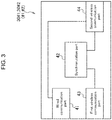
- the wireless access points 30#1/30#2 each include a wired communication part 41, a first wireless communication part 42, a synchronization part 43, and a second wireless communication part 44.
- the wired communication part 41 performs communication with the slave device #1/#2 via the wired network #1/#2.
- the first wireless communication part 42 receives via the wireless network #1 a wireless synchronization packet generated by the wireless synchronization packet generation part 32 of the wireless access point #0.
- the synchronization part 43 transmits to the slave device #1/#2 via the wired network #1/#2 a synchronization packet (Sync) (second synchronization packet, see Fig. 4(d) to be described later) for synchronizing at least one of a control period and a communication period of the slave device #1/#2.
- Sync synchronization packet
- the second wireless communication part 44 communicates via the wireless network #2 communication data communicated via the wired network #1/#2 with the slave device #1/#2.
- the second wireless communication part 44 of the wireless access point #1 transmits to the wireless access point #0 via the wireless network #2 communication data addressed to the master device 10 received by the wired communication part 41 from the slave device #1 via the wired network #1.
- the second wireless communication part 44 of the wireless access point #2 transmits to the wireless access point #0 via the wireless network #2 communication data addressed to the master device 10 received by the wired communication part 41 from the slave device #1 via the wired network #2.
- the second wireless communication part 44 of the wireless access point #1 receives communication data addressed to the slave device #1 from the wireless access point #0 via the wireless network #2, and the wired communication part 41 transmits the communication data addressed to the slave device #1 to the slave device #1 via the wired network #1.
- the second wireless communication part 44 of the wireless access point #2 receives communication data addressed to the slave device #2 from the wireless access point #0 via the wireless network #2, and the wired communication part 41 transmits the communication data addressed to the slave device #2 to the slave device #2 via the wired network #2.
- an industrial machine system 1 using a wireless network can be constructed even when an existing slave device built for a wired network is used. Further, according to such a structure, a wireless access point does not depend on a device to be connected, and thus, can be applied to many types of devices.
- the master device 10 may have the function of the wireless access point #0.
- the slave device #1 may have the function of the wireless access point #1
- the slave device #2 may have the function of the wireless access point #2.
- the slave devices #1/#2 when synchronization between the master device 10 and the slave devices #1/#2 is performed, the slave devices #1/#2 can be reliably and accurately synchronized with respect to the master device 10.
- the wireless access points 30#0 - #2 may have the same function.
- the wireless access point 30#0 may have the functions illustrated in Fig. 3 in addition to the functions illustrated in Fig. 2 .
- the wireless access points 30#1/30#2 may have the functions illustrated in Fig. 2 in addition to the functions illustrated in Fig. 3 .
- the master device 10 may be any one of a programmable logic controller, a machine controller, a system controller, a robot controller (hereinafter, various controllers), a numerical control device, and a servo amplifier.
- the slave devices #1/#2 may each be any one of a servo drive, an inverter drive, a remote I/O, a sensor, a slider, a stepping motor drive, a display, a vision system, various controllers, a servo motor, and an encoder.
- an industrial machine system allowing relocations and changes of the master device 10 and the slave devices #1/#2 to be flexibly supported can be constructed.
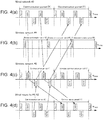
- the master device 10 transmits a synchronization packet (Sync) to the wireless access point #0 via the wired network #0 in a communication period (T).
- Sync synchronization packet
- the wireless access point #0 generates a wireless synchronization packet (WSync) based on the synchronization packet (Sync) in a wireless synchronization period (W), and transmits the wireless synchronization packet (WSync) to the wireless access points #1/#2 via the wireless network #1.
- WSync wireless synchronization packet
- the wireless access points #1/#2 are synchronized with the wireless access point #0 based on the received wireless synchronization packet (WSync).
- WSync wireless synchronization packet
- the wireless access points #1/#2 respectively transmit the synchronization packet (Sync) to the slave devices #1/#2 via the wired networks #1/#2 based on the received wireless synchronization packet (WSync) in the communication period (T).
- Sync synchronization packet
- WSync wireless synchronization packet
- the slave devices #1/#2 are synchronized with the master device 10 based on the received synchronization packet (Sync).
- the master device 10 transmits communication data (CMD#1) addressed to the slave device #1 to the wireless access point #0 via the wired network #1; as illustrated in Fig. 4(c) , the wireless access point #0 transmits the communication data (CMD#1) addressed to the slave device #1 to the wireless access point #1 via the wireless network #2; and, as illustrated in Fig. 4(d) , the wireless access point #1 transmits the communication data (CMD#1) addressed to the slave device #1 to the slave device #1 via the wired network #1.
- the slave device #1 transmits data (RSP#1) addressed to the master device 10 to the wireless access point #1 via the wired network #1; as illustrated in Fig. 4(c) , the wireless access point #1 transmits the data (RSP#1) addressed to the master device 10 to the wireless access point #0 via the wireless network #2; and, as illustrated in Fig. 4(a) , th wireless access point #0 transmits the data (RSP#1) addressed to the master device 10 to the master device 10 via the wired network #0.
- the master device 10 transmits communication data (CMD#2) addressed to the slave device #2 to the wireless access point #0 via the wired network #1; as illustrated in Fig. 4(c) , the wireless access point #0 transmits the communication data (CMD#2) addressed to the slave device #2 to the wireless access point #2 via the wireless network #2; and, as illustrated in Fig. 4(d) , the wireless access point #2 transmits the communication data (CMD#2) addressed to the slave device #2 to the slave device #2 via the wired network #2.
- the slave device #2 transmits data (RSP#2) addressed to the master device 10 to the wireless access point #2 via the wired network #2; as illustrated in Fig. 4(c) , the wireless access point #2 transmits the data (RSP#2) addressed to the master device 10 to the wireless access point #0 via the wireless network #2; and, as illustrated in Fig. 4(a) , the wireless access point #0 transmits the data (RSP#2) addressed to the master device 10 to the master device 10 via the wired network #0.
Landscapes
- Engineering & Computer Science (AREA)
- Computer Networks & Wireless Communication (AREA)
- Signal Processing (AREA)
- Health & Medical Sciences (AREA)
- Computing Systems (AREA)
- General Health & Medical Sciences (AREA)
- Medical Informatics (AREA)
- Mobile Radio Communication Systems (AREA)
- Synchronisation In Digital Transmission Systems (AREA)
Abstract
Description
- The present disclosure relates to an industrial machine system, a method of communication and a wireless access point.
- In an industrial machine system, in order to perform high-precision control, it is necessary to achieve synchronization between devices connected to a network. As a method for the synchronization, a method is known in which a master device transmits a synchronization packet (Sync) for every communication period, and a slave device updates (corrects) its own clock based on a reception timing of the synchronization packet.
-
- [Patent Document 1]
Japanese Patent Application Laid-Open Publication No. 2012-34224 - [Patent Document 2] International Publication No.
WO 2016/072038 . - However, in a conventional industrial machine system, there is a problem that when a wireless network using CSMA/CA or the like, which is used as a communication system in many wireless networks, is used as a network, variation occurs in actual transmission and reception timings of synchronization packets and synchronization between a master device and a slave device cannot be achieved.
- Therefore, the present disclosure is accomplished in view of the above-described problem, and is intended to provide an industrial machine system, a method of communication and a wireless access point that allow synchronization between a master device and a slave device to be achieved and high-precision control to be realized even when a wireless network is used.
- A first feature of the present disclosure is an industrial machine system that includes: a slave device that is an industrial machine component; and a master device that communicates with the slave device and controls the slave device. The slave device and the master device are synchronized via a first wireless network, and communicate communication data for controlling the slave device via a second wireless network which is different from the first wireless network.
- A second feature of the present disclosure is a method of communication of an industrial machine system. The industrial machine system includes: a slave device that is an industrial machine component; and a master device that communicates with the slave device and controls the slave device. The slave device and the master device are synchronized via a first wireless network. The slave device and the master device communicate communication data for controlling the slave device via a second wireless network which is different from the first wireless network.
- A third feature of the present disclosure is a wireless access point to be used in an industrial machine system. The industrial machine system includes: a slave device that is an industrial machine component; and a master device that communicates with the slave device and controls the slave device. The wireless access point is connected to the master device via a wired network and includes: a wireless synchronization packet generation part that generates a wireless synchronization packet with a wireless synchronization period synchronized with at least one of a control period and a communication period of the master device; a first wireless communication part that transmits the wireless synchronization packet generated by the wireless synchronization packet generation part to the slave device via a first wireless network; and a second wireless communication part that communicates via a second wireless network the communication data communicated with the master device via the wired network. The wireless synchronization packet generation part generates the wireless synchronization packet with the wireless synchronization period based on a first synchronization packet received with a first communication period from the master device via the wired network.
- A fourth feature of the present disclosure is a wireless access point to be used in an industrial machine system. The industrial machine system includes: a slave device that is an industrial machine component; and a master device that communicates with the slave device and controls the slave device. The wireless access point is connected to the slave device via a wired network and includes: a first wireless communication part that receives via a first wireless network a wireless synchronization packet generated by a wireless synchronization packet generation part that generates the wireless synchronization packet with a wireless synchronization period synchronized with at least one of a control period and a communication period of the master device; the synchronization part that transmits to the slave device via the wired network a second synchronization packet for synchronizing at least one of a control period and a communication period of the slave device based on the wireless synchronization packet; and a second wireless communication part that communicates via a second wireless network the communication data communicated with the slave device via the wired network.
- According to the present disclosure, an industrial machine system, a method of communication and a wireless access point can be provided that allow synchronization between a master device and a slave device to be achieved and high-precision control to be realized even when a wireless network is used.
-
- [
Fig. 1] Fig. 1 illustrates an example of an overall structure of anindustrial machine system 1 according a disclosure. - [
Fig. 2] Fig. 2 illustrates an example of functional blocks of a wirelessaccess point # 0 used in theindustrial machine system 1 according to the disclosure. - [
Fig. 3] Fig. 3 illustrates an example of functional blocks of wirelessaccess points # 1/#2 used in theindustrial machine system 1 according to the disclosure. - [
Fig. 4] Fig. 4 is for describing an example of a method of communication of theindustrial machine system 1 according to the disclosure. - In the following, an embodiment is described with reference to
Figs. 1 ― 4. - An example of a structure of an
industrial machine system 1 according to the present embodiment is described below with reference toFigs. 1 ― 3. - As illustrated in
Fig. 1 , theindustrial machine system 1 according to the present embodiment includes amaster device 10, a wireless access point #0 (30#0), a wireless access point #1 (30#1), a wireless access point #2 (30#2), a slave device #1 (50#1), and a slave device #2 (50#2). - The
master device 10 is an industrial machine component that communicates with theslave devices # 1/#2 and controls theslave devices # 1/#2, and theslave devices # 1/#2 are industrial machine components that communicate with themaster device 10. - Specifically, as illustrated in
Fig. 1 , themaster device 10 is connected to the wirelessaccess point # 0 via awired network # 0, theslave device # 1 is connected to the wirelessaccess point # 1 via awired network # 1, and theslave device # 2 is connected to the wirelessaccess point # 2 via awired network # 2. Here, the wired networks #0 - #2 are each any communication system. - Further, the wireless
access point # 0 is connected to the wirelessaccess point # 1 viawireless networks # 1/#2, and is also connected to the wirelessaccess point # 2 via thewireless networks # 1/#2. - Here, it is structured that the
slave devices # 1/#2 and themaster device 10 are synchronized via the wireless network #1 (first wireless network). - Further, it is structured that the
slave devices # 1/#2 and themaster device 10 communicate communication data for controlling the slave devices via the wireless network #2 (second wireless network) which is different from thewireless network # 1. - According to such structures, in the
industrial machine system 1, even when the wireless networks are used, synchronization can be achieved between themaster device 10 and theslave devices # 1/#2, and high-precision control can be realized. - The same communication protocol may be used in the
wireless network # 1 and thewireless network # 2. - Here, the
wireless network # 1 is a communication system having a constant periodicity (or regularity). According to such a structure, synchronization can be more reliably achieved between themaster device 10 and theslave devices # 1/#2 via thewireless network # 1. - Further, the
wireless network # 2 is any communication system. For example, thewireless network # 2 may be a communication system having a higher throughput than thewireless network # 1. According to such a structure, since communication data can be communicated with a high throughput via thewireless network # 2, high-precision control can be realized. - For example, it may be structured that the communication protocol used in the
wireless network # 1 is Bluetooth (registered trademark) or DECT (registered trademark, Digital Enhanced Cordless Telecommunications), and the communication protocol used in thewireless network # 2 is any one of Wi-Fi (registered trademark), Bluetooth (registered trademark), and DECT (registered trademark). - According to such a structure, synchronization can be achieved between the
master device 10 and theslave devices # 1/#2 using a highly versatile wireless network, and anindustrial machine system 1 using highly reliable wireless networks can be realized. - As illustrated in
Fig. 2 , thewireless access point 30#0 includes awired communication part 31, a wireless synchronizationpacket generation part 32, a firstwireless communication part 33, and a secondwireless communication part 34. - It is structured that the
wired communication part 31 performs communication with themaster device 10 via thewired network # 0. - It is structured that the wireless synchronization
packet generation part 32 generates a wireless synchronization packet with a wireless synchronization period synchronized with at least one of a control period and a communication period of themaster device 10. - For example, it is structured that the wireless synchronization
packet generation part 32 generates a wireless synchronization packet (WSync) (seeFig. 4(b) to be described later) with a wireless synchronization period (W) (seeFig. 4(b) to be described later) based on a synchronization packet (Sync) (first synchronization packet, seeFig. 4(a) to be described later) received with a communication period (T) (first communication period, seeFig. 4(a) to be described later) by thewired communication part 31 from themaster device 10 via thewired network # 0. - It is structured that the first
wireless communication part 33 transmits the wireless synchronization packet generated by the wireless synchronizationpacket generation part 32 to theslave devices # 1/#2 via thewireless network # 1. - Specifically, it is structured that the first
wireless communication part 33 transmits the wireless synchronization packet generated by the wireless synchronizationpacket generation part 32 to the wirelessaccess point # 1 via thewireless network # 1, and the wirelessaccess point # 1 forwards the wireless synchronization packet to theslave device # 1 via thewired network # 1. - Similarly, it is structured that the first
wireless communication part 33 transmits the wireless synchronization packet generated by the wireless synchronizationpacket generation part 32 to the wirelessaccess point # 2 via thewireless network # 1, and the wirelessaccess point # 2 forwards the wireless synchronization packet to theslave device # 1 via thewired network # 2. - It is structured that the second
wireless communication part 34 communicates via thewireless network # 2 communication data communicated via thewired network # 0 with themaster device 10. - Specifically, it is structured that the second
wireless communication part 33 transmits to the wirelessaccess point # 1 via thewireless network # 2 communication data received by thewired communication part 31 from themaster device 10 via thewired network # 0, and the wirelessaccess point # 1 forwards the communication data to theslave device # 1 via thewired network # 1. - Similarly, it is structured that the second
wireless communication part 33 transmits to the wirelessaccess point # 2 via thewireless network # 2 the communication data received by thewired communication part 31 from themaster device 10 via thewired network # 0, and the wirelessaccess point # 2 forwards the communication data to theslave device # 1 via thewired network # 2. - Further, it is structured that the
slave device # 1 transmits communication data addressed to themaster device 10 to the wirelessaccess point # 1 via thewired network # 1, the wirelessaccess point # 1 forwards the communication data addressed to themaster device 10 to the wirelessaccess point # 0 via thewireless network # 2, the secondwireless communication part 33 receives via thewireless network # 2 the communication data addressed to themaster device 10, and thewired communication part 31 transmits the communication data addressed to themaster device 10 to themaster device 10 via thewired network # 0. - Similarly, it is structured that the
slave device # 2 transmits communication data addressed to themaster device 10 to the wirelessaccess point # 2 via thewired network # 2, the wirelessaccess point # 2 forwards the communication data addressed to themaster device 10 to the wirelessaccess point # 0 via thewireless network # 2, the secondwireless communication part 33 receives via thewireless network # 2 the communication data addressed to themaster device 10, and thewired communication part 31 transmits the communication data addressed to themaster device 10 to themaster device 10 via thewired network # 0. - According to such a structure, an
industrial machine system 1 using a wireless network can be constructed even when an existing master device built for a wired network is used. Further, according to such a structure, a wireless access point does not depend on a device to be connected, and thus, can be applied to many types of devices. - As illustrated in
Fig. 3 , thewireless access points 30#1/30#2 each include awired communication part 41, a firstwireless communication part 42, asynchronization part 43, and a secondwireless communication part 44. - It is structured that the
wired communication part 41 performs communication with theslave device # 1/#2 via the wirednetwork # 1/#2. - It is structured that the first
wireless communication part 42 receives via the wireless network #1 a wireless synchronization packet generated by the wireless synchronizationpacket generation part 32 of the wirelessaccess point # 0. - It is structured that, based on the wireless synchronization packet received by the first
wireless communication part 42, thesynchronization part 43 transmits to theslave device # 1/#2 via the wirednetwork # 1/#2 a synchronization packet (Sync) (second synchronization packet, seeFig. 4(d) to be described later) for synchronizing at least one of a control period and a communication period of theslave device # 1/#2. - It is structured that the second
wireless communication part 44 communicates via thewireless network # 2 communication data communicated via the wirednetwork # 1/#2 with theslave device # 1/#2. - Specifically, it is structured that the second
wireless communication part 44 of the wirelessaccess point # 1 transmits to the wirelessaccess point # 0 via thewireless network # 2 communication data addressed to themaster device 10 received by the wiredcommunication part 41 from theslave device # 1 via the wirednetwork # 1. - Similarly, it is structured that the second
wireless communication part 44 of the wirelessaccess point # 2 transmits to the wirelessaccess point # 0 via thewireless network # 2 communication data addressed to themaster device 10 received by the wiredcommunication part 41 from theslave device # 1 via the wirednetwork # 2. - Further, it is structured that the second
wireless communication part 44 of the wirelessaccess point # 1 receives communication data addressed to theslave device # 1 from the wirelessaccess point # 0 via thewireless network # 2, and thewired communication part 41 transmits the communication data addressed to theslave device # 1 to theslave device # 1 via the wirednetwork # 1. - Similarly, it is structured that the second
wireless communication part 44 of the wirelessaccess point # 2 receives communication data addressed to theslave device # 2 from the wirelessaccess point # 0 via thewireless network # 2, and thewired communication part 41 transmits the communication data addressed to theslave device # 2 to theslave device # 2 via the wirednetwork # 2. - According to such a structure, an
industrial machine system 1 using a wireless network can be constructed even when an existing slave device built for a wired network is used. Further, according to such a structure, a wireless access point does not depend on a device to be connected, and thus, can be applied to many types of devices. - Here, the
master device 10 may have the function of the wirelessaccess point # 0. Similarly, theslave device # 1 may have the function of the wirelessaccess point # 1, and theslave device # 2 may have the function of the wirelessaccess point # 2. - According to the above-described structure, when synchronization between the
master device 10 and theslave devices # 1/#2 is performed, theslave devices # 1/#2 can be reliably and accurately synchronized with respect to themaster device 10. - The
wireless access points 30#0 - #2 may have the same function. For example, thewireless access point 30#0 may have the functions illustrated inFig. 3 in addition to the functions illustrated inFig. 2 . Similarly, thewireless access points 30#1/30#2 may have the functions illustrated inFig. 2 in addition to the functions illustrated inFig. 3 . - Here, for example, the
master device 10 may be any one of a programmable logic controller, a machine controller, a system controller, a robot controller (hereinafter, various controllers), a numerical control device, and a servo amplifier. - Further, the
slave devices # 1/#2 may each be any one of a servo drive, an inverter drive, a remote I/O, a sensor, a slider, a stepping motor drive, a display, a vision system, various controllers, a servo motor, and an encoder. - According to such a structure, by using the wireless networks #0 - #2, an
industrial machine system 1 with reduced wiring can be realized and wiring work between themaster device 10 and theslave devices # 1/#2 can be reduced. - Further, according to such a structure, an industrial machine system allowing relocations and changes of the
master device 10 and theslave devices # 1/#2 to be flexibly supported can be constructed. - Further, according to such a structure, advanced control in a small space such as the inside of a robot arm can be realized.
- In the above-described embodiment, the example in which one
master device 10, twoslave devices # 1/#2, three wireless access points #0 - #2, twowireless networks # 1/#2, and three wired networks #0 - #2 are provided is described. However, the present disclosure is not limited to such an example, and is also applicable to examples in which other numbers of master devices, slave devices, wireless access points, wireless networks, and wired networks are provided. - In the following, an example of a method of communication of the
industrial machine system 1 according to the present embodiment is described with reference toFig. 4 . - As illustrated in
Fig. 4(a) , themaster device 10 transmits a synchronization packet (Sync) to the wirelessaccess point # 0 via the wirednetwork # 0 in a communication period (T). - As illustrated in
Fig. 4(b) , the wirelessaccess point # 0 generates a wireless synchronization packet (WSync) based on the synchronization packet (Sync) in a wireless synchronization period (W), and transmits the wireless synchronization packet (WSync) to the wirelessaccess points # 1/#2 via thewireless network # 1. - Here, the wireless
access points # 1/#2 are synchronized with the wirelessaccess point # 0 based on the received wireless synchronization packet (WSync). - As illustrated in
Fig. 4(d) , the wirelessaccess points # 1/#2 respectively transmit the synchronization packet (Sync) to theslave devices # 1/#2 via the wirednetworks # 1/#2 based on the received wireless synchronization packet (WSync) in the communication period (T). - Here, the
slave devices # 1/#2 are synchronized with themaster device 10 based on the received synchronization packet (Sync). - Further, as illustrated in
Fig. 4(a) , themaster device 10 transmits communication data (CMD#1) addressed to theslave device # 1 to the wirelessaccess point # 0 via the wirednetwork # 1; as illustrated inFig. 4(c) , the wirelessaccess point # 0 transmits the communication data (CMD#1) addressed to theslave device # 1 to the wirelessaccess point # 1 via thewireless network # 2; and, as illustrated inFig. 4(d) , the wirelessaccess point # 1 transmits the communication data (CMD#1) addressed to theslave device # 1 to theslave device # 1 via the wirednetwork # 1. - Then, as illustrated in
Fig. 4(d) , theslave device # 1 transmits data (RSP#1) addressed to themaster device 10 to the wirelessaccess point # 1 via the wirednetwork # 1; as illustrated inFig. 4(c) , the wirelessaccess point # 1 transmits the data (RSP#1) addressed to themaster device 10 to the wirelessaccess point # 0 via thewireless network # 2; and, as illustrated inFig. 4(a) , th wirelessaccess point # 0 transmits the data (RSP#1) addressed to themaster device 10 to themaster device 10 via the wirednetwork # 0. - Similarly, as illustrated in
Fig. 4(a) , themaster device 10 transmits communication data (CMD#2) addressed to theslave device # 2 to the wirelessaccess point # 0 via the wirednetwork # 1; as illustrated inFig. 4(c) , the wirelessaccess point # 0 transmits the communication data (CMD#2) addressed to theslave device # 2 to the wirelessaccess point # 2 via thewireless network # 2; and, as illustrated inFig. 4(d) , the wirelessaccess point # 2 transmits the communication data (CMD#2) addressed to theslave device # 2 to theslave device # 2 via the wirednetwork # 2. - Then, as illustrated in
Fig. 4(d) , theslave device # 2 transmits data (RSP#2) addressed to themaster device 10 to the wirelessaccess point # 2 via the wirednetwork # 2; as illustrated inFig. 4(c) , the wirelessaccess point # 2 transmits the data (RSP#2) addressed to themaster device 10 to the wirelessaccess point # 0 via thewireless network # 2; and, as illustrated inFig. 4(a) , the wirelessaccess point # 0 transmits the data (RSP#2) addressed to themaster device 10 to themaster device 10 via the wirednetwork # 0. - According to the
industrial machine system 1 of the present embodiment, even when thewireless networks # 1/#2 are used, synchronization can be achieved between themaster device 10 and theslave devices # 1/#2, and high-precision control can be realized. -
- 1:
- industrial machine system
- 10:
- master device
- 30#0, 30#1, 30#2:
- wireless access point
- 31, 41:
- wired communication part
- 32:
- wireless synchronization packet generation part
- 33, 42:
- first wireless communication part
- 34, 44:
- second wireless communication part
- 43:
- synchronization part
- 50#1, 50#2:
- slave device
Claims (11)
- An industrial machine system comprising:a slave device that is an industrial machine component; anda master device that communicates with the slave device and controls the slave device, whereinthe slave device and the master device are synchronized via a first wireless network, and communicate communication data for controlling the slave device via a second wireless network which is different from the first wireless network.
- The industrial machine system according to claim 1, wherein the first wireless network is a communication system having a constant periodicity.
- The industrial machine system according to claim 1 or 2, wherein the second wireless network is a communication system having a higher throughput than the first wireless network.
- The industrial machine system according to any one of claims 1 ― 3, whereina communication protocol used in the first wireless network is Bluetooth (registered trademark) or DECT (registered trademark), anda communication protocol used in the second wireless network is any one of Wi-Fi (registered trademark), Bluetooth (registered trademark), and DECT (registered trademark).
- The industrial machine system according to any one of claims 1 ― 4, comprising:a wireless synchronization packet generation part that generates a wireless synchronization packet with a wireless synchronization period synchronized with at least one of a control period and a communication period of the master device; anda synchronization part that synchronizes at least one of a control period and a communication period of the slave device based on the wireless synchronization packet acquired via the first wireless network.
- The industrial machine system according to claim 5, further comprising:a first wireless access point that is connected to the master device via a wired network and includes:the wireless synchronization packet generation part;a first wireless communication part that transmits the wireless synchronization packet generated by the wireless synchronization packet generation part to the slave device via the first wireless network; anda second wireless communication part that communicates via the second wireless network the communication data communicated with the master device via the wired network, whereinthe wireless synchronization packet generation part generates the wireless synchronization packet with the wireless synchronization period based on a first synchronization packet received with a first communication period from the master device via the wired network.
- The industrial machine system according to claim 5 or 6, further comprising:a second wireless access point that is connected to the slave device via a wired network and includes:a first wireless communication part that receives the wireless synchronization packet generated by the wireless synchronization packet generation part via the first wireless network;a synchronization part that transmits to the slave device via the wired network a second synchronization packet for synchronizing at least one of a control period and a communication period of the slave device based on the wireless synchronization packet; anda second wireless communication part that communicates via the second wireless network the communication data communicated with the slave device via the wired network.
- The industrial machine system according to any one of claims 1 ― 6, whereinthe master device is any one of a programmable logic controller, a machine controller, a system controller, a robot controller (hereinafter, various controllers), a numerical control device, and a servo amplifier, andthe slave device is any one of a servo drive, an inverter drive, a remote I/O, a sensor, a slider, a stepping motor drive, a display, a vision system, various controllers, a servo motor, and an encoder.
- A method of communication of an industrial machine system, whereinthe industrial machine system includes:a slave device that is an industrial machine component; anda master device that communicates with the slave device and controls the slave device,the slave device and the master device are synchronized via a first wireless network, andthe slave device and the master device communicate communication data for controlling the slave device via a second wireless network which is different from the first wireless network.
- A wireless access point to be used in an industrial machine system that includes: a slave device that is an industrial machine component; and a master device that communicates with the slave device and controls the slave device, the wireless access point being connected to the master device via a wired network and comprising:a wireless synchronization packet generation part that generates a wireless synchronization packet with a wireless synchronization period synchronized with at least one of a control period and a communication period of the master device;a first wireless communication part that transmits the wireless synchronization packet generated by the wireless synchronization packet generation part to the slave device via a first wireless network; anda second wireless communication part that communicates via a second wireless network the communication data communicated with the master device via the wired network, whereinthe wireless synchronization packet generation part generates the wireless synchronization packet with the wireless synchronization period based on a first synchronization packet received with a first communication period from the master device via the wired network.
- A wireless access point to be used in an industrial machine system that includes: a slave device that is an industrial machine component; and a master device that communicates with the slave device and controls the slave device, the wireless access point being connected to the slave device via a wired network and comprising:a first wireless communication part that receives via a first wireless network a wireless synchronization packet generated by a wireless synchronization packet generation part that generates the wireless synchronization packet with a wireless synchronization period synchronized with at least one of a control period and a communication period of the master device;a synchronization part that transmits to the slave device via the wired network a second synchronization packet for synchronizing at least one of a control period and a communication period of the slave device based on the wireless synchronization packet; anda second wireless communication part that communicates via a second wireless network the communication data communicated with the slave device via the wired network.
Applications Claiming Priority (1)
| Application Number | Priority Date | Filing Date | Title |
|---|---|---|---|
| PCT/JP2019/002530 WO2020152861A1 (en) | 2019-01-25 | 2019-01-25 | Industrial machine system, method of communication, and wireless access point |
Publications (2)
| Publication Number | Publication Date |
|---|---|
| EP3917226A1 true EP3917226A1 (en) | 2021-12-01 |
| EP3917226A4 EP3917226A4 (en) | 2022-08-24 |
Family
ID=71736687
Family Applications (1)
| Application Number | Title | Priority Date | Filing Date |
|---|---|---|---|
| EP19911553.6A Withdrawn EP3917226A4 (en) | 2019-01-25 | 2019-01-25 | Industrial machine system, method of communication, and wireless access point |
Country Status (5)
| Country | Link |
|---|---|
| US (1) | US20210329740A1 (en) |
| EP (1) | EP3917226A4 (en) |
| JP (1) | JPWO2020152861A1 (en) |
| CN (1) | CN113170296A (en) |
| WO (1) | WO2020152861A1 (en) |
Family Cites Families (13)
| Publication number | Priority date | Publication date | Assignee | Title |
|---|---|---|---|---|
| US7792158B1 (en) * | 2004-08-18 | 2010-09-07 | Atheros Communications, Inc. | Media streaming synchronization |
| EP2434834B1 (en) * | 2007-07-30 | 2016-09-07 | Marvell World Trade Ltd. | Simultaneously maintaining bluetooth and 802.11 connections to increase data throughput |
| JP2009200974A (en) * | 2008-02-22 | 2009-09-03 | Kanto Auto Works Ltd | Wireless communication system |
| US8457097B2 (en) * | 2010-04-30 | 2013-06-04 | Broadcom Corporation | Communicating with two nodes with overlapping frames |
| JP2012034224A (en) | 2010-07-30 | 2012-02-16 | Hitachi Cable Ltd | Relay device |
| EP2482596B1 (en) * | 2011-01-26 | 2013-09-04 | Nxp B.V. | Syncronizing wireless devices |
| JP5505373B2 (en) * | 2011-06-17 | 2014-05-28 | 横河電機株式会社 | COMMUNICATION SYSTEM, COMMUNICATION DEVICE, AND COMMUNICATION METHOD |
| US20120328061A1 (en) * | 2011-06-27 | 2012-12-27 | Nokia Corporation | Method, apparatus, and computer program product for using discovered clock in a first communications protocol to synchronize networking activity in a second communications protocol |
| US9426749B2 (en) * | 2014-05-05 | 2016-08-23 | Intel IP Corporation | Method and apparatus for Bluetooth-based Wi-Fi synchronization |
| WO2016072038A1 (en) | 2014-11-05 | 2016-05-12 | 日本電気株式会社 | Communication system, time synchronization method, and radio relay device |
| US20170273096A1 (en) * | 2015-01-07 | 2017-09-21 | Mitsubishi Electric Corporation | Wireless communication device, wireless communication system, and wireless communication method |
| JP6328324B2 (en) * | 2015-08-26 | 2018-05-23 | 三菱電機株式会社 | Wireless communication apparatus, wireless communication method, and wireless communication program |
| JP6508538B2 (en) * | 2016-04-04 | 2019-05-08 | Smc株式会社 | Industrial wireless communication system |
-
2019
- 2019-01-25 WO PCT/JP2019/002530 patent/WO2020152861A1/en not_active Ceased
- 2019-01-25 CN CN201980080010.1A patent/CN113170296A/en active Pending
- 2019-01-25 EP EP19911553.6A patent/EP3917226A4/en not_active Withdrawn
- 2019-01-25 JP JP2020567343A patent/JPWO2020152861A1/en active Pending
-
2021
- 2021-06-30 US US17/363,104 patent/US20210329740A1/en not_active Abandoned
Also Published As
| Publication number | Publication date |
|---|---|
| JPWO2020152861A1 (en) | 2021-11-25 |
| CN113170296A (en) | 2021-07-23 |
| US20210329740A1 (en) | 2021-10-21 |
| WO2020152861A1 (en) | 2020-07-30 |
| EP3917226A4 (en) | 2022-08-24 |
Similar Documents
| Publication | Publication Date | Title |
|---|---|---|
| US20120236873A1 (en) | Method for real-time data transmission in a communication network | |
| EP3229412B1 (en) | Industrial wireless communications system | |
| US7411966B2 (en) | Method and system for coupling data networks | |
| EP3056868B1 (en) | Multiplexing communication system and working robot | |
| US8521925B2 (en) | Method and communication system for determining the time of an event in an IO device | |
| EP3261298A1 (en) | Method for implementing a real-time industrial internet field broadband bus | |
| KR20030086997A (en) | A system for motion control, method of using the system for motion control, and computer-readable instructions for use with the system for motion control | |
| ES2269681T3 (en) | APPLICATIONS OF A SWITCHING DATA NETWORK FOR REAL-TIME COMMUNICATION AND NOT REAL-TIME COMMUNICATION. | |
| CN103297246B (en) | Wireless communication system and method and wireless access point apparatus | |
| US9081371B2 (en) | Method for synchronizing an operating clock with a time clock of an automation network | |
| KR20210047748A (en) | Industiral communication system in 5g network | |
| CN103562804A (en) | Communication system, communication device, and communication method | |
| CN112513751B (en) | Control systems and control devices | |
| US20210329740A1 (en) | Industrial machine system, method of communication and wireless access point | |
| FI132058B1 (en) | Method for synchronizing networks | |
| US12199822B2 (en) | Control system, control device, and non-transitory computer-readable recording medium recording program | |
| US12250094B2 (en) | Method, system, and gateway for linking time-sensitive fieldbuses | |
| US12250095B2 (en) | Method, system, and gateway for linking time-sensitive fieldbuses | |
| JP2005237163A (en) | Motor drive device | |
| KR20160022722A (en) | Synchronization device and synchronization method of cooperation robot | |
| US20240048497A1 (en) | Communication device, communication method, and recording medium | |
| EP3435598A1 (en) | Slave device, industrial network system, and method of controlling slave device | |
| JP5877310B2 (en) | Master / slave synchronous communication system | |
| JP7577044B2 (en) | Control device, control system, and time synchronization method | |
| EP4607347A1 (en) | Network device and time synchronization method thereof |
Legal Events
| Date | Code | Title | Description |
|---|---|---|---|
| STAA | Information on the status of an ep patent application or granted ep patent |
Free format text: STATUS: THE INTERNATIONAL PUBLICATION HAS BEEN MADE |
|
| PUAI | Public reference made under article 153(3) epc to a published international application that has entered the european phase |
Free format text: ORIGINAL CODE: 0009012 |
|
| STAA | Information on the status of an ep patent application or granted ep patent |
Free format text: STATUS: REQUEST FOR EXAMINATION WAS MADE |
|
| 17P | Request for examination filed |
Effective date: 20210712 |
|
| AK | Designated contracting states |
Kind code of ref document: A1 Designated state(s): AL AT BE BG CH CY CZ DE DK EE ES FI FR GB GR HR HU IE IS IT LI LT LU LV MC MK MT NL NO PL PT RO RS SE SI SK SM TR |
|
| DAV | Request for validation of the european patent (deleted) | ||
| DAX | Request for extension of the european patent (deleted) | ||
| A4 | Supplementary search report drawn up and despatched |
Effective date: 20220721 |
|
| RIC1 | Information provided on ipc code assigned before grant |
Ipc: H04W 84/18 20090101ALI20220715BHEP Ipc: H04W 88/06 20090101ALI20220715BHEP Ipc: H04W 84/10 20090101ALI20220715BHEP Ipc: H04W 4/00 20180101ALI20220715BHEP Ipc: H04L 7/00 20060101ALI20220715BHEP Ipc: H04W 56/00 20090101AFI20220715BHEP |
|
| STAA | Information on the status of an ep patent application or granted ep patent |
Free format text: STATUS: THE APPLICATION IS DEEMED TO BE WITHDRAWN |
|
| 18D | Application deemed to be withdrawn |
Effective date: 20230221 |