EP3914829B1 - Procédé de surveillance de l'état de fonctionnement d'un système de positionnement d'organes à géométrie variable d'une turbomachine - Google Patents
Procédé de surveillance de l'état de fonctionnement d'un système de positionnement d'organes à géométrie variable d'une turbomachine Download PDFInfo
- Publication number
- EP3914829B1 EP3914829B1 EP20705435.4A EP20705435A EP3914829B1 EP 3914829 B1 EP3914829 B1 EP 3914829B1 EP 20705435 A EP20705435 A EP 20705435A EP 3914829 B1 EP3914829 B1 EP 3914829B1
- Authority
- EP
- European Patent Office
- Prior art keywords
- variable
- actuator
- speed
- geometry members
- turbomachine
- Prior art date
- Legal status (The legal status is an assumption and is not a legal conclusion. Google has not performed a legal analysis and makes no representation as to the accuracy of the status listed.)
- Active
Links
Images



Classifications
-
- F—MECHANICAL ENGINEERING; LIGHTING; HEATING; WEAPONS; BLASTING
- F04—POSITIVE - DISPLACEMENT MACHINES FOR LIQUIDS; PUMPS FOR LIQUIDS OR ELASTIC FLUIDS
- F04D—NON-POSITIVE-DISPLACEMENT PUMPS
- F04D27/00—Control, e.g. regulation, of pumps, pumping installations or pumping systems specially adapted for elastic fluids
- F04D27/001—Testing thereof; Determination or simulation of flow characteristics; Stall or surge detection, e.g. condition monitoring
-
- F—MECHANICAL ENGINEERING; LIGHTING; HEATING; WEAPONS; BLASTING
- F01—MACHINES OR ENGINES IN GENERAL; ENGINE PLANTS IN GENERAL; STEAM ENGINES
- F01D—NON-POSITIVE DISPLACEMENT MACHINES OR ENGINES, e.g. STEAM TURBINES
- F01D17/00—Regulating or controlling by varying flow
- F01D17/20—Devices dealing with sensing elements or final actuators or transmitting means between them, e.g. power-assisted
- F01D17/22—Devices dealing with sensing elements or final actuators or transmitting means between them, e.g. power-assisted the operation or power assistance being predominantly non-mechanical
- F01D17/26—Devices dealing with sensing elements or final actuators or transmitting means between them, e.g. power-assisted the operation or power assistance being predominantly non-mechanical fluid, e.g. hydraulic
-
- F—MECHANICAL ENGINEERING; LIGHTING; HEATING; WEAPONS; BLASTING
- F01—MACHINES OR ENGINES IN GENERAL; ENGINE PLANTS IN GENERAL; STEAM ENGINES
- F01D—NON-POSITIVE DISPLACEMENT MACHINES OR ENGINES, e.g. STEAM TURBINES
- F01D17/00—Regulating or controlling by varying flow
- F01D17/10—Final actuators
- F01D17/12—Final actuators arranged in stator parts
- F01D17/14—Final actuators arranged in stator parts varying effective cross-sectional area of nozzles or guide conduits
- F01D17/16—Final actuators arranged in stator parts varying effective cross-sectional area of nozzles or guide conduits by means of nozzle vanes
-
- F—MECHANICAL ENGINEERING; LIGHTING; HEATING; WEAPONS; BLASTING
- F01—MACHINES OR ENGINES IN GENERAL; ENGINE PLANTS IN GENERAL; STEAM ENGINES
- F01D—NON-POSITIVE DISPLACEMENT MACHINES OR ENGINES, e.g. STEAM TURBINES
- F01D21/00—Shutting-down of machines or engines, e.g. in emergency; Regulating, controlling, or safety means not otherwise provided for
- F01D21/003—Arrangements for testing or measuring
-
- F—MECHANICAL ENGINEERING; LIGHTING; HEATING; WEAPONS; BLASTING
- F02—COMBUSTION ENGINES; HOT-GAS OR COMBUSTION-PRODUCT ENGINE PLANTS
- F02C—GAS-TURBINE PLANTS; AIR INTAKES FOR JET-PROPULSION PLANTS; CONTROLLING FUEL SUPPLY IN AIR-BREATHING JET-PROPULSION PLANTS
- F02C9/00—Controlling gas-turbine plants; Controlling fuel supply in air- breathing jet-propulsion plants
- F02C9/16—Control of working fluid flow
- F02C9/20—Control of working fluid flow by throttling; by adjusting vanes
-
- F—MECHANICAL ENGINEERING; LIGHTING; HEATING; WEAPONS; BLASTING
- F04—POSITIVE - DISPLACEMENT MACHINES FOR LIQUIDS; PUMPS FOR LIQUIDS OR ELASTIC FLUIDS
- F04D—NON-POSITIVE-DISPLACEMENT PUMPS
- F04D29/00—Details, component parts, or accessories
- F04D29/40—Casings; Connections of working fluid
- F04D29/52—Casings; Connections of working fluid for axial pumps
- F04D29/54—Fluid-guiding means, e.g. diffusers
- F04D29/541—Specially adapted for elastic fluid pumps
- F04D29/542—Bladed diffusers
-
- F—MECHANICAL ENGINEERING; LIGHTING; HEATING; WEAPONS; BLASTING
- F04—POSITIVE - DISPLACEMENT MACHINES FOR LIQUIDS; PUMPS FOR LIQUIDS OR ELASTIC FLUIDS
- F04D—NON-POSITIVE-DISPLACEMENT PUMPS
- F04D29/00—Details, component parts, or accessories
- F04D29/40—Casings; Connections of working fluid
- F04D29/52—Casings; Connections of working fluid for axial pumps
- F04D29/54—Fluid-guiding means, e.g. diffusers
- F04D29/56—Fluid-guiding means, e.g. diffusers adjustable
- F04D29/563—Fluid-guiding means, e.g. diffusers adjustable specially adapted for elastic fluid pumps
-
- F—MECHANICAL ENGINEERING; LIGHTING; HEATING; WEAPONS; BLASTING
- F01—MACHINES OR ENGINES IN GENERAL; ENGINE PLANTS IN GENERAL; STEAM ENGINES
- F01D—NON-POSITIVE DISPLACEMENT MACHINES OR ENGINES, e.g. STEAM TURBINES
- F01D17/00—Regulating or controlling by varying flow
- F01D17/10—Final actuators
- F01D17/12—Final actuators arranged in stator parts
- F01D17/14—Final actuators arranged in stator parts varying effective cross-sectional area of nozzles or guide conduits
- F01D17/16—Final actuators arranged in stator parts varying effective cross-sectional area of nozzles or guide conduits by means of nozzle vanes
- F01D17/162—Final actuators arranged in stator parts varying effective cross-sectional area of nozzles or guide conduits by means of nozzle vanes for axial flow, i.e. the vanes turning around axes which are essentially perpendicular to the rotor centre line
-
- F—MECHANICAL ENGINEERING; LIGHTING; HEATING; WEAPONS; BLASTING
- F02—COMBUSTION ENGINES; HOT-GAS OR COMBUSTION-PRODUCT ENGINE PLANTS
- F02C—GAS-TURBINE PLANTS; AIR INTAKES FOR JET-PROPULSION PLANTS; CONTROLLING FUEL SUPPLY IN AIR-BREATHING JET-PROPULSION PLANTS
- F02C7/00—Features, components parts, details or accessories, not provided for in, or of interest apart form groups F02C1/00 - F02C6/00; Air intakes for jet-propulsion plants
- F02C7/22—Fuel supply systems
-
- F—MECHANICAL ENGINEERING; LIGHTING; HEATING; WEAPONS; BLASTING
- F02—COMBUSTION ENGINES; HOT-GAS OR COMBUSTION-PRODUCT ENGINE PLANTS
- F02C—GAS-TURBINE PLANTS; AIR INTAKES FOR JET-PROPULSION PLANTS; CONTROLLING FUEL SUPPLY IN AIR-BREATHING JET-PROPULSION PLANTS
- F02C9/00—Controlling gas-turbine plants; Controlling fuel supply in air- breathing jet-propulsion plants
- F02C9/48—Control of fuel supply conjointly with another control of the plant
- F02C9/50—Control of fuel supply conjointly with another control of the plant with control of working fluid flow
- F02C9/54—Control of fuel supply conjointly with another control of the plant with control of working fluid flow by throttling the working fluid, by adjusting vanes
-
- F—MECHANICAL ENGINEERING; LIGHTING; HEATING; WEAPONS; BLASTING
- F05—INDEXING SCHEMES RELATING TO ENGINES OR PUMPS IN VARIOUS SUBCLASSES OF CLASSES F01-F04
- F05D—INDEXING SCHEME FOR ASPECTS RELATING TO NON-POSITIVE-DISPLACEMENT MACHINES OR ENGINES, GAS-TURBINES OR JET-PROPULSION PLANTS
- F05D2220/00—Application
- F05D2220/30—Application in turbines
- F05D2220/32—Application in turbines in gas turbines
- F05D2220/321—Application in turbines in gas turbines for a special turbine stage
- F05D2220/3216—Application in turbines in gas turbines for a special turbine stage for a special compressor stage
- F05D2220/3217—Application in turbines in gas turbines for a special turbine stage for a special compressor stage for the first stage of a compressor or a low pressure compressor
-
- F—MECHANICAL ENGINEERING; LIGHTING; HEATING; WEAPONS; BLASTING
- F05—INDEXING SCHEMES RELATING TO ENGINES OR PUMPS IN VARIOUS SUBCLASSES OF CLASSES F01-F04
- F05D—INDEXING SCHEME FOR ASPECTS RELATING TO NON-POSITIVE-DISPLACEMENT MACHINES OR ENGINES, GAS-TURBINES OR JET-PROPULSION PLANTS
- F05D2220/00—Application
- F05D2220/30—Application in turbines
- F05D2220/32—Application in turbines in gas turbines
- F05D2220/323—Application in turbines in gas turbines for aircraft propulsion, e.g. jet engines
-
- F—MECHANICAL ENGINEERING; LIGHTING; HEATING; WEAPONS; BLASTING
- F05—INDEXING SCHEMES RELATING TO ENGINES OR PUMPS IN VARIOUS SUBCLASSES OF CLASSES F01-F04
- F05D—INDEXING SCHEME FOR ASPECTS RELATING TO NON-POSITIVE-DISPLACEMENT MACHINES OR ENGINES, GAS-TURBINES OR JET-PROPULSION PLANTS
- F05D2220/00—Application
- F05D2220/30—Application in turbines
- F05D2220/32—Application in turbines in gas turbines
- F05D2220/329—Application in turbines in gas turbines in helicopters
-
- F—MECHANICAL ENGINEERING; LIGHTING; HEATING; WEAPONS; BLASTING
- F05—INDEXING SCHEMES RELATING TO ENGINES OR PUMPS IN VARIOUS SUBCLASSES OF CLASSES F01-F04
- F05D—INDEXING SCHEME FOR ASPECTS RELATING TO NON-POSITIVE-DISPLACEMENT MACHINES OR ENGINES, GAS-TURBINES OR JET-PROPULSION PLANTS
- F05D2260/00—Function
- F05D2260/80—Diagnostics
-
- F—MECHANICAL ENGINEERING; LIGHTING; HEATING; WEAPONS; BLASTING
- F05—INDEXING SCHEMES RELATING TO ENGINES OR PUMPS IN VARIOUS SUBCLASSES OF CLASSES F01-F04
- F05D—INDEXING SCHEME FOR ASPECTS RELATING TO NON-POSITIVE-DISPLACEMENT MACHINES OR ENGINES, GAS-TURBINES OR JET-PROPULSION PLANTS
- F05D2270/00—Control
- F05D2270/01—Purpose of the control system
- F05D2270/03—Purpose of the control system in variable speed operation
-
- F—MECHANICAL ENGINEERING; LIGHTING; HEATING; WEAPONS; BLASTING
- F05—INDEXING SCHEMES RELATING TO ENGINES OR PUMPS IN VARIOUS SUBCLASSES OF CLASSES F01-F04
- F05D—INDEXING SCHEME FOR ASPECTS RELATING TO NON-POSITIVE-DISPLACEMENT MACHINES OR ENGINES, GAS-TURBINES OR JET-PROPULSION PLANTS
- F05D2270/00—Control
- F05D2270/30—Control parameters, e.g. input parameters
- F05D2270/309—Rate of change of parameters
-
- F—MECHANICAL ENGINEERING; LIGHTING; HEATING; WEAPONS; BLASTING
- F05—INDEXING SCHEMES RELATING TO ENGINES OR PUMPS IN VARIOUS SUBCLASSES OF CLASSES F01-F04
- F05D—INDEXING SCHEME FOR ASPECTS RELATING TO NON-POSITIVE-DISPLACEMENT MACHINES OR ENGINES, GAS-TURBINES OR JET-PROPULSION PLANTS
- F05D2270/00—Control
- F05D2270/40—Type of control system
- F05D2270/44—Type of control system active, predictive, or anticipative
-
- F—MECHANICAL ENGINEERING; LIGHTING; HEATING; WEAPONS; BLASTING
- F05—INDEXING SCHEMES RELATING TO ENGINES OR PUMPS IN VARIOUS SUBCLASSES OF CLASSES F01-F04
- F05D—INDEXING SCHEME FOR ASPECTS RELATING TO NON-POSITIVE-DISPLACEMENT MACHINES OR ENGINES, GAS-TURBINES OR JET-PROPULSION PLANTS
- F05D2270/00—Control
- F05D2270/60—Control system actuates means
- F05D2270/64—Hydraulic actuators
Definitions
- the invention relates to a method for monitoring the operating state of a variable geometry member of a turbomachine.
- This method is in particular intended to be implemented for air inlet flaps of an aircraft engine.
- Certain aircraft turbomachines such as helicopter turboshaft engines, are equipped with air inlet flaps, which serve to optimize the operating point of the engine.
- the function of controlling the air inlet flaps, and more generally variable geometry members, is most often provided by a hydraulic cylinder whose chamber pressures of said cylinder are modulated by an electrohydraulic member such as a servovalve.
- the servovalve receives a control current from the computer and is supplied hydraulically by a fuel circuit, the pumps of which are driven by the gas generator of the turbomachine.
- a manual maintenance test is carried out regularly to check the resistance of the shutters. This test consists of disconnecting the flap kinematics from the cylinder, then operating the flaps by hand over their entire useful range, ensuring that there is no abnormal resistance. If in doubt, a torque wrench is used to check the level of resistive effort. From of a certain threshold, maintenance action is required (compressor washing, for example, initially).
- Such a solution has the disadvantage of requiring the intervention of a maintenance operator at short intervals.
- a maintenance operator following such an intervention, there is a risk of incorrectly reconnecting the rod which connects the flap kinematics to the cylinder.
- such an intervention may require the removal of an engine to carry out the operation due to the impossibility of access with the torque wrench.
- the fuel actuation system may include an electronic engine control, a servo valve, a metering valve and/or a feedback element.
- the metering valve is moved via hydraulic pressure from a fuel system.
- a control system for testing the performance of a control associated with the inlet guide vanes of an aircraft engine comprises the steps of introducing, into the actuator positioning program, a step to cause a disturbance in the system for a time interval to determine failure/successful operation of the control.
- the present invention aims to improve the operation of variable geometry members in a turbojet which are supplied with hydraulic fluid by drawing from the fuel supply circuit of the engine.
- the invention therefore aims to propose a method for monitoring the operating state of members with variable geometry, such as the air inlet flaps of a turbomachine, making it possible to overcome the drawbacks previously described.
- the aim is achieved in the context of the present invention thanks to a method for monitoring the operating state of a system for positioning members with variable geometry of a turbomachine as defined in claim 1.
- said method makes it possible to establish automatic rather than manual monitoring, which can be carried out each time the engine stops.
- said method makes it possible to test the functionality of the entire shutter control system including the energy source, the actuator and its control means, in addition to the controlled mechanism.
- said method makes it possible to take advantage of a non-functional phase of the engine (chamber off) to carry out this test in hidden time.
- the invention also relates to a computer program product according to claim 7.
- An embodiment of a method for monitoring the operating state of members with variable geometry in accordance with the invention is described below in the context of members with variable geometry, such as inlet shutters of air from a gas turbine helicopter engine.
- members with variable geometry such as inlet shutters of air from a gas turbine helicopter engine.
- the field of application of the invention extends to gas turbine engines of other aircraft, in particular to airplanes and aircraft engines other than gas turbine engines.
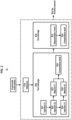
- FIG. 1 schematically illustrates a gas turbine engine 10, conventionally comprising a compressor 12, a combustion chamber 14 and a turbine 16 intended for driving the compressor.
- the compressor-combustion chamber-turbine assembly forms a gas generator
- IGV 18 At the inlet of the compressor 12 are arranged air inlet flaps (IGV 18) whose rotational positioning is ensured by one or more actuators (ACT 20) controlled from a central computer (FADEC 22) which also ensures the management of the motor.
- ACT 20 actuators
- FADEC 22 central computer
- the function of controlling the air inlet flaps 18 is most often provided by a hydraulic cylinder whose chamber pressures of said cylinder are modulated by an electro-hydraulic member such as a servovalve.
- the servovalve receives a control current from the computer and is hydraulically supplied by a fuel circuit, the high pressure pump of which is driven by the gas generator of the turbomachine.
- the monitoring module 30 can be implemented by a computer of the aircraft, or comprise means of connection to said computer.
- a calculator comprises, in a known manner, computer means configured to process data and implement computer programs.
- the computer can be, for example, the central computer (FADEC 22) which is used to manage information on the operation of the engine(s) of the aircraft.
- the monitoring module 30 may be able to convert an analog measurement of position of the flaps received into a digital value usable, for example, by a processor or by a Field-Programmable Gate Array (FPGA).
- FPGA Field-Programmable Gate Array
- the monitoring module 30 is thus configured to acquire measurements of the position of the flaps, for example by a cylinder sensor, as well as the rotation speed of the engine, for example of the high pressure body (HP) of said engine.
- the sensors allowing the acquisition of such measurements are sensors usually available in the aircraft engine.
- the monitoring module 30 is configured to detect a stop of the engine. Following this detection, and therefore during deceleration of the motor, the monitoring module carries out a scanning test in a step E20.
- a prerequisite for carrying out this test is to have a known and constant hydraulic fluid pressure (such as fuel from the fuel circuit) at the jack terminals over a wide range of the engine stopping phase.
- the hydraulic power circuit is designed in such a way that it maintains a known and constant pressure difference between supply and return across a wide range of deceleration across the control servovalve. of the motor.
- the shutters are tested to monitor the scanning of an area defined between a first position P1, and a second position P2.
- first position P1 may correspond to a position of the shutters 18 where they are fully open.
- the second position P2 can correspond to a position of the flaps 18 where they are fully closed. This position configuration will be considered in the remainder of the description.
- the positioning of the flaps can be determined as a function of the balance control current, i.e. the control current to obtain zero cylinder speed. This balance current is evaluated at each moment by a cylinder control program.
- the cylinder speed only depends on the control current.
- speeds can be calculated between 2 intermediate points between P1 and P2.
- the member for modulating hydraulic energy to a hydraulic actuator following a command is not a servovalve.
- the control current making it possible to position the shutters, being replaced, in an example not covered by the claims, by the variable for modulating the speed of the actuator.
- this minimum speed threshold comes from the identification of a cylinder model which makes it possible to establish the speed of the cylinder as a function of the resisting force applied to it during movement, this for given conditions of fuel pressure and control current (determined according to the equilibrium current value).
- the measured scanning times and/or the speeds calculated during each stop can be stored, for example in a memory area of the computer, in order to carry out trend monitoring making it possible to follow the evolution of the margin between the traction of the actuator and the resistant force of the variable geometry and thus anticipate maintenance actions.
- the monitoring module 30 is configured to detect a stopping of the motor, and to implement a control test in a step E30.
- the monitoring module 30 applies a strictly monotonic flap position instruction as a function of n1, by injecting the actuator with a control current making it possible to regulate the position of the flaps.
- the control current is close to the balance current of the shutters (curve g4).
- the monitoring module 30 records up to what minimum value n1min of n1, the air inlet flaps can be controlled by a strictly monotonic actuator position setpoint law as a function of n1.
- Said value n1min corresponds to the value n1 recorded at the instant when the flaps 18 freeze (zero cylinder speed) and consequently where the setpoint law is no longer followed, in fact as the flaps 18 can no longer follow the setpoint law, the error between setpoint and actual position of the shutters 18 increases and therefore the control current deviates from the balance current.
- n1min can be deduced from the final position of the flaps and the cylinder position setpoint law applied at the end of engine deceleration.
- this value n1min is compared to a threshold and can be subject to trend monitoring making it possible to anticipate a maintenance action.
- the proposed monitoring method can also be applied to other types of bodies with variable geometry, for example discharge valves, etc.
- the discharge valves allow the compressor to be discharged, and thus move away from the pumping line. They are generally open at low speeds to provide acceleration capabilities then are closed at higher speeds to optimize engine performance. Discharge valves are, for example, progressive valves.
- the latter are servo valves whose position can take any point in the range between full open and full closed. They are controlled by the computer via a control current. The progressive valves are therefore controlled in the same way as the air inlet shutters.
Landscapes
- Engineering & Computer Science (AREA)
- Mechanical Engineering (AREA)
- General Engineering & Computer Science (AREA)
- Chemical & Material Sciences (AREA)
- Combustion & Propulsion (AREA)
- Physics & Mathematics (AREA)
- Fluid Mechanics (AREA)
- Control Of Turbines (AREA)
- Supercharger (AREA)
- Combined Controls Of Internal Combustion Engines (AREA)
- Structures Of Non-Positive Displacement Pumps (AREA)
Description
- L'invention concerne un procédé de surveillance de l'état de fonctionnement d'un organe à géométrie variable de turbomachine.
- Ce procédé est en particulier destiné à être mis en oeuvre pour des volets d'entrée d'air d'un moteur aéronef.
- Certaines turbomachines d'aéronefs, tels que des turbomoteurs hélicoptères, sont équipées de volets d'entrée d'air, qui servent à optimiser le point de fonctionnement du moteur.
- La fonction de pilotage des volets d'entrée d'air, et plus généralement des organes géométrie variable, est le plus souvent assurée par un vérin hydraulique dont les pressions de chambres dudit vérin sont modulées par un organe électrohydraulique telle qu'une servovalve. La servovalve reçoit un courant de commande du calculateur et est alimentée hydrauliquement par un circuit de carburant, dont les pompes sont entraînées par le générateur de gaz de la turbomachine.
- Ces volets, pour remplir pleinement leur fonction, doivent être capables de parcourir entièrement leur plage utile, et cela avec la dynamique spécifiée. La vitesse la plus rapide spécifiée est rarement demandée, mais il est nécessaire de s'assurer qu'elle puisse être atteinte si besoin.
- Il est considéré que l'augmentation de l'effort résistant de manoeuvre des volets (par encrassement par le sable par exemple) est un signe de dégradation précurseur pouvant conduire à l'incapacité de l'ensemble volet, vérin, servovalve à tenir les performances spécifiées.
- De façon traditionnelle, un test manuel de maintenance est réalisé régulièrement pour vérifier l'effort résistant des volets. Ce test consiste à déconnecter la cinématique volets du vérin, puis à manoeuvrer les volets à la main sur toute leur plage utile, en s'assurant qu'il n'y a pas d'effort résistant anormal. En cas de doute, une clé dynamométrique est utilisée pour vérifier le niveau d'effort résistant. A partir d'un certain seuil, une action de maintenance est exigée (lavage compresseur, par exemple, dans un premier temps).
- Une telle solution à comme inconvénient de nécessiter l'intervention d'un opérateur de maintenance à intervalles rapprochés. De plus, à la suite d'une telle intervention, il existe un risque de mal reconnecter la tige qui lie la cinématique volets au vérin. En outre, une telle intervention peut nécessiter la dépose d'un moteur pour réaliser l'opération du fait de l'impossibilité d'accès avec la clé dynamométrique.
- Également, une telle solution ne teste que la résistance côté volets d'entrée d'air et pas de dégradations éventuelles du vérin, du circuit d'alimentation (par exemple le circuit carburant) et de la servovalve de commande du vérin.
- On connait d'après le document
US 2017/227424 un système et un procédé de surveillance d'un système d'actionnement de carburant, plus particulièrement dans le contexte des moteurs à turbine à gaz. Le système d'actionnement de carburant peut comprendre une commande électronique du moteur, une servovalve, une valve doseuse et/ou un élément de rétroaction. La valve doseuse est déplacée via une pression hydraulique issue d'un système de carburant. - On connait également d'après le document
US 2012/325348 A1 un procédé de surveillance du fonctionnement d'un système de carburant. - On connait enfin d'après le document
US 6131449 A , un système de commande pour tester les performances d'une commande associée aux aubes directrices d'entrée d'un moteur d'avion. Le procédé comprend les étapes consistant à introduire, dans le programme de positionnement de l'actionneur, une étape pour provoquer une perturbation dans le système pendant un intervalle de temps pour déterminer un échec/fonctionnement réussi de la commande. - Aucun de ces trois documents ne décrit, ni ne suggère l'ensemble des étapes mentionnées dans la revendication 1.
- La présente invention vise à améliorer le fonctionnement d'organes à géométrie variable dans un turboréacteur qui sont alimentés en fluide hydraulique par prélèvement sur le circuit d'alimentation en carburant du moteur.
- L'invention a ainsi pour but de proposer un procédé de surveillance de l'état de fonctionnement d'organes à géométrie variable, tels que des volets d'entrée d'air d'une turbomachine permettant de pallier les inconvénients précédemment décrits.
- Le but est atteint dans le cadre de la présente invention grâce à un procédé de surveillance de l'état de fonctionnement d'un système de positionnement d'organes à géométrie variable d'une turbomachine tel que défini dans la revendication 1.
- Avantageusement, le procédé de surveillance peut également comprendre au moins l'une des caractéristiques suivantes :
- l'étape de détermination d'une première position P1 des organes à géométrie variable comporte l'application d'une commande permet de piloter le vérin pour amener les organes à géométrie variable à la première position P1 ;
- les seuils de vitesse sont déterminés en fonction d'un modèle du vérin et de l'organe électrohydraulique qui permet d'établir la vitesse du vérin en fonction d'un effort résistant au déplacement dudit vérin , ceci pour des pressions du liquide hydraulique et un courant de commande, appliqués audit l'organe électrohydraulique, déterminés ;
- une position, parmi la première et la seconde position, correspond à une position des organes à géométrie variable où lesdits organes à géométrie variable sont pleinement ouverts et l'autre position parmi la première et la seconde position, correspond à une position des organes à géométrie variable où lesdits organes à géométrie variable sont pleinement fermés ;
- le liquide hydraulique est du carburant issu du circuit carburant de la turbomachine, et l'organe électrohydraulique est une servovalve du vérin hydraulique ;
- les organes à géométrie variable sont des volets d'entrée d'air.
- Avantageusement, ledit procédé permet d'établir une surveillance automatique plutôt que manuelle, à laquelle il peut être procédé à chaque arrêt moteur.
- Également, ledit procédé permet de tester la fonctionnalité de tout le système de commande des volets en incluant la source d'énergie, l'actionneur et son moyen de commande, en plus du mécanisme commandé.
- En outre, ledit procédé permet de profiter d'une phase non-fonctionnelle du moteur (chambre éteinte) pour réaliser ce test en temps masqué.
- L'invention a également pour objet un produit-programme d'ordinateur selon la revendication 7.
- D'autres buts et avantages de la présente invention apparaîtront à la lecture de la description détaillée qui va suivre, au regard des figures annexées, données à titre d'exemples non limitatifs et sur lesquelles :
- La
figure 1 illustre de façon schématique un moteur à turbine à gaz selon l'état de l'art ; - la
figure 2 représente de manière schématique un procédé de surveillance de l'état de fonctionnement de volets d'entrée d'air selon l'invention ; - la
figure 3 représente une courbe d'évolution de la vitesse de volets d'entrée d'air en fonction de la résistance appliquer à son déplacement; et - les
figures 4A, 4B, 4C représentent des courbes d'évolution temporelles simultanées de, respectivement, la position de volets, le courant d'équilibre de volets, le courant de commande appliqué au vérin hydraulique, la vitesse du générateur de gaz de la turbomachine, pour la mise en oeuvre du procédé de surveillance selon l'invention. - Un mode de réalisation d'un procédé de surveillance de l'état de fonctionnement d'organes à géométrie variable conforme à l'invention est ci-après décrit dans le cadre d'organes à géométrie variable, tels que des volets d'entrée d'air d'un moteur d'hélicoptère à turbine à gaz. Toutefois, le domaine d'application de l'invention s'étend à des moteurs à turbine à gaz d'autres aéronefs, notamment à des avions et à des moteurs d'aéronefs autres qu'à turbine à gaz.
- La
figure 1 illustre de façon schématique un moteur à turbine à gaz 10, comprenant classiquement un compresseur 12, une chambre de combustion 14 et une turbine 16 destinée à l'entrainement du compresseur. - En entrée du compresseur 12 sont disposés des volets d'entrée d'air (IGV 18) dont le positionnement en rotation est assuré par un ou plusieurs actionneurs (ACT 20) commandés depuis un calculateur central (FADEC 22) qui assure en outre la gestion du moteur.
- La fonction de pilotage des volets d'entrée d'air 18 est le plus souvent assurée par un vérin hydraulique dont les pressions de chambres dudit vérin sont modulées par un organe électrohydraulique telle qu'une servovalve. La servovalve reçoit un courant de commande du calculateur et est alimentée hydrauliquement par un circuit de carburant, dont la pompe haute pression est entraînée par le générateur de gaz de la turbomachine.
- Avantageusement, le module de surveillance 30 peut être mis en oeuvre par un calculateur de l'aéronef, ou comprendre des moyens de connexion audit calculateur. Un calculateur comprend, de manière connue, des moyens informatiques configurés pour traiter des données et mettre en oeuvre des programmes d'ordinateur. Le calculateur peut être, par exemple, le calculateur central (FADEC 22) qui est utilisé pour gérer des informations sur le fonctionnement du ou des moteurs de l'aéronef.
- En particulier, le module de surveillance 30 peut être apte à convertir une mesure analogique de position des volets reçue en une valeur digitale utilisable, par exemple, par un processeur ou par un Field-Programmable Gate Array (FPGA).
- Le module de surveillance 30 est ainsi configuré pour acquérir des mesures de position des volets, par exemple par un capteur du vérin, ainsi que de vitesse de rotation du moteur, par exemple du corps haute pression (HP) dudit moteur.
- Avantageusement, les capteurs permettant l'acquisition de telles mesures sont des capteurs usuellement disponibles dans le moteur d'aéronef.
- Dans une étape E10 du procédé, le module de surveillance 30 est configuré pour détecter un arrêt du moteur. Suite à cette détection, et donc lors de la décélération du moteur, le module de surveillance procède à un test de balayage dans une étape E20.
- Un préalable pour la réalisation de ce test est d'avoir aux bornes du vérin une pression de liquide hydraulique (tel que le carburant issu du circuit carburant) connue et constante pendant une large plage de la phase d'arrêt moteur.
- Dans le contexte de la servovalve, le circuit d'alimentation hydraulique est conçu de telle manière qu'il maintient aux bornes de la servovalve de commande une différence de pression entre alimentation et retour connue et constante, lors d'une large plage de la décélération du moteur.
- Un autre préalable est qu'une fois la chambre de combustion 14 éteinte, l'on puisse manoeuvrer sur une course importante les volets d'entrée d'air sans dommage pour le moteur ou ses composants.
- Les volets sont testés pour surveiller le balayage d'une zone définie entre une première position P1, et une seconde position P2.
- Par exemple, la première position P1 peut correspondre à une position des volets 18 où ils sont pleinement ouverts. La seconde position P2 peut correspondre à une position des volets 18 où ils sont pleinement fermés. Cette configuration de position sera envisagée dans la suite de la description.
- Il est bien entendu, que les positions peuvent être inversées, i.e., la première position P1 correspondant à une pleine fermeture, et la seconde position P2 correspondant à une pleine ouverture des volets 18.
- Le positionnement des volets peut être déterminé en fonction du courant de commande d'équilibre, c'est à dire le courant de commande pour obtenir une vitesse nulle de vérin. Ce courant d'équilibre est évalué à chaque instant par un programme de commande du vérin.
- Ainsi, pour des pressions d'alimentation de la servovalve et un effort résistant donnés, la vitesse de vérin ne dépend que du courant commande.
- Le test de balayage volets de l'étape E20 se déroule en trois sous-étapes, mises en oeuvre par le module de surveillance 30 :
- E21 : injection d'un courant de commande constant C1, déterminé d'après la valeur de courant d'équilibre, à au moins un vérin actionnant les volets 18 pour amener lesdits volets 18 à la position P1 ;
- E22 : une fois lesdits volets 18 arrivés à la position P1, injection d'un nouveau courant de commande constant C2, déterminé d'après la valeur de courant d'équilibre, permettant d'amener les volets 18 à la position P2 ;
- E23 : une mesure du temps de balayage est réalisée pour en déduire la vitesse V1 de balayage de la position P1 à la position P2.
- E24 : une fois les volets 18 arrivés à la position P2, réinjection du premier courant de commande constant C1 permettant d'amener les volets 18 à la position P1.
- E25 : une mesure du temps de balayage est réalisée pour en déduire la vitesse V2 de balayage de la position P2 à la position P1.
- E26 : les deux vitesses mesurées sont comparées à un seuil de vitesse minimale qui doit être atteinte dans ces conditions (pression carburant/courant de commande).
- Également, les vitesses peuvent être calculées entre 2 points intermédiaires entre P1 et P2.
- Alternativement, l'organe de modulation de l'énergie hydraulique vers un actionneur hydraulique suivant une commande n'est pas une servovalve. Le courant de commande, permettant de positionner les volets, étant remplacé, dans un exemple non couvert par les revendications, par la variable de modulation de la vitesse de l'actionneur.
- En référence à la
figure 3 , et plus particulièrement à la courbe g1, ce seuil de vitesse minimale est issu de l'identification d'un modèle vérin qui permet d'établir la vitesse du vérin en fonction de l'effort résistant qu'on lui applique au déplacement, ceci pour des conditions données de pressions carburant et de courant de commande (déterminé d'après la valeur de courant d'équilibre). - Au-delà de la comparaison à un seuil, les temps de balayage mesurés et/ou les vitesses calculées lors de chaque arrêt peuvent être mémorisés, par exemple dans une zone mémoire du calculateur, afin de réaliser un suivi de tendance permettant de suivre l'évolution de la marge entre la motricité de l'actionneur et l'effort résistant de la géométrie variable et d'anticiper ainsi des actions de maintenance.
- Successivement au test de l'étape E20, le module de surveillance 30 est configuré pour détecter un arrêt du moteur, et pour la mise en oeuvre d'un test de pilotage dans une étape E30.
- En effet, lors de la décélération moteur, à très faible vitesse de rotation du générateur de gaz, la pompe HP du circuit d'alimentation ne permet plus de maintenir la différence de pressions constante. Dans cette phase, les conditions de pressions à l'actionneur diminuent sensiblement en étant dépendantes de la vitesse de rotation et de l'état de la pompe HP. Il arrive donc un point où ces conditions sont insuffisantes pour faire bouger l'actionneur. Le but de ce test est justement de relever ce moment. Pour ce faire, à la suite du test de balayage E20, dans une étape E31, les volets sont à nouveau régulés sur leur consigne de position fonction de la vitesse du générateur de gaz n1 (courbe g5 -
figure 4 ). - En référence également à la
figure 4 , il est illustré en fonction de l'effort résistif opposé au déplacement, l'évolution temporelle de la position de volets 18 (courbe g2) simultanée à un courant de commande appliqué au vérin hydraulique actionnant lesdits volets 18 (courbe g3). - Le module de surveillance 30 applique une consigne de position volets strictement monotone en fonction du n1, en injectant au vérin un courant de commande permettant de réguler la position des volets. Idéalement, l'erreur entre la consigne de position et la position réel des volets 18 étant faible, le courant de commande est proche du courant d'équilibre des volets (courbe g4).
- Le module de surveillance 30 relève jusqu'à quelle valeur minimale n1min de n1, les volets d'entrée d'air peuvent être pilotés par une loi de consigne de position vérin strictement monotone en fonction du n1.
- Ladite valeur n1min correspond à la valeur n1 relevée à l'instant où les volets 18 se figent (vitesse du vérin nulle) et par conséquent où la loi de consigne n'est plus suivie, en effet comme les volets 18 ne peuvent plus suivre la loi de consigne, l'erreur entre consigne et position réelle des volets 18 augmente et donc le courant de commande s'écarte du courant d'équilibre.
- Alternativement, n1min peut être déduit de la position finale des volets et de la loi de consigne de position vérin appliquée en fin de décélération moteur.
- Ensuite dans une étape E32, cette valeur n1min est comparée à un seuil et peut faire l'objet d'un suivi de tendance permettant d'anticiper une action de maintenance.
- Le procédé de surveillance proposé peut également s'appliquer à d'autres types d'organes à géométrie variable, par exemple des vannes de décharges, etc.
- Les vannes de décharge permettent de décharger le compresseur, et ainsi de s'éloigner de la ligne de pompage. Elles sont généralement ouvertes à bas régimes pour dégager des capacités d'accélération puis sont fermées à plus haut régimes pour optimiser le rendement du moteur. Les vannes de décharge sont par exemple des vannes progressives.
- Ces dernières sont des servo-vannes dont la position peut prendre n'importe quel point de la plage entre plein ouvert et plein fermé. Elles sont pilotées par le calculateur via un courant de commande. Les vannes progressives se commandent donc de la même manière que les volets d'entrées d'air.
Claims (7)
- Procédé de surveillance de l'état de fonctionnement d'un système de positionnement d'organes à géométrie variable (18) d'une turbomachine (10), ledit système comprenant des organes à géométrie variable (18) actionnés par au moins un vérin hydraulique (20) associé à un organe électrohydraulique piloté en courant par un calculateur (22), la puissance dudit vérin hydraulique (20) étant fonction de pressions de liquide hydraulique et du courant appliqué audit organe électrohydraulique, lesdits organes à géométrie variable (18) étant configurés pour parcourir une plage de fonctionnement comprenant une première position P1 et une seconde position P2, ledit procédé comportant, pendant une phase de décélération suite à la commande d'arrêt de la turbomachine (10),a) un test de balayage (E20), réalisé avec des conditions de pressions de liquide hydraulique déterminées et constantes aux bornes du vérin (20), ce test de balayage (E20) comportant les étapes de :- (E21) détermination de la première position P1 des organes à géométrie variable (18) ;- (E22) application d'une commande C2 permettant de piloter le vérin (20) et d'amener les organes à géométrie variable à la seconde position P2, l'application de la commande C2 comportant l'injection d'un courant de commande constant, déterminé d'après la valeur de courant d'équilibre du vérin (20) ;- (E23) mesure du temps de balayage de la première à la seconde position et détermination d'une première vitesse de balayage V1 de la première position P1 à la seconde position P2 ;- (E24) application d'une première commande de pilotage C1 permettant d'amener les organes à géométrie variable à la première position P1, une fois les organes à géométrie variable arrivés à la seconde position P2, l'application de la commande C1 comportant l'injection d'un courant de commande constant, déterminé d'après la valeur de courant d'équilibre du vérin (20) ;- (E25) mesure du temps de balayage de la seconde à la première position et détermination d'une seconde vitesse de balayage de la seconde position P2 à la première position P1 ; et- (E26) détermination d'une anomalie de fonctionnement du système de positionnement des organes à géométrie variable (18) si la première vitesse V1 est inférieure à un premier seuil de vitesse déterminé et/ou si la seconde vitesse V2 est inférieure à un second seuil de vitesse déterminé,b) puis un test de pilotage (E30) qui comporte les étapes :- (E31) d'application d'une consigne de position des organes à géométrie variable (18) strictement monotone en fonction de la vitesse d'un générateur de gaz de la turbomachine (10) et de détermination de la vitesse minimale (n1min) du générateur de gaz pour laquelle la consigne de position est respectée ; et- (E32) de détermination d'une anomalie de fonctionnement du système de positionnement des organes à géométrie variable (18) si la vitesse minimale (nlmin) est supérieure à une valeur seuil déterminée de vitesse du générateur de gaz.
- Procédé de surveillance selon la revendication précédente dans lequel l'étape de détermination d'une première position P1 des organes à géométrie variable comporte l'application d'une commande permet de piloter le vérin (20) pour amener les organes à géométrie variable (18) à la première position P1.
- Procédé de surveillance selon l'une des revendications précédentes dans lequel, les seuils de vitesse sont déterminés en fonction d'un modèle du vérin (20) et de l'organe électrohydraulique qui permet d'établir la vitesse du vérin (20) en fonction d'un effort résistant au déplacement dudit vérin (20), ceci pour des pressions du liquide hydraulique et un courant de commande, appliqués audit l'organe électrohydraulique, déterminés.
- Procédé de surveillance selon l'une des revendications précédentes dans lequel une position, parmi la première et la seconde position, correspond à une position des organes à géométrie variable (18) où lesdits organes à géométrie variable (18) sont pleinement ouverts et l'autre position parmi la première et la seconde position, correspond à une position des organes à géométrie variable (18) où lesdits organes à géométrie variable (18) sont pleinement fermés.
- Procédé de surveillance selon l'une des revendications précédentes dans lequel le liquide hydraulique est du carburant issu du circuit carburant de la turbomachine (10), et l'organe électrohydraulique est une servovalve du vérin hydraulique (20).
- Procédé de surveillance selon l'une des revendications précédentes dans lequel les organes à géométrie variable sont des volets d'entrée d'air.
- Produit programme d'ordinateur comprenant des instructions de code qui conduisent une turbomachine (10) à exécuter les étapes du procédé de surveillance de l'état de fonctionnement d'organes à géométrie variable (18) de ladite turbomachine (10) selon l'une des revendications 1 à 6, cette turbomachine (10) comprenant un calculateur (22), au moins un vérin hydraulique (20) associé à un organe électrohydraulique piloté en courant par ledit calculateur (22), ce vérin hydraulique (20) permettant de déterminer la position et d'actionner lesdits organes à géométrie variable (18), et des moyens de reconnaissance de la phase de décélération suite à la commande d'arrêt de ladite turbomachine.
Applications Claiming Priority (2)
| Application Number | Priority Date | Filing Date | Title |
|---|---|---|---|
| FR1900627A FR3092170B1 (fr) | 2019-01-24 | 2019-01-24 | Procédé de surveillance de l’état de fonctionnement d’un système de positionnement d’organes à géométrie variable d’une turbomachine |
| PCT/FR2020/050096 WO2020152425A1 (fr) | 2019-01-24 | 2020-01-23 | Procédé de surveillance de l'état de fonctionnement d'un système de positionnement d'organes à géométrie variable d'une turbomachine |
Publications (2)
| Publication Number | Publication Date |
|---|---|
| EP3914829A1 EP3914829A1 (fr) | 2021-12-01 |
| EP3914829B1 true EP3914829B1 (fr) | 2023-10-04 |
Family
ID=66867412
Family Applications (1)
| Application Number | Title | Priority Date | Filing Date |
|---|---|---|---|
| EP20705435.4A Active EP3914829B1 (fr) | 2019-01-24 | 2020-01-23 | Procédé de surveillance de l'état de fonctionnement d'un système de positionnement d'organes à géométrie variable d'une turbomachine |
Country Status (7)
| Country | Link |
|---|---|
| US (1) | US11920483B2 (fr) |
| EP (1) | EP3914829B1 (fr) |
| CN (1) | CN113330221B (fr) |
| CA (1) | CA3127551A1 (fr) |
| FR (1) | FR3092170B1 (fr) |
| PL (1) | PL3914829T3 (fr) |
| WO (1) | WO2020152425A1 (fr) |
Cited By (1)
| Publication number | Priority date | Publication date | Assignee | Title |
|---|---|---|---|---|
| FR3163727A1 (fr) * | 2024-06-21 | 2025-12-26 | Safran Aircraft Engines | Procédé et dispositif de suivi de l’usure d’un vérin |
Families Citing this family (1)
| Publication number | Priority date | Publication date | Assignee | Title |
|---|---|---|---|---|
| FR3117457B1 (fr) * | 2020-12-16 | 2023-04-21 | Safran Aircraft Engines | Procédé et système de détection de l’usure d’un vérin |
Family Cites Families (12)
| Publication number | Priority date | Publication date | Assignee | Title |
|---|---|---|---|---|
| US4523286A (en) * | 1981-08-07 | 1985-06-11 | Hitachi, Ltd. | Apparatus for making diagnosis of valve device in turbine system |
| US4879662A (en) * | 1988-03-11 | 1989-11-07 | Sundstrand Corporation | Fluid flow self calibration scheme |
| DE69831593T2 (de) * | 1997-10-20 | 2006-04-27 | United Technologies Corp., Windsor Locks | Verfahren zum geschwindigkeitsadaptiven Testen einer Steuerung |
| FR2942272B1 (fr) * | 2009-02-16 | 2011-05-06 | Snecma | Procede et systeme de regulation de turbine a gaz et turbine a gaz munie d'un tel systeme |
| US8578763B2 (en) * | 2011-06-22 | 2013-11-12 | Hamilton Sundstrand Corporation | System and method for fuel system health monitoring |
| US9068463B2 (en) * | 2011-11-23 | 2015-06-30 | General Electric Company | System and method of monitoring turbine engines |
| FR2983529B1 (fr) * | 2011-12-05 | 2014-01-17 | Snecma | Methode de surveillance d’un dispositif de commande d’un doseur de carburant d’un turboreacteur |
| FR2995947B1 (fr) * | 2012-09-26 | 2018-03-16 | Safran Aircraft Engines | Procede de differenciation de pannes de commande dans un systeme de commande d'un actionneur, notamment de stator de moteur a turbine a gaz |
| JP6011875B2 (ja) | 2013-07-08 | 2016-10-19 | Smc株式会社 | アクチュエータの異常検出システム |
| US10443509B2 (en) * | 2014-10-31 | 2019-10-15 | General Electric Company | System and method for turbomachinery vane prognostics and diagnostics |
| US9983096B2 (en) * | 2016-02-05 | 2018-05-29 | United Technologies Corporation | Fuel metering valve actuator initiated built in test |
| CN107304716A (zh) * | 2016-04-22 | 2017-10-31 | 北京澳尔金石油技术开发有限公司 | 一种燃气轮机故障监测方法及装置 |
-
2019
- 2019-01-24 FR FR1900627A patent/FR3092170B1/fr active Active
-
2020
- 2020-01-23 PL PL20705435.4T patent/PL3914829T3/pl unknown
- 2020-01-23 US US17/425,389 patent/US11920483B2/en active Active
- 2020-01-23 CA CA3127551A patent/CA3127551A1/fr active Pending
- 2020-01-23 CN CN202080010897.XA patent/CN113330221B/zh active Active
- 2020-01-23 WO PCT/FR2020/050096 patent/WO2020152425A1/fr not_active Ceased
- 2020-01-23 EP EP20705435.4A patent/EP3914829B1/fr active Active
Cited By (1)
| Publication number | Priority date | Publication date | Assignee | Title |
|---|---|---|---|---|
| FR3163727A1 (fr) * | 2024-06-21 | 2025-12-26 | Safran Aircraft Engines | Procédé et dispositif de suivi de l’usure d’un vérin |
Also Published As
| Publication number | Publication date |
|---|---|
| FR3092170A1 (fr) | 2020-07-31 |
| CN113330221B (zh) | 2023-04-25 |
| FR3092170B1 (fr) | 2022-08-19 |
| EP3914829A1 (fr) | 2021-12-01 |
| PL3914829T3 (pl) | 2024-02-12 |
| US20220082027A1 (en) | 2022-03-17 |
| WO2020152425A1 (fr) | 2020-07-30 |
| CA3127551A1 (fr) | 2020-07-30 |
| US11920483B2 (en) | 2024-03-05 |
| CN113330221A (zh) | 2021-08-31 |
Similar Documents
| Publication | Publication Date | Title |
|---|---|---|
| CA2509488C (fr) | Systeme et procede de controle d'un flux d'air dans une turbine a gaz | |
| CA2815347C (fr) | Procede et dispositif de surveillance d'une boucle d'asservissement d'un systeme d'actionnement de geometries variables d'un turboreacteur | |
| EP3938637B1 (fr) | Procédé et système de surveillance d'un état d'un réducteur d'une turbine a gaz | |
| EP2684099B1 (fr) | Procédé et dispositif de surveillance pour système d'actionnement à servovalve | |
| CA2848466C (fr) | Procede de suivi du rendement volumetrique d'une pompe hp d'un systeme de regulation hydraulique de turbomachine | |
| FR3022949A1 (fr) | Procedes de determination de caracteristiques d'ouvertures ou de fermetures d'une vanne de demarrage de turbomoteur | |
| FR2782538A1 (fr) | Procede de verification du fonctionnement d'un turbocompresseur de suralimentation a gaz d'echappement ayant une geometrie de turbine variable | |
| EP3914829B1 (fr) | Procédé de surveillance de l'état de fonctionnement d'un système de positionnement d'organes à géométrie variable d'une turbomachine | |
| CA2889122C (fr) | Procede de differenciation de pannes de commande dans un systeme de commande d'un actionneur, notamment de stator de moteur a turbine a gaz | |
| WO2012120229A1 (fr) | Procede de surveillance du changement d'etat d'une vanne par mesure de pression | |
| FR3074836A1 (fr) | Procede de detection d'allumage de turbomachine | |
| WO2020012011A1 (fr) | Procédé de diagnostic d'une vanne digitale de régulation de débit d'une pompe à injection de carburant à haute pression | |
| EP3891404B1 (fr) | Procédé de contrôle d'un vérin | |
| WO2015063401A2 (fr) | Procédé de détection d'une panne d'une vanne de retour de carburant d'un circuit carburant d'un moteur d'aéronef | |
| FR3043432A1 (fr) | Procede et dispositif d'ajustement de valeurs de consigne d'une pluralite de geometries variables determinees d'une turbomachine | |
| WO2016193603A1 (fr) | Procédé de detection d'un defaut mecanique d'un generateur de gaz d'une turbomachine d'un aeronef et dispositif de mise en œuvre correspondant | |
| FR3012175A1 (fr) | Procede de detection de pannes et turbomachine | |
| FR3078362A1 (fr) | Procede et unite de commande pour le pilotage du jeu d'une turbine haute pression | |
| FR3161764A1 (fr) | dispositif et procédé de contrôle du fonctionnement de turbomoteurs pour l’accommodation de pannes d’asservissement d’éléments à géométrie variable | |
| FR2898642A1 (fr) | Procede de commande d'un moteur suralimente comportant un diagnostic de regulation | |
| FR3055358A1 (fr) | Procede de gestion d'une panne de vanne de demarrage d'une turbomachine | |
| FR3094485A1 (fr) | Procédé de prévision d’une panne d’un composant électromécanique | |
| FR3155865A1 (fr) | Dispositif de commande hydraulique d’un inverseur de poussee | |
| FR3155864A1 (fr) | Dispositif de commande hydraulique d’un inverseur de poussee | |
| FR2905419A1 (fr) | Procede de gestion d'un appareil de suralimentation d'un moteur a combustion interne |
Legal Events
| Date | Code | Title | Description |
|---|---|---|---|
| STAA | Information on the status of an ep patent application or granted ep patent |
Free format text: STATUS: UNKNOWN |
|
| STAA | Information on the status of an ep patent application or granted ep patent |
Free format text: STATUS: THE INTERNATIONAL PUBLICATION HAS BEEN MADE |
|
| PUAI | Public reference made under article 153(3) epc to a published international application that has entered the european phase |
Free format text: ORIGINAL CODE: 0009012 |
|
| STAA | Information on the status of an ep patent application or granted ep patent |
Free format text: STATUS: REQUEST FOR EXAMINATION WAS MADE |
|
| 17P | Request for examination filed |
Effective date: 20210709 |
|
| AK | Designated contracting states |
Kind code of ref document: A1 Designated state(s): AL AT BE BG CH CY CZ DE DK EE ES FI FR GB GR HR HU IE IS IT LI LT LU LV MC MK MT NL NO PL PT RO RS SE SI SK SM TR |
|
| DAV | Request for validation of the european patent (deleted) | ||
| DAX | Request for extension of the european patent (deleted) | ||
| GRAP | Despatch of communication of intention to grant a patent |
Free format text: ORIGINAL CODE: EPIDOSNIGR1 |
|
| STAA | Information on the status of an ep patent application or granted ep patent |
Free format text: STATUS: GRANT OF PATENT IS INTENDED |
|
| INTG | Intention to grant announced |
Effective date: 20230606 |
|
| GRAS | Grant fee paid |
Free format text: ORIGINAL CODE: EPIDOSNIGR3 |
|
| GRAA | (expected) grant |
Free format text: ORIGINAL CODE: 0009210 |
|
| STAA | Information on the status of an ep patent application or granted ep patent |
Free format text: STATUS: THE PATENT HAS BEEN GRANTED |
|
| AK | Designated contracting states |
Kind code of ref document: B1 Designated state(s): AL AT BE BG CH CY CZ DE DK EE ES FI FR GB GR HR HU IE IS IT LI LT LU LV MC MK MT NL NO PL PT RO RS SE SI SK SM TR |
|
| REG | Reference to a national code |
Ref country code: GB Ref legal event code: FG4D Free format text: NOT ENGLISH |
|
| REG | Reference to a national code |
Ref country code: CH Ref legal event code: EP |
|
| REG | Reference to a national code |
Ref country code: IE Ref legal event code: FG4D Free format text: LANGUAGE OF EP DOCUMENT: FRENCH |
|
| REG | Reference to a national code |
Ref country code: DE Ref legal event code: R096 Ref document number: 602020018606 Country of ref document: DE |
|
| REG | Reference to a national code |
Ref country code: LT Ref legal event code: MG9D |
|
| REG | Reference to a national code |
Ref country code: NL Ref legal event code: MP Effective date: 20231004 |
|
| REG | Reference to a national code |
Ref country code: AT Ref legal event code: MK05 Ref document number: 1618013 Country of ref document: AT Kind code of ref document: T Effective date: 20231004 |
|
| PG25 | Lapsed in a contracting state [announced via postgrant information from national office to epo] |
Ref country code: NL Free format text: LAPSE BECAUSE OF FAILURE TO SUBMIT A TRANSLATION OF THE DESCRIPTION OR TO PAY THE FEE WITHIN THE PRESCRIBED TIME-LIMIT Effective date: 20231004 |
|
| PG25 | Lapsed in a contracting state [announced via postgrant information from national office to epo] |
Ref country code: GR Free format text: LAPSE BECAUSE OF FAILURE TO SUBMIT A TRANSLATION OF THE DESCRIPTION OR TO PAY THE FEE WITHIN THE PRESCRIBED TIME-LIMIT Effective date: 20240105 |
|
| PG25 | Lapsed in a contracting state [announced via postgrant information from national office to epo] |
Ref country code: IS Free format text: LAPSE BECAUSE OF FAILURE TO SUBMIT A TRANSLATION OF THE DESCRIPTION OR TO PAY THE FEE WITHIN THE PRESCRIBED TIME-LIMIT Effective date: 20240204 |
|
| PG25 | Lapsed in a contracting state [announced via postgrant information from national office to epo] |
Ref country code: LT Free format text: LAPSE BECAUSE OF FAILURE TO SUBMIT A TRANSLATION OF THE DESCRIPTION OR TO PAY THE FEE WITHIN THE PRESCRIBED TIME-LIMIT Effective date: 20231004 |
|
| PG25 | Lapsed in a contracting state [announced via postgrant information from national office to epo] |
Ref country code: AT Free format text: LAPSE BECAUSE OF FAILURE TO SUBMIT A TRANSLATION OF THE DESCRIPTION OR TO PAY THE FEE WITHIN THE PRESCRIBED TIME-LIMIT Effective date: 20231004 |
|
| PG25 | Lapsed in a contracting state [announced via postgrant information from national office to epo] |
Ref country code: ES Free format text: LAPSE BECAUSE OF FAILURE TO SUBMIT A TRANSLATION OF THE DESCRIPTION OR TO PAY THE FEE WITHIN THE PRESCRIBED TIME-LIMIT Effective date: 20231004 |
|
| PG25 | Lapsed in a contracting state [announced via postgrant information from national office to epo] |
Ref country code: LT Free format text: LAPSE BECAUSE OF FAILURE TO SUBMIT A TRANSLATION OF THE DESCRIPTION OR TO PAY THE FEE WITHIN THE PRESCRIBED TIME-LIMIT Effective date: 20231004 Ref country code: IS Free format text: LAPSE BECAUSE OF FAILURE TO SUBMIT A TRANSLATION OF THE DESCRIPTION OR TO PAY THE FEE WITHIN THE PRESCRIBED TIME-LIMIT Effective date: 20240204 Ref country code: GR Free format text: LAPSE BECAUSE OF FAILURE TO SUBMIT A TRANSLATION OF THE DESCRIPTION OR TO PAY THE FEE WITHIN THE PRESCRIBED TIME-LIMIT Effective date: 20240105 Ref country code: ES Free format text: LAPSE BECAUSE OF FAILURE TO SUBMIT A TRANSLATION OF THE DESCRIPTION OR TO PAY THE FEE WITHIN THE PRESCRIBED TIME-LIMIT Effective date: 20231004 Ref country code: BG Free format text: LAPSE BECAUSE OF FAILURE TO SUBMIT A TRANSLATION OF THE DESCRIPTION OR TO PAY THE FEE WITHIN THE PRESCRIBED TIME-LIMIT Effective date: 20240104 Ref country code: AT Free format text: LAPSE BECAUSE OF FAILURE TO SUBMIT A TRANSLATION OF THE DESCRIPTION OR TO PAY THE FEE WITHIN THE PRESCRIBED TIME-LIMIT Effective date: 20231004 Ref country code: PT Free format text: LAPSE BECAUSE OF FAILURE TO SUBMIT A TRANSLATION OF THE DESCRIPTION OR TO PAY THE FEE WITHIN THE PRESCRIBED TIME-LIMIT Effective date: 20240205 |
|
| PG25 | Lapsed in a contracting state [announced via postgrant information from national office to epo] |
Ref country code: SE Free format text: LAPSE BECAUSE OF FAILURE TO SUBMIT A TRANSLATION OF THE DESCRIPTION OR TO PAY THE FEE WITHIN THE PRESCRIBED TIME-LIMIT Effective date: 20231004 Ref country code: RS Free format text: LAPSE BECAUSE OF FAILURE TO SUBMIT A TRANSLATION OF THE DESCRIPTION OR TO PAY THE FEE WITHIN THE PRESCRIBED TIME-LIMIT Effective date: 20231004 Ref country code: NO Free format text: LAPSE BECAUSE OF FAILURE TO SUBMIT A TRANSLATION OF THE DESCRIPTION OR TO PAY THE FEE WITHIN THE PRESCRIBED TIME-LIMIT Effective date: 20240104 Ref country code: LV Free format text: LAPSE BECAUSE OF FAILURE TO SUBMIT A TRANSLATION OF THE DESCRIPTION OR TO PAY THE FEE WITHIN THE PRESCRIBED TIME-LIMIT Effective date: 20231004 Ref country code: HR Free format text: LAPSE BECAUSE OF FAILURE TO SUBMIT A TRANSLATION OF THE DESCRIPTION OR TO PAY THE FEE WITHIN THE PRESCRIBED TIME-LIMIT Effective date: 20231004 |
|
| REG | Reference to a national code |
Ref country code: DE Ref legal event code: R097 Ref document number: 602020018606 Country of ref document: DE |
|
| PG25 | Lapsed in a contracting state [announced via postgrant information from national office to epo] |
Ref country code: DK Free format text: LAPSE BECAUSE OF FAILURE TO SUBMIT A TRANSLATION OF THE DESCRIPTION OR TO PAY THE FEE WITHIN THE PRESCRIBED TIME-LIMIT Effective date: 20231004 |
|
| PG25 | Lapsed in a contracting state [announced via postgrant information from national office to epo] |
Ref country code: SK Free format text: LAPSE BECAUSE OF FAILURE TO SUBMIT A TRANSLATION OF THE DESCRIPTION OR TO PAY THE FEE WITHIN THE PRESCRIBED TIME-LIMIT Effective date: 20231004 |
|
| PG25 | Lapsed in a contracting state [announced via postgrant information from national office to epo] |
Ref country code: SM Free format text: LAPSE BECAUSE OF FAILURE TO SUBMIT A TRANSLATION OF THE DESCRIPTION OR TO PAY THE FEE WITHIN THE PRESCRIBED TIME-LIMIT Effective date: 20231004 Ref country code: SK Free format text: LAPSE BECAUSE OF FAILURE TO SUBMIT A TRANSLATION OF THE DESCRIPTION OR TO PAY THE FEE WITHIN THE PRESCRIBED TIME-LIMIT Effective date: 20231004 Ref country code: RO Free format text: LAPSE BECAUSE OF FAILURE TO SUBMIT A TRANSLATION OF THE DESCRIPTION OR TO PAY THE FEE WITHIN THE PRESCRIBED TIME-LIMIT Effective date: 20231004 Ref country code: EE Free format text: LAPSE BECAUSE OF FAILURE TO SUBMIT A TRANSLATION OF THE DESCRIPTION OR TO PAY THE FEE WITHIN THE PRESCRIBED TIME-LIMIT Effective date: 20231004 Ref country code: DK Free format text: LAPSE BECAUSE OF FAILURE TO SUBMIT A TRANSLATION OF THE DESCRIPTION OR TO PAY THE FEE WITHIN THE PRESCRIBED TIME-LIMIT Effective date: 20231004 |
|
| PLBE | No opposition filed within time limit |
Free format text: ORIGINAL CODE: 0009261 |
|
| STAA | Information on the status of an ep patent application or granted ep patent |
Free format text: STATUS: NO OPPOSITION FILED WITHIN TIME LIMIT |
|
| PG25 | Lapsed in a contracting state [announced via postgrant information from national office to epo] |
Ref country code: MC Free format text: LAPSE BECAUSE OF FAILURE TO SUBMIT A TRANSLATION OF THE DESCRIPTION OR TO PAY THE FEE WITHIN THE PRESCRIBED TIME-LIMIT Effective date: 20231004 |
|
| PG25 | Lapsed in a contracting state [announced via postgrant information from national office to epo] |
Ref country code: MC Free format text: LAPSE BECAUSE OF FAILURE TO SUBMIT A TRANSLATION OF THE DESCRIPTION OR TO PAY THE FEE WITHIN THE PRESCRIBED TIME-LIMIT Effective date: 20231004 |
|
| REG | Reference to a national code |
Ref country code: CH Ref legal event code: PL |
|
| 26N | No opposition filed |
Effective date: 20240705 |
|
| PG25 | Lapsed in a contracting state [announced via postgrant information from national office to epo] |
Ref country code: LU Free format text: LAPSE BECAUSE OF NON-PAYMENT OF DUE FEES Effective date: 20240123 |
|
| PG25 | Lapsed in a contracting state [announced via postgrant information from national office to epo] |
Ref country code: LU Free format text: LAPSE BECAUSE OF NON-PAYMENT OF DUE FEES Effective date: 20240123 |
|
| PG25 | Lapsed in a contracting state [announced via postgrant information from national office to epo] |
Ref country code: BE Free format text: LAPSE BECAUSE OF NON-PAYMENT OF DUE FEES Effective date: 20240131 |
|
| PG25 | Lapsed in a contracting state [announced via postgrant information from national office to epo] |
Ref country code: CH Free format text: LAPSE BECAUSE OF NON-PAYMENT OF DUE FEES Effective date: 20240131 |
|
| PG25 | Lapsed in a contracting state [announced via postgrant information from national office to epo] |
Ref country code: SI Free format text: LAPSE BECAUSE OF FAILURE TO SUBMIT A TRANSLATION OF THE DESCRIPTION OR TO PAY THE FEE WITHIN THE PRESCRIBED TIME-LIMIT Effective date: 20231004 |
|
| PG25 | Lapsed in a contracting state [announced via postgrant information from national office to epo] |
Ref country code: SI Free format text: LAPSE BECAUSE OF FAILURE TO SUBMIT A TRANSLATION OF THE DESCRIPTION OR TO PAY THE FEE WITHIN THE PRESCRIBED TIME-LIMIT Effective date: 20231004 Ref country code: CH Free format text: LAPSE BECAUSE OF NON-PAYMENT OF DUE FEES Effective date: 20240131 Ref country code: BE Free format text: LAPSE BECAUSE OF NON-PAYMENT OF DUE FEES Effective date: 20240131 |
|
| REG | Reference to a national code |
Ref country code: BE Ref legal event code: MM Effective date: 20240131 |
|
| PGFP | Annual fee paid to national office [announced via postgrant information from national office to epo] |
Ref country code: PL Payment date: 20241223 Year of fee payment: 6 |
|
| PG25 | Lapsed in a contracting state [announced via postgrant information from national office to epo] |
Ref country code: IE Free format text: LAPSE BECAUSE OF NON-PAYMENT OF DUE FEES Effective date: 20240123 |
|
| PG25 | Lapsed in a contracting state [announced via postgrant information from national office to epo] |
Ref country code: IE Free format text: LAPSE BECAUSE OF NON-PAYMENT OF DUE FEES Effective date: 20240123 |
|
| PG25 | Lapsed in a contracting state [announced via postgrant information from national office to epo] |
Ref country code: CY Free format text: LAPSE BECAUSE OF FAILURE TO SUBMIT A TRANSLATION OF THE DESCRIPTION OR TO PAY THE FEE WITHIN THE PRESCRIBED TIME-LIMIT; INVALID AB INITIO Effective date: 20200123 |
|
| PG25 | Lapsed in a contracting state [announced via postgrant information from national office to epo] |
Ref country code: HU Free format text: LAPSE BECAUSE OF FAILURE TO SUBMIT A TRANSLATION OF THE DESCRIPTION OR TO PAY THE FEE WITHIN THE PRESCRIBED TIME-LIMIT; INVALID AB INITIO Effective date: 20200123 |
|
| PG25 | Lapsed in a contracting state [announced via postgrant information from national office to epo] |
Ref country code: FI Free format text: LAPSE BECAUSE OF FAILURE TO SUBMIT A TRANSLATION OF THE DESCRIPTION OR TO PAY THE FEE WITHIN THE PRESCRIBED TIME-LIMIT Effective date: 20231004 |
|
| PG25 | Lapsed in a contracting state [announced via postgrant information from national office to epo] |
Ref country code: TR Free format text: LAPSE BECAUSE OF FAILURE TO SUBMIT A TRANSLATION OF THE DESCRIPTION OR TO PAY THE FEE WITHIN THE PRESCRIBED TIME-LIMIT Effective date: 20231004 |
|
| PGFP | Annual fee paid to national office [announced via postgrant information from national office to epo] |
Ref country code: GB Payment date: 20260122 Year of fee payment: 7 |
|
| PGFP | Annual fee paid to national office [announced via postgrant information from national office to epo] |
Ref country code: DE Payment date: 20260120 Year of fee payment: 7 |
|
| PGFP | Annual fee paid to national office [announced via postgrant information from national office to epo] |
Ref country code: IT Payment date: 20260130 Year of fee payment: 7 |
|
| PGFP | Annual fee paid to national office [announced via postgrant information from national office to epo] |
Ref country code: FR Payment date: 20260121 Year of fee payment: 7 |
|
| PGFP | Annual fee paid to national office [announced via postgrant information from national office to epo] |
Ref country code: CZ Payment date: 20260113 Year of fee payment: 7 |