EP3913815A1 - Non-orthogonal multiple access (noma) multi-layer transmission method and apparatus therefor - Google Patents
Non-orthogonal multiple access (noma) multi-layer transmission method and apparatus therefor Download PDFInfo
- Publication number
- EP3913815A1 EP3913815A1 EP20741911.0A EP20741911A EP3913815A1 EP 3913815 A1 EP3913815 A1 EP 3913815A1 EP 20741911 A EP20741911 A EP 20741911A EP 3913815 A1 EP3913815 A1 EP 3913815A1
- Authority
- EP
- European Patent Office
- Prior art keywords
- spread spectrum
- spectrum sequence
- terminal
- sequence group
- layer transmission
- Prior art date
- Legal status (The legal status is an assumption and is not a legal conclusion. Google has not performed a legal analysis and makes no representation as to the accuracy of the status listed.)
- Pending
Links
- 230000005540 biological transmission Effects 0.000 title claims abstract description 138
- 238000000034 method Methods 0.000 title claims abstract description 41
- 206010042135 Stomatitis necrotising Diseases 0.000 title 1
- 201000008585 noma Diseases 0.000 title 1
- 238000001228 spectrum Methods 0.000 claims abstract description 509
- 230000007480 spreading Effects 0.000 claims abstract description 28
- 230000015654 memory Effects 0.000 claims description 34
- 238000004891 communication Methods 0.000 claims description 15
- 239000010410 layer Substances 0.000 description 165
- 239000011159 matrix material Substances 0.000 description 21
- 238000010586 diagram Methods 0.000 description 18
- 238000012545 processing Methods 0.000 description 17
- 230000006870 function Effects 0.000 description 10
- 238000013507 mapping Methods 0.000 description 8
- 238000004590 computer program Methods 0.000 description 5
- 238000005516 engineering process Methods 0.000 description 5
- 238000012986 modification Methods 0.000 description 5
- 230000004048 modification Effects 0.000 description 5
- 230000008569 process Effects 0.000 description 4
- 108010003272 Hyaluronate lyase Proteins 0.000 description 3
- 239000002356 single layer Substances 0.000 description 3
- 238000007726 management method Methods 0.000 description 2
- 238000010295 mobile communication Methods 0.000 description 2
- 230000002093 peripheral effect Effects 0.000 description 2
- 230000008859 change Effects 0.000 description 1
- 230000021615 conjugation Effects 0.000 description 1
- 238000013506 data mapping Methods 0.000 description 1
- 238000001514 detection method Methods 0.000 description 1
- 238000011161 development Methods 0.000 description 1
- 238000004088 simulation Methods 0.000 description 1
- 238000012360 testing method Methods 0.000 description 1
Images

Classifications
-
- H—ELECTRICITY
- H04—ELECTRIC COMMUNICATION TECHNIQUE
- H04J—MULTIPLEX COMMUNICATION
- H04J13/00—Code division multiplex systems
- H04J13/0007—Code type
- H04J13/004—Orthogonal
-
- H—ELECTRICITY
- H04—ELECTRIC COMMUNICATION TECHNIQUE
- H04B—TRANSMISSION
- H04B1/00—Details of transmission systems, not covered by a single one of groups H04B3/00 - H04B13/00; Details of transmission systems not characterised by the medium used for transmission
- H04B1/69—Spread spectrum techniques
- H04B1/707—Spread spectrum techniques using direct sequence modulation
-
- H—ELECTRICITY
- H04—ELECTRIC COMMUNICATION TECHNIQUE
- H04J—MULTIPLEX COMMUNICATION
- H04J99/00—Subject matter not provided for in other groups of this subclass
-
- H—ELECTRICITY
- H04—ELECTRIC COMMUNICATION TECHNIQUE
- H04B—TRANSMISSION
- H04B1/00—Details of transmission systems, not covered by a single one of groups H04B3/00 - H04B13/00; Details of transmission systems not characterised by the medium used for transmission
- H04B1/69—Spread spectrum techniques
-
- H—ELECTRICITY
- H04—ELECTRIC COMMUNICATION TECHNIQUE
- H04J—MULTIPLEX COMMUNICATION
- H04J13/00—Code division multiplex systems
- H04J13/0077—Multicode, e.g. multiple codes assigned to one user
-
- H—ELECTRICITY
- H04—ELECTRIC COMMUNICATION TECHNIQUE
- H04J—MULTIPLEX COMMUNICATION
- H04J13/00—Code division multiplex systems
- H04J13/16—Code allocation
- H04J13/18—Allocation of orthogonal codes
-
- H—ELECTRICITY
- H04—ELECTRIC COMMUNICATION TECHNIQUE
- H04L—TRANSMISSION OF DIGITAL INFORMATION, e.g. TELEGRAPHIC COMMUNICATION
- H04L5/00—Arrangements affording multiple use of the transmission path
- H04L5/0001—Arrangements for dividing the transmission path
- H04L5/0026—Division using four or more dimensions, e.g. beam steering or quasi-co-location [QCL]
-
- H—ELECTRICITY
- H04—ELECTRIC COMMUNICATION TECHNIQUE
- H04L—TRANSMISSION OF DIGITAL INFORMATION, e.g. TELEGRAPHIC COMMUNICATION
- H04L5/00—Arrangements affording multiple use of the transmission path
- H04L5/003—Arrangements for allocating sub-channels of the transmission path
- H04L5/0037—Inter-user or inter-terminal allocation
-
- H—ELECTRICITY
- H04—ELECTRIC COMMUNICATION TECHNIQUE
- H04W—WIRELESS COMMUNICATION NETWORKS
- H04W24/00—Supervisory, monitoring or testing arrangements
- H04W24/02—Arrangements for optimising operational condition
Definitions
- the present disclosure relates to the technical field of wireless communication, in particular to a non-orthogonal multiple access (NOMA) multi-layer transmission method and an apparatus therefor.
- NOMA non-orthogonal multiple access
- the International Telecommunication Union ITU
- 5G NR 5 Generation New RAT
- 5G NR 5 Generation New RAT
- TDMA Time Division Multiple Access
- FDMA frequency division multiple access
- CDMA Code Division Multiple Access
- PDMA Patten Division Multiple Access
- 5G 5G
- TDMA Time Division Multiple Access
- FDMA frequency division multiple access
- CDMA Code Division Multiple Access
- PDMA Patten Division Multiple Access
- 5G 5G
- a same user can use multiple layers for transmission, and the transmission data of multiple layers are transmitted on the same time domain, frequency domain and spatial domain resources, and are distinguished by the coding domain, the power domain, phases, etc.
- NOMA non-orthogonal Multiple Access
- Embodiments of the present disclosure provide a NOMA multi-layer transmission method and an apparatus therefor.
- a NOMA multi-layer transmission method including:
- determining, by the terminal, the spread spectrum sequence group for the NOMA multi-layer transmission includes: determining, by the terminal, a spread spectrum sequence group for the NOMA multi-layer transmission according to configuration information of the spread spectrum sequence group sent by network equipment, wherein the configuration information of the spread spectrum sequence group is used for indicating the spread spectrum sequence group configured for the terminal.
- determining, by the terminal, the spread spectrum sequence group for the NOMA multi-layer transmission includes: selecting, by the terminal, a spread spectrum sequence group for the NOMA multi-layer transmission from a spread spectrum sequence pool; the spread spectrum sequence pool includes M spread spectrum sequence groups, spread spectrum sequences in each of the M spread spectrum sequence groups are mutually orthogonal, and M is an integer greater than 1.
- the method further includes: sending, by the terminal, the configuration information of the selected spread spectrum sequence group to the network equipment.
- the spread spectrum sequence pool is preconfigured or agreed by a system.
- the spread spectrum sequence pool includes 48 spread spectrum sequence groups, each of the 48 spread spectrum sequence groups includes two mutually orthogonal spread spectrum sequences, and each of the two spread spectrum sequence includes four vector elements.
- the spread spectrum sequence pool is shown in a table as follows: Spread spectrum sequence group number Spread spectrum sequence 1 1 i - 1 - i 1 - i - 1 i 2 1 - 1 1 - 1 1 - 1 - 1 1 3 1 - 1 - i i 1 - 1 i - i 4 1 i - i - 1 1 - i i - 1 5 1 i - i i 0 1 0 - 1 6 1 - 1 1 1 i 1 0 - 1 0 7 1 i 0 - 1 1 - i - 1 0 8 1 0 i - 1 0 1 - i - 1 9 1 - i i - i 1 - 1 - 1 - 1 10 1 - 1 1 - i 1 i - 1 11 1 0 - 1 i 0 1 i - 1 12 1 - i i 1 i - 1 0 13
- a NOMA multi-layer transmission method including:
- determining, by the network equipment, the spread spectrum sequence group used by the terminal for the NOMA multi-layer transmission includes: selecting, by the network equipment, a spread spectrum sequence group for the NOMA multi-layer transmission from a spread spectrum sequence pool for the terminal, wherein the spread spectrum sequence pool includes M spread spectrum sequence groups, the spread spectrum sequences in each of the M spread spectrum sequence groups are mutually orthogonal, and M is an integer greater than 1.
- the method further includes: sending, by the network equipment, configuration information of the spread spectrum sequence group selected for the terminal to the terminal.
- determining, by the network equipment, the spread spectrum sequence group used by the terminal for the NOMA multi-layer transmission includes: receiving, by the network equipment, the configuration information of the spread spectrum sequence group sent by the terminal, and determining, by the network equipment, the spread spectrum sequence group used by the terminal for the NOMA multi-layer transmission according to the configuration information of the spread spectrum sequence group; the spread spectrum sequence group is selected by the terminal from the spread spectrum sequence pool, and the spread spectrum sequence pool includes M spread spectrum sequence groups, the spread spectrum sequences in each of the M spread spectrum sequence groups are mutually orthogonal, and M is an integer greater than 1.
- the spread spectrum sequence pool is preconfigured or agreed by a system.
- the spread spectrum sequence pool includes 48 spread spectrum sequence groups, each of the 48 spread spectrum sequence groups includes two mutually orthogonal spread spectrum sequences, and each of the two spread spectrum sequence includes four vector elements.
- the spread spectrum sequence pool is shown in a table as follows: Spread spectrum sequence group number Spread spectrum sequence 1 1 i - 1 - i 1 - i - 1 i 2 1 - 1 1 - 1 1 - 1 - 1 1 3 1 - 1 - i i 1 - 1 i - i 4 1 i - i - 1 1 - i i - 1 5 1 i - i i 0 1 0 - 1 6 1 - 1 1 1 i 1 0 - 1 0 7 1 i 0 - 1 1 - i - 1 0 8 1 0 i - 1 0 1 - i - 1 9 1 - i i - i 1 - 1 - 1 - 1 10 1 - 1 1 - i 1 i - 1 11 1 0 - 1 i 0 1 i - 1 12 1 - i i 1 i - 1 0 13
- a terminal including:
- network equipment including:
- a communication apparatus including: a processor, a memory, and a transceiver, wherein the processor is used for reading computer instructions in the memory and executing the method in any one of the implementations in the first aspect.
- a communication apparatus including a processor, a memory, and a transceiver, wherein the processor is used for reading computer instructions in the memory and executing the method in any one of the implementations in the second aspect.
- a computer readable storage medium stores computer executable instructions, and the computer executable instructions are used for causing a computer to execute the method in any one of the implementations in the first aspect.
- a computer readable storage medium stores computer executable instructions, and the computer executable instructions are used for causing a computer to execute the method in any one of the implementations in the second aspect.
- the terminal determines a spread spectrum sequence group for NOMA multi-layer transmission, the spread spectrum sequence group includes N spread spectrum sequences, the N spread spectrum sequences correspond to N data layers, and the N spread spectrum sequences are mutually orthogonal.
- the terminal uses the spread spectrum sequences in the spread spectrum sequence group to carry out spectrum spreading on the N data layers, it can be ensured that the data layers, after undergoing spectrum spreading, are mutually orthogonal, such that the data transmission performance of the terminal can be improved.
- a sender uses multiple access (MA) signature to process them to assist a receiver in detection.
- the MA signature may be a codeword, a codebook, a spread spectrum sequence, an interleaving pattern, a mapping pattern, a preamble, and the like. Furthermore, according to whether the number of MA signatures used is one or more, it is further divided into NOMA single-layer transmission and NOMA multi-layer transmission.
- Fig. 1 is a block diagram of a sender of NOMA multi-layer transmission, in which the sender demultiplexes source bits of UE1 after channel coding and rate matching, and divides them into L layers. Modulation, spreading, power/phase scaling factor processing and Resource Element (RE) Mapping (RE Mapping) are respectively performed on the sub-data stream of the l th layer (1 ⁇ l ⁇ L), and then the signals of all the L layers are added to generate an orthogonal frequency division multiplexing (OFDM) symbol, wherein the modulation, spread spectrum sequence and power/phase scaling factors between different layers of the same UE are not completely the same.
- OFDM orthogonal frequency division multiplexing
- PDMA pattern defines mapping rules of data to resources, and specifically defines how many resources are, which resources are mapped and how to conduct mapping.
- Data of multiple UE is mapped to the same set of resources through different PDMA patterns, and the number of UE supporting simultaneous transmission is greater than the number of resources, thus realizing non-orthogonal transmission and achieving the purpose of improving system performance.
- a PDMA pattern may be defined by a binary vector, the length of the vector element is equal to a spreading factor, and a value of the vector element indicates a weighted coefficient value of UE data mapping to RE.
- a mapping weighting coefficient may be 0 or 1 or -1, or complex number i or complex number -i.
- the PDMA pattern matrix is usually a sparse matrix.
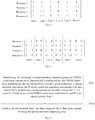
- the matrix shown in Fig. 2 represents a PDMA pattern matrix in which the number of multiplexed UE is 6 and the spread spectrum sequence length is 4, wherein each UE is single-layer transmission. Based on Fig. 2 , if a data symbol sent by a user 2 is s, the data symbol sent on resources 1 to 4 after PDMA pattern matrix processing is [s, s, -s, -s] T .
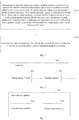
- Fig. 3 shows a 6-user double-layer PDMA pattern matrix, in which each UE uses two layers for transmission, and each UE occupies two spread spectrum sequences. Based on Fig. 3 , it can be seen that the spreading sequences used by the two layers in some UE are not completely orthogonal, which will affect the transmission performance of the UE, especially in the case of high bit rate. At present, there is no clear solution to the problem that a spread spectrum sequence codebook used in NOMA multi-layer transmission is not completely orthogonal.
- the embodiments of the present disclosure provide a NOMA multi-layer transmission solution, which can ensure that the spread spectrum sequences used by multiple layers of UE are orthogonal to each other, thereby ensuring the data transmission performance of the UE.
- seq1 and seq2 are completely orthogonal: sum seq 1 .
- sum represents summation
- the upper line represents conjugation
- FIG. 4 it is a schematic flow chart of a NOMA multi-layer transmission method implemented at a terminal side provided by embodiments of the present disclosure, which can be implemented at the terminal side.
- the terminal is an apparatus that provides voice and/or data connectivity to users, and may include various apparatuses with a wireless communication function such as a handheld apparatus, a vehicle-mounted apparatus, a wearable apparatus, a computing apparatus, a drone or other processing apparatuses connected to wireless modems, as well as various User Equipment (UE), Mobile Station (MS), Terminal Equipment, Transmission and Receiver Point (TRP) or Transmission Point (TP), etc.
- UE User Equipment
- MS Mobile Station
- TRP Transmission and Receiver Point
- TP Transmission Point
- the flow may include the following steps.
- S401 determining, by a terminal, a spread spectrum sequence group for NOMA multi-layer transmission; the terminal is configured for the NOMA multi-layer transmission, the spread spectrum sequence group includes N spread spectrum sequence, the N spread spectrum sequences correspond to N data layers, that is, the N spread spectrum sequences and the N data layers are in a one-to-one correspondence relation and one data layer uses one spread spectrum sequence for spreading, the N spread spectrum sequences are mutually orthogonal, N is a quantity of data layers of the NOMA multi-layer transmission, and N is an integer greater than 1.
- a value of a vector element in the spread spectrum sequence is a weighting coefficient, and a length of the vector element in the spread spectrum sequence is equal to a spreading factor.
- the weighting coefficient is one of 0, 1, -1, i and - i .
- the spread spectrum sequence group determined by the terminal for two-layer transmission includes spread spectrum sequence 1 and spread spectrum sequence 2, the spread spectrum sequence 1 is used for layer 1 spreading and the spread spectrum sequence 2 is used for layer 2 spreading.
- the spread spectrum sequence 1 and the spread spectrum sequence 2 may be expressed as a vector containing four vector elements, where:
- Spread spectrum sequence 1 and spread spectrum sequence 2 satisfy the condition described by formula (1), and are therefore orthogonal to each other.
- Each weighting coefficient in spread spectrum sequence 1 corresponds to an RE to which layer 1 data of the terminal is mapped
- each weighting coefficient in spread spectrum sequence 2 corresponds to an RE to which layer 2 data of the terminal is mapped.
- S402 sending, by the terminal, data, the data including the N data layers spread by using the spread spectrum sequence group.
- the terminal demultiplexes source bits to be sent after channel coding and rate matching, and divides them into L layers ( L is an integer greater than 1). Modulation, spreading, power/phase scaling factor processing and Resource Element Mapping (RE Mapping) are respectively performed on the sub-data stream of the l th layer (1 ⁇ l ⁇ L), and then the signals of all the L layers are added together, and an orthogonal frequency division multiplexing (OFDM) symbol is then generated and sent.
- L is an integer greater than 1 .
- Modulation, spreading, power/phase scaling factor processing and Resource Element Mapping (RE Mapping) are respectively performed on the sub-data stream of the l th layer (1 ⁇ l ⁇ L), and then the signals of all the L layers are added together, and an orthogonal frequency division multiplexing (OFDM) symbol is then generated and sent.
- OFDM orthogonal frequency division multiplexing
- each layer uses one spread spectrum sequence in the spread spectrum sequence group, and different layers use different spread spectrum sequences. Because the spread spectrum sequences in the spread spectrum sequence group are orthogonal to each other, the data after spreading of different layers of the same terminal are orthogonal to each other, and then the data transmission performance of the terminal may be improved.
- the terminal determines a spread spectrum sequence group for NOMA multi-layer transmission, the spread spectrum sequence group includes N spread spectrum sequences, the N spread spectrum sequences correspond to N data layers, and the N spread spectrum sequences are mutually orthogonal.
- the terminal uses the spread spectrum sequences in the spread spectrum sequence group to carry out spectrum spreading on the N data layers, it can be ensured that the data layers, after undergoing spectrum spreading, are mutually orthogonal, such that the data transmission performance of the terminal may be improved.
- the spread spectrum sequence group used for NOMA multi-layer transmission is preconfigured by network equipment.
- the terminal determines the spread spectrum sequence group for NOMA multi-layer transmission according to configuration information of the spread spectrum sequence group sent by the network equipment, the configuration information of the spread spectrum sequence group is used for indicating the spread spectrum sequence group configured for the terminal.
- the network equipment may select a spread spectrum sequence group for the terminal from the spread spectrum sequence pool, and send the configuration information of the selected spread spectrum sequence group to the terminal.
- the configuration information of the spread spectrum sequence group may include: a group identifier of the spread spectrum sequence group configured for the terminal, which is used to uniquely identify a spread spectrum sequence group.
- the configuration information of the spread spectrum sequence group may also include an identifier of each spread spectrum sequence in the spread spectrum sequence group, the identifier of one spread spectrum sequence is used to uniquely identify one spread spectrum sequence.
- a multi-layer spread spectrum sequence is selected from a spread spectrum sequence pool. Accordingly, in S401 of Fig. 4 , the terminal selects a spread spectrum sequence group for NOMA multi-layer transmission from a spread spectrum sequence pool.
- the method further includes: the terminal sends the configuration information of the selected spread spectrum sequence group to the network equipment, so that the network equipment may de-spread the data sent by the terminal according to the spread spectrum sequence group.
- the configuration information of the spread spectrum sequence group may include: a group identifier of the spread spectrum sequence group selected by the terminal, which is used to uniquely identify a spread spectrum sequence group.
- the configuration information of the spread spectrum sequence group may also include: an identifier of each spread spectrum sequence in the spread spectrum sequence group, the identifier of one spread spectrum sequence is used to uniquely identify one spread spectrum sequence.
- FIG. 5 it is a schematic flow chart of a NOMA multi-layer transmission method implemented on a network equipment side provided by embodiments of the present disclosure, which may be implemented on the network equipment side.
- the network equipment is an apparatus for connecting a terminal to a wireless network, including but not limited to an evolved Node B (eNB), a Radio Network Controller (RNC), a Node B (NB), a Base Station Controller (BSC), a Base Transceiver Station (BTS), a home base station (e.g., Home evolved Node B or Home Node B, HNB), a Base Band Unit (BBU), a Wireless Fidelity (WIFI) Access Point (AP), a Transmission and Receiver Point (TRP) or Transmission Point (TP), gNB, etc.
- eNB evolved Node B
- RNC Radio Network Controller
- NB Node B
- BSC Base Station Controller
- BTS Base Transceiver Station
- HNB Base Band Unit
- WIFI Wireless Fidelity
- AP Transmission and Receiver Point
- TRP Transmission and Receiver Point
- TP Transmission Point
- the flow may include the following steps.
- S501 determining, by network equipment, a spread spectrum sequence group used by a terminal for NOMA multi-layer transmission, the terminal is configured for the NOMA multi-layer transmission, the spread spectrum sequence group includes N spread spectrum sequences, the N spread spectrum sequences correspond to N data layers, that is, the N spread spectrum sequences and the N data layers are in a one-to-one correspondence relation and one data layer uses one spread spectrum sequence for spreading, the N spread spectrum sequences are mutually orthogonal, N is a quantity of data layers of the NOMA multi-layer transmission, and N is an integer greater than 1.
- the value of the vector element in the spread spectrum sequence is a weighting coefficient, and the length of the vector element in the spread spectrum sequence is equal to the spreading factor.
- the weighting coefficient is one of 0, 1, -1, i and - i .
- the spread spectrum sequence group determined by the terminal for two-layer transmission includes spread spectrum sequence 1 and spread spectrum sequence 2, the spread spectrum sequence 1 is used for layer 1 spreading and the spread spectrum sequence 2 is used for layer 2 spreading.
- Spread spectrum sequence 1 and spread spectrum sequence 2 may be expressed as a vector containing four vector elements, where:
- Spread spectrum sequence 1 and spread spectrum sequence 2 satisfy the condition described by formula (1), and are therefore orthogonal to each other.
- Each weighting coefficient in spread spectrum sequence 1 corresponds to an RE to which layer 1 data of the terminal is mapped
- each weighting coefficient in spread spectrum sequence 2 corresponds to an RE to which layer 2 data of the terminal is mapped.
- S502 receiving, the network equipment, data sent by the terminal, the data including the N data layers using the spread spectrum sequence group for spreading.
- the network equipment splits the received OFDM symbol into L layers, and performs the processes of RE demapping, de-spreading, demodulation, decoding, etc. on the sub-data stream of the l th layer (1 ⁇ l ⁇ L), so as to obtain the source bits of the sub-data stream of the l th layer.
- one spread spectrum sequence in the spread spectrum sequence group is used for de-spreading for each layer, and the spread spectrum sequences used by different layers are different. Because the spread spectrum sequences in the spread spectrum sequence group are orthogonal to each other, the data after spreading in different layers of the same terminal are orthogonal to each other, and then the data transmission performance of the terminal may be improved.
- the spread spectrum sequence group used for NOMA multi-layer transmission is preconfigured by network equipment. Accordingly, in S501 of Fig. 5 , the network equipment selects a spread spectrum sequence group for the NOMA multi-layer transmission from a spread spectrum sequence pool for the terminal, the spread spectrum sequence pool includes M spread spectrum sequence groups, the spread spectrum sequences in each of the M spread spectrum sequence groups are mutually orthogonal, and M is an integer greater than 1.
- the network equipment may select a spread spectrum sequence group for the terminal from the spread spectrum sequence pool, and send the configuration information of the selected spread spectrum sequence group to the terminal.
- the configuration information of the spread spectrum sequence group may include: a group identifier of the spread spectrum sequence group configured for the terminal, which is used to uniquely identify a spread spectrum sequence group.
- the configuration information of the spread spectrum sequence group may also include: the identifier of each spread spectrum sequence in the spread spectrum sequence group, the identifier of one spread spectrum sequence is used to uniquely identify one spread spectrum sequence.
- the multi-layer spread spectrum sequence is selected by the terminal from the spread spectrum sequence pool.
- the network equipment receives the configuration information of the spread spectrum sequence group sent by the terminal, and determines the spread spectrum sequence group used by the terminal for NOMA multi-layer transmission according to the configuration information of the spread spectrum sequence group; the spread spectrum sequence group is selected by the terminal from a spread spectrum sequence pool, and the spread spectrum sequence pool includes M spread spectrum sequence groups, the spread spectrum sequences in each of the M spread spectrum sequence groups are mutually orthogonal, and M is an integer greater than 1.
- the configuration information of the spread spectrum sequence group may include: a group identifier of the spread spectrum sequence group, which is used to uniquely identify a spread spectrum sequence group.
- the configuration information of the spread spectrum sequence group may also include the identifier of each spread spectrum sequence in the spread spectrum sequence group, wherein the identifier of one spread spectrum sequence is used to uniquely identify one spread spectrum sequence.
- the spread spectrum sequence pool is preconfigured or agreed by a system.
- the spread spectrum sequence pool includes M spread spectrum sequence groups, and the spread spectrum sequences in each of the M spread spectrum sequence groups are mutually orthogonal.
- M is an integer greater than 1.
- a vector element i.e., weighting coefficient
- a large number of spread spectrum sequence groups may be mutually orthogonal.
- Each of these spread spectrum sequence groups may be used for a simulation test, and some spread spectrum sequence groups with better transmission performance may be selected, or spread spectrum sequence groups meeting preset conditions may be selected, thus forming a spread spectrum sequence pool.
- the number of spread spectrum sequence groups contained in the spread spectrum sequence pool is greater than or equal to the maximum user reuse number supported by the system.
- the spread spectrum sequence pool includes 48 spread spectrum sequence groups, each of the 48 spread spectrum sequence groups includes two mutually orthogonal spread spectrum sequences, and each of the two spread spectrum sequences includes four vector elements. Table 1 shows this spread spectrum sequence pool as an example.
- Table 1 Spread Spectrum Sequence Pool Spread spectrum sequence group number m for two-layer transmission Spread spectrum sequence g(m) 1 1 i -1 -i 1 - i - 1 i 2 1 -1 1 - 1 1 - 1 - 1 1 3 1 - 1 - i i 1 - 1 i - i 4 1 i - i - 1 1 - i i - 1 5 1 i - i i 0 1 0 - 1 6 1 - 1 1 1 i 1 0 - 1 0 7 1 i 0 - 1 1 - i - 1 0 8 1 0 i - 1 0 1 - i - 1 9 1 - i i - i 1 - 1 - 1 10 1 - 1 1 - i 1 i - 1 11 1 0 - 1 i 0 1 i - 1 12 1 - i 0 i 1 i - 1 0 13 0 1 1
- the spread spectrum sequence group 1 includes two spread spectrum sequences, which are respectively represented as [1, i , -1, -i ] T and [1, - i , -1, i ] T .
- the spread spectrum sequences included in other spread spectrum sequence groups are shown in the table and will not be explained one by one.
- UE1 selects the spread spectrum sequence group No. 1
- UE2 selects the spread spectrum sequence group No. 3
- UE3 selects the spread spectrum sequence group No. 4
- UE4 selects the spread spectrum sequence group No. 39, so a double-layer spread spectrum sequence matrix used by these four UE is shown in Table 2.
- Table 2 4-user double-layer spread spectrum sequence matrix of Example 1.
- a spread spectrum sequence used by a sub-data stream corresponding to layer 1 of UE1 is [1, i , -1, - i ] T
- a spread spectrum sequence used by a sub-data stream corresponding to layer 2 of UE1 is [1, - i , -1, i ] T
- the spread spectrum sequence groups used by other UE are shown in Table 2, and will not be described in detail here.
- UE1 selects the spread spectrum sequence group No. 34
- UE2 selects the spread spectrum sequence group No. 1
- UE3 selects the spread spectrum sequence group No. 16
- UE4 selects the spread spectrum sequence group No. 25
- UE5 selects the spread spectrum sequence group No. 26
- UE6 selects the spread spectrum sequence group No. 33, so a two-layer spread spectrum sequence matrix used by these six UE is shown in Table 3.
- Table 3 6-user double-layer spread spectrum sequence matrix of Example 2.
- a spread spectrum sequence used by a sub-data stream corresponding to layer 1 of UE1 is [1, i, -i, 0 ] T
- a spread spectrum sequence used by a sub-data stream corresponding to layer 2 of UE1 is [1, 0, i, - i ] T
- the spread spectrum sequence groups used by other UE are shown in Table 3, and will not be described in detail here.
- UE1 chooses spread spectrum sequence group No. 2
- UE2 chooses spread spectrum sequence group No. 7
- UE3 chooses spread spectrum sequence group No. 8
- UE4 chooses spread spectrum sequence group No. 11
- UE5 chooses spread spectrum sequence group No. 12
- UE6 chooses spread spectrum sequence group No. 31
- UE7 chooses spread spectrum sequence group No. 36
- UE8 chooses spread spectrum sequence group No.
- Table 4 8-user double-layer spread spectrum sequence matrix of Example 3.
- Serial pair number No.2 No.7 No.8 No.11 No.12 No.31 No.36 No.46 Resource 1 1 1 1 1 1 1 0 1 0 1 1 1 1 1 1 Resource 2 -1 -1 i -i 0 1 0 1 -i i 1 -i i -i 1 -1 Resource 3 1 -1 0 -1 i -i -1 i 0 -1 -i 1 -i i -i Resource 4 -1 1 -1 0 -1 -1 -1 -1 -1 -1 i i 0 1 0 1 1 -i -i User number UE1 UE2 UE3 UE4 UE5 UE6 UE7 UE8
- a spread spectrum sequence used by a sub-data stream corresponding to layer 1 of UE1 is [1, -1, 1, -1] T
- a spread spectrum sequence used by a sub-data stream corresponding to layer 2 of UE1 is [1, -1, -1, 1] T
- the spread spectrum sequence groups used by other UE are shown in Table 4, and will not be described in detail here.
- UE configured for NOMA transmission in a network
- these 10 UE select spread spectrum sequence groups from a spread spectrum sequence pool shown in Table 1.
- UE1 selects spread spectrum sequence group No. 39
- UE2 selects spread spectrum sequence group No. 1
- UE3 selects spread spectrum sequence group No. 2
- UE4 selects spread spectrum sequence group No. 3
- UE5 selects spread spectrum sequence group No. 4
- UE6 selects spread spectrum sequence group No. 23
- UE7 selects spread spectrum sequence group No. 24
- UE8 selects spread spectrum sequence group No. 25
- UE9 selects spread spectrum sequence group No.
- a spread spectrum sequence used by a sub-data stream corresponding to layer 1 of UE1 is [1, -1, 1, 1] T
- a spread spectrum sequence used by a sub-data stream corresponding to layer 2 of UE1 is [1, 1, -1, 1] T .
- the spread spectrum sequence groups used by other UE are shown in Table 5, and will not be described in detail here.
- UE configured for NOMA transmission in a network
- UE1 chooses spread spectrum sequence group No. 1
- UE2 chooses spread spectrum sequence group No. 2
- UE3 chooses spread spectrum sequence group No. 3
- UE4 chooses spread spectrum sequence group No. 4
- UE5 chooses spread spectrum sequence group No. 23
- UE6 chooses spread spectrum sequence group No. 24
- UE7 chooses spread spectrum sequence group No. 25
- UE8 chooses spread spectrum sequence group No.
- Table 6-1 12-user double-layer spread spectrum sequence matrix of Example 5. Serial pair number No. 1 No. 2 No. 3 No. 4 No. 23 No.
- a spread spectrum sequence used by a sub-data stream corresponding to layer 1 of UE1 is [1, i , -1, - i ] T
- a spread spectrum sequence used by a sub-data stream corresponding to layer 2 of UE1 is [1, - i , -1, i ] T
- the spread spectrum sequence groups used by other UE are shown in Table 6, and will not be described in detail here.
- an embodiment of the present disclosure also provides a terminal.
- This terminal can realize the functions of the terminal side in the foregoing embodiments.
- the terminal 600 may include: a determining module 601 and a sending module 602.
- a determining module 601 is configured to determine a spread spectrum sequence group for NOMA multi-layer transmission, the terminal is configured for the NOMA multi-layer transmission, the spread spectrum sequence group includes N spread spectrum sequences, the N spread spectrum sequences correspond to N data layers, the N spread spectrum sequences are mutually orthogonal, N is a quantity of data layers of the NOMA multi-layer transmission, and N is an integer greater than 1; and a sending module 602 is configured to send data including the N data layers spread by using the spread spectrum sequence group.
- the determining module 601 may be further configured to: determine a spread spectrum sequence group for the NOMA multi-layer transmission according to configuration information of the spread spectrum sequence group sent by network equipment, the configuration information of the spread spectrum sequence group is used for indicating the spread spectrum sequence group configured for the terminal.
- the determining module 601 may be further configured to: select the spread spectrum sequence group for the NOMA multi-layer transmission from a spread spectrum sequence pool, wherein the spread spectrum sequence pool includes M spread spectrum sequence groups, the spread spectrum sequences in each of the M spread spectrum sequence groups are mutually orthogonal, and M is an integer greater than 1.
- the determining module 601 is further configured to: send the configuration information of the selected spread spectrum sequence group to the network equipment by the sending module 602.
- the spread spectrum sequence pool is preconfigured or agreed by a system.
- the spread spectrum sequence pool includes 48 spread spectrum sequence groups, each spread spectrum sequence group includes two mutually orthogonal spread spectrum sequences, and each spread spectrum sequence includes four vector elements.
- An example of the spread spectrum sequence pool can be shown in Table 1 above.
- the embodiment of the present disclosure also provides network equipment.
- the network equipment can realize the functions of the network equipment side in the foregoing embodiments.
- the network equipment may be a base station.
- the network equipment 700 may include: a determining module 701, a receiving module 702, and may further include a sending module (not shown in the figure).
- a determining module 701 is configured to determine a spread spectrum sequence group used by a terminal for NOMA multi-layer transmission, the terminal is configured for the NOMA multi-layer transmission, the spread spectrum sequence group includes N spread spectrum sequences, the N spread spectrum sequences correspond to N data layers, the N spread spectrum sequences are mutually orthogonal, N is a quantity of data layers of the NOMA multi-layer transmission, and N is an integer greater than 1; and a receiving module 702 is configured to receive data sent by the terminal, the data including the N data layers using the spread spectrum sequence group for spreading.
- the determining module 701 is further configured to: select a spread spectrum sequence group for the NOMA multi-layer transmission from a spread spectrum sequence pool for the terminal, wherein the spread spectrum sequence pool includes M spread spectrum sequence groups, the spread spectrum sequences in each of the M spread spectrum sequence groups are mutually orthogonal, and M is an integer greater than 1.
- the determining module 701 is further configured to: send configuration information of the spread spectrum sequence group selected for the terminal to the terminal by the sending module.
- the determining module 701 is further configured to: receive the configuration information of the spread spectrum sequence group sent by the terminal by the receiving module 702, and determine the spread spectrum sequence group used by the terminal for the NOMA multi-layer transmission according to the configuration information of the spread spectrum sequence group; the spread spectrum sequence group is selected by the terminal from a spread spectrum sequence pool, and the spread spectrum sequence pool includes M spread spectrum sequence groups, the spread spectrum sequences in each of the M spread spectrum sequence groups are mutually orthogonal, and M is an integer greater than 1.
- the spread spectrum sequence pool is preconfigured or agreed by a system.
- the spread spectrum sequence pool includes 48 spread spectrum sequence groups, each spread spectrum sequence group includes two mutually orthogonal spread spectrum sequences, and each of the 48 spread spectrum sequences includes four vector elements.
- An example of the spread spectrum sequence pool may be shown in Table 1 above.
- embodiments of the present disclosure also provide a communication apparatus, which may be a terminal and can realize the functions realized by a terminal side in the embodiment of the present disclosure.
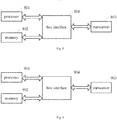
- the communication apparatus may include: a processor 801, a memory 802, a transceiver 803 and a bus interface 804.
- the processor 801 is responsible for managing a bus architecture and general processing, and the memory 802 may store data used by the processor 801 when performing operations.
- the transceiver 803 is configured to receive and transmit data under the control of the processor 801.
- the bus architecture may include any number of interconnected buses and bridges. Specifically, one or more processors represented by the processor 801 and various circuits of memories represented by the memory 802 are linked together. The bus architecture can also link various other circuits, such as peripheral apparatuses, voltage regulators, power management circuits, etc., which are well known in the art, so they will not be further described here.
- the bus interface provides an interface.
- the processor 801 is responsible for managing the bus architecture and general processing, and the memory 802 may store data used by the processor 801 when performing operations.
- the flow disclosed in the embodiment of the present disclosure may be applied to or implemented by the processor 801.
- each step of the signal processing flow may be completed by an integrated logic circuit of hardware in the processor 801 or instructions in the form of software.
- the processor 801 may be a general-purpose processor, a digital signal processor, an application specific integrated circuit, a field programmable gate array or other programmable logic devices, a discrete gate or transistor logic devices, and a discrete hardware component, and can implement or execute the methods, steps and logic block diagrams disclosed in the embodiments of the present disclosure.
- the general-purpose processor may be a microprocessor or any conventional processor.
- the steps of the method disclosed in the embodiment of the present disclosure may be executed by directly embodied hardware processor, or by hardware and software module combination in the processor.
- the software module may be located in mature storage media in the art such as random access memory, flash memory, read-only memory, programmable read-only memory, electrically erasable programmable memory, register, etc.
- the storage medium is in the memory 802, and the processor 801 reads the information in the memory 802 and completes the steps of the signal processing flow in combination with its hardware.
- the processor 801 is configured to read the computer instructions in the memory 802 and execute functions implemented by the terminal side in the flow shown in Fig. 4 .
- the embodiments of the present disclosure also provide a communication apparatus, which may be network equipment, such as a base station, and can realize functions realized by the network equipment side in the embodiment of the present disclosure.
- a communication apparatus which may be network equipment, such as a base station, and can realize functions realized by the network equipment side in the embodiment of the present disclosure.
- the communication apparatus may include: a processor 901, a memory 902, a transceiver 903 and a bus interface 904.
- the processor 901 is responsible for managing the bus architecture and general processing, and the memory 902 may store data used by the processor 901 when performing operations.
- the transceiver 903 is configured to receive and transmit data under the control of the processor 901.
- the bus architecture may include any number of interconnected buses and bridges. Accordingly, one or more processors represented by the processor 901 and various circuits of the memories represented by the memory 902 are linked together.
- the bus architecture can also link various other circuits, such as peripheral apparatuses, voltage regulators, power management circuits, etc., which are well known in the art, so they will not be further described here.
- the bus interface provides an interface.
- the processor 901 is responsible for managing the bus architecture and general processing, and the memory 902 may store data used by the processor 901 when performing operations.
- the flow disclosed in the embodiment of the present disclosure may be applied to or implemented by the processor 901.
- each step of the signal processing flow may be completed by an integrated logic circuit of hardware or instructions in the form of software in the processor 901.
- the processor 901 may be a general-purpose processor, a digital signal processor, an application specific integrated circuit, a field programmable gate array or other programmable logic devices, a discrete gate or transistor logic device, and a discrete hardware component, and may implement or execute the methods, steps and logic block diagrams disclosed in the embodiments of the present disclosure.
- the general-purpose processor may be a microprocessor or any conventional processor.
- the steps of the method disclosed in the embodiment of the present disclosure may be executed by directly-embodied hardware processor, or by hardware and software module combination in the processor.
- the software module may be located in mature storage media in the art such as a random access memory, a flash memory, a read-only memory, a programmable read-only memory, an electrically erasable programmable memory, a register, etc.
- the storage medium is located in the memory 902, and the processor 901 reads the information in the memory 902 and completes the steps of the signal processing flow in combination with its hardware.
- the processor 901 is configured to read the computer instructions in the memory 902 and execute functions implemented by the network equipment side in the flow shown in Fig. 5 .
- embodiments of the present disclosure also provide a computer readable storage medium, wherein the computer readable storage medium stores computer executable instructions for causing a computer to execute the flow executed by the terminal in Fig. 4 .
- embodiments of the present disclosure also provide a computer readable storage medium, wherein the computer readable storage medium stores computer executable instructions for causing a computer to execute the flow executed by the network equipment in Fig. 5 .
- each flow and/or block in the flow chart and/or block diagram, and combinations of flows and/or blocks in the flow chart and/or block diagram may be implemented by the computer program instructions.
- These computer program instructions may be provided to a processor of a general purpose computer, a special purpose computer, an embedded processor or other programmable data processing apparatus to produce a machine, such that the instructions which are executed by the processor of the computer or other programmable data processing apparatuses produce an apparatus for implementing the functions specified in one or more flows in the flow chart and/or one or more blocks in the block diagram.
- These computer program instructions may also be stored in a computer readable memory that can direct a computer or other programmable data processing apparatuses to operate in a specific manner, such that the instructions stored in the computer readable memory produce a product including instruction apparatuses that implement the functions specified in one or more flows of the flow chart and/or one or more blocks of the block diagram.
- These computer program instructions may also be loaded onto a computer or other programmable data processing apparatuses, such that a series of operational steps are performed on the computer or other programmable apparatuses to produce computer-implemented processing, the instructions which are executed on the computer or other programmable apparatuses provide steps for implementing the functions specified in one or more flows in the flow chart and/or one or more blocks in the block diagram.
Landscapes
- Engineering & Computer Science (AREA)
- Signal Processing (AREA)
- Computer Networks & Wireless Communication (AREA)
- Mobile Radio Communication Systems (AREA)
Abstract
Description
- The present disclosure claims priority to the
Chinese Patent Application No. 201910048770.6, filed to the China National Intellectual Property Administration on January 18, 2019 - The present disclosure relates to the technical field of wireless communication, in particular to a non-orthogonal multiple access (NOMA) multi-layer transmission method and an apparatus therefor.
- With the development and change of mobile communication service requirements, many organizations such as the International Telecommunication Union (ITU) have begun to study new wireless communication systems (namely 5G NR, 5 Generation New RAT) for future mobile communication systems. Similar to the traditional Time Division Multiple Access (TDMA), frequency division multiple access (FDMA) and Code Division Multiple Access (CDMA) technologies, the Patten Division Multiple Access (PDMA) technology, as a key technology in the future 5G, can enable multiple users to transmit data on the same time domain, frequency domain and spatial domain resources, and distinguish them by coding domain and power domain, so as to improve the spectrum efficiency of cell and edge users, and increase the number of cell access users. Similarly, a same user can use multiple layers for transmission, and the transmission data of multiple layers are transmitted on the same time domain, frequency domain and spatial domain resources, and are distinguished by the coding domain, the power domain, phases, etc.
- For non-orthogonal Multiple Access (NOMA) multi-layer transmission, if the spread spectrum sequences used in multi-layer transmission of same User Equipment (UE, also called a terminal) are not completely orthogonal, the performance will be affected, especially in the case of high bit rate.
- At present, there is no solution to the problem that the spread spectrum sequences used in NOMA multi-layer transmission are not completely orthogonal.
- Embodiments of the present disclosure provide a NOMA multi-layer transmission method and an apparatus therefor.
- In a first aspect, a NOMA multi-layer transmission method is provided, including:
- determining, by a terminal, a spread spectrum sequence group for NOMA multi-layer transmission; the terminal is configured for the NOMA multi-layer transmission, wherein the spread spectrum sequence group includes N spread spectrum sequences, the N spread spectrum sequences correspond to N data layers, the N spread spectrum sequences are mutually orthogonal, N is a quantity of data layers of the NOMA multi-layer transmission, and N is an integer greater than 1; and
- sending, by the terminal, data, the data including the N data layers spread by using the spread spectrum sequence group.
- In a possible implementation, determining, by the terminal, the spread spectrum sequence group for the NOMA multi-layer transmission includes: determining, by the terminal, a spread spectrum sequence group for the NOMA multi-layer transmission according to configuration information of the spread spectrum sequence group sent by network equipment, wherein the configuration information of the spread spectrum sequence group is used for indicating the spread spectrum sequence group configured for the terminal.
- In a possible implementation, determining, by the terminal, the spread spectrum sequence group for the NOMA multi-layer transmission includes: selecting, by the terminal, a spread spectrum sequence group for the NOMA multi-layer transmission from a spread spectrum sequence pool;
the spread spectrum sequence pool includes M spread spectrum sequence groups, spread spectrum sequences in each of the M spread spectrum sequence groups are mutually orthogonal, and M is an integer greater than 1. - In a possible implementation, the method further includes: sending, by the terminal, the configuration information of the selected spread spectrum sequence group to the network equipment.
- In a possible implementation, the spread spectrum sequence pool is preconfigured or agreed by a system.
- In a possible implementation, the spread spectrum sequence pool includes 48 spread spectrum sequence groups, each of the 48 spread spectrum sequence groups includes two mutually orthogonal spread spectrum sequences, and each of the two spread spectrum sequence includes four vector elements.
- In a possible implementation, the spread spectrum sequence pool is shown in a table as follows:
Spread spectrum sequence group number Spread spectrum sequence 1 1 i -1 -i 1 -i -1 i 2 1 -1 1 -1 1 -1 -1 1 3 1 -1 -i i 1 -1 i - i 4 1 i -i -1 1 -i i -1 5 1 i -i i 0 1 0 -1 6 1 -1 1 i 1 0 -1 0 7 1 i 0 -1 1 -i -1 0 8 1 0 i -1 0 1 -i -1 9 1 -i i -i 1 -1 -i 1 10 1 -1 1 -i 1 i -1 1 11 1 0 -1 i 0 1 i -1 12 1 -i 0 i 1 i -1 0 13 0 1 -1 1 1 i 0 -i 14 1 -1 1 0 1 0 -1 -i 15 1 0 -i -1 1 0 i 0 16 1 -i 0 -1 0 1 0 i 17 1 -i -1 1 1 1 i -1 18 1 -1 i 1 1 i -1 -1 19 1 0 0 -1 1 -1 0 1 20 1 1 -i -1 0 0 1 i 21 1 -i -1 -1 0 1 i 0 22 1 1 0 -1 1 0 -1 1 23 1 0 -1 -1 1 i 1 0 24 1 i i -1 0 1 0 -i 25 1 i -1 i 1 -i 1 i 26 1 i 1 -i 1 -i -1 -i 27 1 0 -i 0 1 -1 i 0 28 1 -i -i -1 1 i 0 0 29 1 -i 0 0 0 0 1 -i 30 0 1 -i 0 0 1 i 1 31 0 1 -i 1 1 -i 1 0 32 0 1 i -i 1 -1 0 -i 33 0 1 -1 -i 1 -i -i 0 34 1 i -i 0 1 0 i -i 35 1 -1 -i 0 0 1 -i i 36 1 i -i 1 1 -i i 1 37 0 1 -1 i 1 i i 0 38 1 -i i 0 0 1 1 -i 39 1 -1 1 1 1 1 -1 1 40 1 -1 i -1 1 1 -1 i 41 1 i 1 -1 1 -i i i 42 1 -i 1 -1 1 -1 -1 -i 43 1 -1 -i -1 1 i i -i 44 1 1 -i 0 0 1 i i 45 0 1 -i -i 1 1 i 0 46 1 1 i -i 1 -1 -i -i 47 0 1 1 i 0 1 -1 0 48 1 -1 0 0 0 0 1 -1 - In a second aspect, a NOMA multi-layer transmission method is provided, including:
- determining, by network equipment, a spread spectrum sequence group used by a terminal for NOMA multi-layer transmission, the terminal is configured for the NOMA multi-layer transmission, the spread spectrum sequence group includes N spread spectrum sequences, the N spread spectrum sequences correspond to N data layers, the N spread spectrum sequences are mutually orthogonal, N is a quantity of data layers of the NOMA multi-layer transmission, and N is an integer greater than 1; and
- receiving, by the network equipment, data sent by the terminal, the data including the N data layers using the spread spectrum sequence group for spectrum spreading.
- In a possible implementation, determining, by the network equipment, the spread spectrum sequence group used by the terminal for the NOMA multi-layer transmission includes: selecting, by the network equipment, a spread spectrum sequence group for the NOMA multi-layer transmission from a spread spectrum sequence pool for the terminal, wherein the spread spectrum sequence pool includes M spread spectrum sequence groups, the spread spectrum sequences in each of the M spread spectrum sequence groups are mutually orthogonal, and M is an integer greater than 1.
- In a possible implementation, the method further includes: sending, by the network equipment, configuration information of the spread spectrum sequence group selected for the terminal to the terminal.
- In a possible implementation, determining, by the network equipment, the spread spectrum sequence group used by the terminal for the NOMA multi-layer transmission includes: receiving, by the network equipment, the configuration information of the spread spectrum sequence group sent by the terminal, and determining, by the network equipment, the spread spectrum sequence group used by the terminal for the NOMA multi-layer transmission according to the configuration information of the spread spectrum sequence group;
the spread spectrum sequence group is selected by the terminal from the spread spectrum sequence pool, and the spread spectrum sequence pool includes M spread spectrum sequence groups, the spread spectrum sequences in each of the M spread spectrum sequence groups are mutually orthogonal, and M is an integer greater than 1. - In a possible implementation, the spread spectrum sequence pool is preconfigured or agreed by a system.
- In a possible implementation, the spread spectrum sequence pool includes 48 spread spectrum sequence groups, each of the 48 spread spectrum sequence groups includes two mutually orthogonal spread spectrum sequences, and each of the two spread spectrum sequence includes four vector elements.
- In a possible implementation, the spread spectrum sequence pool is shown in a table as follows:
Spread spectrum sequence group number Spread spectrum sequence 1 1 i -1 -i 1 -i -1 i 2 1 -1 1 -1 1 -1 -1 1 3 1 -1 -i i 1 -1 i - i 4 1 i -i -1 1 -i i -1 5 1 i -i i 0 1 0 -1 6 1 -1 1 i 1 0 -1 0 7 1 i 0 -1 1 -i -1 0 8 1 0 i -1 0 1 -i -1 9 1 -i i -i 1 -1 -i 1 10 1 -1 1 -i 1 i -1 1 11 1 0 -1 i 0 1 i -1 12 1 -i 0 i 1 i -1 0 13 0 1 -1 1 1 i 0 -i 14 1 -1 1 0 1 0 -1 -i 15 1 0 -i -1 1 0 i 0 16 1 -i 0 -1 0 1 0 i 17 1 -i -1 1 1 1 i -1 18 1 -1 i 1 1 i -1 -1 19 1 0 0 -1 1 -1 0 1 20 1 1 -i -1 0 0 1 i 21 1 -i -1 -1 0 1 i 0 22 1 1 0 -1 1 0 -1 1 23 1 0 -1 -1 1 i 1 0 24 1 i i -1 0 1 0 -i 25 1 i -1 i 1 -i 1 i 26 1 i 1 -i 1 -i -1 -i 27 1 0 -i 0 1 -1 i 0 28 1 -i -i -1 1 i 0 0 29 1 -i 0 0 0 0 1 -i 30 0 1 -i 0 0 1 i 1 31 0 1 -i 1 1 -i 1 0 32 0 1 i -i 1 -1 0 -i 33 0 1 -1 -i 1 -i -i 0 34 1 i -i 0 1 0 i -i 35 1 -1 -i 0 0 1 -i i 36 1 i -i 1 1 -i i 1 37 0 1 -1 i 1 i i 0 38 1 -i i 0 0 1 1 -i 39 1 -1 1 1 1 1 -1 1 40 1 -1 i -1 1 1 -1 i 41 1 1 1 -1 1 -i i i 42 1 -i 1 -1 1 -1 -1 -i 43 1 -1 -i -1 1 i i -i 44 1 1 -i 0 0 1 i i 45 0 1 -i -i 1 1 i 0 46 1 1 i -i 1 -1 -i -i 47 0 1 1 i 0 1 -1 0 48 1 -1 0 0 0 0 1 -1 - In a third aspect, a terminal is provided, including:
- a determining module, configured to determine a spread spectrum sequence group for NOMA multi-layer transmission, the terminal is configured for the NOMA multi-layer transmission, the spread spectrum sequence group includes N spread spectrum sequences, the N spread spectrum sequences correspond to N data layers, the N spread spectrum sequences are mutually orthogonal, N is a quantity of data layers of the NOMA multi-layer transmission, and N is an integer greater than 1; and
- a sending module, configured to send data including the N data layers spread by using the spread spectrum sequence group.
- In a fourth aspect, network equipment is provided, including:
- a determining module, configured to determine a spread spectrum sequence group used by a terminal for NOMA multi-layer transmission, the terminal is configured for the NOMA multi-layer transmission, the spread spectrum sequence group includes N spread spectrum sequences, the N spread spectrum sequences correspond to N data layers, the N spread spectrum sequences are mutually orthogonal, N is a quantity of data layers of the NOMA multi-layer transmission, and N is an integer greater than 1; and
- a receiving module, configured to receive data sent by the terminal, the data including the N data layers using the spread spectrum sequence group for spectrum spreading.
- In a fifth aspect, a communication apparatus is provided, including: a processor, a memory, and a transceiver, wherein the processor is used for reading computer instructions in the memory and executing the method in any one of the implementations in the first aspect.
- In a sixth aspect, a communication apparatus is provided, including a processor, a memory, and a transceiver, wherein the processor is used for reading computer instructions in the memory and executing the method in any one of the implementations in the second aspect.
- In a seventh aspect, a computer readable storage medium is provided, wherein the computer readable storage medium stores computer executable instructions, and the computer executable instructions are used for causing a computer to execute the method in any one of the implementations in the first aspect.
- In an eighth aspect, a computer readable storage medium is provided, wherein the computer readable storage medium stores computer executable instructions, and the computer executable instructions are used for causing a computer to execute the method in any one of the implementations in the second aspect.
- In the above embodiments of the present disclosure, the terminal determines a spread spectrum sequence group for NOMA multi-layer transmission, the spread spectrum sequence group includes N spread spectrum sequences, the N spread spectrum sequences correspond to N data layers, and the N spread spectrum sequences are mutually orthogonal. In this way, after the terminal uses the spread spectrum sequences in the spread spectrum sequence group to carry out spectrum spreading on the N data layers, it can be ensured that the data layers, after undergoing spectrum spreading, are mutually orthogonal, such that the data transmission performance of the terminal can be improved.
- In order to explain the technical solutions in the embodiments of the present disclosure more clearly, the drawings used in the description of the embodiments will be briefly introduced below. Obviously, the drawings in the following description are only some embodiments of the present disclosure. For those of ordinary skill in the art, other drawings can be obtained according to these drawings without creative work.
-
Fig. 1 is a block diagram of a sender of NOMA multi-layer transmission provided by an embodiment of the present disclosure. -
Fig. 2 is a PDMA pattern matrix of 6-user single-layer transmission provided by an embodiment of the present disclosure. -
Fig. 3 is a PDMA pattern matrix of 6-user double-layer transmission provided by an embodiment of the present disclosure. -
Fig. 4 is a schematic flow chart of NOMA multi-layer transmission at a terminal side provided by an embodiment of the present disclosure. -
Fig. 5 is a schematic flow chart of NOMA multi-layer transmission at network equipment side provided by an embodiment of the present disclosure. -
Fig. 6 is a schematic structural diagram of a terminal provided by an embodiment of the present disclosure. -
Fig. 7 is a schematic structural diagram of network equipment provided by an embodiment of the present disclosure, -
Fig. 8 is a schematic structural diagram of a communication apparatus provided by an embodiment of the present disclosure. -
Fig. 9 is a schematic structural diagram of a communication apparatus provided by an embodiment of the present disclosure. - In the following, some terms in the embodiments of the present disclosure are explained for convenient understanding for those skilled in the art.
- (1) In the embodiments of the present disclosure, the terms "network" and "system" are often used interchangeably, but those skilled in the art can understand their meanings.
- (2) The term "multiple" in the embodiment of the present disclosure means two or more, and other quantifiers are similar to it.
- (3) "and/or" describes the association relationship of related objects, indicating that there can be three kinds of relationships, for example, A and/or B, which can indicate that A exists alone, A and B exist at the same time, and B exists alone. The character "/"generally indicates that the former and latter related object is an "or" relationship.
- In an NOMA technology, in order to distinguish signals of different UE on the same time-frequency resource, a sender uses multiple access (MA) signature to process them to assist a receiver in detection. The MA signature may be a codeword, a codebook, a spread spectrum sequence, an interleaving pattern, a mapping pattern, a preamble, and the like. Furthermore, according to whether the number of MA signatures used is one or more, it is further divided into NOMA single-layer transmission and NOMA multi-layer transmission.
-
Fig. 1 is a block diagram of a sender of NOMA multi-layer transmission, in which the sender demultiplexes source bits of UE1 after channel coding and rate matching, and divides them into L layers. Modulation, spreading, power/phase scaling factor processing and Resource Element (RE) Mapping (RE Mapping) are respectively performed on the sub-data stream of the l th layer (1≤l≤L), and then the signals of all the L layers are added to generate an orthogonal frequency division multiplexing (OFDM) symbol, wherein the modulation, spread spectrum sequence and power/phase scaling factors between different layers of the same UE are not completely the same. - Accordingly, spread spectrum is processed according to a PDMA pattern matrix. PDMA pattern defines mapping rules of data to resources, and specifically defines how many resources are, which resources are mapped and how to conduct mapping. Data of multiple UE is mapped to the same set of resources through different PDMA patterns, and the number of UE supporting simultaneous transmission is greater than the number of resources, thus realizing non-orthogonal transmission and achieving the purpose of improving system performance.
- A PDMA pattern may be defined by a binary vector, the length of the vector element is equal to a spreading factor, and a value of the vector element indicates a weighted coefficient value of UE data mapping to RE. A mapping weighting coefficient may be 0 or 1 or -1, or complex number i or complex number -i.
- PDMA patterns of all UE multiplexing the same set of resources are arranged together to form the PDMA pattern matrix. The PDMA pattern matrix is usually a sparse matrix. The matrix shown in
Fig. 2 represents a PDMA pattern matrix in which the number of multiplexed UE is 6 and the spread spectrum sequence length is 4, wherein each UE is single-layer transmission. Based onFig. 2 , if a data symbol sent by auser 2 is s, the data symbol sent onresources 1 to 4 after PDMA pattern matrix processing is [s, s, -s, -s]T. - For NOMA multi-layer transmission, one UE occupies two or more spread spectrum sequences for spreading of each layer.
Fig. 3 shows a 6-user double-layer PDMA pattern matrix, in which each UE uses two layers for transmission, and each UE occupies two spread spectrum sequences. Based onFig. 3 , it can be seen that the spreading sequences used by the two layers in some UE are not completely orthogonal, which will affect the transmission performance of the UE, especially in the case of high bit rate. At present, there is no clear solution to the problem that a spread spectrum sequence codebook used in NOMA multi-layer transmission is not completely orthogonal. - The embodiments of the present disclosure provide a NOMA multi-layer transmission solution, which can ensure that the spread spectrum sequences used by multiple layers of UE are orthogonal to each other, thereby ensuring the data transmission performance of the UE.
- Sequence orthogonality is defined as: two sequences (seq1 and seq2) are set, which are expressed as seq1={q1, q2, q3,...qn} and seq2={s1, s2, s3,..., sn} respectively. When the following conditions are met, seq1 and seq2 are completely orthogonal:

- In formula (1), sum represents summation, and the upper line represents conjugation.
- Embodiments of the present disclosure will be described in detail with reference to the accompanying drawings.
- Referring to
Fig. 4 , it is a schematic flow chart of a NOMA multi-layer transmission method implemented at a terminal side provided by embodiments of the present disclosure, which can be implemented at the terminal side. - The terminal is an apparatus that provides voice and/or data connectivity to users, and may include various apparatuses with a wireless communication function such as a handheld apparatus, a vehicle-mounted apparatus, a wearable apparatus, a computing apparatus, a drone or other processing apparatuses connected to wireless modems, as well as various User Equipment (UE), Mobile Station (MS), Terminal Equipment, Transmission and Receiver Point (TRP) or Transmission Point (TP), etc.
- As shown in
Fig. 4 , the flow may include the following steps. - S401: determining, by a terminal, a spread spectrum sequence group for NOMA multi-layer transmission; the terminal is configured for the NOMA multi-layer transmission, the spread spectrum sequence group includes N spread spectrum sequence, the N spread spectrum sequences correspond to N data layers, that is, the N spread spectrum sequences and the N data layers are in a one-to-one correspondence relation and one data layer uses one spread spectrum sequence for spreading, the N spread spectrum sequences are mutually orthogonal, N is a quantity of data layers of the NOMA multi-layer transmission, and N is an integer greater than 1.
- A value of a vector element in the spread spectrum sequence is a weighting coefficient, and a length of the vector element in the spread spectrum sequence is equal to a spreading factor.
- The weighting coefficient is one of 0, 1, -1, i and -i.
- For example, if the terminal is configured to adopt two-layer transmission, and each layer is mapped to four REs, the spread spectrum sequence group determined by the terminal for two-layer transmission includes spread
spectrum sequence 1 and spreadspectrum sequence 2, thespread spectrum sequence 1 is used forlayer 1 spreading and thespread spectrum sequence 2 is used forlayer 2 spreading. Thespread spectrum sequence 1 and thespread spectrum sequence 2 may be expressed as a vector containing four vector elements, where: -
Spread spectrum sequence 1 is [1, i, -1, -i]T; -
Spread spectrum sequence 2 is [1, -i, -1, i]T. -
Spread spectrum sequence 1 and spreadspectrum sequence 2 satisfy the condition described by formula (1), and are therefore orthogonal to each other. Each weighting coefficient inspread spectrum sequence 1 corresponds to an RE to whichlayer 1 data of the terminal is mapped, and each weighting coefficient inspread spectrum sequence 2 corresponds to an RE to whichlayer 2 data of the terminal is mapped. - S402: sending, by the terminal, data, the data including the N data layers spread by using the spread spectrum sequence group.
- In specific implementation, the terminal demultiplexes source bits to be sent after channel coding and rate matching, and divides them into L layers (L is an integer greater than 1). Modulation, spreading, power/phase scaling factor processing and Resource Element Mapping (RE Mapping) are respectively performed on the sub-data stream of the l th layer (1≤l≤L), and then the signals of all the L layers are added together, and an orthogonal frequency division multiplexing (OFDM) symbol is then generated and sent.
- During spreading, each layer uses one spread spectrum sequence in the spread spectrum sequence group, and different layers use different spread spectrum sequences. Because the spread spectrum sequences in the spread spectrum sequence group are orthogonal to each other, the data after spreading of different layers of the same terminal are orthogonal to each other, and then the data transmission performance of the terminal may be improved.
- In the above flow of the present disclosure, the terminal determines a spread spectrum sequence group for NOMA multi-layer transmission, the spread spectrum sequence group includes N spread spectrum sequences, the N spread spectrum sequences correspond to N data layers, and the N spread spectrum sequences are mutually orthogonal. In this way, after the terminal uses the spread spectrum sequences in the spread spectrum sequence group to carry out spectrum spreading on the N data layers, it can be ensured that the data layers, after undergoing spectrum spreading, are mutually orthogonal, such that the data transmission performance of the terminal may be improved.
- Based on the flow shown in
Fig. 4 , in a possible implementation, the spread spectrum sequence group used for NOMA multi-layer transmission is preconfigured by network equipment. - Accordingly, in S401 of
Fig. 4 , the terminal determines the spread spectrum sequence group for NOMA multi-layer transmission according to configuration information of the spread spectrum sequence group sent by the network equipment, the configuration information of the spread spectrum sequence group is used for indicating the spread spectrum sequence group configured for the terminal. - Optionally, the network equipment may select a spread spectrum sequence group for the terminal from the spread spectrum sequence pool, and send the configuration information of the selected spread spectrum sequence group to the terminal.
- Optionally, the configuration information of the spread spectrum sequence group may include: a group identifier of the spread spectrum sequence group configured for the terminal, which is used to uniquely identify a spread spectrum sequence group. The configuration information of the spread spectrum sequence group may also include an identifier of each spread spectrum sequence in the spread spectrum sequence group, the identifier of one spread spectrum sequence is used to uniquely identify one spread spectrum sequence.
- Based on the flow shown in
Fig. 4 , in another possible implementation, a multi-layer spread spectrum sequence is selected from a spread spectrum sequence pool. Accordingly, in S401 ofFig. 4 , the terminal selects a spread spectrum sequence group for NOMA multi-layer transmission from a spread spectrum sequence pool. - Optionally, the method further includes: the terminal sends the configuration information of the selected spread spectrum sequence group to the network equipment, so that the network equipment may de-spread the data sent by the terminal according to the spread spectrum sequence group.
- Optionally, the configuration information of the spread spectrum sequence group may include: a group identifier of the spread spectrum sequence group selected by the terminal, which is used to uniquely identify a spread spectrum sequence group. The configuration information of the spread spectrum sequence group may also include: an identifier of each spread spectrum sequence in the spread spectrum sequence group, the identifier of one spread spectrum sequence is used to uniquely identify one spread spectrum sequence.
- Referring to
Fig. 5 , it is a schematic flow chart of a NOMA multi-layer transmission method implemented on a network equipment side provided by embodiments of the present disclosure, which may be implemented on the network equipment side. - The network equipment is an apparatus for connecting a terminal to a wireless network, including but not limited to an evolved Node B (eNB), a Radio Network Controller (RNC), a Node B (NB), a Base Station Controller (BSC), a Base Transceiver Station (BTS), a home base station (e.g., Home evolved Node B or Home Node B, HNB), a Base Band Unit (BBU), a Wireless Fidelity (WIFI) Access Point (AP), a Transmission and Receiver Point (TRP) or Transmission Point (TP), gNB, etc.
- As shown in
Fig. 5 , the flow may include the following steps. - S501: determining, by network equipment, a spread spectrum sequence group used by a terminal for NOMA multi-layer transmission, the terminal is configured for the NOMA multi-layer transmission, the spread spectrum sequence group includes N spread spectrum sequences, the N spread spectrum sequences correspond to N data layers, that is, the N spread spectrum sequences and the N data layers are in a one-to-one correspondence relation and one data layer uses one spread spectrum sequence for spreading, the N spread spectrum sequences are mutually orthogonal, N is a quantity of data layers of the NOMA multi-layer transmission, and N is an integer greater than 1.
- The value of the vector element in the spread spectrum sequence is a weighting coefficient, and the length of the vector element in the spread spectrum sequence is equal to the spreading factor.
- The weighting coefficient is one of 0, 1, -1, i and -i.
- For example, if the terminal is configured to adopt two-layer transmission, and each layer is mapped to four REs, the spread spectrum sequence group determined by the terminal for two-layer transmission includes spread
spectrum sequence 1 and spreadspectrum sequence 2, thespread spectrum sequence 1 is used forlayer 1 spreading and thespread spectrum sequence 2 is used forlayer 2 spreading.Spread spectrum sequence 1 and spreadspectrum sequence 2 may be expressed as a vector containing four vector elements, where: -
Spread spectrum sequence 1 is [1, i, -1, -i]T; -
Spread spectrum sequence 2 is [1, -i, -1, i]T. -
Spread spectrum sequence 1 and spreadspectrum sequence 2 satisfy the condition described by formula (1), and are therefore orthogonal to each other. Each weighting coefficient inspread spectrum sequence 1 corresponds to an RE to whichlayer 1 data of the terminal is mapped, and each weighting coefficient inspread spectrum sequence 2 corresponds to an RE to whichlayer 2 data of the terminal is mapped. - S502: receiving, the network equipment, data sent by the terminal, the data including the N data layers using the spread spectrum sequence group for spreading.
- In specific implementation, the network equipment splits the received OFDM symbol into L layers, and performs the processes of RE demapping, de-spreading, demodulation, decoding, etc. on the sub-data stream of the l th layer (1≤l≤L), so as to obtain the source bits of the sub-data stream of the l th layer.
- During de-spreading, one spread spectrum sequence in the spread spectrum sequence group is used for de-spreading for each layer, and the spread spectrum sequences used by different layers are different. Because the spread spectrum sequences in the spread spectrum sequence group are orthogonal to each other, the data after spreading in different layers of the same terminal are orthogonal to each other, and then the data transmission performance of the terminal may be improved.
- Based on the flow shown in
Fig. 5 , in a possible implementation, the spread spectrum sequence group used for NOMA multi-layer transmission is preconfigured by network equipment. Accordingly, in S501 ofFig. 5 , the network equipment selects a spread spectrum sequence group for the NOMA multi-layer transmission from a spread spectrum sequence pool for the terminal, the spread spectrum sequence pool includes M spread spectrum sequence groups, the spread spectrum sequences in each of the M spread spectrum sequence groups are mutually orthogonal, and M is an integer greater than 1. - Optionally, the network equipment may select a spread spectrum sequence group for the terminal from the spread spectrum sequence pool, and send the configuration information of the selected spread spectrum sequence group to the terminal.
- Optionally, the configuration information of the spread spectrum sequence group may include: a group identifier of the spread spectrum sequence group configured for the terminal, which is used to uniquely identify a spread spectrum sequence group. The configuration information of the spread spectrum sequence group may also include: the identifier of each spread spectrum sequence in the spread spectrum sequence group, the identifier of one spread spectrum sequence is used to uniquely identify one spread spectrum sequence.
- Based on the flow shown in
Fig. 5 , in another possible implementation, the multi-layer spread spectrum sequence is selected by the terminal from the spread spectrum sequence pool. Accordingly, in S501 ofFig. 5 , the network equipment receives the configuration information of the spread spectrum sequence group sent by the terminal, and determines the spread spectrum sequence group used by the terminal for NOMA multi-layer transmission according to the configuration information of the spread spectrum sequence group; the spread spectrum sequence group is selected by the terminal from a spread spectrum sequence pool, and the spread spectrum sequence pool includes M spread spectrum sequence groups, the spread spectrum sequences in each of the M spread spectrum sequence groups are mutually orthogonal, and M is an integer greater than 1. - Optionally, the configuration information of the spread spectrum sequence group may include: a group identifier of the spread spectrum sequence group, which is used to uniquely identify a spread spectrum sequence group. The configuration information of the spread spectrum sequence group may also include the identifier of each spread spectrum sequence in the spread spectrum sequence group, wherein the identifier of one spread spectrum sequence is used to uniquely identify one spread spectrum sequence.
- In the embodiment of the present disclosure, the spread spectrum sequence pool is preconfigured or agreed by a system.
- The spread spectrum sequence pool includes M spread spectrum sequence groups, and the spread spectrum sequences in each of the M spread spectrum sequence groups are mutually orthogonal. M is an integer greater than 1.
- Considering that the value of a vector element (i.e., weighting coefficient) in a spread spectrum sequence may be one of 0, 1, -1, i and -i, when a terminal supports two layers of transmission at most, a large number of spread spectrum sequence groups may be mutually orthogonal. Each of these spread spectrum sequence groups may be used for a simulation test, and some spread spectrum sequence groups with better transmission performance may be selected, or spread spectrum sequence groups meeting preset conditions may be selected, thus forming a spread spectrum sequence pool. The number of spread spectrum sequence groups contained in the spread spectrum sequence pool is greater than or equal to the maximum user reuse number supported by the system.
- For example, if a terminal supports at most two layers of transmission, and the data of each layer are mapped to four REs, the spread spectrum sequence pool includes 48 spread spectrum sequence groups, each of the 48 spread spectrum sequence groups includes two mutually orthogonal spread spectrum sequences, and each of the two spread spectrum sequences includes four vector elements. Table 1 shows this spread spectrum sequence pool as an example.
Table 1: Spread Spectrum Sequence Pool Spread spectrum sequence group number m for two-layer transmission Spread spectrum sequence g(m) 1 1 i -1 -i 1 -i -1 i 2 1 -1 1 -1 1 -1 -1 1 3 1 -1 -i i 1 -1 i -i 4 1 i -i -1 1 -i i -1 5 1 i -i i 0 1 0 -1 6 1 -1 1 i 1 0 -1 0 7 1 i 0 -1 1 -i -1 0 8 1 0 i -1 0 1 -i -1 9 1 -i i -i 1 -1 -i 1 10 1 -1 1 -i 1 i -1 1 11 1 0 -1 i 0 1 i -1 12 1 -i 0 i 1 i -1 0 13 0 1 -1 1 1 i 0 -i 14 1 -1 1 0 1 0 -1 -i 15 1 0 -i -1 1 0 i 0 16 1 -i 0 -1 0 1 0 i 17 1 -i -1 1 1 1 i -1 18 1 -1 i 1 1 i -1 -1 19 1 0 0 -1 1 -1 0 1 20 1 1 -i -1 0 0 1 i 21 1 -i -1 -1 0 1 i 0 22 1 1 0 -1 1 0 -1 1 23 1 0 -1 -1 1 i 1 0 24 1 i i -1 0 1 0 -i 25 1 i -1 i 1 -i 1 i 26 1 i 1 -i 1 -i -1 -i 27 1 0 -i 0 1 -1 i 0 28 1 -i -i -1 1 i 0 0 29 1 -i 0 0 0 0 1 -i 30 0 1 -i 0 0 1 i 1 31 0 1 -i 1 1 -i 1 0 32 0 1 i -i 1 -1 0 -i 33 0 1 -1 -i 1 -i -i 0 34 1 i -i 0 1 0 i -i 35 1 -1 -i 0 0 1 -i i 36 1 i -i 1 1 -i i 1 37 0 1 -1 i 1 i i 0 38 1 -i i 0 0 1 1 -i 39 1 -1 1 1 1 1 -1 1 40 1 -1 i -1 1 1 -1 i 41 1 i 1 -1 1 -i i i 42 1 -i 1 -1 1 -1 -1 -i 43 1 -1 -i -1 1 i i -i 44 1 1 -i 0 0 1 i i 45 0 1 -i -i 1 1 i 0 46 1 1 i -i 1 -1 -i -i 47 0 1 1 i 0 1 -1 0 48 1 -1 0 0 0 0 1 -1 - As shown in Table 1, the spread
spectrum sequence group 1 includes two spread spectrum sequences, which are respectively represented as [1, i, -1, -i]T and [1, -i, -1, i]T. The spread spectrum sequences included in other spread spectrum sequence groups are shown in the table and will not be explained one by one. - In order to understand the above embodiments of the present disclosure more clearly, the embodiments of the present disclosure will be described in detail with several specific examples below.
- There are four UE configured for NOMA transmission in a network, namely UE1, UE2, UE3 and UE4. When all UE are configured for two-layer transmission, these four UE select spread spectrum sequence groups from a spread spectrum sequence pool for two-layer transmission shown in Table 1. UE1 selects the spread spectrum sequence group No. 1, UE2 selects the spread spectrum sequence group No. 3, UE3 selects the spread spectrum sequence group No. 4, and UE4 selects the spread spectrum sequence group No. 39, so a double-layer spread spectrum sequence matrix used by these four UE is shown in Table 2.
Table 2: 4-user double-layer spread spectrum sequence matrix of Example 1. Spread spectrum sequence group number No. 1 No.3 No.4 No.39 Resource 11 1 1 1 1 1 1 1 Resource 2 i -i -1 -1 i -i -1 1 Resource 3 -1 -1 -i i -i i 1 -1 Resource 4 -i i i -i -1 -1 1 1 User number UE1 UE2 UE3 UE4 - In Table 2, a spread spectrum sequence used by a sub-data stream corresponding to layer 1 of UE1 is [1, i, -1, -i]T, and a spread spectrum sequence used by a sub-data stream corresponding to layer 2 of UE1 is [1, -i, -1, i]T. The spread spectrum sequence groups used by other UE are shown in Table 2, and will not be described in detail here.
- There are 6 UE configured for NOMA transmission in a network, namely UE1, UE2, UE3, UE4, UE5 and UE6. When all UE are configured for two-layer transmission, the six UE select spread spectrum sequence groups from the spread spectrum sequence pool described in Table 1. UE1 selects the spread spectrum sequence group No. 34, UE2 selects the spread spectrum sequence group No. 1, UE3 selects the spread spectrum sequence group No. 16, UE4 selects the spread spectrum sequence group No. 25, UE5 selects the spread spectrum sequence group No. 26 and UE6 selects the spread spectrum sequence group No. 33, so a two-layer spread spectrum sequence matrix used by these six UE is shown in Table 3.
Table 3: 6-user double-layer spread spectrum sequence matrix of Example 2. Serial pair number No.34 No. 1 No. 16 No.25 No.26 No.33 Resource 11 1 1 1 1 0 1 1 1 1 0 1 Resource 2 i 0 i -i -i 1 i -i i -i 1 -i Resource 3 -i i -1 -1 0 0 -1 1 1 -1 -1 - i Resource 4 0 -i -i i -1 i i i -i -i - i 0 User number UE1 UE2 UE3 UE4 UE5 UE6 - In Table 3, a spread spectrum sequence used by a sub-data stream corresponding to layer 1 of UE1 is [1, i, -i, 0]T, and a spread spectrum sequence used by a sub-data stream corresponding to layer 2 of UE1 is [1, 0, i, -i]T. The spread spectrum sequence groups used by other UE are shown in Table 3, and will not be described in detail here.
- There are 8 UE configured for NOMA transmission in a current network, namely UE1, UE2, UE3, UE4, UE5, UE6, UE7 and UE8. When all UE are configured for two-layer transmission, these eight UE select spread spectrum sequence groups from a spread spectrum sequence pool shown in Table 1. Among them, UE1 chooses spread spectrum sequence group No. 2, UE2 chooses spread spectrum sequence group No. 7, UE3 chooses spread spectrum sequence group No. 8, UE4 chooses spread spectrum sequence group No. 11, UE5 chooses spread spectrum sequence group No. 12, UE6 chooses spread spectrum sequence group No. 31, UE7 chooses spread spectrum sequence group No. 36 and UE8 chooses spread spectrum sequence group No. 46, so a two-layer spread spectrum sequence matrix used by these eight UE is shown in Table 4.
Table 4: 8-user double-layer spread spectrum sequence matrix of Example 3. Serial pair number No.2 No.7 No.8 No.11 No.12 No.31 No.36 No.46 Resource 11 1 1 1 1 0 1 0 1 1 0 1 1 1 1 1 Resource 2 -1 -1 i - i 0 1 0 1 -i i 1 -i i -i 1 -1 Resource 31 -1 0 -1 i -i -1 i 0 -1 -i 1 -i i i -i Resource 4 -1 1 -1 0 -1 -1 i -1 i 0 1 0 1 1 -i -i User number UE1 UE2 UE3 UE4 UE5 UE6 UE7 UE8 - In Table 4, a spread spectrum sequence used by a sub-data stream corresponding to layer 1 of UE1 is [1, -1, 1, -1]T, and a spread spectrum sequence used by a sub-data stream corresponding to layer 2 of UE1 is [1, -1, -1, 1]T. The spread spectrum sequence groups used by other UE are shown in Table 4, and will not be described in detail here.
- There are 10 UE configured for NOMA transmission in a network, namely UE1, UE2, UE3, UE4, UE5, UE6, UE7, UE8, UE9 and UE10. When all UE are configured for two-layer transmission, these 10 UE select spread spectrum sequence groups from a spread spectrum sequence pool shown in Table 1. UE1 selects spread spectrum sequence group No. 39, UE2 selects spread spectrum sequence group No. 1, UE3 selects spread spectrum sequence group No. 2, UE4 selects spread spectrum sequence group No. 3, UE5 selects spread spectrum sequence group No. 4, UE6 selects spread spectrum sequence group No. 23, UE7 selects spread spectrum sequence group No. 24, UE8 selects spread spectrum sequence group No. 25 and UE9 selects spread spectrum sequence group No. 29 and UE10 chooses spread spectrum sequence group No. 36, so a two-layer spread spectrum sequence matrix used by these ten UE is shown in Table 5.
Table 5: 10-user double-layer spread spectrum sequence matrix of Example 4. Serial pair number No.39 No. 1 No.2 No.3 No.4 No.23 No.24 No.25 No.29 No.36 Resource 11 1 1 1 1 1 1 1 1 1 1 1 1 0 1 1 1 0 1 1 Resource 2 -1 1 i -i -1 -1 -1 -1 i -i 0 i i 1 i -i -i 0 i - i Resource 3 1 -1 -1 -1 1 -1 -i i -i i -1 1 i 0 -1 1 0 1 -i i Resource 41 1 -i i -1 1 i -i -1 -1 -1 0 -1 -i i i 0 - i 1 1 User number UE1 UE2 UE3 UE4 UE5 UE6 UE7 UE8 UE9 UE10 - In Table 5, a spread spectrum sequence used by a sub-data stream corresponding to layer 1 of UE1 is [1, -1, 1, 1]T, and a spread spectrum sequence used by a sub-data stream corresponding to layer 2 of UE1 is [1, 1, -1, 1]T. The spread spectrum sequence groups used by other UE are shown in Table 5, and will not be described in detail here.
- There are 12 UE configured for NOMA transmission in a network, namely UE1, UE2, UE3, UE4, UE5, UE6, UE7, UE8, UE9, UE10, UE11 and UE12. When all UE are configured for two-layer transmission, these 12 UE select spread spectrum sequence groups from a spread spectrum sequence pool shown in Table 1. UE1 chooses spread spectrum sequence group No. 1, UE2 chooses spread spectrum sequence group No. 2, UE3 chooses spread spectrum sequence group No. 3, UE4 chooses spread spectrum sequence group No. 4, UE5 chooses spread spectrum sequence group No. 23, UE6 chooses spread spectrum sequence group No. 24, UE7 chooses spread spectrum sequence group No. 25, UE8 chooses spread spectrum sequence group No. 29, UE9 chooses spread spectrum sequence group No. 36, UE10 chooses spread spectrum sequence group No. 39, UE11 chooses spread spectrum sequence group No. 44, and UE12 chooses spread spectrum sequence group No. 48, so a two-layer spread spectrum sequence matrices used by these 12 UE are shown in Table 6-1 and Table 6-2.
Table 6-1: 12-user double-layer spread spectrum sequence matrix of Example 5. Serial pair number No. 1 No. 2 No. 3 No. 4 No. 23 No. 24 Resource 11 1 1 1 1 1 1 1 1 1 1 0 Resource 2 i -i -1 -1 -1 -1 i -i 0 i i 1 Resource 3 -1 -1 1 -1 -i i -i i -1 1 i 0 Resource 4 -i i -1 1 i -i -1 -1 -1 0 -1 -i User number UE1 UE2 UE3 UE4 UE5 UE6 Table 6-2: 12-user double-layer spread spectrum sequence matrix of Example 5. Serial pair number No. 25 No. 29 No. 36 No. 39 No. 44 No. 48 Resource 11 1 1 0 1 1 1 1 1 0 1 0 Resource 2 i -i -i 0 i -i -1 1 1 1 -1 0 Resource 3 -1 1 0 1 -i i 1 -1 - i i 0 1 Resource 4 i i 0 - i 1 1 1 1 0 i 0 -1 User number UE7 UE8 UE9 UE10 UE11 UE12 - In Table 6-1 and Table 6-2 of the 12-user double-layer spread spectrum sequence matrix of Example 5, a spread spectrum sequence used by a sub-data stream corresponding to layer 1 of UE1 is [1, i, -1, -i]T, and a spread spectrum sequence used by a sub-data stream corresponding to layer 2 of UE1 is [1, -i, -1, i]T. The spread spectrum sequence groups used by other UE are shown in Table 6, and will not be described in detail here.
- Based on the same technical concept, an embodiment of the present disclosure also provides a terminal. This terminal can realize the functions of the terminal side in the foregoing embodiments.
- Referring to
Fig. 6 , which is a schematic structural diagram of a terminal provided by an embodiment of the present disclosure, the terminal 600 may include: a determiningmodule 601 and a sendingmodule 602. - A determining
module 601 is configured to determine a spread spectrum sequence group for NOMA multi-layer transmission, the terminal is configured for the NOMA multi-layer transmission, the spread spectrum sequence group includes N spread spectrum sequences, the N spread spectrum sequences correspond to N data layers, the N spread spectrum sequences are mutually orthogonal, N is a quantity of data layers of the NOMA multi-layer transmission, and N is an integer greater than 1; and
a sendingmodule 602 is configured to send data including the N data layers spread by using the spread spectrum sequence group. - Optionally, the determining
module 601 may be further configured to: determine a spread spectrum sequence group for the NOMA multi-layer transmission according to configuration information of the spread spectrum sequence group sent by network equipment, the configuration information of the spread spectrum sequence group is used for indicating the spread spectrum sequence group configured for the terminal. - Optionally, the determining
module 601 may be further configured to: select the spread spectrum sequence group for the NOMA multi-layer transmission from a spread spectrum sequence pool, wherein the spread spectrum sequence pool includes M spread spectrum sequence groups, the spread spectrum sequences in each of the M spread spectrum sequence groups are mutually orthogonal, and M is an integer greater than 1. - Optionally, the determining
module 601 is further configured to: send the configuration information of the selected spread spectrum sequence group to the network equipment by the sendingmodule 602. - Optionally, the spread spectrum sequence pool is preconfigured or agreed by a system.
- Optionally, the spread spectrum sequence pool includes 48 spread spectrum sequence groups, each spread spectrum sequence group includes two mutually orthogonal spread spectrum sequences, and each spread spectrum sequence includes four vector elements. An example of the spread spectrum sequence pool can be shown in Table 1 above.
- Based on the same technical concept, the embodiment of the present disclosure also provides network equipment. The network equipment can realize the functions of the network equipment side in the foregoing embodiments. The network equipment may be a base station.
- Referring to
Fig. 7 , it is a schematic structural diagram of network equipment provided by an embodiment of the present disclosure. Thenetwork equipment 700 may include: a determiningmodule 701, a receivingmodule 702, and may further include a sending module (not shown in the figure). - A determining
module 701 is configured to determine a spread spectrum sequence group used by a terminal for NOMA multi-layer transmission, the terminal is configured for the NOMA multi-layer transmission, the spread spectrum sequence group includes N spread spectrum sequences, the N spread spectrum sequences correspond to N data layers, the N spread spectrum sequences are mutually orthogonal, N is a quantity of data layers of the NOMA multi-layer transmission, and N is an integer greater than 1; and
areceiving module 702 is configured to receive data sent by the terminal, the data including the N data layers using the spread spectrum sequence group for spreading. - Optionally, the determining
module 701 is further configured to: select a spread spectrum sequence group for the NOMA multi-layer transmission from a spread spectrum sequence pool for the terminal, wherein the spread spectrum sequence pool includes M spread spectrum sequence groups, the spread spectrum sequences in each of the M spread spectrum sequence groups are mutually orthogonal, and M is an integer greater than 1. - Optionally, the determining
module 701 is further configured to: send configuration information of the spread spectrum sequence group selected for the terminal to the terminal by the sending module. - Optionally, the determining
module 701 is further configured to: receive the configuration information of the spread spectrum sequence group sent by the terminal by the receivingmodule 702, and determine the spread spectrum sequence group used by the terminal for the NOMA multi-layer transmission according to the configuration information of the spread spectrum sequence group; the spread spectrum sequence group is selected by the terminal from a spread spectrum sequence pool, and the spread spectrum sequence pool includes M spread spectrum sequence groups, the spread spectrum sequences in each of the M spread spectrum sequence groups are mutually orthogonal, and M is an integer greater than 1. - Optionally, the spread spectrum sequence pool is preconfigured or agreed by a system.
- Optionally, the spread spectrum sequence pool includes 48 spread spectrum sequence groups, each spread spectrum sequence group includes two mutually orthogonal spread spectrum sequences, and each of the 48 spread spectrum sequences includes four vector elements. An example of the spread spectrum sequence pool may be shown in Table 1 above.
- Based on the same technical concept, embodiments of the present disclosure also provide a communication apparatus, which may be a terminal and can realize the functions realized by a terminal side in the embodiment of the present disclosure.
- Referring to
Fig. 8 , it is a schematic structural diagram of a communication apparatus provided by an embodiment of the present disclosure. As shown in the figure, the communication apparatus may include: aprocessor 801, amemory 802, atransceiver 803 and abus interface 804. - The
processor 801 is responsible for managing a bus architecture and general processing, and thememory 802 may store data used by theprocessor 801 when performing operations. Thetransceiver 803 is configured to receive and transmit data under the control of theprocessor 801. - The bus architecture may include any number of interconnected buses and bridges. Specifically, one or more processors represented by the
processor 801 and various circuits of memories represented by thememory 802 are linked together. The bus architecture can also link various other circuits, such as peripheral apparatuses, voltage regulators, power management circuits, etc., which are well known in the art, so they will not be further described here. The bus interface provides an interface. Theprocessor 801 is responsible for managing the bus architecture and general processing, and thememory 802 may store data used by theprocessor 801 when performing operations. - The flow disclosed in the embodiment of the present disclosure may be applied to or implemented by the
processor 801. In the implementation process, each step of the signal processing flow may be completed by an integrated logic circuit of hardware in theprocessor 801 or instructions in the form of software. Theprocessor 801 may be a general-purpose processor, a digital signal processor, an application specific integrated circuit, a field programmable gate array or other programmable logic devices, a discrete gate or transistor logic devices, and a discrete hardware component, and can implement or execute the methods, steps and logic block diagrams disclosed in the embodiments of the present disclosure. The general-purpose processor may be a microprocessor or any conventional processor. The steps of the method disclosed in the embodiment of the present disclosure may be executed by directly embodied hardware processor, or by hardware and software module combination in the processor. The software module may be located in mature storage media in the art such as random access memory, flash memory, read-only memory, programmable read-only memory, electrically erasable programmable memory, register, etc. The storage medium is in thememory 802, and theprocessor 801 reads the information in thememory 802 and completes the steps of the signal processing flow in combination with its hardware. - Accordingly, the
processor 801 is configured to read the computer instructions in thememory 802 and execute functions implemented by the terminal side in the flow shown inFig. 4 . - Based on the same technical concept, the embodiments of the present disclosure also provide a communication apparatus, which may be network equipment, such as a base station, and can realize functions realized by the network equipment side in the embodiment of the present disclosure.
- Referring to
Fig. 9 , it is a schematic structural diagram of a communication apparatus provided by an embodiment of the present disclosure. As shown in the figure, the communication apparatus may include: aprocessor 901, amemory 902, atransceiver 903 and abus interface 904. - The
processor 901 is responsible for managing the bus architecture and general processing, and thememory 902 may store data used by theprocessor 901 when performing operations. Thetransceiver 903 is configured to receive and transmit data under the control of theprocessor 901. - The bus architecture may include any number of interconnected buses and bridges. Accordingly, one or more processors represented by the
processor 901 and various circuits of the memories represented by thememory 902 are linked together. The bus architecture can also link various other circuits, such as peripheral apparatuses, voltage regulators, power management circuits, etc., which are well known in the art, so they will not be further described here. The bus interface provides an interface. Theprocessor 901 is responsible for managing the bus architecture and general processing, and thememory 902 may store data used by theprocessor 901 when performing operations. - The flow disclosed in the embodiment of the present disclosure may be applied to or implemented by the
processor 901. In the implementation process, each step of the signal processing flow may be completed by an integrated logic circuit of hardware or instructions in the form of software in theprocessor 901. Theprocessor 901 may be a general-purpose processor, a digital signal processor, an application specific integrated circuit, a field programmable gate array or other programmable logic devices, a discrete gate or transistor logic device, and a discrete hardware component, and may implement or execute the methods, steps and logic block diagrams disclosed in the embodiments of the present disclosure. The general-purpose processor may be a microprocessor or any conventional processor. The steps of the method disclosed in the embodiment of the present disclosure may be executed by directly-embodied hardware processor, or by hardware and software module combination in the processor. The software module may be located in mature storage media in the art such as a random access memory, a flash memory, a read-only memory, a programmable read-only memory, an electrically erasable programmable memory, a register, etc. The storage medium is located in thememory 902, and theprocessor 901 reads the information in thememory 902 and completes the steps of the signal processing flow in combination with its hardware. - Accordingly, the
processor 901 is configured to read the computer instructions in thememory 902 and execute functions implemented by the network equipment side in the flow shown inFig. 5 . - Based on the same technical concept, embodiments of the present disclosure also provide a computer readable storage medium, wherein the computer readable storage medium stores computer executable instructions for causing a computer to execute the flow executed by the terminal in
Fig. 4 . - Based on the same technical concept, embodiments of the present disclosure also provide a computer readable storage medium, wherein the computer readable storage medium stores computer executable instructions for causing a computer to execute the flow executed by the network equipment in
Fig. 5 . - The present disclosure is described with reference to the flow chart and/or the block diagram of methods, apparatuses (systems), and computer program products according to embodiments of the present disclosure. It should be understood that each flow and/or block in the flow chart and/or block diagram, and combinations of flows and/or blocks in the flow chart and/or block diagram may be implemented by the computer program instructions. These computer program instructions may be provided to a processor of a general purpose computer, a special purpose computer, an embedded processor or other programmable data processing apparatus to produce a machine, such that the instructions which are executed by the processor of the computer or other programmable data processing apparatuses produce an apparatus for implementing the functions specified in one or more flows in the flow chart and/or one or more blocks in the block diagram.
- These computer program instructions may also be stored in a computer readable memory that can direct a computer or other programmable data processing apparatuses to operate in a specific manner, such that the instructions stored in the computer readable memory produce a product including instruction apparatuses that implement the functions specified in one or more flows of the flow chart and/or one or more blocks of the block diagram.
- These computer program instructions may also be loaded onto a computer or other programmable data processing apparatuses, such that a series of operational steps are performed on the computer or other programmable apparatuses to produce computer-implemented processing, the instructions which are executed on the computer or other programmable apparatuses provide steps for implementing the functions specified in one or more flows in the flow chart and/or one or more blocks in the block diagram.
- Although the preferred embodiments of the present disclosure have been described, those skilled in the art can make additional changes and modifications to these embodiments once they know the basic inventive concepts. Therefore, the appended claims are intended to be interpreted as including the preferred embodiments and all changes and modifications falling within the scope of the present disclosure.
- Obviously, those skilled in the art can make various modifications and variations to the present disclosure without departing from the spirit and scope of the present disclosure. In this way, if these modifications and variations of the present disclosure fall within the scope of the claims of the present disclosure and their equivalent technologies, the present disclosure is also intended to include these modifications and variations.
Claims (28)
- A non-orthogonal multiple access (NOMA) multi-layer transmission method, comprising:determining, by a terminal, a spread spectrum sequence group for NOMA multi-layer transmission, wherein the terminal is configured for the NOMA multi-layer transmission, the spread spectrum sequence group comprises N spread spectrum sequences, the N spread spectrum sequences correspond to N data layers, the N spread spectrum sequences are mutually orthogonal, N is a quantity of data layers of the NOMA multi-layer transmission, and N is an integer greater than 1; andsending, by the terminal, data; wherein the data comprises the N data layers spread by using the spread spectrum sequence group.
- The method according to claim 1, wherein said determining, by the terminal, the spread spectrum sequence group for the NOMA multi-layer transmission comprises:determining, by the terminal, the spread spectrum sequence group for the NOMA multi-layer transmission according to configuration information of the spread spectrum sequence group sent by network equipment;wherein the configuration information of the spread spectrum sequence group is used for indicating the spread spectrum sequence group configured for the terminal.
- The method according to claim 1, wherein said determining, by the terminal, the spread spectrum sequence group for the NOMA multi-layer transmission comprises:selecting, by the terminal, the spread spectrum sequence group for the NOMA multi-layer transmission from a spread spectrum sequence pool;wherein the spread spectrum sequence pool comprises M spread spectrum sequence groups, spread spectrum sequences in each of the M spread spectrum sequence groups are mutually orthogonal, and M is an integer greater than 1.
- The method according to claim 3, further comprising:
sending, by the terminal, configuration information of the selected spread spectrum sequence group to network equipment. - The method according to claim 3, wherein the spread spectrum sequence pool is preconfigured or agreed by a system.
- The method according to claim 3, wherein the spread spectrum sequence pool comprises 48 spread spectrum sequence groups, each of the 48 spread spectrum sequence groups comprises two mutually orthogonal spread spectrum sequences, and each of the two spread spectrum sequences comprises four vector elements.
- The method according to claim 6, wherein the spread spectrum sequence pool is shown in a table as follows:
Spread spectrum sequence group number Spread spectrum sequence 1 1 i -1 -i 1 -i -1 i 2 1 -1 1 -1 1 -1 -1 1 3 1 -1 -i i 1 -1 i -i 4 1 i -i -1 1 -i i -1 5 1 i -i i 0 1 0 -1 6 1 -1 1 i 1 0 -1 0 7 1 i 0 -1 1 -i -1 0 8 1 0 i -1 0 1 -i -1 9 1 -i i -i 1 -1 -i 1 10 1 -1 1 -i 1 i -1 1 11 1 0 -1 i 0 1 i -1 12 1 -i 0 i 1 i -1 0 13 0 1 -1 1 1 i 0 -i 14 1 -1 1 0 1 0 -1 -i 15 1 0 -i -1 1 0 i 0 16 1 -i 0 -1 0 1 0 i 17 1 -i -1 1 1 1 i -1 18 1 -1 i 1 1 i -1 -1 19 1 0 0 -1 1 -1 0 1 20 1 1 -i -1 0 0 1 i 21 1 -i -1 -1 0 1 i 0 22 1 1 0 -1 1 0 -1 1 23 1 0 -1 -1 1 i 1 0 24 1 i i -1 0 1 0 -i 25 1 i -1 i 1 -i 1 i 26 1 i 1 -i 1 -i -1 -i 27 1 0 -i 0 1 -1 i 0 28 1 -i -i -1 1 i 0 0 29 1 -i 0 0 0 0 1 -i 30 0 1 -i 0 0 1 i 1 31 0 1 -i 1 1 -i 1 0 32 0 1 i -i 1 -1 0 -i 33 0 1 -1 -i 1 -i -i 0 34 1 i -i 0 1 0 i -i 35 1 -1 -i 0 0 1 -i i 36 1 i -i 1 1 -i i 1 37 0 1 -1 i 1 i i 0 38 1 -i i 0 0 1 1 -i 39 1 -1 1 1 1 1 -1 1 40 1 -1 i -1 1 1 -1 i 41 1 i 1 -1 1 -i i i 42 1 -i 1 -1 1 -1 -1 -i 43 1 -1 -i -1 1 i i -i 44 1 1 -i 0 0 1 i i 45 0 1 -i -i 1 1 i 0 46 1 1 i -i 1 -1 -i -i 47 0 1 1 i 0 1 -1 0 48 1 -1 0 0 0 0 1 -1 - A non-orthogonal multiple access (NOMA) multi-layer transmission method, comprising:determining, by network equipment, a spread spectrum sequence group used by a terminal for NOMA multi-layer transmission, wherein the terminal is configured for the NOMA multi-layer transmission, the spread spectrum sequence group comprises N spread spectrum sequences, the N spread spectrum sequences correspond to N data layers, the N spread spectrum sequences are mutually orthogonal, N is a quantity of data layers of the NOMA multi-layer transmission, and N is an integer greater than 1; andreceiving, by the network equipment, data sent by the terminal, wherein the data comprises the N data layers using the spread spectrum sequence group for spreading.
- The method according to claim 8, wherein said determining, by the network equipment, the spread spectrum sequence group used by the terminal for the NOMA multi-layer transmission comprises:
selecting, by the network equipment, a spread spectrum sequence group for the NOMA multi-layer transmission from a spread spectrum sequence pool for the terminal, wherein the spread spectrum sequence pool comprises M spread spectrum sequence groups, spread spectrum sequences in each of the M spread spectrum sequence groups are mutually orthogonal, and M is an integer greater than 1. - The method according to claim 9, further comprising:
sending, by the network equipment, configuration information of the spread spectrum sequence group selected for the terminal to the terminal. - The method according to claim 8, wherein said determining, by the network equipment, the spread spectrum sequence group used by the terminal for the NOMA multi-layer transmission comprises:receiving, by the network equipment, configuration information of the spread spectrum sequence group sent by the terminal, and determining the spread spectrum sequence group used by the terminal for the NOMA multi-layer transmission according to the configuration information of the spread spectrum sequence group;wherein the spread spectrum sequence group is selected by the terminal from a spread spectrum sequence pool, and the spread spectrum sequence pool comprises M spread spectrum sequence groups, spread spectrum sequences in each of the M spread spectrum sequence groups are mutually orthogonal, and M is an integer greater than 1.
- The method according to any one of claims 9 to 11, wherein the spread spectrum sequence pool is preconfigured or agreed by a system.
- The method according to any one of claims 9 to 11, wherein the spread spectrum sequence pool comprises 48 spread spectrum sequence groups, each of the 48 spread spectrum sequence groups comprises two mutually orthogonal spread spectrum sequences, and each of the two spread spectrum sequences comprises four vector elements.
- The method according to claim 13, wherein the spread spectrum sequence pool is shown in a table as follows:
Spread spectrum sequence group number Spread spectrum sequence 1 1 i -1 -i 1 -i -1 i 2 1 -1 1 -1 1 -1 -1 1 3 1 -1 -i i 1 -1 i -i 4 1 i -i -1 1 -i i -1 5 1 i -i i 0 1 0 -1 6 1 -1 1 i 1 0 -1 0 7 1 1 0 -1 1 -i -1 0 8 1 0 i -1 0 1 -i -1 9 1 -i i -i 1 -1 -i 1 10 1 -1 1 -i 1 i -1 1 11 1 0 -1 i 0 1 i -1 12 1 -i 0 i 1 i -1 0 13 0 1 -1 1 1 i 0 -i 14 1 -1 1 0 1 0 -1 -i 15 1 0 -i -1 1 0 i 0 16 1 -i 0 -1 0 1 0 i 17 1 -i -1 1 1 1 i -1 18 1 -1 i 1 1 i -1 -1 19 1 0 0 -1 1 -1 0 1 20 1 1 -i -1 0 0 1 i 21 1 -i -1 -1 0 1 i 0 22 1 1 0 -1 1 0 -1 1 23 1 0 -1 -1 1 i 1 0 24 1 i i -1 0 1 0 -i 25 1 i -1 i 1 -i 1 i 26 1 i 1 -i 1 -i -1 -i 27 1 0 -i 0 1 -1 i 0 28 1 -i -i -1 1 i 0 0 29 1 -i 0 0 0 0 1 -i 30 0 1 -i 0 0 1 i 1 31 0 1 -i 1 1 -i 1 0 32 0 1 i -i 1 -1 0 -i 33 0 1 -1 -i 1 -i -i 0 34 1 i -i 0 1 0 i -i 35 1 -1 -i 0 0 1 -i i 36 1 i -i 1 1 -i i 1 37 0 1 -1 i 1 i i 0 38 1 -i i 0 0 1 1 -i 39 1 -1 1 1 1 1 -1 1 40 1 -1 i -1 1 1 -1 i 41 1 i 1 -1 1 -i i i 42 1 -i 1 -1 1 -1 -1 -i 43 1 -1 -i -1 1 i i -i 44 1 1 -i 0 0 1 i i 45 0 1 -i -i 1 1 i 0 46 1 1 i -i 1 -1 -i -i 47 0 1 1 i 0 1 -1 0 48 1 -1 0 0 0 0 1 -1 - A terminal, comprising:a determining module, configured to determine a spread spectrum sequence group for NOMA multi-layer transmission, wherein the terminal is configured for the NOMA multi-layer transmission, the spread spectrum sequence group comprises N spread spectrum sequences, the N spread spectrum sequences correspond to N data layers, the N spread spectrum sequences are mutually orthogonal, N is a quantity of data layers of the NOMA multi-layer transmission, and N is an integer greater than 1; anda sending module, configured to send data, wherein the data comprises the N data layers spread by using the spread spectrum sequence group.
- Network equipment, comprising:a determining module, configured to determine a spread spectrum sequence group used by a terminal for NOMA multi-layer transmission, wherein the terminal is configured for the NOMA multi-layer transmission, the spread spectrum sequence group comprises N spread spectrum sequences, the N spread spectrum sequences correspond to N data layers, the N spread spectrum sequences are mutually orthogonal, N is a quantity of data layers of the NOMA multi-layer transmission, and N is an integer greater than 1; anda receiving module, configured to receive data sent by the terminal, wherein the data comprises the N data layers using the spread spectrum sequence group for spreading.
- A communication apparatus, comprising: a processor, a memory, and a transceiver, wherein the processor is configured to read computer instructions in the memory and execute:determining a spread spectrum sequence group for NOMA multi-layer transmission, wherein a terminal is configured for the NOMA multi-layer transmission, the spread spectrum sequence group comprises N spread spectrum sequences, the N spread spectrum sequences correspond to N data layers, the N spread spectrum sequences are mutually orthogonal, N is a quantity of data layers of the NOMA multi-layer transmission, and N is an integer greater than 1; andsending data by the transceiver, wherein the data comprises the N data layers using the spread spectrum sequence group for spreading.
- The apparatus according to claim 17, wherein the processor is further configured to:determine the spread spectrum sequence group for the NOMA multi-layer transmission according to configuration information of the spread spectrum sequence group sent by network equipment;wherein the configuration information of the spread spectrum sequence group is used for indicating the spread spectrum sequence group configured for the terminal.
- The apparatus according to claim 17, wherein the processor is further configured to:
select a spread spectrum sequence group for the NOMA multi-layer transmission from a spread spectrum sequence pool, wherein the spread spectrum sequence pool comprises M spread spectrum sequence groups, spread spectrum sequences in each of the M spread spectrum sequence groups are mutually orthogonal, and M is an integer greater than 1. - The apparatus according to claim 19, wherein the processor is further configured to:
send configuration information of the selected spread spectrum sequence group to network equipment by the transceiver. - The apparatus according to claim 19, wherein the spread spectrum sequence pool is preconfigured or agreed by a system.
- A communication apparatus, comprising: a processor, a memory, and a transceiver, wherein the processor is configured to read computer instructions in the memory and execute:determining a spread spectrum sequence group used by a terminal for NOMA multi-layer transmission, wherein the terminal is configured for the NOMA multi-layer transmission, the spread spectrum sequence group comprises N spread spectrum sequences, the N spread spectrum sequences correspond to N data layers, the N spread spectrum sequences are mutually orthogonal, N is a quantity of data layers of the NOMA multi-layer transmission, and N is an integer greater than 1; andreceiving data sent by the terminal by the transceiver, the data comprising the N data layers using the spread spectrum sequence group for spreading.
- The apparatus according to claim 22, wherein the processor is further configured to:
select a spread spectrum sequence group for NOMA multi-layer transmission from a spread spectrum sequence pool for the terminal, wherein the spread spectrum sequence pool comprises M spread spectrum sequence groups, the spread spectrum sequences in each of the M spread spectrum sequence groups are mutually orthogonal, and M is an integer greater than 1. - The apparatus according to claim 23, wherein the processor is further configured to:
send configuration information of the spread spectrum sequence group selected for the terminal to the terminal by the transceiver. - The apparatus according to claim 22, wherein the processor is further configured to:
receive configuration information of the spread spectrum sequence group sent by the terminal by the transceiver, and determine the spread spectrum sequence group used by the terminal for the NOMA multi-layer transmission according to the configuration information of the spread spectrum sequence group, wherein the spread spectrum sequence group is selected by the terminal from a spread spectrum sequence pool, and the spread spectrum sequence pool comprises M spread spectrum sequence groups, the spread spectrum sequences in each of the M spread spectrum sequence groups are mutually orthogonal, and M is an integer greater than 1. - The apparatus according to any one of claims 23 to 25, wherein the spread spectrum sequence pool is preconfigured or agreed by a system.
- A computer readable storage medium, wherein the computer readable storage medium stores computer executable instructions, and the computer executable instructions are used for causing a computer to execute the method according to any one of claims 1-7.
- A computer readable storage medium, wherein the computer readable storage medium stores computer executable instructions, and the computer executable instructions are used for causing a computer to execute the method according to any one of claims 8-14.
Applications Claiming Priority (2)
| Application Number | Priority Date | Filing Date | Title |
|---|---|---|---|
| CN201910048770.6A CN111464207B (en) | 2019-01-18 | 2019-01-18 | NOMA multilayer transmission method and device |
| PCT/CN2020/071833 WO2020147693A1 (en) | 2019-01-18 | 2020-01-13 | Non-orthogonal multiple access (noma) multi-layer transmission method and apparatus therefor |
Publications (2)
| Publication Number | Publication Date |
|---|---|
| EP3913815A1 true EP3913815A1 (en) | 2021-11-24 |
| EP3913815A4 EP3913815A4 (en) | 2022-03-16 |
Family
ID=71614426
Family Applications (1)
| Application Number | Title | Priority Date | Filing Date |
|---|---|---|---|
| EP20741911.0A Pending EP3913815A4 (en) | 2019-01-18 | 2020-01-13 | Non-orthogonal multiple access (noma) multi-layer transmission method and apparatus therefor |
Country Status (6)
| Country | Link |
|---|---|
| US (1) | US11923891B2 (en) |
| EP (1) | EP3913815A4 (en) |
| JP (1) | JP7223149B2 (en) |
| KR (1) | KR102564339B1 (en) |
| CN (1) | CN111464207B (en) |
| WO (1) | WO2020147693A1 (en) |
Families Citing this family (3)
| Publication number | Priority date | Publication date | Assignee | Title |
|---|---|---|---|---|
| WO2023010369A1 (en) * | 2021-08-05 | 2023-02-09 | Huawei Technologies Co., Ltd. | Frequency hopping in noma |
| CN121710982A (en) * | 2024-02-20 | 2026-03-20 | 上海移远通信技术股份有限公司 | Method and apparatus for satellite communications in a non-terrestrial network |
| CN120880488A (en) * | 2024-04-30 | 2025-10-31 | 华为技术有限公司 | Communication methods and communication devices |
Family Cites Families (14)
| Publication number | Priority date | Publication date | Assignee | Title |
|---|---|---|---|---|
| WO2016027556A1 (en) * | 2014-08-21 | 2016-02-25 | 株式会社Nttドコモ | Base station, user equipment, and radio communication system |
| CN109155791B (en) * | 2016-05-20 | 2020-09-25 | 华为技术有限公司 | Method for flexible sparse code multiple access codebook design, transmission and detection |
| CN107508661B (en) * | 2016-06-14 | 2020-07-21 | 华为技术有限公司 | Data processing method, network equipment and terminal |
| US20180083666A1 (en) * | 2016-09-21 | 2018-03-22 | Huawei Technologies Co., Ltd. | Methods for multiple access transmission |
| CN107889267B (en) * | 2016-11-30 | 2019-08-23 | 电信科学技术研究院有限公司 | Uplink is based on the nonopiate method and apparatus for exempting from scheduling |
| CN108462556B (en) * | 2017-02-22 | 2021-04-09 | 华为技术有限公司 | Method and apparatus for transmitting data |
| CN108737307B (en) * | 2017-04-14 | 2023-03-10 | 北京三星通信技术研究有限公司 | Multi-access method, transmitter and receiver |
| WO2018182233A1 (en) * | 2017-03-30 | 2018-10-04 | 엘지전자 주식회사 | Method and device for performing communication using orthogonal or non-orthogonal code multiple access scheme in wireless communication system |
| JP2020123757A (en) * | 2017-05-31 | 2020-08-13 | シャープ株式会社 | Terminal device and base station device |
| CN107294659B (en) | 2017-07-21 | 2019-08-09 | 电子科技大学 | A multi-user detection method based on cross-validation for non-orthogonal multiple access systems |
| CN107276960B (en) * | 2017-07-27 | 2020-04-17 | 重庆邮电大学 | SCMA optimization codebook design method |
| JP2021010043A (en) * | 2017-09-28 | 2021-01-28 | シャープ株式会社 | Communication device |
| US11089598B2 (en) * | 2018-08-30 | 2021-08-10 | Qualcomm Incorporated | Multiple access signatures for non-orthogonal multiple access (NOMA) wireless communications |
| US11336328B2 (en) * | 2018-12-06 | 2022-05-17 | Huawei Technologies Co., Ltd. | Method and apparatus for non-orthogonal multiple access communication |
-
2019
- 2019-01-18 CN CN201910048770.6A patent/CN111464207B/en active Active
-
2020
- 2020-01-13 JP JP2021541497A patent/JP7223149B2/en active Active
- 2020-01-13 WO PCT/CN2020/071833 patent/WO2020147693A1/en not_active Ceased
- 2020-01-13 US US17/423,910 patent/US11923891B2/en active Active
- 2020-01-13 KR KR1020217024839A patent/KR102564339B1/en active Active
- 2020-01-13 EP EP20741911.0A patent/EP3913815A4/en active Pending
Also Published As
| Publication number | Publication date |
|---|---|
| JP2022518718A (en) | 2022-03-16 |
| US20220085845A1 (en) | 2022-03-17 |
| KR20210111824A (en) | 2021-09-13 |
| WO2020147693A1 (en) | 2020-07-23 |
| EP3913815A4 (en) | 2022-03-16 |
| CN111464207A (en) | 2020-07-28 |
| KR102564339B1 (en) | 2023-08-04 |
| US11923891B2 (en) | 2024-03-05 |
| CN111464207B (en) | 2021-04-02 |
| JP7223149B2 (en) | 2023-02-15 |
Similar Documents
| Publication | Publication Date | Title |
|---|---|---|
| US11974305B2 (en) | Method for transmitting uplink channel via multi-beams, terminal device and network-side device | |
| CA3023750C (en) | Method for receiving and sending control channel, user equipment and base station | |
| CN119997084A (en) | Resource reporting method and device | |
| US20250202653A1 (en) | Reference signal transmission method, apparatus and storage medium | |
| EP4087346A1 (en) | Channel state information measurement method and apparatus | |
| EP3703289A1 (en) | Method for feeding back channel state information, ue and system | |
| EP3606236B1 (en) | Method and apparatus for determining transport block size | |
| EP3582567A1 (en) | Indication method and device for physical resource block (prb) grid | |
| CN116887417A (en) | Systems and methods for phase tracking reference signal demodulation reference signal correlation indication | |
| EP3579481A1 (en) | Method and device for transmitting data | |
| US11528697B2 (en) | Physical uplink shared channel PUSCH transmission method and apparatus | |
| EP3930242B1 (en) | Method and apparatus for interference randomization | |
| US11923891B2 (en) | Non-orthogonal multiple access (NOMA) multi-layer transmission method and apparatus therefor | |
| JP2022121622A (en) | Method and apparatus for sequence generation | |
| EP4017135B1 (en) | METHOD AND DEVICE FOR SENDING DOWNLINK CONTROL INFORMATION (DCI) | |
| EP3565344A1 (en) | Resource configuration method and apparatus for coverage enhancement | |
| CN108880606B (en) | Method and device for transmitting synchronization signals | |
| US11405157B2 (en) | Data transmission method and apparatus and computer storage medium | |
| CN110324071A (en) | A kind of transmission method of TPMI, receiving end and transmitting terminal | |
| CN108880741B (en) | A data processing method and device thereof | |
| CN112398624B (en) | Method for receiving positioning reference signal and related equipment | |
| CN111181621B (en) | Antenna selection method and device | |
| EP4319327A1 (en) | Uplink channel power control method and apparatus, network side device, and terminal | |
| CN110971267B (en) | Signal transmission method and device | |
| CN115915249A (en) | A CSI report acquisition method and communication device |
Legal Events
| Date | Code | Title | Description |
|---|---|---|---|
| STAA | Information on the status of an ep patent application or granted ep patent |
Free format text: STATUS: THE INTERNATIONAL PUBLICATION HAS BEEN MADE |
|
| PUAI | Public reference made under article 153(3) epc to a published international application that has entered the european phase |
Free format text: ORIGINAL CODE: 0009012 |
|
| STAA | Information on the status of an ep patent application or granted ep patent |
Free format text: STATUS: REQUEST FOR EXAMINATION WAS MADE |
|
| 17P | Request for examination filed |
Effective date: 20210816 |
|
| AK | Designated contracting states |
Kind code of ref document: A1 Designated state(s): AL AT BE BG CH CY CZ DE DK EE ES FI FR GB GR HR HU IE IS IT LI LT LU LV MC MK MT NL NO PL PT RO RS SE SI SK SM TR |
|
| A4 | Supplementary search report drawn up and despatched |
Effective date: 20220210 |
|
| RIC1 | Information provided on ipc code assigned before grant |
Ipc: H04W 24/02 20090101ALI20220204BHEP Ipc: H04J 13/18 20110101ALI20220204BHEP Ipc: H04J 13/00 20110101ALI20220204BHEP Ipc: H04B 1/69 20110101AFI20220204BHEP |
|
| DAV | Request for validation of the european patent (deleted) | ||
| DAX | Request for extension of the european patent (deleted) | ||
| STAA | Information on the status of an ep patent application or granted ep patent |
Free format text: STATUS: EXAMINATION IS IN PROGRESS |
|
| 17Q | First examination report despatched |
Effective date: 20241203 |