EP3913541B1 - Procédé permettant d'effectuer un apprentissage continu ajustable sur un modele de réseau neuronal profond en utilisant un module de relecture génératif profond et sélectif et dispositif l'utilisant - Google Patents
Procédé permettant d'effectuer un apprentissage continu ajustable sur un modele de réseau neuronal profond en utilisant un module de relecture génératif profond et sélectif et dispositif l'utilisant Download PDFInfo
- Publication number
- EP3913541B1 EP3913541B1 EP21158573.2A EP21158573A EP3913541B1 EP 3913541 B1 EP3913541 B1 EP 3913541B1 EP 21158573 A EP21158573 A EP 21158573A EP 3913541 B1 EP3913541 B1 EP 3913541B1
- Authority
- EP
- European Patent Office
- Prior art keywords
- data
- training
- new
- score
- binary value
- Prior art date
- Legal status (The legal status is an assumption and is not a legal conclusion. Google has not performed a legal analysis and makes no representation as to the accuracy of the status listed.)
- Active
Links
Images


Classifications
-
- G—PHYSICS
- G06—COMPUTING OR CALCULATING; COUNTING
- G06N—COMPUTING ARRANGEMENTS BASED ON SPECIFIC COMPUTATIONAL MODELS
- G06N3/00—Computing arrangements based on biological models
- G06N3/02—Neural networks
- G06N3/08—Learning methods
- G06N3/084—Backpropagation, e.g. using gradient descent
-
- G—PHYSICS
- G06—COMPUTING OR CALCULATING; COUNTING
- G06N—COMPUTING ARRANGEMENTS BASED ON SPECIFIC COMPUTATIONAL MODELS
- G06N3/00—Computing arrangements based on biological models
- G06N3/02—Neural networks
- G06N3/08—Learning methods
- G06N3/088—Non-supervised learning, e.g. competitive learning
-
- G—PHYSICS
- G06—COMPUTING OR CALCULATING; COUNTING
- G06F—ELECTRIC DIGITAL DATA PROCESSING
- G06F18/00—Pattern recognition
- G06F18/20—Analysing
- G06F18/21—Design or setup of recognition systems or techniques; Extraction of features in feature space; Blind source separation
- G06F18/211—Selection of the most significant subset of features
-
- G—PHYSICS
- G06—COMPUTING OR CALCULATING; COUNTING
- G06F—ELECTRIC DIGITAL DATA PROCESSING
- G06F18/00—Pattern recognition
- G06F18/20—Analysing
- G06F18/21—Design or setup of recognition systems or techniques; Extraction of features in feature space; Blind source separation
- G06F18/213—Feature extraction, e.g. by transforming the feature space; Summarisation; Mappings, e.g. subspace methods
-
- G—PHYSICS
- G06—COMPUTING OR CALCULATING; COUNTING
- G06F—ELECTRIC DIGITAL DATA PROCESSING
- G06F18/00—Pattern recognition
- G06F18/20—Analysing
- G06F18/24—Classification techniques
-
- G—PHYSICS
- G06—COMPUTING OR CALCULATING; COUNTING
- G06N—COMPUTING ARRANGEMENTS BASED ON SPECIFIC COMPUTATIONAL MODELS
- G06N3/00—Computing arrangements based on biological models
- G06N3/02—Neural networks
- G06N3/04—Architecture, e.g. interconnection topology
- G06N3/045—Combinations of networks
-
- G—PHYSICS
- G06—COMPUTING OR CALCULATING; COUNTING
- G06N—COMPUTING ARRANGEMENTS BASED ON SPECIFIC COMPUTATIONAL MODELS
- G06N3/00—Computing arrangements based on biological models
- G06N3/02—Neural networks
- G06N3/04—Architecture, e.g. interconnection topology
- G06N3/045—Combinations of networks
- G06N3/0455—Auto-encoder networks; Encoder-decoder networks
-
- G—PHYSICS
- G06—COMPUTING OR CALCULATING; COUNTING
- G06N—COMPUTING ARRANGEMENTS BASED ON SPECIFIC COMPUTATIONAL MODELS
- G06N3/00—Computing arrangements based on biological models
- G06N3/02—Neural networks
- G06N3/04—Architecture, e.g. interconnection topology
- G06N3/0475—Generative networks
-
- G—PHYSICS
- G06—COMPUTING OR CALCULATING; COUNTING
- G06N—COMPUTING ARRANGEMENTS BASED ON SPECIFIC COMPUTATIONAL MODELS
- G06N3/00—Computing arrangements based on biological models
- G06N3/02—Neural networks
- G06N3/06—Physical realisation, i.e. hardware implementation of neural networks, neurons or parts of neurons
- G06N3/063—Physical realisation, i.e. hardware implementation of neural networks, neurons or parts of neurons using electronic means
-
- G—PHYSICS
- G06—COMPUTING OR CALCULATING; COUNTING
- G06N—COMPUTING ARRANGEMENTS BASED ON SPECIFIC COMPUTATIONAL MODELS
- G06N3/00—Computing arrangements based on biological models
- G06N3/02—Neural networks
- G06N3/08—Learning methods
- G06N3/09—Supervised learning
-
- G—PHYSICS
- G06—COMPUTING OR CALCULATING; COUNTING
- G06N—COMPUTING ARRANGEMENTS BASED ON SPECIFIC COMPUTATIONAL MODELS
- G06N3/00—Computing arrangements based on biological models
- G06N3/02—Neural networks
- G06N3/08—Learning methods
- G06N3/094—Adversarial learning
Definitions
- the present disclosure relates to a method for performing continual learning on a deep neural network model and a device using the same; and more particularly, to the method for performing adjustable continual learning on the deep neural network model by using a selective deep generative replay module adopting a Generative Adversarial Network (GAN), and a learning device using the same.
- GAN Generative Adversarial Network
- various continuous learning techniques are applied in order to continuously train the neural network model by using data from both an existing database and a new database.
- Non-patent literature HANUL SHIN ET AL “Continual Learning with Deep Generative Replay",ARXIV.ORG, CORNELL UNIVERSITY LIBRARY, 201 OLIN LIBRARY CORNELL UNIVERSITY ITHACA, NY 14853, 24 May 2017 (2017-05-24) discloses a framework with a cooperative dual model architecture consisting of a deep generative model ("generator") and a task solving model (“solver”) by which training data for previous tasks is sampled and interleaved with those for a new task.
- generator deep generative model
- solver task solving model
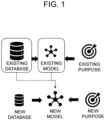
- Fig. 1 shows a configuration for a conventional continual learning technique.
- Fig. 1 on condition that an existing model has been trained for an existing task by using the existing database, if a new task and its corresponding new database are given, the existing model is trained using both the existing database and the new database, to thereby generate a new model capable of performing both the existing task and the new task.
- a size of a database may be expanded continuously to perform training processes for a certain task, and accordingly, there may be a problem in that a storage capacity required to store the data should also be expanded continuously.
- a method for adjusting the training processes is required to perform the new task given to the neural network model, however, the conventional continual learning technique cannot adjust the training processes as desired.
- a new task e.g., a fast lane detection on a highway
- the conventional continual learning technique cannot accommodate efficiently the training processes of, e.g., adjusting a usage ratio between the existing data and the new data according to the new task.
- GAN Generative Adversarial Network
- a method for performing adjustable continual learning on a deep neural network model by using a selective deep generative replay module including steps of: (a) a learning device, if a first training data is acquired from a total database and a second training data is acquired from a sub-database which is a subset of the total database, performing or supporting another device to perform (i) a process of inputting the first training data and the second training data into the selective deep generative replay module, to thereby allow the selective deep generative replay module to generate first low-dimensional distribution features for training corresponding to the first training data and second low-dimensional distribution features for training corresponding to the second training data through a distribution analyzer included in the selective deep generative replay module, wherein a dimension of the first low-dimensional distribution features for training is lower than a dimension of the first training data and wherein a dimension of the second low-dimensional distribution features for training is lower than a dimension of the second training data, (ii) a process of inputting (1) at least one
- the learning device performs or supports another device to perform (i) if the binary value for training is determined as equal to the first binary value, a process of training the discriminator and the distribution analyzer by using the first discriminator loss and a process of training the data generator and the distribution analyzer by using the first generator loss and (ii) if the binary value for training is determined as equal to the second binary value, a process of training the discriminator and the distribution analyzer by using the second discriminator loss and a process of training the data generator and the distribution analyzer by using the second generator loss.
- the learning device performs or supports another device to perform (i) a process of training the discriminator and the distribution analyzer by using the first discriminator loss and the second discriminator loss while first parameters of the data generator are fixed and (ii) a process of training the data generator and the distribution analyzer by using the first generator loss and the second generator loss while second parameters of the discriminator are fixed.
- the data generator includes at least one encoding layer and at least one decoding layer.
- a method for performing adjustable continual learning on a deep neural network model by using a selective deep generative replay module including steps of: (a) on condition that a learning device has performed or supported another device to perform, (i) upon acquiring a first training data from a total database and acquiring a second training data from a sub-database which is a subset of the total database, (i-1) a process of inputting the first training data and the second training data into the selective deep generative replay module, to thereby allow the selective deep generative replay module to (1) generate first low-dimensional distribution features for training corresponding to the first training data and second low-dimensional distribution features for training corresponding to the second training data through a distribution analyzer included in the selective deep generative replay module, wherein a dimension of the first low-dimensional distribution features for training is lower than a dimension of the first training data and wherein a dimension of the second low-dimensional distribution features for training is lower than a dimension of the second training data, (2) input at least one binary
- the method further includes steps of: (c) on condition that (1) the selective deep generative replay module has been replicated to generate an old selective deep generative replay module and (2) old low-dimensional distribution features including at least part of the first low-dimensional distribution features for training and the second low-dimensional distribution features for training have been inputted into the old selective deep generative replay module to generate an old data corresponding to the old low-dimensional distribution features and old labeled data corresponding to the old data, the continual learning device performing or supporting another device to perform (i) a process of inputting the old data, the new data, the old low-dimensional distribution features, the new low-dimensional distribution features, the test data, and the binary value for testing into the discriminator, to thereby allow the discriminator to generate an old data score, a new data score, an old feature distribution score, a new feature distribution score, and a test data score, according to the binary value for testing, and (ii) a process of inputting the old data and the new data into the solver, to thereby allow the solver to generate new labele
- the continual learning device performs or supports another device to perform a process of instructing the dynamic binary generator to generate the binary value for testing, wherein a data generation ratio of the first regeneration data per the second regeneration data is inputted into the dynamic binary generator, to thereby allow the dynamic binary generator to generate the binary value for testing corresponding to (1) the first binary value for generating the first regeneration data and (2) the second binary value for generating the second regeneration data, according to the data generation ratio.
- the continual learning device performs or supports another device to perform (i) if the binary value for testing is determined as equal to the first binary value, a process of training the discriminator and the distribution analyzer by using the first new discriminator loss and a process of training the data generator and the distribution analyzer by using the first new generator loss and (ii) if the binary value for testing is determined as equal to the second binary value, a process of training the discriminator and the distribution analyzer by using the second new discriminator loss and a process of training the data generator and the distribution analyzer by using the second new generator loss.
- the continual learning device performs or supports another device to perform (i) a process of training the discriminator and the distribution analyzer by using the first new discriminator loss and the second new discriminator loss while first parameters of the data generator are fixed and (ii) a process of training the data generator and the distribution analyzer by using the first new generator loss and the second new generator loss while second parameters of the discriminator are fixed.
- the data generator includes at least one encoding layer and at least one decoding layer.
- a learning device for performing adjustable continual learning on a deep neural network model by using a selective deep generative replay module, including: at least one memory that stores instructions; and at least one processor configured to execute the instructions to perform or support another device to perform: (I) if a first training data is acquired from a total database and a second training data is acquired from a sub-database which is a subset of the total database, (i) a process of inputting the first training data and the second training data into the selective deep generative replay module, to thereby allow the selective deep generative replay module to generate first low-dimensional distribution features for training corresponding to the first training data and second low-dimensional distribution features for training corresponding to the second training data through a distribution analyzer included in the selective deep generative replay module, wherein a dimension of the first low-dimensional distribution features for training is lower than a dimension of the first training data and wherein a dimension of the second low-dimensional distribution features for training is lower than a dimension of the second training data
- the processor performs or supports another device to perform (i) if the binary value for training is determined as equal to the first binary value, a process of training the discriminator and the distribution analyzer by using the first discriminator loss and a process of training the data generator and the distribution analyzer by using the first generator loss and (ii) if the binary value for training is determined as equal to the second binary value, a process of training the discriminator and the distribution analyzer by using the second discriminator loss and a process of training the data generator and the distribution analyzer by using the second generator loss.
- the processor performs or supports another device to perform (i) a process of training the discriminator and the distribution analyzer by using the first discriminator loss and the second discriminator loss while first parameters of the data generator are fixed and (ii) a process of training the data generator and the distribution analyzer by using the first generator loss and the second generator loss while second parameters of the discriminator are fixed.
- the data generator includes at least one encoding layer and at least one decoding layer.
- a continual learning device for performing adjustable continual learning on a deep neural network model by using a selective deep generative replay module, including: at least one memory that stores instructions; and at least one processor configured to execute the instructions to perform or support another device to perform: (I) on condition that a learning device has performed or supported another device to perform, (i) upon acquiring a first training data from a total database and acquiring a second training data from a sub-database which is a subset of the total database, (i-1) a process of inputting the first training data and the second training data into the selective deep generative replay module, to thereby allow the selective deep generative replay module to (1) generate first low-dimensional distribution features for training corresponding to the first training data and a second low-dimensional distribution features for training corresponding to the second training data through a distribution analyzer included in the selective deep generative replay module, wherein a dimension of the first low-dimensional distribution features for training is lower than a dimension of the first training data and where
- the processor further performs or supports another device to perform: (III) on condition that (1) the selective deep generative replay module has been replicated to generate an old selective deep generative replay module and (2) old low-dimensional distribution features including at least part of the first low-dimensional distribution features for training and the second low-dimensional distribution features for training have been inputted into the old selective deep generative replay module to generate an old data corresponding to the old low-dimensional distribution features and old labeled data corresponding to the old data, (i) a process of inputting the old data, the new data, the old low-dimensional distribution features, the new low-dimensional distribution features, the test data, and the binary value for testing into the discriminator, to thereby allow the discriminator to generate an old data score, a new data score, an old feature distribution score, a new feature distribution score, and a test data score, according to the binary value for testing, and (ii) a process of inputting the old data and the new data into the solver, to thereby allow the solver to generate new labeled data by labeling the old
- the processor performs or supports another device to perform a process of instructing the dynamic binary generator to generate the binary value for testing, wherein a data generation ratio of the first regeneration data per the second regeneration data is inputted into the dynamic binary generator, to thereby allow the dynamic binary generator to generate the binary value for testing corresponding to (1) the first binary value for generating the first regeneration data and (2) the second binary value for generating the second regeneration data, according to the data generation ratio.
- the processor performs or supports another device to perform (i) if the binary value for testing is determined as equal to the first binary value, a process of training the discriminator and the distribution analyzer by using the first new discriminator loss and a process of training the data generator and the distribution analyzer by using the first new generator loss and (ii) if the binary value for testing is determined as equal to the second binary value, a process of training the discriminator and the distribution analyzer by using the second new discriminator loss and a process of training the data generator and the distribution analyzer by using the second new generator loss.
- the processor performs or supports another device to perform (i) a process of training the discriminator and the distribution analyzer by using the first new discriminator loss and the second new discriminator loss while first parameters of the data generator are fixed and (ii) a process of training the data generator and the distribution analyzer by using the first new generator loss and the second new generator loss while second parameters of the discriminator are fixed.
- the data generator includes at least one encoding layer and at least one decoding layer.
- recordable media readable by a computer for storing a computer program to execute the method of the present disclosure is further provided.
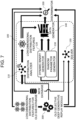
- Fig. 2 is a drawing schematically illustrating a process of performing adjustable continual learning of a deep neural network model by using a selective deep generative replay module in accordance with one example embodiment of the present disclosure.
- the adjustable continual learning method illustrated in Fig. 2 may reduce space required for storage by only storing the selective deep generative replay module instead of storing an entire database. That is, without having to store the entire database, the adjustable continual learning may be performed with data reproduced by the selective deep generative replay module adopting a Generative Adversarial Network (GAN). Further, the selective deep generative replay module may adjust a ratio of first-type data to second-type data.
- the first-type data may have at least one of a mean and a variance of feature distribution thereof within its corresponding each of data threshold ranges from that of a sub-database or a new database.
- the second-type data may have the mean and the variance of the feature distribution thereof outside the respective data threshold ranges from those of the sub-database or the new database.
- the sub-database may be a subset of a total database, i.e., an existing database.
- the neural network model may be trained to be optimized for a given task by using the data set comprised of the first-type data and the second-type data, instead of using all data in the entire existing database.
- the ratio of the first-type data to the second-type data may be determined by referring to the given task and the like in advance, but the scope of the present disclosure is not limited thereto.
- the first-type data may be referred to as data having a degree of similarity to distribution of inputted data higher than a predefined threshold similarity
- the second-type data may be referred to as data having a degree of similarity to the distribution of the inputted data lower than another predefined threshold similarity.
- the selective deep generative replay module may be utilized to perform the continual learning of the deep neural network model required by a device, such as, an autonomous vehicle, an autonomous aircraft, a robot, etc.
- Figs. 3 to 7 illustrate processes of (1) initial training of the selective deep generative replay module, (2) testing the initially trained selective deep generative replay module, and (3) continual learning of the selective deep generative replay module in order to perform the adjustable continual learning of the neural network model.
- Fig. 3 is a drawing schematically illustrating a learning device 1000 for performing the initial training of the selective deep generative replay module in accordance with one example embodiment of the present disclosure.
- the learning device 1000 may include a memory 1001 for storing instructions to perform the initial training of the selective deep generative replay module and a processor 1002 for performing the initial training of the selective deep generative replay module according to the instructions in the memory 1001.
- the learning device 1000 may typically achieve a desired system performance by using combinations of at least one computing device and at least one computer software, e.g., a computer processor, a memory, a storage, an input device, an output device, or any other conventional computing components, an electronic communication device such as a router or a switch, an electronic information storage system such as a network-attached storage (NAS) device and a storage area network (SAN) as the computing device and any instructions that allow the computing device to function in a specific way as the computer software.
- a computer software e.g., a computer processor, a memory, a storage, an input device, an output device, or any other conventional computing components, an electronic communication device such as a router or a switch, an electronic information storage system such as a network-attached storage (NAS) device and a storage area network (SAN) as the computing device and any instructions that allow the computing device to function in a specific way as the computer software.
- NAS network-attached storage
- SAN storage area network
- the processor of the computing device may include hardware configuration of MPU (Micro Processing Unit) or CPU (Central Processing Unit), cache memory, data bus, etc. Additionally, the computing device may further include software configuration of OS and applications that achieve specific purposes.
- MPU Micro Processing Unit
- CPU Central Processing Unit
- computing device does not exclude an integrated device including any combination of a processor, a memory, a medium, or any other computing components for implementing the present disclosure.
- a method of performing the initial training of the selective deep generative replay module by using the learning device 1000 configured as above in accordance with one example embodiment of the present disclosure is described below by referring to Fig. 4 .
- the learning device 1000 may acquire a first training data from the total database, i.e., the existing database, and acquire a second training data from the sub-database.
- the sub-database may be a subset of the existing database.
- the learning device 1000 may input the first training data and the second training data into the selective deep generative replay module 100.
- the selective deep generative replay module 100 may input each of the first training data and the second training data into a distribution analyzer 110, to thereby allow the distribution analyzer 110 to generate first low-dimensional distribution features for training corresponding to the first training data and second low-dimensional distribution features for training corresponding to the second training data.
- the distribution feature may represent, for example, a distribution of (1) characteristics of at least part of pixels in an image, (2) positions of objects in the image, (3) classification scores of the objects in the image, etc., but the scope of the present disclosure is not limited thereto, and may represent a distribution of various information that can be extracted from any data.
- the low-dimensional distribution features may be generated by projecting input data onto a lower dimensional subspace, in order to prevent a "curse of dimensionality" problem that may be caused by irrelevant and/or unnecessary features while useful features, to be used for the adjustable continual learning of the deep neural network model, are captured among features included in the input data inputted into the selective deep generative replay module 100. And dimensionality reduction as such may be performed by feature extraction, feature selection, etc.
- the selective deep generative replay module 100 may input at least one binary value for training outputted from a dynamic binary generator 120, at least one random parameter for training outputted from a random parameter generator 130, and the second low-dimensional distribution features for training into a data generator 140, to thereby allow the data generator 140 to generate a third training data corresponding to the second low-dimensional distribution features for training according to the binary value for training and the random parameter for training.
- the data generator 140 may include at least one encoding layer and at least one decoding layer.
- the data generator 140 may generate the third training data by using the inputted random parameter for training and the inputted second low-dimensional distribution features for training. Further, a distribution of the third training data may be determined as similar to that of the second low-dimensional distribution features for training by referring to the binary value for training, but the present disclosure is not limited thereto. That is, for example, if the binary value for training is determined as equal to a first binary value, the third training data may have at least one of its mean and variance within its corresponding each of training-data threshold ranges from that of the second low-dimensional distribution features for training.
- the third training data may have its mean and variance of the feature distribution thereof outside the respective training-data threshold ranges from those of the second low-dimensional distribution features for training.
- the random parameter for training may represent (1) a vector for image variation such as random noise, image orientation, attributes, etc. or (2) a distribution such as a Gaussian distribution.
- the third training data with various distributions to be used for training may be generated by referring to the random parameter for training.
- the learning device 1000 may input the first training data into a solver 150 in the selective deep generative replay module 100, to thereby allow the solver 150 to generate labeled training data by labeling the first training data on a basis of deep learning.
- the learning device 1000 may input the first training data, the second training data, the first low-dimensional distribution features for training, the second low-dimensional distribution features for training, the third training data and the binary value for training into a discriminator 200, to thereby allow the discriminator 200 to generate a first training data score, a second training data score, a first feature distribution score, a second feature distribution score, and a third training data score, by referring to the binary value for training.
- the learning device 1000 may perform or support another device to perform a process of calculating (1) a first discriminator loss by referring to the second training data score, the second feature distribution score, and the third training data score, (2) a second discriminator loss by referring to the first training data score, the first feature distribution score, and the third training data score, (3) a first generator loss by referring to the second feature distribution score and the third training data score, and (4) a second generator loss by referring to the first feature distribution score, the second feature distribution score, and the third training data score.
- the learning device 1000 may allow the data generator 140 to generate (1) the third training data whose at least one of the mean and the variance of the feature distribution thereof is within its corresponding each of the training-data threshold ranges from that of the second low-dimensional distribution features for training if the binary value for training is determined as equal to the first binary value and (2) the third training data whose mean and variance of the feature distribution thereof are outside the respective training-data threshold ranges from those of the second low-dimensional distribution features for training if the binary value for training is determined as equal to the second binary value.
- the first binary value and the second binary value may be binary values such as numbers like '1' and '0' or characters like 'a' and 'b'.
- the learning device 1000 may perform or support another device to perform, (i) if the binary value for training is determined as equal to the first binary value, a process of training the discriminator 200 and the distribution analyzer 110 by using the first discriminator loss and a process of training the data generator 140 and the distribution analyzer 110 by using the first generator loss and (ii) if the binary value for training is determined as the equal to the second binary value, a process of training the discriminator 200 and the distribution analyzer 110 by using the second discriminator loss and a process of training the data generator 140 and the distribution analyzer 110 by using the second generator loss.
- the learning device 1000 may perform or support another device to perform (i) a process of training the discriminator 200 and the distribution analyzer 110 by using the first discriminator loss and the second discriminator loss while first parameters of the data generator 140 are fixed and (ii) a process of training the data generator 140 and the distribution analyzer 110 by using the first generator loss and the second generator loss while second parameters of the discriminator 200 are fixed.
- the distribution analyzer 110, the data generator 140, and the discriminator 200 each of which is comprised of a deep network model, are all connected, it is possible to train the distribution analyzer 110, the data generator 140, and the discriminator 200 through back-propagation using the first discriminator loss, the second discriminator loss, the first generator loss, or the second generator loss. Therefore, the training processes using the losses above may be performed on the distribution analyzer 110, the data generator 140, and the discriminator 200 by using a following target function.
- x may represent the first training data or the second training data
- z may represent the random parameter for training
- DF ED may represent the first low-dimensional distribution features for training
- DF sub may represent the second low-dimensional distribution features for training
- G(z) may represent the third training data.
- the target function described above may be basically similar to that of a conventional Generative Adversarial Network (GAN), but there may be a difference in that the first low-dimensional distribution features for training and the second low-dimensional distribution features for training are inputted into the discriminator 200 to cope with the sub-database or the existing database. Also, in the training processes as above, the distribution analyzer 110 may participate in the training processes of the data generator 140 and the discriminator 200.
- GAN Generative Adversarial Network
- the data generator 140 may (i) output the first-type data, retrieved from the existing database, whose at least one of a mean and a variance of the feature distribution thereof is within its corresponding each of the training-data threshold ranges from that of the second low-dimensional distribution features for training inputted thereto, if the binary value for training is determined as equal to the first binary value, and (ii) output the second-type data, retrieved from the existing database, whose mean and variance of the feature distribution thereof are outside the respective training-data threshold ranges from those of the second low-dimensional distribution features for training inputted thereto, if the binary value for training is determined as equal to the second binary value.
- the data generator 140 may (i) output the first-type data, retrieved from the existing database, whose at least one of a mean and a variance of feature distribution thereof is within its corresponding each of test-data threshold ranges from that of the new data inputted thereto, and (ii) output the second-type data, retrieved from the existing database, whose mean and variance of the feature distribution thereof are outside the respective test-data threshold ranges from those of the new data inputted thereto.
- it is not necessary to store the entire existing database.
- the learning device 1000 may further calculate a solver loss corresponding to the labeled training data and its corresponding ground truth, to thereby perform processes of further training the solver 150 with the solver loss.
- a continual learning device 2000 may perform processes of testing the initially trained selective deep generative replay module 100, and in order to perform the adjustable continual learning of the deep neural network model, the continual learning may be performed on the selective deep generative replay module 100.
- the continual learning device 2000 may include a memory 2001 for storing instructions to perform the adjustable continual learning and testing on the selective deep generative replay module 100 and a processor 2002 for performing the adjustable continual learning and testing on the selective deep generative replay module 100 according to the instructions in the memory 2001.
- the continual learning device 2000 may typically achieve a desired system performance by using combinations of at least one computing device and at least one computer software, e.g., a computer processor, a memory, a storage, an input device, an output device, or any other conventional computing components, an electronic communication device such as a router or a switch, an electronic information storage system such as a network-attached storage (NAS) device and a storage area network (SAN) as the computing device and any instructions that allow the computing device to function in a specific way as the computer software.
- a computer software e.g., a computer processor, a memory, a storage, an input device, an output device, or any other conventional computing components, an electronic communication device such as a router or a switch, an electronic information storage system such as a network-attached storage (NAS) device and a storage area network (SAN) as the computing device and any instructions that allow the computing device to function in a specific way as the computer software.
- NAS network-attached storage
- SAN storage area network
- the processor of the computing device may include hardware configuration of MPU (Micro Processing Unit) or CPU (Central Processing Unit), cache memory, data bus, etc. Additionally, the computing device may further include software configuration of OS and applications that achieve specific purposes.
- MPU Micro Processing Unit
- CPU Central Processing Unit
- computing device does not exclude an integrated device including any combination of a processor, a memory, a medium, or any other computing components for implementing the present disclosure.
- the learning device 1000 and the continual learning device 2000 may be installed on a same device where the neural network model, performing the adjustable continual learning with the selective deep generative replay module, is adopted.
- the learning device 1000 and the continual learning device 2000 may be installed on a shared server or a sharing device, and may transmit the labeled training data and the training data created for the adjustable continual learning to a server or a device, where the adjustable continual learning of the neural network model is performed, at a remote location, but the scope of the present disclosure is not limited thereto.
- a method of performing the adjustable continual learning and testing on the selective deep generative replay module 100 in accordance with one example embodiment of the present disclosure by using the continual learning device 2000 configured as such is described by referring to Figs. 6 and 7 .
- Fig. 6 is a drawing schematically illustrating a method of the continual learning device 2000 performing processes of testing the selective deep generative replay module 100 in accordance with one example embodiment of the present disclosure.
- the part easily deducible from the explanation of Fig. 4 will be omitted.
- the continual learning device 2000 may acquire the new data from the new database which is newly established.
- the continual learning device 2000 may input the acquired new data into the selective deep generative replay module 100.
- the selective deep generative replay module 100 may input the new data into the distribution analyzer 110, to thereby allow the distribution analyzer 110 to generate new low-dimensional distribution features corresponding to the new data.
- the low-dimensional distribution features may be generated by projecting input data onto lower dimensional subspace, in order to prevent a "curse of dimensionality" problem that may be caused by irrelevant and/or unnecessary features while useful features, to be used for the adjustable continual learning of the deep neural network model, are captured among features included in the input data into the selective deep generative replay module 100.
- the dimensionality reduction as such may be performed by feature extraction, feature selection, etc.
- the selective deep generative replay module 100 may input at least one binary value for testing outputted from the dynamic binary generator 120, at least one random parameter for testing outputted from the random parameter generator 130, and the new low-dimensional distribution features into the data generator 140, to thereby allow the data generator 140 to generate a test data, by referring to the binary value for testing and the random parameter for testing.
- the test data may correspond to the new low-dimensional distribution features.
- the data generator 140 may generate the test data corresponding to a distribution of the new data even if the existing database for training and the sub-database for training used in the initial learning have been deleted.
- a distribution of the generated test data may be identical or similar to that of data in the existing database for training and the sub-database for training.
- the test data may include (1) first regeneration data whose at least one of a mean and a variance of feature distribution thereof is within its corresponding each of the test-data threshold ranges from that of the new low-dimensional distribution features if the binary value for testing is determined as equal to the first binary value and (2) second regeneration data whose mean and variance of the feature distribution thereof are outside the respective first test-data threshold ranges from those of the new low-dimensional distribution features if the binary value for testing is determined as equal to the second binary value.
- the first binary value and the second binary value may be binary values such as numbers like '1' and '0' or characters like 'a' and 'b'.
- the continual learning device 2000 may input the test data into the solver 150, to thereby allow the solver 150 to generate a labeled test data by labeling the test data on a basis of deep learning.
- the continual learning device 2000 may perform or support another device to perform a process of instructing the dynamic binary generator 120 to generate the binary value for testing.
- a data generation ratio of the first regeneration data per the second regeneration data may be inputted into the dynamic binary generator 120, to thereby allow the dynamic binary generator 120 to generate the binary value for testing corresponding to the first binary value for generating the first regeneration data and the second binary value for generating the second regeneration data, according to the data generation ratio.
- Fig. 7 is a drawing schematically illustrating a method of the continual learning device 2000 performing the continual learning of the selective deep generative replay module 100 in accordance with one example embodiment of the present disclosure.
- the continual learning device 2000 may (i) replicate the initially trained selective deep generative replay module 100 to generate an old selective deep generative replay module 300, and (ii) input old low-dimensional distribution features including at least part of the first low-dimensional distribution features for training and the second low-dimensional distribution features for training into the old selective deep generative replay module 300, to thereby allow the old selective deep generative replay module 300 to generate an old data corresponding to the old low-dimensional distribution features and old labeled data corresponding to the old data.
- the continual learning device 2000 may input the old data, the new data, the old low-dimensional distribution features, the new low-dimensional distribution features, the test data, and the binary value for testing into the discriminator 200, to thereby allow the discriminator 200 to generate an old data score, a new data score, an old feature distribution score, a new feature distribution score, and a test data score, by referring to the binary value for testing.
- the continual learning device 2000 may input the old data and the new data into the solver 150, to thereby allow the solver 150 to generate new labeled data by labeling the old data and the new data on the basis of the deep learning.
- the continual learning device 2000 may perform or support another device to perform a process of calculating (1) a first new discriminator loss by referring to a new data score, a new feature distribution score, and a test data score, (2) a second new discriminator loss by referring to an old data score, an old feature distribution score, and the test data score, (3) a first new generator loss by referring to the new feature distribution score and the test data score, and (4) a second new generator loss by referring to the old feature distribution score, the new feature distribution score and the test data score.
- the learning device 1000 may allow the data generator 140 to generate (1) the test data whose at least one of the mean and the variance of the feature distribution thereof is within its corresponding each of the test-data threshold ranges from that of the new low-dimensional distribution features if the binary value for testing is determined as equal to the first binary value and (2) the test data whose mean and variance of the feature distribution thereof are outside the respective test-data threshold ranges from those of the new low-dimensional distribution features if the binary value for testing is determined as equal to the second binary value.
- the continual learning device 2000 may perform or support another device to perform, (i) if the binary value for testing is determined as equal to the first binary value, a process of training the discriminator 200 and the distribution analyzer 110 by using the first new discriminator loss and a process of training the data generator 140 and the distribution analyzer 110 by using the first new generator loss and (ii) if the binary value for testing is determined as the equal to second binary value, a process of training the discriminator 200 and the distribution analyzer 110 by using the second new discriminator loss and a process of training the data generator 140 and the distribution analyzer 110 by using the second new generator loss.
- the continual learning device 2000 may perform or support another device to perform (i) a process of training the discriminator 200 and the distribution analyzer 110 by using the first new discriminator loss and the second new discriminator loss while the first parameters of the data generator 140 are fixed and (ii) a process of training the data generator 140 and the distribution analyzer 110 by using the first new generator loss and the second new generator loss while the second parameters of the discriminator 200 are fixed.
- the distribution analyzer 110, the data generator 140 and the discriminator 200 each of which is comprised of the deep network model, are all connected, it is possible to train the distribution analyzer 110, the data generator 140, and the discriminator 200 through back-propagation using the first new discriminator loss, the second new discriminator loss, the first new generator loss, or the second new generator loss. Therefore, the training processes using the losses above may be performed on the distribution analyzer 110, the data generator 140 and the discriminator 200 by using a following target function.
- x may represent the old data or the new data
- z may represent the random parameter for testing
- DF ED may represent the old low-dimensional distribution features
- DF sub may represent the new low-dimensional distribution features
- G(z) may represent the test data.
- the target function described above may be basically similar to that of the initial training on the selective deep generative replay module, but there may be a difference in that the old low-dimensional distribution features including at least part of the stored first low-dimensional distribution features and the stored second low-dimensional distribution features are inputted into the discriminator 200. Further, there may be another difference in that the old low-dimensional distribution features are inputted into the old selective deep generative replay module, to thereby allow the old selective deep generative replay module to generate the old data corresponding to the old low-dimensional distribution features, and thus to input the old data into the distribution analyzer 110 and the discriminator 200.
- the continual learning device 2000 may further calculate a new solver loss corresponding to the new labeled data and the old labeled data, to thereby perform processes of further training the solver 150 with the new solver loss.
- the continual learning device 2000 may perform the continual learning of the selective deep generative replay module 100 for every iteration by using the method explained above. But the scope of the present disclosure is not limited thereto, and a cycle of renewing the old selective deep generative replay module 300, for performing the continual learning of the selective deep generative replay module 100, may be affected by a cycle of performing the adjustable continual learning of the neural network model in a mutually complementary manner. As one example, if an adjustment of the continual learning of the neural network model is required for a new task or performance improvement of the neural network model, then the continual learning of the selective deep generative replay module 100 may be performed in order to create the training data with a new ratio.
- continual learning method is described to be proceeding immediately after the completion of the initial training, but the same can be applied to successive rounds of the continual learning.
- the new database can replace the sub-database in the initial training described by referring to Fig. 4 , and then, for subsequent continual learning, the continual learning can be performed by using a next new database.
- the present disclosure has an effect of reducing space required for storing the existing database by only storing the selective deep generative replay module instead of storing the entire existing database used for training the neural network model.
- the present disclosure has another effect of training the neural network model with a fixed amount of data, created by using the selective deep generative replay module, instead of using the entire existing database and the entire new database, to thereby reduce the time required to train the neural network model.
- the present disclosure has still another effect of creating a data set comprised of first-type data whose distribution is similar to that of a new database and second-type data whose distribution is different from that of the new database by using the selective deep generative replay module with the Generative Adversarial Network (GAN), and then train the neural network model using the created data set, to thereby generate a neural network model optimized for the given task, instead of training the neural network model with the entire existing database and the entire new database.
- GAN Generative Adversarial Network
- the embodiments of the present invention as explained above can be implemented in a form of executable program command through a variety of computer means recordable to computer readable media.
- the computer readable media may include solely or in combination, program commands, data files, and data structures.
- the program commands recorded to the media may be components specially designed for the present disclosure or may be usable to those skilled in the art.
- Computer readable media include magnetic media such as hard disk, floppy disk, and magnetic tape, optical media such as CD-ROM and DVD, magneto-optical media such as floptical disk and hardware devices such as ROM, RAM, and flash memory specially designed to store and carry out program commands.
- Program commands include not only a machine language code made by a complier but also a high level code that can be used by an interpreter etc., which is executed by a computer.
- the aforementioned hardware device can work as more than a software module to perform the action of the present disclosure and vice versa.
Landscapes
- Engineering & Computer Science (AREA)
- Theoretical Computer Science (AREA)
- Physics & Mathematics (AREA)
- Data Mining & Analysis (AREA)
- Life Sciences & Earth Sciences (AREA)
- Artificial Intelligence (AREA)
- Evolutionary Computation (AREA)
- General Physics & Mathematics (AREA)
- General Engineering & Computer Science (AREA)
- Health & Medical Sciences (AREA)
- Biomedical Technology (AREA)
- Biophysics (AREA)
- Computing Systems (AREA)
- Molecular Biology (AREA)
- General Health & Medical Sciences (AREA)
- Mathematical Physics (AREA)
- Software Systems (AREA)
- Computational Linguistics (AREA)
- Computer Vision & Pattern Recognition (AREA)
- Bioinformatics & Cheminformatics (AREA)
- Bioinformatics & Computational Biology (AREA)
- Evolutionary Biology (AREA)
- Neurology (AREA)
- Image Analysis (AREA)
- Complex Calculations (AREA)
Claims (15)
- Procédé mis en oeuvre par ordinateur pour effectuer un apprentissage continu réglable sur un modèle de réseau neuronal profond en utilisant un module de réexécution générative profonde sélective, comprenant les étapes suivantes :(a) un dispositif d'apprentissage, en réponse à l'acquisition de premières données d'apprentissage à partir d'une base de données totale et à l'acquisition de deuxièmes données d'apprentissage à partir d'une sous-base de données qui est un sous-ensemble de la base de données totale, exécutant ou prenant en charge un autre dispositif pour effectuer (i) un processus d'entrée des premières données d'apprentissage et des deuxièmes données d'apprentissage dans le module de réexécution générative approfondie sélective, pour permettre ainsi au module de réexécution générative approfondie sélective de générer des premières caractéristiques de distribution de faible dimension pour l'apprentissage correspondant aux premières données d'apprentissage et des deuxièmes caractéristiques de distribution de faible dimension pour l'apprentissage correspondant aux deuxièmes données d'apprentissage par l'intermédiaire d'un analyseur de distribution inclus dans le module de réexécution générative approfondie sélective, dans lequel une dimension des premières caractéristiques de distribution de faible dimension pour l'apprentissage est inférieure à une dimension des premières données d'apprentissage et dans lequel une dimension des deuxièmes caractéristiques de distribution de faible dimension pour l'apprentissage est inférieure à une dimension des deuxièmes données d'apprentissage, dans lequel une réduction de dimensionnalité comprenant au moins une parmi l'extraction de caractéristiques et la sélection de caractéristiques est effectuée sur les premières données d'apprentissage et les deuxièmes données d'apprentissage de manière à projeter les premières données d'apprentissage et les deuxièmes données d'apprentissage sur un sous-espace de dimension inférieure afin de générer ainsi les premières caractéristiques de distribution de faible dimension pour l'apprentissage et les deuxièmes caractéristiques de distribution de faible dimension, (ii) un processus d'entrée (1) d'au moins une valeur binaire pour l'apprentissage délivrée par un générateur binaire dynamique inclus dans le module de réexécution générative approfondie sélective, (2) au moins un paramètre aléatoire pour l'apprentissage délivré par un générateur de paramètres aléatoires inclus dans le module de réexécution générative approfondie sélective et (3) les deuxièmes caractéristiques de distribution de faible dimension pour l'apprentissage dans un générateur de données inclus dans le module de réexécution générative approfondie sélective, pour ainsi générer des troisièmes données d'apprentissage correspondant aux deuxièmes caractéristiques de distribution de faible dimension pour l'apprentissage, selon la valeur binaire pour l'apprentissage et le paramètre aléatoire pour apprentissage via le générateur de données, dans lequel les troisièmes données d'apprentissage ont au moins une de leur moyenne et de leur variance de distribution de caractéristiques dans chacune de leurs plages de seuils de données d'apprentissage correspondantes à partir de celles des deuxièmes caractéristiques de distribution de faible dimension pour l'apprentissage si la valeur binaire pour l'apprentissage est déterminée comme étant égale à une première valeur binaire et les troisièmes données d'apprentissage ont leur moyenne et variance de caractéristiques de distribution en dehors de chaque plage de seuil de données d'apprentissage correspondante de celles des deuxièmes caractéristiques de distribution de faible dimension pour l'apprentissage si la valeur binaire pour l'apprentissage est déterminée comme étant égale à une deuxième valeur binaire, et dans lequel les caractéristiques de distribution des deuxièmes caractéristiques de distribution de faible dimension pour l'apprentissage sont modifiées en se référant au paramètre aléatoire pour l'apprentissage qui représente au moins un vecteur de variation d'image comprenant au moins un parmi un bruit aléatoire, une orientation et des attributs d'image et une distribution gaussienne, pour générer ainsi les troisièmes données d'apprentissage, et (iii) un processus d'entrée des premières données d'apprentissage dans un solveur inclus dans le module de réexécution générative approfondie sélective, pour permettre ainsi au solveur de générer des données d'apprentissage étiquetées en étiquetant les premières données d'apprentissage sur une base d'apprentissage profond ;(b) le dispositif d'apprentissage exécute ou prend en charge un autre dispositif pour effectuer un processus d'entrée des premières données d'apprentissage, des deuxièmes données d'apprentissage, des premières caractéristiques de distribution de faible dimension pour l'apprentissage, des deuxièmes caractéristiques de distribution de faible dimension pour l'apprentissage, des troisièmes données d'apprentissage et la valeur binaire pour l'apprentissage dans un discriminateur, pour permettre ainsi au discriminateur de générer un premier score de données d'apprentissage, un deuxième score de données d'apprentissage, un premier score de distribution de caractéristiques, un deuxième score de distribution de caractéristiques et un troisième score de données d'apprentissage, selon le valeur binaire pour l'apprentissage ; et(c) le dispositif d'apprentissage exécute ou prend en charge un autre dispositif pour effectuer (i) un processus de calcul (1) d'une première perte de discriminateur en se référant au deuxième score de données d'apprentissage, au deuxième score de distribution de caractéristiques et au troisième score de données d'apprentissage, (2) une deuxième perte de discriminateur en se référant au premier score de données d'apprentissage, au premier score de distribution de caractéristiques et au troisième score de données d'apprentissage, (3) une première perte de générateur en se référant au deuxième score de distribution de caractéristiques et au troisième score de données d'apprentissage, et (4) une deuxième perte de générateur en se référant au premier score de distribution de caractéristiques, au deuxième score de distribution de caractéristiques et au troisième score de données d'apprentissage, (ii) un processus d'apprentissage du discriminateur, du générateur de données et de l'analyseur de distribution tel que le générateur de données génère (ii-1) les troisièmes données d'apprentissage dont au moins une parmi une moyenne et/ou une variance de leur distribution de caractéristiques est comprise dans chacune des plages de seuils de données d'apprentissage correspondantes par rapport à celle des deuxièmes caractéristiques de distribution de faible dimension pour l'apprentissage, si la valeur binaire pour l'apprentissage est déterminée comme la première valeur binaire et (ii-2) les troisièmes données d'apprentissage dont la moyenne et la variance de la distribution de caractéristiques sont en dehors des plages de seuils de données d'apprentissage respectives par rapport à celles des deuxièmes caractéristiques de distribution de faible distribution pour l'apprentissage, si les valeurs binaires pour l'apprentissage sont déterminées comme étant égales à la deuxième valeur binaire, et (iii) un processus de calcul supplémentaire d'une perte de solveur en se référant aux données d'apprentissage étiquetées et à leur vérité de terrain correspondante, pour ainsi entraîner le solveur avec la perte du solveur.
- Procédé selon la revendication 1, dans lequel, à l'étape (c), en se référant à la valeur binaire pour l'apprentissage, le dispositif d'apprentissage exécute ou prend en charge un autre dispositif pour exécuter (i) si la valeur binaire pour l'apprentissage est déterminée comme égale à la première valeur binaire, un processus d'apprentissage du discriminateur et de l'analyseur de distribution en utilisant la première perte de discriminateur et un processus d'apprentissage du générateur de données et de l'analyseur de distribution en utilisant la première perte de générateur et (ii) si la valeur binaire pour l'apprentissage est déterminée comme étant égale à la deuxième valeur binaire, un processus d'apprentissage du discriminateur et de l'analyseur de distribution à l'aide de la perte du deuxième discriminateur et un processus d'apprentissage du générateur de données et de l'analyseur de distribution à l'aide de la perte du deuxième générateur.
- Procédé selon la revendication 2, dans lequel le dispositif d'apprentissage exécute ou prend en charge un autre dispositif pour effectuer (i) un processus d'apprentissage du discriminateur et de l'analyseur de distribution en utilisant la perte du premier discriminateur et la perte du deuxième discriminateur tandis que les premiers paramètres du générateur de données sont fixes et (ii) un processus d'apprentissage du générateur de données et de l'analyseur de distribution à l'aide de la première perte de générateur et de la deuxième perte de générateur tandis que les deuxièmes paramètres du discriminateur sont fixes.
- Procédé selon la revendication 1, dans lequel le générateur de données comprend au moins une couche de codage et au moins une couche de décodage.
- Procédé mis en oeuvre par ordinateur selon une quelconque des revendications 1 à 4, pour effectuer un apprentissage continu réglable sur un modèle de réseau neuronal profond en utilisant un module de réexécution générative profonde sélective, comprenant en outre les étapes suivantes :(a) à condition qu'un dispositif d'apprentissage ait exécuté ou pris en charge un autre dispositif pour exécuter les étapes (a) à (c) de la revendication 1, un dispositif d'apprentissage continu exécutant ou prenant en charge un autre dispositif pour exécuter un processus d'acquisition de nouvelles données à partir d'une nouvelle base de données ; et(b) le dispositif d'apprentissage continu exécute ou prend en charge un autre dispositif pour effectuer un processus d'entrée des nouvelles données dans le module de réexécution générative approfondie sélective, pour permettre ainsi au module de réexécution générative profonde sélective de (i) générer de nouvelles caractéristiques de distribution de faible dimension correspondant aux nouvelles données via l'analyseur de distribution, dans lequel une dimension des nouvelles caractéristiques de distribution de faible dimension est inférieure à une dimension des nouvelles données, (ii) entrer au moins une valeur binaire à tester sortie du générateur binaire dynamique, au moins un paramètre aléatoire à tester sorti à partir du générateur de paramètres aléatoires et les nouvelles caractéristiques de distribution de faible dimension dans le générateur de données, et ainsi générer un des données de test, correspondant aux nouvelles caractéristiques de distribution de faible dimension, selon la valeur binaire à tester et le paramètre aléatoire à tester, dans lequel les données de test comprennent (1) des premières données de régénération dont au moins une moyenne ou une variance de distribution de caractéristiques de celles-ci se situent dans chacune de leurs plages de seuils de données de test correspondantes par rapport à celles des nouvelles caractéristiques de distribution de faible dimension si la valeur binaire à tester est déterminée comme étant égale à la première valeur binaire et (2) des deuxièmes données de régénération dont la moyenne et la variance de la distribution de caractéristiques de celles-ci se situent en dehors des plages de seuils de données de test respectives par rapport à celles des nouvelles caractéristiques de distribution de faible dimension si la valeur binaire à tester est déterminée comme étant égale à la deuxième valeur binaire, et (iii) un processus d'entrée des données de test dans le solveur, pour permettre ainsi au solveur de générer des données de test étiquetées en étiquetant les données de test.
- Procédé selon la revendication 5, comprenant en outre les étapes suivantes :(c) à condition que (1) le module de réexécution générative approfondie sélective ait été répliqué pour générer un ancien module de réexécution générative approfondie sélective et (2) d'anciennes caractéristiques de distribution de faible dimension comprenant au moins une partie des premières caractéristiques de distribution de faible dimension pour l'apprentissage et les deuxièmes caractéristiques de distribution de faible dimension pour l'apprentissage ont été entrées dans l'ancien module de réexécution générative approfondie sélective pour générer d'anciennes données correspondant aux anciennes caractéristiques de distribution de faible dimension et d'anciennes données étiquetées correspondant aux anciennes données, le dispositif d'apprentissage continu exécutant ou prenant en charge un autre dispositif pour effectuer (i) un processus d'entrée des anciennes données, des nouvelles données, des anciennes caractéristiques de distribution de faible dimension, des nouvelles caractéristiques de distribution de faible dimension, les données de test, et la valeur binaire pour tester dans le discriminateur, pour permettre ainsi au discriminateur de générer un ancien score de données, un nouveau score de données, un ancien score de distribution de caractéristiques, un nouveau score de distribution de caractéristiques et un score de données de test, selon la valeur binaire à tester, et (ii) un processus d'entrée des anciennes données et des nouvelles données dans le solveur, pour permettre ainsi au solveur de générer de nouvelles données étiquetées en étiquetant les anciennes données et les nouvelles données sur la base de l'apprentissage en profondeur ; et(d) le dispositif d'apprentissage continu exécute ou prend en charge un autre dispositif pour effectuer (i) un processus de calcul (1) d'une première nouvelle perte de discriminateur en se référant au nouveau score de données, au nouveau score de distribution de caractéristiques et au score de données de test, (2) une deuxième nouvelle perte de discriminateur en se référant à l'ancien score de données, à l'ancien score de distribution de caractéristiques et au score de données de test, (3) une première nouvelle perte de générateur en se référant au nouveau score de distribution de caractéristiques et au score de données de test et (4) une deuxième nouvelle perte de générateur en se référant à l'ancien score de distribution de caractéristiques, au nouveau score de distribution de caractéristiques et au score de données de test, (ii) un processus d'apprentissage du discriminateur, du générateur de données et de l'analyseur de distribution de telle sorte que les données de générateur génèrent (ii-1) les données de test dont au moins une parmi la moyenne et la variance de la distribution des caractéristiques de celles-ci est comprise dans chacune des plages de seuil de données de test correspondantes à partir de celle des nouvelles caractéristiques de distribution de faible dimension, si la valeur binaire à tester est déterminée comme étant égale à la première valeur binaire et (ii-2) les données de test dont la moyenne et la variance de la distribution des caractéristiques sont en dehors des plages de seuils de données de test respectives par rapport à celles des nouvelles caractéristiques de distribution de faible dimension, si les valeurs binaires à tester sont déterminées comme étant égales à la deuxième valeur binaire, et (ii) un processus de calcul supplémentaire d'une nouvelle perte de solveur en se référant aux nouvelles données étiquetées et aux anciennes données étiquetées, pour ainsi entraîner davantage le solveur avec les nouvelles perte de solveur.
- Procédé selon la revendication 5, dans lequel, à l'étape (b), le dispositif d'apprentissage continu exécute ou prend en charge un autre dispositif pour exécuter un processus consistant à demander au générateur binaire dynamique de générer la valeur binaire à tester, dans lequel un rapport de génération de données des premières données de régénération par rapport aux deuxièmes données de régénération sont entrées dans le générateur binaire dynamique, pour permettre ainsi au générateur binaire dynamique de générer la valeur binaire à tester correspondant à (1) la première valeur binaire pour générer les premières données de régénération et (2) la deuxième valeur binaire pour générer les deuxièmes données de régénération, selon le rapport de génération de données.
- Procédé selon la revendication 6, dans lequel, à l'étape (d), en se référant à la valeur binaire à tester, le dispositif d'apprentissage continu exécute ou prend en charge un autre dispositif pour exécuter (i) si la valeur binaire à tester est déterminée comme égale à la première valeur binaire, un processus d'apprentissage du discriminateur et de l'analyseur de distribution en utilisant la première nouvelle perte de discriminateur et un processus d'apprentissage du générateur de données et de l'analyseur de distribution en utilisant la première nouvelle perte de générateur et (ii) si la valeur binaire à tester est déterminée comme étant égale à la deuxième valeur binaire, un processus d'apprentissage du discriminateur et de l'analyseur de distribution à l'aide de la deuxième nouvelle perte de discriminateur et un processus d'apprentissage du générateur de données et de l'analyseur de distribution à l'aide de la deuxième nouvelle perte de générateur.
- Procédé selon la revendication 8, dans lequel le dispositif d'apprentissage continu exécute ou prend en charge un autre dispositif pour effectuer (i) un processus d'apprentissage du discriminateur et de l'analyseur de distribution en utilisant la première nouvelle perte de discriminateur et la deuxième nouvelle perte de discriminateur tandis que les premiers paramètres des générateurs de données sont fixes et (ii) un processus d'apprentissage du générateur de données et de l'analyseur de distribution en utilisant la première nouvelle perte de générateur et la deuxième nouvelle perte de générateur tandis que les deuxièmes paramètres du discriminateur sont fixes.
- Procédé selon la revendication 5, dans lequel le générateur de données comprend au moins une couche de codage et au moins une couche de décodage.
- Dispositif d'apprentissage pour effectuer un apprentissage continu réglable sur un modèle de réseau neuronal profond en utilisant un module de réexécution générative profonde sélective, comprenant :au moins une mémoire qui stocke des instructions ; etau moins un processeur configuré pour exécuter les instructions à exécuter ou pour aider un autre dispositif à effectuer : (I) en réponse à l'acquisition de premières données d'apprentissage à partir d'une base de données totale et à l'acquisition de deuxièmes données d'apprentissage à partir d'une sous-base de données qui est un sous-ensemble de la base de données totale, (i) un processus d'entrée des premières données d'apprentissage et des deuxièmes données d'apprentissage dans le module de réexécution générative approfondie sélective, pour permettre ainsi au module de réexécution générative approfondie sélective de générer des premières caractéristiques de distribution de faible dimension pour l'apprentissage correspondant aux premières données d'apprentissage et aux deuxièmes caractéristiques de distribution de faible dimension pour l'apprentissage correspondant aux deuxièmes données d'apprentissage par l'intermédiaire d'un analyseur de distribution inclus dans le module de réexécution générative approfondie sélective, dans lequel une dimension des premières caractéristiques de distribution de faible dimension pour l'apprentissage est inférieure à une dimension des premières données d'apprentissage et dans lequel une dimension des deuxièmes caractéristiques de distribution de faible dimension pour l'apprentissage est inférieure à une dimension des deuxièmes données d'apprentissage, dans lequel la réduction de dimensionnalité comprend à au moins une parmi l'extraction de caractéristiques et la sélection de caractéristiques est effectuée sur les premières données d'apprentissage et les deuxièmes données d'apprentissage de manière à projeter les premières données d'apprentissage et les deuxièmes données d'apprentissage sur un sous-espace de dimension inférieure pour générer ainsi les premières caractéristiques de distribution de faible dimension pour l'apprentissage et les deuxièmes caractéristiques de distribution de faible dimension, (ii) un processus d'entrée (1) d'au moins une valeur binaire pour l'apprentissage émise par un générateur binaire dynamique inclus dans le module de réexécution générative approfondie sélective, (2) au moins un paramètre aléatoire pour l'apprentissage émises par un générateur de paramètres aléatoires inclus dans le module de réexécution générative approfondie sélective et (3) les deuxièmes caractéristiques de distribution de faible dimension pour l'apprentissage dans un générateur de données inclus dans le module de réexécution générative approfondie sélective, pour générer ainsi des troisièmes données d'apprentissage correspondant aux deuxièmes caractéristiques de distribution de faible dimension pour l'apprentissage, selon la valeur binaire pour l'apprentissage et le paramètre aléatoire pour l'apprentissage par l'intermédiaire du générateur de données, dans lequel les troisièmes données d'apprentissage ont au moins une de leur moyenne et de leur variance de distribution de caractéristiques dans chacune de leurs plages de seuils de données d'apprentissage correspondantes à partir de celles des deuxièmes caractéristiques de distribution de faible dimension pour l'apprentissage si la valeur binaire pour l'apprentissage est déterminée comme étant égale à une première valeur binaire et les troisièmes données d'apprentissage ont leur moyenne et variance de caractéristiques de distribution en dehors de chaque plage de seuil de données d'apprentissage correspondante de celles des deuxièmes caractéristiques de distribution de faible dimension pour l'apprentissage si la valeur binaire pour l'apprentissage est déterminée comme étant égale à une deuxième valeur binaire, et dans lequel les caractéristiques de distribution des deuxièmes caractéristiques de distribution de faible dimension pour l'apprentissage sont modifiées en se référant au paramètre aléatoire pour l'apprentissage qui représente au moins un vecteur de variation d'image comprenant au moins un parmi un bruit aléatoire, une orientation et des attributs d'image et une distribution gaussienne, pour générer ainsi les troisièmes données d'apprentissage, et (iii) un processus d'entrée des premières données d'apprentissage dans un solveur inclus dans le module de réexécution générative approfondie sélective, pour permettre ainsi au solveur de générer des données d'apprentissage étiquetées en étiquetant les premières données d'apprentissage sur une base d'apprentissage profond , (II) un processus d'entrée des premières données d'apprentissage, des deuxièmes données d'apprentissage, des premières caractéristiques de distribution de faible dimension pour l'apprentissage, des deuxièmes caractéristiques de distribution de faible dimension pour l'apprentissage, des troisièmes données d'apprentissage et la valeur binaire pour l'apprentissage dans un discriminateur, pour permettre ainsi au discriminateur de générer un premier score de données d'apprentissage, un deuxième score de données d'apprentissage, un premier score de distribution de caractéristiques, un deuxième score de distribution de caractéristiques et un troisième score de données d'apprentissage, selon le valeur binaire pour l'apprentissage ; et (III)(i) un processus de calcul (1) d'une première perte de discriminateur en se référant au deuxième score de données d'apprentissage, au deuxième score de distribution de caractéristiques et au troisième score de données d'apprentissage, (2) une deuxième perte de discriminateur en se référant au premier score de données d'apprentissage, au premier score de distribution de caractéristiques et au troisième score de données d'apprentissage, (3) une première perte de générateur en se référant au deuxième score de distribution de caractéristiques et au troisième score de données d'apprentissage, et (4) une deuxième perte de générateur en se référant au premier score de distribution de caractéristiques, au deuxième score de distribution de caractéristiques et au troisième score de données d'apprentissage, (ii) un processus d'apprentissage du discriminateur, du générateur de données et de l'analyseur de distribution tel que le générateur de données génère (ii-1) les troisièmes données d'apprentissage dont au moins une parmi une moyenne et/ou une variance de leur distribution de caractéristiques est comprise dans chacune des plages de seuils de données d'apprentissage correspondantes par rapport à celle des deuxièmes caractéristiques de distribution de faible dimension pour l'apprentissage, si la valeur binaire pour l'apprentissage est déterminée comme la première valeur binaire et (ii-2) les troisièmes données d'apprentissage dont la moyenne et la variance de la distribution de caractéristiques sont en dehors des plages de seuils de données d'apprentissage respectives par rapport à celles des deuxièmes caractéristiques de distribution de faible distribution pour l'apprentissage, si les valeurs binaires pour l'apprentissage sont déterminées comme étant égales à la deuxième valeur binaire, et (iii) un processus de calcul supplémentaire d'une perte de solveur en se référant aux données d'apprentissage étiquetées et à leur vérité de terrain correspondante, pour ainsi entraîner le solveur avec la perte du solveur.
- Dispositif d'apprentissage selon la revendication 11, dans lequel, au cours du processus (III), en se référant à la valeur binaire pour l'apprentissage, le processeur exécute ou prend en charge un autre dispositif pour exécuter (i) si la valeur binaire pour l'apprentissage est déterminée comme égale à la première valeur binaire, un processus d'apprentissage du discriminateur et de l'analyseur de distribution en utilisant la première perte du discriminateur et un processus d'apprentissage du générateur de données et de l'analyseur de distribution en utilisant la première perte du générateur et (ii) si la valeur binaire pour l'apprentissage est déterminé comme étant égal à la deuxième valeur binaire, un processus d'apprentissage du discriminateur et de l'analyseur de distribution à l'aide de la perte du deuxième discriminateur et un processus d'apprentissage du générateur de données et de l'analyseur de distribution à l'aide de la deuxième perte de générateur
- Dispositif d'apprentissage selon la revendication 12, dans lequel le processeur exécute ou prend en charge un autre dispositif pour exécuter (i) un processus d'apprentissage du discriminateur et de l'analyseur de distribution en utilisant la perte du premier discriminateur et la perte du deuxième discriminateur tandis que les premiers paramètres du générateur de données sont fixes et (ii) un processus d'apprentissage du générateur de données et de l'analyseur de distribution en utilisant la première perte de générateur et la deuxième perte de générateur tandis que les deuxièmes paramètres du discriminateur sont fixes.
- Dispositif d'apprentissage continu selon une quelconque des revendications 11 à 13, pour effectuer un apprentissage continu réglable sur un modèle de réseau neuronal profond en utilisant un module de réexécution générative profonde sélective, comprenant :au moins une mémoire qui stocke des instructions ; etau moins un processeur configuré pour exécuter les instructions à exécuter ou prendre en charge un autre dispositif pour effectuer : (I) à condition qu'un dispositif d'apprentissage ait exécuté ou pris en charge un autre dispositif pour effectuer les étapes (I) à (III) de la revendication 11, un processus d'acquisition de nouvelles données à partir d'une nouvelle base de données, et (II) un processus d'entrée des nouvelles données dans le module de réexécution générative profonde sélective, pour permettre ainsi au module de réexécution générative profonde sélective de (i) générer une nouvelle distribution de faible dimension des caractéristiques correspondant aux nouvelles données via l'analyseur de distribution, dans lequel une dimension des nouvelles caractéristiques de distribution de faible dimension est inférieure à une dimension des nouvelles données, (ii) entrer au moins une valeur binaire pour tester sortie du générateur binaire dynamique, au moins un paramètre aléatoire à tester délivré par le générateur de paramètres aléatoires, et les nouvelles caractéristiques de distribution de faible dimension dans le générateur de données, et générer ainsi des données de test, correspondant aux nouvelles caractéristiques de distribution de faible dimension, selon la valeur binaire à tester et le paramètre aléatoire à tester, les données de test comprenant (1) des premières données de régénération dont au moins une parmi une moyenne et/ou une variance de distribution de caractéristiques se situe dans chacune de ses plages de seuils de données de test correspondantes à partir par rapport à celles des caractéristiques de distribution de faible dimension si la valeur binaire à tester est déterminée comme étant égale à la première valeur binaire et (2) des deuxièmes données de régénération dont la moyenne et la variance de distribution de caractéristiques se situe en dehors des plages de seuils de données de test respectives par rapport à celles des caractéristiques de distribution de faible dimension si la valeur binaire à tester est déterminée comme étant égale à la deuxième valeur binaire, et (iii) un processus d'entrée des données de test dans le solveur, pour permettre ainsi au solveur de générer des données de test étiquetées en étiquetant les données de test.
- Dispositif d'apprentissage continu selon la revendication 14, dans lequel le processeur exécute en outre ou prend en charge un autre dispositif pour effectuer :
(III) à condition que (1) le module de réexécution générative profonde sélective ait été répliqué pour générer un ancien module de réexécution générative profonde sélective et (2) un ancien module de réexécution générative profonde sélective des caractéristiques de distribution dimensionnelle comprenant au moins une partie des premières caractéristiques de distribution de faible dimension pour l'apprentissage et les deuxièmes caractéristiques de distribution de faible dimension pour l'apprentissage ont été entrées dans l'ancien module de réexécution générative approfondie sélective pour générer d'anciennes données correspondant aux anciennes caractéristiques de distribution de faible dimension et aux anciennes données étiquetées correspondant aux anciennes données, (i) un processus d'entrée des anciennes données, des nouvelles données, des anciennes caractéristiques de distribution de faible dimension, des nouvelles caractéristiques de distribution de faible dimension, des données de test et de la valeur binaire à tester dans le discriminateur, pour permettre ainsi au discriminateur de générer un ancien score de données, un nouveau score de données, un ancien score de distribution de caractéristiques, un nouveau score de distribution de caractéristiques et un score de données de test, selon la valeur binaire à tester, et (ii) un processus d'entrée des anciennes données et des nouvelles données dans le solveur, pour permettre ainsi au solveur de générer de nouvelles données étiquetées en étiquetant les anciennes données et les nouvelles données sur la base de l'apprentissage profond et (IV) (i) un processus consistant à calculer (1) une première nouvelle perte de discriminateur en se référant au nouveau score de données, au nouveau score de distribution de caractéristiques et au score de données de test, (2) une deuxième perte de nouveau discriminateur en se référant à l'ancien score de données, à l'ancien score de distribution de caractéristiques et au score de données de test, (3) une première nouvelle perte de générateur en se référant au nouveau score de distribution de caractéristiques et au score de données de test et (4) une deuxième nouvelle perte de générateur en se référant à l'ancien score de distribution de caractéristiques, au nouveau score de distribution de caractéristiques et au score de données de test, (ii) un processus d'apprentissage du discriminateur, du générateur de données et de l'analyseur de distribution de telle sorte que le générateur de données génère (ii-1) les données de test dont au moins une parmi la moyenne et le la variance de la distribution de caractéristiques se situe dans chacune des plages de seuils de données de test correspondantes par rapport à celle des nouvelles caractéristiques de distribution de faible dimension, si la valeur binaire à tester est déterminée comme étant égale à la première valeur binaire et (ii-2) les données de test dont la moyenne et la variance de leur distribution de caractéristiques se situe en dehors des plages de seuils de données de test respectives par rapport à celles des nouvelles caractéristiques de distribution de faible dimension, si les valeurs binaires à tester sont déterminées comme étant égales à la deuxième valeur binaire, et (ii) un processus de calcul supplémentaire d'une nouvelle perte de solveur en se référant aux nouvelles données étiquetées et aux anciennes données étiquetées, pour ainsi entraîner davantage le solveur avec la nouvelle perte de solveur.
Applications Claiming Priority (2)
| Application Number | Priority Date | Filing Date | Title |
|---|---|---|---|
| US202063028779P | 2020-05-22 | 2020-05-22 | |
| US17/136,847 US11074507B1 (en) | 2020-05-22 | 2020-12-29 | Method for performing adjustable continual learning on deep neural network model by using selective deep generative replay module and device using the same |
Publications (3)
| Publication Number | Publication Date |
|---|---|
| EP3913541A1 EP3913541A1 (fr) | 2021-11-24 |
| EP3913541B1 true EP3913541B1 (fr) | 2024-05-29 |
| EP3913541C0 EP3913541C0 (fr) | 2024-05-29 |
Family
ID=76971438
Family Applications (1)
| Application Number | Title | Priority Date | Filing Date |
|---|---|---|---|
| EP21158573.2A Active EP3913541B1 (fr) | 2020-05-22 | 2021-02-23 | Procédé permettant d'effectuer un apprentissage continu ajustable sur un modele de réseau neuronal profond en utilisant un module de relecture génératif profond et sélectif et dispositif l'utilisant |
Country Status (6)
| Country | Link |
|---|---|
| US (1) | US11074507B1 (fr) |
| EP (1) | EP3913541B1 (fr) |
| JP (1) | JP7201847B2 (fr) |
| KR (1) | KR102764475B1 (fr) |
| CN (1) | CN114008638A (fr) |
| WO (1) | WO2021235701A1 (fr) |
Families Citing this family (4)
| Publication number | Priority date | Publication date | Assignee | Title |
|---|---|---|---|---|
| KR102783888B1 (ko) * | 2021-09-13 | 2025-03-18 | 광운대학교 산학협력단 | 비기술적 손실 검출 모델의 학습 방법 및 비기술적 손실 검출 모델을 이용한 검출 방법 |
| CN113850309B (zh) * | 2021-09-15 | 2024-09-17 | 支付宝(杭州)信息技术有限公司 | 一种训练样本生成方法及联邦学习方法 |
| WO2025245409A1 (fr) * | 2024-05-22 | 2025-11-27 | Deepmind Technologies Limited | Sélection d'exemples conjoints pour apprentissage multimodal |
| KR20260012036A (ko) | 2024-07-17 | 2026-01-26 | 울산과학기술원 | 안정적인 확산 기반 심층 생성 재생 기법(SDDGR, Stable Diffusion-based Deep Generative Replay)을 활용한 클래스 증분 객체 감지 모델 기반 전자 장치 및 그 동작 방법 |
Family Cites Families (6)
| Publication number | Priority date | Publication date | Assignee | Title |
|---|---|---|---|---|
| KR101925913B1 (ko) | 2017-07-07 | 2018-12-06 | (주)싸이언테크 | 이미지의 진위 판별 시스템 및 그 방법 |
| US11836611B2 (en) * | 2017-07-25 | 2023-12-05 | University Of Massachusetts | Method for meta-level continual learning |
| KR101880901B1 (ko) * | 2017-08-09 | 2018-07-23 | 펜타시큐리티시스템 주식회사 | 기계 학습 방법 및 장치 |
| US11403521B2 (en) | 2018-06-22 | 2022-08-02 | Insilico Medicine Ip Limited | Mutual information adversarial autoencoder |
| US10474713B1 (en) * | 2018-10-26 | 2019-11-12 | StradVision, Inc. | Learning method and learning device using multiple labeled databases with different label sets and testing method and testing device using the same |
| KR102034248B1 (ko) | 2019-04-19 | 2019-10-18 | 주식회사 루닛 | GAN(Generative Adversarial Networks)을 이용하는 이상 검출 방법, 장치 및 그 시스템 |
-
2020
- 2020-12-29 US US17/136,847 patent/US11074507B1/en active Active
-
2021
- 2021-02-23 EP EP21158573.2A patent/EP3913541B1/fr active Active
- 2021-04-14 WO PCT/KR2021/004696 patent/WO2021235701A1/fr not_active Ceased
- 2021-04-14 CN CN202180004129.8A patent/CN114008638A/zh active Pending
- 2021-04-14 JP JP2021572691A patent/JP7201847B2/ja active Active
- 2021-04-14 KR KR1020217041063A patent/KR102764475B1/ko active Active
Also Published As
| Publication number | Publication date |
|---|---|
| KR102764475B1 (ko) | 2025-02-07 |
| KR20210155825A (ko) | 2021-12-23 |
| WO2021235701A1 (fr) | 2021-11-25 |
| EP3913541A1 (fr) | 2021-11-24 |
| JP7201847B2 (ja) | 2023-01-10 |
| EP3913541C0 (fr) | 2024-05-29 |
| US11074507B1 (en) | 2021-07-27 |
| JP2022539499A (ja) | 2022-09-12 |
| CN114008638A (zh) | 2022-02-01 |
Similar Documents
| Publication | Publication Date | Title |
|---|---|---|
| EP3913541B1 (fr) | Procédé permettant d'effectuer un apprentissage continu ajustable sur un modele de réseau neuronal profond en utilisant un module de relecture génératif profond et sélectif et dispositif l'utilisant | |
| US10269125B1 (en) | Method for tracking object by using convolutional neural network including tracking network and computing device using the same | |
| KR102362744B1 (ko) | 딥 뉴럴 네트워크(deep neural network) 기반의 다중 패치 조합(multiple patch combination)을 이용하여 얼굴을 인식하고, 극도의 상황에서 결함 허용 능력 및 흔들림에 강인한 성질을 향상시키는 방법 | |
| EP3620955B1 (fr) | Procédé et dispositif pour générer un ensemble de données d'images destiné à être utilisé pour l'apprentissage cnn pouvant détecter une obstruction dans des circonstances de conduite autonome, procédé d'essai et dispositif d'essai l'utilisant | |
| EP3905139B1 (fr) | Procédé permettant d'effectuer un apprentissage continu sur le classificateur d'un client capable de classer des images au moyen d'un serveur d'apprentissage continu et serveur d'apprentissage continu l'utilisant | |
| US10311337B1 (en) | Method and device for providing integrated feature map using ensemble of multiple outputs from convolutional neural network | |
| EP3620956B1 (fr) | Procédé d'apprentissage, dispositif d'apprentissage permettant de détecter une voie par classement de pixels de voie candidate et procédé de test, dispositif de test l'utilisant | |
| EP4064135B1 (fr) | Procédés d'apprentissage auto-supervisé d'un réseau de détection base sur l'apprentissage profond en utilisant un réseau q profond et dispositifs utilisant ces procédés | |
| US10565476B1 (en) | Method and computing device for generating image data set for learning to be used for detection of obstruction in autonomous driving circumstances and learning method and learning device using the same | |
| US10762662B2 (en) | Context based position estimation of target of interest in videos | |
| US11580741B2 (en) | Method and apparatus for detecting abnormal objects in video | |
| US11203361B2 (en) | Method for performing on-device learning of machine learning network on autonomous vehicle by using multi-stage learning with adaptive hyper-parameter sets and device using the same | |
| KR20230099941A (ko) | 자기 지도학습과 복사-붙이기 데이터 증강을 이용한 건설객체 분할모델 일반화방법 및 일반화시스템 | |
| CN113221757A (zh) | 一种改善行人属性识别准确率的方法、终端及介质 | |
| Fujita et al. | Fine-tuned surface object detection applying pre-trained mask r-cnn models | |
| US11869212B1 (en) | Method for training video object detection model using training dataset and learning device using the same | |
| Fakharurazi et al. | Object detection in autonomous vehicles | |
| KR102204565B1 (ko) | 객체 검출기의 학습 방법, 이를 수행하기 위한 기록매체 및 장치 | |
| EP4064126B1 (fr) | Procédés d'apprentissage et de test de réseau de perception à l'aide d'images obtenues à partir de plusieurs dispositifs d'imagerie présentant diverses spécifications et dispositif d'apprentissage et dispositif de test les utilisant | |
| KR20220088033A (ko) | 영상 레이블링 평가 방법 및 서버 | |
| CN108492314B (zh) | 基于颜色特性和结构特征的车辆跟踪方法 | |
| KR102738343B1 (ko) | 제1 오브젝트 클래스들을 검출하도록 학습된 오브젝트 디텍터를 제2 오브젝트 클래스들을 검출할 수 있도록 전이 학습하는 방법 및 학습 장치, 이를 이용한 테스트 방법 및 테스트 장치 | |
| KR102786929B1 (ko) | 원본 데이터셋으로부터 인공지능 모델의 학습을 위한 학습 데이터셋을 생성하는 방법 및 이를 수행하기 위한 장치 및 기록 매체 | |
| KR20250067273A (ko) | 모바일 딥러닝 모델을 위한 학습 난이도 기반 연속학습 방법 | |
| CN118227975A (zh) | 历史轨迹缺失的补全方法、装置、设备和存储介质 |
Legal Events
| Date | Code | Title | Description |
|---|---|---|---|
| PUAI | Public reference made under article 153(3) epc to a published international application that has entered the european phase |
Free format text: ORIGINAL CODE: 0009012 |
|
| STAA | Information on the status of an ep patent application or granted ep patent |
Free format text: STATUS: REQUEST FOR EXAMINATION WAS MADE |
|
| 17P | Request for examination filed |
Effective date: 20210223 |
|
| AK | Designated contracting states |
Kind code of ref document: A1 Designated state(s): AL AT BE BG CH CY CZ DE DK EE ES FI FR GB GR HR HU IE IS IT LI LT LU LV MC MK MT NL NO PL PT RO RS SE SI SK SM TR |
|
| B565 | Issuance of search results under rule 164(2) epc |
Effective date: 20210817 |
|
| RBV | Designated contracting states (corrected) |
Designated state(s): AL AT BE BG CH CY CZ DE DK EE ES FI FR GB GR HR HU IE IS IT LI LT LU LV MC MK MT NL NO PL PT RO RS SE SI SK SM TR |
|
| REG | Reference to a national code |
Ref country code: DE Ref legal event code: R079 Free format text: PREVIOUS MAIN CLASS: G06N0003040000 Ipc: G06N0003045000 Ref country code: DE Ref legal event code: R079 Ref document number: 602021013693 Country of ref document: DE Free format text: PREVIOUS MAIN CLASS: G06N0003040000 Ipc: G06N0003045000 |
|
| GRAP | Despatch of communication of intention to grant a patent |
Free format text: ORIGINAL CODE: EPIDOSNIGR1 |
|
| STAA | Information on the status of an ep patent application or granted ep patent |
Free format text: STATUS: GRANT OF PATENT IS INTENDED |
|
| RIC1 | Information provided on ipc code assigned before grant |
Ipc: G06N 3/088 20230101ALI20240105BHEP Ipc: G06N 3/084 20230101ALI20240105BHEP Ipc: G06N 3/045 20230101AFI20240105BHEP |
|
| INTG | Intention to grant announced |
Effective date: 20240209 |
|
| RIN1 | Information on inventor provided before grant (corrected) |
Inventor name: RYU, WOOJU Inventor name: KIM, YONGJOONG Inventor name: GWEON, SUNGAN Inventor name: BOO, SUKHOON |
|
| GRAS | Grant fee paid |
Free format text: ORIGINAL CODE: EPIDOSNIGR3 |
|
| GRAA | (expected) grant |
Free format text: ORIGINAL CODE: 0009210 |
|
| STAA | Information on the status of an ep patent application or granted ep patent |
Free format text: STATUS: THE PATENT HAS BEEN GRANTED |
|
| AK | Designated contracting states |
Kind code of ref document: B1 Designated state(s): AL AT BE BG CH CY CZ DE DK EE ES FI FR GB GR HR HU IE IS IT LI LT LU LV MC MK MT NL NO PL PT RO RS SE SI SK SM TR |
|
| REG | Reference to a national code |
Ref country code: CH Ref legal event code: EP |
|
| REG | Reference to a national code |
Ref country code: IE Ref legal event code: FG4D |
|
| REG | Reference to a national code |
Ref country code: DE Ref legal event code: R096 Ref document number: 602021013693 Country of ref document: DE |
|
| U01 | Request for unitary effect filed |
Effective date: 20240619 |
|
| U07 | Unitary effect registered |
Designated state(s): AT BE BG DE DK EE FI FR IT LT LU LV MT NL PT SE SI Effective date: 20240701 |
|
| PG25 | Lapsed in a contracting state [announced via postgrant information from national office to epo] |
Ref country code: IS Free format text: LAPSE BECAUSE OF FAILURE TO SUBMIT A TRANSLATION OF THE DESCRIPTION OR TO PAY THE FEE WITHIN THE PRESCRIBED TIME-LIMIT Effective date: 20240929 |
|
| PG25 | Lapsed in a contracting state [announced via postgrant information from national office to epo] |
Ref country code: HR Free format text: LAPSE BECAUSE OF FAILURE TO SUBMIT A TRANSLATION OF THE DESCRIPTION OR TO PAY THE FEE WITHIN THE PRESCRIBED TIME-LIMIT Effective date: 20240529 |
|
| PG25 | Lapsed in a contracting state [announced via postgrant information from national office to epo] |
Ref country code: GR Free format text: LAPSE BECAUSE OF FAILURE TO SUBMIT A TRANSLATION OF THE DESCRIPTION OR TO PAY THE FEE WITHIN THE PRESCRIBED TIME-LIMIT Effective date: 20240830 |
|
| PG25 | Lapsed in a contracting state [announced via postgrant information from national office to epo] |
Ref country code: ES Free format text: LAPSE BECAUSE OF FAILURE TO SUBMIT A TRANSLATION OF THE DESCRIPTION OR TO PAY THE FEE WITHIN THE PRESCRIBED TIME-LIMIT Effective date: 20240529 |
|
| PG25 | Lapsed in a contracting state [announced via postgrant information from national office to epo] |
Ref country code: PL Free format text: LAPSE BECAUSE OF FAILURE TO SUBMIT A TRANSLATION OF THE DESCRIPTION OR TO PAY THE FEE WITHIN THE PRESCRIBED TIME-LIMIT Effective date: 20240529 |
|
| PG25 | Lapsed in a contracting state [announced via postgrant information from national office to epo] |
Ref country code: PL Free format text: LAPSE BECAUSE OF FAILURE TO SUBMIT A TRANSLATION OF THE DESCRIPTION OR TO PAY THE FEE WITHIN THE PRESCRIBED TIME-LIMIT Effective date: 20240529 Ref country code: NO Free format text: LAPSE BECAUSE OF FAILURE TO SUBMIT A TRANSLATION OF THE DESCRIPTION OR TO PAY THE FEE WITHIN THE PRESCRIBED TIME-LIMIT Effective date: 20240829 Ref country code: IS Free format text: LAPSE BECAUSE OF FAILURE TO SUBMIT A TRANSLATION OF THE DESCRIPTION OR TO PAY THE FEE WITHIN THE PRESCRIBED TIME-LIMIT Effective date: 20240929 Ref country code: HR Free format text: LAPSE BECAUSE OF FAILURE TO SUBMIT A TRANSLATION OF THE DESCRIPTION OR TO PAY THE FEE WITHIN THE PRESCRIBED TIME-LIMIT Effective date: 20240529 Ref country code: GR Free format text: LAPSE BECAUSE OF FAILURE TO SUBMIT A TRANSLATION OF THE DESCRIPTION OR TO PAY THE FEE WITHIN THE PRESCRIBED TIME-LIMIT Effective date: 20240830 Ref country code: ES Free format text: LAPSE BECAUSE OF FAILURE TO SUBMIT A TRANSLATION OF THE DESCRIPTION OR TO PAY THE FEE WITHIN THE PRESCRIBED TIME-LIMIT Effective date: 20240529 Ref country code: RS Free format text: LAPSE BECAUSE OF FAILURE TO SUBMIT A TRANSLATION OF THE DESCRIPTION OR TO PAY THE FEE WITHIN THE PRESCRIBED TIME-LIMIT Effective date: 20240829 |
|
| PG25 | Lapsed in a contracting state [announced via postgrant information from national office to epo] |
Ref country code: CZ Free format text: LAPSE BECAUSE OF FAILURE TO SUBMIT A TRANSLATION OF THE DESCRIPTION OR TO PAY THE FEE WITHIN THE PRESCRIBED TIME-LIMIT Effective date: 20240529 |
|
| PG25 | Lapsed in a contracting state [announced via postgrant information from national office to epo] |
Ref country code: RO Free format text: LAPSE BECAUSE OF FAILURE TO SUBMIT A TRANSLATION OF THE DESCRIPTION OR TO PAY THE FEE WITHIN THE PRESCRIBED TIME-LIMIT Effective date: 20240529 Ref country code: SK Free format text: LAPSE BECAUSE OF FAILURE TO SUBMIT A TRANSLATION OF THE DESCRIPTION OR TO PAY THE FEE WITHIN THE PRESCRIBED TIME-LIMIT Effective date: 20240529 |
|
| PG25 | Lapsed in a contracting state [announced via postgrant information from national office to epo] |
Ref country code: SM Free format text: LAPSE BECAUSE OF FAILURE TO SUBMIT A TRANSLATION OF THE DESCRIPTION OR TO PAY THE FEE WITHIN THE PRESCRIBED TIME-LIMIT Effective date: 20240529 |
|
| PG25 | Lapsed in a contracting state [announced via postgrant information from national office to epo] |
Ref country code: SM Free format text: LAPSE BECAUSE OF FAILURE TO SUBMIT A TRANSLATION OF THE DESCRIPTION OR TO PAY THE FEE WITHIN THE PRESCRIBED TIME-LIMIT Effective date: 20240529 Ref country code: SK Free format text: LAPSE BECAUSE OF FAILURE TO SUBMIT A TRANSLATION OF THE DESCRIPTION OR TO PAY THE FEE WITHIN THE PRESCRIBED TIME-LIMIT Effective date: 20240529 Ref country code: RO Free format text: LAPSE BECAUSE OF FAILURE TO SUBMIT A TRANSLATION OF THE DESCRIPTION OR TO PAY THE FEE WITHIN THE PRESCRIBED TIME-LIMIT Effective date: 20240529 Ref country code: CZ Free format text: LAPSE BECAUSE OF FAILURE TO SUBMIT A TRANSLATION OF THE DESCRIPTION OR TO PAY THE FEE WITHIN THE PRESCRIBED TIME-LIMIT Effective date: 20240529 |
|
| U20 | Renewal fee for the european patent with unitary effect paid |
Year of fee payment: 5 Effective date: 20250115 |
|
| PLBE | No opposition filed within time limit |
Free format text: ORIGINAL CODE: 0009261 |
|
| STAA | Information on the status of an ep patent application or granted ep patent |
Free format text: STATUS: NO OPPOSITION FILED WITHIN TIME LIMIT |
|
| 26N | No opposition filed |
Effective date: 20250303 |
|
| PG25 | Lapsed in a contracting state [announced via postgrant information from national office to epo] |
Ref country code: MC Free format text: LAPSE BECAUSE OF FAILURE TO SUBMIT A TRANSLATION OF THE DESCRIPTION OR TO PAY THE FEE WITHIN THE PRESCRIBED TIME-LIMIT Effective date: 20240529 |
|
| REG | Reference to a national code |
Ref country code: CH Ref legal event code: PL |
|
| PG25 | Lapsed in a contracting state [announced via postgrant information from national office to epo] |
Ref country code: CH Free format text: LAPSE BECAUSE OF NON-PAYMENT OF DUE FEES Effective date: 20250228 |
|
| GBPC | Gb: european patent ceased through non-payment of renewal fee |
Effective date: 20250223 |
|
| PG25 | Lapsed in a contracting state [announced via postgrant information from national office to epo] |
Ref country code: GB Free format text: LAPSE BECAUSE OF NON-PAYMENT OF DUE FEES Effective date: 20250223 |
|
| PG25 | Lapsed in a contracting state [announced via postgrant information from national office to epo] |
Ref country code: IE Free format text: LAPSE BECAUSE OF NON-PAYMENT OF DUE FEES Effective date: 20250223 |
|
| U20 | Renewal fee for the european patent with unitary effect paid |
Year of fee payment: 6 Effective date: 20260115 |