EP3913195B1 - Hot section of a gas turbine engine and method of manufacturing a gas turbine engine with an insulation standoff - Google Patents
Hot section of a gas turbine engine and method of manufacturing a gas turbine engine with an insulation standoff Download PDFInfo
- Publication number
- EP3913195B1 EP3913195B1 EP21174522.9A EP21174522A EP3913195B1 EP 3913195 B1 EP3913195 B1 EP 3913195B1 EP 21174522 A EP21174522 A EP 21174522A EP 3913195 B1 EP3913195 B1 EP 3913195B1
- Authority
- EP
- European Patent Office
- Prior art keywords
- gas turbine
- stator housing
- turbine engine
- housing wall
- inches
- Prior art date
- Legal status (The legal status is an assumption and is not a legal conclusion. Google has not performed a legal analysis and makes no representation as to the accuracy of the status listed.)
- Active
Links
Images



Classifications
-
- F—MECHANICAL ENGINEERING; LIGHTING; HEATING; WEAPONS; BLASTING
- F01—MACHINES OR ENGINES IN GENERAL; ENGINE PLANTS IN GENERAL; STEAM ENGINES
- F01D—NON-POSITIVE DISPLACEMENT MACHINES OR ENGINES, e.g. STEAM TURBINES
- F01D25/00—Component parts, details, or accessories, not provided for in, or of interest apart from, other groups
- F01D25/28—Supporting or mounting arrangements, e.g. for turbine casing
-
- B—PERFORMING OPERATIONS; TRANSPORTING
- B22—CASTING; POWDER METALLURGY
- B22F—WORKING METALLIC POWDER; MANUFACTURE OF ARTICLES FROM METALLIC POWDER; MAKING METALLIC POWDER; APPARATUS OR DEVICES SPECIALLY ADAPTED FOR METALLIC POWDER
- B22F5/00—Manufacture of workpieces or articles from metallic powder characterised by the special shape of the product
- B22F5/009—Manufacture of workpieces or articles from metallic powder characterised by the special shape of the product of turbine components other than turbine blades
-
- B—PERFORMING OPERATIONS; TRANSPORTING
- B33—ADDITIVE MANUFACTURING TECHNOLOGY
- B33Y—ADDITIVE MANUFACTURING, i.e. MANUFACTURING OF THREE-DIMENSIONAL [3D] OBJECTS BY ADDITIVE DEPOSITION, ADDITIVE AGGLOMERATION OR ADDITIVE LAYERING, e.g. BY 3D PRINTING, STEREOLITHOGRAPHY OR SELECTIVE LASER SINTERING
- B33Y10/00—Processes of additive manufacturing
-
- B—PERFORMING OPERATIONS; TRANSPORTING
- B33—ADDITIVE MANUFACTURING TECHNOLOGY
- B33Y—ADDITIVE MANUFACTURING, i.e. MANUFACTURING OF THREE-DIMENSIONAL [3D] OBJECTS BY ADDITIVE DEPOSITION, ADDITIVE AGGLOMERATION OR ADDITIVE LAYERING, e.g. BY 3D PRINTING, STEREOLITHOGRAPHY OR SELECTIVE LASER SINTERING
- B33Y80/00—Products made by additive manufacturing
-
- B—PERFORMING OPERATIONS; TRANSPORTING
- B64—AIRCRAFT; AVIATION; COSMONAUTICS
- B64D—EQUIPMENT FOR FITTING IN OR TO AIRCRAFT; FLIGHT SUITS; PARACHUTES; ARRANGEMENT OR MOUNTING OF POWER PLANTS OR PROPULSION TRANSMISSIONS IN AIRCRAFT
- B64D27/00—Arrangement or mounting of power plants in aircraft; Aircraft characterised by the type or position of power plants
- B64D27/40—Arrangements for mounting power plants in aircraft
- B64D27/402—Arrangements for mounting power plants in aircraft comprising box like supporting frames, e.g. pylons or arrangements for embracing the power plant
-
- B—PERFORMING OPERATIONS; TRANSPORTING
- B64—AIRCRAFT; AVIATION; COSMONAUTICS
- B64U—UNMANNED AERIAL VEHICLES [UAV]; EQUIPMENT THEREFOR
- B64U50/00—Propulsion; Power supply
- B64U50/10—Propulsion
- B64U50/12—Propulsion using turbine engines, e.g. turbojets or turbofans
-
- F—MECHANICAL ENGINEERING; LIGHTING; HEATING; WEAPONS; BLASTING
- F01—MACHINES OR ENGINES IN GENERAL; ENGINE PLANTS IN GENERAL; STEAM ENGINES
- F01D—NON-POSITIVE DISPLACEMENT MACHINES OR ENGINES, e.g. STEAM TURBINES
- F01D25/00—Component parts, details, or accessories, not provided for in, or of interest apart from, other groups
- F01D25/08—Cooling; Heating; Heat-insulation
- F01D25/14—Casings modified therefor
- F01D25/145—Thermally insulated casings
-
- F—MECHANICAL ENGINEERING; LIGHTING; HEATING; WEAPONS; BLASTING
- F01—MACHINES OR ENGINES IN GENERAL; ENGINE PLANTS IN GENERAL; STEAM ENGINES
- F01D—NON-POSITIVE DISPLACEMENT MACHINES OR ENGINES, e.g. STEAM TURBINES
- F01D9/00—Stators
-
- F—MECHANICAL ENGINEERING; LIGHTING; HEATING; WEAPONS; BLASTING
- F02—COMBUSTION ENGINES; HOT-GAS OR COMBUSTION-PRODUCT ENGINE PLANTS
- F02C—GAS-TURBINE PLANTS; AIR INTAKES FOR JET-PROPULSION PLANTS; CONTROLLING FUEL SUPPLY IN AIR-BREATHING JET-PROPULSION PLANTS
- F02C7/00—Features, components parts, details or accessories, not provided for in, or of interest apart form groups F02C1/00 - F02C6/00; Air intakes for jet-propulsion plants
- F02C7/32—Arrangement, mounting, or driving, of auxiliaries
-
- B—PERFORMING OPERATIONS; TRANSPORTING
- B22—CASTING; POWDER METALLURGY
- B22F—WORKING METALLIC POWDER; MANUFACTURE OF ARTICLES FROM METALLIC POWDER; MAKING METALLIC POWDER; APPARATUS OR DEVICES SPECIALLY ADAPTED FOR METALLIC POWDER
- B22F2998/00—Supplementary information concerning processes or compositions relating to powder metallurgy
-
- F—MECHANICAL ENGINEERING; LIGHTING; HEATING; WEAPONS; BLASTING
- F05—INDEXING SCHEMES RELATING TO ENGINES OR PUMPS IN VARIOUS SUBCLASSES OF CLASSES F01-F04
- F05D—INDEXING SCHEME FOR ASPECTS RELATING TO NON-POSITIVE-DISPLACEMENT MACHINES OR ENGINES, GAS-TURBINES OR JET-PROPULSION PLANTS
- F05D2220/00—Application
- F05D2220/30—Application in turbines
- F05D2220/32—Application in turbines in gas turbines
-
- F—MECHANICAL ENGINEERING; LIGHTING; HEATING; WEAPONS; BLASTING
- F05—INDEXING SCHEMES RELATING TO ENGINES OR PUMPS IN VARIOUS SUBCLASSES OF CLASSES F01-F04
- F05D—INDEXING SCHEME FOR ASPECTS RELATING TO NON-POSITIVE-DISPLACEMENT MACHINES OR ENGINES, GAS-TURBINES OR JET-PROPULSION PLANTS
- F05D2230/00—Manufacture
- F05D2230/20—Manufacture essentially without removing material
- F05D2230/22—Manufacture essentially without removing material by sintering
-
- F—MECHANICAL ENGINEERING; LIGHTING; HEATING; WEAPONS; BLASTING
- F05—INDEXING SCHEMES RELATING TO ENGINES OR PUMPS IN VARIOUS SUBCLASSES OF CLASSES F01-F04
- F05D—INDEXING SCHEME FOR ASPECTS RELATING TO NON-POSITIVE-DISPLACEMENT MACHINES OR ENGINES, GAS-TURBINES OR JET-PROPULSION PLANTS
- F05D2230/00—Manufacture
- F05D2230/20—Manufacture essentially without removing material
- F05D2230/23—Manufacture essentially without removing material by permanently joining parts together
- F05D2230/232—Manufacture essentially without removing material by permanently joining parts together by welding
- F05D2230/234—Laser welding
-
- F—MECHANICAL ENGINEERING; LIGHTING; HEATING; WEAPONS; BLASTING
- F05—INDEXING SCHEMES RELATING TO ENGINES OR PUMPS IN VARIOUS SUBCLASSES OF CLASSES F01-F04
- F05D—INDEXING SCHEME FOR ASPECTS RELATING TO NON-POSITIVE-DISPLACEMENT MACHINES OR ENGINES, GAS-TURBINES OR JET-PROPULSION PLANTS
- F05D2230/00—Manufacture
- F05D2230/30—Manufacture with deposition of material
- F05D2230/31—Layer deposition
-
- F—MECHANICAL ENGINEERING; LIGHTING; HEATING; WEAPONS; BLASTING
- F05—INDEXING SCHEMES RELATING TO ENGINES OR PUMPS IN VARIOUS SUBCLASSES OF CLASSES F01-F04
- F05D—INDEXING SCHEME FOR ASPECTS RELATING TO NON-POSITIVE-DISPLACEMENT MACHINES OR ENGINES, GAS-TURBINES OR JET-PROPULSION PLANTS
- F05D2250/00—Geometry
- F05D2250/20—Three-dimensional
- F05D2250/22—Three-dimensional parallelepipedal
- F05D2250/221—Three-dimensional parallelepipedal cubic
-
- F—MECHANICAL ENGINEERING; LIGHTING; HEATING; WEAPONS; BLASTING
- F05—INDEXING SCHEMES RELATING TO ENGINES OR PUMPS IN VARIOUS SUBCLASSES OF CLASSES F01-F04
- F05D—INDEXING SCHEME FOR ASPECTS RELATING TO NON-POSITIVE-DISPLACEMENT MACHINES OR ENGINES, GAS-TURBINES OR JET-PROPULSION PLANTS
- F05D2250/00—Geometry
- F05D2250/80—Size or power range of the machines
- F05D2250/82—Micromachines
-
- F—MECHANICAL ENGINEERING; LIGHTING; HEATING; WEAPONS; BLASTING
- F05—INDEXING SCHEMES RELATING TO ENGINES OR PUMPS IN VARIOUS SUBCLASSES OF CLASSES F01-F04
- F05D—INDEXING SCHEME FOR ASPECTS RELATING TO NON-POSITIVE-DISPLACEMENT MACHINES OR ENGINES, GAS-TURBINES OR JET-PROPULSION PLANTS
- F05D2260/00—Function
- F05D2260/20—Heat transfer, e.g. cooling
- F05D2260/231—Preventing heat transfer
-
- F—MECHANICAL ENGINEERING; LIGHTING; HEATING; WEAPONS; BLASTING
- F05—INDEXING SCHEMES RELATING TO ENGINES OR PUMPS IN VARIOUS SUBCLASSES OF CLASSES F01-F04
- F05D—INDEXING SCHEME FOR ASPECTS RELATING TO NON-POSITIVE-DISPLACEMENT MACHINES OR ENGINES, GAS-TURBINES OR JET-PROPULSION PLANTS
- F05D2300/00—Materials; Properties thereof
- F05D2300/20—Oxide or non-oxide ceramics
-
- Y—GENERAL TAGGING OF NEW TECHNOLOGICAL DEVELOPMENTS; GENERAL TAGGING OF CROSS-SECTIONAL TECHNOLOGIES SPANNING OVER SEVERAL SECTIONS OF THE IPC; TECHNICAL SUBJECTS COVERED BY FORMER USPC CROSS-REFERENCE ART COLLECTIONS [XRACs] AND DIGESTS
- Y02—TECHNOLOGIES OR APPLICATIONS FOR MITIGATION OR ADAPTATION AGAINST CLIMATE CHANGE
- Y02P—CLIMATE CHANGE MITIGATION TECHNOLOGIES IN THE PRODUCTION OR PROCESSING OF GOODS
- Y02P10/00—Technologies related to metal processing
- Y02P10/25—Process efficiency
-
- Y—GENERAL TAGGING OF NEW TECHNOLOGICAL DEVELOPMENTS; GENERAL TAGGING OF CROSS-SECTIONAL TECHNOLOGIES SPANNING OVER SEVERAL SECTIONS OF THE IPC; TECHNICAL SUBJECTS COVERED BY FORMER USPC CROSS-REFERENCE ART COLLECTIONS [XRACs] AND DIGESTS
- Y02—TECHNOLOGIES OR APPLICATIONS FOR MITIGATION OR ADAPTATION AGAINST CLIMATE CHANGE
- Y02T—CLIMATE CHANGE MITIGATION TECHNOLOGIES RELATED TO TRANSPORTATION
- Y02T50/00—Aeronautics or air transport
- Y02T50/40—Weight reduction
-
- Y—GENERAL TAGGING OF NEW TECHNOLOGICAL DEVELOPMENTS; GENERAL TAGGING OF CROSS-SECTIONAL TECHNOLOGIES SPANNING OVER SEVERAL SECTIONS OF THE IPC; TECHNICAL SUBJECTS COVERED BY FORMER USPC CROSS-REFERENCE ART COLLECTIONS [XRACs] AND DIGESTS
- Y02—TECHNOLOGIES OR APPLICATIONS FOR MITIGATION OR ADAPTATION AGAINST CLIMATE CHANGE
- Y02T—CLIMATE CHANGE MITIGATION TECHNOLOGIES RELATED TO TRANSPORTATION
- Y02T50/00—Aeronautics or air transport
- Y02T50/60—Efficient propulsion technologies, e.g. for aircraft
Definitions
- the present disclosure relates generally to gas turbine engines. More specifically, this invention relates to insulation standoffs attached to the casing of a gas turbine engine, in particular to a hot section of a gas turbine engine as well as to a method of manufacturing a gas turbine engine with an insulation standoff.
- Aircraft with gas turbine engines can include, for example, Unpiloted (or Unmanned) Aerial Vehicles (UAVs) and expendable turbojet systems for guided munitions, missiles, and decoys.
- UAVs Unpiloted Aerial Vehicles
- UAVs Unmanned Aerial Vehicles
- These aircraft are generally designed as limited lifetime vehicles, with expected lifetimes as short as a single use or single mission vehicle. As such, many components and features common in traditional piloted aircraft are unnecessary or can be simplified for these aircraft applications, such as the thermal blankets commonly included on traditional aircraft engines.
- stator housing that encompasses a compressor, combustor, turbine, or a combination of these modules.
- the stator housing functions as a pressure vessel and a thermal barrier to other components associated with the gas turbine engine.
- external components mounted on a gas turbine engine can include those that contain or convey flammable fluids and the stator housing can operate above the auto-ignition temperatures of those flammable fluids. In the event of a leak or spill, the flammable fluids may combust, creating a safety critical fire hazard.
- EP 3,848,561 discloses a double walled stator housing.
- US 2019/249570 A1 discloses an integral turbine center frame;
- EP 3379148 A1 discloses a combustor liner with gasket for gas turbine engine and
- WO 2015/077600 A1 discloses a cooling for a multi-walled structure of a gas turbine engine.
- a hot section of a gas turbine engine is provided in accordance with claim 1.
- a method of manufacturing a gas turbine engine with an insulating standoff is provided in accordance with claim 5.
- a gas turbine engine with integrally built insulation standoffs simplifies manufacturing. Even so, a gas turbine engine can leverage additive manufacturing techniques to improve various aspects of the gas turbine engine such as, for example, limited-life engines. Additive manufacturing allows the assembly details to be unitized, and simultaneously permits integration of many complex performance-enhancing features. The use of additive manufacturing to produce the engine reduces the time to delivery to the customer and lowers the overall production costs of the unit.
- a gas turbine engine with integrally built insulation standoffs configured to maintain the temperature of the accessory module below the auto-ignition temperature of any flammable fluids, generally accepted as 450°F (232°C).
- Many gas turbine engine systems include thermal blankets, which are typically much less dense than metallic stator housings, but are applied at a thickness 5-10 times that of the metallic housing. On the whole, thermal blankets can add 10-50% of the weight of the stator housing they are insulating. Building an integrally built insulation standoff obviates the need to provide such a thermal blanket on the exterior of the stator housing, eliminating the need for cumbersome installation, reducing overall system weight, and simplifying ongoing maintenance.
- FIG. 1 is a cross-sectional view of a gas turbine engine.
- FIG. 1 shows gas turbine engine 100 including compressor section 102, hot section 104, exhaust section 106, combustor 108, rotor 110, stators 112, stator housing wall 114, and axis of rotation X.
- gas turbine engine 100 which may be an attritable or limited-life engine, shows compressor section 102 lying forward and adjacent to hot section 104, which is positioned forward of exhaust section 106.
- combustor 108 lies physically aft of hot section 104, combustor 108 fluidically sits between compressor section 102 and hot section 104. This arrangement may be referred to as a reverse flow combustor.
- Rotor 110 extends along the axis of rotation X into both compressor section 102 and hot section 104.
- Stators 112 are attached to stator housing wall 114 and positioned in a compressed air flow path between compressor section 102 and combustor 108.
- the resulting high-temperature gas from the combustor enters hot section 104 and drives the rotation of turbine blades, which in turn generates power by turning rotor 110 circumferentially about axis of rotation X.
- Gas turbine engine 100 can be additively manufactured using techniques such as laser powder bed fusion, electron beam melting, direct energy deposition, and binder jetting.
- the additive manufacturing process can use any suitable material, including without limitation metals, alloys, and ceramic based materials that can tolerate the high temperature and pressure environment of a gas turbine engine for the expected useable life of the vehicle, such as, for example, nickel based alloys like Inconel ® 625.
- nickel based alloys like Inconel ® 625.
- guided munitions, missiles, and decoys are designed as single use vehicles and can have a maximum useable life of 10 hours. Heat protection that extends the useable life of the vehicle beyond 10 hours can unnecessarily add labor and expense to the manufacturing of such an engine.
- UAVs can be designed to perform multiple missions and more heat protection may be desirable.
- a specific metal or alloy with or without additional treatments to provide heat protection can be chosen with such considerations in mind.
- a thermal barrier layer or coating can be applied to the metal or alloy to extend the useful life of the gas turbine engine.
- FIG. 2 is a perspective view of a hot section of a gas turbine engine.
- FIG. 2 shows gas turbine engine 100, hot section 104, exhaust section 106, stator housing wall 114, insulation standoffs 116, and accessory module 118.
- Hot section 104 of gas turbine engine 100 is adjacent to and circumferentially surrounds part of exhaust section 106.
- Hot section 104 is also fluidically connected forward of exhaust section 106.
- Stator housing wall 114 of hot section 104 encases combustor 108 and stators 112 (shown in FIG. 1 ).
- Insulation standoffs 116 can be integrally formed and conformal with stator housing wall 114.
- the term "integrally formed” means manufactured as a single unitized part.
- the term “conformal with” means to generally follow the shape of.
- insulation standoffs 116 can be additively manufactured together with hot section 104 forming a single unitized manufactured part.
- insulation standoffs 116 can be manufactured separately from stator housing wall 114 and attached during the assembly process such as, for example, using welding or epoxy processes, riveting the parts together by adding an additional part or providing a rivet stud and rivet aperture during manufacturing, or using a band clamp assembly, a cotter pin assembly, a push nut assembly, or any other suitable joining method known in the art.
- insulation standoffs 116 are depicted in FIGS. 2 , 3 , 4A, and 4B , as having a cylindrical shape, insulation standoffs 116 can have any shape that thermally insulates accessory module 118 from hot section 104 and simultaneously withstands the vibrational and thermal stress of gas turbine engine 100 during use.
- Accessory module 118 can house or be an attachment site for various parts associated with gas turbine engine 100 such as, for example, a fuel tank, fuel pump, electronics, and pyrotechnics for kick starting gas turbine engine 100.
- Accessory module 118 can be integrally formed and conformal with insulation standoffs 116 at an end opposite to the site of attachment between stator housing wall 114 and insulation standoffs 116.
- accessory module 118 can be manufactured separately from insulation standoffs 116 and attached during the assembly process such as, for example, using welding or epoxy processes, riveting the parts together by adding an additional part or providing a rivet stud and rivet aperture during manufacturing, or using a band clamp assembly, a cotter pin assembly, a push nut assembly, or any other suitable joining method known in the art.
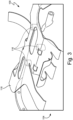
- FIG. 3 is a perspective partial view of hot section 104 with insulation standoffs 116.
- FIG. 3 shows gas turbine engine 100, hot section 104, stator housing wall 114, insulation standoffs 116, and assembly module 118.
- Stator housing wall 114 of hot section 104 encases combustor 108 and stators 112 (shown in FIG. 1 ).
- Insulation standoffs 116 can be integrally formed and conformal with stator housing wall 114 and extend radially away from stator housing wall 114. Alternatively, insulation standoffs 116 can be manufactured separately from stator housing wall 114 and attached during the assembly process.
- Accessory module 118 can be integrally formed and conformal with insulation standoffs 116 at an end opposite to the site of attachment between stator housing wall 114 and insulation standoffs 116.
- accessory module 118 can be manufactured separately from insulation standoffs 116 and attached during the assembly process.
- three insulation standoffs are depicted in FIG. 3 , other numbers of insulation standoffs can be used such as, for example, one, two, four, six, seven, ten, fifteen, twenty, or any number in between.
- Stator housing wall 114, insulation standoffs 116, and accessory module 118 can all be formed of the same material or each can be formed of a different material. However, using three or more insulation standoffs compared to using one or two insulation standoffs reduces the amount of vibrational stress experienced by stator housing wall 114, insulation standoffs 116, and accessory module 118 during operation of gas turbine engine 100.
- insulation standoffs 116 have a diameter from 8.4mm to 12.7mm (0.33 inches to 0.50 inches), inclusive. In some embodiments, insulation standoffs 116 extend radially away from stator housing wall 114 from 6.35mm to 50.8mm (0.25 inches to 2.00 inches), inclusive.
- insulation standoffs 116 can also have other diameters and radial length extensions, these geometric parameters and other possible shapes are limited by factors such as, for example, vibrational effects experienced by stator housing wall 114, insulation standoffs 116, and accessory module 118 during use of gas turbine engine 100, the amount of heat transferred between stator housing wall 114 and accessory module 118 during use of gas turbine engine 100, the weight of insulation standoffs 116, and the compactness of the overall build of gas turbine engine 100.
- FIG. 4A is a perspective view of an insulation feature lattice network.
- FIG. 4A shows gas turbine engine 100, hot section 104, stator housing wall 114, insulation standoff 116, and lattice network 116a.
- FIG. 4A depicts partially built insulation standoff 116 attached to stator housing wall 114 of hot section 104.
- Partially built insulation standoff 116 includes a repeating spar assembly (shown in FIG. 5 ) forming lattice network, which provides structural support to insulation standoff 116 throughout the manufacturing process.
- FIG. 4B is a perspective view of an insulation feature lattice network with ceramic infiltration.
- FIG. 4B shows gas turbine engine 100, hot section 104, stator housing wall 114, and insulation standoff 116.
- FIG. 4A depicts insulation standoff 116 attached to stator housing wall 114 of hot section 104.
- Insulation standoff 116 includes lattice network (shown in FIG. 4A ) with ceramic infiltration.
- Insulation standoff 116 can include walls to retain the ceramic infiltrate until the ceramic infiltrate cures. Any ceramic infiltrate can be used such as, for example, oxides and nitrides that can withstand the vibrational and thermal stress produced by gas turbine engine 100 under load.
- the ceramic infiltrate is a bentonite slurry.
- lattice network 116a with a ceramic infiltrate transfers heat from stator housing wall 114 to accessory module 118 less efficiently compared to a fully densified metallic structure having a similar size and shape.
- FIG. 5 is a perspective view of one embodiment of a repeating spar assembly.
- FIG. 5 shows spar assembly 138 including spars 132A, 132B, 132C, 132D, 132E, and 132F, and center point 136.
- Adjacent spars 132 for example spars 132A and 132B, lie at substantially 90° angles to one another.
- the ends of any three adjacent spars 132, for example spars 132A, 132B, and 132E, which are at an opposing end to center point 136, can form an abstract triangle. Taking all eight sets of three adjacent spars 132 and the resulting abstract triangle from each set of three adjacent spars 132 forms an abstract 3-dimensional shape, which can referred to as a square bipyramid.
- Each spar 132 can have, for example, a diameter of 0.01 inches (0.25 mm). In other embodiments, each spar 132 can have a diameter from 0.005 inches (0.13 mm) to 0.02 inches (0.51 mm), inclusive. In other embodiments, each spar 132 can have a diameter smaller than 0.005 inches (0.13 mm). In other embodiments, each spar 132 can have a diameter larger than 0.02 inches (0.51 mm). Each spar 132 can have a length of 0.05 inches (1.3 mm). In other embodiments, each spar 132 can have a length from 0.03 inches (0.76 mm) to 0.1 inches (2.5 mm), inclusive. In other embodiments, each spar 132 can have a length smaller than 0.03 inches (0.76 mm). In other embodiments, each spar 132 can have a length larger than 0.1 inches (2.5 mm).
- spar assembly 138 includes more than six spars 132. In other embodiments, spar assembly 138 includes fewer than six spars 132. In other embodiments, two adjacent spars 132 can lie at an angle more than 90° from one another. In other embodiments, two adjacent spars 132 can lie at an angle from 45° to 90° from one another.
- a gas turbine engine with integrally built insulation standoffs configured to maintain the temperature of the accessory module below the auto-ignition temperature of any flammable fluids, generally accepted as 450°F (232°C) eliminates the need for a thermal blanket.
- Many gas turbine engine systems include thermal blankets, which are typically much less dense than metallic stator housings, but are applied at a thickness 5-10 times that of the metallic housing. On the whole, thermal blankets can add 10-50% of the weight of the stator housing they are insulating.
- the integrally built insulation standoff obviates the need to provide a thermal blanket on the exterior of the stator housing, eliminating the need for cumbersome installation, reducing overall system weight, and simplifying ongoing maintenance.
Landscapes
- Engineering & Computer Science (AREA)
- Mechanical Engineering (AREA)
- General Engineering & Computer Science (AREA)
- Chemical & Material Sciences (AREA)
- Combustion & Propulsion (AREA)
- Aviation & Aerospace Engineering (AREA)
- Manufacturing & Machinery (AREA)
- Materials Engineering (AREA)
- Turbine Rotor Nozzle Sealing (AREA)
Description
- The present disclosure relates generally to gas turbine engines. More specifically, this invention relates to insulation standoffs attached to the casing of a gas turbine engine, in particular to a hot section of a gas turbine engine as well as to a method of manufacturing a gas turbine engine with an insulation standoff.
- Aircraft with gas turbine engines can include, for example, Unpiloted (or Unmanned) Aerial Vehicles (UAVs) and expendable turbojet systems for guided munitions, missiles, and decoys. These aircraft are generally designed as limited lifetime vehicles, with expected lifetimes as short as a single use or single mission vehicle. As such, many components and features common in traditional piloted aircraft are unnecessary or can be simplified for these aircraft applications, such as the thermal blankets commonly included on traditional aircraft engines.
- One of the main components of many simple gas turbine engines is a stator housing that encompasses a compressor, combustor, turbine, or a combination of these modules. As a result of the high gas temperatures and pressures generated by these modules, the stator housing functions as a pressure vessel and a thermal barrier to other components associated with the gas turbine engine. For example, external components mounted on a gas turbine engine can include those that contain or convey flammable fluids and the stator housing can operate above the auto-ignition temperatures of those flammable fluids. In the event of a leak or spill, the flammable fluids may combust, creating a safety critical fire hazard.
-
EP 3,848,561 discloses a double walled stator housing.US 2019/249570 A1 discloses an integral turbine center frame;EP 3379148 A1 discloses a combustor liner with gasket for gas turbine engine andWO 2015/077600 A1 discloses a cooling for a multi-walled structure of a gas turbine engine. - A hot section of a gas turbine engine is provided in accordance with claim 1.
- A method of manufacturing a gas turbine engine with an insulating standoff is provided in accordance with claim 5.
-
-
FIG. 1 is a cross-sectional view of a gas turbine engine. -
FIG. 2 is a perspective view of a hot section of a gas turbine engine. -
FIG. 3 is a perspective partial view of the hot section with insulation features. -
FIG. 4A is a perspective view of an insulation feature lattice network. -
FIG. 4B is a perspective view of an insulation feature lattice network with ceramic infiltration. -
FIG. 5 is a perspective view of one embodiment of a repeating spar assembly. - A gas turbine engine with integrally built insulation standoffs simplifies manufacturing. Even so, a gas turbine engine can leverage additive manufacturing techniques to improve various aspects of the gas turbine engine such as, for example, limited-life engines. Additive manufacturing allows the assembly details to be unitized, and simultaneously permits integration of many complex performance-enhancing features. The use of additive manufacturing to produce the engine reduces the time to delivery to the customer and lowers the overall production costs of the unit.
- Disclosed herein is a gas turbine engine with integrally built insulation standoffs configured to maintain the temperature of the accessory module below the auto-ignition temperature of any flammable fluids, generally accepted as 450°F (232°C). Many gas turbine engine systems include thermal blankets, which are typically much less dense than metallic stator housings, but are applied at a thickness 5-10 times that of the metallic housing. On the whole, thermal blankets can add 10-50% of the weight of the stator housing they are insulating. Building an integrally built insulation standoff obviates the need to provide such a thermal blanket on the exterior of the stator housing, eliminating the need for cumbersome installation, reducing overall system weight, and simplifying ongoing maintenance.
-
FIG. 1 is a cross-sectional view of a gas turbine engine.FIG. 1 showsgas turbine engine 100 includingcompressor section 102,hot section 104,exhaust section 106,combustor 108,rotor 110,stators 112,stator housing wall 114, and axis of rotation X. In the illustrated embodiment,gas turbine engine 100, which may be an attritable or limited-life engine, showscompressor section 102 lying forward and adjacent tohot section 104, which is positioned forward ofexhaust section 106. Althoughcombustor 108 lies physically aft ofhot section 104,combustor 108 fluidically sits betweencompressor section 102 andhot section 104. This arrangement may be referred to as a reverse flow combustor.Rotor 110 extends along the axis of rotation X into bothcompressor section 102 andhot section 104.Stators 112 are attached tostator housing wall 114 and positioned in a compressed air flow path betweencompressor section 102 andcombustor 108. - Operationally, air enters the forward end of
compressor section 102 and is compressed by compressor blades and vanes. Compressed air flows aroundstators 112 and is retained inside the compressed air flow path bystator housing wall 114. Compressed air and fuel entercombustor 108 where the compressed air and fuel are mixed and ignited. The resulting high-temperature gas from the combustor entershot section 104 and drives the rotation of turbine blades, which in turn generates power by turningrotor 110 circumferentially about axis of rotation X. Gas exitsgas turbine engine 100 out of the aft end ofexhaust section 106. -
Gas turbine engine 100 can be additively manufactured using techniques such as laser powder bed fusion, electron beam melting, direct energy deposition, and binder jetting. The additive manufacturing process can use any suitable material, including without limitation metals, alloys, and ceramic based materials that can tolerate the high temperature and pressure environment of a gas turbine engine for the expected useable life of the vehicle, such as, for example, nickel based alloys like Inconel® 625. However, guided munitions, missiles, and decoys are designed as single use vehicles and can have a maximum useable life of 10 hours. Heat protection that extends the useable life of the vehicle beyond 10 hours can unnecessarily add labor and expense to the manufacturing of such an engine. On the other hand, some UAVs can be designed to perform multiple missions and more heat protection may be desirable. A specific metal or alloy with or without additional treatments to provide heat protection can be chosen with such considerations in mind. For example, a thermal barrier layer or coating can be applied to the metal or alloy to extend the useful life of the gas turbine engine. -
FIG. 2 is a perspective view of a hot section of a gas turbine engine.FIG. 2 showsgas turbine engine 100,hot section 104,exhaust section 106,stator housing wall 114,insulation standoffs 116, andaccessory module 118.Hot section 104 ofgas turbine engine 100 is adjacent to and circumferentially surrounds part ofexhaust section 106.Hot section 104 is also fluidically connected forward ofexhaust section 106.Stator housing wall 114 ofhot section 104 encasescombustor 108 and stators 112 (shown inFIG. 1 ). -
Insulation standoffs 116 can be integrally formed and conformal withstator housing wall 114. As used herein, the term "integrally formed" means manufactured as a single unitized part. As used herein, the term "conformal with" means to generally follow the shape of. For example,insulation standoffs 116 can be additively manufactured together withhot section 104 forming a single unitized manufactured part. Alternatively,insulation standoffs 116 can be manufactured separately fromstator housing wall 114 and attached during the assembly process such as, for example, using welding or epoxy processes, riveting the parts together by adding an additional part or providing a rivet stud and rivet aperture during manufacturing, or using a band clamp assembly, a cotter pin assembly, a push nut assembly, or any other suitable joining method known in the art. Althoughinsulation standoffs 116 are depicted inFIGS. 2 ,3 ,4A, and 4B , as having a cylindrical shape,insulation standoffs 116 can have any shape that thermally insulatesaccessory module 118 fromhot section 104 and simultaneously withstands the vibrational and thermal stress ofgas turbine engine 100 during use. -
Accessory module 118 can house or be an attachment site for various parts associated withgas turbine engine 100 such as, for example, a fuel tank, fuel pump, electronics, and pyrotechnics for kick startinggas turbine engine 100.Accessory module 118 can be integrally formed and conformal withinsulation standoffs 116 at an end opposite to the site of attachment betweenstator housing wall 114 andinsulation standoffs 116. Alternatively,accessory module 118 can be manufactured separately frominsulation standoffs 116 and attached during the assembly process such as, for example, using welding or epoxy processes, riveting the parts together by adding an additional part or providing a rivet stud and rivet aperture during manufacturing, or using a band clamp assembly, a cotter pin assembly, a push nut assembly, or any other suitable joining method known in the art. -
FIG. 3 is a perspective partial view ofhot section 104 withinsulation standoffs 116.FIG. 3 showsgas turbine engine 100,hot section 104,stator housing wall 114,insulation standoffs 116, andassembly module 118.Stator housing wall 114 ofhot section 104 encasescombustor 108 and stators 112 (shown inFIG. 1 ).Insulation standoffs 116 can be integrally formed and conformal withstator housing wall 114 and extend radially away fromstator housing wall 114. Alternatively,insulation standoffs 116 can be manufactured separately fromstator housing wall 114 and attached during the assembly process. -
Accessory module 118 can be integrally formed and conformal withinsulation standoffs 116 at an end opposite to the site of attachment betweenstator housing wall 114 andinsulation standoffs 116. Alternatively,accessory module 118 can be manufactured separately frominsulation standoffs 116 and attached during the assembly process. Although three insulation standoffs are depicted inFIG. 3 , other numbers of insulation standoffs can be used such as, for example, one, two, four, six, seven, ten, fifteen, twenty, or any number in between.Stator housing wall 114,insulation standoffs 116, andaccessory module 118 can all be formed of the same material or each can be formed of a different material. However, using three or more insulation standoffs compared to using one or two insulation standoffs reduces the amount of vibrational stress experienced bystator housing wall 114,insulation standoffs 116, andaccessory module 118 during operation ofgas turbine engine 100. - In some embodiments,
insulation standoffs 116 have a diameter from 8.4mm to 12.7mm (0.33 inches to 0.50 inches), inclusive. In some embodiments,insulation standoffs 116 extend radially away fromstator housing wall 114 from 6.35mm to 50.8mm (0.25 inches to 2.00 inches), inclusive. Althoughinsulation standoffs 116 can also have other diameters and radial length extensions, these geometric parameters and other possible shapes are limited by factors such as, for example, vibrational effects experienced bystator housing wall 114,insulation standoffs 116, andaccessory module 118 during use ofgas turbine engine 100, the amount of heat transferred betweenstator housing wall 114 andaccessory module 118 during use ofgas turbine engine 100, the weight ofinsulation standoffs 116, and the compactness of the overall build ofgas turbine engine 100. -
FIG. 4A is a perspective view of an insulation feature lattice network.FIG. 4A showsgas turbine engine 100,hot section 104,stator housing wall 114,insulation standoff 116, and lattice network 116a.FIG. 4A depicts partially builtinsulation standoff 116 attached tostator housing wall 114 ofhot section 104. Partially builtinsulation standoff 116 includes a repeating spar assembly (shown inFIG. 5 ) forming lattice network, which provides structural support toinsulation standoff 116 throughout the manufacturing process. -
FIG. 4B is a perspective view of an insulation feature lattice network with ceramic infiltration.FIG. 4B showsgas turbine engine 100,hot section 104,stator housing wall 114, andinsulation standoff 116.FIG. 4A depictsinsulation standoff 116 attached tostator housing wall 114 ofhot section 104.Insulation standoff 116 includes lattice network (shown inFIG. 4A ) with ceramic infiltration.Insulation standoff 116 can include walls to retain the ceramic infiltrate until the ceramic infiltrate cures. Any ceramic infiltrate can be used such as, for example, oxides and nitrides that can withstand the vibrational and thermal stress produced bygas turbine engine 100 under load. In one embodiment, the ceramic infiltrate is a bentonite slurry. Advantageously, lattice network 116a with a ceramic infiltrate transfers heat fromstator housing wall 114 toaccessory module 118 less efficiently compared to a fully densified metallic structure having a similar size and shape. -
FIG. 5 is a perspective view of one embodiment of a repeating spar assembly.FIG. 5 shows spar assembly 138 includingspars center point 136. In the illustrated embodiment, there are six spars 132 radially extending from acenter point 136. Adjacent spars 132, for example spars 132A and 132B, lie at substantially 90° angles to one another. The ends of any three adjacent spars 132, for example spars 132A, 132B, and 132E, which are at an opposing end tocenter point 136, can form an abstract triangle. Taking all eight sets of three adjacent spars 132 and the resulting abstract triangle from each set of three adjacent spars 132 forms an abstract 3-dimensional shape, which can referred to as a square bipyramid. - Each spar 132 can have, for example, a diameter of 0.01 inches (0.25 mm). In other embodiments, each spar 132 can have a diameter from 0.005 inches (0.13 mm) to 0.02 inches (0.51 mm), inclusive. In other embodiments, each spar 132 can have a diameter smaller than 0.005 inches (0.13 mm). In other embodiments, each spar 132 can have a diameter larger than 0.02 inches (0.51 mm). Each spar 132 can have a length of 0.05 inches (1.3 mm). In other embodiments, each spar 132 can have a length from 0.03 inches (0.76 mm) to 0.1 inches (2.5 mm), inclusive. In other embodiments, each spar 132 can have a length smaller than 0.03 inches (0.76 mm). In other embodiments, each spar 132 can have a length larger than 0.1 inches (2.5 mm).
- In other embodiments, spar assembly 138 includes more than six spars 132. In other embodiments, spar assembly 138 includes fewer than six spars 132. In other embodiments, two adjacent spars 132 can lie at an angle more than 90° from one another. In other embodiments, two adjacent spars 132 can lie at an angle from 45° to 90° from one another.
- A gas turbine engine with integrally built insulation standoffs configured to maintain the temperature of the accessory module below the auto-ignition temperature of any flammable fluids, generally accepted as 450°F (232°C) eliminates the need for a thermal blanket. Many gas turbine engine systems include thermal blankets, which are typically much less dense than metallic stator housings, but are applied at a thickness 5-10 times that of the metallic housing. On the whole, thermal blankets can add 10-50% of the weight of the stator housing they are insulating. As such, the integrally built insulation standoff obviates the need to provide a thermal blanket on the exterior of the stator housing, eliminating the need for cumbersome installation, reducing overall system weight, and simplifying ongoing maintenance.
- While the invention has been described with reference to an exemplary embodiment(s), it will be understood by those skilled in the art that various changes may be made and equivalents may be substituted for elements thereof without departing from the scope of the invention. In addition, many modifications may be made to adapt a particular situation or material to the teachings of the invention without departing from the essential scope thereof. Therefore, it is intended that the invention not be limited to the particular embodiment(s) disclosed, but that the invention will include all embodiments falling within the scope of the appended claims.
Claims (9)
- A hot section (104) of a gas turbine engine (100), the hot section (104) comprising:a stator housing wall (114);at least one insulating standoff (116) attached to the stator housing wall (114) extending radially away from the stator housing wall (114), andan accessory module (118) attached to an opposite end of the at least one insulating standoff (116) away from the stator housing wall (114);characterised in that the at least one insulating standoff (116) is formed of a lattice network, the lattice network formed of a repeating network of spar assemblies (138) and infiltrated with ceramic material.
- The hot section (104) of claim 1, wherein the at least one insulating standoff (116) is integral and conformal with the stator housing wall (114).
- The hot section (104) of claim 1 or 2, wherein each spar assembly (138) has a cubic shape.
- The hot section (104) of any preceding claim, wherein each spar (132A, 132B, 132C, 132D, 132E, and 132F) of each spar assembly (138) has a diameter from 0.005 inches (0.13 mm) to 0.02 inches (0.51 mm), inclusive, and/or has a length from 0.03 inches (0.76 mm) to 0.1 inches (2.5 mm), inclusive.
- A method of manufacturing a gas turbine engine (100) with an insulating standoff (116), the method comprising:manufacturing a stator housing wall (114);manufacturing an at least one insulating standoff (116) configured to be attached to the stator housing wall (114), the at least one insulating standoff (116) extending radially away from the stator housing wall (114); andmanufacturing an accessory module (118) attached to an opposite end of the at least one insulating standoff (116) away from the stator housing wall (114);characterised in thatthe at least one insulating standoff (116) is a lattice network formed of a repeating network of spar assemblies (138) and the method further comprises infiltrating the lattice network with a ceramic material.
- The method of claim 5, wherein the at least one insulating standoff (116) is manufactured integrally and conformally with the stator housing wall (114) using an additive manufacturing process.
- The method of claim 5 or 6, wherein each spar assembly (138) has a cubic shape.
- The method of any of claims 5 to 7, wherein each spar (132A, 132B, 132C, 132D, 132E, 132F) has a length from 0.03 inches (0.76 mm) to 0.1 inches (2.5 mm), inclusive, and/or has a diameter from 0.005 inches (0.13 mm) to 0.02 inches (0.51 mm), inclusive.
- The hot section (104) or method of any preceding claim, wherein the insulation standoff (116) is configured to maintain an external temperature of the accessory module (118) at or below 450°F (232°C) during operation of the engine (100).
Applications Claiming Priority (1)
| Application Number | Priority Date | Filing Date | Title |
|---|---|---|---|
| US16/881,781 US11268404B2 (en) | 2020-05-22 | 2020-05-22 | Thermal insulation features for gas turbine engines |
Publications (2)
| Publication Number | Publication Date |
|---|---|
| EP3913195A1 EP3913195A1 (en) | 2021-11-24 |
| EP3913195B1 true EP3913195B1 (en) | 2023-10-11 |
Family
ID=76011721
Family Applications (1)
| Application Number | Title | Priority Date | Filing Date |
|---|---|---|---|
| EP21174522.9A Active EP3913195B1 (en) | 2020-05-22 | 2021-05-18 | Hot section of a gas turbine engine and method of manufacturing a gas turbine engine with an insulation standoff |
Country Status (2)
| Country | Link |
|---|---|
| US (1) | US11268404B2 (en) |
| EP (1) | EP3913195B1 (en) |
Family Cites Families (18)
| Publication number | Priority date | Publication date | Assignee | Title |
|---|---|---|---|---|
| US4826397A (en) * | 1988-06-29 | 1989-05-02 | United Technologies Corporation | Stator assembly for a gas turbine engine |
| US5031396A (en) * | 1989-12-01 | 1991-07-16 | United Technologies Corporation | Premounting retainer for a gas turbine engine |
| US5249417A (en) * | 1991-09-25 | 1993-10-05 | United Technologies Corporation | Method and apparatus to install and remove heavy components |
| DE102006031305A1 (en) | 2006-07-06 | 2008-01-10 | Mtu Aero Engines Gmbh | Gas turbine component for aircraft engines and method for the production of gas turbine components for aircraft engines |
| EP2628816A1 (en) | 2012-02-14 | 2013-08-21 | Siemens Aktiengesellschaft | Method for applying a heat insulation layer |
| FR2988978B1 (en) * | 2012-03-28 | 2014-06-27 | Safran | FADEC BOX SUPPORT IN COMPOSITE MATERIAL |
| EP3071816B1 (en) | 2013-11-21 | 2019-09-18 | United Technologies Corporation | Cooling a multi-walled structure of a turbine engine |
| CN105033188A (en) * | 2015-05-22 | 2015-11-11 | 中国科学院固体物理研究所 | Aluminum-based dot matrix material based on 3D printing technology and preparation method thereof |
| US10947904B2 (en) * | 2016-12-07 | 2021-03-16 | Rohr, Inc. | Sealing cooling inner fixed structure |
| US10941937B2 (en) | 2017-03-20 | 2021-03-09 | Raytheon Technologies Corporation | Combustor liner with gasket for gas turbine engine |
| CN107742047B (en) * | 2017-11-10 | 2019-11-29 | 北京航空航天大学 | A kind of design method becoming relative density octet lattice structure |
| US10781721B2 (en) | 2018-02-09 | 2020-09-22 | General Electric Company | Integral turbine center frame |
| JP2019199051A (en) * | 2018-05-18 | 2019-11-21 | 日本電気株式会社 | Lattice structure and body |
| US11199136B2 (en) * | 2018-10-05 | 2021-12-14 | Raytheon Technologies Corporation | Additively manufactured thermally insulating structure |
| JP7059396B2 (en) * | 2018-10-31 | 2022-04-25 | 三菱重工業株式会社 | Drive control device for inspection tube, inspection device, inspection method, and program of inspection device |
| US11162382B2 (en) * | 2019-02-21 | 2021-11-02 | General Electric Company | Method and system for engine operation |
| CN111301717A (en) * | 2019-12-27 | 2020-06-19 | 北京空间技术研制试验中心 | Bulkhead structure of manned spacecraft sealed cabin |
| US11466593B2 (en) | 2020-01-07 | 2022-10-11 | Raytheon Technologies Corporation | Double walled stator housing |
-
2020
- 2020-05-22 US US16/881,781 patent/US11268404B2/en active Active
-
2021
- 2021-05-18 EP EP21174522.9A patent/EP3913195B1/en active Active
Also Published As
| Publication number | Publication date |
|---|---|
| US20210363897A1 (en) | 2021-11-25 |
| US11268404B2 (en) | 2022-03-08 |
| EP3913195A1 (en) | 2021-11-24 |
Similar Documents
| Publication | Publication Date | Title |
|---|---|---|
| EP3848561B1 (en) | Double walled stator housing | |
| EP3754170B1 (en) | Fuel feed passages for an attritable engine | |
| EP2519726B1 (en) | Gas turbine engine and frame | |
| EP2794182B1 (en) | Support structure for a gas turbine engine, corresponding gas turbine engine, aeroplane and method of constructing | |
| EP3800328B1 (en) | Engine turbine support structure | |
| EP3023581B1 (en) | Turbine disk assembly including ceramic matrix composite blades and method of manufacture | |
| US20170022829A1 (en) | Nozzle guide vane with composite heat shields | |
| EP3865774B1 (en) | Gas turbine combustor with integrated fuel swirlers | |
| EP2938857B2 (en) | Heat shield for cooling a strut | |
| GB2094895A (en) | Turbine blade | |
| EP3055530B1 (en) | Bonded combustor wall for a turbine engine | |
| EP2538137B1 (en) | Combustor with strain tolerant combustor panel for gas turbine engine | |
| EP3056817B1 (en) | Additively manufactured combustor thermal shield and corresponding manufacturing method | |
| EP3670865B1 (en) | Attritable engine integrated with vehicle | |
| EP3441675B1 (en) | Gas turbine engine | |
| GB2590124A (en) | Casing integrated fluid distribution system | |
| EP3913195B1 (en) | Hot section of a gas turbine engine and method of manufacturing a gas turbine engine with an insulation standoff | |
| US12129768B2 (en) | Unitized manufacturing of a gas turbine engine | |
| EP3795902B1 (en) | Support structure for combustor components and method of using same | |
| EP3670861B1 (en) | Integrated additive cavity for charging and insulation of small attritable engine | |
| EP3537046B1 (en) | Dual wall liner for a gas turbine engine | |
| EP3502426B1 (en) | Lightweight tierod for a gas turbine engine |
Legal Events
| Date | Code | Title | Description |
|---|---|---|---|
| PUAI | Public reference made under article 153(3) epc to a published international application that has entered the european phase |
Free format text: ORIGINAL CODE: 0009012 |
|
| STAA | Information on the status of an ep patent application or granted ep patent |
Free format text: STATUS: THE APPLICATION HAS BEEN PUBLISHED |
|
| AK | Designated contracting states |
Kind code of ref document: A1 Designated state(s): AL AT BE BG CH CY CZ DE DK EE ES FI FR GB GR HR HU IE IS IT LI LT LU LV MC MK MT NL NO PL PT RO RS SE SI SK SM TR |
|
| B565 | Issuance of search results under rule 164(2) epc |
Effective date: 20211004 |
|
| STAA | Information on the status of an ep patent application or granted ep patent |
Free format text: STATUS: REQUEST FOR EXAMINATION WAS MADE |
|
| 17P | Request for examination filed |
Effective date: 20220518 |
|
| RBV | Designated contracting states (corrected) |
Designated state(s): AL AT BE BG CH CY CZ DE DK EE ES FI FR GB GR HR HU IE IS IT LI LT LU LV MC MK MT NL NO PL PT RO RS SE SI SK SM TR |
|
| GRAP | Despatch of communication of intention to grant a patent |
Free format text: ORIGINAL CODE: EPIDOSNIGR1 |
|
| STAA | Information on the status of an ep patent application or granted ep patent |
Free format text: STATUS: GRANT OF PATENT IS INTENDED |
|
| RIC1 | Information provided on ipc code assigned before grant |
Ipc: F01D 25/28 20060101ALI20230328BHEP Ipc: F01D 25/14 20060101AFI20230328BHEP |
|
| INTG | Intention to grant announced |
Effective date: 20230424 |
|
| GRAS | Grant fee paid |
Free format text: ORIGINAL CODE: EPIDOSNIGR3 |
|
| GRAA | (expected) grant |
Free format text: ORIGINAL CODE: 0009210 |
|
| STAA | Information on the status of an ep patent application or granted ep patent |
Free format text: STATUS: THE PATENT HAS BEEN GRANTED |
|
| AK | Designated contracting states |
Kind code of ref document: B1 Designated state(s): AL AT BE BG CH CY CZ DE DK EE ES FI FR GB GR HR HU IE IS IT LI LT LU LV MC MK MT NL NO PL PT RO RS SE SI SK SM TR |
|
| REG | Reference to a national code |
Ref country code: GB Ref legal event code: FG4D |
|
| REG | Reference to a national code |
Ref country code: CH Ref legal event code: EP |
|
| RAP4 | Party data changed (patent owner data changed or rights of a patent transferred) |
Owner name: RTX CORPORATION |
|
| REG | Reference to a national code |
Ref country code: DE Ref legal event code: R096 Ref document number: 602021005742 Country of ref document: DE |
|
| REG | Reference to a national code |
Ref country code: IE Ref legal event code: FG4D |
|
| REG | Reference to a national code |
Ref country code: LT Ref legal event code: MG9D |
|
| REG | Reference to a national code |
Ref country code: NL Ref legal event code: MP Effective date: 20231011 |
|
| REG | Reference to a national code |
Ref country code: AT Ref legal event code: MK05 Ref document number: 1620423 Country of ref document: AT Kind code of ref document: T Effective date: 20231011 |
|
| PG25 | Lapsed in a contracting state [announced via postgrant information from national office to epo] |
Ref country code: NL Free format text: LAPSE BECAUSE OF FAILURE TO SUBMIT A TRANSLATION OF THE DESCRIPTION OR TO PAY THE FEE WITHIN THE PRESCRIBED TIME-LIMIT Effective date: 20231011 |
|
| PG25 | Lapsed in a contracting state [announced via postgrant information from national office to epo] |
Ref country code: GR Free format text: LAPSE BECAUSE OF FAILURE TO SUBMIT A TRANSLATION OF THE DESCRIPTION OR TO PAY THE FEE WITHIN THE PRESCRIBED TIME-LIMIT Effective date: 20240112 |
|
| PG25 | Lapsed in a contracting state [announced via postgrant information from national office to epo] |
Ref country code: IS Free format text: LAPSE BECAUSE OF FAILURE TO SUBMIT A TRANSLATION OF THE DESCRIPTION OR TO PAY THE FEE WITHIN THE PRESCRIBED TIME-LIMIT Effective date: 20240211 |
|
| PG25 | Lapsed in a contracting state [announced via postgrant information from national office to epo] |
Ref country code: LT Free format text: LAPSE BECAUSE OF FAILURE TO SUBMIT A TRANSLATION OF THE DESCRIPTION OR TO PAY THE FEE WITHIN THE PRESCRIBED TIME-LIMIT Effective date: 20231011 |
|
| PG25 | Lapsed in a contracting state [announced via postgrant information from national office to epo] |
Ref country code: AT Free format text: LAPSE BECAUSE OF FAILURE TO SUBMIT A TRANSLATION OF THE DESCRIPTION OR TO PAY THE FEE WITHIN THE PRESCRIBED TIME-LIMIT Effective date: 20231011 |
|
| PG25 | Lapsed in a contracting state [announced via postgrant information from national office to epo] |
Ref country code: ES Free format text: LAPSE BECAUSE OF FAILURE TO SUBMIT A TRANSLATION OF THE DESCRIPTION OR TO PAY THE FEE WITHIN THE PRESCRIBED TIME-LIMIT Effective date: 20231011 |
|
| PG25 | Lapsed in a contracting state [announced via postgrant information from national office to epo] |
Ref country code: LT Free format text: LAPSE BECAUSE OF FAILURE TO SUBMIT A TRANSLATION OF THE DESCRIPTION OR TO PAY THE FEE WITHIN THE PRESCRIBED TIME-LIMIT Effective date: 20231011 Ref country code: IS Free format text: LAPSE BECAUSE OF FAILURE TO SUBMIT A TRANSLATION OF THE DESCRIPTION OR TO PAY THE FEE WITHIN THE PRESCRIBED TIME-LIMIT Effective date: 20240211 Ref country code: GR Free format text: LAPSE BECAUSE OF FAILURE TO SUBMIT A TRANSLATION OF THE DESCRIPTION OR TO PAY THE FEE WITHIN THE PRESCRIBED TIME-LIMIT Effective date: 20240112 Ref country code: ES Free format text: LAPSE BECAUSE OF FAILURE TO SUBMIT A TRANSLATION OF THE DESCRIPTION OR TO PAY THE FEE WITHIN THE PRESCRIBED TIME-LIMIT Effective date: 20231011 Ref country code: BG Free format text: LAPSE BECAUSE OF FAILURE TO SUBMIT A TRANSLATION OF THE DESCRIPTION OR TO PAY THE FEE WITHIN THE PRESCRIBED TIME-LIMIT Effective date: 20240111 Ref country code: AT Free format text: LAPSE BECAUSE OF FAILURE TO SUBMIT A TRANSLATION OF THE DESCRIPTION OR TO PAY THE FEE WITHIN THE PRESCRIBED TIME-LIMIT Effective date: 20231011 Ref country code: PT Free format text: LAPSE BECAUSE OF FAILURE TO SUBMIT A TRANSLATION OF THE DESCRIPTION OR TO PAY THE FEE WITHIN THE PRESCRIBED TIME-LIMIT Effective date: 20240212 |
|
| PG25 | Lapsed in a contracting state [announced via postgrant information from national office to epo] |
Ref country code: SE Free format text: LAPSE BECAUSE OF FAILURE TO SUBMIT A TRANSLATION OF THE DESCRIPTION OR TO PAY THE FEE WITHIN THE PRESCRIBED TIME-LIMIT Effective date: 20231011 Ref country code: RS Free format text: LAPSE BECAUSE OF FAILURE TO SUBMIT A TRANSLATION OF THE DESCRIPTION OR TO PAY THE FEE WITHIN THE PRESCRIBED TIME-LIMIT Effective date: 20231011 Ref country code: PL Free format text: LAPSE BECAUSE OF FAILURE TO SUBMIT A TRANSLATION OF THE DESCRIPTION OR TO PAY THE FEE WITHIN THE PRESCRIBED TIME-LIMIT Effective date: 20231011 Ref country code: NO Free format text: LAPSE BECAUSE OF FAILURE TO SUBMIT A TRANSLATION OF THE DESCRIPTION OR TO PAY THE FEE WITHIN THE PRESCRIBED TIME-LIMIT Effective date: 20240111 Ref country code: LV Free format text: LAPSE BECAUSE OF FAILURE TO SUBMIT A TRANSLATION OF THE DESCRIPTION OR TO PAY THE FEE WITHIN THE PRESCRIBED TIME-LIMIT Effective date: 20231011 Ref country code: HR Free format text: LAPSE BECAUSE OF FAILURE TO SUBMIT A TRANSLATION OF THE DESCRIPTION OR TO PAY THE FEE WITHIN THE PRESCRIBED TIME-LIMIT Effective date: 20231011 |
|
| PG25 | Lapsed in a contracting state [announced via postgrant information from national office to epo] |
Ref country code: DK Free format text: LAPSE BECAUSE OF FAILURE TO SUBMIT A TRANSLATION OF THE DESCRIPTION OR TO PAY THE FEE WITHIN THE PRESCRIBED TIME-LIMIT Effective date: 20231011 |
|
| REG | Reference to a national code |
Ref country code: DE Ref legal event code: R097 Ref document number: 602021005742 Country of ref document: DE |
|
| PG25 | Lapsed in a contracting state [announced via postgrant information from national office to epo] |
Ref country code: CZ Free format text: LAPSE BECAUSE OF FAILURE TO SUBMIT A TRANSLATION OF THE DESCRIPTION OR TO PAY THE FEE WITHIN THE PRESCRIBED TIME-LIMIT Effective date: 20231011 |
|
| PG25 | Lapsed in a contracting state [announced via postgrant information from national office to epo] |
Ref country code: SK Free format text: LAPSE BECAUSE OF FAILURE TO SUBMIT A TRANSLATION OF THE DESCRIPTION OR TO PAY THE FEE WITHIN THE PRESCRIBED TIME-LIMIT Effective date: 20231011 |
|
| PG25 | Lapsed in a contracting state [announced via postgrant information from national office to epo] |
Ref country code: SM Free format text: LAPSE BECAUSE OF FAILURE TO SUBMIT A TRANSLATION OF THE DESCRIPTION OR TO PAY THE FEE WITHIN THE PRESCRIBED TIME-LIMIT Effective date: 20231011 Ref country code: SK Free format text: LAPSE BECAUSE OF FAILURE TO SUBMIT A TRANSLATION OF THE DESCRIPTION OR TO PAY THE FEE WITHIN THE PRESCRIBED TIME-LIMIT Effective date: 20231011 Ref country code: RO Free format text: LAPSE BECAUSE OF FAILURE TO SUBMIT A TRANSLATION OF THE DESCRIPTION OR TO PAY THE FEE WITHIN THE PRESCRIBED TIME-LIMIT Effective date: 20231011 Ref country code: IT Free format text: LAPSE BECAUSE OF FAILURE TO SUBMIT A TRANSLATION OF THE DESCRIPTION OR TO PAY THE FEE WITHIN THE PRESCRIBED TIME-LIMIT Effective date: 20231011 Ref country code: EE Free format text: LAPSE BECAUSE OF FAILURE TO SUBMIT A TRANSLATION OF THE DESCRIPTION OR TO PAY THE FEE WITHIN THE PRESCRIBED TIME-LIMIT Effective date: 20231011 Ref country code: DK Free format text: LAPSE BECAUSE OF FAILURE TO SUBMIT A TRANSLATION OF THE DESCRIPTION OR TO PAY THE FEE WITHIN THE PRESCRIBED TIME-LIMIT Effective date: 20231011 Ref country code: CZ Free format text: LAPSE BECAUSE OF FAILURE TO SUBMIT A TRANSLATION OF THE DESCRIPTION OR TO PAY THE FEE WITHIN THE PRESCRIBED TIME-LIMIT Effective date: 20231011 |
|
| PLBE | No opposition filed within time limit |
Free format text: ORIGINAL CODE: 0009261 |
|
| STAA | Information on the status of an ep patent application or granted ep patent |
Free format text: STATUS: NO OPPOSITION FILED WITHIN TIME LIMIT |
|
| 26N | No opposition filed |
Effective date: 20240712 |
|
| PG25 | Lapsed in a contracting state [announced via postgrant information from national office to epo] |
Ref country code: SI Free format text: LAPSE BECAUSE OF FAILURE TO SUBMIT A TRANSLATION OF THE DESCRIPTION OR TO PAY THE FEE WITHIN THE PRESCRIBED TIME-LIMIT Effective date: 20231011 |
|
| PG25 | Lapsed in a contracting state [announced via postgrant information from national office to epo] |
Ref country code: SI Free format text: LAPSE BECAUSE OF FAILURE TO SUBMIT A TRANSLATION OF THE DESCRIPTION OR TO PAY THE FEE WITHIN THE PRESCRIBED TIME-LIMIT Effective date: 20231011 |
|
| REG | Reference to a national code |
Ref country code: CH Ref legal event code: PL |
|
| PG25 | Lapsed in a contracting state [announced via postgrant information from national office to epo] |
Ref country code: MC Free format text: LAPSE BECAUSE OF FAILURE TO SUBMIT A TRANSLATION OF THE DESCRIPTION OR TO PAY THE FEE WITHIN THE PRESCRIBED TIME-LIMIT Effective date: 20231011 |
|
| PG25 | Lapsed in a contracting state [announced via postgrant information from national office to epo] |
Ref country code: LU Free format text: LAPSE BECAUSE OF NON-PAYMENT OF DUE FEES Effective date: 20240518 |
|
| PG25 | Lapsed in a contracting state [announced via postgrant information from national office to epo] |
Ref country code: MC Free format text: LAPSE BECAUSE OF FAILURE TO SUBMIT A TRANSLATION OF THE DESCRIPTION OR TO PAY THE FEE WITHIN THE PRESCRIBED TIME-LIMIT Effective date: 20231011 Ref country code: LU Free format text: LAPSE BECAUSE OF NON-PAYMENT OF DUE FEES Effective date: 20240518 Ref country code: CH Free format text: LAPSE BECAUSE OF NON-PAYMENT OF DUE FEES Effective date: 20240531 |
|
| REG | Reference to a national code |
Ref country code: BE Ref legal event code: MM Effective date: 20240531 |
|
| PG25 | Lapsed in a contracting state [announced via postgrant information from national office to epo] |
Ref country code: IE Free format text: LAPSE BECAUSE OF NON-PAYMENT OF DUE FEES Effective date: 20240518 |
|
| PG25 | Lapsed in a contracting state [announced via postgrant information from national office to epo] |
Ref country code: BE Free format text: LAPSE BECAUSE OF NON-PAYMENT OF DUE FEES Effective date: 20240531 |
|
| PGFP | Annual fee paid to national office [announced via postgrant information from national office to epo] |
Ref country code: DE Payment date: 20250423 Year of fee payment: 5 |
|
| PGFP | Annual fee paid to national office [announced via postgrant information from national office to epo] |
Ref country code: GB Payment date: 20250423 Year of fee payment: 5 |
|
| PGFP | Annual fee paid to national office [announced via postgrant information from national office to epo] |
Ref country code: FR Payment date: 20250423 Year of fee payment: 5 |
|
| PG25 | Lapsed in a contracting state [announced via postgrant information from national office to epo] |
Ref country code: CY Free format text: LAPSE BECAUSE OF FAILURE TO SUBMIT A TRANSLATION OF THE DESCRIPTION OR TO PAY THE FEE WITHIN THE PRESCRIBED TIME-LIMIT; INVALID AB INITIO Effective date: 20210518 |
|
| PG25 | Lapsed in a contracting state [announced via postgrant information from national office to epo] |
Ref country code: HU Free format text: LAPSE BECAUSE OF FAILURE TO SUBMIT A TRANSLATION OF THE DESCRIPTION OR TO PAY THE FEE WITHIN THE PRESCRIBED TIME-LIMIT; INVALID AB INITIO Effective date: 20210518 |
|
| REG | Reference to a national code |
Ref country code: DE Ref legal event code: R081 Ref document number: 602021005742 Country of ref document: DE Owner name: RTX CORPORATION (N.D.GES.D. STAATES DELAWARE),, US Free format text: FORMER OWNER: RAYTHEON TECHNOLOGIES CORPORATION, FARMINGTON, CT, US |
|
| PG25 | Lapsed in a contracting state [announced via postgrant information from national office to epo] |
Ref country code: FI Free format text: LAPSE BECAUSE OF FAILURE TO SUBMIT A TRANSLATION OF THE DESCRIPTION OR TO PAY THE FEE WITHIN THE PRESCRIBED TIME-LIMIT Effective date: 20231011 |
|
| P01 | Opt-out of the competence of the unified patent court (upc) registered |
Free format text: CASE NUMBER: UPC_APP_0018606_3913195/2025 Effective date: 20251221 |