EP3910611A1 - Method and apparatus for adjusting channelization of traffic intersection - Google Patents
Method and apparatus for adjusting channelization of traffic intersection Download PDFInfo
- Publication number
- EP3910611A1 EP3910611A1 EP20213390.6A EP20213390A EP3910611A1 EP 3910611 A1 EP3910611 A1 EP 3910611A1 EP 20213390 A EP20213390 A EP 20213390A EP 3910611 A1 EP3910611 A1 EP 3910611A1
- Authority
- EP
- European Patent Office
- Prior art keywords
- traffic
- target
- characteristic
- intersection
- change information
- Prior art date
- Legal status (The legal status is an assumption and is not a legal conclusion. Google has not performed a legal analysis and makes no representation as to the accuracy of the status listed.)
- Granted
Links
Images



Classifications
-
- G—PHYSICS
- G08—SIGNALLING
- G08G—TRAFFIC CONTROL SYSTEMS
- G08G1/00—Traffic control systems for road vehicles
- G08G1/01—Detecting movement of traffic to be counted or controlled
- G08G1/0104—Measuring and analyzing of parameters relative to traffic conditions
- G08G1/0125—Traffic data processing
-
- G—PHYSICS
- G08—SIGNALLING
- G08G—TRAFFIC CONTROL SYSTEMS
- G08G1/00—Traffic control systems for road vehicles
- G08G1/01—Detecting movement of traffic to be counted or controlled
- G08G1/056—Detecting movement of traffic to be counted or controlled with provision for distinguishing direction of travel
-
- G—PHYSICS
- G08—SIGNALLING
- G08G—TRAFFIC CONTROL SYSTEMS
- G08G1/00—Traffic control systems for road vehicles
- G08G1/07—Controlling traffic signals
- G08G1/08—Controlling traffic signals according to detected number or speed of vehicles
-
- G—PHYSICS
- G06—COMPUTING OR CALCULATING; COUNTING
- G06V—IMAGE OR VIDEO RECOGNITION OR UNDERSTANDING
- G06V20/00—Scenes; Scene-specific elements
- G06V20/40—Scenes; Scene-specific elements in video content
-
- G—PHYSICS
- G06—COMPUTING OR CALCULATING; COUNTING
- G06V—IMAGE OR VIDEO RECOGNITION OR UNDERSTANDING
- G06V20/00—Scenes; Scene-specific elements
- G06V20/50—Context or environment of the image
- G06V20/52—Surveillance or monitoring of activities, e.g. for recognising suspicious objects
- G06V20/54—Surveillance or monitoring of activities, e.g. for recognising suspicious objects of traffic, e.g. cars on the road, trains or boats
-
- G—PHYSICS
- G08—SIGNALLING
- G08G—TRAFFIC CONTROL SYSTEMS
- G08G1/00—Traffic control systems for road vehicles
- G08G1/01—Detecting movement of traffic to be counted or controlled
- G08G1/0104—Measuring and analyzing of parameters relative to traffic conditions
- G08G1/0125—Traffic data processing
- G08G1/0133—Traffic data processing for classifying traffic situation
-
- G—PHYSICS
- G08—SIGNALLING
- G08G—TRAFFIC CONTROL SYSTEMS
- G08G1/00—Traffic control systems for road vehicles
- G08G1/01—Detecting movement of traffic to be counted or controlled
- G08G1/0104—Measuring and analyzing of parameters relative to traffic conditions
- G08G1/0137—Measuring and analyzing of parameters relative to traffic conditions for specific applications
- G08G1/0145—Measuring and analyzing of parameters relative to traffic conditions for specific applications for active traffic flow control
-
- G—PHYSICS
- G08—SIGNALLING
- G08G—TRAFFIC CONTROL SYSTEMS
- G08G1/00—Traffic control systems for road vehicles
- G08G1/07—Controlling traffic signals
- G08G1/081—Plural intersections under common control
-
- G—PHYSICS
- G08—SIGNALLING
- G08G—TRAFFIC CONTROL SYSTEMS
- G08G1/00—Traffic control systems for road vehicles
- G08G1/07—Controlling traffic signals
- G08G1/081—Plural intersections under common control
- G08G1/083—Controlling the allocation of time between phases of a cycle
-
- G—PHYSICS
- G01—MEASURING; TESTING
- G01S—RADIO DIRECTION-FINDING; RADIO NAVIGATION; DETERMINING DISTANCE OR VELOCITY BY USE OF RADIO WAVES; LOCATING OR PRESENCE-DETECTING BY USE OF THE REFLECTION OR RERADIATION OF RADIO WAVES; ANALOGOUS ARRANGEMENTS USING OTHER WAVES
- G01S19/00—Satellite radio beacon positioning systems; Determining position, velocity or attitude using signals transmitted by such systems
- G01S19/38—Determining a navigation solution using signals transmitted by a satellite radio beacon positioning system
- G01S19/39—Determining a navigation solution using signals transmitted by a satellite radio beacon positioning system the satellite radio beacon positioning system transmitting time-stamped messages, e.g. GPS [Global Positioning System], GLONASS [Global Orbiting Navigation Satellite System] or GALILEO
- G01S19/393—Trajectory determination or predictive tracking, e.g. Kalman filtering
Definitions
- the present disclosure relates to the field of intelligent transportation technologies in data processing, and more particularly, to a method and apparatus for adjusting channelization of a traffic intersection.
- road networks will be channelized. For example, traffic islands, bus stops, green belts, traffic markings, and signs may be set to disperse and guide road traffic flow, so as to realize smooth traffic and improve road traffic capacity.
- traffic islands, bus stops, green belts, traffic markings, and signs may be set to disperse and guide road traffic flow, so as to realize smooth traffic and improve road traffic capacity.
- the channelization such as green belts for non-motorized vehicle lanes is particularly important.
- the present disclosure provides a method and apparatus for adjusting channelization of a traffic intersection, which may implement intelligent detections of unreasonable channelization designs of non-motorized vehicle lanes.
- a method for adjusting channelization of a traffic intersection includes: obtaining a first traffic characteristic of vehicles at each of a plurality of target positions in a process of vehicles in a target traveling direction traveling through the traffic intersection from upstream to downstream in a preset first time period; generating first traffic change information of the traffic intersection based on the first traffic characteristic at each of the plurality of target positions; and in response to that the first traffic change information satisfies a preset first change distribution, generating channelization adjustment information for non-motorized vehicle lanes of the traffic intersection.
- an apparatus for adjusting channelization of a traffic intersection includes: a first obtaining module, configured to obtain a first traffic characteristic of vehicles at each of a plurality of target positions in a process of vehicles in a target traveling direction traveling through the traffic intersection from upstream to downstream in a preset first time period; a first generation module, configured to generate first traffic change information of the traffic intersection based on the first traffic characteristic at each of the plurality of target positions; and a second generation module, configured to, in response to that the first traffic change information satisfies a preset first change distribution, generate channelization adjustment information for non-motorized vehicle lanes of the traffic intersection.
- an electronic device includes at least one processor and a memory communicatively connected to the at least one processor.
- the memory stores an instruction executable by the at least one processor.
- the at least one processor may implement the method for adjusting channelization of the traffic intersection according to embodiments of the first aspect.
- a non-transitory computer-readable storage medium having a computer instruction stored thereon is provided.
- the computer instruction is configured to make a computer implement the method for adjusting channelization of the traffic intersection according to embodiments of the first aspect.
- the first traffic characteristic of the vehicles at each of the plurality of target positions in the process of the vehicles in the target traveling direction traveling through the traffic intersection from upstream to downstream in the preset first time period is obtained.
- the first traffic change information of the traffic intersection is generated based on the first traffic characteristic at each of the plurality of target positions.
- the channelization adjustment information for the non-motorized vehicle lanes of the traffic intersection is generated. Consequently, the intelligent detection of an unreasonable traffic direction of channelization of the non-motorized vehicle lanes is realized without manual work, and the efficiency of the channelization adjustment for the non-motorized vehicle lanes is improved.
- the present disclosure proposes a way that may intelligently detect unreasonable channelization of non-motorized vehicle lanes.
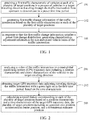
- FIG. 1 is a flowchart of a method for adjusting channelization of a traffic intersection according to Embodiment 1 of the present disclosure. As illustrated in FIG. 1 , the method includes the following.
- a first traffic characteristic of vehicles at each of multiple target positions in a process of vehicles in a target traveling direction traveling through the traffic intersection from upstream to downstream in a preset first time period is obtained.
- the first traffic characteristic of the vehicles at each of the multiple target positions in the process of vehicles in the target traveling direction traveling through the traffic intersection from upstream to downstream in the preset first time period is obtained.
- the first time period may be understood as a time period relatively appearing peak traveling (or a time period with a relatively high traffic volume), such as 8-10 a.m., or 5-8 p.m.
- the target traveling direction may be understood as a traveling direction of a current lane to be detected.
- the target traveling direction may be actively selected by a user, or may be determined based on the position and type of channelization in each traveling direction.
- a risk level of traffic congestion caused by the channelization in each traveling direction is analyzed, and a traveling direction of a lane with a higher risk level is determined as the target traveling direction.
- the first traffic characteristic may include one or more of traffic speed, traffic acceleration, and a time difference between a time point when a current vehicle traveling through and a time point when an in-front vehicle traveling through.
- the multiple target positions may be upstream, downstream, or in the middle of the traffic intersection.
- the first traffic characteristic includes a speed characteristic.
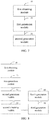
- the above block 101 includes the following.
- a video of the traffic intersection is analyzed to extract global positioning system (GPS) trajectory data including a position characteristic and a time characteristic of the vehicles in the target traveling direction.
- GPS global positioning system
- a video of the traffic intersection to be analyzed is obtained, and the video of the traffic intersection of the target traveling direction is analyzed.
- the GPS trajectory data of multiple vehicles in the target traveling direction and traveling through the traffic intersection in the preset first time period is extracted.
- the GPS trajectory data includes a position characteristic and a time characteristic.
- the position characteristic includes a position of a vehicle relative to the traffic intersection when the vehicle is traveling, such as a position located upstream of the traffic intersection, a position located downstream of the traffic intersection.
- the above-mentioned time characteristic may be obtained based on video time in the video.
- the GPS trajectory data corresponds to multiple traveling vehicles in the target traveling direction.
- a license plate number of each vehicle is identified.
- a road position (position characteristic) covered by a trajectory of each vehicle traveling in the preset first time period and a time point (time characteristic) traveling through the road are extracted based on the license plate number.
- the time point traveling through the road may be determined based on a time point in the video.
- target GPS trajectory data indicating traveling through the traffic intersection with a green light on in the first time period is obtained based on the time characteristic.
- obtaining the target GPS trajectory data indicating traveling through the traffic intersection with a green light on in the first time period based on the time characteristic means extracting GPS trajectory data corresponding to a period that the green light being on in the first time period.
- a speed characteristic corresponding to each of the multiple target positions is obtained based on a position characteristic and a time characteristic of the target GPS trajectory data.
- the multiple target positions include an upstream exit position, an intersection center position, and a downstream entrance position.
- the speed characteristic corresponding to each of the multiple target positions is obtained based on the position characteristic and the time characteristic of the target GPS trajectory data.
- the multiple target positions include the upstream exit position, the intersection center position, and the downstream entrance position.
- the GPS trajectory data of the target position may be matched based on the position characteristic, and the corresponding speed characteristic may be determined based on an instantaneous speed detected at a corresponding time point.
- the speed characteristic may be obtained in the following manner. A corresponding time point is obtained to analyze a distance traveled by each vehicle in the video and a time taken for traveling the distance. And then, the speed characteristic is determined based on a ratio of the distance to the time.
- the first traffic characteristic includes a time difference of traveling between a current vehicle and an in-front vehicle. Consequently, for each vehicle, a time point at which the vehicle traveling through the target position may be obtained. For example, the time point of traveling through the target position may be determined based on matching time points recorded by a driving recorder with positions each vehicle traveled through. For each vehicle, the license plate number of its in-front vehicle that traveling through the target position is obtained. The license plate number of the in-front vehicle of each vehicle is recorded by the driving recorder and reported by each vehicle. The time difference of traveling through the target position between each vehicle and its in-front vehicle may be determined according to the time point at which each vehicle traveling through the target position and the license plate number of each vehicle's in-front vehicle that traveling through the target position.
- first traffic change information of the traffic intersection is generated based on the first traffic characteristic at each of the plurality of target positions.
- the first traffic characteristic at each target position reflects traffic conditions. Therefore, the first traffic change information of the traffic intersection is generated based on the first traffic characteristic at each of the plurality of target positions, and the first traffic change information reflects changes of the traffic at the plurality of target positions. In different application scenes, contents corresponding to the first traffic characteristic are different, and then resulting in different first traffic change information. In some possible embodiments, when the first traffic characteristic is the speed characteristic, the corresponding first traffic change information is a speed change condition of the vehicle traveling through different target positions.
- the block 102 includes the following.
- a traffic change curve of the traffic intersection is generated by performing calculation on the first traffic characteristic at each of the plurality of target positions based on a preset function.
- the traffic change curve of the traffic intersection is generated by performing calculation on the first traffic characteristic at each of the plurality of target positions based on the preset function.
- Variables of the preset function are target positions and the first traffic characteristic.
- the multiple target positions and the first traffic characteristic are inputted to the preset function to obtain the value of each reference point.
- the traffic change curve of the traffic intersection is generated based on values of each reference point.
- a first corresponding relationship between the first traffic characteristic at each target position and the traffic change curve may also be preset.
- the traffic change curve of the traffic intersection may be determined based on the first corresponding relationship.
- a target value of each of a plurality of target points on the traffic change curve is determined.
- the first traffic change information is generated based on the target value of each of the plurality of target points.
- the target value of each of the plurality of target points on the traffic change curve is determined.
- the first traffic change information is generated based on the target value of each of the plurality of target points. Consequently, analyzing based on the change curve improves the reliability of determining the first traffic change information.
- the above target points contain different meanings.
- the traffic change curve is as illustrated in FIG. 4 , continue to refer to FIG. 4 .
- a point with the first traffic characteristic being less than a preset threshold is determined as the target point.
- An area of a shaded area corresponding to the target point is used as the first traffic change information.
- FIG. 5 when the traffic change curve is as illustrated in FIG. 4 , reference may be made to FIG. 5 .
- a value corresponding to each target position is determined as the target point.
- a weighted average is performed on a slope (not shown in the figure) of each target point to determine the first traffic change information.
- channelization adjustment information for non-motorized vehicle lanes of the traffic intersection is generated.
- the preset first change distribution is set in advance.
- the first change distribution corresponds to an unreasonable change distribution of non-motorized vehicle channelization settings. Consequently, when the first traffic change information satisfying the preset first change distribution is determined, the channelization adjustment information for non-motorized vehicle lanes of the traffic intersection is generated.
- the channelization adjustment information for non-motorized vehicle lanes may include adjustment prompting information for the channelization of non-motorized vehicle lanes, so that relevant personnel may eliminate unreasonable designs of the channelization of non-motorized vehicle lanes.
- the channelization adjustment information for non-motorized vehicle lanes may also be adjustment advice based on the channelization of non-motorized vehicle lanes.
- the adjustment advice includes changes of the position or type of the canalization, etc.
- the adjustment advice may be generated in advance based on the analysis of big data.
- the method further includes the following.
- a second traffic characteristic of vehicles at each of the plurality of target positions in the process of the vehicles in the target traveling direction traveling through the traffic intersection from upstream to downstream in a preset second time period is obtained.
- the preset second change distribution corresponds to a change that occurs due to an unreasonable design of a designed duration of signal control lights of the information control device. Therefore, in order to further verify whether traffic congestion is caused by the unreasonable design of the information control device, the second traffic characteristic at each of the plurality of target positions in the process of the vehicles in the target traveling direction traveling through the traffic intersection from upstream to downstream in the preset second time period is obtained.
- the second time period may be an off-peak traveling time period (or a time period with a relatively low traffic volume) such as 0:00 to 6:00 am.
- the second traffic characteristic may be the same as the first traffic characteristic, which will not be repeated here.
- second traffic change information of the traffic intersection is generated based on the second traffic characteristic at each of the plurality of target positions.
- the second traffic change information of the traffic intersection is generated based on the second traffic characteristic at each of the plurality of target positions.
- the manners of generating the second traffic change information of the traffic intersection based on the second traffic characteristic at each of the plurality of target positions are similar to the manners of generating the first traffic change information of the traffic intersection based on the first traffic characteristic at each of the plurality of target positions, and thus will not be repeated here.
- the first traffic change information is compared with the second traffic change information.
- adjustment information for an information control device of the traffic intersection is generated.
- the first traffic change information is compared with the second traffic change information.
- the difference between the first traffic change information and the second traffic change information being greater than the preset threshold, it is indicated that the traffic congestion in the target traveling direction is caused by the unreasonable design of the information control device. Consequently, the adjustment information for the information control device of the traffic intersection is generated.
- various methods may be used to generate the adjustment information for the information control device.
- a difference result between the difference and the preset threshold is calculated, and a preset second corresponding relationship between the difference result and increased duration of the green light being on is queried.
- the increased duration of the green light being on is determined based on the second corresponding relationship. Therefore, the adjustment information for the information control device of the traffic intersection includes the correspondingly increased duration of the green light being on.
- a product value of the difference and a preset adjustment coefficient is calculated, and a preset third corresponding relationship between the product value and increased duration of the green light being on is queried.
- the increased duration of the green light being on is determined based on the third corresponding relationship. Therefore, the adjustment information for the information control device of the traffic intersection includes the correspondingly increased duration of the green light being on.
- the adjustment information of the traffic intersection is generated. For example, an absolute value of the difference result between the difference and the preset threshold is calculated. On the basis of the target traveling direction and the absolute value of the difference result, information of increased quantity about the traveling direction of the lane in the target traveling direction is generated.
- the first traffic characteristic at each of the plurality of target positions in the process of the vehicles in the target traveling direction traveling through the traffic intersection from upstream to downstream in the preset first time period is obtained.
- the first traffic change information of the traffic intersection is generated based on the first traffic characteristic at each of the plurality of target positions.
- the channelization adjustment information for the non-motorized vehicle lanes of the traffic intersection is generated. Consequently, the intelligent detection of an unreasonable traffic direction of channelization of the non-motorized vehicle lanes is realized without manual work, and the efficiency of the channelization adjustment for the non-motorized vehicle lanes is improved.
- FIG. 7 is a block diagram illustrating an apparatus for adjusting channelization of a traffic intersection according to an embodiment of the present disclosure. As illustrated in FIG. 7 , the apparatus for adjusting channelization of the traffic intersection includes a first obtaining module 10, a first generation module 20 and a second generation module 30.
- the first obtaining module 10 is configured to obtain a first traffic characteristic of vehicles at each of a plurality of target positions in a process of vehicles in a target traveling direction traveling through the traffic intersection from upstream to downstream in a preset first time period.
- the first obtaining module 10 is configured to: analyze a video of the traffic intersection to extract global positioning system (GPS) trajectory data including a position characteristic and a time characteristic of the vehicles in the target traveling direction; obtain target GPS trajectory data indicating traveling through the traffic intersection with a green light on in the first time period based on the time characteristic; and calculate a speed characteristic corresponding to each of the plurality of target positions based on a position characteristic and a time characteristic of the target GPS trajectory data.
- the plurality of target positions includes an upstream exit position, an intersection center position, and a downstream entrance position.
- the first generation module 20 is configured to generate first traffic change information of the traffic intersection based on the first traffic characteristic at each of the plurality of target positions.
- the first generation module 20 is configured to: generate a traffic change curve of the traffic intersection by performing calculation on the first traffic characteristic at each of the plurality of target positions based on a preset function; determine a target value of each of a plurality of target points on the traffic change curve; and generate the first traffic change information based on the target value of each of the plurality of target points.
- the second generation module 30 is configured to, in response to that the first traffic change information satisfies a preset first change distribution, generate channelization adjustment information for non-motorized vehicle lanes of the traffic intersection.
- the apparatus further includes a second obtaining module 40, a third generation module 50 and a fourth generation module 60.
- the second obtaining module 40 is configured to, in response to that the first traffic change information satisfies a preset second change distribution, obtain a second traffic characteristic of vehicles at each of the plurality of target positions in the process of the vehicles in the target traveling direction traveling through the traffic intersection from upstream to downstream in a preset second time period.
- the third generation module 50 is configured to generate second traffic change information of the traffic intersection based on the second traffic characteristic at each of the plurality of target positions.
- the fourth generation module 60 is configured to compare the first traffic change information with the second traffic change information, and in response to a difference between the first traffic change information and the second traffic change information being greater than a preset threshold, generate adjustment information for an information control device of the traffic intersection.
- the apparatus for adjusting channelization of the traffic intersection the first traffic characteristic at each of the plurality of target positions in the process of the vehicles in the target traveling direction traveling through the traffic intersection from upstream to downstream in the preset first time period is obtained.
- the first traffic change information of the traffic intersection is generated based on the first traffic characteristic at each of the plurality of target positions.
- the channelization adjustment information is generated for the non-motorized vehicle lanes of the traffic intersection. Consequently, the intelligent detection of an unreasonable traffic direction of channelization of the non-motorized vehicle is realized without manual work, and the efficiency of the channelization adjustment for the non-motorized vehicle is improved.
- the present disclosure also provides an electronic device and a readable storage medium.
- FIG. 9 is a block diagram illustrating an electronic device configured to implement a method for adjusting channelization of a traffic intersection according to embodiments of the present disclosure.
- the electronic device is intended to represent various forms of digital computers, such as a laptop computer, a desktop computer, a workbench, a personal digital assistant, a server, a blade server, a mainframe computer and other suitable computers.
- the electronic device may also represent various forms of mobile devices, such as a personal digital processor, a cellular phone, a smart phone, a wearable device and other similar computing devices.
- Components shown herein, their connections and relationships as well as their functions are merely examples, and are not intended to limit the implementation of the present disclosure described and/or required herein.
- the electronic device includes: one or more processors 901, a memory 902, and interfaces for connecting various components, including a high-speed interface and a low-speed interface.
- the components are interconnected by different buses and may be mounted on a common motherboard or otherwise installed as required.
- the processor may process instructions executed within the electronic device, including instructions stored in or on the memory to display graphical information of the GUI on an external input/output device (such as a display device coupled to the interface).
- an external input/output device such as a display device coupled to the interface.
- multiple processors and/or multiple buses may be used with multiple memories.
- multiple electronic devices may be connected, each providing some of the necessary operations (for example, as a server array, a group of blade servers, or a multiprocessor system).
- One processor 901 is taken as an example in FIG. 9 .
- the memory 902 is a non-transitory computer-readable storage medium according to the embodiments of the present disclosure.
- the memory stores instructions executable by at least one processor, so that the at least one processor executes the method for adjusting channelization of the traffic intersection provided by the present disclosure.
- the non-transitory computer-readable storage medium according to the present disclosure stores computer instructions, which are configured to make the computer execute the method for adjusting channelization of the traffic intersection provided by the present disclosure.
- the memory 902 may be configured to store non-transitory software programs, non-transitory computer executable programs and modules, such as program instructions/modules (for example, the first obtaining module 10, the first generation module 20 and the second generation module 30 illustrated in FIG. 7 ) corresponding to the method for adjusting channelization of the traffic intersection according to embodiments of the present disclosure.
- the processor 901 executes various functional applications and performs data processing of the server by running non-transitory software programs, instructions and modules stored in the memory 902, that is, the method for adjusting channelization of the traffic intersection according to the foregoing method embodiments is implemented.
- the memory 902 may include a storage program area and a storage data area, where the storage program area may store an operating system and applications required for at least one function; and the storage data area may store data created according to the use of the electronic device that implements the method for adjusting channelization of the traffic intersection, and the like.
- the memory 902 may include a high-speed random access memory, and may further include a non-transitory memory, such as at least one magnetic disk memory, a flash memory device, or other non-transitory solid-state memories.
- the memory 902 may optionally include memories remotely disposed with respect to the processor 901, and these remote memories may be connected to the electronic device, which is configured to implement the method for adjusting channelization of the traffic intersection, through a network. Examples of the network include, but are not limited to, the Internet, an intranet, a local area network, a mobile communication network, and combinations thereof.
- the electronic device configured to implement the method for adjusting channelization of the traffic intersection may further include an input device 903 and an output device 904.
- the processor 901, the memory 902, the input device 903 and the output device 904 may be connected through a bus or in other manners.
- FIG. 9 is illustrated by establishing the connection through a bus.
- the input device 903 may receive input numeric or character information, and generate key signal inputs related to user settings and function control of the electronic device configured to implement the method for adjusting channelization of the traffic intersection, such as a touch screen, a keypad, a mouse, a trackpad, a touchpad, a pointing stick, one or more mouse buttons, trackballs, joysticks and other input devices.
- the output device 904 may include a display device, an auxiliary lighting device (for example, an LED), a haptic feedback device (for example, a vibration motor), and so on.
- the display device may include, but is not limited to, a liquid crystal display (LCD), a light emitting diode (LED) display and a plasma display. In some embodiments, the display device may be a touch screen.
- Various implementations of systems and technologies described herein may be implemented in digital electronic circuit systems, integrated circuit systems, application-specific ASICs (application-specific integrated circuits), computer hardware, firmware, software, and/or combinations thereof. These various implementations may include: being implemented in one or more computer programs that are executable and/or interpreted on a programmable system including at least one programmable processor.
- the programmable processor may be a dedicated or general-purpose programmable processor that may receive data and instructions from a storage system, at least one input device and at least one output device, and transmit the data and instructions to the storage system, the at least one input device and the at least one output device.
- the systems and technologies described herein may be implemented on a computer having: a display device (for example, a cathode ray tube (CRT) or a liquid crystal display (LCD) monitor) for displaying information to the user; and a keyboard and a pointing device (such as a mouse or trackball) through which the user may provide input to the computer.
- a display device for example, a cathode ray tube (CRT) or a liquid crystal display (LCD) monitor
- a keyboard and a pointing device such as a mouse or trackball
- Other kinds of devices may also be used to provide interactions with the user; for example, the feedback provided to the user may be any form of sensory feedback (e.g., visual feedback, auditory feedback or haptic feedback); and input from the user may be received in any form (including acoustic input, voice input or tactile input).
- the systems and technologies described herein may be implemented in a computing system that includes back-end components (for example, as a data server), a computing system that includes middleware components (for example, an application server), or a computing system that includes front-end components (for example, a user computer with a graphical user interface or a web browser, through which the user may interact with the implementation of the systems and technologies described herein), or a computing system including any combination of the back-end components, the middleware components or the front-end components.
- the components of the system may be interconnected by digital data communication (e.g., a communication network) in any form or medium. Examples of the communication network include: a local area network (LAN), a wide area network (WAN), and the Internet.
- Computer systems may include a client and a server.
- the client and server are generally remote from each other and typically interact through the communication network.
- a client-server relationship is generated by computer programs running on respective computers and having a client-server relationship with each other.
Landscapes
- Physics & Mathematics (AREA)
- General Physics & Mathematics (AREA)
- Engineering & Computer Science (AREA)
- Chemical & Material Sciences (AREA)
- Analytical Chemistry (AREA)
- Multimedia (AREA)
- Theoretical Computer Science (AREA)
- Traffic Control Systems (AREA)
Abstract
Description
- The present disclosure relates to the field of intelligent transportation technologies in data processing, and more particularly, to a method and apparatus for adjusting channelization of a traffic intersection.
- With increasing of vehicle ownership, urban traffic roads are developing faster and faster. In order to meet traffic needs of pedestrians and different kinds of vehicles, road networks will be channelized. For example, traffic islands, bus stops, green belts, traffic markings, and signs may be set to disperse and guide road traffic flow, so as to realize smooth traffic and improve road traffic capacity. In channelization of the road network, in order to avoid traffic accidents causing by unreasonable isolation of non-motorized vehicle lanes from motorized vehicle lanes, the channelization such as green belts for non-motorized vehicle lanes is particularly important.
- However, due to rapid changes in traffic conditions of the road, unreasonable channelization of non-motorized vehicle lanes may lead to road congestion and even cause traffic accidents. Therefore, it is necessary to find unreasonable channelization of non-motorized vehicle lanes in a timely and efficient manner.
- The present disclosure provides a method and apparatus for adjusting channelization of a traffic intersection, which may implement intelligent detections of unreasonable channelization designs of non-motorized vehicle lanes.
- According to a first aspect, a method for adjusting channelization of a traffic intersection is provided. The method includes: obtaining a first traffic characteristic of vehicles at each of a plurality of target positions in a process of vehicles in a target traveling direction traveling through the traffic intersection from upstream to downstream in a preset first time period; generating first traffic change information of the traffic intersection based on the first traffic characteristic at each of the plurality of target positions; and in response to that the first traffic change information satisfies a preset first change distribution, generating channelization adjustment information for non-motorized vehicle lanes of the traffic intersection.
- According to a second aspect, an apparatus for adjusting channelization of a traffic intersection is provided. The apparatus includes: a first obtaining module, configured to obtain a first traffic characteristic of vehicles at each of a plurality of target positions in a process of vehicles in a target traveling direction traveling through the traffic intersection from upstream to downstream in a preset first time period; a first generation module, configured to generate first traffic change information of the traffic intersection based on the first traffic characteristic at each of the plurality of target positions; and a second generation module, configured to, in response to that the first traffic change information satisfies a preset first change distribution, generate channelization adjustment information for non-motorized vehicle lanes of the traffic intersection.
- According to a third aspect, an electronic device is provided. The electronic device includes at least one processor and a memory communicatively connected to the at least one processor. The memory stores an instruction executable by the at least one processor. When the instruction is executed by the at least one processor, the at least one processor may implement the method for adjusting channelization of the traffic intersection according to embodiments of the first aspect.
- According to a fourth aspect, a non-transitory computer-readable storage medium having a computer instruction stored thereon is provided. The computer instruction is configured to make a computer implement the method for adjusting channelization of the traffic intersection according to embodiments of the first aspect.
- The technical solution of the present disclosure at least has the following beneficial technical effects.
- The first traffic characteristic of the vehicles at each of the plurality of target positions in the process of the vehicles in the target traveling direction traveling through the traffic intersection from upstream to downstream in the preset first time period is obtained. The first traffic change information of the traffic intersection is generated based on the first traffic characteristic at each of the plurality of target positions. In response to that the first traffic change information satisfies the preset first change distribution, the channelization adjustment information for the non-motorized vehicle lanes of the traffic intersection is generated. Consequently, the intelligent detection of an unreasonable traffic direction of channelization of the non-motorized vehicle lanes is realized without manual work, and the efficiency of the channelization adjustment for the non-motorized vehicle lanes is improved.
- It should be understood that the summary is not intended to identify key or important features of embodiments of the present disclosure, nor is it intended to limit the scope of the present disclosure. Other features of the present disclosure will be easily understood through the following description.
- The accompanying drawings are used for a better understanding of the solution and do not constitute a limitation to the present disclosure.
-
FIG. 1 is a flowchart of a method for adjusting channelization of a traffic intersection according toEmbodiment 1 of the present disclosure. -
FIG. 2 is a flowchart of a method for adjusting channelization of a traffic intersection according toEmbodiment 2 of the present disclosure. -
FIG. 3 is a flowchart of a method for adjusting channelization of a traffic intersection according toEmbodiment 3 of the present disclosure. -
FIG. 4 is a schematic diagram illustrating a scene for determining first traffic change information according toEmbodiment 4 of the present disclosure. -
FIG. 5 is a schematic diagram illustrating a scene for determining first traffic change information according to Embodiment 5 of the present disclosure. -
FIG. 6 is a flowchart of a method for adjusting channelization of a traffic intersection according to Embodiment 6 of the present disclosure. -
FIG. 7 is a block diagram illustrating an apparatus for adjusting channelization of a traffic intersection according to Embodiment 7 of the present disclosure. -
FIG. 8 is a block diagram illustrating an apparatus for adjusting channelization of a traffic intersection according to Embodiment 8 of the present disclosure. -
FIG. 9 is a block diagram illustrating an electronic device configured to implement a method for adjusting channelization of a traffic intersection according to embodiments of the present disclosure. - Exemplary embodiments of the present disclosure are described below with reference to the accompanying drawings, which include various details of the embodiments of the present disclosure to facilitate understanding, and should be considered as merely exemplary. Therefore, those skilled in the art should recognize that various changes and modifications may be made to the embodiments described herein without departing from the scope and spirit of the present disclosure. Also, for clarity and conciseness, descriptions of well-known functions and structures are omitted in the following description.
- In order to solve the above technical problem, the present disclosure proposes a way that may intelligently detect unreasonable channelization of non-motorized vehicle lanes.
- In detail,
FIG. 1 is a flowchart of a method for adjusting channelization of a traffic intersection according toEmbodiment 1 of the present disclosure. As illustrated inFIG. 1 , the method includes the following. - At
block 101, a first traffic characteristic of vehicles at each of multiple target positions in a process of vehicles in a target traveling direction traveling through the traffic intersection from upstream to downstream in a preset first time period is obtained. - It is easy to understand that traffic congestion may be reflected by traffic characteristics of peak traveling time periods. Therefore, in order to determine whether the traffic flow is smooth, in embodiments of the present disclosure, the first traffic characteristic of the vehicles at each of the multiple target positions in the process of vehicles in the target traveling direction traveling through the traffic intersection from upstream to downstream in the preset first time period is obtained. The first time period may be understood as a time period relatively appearing peak traveling (or a time period with a relatively high traffic volume), such as 8-10 a.m., or 5-8 p.m. The target traveling direction may be understood as a traveling direction of a current lane to be detected. The target traveling direction may be actively selected by a user, or may be determined based on the position and type of channelization in each traveling direction. On the basis of the position and type of the channelization in each traveling direction, a risk level of traffic congestion caused by the channelization in each traveling direction is analyzed, and a traveling direction of a lane with a higher risk level is determined as the target traveling direction.
- In addition, the first traffic characteristic may include one or more of traffic speed, traffic acceleration, and a time difference between a time point when a current vehicle traveling through and a time point when an in-front vehicle traveling through. The multiple target positions may be upstream, downstream, or in the middle of the traffic intersection.
- It should be noted that in different application scenes, different methods of obtaining the first traffic characteristic at each of the multiple target positions in the process of the vehicles in the target traveling direction traveling through the traffic intersection from upstream to downstream in the preset first time period are exemplified as follows.
- In the embodiment, the first traffic characteristic includes a speed characteristic. As illustrated in
FIG. 2 , theabove block 101 includes the following. - At
block 201, a video of the traffic intersection is analyzed to extract global positioning system (GPS) trajectory data including a position characteristic and a time characteristic of the vehicles in the target traveling direction. - In detail, a video of the traffic intersection to be analyzed is obtained, and the video of the traffic intersection of the target traveling direction is analyzed. The GPS trajectory data of multiple vehicles in the target traveling direction and traveling through the traffic intersection in the preset first time period is extracted. In order to facilitate subsequent analysis, the GPS trajectory data includes a position characteristic and a time characteristic. The position characteristic includes a position of a vehicle relative to the traffic intersection when the vehicle is traveling, such as a position located upstream of the traffic intersection, a position located downstream of the traffic intersection.
- In addition, the above-mentioned time characteristic may be obtained based on video time in the video.
- It is understandable that the GPS trajectory data corresponds to multiple traveling vehicles in the target traveling direction. In the embodiment, a license plate number of each vehicle is identified. A road position (position characteristic) covered by a trajectory of each vehicle traveling in the preset first time period and a time point (time characteristic) traveling through the road are extracted based on the license plate number. The time point traveling through the road may be determined based on a time point in the video.
- At
block 202, target GPS trajectory data indicating traveling through the traffic intersection with a green light on in the first time period is obtained based on the time characteristic. - In detail, obtaining the target GPS trajectory data indicating traveling through the traffic intersection with a green light on in the first time period based on the time characteristic means extracting GPS trajectory data corresponding to a period that the green light being on in the first time period.
- At
block 203, a speed characteristic corresponding to each of the multiple target positions is obtained based on a position characteristic and a time characteristic of the target GPS trajectory data. The multiple target positions include an upstream exit position, an intersection center position, and a downstream entrance position. - In detail, the speed characteristic corresponding to each of the multiple target positions is obtained based on the position characteristic and the time characteristic of the target GPS trajectory data. The multiple target positions include the upstream exit position, the intersection center position, and the downstream entrance position. The GPS trajectory data of the target position may be matched based on the position characteristic, and the corresponding speed characteristic may be determined based on an instantaneous speed detected at a corresponding time point.
- The speed characteristic may be obtained in the following manner. A corresponding time point is obtained to analyze a distance traveled by each vehicle in the video and a time taken for traveling the distance. And then, the speed characteristic is determined based on a ratio of the distance to the time.
- In this embodiment, the first traffic characteristic includes a time difference of traveling between a current vehicle and an in-front vehicle. Consequently, for each vehicle, a time point at which the vehicle traveling through the target position may be obtained. For example, the time point of traveling through the target position may be determined based on matching time points recorded by a driving recorder with positions each vehicle traveled through. For each vehicle, the license plate number of its in-front vehicle that traveling through the target position is obtained. The license plate number of the in-front vehicle of each vehicle is recorded by the driving recorder and reported by each vehicle. The time difference of traveling through the target position between each vehicle and its in-front vehicle may be determined according to the time point at which each vehicle traveling through the target position and the license plate number of each vehicle's in-front vehicle that traveling through the target position.
- At
block 102, first traffic change information of the traffic intersection is generated based on the first traffic characteristic at each of the plurality of target positions. - As analyzed above, the first traffic characteristic at each target position reflects traffic conditions. Therefore, the first traffic change information of the traffic intersection is generated based on the first traffic characteristic at each of the plurality of target positions, and the first traffic change information reflects changes of the traffic at the plurality of target positions. In different application scenes, contents corresponding to the first traffic characteristic are different, and then resulting in different first traffic change information. In some possible embodiments, when the first traffic characteristic is the speed characteristic, the corresponding first traffic change information is a speed change condition of the vehicle traveling through different target positions.
- It should be noted that in different application scenes, the manners of generating the first traffic change information of the traffic intersection based on the first traffic characteristic at each of the plurality of target positions are different. As a possible implementation, as illustrated in
FIG. 3 , theblock 102 includes the following. - At
block 301, a traffic change curve of the traffic intersection is generated by performing calculation on the first traffic characteristic at each of the plurality of target positions based on a preset function. - In detail, the traffic change curve of the traffic intersection is generated by performing calculation on the first traffic characteristic at each of the plurality of target positions based on the preset function. Variables of the preset function are target positions and the first traffic characteristic. The multiple target positions and the first traffic characteristic are inputted to the preset function to obtain the value of each reference point. The traffic change curve of the traffic intersection is generated based on values of each reference point.
- In the embodiment, a first corresponding relationship between the first traffic characteristic at each target position and the traffic change curve may also be preset. The traffic change curve of the traffic intersection may be determined based on the first corresponding relationship.
- At
block 302, a target value of each of a plurality of target points on the traffic change curve is determined. The first traffic change information is generated based on the target value of each of the plurality of target points. - In detail, the target value of each of the plurality of target points on the traffic change curve is determined. The first traffic change information is generated based on the target value of each of the plurality of target points. Consequently, analyzing based on the change curve improves the reliability of determining the first traffic change information.
- It should be noted that in different application scenes, the above target points contain different meanings. For example, when the traffic change curve is as illustrated in
FIG. 4 , continue to refer toFIG. 4 . At each target position (one target position corresponds to multiple positions, for example, the downstream of the traffic intersection corresponds to multiple positions located downstream), a point with the first traffic characteristic being less than a preset threshold is determined as the target point. An area of a shaded area corresponding to the target point is used as the first traffic change information. For another example, as illustrated inFIG. 5 , when the traffic change curve is as illustrated inFIG. 4 , reference may be made toFIG. 5 . A value corresponding to each target position is determined as the target point. A weighted average is performed on a slope (not shown in the figure) of each target point to determine the first traffic change information. - At
block 103, in response to that the first traffic change information satisfies a preset first change distribution, channelization adjustment information for non-motorized vehicle lanes of the traffic intersection is generated. - In detail, the preset first change distribution is set in advance. The first change distribution corresponds to an unreasonable change distribution of non-motorized vehicle channelization settings. Consequently, when the first traffic change information satisfying the preset first change distribution is determined, the channelization adjustment information for non-motorized vehicle lanes of the traffic intersection is generated. The channelization adjustment information for non-motorized vehicle lanes may include adjustment prompting information for the channelization of non-motorized vehicle lanes, so that relevant personnel may eliminate unreasonable designs of the channelization of non-motorized vehicle lanes. The channelization adjustment information for non-motorized vehicle lanes may also be adjustment advice based on the channelization of non-motorized vehicle lanes. The adjustment advice includes changes of the position or type of the canalization, etc. The adjustment advice may be generated in advance based on the analysis of big data.
- Of course, in the actual implementation process, in some cases, the traffic congestion may not be caused by unreasonable channelization designs, but by an unreasonable duration of the green light of an information control device. Therefore, in an embodiment of the present disclosure, as illustrated in
FIG. 6 , afterstep 103, the method further includes the following. - At
block 401, in response to that the first traffic change information satisfies a preset second change distribution, a second traffic characteristic of vehicles at each of the plurality of target positions in the process of the vehicles in the target traveling direction traveling through the traffic intersection from upstream to downstream in a preset second time period is obtained. - In detail, when the first traffic change information satisfies the preset second change distribution, the preset second change distribution corresponds to a change that occurs due to an unreasonable design of a designed duration of signal control lights of the information control device. Therefore, in order to further verify whether traffic congestion is caused by the unreasonable design of the information control device, the second traffic characteristic at each of the plurality of target positions in the process of the vehicles in the target traveling direction traveling through the traffic intersection from upstream to downstream in the preset second time period is obtained. The second time period may be an off-peak traveling time period (or a time period with a relatively low traffic volume) such as 0:00 to 6:00 am. The second traffic characteristic may be the same as the first traffic characteristic, which will not be repeated here.
- At
block 402, second traffic change information of the traffic intersection is generated based on the second traffic characteristic at each of the plurality of target positions. - In detail, the second traffic change information of the traffic intersection is generated based on the second traffic characteristic at each of the plurality of target positions. The manners of generating the second traffic change information of the traffic intersection based on the second traffic characteristic at each of the plurality of target positions are similar to the manners of generating the first traffic change information of the traffic intersection based on the first traffic characteristic at each of the plurality of target positions, and thus will not be repeated here.
- At
block 403, the first traffic change information is compared with the second traffic change information. In response to a difference between the first traffic change information and the second traffic change information being greater than a preset threshold, adjustment information for an information control device of the traffic intersection is generated. - In detail, the first traffic change information is compared with the second traffic change information. In response to the difference between the first traffic change information and the second traffic change information being greater than the preset threshold, it is indicated that the traffic congestion in the target traveling direction is caused by the unreasonable design of the information control device. Consequently, the adjustment information for the information control device of the traffic intersection is generated.
- In practical applications, various methods may be used to generate the adjustment information for the information control device. As a possible implementation, a difference result between the difference and the preset threshold is calculated, and a preset second corresponding relationship between the difference result and increased duration of the green light being on is queried. The increased duration of the green light being on is determined based on the second corresponding relationship. Therefore, the adjustment information for the information control device of the traffic intersection includes the correspondingly increased duration of the green light being on.
- As another possible implementation, a product value of the difference and a preset adjustment coefficient is calculated, and a preset third corresponding relationship between the product value and increased duration of the green light being on is queried. The increased duration of the green light being on is determined based on the third corresponding relationship. Therefore, the adjustment information for the information control device of the traffic intersection includes the correspondingly increased duration of the green light being on.
- In an embodiment of the present disclosure, if the above difference is less than or equal to the preset threshold, it is indicated that traffic congestion of the traffic intersection is not caused by the information control device, but by the lane, such as an unreasonable traveling direction of the lane. Therefore, the adjustment information of the traffic intersection is generated. For example, an absolute value of the difference result between the difference and the preset threshold is calculated. On the basis of the target traveling direction and the absolute value of the difference result, information of increased quantity about the traveling direction of the lane in the target traveling direction is generated.
- In summary, with the method for adjusting the channelization of the traffic intersection according to embodiments of the present disclosure, the first traffic characteristic at each of the plurality of target positions in the process of the vehicles in the target traveling direction traveling through the traffic intersection from upstream to downstream in the preset first time period is obtained. The first traffic change information of the traffic intersection is generated based on the first traffic characteristic at each of the plurality of target positions. In response to that the first traffic change information satisfies the preset first change distribution, the channelization adjustment information for the non-motorized vehicle lanes of the traffic intersection is generated. Consequently, the intelligent detection of an unreasonable traffic direction of channelization of the non-motorized vehicle lanes is realized without manual work, and the efficiency of the channelization adjustment for the non-motorized vehicle lanes is improved.
- To implement the above embodiments, the present disclosure further provides an apparatus for adjusting channelization of a traffic intersection.
FIG. 7 is a block diagram illustrating an apparatus for adjusting channelization of a traffic intersection according to an embodiment of the present disclosure. As illustrated inFIG. 7 , the apparatus for adjusting channelization of the traffic intersection includes a first obtainingmodule 10, afirst generation module 20 and asecond generation module 30. - The first obtaining
module 10 is configured to obtain a first traffic characteristic of vehicles at each of a plurality of target positions in a process of vehicles in a target traveling direction traveling through the traffic intersection from upstream to downstream in a preset first time period. - In an embodiment of the present disclosure, the first obtaining
module 10 is configured to: analyze a video of the traffic intersection to extract global positioning system (GPS) trajectory data including a position characteristic and a time characteristic of the vehicles in the target traveling direction; obtain target GPS trajectory data indicating traveling through the traffic intersection with a green light on in the first time period based on the time characteristic; and calculate a speed characteristic corresponding to each of the plurality of target positions based on a position characteristic and a time characteristic of the target GPS trajectory data. The plurality of target positions includes an upstream exit position, an intersection center position, and a downstream entrance position. - The
first generation module 20 is configured to generate first traffic change information of the traffic intersection based on the first traffic characteristic at each of the plurality of target positions. - In an embodiment of the present disclosure, the
first generation module 20 is configured to: generate a traffic change curve of the traffic intersection by performing calculation on the first traffic characteristic at each of the plurality of target positions based on a preset function; determine a target value of each of a plurality of target points on the traffic change curve; and generate the first traffic change information based on the target value of each of the plurality of target points. - The
second generation module 30 is configured to, in response to that the first traffic change information satisfies a preset first change distribution, generate channelization adjustment information for non-motorized vehicle lanes of the traffic intersection. - In an embodiment of the present disclosure, as illustrated in
FIG. 8 and on the basis ofFIG. 7 , the apparatus further includes a second obtainingmodule 40, athird generation module 50 and afourth generation module 60. - The second obtaining
module 40 is configured to, in response to that the first traffic change information satisfies a preset second change distribution, obtain a second traffic characteristic of vehicles at each of the plurality of target positions in the process of the vehicles in the target traveling direction traveling through the traffic intersection from upstream to downstream in a preset second time period. - The
third generation module 50 is configured to generate second traffic change information of the traffic intersection based on the second traffic characteristic at each of the plurality of target positions. - The
fourth generation module 60 is configured to compare the first traffic change information with the second traffic change information, and in response to a difference between the first traffic change information and the second traffic change information being greater than a preset threshold, generate adjustment information for an information control device of the traffic intersection. - It should be noted that the foregoing explanation of the method for adjusting channelization of the traffic intersection is also applicable to the apparatus for adjusting channelization of the traffic intersection according to embodiments of the present disclosure. The implementation of the apparatus is similar to the implementation of the method, and thus will not be repeated here.
- In summary, with the apparatus for adjusting channelization of the traffic intersection according to embodiments of the present disclosure, the first traffic characteristic at each of the plurality of target positions in the process of the vehicles in the target traveling direction traveling through the traffic intersection from upstream to downstream in the preset first time period is obtained. The first traffic change information of the traffic intersection is generated based on the first traffic characteristic at each of the plurality of target positions. In response to that the first traffic change information satisfies the preset first change distribution, the channelization adjustment information is generated for the non-motorized vehicle lanes of the traffic intersection. Consequently, the intelligent detection of an unreasonable traffic direction of channelization of the non-motorized vehicle is realized without manual work, and the efficiency of the channelization adjustment for the non-motorized vehicle is improved.
- According to embodiments of the present disclosure, the present disclosure also provides an electronic device and a readable storage medium.
-
FIG. 9 is a block diagram illustrating an electronic device configured to implement a method for adjusting channelization of a traffic intersection according to embodiments of the present disclosure. The electronic device is intended to represent various forms of digital computers, such as a laptop computer, a desktop computer, a workbench, a personal digital assistant, a server, a blade server, a mainframe computer and other suitable computers. The electronic device may also represent various forms of mobile devices, such as a personal digital processor, a cellular phone, a smart phone, a wearable device and other similar computing devices. Components shown herein, their connections and relationships as well as their functions are merely examples, and are not intended to limit the implementation of the present disclosure described and/or required herein. - As illustrated in
FIG. 9 , the electronic device includes: one ormore processors 901, amemory 902, and interfaces for connecting various components, including a high-speed interface and a low-speed interface. The components are interconnected by different buses and may be mounted on a common motherboard or otherwise installed as required. The processor may process instructions executed within the electronic device, including instructions stored in or on the memory to display graphical information of the GUI on an external input/output device (such as a display device coupled to the interface). In other embodiments, when necessary, multiple processors and/or multiple buses may be used with multiple memories. Similarly, multiple electronic devices may be connected, each providing some of the necessary operations (for example, as a server array, a group of blade servers, or a multiprocessor system). Oneprocessor 901 is taken as an example inFIG. 9 . - The
memory 902 is a non-transitory computer-readable storage medium according to the embodiments of the present disclosure. The memory stores instructions executable by at least one processor, so that the at least one processor executes the method for adjusting channelization of the traffic intersection provided by the present disclosure. The non-transitory computer-readable storage medium according to the present disclosure stores computer instructions, which are configured to make the computer execute the method for adjusting channelization of the traffic intersection provided by the present disclosure. - As a non-transitory computer-readable storage medium, the
memory 902 may be configured to store non-transitory software programs, non-transitory computer executable programs and modules, such as program instructions/modules (for example, the first obtainingmodule 10, thefirst generation module 20 and thesecond generation module 30 illustrated inFIG. 7 ) corresponding to the method for adjusting channelization of the traffic intersection according to embodiments of the present disclosure. Theprocessor 901 executes various functional applications and performs data processing of the server by running non-transitory software programs, instructions and modules stored in thememory 902, that is, the method for adjusting channelization of the traffic intersection according to the foregoing method embodiments is implemented. - The
memory 902 may include a storage program area and a storage data area, where the storage program area may store an operating system and applications required for at least one function; and the storage data area may store data created according to the use of the electronic device that implements the method for adjusting channelization of the traffic intersection, and the like. In addition, thememory 902 may include a high-speed random access memory, and may further include a non-transitory memory, such as at least one magnetic disk memory, a flash memory device, or other non-transitory solid-state memories. In some embodiments, thememory 902 may optionally include memories remotely disposed with respect to theprocessor 901, and these remote memories may be connected to the electronic device, which is configured to implement the method for adjusting channelization of the traffic intersection, through a network. Examples of the network include, but are not limited to, the Internet, an intranet, a local area network, a mobile communication network, and combinations thereof. - The electronic device configured to implement the method for adjusting channelization of the traffic intersection may further include an
input device 903 and anoutput device 904. Theprocessor 901, thememory 902, theinput device 903 and theoutput device 904 may be connected through a bus or in other manners.FIG. 9 is illustrated by establishing the connection through a bus. - The
input device 903 may receive input numeric or character information, and generate key signal inputs related to user settings and function control of the electronic device configured to implement the method for adjusting channelization of the traffic intersection, such as a touch screen, a keypad, a mouse, a trackpad, a touchpad, a pointing stick, one or more mouse buttons, trackballs, joysticks and other input devices. Theoutput device 904 may include a display device, an auxiliary lighting device (for example, an LED), a haptic feedback device (for example, a vibration motor), and so on. The display device may include, but is not limited to, a liquid crystal display (LCD), a light emitting diode (LED) display and a plasma display. In some embodiments, the display device may be a touch screen. - Various implementations of systems and technologies described herein may be implemented in digital electronic circuit systems, integrated circuit systems, application-specific ASICs (application-specific integrated circuits), computer hardware, firmware, software, and/or combinations thereof. These various implementations may include: being implemented in one or more computer programs that are executable and/or interpreted on a programmable system including at least one programmable processor. The programmable processor may be a dedicated or general-purpose programmable processor that may receive data and instructions from a storage system, at least one input device and at least one output device, and transmit the data and instructions to the storage system, the at least one input device and the at least one output device.
- These computing programs (also known as programs, software, software applications, or codes) include machine instructions of a programmable processor, and may implement these calculation procedures by utilizing high-level procedures and/or object-oriented programming languages, and/or assembly/machine languages. As used herein, terms "machine-readable medium" and "computer-readable medium" refer to any computer program product, device and/or apparatus configured to provide machine instructions and/or data to a programmable processor (for example, a magnetic disk, an optical disk, a memory and a programmable logic device (PLD)), and includes machine-readable media that receive machine instructions as machine-readable signals. The term "machine-readable signals" refers to any signal used to provide machine instructions and/or data to a programmable processor.
- In order to provide interactions with the user, the systems and technologies described herein may be implemented on a computer having: a display device (for example, a cathode ray tube (CRT) or a liquid crystal display (LCD) monitor) for displaying information to the user; and a keyboard and a pointing device (such as a mouse or trackball) through which the user may provide input to the computer. Other kinds of devices may also be used to provide interactions with the user; for example, the feedback provided to the user may be any form of sensory feedback (e.g., visual feedback, auditory feedback or haptic feedback); and input from the user may be received in any form (including acoustic input, voice input or tactile input).
- The systems and technologies described herein may be implemented in a computing system that includes back-end components (for example, as a data server), a computing system that includes middleware components (for example, an application server), or a computing system that includes front-end components (for example, a user computer with a graphical user interface or a web browser, through which the user may interact with the implementation of the systems and technologies described herein), or a computing system including any combination of the back-end components, the middleware components or the front-end components. The components of the system may be interconnected by digital data communication (e.g., a communication network) in any form or medium. Examples of the communication network include: a local area network (LAN), a wide area network (WAN), and the Internet.
- Computer systems may include a client and a server. The client and server are generally remote from each other and typically interact through the communication network. A client-server relationship is generated by computer programs running on respective computers and having a client-server relationship with each other.
- It should be understood that various forms of processes shown above may be reordered, added or deleted. For example, the blocks described in the present disclosure may be executed in parallel, sequentially, or in different orders. As long as the desired results of the technical solution disclosed in the present disclosure may be achieved, there is no limitation herein.
- The foregoing specific implementations do not constitute a limit on the protection scope of the present disclosure. It should be understood by those skilled in the art that various modifications, combinations, sub-combinations and substitutions may be made according to design requirements and other factors. Any modification, equivalent replacement and improvement made within the spirit and principle of the present disclosure shall be included in the protection scope of the present disclosure.
Claims (11)
- A method for adjusting channelization of a traffic intersection, comprising:Obtaining (101) a first traffic characteristic of vehicles at each of a plurality of target positions in a process of vehicles in a target traveling direction traveling through the traffic intersection from upstream to downstream in a preset first time period;generating (102) first traffic change information of the traffic intersection based on the first traffic characteristic at each of the plurality of target positions; andin (103) response to that the first traffic change information satisfies a preset first change distribution, generating channelization adjustment information for non-motorized vehicle lanes of the traffic intersection.
- The method of claim 1, wherein obtaining the first traffic characteristic of the vehicles at each of the plurality of target positions in the process of the vehicles in the target traveling direction traveling through the traffic intersection from upstream to downstream in the preset first time period comprises:analyzing (201) a video of the traffic intersection to extract global positioning system (GPS) trajectory data comprising a position characteristic and a time characteristic of the vehicles in the target traveling direction;obtaining (202) target GPS trajectory data indicating traveling through the traffic intersection with a green light on in the first time period based on the time characteristic; andcalculating (203) a speed characteristic corresponding to each of the plurality of target positions based on a position characteristic and a time characteristic of the target GPS trajectory data, the plurality of target positions comprising: an upstream exit position, an intersection center position, and a downstream entrance position.
- The method of claim 1 or 2, wherein generating the first traffic change information of the traffic intersection based on the first traffic characteristic at each of the plurality of target positions comprises:generating (301) a traffic change curve of the traffic intersection by performing calculation on the first traffic characteristic at each of the plurality of target positions based on a preset function;determining (302) a target value of each of a plurality of target points on the traffic change curve; andgenerating (302) the first traffic change information based on the target value of each of the plurality of target points.
- The method of any one of claims 1 to 3, further comprising:in (401) response to that the first traffic change information satisfies a preset second change distribution, obtaining a second traffic characteristic of vehicles at each of the plurality of target positions in the process of the vehicles in the target traveling direction traveling through the traffic intersection from upstream to downstream in a preset second time period;generating (402) second traffic change information of the traffic intersection based on the second traffic characteristic at each of the plurality of target positions;comparing (403) the first traffic change information with the second traffic change information; andin (402) response to a difference between the first traffic change information and the second traffic change information being greater than a preset threshold, generating adjustment information for an information control device of the traffic intersection.
- The method of claim 4, after comparing the first traffic change information with the second traffic change information, further comprising:
in response to the difference between the first traffic change information and the second traffic change information being less than or equal to the preset threshold, generating lane adjustment information of the traffic intersection. - An apparatus for adjusting channelization of a traffic intersection, comprising:a first obtaining module (10), configured to obtain a first traffic characteristic of vehicles at each of a plurality of target positions in a process of vehicles in a target traveling direction traveling through the traffic intersection from upstream to downstream in a preset first time period;a first generation module (20), configured to generate first traffic change information of the traffic intersection based on the first traffic characteristic at each of the plurality of target positions; anda second generation module (30), configured to, in response to that the first traffic change information satisfies a preset first change distribution, generate channelization adjustment information for non-motorized vehicle lanes of the traffic intersection.
- The apparatus of claim 6, wherein the first obtaining module (10) is configured to:analyze a video of the traffic intersection to extract global positioning system (GPS) trajectory data comprising a position characteristic and a time characteristic of the vehicles in the target traveling direction;obtain target GPS trajectory data indicating traveling through the traffic intersection with a green light on in the first time period based on the time characteristic; andcalculate a speed characteristic corresponding to each of the plurality of target positions based on a position characteristic and a time characteristic of the target GPS trajectory data, the plurality of target positions comprising: an upstream exit position, an intersection center position, and a downstream entrance position.
- The apparatus of claim 6 or 7, wherein the first generation module (20) is configured to:generate a traffic change curve of the traffic intersection by performing calculation on the first traffic characteristic at each of the plurality of target positions based on a preset function;determine a target value of each of a plurality of target points on the traffic change curve; andgenerate the first traffic change information based on the target value of each of the plurality of target points.
- The apparatus of any one of claims 6 to 8, further comprising:a second obtaining module (40), configured to, in response to that the first traffic change information satisfies a preset second change distribution, obtain a second traffic characteristic of vehicles at each of the plurality of target positions in the process of the vehicles in the target traveling direction traveling through the traffic intersection from upstream to downstream in a preset second time period;a third generation module (50), configured to generate second traffic change information of the traffic intersection based on the second traffic characteristic at each of the plurality of target positions; anda fourth generation module (60), configured to compare the first traffic change information with the second traffic change information, and in response to a difference between the first traffic change information and the second traffic change information being greater than a preset threshold, generate adjustment information for an information control device of the traffic intersection.
- An electronic device, comprising:at least one processor (901); anda memory (902) communicatively connected to the at least one processor (901); wherein,the memory (902) stores an instruction executable by the at least one processor (901), and when the instruction is executed by the at least one processor (901), the at least one processor may implement the method for adjusting channelization of the traffic intersection of any one of claims 1 to 5.
- A non-transitory computer-readable storage medium having a computer instruction stored thereon, wherein the computer instruction is configured to make a computer implement the method for adjusting channelization of the traffic intersection of any one of claims 1 to 5.
Applications Claiming Priority (1)
| Application Number | Priority Date | Filing Date | Title |
|---|---|---|---|
| CN202010408094.1A CN111681417B (en) | 2020-05-14 | 2020-05-14 | Traffic intersection canalization adjusting method and device |
Publications (2)
| Publication Number | Publication Date |
|---|---|
| EP3910611A1 true EP3910611A1 (en) | 2021-11-17 |
| EP3910611B1 EP3910611B1 (en) | 2025-05-07 |
Family
ID=72433563
Family Applications (1)
| Application Number | Title | Priority Date | Filing Date |
|---|---|---|---|
| EP20213390.6A Active EP3910611B1 (en) | 2020-05-14 | 2020-12-11 | Method and apparatus for adjusting channelization of traffic intersection |
Country Status (4)
| Country | Link |
|---|---|
| US (1) | US11443621B2 (en) |
| EP (1) | EP3910611B1 (en) |
| JP (1) | JP7316312B2 (en) |
| CN (1) | CN111681417B (en) |
Families Citing this family (4)
| Publication number | Priority date | Publication date | Assignee | Title |
|---|---|---|---|---|
| CN115144880A (en) * | 2022-06-28 | 2022-10-04 | 平安银行股份有限公司 | A road matching method, device and storage medium |
| CN115662152B (en) * | 2022-09-27 | 2023-07-25 | 哈尔滨理工大学 | An Adaptive System for Urban Traffic Management Driven by Deep Learning |
| CN115762200B (en) * | 2022-11-02 | 2024-05-10 | 山东大学 | Dynamic optimization method and system for signal intersection lane function under vehicle-road cooperative environment |
| CN115691145B (en) * | 2023-01-04 | 2023-03-28 | 中国科学技术大学先进技术研究院 | Lane number adjusting method, device, equipment and storage medium |
Citations (1)
| Publication number | Priority date | Publication date | Assignee | Title |
|---|---|---|---|---|
| US20200118427A1 (en) * | 2018-10-16 | 2020-04-16 | Beijing Didi Infinity Technology And Development Co., Ltd. | Adaptive traffic control using vehicle trajectory data |
Family Cites Families (59)
| Publication number | Priority date | Publication date | Assignee | Title |
|---|---|---|---|---|
| US5208585A (en) * | 1992-01-21 | 1993-05-04 | Sprague R Paul | Highway barrier for traffic control |
| JPH0916884A (en) * | 1995-06-28 | 1997-01-17 | Hitachi Ltd | Road traffic control method |
| JP3412684B2 (en) * | 1999-03-01 | 2003-06-03 | アイシン・エィ・ダブリュ株式会社 | Navigation device and recording medium of the device |
| US6262673B1 (en) * | 2000-05-30 | 2001-07-17 | Charleen L. Kalina | Roadway warning system |
| KR100472225B1 (en) * | 2002-09-23 | 2005-03-10 | Terminal for Guideway transit system | |
| JP2006525591A (en) * | 2003-05-07 | 2006-11-09 | コーニンクレッカ フィリップス エレクトロニクス エヌ ヴィ | Public service system |
| US7663505B2 (en) * | 2003-12-24 | 2010-02-16 | Publicover Mark W | Traffic management device and system |
| US20070276600A1 (en) * | 2006-03-06 | 2007-11-29 | King Timothy I | Intersection collision warning system |
| US20110298603A1 (en) * | 2006-03-06 | 2011-12-08 | King Timothy I | Intersection Collision Warning System |
| US7468680B2 (en) * | 2006-06-24 | 2008-12-23 | John Heffernan | Traffic light safety zone |
| US8101903B2 (en) * | 2007-01-23 | 2012-01-24 | Micron Technology, Inc. | Method, apparatus and system providing holographic layer as micro-lens and color filter array in an imager |
| IL183173A (en) * | 2007-05-14 | 2013-11-28 | David Eduard Sitbon | Crossing-located alert system for indicating a safety problem |
| CN101404121A (en) * | 2008-11-03 | 2009-04-08 | 东南大学 | Channelization setting method for intersection pavement ganged with signal lamp |
| SI2306428T1 (en) * | 2009-10-01 | 2012-03-30 | Kapsch Trafficcom Ag | Device and method for determining the direction, speed and/or distance of vehicles |
| CN101763735B (en) * | 2010-02-01 | 2015-02-25 | 王茜 | Method for controlling dynamic signal control system capable of having negative system loss time |
| DE102010034853A1 (en) * | 2010-08-18 | 2012-02-23 | Gm Global Technology Operations Llc (N.D.Ges.D. Staates Delaware) | Motor vehicle with digital projectors |
| US8823556B2 (en) * | 2010-09-02 | 2014-09-02 | Honda Motor Co., Ltd. | Method of estimating intersection control |
| CN102568189A (en) * | 2010-12-30 | 2012-07-11 | 深圳富泰宏精密工业有限公司 | Intelligent transportation system |
| US8950970B2 (en) * | 2011-07-09 | 2015-02-10 | Michael A. Gingrich, SR. | Double crossover merging interchange |
| US20130271292A1 (en) * | 2011-10-09 | 2013-10-17 | James Andrew McDermott | Driver Alert and Monitoring System |
| US9253753B2 (en) * | 2012-04-24 | 2016-02-02 | Zetta Research And Development Llc-Forc Series | Vehicle-to-vehicle safety transceiver using time slots |
| CN203596107U (en) * | 2013-07-17 | 2014-05-14 | 安锐 | Level-crossing canalized traffic system |
| CN103810862A (en) * | 2013-11-01 | 2014-05-21 | 北京同济易德科技发展有限公司 | Wireless traffic flow detector |
| US20150153184A1 (en) * | 2013-12-04 | 2015-06-04 | GM Global Technology Operations LLC | System and method for dynamically focusing vehicle sensors |
| US9369680B2 (en) * | 2014-05-28 | 2016-06-14 | Seth Teller | Protecting roadside personnel using a camera and a projection system |
| US9576485B2 (en) * | 2014-07-18 | 2017-02-21 | Lijun Gao | Stretched intersection and signal warning system |
| JP6206378B2 (en) * | 2014-11-21 | 2017-10-04 | トヨタ自動車株式会社 | Driving assistance device |
| CN104376725B (en) * | 2014-11-28 | 2017-02-01 | 东南大学 | Signalized intersection non-motor vehicle lane channelizing control method under expansion effect |
| CN104821085B (en) * | 2015-05-19 | 2017-01-04 | 太原理工大学 | A kind of method measured based on rectangle unicoil speed vehicle commander |
| CN106408958A (en) | 2015-07-31 | 2017-02-15 | 富士通株式会社 | Control apparatus and method of crossing signal lamps |
| CN105133450B (en) * | 2015-09-12 | 2016-09-14 | 山东理工大学 | A Design Method for U-turn Area at Road Intersection with Central Isolation Guardrail |
| DE102015217792B4 (en) * | 2015-09-17 | 2022-07-14 | Volkswagen Aktiengesellschaft | Device, method and computer program for providing information about the end of a traffic jam via a vehicle-to-vehicle interface |
| CN106548633A (en) * | 2016-10-20 | 2017-03-29 | 中国科学院深圳先进技术研究院 | A kind of variable guided vehicle road control method of road network tide flow stream |
| JP6465318B2 (en) * | 2017-03-10 | 2019-02-06 | 株式会社Subaru | Image display device |
| CN106875699B (en) * | 2017-03-21 | 2019-10-01 | 陆化普 | A kind of traffic control optimization method and device |
| US11856331B1 (en) * | 2017-05-10 | 2023-12-26 | Waylens, Inc. | Extracting and transmitting video analysis metadata for a remote database |
| US10176712B1 (en) * | 2017-10-04 | 2019-01-08 | Rita Martins | Intersection control system |
| US11069234B1 (en) * | 2018-02-09 | 2021-07-20 | Applied Information, Inc. | Systems, methods, and devices for communication between traffic controller systems and mobile transmitters and receivers |
| US10713817B2 (en) * | 2018-03-21 | 2020-07-14 | Oriol Oliva-Perez | External environment color change detection device for vehicles |
| WO2019195415A1 (en) * | 2018-04-03 | 2019-10-10 | Mobileye Vision Technologies Ltd. | Systems and methods for determining navigational parameters |
| CN108417057B (en) * | 2018-05-15 | 2023-06-23 | 哈尔滨工业大学 | An intelligent signal light timing system |
| SG11201811192WA (en) | 2018-10-16 | 2020-05-28 | Beijing Didi Infinity Technology & Development Co Ltd | A system to optimize scats adaptive signal system using trajectory data |
| CN109636876B (en) * | 2018-10-25 | 2022-12-27 | 广州运星科技有限公司 | Intersection canalization and flow direction graph drawing method, system equipment and storage medium |
| JP7139902B2 (en) * | 2018-11-14 | 2022-09-21 | トヨタ自動車株式会社 | Notification device |
| CN109598928B (en) * | 2018-11-26 | 2021-02-26 | 启迪设计集团股份有限公司 | Method for judging whether remote-leading turning is set at signal control intersection |
| CN109584564B (en) * | 2018-12-24 | 2021-11-16 | 上海羡通交通科技有限公司 | Method, system and device for implementing and optimizing multi-device communication control scheme |
| US11235776B2 (en) * | 2019-01-31 | 2022-02-01 | Toyota Motor Engineering & Manufacturing North America, Inc. | Systems and methods for controlling a vehicle based on driver engagement |
| CN109920251B (en) * | 2019-04-23 | 2021-12-28 | 公安部交通管理科学研究所 | Urban road intersection traffic organization reasonability diagnosis and analysis method and system |
| US11663378B2 (en) * | 2019-07-16 | 2023-05-30 | Here Global B.V. | Method, apparatus, and system for providing traffic simulations in a smart-city infrastructure |
| US11003934B2 (en) * | 2019-08-30 | 2021-05-11 | Here Global B.V. | Method, apparatus, and system for selecting sensor systems for map feature accuracy and reliability specifications |
| US11566906B2 (en) * | 2019-10-01 | 2023-01-31 | Here Global B.V. | Method, apparatus, and system for generating vehicle paths in a limited graph area |
| CN110738852B (en) * | 2019-10-23 | 2020-12-18 | 浙江大学 | A detection method for intersection turn overflow based on vehicle trajectory and long short-term memory neural network |
| CN110570658B (en) * | 2019-10-23 | 2022-02-01 | 江苏智通交通科技有限公司 | Method for identifying and analyzing abnormal vehicle track at intersection based on hierarchical clustering |
| US11468768B2 (en) * | 2019-11-18 | 2022-10-11 | Here Global B.V. | Method, apparatus, and system for automatic road closure detection during probe anomaly |
| US11521487B2 (en) * | 2019-12-09 | 2022-12-06 | Here Global B.V. | System and method to generate traffic congestion estimation data for calculation of traffic condition in a region |
| US10832570B1 (en) * | 2019-12-20 | 2020-11-10 | Ford Global Technologies, Llc | V2X vehicle road usage |
| US11794701B2 (en) * | 2020-07-07 | 2023-10-24 | Ford Global Technologies, Llc | Vehicle sensor cleaning |
| US11854402B2 (en) * | 2020-07-10 | 2023-12-26 | Here Global B.V. | Method, apparatus, and system for detecting lane departure events based on probe data and sensor data |
| US20220018674A1 (en) * | 2020-07-14 | 2022-01-20 | Here Global B.V. | Method, apparatus, and system for providing transportion logistics based on estimated time of arrival calculation |
-
2020
- 2020-05-14 CN CN202010408094.1A patent/CN111681417B/en active Active
- 2020-12-08 US US17/115,328 patent/US11443621B2/en active Active
- 2020-12-11 EP EP20213390.6A patent/EP3910611B1/en active Active
-
2021
- 2021-03-15 JP JP2021041000A patent/JP7316312B2/en active Active
Patent Citations (1)
| Publication number | Priority date | Publication date | Assignee | Title |
|---|---|---|---|---|
| US20200118427A1 (en) * | 2018-10-16 | 2020-04-16 | Beijing Didi Infinity Technology And Development Co., Ltd. | Adaptive traffic control using vehicle trajectory data |
Also Published As
| Publication number | Publication date |
|---|---|
| JP2021099870A (en) | 2021-07-01 |
| CN111681417B (en) | 2022-01-25 |
| US20210358298A1 (en) | 2021-11-18 |
| JP7316312B2 (en) | 2023-07-27 |
| EP3910611B1 (en) | 2025-05-07 |
| CN111681417A (en) | 2020-09-18 |
| US11443621B2 (en) | 2022-09-13 |
Similar Documents
| Publication | Publication Date | Title |
|---|---|---|
| EP3816961B1 (en) | Time-segmented signal timing method and apparatus for traffic light, electronic device and storage medium | |
| KR102521357B1 (en) | Traffic light signal control method, device, equipment and storage medium | |
| US11443621B2 (en) | Method and apparatus for adjusting channelization of traffic intersection | |
| US11132901B2 (en) | Parking lot recommendation method and navigation server | |
| US11447153B2 (en) | Method and apparatus for annotating virtual lane at crossing | |
| EP3901826A2 (en) | Vehicle position determining method, apparatus and electronic device | |
| US11380035B2 (en) | Method and apparatus for generating map | |
| EP3926534A2 (en) | Method and apparatus of estimating road condition and method and apparatus of establishing road condition estimation model | |
| EP3822941B1 (en) | Method and apparatus for detecting vehicle queue length | |
| US20210142664A1 (en) | Traffic scheme control method and device | |
| CN111739344A (en) | An early warning method, device and electronic equipment | |
| JP2021179964A (en) | Monitoring method for image acquisition equipment, device, electronic equipment, storage medium, and program | |
| CN111640301B (en) | Faulty vehicle detection method and faulty vehicle detection system including roadside unit | |
| US12293574B2 (en) | Obstacle detection method, electronic device and storage medium | |
| EP4134624A2 (en) | Method and apparatus for fusing road data to generate a map | |
| US11761788B2 (en) | Method and apparatus for generating offline map, electronic device and storage medium | |
| JP2021082287A (en) | Traffic light timing setting method and apparatus, electronic apparatus, and storage medium | |
| EP3958219A2 (en) | Method and apparatus for generating a license plate defacement classification model, license plate defacement classification method and apparatus, electronic device, storage medium, and computer program product | |
| CN111882859B (en) | Traffic lane passing adjustment method and device | |
| CN111540010A (en) | Road monitoring method and device, electronic equipment and storage medium | |
| CN112699773A (en) | Traffic light identification method and device and electronic equipment | |
| CN114724113A (en) | Road sign identification method, automatic driving method, device and equipment | |
| CN118865662A (en) | Driving trajectory determination method, device, equipment, medium and program product | |
| CN114419593B (en) | Information processing method, device, equipment and storage medium | |
| US20220003566A1 (en) | Vehicle position determining method, apparatus and electronic device |
Legal Events
| Date | Code | Title | Description |
|---|---|---|---|
| PUAI | Public reference made under article 153(3) epc to a published international application that has entered the european phase |
Free format text: ORIGINAL CODE: 0009012 |
|
| STAA | Information on the status of an ep patent application or granted ep patent |
Free format text: STATUS: THE APPLICATION HAS BEEN PUBLISHED |
|
| AK | Designated contracting states |
Kind code of ref document: A1 Designated state(s): AL AT BE BG CH CY CZ DE DK EE ES FI FR GB GR HR HU IE IS IT LI LT LU LV MC MK MT NL NO PL PT RO RS SE SI SK SM TR |
|
| B565 | Issuance of search results under rule 164(2) epc |
Effective date: 20210518 |
|
| RAP1 | Party data changed (applicant data changed or rights of an application transferred) |
Owner name: APOLLO INTELLIGENT CONNECTIVITY (BEIJING) TECHNOLOGY CO., LTD. |
|
| STAA | Information on the status of an ep patent application or granted ep patent |
Free format text: STATUS: REQUEST FOR EXAMINATION WAS MADE |
|
| 17P | Request for examination filed |
Effective date: 20220517 |
|
| RBV | Designated contracting states (corrected) |
Designated state(s): AL AT BE BG CH CY CZ DE DK EE ES FI FR GB GR HR HU IE IS IT LI LT LU LV MC MK MT NL NO PL PT RO RS SE SI SK SM TR |
|
| STAA | Information on the status of an ep patent application or granted ep patent |
Free format text: STATUS: EXAMINATION IS IN PROGRESS |
|
| 17Q | First examination report despatched |
Effective date: 20221014 |
|
| GRAP | Despatch of communication of intention to grant a patent |
Free format text: ORIGINAL CODE: EPIDOSNIGR1 |
|
| STAA | Information on the status of an ep patent application or granted ep patent |
Free format text: STATUS: GRANT OF PATENT IS INTENDED |
|
| INTG | Intention to grant announced |
Effective date: 20250213 |
|
| GRAS | Grant fee paid |
Free format text: ORIGINAL CODE: EPIDOSNIGR3 |
|
| GRAA | (expected) grant |
Free format text: ORIGINAL CODE: 0009210 |
|
| STAA | Information on the status of an ep patent application or granted ep patent |
Free format text: STATUS: THE PATENT HAS BEEN GRANTED |
|
| AK | Designated contracting states |
Kind code of ref document: B1 Designated state(s): AL AT BE BG CH CY CZ DE DK EE ES FI FR GB GR HR HU IE IS IT LI LT LU LV MC MK MT NL NO PL PT RO RS SE SI SK SM TR |
|
| REG | Reference to a national code |
Ref country code: GB Ref legal event code: FG4D |
|
| REG | Reference to a national code |
Ref country code: CH Ref legal event code: EP |
|
| REG | Reference to a national code |
Ref country code: DE Ref legal event code: R096 Ref document number: 602020050753 Country of ref document: DE |
|
| P01 | Opt-out of the competence of the unified patent court (upc) registered |
Free format text: CASE NUMBER: APP_18747/2025 Effective date: 20250417 |
|
| REG | Reference to a national code |
Ref country code: IE Ref legal event code: FG4D |
|
| REG | Reference to a national code |
Ref country code: NL Ref legal event code: MP Effective date: 20250507 |
|
| PG25 | Lapsed in a contracting state [announced via postgrant information from national office to epo] |
Ref country code: PT Free format text: LAPSE BECAUSE OF FAILURE TO SUBMIT A TRANSLATION OF THE DESCRIPTION OR TO PAY THE FEE WITHIN THE PRESCRIBED TIME-LIMIT Effective date: 20250908 Ref country code: ES Free format text: LAPSE BECAUSE OF FAILURE TO SUBMIT A TRANSLATION OF THE DESCRIPTION OR TO PAY THE FEE WITHIN THE PRESCRIBED TIME-LIMIT Effective date: 20250507 Ref country code: FI Free format text: LAPSE BECAUSE OF FAILURE TO SUBMIT A TRANSLATION OF THE DESCRIPTION OR TO PAY THE FEE WITHIN THE PRESCRIBED TIME-LIMIT Effective date: 20250507 |
|
| REG | Reference to a national code |
Ref country code: LT Ref legal event code: MG9D |
|
| PG25 | Lapsed in a contracting state [announced via postgrant information from national office to epo] |
Ref country code: GR Free format text: LAPSE BECAUSE OF FAILURE TO SUBMIT A TRANSLATION OF THE DESCRIPTION OR TO PAY THE FEE WITHIN THE PRESCRIBED TIME-LIMIT Effective date: 20250808 Ref country code: NO Free format text: LAPSE BECAUSE OF FAILURE TO SUBMIT A TRANSLATION OF THE DESCRIPTION OR TO PAY THE FEE WITHIN THE PRESCRIBED TIME-LIMIT Effective date: 20250807 |
|
| PG25 | Lapsed in a contracting state [announced via postgrant information from national office to epo] |
Ref country code: NL Free format text: LAPSE BECAUSE OF FAILURE TO SUBMIT A TRANSLATION OF THE DESCRIPTION OR TO PAY THE FEE WITHIN THE PRESCRIBED TIME-LIMIT Effective date: 20250507 Ref country code: PL Free format text: LAPSE BECAUSE OF FAILURE TO SUBMIT A TRANSLATION OF THE DESCRIPTION OR TO PAY THE FEE WITHIN THE PRESCRIBED TIME-LIMIT Effective date: 20250507 |
|
| REG | Reference to a national code |
Ref country code: AT Ref legal event code: MK05 Ref document number: 1793374 Country of ref document: AT Kind code of ref document: T Effective date: 20250507 |
|
| PG25 | Lapsed in a contracting state [announced via postgrant information from national office to epo] |
Ref country code: BG Free format text: LAPSE BECAUSE OF FAILURE TO SUBMIT A TRANSLATION OF THE DESCRIPTION OR TO PAY THE FEE WITHIN THE PRESCRIBED TIME-LIMIT Effective date: 20250507 |
|
| PG25 | Lapsed in a contracting state [announced via postgrant information from national office to epo] |
Ref country code: HR Free format text: LAPSE BECAUSE OF FAILURE TO SUBMIT A TRANSLATION OF THE DESCRIPTION OR TO PAY THE FEE WITHIN THE PRESCRIBED TIME-LIMIT Effective date: 20250507 |
|
| PG25 | Lapsed in a contracting state [announced via postgrant information from national office to epo] |
Ref country code: AT Free format text: LAPSE BECAUSE OF FAILURE TO SUBMIT A TRANSLATION OF THE DESCRIPTION OR TO PAY THE FEE WITHIN THE PRESCRIBED TIME-LIMIT Effective date: 20250507 |
|
| PG25 | Lapsed in a contracting state [announced via postgrant information from national office to epo] |
Ref country code: RS Free format text: LAPSE BECAUSE OF FAILURE TO SUBMIT A TRANSLATION OF THE DESCRIPTION OR TO PAY THE FEE WITHIN THE PRESCRIBED TIME-LIMIT Effective date: 20250807 |
|
| PG25 | Lapsed in a contracting state [announced via postgrant information from national office to epo] |
Ref country code: IS Free format text: LAPSE BECAUSE OF FAILURE TO SUBMIT A TRANSLATION OF THE DESCRIPTION OR TO PAY THE FEE WITHIN THE PRESCRIBED TIME-LIMIT Effective date: 20250907 |
|
| PG25 | Lapsed in a contracting state [announced via postgrant information from national office to epo] |
Ref country code: LV Free format text: LAPSE BECAUSE OF FAILURE TO SUBMIT A TRANSLATION OF THE DESCRIPTION OR TO PAY THE FEE WITHIN THE PRESCRIBED TIME-LIMIT Effective date: 20250507 |
|
| PGFP | Annual fee paid to national office [announced via postgrant information from national office to epo] |
Ref country code: DE Payment date: 20251119 Year of fee payment: 6 |
|
| PGFP | Annual fee paid to national office [announced via postgrant information from national office to epo] |
Ref country code: GB Payment date: 20251113 Year of fee payment: 6 |
|
| PG25 | Lapsed in a contracting state [announced via postgrant information from national office to epo] |
Ref country code: DK Free format text: LAPSE BECAUSE OF FAILURE TO SUBMIT A TRANSLATION OF THE DESCRIPTION OR TO PAY THE FEE WITHIN THE PRESCRIBED TIME-LIMIT Effective date: 20250507 Ref country code: SM Free format text: LAPSE BECAUSE OF FAILURE TO SUBMIT A TRANSLATION OF THE DESCRIPTION OR TO PAY THE FEE WITHIN THE PRESCRIBED TIME-LIMIT Effective date: 20250507 |
|
| PGFP | Annual fee paid to national office [announced via postgrant information from national office to epo] |
Ref country code: FR Payment date: 20251124 Year of fee payment: 6 |
|
| PG25 | Lapsed in a contracting state [announced via postgrant information from national office to epo] |
Ref country code: CZ Free format text: LAPSE BECAUSE OF FAILURE TO SUBMIT A TRANSLATION OF THE DESCRIPTION OR TO PAY THE FEE WITHIN THE PRESCRIBED TIME-LIMIT Effective date: 20250507 |
|
| PG25 | Lapsed in a contracting state [announced via postgrant information from national office to epo] |
Ref country code: EE Free format text: LAPSE BECAUSE OF FAILURE TO SUBMIT A TRANSLATION OF THE DESCRIPTION OR TO PAY THE FEE WITHIN THE PRESCRIBED TIME-LIMIT Effective date: 20250507 |
|
| PG25 | Lapsed in a contracting state [announced via postgrant information from national office to epo] |
Ref country code: RO Free format text: LAPSE BECAUSE OF FAILURE TO SUBMIT A TRANSLATION OF THE DESCRIPTION OR TO PAY THE FEE WITHIN THE PRESCRIBED TIME-LIMIT Effective date: 20250507 Ref country code: SK Free format text: LAPSE BECAUSE OF FAILURE TO SUBMIT A TRANSLATION OF THE DESCRIPTION OR TO PAY THE FEE WITHIN THE PRESCRIBED TIME-LIMIT Effective date: 20250507 |
|
| PG25 | Lapsed in a contracting state [announced via postgrant information from national office to epo] |
Ref country code: IT Free format text: LAPSE BECAUSE OF FAILURE TO SUBMIT A TRANSLATION OF THE DESCRIPTION OR TO PAY THE FEE WITHIN THE PRESCRIBED TIME-LIMIT Effective date: 20250507 |
|
| REG | Reference to a national code |
Ref country code: DE Ref legal event code: R097 Ref document number: 602020050753 Country of ref document: DE |
|
| PLBE | No opposition filed within time limit |
Free format text: ORIGINAL CODE: 0009261 |
|
| STAA | Information on the status of an ep patent application or granted ep patent |
Free format text: STATUS: NO OPPOSITION FILED WITHIN TIME LIMIT |
|
| REG | Reference to a national code |
Ref country code: CH Ref legal event code: L10 Free format text: ST27 STATUS EVENT CODE: U-0-0-L10-L00 (AS PROVIDED BY THE NATIONAL OFFICE) Effective date: 20260318 |
|
| 26N | No opposition filed |
Effective date: 20260210 |