EP3910502A1 - Information processing method and device, and method and device for displaying dynamic information - Google Patents
Information processing method and device, and method and device for displaying dynamic information Download PDFInfo
- Publication number
- EP3910502A1 EP3910502A1 EP21183844.6A EP21183844A EP3910502A1 EP 3910502 A1 EP3910502 A1 EP 3910502A1 EP 21183844 A EP21183844 A EP 21183844A EP 3910502 A1 EP3910502 A1 EP 3910502A1
- Authority
- EP
- European Patent Office
- Prior art keywords
- information
- queue
- category
- cache
- module
- Prior art date
- Legal status (The legal status is an assumption and is not a legal conclusion. Google has not performed a legal analysis and makes no representation as to the accuracy of the status listed.)
- Ceased
Links
Images






Classifications
-
- G—PHYSICS
- G06—COMPUTING OR CALCULATING; COUNTING
- G06F—ELECTRIC DIGITAL DATA PROCESSING
- G06F12/00—Accessing, addressing or allocating within memory systems or architectures
- G06F12/02—Addressing or allocation; Relocation
- G06F12/08—Addressing or allocation; Relocation in hierarchically structured memory systems, e.g. virtual memory systems
- G06F12/0802—Addressing of a memory level in which the access to the desired data or data block requires associative addressing means, e.g. caches
- G06F12/0866—Addressing of a memory level in which the access to the desired data or data block requires associative addressing means, e.g. caches for peripheral storage systems, e.g. disk cache
- G06F12/0871—Allocation or management of cache space
-
- G—PHYSICS
- G06—COMPUTING OR CALCULATING; COUNTING
- G06F—ELECTRIC DIGITAL DATA PROCESSING
- G06F16/00—Information retrieval; Database structures therefor; File system structures therefor
- G06F16/20—Information retrieval; Database structures therefor; File system structures therefor of structured data, e.g. relational data
- G06F16/23—Updating
-
- G—PHYSICS
- G06—COMPUTING OR CALCULATING; COUNTING
- G06F—ELECTRIC DIGITAL DATA PROCESSING
- G06F12/00—Accessing, addressing or allocating within memory systems or architectures
- G06F12/02—Addressing or allocation; Relocation
- G06F12/04—Addressing variable-length words or parts of words
-
- G—PHYSICS
- G06—COMPUTING OR CALCULATING; COUNTING
- G06F—ELECTRIC DIGITAL DATA PROCESSING
- G06F12/00—Accessing, addressing or allocating within memory systems or architectures
- G06F12/02—Addressing or allocation; Relocation
- G06F12/08—Addressing or allocation; Relocation in hierarchically structured memory systems, e.g. virtual memory systems
- G06F12/0802—Addressing of a memory level in which the access to the desired data or data block requires associative addressing means, e.g. caches
- G06F12/0877—Cache access modes
- G06F12/0886—Variable-length word access
-
- G—PHYSICS
- G06—COMPUTING OR CALCULATING; COUNTING
- G06F—ELECTRIC DIGITAL DATA PROCESSING
- G06F16/00—Information retrieval; Database structures therefor; File system structures therefor
- G06F16/20—Information retrieval; Database structures therefor; File system structures therefor of structured data, e.g. relational data
- G06F16/24—Querying
- G06F16/245—Query processing
- G06F16/2455—Query execution
- G06F16/24552—Database cache management
-
- G—PHYSICS
- G06—COMPUTING OR CALCULATING; COUNTING
- G06F—ELECTRIC DIGITAL DATA PROCESSING
- G06F16/00—Information retrieval; Database structures therefor; File system structures therefor
- G06F16/90—Details of database functions independent of the retrieved data types
- G06F16/95—Retrieval from the web
- G06F16/957—Browsing optimisation, e.g. caching or content distillation
- G06F16/9574—Browsing optimisation, e.g. caching or content distillation of access to content, e.g. by caching
-
- G—PHYSICS
- G06—COMPUTING OR CALCULATING; COUNTING
- G06Q—INFORMATION AND COMMUNICATION TECHNOLOGY [ICT] SPECIALLY ADAPTED FOR ADMINISTRATIVE, COMMERCIAL, FINANCIAL, MANAGERIAL OR SUPERVISORY PURPOSES; SYSTEMS OR METHODS SPECIALLY ADAPTED FOR ADMINISTRATIVE, COMMERCIAL, FINANCIAL, MANAGERIAL OR SUPERVISORY PURPOSES, NOT OTHERWISE PROVIDED FOR
- G06Q40/00—Finance; Insurance; Tax strategies; Processing of corporate or income taxes
- G06Q40/06—Asset management; Financial planning or analysis
Definitions
- the present application relates to the field of Internet technologies, and in particular, to an information processing method and device, and a method and device for displaying dynamic information.
- An Internet financial solution is Internet crowdfunding. After a user accesses an Internet crowdfunding page, with respect to a crowdfunding project, dynamic information of the project is displayed, such as ongoing funding project, browsing information, social information, and transaction information.
- the dynamic information is directly written into a cache by an information generation module.
- a user interface directly writes the browsing information and the social information into the cache
- a transaction service module directly writes the transaction information into the cache.
- the generated dynamic information can include a large amount of data, especially the browsing information, a large number of writing operations may need to be performed on the cache. However, it is preferable to have a small quantity of write operations and a large quantity of read operations performed on the cache. Therefore, excessive writing pressure is caused for the cache, which affects cache performance.
- the user interface reads information from the cache for display, relatively new information is displayed. Because a more frequent behavior of the user is browsing, the relatively new information in the cache is usually the browsing information. Correspondingly, the browsing information is usually displayed, and the social information and the transaction information are submerged. However, information that is more valuable to a user for reference is the social information and the transaction information, therefore, displayed information is less valuable, and highly valuable information cannot be displayed.
- the present application intends to resolve one of technical problems in related technologies at least to a certain extent.
- a purpose of the present application is to provide an information processing method and device.
- an implementation of the first aspect of the present application provides an information processing method.
- the method includes determining an information category that needs to be updated; and writing information of the determined category into a cache, where after being received, the information of the category is stored in a storage space corresponding to the category based on the category of the information.
- an implementation of the second aspect of the present application provides an information processing device.
- the device includes a determining module, configured to determine an information category that needs to be updated; and a writing module, configured to write the information of the determined category into a cache, where after being received, the information of the category is stored in a storage space corresponding to the category based on the category of the information.
- an implementation of the third aspect of the present application provides a method for displaying dynamic information.
- the method includes obtaining the dynamic information from a cache of a server; and displaying the dynamic information, where the dynamic information is related to an information category.
- an implementation of the fourth aspect of the present application provides a device for displaying dynamic information.
- the device includes an acquisition module, configured to obtain dynamic information from a cache of a server; and a display module, configured to display the dynamic information, where the dynamic information is related to an information category.
- an implementation of the fifth aspect of the present application provides an information processing device.
- the device includes a processor and a memory.
- the memory is configured to store an instruction that can be executed by the processor.
- the processor is configured to determine an information category that needs to be updated; and write information of the determined category into a cache, where after being received, the information of the category is stored in a storage space corresponding to the category based on the category of the information.
- an implementation of the sixth aspect of the present application provides a device for displaying dynamic information.
- the device includes a processor and a memory.
- the memory is configured to store an instruction that can be executed by the processor.
- the processor is configured to obtain the dynamic information from a cache of a server; and displaying the dynamic information, where the dynamic information is related to an information category.
- an implementation of the seventh aspect of the present application provides an information processing system.
- the system includes a collection device, configured to receive dynamic information generated by a front end interface; a message device, configured to receive dynamic information generated by a back end server; a service device, configured to receive the dynamic information sent by the collection module and the dynamic information sent by the message module, store the dynamic information in a storage space corresponding to a category based on the category that includes the dynamic information, and write the dynamic information of the determined category into the cache when the cache needs to be updated; and a caching device, configured to receive the dynamic information written by the service module.
- the information of the determined category is written into the cache, so that highly valuable information can be selected and written into the cache.
- the user interface can display the highly valuable information.
- the information is written into the cache only when current time arrives at the scheduled time for updating the cache, so that a quantity of writing times can be reduced, thereby reducing writing pressure of the cache and improving cache performance.
- information sent by the information generator is stored, so that information precipitation can be implemented and data support can be provided for a related procedure.
- FIG 1 is a schematic flowchart illustrating an information processing method, according to an implementation of the present application.
- the method in the present implementation includes the following steps:
- the information of the category is stored in a storage space corresponding to the category based on the category of the information.
- the method can further include the following step:
- S21 Receive information sent by an information generator.
- a unification module can be disposed between the processing module and the information generator.
- the unification module receives the information generated by the information generator and sends the information to the processing module.
- the present step can be receiving the information sent by the information generator by using the unification module.
- the quantity of unification modules is not limited to one. Different unification modules can be used based on different information categories. For example, information generated by a front end (such as a page) is sent to the processing module by using one unification module, and information generated by a back end (such as a transaction server) is sent to the processing module by using another unification module.
- a front end such as a page
- a back end such as a transaction server
- each information generator After generating the information, each information generator sends its generated information to the same unification module so as to avoid direct dependency between information generators that have a dependent relationship, thereby facilitating extension. For example, if there is a dependent relationship between an information generator A and an information generator B, and there is no unification module, the information generator A and the information generator B need to be directly connected, which causes a limitation. However, if both the information generator A and the information generator B are connected to the unification module, such a limitation can be avoided.
- the received information can be information of a predetermined category so as to perform processing, which is provided in the present implementation, on the information of the predetermined category.
- the information is received in S21, it is determined whether the information is the information of the predetermined category so as to perform S22 and subsequent steps when the information is the information of the predetermined category.
- the previously described information of the predetermined category can be dynamic information, and the dynamic information is information that varies dynamically over time.
- the dynamic information can be further classified into different categories, such as browsing information, social information, or transaction information.
- Dynamic information of a certain project is used as an example.
- the browsing information indicates that user A browses through the project; for example, the social information indicates that user A makes a comment on the project or user A clicks the like icon of the project; and for example, the transaction information indicates how much money user A invests in the project.
- the processing module can create a queue locally.
- the queue can be initially set to be empty.
- the processing module can store the information in the created queue. Specifically, information of different categories can be stored in different queues (S31) based on the information categories.
- the information can be classified as the browsing information, the social information, and the transaction information.
- Three queues can be created: a browsing queue, a social queue, and a transaction queue.
- the information is stored in a queue of a corresponding category. For example, when the browsing information is received, the browsing information is stored in the browsing queue; when the social information is received, the social information is stored in the social queue; and when the transaction information is received, the transaction information is stored in the transaction queue.
- the maximum length of each queue can be set.
- Maximum lengths of different queues can be the same or different.
- the maximum length of a queue can be related to information stored in the queue. Specifically, the maximum length of the queue can have a positive correlation with value of the stored information. For example, a larger value of the information stored in the queue indicates a greater maximum length of the queue. A value of each type of information can be determined based on an actual need.
- maximum lengths of the browsing queue, the social queue, and the transaction queue are respectively 1, 5, and 10, and if a piece of information needs to be stored in one queue and a current queue length reaches the maximum length (the queue is full), information that is stored for the longest time can be deleted, and the latest information is stored in the queue.
- the current queue length can be obtained by detecting a current status of the queue.
- a counter can be disposed in the processing module, and the counter is configured to collect statistics of an amount of information stored in each queue so as to obtain the current queue length. For example, if one piece of browsing information is currently stored in the browsing queue, it is determined that a current queue length of the browsing queue is 1.
- the method can further include the following step:
- the cache can be set to be periodically updated.
- a corresponding category can be determined, and information of the determined category can be written into the cache.
- a procedure of determining the information category that needs to be updated can include the following step:
- the weighting coefficients can include a popularity value and/or a manual intervention value.
- the popularity value can be obtained by collecting popularity statistics of information stored in the queue.
- a popularity value of the browsing queue is a popularity value of the browsing information
- a popularity value of the social queue is a popularity value of the social information, etc.
- a popularity value of one information category can be a total number of times it appears in an observation time window. Therefore, when the information category more frequently appears, popularity values of the information category and a corresponding queue are greater.
- the manual intervention value is manually set.
- a manual intervention value of each queue can be set based on a demand. For example, if information of a certain category is more valuable, manual intervention values of the information category and a corresponding queue are set to be greater. For example, the social information is more valuable than the browsing information, therefore, a manual intervention value of the social queue can be set to be greater than a manual intervention value of the browsing queue.
- the current queue length can be obtained by counting the length of each queue by using the disposed counter.
- a product of the weighting coefficients (such as the popularity value and the manual intervention value) and the current queue length can be calculated, and a queue with the largest product value is selected.
- the queue with the largest product value is determined as the selected queue.
- one queue is further selected from the plurality of queues with the largest product values based on a predetermined algorithm.
- the predetermined algorithm is to perform selection based on the manual intervention value. Assume that the queues with the largest product values include a queue A and a queue B. If a manual intervention value of the queue A is greater than a manual intervention value of the queue B, it is determined that the selected queue is the queue A.
- the information can be read from the queue and written into the cache.
- a procedure of reading the information from the queue and writing the information into the cache can include the following step:
- the cache can store only several pieces of latest information.
- the information category that needs to be updated is determined, and the information of the determined category is written into the cache, so that highly valuable information can be selected and written into the cache.
- the user interface can display the highly valuable information.
- the information is read and written into the cache only when the cache needs to be updated, so that a quantity of writing times can be reduced, thereby reducing writing pressure of the cache and improving cache performance.
- information sent by the information generator is stored, so that information precipitation can be implemented and data support can be provided for a related procedure.
- the present application can further provide the following implementation.
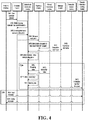
- FIG 4 is a schematic flowchart illustrating an information processing method, according to yet another implementation of the present application.
- FIG 5 is a schematic structural diagram of a processing system corresponding to FIG 4 .
- the previously described processing system includes the following: a front end interface 51, a collection module 52, a dynamic information caching module 53, a market back end service module 54, a popularity model 55, a manual intervention module 56, a message module 57, a transaction service module 58, and a database 59.
- the front end interface is located in client software, and the other modules are located in a server. It is worthwhile to note that in FIG 5 , the collection module is located in the server, but the collection module can alternatively be located in the client software too.
- the front end interface is an interface viewed by the user after entering the system, operations of the user are implemented by using the front end interface, and the front end interface can be referred to as the user interface.
- the collection module is configured to detect operation behavior (such as a clicking behavior and a searching behavior) of the user on the front end interface, and send the operation behavior to the market back end service module and the popularity model.
- operation behavior such as a clicking behavior and a searching behavior
- the dynamic information caching module is configured to set a cache list for each financial project (project for short), where each cache list stores dynamic information that needs to be displayed in the project.
- the market back end service module is configured to process information sent by the collection module and the message module, perform weight calculation in combination with the popularity model and manual intervention module, and update the dynamic information in the cache.
- the popularity model is used to analyze selecting popularity and searching information of the user, and provide a popularity value of each information category.
- the manual intervention module is used by a back end administrator to set an intervention value for each information category.
- the message module is responsible for distributing transaction messages of the transaction service module.
- the database is used to store the information.
- the popularity model can store the information in the database; and when the popularity model needs to calculate the popularity value, the popularity model obtains the information from the database, and calculates the popularity value.
- a procedure of interaction between the previously described modules includes the following steps.
- a front end interface detects a user operation behavior of a user on a project, and sends the user operation behavior to a collection module.
- the front end interface can detect corresponding specific user operation behavior, for example, a browsing behavior (detected clicking on the project), a social behavior (including clicking the like icon, comment, sharing, etc.), and a searching behavior.
- the collection module obtains, based on the user operation behavior sent by the front end interface, dynamic information that is independent of a back end service, such as browsing information and social information.
- the dynamic information can be classified into information that is dependent on the back end service and the information that is independent of the back end service.
- the information that is dependent on the back end service includes the transaction information.
- the information that is independent of the back end service includes the browsing information and the social information.
- the information that is dependent on the back end service is the transaction information
- the information that is independent of the back end service is the browsing information and the social information.
- the user operation behavior is a browsing behavior or a social behavior
- corresponding browsing information and social information can be obtained.
- the collection module sends the browsing information and the social information to the market back end service module.
- the browsing information indicates that user A has performed browsing and user B has performed browsing.
- the social information indicates what user A says and what user B says; and/or indicates that user A clicks the like icon, user B clicks the like icon, etc.
- the collection module notifies a popularity model of the user operation behavior.
- the collection module sends, to the popularity model, a notification message that the browsing behavior is currently performed once.
- the popularity model collects statistics of the popularity value of each information category based on the notification message.
- a counter can be disposed in the popularity model, an initial value of the counter is 0, and when one notification message of one behavior is received, a popularity value of information corresponding to the behavior is increased by 1.
- the popularity model increases the popularity value of the browsing information by 1 each time the user performs the browsing behavior.
- the popularity model increases the popularity value of the social information by 1 each time the user performs the social behavior.
- the popularity model increases the popularity value of the transaction information by 1 each time the user performs the transaction behavior.
- popularity model when performing the previous statistics collection, correspondingly performs statistics collection on users of each project.
- popularity values of the browsing information of a project A are popularity values generated for users who browse through the project A.
- Social behavior mainly includes behavior generated when the user clicks the like icons of these social blocks, makes comments on these social blocks, and shares these social blocks.
- Transactions mainly include ongoing transactions and conducted transactions of the users.
- browsing, a social behavior, and the transaction are used as an example, and searching can be further included.
- the searching can include direct searching and indirect searching.
- a project name is "Zero Carbon Technology”
- that the user directly searches for "Zero Carbon Technology” in a search box is direct searching of the project; or when the user enters "environment protection” in the search box, and the collection module matches the search with "Zero Carbon Technology” based on a matching rule, this is indirect searching of the project.
- the transaction service module sends the transaction information to the message module.
- the message module sends the transaction information to the market back end service module.
- the market back end service module stores the received information into a queue of a corresponding category.
- the browsing information is stored in a browsing queue
- the social information is stored in the social queue
- the transaction information is stored in a transaction queue.
- the information generator can send the information to the market back end service module by using the collection module or the message module.
- the market back end service module stores the information into the queue so as to implement information precipitation.
- the information can be stored in different queues based on information categories so as to select highly valuable information.
- S409 to S413 can be cyclically performed per second.
- the market back end service module obtains the popularity value from the popularity model.
- the market back end service module obtains the manual intervention value from the manual intervention module.
- the market back end service module obtains a current queue length of each queue from the counter.
- the market back end service module calculates the product of the popularity value, the manual intervention value, and the current queue length of each queue, and selects a queue with the largest product value.
- the front end interface can read the information from the cache and display the information.
- the front end interface can display the information by performing updating at the scheduled time, and S414 and S415 can be cyclically performed when the current time arrives at a scheduled time for performing updating and displaying, or when an operation of triggering an update instruction by the user is received.
- the front end interface reads the information from the cache.
- the front end interface displays the read information.
- the information when the current time arrives at the time for updating the cache, the information is written into the cache, so that writing pressure of the cache can be reduced.
- the queue is selected based on the product of the popularity value, the manual intervention value, and the current queue length, and the information is read from the selected queue, so that highly valuable information can be written into the cache to display the highly valuable information, thereby avoiding a case in which the social information and the transaction information are submerged by the browsing information.
- the dynamic information is stored in the queue, so that information precipitation can be implemented and data support can be provided for another procedure. Forwarding the transaction message by using the message module can avoid a limitation caused by dependency between different services.
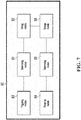
- FIG 6 is a schematic structural diagram illustrating an information processing device, according to an implementation of the present application.
- a device 60 in the present implementation includes a determining module 61 and a writing module 62.
- the determining module 61 is configured to determine an information category that needs to be updated.
- the writing module 62 is configured to write the information of the determined category into a cache.
- the information of the category is stored in a storage space corresponding to the category based on the category of the information.
- the device 60 can further include a triggering module 63, configured to determine whether current time arrives at a scheduled time for updating the cache so as to trigger, when the current time arrives at the scheduled time, the determining module to perform execution.
- a triggering module 63 configured to determine whether current time arrives at a scheduled time for updating the cache so as to trigger, when the current time arrives at the scheduled time, the determining module to perform execution.
- the device 60 can further include a receiving module 64, configured to receive information sent by an information generator; and a storage module 65, configured to determine a category of the information, and store the information in a storage space corresponding to the category.
- the device 60 can further include a determining module 66, configured to determine whether the information is information of a predetermined category so as to trigger, when the information is the information of the predetermined category, the storage module to perform execution.
- a determining module 66 configured to determine whether the information is information of a predetermined category so as to trigger, when the information is the information of the predetermined category, the storage module to perform execution.
- the storage module 65 is configured to store different categories of information in different queues.
- the determining module 61 is configured to obtain weighting coefficients of each queue and a current queue length; and determine a queue from the queues based on the weighting coefficients and the current queue length.
- the weighting coefficients include a popularity value and/or a manual intervention value
- the popularity value is a popularity value of information stored in the queue
- the popularity value of the information is obtained after popularity statistics of operation behavior that is of users and that corresponds to the information are collected.
- maximum lengths of the different queues are related to stored information.
- the determining a queue from the queues based on the weighting coefficients and the current queue length includes calculating a product of the weighting coefficients and the current queue length, and selecting a queue with the largest product value from the queues; and if there is one queue with the largest product value, using the queue with the largest product value as the determined queue; or if there is more than one queue with the largest product value, determining one queue from a plurality of queues with the largest product values based on a predetermined algorithm.
- the writing module 62 is configured to write, into the cache, one piece of information that currently exists and is stored for the longest time in the determined category.
- the receiving module 64 is configured to receive information sent by an information generator by using a unification module, where when information of the same category is generated by a plurality of information generators, the plurality of information generators are connected to the unification module.
- the information of the predetermined category is dynamic information.
- the category is selected, and the information is read from the selected category and written into the cache, so that highly valuable information can be selected and written into the cache.
- the user interface can display the highly valuable information.
- the information is read and written into the cache only when the current time arrives at the scheduled time for updating the cache, so that a quantity of writing times can be reduced, thereby reducing writing pressure of the cache and improving cache performance.
- information sent by the information generator is stored, so that information precipitation can be implemented and data support can be provided for a related procedure.
- FIG 8 is a schematic flowchart illustrating a method for displaying dynamic information, according to an implementation of the present application.
- a procedure in the present implementation includes the following steps:
- the dynamic information is related to an information category.
- the dynamic information is related to a generation time, and therefore, the displayed dynamic information is the latest dynamic information.
- the previously described dynamic information is related to the information category, and therefore, the displayed dynamic information belongs to information in the needed category. For example, a user prefers to see the transaction information, and more displayed dynamic information is the transaction information.
- the dynamic information can be written into the cache by using related content in the previously described implementation.
- the method can further include obtaining static information from a database of the server.
- the static information includes information corresponding to fixed content of a web page, such as a specific name, a picture, and related description information of a certain financial project.
- the method can further include sending the generated dynamic information to the server.
- client software can further generate dynamic information such as browsing information and social information. After generating such information, the client software can send the information to the server. Correspondingly, after receiving the dynamic information, the server can classify the dynamic information for storage.
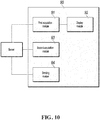
- FIG 9 is a schematic structural diagram illustrating a device for displaying dynamic information, according to an implementation of the present application.
- a device 90 in the present implementation includes a first acquisition module 91 and a display module 92.
- the first acquisition module 91 is configured to obtain dynamic information from a cache of a server.
- the display module 92 is configured to display the dynamic information.
- the dynamic information is related to an information category.
- the device 90 further includes a second acquisition module 93, configured to obtain static information from a database of the server.
- the device 90 further includes a sending module 94, configured to send the generated dynamic information to the server.
- the dynamic information is displayed, and the dynamic information is related to the information category, so that highly valuable information can be displayed.
- the present application further provides an information processing device.
- the device includes a processor and a memory.
- the memory is configured to store an instruction that can be executed by the processor.
- the processor is configured to determine an information category that needs to be updated; and write information of the determined category into a cache, where after being received, the information of the category is stored in a storage space corresponding to the category based on the category of the information.
- the processor is further configured to determine whether current time arrives at a scheduled time for updating the cache so as to perform, when the current time arrives at the scheduled time, the step of determining the information category that needs to be updated.
- the processor is further configured to receive information sent by an information generator; determine a category of the information; and store the information in a storage space corresponding to the category.
- the method further includes determining whether the information is information of a predetermined category so as to perform, when the information is the information of the predetermined category, the step of determining the category of the information.
- the storing the information in a storage space corresponding to the category includes storing different categories of information in different queues.
- the determining an information category that needs to be updated includes obtaining weighting coefficients of each queue and a current queue length; and determining a queue from the queues based on the weighting coefficients and the current queue length.
- the weighting coefficients include a popularity value and/or a manual intervention value.
- the popularity value is a popularity value of information stored in the queue, and the popularity value of the information is obtained after popularity statistics of operation behavior that is of users and that corresponds to the information are collected.
- maximum lengths of the different queues are related to stored information.
- the determining a queue from the queues based on the weighting coefficients and the current queue length includes calculating a product of the weighting coefficients and the current queue length, and selecting a queue with the largest product value from the queues; and if there is one queue with the largest product value, using the queue with the largest product value as the determined queue; or if there is more than one queue with the largest product value, determining one queue from a plurality of queues with the largest product values based on a predetermined algorithm.
- the writing information of the determined category into a cache includes writing, into the cache, one piece of information that currently exists and is stored for the longest time in the determined category.
- the receiving information sent by an information generator includes receiving the information sent by the information generator by using a unification module, where when information of the same category is generated by a plurality of information generators, the plurality of information generators are connected to the unification module.
- the information of the predetermined category is dynamic information.
- the present application further provides a device for displaying dynamic information.
- the device includes a processor and a memory.
- the memory is configured to store an instruction that can be executed by the processor.
- the processor is configured to obtain the dynamic information from a cache of a server; and display the dynamic information, where the dynamic information is related to an information category.
- the processor is further configured to send the generated dynamic information to the server.
- the processor is further configured to obtain static information from a database of the server.
- the present application further provides an information processing system, including a collection device, configured to receive dynamic information generated by a front end interface; a message device, configured to receive dynamic information generated by a back end server; a service device, configured to receive the dynamic information sent by the collection module and the dynamic information sent by the message module, store the dynamic information in a storage space corresponding to a category based on the category that includes the dynamic information, and write the dynamic information of the determined category into the cache when the cache needs to be updated; and a caching device, configured to receive the dynamic information written by the service module.
- a collection device configured to receive dynamic information generated by a front end interface
- a message device configured to receive dynamic information generated by a back end server
- a service device configured to receive the dynamic information sent by the collection module and the dynamic information sent by the message module, store the dynamic information in a storage space corresponding to a category based on the category that includes the dynamic information, and write the dynamic information of the determined category into the cache when the cache needs to be updated
- a caching device configured
- system further includes a front end interface device, configured to send the generated dynamic information to the collection module; and when the dynamic information needs to be displayed, obtain the dynamic information from the caching device for display.
- the service device is configured to store different categories of dynamic information in different queues; when the cache needs to be updated, obtain weighting coefficients of each queue and a current queue length, and determine a queue in the queues based on the weighting coefficients and the current queue length; and write, into the cache, one piece of information that currently exists and is stored for the longest time in the determined queue.
- the weighting coefficients include a popularity value and a manual intervention value
- the system further includes a popularity model device, configured to calculate the popularity value; and a manual intervention device, configured to set the manual intervention value.
- the collection device, the message device, the service device, the caching device, the front end interface device, the popularity model device, and the manual intervention device in the present implementation respectively correspond to the collection module, the message module, the market back end service module, the dynamic information caching module, the front end interface, the popularity model, and the manual intervention module in the previously described implementation.
- the back end server in the present implementation corresponds to the transaction service module in the previously described implementation.
- parts in the present application can be implemented by using hardware, software, firmware, or a combination of them.
- a plurality of steps or methods can be implemented by using software or firmware that is stored in a memory and that is executed by an appropriate instruction execution system.
- any one or a combination of the following well-known technologies in the art can be used for implementation: a discrete logic circuit having a logic gate circuit that is configured to implement a logical function for a data signal; an application-specific integrated circuit having an appropriate combined logic gate circuit; a programmable gate array (PGA); and a field programmable gate array (FPGA), etc.
- a person of ordinary skill in the art can understand that some or all of the steps of the method in the previously described implementations can be implemented by a program instructing related hardware.
- the program can be stored in a computer readable storage medium. When the program runs, one or a combination of the steps of the method implementations is performed.
- functional units in the implementations of the present application can be integrated into one processing module, or each of the units can physically exist, or two or more units can be integrated into one module.
- the integrated module can be implemented in a form of hardware or a form of a software functional module.
- the integrated module can also be stored in a computer readable storage medium.
- the mentioned storage medium can be a read-only memory, a magnetic disk, an optical disk, etc.
- references such as “an implementation”, “some implementations”, “example”, “specific example”, and “some examples” mean that specific features, structures, materials, or characteristics described with reference to the implementations or examples are included in at least one implementation or example in the present application.
- the exemplary expressions of the terms do not necessarily indicate the same implementation or example.
- the described specific features, structures, materials, or characteristics can be combined in an appropriate method in any one or more of the implementations or examples.
Landscapes
- Engineering & Computer Science (AREA)
- Theoretical Computer Science (AREA)
- Physics & Mathematics (AREA)
- General Physics & Mathematics (AREA)
- General Engineering & Computer Science (AREA)
- Databases & Information Systems (AREA)
- Data Mining & Analysis (AREA)
- Business, Economics & Management (AREA)
- Development Economics (AREA)
- Finance (AREA)
- Accounting & Taxation (AREA)
- Operations Research (AREA)
- Entrepreneurship & Innovation (AREA)
- Game Theory and Decision Science (AREA)
- Human Resources & Organizations (AREA)
- Computational Linguistics (AREA)
- Economics (AREA)
- Marketing (AREA)
- Strategic Management (AREA)
- Technology Law (AREA)
- General Business, Economics & Management (AREA)
- Information Transfer Between Computers (AREA)
Abstract
Description
- The present application claims priority to
Chinese Patent Application No. 201610393580.4, filed on June 6, 2016 - The present application relates to the field of Internet technologies, and in particular, to an information processing method and device, and a method and device for displaying dynamic information.
- With the development of Internet technologies, many Internet financial solutions appear. An Internet financial solution is Internet crowdfunding. After a user accesses an Internet crowdfunding page, with respect to a crowdfunding project, dynamic information of the project is displayed, such as ongoing funding project, browsing information, social information, and transaction information.
- In related technologies, after being generated, the dynamic information is directly written into a cache by an information generation module. For example, a user interface directly writes the browsing information and the social information into the cache, and a transaction service module directly writes the transaction information into the cache.
- Because the generated dynamic information can include a large amount of data, especially the browsing information, a large number of writing operations may need to be performed on the cache. However, it is preferable to have a small quantity of write operations and a large quantity of read operations performed on the cache. Therefore, excessive writing pressure is caused for the cache, which affects cache performance.
- Further, for each project, only several pieces of the latest information are cached, and when the user interface reads information from the cache for display, relatively new information is displayed. Because a more frequent behavior of the user is browsing, the relatively new information in the cache is usually the browsing information. Correspondingly, the browsing information is usually displayed, and the social information and the transaction information are submerged. However, information that is more valuable to a user for reference is the social information and the transaction information, therefore, displayed information is less valuable, and highly valuable information cannot be displayed.
- The present application intends to resolve one of technical problems in related technologies at least to a certain extent.
- Therefore, a purpose of the present application is to provide an information processing method and device.
- To achieve the previous objective, an implementation of the first aspect of the present application provides an information processing method. The method includes determining an information category that needs to be updated; and writing information of the determined category into a cache, where after being received, the information of the category is stored in a storage space corresponding to the category based on the category of the information.
- To achieve the previous objective, an implementation of the second aspect of the present application provides an information processing device. The device includes a determining module, configured to determine an information category that needs to be updated; and a writing module, configured to write the information of the determined category into a cache, where after being received, the information of the category is stored in a storage space corresponding to the category based on the category of the information.
- To achieve the previous objective, an implementation of the third aspect of the present application provides a method for displaying dynamic information. The method includes obtaining the dynamic information from a cache of a server; and displaying the dynamic information, where the dynamic information is related to an information category.
- To achieve the previous objective, an implementation of the fourth aspect of the present application provides a device for displaying dynamic information. The device includes an acquisition module, configured to obtain dynamic information from a cache of a server; and a display module, configured to display the dynamic information, where the dynamic information is related to an information category.
- To achieve the previous objective, an implementation of the fifth aspect of the present application provides an information processing device. The device includes a processor and a memory. The memory is configured to store an instruction that can be executed by the processor. The processor is configured to determine an information category that needs to be updated; and write information of the determined category into a cache, where after being received, the information of the category is stored in a storage space corresponding to the category based on the category of the information.
- To achieve the previous objective, an implementation of the sixth aspect of the present application provides a device for displaying dynamic information. The device includes a processor and a memory. The memory is configured to store an instruction that can be executed by the processor. The processor is configured to obtain the dynamic information from a cache of a server; and displaying the dynamic information, where the dynamic information is related to an information category.
- To achieve the previous objective, an implementation of the seventh aspect of the present application provides an information processing system. The system includes a collection device, configured to receive dynamic information generated by a front end interface; a message device, configured to receive dynamic information generated by a back end server; a service device, configured to receive the dynamic information sent by the collection module and the dynamic information sent by the message module, store the dynamic information in a storage space corresponding to a category based on the category that includes the dynamic information, and write the dynamic information of the determined category into the cache when the cache needs to be updated; and a caching device, configured to receive the dynamic information written by the service module.
- The technical solutions provided in the implementations of the present application have the following beneficial effects:
- The information of the determined category is written into the cache, so that highly valuable information can be selected and written into the cache. When reading information from the cache and displaying the information, the user interface can display the highly valuable information.
- Further, instead of writing the information into the cache directly when the information is generated, the information is written into the cache only when current time arrives at the scheduled time for updating the cache, so that a quantity of writing times can be reduced, thereby reducing writing pressure of the cache and improving cache performance. Further, information sent by the information generator is stored, so that information precipitation can be implemented and data support can be provided for a related procedure.
- Some additional aspects and advantages of the present application are provided in the following descriptions, are evident in the following descriptions, or are understandable through implementing the present application.
- The previous and/or additional aspects and advantages of the present application are apparent and comprehensible in the following descriptions of implementations with reference to the accompanying drawings.
-
FIG 1 is a schematic flowchart illustrating an information processing method, according to an implementation of the present application; -
FIG 2 is a schematic flowchart illustrating an information processing method, according to another implementation of the present application; -
FIG 3 is a schematic flowchart illustrating an information processing method, according to still another implementation of the present application; -
FIG 4 is a schematic flowchart illustrating an information processing method, according to yet another implementation of the present application; -
FIG 5 is a schematic structural diagram of a processing system corresponding toFIG 4 ; -
FIG 6 is a schematic structural diagram illustrating an information processing device, according to an implementation of the present application; -
FIG 7 is a schematic structural diagram illustrating an information processing device, according to an implementation of the present application; -
FIG 8 is a schematic flowchart illustrating a method for displaying dynamic information, according to an implementation of the present application; -
FIG 9 is a schematic structural diagram illustrating a device for displaying dynamic information, according to an implementation of the present application; and -
FIG 10 is a schematic structural diagram illustrating a device for displaying dynamic information, according to another implementation of the present application. - The implementations of the present application are described in detail below, and examples of the implementations are shown in the accompanying drawings. The same or similar reference numerals represent the same or similar modules or modules having the same or similar functions. The implementations described below with reference to the accompanying drawings are exemplary, are merely intended to explain the present application, and should not be construed as a limitation on the present application. On the contrary, the implementations of the present application include changes, modifications and equivalents falling within the spirit and connotation scope of the appended claims.
-
FIG 1 is a schematic flowchart illustrating an information processing method, according to an implementation of the present application. - Referring to
FIG 1 , the method in the present implementation includes the following steps: - S11. Determine an information category that needs to be updated.
- S12. Write information of the determined category into a cache.
- After being received, the information of the category is stored in a storage space corresponding to the category based on the category of the information.
- In some implementations, referring to
FIG 2 , before S11, the method can further include the following step: - S21. Receive information sent by an information generator.
- Assume that an execution body in the present implementation is referred to as a processing module, and a unification module can be disposed between the processing module and the information generator. The unification module receives the information generated by the information generator and sends the information to the processing module.
- Therefore, the present step can be receiving the information sent by the information generator by using the unification module.
- The quantity of unification modules is not limited to one. Different unification modules can be used based on different information categories. For example, information generated by a front end (such as a page) is sent to the processing module by using one unification module, and information generated by a back end (such as a transaction server) is sent to the processing module by using another unification module.
- After generating the information, each information generator sends its generated information to the same unification module so as to avoid direct dependency between information generators that have a dependent relationship, thereby facilitating extension. For example, if there is a dependent relationship between an information generator A and an information generator B, and there is no unification module, the information generator A and the information generator B need to be directly connected, which causes a limitation. However, if both the information generator A and the information generator B are connected to the unification module, such a limitation can be avoided.
- In some implementations, the received information can be information of a predetermined category so as to perform processing, which is provided in the present implementation, on the information of the predetermined category.
- Alternatively, in some implementations, after the information is received in S21, it is determined whether the information is the information of the predetermined category so as to perform S22 and subsequent steps when the information is the information of the predetermined category.
- Further, the previously described information of the predetermined category can be dynamic information, and the dynamic information is information that varies dynamically over time. The dynamic information can be further classified into different categories, such as browsing information, social information, or transaction information. Dynamic information of a certain project is used as an example. For example, the browsing information indicates that user A browses through the project; for example, the social information indicates that user A makes a comment on the project or user A clicks the like icon of the project; and for example, the transaction information indicates how much money user A invests in the project.
- S22. Determine a category of the information.
- S23. Store the information in a storage space corresponding to the category.
- Referring to
FIG 3 , the processing module can create a queue locally. The queue can be initially set to be empty. After receiving the information, the processing module can store the information in the created queue. Specifically, information of different categories can be stored in different queues (S31) based on the information categories. - For example, the information can be classified as the browsing information, the social information, and the transaction information. Three queues can be created: a browsing queue, a social queue, and a transaction queue. After the information is received, the information is stored in a queue of a corresponding category. For example, when the browsing information is received, the browsing information is stored in the browsing queue; when the social information is received, the social information is stored in the social queue; and when the transaction information is received, the transaction information is stored in the transaction queue.
- Further, the maximum length of each queue can be set.
- Maximum lengths of different queues can be the same or different.
- For example, the maximum length of a queue can be related to information stored in the queue. Specifically, the maximum length of the queue can have a positive correlation with value of the stored information. For example, a larger value of the information stored in the queue indicates a greater maximum length of the queue. A value of each type of information can be determined based on an actual need.
- For example, maximum lengths of the browsing queue, the social queue, and the transaction queue are respectively 1, 5, and 10, and if a piece of information needs to be stored in one queue and a current queue length reaches the maximum length (the queue is full), information that is stored for the longest time can be deleted, and the latest information is stored in the queue.
- The current queue length can be obtained by detecting a current status of the queue. For example, a counter can be disposed in the processing module, and the counter is configured to collect statistics of an amount of information stored in each queue so as to obtain the current queue length. For example, if one piece of browsing information is currently stored in the browsing queue, it is determined that a current queue length of the browsing queue is 1.
- Further, referring to
FIG. 2 , before S11, the method can further include the following step: - S24. Determine whether current time arrives at a scheduled time for updating the cache; and if yes, perform S11 and subsequent steps; otherwise, repeat S24 and subsequent steps.
- The cache can be set to be periodically updated. When the current time arrives at a preset update time, a corresponding category can be determined, and information of the determined category can be written into the cache.
- As shown in
FIG. 3 , a procedure of determining the information category that needs to be updated can include the following step: - S32. Obtain weighting coefficients of each queue and a current queue length.
- The weighting coefficients can include a popularity value and/or a manual intervention value.
- The popularity value can be obtained by collecting popularity statistics of information stored in the queue. For example, a popularity value of the browsing queue is a popularity value of the browsing information, and a popularity value of the social queue is a popularity value of the social information, etc. A popularity value of one information category can be a total number of times it appears in an observation time window. Therefore, when the information category more frequently appears, popularity values of the information category and a corresponding queue are greater.
- The manual intervention value is manually set. A manual intervention value of each queue can be set based on a demand. For example, if information of a certain category is more valuable, manual intervention values of the information category and a corresponding queue are set to be greater. For example, the social information is more valuable than the browsing information, therefore, a manual intervention value of the social queue can be set to be greater than a manual intervention value of the browsing queue.
- The current queue length can be obtained by counting the length of each queue by using the disposed counter.
- S33. Determine a queue from the queues based on the weighting coefficients and the current queue length.
- For each queue, a product of the weighting coefficients (such as the popularity value and the manual intervention value) and the current queue length can be calculated, and a queue with the largest product value is selected.
- Further, when there is one queue with the largest product value, the queue with the largest product value is determined as the selected queue.
- Alternatively, if there are a plurality of queues with the largest product values, one queue is further selected from the plurality of queues with the largest product values based on a predetermined algorithm. For example, the predetermined algorithm is to perform selection based on the manual intervention value. Assume that the queues with the largest product values include a queue A and a queue B. If a manual intervention value of the queue A is greater than a manual intervention value of the queue B, it is determined that the selected queue is the queue A.
- It can be understood that, when being manually set, different intervention values need to be respectively set for the queues.
- After the queue is selected, the information can be read from the queue and written into the cache.
- As shown in
FIG. 3 , a procedure of reading the information from the queue and writing the information into the cache can include the following step: - S34. Write, into the cache, one piece of information that currently exists and is stored for the longest time in the determined queue.
- When the information is read from the queue, a first-in-first-out rule is followed.
- In addition, when the information is written into the cache, the cache can store only several pieces of latest information.
- In the present implementation, the information category that needs to be updated is determined, and the information of the determined category is written into the cache, so that highly valuable information can be selected and written into the cache. When reading information from the cache and displaying the information, the user interface can display the highly valuable information. Further, instead of writing the information into the cache directly when the information is generated, the information is read and written into the cache only when the cache needs to be updated, so that a quantity of writing times can be reduced, thereby reducing writing pressure of the cache and improving cache performance. Further, information sent by the information generator is stored, so that information precipitation can be implemented and data support can be provided for a related procedure.
- When the previously described information caching method is applied to a scenario of processing dynamic information of a financial project, the present application can further provide the following implementation.
-
FIG 4 is a schematic flowchart illustrating an information processing method, according to yet another implementation of the present application.FIG 5 is a schematic structural diagram of a processing system corresponding toFIG 4 . - As shown in
FIG. 5 , the previously described processing system includes the following: afront end interface 51, acollection module 52, a dynamicinformation caching module 53, a market backend service module 54, apopularity model 55, amanual intervention module 56, amessage module 57, atransaction service module 58, and adatabase 59. - As shown in
FIG 5 , the front end interface is located in client software, and the other modules are located in a server. It is worthwhile to note that inFIG 5 , the collection module is located in the server, but the collection module can alternatively be located in the client software too. - Descriptions of each module are as follows:
- The front end interface is an interface viewed by the user after entering the system, operations of the user are implemented by using the front end interface, and the front end interface can be referred to as the user interface.
- The collection module is configured to detect operation behavior (such as a clicking behavior and a searching behavior) of the user on the front end interface, and send the operation behavior to the market back end service module and the popularity model.
- The dynamic information caching module is configured to set a cache list for each financial project (project for short), where each cache list stores dynamic information that needs to be displayed in the project.
- The market back end service module is configured to process information sent by the collection module and the message module, perform weight calculation in combination with the popularity model and manual intervention module, and update the dynamic information in the cache.
- The popularity model is used to analyze selecting popularity and searching information of the user, and provide a popularity value of each information category.
- The manual intervention module is used by a back end administrator to set an intervention value for each information category.
- The message module is responsible for distributing transaction messages of the transaction service module.
- The database is used to store the information. For example, after receiving the information sent by the collection module, the popularity model can store the information in the database; and when the popularity model needs to calculate the popularity value, the popularity model obtains the information from the database, and calculates the popularity value.
- Referring to
FIG. 4 , a procedure of interaction between the previously described modules includes the following steps. - S401. A front end interface detects a user operation behavior of a user on a project, and sends the user operation behavior to a collection module.
- After the user opens a page of the project, the user can perform operations such as browsing, clicking the like icon, commenting, sharing, making transaction, and searching on the project. Correspondingly, the front end interface can detect corresponding specific user operation behavior, for example, a browsing behavior (detected clicking on the project), a social behavior (including clicking the like icon, comment, sharing, etc.), and a searching behavior.
- S402. The collection module obtains, based on the user operation behavior sent by the front end interface, dynamic information that is independent of a back end service, such as browsing information and social information.
- The dynamic information can be classified into information that is dependent on the back end service and the information that is independent of the back end service. For example, the information that is dependent on the back end service includes the transaction information. For example, the information that is independent of the back end service includes the browsing information and the social information.
- In the present implementation, the information that is dependent on the back end service is the transaction information, and the information that is independent of the back end service is the browsing information and the social information.
- Therefore, when the user operation behavior is a browsing behavior or a social behavior, corresponding browsing information and social information can be obtained.
- S403. The collection module sends the browsing information and the social information to the market back end service module.
- For example, the browsing information indicates that user A has performed browsing and user B has performed browsing.
- For example, the social information indicates what user A says and what user B says; and/or indicates that user A clicks the like icon, user B clicks the like icon, etc.
- S404. The collection module notifies a popularity model of the user operation behavior.
- For example, when the user performs a browsing behavior on the front end interface once, the collection module sends, to the popularity model, a notification message that the browsing behavior is currently performed once.
- S405. The popularity model collects statistics of the popularity value of each information category based on the notification message.
- For example, a counter can be disposed in the popularity model, an initial value of the counter is 0, and when one notification message of one behavior is received, a popularity value of information corresponding to the behavior is increased by 1.
- For example, the popularity model increases the popularity value of the browsing information by 1 each time the user performs the browsing behavior. The popularity model increases the popularity value of the social information by 1 each time the user performs the social behavior. The popularity model increases the popularity value of the transaction information by 1 each time the user performs the transaction behavior.
- It can be understood that, when performing the previous statistics collection, the popularity model correspondingly performs statistics collection on users of each project. For example, popularity values of the browsing information of a project A are popularity values generated for users who browse through the project A.
- Further, the previously described browsing can include viewing pages of the same project. Social behavior mainly includes behavior generated when the user clicks the like icons of these social blocks, makes comments on these social blocks, and shares these social blocks. Transactions mainly include ongoing transactions and conducted transactions of the users.
- In addition, in the present implementation, browsing, a social behavior, and the transaction are used as an example, and searching can be further included.
- Further, the searching can include direct searching and indirect searching. For example, in the system, a project name is "Zero Carbon Technology", and that the user directly searches for "Zero Carbon Technology" in a search box is direct searching of the project; or when the user enters "environment protection" in the search box, and the collection module matches the search with "Zero Carbon Technology" based on a matching rule, this is indirect searching of the project.
- S406. The transaction service module sends the transaction information to the message module.
- S407. The message module sends the transaction information to the market back end service module.
- S408. The market back end service module stores the received information into a queue of a corresponding category.
- For example, the browsing information is stored in a browsing queue, the social information is stored in the social queue, and the transaction information is stored in a transaction queue.
- In the previously described procedure, the information generator can send the information to the market back end service module by using the collection module or the message module.
- The market back end service module stores the information into the queue so as to implement information precipitation. In addition, the information can be stored in different queues based on information categories so as to select highly valuable information.
- When current time arrives at each scheduled time for updating the cache, for example, a second for updating the cache once, S409 to S413 can be cyclically performed per second.
- S409. The market back end service module obtains the popularity value from the popularity model.
- S410. The market back end service module obtains the manual intervention value from the manual intervention module.
- S411. The market back end service module obtains a current queue length of each queue from the counter.
- S412. The market back end service module calculates the product of the popularity value, the manual intervention value, and the current queue length of each queue, and selects a queue with the largest product value.
- S413. Read one piece of information from the selected queue into the dynamic information caching module.
- Further, when the front end interface needs to display the information, the front end interface can read the information from the cache and display the information.
- The front end interface can display the information by performing updating at the scheduled time, and S414 and S415 can be cyclically performed when the current time arrives at a scheduled time for performing updating and displaying, or when an operation of triggering an update instruction by the user is received.
- S414. The front end interface reads the information from the cache.
- S415. The front end interface displays the read information.
- It can be understood that, for a part not covered in the present implementation, reference can be made to related descriptions in the previously described implementation. Details are omitted here for simplicity.
- In the present implementation, when the current time arrives at the time for updating the cache, the information is written into the cache, so that writing pressure of the cache can be reduced. The queue is selected based on the product of the popularity value, the manual intervention value, and the current queue length, and the information is read from the selected queue, so that highly valuable information can be written into the cache to display the highly valuable information, thereby avoiding a case in which the social information and the transaction information are submerged by the browsing information. The dynamic information is stored in the queue, so that information precipitation can be implemented and data support can be provided for another procedure. Forwarding the transaction message by using the message module can avoid a limitation caused by dependency between different services.
-
FIG 6 is a schematic structural diagram illustrating an information processing device, according to an implementation of the present application. - Referring to
FIG. 6 , adevice 60 in the present implementation includes a determiningmodule 61 and awriting module 62. - The determining
module 61 is configured to determine an information category that needs to be updated. - The
writing module 62 is configured to write the information of the determined category into a cache. - After being received, the information of the category is stored in a storage space corresponding to the category based on the category of the information.
- In some implementations, referring to
FIG. 7 , thedevice 60 can further include a triggeringmodule 63, configured to determine whether current time arrives at a scheduled time for updating the cache so as to trigger, when the current time arrives at the scheduled time, the determining module to perform execution. - In some implementations, referring to
FIG. 7 , thedevice 60 can further include a receivingmodule 64, configured to receive information sent by an information generator; and astorage module 65, configured to determine a category of the information, and store the information in a storage space corresponding to the category. - In some implementations, referring to
FIG. 7 , thedevice 60 can further include a determiningmodule 66, configured to determine whether the information is information of a predetermined category so as to trigger, when the information is the information of the predetermined category, the storage module to perform execution. - In some implementations, the
storage module 65 is configured to store different categories of information in different queues. - In some implementations, the determining
module 61 is configured to obtain weighting coefficients of each queue and a current queue length; and determine a queue from the queues based on the weighting coefficients and the current queue length. - In some implementations, the weighting coefficients include a popularity value and/or a manual intervention value, the popularity value is a popularity value of information stored in the queue, and the popularity value of the information is obtained after popularity statistics of operation behavior that is of users and that corresponds to the information are collected.
- In some implementations, maximum lengths of the different queues are related to stored information.
- In some implementations, the determining a queue from the queues based on the weighting coefficients and the current queue length includes calculating a product of the weighting coefficients and the current queue length, and selecting a queue with the largest product value from the queues; and if there is one queue with the largest product value, using the queue with the largest product value as the determined queue; or if there is more than one queue with the largest product value, determining one queue from a plurality of queues with the largest product values based on a predetermined algorithm.
- In some implementations, the
writing module 62 is configured to write, into the cache, one piece of information that currently exists and is stored for the longest time in the determined category. - In some implementations, the receiving
module 64 is configured to receive information sent by an information generator by using a unification module, where when information of the same category is generated by a plurality of information generators, the plurality of information generators are connected to the unification module. - In some implementations, the information of the predetermined category is dynamic information.
- It can be understood that the device in the present implementation corresponds to the previously described method implementation. For details, reference can be made to the previously described related descriptions. Details are omitted here for simplicity.
- In the present implementation, the category is selected, and the information is read from the selected category and written into the cache, so that highly valuable information can be selected and written into the cache. When reading information from the cache and displaying the information, the user interface can display the highly valuable information. Further, instead of writing the information into the cache directly when the information is generated, the information is read and written into the cache only when the current time arrives at the scheduled time for updating the cache, so that a quantity of writing times can be reduced, thereby reducing writing pressure of the cache and improving cache performance. Further, information sent by the information generator is stored, so that information precipitation can be implemented and data support can be provided for a related procedure.
-
FIG 8 is a schematic flowchart illustrating a method for displaying dynamic information, according to an implementation of the present application. - Referring to
FIG 8 , a procedure in the present implementation includes the following steps: - S81. Obtain dynamic information from a cache of a server.
- S82. Display the dynamic information.
- The dynamic information is related to an information category.
- When a solution that is in related technologies and in which the dynamic information is written into the cache directly after the dynamic information is generated is used, the dynamic information is related to a generation time, and therefore, the displayed dynamic information is the latest dynamic information.
- In the present implementation, the previously described dynamic information is related to the information category, and therefore, the displayed dynamic information belongs to information in the needed category. For example, a user prefers to see the transaction information, and more displayed dynamic information is the transaction information.
- Specifically, to correlate the dynamic information with the information category, the dynamic information can be written into the cache by using related content in the previously described implementation.
- Specifically, for the dynamic information and a procedure of processing the dynamic information by the server, reference can be made to the previously described implementation. Details are omitted here for simplicity.
- In some implementations, the method can further include obtaining static information from a database of the server.
- For example, the static information includes information corresponding to fixed content of a web page, such as a specific name, a picture, and related description information of a certain financial project.
- In some implementations, the method can further include sending the generated dynamic information to the server.
- For example, client software can further generate dynamic information such as browsing information and social information. After generating such information, the client software can send the information to the server. Correspondingly, after receiving the dynamic information, the server can classify the dynamic information for storage.
- It can be understood that, for details in the present implementation, reference can be made to related descriptions in the previously described implementation. Details are omitted here for simplicity.
-
FIG 9 is a schematic structural diagram illustrating a device for displaying dynamic information, according to an implementation of the present application. - Referring to
FIG. 9 , adevice 90 in the present implementation includes afirst acquisition module 91 and adisplay module 92. - The
first acquisition module 91 is configured to obtain dynamic information from a cache of a server. - The
display module 92 is configured to display the dynamic information. - The dynamic information is related to an information category.
- In some implementations, referring to
FIG. 10 , thedevice 90 further includes asecond acquisition module 93, configured to obtain static information from a database of the server. - In some implementations, referring to
FIG. 10 , thedevice 90 further includes a sendingmodule 94, configured to send the generated dynamic information to the server. - It can be understood that the device in the present implementation corresponds to the previously described method implementation. For details, reference can be made to the previously described related descriptions. Details are omitted here for simplicity.
- In the present implementation, the dynamic information is displayed, and the dynamic information is related to the information category, so that highly valuable information can be displayed.
- The present application further provides an information processing device. The device includes a processor and a memory. The memory is configured to store an instruction that can be executed by the processor. The processor is configured to determine an information category that needs to be updated; and write information of the determined category into a cache, where after being received, the information of the category is stored in a storage space corresponding to the category based on the category of the information.
- In some implementations, the processor is further configured to determine whether current time arrives at a scheduled time for updating the cache so as to perform, when the current time arrives at the scheduled time, the step of determining the information category that needs to be updated.
- In some implementations, the processor is further configured to receive information sent by an information generator; determine a category of the information; and store the information in a storage space corresponding to the category.
- In some implementations, after the receiving information sent by an information generator, the method further includes determining whether the information is information of a predetermined category so as to perform, when the information is the information of the predetermined category, the step of determining the category of the information.
- In some implementations, the storing the information in a storage space corresponding to the category includes storing different categories of information in different queues.
- In some implementations, the determining an information category that needs to be updated includes obtaining weighting coefficients of each queue and a current queue length; and determining a queue from the queues based on the weighting coefficients and the current queue length.
- In some implementations, the weighting coefficients include a popularity value and/or a manual intervention value. The popularity value is a popularity value of information stored in the queue, and the popularity value of the information is obtained after popularity statistics of operation behavior that is of users and that corresponds to the information are collected.
- In some implementations, maximum lengths of the different queues are related to stored information.
- In some implementations, the determining a queue from the queues based on the weighting coefficients and the current queue length includes calculating a product of the weighting coefficients and the current queue length, and selecting a queue with the largest product value from the queues; and if there is one queue with the largest product value, using the queue with the largest product value as the determined queue; or if there is more than one queue with the largest product value, determining one queue from a plurality of queues with the largest product values based on a predetermined algorithm.
- In some implementations, the writing information of the determined category into a cache includes writing, into the cache, one piece of information that currently exists and is stored for the longest time in the determined category.
- In some implementations, the receiving information sent by an information generator includes receiving the information sent by the information generator by using a unification module, where when information of the same category is generated by a plurality of information generators, the plurality of information generators are connected to the unification module.
- In some implementations, the information of the predetermined category is dynamic information.
- It can be understood that the present implementation corresponds to the previously described implementation of the information processing method. For details, reference can be made to related descriptions in the previously described implementation. Details are omitted here for simplicity.
- The present application further provides a device for displaying dynamic information. The device includes a processor and a memory. The memory is configured to store an instruction that can be executed by the processor. The processor is configured to obtain the dynamic information from a cache of a server; and display the dynamic information, where the dynamic information is related to an information category.
- In some implementations, the processor is further configured to send the generated dynamic information to the server.
- In some implementations, the processor is further configured to obtain static information from a database of the server.
- It can be understood that the present implementation corresponds to the previously described implementation of the method for displaying dynamic information. For details, reference can be made to related descriptions in the previously described implementation. Details are omitted here for simplicity.
- The present application further provides an information processing system, including a collection device, configured to receive dynamic information generated by a front end interface; a message device, configured to receive dynamic information generated by a back end server; a service device, configured to receive the dynamic information sent by the collection module and the dynamic information sent by the message module, store the dynamic information in a storage space corresponding to a category based on the category that includes the dynamic information, and write the dynamic information of the determined category into the cache when the cache needs to be updated; and a caching device, configured to receive the dynamic information written by the service module.
- In some implementations, the system further includes a front end interface device, configured to send the generated dynamic information to the collection module; and when the dynamic information needs to be displayed, obtain the dynamic information from the caching device for display.
- In some implementations, the service device is configured to store different categories of dynamic information in different queues; when the cache needs to be updated, obtain weighting coefficients of each queue and a current queue length, and determine a queue in the queues based on the weighting coefficients and the current queue length; and write, into the cache, one piece of information that currently exists and is stored for the longest time in the determined queue.
- In some implementations, the weighting coefficients include a popularity value and a manual intervention value, and the system further includes a popularity model device, configured to calculate the popularity value; and a manual intervention device, configured to set the manual intervention value.
- It can be understood that the collection device, the message device, the service device, the caching device, the front end interface device, the popularity model device, and the manual intervention device in the present implementation respectively correspond to the collection module, the message module, the market back end service module, the dynamic information caching module, the front end interface, the popularity model, and the manual intervention module in the previously described implementation. The back end server in the present implementation corresponds to the transaction service module in the previously described implementation. For details, reference can be made to related descriptions in the previously described implementation. Details are omitted here for simplicity.
- It is worthwhile to note that in the descriptions of the present application, the terms "first" and "second" are merely used for description, and shall not be understood as an indication or implication of relative importance. In addition, in the descriptions of the present application, "a plurality of" means "at least two" unless otherwise stated.
- Descriptions about any procedure or method described in a flowchart or in another method here can be understood as follows: one or more modules, segments, or parts of code of an executable instruction that is used to implement a specific logical function or procedure step are included; the scope of preferred implementations of the present application includes other implementations, and functions can be performed in a sequence other than the shown or discussed sequence, including a basically simultaneous method or a reverse sequence based on the concerned functions. This should be understood by a person skilled in the art that includes the implementations of the present application.
- It should be understood that parts in the present application can be implemented by using hardware, software, firmware, or a combination of them. In the previously described implementations, a plurality of steps or methods can be implemented by using software or firmware that is stored in a memory and that is executed by an appropriate instruction execution system. For example, if hardware is used for implementation, same as another implementation, any one or a combination of the following well-known technologies in the art can be used for implementation: a discrete logic circuit having a logic gate circuit that is configured to implement a logical function for a data signal; an application-specific integrated circuit having an appropriate combined logic gate circuit; a programmable gate array (PGA); and a field programmable gate array (FPGA), etc.
- A person of ordinary skill in the art can understand that some or all of the steps of the method in the previously described implementations can be implemented by a program instructing related hardware. The program can be stored in a computer readable storage medium. When the program runs, one or a combination of the steps of the method implementations is performed.
- In addition, functional units in the implementations of the present application can be integrated into one processing module, or each of the units can physically exist, or two or more units can be integrated into one module. The integrated module can be implemented in a form of hardware or a form of a software functional module. When the integrated module is implemented in the form of a software functional module and sold or used as an independent product, the integrated module can also be stored in a computer readable storage medium.
- The mentioned storage medium can be a read-only memory, a magnetic disk, an optical disk, etc.
- In the descriptions of the present specification, reference terms such as "an implementation", "some implementations", "example", "specific example", and "some examples" mean that specific features, structures, materials, or characteristics described with reference to the implementations or examples are included in at least one implementation or example in the present application. In the present specification, the exemplary expressions of the terms do not necessarily indicate the same implementation or example. In addition, the described specific features, structures, materials, or characteristics can be combined in an appropriate method in any one or more of the implementations or examples.
- Although the implementations of the present application are shown and described above, it can be understood that the previously described implementations are exemplary and cannot be construed as a limitation on the present application. Within the scope of the present application, a person of ordinary skill in the art can make changes, modifications, replacements, and variations for the previously described implementations.
- Although the present invention is defined in the attached claims, it should be understood that the present invention can also (alternatively) be defined in accordance with the following embodiments:
-
Set 1.- 1. An information processing method, comprising:
- determining an information category that needs to be updated; and
- writing information of the determined category into a cache, wherein
- after being received, the information of the category is stored in a storage space corresponding to the category based on the category of the information.
- 2. The method according to
embodiment 1, further comprising:- determining whether current time arrives at a scheduled time for updating the cache so as to perform, when the current time arrives at the scheduled time, a step of determining the information category that needs to be updated.
- 3. The method according to
embodiment 1, further comprising:- receiving information sent by an information generator;
- determining a category of the information; and
- storing the information in a storage space corresponding to the category.
- 4. The method according to embodiment 3, wherein after the receiving information sent by an information generator, the method further comprises:
- determining whether the information is information of a predetermined category so as to perform, when the information is the information of the predetermined category, a step of determining the category of the information.
- 5. The method according to embodiment 3, wherein the storing the information in a storage space corresponding to the category comprises:
- storing different categories of information in different queues.
- 6. The method according to embodiment 5, wherein the determining an information category that needs to be updated comprises:
- obtaining weighting coefficients of each queue and a current queue length; and
- determining a queue from the queues based on the weighting coefficients and the current queue length.
- 7. The method according to embodiment 6, wherein the weighting coefficients comprise a popularity value and/or a manual intervention value, the popularity value is a popularity value of information stored in the queue, and the popularity value of the information is obtained after popularity statistics of operation behavior that is of users and that corresponds to the information are collected.
- 8. The method according to embodiment 5, wherein maximum lengths of the different queues are related to stored information.
- 9. The method according to embodiment 6, wherein the determining a queue from the queues based on the weighting coefficients and the current queue length comprises:
- calculating a product of the weighting coefficients and the current queue length, and selecting a queue with the largest product value from the queues; and
- if there is one queue with the largest product value, using the queue with the largest product value as the determined queue; or
- if there is more than one queue with the largest product value, determining one queue from a plurality of queues with the largest product values based on a predetermined algorithm.
- 10. The method according to
embodiment 1, wherein the writing information of the determined category into a cache comprises:- writing, into the cache, one piece of information that currently exists and is stored for the longest time in the determined category.
- 11. The method according to embodiment 3, wherein the receiving information sent by an information generator comprises:
- receiving information sent by an information generator by using a unification module, wherein when information of the same category is generated by a plurality of information generators, the plurality of information generators are connected to the unification module.
- 12. The method according to embodiment 4, wherein the information of the predetermined category is dynamic information.
- 13. A method for displaying dynamic information, comprising:
- obtaining the dynamic information from a cache of a server;
- displaying the dynamic information, wherein
- the dynamic information is related to an information category.
- 14. The method according to embodiment 13, further comprising:
- obtaining static information from a database of the server.
- 15. The method according to embodiment 13, further comprising:
- sending the generated dynamic information to the server.
- 16. An information processing device, comprising:
- a processor;
- a memory, configured to store an instruction that can be executed by the processor; wherein
- the processor is configured to:
- determine an information category that needs to be updated; and
- write information of the determined category into a cache, wherein
- after being received, the information of the category is stored in a storage space corresponding to the category based on the category of the information.
- 17. The device according to embodiment 16, wherein the processor is further configured to:
- determine whether current time arrives at a scheduled time for updating the cache so as to perform, when the current time arrives at the scheduled time, a step of determining the information category that needs to be updated.
- 18. The device according to embodiment 16, wherein the processor is further configured to:
- receive information sent by an information generator;
- determine a category of the information; and
- store the information in a storage space corresponding to the category.
- 19. A device for displaying dynamic information, comprising:
- a processor;
- a memory, configured to store an instruction that can be executed by the processor; wherein
- the processor is configured to:
- obtain the dynamic information from a cache of a server;
- display the dynamic information, wherein
- the dynamic information is related to an information category.
- 20. The device according to embodiment 19, wherein the processor is further configured to:
- send the generated dynamic information to the server.
- 21. An information processing system, comprising:
- a collection device, configured to receive dynamic information generated by a front end interface;
- a message device, configured to receive dynamic information generated by a back end server;
- a service device, configured to receive the dynamic information sent by the collection module and the dynamic information sent by the message module, store the dynamic information in a storage space corresponding to a category based on the category that comprises the dynamic information, and write the dynamic information of the determined category into the cache when the cache needs to be updated; and
- a caching device, configured to receive the dynamic information written by the service module.
- 22. The system according to embodiment 21, further comprising:
- a front end interface device, configured to send the generated dynamic information to the collection module; and when the dynamic information needs to be displayed, obtain the dynamic information from the caching device for display.
- 23. The system according to embodiment 21, wherein the service device is configured to:
- store different categories of dynamic information in different queues;
- when the cache needs to be updated, obtain weighting coefficients of each queue and a current queue length, and determine a queue in the queues based on the weighting coefficients and the current queue length; and
- write, into the cache, one piece of information that currently exists and is stored for the longest time in the determined queue.
- 24. The system according to embodiment 23, wherein the weighting coefficients comprise a popularity value and a manual intervention value, and the system further comprises:
- a popularity model device, configured to calculate the popularity value; and
- a manual intervention device, configured to set the manual intervention value.
- 1. An information processing method, comprising:
-
Set 2.- 1. A method for processing an information, the method comprising:
- determining whether a current time arrives at a scheduled time for updating a cache (S24);
- when the current time arrives at the scheduled time, determining an information category that needs to be updated (S11); and
- writing information of the determined category into a cache (S 12), wherein
- after being received, the information of the category is stored in a storage space corresponding to the category based on the category of the information.
- 2. The method according to
embodiment 1, further comprising:- receiving information sent by an information generator (S21);
- determining a category of the information (S22); and
- storing the information in a storage space corresponding to the category (S23).
- 3. The method according to
embodiment 2, wherein receiving information sent by an information generator comprises:- receiving information sent by an information generator by using a unification module, wherein when information of the same category is generated by a plurality of information generators, the plurality of information generators are connected to the unification module.
- 4. The method according to
embodiment 2, wherein after receiving information sent by the information generator, the method further comprises:- determining whether the information is information of a predetermined category so as to perform, when the information is the information of the predetermined category, a step of determining the category of the information.
- 5. The method according to embodiment 3, wherein storing the information in a storage space corresponding to the category comprises:
- storing different categories of information in different queues.
- 6. The method according to embodiment 5, wherein the information is read from the queue by following a first-in-first-out rule.
- 7. The method according to embodiment 5, wherein maximum lengths of the different queues are related to stored information.
- 8. The method according to embodiment 5, wherein determining the information category that needs to be updated comprises:
- obtaining weighting coefficients of each queue and a current queue length; and
- determining a queue from the queues based on the weighting coefficients and the current queue length.
- 9. The method according to embodiment 8, wherein the weighting coefficients comprise a popularity value and/or a manual intervention value, the popularity value is a popularity value of information stored in the queue, and the popularity value of the information is obtained after popularity statistics of operation behavior that is of users and that corresponds to the information are collected.
- 10. The method according to embodiment 8, wherein determining the queue from the queues based on the weighting coefficients and the current queue length comprises:
- calculating a product of the weighting coefficients and the current queue length, and selecting a queue with the largest product value from the queues; and
- if there is one queue with the largest product value, using the queue with the largest product value as the determined queue; or
- if there is more than one queue with the largest product value, determining one queue from a plurality of queues with the largest product values based on a predetermined algorithm.
- 11. The method according to
embodiment 1, wherein writing information of the determined category into the cache comprises:- writing, into the cache, one piece of information that currently exists and is stored for the longest time in the determined category.
- 12. The method according to embodiment 4, wherein the information of the predetermined category is dynamic information.
- 13. The method according to embodiment 12, further comprising:
- obtaining static information from a database of the server.
- 14. A device for processing an information, the device comprising a plurality of modules configured to perform the method of any one of
embodiments 1 to 13.
- 1. A method for processing an information, the method comprising:
Claims (12)
- A computer-implemented method for processing information, the method comprising:receiving information, wherein the information can be classified into one of different categories;storing (S23) the information in a storage space corresponding to the category of the information, wherein different categories of information are stored in different queues, based on the information category;determining (S24) that a current time is a scheduled time for updating a cache, wherein the cache is updated periodically;determining (S11) a to-be-updated category, the determining comprising:obtaining weighting coefficients of each queue and a current queue length; anddetermining a queue from the queues based on the weighting coefficients and the current queue length; and
writing (S12) the information of the to-be-updated category from the determined queue into the cache. - The method according to claim 1, wherein the information is sent by an information generator; and the method further comprises
determining (S22) a category of the information. - The method according to any one of claims 1 or 2, wherein the weighting coefficients comprise a popularity value and/or a manual intervention value, the popularity value is a popularity value of information stored in the queue, and the popularity value of the information is obtained after popularity statistics of operation behavior that is of users and that corresponds to the information are collected.
- The method according to any one of claims 1 to 3, wherein maximum lengths of the different queues are related to stored information.
- The method according to any one of claims 1 to 4, wherein the determining a queue from the queues based on the weighting coefficients and the current queue length comprises:calculating a product of the weighting coefficients and the current queue length, and selecting a queue with the largest product value from the queues; andif there is one queue with the largest product value, using the queue with the largest product value as the determined queue; orif there is more than one queue with the largest product value, determining one queue from a plurality of queues with the largest product values based on a predetermined algorithm.
- The method according to claim 1, wherein writing (S12) the information of the determined category into the cache comprises:writing, into the cache, one piece of information that currently exists and is stored for the longest time in the determined category.
- The method according to claim 2, wherein receiving (S21) the information sent by an information generator comprises:receiving information sent by an information generator by using a unification module, wherein when information of the same category is generated by a plurality of information generators, the plurality of information generators are connected to the unification module.
- An information processing device, comprising:a processor;a memory, configured to store an instruction that can be executed by the processor; whereinthe processor is configured to perform the method of any one of claims 1 to 7.
- An information processing system, comprising:a collection device, configured to receive dynamic information generated by a front end interface;a message device, configured to receive dynamic information generated by a back end server;a service device, configured to receive the dynamic information sent by the collection module and the dynamic information sent by the message module, store the dynamic information in a storage space corresponding to a category based on the category that comprises the dynamic information, and write the dynamic information of the determined category into the cache when the cache needs to be updated; anda caching device, configured to receive the dynamic information written by the service module.
- The system according to claim 9, further comprising:a front end interface device, configured to send the generated dynamic information to the collection module; and when the dynamic information needs to be displayed, obtain the dynamic information from the caching device for display.
- The system according to claim 9, wherein the service device is configured to:store different categories of dynamic information in different queues;when the cache needs to be updated, obtain weighting coefficients of each queue and a current queue length, and determine a queue in the queues based on the weighting coefficients and the current queue length; andwrite, into the cache, one piece of information that currently exists and is stored for the longest time in the determined queue.
- The system according to claim 11, wherein the weighting coefficients comprise a popularity value and a manual intervention value, and the system further comprises:a popularity model device, configured to calculate the popularity value; anda manual intervention device, configured to set the manual intervention value.
Applications Claiming Priority (3)
| Application Number | Priority Date | Filing Date | Title |
|---|---|---|---|
| CN201610393580.4A CN107016008B (en) | 2016-06-06 | 2016-06-06 | Information processing method and device and dynamic information display method and device |
| PCT/CN2017/085654 WO2017211192A1 (en) | 2016-06-06 | 2017-05-24 | Information processing method and device, and method and device for displaying dynamic information |
| EP17809631.9A EP3467680B1 (en) | 2016-06-06 | 2017-05-24 | Information processing method and device, and method and device for displaying dynamic information |
Related Parent Applications (1)
| Application Number | Title | Priority Date | Filing Date |
|---|---|---|---|
| EP17809631.9A Division EP3467680B1 (en) | 2016-06-06 | 2017-05-24 | Information processing method and device, and method and device for displaying dynamic information |
Publications (1)
| Publication Number | Publication Date |
|---|---|
| EP3910502A1 true EP3910502A1 (en) | 2021-11-17 |
Family
ID=59439050
Family Applications (2)
| Application Number | Title | Priority Date | Filing Date |
|---|---|---|---|
| EP21183844.6A Ceased EP3910502A1 (en) | 2016-06-06 | 2017-05-24 | Information processing method and device, and method and device for displaying dynamic information |
| EP17809631.9A Active EP3467680B1 (en) | 2016-06-06 | 2017-05-24 | Information processing method and device, and method and device for displaying dynamic information |
Family Applications After (1)
| Application Number | Title | Priority Date | Filing Date |
|---|---|---|---|
| EP17809631.9A Active EP3467680B1 (en) | 2016-06-06 | 2017-05-24 | Information processing method and device, and method and device for displaying dynamic information |
Country Status (7)
| Country | Link |
|---|---|
| US (1) | US10789171B2 (en) |
| EP (2) | EP3910502A1 (en) |
| JP (1) | JP6877467B2 (en) |
| KR (1) | KR102175618B1 (en) |
| CN (1) | CN107016008B (en) |
| TW (1) | TWI670597B (en) |
| WO (1) | WO2017211192A1 (en) |
Families Citing this family (4)
| Publication number | Priority date | Publication date | Assignee | Title |
|---|---|---|---|---|
| CN110941483B (en) * | 2019-10-23 | 2023-02-03 | 创耀(苏州)通信科技股份有限公司 | Queue processing method, device and equipment |
| CN112925999A (en) * | 2019-12-05 | 2021-06-08 | 北京沃东天骏信息技术有限公司 | Data processing method, data storage method, server and client |
| CN111026532B (en) * | 2019-12-10 | 2022-07-12 | 思必驰科技股份有限公司 | Message queue management method for voice data |
| KR102902537B1 (en) * | 2022-06-24 | 2025-12-19 | 쿠팡 주식회사 | Operating method for electronic apparatus for performing cashe update and electronic apparatus supporting thereof |
Citations (3)
| Publication number | Priority date | Publication date | Assignee | Title |
|---|---|---|---|---|
| EP0788280A2 (en) * | 1996-02-01 | 1997-08-06 | International Business Machines Corporation | Maximum factor selection policy for batching VOD requests |
| EP1130872A1 (en) * | 2000-03-03 | 2001-09-05 | Lucent Technologies Inc. | Method of packet scheduling, with improved delay performance, for wireless networks |
| US20120257500A1 (en) * | 2011-04-05 | 2012-10-11 | Timothy Lynch | Packet scheduling method and apparatus |
Family Cites Families (18)
| Publication number | Priority date | Publication date | Assignee | Title |
|---|---|---|---|---|
| US5335224A (en) * | 1992-06-30 | 1994-08-02 | At&T Bell Laboratories | Service guarantees/congestion control in high speed networks |
| US6058389A (en) * | 1997-10-31 | 2000-05-02 | Oracle Corporation | Apparatus and method for message queuing in a database system |
| JP2001256098A (en) * | 2000-03-09 | 2001-09-21 | Hitachi Ltd | Control method of cache in proxy server |
| WO2002033428A1 (en) * | 2000-09-11 | 2002-04-25 | Sitara Networks, Inc. | Central policy manager |
| JP2003196144A (en) * | 2001-12-27 | 2003-07-11 | Fuji Electric Co Ltd | Cache server cache control method |
| US7487319B2 (en) * | 2004-11-18 | 2009-02-03 | International Business Machines Corporation | Resource allocation unit queue |
| CN100499492C (en) * | 2005-03-01 | 2009-06-10 | 华为技术有限公司 | Method for realizing electronic work order queuing |
| CN100395750C (en) * | 2005-12-30 | 2008-06-18 | 华为技术有限公司 | Cache management method |
| CN1881899A (en) * | 2006-04-30 | 2006-12-20 | 国家数字交换系统工程技术研究中心 | Network flow monitoring system and method |
| US8179896B2 (en) * | 2006-11-09 | 2012-05-15 | Justin Mark Sobaje | Network processors and pipeline optimization methods |
| JP2008210094A (en) * | 2007-02-26 | 2008-09-11 | Yamaha Corp | Cache control device |
| US8261029B1 (en) * | 2007-03-28 | 2012-09-04 | Emc Corporation | Dynamic balancing of writes between multiple storage devices |
| JP5650441B2 (en) * | 2010-06-07 | 2015-01-07 | キヤノン株式会社 | Arithmetic device, cache device, control method thereof, and computer program |
| CN102740367B (en) * | 2012-05-31 | 2015-06-03 | 华为技术有限公司 | Method and device for transmitting data streams |
| US9098525B1 (en) * | 2012-06-14 | 2015-08-04 | Emc Corporation | Concurrent access to data on shared storage through multiple access points |
| US9641481B2 (en) * | 2014-02-21 | 2017-05-02 | Htc Corporation | Smart conversation method and electronic device using the same |
| CN104243581B (en) * | 2014-09-15 | 2017-11-24 | 成都北纬航信网络科技有限责任公司 | Realize the multi-level buffer method and its system of high cohesion and lower coupling |
| CN105354258B (en) * | 2015-10-22 | 2019-11-15 | 努比亚技术有限公司 | A kind of device and method updating website data caching |
-
2016
- 2016-06-06 CN CN201610393580.4A patent/CN107016008B/en active Active
-
2017
- 2017-04-11 TW TW106112043A patent/TWI670597B/en active
- 2017-05-24 WO PCT/CN2017/085654 patent/WO2017211192A1/en not_active Ceased
- 2017-05-24 EP EP21183844.6A patent/EP3910502A1/en not_active Ceased
- 2017-05-24 JP JP2018563871A patent/JP6877467B2/en active Active
- 2017-05-24 KR KR1020197000289A patent/KR102175618B1/en active Active
- 2017-05-24 EP EP17809631.9A patent/EP3467680B1/en active Active
-
2018
- 2018-12-05 US US16/210,347 patent/US10789171B2/en active Active
Patent Citations (3)
| Publication number | Priority date | Publication date | Assignee | Title |
|---|---|---|---|---|
| EP0788280A2 (en) * | 1996-02-01 | 1997-08-06 | International Business Machines Corporation | Maximum factor selection policy for batching VOD requests |
| EP1130872A1 (en) * | 2000-03-03 | 2001-09-05 | Lucent Technologies Inc. | Method of packet scheduling, with improved delay performance, for wireless networks |
| US20120257500A1 (en) * | 2011-04-05 | 2012-10-11 | Timothy Lynch | Packet scheduling method and apparatus |
Also Published As
| Publication number | Publication date |
|---|---|
| KR102175618B1 (en) | 2020-12-16 |
| JP6877467B2 (en) | 2021-05-26 |
| EP3467680B1 (en) | 2021-07-07 |
| KR20190015517A (en) | 2019-02-13 |
| TWI670597B (en) | 2019-09-01 |
| JP2019527398A (en) | 2019-09-26 |
| EP3467680A1 (en) | 2019-04-10 |
| TW201743214A (en) | 2017-12-16 |
| CN107016008B (en) | 2020-06-09 |
| EP3467680A4 (en) | 2019-05-08 |
| US10789171B2 (en) | 2020-09-29 |
| WO2017211192A1 (en) | 2017-12-14 |
| US20190108129A1 (en) | 2019-04-11 |
| CN107016008A (en) | 2017-08-04 |
Similar Documents
| Publication | Publication Date | Title |
|---|---|---|
| US20090292681A1 (en) | Presentation of an extracted artifact based on an indexing technique | |
| US20130111368A1 (en) | Creating and maintaining images of browsed documents | |
| EP3910502A1 (en) | Information processing method and device, and method and device for displaying dynamic information | |
| JP2015191655A (en) | Method and apparatus for generating recommendation page | |
| CN111028087B (en) | Information display method, device and equipment | |
| US20180113866A1 (en) | Ranking search result documents | |
| US20230259568A1 (en) | Webpage history display method and apparatus, and storage medium | |
| CN112860750A (en) | Data processing method and device, electronic equipment and storage medium | |
| US10255587B2 (en) | System and method for blended presentation of locally and remotely stored electronic messages | |
| WO2013095713A2 (en) | Methods and systems for facilitating caching of advertisements | |
| CN108090079A (en) | A kind of chat record processing method and processing device of instant messenger | |
| CN111460292A (en) | Model evaluation method, apparatus, device, and medium | |
| JP6594317B2 (en) | Generating news timelines and recommended news editions | |
| WO2012078480A2 (en) | Change notifications from an updated data representation | |
| JP2019527398A5 (en) | ||
| CN115393095B (en) | Page data display method, device and equipment based on cloud computing | |
| US20220107949A1 (en) | Method of optimizing search system | |
| US20240094889A1 (en) | Overflow application tool for computing devices | |
| CN110019974A (en) | Implementation method and device are bored under chart | |
| CN117707677A (en) | Data rendering method and device, electronic equipment and readable storage medium | |
| CN113360765B (en) | Method, device, electronic device and medium for processing event information | |
| CN116302292B (en) | Task management method, device, terminal and storage medium | |
| JP2015022562A (en) | Information processing unit, and information processing method | |
| CN111339450A (en) | Graphical display method for search engine retrieval result | |
| CN113781151B (en) | Target data determining method and device, electronic equipment and storage medium |
Legal Events
| Date | Code | Title | Description |
|---|---|---|---|
| PUAI | Public reference made under article 153(3) epc to a published international application that has entered the european phase |
Free format text: ORIGINAL CODE: 0009012 |
|
| STAA | Information on the status of an ep patent application or granted ep patent |
Free format text: STATUS: REQUEST FOR EXAMINATION WAS MADE |
|
| 17P | Request for examination filed |
Effective date: 20210706 |
|
| AC | Divisional application: reference to earlier application |
Ref document number: 3467680 Country of ref document: EP Kind code of ref document: P |
|
| AK | Designated contracting states |
Kind code of ref document: A1 Designated state(s): AL AT BE BG CH CY CZ DE DK EE ES FI FR GB GR HR HU IE IS IT LI LT LU LV MC MK MT NL NO PL PT RO RS SE SI SK SM TR |
|
| B565 | Issuance of search results under rule 164(2) epc |
Effective date: 20210921 |
|
| STAA | Information on the status of an ep patent application or granted ep patent |
Free format text: STATUS: EXAMINATION IS IN PROGRESS |
|
| 17Q | First examination report despatched |
Effective date: 20220725 |
|
| RAP1 | Party data changed (applicant data changed or rights of an application transferred) |
Owner name: ANT (HANGZHOU) FUND SALES CO., LTD. |
|
| STAA | Information on the status of an ep patent application or granted ep patent |
Free format text: STATUS: THE APPLICATION HAS BEEN REFUSED |
|
| 18R | Application refused |
Effective date: 20240116 |