EP3909676A1 - Catalyst for hydrogenation reaction and method for producing same - Google Patents
Catalyst for hydrogenation reaction and method for producing same Download PDFInfo
- Publication number
- EP3909676A1 EP3909676A1 EP20872580.4A EP20872580A EP3909676A1 EP 3909676 A1 EP3909676 A1 EP 3909676A1 EP 20872580 A EP20872580 A EP 20872580A EP 3909676 A1 EP3909676 A1 EP 3909676A1
- Authority
- EP
- European Patent Office
- Prior art keywords
- catalyst
- polymer support
- hydrogenation reaction
- polymer
- present application
- Prior art date
- Legal status (The legal status is an assumption and is not a legal conclusion. Google has not performed a legal analysis and makes no representation as to the accuracy of the status listed.)
- Granted
Links
- 0 Cc1nc(Sc2c(*)cccc2)nc(S*)n1 Chemical compound Cc1nc(Sc2c(*)cccc2)nc(S*)n1 0.000 description 4
Images





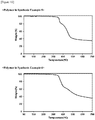
Classifications
-
- B—PERFORMING OPERATIONS; TRANSPORTING
- B01—PHYSICAL OR CHEMICAL PROCESSES OR APPARATUS IN GENERAL
- B01J—CHEMICAL OR PHYSICAL PROCESSES, e.g. CATALYSIS OR COLLOID CHEMISTRY; THEIR RELEVANT APPARATUS
- B01J31/00—Catalysts comprising hydrides, coordination complexes or organic compounds
- B01J31/02—Catalysts comprising hydrides, coordination complexes or organic compounds containing organic compounds or metal hydrides
- B01J31/06—Catalysts comprising hydrides, coordination complexes or organic compounds containing organic compounds or metal hydrides containing polymers
-
- B—PERFORMING OPERATIONS; TRANSPORTING
- B01—PHYSICAL OR CHEMICAL PROCESSES OR APPARATUS IN GENERAL
- B01J—CHEMICAL OR PHYSICAL PROCESSES, e.g. CATALYSIS OR COLLOID CHEMISTRY; THEIR RELEVANT APPARATUS
- B01J31/00—Catalysts comprising hydrides, coordination complexes or organic compounds
- B01J31/16—Catalysts comprising hydrides, coordination complexes or organic compounds containing coordination complexes
- B01J31/165—Polymer immobilised coordination complexes, e.g. organometallic complexes
-
- B—PERFORMING OPERATIONS; TRANSPORTING
- B01—PHYSICAL OR CHEMICAL PROCESSES OR APPARATUS IN GENERAL
- B01J—CHEMICAL OR PHYSICAL PROCESSES, e.g. CATALYSIS OR COLLOID CHEMISTRY; THEIR RELEVANT APPARATUS
- B01J23/00—Catalysts comprising metals or metal oxides or hydroxides, not provided for in group B01J21/00
- B01J23/38—Catalysts comprising metals or metal oxides or hydroxides, not provided for in group B01J21/00 of noble metals
- B01J23/40—Catalysts comprising metals or metal oxides or hydroxides, not provided for in group B01J21/00 of noble metals of the platinum group metals
- B01J23/44—Palladium
-
- B—PERFORMING OPERATIONS; TRANSPORTING
- B01—PHYSICAL OR CHEMICAL PROCESSES OR APPARATUS IN GENERAL
- B01J—CHEMICAL OR PHYSICAL PROCESSES, e.g. CATALYSIS OR COLLOID CHEMISTRY; THEIR RELEVANT APPARATUS
- B01J31/00—Catalysts comprising hydrides, coordination complexes or organic compounds
- B01J31/16—Catalysts comprising hydrides, coordination complexes or organic compounds containing coordination complexes
- B01J31/22—Organic complexes
- B01J31/2204—Organic complexes the ligands containing oxygen or sulfur as complexing atoms
- B01J31/226—Sulfur, e.g. thiocarbamates
-
- B—PERFORMING OPERATIONS; TRANSPORTING
- B01—PHYSICAL OR CHEMICAL PROCESSES OR APPARATUS IN GENERAL
- B01J—CHEMICAL OR PHYSICAL PROCESSES, e.g. CATALYSIS OR COLLOID CHEMISTRY; THEIR RELEVANT APPARATUS
- B01J35/00—Catalysts, in general, characterised by their form or physical properties
- B01J35/30—Catalysts, in general, characterised by their form or physical properties characterised by their physical properties
- B01J35/391—Physical properties of the active metal ingredient
- B01J35/393—Metal or metal oxide crystallite size
-
- B—PERFORMING OPERATIONS; TRANSPORTING
- B01—PHYSICAL OR CHEMICAL PROCESSES OR APPARATUS IN GENERAL
- B01J—CHEMICAL OR PHYSICAL PROCESSES, e.g. CATALYSIS OR COLLOID CHEMISTRY; THEIR RELEVANT APPARATUS
- B01J35/00—Catalysts, in general, characterised by their form or physical properties
- B01J35/40—Catalysts, in general, characterised by their form or physical properties characterised by dimensions, e.g. grain size
- B01J35/45—Nanoparticles
-
- B—PERFORMING OPERATIONS; TRANSPORTING
- B01—PHYSICAL OR CHEMICAL PROCESSES OR APPARATUS IN GENERAL
- B01J—CHEMICAL OR PHYSICAL PROCESSES, e.g. CATALYSIS OR COLLOID CHEMISTRY; THEIR RELEVANT APPARATUS
- B01J37/00—Processes, in general, for preparing catalysts; Processes, in general, for activation of catalysts
- B01J37/02—Impregnation, coating or precipitation
- B01J37/0201—Impregnation
-
- B—PERFORMING OPERATIONS; TRANSPORTING
- B01—PHYSICAL OR CHEMICAL PROCESSES OR APPARATUS IN GENERAL
- B01J—CHEMICAL OR PHYSICAL PROCESSES, e.g. CATALYSIS OR COLLOID CHEMISTRY; THEIR RELEVANT APPARATUS
- B01J37/00—Processes, in general, for preparing catalysts; Processes, in general, for activation of catalysts
- B01J37/02—Impregnation, coating or precipitation
- B01J37/0201—Impregnation
- B01J37/0211—Impregnation using a colloidal suspension
-
- B—PERFORMING OPERATIONS; TRANSPORTING
- B01—PHYSICAL OR CHEMICAL PROCESSES OR APPARATUS IN GENERAL
- B01J—CHEMICAL OR PHYSICAL PROCESSES, e.g. CATALYSIS OR COLLOID CHEMISTRY; THEIR RELEVANT APPARATUS
- B01J37/00—Processes, in general, for preparing catalysts; Processes, in general, for activation of catalysts
- B01J37/16—Reducing
-
- B—PERFORMING OPERATIONS; TRANSPORTING
- B01—PHYSICAL OR CHEMICAL PROCESSES OR APPARATUS IN GENERAL
- B01J—CHEMICAL OR PHYSICAL PROCESSES, e.g. CATALYSIS OR COLLOID CHEMISTRY; THEIR RELEVANT APPARATUS
- B01J37/00—Processes, in general, for preparing catalysts; Processes, in general, for activation of catalysts
- B01J37/34—Irradiation by, or application of, electric, magnetic or wave energy, e.g. ultrasonic waves ; Ionic sputtering; Flame or plasma spraying; Particle radiation
- B01J37/341—Irradiation by, or application of, electric, magnetic or wave energy, e.g. ultrasonic waves ; Ionic sputtering; Flame or plasma spraying; Particle radiation making use of electric or magnetic fields, wave energy or particle radiation
- B01J37/343—Irradiation by, or application of, electric, magnetic or wave energy, e.g. ultrasonic waves ; Ionic sputtering; Flame or plasma spraying; Particle radiation making use of electric or magnetic fields, wave energy or particle radiation of ultrasonic wave energy
-
- C—CHEMISTRY; METALLURGY
- C07—ORGANIC CHEMISTRY
- C07C—ACYCLIC OR CARBOCYCLIC COMPOUNDS
- C07C5/00—Preparation of hydrocarbons from hydrocarbons containing the same number of carbon atoms
- C07C5/02—Preparation of hydrocarbons from hydrocarbons containing the same number of carbon atoms by hydrogenation
- C07C5/08—Preparation of hydrocarbons from hydrocarbons containing the same number of carbon atoms by hydrogenation of carbon-to-carbon triple bonds
- C07C5/09—Preparation of hydrocarbons from hydrocarbons containing the same number of carbon atoms by hydrogenation of carbon-to-carbon triple bonds to carbon-to-carbon double bonds
-
- C—CHEMISTRY; METALLURGY
- C07—ORGANIC CHEMISTRY
- C07C—ACYCLIC OR CARBOCYCLIC COMPOUNDS
- C07C7/00—Purification; Separation; Use of additives
- C07C7/148—Purification; Separation; Use of additives by treatment giving rise to a chemical modification of at least one compound
- C07C7/163—Purification; Separation; Use of additives by treatment giving rise to a chemical modification of at least one compound by hydrogenation
- C07C7/167—Purification; Separation; Use of additives by treatment giving rise to a chemical modification of at least one compound by hydrogenation for removal of compounds containing a triple carbon-to-carbon bond
-
- C—CHEMISTRY; METALLURGY
- C08—ORGANIC MACROMOLECULAR COMPOUNDS; THEIR PREPARATION OR CHEMICAL WORKING-UP; COMPOSITIONS BASED THEREON
- C08F—MACROMOLECULAR COMPOUNDS OBTAINED BY REACTIONS ONLY INVOLVING CARBON-TO-CARBON UNSATURATED BONDS
- C08F26/00—Homopolymers and copolymers of compounds having one or more unsaturated aliphatic radicals, each having only one carbon-to-carbon double bond, and at least one being terminated by a single or double bond to nitrogen or by a heterocyclic ring containing nitrogen
- C08F26/06—Homopolymers and copolymers of compounds having one or more unsaturated aliphatic radicals, each having only one carbon-to-carbon double bond, and at least one being terminated by a single or double bond to nitrogen or by a heterocyclic ring containing nitrogen by a heterocyclic ring containing nitrogen
-
- B—PERFORMING OPERATIONS; TRANSPORTING
- B01—PHYSICAL OR CHEMICAL PROCESSES OR APPARATUS IN GENERAL
- B01J—CHEMICAL OR PHYSICAL PROCESSES, e.g. CATALYSIS OR COLLOID CHEMISTRY; THEIR RELEVANT APPARATUS
- B01J2231/00—Catalytic reactions performed with catalysts classified in B01J31/00
- B01J2231/60—Reduction reactions, e.g. hydrogenation
- B01J2231/64—Reductions in general of organic substrates, e.g. hydride reductions or hydrogenations
- B01J2231/641—Hydrogenation of organic substrates, i.e. H2 or H-transfer hydrogenations, e.g. Fischer-Tropsch processes
- B01J2231/645—Hydrogenation of organic substrates, i.e. H2 or H-transfer hydrogenations, e.g. Fischer-Tropsch processes of C=C or C-C triple bonds
-
- B—PERFORMING OPERATIONS; TRANSPORTING
- B01—PHYSICAL OR CHEMICAL PROCESSES OR APPARATUS IN GENERAL
- B01J—CHEMICAL OR PHYSICAL PROCESSES, e.g. CATALYSIS OR COLLOID CHEMISTRY; THEIR RELEVANT APPARATUS
- B01J2235/00—Indexing scheme associated with group B01J35/00, related to the analysis techniques used to determine the catalysts form or properties
-
- B—PERFORMING OPERATIONS; TRANSPORTING
- B01—PHYSICAL OR CHEMICAL PROCESSES OR APPARATUS IN GENERAL
- B01J—CHEMICAL OR PHYSICAL PROCESSES, e.g. CATALYSIS OR COLLOID CHEMISTRY; THEIR RELEVANT APPARATUS
- B01J2235/00—Indexing scheme associated with group B01J35/00, related to the analysis techniques used to determine the catalysts form or properties
- B01J2235/30—Scanning electron microscopy; Transmission electron microscopy
-
- B—PERFORMING OPERATIONS; TRANSPORTING
- B01—PHYSICAL OR CHEMICAL PROCESSES OR APPARATUS IN GENERAL
- B01J—CHEMICAL OR PHYSICAL PROCESSES, e.g. CATALYSIS OR COLLOID CHEMISTRY; THEIR RELEVANT APPARATUS
- B01J23/00—Catalysts comprising metals or metal oxides or hydroxides, not provided for in group B01J21/00
- B01J23/38—Catalysts comprising metals or metal oxides or hydroxides, not provided for in group B01J21/00 of noble metals
- B01J23/40—Catalysts comprising metals or metal oxides or hydroxides, not provided for in group B01J21/00 of noble metals of the platinum group metals
- B01J23/42—Platinum
-
- B—PERFORMING OPERATIONS; TRANSPORTING
- B01—PHYSICAL OR CHEMICAL PROCESSES OR APPARATUS IN GENERAL
- B01J—CHEMICAL OR PHYSICAL PROCESSES, e.g. CATALYSIS OR COLLOID CHEMISTRY; THEIR RELEVANT APPARATUS
- B01J2531/00—Additional information regarding catalytic systems classified in B01J31/00
- B01J2531/02—Compositional aspects of complexes used, e.g. polynuclearity
- B01J2531/0202—Polynuclearity
- B01J2531/0211—Metal clusters, i.e. complexes comprising 3 to about 1000 metal atoms with metal-metal bonds to provide one or more all-metal (M)n rings, e.g. Rh4(CO)12
-
- B—PERFORMING OPERATIONS; TRANSPORTING
- B01—PHYSICAL OR CHEMICAL PROCESSES OR APPARATUS IN GENERAL
- B01J—CHEMICAL OR PHYSICAL PROCESSES, e.g. CATALYSIS OR COLLOID CHEMISTRY; THEIR RELEVANT APPARATUS
- B01J2531/00—Additional information regarding catalytic systems classified in B01J31/00
- B01J2531/80—Complexes comprising metals of Group VIII as the central metal
- B01J2531/82—Metals of the platinum group
- B01J2531/824—Palladium
-
- C—CHEMISTRY; METALLURGY
- C07—ORGANIC CHEMISTRY
- C07C—ACYCLIC OR CARBOCYCLIC COMPOUNDS
- C07C2523/00—Catalysts comprising metals or metal oxides or hydroxides, not provided for in group C07C2521/00
- C07C2523/38—Catalysts comprising metals or metal oxides or hydroxides, not provided for in group C07C2521/00 of noble metals
- C07C2523/40—Catalysts comprising metals or metal oxides or hydroxides, not provided for in group C07C2521/00 of noble metals of the platinum group metals
- C07C2523/44—Palladium
-
- C—CHEMISTRY; METALLURGY
- C07—ORGANIC CHEMISTRY
- C07C—ACYCLIC OR CARBOCYCLIC COMPOUNDS
- C07C2531/00—Catalysts comprising hydrides, coordination complexes or organic compounds
- C07C2531/02—Catalysts comprising hydrides, coordination complexes or organic compounds containing organic compounds or metal hydrides
- C07C2531/06—Catalysts comprising hydrides, coordination complexes or organic compounds containing organic compounds or metal hydrides containing polymers
-
- Y—GENERAL TAGGING OF NEW TECHNOLOGICAL DEVELOPMENTS; GENERAL TAGGING OF CROSS-SECTIONAL TECHNOLOGIES SPANNING OVER SEVERAL SECTIONS OF THE IPC; TECHNICAL SUBJECTS COVERED BY FORMER USPC CROSS-REFERENCE ART COLLECTIONS [XRACs] AND DIGESTS
- Y02—TECHNOLOGIES OR APPLICATIONS FOR MITIGATION OR ADAPTATION AGAINST CLIMATE CHANGE
- Y02P—CLIMATE CHANGE MITIGATION TECHNOLOGIES IN THE PRODUCTION OR PROCESSING OF GOODS
- Y02P20/00—Technologies relating to chemical industry
- Y02P20/50—Improvements relating to the production of bulk chemicals
- Y02P20/52—Improvements relating to the production of bulk chemicals using catalysts, e.g. selective catalysts
Definitions
- acetylene is known to reduce the activity of a catalyst in an ethylene polymerization process and cause a deterioration in the quality of a polymer. Therefore, in a process of synthesizing polyethylene from ethylene, the concentration of acetylene contained in ethylene raw materials needs to be reduced to the minimal level.
- An exemplary embodiment of the present application provides a catalyst for a hydrogenation reaction, the catalyst comprising:
- the catalyst as described above has a problem in that the catalyst replacement cycle is short due to the rapid deactivation of the catalyst, and thus has a problem in that the process cost can be increased.
- a modifier was introduced, but the introduction of the modifier has a problem in that the process cost can be increased and an additional separation process is required.
- the catalyst for a hydrogenation reaction comprises: a polymer support; and a catalytic component supported on the polymer support, in which the polymer support comprises a repeating unit represented by the following Formula 1 or 2. in Formulae 1 and 2,
- Formula 2 can be represented by any one of the following Formulae 6 and 11 to 13.
- aryl groups of Formulae 1 and 2 can comprise a phenyl group, a biphenyl group, a terphenyl group, a quaterphenyl group, a naphthyl group, an anthracenyl group, a phenanthrenyl group, a pyrenyl group, and the like, but are not limited thereto.
- all of R1 to R4 of Formulae 1 and 2 can be hydrogen.
- the polymer support is composed of a cross-linked polymer, so that the molecular weight of the cross-linked polymer is not specified.
- a selective hydrogenation reaction such as hydrogenation of alkyne to alkene by supporting a hydrogen active metal (a metal capable of forming hydrogen activated by contact with hydrogen molecules) in the polymer support.
- a hydrogen active metal a metal capable of forming hydrogen activated by contact with hydrogen molecules
- both alkyne and alkene are easily adsorbed on the surface of the metal, so that hydrogenation of alkyne to alkene and hydrogenation of alkene to alkane are non-selectively accomplished.
- the surface of an active metal is surrounded by the polymer due to the strong binding power between the polymer support and the active metal. Therefore, based on the active metal, a reactant exhibiting a relatively stronger binding power than the binding power between the active metal and the polymer support, such as alkyne, is adsorbed on the active metal, but reactants exhibiting a relatively weaker binding power, such as alkene, have a reaction characteristic that the reactants cannot be adsorbed on the active metal.
- a catalyst having an active metal supported on a polymer support can show high selectivity in a hydrogenation reaction of alkyne to alkene by suppressing the hydrogenation reactivity of alkene while maintaining the hydrogenation reactivity of alkyne as it is.
- the catalytic component can comprise one or more of platinum (Pt), palladium (Pd), ruthenium (Ru), iron (Fe), nickel (Ni), cobalt (Co), molybdenum (Mo), gold (Au), silver (Ag), copper (Cu), titanium (Ti), gallium (Ga), cerium (Ce), aluminum (Al), zinc (Zn), and lanthanum (La).
- a content of the catalytic component can be 0.01 wt% to 10 wt% and 0.05 wt% to 5 wt%, based on a total weight of the catalyst for a hydrogenation reaction.
- the content of the catalytic component is less than 0.01 wt% based on the total weight of the catalyst for a hydrogenation reaction, the reactivity of the catalyst can deteriorate, so that the content is not preferred.
- the content of the catalyst component is more than 10 wt%, a relatively large amount of active metal is contained compared to the polymer support, so that the active metal can not be easily bonded to the polymer support, and accordingly, the selectivity of alkene is lowered by hydrogenation reaction, so that the actual benefit of the hydrogenation reaction caused by the increase in weight can be decreased.
- a method for manufacturing a catalyst for a hydrogenation reaction comprises: preparing a polymer support comprising the repeating unit represented by Formula 1 or 2; and supporting a catalytic component on the polymer support.
- the polymer support comprising the repeating unit represented by Formula 1 or 2 can be synthesized by condensation polymerization of a monomer A comprising a triazine structure and a monomer B comprising thiol in a benzene ring.
- the monomer A can be a compound containing a cyanuric chloride or a triazine ring and having a functional group capable of nucleophilic aromatic substitution.
- examples of the monomer B comprise 1,4-benzenedithiol, 1,3,5-benzenetrithiol, and the like, but are not limited thereto.
- a basic material can be used in order to remove an acid which can be produced as a result of a condensation polymerization reaction of the monomers A and B, and as the basic material, N,N-diisopropylethylamine (DIPEA), K 2 CO 3 , and the like can be used, but the basic material is not limited thereto.
- DIPEA N,N-diisopropylethylamine
- K 2 CO 3 K 2 CO 3
- the solvent which can be used in the condensation polymerization reaction of the monomers A and B 2 comprise an aprotic solvent such as acetonitrile and cyclohexane, but are not limited thereto.
- a molar ratio of the monomer A/the monomer B can be 0.5 to 2, and it is possible to put an amount of basic material, which can sufficiently titrate an acid which is produced.
- a method for manufacturing the polymer support dissolves both a monomer A and a monomer B in an organic solvent, adds a basic material thereto at 0 to 15°C, and reacts the resulting mixture while stirring the mixture at 0 to 15°C for 0.5 hour to 1 hour, 25°C to 30°C for 2 hours to 4 hours, and 80°C to 140°C for 12 hours to 24 hours as follows.
- the polymer support can be produced by filtering a produced polymer, washing the filtered polymer with a solvent such as methanol, ethanol, and acetone, and then drying the polymer at 30°C to 100°C.
- a catalyst in the method for supporting a catalytic component on a polymer support, after an aqueous solution or organic solution (supporting solution) containing a compound as a precursor for the catalytic component is prepared, a catalyst can be synthesized by using an immersion method in which the polymer support is immersed in the supporting solution, dried, and then reduced with hydrogen gas and the catalytic component is supported, or by stirring the resulting polymer support with metal nanoparticles reduced in advance.
- an organic metal compound such as Pd(acac) 2 , Pd(NO 3 ) 2 ⁇ 4NH 3 , Pt(acac) 2 , and Pt(NO 3 ) 2 ⁇ 4NH 3 can be used, but the precursor is not limited thereto.
- an aqueous solution or organic solution is prepared by dissolving a compound as a precursor for the catalytic component in water or an organic solvent in a volume corresponding to voids of the polymer support, a polymer support is immersed in the solution, the solvent is completely evaporated, the resulting product is dried, and then the polymer can be reduced while flowing hydrogen within a temperature at which the polymer is not impaired ( ⁇ 250°C).
- a polymer support is put into the solution, the solution is stirred and subjected to ultrasonic treatment, and then a catalyst can be obtained by filtering the resulting solution until the color of the solution completely fades, and then drying the filtered product.
- FIG. 1 a method for supporting a catalytic component on a polymer support is schematically illustrated in the following FIG. 1 .
- the catalyst according to an exemplary embodiment of the present application can be applied to a hydrogenation reaction.
- the catalyst can be applied to a hydrogenation reaction of alkene from alkyne.
- the catalyst according to an exemplary embodiment of the present application can be applied not only to acetylene, but also to a hydrocarbon compound having a triple bond. Examples of the hydrocarbon compound comprise propyne, butyne, pentyne, hexayne, heptyne, octyne, and the like.
- a hydrogenolysis reaction is suppressed, and only an alkyne group can be applied to a selective hydrogenation reaction to an alkene group.
- a polymer was synthesized in the same manner as in Synthesis Example 1, except that the polymer was synthesized by putting 2.08 g of 1,3,5-trithiol benzene (TCI) thereinto instead of the 1,4-dithiol benzene.
- TCI 1,3,5-trithiol benzene
- the produced polymer is represented by "tri-S-POL".
- a polymer was synthesized in the same manner as in Synthesis Example 1, except that 1,3-dithiol benzene was used instead of the 1,4-dithiol benzene.
- a polymer was synthesized in the same manner as in Synthesis Example 1, except that 1,2-dithiol benzene was used instead of the 1,4-dithiol benzene.
- a polymer was synthesized in the same manner as in Synthesis Example 1, except that 2.6 g of 4-methyl-1,2-dithiol benzene was used instead of the 1,4-dithiol benzene.
- a polymer was synthesized in the same manner as in Synthesis Example 1, except that 3.3 g of 4-tert-butyl-1,2-dithiol benzene was used instead of the 1,4-dithiol benzene.
- FIGS. 4 , 9 , and 10 show the change in weight of the polymer supports according to the temperature under reaction conditions using a thermal gravimetric analyzer, and are spectra illustrating the change in weight of the polymer according to the increase in temperature under a hydrogen condition.
- TGA thermal gravimetric analysis
- a process was performed in the same manner as in Example 1, except that the polymer support produced in Synthesis Example 2 was used instead of the polymer support produced in Synthesis Example 1.
- a process was performed in the same manner as in Example 1, except that the polymer support produced in Synthesis Example 3 was used instead of the polymer support produced in Synthesis Example 1.
- a process was performed in the same manner as in Example 1, except that the polymer support produced in Synthesis Example 4 was used instead of the polymer support produced in Synthesis Example 1.
- a process was performed in the same manner as in Example 1, except that the polymer support produced in Synthesis Example 5 was used instead of the polymer support produced in Synthesis Example 1.
- a process was performed in the same manner as in Example 1, except that the polymer support produced in Synthesis Example 6 was used instead of the polymer support produced in Synthesis Example 1.
- Example 1 A process was performed in the same manner as in Example 1, except that in Example 1, a commercially available silica (Aldrich, 236772) was used instead of the polymer support produced in Synthesis Example 1.
- the produced catalyst is represented by "Pd/SiO 2 ".
- FIG. 6 shows the change in weight of the catalyst according to the temperature under reaction conditions using a thermal gravimetric analyzer, and is a set of spectra illustrating the change in weight of the catalyst having palladium on the polymer support according to the increase in temperature under a hydrogen condition.
- TGA thermal gravimetric analysis
- a hydrogenation reaction of acetylene was performed under conditions of 1 atm, 60°C, and a weight hourly space velocity (WHSV) of 0.021 to 1.25 g C2H2 g cat -1 h -1 by feeding 0.6 kPa of acetylene, 49.3 kPa of ethylene, and 0.9 kPa of hydrogen- and nitrogen-based gases.
- WHSV weight hourly space velocity
- FIG. 7 is a view illustrating the selectivity of ethylene according to the acetylene conversion
- FIG. 8 is a view illustrating the conversion of acetylene according to 1/WHSV.
- the catalyst (Pd/di-S-POL) in Example 1 exhibit high ethylene selectivity even at high conversion and have better ethylene selectivity than the catalyst (Pd/SiO 2 ) in Comparative Example 1 at the same hourly space velocity.
- a polymer support comprising the repeating unit represented by Formula 1 or 2 can be applied as a support of a catalyst for a hydrogenation reaction.
- the catalyst comprising the polymer support is characterized by having excellent stability in the reaction temperature range of the hydrogenation reaction and being able to improve the selectivity for the product of the hydrogenation reaction.
Landscapes
- Chemical & Material Sciences (AREA)
- Organic Chemistry (AREA)
- Chemical Kinetics & Catalysis (AREA)
- Engineering & Computer Science (AREA)
- Materials Engineering (AREA)
- Inorganic Chemistry (AREA)
- Health & Medical Sciences (AREA)
- Physics & Mathematics (AREA)
- Medicinal Chemistry (AREA)
- Polymers & Plastics (AREA)
- Oil, Petroleum & Natural Gas (AREA)
- Water Supply & Treatment (AREA)
- Analytical Chemistry (AREA)
- Optics & Photonics (AREA)
- General Chemical & Material Sciences (AREA)
- Plasma & Fusion (AREA)
- Toxicology (AREA)
- Catalysts (AREA)
- Organic Low-Molecular-Weight Compounds And Preparation Thereof (AREA)
- Low-Molecular Organic Synthesis Reactions Using Catalysts (AREA)
Abstract
Description
- This application claims priority to and the benefit of
Korean Patent Application No. 10-2019-0120801 - The present invention relates to a catalyst for a hydrogenation reaction and a method for manufacturing the same.
- Oil refinery and petrochemical plants produce large amounts of hydrocarbons, which contain large amounts of unsaturated hydrocarbons which cause problems during subsequent process steps or storage periods. Examples of these unsaturated hydrocarbons comprise acetylene, propyne, propadiene, butadiene, vinylacetylene, butyne, phenylacetylene, styrene and the like.
- As an example, acetylene is known to reduce the activity of a catalyst in an ethylene polymerization process and cause a deterioration in the quality of a polymer. Therefore, in a process of synthesizing polyethylene from ethylene, the concentration of acetylene contained in ethylene raw materials needs to be reduced to the minimal level.
- These undesired unsaturated compounds are usually removed to several PPM or less by a selective hydrogenation reaction. It is very important to enhance the selectivity from a reaction of selectively hydrogenating unsaturated compounds to the desired compound and avoid coke formation, which reduces the reaction activity.
- In the related art, nickel sulfate, tungsten/nickel sulfate or copper containing catalysts have been used for selective hydrogenation reactions. However, these catalysts have low catalytic activity even at high temperatures, and thus reduce polymer formation. Further, supported palladium (Pd) or Pd and silver (Ag) containing catalysts based on alumina or silica are also used in the selective hydrogenation process, but the selectivity is unsatisfactory or the activity is low.
- Therefore, there is a need in the art for developing a catalyst for a hydrogenation reaction, which has excellent selectivity for a product of hydrogenation reaction and excellent catalytic activity.
- The present application provides a catalyst for a hydrogenation reaction and a method for manufacturing the same.
- An exemplary embodiment of the present application provides a catalyst for a hydrogenation reaction, the catalyst comprising:
- a polymer support; and
- a catalytic component supported on the polymer support,
- wherein the polymer support comprises a repeating unit represented by the following
Formula 1 or 2:

- R1 to R4 are the same as or different from each other, and are each independently hydrogen, an alkyl group having 1 to 10 carbon atoms, or an aryl group having 6 to 20 carbon atoms, and
- m is an integer from 0 to 4.
- Further, another exemplary embodiment of the present application provides a method for manufacturing a catalyst for a hydrogenation reaction, the method comprising:
- preparing a polymer support comprising the repeating unit represented by Formula 1 or 2; and
- supporting a catalytic component on the polymer support.
- According to an exemplary embodiment of the present application, a polymer support comprising the repeating unit represented by Formula 1 or 2 can be applied as a support of a catalyst for a hydrogenation reaction.
- Further, according to an exemplary embodiment of the present application, the catalyst comprising the polymer support is characterized by having excellent stability in the reaction temperature range of the hydrogenation reaction and being able to improve the selectivity for the product of the hydrogenation reaction.
-
-
FIG. 1 is a view schematically illustrating a method for supporting a catalytic component on a polymer support as an exemplary embodiment of the present application. -
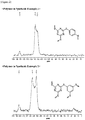
FIG. 2 is a view illustrating cross polarization magic-angle spinning 13C nuclear magnetic resonance (CP/MAS 13C NMR) analysis results of the polymers according to Synthesis Examples 1 and 2 as an exemplary embodiment of the present application. -
FIG. 3 is a view illustrating differential scanning calorimetry (DSC) analysis spectra of the polymers according to Synthesis Examples 1 and 2 as an exemplary embodiment of the present application. -
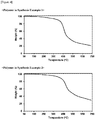
FIG. 4 is a view illustrating thermal gravimetric analysis (TGA) results of the polymers according to Synthesis Examples 1 and 2 as an exemplary embodiment of the present application. -
FIG. 5 is a view illustrating transmission electron microscope (TEM) images of the catalysts according to Examples 1 and 2 as an exemplary embodiment of the present application. -
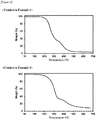
FIG. 6 is a view illustrating thermal gravimetric analysis (TGA) results of the catalysts according to Examples 1 and 2 as an exemplary embodiment of the present application. -
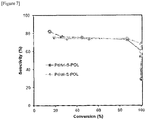
FIG. 7 is a view illustrating the selectivity of ethylene according to the conversion of the acetylenes of Example as an exemplary embodiment of the present application. -
FIG. 8 is a view illustrating the conversion of the acetylenes of Examples according to 1/WHSV as an exemplary embodiment of the present application. -
FIG. 9 is a view illustrating thermal gravimetric analysis (TGA) results of the polymers according to Synthesis Examples 3 and 4 as an exemplary embodiment of the present application. -
FIG. 10 is a view illustrating thermal gravimetric analysis (TGA) results of the polymers according to Synthesis Examples 5 and 6 as an exemplary embodiment of the present application. - Hereinafter, the present specification will be described in more detail.
- When one member is disposed "on" another member in the present specification, this comprises not only a case where the one member is brought into contact with another member, but also a case where still another member is present between the two members.
- When one part "comprises" one constituent element in the present specification, unless otherwise specifically described, this does not mean that another constituent element is excluded, but means that another constituent element can be further comprised.
- As described above, it is common to use a catalyst in which Pd is supported on an alumina support as a catalyst for a hydrogenation reaction in the related art. However, the catalyst as described above has a problem in that the catalyst replacement cycle is short due to the rapid deactivation of the catalyst, and thus has a problem in that the process cost can be increased. Further, in order to improve the selectivity of the product of hydrogenation reaction in the related art, a modifier was introduced, but the introduction of the modifier has a problem in that the process cost can be increased and an additional separation process is required.
- Thus, the present application was intended to develop a catalyst for a hydrogenation reaction, which has excellent selectivity for the product of hydrogenation reaction and excellent catalytic activity. In particular, the present inventors have studied a catalyst comprising a polymer support as a support which is applied to a catalyst for a hydrogenation reaction, thereby completing the present application.
- The catalyst for a hydrogenation reaction according to an exemplary embodiment of the present application comprises: a polymer support; and a catalytic component supported on the polymer support, in which the polymer support comprises a repeating unit represented by the following
Formula 

Formulae - R1 to R4 are the same as or different from each other, and are each independently hydrogen, an alkyl group having 1 to 10 carbon atoms, or an aryl group having 6 to 20 carbon atoms, and
- m is an integer from 0 to 4.
- In an exemplary embodiment of the present application, "" in the formulae means a point where the repeating units are linked.

- In an exemplary embodiment of the present application, Formula 1 can be represented by any one of the following
Formulae 3 to 5 and 7 to 10.


- In an exemplary embodiment of the present application, Formula 2 can be represented by any one of the following Formulae 6 and 11 to 13.


- In an exemplary embodiment of the present application, the alkyl groups of Formulae 1 and 2 can be straight-chained or branched, and the number of carbon atoms thereof is not particularly limited, but is preferably 1 to 10. Specific examples of the alkyl group comprise a methyl group, an ethyl group, a propyl group, an isopropyl group, a butyl group, an n-butyl group, an isobutyl group, a tert-butyl group, a sec-butyl group, a 1-methylbutyl group, a 1-ethylbutyl group, and the like, but are not limited thereto.
- In an exemplary embodiment of the present application, specific examples of the aryl groups of
Formulae - In an exemplary embodiment of the present application, all of R1 to R4 of
Formulae - In an exemplary embodiment of the present application, the polymer support has a structure in which a triazine ring and a benzene ring are linked to each other by an intermediate linking group (-S-). That is, three -S functional groups bonded to the triazine rings of
Formulae - In an exemplary embodiment of the present application, the polymer support is composed of a cross-linked polymer, so that the molecular weight of the cross-linked polymer is not specified.
- According to an exemplary embodiment of the present application, it is possible to exhibit high selectivity compared to a hydrogenation catalyst using an alumina or silica support in the related art in a selective hydrogenation reaction such as hydrogenation of alkyne to alkene by supporting a hydrogen active metal (a metal capable of forming hydrogen activated by contact with hydrogen molecules) in the polymer support. As an example, in the hydrogenation reaction of alkyne to alkene, in the case of an alumina- or silica-based metal supported catalyst in the related art, both alkyne and alkene are easily adsorbed on the surface of the metal, so that hydrogenation of alkyne to alkene and hydrogenation of alkene to alkane are non-selectively accomplished. However, as in an exemplary embodiment of the present application, when the polymer support is used, the surface of an active metal is surrounded by the polymer due to the strong binding power between the polymer support and the active metal. Therefore, based on the active metal, a reactant exhibiting a relatively stronger binding power than the binding power between the active metal and the polymer support, such as alkyne, is adsorbed on the active metal, but reactants exhibiting a relatively weaker binding power, such as alkene, have a reaction characteristic that the reactants cannot be adsorbed on the active metal. Due to these characteristics, a catalyst having an active metal supported on a polymer support can show high selectivity in a hydrogenation reaction of alkyne to alkene by suppressing the hydrogenation reactivity of alkene while maintaining the hydrogenation reactivity of alkyne as it is.
- In an exemplary embodiment of the present application, the catalytic component can comprise one or more of platinum (Pt), palladium (Pd), ruthenium (Ru), iron (Fe), nickel (Ni), cobalt (Co), molybdenum (Mo), gold (Au), silver (Ag), copper (Cu), titanium (Ti), gallium (Ga), cerium (Ce), aluminum (Al), zinc (Zn), and lanthanum (La).
- In an exemplary embodiment of the present application, a content of the catalytic component can be 0.01 wt% to 10 wt% and 0.05 wt% to 5 wt%, based on a total weight of the catalyst for a hydrogenation reaction. When the content of the catalytic component is less than 0.01 wt% based on the total weight of the catalyst for a hydrogenation reaction, the reactivity of the catalyst can deteriorate, so that the content is not preferred. Further, when the content of the catalyst component is more than 10 wt%, a relatively large amount of active metal is contained compared to the polymer support, so that the active metal can not be easily bonded to the polymer support, and accordingly, the selectivity of alkene is lowered by hydrogenation reaction, so that the actual benefit of the hydrogenation reaction caused by the increase in weight can be decreased.
- A method for manufacturing a catalyst for a hydrogenation reaction according to an exemplary embodiment of the present application comprises: preparing a polymer support comprising the repeating unit represented by
Formula - In an exemplary embodiment of the present application, the polymer support comprising the repeating unit represented by
Formula - In addition, when the polymer support is produced, a basic material can be used in order to remove an acid which can be produced as a result of a condensation polymerization reaction of the monomers A and B, and as the basic material, N,N-diisopropylethylamine (DIPEA), K2CO3, and the like can be used, but the basic material is not limited thereto. Furthermore, examples of the solvent which can be used in the condensation polymerization reaction of the monomers A and
B 2 comprise an aprotic solvent such as acetonitrile and cyclohexane, but are not limited thereto. - Further, a molar ratio of the monomer A/the monomer B can be 0.5 to 2, and it is possible to put an amount of basic material, which can sufficiently titrate an acid which is produced.
- In an exemplary embodiment of the present application, a method for manufacturing the polymer support dissolves both a monomer A and a monomer B in an organic solvent, adds a basic material thereto at 0 to 15°C, and reacts the resulting mixture while stirring the mixture at 0 to 15°C for 0.5 hour to 1 hour, 25°C to 30°C for 2 hours to 4 hours, and 80°C to 140°C for 12 hours to 24 hours as follows. Thereafter, the polymer support can be produced by filtering a produced polymer, washing the filtered polymer with a solvent such as methanol, ethanol, and acetone, and then drying the polymer at 30°C to 100°C.
- In an exemplary embodiment of the present application, in the method for supporting a catalytic component on a polymer support, after an aqueous solution or organic solution (supporting solution) containing a compound as a precursor for the catalytic component is prepared, a catalyst can be synthesized by using an immersion method in which the polymer support is immersed in the supporting solution, dried, and then reduced with hydrogen gas and the catalytic component is supported, or by stirring the resulting polymer support with metal nanoparticles reduced in advance. As a precursor for the catalytic component, an organic metal compound such as Pd(acac)2, Pd(NO3)2·4NH3, Pt(acac)2, and Pt(NO3)2·4NH3 can be used, but the precursor is not limited thereto.
- When the catalytic component is supported on the polymer support by the immersion method, an aqueous solution or organic solution is prepared by dissolving a compound as a precursor for the catalytic component in water or an organic solvent in a volume corresponding to voids of the polymer support, a polymer support is immersed in the solution, the solvent is completely evaporated, the resulting product is dried, and then the polymer can be reduced while flowing hydrogen within a temperature at which the polymer is not impaired (< 250°C). Further, after metal nanoparticles reduced in advance are dispersed in an organic solvent, a polymer support is put into the solution, the solution is stirred and subjected to ultrasonic treatment, and then a catalyst can be obtained by filtering the resulting solution until the color of the solution completely fades, and then drying the filtered product.
- As an exemplary embodiment of the present application, a method for supporting a catalytic component on a polymer support is schematically illustrated in the following
FIG. 1 . - In a method for manufacturing a catalyst for a hydrogenation reaction according to an exemplary embodiment of the present application, detailed contents on the polymer support comprising the repeating unit represented by
Formula - The catalyst according to an exemplary embodiment of the present application can be applied to a hydrogenation reaction. For example, the catalyst can be applied to a hydrogenation reaction of alkene from alkyne. The catalyst according to an exemplary embodiment of the present application can be applied not only to acetylene, but also to a hydrocarbon compound having a triple bond. Examples of the hydrocarbon compound comprise propyne, butyne, pentyne, hexayne, heptyne, octyne, and the like. Furthermore, in a compound comprising a functional group other than the triple bond or a double bond, for example, a compound having a benzene ring such as phenylacetylene, an alkyne compound having a carbonyl group, an alkyne compound having a carbonyl group, an alkyne compound having an alcohol group, an alkyne compound having an amine group, and the like, a hydrogenolysis reaction is suppressed, and only an alkyne group can be applied to a selective hydrogenation reaction to an alkene group.
- Hereinafter, the present application will be described in detail with reference to Examples for specifically describing the present application. However, the Examples according to the present application can be modified in various forms, and it is not interpreted that the scope of the present application is limited to the Examples described in detail below. The Examples of the present application are provided for more completely explaining the present application to the person with ordinary skill in the art.
- 2 g of cyanuric chloride (Sigma Aldrich) and 2.4 g of 1,4-dithiol benzene (TCI) were put into 300 mL of 1,4-dioxane (Samchun Chemicals), the resulting solution was stirred, 10 mL of DIPEA (TCI) was added thereto when the solution was completely transparent, and the resulting solution was stirred at 15°C for 1 hour. Thereafter, the solution was stirred at 25°C for 2 hours and at 85°C for 21 hours and filtered, the filtered product was washed with ethanol, and the washed product was sufficiently dried in an oven at 60°C. The produced polymer is represented by "di-S-POL".
- A polymer was synthesized in the same manner as in Synthesis Example 1, except that the polymer was synthesized by putting 2.08 g of 1,3,5-trithiol benzene (TCI) thereinto instead of the 1,4-dithiol benzene. The produced polymer is represented by "tri-S-POL".
- A polymer was synthesized in the same manner as in Synthesis Example 1, except that 1,3-dithiol benzene was used instead of the 1,4-dithiol benzene.
- A polymer was synthesized in the same manner as in Synthesis Example 1, except that 1,2-dithiol benzene was used instead of the 1,4-dithiol benzene.
- A polymer was synthesized in the same manner as in Synthesis Example 1, except that 2.6 g of 4-methyl-1,2-dithiol benzene was used instead of the 1,4-dithiol benzene.
- A polymer was synthesized in the same manner as in Synthesis Example 1, except that 3.3 g of 4-tert-butyl-1,2-dithiol benzene was used instead of the 1,4-dithiol benzene.
- In order to confirm the structures of the polymer supports di-S-POL and tri-S-POL produced in Synthesis Examples 1 and 2, a CP/MAS 13C NMR analysis was performed, and the results thereof are shown in the following
FIG. 2 . As in the results inFIG. 2 , it was understood that the polymers produced in Synthesis Examples 1 and 2 were present to have structures similar to those ofFormulas - For the physical analysis of the polymer support, a differential scanning calorimetry (DSC) analysis was performed, and the results thereof are shown in
FIG. 3 . As in the results inFIG. 3 , the polymers produced in Synthesis Examples 1 and 2 were not cross-linked as in the expected structure, so that it was confirmed that peaks corresponding to Tm and Tc did not appear. - In order to confirm the thermal stability of the polymer supports, the synthesized polymers were subjected to a thermal gravimetric analysis (TGA) in a hydrogen atmosphere, and the results thereof are shown in
FIGS. 4 ,9 , and10 . More specifically,FIGS. 4 ,9 and10 show the change in weight of the polymer supports according to the temperature under reaction conditions using a thermal gravimetric analyzer, and are spectra illustrating the change in weight of the polymer according to the increase in temperature under a hydrogen condition. As in the results in the followingFIGS. 4 ,9 , and10 , it was confirmed that the polymers produced in Synthesis Examples 1 to 6 were stable up to about 450°C under a hydrogen condition. - 15 ml of oleylamine and 75 mg of Pd(acac)2 were mixed in an argon atmosphere and stirred at 60°C for 1 hour. Thereafter, 300 mg of a borane tert-butylamine complex and 3 ml of an oleylamine mixture were put into the aforementioned mixture, and the resulting mixture was heated at 90°C and stirred for 1 hour. Thereafter, 30 ml of ethanol was put into the mixture, and then a palladium cluster was obtained through centrifugation, and the obtained palladium cluster was dispersed in 20 ml of hexane and stored as a palladium-hexane solution.
- 3 g of the polymer support produced in Synthesis Example 1 was each dispersed in 50 mL of hexane, and an amount of reduced palladium nanoparticles equivalent to 0.1 wt% synthesized above was separately dispersed in 50 mL of hexane. The palladium nanoparticle solution was slowly added to the stirring polymer support solution, and the resulting solution was stirred for 30 minutes, and dispersed using a sonicator until the color of the solution became completely transparent. Thereafter, the resulting product was filtered, and then washed with ethanol and dried at room temperature.
- A process was performed in the same manner as in Example 1, except that the polymer support produced in Synthesis Example 2 was used instead of the polymer support produced in Synthesis Example 1.
- A process was performed in the same manner as in Example 1, except that the polymer support produced in Synthesis Example 3 was used instead of the polymer support produced in Synthesis Example 1.
- A process was performed in the same manner as in Example 1, except that the polymer support produced in Synthesis Example 4 was used instead of the polymer support produced in Synthesis Example 1.
- A process was performed in the same manner as in Example 1, except that the polymer support produced in Synthesis Example 5 was used instead of the polymer support produced in Synthesis Example 1.
- A process was performed in the same manner as in Example 1, except that the polymer support produced in Synthesis Example 6 was used instead of the polymer support produced in Synthesis Example 1.
- A process was performed in the same manner as in Example 1, except that in Example 1, a commercially available silica (Aldrich, 236772) was used instead of the polymer support produced in Synthesis Example 1. The produced catalyst is represented by "Pd/SiO2".
- In order to confirm the state of active metals supported on the polymer supports in Examples 1 and 2, a transmission electron microscope (TEM) analysis was performed, and the results thereof are shown in the following
FIG. 5 . As in the results inFIG. 5 , it was understood that palladium metal particles with a size of about 4 nm were present while being uniformly dispersed in both the Pd/di-S-POL and Pd/tri-S-POL samples. - In order to confirm the thermal stability of the polymer support catalysts in Examples 1 and 2, the catalyst having palladium supported on the polymer support was subjected to thermal gravimetric analysis (TGA) in a hydrogen atmosphere, and the results thereof are shown in
FIG. 6 . More specifically,FIG. 6 shows the change in weight of the catalyst according to the temperature under reaction conditions using a thermal gravimetric analyzer, and is a set of spectra illustrating the change in weight of the catalyst having palladium on the polymer support according to the increase in temperature under a hydrogen condition. As in the results in the followingFIG. 6 , it was confirmed that the polymers produced in Synthesis Examples 1 and 2 were stable up to about 250°C under a hydrogen condition. - The activities of the supported catalysts produced in the Examples and the Comparative Example were confirmed by the following method.
- A hydrogenation reaction of acetylene was performed under conditions of 1 atm, 60°C, and a weight hourly space velocity (WHSV) of 0.021 to 1.25 gC2H2 gcat -1h-1 by feeding 0.6 kPa of acetylene, 49.3 kPa of ethylene, and 0.9 kPa of hydrogen- and nitrogen-based gases.
- In order to analyze product components in the hydrogenation reaction, the product components were analyzed using gas chromatography. The conversion of a reactant (acetylene) and the selectivities of products (ethylene, ethane, and the like) were calculated by the following
Equations 

- The acetylene hydrogenation reaction results using the catalysts produced in Examples 1 and 2 are shown in the following Table 1 and
FIGS. 7 and8 . More specifically, the followingFIG. 7 is a view illustrating the selectivity of ethylene according to the acetylene conversion, andFIG. 8 is a view illustrating the conversion of acetylene according to 1/WHSV. - Analysis devices and analysis conditions applied in the present application are as follows.
1) Cross polarization magic-angle spinning 13C nuclear magnetic resonance (CP/MAS 13C NMR) - Used equipment: Avance III HD (400 MHz) with wide bore 9.4 T magnet (Bruker)
- Analysis method: Larmor frequency of 100.66 MHz, repetition delay time of 3 seconds. Chemical shifts were reported in ppm relative to tetramethyl silane (0 ppm)
- Used equipment: DSC131 evo (Setaram)
- Analysis method: After a sample was placed on an alumina pan, the conversion was measured by regulating the temperature at a rate of 5 K/min from 313 K to 593 K.
- Used equipment: TGAN-1000 (Scinco)
- Analysis method: the conversion was measured by increasing the temperature at 5 K/min from 323 K to 1,025 K
- Used equipment: YL6500 (Youngin)
- Analysis method: on-line GC, equipped with flame ionized detector (FID), GS-GasPro (Agilent) column was used
- As in the results, it can be confirmed that the catalyst (Pd/di-S-POL) in Example 1, the catalyst (Pd-tri-S-POL) in Example 2, and the catalysts in Examples 3 to 6, which are catalysts for a hydrogenation reaction according to an exemplary embodiment of the present application, exhibit high ethylene selectivity even at high conversion and have better ethylene selectivity than the catalyst (Pd/SiO2) in Comparative Example 1 at the same hourly space velocity.
- From the experimental results using the polymer support comprising the repeating unit represented by any one of
Formulae 3 to 8, similar effects can be obtained even when a functional group such as another alkyl group and aryl group having a similar action principle is additionally bonded to a repeating unit represented byFormula - Therefore, according to an exemplary embodiment of the present application, a polymer support comprising the repeating unit represented by
Formula - Further, according to an exemplary embodiment of the present application, the catalyst comprising the polymer support is characterized by having excellent stability in the reaction temperature range of the hydrogenation reaction and being able to improve the selectivity for the product of the hydrogenation reaction.

2) Differential scanning calorimetry (DSC)
3) Transmission electron microscope (TEM)
Used equipment: JEM-2100F (JEOL) at 200 kV
4) Thermal gravimetric analysis (TGA)
5) Gas chromatography (GC)
| Type of catalyst | WHSV (gC2H2 gcat -1h-1) | Acetylene Conversion (%) | Ethane Selectivity (%) | Ethylene Selectivity (%) | Others (C4) Selectivity (%) |
| Example 1 | 0.021 | 100 | 23.0 | 60.2 | 16.8 |
| Example 1 | 0.10 | 100 | 29.1 | 53.9 | 17.0 |
| Example 2 | 0.021 | 100 | 15.3 | 68.4 | 16.3 |
| Example 2 | 0.10 | 100 | 24.7 | 59.5 | 15.8 |
| Example 3 | 0.021 | 100 | 22.8 | 60.5 | 16.7 |
| Example 4 | 0.021 | 100 | 22.6 | 61.2 | 16.2 |
| Example 5 | 0.021 | 100 | 23.7 | 59.8 | 16.5 |
| Example 6 | 0.021 | 100 | 22.6 | 61.0 | 16.4 |
| Comparative Example 1 | 0.021 | 100 | 32.8 | 50.9 | 16.3 |
Claims (11)
- A catalyst for a hydrogenation reaction, the catalyst comprising:a polymer support; anda catalytic component supported on the polymer support,wherein the polymer support comprises a repeating unit represented by the following Formula 1 or 2:in Formulae 1 and 2,

 R1 to R4 are the same as or different from each other, and are each independently hydrogen, an alkyl group having 1 to 10 carbon atoms, or an aryl group having 6 to 20 carbon atoms, andm is an integer from 0 to 4.
 - The catalyst of claim 1, wherein Formula 1 is represented by any one of the following Formulae 3 to 5 and 7 to 10:


- The catalyst of claim 1, wherein Formula 2 is represented by any one of the following Formulae 6 and 11 to 13:


- The catalyst of claim 1, wherein the catalytic component comprises one or more of platinum, palladium, ruthenium, iron, nickel, cobalt, molybdenum, gold, silver, copper, titanium, gallium, cerium, aluminum, zinc, and lanthanum.
- The catalyst of claim 1, wherein a content of the catalytic component is 0.01 wt% to 10 wt% based on a total weight of the catalyst for a hydrogenation reaction.
- The catalyst of claim 1, wherein the catalyst for a hydrogenation reaction is a catalyst for a hydrogenation reaction of alkyne to alkene.
- A method for manufacturing a catalyst for a hydrogenation reaction, the method comprising:preparing a polymer support comprising a repeating unit represented by the following Formula 1 or 2; andsupporting a catalytic component on the polymer support:in Formulae 1 and 2,

 R1 to R4 are the same as or different from each other, and are each independently hydrogen, an alkyl group having 1 to 10 carbon atoms, or an aryl group having 6 to 20 carbon atoms, andm is an integer from 0 to 4.
 - The method of claim 7, wherein Formula 1 is represented by any one of the following Formulae 3 to 5 and 7 to 10:


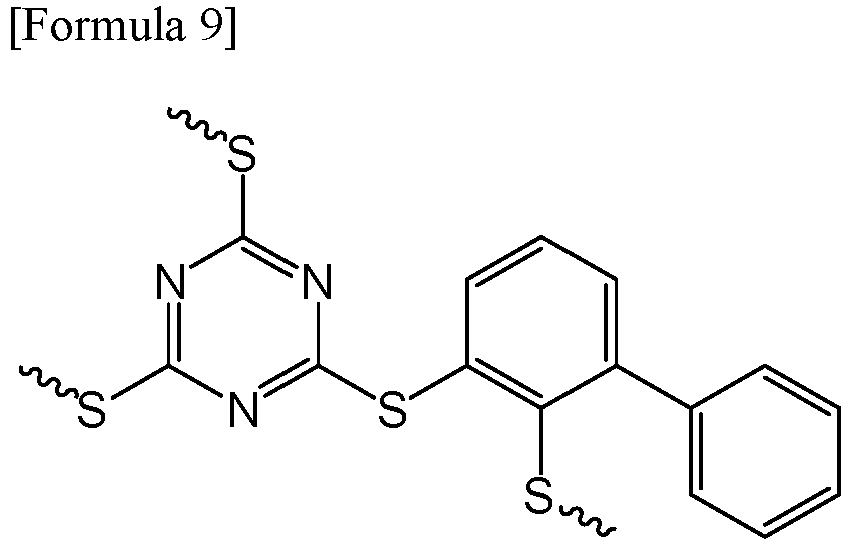

- The method of claim 7, wherein Formula 2 is represented by any one of the following Formulae 6 and 11 to 13:


- The method of claim 7, wherein the catalytic component comprises one or more of platinum, palladium, ruthenium, iron, nickel, cobalt, molybdenum, gold, silver, copper, titanium, gallium, cerium, aluminum, zinc, and lanthanum.
- The method of claim 7, wherein a content of the catalytic component is 0.01 wt% to 10 wt% based on a total weight of the catalyst for a hydrogenation reaction.
Applications Claiming Priority (2)
| Application Number | Priority Date | Filing Date | Title |
|---|---|---|---|
| KR20190120801 | 2019-09-30 | ||
| PCT/KR2020/009187 WO2021066300A1 (en) | 2019-09-30 | 2020-07-13 | Catalyst for hydrogenation reaction and method for producing same |
Publications (3)
| Publication Number | Publication Date |
|---|---|
| EP3909676A1 true EP3909676A1 (en) | 2021-11-17 |
| EP3909676A4 EP3909676A4 (en) | 2022-10-05 |
| EP3909676B1 EP3909676B1 (en) | 2024-06-05 |
Family
ID=75337140
Family Applications (1)
| Application Number | Title | Priority Date | Filing Date |
|---|---|---|---|
| EP20872580.4A Active EP3909676B1 (en) | 2019-09-30 | 2020-07-13 | Catalyst for hydrogenation reaction and method for producing same |
Country Status (6)
| Country | Link |
|---|---|
| US (2) | US11872546B2 (en) |
| EP (1) | EP3909676B1 (en) |
| JP (1) | JP7230309B2 (en) |
| KR (1) | KR102453468B1 (en) |
| CN (1) | CN113573808B (en) |
| WO (1) | WO2021066300A1 (en) |
Families Citing this family (1)
| Publication number | Priority date | Publication date | Assignee | Title |
|---|---|---|---|---|
| CN119425692A (en) * | 2024-11-14 | 2025-02-14 | 浙江工业大学 | Non-precious metal copper-based catalyst and preparation method and application thereof |
Family Cites Families (20)
| Publication number | Priority date | Publication date | Assignee | Title |
|---|---|---|---|---|
| GB802100A (en) | 1957-01-07 | 1958-10-01 | Dow Chemical Co | Selective hydrogenation of acetylene in ethylene |
| JP4568802B2 (en) * | 2005-01-19 | 2010-10-27 | 独立行政法人科学技術振興機構 | Polymer-immobilized platinum catalyst and use thereof |
| JP4576584B2 (en) | 2005-01-31 | 2010-11-10 | 独立行政法人科学技術振興機構 | Phosphorus-containing polymer-immobilized palladium catalyst and use thereof |
| CN101267884B (en) * | 2005-07-27 | 2012-07-18 | 切夫里昂菲利普化学有限责任公司 | Selective hydrogenation catalyst and methods of making and using same |
| JP2008280495A (en) * | 2007-04-12 | 2008-11-20 | Toray Ind Inc | Process for producing polyarylene sulfide |
| TWI457175B (en) | 2010-06-30 | 2014-10-21 | Dow Global Technologies Llc | Mixed bed polymer catalyst and use thereof |
| CN103347903B (en) | 2010-07-28 | 2016-03-16 | 朗盛德国有限责任公司 | Based on the hydrogenation of the polymkeric substance of diene |
| CN102463117B (en) | 2010-11-12 | 2015-05-06 | 中国石油化工股份有限公司 | Alkyne selective hydrogenation catalyst and preparation method thereof |
| KR101269857B1 (en) | 2011-04-14 | 2013-06-07 | 서강대학교산학협력단 | Catalyst for Selective Hydrogenation of Alkynes |
| KR20130044036A (en) | 2011-10-21 | 2013-05-02 | 한국과학기술원 | Method for preparing porous organic material, porous organic material prepared by the same, and application thereof |
| JP6042278B2 (en) | 2012-07-10 | 2016-12-14 | オルガノ株式会社 | Platinum group metal supported catalytic hydrogenation reduction catalyst and catalytic hydrogenation reduction method |
| CN103566976B (en) * | 2012-08-06 | 2016-04-20 | 中国石油化工股份有限公司 | A kind of loaded catalyst and preparation method thereof |
| CN104415715B (en) | 2013-09-05 | 2017-04-26 | 中国石油化工股份有限公司 | Catalytic hydrogenation method |
| CN104689830B (en) | 2013-12-09 | 2018-09-21 | 中国石油化工股份有限公司 | A kind of catalyst for alkynes and diolefin hydrogenate in mixed olefins |
| KR101599367B1 (en) | 2014-03-20 | 2016-03-04 | 한국과학기술원 | Metal-Supported Anion-Exchange Resins and Method for Remediating of Toxic Anions Using the Same |
| WO2016038454A1 (en) * | 2014-09-09 | 2016-03-17 | Sabic Petrochemical B.V. | Catalysts including palladium and a sulfur-containing compound for selective c2 and c3 hydrogenation |
| KR101684766B1 (en) | 2015-02-06 | 2016-12-08 | 국민대학교산학협력단 | Catalyst for hydrogenation reaction and Method for synthesizing thereof |
| CN108097329B (en) | 2016-11-25 | 2020-04-14 | 中国石油化工股份有限公司 | Hydrocracking catalyst, preparation method and start-up method thereof |
| WO2018159353A1 (en) | 2017-03-01 | 2018-09-07 | Nok株式会社 | Method for preparing polyphenylsulfone porous hollow fiber membrane |
| CN107715914B (en) | 2017-09-29 | 2019-12-24 | 浙江工业大学 | A supported sulfide ionic liquid-promoted ruthenium catalyst and its application in the hydrohalogenation of unsaturated hydrocarbons |
-
2020
- 2020-07-13 JP JP2021548586A patent/JP7230309B2/en active Active
- 2020-07-13 KR KR1020200086205A patent/KR102453468B1/en active Active
- 2020-07-13 WO PCT/KR2020/009187 patent/WO2021066300A1/en not_active Ceased
- 2020-07-13 EP EP20872580.4A patent/EP3909676B1/en active Active
- 2020-07-13 US US17/432,455 patent/US11872546B2/en active Active
- 2020-07-13 CN CN202080019353.XA patent/CN113573808B/en active Active
-
2023
- 2023-11-17 US US18/513,178 patent/US12194447B2/en active Active
Also Published As
| Publication number | Publication date |
|---|---|
| WO2021066300A1 (en) | 2021-04-08 |
| KR20210038298A (en) | 2021-04-07 |
| JP2022533293A (en) | 2022-07-22 |
| EP3909676A4 (en) | 2022-10-05 |
| US20240082829A1 (en) | 2024-03-14 |
| US12194447B2 (en) | 2025-01-14 |
| US20220118432A1 (en) | 2022-04-21 |
| EP3909676B1 (en) | 2024-06-05 |
| CN113573808A (en) | 2021-10-29 |
| CN113573808B (en) | 2024-04-16 |
| JP7230309B2 (en) | 2023-03-01 |
| US11872546B2 (en) | 2024-01-16 |
| KR102453468B1 (en) | 2022-10-12 |
Similar Documents
| Publication | Publication Date | Title |
|---|---|---|
| US12485407B2 (en) | Catalyst for hydrogenation reaction and method for producing same | |
| KR101073593B1 (en) | Process for production of propylene and aromatic hydrocarbon, and apparatus for the process | |
| JP5025477B2 (en) | Process for producing ethylene and propylene | |
| US12194447B2 (en) | Catalyst for hydrogenation reaction and method for producing same | |
| JP4879574B2 (en) | Process for producing ethylene and propylene | |
| CN115770608B (en) | Amination catalyst for synthesizing amine compound from olefin, and preparation method and application thereof | |
| US12485408B2 (en) | Catalyst for hydrogenation reaction and method for manufacturing the same | |
| EP3978539A1 (en) | Method for preparing hydrogenated petroleum resin | |
| EP4186592A1 (en) | Catalyst for hydrogenation reaction and manufacturing method therefor | |
| NL9201600A (en) | The invention relates to a powder having an eta-phase structure of increased surface area and to a method for use thereof in the production or conversion of hydrocarbons | |
| JP2025520876A (en) | Process for preparing adamantane | |
| Zhao et al. | Selective Reduction of 5-Nitro-2-Chloro-2', 4'-Dimethylbenzene Sulfonanilide on Pd-Ru/[gamma]-Al^ sub 2^ O^ sub 3^ Catalysts in Ionic Liquids | |
| JPH08193037A (en) | Method for producing cycloolefin |
Legal Events
| Date | Code | Title | Description |
|---|---|---|---|
| STAA | Information on the status of an ep patent application or granted ep patent |
Free format text: STATUS: THE INTERNATIONAL PUBLICATION HAS BEEN MADE |
|
| PUAI | Public reference made under article 153(3) epc to a published international application that has entered the european phase |
Free format text: ORIGINAL CODE: 0009012 |
|
| STAA | Information on the status of an ep patent application or granted ep patent |
Free format text: STATUS: REQUEST FOR EXAMINATION WAS MADE |
|
| 17P | Request for examination filed |
Effective date: 20210813 |
|
| AK | Designated contracting states |
Kind code of ref document: A1 Designated state(s): AL AT BE BG CH CY CZ DE DK EE ES FI FR GB GR HR HU IE IS IT LI LT LU LV MC MK MT NL NO PL PT RO RS SE SI SK SM TR |
|
| REG | Reference to a national code |
Ref country code: DE Ref legal event code: R079 Free format text: PREVIOUS MAIN CLASS: B01J0031060000 Ipc: B01J0023440000 Ref document number: 602020032122 Country of ref document: DE |
|
| A4 | Supplementary search report drawn up and despatched |
Effective date: 20220906 |
|
| RIC1 | Information provided on ipc code assigned before grant |
Ipc: B01J 37/16 20060101ALI20220831BHEP Ipc: B01J 37/34 20060101ALI20220831BHEP Ipc: C07C 5/09 20060101ALI20220831BHEP Ipc: B01J 37/02 20060101ALI20220831BHEP Ipc: B01J 31/06 20060101ALI20220831BHEP Ipc: B01J 23/44 20060101AFI20220831BHEP |
|
| DAV | Request for validation of the european patent (deleted) | ||
| DAX | Request for extension of the european patent (deleted) | ||
| GRAP | Despatch of communication of intention to grant a patent |
Free format text: ORIGINAL CODE: EPIDOSNIGR1 |
|
| STAA | Information on the status of an ep patent application or granted ep patent |
Free format text: STATUS: GRANT OF PATENT IS INTENDED |
|
| INTG | Intention to grant announced |
Effective date: 20240313 |
|
| GRAS | Grant fee paid |
Free format text: ORIGINAL CODE: EPIDOSNIGR3 |
|
| GRAA | (expected) grant |
Free format text: ORIGINAL CODE: 0009210 |
|
| STAA | Information on the status of an ep patent application or granted ep patent |
Free format text: STATUS: THE PATENT HAS BEEN GRANTED |
|
| AK | Designated contracting states |
Kind code of ref document: B1 Designated state(s): AL AT BE BG CH CY CZ DE DK EE ES FI FR GB GR HR HU IE IS IT LI LT LU LV MC MK MT NL NO PL PT RO RS SE SI SK SM TR |
|
| REG | Reference to a national code |
Ref country code: CH Ref legal event code: EP |
|
| REG | Reference to a national code |
Ref country code: DE Ref legal event code: R096 Ref document number: 602020032122 Country of ref document: DE |
|
| REG | Reference to a national code |
Ref country code: IE Ref legal event code: FG4D |
|
| REG | Reference to a national code |
Ref country code: LT Ref legal event code: MG9D |
|
| PG25 | Lapsed in a contracting state [announced via postgrant information from national office to epo] |
Ref country code: BG Free format text: LAPSE BECAUSE OF FAILURE TO SUBMIT A TRANSLATION OF THE DESCRIPTION OR TO PAY THE FEE WITHIN THE PRESCRIBED TIME-LIMIT Effective date: 20240605 |
|
| REG | Reference to a national code |
Ref country code: NL Ref legal event code: MP Effective date: 20240605 |
|
| PG25 | Lapsed in a contracting state [announced via postgrant information from national office to epo] |
Ref country code: FI Free format text: LAPSE BECAUSE OF FAILURE TO SUBMIT A TRANSLATION OF THE DESCRIPTION OR TO PAY THE FEE WITHIN THE PRESCRIBED TIME-LIMIT Effective date: 20240605 Ref country code: HR Free format text: LAPSE BECAUSE OF FAILURE TO SUBMIT A TRANSLATION OF THE DESCRIPTION OR TO PAY THE FEE WITHIN THE PRESCRIBED TIME-LIMIT Effective date: 20240605 |
|
| PG25 | Lapsed in a contracting state [announced via postgrant information from national office to epo] |
Ref country code: GR Free format text: LAPSE BECAUSE OF FAILURE TO SUBMIT A TRANSLATION OF THE DESCRIPTION OR TO PAY THE FEE WITHIN THE PRESCRIBED TIME-LIMIT Effective date: 20240906 |
|
| PG25 | Lapsed in a contracting state [announced via postgrant information from national office to epo] |
Ref country code: ES Free format text: LAPSE BECAUSE OF FAILURE TO SUBMIT A TRANSLATION OF THE DESCRIPTION OR TO PAY THE FEE WITHIN THE PRESCRIBED TIME-LIMIT Effective date: 20240605 |
|
| PG25 | Lapsed in a contracting state [announced via postgrant information from national office to epo] |
Ref country code: LV Free format text: LAPSE BECAUSE OF FAILURE TO SUBMIT A TRANSLATION OF THE DESCRIPTION OR TO PAY THE FEE WITHIN THE PRESCRIBED TIME-LIMIT Effective date: 20240605 |
|
| PG25 | Lapsed in a contracting state [announced via postgrant information from national office to epo] |
Ref country code: NO Free format text: LAPSE BECAUSE OF FAILURE TO SUBMIT A TRANSLATION OF THE DESCRIPTION OR TO PAY THE FEE WITHIN THE PRESCRIBED TIME-LIMIT Effective date: 20240905 Ref country code: LV Free format text: LAPSE BECAUSE OF FAILURE TO SUBMIT A TRANSLATION OF THE DESCRIPTION OR TO PAY THE FEE WITHIN THE PRESCRIBED TIME-LIMIT Effective date: 20240605 Ref country code: HR Free format text: LAPSE BECAUSE OF FAILURE TO SUBMIT A TRANSLATION OF THE DESCRIPTION OR TO PAY THE FEE WITHIN THE PRESCRIBED TIME-LIMIT Effective date: 20240605 Ref country code: GR Free format text: LAPSE BECAUSE OF FAILURE TO SUBMIT A TRANSLATION OF THE DESCRIPTION OR TO PAY THE FEE WITHIN THE PRESCRIBED TIME-LIMIT Effective date: 20240906 Ref country code: FI Free format text: LAPSE BECAUSE OF FAILURE TO SUBMIT A TRANSLATION OF THE DESCRIPTION OR TO PAY THE FEE WITHIN THE PRESCRIBED TIME-LIMIT Effective date: 20240605 Ref country code: ES Free format text: LAPSE BECAUSE OF FAILURE TO SUBMIT A TRANSLATION OF THE DESCRIPTION OR TO PAY THE FEE WITHIN THE PRESCRIBED TIME-LIMIT Effective date: 20240605 Ref country code: BG Free format text: LAPSE BECAUSE OF FAILURE TO SUBMIT A TRANSLATION OF THE DESCRIPTION OR TO PAY THE FEE WITHIN THE PRESCRIBED TIME-LIMIT Effective date: 20240605 Ref country code: RS Free format text: LAPSE BECAUSE OF FAILURE TO SUBMIT A TRANSLATION OF THE DESCRIPTION OR TO PAY THE FEE WITHIN THE PRESCRIBED TIME-LIMIT Effective date: 20240905 |
|
| PG25 | Lapsed in a contracting state [announced via postgrant information from national office to epo] |
Ref country code: NL Free format text: LAPSE BECAUSE OF FAILURE TO SUBMIT A TRANSLATION OF THE DESCRIPTION OR TO PAY THE FEE WITHIN THE PRESCRIBED TIME-LIMIT Effective date: 20240605 |
|
| REG | Reference to a national code |
Ref country code: AT Ref legal event code: MK05 Ref document number: 1692056 Country of ref document: AT Kind code of ref document: T Effective date: 20240605 |
|
| PG25 | Lapsed in a contracting state [announced via postgrant information from national office to epo] |
Ref country code: NL Free format text: LAPSE BECAUSE OF FAILURE TO SUBMIT A TRANSLATION OF THE DESCRIPTION OR TO PAY THE FEE WITHIN THE PRESCRIBED TIME-LIMIT Effective date: 20240605 |
|
| PG25 | Lapsed in a contracting state [announced via postgrant information from national office to epo] |
Ref country code: PT Free format text: LAPSE BECAUSE OF FAILURE TO SUBMIT A TRANSLATION OF THE DESCRIPTION OR TO PAY THE FEE WITHIN THE PRESCRIBED TIME-LIMIT Effective date: 20241007 |
|
| PG25 | Lapsed in a contracting state [announced via postgrant information from national office to epo] |
Ref country code: PT Free format text: LAPSE BECAUSE OF FAILURE TO SUBMIT A TRANSLATION OF THE DESCRIPTION OR TO PAY THE FEE WITHIN THE PRESCRIBED TIME-LIMIT Effective date: 20241007 |
|
| PG25 | Lapsed in a contracting state [announced via postgrant information from national office to epo] |
Ref country code: PL Free format text: LAPSE BECAUSE OF FAILURE TO SUBMIT A TRANSLATION OF THE DESCRIPTION OR TO PAY THE FEE WITHIN THE PRESCRIBED TIME-LIMIT Effective date: 20240605 |
|
| PG25 | Lapsed in a contracting state [announced via postgrant information from national office to epo] |
Ref country code: EE Free format text: LAPSE BECAUSE OF FAILURE TO SUBMIT A TRANSLATION OF THE DESCRIPTION OR TO PAY THE FEE WITHIN THE PRESCRIBED TIME-LIMIT Effective date: 20240605 |
|
| PG25 | Lapsed in a contracting state [announced via postgrant information from national office to epo] |
Ref country code: AT Free format text: LAPSE BECAUSE OF FAILURE TO SUBMIT A TRANSLATION OF THE DESCRIPTION OR TO PAY THE FEE WITHIN THE PRESCRIBED TIME-LIMIT Effective date: 20240605 Ref country code: IS Free format text: LAPSE BECAUSE OF FAILURE TO SUBMIT A TRANSLATION OF THE DESCRIPTION OR TO PAY THE FEE WITHIN THE PRESCRIBED TIME-LIMIT Effective date: 20241005 |
|
| PG25 | Lapsed in a contracting state [announced via postgrant information from national office to epo] |
Ref country code: CZ Free format text: LAPSE BECAUSE OF FAILURE TO SUBMIT A TRANSLATION OF THE DESCRIPTION OR TO PAY THE FEE WITHIN THE PRESCRIBED TIME-LIMIT Effective date: 20240605 |
|
| PG25 | Lapsed in a contracting state [announced via postgrant information from national office to epo] |
Ref country code: SK Free format text: LAPSE BECAUSE OF FAILURE TO SUBMIT A TRANSLATION OF THE DESCRIPTION OR TO PAY THE FEE WITHIN THE PRESCRIBED TIME-LIMIT Effective date: 20240605 Ref country code: RO Free format text: LAPSE BECAUSE OF FAILURE TO SUBMIT A TRANSLATION OF THE DESCRIPTION OR TO PAY THE FEE WITHIN THE PRESCRIBED TIME-LIMIT Effective date: 20240605 |
|
| PG25 | Lapsed in a contracting state [announced via postgrant information from national office to epo] |
Ref country code: SM Free format text: LAPSE BECAUSE OF FAILURE TO SUBMIT A TRANSLATION OF THE DESCRIPTION OR TO PAY THE FEE WITHIN THE PRESCRIBED TIME-LIMIT Effective date: 20240605 |
|
| PG25 | Lapsed in a contracting state [announced via postgrant information from national office to epo] |
Ref country code: SM Free format text: LAPSE BECAUSE OF FAILURE TO SUBMIT A TRANSLATION OF THE DESCRIPTION OR TO PAY THE FEE WITHIN THE PRESCRIBED TIME-LIMIT Effective date: 20240605 Ref country code: SK Free format text: LAPSE BECAUSE OF FAILURE TO SUBMIT A TRANSLATION OF THE DESCRIPTION OR TO PAY THE FEE WITHIN THE PRESCRIBED TIME-LIMIT Effective date: 20240605 Ref country code: RO Free format text: LAPSE BECAUSE OF FAILURE TO SUBMIT A TRANSLATION OF THE DESCRIPTION OR TO PAY THE FEE WITHIN THE PRESCRIBED TIME-LIMIT Effective date: 20240605 Ref country code: PL Free format text: LAPSE BECAUSE OF FAILURE TO SUBMIT A TRANSLATION OF THE DESCRIPTION OR TO PAY THE FEE WITHIN THE PRESCRIBED TIME-LIMIT Effective date: 20240605 Ref country code: IS Free format text: LAPSE BECAUSE OF FAILURE TO SUBMIT A TRANSLATION OF THE DESCRIPTION OR TO PAY THE FEE WITHIN THE PRESCRIBED TIME-LIMIT Effective date: 20241005 Ref country code: EE Free format text: LAPSE BECAUSE OF FAILURE TO SUBMIT A TRANSLATION OF THE DESCRIPTION OR TO PAY THE FEE WITHIN THE PRESCRIBED TIME-LIMIT Effective date: 20240605 Ref country code: CZ Free format text: LAPSE BECAUSE OF FAILURE TO SUBMIT A TRANSLATION OF THE DESCRIPTION OR TO PAY THE FEE WITHIN THE PRESCRIBED TIME-LIMIT Effective date: 20240605 Ref country code: AT Free format text: LAPSE BECAUSE OF FAILURE TO SUBMIT A TRANSLATION OF THE DESCRIPTION OR TO PAY THE FEE WITHIN THE PRESCRIBED TIME-LIMIT Effective date: 20240605 |
|
| PG25 | Lapsed in a contracting state [announced via postgrant information from national office to epo] |
Ref country code: IT Free format text: LAPSE BECAUSE OF FAILURE TO SUBMIT A TRANSLATION OF THE DESCRIPTION OR TO PAY THE FEE WITHIN THE PRESCRIBED TIME-LIMIT Effective date: 20240605 |
|
| REG | Reference to a national code |
Ref country code: CH Ref legal event code: PL |
|
| REG | Reference to a national code |
Ref country code: DE Ref legal event code: R097 Ref document number: 602020032122 Country of ref document: DE |
|
| PG25 | Lapsed in a contracting state [announced via postgrant information from national office to epo] |
Ref country code: LU Free format text: LAPSE BECAUSE OF NON-PAYMENT OF DUE FEES Effective date: 20240713 |
|
| PG25 | Lapsed in a contracting state [announced via postgrant information from national office to epo] |
Ref country code: MC Free format text: LAPSE BECAUSE OF FAILURE TO SUBMIT A TRANSLATION OF THE DESCRIPTION OR TO PAY THE FEE WITHIN THE PRESCRIBED TIME-LIMIT Effective date: 20240605 |
|
| PG25 | Lapsed in a contracting state [announced via postgrant information from national office to epo] |
Ref country code: MC Free format text: LAPSE BECAUSE OF FAILURE TO SUBMIT A TRANSLATION OF THE DESCRIPTION OR TO PAY THE FEE WITHIN THE PRESCRIBED TIME-LIMIT Effective date: 20240605 Ref country code: LU Free format text: LAPSE BECAUSE OF NON-PAYMENT OF DUE FEES Effective date: 20240713 |
|
| PLBE | No opposition filed within time limit |
Free format text: ORIGINAL CODE: 0009261 |
|
| STAA | Information on the status of an ep patent application or granted ep patent |
Free format text: STATUS: NO OPPOSITION FILED WITHIN TIME LIMIT |
|
| PG25 | Lapsed in a contracting state [announced via postgrant information from national office to epo] |
Ref country code: DK Free format text: LAPSE BECAUSE OF FAILURE TO SUBMIT A TRANSLATION OF THE DESCRIPTION OR TO PAY THE FEE WITHIN THE PRESCRIBED TIME-LIMIT Effective date: 20240605 |
|
| PG25 | Lapsed in a contracting state [announced via postgrant information from national office to epo] |
Ref country code: CH Free format text: LAPSE BECAUSE OF NON-PAYMENT OF DUE FEES Effective date: 20240731 Ref country code: BE Free format text: LAPSE BECAUSE OF NON-PAYMENT OF DUE FEES Effective date: 20240731 |
|
| 26N | No opposition filed |
Effective date: 20250306 |
|
| REG | Reference to a national code |
Ref country code: BE Ref legal event code: MM Effective date: 20240731 |
|
| PGFP | Annual fee paid to national office [announced via postgrant information from national office to epo] |
Ref country code: GB Payment date: 20250624 Year of fee payment: 6 |
|
| PGFP | Annual fee paid to national office [announced via postgrant information from national office to epo] |
Ref country code: FR Payment date: 20250624 Year of fee payment: 6 |
|
| PG25 | Lapsed in a contracting state [announced via postgrant information from national office to epo] |
Ref country code: IE Free format text: LAPSE BECAUSE OF NON-PAYMENT OF DUE FEES Effective date: 20240713 |
|
| PG25 | Lapsed in a contracting state [announced via postgrant information from national office to epo] |
Ref country code: SE Free format text: LAPSE BECAUSE OF FAILURE TO SUBMIT A TRANSLATION OF THE DESCRIPTION OR TO PAY THE FEE WITHIN THE PRESCRIBED TIME-LIMIT Effective date: 20240605 |
|
| PGFP | Annual fee paid to national office [announced via postgrant information from national office to epo] |
Ref country code: DE Payment date: 20250624 Year of fee payment: 6 |
|
| PG25 | Lapsed in a contracting state [announced via postgrant information from national office to epo] |
Ref country code: CY Free format text: LAPSE BECAUSE OF FAILURE TO SUBMIT A TRANSLATION OF THE DESCRIPTION OR TO PAY THE FEE WITHIN THE PRESCRIBED TIME-LIMIT; INVALID AB INITIO Effective date: 20200713 |
|
| PG25 | Lapsed in a contracting state [announced via postgrant information from national office to epo] |
Ref country code: HU Free format text: LAPSE BECAUSE OF FAILURE TO SUBMIT A TRANSLATION OF THE DESCRIPTION OR TO PAY THE FEE WITHIN THE PRESCRIBED TIME-LIMIT; INVALID AB INITIO Effective date: 20200713 |