EP3909660B1 - Centrifugal de-aerator for aircraft engine - Google Patents
Centrifugal de-aerator for aircraft engine Download PDFInfo
- Publication number
- EP3909660B1 EP3909660B1 EP21173769.7A EP21173769A EP3909660B1 EP 3909660 B1 EP3909660 B1 EP 3909660B1 EP 21173769 A EP21173769 A EP 21173769A EP 3909660 B1 EP3909660 B1 EP 3909660B1
- Authority
- EP
- European Patent Office
- Prior art keywords
- gap
- aerator
- aft
- housing
- oil
- Prior art date
- Legal status (The legal status is an assumption and is not a legal conclusion. Google has not performed a legal analysis and makes no representation as to the accuracy of the status listed.)
- Active
Links
Images


Classifications
-
- F—MECHANICAL ENGINEERING; LIGHTING; HEATING; WEAPONS; BLASTING
- F16—ENGINEERING ELEMENTS AND UNITS; GENERAL MEASURES FOR PRODUCING AND MAINTAINING EFFECTIVE FUNCTIONING OF MACHINES OR INSTALLATIONS; THERMAL INSULATION IN GENERAL
- F16N—LUBRICATING
- F16N39/00—Arrangements for conditioning of lubricants in the lubricating system
- F16N39/002—Arrangements for conditioning of lubricants in the lubricating system by deaeration
-
- B—PERFORMING OPERATIONS; TRANSPORTING
- B01—PHYSICAL OR CHEMICAL PROCESSES OR APPARATUS IN GENERAL
- B01D—SEPARATION
- B01D19/00—Degasification of liquids
- B01D19/0042—Degasification of liquids modifying the liquid flow
- B01D19/0052—Degasification of liquids modifying the liquid flow in rotating vessels, vessels containing movable parts or in which centrifugal movement is caused
-
- F—MECHANICAL ENGINEERING; LIGHTING; HEATING; WEAPONS; BLASTING
- F01—MACHINES OR ENGINES IN GENERAL; ENGINE PLANTS IN GENERAL; STEAM ENGINES
- F01D—NON-POSITIVE DISPLACEMENT MACHINES OR ENGINES, e.g. STEAM TURBINES
- F01D25/00—Component parts, details, or accessories, not provided for in, or of interest apart from, other groups
- F01D25/18—Lubricating arrangements
-
- F—MECHANICAL ENGINEERING; LIGHTING; HEATING; WEAPONS; BLASTING
- F01—MACHINES OR ENGINES IN GENERAL; ENGINE PLANTS IN GENERAL; STEAM ENGINES
- F01D—NON-POSITIVE DISPLACEMENT MACHINES OR ENGINES, e.g. STEAM TURBINES
- F01D25/00—Component parts, details, or accessories, not provided for in, or of interest apart from, other groups
- F01D25/18—Lubricating arrangements
- F01D25/20—Lubricating arrangements using lubrication pumps
-
- F—MECHANICAL ENGINEERING; LIGHTING; HEATING; WEAPONS; BLASTING
- F16—ENGINEERING ELEMENTS AND UNITS; GENERAL MEASURES FOR PRODUCING AND MAINTAINING EFFECTIVE FUNCTIONING OF MACHINES OR INSTALLATIONS; THERMAL INSULATION IN GENERAL
- F16N—LUBRICATING
- F16N7/00—Arrangements for supplying oil or unspecified lubricant from a stationary reservoir or the equivalent in or on the machine or member to be lubricated
- F16N7/38—Arrangements for supplying oil or unspecified lubricant from a stationary reservoir or the equivalent in or on the machine or member to be lubricated with a separate pump; Central lubrication systems
- F16N7/40—Arrangements for supplying oil or unspecified lubricant from a stationary reservoir or the equivalent in or on the machine or member to be lubricated with a separate pump; Central lubrication systems in a closed circulation system
-
- F—MECHANICAL ENGINEERING; LIGHTING; HEATING; WEAPONS; BLASTING
- F02—COMBUSTION ENGINES; HOT-GAS OR COMBUSTION-PRODUCT ENGINE PLANTS
- F02C—GAS-TURBINE PLANTS; AIR INTAKES FOR JET-PROPULSION PLANTS; CONTROLLING FUEL SUPPLY IN AIR-BREATHING JET-PROPULSION PLANTS
- F02C7/00—Features, components parts, details or accessories, not provided for in, or of interest apart form groups F02C1/00 - F02C6/00; Air intakes for jet-propulsion plants
- F02C7/32—Arrangement, mounting, or driving, of auxiliaries
-
- F—MECHANICAL ENGINEERING; LIGHTING; HEATING; WEAPONS; BLASTING
- F05—INDEXING SCHEMES RELATING TO ENGINES OR PUMPS IN VARIOUS SUBCLASSES OF CLASSES F01-F04
- F05D—INDEXING SCHEME FOR ASPECTS RELATING TO NON-POSITIVE-DISPLACEMENT MACHINES OR ENGINES, GAS-TURBINES OR JET-PROPULSION PLANTS
- F05D2220/00—Application
- F05D2220/30—Application in turbines
- F05D2220/32—Application in turbines in gas turbines
- F05D2220/323—Application in turbines in gas turbines for aircraft propulsion, e.g. jet engines
-
- F—MECHANICAL ENGINEERING; LIGHTING; HEATING; WEAPONS; BLASTING
- F05—INDEXING SCHEMES RELATING TO ENGINES OR PUMPS IN VARIOUS SUBCLASSES OF CLASSES F01-F04
- F05D—INDEXING SCHEME FOR ASPECTS RELATING TO NON-POSITIVE-DISPLACEMENT MACHINES OR ENGINES, GAS-TURBINES OR JET-PROPULSION PLANTS
- F05D2260/00—Function
- F05D2260/60—Fluid transfer
-
- F—MECHANICAL ENGINEERING; LIGHTING; HEATING; WEAPONS; BLASTING
- F05—INDEXING SCHEMES RELATING TO ENGINES OR PUMPS IN VARIOUS SUBCLASSES OF CLASSES F01-F04
- F05D—INDEXING SCHEME FOR ASPECTS RELATING TO NON-POSITIVE-DISPLACEMENT MACHINES OR ENGINES, GAS-TURBINES OR JET-PROPULSION PLANTS
- F05D2260/00—Function
- F05D2260/60—Fluid transfer
- F05D2260/602—Drainage
-
- F—MECHANICAL ENGINEERING; LIGHTING; HEATING; WEAPONS; BLASTING
- F05—INDEXING SCHEMES RELATING TO ENGINES OR PUMPS IN VARIOUS SUBCLASSES OF CLASSES F01-F04
- F05D—INDEXING SCHEME FOR ASPECTS RELATING TO NON-POSITIVE-DISPLACEMENT MACHINES OR ENGINES, GAS-TURBINES OR JET-PROPULSION PLANTS
- F05D2260/00—Function
- F05D2260/60—Fluid transfer
- F05D2260/602—Drainage
- F05D2260/6022—Drainage of leakage having past a seal
-
- F—MECHANICAL ENGINEERING; LIGHTING; HEATING; WEAPONS; BLASTING
- F05—INDEXING SCHEMES RELATING TO ENGINES OR PUMPS IN VARIOUS SUBCLASSES OF CLASSES F01-F04
- F05D—INDEXING SCHEME FOR ASPECTS RELATING TO NON-POSITIVE-DISPLACEMENT MACHINES OR ENGINES, GAS-TURBINES OR JET-PROPULSION PLANTS
- F05D2260/00—Function
- F05D2260/60—Fluid transfer
- F05D2260/609—Deoiling or demisting
-
- F—MECHANICAL ENGINEERING; LIGHTING; HEATING; WEAPONS; BLASTING
- F05—INDEXING SCHEMES RELATING TO ENGINES OR PUMPS IN VARIOUS SUBCLASSES OF CLASSES F01-F04
- F05D—INDEXING SCHEME FOR ASPECTS RELATING TO NON-POSITIVE-DISPLACEMENT MACHINES OR ENGINES, GAS-TURBINES OR JET-PROPULSION PLANTS
- F05D2260/00—Function
- F05D2260/98—Lubrication
-
- F—MECHANICAL ENGINEERING; LIGHTING; HEATING; WEAPONS; BLASTING
- F16—ENGINEERING ELEMENTS AND UNITS; GENERAL MEASURES FOR PRODUCING AND MAINTAINING EFFECTIVE FUNCTIONING OF MACHINES OR INSTALLATIONS; THERMAL INSULATION IN GENERAL
- F16N—LUBRICATING
- F16N2210/00—Applications
- F16N2210/02—Turbines
-
- F—MECHANICAL ENGINEERING; LIGHTING; HEATING; WEAPONS; BLASTING
- F16—ENGINEERING ELEMENTS AND UNITS; GENERAL MEASURES FOR PRODUCING AND MAINTAINING EFFECTIVE FUNCTIONING OF MACHINES OR INSTALLATIONS; THERMAL INSULATION IN GENERAL
- F16N—LUBRICATING
- F16N2210/00—Applications
- F16N2210/08—Aircraft
Definitions
- the disclosure relates generally to lubrication systems of aircraft engines and, more particularly, to systems and methods used to separate air from oil flowing in such lubrication systems.
- Aircraft engines such as gas turbine engines, include a lubrication system for distributing a lubricating fluid, such as oil for instance, to required portions of the engine.
- a lubricating fluid such as oil for instance
- This lubricating oil may be directed to and from a bearing cavity of the aircraft engine, for example. Air may become mixed with said oil due to the compressed air used for pressurizing the bearing cavity, and the amount of air in the lubricating oil may thus increase after the oil has been fed through the bearing cavity.
- a de-aerator may be used in the lubrication system to remove at least a portion of the air from the oil.
- EP 3 315 182 A1 discloses a prior art centrifugal separator for separating gas and liquid from a gas-liquid mixture.
- a de-aerator for a lubrication system of an aircraft engine as set forth in claim 1.
- the portion of the housing is a fore annular shoulder on an inlet side of the de-aerator, proximate the air-oil inlet, and oriented radially outwardly relative to the central axis.
- the peripheral wall of the fore opening extends axially from a fore edge to an aft edge, the fore annular shoulder of the housing extending axially beyond the aft edge of the peripheral wall.
- the hub has an aft peripheral wall oriented radially inwardly relative to the central axis and defining an aft opening communicating with the flow passages, the hub having an annular face extending radially from the aft opening to the aft shoulder, the annular face radially overlapping the housing, the gap having an aft gap inlet defined between the housing and the annular face of the hub.
- the oil outlet is defined by the housing and is radially offset from the central axis.
- the de-aerator further includes a blow conduit having a blow inlet for receiving compressed air and a blow outlet hydraulically connected to the gap between the fore gap inlet of the gap on an inlet side of the de-aerator and an aft gap inlet on an outlet side of the de-aerator.
- the de-aerator further includes a drain conduit having a drain inlet hydraulically connected to the gap between the fore gap inlet and an aft gap inlet, and a drain outlet hydraulically connected to the air-oil inlet and/or to the air outlet of the de-aerator.
- the flow passages have passage inlets having a radial component oriented away from the central axis, and the gap at the fore gap inlet facing a direction being mainly axial relative to the central axis.
- the flow passages have passage outlets having a radial component oriented toward the central axis, the gap having and an aft gap inlet on an outlet side of the de-aerator, the aft gap inlet having a radial component extending away from the central axis.
- the rotor includes an aft annular flange extending circumferentially around the central axis, a portion of the blades curving around a radially outer edge of the aft annular flange, the passage outlets defined axially between the hub and the aft annular flange and circumferentially between the blades.
- the rotor has a shaft rotatably received within the housing, the hub of the rotor defining a fore opening leading to the flow passages and radially between the hub and the shaft, a portion of the housing received within the fore opening, the fore gap inlet defined between the hub at the fore opening and the portion of the housing.
- Fig. 1 illustrates an aircraft engine 10, such as a gas turbine engine, of a type preferably provided for use in subsonic flight.
- the gas turbine engine 10 generally includes in serial flow communication a fan 12 through which ambient air is propelled, a compressor section 14 for pressurizing the air, a combustor 16 in which the compressed air is mixed with fuel and ignited for generating an annular stream of hot combustion gases, and a turbine section 18 for extracting energy from the combustion gases.
- the fan 12, the compressor section 14, and the turbine section 18 are rotatable about a central axis 11 of the gas turbine engine 10.
- the gas turbine engine 10 includes a lubrication system 100 that includes a pump 102, lubrication conduits 104, a lubricant reservoir 106, and a de-aerator 30.
- the lubrication system 100 may also include additional components such as valve(s), heat exchangers, filters, etc.
- the lubricant reservoir 106 is hydraulically connected to one or more components C of the engine 10 in need of lubrication, such as, for instance, bearing cavity(ies) 13, gearbox(es), and so on.
- the pump 102 is operable to induce a flow of the lubricant from the lubricant reservoir 106, to the one or more components C of the engine 10 in need of lubrication, and a scavenge pump 108 operable to draw a scavenge flow of oil back to the reservoir 106.
- the scavenge pump 108 has an inlet hydraulically connected to a scavenge outlet C1 of the component C and an outlet hydraulically connected to the de-aerator 30. In some cases, for instance when the component C is a bearing cavity 13 , the oil flows through the bearing cavity 13 and is mixed with compressed air injected therein for pressurizing the bearing cavity 13.
- the oil mixture exiting the bearing cavity 13 may thus have a greater air content than the oil mixture entering the bearing cavity 13.
- the de-aerator 30 is operable to remove at least a portion of the air contained within the air-oil mixture it receives before flowing the oil back to the one or more components in need of lubrication.
- the de-aerator 30 has an air-oil inlet 30a hydraulically connected to the scavenge outlet C1 of the component C via the scavenge pump 108; an oil outlet 30b hydraulically connected to the reservoir 106 for returning the de-aerated oil back to the reservoir 106 from which it is drawn by the pump 102 for lubrication purposes; and an air outlet 30c hydraulically connected to a vent 110 for expelling the air out to an environment E outside the gas turbine engine 10.
- the location of some of the parts of the lubrication system 100 e.g., scavenge pump 108, pump 102, vent 110
- the de-aerator 30 may be included in any suitable lubrication system.
- the de-aerator 30 includes a rotor 32, also referred to as an impeller, and a stator, also referred to as a housing 34 ( Fig. 6 ).
- the rotor 32 is received within the housing 34 and rotates relative to the housing 34 about a central axis A.
- the de-aerator 30 has an inlet side I and an opposed outlet side O.
- the air-oil inlet 30a of the de-aerator 30 is located on the inlet side I.
- the oil outlet 30b and the air outlet 30c of the de-aerator 30 are located on the outlet side O of the de-aerator 30.
- the air-oil inlet 30a, the oil outlet 30b, and the air outlet 30c are defined by the housing 34.
- the rotor 32 has a shaft 32a that is drivingly engageable for receiving a rotational input.
- the rotational input may be provided by an electric motor, a shaft of the gas turbine engine 10 ( Fig. 1 ), or any device able to generate a rotational input to the rotor 32.
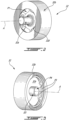
- the rotor 32 has a hub 32b and blades 32c that are circumferentially distributed around the central axis A.
- the hub 32b extends circumferentially all around the central axis A and around the blades 32c.
- the blades 32c are secured to a fore flange 32d that is secured to the shaft 32a and to an aft flange 32e.
- Both of the first and second flanges 32d, 32e are annular and extend all around the central axis A.
- the fore flange 32d is secured to the shaft 32a via a fillet.
- the fore flange 32d is used to redirect a flow of oil that enters the de-aerator 30 in a substantially axial direction relative to the central axis A to a substantially radial direction relative to the central axis A before said flow of oil meets the blades 32c.
- the blades 32c have radially inner ends 32f and radially outer ends 32g. In the embodiment shown, the radially outer ends 32g of the blades 32c are secured to the hub 32b of the rotor 32.
- fillets are located at junctions between the blades 32c and the hub 32b.
- the radially inner ends 32f of the blades 32c are located axially between the fore and aft flanges 32d, 32e.
- a plurality of flow passages P are defined circumferentially between each two circumferentially adjacent ones of the blades 32c.
- the flow passages P have passage inlets P1 ( Fig. 2 ) extending radially between a periphery of the first flange 32d and the hub 32b, extending circumferentially between each two adjacent ones of the blades 32c, and extending axially between the hub 32b and the fore flange 32d.
- the inlets P1 of the flow passages P face a direction which has a radial component relative to the central axis A.
- the radial component of the inlets P1 of the flow passages P is oriented away from the central axis A.
- the flow passages P have air outlets P2 ( Figs. 5-6 ) proximate the central axis A.
- the air outlets P2 of the flow passages P are defined circumferentially between each of two adjacent ones of the radially inner ends 32f of the blades 32c and axially between the fore and aft flanges 32d, 32e.
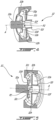
- the flow passages P further have oil outlets P3 ( Fig. 3 ) located axially between the hub 32b and the aft flange 32e and circumferentially between the blades 32c. More specifically, a portion 32c1 ( Figs. 6 ) of the blades 32c curves around the radially outer edge 32h ( Figs. 4-5 ) of the aft annular flange 32e.
- the oil outlets P3 are defined by the portion of the blades 32c that curve around the aft annular flange 32e.
- the portions 32c1 of the blades 32c that extend around the aft flange 32e have radially inner ends 32c2 ( Fig. 6 ).
- the oil outlets P3 are defined circumferentially between each two adjacent ones of the radially inner ends 32c2 of the portions 32c1 of the blades 32c.
- the rotor 32 further has a hollow tube 32i secured to the second flange 32e. As illustrated more clearly in Fig. 6 , the hollow tube 32i is rotatably received within a bore 34a of the housing 34. It will be appreciated that a bearing may be disposed between the bore 34a of the housing 34 and the hollow tube 32i.
- the hollow tube 32i has an internal passage P4 that is fluidly connected to the air outlets P2 of the flow passages P defined between the blades 32c of the rotor 32.
- the internal passage P4 defined by the hollow tube 32i may be hydraulically connected to the vent 110 ( Fig. 1a ) of the lubrication system 100 ( Fig. 1 ) via suitable conduits for expelling the extracted air out of the lubrication system 100.
- an air-oil mixture is received into the de-aerator 30 via the air-oil inlet 30a along arrow A1.
- the oil is diverted radially outwardly away from the central axis A by the fore flange 32d.
- the oil is then divided between the flow passages P upon rotation of the fore flange 32d and enters those flow passages P via their respective inlets P1 ( Fig. 2 ).
- the oil is then impinged by the blades 32c of the rotor 32. Such impingement may cause separation of the air contained in the air-oil mixture from the oil.
- the separated oil flows within the flow passages P defined between the blades 32c, around the periphery 32h of the second flange 32e along arrow A2 ( Fig. 6 ) and exits the flow passages P via the oil outlet P3 ( Fig. 3 ) defined axially between the aft flange 32e and the hub 32b and circumferentially between the radially-inner ends 32c2 of the portions 32c1 of the blades 32c that extend aft of the aft flange 32e.
- the oil then exits the de-aerator 30 via the oil outlet 30b thereof along arrow A3. As shown in Fig.
- the extracted oil is then flown back to the reservoir 106 via which it is circulated to the components (e.g., bearing cavity 13) in need of lubrication.
- the air extracted from the air-oil mixture flows around a periphery of the first flange 32d along arrow A4, moves radially inwardly toward the central axis A, and exits the flow passages P via their air outlets P2 defined circumferentially between the radially-inner ends 32f of the portions of the blades 32c that are located between the fore and aft flanges 32d, 32e.
- the extracted air then flows into the passage P4 of the hollow tube 32i along arrow A5 and out of the de-aerator 30 via the bore 34a of the housing 34 and via the air outlet 30c of the de-aerator 30.
- the disclosed de-aerator 30 has solely two outlets: the oil outlet 30b and the air outlet 30c.
- the de-aerator 30 has solely three connections to the oil system 100 ( Fig. 1a ), that is the air-oil inlet 30a, the air outlet 30c, and the oil outlet 30b, and is free of other connections to the oil system 100.
- the de-aerator 30 is an "active" de-aerator since it has at least one component (e.g., rotor 32) that is driven, such as by electrical and/or pneumatic and/or hydraulic or other means (motors, actuators, etc.).
- a de-aerator is different than a de-oiler.
- a de-oiler is typically located within a lubricated cavity (e.g., gear box) and is designed to remove oil (e.g., oil droplets/mist) within an air-oil mixture before ejecting air overboard.
- the de-aerator 30 is designed to extract air from an air-oil mixture and to feed oil back to the oil system 100.
- the de-oiler does not include a housing and is therefore not subjected to problems associated with oil trapped in a gap. Indeed, the housing of the de-aerator 30 is used to collect the oil extracted by centrifugation so that said extracted oil is flown back to the oil system.
- the de-oiler Since the de-oiler is located within the lubricated cavity, it does not need a housing and the oil may simply be ejected via centrifugation against the components in need of lubrication contained within the lubricated cavity (e.g., gears).
- a gap G is present between the rotor 32 and the housing 34.
- the gap G extends circumferentially all around the central axis A. It has been observed that, in some cases, oil may become trapped within the gap G. More specifically, as the oil is centrifuged by the rotor 32, a portion may flow into the gap G and may remain trapped because of the centrifugal effect. Oil may therefore be located within the gap G and all around the rotor 32 by centrifugal effect. The portion Z where oil may be trapped is shown with dashed lines in Fig. 6 . In some cases, the trapped oil can generate heat as it is sheared between the rotor 32 and the housing 34.
- Figs. 7-10 described below explain features that the de-aerator 30 may have to limit oil from being trapped in the gap G.
- the housing 34 has a fore annular shoulder 34b on the inlet side I of the de-aerator 30 and proximate the air-oil inlet 30a of the de-aerator 30.
- the fore annular shoulder 34b are herein oriented radially outwardly relative to the central axis A and faces the hub 32b.
- the hub 32b defines a fore opening 32j that leads into the flow passages P between the blades 32c of the rotor 32.
- the fore opening 32j of the hub 32 is defined by a substantially cylindrical peripheral wall 32j3 extending circumferentially around the central axis A and extending axially from a fore edge 32j 1 to an aft edge 32j2 aft of the fore edge 32j 1.
- a portion of the housing 34 overlaps the fore opening 32j of the hub 32.
- a portion of the housing 34 which herein may correspond to the fore annular shoulder 34b of the housing 34, is received within the fore opening 32j and overlaps the peripheral wall 32j3 of the fore opening 32j of the hub 32.
- the fore annular shoulder 34b of the housing 34 extends axially beyond the aft edge 32j2 of the fore opening 32j of the hub 32b.
- the gap G has a fore gap inlet G1 (dashed lines in Fig. 7a ) between the hub 32b and the housing 34.
- the overlap between the fore annular shoulder 34b of the housing 34 and the fore opening 32j of the hub 32b is such that the fore gap inlet G1 has a radial component relative to the central axis A and that said radial component of the fore gap inlet G1 extends toward the central axis A.
- the fore gap inlet G1 extends circumferentially all around the central axis A, radially from the aft edge 32j2 of the peripheral wall 32j3 to an edge 34b1 of the fore annular shoulder 34b of the housing 34, and axially from said aft edge 32j2 of the peripheral wall 32j3 to the edge 34b1 of the fore annular shoulder 34b.
- the edge 34b1 of the fore annular shoulder 34b and the aft edge 32j2 of the peripheral wall 32j3 are axially offset from one another.
- such an overlap between the hub 32b and the housing 34 may shield the fore gap inlet G1 from a flow F1 extending in a substantial radial direction relative to the central axis A and that is directed toward the inlets P1 of the flow passages P between the blades 32c of the rotor 32.
- a flow F1 extending in a substantial radial direction relative to the central axis A and that is directed toward the inlets P1 of the flow passages P between the blades 32c of the rotor 32.
- For oil to enter into the gap G it has to flow in a direction having a radial component that is in an opposite direction to a radial component of the flow F1 that is directed toward the flow passages P.
- This overlap may require the oil to change its direction to enter the gap G.
- the gap G at the fore gap inlet G1 faces a direction D1 that is mainly axial relative to the central axis 11. This difference between the direction D1 of the gap G at the fore gap inlet G1 and the direction of the flow F1 may make it more difficult for the oil to reach the gap G. This may limit a quantity of oil trapped within the gap G compared to a configuration lacking such an overlap.
- the overlap of the housing 34 and rotor 32 may make it more difficult for the oil to go through a path depicted by arrow A6 rather than a path depicted by arrow A7.
- the hub 32b has an aft annular shoulder 32k that is oriented radially inwardly toward the central axis A and that faces an aft annular shoulder 34c of the housing 34.
- the aft annular shoulder 34c of the housing 34 is oriented radially away from the central axis A.
- the aft annular shoulder 34c of the housing 34 axially overlaps the aft annular shoulder 32k of the hub 32b of the rotor 32.
- the hub 32b defines an aft opening 32l and has an annular face 32m extending radially relative to the central axis A from the aft opening 32l to the aft shoulder 32k.
- An aft gap inlet G2 (dashed line in Fig. 7b ) of the gap G is located axially between the housing 34 and the annular face 32m of the hub 32b of the rotor 32.
- the gap G at the aft gap inlet G2 faces a direction D2 that is mainly radial relative to the central axis 11. This similarity between the direction D2 of the gap G at the aft gap inlet G2 and the direction of a flow F2 between the blades 32c may make it more difficult for the oil to reach the gap G.
- the disclosed geometry may create a complex path depicted by arrow A8 and it may be easier for the oil to go through a path depicted by arrow A9 instead.
- the oil curves around the outer edge 32h ( Fig. 5 ) of the aft flange 32e ( Fig. 5 ) along the arrow A2. Then, a flow of oil F2 ( Fig. 7 ) flows in a direction being substantially radial toward the central axis A and toward the passage outlets P3 ( Fig. 3 ).
- the aft gap inlet G2 has a radial component that extends away from the central axis A.
- a tortuous flow path T may increase a resistance of the flow within the gap G and may contribute in limiting oil from flowing within the gap G. This may limit a quantity of oil trapped within the gap G compared to a configuration lacking such an overlap.
- the oil outlet 30b of the de-aerator 30 includes a bore 34d defined by the housing 34; the bore 34d is herein located at an upper halve of the housing 34 and radially offset from the central axis A. Other locations of the bore 34d are contemplated. As shown in Fig. 7 , a peripheral wall 34e of the bore 34 is radially aligned with a top portion of the aft opening 32l ( Fig. 7b ) of the hub 32b.
- a de-aerator in accordance with another embodiment is shown generally at 130.
- elements that differ from the de-aerator 30 described above with reference to Figs. 2-7 are described herein below.
- the housing 134 of the de-aerator 130 defines a drain conduit 136.
- the drain conduit 136 has a drain inlet 136a that is hydraulically connected to the gap G between the fore gap inlet G1 and the aft gap inlet G2.
- the drain conduit 136 has a drain outlet 136b that is hydraulically connected to the air-oil inlet 130a of the de-aerator 130.
- the drain conduit 136 is located at an upper halve of the housing 134.
- the drain conduit 136 may be located anywhere along a circumference of the housing 134.
- the flow of the air-oil mixture along arrow A1 may create a pressure drop within the drain conduit 136 that may induce a flow F3 within the drain conduit 136 for suctioning the oil trapped in the gap G from the drain inlet 136a to the drain outlet 136b.
- the flow F3 is influenced at least partially by the centrifugal force exerted to the oil via rotation of the rotor 32.
- the oil extracted from the gap G may be redirected into the fluid passages P of the rotor 32 for separation.
- a de-aerator in accordance with another embodiment is shown generally at 230.
- a de-aerator in accordance with another embodiment is shown generally at 230.
- elements that differ from the de-aerator 30 described above with reference to Figs. 2-7 are described herein below.
- the housing 234 of the de-aerator 230 defines a drain conduit 236.
- the drain conduit 236 has a drain inlet 236a that is hydraulically connected to the gap G between the fore gap inlet G1 and the aft gap inlet G2.
- the drain conduit 236 has a drain outlet 236b that is hydraulically connected to the air outlet 230c of the de-aerator 230.
- the drain conduit 236 is located at a lower halve of the housing 234.
- the drain conduit 236 may be located anywhere along a circumference of the housing 234.
- the flow of the air along arrow A5 via the air outlet 230c may create a pressure drop within the drain conduit 236 that may induce a flow F4 within the drain conduit 236 for suctioning the oil trapped in the gap G form the drain inlet 236a to the drain outlet 236b.
- the flow F4 is influenced at least partially by the centrifugal force exerted to the oil via rotation of the rotor 32.
- a de-aerator in accordance with another embodiment is shown generally at 330.
- a de-aerator in accordance with another embodiment is shown generally at 330.
- elements that differ from the de-aerator 30 described above with reference to Figs. 2-7 are described herein below.
- the de-aerator 300 has a blow conduit 338 that is located at a lower halve of the housing 334.
- the blow conduit 338 may be located anywhere along a circumference of the housing 334.
- the blow conduit 338 is herein defined by the housing 334.
- the blow conduit 338 may be fluidly connected to a source of compressed air C and may have an outlet 338a hydraulically connected to the gap G between the fore gap inlet G1 and the aft gap inlet G2.
- the source of compressed air C may be, for instance, the compressor section 14 of the gas turbine engine 10 ( Fig. 1 ).
- Blowing the air within the gap G may prevent the oil from penetrating into the gap G since said oil would have to overcome the airflow exiting the gap G via the fore and aft gap inlets G1, G2.
- the blow outlet 338a may be located between the drain inlet 236a and the fore gap inlet G1.
- combining the features of the complex flow path and overlap described above with reference to Figs. 7, 7a, 7b with one or both of the drain conduits 136, 236 described above with reference to Figs. 8 and 9 may limit the amount of oil trapped between the rotor 32 and the housing 34, 134, 234. Indeed, if some oil manages to get trapped within the gap G, it may be drained out of the gap G via the drain conduits 136, 236. In a particular embodiment, combining the features of the drain conduits 136, 236 described above with reference to Figs. 8 and 9 with the blow conduit 338 described above with reference to Fig.
- blow conduit 338 described above with reference to Fig. 10 may be combined with the complex flow path and overlap described above with reference to Figs. 7, 7a, and 7b on the outlet side O of the de-aerator 30 to ensure that the air blown may not be mixed with the oil on the oil outlet 30b of the de-aerator 30. It will be appreciated that the features described above with reference to Figs. 8 to 10 may be combined with the de-aerator 30 of Fig. 7 . Any combinations of those features are contemplated without departing from the scope of the present disclosure.
- the air-oil mixture is received via the air-oil inlet 30a of the de-aerator 30 in an axial direction relative to a central axis A of the rotor 32; the received air-oil flow is redirected in a radial direction relative to the central axis A and the air is separated from the air-oil flow by centrifugation within the rotor 32; and the oil is limited from flowing within the gap G between the rotor 32 and the housing 34 by having the inlet of the gap G facing a direction different than a flow direction of the air-oil flow.
- compressed air is injected into the gap G and/or the oil is drained out from the gap.
Landscapes
- Engineering & Computer Science (AREA)
- General Engineering & Computer Science (AREA)
- Mechanical Engineering (AREA)
- Chemical & Material Sciences (AREA)
- Chemical Kinetics & Catalysis (AREA)
- Lubrication Details And Ventilation Of Internal Combustion Engines (AREA)
Description
- The disclosure relates generally to lubrication systems of aircraft engines and, more particularly, to systems and methods used to separate air from oil flowing in such lubrication systems.
- Aircraft engines, such as gas turbine engines, include a lubrication system for distributing a lubricating fluid, such as oil for instance, to required portions of the engine. This lubricating oil may be directed to and from a bearing cavity of the aircraft engine, for example. Air may become mixed with said oil due to the compressed air used for pressurizing the bearing cavity, and the amount of air in the lubricating oil may thus increase after the oil has been fed through the bearing cavity. A de-aerator may be used in the lubrication system to remove at least a portion of the air from the oil.
-
EP 3 315 182 A1 discloses a prior art centrifugal separator for separating gas and liquid from a gas-liquid mixture. - According to a first aspect of the present invention, there is provided a de-aerator for a lubrication system of an aircraft engine as set forth in claim 1.
- In certain embodiments, the portion of the housing is a fore annular shoulder on an inlet side of the de-aerator, proximate the air-oil inlet, and oriented radially outwardly relative to the central axis.
- In certain embodiments, the peripheral wall of the fore opening extends axially from a fore edge to an aft edge, the fore annular shoulder of the housing extending axially beyond the aft edge of the peripheral wall.
- In certain embodiments, the hub has an aft peripheral wall oriented radially inwardly relative to the central axis and defining an aft opening communicating with the flow passages, the hub having an annular face extending radially from the aft opening to the aft shoulder, the annular face radially overlapping the housing, the gap having an aft gap inlet defined between the housing and the annular face of the hub.
- In certain embodiments, the oil outlet is defined by the housing and is radially offset from the central axis.
- In certain embodiments, the de-aerator further includes a blow conduit having a blow inlet for receiving compressed air and a blow outlet hydraulically connected to the gap between the fore gap inlet of the gap on an inlet side of the de-aerator and an aft gap inlet on an outlet side of the de-aerator.
- In certain embodiments, the de-aerator further includes a drain conduit having a drain inlet hydraulically connected to the gap between the fore gap inlet and an aft gap inlet, and a drain outlet hydraulically connected to the air-oil inlet and/or to the air outlet of the de-aerator.
- In certain embodiments, the flow passages have passage inlets having a radial component oriented away from the central axis, and the gap at the fore gap inlet facing a direction being mainly axial relative to the central axis.
- In certain embodiments, the flow passages have passage outlets having a radial component oriented toward the central axis, the gap having and an aft gap inlet on an outlet side of the de-aerator, the aft gap inlet having a radial component extending away from the central axis.
- In certain embodiments, the rotor includes an aft annular flange extending circumferentially around the central axis, a portion of the blades curving around a radially outer edge of the aft annular flange, the passage outlets defined axially between the hub and the aft annular flange and circumferentially between the blades.
- In certain embodiments, the rotor has a shaft rotatably received within the housing, the hub of the rotor defining a fore opening leading to the flow passages and radially between the hub and the shaft, a portion of the housing received within the fore opening, the fore gap inlet defined between the hub at the fore opening and the portion of the housing.
- According to a further aspect of the present invention, there is provided a method of separating air from an air-oil flow with a de-aerator as set forth in
claim 12. - Reference is now made to the accompanying figures in which:
-
Fig. 1 is a schematic cross sectional view of an aircraft engine provided in the form of a gas turbine engine; -
Fig. 1a is a schematic view of a lubrication system used with the aircraft engine ofFig. 1 ; -
Fig. 2 is a schematic front three dimensional view of a rotor of a de-aerator in accordance with one embodiment that may be used within a lubrication system of the gas turbine engine ofFig. 1 ; -
Fig. 3 is a schematic rear three dimensional view of the rotor ofFig. 2 ; -
Fig. 4 is a schematic front three dimensional cutaway view of the rotor ofFig. 2 ; -
Fig. 5 is a schematic rear three dimensional cutaway view of the rotor ofFig. 2 ; -
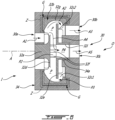
Fig. 6 is a schematic cross-sectional view of the de-aerator including the rotor ofFig. 2 ; -
Fig. 7 is an enlarged view of the de-aerator ofFig. 6 ; -
Fig. 7a is an enlarged view of zone Z1 ofFig. 7 ; -
Fig. 7b is an enlarged view of zone Z2 ofFig. 7 ; -
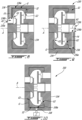
Fig. 8 is a schematic cross-sectional view of a de-aerator in accordance with one embodiment; -
Fig. 9 is a schematic cross-sectional view of a de-aerator in accordance with one embodiment; and -
Fig. 10 is a schematic cross-sectional view of a de-aerator in accordance with one embodiment. -
Fig. 1 illustrates anaircraft engine 10, such as a gas turbine engine, of a type preferably provided for use in subsonic flight. Thegas turbine engine 10 generally includes in serial flow communication afan 12 through which ambient air is propelled, acompressor section 14 for pressurizing the air, acombustor 16 in which the compressed air is mixed with fuel and ignited for generating an annular stream of hot combustion gases, and aturbine section 18 for extracting energy from the combustion gases. Thefan 12, thecompressor section 14, and theturbine section 18 are rotatable about acentral axis 11 of thegas turbine engine 10. - Referring to
Figs. 1 and 1a , thegas turbine engine 10 includes alubrication system 100 that includes apump 102,lubrication conduits 104, alubricant reservoir 106, and ade-aerator 30. Thelubrication system 100 may also include additional components such as valve(s), heat exchangers, filters, etc. Thelubricant reservoir 106 is hydraulically connected to one or more components C of theengine 10 in need of lubrication, such as, for instance, bearing cavity(ies) 13, gearbox(es), and so on. Thepump 102 is operable to induce a flow of the lubricant from thelubricant reservoir 106, to the one or more components C of theengine 10 in need of lubrication, and ascavenge pump 108 operable to draw a scavenge flow of oil back to thereservoir 106. Thescavenge pump 108 has an inlet hydraulically connected to a scavenge outlet C1 of the component C and an outlet hydraulically connected to thede-aerator 30. In some cases, for instance when the component C is abearing cavity 13 , the oil flows through thebearing cavity 13 and is mixed with compressed air injected therein for pressurizing thebearing cavity 13. The oil mixture exiting thebearing cavity 13 may thus have a greater air content than the oil mixture entering thebearing cavity 13. Thede-aerator 30 is operable to remove at least a portion of the air contained within the air-oil mixture it receives before flowing the oil back to the one or more components in need of lubrication. The de-aerator 30 has an air-oil inlet 30a hydraulically connected to the scavenge outlet C1 of the component C via thescavenge pump 108; anoil outlet 30b hydraulically connected to thereservoir 106 for returning the de-aerated oil back to thereservoir 106 from which it is drawn by thepump 102 for lubrication purposes; and anair outlet 30c hydraulically connected to avent 110 for expelling the air out to an environment E outside thegas turbine engine 10. It will be appreciated that the location of some of the parts of the lubrication system 100 (e.g.,scavenge pump 108,pump 102, vent 110) may differ from what is illustrated inFig. 1a . Any suitable arrangement of thelubrication system 100 is contemplated. The de-aerator 30 may be included in any suitable lubrication system. - Referring now to
Figs. 2-6 , thede-aerator 30 includes arotor 32, also referred to as an impeller, and a stator, also referred to as a housing 34 (Fig. 6 ). Therotor 32 is received within thehousing 34 and rotates relative to thehousing 34 about a central axis A. As shown inFig. 6 , thede-aerator 30 has an inlet side I and an opposed outlet side O. The air-oil inlet 30a of the de-aerator 30 is located on the inlet side I. Theoil outlet 30b and theair outlet 30c of the de-aerator 30 are located on the outlet side O of the de-aerator 30. In the embodiment shown, the air-oil inlet 30a, theoil outlet 30b, and theair outlet 30c are defined by thehousing 34. - The
rotor 32 has ashaft 32a that is drivingly engageable for receiving a rotational input. The rotational input may be provided by an electric motor, a shaft of the gas turbine engine 10 (Fig. 1 ), or any device able to generate a rotational input to therotor 32. Therotor 32 has ahub 32b andblades 32c that are circumferentially distributed around the central axis A. Thehub 32b extends circumferentially all around the central axis A and around theblades 32c. In the embodiment shown, theblades 32c are secured to afore flange 32d that is secured to theshaft 32a and to anaft flange 32e. Both of the first andsecond flanges fore flange 32d is secured to theshaft 32a via a fillet. Thefore flange 32d is used to redirect a flow of oil that enters the de-aerator 30 in a substantially axial direction relative to the central axis A to a substantially radial direction relative to the central axis A before said flow of oil meets theblades 32c. Theblades 32c have radiallyinner ends 32f and radiallyouter ends 32g. In the embodiment shown, the radially outer ends 32g of theblades 32c are secured to thehub 32b of therotor 32. In the embodiment shown, fillets are located at junctions between theblades 32c and thehub 32b. The radially inner ends 32f of theblades 32c are located axially between the fore andaft flanges - A plurality of flow passages P (
Figs. 2 and6 ) are defined circumferentially between each two circumferentially adjacent ones of theblades 32c. The flow passages P have passage inlets P1 (Fig. 2 ) extending radially between a periphery of thefirst flange 32d and thehub 32b, extending circumferentially between each two adjacent ones of theblades 32c, and extending axially between thehub 32b and thefore flange 32d. In the depicted embodiment, the inlets P1 of the flow passages P face a direction which has a radial component relative to the central axis A. In the embodiment shown, the radial component of the inlets P1 of the flow passages P is oriented away from the central axis A. The flow passages P have air outlets P2 (Figs. 5-6 ) proximate the central axis A. The air outlets P2 of the flow passages P are defined circumferentially between each of two adjacent ones of the radially inner ends 32f of theblades 32c and axially between the fore andaft flanges - The flow passages P further have oil outlets P3 (
Fig. 3 ) located axially between thehub 32b and theaft flange 32e and circumferentially between theblades 32c. More specifically, a portion 32c1 (Figs. 6 ) of theblades 32c curves around the radiallyouter edge 32h (Figs. 4-5 ) of the aftannular flange 32e. The oil outlets P3 are defined by the portion of theblades 32c that curve around the aftannular flange 32e. The portions 32c1 of theblades 32c that extend around theaft flange 32e have radially inner ends 32c2 (Fig. 6 ). The oil outlets P3 are defined circumferentially between each two adjacent ones of the radially inner ends 32c2 of the portions 32c1 of theblades 32c. - Still referring to
Figs. 2-6 , therotor 32 further has ahollow tube 32i secured to thesecond flange 32e. As illustrated more clearly inFig. 6 , thehollow tube 32i is rotatably received within abore 34a of thehousing 34. It will be appreciated that a bearing may be disposed between thebore 34a of thehousing 34 and thehollow tube 32i. Thehollow tube 32i has an internal passage P4 that is fluidly connected to the air outlets P2 of the flow passages P defined between theblades 32c of therotor 32. The internal passage P4 defined by thehollow tube 32i may be hydraulically connected to the vent 110 (Fig. 1a ) of the lubrication system 100 (Fig. 1 ) via suitable conduits for expelling the extracted air out of thelubrication system 100. - Referring more particularly to
Fig. 6 , in use, an air-oil mixture is received into the de-aerator 30 via the air-oil inlet 30a along arrow A1. The oil is diverted radially outwardly away from the central axis A by thefore flange 32d. The oil is then divided between the flow passages P upon rotation of thefore flange 32d and enters those flow passages P via their respective inlets P1 (Fig. 2 ). The oil is then impinged by theblades 32c of therotor 32. Such impingement may cause separation of the air contained in the air-oil mixture from the oil. The separated oil flows within the flow passages P defined between theblades 32c, around theperiphery 32h of thesecond flange 32e along arrow A2 (Fig. 6 ) and exits the flow passages P via the oil outlet P3 (Fig. 3 ) defined axially between theaft flange 32e and thehub 32b and circumferentially between the radially-inner ends 32c2 of the portions 32c1 of theblades 32c that extend aft of theaft flange 32e. The oil then exits the de-aerator 30 via theoil outlet 30b thereof along arrow A3. As shown inFig. 1a , the extracted oil is then flown back to thereservoir 106 via which it is circulated to the components (e.g., bearing cavity 13) in need of lubrication. The air extracted from the air-oil mixture flows around a periphery of thefirst flange 32d along arrow A4, moves radially inwardly toward the central axis A, and exits the flow passages P via their air outlets P2 defined circumferentially between the radially-inner ends 32f of the portions of theblades 32c that are located between the fore andaft flanges hollow tube 32i along arrow A5 and out of the de-aerator 30 via thebore 34a of thehousing 34 and via theair outlet 30c of the de-aerator 30. - In the embodiment shown, the disclosed de-aerator 30 has solely two outlets: the
oil outlet 30b and theair outlet 30c. In the present case, the de-aerator 30 has solely three connections to the oil system 100 (Fig. 1a ), that is the air-oil inlet 30a, theair outlet 30c, and theoil outlet 30b, and is free of other connections to theoil system 100. The de-aerator 30 is an "active" de-aerator since it has at least one component (e.g., rotor 32) that is driven, such as by electrical and/or pneumatic and/or hydraulic or other means (motors, actuators, etc.). A de-aerator is different than a de-oiler. A de-oiler is typically located within a lubricated cavity (e.g., gear box) and is designed to remove oil (e.g., oil droplets/mist) within an air-oil mixture before ejecting air overboard. The de-aerator 30 is designed to extract air from an air-oil mixture and to feed oil back to theoil system 100. Typically, the de-oiler does not include a housing and is therefore not subjected to problems associated with oil trapped in a gap. Indeed, the housing of the de-aerator 30 is used to collect the oil extracted by centrifugation so that said extracted oil is flown back to the oil system. Since the de-oiler is located within the lubricated cavity, it does not need a housing and the oil may simply be ejected via centrifugation against the components in need of lubrication contained within the lubricated cavity (e.g., gears). - Referring more particularly to
Fig. 6 , a gap G is present between therotor 32 and thehousing 34. The gap G extends circumferentially all around the central axis A. It has been observed that, in some cases, oil may become trapped within the gap G. More specifically, as the oil is centrifuged by therotor 32, a portion may flow into the gap G and may remain trapped because of the centrifugal effect. Oil may therefore be located within the gap G and all around therotor 32 by centrifugal effect. The portion Z where oil may be trapped is shown with dashed lines inFig. 6 . In some cases, the trapped oil can generate heat as it is sheared between therotor 32 and thehousing 34.Figs. 7-10 described below explain features that the de-aerator 30 may have to limit oil from being trapped in the gap G. - Referring to
Figs. 7 and 7a , thehousing 34 has a foreannular shoulder 34b on the inlet side I of the de-aerator 30 and proximate the air-oil inlet 30a of the de-aerator 30. The foreannular shoulder 34b are herein oriented radially outwardly relative to the central axis A and faces thehub 32b. Thehub 32b defines afore opening 32j that leads into the flow passages P between theblades 32c of therotor 32. Thefore opening 32j of thehub 32 is defined by a substantially cylindrical peripheral wall 32j3 extending circumferentially around the central axis A and extending axially from afore edge 32j 1 to an aft edge 32j2 aft of thefore edge 32j 1. A portion of thehousing 34 overlaps thefore opening 32j of thehub 32. In the embodiment shown, a portion of thehousing 34, which herein may correspond to the foreannular shoulder 34b of thehousing 34, is received within thefore opening 32j and overlaps the peripheral wall 32j3 of thefore opening 32j of thehub 32. In the depicted embodiment, the foreannular shoulder 34b of thehousing 34 extends axially beyond the aft edge 32j2 of thefore opening 32j of thehub 32b. - As shown in
Fig. 7a , the gap G has a fore gap inlet G1 (dashed lines inFig. 7a ) between thehub 32b and thehousing 34. The overlap between the foreannular shoulder 34b of thehousing 34 and thefore opening 32j of thehub 32b is such that the fore gap inlet G1 has a radial component relative to the central axis A and that said radial component of the fore gap inlet G1 extends toward the central axis A. In other words, the fore gap inlet G1 extends circumferentially all around the central axis A, radially from the aft edge 32j2 of the peripheral wall 32j3 to an edge 34b1 of the foreannular shoulder 34b of thehousing 34, and axially from said aft edge 32j2 of the peripheral wall 32j3 to the edge 34b1 of the foreannular shoulder 34b. The edge 34b1 of the foreannular shoulder 34b and the aft edge 32j2 of the peripheral wall 32j3 are axially offset from one another. Therefore, such an overlap between thehub 32b and thehousing 34 may shield the fore gap inlet G1 from a flow F1 extending in a substantial radial direction relative to the central axis A and that is directed toward the inlets P1 of the flow passages P between theblades 32c of therotor 32. Stated differently, for oil to enter into the gap G, it has to flow in a direction having a radial component that is in an opposite direction to a radial component of the flow F1 that is directed toward the flow passages P. This overlap may require the oil to change its direction to enter the gap G. Since the flow F1 of oil has a direction that may be mainly radial and away from the central axis A, the overlap between theshoulder 34b of the housing and theopening 32j of thehub 32b may make it more difficult for the oil to reach the gap G. In the embodiment shown, the gap G at the fore gap inlet G1 faces a direction D1 that is mainly axial relative to thecentral axis 11. This difference between the direction D1 of the gap G at the fore gap inlet G1 and the direction of the flow F1 may make it more difficult for the oil to reach the gap G. This may limit a quantity of oil trapped within the gap G compared to a configuration lacking such an overlap. In other words, on the inlet side I of the de-aerator 30, the overlap of thehousing 34 androtor 32 may make it more difficult for the oil to go through a path depicted by arrow A6 rather than a path depicted by arrow A7. - Referring now to
Figs. 7 and 7b , thehub 32b has an aftannular shoulder 32k that is oriented radially inwardly toward the central axis A and that faces an aftannular shoulder 34c of thehousing 34. The aftannular shoulder 34c of thehousing 34 is oriented radially away from the central axis A. The aftannular shoulder 34c of thehousing 34 axially overlaps the aftannular shoulder 32k of thehub 32b of therotor 32. In the embodiment shown, thehub 32b defines an aft opening 32l and has anannular face 32m extending radially relative to the central axis A from the aft opening 32l to theaft shoulder 32k. An aft gap inlet G2 (dashed line inFig. 7b ) of the gap G is located axially between thehousing 34 and theannular face 32m of thehub 32b of therotor 32. In the embodiment shown, the gap G at the aft gap inlet G2 faces a direction D2 that is mainly radial relative to thecentral axis 11. This similarity between the direction D2 of the gap G at the aft gap inlet G2 and the direction of a flow F2 between theblades 32c may make it more difficult for the oil to reach the gap G. On the outlet side O of the de-aerator 30, the disclosed geometry may create a complex path depicted by arrow A8 and it may be easier for the oil to go through a path depicted by arrow A9 instead. - As shown in
Figs. 5 and7b , the oil curves around theouter edge 32h (Fig. 5 ) of theaft flange 32e (Fig. 5 ) along the arrow A2. Then, a flow of oil F2 (Fig. 7 ) flows in a direction being substantially radial toward the central axis A and toward the passage outlets P3 (Fig. 3 ). The aft gap inlet G2 has a radial component that extends away from the central axis A. Hence, for oil to enter into the gap G via the aft gap inlet G2, it has to flow in a direction having a radial component that is in an opposite direction to a radial component of the flow F2 that is directed toward the central axis A. This orientation of the aft gap inlet G2 may require the oil to change its direction to enter the gap G. Since the flow F2 of oil has a direction that may be mainly radial and toward the central axis A, having the aft gap inlet G2 oriented radially away from the central axis A may contribute in limiting oil from entering the gap G via the aft gap inlet G2. - As shown in
Fig. 7b , the overlap between theaft shoulder 34c of thehousing 34 and theaft shoulder 32k of thehub 32b creates herein a tortuous flow path T within the gap G. Such a tortuous flow path T may increase a resistance of the flow within the gap G and may contribute in limiting oil from flowing within the gap G. This may limit a quantity of oil trapped within the gap G compared to a configuration lacking such an overlap. - Referring to
Fig. 7 , in the embodiment shown, theoil outlet 30b of the de-aerator 30 includes abore 34d defined by thehousing 34; thebore 34d is herein located at an upper halve of thehousing 34 and radially offset from the central axis A. Other locations of thebore 34d are contemplated. As shown inFig. 7 , aperipheral wall 34e of thebore 34 is radially aligned with a top portion of the aft opening 32l (Fig. 7b ) of thehub 32b. - Referring now to
Fig. 8 , a de-aerator in accordance with another embodiment is shown generally at 130. For the sake of conciseness, only elements that differ from the de-aerator 30 described above with reference toFigs. 2-7 are described herein below. - In the embodiment shown, the
housing 134 of the de-aerator 130 defines adrain conduit 136. Thedrain conduit 136 has adrain inlet 136a that is hydraulically connected to the gap G between the fore gap inlet G1 and the aft gap inlet G2. Thedrain conduit 136 has adrain outlet 136b that is hydraulically connected to the air-oil inlet 130a of the de-aerator 130. In the embodiment shown, thedrain conduit 136 is located at an upper halve of thehousing 134. Thedrain conduit 136 may be located anywhere along a circumference of thehousing 134. In use, the flow of the air-oil mixture along arrow A1 may create a pressure drop within thedrain conduit 136 that may induce a flow F3 within thedrain conduit 136 for suctioning the oil trapped in the gap G from thedrain inlet 136a to thedrain outlet 136b. The flow F3 is influenced at least partially by the centrifugal force exerted to the oil via rotation of therotor 32. The oil extracted from the gap G may be redirected into the fluid passages P of therotor 32 for separation. - Referring now to
Fig. 9 , a de-aerator in accordance with another embodiment is shown generally at 230. For the sake of conciseness, only elements that differ from the de-aerator 30 described above with reference toFigs. 2-7 are described herein below. - In the embodiment shown, the
housing 234 of the de-aerator 230 defines adrain conduit 236. Thedrain conduit 236 has adrain inlet 236a that is hydraulically connected to the gap G between the fore gap inlet G1 and the aft gap inlet G2. Thedrain conduit 236 has adrain outlet 236b that is hydraulically connected to theair outlet 230c of the de-aerator 230. In the embodiment shown, thedrain conduit 236 is located at a lower halve of thehousing 234. Thedrain conduit 236 may be located anywhere along a circumference of thehousing 234. In use, the flow of the air along arrow A5 via theair outlet 230c may create a pressure drop within thedrain conduit 236 that may induce a flow F4 within thedrain conduit 236 for suctioning the oil trapped in the gap G form thedrain inlet 236a to thedrain outlet 236b. The flow F4 is influenced at least partially by the centrifugal force exerted to the oil via rotation of therotor 32. - Referring now to
Fig. 10 , a de-aerator in accordance with another embodiment is shown generally at 330. For the sake of conciseness, only elements that differ from the de-aerator 30 described above with reference toFigs. 2-7 are described herein below. - In the embodiment shown, the de-aerator 300 has a
blow conduit 338 that is located at a lower halve of thehousing 334. Theblow conduit 338 may be located anywhere along a circumference of thehousing 334. Theblow conduit 338 is herein defined by thehousing 334. Theblow conduit 338 may be fluidly connected to a source of compressed air C and may have anoutlet 338a hydraulically connected to the gap G between the fore gap inlet G1 and the aft gap inlet G2. The source of compressed air C may be, for instance, thecompressor section 14 of the gas turbine engine 10 (Fig. 1 ). Blowing the air within the gap G may prevent the oil from penetrating into the gap G since said oil would have to overcome the airflow exiting the gap G via the fore and aft gap inlets G1, G2. In a particular embodiment where thedrain conduit 236 ofFig. 9 and theblow conduit 338 ofFig. 10 are used in conjunction, theblow outlet 338a may be located between thedrain inlet 236a and the fore gap inlet G1. - In a particular embodiment, combining the features of the complex flow path and overlap described above with reference to
Figs. 7, 7a, 7b with one or both of thedrain conduits Figs. 8 and 9 may limit the amount of oil trapped between therotor 32 and thehousing drain conduits drain conduits Figs. 8 and 9 with theblow conduit 338 described above with reference toFig. 10 may ensure that the air that is blown within the gap G via theblow conduit 338 is returned through the drain passage to theair outlet 30c of the de-aerator instead of theoil outlet 30b of said de-aerator. In a particular embodiment, theblow conduit 338 described above with reference toFig. 10 may be combined with the complex flow path and overlap described above with reference toFigs. 7, 7a, and 7b on the outlet side O of the de-aerator 30 to ensure that the air blown may not be mixed with the oil on theoil outlet 30b of the de-aerator 30. It will be appreciated that the features described above with reference toFigs. 8 to 10 may be combined with the de-aerator 30 ofFig. 7 . Any combinations of those features are contemplated without departing from the scope of the present disclosure. - For separating the air from the air-oil flow, the air-oil mixture is received via the air-
oil inlet 30a of the de-aerator 30 in an axial direction relative to a central axis A of therotor 32; the received air-oil flow is redirected in a radial direction relative to the central axis A and the air is separated from the air-oil flow by centrifugation within therotor 32; and the oil is limited from flowing within the gap G between therotor 32 and thehousing 34 by having the inlet of the gap G facing a direction different than a flow direction of the air-oil flow. In the embodiment shown, compressed air is injected into the gap G and/or the oil is drained out from the gap.
Claims (12)
- A de-aerator (30, 130, 230, 330) for a lubrication system (100) of an aircraft engine (10), comprising:a housing (34) defining an air-oil inlet (30a, 130a), an oil outlet (30b), and an air outlet (30c, 130c, 230c) of the de-aerator (30, 130, 230, 330);a rotor (32) received within the housing (34) and rotatable relative to the housing (34) about a central axis (A), the rotor having blades (32c) circumferentially distributed about the central axis (A) and extending at least partially radially relative to the central axis (A), flow passages (P) extending between the blades (32c), the rotor (32) having a hub (32b) circumferentially extending around the central axis (A) and around the blades (32c), the hub (32b) having a peripheral wall (32j2) oriented radially inwardly and defining a fore opening (32j) leading to the flow passages (P); anda gap (G) between the housing (34) and the hub (32b) of the rotor (32), a portion of the housing received within the fore opening (32j) and axially overlapping the peripheral wall (32j3) of the hub (32b), the gap (G) having a fore gap inlet (G1) between the portion of the housing and the peripheral wall (32j3) of the hub (32b), wherein the housing (34) defines an aft annular shoulder (32k) on an outlet side (O) of the de-aerator (30, 130, 230, 330) and oriented radially outwardly relative to the central axis (A), the aft annular shoulder (32k) axially overlapping and facing an aft shoulder (32k) of the hub (32b).
- The de-aerator (30, 130, 230, 330) of claim 1, wherein the portion of the housing (34) is a fore annular shoulder (34b) on an inlet side (I) of the de-aerator (30, 130, 230, 330), proximate the air-oil inlet (30a, 130a), and oriented radially outwardly relative to the central axis (A).
- The de-aerator (30, 130, 230, 330) of claim 2, wherein the peripheral wall (32j3) of the fore opening (32j) extends axially from a fore edge (32j1) to an aft edge (32j2), the fore annular shoulder (34b) of the housing (34) extending axially beyond the aft edge (32j2) of the peripheral wall (32j3).
- The de-aerator (30, 130, 230, 330) of any preceding claim, wherein the hub (32b) has an aft peripheral wall oriented radially inwardly relative to the central axis (A) and defining an aft opening (32l) communicating with the flow passages (P), the hub (32b) having an annular face (32m) extending radially from the aft opening (32l) to the aft shoulder (32k), the annular face (32m) radially overlapping the housing, the gap having an aft gap inlet (G2) defined between the housing (34) and the annular face (32m) of the hub (32b).
- The de-aerator (30, 130, 230, 330) of any preceding claim, wherein the oil outlet (30b) is defined by the housing (34) and is radially offset from the central axis (A).
- The de-aerator (330) of any preceding claim, further comprising a blow conduit (338) having a blow inlet for receiving compressed air (C) and a blow outlet (338a) hydraulically connected to the gap (G) between the fore gap inlet (G1) of the gap on an inlet side (I) of the de-aerator (300) and an aft gap inlet (G2) on an outlet side (O) of the de-aerator (330).
- The de-aerator (130, 230) of any preceding claim, further comprising a drain conduit (136, 236) having a drain inlet hydraulically connected to the gap (G) between the fore gap inlet (G1) and an aft gap inlet (G2), and a drain outlet (136b, 236b) hydraulically connected to the air-oil inlet (130a) and/or to the air outlet (230c) of the de-aerator (230).
- The de-aerator (30, 130, 230, 330) of any preceding claim, wherein the flow passages (P) have passage inlets (P1) having a radial component oriented away from the central axis (A), and the gap (G) at the fore gap inlet (G1) facing a direction being mainly axial relative to the central axis (A).
- The de-aerator (30, 130, 230, 330) of any preceding claim, wherein the flow passages (P) have passage outlets (P2) having a radial component oriented toward the central axis (A), the gap (G) having an aft gap inlet (G2) on an outlet side (O) of the de-aerator (30, 130, 230, 330), the aft gap inlet (G2) having a radial component extending away from the central axis (A).
- The de-aerator (30, 130, 230, 330) of claim 9, wherein the rotor (32) includes an aft annular flange (32e) extending circumferentially around the central axis (A), a portion of the blades (32c) curving around a radially outer edge (32h) of the aft annular flange (32e) (32e), the passage outlets (P2) defined axially between the hub (34) and the aft annular flange (32e) and circumferentially between the blades (32c).
- The de-aerator (30, 130, 230, 330) of any preceding claim, wherein the rotor (32) has a shaft (32a) rotatably received within the housing (34), the hub (32b) of the rotor defining a fore opening (32j) leading to the flow passages (P) and radially between the hub (32b) and the shaft (32a), a portion of the housing (34) received within the fore opening (32j), the fore gap inlet (G1) defined between the hub (32b) at the fore opening (32j) and the portion of the housing (34).
- A method of separating air from an air-oil flow with a de-aerator (30, 130, 230, 330) having a rotor (32) rotatably received within a housing (34), comprising:receiving the air-oil flow via an air-oil inlet (30a, 130a) of the de-aerator (30, 130, 230, 330) in an axial direction relative to a central axis (A) of the rotor (32);redirecting the received air-oil flow in a radial direction relative to the central axis (A) and separating the air from the air-oil flow by centrifugation within the rotor (32);limiting oil from flowing within a gap (G) between the rotor (32) and the housing (34) by having an inlet of the gap (G) facing a direction different than a flow direction of the air-oil flow; and
injecting compressed air into the gap (G) and/or draining the oil from the gap (G).
Applications Claiming Priority (1)
| Application Number | Priority Date | Filing Date | Title |
|---|---|---|---|
| US15/931,032 US11994257B2 (en) | 2020-05-13 | 2020-05-13 | Centrifugal de-aerator for aircraft engine |
Publications (2)
| Publication Number | Publication Date |
|---|---|
| EP3909660A1 EP3909660A1 (en) | 2021-11-17 |
| EP3909660B1 true EP3909660B1 (en) | 2024-04-24 |
Family
ID=75919258
Family Applications (1)
| Application Number | Title | Priority Date | Filing Date |
|---|---|---|---|
| EP21173769.7A Active EP3909660B1 (en) | 2020-05-13 | 2021-05-13 | Centrifugal de-aerator for aircraft engine |
Country Status (3)
| Country | Link |
|---|---|
| US (1) | US11994257B2 (en) |
| EP (1) | EP3909660B1 (en) |
| CA (1) | CA3117555A1 (en) |
Families Citing this family (6)
| Publication number | Priority date | Publication date | Assignee | Title |
|---|---|---|---|---|
| US12017157B2 (en) | 2021-01-22 | 2024-06-25 | Pratt & Whitney Canada Corp. | Deaerator for aircraft engine and associated method of operation |
| US11674406B2 (en) * | 2021-08-06 | 2023-06-13 | Pratt & Whitney Canada Corp. | Variable gap between impeller rotor and static structure |
| CN114307259B (en) * | 2021-12-30 | 2023-05-30 | 中国航空工业集团公司金城南京机电液压工程研究中心 | Pump type oil-gas separator of hydraulic combined transmission generator |
| US11867357B1 (en) | 2022-09-09 | 2024-01-09 | Pratt & Whitney Canada Corp. | Deaeration conduit |
| US12330089B2 (en) | 2022-09-09 | 2025-06-17 | Pratt & Whitney Canada Corp. | Dynamic deaeration system |
| US12577912B1 (en) * | 2025-02-21 | 2026-03-17 | Pratt & Whitney Canada Corp. | Active de-aerator for aircraft power plant |
Family Cites Families (10)
| Publication number | Priority date | Publication date | Assignee | Title |
|---|---|---|---|---|
| DE749024C (en) | 1942-05-23 | 1952-09-04 | Daimler Benz Ag | OElentschaeumer for internal combustion engines, especially aircraft engines |
| DE1114437B (en) | 1960-03-07 | 1961-09-28 | Entwicklungsbau Pirna Veb | Centrifuge for separating air and small solid components from liquids, especially oil |
| DE3535107A1 (en) | 1985-10-02 | 1987-04-09 | Mtu Muenchen Gmbh | WAREHOUSE SUPPLY SYSTEM |
| US5114446A (en) | 1991-02-15 | 1992-05-19 | United Technologies Corporation | Deoiler for jet engine |
| EP2199614B1 (en) | 2008-12-22 | 2016-09-28 | Safran Aero Boosters SA | Combined pumping and separation machine for the oil circuit of a jet engine |
| JP2016528436A (en) | 2013-08-16 | 2016-09-15 | ゼネラル・エレクトリック・カンパニイ | Flow vortex spoiler |
| ITFI20130204A1 (en) * | 2013-09-03 | 2015-03-04 | Nuovo Pignone Srl | "FAN-COOLED ELECTRICAL MACHINE WITH AXIAL THRUST COMPENSATION" |
| US10322362B2 (en) | 2014-09-25 | 2019-06-18 | Tokyo Roki Co., Ltd. | Oil separator |
| EP3315182A1 (en) * | 2016-10-31 | 2018-05-02 | Pratt & Whitney Canada Corp. | Centrifugal separator |
| US10870079B2 (en) | 2018-04-10 | 2020-12-22 | Pratt & Whitney Canada Corp. | Air-oil separator with first separator radially outward of matrix separator |
-
2020
- 2020-05-13 US US15/931,032 patent/US11994257B2/en active Active
-
2021
- 2021-05-06 CA CA3117555A patent/CA3117555A1/en active Pending
- 2021-05-13 EP EP21173769.7A patent/EP3909660B1/en active Active
Also Published As
| Publication number | Publication date |
|---|---|
| US11994257B2 (en) | 2024-05-28 |
| EP3909660A1 (en) | 2021-11-17 |
| CA3117555A1 (en) | 2021-11-13 |
| US20210356077A1 (en) | 2021-11-18 |
Similar Documents
| Publication | Publication Date | Title |
|---|---|---|
| EP3909660A1 (en) | Centrifugal de-aerator for aircraft engine | |
| CN101619677B (en) | Vortex Gas-Oil Separator System | |
| US10729992B2 (en) | Centrifugal separator | |
| EP3943715B1 (en) | Active de-aerator for an aircraft engine | |
| US8443843B2 (en) | Air-oil separator | |
| US10975731B2 (en) | Turbine engine, components, and methods of cooling same | |
| EP2949880A1 (en) | Shroud assembly for turbine engine | |
| US20160045923A1 (en) | Inertial separator | |
| US20050132710A1 (en) | Bifurcated oil scavenge system for a gas turbine engine | |
| US11181010B2 (en) | Aircraft engine and air-oil separator system therefore | |
| EP3425161B1 (en) | Engine sump with air separation features | |
| EP3239480B1 (en) | Lubrication scavenge system for a turbine engine with counter-rotating shafts | |
| EP4137678B1 (en) | Systems and methods for internal spline lubrication | |
| CA3107722A1 (en) | Oil distribution system for gas turbine engine | |
| EP4336089A1 (en) | Dynamic deaeration system | |
| CN109630213A (en) | The component being made of the bearing of bearing spider and armature spindle in turbine | |
| EP4293202A1 (en) | Blowdown valve with air-oil separation | |
| CA2949547A1 (en) | Turbine engine and particle separators therefore | |
| US10918989B2 (en) | Air-oil separator with two flow paths | |
| EP4495393B1 (en) | Gas turbine engine oil scoop with air separator | |
| EP2798228B1 (en) | FLow merging device and method for merging these flows |
Legal Events
| Date | Code | Title | Description |
|---|---|---|---|
| PUAI | Public reference made under article 153(3) epc to a published international application that has entered the european phase |
Free format text: ORIGINAL CODE: 0009012 |
|
| STAA | Information on the status of an ep patent application or granted ep patent |
Free format text: STATUS: THE APPLICATION HAS BEEN PUBLISHED |
|
| AK | Designated contracting states |
Kind code of ref document: A1 Designated state(s): AL AT BE BG CH CY CZ DE DK EE ES FI FR GB GR HR HU IE IS IT LI LT LU LV MC MK MT NL NO PL PT RO RS SE SI SK SM TR |
|
| B565 | Issuance of search results under rule 164(2) epc |
Effective date: 20211001 |
|
| STAA | Information on the status of an ep patent application or granted ep patent |
Free format text: STATUS: REQUEST FOR EXAMINATION WAS MADE |
|
| 17P | Request for examination filed |
Effective date: 20220318 |
|
| RBV | Designated contracting states (corrected) |
Designated state(s): AL AT BE BG CH CY CZ DE DK EE ES FI FR GB GR HR HU IE IS IT LI LT LU LV MC MK MT NL NO PL PT RO RS SE SI SK SM TR |
|
| GRAP | Despatch of communication of intention to grant a patent |
Free format text: ORIGINAL CODE: EPIDOSNIGR1 |
|
| STAA | Information on the status of an ep patent application or granted ep patent |
Free format text: STATUS: GRANT OF PATENT IS INTENDED |
|
| INTG | Intention to grant announced |
Effective date: 20231117 |
|
| GRAS | Grant fee paid |
Free format text: ORIGINAL CODE: EPIDOSNIGR3 |
|
| GRAA | (expected) grant |
Free format text: ORIGINAL CODE: 0009210 |
|
| STAA | Information on the status of an ep patent application or granted ep patent |
Free format text: STATUS: THE PATENT HAS BEEN GRANTED |
|
| AK | Designated contracting states |
Kind code of ref document: B1 Designated state(s): AL AT BE BG CH CY CZ DE DK EE ES FI FR GB GR HR HU IE IS IT LI LT LU LV MC MK MT NL NO PL PT RO RS SE SI SK SM TR |
|
| REG | Reference to a national code |
Ref country code: GB Ref legal event code: FG4D |
|
| REG | Reference to a national code |
Ref country code: CH Ref legal event code: EP |
|
| REG | Reference to a national code |
Ref country code: DE Ref legal event code: R096 Ref document number: 602021012133 Country of ref document: DE |
|
| REG | Reference to a national code |
Ref country code: IE Ref legal event code: FG4D |
|
| REG | Reference to a national code |
Ref country code: LT Ref legal event code: MG9D |
|
| REG | Reference to a national code |
Ref country code: NL Ref legal event code: MP Effective date: 20240424 |
|
| REG | Reference to a national code |
Ref country code: AT Ref legal event code: MK05 Ref document number: 1679000 Country of ref document: AT Kind code of ref document: T Effective date: 20240424 |
|
| PG25 | Lapsed in a contracting state [announced via postgrant information from national office to epo] |
Ref country code: NL Free format text: LAPSE BECAUSE OF FAILURE TO SUBMIT A TRANSLATION OF THE DESCRIPTION OR TO PAY THE FEE WITHIN THE PRESCRIBED TIME-LIMIT Effective date: 20240424 |
|
| PG25 | Lapsed in a contracting state [announced via postgrant information from national office to epo] |
Ref country code: NL Free format text: LAPSE BECAUSE OF FAILURE TO SUBMIT A TRANSLATION OF THE DESCRIPTION OR TO PAY THE FEE WITHIN THE PRESCRIBED TIME-LIMIT Effective date: 20240424 |
|
| PG25 | Lapsed in a contracting state [announced via postgrant information from national office to epo] |
Ref country code: IS Free format text: LAPSE BECAUSE OF FAILURE TO SUBMIT A TRANSLATION OF THE DESCRIPTION OR TO PAY THE FEE WITHIN THE PRESCRIBED TIME-LIMIT Effective date: 20240824 |
|
| PG25 | Lapsed in a contracting state [announced via postgrant information from national office to epo] |
Ref country code: BG Free format text: LAPSE BECAUSE OF FAILURE TO SUBMIT A TRANSLATION OF THE DESCRIPTION OR TO PAY THE FEE WITHIN THE PRESCRIBED TIME-LIMIT Effective date: 20240424 |
|
| PG25 | Lapsed in a contracting state [announced via postgrant information from national office to epo] |
Ref country code: HR Free format text: LAPSE BECAUSE OF FAILURE TO SUBMIT A TRANSLATION OF THE DESCRIPTION OR TO PAY THE FEE WITHIN THE PRESCRIBED TIME-LIMIT Effective date: 20240424 Ref country code: FI Free format text: LAPSE BECAUSE OF FAILURE TO SUBMIT A TRANSLATION OF THE DESCRIPTION OR TO PAY THE FEE WITHIN THE PRESCRIBED TIME-LIMIT Effective date: 20240424 |
|
| PG25 | Lapsed in a contracting state [announced via postgrant information from national office to epo] |
Ref country code: GR Free format text: LAPSE BECAUSE OF FAILURE TO SUBMIT A TRANSLATION OF THE DESCRIPTION OR TO PAY THE FEE WITHIN THE PRESCRIBED TIME-LIMIT Effective date: 20240725 |
|
| PG25 | Lapsed in a contracting state [announced via postgrant information from national office to epo] |
Ref country code: PT Free format text: LAPSE BECAUSE OF FAILURE TO SUBMIT A TRANSLATION OF THE DESCRIPTION OR TO PAY THE FEE WITHIN THE PRESCRIBED TIME-LIMIT Effective date: 20240826 |
|
| PG25 | Lapsed in a contracting state [announced via postgrant information from national office to epo] |
Ref country code: ES Free format text: LAPSE BECAUSE OF FAILURE TO SUBMIT A TRANSLATION OF THE DESCRIPTION OR TO PAY THE FEE WITHIN THE PRESCRIBED TIME-LIMIT Effective date: 20240424 |
|
| PG25 | Lapsed in a contracting state [announced via postgrant information from national office to epo] |
Ref country code: AT Free format text: LAPSE BECAUSE OF FAILURE TO SUBMIT A TRANSLATION OF THE DESCRIPTION OR TO PAY THE FEE WITHIN THE PRESCRIBED TIME-LIMIT Effective date: 20240424 |
|
| PG25 | Lapsed in a contracting state [announced via postgrant information from national office to epo] |
Ref country code: PL Free format text: LAPSE BECAUSE OF FAILURE TO SUBMIT A TRANSLATION OF THE DESCRIPTION OR TO PAY THE FEE WITHIN THE PRESCRIBED TIME-LIMIT Effective date: 20240424 |
|
| PG25 | Lapsed in a contracting state [announced via postgrant information from national office to epo] |
Ref country code: LV Free format text: LAPSE BECAUSE OF FAILURE TO SUBMIT A TRANSLATION OF THE DESCRIPTION OR TO PAY THE FEE WITHIN THE PRESCRIBED TIME-LIMIT Effective date: 20240424 |
|
| PG25 | Lapsed in a contracting state [announced via postgrant information from national office to epo] |
Ref country code: PT Free format text: LAPSE BECAUSE OF FAILURE TO SUBMIT A TRANSLATION OF THE DESCRIPTION OR TO PAY THE FEE WITHIN THE PRESCRIBED TIME-LIMIT Effective date: 20240826 Ref country code: PL Free format text: LAPSE BECAUSE OF FAILURE TO SUBMIT A TRANSLATION OF THE DESCRIPTION OR TO PAY THE FEE WITHIN THE PRESCRIBED TIME-LIMIT Effective date: 20240424 Ref country code: NO Free format text: LAPSE BECAUSE OF FAILURE TO SUBMIT A TRANSLATION OF THE DESCRIPTION OR TO PAY THE FEE WITHIN THE PRESCRIBED TIME-LIMIT Effective date: 20240724 Ref country code: LV Free format text: LAPSE BECAUSE OF FAILURE TO SUBMIT A TRANSLATION OF THE DESCRIPTION OR TO PAY THE FEE WITHIN THE PRESCRIBED TIME-LIMIT Effective date: 20240424 Ref country code: IS Free format text: LAPSE BECAUSE OF FAILURE TO SUBMIT A TRANSLATION OF THE DESCRIPTION OR TO PAY THE FEE WITHIN THE PRESCRIBED TIME-LIMIT Effective date: 20240824 Ref country code: HR Free format text: LAPSE BECAUSE OF FAILURE TO SUBMIT A TRANSLATION OF THE DESCRIPTION OR TO PAY THE FEE WITHIN THE PRESCRIBED TIME-LIMIT Effective date: 20240424 Ref country code: GR Free format text: LAPSE BECAUSE OF FAILURE TO SUBMIT A TRANSLATION OF THE DESCRIPTION OR TO PAY THE FEE WITHIN THE PRESCRIBED TIME-LIMIT Effective date: 20240725 Ref country code: FI Free format text: LAPSE BECAUSE OF FAILURE TO SUBMIT A TRANSLATION OF THE DESCRIPTION OR TO PAY THE FEE WITHIN THE PRESCRIBED TIME-LIMIT Effective date: 20240424 Ref country code: ES Free format text: LAPSE BECAUSE OF FAILURE TO SUBMIT A TRANSLATION OF THE DESCRIPTION OR TO PAY THE FEE WITHIN THE PRESCRIBED TIME-LIMIT Effective date: 20240424 Ref country code: BG Free format text: LAPSE BECAUSE OF FAILURE TO SUBMIT A TRANSLATION OF THE DESCRIPTION OR TO PAY THE FEE WITHIN THE PRESCRIBED TIME-LIMIT Effective date: 20240424 Ref country code: AT Free format text: LAPSE BECAUSE OF FAILURE TO SUBMIT A TRANSLATION OF THE DESCRIPTION OR TO PAY THE FEE WITHIN THE PRESCRIBED TIME-LIMIT Effective date: 20240424 Ref country code: RS Free format text: LAPSE BECAUSE OF FAILURE TO SUBMIT A TRANSLATION OF THE DESCRIPTION OR TO PAY THE FEE WITHIN THE PRESCRIBED TIME-LIMIT Effective date: 20240724 |
|
| REG | Reference to a national code |
Ref country code: CH Ref legal event code: PL |
|
| PG25 | Lapsed in a contracting state [announced via postgrant information from national office to epo] |
Ref country code: DK Free format text: LAPSE BECAUSE OF FAILURE TO SUBMIT A TRANSLATION OF THE DESCRIPTION OR TO PAY THE FEE WITHIN THE PRESCRIBED TIME-LIMIT Effective date: 20240424 |
|
| PG25 | Lapsed in a contracting state [announced via postgrant information from national office to epo] |
Ref country code: LU Free format text: LAPSE BECAUSE OF NON-PAYMENT OF DUE FEES Effective date: 20240513 |
|
| PG25 | Lapsed in a contracting state [announced via postgrant information from national office to epo] |
Ref country code: EE Free format text: LAPSE BECAUSE OF FAILURE TO SUBMIT A TRANSLATION OF THE DESCRIPTION OR TO PAY THE FEE WITHIN THE PRESCRIBED TIME-LIMIT Effective date: 20240424 |
|
| PG25 | Lapsed in a contracting state [announced via postgrant information from national office to epo] |
Ref country code: CZ Free format text: LAPSE BECAUSE OF FAILURE TO SUBMIT A TRANSLATION OF THE DESCRIPTION OR TO PAY THE FEE WITHIN THE PRESCRIBED TIME-LIMIT Effective date: 20240424 |
|
| PG25 | Lapsed in a contracting state [announced via postgrant information from national office to epo] |
Ref country code: RO Free format text: LAPSE BECAUSE OF FAILURE TO SUBMIT A TRANSLATION OF THE DESCRIPTION OR TO PAY THE FEE WITHIN THE PRESCRIBED TIME-LIMIT Effective date: 20240424 Ref country code: SK Free format text: LAPSE BECAUSE OF FAILURE TO SUBMIT A TRANSLATION OF THE DESCRIPTION OR TO PAY THE FEE WITHIN THE PRESCRIBED TIME-LIMIT Effective date: 20240424 |
|
| REG | Reference to a national code |
Ref country code: DE Ref legal event code: R097 Ref document number: 602021012133 Country of ref document: DE |
|
| PG25 | Lapsed in a contracting state [announced via postgrant information from national office to epo] |
Ref country code: SM Free format text: LAPSE BECAUSE OF FAILURE TO SUBMIT A TRANSLATION OF THE DESCRIPTION OR TO PAY THE FEE WITHIN THE PRESCRIBED TIME-LIMIT Effective date: 20240424 |
|
| PG25 | Lapsed in a contracting state [announced via postgrant information from national office to epo] |
Ref country code: SM Free format text: LAPSE BECAUSE OF FAILURE TO SUBMIT A TRANSLATION OF THE DESCRIPTION OR TO PAY THE FEE WITHIN THE PRESCRIBED TIME-LIMIT Effective date: 20240424 Ref country code: SK Free format text: LAPSE BECAUSE OF FAILURE TO SUBMIT A TRANSLATION OF THE DESCRIPTION OR TO PAY THE FEE WITHIN THE PRESCRIBED TIME-LIMIT Effective date: 20240424 Ref country code: RO Free format text: LAPSE BECAUSE OF FAILURE TO SUBMIT A TRANSLATION OF THE DESCRIPTION OR TO PAY THE FEE WITHIN THE PRESCRIBED TIME-LIMIT Effective date: 20240424 Ref country code: LU Free format text: LAPSE BECAUSE OF NON-PAYMENT OF DUE FEES Effective date: 20240513 Ref country code: EE Free format text: LAPSE BECAUSE OF FAILURE TO SUBMIT A TRANSLATION OF THE DESCRIPTION OR TO PAY THE FEE WITHIN THE PRESCRIBED TIME-LIMIT Effective date: 20240424 Ref country code: DK Free format text: LAPSE BECAUSE OF FAILURE TO SUBMIT A TRANSLATION OF THE DESCRIPTION OR TO PAY THE FEE WITHIN THE PRESCRIBED TIME-LIMIT Effective date: 20240424 Ref country code: CZ Free format text: LAPSE BECAUSE OF FAILURE TO SUBMIT A TRANSLATION OF THE DESCRIPTION OR TO PAY THE FEE WITHIN THE PRESCRIBED TIME-LIMIT Effective date: 20240424 Ref country code: MC Free format text: LAPSE BECAUSE OF FAILURE TO SUBMIT A TRANSLATION OF THE DESCRIPTION OR TO PAY THE FEE WITHIN THE PRESCRIBED TIME-LIMIT Effective date: 20240424 Ref country code: CH Free format text: LAPSE BECAUSE OF NON-PAYMENT OF DUE FEES Effective date: 20240531 |
|
| REG | Reference to a national code |
Ref country code: BE Ref legal event code: MM Effective date: 20240531 |
|
| PLBE | No opposition filed within time limit |
Free format text: ORIGINAL CODE: 0009261 |
|
| STAA | Information on the status of an ep patent application or granted ep patent |
Free format text: STATUS: NO OPPOSITION FILED WITHIN TIME LIMIT |
|
| 26N | No opposition filed |
Effective date: 20250127 |
|
| PG25 | Lapsed in a contracting state [announced via postgrant information from national office to epo] |
Ref country code: IE Free format text: LAPSE BECAUSE OF NON-PAYMENT OF DUE FEES Effective date: 20240513 |
|
| PG25 | Lapsed in a contracting state [announced via postgrant information from national office to epo] |
Ref country code: BE Free format text: LAPSE BECAUSE OF NON-PAYMENT OF DUE FEES Effective date: 20240531 Ref country code: SI Free format text: LAPSE BECAUSE OF FAILURE TO SUBMIT A TRANSLATION OF THE DESCRIPTION OR TO PAY THE FEE WITHIN THE PRESCRIBED TIME-LIMIT Effective date: 20240424 |
|
| PGFP | Annual fee paid to national office [announced via postgrant information from national office to epo] |
Ref country code: DE Payment date: 20250423 Year of fee payment: 5 |
|
| PGFP | Annual fee paid to national office [announced via postgrant information from national office to epo] |
Ref country code: GB Payment date: 20250423 Year of fee payment: 5 |
|
| PGFP | Annual fee paid to national office [announced via postgrant information from national office to epo] |
Ref country code: FR Payment date: 20250423 Year of fee payment: 5 |
|
| PG25 | Lapsed in a contracting state [announced via postgrant information from national office to epo] |
Ref country code: CY Free format text: LAPSE BECAUSE OF FAILURE TO SUBMIT A TRANSLATION OF THE DESCRIPTION OR TO PAY THE FEE WITHIN THE PRESCRIBED TIME-LIMIT; INVALID AB INITIO Effective date: 20210513 |
|
| PG25 | Lapsed in a contracting state [announced via postgrant information from national office to epo] |
Ref country code: HU Free format text: LAPSE BECAUSE OF FAILURE TO SUBMIT A TRANSLATION OF THE DESCRIPTION OR TO PAY THE FEE WITHIN THE PRESCRIBED TIME-LIMIT; INVALID AB INITIO Effective date: 20210513 |
|
| PG25 | Lapsed in a contracting state [announced via postgrant information from national office to epo] |
Ref country code: SE Free format text: LAPSE BECAUSE OF FAILURE TO SUBMIT A TRANSLATION OF THE DESCRIPTION OR TO PAY THE FEE WITHIN THE PRESCRIBED TIME-LIMIT Effective date: 20240424 |
|
| PG25 | Lapsed in a contracting state [announced via postgrant information from national office to epo] |
Ref country code: IT Free format text: LAPSE BECAUSE OF FAILURE TO SUBMIT A TRANSLATION OF THE DESCRIPTION OR TO PAY THE FEE WITHIN THE PRESCRIBED TIME-LIMIT Effective date: 20240424 |