EP3908836B1 - Device and method for detecting methanol and/or ethanol - Google Patents
Device and method for detecting methanol and/or ethanol Download PDFInfo
- Publication number
- EP3908836B1 EP3908836B1 EP19832687.8A EP19832687A EP3908836B1 EP 3908836 B1 EP3908836 B1 EP 3908836B1 EP 19832687 A EP19832687 A EP 19832687A EP 3908836 B1 EP3908836 B1 EP 3908836B1
- Authority
- EP
- European Patent Office
- Prior art keywords
- methanol
- ethanol
- polymer
- liquid
- sorption filter
- Prior art date
- Legal status (The legal status is an assumption and is not a legal conclusion. Google has not performed a legal analysis and makes no representation as to the accuracy of the status listed.)
- Active
Links
Images


Classifications
-
- G—PHYSICS
- G01—MEASURING; TESTING
- G01N—INVESTIGATING OR ANALYSING MATERIALS BY DETERMINING THEIR CHEMICAL OR PHYSICAL PROPERTIES
- G01N33/00—Investigating or analysing materials by specific methods not covered by groups G01N1/00 - G01N31/00
- G01N33/0004—Gaseous mixtures, e.g. polluted air
- G01N33/0009—General constructional details of gas analysers, e.g. portable test equipment
- G01N33/0011—Sample conditioning
- G01N33/0014—Sample conditioning by eliminating a gas
-
- A—HUMAN NECESSITIES
- A61—MEDICAL OR VETERINARY SCIENCE; HYGIENE
- A61B—DIAGNOSIS; SURGERY; IDENTIFICATION
- A61B5/00—Measuring for diagnostic purposes; Identification of persons
- A61B5/08—Measuring devices for evaluating the respiratory organs
- A61B5/082—Evaluation by breath analysis, e.g. determination of the chemical composition of exhaled breath
-
- G—PHYSICS
- G01—MEASURING; TESTING
- G01N—INVESTIGATING OR ANALYSING MATERIALS BY DETERMINING THEIR CHEMICAL OR PHYSICAL PROPERTIES
- G01N33/00—Investigating or analysing materials by specific methods not covered by groups G01N1/00 - G01N31/00
- G01N33/48—Biological material, e.g. blood, urine; Haemocytometers
- G01N33/483—Physical analysis of biological material
- G01N33/497—Physical analysis of biological material of gaseous biological material, e.g. breath
- G01N33/4972—Determining alcohol content
-
- G—PHYSICS
- G01—MEASURING; TESTING
- G01N—INVESTIGATING OR ANALYSING MATERIALS BY DETERMINING THEIR CHEMICAL OR PHYSICAL PROPERTIES
- G01N33/00—Investigating or analysing materials by specific methods not covered by groups G01N1/00 - G01N31/00
- G01N33/48—Biological material, e.g. blood, urine; Haemocytometers
- G01N33/483—Physical analysis of biological material
- G01N33/497—Physical analysis of biological material of gaseous biological material, e.g. breath
Definitions
- the invention relates to a device according to claim 1 and a method for detecting methanol and/or ethanol in a gas mixture or in a liquid being at least partially transformed into a gaseous state and the use of the device in this method.
- Methanol poisoning from laced liquor leads to blindness, organ failure or death when recognized and treated too late.
- Alcohol sensors in general and specifically for breath are available as handheld devices, but they cannot differentiate ethanol from methanol and thus fail to diagnose methanol intoxication.
- a device of the art is know from LONERGAN M C ET AL: "ARRAY-BASED VAPOR SENSING USING CHEMICALLY SENSITIVE, CARBON BLACK-POLYMER RESISTORS", CHEMISTRY OF MATERIALS, AMERCIAN CHEMICAL SOCIETY, vol. 8, 1 January 1996 (1996-01-01), pages 2298-2312, XP000979333, ISSN: 0897-4756 .
- an analyzer for the detection of a target compound in a complex gas mixture in the gas phase, comprising a detector for detecting the target compound and a molecular sieve membrane for separating the target compound.
- the molecular sieve membrane for separating can be a zeolite, a zeolite imidazolate framework, a metal organic framework, a carbon molecular sieve or a zeolitic MFI layer on alumina.
- the analyzer is based on a physical size cut off, but sorption effects are not disclosed.
- the gold standard used in hospital for diagnosis of intestinal disorders is a device based on a mini-GC coupled with a solidstate gas sensor capable to selectively detect CH 4 and H 2 ( Quintron, Breath Tracker Analyzer, 18/12/04, www.breathtests.com/instrumentation ). This device is expensive, not handheld and has only a low accuracy (5% or 3 ppm).
- the technical problem underlying the present invention is to provide a device and a method for selectively and reliably detecting methanol and/or ethanol in a gas mixture or in a liquid being at least partially transformed into a gaseous state, wherein the device can be miniaturized to be compact so that it can be held in one hand of a human being.
- the device according to the present invention for detecting methanol and/or ethanol in a gas mixture or in a liquid being at least partially transformed into a gaseous state comprises
- the polymer sorption filter can be an adsorption filter and/or an absorption filter.
- a gas mixture in the sense of the present invention refers to a gaseous mixture containing methanol and/or ethanol together with at least one further gaseous compound. Examples are breathing air; the headspace of a liquid or solid containing the analyte; and a liquid or solid that is at least partially transformed into a gaseous state, for instance by the means of heating.
- methanol in the gas phase can be separated from ethanol by the polymer sorption filter which ad- and/or absorbs ethanol stronger than methanol.
- the separated methanol is then detected separately without interference by the above means for detecting. If required, this can be an array of different means.
- the device according to the present invention is a portable, inexpensive, fast, selective and reliable detector for an analyte, like methanol in human breath air and beverages. It can be held and carried in one hand of a user/human being.
- the analytes, in particular methanol can be detected within about 2.5 minutes down to about 100 ppb independent of the interfering ethanol concentration.
- the device can therefore be suitably used for fast screening of methanol poisoning by first-responder or in the hospital and help to prevent outbreaks by direct testing of beverages.
- the device can be used for the diagnosis of methanol intoxication and monitoring of its treatment from breath and for detection of methanol-laced alcohol by testing their headspace (the gas immediately above the liquid) or transforming the liquid at least partially into a gaseous state.
- the device according to the present invention is configured so that it can be held in one hand of a user/human being. This can be achieved by selecting the means for separating and the means for detecting in such a way that the whole device can be held by one hand.
- the length of the device is about 20 cm or less, for example about 15 cm or less or about 10 cm or less.
- the width of the device can be about 8 cm or less, for example about 7 cm or less or about 5 cm or less. With these dimensions, a particular useful device to be held in one hand can be obtained.
- a means for separating is used. Separation can take place by sorption on a polymer sorption filter with a sorption capacity and/or sorption strength to sorb the present methanol and ethanol.
- the difference in the sorption capacity and/or sorption strength is such that methanol and ethanol can be separated from each other.
- the polymer sorption filter is selected from the group consisting of nanoparticles (having a size of 1 nm to 100 nm), microparticles (having a size larger than 100 nm).
- the polymer sorbent should have a high specific surface area. This can be achieved by small nanoparticles.
- the sorbent also should show a sufficient difference in the sorption capacity and/or sorption strength for methanol and ethanol to separate them. Sorption happens due to electrostatic interaction, hydrogen bonding and/or van der Waals forces. As methanol and ethanol have the same alcohol functional group and only differ by the length of their carbon chain, they both do not show any electrostatic interactions with the sorbent and also hydrogen bonding strength is very similar. Methanol, however, shows generally lower van der Waals sorption forces in comparison to ethanol independent of the specific sorbent based on the lower molecular weight.
- the polymer sorption filter comprises a polymer, selected from the group consisting of polymers with phenyl groups for example polystyrenes, like polystyrene, polyvinylbenzene, and polyethylvinylbenzene; polyethers, like polyphenylethers, for example poly(2,6-diphenylphenylene)oxide; acrylates, like methacrylates; polyamines, like polyethyleneimines; polynitryles, like polyacrylonitriles; poly(vinylpyridine); polyvinylpyrrolidone, and polysiloxanes.
- polymers with phenyl groups for example polystyrenes, like polystyrene, polyvinylbenzene, and polyethylvinylbenzene
- polyethers like polyphenylethers, for example poly(2,6-diphenylphenylene)oxide
- acrylates like methacrylates
- polyamines like polyethyleneimines
- polyphenylether for example poly(2,6-diphenylphenylene)oxide
- Poly(2,6-diphenylphenylene)oxide is commercially available as Tenax TA. From this compound it is known that volatile compounds like ethanol, acetone and 2-propanol are not sufficiently retained (see www.dguv.de/ifa/terrorism/Institutverzeichnis/bgia 2066.jsp ). In the light of this finding, it was surprising that polymer sorption filters can be used to separate methanol from ethanol in that ethanol is retained sufficiently longer than methanol.
- Homo- and/or copolymers of the above polymers can be used.
- the polymer sorption filter is configured as a packed bed of particles; configured to detect at least one of methanol and ethanol.
- the filter is arranged in an open-end configuration, i.e. the gas enters through an inlet (that might comprise the filter) and exits by an outlet, therefore allowing an active flow through the filter.
- the polymer sorption filter can meet at least one of the following parameters independently:
- the sensors i.e. means configured to detect the particular analyte
- sensors which can fit into a handheld device and detect the target analyte in the relevant concentrations, for example sensors of resistive type like chemo-resistive metal oxides, ion conductors, polymers, carbon nanotubes, or graphene; of amperometric type like electrochemical sensors; of capacitive type; of potentiometric type; of optical type; of thermal type; of thermochemical type; of thermophysical type; of gravimetric type; of biochemical type or any combination thereof.
- resistive type like chemo-resistive metal oxides, ion conductors, polymers, carbon nanotubes, or graphene
- amperometric type like electrochemical sensors
- capacitive type of potentiometric type
- of optical type of thermal type
- thermochemical type of thermophysical type
- gravimetric type of biochemical type or any combination thereof.
- the means configured to detect at least one of methanol, ethanol, hydrogen and methane is a metal oxide gas sensor, for example selected from the group consisting of
- Metal-oxide sensors offer a simple application, high miniaturization potential, low power consumption and minimal production costs.
- the mechanism relies on changes of electrical conductivity by the change in the surrounding atmosphere.
- Gas detection is related to the reactions between ionosorbed surface oxygen and target analyte gas (receptor function).
- the equilibrium state of the surface oxygen reaction is shifted by the target analyte (receptor function) changing the sensing material's resistance (transducer function).
- a method for detecting methanol and/or ethanol as an analyte in a gas mixture or a liquid being at least partially transformed into a gaseous state wherein the gas mixture or the gaseous state of the liquid is analyzed by the device according to the present invention as described above in detail in order to detect the analyte.
- the detailed process steps as far as not explicitly indicated can be taken from the configuration of the device.
- the gas mixture to be analyzed comprises breathing air; the headspace of a liquid or solid; or of an at least partially evaporated liquid or solid.
- the analyte to be analyzed can be methanol and/or ethanol and mixtures thereof, for example a mixture containing methanol and ethanol, wherein the analyte is present in the gas mixture, the liquid or solid.
- the method according to the present invention can be carried out in 30 minutes or less, in particular 15 min or less, in particular 10 min or less, in particular 5 min or less, for example 2.5 minutes or less. Furthermore, the method can detect the analyte in amounts down 10 ppm, in particular down to 5 ppm, in particular down to 1 ppm, for example down to 100 ppb.
- the present invention relates to the use of the above device according to the present invention for detecting at least one of methanol and ethanol, in breathing air; in the headspace of a liquid or solid; or in at least partially evaporated liquids or solids.
- the use according to the present invention envisages the diagnosis of methanol intoxication, the detection of the content of methanol in a beverage or gas as well as the monitoring of the therapy of the methanol intoxication.
- the device may be equipped for medical and biological fluid analysis, in particular breath analysis, analysis of skin emissions, headspace analysis of fluids.
- the device may be a breath detector, skin analyser, headspace analyser for fluids.
- the device may be equipped for food processing control, food quality assessment monitoring of agricultural processes and products, monitoring and control of chemical processes, indoor air analysis, environmental analysis, detection of explosives and other hazardous compounds, exhaust emission monitoring and control and/or air quality analysis.
- the device may be a food processing analyser, food quality analyser and/or an air quality analyser. Accordingly, the detection of a target compound originating from a medical or biological fluid for example in breath, from skin emissions, during food processing, in food or air is enabled. In the headspace analysis and respectively other analyses of fluids only the gas phase above the fluid is analysed, accordingly it might be called a (headspace) analysis of fluids in the gas phase.
- the device 1 is schematically shown for the example of an open-end configuration.
- the device contains a polymer sorption filter 2 which is connected by connection 3 with the means configured to detect 4.
- the polymer sorption filter 2 is connected with an inlet 7 for guiding the gas mixture into the polymer sorption filter 2.
- An example for the inlet 7 can be a mouth pipe for analyzing the breathing air.
- the means configured to detect 4 is connected by connection 5 with a pump 6 (optional) for pumping the gas mixture through the device if necessary.
- the detection of methanol poisoning in breathing air and spirits is carried out with the device 1 as follows.
- Breath or the headspace of a beverage is sampled by the pump 6 through the polymer sorption filter 2 to the means configured to detect 4.
- the polymer sorption filter 2 retains ethanol more strongly than methanol which is detected by the means for detecting 4 without interference within about 2 minutes.
- Fig. 1b the device of Fig. 1 is shown in relation to the hand 8 of a human being.
- This figure shows that the device according to the present invention can be miniaturized in such a small and compact way so that it can be held in one hand of a human being.
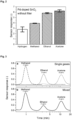
- Fig. 2 shows the responses of a Pd-doped SnO 2 sensor without filter to 1 ppm of hydrogen, methanol, ethanol and acetone.
- the sensor is operated at 370 °C in a continuous flow of 25 ml/min synthetic air at 50% relative humidity. It can be taken from the results that each of hydrogen, methanol, ethanol and acetone can be detected by the used sensor, however, only in single gas mixtures, i.e. without interference. Thus, the sensor without filter is not able to distinguish, for instance, methanol from ethanol.
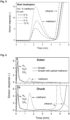
- Fig. 3a the response is shown of a Pd-doped SnO 2 sensor with filter (100 mg porous poly(2,6-diphenylphenylene)oxide (Tenax TA) as porous polymer sorption filter, length is about 3 cm, cross section is 13 mm 2 , surface is 35 m 2 /g, operated at room temperature) to 10 s pulses of methanol (dash/dotted line), ethanol (dashed line) and acetone (dotted line) in a continuous flow of 50 ml/min synthetic air at 50% relative humidity.
- filter 100 mg porous poly(2,6-diphenylphenylene)oxide (Tenax TA) as porous polymer sorption filter, length is about 3 cm, cross section is 13 mm 2 , surface is 35 m 2 /g, operated at room temperature
- Fig. 4a shows the responses of a Pd-doped SnO 2 sensor with filter (300 mg porous poly(2,6-diphenylphenylene)oxide (Tenax TA) as porous polymer sorption filter) when sampling methanol concentrations in the range 5-1000 ppm.
- Sensor response curves to low concentrations of methanol of 5 solid line
- 15 dashed line
- 50 ppm dotted line
- Air was sampled continuously at 100 ml/min through the filter to the sensor by a pump. Samples were drawn for 10 s from Tedlar bags where the desired concentration of methanol was admixed with synthetic air at 50% relative humidity.
- Fig. 5 the response of a Pd-doped SnO 2 sensor is represented with filter (150 mg porous poly(2,6-diphenylphenylene)oxide (Tenax TA) as porous polymer sorption filter) when sampling for 5 s in the headspace of a rum (40 vol.%) that was spiked with different amounts of methanol. Air was sampled continuously with 25 ml/min through the filter to the sensor with a pump. In all cases, the filter fully separates methanol from the high ethanol background and the sensor clearly distinguishes the samples containing toxic amount of methanol from the one without.
- filter 150 mg porous poly(2,6-diphenylphenylene)oxide (Tenax TA) as porous polymer sorption filter
- Fig. 6a and Fig. 6b show the response of a Pd-doped SnO 2 sensor with filter (300 mg porous poly(2,6-diphenylphenylene)oxide (Tenax TA) as porous polymer sorption filter) when sampling breath of a ( Fig. 6a ) sober and ( Fig. 6b ) drunken person from a Tedlar bag for 5 sec.
- breath is sampled twice once analyzed as is (solid lines) and once after adding toxic concentrations of methanol (dotted lines).
- Air was sampled continuously with 50 ml/min through the filter to the sensor with a pump.
- the sensor completely separates methanol from hydrogen, methane, water and ethanol in the breath and clearly detects the toxic methanol concentration in the spiked samples.
Landscapes
- Health & Medical Sciences (AREA)
- Life Sciences & Earth Sciences (AREA)
- Engineering & Computer Science (AREA)
- Chemical & Material Sciences (AREA)
- Physics & Mathematics (AREA)
- Pathology (AREA)
- General Health & Medical Sciences (AREA)
- Molecular Biology (AREA)
- Biomedical Technology (AREA)
- Analytical Chemistry (AREA)
- Biochemistry (AREA)
- Medicinal Chemistry (AREA)
- General Physics & Mathematics (AREA)
- Immunology (AREA)
- Food Science & Technology (AREA)
- Biophysics (AREA)
- Combustion & Propulsion (AREA)
- Urology & Nephrology (AREA)
- Hematology (AREA)
- Physiology (AREA)
- Pulmonology (AREA)
- Heart & Thoracic Surgery (AREA)
- Medical Informatics (AREA)
- Surgery (AREA)
- Animal Behavior & Ethology (AREA)
- Public Health (AREA)
- Veterinary Medicine (AREA)
- Investigating Or Analyzing Materials By The Use Of Fluid Adsorption Or Reactions (AREA)
- Investigating Or Analysing Biological Materials (AREA)
Description
- The invention relates to a device according to
claim 1 and a method for detecting methanol and/or ethanol in a gas mixture or in a liquid being at least partially transformed into a gaseous state and the use of the device in this method. - Methanol poisoning from laced liquor leads to blindness, organ failure or death when recognized and treated too late.
- Alcohol sensors in general and specifically for breath are available as handheld devices, but they cannot differentiate ethanol from methanol and thus fail to diagnose methanol intoxication.
- Therefore, there is the need for a compact detector for quick diagnosis of methanol intoxication or to identify laced beverages, mainly because sensors fail to distinguish methanol from the high ethanol background.
- A device of the art is know from LONERGAN M C ET AL: "ARRAY-BASED VAPOR SENSING USING CHEMICALLY SENSITIVE, CARBON BLACK-POLYMER RESISTORS", CHEMISTRY OF MATERIALS, AMERCIAN CHEMICAL SOCIETY, vol. 8, 1 January 1996 (1996-01-01), pages 2298-2312, XP000979333, ISSN: 0897-4756.
- From
WO 2018/083130 A1 an analyzer is known for the detection of a target compound in a complex gas mixture in the gas phase, comprising a detector for detecting the target compound and a molecular sieve membrane for separating the target compound. The molecular sieve membrane for separating can be a zeolite, a zeolite imidazolate framework, a metal organic framework, a carbon molecular sieve or a zeolitic MFI layer on alumina. The analyzer is based on a physical size cut off, but sorption effects are not disclosed. - Furthermore, hydrogen and methane in the breathing air are associated with intestinal disorders, for example lactose intolerance. The gold standard used in hospital for diagnosis of intestinal disorders is a device based on a mini-GC coupled with a solidstate gas sensor capable to selectively detect CH4 and H2 (Quintron, Breath Tracker Analyzer, 18/12/04, www.breathtests.com/instrumentation). This device is expensive, not handheld and has only a low accuracy (5% or 3 ppm).
- In addition it is pointed to
EP3 346 267 A1 and the following non-patent literature; Van Den Broek Jan et al.: "Highly Selective and Rapid Breath Isoprene Sensing Enabled by Activated Alumina Filter", ACS Sensors, vol. 3, no. 3, 14 February 2018 (2018-02-14), pages 677-683. XP093046726, US ISSN: 2379-3694. - Therefore, the technical problem underlying the present invention is to provide a device and a method for selectively and reliably detecting methanol and/or ethanol in a gas mixture or in a liquid being at least partially transformed into a gaseous state, wherein the device can be miniaturized to be compact so that it can be held in one hand of a human being.
- This is achieved by the device of
claim 1, the method of claim 14 and the use of claim 18. Preferred embodiments are defined in the dependent claims. - The device according to the present invention for detecting methanol and/or ethanol in a gas mixture or in a liquid being at least partially transformed into a gaseous state, comprises
- (a) a polymer sorption filter configured to separate methanol from ethanol; and
- (b) means configured to detect at least one of methanol, ethanol, characterized in that the device has an inlet and an outlet to allow an active flow through the polymer sorption filter, and the polymer sorption filter is configured as a packed bed of particles and is adapted to retain ethanol longer than methanol.
- The polymer sorption filter can be an adsorption filter and/or an absorption filter.
- A gas mixture in the sense of the present invention refers to a gaseous mixture containing methanol and/or ethanol together with at least one further gaseous compound. Examples are breathing air; the headspace of a liquid or solid containing the analyte; and a liquid or solid that is at least partially transformed into a gaseous state, for instance by the means of heating.
- With the device according to the present invention, methanol in the gas phase can be separated from ethanol by the polymer sorption filter which ad- and/or absorbs ethanol stronger than methanol. The separated methanol is then detected separately without interference by the above means for detecting. If required, this can be an array of different means.
- The device according to the present invention is a portable, inexpensive, fast, selective and reliable detector for an analyte, like methanol in human breath air and beverages. It can be held and carried in one hand of a user/human being. The analytes, in particular methanol, can be detected within about 2.5 minutes down to about 100 ppb independent of the interfering ethanol concentration. The device can therefore be suitably used for fast screening of methanol poisoning by first-responder or in the hospital and help to prevent outbreaks by direct testing of beverages. The device can be used for the diagnosis of methanol intoxication and monitoring of its treatment from breath and for detection of methanol-laced alcohol by testing their headspace (the gas immediately above the liquid) or transforming the liquid at least partially into a gaseous state.
- In one embodiment, the device according to the present invention is configured so that it can be held in one hand of a user/human being. This can be achieved by selecting the means for separating and the means for detecting in such a way that the whole device can be held by one hand. For example the length of the device is about 20 cm or less, for example about 15 cm or less or about 10 cm or less. Furthermore, the width of the device can be about 8 cm or less, for example about 7 cm or less or about 5 cm or less. With these dimensions, a particular useful device to be held in one hand can be obtained.
- In the device according to the present invention, a means for separating is used. Separation can take place by sorption on a polymer sorption filter with a sorption capacity and/or sorption strength to sorb the present methanol and ethanol. The difference in the sorption capacity and/or sorption strength is such that methanol and ethanol can be separated from each other.
- In one embodiment, the polymer sorption filter is selected from the group consisting of nanoparticles (having a size of 1 nm to 100 nm), microparticles (having a size larger than 100 nm).
- To sufficiently sorb ethanol even at very high concentration at small filter size, the polymer sorbent should have a high specific surface area. This can be achieved by small nanoparticles.
- The sorbent also should show a sufficient difference in the sorption capacity and/or sorption strength for methanol and ethanol to separate them. Sorption happens due to electrostatic interaction, hydrogen bonding and/or van der Waals forces. As methanol and ethanol have the same alcohol functional group and only differ by the length of their carbon chain, they both do not show any electrostatic interactions with the sorbent and also hydrogen bonding strength is very similar. Methanol, however, shows generally lower van der Waals sorption forces in comparison to ethanol independent of the specific sorbent based on the lower molecular weight.
- In one embodiment, the polymer sorption filter comprises a polymer, selected from the group consisting of polymers with phenyl groups for example polystyrenes, like polystyrene, polyvinylbenzene, and polyethylvinylbenzene; polyethers, like polyphenylethers, for example poly(2,6-diphenylphenylene)oxide; acrylates, like methacrylates; polyamines, like polyethyleneimines; polynitryles, like polyacrylonitriles; poly(vinylpyridine); polyvinylpyrrolidone, and polysiloxanes.
- By using polyphenylether, for example poly(2,6-diphenylphenylene)oxide, a particular good separation of methanol and ethanol is achieved. Poly(2,6-diphenylphenylene)oxide is commercially available as Tenax TA. From this compound it is known that volatile compounds like ethanol, acetone and 2-propanol are not sufficiently retained (see www.dguv.de/ifa/forschung/projektverzeichnis/bgia 2066.jsp). In the light of this finding, it was surprising that polymer sorption filters can be used to separate methanol from ethanol in that ethanol is retained sufficiently longer than methanol.
- Homo- and/or copolymers of the above polymers can be used.
- According to the invention, the polymer sorption filter is configured as a packed bed of particles; configured to detect at least one of methanol and ethanol. The filter is arranged in an open-end configuration, i.e. the gas enters through an inlet (that might comprise the filter) and exits by an outlet, therefore allowing an active flow through the filter. With these configurations it is possible to obtain a good separation of methanol and ethanol. Furthermore, these configurations are very suitable for miniaturizing the device so that a very compact device can be obtained which can be easily held in the hand of a user/human being.
- In a further embodiment, the polymer sorption filter can meet at least one of the following parameters independently:
- Weight of filter material: It can be smaller than about 10 g, in particular smaller than about 5 g, in particular smaller than about 1 g, for example smaller than about 500 mg, for instance 100 mg to 300 mg, like about 250 mg.
- Filter surface: The specific surface area of the filter can be larger than about 5 m2/g, for example larger than about 10 m2/g, like larger than about 20 m2/g, for example about 35 m2/g. The surface is measured by BET nitrogen adsorption.
- Temperature: The filter can be operated at a temperature below about 200 °C, for example below about 100 °C, below about 80 °C, below about 50 °C, for example at about room temperature. The device according to the present invention can be configured by respective cooling means and/or heating means to provide the temperature, as far as necessary. The operating temperature of the means configured to detect the analyte can be different from the above operating temperature of the filler depending on the kind of detector used.
- Cross-sectional area: The filter housing can have a cross-sectional area smaller than about 350 mm2, for example smaller than about 100 mm2, smaller than about 20 mm2, for example about 12 mm2. The lower value of the cross-sectional area is chosen so that the gas/liquid can sufficiently pass through the filter.
- Filter length: The filter can have a length smaller than about 20 cm, smaller than about 10 cm, smaller than about 5 cm, for example about 3 cm.
- It has been advantageously found that with the above parameters it is possible to provide a particular useful miniaturization of the device so that a very compact device can be obtained, which can be easily held in one hand of a human being.
- The sensors (i.e. means configured to detect the particular analyte) that can be generally used as means for detection are sensors which can fit into a handheld device and detect the target analyte in the relevant concentrations, for example sensors of resistive type like chemo-resistive metal oxides, ion conductors, polymers, carbon nanotubes, or graphene; of amperometric type like electrochemical sensors; of capacitive type; of potentiometric type; of optical type; of thermal type; of thermochemical type; of thermophysical type; of gravimetric type; of biochemical type or any combination thereof.
- In another embodiment, the means configured to detect at least one of methanol, ethanol, hydrogen and methane is a metal oxide gas sensor, for example selected from the group consisting of
- SnO2, in particular doped SnO2 (e.g. 1 mol% Pd-, 6 mol% Si-, 0.15 mol% Pt- or 4.6 mol% Ti-doped);
- WO3, in particular doped WO3 (e.g. 10 mol% Si-, or 10 at% Cr-doped);
- ZnO, in particular doped ZnO (e.g. 2.5 mol% Ti-doped);
- MoO3, in particular doped MoO3 (e.g. 3 wt.% Si-doped);
- In2O3, in particular doped In2O3; and
- TiO2, in particular doped TiO2.
- Metal-oxide sensors offer a simple application, high miniaturization potential, low power consumption and minimal production costs. The mechanism relies on changes of electrical conductivity by the change in the surrounding atmosphere. Gas detection is related to the reactions between ionosorbed surface oxygen and target analyte gas (receptor function). The equilibrium state of the surface oxygen reaction is shifted by the target analyte (receptor function) changing the sensing material's resistance (transducer function).
- Further provided is a method for detecting methanol and/or ethanol as an analyte in a gas mixture or a liquid being at least partially transformed into a gaseous state, wherein the gas mixture or the gaseous state of the liquid is analyzed by the device according to the present invention as described above in detail in order to detect the analyte. The detailed process steps as far as not explicitly indicated can be taken from the configuration of the device.
- In one embodiment, the gas mixture to be analyzed comprises breathing air; the headspace of a liquid or solid; or of an at least partially evaporated liquid or solid. The analyte to be analyzed can be methanol and/or ethanol and mixtures thereof, for example a mixture containing methanol and ethanol, wherein the analyte is present in the gas mixture, the liquid or solid.
- The method according to the present invention can be carried out in 30 minutes or less, in particular 15 min or less, in particular 10 min or less, in particular 5 min or less, for example 2.5 minutes or less. Furthermore, the method can detect the analyte in amounts down 10 ppm, in particular down to 5 ppm, in particular down to 1 ppm, for example down to 100 ppb.
- Furthermore, the present invention relates to the use of the above device according to the present invention for detecting at least one of methanol and ethanol, in breathing air; in the headspace of a liquid or solid; or in at least partially evaporated liquids or solids. In case of the detection of methanol, the use according to the present invention envisages the diagnosis of methanol intoxication, the detection of the content of methanol in a beverage or gas as well as the monitoring of the therapy of the methanol intoxication.
- The device may be equipped for medical and biological fluid analysis, in particular breath analysis, analysis of skin emissions, headspace analysis of fluids. The device may be a breath detector, skin analyser, headspace analyser for fluids. Furthermore, the device may be equipped for food processing control, food quality assessment monitoring of agricultural processes and products, monitoring and control of chemical processes, indoor air analysis, environmental analysis, detection of explosives and other hazardous compounds, exhaust emission monitoring and control and/or air quality analysis. The device may be a food processing analyser, food quality analyser and/or an air quality analyser. Accordingly, the detection of a target compound originating from a medical or biological fluid for example in breath, from skin emissions, during food processing, in food or air is enabled. In the headspace analysis and respectively other analyses of fluids only the gas phase above the fluid is analysed, accordingly it might be called a (headspace) analysis of fluids in the gas phase.
- The present invention is further described by the following figures and examples. It is to be noted that the figures and the examples are only intended for illustrating the invention but not to restrict the invention thereto.
- Figure 1a,b
- shows the device according to the present invention.
- Figure 2
- shows the response of a Pd-doped SnO2 sensor to various analytes.
- Figure 3a,b
- shows the response of a Pd-doped SnO2 sensor with a polymer sorption filter to various analytes.
- Figure 4a,b
- shows the relationship of the sensor response at different methanol concentrations.
- Figure 5
- shows the response of a Pd-doped SnO2 sensor with a polymer sorption filter when sampling the headspace of rum with different amounts of methanol.
- Figure 6a,b
- shows the response a Pd-doped SnO2 sensor with a polymer sorption filter when sampling breath of a sober (
Fig. 6a ) and a drunken person (Fig. 6b ). - In
Fig. 1a , thedevice 1 according to the present invention is schematically shown for the example of an open-end configuration. The device contains apolymer sorption filter 2 which is connected byconnection 3 with the means configured to detect 4. Thepolymer sorption filter 2 is connected with aninlet 7 for guiding the gas mixture into thepolymer sorption filter 2. An example for theinlet 7 can be a mouth pipe for analyzing the breathing air. Furthermore, the means configured to detect 4 is connected byconnection 5 with a pump 6 (optional) for pumping the gas mixture through the device if necessary. The detection of methanol poisoning in breathing air and spirits is carried out with thedevice 1 as follows. Breath or the headspace of a beverage is sampled by thepump 6 through thepolymer sorption filter 2 to the means configured to detect 4. Thepolymer sorption filter 2 retains ethanol more strongly than methanol which is detected by the means for detecting 4 without interference within about 2 minutes. - In
Fig. 1b , the device ofFig. 1 is shown in relation to thehand 8 of a human being. This figure shows that the device according to the present invention can be miniaturized in such a small and compact way so that it can be held in one hand of a human being. -
Fig. 2 shows the responses of a Pd-doped SnO2 sensor without filter to 1 ppm of hydrogen, methanol, ethanol and acetone. The sensor is operated at 370 °C in a continuous flow of 25 ml/min synthetic air at 50% relative humidity. It can be taken from the results that each of hydrogen, methanol, ethanol and acetone can be detected by the used sensor, however, only in single gas mixtures, i.e. without interference. Thus, the sensor without filter is not able to distinguish, for instance, methanol from ethanol. - In Fig. 3a the response is shown of a Pd-doped SnO2 sensor with filter (100 mg porous poly(2,6-diphenylphenylene)oxide (Tenax TA) as porous polymer sorption filter, length is about 3 cm, cross section is 13 mm2, surface is 35 m2/g, operated at room temperature) to 10 s pulses of methanol (dash/dotted line), ethanol (dashed line) and acetone (dotted line) in a continuous flow of 50 ml/min synthetic air at 50% relative humidity. When exposing the sensor to a mixture of the same analytes, it detects each individually as they are completely separated by the filter as can be taken from Fig. 3b.
-
Fig. 4a shows the responses of a Pd-doped SnO2 sensor with filter (300 mg porous poly(2,6-diphenylphenylene)oxide (Tenax TA) as porous polymer sorption filter) when sampling methanol concentrations in the range 5-1000 ppm. Sensor response curves to low concentrations of methanol of 5 (solid line), 15 (dashed line) and 50 ppm (dotted line) is shown inFig. 4b . Even these low but breath-relevant concentrations can be detected and are clearly distinguishable. Air was sampled continuously at 100 ml/min through the filter to the sensor by a pump. Samples were drawn for 10 s from Tedlar bags where the desired concentration of methanol was admixed with synthetic air at 50% relative humidity. - In
Fig. 5 the response of a Pd-doped SnO2 sensor is represented with filter (150 mg porous poly(2,6-diphenylphenylene)oxide (Tenax TA) as porous polymer sorption filter) when sampling for 5 s in the headspace of a rum (40 vol.%) that was spiked with different amounts of methanol. Air was sampled continuously with 25 ml/min through the filter to the sensor with a pump. In all cases, the filter fully separates methanol from the high ethanol background and the sensor clearly distinguishes the samples containing toxic amount of methanol from the one without. -
Fig. 6a and Fig. 6b show the response of a Pd-doped SnO2 sensor with filter (300 mg porous poly(2,6-diphenylphenylene)oxide (Tenax TA) as porous polymer sorption filter) when sampling breath of a (Fig. 6a ) sober and (Fig. 6b ) drunken person from a Tedlar bag for 5 sec. In both cases breath is sampled twice once analyzed as is (solid lines) and once after adding toxic concentrations of methanol (dotted lines). Air was sampled continuously with 50 ml/min through the filter to the sensor with a pump. The sensor completely separates methanol from hydrogen, methane, water and ethanol in the breath and clearly detects the toxic methanol concentration in the spiked samples.
Claims (18)
- Device (1) for detecting methanol and/or ethanol as an analyte in a gas mixture or in a liquid being at least partially transformed into a gaseous state, comprising:(a) a polymer sorption filter (2) configured to separate methanol from ethanol; and(b) means configured to detect (4) at least one of methanol and ethanol, characterized in thatthe device (1) has an inlet and an outlet to allow an active flow through the polymer sorption filter (2), andthe polymer sorption filter (2) is configured as a packed bed of particles and is adapted to retain ethanol longer than methanol.
- The device (1) according to claim 1 wherein the gas mixture comprises breath; the headspace of a liquid and/or solid; or a liquid or solid that is at least partially transformed into a gaseous state.
- The device (1) according to any of the preceding claims wherein it can be held in one hand of a user.
- The device (1) according to any of the preceding claims, wherein it has a length of about 20 cm or less and a width of about 8 cm or less.
- The device (1) according to any of the preceding claims, wherein the polymer sorption filter (2) comprises nanoparticles and/or microparticles.
- The device (1) according to any of the preceding claims, wherein the polymer sorption filter (2) comprises a polymer, selected from the group consisting of polymers with phenyl groups, polyethers, acrylates, polyamines, polynitryles, poly(vinylpyridine), polyvinylpyrrolidone and polysiloxanes.
- The device (1) according to claim 6, wherein the polymer with phenylgroups is a polyphenylether, for example poly(2,6-diphenylphenylene)oxide.
- The device (1) according to any of the preceding claims, wherein the polymer sorption filter (2) is present in an amount of 10 g or less.
- The device (1) according to any of the preceding claims, wherein the polymer sorption filter (2) has a specific surface area measured by BET nitrogen adsorption of 5 m2/g or more.
- The device (1) according to any of the preceding claims, wherein a housing containing the polymer sorption filter (2) has a cross-sectional area of 350 mm2 or less.
- The device (1) according to any of the preceding claims, wherein the polymer sorption filter (2) has a length of about 20 cm or less.
- The device (1) according to any of the preceding claims, wherein the polymer sorption filter (2) is configured to be operated at a temperature of 200 °C or less.
- The device (1) according to any of the preceding claims, wherein the metal oxide gas sensor is selected from the group consisting of• SnO2, in particular doped SnO2 (e.g. 1 mol% Pd-, 6 mol% Si-, 0.15mol% Pt- or 4.6 mol% Ti-doped);• WO3, in particular doped WO3 (e.g. 10 mol% Si-, or 10 at% Cr-doped);• ZnO, in particular doped ZnO (e.g. 2.5 mol% Ti-doped);• MoO3, in particular doped MoO3 (e.g. 3 wt% Si-doped);• In2O3, in particular doped In2O3; and• TiO2, in particular doped TiO2.
- Method for detecting methanol and/or ethanol as an analyte in a gas mixture or in a liquid being at least partially transformed into a gaseous state, wherein the gas mixture or the gaseous state of the liquid is analyzed by the device (1) according to any of claims 1 to 13.
- The method according to claim 14, wherein the gas mixture comprises breathing air; the headspace of a liquid or solid; or a gaseous state of a liquid or solid that is at least partially transformed into a gaseous state.
- Method according to claim 14 or 15, wherein it is carried out in 30 minutes or less.
- The method according to any of claims 14 to 16, wherein the polymer sorption filter (2) is operated at a temperature of 200 °C or less.
- Use of the device (1) according to any of claims 1 to 13 for detecting at least one of methanol and ethanol in breathing air, in a liquid or solid that is at least partially transformed into a gaseous state and/or in the headspace of a liquid.
Applications Claiming Priority (2)
| Application Number | Priority Date | Filing Date | Title |
|---|---|---|---|
| DE102019100587 | 2019-01-11 | ||
| PCT/EP2019/086797 WO2020144059A1 (en) | 2019-01-11 | 2019-12-20 | Device and method for detecting an analyte |
Publications (3)
| Publication Number | Publication Date |
|---|---|
| EP3908836A1 EP3908836A1 (en) | 2021-11-17 |
| EP3908836C0 EP3908836C0 (en) | 2024-03-13 |
| EP3908836B1 true EP3908836B1 (en) | 2024-03-13 |
Family
ID=69143573
Family Applications (1)
| Application Number | Title | Priority Date | Filing Date |
|---|---|---|---|
| EP19832687.8A Active EP3908836B1 (en) | 2019-01-11 | 2019-12-20 | Device and method for detecting methanol and/or ethanol |
Country Status (3)
| Country | Link |
|---|---|
| US (1) | US12196727B2 (en) |
| EP (1) | EP3908836B1 (en) |
| WO (1) | WO2020144059A1 (en) |
Families Citing this family (1)
| Publication number | Priority date | Publication date | Assignee | Title |
|---|---|---|---|---|
| DE102023133184A1 (en) | 2023-11-28 | 2025-05-28 | Alivion AG | Method for determining the concentration of at least one target analyte in a liquid by means of a measurement signal in a gaseous sample composition and use of an adaptation function and gas detection device for carrying out the method |
Family Cites Families (12)
| Publication number | Priority date | Publication date | Assignee | Title |
|---|---|---|---|---|
| GB8521646D0 (en) * | 1985-08-30 | 1985-10-02 | English Clays Lovering Pochin | Inorganic fillers |
| EP0485410A1 (en) | 1989-07-06 | 1992-05-20 | The Secretary Of State For Defence In Her Britannic Majesty's Government Of The United Kingdom Of Great Britain And Northern | A detector for monitoring low molecular weight compounds |
| JP2702279B2 (en) * | 1990-11-30 | 1998-01-21 | 新コスモス電機株式会社 | Gas detection element |
| DE10125837B4 (en) | 2001-05-25 | 2005-02-24 | Wma Airsense Analysentechnik Gmbh | Gas detector for detecting gaseous compounds |
| US7098253B2 (en) * | 2004-05-20 | 2006-08-29 | 3M Innovative Properties Company | Macroporous ion exchange resins |
| JP2008180529A (en) * | 2007-01-23 | 2008-08-07 | Furukawa Electric Co Ltd:The | Gas sensor |
| GB2476123A (en) * | 2009-12-14 | 2011-06-15 | Graviner Ltd Kidde | MOS gas sensor apparatus and method of use |
| US9643186B1 (en) * | 2010-03-19 | 2017-05-09 | Invoy Technologies, Llc | Breath analysis system, device and method employing nanoparticle-based sensor |
| KR20150005361A (en) | 2013-07-05 | 2015-01-14 | 한국전자통신연구원 | Apparatus and method for analyzing breath gas |
| AU2017300528C1 (en) | 2016-07-19 | 2022-10-20 | Biometry Inc. | Methods of and systems for measuring analytes using batch calibratable test strips |
| US20200057039A1 (en) | 2016-11-01 | 2020-02-20 | Eth Zurich | Device and method for detecting gas |
| EP3346267B1 (en) * | 2017-01-10 | 2021-09-01 | Sensirion AG | Sensor device for detecting a permanent gas |
-
2019
- 2019-12-20 EP EP19832687.8A patent/EP3908836B1/en active Active
- 2019-12-20 US US17/421,568 patent/US12196727B2/en active Active
- 2019-12-20 WO PCT/EP2019/086797 patent/WO2020144059A1/en not_active Ceased
Non-Patent Citations (1)
| Title |
|---|
| VAN DEN BROEK JAN ET AL: "Highly Selective and Rapid Breath Isoprene Sensing Enabled by Activated Alumina Filter", ACS SENSORS, vol. 3, no. 3, 14 February 2018 (2018-02-14), US, pages 677 - 683, XP093046726, ISSN: 2379-3694, DOI: 10.1021/acssensors.7b00976 * |
Also Published As
| Publication number | Publication date |
|---|---|
| WO2020144059A1 (en) | 2020-07-16 |
| US12196727B2 (en) | 2025-01-14 |
| EP3908836A1 (en) | 2021-11-17 |
| EP3908836C0 (en) | 2024-03-13 |
| US20220082541A1 (en) | 2022-03-17 |
Similar Documents
| Publication | Publication Date | Title |
|---|---|---|
| van den Broek et al. | Highly selective detection of methanol over ethanol by a handheld gas sensor | |
| CA2947079C (en) | Apparatus for volatile organic compound (voc) detection | |
| EP2634556B1 (en) | Sampling apparatus | |
| CN102109487B (en) | Ultra-low concentration gas sensor | |
| WO2010025600A1 (en) | Gas sensor with high sensitivity and high selectivity | |
| Guntner et al. | Catalytic filter for continuous and selective ethanol removal prior to gas sensing | |
| US11566977B2 (en) | Molecular detection apparatus | |
| WO2010110051A1 (en) | Chemical substance detection apparatus | |
| Paknahad et al. | Diffusion-based humidity control membrane for microfluidic-based gas detectors | |
| CN1910453A (en) | Gas chromatograph | |
| Cho et al. | Two-step preconcentration for analysis of exhaled gas of human breath with electronic nose | |
| EP1466167A2 (en) | Method and detector for detecting gases | |
| Sugita et al. | Sample introduction method in gas chromatography | |
| Paknahad et al. | Highly selective multi-target 3D-printed microfluidic-based breath analyzer | |
| US20200057039A1 (en) | Device and method for detecting gas | |
| US12196727B2 (en) | Device and method for detecting an analyte | |
| Ghawanmeh et al. | The recent progress on nanomaterial-based chemosensors for diagnosis of human exhaled breath: a review | |
| US12292435B2 (en) | Apparatus for diagnosing lung cancer based on exhaled breath and method for diagnosing same | |
| JP2005189146A (en) | Volatile sulfide sensor and detection method | |
| KR20150005361A (en) | Apparatus and method for analyzing breath gas | |
| WO2001040793A1 (en) | Simple instrument for measuring gases | |
| Harper | Novel sorbents for sampling organic vapours | |
| JP7155185B2 (en) | MOLECULAR DETECTION DEVICE AND MOLECULAR DETECTION METHOD | |
| Kida et al. | Application of a solid electrolyte CO2 sensor for the analysis of standard volatile organic compound gases | |
| Park et al. | Determination of solvents permeating through chemical protective clothing with a microsensor array |
Legal Events
| Date | Code | Title | Description |
|---|---|---|---|
| STAA | Information on the status of an ep patent application or granted ep patent |
Free format text: STATUS: UNKNOWN |
|
| STAA | Information on the status of an ep patent application or granted ep patent |
Free format text: STATUS: THE INTERNATIONAL PUBLICATION HAS BEEN MADE |
|
| PUAI | Public reference made under article 153(3) epc to a published international application that has entered the european phase |
Free format text: ORIGINAL CODE: 0009012 |
|
| STAA | Information on the status of an ep patent application or granted ep patent |
Free format text: STATUS: REQUEST FOR EXAMINATION WAS MADE |
|
| 17P | Request for examination filed |
Effective date: 20210701 |
|
| AK | Designated contracting states |
Kind code of ref document: A1 Designated state(s): AL AT BE BG CH CY CZ DE DK EE ES FI FR GB GR HR HU IE IS IT LI LT LU LV MC MK MT NL NO PL PT RO RS SE SI SK SM TR |
|
| DAV | Request for validation of the european patent (deleted) | ||
| DAX | Request for extension of the european patent (deleted) | ||
| STAA | Information on the status of an ep patent application or granted ep patent |
Free format text: STATUS: EXAMINATION IS IN PROGRESS |
|
| 17Q | First examination report despatched |
Effective date: 20230531 |
|
| GRAP | Despatch of communication of intention to grant a patent |
Free format text: ORIGINAL CODE: EPIDOSNIGR1 |
|
| STAA | Information on the status of an ep patent application or granted ep patent |
Free format text: STATUS: GRANT OF PATENT IS INTENDED |
|
| INTG | Intention to grant announced |
Effective date: 20231006 |
|
| GRAS | Grant fee paid |
Free format text: ORIGINAL CODE: EPIDOSNIGR3 |
|
| GRAA | (expected) grant |
Free format text: ORIGINAL CODE: 0009210 |
|
| STAA | Information on the status of an ep patent application or granted ep patent |
Free format text: STATUS: THE PATENT HAS BEEN GRANTED |
|
| AK | Designated contracting states |
Kind code of ref document: B1 Designated state(s): AL AT BE BG CH CY CZ DE DK EE ES FI FR GB GR HR HU IE IS IT LI LT LU LV MC MK MT NL NO PL PT RO RS SE SI SK SM TR |
|
| REG | Reference to a national code |
Ref country code: GB Ref legal event code: FG4D |
|
| REG | Reference to a national code |
Ref country code: CH Ref legal event code: EP |
|
| REG | Reference to a national code |
Ref country code: DE Ref legal event code: R096 Ref document number: 602019048340 Country of ref document: DE |
|
| REG | Reference to a national code |
Ref country code: IE Ref legal event code: FG4D |
|
| U01 | Request for unitary effect filed |
Effective date: 20240411 |
|
| U07 | Unitary effect registered |
Designated state(s): AT BE BG DE DK EE FI FR IT LT LU LV MT NL PT SE SI Effective date: 20240418 |
|
| PG25 | Lapsed in a contracting state [announced via postgrant information from national office to epo] |
Ref country code: GR Free format text: LAPSE BECAUSE OF FAILURE TO SUBMIT A TRANSLATION OF THE DESCRIPTION OR TO PAY THE FEE WITHIN THE PRESCRIBED TIME-LIMIT Effective date: 20240614 |
|
| PG25 | Lapsed in a contracting state [announced via postgrant information from national office to epo] |
Ref country code: HR Free format text: LAPSE BECAUSE OF FAILURE TO SUBMIT A TRANSLATION OF THE DESCRIPTION OR TO PAY THE FEE WITHIN THE PRESCRIBED TIME-LIMIT Effective date: 20240313 Ref country code: RS Free format text: LAPSE BECAUSE OF FAILURE TO SUBMIT A TRANSLATION OF THE DESCRIPTION OR TO PAY THE FEE WITHIN THE PRESCRIBED TIME-LIMIT Effective date: 20240613 |
|
| PG25 | Lapsed in a contracting state [announced via postgrant information from national office to epo] |
Ref country code: ES Free format text: LAPSE BECAUSE OF FAILURE TO SUBMIT A TRANSLATION OF THE DESCRIPTION OR TO PAY THE FEE WITHIN THE PRESCRIBED TIME-LIMIT Effective date: 20240313 |
|
| PG25 | Lapsed in a contracting state [announced via postgrant information from national office to epo] |
Ref country code: RS Free format text: LAPSE BECAUSE OF FAILURE TO SUBMIT A TRANSLATION OF THE DESCRIPTION OR TO PAY THE FEE WITHIN THE PRESCRIBED TIME-LIMIT Effective date: 20240613 Ref country code: NO Free format text: LAPSE BECAUSE OF FAILURE TO SUBMIT A TRANSLATION OF THE DESCRIPTION OR TO PAY THE FEE WITHIN THE PRESCRIBED TIME-LIMIT Effective date: 20240613 Ref country code: HR Free format text: LAPSE BECAUSE OF FAILURE TO SUBMIT A TRANSLATION OF THE DESCRIPTION OR TO PAY THE FEE WITHIN THE PRESCRIBED TIME-LIMIT Effective date: 20240313 Ref country code: GR Free format text: LAPSE BECAUSE OF FAILURE TO SUBMIT A TRANSLATION OF THE DESCRIPTION OR TO PAY THE FEE WITHIN THE PRESCRIBED TIME-LIMIT Effective date: 20240614 Ref country code: ES Free format text: LAPSE BECAUSE OF FAILURE TO SUBMIT A TRANSLATION OF THE DESCRIPTION OR TO PAY THE FEE WITHIN THE PRESCRIBED TIME-LIMIT Effective date: 20240313 |
|
| PG25 | Lapsed in a contracting state [announced via postgrant information from national office to epo] |
Ref country code: IS Free format text: LAPSE BECAUSE OF FAILURE TO SUBMIT A TRANSLATION OF THE DESCRIPTION OR TO PAY THE FEE WITHIN THE PRESCRIBED TIME-LIMIT Effective date: 20240713 |
|
| PG25 | Lapsed in a contracting state [announced via postgrant information from national office to epo] |
Ref country code: SM Free format text: LAPSE BECAUSE OF FAILURE TO SUBMIT A TRANSLATION OF THE DESCRIPTION OR TO PAY THE FEE WITHIN THE PRESCRIBED TIME-LIMIT Effective date: 20240313 |
|
| PG25 | Lapsed in a contracting state [announced via postgrant information from national office to epo] |
Ref country code: CZ Free format text: LAPSE BECAUSE OF FAILURE TO SUBMIT A TRANSLATION OF THE DESCRIPTION OR TO PAY THE FEE WITHIN THE PRESCRIBED TIME-LIMIT Effective date: 20240313 |
|
| PG25 | Lapsed in a contracting state [announced via postgrant information from national office to epo] |
Ref country code: PL Free format text: LAPSE BECAUSE OF FAILURE TO SUBMIT A TRANSLATION OF THE DESCRIPTION OR TO PAY THE FEE WITHIN THE PRESCRIBED TIME-LIMIT Effective date: 20240313 |
|
| PG25 | Lapsed in a contracting state [announced via postgrant information from national office to epo] |
Ref country code: SK Free format text: LAPSE BECAUSE OF FAILURE TO SUBMIT A TRANSLATION OF THE DESCRIPTION OR TO PAY THE FEE WITHIN THE PRESCRIBED TIME-LIMIT Effective date: 20240313 |
|
| PG25 | Lapsed in a contracting state [announced via postgrant information from national office to epo] |
Ref country code: SM Free format text: LAPSE BECAUSE OF FAILURE TO SUBMIT A TRANSLATION OF THE DESCRIPTION OR TO PAY THE FEE WITHIN THE PRESCRIBED TIME-LIMIT Effective date: 20240313 Ref country code: SK Free format text: LAPSE BECAUSE OF FAILURE TO SUBMIT A TRANSLATION OF THE DESCRIPTION OR TO PAY THE FEE WITHIN THE PRESCRIBED TIME-LIMIT Effective date: 20240313 Ref country code: RO Free format text: LAPSE BECAUSE OF FAILURE TO SUBMIT A TRANSLATION OF THE DESCRIPTION OR TO PAY THE FEE WITHIN THE PRESCRIBED TIME-LIMIT Effective date: 20240313 Ref country code: PL Free format text: LAPSE BECAUSE OF FAILURE TO SUBMIT A TRANSLATION OF THE DESCRIPTION OR TO PAY THE FEE WITHIN THE PRESCRIBED TIME-LIMIT Effective date: 20240313 Ref country code: IS Free format text: LAPSE BECAUSE OF FAILURE TO SUBMIT A TRANSLATION OF THE DESCRIPTION OR TO PAY THE FEE WITHIN THE PRESCRIBED TIME-LIMIT Effective date: 20240713 Ref country code: CZ Free format text: LAPSE BECAUSE OF FAILURE TO SUBMIT A TRANSLATION OF THE DESCRIPTION OR TO PAY THE FEE WITHIN THE PRESCRIBED TIME-LIMIT Effective date: 20240313 |
|
| REG | Reference to a national code |
Ref country code: DE Ref legal event code: R097 Ref document number: 602019048340 Country of ref document: DE |
|
| U20 | Renewal fee for the european patent with unitary effect paid |
Year of fee payment: 6 Effective date: 20241125 |
|
| PLBE | No opposition filed within time limit |
Free format text: ORIGINAL CODE: 0009261 |
|
| STAA | Information on the status of an ep patent application or granted ep patent |
Free format text: STATUS: NO OPPOSITION FILED WITHIN TIME LIMIT |
|
| 26N | No opposition filed |
Effective date: 20241216 |
|
| PG25 | Lapsed in a contracting state [announced via postgrant information from national office to epo] |
Ref country code: MC Free format text: LAPSE BECAUSE OF FAILURE TO SUBMIT A TRANSLATION OF THE DESCRIPTION OR TO PAY THE FEE WITHIN THE PRESCRIBED TIME-LIMIT Effective date: 20240313 |
|
| PG25 | Lapsed in a contracting state [announced via postgrant information from national office to epo] |
Ref country code: IE Free format text: LAPSE BECAUSE OF NON-PAYMENT OF DUE FEES Effective date: 20241220 |
|
| U20 | Renewal fee for the european patent with unitary effect paid |
Year of fee payment: 7 Effective date: 20251127 |
|
| REG | Reference to a national code |
Ref country code: CH Ref legal event code: U11 Free format text: ST27 STATUS EVENT CODE: U-0-0-U10-U11 (AS PROVIDED BY THE NATIONAL OFFICE) Effective date: 20260101 |
|
| PGFP | Annual fee paid to national office [announced via postgrant information from national office to epo] |
Ref country code: GB Payment date: 20251218 Year of fee payment: 7 |
|
| PGFP | Annual fee paid to national office [announced via postgrant information from national office to epo] |
Ref country code: CH Payment date: 20260101 Year of fee payment: 7 |
|
| PG25 | Lapsed in a contracting state [announced via postgrant information from national office to epo] |
Ref country code: CY Free format text: LAPSE BECAUSE OF FAILURE TO SUBMIT A TRANSLATION OF THE DESCRIPTION OR TO PAY THE FEE WITHIN THE PRESCRIBED TIME-LIMIT Effective date: 20240313 |