EP3907790B1 - Sodium ion battery and apparatus containing sodium ion battery - Google Patents
Sodium ion battery and apparatus containing sodium ion battery Download PDFInfo
- Publication number
- EP3907790B1 EP3907790B1 EP20749681.1A EP20749681A EP3907790B1 EP 3907790 B1 EP3907790 B1 EP 3907790B1 EP 20749681 A EP20749681 A EP 20749681A EP 3907790 B1 EP3907790 B1 EP 3907790B1
- Authority
- EP
- European Patent Office
- Prior art keywords
- active material
- electrode active
- positive electrode
- negative electrode
- sodium
- Prior art date
- Legal status (The legal status is an assumption and is not a legal conclusion. Google has not performed a legal analysis and makes no representation as to the accuracy of the status listed.)
- Active
Links
Images

Classifications
-
- H—ELECTRICITY
- H01—ELECTRIC ELEMENTS
- H01M—PROCESSES OR MEANS, e.g. BATTERIES, FOR THE DIRECT CONVERSION OF CHEMICAL ENERGY INTO ELECTRICAL ENERGY
- H01M4/00—Electrodes
- H01M4/02—Electrodes composed of, or comprising, active material
- H01M4/36—Selection of substances as active materials, active masses, active liquids
-
- H—ELECTRICITY
- H01—ELECTRIC ELEMENTS
- H01M—PROCESSES OR MEANS, e.g. BATTERIES, FOR THE DIRECT CONVERSION OF CHEMICAL ENERGY INTO ELECTRICAL ENERGY
- H01M10/00—Secondary cells; Manufacture thereof
- H01M10/05—Accumulators with non-aqueous electrolyte
- H01M10/054—Accumulators with insertion or intercalation of metals other than lithium, e.g. with magnesium or aluminium
-
- H—ELECTRICITY
- H01—ELECTRIC ELEMENTS
- H01M—PROCESSES OR MEANS, e.g. BATTERIES, FOR THE DIRECT CONVERSION OF CHEMICAL ENERGY INTO ELECTRICAL ENERGY
- H01M4/00—Electrodes
- H01M4/02—Electrodes composed of, or comprising, active material
- H01M4/04—Processes of manufacture in general
- H01M4/0402—Methods of deposition of the material
- H01M4/0404—Methods of deposition of the material by coating on electrode collectors
-
- H—ELECTRICITY
- H01—ELECTRIC ELEMENTS
- H01M—PROCESSES OR MEANS, e.g. BATTERIES, FOR THE DIRECT CONVERSION OF CHEMICAL ENERGY INTO ELECTRICAL ENERGY
- H01M4/00—Electrodes
- H01M4/02—Electrodes composed of, or comprising, active material
- H01M4/36—Selection of substances as active materials, active masses, active liquids
- H01M4/48—Selection of substances as active materials, active masses, active liquids of inorganic oxides or hydroxides
- H01M4/485—Selection of substances as active materials, active masses, active liquids of inorganic oxides or hydroxides of mixed oxides or hydroxides for inserting or intercalating light metals, e.g. LiTi2O4 or LiTi2OxFy
-
- H—ELECTRICITY
- H01—ELECTRIC ELEMENTS
- H01M—PROCESSES OR MEANS, e.g. BATTERIES, FOR THE DIRECT CONVERSION OF CHEMICAL ENERGY INTO ELECTRICAL ENERGY
- H01M4/00—Electrodes
- H01M4/02—Electrodes composed of, or comprising, active material
- H01M4/36—Selection of substances as active materials, active masses, active liquids
- H01M4/48—Selection of substances as active materials, active masses, active liquids of inorganic oxides or hydroxides
- H01M4/50—Selection of substances as active materials, active masses, active liquids of inorganic oxides or hydroxides of manganese
- H01M4/505—Selection of substances as active materials, active masses, active liquids of inorganic oxides or hydroxides of manganese of mixed oxides or hydroxides containing manganese for inserting or intercalating light metals, e.g. LiMn2O4 or LiMn2OxFy
-
- H—ELECTRICITY
- H01—ELECTRIC ELEMENTS
- H01M—PROCESSES OR MEANS, e.g. BATTERIES, FOR THE DIRECT CONVERSION OF CHEMICAL ENERGY INTO ELECTRICAL ENERGY
- H01M4/00—Electrodes
- H01M4/02—Electrodes composed of, or comprising, active material
- H01M4/36—Selection of substances as active materials, active masses, active liquids
- H01M4/48—Selection of substances as active materials, active masses, active liquids of inorganic oxides or hydroxides
- H01M4/52—Selection of substances as active materials, active masses, active liquids of inorganic oxides or hydroxides of nickel, cobalt or iron
- H01M4/525—Selection of substances as active materials, active masses, active liquids of inorganic oxides or hydroxides of nickel, cobalt or iron of mixed oxides or hydroxides containing iron, cobalt or nickel for inserting or intercalating light metals, e.g. LiNiO2, LiCoO2 or LiCoOxFy
-
- H—ELECTRICITY
- H01—ELECTRIC ELEMENTS
- H01M—PROCESSES OR MEANS, e.g. BATTERIES, FOR THE DIRECT CONVERSION OF CHEMICAL ENERGY INTO ELECTRICAL ENERGY
- H01M4/00—Electrodes
- H01M4/02—Electrodes composed of, or comprising, active material
- H01M4/36—Selection of substances as active materials, active masses, active liquids
- H01M4/58—Selection of substances as active materials, active masses, active liquids of inorganic compounds other than oxides or hydroxides, e.g. sulfides, selenides, tellurides, halogenides or LiCoFy; of polyanionic structures, e.g. phosphates, silicates or borates
-
- H—ELECTRICITY
- H01—ELECTRIC ELEMENTS
- H01M—PROCESSES OR MEANS, e.g. BATTERIES, FOR THE DIRECT CONVERSION OF CHEMICAL ENERGY INTO ELECTRICAL ENERGY
- H01M4/00—Electrodes
- H01M4/02—Electrodes composed of, or comprising, active material
- H01M4/36—Selection of substances as active materials, active masses, active liquids
- H01M4/58—Selection of substances as active materials, active masses, active liquids of inorganic compounds other than oxides or hydroxides, e.g. sulfides, selenides, tellurides, halogenides or LiCoFy; of polyanionic structures, e.g. phosphates, silicates or borates
- H01M4/5825—Oxygenated metallic salts or polyanionic structures, e.g. borates, phosphates, silicates, olivines
-
- H—ELECTRICITY
- H01—ELECTRIC ELEMENTS
- H01M—PROCESSES OR MEANS, e.g. BATTERIES, FOR THE DIRECT CONVERSION OF CHEMICAL ENERGY INTO ELECTRICAL ENERGY
- H01M4/00—Electrodes
- H01M4/02—Electrodes composed of, or comprising, active material
- H01M4/36—Selection of substances as active materials, active masses, active liquids
- H01M4/58—Selection of substances as active materials, active masses, active liquids of inorganic compounds other than oxides or hydroxides, e.g. sulfides, selenides, tellurides, halogenides or LiCoFy; of polyanionic structures, e.g. phosphates, silicates or borates
- H01M4/583—Carbonaceous material, e.g. graphite-intercalation compounds or CFx
-
- H—ELECTRICITY
- H01—ELECTRIC ELEMENTS
- H01M—PROCESSES OR MEANS, e.g. BATTERIES, FOR THE DIRECT CONVERSION OF CHEMICAL ENERGY INTO ELECTRICAL ENERGY
- H01M4/00—Electrodes
- H01M4/02—Electrodes composed of, or comprising, active material
- H01M4/36—Selection of substances as active materials, active masses, active liquids
- H01M4/58—Selection of substances as active materials, active masses, active liquids of inorganic compounds other than oxides or hydroxides, e.g. sulfides, selenides, tellurides, halogenides or LiCoFy; of polyanionic structures, e.g. phosphates, silicates or borates
- H01M4/583—Carbonaceous material, e.g. graphite-intercalation compounds or CFx
- H01M4/587—Carbonaceous material, e.g. graphite-intercalation compounds or CFx for inserting or intercalating light metals
-
- H—ELECTRICITY
- H01—ELECTRIC ELEMENTS
- H01M—PROCESSES OR MEANS, e.g. BATTERIES, FOR THE DIRECT CONVERSION OF CHEMICAL ENERGY INTO ELECTRICAL ENERGY
- H01M4/00—Electrodes
- H01M4/02—Electrodes composed of, or comprising, active material
- H01M4/64—Carriers or collectors
-
- H—ELECTRICITY
- H01—ELECTRIC ELEMENTS
- H01M—PROCESSES OR MEANS, e.g. BATTERIES, FOR THE DIRECT CONVERSION OF CHEMICAL ENERGY INTO ELECTRICAL ENERGY
- H01M4/00—Electrodes
- H01M4/02—Electrodes composed of, or comprising, active material
- H01M2004/021—Physical characteristics, e.g. porosity, surface area
-
- H—ELECTRICITY
- H01—ELECTRIC ELEMENTS
- H01M—PROCESSES OR MEANS, e.g. BATTERIES, FOR THE DIRECT CONVERSION OF CHEMICAL ENERGY INTO ELECTRICAL ENERGY
- H01M4/00—Electrodes
- H01M4/02—Electrodes composed of, or comprising, active material
- H01M2004/026—Electrodes composed of, or comprising, active material characterised by the polarity
- H01M2004/027—Negative electrodes
-
- H—ELECTRICITY
- H01—ELECTRIC ELEMENTS
- H01M—PROCESSES OR MEANS, e.g. BATTERIES, FOR THE DIRECT CONVERSION OF CHEMICAL ENERGY INTO ELECTRICAL ENERGY
- H01M4/00—Electrodes
- H01M4/02—Electrodes composed of, or comprising, active material
- H01M2004/026—Electrodes composed of, or comprising, active material characterised by the polarity
- H01M2004/028—Positive electrodes
-
- Y—GENERAL TAGGING OF NEW TECHNOLOGICAL DEVELOPMENTS; GENERAL TAGGING OF CROSS-SECTIONAL TECHNOLOGIES SPANNING OVER SEVERAL SECTIONS OF THE IPC; TECHNICAL SUBJECTS COVERED BY FORMER USPC CROSS-REFERENCE ART COLLECTIONS [XRACs] AND DIGESTS
- Y02—TECHNOLOGIES OR APPLICATIONS FOR MITIGATION OR ADAPTATION AGAINST CLIMATE CHANGE
- Y02E—REDUCTION OF GREENHOUSE GAS [GHG] EMISSIONS, RELATED TO ENERGY GENERATION, TRANSMISSION OR DISTRIBUTION
- Y02E60/00—Enabling technologies; Technologies with a potential or indirect contribution to GHG emissions mitigation
- Y02E60/10—Energy storage using batteries
Definitions
- the present application belongs to the technical field of energy storage device, and more particularly relates to a sodium-ion battery and an apparatus comprising the same.
- JP 2018026213A discloses a sodium ion battery, comprising a positive plate with transition metal oxide.
- the present application includes at least the following beneficial effects:
- the negative electrode active material is hard carbon, and a ratio of a median particle size A of the positive electrode active material to a median particle size B of the negative electrode active material is controlled to fall within a range of from 0.05 to 3, which can reduce the capacity loss in the first charging and discharging process of the battery, and make the battery have higher charging and discharging performance at a high rate, therefore, the sodium-ion battery can have higher initial coulombic efficiency and higher rate performance.
- the apparatus of the present application comprises the sodium-ion battery provided by the present application, and thus has at least the same advantages as the sodium-ion battery.
- any lower limit may be combined with any upper limit to form a range that is not explicitly described; and any lower limit may be combined with other lower limits to form a range that is not explicitly described, and any upper limit may be combined with any other upper limit to form a range that is not explicitly described.
- each point or single value between the endpoints of the range is included in the range. Thus, each point or single value can be used as a lower or upper limit and combined with any other point or single value or combined with other lower or upper limits to form a range that is not explicitly specified.
- An embodiment of a first aspect of the present application provides a sodium-ion battery, which comprises a positive electrode plate and a negative electrode plate.
- the positive electrode plate comprises a positive electrode current collector and a positive electrode active material layer, the positive electrode active material layer is disposed on at least one surface of the positive electrode current collector and comprises a positive electrode active material.
- the positive electrode current collector has two opposite surfaces on its thickness direction, and the positive electrode active material layer may be disposed on either or both of the two opposite surfaces of the positive electrode current collector.
- the negative electrode plate comprises a negative electrode current collector and a negative electrode active material layer, the negative electrode active material layer is disposed on at least one surface of the negative electrode current collector and comprises a negative electrode active material.
- the negative electrode current collector has two opposite surfaces on its thickness direction, and the negative electrode active material layer may be disposed on either or both of the two opposite surfaces of the negative electrode current collector.
- the negative electrode active material is hard carbon, and a ratio of a median particle size A of the positive electrode active material to a median particle size B of the negative electrode active material satisfies 0.1 ⁇ A/B ⁇ 1.
- the negative electrode active material is hard carbon, and a ratio of a median particle size A of the positive electrode active material to a median particle size B of the negative electrode active material is controlled to fall within a range of from 0.1 to 1, which can reduce the capacity loss in the first charging and discharging process of the battery, make the positive electrode plate and the negative electrode plate both have higher electrons and sodium ions transmission performance, and make the battery have higher charging and discharging performance at a high rate, therefore, the sodium-ion battery can have higher initial coulombic efficiency and higher rate performance.
- controlling the ratio of the median particle size A of the positive electrode active material to the median particle size B of the negative electrode active material to fall within a range of from 0.1 to 1 can prevent sodium from precipitating on the negative electrode plate, and therefore, the safety performance of the sodium-ion battery can be improved.
- A/B may be 0.12, ⁇ 0.15, ⁇ 0.2, ⁇ 0.3, ⁇ 0.5, >0.6, ⁇ 0.7, or >0.8. Further, A/B may be ⁇ 0.8, ⁇ 0.7, or ⁇ 0.6.
- the ratio of the median particle size A of the positive electrode active material to the median particle size B of the negative electrode active material falls within an appropriate range, the initial coulombic efficiency, the rate performance and the safety performance of the sodium-ion battery can be further improved.
- the positive electrode active material has a median particle size A of from 0.2 ⁇ m to 20 ⁇ m.
- the median particle size A of the positive electrode active material is preferably 0.2 ⁇ m or more, the interface resistance of the positive electrode active material particles can be decreased, the dispersibility of the positive electrode active material in the positive electrode slurry can be improved, and the solvent-consuming phenomenon can be reduced, which can suppress undesirable agglomeration among the positive electrode active material particles in the positive electrode plate, improve the uniformity of the areal density distribution of the positive electrode plate, and improve the pressing density of the positive electrode plate so as to improve the initial capacity, the initial coulombic efficiency, the rate performance and the cycle life of the sodium-ion battery.
- the median particle size A of the positive electrode active material is preferably 20 ⁇ m or less, the electrons and sodium ions transmission path in the positive electrode active material particles can be shorter, the electrons and sodium ions transmission performance in the positive electrode plate can be improved, and therefore, the sodium-ion battery can have higher rate performance. More preferably, the positive electrode active material has a median particle size A of from 0.6 ⁇ m to 15 ⁇ m, and particularly preferably from 5 ⁇ m to 12 ⁇ m.
- the positive electrode active material has a specific surface area of from 0.1 m 2 /g to 20 m 2 /g, more preferably from 0.5 m 2 /g to 15 m 2 /g.
- the specific surface area of the positive electrode active material falls within an appropriate range, the positive electrode active material can have smaller particle size, and the electrons and sodium ions transmission path in the positive electrode active material particles can be shorter, so that the electrons and sodium ions transmission performance in the positive electrode plate can be improved, and the polarization in the positive electrode plate can be reduced, thereby improving the rate performance of the battery and the capacity retention rate of the battery during the charging and discharging process.
- the positive electrode active material has an appropriate specific surface area, which can also effectively suppress the agglomeration among the positive electrode active material particles so as to ensure the positive electrode have higher electrochemical performance.
- the negative electrode active material has a median particle size B of from 0.5 ⁇ m to 20 ⁇ m, more preferably from 3 ⁇ m to 15 ⁇ m, and particularly preferably from 5 ⁇ m to 12 ⁇ m.
- the median particle size B of the negative electrode active material is 0.5 ⁇ m or more, the capacity loss of the sodium-ion battery during the first charging and discharging process can be reduced, and therefore, the sodium-ion battery can have higher initial coulombic efficiency.
- the median particle size B of the negative electrode active material is 20 ⁇ m or less, the sodium ions deintercalated from the positive electrode can sufficiently intercalate into the negative electrode, which prevents the sodium from precipitating on the negative electrode plate and reduces the capacity loss, and therefore, the cycle performance and the safety performance of the battery can be improved.
- the negative electrode active material has a specific surface area of from 0.5 m 2 /g to 15 m 2 /g, more preferably from 1 m 2 /g to 12 m 2 /g.
- the negative electrode active material having an appropriate range of specific surface area can enable the negative electrode active material to have a smaller particle size, which improves the sodium ions transmission performance in the negative electrode plate, and prevents the capacity loss and safety hazard caused by the sodium precipitation on the negative electrode plate from happening.
- the specific surface area of the negative electrode active material falls within an appropriate range, the capacity loss during the first charging and discharging process of the battery can be reduced so as to improve the initial coulombic efficiency of the battery.
- a mean interplanar spacing d 002 of crystal planes (002) of the negative electrode active material is preferably from 0.35 nm to 0.42 nm, more preferably from 0.37 nm to 0.40 nm.
- the mean interplanar spacing d 002 of the crystal planes (002) of the negative electrode active material falls within the aforementioned range, the diffusion performance of the sodium ions in the negative electrode active material particles can be improved so as to further improve the rate performance and the safety performance of the sodium-ion battery.
- the volume change of the negative electrode active material caused by the intercalation or the deintercalation of the sodium ions during the charging and discharging process of the battery can be smaller, and therefore, the cycle performance of the battery can be improved.
- a ratio of a porosity P 1 of the positive electrode active material layer to a porosity P 2 of the negative electrode active material layer preferably satisfies 0.15 ⁇ P 1 /P 2 ⁇ 2.5.
- the ratio of the porosity P 1 of the positive electrode active material layer to the porosity P 2 of the negative electrode active material layer is controlled to fall within an appropriate range, the sodium ions deintercalated from the positive electrode can sufficiently and quickly intercalate into the negative electrode, so that the capacity elaboration and the kinetic performance of the sodium-ion battery can be improved, thereby improving the capacity performance and the rate performance of the sodium-ion battery.
- the ratio of the porosity P 1 of the positive electrode active material layer to the porosity P 2 of the negative electrode active material layer is controlled to fall within an appropriate range, the capacity loss due to concentration polarization can be suppressed, side reactions on the positive electrode plate and the negative electrode plate can be decreased, which prevents the sodium from precipitating on the negative electrode plate, thereby improving the capacity retention rate during the cycle process and the safety performance of the sodium-ion battery.
- P 1 /P 2 may be ⁇ 0.15, ⁇ 0.2, ⁇ 0.3, ⁇ 0.4, ⁇ 0.5, ⁇ 0.6, ⁇ 0.7, ⁇ 0.8, ⁇ 0.9, or ⁇ 1.0. Further, P 1 /P 2 may be ⁇ 2.5, ⁇ 2.2, ⁇ 2.0, ⁇ 1.9, ⁇ 1.8, ⁇ 1.7, ⁇ 1.6, ⁇ 1.5, ⁇ 1.4, ⁇ 1.3, ⁇ 1.2, ⁇ 1.0, or ⁇ 0.9. More preferably, 0.3 ⁇ P 1 /P 2 ⁇ 1.8.
- the positive electrode active material layer has a porosity P 1 of from 10% to 40%, and more preferably from 20% to 38%.
- the porosity of the positive electrode active material layer falls within an appropriate range, the positive electrode active material layer can have appropriate electrolyte retention amount, good electrolyte infiltration performance and higher pressing density, which are beneficial to making the positive electrode active material layer have higher electrons and sodium ions conduction performance, thereby enabling the sodium-ion battery to have better capacity elaboration, higher kinetic performance and better rate performance.
- the positive electrode active material layer has higher pressing density, and the electrolyte retention amount in the positive electrode active material layer will not be too large, which can also enable the sodium-ion battery to have higher energy density.
- the negative electrode active material layer has a porosity P 2 of from 15% to 45%, and more preferably from 28% to 38%.
- the porosity of the negative electrode active material layer falls within an appropriate range, the negative electrode active material layer can have appropriate electrolyte retention amount, good electrolyte infiltration performance and higher pressing density, which are beneficial to making the negative electrode active material layer have higher electrons and sodium ions conduction performance, thereby enabling the sodium-ion battery to have better capacity elaboration, higher kinetic performance and better rate performance.
- the negative electrode active material layer has higher pressing density, and the electrolyte retention amount in the negative electrode active material layer will not be too large, which can also enable the sodium-ion battery to have higher energy density.
- the sodium-ion battery also satisfies that the positive electrode active material layer has a porosity P 1 of from 10% to 40%, the negative electrode active material layer has a porosity P 2 of from 15% to 45%, and 0.15 ⁇ P 1 /P 2 ⁇ 2.5, which can enable the sodium-ion battery to have better comprehensive performance. Furthermore, the positive electrode active material layer has a porosity P 1 of from 20% to 38%, the negative electrode active material layer has a porosity P 2 of from 28% to 38%, and 0.3 ⁇ P 1 /P 2 ⁇ 1.8.
- a ratio of an areal density C of the positive electrode active material layer to an areal density D of the negative electrode active material layer satisfies 1.5 ⁇ C/D ⁇ 4.5.
- the ratio of the areal density C of the positive electrode active material layer to the areal density D of the negative electrode active material layer falls within an appropriate range, which is beneficial to ensuring that the sodium-ion battery can have higher capacity elaboration and higher initial coulombic efficiency, and also ensuring that the sodium ions deintercalated from the positive electrode can sufficiently intercalate into the negative electrode so as to prevent the sodium from precipitating on the negative electrode plate.
- C/D may be ⁇ 1.5, ⁇ 1.6, ⁇ 1.7, ⁇ 1.8, ⁇ 1.9, ⁇ 2.0, ⁇ 2.1, ⁇ 2.2, ⁇ 2.3, ⁇ 2.5, or ⁇ 2.6. Further, C/D may be ⁇ 4.5, ⁇ 4.2, ⁇ 4.0, ⁇ 3.7, ⁇ 3.5, ⁇ 3.2, ⁇ 3.0, ⁇ 2.9, ⁇ 2.8, ⁇ 2.7, ⁇ 2.6, ⁇ 2.5, or ⁇ 2.3. Preferably, 2.1 ⁇ C/D ⁇ 2.8.
- the positive electrode active material layer has an areal density C of from 5 mg/cm 2 to 30 mg/cm 2 , more preferably from 6 mg/cm 2 to 24 mg/cm 2 , and particularly preferably from 10 mg/cm 2 to 18 mg/cm 2 .
- the sodium-ion battery can have higher capacity and the positive electrode active material layer can have smaller thickness, which can reduce the migration distance of the electrons and the sodium ions in the positive electrode active material layer, and also reduce the resistance to the migration of the electrons and the sodium ions from the positive electrode active material particles, the interface thereof and the binder during the migration process thereof, thereby making the sodium-ion battery have higher rate performance and higher cycle performance. Therefore, controlling the areal density C of the positive electrode active material layer to fall within an appropriate range is beneficial to improving the specific capacity, the initial coulombic efficiency and the cycle performance of the sodium-ion battery.
- the negative electrode active material layer has an areal density D of from 1.5 mg/cm 2 to 15 mg/cm 2 , and more preferably from 5 mg/cm 2 to 10 mg/cm 2 .
- the negative electrode active material layer can have sufficient active sites for the intercalation of the sodium ions deintercalated from the positive electrode, which can reduce the loss of the active sodium and prevent the sodium from precipitating on the negative electrode plate so as to make the battery have higher cycle performance and safety performance.
- the battery can also have higher initial coulombic efficiency. Therefore, controlling the areal density D of the negative electrode active material layer to fall within an appropriate range is beneficial to improving the initial coulombic efficiency, the cycle performance and the safety performance of the sodium-ion battery.
- the positive electrode active material comprise one or more of polyanionic compounds and Prussian blue compounds.
- a negative electrode plate using hard carbon as a negative electrode active material is used together with a positive electrode plate where the positive electrode active material comprises one or more of polyanionic compounds and Prussian blue compounds, which makes the sodium-ion battery have higher capacity performance and higher energy density.
- the polyanionic compounds are enumerated as follows:
- the Prussian blue compounds are enumerated as follows: A u M 6 v [M 7 (CN) 6 ] w • x H 2 O, wherein A is one or more of H + , NH 4+ , alkali metal cations and alkaline-earth metal cations, M 6 and M 7 are respectively one or more of transition metal cations, 0 ⁇ u ⁇ 2, 0 ⁇ v ⁇ 1, 0 ⁇ w ⁇ 1, 0 ⁇ x ⁇ 6.
- A is one or more of H + , Li + , Na + , K + , NH 4 + , Rb + , Cs + , Fr + , Be 2+ , Mg 2+ , Ca 2+ , Sr 2+ , Ba 2+ and Ra 2+ , M 6 and M 7 are respectively transition metal cations from one or more of Ti, V, Cr, Mn, Fe, Co, Ni, Cu, Zn, Sn, and W.
- A is one or more of Li + , Na + and K +
- M 6 is a transition metal cation from one or more of Mn, Fe, Co, Ni and Cu
- M 7 is a transition metal cation from one or more of Mn, Fe, Co, Ni and Cu.
- the positive electrode current collector may be a metal foil, a carbon-coated metal foil or a porous metal plate, and preferably may be an aluminum foil.
- the negative electrode active material layer may also optionally comprise a conductive agent.
- the conductive agent is used to improve the conductivity of the negative electrode active material layer.
- the present application does not specifically limit the type of the conductive agent, and the specific type of the conductive agent may be selected according to actual needs.
- the conductive agent may comprise one or more of superconducting carbon, acetylene black, carbon black, Ketjen black, carbon dots, carbon nanotubes, graphene and carbon nanofibers.
- the negative electrode active material layer may also optionally comprise a binder.
- the binder is used to firmly bond the negative electrode active material and the optional conductive agent onto the negative electrode current collector.
- the present application does not specifically limit the type of the binder, and the specific type of the binder may be selected according to actual needs.
- the binder may be one or more of styrene butadiene rubber (SBR), styreneic block copolymers (SBCs) and water-based acrylic resin.
- the negative electrode current collector may be a metal foil, a carbon-coated metal foil or a porous metal plate, and preferably may be a copper foil.
- the sodium-ion battery provided by an embodiment of the present application further comprises a separator and an electrolyte.
- the separator is disposed between the positive electrode plate and the negative electrode plate to play a role of isolation.
- An electrode assembly of the sodium-ion battery may have a laminated structure formed by stacking the negative electrode plate, the separator and the positive electrode plate in order, or may have a wound structure formed by stacking the negative electrode plate, the separator and the positive electrode plate in order and then being wound.
- the electrolyte infiltrates the electrode assembly.
- the median particle size of the active material has a well-known meaning in the art, and is also called a mean particle size or an average particle size D v 50, which is used to illustrate the average granularity of the active material, a physical meaning thereof is that the particles having a particle size smaller than the median particle size account for 50% of a total volume of all the particles, and the particles having a particle size larger than the median particle size also account for 50% of a total volume of all the particles.
- the median particle size may be easily measured with a laser particle size analyzer, such as Mastersizer 3000 laser particle size analyzer from Malvern Instruments Co., Ltd., UK.
- the specific surface area of the active material has a well-known meaning in the art, and may be measured using an instrument and a method well-known in the art.
- the specific surface area of the active material may be measured with the analysis of the specific surface area by nitrogen adsorption and calculated by a BET (Brunauer Emmett Teller) method, in which the analysis of the specific surface area by nitrogen adsorption may be carried out by using a specific surface and pore size analyzer with a type of Tri Star II (from Micromeritics, USA).
- the measurement may refer to GB/T 19587-2004.
- the specific surface area of the negative electrode active material is measured with reference to the aforementioned method.
- the mean interplanar spacing d 002 of the negative electrode active material may be measured with an X-ray powder diffractometer, for example, an X-ray diffractometer with a type of Brucker D8A_A25 (from Brucker AxS, Germany), wherein CuK ⁇ ray is used as radiation source, a ray wavelength ⁇ is 1.5418 ⁇ , a scanning angle 2 ⁇ is from 10° to 90° and a scanning rate is 4°/min.
- an X-ray powder diffractometer for example, an X-ray diffractometer with a type of Brucker D8A_A25 (from Brucker AxS, Germany), wherein CuK ⁇ ray is used as radiation source, a ray wavelength ⁇ is 1.5418 ⁇ , a scanning angle 2 ⁇ is from 10° to 90° and a scanning rate is 4°/min.
- the porosity of the active material layer has a well-known meaning in the art, and may be measured with an instrument and a method well-known in the art, for example, a full-automatic true density instrument with a type AccuPyc II 1340 (from Micromeritics, USA) is used, and the measurement can be carried out with reference to GB/T 24586-2009 on determination of apparent density, true density and porosity of iron ores).
- the outer package of the sodium-ion battery may be a soft bag, such as a bag-type soft bag.
- the soft bag may be made from plastic, such as polypropylene (PP), polybutylene terephthalate (PBT), polybutylene succinate (PBS) or combination thereof.
- the outer package of the sodium-ion battery may also be a hard case, such as a hard plastic case, an aluminum case and a steel case.
- the outer package may comprise a case 51 and a cover plate 53.
- the case 51 may comprise a bottom plate and a side plate connecting to the bottom plate, the bottom plate and the side plate are enclosed to form a housing chamber.
- the case 51 has an opening communicating with the housing chamber, and the cover plate 53 may cover the opening so as to close the housing chamber.
- One or more electrode assemblies 52 may be included in the sodium-ion battery 5 and the specific number of the electrode assemblies 52 may be adjusted according to requirements.
- the sodium-ion battery may be assembled into a battery module, a plurality of sodium-ion batteries can be included in the battery module, and the specific number of the sodium-ion batteries may be adjusted according to the application and desirable capacity of the battery module.
- Fig. 3 is a battery module 4 as an example.
- a plurality of sodium-ion batteries 5 may be disposed in sequence in the length direction of the battery module 4.
- the plurality of sodium-ion batteries 5 may also be disposed in any other manner.
- the plurality of sodium-ion batteries 5 may be fixed using fasteners.
- the battery module 4 may further comprise a housing with a receiving space, and the plurality of sodium-ion batteries 5 are received in the receiving space.
- the aforementioned battery module may further be assembled into a battery pack, and the number of the battery modules included in the battery pack may be adjusted according to the application and desirable capacity of the battery pack.
- Fig. 4 and Fig. 5 are a battery pack 1 as an example.
- the battery pack 1 may comprise a battery case and a plurality of battery modules 4 disposed in the battery case.
- the battery case comprises an upper case body 2 and a lower case body 3, the upper case body 2 may cover the lower case body 3 to form a closed space for receiving the plurality of battery modules 4.
- the plurality of battery modules 4 may be disposed in the battery case in any manner.
- an apparatus which comprises the sodium-ion battery according to the first aspect of the present application.
- the sodium-ion battery may be used as a power supply of the apparatus, and may also be used as an energy storage unit of the apparatus.
- the apparatus may be, but is not limited to, a mobile device (e.g., a mobile phone, a laptop computer), an electric vehicle (e.g., a pure electric vehicle, a hybrid electric vehicle, a plug-in hybrid electric vehicle, an electric bicycle, an electric scooter, an electric golf vehicle, an electric truck), an electric train, a ship, a satellite, an energy storage system, etc.
- the apparatus may comprise the sodium-ion battery, the battery module or the battery pack according to its practical requirements.
- Fig. 6 is an apparatus as an example.
- the apparatus is a pure electric vehicle, a hybrid electric vehicle, or a plug-in hybrid electric vehicle.
- the battery pack or the battery module can be used.
- the apparatus may be a mobile phone, a tablet computer, a laptop computer, and the like.
- the apparatus is generally required to be thin and light, and the sodium-ion battery can be used as a power supply.
- Na 3 V 2 (PO 4 ) 2 O 2 F as a positive electrode active material, acetylene black as a conductive agent of, and polyvinylidene fluoride (PVDF) as a binder at a mass ratio of 80: 10: 10 were sufficiently stirred and mixed in an appropriate amount of N-methylpyrrolidone (NMP) to form a uniform positive electrode slurry; the positive electrode slurry was coated on an aluminum foil as a positive electrode current collector with a thickness of 12 ⁇ m, dried at 100°C and then pressed to obtain a positive electrode plate.
- NMP N-methylpyrrolidone
- Hard carbon as a negative electrode active material acetylene black as a conductive agent, styreneic block copolymers (SBCs) as a binder, sodium carboxymethyl cellulose (CMC-Na) as a thickener at a mass ratio of 90:5:4:1 were sufficiently stirred and mixed in an appropriate amount of deionized water to form a uniform negative electrode slurry; the negative electrode slurry was coated on a copper foil as a negative electrode current collector with a thickness of 12 ⁇ m, dried at 100°C and then pressed to obtain a negative electrode plate.
- SBCs styreneic block copolymers
- CMC-Na sodium carboxymethyl cellulose
- Equal volumes of ethylene carbonate (EC) and propylene carbonate (PC) were uniformly mixed to obtain an organic solvent, and then NaPF 6 was uniformly dissolved in the aforementioned organic solvent to obtain the electrolyte, wherein NaPF 6 had a concentration of 1 mol/L.
- Example 2-16 Example 2-16) and Comparative Examples 1-6 (CE. 1-6), the preparation processes similar to those of Example 1 were used, except for relevant parameters in the preparation process of the positive electrode plate and the preparation process of the negative electrode plate, and the specific parameters were shown in Table 1 in detail as below.
- the measurement was carried out with a Mastersizer 3000 laser particle size analyzer by using a laser light scattering method.
- the testing method comprised steps of: dispersing 0.05 g of the positive electrode active material powder into 50 ml of deionized water to form a suspension by means of 10-minute ultrasonically dispersion; dropwisely adding the suspension into the deionized water until the shading degree was in a range of from 10% to 15%; starting the measurement and automatically calculating the median particle size A of the positive electrode active material through the instrument.
- the positive electrode active material layer might be dissolved in a suitable solvent, then ultrasonically dispersed and centrifuged to remove the conductive agent particles, then dried to obtain the positive electrode active material powder, and the median particle size A of the positive electrode active material might be measured by using the aforementioned testing method.
- the median particle size B of the negative electrode active material was measured by using the aforementioned testing method.
- the sodium-ion battery prepared in each of the examples and comparative examples was charged at a constant current of 0.1 C to an upper limit of the charging-discharging cut-off voltage; the charging capacity at this time was recorded as the first charging capacity of the sodium-ion battery.
- the sodium-ion battery was allowed to stand for 5 minutes, it was discharged at a constant current of 0.1 C to a lower limit of the charging-discharging cut-off voltage, and then allowed to stand for 5 minutes; the discharging capacity at this time was recorded as the first discharging capacity of the sodium-ion battery.
- the sodium-ion battery prepared in each of the examples and comparative examples was charged at a constant current of 0.1 C to the upper limit of the charging-discharging cut-off voltage, and then discharged at a constant current of 0.1 C to the lower limit of the charging-discharging cut-off voltage, and the discharge capacity Q 1 at a rate of 0.1 C of the sodium-ion battery was obtained.
- the sodium-ion battery was continued to be charged at a constant current of 4 C to the upper limit of the charging-discharging cut-off voltage, and then discharged at a constant current of 4 C to the lower limit of the charging-discharging cut-off voltage, and the discharge capacity Q 2 at a rate of 4 C of the sodium-ion battery was obtained.
- the upper and lower limit of the charging-discharging cut-off voltage of the sodium-ion battery prepared in each of the examples and comparative examples were the same as those in the aforementioned testing of the initial coulombic efficiency.
- Example 1 Positive electrode active material Median particle size A of positive electrode active material ( ⁇ m) Median particle size B of negative electrode active material ( ⁇ m) Areal density C of positive electrode active material layer (mg/cm 2 ) Areal density D of negative electrode active material layer (mg/cm 2 ) Ratio of median particle size A/B Ratio of areal density C/D Ex. 2 Na 3 V 2 (PO 4 ) 2 O 2 F 0.5 2 6 2.5 0.25 2.4 Ex. 3 Na 3 V 2 (PO 4 ) 2 O 2 F 0.5 5 6 2 0.1 3 Ex.
- the examples of the present application controlled the ratio of the median particle size A of the positive electrode active material to the median particle size B of the negative electrode active material to fall within a range of from 0.05 to 3, so that the capacity loss during the first charging and discharging process of the sodium-ion battery was reduced, and the capacity elaboration of the sodium-ion battery at a high rate was improved, which significantly improved the initial coulombic efficiency and the rate performance of the sodium-ion battery were significantly improved.
- the claim scope of the present application is not intended to be limited thereto. Therefore, the protection scope of the present application shall be determined by the protection scope of the claims.
Landscapes
- Chemical & Material Sciences (AREA)
- Chemical Kinetics & Catalysis (AREA)
- Electrochemistry (AREA)
- General Chemical & Material Sciences (AREA)
- Inorganic Chemistry (AREA)
- Engineering & Computer Science (AREA)
- Manufacturing & Machinery (AREA)
- Materials Engineering (AREA)
- Crystallography & Structural Chemistry (AREA)
- Battery Electrode And Active Subsutance (AREA)
- Secondary Cells (AREA)
Description
- The present application belongs to the technical field of energy storage device, and more particularly relates to a sodium-ion battery and an apparatus comprising the same.
- Currently, lithium-ion batteries occupy the core position of power batteries, and the lithium-ion batteries also face great challenges, such as increasing shortage of lithium resources, rising price of upstream materials, lagging development of recycling technology and low recycling rate of old batteries. Sodium-ion batteries can be charged and discharged through the intercalation and the deintercalation of sodium ions between the positive electrode and the negative electrode, and compared with the lithium resources, sodium resources are far more abundant, more widely distributed and far lower cost, therefore, the sodium-ion batteries are a promising alternative to the lithium-ion batteries and may become a new generation of electrochemical system. However, currently, the widely studied sodium-ion batteries have lower initial coulombic efficiency and worse rate performance.
-
JP 2018026213A - You Ya et al, at "Insights into the improved high-voltage performance of Li-incorporated layered oxide cathodes for sodium-ion batteries", Chem, vol. 4, no, 9 discloses a sodium ion secondary battery comprising a Na0.85Li0.1Ni0.18Mn0.54Fe0.18O1.98 (NLNMF) cathode and a hard carbon anode.
- The present application is set out in the appended claims.
- Compared with existing technologies, the present application includes at least the following beneficial effects:
For the sodium-ion battery provided by the present application, the negative electrode active material is hard carbon, and a ratio of a median particle size A of the positive electrode active material to a median particle size B of the negative electrode active material is controlled to fall within a range of from 0.05 to 3, which can reduce the capacity loss in the first charging and discharging process of the battery, and make the battery have higher charging and discharging performance at a high rate, therefore, the sodium-ion battery can have higher initial coulombic efficiency and higher rate performance. The apparatus of the present application comprises the sodium-ion battery provided by the present application, and thus has at least the same advantages as the sodium-ion battery. - In order to explain the technical solutions of the embodiments of the present application more clearly, the drawings for embodiments of the present application will be briefly described below. Apparently, the drawings described below illustrate only some embodiments of the present application. A person of ordinary skill in the art can obtain other drawings based on the drawings without creative work.
-
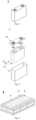
Fig. 1 is a schematic diagram of an embodiment of a sodium-ion battery. -
Fig. 2 is an exploded view ofFig. 1 . -
Fig. 3 is a schematic diagram of an embodiment of a battery module. -
Fig. 4 is a schematic diagram of an embodiment of a battery pack. -
Fig. 5 is an exploded view ofFig. 4 . -
Fig. 6 is a schematic diagram of an embodiment of an apparatus where a sodium-ion battery is used as a power supply. - In order to make the object, technical solution, and technical effects of the present application apparent, the following further describes the present application in detail with reference to the embodiments. It should be understood that the embodiments described in the present description are only for explaining the present application, and are not intended to limit the application.
- For the sake of brevity, only certain numerical ranges are explicitly disclosed herein. However, any lower limit may be combined with any upper limit to form a range that is not explicitly described; and any lower limit may be combined with other lower limits to form a range that is not explicitly described, and any upper limit may be combined with any other upper limit to form a range that is not explicitly described. Further, although not explicitly specified, each point or single value between the endpoints of the range is included in the range. Thus, each point or single value can be used as a lower or upper limit and combined with any other point or single value or combined with other lower or upper limits to form a range that is not explicitly specified.
- In the description herein, it should be noted that, unless otherwise stated, the recitation of numerical ranges by "no less than" and "no more than" include all numbers within that range including the endpoints, and the recitation of "more" in the phrase "one or more" includes two or more.
- The above-stated summary of the present application is not intended to describe each and every embodiment or implementation disclosed in the present application. The following description illustrates exemplary embodiments more specifically. In many places throughout the application, guidance is provided by means of a series of embodiments, which can be applied in various combinations. In each instance, the enumeration is only a representative group and should not be interpreted as exhaustive.
- An embodiment of a first aspect of the present application provides a sodium-ion battery, which comprises a positive electrode plate and a negative electrode plate.
- The positive electrode plate comprises a positive electrode current collector and a positive electrode active material layer, the positive electrode active material layer is disposed on at least one surface of the positive electrode current collector and comprises a positive electrode active material. For example, the positive electrode current collector has two opposite surfaces on its thickness direction, and the positive electrode active material layer may be disposed on either or both of the two opposite surfaces of the positive electrode current collector.
- The negative electrode plate comprises a negative electrode current collector and a negative electrode active material layer, the negative electrode active material layer is disposed on at least one surface of the negative electrode current collector and comprises a negative electrode active material. For example, the negative electrode current collector has two opposite surfaces on its thickness direction, and the negative electrode active material layer may be disposed on either or both of the two opposite surfaces of the negative electrode current collector.
- The negative electrode active material is hard carbon, and a ratio of a median particle size A of the positive electrode active material to a median particle size B of the negative electrode active material satisfies 0.1 ≤ A/B ≤ 1.
- For the sodium-ion battery of an embodiment of the present application, the negative electrode active material is hard carbon, and a ratio of a median particle size A of the positive electrode active material to a median particle size B of the negative electrode active material is controlled to fall within a range of from 0.1 to 1, which can reduce the capacity loss in the first charging and discharging process of the battery, make the positive electrode plate and the negative electrode plate both have higher electrons and sodium ions transmission performance, and make the battery have higher charging and discharging performance at a high rate, therefore, the sodium-ion battery can have higher initial coulombic efficiency and higher rate performance.
- Furthermore, controlling the ratio of the median particle size A of the positive electrode active material to the median particle size B of the negative electrode active material to fall within a range of from 0.1 to 1 can prevent sodium from precipitating on the negative electrode plate, and therefore, the safety performance of the sodium-ion battery can be improved.
- In some embodiments of the present application, A/B may be 0.12, ≥0.15, ≥0.2, ≥0.3, ≥0.5, >0.6, ≥0.7, or >0.8. Further, A/B may be <0.8, ≤0.7, or ≤0.6.
- When the ratio of the median particle size A of the positive electrode active material to the median particle size B of the negative electrode active material falls within an appropriate range, the initial coulombic efficiency, the rate performance and the safety performance of the sodium-ion battery can be further improved.
- In some embodiments, preferably, the positive electrode active material has a median particle size A of from 0.2 µm to 20 µm. The median particle size A of the positive electrode active material is preferably 0.2 µm or more, the interface resistance of the positive electrode active material particles can be decreased, the dispersibility of the positive electrode active material in the positive electrode slurry can be improved, and the solvent-consuming phenomenon can be reduced, which can suppress undesirable agglomeration among the positive electrode active material particles in the positive electrode plate, improve the uniformity of the areal density distribution of the positive electrode plate, and improve the pressing density of the positive electrode plate so as to improve the initial capacity, the initial coulombic efficiency, the rate performance and the cycle life of the sodium-ion battery. The median particle size A of the positive electrode active material is preferably 20 µm or less, the electrons and sodium ions transmission path in the positive electrode active material particles can be shorter, the electrons and sodium ions transmission performance in the positive electrode plate can be improved, and therefore, the sodium-ion battery can have higher rate performance. More preferably, the positive electrode active material has a median particle size A of from 0.6 µm to 15 µm, and particularly preferably from 5 µm to 12 µm.
- In some embodiments, preferably, the positive electrode active material has a specific surface area of from 0.1 m2/g to 20 m2/g, more preferably from 0.5 m2/g to 15 m2/g. When the specific surface area of the positive electrode active material falls within an appropriate range, the positive electrode active material can have smaller particle size, and the electrons and sodium ions transmission path in the positive electrode active material particles can be shorter, so that the electrons and sodium ions transmission performance in the positive electrode plate can be improved, and the polarization in the positive electrode plate can be reduced, thereby improving the rate performance of the battery and the capacity retention rate of the battery during the charging and discharging process. The positive electrode active material has an appropriate specific surface area, which can also effectively suppress the agglomeration among the positive electrode active material particles so as to ensure the positive electrode have higher electrochemical performance.
- In some embodiments, preferably, the negative electrode active material has a median particle size B of from 0.5 µm to 20 µm, more preferably from 3 µm to 15 µm, and particularly preferably from 5 µm to 12 µm. When the median particle size B of the negative electrode active material is 0.5 µm or more, the capacity loss of the sodium-ion battery during the first charging and discharging process can be reduced, and therefore, the sodium-ion battery can have higher initial coulombic efficiency. When the median particle size B of the negative electrode active material is 20 µm or less, the sodium ions deintercalated from the positive electrode can sufficiently intercalate into the negative electrode, which prevents the sodium from precipitating on the negative electrode plate and reduces the capacity loss, and therefore, the cycle performance and the safety performance of the battery can be improved.
- In some embodiments, preferably, the negative electrode active material has a specific surface area of from 0.5 m2/g to 15 m2/g, more preferably from 1 m2/g to 12 m2/g. The negative electrode active material having an appropriate range of specific surface area can enable the negative electrode active material to have a smaller particle size, which improves the sodium ions transmission performance in the negative electrode plate, and prevents the capacity loss and safety hazard caused by the sodium precipitation on the negative electrode plate from happening. In addition, when the specific surface area of the negative electrode active material falls within an appropriate range, the capacity loss during the first charging and discharging process of the battery can be reduced so as to improve the initial coulombic efficiency of the battery.
- In some embodiments, a mean interplanar spacing d002 of crystal planes (002) of the negative electrode active material is preferably from 0.35 nm to 0.42 nm, more preferably from 0.37 nm to 0.40 nm. When the mean interplanar spacing d002 of the crystal planes (002) of the negative electrode active material falls within the aforementioned range, the diffusion performance of the sodium ions in the negative electrode active material particles can be improved so as to further improve the rate performance and the safety performance of the sodium-ion battery. In addition, the volume change of the negative electrode active material caused by the intercalation or the deintercalation of the sodium ions during the charging and discharging process of the battery can be smaller, and therefore, the cycle performance of the battery can be improved.
- In some embodiments, for the sodium-ion battery of the present application, a ratio of a porosity P1 of the positive electrode active material layer to a porosity P2 of the negative electrode active material layer preferably satisfies 0.15 ≤ P1/P2 < 2.5. When the ratio of the porosity P1 of the positive electrode active material layer to the porosity P2 of the negative electrode active material layer is controlled to fall within an appropriate range, the sodium ions deintercalated from the positive electrode can sufficiently and quickly intercalate into the negative electrode, so that the capacity elaboration and the kinetic performance of the sodium-ion battery can be improved, thereby improving the capacity performance and the rate performance of the sodium-ion battery.
- In addition, when the ratio of the porosity P1 of the positive electrode active material layer to the porosity P2 of the negative electrode active material layer is controlled to fall within an appropriate range, the capacity loss due to concentration polarization can be suppressed, side reactions on the positive electrode plate and the negative electrode plate can be decreased, which prevents the sodium from precipitating on the negative electrode plate, thereby improving the capacity retention rate during the cycle process and the safety performance of the sodium-ion battery.
- In some embodiments of the present application, P1/P2 may be ≥0.15, ≥0.2, ≥0.3, ≥0.4, ≥0.5, ≥0.6, ≥0.7, ≥0.8, ≥0.9, or ≥1.0. Further, P1/P2 may be ≤2.5, ≤2.2, ≤2.0, ≤1.9, ≤1.8, ≤1.7, ≤1.6, ≤1.5, ≤1.4, ≤1.3, ≤1.2, ≤1.0, or <0.9. More preferably, 0.3 ≤ P1/P2 < 1.8.
- In some embodiments, preferably, the positive electrode active material layer has a porosity P1 of from 10% to 40%, and more preferably from 20% to 38%. When the porosity of the positive electrode active material layer falls within an appropriate range, the positive electrode active material layer can have appropriate electrolyte retention amount, good electrolyte infiltration performance and higher pressing density, which are beneficial to making the positive electrode active material layer have higher electrons and sodium ions conduction performance, thereby enabling the sodium-ion battery to have better capacity elaboration, higher kinetic performance and better rate performance. The positive electrode active material layer has higher pressing density, and the electrolyte retention amount in the positive electrode active material layer will not be too large, which can also enable the sodium-ion battery to have higher energy density.
- In some embodiments, preferably, the negative electrode active material layer has a porosity P2 of from 15% to 45%, and more preferably from 28% to 38%. When the porosity of the negative electrode active material layer falls within an appropriate range, the negative electrode active material layer can have appropriate electrolyte retention amount, good electrolyte infiltration performance and higher pressing density, which are beneficial to making the negative electrode active material layer have higher electrons and sodium ions conduction performance, thereby enabling the sodium-ion battery to have better capacity elaboration, higher kinetic performance and better rate performance. The negative electrode active material layer has higher pressing density, and the electrolyte retention amount in the negative electrode active material layer will not be too large, which can also enable the sodium-ion battery to have higher energy density.
- In some embodiments, the sodium-ion battery also satisfies that the positive electrode active material layer has a porosity P1 of from 10% to 40%, the negative electrode active material layer has a porosity P2 of from 15% to 45%, and 0.15 ≤ P1/P2 ≤ 2.5, which can enable the sodium-ion battery to have better comprehensive performance. Furthermore, the positive electrode active material layer has a porosity P1 of from 20% to 38%, the negative electrode active material layer has a porosity P2 of from 28% to 38%, and 0.3 ≤ P1/P2 < 1.8.
- In some embodiments, for the sodium-ion battery the present application, preferably, a ratio of an areal density C of the positive electrode active material layer to an areal density D of the negative electrode active material layer satisfies 1.5 ≤ C/D ≤ 4.5. The ratio of the areal density C of the positive electrode active material layer to the areal density D of the negative electrode active material layer falls within an appropriate range, which is beneficial to ensuring that the sodium-ion battery can have higher capacity elaboration and higher initial coulombic efficiency, and also ensuring that the sodium ions deintercalated from the positive electrode can sufficiently intercalate into the negative electrode so as to prevent the sodium from precipitating on the negative electrode plate.
- In some embodiments of the present application, C/D may be ≥1.5, ≥1.6, ≥1.7, ≥1.8, ≥1.9, ≥2.0, ≥2.1, ≥2.2, ≥2.3, ≥2.5, or ≥2.6. Further, C/D may be ≤4.5, ≤4.2, ≤4.0, ≤3.7, ≤3.5, ≤3.2, ≤3.0, ≤2.9, ≤2.8, ≤2.7, ≤2.6, ≤2.5, or ≤2.3. Preferably, 2.1 ≤ C/D ≤ 2.8.
- In some embodiments, preferably, the positive electrode active material layer has an areal density C of from 5 mg/cm2 to 30 mg/cm2, more preferably from 6 mg/cm2 to 24 mg/cm2, and particularly preferably from 10 mg/cm2 to 18 mg/cm2. When the areal density of the positive electrode active material layer falls within an appropriate range, the sodium-ion battery can have higher capacity and the positive electrode active material layer can have smaller thickness, which can reduce the migration distance of the electrons and the sodium ions in the positive electrode active material layer, and also reduce the resistance to the migration of the electrons and the sodium ions from the positive electrode active material particles, the interface thereof and the binder during the migration process thereof, thereby making the sodium-ion battery have higher rate performance and higher cycle performance. Therefore, controlling the areal density C of the positive electrode active material layer to fall within an appropriate range is beneficial to improving the specific capacity, the initial coulombic efficiency and the cycle performance of the sodium-ion battery.
- In some embodiments, preferably, the negative electrode active material layer has an areal density D of from 1.5 mg/cm2 to 15 mg/cm2, and more preferably from 5 mg/cm2 to 10 mg/cm2. When the negative electrode active material layer has an appropriate areal density, the negative electrode active material layer can have sufficient active sites for the intercalation of the sodium ions deintercalated from the positive electrode, which can reduce the loss of the active sodium and prevent the sodium from precipitating on the negative electrode plate so as to make the battery have higher cycle performance and safety performance. In addition, the battery can also have higher initial coulombic efficiency. Therefore, controlling the areal density D of the negative electrode active material layer to fall within an appropriate range is beneficial to improving the initial coulombic efficiency, the cycle performance and the safety performance of the sodium-ion battery.
- For the positive electrode plate, the positive electrode active material comprise one or more of polyanionic compounds and Prussian blue compounds. In one embodiment, for the sodium-ion battery of the present application, a negative electrode plate using hard carbon as a negative electrode active material is used together with a positive electrode plate where the positive electrode active material comprises one or more of polyanionic compounds and Prussian blue compounds, which makes the sodium-ion battery have higher capacity performance and higher energy density.
- The polyanionic compounds are enumerated as follows:
- A1 f M3 g (PO4) i O j X1 3-j , wherein A is one or more of H, Li, Na, K and NH4, M3 is one or more of Ti, Cr, Mn, Fe, Co, Ni, V, Cu and Zn, X1 is one or more of F, Cl and Br, 0 < f ≤ 4, 0 < g ≤ 2, 1 ≤ i ≤ 3, 0 ≤ j ≤ 2;
- Na n M4PO4X2, wherein M4 is one or more of Mn, Fe, Co, Ni, Cu and Zn, X2 is one or more of F, Cl and Br, 0 < n ≤ 2;
- Na p M5 q (SO4)3, wherein M5 is one or more of Mn, Fe, Co, Ni, Cu and Zn, 0 < p ≤ 2, 0 < q ≤ 2;
- Na s Mn t Fe3-t (PO4)2(P2O7), wherein 0 < s ≤ 4, 0 ≤ t ≤ 3, for example, t is 0, 1, 1.5, 2, or 3.
- The Prussian blue compounds are enumerated as follows:
A u M6 v [M7(CN)6]w•xH2O, wherein A is one or more of H+, NH4+, alkali metal cations and alkaline-earth metal cations, M6 and M7 are respectively one or more of transition metal cations, 0 < u ≤ 2, 0 <v ≤ 1, 0 < w ≤ 1, 0 < x < 6. For example, A is one or more of H+, Li+, Na+, K+, NH4 +, Rb+, Cs+, Fr+, Be2+, Mg2+, Ca2+, Sr2+, Ba2+ and Ra2+, M6 and M7 are respectively transition metal cations from one or more of Ti, V, Cr, Mn, Fe, Co, Ni, Cu, Zn, Sn, and W. Preferably, A is one or more of Li+, Na+ and K+, M6 is a transition metal cation from one or more of Mn, Fe, Co, Ni and Cu, and M7 is a transition metal cation from one or more of Mn, Fe, Co, Ni and Cu. - In some embodiments, the positive electrode active material layer may also optionally comprise a conductive agent. The conductive agent is used to improve the conductivity of the positive electrode active material layer. The present application does not specifically limit the type of the conductive agent, and the specific type of the conductive agent may be selected according to actual needs. As an example, the conductive agent may comprise one or more of superconducting carbon, acetylene black, carbon black, Ketjen black, carbon dots, carbon nanotubes, graphene and carbon nanofibers.
- In some embodiments, the positive electrode active material layer may also optionally comprise a binder. The binder is used to firmly bond the positive electrode active material and the optional conductive agent onto the positive electrode current collector. The present application does not specifically limit the type of the binder, and the specific type of the binder may be selected according to actual needs. As an example, the binder may comprise one or more of styrene butadiene rubber (SBR), water-based acrylic resin, sodium carboxymethyl cellulose (CMC-Na), polyvinylidene fluoride (PVDF), polytetrafluoroethylene (PTFE), ethylene-vinyl acetate copolymer (EVA) and polyvinyl alcohol (PVA).
- The positive electrode current collector may be a metal foil, a carbon-coated metal foil or a porous metal plate, and preferably may be an aluminum foil.
- For the negative electrode plate, in some embodiments, the negative electrode active material layer may also optionally comprise a conductive agent. The conductive agent is used to improve the conductivity of the negative electrode active material layer. The present application does not specifically limit the type of the conductive agent, and the specific type of the conductive agent may be selected according to actual needs. As an example, the conductive agent may comprise one or more of superconducting carbon, acetylene black, carbon black, Ketjen black, carbon dots, carbon nanotubes, graphene and carbon nanofibers.
- In some embodiments, the negative electrode active material layer may also optionally comprise a binder. The binder is used to firmly bond the negative electrode active material and the optional conductive agent onto the negative electrode current collector. The present application does not specifically limit the type of the binder, and the specific type of the binder may be selected according to actual needs. As an example, the binder may be one or more of styrene butadiene rubber (SBR), styreneic block copolymers (SBCs) and water-based acrylic resin.
- In some embodiments, the negative electrode active material layer may also optionally comprise a thickener, for example, carboxymethyl cellulose sodium (CMC-Na). However, the present application is not limited thereto, the present application may also use other materials that may be used as a thickener of the negative electrode plate of the sodium-ion battery.
- The negative electrode current collector may be a metal foil, a carbon-coated metal foil or a porous metal plate, and preferably may be a copper foil.
- The sodium-ion battery provided by an embodiment of the present application further comprises a separator and an electrolyte. The separator is disposed between the positive electrode plate and the negative electrode plate to play a role of isolation. An electrode assembly of the sodium-ion battery may have a laminated structure formed by stacking the negative electrode plate, the separator and the positive electrode plate in order, or may have a wound structure formed by stacking the negative electrode plate, the separator and the positive electrode plate in order and then being wound. The electrolyte infiltrates the electrode assembly.
- For the separator, there is no specific limitation in the present application, and any well-known porous structure separator having good electrochemical stability and mechanical stability may be selected according to actual needs. For example, the separator may be a single-layer film or a multi-layer film containing one or more of glass fiber, non-woven fabric, polyethylene, polypropylene and polyvinylidene fluoride.
- The electrolyte may comprise an organic solvent and a sodium salt. Any organic solvent and sodium salt that may be used in the sodium-ion battery may be selected according to actual needs. As an example, the organic solvent may comprise one or more of ethylene carbonate (EC), propylene carbonate (PC), ethyl methyl carbonate (EMC) and diethyl carbonate (DEC). The sodium salt may comprise one or more of NaPF6, NaClO4, NaBCl4, NaSO3CF3 and Na(CH3)C6H4SO3.
- Next, a method for preparing a sodium-ion battery provided by an embodiment of the present application is described, and the aforementioned sodium-ion battery may be prepared by using this method. The method comprises the following steps: dispersing a positive electrode active material, a conductive agent, and a binder into a solvent (for example, N-methylpyrrolidone, NMP) to form a uniform positive electrode slurry, coating the positive electrode slurry onto two opposite surfaces of a positive electrode current collector, and then drying and cold pressing to obtain a positive electrode plate; dispersing a negative electrode active material, a conductive agent, a binder and a thickener into a solvent (for example, deionized water) to form a uniform negative electrode slurry, coating the negative electrode slurry onto two opposite surfaces of a negative electrode current collector, and then drying and cold pressing to obtain a negative electrode plate; stacking the positive electrode plate, an separator and the negative electrode plate in order to obtain an electrode assembly, or stacking the positive electrode plate, an separator and the negative electrode plate in order and then winding to obtain an electrode assembly; putting the electrode assembly into a case; injecting an electrolyte and encapsulating to obtain the sodium-ion battery.
- In the present application, the median particle size of the active material has a well-known meaning in the art, and is also called a mean particle size or an average particle size Dv50, which is used to illustrate the average granularity of the active material, a physical meaning thereof is that the particles having a particle size smaller than the median particle size account for 50% of a total volume of all the particles, and the particles having a particle size larger than the median particle size also account for 50% of a total volume of all the particles. The median particle size may be easily measured with a laser particle size analyzer, such as Mastersizer 3000 laser particle size analyzer from Malvern Instruments Co., Ltd., UK.
- The specific surface area of the active material has a well-known meaning in the art, and may be measured using an instrument and a method well-known in the art. For example, the specific surface area of the active material may be measured with the analysis of the specific surface area by nitrogen adsorption and calculated by a BET (Brunauer Emmett Teller) method, in which the analysis of the specific surface area by nitrogen adsorption may be carried out by using a specific surface and pore size analyzer with a type of Tri Star II (from Micromeritics, USA). The measurement may refer to GB/T 19587-2004.
- As a specific example, the positive electrode active material is dried in a vacuum oven at 200 °C for 2 hours; an adsorption and desorption curve with a relative pressure P/P0 from 0 to 0.99 is mapped by using the specific surface and pore size analyzer where nitrogen or argon is used as the adsorption gas, and the specific surface area of the positive electrode active material is calculated by the BET method. When the testing sample is the positive electrode plate, the positive electrode active material layer may be dissolved in a suitable solvent, then ultrasonically dispersed and centrifuged to remove the conductive agent particles, and then dried to obtain the positive electrode active material powder; the specific surface area of the positive electrode active material may be measured using the aforementioned method.
- The specific surface area of the negative electrode active material is measured with reference to the aforementioned method.
- The mean interplanar spacing d002 of the negative electrode active material may be measured with an X-ray powder diffractometer, for example, an X-ray diffractometer with a type of Brucker D8A_A25 (from Brucker AxS, Germany), wherein CuKα ray is used as radiation source, a ray wavelength λ is 1.5418 Å, a scanning angle 2θ is from 10° to 90° and a scanning rate is 4°/min.
- The porosity of the active material layer has a well-known meaning in the art, and may be measured with an instrument and a method well-known in the art, for example, a full-automatic true density instrument with a type AccuPyc II 1340 (from Micromeritics, USA) is used, and the measurement can be carried out with reference to GB/T 24586-2009 on determination of apparent density, true density and porosity of iron ores). The measurement comprises the steps of: cutting the electrode plate and selecting 30 small wafers with a diameter of 14 mm; measuring the true volume of the 30 small wafers with a diameter of 14 mm based on the gas adsorption principle and by using an inert gas (such as helium or nitrogen) as a medium; calculating the porosity of the active material layer of the electrode plate according to the relationship between the apparent volume and the true volume of the electrode plate, and the apparent volume of the electrode plate is obtained according to the area, the thickness and the number of the small wafers.
- The areal density of the active material layer has a well-known meaning in the art, and may be measured with an instrument and a method well-known in the art. For example, a mass of the electrode plate with a certain area is weighed by using a Sartorius electronic balance, the mass of the active material layer = the mass of the electrode plate - the mass of the current collector, the areal density of the active material layer = (the mass of the active material layer × the mass percentage of the active material in the active material layer) / the area of the electrode plate.
- There is no specific limitation on the shape of the sodium-ion battery in the present application, which may be cylindrical, square or any other suitable shapes.
Fig. 1 is a sodium-ion battery 5 in the shape of a square as an example. - In some embodiments, the sodium-ion battery may comprise an outer package for encapsulating the positive electrode plate, the negative electrode plate, the separator and the electrolyte.
- In some embodiments, the outer package of the sodium-ion battery may be a soft bag, such as a bag-type soft bag. The soft bag may be made from plastic, such as polypropylene (PP), polybutylene terephthalate (PBT), polybutylene succinate (PBS) or combination thereof. The outer package of the sodium-ion battery may also be a hard case, such as a hard plastic case, an aluminum case and a steel case.
- In some embodiments, referring to
Fig. 2 , the outer package may comprise acase 51 and acover plate 53. Thecase 51 may comprise a bottom plate and a side plate connecting to the bottom plate, the bottom plate and the side plate are enclosed to form a housing chamber. Thecase 51 has an opening communicating with the housing chamber, and thecover plate 53 may cover the opening so as to close the housing chamber. - The positive electrode plate, the separator and the negative electrode plate may be laminated or wound to form an
electrode assembly 52 having a laminated structure or a wound structure. Theelectrode assembly 52 is encapsulated in the housing chamber. The electrolyte infiltrates theelectrode assembly 52. - One or
more electrode assemblies 52 may be included in the sodium-ion battery 5 and the specific number of theelectrode assemblies 52 may be adjusted according to requirements. - In some embodiments, the sodium-ion battery may be assembled into a battery module, a plurality of sodium-ion batteries can be included in the battery module, and the specific number of the sodium-ion batteries may be adjusted according to the application and desirable capacity of the battery module.
-
Fig. 3 is abattery module 4 as an example. Referring toFig. 3 , in thebattery module 4, a plurality of sodium-ion batteries 5 may be disposed in sequence in the length direction of thebattery module 4. Of course, the plurality of sodium-ion batteries 5 may also be disposed in any other manner. Furthermore, the plurality of sodium-ion batteries 5 may be fixed using fasteners. - Optionally, the
battery module 4 may further comprise a housing with a receiving space, and the plurality of sodium-ion batteries 5 are received in the receiving space. - In some embodiments, the aforementioned battery module may further be assembled into a battery pack, and the number of the battery modules included in the battery pack may be adjusted according to the application and desirable capacity of the battery pack.
-
Fig. 4 and Fig. 5 are abattery pack 1 as an example. Referring toFig. 4 and Fig. 5 , thebattery pack 1 may comprise a battery case and a plurality ofbattery modules 4 disposed in the battery case. The battery case comprises anupper case body 2 and a lower case body 3, theupper case body 2 may cover the lower case body 3 to form a closed space for receiving the plurality ofbattery modules 4. The plurality ofbattery modules 4 may be disposed in the battery case in any manner. - In a second aspect of the present application, there is provided an apparatus, which comprises the sodium-ion battery according to the first aspect of the present application. The sodium-ion battery may be used as a power supply of the apparatus, and may also be used as an energy storage unit of the apparatus. The apparatus may be, but is not limited to, a mobile device (e.g., a mobile phone, a laptop computer), an electric vehicle (e.g., a pure electric vehicle, a hybrid electric vehicle, a plug-in hybrid electric vehicle, an electric bicycle, an electric scooter, an electric golf vehicle, an electric truck), an electric train, a ship, a satellite, an energy storage system, etc.
- The apparatus may comprise the sodium-ion battery, the battery module or the battery pack according to its practical requirements.
-
Fig. 6 is an apparatus as an example. The apparatus is a pure electric vehicle, a hybrid electric vehicle, or a plug-in hybrid electric vehicle. In order to meet the requirements of the apparatus for high power and high energy density of batteries, the battery pack or the battery module can be used. - As another example, the apparatus may be a mobile phone, a tablet computer, a laptop computer, and the like. The apparatus is generally required to be thin and light, and the sodium-ion battery can be used as a power supply.
- The disclosure of the present application is described in more details through the following examples, which are only for illustrative purpose, because it is apparent to a person of ordinary skill in the art that various modifications and changes could be made within the scope of the appended claims. Unless otherwise stated, all parts, percentages, and ratios reported in the examples below are based on weight, all the reagents used in the examples are commercially available or synthesized according to conventional methods and can be directly used without further treatment, and all the instruments used in the examples are commercially available.
- Examples 1, 6, 7, 9-15 do not form part of the invention.
- Na3V2(PO4)2O2F as a positive electrode active material, acetylene black as a conductive agent of, and polyvinylidene fluoride (PVDF) as a binder at a mass ratio of 80: 10: 10 were sufficiently stirred and mixed in an appropriate amount of N-methylpyrrolidone (NMP) to form a uniform positive electrode slurry; the positive electrode slurry was coated on an aluminum foil as a positive electrode current collector with a thickness of 12 µm, dried at 100°C and then pressed to obtain a positive electrode plate.
- Hard carbon as a negative electrode active material, acetylene black as a conductive agent, styreneic block copolymers (SBCs) as a binder, sodium carboxymethyl cellulose (CMC-Na) as a thickener at a mass ratio of 90:5:4:1 were sufficiently stirred and mixed in an appropriate amount of deionized water to form a uniform negative electrode slurry; the negative electrode slurry was coated on a copper foil as a negative electrode current collector with a thickness of 12 µm, dried at 100°C and then pressed to obtain a negative electrode plate.
- Equal volumes of ethylene carbonate (EC) and propylene carbonate (PC) were uniformly mixed to obtain an organic solvent, and then NaPF6 was uniformly dissolved in the aforementioned organic solvent to obtain the electrolyte, wherein NaPF6 had a concentration of 1 mol/L.
- 5) The positive electrode plate, the separator and the negative electrode plate were stacked in order, which was followed by electrolyte injection and encapsulation, then the sodium-ion battery was obtained.
- In Examples 2-16 (Ex. 2-16) and Comparative Examples 1-6 (CE. 1-6), the preparation processes similar to those of Example 1 were used, except for relevant parameters in the preparation process of the positive electrode plate and the preparation process of the negative electrode plate, and the specific parameters were shown in Table 1 in detail as below.
- The measurement was carried out with a Mastersizer 3000 laser particle size analyzer by using a laser light scattering method.
- The testing method comprised steps of: dispersing 0.05 g of the positive electrode active material powder into 50 ml of deionized water to form a suspension by means of 10-minute ultrasonically dispersion; dropwisely adding the suspension into the deionized water until the shading degree was in a range of from 10% to 15%; starting the measurement and automatically calculating the median particle size A of the positive electrode active material through the instrument.
- In addition, when the testing sample was a positive electrode plate, the positive electrode active material layer might be dissolved in a suitable solvent, then ultrasonically dispersed and centrifuged to remove the conductive agent particles, then dried to obtain the positive electrode active material powder, and the median particle size A of the positive electrode active material might be measured by using the aforementioned testing method.
- The median particle size B of the negative electrode active material was measured by using the aforementioned testing method.
- At 23±2 °C and under a normal pressure (0.1 MPa), the sodium-ion battery prepared in each of the examples and comparative examples was charged at a constant current of 0.1 C to an upper limit of the charging-discharging cut-off voltage; the charging capacity at this time was recorded as the first charging capacity of the sodium-ion battery. After the sodium-ion battery was allowed to stand for 5 minutes, it was discharged at a constant current of 0.1 C to a lower limit of the charging-discharging cut-off voltage, and then allowed to stand for 5 minutes; the discharging capacity at this time was recorded as the first discharging capacity of the sodium-ion battery.
- In the test, for Examples 1 to 9 and Comparative Examples 1 to 2, a range of the charging-discharging cut-off voltage was from 2.0 V to 4.3 V; for Example 10 and Comparative Examples 3 to 4, the range of the charging-discharging cut-off voltage was from 2.5 V to 4.05 V; for Example 11 and Comparative Examples 5 to 6, the range of the charging-discharging cut-off voltage was from 2.0 V to 4.5 V; for Example 12, the range of the charging-discharging cut-off voltage was from 2.0 V to 4.5 V; for Example 13, the range of the charging-discharging cut-off voltage was from 1.5 V to 4.5 V; for Example 14, the range of the charging-discharging cut-off voltage was from 2.0 V to 4.5 V; for Example 15, the range of the charging-discharging cut-off voltage was from 2.0 V to 4.3 V; for Example 16, the range of the charging-discharging cut-off voltage was from 2.0 V to 4.0 V; and the initial coulombic efficiency of the sodium-ion battery (%) = the first discharging capacity / the first charging capacity × 100%.
- At 23±2 °C and under a normal pressure (0.1 MPa), the sodium-ion battery prepared in each of the examples and comparative examples was charged at a constant current of 0.1 C to the upper limit of the charging-discharging cut-off voltage, and then discharged at a constant current of 0.1 C to the lower limit of the charging-discharging cut-off voltage, and the discharge capacity Q1 at a rate of 0.1 C of the sodium-ion battery was obtained.
- At 25 °C and under a normal pressure (0.1 MPa), the sodium-ion battery was continued to be charged at a constant current of 4 C to the upper limit of the charging-discharging cut-off voltage, and then discharged at a constant current of 4 C to the lower limit of the charging-discharging cut-off voltage, and the discharge capacity Q2 at a rate of 4 C of the sodium-ion battery was obtained.
- The upper and lower limit of the charging-discharging cut-off voltage of the sodium-ion battery prepared in each of the examples and comparative examples were the same as those in the aforementioned testing of the initial coulombic efficiency.
- The 4 C / 0.1 C capacity retention rate of the sodium-ion battery (%) = Q2 / Q1 × 100%.
- Four testing samples were chosen inform each of the examples and comparative examples, and the average thereof was taken as the testing result.
- The testing results of Examples 1 to 16 and Comparative Examples 1 to 6 were shown in Table 1 and Table 2 as below.
Table 1 Positive electrode active material Median particle size A of positive electrode active material (µm) Median particle size B of negative electrode active material (µm) Areal density C of positive electrode active material layer (mg/cm2) Areal density D of negative electrode active material layer (mg/cm2) Ratio of median particle size A/B Ratio of areal density C/D Ex. 2 Na3V2(PO4)2O2F 0.5 2 6 2.5 0.25 2.4 Ex. 3 Na3V2(PO4)2O2F 0.5 5 6 2 0.1 3 Ex. 4 Na3V2(PO4)2O2F 5 15 18 7 0.33 2.57 Ex. 5 Na3V2(PO4)2O2F 5 5 18 8 1 2.25 Ex. 8 Na3V2(PO4)2O2F 12 12 24 10 1 2.4 Ex. 16 Na2MnFe(CN)6•3.5H2O 0.5 2.5 15 5.5 0.2 2.73 CE. 1 Na3V2(PO4)2O2F 0.2 10 6 4 0.02 1.5 CE. 2 Na3V2(PO4)2O2F 12 2 24 15 6 1.6 CE. 3 Na0.9Cu0.22Fe0.3Mn0.47Al0.01O2 0.45 15 12 5.5 0.03 2.18 CE. 4 Na0.9Cu0.22Fe0.3Mn0.47Al0.01O2 18 4 12 5.5 4.5 2.18 CE. 5 Na0.67Mn0.7Ni0.1Mg0.2O2 0.4 13 12 4.5 0.03 2.67 CE. 6 Na0.67Mn0.7Ni0.1Mg0.2O2 20 4 12 4.5 5 2.67 Table 2 Initial coulombic efficiency (%) 4 C / 0.1 C Capacity retention rate (%) Example 2 87 82 Example 3 86 80 Example 4 85 78 Example 5 82 79 Example 8 81 74 Example 16 86 79 Comparative example 1 72 58 Comparative example 2 68 55 Comparative example 3 74 52 Comparative example 4 70 47 Comparative example 5 62 53 Comparative example 6 71 51 - It could be seen from comparison between Examples 2-5 and 8, and Comparative Examples 1 to 2, when the ratio of the median particle size A of the positive electrode active material to the median particle size B of the negative electrode active material was less than 0.05 or more than 3, the capacity loss of the sodium-ion battery during the first charging and discharging process was larger, and the charging and discharging performance at a high rate was worse, and therefore, the initial coulombic efficiency and the capacity retention rate at a high rate of the sodium-ion battery both were lower. The examples of the present application controlled the ratio of the median particle size A of the positive electrode active material to the median particle size B of the negative electrode active material to fall within a range of from 0.05 to 3, so that the capacity loss during the first charging and discharging process of the sodium-ion battery was reduced, and the capacity elaboration of the sodium-ion battery at a high rate was improved, which significantly improved the initial coulombic efficiency and the rate performance of the sodium-ion battery were significantly improved. Above described are only specific implementations of the present application, but the claim scope of the present application is not intended to be limited thereto. Therefore, the protection scope of the present application shall be determined by the protection scope of the claims.
Claims (9)
- A sodium-ion battery (5), comprising a positive electrode plate and a negative electrode plate,wherein the positive electrode plate comprises a positive electrode current collector and a positive electrode active material layer, the positive electrode active material layer is disposed on at least one surface of the positive electrode current collector and comprises a positive electrode active material;the negative electrode plate comprises a negative electrode current collector and a negative electrode active material layer, the negative electrode active material layer is disposed on at least one surface of the negative electrode current collector and comprises a negative electrode active material, and the negative electrode active material is hard carbon; andwherein a ratio of a median particle size A of the positive electrode active material to a median particle size B of the negative electrode active material satisfies 0.1 ≤ A/B ≤ 1, as measured according to the description; andwherein the positive electrode active material comprises one or more of polyanionic compounds and Prussian blue compounds; andwherein the polyanionic compounds comprise A1 f M3 g (PO4) i O j X1 3-j , wherein A is one or more of H, Li, Na, K and NH4, M3 is one or more of Ti, Cr, Mn, Fe, Co, Ni, V, Cu and Zn, X1 is one or more of F, Cl and Br, 0 < f ≤ 4, 0 < g ≤ 2, 1 ≤ i ≤ 3, 0 ≤ j ≤ 2; andwherein the Prussian blue compounds comprise A u M6 v [M7(CN)6]w•xH2O, wherein A is one or more of H+, NH4+, alkali metal cations and alkaline-earth metal cations, M6 and M7 are respectively one or more of transition metal cations, 0 < u ≤ 2, 0 < v ≤ I, 0 < w ≤ I, 0 < x < 6.
- The sodium-ion battery (5) according to claim 1, wherein the positive electrode active material has a median particle size A of from 0.2 µm to 20 µm, preferably from 0.6 µm to 15 µm, as measured according to the description; and/or,
the negative electrode active material has a median particle size B of from 0.5 µm to 20 µm, preferably from 3 µm to 15 µm, as measured according to the description. - The sodium-ion battery (5) according to any one of claims 1-2, wherein the positive electrode active material has a specific surface area of from 0.1 m2/g to 20 m2/g, preferably from 0.5 m2/g to 15 m2/g, as measured according to the description; and/or,
the negative electrode active material has a specific surface area of from 0.5 m2/g to 15 m2/g, preferably from 1 m2/g to 12 m2/g, as measured according to the description. - The sodium-ion battery (5) according to any one of claims 1-3, wherein a mean interplanar spacing d002 of crystal planes (002) of the negative electrode active material is from 0.35 nm to 0.42 nm, as measured according to the description.
- The sodium-ion battery (5) according to any one of claims 1-4, wherein a ratio of a porosity of the positive electrode active material layer to a porosity of the negative electrode active material layer is from 0.15 to 2.5, preferably from 0.3 to 1.8, as measured according to the description.
- The sodium-ion battery (5) according to any one of claims 1-5, wherein the positive electrode active material layer has a porosity of from 10% to 40%, preferably from 20% to 38%, as measured according to the description; and/or,
the negative electrode active material layer has a porosity of from 15% to 45%, preferably from 28% to 38%, as measured according to the description. - The sodium-ion battery (5) according to any one of claims 1-6, wherein a ratio of an areal density C of the positive electrode active material layer to an areal density D of the negative electrode active material layer satisfies 1.5 ≤ C/D ≤ 4.5, preferably 2.1 ≤ C/D ≤ 2.8, as measured according to the description.
- The sodium-ion battery (5) according to any one of claims 1-7, wherein the positive electrode active material layer has an areal density C of from 5 mg/cm2 to 30 mg/cm2, as measured according to the description; and/or,
the negative electrode active material layer has an areal density D of from 1.5 mg/cm2 to 15 mg/cm2, as measured according to the description. - An apparatus, comprising the sodium-ion battery (5) according to any one of claims 1-8.
Priority Applications (1)
| Application Number | Priority Date | Filing Date | Title |
|---|---|---|---|
| EP24204351.1A EP4465403A3 (en) | 2019-02-02 | 2020-01-16 | Sodium ion battery and apparatus containing sodium ion battery |
Applications Claiming Priority (2)
| Application Number | Priority Date | Filing Date | Title |
|---|---|---|---|
| CN201910107675.9A CN111525099B (en) | 2019-02-02 | 2019-02-02 | sodium ion battery |
| PCT/CN2020/072453 WO2020156200A1 (en) | 2019-02-02 | 2020-01-16 | Sodium ion battery and apparatus containing sodium ion battery |
Related Child Applications (1)
| Application Number | Title | Priority Date | Filing Date |
|---|---|---|---|
| EP24204351.1A Division EP4465403A3 (en) | 2019-02-02 | 2020-01-16 | Sodium ion battery and apparatus containing sodium ion battery |
Publications (4)
| Publication Number | Publication Date |
|---|---|
| EP3907790A1 EP3907790A1 (en) | 2021-11-10 |
| EP3907790A4 EP3907790A4 (en) | 2022-03-23 |
| EP3907790C0 EP3907790C0 (en) | 2024-10-09 |
| EP3907790B1 true EP3907790B1 (en) | 2024-10-09 |
Family
ID=71839942
Family Applications (2)
| Application Number | Title | Priority Date | Filing Date |
|---|---|---|---|
| EP20749681.1A Active EP3907790B1 (en) | 2019-02-02 | 2020-01-16 | Sodium ion battery and apparatus containing sodium ion battery |
| EP24204351.1A Pending EP4465403A3 (en) | 2019-02-02 | 2020-01-16 | Sodium ion battery and apparatus containing sodium ion battery |
Family Applications After (1)
| Application Number | Title | Priority Date | Filing Date |
|---|---|---|---|
| EP24204351.1A Pending EP4465403A3 (en) | 2019-02-02 | 2020-01-16 | Sodium ion battery and apparatus containing sodium ion battery |
Country Status (4)
| Country | Link |
|---|---|
| US (1) | US20210359335A1 (en) |
| EP (2) | EP3907790B1 (en) |
| CN (2) | CN113611827A (en) |
| WO (1) | WO2020156200A1 (en) |
Families Citing this family (37)
| Publication number | Priority date | Publication date | Assignee | Title |
|---|---|---|---|---|
| CN112490398B (en) * | 2021-01-22 | 2023-06-30 | 江西省钒电新能源有限公司 | Layered positive electrode material of P2 type sodium ion battery, preparation method and application |
| CN113437356B (en) * | 2021-06-26 | 2022-03-22 | 宁德时代新能源科技股份有限公司 | Flat-plate sodium metal battery and electrochemical device |
| CN114400304B (en) * | 2021-11-25 | 2023-12-05 | 成都新英能基科技有限公司 | Negative electrode slurry for sodium ion battery, application and preparation process |
| CN114497698A (en) * | 2022-01-21 | 2022-05-13 | 江苏正力新能电池技术有限公司 | Lithium ion battery and power utilization device |
| WO2023221088A1 (en) * | 2022-05-20 | 2023-11-23 | 宁德时代新能源科技股份有限公司 | Sodium-ion battery, battery module, battery pack and electric device |
| CN115939304B (en) * | 2022-06-23 | 2024-08-09 | 宁德时代新能源科技股份有限公司 | Electrode assembly, battery cell, battery and electric equipment |
| CN115189013B (en) * | 2022-06-29 | 2026-03-20 | 郭敏埼 | A sodium-ion battery and its preparation method |
| CN115332612A (en) * | 2022-09-06 | 2022-11-11 | 星恒电源股份有限公司 | Sodium ion battery and preparation method thereof |
| CN115275098B (en) * | 2022-09-06 | 2024-07-23 | 厦门海辰储能科技股份有限公司 | Negative electrode plate, preparation method thereof and sodium ion battery |
| WO2024055204A1 (en) * | 2022-09-14 | 2024-03-21 | 宁德时代新能源科技股份有限公司 | Negative electrode sheet, sodium-ion battery, electric device, and application |
| CN115692610A (en) * | 2022-09-30 | 2023-02-03 | 浙江大象新能源科技有限公司 | Positive pole piece and sodium ion battery |
| WO2024082110A1 (en) * | 2022-10-17 | 2024-04-25 | 宁德时代新能源科技股份有限公司 | Secondary battery and electric device comprising same |
| CN115791543B (en) * | 2022-10-21 | 2025-07-11 | 江苏正力新能电池技术股份有限公司 | A method for evaluating the initial efficiency of a battery |
| CN115472898B (en) * | 2022-10-27 | 2023-09-15 | 欣旺达动力科技股份有限公司 | A secondary battery and electrical equipment |
| CN115863744B (en) * | 2022-12-21 | 2025-07-11 | 深圳新宙邦科技股份有限公司 | A sodium ion battery |
| CN115986117A (en) * | 2022-12-28 | 2023-04-18 | 珠海科创能源技术有限公司 | High-energy-density sodium ion battery and preparation method thereof |
| CN115692717B (en) * | 2022-12-29 | 2023-05-05 | 浙江格派钴业新材料有限公司 | Sodium ion battery reticular copper doped sodium nickel manganese oxide positive electrode material and preparation method thereof |
| CN115881889B (en) * | 2023-01-06 | 2025-12-09 | 珠海冠宇电池股份有限公司 | Lithium ion battery |
| CN118315526B (en) * | 2023-01-09 | 2026-03-03 | 宁德时代新能源科技股份有限公司 | Positive electrode plate, preparation method thereof, battery and power utilization device |
| CN118352518B (en) * | 2023-01-16 | 2026-02-17 | 宁德时代新能源科技股份有限公司 | Positive electrode active materials, their preparation methods, secondary batteries, battery modules, battery packs and electrical devices |
| WO2024152193A1 (en) * | 2023-01-17 | 2024-07-25 | 宁德时代新能源科技股份有限公司 | Positive electrode active material and preparation method therefor, and positive electrode sheet, secondary battery and electric device comprising positive electrode active material |
| CN118431565A (en) * | 2023-01-31 | 2024-08-02 | 比亚迪股份有限公司 | Sodium battery and electric equipment |
| CN118507713B (en) * | 2023-02-16 | 2026-01-23 | 宁德时代新能源科技股份有限公司 | Positive electrode active material, preparation method thereof, positive electrode sheet, secondary battery and electricity utilization device |
| CN116259740B (en) * | 2023-02-28 | 2026-02-10 | 欣旺达动力科技股份有限公司 | Secondary batteries, preparation methods and electrical equipment thereof |
| EP4618217A4 (en) * | 2023-03-17 | 2025-12-03 | Contemporary Amperex Technology Hong Kong Ltd | BATTERY CELL, BATTERY AND ELECTRICAL DEVICE |
| CN118738263A (en) * | 2023-03-29 | 2024-10-01 | 宁德时代新能源科技股份有限公司 | Positive electrode sheet and preparation method thereof, battery and electric device |
| CN116314590A (en) * | 2023-03-31 | 2023-06-23 | 上海扬广科技有限责任公司 | A kind of sodium ion battery and preparation method thereof |
| CN116190632B (en) * | 2023-05-04 | 2023-07-18 | 溧阳中科海钠科技有限责任公司 | A composite layered oxide cathode material and sodium ion battery |
| CN119153619A (en) * | 2023-06-14 | 2024-12-17 | 宁德时代新能源科技股份有限公司 | Positive electrode plate, battery cell, battery and electricity utilization device |
| CN117199341B (en) * | 2023-09-27 | 2025-02-14 | 中创新航科技集团股份有限公司 | Sodium ion battery |
| CN119725730A (en) * | 2023-09-28 | 2025-03-28 | 中国科学院大连化学物理研究所 | A high-voltage sodium ion battery electrolyte |
| CN117038973B (en) * | 2023-10-09 | 2024-04-05 | 宁德时代新能源科技股份有限公司 | Positive electrode active material and preparation method thereof, positive electrode sheet, battery and electrical equipment |
| CN117410494B (en) * | 2023-12-15 | 2024-03-15 | 溧阳中科海钠科技有限责任公司 | Positive electrode plate, preparation method thereof, sodium ion battery and electric equipment |
| CN117810523A (en) * | 2023-12-22 | 2024-04-02 | 厦门海辰储能科技股份有限公司 | Sodium-ion batteries, energy storage devices, power systems and energy storage systems |
| CN117810460B (en) * | 2024-03-01 | 2024-07-19 | 宁德时代新能源科技股份有限公司 | Battery pack and electric equipment |
| WO2025200491A1 (en) * | 2024-03-29 | 2025-10-02 | 宁德时代新能源科技股份有限公司 | Positive electrode active material and preparation method therefor, electrode sheet, battery, and electric device |
| CN118263398B (en) * | 2024-03-29 | 2025-08-26 | 北京当升材料科技股份有限公司 | Positive electrode sheet and preparation method thereof, and battery |
Family Cites Families (14)
| Publication number | Priority date | Publication date | Assignee | Title |
|---|---|---|---|---|
| JP4942319B2 (en) * | 2005-09-07 | 2012-05-30 | 三洋電機株式会社 | Lithium secondary battery |
| CN101383408A (en) * | 2007-09-03 | 2009-03-11 | 德固赛(中国)投资有限公司 | Negative pole of lithium ion secondary cell and lithium ion secondary cell applying the negative pole |
| KR101366471B1 (en) * | 2009-09-25 | 2014-02-21 | 도요타지도샤가부시키가이샤 | Lithium secondary battery and process for producing same |
| CN101916857B (en) * | 2010-08-19 | 2013-05-15 | 深圳市贝特瑞新能源材料股份有限公司 | Composite cathode material for lithium ion power and energy storage battery and preparation method thereof and battery |
| JP5716724B2 (en) * | 2012-10-09 | 2015-05-13 | トヨタ自動車株式会社 | Sodium ion battery system, method of using sodium ion battery, method of manufacturing sodium ion battery |
| CN103094609B (en) * | 2012-12-29 | 2015-07-01 | 惠州亿纬锂能股份有限公司 | Lithium ion battery and preparation method thereof |
| JP6460316B2 (en) * | 2013-12-09 | 2019-01-30 | 日本電気硝子株式会社 | Sodium ion battery electrode mixture, method for producing the same, and sodium all-solid battery |
| GB201409163D0 (en) | 2014-05-22 | 2014-07-09 | Faradion Ltd | Compositions containing doped nickelate compounds |
| JP6746875B2 (en) * | 2015-03-19 | 2020-08-26 | 東洋インキScホールディングス株式会社 | Secondary battery electrode forming composition, secondary battery electrode and secondary battery |
| GB2543831A (en) | 2015-10-30 | 2017-05-03 | Sharp Kk | Method of passive voltage control in a sodium-ion battery |
| JP6786299B2 (en) * | 2016-08-08 | 2020-11-18 | 旭化成株式会社 | Alkali metal ion secondary battery |
| CN108306049B (en) * | 2017-01-13 | 2021-08-13 | 丰田自动车株式会社 | Non-aqueous electrolyte secondary battery |
| CN106848201A (en) * | 2017-02-28 | 2017-06-13 | 上海中聚佳华电池科技有限公司 | A kind of sodium-ion battery positive plate, battery and preparation method thereof |
| CN107482253A (en) * | 2017-07-18 | 2017-12-15 | 东莞市迈科新能源有限公司 | A low temperature lithium ion battery |
-
2019
- 2019-02-02 CN CN202110798831.8A patent/CN113611827A/en active Pending
- 2019-02-02 CN CN201910107675.9A patent/CN111525099B/en active Active
-
2020
- 2020-01-16 EP EP20749681.1A patent/EP3907790B1/en active Active
- 2020-01-16 WO PCT/CN2020/072453 patent/WO2020156200A1/en not_active Ceased
- 2020-01-16 EP EP24204351.1A patent/EP4465403A3/en active Pending
-
2021
- 2021-08-02 US US17/391,064 patent/US20210359335A1/en not_active Abandoned
Also Published As
| Publication number | Publication date |
|---|---|
| CN111525099B (en) | 2021-08-06 |
| WO2020156200A1 (en) | 2020-08-06 |
| CN111525099A (en) | 2020-08-11 |
| EP4465403A3 (en) | 2025-02-19 |
| EP4465403A2 (en) | 2024-11-20 |
| CN113611827A (en) | 2021-11-05 |
| EP3907790C0 (en) | 2024-10-09 |
| EP3907790A1 (en) | 2021-11-10 |
| US20210359335A1 (en) | 2021-11-18 |
| EP3907790A4 (en) | 2022-03-23 |
Similar Documents
| Publication | Publication Date | Title |
|---|---|---|
| EP3907790B1 (en) | Sodium ion battery and apparatus containing sodium ion battery | |
| US11196046B2 (en) | Positive active material, preparation process thereof, sodium ion battery and apparatus containing the same | |
| EP3800706B1 (en) | Negative electrode, and secondary battery and device having same | |
| JP7230221B2 (en) | Negative electrode active material, manufacturing method thereof, secondary battery, battery module, battery pack, and device related thereto | |
| WO2022077371A1 (en) | Secondary battery, manufacturing method for same, and related thereto, battery module, battery pack, and device | |
| US20220102701A1 (en) | Secondary battery, process for preparing the same and apparatus containing the secondary battery | |
| US12230810B2 (en) | Secondary battery and apparatus containing the same | |
| EP4312288B1 (en) | Lithium-ion battery positive electrode plate, lithium-ion battery with same, and electrical apparatus | |
| WO2020143531A1 (en) | Positive electrode active material and preparation method therefor, sodium ion battery, and device comprising sodium ion battery | |
| WO2022141302A1 (en) | Secondary battery and preparation method therefor, battery module comprising secondary battery, battery pack, and device | |
| JP2023517773A (en) | Positive electrode active materials, lithium ion secondary batteries, battery modules, battery packs and electrical devices | |
| EP3965189A1 (en) | Negative electrode material, negative electrode plate, electrochemical device and electronic device | |
| CN114730860B (en) | Secondary battery and device comprising same | |
| US20250006927A1 (en) | Sodium-ion battery, battery module, battery pack and electrical device | |
| KR20260021754A (en) | Negative electrode sheets, secondary batteries and electrical devices | |
| US12620576B2 (en) | Secondary battery and electric device | |
| US20250279411A1 (en) | Secondary battery and electric device | |
| US20250279475A1 (en) | Secondary battery and power consuming apparatus | |
| EP4376116A1 (en) | Negative electrode pole piece, battery, battery pack, and electrical device | |
| CN121359246A (en) | Secondary batteries and electrical devices | |
| CN117293262A (en) | Positive electrode plate, preparation method thereof, secondary battery, battery module, battery pack and power utilization device |
Legal Events
| Date | Code | Title | Description |
|---|---|---|---|
| STAA | Information on the status of an ep patent application or granted ep patent |
Free format text: STATUS: THE INTERNATIONAL PUBLICATION HAS BEEN MADE |
|
| TPAC | Observations filed by third parties |
Free format text: ORIGINAL CODE: EPIDOSNTIPA |
|
| PUAI | Public reference made under article 153(3) epc to a published international application that has entered the european phase |
Free format text: ORIGINAL CODE: 0009012 |
|
| STAA | Information on the status of an ep patent application or granted ep patent |
Free format text: STATUS: REQUEST FOR EXAMINATION WAS MADE |
|
| 17P | Request for examination filed |
Effective date: 20210804 |
|
| AK | Designated contracting states |
Kind code of ref document: A1 Designated state(s): AL AT BE BG CH CY CZ DE DK EE ES FI FR GB GR HR HU IE IS IT LI LT LU LV MC MK MT NL NO PL PT RO RS SE SI SK SM TR |
|
| A4 | Supplementary search report drawn up and despatched |
Effective date: 20220221 |
|
| RIC1 | Information provided on ipc code assigned before grant |
Ipc: H01M 4/02 20060101ALN20220215BHEP Ipc: H01M 10/054 20100101ALI20220215BHEP Ipc: H01M 4/583 20100101ALI20220215BHEP Ipc: H01M 4/58 20100101ALI20220215BHEP Ipc: H01M 4/525 20100101ALI20220215BHEP Ipc: H01M 4/505 20100101ALI20220215BHEP Ipc: H01M 4/36 20060101AFI20220215BHEP |
|
| DAV | Request for validation of the european patent (deleted) | ||
| DAX | Request for extension of the european patent (deleted) | ||
| STAA | Information on the status of an ep patent application or granted ep patent |
Free format text: STATUS: EXAMINATION IS IN PROGRESS |
|
| 17Q | First examination report despatched |
Effective date: 20230623 |
|
| GRAP | Despatch of communication of intention to grant a patent |
Free format text: ORIGINAL CODE: EPIDOSNIGR1 |
|
| STAA | Information on the status of an ep patent application or granted ep patent |
Free format text: STATUS: GRANT OF PATENT IS INTENDED |
|
| RIC1 | Information provided on ipc code assigned before grant |
Ipc: H01M 4/02 20060101ALN20240717BHEP Ipc: H01M 10/054 20100101ALI20240717BHEP Ipc: H01M 4/583 20100101ALI20240717BHEP Ipc: H01M 4/58 20100101ALI20240717BHEP Ipc: H01M 4/525 20100101ALI20240717BHEP Ipc: H01M 4/505 20100101ALI20240717BHEP Ipc: H01M 4/36 20060101AFI20240717BHEP |
|
| INTG | Intention to grant announced |
Effective date: 20240729 |
|
| GRAS | Grant fee paid |
Free format text: ORIGINAL CODE: EPIDOSNIGR3 |
|
| GRAA | (expected) grant |
Free format text: ORIGINAL CODE: 0009210 |
|
| STAA | Information on the status of an ep patent application or granted ep patent |
Free format text: STATUS: THE PATENT HAS BEEN GRANTED |
|
| RAP1 | Party data changed (applicant data changed or rights of an application transferred) |
Owner name: CONTEMPORARY AMPEREX TECHNOLOGY(HONG KONG) LIMITED |
|
| AK | Designated contracting states |
Kind code of ref document: B1 Designated state(s): AL AT BE BG CH CY CZ DE DK EE ES FI FR GB GR HR HU IE IS IT LI LT LU LV MC MK MT NL NO PL PT RO RS SE SI SK SM TR |
|
| REG | Reference to a national code |
Ref country code: CH Ref legal event code: EP |
|
| REG | Reference to a national code |
Ref country code: DE Ref legal event code: R096 Ref document number: 602020039106 Country of ref document: DE |
|
| REG | Reference to a national code |
Ref country code: IE Ref legal event code: FG4D |
|
| U01 | Request for unitary effect filed |
Effective date: 20241105 |
|
| U07 | Unitary effect registered |
Designated state(s): AT BE BG DE DK EE FI FR IT LT LU LV MT NL PT RO SE SI Effective date: 20241113 |
|
| U20 | Renewal fee for the european patent with unitary effect paid |
Year of fee payment: 6 Effective date: 20250122 |
|
| PG25 | Lapsed in a contracting state [announced via postgrant information from national office to epo] |
Ref country code: IS Free format text: LAPSE BECAUSE OF FAILURE TO SUBMIT A TRANSLATION OF THE DESCRIPTION OR TO PAY THE FEE WITHIN THE PRESCRIBED TIME-LIMIT Effective date: 20250209 Ref country code: HR Free format text: LAPSE BECAUSE OF FAILURE TO SUBMIT A TRANSLATION OF THE DESCRIPTION OR TO PAY THE FEE WITHIN THE PRESCRIBED TIME-LIMIT Effective date: 20241009 |
|
| PG25 | Lapsed in a contracting state [announced via postgrant information from national office to epo] |
Ref country code: ES Free format text: LAPSE BECAUSE OF FAILURE TO SUBMIT A TRANSLATION OF THE DESCRIPTION OR TO PAY THE FEE WITHIN THE PRESCRIBED TIME-LIMIT Effective date: 20241009 |
|
| PG25 | Lapsed in a contracting state [announced via postgrant information from national office to epo] |
Ref country code: NO Free format text: LAPSE BECAUSE OF FAILURE TO SUBMIT A TRANSLATION OF THE DESCRIPTION OR TO PAY THE FEE WITHIN THE PRESCRIBED TIME-LIMIT Effective date: 20250109 |
|
| PG25 | Lapsed in a contracting state [announced via postgrant information from national office to epo] |
Ref country code: GR Free format text: LAPSE BECAUSE OF FAILURE TO SUBMIT A TRANSLATION OF THE DESCRIPTION OR TO PAY THE FEE WITHIN THE PRESCRIBED TIME-LIMIT Effective date: 20250110 |
|
| PG25 | Lapsed in a contracting state [announced via postgrant information from national office to epo] |
Ref country code: PL Free format text: LAPSE BECAUSE OF FAILURE TO SUBMIT A TRANSLATION OF THE DESCRIPTION OR TO PAY THE FEE WITHIN THE PRESCRIBED TIME-LIMIT Effective date: 20241009 |
|
| PG25 | Lapsed in a contracting state [announced via postgrant information from national office to epo] |
Ref country code: RS Free format text: LAPSE BECAUSE OF FAILURE TO SUBMIT A TRANSLATION OF THE DESCRIPTION OR TO PAY THE FEE WITHIN THE PRESCRIBED TIME-LIMIT Effective date: 20250109 |
|
| PG25 | Lapsed in a contracting state [announced via postgrant information from national office to epo] |
Ref country code: SM Free format text: LAPSE BECAUSE OF FAILURE TO SUBMIT A TRANSLATION OF THE DESCRIPTION OR TO PAY THE FEE WITHIN THE PRESCRIBED TIME-LIMIT Effective date: 20241009 |
|
| PG25 | Lapsed in a contracting state [announced via postgrant information from national office to epo] |
Ref country code: SK Free format text: LAPSE BECAUSE OF FAILURE TO SUBMIT A TRANSLATION OF THE DESCRIPTION OR TO PAY THE FEE WITHIN THE PRESCRIBED TIME-LIMIT Effective date: 20241009 |
|
| PG25 | Lapsed in a contracting state [announced via postgrant information from national office to epo] |
Ref country code: CZ Free format text: LAPSE BECAUSE OF FAILURE TO SUBMIT A TRANSLATION OF THE DESCRIPTION OR TO PAY THE FEE WITHIN THE PRESCRIBED TIME-LIMIT Effective date: 20241009 |
|
| PLBE | No opposition filed within time limit |
Free format text: ORIGINAL CODE: 0009261 |
|
| STAA | Information on the status of an ep patent application or granted ep patent |
Free format text: STATUS: NO OPPOSITION FILED WITHIN TIME LIMIT |
|
| REG | Reference to a national code |
Ref country code: CH Ref legal event code: PL |
|
| PG25 | Lapsed in a contracting state [announced via postgrant information from national office to epo] |
Ref country code: MC Free format text: LAPSE BECAUSE OF FAILURE TO SUBMIT A TRANSLATION OF THE DESCRIPTION OR TO PAY THE FEE WITHIN THE PRESCRIBED TIME-LIMIT Effective date: 20241009 |
|
| 26N | No opposition filed |
Effective date: 20250710 |
|
| PG25 | Lapsed in a contracting state [announced via postgrant information from national office to epo] |
Ref country code: CH Free format text: LAPSE BECAUSE OF NON-PAYMENT OF DUE FEES Effective date: 20250131 |
|
| PG25 | Lapsed in a contracting state [announced via postgrant information from national office to epo] |
Ref country code: IE Free format text: LAPSE BECAUSE OF NON-PAYMENT OF DUE FEES Effective date: 20250116 |
|
| U20 | Renewal fee for the european patent with unitary effect paid |
Year of fee payment: 7 Effective date: 20260127 |
|
| PGFP | Annual fee paid to national office [announced via postgrant information from national office to epo] |
Ref country code: GB Payment date: 20260123 Year of fee payment: 7 |