EP3905422A1 - Device and method of protecting supercapacitor module of vehicle - Google Patents
Device and method of protecting supercapacitor module of vehicle Download PDFInfo
- Publication number
- EP3905422A1 EP3905422A1 EP21169869.1A EP21169869A EP3905422A1 EP 3905422 A1 EP3905422 A1 EP 3905422A1 EP 21169869 A EP21169869 A EP 21169869A EP 3905422 A1 EP3905422 A1 EP 3905422A1
- Authority
- EP
- European Patent Office
- Prior art keywords
- supercapacitor module
- controller
- voltage
- circuit
- rechargeable battery
- Prior art date
- Legal status (The legal status is an assumption and is not a legal conclusion. Google has not performed a legal analysis and makes no representation as to the accuracy of the status listed.)
- Withdrawn
Links
Images

Classifications
-
- H—ELECTRICITY
- H02—GENERATION; CONVERSION OR DISTRIBUTION OF ELECTRIC POWER
- H02J—ELECTRIC POWER NETWORKS; CIRCUIT ARRANGEMENTS OR SYSTEMS FOR SUPPLYING OR DISTRIBUTING ELECTRIC POWER; SYSTEMS FOR STORING ELECTRIC ENERGY
- H02J7/00—Circuit arrangements for charging or discharging batteries or for supplying loads from batteries
- H02J7/34—Parallel operation in networks using both storage and other DC sources, e.g. providing buffering
- H02J7/345—Parallel operation in networks using both storage and other DC sources, e.g. providing buffering using capacitors as storage or buffering devices
-
- H—ELECTRICITY
- H02—GENERATION; CONVERSION OR DISTRIBUTION OF ELECTRIC POWER
- H02H—EMERGENCY PROTECTIVE CIRCUIT ARRANGEMENTS
- H02H7/00—Emergency protective circuit arrangements specially adapted for specific types of electric machines or apparatus or for sectionalised protection of cable or line systems, and effecting automatic switching in the event of an undesired change from normal working conditions
- H02H7/20—Emergency protective circuit arrangements specially adapted for specific types of electric machines or apparatus or for sectionalised protection of cable or line systems, and effecting automatic switching in the event of an undesired change from normal working conditions for electronic equipment
-
- H—ELECTRICITY
- H01—ELECTRIC ELEMENTS
- H01G—CAPACITORS; CAPACITORS, RECTIFIERS, DETECTORS, SWITCHING DEVICES, LIGHT-SENSITIVE OR TEMPERATURE-SENSITIVE DEVICES OF THE ELECTROLYTIC TYPE
- H01G11/00—Hybrid capacitors, i.e. capacitors having different positive and negative electrodes; Electric double-layer [EDL] capacitors; Processes for the manufacture thereof or of parts thereof
- H01G11/14—Arrangements or processes for adjusting or protecting hybrid or EDL capacitors
- H01G11/16—Arrangements or processes for adjusting or protecting hybrid or EDL capacitors against electric overloads, e.g. including fuses
-
- H—ELECTRICITY
- H01—ELECTRIC ELEMENTS
- H01M—PROCESSES OR MEANS, e.g. BATTERIES, FOR THE DIRECT CONVERSION OF CHEMICAL ENERGY INTO ELECTRICAL ENERGY
- H01M16/00—Structural combinations of different types of electrochemical generators
- H01M16/003—Structural combinations of different types of electrochemical generators of fuel cells with other electrochemical devices, e.g. capacitors, electrolysers
-
- H—ELECTRICITY
- H02—GENERATION; CONVERSION OR DISTRIBUTION OF ELECTRIC POWER
- H02H—EMERGENCY PROTECTIVE CIRCUIT ARRANGEMENTS
- H02H1/00—Details of emergency protective circuit arrangements
- H02H1/0007—Details of emergency protective circuit arrangements concerning the detecting means
-
- H—ELECTRICITY
- H02—GENERATION; CONVERSION OR DISTRIBUTION OF ELECTRIC POWER
- H02J—ELECTRIC POWER NETWORKS; CIRCUIT ARRANGEMENTS OR SYSTEMS FOR SUPPLYING OR DISTRIBUTING ELECTRIC POWER; SYSTEMS FOR STORING ELECTRIC ENERGY
- H02J7/00—Circuit arrangements for charging or discharging batteries or for supplying loads from batteries
- H02J7/60—Circuit arrangements for charging or discharging batteries or for supplying loads from batteries including safety or protection arrangements
-
- H—ELECTRICITY
- H02—GENERATION; CONVERSION OR DISTRIBUTION OF ELECTRIC POWER
- H02J—ELECTRIC POWER NETWORKS; CIRCUIT ARRANGEMENTS OR SYSTEMS FOR SUPPLYING OR DISTRIBUTING ELECTRIC POWER; SYSTEMS FOR STORING ELECTRIC ENERGY
- H02J7/00—Circuit arrangements for charging or discharging batteries or for supplying loads from batteries
- H02J7/60—Circuit arrangements for charging or discharging batteries or for supplying loads from batteries including safety or protection arrangements
- H02J7/61—Circuit arrangements for charging or discharging batteries or for supplying loads from batteries including safety or protection arrangements against overcharge
-
- H—ELECTRICITY
- H02—GENERATION; CONVERSION OR DISTRIBUTION OF ELECTRIC POWER
- H02J—ELECTRIC POWER NETWORKS; CIRCUIT ARRANGEMENTS OR SYSTEMS FOR SUPPLYING OR DISTRIBUTING ELECTRIC POWER; SYSTEMS FOR STORING ELECTRIC ENERGY
- H02J7/00—Circuit arrangements for charging or discharging batteries or for supplying loads from batteries
- H02J7/60—Circuit arrangements for charging or discharging batteries or for supplying loads from batteries including safety or protection arrangements
- H02J7/65—Circuit arrangements for charging or discharging batteries or for supplying loads from batteries including safety or protection arrangements against overtemperature
-
- H—ELECTRICITY
- H02—GENERATION; CONVERSION OR DISTRIBUTION OF ELECTRIC POWER
- H02J—ELECTRIC POWER NETWORKS; CIRCUIT ARRANGEMENTS OR SYSTEMS FOR SUPPLYING OR DISTRIBUTING ELECTRIC POWER; SYSTEMS FOR STORING ELECTRIC ENERGY
- H02J7/00—Circuit arrangements for charging or discharging batteries or for supplying loads from batteries
- H02J7/60—Circuit arrangements for charging or discharging batteries or for supplying loads from batteries including safety or protection arrangements
- H02J7/685—Circuit arrangements for charging or discharging batteries or for supplying loads from batteries including safety or protection arrangements using connection detecting circuits
-
- B—PERFORMING OPERATIONS; TRANSPORTING
- B60—VEHICLES IN GENERAL
- B60R—VEHICLES, VEHICLE FITTINGS, OR VEHICLE PARTS, NOT OTHERWISE PROVIDED FOR
- B60R16/00—Electric or fluid circuits specially adapted for vehicles and not otherwise provided for; Arrangement of elements of electric or fluid circuits specially adapted for vehicles and not otherwise provided for
- B60R16/02—Electric or fluid circuits specially adapted for vehicles and not otherwise provided for; Arrangement of elements of electric or fluid circuits specially adapted for vehicles and not otherwise provided for electric constitutive elements
- B60R16/03—Electric or fluid circuits specially adapted for vehicles and not otherwise provided for; Arrangement of elements of electric or fluid circuits specially adapted for vehicles and not otherwise provided for electric constitutive elements for supply of electrical power to vehicle subsystems or for
- B60R16/033—Electric or fluid circuits specially adapted for vehicles and not otherwise provided for; Arrangement of elements of electric or fluid circuits specially adapted for vehicles and not otherwise provided for electric constitutive elements for supply of electrical power to vehicle subsystems or for characterised by the use of electrical cells or batteries
-
- Y—GENERAL TAGGING OF NEW TECHNOLOGICAL DEVELOPMENTS; GENERAL TAGGING OF CROSS-SECTIONAL TECHNOLOGIES SPANNING OVER SEVERAL SECTIONS OF THE IPC; TECHNICAL SUBJECTS COVERED BY FORMER USPC CROSS-REFERENCE ART COLLECTIONS [XRACs] AND DIGESTS
- Y02—TECHNOLOGIES OR APPLICATIONS FOR MITIGATION OR ADAPTATION AGAINST CLIMATE CHANGE
- Y02E—REDUCTION OF GREENHOUSE GAS [GHG] EMISSIONS, RELATED TO ENERGY GENERATION, TRANSMISSION OR DISTRIBUTION
- Y02E60/00—Enabling technologies; Technologies with a potential or indirect contribution to GHG emissions mitigation
- Y02E60/13—Energy storage using capacitors
-
- Y—GENERAL TAGGING OF NEW TECHNOLOGICAL DEVELOPMENTS; GENERAL TAGGING OF CROSS-SECTIONAL TECHNOLOGIES SPANNING OVER SEVERAL SECTIONS OF THE IPC; TECHNICAL SUBJECTS COVERED BY FORMER USPC CROSS-REFERENCE ART COLLECTIONS [XRACs] AND DIGESTS
- Y02—TECHNOLOGIES OR APPLICATIONS FOR MITIGATION OR ADAPTATION AGAINST CLIMATE CHANGE
- Y02E—REDUCTION OF GREENHOUSE GAS [GHG] EMISSIONS, RELATED TO ENERGY GENERATION, TRANSMISSION OR DISTRIBUTION
- Y02E60/00—Enabling technologies; Technologies with a potential or indirect contribution to GHG emissions mitigation
- Y02E60/30—Hydrogen technology
- Y02E60/50—Fuel cells
Definitions
- the present invention relates to a power supply to a vehicle, and more particularly to a method and a device of protecting a supercapacitor module of the vehicle.
- a conventional power supply unit of a vehicle contains a rechargeable battery configured to start a motor and the other power-consumption devices, such as an Electronic Control Unit (ECU) and a headlight.
- the rechargeable battery supplies a power to drive the starter to operate, the starter drives an engine of the vehicle to operate, and the engine actuates a power generator to operate and to recharge the power to the rechargeable battery.
- ECU Electronic Control Unit
- a start-stop system or stop-start system automatically shuts down and restarts the internal combustion engine to reduce the amount of time the engine spends idling.
- a power supply unit 100 for the start-stop system contains a supercapacitor module 120 and a rechargeable battery 140 which are connected parallelly.
- the supercapacitor module 120 supplies a power to a starter, and the supercapacitor module 120 has a discharge of large electric currents and recharge, thus prolong a service of the power supply unit 10.
- a resistance having a large resistance value is connected with the supercapacitor module 120, the supercapacitor module 120 is connected with the rechargeable battery 140, and the resistance is removed.
- the rechargeable battery 140 recharges to the supercapacitor module 120, and the supercapacitor module 120 is not discharged, this avoiding user getting an electric shock.
- the power generator After starting the engine, the power generator produces electricity in a voltage of 14V. When the engine stalls, the voltage reduces to 13V. When the vehicle runs and an air conditioner is not turned on, an output voltage of the power generator is 13.2V. After turning the air conditioner, the output voltage of the power generator is within 13.5V to 13.6V. Normally, when the power generator recharges the power to the supercapacitor module 120, the supercapacitor module is not broken. However, a temperature of the supercapacitor module 120 increases when a voltage of the power generator increases, thus damaging the supercapacitor module 120.
- the supercapacitor module 120 is comprised of multiple supercapacitors, wherein when one supercapacitor is broken (for example, an electrode sheet has a short circuit) and an electricity recharging goes on, a temperature of the electrode sheet increases to heat electrolyte of the supercapacitor, and a pressure of an interior of the supercapacitor module 120 enhances, thus causing explosion.
- the present invention has arisen to mitigate and/or obviate the afore-described disadvantages.
- the primary objective of the present invention is to provide a method of protecting a supercapacitor module of a vehicle which enhances a safety to protecting the supercapacitor module when installing the supercapacitor module.
- Another objective of the present invention is to provide a device of protecting a supercapacitor module of a vehicle which executes the method of protecting the supercapacitor module of the vehicle.
- a method of protecting a supercapacitor module of a vehicle provided by the present invention is applicable for a power supply unit of the vehicle, and the power supply unit includes the supercapacitor module and a rechargeable battery connected with the supercapacitor module parallelly.
- the method contains steps of:
- step B) is executed so as to further execute the protection mode or the operating mode based on a result of the step B).
- a method of protecting a supercapacitor module of a vehicle is applicable for a power supply unit 10 of the vehicle, and the power supply unit 10 includes the supercapacitor module 12 and a rechargeable battery 14 connected with the supercapacitor module 12 parallelly.
- the method of protecting the supercapacitor comprises steps of:
- the step B) is executed so as to judge whether the supercapacitor module 12 is satisfied with the protection condition, such that the protection mode or the operating mode is executed based on a result of the step B).
- the protection mode or the operating mode to the supercapacitor module 12 is determined so as to recharge or discharge the supercapacitor module 12 electrically, thus avoiding recharging the supercapacitor module 12 in an overly high voltage or temperature.
- the supercapacitor module 12 When the engine stalls and the open circuit between the rechargeable battery 14 and the supercapacitor module 12 occurs, the supercapacitor module 12 is installed in the power supply unit 10, wherein the supercapacitor module 12 is discharged completely before being installed so that the voltage of the supercapacitor module 12 is 0, thus protecting the user.
- the protection device comprises: a detection unit 20, a main circuit 32, an auxiliary circuit 34, a control unit 40, and a processing unit 50, wherein the detection unit 20 is electrically connected with the processing unit 50, and the detection unit 20 includes a first voltage detector 22, a second voltage detector 24, and a temperature sensor 26, wherein the first voltage detector 22 is configured to detect the external voltage VI, the second voltage detector 24 is configured to detect the voltage V3 of the supercapacitor module 12, the temperature detector 26 is configured to detect the ambient temperature value T1 of the supercapacitor module 12, wherein detection results of the first voltage detector 22, the second voltage detector 24, and the temperature sensor 26 are sent to the processing unit 50 from the first voltage detector 22, the second voltage detector 24, and the temperature sensor 26.
- the main circuit 32 and the auxiliary circuit 34 are connected parallelly, the main circuit 32 is electrically connected with the supercapacitor module 12, and the auxiliary circuit 34 is electrically connected with the rechargeable battery 14, wherein the main circuit 32 is configured to recharge and discharge main electric currents, and the auxiliary circuit 34 is configured to recharge small electric currents, such that the rechargeable battery 14 electrically recharges the supercapacitor module 12 via the main circuit 32 or the auxiliary circuit 34, and the supercapacitor module 12 discharges electrically via the main circuit 32.
- the control unit 40 is electrically connected with the processing unit 50, and the control unit 40 includes a first controller 42 and a second controller 44, wherein the first controller 42 is connected with the main circuit 32 and the rechargeable battery 14 serially, and the second controller 44 is connected with the auxiliary circuit 34 and the rechargeable battery 14 serially, such that the first controller 42 controls the connection circuit between the supercapacitor module 12 and the rechargeable battery 14 to generate or not via the main circuit 32, and the second controller 44 controls the connection circuit between the supercapacitor module 12 and the rechargeable battery 14 to produce or not via the auxiliary circuit 34, thus recharging or discharging the supercapacitor module 12.
- the first controller 42 is connected with the main circuit 32 and the supercapacitor module 12 serially
- the second controller 44 is connected with the auxiliary circuit 34 and the supercapacitor module 12 serially.
- the first controller 42 and the second controller 44 are comprised of Metal-Oxide-Semiconductor Field-Effect Transistor (MOSFET) or a relay.
- MOSFET Metal-Oxide-Semiconductor Field-Effect Transistor
- the processing unit 50 is a central processing unit (CPU) and the processing unit 50 is configured to compare, calculate, and process the fully charging voltage V2 and the safe temperature value T2 of the supercapacitor module 12, the external voltage V1 detected by the detection unit 20, and the voltage V3 and the ambient temperature value T1 of the supercapacitor module 12.
- the processing unit 50 sends a controlling signal to the control unit 40 so as to drive the first controller 42 and the second controller 40 to operate, thus recharging and discharging the supercapacitor module 12 electrically.
- the method of protecting the supercapacitor module of the vehicle is executed based on following description:
- the open circuit occurs between the first controller 42 and the second controller 44 so as to install the supercapacitor module 12, wherein when installing the supercapacitor module 12, the rechargeable battery 14 does not recharge to the supercapacitor module 12, thus preventing the user getting an electric shock.
- the detection unit 20 detects the external voltage V1 and the voltage V3 and the ambient temperature value T1 of the supercapacitor module 12, and the processing unit 50 compares whether the external voltage V1 is more than the fully charging voltage V2 and whether the ambient temperature value T1 is more than the safe temperature value T2 of the supercapacitor module 12; wherein when V1 is more than V2 or T1 is more than T2, the supercapacitor module 12 is satisfied with the protection condition; when V1 is not more than V2 and T1 is not more than T2, the supercapacitor module 12 is not satisfied with the protection condition.
- the protection mode is started so that the processing unit 50 sends the controlling signal to the control unit 40, and the open circuit occurs between the first controller 42 and the second controller 44 so that the supercapacitor module 12 is not recharged and discharged electrically, and the supercapacitor module 12 is judged whether it is satisfied with the protection condition once more after the protection mode is started.
- the first controller 42 When the supercapacitor module 12 is not satisfied with the protection condition, the first controller 42 is judged whether it is turned off; when the first controller 42 is turned on, the operating mode will be started so that the processing unit 50 sends the controlling signal to the control unit 40, and the first controller 42 is turned off, hence the supercapacitor module 12 is rechargeable and dischargeable via the main circuit 32, and the rechargeable battery 14 of the engine of the vehicle is not rechargeable to the supercapacitor module 12 via the auxiliary circuit 34.
- the processing unit 50 calculates whether a difference value between the external voltage V1 and the voltage V3 is more than 5V; when V1-V3 is more than 5V is not established, the processing unit 50 sends the controlling signal to the control unit 40 so that the operating mode is started, the first controller 42 is turned on and the second controller 44 is turned off.
- V1-V3 When V1-V3 is more than 5V, a recharging mode of the small electric currents is started so that the processing unit 50 sends the controlling signal to the control unit 40, the first controller 42 is turned off, the second controller 44 is turned on, and the rechargeable battery 14 recharges the small electric currents to the supercapacitor module 12 via the auxiliary circuit 34. Since VI-V3 is more than 5V, the rechargeable battery 14 recharges the small electric currents to the supercapacitor module 12 but the supercapacitor module 12 is not rechargeable via the main circuit 32 so as to avoid a voltage difference between the rechargeable battery 14 and the supercapacitor module 12 producing, thus preventing large electric currents damaging the first controller 42 via the main circuit 32.
- the first controller 42 is judged whether it is turned off so as to further judge whether VI-V3 is more than 5V or to start the operating mode.
Landscapes
- Engineering & Computer Science (AREA)
- Power Engineering (AREA)
- Microelectronics & Electronic Packaging (AREA)
- Chemical & Material Sciences (AREA)
- Sustainable Development (AREA)
- Sustainable Energy (AREA)
- Life Sciences & Earth Sciences (AREA)
- Chemical Kinetics & Catalysis (AREA)
- Electrochemistry (AREA)
- General Chemical & Material Sciences (AREA)
- Charge And Discharge Circuits For Batteries Or The Like (AREA)
- Secondary Cells (AREA)
- Protection Of Static Devices (AREA)
- Electric Propulsion And Braking For Vehicles (AREA)
Abstract
Description
- The present invention relates to a power supply to a vehicle, and more particularly to a method and a device of protecting a supercapacitor module of the vehicle.
- A conventional power supply unit of a vehicle contains a rechargeable battery configured to start a motor and the other power-consumption devices, such as an Electronic Control Unit (ECU) and a headlight. The rechargeable battery supplies a power to drive the starter to operate, the starter drives an engine of the vehicle to operate, and the engine actuates a power generator to operate and to recharge the power to the rechargeable battery.
- In automobiles, a start-stop system or stop-start system automatically shuts down and restarts the internal combustion engine to reduce the amount of time the engine spends idling. With reference to
FIG. 1 , apower supply unit 100 for the start-stop system contains asupercapacitor module 120 and arechargeable battery 140 which are connected parallelly. When starting the engine, thesupercapacitor module 120 supplies a power to a starter, and thesupercapacitor module 120 has a discharge of large electric currents and recharge, thus prolong a service of thepower supply unit 10. - When installing the
supercapacitor module 120, a resistance having a large resistance value is connected with thesupercapacitor module 120, thesupercapacitor module 120 is connected with therechargeable battery 140, and the resistance is removed. Thereby, when thesupercapacitor module 120 and therechargeable battery 140 are connected, therechargeable battery 140 recharges to thesupercapacitor module 120, and thesupercapacitor module 120 is not discharged, this avoiding user getting an electric shock. - After starting the engine, the power generator produces electricity in a voltage of 14V. When the engine stalls, the voltage reduces to 13V. When the vehicle runs and an air conditioner is not turned on, an output voltage of the power generator is 13.2V. After turning the air conditioner, the output voltage of the power generator is within 13.5V to 13.6V. Normally, when the power generator recharges the power to the
supercapacitor module 120, the supercapacitor module is not broken. However, a temperature of thesupercapacitor module 120 increases when a voltage of the power generator increases, thus damaging thesupercapacitor module 120. - The
supercapacitor module 120 is comprised of multiple supercapacitors, wherein when one supercapacitor is broken (for example, an electrode sheet has a short circuit) and an electricity recharging goes on, a temperature of the electrode sheet increases to heat electrolyte of the supercapacitor, and a pressure of an interior of thesupercapacitor module 120 enhances, thus causing explosion. - The present invention has arisen to mitigate and/or obviate the afore-described disadvantages.
- The primary objective of the present invention is to provide a method of protecting a supercapacitor module of a vehicle which enhances a safety to protecting the supercapacitor module when installing the supercapacitor module.
- Another objective of the present invention is to provide a device of protecting a supercapacitor module of a vehicle which executes the method of protecting the supercapacitor module of the vehicle.
- To obtain above-mentioned objectives, a method of protecting a supercapacitor module of a vehicle provided by the present invention is applicable for a power supply unit of the vehicle, and the power supply unit includes the supercapacitor module and a rechargeable battery connected with the supercapacitor module parallelly.
- The method contains steps of:
- A) installing, wherein an open circuit remains between the rechargeable battery and the supercapacitor module, a voltage value of the supercapacitor module is 0, and the supercapacitor module is arranged in the power supply unit;
- B) judging, wherein the supercapacitor module is judged whether the supercapacitor module is satisfied with a protection condition, an external voltage is VI, a fully charging voltage of the supercapacitor module is V2, an ambient temperature value of an interior of the supercapacitor module is T1, and a safe temperature value of a respective supercapacitor is T2, wherein when V1 is more than V2 (V1>V2) or T1 is more than T2 (T1>T2), the supercapacitor module is satisfied with the protection condition, and when V1 is not more than V2 or T1 is not more than T2, the supercapacitor module is not satisfied with the protection condition;
- C) executing a protection mode, wherein when the supercapacitor module is satisfied with the protection condition, the protection mode is executed, wherein the open circuit occurs between the supercapacitor module and the rechargeable battery so that the supercapacitor module is not rechargeable and dischargeable electrically; and
- D) executing an operating mode when the supercapacitor module is not satisfied with the protection condition, wherein when a connection circuit between the supercapacitor module and the rechargeable battery occurs, the supercapacitor module is rechargeable and dischargeable electrically.
- When the supercapacitor module is in the protection mode or the operating mode, the step B) is executed so as to further execute the protection mode or the operating mode based on a result of the step B).
-
-
FIG. 1 is a circuit block diagram of a conventional power supply unit. -
FIG. 2 is a flow chart of a method of protecting a supercapacitor module of a vehicle according to a preferred embodiment of the present invention. -
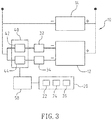
FIG. 3 is a circuit block diagram of a power supply unit of a device of protecting the supercapacitor module according to the preferred embodiment of the present invention. -
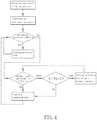
FIG. 4 is a flow chart of the method of executing the method of protecting the supercapacitor module according to the preferred embodiment of the present invention. - With reference to
FIGS. 2 and3 , a method of protecting a supercapacitor module of a vehicle according to a preferred embodiment of the present invention is applicable for apower supply unit 10 of the vehicle, and thepower supply unit 10 includes thesupercapacitor module 12 and arechargeable battery 14 connected with thesupercapacitor module 12 parallelly. - The method of protecting the supercapacitor comprises steps of:
- A) installing, wherein an open circuit remains between the
rechargeable battery 14 and thesupercapacitor module 12 after an engine of the vehicle stalls, a voltage value of thesupercapacitor module 12 is 0, and thesupercapacitor module 12 is arranged in thepower supply unit 10, wherein thesupercapacitor module 12 includes multiple supercapacitors (not shown) which are connected serially or parallelly, and thesupercapacitor module 12 is discharged electrically before being arranged in thepower supply unit 10 so as to protect a user; - B) judging, wherein the
supercapacitor module 12 is judged whether it is satisfied with a protection condition, for example, an external voltage is VI, and a fully charging voltage of the supercapacitor module is V2, the external voltage V1 is the voltage of therechargeable battery 14 when the engine stalls, and the external voltage V1 is a higher voltage selected from a voltage of the power generator and the voltage of therechargeable battery 14 when a power generator of the vehicle operates, wherein the fully charging voltage V2 of thesupercapacitor module 12 is 14.5V but is not limited to 14.5V, an ambient temperature value of an interior of thesupercapacitor module 12 is T1, and a safe temperature value of a respective supercapacitor of thesupercapacitor module 12 is T2, wherein the safe temperature value T2 is determined based on an overheating temperature of the respective supercapacitor, and the safe temperature value T2 is 80 °C; wherein when V1 is more than V2 (i.e. V1 > V2) or T1 is more than T2 (i.e. T1>T2), thesupercapacitor module 12 is satisfied with the protection condition, and when V1 is not more than V2 or T1 is not more than T2, thesupercapacitor module 12 is not satisfied with the protection condition; - C) executing a protection mode, wherein when the
supercapacitor module 12 is satisfied with the protection condition, the protection mode is executed, wherein the open circuit occurs between thesupercapacitor module 12 and therechargeable battery 14 so that thesupercapacitor module 12 is not rechargeable and dischargeable electrically, thus avoiding V1 being higher than V2, and when T1 is more than T2, thesupercapacitor module 12 is not rechargeable electrically, such that an over-high temperature and a vaporized explosion of the respective supercapacitor are avoidable; and - D) executing an operating mode when the
supercapacitor module 12 is not satisfied with the protection condition, wherein when a connection circuit between thesupercapacitor module 12 and therechargeable battery 14 occurs, thesupercapacitor module 12 is rechargeable and dischargeable electrically. - When the
supercapacitor module 12 is in the protection mode or the operating mode for a period of time, the step B) is executed so as to judge whether thesupercapacitor module 12 is satisfied with the protection condition, such that the protection mode or the operating mode is executed based on a result of the step B). - By judging whether the
supercapacitor module 12 is satisfied with the protection condition, the protection mode or the operating mode to thesupercapacitor module 12 is determined so as to recharge or discharge thesupercapacitor module 12 electrically, thus avoiding recharging thesupercapacitor module 12 in an overly high voltage or temperature. - When the engine stalls and the open circuit between the
rechargeable battery 14 and thesupercapacitor module 12 occurs, thesupercapacitor module 12 is installed in thepower supply unit 10, wherein thesupercapacitor module 12 is discharged completely before being installed so that the voltage of thesupercapacitor module 12 is 0, thus protecting the user. - Referring to
FIG. 3 , the protection device comprises: adetection unit 20, amain circuit 32, anauxiliary circuit 34, acontrol unit 40, and aprocessing unit 50, wherein thedetection unit 20 is electrically connected with theprocessing unit 50, and thedetection unit 20 includes afirst voltage detector 22, asecond voltage detector 24, and atemperature sensor 26, wherein thefirst voltage detector 22 is configured to detect the external voltage VI, thesecond voltage detector 24 is configured to detect the voltage V3 of thesupercapacitor module 12, thetemperature detector 26 is configured to detect the ambient temperature value T1 of thesupercapacitor module 12, wherein detection results of thefirst voltage detector 22, thesecond voltage detector 24, and thetemperature sensor 26 are sent to theprocessing unit 50 from thefirst voltage detector 22, thesecond voltage detector 24, and thetemperature sensor 26. - The
main circuit 32 and theauxiliary circuit 34 are connected parallelly, themain circuit 32 is electrically connected with thesupercapacitor module 12, and theauxiliary circuit 34 is electrically connected with therechargeable battery 14, wherein themain circuit 32 is configured to recharge and discharge main electric currents, and theauxiliary circuit 34 is configured to recharge small electric currents, such that therechargeable battery 14 electrically recharges thesupercapacitor module 12 via themain circuit 32 or theauxiliary circuit 34, and thesupercapacitor module 12 discharges electrically via themain circuit 32. - The
control unit 40 is electrically connected with theprocessing unit 50, and thecontrol unit 40 includes afirst controller 42 and asecond controller 44, wherein thefirst controller 42 is connected with themain circuit 32 and therechargeable battery 14 serially, and thesecond controller 44 is connected with theauxiliary circuit 34 and therechargeable battery 14 serially, such that thefirst controller 42 controls the connection circuit between thesupercapacitor module 12 and therechargeable battery 14 to generate or not via themain circuit 32, and thesecond controller 44 controls the connection circuit between thesupercapacitor module 12 and therechargeable battery 14 to produce or not via theauxiliary circuit 34, thus recharging or discharging thesupercapacitor module 12. In another embodiment, thefirst controller 42 is connected with themain circuit 32 and thesupercapacitor module 12 serially, and thesecond controller 44 is connected with theauxiliary circuit 34 and thesupercapacitor module 12 serially. Furthermore, thefirst controller 42 and thesecond controller 44 are comprised of Metal-Oxide-Semiconductor Field-Effect Transistor (MOSFET) or a relay. - The
processing unit 50 is a central processing unit (CPU) and theprocessing unit 50 is configured to compare, calculate, and process the fully charging voltage V2 and the safe temperature value T2 of thesupercapacitor module 12, the external voltage V1 detected by thedetection unit 20, and the voltage V3 and the ambient temperature value T1 of thesupercapacitor module 12. Preferably, theprocessing unit 50 sends a controlling signal to thecontrol unit 40 so as to drive thefirst controller 42 and thesecond controller 40 to operate, thus recharging and discharging thesupercapacitor module 12 electrically. - Referring to
FIG. 4 , the method of protecting the supercapacitor module of the vehicle is executed based on following description:
The open circuit occurs between thefirst controller 42 and thesecond controller 44 so as to install thesupercapacitor module 12, wherein when installing thesupercapacitor module 12, therechargeable battery 14 does not recharge to thesupercapacitor module 12, thus preventing the user getting an electric shock. - When the
supercapacitor module 12 is judged whether it is satisfied with the protection condition after being installed, thedetection unit 20 detects the external voltage V1 and the voltage V3 and the ambient temperature value T1 of thesupercapacitor module 12, and theprocessing unit 50 compares whether the external voltage V1 is more than the fully charging voltage V2 and whether the ambient temperature value T1 is more than the safe temperature value T2 of thesupercapacitor module 12; wherein when V1 is more than V2 or T1 is more than T2, thesupercapacitor module 12 is satisfied with the protection condition; when V1 is not more than V2 and T1 is not more than T2, thesupercapacitor module 12 is not satisfied with the protection condition. - When the
supercapacitor module 12 is satisfied with the protection condition, the protection mode is started so that theprocessing unit 50 sends the controlling signal to thecontrol unit 40, and the open circuit occurs between thefirst controller 42 and thesecond controller 44 so that thesupercapacitor module 12 is not recharged and discharged electrically, and thesupercapacitor module 12 is judged whether it is satisfied with the protection condition once more after the protection mode is started. - When the
supercapacitor module 12 is not satisfied with the protection condition, thefirst controller 42 is judged whether it is turned off; when thefirst controller 42 is turned on, the operating mode will be started so that theprocessing unit 50 sends the controlling signal to thecontrol unit 40, and thefirst controller 42 is turned off, hence thesupercapacitor module 12 is rechargeable and dischargeable via themain circuit 32, and therechargeable battery 14 of the engine of the vehicle is not rechargeable to thesupercapacitor module 12 via theauxiliary circuit 34. When thefirst controller 42 is turned off, theprocessing unit 50 calculates whether a difference value between the external voltage V1 and the voltage V3 is more than 5V; when V1-V3 is more than 5V is not established, theprocessing unit 50 sends the controlling signal to thecontrol unit 40 so that the operating mode is started, thefirst controller 42 is turned on and thesecond controller 44 is turned off. - When V1-V3 is more than 5V, a recharging mode of the small electric currents is started so that the
processing unit 50 sends the controlling signal to thecontrol unit 40, thefirst controller 42 is turned off, thesecond controller 44 is turned on, and therechargeable battery 14 recharges the small electric currents to thesupercapacitor module 12 via theauxiliary circuit 34. Since VI-V3 is more than 5V, therechargeable battery 14 recharges the small electric currents to thesupercapacitor module 12 but thesupercapacitor module 12 is not rechargeable via themain circuit 32 so as to avoid a voltage difference between therechargeable battery 14 and thesupercapacitor module 12 producing, thus preventing large electric currents damaging thefirst controller 42 via themain circuit 32. - After the recharging mode of the small electric currents is started, the
first controller 42 is judged whether it is turned off so as to further judge whether VI-V3 is more than 5V or to start the operating mode. - It is to be note than the difference value between the external voltage V1 and the voltage V3 is rechargeable except for 5V, and 5V is an empirical value based on an actual test of a sample.
- While the preferred embodiments of the invention have been set forth for the purpose of disclosure, modifications of the disclosed embodiments of the invention as well as other embodiments thereof may occur to those skilled in the art. Accordingly, the appended claims are intended to cover all embodiments which do not depart from the spirit and scope of the invention
Claims (12)
- A method of protecting a supercapacitor module of a vehicle being applicable for a power supply unit (10) of the vehicle, and the power supply unit (10) including the supercapacitor module (12) and a rechargeable battery (14) connected with the supercapacitor module (12) parallelly, the method comprising steps of:A) installing, wherein an open circuit remains between the rechargeable battery (14) and the supercapacitor module (12), a voltage value of the supercapacitor module (12) is 0, and the supercapacitor module (12) is arranged in the power supply unit (10);B) judging, wherein the supercapacitor module (12) is judged whether the supercapacitor module (12) is satisfied with a protection condition, an external voltage is VI, a fully charging voltage of the supercapacitor module (12) is V2, an ambient temperature value of an interior of the supercapacitor module (12) is T1, and a safe temperature value of a respective supercapacitor is T2, wherein when V1 is more than V2 (V1 > V2) or T1 is more than T2 (T1 > T2), the supercapacitor module (12) is satisfied with the protection condition, and when V1 is not more than V2 or T1 is not more than T2, the supercapacitor module (12) is not satisfied with the protection condition;C) executing a protection mode, wherein when the supercapacitor module (12) is satisfied with the protection condition, the protection mode is executed, wherein the open circuit occurs between the supercapacitor module (12) and the rechargeable battery (14) so that the supercapacitor module (12) is not rechargeable and dischargeable electrically; andD) executing an operating mode when the supercapacitor module (12) is not satisfied with the protection condition, wherein when a connection circuit between the supercapacitor module (12) and the rechargeable battery (14) occurs, the supercapacitor module (12) is rechargeable and dischargeable electrically;wherein when the supercapacitor module (12) is in the protection mode or the operating mode, the step B) is executed so as to further execute the protection mode or the operating mode based on a result of the step B).
- The method as claimed in claim 1, wherein the external voltage V1 is a higher voltage selected from a voltage of a power generator of the vehicle and the voltage of the rechargeable battery (14).
- The method as claimed in claim 1, wherein V2 is 14.5V.
- A device protected by the method of claim 1 comprising: a detection unit (20) (20), a main circuit (32), an auxiliary circuit, a control unit, and a processing unit (50), wherein the detection unit (20) (20) and the processing unit (50) are electrically connected with the processing unit (50), the main circuit (32) and the auxiliary circuit are connected parallelly, the main circuit (32) is electrically connected with the supercapacitor module (12), and the auxiliary circuit is electrically connected with the rechargeable battery (14), wherein the main circuit (32) is configured to recharge and discharge main electric currents, and the auxiliary circuit is configured to recharge small electric currents, such that the rechargeable battery (14) electrically recharges the supercapacitor module (12) via the main circuit (32) or the auxiliary circuit, and the supercapacitor module (12) discharges electrically via the main circuit (32);
wherein the detection unit (20) (20) includes a first voltage detector (22), a second voltage detector (24), and a temperature sensor (26), wherein the first voltage detector (22) is configured to detect the external voltage VI, the second voltage detector (24) is configured to detect the voltage V3 of the supercapacitor module (12), the temperature detector is configured to detect the ambient temperature value T1 of the supercapacitor module (12);
wherein the control unit includes a first controller (42) and a second controller (44), the first controller (42) controls the connection circuit between the supercapacitor module (12) and the rechargeable battery (14) to generate or not via the main circuit (32), and the second controller (44) controls the connection circuit between the supercapacitor module (12) and the rechargeable battery (14) to produce or not via the auxiliary circuit, thus recharging or discharging the supercapacitor module (12);
wherein the processing unit (50) is configured to compare, calculate, and process the fully charging voltage V2 and the safe temperature value T2 of the supercapacitor module (12), the external voltage V1 detected by the detection unit (20) (20), and the voltage V3 and the ambient temperature value T1 of the supercapacitor module (12), such that the processing unit (50) sends a controlling signal to the control unit so as to drive the first controller (42) and the second controller (44) to operate, thus recharging and discharging the supercapacitor module (12) electrically. - The device protected by the method of claim 4, wherein the first controller (42) is connected with the main circuit (32) and the rechargeable battery (14) serially, and the second controller (44) is connected with the auxiliary circuit and the rechargeable battery (14) serially.
- The device protected by the method of claim 4, wherein the first controller (42) is connected with the main circuit (32) and the supercapacitor module (12) serially, and the second controller (44) is connected with the auxiliary circuit and the supercapacitor module (12) serially.
- A device protected by the method of claim 2 comprising: a detection unit (20), a main circuit (32), an auxiliary circuit, a control unit, and a processing unit (50), wherein the detection unit (20) and the processing unit (50) are electrically connected with the processing unit (50), the main circuit (32) and the auxiliary circuit (34) are connected parallelly, the main circuit (32) is electrically connected with the supercapacitor module (12), and the auxiliary circuit (34) is electrically connected with the rechargeable battery (14), wherein the main circuit (32) is configured to recharge and discharge main electric currents, and the auxiliary circuit (34) is configured to recharge small electric currents, such that the rechargeable battery (14) electrically recharges the supercapacitor module (12) via the main circuit (32) or the auxiliary circuit (34), and the supercapacitor module (12) discharges electrically via the main circuit (32);
wherein the detection unit (20) includes a first voltage detector (22), a second voltage detector (24), and a temperature sensor (26), wherein the first voltage detector (22) is configured to detect the external voltage VI, the second voltage detector (24) is configured to detect the voltage V3 of the supercapacitor module (12), the temperature detector is configured to detect the ambient temperature value T1 of the supercapacitor module (12);
wherein the control unit (40) includes a first controller (42) and a second controller (44), the first controller (42) controls the connection circuit between the supercapacitor module (12) and the rechargeable battery (14) to generate or not via the main circuit (32), and the second controller (44) controls the connection circuit between the supercapacitor module (12) and the rechargeable battery (14) to produce or not via the auxiliary circuit (34), thus recharging or discharging the supercapacitor module (12);
wherein the processing unit (50) (50) is configured to compare, calculate, and process the fully charging voltage V2 and the safe temperature value T2 of the supercapacitor module (12), the external voltage V1 detected by the detection unit (20), and the voltage V3 and the ambient temperature value T1 of the supercapacitor module (12), such that the processing unit (50) (50) sends a controlling signal to the control unit (40) so as to drive the first controller (42) and the second controller (44) to operate, thus recharging and discharging the supercapacitor module (12) electrically. - The device protected by the method of claim 7, wherein the first controller (42) is connected with the main circuit (32) and the rechargeable battery (14) serially, and the second controller (44) is connected with the auxiliary circuit (34) and the rechargeable battery (14) serially.
- The device protected by the method of claim 7, wherein the first controller (42) is connected with the main circuit (32) and the supercapacitor module (12) serially, and the second controller (44) is connected with the auxiliary circuit (34) and the supercapacitor module (12) serially.
- A device protected by the method of claim 3 comprising: a detection unit (20), a main circuit (32), an auxiliary circuit (34), a control unit (40), and a processing unit (50) (50), wherein the detection unit (20) and the processing unit (50) (50) are electrically connected with the processing unit (50) (50), the main circuit (32) and the auxiliary circuit (34) are connected parallelly, the main circuit (32) is electrically connected with the supercapacitor module (12), and the auxiliary circuit (34) is electrically connected with the rechargeable battery (14), wherein the main circuit (32) is configured to recharge and discharge main electric currents, and the auxiliary circuit (34) is configured to recharge small electric currents, such that the rechargeable battery (14) electrically recharges the supercapacitor module (12) via the main circuit (32) or the auxiliary circuit (34), and the supercapacitor module (12) discharges electrically via the main circuit (32);
wherein the detection unit (20) includes a first voltage detector (22), a second voltage detector (24), and a temperature sensor (26), wherein the first voltage detector (22) is configured to detect the external voltage VI, the second voltage detector (24) is configured to detect the voltage V3 of the supercapacitor module (12), the temperature detector is configured to detect the ambient temperature value T1 of the supercapacitor module (12);
wherein the control unit (40) includes a first controller (42) and a second controller (44), the first controller (42) controls the connection circuit between the supercapacitor module (12) and the rechargeable battery (14) to generate or not via the main circuit (32), and the second controller (44) controls the connection circuit between the supercapacitor module (12) and the rechargeable battery (14) to produce or not via the auxiliary circuit (34), thus recharging or discharging the supercapacitor module (12);
wherein the processing unit (50) (50) is configured to compare, calculate, and process the fully charging voltage V2 and the safe temperature value T2 of the supercapacitor module (12), the external voltage V1 detected by the detection unit (20), and the voltage V3 and the ambient temperature value T1 of the supercapacitor module (12), such that the processing unit (50) sends a controlling signal to the control unit (40) so as to drive the first controller (42) and the second controller (44) to operate, thus recharging and discharging the supercapacitor module (12) electrically. - The device protected by the method of claim 10, wherein the first controller (42) is connected with the main circuit (32) and the rechargeable battery (14) serially, and the second controller (44) is connected with the auxiliary circuit (34) and the rechargeable battery (14) serially.
- The device protected by the method of claim 10, wherein the first controller (42) is connected with the main circuit (32) and the supercapacitor module (12) serially, and the second controller (44) is connected with the auxiliary circuit (34) and the supercapacitor module (12) serially.
Applications Claiming Priority (1)
| Application Number | Priority Date | Filing Date | Title |
|---|---|---|---|
| TW109114251A TWI743763B (en) | 2020-04-28 | 2020-04-28 | Protection method and protection device of super capacitor module for vehicle |
Publications (1)
| Publication Number | Publication Date |
|---|---|
| EP3905422A1 true EP3905422A1 (en) | 2021-11-03 |
Family
ID=75639792
Family Applications (1)
| Application Number | Title | Priority Date | Filing Date |
|---|---|---|---|
| EP21169869.1A Withdrawn EP3905422A1 (en) | 2020-04-28 | 2021-04-22 | Device and method of protecting supercapacitor module of vehicle |
Country Status (5)
| Country | Link |
|---|---|
| US (1) | US11476660B2 (en) |
| EP (1) | EP3905422A1 (en) |
| JP (1) | JP7212099B2 (en) |
| KR (1) | KR102477642B1 (en) |
| TW (1) | TWI743763B (en) |
Families Citing this family (2)
| Publication number | Priority date | Publication date | Assignee | Title |
|---|---|---|---|---|
| KR20230095491A (en) | 2021-12-22 | 2023-06-29 | 현대자동차주식회사 | Supercap system for vehicle and method for controlling the same |
| US12512692B1 (en) * | 2024-11-25 | 2025-12-30 | Shenzhen Leagend Optoelectronics Co., Ltd. | Supercapacitor control circuit and method for intelligently identifying starting mode of vehicle |
Citations (4)
| Publication number | Priority date | Publication date | Assignee | Title |
|---|---|---|---|---|
| US20120319471A1 (en) * | 2010-01-25 | 2012-12-20 | Maxwell Technologies, Inc. | Energy storage systems and methods |
| US20130264875A1 (en) * | 2012-03-13 | 2013-10-10 | Maxwell Technologies, Inc. | Ultracapacitor and battery combination with electronic management system |
| CN105863921A (en) * | 2016-05-26 | 2016-08-17 | 北京合众汇能科技有限公司 | Maintenance-free portable super-capacitor starter and control method |
| CN107269443A (en) * | 2017-06-09 | 2017-10-20 | 王庆福 | The internal combustion engine start circuit and device of a kind of transport facility |
Family Cites Families (14)
| Publication number | Priority date | Publication date | Assignee | Title |
|---|---|---|---|---|
| WO2008144752A2 (en) * | 2007-05-21 | 2008-11-27 | Nmhg Oregon, Llc | Energy recapture for an industrial vehicle |
| JP5277711B2 (en) | 2008-05-09 | 2013-08-28 | 新神戸電機株式会社 | Power supply device and vehicle power supply device |
| JP5104648B2 (en) | 2008-08-21 | 2012-12-19 | 新神戸電機株式会社 | Vehicle power supply apparatus and control method thereof |
| JP4939570B2 (en) | 2009-05-15 | 2012-05-30 | 三菱電機株式会社 | Power supply |
| JP2011101483A (en) | 2009-11-05 | 2011-05-19 | Mitsubishi Electric Corp | Drive power supply apparatus for vehicles |
| WO2012125963A2 (en) * | 2011-03-16 | 2012-09-20 | Johnson Controls Technology Company | Energy source devices and systems having a battery and an ultracapacitor |
| CN203746991U (en) * | 2014-01-30 | 2014-07-30 | 许玉林 | Lithium battery pack for electric vehicle |
| JP2016201897A (en) | 2015-04-09 | 2016-12-01 | 株式会社オートネットワーク技術研究所 | Power storage device and power supply system |
| JP6610439B2 (en) | 2016-05-31 | 2019-11-27 | 株式会社オートネットワーク技術研究所 | Power supply |
| JP2017229132A (en) | 2016-06-21 | 2017-12-28 | パナソニックIpマネジメント株式会社 | Power supply unit for vehicle and power supply controller |
| CN206234037U (en) * | 2016-12-09 | 2017-06-09 | 宁波市江北九方和荣电气有限公司 | A kind of diesel locomotive super capacitor auxiliary starting system |
| CN110739755A (en) * | 2018-07-02 | 2020-01-31 | 深圳市格威特光电科技有限公司 | super capacitor control module and control method |
| TWI704738B (en) * | 2019-03-16 | 2020-09-11 | 低碳動能開發股份有限公司 | Super capacitor protection device and protection method of vehicle power supply system |
| DE102019210793A1 (en) * | 2019-07-22 | 2021-01-28 | Robert Bosch Gmbh | Electrical energy storage system and method for its operation |
-
2020
- 2020-04-28 TW TW109114251A patent/TWI743763B/en active
-
2021
- 2021-04-14 KR KR1020210048564A patent/KR102477642B1/en active Active
- 2021-04-19 US US17/233,567 patent/US11476660B2/en active Active
- 2021-04-20 JP JP2021071157A patent/JP7212099B2/en active Active
- 2021-04-22 EP EP21169869.1A patent/EP3905422A1/en not_active Withdrawn
Patent Citations (4)
| Publication number | Priority date | Publication date | Assignee | Title |
|---|---|---|---|---|
| US20120319471A1 (en) * | 2010-01-25 | 2012-12-20 | Maxwell Technologies, Inc. | Energy storage systems and methods |
| US20130264875A1 (en) * | 2012-03-13 | 2013-10-10 | Maxwell Technologies, Inc. | Ultracapacitor and battery combination with electronic management system |
| CN105863921A (en) * | 2016-05-26 | 2016-08-17 | 北京合众汇能科技有限公司 | Maintenance-free portable super-capacitor starter and control method |
| CN107269443A (en) * | 2017-06-09 | 2017-10-20 | 王庆福 | The internal combustion engine start circuit and device of a kind of transport facility |
Also Published As
| Publication number | Publication date |
|---|---|
| US20210336434A1 (en) | 2021-10-28 |
| KR20210133868A (en) | 2021-11-08 |
| TWI743763B (en) | 2021-10-21 |
| JP2021175369A (en) | 2021-11-01 |
| JP7212099B2 (en) | 2023-01-24 |
| TW202141888A (en) | 2021-11-01 |
| US11476660B2 (en) | 2022-10-18 |
| KR102477642B1 (en) | 2022-12-13 |
Similar Documents
| Publication | Publication Date | Title |
|---|---|---|
| US10967820B2 (en) | Power source control device, battery pack, and power source system | |
| US8770165B2 (en) | Automatic engine control device | |
| RU2592468C1 (en) | Power supply control device | |
| US9859738B2 (en) | Battery system controller | |
| US11721999B2 (en) | Charging control for improving efficiency of charging auxiliary device battery | |
| US11114707B2 (en) | Monitoring apparatus for energy storage device, energy storage apparatus, and a method of monitoring energy storage device | |
| CN107406002B (en) | In-vehicle electric storage device | |
| CN106004445A (en) | Vehicle power source | |
| CN109387790B (en) | Power supply system | |
| CN107342619A (en) | Vehicle power source device | |
| US9816474B2 (en) | State of charge based engine start-stop control | |
| JP6860421B2 (en) | Vehicle power supply | |
| US11476660B2 (en) | Device and method of protecting supercapacitor module of vehicle | |
| JP7316519B2 (en) | vehicle power supply controller | |
| US10498154B2 (en) | Electric power system | |
| KR20180008976A (en) | System for protecting battery from over-charge for vehicle and the controlling method | |
| JP5541189B2 (en) | Current sensor abnormality determination device | |
| EP3454444A1 (en) | Power supply device | |
| CN108988715B (en) | Power generation control device | |
| CN113824164A (en) | Protection method and protection device for vehicle supercapacitor module | |
| US20180073479A1 (en) | Power supply device for vehicle | |
| JP7193959B2 (en) | vehicle power supply | |
| JP6936683B2 (en) | Vehicle power supply system and vehicle power supply system control device | |
| KR20050023481A (en) | Method for self-diagnosis of recharging and discharging system for automobile | |
| CN117318203A (en) | Power supply control device, control method and storage medium |
Legal Events
| Date | Code | Title | Description |
|---|---|---|---|
| PUAI | Public reference made under article 153(3) epc to a published international application that has entered the european phase |
Free format text: ORIGINAL CODE: 0009012 |
|
| STAA | Information on the status of an ep patent application or granted ep patent |
Free format text: STATUS: THE APPLICATION HAS BEEN PUBLISHED |
|
| AK | Designated contracting states |
Kind code of ref document: A1 Designated state(s): AL AT BE BG CH CY CZ DE DK EE ES FI FR GB GR HR HU IE IS IT LI LT LU LV MC MK MT NL NO PL PT RO RS SE SI SK SM TR |
|
| B565 | Issuance of search results under rule 164(2) epc |
Effective date: 20210924 |
|
| STAA | Information on the status of an ep patent application or granted ep patent |
Free format text: STATUS: REQUEST FOR EXAMINATION WAS MADE |
|
| 17P | Request for examination filed |
Effective date: 20220421 |
|
| RBV | Designated contracting states (corrected) |
Designated state(s): AL AT BE BG CH CY CZ DE DK EE ES FI FR GB GR HR HU IE IS IT LI LT LU LV MC MK MT NL NO PL PT RO RS SE SI SK SM TR |
|
| STAA | Information on the status of an ep patent application or granted ep patent |
Free format text: STATUS: THE APPLICATION IS DEEMED TO BE WITHDRAWN |
|
| 18D | Application deemed to be withdrawn |
Effective date: 20220504 |