EP3905373B1 - Welding assembly and battery module - Google Patents
Welding assembly and battery module Download PDFInfo
- Publication number
- EP3905373B1 EP3905373B1 EP19912722.6A EP19912722A EP3905373B1 EP 3905373 B1 EP3905373 B1 EP 3905373B1 EP 19912722 A EP19912722 A EP 19912722A EP 3905373 B1 EP3905373 B1 EP 3905373B1
- Authority
- EP
- European Patent Office
- Prior art keywords
- weldment
- exhaust channel
- battery module
- welding
- module according
- Prior art date
- Legal status (The legal status is an assumption and is not a legal conclusion. Google has not performed a legal analysis and makes no representation as to the accuracy of the status listed.)
- Active
Links
Images


Classifications
-
- B—PERFORMING OPERATIONS; TRANSPORTING
- B23—MACHINE TOOLS; METAL-WORKING NOT OTHERWISE PROVIDED FOR
- B23K—SOLDERING OR UNSOLDERING; WELDING; CLADDING OR PLATING BY SOLDERING OR WELDING; CUTTING BY APPLYING HEAT LOCALLY, e.g. FLAME CUTTING; WORKING BY LASER BEAM
- B23K26/00—Working by laser beam, e.g. welding, cutting or boring
- B23K26/20—Bonding
- B23K26/32—Bonding taking account of the properties of the material involved
- B23K26/322—Bonding taking account of the properties of the material involved involving coated metal parts
-
- B—PERFORMING OPERATIONS; TRANSPORTING
- B23—MACHINE TOOLS; METAL-WORKING NOT OTHERWISE PROVIDED FOR
- B23K—SOLDERING OR UNSOLDERING; WELDING; CLADDING OR PLATING BY SOLDERING OR WELDING; CUTTING BY APPLYING HEAT LOCALLY, e.g. FLAME CUTTING; WORKING BY LASER BEAM
- B23K26/00—Working by laser beam, e.g. welding, cutting or boring
- B23K26/20—Bonding
- B23K26/21—Bonding by welding
- B23K26/24—Seam welding
- B23K26/244—Overlap seam welding
-
- B—PERFORMING OPERATIONS; TRANSPORTING
- B23—MACHINE TOOLS; METAL-WORKING NOT OTHERWISE PROVIDED FOR
- B23K—SOLDERING OR UNSOLDERING; WELDING; CLADDING OR PLATING BY SOLDERING OR WELDING; CUTTING BY APPLYING HEAT LOCALLY, e.g. FLAME CUTTING; WORKING BY LASER BEAM
- B23K26/00—Working by laser beam, e.g. welding, cutting or boring
- B23K26/60—Preliminary treatment
-
- H—ELECTRICITY
- H01—ELECTRIC ELEMENTS
- H01M—PROCESSES OR MEANS, e.g. BATTERIES, FOR THE DIRECT CONVERSION OF CHEMICAL ENERGY INTO ELECTRICAL ENERGY
- H01M50/00—Constructional details or processes of manufacture of the non-active parts of electrochemical cells other than fuel cells, e.g. hybrid cells
- H01M50/20—Mountings; Secondary casings or frames; Racks, modules or packs; Suspension devices; Shock absorbers; Transport or carrying devices; Holders
- H01M50/204—Racks, modules or packs for multiple batteries or multiple cells
-
- H—ELECTRICITY
- H01—ELECTRIC ELEMENTS
- H01M—PROCESSES OR MEANS, e.g. BATTERIES, FOR THE DIRECT CONVERSION OF CHEMICAL ENERGY INTO ELECTRICAL ENERGY
- H01M50/00—Constructional details or processes of manufacture of the non-active parts of electrochemical cells other than fuel cells, e.g. hybrid cells
- H01M50/20—Mountings; Secondary casings or frames; Racks, modules or packs; Suspension devices; Shock absorbers; Transport or carrying devices; Holders
- H01M50/204—Racks, modules or packs for multiple batteries or multiple cells
- H01M50/207—Racks, modules or packs for multiple batteries or multiple cells characterised by their shape
- H01M50/209—Racks, modules or packs for multiple batteries or multiple cells characterised by their shape adapted for prismatic or rectangular cells
-
- H—ELECTRICITY
- H01—ELECTRIC ELEMENTS
- H01M—PROCESSES OR MEANS, e.g. BATTERIES, FOR THE DIRECT CONVERSION OF CHEMICAL ENERGY INTO ELECTRICAL ENERGY
- H01M50/00—Constructional details or processes of manufacture of the non-active parts of electrochemical cells other than fuel cells, e.g. hybrid cells
- H01M50/20—Mountings; Secondary casings or frames; Racks, modules or packs; Suspension devices; Shock absorbers; Transport or carrying devices; Holders
- H01M50/218—Mountings; Secondary casings or frames; Racks, modules or packs; Suspension devices; Shock absorbers; Transport or carrying devices; Holders characterised by the material
- H01M50/22—Mountings; Secondary casings or frames; Racks, modules or packs; Suspension devices; Shock absorbers; Transport or carrying devices; Holders characterised by the material of the casings or racks
- H01M50/222—Inorganic material
- H01M50/224—Metals
-
- B—PERFORMING OPERATIONS; TRANSPORTING
- B23—MACHINE TOOLS; METAL-WORKING NOT OTHERWISE PROVIDED FOR
- B23K—SOLDERING OR UNSOLDERING; WELDING; CLADDING OR PLATING BY SOLDERING OR WELDING; CUTTING BY APPLYING HEAT LOCALLY, e.g. FLAME CUTTING; WORKING BY LASER BEAM
- B23K2101/00—Articles made by soldering, welding or cutting
- B23K2101/34—Coated articles ; Surface treated articles
-
- B—PERFORMING OPERATIONS; TRANSPORTING
- B23—MACHINE TOOLS; METAL-WORKING NOT OTHERWISE PROVIDED FOR
- B23K—SOLDERING OR UNSOLDERING; WELDING; CLADDING OR PLATING BY SOLDERING OR WELDING; CUTTING BY APPLYING HEAT LOCALLY, e.g. FLAME CUTTING; WORKING BY LASER BEAM
- B23K2101/00—Articles made by soldering, welding or cutting
- B23K2101/36—Electric or electronic devices
-
- B—PERFORMING OPERATIONS; TRANSPORTING
- B23—MACHINE TOOLS; METAL-WORKING NOT OTHERWISE PROVIDED FOR
- B23K—SOLDERING OR UNSOLDERING; WELDING; CLADDING OR PLATING BY SOLDERING OR WELDING; CUTTING BY APPLYING HEAT LOCALLY, e.g. FLAME CUTTING; WORKING BY LASER BEAM
- B23K2103/00—Materials to be soldered, welded or cut
- B23K2103/02—Iron or ferrous alloys
- B23K2103/04—Steel or steel alloys
-
- Y—GENERAL TAGGING OF NEW TECHNOLOGICAL DEVELOPMENTS; GENERAL TAGGING OF CROSS-SECTIONAL TECHNOLOGIES SPANNING OVER SEVERAL SECTIONS OF THE IPC; TECHNICAL SUBJECTS COVERED BY FORMER USPC CROSS-REFERENCE ART COLLECTIONS [XRACs] AND DIGESTS
- Y02—TECHNOLOGIES OR APPLICATIONS FOR MITIGATION OR ADAPTATION AGAINST CLIMATE CHANGE
- Y02E—REDUCTION OF GREENHOUSE GAS [GHG] EMISSIONS, RELATED TO ENERGY GENERATION, TRANSMISSION OR DISTRIBUTION
- Y02E60/00—Enabling technologies; Technologies with a potential or indirect contribution to GHG emissions mitigation
- Y02E60/10—Energy storage using batteries
-
- Y—GENERAL TAGGING OF NEW TECHNOLOGICAL DEVELOPMENTS; GENERAL TAGGING OF CROSS-SECTIONAL TECHNOLOGIES SPANNING OVER SEVERAL SECTIONS OF THE IPC; TECHNICAL SUBJECTS COVERED BY FORMER USPC CROSS-REFERENCE ART COLLECTIONS [XRACs] AND DIGESTS
- Y02—TECHNOLOGIES OR APPLICATIONS FOR MITIGATION OR ADAPTATION AGAINST CLIMATE CHANGE
- Y02P—CLIMATE CHANGE MITIGATION TECHNOLOGIES IN THE PRODUCTION OR PROCESSING OF GOODS
- Y02P70/00—Climate change mitigation technologies in the production process for final industrial or consumer products
- Y02P70/50—Manufacturing or production processes characterised by the final manufactured product
Definitions
- the present application relates to the technical field of batteries, and in particular, relates to a welding assembly and a battery module.
- workpieces to be joined need to be heated to partially melt the workpieces, so as to achieve joining between the workpieces, and the workpieces will form a welding seam at a joining position.
- exhaust gases such as carbon dioxide and hydrogen, etc.
- the existing welding is generally performed at the overlapping position of the workpieces, the exhaust gases cannot be discharged in time, and will enter the welding seam, resulting in reducing the strength of the formed welding seam.
- EP1440761A1 discloses that a top piece of sheet steel is welded to a bottom piece of sheet steel by means of a fillet weld, wherein the top piece is welded along its front side and the bottom piece along its surface, and a laser beam is guided along a channel so as to create a laser beam fillet weld. Since the steel plate has a zinc coating on the top and bottom, this coating evaporates and oozes out in a specific direction.
- D2 discloses a method of laser welding sheet metal protected by using low-vaporizing-temperature materials, whereby, before being subjected to a laser welding beam along a weld area, two metal sheets are placed on top of each other in such a manner that at least one layer of the said protecting material is located between the sheets at the weld area and that the weld area communicates directly externally of the weld area between the sheets whereby gases generated by vaporization of said protective material may escape from the weld area.
- an embodiment of the present application provides a welding assembly and a battery module, which are beneficial to exhaust an exhaust gas generated during welding.
- a battery module in a first aspect, includes:
- the base layer includes one or more of iron and steel; and the coating layer includes one or more of zinc and magnesium.
- the first weldment and/or the second weldment is a galvanized plate.
- a maximum spacing between the first weldment and the second weldment at a position of the exhaust channel is 0.05 mm-0.5 mm.
- a maximum spacing between the first weldment and the second weldment at the position of the exhaust channel is 0.1 mm-0.3 mm.
- one of the first weldment and the second weldment is provided with a convex portion; and the convex portion is configured to be in contact with the other one of the first weldment and the second weldment, so that the first weldment and the second weldment are arranged at an interval to form the exhaust channel.
- the first weldment is provided with the convex portion; and the convex portion is configured to be in contact with the second weldment, so that the first weldment and the second weldment are arranged at an interval to form the exhaust channel.
- the convex portion is configured to extend to both ends of the first weldment or the second weldment along a width direction.
- one of the first weldment and the second weldment is provided with a plurality of convex portions, the plurality of convex portions are disposed at intervals along a width direction of the first weldment or the second weldment.
- one of the first weldment and the second weldment is provided with a concave portion
- the first weldment is provided with the concave portion
- the first weldment includes a first portion and a second portion, and the first portion and the second portion are arranged in relatively bending;
- the first weldment includes a first portion and a second portion, and the first portion and the second portion are arranged in relatively bending;
- At least one side of the welding seam is provided with an exhaust channel; and the exhaust channel is located between the first weldment and the second weldment.
- An exhaust gas generated during welding may be discharged from the exhaust channel to prevent it from entering the welding seam to reduce the strength of the welding seam.
- connection should be understood broadly, for example, they may either be a fixed connection, or a detachable connection, or an integrated connection; and they may either be a direct connection, or an indirect connection through an intermediary. Those of ordinary skill in the art may understand the specific meanings of the foregoing terms in the present application according to specific conditions.
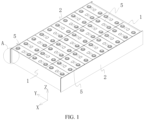
- a battery module is provided. Please refer to FIGS. 1 to 3 , where the battery module includes a battery cell group 5 and a welding assembly.
- the battery module has an X-direction, a Y-direction and a Z-direction.
- the battery cell group 5 includes a plurality of battery cells stacked together. A height of the battery cell is set to extend along the Z direction. A plurality of battery cells are stacked in the X direction.
- the battery module may include one or more battery cell groups 5. For example, as shown in FIG. 1 , the battery module may include three battery cell groups 5 arranged side by side in the Y direction.
- the welding assembly includes a first weldment 1 and a second weldment 2.
- the second weldment 2 is welded and fixed to the first weldment 1 and forms a welding seam 4.
- At least one side of the welding seam 4 is provided with an exhaust channel 3.
- the exhaust channel 3 is located between the first weldment 1 and the second weldment 2.
- Two first weldments 1 are located at both ends of the battery cell group 5 along the X direction, respectively.
- Two second weldments 2 are located at both sides of the battery cell group 5 along the Y direction, respectively.
- the adjacent first weldment 1 and second weldment 2 are welded and fixed.
- first weldment 1 and/or the second weldment 2 is partially melted to achieve joining of the first weldment 1 and the second weldment 2.
- the welding seam 4 is formed at a joint position of the first weldment 1 and the second weldment 2.
- the welding seam 4 conducts to the external environment through the exhaust channel 3.
- An exhaust gas generated during welding the first weldment 1 and the second weldment 2 may be discharged to the external environment through the exhaust channel 3, and will not enter the welding seam 4 to reduce the strength of the welding seam.
- the battery module will be further described below.
- any one of the first weldment 1 and the second weldment 2 is provided with a convex portion 120.
- the convex portion 120 is arranged in contact with the other one of the first weldment 1 and the second weldment 2, so that the first weldment 1 and the second weldment 2 are arranged at an interval to form the exhaust channel 3.
- the first weldment 1 is provided with the convex portion 120.
- the convex portion 120 protrudes from a surface of the first weldment 1 and extends to a set height.
- the convex portion 120 is arranged in contact with the second weldment 2, so that the first weldment 1 and the second weldment 2 are arranged at an interval to form the exhaust channel 3.
- the first weldment 1 may be provided with a convex portion 120.
- the convex portion 120 is disposed to extend along a width direction (the Z direction) of the first weldment 1 and extends to both ends of the first weldment 1 along the width direction (the Z direction).
- the first weldment 1 and the second weldment 2 may be naturally arranged at an interval to form the exhaust channel 3.
- the welding seam 4 may conduct the air on one side of the first weldment 1 along the X direction and the air on both sides along the Z direction through the exhaust channel 3.
- the exhaust gas generated during welding may be discharged to the air on one side of the first weldment 1 along the X direction and the air on both sides along the Z direction through the exhaust channel 3, and will not enter the welding seam 4 to reduce the strength of the welding seam.
- the first weldment 1 may be provided with at least two convex portions 120.
- Each convex portion 120 is disposed to extend along the width direction (the Z direction) of the first weldment 1 and extends to both ends of the first weldment 1 along the width direction (the Z direction).
- At least two convex portions 120 may be disposed at intervals in the X direction.
- the first weldment 1 is provided with two convex portions 120, and each convex portion 120 extends to both ends of the first weldment 1 along the width direction (the Z direction), and two convex portions 120 is disposed at intervals in the X direction.
- the first weldment 1 and the second weldment 2 are arranged at an interval to form the exhaust channel 3.
- the welding seam 4 may conduct the air on both sides of the first weldment 1 along the Z direction through the exhaust channel 3.
- the exhaust gas generated during welding may be discharged to the air on both sides along the Z direction to the first weldment 1 through the exhaust channel 3, and will not enter the welding seam 4 to reduce the strength of the welding seam.
- the first weldment 1 is provided with at least two convex portions 120, which is easy to assemble, so that the first weldment 1 and the second weldment 2 are stably overlapped, and the convex portion 120 and the second weldment 2 are in stable contact, which improves the stability of welding the first weldment 1 and the second weldment 2.
- a plurality of convex portions 120 may be disposed at intervals along the width direction (the Z direction) of the first weldment 1 to form a row.
- a plurality of convex portions 120 may be disposed at intervals along the width direction (the Z direction) of the first weldment 1 to form a row.
- four convex portions 120 are disposed at intervals along the width direction (the Z direction) of the first weldment 1 to form a row.
- the first weldment 1 and the second weldment 2 are naturally arranged at an interval to form the exhaust channel 3.
- the welding seam 4 may conduct the air on both sides of the first weldment 1 along the X direction and the air on both sides along the Z direction through the exhaust channel 3.
- the exhaust gas generated during welding may be discharged to the air on both sides of the first weldment 1 along the X direction and the air on both sides along the Z direction through the exhaust channel 3, and will not enter the welding seam 4 to reduce the strength of the welding seam.
- FIGS. 8 and 9 where a plurality of convex portions 120 are disposed at intervals along the width direction (the Z direction) of the first weldment 1to form a row.
- the first weldment 1 is provided with a plurality of rows disposed in the X direction. For example, as shown in FIG.
- the first weldment 1 is provided with eight convex portions 120, of which four convex portions 120 are disposed at intervals along the width direction (the Z direction) of the first weldment 1 to form a first row, the other four convex portions 120 are disposed at intervals along the width direction (the Z direction) of the first weldment 1 to form a second row, and the first row and the second row are disposed at intervals along the X direction.
- the first weldment 1 and the second weldment 2 are naturally arranged at an interval to form the exhaust channel 3.
- the welding seam 4 may conduct the air on both sides of the first weldment 1 along the X direction and the air on both sides along the Z direction through the exhaust channel 3.
- the exhaust gas generated during welding may be discharged to the air on both sides of the first weldment 1 along the X direction and the air on both sides along the Z direction through the exhaust channel 3, and will not enter the welding seam 4 to reduce the strength of the welding seam.
- the convex portions 120 on the first weldment 1 are arranged in so many rows, which is easy to assemble, so that the first weldment 1 and the second weldment 2 are stably overlapped, and the convex portions 120 and the second weldment 2 are in stable contact, which improves the stability of welding the first weldment 1 and the second weldment 2.
- first weldment 1 or the second weldment 2 may be arranged in relatively bending, so as to achieve welding and fixing between the first weldment 1 and the second weldment 2.
- first weldment 1 includes a first portion 10 and a second portion 12, and the first portion 10 and the second portion 12 are arranged in relatively bending.
- the second weldment 2 may be configured as a flat plate structure.
- the first portion 10 and the second weldment 2 are arranged vertically or approximately vertically.
- the convex portion 120 is arranged on the second portion 12.
- the convex portion 120 is arranged in contact with the second weldment 2, so that the second portion 12 and the second weldment 2 are arranged at an interval to form the exhaust channel 3.
- the second weldment 2 is penetrated and welded from a side of the second weldment 2 away from the first weldment 1, so as to weld and fix the first weldment 1 and the second weldment 2.
- the convex portion 120 is arranged on the first weldment 1, but not on the second weldment 2, which ensures the strength of the second weldment 2.
- the battery cell group 5 expands and deforms along the X direction, the battery cell group 5 applies an expansion pressure along the X direction to two first weldments 1; when two first weldments 1 move away from each other along the X direction, a tensile force is generated on the second weldment 2; if the convex portion 120 is arranged on the second weldment 2, the strength of the second weldment 2 will be reduced; and at this time, if the expansion force generates the tensile force on the second weldment 2, the welding seam 4 may crack, causing the battery module to fall apart.
- a protrusion height of the convex portion 120 may be set to be equal or unequal.
- a width of the exhaust channel 3 may be set to be equal or unequal.
- any one of the first weldment 1 and the second weldment 2 is provided with a concave portion 122.
- the concave portion 122 penetrates and extends to both ends of the first weldment 1 or the second weldment 2 along the width direction (the Z direction).
- the concave portion 122 and the other one of first weldment 1 and the second weldment 2 enclose to form the exhaust channel 3.
- the exhaust channel 3 correspondingly penetrate and extend to both ends of the first weldment 1 and the second weldment 2 along the width direction (the Z direction).
- the first weldment 1 is provided with the concave portion 122.
- the concave portion 122 penetrates and extends to both ends of the first weldment 1 along the width direction (the Z direction).
- the concave portion 122 and the second weldment 2 enclose to form the exhaust channel 3.
- the welding seam 4 may conduct the air on both sides of the first weldment 1 along the width direction (the Z direction) through the exhaust channel 3.
- the exhaust gas generated during welding may be discharged to the air on both sides of the first weldment 1 along the width direction (the Z direction) through the exhaust channel 3, and will not enter the welding seam 4 to reduce the strength of the welding seam.
- the first weldment 1 and the second weldment 2 may be stably overlapped, which is easy to assemble, so that the concave portion 122 and the second weldment 2 enclose to form the exhaust channel 3, which improves the stability of welding the first weldment 1 and the second weldment 2.
- the first weldment 1 may be provided with one or more concave portions 122.
- the first weldment 1 or the second weldment 2 may be arranged in relatively bending, so as to achieve welding and fixing of the first weldment 1 and the second weldment 2. More preferably, please continue to refer to FIG. 1 , and the first weldment 1 includes a first portion 10 and a second portion 12, and the first portion 10 and the second portion 12 are arranged in relatively bending.
- the second weldment 2 is configured as a flat plate structure.
- the first portion 10 and the second weldment 2 are arranged vertically or approximately vertically.
- the concave portion 122 is arranged on the first portion 10.
- the concave portion 122 and the second weldment 2 enclose to form the exhaust channel 3.
- first weldment 1 and the second weldment 2 may be penetrated and welded from the side of the second weldment 2 away from the first weldment 1, so as to weld and fix the first weldment 1 and the second weldment 2.
- the concave portion 122 is arranged on the first weldment 1, but not on the second weldment 2, which ensures the strength of the second weldment 2.
- both ends of the battery cell group 5 apply an expansion pressure to two first weldments 1 along the X direction, respectively.
- Two first weldments 1 move away from each other along the X direction.
- the concave portion 122 is arranged on the first weldment 1, which may ensure that the second weldment 2 is stretched and not damaged, thereby ensuring the connection stability of the entire battery module.
- a recess depth of the concave portion 122 may be set to be equal or unequal.
- a width of the exhaust channel 3 may be set to be equal or unequal.
- first weldment 1 includes a first portion 10 and a second portion 12, and the first portion 10 and the second portion 12 are arranged in relatively bending.
- the second weldment 2 may be configured as a flat plate structure. A corner of the first weldment 1 is arranged in contact with the second weldment 2.
- the first portion 10 and the second weldment 2 are arranged vertically or approximately vertically.
- An acute angle a is formed between the second portion 12 and the second weldment 2, so that the second portion 12 and the second weldment 2 are arranged at an interval to form the exhaust channel 3.
- the second portion 12 and the second weldment 2 are naturally arranged at an interval to form the exhaust channel 3.
- the welding seam 4 may conduct the air on one side of the second portion 12 along the X direction and the air on both sides along the Z direction through the exhaust channel 3.
- the exhaust gas generated during welding may be discharged to the air on one side of the second portion 12 along the X direction and the air on both sides along the Z direction through the exhaust channel 3, and will not enter the welding seam 4 to reduce the strength of the welding seam.
- the acute angle a formed between the second portion 12 and the second weldment 2 may be equal to or less than 20°.
- the acute angle a may be set to be 20°, 18°, 16°, 13°, 7° or other angles.
- the acute angle a may be equal to or less than 15°.
- the acute angle a may be set to be 15°, 12°, 10°, 8°, 6°, 5°, 4° or other angles.
- a spacing between the second portion 12 and the second weldment 2 at a position of the exhaust channel 3 is set to be unequal.
- a maximum spacing between first weldment 1 and the second weldment 2 at the position of the exhaust channel 3 is the width of the exhaust channel 3.
- the exhaust channel 3 needs to be set to be a moderate width to be able to discharge the exhaust gas generated during welding. However, if the width of the exhaust channel 3 is too small, the exhaust gas cannot be discharged in time. If the width of the exhaust channel 3 is too large, the welding of the first weldment 1 and the second weldment 2 is not reliable.
- the maximum spacing between the first weldment 1 and the second weldment 2 at the position of the exhaust channel 3 may be set to be 0.05 mm-0.5 mm.
- the maximum spacing W 1 can be set to be 0.05 mm, 0.08 mm, 0.2 mm, 0.3 mm, 0.4 mm or 0.5 mm, etc.
- the maximum spacing between the first weldment 1 and the second weldment 2 at the position of the exhaust channel 3 may set to be 0.1 mm-0.3 mm.
- the maximum spacing W 1 can be set to be 0.1 mm, 0.15 mm, 0.25 mm or 0.3 mm, etc.
- Such arrangement may ensure that the exhaust gas generated during welding is discharged in time, and meanwhile may ensure the reliability of welding the first weldment 1 and the second weldment 2.
- first weldment 1 and the second weldment 2 may be welded and fixed
- a welding method of the first weldment 1 and the second weldment 2 may be selected and configured as required, and the present application does not limit it exclusively.
- the first weldment 1 and the second weldment 2 may be welded and fixed by laser welding or by other welding methods.
- the first weldment 1 and the second weldment 2 may be clamped during welding, so as to achieve overlap of the first weldment 1 and the second weldment 2.
- the first weldment 1 and the second weldment 2 may be clamped by a tool during welding. Through clamping, a dimensional accuracy of the exhaust channel 3 may be effectively ensured, and stability and reliability of welding may be effectively ensured.
- the exhaust channel 3 may be naturally formed between the overlapped first weldment 1 and the second weldment 2.
- the structure is simple, which is easy to assemble, simplifying the assembly process and reducing the requirements for the tool.
- the first weldment and/or the second weldment are provided with a coating layer
- the coating layer vaporizes to form the exhaust gas when the first weldment and the second weldment are welded
- the exhaust gas that enters the welding seam will further reduce the strength of the welding seam; and a large amount of high-temperature exhaust gas will accumulate in the welding seam, resulting in an excessively high air pressure, and hole blasting and spattering phenomenon will occur at the welding seam.
- the hole blasting phenomenon will cause the strength and fatigue performance of the welding seam to become weak, and cause the difference in the strength of the welding seam to be too large, which affects the reliability of welding. Particles produced by the spattering phenomenon will fall and thus causing safety hazards.
- the particles generated by the spattering phenomenon may damage welding equipment.
- first weldment 1 and/or second weldment 2 includes a base layer 14, 24 and a coating layer 16, 26.
- the first weldment 1 includes a base layer 14 and a coating layer 16.
- the coating layer 16 is arranged on a surface of the base layer 14 to protect the base layer 14.
- a boiling point of the coating layer 16 is lower than a melting point of base layer 14.
- the second weldment 2 includes a base layer 24 and a coating layer 26.
- the coating layer 26 is arranged on a surface of the base layer 24 to protect the base layer 24.
- a boiling point of the coating layer 26 is lower than a melting point of base layer 24.
- the first weldment 1 includes a base layer 14 and a coating layer 16
- the second weldment 2 includes a base layer 24 and a coating layer 26.
- the coating layer 16 is arranged on a surface of the base layer 14, and a boiling point of the coating layer 16 is lower than a melting point of base layer 14.
- the coating layer 26 is arranged on a surface of the base layer 24, and a boiling point of the coating layer 26 is lower than a melting point of base layer 24. It may be understood that the base layer 14 and the base layer 24 may be configured to be the same or different, and the coating layer 16 and the coating layer 26 may be configured to be the same or different.
- the base layers 14, 24 need to be heated and melted to a liquid state to achieve joining. Since the boiling point of the coating layers 16, 26 is lower than the melting point of the base layers 14, 24, the coating layers 16, 26 will vaporize to form the exhaust gas under an action of the high temperature during welding.
- the exhaust gas may be discharged from the exhaust channel 3, and the exhaust gas will not enter the welding seam to reduce the strength of the welding seam. The exhaust gas will not accumulate in the welding seam 4, so as to prevent hole blasting and spattering phenomenon.
- a material of the coating layers 16, 26 may include one or more of zinc and magnesium.
- a boiling point of the coating layers 16, 26 is lower than a melting point of the base layers 14, 24.
- the base layers 14, 24 may be configured to be a metal base layer.
- a melting point of the metal base layer is greater than a boiling point of the coating layer 16, 26.
- the metal base layer may include one or more of steel and iron.
- the first weldment 1 and/or second weldment 2 may be configured as a galvanized plate.
- the galvanized plate is a steel plate coated with a protective layer of zinc on a surface, which may achieve an anti-corrosion function.
- the first weldment 1 is the galvanized plate.
- the second weldment 2 is a galvanized plate.
- the first weldment 1 and the second weldment 2 are both configured as the galvanized plate.
- a temperature at the welding seam is greater than 1500°C, and a boiling point of the zinc coating layer on the surface of the galvanized plate is only 907°C.
- the temperature at the welding seam is greater than the boiling point of the zinc protective layer.
- the zinc coating layer will vaporize to form a rapidly volatile zinc vapor.
- the zinc vapor and other exhaust gases may be discharged from the exhaust channel 3, and the zinc vapor and other exhaust gases will not be dissolved into the welding seam 4 to reduce the strength of the welding seam.
- the zinc vapor and other exhaust gases will not accumulate in the welding seam 4, so as to prevent hole blasting and spattering phenomenon.
- the welding assembly in the present embodiment is not limited to being respectively arranged on both ends and both sides of the battery cell group 5 to frame the battery cell group 5, and may also be arranged in other positions of the battery module.
- the welding assembly in the present embodiment is not limited to being used in battery modules.
- the welding assembly includes a first weldment 1 and a second weldment 2.
- the first weldment 1 and the second weldment 2 are welded and fixed and forms a welding seam 4.
- At least one side of the welding seam 4 is provided with an exhaust channel 3.
- the exhaust channel 3 is located between the first weldment 1 and the second weldment 2.
- first weldment 1 and/or the second weldment 2 is partially melted to achieve joining of the first weldment 1 and the second weldment 2.
- the welding seam 4 is formed at a joint position of the first weldment 1 and the second weldment 2.
- the welding seam 4 conducts to the external environment through the exhaust channel 3.
- the exhaust gas generated during welding the first weldment 1 and the second weldment 2 may be discharged to the external environment through the exhaust channel 3, and will not enter the welding seam 4 to reduce the strength of the welding seam.
Landscapes
- Engineering & Computer Science (AREA)
- Physics & Mathematics (AREA)
- Optics & Photonics (AREA)
- Plasma & Fusion (AREA)
- Mechanical Engineering (AREA)
- Chemical & Material Sciences (AREA)
- Chemical Kinetics & Catalysis (AREA)
- Electrochemistry (AREA)
- General Chemical & Material Sciences (AREA)
- Inorganic Chemistry (AREA)
- Battery Mounting, Suspending (AREA)
- Gas Exhaust Devices For Batteries (AREA)
Description
- The present application relates to the technical field of batteries, and in particular, relates to a welding assembly and a battery module.
- During welding process, workpieces to be joined need to be heated to partially melt the workpieces, so as to achieve joining between the workpieces, and the workpieces will form a welding seam at a joining position.
- During welding process, exhaust gases (such as carbon dioxide and hydrogen, etc.) are formed between the workpieces. However, since the existing welding is generally performed at the overlapping position of the workpieces, the exhaust gases cannot be discharged in time, and will enter the welding seam, resulting in reducing the strength of the formed welding seam.
- D1 (
EP1440761A1 ) discloses that a top piece of sheet steel is welded to a bottom piece of sheet steel by means of a fillet weld, wherein the top piece is welded along its front side and the bottom piece along its surface, and a laser beam is guided along a channel so as to create a laser beam fillet weld. Since the steel plate has a zinc coating on the top and bottom, this coating evaporates and oozes out in a specific direction. - D2 (
US4682002A1 ) discloses a method of laser welding sheet metal protected by using low-vaporizing-temperature materials, whereby, before being subjected to a laser welding beam along a weld area, two metal sheets are placed on top of each other in such a manner that at least one layer of the said protecting material is located between the sheets at the weld area and that the weld area communicates directly externally of the weld area between the sheets whereby gases generated by vaporization of said protective material may escape from the weld area. - D3 (
US2017/0341144A1 ) discloses laser welding in batteries. - In view of this, an embodiment of the present application provides a welding assembly and a battery module, which are beneficial to exhaust an exhaust gas generated during welding.
- In a first aspect, a battery module is provided. The battery module includes:
- a battery cell group; and
- a welding assembly, comprising two first weldment and two second weldment;
- where the two first weldments is located at two ends of the battery cell group, respectively;
- the two second weldments is located at both sides of the battery cell group, respectively; and
- the adjacent first weldment and the second weldment are welded and fixed;
- where the second weldment is welded and fixed to the first weldment, forming a welding seam;
- at least one side of the welding seam is provided with an exhaust channel; and
- the exhaust channel is located between the first weldment and the second weldment;.
- where the first weldment and/or the second weldment includes a base layer and a coating layer;
- the coating layer is arranged on a surface of the base layer; and
- a boiling point of the coating layer is lower than a melting point of the base layer.
- Alternatively, the base layer includes one or more of iron and steel; and
the coating layer includes one or more of zinc and magnesium. - Alternatively, the first weldment and/or the second weldment is a galvanized plate.
- Alternatively, a maximum spacing between the first weldment and the second weldment at a position of the exhaust channel is 0.05 mm-0.5 mm.
- Alternatively, a maximum spacing between the first weldment and the second weldment at the position of the exhaust channel is 0.1 mm-0.3 mm.
- Alternatively, one of the first weldment and the second weldment is provided with a convex portion; and
the convex portion is configured to be in contact with the other one of the first weldment and the second weldment, so that the first weldment and the second weldment are arranged at an interval to form the exhaust channel. - Alternatively, the first weldment is provided with the convex portion; and
the convex portion is configured to be in contact with the second weldment, so that the first weldment and the second weldment are arranged at an interval to form the exhaust channel. - Alternatively, the convex portion is configured to extend to both ends of the first weldment or the second weldment along a width direction.
- Alternatively, one of the first weldment and the second weldment is provided with a plurality of convex portions, the plurality of convex portions are disposed at intervals along a width direction of the first weldment or the second weldment.
- Alternatively, one of the first weldment and the second weldment is provided with a concave portion;
- the concave portion is configured to penetrate and extend to both ends of the first weldment or the second weldment along a width direction; and
- the concave portion and the other one of the first weldment and the second weldment are configured to enclose to form the exhaust channel.
- Alternatively, the first weldment is provided with the concave portion;
- the concave portion is configured to penetrate and extend to both ends of the first weldment along the width direction; and
- the concave portion and the second weldment are configured to enclose to form the exhaust channel.
- Alternatively, the first weldment includes a first portion and a second portion, and the first portion and the second portion are arranged in relatively bending;
- a corner of the first weldment is arranged in contact with the second weldment; and
- an acute angle is formed between the second portion and the second weldment to form the exhaust channel.
- Alternatively, the first weldment includes a first portion and a second portion, and the first portion and the second portion are arranged in relatively bending;
- the first portion and the second weldment are arranged vertically or approximately vertically; and
- the exhaust channel is provided between the second portion and the second weldment.
- In the welding assembly and the battery module provided in the embodiment of the present application, at least one side of the welding seam is provided with an exhaust channel; and the exhaust channel is located between the first weldment and the second weldment. An exhaust gas generated during welding may be discharged from the exhaust channel to prevent it from entering the welding seam to reduce the strength of the welding seam.
- It should be understood that, the foregoing general description and the coming detailed description are merely exemplary and cannot limit the present application.
- In In order to illustrate the technical solution in the embodiments of the present application more clearly, brief description will be made below to the drawings required in the embodiments, and apparently, the drawings described below are some embodiments of the present application only, and other drawings could be obtained based on these drawings by those ordinary skilled in this art without creative efforts.
-
FIG. 1 is a schematic structural diagram of a battery module provided by an embodiment of the present application; -
FIG. 2 is an enlarged schematic diagram at A inFIG. 1 ; -
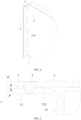
FIG. 3 is a sectional view taken along a direction of B-B inFIG. 2 ; -
FIG. 4 is an enlarged schematic diagram at A inFIG. 1 ; -
FIG. 5 is a sectional view taken along a direction of C-C inFIG. 4 ; -
FIG. 6 is an enlarged schematic diagram at A inFIG. 1 ; -
FIG. 7 is a sectional view taken along a direction of D-D inFIG. 6 ; -
FIG. 8 is an enlarged schematic diagram at A inFIG. 1 ; -
FIG. 9 is a sectional view taken along a direction of E-E inFIG. 8 ; -
FIG. 10 is an enlarged schematic diagram at A inFIG. 1 ; -
FIG. 11 is a sectional view taken along a direction of F-F inFIG. 10 ; -
FIG. 12 is a schematic structural diagram of a battery module provided by an embodiment of the present application; -
FIG. 13 is an enlarged schematic diagram at G inFIG. 12 ; -
FIG. 14 is a sectional view taken along a direction of H-H inFIG. 13 ; -
FIG. 15 is a schematic structural diagram of a first welding plate provided by an embodiment of the present application; and -
FIG. 16 is a schematic structural diagram of a second welding plate provided by an embodiment of the present application. -
- 1-a first weldment;
- 10-a first portion;
- 12-a second portion;
- 120-a convex portion;
- 122-a concave portion;
- 14-a base layer;
- 16-a coating layer;
- 2-a second well-meant;
- 24-a base layer;
- 26-a coating layer;
- 3-an exhaust channel;
- 4-a welding position;
- 5-a battery cell group.
- In order to better understand technical solutions in the present application, a detailed description of the technical solutions about the embodiments of the present application will be given below, in combination with the accompanying drawings.
- It should be clear that the described embodiments are merely some but not all of the embodiments of the present application. The invention is defined by the appended claims.
- Terms used in embodiments of the present application are merely for the purpose of describing particular embodiments, and are not intended to limit the present application. The use of a singular form of "a", "the" and "said" in the embodiment of the present application and the claims appended hereto are also intended to include a plural form, unless otherwise clearly indicated herein by context.
- It should be understood that the term "and/or" herein is merely a description of the associated relationship of associated objects, which indicates that there may be three relationships. For example, A and/or B may indicate three situations: A exists alone, both A and B exist, and B exists alone. In addition, the character "/" in this text generally indicates that the associated objects before and after the character are in an "or" relationship.
- It should be understood that, unless otherwise stated, "a plurality of" means two or more (including two), the terms "first", "second" and "third" are only intended for a purpose of description, and shall not be understood as indicating or implying relative importance and assembling sequence.
- Unless explicitly specified and defined otherwise, terms "installation", "interconnection", and "connection" should be understood broadly, for example, they may either be a fixed connection, or a detachable connection, or an integrated connection; and they may either be a direct connection, or an indirect connection through an intermediary. Those of ordinary skill in the art may understand the specific meanings of the foregoing terms in the present application according to specific conditions.
- In the description of this specification, it should be understood that the terms "substantially", "approximately", "or so", "about", "roughly" and "generally" described in the claims and embodiments of the present application refer to within a reasonable process operation range or tolerance range, which may be generally agreed, rather than an exact value.
- According to an embodiment of the present application, a battery module is provided. Please refer to
FIGS. 1 to 3 , where the battery module includes abattery cell group 5 and a welding assembly. The battery module has an X-direction, a Y-direction and a Z-direction. Thebattery cell group 5 includes a plurality of battery cells stacked together. A height of the battery cell is set to extend along the Z direction. A plurality of battery cells are stacked in the X direction. The battery module may include one or morebattery cell groups 5. For example, as shown inFIG. 1 , the battery module may include threebattery cell groups 5 arranged side by side in the Y direction. - The welding assembly includes a
first weldment 1 and asecond weldment 2. Thesecond weldment 2 is welded and fixed to thefirst weldment 1 and forms awelding seam 4. At least one side of thewelding seam 4 is provided with anexhaust channel 3. Theexhaust channel 3 is located between thefirst weldment 1 and thesecond weldment 2. - Two
first weldments 1 are located at both ends of thebattery cell group 5 along the X direction, respectively. Twosecond weldments 2 are located at both sides of thebattery cell group 5 along the Y direction, respectively. The adjacentfirst weldment 1 andsecond weldment 2 are welded and fixed. - During welding, the
first weldment 1 and/or thesecond weldment 2 is partially melted to achieve joining of thefirst weldment 1 and thesecond weldment 2. Thewelding seam 4 is formed at a joint position of thefirst weldment 1 and thesecond weldment 2. - The
welding seam 4 conducts to the external environment through theexhaust channel 3. An exhaust gas generated during welding thefirst weldment 1 and thesecond weldment 2 may be discharged to the external environment through theexhaust channel 3, and will not enter thewelding seam 4 to reduce the strength of the welding seam. - In order to more fully describe the exhaust structure and direction of the
exhaust channel 3 in the embodiment of the present application, the battery module will be further described below. - There are many ways to shape the
exhaust channel 3. The following describes the shaping structure of theexhaust channel 3 with an example. - In an alternative example, please refer to
FIG. 2 to FIG. 9 , where any one of thefirst weldment 1 and thesecond weldment 2 is provided with aconvex portion 120. Theconvex portion 120 is arranged in contact with the other one of thefirst weldment 1 and thesecond weldment 2, so that thefirst weldment 1 and thesecond weldment 2 are arranged at an interval to form theexhaust channel 3. - More preferably, the
first weldment 1 is provided with theconvex portion 120. Theconvex portion 120 protrudes from a surface of thefirst weldment 1 and extends to a set height. Theconvex portion 120 is arranged in contact with thesecond weldment 2, so that thefirst weldment 1 and thesecond weldment 2 are arranged at an interval to form theexhaust channel 3. - In the example, please refer to
FIG. 2 and FIG. 3 , where thefirst weldment 1 may be provided with aconvex portion 120. Theconvex portion 120 is disposed to extend along a width direction (the Z direction) of thefirst weldment 1 and extends to both ends of thefirst weldment 1 along the width direction (the Z direction). - When the
convex portion 120 is arranged in contact with thesecond weldment 2, thefirst weldment 1 and thesecond weldment 2 may be naturally arranged at an interval to form theexhaust channel 3. Thewelding seam 4 may conduct the air on one side of thefirst weldment 1 along the X direction and the air on both sides along the Z direction through theexhaust channel 3. The exhaust gas generated during welding may be discharged to the air on one side of thefirst weldment 1 along the X direction and the air on both sides along the Z direction through theexhaust channel 3, and will not enter thewelding seam 4 to reduce the strength of the welding seam. - In the example, please refer to
FIG. 4 and FIG. 5 , where thefirst weldment 1 may be provided with at least twoconvex portions 120. Eachconvex portion 120 is disposed to extend along the width direction (the Z direction) of thefirst weldment 1 and extends to both ends of thefirst weldment 1 along the width direction (the Z direction). At least twoconvex portions 120 may be disposed at intervals in the X direction. For example, as shown inFIG. 4 , thefirst weldment 1 is provided with twoconvex portions 120, and eachconvex portion 120 extends to both ends of thefirst weldment 1 along the width direction (the Z direction), and twoconvex portions 120 is disposed at intervals in the X direction. - When the
convex portion 120 is arranged in contact with thesecond weldment 2, thefirst weldment 1 and thesecond weldment 2 are arranged at an interval to form theexhaust channel 3. Thewelding seam 4 may conduct the air on both sides of thefirst weldment 1 along the Z direction through theexhaust channel 3. The exhaust gas generated during welding may be discharged to the air on both sides along the Z direction to thefirst weldment 1 through theexhaust channel 3, and will not enter thewelding seam 4 to reduce the strength of the welding seam. - The
first weldment 1 is provided with at least twoconvex portions 120, which is easy to assemble, so that thefirst weldment 1 and thesecond weldment 2 are stably overlapped, and theconvex portion 120 and thesecond weldment 2 are in stable contact, which improves the stability of welding thefirst weldment 1 and thesecond weldment 2. - In the example, please refer to
FIG. 6 and FIG. 7 , where a plurality ofconvex portions 120 may be disposed at intervals along the width direction (the Z direction) of thefirst weldment 1 to form a row. For example, as shown inFIG. 6 , fourconvex portions 120 are disposed at intervals along the width direction (the Z direction) of thefirst weldment 1 to form a row. - When the
convex portion 120 is arranged in contact with thesecond weldment 2, thefirst weldment 1 and thesecond weldment 2 are naturally arranged at an interval to form theexhaust channel 3. Thewelding seam 4 may conduct the air on both sides of thefirst weldment 1 along the X direction and the air on both sides along the Z direction through theexhaust channel 3. The exhaust gas generated during welding may be discharged to the air on both sides of thefirst weldment 1 along the X direction and the air on both sides along the Z direction through theexhaust channel 3, and will not enter thewelding seam 4 to reduce the strength of the welding seam. - In the example, please refer to
FIGS. 8 and 9 , where a plurality ofconvex portions 120 are disposed at intervals along the width direction (the Z direction) of the first weldment 1to form a row. Thefirst weldment 1 is provided with a plurality of rows disposed in the X direction. For example, as shown inFIG. 8 , thefirst weldment 1 is provided with eightconvex portions 120, of which fourconvex portions 120 are disposed at intervals along the width direction (the Z direction) of thefirst weldment 1 to form a first row, the other fourconvex portions 120 are disposed at intervals along the width direction (the Z direction) of thefirst weldment 1 to form a second row, and the first row and the second row are disposed at intervals along the X direction. - When the
convex portion 120 is arranged in contact with thesecond weldment 2, thefirst weldment 1 and thesecond weldment 2 are naturally arranged at an interval to form theexhaust channel 3. Thewelding seam 4 may conduct the air on both sides of thefirst weldment 1 along the X direction and the air on both sides along the Z direction through theexhaust channel 3. The exhaust gas generated during welding may be discharged to the air on both sides of thefirst weldment 1 along the X direction and the air on both sides along the Z direction through theexhaust channel 3, and will not enter thewelding seam 4 to reduce the strength of the welding seam. - The
convex portions 120 on thefirst weldment 1 are arranged in so many rows, which is easy to assemble, so that thefirst weldment 1 and thesecond weldment 2 are stably overlapped, and theconvex portions 120 and thesecond weldment 2 are in stable contact, which improves the stability of welding thefirst weldment 1 and thesecond weldment 2. - In the example, please refer to
FIG. 2 ,FIG. 4 ,FIG. 6 andFIG. 8 , where thefirst weldment 1 or thesecond weldment 2 may be arranged in relatively bending, so as to achieve welding and fixing between thefirst weldment 1 and thesecond weldment 2. More preferably, thefirst weldment 1 includes afirst portion 10 and asecond portion 12, and thefirst portion 10 and thesecond portion 12 are arranged in relatively bending. Thesecond weldment 2 may be configured as a flat plate structure. Thefirst portion 10 and thesecond weldment 2 are arranged vertically or approximately vertically. Theconvex portion 120 is arranged on thesecond portion 12. Theconvex portion 120 is arranged in contact with thesecond weldment 2, so that thesecond portion 12 and thesecond weldment 2 are arranged at an interval to form theexhaust channel 3. During welding, thesecond weldment 2 is penetrated and welded from a side of thesecond weldment 2 away from thefirst weldment 1, so as to weld and fix thefirst weldment 1 and thesecond weldment 2. - The
convex portion 120 is arranged on thefirst weldment 1, but not on thesecond weldment 2, which ensures the strength of thesecond weldment 2. When thebattery cell group 5 expands and deforms along the X direction, thebattery cell group 5 applies an expansion pressure along the X direction to twofirst weldments 1; when twofirst weldments 1 move away from each other along the X direction, a tensile force is generated on thesecond weldment 2; if theconvex portion 120 is arranged on thesecond weldment 2, the strength of thesecond weldment 2 will be reduced; and at this time, if the expansion force generates the tensile force on thesecond weldment 2, thewelding seam 4 may crack, causing the battery module to fall apart. - In the example, a protrusion height of the
convex portion 120 may be set to be equal or unequal. Correspondingly, a width of theexhaust channel 3 may be set to be equal or unequal. - In another alternative example, please refer to
FIGS. 10 and 11 , where any one of thefirst weldment 1 and thesecond weldment 2 is provided with a concave portion 122. The concave portion 122 penetrates and extends to both ends of thefirst weldment 1 or thesecond weldment 2 along the width direction (the Z direction). The concave portion 122 and the other one offirst weldment 1 and thesecond weldment 2 enclose to form theexhaust channel 3. Theexhaust channel 3 correspondingly penetrate and extend to both ends of thefirst weldment 1 and thesecond weldment 2 along the width direction (the Z direction). - More preferably, the
first weldment 1 is provided with the concave portion 122. The concave portion 122 penetrates and extends to both ends of thefirst weldment 1 along the width direction (the Z direction). The concave portion 122 and thesecond weldment 2 enclose to form theexhaust channel 3. Thewelding seam 4 may conduct the air on both sides of thefirst weldment 1 along the width direction (the Z direction) through theexhaust channel 3. The exhaust gas generated during welding may be discharged to the air on both sides of thefirst weldment 1 along the width direction (the Z direction) through theexhaust channel 3, and will not enter thewelding seam 4 to reduce the strength of the welding seam. - The
first weldment 1 and thesecond weldment 2 may be stably overlapped, which is easy to assemble, so that the concave portion 122 and thesecond weldment 2 enclose to form theexhaust channel 3, which improves the stability of welding thefirst weldment 1 and thesecond weldment 2. - In the example, the
first weldment 1 may be provided with one or more concave portions 122. - In the example, the
first weldment 1 or thesecond weldment 2 may be arranged in relatively bending, so as to achieve welding and fixing of thefirst weldment 1 and thesecond weldment 2. More preferably, please continue to refer toFIG. 1 , and thefirst weldment 1 includes afirst portion 10 and asecond portion 12, and thefirst portion 10 and thesecond portion 12 are arranged in relatively bending. Thesecond weldment 2 is configured as a flat plate structure. Thefirst portion 10 and thesecond weldment 2 are arranged vertically or approximately vertically. The concave portion 122 is arranged on thefirst portion 10. The concave portion 122 and thesecond weldment 2 enclose to form theexhaust channel 3. During welding, thefirst weldment 1 and thesecond weldment 2 may be penetrated and welded from the side of thesecond weldment 2 away from thefirst weldment 1, so as to weld and fix thefirst weldment 1 and thesecond weldment 2. - The concave portion 122 is arranged on the
first weldment 1, but not on thesecond weldment 2, which ensures the strength of thesecond weldment 2. When thebattery cell group 5 expands and deforms along the X direction, both ends of thebattery cell group 5 apply an expansion pressure to twofirst weldments 1 along the X direction, respectively. Twofirst weldments 1 move away from each other along the X direction. The concave portion 122 is arranged on thefirst weldment 1, which may ensure that thesecond weldment 2 is stretched and not damaged, thereby ensuring the connection stability of the entire battery module. - In the example, a recess depth of the concave portion 122 may be set to be equal or unequal. Correspondingly, a width of the
exhaust channel 3 may be set to be equal or unequal. - In another alternative example, please refer to
FIG. 12 to FIG. 14 , where thefirst weldment 1 includes afirst portion 10 and asecond portion 12, and thefirst portion 10 and thesecond portion 12 are arranged in relatively bending. Thesecond weldment 2 may be configured as a flat plate structure. A corner of thefirst weldment 1 is arranged in contact with thesecond weldment 2. Thefirst portion 10 and thesecond weldment 2 are arranged vertically or approximately vertically. An acute angle a is formed between thesecond portion 12 and thesecond weldment 2, so that thesecond portion 12 and thesecond weldment 2 are arranged at an interval to form theexhaust channel 3. - When the corner of the
first weldment 1 is arranged in contact with thesecond weldment 2, thesecond portion 12 and thesecond weldment 2 are naturally arranged at an interval to form theexhaust channel 3. Thewelding seam 4 may conduct the air on one side of thesecond portion 12 along the X direction and the air on both sides along the Z direction through theexhaust channel 3. The exhaust gas generated during welding may be discharged to the air on one side of thesecond portion 12 along the X direction and the air on both sides along the Z direction through theexhaust channel 3, and will not enter thewelding seam 4 to reduce the strength of the welding seam. - In the example, the acute angle a formed between the
second portion 12 and thesecond weldment 2 may be equal to or less than 20°. For example, the acute angle a may be set to be 20°, 18°, 16°, 13°, 7° or other angles. - More preferably, the acute angle a may be equal to or less than 15°. For example, the acute angle a may be set to be 15°, 12°, 10°, 8°, 6°, 5°, 4° or other angles.
- In the example, a spacing between the
second portion 12 and thesecond weldment 2 at a position of theexhaust channel 3 is set to be unequal. - A maximum spacing between
first weldment 1 and thesecond weldment 2 at the position of theexhaust channel 3 is the width of theexhaust channel 3. Theexhaust channel 3 needs to be set to be a moderate width to be able to discharge the exhaust gas generated during welding. However, if the width of theexhaust channel 3 is too small, the exhaust gas cannot be discharged in time. If the width of theexhaust channel 3 is too large, the welding of thefirst weldment 1 and thesecond weldment 2 is not reliable. - In an alternative example, as shown in the figures, the maximum spacing between the
first weldment 1 and thesecond weldment 2 at the position of theexhaust channel 3 may be set to be 0.05 mm-0.5 mm. For example, the maximum spacing W 1 can be set to be 0.05 mm, 0.08 mm, 0.2 mm, 0.3 mm, 0.4 mm or 0.5 mm, etc. - Furthermore, the maximum spacing between the
first weldment 1 and thesecond weldment 2 at the position of theexhaust channel 3 may set to be 0.1 mm-0.3 mm. For example, the maximum spacing W 1 can be set to be 0.1 mm, 0.15 mm, 0.25 mm or 0.3 mm, etc. - Such arrangement may ensure that the exhaust gas generated during welding is discharged in time, and meanwhile may ensure the reliability of welding the
first weldment 1 and thesecond weldment 2. - As long as the
first weldment 1 and thesecond weldment 2 may be welded and fixed, a welding method of thefirst weldment 1 and thesecond weldment 2 may be selected and configured as required, and the present application does not limit it exclusively. For example, thefirst weldment 1 and thesecond weldment 2 may be welded and fixed by laser welding or by other welding methods. - In order to realize reliable and stable welding of the
first weldment 1 and thesecond weldment 2, alternatively, thefirst weldment 1 and thesecond weldment 2 may be clamped during welding, so as to achieve overlap of thefirst weldment 1 and thesecond weldment 2. For example, thefirst weldment 1 and thesecond weldment 2 may be clamped by a tool during welding. Through clamping, a dimensional accuracy of theexhaust channel 3 may be effectively ensured, and stability and reliability of welding may be effectively ensured. - As mentioned above, by the
convex portion 120 arranged on thefirst weldment 1 or thesecond weldment 2, or the concave portion 122 arranged on thefirst weldment 1 or thesecond weldment 2, or the angel arranged between thefirst weldment 1 and thesecond weldment 2, theexhaust channel 3 may be naturally formed between the overlappedfirst weldment 1 and thesecond weldment 2. The structure is simple, which is easy to assemble, simplifying the assembly process and reducing the requirements for the tool. - In order to more fully describe the material and structure of the first weldment and the second weldment in the embodiment of the present application, the welding assembly will be further described below.
- However, when the first weldment and/or the second weldment are provided with a coating layer, if the coating layer vaporizes to form the exhaust gas when the first weldment and the second weldment are welded, the exhaust gas that enters the welding seam will further reduce the strength of the welding seam; and a large amount of high-temperature exhaust gas will accumulate in the welding seam, resulting in an excessively high air pressure, and hole blasting and spattering phenomenon will occur at the welding seam. The hole blasting phenomenon will cause the strength and fatigue performance of the welding seam to become weak, and cause the difference in the strength of the welding seam to be too large, which affects the reliability of welding. Particles produced by the spattering phenomenon will fall and thus causing safety hazards. The particles generated by the spattering phenomenon may damage welding equipment.
- Please refer to
FIG. 15 and FIG. 16 , where thefirst weldment 1 and/orsecond weldment 2 includes abase layer coating layer - For example, the
first weldment 1 includes abase layer 14 and acoating layer 16. Thecoating layer 16 is arranged on a surface of thebase layer 14 to protect thebase layer 14. A boiling point of thecoating layer 16 is lower than a melting point ofbase layer 14. - For another example, the
second weldment 2 includes abase layer 24 and acoating layer 26. Thecoating layer 26 is arranged on a surface of thebase layer 24 to protect thebase layer 24. A boiling point of thecoating layer 26 is lower than a melting point ofbase layer 24. - For another example, the
first weldment 1 includes abase layer 14 and acoating layer 16, and thesecond weldment 2 includes abase layer 24 and acoating layer 26. Thecoating layer 16 is arranged on a surface of thebase layer 14, and a boiling point of thecoating layer 16 is lower than a melting point ofbase layer 14. Thecoating layer 26 is arranged on a surface of thebase layer 24, and a boiling point of thecoating layer 26 is lower than a melting point ofbase layer 24. It may be understood that thebase layer 14 and thebase layer 24 may be configured to be the same or different, and thecoating layer 16 and thecoating layer 26 may be configured to be the same or different. - During welding, the base layers 14, 24 need to be heated and melted to a liquid state to achieve joining. Since the boiling point of the coating layers 16, 26 is lower than the melting point of the base layers 14, 24, the coating layers 16, 26 will vaporize to form the exhaust gas under an action of the high temperature during welding. The exhaust gas may be discharged from the
exhaust channel 3, and the exhaust gas will not enter the welding seam to reduce the strength of the welding seam. The exhaust gas will not accumulate in thewelding seam 4, so as to prevent hole blasting and spattering phenomenon. - In the example, a material of the coating layers 16, 26 may include one or more of zinc and magnesium. A boiling point of the coating layers 16, 26 is lower than a melting point of the base layers 14, 24.
- The base layers 14, 24 may be configured to be a metal base layer. A melting point of the metal base layer is greater than a boiling point of the
coating layer - In the example, the
first weldment 1 and/orsecond weldment 2 may be configured as a galvanized plate. The galvanized plate is a steel plate coated with a protective layer of zinc on a surface, which may achieve an anti-corrosion function. For example, thefirst weldment 1 is the galvanized plate. For another example, thesecond weldment 2 is a galvanized plate. For another example, thefirst weldment 1 and thesecond weldment 2 are both configured as the galvanized plate. - When the galvanized plate is welded, a temperature at the welding seam is greater than 1500°C, and a boiling point of the zinc coating layer on the surface of the galvanized plate is only 907°C. The temperature at the welding seam is greater than the boiling point of the zinc protective layer. During welding, the zinc coating layer will vaporize to form a rapidly volatile zinc vapor.
- The zinc vapor and other exhaust gases may be discharged from the
exhaust channel 3, and the zinc vapor and other exhaust gases will not be dissolved into thewelding seam 4 to reduce the strength of the welding seam. The zinc vapor and other exhaust gases will not accumulate in thewelding seam 4, so as to prevent hole blasting and spattering phenomenon. - It should be noted that each example of the present application may be used in combination or alone according to needs.
- The welding assembly in the present embodiment is not limited to being respectively arranged on both ends and both sides of the
battery cell group 5 to frame thebattery cell group 5, and may also be arranged in other positions of the battery module. - The welding assembly in the present embodiment is not limited to being used in battery modules.
- As shown in
FIG. 2 to FIG. 11 andFIG. 13 to FIG. 16 , the welding assembly includes afirst weldment 1 and asecond weldment 2. Thefirst weldment 1 and thesecond weldment 2 are welded and fixed and forms awelding seam 4. At least one side of thewelding seam 4 is provided with anexhaust channel 3. Theexhaust channel 3 is located between thefirst weldment 1 and thesecond weldment 2. - During welding, the
first weldment 1 and/or thesecond weldment 2 is partially melted to achieve joining of thefirst weldment 1 and thesecond weldment 2. Thewelding seam 4 is formed at a joint position of thefirst weldment 1 and thesecond weldment 2. - The
welding seam 4 conducts to the external environment through theexhaust channel 3. The exhaust gas generated during welding thefirst weldment 1 and thesecond weldment 2 may be discharged to the external environment through theexhaust channel 3, and will not enter thewelding seam 4 to reduce the strength of the welding seam.
Claims (13)
- A battery module, wherein comprising:a battery cell group (5); anda welding assembly, comprising two first weldment (1) and two second weldment (2);wherein the two first weldments (1) is located at two ends of the battery cell group (5), respectively;the two second weldments (2) is located at both sides of the battery cell group (5), respectively; andthe adjacent first weldment (1) and the second weldment (2) are welded and fixed;wherein the second weldment (2) is welded and fixed to the first weldment (1), and forming a welding seam (4);at least one side of the welding seam (4) is provided with an exhaust channel (3); andthe exhaust channel (3) is located between the first weldment (1) and the second weldment (2);wherein the first weldment (1) and/or the second weldment (2) comprises a base layer (14, 24) and a coating layer (16, 26);the coating layer (16, 26) is arranged on a surface of the base layer (14, 24); anda boiling point of the coating layer (16, 26) is lower than a melting point of the base layer (14, 24).
- The battery module according to claim 1, wherein,a material of the base layer (14, 24) comprises one or more of iron and steel; anda material of the coating layer (16, 26) comprises one or more of zinc and magnesium.
- The battery module according to claim 1 or 2, wherein,
the first weldment (1) and/or the second weldment (2) is a galvanized plate. - The battery module according to any one of claims 1 to 3, wherein,
a maximum spacing between the first weldment (1) and the second weldment (2) at a position of the exhaust channel (3) is 0.05 mm-0.5 mm. - The battery module according to any one of claims 1 to 4, wherein,
a maximum spacing between the first weldment (1) and the second weldment (2) at the position of the exhaust channel (3) is 0.1 mm-0.3 mm. - The battery module according to any one of claims 1 to 5, wherein,one of the first weldment (1) and the second weldment (2) is provided with a convex portion (120); andthe convex portion (120) is arranged in contact with the other one of the first weldment (1) and the second weldment (2), so that the first weldment (1) and the second weldment (2) are arranged at an interval to form the exhaust channel (3).
- The battery module according to claim 6, wherein,the first weldment (1) is provided with the convex portion (120); andthe convex portion (120) is arranged in contact with the second weldment (2), so that the first weldment (1) and the second weldment (2) are arranged at an interval to form the exhaust channel (3).
- The battery module according to claim 6 or 7, wherein,
the convex portion (120) extends to both ends of the first weldment (1) or the second weldment (2) along a width direction. - The battery module according to any one of claims 6 to 8, wherein,
one of the first weldment (1) and the second weldment (2) is provided with a plurality of convex portions (120), the plurality of convex portions (120) are disposed at intervals along a width direction of the first weldment (1) or the second weldment (2). - The battery module according to any one of claims 1 to 9, wherein,one of the first weldment (1) and the second weldment (2) is provided with a concave portion (122);the concave portion (122) penetrates and extends to both ends of the first weldment (1) or the second weldment (2) along a width direction; andthe concave portion (122) and the other one of the first weldment (1) and the second weldment (2) enclose to form the exhaust channel (3).
- The battery module according to claim 10, wherein,the first weldment (1) is provided with the concave portion (122);the concave portion (122) penetrates and extends to both ends of the first weldment (1) along the width direction; andthe concave portion (122) and the second weldment (2) enclose to form the exhaust channel (3).
- The battery module according to any one of claims 1 to 11, wherein,the first weldment (1) comprises a first portion (10) and a second portion (12), and the first portion (10) and the second portion (12) are arranged in relatively bending;a corner of the first weldment (1) is arranged in contact with the second weldment (2); andan acute angle (a) is formed between the second portion (12) and the second weldment (2) to form the exhaust channel (3).
- The battery module according to any one of claims 1 to 12, wherein,the first weldment (1) comprises a first portion (10) and a second portion (12), and the first portion (10) and the second portion (12) are arranged in relatively bending;the first portion (10) and the second weldment (2) are arranged vertically or approximately vertically; andthe exhaust channel (3) is provided between the second portion (12) and the second weldment (2).
Applications Claiming Priority (2)
| Application Number | Priority Date | Filing Date | Title |
|---|---|---|---|
| CN201920164844.8U CN209550932U (en) | 2019-01-30 | 2019-01-30 | Welded components and battery modules |
| PCT/CN2019/075363 WO2020155201A1 (en) | 2019-01-30 | 2019-02-18 | Welding assembly and battery module |
Publications (3)
| Publication Number | Publication Date |
|---|---|
| EP3905373A1 EP3905373A1 (en) | 2021-11-03 |
| EP3905373A4 EP3905373A4 (en) | 2022-06-01 |
| EP3905373B1 true EP3905373B1 (en) | 2023-11-15 |
Family
ID=68310088
Family Applications (1)
| Application Number | Title | Priority Date | Filing Date |
|---|---|---|---|
| EP19912722.6A Active EP3905373B1 (en) | 2019-01-30 | 2019-02-18 | Welding assembly and battery module |
Country Status (5)
| Country | Link |
|---|---|
| US (1) | US12186831B2 (en) |
| EP (1) | EP3905373B1 (en) |
| CN (1) | CN209550932U (en) |
| HU (1) | HUE065968T2 (en) |
| WO (1) | WO2020155201A1 (en) |
Families Citing this family (3)
| Publication number | Priority date | Publication date | Assignee | Title |
|---|---|---|---|---|
| CN114871621A (en) * | 2022-05-10 | 2022-08-09 | 苏州亿创特智能制造有限公司 | Rolled section bar connecting structure, rolled section bar and preparation method thereof |
| KR20240057122A (en) * | 2022-10-24 | 2024-05-02 | 에스케이온 주식회사 | Battery module |
| CN121529118A (en) * | 2026-01-13 | 2026-02-13 | 宁德时代新能源科技股份有限公司 | Battery assembly, welding fixtures and welding methods |
Citations (1)
| Publication number | Priority date | Publication date | Assignee | Title |
|---|---|---|---|---|
| US20170341144A1 (en) * | 2016-04-29 | 2017-11-30 | Nuburu, Inc. | Visible Laser Welding of Electronic Packaging, Automotive Electrics, Battery and Other Components |
Family Cites Families (5)
| Publication number | Priority date | Publication date | Assignee | Title |
|---|---|---|---|---|
| IT1182277B (en) * | 1984-09-20 | 1987-10-05 | Prima Progetti Spa | METHOD FOR LASER WELDING OF METAL SHEETS PROTECTED WITH MATERIALS AT LOW VAPORIZATION TEMPERATURE |
| ES2251724T3 (en) * | 1995-11-04 | 2006-05-01 | Volkswagen Aktiengesellschaft | LASER WELDING PROCEDURE FOR COATED STEEL SHEETS. |
| JP5116235B2 (en) * | 2006-01-23 | 2013-01-09 | 三洋電機株式会社 | Sealed battery |
| WO2013132673A1 (en) * | 2012-03-05 | 2013-09-12 | 新日鉄住金マテリアルズ株式会社 | Resin-metal composite seal container and method for producing same |
| CN207800714U (en) * | 2018-02-05 | 2018-08-31 | 宁德时代新能源科技股份有限公司 | Shell and battery modules for battery modules |
-
2019
- 2019-01-30 CN CN201920164844.8U patent/CN209550932U/en active Active
- 2019-02-18 WO PCT/CN2019/075363 patent/WO2020155201A1/en not_active Ceased
- 2019-02-18 HU HUE19912722A patent/HUE065968T2/en unknown
- 2019-02-18 EP EP19912722.6A patent/EP3905373B1/en active Active
-
2021
- 2021-07-29 US US17/388,342 patent/US12186831B2/en active Active
Patent Citations (1)
| Publication number | Priority date | Publication date | Assignee | Title |
|---|---|---|---|---|
| US20170341144A1 (en) * | 2016-04-29 | 2017-11-30 | Nuburu, Inc. | Visible Laser Welding of Electronic Packaging, Automotive Electrics, Battery and Other Components |
Also Published As
| Publication number | Publication date |
|---|---|
| US20210354241A1 (en) | 2021-11-18 |
| HUE065968T2 (en) | 2024-06-28 |
| EP3905373A1 (en) | 2021-11-03 |
| WO2020155201A1 (en) | 2020-08-06 |
| US12186831B2 (en) | 2025-01-07 |
| EP3905373A4 (en) | 2022-06-01 |
| CN209550932U (en) | 2019-10-29 |
Similar Documents
| Publication | Publication Date | Title |
|---|---|---|
| US12186831B2 (en) | Welding assembly and battery module | |
| US9375804B2 (en) | Low pressure electron beam welding of Li-ion battery connections | |
| US20240173800A1 (en) | Laser welding metal foil stack to metal substrate | |
| KR101731329B1 (en) | Battery module and tab welding method | |
| KR102721399B1 (en) | Honeycomb panel and its manufacturing method, and housing | |
| JPH08315790A (en) | Welding method for closed container of prismatic battery | |
| EP4275831A1 (en) | Electrode tab welding method and secondary battery including electrode assembly | |
| EP2716399B1 (en) | Method of manufacturing an automobile frame | |
| EP4300704A1 (en) | Cylindrical battery cell having spiral welding part, and battery module comprising same | |
| US11618103B2 (en) | Method and clamping fixture for laser welding battery foils to a battery tab | |
| KR101838382B1 (en) | Sealed battery and a method for manufacturing the same | |
| JP2011159445A (en) | Battery device and inter-terminal connection method of the same | |
| CN107685188B (en) | Method and joint for welding sheets of dissimilar materials | |
| JP7654612B2 (en) | Battery cell and manufacturing method thereof | |
| EP3763473B1 (en) | Joining structure and joining method | |
| WO2023243122A1 (en) | Metal welded structure, battery pack using same, and battery pack production method | |
| JP4232024B2 (en) | Weld bead structure and welding method | |
| JP2009263951A (en) | Side plate and column-beam joint structure | |
| CN119115273B (en) | Connection structure and laser welding method | |
| CN102689094A (en) | Beam welding of a multi-sheet work stack with a single common welding interface | |
| KR20220148589A (en) | Battery case cooling block device for a electric vehicle and manufacturing method therefor | |
| JP7750729B2 (en) | Battery pack manufacturing method | |
| CN120637755B (en) | A battery pack and an electrical device | |
| US20260027654A1 (en) | Welding method and welding structure | |
| WO2025142710A1 (en) | Metal structure, housing, battery module, and battery pack |
Legal Events
| Date | Code | Title | Description |
|---|---|---|---|
| STAA | Information on the status of an ep patent application or granted ep patent |
Free format text: STATUS: THE INTERNATIONAL PUBLICATION HAS BEEN MADE |
|
| PUAI | Public reference made under article 153(3) epc to a published international application that has entered the european phase |
Free format text: ORIGINAL CODE: 0009012 |
|
| STAA | Information on the status of an ep patent application or granted ep patent |
Free format text: STATUS: REQUEST FOR EXAMINATION WAS MADE |
|
| 17P | Request for examination filed |
Effective date: 20210728 |
|
| AK | Designated contracting states |
Kind code of ref document: A1 Designated state(s): AL AT BE BG CH CY CZ DE DK EE ES FI FR GB GR HR HU IE IS IT LI LT LU LV MC MK MT NL NO PL PT RO RS SE SI SK SM TR |
|
| REG | Reference to a national code |
Ref country code: DE Ref legal event code: R079 Free format text: PREVIOUS MAIN CLASS: H01M0002100000 Ipc: H01M0050224000 Ref document number: 602019041706 Country of ref document: DE |
|
| DAV | Request for validation of the european patent (deleted) | ||
| DAX | Request for extension of the european patent (deleted) | ||
| A4 | Supplementary search report drawn up and despatched |
Effective date: 20220429 |
|
| RIC1 | Information provided on ipc code assigned before grant |
Ipc: B23K 26/00 20140101ALI20220422BHEP Ipc: H01M 50/209 20210101ALI20220422BHEP Ipc: H01M 50/224 20210101AFI20220422BHEP |
|
| STAA | Information on the status of an ep patent application or granted ep patent |
Free format text: STATUS: EXAMINATION IS IN PROGRESS |
|
| 17Q | First examination report despatched |
Effective date: 20230324 |
|
| GRAP | Despatch of communication of intention to grant a patent |
Free format text: ORIGINAL CODE: EPIDOSNIGR1 |
|
| STAA | Information on the status of an ep patent application or granted ep patent |
Free format text: STATUS: GRANT OF PATENT IS INTENDED |
|
| INTG | Intention to grant announced |
Effective date: 20230803 |
|
| GRAS | Grant fee paid |
Free format text: ORIGINAL CODE: EPIDOSNIGR3 |
|
| GRAA | (expected) grant |
Free format text: ORIGINAL CODE: 0009210 |
|
| STAA | Information on the status of an ep patent application or granted ep patent |
Free format text: STATUS: THE PATENT HAS BEEN GRANTED |
|
| RAP3 | Party data changed (applicant data changed or rights of an application transferred) |
Owner name: CONTEMPORARY AMPEREX TECHNOLOGY CO., LIMITED |
|
| AK | Designated contracting states |
Kind code of ref document: B1 Designated state(s): AL AT BE BG CH CY CZ DE DK EE ES FI FR GB GR HR HU IE IS IT LI LT LU LV MC MK MT NL NO PL PT RO RS SE SI SK SM TR |
|
| REG | Reference to a national code |
Ref country code: CH Ref legal event code: EP Ref country code: GB Ref legal event code: FG4D |
|
| REG | Reference to a national code |
Ref country code: DE Ref legal event code: R096 Ref document number: 602019041706 Country of ref document: DE |
|
| REG | Reference to a national code |
Ref country code: IE Ref legal event code: FG4D |
|
| REG | Reference to a national code |
Ref country code: NO Ref legal event code: T2 Effective date: 20231115 |
|
| P01 | Opt-out of the competence of the unified patent court (upc) registered |
Effective date: 20240104 |
|
| REG | Reference to a national code |
Ref country code: LT Ref legal event code: MG9D |
|
| REG | Reference to a national code |
Ref country code: NL Ref legal event code: MP Effective date: 20231115 |
|
| PG25 | Lapsed in a contracting state [announced via postgrant information from national office to epo] |
Ref country code: GR Free format text: LAPSE BECAUSE OF FAILURE TO SUBMIT A TRANSLATION OF THE DESCRIPTION OR TO PAY THE FEE WITHIN THE PRESCRIBED TIME-LIMIT Effective date: 20240216 |
|
| PG25 | Lapsed in a contracting state [announced via postgrant information from national office to epo] |
Ref country code: IS Free format text: LAPSE BECAUSE OF FAILURE TO SUBMIT A TRANSLATION OF THE DESCRIPTION OR TO PAY THE FEE WITHIN THE PRESCRIBED TIME-LIMIT Effective date: 20240315 |
|
| PG25 | Lapsed in a contracting state [announced via postgrant information from national office to epo] |
Ref country code: LT Free format text: LAPSE BECAUSE OF FAILURE TO SUBMIT A TRANSLATION OF THE DESCRIPTION OR TO PAY THE FEE WITHIN THE PRESCRIBED TIME-LIMIT Effective date: 20231115 |
|
| REG | Reference to a national code |
Ref country code: AT Ref legal event code: MK05 Ref document number: 1632624 Country of ref document: AT Kind code of ref document: T Effective date: 20231115 |
|
| PG25 | Lapsed in a contracting state [announced via postgrant information from national office to epo] |
Ref country code: NL Free format text: LAPSE BECAUSE OF FAILURE TO SUBMIT A TRANSLATION OF THE DESCRIPTION OR TO PAY THE FEE WITHIN THE PRESCRIBED TIME-LIMIT Effective date: 20231115 |
|
| PG25 | Lapsed in a contracting state [announced via postgrant information from national office to epo] |
Ref country code: AT Free format text: LAPSE BECAUSE OF FAILURE TO SUBMIT A TRANSLATION OF THE DESCRIPTION OR TO PAY THE FEE WITHIN THE PRESCRIBED TIME-LIMIT Effective date: 20231115 |
|
| PG25 | Lapsed in a contracting state [announced via postgrant information from national office to epo] |
Ref country code: ES Free format text: LAPSE BECAUSE OF FAILURE TO SUBMIT A TRANSLATION OF THE DESCRIPTION OR TO PAY THE FEE WITHIN THE PRESCRIBED TIME-LIMIT Effective date: 20231115 |
|
| PG25 | Lapsed in a contracting state [announced via postgrant information from national office to epo] |
Ref country code: NL Free format text: LAPSE BECAUSE OF FAILURE TO SUBMIT A TRANSLATION OF THE DESCRIPTION OR TO PAY THE FEE WITHIN THE PRESCRIBED TIME-LIMIT Effective date: 20231115 Ref country code: LT Free format text: LAPSE BECAUSE OF FAILURE TO SUBMIT A TRANSLATION OF THE DESCRIPTION OR TO PAY THE FEE WITHIN THE PRESCRIBED TIME-LIMIT Effective date: 20231115 Ref country code: IS Free format text: LAPSE BECAUSE OF FAILURE TO SUBMIT A TRANSLATION OF THE DESCRIPTION OR TO PAY THE FEE WITHIN THE PRESCRIBED TIME-LIMIT Effective date: 20240315 Ref country code: GR Free format text: LAPSE BECAUSE OF FAILURE TO SUBMIT A TRANSLATION OF THE DESCRIPTION OR TO PAY THE FEE WITHIN THE PRESCRIBED TIME-LIMIT Effective date: 20240216 Ref country code: ES Free format text: LAPSE BECAUSE OF FAILURE TO SUBMIT A TRANSLATION OF THE DESCRIPTION OR TO PAY THE FEE WITHIN THE PRESCRIBED TIME-LIMIT Effective date: 20231115 Ref country code: BG Free format text: LAPSE BECAUSE OF FAILURE TO SUBMIT A TRANSLATION OF THE DESCRIPTION OR TO PAY THE FEE WITHIN THE PRESCRIBED TIME-LIMIT Effective date: 20240215 Ref country code: AT Free format text: LAPSE BECAUSE OF FAILURE TO SUBMIT A TRANSLATION OF THE DESCRIPTION OR TO PAY THE FEE WITHIN THE PRESCRIBED TIME-LIMIT Effective date: 20231115 Ref country code: PT Free format text: LAPSE BECAUSE OF FAILURE TO SUBMIT A TRANSLATION OF THE DESCRIPTION OR TO PAY THE FEE WITHIN THE PRESCRIBED TIME-LIMIT Effective date: 20240315 |
|
| PG25 | Lapsed in a contracting state [announced via postgrant information from national office to epo] |
Ref country code: SE Free format text: LAPSE BECAUSE OF FAILURE TO SUBMIT A TRANSLATION OF THE DESCRIPTION OR TO PAY THE FEE WITHIN THE PRESCRIBED TIME-LIMIT Effective date: 20231115 Ref country code: RS Free format text: LAPSE BECAUSE OF FAILURE TO SUBMIT A TRANSLATION OF THE DESCRIPTION OR TO PAY THE FEE WITHIN THE PRESCRIBED TIME-LIMIT Effective date: 20231115 Ref country code: PL Free format text: LAPSE BECAUSE OF FAILURE TO SUBMIT A TRANSLATION OF THE DESCRIPTION OR TO PAY THE FEE WITHIN THE PRESCRIBED TIME-LIMIT Effective date: 20231115 Ref country code: LV Free format text: LAPSE BECAUSE OF FAILURE TO SUBMIT A TRANSLATION OF THE DESCRIPTION OR TO PAY THE FEE WITHIN THE PRESCRIBED TIME-LIMIT Effective date: 20231115 Ref country code: HR Free format text: LAPSE BECAUSE OF FAILURE TO SUBMIT A TRANSLATION OF THE DESCRIPTION OR TO PAY THE FEE WITHIN THE PRESCRIBED TIME-LIMIT Effective date: 20231115 |
|
| REG | Reference to a national code |
Ref country code: HU Ref legal event code: AG4A Ref document number: E065968 Country of ref document: HU |
|
| PG25 | Lapsed in a contracting state [announced via postgrant information from national office to epo] |
Ref country code: DK Free format text: LAPSE BECAUSE OF FAILURE TO SUBMIT A TRANSLATION OF THE DESCRIPTION OR TO PAY THE FEE WITHIN THE PRESCRIBED TIME-LIMIT Effective date: 20231115 |
|
| PG25 | Lapsed in a contracting state [announced via postgrant information from national office to epo] |
Ref country code: CZ Free format text: LAPSE BECAUSE OF FAILURE TO SUBMIT A TRANSLATION OF THE DESCRIPTION OR TO PAY THE FEE WITHIN THE PRESCRIBED TIME-LIMIT Effective date: 20231115 |
|
| PG25 | Lapsed in a contracting state [announced via postgrant information from national office to epo] |
Ref country code: SK Free format text: LAPSE BECAUSE OF FAILURE TO SUBMIT A TRANSLATION OF THE DESCRIPTION OR TO PAY THE FEE WITHIN THE PRESCRIBED TIME-LIMIT Effective date: 20231115 |
|
| PG25 | Lapsed in a contracting state [announced via postgrant information from national office to epo] |
Ref country code: SM Free format text: LAPSE BECAUSE OF FAILURE TO SUBMIT A TRANSLATION OF THE DESCRIPTION OR TO PAY THE FEE WITHIN THE PRESCRIBED TIME-LIMIT Effective date: 20231115 Ref country code: SK Free format text: LAPSE BECAUSE OF FAILURE TO SUBMIT A TRANSLATION OF THE DESCRIPTION OR TO PAY THE FEE WITHIN THE PRESCRIBED TIME-LIMIT Effective date: 20231115 Ref country code: RO Free format text: LAPSE BECAUSE OF FAILURE TO SUBMIT A TRANSLATION OF THE DESCRIPTION OR TO PAY THE FEE WITHIN THE PRESCRIBED TIME-LIMIT Effective date: 20231115 Ref country code: IT Free format text: LAPSE BECAUSE OF FAILURE TO SUBMIT A TRANSLATION OF THE DESCRIPTION OR TO PAY THE FEE WITHIN THE PRESCRIBED TIME-LIMIT Effective date: 20231115 Ref country code: EE Free format text: LAPSE BECAUSE OF FAILURE TO SUBMIT A TRANSLATION OF THE DESCRIPTION OR TO PAY THE FEE WITHIN THE PRESCRIBED TIME-LIMIT Effective date: 20231115 Ref country code: DK Free format text: LAPSE BECAUSE OF FAILURE TO SUBMIT A TRANSLATION OF THE DESCRIPTION OR TO PAY THE FEE WITHIN THE PRESCRIBED TIME-LIMIT Effective date: 20231115 Ref country code: CZ Free format text: LAPSE BECAUSE OF FAILURE TO SUBMIT A TRANSLATION OF THE DESCRIPTION OR TO PAY THE FEE WITHIN THE PRESCRIBED TIME-LIMIT Effective date: 20231115 |
|
| REG | Reference to a national code |
Ref country code: DE Ref legal event code: R081 Ref document number: 602019041706 Country of ref document: DE Owner name: CONTEMPORARY AMPEREX TECHNOLOGY (HONG KONG) LI, HK Free format text: FORMER OWNER: CONTEMPORARY AMPEREX TECHNOLOGY CO., LIMITED, NINGDE, FUJIAN, CN |
|
| REG | Reference to a national code |
Ref country code: DE Ref legal event code: R097 Ref document number: 602019041706 Country of ref document: DE |
|
| PLBE | No opposition filed within time limit |
Free format text: ORIGINAL CODE: 0009261 |
|
| STAA | Information on the status of an ep patent application or granted ep patent |
Free format text: STATUS: NO OPPOSITION FILED WITHIN TIME LIMIT |
|
| REG | Reference to a national code |
Ref country code: GB Ref legal event code: 732E Free format text: REGISTERED BETWEEN 20240829 AND 20240904 |
|
| REG | Reference to a national code |
Ref country code: HU Ref legal event code: GB9C Owner name: CONTEMPORARY AMPEREX TECHNOLOGY (HONG KONG) LIMITED, HK Free format text: FORMER OWNER(S): CONTEMPORARY AMPEREX TECHNOLOGY CO., LIMITED, CN Ref country code: HU Ref legal event code: FH1C Free format text: FORMER REPRESENTATIVE(S): DANUBIA SZABADALMI ES JOGI IRODA KFT., HU Representative=s name: DANUBIA SZABADALMI ES JOGI IRODA KFT., HU |
|
| PG25 | Lapsed in a contracting state [announced via postgrant information from national office to epo] |
Ref country code: MC Free format text: LAPSE BECAUSE OF FAILURE TO SUBMIT A TRANSLATION OF THE DESCRIPTION OR TO PAY THE FEE WITHIN THE PRESCRIBED TIME-LIMIT Effective date: 20231115 |
|
| REG | Reference to a national code |
Ref country code: CH Ref legal event code: PL |
|
| RAP2 | Party data changed (patent owner data changed or rights of a patent transferred) |
Owner name: CONTEMPORARY AMPEREX TECHNOLOGY(HONG KONG) LIMITED |
|
| PG25 | Lapsed in a contracting state [announced via postgrant information from national office to epo] |
Ref country code: LU Free format text: LAPSE BECAUSE OF NON-PAYMENT OF DUE FEES Effective date: 20240218 |
|
| PG25 | Lapsed in a contracting state [announced via postgrant information from national office to epo] |
Ref country code: CH Free format text: LAPSE BECAUSE OF NON-PAYMENT OF DUE FEES Effective date: 20240229 |
|
| 26N | No opposition filed |
Effective date: 20240819 |
|
| PG25 | Lapsed in a contracting state [announced via postgrant information from national office to epo] |
Ref country code: SI Free format text: LAPSE BECAUSE OF FAILURE TO SUBMIT A TRANSLATION OF THE DESCRIPTION OR TO PAY THE FEE WITHIN THE PRESCRIBED TIME-LIMIT Effective date: 20231115 |
|
| PG25 | Lapsed in a contracting state [announced via postgrant information from national office to epo] |
Ref country code: SI Free format text: LAPSE BECAUSE OF FAILURE TO SUBMIT A TRANSLATION OF THE DESCRIPTION OR TO PAY THE FEE WITHIN THE PRESCRIBED TIME-LIMIT Effective date: 20231115 Ref country code: LU Free format text: LAPSE BECAUSE OF NON-PAYMENT OF DUE FEES Effective date: 20240218 Ref country code: CH Free format text: LAPSE BECAUSE OF NON-PAYMENT OF DUE FEES Effective date: 20240229 |
|
| REG | Reference to a national code |
Ref country code: BE Ref legal event code: MM Effective date: 20240229 |
|
| PG25 | Lapsed in a contracting state [announced via postgrant information from national office to epo] |
Ref country code: BE Free format text: LAPSE BECAUSE OF NON-PAYMENT OF DUE FEES Effective date: 20240229 |
|
| PG25 | Lapsed in a contracting state [announced via postgrant information from national office to epo] |
Ref country code: IE Free format text: LAPSE BECAUSE OF NON-PAYMENT OF DUE FEES Effective date: 20240218 |
|
| PG25 | Lapsed in a contracting state [announced via postgrant information from national office to epo] |
Ref country code: IE Free format text: LAPSE BECAUSE OF NON-PAYMENT OF DUE FEES Effective date: 20240218 Ref country code: BE Free format text: LAPSE BECAUSE OF NON-PAYMENT OF DUE FEES Effective date: 20240229 |
|
| PG25 | Lapsed in a contracting state [announced via postgrant information from national office to epo] |
Ref country code: CY Free format text: LAPSE BECAUSE OF FAILURE TO SUBMIT A TRANSLATION OF THE DESCRIPTION OR TO PAY THE FEE WITHIN THE PRESCRIBED TIME-LIMIT; INVALID AB INITIO Effective date: 20190218 |
|
| PG25 | Lapsed in a contracting state [announced via postgrant information from national office to epo] |
Ref country code: FI Free format text: LAPSE BECAUSE OF FAILURE TO SUBMIT A TRANSLATION OF THE DESCRIPTION OR TO PAY THE FEE WITHIN THE PRESCRIBED TIME-LIMIT Effective date: 20231115 |
|
| PG25 | Lapsed in a contracting state [announced via postgrant information from national office to epo] |
Ref country code: TR Free format text: LAPSE BECAUSE OF FAILURE TO SUBMIT A TRANSLATION OF THE DESCRIPTION OR TO PAY THE FEE WITHIN THE PRESCRIBED TIME-LIMIT Effective date: 20231115 |
|
| PGFP | Annual fee paid to national office [announced via postgrant information from national office to epo] |
Ref country code: HU Payment date: 20260211 Year of fee payment: 8 |
|
| PGFP | Annual fee paid to national office [announced via postgrant information from national office to epo] |
Ref country code: GB Payment date: 20260224 Year of fee payment: 8 |
|
| PGFP | Annual fee paid to national office [announced via postgrant information from national office to epo] |
Ref country code: NO Payment date: 20260224 Year of fee payment: 8 Ref country code: DE Payment date: 20260223 Year of fee payment: 8 |
|
| PGFP | Annual fee paid to national office [announced via postgrant information from national office to epo] |
Ref country code: FR Payment date: 20260224 Year of fee payment: 8 |