EP3905172A1 - Blockchain-based invoice voiding method and apparatus, and electronic device - Google Patents
Blockchain-based invoice voiding method and apparatus, and electronic device Download PDFInfo
- Publication number
- EP3905172A1 EP3905172A1 EP19903975.1A EP19903975A EP3905172A1 EP 3905172 A1 EP3905172 A1 EP 3905172A1 EP 19903975 A EP19903975 A EP 19903975A EP 3905172 A1 EP3905172 A1 EP 3905172A1
- Authority
- EP
- European Patent Office
- Prior art keywords
- invoice
- blockchain
- invalidation
- party
- transaction
- Prior art date
- Legal status (The legal status is an assumption and is not a legal conclusion. Google has not performed a legal analysis and makes no representation as to the accuracy of the status listed.)
- Granted
Links
Images


Classifications
-
- G—PHYSICS
- G06—COMPUTING OR CALCULATING; COUNTING
- G06Q—INFORMATION AND COMMUNICATION TECHNOLOGY [ICT] SPECIALLY ADAPTED FOR ADMINISTRATIVE, COMMERCIAL, FINANCIAL, MANAGERIAL OR SUPERVISORY PURPOSES; SYSTEMS OR METHODS SPECIALLY ADAPTED FOR ADMINISTRATIVE, COMMERCIAL, FINANCIAL, MANAGERIAL OR SUPERVISORY PURPOSES, NOT OTHERWISE PROVIDED FOR
- G06Q20/00—Payment architectures, schemes or protocols
- G06Q20/38—Payment protocols; Details thereof
- G06Q20/389—Keeping log of transactions for guaranteeing non-repudiation of a transaction
-
- H—ELECTRICITY
- H04—ELECTRIC COMMUNICATION TECHNIQUE
- H04L—TRANSMISSION OF DIGITAL INFORMATION, e.g. TELEGRAPHIC COMMUNICATION
- H04L9/00—Cryptographic mechanisms or cryptographic arrangements for secret or secure communications; Network security protocols
- H04L9/32—Cryptographic mechanisms or cryptographic arrangements for secret or secure communications; Network security protocols including means for verifying the identity or authority of a user of the system or for message authentication, e.g. authorization, entity authentication, data integrity or data verification, non-repudiation, key authentication or verification of credentials
- H04L9/3236—Cryptographic mechanisms or cryptographic arrangements for secret or secure communications; Network security protocols including means for verifying the identity or authority of a user of the system or for message authentication, e.g. authorization, entity authentication, data integrity or data verification, non-repudiation, key authentication or verification of credentials using cryptographic hash functions
- H04L9/3239—Cryptographic mechanisms or cryptographic arrangements for secret or secure communications; Network security protocols including means for verifying the identity or authority of a user of the system or for message authentication, e.g. authorization, entity authentication, data integrity or data verification, non-repudiation, key authentication or verification of credentials using cryptographic hash functions involving non-keyed hash functions, e.g. modification detection codes [MDCs], MD5, SHA or RIPEMD
-
- G—PHYSICS
- G06—COMPUTING OR CALCULATING; COUNTING
- G06Q—INFORMATION AND COMMUNICATION TECHNOLOGY [ICT] SPECIALLY ADAPTED FOR ADMINISTRATIVE, COMMERCIAL, FINANCIAL, MANAGERIAL OR SUPERVISORY PURPOSES; SYSTEMS OR METHODS SPECIALLY ADAPTED FOR ADMINISTRATIVE, COMMERCIAL, FINANCIAL, MANAGERIAL OR SUPERVISORY PURPOSES, NOT OTHERWISE PROVIDED FOR
- G06Q20/00—Payment architectures, schemes or protocols
- G06Q20/08—Payment architectures
- G06Q20/10—Payment architectures specially adapted for electronic funds transfer [EFT] systems; specially adapted for home banking systems
- G06Q20/102—Bill distribution or payments
-
- G—PHYSICS
- G06—COMPUTING OR CALCULATING; COUNTING
- G06Q—INFORMATION AND COMMUNICATION TECHNOLOGY [ICT] SPECIALLY ADAPTED FOR ADMINISTRATIVE, COMMERCIAL, FINANCIAL, MANAGERIAL OR SUPERVISORY PURPOSES; SYSTEMS OR METHODS SPECIALLY ADAPTED FOR ADMINISTRATIVE, COMMERCIAL, FINANCIAL, MANAGERIAL OR SUPERVISORY PURPOSES, NOT OTHERWISE PROVIDED FOR
- G06Q20/00—Payment architectures, schemes or protocols
- G06Q20/38—Payment protocols; Details thereof
- G06Q20/382—Payment protocols; Details thereof insuring higher security of transaction
- G06Q20/3827—Use of message hashing
-
- G—PHYSICS
- G06—COMPUTING OR CALCULATING; COUNTING
- G06Q—INFORMATION AND COMMUNICATION TECHNOLOGY [ICT] SPECIALLY ADAPTED FOR ADMINISTRATIVE, COMMERCIAL, FINANCIAL, MANAGERIAL OR SUPERVISORY PURPOSES; SYSTEMS OR METHODS SPECIALLY ADAPTED FOR ADMINISTRATIVE, COMMERCIAL, FINANCIAL, MANAGERIAL OR SUPERVISORY PURPOSES, NOT OTHERWISE PROVIDED FOR
- G06Q20/00—Payment architectures, schemes or protocols
- G06Q20/38—Payment protocols; Details thereof
- G06Q20/40—Authorisation, e.g. identification of payer or payee, verification of customer or shop credentials; Review and approval of payers, e.g. check credit lines or negative lists
- G06Q20/401—Transaction verification
-
- G—PHYSICS
- G06—COMPUTING OR CALCULATING; COUNTING
- G06Q—INFORMATION AND COMMUNICATION TECHNOLOGY [ICT] SPECIALLY ADAPTED FOR ADMINISTRATIVE, COMMERCIAL, FINANCIAL, MANAGERIAL OR SUPERVISORY PURPOSES; SYSTEMS OR METHODS SPECIALLY ADAPTED FOR ADMINISTRATIVE, COMMERCIAL, FINANCIAL, MANAGERIAL OR SUPERVISORY PURPOSES, NOT OTHERWISE PROVIDED FOR
- G06Q30/00—Commerce
- G06Q30/018—Certifying business or products
-
- G—PHYSICS
- G06—COMPUTING OR CALCULATING; COUNTING
- G06Q—INFORMATION AND COMMUNICATION TECHNOLOGY [ICT] SPECIALLY ADAPTED FOR ADMINISTRATIVE, COMMERCIAL, FINANCIAL, MANAGERIAL OR SUPERVISORY PURPOSES; SYSTEMS OR METHODS SPECIALLY ADAPTED FOR ADMINISTRATIVE, COMMERCIAL, FINANCIAL, MANAGERIAL OR SUPERVISORY PURPOSES, NOT OTHERWISE PROVIDED FOR
- G06Q30/00—Commerce
- G06Q30/04—Billing or invoicing
-
- G—PHYSICS
- G06—COMPUTING OR CALCULATING; COUNTING
- G06Q—INFORMATION AND COMMUNICATION TECHNOLOGY [ICT] SPECIALLY ADAPTED FOR ADMINISTRATIVE, COMMERCIAL, FINANCIAL, MANAGERIAL OR SUPERVISORY PURPOSES; SYSTEMS OR METHODS SPECIALLY ADAPTED FOR ADMINISTRATIVE, COMMERCIAL, FINANCIAL, MANAGERIAL OR SUPERVISORY PURPOSES, NOT OTHERWISE PROVIDED FOR
- G06Q40/00—Finance; Insurance; Tax strategies; Processing of corporate or income taxes
- G06Q40/04—Trading; Exchange, e.g. stocks, commodities, derivatives or currency exchange
-
- H—ELECTRICITY
- H04—ELECTRIC COMMUNICATION TECHNIQUE
- H04L—TRANSMISSION OF DIGITAL INFORMATION, e.g. TELEGRAPHIC COMMUNICATION
- H04L9/00—Cryptographic mechanisms or cryptographic arrangements for secret or secure communications; Network security protocols
- H04L9/06—Cryptographic mechanisms or cryptographic arrangements for secret or secure communications; Network security protocols the encryption apparatus using shift registers or memories for block-wise or stream coding, e.g. DES systems or RC4; Hash functions; Pseudorandom sequence generators
- H04L9/0618—Block ciphers, i.e. encrypting groups of characters of a plain text message using fixed encryption transformation
-
- H—ELECTRICITY
- H04—ELECTRIC COMMUNICATION TECHNIQUE
- H04L—TRANSMISSION OF DIGITAL INFORMATION, e.g. TELEGRAPHIC COMMUNICATION
- H04L9/00—Cryptographic mechanisms or cryptographic arrangements for secret or secure communications; Network security protocols
- H04L9/06—Cryptographic mechanisms or cryptographic arrangements for secret or secure communications; Network security protocols the encryption apparatus using shift registers or memories for block-wise or stream coding, e.g. DES systems or RC4; Hash functions; Pseudorandom sequence generators
- H04L9/0643—Hash functions, e.g. MD5, SHA, HMAC or f9 MAC
-
- H—ELECTRICITY
- H04—ELECTRIC COMMUNICATION TECHNIQUE
- H04L—TRANSMISSION OF DIGITAL INFORMATION, e.g. TELEGRAPHIC COMMUNICATION
- H04L9/00—Cryptographic mechanisms or cryptographic arrangements for secret or secure communications; Network security protocols
- H04L9/32—Cryptographic mechanisms or cryptographic arrangements for secret or secure communications; Network security protocols including means for verifying the identity or authority of a user of the system or for message authentication, e.g. authorization, entity authentication, data integrity or data verification, non-repudiation, key authentication or verification of credentials
- H04L9/3247—Cryptographic mechanisms or cryptographic arrangements for secret or secure communications; Network security protocols including means for verifying the identity or authority of a user of the system or for message authentication, e.g. authorization, entity authentication, data integrity or data verification, non-repudiation, key authentication or verification of credentials involving digital signatures
-
- H—ELECTRICITY
- H04—ELECTRIC COMMUNICATION TECHNIQUE
- H04L—TRANSMISSION OF DIGITAL INFORMATION, e.g. TELEGRAPHIC COMMUNICATION
- H04L9/00—Cryptographic mechanisms or cryptographic arrangements for secret or secure communications; Network security protocols
- H04L9/50—Cryptographic mechanisms or cryptographic arrangements for secret or secure communications; Network security protocols using hash chains, e.g. blockchains or hash trees
-
- H—ELECTRICITY
- H04—ELECTRIC COMMUNICATION TECHNIQUE
- H04L—TRANSMISSION OF DIGITAL INFORMATION, e.g. TELEGRAPHIC COMMUNICATION
- H04L2209/00—Additional information or applications relating to cryptographic mechanisms or cryptographic arrangements for secret or secure communication H04L9/00
- H04L2209/56—Financial cryptography, e.g. electronic payment or e-cash
Definitions
- One or more implementations of the present specification relate to the field of blockchain technologies, and in particular, to an invoice invalidation method and apparatus based on a blockchain, and an electronic device.
- a blockchain technology also known as a distributed ledger technology, is an emerging technology in which several computing devices participate in "bookkeeping" and jointly maintain a complete distributed database. Because the blockchain technology is characterized by being decentralized, open and transparent, enabling each computing device to participate in database recording, and enabling data synchronization to be performed quickly between the computing devices, the blockchain technology is used to build a decentralized system, and various executable programs are stored in the distributed database of the blockchain for automatic execution, which has been widely used in many fields.
- the present specification provides an invoice invalidation method based on a blockchain, including: receiving an invalidation request that is initiated by an invoice invalidation party for a target invoice recorded in the blockchain; in response to the invalidation request, determining whether the invoice invalidation party has authority to invalidate the target invoice; and in response to that the invoice invalidation party has the authority to invalidate the target invoice, invoking an invoice invalidation logic provided in a smart contract deployed in a blockchain network of the blockchain to invalidate the target invoice.
- the smart contract further provides authority verification logic for the invoice invalidation party; and the determining whether the invoice invalidation party has authority to invalidate the target invoice includes: invoking the authority verification logic provided in the smart contract to determine whether the invoice invalidation party has authority to invalidate the target invoice.
- the invalidation request includes a user identifier of the invoice invalidation party; and the determining whether the invoice invalidation party has authority to invalidate the target invoice includes: determining, based on a user identifier, whether the invoice invalidation party is an issuer of the target invoice or a trusted third party; and in response to that the invoice invalidation party is an issuer of the target invoice or a trusted third party, determining that the invoice invalidation party has the authority to invalidate the target invoice.
- the invalidation request includes an invoice identifier of the target invoice; and the method further includes: determining, based on an invoice identifier, whether an invoice corresponding to the invoice identifier is stored in the blockchain; and in response to that the invoice corresponding to the invoice identifier is stored in the blockchain, determining the invoice as the target invoice.
- the invoice identifier includes: a hash value obtained through hash calculation based on an invoice content; or a hash value obtained through hash calculation based on a piece of uniqueness information in the invoice content.
- the invalidating the target invoice includes: updating a state of the target invoice from a valid state to an invalid state.
- the present specification further provides an invoice invalidation method based on a blockchain, including: obtaining a transaction that has been recorded in the blockchain; determining whether the transaction is a refund transaction corresponding to a payment transaction that has been recorded in the blockchain; and in response to that the transaction is a refund transaction corresponding to the payment transaction, invoking an invoice invalidation logic provided in a smart contract deployed in a blockchain network of the blockchain to invalidate a target invoice that is related to the payment transaction and recorded in the blockchain.
- the smart contract further provides transaction matching logic; and the determining whether the transaction is a refund transaction corresponding to the payment transaction that has been recorded in the blockchain includes: invoking the transaction matching logic provided in the smart contract to determine whether the transaction is a refund transaction corresponding to the payment transaction that has been recorded in the blockchain.
- the method further includes: determining, based on an invoice identifier corresponding to the payment transaction, whether an invoice corresponding to the invoice identifier is stored in the blockchain; and in response to that the invoice corresponding to the invoice identifier is stored in the blockchain, determining the invoice as the target invoice.
- the invoice identifier includes: a hash value obtained through hash calculation based on an invoice content; or a hash value obtained through hash calculation based on a piece of uniqueness information in the invoice content.
- the invalidating the target invoice that is related to the payment transaction and recorded in the blockchain includes: updating a state of the target invoice that is related to the payment transaction and recorded in the blockchain from a valid state to an invalid state.
- the present specification further provides an invoice invalidation apparatus based on a blockchain, including: a receiving module, configured to receive an invalidation request that is initiated by an invoice invalidation party for a target invoice recorded in the blockchain; a first determining module, configured to: in response to the invalidation request, determine whether the invoice invalidation party has authority to invalidate the target invoice; and an invalidation module, configured to: in response to that the invoice invalidation party has the authority to invalidate the target invoice, invoke an invoice invalidation logic provided in a smart contract deployed in a blockchain network of the blockchain to invalidate the target invoice.
- the smart contract further provides authority verification logic for the invoice invalidation party; and the first determining module is specifically configured to: invoke the authority verification logic provided in the smart contract to determine whether the invoice invalidation party has authority to invalidate the target invoice.
- the invalidation request includes a user identifier of the invoice invalidation party; and the first determining module is specifically configured to: determine, based on the user identifier, whether the invoice invalidation party is an issuer of the target invoice or a trusted third party; and in response to that the invoice invalidation party is an issuer of the target invoice or a trusted third party, determine that the invoice invalidation party has the authority to invalidate the target invoice.
- the invalidation request includes an invoice identifier of the target invoice; and the apparatus further includes: a second determining module, configured to: determine, based on an invoice identifier, whether an invoice corresponding to the invoice identifier is stored in the blockchain; and a third determining module, configured to: when the invoice corresponding to the invoice identifier is stored in the blockchain, determine the invoice as the target invoice.
- a second determining module configured to: determine, based on an invoice identifier, whether an invoice corresponding to the invoice identifier is stored in the blockchain
- a third determining module configured to: when the invoice corresponding to the invoice identifier is stored in the blockchain, determine the invoice as the target invoice.
- the invoice identifier includes: a hash value obtained through hash calculation based on an invoice content; or a hash value obtained through hash calculation based on a piece of uniqueness information in the invoice content.
- the invalidation module is specifically configured to: update a state of the target invoice from a valid state to an invalid state.
- the present specification further provides an invoice invalidation apparatus based on a blockchain, including: an acquisition module, configured to obtain a transaction that has been recorded in the blockchain; a first determining module, configured to determine whether the transaction is a refund transaction corresponding to a payment transaction that has been recorded in the blockchain; and an invalidation module, configured to: when the transaction is a refund transaction corresponding to the payment transaction, invoke an invoice invalidation logic provided in a smart contract deployed in a blockchain network of the blockchain to invalidate a target invoice that is related to the payment transaction and recorded in the blockchain.
- the smart contract further provides transaction matching logic; and the first determining module is specifically configured to: invoke the transaction matching logic provided in the smart contract to determine whether the transaction is a refund transaction corresponding to the payment transaction that has been recorded in the blockchain.
- the apparatus further includes: a second determining module, configured to: determine, based on an invoice identifier corresponding to the payment transaction, whether an invoice corresponding to the invoice identifier is stored in the blockchain; and a third determining module, configured to: when the invoice corresponding to the invoice identifier is stored in the blockchain, determine the invoice as the target invoice.
- a second determining module configured to: determine, based on an invoice identifier corresponding to the payment transaction, whether an invoice corresponding to the invoice identifier is stored in the blockchain
- a third determining module configured to: when the invoice corresponding to the invoice identifier is stored in the blockchain, determine the invoice as the target invoice.
- the invoice identifier includes: a hash value obtained through hash calculation based on an invoice content; or a hash value obtained through hash calculation based on a piece of uniqueness information in the invoice content.
- the invalidation module is specifically configured to: update a state of the target invoice that is related to the payment transaction and recorded in the blockchain from a valid state to an invalid state.
- the present specification further provides an electronic device, including: a processor; and a memory configured to store machine-executable instructions; where by reading and executing the machine-executable instructions stored in the memory and corresponding to control logic for invoice invalidation based on a blockchain, the processor is enabled to: receive an invalidation request that is initiated by an invoice invalidation party for a target invoice recorded in the blockchain; in response to the invalidation request, determine whether the invoice invalidation party has authority to invalidate the target invoice; and in response to that the invoice invalidation party has the authority to invalidate the target invoice, invoke an invoice invalidation logic provided in a smart contract deployed in a blockchain network of the blockchain to invalidate the target invoice.
- the present specification further provides an electronic device, including: a processor; and a memory configured to store machine-executable instructions; where by reading and executing the machine-executable instructions stored in the memory and corresponding to control logic for invoice invalidation based on a blockchain, the processor is enabled to: obtain a transaction that has been recorded in the blockchain; determine whether the transaction is a refund transaction corresponding to a payment transaction that has been recorded in the blockchain; and in response to that the transaction is a refund transaction corresponding to the payment transaction, invoke an invoice invalidation logic provided in a smart contract deployed in a blockchain network of the blockchain to invalidate a target invoice that is related to the payment transaction and recorded in the blockchain.
- Example implementations are described in detail herein, and examples thereof are shown in the accompanying drawings.
- the same numbers in different accompanying drawings refer to the same or similar elements.
- the following example implementations do not represent all implementations consistent with one or more implementations of the present specification. In contrast, they are merely examples of apparatuses and methods consistent with some aspects of one or more implementations of the present specification as described in detail in the appended claims.
- first, second, and third can be used to describe various types of information in the present specification, the information should not be limited to these terms. These terms are only used to differentiate information of a same type.
- first information can also be called second information, and similarly, the second information can also be called first information.
- word “if” as used herein can be explained as “when” or "in response to determining”.
- the present specification provides technical solutions for invalidating an invoice recorded in a blockchain.
- invoice invalidation party when a user needs to invalidate a certain invoice recorded in a blockchain of a blockchain network, the user (called invoice invalidation party) can initiate an invalidation request on the invoice (called target invoice) by using a client.
- a node device in the blockchain network After receiving the invalidation request, a node device in the blockchain network can respond to the invalidation request.
- the invoice invalidation party can be determined first whether the invoice invalidation party has authority to invalidate the target invoice.
- an invoice issuer or a trusted third party such as a tax bureau or an industrial and commercial bureau
- the invoice invalidation party is an issuer of the invoice or a trusted third party, it can be determined that the invoice invalidation party has the authority to invalidate the invoice.
- the node device can invoke an invoice invalidation logic provided in a smart contract deployed, e.g., in the blockchain network to invalidate the target invoice recorded in the blockchain.
- a user can record the payment transaction or refund transaction in a blockchain.
- a node device in the blockchain network can obtain a transaction that has been recorded in the blockchain, and determine whether the transaction is a refund transaction corresponding to a certain payment transaction that has been recorded in the blockchain.
- transaction objects and transaction content (such as transaction amount and transaction items) in the transaction match the transaction objects and transaction content of each payment transaction that has been recorded in the blockchain.
- the payee of the transaction is a payer of the other payment transaction, and the transaction content of the transaction is the same as that of the other payment transaction, it can be determined that the transaction is a refund transaction corresponding to the payment transaction.
- a node device can invoke an invoice invalidation logic provided in a smart contract deployed in the blockchain network to invalidate a target invoice that is related to the payment transaction and recorded in the blockchain.
- FIG. 1 is a flowchart illustrating an invoice invalidation method based on a blockchain according to some example implementations of the present specification. The method can be applied to a node device in a blockchain network, and includes the following steps.
- Step 102 Receive an invalidation request that is initiated by an invoice invalidation party for a target invoice recorded in the blockchain.
- Step 104 In response to the invalidation request, determine whether the invoice invalidation party has authority to invalidate the target invoice.
- Step 106 in response to that the invoice invalidation party has the authority to invalidate the target invoice, invoke an invoice invalidation logic provided in a smart contract deployed in a blockchain network of the blockchain to invalidate the target invoice.
- the blockchain network described in the present specification can specifically include any type of blockchain network.
- any one of a public blockchain, a private blockchain and a consortium blockchain network can be used.
- the invoice can be recorded in the blockchain.
- the invoice invalidation party can initiate, by using a client, a transaction for invalidating the target invoice, e.g., initiate an invalidation request on the target invoice by using the client.
- a transaction refers to a value transfer deployed by a user to the blockchain.
- a transaction can be a transfer initiated by a user in the blockchain.
- a transaction refers to a piece of service or business data with a service or business intention published by a user to the blockchain.
- the operator can build a consortium blockchain based on actual service requirements, and deploy, based on the consortium blockchain, some other online services unrelated to value transfer (such as a rental service, a vehicle dispatching service, an insurance claims service, a credit service, and a medical service).
- the transaction can be a service/business message or service request with a service/business intention published by the user in the consortium blockchain.
- a node device in the blockchain After receiving the invalidation request, a node device in the blockchain can respond to the invalidation request.
- invoice invalidation logic provided in a smart contract deployed in a blockchain network of the blockchain can be invoked to invalidate the target invoice.
- the invoice invalidation logic can be program code (such as some program methods or functions that can be invoked) that is provided in the smart contract and related to execution logic for invalidating an invoice.
- the above smart contract can further provide authority verification logic for the above invoice invalidation party.
- the authority verification logic provided in the smart contract can be invoked to determine whether the invoice invalidation party has the above authority to invalidate the target invoice.
- the authority verification logic can be specifically program code that is provided in the smart contract and related to execution logic for verifying invalidation authority of an invoice invalidation party.
- smart contract for invoice invalidation described above and the smart contract for verifying invalidation authority of an invoice invalidation party can be integrated into one smart contract and deployed in the above blockchain, or can be deployed in the blockchain as two different smart contracts, which is not limited in the present specification.
- the invalidation request that is initiated by the invoice invalidation party for the target invoice by using the client can include a user identifier of the invoice invalidation party, so that it can be determined, based on the user identifier of the invoice invalidation party, whether the invoice invalidation party has the authority to invalidate the target invoice.
- the invoice invalidation party is the issuer of the target invoice.
- the invoice invalidation party is the issuer of the target invoice, and thus it can be determined that the invalidation party has the authority to invalidate the target invoice.
- the invoice invalidation party by checking whether the user identifier of the invoice invalidation party matches a user identifier of a trusted third party, it can be determined whether the invoice invalidation party is the trusted third party. In response to that the user identifier of the invoice invalidation party is the same as the user identifier of the trusted third party, it can be determined that the invoice invalidation party is the trusted third party, and thus it can be determined that the invoice invalidation party has the authority to invalidate the target invoice.
- the invoice invalidation party in response to that it is determined that the invoice invalidation party is neither the issuer of the target invoice nor the trusted third party, it can be determined that the invoice invalidation party does not have the authority to invalidate the target invoice. In this case, the target invoice cannot be subsequently invalidated.
- the user identifier can be a taxpayer identification number, or an institution code of a trusted third party such as a tax bureau or an industrial and commercial bureau; alternatively, the user identifier can be a user number assigned to an individual, an enterprise or a tax bureau, and user numbers assigned to different users are different, which is not limited in the present specification.
- the user identifier can be a taxpayer identification number.
- the taxpayer identification number of the invoice issuer can be obtained from the target invoice first, and then it is checked whether the obtained taxpayer identification number of the invoice issuer matches the user identifier of the invoice invalidation party.
- the taxpayer identification number of the invoice issuer is same as the user identifier of the invoice invalidation party, it can be determined that the invoice invalidation party is the issuer of the target invoice, and thus it can be determined that the invalidation party has the authority to invalidate the target invoice.
- the user identifier can be an institution code of a trusted third party such as a tax bureau or an industrial and commercial bureau.
- a trusted third party such as a tax bureau or an industrial and commercial bureau.
- an invoice when an invoice is recorded in a blockchain, as, e.g., described above, the user identifier of the invoice issuer or the trusted third party with the authority to invalidate the invoice can be correspondingly recorded in the blockchain.
- the invalidation request that is initiated for the target invoice and includes the user identifier of the invoice invalidation party After the invalidation request that is initiated for the target invoice and includes the user identifier of the invoice invalidation party is received, it can be checked whether the user identifier of the invoice invalidation party matches a user identifier corresponding to the target invoice. In response to that the user identifier of the invoice invalidation party is the same as a certain user identifier corresponding to the target invoice, it can be determined that the invoice invalidation party has the authority to invalidate the target invoice.
- a user identifier of a certain trusted third party is user identifier 1
- a user identifier of an issuer of invoice 1 is user identifier 2
- a user identifier of an issuer of invoice 2 is user identifier 2
- the invoice and the user identifier of the invoice issuer or trusted third party with the authority to invalidate the invoice can be recorded in the blockchain in the form shown in Table 1.
- the invalidation request that is initiated by the invoice invalidation party for the target invoice by using the client can include an invoice identifier of the target invoice, so that based on the invoice identifier of the target invoice, it can be first determined whether the target invoice has been recorded in the blockchain, and when it is determined that the target invoice has been recorded in the blockchain, it can be determined whether the invoice invalidation party has the authority to invalidate the target invoice, so as to avoid invalid operation when the target invoice has not been recorded in the blockchain, and reduce device resource consumption.
- the invoice identifier of the invoice can be correspondingly recorded in the blockchain.
- the invalidation request that is initiated for the target invoice and includes the invoice identifier of the target invoice After the invalidation request that is initiated for the target invoice and includes the invoice identifier of the target invoice is received, it can be checked whether the invoice identifier of the target invoice matches an invoice identifier of an invoice that has been recorded in the blockchain. In response to that the invoice identifier of the invoice is the same as an invoice identifier of a certain invoice that has been recorded in the blockchain, it can be determined that the blockchain stores an invoice corresponding to the invoice identifier, and the invoice is determined as the target invoice. Subsequently, it can be determined whether the invoice invalidation party has authority to invalidate the target invoice.
- the invoice identifier can be a hash value obtained through hash calculation based on an invoice content; or a hash value obtained through hash calculation based on a piece of uniqueness information (such as an invoice number and an invoice code) in the invoice content.
- invoice 1 is invoice identifier 1
- invoice identifier 2 is invoice identifier 2
- the invoice 1, the invoice identifier 1, the invoice 2, and the invoice identifier 2 can be recorded in the blockchain in the form shown in Table 2.
- Table 2 Invoice Invoice identifier Invoice 1 Invoice identifier 1 Invoice 2 Invoice identifier 2 ... ...
- the target invoice can be invalidated by updating a state of the target invoice from a valid state to an invalid state.
- a state identifier for representing that the target invoice is valid can further be set for the target invoice, that is, the state of the target invoice is a valid state at this time. Subsequently, when it is determined that the target invoice needs to be invalidated, the state identifier of the target invoice can be updated to represent that the target invoice is invalid, that is, the state of the target invoice is updated from a valid status to an invalid state.
- the state identifier can be a specific byte set for the invoice, which is not limited in the present specification.
- FIG. 2 is a flowchart illustrating another invoice invalidation method based on a blockchain according to some example implementations of the present specification.
- the method can be applied at a node device in a blockchain network, and includes the following steps.
- Step 202 Obtain a transaction that has been recorded in the blockchain.
- Step 204 Determine whether the transaction is a refund transaction corresponding to a payment transaction that has been recorded in the blockchain.
- Step 206 In response to that the transaction is a refund transaction corresponding to the payment transaction, invoke an invoice invalidation logic provided in a smart contract deployed in a blockchain network of the blockchain to invalidate a target invoice that is related to the payment transaction and recorded in the blockchain.
- a user after completing a payment or refund, a user can record the payment transaction or refund transaction in a blockchain.
- a node device in the blockchain can obtain a transaction that has been recorded in the blockchain, and determine whether the transaction is a refund transaction corresponding to a certain payment transaction that has been recorded in the blockchain.
- newly-added transactions that have been recorded in the blockchain can be acquired regularly based on a certain time interval, and it is determined whether each transaction is a refund transaction corresponding to a certain payment transaction that has been recorded in the blockchain separately; alternatively or additionally, when a new transaction record is added in the blockchain, it can be immediately determined whether the transaction is a refund transaction corresponding to a certain payment transaction that has been recorded in the blockchain, which is not limited in the present specification.
- the transaction objects include a payer and a payee of a transaction
- transaction content can include transaction amount, transaction items, and the like.
- the payee of the transaction is the payer of the other payment transaction, and the transaction content of the transaction is the same as that of the payment transaction, it can be determined that the transaction is a refund transaction corresponding to the other payment transaction.
- invoice invalidation logic provided in a smart contract deployed in the blockchain network can be invoked to invalidate a target invoice that is related to the payment transaction and recorded in the blockchain.
- the invoice invalidation logic can be, for example, program code that is provided in the smart contract and related to execution logic for invalidating an invoice.
- the above smart contract can further provide transaction matching logic.
- authority verification logic provided in the smart contract can be invoked to determine whether the above obtained transaction is a refund transaction corresponding to a certain payment transaction that has been recorded in the blockchain.
- Transaction matching logic can specifically be program code that is provided in the smart contract and related to execution logic for matching with transaction information in a transaction.
- smart contract for invoice invalidation described above and the smart contract for matching with transaction information in a transaction can be integrated into one smart contract and deployed in the above blockchain, or can be deployed in the blockchain as two different smart contracts, which is not limited in the present specification.
- invoice invalidation logic provided in a smart contract deployed in the blockchain network, e.g., stored in a blockchain of the blockchain network, can be invoked to invalidate the target invoice, so as to avoid invalid operation when the target invoice has not been recorded in the blockchain, and reduce device resource consumption.
- the invoice identifier of the invoice can be correspondingly recorded in the blockchain.
- a corresponding relationship between the invoice identifier of the invoice and the payment transaction can further be recorded in the blockchain.
- the invoice identifier corresponding to the payment transaction can be obtained, and it is checked whether the invoice identifier matches the invoice identifier of each invoice that has been recorded in the blockchain.
- the invoice identifier of the invoice is the same as an invoice identifier of a certain invoice that has been recorded in the blockchain, it can be determined that the blockchain stores an invoice corresponding to the invoice identifier, and the invoice is determined as the target invoice. Subsequently, the target invoice can be invalidated.
- the target invoice that is related to the payment transaction and recorded in the blockchain no longer needs to be invalidated.
- the invoice identifier can be a hash value obtained through hash calculation based on an invoice content; or a hash value obtained through hash calculation based on a piece of uniqueness information (such as an invoice number and an invoice code) in the invoice content.
- the invoice issued for a certain payment transaction and the payment transaction can be directly recorded in the blockchain.
- the refund transaction corresponding to the payment transaction it can be directly determined whether the blockchain stores a target invoice related to the payment transaction.
- the target invoice can be invalidated by updating a state of the target invoice from a valid state or an invalid state.
- a state identifier for representing that the target invoice is valid can further be set for the target invoice, that is, the state of the target invoice is a valid state at this time. Subsequently, when it is determined that the target invoice needs to be invalidated, the state identifier of the target invoice can be updated to represent that the target invoice is invalid, that is, the state of the target invoice is updated from a valid status to an invalid state.
- the state identifier can be a specific byte set for the invoice, which is not limited in the present specification.
- the present specification further provides implementations of the invoice invalidation apparatus based on a blockchain.
- FIG. 3 is a diagram illustrating a hardware structure of an electronic device where an invoice invalidation apparatus based on a blockchain is located according to the present specification.
- the electronic device where the apparatus according to the implementations is located can generally further include other hardware depending on the actual invoice invalidation function based on a blockchain. Details are omitted for simplicity.
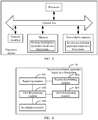
- FIG. 4 is a block diagram illustrating an invoice invalidation apparatus based on a blockchain according to some example implementations of the present specification.
- the apparatus 40 can be applied to the electronic device shown in FIG. 3 , and includes: a receiving module 401, configured to receive an invalidation request that is initiated by an invoice invalidation party for a target invoice recorded in the blockchain; a first determining module 402, configured to: in response to the invalidation request, determine whether the invoice invalidation party has authority to invalidate the target invoice; and an invalidation module 403, configured to: in response to that the invoice invalidation party has the authority to invalidate the target invoice, invoke an invoice invalidation logic provided in a smart contract deployed in a blockchain network of the blockchain to invalidate the target invoice.
- the smart contract can further provide authority verification logic for the invoice invalidation party; and the first determining module 402 can be specifically configured to: invoke the authority verification logic provided in the smart contract to determine whether the invoice invalidation party has authority to invalidate the target invoice.
- the invalidation request can include a user identifier of the invoice invalidation party; the first determining module 402 can be specifically configured to: determine, based on the user identifier, whether the invoice invalidation party is an issuer of the target invoice or a trusted third party; and in response to that the invoice invalidation party is an issuer of the target invoice or a trusted third party, determine that the invoice invalidation party has the authority to invalidate the target invoice.
- the invalidation request can include an invoice identifier of the target invoice; the apparatus 40 can further include: a second determining module 404, configured to: determine, based on an invoice identifier, whether an invoice corresponding to the invoice identifier is stored in the blockchain; and a third determining module 405, configured to: when the invoice corresponding to the invoice identifier is stored in the blockchain, determine the invoice as the target invoice.
- a second determining module 404 configured to: determine, based on an invoice identifier, whether an invoice corresponding to the invoice identifier is stored in the blockchain
- a third determining module 405 configured to: when the invoice corresponding to the invoice identifier is stored in the blockchain, determine the invoice as the target invoice.
- the invoice identifier can include: a hash value obtained through hash calculation based on an invoice content; or a hash value obtained through hash calculation based on a piece of uniqueness information in the invoice content.
- the invalidation module 403 can be specifically configured to: update a state of the target invoice from a valid state to an invalid state.
- FIG. 5 is a block diagram illustrating another invoice invalidation apparatus based on a blockchain according to some example implementations of the present specification.
- the apparatus 50 can be applied to the electronic device shown in FIG. 3 , and includes: an acquisition module 501, configured to obtain a transaction that has been recorded in the blockchain; a first determining module 502, configured to determine whether the transaction is a refund transaction corresponding to a payment transaction that has been recorded in the blockchain; and an invalidation module 503, configured to: when the transaction is a refund transaction corresponding to the payment transaction, invoke an invoice invalidation logic provided in a smart contract deployed in a blockchain network of the blockchain to invalidate a target invoice that is related to the payment transaction and recorded in the blockchain.
- the smart contract can further provide transaction matching logic; and the first determining module 502 can be specifically configured to: invoke the transaction matching logic provided in the smart contract to determine whether the transaction is a refund transaction corresponding to the payment transaction that has been recorded in the blockchain.
- the apparatus 50 can further include: a second determining module 504, configured to: determine, based on an invoice identifier corresponding to the payment transaction, whether an invoice corresponding to the invoice identifier is stored in the blockchain; and a third determining module 505, configured to: when the invoice corresponding to the invoice identifier is stored in the blockchain, determine the invoice as the target invoice.
- a second determining module 504 configured to: determine, based on an invoice identifier corresponding to the payment transaction, whether an invoice corresponding to the invoice identifier is stored in the blockchain
- a third determining module 505 configured to: when the invoice corresponding to the invoice identifier is stored in the blockchain, determine the invoice as the target invoice.
- the invoice identifier can include: a hash value obtained through hash calculation based on an invoice content; or a hash value obtained through hash calculation based on a piece of uniqueness information in the invoice content.
- the invalidation module 503 can be specifically configured to: update a state of the target invoice that is related to the payment transaction and recorded in the blockchain from a valid state to an invalid state.
- a typical implementation device is a computer.
- the computer can be a personal computer, a laptop computer, a cellular phone, a camera phone, a smartphone, a personal digital assistant, a media player, a navigation device, an email sending and receiving device, a game console, a tablet computer, a wearable device, or a combination thereof.
- the present specification further provides implementations of an electronic device.
- the electronic device includes a processor and a memory configured to store machine-executable instructions, where the processor and the memory are usually connected to each other by using an internal bus.
- the device can further include an external interface that can be communicated with other devices or components.
- the processor by reading and executing the machine-executable instructions stored in the memory and corresponding to control logic for invoice invalidation based on a blockchain, the processor is enabled to: receive an invalidation request that is initiated by an invoice invalidation party for a target invoice recorded in the blockchain; in response to the invalidation request, determine whether the invoice invalidation party has authority to invalidate the target invoice; and in response to that the invoice invalidation party has the authority to invalidate the target invoice, invoke an invoice invalidation logic provided in a smart contract deployed in a blockchain network of the blockchain to invalidate the target invoice.
- the smart contract further provides authority verification logic for the invoice invalidation party; and by reading and executing the machine-executable instructions stored in the memory and corresponding to control logic for invoice invalidation based on a blockchain, the processor is enabled to: invoke the authority verification logic provided in the smart contract to determine whether the invoice invalidation party has authority to invalidate the target invoice.
- the invalidation request includes a user identifier of the invoice invalidation party; by reading and executing the machine-executable instructions stored in the memory and corresponding to control logic for invoice invalidation based on a blockchain, the processor is enabled to: determine, based on the user identifier, whether the invoice invalidation party is an issuer of the target invoice or a trusted third party; and in response to that the invoice invalidation party is an issuer of the target invoice or a trusted third party, determine that the invoice invalidation party has the authority to invalidate the target invoice.
- the invalidation request includes an invoice identifier of the target invoice; by reading and executing the machine-executable instructions stored in the memory and corresponding to control logic for invoice invalidation based on a blockchain, the processor is further enabled to: determine, based on an invoice identifier, whether an invoice corresponding to the invoice identifier is stored in the blockchain; and in response to that the invoice corresponding to the invoice identifier is stored in the blockchain, determine the invoice as the target invoice.
- the invoice identifier can include: a hash value obtained through hash calculation based on an invoice content; or a hash value obtained through hash calculation based on a piece of uniqueness information in the invoice content.
- the processor by reading and executing the machine-executable instructions stored in the memory and corresponding to control logic for invoice invalidation based on a blockchain, the processor is enabled to: update a state of the target invoice from a valid state to an invalid state.
- the present specification further provides an implementation of another electronic device.
- the electronic device includes a processor and a memory configured to store machine-executable instructions, where the processor and the memory are usually connected to each other by using an internal bus.
- the device can further include an external interface that can be communicated with other devices or components.
- the processor by reading and executing the machine-executable instructions stored in the memory and corresponding to control logic for invoice invalidation based on a blockchain, the processor is enabled to: obtain a transaction that has been recorded in the blockchain; determine whether the transaction is a refund transaction corresponding to a payment transaction that has been recorded in the blockchain; and in response to that the transaction is a refund transaction corresponding to the payment transaction, invoke an invoice invalidation logic provided in a smart contract deployed in a blockchain network of the blockchain to invalidate a target invoice that is related to the payment transaction and recorded in the blockchain.
- the smart contract further provides transaction matching logic; and by reading and executing the machine-executable instructions stored in the memory and corresponding to control logic for invoice invalidation based on a blockchain, the processor is enabled to: invoke the transaction matching logic provided in the smart contract to determine whether the transaction is a refund transaction corresponding to the payment transaction that has been recorded in the blockchain.
- the processor by reading and executing the machine-executable instructions stored in the memory and corresponding to control logic for invoice invalidation based on a blockchain, the processor is further enabled to: determine, based on an invoice identifier corresponding to the payment transaction, whether an invoice corresponding to the invoice identifier is stored in the blockchain; and in response to that the invoice corresponding to the invoice identifier is stored in the blockchain, determine the invoice as the target invoice.
- the invoice identifier can include: a hash value obtained through hash calculation based on an invoice content; or a hash value obtained through hash calculation based on a piece of uniqueness information in the invoice content.
- the processor by reading and executing the machine-executable instructions stored in the memory and corresponding to control logic for invoice invalidation based on a blockchain, the processor is enabled to: update a state of the target invoice that is related to the payment transaction and recorded in the blockchain from a valid state to an invalid state.
Landscapes
- Engineering & Computer Science (AREA)
- Business, Economics & Management (AREA)
- Accounting & Taxation (AREA)
- Finance (AREA)
- Computer Security & Cryptography (AREA)
- General Physics & Mathematics (AREA)
- Strategic Management (AREA)
- Physics & Mathematics (AREA)
- General Business, Economics & Management (AREA)
- Theoretical Computer Science (AREA)
- Signal Processing (AREA)
- Computer Networks & Wireless Communication (AREA)
- Development Economics (AREA)
- Economics (AREA)
- Marketing (AREA)
- Power Engineering (AREA)
- Technology Law (AREA)
- Entrepreneurship & Innovation (AREA)
- Financial Or Insurance-Related Operations Such As Payment And Settlement (AREA)
- Management, Administration, Business Operations System, And Electronic Commerce (AREA)
Abstract
Description
- One or more implementations of the present specification relate to the field of blockchain technologies, and in particular, to an invoice invalidation method and apparatus based on a blockchain, and an electronic device.
- A blockchain technology, also known as a distributed ledger technology, is an emerging technology in which several computing devices participate in "bookkeeping" and jointly maintain a complete distributed database. Because the blockchain technology is characterized by being decentralized, open and transparent, enabling each computing device to participate in database recording, and enabling data synchronization to be performed quickly between the computing devices, the blockchain technology is used to build a decentralized system, and various executable programs are stored in the distributed database of the blockchain for automatic execution, which has been widely used in many fields.
- The present specification provides an invoice invalidation method based on a blockchain, including: receiving an invalidation request that is initiated by an invoice invalidation party for a target invoice recorded in the blockchain; in response to the invalidation request, determining whether the invoice invalidation party has authority to invalidate the target invoice; and in response to that the invoice invalidation party has the authority to invalidate the target invoice, invoking an invoice invalidation logic provided in a smart contract deployed in a blockchain network of the blockchain to invalidate the target invoice.
- Optionally, the smart contract further provides authority verification logic for the invoice invalidation party; and the determining whether the invoice invalidation party has authority to invalidate the target invoice includes: invoking the authority verification logic provided in the smart contract to determine whether the invoice invalidation party has authority to invalidate the target invoice.
- Optionally, the invalidation request includes a user identifier of the invoice invalidation party; and the determining whether the invoice invalidation party has authority to invalidate the target invoice includes: determining, based on a user identifier, whether the invoice invalidation party is an issuer of the target invoice or a trusted third party; and in response to that the invoice invalidation party is an issuer of the target invoice or a trusted third party, determining that the invoice invalidation party has the authority to invalidate the target invoice.
- Optionally, the invalidation request includes an invoice identifier of the target invoice; and the method further includes: determining, based on an invoice identifier, whether an invoice corresponding to the invoice identifier is stored in the blockchain; and in response to that the invoice corresponding to the invoice identifier is stored in the blockchain, determining the invoice as the target invoice.
- Optionally, the invoice identifier includes: a hash value obtained through hash calculation based on an invoice content; or a hash value obtained through hash calculation based on a piece of uniqueness information in the invoice content.
- Optionally, the invalidating the target invoice includes: updating a state of the target invoice from a valid state to an invalid state.
- The present specification further provides an invoice invalidation method based on a blockchain, including: obtaining a transaction that has been recorded in the blockchain; determining whether the transaction is a refund transaction corresponding to a payment transaction that has been recorded in the blockchain; and in response to that the transaction is a refund transaction corresponding to the payment transaction, invoking an invoice invalidation logic provided in a smart contract deployed in a blockchain network of the blockchain to invalidate a target invoice that is related to the payment transaction and recorded in the blockchain.
- Optionally, the smart contract further provides transaction matching logic; and the determining whether the transaction is a refund transaction corresponding to the payment transaction that has been recorded in the blockchain includes: invoking the transaction matching logic provided in the smart contract to determine whether the transaction is a refund transaction corresponding to the payment transaction that has been recorded in the blockchain.
- Optionally, the method further includes: determining, based on an invoice identifier corresponding to the payment transaction, whether an invoice corresponding to the invoice identifier is stored in the blockchain; and in response to that the invoice corresponding to the invoice identifier is stored in the blockchain, determining the invoice as the target invoice.
- Optionally, the invoice identifier includes: a hash value obtained through hash calculation based on an invoice content; or a hash value obtained through hash calculation based on a piece of uniqueness information in the invoice content.
- Optionally, the invalidating the target invoice that is related to the payment transaction and recorded in the blockchain includes: updating a state of the target invoice that is related to the payment transaction and recorded in the blockchain from a valid state to an invalid state.
- The present specification further provides an invoice invalidation apparatus based on a blockchain, including: a receiving module, configured to receive an invalidation request that is initiated by an invoice invalidation party for a target invoice recorded in the blockchain; a first determining module, configured to: in response to the invalidation request, determine whether the invoice invalidation party has authority to invalidate the target invoice; and an invalidation module, configured to: in response to that the invoice invalidation party has the authority to invalidate the target invoice, invoke an invoice invalidation logic provided in a smart contract deployed in a blockchain network of the blockchain to invalidate the target invoice.
- Optionally, the smart contract further provides authority verification logic for the invoice invalidation party; and the first determining module is specifically configured to: invoke the authority verification logic provided in the smart contract to determine whether the invoice invalidation party has authority to invalidate the target invoice.
- Optionally, the invalidation request includes a user identifier of the invoice invalidation party; and the first determining module is specifically configured to: determine, based on the user identifier, whether the invoice invalidation party is an issuer of the target invoice or a trusted third party; and in response to that the invoice invalidation party is an issuer of the target invoice or a trusted third party, determine that the invoice invalidation party has the authority to invalidate the target invoice.
- Optionally, the invalidation request includes an invoice identifier of the target invoice; and the apparatus further includes: a second determining module, configured to: determine, based on an invoice identifier, whether an invoice corresponding to the invoice identifier is stored in the blockchain; and a third determining module, configured to: when the invoice corresponding to the invoice identifier is stored in the blockchain, determine the invoice as the target invoice.
- Optionally, the invoice identifier includes: a hash value obtained through hash calculation based on an invoice content; or a hash value obtained through hash calculation based on a piece of uniqueness information in the invoice content.
- Optionally, the invalidation module is specifically configured to: update a state of the target invoice from a valid state to an invalid state.
- The present specification further provides an invoice invalidation apparatus based on a blockchain, including: an acquisition module, configured to obtain a transaction that has been recorded in the blockchain; a first determining module, configured to determine whether the transaction is a refund transaction corresponding to a payment transaction that has been recorded in the blockchain; and an invalidation module, configured to: when the transaction is a refund transaction corresponding to the payment transaction, invoke an invoice invalidation logic provided in a smart contract deployed in a blockchain network of the blockchain to invalidate a target invoice that is related to the payment transaction and recorded in the blockchain.
- Optionally, the smart contract further provides transaction matching logic; and the first determining module is specifically configured to: invoke the transaction matching logic provided in the smart contract to determine whether the transaction is a refund transaction corresponding to the payment transaction that has been recorded in the blockchain.
- Optionally, the apparatus further includes: a second determining module, configured to: determine, based on an invoice identifier corresponding to the payment transaction, whether an invoice corresponding to the invoice identifier is stored in the blockchain; and a third determining module, configured to: when the invoice corresponding to the invoice identifier is stored in the blockchain, determine the invoice as the target invoice.
- Optionally, the invoice identifier includes: a hash value obtained through hash calculation based on an invoice content; or a hash value obtained through hash calculation based on a piece of uniqueness information in the invoice content.
- Optionally, the invalidation module is specifically configured to: update a state of the target invoice that is related to the payment transaction and recorded in the blockchain from a valid state to an invalid state.
- The present specification further provides an electronic device, including: a processor; and a memory configured to store machine-executable instructions; where by reading and executing the machine-executable instructions stored in the memory and corresponding to control logic for invoice invalidation based on a blockchain, the processor is enabled to: receive an invalidation request that is initiated by an invoice invalidation party for a target invoice recorded in the blockchain; in response to the invalidation request, determine whether the invoice invalidation party has authority to invalidate the target invoice; and in response to that the invoice invalidation party has the authority to invalidate the target invoice, invoke an invoice invalidation logic provided in a smart contract deployed in a blockchain network of the blockchain to invalidate the target invoice.
- The present specification further provides an electronic device, including: a processor; and a memory configured to store machine-executable instructions; where by reading and executing the machine-executable instructions stored in the memory and corresponding to control logic for invoice invalidation based on a blockchain, the processor is enabled to: obtain a transaction that has been recorded in the blockchain; determine whether the transaction is a refund transaction corresponding to a payment transaction that has been recorded in the blockchain; and in response to that the transaction is a refund transaction corresponding to the payment transaction, invoke an invoice invalidation logic provided in a smart contract deployed in a blockchain network of the blockchain to invalidate a target invoice that is related to the payment transaction and recorded in the blockchain.
- In the above technical solutions, when an invoice invalidation party initiates an invalidation request on a certain invoice recorded in a blockchain, corresponding logic in a smart contract deployed in a blockchain network of the blockchain is invoked to verify invalidation authority of the invoice invalidation party, and when it is determined that the invoice invalidation party has the authority to invalidate the invoice, the invoice is invalidated. Alternatively, when it is determined that a certain transaction that has been recorded in a blockchain is a refund transaction corresponding to a payment transaction that has been recorded in the blockchain, corresponding logic in a smart contract deployed in a blockchain network of the blockchain is invoked to invalidate an invoice that is related to the payment transaction and recorded in the blockchain. As such, the invoice recorded in the blockchain is invalidated, and the data security of invoices circulating in the blockchain is ensured.
-
-
FIG. 1 is a flowchart illustrating an invoice invalidation method based on a blockchain according to some example implementations of the present specification; -
FIG. 2 is a flowchart illustrating another invoice invalidation method based on a blockchain according to some example implementations of the present specification; -
FIG. 3 is a diagram illustrating a hardware structure of an electronic device where an invoice invalidation apparatus based on a blockchain is located according to some example implementations of the present specification; -
FIG. 4 is a block diagram illustrating an invoice invalidation apparatus based on a blockchain according to some example implementations of the present specification; and -
FIG. 5 is a block diagram illustrating another invoice invalidation apparatus based on a blockchain according to some example implementations of the present specification. - Example implementations are described in detail herein, and examples thereof are shown in the accompanying drawings. When the following description refers to the accompanying drawings, unless otherwise indicated, the same numbers in different accompanying drawings refer to the same or similar elements. The following example implementations do not represent all implementations consistent with one or more implementations of the present specification. In contrast, they are merely examples of apparatuses and methods consistent with some aspects of one or more implementations of the present specification as described in detail in the appended claims.
- Terms used in the present specification are for the purpose of describing specific implementations only and are not intended to limit the present specification. As used in the present specification and the appended claims, the singular forms "a (an)", "the" and "this" are also intended to include the plural forms, unless the context clearly indicates other meaning. It should also be understood that the term "and/or" as used herein refers to and includes any or all possible combinations of one or more associated listed items.
- It should be understood that although the terms such as "first", "second", and "third" can be used to describe various types of information in the present specification, the information should not be limited to these terms. These terms are only used to differentiate information of a same type. For example, without departing from the scope of the present specification, the first information can also be called second information, and similarly, the second information can also be called first information. Depending on the context, the word "if" as used herein can be explained as "when" or "in response to determining".
- The present specification provides technical solutions for invalidating an invoice recorded in a blockchain.
- In some implementations, when a user needs to invalidate a certain invoice recorded in a blockchain of a blockchain network, the user (called invoice invalidation party) can initiate an invalidation request on the invoice (called target invoice) by using a client.
- After receiving the invalidation request, a node device in the blockchain network can respond to the invalidation request.
- Specifically, it can be determined first whether the invoice invalidation party has authority to invalidate the target invoice. Generally, only an invoice issuer or a trusted third party (such as a tax bureau or an industrial and commercial bureau) is allowed to invalidate a certain invoice, so as to ensure the data security of the invoice and prevent the invoice from being maliciously invalidated. In this case, it can be first determined whether the invoice invalidation party that initiated the invalidation request has authority to invalidate the target invoice. In response to that the invoice invalidation party is an issuer of the invoice or a trusted third party, it can be determined that the invoice invalidation party has the authority to invalidate the invoice.
- After it is determined that the invoice invalidation party has the authority to invalidate the invoice, the node device can invoke an invoice invalidation logic provided in a smart contract deployed, e.g., in the blockchain network to invalidate the target invoice recorded in the blockchain.
- In some other implementations, after completing a payment or refund, a user can record the payment transaction or refund transaction in a blockchain. A node device in the blockchain network can obtain a transaction that has been recorded in the blockchain, and determine whether the transaction is a refund transaction corresponding to a certain payment transaction that has been recorded in the blockchain.
- For example, it can be checked whether transaction objects and transaction content (such as transaction amount and transaction items) in the transaction match the transaction objects and transaction content of each payment transaction that has been recorded in the blockchain. In response to that the payer of the transaction is a payee of another payment transaction that has been recorded in the blockchain, the payee of the transaction is a payer of the other payment transaction, and the transaction content of the transaction is the same as that of the other payment transaction, it can be determined that the transaction is a refund transaction corresponding to the payment transaction.
- After it is determined that the transaction is a refund transaction corresponding to a certain payment transaction that has been recorded in the blockchain, a node device can invoke an invoice invalidation logic provided in a smart contract deployed in the blockchain network to invalidate a target invoice that is related to the payment transaction and recorded in the blockchain.
- In the above technical solutions, when an invoice invalidation party initiates an invalidation request on a certain invoice recorded in a blockchain, corresponding logic in a smart contract deployed in a blockchain network of the blockchain is invoked to verify invalidation authority of the invoice invalidation party, and when it is determined that the invoice invalidation party has the authority to invalidate the invoice, the invoice is invalidated. Alternatively, when it is determined that a certain transaction that has been recorded in a blockchain is a refund transaction corresponding to a payment transaction that has been recorded in the blockchain, corresponding logic in a smart contract deployed in a blockchain network of the blockchain is invoked to invalidate an invoice that is related to the payment transaction and recorded in the blockchain. As such, the invoice recorded in the blockchain is invalidated, and the data security of invoices circulating in the blockchain is ensured.
- The present specification is further described below with reference to specific implementations.
-
FIG. 1 is a flowchart illustrating an invoice invalidation method based on a blockchain according to some example implementations of the present specification. The method can be applied to a node device in a blockchain network, and includes the following steps. - Step 102: Receive an invalidation request that is initiated by an invoice invalidation party for a target invoice recorded in the blockchain.
- Step 104: In response to the invalidation request, determine whether the invoice invalidation party has authority to invalidate the target invoice.
- Step 106: in response to that the invoice invalidation party has the authority to invalidate the target invoice, invoke an invoice invalidation logic provided in a smart contract deployed in a blockchain network of the blockchain to invalidate the target invoice.
- The blockchain network described in the present specification can specifically include any type of blockchain network. For example, in practice, any one of a public blockchain, a private blockchain and a consortium blockchain network can be used.
- Because data stored in a blockchain cannot be tampered with, it has become the mainstream trend in the industry to store the data in the blockchain for data record, i.e., to store data as record in the blockchain.
- In the implementations, the invoice can be recorded in the blockchain.
- When an invoice invalidation party needs to invalidate a target invoice recorded in the blockchain, the invoice invalidation party can initiate, by using a client, a transaction for invalidating the target invoice, e.g., initiate an invalidation request on the target invoice by using the client.
- Transactions in the blockchain are divided into transactions in narrow meanings and transactions in broad meanings. In narrow meanings, a transaction refers to a value transfer deployed by a user to the blockchain. For example, in a conventional bitcoin blockchain network, a transaction can be a transfer initiated by a user in the blockchain. In broad meanings, a transaction refers to a piece of service or business data with a service or business intention published by a user to the blockchain. For example, the operator can build a consortium blockchain based on actual service requirements, and deploy, based on the consortium blockchain, some other online services unrelated to value transfer (such as a rental service, a vehicle dispatching service, an insurance claims service, a credit service, and a medical service). In this consortium blockchain, the transaction can be a service/business message or service request with a service/business intention published by the user in the consortium blockchain.
- After receiving the invalidation request, a node device in the blockchain can respond to the invalidation request.
- Specifically, it can be determined first whether the invoice invalidation party has authority to invalidate the target invoice.
- If it is determined that the invoice invalidation party has the authority to invalidate the target invoice, invoice invalidation logic provided in a smart contract deployed in a blockchain network of the blockchain can be invoked to invalidate the target invoice.
- The invoice invalidation logic can be program code (such as some program methods or functions that can be invoked) that is provided in the smart contract and related to execution logic for invalidating an invoice.
- In practice, the above smart contract can further provide authority verification logic for the above invoice invalidation party. In this case, the authority verification logic provided in the smart contract can be invoked to determine whether the invoice invalidation party has the above authority to invalidate the target invoice.
- The authority verification logic can be specifically program code that is provided in the smart contract and related to execution logic for verifying invalidation authority of an invoice invalidation party.
- It should be noted that the smart contract for invoice invalidation described above and the smart contract for verifying invalidation authority of an invoice invalidation party can be integrated into one smart contract and deployed in the above blockchain, or can be deployed in the blockchain as two different smart contracts, which is not limited in the present specification.
- In some illustrated implementations, the invalidation request that is initiated by the invoice invalidation party for the target invoice by using the client can include a user identifier of the invoice invalidation party, so that it can be determined, based on the user identifier of the invoice invalidation party, whether the invoice invalidation party has the authority to invalidate the target invoice.
- For example, by checking whether the user identifier of the invoice invalidation party matches a user identifier of an issuer of the target invoice, it can be determined whether the invoice invalidation party is the issuer of the target invoice. In response to that the user identifier of the invoice invalidation party is the same as the user identifier of the issuer of the target invoice, it can be determined that the invoice invalidation party is the issuer of the target invoice, and thus it can be determined that the invalidation party has the authority to invalidate the target invoice.
- For example, by checking whether the user identifier of the invoice invalidation party matches a user identifier of a trusted third party, it can be determined whether the invoice invalidation party is the trusted third party. In response to that the user identifier of the invoice invalidation party is the same as the user identifier of the trusted third party, it can be determined that the invoice invalidation party is the trusted third party, and thus it can be determined that the invoice invalidation party has the authority to invalidate the target invoice.
- Accordingly, in response to that it is determined that the invoice invalidation party is neither the issuer of the target invoice nor the trusted third party, it can be determined that the invoice invalidation party does not have the authority to invalidate the target invoice. In this case, the target invoice cannot be subsequently invalidated.
- The user identifier can be a taxpayer identification number, or an institution code of a trusted third party such as a tax bureau or an industrial and commercial bureau; alternatively, the user identifier can be a user number assigned to an individual, an enterprise or a tax bureau, and user numbers assigned to different users are different, which is not limited in the present specification.
- For example, the user identifier can be a taxpayer identification number. After the invalidation request that is initiated for the target invoice and includes the user identifier of the invoice invalidation party is received, the taxpayer identification number of the invoice issuer can be obtained from the target invoice first, and then it is checked whether the obtained taxpayer identification number of the invoice issuer matches the user identifier of the invoice invalidation party. In response to that the taxpayer identification number of the invoice issuer is same as the user identifier of the invoice invalidation party, it can be determined that the invoice invalidation party is the issuer of the target invoice, and thus it can be determined that the invalidation party has the authority to invalidate the target invoice.
- For example, the user identifier can be an institution code of a trusted third party such as a tax bureau or an industrial and commercial bureau. After the invalidation request that is initiated for the target invoice and includes the user identifier of the invoice invalidation party is received, it can be checked whether the institution code of each trusted third party matches the user identifier of the invoice invalidation party. In response to that the user identifier of the invoice invalidation party is the same as the institution code of a certain trusted third party, it can be determined that the invoice invalidation party is the trusted third party, and thus it can be determined that the invoice invalidation party has the authority to invalidate the target invoice.
- In another example, when an invoice is recorded in a blockchain, as, e.g., described above, the user identifier of the invoice issuer or the trusted third party with the authority to invalidate the invoice can be correspondingly recorded in the blockchain.
- After the invalidation request that is initiated for the target invoice and includes the user identifier of the invoice invalidation party is received, it can be checked whether the user identifier of the invoice invalidation party matches a user identifier corresponding to the target invoice. In response to that the user identifier of the invoice invalidation party is the same as a certain user identifier corresponding to the target invoice, it can be determined that the invoice invalidation party has the authority to invalidate the target invoice.
- For example, assuming that a user identifier of a certain trusted third party is user identifier 1, a user identifier of an issuer of invoice 1 is user identifier 2, and a user identifier of an issuer of invoice 2 is user identifier 2, then the invoice and the user identifier of the invoice issuer or trusted third party with the authority to invalidate the invoice can be recorded in the blockchain in the form shown in Table 1.
Table 1 Invoice User identifier Invoice 1 User identifier 1 User identifier 2 Invoice 2 User identifier 1 User identifier 3 ... ... - After an invalidation request that is initiated for invoice 1 and includes user identifier 1 is received, it can be determined, based on Table 1, that the invoice invalidation party initiating the invalidation request has the authority to invalidate invoice 1; after an invalidation request that is initiated for invoice 1 and includes user identifier 3 is received, it can be determined, based on Table 1, that the invoice invalidation party initiating the invalidation request does not have the authority to invalidate invoice 1; and so on.
- In some illustrated implementations, the invalidation request that is initiated by the invoice invalidation party for the target invoice by using the client can include an invoice identifier of the target invoice, so that based on the invoice identifier of the target invoice, it can be first determined whether the target invoice has been recorded in the blockchain, and when it is determined that the target invoice has been recorded in the blockchain, it can be determined whether the invoice invalidation party has the authority to invalidate the target invoice, so as to avoid invalid operation when the target invoice has not been recorded in the blockchain, and reduce device resource consumption.
- For example, when an invoice is recorded in the blockchain, the invoice identifier of the invoice can be correspondingly recorded in the blockchain.
- After the invalidation request that is initiated for the target invoice and includes the invoice identifier of the target invoice is received, it can be checked whether the invoice identifier of the target invoice matches an invoice identifier of an invoice that has been recorded in the blockchain. In response to that the invoice identifier of the invoice is the same as an invoice identifier of a certain invoice that has been recorded in the blockchain, it can be determined that the blockchain stores an invoice corresponding to the invoice identifier, and the invoice is determined as the target invoice. Subsequently, it can be determined whether the invoice invalidation party has authority to invalidate the target invoice.
- Accordingly, in response to that it is determined that the blockchain does not store an invoice corresponding to the invoice identifier, it is no longer necessary to determine whether the invoice invalidation party has the authority to invalidate the target invoice.
- The invoice identifier can be a hash value obtained through hash calculation based on an invoice content; or a hash value obtained through hash calculation based on a piece of uniqueness information (such as an invoice number and an invoice code) in the invoice content.
- For example, assuming that an invoice identifier of invoice 1 is invoice identifier 1 and an invoice identifier of invoice 2 is invoice identifier 2, the invoice 1, the invoice identifier 1, the invoice 2, and the invoice identifier 2 can be recorded in the blockchain in the form shown in Table 2.
Table 2 Invoice Invoice identifier Invoice 1 Invoice identifier 1 Invoice 2 Invoice identifier 2 ... ... - Assuming that only invoice 1 and invoice 2 are recorded in this blockchain, after an invalidation request that is initiated for invoice 1 and includes invoice identifier 1 is received, it can be determined, based on Table 2, that the blockchain stores invoice 1 corresponding to invoice identifier 1, and invoice 1 is determined as the target invoice; and after an invalidation request that is initiated for invoice 3 and includes invoice identifier 3 is received, it can be determined, based on Table 2, that the blockchain does not store invoice 3 corresponding to invoice identifier 3; and so on.
- In some illustrated implementations, because data stored in the blockchain cannot be tampered with, the target invoice can be invalidated by updating a state of the target invoice from a valid state to an invalid state.
- For example, when the target invoice is recorded in the blockchain, a state identifier for representing that the target invoice is valid can further be set for the target invoice, that is, the state of the target invoice is a valid state at this time. Subsequently, when it is determined that the target invoice needs to be invalidated, the state identifier of the target invoice can be updated to represent that the target invoice is invalid, that is, the state of the target invoice is updated from a valid status to an invalid state.
- The state identifier can be a specific byte set for the invoice, which is not limited in the present specification.
- In the above technical solutions, when an invoice invalidation party initiates an invalidation request on a certain invoice recorded in a blockchain, corresponding logic in a smart contract deployed in a blockchain network of the blockchain is invoked to verify invalidation authority of the invoice invalidation party, and when it is determined that the invoice invalidation party has the authority to invalidate the invoice, the invoice is invalidated. As such, the invoice recorded in the blockchain is invalidated, and the data security of invoices circulating in the blockchain is ensured.
-
FIG. 2 is a flowchart illustrating another invoice invalidation method based on a blockchain according to some example implementations of the present specification. The method can be applied at a node device in a blockchain network, and includes the following steps. - Step 202: Obtain a transaction that has been recorded in the blockchain.
- Step 204: Determine whether the transaction is a refund transaction corresponding to a payment transaction that has been recorded in the blockchain.
- Step 206: In response to that the transaction is a refund transaction corresponding to the payment transaction, invoke an invoice invalidation logic provided in a smart contract deployed in a blockchain network of the blockchain to invalidate a target invoice that is related to the payment transaction and recorded in the blockchain.
- In the implementations, after completing a payment or refund, a user can record the payment transaction or refund transaction in a blockchain.
- A node device in the blockchain can obtain a transaction that has been recorded in the blockchain, and determine whether the transaction is a refund transaction corresponding to a certain payment transaction that has been recorded in the blockchain.
- Specifically, newly-added transactions that have been recorded in the blockchain can be acquired regularly based on a certain time interval, and it is determined whether each transaction is a refund transaction corresponding to a certain payment transaction that has been recorded in the blockchain separately; alternatively or additionally, when a new transaction record is added in the blockchain, it can be immediately determined whether the transaction is a refund transaction corresponding to a certain payment transaction that has been recorded in the blockchain, which is not limited in the present specification.
- In practice, it can be checked whether obtained transaction information such as transaction objects and transaction content matches corresponding transaction information of a payment transaction that has been recorded in the blockchain.
- The transaction objects include a payer and a payee of a transaction, and transaction content can include transaction amount, transaction items, and the like.
- If the payer of a transaction is the payee of another payment transaction that has been recorded in the blockchain, the payee of the transaction is the payer of the other payment transaction, and the transaction content of the transaction is the same as that of the payment transaction, it can be determined that the transaction is a refund transaction corresponding to the other payment transaction.
- If it is determined that the obtained transaction is a refund transaction corresponding to a certain payment transaction that has been recorded in the blockchain, invoice invalidation logic provided in a smart contract deployed in the blockchain network can be invoked to invalidate a target invoice that is related to the payment transaction and recorded in the blockchain.
- The invoice invalidation logic can be, for example, program code that is provided in the smart contract and related to execution logic for invalidating an invoice.
- In practice, the above smart contract can further provide transaction matching logic. In this case, authority verification logic provided in the smart contract can be invoked to determine whether the above obtained transaction is a refund transaction corresponding to a certain payment transaction that has been recorded in the blockchain.
- Transaction matching logic can specifically be program code that is provided in the smart contract and related to execution logic for matching with transaction information in a transaction.
- It should be noted that the smart contract for invoice invalidation described above and the smart contract for matching with transaction information in a transaction can be integrated into one smart contract and deployed in the above blockchain, or can be deployed in the blockchain as two different smart contracts, which is not limited in the present specification.
- In some illustrated implementations, after it is determined that the above obtained transaction is a refund transaction corresponding to a certain payment transaction that has been recorded in the above blockchain, based on an invoice identifier corresponding to the transaction, it can be first determined whether a target invoice related to the payment transaction has been recorded in the blockchain, and when it is determined that the target invoice has been recorded in the blockchain, invoice invalidation logic provided in a smart contract deployed in the blockchain network, e.g., stored in a blockchain of the blockchain network, can be invoked to invalidate the target invoice, so as to avoid invalid operation when the target invoice has not been recorded in the blockchain, and reduce device resource consumption.
- For example, when an invoice issued for a certain payment transaction is recorded in the blockchain, the invoice identifier of the invoice can be correspondingly recorded in the blockchain. In addition, a corresponding relationship between the invoice identifier of the invoice and the payment transaction can further be recorded in the blockchain.
- After it is determined that the refund transaction corresponding to the payment transaction is obtained, the invoice identifier corresponding to the payment transaction can be obtained, and it is checked whether the invoice identifier matches the invoice identifier of each invoice that has been recorded in the blockchain. In response to that the invoice identifier of the invoice is the same as an invoice identifier of a certain invoice that has been recorded in the blockchain, it can be determined that the blockchain stores an invoice corresponding to the invoice identifier, and the invoice is determined as the target invoice. Subsequently, the target invoice can be invalidated.
- Accordingly, in response to that it is determined that the blockchain does not store an invoice corresponding to the invoice identifier, the target invoice that is related to the payment transaction and recorded in the blockchain no longer needs to be invalidated.
- The invoice identifier can be a hash value obtained through hash calculation based on an invoice content; or a hash value obtained through hash calculation based on a piece of uniqueness information (such as an invoice number and an invoice code) in the invoice content.
- In practice, the invoice issued for a certain payment transaction and the payment transaction can be directly recorded in the blockchain. As such, after it is determined that the refund transaction corresponding to the payment transaction is obtained, it can be directly determined whether the blockchain stores a target invoice related to the payment transaction.
- In some illustrated implementations, because data stored in the blockchain cannot be tampered with, the target invoice can be invalidated by updating a state of the target invoice from a valid state or an invalid state.
- For example, when the target invoice is recorded in the blockchain, a state identifier for representing that the target invoice is valid can further be set for the target invoice, that is, the state of the target invoice is a valid state at this time. Subsequently, when it is determined that the target invoice needs to be invalidated, the state identifier of the target invoice can be updated to represent that the target invoice is invalid, that is, the state of the target invoice is updated from a valid status to an invalid state.
- The state identifier can be a specific byte set for the invoice, which is not limited in the present specification.
- In the above technical solutions, when it is determined that a certain transaction that has been recorded in a blockchain is a refund transaction corresponding to another payment transaction that has been recorded in the blockchain, corresponding logic in a smart contract deployed in the blockchain network is invoked to invalidate an invoice that is related to the other payment transaction and recorded in the blockchain. As such, the invoice recorded in the blockchain is invalidated, and the data security of invoices circulating in the blockchain is ensured.
- Corresponding to the above implementations of the invoice invalidation method based on a blockchain, the present specification further provides implementations of the invoice invalidation apparatus based on a blockchain.
- The implementations of the invoice invalidation apparatus based on a blockchain according to the present specification can be applied to an electronic device. The apparatus implementations can be implemented by using software, hardware, or a combination thereof. Taking software implementation as an example, a logical apparatus is implemented by reading, by using a processor of an apparatus device where the apparatus is located, corresponding computer program instructions in a non-volatile memory into a memory for running. On the hardware level,
FIG. 3 is a diagram illustrating a hardware structure of an electronic device where an invoice invalidation apparatus based on a blockchain is located according to the present specification. In addition to a processor, a memory, a network interface, and a non-volatile memory shown inFIG. 3 , the electronic device where the apparatus according to the implementations is located can generally further include other hardware depending on the actual invoice invalidation function based on a blockchain. Details are omitted for simplicity. -
FIG. 4 is a block diagram illustrating an invoice invalidation apparatus based on a blockchain according to some example implementations of the present specification. Theapparatus 40 can be applied to the electronic device shown inFIG. 3 , and includes: a receivingmodule 401, configured to receive an invalidation request that is initiated by an invoice invalidation party for a target invoice recorded in the blockchain; a first determiningmodule 402, configured to: in response to the invalidation request, determine whether the invoice invalidation party has authority to invalidate the target invoice; and aninvalidation module 403, configured to: in response to that the invoice invalidation party has the authority to invalidate the target invoice, invoke an invoice invalidation logic provided in a smart contract deployed in a blockchain network of the blockchain to invalidate the target invoice. - In the implementations, the smart contract can further provide authority verification logic for the invoice invalidation party; and the first determining
module 402 can be specifically configured to: invoke the authority verification logic provided in the smart contract to determine whether the invoice invalidation party has authority to invalidate the target invoice. - In the implementations, the invalidation request can include a user identifier of the invoice invalidation party; the first determining
module 402 can be specifically configured to: determine, based on the user identifier, whether the invoice invalidation party is an issuer of the target invoice or a trusted third party; and in response to that the invoice invalidation party is an issuer of the target invoice or a trusted third party, determine that the invoice invalidation party has the authority to invalidate the target invoice. - In the implementations, the invalidation request can include an invoice identifier of the target invoice; the
apparatus 40 can further include: a second determiningmodule 404, configured to: determine, based on an invoice identifier, whether an invoice corresponding to the invoice identifier is stored in the blockchain; and a third determiningmodule 405, configured to: when the invoice corresponding to the invoice identifier is stored in the blockchain, determine the invoice as the target invoice. - In the implementations, the invoice identifier can include: a hash value obtained through hash calculation based on an invoice content; or a hash value obtained through hash calculation based on a piece of uniqueness information in the invoice content.
- In the implementations, the
invalidation module 403 can be specifically configured to: update a state of the target invoice from a valid state to an invalid state. -
FIG. 5 is a block diagram illustrating another invoice invalidation apparatus based on a blockchain according to some example implementations of the present specification. Theapparatus 50 can be applied to the electronic device shown inFIG. 3 , and includes: anacquisition module 501, configured to obtain a transaction that has been recorded in the blockchain; a first determiningmodule 502, configured to determine whether the transaction is a refund transaction corresponding to a payment transaction that has been recorded in the blockchain; and aninvalidation module 503, configured to: when the transaction is a refund transaction corresponding to the payment transaction, invoke an invoice invalidation logic provided in a smart contract deployed in a blockchain network of the blockchain to invalidate a target invoice that is related to the payment transaction and recorded in the blockchain. - In the implementations, the smart contract can further provide transaction matching logic; and the first determining
module 502 can be specifically configured to: invoke the transaction matching logic provided in the smart contract to determine whether the transaction is a refund transaction corresponding to the payment transaction that has been recorded in the blockchain. - In the implementations, the
apparatus 50 can further include: a second determiningmodule 504, configured to: determine, based on an invoice identifier corresponding to the payment transaction, whether an invoice corresponding to the invoice identifier is stored in the blockchain; and a third determiningmodule 505, configured to: when the invoice corresponding to the invoice identifier is stored in the blockchain, determine the invoice as the target invoice. - In the implementations, the invoice identifier can include: a hash value obtained through hash calculation based on an invoice content; or a hash value obtained through hash calculation based on a piece of uniqueness information in the invoice content.
- In the implementations, the
invalidation module 503 can be specifically configured to: update a state of the target invoice that is related to the payment transaction and recorded in the blockchain from a valid state to an invalid state. - The implementation process of functions of each module in the above apparatus is detailed in the implementation process of the corresponding steps in the above method. Details are omitted herein for simplicity.
- Because the apparatus implementations basically correspond to the method implementations, for related parts, references can be made to partial description of the method implementation. The apparatus implementations described above are merely illustrative, where modules described as separate components can or cannot be physically separated. Components displayed as modules can or cannot be physical modules, that is, the components can be located in one place, or can be distributed to multiple network modules. Some or all of the modules can be selected based on actual needs to achieve the object of the solution of the present specification. A person of ordinary skill in the art can understand and implement the implementations without innovative efforts.
- The systems, apparatuses, or modules illustrated in the above implementations can be specifically implemented by computer chips or entities, or by products with certain functions. A typical implementation device is a computer. The computer can be a personal computer, a laptop computer, a cellular phone, a camera phone, a smartphone, a personal digital assistant, a media player, a navigation device, an email sending and receiving device, a game console, a tablet computer, a wearable device, or a combination thereof.
- Corresponding to the above implementations of the invoice invalidation method based on a blockchain, the present specification further provides implementations of an electronic device. The electronic device includes a processor and a memory configured to store machine-executable instructions, where the processor and the memory are usually connected to each other by using an internal bus. In other possible implementations, the device can further include an external interface that can be communicated with other devices or components.
- In the implementations, by reading and executing the machine-executable instructions stored in the memory and corresponding to control logic for invoice invalidation based on a blockchain, the processor is enabled to: receive an invalidation request that is initiated by an invoice invalidation party for a target invoice recorded in the blockchain; in response to the invalidation request, determine whether the invoice invalidation party has authority to invalidate the target invoice; and in response to that the invoice invalidation party has the authority to invalidate the target invoice, invoke an invoice invalidation logic provided in a smart contract deployed in a blockchain network of the blockchain to invalidate the target invoice.
- In the implementations, the smart contract further provides authority verification logic for the invoice invalidation party; and by reading and executing the machine-executable instructions stored in the memory and corresponding to control logic for invoice invalidation based on a blockchain, the processor is enabled to: invoke the authority verification logic provided in the smart contract to determine whether the invoice invalidation party has authority to invalidate the target invoice.
- In the implementations, the invalidation request includes a user identifier of the invoice invalidation party; by reading and executing the machine-executable instructions stored in the memory and corresponding to control logic for invoice invalidation based on a blockchain, the processor is enabled to: determine, based on the user identifier, whether the invoice invalidation party is an issuer of the target invoice or a trusted third party; and in response to that the invoice invalidation party is an issuer of the target invoice or a trusted third party, determine that the invoice invalidation party has the authority to invalidate the target invoice.
- In the implementations, the invalidation request includes an invoice identifier of the target invoice; by reading and executing the machine-executable instructions stored in the memory and corresponding to control logic for invoice invalidation based on a blockchain, the processor is further enabled to: determine, based on an invoice identifier, whether an invoice corresponding to the invoice identifier is stored in the blockchain; and in response to that the invoice corresponding to the invoice identifier is stored in the blockchain, determine the invoice as the target invoice.
- In the implementations, the invoice identifier can include: a hash value obtained through hash calculation based on an invoice content; or a hash value obtained through hash calculation based on a piece of uniqueness information in the invoice content.
- In the implementations, by reading and executing the machine-executable instructions stored in the memory and corresponding to control logic for invoice invalidation based on a blockchain, the processor is enabled to: update a state of the target invoice from a valid state to an invalid state.
- Corresponding to the above implementations of the invoice invalidation method based on a blockchain, the present specification further provides an implementation of another electronic device. The electronic device includes a processor and a memory configured to store machine-executable instructions, where the processor and the memory are usually connected to each other by using an internal bus. In other possible implementations, the device can further include an external interface that can be communicated with other devices or components.
- In the implementations, by reading and executing the machine-executable instructions stored in the memory and corresponding to control logic for invoice invalidation based on a blockchain, the processor is enabled to: obtain a transaction that has been recorded in the blockchain; determine whether the transaction is a refund transaction corresponding to a payment transaction that has been recorded in the blockchain; and in response to that the transaction is a refund transaction corresponding to the payment transaction, invoke an invoice invalidation logic provided in a smart contract deployed in a blockchain network of the blockchain to invalidate a target invoice that is related to the payment transaction and recorded in the blockchain.
- In the implementations, the smart contract further provides transaction matching logic; and by reading and executing the machine-executable instructions stored in the memory and corresponding to control logic for invoice invalidation based on a blockchain, the processor is enabled to: invoke the transaction matching logic provided in the smart contract to determine whether the transaction is a refund transaction corresponding to the payment transaction that has been recorded in the blockchain.
- In the implementations, by reading and executing the machine-executable instructions stored in the memory and corresponding to control logic for invoice invalidation based on a blockchain, the processor is further enabled to: determine, based on an invoice identifier corresponding to the payment transaction, whether an invoice corresponding to the invoice identifier is stored in the blockchain; and in response to that the invoice corresponding to the invoice identifier is stored in the blockchain, determine the invoice as the target invoice.
- In the implementations, the invoice identifier can include: a hash value obtained through hash calculation based on an invoice content; or a hash value obtained through hash calculation based on a piece of uniqueness information in the invoice content.
- In the implementations, by reading and executing the machine-executable instructions stored in the memory and corresponding to control logic for invoice invalidation based on a blockchain, the processor is enabled to: update a state of the target invoice that is related to the payment transaction and recorded in the blockchain from a valid state to an invalid state.
- A person skilled in the art will easily figure out other implementation solutions of the present specification after considering the present specification and practicing the invention disclosed herein. The present specification is intended to cover any modification, use or adaptive change of the present specification, and these modifications, uses or adaptive changes follow the general principles of the present specification and include common knowledge or conventional technical means in the technical field not disclosed in the present specification. The present specification and implementations are regarded as example only, with the true scope and spirit of the present specification being indicated by the following claims.
- It should be understood that the present specification is not limited to the precise structure already described above and shown in the accompanying drawings, and various modifications and changes can be performed without departing from its scope. The scope of the present specification is limited only by the appended claims.
- The above descriptions are merely the preferred implementations of the present specification, and are not intended to limit the present specification. Any modifications, equivalent replacements, improvements, and the like made within the spirit and principles of the present specification should fall within the protection scope of the present specification.
Claims (24)
- An invoice invalidation method based on a blockchain, comprising:receiving an invalidation request that is initiated by an invoice invalidation party for a target invoice recorded in the blockchain;in response to the invalidation request, determining whether the invoice invalidation party has authority to invalidate the target invoice; andin response to that the invoice invalidation party has the authority to invalidate the target invoice, invoking an invoice invalidation logic provided in a smart contract deployed in a blockchain network of the blockchain to invalidate the target invoice.
- The method according to claim 1, wherein:the smart contract further provides an authority verification logic for the invoice invalidation party; andthe determining whether the invoice invalidation party has authority to invalidate the target invoice includes:
invoking the authority verification logic provided in the smart contract to determine whether the invoice invalidation party has authority to invalidate the target invoice. - The method according to claim 1, wherein:the invalidation request includes a user identifier of the invoice invalidation party; andthe determining whether the invoice invalidation party has authority to invalidate the target invoice includes:determining, based on the user identifier, whether the invoice invalidation party is an issuer of the target invoice or a trusted third party; andin response to that the invoice invalidation party is an issuer of the target invoice or a trusted third party, determining that the invoice invalidation party has the authority to invalidate the target invoice.
- The method according to claim 1, wherein:the invalidation request includes an invoice identifier of the target invoice; andthe method further includes:determining, based on an invoice identifier, whether an invoice corresponding to the invoice identifier is stored in the blockchain; andin response to that the invoice corresponding to the invoice identifier is stored in the blockchain, determining the invoice as the target invoice.
- The method according to claim 4, wherein the invoice identifier includes:a hash value obtained through hash calculation based on an invoice content; ora hash value obtained through hash calculation based on a piece of uniqueness information in the invoice content.
- The method according to claim 1, wherein the invalidating the target invoice includes:
updating a state of the target invoice from a valid state to an invalid state. - An invoice invalidation method based on a blockchain, comprising:obtaining a transaction that has been recorded in the blockchain;determining whether the transaction is a refund transaction corresponding to a payment transaction that has been recorded in the blockchain; andin response to the transaction is a refund transaction corresponding to the payment transaction, invoking an invoice invalidation logic provided in a smart contract deployed in a blockchain network of the blockchain to invalidate a target invoice that is related to the payment transaction and recorded in the blockchain.
- The method according to claim 7, wherein:the smart contract further provides a transaction matching logic; andthe determining whether the transaction is a refund transaction corresponding to the payment transaction that has been recorded in the blockchain includes:
invoking the transaction matching logic provided in the smart contract to determine whether the transaction is a refund transaction corresponding to the payment transaction that has been recorded in the blockchain. - The method according to claim 7, further including:determining, based on an invoice identifier corresponding to the payment transaction, whether an invoice corresponding to the invoice identifier is stored in the blockchain; andin response to that the invoice corresponding to the invoice identifier is stored in the blockchain, determining the invoice as the target invoice.
- The method according to claim 9, wherein the invoice identifier includes:a hash value obtained through hash calculation based on an invoice content; ora hash value obtained through hash calculation based on a piece of uniqueness information in the invoice content.
- The method according to claim 7, wherein the invalidating the target invoice that is related to the payment transaction and recorded in the blockchain includes:
updating a state of the target invoice that is related to the payment transaction and recorded in the blockchain from a valid state to an invalid state. - An invoice invalidation apparatus based on a blockchain, comprising:a receiving module, configured to receive an invalidation request that is initiated by an invoice invalidation party for a target invoice recorded in the blockchain;a first determining module, configured to: in response to the invalidation request, determine whether the invoice invalidation party has authority to invalidate the target invoice; andan invalidation module, configured to: in response to that the invoice invalidation party has the authority to invalidate the target invoice, invoke an invoice invalidation logic provided in a smart contract deployed in a blockchain network of the blockchain to invalidate the target invoice.
- The apparatus according to claim 12, wherein:the smart contract further provides authority verification logic for the invoice invalidation party; andthe first determining module is specifically configured to:
invoke the authority verification logic provided in the smart contract to determine whether the invoice invalidation party has authority to invalidate the target invoice. - The apparatus according to claim 12, wherein:the invalidation request includes a user identifier of the invoice invalidation party; andthe first determining module is specifically configured to:determine, based on the user identifier, whether the invoice invalidation party is an issuer of the target invoice or a trusted third party; andin response to the invoice invalidation party is an issuer of the target invoice or a trusted third party, determine that the invoice invalidation party has the authority to invalidate the target invoice.
- The apparatus according to claim 12, wherein:the invalidation request includes an invoice identifier of the target invoice; andthe apparatus further includes:a second determining module, configured to: determine, based on an invoice identifier, whether an invoice corresponding to the invoice identifier is stored in the blockchain; anda third determining module, configured to: in response to that the invoice corresponding to the invoice identifier is stored in the blockchain, determine the invoice as the target invoice.
- The apparatus according to claim 15, wherein the invoice identifier includes:a hash value obtained through hash calculation based on invoice content; ora hash value obtained through hash calculation based on a piece of uniqueness information in the invoice content.
- The apparatus according to claim 12, wherein the invalidation module is specifically configured to:
update a state of the target invoice from a valid state to an invalid state. - An invoice invalidation apparatus based on a blockchain, comprising:an acquisition module, configured to obtain a transaction that has been recorded in the blockchain;a first determining module, configured to determine whether the transaction is a refund transaction corresponding to a payment transaction that has been recorded in the blockchain; andan invalidation module, configured to: in response to that the transaction is a refund transaction corresponding to the payment transaction, invoke an invoice invalidation logic provided in a smart contract deployed in a blockchain network of the blockchain to invalidate a target invoice that is related to the payment transaction and recorded in the blockchain.
- The apparatus according to claim 18, wherein:the smart contract further provides transaction matching logic; andthe first determining module is specifically configured to:
invoke the transaction matching logic provided in the smart contract to determine whether the transaction is a refund transaction corresponding to the payment transaction that has been recorded in the blockchain. - The apparatus according to claim 18, further including:a second determining module, configured to: determine, based on an invoice identifier corresponding to the payment transaction, whether an invoice corresponding to the invoice identifier is stored in the blockchain; anda third determining module, configured to: when the invoice corresponding to the invoice identifier is stored in the blockchain, determine the invoice as the target invoice.
- The apparatus according to claim 20, wherein the invoice identifier includes:a hash value obtained through hash calculation based on invoice content; ora hash value obtained through hash calculation based on a piece of uniqueness information in the invoice content.
- The apparatus according to claim 18, wherein the invalidation module is specifically configured to:
update a state of the target invoice that is related to the payment transaction and recorded in the blockchain from a valid state to an invalid state. - An electronic device, comprising:a processor; anda memory configured to store machine-executable instructions,wherein by reading and executing the machine-executable instructions stored in the memory and corresponding to control logic for invoice invalidation based on a blockchain, the processor is enabled to:receive an invalidation request that is initiated by an invoice invalidation party for a target invoice recorded in the blockchain;in response to the invalidation request, determine whether the invoice invalidation party has authority to invalidate the target invoice; andin response to that the invoice invalidation party has the authority to invalidate the target invoice, invoke an invoice invalidation logic provided in a smart contract deployed in a blockchain network of the blockchain to invalidate the target invoice.
- An electronic device, comprising:a processor; anda memory configured to store machine-executable instructions,wherein by reading and executing the machine-executable instructions stored in the memory and corresponding to control logic for invoice invalidation based on a blockchain, the processor is enabled to:obtain a transaction that has been recorded in the blockchain;determine whether the transaction is a refund transaction corresponding to a payment transaction that has been recorded in the blockchain; andin response to the transaction is a refund transaction corresponding to the payment transaction, invoke an invoice invalidation logic provided in a smart contract deployed in a blockchain network of the blockchain to invalidate a target invoice that is related to the payment transaction and recorded in the blockchain.
Applications Claiming Priority (2)
| Application Number | Priority Date | Filing Date | Title |
|---|---|---|---|
| CN201811607413.0A CN110046900B (en) | 2018-12-27 | 2018-12-27 | Invoice revocation method and device based on block chain and electronic equipment |
| PCT/CN2019/115846 WO2020134614A1 (en) | 2018-12-27 | 2019-11-06 | Blockchain-based invoice voiding method and apparatus, and electronic device |
Publications (3)
| Publication Number | Publication Date |
|---|---|
| EP3905172A1 true EP3905172A1 (en) | 2021-11-03 |
| EP3905172A4 EP3905172A4 (en) | 2022-08-31 |
| EP3905172B1 EP3905172B1 (en) | 2026-03-18 |
Family
ID=67274076
Family Applications (1)
| Application Number | Title | Priority Date | Filing Date |
|---|---|---|---|
| EP19903975.1A Active EP3905172B1 (en) | 2018-12-27 | 2019-11-06 | Blockchain-based invoice voiding method and apparatus, and electronic device |
Country Status (6)
| Country | Link |
|---|---|
| US (1) | US11386426B2 (en) |
| EP (1) | EP3905172B1 (en) |
| CN (1) | CN110046900B (en) |
| SG (1) | SG11202100919TA (en) |
| TW (1) | TW202029093A (en) |
| WO (1) | WO2020134614A1 (en) |
Families Citing this family (7)
| Publication number | Priority date | Publication date | Assignee | Title |
|---|---|---|---|---|
| CN110060111A (en) | 2018-12-12 | 2019-07-26 | 阿里巴巴集团控股有限公司 | Based on the invoice access method and device of block chain, electronic equipment |
| CN110046900B (en) * | 2018-12-27 | 2024-04-05 | 创新先进技术有限公司 | Invoice revocation method and device based on block chain and electronic equipment |
| CN110458538B (en) * | 2019-07-31 | 2021-09-24 | 创新先进技术有限公司 | Blockchain-based state machine maintenance method and device, electronic device, and storage medium |
| CN110471985A (en) * | 2019-07-31 | 2019-11-19 | 阿里巴巴集团控股有限公司 | Block chain-based method and device for invalidating electronic bills, and electronic equipment |
| CN110751483A (en) * | 2019-10-14 | 2020-02-04 | 四川长虹电器股份有限公司 | Financial accounting and sales rushing method and device based on block chain and electronic equipment |
| CN111291335B (en) * | 2020-01-19 | 2022-01-18 | 腾讯科技(深圳)有限公司 | Bill data processing method and device, computer equipment and storage medium |
| US12586066B2 (en) | 2023-01-31 | 2026-03-24 | Cisco Technology, Inc. | Freight management system |
Family Cites Families (54)
| Publication number | Priority date | Publication date | Assignee | Title |
|---|---|---|---|---|
| US20050049968A1 (en) * | 2003-08-25 | 2005-03-03 | Hervon Porter | Network-based system employing an application server that provides integrated multiparty invoice processing |
| US20050071274A1 (en) | 2003-09-27 | 2005-03-31 | Utstarcom, Inc. | Method and Apparatus in a Digital Rights Client and a Digital Rights Source and associated Digital Rights Key |
| US20070156535A1 (en) * | 2005-12-30 | 2007-07-05 | Thomas Hoffmann | Cancellation of transactions |
| US20080092239A1 (en) | 2006-10-11 | 2008-04-17 | David H. Sitrick | Method and system for secure distribution of selected content to be protected |
| US10163140B2 (en) * | 2009-04-10 | 2018-12-25 | Shipwire, Inc. | Online merchants to third party warehouse providers broker and order fulfillment system |
| TWI610261B (en) | 2012-08-10 | 2018-01-01 | Zhou yan ru | Transaction voucher management system and method thereof |
| US10169808B2 (en) * | 2014-02-14 | 2019-01-01 | Oracle International Corporation | Rule based closure of purchase orders |
| US10643266B2 (en) * | 2014-03-31 | 2020-05-05 | Monticello Enterprises LLC | System and method for in-app payments |
| US10497037B2 (en) * | 2014-03-31 | 2019-12-03 | Monticello Enterprises LLC | System and method for managing cryptocurrency payments via the payment request API |
| HK1249791A1 (en) * | 2015-03-31 | 2018-11-09 | Nasdaq, Inc. | Systems and methods of blockchain transaction recordation |
| US20170148021A1 (en) * | 2015-11-19 | 2017-05-25 | The Western Union Company | Homogenization of online flows and backend processes |
| US10423993B2 (en) * | 2015-12-28 | 2019-09-24 | Raise Marketplace, Llc | Authenticating an exchange item in an exchange item marketplace network |
| US11042878B2 (en) | 2016-01-19 | 2021-06-22 | Priv8Pay, Inc. | Network node authentication |
| CN105610578B (en) | 2016-01-25 | 2019-05-03 | 杭州复杂美科技有限公司 | Block chain information deposits card and method for secret protection |
| WO2017194815A1 (en) | 2016-05-09 | 2017-11-16 | Nokia Technologies Oy | Block chain based resource management |
| US10277561B2 (en) | 2016-07-22 | 2019-04-30 | International Business Machines Corporation | Database management system shared ledger support |
| BR112019006280A8 (en) * | 2016-09-30 | 2023-02-14 | Richard Olivier Laurence | DE-IDENTIFICATION DISTRIBUTED BRIDGE NETWORK PLATFORM |
| TWM556895U (en) | 2016-10-19 | 2018-03-11 | Taipei Financial Center Corp | Automatic tax refund device |
| US10715331B2 (en) * | 2016-12-28 | 2020-07-14 | MasterCard International Incorported | Method and system for providing validated, auditable, and immutable inputs to a smart contract |
| WO2018127511A1 (en) | 2017-01-03 | 2018-07-12 | University Of Stavanger | User controlled, decentralized, distributed, and secure content distribution |
| CN106920169A (en) * | 2017-03-07 | 2017-07-04 | 中钞信用卡产业发展有限公司北京智能卡技术研究院 | A kind of digital ticket method of commerce and system based on block chain and digital cash |
| CN106920098B (en) | 2017-03-07 | 2021-02-02 | 中钞信用卡产业发展有限公司杭州区块链技术研究院 | Digital bill transaction supervision system and method based on blockchain and digital currency |
| CN106952124A (en) * | 2017-03-16 | 2017-07-14 | 北京牛链科技有限公司 | Electronic bill management system and method based on distribution book keeping operation |
| US10915899B2 (en) * | 2017-03-17 | 2021-02-09 | Visa International Service Association | Replacing token on a multi-token user device |
| WO2018175504A1 (en) | 2017-03-20 | 2018-09-27 | Wasserman Steven Victor | Blockchain digital currency: systems and methods for use in enterprise blockchain banking |
| US11238460B2 (en) * | 2017-04-28 | 2022-02-01 | Mastercard International Incorporated | Method and system for implementing chargebacks on a distributed ledger system |
| US11004028B2 (en) * | 2017-05-26 | 2021-05-11 | Chris Broveleit | Blockchain-based logistics systems |
| US11055703B2 (en) * | 2017-06-19 | 2021-07-06 | Hitachi, Ltd. | Smart contract lifecycle management |
| CN107451874A (en) | 2017-07-27 | 2017-12-08 | 武汉天喻信息产业股份有限公司 | Electronic invoice integrated conduct method and system based on block chain |
| US20190098013A1 (en) | 2017-09-25 | 2019-03-28 | Walmart Apollo, Llc | System and Methods for Location Verification with Blockchain Controls |
| US10291395B1 (en) | 2018-01-25 | 2019-05-14 | Fortress Cyber Security, LLC | Secure storage of data via a distributed ledger system |
| CN108305106A (en) * | 2018-01-31 | 2018-07-20 | 复旦大学 | A kind of electronic invoice register method based on block chain |
| US20190251627A1 (en) * | 2018-02-11 | 2019-08-15 | Loopring Project Ltd | Methods and systems for digital asset transaction |
| CN108305216B (en) | 2018-03-15 | 2021-07-30 | 嘉兴学院 | An Image Enlargement Method Based on Bilateral Quadratic Interpolation |
| US10380685B1 (en) | 2018-05-18 | 2019-08-13 | Capital One Services, Llc | Secure system |
| CN108876572A (en) * | 2018-05-29 | 2018-11-23 | 阿里巴巴集团控股有限公司 | The account checking method and device, electronic equipment of block chain transaction |
| CN108805712B (en) * | 2018-05-29 | 2021-03-23 | 创新先进技术有限公司 | Fallback processing method and device for asset transfer, and electronic equipment |
| CN108830600B (en) | 2018-06-19 | 2022-02-18 | 方欣科技有限公司 | Block chain-based electronic invoice system and implementation method |
| US20190392536A1 (en) * | 2018-06-26 | 2019-12-26 | bootstrap legal Inc. | Method and System for Creating and Managing a Smart Contract on a Distributed Ledger |
| CN113537984A (en) | 2018-06-26 | 2021-10-22 | 创新先进技术有限公司 | Blockchain-based content verification method and device, and electronic equipment |
| US20200005383A1 (en) * | 2018-06-28 | 2020-01-02 | Microsoft Technology Licensing, Llc | Data validation and presentation |
| CN108922012B (en) * | 2018-07-11 | 2020-05-19 | 北京大账房网络科技股份有限公司 | Invoice checking method without leakage of original information based on block chain technology |
| US20200027089A1 (en) * | 2018-07-20 | 2020-01-23 | Coral Protocol | Blockchain transaction safety using smart contracts |
| CN108961030B (en) * | 2018-08-15 | 2023-01-03 | 深圳市智税链科技有限公司 | Data processing method, apparatus, system, medium, and device for electronic ticket |
| US10764752B1 (en) * | 2018-08-21 | 2020-09-01 | HYPR Corp. | Secure mobile initiated authentication |
| US11057366B2 (en) * | 2018-08-21 | 2021-07-06 | HYPR Corp. | Federated identity management with decentralized computing platforms |
| US20200097967A1 (en) * | 2018-09-26 | 2020-03-26 | Mastercard International Incorporated | Method and system for refund processing via blockchain |
| US20200118207A1 (en) | 2018-10-11 | 2020-04-16 | Hive Project Limited | Blockchain based invoice sales |
| CN109636414B (en) * | 2018-11-28 | 2022-03-08 | 深圳高灯计算机科技有限公司 | A system and method for voiding electronic invoices based on blockchain |
| CN110060111A (en) | 2018-12-12 | 2019-07-26 | 阿里巴巴集团控股有限公司 | Based on the invoice access method and device of block chain, electronic equipment |
| CN110046900B (en) | 2018-12-27 | 2024-04-05 | 创新先进技术有限公司 | Invoice revocation method and device based on block chain and electronic equipment |
| TWI772654B (en) | 2019-06-21 | 2022-08-01 | 天宿智能科技股份有限公司 | Escrowing system for cross-blockchain third-party settlement and method thereof |
| US20200294009A1 (en) * | 2019-07-31 | 2020-09-17 | Alibaba Group Holding Limited | Blockchain-based state machine maintenance |
| US11252166B2 (en) | 2019-07-31 | 2022-02-15 | Advanced New Technologies Co., Ltd. | Providing data authorization based on blockchain |
-
2018
- 2018-12-27 CN CN201811607413.0A patent/CN110046900B/en active Active
-
2019
- 2019-10-16 TW TW108137260A patent/TW202029093A/en unknown
- 2019-11-06 WO PCT/CN2019/115846 patent/WO2020134614A1/en not_active Ceased
- 2019-11-06 SG SG11202100919TA patent/SG11202100919TA/en unknown
- 2019-11-06 EP EP19903975.1A patent/EP3905172B1/en active Active
-
2021
- 2021-01-26 US US17/159,062 patent/US11386426B2/en active Active
Also Published As
| Publication number | Publication date |
|---|---|
| WO2020134614A1 (en) | 2020-07-02 |
| TW202029093A (en) | 2020-08-01 |
| EP3905172A4 (en) | 2022-08-31 |
| US20210150517A1 (en) | 2021-05-20 |
| CN110046900B (en) | 2024-04-05 |
| SG11202100919TA (en) | 2021-03-30 |
| CN110046900A (en) | 2019-07-23 |
| US11386426B2 (en) | 2022-07-12 |
| EP3905172B1 (en) | 2026-03-18 |
Similar Documents
| Publication | Publication Date | Title |
|---|---|---|
| EP3905172B1 (en) | Blockchain-based invoice voiding method and apparatus, and electronic device | |
| US11481765B2 (en) | Blockchain-based transaction processing method and apparatus and electronic device | |
| EP3816922B1 (en) | Blockchain-based transaction processing method and apparatus, and electronic device | |
| EP3816918B1 (en) | Blockchain-based invoice access method and apparatus, and electronic device | |
| EP3905178A1 (en) | Blockchain-based resource allocation method and apparatus, and electronic device | |
| US11250395B2 (en) | Blockchain-based transaction processing methods and apparatuses and electronic devices | |
| US11521275B2 (en) | Blockchain-based transaction processing method, apparatus, and electronic device | |
| US11341490B2 (en) | Carbon footprint blockchain network | |
| WO2020119287A1 (en) | Blockchain-based invoice creation method and apparatus, and electronic device | |
| WO2020119286A1 (en) | Blockchain-based invoice creating method and apparatus, and electronic device | |
| US11087371B2 (en) | Blockchain-based invoice creation method apparatus, and electronic device | |
| US20190171739A1 (en) | Detecting phantom items in distributed replicated database | |
| US20200175487A1 (en) | Obtaining a blockchain-based, real-name, electronic bill | |
| CN110163691B (en) | Blockchain-based invoice creation method and device, electronic device | |
| US10726049B2 (en) | Obtaining blockchain data in stages | |
| HK40011372B (en) | Invoice cancellation method and device based on block chain and electronic equipment | |
| HK40011372A (en) | Invoice cancellation method and device based on block chain and electronic equipment | |
| HK40093280A (en) | Block chain data statistical method and system | |
| HK40013047B (en) | Blockchain-based refund method and apparatus, and electronic device |
Legal Events
| Date | Code | Title | Description |
|---|---|---|---|
| STAA | Information on the status of an ep patent application or granted ep patent |
Free format text: STATUS: THE INTERNATIONAL PUBLICATION HAS BEEN MADE |
|
| PUAI | Public reference made under article 153(3) epc to a published international application that has entered the european phase |
Free format text: ORIGINAL CODE: 0009012 |
|
| STAA | Information on the status of an ep patent application or granted ep patent |
Free format text: STATUS: REQUEST FOR EXAMINATION WAS MADE |
|
| 17P | Request for examination filed |
Effective date: 20210226 |
|
| AK | Designated contracting states |
Kind code of ref document: A1 Designated state(s): AL AT BE BG CH CY CZ DE DK EE ES FI FR GB GR HR HU IE IS IT LI LT LU LV MC MK MT NL NO PL PT RO RS SE SI SK SM TR |
|
| DAV | Request for validation of the european patent (deleted) | ||
| DAX | Request for extension of the european patent (deleted) | ||
| A4 | Supplementary search report drawn up and despatched |
Effective date: 20220801 |
|
| RIC1 | Information provided on ipc code assigned before grant |
Ipc: G06Q 40/04 20120101ALI20220726BHEP Ipc: G06Q 30/04 20120101ALI20220726BHEP Ipc: G06Q 30/00 20120101ALI20220726BHEP Ipc: G06Q 20/40 20120101AFI20220726BHEP |
|
| STAA | Information on the status of an ep patent application or granted ep patent |
Free format text: STATUS: EXAMINATION IS IN PROGRESS |
|
| 17Q | First examination report despatched |
Effective date: 20250423 |
|
| GRAP | Despatch of communication of intention to grant a patent |
Free format text: ORIGINAL CODE: EPIDOSNIGR1 |
|
| STAA | Information on the status of an ep patent application or granted ep patent |
Free format text: STATUS: GRANT OF PATENT IS INTENDED |
|
| INTG | Intention to grant announced |
Effective date: 20251009 |
|
| GRAS | Grant fee paid |
Free format text: ORIGINAL CODE: EPIDOSNIGR3 |
|
| GRAA | (expected) grant |
Free format text: ORIGINAL CODE: 0009210 |
|
| STAA | Information on the status of an ep patent application or granted ep patent |
Free format text: STATUS: THE PATENT HAS BEEN GRANTED |
|
| P01 | Opt-out of the competence of the unified patent court (upc) registered |
Free format text: CASE NUMBER: UPC_APP_0004117_3905172/2026 Effective date: 20260204 |
|
| AK | Designated contracting states |
Kind code of ref document: B1 Designated state(s): AL AT BE BG CH CY CZ DE DK EE ES FI FR GB GR HR HU IE IS IT LI LT LU LV MC MK MT NL NO PL PT RO RS SE SI SK SM TR |
|
| REG | Reference to a national code |
Ref country code: CH Ref legal event code: F10 Free format text: ST27 STATUS EVENT CODE: U-0-0-F10-F00 (AS PROVIDED BY THE NATIONAL OFFICE) Effective date: 20260318 Ref country code: GB Ref legal event code: FG4D |
|
| REG | Reference to a national code |
Ref country code: IE Ref legal event code: FG4D |
|
| REG | Reference to a national code |
Ref country code: DE Ref legal event code: R096 Ref document number: 602019082703 Country of ref document: DE |