EP3903115B1 - Electric current protection circuit - Google Patents
Electric current protection circuit Download PDFInfo
- Publication number
- EP3903115B1 EP3903115B1 EP19842529.0A EP19842529A EP3903115B1 EP 3903115 B1 EP3903115 B1 EP 3903115B1 EP 19842529 A EP19842529 A EP 19842529A EP 3903115 B1 EP3903115 B1 EP 3903115B1
- Authority
- EP
- European Patent Office
- Prior art keywords
- contactor
- terminal
- microcontroller
- voltage
- capacitor
- Prior art date
- Legal status (The legal status is an assumption and is not a legal conclusion. Google has not performed a legal analysis and makes no representation as to the accuracy of the status listed.)
- Active
Links
Images


Classifications
-
- G—PHYSICS
- G01—MEASURING; TESTING
- G01R—MEASURING ELECTRIC VARIABLES; MEASURING MAGNETIC VARIABLES
- G01R31/00—Arrangements for testing electric properties; Arrangements for locating electric faults; Arrangements for electrical testing characterised by what is being tested not provided for elsewhere
- G01R31/327—Testing of circuit interrupters, switches or circuit-breakers
- G01R31/3277—Testing of circuit interrupters, switches or circuit-breakers of low voltage devices, e.g. domestic or industrial devices, such as motor protections, relays, rotation switches
-
- G—PHYSICS
- G01—MEASURING; TESTING
- G01R—MEASURING ELECTRIC VARIABLES; MEASURING MAGNETIC VARIABLES
- G01R31/00—Arrangements for testing electric properties; Arrangements for locating electric faults; Arrangements for electrical testing characterised by what is being tested not provided for elsewhere
- G01R31/36—Arrangements for testing, measuring or monitoring the electrical condition of accumulators or electric batteries, e.g. capacity or state of charge [SoC]
- G01R31/364—Battery terminal connectors with integrated measuring arrangements
-
- G—PHYSICS
- G01—MEASURING; TESTING
- G01R—MEASURING ELECTRIC VARIABLES; MEASURING MAGNETIC VARIABLES
- G01R31/00—Arrangements for testing electric properties; Arrangements for locating electric faults; Arrangements for electrical testing characterised by what is being tested not provided for elsewhere
- G01R31/327—Testing of circuit interrupters, switches or circuit-breakers
- G01R31/3277—Testing of circuit interrupters, switches or circuit-breakers of low voltage devices, e.g. domestic or industrial devices, such as motor protections, relays, rotation switches
- G01R31/3278—Testing of circuit interrupters, switches or circuit-breakers of low voltage devices, e.g. domestic or industrial devices, such as motor protections, relays, rotation switches of relays, solenoids or reed switches
-
- B—PERFORMING OPERATIONS; TRANSPORTING
- B60—VEHICLES IN GENERAL
- B60L—PROPULSION OF ELECTRICALLY-PROPELLED VEHICLES; SUPPLYING ELECTRIC POWER FOR AUXILIARY EQUIPMENT OF ELECTRICALLY-PROPELLED VEHICLES; ELECTRODYNAMIC BRAKE SYSTEMS FOR VEHICLES IN GENERAL; MAGNETIC SUSPENSION OR LEVITATION FOR VEHICLES; MONITORING OPERATING VARIABLES OF ELECTRICALLY-PROPELLED VEHICLES; ELECTRIC SAFETY DEVICES FOR ELECTRICALLY-PROPELLED VEHICLES
- B60L3/00—Electric devices on electrically-propelled vehicles for safety purposes; Monitoring operating variables, e.g. speed, deceleration or energy consumption
- B60L3/04—Cutting off the power supply under fault conditions
-
- B—PERFORMING OPERATIONS; TRANSPORTING
- B60—VEHICLES IN GENERAL
- B60L—PROPULSION OF ELECTRICALLY-PROPELLED VEHICLES; SUPPLYING ELECTRIC POWER FOR AUXILIARY EQUIPMENT OF ELECTRICALLY-PROPELLED VEHICLES; ELECTRODYNAMIC BRAKE SYSTEMS FOR VEHICLES IN GENERAL; MAGNETIC SUSPENSION OR LEVITATION FOR VEHICLES; MONITORING OPERATING VARIABLES OF ELECTRICALLY-PROPELLED VEHICLES; ELECTRIC SAFETY DEVICES FOR ELECTRICALLY-PROPELLED VEHICLES
- B60L3/00—Electric devices on electrically-propelled vehicles for safety purposes; Monitoring operating variables, e.g. speed, deceleration or energy consumption
- B60L3/12—Recording operating variables ; Monitoring of operating variables
-
- B—PERFORMING OPERATIONS; TRANSPORTING
- B60—VEHICLES IN GENERAL
- B60L—PROPULSION OF ELECTRICALLY-PROPELLED VEHICLES; SUPPLYING ELECTRIC POWER FOR AUXILIARY EQUIPMENT OF ELECTRICALLY-PROPELLED VEHICLES; ELECTRODYNAMIC BRAKE SYSTEMS FOR VEHICLES IN GENERAL; MAGNETIC SUSPENSION OR LEVITATION FOR VEHICLES; MONITORING OPERATING VARIABLES OF ELECTRICALLY-PROPELLED VEHICLES; ELECTRIC SAFETY DEVICES FOR ELECTRICALLY-PROPELLED VEHICLES
- B60L58/00—Methods or circuit arrangements for monitoring or controlling batteries or fuel cells, specially adapted for electric vehicles
- B60L58/10—Methods or circuit arrangements for monitoring or controlling batteries or fuel cells, specially adapted for electric vehicles for monitoring or controlling batteries
- B60L58/12—Methods or circuit arrangements for monitoring or controlling batteries or fuel cells, specially adapted for electric vehicles for monitoring or controlling batteries responding to state of charge [SoC]
-
- B—PERFORMING OPERATIONS; TRANSPORTING
- B60—VEHICLES IN GENERAL
- B60L—PROPULSION OF ELECTRICALLY-PROPELLED VEHICLES; SUPPLYING ELECTRIC POWER FOR AUXILIARY EQUIPMENT OF ELECTRICALLY-PROPELLED VEHICLES; ELECTRODYNAMIC BRAKE SYSTEMS FOR VEHICLES IN GENERAL; MAGNETIC SUSPENSION OR LEVITATION FOR VEHICLES; MONITORING OPERATING VARIABLES OF ELECTRICALLY-PROPELLED VEHICLES; ELECTRIC SAFETY DEVICES FOR ELECTRICALLY-PROPELLED VEHICLES
- B60L58/00—Methods or circuit arrangements for monitoring or controlling batteries or fuel cells, specially adapted for electric vehicles
- B60L58/10—Methods or circuit arrangements for monitoring or controlling batteries or fuel cells, specially adapted for electric vehicles for monitoring or controlling batteries
- B60L58/18—Methods or circuit arrangements for monitoring or controlling batteries or fuel cells, specially adapted for electric vehicles for monitoring or controlling batteries of two or more battery modules
- B60L58/20—Methods or circuit arrangements for monitoring or controlling batteries or fuel cells, specially adapted for electric vehicles for monitoring or controlling batteries of two or more battery modules having different nominal voltages
-
- B—PERFORMING OPERATIONS; TRANSPORTING
- B60—VEHICLES IN GENERAL
- B60R—VEHICLES, VEHICLE FITTINGS, OR VEHICLE PARTS, NOT OTHERWISE PROVIDED FOR
- B60R16/00—Electric or fluid circuits specially adapted for vehicles and not otherwise provided for; Arrangement of elements of electric or fluid circuits specially adapted for vehicles and not otherwise provided for
- B60R16/02—Electric or fluid circuits specially adapted for vehicles and not otherwise provided for; Arrangement of elements of electric or fluid circuits specially adapted for vehicles and not otherwise provided for electric constitutive elements
- B60R16/03—Electric or fluid circuits specially adapted for vehicles and not otherwise provided for; Arrangement of elements of electric or fluid circuits specially adapted for vehicles and not otherwise provided for electric constitutive elements for supply of electrical power to vehicle subsystems or for
- B60R16/033—Electric or fluid circuits specially adapted for vehicles and not otherwise provided for; Arrangement of elements of electric or fluid circuits specially adapted for vehicles and not otherwise provided for electric constitutive elements for supply of electrical power to vehicle subsystems or for characterised by the use of electrical cells or batteries
-
- G—PHYSICS
- G01—MEASURING; TESTING
- G01R—MEASURING ELECTRIC VARIABLES; MEASURING MAGNETIC VARIABLES
- G01R29/00—Arrangements for measuring or indicating electric quantities not covered by groups G01R19/00 - G01R27/00
- G01R29/02—Measuring characteristics of individual pulses, e.g. deviation from pulse flatness, rise time or duration
-
- G—PHYSICS
- G01—MEASURING; TESTING
- G01R—MEASURING ELECTRIC VARIABLES; MEASURING MAGNETIC VARIABLES
- G01R31/00—Arrangements for testing electric properties; Arrangements for locating electric faults; Arrangements for electrical testing characterised by what is being tested not provided for elsewhere
- G01R31/28—Testing of electronic circuits, e.g. by signal tracer
- G01R31/2851—Testing of integrated circuits [IC]
- G01R31/2855—Environmental, reliability or burn-in testing
- G01R31/286—External aspects, e.g. related to chambers, contacting devices or handlers
- G01R31/2863—Contacting devices, e.g. sockets, burn-in boards or mounting fixtures
-
- G—PHYSICS
- G01—MEASURING; TESTING
- G01R—MEASURING ELECTRIC VARIABLES; MEASURING MAGNETIC VARIABLES
- G01R31/00—Arrangements for testing electric properties; Arrangements for locating electric faults; Arrangements for electrical testing characterised by what is being tested not provided for elsewhere
- G01R31/327—Testing of circuit interrupters, switches or circuit-breakers
- G01R31/3271—Testing of circuit interrupters, switches or circuit-breakers of high voltage or medium voltage devices
- G01R31/3272—Apparatus, systems or circuits therefor
- G01R31/3274—Details related to measuring, e.g. sensing, displaying or computing; Measuring of variables related to the contact pieces, e.g. wear, position or resistance
-
- G—PHYSICS
- G01—MEASURING; TESTING
- G01R—MEASURING ELECTRIC VARIABLES; MEASURING MAGNETIC VARIABLES
- G01R31/00—Arrangements for testing electric properties; Arrangements for locating electric faults; Arrangements for electrical testing characterised by what is being tested not provided for elsewhere
- G01R31/50—Testing of electric apparatus, lines, cables or components for short-circuits, continuity, leakage current or incorrect line connections
- G01R31/52—Testing for short-circuits, leakage current or ground faults
-
- Y—GENERAL TAGGING OF NEW TECHNOLOGICAL DEVELOPMENTS; GENERAL TAGGING OF CROSS-SECTIONAL TECHNOLOGIES SPANNING OVER SEVERAL SECTIONS OF THE IPC; TECHNICAL SUBJECTS COVERED BY FORMER USPC CROSS-REFERENCE ART COLLECTIONS [XRACs] AND DIGESTS
- Y02—TECHNOLOGIES OR APPLICATIONS FOR MITIGATION OR ADAPTATION AGAINST CLIMATE CHANGE
- Y02T—CLIMATE CHANGE MITIGATION TECHNOLOGIES RELATED TO TRANSPORTATION
- Y02T10/00—Road transport of goods or passengers
- Y02T10/60—Other road transportation technologies with climate change mitigation effect
- Y02T10/70—Energy storage systems for electromobility, e.g. batteries
Definitions
- the present invention relates generally to detection circuitry for detecting welded-closed contactors in a high voltage battery pack of a vehicle electrical system.
- High voltage battery packs used in some vehicles use two to three sets of contactors to provide safety and protection from potentially harmful electrical currents.
- High voltage battery packs are electrically isolated from chassis ground and the 12 volt electrical system of the vehicle.
- contactors have the potential to weld shut caused by arcing across the contacts.
- JP 2013 068479 A discloses a weld detector, with a simple structure, capable of detecting presence/absence of weld of a contactor by using a leak detection device.
- a contactor 11 When a contactor 11 is in a close state and a transistor Q of a pseudo leak circuit 4 is in an On state, a current route from a pulse generator 2 to the pseudo leak circuit 4 via a coupling capacitor C1, a first terminal T1, a first cable L1, the contactor 11, a second cable L2 and a second terminal T2 is created.
- An ECU 200 determines that welding has occurred on the contactor 11, when a leak determination part 7 determines that there is a leak while the transistor Q is turned on in a state in which a command signal to bring the contactor 11 into an open state is output.
- DE 44 27 084 A1 discloses a security device comprising an interface for an external diagnosis device, coupled via a data line with an anti-theft module and at least one function control module.
- a switching device is switched between open and closed positions to open the line section between the anti-theft module and the control module or the line section between the control module and the interface.
- the switching device is monitored to provide a fault signal when the actual position of the switch does not correspond to the required switch position.
- a switch testing signal can be supplied from the external diagnosis device.
- DE 102014 111 335 B3 discloses a circuit for monitoring a switching state of a switch is proposed, having an oscillator which can be operated based on a voltage drop across the switch, and having an evaluation which is coupled to the oscillator via capacitors, the switching state of the switch being able to be determined on the basis of the evaluation.
- Example embodiments are generally directed to detection circuitry for detecting welded-closed contactors in a high voltage battery pack of a vehicle electrical system, and alerting the vehicle diagnostic system without violating isolation between the high voltage system and the low voltage system.
- An example embodiment is disclosed for a protection device for protecting an electrical system in a vehicle.
- the electrical system includes a battery pack having at least one contactor, and a high voltage bus connected to the battery pack.
- the protection device includes a microcontroller which generates test pulses at a pulse output terminal thereof and includes a sense input terminal.
- the microcontroller has additional output terminals coupled to a control terminal of the at least one contactor.
- a first capacitor has a first terminal coupled to a first terminal of the at least one contactor.
- a second capacitor has a first terminal coupled to a second terminal of the at least one contactor.
- Circuitry is coupled between the microcontroller and the first and second capacitors, the circuitry having an input terminal connected to the pulse output terminal of the microcontroller and an output terminal connected to the sense input terminal of the microcontroller.
- the circuitry reflects the test pulses to the sense input terminal of the microcontroller if each contactor is open when the microcontroller applies a contactor opening voltage to the control terminal of the at least one contactor to open same.
- the circuitry is configured, when the microcontroller applies a contactor closing voltage to the control terminal of any of the at least one contactor closing the same, to provide a signal at a voltage level of a battery voltage of a battery of the circuitry to the sense input terminal of the microcontroller.
- the circuitry is further configured to present a signal different from the reflected test pulses at a voltage level between ground and the battery voltage of the battery of the circuitry to the sense input terminal of the microcontroller if any contactor is welded shut when the microcontroller applies the contactor opening voltage to the control terminal of the at least one contactor.
- the circuitry is powered by a voltage supply.
- the circuitry charges the first and second capacitors when any contactor is closed and does not charge the first and second capacitors when each contactor is open.
- the first and second capacitors are coupled to the sense input terminal of the microcontroller such that a voltage at the sense input terminal of the microcontroller corresponds to a voltage across one or more of the first capacitor and the second capacitor.
- the circuitry includes a first transistor having a first conduction terminal coupled to the voltage supply, a second conduction terminal coupled to a second terminal of the first capacitor, and a control terminal.
- a second transistor has a first conduction terminal coupled to the control terminal of the first transistor, a second conduction terminal coupled to a second terminal of the second capacitor, and a control terminal coupled to the pulse output terminal of the microcontroller.
- a resistor is coupled between the second terminal of the first capacitor and a reference voltage.
- a voltage appearing at the second terminal of the first capacitor is coupled to the sense input terminal of the microcontroller.
- the first capacitor and the second capacitor are disconnected from each other and creates an open circuit along an electrical path defined along the second conduction terminal of the first transistor, the first capacitor, the second capacitor and the reference voltage.
- the electrical path is closed.
- the microcontroller is configured such that, based upon the voltage at the sense input terminal of the microcontroller, the microcontroller determines whether any contactor is welded closed and whether each contactor is open. Based upon the voltage at the sense input terminal of the microcontroller, the microcontroller is further configured to determine whether any current leakage exists across the at least one contactor. Based upon the voltage at the sense input terminal of the microcontroller, the microcontroller is further configured to determine an amount of current leakage across at least one contactor.
- the at least one contactor of the battery pack includes a plurality of contactors, each contactor having a first terminal coupled to the first terminal of the first capacitor and a second terminal coupled to the first terminal of the second capacitor.
- the first capacitor and the second capacitor are disconnected from each other and creates an open circuit along an electrical path defined along a power supply which powers the circuitry, the first capacitor, the second capacitor and a ground reference.
- the electrical path is closed.
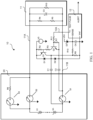
- a protection circuit 10 for an electrical system of a vehicle includes a high voltage battery pack 20.
- Protection circuit 10 is powered by a battery V3, which may be a 12V battery, and presents a pulsed signal, through two capacitors C1 and C2, and across any contactor S1, S2, S3 of the high voltage battery pack 20.
- This protection circuit 10 maintains galvanic isolation from the high voltage system through the capacitors C1 and C2.
- the capacitors C1, C2 are rated for the full voltage of the battery pack 20.
- a high-voltage bus 11 of the electrical system is depicted in Fig. 1 and is connected to battery pack 20.
- the depicted components of high-voltage bus 11 represent various loads and capacitances of components on the high voltage bus which may include: a motor inverter, a battery charger, a DC-DC converter (providing a high voltage to 12V) and any other electrical load.
- Capacitor C3 and resistor R10 are parasitic bus loads and do not represent a particular component on the high voltage bus 11.
- Resistors R4 and R5 represent a voltage divider used to measure the voltage on the high voltage bus 11.
- Protection circuit 10 includes a microcontroller 12 having signal generating circuitry which generates an output signal 12A which provides a pulsed voltage, serving as test pulses, to capacitor C1.
- Microcontroller 12 generates the test pulses of a predetermined voltage and duration which may be the voltage across battery V3 or a lesser voltage.
- Microcontroller 12 may be a microcontroller of the vehicle, such as the vehicle's electrical (or engine) control unit (ECU).
- the signal generating circuitry of microcontroller 12 may include or perform as a monostable multivibrator circuit that receives a control pulse or signal generated within the microcontroller.
- the microcontroller 12 may enable or activate the signal generating circuitry at predetermined times during vehicle operation. Monostable multivibrators are notoriously well known such that a detailed description of signal generating circuit 12 will not be provided for reasons of expediency.
- Protection circuit 10 further includes npn bipolar transistor Q2 having a control or base terminal coupled to output 12A of signal generating circuit 12 via resistor R11.
- a pnp bipolar transistor Q1 is connected between battery V3 and transistor Q2.
- a resistor R2 is connected between the emitter and base terminals of transistor Q1, and resistor R3 which is connected between the base terminal of transistor Q1 and the collector terminal of transistor Q2.
- the collector terminal of transistor Q1 is connected to capacitor C1, and the emitter terminal of transistor Q2 is connected to capacitor C2.
- a diode D1 is disposed between the emitter and collector terminals of transistor Q1, with the diode's anode connected to the emitter of transistor Q1 and the diode's cathode connected to the collector of transistor Q1.
- a diode D2 is connected between the collector of transistor Q1 and the emitter of transistor Q2, with the diode's anode connected to the emitter of transistor Q2 and the diode's collector connected to the collector of transistor Q1.
- a resistor R8 is coupled between the collector terminal of transistor Q1 and ground, and a resistor R13 is connected between resistor R8 and a sense input to microcontroller 12.
- protection circuit 10 may utilize other types of transistors than the pnp transistor Q1 and the npn transistor Q2.
- Battery pack 12 includes a stack of cells V1 - Vn which combined form a battery. It is understood that there may be any number of cells which make up the battery.
- Contactor S3 is connected between one terminal 11A of high-voltage bus 11 (via series resistor R6) and the high-side (positive) terminal of the battery stack.
- Contactor S3 and resistor R6 represent a pre-charge contactor used to charge up the high voltage bus to prevent arcing when contactor S2 closes. Not all battery systems use a pre-charge contactor S3 but may employ a separate circuit to build up the bus voltage prior to contactor S2 closing.
- Contactor S2 is connected between the terminal 11A of high-voltage bus 11 and the high-side terminal of the battery stack.
- Contactor S1 is connected between the low-side (negative) terminal of the battery stack and the second terminal 11B of high-voltage bus 11.
- a second terminal of capacitor C1 is connected to the low-side terminal of the battery stack, and the second terminal of capacitor C2 is connected to the second terminal 11B of high-voltage bus 11.
- microcontroller 12 Since transistor Q1 is only a current sourcing path, capacitors C1 and C2 retain their charge, and the voltage at the SENSE input of microcontroller 12 increases, in this case to a voltage greater than zero volts and less than the voltage at the supply voltage of battery V3.
- Microcontroller 12 detects the voltage signal at its SENSE input at predetermined times and determines whether there is an open contactor condition (in this case an undesirable closed contactor condition if the voltage applied to the control terminals of contactors S1-S3 is a contactor-opening voltage), a current leakage condition across a contactor or a loss of isolation of a contactor. Depending upon the condition determined, microcontroller 12 sends an alert to the vehicle diagnostic system (not shown) which may then indicate to a vehicle service provider of the need to replace a contactor S1-S3.
- Protection circuit 10 allows for testing of any of contactors S1-S3 in electrical system while operating from an isolated voltage supply. Protection circuit 10 maintains galvanic isolation at all times, detects leakage across contactors and detects a change in external load capacitance.
- Fig. 4 is a PSpice interpretation of protection circuit 10 of Fig. 1 .
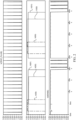
- the waveforms of Figs. 2-3 show the output voltage which is sensed by microcontroller 12.
- the top plot of Fig. 2 shows test pulses generated by the microcontroller 12.
- the middle plot of Fig. 2 shows the control voltages for opening and closing the contactors S1-S, which may also be generated by microcontroller 12.
- the bottom plot of Fig. 2 illustrates the voltage appearing at the SENSE input terminal of microcontroller 12.
- a high voltage in the middle plot indicates a contactor-closing voltage and that the corresponding contactor S1-S3 is closed, and zero volts indicates a contactor-opening voltage and the corresponding contactor is open.
- Fig. 3 illustrates an operation of protection circuit 10 in which current leakage occurs in or through one or more of contactors S1-S3.
- Output signal 12A of microcontroller 12 is depicted as voltage spikes occurring every 1.25 ms.
- Contactors S1-S3 are controlled to be closed between 0-20 ms, 25-45 ms and 50-70 ms. During these times, the voltage at the SENSE input of microcontroller 12 is at the voltage of battery V3. As shown in the times between 20-25 ms and between 45-50 ms, when contactors S1-S3 are controlled to be opened, the voltage appearing at the SENSE input of microcontroller 12 corresponds to the voltage spikes at the output signal 12A.
- the voltage appearing at the SENSE input of microcontroller 12 is at a voltage between ground and the voltage of battery V3; and if contactors S1-S3 are not welded shut, the voltage at the SENSE input of microcontroller 12 follows the voltage pulses at output signal 12A of the microcontroller when the contactors are controlled to be open
- Fig. 3 shows the effect of current leakage across a contactor S1-S3.
- the voltage indicated as "1M ohm” appearing at the SENSE input terminal shows a leakage of 1 Meg Ohm leakage across a contactor S1-S3.
- the line indicated as “10M ohm” corresponds to the effect of a 10 Meg Ohm leakage across the a contactor.
- As can be seen in Fig 3 as leakage increases the voltage at the SENSE input terminal gradually creeps up to the voltage corresponding to a closed contactor S1-S3.
- microcontroller 12 is able to determine the amount of leakage through the leaking contactor S1-S3.
- protection circuit 10 is provided within battery pack 20 and powered by the high voltage battery.
- the alert signal provided by microcontroller 12 is sent through an isolation barrier such as an opto-coupler to a diagnostic system, such as a vehicle's onboard diagnostic system.
Landscapes
- Engineering & Computer Science (AREA)
- Physics & Mathematics (AREA)
- General Physics & Mathematics (AREA)
- Mechanical Engineering (AREA)
- Transportation (AREA)
- Sustainable Development (AREA)
- Sustainable Energy (AREA)
- Power Engineering (AREA)
- Life Sciences & Earth Sciences (AREA)
- Theoretical Computer Science (AREA)
- Environmental & Geological Engineering (AREA)
- Computer Hardware Design (AREA)
- Microelectronics & Electronic Packaging (AREA)
- General Engineering & Computer Science (AREA)
- Protection Of Static Devices (AREA)
- Electric Propulsion And Braking For Vehicles (AREA)
- Emergency Protection Circuit Devices (AREA)
Description
- The present invention relates generally to detection circuitry for detecting welded-closed contactors in a high voltage battery pack of a vehicle electrical system.
- High voltage battery packs used in some vehicles, including but not limited to electric vehicles, use two to three sets of contactors to provide safety and protection from potentially harmful electrical currents. High voltage battery packs are electrically isolated from chassis ground and the 12 volt electrical system of the vehicle. Unfortunately, contactors have the potential to weld shut caused by arcing across the contacts.
JP 2013 068479 A contactor 11 is in a close state and a transistor Q of a pseudo leak circuit 4 is in an On state, a current route from a pulse generator 2 to the pseudo leak circuit 4 via a coupling capacitor C1, a first terminal T1, a first cable L1, thecontactor 11, a second cable L2 and a second terminal T2 is created. An ECU 200 determines that welding has occurred on thecontactor 11, when a leak determination part 7 determines that there is a leak while the transistor Q is turned on in a state in which a command signal to bring thecontactor 11 into an open state is output.
DE 44 27 084 A1 discloses a security device comprising an interface for an external diagnosis device, coupled via a data line with an anti-theft module and at least one function control module. A switching device is switched between open and closed positions to open the line section between the anti-theft module and the control module or the line section between the control module and the interface. The switching device is monitored to provide a fault signal when the actual position of the switch does not correspond to the required switch position. A switch testing signal can be supplied from the external diagnosis device.
DE 102014 111 335 B3 discloses a circuit for monitoring a switching state of a switch is proposed, having an oscillator which can be operated based on a voltage drop across the switch, and having an evaluation which is coupled to the oscillator via capacitors, the switching state of the switch being able to be determined on the basis of the evaluation. - Example embodiments are generally directed to detection circuitry for detecting welded-closed contactors in a high voltage battery pack of a vehicle electrical system, and alerting the vehicle diagnostic system without violating isolation between the high voltage system and the low voltage system.
- An example embodiment is disclosed for a protection device for protecting an electrical system in a vehicle. The electrical system includes a battery pack having at least one contactor, and a high voltage bus connected to the battery pack. The protection device includes a microcontroller which generates test pulses at a pulse output terminal thereof and includes a sense input terminal. The microcontroller has additional output terminals coupled to a control terminal of the at least one contactor. A first capacitor has a first terminal coupled to a first terminal of the at least one contactor. A second capacitor has a first terminal coupled to a second terminal of the at least one contactor. Circuitry is coupled between the microcontroller and the first and second capacitors, the circuitry having an input terminal connected to the pulse output terminal of the microcontroller and an output terminal connected to the sense input terminal of the microcontroller. The circuitry reflects the test pulses to the sense input terminal of the microcontroller if each contactor is open when the microcontroller applies a contactor opening voltage to the control terminal of the at least one contactor to open same. The circuitry is configured, when the microcontroller applies a contactor closing voltage to the control terminal of any of the at least one contactor closing the same, to provide a signal at a voltage level of a battery voltage of a battery of the circuitry to the sense input terminal of the microcontroller. The circuitry is further configured to present a signal different from the reflected test pulses at a voltage level between ground and the battery voltage of the battery of the circuitry to the sense input terminal of the microcontroller if any contactor is welded shut when the microcontroller applies the contactor opening voltage to the control terminal of the at least one contactor.
- In the example embodiment, the circuitry is powered by a voltage supply. The circuitry charges the first and second capacitors when any contactor is closed and does not charge the first and second capacitors when each contactor is open. The first and second capacitors are coupled to the sense input terminal of the microcontroller such that a voltage at the sense input terminal of the microcontroller corresponds to a voltage across one or more of the first capacitor and the second capacitor.
- In an implementation, the circuitry includes a first transistor having a first conduction terminal coupled to the voltage supply, a second conduction terminal coupled to a second terminal of the first capacitor, and a control terminal. A second transistor has a first conduction terminal coupled to the control terminal of the first transistor, a second conduction terminal coupled to a second terminal of the second capacitor, and a control terminal coupled to the pulse output terminal of the microcontroller. A resistor is coupled between the second terminal of the first capacitor and a reference voltage. A voltage appearing at the second terminal of the first capacitor is coupled to the sense input terminal of the microcontroller.
- In this implementation, when each contactor is open, the first capacitor and the second capacitor are disconnected from each other and creates an open circuit along an electrical path defined along the second conduction terminal of the first transistor, the first capacitor, the second capacitor and the reference voltage. When any contactor is closed, the electrical path is closed.
- The microcontroller is configured such that, based upon the voltage at the sense input terminal of the microcontroller, the microcontroller determines whether any contactor is welded closed and whether each contactor is open. Based upon the voltage at the sense input terminal of the microcontroller, the microcontroller is further configured to determine whether any current leakage exists across the at least one contactor. Based upon the voltage at the sense input terminal of the microcontroller, the microcontroller is further configured to determine an amount of current leakage across at least one contactor.
- The at least one contactor of the battery pack includes a plurality of contactors, each contactor having a first terminal coupled to the first terminal of the first capacitor and a second terminal coupled to the first terminal of the second capacitor.
- When each contactor is open, the first capacitor and the second capacitor are disconnected from each other and creates an open circuit along an electrical path defined along a power supply which powers the circuitry, the first capacitor, the second capacitor and a ground reference. When any contactor is closed, the electrical path is closed.
- The present invention will become more fully understood from the detailed description and the accompanying drawings, wherein:
-
Fig. 1 is a schematic diagram of a protection circuit for a vehicle electrical system according to an example embodiment. -
Fig. 2 illustrates voltage waveforms of the protection circuit ofFig. 1 . -
Fig. 3 illustrates voltage waveforms of the protection circuit ofFig. 1 when experiencing contactor current leakage. -
Fig. 4 illustrates a SPICE circuit depiction corresponding to the protection circuit ofFig. 1 . - The following description of the example embodiment(s) is merely exemplary in nature and is in no way intended to limit the invention, its application, or uses.
- Referring to
Fig. 1 , there is shown aprotection circuit 10 for an electrical system of a vehicle. The electrical system includes a highvoltage battery pack 20.Protection circuit 10 is powered by a battery V3, which may be a 12V battery, and presents a pulsed signal, through two capacitors C1 and C2, and across any contactor S1, S2, S3 of the highvoltage battery pack 20. Thisprotection circuit 10 maintains galvanic isolation from the high voltage system through the capacitors C1 and C2. The capacitors C1, C2 are rated for the full voltage of thebattery pack 20. A high-voltage bus 11 of the electrical system is depicted inFig. 1 and is connected tobattery pack 20. The depicted components of high-voltage bus 11 represent various loads and capacitances of components on the high voltage bus which may include: a motor inverter, a battery charger, a DC-DC converter (providing a high voltage to 12V) and any other electrical load. Capacitor C3 and resistor R10 are parasitic bus loads and do not represent a particular component on thehigh voltage bus 11. Resistors R4 and R5 represent a voltage divider used to measure the voltage on thehigh voltage bus 11. -
Protection circuit 10 includes amicrocontroller 12 having signal generating circuitry which generates anoutput signal 12A which provides a pulsed voltage, serving as test pulses, to capacitor C1.Microcontroller 12 generates the test pulses of a predetermined voltage and duration which may be the voltage across battery V3 or a lesser voltage.Microcontroller 12 may be a microcontroller of the vehicle, such as the vehicle's electrical (or engine) control unit (ECU). The signal generating circuitry ofmicrocontroller 12 may include or perform as a monostable multivibrator circuit that receives a control pulse or signal generated within the microcontroller. Themicrocontroller 12 may enable or activate the signal generating circuitry at predetermined times during vehicle operation. Monostable multivibrators are notoriously well known such that a detailed description ofsignal generating circuit 12 will not be provided for reasons of expediency. -
Protection circuit 10 further includes npn bipolar transistor Q2 having a control or base terminal coupled tooutput 12A ofsignal generating circuit 12 via resistor R11. A pnp bipolar transistor Q1 is connected between battery V3 and transistor Q2. A resistor R2 is connected between the emitter and base terminals of transistor Q1, and resistor R3 which is connected between the base terminal of transistor Q1 and the collector terminal of transistor Q2. The collector terminal of transistor Q1 is connected to capacitor C1, and the emitter terminal of transistor Q2 is connected to capacitor C2. A diode D1 is disposed between the emitter and collector terminals of transistor Q1, with the diode's anode connected to the emitter of transistor Q1 and the diode's cathode connected to the collector of transistor Q1. A diode D2 is connected between the collector of transistor Q1 and the emitter of transistor Q2, with the diode's anode connected to the emitter of transistor Q2 and the diode's collector connected to the collector of transistor Q1. A resistor R8 is coupled between the collector terminal of transistor Q1 and ground, and a resistor R13 is connected between resistor R8 and a sense input tomicrocontroller 12. - It is understood that the particular implementation of the
protection circuit 10 may utilize other types of transistors than the pnp transistor Q1 and the npn transistor Q2. -
Battery pack 12 includes a stack of cells V1 - Vn which combined form a battery. It is understood that there may be any number of cells which make up the battery. Contactor S3 is connected between one terminal 11A of high-voltage bus 11 (via series resistor R6) and the high-side (positive) terminal of the battery stack. Contactor S3 and resistor R6 represent a pre-charge contactor used to charge up the high voltage bus to prevent arcing when contactor S2 closes. Not all battery systems use a pre-charge contactor S3 but may employ a separate circuit to build up the bus voltage prior to contactor S2 closing. Contactor S2 is connected between the terminal 11A of high-voltage bus 11 and the high-side terminal of the battery stack. Contactor S1 is connected between the low-side (negative) terminal of the battery stack and the second terminal 11B of high-voltage bus 11. A second terminal of capacitor C1 is connected to the low-side terminal of the battery stack, and the second terminal of capacitor C2 is connected to the second terminal 11B of high-voltage bus 11. - During operation, if all of the contactors S1-S3 of the
battery pack 20 are open, there is an open circuit between C1 and C2 and no current flows through the capacitors. This thus appears as a high impedance to transistor Q1. With contactors S1-S3 open, the voltage pulses ofoutput signal 12A ofmicrocontroller 12 are reflected as voltage pulses at the SENSE input ofmicrocontroller 12. However, if any contactor S1-S3 is closed, such closure closes the circuit between capacitors C1 and C2 and provides an electrical path from the collector terminal of transistor Q1, through series-connected capacitors C1 and C2, to ground. When the voltage pulses ofoutput signal 12A are applied, current flows through C1 and C2. Since transistor Q1 is only a current sourcing path, capacitors C1 and C2 retain their charge, and the voltage at the SENSE input ofmicrocontroller 12 increases, in this case to a voltage greater than zero volts and less than the voltage at the supply voltage of battery V3.Microcontroller 12 detects the voltage signal at its SENSE input at predetermined times and determines whether there is an open contactor condition (in this case an undesirable closed contactor condition if the voltage applied to the control terminals of contactors S1-S3 is a contactor-opening voltage), a current leakage condition across a contactor or a loss of isolation of a contactor. Depending upon the condition determined,microcontroller 12 sends an alert to the vehicle diagnostic system (not shown) which may then indicate to a vehicle service provider of the need to replace a contactor S1-S3. -
Protection circuit 10 allows for testing of any of contactors S1-S3 in electrical system while operating from an isolated voltage supply.Protection circuit 10 maintains galvanic isolation at all times, detects leakage across contactors and detects a change in external load capacitance. -
Fig. 4 is a PSpice interpretation ofprotection circuit 10 ofFig. 1 . The waveforms ofFigs. 2-3 show the output voltage which is sensed bymicrocontroller 12. - The top plot of
Fig. 2 shows test pulses generated by themicrocontroller 12. The middle plot ofFig. 2 shows the control voltages for opening and closing the contactors S1-S, which may also be generated bymicrocontroller 12. The bottom plot ofFig. 2 illustrates the voltage appearing at the SENSE input terminal ofmicrocontroller 12. A high voltage in the middle plot indicates a contactor-closing voltage and that the corresponding contactor S1-S3 is closed, and zero volts indicates a contactor-opening voltage and the corresponding contactor is open. When all contactors S1-S3 are open, voltage pulses occur at the SENSE input of microcontroller 12 (as can be seen between 20ms and 25ms and between 45ms and 50ms in the lower plot ofFig 2 ). When any contactor S1-S3 is closed (seen between 0ms and 20ms, and between 25ms and 45ms), the voltage at the SENSE input is about 5 volts. -
Fig. 3 illustrates an operation ofprotection circuit 10 in which current leakage occurs in or through one or more of contactors S1-S3.Output signal 12A ofmicrocontroller 12 is depicted as voltage spikes occurring every 1.25 ms. Contactors S1-S3 are controlled to be closed between 0-20 ms, 25-45 ms and 50-70 ms. During these times, the voltage at the SENSE input ofmicrocontroller 12 is at the voltage of battery V3. As shown in the times between 20-25 ms and between 45-50 ms, when contactors S1-S3 are controlled to be opened, the voltage appearing at the SENSE input ofmicrocontroller 12 corresponds to the voltage spikes at theoutput signal 12A. Thus, if one or more of contactors S1-S3 is closed due to being undesirably welded shut, the voltage appearing at the SENSE input ofmicrocontroller 12 is at a voltage between ground and the voltage of battery V3; and if contactors S1-S3 are not welded shut, the voltage at the SENSE input ofmicrocontroller 12 follows the voltage pulses atoutput signal 12A of the microcontroller when the contactors are controlled to be open -
Fig. 3 shows the effect of current leakage across a contactor S1-S3. The voltage indicated as "1M ohm" appearing at the SENSE input terminal shows a leakage of 1 Meg Ohm leakage across a contactor S1-S3. The line indicated as "10M ohm" corresponds to the effect of a 10 Meg Ohm leakage across the a contactor. As can be seen inFig 3 , as leakage increases the voltage at the SENSE input terminal gradually creeps up to the voltage corresponding to a closed contactor S1-S3. By observing the voltage levels during each test pulse applied toprotection circuit 10,microcontroller 12 is able to determine the amount of leakage through the leaking contactor S1-S3. - In another embodiment,
protection circuit 10 is provided withinbattery pack 20 and powered by the high voltage battery. The alert signal provided bymicrocontroller 12 is sent through an isolation barrier such as an opto-coupler to a diagnostic system, such as a vehicle's onboard diagnostic system. - The invention is defined by the appended claims.
Claims (10)
- A protection device (10) for protecting an electrical system in a vehicle, the electrical system including a battery pack (20) having at least one contactor (S1, S2, S3), and a high voltage bus (11) connected to the battery pack (20), the protection device (10) comprising:a microcontroller (12) which generates test pulses at a pulse output terminal thereof and includes a sense input terminal, the microcontroller (12) having additional output terminals coupled to a control terminal of the at least one contactor (S1, S2, S3);a first capacitor having a first terminal coupled to a first terminal of the at least one contactor (S1, S2, S3);a second capacitor having a first terminal coupled to a second terminal of the at least one contactor (S1, S2, S3); andcircuitry coupled between the microcontroller (12) and the first and second capacitors, the circuitry having an input terminal connected to the pulse output terminal of the microcontroller (12) and an output terminal connected to the sense input terminal of the microcontroller (12),the circuitry is configured, if each contactor (S1, S2, S3) is open, to reflect the test pulses to the sense input terminal of the microcontroller (12) when the microcontroller (12) applies a contactor opening voltage to the control terminal of the at least one contactor (S1, S2, S3) to open the same,the circuitry is configured, when the microcontroller (12) applies a contactor closing voltage to the control terminal of any of the at least one contactor (S1, S2, S3) closing the same, to provide a signal at a voltage level of a battery voltage of a battery (V3) of the circuitry to the sense input terminal of the microcontroller (12),the circuitry is further configured to present a signal different from the reflected test pulses at a voltage level between ground and the battery voltage of the battery (V3) of the circuitry to the sense input terminal of the microcontroller (12) if any contactor (S1, S2, S3) is welded shut when the microcontroller (12) applies the contactor opening voltage to the control terminal of the at least one contactor (S1, S2, S3).
- The protection device (10) of claim 1, wherein the first and second capacitors being series connected and the at least one contactor (S1, S2, S3) providing an electrical connection between the first and second capacitors when the at least one contactor (S1, S2, S3) is closed and an open connection between the first and second capacitors when each contactor (S1, S2, S3) is opened.
- The protection device (10) of claim 1 or 2, wherein the circuitry is powered by a voltage supply, and the circuitry charges the first and second capacitors when any contactor (S1, S2, S3) is closed and does not charge the first and second capacitors when each contactor (S1, S2, S3) is open, the first and second capacitors being coupled to the sense input terminal of the microcontroller (12) such that a voltage at the sense input terminal of the microcontroller (12) corresponds to a voltage across one or more of the first capacitor and the second capacitor.
- The protection device (10) of claim 3, wherein the circuitry comprises:a first transistor having a first conduction terminal coupled to the voltage supply, a second conduction terminal coupled to a second terminal of the first capacitor, and a control terminal;a second transistor having a first conduction terminal coupled to the control terminal of the first transistor, a second conduction terminal coupled to a second terminal of the second capacitor, and a control terminal coupled to the pulse output terminal of the microcontroller (12); anda resistor coupled between the second terminal of the first capacitor and a reference voltage, a voltage appearing at the second terminal of the first capacitor being coupled to the sense input terminal of the microcontroller (12).
- The protection device (10) of claim 4, wherein when each contactor (S1, S2, S3) is open, the first capacitor and the second capacitor are disconnected from each other and creates an open circuit along an electrical path defined along the second conduction terminal of the first transistor, the first capacitor, the second capacitor and the reference voltage, and when any contactor (S1, S2, S3) is closed, the electrical path is closed.
- The protection device (10) of claim 3, wherein the microcontroller (12) is configured such that, based upon the voltage at the sense input terminal of the microcontroller (12), the microcontroller (12) determines whether any contactor (S1, S2, S3) is welded closed and whether each contactor (S1, S2, S3) is open.
- The protection device (10) of claim 6, wherein based upon the voltage at the sense input terminal of the microcontroller (12), the microcontroller (12) is further configured to determine whether any current leakage exists across the at least one contactor (S1, S2, S3).
- The protection device (10) of claim 6, wherein based upon the voltage at the sense input terminal of the microcontroller (12), the microcontroller (12) is further configured to determine an amount of current leakage across at least one contactor (S1, S2, S3).
- The protection device (10) of claim 1 or 2, wherein the at least one contactor (S1, S2, S3) of the battery pack (20) comprises a plurality of contactors (S1, S2, S3), each contactor (S1, S2, S3) having a first terminal coupled to the first terminal of the first capacitor and a second terminal coupled to the first terminal of the second capacitor.
- The protection device (10) of claim 1 or 2, wherein when each contactor (S1, S2, S3) is open, the first capacitor and the second capacitor are disconnected from each other and creates an open circuit along an electrical path defined along a power supply which powers the circuitry, the first capacitor, the second capacitor and a ground reference, and when any contactor (S1, S2, S3) is closed, the electrical path is closed.
Applications Claiming Priority (3)
| Application Number | Priority Date | Filing Date | Title |
|---|---|---|---|
| US201862786520P | 2018-12-30 | 2018-12-30 | |
| US16/718,965 US11029360B2 (en) | 2018-12-30 | 2019-12-18 | Electric current protection circuit and method of using same |
| PCT/US2019/068290 WO2020142312A1 (en) | 2018-12-30 | 2019-12-23 | Electric current protection circuit and method of using same |
Publications (2)
| Publication Number | Publication Date |
|---|---|
| EP3903115A1 EP3903115A1 (en) | 2021-11-03 |
| EP3903115B1 true EP3903115B1 (en) | 2024-02-07 |
Family
ID=71122731
Family Applications (1)
| Application Number | Title | Priority Date | Filing Date |
|---|---|---|---|
| EP19842529.0A Active EP3903115B1 (en) | 2018-12-30 | 2019-12-23 | Electric current protection circuit |
Country Status (5)
| Country | Link |
|---|---|
| US (1) | US11029360B2 (en) |
| EP (1) | EP3903115B1 (en) |
| KR (1) | KR102638834B1 (en) |
| CN (1) | CN113227807B (en) |
| WO (1) | WO2020142312A1 (en) |
Families Citing this family (4)
| Publication number | Priority date | Publication date | Assignee | Title |
|---|---|---|---|---|
| US11046189B2 (en) * | 2019-01-11 | 2021-06-29 | Ford Global Technologies, Llc | Integrated charge and discharge solution for inverter DC link capacitor |
| US12142445B2 (en) * | 2022-11-02 | 2024-11-12 | Ford Global Technologies, Llc | Contactor weld releasing systems and methods |
| US20250306106A1 (en) * | 2024-03-29 | 2025-10-02 | Cox Automotive, Inc. | Contactor weld detection |
| EP4640472A1 (en) * | 2024-04-24 | 2025-10-29 | Volvo Truck Corporation | A system for weld checking a contactor for a traction battery of an electric vehicle, an electric vehicle and a method for weld checking a contactor for a traction battery of an electric vehicle |
Family Cites Families (30)
| Publication number | Priority date | Publication date | Assignee | Title |
|---|---|---|---|---|
| US4959746A (en) * | 1987-01-30 | 1990-09-25 | Electronic Specialty Corporation | Relay contact protective circuit |
| DE4427084A1 (en) | 1994-07-30 | 1996-02-01 | Bosch Gmbh Robert | Vehicle security arrangement |
| JP5244653B2 (en) * | 2009-03-03 | 2013-07-24 | 日立オートモティブシステムズ株式会社 | Power converter |
| US8339139B2 (en) | 2010-01-29 | 2012-12-25 | Infineon Technologies Ag | System and method for testing a circuit |
| EP2360805B1 (en) * | 2010-02-19 | 2015-08-26 | Hochschule Luzern Technik & Architektur | Electrical power transmission system of a vehicle. |
| US9948087B2 (en) * | 2010-03-08 | 2018-04-17 | Pass & Seymour, Inc. | Protective device for an electrical supply facility |
| WO2011119669A2 (en) * | 2010-03-23 | 2011-09-29 | A123 Systems, Inc. | System and method for controlling a battery pack output contactor |
| US8901934B2 (en) * | 2010-10-29 | 2014-12-02 | GM Global Technology Operations LLC | Diagnosis of HEV/EV battery disconnect system |
| DE102011004516A1 (en) * | 2011-02-22 | 2012-08-23 | Sb Limotive Company Ltd. | Electric circuit for use with lithium ion battery system for diagnosis of switching contacts in battery-powered road vehicle, has unit for generating and measuring voltage drop via resistance element |
| EP2715379B1 (en) * | 2011-06-01 | 2018-09-05 | Commissariat A L'energie Atomique Et Aux Energies Alternatives | Detection of an insulation defect |
| FR2976737B1 (en) * | 2011-06-17 | 2013-07-19 | Commissariat Energie Atomique | SECURE BATTERY ELEMENT |
| DE102011108408A1 (en) * | 2011-07-23 | 2013-01-24 | Volkswagen Aktiengesellschaft | Method and test system for testing a contactor arrangement for a vehicle |
| JP5541743B2 (en) | 2011-09-21 | 2014-07-09 | オムロンオートモーティブエレクトロニクス株式会社 | Contactor welding detector |
| DE102012008601B4 (en) | 2012-04-27 | 2015-12-24 | Audi Ag | Motor vehicle and method for detecting a blocked switching device of a vehicle battery |
| US10802083B2 (en) * | 2012-05-24 | 2020-10-13 | Webasto Charging Systems, Inc. | EVSE welded contactor detector |
| DE102013219243B4 (en) * | 2013-09-25 | 2018-01-18 | Robert Bosch Gmbh | Method and device for determining the aging of an electronic interruption element, in particular a power contactor |
| CN105706532B (en) * | 2013-11-08 | 2017-11-21 | 飞利浦照明控股有限公司 | Driver with open circuit output protection |
| US9214888B2 (en) * | 2013-12-20 | 2015-12-15 | Lg Chem, Ltd. | Pre-charging system for a capacitor in a voltage inverter for an electric motor |
| US9573474B2 (en) * | 2014-03-06 | 2017-02-21 | Ford Global Technologies, Llc | Capacitor precharging and capacitance/resistance measurement in electric vehicle drive system |
| US9404977B2 (en) * | 2014-04-17 | 2016-08-02 | Ford Global Technologies, Llc | Bidirectional DC converter-based battery simulator |
| DE102014111335B3 (en) | 2014-08-08 | 2015-11-19 | Lisa Dräxlmaier GmbH | Monitoring a switch |
| US10042002B2 (en) * | 2014-12-12 | 2018-08-07 | Infineon Technologies Austria Ag | System and method for contact measurement circuit |
| WO2016103721A1 (en) * | 2014-12-24 | 2016-06-30 | 株式会社Gsユアサ | Power supply protection device, power supply device, and switch fault diagnosis method |
| DE102015101283A1 (en) * | 2015-01-29 | 2016-08-04 | Dr. Ing. H.C. F. Porsche Aktiengesellschaft | Method and device for electrically charging a high-voltage battery on an AC mains |
| CN106300229B (en) * | 2015-05-19 | 2019-04-12 | 观致汽车有限公司 | It is a kind of for protecting the device and method of high-tension battery electricity system |
| CN106564390B (en) * | 2015-10-12 | 2020-04-21 | 北京新能源汽车股份有限公司 | Electric automobile and high-voltage system, detection method and pre-charging circuit thereof |
| US9817050B2 (en) * | 2016-01-20 | 2017-11-14 | Faraday&Future Inc. | Detection of welded contactor using ac coupling |
| DE102016203014A1 (en) * | 2016-02-25 | 2017-08-31 | Vega Grieshaber Kg | Driver circuit for intrinsically safe circuits |
| DE112016006844T5 (en) * | 2016-05-12 | 2019-02-14 | Robert Bosch Gmbh | Battery disconnect circuits and method for controlling a battery disconnect circuit |
| US10170259B2 (en) * | 2016-06-20 | 2019-01-01 | Lg Chem, Ltd. | System for controlling operation of a contactor using a high side sense circuit and a low side sense circuit |
-
2019
- 2019-12-18 US US16/718,965 patent/US11029360B2/en active Active
- 2019-12-23 WO PCT/US2019/068290 patent/WO2020142312A1/en not_active Ceased
- 2019-12-23 EP EP19842529.0A patent/EP3903115B1/en active Active
- 2019-12-23 CN CN201980087370.4A patent/CN113227807B/en active Active
- 2019-12-23 KR KR1020217020384A patent/KR102638834B1/en active Active
Also Published As
| Publication number | Publication date |
|---|---|
| KR102638834B1 (en) | 2024-02-20 |
| US20200209314A1 (en) | 2020-07-02 |
| WO2020142312A1 (en) | 2020-07-09 |
| CN113227807A (en) | 2021-08-06 |
| US11029360B2 (en) | 2021-06-08 |
| KR20210151772A (en) | 2021-12-14 |
| CN113227807B (en) | 2024-12-13 |
| EP3903115A1 (en) | 2021-11-03 |
Similar Documents
| Publication | Publication Date | Title |
|---|---|---|
| EP3903115B1 (en) | Electric current protection circuit | |
| US8199449B2 (en) | Method and a device for monitoring high-voltage connections of a hybrid vehicle | |
| CN101025436B (en) | High-voltage safety monitoring device for electric automobile | |
| CN102844670B (en) | High-voltage system for motor vehicle and method for diagnosing high-voltage system for motor vehicle | |
| EP2236343A1 (en) | Ground fault detecting system and electric vehicle with ground fault detecting system | |
| US7679211B2 (en) | Electrical disconnect system | |
| US12179679B2 (en) | Method for securing in particular safety-relevant loads in a motor vehicle | |
| KR102827475B1 (en) | Electrical DC system protection devices, onboard electrical systems for vehicles, vehicles and DC charging stations | |
| KR102734892B1 (en) | Method for discharging a vehicle high voltage electrical system, onboard vehicle electrical system and insulation monitoring device | |
| EP3722142B1 (en) | Electric vehicle power relay assembly and driving method therefor | |
| CN101318475A (en) | Simplified automatic discharge function for vehicles | |
| US20090015973A1 (en) | Increased Voltage Vehicle Electrical System | |
| CN104569799A (en) | Apparatus and method for diagnosing malfunction of high voltage relay device | |
| US11592485B2 (en) | Methods and apparatus for contactor weld detection in a vehicle | |
| US20150357838A1 (en) | Battery system | |
| EP3620803B1 (en) | Relay diagnosis circuit | |
| JP2017187397A (en) | Temperature detection device | |
| KR102504270B1 (en) | Battery protection apparatus and battery system including the same | |
| US20240201242A1 (en) | Device for monitoring a power distributor of a motor vehicle | |
| US20170001533A1 (en) | Charging and discharging system for an electric vehicle | |
| US20130270901A1 (en) | Method and Arrangement for Diagnosing Drivers of Contactors, Battery, and Motor Vehicle having such a Battery | |
| US11498499B2 (en) | Automatic and user initiated isolation testing for automotive alternating current power systems | |
| KR101575271B1 (en) | Apparatus for measuring isolation resistance using logical operation and method thereof | |
| KR20230011495A (en) | Vehicle on-board electrical network switch, motor vehicle on-board electrical network and how the motor vehicle on-board electrical network switch works | |
| KR20240136396A (en) | Monitoring charging method considering surge protection measures at charging stations |
Legal Events
| Date | Code | Title | Description |
|---|---|---|---|
| STAA | Information on the status of an ep patent application or granted ep patent |
Free format text: STATUS: UNKNOWN |
|
| STAA | Information on the status of an ep patent application or granted ep patent |
Free format text: STATUS: THE INTERNATIONAL PUBLICATION HAS BEEN MADE |
|
| PUAI | Public reference made under article 153(3) epc to a published international application that has entered the european phase |
Free format text: ORIGINAL CODE: 0009012 |
|
| STAA | Information on the status of an ep patent application or granted ep patent |
Free format text: STATUS: REQUEST FOR EXAMINATION WAS MADE |
|
| 17P | Request for examination filed |
Effective date: 20210730 |
|
| AK | Designated contracting states |
Kind code of ref document: A1 Designated state(s): AL AT BE BG CH CY CZ DE DK EE ES FI FR GB GR HR HU IE IS IT LI LT LU LV MC MK MT NL NO PL PT RO RS SE SI SK SM TR |
|
| DAV | Request for validation of the european patent (deleted) | ||
| DAX | Request for extension of the european patent (deleted) | ||
| REG | Reference to a national code |
Ref country code: DE Free format text: PREVIOUS MAIN CLASS: G01R0031327000 Ipc: B60L0003040000 Ref country code: DE Ref legal event code: R079 Ref document number: 602019046289 Country of ref document: DE Free format text: PREVIOUS MAIN CLASS: G01R0031327000 Ipc: B60L0003040000 |
|
| GRAP | Despatch of communication of intention to grant a patent |
Free format text: ORIGINAL CODE: EPIDOSNIGR1 |
|
| STAA | Information on the status of an ep patent application or granted ep patent |
Free format text: STATUS: GRANT OF PATENT IS INTENDED |
|
| RIC1 | Information provided on ipc code assigned before grant |
Ipc: G01R 31/327 20060101ALI20230629BHEP Ipc: B60L 58/20 20190101ALI20230629BHEP Ipc: B60L 3/04 20060101AFI20230629BHEP |
|
| INTG | Intention to grant announced |
Effective date: 20230718 |
|
| P01 | Opt-out of the competence of the unified patent court (upc) registered |
Effective date: 20230830 |
|
| GRAS | Grant fee paid |
Free format text: ORIGINAL CODE: EPIDOSNIGR3 |
|
| GRAA | (expected) grant |
Free format text: ORIGINAL CODE: 0009210 |
|
| STAA | Information on the status of an ep patent application or granted ep patent |
Free format text: STATUS: THE PATENT HAS BEEN GRANTED |
|
| AK | Designated contracting states |
Kind code of ref document: B1 Designated state(s): AL AT BE BG CH CY CZ DE DK EE ES FI FR GB GR HR HU IE IS IT LI LT LU LV MC MK MT NL NO PL PT RO RS SE SI SK SM TR |
|
| REG | Reference to a national code |
Ref country code: GB Ref legal event code: FG4D |
|
| REG | Reference to a national code |
Ref country code: CH Ref legal event code: EP |
|
| REG | Reference to a national code |
Ref country code: IE Ref legal event code: FG4D |
|
| REG | Reference to a national code |
Ref country code: DE Ref legal event code: R096 Ref document number: 602019046289 Country of ref document: DE |
|
| REG | Reference to a national code |
Ref country code: LT Ref legal event code: MG9D |
|
| REG | Reference to a national code |
Ref country code: NL Ref legal event code: MP Effective date: 20240207 |
|
| PG25 | Lapsed in a contracting state [announced via postgrant information from national office to epo] |
Ref country code: IS Free format text: LAPSE BECAUSE OF FAILURE TO SUBMIT A TRANSLATION OF THE DESCRIPTION OR TO PAY THE FEE WITHIN THE PRESCRIBED TIME-LIMIT Effective date: 20240607 |
|
| PG25 | Lapsed in a contracting state [announced via postgrant information from national office to epo] |
Ref country code: LT Free format text: LAPSE BECAUSE OF FAILURE TO SUBMIT A TRANSLATION OF THE DESCRIPTION OR TO PAY THE FEE WITHIN THE PRESCRIBED TIME-LIMIT Effective date: 20240207 |
|
| PG25 | Lapsed in a contracting state [announced via postgrant information from national office to epo] |
Ref country code: GR Free format text: LAPSE BECAUSE OF FAILURE TO SUBMIT A TRANSLATION OF THE DESCRIPTION OR TO PAY THE FEE WITHIN THE PRESCRIBED TIME-LIMIT Effective date: 20240508 |
|
| REG | Reference to a national code |
Ref country code: AT Ref legal event code: MK05 Ref document number: 1655168 Country of ref document: AT Kind code of ref document: T Effective date: 20240207 |
|
| PG25 | Lapsed in a contracting state [announced via postgrant information from national office to epo] |
Ref country code: HR Free format text: LAPSE BECAUSE OF FAILURE TO SUBMIT A TRANSLATION OF THE DESCRIPTION OR TO PAY THE FEE WITHIN THE PRESCRIBED TIME-LIMIT Effective date: 20240207 Ref country code: RS Free format text: LAPSE BECAUSE OF FAILURE TO SUBMIT A TRANSLATION OF THE DESCRIPTION OR TO PAY THE FEE WITHIN THE PRESCRIBED TIME-LIMIT Effective date: 20240507 Ref country code: NL Free format text: LAPSE BECAUSE OF FAILURE TO SUBMIT A TRANSLATION OF THE DESCRIPTION OR TO PAY THE FEE WITHIN THE PRESCRIBED TIME-LIMIT Effective date: 20240207 |
|
| PG25 | Lapsed in a contracting state [announced via postgrant information from national office to epo] |
Ref country code: ES Free format text: LAPSE BECAUSE OF FAILURE TO SUBMIT A TRANSLATION OF THE DESCRIPTION OR TO PAY THE FEE WITHIN THE PRESCRIBED TIME-LIMIT Effective date: 20240207 |
|
| PG25 | Lapsed in a contracting state [announced via postgrant information from national office to epo] |
Ref country code: AT Free format text: LAPSE BECAUSE OF FAILURE TO SUBMIT A TRANSLATION OF THE DESCRIPTION OR TO PAY THE FEE WITHIN THE PRESCRIBED TIME-LIMIT Effective date: 20240207 |
|
| PG25 | Lapsed in a contracting state [announced via postgrant information from national office to epo] |
Ref country code: RS Free format text: LAPSE BECAUSE OF FAILURE TO SUBMIT A TRANSLATION OF THE DESCRIPTION OR TO PAY THE FEE WITHIN THE PRESCRIBED TIME-LIMIT Effective date: 20240507 Ref country code: NO Free format text: LAPSE BECAUSE OF FAILURE TO SUBMIT A TRANSLATION OF THE DESCRIPTION OR TO PAY THE FEE WITHIN THE PRESCRIBED TIME-LIMIT Effective date: 20240507 Ref country code: NL Free format text: LAPSE BECAUSE OF FAILURE TO SUBMIT A TRANSLATION OF THE DESCRIPTION OR TO PAY THE FEE WITHIN THE PRESCRIBED TIME-LIMIT Effective date: 20240207 Ref country code: LT Free format text: LAPSE BECAUSE OF FAILURE TO SUBMIT A TRANSLATION OF THE DESCRIPTION OR TO PAY THE FEE WITHIN THE PRESCRIBED TIME-LIMIT Effective date: 20240207 Ref country code: IS Free format text: LAPSE BECAUSE OF FAILURE TO SUBMIT A TRANSLATION OF THE DESCRIPTION OR TO PAY THE FEE WITHIN THE PRESCRIBED TIME-LIMIT Effective date: 20240607 Ref country code: HR Free format text: LAPSE BECAUSE OF FAILURE TO SUBMIT A TRANSLATION OF THE DESCRIPTION OR TO PAY THE FEE WITHIN THE PRESCRIBED TIME-LIMIT Effective date: 20240207 Ref country code: GR Free format text: LAPSE BECAUSE OF FAILURE TO SUBMIT A TRANSLATION OF THE DESCRIPTION OR TO PAY THE FEE WITHIN THE PRESCRIBED TIME-LIMIT Effective date: 20240508 Ref country code: FI Free format text: LAPSE BECAUSE OF FAILURE TO SUBMIT A TRANSLATION OF THE DESCRIPTION OR TO PAY THE FEE WITHIN THE PRESCRIBED TIME-LIMIT Effective date: 20240207 Ref country code: ES Free format text: LAPSE BECAUSE OF FAILURE TO SUBMIT A TRANSLATION OF THE DESCRIPTION OR TO PAY THE FEE WITHIN THE PRESCRIBED TIME-LIMIT Effective date: 20240207 Ref country code: BG Free format text: LAPSE BECAUSE OF FAILURE TO SUBMIT A TRANSLATION OF THE DESCRIPTION OR TO PAY THE FEE WITHIN THE PRESCRIBED TIME-LIMIT Effective date: 20240207 Ref country code: AT Free format text: LAPSE BECAUSE OF FAILURE TO SUBMIT A TRANSLATION OF THE DESCRIPTION OR TO PAY THE FEE WITHIN THE PRESCRIBED TIME-LIMIT Effective date: 20240207 |
|
| PG25 | Lapsed in a contracting state [announced via postgrant information from national office to epo] |
Ref country code: PT Free format text: LAPSE BECAUSE OF FAILURE TO SUBMIT A TRANSLATION OF THE DESCRIPTION OR TO PAY THE FEE WITHIN THE PRESCRIBED TIME-LIMIT Effective date: 20240607 Ref country code: PL Free format text: LAPSE BECAUSE OF FAILURE TO SUBMIT A TRANSLATION OF THE DESCRIPTION OR TO PAY THE FEE WITHIN THE PRESCRIBED TIME-LIMIT Effective date: 20240207 |
|
| PG25 | Lapsed in a contracting state [announced via postgrant information from national office to epo] |
Ref country code: SE Free format text: LAPSE BECAUSE OF FAILURE TO SUBMIT A TRANSLATION OF THE DESCRIPTION OR TO PAY THE FEE WITHIN THE PRESCRIBED TIME-LIMIT Effective date: 20240207 Ref country code: PT Free format text: LAPSE BECAUSE OF FAILURE TO SUBMIT A TRANSLATION OF THE DESCRIPTION OR TO PAY THE FEE WITHIN THE PRESCRIBED TIME-LIMIT Effective date: 20240607 Ref country code: PL Free format text: LAPSE BECAUSE OF FAILURE TO SUBMIT A TRANSLATION OF THE DESCRIPTION OR TO PAY THE FEE WITHIN THE PRESCRIBED TIME-LIMIT Effective date: 20240207 Ref country code: LV Free format text: LAPSE BECAUSE OF FAILURE TO SUBMIT A TRANSLATION OF THE DESCRIPTION OR TO PAY THE FEE WITHIN THE PRESCRIBED TIME-LIMIT Effective date: 20240207 |
|
| PG25 | Lapsed in a contracting state [announced via postgrant information from national office to epo] |
Ref country code: DK Free format text: LAPSE BECAUSE OF FAILURE TO SUBMIT A TRANSLATION OF THE DESCRIPTION OR TO PAY THE FEE WITHIN THE PRESCRIBED TIME-LIMIT Effective date: 20240207 |
|
| PG25 | Lapsed in a contracting state [announced via postgrant information from national office to epo] |
Ref country code: SM Free format text: LAPSE BECAUSE OF FAILURE TO SUBMIT A TRANSLATION OF THE DESCRIPTION OR TO PAY THE FEE WITHIN THE PRESCRIBED TIME-LIMIT Effective date: 20240207 |
|
| PG25 | Lapsed in a contracting state [announced via postgrant information from national office to epo] |
Ref country code: CZ Free format text: LAPSE BECAUSE OF FAILURE TO SUBMIT A TRANSLATION OF THE DESCRIPTION OR TO PAY THE FEE WITHIN THE PRESCRIBED TIME-LIMIT Effective date: 20240207 Ref country code: EE Free format text: LAPSE BECAUSE OF FAILURE TO SUBMIT A TRANSLATION OF THE DESCRIPTION OR TO PAY THE FEE WITHIN THE PRESCRIBED TIME-LIMIT Effective date: 20240207 |
|
| PG25 | Lapsed in a contracting state [announced via postgrant information from national office to epo] |
Ref country code: SK Free format text: LAPSE BECAUSE OF FAILURE TO SUBMIT A TRANSLATION OF THE DESCRIPTION OR TO PAY THE FEE WITHIN THE PRESCRIBED TIME-LIMIT Effective date: 20240207 |
|
| PG25 | Lapsed in a contracting state [announced via postgrant information from national office to epo] |
Ref country code: SM Free format text: LAPSE BECAUSE OF FAILURE TO SUBMIT A TRANSLATION OF THE DESCRIPTION OR TO PAY THE FEE WITHIN THE PRESCRIBED TIME-LIMIT Effective date: 20240207 Ref country code: SK Free format text: LAPSE BECAUSE OF FAILURE TO SUBMIT A TRANSLATION OF THE DESCRIPTION OR TO PAY THE FEE WITHIN THE PRESCRIBED TIME-LIMIT Effective date: 20240207 Ref country code: RO Free format text: LAPSE BECAUSE OF FAILURE TO SUBMIT A TRANSLATION OF THE DESCRIPTION OR TO PAY THE FEE WITHIN THE PRESCRIBED TIME-LIMIT Effective date: 20240207 Ref country code: EE Free format text: LAPSE BECAUSE OF FAILURE TO SUBMIT A TRANSLATION OF THE DESCRIPTION OR TO PAY THE FEE WITHIN THE PRESCRIBED TIME-LIMIT Effective date: 20240207 Ref country code: DK Free format text: LAPSE BECAUSE OF FAILURE TO SUBMIT A TRANSLATION OF THE DESCRIPTION OR TO PAY THE FEE WITHIN THE PRESCRIBED TIME-LIMIT Effective date: 20240207 Ref country code: CZ Free format text: LAPSE BECAUSE OF FAILURE TO SUBMIT A TRANSLATION OF THE DESCRIPTION OR TO PAY THE FEE WITHIN THE PRESCRIBED TIME-LIMIT Effective date: 20240207 |
|
| REG | Reference to a national code |
Ref country code: DE Ref legal event code: R097 Ref document number: 602019046289 Country of ref document: DE |
|
| PLBE | No opposition filed within time limit |
Free format text: ORIGINAL CODE: 0009261 |
|
| STAA | Information on the status of an ep patent application or granted ep patent |
Free format text: STATUS: NO OPPOSITION FILED WITHIN TIME LIMIT |
|
| 26N | No opposition filed |
Effective date: 20241108 |
|
| PG25 | Lapsed in a contracting state [announced via postgrant information from national office to epo] |
Ref country code: SI Free format text: LAPSE BECAUSE OF FAILURE TO SUBMIT A TRANSLATION OF THE DESCRIPTION OR TO PAY THE FEE WITHIN THE PRESCRIBED TIME-LIMIT Effective date: 20240207 |
|
| PG25 | Lapsed in a contracting state [announced via postgrant information from national office to epo] |
Ref country code: MC Free format text: LAPSE BECAUSE OF FAILURE TO SUBMIT A TRANSLATION OF THE DESCRIPTION OR TO PAY THE FEE WITHIN THE PRESCRIBED TIME-LIMIT Effective date: 20240207 |
|
| REG | Reference to a national code |
Ref country code: CH Ref legal event code: PL |
|
| PG25 | Lapsed in a contracting state [announced via postgrant information from national office to epo] |
Ref country code: LU Free format text: LAPSE BECAUSE OF NON-PAYMENT OF DUE FEES Effective date: 20241223 |
|
| REG | Reference to a national code |
Ref country code: DE Ref legal event code: R081 Ref document number: 602019046289 Country of ref document: DE Owner name: SCHAEFFLER TECHNOLOGIES AG & CO. KG, DE Free format text: FORMER OWNER: VITESCO TECHNOLOGIES USA, LLC, AUBURN HILLS, MI, US Ref country code: DE Ref legal event code: R082 Ref document number: 602019046289 Country of ref document: DE |
|
| GBPC | Gb: european patent ceased through non-payment of renewal fee |
Effective date: 20241223 |
|
| REG | Reference to a national code |
Ref country code: BE Ref legal event code: MM Effective date: 20241231 |
|
| PG25 | Lapsed in a contracting state [announced via postgrant information from national office to epo] |
Ref country code: GB Free format text: LAPSE BECAUSE OF NON-PAYMENT OF DUE FEES Effective date: 20241223 Ref country code: BE Free format text: LAPSE BECAUSE OF NON-PAYMENT OF DUE FEES Effective date: 20241231 |
|
| PG25 | Lapsed in a contracting state [announced via postgrant information from national office to epo] |
Ref country code: CH Free format text: LAPSE BECAUSE OF NON-PAYMENT OF DUE FEES Effective date: 20241231 |
|
| PG25 | Lapsed in a contracting state [announced via postgrant information from national office to epo] |
Ref country code: IE Free format text: LAPSE BECAUSE OF NON-PAYMENT OF DUE FEES Effective date: 20241223 |
|
| PGFP | Annual fee paid to national office [announced via postgrant information from national office to epo] |
Ref country code: IT Payment date: 20251223 Year of fee payment: 7 |
|
| PGFP | Annual fee paid to national office [announced via postgrant information from national office to epo] |
Ref country code: FR Payment date: 20251229 Year of fee payment: 7 |
|
| PGFP | Annual fee paid to national office [announced via postgrant information from national office to epo] |
Ref country code: DE Payment date: 20251231 Year of fee payment: 7 |