EP3902415B1 - High viscosity nicotine formulation - Google Patents
High viscosity nicotine formulation Download PDFInfo
- Publication number
- EP3902415B1 EP3902415B1 EP19829150.2A EP19829150A EP3902415B1 EP 3902415 B1 EP3902415 B1 EP 3902415B1 EP 19829150 A EP19829150 A EP 19829150A EP 3902415 B1 EP3902415 B1 EP 3902415B1
- Authority
- EP
- European Patent Office
- Prior art keywords
- nicotine formulation
- metal
- percent
- weight
- aerosol
- Prior art date
- Legal status (The legal status is an assumption and is not a legal conclusion. Google has not performed a legal analysis and makes no representation as to the accuracy of the status listed.)
- Active
Links
Images
Classifications
-
- A—HUMAN NECESSITIES
- A24—TOBACCO; CIGARS; CIGARETTES; SIMULATED SMOKING DEVICES; SMOKERS' REQUISITES
- A24B—MANUFACTURE OR PREPARATION OF TOBACCO FOR SMOKING OR CHEWING; TOBACCO; SNUFF
- A24B15/00—Chemical features or treatment of tobacco; Tobacco substitutes, e.g. in liquid form
- A24B15/10—Chemical features of tobacco products or tobacco substitutes
- A24B15/16—Chemical features of tobacco products or tobacco substitutes of tobacco substitutes
-
- A—HUMAN NECESSITIES
- A24—TOBACCO; CIGARS; CIGARETTES; SIMULATED SMOKING DEVICES; SMOKERS' REQUISITES
- A24B—MANUFACTURE OR PREPARATION OF TOBACCO FOR SMOKING OR CHEWING; TOBACCO; SNUFF
- A24B15/00—Chemical features or treatment of tobacco; Tobacco substitutes, e.g. in liquid form
- A24B15/10—Chemical features of tobacco products or tobacco substitutes
- A24B15/16—Chemical features of tobacco products or tobacco substitutes of tobacco substitutes
- A24B15/167—Chemical features of tobacco products or tobacco substitutes of tobacco substitutes in liquid or vaporisable form, e.g. liquid compositions for electronic cigarettes
-
- A—HUMAN NECESSITIES
- A24—TOBACCO; CIGARS; CIGARETTES; SIMULATED SMOKING DEVICES; SMOKERS' REQUISITES
- A24B—MANUFACTURE OR PREPARATION OF TOBACCO FOR SMOKING OR CHEWING; TOBACCO; SNUFF
- A24B15/00—Chemical features or treatment of tobacco; Tobacco substitutes, e.g. in liquid form
- A24B15/10—Chemical features of tobacco products or tobacco substitutes
- A24B15/16—Chemical features of tobacco products or tobacco substitutes of tobacco substitutes
- A24B15/165—Chemical features of tobacco products or tobacco substitutes of tobacco substitutes comprising as heat source a carbon fuel or an oxidized or thermally degraded carbonaceous fuel, e.g. carbohydrates, cellulosic material
-
- A—HUMAN NECESSITIES
- A24—TOBACCO; CIGARS; CIGARETTES; SIMULATED SMOKING DEVICES; SMOKERS' REQUISITES
- A24B—MANUFACTURE OR PREPARATION OF TOBACCO FOR SMOKING OR CHEWING; TOBACCO; SNUFF
- A24B15/00—Chemical features or treatment of tobacco; Tobacco substitutes, e.g. in liquid form
- A24B15/18—Treatment of tobacco products or tobacco substitutes
- A24B15/24—Treatment of tobacco products or tobacco substitutes by extraction; Tobacco extracts
- A24B15/241—Extraction of specific substances
- A24B15/243—Nicotine
-
- A—HUMAN NECESSITIES
- A24—TOBACCO; CIGARS; CIGARETTES; SIMULATED SMOKING DEVICES; SMOKERS' REQUISITES
- A24B—MANUFACTURE OR PREPARATION OF TOBACCO FOR SMOKING OR CHEWING; TOBACCO; SNUFF
- A24B15/00—Chemical features or treatment of tobacco; Tobacco substitutes, e.g. in liquid form
- A24B15/18—Treatment of tobacco products or tobacco substitutes
- A24B15/28—Treatment of tobacco products or tobacco substitutes by chemical substances
-
- A—HUMAN NECESSITIES
- A24—TOBACCO; CIGARS; CIGARETTES; SIMULATED SMOKING DEVICES; SMOKERS' REQUISITES
- A24B—MANUFACTURE OR PREPARATION OF TOBACCO FOR SMOKING OR CHEWING; TOBACCO; SNUFF
- A24B15/00—Chemical features or treatment of tobacco; Tobacco substitutes, e.g. in liquid form
- A24B15/18—Treatment of tobacco products or tobacco substitutes
- A24B15/28—Treatment of tobacco products or tobacco substitutes by chemical substances
- A24B15/30—Treatment of tobacco products or tobacco substitutes by chemical substances by organic substances
-
- A—HUMAN NECESSITIES
- A24—TOBACCO; CIGARS; CIGARETTES; SIMULATED SMOKING DEVICES; SMOKERS' REQUISITES
- A24B—MANUFACTURE OR PREPARATION OF TOBACCO FOR SMOKING OR CHEWING; TOBACCO; SNUFF
- A24B15/00—Chemical features or treatment of tobacco; Tobacco substitutes, e.g. in liquid form
- A24B15/18—Treatment of tobacco products or tobacco substitutes
- A24B15/28—Treatment of tobacco products or tobacco substitutes by chemical substances
- A24B15/30—Treatment of tobacco products or tobacco substitutes by chemical substances by organic substances
- A24B15/32—Treatment of tobacco products or tobacco substitutes by chemical substances by organic substances by acyclic compounds
-
- A—HUMAN NECESSITIES
- A24—TOBACCO; CIGARS; CIGARETTES; SIMULATED SMOKING DEVICES; SMOKERS' REQUISITES
- A24F—SMOKERS' REQUISITES; MATCH BOXES; SIMULATED SMOKING DEVICES
- A24F40/00—Electrically operated smoking devices; Component parts thereof; Manufacture thereof; Maintenance or testing thereof; Charging means specially adapted therefor
- A24F40/10—Devices using liquid inhalable precursors
-
- A—HUMAN NECESSITIES
- A24—TOBACCO; CIGARS; CIGARETTES; SIMULATED SMOKING DEVICES; SMOKERS' REQUISITES
- A24F—SMOKERS' REQUISITES; MATCH BOXES; SIMULATED SMOKING DEVICES
- A24F40/00—Electrically operated smoking devices; Component parts thereof; Manufacture thereof; Maintenance or testing thereof; Charging means specially adapted therefor
- A24F40/40—Constructional details, e.g. connection of cartridges and battery parts
-
- A—HUMAN NECESSITIES
- A24—TOBACCO; CIGARS; CIGARETTES; SIMULATED SMOKING DEVICES; SMOKERS' REQUISITES
- A24F—SMOKERS' REQUISITES; MATCH BOXES; SIMULATED SMOKING DEVICES
- A24F40/00—Electrically operated smoking devices; Component parts thereof; Manufacture thereof; Maintenance or testing thereof; Charging means specially adapted therefor
- A24F40/20—Devices using solid inhalable precursors
-
- A—HUMAN NECESSITIES
- A24—TOBACCO; CIGARS; CIGARETTES; SIMULATED SMOKING DEVICES; SMOKERS' REQUISITES
- A24F—SMOKERS' REQUISITES; MATCH BOXES; SIMULATED SMOKING DEVICES
- A24F40/00—Electrically operated smoking devices; Component parts thereof; Manufacture thereof; Maintenance or testing thereof; Charging means specially adapted therefor
- A24F40/40—Constructional details, e.g. connection of cartridges and battery parts
- A24F40/42—Cartridges or containers for inhalable precursors
-
- A—HUMAN NECESSITIES
- A24—TOBACCO; CIGARS; CIGARETTES; SIMULATED SMOKING DEVICES; SMOKERS' REQUISITES
- A24F—SMOKERS' REQUISITES; MATCH BOXES; SIMULATED SMOKING DEVICES
- A24F40/00—Electrically operated smoking devices; Component parts thereof; Manufacture thereof; Maintenance or testing thereof; Charging means specially adapted therefor
- A24F40/40—Constructional details, e.g. connection of cartridges and battery parts
- A24F40/48—Fluid transfer means, e.g. pumps
Definitions
- the invention relates to a nicotine formulation for use in an aerosol-generating system.
- the invention also relates to an aerosol-generating article comprising the nicotine formulation for use in an aerosol-generating system and an aerosol-generating system comprising the nicotine formulation and an atomiser.
- Aerosol-generating systems for delivering nicotine to a user that comprise an atomiser configured to generate an inhalable aerosol from a nicotine formulation are known.
- Some known aerosol-generating systems comprise a thermal atomiser such as an electric heater that is configured to heat and vaporise the nicotine formulation to generate an aerosol.
- Other known aerosol-generating systems comprise a non-thermal atomiser that is configured to generate an aerosol from the nicotine formulation using, for example, impinging jet, ultrasonic or vibrating mesh technologies.
- Typical nicotine formulations for use in aerosol-generating systems are liquid nicotine formulations comprise glycerine, propylene glycol and water as solvents.
- US5105836A describes a smokable filler.
- the smokable filler includes a polyhydric alcohol content of more than 40 percent by weight.
- the smokable filler is provided in the form of a laminated sheet.
- a nicotine formulation for use in an aerosol-generating system, the nicotine formulation comprising one or more water-miscible polyhydric alcohols, wherein the nicotine formulation has a water-miscible polyhydric alcohol content of greater than or equal to about 40 percent by weight, wherein the nicotine formulation is solid at 25°C or has a viscosity at 25°C of greater than or equal to about 100 Pa ⁇ s, wherein the one or more water-miscible polyhydric alcohols comprise glycerine and propylene glycol, and wherein the ratio of the weight percent glycerine content to the weight percent propylene glycol content of the nicotine formulation is greater than or equal to about 1.5.
- an aerosol-generating article for use in an aerosol-generating system, the aerosol-generating article containing a nicotine formulation for use in an aerosol-generating system, the nicotine formulation comprising one or more water-miscible polyhydric alcohols, wherein the nicotine formulation has a water-miscible polyhydric alcohol content of greater than or equal to about 40 percent by weight, wherein the nicotine formulation is solid at 25°C or has a viscosity at 25°C of greater than or equal to about 100 Pa s, wherein the one or more water-miscible polyhydric alcohols comprise glycerine and propylene glycol, and wherein the ratio of the weight percent glycerine content to the weight percent propylene glycol content of the nicotine formulation is greater than or equal to about 1.5.
- an aerosol-generating system comprising: a nicotine formulation comprising one or more water-miscible polyhydric alcohols, wherein the nicotine formulation has a water-miscible polyhydric alcohol content of greater than or equal to about 40 percent by weight, wherein the nicotine formulation is solid at 25°C or has a viscosity at 25°C of greater than or equal to about 100 Pa ⁇ s, wherein the one or more water-miscible polyhydric alcohols comprise glycerine and propylene glycol, and wherein the ratio of the weight percent glycerine content to the weight percent propylene glycol content of the nicotine formulation is greater than or equal to about 1.5; and an atomiser configured to generate an aerosol from the nicotine formulation.
- the term “nicotine” describes nicotine, nicotine base or a nicotine salt.
- the amounts of nicotine recited herein are the amount of free base nicotine or amount of protonated nicotine, respectively.
- water-miscible polyhydric alcohol describes a polyhydric alcohol that is liquid at 20°C and mixes with water in all proportions to form a homogenous solution.
- percentages by weight of components of the nicotine formulation recited herein are based on the total weight of the nicotine formulation.
- the increased hardness or viscosity of nicotine formulation according to the invention compared to typical liquid nicotine formulations may advantageously reduce the risk of leakage of nicotine formulations according to the invention when used in an aerosol-generating system compared to typical liquid nicotine formulations.
- including propylene glycol in the nicotine formulation may result in a solid formulation that is less rigid, less brittle, and is easier to form into plugs. These properties improve subsequent processing and handling of the nicotine formulation during the manufacturing process.
- Including propylene glycol in the nicotine formulation has also been shown to improve vaporisation of the nicotine formulation, which leads to the production of more aerosol for a given heating cycle.
- propylene glycol in the nicotine formulation, there may also be an improvement in the nicotine content of the aerosol due to vaporisation of the nicotine. It is believed that this may be due to propylene glycol having a lower boiling point (188°C) compared to glycerine (290°C). However, if there is high amount of propylene glycol in the nicotine formulation then the nicotine content of the aerosol has been found to decrease. Therefore, it may be advantageous to have a limited amount of propylene glycol in the nicotine formulation.
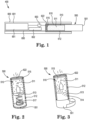
- Nicotine formulations according to the invention may advantageously be used as aerosol-forming substrates in aerosol-generating systems that comprise an automatic or manual mechanism to move or advance the aerosol-forming substrate toward the atomiser as illustrated in FIGS. 1-3 .
- the aerosol-forming substrate thus maintains contact with the atomiser even as the aerosol-forming substrate is consumed during use.
- the advancement mechanism may form a portion of an aerosol-generating article comprising the nicotine formulation or a portion of an aerosol-generating device that receives an aerosol-generating article comprising the nicotine formulation.
- the nicotine formulation may be a solid nicotine formulation.
- solid nicotine formulation describes a solid formulation comprising nicotine.
- the nicotine formulation may be a liquid nicotine formulation.
- liquid nicotine formulation describes a liquid formulation comprising nicotine or a gel formulation comprising nicotine.
- gel describes a substantially dilute cross-linked system, which exhibits no flow when in the steady-state.
- the nicotine formulation may be solid at 25°C or have a viscosity at 25°C of greater than or equal to about 250 Pa ⁇ s, greater than or equal to about 500 Pa ⁇ s or greater than or equal to about 750 Pa s.
- the nicotine formulation is solid at 25°C or has a viscosity at 25°C of greater than or equal to about 1000 Pa s.
- the nicotine formulation may be solid at 25°C or have a viscosity at 25°C of greater than or equal to about 2500 Pa s, greater than or equal to about 5000 Pa s or greater than or equal to about 7500 Pa s.
- the nicotine formulation is solid at 25°C or has a viscosity at 25°C of greater than or equal to about 10,000 Pa s.
- the nicotine formulation may be solid at 25°C or have a viscosity at 25°C of greater than or equal to about 12,500 Pa s, greater than or equal to about 15,000 Pa s or greater than or equal to about 17,500 Pa s.
- viscosity values recited herein are the viscosity of a 1 cubic centimetre (cm 3 ) sample volume of nicotine formulation measured using a Thermo Scientific HAAKE RheoStress 6000 rheometer using a parallel plate P20 probe with a MP60 (60 mm diameter) measuring plate at 25°C at a speed of 6 revolutions per minute (rpm).
- the nicotine formulation may comprise natural nicotine or synthetic nicotine.
- the nicotine formulation may have a nicotine content of greater than or equal to about 0.5 percent by weight.
- the nicotine formulation has a nicotine content of greater than or equal to about 1 percent by weight. More preferably, the nicotine formulation has a nicotine content of greater than or equal to about 1.5 percent by weight.
- the nicotine formulation may have a nicotine content of less than or equal to about 10 percent by weight or less than or equal to about 8 percent by weight.
- the nicotine formulation has a nicotine content of less than or equal to about 5 percent by weight. More preferably, the nicotine formulation has a nicotine content of less than or equal to about 3 percent by weight.
- the nicotine formulation may have a nicotine content of between about 0.5 percent by weight and about 10 percent by weight.
- the nicotine formulation may have a nicotine content of between about 0.5 percent by weight and about 8 percent by weight, between about 0.5 percent by weight and about 5 percent by weight or between about 0.5 percent by weight and about 3 percent by weight.
- the nicotine formulation has a nicotine content of between about 1 percent by weight and about 10 percent by weight.
- the nicotine formulation may have a nicotine content of between about 1 percent by weight and about 8 percent by weight, between about 1 percent by weight and about 5 percent by weight or between about 1 percent by weight and about 3 percent by weight.
- the nicotine formulation has a nicotine content of between about 1.5 percent by weight and about 10 percent by weight.
- the nicotine formulation may have a nicotine content of between about 1.5 percent by weight and about 8 percent by weight, between about 1.5 percent by weight and about 5 percent by weight or between about 1.5 percent by weight and about 3 percent by weight.
- the nicotine formulation has a water-miscible polyhydric alcohol content of greater than or equal to about 40 percent by weight.
- the nicotine formulation has a water-miscible polyhydric alcohol content of greater than or equal to about 50 percent by weight. More preferably, the nicotine formulation has a water-miscible polyhydric alcohol content of greater than or equal to about 60 percent by weight. For example, the nicotine formulation may have a water-miscible polyhydric alcohol content of greater than or equal to about 70 percent by weight, greater than or equal to about 80 percent by weight or greater than or equal to about 90 percent by weight.
- the nicotine formulation has a water-miscible polyhydric alcohol content of less than or equal to about 95 percent by weight.
- the nicotine formulation may have a water-miscible polyhydric alcohol content of between about 40 percent by weight and about 95 percent by weight.
- the nicotine formulation has a water-miscible polyhydric alcohol content of between about 50 percent by weight and about 95 percent by weight. More preferably, the nicotine formulation has a water-miscible polyhydric alcohol content of between about 60 percent by weight and about 95 percent by weight.
- the nicotine formulation may have a water-miscible polyhydric alcohol content of between about 70 percent by weight and about 95 percent by weight, between about 80 percent by weight and about 95 percent by weight or between about 90 percent by weight and about 95 percent by weight.
- the nicotine formulation comprises one or more water-miscible polyhydric alcohols selected from the group consisting of 1,3-butanediol, glycerine, propylene glycol, and triethylene glycol.
- the nicotine formulation comprises glycerine.
- the nicotine formulation comprises vegetable glycerine.
- the nicotine formulation may have a glycerine content of greater than or equal to about 5 percent by weight.
- the nicotine formulation may have a glycerine content of greater than or equal to about 10 percent by weight, greater than or equal to about 20 percent by weight or greater than or equal to about 30 percent by weight.
- the nicotine formulation has a glycerine content of greater than or equal to about 40 percent by weight.
- a nicotine formulation for use in an aerosol-generating system, the nicotine formulation comprising glycerine, wherein the nicotine formulation has a glycerine content of greater than or equal to about 40 percent by weight and wherein the nicotine formulation is solid at 25°C or has a viscosity at 25°C of greater than or equal to about 100 Pa s.
- an aerosol-generating article for use in an aerosol-generating system, the aerosol-generating article containing a nicotine formulation comprising glycerine, wherein the nicotine formulation has a glycerine content of greater than or equal to about 40 percent by weight and wherein the nicotine formulation is solid at 25°C or has a viscosity at 25°C of greater than or equal to about 100 Pa s.
- an aerosol-generating system comprising: a nicotine formulation comprising glycerine, wherein the nicotine formulation has a glycerine content of greater than or equal to about 40 percent by weight and wherein the nicotine formulation is solid at 25°C or has a viscosity at 25°C of greater than or equal to about 100 Pa s; and an atomiser configured to generate an aerosol from the nicotine formulation.
- the nicotine formulation has a glycerine content of greater than or equal to about 50 percent by weight. Most preferably, the nicotine formulation has a glycerine content of greater than or equal to about 60 percent by weight. For example, the nicotine formulation may have a glycerine content of greater than or equal to about 70 percent by weight, greater than or equal to about 80 percent by weight or greater than or equal to about 90 percent by weight.
- the nicotine formulation has a glycerine content of less than or equal to about 95 percent by weight.
- the nicotine formulation may have a glycerine content of between about 5 percent by weight and about 95 percent by weight.
- the nicotine formulation may have a glycerine content of between about 10 percent by weight and about 95 percent by weight, between about 20 percent by weight and about 95 percent by weight or between about 30 percent by weight and about 95 percent by weight.
- the nicotine formulation has a glycerine content of between about 40 percent by weight and about 95 percent by weight. More preferably, the nicotine formulation has a glycerine content of between about 50 percent by weight and about 95 percent by weight. Most preferably, the nicotine formulation has a glycerine content of between about 60 percent by weight and about 95 percent by weight. For example, the nicotine formulation may have a glycerine content of between about 70 percent by weight and about 95 percent by weight, between about 80 percent by weight and about 95 percent by weight or between about 90 percent by weight and about 95 percent by weight.
- the ratio of the weight percent glycerine content to the weight percent propylene glycol content of the nicotine formulation may be greater than or equal to about 2, greater than or equal to about 2.5 or greater than or equal to about 3.
- the nicotine formulation comprises one or more metal salts.
- Bonding between the one or more metal salts and the one or more polyhydric alcohols in the nicotine formulation may solidify the nicotine formulation or increase the viscosity of the nicotine formulation to greater than or equal to about 100 Pa s. This may advantageously reduce the risk of leakage of the nicotine formulation when used in an aerosol-generating system compared to a typical liquid nicotine formulation that does not include one or more metal salts.
- Bonding between the one or more metal salts and the one or more polyhydric alcohols in the nicotine formulation may elevate the boiling point of the one or more polyhydric alcohols. This may advantageously enhance vaporization of nicotine from the nicotine formulation when used in an aerosol-generating system as compared to a typical liquid nicotine formulation that does not include one or more metal salts.
- the interactions between the one or more metal salts and the molecules of the one or more polyhydric alcohols in the nicotine formulation may be stronger than the interactions between the molecules of the one or more polyhydric alcohols. This may result in more energy being required to vaporize the one or more polyhydric alcohols.
- the inclusion of one or more metal salts in the nicotine formulation may thereby advantageously increase the percentage of nicotine in an aerosol generated from the nicotine formulation by up to one order of magnitude compared to a typical liquid nicotine formulation that does not include one or more metal salts.
- the nicotine formulation has a metal salt content of greater than or equal to about 0.5 percent by weight.
- the nicotine formulation may have a metal salt content of greater than or equal to about 0.75 percent by weight or greater than or equal to about 1 percent by weight.
- the nicotine formulation has a metal salt content of less than or equal to about 15 percent by weight. More preferably, the nicotine formulation has a metal salt content of less than or equal to about 12 percent by weight. For example, the nicotine formulation may have a metal salt content of less than or equal to about 10 percent by weight.
- the nicotine formulation has a metal salt content of between about 0.5 percent by weight and about 15 percent by weight.
- the nicotine formulation may have a metal salt content of between about 0.5 percent by weight and about 12 percent by weight or between about 0.5 percent by weight and about 10 percent by weight.
- the nicotine formulation may have a metal salt content of between about 0.75 percent by weight and about 15 percent by weight.
- the nicotine formulation may have a metal salt content of between about 0.75 percent by weight and about 12 percent by weight or between about 0.75 percent by weight and about 10 percent by weight.
- the nicotine formulation may have a metal salt content of between about 1 percent by weight and about 15 percent by weight.
- the nicotine formulation may have a metal salt content of between about 1 percent by weight and about 12 percent by weight or between about 1 percent by weight and about 10 percent by weight.
- the one or more metal salts may have a molar mass of less than or equal to about 500 g/mol or less than or equal to about 400 g/mol.
- the one or more metal salts are one or more metal salts selected from the group consisting of metal alginates, metal benzoates, metal cinnamates, metal cycloheptanecarboxylates, metal levulinates, metal propanoates, metal stearates and metal undecanoates.
- the one or more metal salts are selected from the group consisting of metal benzoates, metal cinnamates, metal cycloheptanecarboxylates, metal levulinates, metal propanoates, metal stearates and metal undecanoates.
- the one or more metal salts are selected from the group consisting of metal cinnamates, metal cycloheptanecarboxylates, metal levulinates, metal propanoates, metal stearates and metal undecanoates.
- the one or more metal salts are selected from the group consisting of metal cinnamates, metal cycloheptanecarboxylates, metal stearates and metal undecanoates.
- the one or more metal salts comprise metal stearates.
- covalent bonding between the one or more metal stearates and the one or more water-miscible polyhydric alcohols in the nicotine formulation may further elevate the boiling point of the one or more water-miscible polyhydric alcohols.
- this may advantageously enhance the efficiency of vaporization of nicotine from the nicotine formulation when used in an aerosol-generating system as compared to a typical liquid nicotine formulation that does not include one or more metal stearates.
- a nicotine formulation for use in an aerosol-generating system, the nicotine formulation comprising: one or more water-miscible polyhydric alcohols; and one or more metal salts selected from the group consisting of metal alginates, metal benzoates, metal cinnamates, metal cycloheptanecarboxylates, metal levulinates, metal propanoates, metal stearates and metal undecanoates, wherein the nicotine formulation has a water-miscible polyhydric alcohol content of greater than or equal to about 40 percent by weight and wherein the nicotine formulation is solid at 25°C or has a viscosity at 25°C of greater than or equal to about 100 Pa. s.
- an aerosol-generating article for use in an aerosol-generating system, the aerosol-generating article containing a nicotine formulation for use in an aerosol-generating system, the nicotine formulation comprising one or more water-miscible polyhydric alcohols; and one or more metal salts selected from the group consisting of metal alginates, metal benzoates, metal cinnamates, metal cycloheptanecarboxylates, metal levulinates, metal propanoates, metal stearates and metal undecanoates, wherein the nicotine formulation has a water-miscible polyhydric alcohol content of greater than or equal to about 40 percent by weight and wherein the nicotine formulation is solid at 25°C or has a viscosity at 25°C of greater than or equal to about 100 Pa s.
- an aerosol-generating system comprising: a nicotine formulation comprising: one or more water-miscible polyhydric alcohols; and one or more metal salts selected from the group consisting of metal alginates, metal benzoates, metal cinnamates, metal cycloheptanecarboxylates, metal levulinates, metal propanoates, metal stearates and metal undecanoates, wherein the nicotine formulation has a water-miscible polyhydric alcohol content of greater than or equal to about 40 percent by weight and wherein the nicotine formulation is solid at 25°C or has a viscosity at 25°C of greater than or equal to about 100 Pa s; and an atomiser configured to generate an aerosol from the nicotine formulation.
- a nicotine formulation comprising: one or more water-miscible polyhydric alcohols; and one or more metal salts selected from the group consisting of metal alginates, metal benzoates, metal cinnamates, metal cycloheptanecarboxylates,
- the one or more metal salts are selected from the group consisting of metal alginates and metal stearates.
- the nicotine formulation comprises one or more metal stearates.
- a nicotine formulation for use in an aerosol-generating system, the nicotine formulation comprising: one or more water-miscible polyhydric alcohols; and one or more metal stearates, wherein the nicotine formulation has a water-miscible polyhydric alcohol content of greater than or equal to about 40 percent by weight and wherein the nicotine formulation is solid at 25°C or has a viscosity at 25°C of greater than or equal to about 100 Pa s.
- an aerosol-generating article for use in an aerosol-generating system, the aerosol-generating article containing a nicotine formulation for use in an aerosol-generating system, the nicotine formulation comprising one or more water-miscible polyhydric alcohols; and one or more metal stearates, wherein the nicotine formulation has a water-miscible polyhydric alcohol content of greater than or equal to about 40 percent by weight and wherein the nicotine formulation is solid at 25°C or has a viscosity at 25°C of greater than or equal to about 100 Pa s.
- an aerosol-generating system comprising: a nicotine formulation comprising: one or more water-miscible polyhydric alcohols; and one or more metal stearates, wherein the nicotine formulation has a water-miscible polyhydric alcohol content of greater than or equal to about 40 percent by weight and wherein the nicotine formulation is solid at 25°C or has a viscosity at 25°C of greater than or equal to about 100 Pa s; and an atomiser configured to generate an aerosol from the nicotine formulation.
- the nicotine formulation comprises glycerine and one or more metal salts selected from the group consisting of metal alginates, metal benzoates, metal cinnamates, metal cycloheptanecarboxylates, metal levulinates, metal propanoates, metal stearates and metal undecanoates.
- metal salts selected from the group consisting of metal alginates, metal benzoates, metal cinnamates, metal cycloheptanecarboxylates, metal levulinates, metal propanoates, metal stearates and metal undecanoates.
- a nicotine formulation for use in an aerosol-generating system, the nicotine formulation comprising: glycerine; and one or more metal salts selected from the group consisting of metal alginates, metal benzoates, metal cinnamates, metal cycloheptanecarboxylates, metal levulinates, metal propanoates, metal stearates and metal undecanoates, wherein the nicotine formulation has a glycerine content of greater than or equal to about 40 percent by weight and wherein the nicotine formulation is solid at 25°C or has a viscosity at 25°C of greater than or equal to about 100 Pa s.
- an aerosol-generating article for use in an aerosol-generating system, the aerosol-generating article containing a nicotine formulation comprising: glycerine; and one or more metal salts selected from the group consisting of metal alginates, metal benzoates, metal cinnamates, metal cycloheptanecarboxylates, metal levulinates, metal propanoates, metal stearates and metal undecanoates, wherein the nicotine formulation has a glycerine content of greater than or equal to about 40 percent by weight and wherein the nicotine formulation is solid at 25°C or has a viscosity at 25°C of greater than or equal to about 100 Pa s.
- an aerosol-generating system comprising: a nicotine formulation comprising: glycerine; and one or more metal salts selected from the group consisting of metal alginates, metal benzoates, metal cinnamates, metal cycloheptanecarboxylates, metal levulinates, metal propanoates, metal stearates and metal undecanoates, wherein the nicotine formulation has a glycerine content of greater than or equal to about 40 percent by weight and wherein the nicotine formulation is solid at 25°C or has a viscosity at 25°C of greater than or equal to about 100 Pa ⁇ s; and an atomiser configured to generate an aerosol from the nicotine formulation.
- a nicotine formulation comprising: glycerine; and one or more metal salts selected from the group consisting of metal alginates, metal benzoates, metal cinnamates, metal cycloheptanecarboxylates, metal levulinates, metal propanoates, metal stearates and metal undecano
- the nicotine formulation comprises glycerine and one or more metal salts selected from the group consisting of metal alginates and metal stearates.
- the nicotine formulation comprises glycerine and one or more metal stearates.
- a nicotine formulation for use in an aerosol-generating system, the nicotine formulation comprising: glycerine; and one or more metal stearates, wherein the nicotine formulation has a glycerine content of greater than or equal to about 40 percent by weight and wherein the nicotine formulation is solid at 25°C or has a viscosity at 25°C of greater than or equal to about 100 Pa s.
- an aerosol-generating article for use in an aerosol-generating system, the aerosol-generating article containing a nicotine formulation comprising: glycerine; and one or more metal stearates, wherein the nicotine formulation has a glycerine content of greater than or equal to about 40 percent by weight and wherein the nicotine formulation is solid at 25°C or has a viscosity at 25°C of greater than or equal to about 100 Pa s.
- an aerosol-generating system comprising: a nicotine formulation comprising: glycerine; and one or more metal stearates, wherein the nicotine formulation has a glycerine content of greater than or equal to about 40 percent by weight and wherein the nicotine formulation is solid at 25°C or has a viscosity at 25°C of greater than or equal to about 100 Pa s; and an atomiser configured to generate an aerosol from the nicotine formulation.
- Covalent bonding between the one or more metal stearates and the glycerine in the nicotine formulation may solidify the nicotine formulation or increase the viscosity of the nicotine formulation to greater than or equal to about 100 Pa s. This may advantageously reduce the risk of leakage of the nicotine formulation when used in an aerosol-generating system.
- Covalent bonding between the one or more metal stearates and the glycerine in the nicotine formulation may elevate the boiling point of the glycerine. This may advantageously enhance vaporization of nicotine from the nicotine formulation when used in an aerosol-generating system.
- the nicotine formulation may comprise one or more salts of any suitable metal.
- the one or more metal salts are one or more alkali metal salts.
- the one or more metal salts are one or more sodium salts.
- the one or more metal salts are one or more sodium salts selected from the group consisting of sodium alginate, sodium benzoate, sodium cinnamate, sodium cycloheptanecarboxylate, sodium levulinate, sodium propanoate, sodium stearate and sodium undecanoate.
- the one or more salts are one or more sodium salts selected from the group consisting of sodium alginate and sodium stearate.
- the nicotine formulation may have a sodium alginate content of greater than or equal to about 0.25 percent by weight or greater than or equal to about 0.5 percent by weight.
- the nicotine formulation may have a sodium alginate content of greater than or equal to about 0.75 percent by weight or greater than or equal to about 1 percent by weight.
- the nicotine formulation has a sodium alginate content of less than or equal to about 15 percent by weight. More preferably, the nicotine formulation has a sodium alginate content of less than or equal to about 12 percent by weight. For example, the nicotine formulation may have a sodium alginate content of less than or equal to about 10 percent by weight.
- the nicotine formulation may have a sodium alginate content of between about 0.25 percent by weight and about 15 percent by weight.
- the nicotine formulation may have a sodium alginate content of between about 0.25 percent by weight and about 12 percent by weight or between about 0.25 percent by weight and about 10 percent by weight.
- the nicotine formulation may have a sodium alginate content of between about 0.5 percent by weight and about 15 percent by weight.
- the nicotine formulation may have a sodium alginate content of between about 0.5 percent by weight and about 12 percent by weight or between about 0.5 percent by weight and about 10 percent by weight.
- the nicotine formulation may have a sodium alginate of between about 0.75 percent by weight and about 15 percent by weight.
- the nicotine formulation may have a sodium alginate of between about 0.75 percent by weight and about 12 percent by weight or between about 0.75 percent by weight and about 10 percent by weight.
- the nicotine formulation may have a sodium alginate of between about 1 percent by weight and about 15 percent by weight.
- the nicotine formulation may have a sodium alginate content of between about 1 percent by weight and about 12 percent by weight or between about 1 percent by weight and about 10 percent by weight.
- the nicotine formulation comprises sodium stearate.
- a metal salt with a high weighted average molecular weight may improve the above mentioned advantages related to efficiency of vaporization of nicotine.
- the weighted average molecular weight of a metal salt is too high then properties such as solubility begin to be negatively affected.
- including sodium stearate in the formulation may provide an optimal trade-off in improved efficiency of vaporization of nicotine, whilst maintaining solubility.
- a nicotine formulation for use in an aerosol-generating system, the nicotine formulation comprising: one or more water-miscible polyhydric alcohols; and sodium stearate, wherein the nicotine formulation has a water-miscible polyhydric alcohol content of greater than or equal to about 40 percent by weight and wherein the nicotine formulation is solid at 25°C or has a viscosity at 25°C of greater than or equal to about 100 Pa s.
- an aerosol-generating article for use in an aerosol-generating system, the aerosol-generating article containing a nicotine formulation for use in an aerosol-generating system, the nicotine formulation comprising: one or more water-miscible polyhydric alcohols; and sodium stearate, wherein the nicotine formulation has a water-miscible polyhydric alcohol content of greater than or equal to about 40 percent by weight and wherein the nicotine formulation is solid at 25°C or has a viscosity at 25°C of greater than or equal to about 100 Pa s.
- an aerosol-generating system comprising: a nicotine formulation comprising: one or more water-miscible polyhydric alcohols; and sodium stearate, wherein the nicotine formulation has a water-miscible polyhydric alcohol content of greater than or equal to about 40 percent by weight and wherein the nicotine formulation is solid at 25°C or has a viscosity at 25°C of greater than or equal to about 100 Pa s; and an atomiser configured to generate an aerosol from the nicotine formulation.
- the nicotine formulation comprises sodium stearate
- the nicotine formulation has a sodium stearate content of greater than or equal to about 0.25 percent by weight. More preferably, the nicotine formulation has a sodium stearate content of greater than or equal to about 0.5 percent by weight.
- the nicotine formulation may have a sodium stearate content of greater than or equal to about 0.75 percent by weight or greater than or equal to about 1 percent by weight.
- the nicotine formulation has a sodium stearate content of less than or equal to about 15 percent by weight. More preferably, the nicotine formulation has a sodium stearate content of less than or equal to about 12 percent by weight. For example, the nicotine formulation may have a sodium stearate content of less than or equal to about 10 percent by weight.
- the nicotine formulation has a sodium stearate content of between about 0.25 percent by weight and about 15 percent by weight.
- the nicotine formulation may have a sodium stearate content of between about 0.25 percent by weight and about 12 percent by weight or between about 0.25 percent by weight and about 10 percent by weight.
- the nicotine formulation has a sodium stearate content of between about 0.5 percent by weight and about 15 percent by weight.
- the nicotine formulation may have a sodium stearate content of between about 0.5 percent by weight and about 12 percent by weight or between about 0.5 percent by weight and about 10 percent by weight.
- the nicotine formulation may have a sodium stearate content of between about 0.75 percent by weight and about 15 percent by weight.
- the nicotine formulation may have a sodium stearate content of between about 0.75 percent by weight and about 12 percent by weight or between about 0.75 percent by weight and about 10 percent by weight.
- the nicotine formulation may have a sodium stearate content of between about 1 percent by weight and about 15 percent by weight.
- the nicotine formulation may have a sodium stearate content of between about 1 percent by weight and about 12 percent by weight or between about 1 percent by weight and about 10 percent by weight.
- the nicotine formulation comprises glycerine and sodium stearate.
- Covalent bonding between the sodium stearate and the glycerine in the nicotine formulation may solidify the nicotine formulation or increase the viscosity of the nicotine formulation to greater than or equal to about 100 Pa s. This may advantageously reduce the risk of leakage of the nicotine formulation when used in an aerosol-generating system.
- Covalent bonding between the sodium stearate and the glycerine in the nicotine formulation may elevate the boiling point of the glycerine. This may advantageously enhance vaporization of nicotine from the nicotine formulation when used in an aerosol-generating system.
- a nicotine formulation for use in an aerosol-generating system comprising: glycerine; and sodium stearate, wherein the nicotine formulation has a glycerine content of greater than or equal to about 40 percent by weight and wherein the nicotine formulation is solid at 25°C or has a viscosity at 25°C of greater than or equal to about 100 Pa s.
- an aerosol-generating article for use in an aerosol-generating system, the aerosol-generating article containing a nicotine formulation comprising: glycerine; and sodium stearate, wherein the nicotine formulation has a glycerine content of greater than or equal to about 40 percent by weight and wherein the nicotine formulation is solid at 25°C or has a viscosity at 25°C of greater than or equal to about 100 Pa s.
- an aerosol-generating system comprising: a nicotine formulation comprising: glycerine; and sodium stearate, wherein the nicotine formulation has a glycerine content of greater than or equal to about 40 percent by weight and wherein the nicotine formulation is solid at 25°C or has a viscosity at 25°C of greater than or equal to about 100 Pa s; and an atomiser configured to generate an aerosol from the nicotine formulation.
- the nicotine formulation may comprise one or more polymers selected from the group consisting of polyvinyl acetate (PVA), polyvinyl alcohol (PVOH), polyethylene glycol (PEG), polyglycolic acid (PGA), polylactic acid (PLA), polydioxanone (PDO), polycaprolactone (PCL), polyethylene (PE) and low density polyethylene (LDPE).
- PVA polyvinyl acetate
- PVH polyvinyl alcohol
- PEG polyethylene glycol
- PGA polyglycolic acid
- PLA polylactic acid
- PDO polydioxanone
- PCL polycaprolactone
- PE polyethylene
- LDPE low density polyethylene
- polymers selected from the group consisting of polyvinyl acetate (PVA), polyvinyl alcohol (PVOH), polyethylene glycol (PEG), polyglycolic acid (PGA), polylactic acid (PLA), polydioxanone (PDO), polycaprolactone (PCL), polyethylene (PE) and low density polyethylene (LDPE) may increase the viscosity of the nicotine formulation to greater than or equal to about 100 Pa s. This may advantageously reduce the risk of leakage of the nicotine formulation when used in an aerosol-generating system.
- PVA polyvinyl acetate
- PVH polyvinyl alcohol
- PEG polyethylene glycol
- PGA polyglycolic acid
- PLA polylactic acid
- PDO polydioxanone
- PCL polycaprolactone
- PE polyethylene
- LDPE low density polyethylene
- the nicotine formulation may comprise water.
- the nicotine formulation may have a water content of less than or equal to about 20 percent by weight or less than or equal to about 15 percent by weight.
- the nicotine formulation has a water content of less than or equal to about 10 percent by weight.
- the nicotine formulation may a water content of less than or equal to about 8 percent by weight or less than or equal to about 6 percent by weight.
- the nicotine formulation may have a water content of greater than or equal to about 1 percent by weight.
- the nicotine formulation may have a water content of greater than or equal to about 2 percent by weight or greater than or equal to about 3 percent by weight.
- the nicotine formulation may have a water content of between about 1 percent by weight and about 20 percent by weight.
- the nicotine formulation may have a water content of between about 2 percent by weight and about 20 percent by weight or between about 3 percent by weight and about 20 percent by weight.
- the nicotine formulation may have a water content of between about 1 percent by weight and about 15 percent by weight.
- the nicotine formulation may have a water content of between about 2 percent by weight and about 15 percent by weight or between about 3 percent by weight and about 15 percent by weight.
- the nicotine formulation comprises water
- the nicotine formulation has a water content of between about 1 percent by weight and about 10 percent by weight.
- the nicotine formulation may have a water content of between about 2 percent by weight and about 10 percent by weight or between about 3 percent by weight and about 10 percent by weight.
- the nicotine formulation may have a water content of between about 1 percent by weight and about 8 percent by weight.
- the nicotine formulation may have a water content of between about 2 percent by weight and about 8 percent by weight or between about 3 percent by weight and about 8 percent by weight.
- the nicotine formulation may have a water content of between about 1 percent by weight and about 6 percent by weight.
- the nicotine formulation may have a water content of between about 2 percent by weight and about 6 percent by weight or between about 3 percent by weight and about 6 percent by weight.
- the nicotine formulation may comprise one or more organic acids.
- the one or more organic acids may be water-soluble organic acids.
- water-soluble organic acid describes an organic acid having a water solubility at 20°C of greater than or equal to about 100 mg/ml, preferably greater than or equal to about 500 mg/ml, more preferably greater than or equal to about 750mg/ml most preferably greater than or equal to about 1000mg/ml.
- water solubility values recited herein are the water solubility measured based on the preliminary test of OECD (1995), Test No. 105: Water Solubility, OECD Guidelines for the Testing of Chemicals, Section 1, OECD Publishing, Paris, https://doi.org/10.1787/9789264069589-en.
- a stepwise procedure increasing volumes of distilled water are added at 20°C to 0.1 g of the sample (solid substances must be pulverized) in a 10 ml glass-stoppered measuring cylinder.
- the substance is an acid
- the sample is added to the distilled water in the first step. After each addition of an amount of water, the mixture is shaken for 10 minutes and is visually checked for any undissolved parts of the sample. If, after addition of 10 ml of water, the sample or parts of it remain undissolved, the experiment is continued in a 100 ml measuring cylinder.
- the approximate solubility is given in Table 1 below under that volume of water in which complete dissolution of the sample occurs.
- solubility When the solubility is low, a long time may be required to dissolve a substance and at least 24 hours should be allowed. If, after 24 hours, the substance is still not dissolved, the measuring cylinder is placed for at 40°C in an ultrasound bath for 15 minutes and another 24 hours allowed (up to a maximum of 96 hours). If the substance is still not dissolved, the solubility is considered to be below the limit value or not soluble. Table 1 ml of water in which 0.1 g of sample is soluble 0.1 0.5 1 2 10 100 >100 Approximate solubility (mg/ml) >1000 1000 to 200 200 to 100 100 to 50 50 to 10 10 to 1 ⁇ 1
- the nicotine formulation may comprise one or more carboxylic acids.
- Suitable carboxylic acids include, but are not limited to, acetic acid, citric acid, lactic acid, malic acid, malonic acid and pyruvic acid.
- the nicotine formulation comprises one or more organic acids
- the nicotine formulation may have an organic acid content of greater than or equal to about 0.5 percent by weight or greater than or equal to about 1 percent by weight.
- the nicotine formulation has an organic acid content of less than or equal to about 6 percent by weight. More preferably, the nicotine formulation has an organic acid content of less than or equal to about 4 percent by weight. For example, the nicotine formulation may an organic acid content of less than or equal to about 2 percent by weight.
- the nicotine formulation may have an organic acid content of between about 0.5 percent by weight and about 6 percent by weight.
- the nicotine formulation may have an organic acid content of between about 0.5 percent by weight and about 4 percent by weight or between about 0.5 percent by weight and about 2 percent by weight.
- the nicotine formulation may have an organic acid content of between about 1 percent by weight and about 6 percent by weight.
- the nicotine formulation may have an organic acid content of between about 1 percent by weight and about 4 percent by weight or between about 1 percent by weight and about 2 percent by weight.
- the nicotine formulation may comprise one or more flavourants.
- Suitable flavourants include, but are not limited to, menthol.
- the nicotine formulation has a flavourant content of less than or equal to about 4 percent by weight. More preferably, the nicotine formulation has a flavourant content of less than or equal to about 3 percent by weight.
- an aerosol-generating article for use in an aerosol-generating system, the aerosol-generating article containing a nicotine formulation according to the invention.
- the aerosol-generating article may comprise an atomiser configured to generate an aerosol from the nicotine formulation.
- the aerosol-generating article may be a cartridge.
- a cartridge containing the nicotine formulation and an atomiser may be referred to as a "cartomiser”.
- the atomiser may be a thermal atomiser.
- thermal atomiser describes an atomiser that is configured to heat the nicotine formulation to generate an aerosol.
- the aerosol-generating article may comprise any suitable type of thermal atomiser.
- the thermal atomiser may comprise an electric heater.
- the thermal atomiser may comprise an electric heater comprising a resistive heating element or an inductive heating element.
- the heating element may be a grid or mesh element or layer.
- the nicotine formulation may flow into the interstitial spaces forming the grid or mesh element.
- the atomiser may be a non-thermal atomiser.
- non-thermal atomiser describes an atomiser that is configured to generate an aerosol from the nicotine formulation by means other than heating.
- the aerosol-generating article may comprise any suitable type of non-thermal atomiser.
- the non-thermal atomiser may be an impinging jet atomiser, an ultrasonic atomiser or a vibrating mesh atomiser.
- an aerosol-generating system comprising a nicotine formulation according to the invention and an atomiser configured to generate an aerosol from the nicotine formulation.
- the atomiser may be a thermal atomiser.
- the aerosol-generating system may comprise any suitable type of thermal atomiser.
- the thermal atomiser may comprise an electric heater.
- the thermal atomiser may comprise an electric heater comprising a resistive heating element or an inductive heating element.
- the heating element may be a grid or mesh element or layer.
- the nicotine formulation may flow into the interstitial spaces forming the grid or mesh element.
- the atomiser may be a non-thermal atomiser.
- the aerosol-generating system may comprise any suitable type of non-thermal atomiser.
- the non-thermal atomiser may be an impinging jet atomiser, an ultrasonic atomiser or a vibrating mesh atomiser.
- the aerosol-generating system may comprise an aerosol-generating article according to the invention containing the nicotine formulation and an aerosol-generating device comprising a housing defining a device cavity configured to receive at least a portion of the aerosol-generating article.
- the aerosol-generating system may comprise a consumable aerosol-generating article according to the invention containing the nicotine formulation and a reusable aerosol-generating device comprising a housing defining a device cavity configured to receive at least a portion of the aerosol-generating article.
- the aerosol-generating device may comprise a battery and control electronics.
- the aerosol-generating system may comprise: an aerosol-generating article according to the invention containing the nicotine formulation and the atomiser; and an aerosol-generating device comprising a housing defining a device cavity configured to receive at least a portion of the aerosol-generating article.
- the aerosol-generating system may comprise: an aerosol-generating article according to the invention containing the nicotine formulation; and an aerosol-generating device comprising a housing defining a device cavity configured to receive at least a portion of the aerosol-generating article and the atomiser.
- features described above in relation to one aspect of the invention may also be applicable to other aspects of the invention.
- features described above in relation to the nicotine formulation of the invention may also relate, where appropriate, to the aerosol-generating article of the invention and the aerosol-generating system.
- features described above in relation to the aerosol-generating article of the invention may also relate, where appropriate, to the aerosol-generating system of the invention, and vice versa.
- FIG. 1 shows an aerosol-generating system 400 comprising an aerosol-generating device 600 and an aerosol-generating article 500.
- the aerosol-generating device 600 shown in FIG. 1 is configured for receiving the aerosol-generating article 500.
- the aerosol-generating device 600 comprises a housing 601 and a receptacle 610 formed in the housing 601.
- the receptacle 610 is constructed for receiving the aerosol-generating article 500.
- the receptacle 610 may be sized and shaped so that when the aerosol-generating article 500 is inserted in the receptacle 610, at least a portion of the aerosol-generating article 500 remains outside of the receptacle 610.
- the aerosol-generating device 600 comprises a heating element 622 at the closed end of the receptacle 610.
- the heating element 622 comprises a mesh layer.
- the aerosol-generating device 600 may include a power supply 651 operably connected to a controller 653 and optional graphical user interface 652.
- the power supply 651 operably connected to a controller 653 may be disposed within the housing 601.
- the graphical user interface 652 may be disposed on the housing 601.
- the aerosol-generating article 500 includes a body 512 defining a cavity 512 having a cavity opening 515.
- An aerosol-forming substrate 511 is disposed in the cavity 510.
- the body 512 includes a closed end portion 551 that may be a ring or rotation portion or a fixed support.
- the aerosol-generating article 500 may include an advancement mechanism may be arranged in the proximal end of the aerosol-generating article 500.
- the advancement mechanism may be configured as a piston-type element.
- the advancement mechanism may be configured as a screw-type element.
- the advancement mechanism may translate rotational movement into lateral movement.
- the cavity opening of the aerosol-generating article 500 abuts the heating element 622 when the aerosol-generating article 500 is received into the receptacle 610 of the aerosol-generating device 600.
- the heating element 622 is disposed proximate to the cavity opening 515.
- the aerosol-forming substrate 511 of the aerosol-generating article 500 is a nicotine formulation according to the invention that may flow into and through the mesh layer of the heating element 622.
- Air may flow into the receptacle 610 aerosol-generating device 600 and entrain the volatized aerosol components from the heated aerosol-forming substrate 511 and through the aerosol-generating device 600 via an air channel 650 and to the consumer.
- FIG. 2 is a schematic sectional view of a spring-loaded aerosol-generating article 500.
- the aerosol-generating article 500 includes a body 512 defining a cavity 510 having a cavity opening 515.
- the aerosol-forming substrate 511 is disposed in the cavity 512.
- the heating element 622 is disposed proximate to the cavity opening 515.
- the body 512 includes a closed end portion 551 that may be a fixed support.
- a spring element 517 biases a movable rigid base 513 to the spring support 551 fixed to the body 512.
- the aerosol-forming substrate 511 is a nicotine formulation according to the invention.
- FIG. 3 is a schematic sectional view of a "lip-stick" advance mechanism aerosol-generating article 500.
- the aerosol-generating article 500 includes a body 512 defining a cavity 510 having a cavity opening 515.
- the aerosol-forming substrate 511 is disposed in the cavity 512.
- the heating element 622 is disposed proximate to the cavity opening 515.
- the body 512 includes a ring or rotation element 551 that is coupled to the movable rigid base 513 and translates rotational movement into lateral movement via a spiral or helical groove 514. Pins (not shown) couple the rigid base 513 to the spiral or helical groove 514 to provide the lateral movement of the aerosol-forming substrate 511.
- the aerosol-forming substrate 511 is a nicotine formulation according to the invention.
- the aerosol-generating system may comprise an automatic mechanism to move or advance the aerosol-forming substrate 511 toward the heating element 622.
- the controller 653 of the aerosol-generating device 600 may activate an actuator or advancement mechanism on either the aerosol-generating article 500 or the aerosol-generating device 600 to advance the aerosol-forming substrate 511 and rigid base 513 toward the heating element 622 upon detecting that the heating element 622 is not in contact the aerosol-forming substrate 511.
- Example A Three nicotine formulations according to the invention that have a viscosity at 25°C of greater than or equal to about 100 Pa ⁇ s (Examples A, B and C) were prepared having the compositions and viscosities shown in Table 2.
- Table 2 Example A B C Nicotine (% by weight) 2 2 2 Water (% by weight) 6 6 6 6 Vegetable Glycerine (% by weight) polyhydric alcohol 91 68 91.5 Propylene Glycol (% by weight) polyhydric alcohol 0 23 0 Sodium Stearate (% by weight) metal salt 1 1 0.5 Viscosity (Pa s) 3366 225 185
- Example D Three nicotine formulations according to the invention that are solid at 25°C (Examples D, E and F) were prepared having the compositions shown in Table 3.
- Table 3 Example D E F Nicotine (% by weight) 2 2 2 Water (% by weight) 4 5 0 Vegetable Glycerine (% by weight) polyhydric alcohol 85 68 88 Propylene Glycol (% by weight) polyhydric alcohol 0 15 0 Sodium Stearate (% by weight) metal salt 8 10 5 Sodium Alginate (% by weight) metal salt 0 0 5 Lactic Acid organic acid 1 0 0 0
- Each of the nicotine compositions was prepared by:
Landscapes
- Chemical & Material Sciences (AREA)
- Chemical Kinetics & Catalysis (AREA)
- General Chemical & Material Sciences (AREA)
- Health & Medical Sciences (AREA)
- General Health & Medical Sciences (AREA)
- Toxicology (AREA)
- Life Sciences & Earth Sciences (AREA)
- Molecular Biology (AREA)
- Medicinal Preparation (AREA)
- Pharmaceuticals Containing Other Organic And Inorganic Compounds (AREA)
- Manufacture Of Tobacco Products (AREA)
Applications Claiming Priority (2)
| Application Number | Priority Date | Filing Date | Title |
|---|---|---|---|
| EP18248225 | 2018-12-28 | ||
| PCT/EP2019/086109 WO2020136061A1 (en) | 2018-12-28 | 2019-12-18 | High viscosity nicotine formulation |
Publications (3)
| Publication Number | Publication Date |
|---|---|
| EP3902415A1 EP3902415A1 (en) | 2021-11-03 |
| EP3902415B1 true EP3902415B1 (en) | 2023-08-30 |
| EP3902415C0 EP3902415C0 (en) | 2023-08-30 |
Family
ID=65011825
Family Applications (1)
| Application Number | Title | Priority Date | Filing Date |
|---|---|---|---|
| EP19829150.2A Active EP3902415B1 (en) | 2018-12-28 | 2019-12-18 | High viscosity nicotine formulation |
Country Status (6)
| Country | Link |
|---|---|
| US (1) | US12635724B2 (enExample) |
| EP (1) | EP3902415B1 (enExample) |
| JP (1) | JP7525495B2 (enExample) |
| KR (1) | KR102877959B1 (enExample) |
| CN (1) | CN113163844B (enExample) |
| WO (1) | WO2020136061A1 (enExample) |
Families Citing this family (7)
| Publication number | Priority date | Publication date | Assignee | Title |
|---|---|---|---|---|
| KR102466515B1 (ko) * | 2020-08-10 | 2022-11-14 | 주식회사 케이티앤지 | 에어로졸 발생 물품 및 그의 제조 방법 |
| GB202100353D0 (en) * | 2021-01-12 | 2021-02-24 | Ventus Medical Ltd | Aerosolizable nicoltine-containing formulations |
| KR102780723B1 (ko) * | 2022-02-09 | 2025-03-12 | 주식회사 케이티앤지 | 반고체 매질부를 포함하는 비가열식 흡연물품 |
| KR20240012197A (ko) * | 2022-07-20 | 2024-01-29 | 주식회사 케이티앤지 | 표면파 아토마이저에 사용하기 위한 액상형 흡입제형, 이를 포함하는 카트리지 및 에어로졸 생성장치 |
| CN118525999A (zh) * | 2023-02-23 | 2024-08-23 | 深圳市卓力能技术有限公司 | 一种电子雾化器用半膏状雾化液及其制备方法 |
| EP4761593A1 (en) * | 2023-08-14 | 2026-06-24 | Philip Morris Products S.A. | Solid aerosol-generating substrate and aerosol-generating article comprising a solid aerosol-generating substrate |
| CN117378803A (zh) * | 2023-10-17 | 2024-01-12 | 东莞市吉纯生物技术有限公司 | 一种固体雾化油及其制备方法 |
Family Cites Families (28)
| Publication number | Priority date | Publication date | Assignee | Title |
|---|---|---|---|---|
| CA990604A (en) * | 1972-12-26 | 1976-06-08 | Robert M. Creamer | Film covering for ventilated cigarette wrapper |
| GB2202422B (en) * | 1987-03-23 | 1991-09-25 | Imp Tobacco Co Ltd | Smoking material and process for making same |
| US5105836A (en) * | 1989-09-29 | 1992-04-21 | R. J. Reynolds Tobacco Company | Cigarette and smokable filler material therefor |
| US5240016A (en) * | 1991-04-19 | 1993-08-31 | Philip Morris Incorporated | Thermally releasable gel-based flavor source for smoking articles |
| GB0209690D0 (en) * | 2002-04-27 | 2002-06-05 | British American Tobacco Co | Improvements relating to smoking articles and smokable filler materials therefor |
| US7387194B2 (en) * | 2003-11-04 | 2008-06-17 | Otis Elevator Company | Automatic passenger conveyor slow speed operation |
| US7647932B2 (en) * | 2005-08-01 | 2010-01-19 | R.J. Reynolds Tobacco Company | Smoking article |
| KR20070023056A (ko) | 2005-08-23 | 2007-02-28 | 에스케이 텔레콤주식회사 | 비밀번호 확인 서비스 방법 |
| SE0800058L (sv) * | 2008-01-10 | 2009-07-11 | British American Tobacco Co | Tobaksprodukt för oral användning |
| GB2469838A (en) * | 2009-04-29 | 2010-11-03 | British American Tobacco Co | Treated tobacco |
| US9185925B2 (en) * | 2009-10-09 | 2015-11-17 | Philip Morris Usa Inc. | Immobilized flavorants for flavor delivery |
| MX358027B (es) | 2011-05-31 | 2018-08-01 | Philip Morris Products Sa | Barras para uso en articulos para fumar. |
| GB201215273D0 (en) | 2012-08-28 | 2012-10-10 | Kind Consumer Ltd | Nicotine composition |
| US20140088045A1 (en) * | 2012-09-21 | 2014-03-27 | Basil Rigas | Product comprising a nicotine-containing material and an anti-cancer agent |
| CN119606056A (zh) * | 2013-12-05 | 2025-03-14 | 尤尔实验室有限公司 | 用于气雾剂装置的尼古丁液体制剂及其方法 |
| PL3082484T3 (pl) * | 2013-12-19 | 2020-05-18 | Philip Morris Products S.A. | Układ wytwarzania aerozolu |
| JP6529990B2 (ja) * | 2014-05-21 | 2019-06-12 | マクニール アーベーMcneil Ab | エアロゾル投与用のニコチンを含む液体製剤 |
| US20150374034A1 (en) * | 2014-06-25 | 2015-12-31 | Kind Consumer Ltd | Nicotine Dosage Regimen |
| US10849358B2 (en) * | 2014-10-29 | 2020-12-01 | Altria Client Services Llc | E-vaping cartridge |
| EP3212017B1 (en) * | 2014-10-29 | 2021-06-16 | Altria Client Services LLC | Ethanol-free gel formulation cartridge for e-vaping device |
| DE102014118230B4 (de) * | 2014-12-09 | 2023-06-22 | Jta Tobacco Gmbh | Tabaksubstitut-Fluid-Gemisch mit Verdickungsmittel zur Verwendung in einer Wasserpfeife |
| US20180084823A1 (en) * | 2016-09-27 | 2018-03-29 | BOND STREET MANUFACTURING LLC (a Florida LLC) | Vaporizable Tobacco Wax Compositions and Container thereof |
| US10918127B2 (en) * | 2016-09-27 | 2021-02-16 | Bond Street Manufacturing Llc | Vaporizable tobacco wax compositions and container thereof |
| US20180199617A1 (en) * | 2017-01-18 | 2018-07-19 | Bianca Iodice | Tobacco Free Hookah Smoking Gel |
| JP7245172B2 (ja) | 2017-05-24 | 2023-03-23 | フィリップ・モーリス・プロダクツ・ソシエテ・アノニム | 均質化された植物性材料を含む加熱式エアロゾル発生物品 |
| CN207040874U (zh) * | 2017-05-25 | 2018-02-27 | 深圳市合元科技有限公司 | 一种可转动吸嘴的电子烟 |
| CN108095199A (zh) * | 2018-01-22 | 2018-06-01 | 云南拓宝科技有限公司 | 一种凝胶态电子烟烟液及其制备方法 |
| WO2020141177A1 (en) | 2018-12-31 | 2020-07-09 | Philip Morris Products S.A. | Liquid nicotine formulation comprising water-immiscible solvents |
-
2019
- 2019-12-18 CN CN201980079041.5A patent/CN113163844B/zh active Active
- 2019-12-18 EP EP19829150.2A patent/EP3902415B1/en active Active
- 2019-12-18 KR KR1020217019784A patent/KR102877959B1/ko active Active
- 2019-12-18 WO PCT/EP2019/086109 patent/WO2020136061A1/en not_active Ceased
- 2019-12-18 JP JP2021537971A patent/JP7525495B2/ja active Active
- 2019-12-18 US US17/418,010 patent/US12635724B2/en active Active
Also Published As
| Publication number | Publication date |
|---|---|
| JP2022516869A (ja) | 2022-03-03 |
| KR102877959B1 (ko) | 2025-10-30 |
| US20220087305A1 (en) | 2022-03-24 |
| BR112021010163A2 (pt) | 2021-08-17 |
| EP3902415A1 (en) | 2021-11-03 |
| JP7525495B2 (ja) | 2024-07-30 |
| US12635724B2 (en) | 2026-05-26 |
| KR20210108385A (ko) | 2021-09-02 |
| WO2020136061A1 (en) | 2020-07-02 |
| CN113163844A (zh) | 2021-07-23 |
| CN113163844B (zh) | 2023-08-15 |
| EP3902415C0 (en) | 2023-08-30 |
Similar Documents
| Publication | Publication Date | Title |
|---|---|---|
| US20220087305A1 (en) | High viscosity nicotine formulation | |
| CN113163848B (zh) | 低粘度液体尼古丁制剂 | |
| EP3902565B1 (en) | Liquid nicotine formulation comprising low molar mass metal salt | |
| CA3041096A1 (en) | Nicotine and binder containing sheet | |
| US20230000131A1 (en) | A formulation for use in an aerosol-generating system | |
| EP3902416B1 (en) | Nicotine formulation comprising metal salt | |
| CN114828663B (zh) | 用于气溶胶生成系统的制剂 | |
| RU2804837C2 (ru) | Никотиновая композиция высокой вязкости | |
| RU2821713C2 (ru) | Жидкая никотиновая композиция, содержащая соль металла с низкой молекулярной массой | |
| BR112021010163B1 (pt) | Formulação de nicotina de alta viscosidade | |
| EP4501138A1 (en) | Liquid-type inhalation formulation for use in surface wave atomizer, and cartridge and aerosol-generating apparatus comprising same | |
| RU2814483C1 (ru) | Состав для использования в системе, генерирующей аэрозоль |
Legal Events
| Date | Code | Title | Description |
|---|---|---|---|
| STAA | Information on the status of an ep patent application or granted ep patent |
Free format text: STATUS: UNKNOWN |
|
| STAA | Information on the status of an ep patent application or granted ep patent |
Free format text: STATUS: THE INTERNATIONAL PUBLICATION HAS BEEN MADE |
|
| PUAI | Public reference made under article 153(3) epc to a published international application that has entered the european phase |
Free format text: ORIGINAL CODE: 0009012 |
|
| STAA | Information on the status of an ep patent application or granted ep patent |
Free format text: STATUS: REQUEST FOR EXAMINATION WAS MADE |
|
| 17P | Request for examination filed |
Effective date: 20210621 |
|
| AK | Designated contracting states |
Kind code of ref document: A1 Designated state(s): AL AT BE BG CH CY CZ DE DK EE ES FI FR GB GR HR HU IE IS IT LI LT LU LV MC MK MT NL NO PL PT RO RS SE SI SK SM TR |
|
| DAV | Request for validation of the european patent (deleted) | ||
| DAX | Request for extension of the european patent (deleted) | ||
| GRAP | Despatch of communication of intention to grant a patent |
Free format text: ORIGINAL CODE: EPIDOSNIGR1 |
|
| STAA | Information on the status of an ep patent application or granted ep patent |
Free format text: STATUS: GRANT OF PATENT IS INTENDED |
|
| INTG | Intention to grant announced |
Effective date: 20230328 |
|
| P01 | Opt-out of the competence of the unified patent court (upc) registered |
Effective date: 20230529 |
|
| GRAS | Grant fee paid |
Free format text: ORIGINAL CODE: EPIDOSNIGR3 |
|
| GRAA | (expected) grant |
Free format text: ORIGINAL CODE: 0009210 |
|
| STAA | Information on the status of an ep patent application or granted ep patent |
Free format text: STATUS: THE PATENT HAS BEEN GRANTED |
|
| AK | Designated contracting states |
Kind code of ref document: B1 Designated state(s): AL AT BE BG CH CY CZ DE DK EE ES FI FR GB GR HR HU IE IS IT LI LT LU LV MC MK MT NL NO PL PT RO RS SE SI SK SM TR |
|
| REG | Reference to a national code |
Ref country code: GB Ref legal event code: FG4D |
|
| REG | Reference to a national code |
Ref country code: CH Ref legal event code: EP |
|
| REG | Reference to a national code |
Ref country code: DE Ref legal event code: R096 Ref document number: 602019036358 Country of ref document: DE |
|
| REG | Reference to a national code |
Ref country code: IE Ref legal event code: FG4D |
|
| U01 | Request for unitary effect filed |
Effective date: 20230830 |
|
| U07 | Unitary effect registered |
Designated state(s): AT BE BG DE DK EE FI FR IT LT LU LV MT NL PT SE SI Effective date: 20230905 |
|
| P04 | Withdrawal of opt-out of the competence of the unified patent court (upc) registered |
Effective date: 20230901 |
|
| PG25 | Lapsed in a contracting state [announced via postgrant information from national office to epo] |
Ref country code: GR Free format text: LAPSE BECAUSE OF FAILURE TO SUBMIT A TRANSLATION OF THE DESCRIPTION OR TO PAY THE FEE WITHIN THE PRESCRIBED TIME-LIMIT Effective date: 20231201 |
|
| PG25 | Lapsed in a contracting state [announced via postgrant information from national office to epo] |
Ref country code: IS Free format text: LAPSE BECAUSE OF FAILURE TO SUBMIT A TRANSLATION OF THE DESCRIPTION OR TO PAY THE FEE WITHIN THE PRESCRIBED TIME-LIMIT Effective date: 20231230 |
|
| PG25 | Lapsed in a contracting state [announced via postgrant information from national office to epo] |
Ref country code: RS Free format text: LAPSE BECAUSE OF FAILURE TO SUBMIT A TRANSLATION OF THE DESCRIPTION OR TO PAY THE FEE WITHIN THE PRESCRIBED TIME-LIMIT Effective date: 20230830 Ref country code: NO Free format text: LAPSE BECAUSE OF FAILURE TO SUBMIT A TRANSLATION OF THE DESCRIPTION OR TO PAY THE FEE WITHIN THE PRESCRIBED TIME-LIMIT Effective date: 20231130 Ref country code: IS Free format text: LAPSE BECAUSE OF FAILURE TO SUBMIT A TRANSLATION OF THE DESCRIPTION OR TO PAY THE FEE WITHIN THE PRESCRIBED TIME-LIMIT Effective date: 20231230 Ref country code: HR Free format text: LAPSE BECAUSE OF FAILURE TO SUBMIT A TRANSLATION OF THE DESCRIPTION OR TO PAY THE FEE WITHIN THE PRESCRIBED TIME-LIMIT Effective date: 20230830 Ref country code: GR Free format text: LAPSE BECAUSE OF FAILURE TO SUBMIT A TRANSLATION OF THE DESCRIPTION OR TO PAY THE FEE WITHIN THE PRESCRIBED TIME-LIMIT Effective date: 20231201 |
|
| U20 | Renewal fee for the european patent with unitary effect paid |
Year of fee payment: 5 Effective date: 20231227 |
|
| PG25 | Lapsed in a contracting state [announced via postgrant information from national office to epo] |
Ref country code: PL Free format text: LAPSE BECAUSE OF FAILURE TO SUBMIT A TRANSLATION OF THE DESCRIPTION OR TO PAY THE FEE WITHIN THE PRESCRIBED TIME-LIMIT Effective date: 20230830 |
|
| PG25 | Lapsed in a contracting state [announced via postgrant information from national office to epo] |
Ref country code: ES Free format text: LAPSE BECAUSE OF FAILURE TO SUBMIT A TRANSLATION OF THE DESCRIPTION OR TO PAY THE FEE WITHIN THE PRESCRIBED TIME-LIMIT Effective date: 20230830 |
|
| PG25 | Lapsed in a contracting state [announced via postgrant information from national office to epo] |
Ref country code: SM Free format text: LAPSE BECAUSE OF FAILURE TO SUBMIT A TRANSLATION OF THE DESCRIPTION OR TO PAY THE FEE WITHIN THE PRESCRIBED TIME-LIMIT Effective date: 20230830 Ref country code: RO Free format text: LAPSE BECAUSE OF FAILURE TO SUBMIT A TRANSLATION OF THE DESCRIPTION OR TO PAY THE FEE WITHIN THE PRESCRIBED TIME-LIMIT Effective date: 20230830 Ref country code: ES Free format text: LAPSE BECAUSE OF FAILURE TO SUBMIT A TRANSLATION OF THE DESCRIPTION OR TO PAY THE FEE WITHIN THE PRESCRIBED TIME-LIMIT Effective date: 20230830 Ref country code: CZ Free format text: LAPSE BECAUSE OF FAILURE TO SUBMIT A TRANSLATION OF THE DESCRIPTION OR TO PAY THE FEE WITHIN THE PRESCRIBED TIME-LIMIT Effective date: 20230830 Ref country code: SK Free format text: LAPSE BECAUSE OF FAILURE TO SUBMIT A TRANSLATION OF THE DESCRIPTION OR TO PAY THE FEE WITHIN THE PRESCRIBED TIME-LIMIT Effective date: 20230830 |
|
| REG | Reference to a national code |
Ref country code: DE Ref legal event code: R097 Ref document number: 602019036358 Country of ref document: DE |
|
| PLBE | No opposition filed within time limit |
Free format text: ORIGINAL CODE: 0009261 |
|
| STAA | Information on the status of an ep patent application or granted ep patent |
Free format text: STATUS: NO OPPOSITION FILED WITHIN TIME LIMIT |
|
| 26N | No opposition filed |
Effective date: 20240603 |
|
| PG25 | Lapsed in a contracting state [announced via postgrant information from national office to epo] |
Ref country code: MC Free format text: LAPSE BECAUSE OF FAILURE TO SUBMIT A TRANSLATION OF THE DESCRIPTION OR TO PAY THE FEE WITHIN THE PRESCRIBED TIME-LIMIT Effective date: 20230830 |
|
| U1N | Appointed representative for the unitary patent procedure changed after the registration of the unitary effect |
Representative=s name: REDDIE & GROSE LLP; GB |
|
| PG25 | Lapsed in a contracting state [announced via postgrant information from national office to epo] |
Ref country code: MC Free format text: LAPSE BECAUSE OF FAILURE TO SUBMIT A TRANSLATION OF THE DESCRIPTION OR TO PAY THE FEE WITHIN THE PRESCRIBED TIME-LIMIT Effective date: 20230830 |
|
| REG | Reference to a national code |
Ref country code: IE Ref legal event code: MM4A |
|
| PG25 | Lapsed in a contracting state [announced via postgrant information from national office to epo] |
Ref country code: IE Free format text: LAPSE BECAUSE OF NON-PAYMENT OF DUE FEES Effective date: 20231218 |
|
| PG25 | Lapsed in a contracting state [announced via postgrant information from national office to epo] |
Ref country code: IE Free format text: LAPSE BECAUSE OF NON-PAYMENT OF DUE FEES Effective date: 20231218 |
|
| P05 | Withdrawal of opt-out of the competence of the unified patent court (upc) changed |
Free format text: CASE NUMBER: APP_569019/2023 Effective date: 20230905 |
|
| U20 | Renewal fee for the european patent with unitary effect paid |
Year of fee payment: 6 Effective date: 20241227 |
|
| PG25 | Lapsed in a contracting state [announced via postgrant information from national office to epo] |
Ref country code: CY Free format text: LAPSE BECAUSE OF FAILURE TO SUBMIT A TRANSLATION OF THE DESCRIPTION OR TO PAY THE FEE WITHIN THE PRESCRIBED TIME-LIMIT; INVALID AB INITIO Effective date: 20191218 |
|
| PG25 | Lapsed in a contracting state [announced via postgrant information from national office to epo] |
Ref country code: HU Free format text: LAPSE BECAUSE OF FAILURE TO SUBMIT A TRANSLATION OF THE DESCRIPTION OR TO PAY THE FEE WITHIN THE PRESCRIBED TIME-LIMIT; INVALID AB INITIO Effective date: 20191218 |
|
| PG25 | Lapsed in a contracting state [announced via postgrant information from national office to epo] |
Ref country code: TR Free format text: LAPSE BECAUSE OF FAILURE TO SUBMIT A TRANSLATION OF THE DESCRIPTION OR TO PAY THE FEE WITHIN THE PRESCRIBED TIME-LIMIT Effective date: 20230830 |
|
| REG | Reference to a national code |
Ref country code: CH Ref legal event code: U11 Free format text: ST27 STATUS EVENT CODE: U-0-0-U10-U11 (AS PROVIDED BY THE NATIONAL OFFICE) Effective date: 20260101 |
|
| PGFP | Annual fee paid to national office [announced via postgrant information from national office to epo] |
Ref country code: GB Payment date: 20251219 Year of fee payment: 7 |
|
| U20 | Renewal fee for the european patent with unitary effect paid |
Year of fee payment: 7 Effective date: 20251230 |
|
| PGFP | Annual fee paid to national office [announced via postgrant information from national office to epo] |
Ref country code: CH Payment date: 20260101 Year of fee payment: 7 |