EP3902307A1 - Method and apparatus for reporting uplink control information, storage medium, and user terminal - Google Patents
Method and apparatus for reporting uplink control information, storage medium, and user terminal Download PDFInfo
- Publication number
- EP3902307A1 EP3902307A1 EP19897794.4A EP19897794A EP3902307A1 EP 3902307 A1 EP3902307 A1 EP 3902307A1 EP 19897794 A EP19897794 A EP 19897794A EP 3902307 A1 EP3902307 A1 EP 3902307A1
- Authority
- EP
- European Patent Office
- Prior art keywords
- frequency resource
- time
- pusch
- uplink
- indication information
- Prior art date
- Legal status (The legal status is an assumption and is not a legal conclusion. Google has not performed a legal analysis and makes no representation as to the accuracy of the status listed.)
- Withdrawn
Links
Images

Classifications
-
- H—ELECTRICITY
- H04—ELECTRIC COMMUNICATION TECHNIQUE
- H04L—TRANSMISSION OF DIGITAL INFORMATION, e.g. TELEGRAPHIC COMMUNICATION
- H04L5/00—Arrangements affording multiple use of the transmission path
- H04L5/003—Arrangements for allocating sub-channels of the transmission path
- H04L5/0053—Allocation of signalling, i.e. of overhead other than pilot signals
-
- H—ELECTRICITY
- H04—ELECTRIC COMMUNICATION TECHNIQUE
- H04W—WIRELESS COMMUNICATION NETWORKS
- H04W72/00—Local resource management
- H04W72/20—Control channels or signalling for resource management
- H04W72/21—Control channels or signalling for resource management in the uplink direction of a wireless link, i.e. towards the network
-
- H—ELECTRICITY
- H04—ELECTRIC COMMUNICATION TECHNIQUE
- H04B—TRANSMISSION
- H04B7/00—Radio transmission systems, i.e. using radiation field
- H04B7/02—Diversity systems; Multi-antenna system, i.e. transmission or reception using multiple antennas
- H04B7/04—Diversity systems; Multi-antenna system, i.e. transmission or reception using multiple antennas using two or more spaced independent antennas
- H04B7/06—Diversity systems; Multi-antenna system, i.e. transmission or reception using multiple antennas using two or more spaced independent antennas at the transmitting station
- H04B7/0613—Diversity systems; Multi-antenna system, i.e. transmission or reception using multiple antennas using two or more spaced independent antennas at the transmitting station using simultaneous transmission
- H04B7/0615—Diversity systems; Multi-antenna system, i.e. transmission or reception using multiple antennas using two or more spaced independent antennas at the transmitting station using simultaneous transmission of weighted versions of same signal
- H04B7/0619—Diversity systems; Multi-antenna system, i.e. transmission or reception using multiple antennas using two or more spaced independent antennas at the transmitting station using simultaneous transmission of weighted versions of same signal using feedback from receiving side
- H04B7/0621—Feedback content
- H04B7/0626—Channel coefficients, e.g. channel state information [CSI]
-
- H—ELECTRICITY
- H04—ELECTRIC COMMUNICATION TECHNIQUE
- H04L—TRANSMISSION OF DIGITAL INFORMATION, e.g. TELEGRAPHIC COMMUNICATION
- H04L27/00—Modulated-carrier systems
- H04L27/0006—Assessment of spectral gaps suitable for allocating digitally modulated signals, e.g. for carrier allocation in cognitive radio
-
- H—ELECTRICITY
- H04—ELECTRIC COMMUNICATION TECHNIQUE
- H04L—TRANSMISSION OF DIGITAL INFORMATION, e.g. TELEGRAPHIC COMMUNICATION
- H04L5/00—Arrangements affording multiple use of the transmission path
- H04L5/0001—Arrangements for dividing the transmission path
- H04L5/0003—Two-dimensional division
- H04L5/0005—Time-frequency
- H04L5/0007—Time-frequency the frequencies being orthogonal, e.g. OFDM(A) or DMT
-
- H—ELECTRICITY
- H04—ELECTRIC COMMUNICATION TECHNIQUE
- H04L—TRANSMISSION OF DIGITAL INFORMATION, e.g. TELEGRAPHIC COMMUNICATION
- H04L5/00—Arrangements affording multiple use of the transmission path
- H04L5/003—Arrangements for allocating sub-channels of the transmission path
- H04L5/0053—Allocation of signalling, i.e. of overhead other than pilot signals
- H04L5/0055—Physical resource allocation for ACK/NACK
-
- H—ELECTRICITY
- H04—ELECTRIC COMMUNICATION TECHNIQUE
- H04L—TRANSMISSION OF DIGITAL INFORMATION, e.g. TELEGRAPHIC COMMUNICATION
- H04L5/00—Arrangements affording multiple use of the transmission path
- H04L5/003—Arrangements for allocating sub-channels of the transmission path
- H04L5/0078—Timing of allocation
-
- H—ELECTRICITY
- H04—ELECTRIC COMMUNICATION TECHNIQUE
- H04L—TRANSMISSION OF DIGITAL INFORMATION, e.g. TELEGRAPHIC COMMUNICATION
- H04L5/00—Arrangements affording multiple use of the transmission path
- H04L5/0091—Signalling for the administration of the divided path, e.g. signalling of configuration information
- H04L5/0094—Indication of how sub-channels of the path are allocated
-
- H—ELECTRICITY
- H04—ELECTRIC COMMUNICATION TECHNIQUE
- H04W—WIRELESS COMMUNICATION NETWORKS
- H04W72/00—Local resource management
- H04W72/20—Control channels or signalling for resource management
- H04W72/23—Control channels or signalling for resource management in the downlink direction of a wireless link, i.e. towards a terminal
Definitions
- the present disclosure generally relates to communication technology field, and more particularly, to a method and a device for reporting an uplink control information, a storage medium and a user equipment.
- the 3rd Generation Partnership Project (3GPP) standards organization is studying how to deploy an NR network on an unlicensed spectrum, so as to achieve fair and effective utilization of the unlicensed spectrum and improve data transmission rate of a 5G New Radio (NR) system.
- the NR uses the unlicensed spectrum in three ways: firstly, a NR cell of the unlicensed spectrum works as a primary cell; secondly, a User Equipment (UE) accesses the NR cell of the unlicensed spectrum through a Long Term Evolution (LTE) cell; and thirdly, the UE accesses the NR cell of the unlicensed spectrum through the NR cell.
- UE User Equipment
- LTE Long Term Evolution
- the licensed spectrum and the unlicensed spectrum may be used in combination in a way such as carrier aggregation, that is, a UE, for example, an Evolved Node B (gNB) may work both on the licensed spectrum and the unlicensed spectrum, which is also known as New RAT Unlicense (NR-U) technology.
- gNB Evolved Node B
- NR-U New RAT Unlicense
- channel occupancy may be shared between a base station and a UE
- system performance of the NR-U can be greatly improved, so the 3GPP discussed and decided to use a Physical Downlink Control Channel (PDCCH) to notify the UE of a channel occupancy time and frequency information.
- PDCCH Physical Downlink Control Channel
- Embodiments of the present disclosure provide a method and device for reporting an uplink control information, a storage medium and a user equipment, which may facilitate reducing a duration of an uplink channel access process and improving uplink/downlink communication efficiency.
- a method for reporting an uplink control information including: determining a time-frequency resource indication information of an uplink channel occupation information, where the time-frequency resource indication information is used for indicating a time-frequency resource of an uplink channel occupied by a user equipment (UE); carrying an uplink indication information with a preset time-frequency resource on a Physical Uplink Shared Channel (PUSCH) scheduled by a Physical Downlink Control Channel (PDCCH) and/or a licensed PUSCH, where the uplink indication information includes the time-frequency resource indication information of the uplink channel occupation information; and sending the PUSCH scheduled by the PDCCH and/or the licensed PUSCH to a base station, so that the base station sends an information to be sent according to the time-frequency resource of the uplink channel indicated by the time-frequency resource indication information.
- PUSCH Physical Uplink Shared Channel
- PDCCH Physical Downlink Control Channel
- the preset time-frequency resource includes a first non-Demodulation Reference Signal (non-DMRS) symbol and a first symbol which is a non-Hybrid Automatic Repeat request Acknowledgement (non-HARQ-ACK) resource of the PUSCH scheduled by the PDCCH and/or of the licensed PUSCH.
- non-DMRS non-Demodulation Reference Signal
- non-HARQ-ACK non-Hybrid Automatic Repeat request Acknowledgement
- a time-frequency resource of the CSI1 is located after the preset time-frequency resource.
- CSI1 Channel State Information 1
- the preset time-frequency resource includes a first non-DMRS symbol after a first DMRS symbol and a first symbol which is a non-HARQ-ACK resource of the PDCCH scheduled PUSCH and/or the licensed PUSCH.
- a time-frequency resource of the HARQ-ACK information is located before or after the preset time-frequency resource.
- the uplink indication information further includes at least one of: a HARQ process, a Redundancy Version (RV) and a CSI.
- a HARQ process a Redundancy Version (RV)
- RV Redundancy Version
- CSI a CSI
- a device for reporting an uplink control information including: an indication information determining module, adapted to determine a time-frequency resource indication information of an uplink channel occupation information, where the time-frequency resource indication information is used for indicating a time-frequency resource of an uplink channel occupied by a UE; an indication information carry module, adapted to carry an uplink indication information with a preset time-frequency resource on a PUSCH scheduled by a PDCCH and/or a licensed PUSCH, where the uplink indication information includes the time-frequency resource indication information of the uplink channel occupation information; and a sending module, adapted to send the PUSCH scheduled by the PDCCH and/or the licensed PUSCH to a base station, so that the base station sends an information to be sent according to the time-frequency resource of the uplink channel indicated by the time-frequency resource indication information.
- the preset time-frequency resource includes a first non-Demodulation Reference Signal (non-DMRS) symbol and a first symbol which is a non-Hybrid Automatic Repeat request Acknowledgement (non-HARQ-ACK) resource of the PUSCH scheduled by the PDCCH and/or of the licensed PUSCH.
- non-DMRS non-Demodulation Reference Signal
- non-HARQ-ACK non-Hybrid Automatic Repeat request Acknowledgement
- a storage medium having computer instructions stored therein is provided, wherein once the computer instructions are executed, the above active noise reduction method is performed.
- a user equipment including a memory and a processor
- the memory has computer instructions stored therein, and when the processor executes the computer instructions, the above method is performed.
- Embodiments of the present disclosure may provide following advantages.
- a time-frequency resource indication information of an uplink channel occupation information is determined, where the time-frequency resource indication information is used for indicating a time-frequency resource of an uplink channel occupied by a user equipment (UE); an uplink indication information is carried with a preset time-frequency resource on a Physical Uplink Shared Channel (PUSCH) scheduled by a PDCCH and/or a licensed PUSCH, where the uplink indication information includes the time-frequency resource indication information of the uplink channel occupation information; and the PUSCH scheduled by the PDCCH and/or the licensed PUSCH is sent to a base station, so that the base station sends an information to be sent according to the time-frequency resource of the uplink channel indicated by the time-frequency resource indication information.
- PUSCH Physical Uplink Shared Channel
- the UE carries the uplink indication information by using the preset time-frequency resource on the PUSCH scheduled by the PDCCH and/or the licensed PUSCH, where the uplink indication information includes the time-frequency resource indication information of the uplink channel occupancy information, so that the base station can send the information to be sent according to the time-frequency resource of the uplink channel indicated by the time-frequency resource indication information.
- the UE is not designed to share the uplink channel occupancy information with the gNB.
- the UE can share the uplink channel occupancy information with the gNB, which requires less LBTs Or no LBT, thereby reducing the duration of the uplink channel access process and improving the uplink/downlink communication efficiency.
- a Physical Downlink Control Channel (PDCCH) to notify the UE of a channel occupancy time and frequency information.
- PDCCH Physical Downlink Control Channel
- a Listen-Before-Talk (LBT) process is performed to achieve the coexistence of different operators and other systems in an unlicensed spectrum.
- the LBT process means that in the unlicensed spectrum, nodes determine whether a current channel is available through a clear channel assessment (CCA) before transmitting data. Further, each LBT process includes energy detection to determine whether the channel is occupied. Some regional laws and regulations stipulate an energy detection threshold. If energy received by a node is higher than the energy detection threshold, the channel is considered to be busy.
- Two channel access processes are supported in a downlink transmission of Licensed-assisted Access Using LTE (LAA-LTE): Type land Type 2. Specifically, Type 1 channel access is based on a LTE Category 4 (Cat 4) channel access, and Type 2 channel access is a channel access having a fixed time duration (in which LBT is performed for at least 25us before transmission).
- LAA-LTE Licensed-assisted Access Using LTE
- Inventors of the present disclosure found through research that, in the prior art, a UE is not designed to share an uplink channel occupancy information with a gNB and multiple LBT processes are required, resulting in a long uplink channel access process and low uplink/downlink communication efficiency.
- a time-frequency resource indication information of an uplink channel occupation information is determined, where the time-frequency resource indication information is used for indicating a time-frequency resource of an uplink channel occupied by a user equipment (UE); an uplink indication information is carried with a preset time-frequency resource on a Physical Uplink Shared Channel (PUSCH) scheduled by a PDCCH and/or a licensed PUSCH, where the uplink indication information includes the time-frequency resource indication information of the uplink channel occupation information; and the PUSCH scheduled by the PDCCH and/or the licensed PUSCH is sent to a base station, so that the base station sends an information to be sent according to the time-frequency resource of the uplink channel indicated by the time-frequency resource indication information.
- PUSCH Physical Uplink Shared Channel
- the UE carries the uplink indication information by using the preset time-frequency resource on the PUSCH scheduled by the PDCCH and/or the licensed PUSCH, where the uplink indication information includes the time-frequency resource indication information of the uplink channel occupancy information, so that the base station can send the information to be sent according to the time-frequency resource of the uplink channel indicated by the time-frequency resource indication information.
- the UE is not designed to share the uplink channel occupancy information with the gNB.
- the UE can share the uplink channel occupancy information with the gNB, which requires less LBTs Or no LBT, thereby reducing the duration of the uplink channel access process and improving the uplink/downlink communication efficiency.
- a method for reporting an uplink control information includes S11 to S13.
- a time-frequency resource indication information of an uplink channel occupation information is determined, where the time-frequency resource indication information is used for indicating a time-frequency resource of an uplink channel occupied by a UE;
- an uplink indication information is carried with a preset time-frequency resource on a Physical Uplink Shared Channel (PUSCH) scheduled by a PDCCH and/or a licensed PUSCH, where the uplink indication information includes the time-frequency resource indication information of the uplink channel occupation information;
- PUSCH Physical Uplink Shared Channel
- the PUSCH scheduled by the PDCCH and/or the licensed PUSCH is sent to a base station, so that the base station sends an information to be sent according to the time-frequency resource of the uplink channel indicated by the time-frequency resource indication information.
- the time-frequency resource of the occupied uplink channel may be determined, and then the time-frequency resource indication information of the uplink channel occupancy information may be used to indicate the time-frequency resource of the occupied uplink channel.
- the UE may indicate the time-frequency resource with a conventional manner, which is not limited in the embodiments of the present disclosure.
- the preset time-frequency resource on the PUSCH scheduled by PDCCH and/or the licensed PUSCH is used to carry the uplink indication information.
- the preset time-frequency resource is a first non-Demodulation Reference Signal (non-DMRS) symbol and a first non-Hybrid Automatic Repeat request Acknowledgement (non-HARQ-ACK) symbol of the PUSCH scheduled by the PDCCH and/or the licensed PUSCH.
- non-DMRS non-Demodulation Reference Signal
- non-HARQ-ACK non-Hybrid Automatic Repeat request Acknowledgement
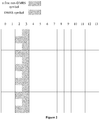
- Figure 2 is a schematic diagram of a preset time-frequency resource according to an embodiment.
- Symbol 2 is a first available non-DMRS symbol
- Symbol 3 is a DMRS symbol.
- the uplink indication information may be mapped from the first non-DMRS symbol of the PUSCH. It should be noted that, on the licensed PUSCH, the uplink indication information may also be mapped from the first non-DMRS symbol of the licensed PUSCH.
- the uplink indication information may also be mapped from a first symbol which is a non-HARQ-ACK resource of the PUSCH scheduled by the PDCCH and/or of the licensed PUSCH.
- the uplink indication information cannot be mapped to a Resource Element (RE) position reserved for HARQ-ACK or a HARQ-ACK RE mapping position, and cannot be frequency division multiplexed with a PUSCH DMRS.
- RE Resource Element
- the uplink indication information may be mapped from a first non-DMRS symbol of each hopping, and cannot be mapped to a RE position reserved for HARQ-ACK or a HARQ-ACK RE mapping position, and cannot be frequency division multiplexed with a PUSCH DMRS.
- a time-frequency resource of the CSI1 is located after the preset time-frequency resource.
- CSI1 Channel State Information 1
- the CSI1 is mapped from a first non-DMRS symbol of the PUSCH, and the CSI1 cannot be mapped to a RE position reserved for HARQ-ACK, or a HARQ-ACKRE mapping position, or a mapping position of the uplink indication information, and cannot be frequency division multiplexed with a PUSCH DMRS.
- the CSI1 may be mapped from a first non-DMRS symbol of each hopping, and the CSI1 cannot be mapped to a RE position reserved for HARQ-ACK, or a HARQ-ACKRE mapping position, or a mapping position of the uplink indication information, and cannot be frequency division multiplexed with a PUSCH DMRS.
- the time-frequency resource of the CSI1 is set to be located after the preset time-frequency resource when the PUSCH carries the CSI1, so that conflicts between the time-frequency resource of the CSI1 and the preset time-frequency resource can be avoided, thereby improving communication quality effectively.
- the uplink indication information is mapped to an Orthogonal Frequency Division Multiplexing (OFDM) symbol i
- distributed mapping is performed on a report information after scheduling and REs, and an interval d may be set in the following two ways:
- Figure 3 is a schematic diagram of a preset time-frequency resource according to another embodiment.
- Symbol 3 is a DMRS symbol
- Symbol 4 is a non-DMRS symbol after a first DMRS symbol.
- the uplink indication information may be mapped from a first non-DMRS symbol after a first DMRS symbol.
- the uplink indication information may be mapped from a first symbol which is a non-HARQ-ACK resource of the PUSCH scheduled by the PDCCH and/or the licensed PUSCH.
- the uplink indication information cannot be mapped to a RE position reserved for HARQ-ACK or a HARQ-ACKRE mapping position, and cannot be frequency division multiplexed with a PUSCH DMRS.
- the uplink indication information may be mapped from a first non-DMRS symbol of each hopping, and cannot be mapped to a RE position reserved for HARQ-ACK or a HARQ-ACK RE mapping position, and cannot be frequency division multiplexed with a PUSCH DMRS.
- a time-frequency resource of the HARQ-ACK information may be located before or after the preset time-frequency resource.
- the time-frequency resource of the HARQ-ACK information is located before the preset time-frequency resource.
- the uplink indication information may be mapped from a non-DMRS symbol after a first DMRS of the PUSCH. Further, the uplink indication information cannot be mapped to a RE position reserved for HARQ-ACK or a HARQ-ACKRE mapping position, and cannot be frequency division multiplexed with a PUSCH DMRS.
- the uplink indication information may be mapped from a non-DMRS symbol after a first DMRS symbol of each hopping, and cannot be mapped to a RE position reserved for HARQ-ACK or a HARQ-ACK RE mapping position, and cannot be frequency division multiplexed with a PUSCH DMRS.
- the time-frequency resource of the HARQ-ACK information is located after the preset time-frequency resource.
- the uplink indication information may be mapped from a non-DMRS symbol after a first DMRS of the PUSCH and cannot be frequency division multiplexed with a PUSCH DMRS.
- the uplink indication information may be mapped from a non-DMRS symbol after a first DMRS symbol of each hopping, and cannot be frequency division multiplexed with a PUSCH DMRS.
- the time-frequency resource of the HARQ-ACK information is located before or after the preset time-frequency resource, conflicts between the time-frequency resource of the HARQ-ACK information and the preset time-frequency resource can be avoided, thereby improving the communication quality greatly.
- the HARQ-ACK information may be mapped from the non-DMRS symbol after the first DMRS of the PUSCH, and cannot be mapped to the RE position reserved for the uplink indication information or the mapping position of the uplink indication information, and is not frequency division multiplexed with the PUSCH DMRS.
- the uplink indication information may be mapped from the non-DMRS symbol after the first DMRS of the PUSCH of each hopping, and cannot be mapped to the RE position reserved for the uplink indication information or the mapping position of the uplink indication information, and is not frequency division multiplexed with the PUSCH DMRS.
- the PUSCH carries the HARQ-ACK information
- the time-frequency position of the HARQ-ACK information is not limited, conflicts between the time-frequency resource of the HARQ-ACK information and the preset time-frequency resource are likely to occur, which will affect the communication quality.
- the uplink indication information is mapped to an Orthogonal Frequency Division Multiplexing (OFDM) symbol i
- distributed mapping is performed on a report information after scheduling and REs, and an interval d may be set in the following two ways:
- the uplink indication information may be set to be located before or after the HARQ-ACK.
- the PUSCH may carry the uplink indication information, the HARQ-ACK/SRS and the CSI1 in sequence; or the PUSCH may also carry the HARQ-ACK/SRS, the uplink indication information and the CSI1 in sequence.
- mapping positions of the HARQ-ACK and the CSI1 after encoding may be the same as before encoding.
- the uplink indication information may further include at least one of the following: a Hybrid Automatic Repeat reQuest Process (HARQ process), a Redundancy Version (RV), and a CSI.
- HARQ process Hybrid Automatic Repeat reQuest Process
- RV Redundancy Version
- CSI CSI
- the NR-U may also require the UE to report other scheduling information, such as the HARQ process, the RV, so the uplink indication information may further include the other scheduling information, which facilitates improving transmission efficiency.
- Figures 4 schematically illustrates a structural diagram of a device for reporting an uplink control information according to an embodiment.
- the device for reporting an uplink control information may include:
- the preset time-frequency resource include a first non-DMRS symbol and a first symbol which is a non-HARQ-ACK resource of the PUSCH scheduled by the PDCCH and/or of the licensed PUSCH.
- a time-frequency resource of the CSI1 may be located after the preset time-frequency resource.
- the preset time-frequency resource may include a first non-DMRS symbol after a first DMRS symbol and a first symbol which is a non-HARQ-ACK resource of the PUSCH scheduled by the PDCCH and/or of the licensed PUSCH.
- a time-frequency resource of the HARQ-ACK information may be located before or after the preset time-frequency resource.
- the uplink indication information may further include one or more of the following: a HARQ process, a RV, and a CSI.
- a storage medium having computer instructions stored therein wherein when the computer instructions are executed, the above method for reporting an uplink control information is performed.
- the storage medium may be a computer readable storage medium, for example, including a non-volatile or non-transitory memory, an optical disk, a mechanical disk, a solid disk or the like.
- a user equipment including a memory and a processor
- the memory has computer instructions stored therein, and when the processor executes the computer instructions, the above method for reporting an uplink control information is performed.
- the user equipment may include but not limited to a mobile phone, a computer or a tablet computer.
Landscapes
- Engineering & Computer Science (AREA)
- Signal Processing (AREA)
- Computer Networks & Wireless Communication (AREA)
- Physics & Mathematics (AREA)
- Health & Medical Sciences (AREA)
- General Health & Medical Sciences (AREA)
- Spectroscopy & Molecular Physics (AREA)
- Mobile Radio Communication Systems (AREA)
Abstract
Description
- This application claims the benefit of priority to
Chinese Patent Application No. 201811554918.5, filed on December 19, 2018 - The present disclosure generally relates to communication technology field, and more particularly, to a method and a device for reporting an uplink control information, a storage medium and a user equipment.
- The 3rd Generation Partnership Project (3GPP) standards organization is studying how to deploy an NR network on an unlicensed spectrum, so as to achieve fair and effective utilization of the unlicensed spectrum and improve data transmission rate of a 5G New Radio (NR) system. The NR uses the unlicensed spectrum in three ways: firstly, a NR cell of the unlicensed spectrum works as a primary cell; secondly, a User Equipment (UE) accesses the NR cell of the unlicensed spectrum through a Long Term Evolution (LTE) cell; and thirdly, the UE accesses the NR cell of the unlicensed spectrum through the NR cell. In the second and the third ways, the licensed spectrum and the unlicensed spectrum may be used in combination in a way such as carrier aggregation, that is, a UE, for example, an Evolved Node B (gNB) may work both on the licensed spectrum and the unlicensed spectrum, which is also known as New RAT Unlicense (NR-U) technology.
- Furthermore, if channel occupancy may be shared between a base station and a UE, system performance of the NR-U can be greatly improved, so the 3GPP discussed and decided to use a Physical Downlink Control Channel (PDCCH) to notify the UE of a channel occupancy time and frequency information.
- However, in prior art, there is no setting for the UE to share an uplink channel occupancy information with the gNB, resulting in a long uplink channel access process and low uplink/downlink communication efficiency.
- Embodiments of the present disclosure provide a method and device for reporting an uplink control information, a storage medium and a user equipment, which may facilitate reducing a duration of an uplink channel access process and improving uplink/downlink communication efficiency.
- In an embodiment of the present disclosure, a method for reporting an uplink control information is provided, including: determining a time-frequency resource indication information of an uplink channel occupation information, where the time-frequency resource indication information is used for indicating a time-frequency resource of an uplink channel occupied by a user equipment (UE); carrying an uplink indication information with a preset time-frequency resource on a Physical Uplink Shared Channel (PUSCH) scheduled by a Physical Downlink Control Channel (PDCCH) and/or a licensed PUSCH, where the uplink indication information includes the time-frequency resource indication information of the uplink channel occupation information; and sending the PUSCH scheduled by the PDCCH and/or the licensed PUSCH to a base station, so that the base station sends an information to be sent according to the time-frequency resource of the uplink channel indicated by the time-frequency resource indication information.
- Optionally, the preset time-frequency resource includes a first non-Demodulation Reference Signal (non-DMRS) symbol and a first symbol which is a non-Hybrid Automatic Repeat request Acknowledgement (non-HARQ-ACK) resource of the PUSCH scheduled by the PDCCH and/or of the licensed PUSCH.
- Optionally, when the PUSCH carries a Channel State Information 1 (CSI1), a time-frequency resource of the CSI1 is located after the preset time-frequency resource.
- Optionally, the preset time-frequency resource includes a first non-DMRS symbol after a first DMRS symbol and a first symbol which is a non-HARQ-ACK resource of the PDCCH scheduled PUSCH and/or the licensed PUSCH.
- Optionally, when the PUSCH carries a HARQ-ACK information, a time-frequency resource of the HARQ-ACK information is located before or after the preset time-frequency resource.
- Optionally, the uplink indication information further includes at least one of: a HARQ process, a Redundancy Version (RV) and a CSI.
- In an embodiment of the present disclosure, a device for reporting an uplink control information is provided, including: an indication information determining module, adapted to determine a time-frequency resource indication information of an uplink channel occupation information, where the time-frequency resource indication information is used for indicating a time-frequency resource of an uplink channel occupied by a UE; an indication information carry module, adapted to carry an uplink indication information with a preset time-frequency resource on a PUSCH scheduled by a PDCCH and/or a licensed PUSCH, where the uplink indication information includes the time-frequency resource indication information of the uplink channel occupation information; and a sending module, adapted to send the PUSCH scheduled by the PDCCH and/or the licensed PUSCH to a base station, so that the base station sends an information to be sent according to the time-frequency resource of the uplink channel indicated by the time-frequency resource indication information.
- Optionally, the preset time-frequency resource includes a first non-Demodulation Reference Signal (non-DMRS) symbol and a first symbol which is a non-Hybrid Automatic Repeat request Acknowledgement (non-HARQ-ACK) resource of the PUSCH scheduled by the PDCCH and/or of the licensed PUSCH.
- In an embodiment of the present disclosure, a storage medium having computer instructions stored therein is provided, wherein once the computer instructions are executed, the above active noise reduction method is performed.
- In an embodiment of the present disclosure, a user equipment including a memory and a processor is provided, wherein the memory has computer instructions stored therein, and when the processor executes the computer instructions, the above method is performed.
- Embodiments of the present disclosure may provide following advantages.
- In embodiments of the present disclosure, a time-frequency resource indication information of an uplink channel occupation information is determined, where the time-frequency resource indication information is used for indicating a time-frequency resource of an uplink channel occupied by a user equipment (UE); an uplink indication information is carried with a preset time-frequency resource on a Physical Uplink Shared Channel (PUSCH) scheduled by a PDCCH and/or a licensed PUSCH, where the uplink indication information includes the time-frequency resource indication information of the uplink channel occupation information; and the PUSCH scheduled by the PDCCH and/or the licensed PUSCH is sent to a base station, so that the base station sends an information to be sent according to the time-frequency resource of the uplink channel indicated by the time-frequency resource indication information. According to the embodiments of the present disclosure, the UE carries the uplink indication information by using the preset time-frequency resource on the PUSCH scheduled by the PDCCH and/or the licensed PUSCH, where the uplink indication information includes the time-frequency resource indication information of the uplink channel occupancy information, so that the base station can send the information to be sent according to the time-frequency resource of the uplink channel indicated by the time-frequency resource indication information. In the existing techniques, the UE is not designed to share the uplink channel occupancy information with the gNB. However, by embodiments of the present disclosure, the UE can share the uplink channel occupancy information with the gNB, which requires less LBTs Or no LBT, thereby reducing the duration of the uplink channel access process and improving the uplink/downlink communication efficiency.
-
-
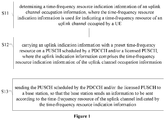
Figure 1 schematically illustrates a flow chart of a method for reporting an uplink control information according to an embodiment; -
Figure 2 is a schematic diagram of a preset time-frequency resource according to an embodiment; -
Figure 3 is a schematic diagram of a preset time-frequency resource according to another embodiment; and -
Figures 4 schematically illustrates a structural diagram of a device for reporting an uplink control information according to an embodiment. - As described in background, if channel occupancy may be shared between a base station and a UE, system performance of the NR-U can be greatly improved, so the 3GPP discussed and decided to use a Physical Downlink Control Channel (PDCCH) to notify the UE of a channel occupancy time and frequency information.
- Specifically, in the prior art, a Listen-Before-Talk (LBT) process is performed to achieve the coexistence of different operators and other systems in an unlicensed spectrum. The LBT process means that in the unlicensed spectrum, nodes determine whether a current channel is available through a clear channel assessment (CCA) before transmitting data. Further, each LBT process includes energy detection to determine whether the channel is occupied. Some regional laws and regulations stipulate an energy detection threshold. If energy received by a node is higher than the energy detection threshold, the channel is considered to be busy. Two channel access processes are supported in a downlink transmission of Licensed-assisted Access Using LTE (LAA-LTE):
Type land Type 2. Specifically,Type 1 channel access is based on a LTE Category 4 (Cat 4) channel access, andType 2 channel access is a channel access having a fixed time duration (in which LBT is performed for at least 25us before transmission). - Inventors of the present disclosure found through research that, in the prior art, a UE is not designed to share an uplink channel occupancy information with a gNB and multiple LBT processes are required, resulting in a long uplink channel access process and low uplink/downlink communication efficiency.
- In embodiments of the present disclosure, a time-frequency resource indication information of an uplink channel occupation information is determined, where the time-frequency resource indication information is used for indicating a time-frequency resource of an uplink channel occupied by a user equipment (UE); an uplink indication information is carried with a preset time-frequency resource on a Physical Uplink Shared Channel (PUSCH) scheduled by a PDCCH and/or a licensed PUSCH, where the uplink indication information includes the time-frequency resource indication information of the uplink channel occupation information; and the PUSCH scheduled by the PDCCH and/or the licensed PUSCH is sent to a base station, so that the base station sends an information to be sent according to the time-frequency resource of the uplink channel indicated by the time-frequency resource indication information. According to the embodiments of the present disclosure, the UE carries the uplink indication information by using the preset time-frequency resource on the PUSCH scheduled by the PDCCH and/or the licensed PUSCH, where the uplink indication information includes the time-frequency resource indication information of the uplink channel occupancy information, so that the base station can send the information to be sent according to the time-frequency resource of the uplink channel indicated by the time-frequency resource indication information. In the existing techniques, the UE is not designed to share the uplink channel occupancy information with the gNB. However, by embodiments of the present disclosure, the UE can share the uplink channel occupancy information with the gNB, which requires less LBTs Or no LBT, thereby reducing the duration of the uplink channel access process and improving the uplink/downlink communication efficiency.
- In order to clarify the object, characteristic and advantages of embodiments of the present disclosure, embodiments of present disclosure will be described clearly in detail in conjunction with accompanying drawings.
- In an embodiment of the present disclosure, a method for reporting an uplink control information is provided. Referring to
Figure 1 , the method for reporting an uplink control information includes S11 to S13. - In S11, a time-frequency resource indication information of an uplink channel occupation information is determined, where the time-frequency resource indication information is used for indicating a time-frequency resource of an uplink channel occupied by a UE;
- In S12, an uplink indication information is carried with a preset time-frequency resource on a Physical Uplink Shared Channel (PUSCH) scheduled by a PDCCH and/or a licensed PUSCH, where the uplink indication information includes the time-frequency resource indication information of the uplink channel occupation information;
- In S13, the PUSCH scheduled by the PDCCH and/or the licensed PUSCH is sent to a base station, so that the base station sends an information to be sent according to the time-frequency resource of the uplink channel indicated by the time-frequency resource indication information.
- In some embodiments, in S11, after the UE occupies the uplink channel, the time-frequency resource of the occupied uplink channel may be determined, and then the time-frequency resource indication information of the uplink channel occupancy information may be used to indicate the time-frequency resource of the occupied uplink channel.
- Those skilled in the art can understand that the UE may indicate the time-frequency resource with a conventional manner, which is not limited in the embodiments of the present disclosure.
- In some embodiments, in S12, the preset time-frequency resource on the PUSCH scheduled by PDCCH and/or the licensed PUSCH is used to carry the uplink indication information.
- In some embodiments, the preset time-frequency resource is a first non-Demodulation Reference Signal (non-DMRS) symbol and a first non-Hybrid Automatic Repeat request Acknowledgement (non-HARQ-ACK) symbol of the PUSCH scheduled by the PDCCH and/or the licensed PUSCH.
-
Figure 2 is a schematic diagram of a preset time-frequency resource according to an embodiment. - Referring to
Figure 2 ,Symbol 2 is a first available non-DMRS symbol, andSymbol 3 is a DMRS symbol. - Specifically, on the PUSCH scheduled by the PDCCH, the uplink indication information may be mapped from the first non-DMRS symbol of the PUSCH. It should be noted that, on the licensed PUSCH, the uplink indication information may also be mapped from the first non-DMRS symbol of the licensed PUSCH.
- In an embodiment, the uplink indication information may also be mapped from a first symbol which is a non-HARQ-ACK resource of the PUSCH scheduled by the PDCCH and/or of the licensed PUSCH.
- Specifically, the uplink indication information cannot be mapped to a Resource Element (RE) position reserved for HARQ-ACK or a HARQ-ACK RE mapping position, and cannot be frequency division multiplexed with a PUSCH DMRS.
- In an embodiment, if the PUSCH frequency hops, the uplink indication information may be mapped from a first non-DMRS symbol of each hopping, and cannot be mapped to a RE position reserved for HARQ-ACK or a HARQ-ACK RE mapping position, and cannot be frequency division multiplexed with a PUSCH DMRS.
- Further, when the PUSCH carries a Channel State Information 1 (CSI1), a time-frequency resource of the CSI1 is located after the preset time-frequency resource.
- In an embodiment, the CSI1 is mapped from a first non-DMRS symbol of the PUSCH, and the CSI1 cannot be mapped to a RE position reserved for HARQ-ACK, or a HARQ-ACKRE mapping position, or a mapping position of the uplink indication information, and cannot be frequency division multiplexed with a PUSCH DMRS.
- In an embodiment, if the PUSCH frequency hops, the CSI1 may be mapped from a first non-DMRS symbol of each hopping, and the CSI1 cannot be mapped to a RE position reserved for HARQ-ACK, or a HARQ-ACKRE mapping position, or a mapping position of the uplink indication information, and cannot be frequency division multiplexed with a PUSCH DMRS.
- In the embodiments of the present disclosure, the time-frequency resource of the CSI1 is set to be located after the preset time-frequency resource when the PUSCH carries the CSI1, so that conflicts between the time-frequency resource of the CSI1 and the preset time-frequency resource can be avoided, thereby improving communication quality effectively.
- In some embodiments, if the uplink indication information is mapped to an Orthogonal Frequency Division Multiplexing (OFDM) symbol i, distributed mapping is performed on a report information after scheduling and REs, and an interval d may be set in the following two ways:
- (1) If a number of unmapped report information symbols after scheduling is greater than a number of REs available on an OFDM symbol, d = 1; and if there is more unmapped report information, the more unmapped report information continues to be mapped to a next OFDM symbol.
- (2) If the number of unmapped report information symbols after scheduling is less than the number of REs available on the OFDM symbol, then d = floor (which means the number of REs available on the OFDM symbol/the number of reported information symbols after scheduling).
-
Figure 3 is a schematic diagram of a preset time-frequency resource according to another embodiment. - Referring to
Figure 3 ,Symbol 3 is a DMRS symbol, andSymbol 4 is a non-DMRS symbol after a first DMRS symbol. - In an embodiment, on a PUSCH scheduled by a PDCCH and/or a licensed PUSCH, the uplink indication information may be mapped from a first non-DMRS symbol after a first DMRS symbol.
- In another embodiment, the uplink indication information may be mapped from a first symbol which is a non-HARQ-ACK resource of the PUSCH scheduled by the PDCCH and/or the licensed PUSCH.
- Specifically, the uplink indication information cannot be mapped to a RE position reserved for HARQ-ACK or a HARQ-ACKRE mapping position, and cannot be frequency division multiplexed with a PUSCH DMRS.
- In an embodiment, if the PUSCH frequency hops, the uplink indication information may be mapped from a first non-DMRS symbol of each hopping, and cannot be mapped to a RE position reserved for HARQ-ACK or a HARQ-ACK RE mapping position, and cannot be frequency division multiplexed with a PUSCH DMRS.
- Further, when the PUSCH carries a HARQ-ACK information, a time-frequency resource of the HARQ-ACK information may be located before or after the preset time-frequency resource.
- In an embodiment about the implementation of the HARQ-ACK information, the time-frequency resource of the HARQ-ACK information is located before the preset time-frequency resource.
- Specifically, the uplink indication information may be mapped from a non-DMRS symbol after a first DMRS of the PUSCH. Further, the uplink indication information cannot be mapped to a RE position reserved for HARQ-ACK or a HARQ-ACKRE mapping position, and cannot be frequency division multiplexed with a PUSCH DMRS.
- In an embodiment, if the PUSCH frequency hops, the uplink indication information may be mapped from a non-DMRS symbol after a first DMRS symbol of each hopping, and cannot be mapped to a RE position reserved for HARQ-ACK or a HARQ-ACK RE mapping position, and cannot be frequency division multiplexed with a PUSCH DMRS.
- In another embodiment about the implementation of the HARQ-ACK information, the time-frequency resource of the HARQ-ACK information is located after the preset time-frequency resource.
- Specifically, the uplink indication information may be mapped from a non-DMRS symbol after a first DMRS of the PUSCH and cannot be frequency division multiplexed with a PUSCH DMRS.
- In an embodiment, if the PUSCH frequency hops, the uplink indication information may be mapped from a non-DMRS symbol after a first DMRS symbol of each hopping, and cannot be frequency division multiplexed with a PUSCH DMRS.
- According to the embodiments described above, by setting that when the PUSCH carries the HARQ-ACK information, the time-frequency resource of the HARQ-ACK information is located before or after the preset time-frequency resource, conflicts between the time-frequency resource of the HARQ-ACK information and the preset time-frequency resource can be avoided, thereby improving the communication quality greatly.
- Specifically, according to the embodiments described above, the HARQ-ACK information may be mapped from the non-DMRS symbol after the first DMRS of the PUSCH, and cannot be mapped to the RE position reserved for the uplink indication information or the mapping position of the uplink indication information, and is not frequency division multiplexed with the PUSCH DMRS. Further, if the PUSCH frequency hops, the uplink indication information may be mapped from the non-DMRS symbol after the first DMRS of the PUSCH of each hopping, and cannot be mapped to the RE position reserved for the uplink indication information or the mapping position of the uplink indication information, and is not frequency division multiplexed with the PUSCH DMRS.
- Therefore, when the PUSCH carries the HARQ-ACK information, if the time-frequency position of the HARQ-ACK information is not limited, conflicts between the time-frequency resource of the HARQ-ACK information and the preset time-frequency resource are likely to occur, which will affect the communication quality.
- In some embodiments, if the uplink indication information is mapped to an Orthogonal Frequency Division Multiplexing (OFDM) symbol i, distributed mapping is performed on a report information after scheduling and REs, and an interval d may be set in the following two ways:
- (1) If a number of unmapped report information symbols after scheduling is greater than a number of REs available on an OFDM symbol, d = 1; and if there is more unmapped report information, the more unmapped report information continues to be mapped to a next OFDM symbol.
- (2) If the number of unmapped report information symbols after scheduling is less than the number of REs available on the OFDM symbol, then d = floor (which means the number of REs available on the OFDM symbol/the number of reported information symbols after scheduling).
- Furthermore, when the PUSCH carries an HARQ-ACK or a Sounding reference signal (SRS) and when the PUSCH carries a CSI1, the uplink indication information may be set to be located before or after the HARQ-ACK.
- Specifically, the PUSCH may carry the uplink indication information, the HARQ-ACK/SRS and the CSI1 in sequence; or the PUSCH may also carry the HARQ-ACK/SRS, the uplink indication information and the CSI1 in sequence.
- It should be noted that mapping positions of the HARQ-ACK and the CSI1 after encoding may be the same as before encoding.
- Further, the uplink indication information may further include at least one of the following: a Hybrid Automatic Repeat reQuest Process (HARQ process), a Redundancy Version (RV), and a CSI.
- In some embodiments, in addition to the time-frequency resource indication information of the uplink channel occupancy information, the NR-U may also require the UE to report other scheduling information, such as the HARQ process, the RV, so the uplink indication information may further include the other scheduling information, which facilitates improving transmission efficiency.
-
Figures 4 schematically illustrates a structural diagram of a device for reporting an uplink control information according to an embodiment. Referring toFigure 4 , the device for reporting an uplink control information may include: - an indication
information determining module 41, adapted to determine a time-frequency resource indication information of an uplink channel occupation information, where the time-frequency resource indication information is used for indicating a time-frequency resource of an uplink channel occupied by a UE; - an indication information carry
module 42, adapted to carry an uplink indication information with a preset time-frequency resource on a PUSCH scheduled by a PDCCH and/or a licensed PUSCH, where the uplink indication information includes the time-frequency resource indication information of the uplink channel occupation information; and - a sending
module 43, adapted to send the PUSCH scheduled by the PDCCH and/or the licensed PUSCH to a base station, so that the base station sends an information to be sent according to the time-frequency resource of the uplink channel indicated by the time-frequency resource indication information. - In some embodiments, the preset time-frequency resource include a first non-DMRS symbol and a first symbol which is a non-HARQ-ACK resource of the PUSCH scheduled by the PDCCH and/or of the licensed PUSCH.
- In some embodiments, when the PUSCH carries a CSI1, a time-frequency resource of the CSI1 may be located after the preset time-frequency resource.
- In some embodiments, the preset time-frequency resource may include a first non-DMRS symbol after a first DMRS symbol and a first symbol which is a non-HARQ-ACK resource of the PUSCH scheduled by the PDCCH and/or of the licensed PUSCH.
- In some embodiments, when the PUSCH carries a HARQ-ACK information, a time-frequency resource of the HARQ-ACK information may be located before or after the preset time-frequency resource.
- In some embodiments, the uplink indication information may further include one or more of the following: a HARQ process, a RV, and a CSI.
- Principles, detailed implementation and advantages of the device for reporting an uplink control information can be found in the above descriptions of the method as shown in
Figures 1 to 3 , and are not described here. - In an embodiment of the present disclosure, a storage medium having computer instructions stored therein is provided, wherein when the computer instructions are executed, the above method for reporting an uplink control information is performed. The storage medium may be a computer readable storage medium, for example, including a non-volatile or non-transitory memory, an optical disk, a mechanical disk, a solid disk or the like.
- In an embodiment of the present disclosure, a user equipment including a memory and a processor is provided, wherein the memory has computer instructions stored therein, and when the processor executes the computer instructions, the above method for reporting an uplink control information is performed. The user equipment may include but not limited to a mobile phone, a computer or a tablet computer.
- Although the present disclosure has been disclosed above with reference to preferred embodiments thereof, it should be understood that the disclosure is presented by way of example only, and not limitation. Those skilled in the art can modify and vary the embodiments without departing from the spirit and scope of the present disclosure.
Claims (10)
- A method for reporting an uplink control information, comprising:determining a time-frequency resource indication information of an uplink channel occupation information, where the time-frequency resource indication information is used for indicating a time-frequency resource of an uplink channel occupied by a user equipment (UE);carrying an uplink indication information with a preset time-frequency resource on a Physical Uplink Shared Channel (PUSCH) scheduled by a Physical Downlink Control Channel (PDCCH) and/or a licensed PUSCH, where the uplink indication information comprises the time-frequency resource indication information of the uplink channel occupation information; andsending the PUSCH scheduled by the PDCCH and/or the licensed PUSCH to a base station, so that the base station sends an information to be sent according to the time-frequency resource of the uplink channel indicated by the time-frequency resource indication information.
- The method for reporting an uplink control information according to claim 1, wherein the preset time-frequency resource comprises a first non-Demodulation Reference Signal (non-DMRS) symbol and a first symbol which is a non-Hybrid Automatic Repeat request Acknowledgement (non-HARQ-ACK) resource of the PUSCH scheduled by the PDCCH and/or of the licensed PUSCH.
- The method for reporting an uplink control information according to claim 2, wherein when the PUSCH carries a Channel State Information 1 (CSI1), a time-frequency resource of the CSI1 is located after the preset time-frequency resource.
- The method for reporting an uplink control information according to claim 1, wherein the preset time-frequency resource comprises a first non-DMRS symbol after a first DMRS symbol and a first symbol which is a non-HARQ-ACK resource of the PDCCH scheduled PUSCH and/or the licensed PUSCH.
- The method for reporting an uplink control information according to claim 4, wherein when the PUSCH carries a HARQ-ACK information, a time-frequency resource of the HARQ-ACK information is located before or after the preset time-frequency resource.
- The method for reporting an uplink control information according to claim 1, wherein the uplink indication information further comprises at least one of: a HARQ process, a Redundancy Version (RV) and a CSI.
- A device for reporting an uplink control information, comprising:an indication information determining module, adapted to determine a time-frequency resource indication information of an uplink channel occupation information, where the time-frequency resource indication information is used for indicating a time-frequency resource of an uplink channel occupied by a UE;an indication information carry module, adapted to carry an uplink indication information with a preset time-frequency resource on a PUSCH scheduled by a PDCCH and/or a licensed PUSCH, where the uplink indication information comprises the time-frequency resource indication information of the uplink channel occupation information; anda sending module, adapted to send the PUSCH scheduled by the PDCCH and/or the licensed PUSCH to a base station, so that the base station sends an information to be sent according to the time-frequency resource of the uplink channel indicated by the time-frequency resource indication information.
- The device for reporting an uplink control information according to claim 7, wherein the preset time-frequency resource comprises a first non-Demodulation Reference Signal (non-DMRS) symbol and a first symbol which is a non-Hybrid Automatic Repeat request Acknowledgement (non-HARQ-ACK) resource of the PUSCH scheduled by the PDCCH and/or of the licensed PUSCH.
- A storage medium having computer instructions stored therein, wherein once the computer instructions are executed, the method for reporting an uplink control information according to any one of claims 1 to 6 is performed.
- A user equipment comprising a memory and a processor is provided, wherein the memory has computer instructions stored therein, and when the processor executes the computer instructions, the above method for reporting an uplink control information according to any one of claims 1 to 6 is performed.
Applications Claiming Priority (2)
| Application Number | Priority Date | Filing Date | Title |
|---|---|---|---|
| CN201811554918.5A CN111342942B (en) | 2018-12-19 | 2018-12-19 | Method and device for reporting uplink control information, storage medium and user terminal |
| PCT/CN2019/126525 WO2020125708A1 (en) | 2018-12-19 | 2019-12-19 | Method and apparatus for reporting uplink control information, storage medium, and user terminal |
Publications (2)
| Publication Number | Publication Date |
|---|---|
| EP3902307A1 true EP3902307A1 (en) | 2021-10-27 |
| EP3902307A4 EP3902307A4 (en) | 2022-08-17 |
Family
ID=71102480
Family Applications (1)
| Application Number | Title | Priority Date | Filing Date |
|---|---|---|---|
| EP19897794.4A Withdrawn EP3902307A4 (en) | 2018-12-19 | 2019-12-19 | METHOD AND APPARATUS FOR TRANSMITTING UPLINK CONTROL INFORMATION, INFORMATION MEDIA AND USER TERMINAL |
Country Status (4)
| Country | Link |
|---|---|
| US (2) | US12075418B2 (en) |
| EP (1) | EP3902307A4 (en) |
| CN (1) | CN111342942B (en) |
| WO (1) | WO2020125708A1 (en) |
Families Citing this family (3)
| Publication number | Priority date | Publication date | Assignee | Title |
|---|---|---|---|---|
| CN110312311B (en) * | 2019-03-29 | 2023-01-17 | 北京紫光展锐通信技术有限公司 | Channel configuration method and device |
| CN114631353B (en) * | 2020-10-10 | 2025-06-03 | 北京小米移动软件有限公司 | Communication method and device, user equipment and storage medium |
| CN118741723A (en) * | 2023-03-31 | 2024-10-01 | 华为技术有限公司 | Resource indication method and communication device |
Family Cites Families (16)
| Publication number | Priority date | Publication date | Assignee | Title |
|---|---|---|---|---|
| CN102594530B (en) * | 2011-01-10 | 2017-12-22 | 中兴通讯股份有限公司 | Method and system for transmitting uplink cooperative data |
| US10015778B2 (en) | 2015-03-17 | 2018-07-03 | Telefonaktiebolaget Lm Ericsson (Publ) | Systems and methods for uplink control information signaling design |
| CN107318086B (en) * | 2016-04-26 | 2020-03-20 | 华为技术有限公司 | Method and device for allocating time-frequency resources |
| CN106102168A (en) | 2016-05-20 | 2016-11-09 | 深圳市金立通信设备有限公司 | The control method of a kind of data transmission and relevant device |
| CN106231680A (en) * | 2016-07-21 | 2016-12-14 | 深圳市金立通信设备有限公司 | A kind of control Information Design Methods, base station, terminal and system |
| CN109863708B (en) | 2016-10-21 | 2022-02-25 | 瑞典爱立信有限公司 | Method and apparatus for HARQ feedback for unscheduled uplink |
| CN108282280B (en) * | 2017-01-05 | 2021-07-20 | 维沃软件技术有限公司 | A reference signal indication method, network device and terminal device |
| US10440698B2 (en) * | 2017-02-06 | 2019-10-08 | Qualcomm Incorporated | Transmitting uplink control information |
| CN108810905B (en) | 2017-05-04 | 2023-10-24 | 华为技术有限公司 | Methods and devices for transmitting uplink channels and methods and devices for transmitting downlink channels |
| CN108809545B (en) | 2017-05-04 | 2023-01-06 | 华为技术有限公司 | Method and device for transmitting uplink control information |
| KR102341820B1 (en) * | 2017-05-26 | 2021-12-21 | 삼성전자주식회사 | Apparatus and method for channel access in wireless communication system |
| RU2752649C1 (en) * | 2018-01-12 | 2021-07-29 | Телефонактиеболагет Лм Эрикссон (Пабл) | Physical uplink shared channel with hybrid automatic repeat request confirmation |
| US11147065B2 (en) * | 2018-01-22 | 2021-10-12 | Qualcomm Incorporated | Feedback bit reservation for uplink control piggybacking |
| CN112088514B (en) * | 2018-04-05 | 2024-06-11 | 交互数字专利控股公司 | Configuration and signaling for UL NOMA operation |
| CN110474747B (en) * | 2018-05-11 | 2022-01-25 | 中兴通讯股份有限公司 | Signal transmission method and device, and terminal |
| KR102791554B1 (en) * | 2018-10-19 | 2025-04-08 | 삼성전자주식회사 | Method and apparatus for transmitting and receiving signal in wireless communication system |
-
2018
- 2018-12-19 CN CN201811554918.5A patent/CN111342942B/en active Active
-
2019
- 2019-12-19 EP EP19897794.4A patent/EP3902307A4/en not_active Withdrawn
- 2019-12-19 WO PCT/CN2019/126525 patent/WO2020125708A1/en not_active Ceased
- 2019-12-19 US US17/416,128 patent/US12075418B2/en active Active
-
2024
- 2024-07-18 US US18/776,841 patent/US20240373432A1/en active Pending
Also Published As
| Publication number | Publication date |
|---|---|
| CN111342942A (en) | 2020-06-26 |
| WO2020125708A1 (en) | 2020-06-25 |
| US12075418B2 (en) | 2024-08-27 |
| EP3902307A4 (en) | 2022-08-17 |
| US20240373432A1 (en) | 2024-11-07 |
| CN111342942B (en) | 2021-09-21 |
| US20220046681A1 (en) | 2022-02-10 |
Similar Documents
| Publication | Publication Date | Title |
|---|---|---|
| US11711801B2 (en) | Method and user equipment for transmitting uplink signals | |
| US10764914B2 (en) | Uplink information processing method and apparatus | |
| US11917507B2 (en) | Method, apparatus and system for feedback information transmission between internet of vehicles devices | |
| US20190335496A1 (en) | Channel listening method and apparatus | |
| CN110351874B (en) | Method, device, base station and user equipment for notifying channel occupation time | |
| US20190342037A1 (en) | Harq feedback for unscheduled uplink | |
| US11770718B2 (en) | Unlicensed channel sharing method and device, storage medium, terminal and base station | |
| US20240373432A1 (en) | Method and device for reporting uplink control information, storage medium, and user equipment | |
| CN110944390A (en) | Resource conflict processing method and device, storage medium and user equipment | |
| KR20200110359A (en) | Method and apparatus for transmitting uplink information | |
| US20210337562A1 (en) | Channel resource allocation method and computer readable storage medium and terminal | |
| US11425756B2 (en) | Data transmission method and apparatus | |
| KR102150368B1 (en) | Uplink data transmission method and related device | |
| US10567130B2 (en) | Timing requirement dependent search space configuration for MTC devices of different categories | |
| US12058533B2 (en) | Method and device for determining occupied slots, storage medium, and user equipment | |
| CN111405674B (en) | Method and equipment in UE and base station | |
| CN111867080B (en) | Downlink channel indication method and device | |
| CN106992839B (en) | Method and device for data transmission |
Legal Events
| Date | Code | Title | Description |
|---|---|---|---|
| STAA | Information on the status of an ep patent application or granted ep patent |
Free format text: STATUS: THE INTERNATIONAL PUBLICATION HAS BEEN MADE |
|
| PUAI | Public reference made under article 153(3) epc to a published international application that has entered the european phase |
Free format text: ORIGINAL CODE: 0009012 |
|
| STAA | Information on the status of an ep patent application or granted ep patent |
Free format text: STATUS: REQUEST FOR EXAMINATION WAS MADE |
|
| 17P | Request for examination filed |
Effective date: 20210709 |
|
| AK | Designated contracting states |
Kind code of ref document: A1 Designated state(s): AL AT BE BG CH CY CZ DE DK EE ES FI FR GB GR HR HU IE IS IT LI LT LU LV MC MK MT NL NO PL PT RO RS SE SI SK SM TR |
|
| DAV | Request for validation of the european patent (deleted) | ||
| DAX | Request for extension of the european patent (deleted) | ||
| REG | Reference to a national code |
Ref country code: DE Ref legal event code: R079 Free format text: PREVIOUS MAIN CLASS: H04W0016140000 Ipc: H04L0005000000 |
|
| A4 | Supplementary search report drawn up and despatched |
Effective date: 20220719 |
|
| RIC1 | Information provided on ipc code assigned before grant |
Ipc: H04W 72/04 20090101ALI20220713BHEP Ipc: H04L 27/00 20060101ALI20220713BHEP Ipc: H04W 16/14 20090101ALI20220713BHEP Ipc: H04L 5/00 20060101AFI20220713BHEP |
|
| STAA | Information on the status of an ep patent application or granted ep patent |
Free format text: STATUS: EXAMINATION IS IN PROGRESS |
|
| 17Q | First examination report despatched |
Effective date: 20250926 |
|
| STAA | Information on the status of an ep patent application or granted ep patent |
Free format text: STATUS: THE APPLICATION HAS BEEN WITHDRAWN |
|
| 18W | Application withdrawn |
Effective date: 20260120 |