EP3901641B1 - Insulation impedance detection circuit for on-board charger and insulation impedance detection method - Google Patents
Insulation impedance detection circuit for on-board charger and insulation impedance detection method Download PDFInfo
- Publication number
- EP3901641B1 EP3901641B1 EP21168746.2A EP21168746A EP3901641B1 EP 3901641 B1 EP3901641 B1 EP 3901641B1 EP 21168746 A EP21168746 A EP 21168746A EP 3901641 B1 EP3901641 B1 EP 3901641B1
- Authority
- EP
- European Patent Office
- Prior art keywords
- circuit
- terminal
- insulation impedance
- electrically connected
- impedance detection
- Prior art date
- Legal status (The legal status is an assumption and is not a legal conclusion. Google has not performed a legal analysis and makes no representation as to the accuracy of the status listed.)
- Active
Links
Images


Classifications
-
- G—PHYSICS
- G01—MEASURING; TESTING
- G01R—MEASURING ELECTRIC VARIABLES; MEASURING MAGNETIC VARIABLES
- G01R27/00—Arrangements for measuring resistance, reactance, impedance, or electric characteristics derived therefrom
- G01R27/02—Measuring real or complex resistance, reactance, impedance, or other two-pole characteristics derived therefrom, e.g. time constant
- G01R27/025—Measuring very high resistances, e.g. isolation resistances, i.e. megohm-meters
-
- H—ELECTRICITY
- H02—GENERATION; CONVERSION OR DISTRIBUTION OF ELECTRIC POWER
- H02J—ELECTRIC POWER NETWORKS; CIRCUIT ARRANGEMENTS OR SYSTEMS FOR SUPPLYING OR DISTRIBUTING ELECTRIC POWER; SYSTEMS FOR STORING ELECTRIC ENERGY
- H02J7/00—Circuit arrangements for charging or discharging batteries or for supplying loads from batteries
- H02J7/60—Circuit arrangements for charging or discharging batteries or for supplying loads from batteries including safety or protection arrangements
-
- H—ELECTRICITY
- H02—GENERATION; CONVERSION OR DISTRIBUTION OF ELECTRIC POWER
- H02J—ELECTRIC POWER NETWORKS; CIRCUIT ARRANGEMENTS OR SYSTEMS FOR SUPPLYING OR DISTRIBUTING ELECTRIC POWER; SYSTEMS FOR STORING ELECTRIC ENERGY
- H02J2105/00—Networks for supplying or distributing electric power characterised by their spatial reach or by the load
- H02J2105/30—Networks for supplying or distributing electric power characterised by their spatial reach or by the load the load networks being external to vehicles, i.e. exchanging power with vehicles
- H02J2105/33—Networks for supplying or distributing electric power characterised by their spatial reach or by the load the load networks being external to vehicles, i.e. exchanging power with vehicles exchanging power with road vehicles
- H02J2105/37—Networks for supplying or distributing electric power characterised by their spatial reach or by the load the load networks being external to vehicles, i.e. exchanging power with vehicles exchanging power with road vehicles exchanging power with electric vehicles [EV] or with hybrid electric vehicles [HEV]
-
- H—ELECTRICITY
- H02—GENERATION; CONVERSION OR DISTRIBUTION OF ELECTRIC POWER
- H02J—ELECTRIC POWER NETWORKS; CIRCUIT ARRANGEMENTS OR SYSTEMS FOR SUPPLYING OR DISTRIBUTING ELECTRIC POWER; SYSTEMS FOR STORING ELECTRIC ENERGY
- H02J3/00—Circuit arrangements for AC mains or AC distribution networks
- H02J3/001—Arrangements for handling faults or abnormalities, e.g. emergencies or contingencies
-
- H—ELECTRICITY
- H02—GENERATION; CONVERSION OR DISTRIBUTION OF ELECTRIC POWER
- H02J—ELECTRIC POWER NETWORKS; CIRCUIT ARRANGEMENTS OR SYSTEMS FOR SUPPLYING OR DISTRIBUTING ELECTRIC POWER; SYSTEMS FOR STORING ELECTRIC ENERGY
- H02J3/00—Circuit arrangements for AC mains or AC distribution networks
- H02J3/28—Arrangements for balancing of the load in networks by storage of energy
- H02J3/32—Arrangements for balancing of the load in networks by storage of energy using batteries or super capacitors with converting means
- H02J3/322—Arrangements for balancing of the load in networks by storage of energy using batteries or super capacitors with converting means the battery being on-board an electric or hybrid vehicle, e.g. vehicle to grid arrangements [V2G], power aggregation, use of the battery for network load balancing, coordinated or cooperative battery charging
-
- H—ELECTRICITY
- H02—GENERATION; CONVERSION OR DISTRIBUTION OF ELECTRIC POWER
- H02J—ELECTRIC POWER NETWORKS; CIRCUIT ARRANGEMENTS OR SYSTEMS FOR SUPPLYING OR DISTRIBUTING ELECTRIC POWER; SYSTEMS FOR STORING ELECTRIC ENERGY
- H02J7/00—Circuit arrangements for charging or discharging batteries or for supplying loads from batteries
- H02J7/855—Circuit arrangements for charging or discharging batteries or for supplying loads from batteries with circuits adapted for supplying loads from the battery
-
- Y—GENERAL TAGGING OF NEW TECHNOLOGICAL DEVELOPMENTS; GENERAL TAGGING OF CROSS-SECTIONAL TECHNOLOGIES SPANNING OVER SEVERAL SECTIONS OF THE IPC; TECHNICAL SUBJECTS COVERED BY FORMER USPC CROSS-REFERENCE ART COLLECTIONS [XRACs] AND DIGESTS
- Y02—TECHNOLOGIES OR APPLICATIONS FOR MITIGATION OR ADAPTATION AGAINST CLIMATE CHANGE
- Y02T—CLIMATE CHANGE MITIGATION TECHNOLOGIES RELATED TO TRANSPORTATION
- Y02T10/00—Road transport of goods or passengers
- Y02T10/60—Other road transportation technologies with climate change mitigation effect
- Y02T10/70—Energy storage systems for electromobility, e.g. batteries
-
- Y—GENERAL TAGGING OF NEW TECHNOLOGICAL DEVELOPMENTS; GENERAL TAGGING OF CROSS-SECTIONAL TECHNOLOGIES SPANNING OVER SEVERAL SECTIONS OF THE IPC; TECHNICAL SUBJECTS COVERED BY FORMER USPC CROSS-REFERENCE ART COLLECTIONS [XRACs] AND DIGESTS
- Y02—TECHNOLOGIES OR APPLICATIONS FOR MITIGATION OR ADAPTATION AGAINST CLIMATE CHANGE
- Y02T—CLIMATE CHANGE MITIGATION TECHNOLOGIES RELATED TO TRANSPORTATION
- Y02T10/00—Road transport of goods or passengers
- Y02T10/60—Other road transportation technologies with climate change mitigation effect
- Y02T10/7072—Electromobility specific charging systems or methods for batteries, ultracapacitors, supercapacitors or double-layer capacitors
-
- Y—GENERAL TAGGING OF NEW TECHNOLOGICAL DEVELOPMENTS; GENERAL TAGGING OF CROSS-SECTIONAL TECHNOLOGIES SPANNING OVER SEVERAL SECTIONS OF THE IPC; TECHNICAL SUBJECTS COVERED BY FORMER USPC CROSS-REFERENCE ART COLLECTIONS [XRACs] AND DIGESTS
- Y02—TECHNOLOGIES OR APPLICATIONS FOR MITIGATION OR ADAPTATION AGAINST CLIMATE CHANGE
- Y02T—CLIMATE CHANGE MITIGATION TECHNOLOGIES RELATED TO TRANSPORTATION
- Y02T90/00—Enabling technologies or technologies with a potential or indirect contribution to GHG emissions mitigation
- Y02T90/10—Technologies relating to charging of electric vehicles
- Y02T90/16—Information or communication technologies improving the operation of electric vehicles
- Y02T90/167—Systems integrating technologies related to power network operation and communication or information technologies for supporting the interoperability of electric or hybrid vehicles, i.e. smartgrids as interface for battery charging of electric vehicles [EV] or hybrid vehicles [HEV]
-
- Y—GENERAL TAGGING OF NEW TECHNOLOGICAL DEVELOPMENTS; GENERAL TAGGING OF CROSS-SECTIONAL TECHNOLOGIES SPANNING OVER SEVERAL SECTIONS OF THE IPC; TECHNICAL SUBJECTS COVERED BY FORMER USPC CROSS-REFERENCE ART COLLECTIONS [XRACs] AND DIGESTS
- Y04—INFORMATION OR COMMUNICATION TECHNOLOGIES HAVING AN IMPACT ON OTHER TECHNOLOGY AREAS
- Y04S—SYSTEMS INTEGRATING TECHNOLOGIES RELATED TO POWER NETWORK OPERATION, COMMUNICATION OR INFORMATION TECHNOLOGIES FOR IMPROVING THE ELECTRICAL POWER GENERATION, TRANSMISSION, DISTRIBUTION, MANAGEMENT OR USAGE, i.e. SMART GRIDS
- Y04S30/00—Systems supporting specific end-user applications in the sector of transportation
- Y04S30/10—Systems supporting the interoperability of electric or hybrid vehicles
- Y04S30/12—Remote or cooperative charging
Definitions
- the invention relates to the technical field of power electronics, and in particular, to an insulation impedance detection circuit and an insulation impedance detection method compatible with off-line and on-line detections.
- the bidirectional on-board charger converts a high DC voltage output from a power battery pack into a user-available AC voltage, which brings more convenience to the user.
- safety and reliability of the bidirectional on-board charger play a vital role in the entire vehicle. While during the discharge mode, an AC line fault may cause damage to the electric device, even personal safety hazard. Therefore, it is necessary to perform insulation impedance detection on AC output lines of the bidirectional on-board charger.
- the off-line insulation impedance detection method can detect whether there is insulation abnormity of the AC output lines before operation of the on-board charger to prevent the charger from outputting power under the condition of line fault, and causing safety hazard. While the on-line insulation impedance detection can monitor line insulation impedance in real-time, and can timely shut down the power output in the case of insulation impedance abnormity to avoid safety hazard.
- the conventional insulation impedance detection technology is mainly directed to DC on-board power battery pack, which is not applicable to AC insulation impedance detection, and is incompatible with both on-line and off-line insulation impedance detections.
- Prior art examples teaching impedance detection are disclosed in:
- the invention provides an insulation impedance detection circuit according to claim 1 and an insulation impedance detection method for a bidirectional on-board charger compatible with both off-line and on-line detections according to claim 10 is also provided.
- the invention provides an insulation impedance detection circuit for an on-board charger, comprising a voltage division circuit, a biasing circuit, an impedance matching circuit, a voltage sampling circuit and a controller. Terminals of the voltage division circuit are electrically connected to a first AC terminal and a second AC terminal of the on-board charger respectively, and are electrically connected selectively to a first terminal of the impedance matching circuit via a switch. A second terminal of the impedance matching circuit is electrically connected to a first terminal of the biasing circuit, a second terminal of the biasing circuit is grounded, and a third terminal of the impedance matching circuit is electrically connected to an input terminal of the voltage sampling circuit. An output terminal of the voltage sampling circuit is electrically connected to the controller for outputting an insulation impedance detection signal to the controller. The controller is configured to determine whether there is an insulation impedance abnormity or not depending on the insulation impedance detection signal.
- the voltage division circuit comprises a first resistor, a second resistor and the switch, wherein, two terminals of the first resistor are electrically connected to the first AC terminal and the second AC terminal of the on-board charger respectively, one terminal of the second resistor is electrically connected to one terminal of the first resistor and the other terminal is electrically connected to one terminal of the switch, and the other terminal of the switch is electrically connected to the impedance matching circuit.
- the voltage sampling circuit comprises a follower circuit comprising an operational amplifier, and a filter circuit comprising a third resistor and a first capacitor.
- An input terminal of the follower circuit is electrically connected to the third terminal of the impedance matching circuit, an output terminal of the follower circuit is electrically connected to the filter circuit, and an output terminal of the filter circuit is electrically connected to the controller.
- the biasing circuit comprises a bias power supply having a bias voltage.
- a positive terminal of the bias power supply is electrically connected to the second terminal of the impedance matching circuit, and a negative terminal of the bias power supply is grounded.
- the controller when the on-board charger is in an off-line state or operates in a discharge mode, the controller computes an insulation impedance value between the first AC terminal and the ground and/or between the second AC terminal and the ground depending on the insulation impedance detection signal, the bias voltage, and circuit parameters of the voltage division circuit, the impedance matching circuit and the voltage sampling circuit, and determines that there is an insulation impedance abnormity if the insulation impedance value is smaller than a set threshold value.
- the voltage sampling circuit receives a signal containing both AC and DC components from the impedance matching circuit (30) when the on-board charger operates in the discharge mode.
- the impedance matching circuit comprises a matching resistor and a matching capacitor electrically connected in parallel.
- the impedance matching circuit further comprises a diode having an anode electrically connected to the input terminal of the voltage sampling circuit, and a cathode electrically connected to the first terminal of the biasing circuit.
- the controller is a microcontroller unit, a digital signal processor or a field-programmable gate array.
- the on-board charger is a bidirectional on-board charger.
- the invention further provides an insulation impedance detection method based on the insulation impedance detection circuit stated above, comprising when the on-board charger is in an off-line state or operates in a discharge mode: turn on the switch of the voltage division circuit, such that the voltage division circuit is electrically connected to the impedance matching circuit; outputting a first signal by the impedance matching circuit; receiving the first signal and outputting an insulation impedance detection signal to the controller by the voltage sampling circuit; and determining by the controller whether there is an insulation impedance abnormity or not depending on the insulation impedance detection signal.
- the insulation impedance detection method further comprises: computing, by the controller, an insulation impedance value between the first AC terminal and the ground and/or an insulation impedance value between the second AC terminal and the ground depending on the insulation impedance detection signal, the bias voltage, and circuit parameters of the voltage division circuit, the impedance matching circuit and the voltage sampling circuit.
- the insulation impedance value is smaller than a set threshold value, it is determined that there is an insulation impedance abnormity.
- the first signal is a signal containing both AC and DC components when the on-board charger operates in the discharge mode.
- the step of outputting the insulation impedance detection signal depending on the first signal by the voltage sampling circuit comprises: processing an amplitude of the first signal by the voltage sampling circuit; and filtering the first signal by the voltage sampling circuit.
- the insulation impedance detection circuit and detection method of the invention are compatible with both off-line detection and on-line detection, and have a low cost. Moreover, the insulation impedance detection circuit and detection method of the invention do not generate a leakage current in a charge mode, and do not affect normal operation in the charge mode.
- the phrases “one”, “a(an)”, “the”, “said” and “at least one” refer to one or more factors/components/the like.
- the terms “include”, “comprise” and “have” refer to an open and included meaning, and refer to additional factors/components/the like, in addition to the listed factors/components/the like.
- the embodiments may use relative phrases, such as, “upper” or “lower” to describe a relative relation of one signed component over another component. It should be understood that if the signed device reverses to turn upside down, the described component on an “upper” side will become a component on a “lower” side.
- the terms “first”, “second” and the like in the claims are only used as signs, instead of numeral limitations to objects.
- an insulation impedance detection circuit 100 of the invention is electrically connected to a bidirectional on-board charger 200.
- the insulation impedance detection circuit 100 comprises a voltage division circuit 10, a biasing circuit 20, an impedance matching circuit 30, a voltage sampling circuit 40 and a controller 50.
- the voltage division circuit 10 is electrically connected to a first AC terminal and a second AC terminal of the bidirectional on-board charger 200 respectively, and is also electrically connected selectively to a first terminal of the impedance matching circuit 30 via a switch K1, as shown in FIG. 2 , wherein the first AC terminal is electrically connected to a live line (L line), and the second AC terminal is electrically connected to a neutral line (N line).
- the switch K1 is on when the bidirectional on-board charger 200 is in an off-line state or a discharge mode, to electrically connect the voltage division circuit 10 to the impedance matching circuit 30.
- the switch K1 is off when the bidirectional on-board charger 200 is in a charge mode (charge the power battery pack in the electric vehicle), to disconnect the electrical connection between the voltage division circuit 10 and the impedance matching circuit 30.
- a second terminal of the impedance matching circuit 30 is connected to a first terminal of the biasing circuit 20, a second terminal of the biasing circuit 20 is electrically connected to the ground, that is the second terminal of the biasing circuit 20 is grounded.
- a third terminal of the impedance matching circuit 30 is connected to an input terminal of the voltage sampling circuit 40.
- An output terminal of the voltage sampling circuit 40 is electrically connected to the controller 50.
- the voltage sampling circuit 40 receives a first signal S1 output from the impedance matching circuit 30, processes and outputs an insulation impedance detection signal Vm to the controller 50.
- the controller 50 is configured to determine whether there is an insulation impedance abnormity or not depending on the insulation impedance detection signal Vm.
- the voltage division circuit 10 may include, for example, a first resistor R1, a second resistor R2 and the switch K1.
- the first resistor R1 is electrically connected in parallel between the first AC terminal and the second AC terminal
- one terminal of the second resistor R2 is electrically connected to a node between the first AC terminal and the first resistor R1
- the other terminal of the second resistor R2 is electrically connected to one terminal of the switch K1
- the other terminal of the switch K1 is electrically connected to the first terminal of the impedance matching circuit 30.
- one terminal of the second resistor R2 in the voltage division circuit 10 may also be electrically connected to a node between the second AC terminal and the first resistor R1.
- the first resistor R1 may also be a plurality of resistors connected in series, and one terminal of the second resistor R2 is electrically connected to one of series-nodes, but the invention is not limited thereto.
- the voltage sampling circuit 40 may include, for example, a follower circuit 41 and a filter circuit 42.
- the follower circuit 41 may include, for example but not limited to, an operational amplifier U1.
- the filter circuit 42 may include, for example but not limited to, a third resistor R3 and a first capacitor C1.
- an input terminal of the follower circuit 41 is electrically connected to the third terminal of the impedance matching circuit 30, an output terminal of the follower circuit 41 is electrically connected to the filter circuit 42, and an output terminal of the filter circuit 42 is electrically connected to the controller 50.
- the biasing circuit 20 may include, for example, a bias power supply V1 (as shown in FIG. 4 ) having a bias voltage of, for example, 12 V, wherein a positive terminal of the bias power supply V1 is electrically connected to the second terminal of the impedance matching circuit 30, and a negative terminal of the bias power supply V1 is electrically connected to the ground.
- the biasing circuit 20 may supply a bias voltage to the impedance matching circuit 30.
- the impedance matching circuit 30 may include, for example, a matching resistor R4 and a matching capacitor C2 electrically connected in parallel. With a value of the matching capacitor C2 being configured reasonably, a signal input into the impedance matching circuit 30 may be filtered. Further, the impedance matching circuit 30 may also include a diode D1 having an anode electrically connected to the input terminal of the voltage sampling circuit 40, and a cathode electrically connected to the first terminal of the biasing circuit 20. The diode D1 may function to protect the operational amplifier U1 of the voltage sampling circuit 40.
- the controller 50 may preferably be a microcontroller unit (MCU), a digital signal processor (DSP) or a field-programmable gate array (FPGA).
- MCU microcontroller unit
- DSP digital signal processor
- FPGA field-programmable gate array
- the controller 50 computes an insulation impedance value with respect to ground at the first AC terminal and/or the second AC terminal depending on the insulation impedance detection signal Vm, the bias voltage, and the parameters of the voltage division circuit 10, the impedance matching circuit 30 and the voltage sampling circuit 40.
- the controller 50 also determines that there is an insulation impedance abnormity if the insulation impedance value is smaller than a set threshold value.
- the first signal S 1 is an superposed signal of an AC signal and a DC signal.
- insulation impedance detection circuit 100 of the invention is also applicable to a unidirectional on-board charger.
- insulation impedance detection method of the invention is described in detail taking the insulation impedance detection circuit in one preferable embodiment of FIG. 4 for example.
- an impedance Rx is the insulation impedance with respect to ground at the first AC terminal of the bidirectional on-board charger 200, and the voltage signal Vm is an insulation impedance detection signal.
- the first resistor R1, the second resistor R2 and the switch K1 form a voltage division circuit 10.
- the switch K1 When the bidirectional on-board charger 200 operates in a discharge mode, the switch K1 is on, and the detection circuit can be used to monitor an insulation impedance between the first AC terminal (L line) and the ground.
- the switch K1 When the bidirectional on-board charger 200 exits the discharge mode, the switch K1 is disconnected (off), and the detection circuit is removed by the switch K1 to avoid an AC leakage current.
- the matching resistor R4, the matching capacitor C2 and the diode D1 form the impedance matching circuit 30 connected to the bias power supply V1 of 12V.
- the detected impedance Rx is smaller than a set threshold value, it is determined that there is an insulation impedance abnormity. At this time, it shall be forbidden to power on, to ensure device and personal safety.
- the bias power supply V1 is also electrically connected to the first AC terminal via the matching resistor R4, the matching capacitor C2, the diode D1 and the second resistor R2.
- the matching capacitor C2 in the impedance matching circuit 30 can be used to absorb AC voltage components output from the voltage division circuit 10, and the diode D1 can be used to clamp the voltage output from the voltage division circuit 10.
- the first signal S1 transmitted to the voltage detection circuit 40 is a superposed signal of an AC signal and a DC signal.
- the insulation impedance detection signal Vm is output to the controller 50.
- the controller 50 may compute the impedance Rx according to the above formula, and compares with the set threshold value to determine whether there is an insulation impedance abnormity. If there is an insulation impedance abnormity, power output shall be stopped immediately, and the charger shall be turned off timely to ensure device and personal safety.
- the methods of computing the impedance Rx in the on-line detection method and the off-line detection method are the same, and a correspondence relationship between the insulation impedance detection signal Vm obtained by the insulation impedance detection method and the computed impedance Rx, and the actual insulation impedance Rx' is shown in the table: Actual Insulation Impedance Rx' Insulation Impedance Detection Signal Vm Computed Insulation Impedance Rx Off-line detection 200k 1.45V 163k 330k 1.50V 324k 500k 1.55V 498k On-line detection 200k 1.45V 163k 330k 1.49V 291k 500k 1.53V 427k
- an error of the insulation impedance obtained by the insulation impedance detection method of this embodiment is as small as less than 18%, which satisfies the design requirements.
- the method shown in FIG. 4 can compute the insulation impedance between the first AC terminal and the ground, and can further compute the insulation impedance between the second AC terminal and the ground in combination with the first resistor R1, so as to determine whether there is an insulation impedance abnormity.
- the switch K1 when the bidirectional on-board charger 200 operates in the charge mode, the switch K1 is off to prevent the insulation impedance detection circuit from generating a leakage current, so as to ensure the bidirectional on-board charger 200 operate normally in the charge mode.
- the present invention provides an insulation impedance detection method 600 for the bidirectional on-board charger, which includes:
- the controller 50 computes an insulation impedance value with respect to ground at the first AC terminal and/or the second AC terminal of the bidirectional on-board charger 200 depending on the insulation impedance detection signal Vm, the bias voltage, and the circuit parameters of the voltage division circuit 10, the impedance matching circuit 30 and the voltage sampling circuit 40, and determines that there is an insulation impedance abnormity if the insulation impedance value is smaller than a set threshold value.
- the process in which the voltage sampling circuit 40 outputs the insulation impedance detection signal Vm depending on the first signal S1 comprises: processing an amplitude of the first signal S1 by the voltage sampling circuit 40; and filtering the first signal S1 by the voltage sampling circuit 40.
- the insulation impedance detection circuit and the insulation impedance detection method of the invention can be compatible with both off-line detection and on-line detection, and have a low cost. Moreover, the insulation impedance detection circuit and the insulation impedance detection method of the invention may not generate a leakage current in a charge mode, and do not affect normal operation in the charge mode.
Landscapes
- Physics & Mathematics (AREA)
- General Physics & Mathematics (AREA)
- Engineering & Computer Science (AREA)
- Power Engineering (AREA)
- Testing Of Short-Circuits, Discontinuities, Leakage, Or Incorrect Line Connections (AREA)
- Electric Propulsion And Braking For Vehicles (AREA)
- Charge And Discharge Circuits For Batteries Or The Like (AREA)
Description
- The invention relates to the technical field of power electronics, and in particular, to an insulation impedance detection circuit and an insulation impedance detection method compatible with off-line and on-line detections.
- With continuous development of electric vehicles, mileage range of batteries is continuously increasing. Meanwhile, there is a higher demand for functions of the on-board charger, and the original unidirectional on-board charger has been developed to the bidirectional on-board charger. When operating in a discharge mode, the bidirectional on-board charger converts a high DC voltage output from a power battery pack into a user-available AC voltage, which brings more convenience to the user. As a very important component in the electric vehicle, safety and reliability of the bidirectional on-board charger play a vital role in the entire vehicle. While during the discharge mode, an AC line fault may cause damage to the electric device, even personal safety hazard. Therefore, it is necessary to perform insulation impedance detection on AC output lines of the bidirectional on-board charger.
- At present, there are two methods to realize insulation impedance detection, which are on-line and off-line methods. The off-line insulation impedance detection method can detect whether there is insulation abnormity of the AC output lines before operation of the on-board charger to prevent the charger from outputting power under the condition of line fault, and causing safety hazard. While the on-line insulation impedance detection can monitor line insulation impedance in real-time, and can timely shut down the power output in the case of insulation impedance abnormity to avoid safety hazard.
- The conventional insulation impedance detection technology is mainly directed to DC on-board power battery pack, which is not applicable to AC insulation impedance detection, and is incompatible with both on-line and off-line insulation impedance detections. Prior art examples teaching impedance detection are disclosed in:
-
US2019178914 A1 which discloses a method for monitoring an AC voltage source, which is decoupled from a reference potential and which generates an AC voltage between two AC voltage lines. - Each of the AC voltage lines is coupled to the reference potential by way of a respective capacitive voltage divider and a respective component voltage signal is tapped at the voltage dividers and at least one root mean square value signal is generated therefrom and a check is carried out to determine whether the respective root mean square value signal meets a predetermined triggering criterion. When the triggering criterion is met, a fault signal is generated.
-
CN106483378 A discloses a D+/D- pin parasitic impedance detection circuit in the quick charging control of USB interface mobile equipment, and a method employed in the circuit mainly comprises the following steps: setting a USB interface D-/D+ pin pair GND/VBUS parasitic impedance detection circuit in a charging controller; continuously monitoring the D-/D+ pin pair GND/VBUS insulation condition of a USB; feeding back the detection state to the charging controller at any time; enabling the charging controller to decide whether to build communication for the output of voltage and current or not according to an impedance detection result. The circuit can quickly and precisely detect the impedance between the USB interface D-/D+ pins and the impedance between the VBUS and GND, and a detection threshold value can be adjusted. - The invention provides an insulation impedance detection circuit according to
claim 1 and an insulation impedance detection method for a bidirectional on-board charger compatible with both off-line and on-line detections according toclaim 10 is also provided. - The invention provides an insulation impedance detection circuit for an on-board charger, comprising a voltage division circuit, a biasing circuit, an impedance matching circuit, a voltage sampling circuit and a controller. Terminals of the voltage division circuit are electrically connected to a first AC terminal and a second AC terminal of the on-board charger respectively, and are electrically connected selectively to a first terminal of the impedance matching circuit via a switch. A second terminal of the impedance matching circuit is electrically connected to a first terminal of the biasing circuit, a second terminal of the biasing circuit is grounded, and a third terminal of the impedance matching circuit is electrically connected to an input terminal of the voltage sampling circuit. An output terminal of the voltage sampling circuit is electrically connected to the controller for outputting an insulation impedance detection signal to the controller. The controller is configured to determine whether there is an insulation impedance abnormity or not depending on the insulation impedance detection signal.
- According to the invention, the voltage division circuit comprises a first resistor, a second resistor and the switch, wherein, two terminals of the first resistor are electrically connected to the first AC terminal and the second AC terminal of the on-board charger respectively, one terminal of the second resistor is electrically connected to one terminal of the first resistor and the other terminal is electrically connected to one terminal of the switch, and the other terminal of the switch is electrically connected to the impedance matching circuit.
- In one embodiment of the invention, the voltage sampling circuit comprises a follower circuit comprising an operational amplifier, and a filter circuit comprising a third resistor and a first capacitor. An input terminal of the follower circuit is electrically connected to the third terminal of the impedance matching circuit, an output terminal of the follower circuit is electrically connected to the filter circuit, and an output terminal of the filter circuit is electrically connected to the controller.
- In one embodiment of the invention, the biasing circuit comprises a bias power supply having a bias voltage. A positive terminal of the bias power supply is electrically connected to the second terminal of the impedance matching circuit, and a negative terminal of the bias power supply is grounded.
- In one embodiment of the invention, when the on-board charger is in an off-line state or operates in a discharge mode, the controller computes an insulation impedance value between the first AC terminal and the ground and/or between the second AC terminal and the ground depending on the insulation impedance detection signal, the bias voltage, and circuit parameters of the voltage division circuit, the impedance matching circuit and the voltage sampling circuit, and determines that there is an insulation impedance abnormity if the insulation impedance value is smaller than a set threshold value.
- In one embodiment of the invention, the voltage sampling circuit receives a signal containing both AC and DC components from the impedance matching circuit (30) when the on-board charger operates in the discharge mode.
- In one embodiment of the invention, the impedance matching circuit comprises a matching resistor and a matching capacitor electrically connected in parallel.
- In one embodiment of the invention, the impedance matching circuit further comprises a diode having an anode electrically connected to the input terminal of the voltage sampling circuit, and a cathode electrically connected to the first terminal of the biasing circuit.
- In one embodiment of the invention, the controller is a microcontroller unit, a digital signal processor or a field-programmable gate array.
- In one embodiment of the invention, the on-board charger is a bidirectional on-board charger.
- To realize the above object, the invention further provides an insulation impedance detection method based on the insulation impedance detection circuit stated above, comprising when the on-board charger is in an off-line state or operates in a discharge mode: turn on the switch of the voltage division circuit, such that the voltage division circuit is electrically connected to the impedance matching circuit; outputting a first signal by the impedance matching circuit; receiving the first signal and outputting an insulation impedance detection signal to the controller by the voltage sampling circuit; and determining by the controller whether there is an insulation impedance abnormity or not depending on the insulation impedance detection signal.
- In another embodiment of the invention, the insulation impedance detection method further comprises: computing, by the controller, an insulation impedance value between the first AC terminal and the ground and/or an insulation impedance value between the second AC terminal and the ground depending on the insulation impedance detection signal, the bias voltage, and circuit parameters of the voltage division circuit, the impedance matching circuit and the voltage sampling circuit.
- In another embodiment of the invention, if the insulation impedance value is smaller than a set threshold value, it is determined that there is an insulation impedance abnormity.
- In another embodiment of the invention, the first signal is a signal containing both AC and DC components when the on-board charger operates in the discharge mode.
- In another embodiment of the invention, the step of outputting the insulation impedance detection signal depending on the first signal by the voltage sampling circuit comprises: processing an amplitude of the first signal by the voltage sampling circuit; and filtering the first signal by the voltage sampling circuit.
- The insulation impedance detection circuit and detection method of the invention are compatible with both off-line detection and on-line detection, and have a low cost. Moreover, the insulation impedance detection circuit and detection method of the invention do not generate a leakage current in a charge mode, and do not affect normal operation in the charge mode.
- The additional aspects and advantages of the invention are partially explained in the below description, and partially becoming apparent from the description, or can be obtained through practice of the invention.
- The exemplary embodiments are described in detail with reference to the accompanying drawings, through which the above and other features and advantages of the invention will become more apparent.
-
FIG. 1 is a schematic diagram of an insulation impedance detection circuit for a bidirectional on-board charger according to the invention. -
FIG. 2 is a schematic diagram of a voltage division circuit of the insulation impedance detection circuit according to the invention. -
FIG. 3 is a schematic diagram of a voltage sampling circuit of the insulation impedance detection circuit according to the invention. -
FIG. 4 is a structural diagram of an insulation impedance detection circuit according to one preferable embodiment of the invention. -
FIG. 5 is a flow diagram of an insulation impedance detection method of the bidirectional on-board charger according to the invention. - The exemplary embodiments will now be described more fully with reference to the accompanying drawings. However, the exemplary embodiments can be implemented in various forms and should not be understood as being limited to the embodiments set forth herein; on the contrary, these embodiments are provided so that this invention will be thorough and complete, and the conception of exemplary embodiments will be fully conveyed to those skilled in the art. In the drawings, the same reference numeral denotes the same or similar structure, so their detailed description will be omitted.
- When factors/components/the like described and/or illustrated here are introduced, the phrases "one", "a(an)", "the", "said" and "at least one" refer to one or more factors/components/the like. The terms "include", "comprise" and "have" refer to an open and included meaning, and refer to additional factors/components/the like, in addition to the listed factors/components/the like. The embodiments may use relative phrases, such as, "upper" or "lower" to describe a relative relation of one signed component over another component. It should be understood that if the signed device reverses to turn upside down, the described component on an "upper" side will become a component on a "lower" side. In addition, the terms "first", "second" and the like in the claims are only used as signs, instead of numeral limitations to objects.
- As shown in
FIGS. 1-3 , an insulationimpedance detection circuit 100 of the invention is electrically connected to a bidirectional on-board charger 200. The insulationimpedance detection circuit 100 comprises avoltage division circuit 10, abiasing circuit 20, an impedance matchingcircuit 30, avoltage sampling circuit 40 and acontroller 50. Thevoltage division circuit 10 is electrically connected to a first AC terminal and a second AC terminal of the bidirectional on-board charger 200 respectively, and is also electrically connected selectively to a first terminal of theimpedance matching circuit 30 via a switch K1, as shown inFIG. 2 , wherein the first AC terminal is electrically connected to a live line (L line), and the second AC terminal is electrically connected to a neutral line (N line). More specifically, the switch K1 is on when the bidirectional on-board charger 200 is in an off-line state or a discharge mode, to electrically connect thevoltage division circuit 10 to theimpedance matching circuit 30. The switch K1 is off when the bidirectional on-board charger 200 is in a charge mode (charge the power battery pack in the electric vehicle), to disconnect the electrical connection between thevoltage division circuit 10 and theimpedance matching circuit 30. A second terminal of theimpedance matching circuit 30 is connected to a first terminal of the biasingcircuit 20, a second terminal of the biasingcircuit 20 is electrically connected to the ground, that is the second terminal of the biasingcircuit 20 is grounded. A third terminal of theimpedance matching circuit 30 is connected to an input terminal of thevoltage sampling circuit 40. An output terminal of thevoltage sampling circuit 40 is electrically connected to thecontroller 50. Thevoltage sampling circuit 40 receives a first signal S1 output from theimpedance matching circuit 30, processes and outputs an insulation impedance detection signal Vm to thecontroller 50. Thecontroller 50 is configured to determine whether there is an insulation impedance abnormity or not depending on the insulation impedance detection signal Vm. - Preferably, as shown in
FIG. 2 , thevoltage division circuit 10 may include, for example, a first resistor R1, a second resistor R2 and the switch K1. The first resistor R1 is electrically connected in parallel between the first AC terminal and the second AC terminal, one terminal of the second resistor R2 is electrically connected to a node between the first AC terminal and the first resistor R1, the other terminal of the second resistor R2 is electrically connected to one terminal of the switch K1, and the other terminal of the switch K1 is electrically connected to the first terminal of theimpedance matching circuit 30. However, it should be understood that in other embodiments, one terminal of the second resistor R2 in thevoltage division circuit 10 may also be electrically connected to a node between the second AC terminal and the first resistor R1. Further, the first resistor R1 may also be a plurality of resistors connected in series, and one terminal of the second resistor R2 is electrically connected to one of series-nodes, but the invention is not limited thereto. - Preferably, as shown in
FIG. 3 , thevoltage sampling circuit 40 may include, for example, afollower circuit 41 and afilter circuit 42. Thefollower circuit 41 may include, for example but not limited to, an operational amplifier U1. Thefilter circuit 42 may include, for example but not limited to, a third resistor R3 and a first capacitor C1. Moreover, an input terminal of thefollower circuit 41 is electrically connected to the third terminal of theimpedance matching circuit 30, an output terminal of thefollower circuit 41 is electrically connected to thefilter circuit 42, and an output terminal of thefilter circuit 42 is electrically connected to thecontroller 50. - Preferably, as shown in
FIG. 4 with reference toFIG. 1 , the biasingcircuit 20 may include, for example, a bias power supply V1 (as shown inFIG. 4 ) having a bias voltage of, for example, 12 V, wherein a positive terminal of the bias power supply V1 is electrically connected to the second terminal of theimpedance matching circuit 30, and a negative terminal of the bias power supply V1 is electrically connected to the ground. The biasingcircuit 20 may supply a bias voltage to theimpedance matching circuit 30. - Preferably, as shown in
FIG. 4 , theimpedance matching circuit 30 may include, for example, a matching resistor R4 and a matching capacitor C2 electrically connected in parallel. With a value of the matching capacitor C2 being configured reasonably, a signal input into theimpedance matching circuit 30 may be filtered. Further, theimpedance matching circuit 30 may also include a diode D1 having an anode electrically connected to the input terminal of thevoltage sampling circuit 40, and a cathode electrically connected to the first terminal of the biasingcircuit 20. The diode D1 may function to protect the operational amplifier U1 of thevoltage sampling circuit 40. - In the present invention, the
controller 50 may preferably be a microcontroller unit (MCU), a digital signal processor (DSP) or a field-programmable gate array (FPGA). - When the bidirectional on-
board charger 200 is in an off-line state or a discharge mode, thecontroller 50 computes an insulation impedance value with respect to ground at the first AC terminal and/or the second AC terminal depending on the insulation impedance detection signal Vm, the bias voltage, and the parameters of thevoltage division circuit 10, theimpedance matching circuit 30 and thevoltage sampling circuit 40. Thecontroller 50 also determines that there is an insulation impedance abnormity if the insulation impedance value is smaller than a set threshold value. Wherein, when the bidirectional on-board charger 200 is in the discharge mode, thefirst signal S 1 is an superposed signal of an AC signal and a DC signal. - It should be noted that the insulation
impedance detection circuit 100 of the invention is also applicable to a unidirectional on-board charger. - Hereinafter the insulation impedance detection method of the invention is described in detail taking the insulation impedance detection circuit in one preferable embodiment of
FIG. 4 for example. - In
FIG. 4 , an impedance Rx is the insulation impedance with respect to ground at the first AC terminal of the bidirectional on-board charger 200, and the voltage signal Vm is an insulation impedance detection signal. - In
FIG. 4 , the first resistor R1, the second resistor R2 and the switch K1 form avoltage division circuit 10. When the bidirectional on-board charger 200 operates in a discharge mode, the switch K1 is on, and the detection circuit can be used to monitor an insulation impedance between the first AC terminal (L line) and the ground. When the bidirectional on-board charger 200 exits the discharge mode, the switch K1 is disconnected (off), and the detection circuit is removed by the switch K1 to avoid an AC leakage current. - In
FIG. 4 , the matching resistor R4, the matching capacitor C2 and the diode D1 form theimpedance matching circuit 30 connected to the bias power supply V1 of 12V. - During off-line detection, there is no voltage output between the first AC terminal and the second AC terminal of the bidirectional on-
board charger 200. At this time, the bias power supply V1 is electrically connected to the first AC terminal via the matching resistor R4, the matching capacitor C2, the diode D1 and the second resistor R2, and the series connected second resistor R2, the impedance Rx and the matching resistor R4 withstand the voltage of the bias power supply V1 together. While the matching capacitor C2 shows an open circuit and the diode D1 is reverse blocking. According to a voltage division ratio, the impedance Rx can be calculated as follows:

- If the detected impedance Rx is smaller than a set threshold value, it is determined that there is an insulation impedance abnormity. At this time, it shall be forbidden to power on, to ensure device and personal safety.
- During on-line detection, when the bidirectional on-
board charger 200 operates in a discharge mode, there is an AC voltage between the first AC terminal and the second AC terminal of the bidirectional on-board charger 200. The bias power supply V1 is also electrically connected to the first AC terminal via the matching resistor R4, the matching capacitor C2, the diode D1 and the second resistor R2. At this time, the matching capacitor C2 in theimpedance matching circuit 30 can be used to absorb AC voltage components output from thevoltage division circuit 10, and the diode D1 can be used to clamp the voltage output from thevoltage division circuit 10. The first signal S1 transmitted to thevoltage detection circuit 40 is a superposed signal of an AC signal and a DC signal. Filtering and voltage division functions are implemented on a signal output from the operational amplifier U1 by a third resistor R3, a fifth resistor R5 and a first capacitor C1. Finally, the insulation impedance detection signal Vm is output to thecontroller 50. Thecontroller 50 may compute the impedance Rx according to the above formula, and compares with the set threshold value to determine whether there is an insulation impedance abnormity. If there is an insulation impedance abnormity, power output shall be stopped immediately, and the charger shall be turned off timely to ensure device and personal safety. - In this preferable embodiment, the methods of computing the impedance Rx in the on-line detection method and the off-line detection method are the same, and a correspondence relationship between the insulation impedance detection signal Vm obtained by the insulation impedance detection method and the computed impedance Rx, and the actual insulation impedance Rx' is shown in the table:
Actual Insulation Impedance Rx' Insulation Impedance Detection Signal Vm Computed Insulation Impedance Rx Off-line detection 200k 1.45V 163k 330k 1.50V 324k 500k 1.55V 498k On-line detection 200k 1.45V 163k 330k 1.49V 291k 500k 1.53V 427k - As can be seen from the above table, in the off-line and on-line states, an error of the insulation impedance obtained by the insulation impedance detection method of this embodiment is as small as less than 18%, which satisfies the design requirements.
- In the present invention, the method shown in
FIG. 4 can compute the insulation impedance between the first AC terminal and the ground, and can further compute the insulation impedance between the second AC terminal and the ground in combination with the first resistor R1, so as to determine whether there is an insulation impedance abnormity. - In the present invention, when the bidirectional on-
board charger 200 operates in the charge mode, the switch K1 is off to prevent the insulation impedance detection circuit from generating a leakage current, so as to ensure the bidirectional on-board charger 200 operate normally in the charge mode. - As shown in
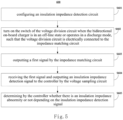
FIG. 5 with reference toFIGS. 1 and4 , the present invention provides an insulationimpedance detection method 600 for the bidirectional on-board charger, which includes: - Step S601, configuring an insulation
impedance detection circuit 100; - Step S602, turn on the switch K1 of the
voltage division circuit 10 when the bidirectional on-board charger 200 is in an off-line state or operates in a discharge mode, such that thevoltage division circuit 10 is electrically connected to theimpedance matching circuit 30; - Step S603, outputting a first signal S1 by the
impedance matching circuit 30; and - Step S604, receiving the first signal S1 by the voltage sampling circuit, and outputting an insulation impedance detection signal Vm to the
controller 50; - Step S605, determining by the
controller 50 whether there is an insulation impedance abnormity or not depending on the insulation impedance detection signal Vm. - Preferably, when the bidirectional on-
board charger 200 is in an off-line state or a discharge mode, thecontroller 50 computes an insulation impedance value with respect to ground at the first AC terminal and/or the second AC terminal of the bidirectional on-board charger 200 depending on the insulation impedance detection signal Vm, the bias voltage, and the circuit parameters of thevoltage division circuit 10, theimpedance matching circuit 30 and thevoltage sampling circuit 40, and determines that there is an insulation impedance abnormity if the insulation impedance value is smaller than a set threshold value. - Preferably, the process in which the
voltage sampling circuit 40 outputs the insulation impedance detection signal Vm depending on the first signal S1 comprises: processing an amplitude of the first signal S1 by thevoltage sampling circuit 40; and filtering the first signal S1 by thevoltage sampling circuit 40. - The insulation impedance detection circuit and the insulation impedance detection method of the invention can be compatible with both off-line detection and on-line detection, and have a low cost. Moreover, the insulation impedance detection circuit and the insulation impedance detection method of the invention may not generate a leakage current in a charge mode, and do not affect normal operation in the charge mode.
Claims (14)
- An insulation impedance detection circuit (100) for an on-board charger (200), comprising a voltage division circuit (10), a biasing circuit (20), an impedance matching circuit (30), a voltage sampling circuit (40) and a controller (50), wherein,terminals of the voltage division circuit (10) are electrically connectable to a first AC terminal and a second AC terminal of the on-board charger (200) respectively, and are electrically connected selectively to a first terminal of the impedance matching circuit (30);a second terminal of the impedance matching circuit (30) is electrically connected to a first terminal of the biasing circuit (20), a second terminal of the biasing circuit (20) is grounded, and a third terminal of the impedance matching circuit (30) is electrically connected to an input terminal of the voltage sampling circuit (40);an output terminal of the voltage sampling circuit (40) is electrically connected to the controller (50) for outputting an insulation impedance detection signal (Vm) to the controller (50); andthe controller (50) is configured to determine whether there is an insulation impedance abnormity or not depending on the insulation impedance detection signal (Vm); andwherein the insulation impedance detection circuit (100) is characterized in thatthe terminals of the voltage division circuit (10) are electrically connected selectively to the first terminal of the impedance matching circuit (30) via a switch (K1); and wherein the voltage division circuit (10) comprises a first resistor (R1), a second resistor (R2) and the switch (K1), wherein, two terminals of the first resistor (R1) are electrically connectable to the first AC terminal and the second AC terminal of the on-board charger (200) respectively, one terminal of the second resistor (R2) is electrically connected to one terminal of the first resistor (R1) and another terminal is electrically connected to one terminal of the switch (K1), and another terminal of the switch (K1) is electrically connected to the impedance matching circuit (30).
- The insulation impedance detection circuit (100) according to claim 1, characterized in that the voltage sampling circuit (40) comprises a follower circuit (41) comprising an operational amplifier (U1), and a filter circuit (42) comprising a third resistor (R3) and a first capacitor (C1), wherein an input terminal of the follower circuit (41) is electrically connected to the third terminal of the impedance matching circuit (30), an output terminal of the follower circuit (41) is electrically connected to the filter circuit (42), and an output terminal of the filter circuit (42) is electrically connected to the controller (50).
- The insulation impedance detection circuit (100) according to claim 1, characterized in that the biasing circuit (20) comprises a bias power supply (V1) having a bias voltage, wherein a positive terminal of the bias power supply (V1) is electrically connected to the second terminal of the impedance matching circuit (30), and a negative terminal of the bias power supply (V1) is grounded.
- The insulation impedance detection circuit (100) according to claim 3, characterized in that when the on-board charger (200) is in an off-line state or operates in a discharge mode, the controller (50) computes an insulation impedance value between the first AC terminal and the ground and/or between the second AC terminal and the ground depending on the insulation impedance detection signal (Vm), the bias voltage, and circuit parameters of the voltage division circuit (10), the impedance matching circuit (30) and the voltage sampling circuit (40), and determines that there is an insulation impedance abnormity if the insulation impedance value is smaller than a set threshold value.
- The insulation impedance detection circuit (100) according to claim 4, characterized in that the voltage sampling circuit (40) receives a signal containing both AC and DC components from the impedance matching circuit (30) when the on-board charger (200) operates in the discharge mode.
- The insulation impedance detection circuit (100) according to claim 1, characterized in that the impedance matching circuit (30) comprises a matching resistor (R4) and a matching capacitor (C2) electrically connected in parallel.
- The insulation impedance detection circuit (100) according to claim 6, characterized in that the impedance matching circuit (30) further comprises a diode (D1) having an anode electrically connected to the input terminal of the voltage sampling circuit (40) and a cathode electrically connected to the first terminal of the biasing circuit (20).
- The insulation impedance detection circuit (100) according to claim 1, characterized in that the controller (50) is a microcontroller unit, a digital signal processor or a field-programmable gate array.
- The insulation impedance detection circuit (100) according to claim 1, characterized in that the on-board charger (200) is a bidirectional on-board charger.
- An insulation impedance detection method (600) fusing the insulation impedance detection circuit (100) according to any one of claims 1 to 9, characterized in that the method comprises:
when the on-board charger (200) is in an off-line state or operates in a discharge mode:turn on (S602) the switch (K1) of the voltage division circuit (10), such that the voltage division circuit (10) is electrically connected to the impedance matching circuit (30);outputting (S603) a first signal (S1) by the impedance matching circuit (30);receiving (S604) the first signal (S1) and outputting an insulation impedance detection signal (Vm) to the controller (50) by the voltage sampling circuit (40); anddetermining (S605), by the controller (50), whether there is an insulation impedance abnormity depending on the insulation impedance detection signal (Vm). - The insulation impedance detection method (600) according to claim 10, characterized in:
computing, by the controller (50), an insulation impedance value between the first AC terminal and the ground and/or an insulation impedance value between the second AC terminal and the ground depending on the insulation impedance detection signal (Vm), the bias voltage, and circuit parameters of the voltage division circuit (10), the impedance matching circuit (30) and the voltage sampling circuit (40). - The insulation impedance detection method (600) according to claim 11, characterized in determining that there is an insulation impedance abnormity when the insulation impedance value is smaller than a set threshold value.
- The insulation impedance detection method (600) according to claim 11, characterized in that the first signal (S1) is a signal containing both AC and DC components when the on-board charger (200) operates in the discharge mode.
- The insulation impedance detection method (600) according to claim 10, characterized in that outputting (S604) the insulation impedance detection signal (Vm) comprises:processing an amplitude of the first signal (S1) by the voltage sampling circuit (30); andfiltering the first signal (S1) by the voltage sampling circuit (30).
Applications Claiming Priority (1)
| Application Number | Priority Date | Filing Date | Title |
|---|---|---|---|
| CN202010310174.3A CN111413545B (en) | 2020-04-20 | 2020-04-20 | Insulation resistance detection circuit and insulation resistance detection method of vehicle charger |
Publications (2)
| Publication Number | Publication Date |
|---|---|
| EP3901641A1 EP3901641A1 (en) | 2021-10-27 |
| EP3901641B1 true EP3901641B1 (en) | 2024-05-08 |
Family
ID=71492359
Family Applications (1)
| Application Number | Title | Priority Date | Filing Date |
|---|---|---|---|
| EP21168746.2A Active EP3901641B1 (en) | 2020-04-20 | 2021-04-16 | Insulation impedance detection circuit for on-board charger and insulation impedance detection method |
Country Status (2)
| Country | Link |
|---|---|
| EP (1) | EP3901641B1 (en) |
| CN (1) | CN111413545B (en) |
Families Citing this family (8)
| Publication number | Priority date | Publication date | Assignee | Title |
|---|---|---|---|---|
| CN114924124B (en) * | 2022-04-28 | 2025-11-07 | 厦门科华数能科技有限公司 | Insulation resistance detection method and detection equipment |
| CN114966311B (en) * | 2022-05-16 | 2025-07-25 | 青岛易来智能科技股份有限公司 | Flash state detection circuit, detection method, electronic equipment and control method |
| CN114814500B (en) * | 2022-06-28 | 2022-09-23 | 宁波均胜新能源研究院有限公司 | Alternating current insulation detection method and device |
| CN115598528A (en) * | 2022-10-28 | 2023-01-13 | 武汉港迪技术股份有限公司(Cn) | A motor insulation automatic detection device, method and motor operation control system |
| CN116593931A (en) * | 2023-03-21 | 2023-08-15 | 深圳陆巡科技有限公司 | Leakage detection method, circuit and vehicle-mounted charger for AC power supply |
| CN116540143B (en) * | 2023-04-28 | 2026-05-12 | 深圳市京泉华智能电气有限公司 | AC charging pile and mode two cable upper box controller grounding detection method |
| CN117214637B (en) * | 2023-10-26 | 2024-06-25 | 深圳永贵技术有限公司 | Charging gun withstand voltage test method, device, equipment and storage medium |
| CN120577723B (en) * | 2025-08-04 | 2025-10-28 | 山东大学 | Online detection system and method for AC impedance of large-capacity energy storage batteries |
Family Cites Families (9)
| Publication number | Priority date | Publication date | Assignee | Title |
|---|---|---|---|---|
| US6456511B1 (en) * | 2000-02-17 | 2002-09-24 | Tyco Electronics Corporation | Start-up circuit for flyback converter having secondary pulse width modulation |
| JP4674177B2 (en) * | 2006-03-15 | 2011-04-20 | 株式会社日立ハイテクノロジーズ | Plasma processing equipment |
| CN106483378A (en) * | 2015-08-27 | 2017-03-08 | 苏州冉芯电子科技有限公司 | A kind of D+/D- pin spurious impedance detection circuit in USB interface mobile device quick charge control |
| DE102016208960B3 (en) * | 2016-05-24 | 2017-11-09 | Continental Automotive Gmbh | Monitoring device and method for monitoring a relative to a reference potential galvanically decoupled AC voltage source |
| CN108099609A (en) * | 2017-11-28 | 2018-06-01 | 北京新能源汽车股份有限公司 | Insulation detection circuit |
| CN109406977B (en) * | 2018-11-13 | 2020-05-26 | 深圳威迈斯新能源股份有限公司 | Insulation detection circuit and detection method for bidirectional vehicle-mounted charger |
| CN109471041B (en) * | 2019-01-08 | 2024-06-11 | 常州是为电子有限公司 | On-line monitoring device and method for insulation impedance of power battery |
| CN109765430B (en) * | 2019-03-26 | 2021-06-29 | 北京经纬恒润科技股份有限公司 | Insulation resistance detection system and detection method |
| CN110927457B (en) * | 2019-11-08 | 2021-04-20 | 华为技术有限公司 | Inverter and Insulation Detection Circuit |
-
2020
- 2020-04-20 CN CN202010310174.3A patent/CN111413545B/en active Active
-
2021
- 2021-04-16 EP EP21168746.2A patent/EP3901641B1/en active Active
Also Published As
| Publication number | Publication date |
|---|---|
| CN111413545A (en) | 2020-07-14 |
| EP3901641A1 (en) | 2021-10-27 |
| CN111413545B (en) | 2023-01-31 |
Similar Documents
| Publication | Publication Date | Title |
|---|---|---|
| EP3901641A1 (en) | Insulation impedance detection circuit for on-board charger and insulation impedance detection method | |
| EP3699620B1 (en) | High voltage interlock circuit and detection method | |
| US7804195B2 (en) | Power supply system and protection method | |
| CN108001270B (en) | Direct current charging circuit and direct current charging detection method | |
| US9575134B2 (en) | Assembled-battery voltage detection device | |
| CN104252169B (en) | Device for detecting the safety of a motor controller of a vehicle | |
| EP3951413B1 (en) | High-voltage interlocking device and method for detecting the high-voltage interlocking device | |
| CN211478502U (en) | High-voltage interlocking detection circuit and vehicle comprising same | |
| CN211335594U (en) | High-voltage interlocking detection circuit and electric vehicle | |
| US8913361B2 (en) | Overvoltage protection circuit and portable electronic device comprising same | |
| CN203301196U (en) | Mobile power supply with load detection circuit | |
| EP4403938A1 (en) | Relay adhesion detection circuit and power adapter | |
| CN110571487A (en) | A battery and car diagnostic panel | |
| CN116359799A (en) | A gun insertion state detection circuit, detection module, vehicle charger and charging pile | |
| CN106427587A (en) | Starting preventing circuit and method applied in vehicle charging process and vehicle | |
| CN213903744U (en) | Instrument for testing storage battery parameters without positive and negative polarities | |
| JP2006185685A (en) | Disconnection detection device and disconnection detection method | |
| CN116802506A (en) | Apparatus and method for identifying voltage drops | |
| KR20250085323A (en) | Electric vehicle charging controller and charging control method of the same | |
| CN108400570B (en) | Load fault detection protection circuit and control method thereof | |
| KR20250085417A (en) | Device and method of detecting pe open for electric vehicle charging controller | |
| CN105467234A (en) | Cell set voltage acquisition board tool tester | |
| CN114264971B (en) | Signal detection circuit and vehicle charger | |
| CN112858939B (en) | A safe and intelligent starting power supply with lead-acid battery detection function | |
| CN110920545B (en) | Emergency call switch fault detection circuit and car |
Legal Events
| Date | Code | Title | Description |
|---|---|---|---|
| PUAI | Public reference made under article 153(3) epc to a published international application that has entered the european phase |
Free format text: ORIGINAL CODE: 0009012 |
|
| STAA | Information on the status of an ep patent application or granted ep patent |
Free format text: STATUS: REQUEST FOR EXAMINATION WAS MADE |
|
| 17P | Request for examination filed |
Effective date: 20210416 |
|
| AK | Designated contracting states |
Kind code of ref document: A1 Designated state(s): AL AT BE BG CH CY CZ DE DK EE ES FI FR GB GR HR HU IE IS IT LI LT LU LV MC MK MT NL NO PL PT RO RS SE SI SK SM TR |
|
| B565 | Issuance of search results under rule 164(2) epc |
Effective date: 20210901 |
|
| RBV | Designated contracting states (corrected) |
Designated state(s): AL AT BE BG CH CY CZ DE DK EE ES FI FR GB GR HR HU IE IS IT LI LT LU LV MC MK MT NL NO PL PT RO RS SE SI SK SM TR |
|
| REG | Reference to a national code |
Ref legal event code: R079 Free format text: PREVIOUS MAIN CLASS: G01R0027020000 Ref country code: DE Ref legal event code: R079 Ref document number: 602021012944 Country of ref document: DE Free format text: PREVIOUS MAIN CLASS: G01R0027020000 Ipc: H02J0007000000 |
|
| RIC1 | Information provided on ipc code assigned before grant |
Ipc: H02J 3/00 20060101ALN20231025BHEP Ipc: H02J 3/32 20060101ALN20231025BHEP Ipc: G01R 27/02 20060101ALI20231025BHEP Ipc: H02J 7/00 20060101AFI20231025BHEP |
|
| GRAP | Despatch of communication of intention to grant a patent |
Free format text: ORIGINAL CODE: EPIDOSNIGR1 |
|
| STAA | Information on the status of an ep patent application or granted ep patent |
Free format text: STATUS: GRANT OF PATENT IS INTENDED |
|
| INTG | Intention to grant announced |
Effective date: 20231206 |
|
| RAP3 | Party data changed (applicant data changed or rights of an application transferred) |
Owner name: DELTA ELECTRONICS (SHANGHAI) CO., LTD. |
|
| GRAS | Grant fee paid |
Free format text: ORIGINAL CODE: EPIDOSNIGR3 |
|
| GRAA | (expected) grant |
Free format text: ORIGINAL CODE: 0009210 |
|
| STAA | Information on the status of an ep patent application or granted ep patent |
Free format text: STATUS: THE PATENT HAS BEEN GRANTED |
|
| AK | Designated contracting states |
Kind code of ref document: B1 Designated state(s): AL AT BE BG CH CY CZ DE DK EE ES FI FR GB GR HR HU IE IS IT LI LT LU LV MC MK MT NL NO PL PT RO RS SE SI SK SM TR |
|
| P01 | Opt-out of the competence of the unified patent court (upc) registered |
Effective date: 20240403 |
|
| REG | Reference to a national code |
Ref country code: GB Ref legal event code: FG4D |
|
| REG | Reference to a national code |
Ref country code: CH Ref legal event code: EP |
|
| REG | Reference to a national code |
Ref country code: DE Ref legal event code: R096 Ref document number: 602021012944 Country of ref document: DE |
|
| REG | Reference to a national code |
Ref country code: IE Ref legal event code: FG4D |
|
| REG | Reference to a national code |
Ref country code: NL Ref legal event code: FP |
|
| REG | Reference to a national code |
Ref country code: LT Ref legal event code: MG9D |
|
| PG25 | Lapsed in a contracting state [announced via postgrant information from national office to epo] |
Ref country code: IS Free format text: LAPSE BECAUSE OF FAILURE TO SUBMIT A TRANSLATION OF THE DESCRIPTION OR TO PAY THE FEE WITHIN THE PRESCRIBED TIME-LIMIT Effective date: 20240908 |
|
| PG25 | Lapsed in a contracting state [announced via postgrant information from national office to epo] |
Ref country code: BG Free format text: LAPSE BECAUSE OF FAILURE TO SUBMIT A TRANSLATION OF THE DESCRIPTION OR TO PAY THE FEE WITHIN THE PRESCRIBED TIME-LIMIT Effective date: 20240508 |
|
| PG25 | Lapsed in a contracting state [announced via postgrant information from national office to epo] |
Ref country code: HR Free format text: LAPSE BECAUSE OF FAILURE TO SUBMIT A TRANSLATION OF THE DESCRIPTION OR TO PAY THE FEE WITHIN THE PRESCRIBED TIME-LIMIT Effective date: 20240508 Ref country code: FI Free format text: LAPSE BECAUSE OF FAILURE TO SUBMIT A TRANSLATION OF THE DESCRIPTION OR TO PAY THE FEE WITHIN THE PRESCRIBED TIME-LIMIT Effective date: 20240508 |
|
| PG25 | Lapsed in a contracting state [announced via postgrant information from national office to epo] |
Ref country code: GR Free format text: LAPSE BECAUSE OF FAILURE TO SUBMIT A TRANSLATION OF THE DESCRIPTION OR TO PAY THE FEE WITHIN THE PRESCRIBED TIME-LIMIT Effective date: 20240809 |
|
| PG25 | Lapsed in a contracting state [announced via postgrant information from national office to epo] |
Ref country code: PT Free format text: LAPSE BECAUSE OF FAILURE TO SUBMIT A TRANSLATION OF THE DESCRIPTION OR TO PAY THE FEE WITHIN THE PRESCRIBED TIME-LIMIT Effective date: 20240909 |
|
| REG | Reference to a national code |
Ref country code: AT Ref legal event code: MK05 Ref document number: 1685817 Country of ref document: AT Kind code of ref document: T Effective date: 20240508 |
|
| PG25 | Lapsed in a contracting state [announced via postgrant information from national office to epo] |
Ref country code: ES Free format text: LAPSE BECAUSE OF FAILURE TO SUBMIT A TRANSLATION OF THE DESCRIPTION OR TO PAY THE FEE WITHIN THE PRESCRIBED TIME-LIMIT Effective date: 20240508 |
|
| PG25 | Lapsed in a contracting state [announced via postgrant information from national office to epo] |
Ref country code: AT Free format text: LAPSE BECAUSE OF FAILURE TO SUBMIT A TRANSLATION OF THE DESCRIPTION OR TO PAY THE FEE WITHIN THE PRESCRIBED TIME-LIMIT Effective date: 20240508 |
|
| PG25 | Lapsed in a contracting state [announced via postgrant information from national office to epo] |
Ref country code: PL Free format text: LAPSE BECAUSE OF FAILURE TO SUBMIT A TRANSLATION OF THE DESCRIPTION OR TO PAY THE FEE WITHIN THE PRESCRIBED TIME-LIMIT Effective date: 20240508 |
|
| PG25 | Lapsed in a contracting state [announced via postgrant information from national office to epo] |
Ref country code: LV Free format text: LAPSE BECAUSE OF FAILURE TO SUBMIT A TRANSLATION OF THE DESCRIPTION OR TO PAY THE FEE WITHIN THE PRESCRIBED TIME-LIMIT Effective date: 20240508 |
|
| PG25 | Lapsed in a contracting state [announced via postgrant information from national office to epo] |
Ref country code: PT Free format text: LAPSE BECAUSE OF FAILURE TO SUBMIT A TRANSLATION OF THE DESCRIPTION OR TO PAY THE FEE WITHIN THE PRESCRIBED TIME-LIMIT Effective date: 20240909 Ref country code: PL Free format text: LAPSE BECAUSE OF FAILURE TO SUBMIT A TRANSLATION OF THE DESCRIPTION OR TO PAY THE FEE WITHIN THE PRESCRIBED TIME-LIMIT Effective date: 20240508 Ref country code: NO Free format text: LAPSE BECAUSE OF FAILURE TO SUBMIT A TRANSLATION OF THE DESCRIPTION OR TO PAY THE FEE WITHIN THE PRESCRIBED TIME-LIMIT Effective date: 20240808 Ref country code: LV Free format text: LAPSE BECAUSE OF FAILURE TO SUBMIT A TRANSLATION OF THE DESCRIPTION OR TO PAY THE FEE WITHIN THE PRESCRIBED TIME-LIMIT Effective date: 20240508 Ref country code: IS Free format text: LAPSE BECAUSE OF FAILURE TO SUBMIT A TRANSLATION OF THE DESCRIPTION OR TO PAY THE FEE WITHIN THE PRESCRIBED TIME-LIMIT Effective date: 20240908 Ref country code: HR Free format text: LAPSE BECAUSE OF FAILURE TO SUBMIT A TRANSLATION OF THE DESCRIPTION OR TO PAY THE FEE WITHIN THE PRESCRIBED TIME-LIMIT Effective date: 20240508 Ref country code: GR Free format text: LAPSE BECAUSE OF FAILURE TO SUBMIT A TRANSLATION OF THE DESCRIPTION OR TO PAY THE FEE WITHIN THE PRESCRIBED TIME-LIMIT Effective date: 20240809 Ref country code: FI Free format text: LAPSE BECAUSE OF FAILURE TO SUBMIT A TRANSLATION OF THE DESCRIPTION OR TO PAY THE FEE WITHIN THE PRESCRIBED TIME-LIMIT Effective date: 20240508 Ref country code: ES Free format text: LAPSE BECAUSE OF FAILURE TO SUBMIT A TRANSLATION OF THE DESCRIPTION OR TO PAY THE FEE WITHIN THE PRESCRIBED TIME-LIMIT Effective date: 20240508 Ref country code: BG Free format text: LAPSE BECAUSE OF FAILURE TO SUBMIT A TRANSLATION OF THE DESCRIPTION OR TO PAY THE FEE WITHIN THE PRESCRIBED TIME-LIMIT Effective date: 20240508 Ref country code: AT Free format text: LAPSE BECAUSE OF FAILURE TO SUBMIT A TRANSLATION OF THE DESCRIPTION OR TO PAY THE FEE WITHIN THE PRESCRIBED TIME-LIMIT Effective date: 20240508 Ref country code: RS Free format text: LAPSE BECAUSE OF FAILURE TO SUBMIT A TRANSLATION OF THE DESCRIPTION OR TO PAY THE FEE WITHIN THE PRESCRIBED TIME-LIMIT Effective date: 20240808 |
|
| PG25 | Lapsed in a contracting state [announced via postgrant information from national office to epo] |
Ref country code: DK Free format text: LAPSE BECAUSE OF FAILURE TO SUBMIT A TRANSLATION OF THE DESCRIPTION OR TO PAY THE FEE WITHIN THE PRESCRIBED TIME-LIMIT Effective date: 20240508 |
|
| PG25 | Lapsed in a contracting state [announced via postgrant information from national office to epo] |
Ref country code: EE Free format text: LAPSE BECAUSE OF FAILURE TO SUBMIT A TRANSLATION OF THE DESCRIPTION OR TO PAY THE FEE WITHIN THE PRESCRIBED TIME-LIMIT Effective date: 20240508 |
|
| PG25 | Lapsed in a contracting state [announced via postgrant information from national office to epo] |
Ref country code: CZ Free format text: LAPSE BECAUSE OF FAILURE TO SUBMIT A TRANSLATION OF THE DESCRIPTION OR TO PAY THE FEE WITHIN THE PRESCRIBED TIME-LIMIT Effective date: 20240508 |
|
| PG25 | Lapsed in a contracting state [announced via postgrant information from national office to epo] |
Ref country code: SK Free format text: LAPSE BECAUSE OF FAILURE TO SUBMIT A TRANSLATION OF THE DESCRIPTION OR TO PAY THE FEE WITHIN THE PRESCRIBED TIME-LIMIT Effective date: 20240508 Ref country code: RO Free format text: LAPSE BECAUSE OF FAILURE TO SUBMIT A TRANSLATION OF THE DESCRIPTION OR TO PAY THE FEE WITHIN THE PRESCRIBED TIME-LIMIT Effective date: 20240508 |
|
| PG25 | Lapsed in a contracting state [announced via postgrant information from national office to epo] |
Ref country code: SM Free format text: LAPSE BECAUSE OF FAILURE TO SUBMIT A TRANSLATION OF THE DESCRIPTION OR TO PAY THE FEE WITHIN THE PRESCRIBED TIME-LIMIT Effective date: 20240508 |
|
| PG25 | Lapsed in a contracting state [announced via postgrant information from national office to epo] |
Ref country code: SM Free format text: LAPSE BECAUSE OF FAILURE TO SUBMIT A TRANSLATION OF THE DESCRIPTION OR TO PAY THE FEE WITHIN THE PRESCRIBED TIME-LIMIT Effective date: 20240508 Ref country code: SK Free format text: LAPSE BECAUSE OF FAILURE TO SUBMIT A TRANSLATION OF THE DESCRIPTION OR TO PAY THE FEE WITHIN THE PRESCRIBED TIME-LIMIT Effective date: 20240508 Ref country code: RO Free format text: LAPSE BECAUSE OF FAILURE TO SUBMIT A TRANSLATION OF THE DESCRIPTION OR TO PAY THE FEE WITHIN THE PRESCRIBED TIME-LIMIT Effective date: 20240508 Ref country code: EE Free format text: LAPSE BECAUSE OF FAILURE TO SUBMIT A TRANSLATION OF THE DESCRIPTION OR TO PAY THE FEE WITHIN THE PRESCRIBED TIME-LIMIT Effective date: 20240508 Ref country code: DK Free format text: LAPSE BECAUSE OF FAILURE TO SUBMIT A TRANSLATION OF THE DESCRIPTION OR TO PAY THE FEE WITHIN THE PRESCRIBED TIME-LIMIT Effective date: 20240508 Ref country code: CZ Free format text: LAPSE BECAUSE OF FAILURE TO SUBMIT A TRANSLATION OF THE DESCRIPTION OR TO PAY THE FEE WITHIN THE PRESCRIBED TIME-LIMIT Effective date: 20240508 |
|
| PG25 | Lapsed in a contracting state [announced via postgrant information from national office to epo] |
Ref country code: IT Free format text: LAPSE BECAUSE OF FAILURE TO SUBMIT A TRANSLATION OF THE DESCRIPTION OR TO PAY THE FEE WITHIN THE PRESCRIBED TIME-LIMIT Effective date: 20240508 |
|
| REG | Reference to a national code |
Ref country code: DE Ref legal event code: R097 Ref document number: 602021012944 Country of ref document: DE |
|
| PLBE | No opposition filed within time limit |
Free format text: ORIGINAL CODE: 0009261 |
|
| STAA | Information on the status of an ep patent application or granted ep patent |
Free format text: STATUS: NO OPPOSITION FILED WITHIN TIME LIMIT |
|
| 26N | No opposition filed |
Effective date: 20250211 |
|
| PG25 | Lapsed in a contracting state [announced via postgrant information from national office to epo] |
Ref country code: SI Free format text: LAPSE BECAUSE OF FAILURE TO SUBMIT A TRANSLATION OF THE DESCRIPTION OR TO PAY THE FEE WITHIN THE PRESCRIBED TIME-LIMIT Effective date: 20240508 |
|
| PGFP | Annual fee paid to national office [announced via postgrant information from national office to epo] |
Ref country code: DE Payment date: 20250218 Year of fee payment: 5 |
|
| PG25 | Lapsed in a contracting state [announced via postgrant information from national office to epo] |
Ref country code: SE Free format text: LAPSE BECAUSE OF FAILURE TO SUBMIT A TRANSLATION OF THE DESCRIPTION OR TO PAY THE FEE WITHIN THE PRESCRIBED TIME-LIMIT Effective date: 20240508 |
|
| REG | Reference to a national code |
Ref country code: CH Ref legal event code: H13 Free format text: ST27 STATUS EVENT CODE: U-0-0-H10-H13 (AS PROVIDED BY THE NATIONAL OFFICE) Effective date: 20251125 |
|
| PG25 | Lapsed in a contracting state [announced via postgrant information from national office to epo] |
Ref country code: LU Free format text: LAPSE BECAUSE OF NON-PAYMENT OF DUE FEES Effective date: 20250416 |
|
| PG25 | Lapsed in a contracting state [announced via postgrant information from national office to epo] |
Ref country code: MC Free format text: LAPSE BECAUSE OF FAILURE TO SUBMIT A TRANSLATION OF THE DESCRIPTION OR TO PAY THE FEE WITHIN THE PRESCRIBED TIME-LIMIT Effective date: 20240508 |
|
| REG | Reference to a national code |
Ref country code: BE Ref legal event code: MM Effective date: 20250430 |
|
| PG25 | Lapsed in a contracting state [announced via postgrant information from national office to epo] |
Ref country code: BE Free format text: LAPSE BECAUSE OF NON-PAYMENT OF DUE FEES Effective date: 20250430 |
|
| PG25 | Lapsed in a contracting state [announced via postgrant information from national office to epo] |
Ref country code: CH Free format text: LAPSE BECAUSE OF NON-PAYMENT OF DUE FEES Effective date: 20250430 |
|
| PGFP | Annual fee paid to national office [announced via postgrant information from national office to epo] |
Ref country code: NL Payment date: 20260213 Year of fee payment: 6 |
|
| PGFP | Annual fee paid to national office [announced via postgrant information from national office to epo] |
Ref country code: GB Payment date: 20260303 Year of fee payment: 6 |
|
| PG25 | Lapsed in a contracting state [announced via postgrant information from national office to epo] |
Ref country code: IE Free format text: LAPSE BECAUSE OF NON-PAYMENT OF DUE FEES Effective date: 20250416 |
|
| PGFP | Annual fee paid to national office [announced via postgrant information from national office to epo] |
Ref country code: FR Payment date: 20260209 Year of fee payment: 6 |