EP3901494B1 - Leaning vehicle - Google Patents
Leaning vehicle Download PDFInfo
- Publication number
- EP3901494B1 EP3901494B1 EP20752115.4A EP20752115A EP3901494B1 EP 3901494 B1 EP3901494 B1 EP 3901494B1 EP 20752115 A EP20752115 A EP 20752115A EP 3901494 B1 EP3901494 B1 EP 3901494B1
- Authority
- EP
- European Patent Office
- Prior art keywords
- gear
- vehicle
- shift
- clutch
- lean
- Prior art date
- Legal status (The legal status is an assumption and is not a legal conclusion. Google has not performed a legal analysis and makes no representation as to the accuracy of the status listed.)
- Active
Links
Images


Classifications
-
- F—MECHANICAL ENGINEERING; LIGHTING; HEATING; WEAPONS; BLASTING
- F16—ENGINEERING ELEMENTS AND UNITS; GENERAL MEASURES FOR PRODUCING AND MAINTAINING EFFECTIVE FUNCTIONING OF MACHINES OR INSTALLATIONS; THERMAL INSULATION IN GENERAL
- F16H—GEARING
- F16H59/00—Control inputs to control units of change-speed- or reversing-gearings for conveying rotary motion
- F16H59/36—Inputs being a function of speed
- F16H59/44—Inputs being a function of speed dependent on machine speed, e.g. the vehicle speed
-
- F—MECHANICAL ENGINEERING; LIGHTING; HEATING; WEAPONS; BLASTING
- F16—ENGINEERING ELEMENTS AND UNITS; GENERAL MEASURES FOR PRODUCING AND MAINTAINING EFFECTIVE FUNCTIONING OF MACHINES OR INSTALLATIONS; THERMAL INSULATION IN GENERAL
- F16H—GEARING
- F16H61/00—Control functions within control units of change-speed- or reversing-gearings for conveying rotary motion ; Control of exclusively fluid gearing, friction gearing, gearings with endless flexible members or other particular types of gearing
- F16H61/02—Control functions within control units of change-speed- or reversing-gearings for conveying rotary motion ; Control of exclusively fluid gearing, friction gearing, gearings with endless flexible members or other particular types of gearing characterised by the signals used
- F16H61/0202—Control functions within control units of change-speed- or reversing-gearings for conveying rotary motion ; Control of exclusively fluid gearing, friction gearing, gearings with endless flexible members or other particular types of gearing characterised by the signals used the signals being electric
- F16H61/0204—Control functions within control units of change-speed- or reversing-gearings for conveying rotary motion ; Control of exclusively fluid gearing, friction gearing, gearings with endless flexible members or other particular types of gearing characterised by the signals used the signals being electric for gearshift control, e.g. control functions for performing shifting or generation of shift signal
- F16H61/0213—Control functions within control units of change-speed- or reversing-gearings for conveying rotary motion ; Control of exclusively fluid gearing, friction gearing, gearings with endless flexible members or other particular types of gearing characterised by the signals used the signals being electric for gearshift control, e.g. control functions for performing shifting or generation of shift signal characterised by the method for generating shift signals
-
- F—MECHANICAL ENGINEERING; LIGHTING; HEATING; WEAPONS; BLASTING
- F16—ENGINEERING ELEMENTS AND UNITS; GENERAL MEASURES FOR PRODUCING AND MAINTAINING EFFECTIVE FUNCTIONING OF MACHINES OR INSTALLATIONS; THERMAL INSULATION IN GENERAL
- F16H—GEARING
- F16H61/00—Control functions within control units of change-speed- or reversing-gearings for conveying rotary motion ; Control of exclusively fluid gearing, friction gearing, gearings with endless flexible members or other particular types of gearing
- F16H61/16—Inhibiting or initiating shift during unfavourable conditions , e.g. preventing forward-reverse shift at high vehicle speed, preventing engine overspeed
-
- F—MECHANICAL ENGINEERING; LIGHTING; HEATING; WEAPONS; BLASTING
- F16—ENGINEERING ELEMENTS AND UNITS; GENERAL MEASURES FOR PRODUCING AND MAINTAINING EFFECTIVE FUNCTIONING OF MACHINES OR INSTALLATIONS; THERMAL INSULATION IN GENERAL
- F16H—GEARING
- F16H61/00—Control functions within control units of change-speed- or reversing-gearings for conveying rotary motion ; Control of exclusively fluid gearing, friction gearing, gearings with endless flexible members or other particular types of gearing
- F16H61/68—Control functions within control units of change-speed- or reversing-gearings for conveying rotary motion ; Control of exclusively fluid gearing, friction gearing, gearings with endless flexible members or other particular types of gearing specially adapted for stepped gearings
- F16H61/682—Control functions within control units of change-speed- or reversing-gearings for conveying rotary motion ; Control of exclusively fluid gearing, friction gearing, gearings with endless flexible members or other particular types of gearing specially adapted for stepped gearings with interruption of drive
-
- B—PERFORMING OPERATIONS; TRANSPORTING
- B60—VEHICLES IN GENERAL
- B60Y—INDEXING SCHEME RELATING TO ASPECTS CROSS-CUTTING VEHICLE TECHNOLOGY
- B60Y2200/00—Type of vehicle
- B60Y2200/10—Road Vehicles
- B60Y2200/12—Motorcycles, Trikes; Quads; Scooters
-
- B—PERFORMING OPERATIONS; TRANSPORTING
- B60—VEHICLES IN GENERAL
- B60Y—INDEXING SCHEME RELATING TO ASPECTS CROSS-CUTTING VEHICLE TECHNOLOGY
- B60Y2300/00—Purposes or special features of road vehicle drive control systems
- B60Y2300/18—Propelling the vehicle
- B60Y2300/18008—Propelling the vehicle related to particular drive situations
- B60Y2300/1815—Cornering
-
- F—MECHANICAL ENGINEERING; LIGHTING; HEATING; WEAPONS; BLASTING
- F16—ENGINEERING ELEMENTS AND UNITS; GENERAL MEASURES FOR PRODUCING AND MAINTAINING EFFECTIVE FUNCTIONING OF MACHINES OR INSTALLATIONS; THERMAL INSULATION IN GENERAL
- F16H—GEARING
- F16H61/00—Control functions within control units of change-speed- or reversing-gearings for conveying rotary motion ; Control of exclusively fluid gearing, friction gearing, gearings with endless flexible members or other particular types of gearing
- F16H61/16—Inhibiting or initiating shift during unfavourable conditions , e.g. preventing forward-reverse shift at high vehicle speed, preventing engine overspeed
- F16H2061/163—Holding the gear for delaying gear shifts under unfavorable conditions, e.g. during cornering
-
- F—MECHANICAL ENGINEERING; LIGHTING; HEATING; WEAPONS; BLASTING
- F16—ENGINEERING ELEMENTS AND UNITS; GENERAL MEASURES FOR PRODUCING AND MAINTAINING EFFECTIVE FUNCTIONING OF MACHINES OR INSTALLATIONS; THERMAL INSULATION IN GENERAL
- F16H—GEARING
- F16H59/00—Control inputs to control units of change-speed- or reversing-gearings for conveying rotary motion
- F16H59/50—Inputs being a function of the status of the machine, e.g. position of doors or safety belts
Definitions
- the present invention relates to a leaning vehicle that leans leftward when turning to the left and leans rightward when turning to the right.
- a known gear-shift controller of a motorcycle controls a gear-shift of the gear-shift controller.
- JP2012-197809A discloses a gear-shift controller of a motorcycle capable of performing gear-shift control in different modes in transferring a driving force in accordance with a roll angle of a vehicle body.
- the gear-shift controller disclosed in the aforementioned document includes a roll angle detector that detects a roll angle of the motorcycle, and a controller configured not to perform normal gear-shift control if the roll angle exceeds a first roll angle.
- the controller performs a gear-shift by soft gear-shift control in which a change of a driving force with time is smaller than that in the normal gear-shift control in a range where the roll angle is from the first roll angle to a second roll angle larger than the first roll angle.
- the controller also determines, at the time of the soft gear-shift control, whether the motorcycle is entering a corner or leaving a corner based on a relationship between a yaw angle and the roll angle.
- the controller determines that the motorcycle is entering a corner, the controller performs the soft gear-shift control only for a shift-down, while inhibiting a shift-up.
- the controller determines that the motorcycle is leaving a corner, the controller performs the soft gear-shift control only for a shift-up, while inhibiting a shift-down.
- DE 10 2012 200471 A1 discloses a speed change controlling apparatus for a motorcycle, in which the mode of driving force transmission is depends upon the roll angle of a vehicle body.
- speed change operation is carried out by soft speed change control in which variation of the driving force with respect to time is smaller than that by normal speed change control. If the roll angle is within another range from the first roll angle to a third roll angle, then normal speed change is carried out and if the roll angle is within a further range from an uprightly standing state to the third roll angle, then speed change operation is executed by direct speed change.
- speed change is inhibited.
- US 2007/186705 A1 teaches a control method for a transmission for a motorcycle having a plurality of shift gear trains such that the combination of gears meshing with each other is changed by driving an actuator to change a shift position.
- a vehicle body inclination angle as a sideward inclination angle of a vehicle body of the motorcycle during running of the motorcycle becomes greater than or equal to a predetermined angle, a change in shift position in the transmission is inhibited.
- the controller changes gear-shift control depending on whether the motorcycle is entering a corner or leaving a corner.
- An inventor of the present invention studied a leaning vehicle capable of reducing a posture change of the leaning vehicle caused by a gear-shift while the leaning vehicle turns in a lean state.
- the problem is solved by a leaning vehicle according to claim 1.
- the gear-shift controller inhibits changing of the plurality of the gear stages in the multi-stage automatic transmission or suppresses a change of the driving force by changing the plurality of the gear stages, based on the physical quantity associated with the radius of turn of a corner that the leaning vehicle turns in the lean state.
- the gear-shift controller inhibits changing of the plurality of the gear stages in the multi-stage automatic transmission or suppresses a change of the driving force by changing the plurality of the gear stages, based on the physical quantity associated with the radius of turn of a corner that the leaning vehicle turns in the lean state.
- the leaning vehicle according to the present invention includes the following configuration.
- the physical quantity associated with the radius of turn includes at least one of a vehicle speed and a physical quantity associated with a lean angle of the leaning vehicle, the vehicle speed and a yaw rate of the leaning vehicle, or a radius of curvature of a corner that the leaning vehicle turns in the lean state, in a state where the leaning vehicle turns in the lean state.
- the leaning vehicle according to the present invention preferably includes the following configuration.
- the gear-shift controller is configured to inhibit changing of the plurality of the gear stages in the multi-stage automatic transmission or suppress a change of the driving force by changing the plurality of the gear stages, in accordance with the radius of curvature of each of the corners, while the leaning vehicle turns in the lean state.
- the lean angle at which the leaning vehicle turns a plurality of corners, each having a different radius of curvature, in the lean state is the same, while the leaning vehicle turns a corner having a small radius of curvature in the lean state, the lean angle at which the leaning vehicle turns in the lean state is likely to change by changing the plurality of the gear stages in the multi-stage automatic transmission.
- the leaning vehicle according to the present invention preferably includes the following configuration.
- the gear-shift controller is configured to inhibit changing of the plurality of the gear stages in the multi-stage automatic transmission or suppress a change of the driving force by changing the plurality of the gear stages while the leaning vehicle turns in the lean state in a case where the radius of curvature of each of the corners that the leaning vehicle turns in the lean state is smaller than or equal to a threshold.
- the lean angle at which the leaning vehicle turns in the lean state is likely to change by changing the plurality of the gear stages in the multi-stage automatic transmission.
- the radius of curvature of the corner is smaller than or equal to the threshold, changing of the plurality of the gear stages in the multi-stage automatic transmission is inhibited or a change of the driving force by changing the plurality of the gear stages is suppressed while the leaning vehicle turns in the lean state.
- a leaning vehicle herein is a vehicle that turns in a leaning posture.
- the leaning vehicle is a vehicle that leans leftward when turning to the left and leans rightward when turning to the right in the left-right direction of the vehicle.
- the leaning vehicle may be a single-passenger vehicle or a vehicle on which a plurality of passengers can ride.
- the leaning vehicle includes all the types of vehicles that turn in leaning postures, such as threewheeled vehicles and four-wheeled vehicles as well as two-wheeled vehicles.
- a driving source herein refers to a device that applies a driving force to wheels.
- the driving source includes, for example, a device capable of applying a driving force, such as an engine, a motor, and a hybrid system combining an engine and a motor.
- An automatic transmission herein refers to a device that performs a gear-shift based on a signal generated by a gear-shift controller.
- the automatic transmission performs a gear-shift without a gear-shift operation by a driver.
- a vehicle state herein refers to information regarding a state of the leaning vehicle while the leaning vehicle turns in a lean state, that is, a posture of the leaning vehicle, a traveling speed (a vehicle speed) of the leaning vehicle, and a centrifugal force exerted on the leaning vehicle and a driving force, for example.
- the vehicle state includes, for example, an inclination angle (a lean angle) while the leaning vehicle turns in a lean state, a vehicle speed when the leaning vehicle turns, a physical quantity associated with a centrifugal force exerted on the leaning vehicle caused by its turning, a physical quantity associated with a radius of turn, and a physical quantity associated with a driving force transferred to wheels from a driving source of the leaning vehicle through a multi-stage automatic transmission.
- a lean angle a lean angle
- the physical quantity associated with a centrifugal force includes at least one of a vehicle speed of the leaning vehicle, a yaw rate of the leaning vehicle, or a radius of curvature of a corner that the leaning vehicle turns in a lean state, in a state where the leaning vehicle turns in the lean state.
- the physical quantity associated with a radius of turn includes at least one of a vehicle speed and a physical quantity associated with a lean angle of the leaning vehicle, the vehicle speed and a yaw rate of the leaning vehicle, or a radius of curvature of a corner that the leaning vehicle turns in a lean state, in a state where the leaning vehicle turns in the lean state.
- a posture change of the leaning vehicle herein refers to a change of the posture of the leaning vehicle caused by a change in a lean of the leaning vehicle in a left-right direction. That is, the posture change of the leaning vehicle refers to a change of the posture of the leaning vehicle caused by, for example, leftward leaning or rightward leaning of the leaning vehicle while the leaning vehicle turns in a lean state.
- a lean angle herein refers to an angle between a vertical line of a road surface and an up-down direction reference line of the leaning vehicle when the leaning vehicle turns in a lean state in which the leaning vehicle leans leftward or rightward with a rotation axis as a center relative to the vertical line of the road surface.
- the up-down direction reference line is a reference line extending in an up-down direction of the leaning vehicle.
- a yaw rate herein refers to a rate of change in a yaw angle of the leaning vehicle when the leaning vehicle turns in a lean state.
- the yaw angle refers to a rotation angle when the leaning vehicle rotates around a vertical axis passing the center of gravity.
- One embodiment of the present invention provides a leaning vehicle capable of reducing a posture change of the leaning vehicle due to a gear-shift while the leaning vehicle turns in a lean state.
- arrow F in the drawings represents a forward direction of a vehicle.
- Arrow RR in the drawings represents a rearward direction of the vehicle.
- Arrow U in the drawings represents an upward direction of the vehicle.
- Arrow R in the drawings represents a rightward direction of the vehicle.
- Arrow L in the drawings represents a leftward direction of the vehicle.
- the front, rear, left, and right directions respectively refer to the front, rear, left, and right directions when seen from a driver driving the vehicle.
- FIG. 1 illustrates a left side view of a vehicle 1 according to an embodiment of the present invention.
- the vehicle 1 is, for example, a motorcycle.
- the vehicle 1 is a leaning vehicle that leans leftward when turning to the left and leans rightward when turning to the right.
- the vehicle 1 includes a vehicle body 2, a front wheel 3, a rear wheel 4, a controller 7, a lean detector 61, a vehicle speed detector 62, and an engine unit 10.
- the lean detector 61 is illustrated in FIG. 5 .
- the engine unit 10 for supplying a rotation driving force to the rear wheel 4 is attached to a frame of the vehicle body 2.
- the engine unit 10 includes an engine 11 as an example of a driving source, and a multi-stage automatic transmission 12 that shifts the speed of rotation output from the engine 11.
- the configuration of the engine unit 10 will be specifically described later.
- the controller 7 for controlling driving of the engine unit 10 is disposed in the vehicle body 2.
- the controller 7 is a so-called electric control unit (ECU), and controls driving of other components in the vehicle 1 as well as the engine unit 10.
- ECU electric control unit
- the lean detector 61 and the vehicle speed detector 62 are also disposed in the vehicle body 2.
- the lean detector 61 detects information on a leaning posture of the vehicle 1.
- the lean detector 61 is, for example, an inertial measurement unit (IMU), and detects a lean angular velocity when the vehicle 1 leans leftward or rightward.
- the vehicle speed detector 62 detects a traveling speed (a vehicle speed) of the vehicle 1.
- the lean detector 61 may detect at least one of an angular velocity (pitch angular velocity) when the vehicle 1 rotates forth or back about a rotation axis extending in the left-right direction of the vehicle 1 or an angular velocity (yaw angular velocity) when the vehicle 1 rotates about the vertical axis when seen from above.
- the vehicle speed detector 62 detects a rotation speed of the front wheel 3 to thereby detect the vehicle speed of the vehicle 1, for example.
- the vehicle speed detector 62 may detect a rotation speed of the rear wheel 4.
- the vehicle speed detector 62 may include another configuration capable of detecting the vehicle speed of the vehicle 1.
- a engine speed detector and a throttle opening degree detector may also be disposed in the vehicle 1.
- the engine speed detector detects a rotation speed of the engine 11.
- the throttle opening degree detector detects an opening degree of a throttle valve, not shown.
- the engine unit 10 includes the engine 11 and the multi-stage automatic transmission 12.
- the engine 11 has a configuration similar to that of a typical engine. Thus, the engine 11 will not be described in detail.
- the multi-stage automatic transmission 12 includes a plurality of gear stages and automatically changes the gear stages stepwise to thereby change a driving force to be transferred from the engine 11 to the rear wheel 4.
- the multi-stage automatic transmission 12 includes a transmission mechanism 20, a clutch 40, and a shift mechanism 50.
- the term of automatically changing the gear stages stepwise refers to changing to a next gear stage having a large gear-shift ratio or a next gear stage having a small gear-shift ratio without a gear-shift operation by a driver of the vehicle 1.
- an instruction signal instructing changing of the gear stages may be input, or may not be input, to the multi-stage automatic transmission 12 from the driver of the vehicle 1.
- FIG. 2 illustrates schematic configurations of the transmission mechanism 20 and the clutch 40 of the multi-stage automatic transmission 12.
- FIG. 3 illustrates a schematic configuration of the shift mechanism 50 of the multi-stage automatic transmission 12.
- FIG. 14 illustrates schematic configurations of the vehicle 1 and the multi-stage automatic transmission 12.
- FIG. 14 also illustrates a block diagram of the controller 7 described later. Since FIG. 14 corresponds to FIGS. 1 , 2 , and 5 , detailed description of FIG. 14 will be omitted.
- the transmission mechanism 20 is connected to a crankshaft, not shown, of the engine 11.
- the transmission mechanism 20 changes a torque transferred from the crankshaft to a predetermined torque, and outputs the predetermined torque.
- the clutch 40 is configured to transmit rotation of the crankshaft to the transmission mechanism 20. That is, the clutch 40 is configured to switch between transfer and non-transfer of rotation of the crankshaft to the transmission mechanism 20.
- the shift mechanism 50 performs a gear-shift of the transmission mechanism 20 through a sequential shift mechanism 30 described later, and retains a gear stage selected by the transmission mechanism 20 until the next gear-shift is performed by the transmission mechanism 20.
- a driving force is transferred to the transmission mechanism 20 of the multi-stage automatic transmission 12 from the engine 11 through the clutch 40.
- the configuration of the multi-stage automatic transmission 12 including the transmission mechanism 20, the clutch 40, and the shift mechanism 50 will be described in detail.
- the clutch 40 is, for example, a multiplate friction clutch.
- the clutch 40 includes a bottomed cylindrical clutch housing 41, a bottomed cylindrical clutch boss 42, a plurality of friction plates 43 and a plurality of clutch plates 44 that are friction discs, a pressure plate 45, and an input gear 46.
- the clutch 40 is not limited to a multiplate clutch as described in this embodiment.
- the clutch 40 may be an automatic centrifugal clutch using a centrifugal weight.
- the clutch housing 41 is disposed concentrically with a main shaft 21 of the transmission mechanism 20 and is rotatable relative to the main shaft 21.
- a bottom portion of the bottomed cylindrical clutch housing 41 is connected to the input gear 46.
- the input gear 46 meshes with a gear (not shown) disposed on the crankshaft of the engine 11 to thereby rotate together with the gear.
- the clutch housing 41 and the input gear 46 rotate together with the crankshaft, and are rotatable with respect to the main shaft 21 of the transmission mechanism 20.
- the plurality of friction plates 43 as ring-shaped thin plates are arranged inside the clutch housing 41.
- the plurality of friction plates 43 are arranged in the thickness direction inside the clutch housing 41.
- the plurality of friction plates 43 are attached to the inner peripheral surface of the clutch housing 41 to be rotatable together with the clutch housing 41 and displaceable with respect to the clutch housing 41 along the axial direction of the main shaft 21.
- a bottom portion of the clutch boss 42 is fixed to a front end portion of the main shaft 21 penetrating the clutch housing 41. Accordingly, the clutch boss 42 rotates together with the main shaft 21.
- the clutch boss 42 is disposed inside the clutch housing 41.
- the plurality of clutch plates 44 as ring-shaped thin plates are disposed on an outer peripheral portion of the clutch boss 42. That is, the plurality of clutch plates 44 are attached to the outer peripheral surface of the clutch boss 42 to be rotatable together with the clutch boss 42 and displaceable with respect to the clutch boss 42 along the axial direction of the main shaft 21.
- the plurality of friction plates 43 and the plurality of clutch plates 44 are alternately arranged along the axial direction of the main shaft 21.
- the pressure plate 45 is a substantially disc-shaped member.
- the clutch housing 41, the clutch boss 42, and the pressure plate 45 are arranged in this order with respect to the main shaft 21 along the axial direction of the main shaft 21.
- the pressure plate 45 is disposed outside the main shaft 21 in the axial direction to face the clutch boss 42 in the axial direction.
- the pressure plate 45 is displaceable with respect to the clutch boss 42 along the axial direction of the main shaft 21.
- the pressure plate 45 is pressed by a clutch spring 47 toward the clutch boss 42.
- each of the friction plates 43 and each of the clutch plates 44 are thereby pushed against each other in the thickness direction. That is, the plurality of friction plates 43 and the plurality of clutch plates 44 are engaged with one another. As described above, while the plurality of friction plates 43 and the plurality of clutch plates 44 are engaged, the clutch boss 42 and the clutch housing 41 rotate together by friction between the friction plates 43 and the clutch plates 44. This state is an engaged state of the clutch 40.
- a push rod 48 penetrates a center portion of the pressure plate 45 when seen in the axial direction of the main shaft 21.
- the push rod 48 is disposed to extend in the axial direction of the main shaft 21. That is, the axial direction of the push rod 48 coincides with the axial direction of the main shaft 21.
- a flange 48a is provided on one end of the push rod 48.
- the other end of the push rod 48 is connected to a rod 49.
- the rod 49 is rotatable about the axis by a clutch actuator 15.
- the clutch actuator 15 is controlled to be driven based on a clutch signal output from the controller 7.
- the push rod 48 is configured to be movable along the axial direction of the main shaft 21 by rotation of the rod 49.
- the pressure plate 45 receives a force in a direction away from the clutch boss 42 in the axial direction by the flange 48a of the push rod 48. Accordingly, the clutch spring 47 is deformed to be compressed. Thus, a force with which the pressure plate 45 pushes the friction plates 43 and the clutch plates 44 decreases.
- the clutch 40 is switched between the engaged state and the disengaged state by movement of the push rod 48 along the axial direction of the main shaft 21.
- the pressure plate 45 is rotatable about the push rod 48 with a bearing 45a interposed therebetween. Accordingly, while the clutch 40 is in the engaged state, the pressure plate 45 rotates together with the clutch housing 41 and the clutch boss 42.
- the transmission mechanism 20 is a multistep transmission mechanism.
- the transmission mechanism 20 includes the main shaft 21, an output shaft 22 disposed in parallel with the main shaft 21, a plurality of driving gears 23, a plurality of driven gears 24, and the sequential shift mechanism 30.
- the sequential shift mechanism 30 includes a shift cam 31, shift forks 32 through 34, and guide shafts 35 and 36 for guiding movement of the shift forks 32 through 34.
- the main shaft 21 is provided with the plurality of driving gears 23.
- the plurality of driving gears 23 are transmission gears constituting part of the plurality of gear stages.
- the output shaft 22 is provided with the plurality of driven gears 24 always meshing with the plurality of driving gears 23.
- the plurality of driven gears 24 are transmission gears constituting part of the plurality of gear stages.
- the transmission mechanism 20 is a so-called gear-type transmission mechanism in which the plurality of driving gears 23 and the plurality of driven gears 24 always mesh with each other in a one-toone relationship.
- the sequential shift mechanism 30 selects a combination of a driving gear 23 and a driven gear 24 for transferring a driving force among the plurality of driving gears 23 and the plurality of driven gears 24.
- a predetermined driving gear 23a in the plurality of driving gears 23 is fixed to the main shaft 21 in the rotation direction, while being movable along the axial direction of the main shaft 21.
- Predetermined driven gears 24a in the plurality of driven gears 24 are fixed to the output shaft 22 in the rotation direction, while being movable along the axial direction of the output shaft 22.
- Positions of the predetermined driving gear 23a and the predetermined driven gears 24a in the axial direction are determined by the sequential shift mechanism 30 in accordance with the gear stage.
- the driving gears 23, except for the predetermined driving gear 23a in the plurality of driving gears 23, include driving gears 23 fixed to the main shaft 21 in the axial direction and rotatable with respect to the main shaft 21, and driving gears 23 fixed to the main shaft 21 in the axial direction and rotatable together with the main shaft 21.
- Driven gears 24, except for the predetermined driven gears 24a in the plurality of driven gears 24, are fixed to the output shaft 22 in the axial direction and rotatable with respect to the output shaft 22.
- a configuration of the transmission mechanism 20 is similar to a configuration of a known transmission mechanism (e.g., JP2015-117798A ), and thus, will not be described in detail.
- the sequential shift mechanism 30 includes the shift cam 31 and the shift forks 32 through 34. As illustrated in FIG. 3 , cam grooves 31a through 31c are formed on the outer peripheral surface of the shift cam 31 of the sequential shift mechanism 30. The cam grooves 31a through 31c are arranged along the axial direction of the shift cam 31 such that each of the cam grooves 31a through 31c extends circumferentially on the outer peripheral surface of the shift cam 31. Configurations of the cam grooves 31a through 31c of this embodiment are similar to those of known cam grooves (e.g., JP2015-117798A ), and thus, will not be described in detail.
- the cam grooves 31a through 31c are arranged on the outer peripheral surface of the shift cam 31 such that positions of the cam grooves 31a through 31c in the axial direction of the shift cam 31 change in accordance with the positions thereof in the circumferential direction of the shift cam 31.
- One end of each of the shift forks 32 through 34 is located in an associated one of the cam grooves 31a through 31c.
- the shift forks 32 through 34 are disposed on the guide shafts 35 and 36 parallel to the axis of the shift cam 31 and are movable along the axial direction of the guide shafts 35 and 36.
- the other end of each of the shift forks 32 through 34 is connected to the predetermined driving gear 23a and the predetermined driven gears 24a. Accordingly, when the shift cam 31 rotates, the shift forks 32 through 34 move in the axial direction of the shift cam 31 along the cam grooves 31a through 31c on the outer peripheral surface of the shift cam 31.
- positions of the predetermined driving gear 23a and the predetermined driven gears 24a in the axial direction are determined through the shift forks 32 through 34.
- the predetermined driving gear 23a and the driving gear 23 adjacent to the predetermined driving gear 23a in the axial direction of the main shaft 21 respectively include dogs 23b and 23c that mesh with each other.
- Each of the predetermined driven gears 24a and the driven gear 24 adjacent to the predetermined driven gear 24a in the axial direction of the output shaft 22 respectively include dogs 24b and 24c that mesh with each other.
- a combination of the driving gear 23 and the driven gear 24 for transferring a driving force from the main shaft 21 to the output shaft 22 is selected. That is, in the transmission mechanism 20, in a case where the predetermined driving gear 23a moves along the axial direction through the shift fork 33 in accordance with rotation of the shift cam 31, the driving gear 23 associated with a specific gear stage (i.e., gear stage except for the predetermined gear stage) in the plurality of driving gears 23 is fixed to the main shaft 21 by the predetermined driving gear 23a to rotate together with the main shaft 21.
- a specific gear stage i.e., gear stage except for the predetermined gear stage
- the driven gear 24 associated with a specific gear stage i.e., gear stage except for the predetermined gear stage
- the driven gear 24 associated with a specific gear stage i.e., gear stage except for the predetermined gear stage
- the transmission mechanism 20 transfers a driving force output from the engine 11 from the main shaft 21 to the output shaft 22 at a predetermined gear-shift ratio in each gear stage.
- the shift mechanism 50 causes the shift cam 31 of the transmission mechanism 20 to rotate in accordance with a gear-shift signal output from the controller 7.
- the shift mechanism 50 is driven by a shift actuator 16.
- the shift actuator 16 is controlled and driven based on a gear-shift signal output from the controller 7.
- the shift mechanism 50 includes a shift rod 51, a shift shaft 52, and an intermittent feeder 53.
- a driving force of the shift actuator 16 is transferred to the shift rod 51.
- One end of the shift shaft 52 is connected to the shift rod 51, and the other end of the shift shaft 52 is connected to the shift cam 31 through the intermittent feeder 53.
- the shift actuator 16 causes the shift shaft 52 to rotate in a predetermined direction through the shift rod 51 based on a gear-shift signal output from the controller 7. This predetermined direction is switched in opposite directions between a shift-up (changing to a gear stage having a smaller gear-shift ratio) and a shift-down (changing to a gear stage having a larger gear-shift ratio).
- the shift shaft 52 rotates with a driving force of the shift actuator 16 to thereby cause the shift cam 31 to rotate about the axis through the intermittent feeder 53.
- the intermittent feeder 53 causes the shift cam 31 to rotate by a certain angle in a rotation direction corresponding to the predetermined direction.
- a configuration of the intermittent feeder 53 is similar to a known configuration (e.g., Japanese Patent Application Publication No. 2015-117798 ). Thus, the configuration of the intermittent feeder 53 will not be described in detail.
- a driving force of the shift actuator 16 causes the shift shaft 52 to rotate in a predetermined direction through the shift rod 51.
- the intermittent feeder 53 causes the shift cam 31 to rotate by a certain angle in a rotation direction corresponding to the predetermined direction.
- the shift forks 32 through 34 move in the axial direction of the shift cam 31 along the cam grooves 31a through 31c on the shift cam 31.
- the predetermined driving gear 23a and the driving gear 23 associated with the gear stage are engaged through the dogs 23b and 23c thereof, whereas one of the predetermined driven gears 24a and the driven gear 24 associated with the gear stage are engaged through the dogs 24b and 24c thereof. Consequently, a driving force can be transferred at a gear-shift ratio of each gear stage from the main shaft 21 to the output shaft 22 through the driving gear 23 and the driven gear 24 associated with the gear stage.
- the controller 7 controls driving of components of the vehicle 1, such as the engine unit 10.
- the controller 7 is, for example, an electric control unit (ECU).
- ECU electric control unit
- the controller 7 generates a gear-shift signal for instructing changing of gear stages, and outputs the gear-shift signal to the multi-stage automatic transmission 12.
- the controller 7 of this embodiment controls driving of the multi-stage automatic transmission 12 based on a vehicle speed and a lean angle of the vehicle 1. That is, the controller 7 constitutes a gear-shift controller.
- FIG. 4 is a view of the vehicle 1 that turns leftward, when seen from the front. As illustrated in FIG. 4 , while the vehicle 1 turns, the vehicle 1 leans at a predetermined lean angle ⁇ with respect to a vertical axis (broken line in FIG. 4 ).
- the posture of the vehicle 1 in turning changes when there is a change in a physical quantity associated with a radius of turn, i.e., a change in at least one of a vehicle speed and a physical quantity associated with a lean angle of the vehicle 1, a yaw rate of the vehicle 1, or a radius of curvature of a corner that the vehicle 1 turns in a lean state. Accordingly, the behavior of the vehicle 1 in turning changes.
- the controller 7 of this embodiment therefore, inhibits changing of the gear stages in the multi-stage automatic transmission 12 based on the physical quantity associated with the radius of turn of the corner that the leaning vehicle turns in the lean state.
- FIG. 5 is a block diagram illustrating a schematic configuration of the controller 7.
- the controller 7 includes a lean angle calculator 72, a gear-shift control determiner 73, a gear-shift signal generator 74, and a memory 75.
- the lean angle calculator 72 calculates a lean angle from a lean angular velocity of the vehicle 1 detected by the lean detector 61.
- the gear-shift control determiner 73 determines whether to change the gear stages in the multi-stage automatic transmission 12 or not from gear-shift control determination data previously stored in the memory 75, by using the lean angle of the vehicle 1 calculated by the lean angle calculator 72 and a vehicle speed of the vehicle 1 detected by the vehicle speed detector 62.
- the gear-shift control determination data is data for determining whether changing of the gear stages in the multi-stage automatic transmission 12 is to be permitted or inhibited. That is, the gear-shift control determination data is data for determining whether the lean angle of the vehicle 1 changes or not in the case of changing the gear stages in the multi-stage automatic transmission 12. Based on the gear-shift control determination data, the gear-shift control determiner 73 inhibits changing of the gear stages or permits changing of the gear stages on a basis of the physical quantity associated with a radius of turn of a corner that the vehicle 1 turns by a changing of the gear stages in the multi-stage automatic transmission 12.
- the gear-shift control determination data includes information on a range where changing of the gear stages in the multi-stage automatic transmission 12 is permitted and information on a range where changing of the gear stages is inhibited, in the relationship between the lean angle and the vehicle speed of the vehicle 1 that are the physical quantity associated with a radius of turn.
- the gear-shift control determination data includes data on a threshold between a range where changing of the gear stages in the multi-stage automatic transmission 12 is permitted (i.e., a range of "gear-shift permitted” in FIG. 6 ) and a range where the changing of the gear stages is inhibited (i.e., a range of "gear-shift inhibited” in FIG. 6 ) on the graph whose abscissa represents the lean angle of the vehicle 1 and the ordinate represents a vehicle speed.
- the threshold of a vehicle speed for inhibiting changing of the gear stages increases. While the vehicle 1 turns in the lean state, the influence of changing of the gear stages in the multi-stage automatic transmission 12 with respect to the lean angle of the vehicle 1 varies in accordance with the lean angle and the vehicle speed of the vehicle 1. As in the configuration described above, changing of the threshold of the vehicle speed for inhibiting changing of the gear stages in accordance with the lean angle of the vehicle 1 further ensures suppression of a change in the lean angle occurring in the vehicle 1 due to changing of the gear stages in the multi-stage automatic transmission while the vehicle 1 turns in the lean state.
- the vehicle speed and the lean angle are related to a posture of the vehicle 1.
- the range where the posture change of the vehicle 1 is permitted varies. That is, by changing the threshold of the vehicle speed as described above, the range of the posture change where changing of the gear stages in the multi-stage automatic transmission 12 is inhibited is changed in accordance with the lean angle.
- the gear-shift control determiner 73 determines whether to change the gear stages in the multi-stage automatic transmission 12 from a lean angle of the vehicle 1 calculated by the lean angle calculator 72 and a vehicle speed of the vehicle 1 detected by the vehicle speed detector 62 by using the gear-shift control determination data as described above, and outputs a result of the determination as a gear-shift control determination signal.
- the gear-shift signal generator 74 If the gear-shift control determination signal output from the gear-shift control determiner 73 is a signal for permitting changing of the gear stages in the multi-stage automatic transmission 12, the gear-shift signal generator 74 generates a gear-shift signal in accordance with the vehicle speed, the engine speed, and the throttle opening degree of the vehicle 1.
- the generation of the gear-shift signal by the gear-shift signal generator 74 is similar to a general gear-shift control, and thus, will not be described in detail.
- the gear-shift signal generated by the gear-shift signal generator 74 is output to the multi-stage automatic transmission 12. In the multi-stage automatic transmission 12, driving of the clutch actuator 15 and the shift actuator 16 is controlled based on the gear-shift signal.
- the gear-shift signal generator 74 does not generate a gear-shift signal.
- FIG. 7 depicts an operation flow of gear-shift control by the controller 7.
- the controller 7 first acquires a lean angular velocity of the vehicle 1 detected by the lean detector 61, and data of a vehicle speed of the vehicle 1 detected by the vehicle speed detector 62 (step SA1).
- the lean angle calculator 72 of the controller 7 calculates a lean angle of the vehicle 1 by using the acquired lean angular velocity (step SA2).
- the gear-shift control determiner 73 of the controller 7 determines whether to change the gear stages in the multi-stage automatic transmission 12 from the gear-shift control determination data stored in the memory 75, by using the vehicle speed and the lean angle (step SA3).
- the gear-shift control determination data is data for determining whether changing of the gear stages in the multi-stage automatic transmission 12 is to be permitted or inhibited. That is, the gear-shift control determination data is data for determining whether the lean angle of the vehicle 1 changes or not in the case of changing the gear stages in the multi-stage automatic transmission 12.
- the gear-shift control determiner 73 determines whether the lean angle of the vehicle 1 changes or not in the case of changing the gear stages in the multi-stage automatic transmission 12, and inhibits a gear-shift of the multi-stage automatic transmission 12 or permits a gear-shift of the multi-stage automatic transmission 12.
- the gear-shift control determiner 73 determines whether a combination of the vehicle speed and the lean angle in the gear-shift control determination data is within the gear-shift inhibited range where a gear-shift of the multi-stage automatic transmission 12 is inhibited or within the gear-shift permitted range where a gear-shift of the multi-stage automatic transmission 12 is permitted.
- step SA3 if the combination of the vehicle speed and the lean angle is within the gear-shift inhibited range where a gear-shift of the multi-stage automatic transmission 12 is inhibited (YES), the process proceeds to step SA4, and a gear-shift of the multi-stage automatic transmission 12 is inhibited.
- the gear-shift control determiner 73 generates a gear-shift control determination signal for inhibiting a gear-shift of the multi-stage automatic transmission 12 and outputs the signal.
- step SA5 the gear-shift control determiner 73 generates a gear-shift control determination signal for permitting a gear-shift of the multi-stage automatic transmission 12, and outputs the signal.
- the controller 7 inhibits changing of the gear stages in the multi-stage automatic transmission 12 based on the vehicle speed and the physical quantity associated with the lean angle of the vehicle 1 while the vehicle 1 turns in the lean state.
- the controller 7 inhibits changing of the gear stages based on the physical quantity associated with a radius of turn.
- the controller 7 may suppress the change of the driving force by a changing of the gear stages based on the physical quantity associated with a radius of turn. That is, the controller 7 may permit changing of the gear stages in the multi-stage automatic transmission 12 so as to suppress a change of the driving force. For example, the controller 7 may permit changing of the gear stages in the multi-stage automatic transmission 12 such that a change of the lean angle of the vehicle 1 is less than or equal to a predetermined value with which the change of the lean angle of the vehicle 1 does not affect traveling of the vehicle 1.
- the controller 7 may reduce a speed in disengaging the clutch 40 (disengaging speed) as compared to that in a normal gear-shift, in changing the gear stages in the multi-stage automatic transmission 12.
- the controller 7 may also reduce the speed in engaging the disengaged clutch 40 as compared to that in the normal gear-shift, in changing the gear stages in the multi-stage automatic transmission 12. Accordingly, it is possible to prevent a rapid change of a driving force in changing the gear stages in the multi-stage automatic transmission 12.
- the normal gear-shift refers to a gear-shift performed at a gear-shift timing determined based on the vehicle speed and the throttle opening degree in a case where the lean angle is not changing.
- the controller 7 may disengage the clutch of the multi-stage automatic transmission 12 after having reduced a driving force by reducing an output of the engine 11, in changing the gear stages in the multi-stage automatic transmission 12. Accordingly, it is possible to prevent a rapid change of a driving force in changing the gear stages in the multi-stage automatic transmission 12.
- the control of the controller 7 as described above can reduce a posture change that occurs in the vehicle 1 while the vehicle 1 turns in the lean state.
- FIG. 8 shows the gear-shift permitted range where a gear-shift of the multi-stage automatic transmission 12 is permitted and a driving-force change suppressed range where a gear-shift is performed with a change of a driving force suppressed, in a relationship between a lean angle and a vehicle speed of the vehicle 1.
- FIG. 9 depicts a flow of gear-shift control of the controller 7 according to this variation.
- steps SB1 and SB2 are the same as steps SA1 and SA2 of the first embodiment, and will not be described in detail.
- the gear-shift control determination data is data for determining permission of changing of the gear stages and permission of only changing of the gear stages for which a change of a driving force can be suppressed, in the multi-stage automatic transmission 12.
- the threshold of a vehicle speed that permits only changing of the gear stages capable of suppressing a change of the driving force increases. While the vehicle turns in the lean state, influence of changing of the gear stages in the multi-stage automatic transmission 12 with respect to the lean angle of the vehicle varies in accordance with the lean angle and the vehicle speed of the vehicle. Therefore, as in the configuration described above, the threshold of the vehicle speed that permits only changing of the gear stages capable of suppressing a change of the driving force is changed in accordance with the lean angle of the vehicle. Accordingly, while the vehicle turns in the lean state, a change of the lean angle of the vehicle can be more reliably suppressed.
- the vehicle speed and the lean angle are related to a posture of the vehicle 1.
- the range where a posture change of the vehicle 1 is permitted varies. That is, by changing the threshold of the vehicle speed as described above, the range of a posture change in which changing of the gear stages in the multi-stage automatic transmission 12 is inhibited is changed in accordance with the lean angle.
- the controller 7 determines permission of changing of the gear stages and permission of changing of the gear stages capable of suppressing a change of a driving force from the gear-shift control determination data, by using the lean angle of the vehicle 1 calculated by the lean angle calculator 72 and the vehicle speed of the vehicle 1 detected by the vehicle speed detector 62.
- the controller 7 generates a gear-shift signal in accordance with the determination results.
- step SB3 the controller 7 determines whether or not a combination of the vehicle speed of the vehicle 1 and the lean angle obtained in step SB2 is within the driving-force change suppressed range in FIG. 8 .
- step SB3 If it is determined that the combination of the vehicle speed and the lean angle is within the driving-force change suppressed range (YES in step SB3), the process proceeds to step SB4, and the controller 7 performs changing of the gear stages in the multi-stage automatic transmission 12 in a range where a change of a driving force can be suppressed. On the other hand, if it is determined that the combination of the vehicle speed and the lean angle is not within the driving-force change suppressed range (NO in step SB3), the process proceeds to step SB5, and the controller 7 performs changing of the gear stages in the multi-stage automatic transmission 12.
- the configuration described above can suppress a change of the lean angle of the vehicle 1 by changing of the gear stages in the multi-stage automatic transmission 12, while the vehicle 1 turns in the lean state.
- the controller 7 may switch between inhibition of changing of the gear stages as described in the first embodiment and suppression of a change of a driving force by changing the gear stages as described above, in accordance with the vehicle state.
- the vehicle state refers to information regarding a state of the vehicle 1 while the vehicle 1 turns in a lean state, that is, a posture of the vehicle 1, a vehicle speed of the vehicle 1, a radius of turn s of a corner that the vehicle 1 turns in a lean state, and a driving force, for example.
- the vehicle state includes, for example, an inclination angle while the vehicle 1 turns in a lean state, a vehicle speed when the vehicle 1 turns, a physical quantity associated with a radius of turn of a corner that the vehicle 1 turns in a lean state, and a physical quantity associated with a driving force transferred to wheels from a driving source of the vehicle 1 through the multi-stage automatic transmission.
- the physical quantity associated with a radius of turn includes at least one of a vehicle speed and a physical quantity associated with a lean angle of the vehicle 1, a speed and a yaw rate of the vehicle 1, or a radius of curvature of a corner that the vehicle 1 turns in a lean state, in a state where the vehicle 1 turns in the lean state.
- FIG. 10 illustrates a schematic configuration of a multi-stage automatic transmission 312 of a vehicle according to a second embodiment.
- FIG. 11 schematically illustrates the configuration of the multi-stage automatic transmission 312.
- the multi-stage automatic transmission 312 of this embodiment is different from the configuration of the first embodiment in including two clutches of a first clutch 340 and a second clutch 360.
- components similar to those of the first embodiment are denoted by the same reference characters and will not be described again, and only components different from those of the first embodiment will be described.
- the multi-stage automatic transmission 312 includes a plurality of friction driving clutches, and achieves a smooth gear-shift by alternately performing power transfer in odd-number stages and in even-number stages out of the gear stages with the first clutch 340 and the second clutch 360.
- the multi-stage automatic transmission 312 includes a transmission mechanism 320, the first clutch 340, the second clutch 360, and a shift mechanism.
- the transmission mechanism 320 is connected to a crankshaft 11a of an engine 11.
- the transmission mechanism 320 changes a torque transferred from the crankshaft 11a to a predetermined torque, and outputs the predetermined torque.
- the first clutch 340 and the second clutch 360 are configured to transfer rotation of the crankshaft 11a to the transmission mechanism 320. That is, the first clutch 340 and the second clutch 360 are configured to switch between transfer and non-transfer of rotation of the crankshaft 11a to the transmission mechanism 320.
- the first clutch 340 is driven by a first clutch actuator 315a described later.
- the first clutch 340 transfers a driving force at odd-number stages (i.e., first-speed stage, third-speed stage, and fifth-speed stage) of the transmission mechanism 320.
- the second clutch 360 is driven by a second clutch actuator 315b described later.
- the second clutch 360 transfers a driving force at even-number stages (i.e., second-speed stage, fourth-speed stage, and six-speed stage) of the transmission mechanism 320.
- the shift mechanism performs a gear-shift of the transmission mechanism 320 through a sequential shift mechanism 330 described later, and retains a gear stage selected by the transmission mechanism 320 until the next gear-shift is performed by the transmission mechanism 320.
- a configuration of the shift mechanism is similar to the configuration of the shift mechanism 50 of the first embodiment, and thus, will not be described in detail.
- a driving force is transferred to the transmission mechanism 320 of the multi-stage automatic transmission 312 from the engine 11 through the first clutch 340 or the second clutch 360.
- a configuration of the multi-stage automatic transmission 312 including the transmission mechanism 320, the first clutch 340, the second clutch 360, and the shift mechanism will now be described in detail.
- Each of the first clutch 340 and the second clutch 360 is, for example, a multiplate friction clutch.
- the first clutch 340 includes a bottomed cylindrical clutch housing 341, a bottomed cylindrical clutch boss 342, a plurality of friction plates 343 and clutch plates 344 that are friction discs, a pressure plate 345, and an input gear 346.
- the second clutch 360 includes a bottomed cylindrical clutch housing 361, a bottomed cylindrical clutch boss 362, a plurality of friction plates 363 and clutch plates 364 that are friction discs, a pressure plate 365, and an input gear 366.
- the first clutch 340 and the second clutch 360 have the same configuration.
- the configurations of the first clutch 340 and the second clutch 360 are similar to the configuration of the clutch 40 in the first embodiment. Thus, the configurations of the first clutch 340 and the second clutch 360 will not be described in detail.
- the clutch boss 342 of the first clutch 340 is coupled to an end portion of a first main shaft 321a described later in the transmission mechanism 320.
- the clutch housing 341 of the first clutch 340 is connected to the input gear 346 that meshes with a gear provided on the crankshaft 11a.
- the plurality of friction plates 343 are attached to the inner peripheral surface of the clutch housing 341.
- the plurality of clutch plates 344 are attached to the outer peripheral surface of the clutch boss 342. The friction plates 343 and the clutch plates 344 are engaged or disengaged to thereby enable the first clutch 340 to switch between transfer and non-transfer of rotation of the crankshaft 11a to the first main shaft 321a of the transmission mechanism 320.
- the clutch boss 362 of the second clutch 360 is coupled to an end portion of a second main shaft 321b described later in the transmission mechanism 320.
- the clutch housing 361 of the second clutch 360 is connected to the input gear 366 that meshes with a gear provided on the crankshaft 11a.
- the plurality of friction plates 363 are attached to the inner peripheral surface of the clutch housing 361.
- the plurality of clutch plates 364 are attached to the outer peripheral surface of the clutch boss 362. The friction plates 363 and the clutch plates 364 are engaged or disengaged to thereby enable the second clutch 360 to switch between transfer and non-transfer of rotation of the crankshaft 11a to the second main shaft 321b of the transmission mechanism 320.
- Engagement and disengagement between the friction plates 343 and the clutch plates 344 in the first clutch 340 are performed by driving the first clutch actuator 315a as illustrated in FIG. 11 .
- Engagement and disengagement between the friction plates 363 and the clutch plates 364 in the second clutch 360 are performed by driving the second clutch actuator 315b as illustrated in FIG. 11 .
- the transmission mechanism 320 is a multistep transmission mechanism.
- the transmission mechanism 320 includes the first main shaft 321a, the second main shaft 321b, the output shaft 322, a plurality of driving gears, a plurality of driven gears, and the sequential shift mechanism 330 (see FIG. 11 ).
- the first main shaft 321a and the second main shaft 321b are disposed on the same axis such that one end of the first main shaft 321a faces one end of the second main shaft 321b.
- the first main shaft 321a and the second main shaft 321b are rotatable independently of each other.
- the other end of the first main shaft 321a is coupled to the clutch boss 342 of the first clutch 340.
- the other end of the second main shaft 321b is coupled to the clutch boss 362 of the second clutch 360.
- the first main shaft 321a is provided with, as part of the plurality of driving gears, a first-speed fixing gear 323a, a first spline gear 325a, and a fifth-speed gear 327a constituting each of odd-number stages including a first-speed gear, a third-speed gear, and a fifth-speed gear.
- the first-speed fixing gear 323a, the first spline gear 325a, and the fifth-speed gear 327a are arranged on the first main shaft 321a in the order of the first-speed fixing gear 323a, the fifth-speed gear 327a, and the first spline gear 325a from an end portion to which the first clutch 340 is connected.
- the first-speed fixing gear 323a is fixed to the first main shaft 321a, and rotates together with the first main shaft 321a.
- the first-speed fixing gear 323a meshes with a first-speed gear 323b described later disposed on the output shaft 322.
- the fifth-speed gear 327a is rotatably attached on the first main shaft 321a with movement in the axial direction of the first main shaft 321a restricted.
- the fifth-speed gear 327a meshes with a third spline gear 327b described later of the output shaft 322.
- the first spline gear 325a is attached on the first main shaft 321a to be rotatable together with the first main shaft 321a and movable along the axial direction of the first main shaft 321a.
- the first spline gear 325a meshes with a third-speed gear 325b of the output shaft 322.
- the first spline gear 325a is connected to a shift fork 333 described later of the sequential shift mechanism 330, and moves in the axial direction on the first main shaft 321a by movement of the shift fork 333.
- the first spline gear 325a moves on the first main shaft 321a as described above to be thereby connected to the fifth-speed gear 327a. Accordingly, the fifth-speed gear 327a can rotate together with the first main shaft 321a.
- the second main shaft 321b is provided with, as part of the plurality of driving gears, a second-speed fixing gear 324a, a second spline gear 326a, and a sixth-speed gear 328a constituting each of even-number stages including a second-speed gear, a fourth-speed gear, and a sixth-speed gear.
- the second-speed fixing gear 324a, the second spline gear 326a, and the sixth-speed gear 328a are arranged on the second main shaft 321b in the order of the second-speed fixing gear 324a, the sixth-speed gear 328a, and the second spline gear 326a from an end portion to which the second clutch 360 is connected.
- the second-speed fixing gear 324a is fixed to the second main shaft 321b, and rotates together with the second main shaft 321b.
- the second-speed fixing gear 324a meshes with a second-speed gear 324b described later disposed on the output shaft 322.
- the sixth-speed gear 328a is rotatably attached on the second main shaft 321b with movement in the axial direction of the second main shaft 321b restricted.
- the sixth-speed gear 328a meshes with a fourth spline gear 328b described later of the output shaft 322.
- the second spline gear 326a is attached on the second main shaft 321b to be rotatable together with the second main shaft 321b and movable along the axial direction of the second main shaft 321b.
- the second spline gear 326a meshes with a fourth-speed gear 326b of the output shaft 322.
- the second spline gear 326a is connected to a shift fork 334 described later of the sequential shift mechanism 330, and moves in the axial direction on the second main shaft 321b by movement of the shift fork 334.
- the second spline gear 326a moves on the second main shaft 321b as described above to be thereby connected to the sixth-speed gear 328a. Accordingly, the sixth-speed gear 328a can rotate together with the second main shaft 321b.
- the output shaft 322 is provided with the first-speed gear 323b, the third spline gear 327b, the third-speed gear 325b, the fourth-speed gear 326b, the fourth spline gear 328b, the second-speed gear 324b, and a sprocket 329 in this order from a side close to the first clutch 340.
- the first-speed gear 323b, the third-speed gear 325b, the fourth-speed gear 326b, and the second-speed gear 324b are provided on the output shaft 322 to be rotatable with respect to the output shaft 322 with movement along the axial direction of the output shaft 322 restricted.
- the third spline gear 327b and the fourth spline gear 328b are attached on the output shaft 322 to rotate together with the output shaft 322 and to be movable along the axial direction of the output shaft 322.
- the third spline gear 327b meshes with the fifth-speed gear 327a of the first main shaft 321a.
- the fourth spline gear 328b meshes with the sixth-speed gear 328a of the second main shaft 321b.
- the third spline gear 327b is connected to a shift fork 332 described later of the sequential shift mechanism 330, and is caused to move on the output shaft 322 along the axial direction by movement of the shift fork 332. With this movement on the output shaft 322, the third spline gear 327b is connected to the first-speed gear 323b or the third-speed gear 325b. Accordingly, the first-speed gear 323b or the third-speed gear 325b is allowed to rotate together with the output shaft 322.
- the fourth spline gear 328b is connected to a shift fork 335 described later of the sequential shift mechanism 330, and is caused to move on the output shaft 322 along the axial direction by movement of the shift fork 335. With this movement on the output shaft 322, the fourth spline gear 328b is connected to the second-speed gear 324b or the fourth-speed gear 326b. Accordingly, the second-speed gear 324b or the fourth-speed gear 326b is allowed to rotate together with the output shaft 322.
- the sprocket 329 rotates together with the output shaft 322.
- a chain is attached to the sprocket 329. That is, rotation of the output shaft 322 is output through the sprocket 329 and the chain.
- the first spline gear 325a, the second spline gear 326a, the third spline gear 327b, and the fourth spline gear 328b function as transmission gears, and also function as dog selectors.
- the first spline gear 325a, the second spline gear 326a, the third spline gear 327b, and the fourth spline gear 328b move along the axial direction on the first main shaft 321a, the second main shaft 321b, or the output shaft 322 to be thereby connected to the transmission gears adjacent to these gears in the axial direction by a dog mechanism, not shown.
- the dog mechanism is similar to a configuration of a known dog mechanism (e.g., Japanese Patent Application Publication No. 2010-133555 ), and thus, will not be described in detail.
- the first spline gear 325a on the first main shaft 321a meshes with the third-speed gear 325b on the output shaft 322.
- the third spline gear 327b on the output shaft 322 is connected to the first-speed gear 323b. Accordingly, the first-speed gear 323b is fixed to the output shaft 322 through the third spline gear 327b to be rotatable together with the output shaft 322.
- rotation is transferred from the first main shaft 321a to the output shaft 322 through the first-speed gear 323b meshing with the first-speed fixing gear 323a fixed to the first main shaft 321a.
- the third-speed gear 325b meshing with the first spline gear 325a on the first main shaft 321a rotates with respect to the output shaft 322.
- the second spline gear 326a on the second main shaft 321b meshes with the fourth-speed gear 326b on the output shaft 322.
- the fourth spline gear 328b on the output shaft 322 is connected to the second-speed gear 324b. Accordingly, the second-speed gear 324b is fixed to the output shaft 322 through the fourth spline gear 328b to be rotatable together with the output shaft 322.
- rotation is transferred from the second main shaft 321b to the output shaft 322 through the second-speed gear 324b meshing with the second-speed fixing gear 324a fixed to the second main shaft 321b.
- the fourth-speed gear 326b meshing with the second spline gear 326a on the second main shaft 321b rotates with respect to the output shaft 322.
- the gear stage of the transmission mechanism 320 is a third speed
- the first spline gear 325a on the first main shaft 321a meshes with the third-speed gear 325b on the output shaft 322.
- the third spline gear 327b on the output shaft 322 is connected to the third-speed gear 325b. Accordingly, the third-speed gear 325b is fixed to the output shaft 322 through the third spline gear 327b to be rotatable together with the output shaft 322.
- rotation is transferred from the first main shaft 321a to the output shaft 322 through the third-speed gear 325b meshing with the first spline gear 325a that rotates together with the first main shaft 321a.
- the gear stage of the transmission mechanism 320 is a fourth speed
- the second spline gear 326a on the second main shaft 321b meshes with the fourth-speed gear 326b on the output shaft 322.
- the fourth spline gear 328b on the output shaft 322 is connected to the fourth-speed gear 326b. Accordingly, the fourth-speed gear 326b is fixed to the output shaft 322 through the fourth spline gear 328b to be rotatable together with the output shaft 322.
- rotation is transferred from the second main shaft 321b to the output shaft 322 through the fourth-speed gear 326b meshing with the second spline gear 326a that rotates together with the second main shaft 321b.
- the gear stage of the transmission mechanism 320 is a fifth speed
- the first spline gear 325a on the first main shaft 321a is connected to the fifth-speed gear 327a.
- the fifth-speed gear 327a is fixed to the first main shaft 321a through the first spline gear 325a to be rotatable together with the first main shaft 321a.
- the third spline gear 327b on the output shaft 322 meshes with the fifth-speed gear 327a on the first main shaft 321a at a position at which the third spline gear 327b is connected to none of the first-speed gear 323b and the third-speed gear 325b.
- rotation is transferred from the first main shaft 321a to the output shaft 322 through the fifth-speed gear 327a connected to the first spline gear 325a that rotates together with the first main shaft 321a and through the third spline gear 327b on the output shaft 322.
- the gear stage of the transmission mechanism 320 is a sixth speed
- the second spline gear 326a on the second main shaft 321b is connected to the sixth-speed gear 328a.
- the sixth-speed gear 328a is fixed to the second main shaft 321b through the second spline gear 326a to be rotatable together with the second main shaft 321b.
- the fourth spline gear 328b on the output shaft 322 meshes with the sixth-speed gear 328a on the second main shaft 321b at a position at which the fourth spline gear 328b is connected to none of the second-speed gear 324b and the fourth-speed gear 326b.
- rotation is transferred from the second main shaft 321b to the output shaft 322 through the sixth-speed gear 328a connected to the second spline gear 326a that rotates together with the second main shaft 321b and through the fourth spline gear 328b on the output shaft 322.
- the sequential shift mechanism 330 includes a shift cam 331 and the shift forks 332 through 335. As illustrated in FIG. 11 , cam grooves 331a through 331d are formed on the outer peripheral surface of the shift cam 331 of the sequential shift mechanism 330. The cam grooves 331a through 331d are arranged along the axial direction of the shift cam 331 and each extend circumferentially on the outer peripheral surface of the shift cam 331. Configurations of the cam grooves 331a through 331d of this embodiment are similar to those of known cam grooves (e.g., Japanese Patent Application Publication No. 2010-133555 ), and thus, will not be described in detail.
- Each of the cam grooves 331a through 331d is disposed on the outer peripheral surface of the shift cam 331 such that the position in the axial direction of the shift cam 331 changes in accordance with the position in the circumferential direction of the shift cam 331.
- One end of each of the shift forks 332 through 335 is located on an associated one of the cam grooves 331a through 331d.
- the other end of the shift fork 332 is connected to the third spline gear 327b.
- the other end of the shift fork 333 is connected to the first spline gear 325a.
- the other end of the shift fork 334 is connected to the second spline gear 326a.
- the other end of the shift fork 335 is connected to the fourth spline gear 328b. Accordingly, when the shift forks 332 through 335 move in the axial direction along the cam grooves 331a through 331d of the shift cam 331, the first spline gear 325a, the second spline gear 326a, the third spline gear 327b, and the fourth spline gear 328b also move in the axial direction.
- a driving force in a rotation direction is applied to the shift cam 331 by a shift actuator 316.
- the shift actuator 316, the first clutch actuator 315a and the second clutch actuator 315b are controlled and driven by the controller 307. That is, the controller 307 outputs control signals to the shift actuator 316, the first clutch actuator 315a, and the second clutch actuator 315b.
- the controller 307 disengages one of the first clutch 340 or the second clutch 360, and then, changes the gear stage on one of the first main shaft 321a or the second main shaft 321b connected to the disengaged clutch. Thereafter, the controller 307 causes the disengaged one of the first clutch 340 or the second clutch 360 to transition from the disengaged state to an engaged state through a semi-clutch state, while causing the engaged one of the first clutch 340 or the second clutch 360 to transition from the engaged state to the disengaged state through the semi-clutch state.
- the vehicle includes the shift switch 14 for allowing a driver to instruct changing of the gear stages to the multi-stage automatic transmission 312.
- the controller 307 controls driving of the first clutch actuator 315a so as to disengage the first clutch 340. Accordingly, torque transfer from the crankshaft 11a to the first main shaft 321a by way of the first clutch 340 is blocked. In this case, a torque of the crankshaft 11a is transferred to the output shaft 322 through the second clutch 360, the second main shaft 321b, the second-speed fixing gear 324a, the second-speed gear 324b, and the fourth spline gear 328b.
- the controller 307 controls driving of the shift actuator 316 to thereby cause the shift cam 331 to rotate by a predetermined angle. Accordingly, the shift fork 332 moves in the axial direction and connects the third spline gear 327b on the output shaft 322 to the third-speed gear 325b.
- the first main shaft 321a and the output shaft 322 are connected to each other to enable torque transfer through the first spline gear 325a, the third-speed gear 325b, and the third spline gear 327b. It should be noted that since the first clutch 340 is disengaged as described above, a torque of the crankshaft 11a is not transferred from the first main shaft 321a to the output shaft 322.
- the controller 307 controls driving of the first clutch actuator 315a and the second clutch actuator 315b to thereby cause the first clutch 340 to transition from the disengaged state to the engaged state through the semi-clutch state, while causing the second clutch 360 to transition from the engaged state to the disengaged state through the semi-clutch state.
- a torque transferred from the crankshaft 11a to the output shaft 322 through the first clutch 340, the first main shaft 321a, the first spline gear 325a, the third-speed gear 325b, and the third spline gear 327b gradually increases.
- a torque transferred from the crankshaft 11a to the output shaft 322 through the second clutch 360, the second main shaft 321b, the second-speed fixing gear 324a, the second-speed gear 324b, and the fourth spline gear 328b gradually decreases, and becomes zero when the second clutch 360 becomes disengaged.
- the multi-stage automatic transmission 312 of this embodiment at least one of the first clutch 340 or the second clutch 360 is always in the engaged state, and thus, a decrease in a driving force by clutch disengagement as described in the multi-stage automatic transmission 12 of the first embodiment does not occur.
- the driving force increases by shifting down the gear stage, and thus, a lean angle of the vehicle in turning in a lean state decreases.
- the driving force decreases by shifting up the gear stage, and thus, the lean angle of the vehicle in turning in the lean state increases.
- a posture of the vehicle changes by a changing of the gear stages in the multi-stage automatic transmission 312.
- the shift-down is a gear-shift of changing the gear stages such that the gear-shift ratio increases.
- the shift-up is a gear-shift of changing the gear stages such that the gear-shift ratio decreases.
- the controller 307 of the multi-stage automatic transmission 312 having the configuration of this embodiment has a configuration similar to that of the controller 7 of the first embodiment. That is, the controller 307 includes a lean angle calculator 72, a gear-shift control determiner 73, and a gear-shift signal generator 74. Configurations of these components are similar to those in the first embodiment, and thus, will not be described in detail.
- the controller 307 of this embodiment also inhibits changing of the gear stages in the multi-stage automatic transmission 312 based on a vehicle speed and a physical quantity associated with a lean angle of the vehicle.
- the controller 7 inhibits changing the gear stages in the multi-stage automatic transmission 12 while the vehicle 1 turns in a lean state by using a vehicle speed and a physical quantity associated with a lean angle of the vehicle 1.
- the controller may predict whether or not the lean angle of the vehicle 1 changes by changing the gear stages in the multi-stage automatic transmission while the vehicle turns in the lean state by using the lean angle of the vehicle only. In this case, if the lean angle is greater than or equal to a lean angle threshold, the controller may predict that the lean angle of the vehicle changes by changing the gear stages in the multi-stage automatic transmission.
- the controller may predict whether or not the lean angle of the vehicle changes by changing the gear stages in the multi-stage automatic transmission while the vehicle turns in the lean state, based on the physical quantity associated with a radius of turn of a corner that the vehicle turns in the lean state.
- the lean angle of the vehicle may change with a change of a driving force due to changing of the plurality of gear stages in the multi-stage automatic transmission, depending on the physical quantity associated with the radius of turn of the corner that the vehicle turns in the lean state. Accordingly, a change of the lean angle of the vehicle due to changing of the plurality of gear stages in the multi-stage automatic transmission can be predicted based on the physical quantity associated with the radius of turn.
- the physical quantity associated with a centrifugal force includes at least one of a vehicle speed of the vehicle, a yaw rate of the vehicle, or a radius of curvature of a corner that the vehicle turns in a lean state.
- the controller may predict, for example, that the lean angle of the vehicle changes by changing the gear stages in the multi-stage automatic transmission if at least one of a condition that a vehicle speed of the vehicle is greater than or equal to a vehicle speed threshold, a condition that a yaw rate of the vehicle is greater than or equal to a yaw rate threshold, or a condition that a radius of curvature of a corner that the vehicle turns in the lean state is smaller than or equal to a radius of curvature threshold, is satisfied.
- the vehicle speed threshold, the yaw rate threshold and the radius of curvature threshold are, for example, set to such values that cause the lean angle of the vehicle to change by a changing of the gear stages in the multi-stage automatic transmission to thereby affect traveling of the vehicle.
- the physical quantity associated with a radius of turn includes at least one of a vehicle speed and a physical quantity associated with a lean angle of the leaning vehicle, the vehicle speed and a yaw rate of the leaning vehicle, or a radius of curvature of a corner that the leaning vehicle turns in a lean state, in a state where the leaning vehicle turns in the lean state.
- the controller inhibits changing of the gear stages when the vehicle turns at a lean angle of 30 degrees at a vehicle speed of 20 km/h, while the controller permits changing of the gear stages when the vehicle turns at a lean angle of 30 degrees at a vehicle speed of 60 km/h.
- yaw rate is the physical quantity associated with a centrifugal force.
- a centrifugal force F exerted on the vehicle 1 is expressed by the following expression, where m (kg) represents weight of the vehicle 1 and V (m/s) represents a vehicle speed.
- F mV 2 / R
- ⁇ (deg) represents a yaw angle in turning of the vehicle 1
- ⁇ (deg) represents a turning angle of the vehicle 1
- L (m) represents a travel distance of the vehicle 1
- the yaw angle ⁇ and the turning angle ⁇ have the following relationship.
- the yaw rate is the physical quantity associated with the centrifugal force.
- the controller may predict whether or not the lean angle of the vehicle changes by changing the gear stages in the multi-stage automatic transmission while the vehicle turns in the lean state, based on the lean angle of the vehicle and the physical quantity associated with a centrifugal force exerted on the vehicle.
- the gear-shift control determination data includes data on a graph whose abscissa represents the lean angle of the vehicle and the ordinate represents the physical quantity associated with a centrifugal force exerted on the vehicle in FIGS. 6 and 8 .
- the gear-shift control determination data includes data as indicated in FIG. 13 .
- the controller inhibits changing of the gear stages in the multi-stage automatic transmission or performs a gear-shift with a change of a driving force suppressed when the yaw rate is greater than a threshold, while permitting changing of the gear stages in the multi-stage automatic transmission when the yaw rate is smaller than the threshold, by using the gear-shift control determination data as indicated in FIG. 13 .
- the controller may predict whether the lean angle of the vehicle changes or not by a changing of the gear stages in the multi-stage automatic transmission while the vehicle turns in the lean state, based on the radii of curvature of the corners.
- the controller may predict, for example, that the lean angle of the vehicle changes by a changing of the gear stages in the multi-stage automatic transmission when the radius of curvature of each of the corners is smaller than or equal to a threshold.
- the threshold is, for example, set to such a value that causes the lean angle of the vehicle to change by a changing of the gear stages in the multi-stage automatic transmission to thereby affect traveling of the vehicle.
- the radii of curvature may be those geometrically obtained from map information, or those obtained by arithmetic calculation using a vehicle speed and a yaw rate of the vehicle.
- the controller may determine whether the vehicle is turning in the lean state or not based on the lean angle of the vehicle, the physical quantity associated with a centrifugal force exerted on the vehicle, the map information, or the like, and thereafter predict whether the lean angle of the vehicle changes or not by changing of the gear stages in the multi-stage automatic transmission based on the lean angle of the vehicle, the physical quantity associated with a centrifugal force exerted on the vehicle, the map information, or the like.
- the gear-shift control determination data is data in which the threshold of a vehicle speed for inhibiting changing of the gear stages increases as the lean angle of the vehicle 1 increases.
- the gear-shift control determination data may be any data as long as the threshold of the vehicle speed for inhibiting changing of the gear stage varies with respect to the lean angle.
- the gear-shift control determination data may be data in which the threshold of the vehicle speed for inhibiting changing of the gear stage is constant with respect to the lean angle.
- the gear-shift control determination data is data in which the threshold of a vehicle speed for permitting only changing of the gear stages capable of suppressing a change of the driving force increases as the lean angle of the vehicle 1 increases.
- the gear-shift control determination data may be any data as long as the threshold of the vehicle speed for permitting only changing of the gear stages capable of suppressing a change of the driving force varies with respect to the lean angle.
- the gear-shift control determination data may be data in which the threshold of the vehicle speed for permitting only changing of the gear stages capable of suppressing a change of the driving force is constant with respect to the lean angle.
- a driving force is transferred from the engine unit 10 to the rear wheel 4 of the vehicle 1.
- a driving force may be transferred from the engine unit to the front wheel of the vehicle.
- the multi-stage automatic transmission changes a driving force to be transferred from the engine to the front wheel.
- the vehicle 1 includes the engine 11 as a driving source.
- the driving source of the vehicle may be a motor.
- the driving source may be a hybrid system using a combination of an engine and a motor.
- the multi-stage automatic transmission may be a transmission with any configuration as long as the transmission has a configuration including at least one clutch and a plurality of gear stages and capable of automatically changing the gear stages stepwise.
- the multi-stage automatic transmissions 12 and 312 are six-speed transmissions.
- the multi-stage automatic transmission may be a transmission for five speeds or less, or a transmission for seven or more speeds.
- the motorcycles have been described as examples of the vehicle.
- the vehicle may be a vehicle other than a motorcycle as long as the vehicle is a leaning vehicle including a multi-stage automatic transmission.
Landscapes
- Engineering & Computer Science (AREA)
- General Engineering & Computer Science (AREA)
- Mechanical Engineering (AREA)
- Control Of Transmission Device (AREA)
Description
- The present invention relates to a leaning vehicle that leans leftward when turning to the left and leans rightward when turning to the right.
- A known gear-shift controller of a motorcycle controls a gear-shift of the gear-shift controller. As such a gear-shift controller,
JP2012-197809A - Specifically, the gear-shift controller disclosed in the aforementioned document includes a roll angle detector that detects a roll angle of the motorcycle, and a controller configured not to perform normal gear-shift control if the roll angle exceeds a first roll angle. The controller performs a gear-shift by soft gear-shift control in which a change of a driving force with time is smaller than that in the normal gear-shift control in a range where the roll angle is from the first roll angle to a second roll angle larger than the first roll angle.
- In the gear-shift controller disclosed in aforementioned document, the controller also determines, at the time of the soft gear-shift control, whether the motorcycle is entering a corner or leaving a corner based on a relationship between a yaw angle and the roll angle. When the controller determines that the motorcycle is entering a corner, the controller performs the soft gear-shift control only for a shift-down, while inhibiting a shift-up. When the controller determines that the motorcycle is leaving a corner, the controller performs the soft gear-shift control only for a shift-up, while inhibiting a shift-down.
-
DE 10 2012 200471 A1 discloses a speed change controlling apparatus for a motorcycle, in which the mode of driving force transmission is depends upon the roll angle of a vehicle body. When a roll angle is within a range from a second roll angle, which corresponds to a full bank state, to a first roll angle, speed change operation is carried out by soft speed change control in which variation of the driving force with respect to time is smaller than that by normal speed change control. If the roll angle is within another range from the first roll angle to a third roll angle, then normal speed change is carried out and if the roll angle is within a further range from an uprightly standing state to the third roll angle, then speed change operation is executed by direct speed change. When the roll angle is greater than the second roll angle, speed change is inhibited. -
US 2007/186705 A1 teaches a control method for a transmission for a motorcycle having a plurality of shift gear trains such that the combination of gears meshing with each other is changed by driving an actuator to change a shift position. When a vehicle body inclination angle as a sideward inclination angle of a vehicle body of the motorcycle during running of the motorcycle becomes greater than or equal to a predetermined angle, a change in shift position in the transmission is inhibited. - In the gear-shift controller disclosed in
JP2012-197809A - While a leaning vehicle turns in a lean state, it is desirable to reduce a posture change of the leaning vehicle caused by a gear-shift. That is, while the leaning vehicle turns in the lean state, it is desirable to perform a gear-shift so as not to cause a posture change of the vehicle.
- It is therefore an object of the present invention to provide a leaning vehicle capable of reducing a posture change of the leaning vehicle caused by a gear-shift while the leaning vehicle turns in a lean state.
- An inventor of the present invention studied a leaning vehicle capable of reducing a posture change of the leaning vehicle caused by a gear-shift while the leaning vehicle turns in a lean state.
- According to the present invention, the problem is solved by a leaning vehicle according to
claim 1. - In a case of changing the plurality of the gear stages in the multi-stage automatic transmission while the leaning vehicle turns in the lean state, there is a possibility of a change of a lean angle at which the leaning vehicle turns in the lean state. Thus, while the leaning vehicle turns in the lean state, there is a possibility of a posture change of the leaning vehicle due to a gear-shift of the multi-stage automatic transmission.
- In the configuration described above, therefore, the gear-shift controller inhibits changing of the plurality of the gear stages in the multi-stage automatic transmission or suppresses a change of the driving force by changing the plurality of the gear stages, based on the physical quantity associated with the radius of turn of a corner that the leaning vehicle turns in the lean state. Thus, while the leaning vehicle turns in the lean state, it is possible to suppress a change of the lean angle at which the leaning vehicle turns in the lean state. Accordingly, it is possible to reduce the posture change occurring in the leaning vehicle while the leaning vehicle turns in the lean state.
- The leaning vehicle according to the present invention includes the following configuration. The physical quantity associated with the radius of turn includes at least one of a vehicle speed and a physical quantity associated with a lean angle of the leaning vehicle, the vehicle speed and a yaw rate of the leaning vehicle, or a radius of curvature of a corner that the leaning vehicle turns in the lean state, in a state where the leaning vehicle turns in the lean state.
- With this configuration, it is possible to inhibit changing of the plurality of the gear stages in the multi-stage automatic transmission or suppress a change of the driving force by changing the plurality of the gear stages, using the physical quantity associated with the radius of turn exerted on the leaning vehicle, in the state where the leaning vehicle turns in the lean state.
- In another aspect, the leaning vehicle according to the present invention preferably includes the following configuration. In a case where the leaning vehicle turns a plurality of corners, each having a different radius of curvature, in the lean state at a same lean angle, the gear-shift controller is configured to inhibit changing of the plurality of the gear stages in the multi-stage automatic transmission or suppress a change of the driving force by changing the plurality of the gear stages, in accordance with the radius of curvature of each of the corners, while the leaning vehicle turns in the lean state.
- Even when the lean angle at which the leaning vehicle turns a plurality of corners, each having a different radius of curvature, in the lean state is the same, while the leaning vehicle turns a corner having a small radius of curvature in the lean state, the lean angle at which the leaning vehicle turns in the lean state is likely to change by changing the plurality of the gear stages in the multi-stage automatic transmission. As in the above-described configuration, therefore, by inhibiting changing of the plurality of the gear stages in the multi-stage automatic transmission or suppressing a change of the driving force by changing the plurality of the gear stages, in accordance with the radius of curvature of each of the corners, the posture change of the leaning vehicle due to changing of the plurality of the gear stages in the multi-stage automatic transmission can be reduced.
- In another aspect, the leaning vehicle according to the present invention preferably includes the following configuration. The gear-shift controller is configured to inhibit changing of the plurality of the gear stages in the multi-stage automatic transmission or suppress a change of the driving force by changing the plurality of the gear stages while the leaning vehicle turns in the lean state in a case where the radius of curvature of each of the corners that the leaning vehicle turns in the lean state is smaller than or equal to a threshold.
- When the radius of curvature of a corner is smaller than or equal to the threshold, in the leaning vehicle that turns the corner in a lean state, the lean angle at which the leaning vehicle turns in the lean state is likely to change by changing the plurality of the gear stages in the multi-stage automatic transmission. As described above, therefore, when the radius of curvature of the corner is smaller than or equal to the threshold, changing of the plurality of the gear stages in the multi-stage automatic transmission is inhibited or a change of the driving force by changing the plurality of the gear stages is suppressed while the leaning vehicle turns in the lean state. With this configuration, it is possible to reduce the posture change occurring in the leaning vehicle by changing the plurality of the gear stages in the multi-stage automatic transmission.
- The terminology used herein is for the purpose of describing particular embodiments only and is not intended to be limiting of the invention as defined in the appended claims.
- As used herein, the term "and/or" includes any and all combinations of one or more of the associated listed items.
- It will be further understood that the terms "including," "comprising" or "having" and variations thereof when used in this specification, specify the presence of stated features, steps, operations, elements, components, and/or their equivalents but do not preclude the presence or addition of one or more other features, steps, operations, elements, components, and/or groups thereof.
- It will be further understood that the terms "mounted," "connected," "coupled," and/or their equivalents are used broadly and encompass both direct and indirect mounting, connecting and coupling. Further, "connected" and "coupled" are not restricted to physical or mechanical connections or couplings, and can include electrical connections or couplings, whether direct or indirect.
- Unless otherwise defined, all terms (including technical and scientific terms) used herein have the same meaning as commonly understood by one having ordinary skill in the art to which this invention belongs.
- It will be further understood that terms, such as those defined in commonly used dictionaries, should be interpreted as having a meaning that is consistent with their meaning in the context of the relevant art and the present disclosure and will not be interpreted in an idealized or overly formal sense unless expressly so defined herein.
- In describing the invention, it will be understood that a number of techniques and steps are disclosed. Each of these has individual benefit and each can also be used in conjunction with one or more, or in some cases all, of the other disclosed techniques.
- Accordingly, for the sake of clarity, this description will refrain from repeating every possible combination of the individual steps in an unnecessary fashion. Nevertheless, the specification and claims should be read with the understanding that such combinations are entirely within the scope of the invention as defined in the appended claims.
- In this specification, embodiments of a leaning vehicle with a driving source according to the present invention will be described.
- In the following description, for purposes of explanation, numerous specific details are set forth in order to provide a thorough understanding of the present invention. It will be evident, however, to one skilled in the art that the present invention may be practiced without these specific details.
- The following pages are to be considered as an exemplification of the invention, and is not intended to limit the invention to the specific embodiments illustrated by the figures or description below.
- A leaning vehicle herein is a vehicle that turns in a leaning posture. Specifically, the leaning vehicle is a vehicle that leans leftward when turning to the left and leans rightward when turning to the right in the left-right direction of the vehicle. The leaning vehicle may be a single-passenger vehicle or a vehicle on which a plurality of passengers can ride. The leaning vehicle includes all the types of vehicles that turn in leaning postures, such as threewheeled vehicles and four-wheeled vehicles as well as two-wheeled vehicles.
- A driving source herein refers to a device that applies a driving force to wheels. The driving source includes, for example, a device capable of applying a driving force, such as an engine, a motor, and a hybrid system combining an engine and a motor.
- An automatic transmission herein refers to a device that performs a gear-shift based on a signal generated by a gear-shift controller. Thus, the automatic transmission performs a gear-shift without a gear-shift operation by a driver.
- A vehicle state herein refers to information regarding a state of the leaning vehicle while the leaning vehicle turns in a lean state, that is, a posture of the leaning vehicle, a traveling speed (a vehicle speed) of the leaning vehicle, and a centrifugal force exerted on the leaning vehicle and a driving force, for example. Specifically, the vehicle state includes, for example, an inclination angle (a lean angle) while the leaning vehicle turns in a lean state, a vehicle speed when the leaning vehicle turns, a physical quantity associated with a centrifugal force exerted on the leaning vehicle caused by its turning, a physical quantity associated with a radius of turn, and a physical quantity associated with a driving force transferred to wheels from a driving source of the leaning vehicle through a multi-stage automatic transmission. The physical quantity associated with a centrifugal force includes at least one of a vehicle speed of the leaning vehicle, a yaw rate of the leaning vehicle, or a radius of curvature of a corner that the leaning vehicle turns in a lean state, in a state where the leaning vehicle turns in the lean state. The physical quantity associated with a radius of turn includes at least one of a vehicle speed and a physical quantity associated with a lean angle of the leaning vehicle, the vehicle speed and a yaw rate of the leaning vehicle, or a radius of curvature of a corner that the leaning vehicle turns in a lean state, in a state where the leaning vehicle turns in the lean state.
- A posture change of the leaning vehicle herein refers to a change of the posture of the leaning vehicle caused by a change in a lean of the leaning vehicle in a left-right direction. That is, the posture change of the leaning vehicle refers to a change of the posture of the leaning vehicle caused by, for example, leftward leaning or rightward leaning of the leaning vehicle while the leaning vehicle turns in a lean state.
- A lean angle herein refers to an angle between a vertical line of a road surface and an up-down direction reference line of the leaning vehicle when the leaning vehicle turns in a lean state in which the leaning vehicle leans leftward or rightward with a rotation axis as a center relative to the vertical line of the road surface. The up-down direction reference line is a reference line extending in an up-down direction of the leaning vehicle.
- A yaw rate herein refers to a rate of change in a yaw angle of the leaning vehicle when the leaning vehicle turns in a lean state. The yaw angle refers to a rotation angle when the leaning vehicle rotates around a vertical axis passing the center of gravity.
- One embodiment of the present invention provides a leaning vehicle capable of reducing a posture change of the leaning vehicle due to a gear-shift while the leaning vehicle turns in a lean state.
-
- [
FIG. 1] FIG. 1 is a left side view of a vehicle according to a first embodiment. - [
FIG. 2] FIG. 2 is a cross-sectional view illustrating a schematic configuration of a multi-stage automatic transmission. - [
FIG. 3] FIG. 3 is a cross-sectional view illustrating a schematic configuration of a shift mechanism. - [
FIG. 4] FIG. 4 is a view illustrating a vehicle that turns leftward when seen from the front. - [
FIG. 5] FIG. 5 is a block diagram illustrating a schematic configuration of a controller. - [
FIG. 6] FIG. 6 is a graph showing an example of gear-shift control determination data. - [
FIG. 7] FIG. 7 is a chart depicting an operation flow of gear-shift control by the controller. - [
FIG. 8] FIG. 8 is a graph showing a variation of the first embodiment and corresponds toFIG. 6 . - [
FIG. 9] FIG. 9 is a chart showing a variation of the first embodiment and corresponds toFIG. 7 . - [
FIG. 10] FIG. 10 shows a multi-stage automatic transmission of a vehicle according to a second embodiment and corresponds toFIG. 2 . - [
FIG. 11] FIG. 11 is a view schematically illustrating a configuration of the multi-stage automatic transmission. - [
FIG. 12] FIG. 12 is a diagram for illustrating a relationship between a yaw rate and a centrifugal force. - [
FIG. 13] FIG. 13 is a graph showing gear-shift control determination data using a vehicle speed and a yaw rate and corresponds toFIG. 6 . - [
FIG. 14] FIG. 14 shows examples of a left side view of a vehicle, a cross-sectional view of a multi-stage automatic transmission, and a block diagram of a controller. - Embodiments of the present invention will be described hereinafter with reference to the drawings. The dimensions of components in the drawings do not strictly represent actual dimensions of the components and dimensional proportions of the components, for example.
- In the following description, arrow F in the drawings represents a forward direction of a vehicle. Arrow RR in the drawings represents a rearward direction of the vehicle. Arrow U in the drawings represents an upward direction of the vehicle. Arrow R in the drawings represents a rightward direction of the vehicle. Arrow L in the drawings represents a leftward direction of the vehicle. The front, rear, left, and right directions respectively refer to the front, rear, left, and right directions when seen from a driver driving the vehicle.
-
FIG. 1 illustrates a left side view of avehicle 1 according to an embodiment of the present invention. Thevehicle 1 is, for example, a motorcycle. Specifically, thevehicle 1 is a leaning vehicle that leans leftward when turning to the left and leans rightward when turning to the right. - The
vehicle 1 includes avehicle body 2, afront wheel 3, arear wheel 4, acontroller 7, alean detector 61, avehicle speed detector 62, and anengine unit 10. Thelean detector 61 is illustrated inFIG. 5 . - The
engine unit 10 for supplying a rotation driving force to therear wheel 4 is attached to a frame of thevehicle body 2. Theengine unit 10 includes anengine 11 as an example of a driving source, and a multi-stageautomatic transmission 12 that shifts the speed of rotation output from theengine 11. The configuration of theengine unit 10 will be specifically described later. - The
controller 7 for controlling driving of theengine unit 10 is disposed in thevehicle body 2. Thecontroller 7 is a so-called electric control unit (ECU), and controls driving of other components in thevehicle 1 as well as theengine unit 10. - The
lean detector 61 and thevehicle speed detector 62 are also disposed in thevehicle body 2. Thelean detector 61 detects information on a leaning posture of thevehicle 1. In this embodiment, thelean detector 61 is, for example, an inertial measurement unit (IMU), and detects a lean angular velocity when thevehicle 1 leans leftward or rightward. Thevehicle speed detector 62 detects a traveling speed (a vehicle speed) of thevehicle 1. Thelean detector 61 may detect at least one of an angular velocity (pitch angular velocity) when thevehicle 1 rotates forth or back about a rotation axis extending in the left-right direction of thevehicle 1 or an angular velocity (yaw angular velocity) when thevehicle 1 rotates about the vertical axis when seen from above. Thevehicle speed detector 62 detects a rotation speed of thefront wheel 3 to thereby detect the vehicle speed of thevehicle 1, for example. Thevehicle speed detector 62 may detect a rotation speed of therear wheel 4. Thevehicle speed detector 62 may include another configuration capable of detecting the vehicle speed of thevehicle 1. A engine speed detector and a throttle opening degree detector may also be disposed in thevehicle 1. The engine speed detector detects a rotation speed of theengine 11. The throttle opening degree detector detects an opening degree of a throttle valve, not shown. - Next, a configuration of the
engine unit 10 will be described. - The
engine unit 10 includes theengine 11 and the multi-stageautomatic transmission 12. Theengine 11 has a configuration similar to that of a typical engine. Thus, theengine 11 will not be described in detail. - The multi-stage
automatic transmission 12 includes a plurality of gear stages and automatically changes the gear stages stepwise to thereby change a driving force to be transferred from theengine 11 to therear wheel 4. Specifically, the multi-stageautomatic transmission 12 includes atransmission mechanism 20, a clutch 40, and ashift mechanism 50. - The term of automatically changing the gear stages stepwise refers to changing to a next gear stage having a large gear-shift ratio or a next gear stage having a small gear-shift ratio without a gear-shift operation by a driver of the
vehicle 1. At this time, an instruction signal instructing changing of the gear stages may be input, or may not be input, to the multi-stageautomatic transmission 12 from the driver of thevehicle 1. -
FIG. 2 illustrates schematic configurations of thetransmission mechanism 20 and the clutch 40 of the multi-stageautomatic transmission 12.FIG. 3 illustrates a schematic configuration of theshift mechanism 50 of the multi-stageautomatic transmission 12.FIG. 14 illustrates schematic configurations of thevehicle 1 and the multi-stageautomatic transmission 12.FIG. 14 also illustrates a block diagram of thecontroller 7 described later. SinceFIG. 14 corresponds toFIGS. 1 ,2 , and5 , detailed description ofFIG. 14 will be omitted. - The
transmission mechanism 20 is connected to a crankshaft, not shown, of theengine 11. Thetransmission mechanism 20 changes a torque transferred from the crankshaft to a predetermined torque, and outputs the predetermined torque. - The clutch 40 is configured to transmit rotation of the crankshaft to the
transmission mechanism 20. That is, the clutch 40 is configured to switch between transfer and non-transfer of rotation of the crankshaft to thetransmission mechanism 20. - The
shift mechanism 50 performs a gear-shift of thetransmission mechanism 20 through asequential shift mechanism 30 described later, and retains a gear stage selected by thetransmission mechanism 20 until the next gear-shift is performed by thetransmission mechanism 20. - As described above, a driving force is transferred to the
transmission mechanism 20 of the multi-stageautomatic transmission 12 from theengine 11 through the clutch 40. - With reference to
FIG. 2 andFIG. 3 , the configuration of the multi-stageautomatic transmission 12 including thetransmission mechanism 20, the clutch 40, and theshift mechanism 50 will be described in detail. - The clutch 40 is, for example, a multiplate friction clutch. The clutch 40 includes a bottomed cylindrical
clutch housing 41, a bottomed cylindricalclutch boss 42, a plurality offriction plates 43 and a plurality ofclutch plates 44 that are friction discs, apressure plate 45, and aninput gear 46. The clutch 40 is not limited to a multiplate clutch as described in this embodiment. The clutch 40 may be an automatic centrifugal clutch using a centrifugal weight. - The
clutch housing 41 is disposed concentrically with amain shaft 21 of thetransmission mechanism 20 and is rotatable relative to themain shaft 21. A bottom portion of the bottomed cylindricalclutch housing 41 is connected to theinput gear 46. Theinput gear 46 meshes with a gear (not shown) disposed on the crankshaft of theengine 11 to thereby rotate together with the gear. Theclutch housing 41 and theinput gear 46 rotate together with the crankshaft, and are rotatable with respect to themain shaft 21 of thetransmission mechanism 20. - The plurality of
friction plates 43 as ring-shaped thin plates are arranged inside theclutch housing 41. The plurality offriction plates 43 are arranged in the thickness direction inside theclutch housing 41. The plurality offriction plates 43 are attached to the inner peripheral surface of theclutch housing 41 to be rotatable together with theclutch housing 41 and displaceable with respect to theclutch housing 41 along the axial direction of themain shaft 21. - An end portion of the
main shaft 21 penetrates the bottom portion of theclutch housing 41. A bottom portion of theclutch boss 42 is fixed to a front end portion of themain shaft 21 penetrating theclutch housing 41. Accordingly, theclutch boss 42 rotates together with themain shaft 21. - The
clutch boss 42 is disposed inside theclutch housing 41. The plurality ofclutch plates 44 as ring-shaped thin plates are disposed on an outer peripheral portion of theclutch boss 42. That is, the plurality ofclutch plates 44 are attached to the outer peripheral surface of theclutch boss 42 to be rotatable together with theclutch boss 42 and displaceable with respect to theclutch boss 42 along the axial direction of themain shaft 21. - The plurality of
friction plates 43 and the plurality ofclutch plates 44 are alternately arranged along the axial direction of themain shaft 21. - The
pressure plate 45 is a substantially disc-shaped member. Theclutch housing 41, theclutch boss 42, and thepressure plate 45 are arranged in this order with respect to themain shaft 21 along the axial direction of themain shaft 21. Thepressure plate 45 is disposed outside themain shaft 21 in the axial direction to face theclutch boss 42 in the axial direction. Thepressure plate 45 is displaceable with respect to theclutch boss 42 along the axial direction of themain shaft 21. Thepressure plate 45 is pressed by aclutch spring 47 toward theclutch boss 42. - As described above, when the
pressure plate 45 is pressed toward theclutch boss 42, each of thefriction plates 43 and each of theclutch plates 44 are thereby pushed against each other in the thickness direction. That is, the plurality offriction plates 43 and the plurality ofclutch plates 44 are engaged with one another. As described above, while the plurality offriction plates 43 and the plurality ofclutch plates 44 are engaged, theclutch boss 42 and theclutch housing 41 rotate together by friction between thefriction plates 43 and theclutch plates 44. This state is an engaged state of the clutch 40. - In this engaged state of the clutch 40, rotation is allowed to be transferred from the
clutch housing 41 to theclutch boss 42, that is, from theinput gear 46 to themain shaft 21, through each of thefriction plates 43 and each of theclutch plates 44. - A
push rod 48 penetrates a center portion of thepressure plate 45 when seen in the axial direction of themain shaft 21. Thepush rod 48 is disposed to extend in the axial direction of themain shaft 21. That is, the axial direction of thepush rod 48 coincides with the axial direction of themain shaft 21. Aflange 48a is provided on one end of thepush rod 48. The other end of thepush rod 48 is connected to arod 49. Therod 49 is rotatable about the axis by aclutch actuator 15. Theclutch actuator 15 is controlled to be driven based on a clutch signal output from thecontroller 7. - The
push rod 48 is configured to be movable along the axial direction of themain shaft 21 by rotation of therod 49. In a case where thepush rod 48 moves in a direction away from the main shaft 21 (rightward inFIG. 2 ), thepressure plate 45 receives a force in a direction away from theclutch boss 42 in the axial direction by theflange 48a of thepush rod 48. Accordingly, theclutch spring 47 is deformed to be compressed. Thus, a force with which thepressure plate 45 pushes thefriction plates 43 and theclutch plates 44 decreases. - Consequently, a contact pressure between the
friction plates 43 and theclutch plates 44 decreases. In this manner, thefriction plates 43 and theclutch plates 44 are disengaged, and theclutch boss 42 and theclutch housing 41 rotate relative to each other. This state is a disengaged state of the clutch 40. - That is, the clutch 40 is switched between the engaged state and the disengaged state by movement of the
push rod 48 along the axial direction of themain shaft 21. - The
pressure plate 45 is rotatable about thepush rod 48 with abearing 45a interposed therebetween. Accordingly, while the clutch 40 is in the engaged state, thepressure plate 45 rotates together with theclutch housing 41 and theclutch boss 42. - The
transmission mechanism 20 is a multistep transmission mechanism. Thetransmission mechanism 20 includes themain shaft 21, anoutput shaft 22 disposed in parallel with themain shaft 21, a plurality of driving gears 23, a plurality of drivengears 24, and thesequential shift mechanism 30. Thesequential shift mechanism 30 includes ashift cam 31,shift forks 32 through 34, and guideshafts shift forks 32 through 34. - The
main shaft 21 is provided with the plurality of driving gears 23. The plurality of driving gears 23 are transmission gears constituting part of the plurality of gear stages. On the other hand, theoutput shaft 22 is provided with the plurality of drivengears 24 always meshing with the plurality of driving gears 23. The plurality of drivengears 24 are transmission gears constituting part of the plurality of gear stages. Thetransmission mechanism 20 is a so-called gear-type transmission mechanism in which the plurality of driving gears 23 and the plurality of drivengears 24 always mesh with each other in a one-toone relationship. - In the
transmission mechanism 20, in accordance with the gear stage, thesequential shift mechanism 30 selects a combination of adriving gear 23 and a drivengear 24 for transferring a driving force among the plurality of driving gears 23 and the plurality of driven gears 24. - Specifically, a
predetermined driving gear 23a in the plurality of driving gears 23 is fixed to themain shaft 21 in the rotation direction, while being movable along the axial direction of themain shaft 21. Predetermined drivengears 24a in the plurality of drivengears 24 are fixed to theoutput shaft 22 in the rotation direction, while being movable along the axial direction of theoutput shaft 22. Positions of thepredetermined driving gear 23a and the predetermined drivengears 24a in the axial direction are determined by thesequential shift mechanism 30 in accordance with the gear stage. - The driving gears 23, except for the
predetermined driving gear 23a in the plurality of driving gears 23, include drivinggears 23 fixed to themain shaft 21 in the axial direction and rotatable with respect to themain shaft 21, and drivinggears 23 fixed to themain shaft 21 in the axial direction and rotatable together with themain shaft 21. Driven gears 24, except for the predetermined drivengears 24a in the plurality of drivengears 24, are fixed to theoutput shaft 22 in the axial direction and rotatable with respect to theoutput shaft 22. - A configuration of the
transmission mechanism 20 is similar to a configuration of a known transmission mechanism (e.g.,JP2015-117798A - The
sequential shift mechanism 30 includes theshift cam 31 and theshift forks 32 through 34. As illustrated inFIG. 3 ,cam grooves 31a through 31c are formed on the outer peripheral surface of theshift cam 31 of thesequential shift mechanism 30. Thecam grooves 31a through 31c are arranged along the axial direction of theshift cam 31 such that each of thecam grooves 31a through 31c extends circumferentially on the outer peripheral surface of theshift cam 31. Configurations of thecam grooves 31a through 31c of this embodiment are similar to those of known cam grooves (e.g.,JP2015-117798A cam grooves 31a through 31c are arranged on the outer peripheral surface of theshift cam 31 such that positions of thecam grooves 31a through 31c in the axial direction of theshift cam 31 change in accordance with the positions thereof in the circumferential direction of theshift cam 31. One end of each of theshift forks 32 through 34 is located in an associated one of thecam grooves 31a through 31c. - As illustrated in
FIG. 2 , theshift forks 32 through 34 are disposed on theguide shafts shift cam 31 and are movable along the axial direction of theguide shafts shift forks 32 through 34 is connected to thepredetermined driving gear 23a and the predetermined drivengears 24a. Accordingly, when theshift cam 31 rotates, theshift forks 32 through 34 move in the axial direction of theshift cam 31 along thecam grooves 31a through 31c on the outer peripheral surface of theshift cam 31. Thus, with the rotation of theshift cam 31, positions of thepredetermined driving gear 23a and the predetermined drivengears 24a in the axial direction are determined through theshift forks 32 through 34. - The
predetermined driving gear 23a and thedriving gear 23 adjacent to thepredetermined driving gear 23a in the axial direction of themain shaft 21 respectively includedogs gears 24a and the drivengear 24 adjacent to the predetermined drivengear 24a in the axial direction of theoutput shaft 22 respectively includedogs shift cam 31, when thepredetermined driving gear 23a moves along the axial direction through theshift fork 33, thedog 23b of thepredetermined driving gear 23a meshes with thedog 23c of thedriving gear 23 adjacent to thepredetermined driving gear 23a in the axial direction of themain shaft 21. With the rotation of theshift cam 31, when each of the predetermined drivengears 24a moves along the axial direction through theshift forks dog 24b of the predetermined drivengear 24a meshes with thedog 24c of the drivengear 24 adjacent to the predetermined drivengear 24a in the axial direction of theoutput shaft 22. - Accordingly, a combination of the
driving gear 23 and the drivengear 24 for transferring a driving force from themain shaft 21 to theoutput shaft 22 is selected. That is, in thetransmission mechanism 20, in a case where thepredetermined driving gear 23a moves along the axial direction through theshift fork 33 in accordance with rotation of theshift cam 31, thedriving gear 23 associated with a specific gear stage (i.e., gear stage except for the predetermined gear stage) in the plurality of driving gears 23 is fixed to themain shaft 21 by thepredetermined driving gear 23a to rotate together with themain shaft 21. On the other hand, in a case where the predetermined drivengear 24a moves along the axial direction through theshift forks shift cam 31, the drivengear 24 associated with a specific gear stage (i.e., gear stage except for the predetermined gear stage) in the plurality of drivengears 24 is fixed to theoutput shaft 22 by the predetermined drivengear 24a to rotate together with theoutput shaft 22. - In the manner described above, only the
driving gear 23 and the drivengear 24 associated with the specific gear stage in thetransmission mechanism 20 transfer a driving force from themain shaft 21 to theoutput shaft 22. Accordingly, thetransmission mechanism 20 transfers a driving force output from theengine 11 from themain shaft 21 to theoutput shaft 22 at a predetermined gear-shift ratio in each gear stage. - The
shift mechanism 50 causes theshift cam 31 of thetransmission mechanism 20 to rotate in accordance with a gear-shift signal output from thecontroller 7. Theshift mechanism 50 is driven by ashift actuator 16. Theshift actuator 16 is controlled and driven based on a gear-shift signal output from thecontroller 7. - The
shift mechanism 50 includes ashift rod 51, ashift shaft 52, and anintermittent feeder 53. A driving force of theshift actuator 16 is transferred to theshift rod 51. One end of theshift shaft 52 is connected to theshift rod 51, and the other end of theshift shaft 52 is connected to theshift cam 31 through theintermittent feeder 53. Theshift actuator 16 causes theshift shaft 52 to rotate in a predetermined direction through theshift rod 51 based on a gear-shift signal output from thecontroller 7. This predetermined direction is switched in opposite directions between a shift-up (changing to a gear stage having a smaller gear-shift ratio) and a shift-down (changing to a gear stage having a larger gear-shift ratio). - The
shift shaft 52 rotates with a driving force of theshift actuator 16 to thereby cause theshift cam 31 to rotate about the axis through theintermittent feeder 53. When theshift shaft 52 rotates in a predetermined direction, theintermittent feeder 53 causes theshift cam 31 to rotate by a certain angle in a rotation direction corresponding to the predetermined direction. A configuration of theintermittent feeder 53 is similar to a known configuration (e.g.,Japanese Patent Application Publication No. 2015-117798 intermittent feeder 53 will not be described in detail. - With the configuration described above, when the
shift actuator 16 is driven based on a gear-shift signal output from thecontroller 7, a driving force of theshift actuator 16 causes theshift shaft 52 to rotate in a predetermined direction through theshift rod 51. In accordance with the rotation direction of theshift shaft 52, theintermittent feeder 53 causes theshift cam 31 to rotate by a certain angle in a rotation direction corresponding to the predetermined direction. - Accordingly, in the
transmission mechanism 20, theshift forks 32 through 34 move in the axial direction of theshift cam 31 along thecam grooves 31a through 31c on theshift cam 31. With such movement of theshift forks 32 through 34, thepredetermined driving gear 23a and thedriving gear 23 associated with the gear stage are engaged through thedogs gears 24a and the drivengear 24 associated with the gear stage are engaged through thedogs main shaft 21 to theoutput shaft 22 through thedriving gear 23 and the drivengear 24 associated with the gear stage. - The
controller 7 controls driving of components of thevehicle 1, such as theengine unit 10. Thecontroller 7 is, for example, an electric control unit (ECU). In this embodiment, thecontroller 7 generates a gear-shift signal for instructing changing of gear stages, and outputs the gear-shift signal to the multi-stageautomatic transmission 12. Thecontroller 7 of this embodiment controls driving of the multi-stageautomatic transmission 12 based on a vehicle speed and a lean angle of thevehicle 1. That is, thecontroller 7 constitutes a gear-shift controller. - In this embodiment, the
vehicle 1 leans leftward when turning to the left and leans rightward when turning to the right.FIG. 4 is a view of thevehicle 1 that turns leftward, when seen from the front. As illustrated inFIG. 4 , while thevehicle 1 turns, thevehicle 1 leans at a predetermined lean angle θ with respect to a vertical axis (broken line inFIG. 4 ). - When the gear stage of the multi-stage
automatic transmission 12 is changed with thevehicle 1 turning leftward while leaning to the left or with thevehicle 1 turning rightward while leaning to the right as described above, a driving force output from theengine unit 10 changes. Then, a force of changing the lean angle θ occurs in thevehicle 1. - For example, when the clutch 40 of the multi-stage
automatic transmission 12 is disengaged, a driving force transferred from theengine unit 10 to therear wheel 4 decreases. Thus, a centrifugal force occurring in thevehicle 1 decreases. Then, thevehicle 1 leans further to the leaning direction, so that the lean angle θ increases. - Thereafter, when the gear stage of the multi-stage
automatic transmission 12 is changed and the clutch 40 is engaged, the driving force transferred from theengine unit 10 to therear wheel 4 increases. Thus, a centrifugal force occurring in thevehicle 1 increases. Then, thevehicle 1 rises from the leaning position, so that the lean angle θ decreases. In particular, in a shift-down of the multi-stageautomatic transmission 12, a driving force transferred from theengine unit 10 to therear wheel 4 rapidly increases. Thus, a larger centrifugal force occurs in thevehicle 1, so that the lean angle θ of thevehicle 1 further decreases. - When the lean angle θ changes as described above, the posture of the
vehicle 1 in turning changes. Accordingly, a behavior of thevehicle 1 in turning changes. - Likewise, the posture of the
vehicle 1 in turning changes when there is a change in a physical quantity associated with a radius of turn, i.e., a change in at least one of a vehicle speed and a physical quantity associated with a lean angle of thevehicle 1, a yaw rate of thevehicle 1, or a radius of curvature of a corner that thevehicle 1 turns in a lean state. Accordingly, the behavior of thevehicle 1 in turning changes. - The
controller 7 of this embodiment, therefore, inhibits changing of the gear stages in the multi-stageautomatic transmission 12 based on the physical quantity associated with the radius of turn of the corner that the leaning vehicle turns in the lean state. -
FIG. 5 is a block diagram illustrating a schematic configuration of thecontroller 7. Thecontroller 7 includes alean angle calculator 72, a gear-shift control determiner 73, a gear-shift signal generator 74, and amemory 75. - The
lean angle calculator 72 calculates a lean angle from a lean angular velocity of thevehicle 1 detected by thelean detector 61. - The gear-
shift control determiner 73 determines whether to change the gear stages in the multi-stageautomatic transmission 12 or not from gear-shift control determination data previously stored in thememory 75, by using the lean angle of thevehicle 1 calculated by thelean angle calculator 72 and a vehicle speed of thevehicle 1 detected by thevehicle speed detector 62. - The gear-shift control determination data is data for determining whether changing of the gear stages in the multi-stage
automatic transmission 12 is to be permitted or inhibited. That is, the gear-shift control determination data is data for determining whether the lean angle of thevehicle 1 changes or not in the case of changing the gear stages in the multi-stageautomatic transmission 12. Based on the gear-shift control determination data, the gear-shift control determiner 73 inhibits changing of the gear stages or permits changing of the gear stages on a basis of the physical quantity associated with a radius of turn of a corner that thevehicle 1 turns by a changing of the gear stages in the multi-stageautomatic transmission 12. - More specifically, the gear-shift control determination data includes information on a range where changing of the gear stages in the multi-stage
automatic transmission 12 is permitted and information on a range where changing of the gear stages is inhibited, in the relationship between the lean angle and the vehicle speed of thevehicle 1 that are the physical quantity associated with a radius of turn. - In this embodiment, as illustrated in the example in
FIG. 6 , the gear-shift control determination data includes data on a threshold between a range where changing of the gear stages in the multi-stageautomatic transmission 12 is permitted (i.e., a range of "gear-shift permitted" inFIG. 6 ) and a range where the changing of the gear stages is inhibited (i.e., a range of "gear-shift inhibited" inFIG. 6 ) on the graph whose abscissa represents the lean angle of thevehicle 1 and the ordinate represents a vehicle speed. - In the gear-shift control determination data, as the lean angle of the
vehicle 1 increases, the threshold of a vehicle speed for inhibiting changing of the gear stages increases. While thevehicle 1 turns in the lean state, the influence of changing of the gear stages in the multi-stageautomatic transmission 12 with respect to the lean angle of thevehicle 1 varies in accordance with the lean angle and the vehicle speed of thevehicle 1. As in the configuration described above, changing of the threshold of the vehicle speed for inhibiting changing of the gear stages in accordance with the lean angle of thevehicle 1 further ensures suppression of a change in the lean angle occurring in thevehicle 1 due to changing of the gear stages in the multi-stage automatic transmission while thevehicle 1 turns in the lean state. - The vehicle speed and the lean angle are related to a posture of the
vehicle 1. Thus, when the threshold of the vehicle speed is changed in accordance with the lean angle as described above, the range where the posture change of thevehicle 1 is permitted varies. That is, by changing the threshold of the vehicle speed as described above, the range of the posture change where changing of the gear stages in the multi-stageautomatic transmission 12 is inhibited is changed in accordance with the lean angle. - The gear-
shift control determiner 73 determines whether to change the gear stages in the multi-stageautomatic transmission 12 from a lean angle of thevehicle 1 calculated by thelean angle calculator 72 and a vehicle speed of thevehicle 1 detected by thevehicle speed detector 62 by using the gear-shift control determination data as described above, and outputs a result of the determination as a gear-shift control determination signal. - If the gear-shift control determination signal output from the gear-
shift control determiner 73 is a signal for permitting changing of the gear stages in the multi-stageautomatic transmission 12, the gear-shift signal generator 74 generates a gear-shift signal in accordance with the vehicle speed, the engine speed, and the throttle opening degree of thevehicle 1. The generation of the gear-shift signal by the gear-shift signal generator 74 is similar to a general gear-shift control, and thus, will not be described in detail. The gear-shift signal generated by the gear-shift signal generator 74 is output to the multi-stageautomatic transmission 12. In the multi-stageautomatic transmission 12, driving of theclutch actuator 15 and theshift actuator 16 is controlled based on the gear-shift signal. - If the gear-shift control determination signal output from the gear-
shift control determiner 73 is a signal for inhibiting changing of the gear stages in the multi-stageautomatic transmission 12, the gear-shift signal generator 74 does not generate a gear-shift signal. - Next, gear-shift control by the
controller 7 having the configuration as described above will be described.FIG. 7 depicts an operation flow of gear-shift control by thecontroller 7. - When the flow depicted in
FIG. 7 starts, thecontroller 7 first acquires a lean angular velocity of thevehicle 1 detected by thelean detector 61, and data of a vehicle speed of thevehicle 1 detected by the vehicle speed detector 62 (step SA1). - Subsequently, the
lean angle calculator 72 of thecontroller 7 calculates a lean angle of thevehicle 1 by using the acquired lean angular velocity (step SA2). - Thereafter, the gear-
shift control determiner 73 of thecontroller 7 determines whether to change the gear stages in the multi-stageautomatic transmission 12 from the gear-shift control determination data stored in thememory 75, by using the vehicle speed and the lean angle (step SA3). - The gear-shift control determination data is data for determining whether changing of the gear stages in the multi-stage
automatic transmission 12 is to be permitted or inhibited. That is, the gear-shift control determination data is data for determining whether the lean angle of thevehicle 1 changes or not in the case of changing the gear stages in the multi-stageautomatic transmission 12. - Based on the vehicle speed and the lean angle that are the physical quantity associated with a radius of turn, the gear-
shift control determiner 73 determines whether the lean angle of thevehicle 1 changes or not in the case of changing the gear stages in the multi-stageautomatic transmission 12, and inhibits a gear-shift of the multi-stageautomatic transmission 12 or permits a gear-shift of the multi-stageautomatic transmission 12. - In this embodiment, the gear-
shift control determiner 73 determines whether a combination of the vehicle speed and the lean angle in the gear-shift control determination data is within the gear-shift inhibited range where a gear-shift of the multi-stageautomatic transmission 12 is inhibited or within the gear-shift permitted range where a gear-shift of the multi-stageautomatic transmission 12 is permitted. - In step SA3, if the combination of the vehicle speed and the lean angle is within the gear-shift inhibited range where a gear-shift of the multi-stage
automatic transmission 12 is inhibited (YES), the process proceeds to step SA4, and a gear-shift of the multi-stageautomatic transmission 12 is inhibited. At this time, the gear-shift control determiner 73 generates a gear-shift control determination signal for inhibiting a gear-shift of the multi-stageautomatic transmission 12 and outputs the signal. - On the other hand, if it is determined that the combination of the vehicle speed and the lean angle is not within the gear-shift inhibited range where a gear-shift of the multi-stage
automatic transmission 12 is inhibited (NO), that is, if it is determined that the combination is within the gear-shift permitted range where a gear-shift of the multi-stageautomatic transmission 12 is permitted, the process proceeds to step SA5, and a gear-shift of the multi-stageautomatic transmission 12 is permitted. In step SA5, the gear-shift control determiner 73 generates a gear-shift control determination signal for permitting a gear-shift of the multi-stageautomatic transmission 12, and outputs the signal. - After the processes in steps SA4 and SA5, this flow is finished.
- As described above, the
controller 7 inhibits changing of the gear stages in the multi-stageautomatic transmission 12 based on the vehicle speed and the physical quantity associated with the lean angle of thevehicle 1 while thevehicle 1 turns in the lean state. - Accordingly, while the
vehicle 1 turns in the lean state, it is possible to reduce a posture change of thevehicle 1. - In the first embodiment, the
controller 7 inhibits changing of the gear stages based on the physical quantity associated with a radius of turn. - Alternatively, the
controller 7 may suppress the change of the driving force by a changing of the gear stages based on the physical quantity associated with a radius of turn. That is, thecontroller 7 may permit changing of the gear stages in the multi-stageautomatic transmission 12 so as to suppress a change of the driving force. For example, thecontroller 7 may permit changing of the gear stages in the multi-stageautomatic transmission 12 such that a change of the lean angle of thevehicle 1 is less than or equal to a predetermined value with which the change of the lean angle of thevehicle 1 does not affect traveling of thevehicle 1. - Specifically, the
controller 7 may reduce a speed in disengaging the clutch 40 (disengaging speed) as compared to that in a normal gear-shift, in changing the gear stages in the multi-stageautomatic transmission 12. Thecontroller 7 may also reduce the speed in engaging the disengaged clutch 40 as compared to that in the normal gear-shift, in changing the gear stages in the multi-stageautomatic transmission 12. Accordingly, it is possible to prevent a rapid change of a driving force in changing the gear stages in the multi-stageautomatic transmission 12. The normal gear-shift refers to a gear-shift performed at a gear-shift timing determined based on the vehicle speed and the throttle opening degree in a case where the lean angle is not changing. - The
controller 7 may disengage the clutch of the multi-stageautomatic transmission 12 after having reduced a driving force by reducing an output of theengine 11, in changing the gear stages in the multi-stageautomatic transmission 12. Accordingly, it is possible to prevent a rapid change of a driving force in changing the gear stages in the multi-stageautomatic transmission 12. - The control of the
controller 7 as described above can reduce a posture change that occurs in thevehicle 1 while thevehicle 1 turns in the lean state. -
FIG. 8 shows the gear-shift permitted range where a gear-shift of the multi-stageautomatic transmission 12 is permitted and a driving-force change suppressed range where a gear-shift is performed with a change of a driving force suppressed, in a relationship between a lean angle and a vehicle speed of thevehicle 1.FIG. 9 depicts a flow of gear-shift control of thecontroller 7 according to this variation. InFIG. 9 steps SB1 and SB2 are the same as steps SA1 and SA2 of the first embodiment, and will not be described in detail. - As shown in
FIG. 8 , in this variation, the gear-shift control determination data is data for determining permission of changing of the gear stages and permission of only changing of the gear stages for which a change of a driving force can be suppressed, in the multi-stageautomatic transmission 12. - In the gear-shift control determination data, as the lean angle increases, the threshold of a vehicle speed that permits only changing of the gear stages capable of suppressing a change of the driving force increases. While the vehicle turns in the lean state, influence of changing of the gear stages in the multi-stage
automatic transmission 12 with respect to the lean angle of the vehicle varies in accordance with the lean angle and the vehicle speed of the vehicle. Therefore, as in the configuration described above, the threshold of the vehicle speed that permits only changing of the gear stages capable of suppressing a change of the driving force is changed in accordance with the lean angle of the vehicle. Accordingly, while the vehicle turns in the lean state, a change of the lean angle of the vehicle can be more reliably suppressed. - The vehicle speed and the lean angle are related to a posture of the
vehicle 1. Thus, by changing the threshold of the vehicle speed in accordance with the lean angle as described above, the range where a posture change of thevehicle 1 is permitted varies. That is, by changing the threshold of the vehicle speed as described above, the range of a posture change in which changing of the gear stages in the multi-stageautomatic transmission 12 is inhibited is changed in accordance with the lean angle. - The
controller 7 determines permission of changing of the gear stages and permission of changing of the gear stages capable of suppressing a change of a driving force from the gear-shift control determination data, by using the lean angle of thevehicle 1 calculated by thelean angle calculator 72 and the vehicle speed of thevehicle 1 detected by thevehicle speed detector 62. Thecontroller 7 generates a gear-shift signal in accordance with the determination results. - Specifically, as shown in the flow of
FIG. 9 , in step SB3, thecontroller 7 determines whether or not a combination of the vehicle speed of thevehicle 1 and the lean angle obtained in step SB2 is within the driving-force change suppressed range inFIG. 8 . - If it is determined that the combination of the vehicle speed and the lean angle is within the driving-force change suppressed range (YES in step SB3), the process proceeds to step SB4, and the
controller 7 performs changing of the gear stages in the multi-stageautomatic transmission 12 in a range where a change of a driving force can be suppressed. On the other hand, if it is determined that the combination of the vehicle speed and the lean angle is not within the driving-force change suppressed range (NO in step SB3), the process proceeds to step SB5, and thecontroller 7 performs changing of the gear stages in the multi-stageautomatic transmission 12. - The configuration described above can suppress a change of the lean angle of the
vehicle 1 by changing of the gear stages in the multi-stageautomatic transmission 12, while thevehicle 1 turns in the lean state. - The
controller 7 may switch between inhibition of changing of the gear stages as described in the first embodiment and suppression of a change of a driving force by changing the gear stages as described above, in accordance with the vehicle state. The vehicle state refers to information regarding a state of thevehicle 1 while thevehicle 1 turns in a lean state, that is, a posture of thevehicle 1, a vehicle speed of thevehicle 1, a radius of turn s of a corner that thevehicle 1 turns in a lean state, and a driving force, for example. Specifically, the vehicle state includes, for example, an inclination angle while thevehicle 1 turns in a lean state, a vehicle speed when thevehicle 1 turns, a physical quantity associated with a radius of turn of a corner that thevehicle 1 turns in a lean state, and a physical quantity associated with a driving force transferred to wheels from a driving source of thevehicle 1 through the multi-stage automatic transmission. The physical quantity associated with a radius of turn includes at least one of a vehicle speed and a physical quantity associated with a lean angle of thevehicle 1, a speed and a yaw rate of thevehicle 1, or a radius of curvature of a corner that thevehicle 1 turns in a lean state, in a state where thevehicle 1 turns in the lean state. -
FIG. 10 illustrates a schematic configuration of a multi-stageautomatic transmission 312 of a vehicle according to a second embodiment. For explanation,FIG. 11 schematically illustrates the configuration of the multi-stageautomatic transmission 312. The multi-stageautomatic transmission 312 of this embodiment is different from the configuration of the first embodiment in including two clutches of afirst clutch 340 and asecond clutch 360. In the following description, components similar to those of the first embodiment are denoted by the same reference characters and will not be described again, and only components different from those of the first embodiment will be described. - The multi-stage
automatic transmission 312 includes a plurality of friction driving clutches, and achieves a smooth gear-shift by alternately performing power transfer in odd-number stages and in even-number stages out of the gear stages with thefirst clutch 340 and thesecond clutch 360. The multi-stageautomatic transmission 312 includes atransmission mechanism 320, thefirst clutch 340, thesecond clutch 360, and a shift mechanism. - The
transmission mechanism 320 is connected to acrankshaft 11a of anengine 11. Thetransmission mechanism 320 changes a torque transferred from thecrankshaft 11a to a predetermined torque, and outputs the predetermined torque. - The
first clutch 340 and thesecond clutch 360 are configured to transfer rotation of thecrankshaft 11a to thetransmission mechanism 320. That is, thefirst clutch 340 and thesecond clutch 360 are configured to switch between transfer and non-transfer of rotation of thecrankshaft 11a to thetransmission mechanism 320. - The
first clutch 340 is driven by a firstclutch actuator 315a described later. The first clutch 340 transfers a driving force at odd-number stages (i.e., first-speed stage, third-speed stage, and fifth-speed stage) of thetransmission mechanism 320. - The
second clutch 360 is driven by a secondclutch actuator 315b described later. Thesecond clutch 360 transfers a driving force at even-number stages (i.e., second-speed stage, fourth-speed stage, and six-speed stage) of thetransmission mechanism 320. - The shift mechanism performs a gear-shift of the
transmission mechanism 320 through asequential shift mechanism 330 described later, and retains a gear stage selected by thetransmission mechanism 320 until the next gear-shift is performed by thetransmission mechanism 320. A configuration of the shift mechanism is similar to the configuration of theshift mechanism 50 of the first embodiment, and thus, will not be described in detail. - As described above, a driving force is transferred to the
transmission mechanism 320 of the multi-stageautomatic transmission 312 from theengine 11 through the first clutch 340 or thesecond clutch 360. - A configuration of the multi-stage
automatic transmission 312 including thetransmission mechanism 320, thefirst clutch 340, thesecond clutch 360, and the shift mechanism will now be described in detail. - Each of the
first clutch 340 and thesecond clutch 360 is, for example, a multiplate friction clutch. Thefirst clutch 340 includes a bottomed cylindricalclutch housing 341, a bottomed cylindricalclutch boss 342, a plurality offriction plates 343 andclutch plates 344 that are friction discs, apressure plate 345, and aninput gear 346. Thesecond clutch 360 includes a bottomed cylindricalclutch housing 361, a bottomed cylindricalclutch boss 362, a plurality offriction plates 363 andclutch plates 364 that are friction discs, apressure plate 365, and aninput gear 366. - The
first clutch 340 and thesecond clutch 360 have the same configuration. The configurations of thefirst clutch 340 and thesecond clutch 360 are similar to the configuration of the clutch 40 in the first embodiment. Thus, the configurations of thefirst clutch 340 and thesecond clutch 360 will not be described in detail. - The
clutch boss 342 of thefirst clutch 340 is coupled to an end portion of a firstmain shaft 321a described later in thetransmission mechanism 320. Theclutch housing 341 of thefirst clutch 340 is connected to theinput gear 346 that meshes with a gear provided on thecrankshaft 11a. The plurality offriction plates 343 are attached to the inner peripheral surface of theclutch housing 341. The plurality ofclutch plates 344 are attached to the outer peripheral surface of theclutch boss 342. Thefriction plates 343 and theclutch plates 344 are engaged or disengaged to thereby enable the first clutch 340 to switch between transfer and non-transfer of rotation of thecrankshaft 11a to the firstmain shaft 321a of thetransmission mechanism 320. - The
clutch boss 362 of thesecond clutch 360 is coupled to an end portion of a secondmain shaft 321b described later in thetransmission mechanism 320. Theclutch housing 361 of thesecond clutch 360 is connected to theinput gear 366 that meshes with a gear provided on thecrankshaft 11a. The plurality offriction plates 363 are attached to the inner peripheral surface of theclutch housing 361. The plurality ofclutch plates 364 are attached to the outer peripheral surface of theclutch boss 362. Thefriction plates 363 and theclutch plates 364 are engaged or disengaged to thereby enable thesecond clutch 360 to switch between transfer and non-transfer of rotation of thecrankshaft 11a to the secondmain shaft 321b of thetransmission mechanism 320. - Engagement and disengagement between the
friction plates 343 and theclutch plates 344 in thefirst clutch 340 are performed by driving the firstclutch actuator 315a as illustrated inFIG. 11 . Engagement and disengagement between thefriction plates 363 and theclutch plates 364 in thesecond clutch 360 are performed by driving the secondclutch actuator 315b as illustrated inFIG. 11 . - The
transmission mechanism 320 is a multistep transmission mechanism. Thetransmission mechanism 320 includes the firstmain shaft 321a, the secondmain shaft 321b, theoutput shaft 322, a plurality of driving gears, a plurality of driven gears, and the sequential shift mechanism 330 (seeFIG. 11 ). - The first
main shaft 321a and the secondmain shaft 321b are disposed on the same axis such that one end of the firstmain shaft 321a faces one end of the secondmain shaft 321b. The firstmain shaft 321a and the secondmain shaft 321b are rotatable independently of each other. The other end of the firstmain shaft 321a is coupled to theclutch boss 342 of thefirst clutch 340. The other end of the secondmain shaft 321b is coupled to theclutch boss 362 of thesecond clutch 360. - The first
main shaft 321a is provided with, as part of the plurality of driving gears, a first-speed fixing gear 323a, afirst spline gear 325a, and a fifth-speed gear 327a constituting each of odd-number stages including a first-speed gear, a third-speed gear, and a fifth-speed gear. The first-speed fixing gear 323a, thefirst spline gear 325a, and the fifth-speed gear 327a are arranged on the firstmain shaft 321a in the order of the first-speed fixing gear 323a, the fifth-speed gear 327a, and thefirst spline gear 325a from an end portion to which thefirst clutch 340 is connected. - The first-
speed fixing gear 323a is fixed to the firstmain shaft 321a, and rotates together with the firstmain shaft 321a. The first-speed fixing gear 323a meshes with a first-speed gear 323b described later disposed on theoutput shaft 322. - The fifth-
speed gear 327a is rotatably attached on the firstmain shaft 321a with movement in the axial direction of the firstmain shaft 321a restricted. The fifth-speed gear 327a meshes with athird spline gear 327b described later of theoutput shaft 322. - The
first spline gear 325a is attached on the firstmain shaft 321a to be rotatable together with the firstmain shaft 321a and movable along the axial direction of the firstmain shaft 321a. Thefirst spline gear 325a meshes with a third-speed gear 325b of theoutput shaft 322. - The
first spline gear 325a is connected to ashift fork 333 described later of thesequential shift mechanism 330, and moves in the axial direction on the firstmain shaft 321a by movement of theshift fork 333. Thefirst spline gear 325a moves on the firstmain shaft 321a as described above to be thereby connected to the fifth-speed gear 327a. Accordingly, the fifth-speed gear 327a can rotate together with the firstmain shaft 321a. - The second
main shaft 321b is provided with, as part of the plurality of driving gears, a second-speed fixing gear 324a, asecond spline gear 326a, and a sixth-speed gear 328a constituting each of even-number stages including a second-speed gear, a fourth-speed gear, and a sixth-speed gear. The second-speed fixing gear 324a, thesecond spline gear 326a, and the sixth-speed gear 328a are arranged on the secondmain shaft 321b in the order of the second-speed fixing gear 324a, the sixth-speed gear 328a, and thesecond spline gear 326a from an end portion to which thesecond clutch 360 is connected. - The second-
speed fixing gear 324a is fixed to the secondmain shaft 321b, and rotates together with the secondmain shaft 321b. The second-speed fixing gear 324a meshes with a second-speed gear 324b described later disposed on theoutput shaft 322. - The sixth-
speed gear 328a is rotatably attached on the secondmain shaft 321b with movement in the axial direction of the secondmain shaft 321b restricted. The sixth-speed gear 328a meshes with afourth spline gear 328b described later of theoutput shaft 322. - The
second spline gear 326a is attached on the secondmain shaft 321b to be rotatable together with the secondmain shaft 321b and movable along the axial direction of the secondmain shaft 321b. Thesecond spline gear 326a meshes with a fourth-speed gear 326b of theoutput shaft 322. - The
second spline gear 326a is connected to ashift fork 334 described later of thesequential shift mechanism 330, and moves in the axial direction on the secondmain shaft 321b by movement of theshift fork 334. Thesecond spline gear 326a moves on the secondmain shaft 321b as described above to be thereby connected to the sixth-speed gear 328a. Accordingly, the sixth-speed gear 328a can rotate together with the secondmain shaft 321b. - The
output shaft 322 is provided with the first-speed gear 323b, thethird spline gear 327b, the third-speed gear 325b, the fourth-speed gear 326b, thefourth spline gear 328b, the second-speed gear 324b, and asprocket 329 in this order from a side close to thefirst clutch 340. The first-speed gear 323b, the third-speed gear 325b, the fourth-speed gear 326b, and the second-speed gear 324b are provided on theoutput shaft 322 to be rotatable with respect to theoutput shaft 322 with movement along the axial direction of theoutput shaft 322 restricted. - The
third spline gear 327b and thefourth spline gear 328b are attached on theoutput shaft 322 to rotate together with theoutput shaft 322 and to be movable along the axial direction of theoutput shaft 322. Thethird spline gear 327b meshes with the fifth-speed gear 327a of the firstmain shaft 321a. Thefourth spline gear 328b meshes with the sixth-speed gear 328a of the secondmain shaft 321b. - The
third spline gear 327b is connected to ashift fork 332 described later of thesequential shift mechanism 330, and is caused to move on theoutput shaft 322 along the axial direction by movement of theshift fork 332. With this movement on theoutput shaft 322, thethird spline gear 327b is connected to the first-speed gear 323b or the third-speed gear 325b. Accordingly, the first-speed gear 323b or the third-speed gear 325b is allowed to rotate together with theoutput shaft 322. - The
fourth spline gear 328b is connected to ashift fork 335 described later of thesequential shift mechanism 330, and is caused to move on theoutput shaft 322 along the axial direction by movement of theshift fork 335. With this movement on theoutput shaft 322, thefourth spline gear 328b is connected to the second-speed gear 324b or the fourth-speed gear 326b. Accordingly, the second-speed gear 324b or the fourth-speed gear 326b is allowed to rotate together with theoutput shaft 322. - The
sprocket 329 rotates together with theoutput shaft 322. A chain, not shown, is attached to thesprocket 329. That is, rotation of theoutput shaft 322 is output through thesprocket 329 and the chain. - The
first spline gear 325a, thesecond spline gear 326a, thethird spline gear 327b, and thefourth spline gear 328b function as transmission gears, and also function as dog selectors. Thefirst spline gear 325a, thesecond spline gear 326a, thethird spline gear 327b, and thefourth spline gear 328b move along the axial direction on the firstmain shaft 321a, the secondmain shaft 321b, or theoutput shaft 322 to be thereby connected to the transmission gears adjacent to these gears in the axial direction by a dog mechanism, not shown. The dog mechanism is similar to a configuration of a known dog mechanism (e.g.,Japanese Patent Application Publication No. 2010-133555 - For example, in a case where the gear stage of the
transmission mechanism 320 is a first speed, thefirst spline gear 325a on the firstmain shaft 321a meshes with the third-speed gear 325b on theoutput shaft 322. Thethird spline gear 327b on theoutput shaft 322 is connected to the first-speed gear 323b. Accordingly, the first-speed gear 323b is fixed to theoutput shaft 322 through thethird spline gear 327b to be rotatable together with theoutput shaft 322. Thus, rotation is transferred from the firstmain shaft 321a to theoutput shaft 322 through the first-speed gear 323b meshing with the first-speed fixing gear 323a fixed to the firstmain shaft 321a. At this time, the third-speed gear 325b meshing with thefirst spline gear 325a on the firstmain shaft 321a rotates with respect to theoutput shaft 322. - In a case where the gear stage of the
transmission mechanism 320 is a second speed, thesecond spline gear 326a on the secondmain shaft 321b meshes with the fourth-speed gear 326b on theoutput shaft 322. Thefourth spline gear 328b on theoutput shaft 322 is connected to the second-speed gear 324b. Accordingly, the second-speed gear 324b is fixed to theoutput shaft 322 through thefourth spline gear 328b to be rotatable together with theoutput shaft 322. Thus, rotation is transferred from the secondmain shaft 321b to theoutput shaft 322 through the second-speed gear 324b meshing with the second-speed fixing gear 324a fixed to the secondmain shaft 321b. At this time, the fourth-speed gear 326b meshing with thesecond spline gear 326a on the secondmain shaft 321b rotates with respect to theoutput shaft 322. - In a case where the gear stage of the
transmission mechanism 320 is a third speed, thefirst spline gear 325a on the firstmain shaft 321a meshes with the third-speed gear 325b on theoutput shaft 322. Thethird spline gear 327b on theoutput shaft 322 is connected to the third-speed gear 325b. Accordingly, the third-speed gear 325b is fixed to theoutput shaft 322 through thethird spline gear 327b to be rotatable together with theoutput shaft 322. Thus, rotation is transferred from the firstmain shaft 321a to theoutput shaft 322 through the third-speed gear 325b meshing with thefirst spline gear 325a that rotates together with the firstmain shaft 321a. - In a case where the gear stage of the
transmission mechanism 320 is a fourth speed, thesecond spline gear 326a on the secondmain shaft 321b meshes with the fourth-speed gear 326b on theoutput shaft 322. Thefourth spline gear 328b on theoutput shaft 322 is connected to the fourth-speed gear 326b. Accordingly, the fourth-speed gear 326b is fixed to theoutput shaft 322 through thefourth spline gear 328b to be rotatable together with theoutput shaft 322. Thus, rotation is transferred from the secondmain shaft 321b to theoutput shaft 322 through the fourth-speed gear 326b meshing with thesecond spline gear 326a that rotates together with the secondmain shaft 321b. - In a case where the gear stage of the
transmission mechanism 320 is a fifth speed, thefirst spline gear 325a on the firstmain shaft 321a is connected to the fifth-speed gear 327a. Accordingly, the fifth-speed gear 327a is fixed to the firstmain shaft 321a through thefirst spline gear 325a to be rotatable together with the firstmain shaft 321a. Thethird spline gear 327b on theoutput shaft 322 meshes with the fifth-speed gear 327a on the firstmain shaft 321a at a position at which thethird spline gear 327b is connected to none of the first-speed gear 323b and the third-speed gear 325b. Thus, rotation is transferred from the firstmain shaft 321a to theoutput shaft 322 through the fifth-speed gear 327a connected to thefirst spline gear 325a that rotates together with the firstmain shaft 321a and through thethird spline gear 327b on theoutput shaft 322. - In a case where the gear stage of the
transmission mechanism 320 is a sixth speed, thesecond spline gear 326a on the secondmain shaft 321b is connected to the sixth-speed gear 328a. Accordingly, the sixth-speed gear 328a is fixed to the secondmain shaft 321b through thesecond spline gear 326a to be rotatable together with the secondmain shaft 321b. Thefourth spline gear 328b on theoutput shaft 322 meshes with the sixth-speed gear 328a on the secondmain shaft 321b at a position at which thefourth spline gear 328b is connected to none of the second-speed gear 324b and the fourth-speed gear 326b. Thus, rotation is transferred from the secondmain shaft 321b to theoutput shaft 322 through the sixth-speed gear 328a connected to thesecond spline gear 326a that rotates together with the secondmain shaft 321b and through thefourth spline gear 328b on theoutput shaft 322. - The
sequential shift mechanism 330 includes ashift cam 331 and theshift forks 332 through 335. As illustrated inFIG. 11 ,cam grooves 331a through 331d are formed on the outer peripheral surface of theshift cam 331 of thesequential shift mechanism 330. Thecam grooves 331a through 331d are arranged along the axial direction of theshift cam 331 and each extend circumferentially on the outer peripheral surface of theshift cam 331. Configurations of thecam grooves 331a through 331d of this embodiment are similar to those of known cam grooves (e.g.,Japanese Patent Application Publication No. 2010-133555 cam grooves 331a through 331d is disposed on the outer peripheral surface of theshift cam 331 such that the position in the axial direction of theshift cam 331 changes in accordance with the position in the circumferential direction of theshift cam 331. One end of each of theshift forks 332 through 335 is located on an associated one of thecam grooves 331a through 331d. - The other end of the
shift fork 332 is connected to thethird spline gear 327b. The other end of theshift fork 333 is connected to thefirst spline gear 325a. The other end of theshift fork 334 is connected to thesecond spline gear 326a. The other end of theshift fork 335 is connected to thefourth spline gear 328b. Accordingly, when theshift forks 332 through 335 move in the axial direction along thecam grooves 331a through 331d of theshift cam 331, thefirst spline gear 325a, thesecond spline gear 326a, thethird spline gear 327b, and thefourth spline gear 328b also move in the axial direction. A driving force in a rotation direction is applied to theshift cam 331 by ashift actuator 316. - As described above, with the movement of the
first spline gear 325a, thesecond spline gear 326a, thethird spline gear 327b, and thefourth spline gear 328b in accordance with the movement of theshift forks 332 through 335, changing to each gear stage is performed in thetransmission mechanism 320 as described above. - In the multi-stage
automatic transmission 312 having the configuration described above, in changing the gear stages in response to an operation of ashift switch 14 by a driver, theshift actuator 316, the firstclutch actuator 315a and the secondclutch actuator 315b are controlled and driven by thecontroller 307. That is, thecontroller 307 outputs control signals to theshift actuator 316, the firstclutch actuator 315a, and the secondclutch actuator 315b. - The
controller 307 disengages one of the first clutch 340 or thesecond clutch 360, and then, changes the gear stage on one of the firstmain shaft 321a or the secondmain shaft 321b connected to the disengaged clutch. Thereafter, thecontroller 307 causes the disengaged one of the first clutch 340 or thesecond clutch 360 to transition from the disengaged state to an engaged state through a semi-clutch state, while causing the engaged one of the first clutch 340 or thesecond clutch 360 to transition from the engaged state to the disengaged state through the semi-clutch state. - As one example of a gear-shift of the multi-stage
automatic transmission 312, the case of shifting up the gear stage from a second speed to a third speed will be described. In this embodiment, the vehicle includes theshift switch 14 for allowing a driver to instruct changing of the gear stages to the multi-stageautomatic transmission 312. - When the driver of the vehicle operates the
shift switch 14 to perform a shift-up from the second speed to the third speed, thecontroller 307 controls driving of the firstclutch actuator 315a so as to disengage thefirst clutch 340. Accordingly, torque transfer from thecrankshaft 11a to the firstmain shaft 321a by way of thefirst clutch 340 is blocked. In this case, a torque of thecrankshaft 11a is transferred to theoutput shaft 322 through thesecond clutch 360, the secondmain shaft 321b, the second-speed fixing gear 324a, the second-speed gear 324b, and thefourth spline gear 328b. - Next, the
controller 307 controls driving of theshift actuator 316 to thereby cause theshift cam 331 to rotate by a predetermined angle. Accordingly, theshift fork 332 moves in the axial direction and connects thethird spline gear 327b on theoutput shaft 322 to the third-speed gear 325b. Thus, the firstmain shaft 321a and theoutput shaft 322 are connected to each other to enable torque transfer through thefirst spline gear 325a, the third-speed gear 325b, and thethird spline gear 327b. It should be noted that since thefirst clutch 340 is disengaged as described above, a torque of thecrankshaft 11a is not transferred from the firstmain shaft 321a to theoutput shaft 322. - The
controller 307 controls driving of the firstclutch actuator 315a and the secondclutch actuator 315b to thereby cause the first clutch 340 to transition from the disengaged state to the engaged state through the semi-clutch state, while causing thesecond clutch 360 to transition from the engaged state to the disengaged state through the semi-clutch state. - In this case, a torque transferred from the
crankshaft 11a to theoutput shaft 322 through thefirst clutch 340, the firstmain shaft 321a, thefirst spline gear 325a, the third-speed gear 325b, and thethird spline gear 327b gradually increases. On the other hand, a torque transferred from thecrankshaft 11a to theoutput shaft 322 through thesecond clutch 360, the secondmain shaft 321b, the second-speed fixing gear 324a, the second-speed gear 324b, and thefourth spline gear 328b gradually decreases, and becomes zero when thesecond clutch 360 becomes disengaged. - As described above, in the multi-stage
automatic transmission 312 of this embodiment, by changing the gear stages by using two clutches of thefirst clutch 340 and thesecond clutch 360, it is possible to prevent a torque from abruptly changing in changing the gear stages. - In the multi-stage
automatic transmission 312 of this embodiment, at least one of the first clutch 340 or thesecond clutch 360 is always in the engaged state, and thus, a decrease in a driving force by clutch disengagement as described in the multi-stageautomatic transmission 12 of the first embodiment does not occur. However, in the multi-stageautomatic transmission 312, the driving force increases by shifting down the gear stage, and thus, a lean angle of the vehicle in turning in a lean state decreases. On the other hand, in the multi-stageautomatic transmission 312, the driving force decreases by shifting up the gear stage, and thus, the lean angle of the vehicle in turning in the lean state increases. Thus, a posture of the vehicle changes by a changing of the gear stages in the multi-stageautomatic transmission 312. - The shift-down is a gear-shift of changing the gear stages such that the gear-shift ratio increases. The shift-up is a gear-shift of changing the gear stages such that the gear-shift ratio decreases.
- The
controller 307 of the multi-stageautomatic transmission 312 having the configuration of this embodiment has a configuration similar to that of thecontroller 7 of the first embodiment. That is, thecontroller 307 includes alean angle calculator 72, a gear-shift control determiner 73, and a gear-shift signal generator 74. Configurations of these components are similar to those in the first embodiment, and thus, will not be described in detail. - In a manner similar to that of the
controller 7 of the first embodiment, thecontroller 307 of this embodiment also inhibits changing of the gear stages in the multi-stageautomatic transmission 312 based on a vehicle speed and a physical quantity associated with a lean angle of the vehicle. - Accordingly, while the vehicle turns in the lean state, a posture change occurring in the vehicle can be reduced.
- The embodiments of the present invention have been described above, but the above embodiments are merely examples for carrying out the invention. Thus, the present invention is not limited to the embodiments, and the embodiments may be modified as necessary within a range not departing from the scope of the claimed invention.
- In the first embodiment, the
controller 7 inhibits changing the gear stages in the multi-stageautomatic transmission 12 while thevehicle 1 turns in a lean state by using a vehicle speed and a physical quantity associated with a lean angle of thevehicle 1. - Alternatively, the controller may predict whether or not the lean angle of the
vehicle 1 changes by changing the gear stages in the multi-stage automatic transmission while the vehicle turns in the lean state by using the lean angle of the vehicle only. In this case, if the lean angle is greater than or equal to a lean angle threshold, the controller may predict that the lean angle of the vehicle changes by changing the gear stages in the multi-stage automatic transmission. - The controller may predict whether or not the lean angle of the vehicle changes by changing the gear stages in the multi-stage automatic transmission while the vehicle turns in the lean state, based on the physical quantity associated with a radius of turn of a corner that the vehicle turns in the lean state.
- While the vehicle turns in the lean state, the lean angle of the vehicle may change with a change of a driving force due to changing of the plurality of gear stages in the multi-stage automatic transmission, depending on the physical quantity associated with the radius of turn of the corner that the vehicle turns in the lean state. Accordingly, a change of the lean angle of the vehicle due to changing of the plurality of gear stages in the multi-stage automatic transmission can be predicted based on the physical quantity associated with the radius of turn.
- The physical quantity associated with a centrifugal force includes at least one of a vehicle speed of the vehicle, a yaw rate of the vehicle, or a radius of curvature of a corner that the vehicle turns in a lean state. In this case, the controller may predict, for example, that the lean angle of the vehicle changes by changing the gear stages in the multi-stage automatic transmission if at least one of a condition that a vehicle speed of the vehicle is greater than or equal to a vehicle speed threshold, a condition that a yaw rate of the vehicle is greater than or equal to a yaw rate threshold, or a condition that a radius of curvature of a corner that the vehicle turns in the lean state is smaller than or equal to a radius of curvature threshold, is satisfied. The vehicle speed threshold, the yaw rate threshold and the radius of curvature threshold are, for example, set to such values that cause the lean angle of the vehicle to change by a changing of the gear stages in the multi-stage automatic transmission to thereby affect traveling of the vehicle. The physical quantity associated with a radius of turn includes at least one of a vehicle speed and a physical quantity associated with a lean angle of the leaning vehicle, the vehicle speed and a yaw rate of the leaning vehicle, or a radius of curvature of a corner that the leaning vehicle turns in a lean state, in a state where the leaning vehicle turns in the lean state.
- As one example of gear-shift control based on the physical quantity associated with a centrifugal force exerted on the vehicle, the controller inhibits changing of the gear stages when the vehicle turns at a lean angle of 30 degrees at a vehicle speed of 20 km/h, while the controller permits changing of the gear stages when the vehicle turns at a lean angle of 30 degrees at a vehicle speed of 60 km/h.
- The following is the reason why the yaw rate is the physical quantity associated with a centrifugal force. As illustrated in
FIG. 12 , when thevehicle 1 turns at a radius of turn R, a centrifugal force F exerted on thevehicle 1 is expressed by the following expression, where m (kg) represents weight of thevehicle 1 and V (m/s) represents a vehicle speed.

vehicle 1, ϕ (deg) represents a turning angle of thevehicle 1, and L (m) represents a travel distance of thevehicle 1, the yaw angle ψ and the turning angle ϕ have the following relationship.

vehicle 1.

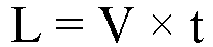


vehicle 1 and the yaw rate Y of thevehicle 1 have the following relationship.

- Thus, the yaw rate is the physical quantity associated with the centrifugal force.
- The controller may predict whether or not the lean angle of the vehicle changes by changing the gear stages in the multi-stage automatic transmission while the vehicle turns in the lean state, based on the lean angle of the vehicle and the physical quantity associated with a centrifugal force exerted on the vehicle. In this case, the gear-shift control determination data includes data on a graph whose abscissa represents the lean angle of the vehicle and the ordinate represents the physical quantity associated with a centrifugal force exerted on the vehicle in
FIGS. 6 and8 . In a case where the physical quantity associated with a centrifugal force exerted on the vehicle is the yaw rate, the gear-shift control determination data includes data as indicated inFIG. 13 . The controller inhibits changing of the gear stages in the multi-stage automatic transmission or performs a gear-shift with a change of a driving force suppressed when the yaw rate is greater than a threshold, while permitting changing of the gear stages in the multi-stage automatic transmission when the yaw rate is smaller than the threshold, by using the gear-shift control determination data as indicated inFIG. 13 . - In a case where the vehicle turns a plurality of corners, each having a different radius of curvature, in the lean state at the same lean angle, the controller may predict whether the lean angle of the vehicle changes or not by a changing of the gear stages in the multi-stage automatic transmission while the vehicle turns in the lean state, based on the radii of curvature of the corners. In this case, the controller may predict, for example, that the lean angle of the vehicle changes by a changing of the gear stages in the multi-stage automatic transmission when the radius of curvature of each of the corners is smaller than or equal to a threshold. The threshold is, for example, set to such a value that causes the lean angle of the vehicle to change by a changing of the gear stages in the multi-stage automatic transmission to thereby affect traveling of the vehicle.
- The radii of curvature may be those geometrically obtained from map information, or those obtained by arithmetic calculation using a vehicle speed and a yaw rate of the vehicle.
- The controller may determine whether the vehicle is turning in the lean state or not based on the lean angle of the vehicle, the physical quantity associated with a centrifugal force exerted on the vehicle, the map information, or the like, and thereafter predict whether the lean angle of the vehicle changes or not by changing of the gear stages in the multi-stage automatic transmission based on the lean angle of the vehicle, the physical quantity associated with a centrifugal force exerted on the vehicle, the map information, or the like.
- In the first embodiment, as shown in
FIG. 6 , the gear-shift control determination data is data in which the threshold of a vehicle speed for inhibiting changing of the gear stages increases as the lean angle of thevehicle 1 increases. The gear-shift control determination data, however, may be any data as long as the threshold of the vehicle speed for inhibiting changing of the gear stage varies with respect to the lean angle. The gear-shift control determination data may be data in which the threshold of the vehicle speed for inhibiting changing of the gear stage is constant with respect to the lean angle. - In the variation of the first embodiment, as shown in
FIG. 8 , the gear-shift control determination data is data in which the threshold of a vehicle speed for permitting only changing of the gear stages capable of suppressing a change of the driving force increases as the lean angle of thevehicle 1 increases. The gear-shift control determination data, however, may be any data as long as the threshold of the vehicle speed for permitting only changing of the gear stages capable of suppressing a change of the driving force varies with respect to the lean angle. The gear-shift control determination data may be data in which the threshold of the vehicle speed for permitting only changing of the gear stages capable of suppressing a change of the driving force is constant with respect to the lean angle. - In the embodiments described above, a driving force is transferred from the
engine unit 10 to therear wheel 4 of thevehicle 1. Alternatively, a driving force may be transferred from the engine unit to the front wheel of the vehicle. In this case, the multi-stage automatic transmission changes a driving force to be transferred from the engine to the front wheel. - In the embodiments described above, the
vehicle 1 includes theengine 11 as a driving source. Alternatively, the driving source of the vehicle may be a motor. The driving source may be a hybrid system using a combination of an engine and a motor. - In the embodiments described above, examples of the multi-stage automatic transmission are described. Alternatively, the multi-stage automatic transmission may be a transmission with any configuration as long as the transmission has a configuration including at least one clutch and a plurality of gear stages and capable of automatically changing the gear stages stepwise.
- In the embodiments described above, the multi-stage
automatic transmissions - In the embodiments described above, the motorcycles have been described as examples of the vehicle. The vehicle, however, may be a vehicle other than a motorcycle as long as the vehicle is a leaning vehicle including a multi-stage automatic transmission.
-
- 1 vehicle (leaning vehicle)
- 2 vehicle body
- 3 front wheel
- 4 rear wheel
- 7, 307 controller (gear-shift controller)
- 10 engine unit
- 11 engine (driving source)
- 11a crankshaft
- 12, 312 multi-stage automatic transmission
- 14 shift switch
- 15 clutch actuator
- 16 shift actuator
- 20, 320 transmission mechanism
- 21 main shaft
- 22 output shaft
- 23 driving gear
- 24 driven gear
- 40 clutch
- 46 input gear
- 50 shift mechanism
- 61 lean detector
- 62 vehicle speed detector
- 72 lean angle calculator
- 73 gear-shift control determiner
- 74 gear-shift signal generator
- 75 memory
- 315a first clutch actuator
- 315b second clutch actuator
- 321a first main shaft
- 321b second main shaft
- 322 output shaft
- 323a first-speed fixing gear
- 323b first-speed gear
- 324a second-speed fixing gear
- 324b second-speed gear
- 325a first spline gear
- 325b third-speed gear
- 326a second spline gear
- 326b fourth-speed gear
- 327a fifth-speed gear
- 327b third spline gear
- 328a sixth-speed gear
- 328b fourth spline gear
- 329 sprocket
- 340 first clutch
- 350 shift mechanism
- 360 second clutch
- P rotation axis
Claims (3)
- A leaning vehicle (1) that is configured to lean leftward when turning to the left and to lean rightward when turning to the right, the leaning vehicle (1) comprising:a vehicle body (2);a plurality of wheels (3, 4) including a front wheel (3) and a rear wheel (4);a driving source (11) configured to supply a driving force to at least one of the front wheel (3) or the rear wheel (4);a gear-type multi-stage automatic transmission (12, 312) including a plurality of gear stages and a clutch (40, 340, 360), and configured to change the driving force to be transferred from the driving source (11) to at least one of the front wheel (3) or the rear wheel (4) by automatically changing the plurality of the gear stages stepwise; anda gear-shift controller (7, 307) configured to control changing of the plurality of the gear stages in the multi-stage automatic transmission (12, 312), whereinthe gear-shift controller (7, 307) is configured to inhibit changing of the plurality of the gear stages in the multi-stage automatic transmission (12, 312) or suppress a change of the driving force by changing the plurality of the gear stages, based on a physical quantity associated with a radius of turn of a corner that the leaning vehicle (1) turns in a lean state, while the leaning vehicle (1) turns in the lean state, wherein the lean state is a state in which the leaning vehicle (1) leans leftward or rightward with a rotation axis as a center relative to a vertical line of a road surface,wherein the physical quantity associated with the radius of turn includes at least one of a vehicle speed and a physical quantity associated with a lean angle of the leaning vehicle (1), the vehicle speed and a yaw rate of the leaning vehicle (1), or a radius of curvature of a corner that the leaning vehicle (1) turns in the lean state, in a state where the leaning vehicle (1) turns in the lean state, wherein the lean angle is an angle between the road surface and an up- down direction reference line of the leaning vehicle (1), and wherein the yaw rate is a rate of change in a yaw angle of the leaning vehicle when the leaning vehicle turns in the lean state.
- The leaning vehicle (1) according to claim 1, wherein
in a case where the leaning vehicle (1) turns a plurality of corners, each having a different radius of curvature, in the lean state at a same lean angle, the gear-shift controller (7, 307) is configured to inhibit changing of the plurality of the gear stages in the multi-stage automatic transmission (12, 312) or suppress a change of the driving force by changing the plurality of the gear stages, in accordance with the radius of curvature of each of the corners, while the leaning vehicle (1) turns in the lean state. - The leaning vehicle (1) according to claim 1, wherein
the gear-shift controller (7, 307) is configured to inhibit changing of the plurality of the gear stages in the multi-stage automatic transmission (12, 312) or suppress a change of the driving force by changing the plurality of the gear stages while the leaning vehicle (1) turns in the lean state in a case where the radius of curvature of each of the corners that the leaning vehicle (1) turns in the lean state is smaller than or equal to a threshold.
Applications Claiming Priority (2)
| Application Number | Priority Date | Filing Date | Title |
|---|---|---|---|
| JP2019019427A JP2022053551A (en) | 2019-02-06 | 2019-02-06 | Lean vehicle |
| PCT/JP2020/004673 WO2020162569A1 (en) | 2019-02-06 | 2020-02-06 | Lean vehicle |
Publications (3)
| Publication Number | Publication Date |
|---|---|
| EP3901494A1 EP3901494A1 (en) | 2021-10-27 |
| EP3901494A4 EP3901494A4 (en) | 2021-12-15 |
| EP3901494B1 true EP3901494B1 (en) | 2023-01-11 |
Family
ID=71947744
Family Applications (1)
| Application Number | Title | Priority Date | Filing Date |
|---|---|---|---|
| EP20752115.4A Active EP3901494B1 (en) | 2019-02-06 | 2020-02-06 | Leaning vehicle |
Country Status (3)
| Country | Link |
|---|---|
| EP (1) | EP3901494B1 (en) |
| JP (1) | JP2022053551A (en) |
| WO (1) | WO2020162569A1 (en) |
Families Citing this family (1)
| Publication number | Priority date | Publication date | Assignee | Title |
|---|---|---|---|---|
| CN112628365A (en) * | 2021-01-14 | 2021-04-09 | 崔志辉 | Penetration type multi-gear sequential transmission |
Family Cites Families (8)
| Publication number | Priority date | Publication date | Assignee | Title |
|---|---|---|---|---|
| JPH0293166A (en) * | 1988-09-30 | 1990-04-03 | Honda Motor Co Ltd | Controller for continuously variable transmission |
| JP2007218269A (en) * | 2006-02-14 | 2007-08-30 | Honda Motor Co Ltd | Control method of transmission for motorcycle |
| JP4968013B2 (en) * | 2007-11-21 | 2012-07-04 | 本田技研工業株式会社 | Shift control device for motorcycle |
| JP5368253B2 (en) | 2008-10-30 | 2013-12-18 | ヤマハ発動機株式会社 | Twin clutch transmission and vehicle equipped with the same |
| JP5461241B2 (en) * | 2010-03-03 | 2014-04-02 | 本田技研工業株式会社 | Shift control device |
| JP5713741B2 (en) * | 2011-03-18 | 2015-05-07 | 本田技研工業株式会社 | Shift control device for motorcycle |
| FR3013094B1 (en) * | 2013-11-08 | 2015-11-27 | Renault Sas | DEVICE AND METHOD FOR CONTROLLING AN AUTOMATIC TRANSMISSION IN A TURN SITUATION |
| JP5887328B2 (en) | 2013-12-19 | 2016-03-16 | ヤマハ発動機株式会社 | Transmission, shift mechanism and vehicle equipped with the same |
-
2019
- 2019-02-06 JP JP2019019427A patent/JP2022053551A/en active Pending
-
2020
- 2020-02-06 WO PCT/JP2020/004673 patent/WO2020162569A1/en not_active Ceased
- 2020-02-06 EP EP20752115.4A patent/EP3901494B1/en active Active
Also Published As
| Publication number | Publication date |
|---|---|
| WO2020162569A1 (en) | 2020-08-13 |
| EP3901494A4 (en) | 2021-12-15 |
| EP3901494A1 (en) | 2021-10-27 |
| JP2022053551A (en) | 2022-04-06 |
Similar Documents
| Publication | Publication Date | Title |
|---|---|---|
| CN101981337B (en) | Clutch control device and mu correction factor calculating method | |
| CN102287530B (en) | The method of control upshift in vehicle transmission | |
| US9032824B2 (en) | Control device for dual clutch transmission and control method for dual clutch transmission | |
| EP2128472B1 (en) | Clutch control device | |
| JP5461241B2 (en) | Shift control device | |
| US20130245901A1 (en) | Dual clutch transmission mechanism and start control method | |
| US8768589B2 (en) | Control device for dual clutch transmission and control method for dual clutch transmission | |
| EP3901025B1 (en) | Lean vehicle | |
| EP3901493B1 (en) | Leaning vehicle | |
| EP3901494B1 (en) | Leaning vehicle | |
| EP3895972B1 (en) | Leaning vehicle | |
| EP3901495B1 (en) | Lean vehicle | |
| EP3901021B1 (en) | Leaning vehicle | |
| JP2007177925A (en) | Automobile control device, control method, and automatic transmission | |
| JP4577073B2 (en) | Control device for multiple clutch transmission | |
| CN110799779B (en) | Control device for automatic transmission | |
| JP4720406B2 (en) | Control device for multiple clutch transmission | |
| CN110799781B (en) | Control device for automatic transmission | |
| JP2008014457A (en) | Vehicle vibration reduction device |
Legal Events
| Date | Code | Title | Description |
|---|---|---|---|
| STAA | Information on the status of an ep patent application or granted ep patent |
Free format text: STATUS: THE INTERNATIONAL PUBLICATION HAS BEEN MADE |
|
| PUAI | Public reference made under article 153(3) epc to a published international application that has entered the european phase |
Free format text: ORIGINAL CODE: 0009012 |
|
| STAA | Information on the status of an ep patent application or granted ep patent |
Free format text: STATUS: REQUEST FOR EXAMINATION WAS MADE |
|
| 17P | Request for examination filed |
Effective date: 20210719 |
|
| AK | Designated contracting states |
Kind code of ref document: A1 Designated state(s): AL AT BE BG CH CY CZ DE DK EE ES FI FR GB GR HR HU IE IS IT LI LT LU LV MC MK MT NL NO PL PT RO RS SE SI SK SM TR |
|
| A4 | Supplementary search report drawn up and despatched |
Effective date: 20211112 |
|
| RIC1 | Information provided on ipc code assigned before grant |
Ipc: F16H 59/44 20060101ALN20211108BHEP Ipc: F16H 61/682 20060101ALI20211108BHEP Ipc: F16H 61/16 20060101ALI20211108BHEP Ipc: F16H 59/50 20060101ALI20211108BHEP Ipc: F16H 59/36 20060101AFI20211108BHEP |
|
| DAV | Request for validation of the european patent (deleted) | ||
| DAX | Request for extension of the european patent (deleted) | ||
| GRAP | Despatch of communication of intention to grant a patent |
Free format text: ORIGINAL CODE: EPIDOSNIGR1 |
|
| STAA | Information on the status of an ep patent application or granted ep patent |
Free format text: STATUS: GRANT OF PATENT IS INTENDED |
|
| RIC1 | Information provided on ipc code assigned before grant |
Ipc: F16H 59/44 20060101ALN20220630BHEP Ipc: F16H 61/682 20060101ALI20220630BHEP Ipc: F16H 61/16 20060101ALI20220630BHEP Ipc: F16H 59/50 20060101ALI20220630BHEP Ipc: F16H 59/36 20060101AFI20220630BHEP |
|
| INTG | Intention to grant announced |
Effective date: 20220728 |
|
| GRAS | Grant fee paid |
Free format text: ORIGINAL CODE: EPIDOSNIGR3 |
|
| GRAA | (expected) grant |
Free format text: ORIGINAL CODE: 0009210 |
|
| STAA | Information on the status of an ep patent application or granted ep patent |
Free format text: STATUS: THE PATENT HAS BEEN GRANTED |
|
| AK | Designated contracting states |
Kind code of ref document: B1 Designated state(s): AL AT BE BG CH CY CZ DE DK EE ES FI FR GB GR HR HU IE IS IT LI LT LU LV MC MK MT NL NO PL PT RO RS SE SI SK SM TR |
|
| REG | Reference to a national code |
Ref country code: GB Ref legal event code: FG4D |
|
| REG | Reference to a national code |
Ref country code: CH Ref legal event code: EP |
|
| REG | Reference to a national code |
Ref country code: DE Ref legal event code: R096 Ref document number: 602020007563 Country of ref document: DE |
|
| REG | Reference to a national code |
Ref country code: IE Ref legal event code: FG4D |
|
| REG | Reference to a national code |
Ref country code: AT Ref legal event code: REF Ref document number: 1543614 Country of ref document: AT Kind code of ref document: T Effective date: 20230215 |
|
| REG | Reference to a national code |
Ref country code: LT Ref legal event code: MG9D |
|
| REG | Reference to a national code |
Ref country code: NL Ref legal event code: MP Effective date: 20230111 |
|
| REG | Reference to a national code |
Ref country code: AT Ref legal event code: MK05 Ref document number: 1543614 Country of ref document: AT Kind code of ref document: T Effective date: 20230111 |
|
| PG25 | Lapsed in a contracting state [announced via postgrant information from national office to epo] |
Ref country code: NL Free format text: LAPSE BECAUSE OF FAILURE TO SUBMIT A TRANSLATION OF THE DESCRIPTION OR TO PAY THE FEE WITHIN THE PRESCRIBED TIME-LIMIT Effective date: 20230111 |
|
| P01 | Opt-out of the competence of the unified patent court (upc) registered |
Effective date: 20230527 |
|
| PG25 | Lapsed in a contracting state [announced via postgrant information from national office to epo] |
Ref country code: RS Free format text: LAPSE BECAUSE OF FAILURE TO SUBMIT A TRANSLATION OF THE DESCRIPTION OR TO PAY THE FEE WITHIN THE PRESCRIBED TIME-LIMIT Effective date: 20230111 Ref country code: PT Free format text: LAPSE BECAUSE OF FAILURE TO SUBMIT A TRANSLATION OF THE DESCRIPTION OR TO PAY THE FEE WITHIN THE PRESCRIBED TIME-LIMIT Effective date: 20230511 Ref country code: NO Free format text: LAPSE BECAUSE OF FAILURE TO SUBMIT A TRANSLATION OF THE DESCRIPTION OR TO PAY THE FEE WITHIN THE PRESCRIBED TIME-LIMIT Effective date: 20230411 Ref country code: LV Free format text: LAPSE BECAUSE OF FAILURE TO SUBMIT A TRANSLATION OF THE DESCRIPTION OR TO PAY THE FEE WITHIN THE PRESCRIBED TIME-LIMIT Effective date: 20230111 Ref country code: LT Free format text: LAPSE BECAUSE OF FAILURE TO SUBMIT A TRANSLATION OF THE DESCRIPTION OR TO PAY THE FEE WITHIN THE PRESCRIBED TIME-LIMIT Effective date: 20230111 Ref country code: HR Free format text: LAPSE BECAUSE OF FAILURE TO SUBMIT A TRANSLATION OF THE DESCRIPTION OR TO PAY THE FEE WITHIN THE PRESCRIBED TIME-LIMIT Effective date: 20230111 Ref country code: ES Free format text: LAPSE BECAUSE OF FAILURE TO SUBMIT A TRANSLATION OF THE DESCRIPTION OR TO PAY THE FEE WITHIN THE PRESCRIBED TIME-LIMIT Effective date: 20230111 Ref country code: AT Free format text: LAPSE BECAUSE OF FAILURE TO SUBMIT A TRANSLATION OF THE DESCRIPTION OR TO PAY THE FEE WITHIN THE PRESCRIBED TIME-LIMIT Effective date: 20230111 |
|
| PG25 | Lapsed in a contracting state [announced via postgrant information from national office to epo] |
Ref country code: SE Free format text: LAPSE BECAUSE OF FAILURE TO SUBMIT A TRANSLATION OF THE DESCRIPTION OR TO PAY THE FEE WITHIN THE PRESCRIBED TIME-LIMIT Effective date: 20230111 Ref country code: PL Free format text: LAPSE BECAUSE OF FAILURE TO SUBMIT A TRANSLATION OF THE DESCRIPTION OR TO PAY THE FEE WITHIN THE PRESCRIBED TIME-LIMIT Effective date: 20230111 Ref country code: IS Free format text: LAPSE BECAUSE OF FAILURE TO SUBMIT A TRANSLATION OF THE DESCRIPTION OR TO PAY THE FEE WITHIN THE PRESCRIBED TIME-LIMIT Effective date: 20230511 Ref country code: GR Free format text: LAPSE BECAUSE OF FAILURE TO SUBMIT A TRANSLATION OF THE DESCRIPTION OR TO PAY THE FEE WITHIN THE PRESCRIBED TIME-LIMIT Effective date: 20230412 Ref country code: FI Free format text: LAPSE BECAUSE OF FAILURE TO SUBMIT A TRANSLATION OF THE DESCRIPTION OR TO PAY THE FEE WITHIN THE PRESCRIBED TIME-LIMIT Effective date: 20230111 |
|
| REG | Reference to a national code |
Ref country code: CH Ref legal event code: PL |
|
| REG | Reference to a national code |
Ref country code: DE Ref legal event code: R097 Ref document number: 602020007563 Country of ref document: DE |
|
| REG | Reference to a national code |
Ref country code: BE Ref legal event code: MM Effective date: 20230228 |
|
| PG25 | Lapsed in a contracting state [announced via postgrant information from national office to epo] |
Ref country code: SM Free format text: LAPSE BECAUSE OF FAILURE TO SUBMIT A TRANSLATION OF THE DESCRIPTION OR TO PAY THE FEE WITHIN THE PRESCRIBED TIME-LIMIT Effective date: 20230111 Ref country code: RO Free format text: LAPSE BECAUSE OF FAILURE TO SUBMIT A TRANSLATION OF THE DESCRIPTION OR TO PAY THE FEE WITHIN THE PRESCRIBED TIME-LIMIT Effective date: 20230111 Ref country code: MC Free format text: LAPSE BECAUSE OF FAILURE TO SUBMIT A TRANSLATION OF THE DESCRIPTION OR TO PAY THE FEE WITHIN THE PRESCRIBED TIME-LIMIT Effective date: 20230111 Ref country code: LU Free format text: LAPSE BECAUSE OF NON-PAYMENT OF DUE FEES Effective date: 20230206 Ref country code: LI Free format text: LAPSE BECAUSE OF NON-PAYMENT OF DUE FEES Effective date: 20230228 Ref country code: EE Free format text: LAPSE BECAUSE OF FAILURE TO SUBMIT A TRANSLATION OF THE DESCRIPTION OR TO PAY THE FEE WITHIN THE PRESCRIBED TIME-LIMIT Effective date: 20230111 Ref country code: DK Free format text: LAPSE BECAUSE OF FAILURE TO SUBMIT A TRANSLATION OF THE DESCRIPTION OR TO PAY THE FEE WITHIN THE PRESCRIBED TIME-LIMIT Effective date: 20230111 Ref country code: CZ Free format text: LAPSE BECAUSE OF FAILURE TO SUBMIT A TRANSLATION OF THE DESCRIPTION OR TO PAY THE FEE WITHIN THE PRESCRIBED TIME-LIMIT Effective date: 20230111 Ref country code: CH Free format text: LAPSE BECAUSE OF NON-PAYMENT OF DUE FEES Effective date: 20230228 |
|
| PLBE | No opposition filed within time limit |
Free format text: ORIGINAL CODE: 0009261 |
|
| STAA | Information on the status of an ep patent application or granted ep patent |
Free format text: STATUS: NO OPPOSITION FILED WITHIN TIME LIMIT |
|
| PG25 | Lapsed in a contracting state [announced via postgrant information from national office to epo] |
Ref country code: SK Free format text: LAPSE BECAUSE OF FAILURE TO SUBMIT A TRANSLATION OF THE DESCRIPTION OR TO PAY THE FEE WITHIN THE PRESCRIBED TIME-LIMIT Effective date: 20230111 |
|
| 26N | No opposition filed |
Effective date: 20231012 |
|
| REG | Reference to a national code |
Ref country code: IE Ref legal event code: MM4A |
|
| PG25 | Lapsed in a contracting state [announced via postgrant information from national office to epo] |
Ref country code: SI Free format text: LAPSE BECAUSE OF FAILURE TO SUBMIT A TRANSLATION OF THE DESCRIPTION OR TO PAY THE FEE WITHIN THE PRESCRIBED TIME-LIMIT Effective date: 20230111 Ref country code: IE Free format text: LAPSE BECAUSE OF NON-PAYMENT OF DUE FEES Effective date: 20230206 |
|
| PG25 | Lapsed in a contracting state [announced via postgrant information from national office to epo] |
Ref country code: BE Free format text: LAPSE BECAUSE OF NON-PAYMENT OF DUE FEES Effective date: 20230228 |
|
| GBPC | Gb: european patent ceased through non-payment of renewal fee |
Effective date: 20240206 |
|
| PG25 | Lapsed in a contracting state [announced via postgrant information from national office to epo] |
Ref country code: BG Free format text: LAPSE BECAUSE OF FAILURE TO SUBMIT A TRANSLATION OF THE DESCRIPTION OR TO PAY THE FEE WITHIN THE PRESCRIBED TIME-LIMIT Effective date: 20230111 |
|
| PG25 | Lapsed in a contracting state [announced via postgrant information from national office to epo] |
Ref country code: BG Free format text: LAPSE BECAUSE OF FAILURE TO SUBMIT A TRANSLATION OF THE DESCRIPTION OR TO PAY THE FEE WITHIN THE PRESCRIBED TIME-LIMIT Effective date: 20230111 |
|
| PG25 | Lapsed in a contracting state [announced via postgrant information from national office to epo] |
Ref country code: GB Free format text: LAPSE BECAUSE OF NON-PAYMENT OF DUE FEES Effective date: 20240206 |
|
| PG25 | Lapsed in a contracting state [announced via postgrant information from national office to epo] |
Ref country code: GB Free format text: LAPSE BECAUSE OF NON-PAYMENT OF DUE FEES Effective date: 20240206 |
|
| PG25 | Lapsed in a contracting state [announced via postgrant information from national office to epo] |
Ref country code: CY Free format text: LAPSE BECAUSE OF FAILURE TO SUBMIT A TRANSLATION OF THE DESCRIPTION OR TO PAY THE FEE WITHIN THE PRESCRIBED TIME-LIMIT; INVALID AB INITIO Effective date: 20200206 |
|
| PG25 | Lapsed in a contracting state [announced via postgrant information from national office to epo] |
Ref country code: HU Free format text: LAPSE BECAUSE OF FAILURE TO SUBMIT A TRANSLATION OF THE DESCRIPTION OR TO PAY THE FEE WITHIN THE PRESCRIBED TIME-LIMIT; INVALID AB INITIO Effective date: 20200206 |
|
| PG25 | Lapsed in a contracting state [announced via postgrant information from national office to epo] |
Ref country code: TR Free format text: LAPSE BECAUSE OF FAILURE TO SUBMIT A TRANSLATION OF THE DESCRIPTION OR TO PAY THE FEE WITHIN THE PRESCRIBED TIME-LIMIT Effective date: 20230111 |
|
| PGFP | Annual fee paid to national office [announced via postgrant information from national office to epo] |
Ref country code: DE Payment date: 20260218 Year of fee payment: 7 |
|
| PGFP | Annual fee paid to national office [announced via postgrant information from national office to epo] |
Ref country code: IT Payment date: 20260224 Year of fee payment: 7 |
|
| PGFP | Annual fee paid to national office [announced via postgrant information from national office to epo] |
Ref country code: FR Payment date: 20260219 Year of fee payment: 7 |