EP3901215B1 - Laser weldable compositions, products and uses thereof - Google Patents
Laser weldable compositions, products and uses thereof Download PDFInfo
- Publication number
- EP3901215B1 EP3901215B1 EP20175837.2A EP20175837A EP3901215B1 EP 3901215 B1 EP3901215 B1 EP 3901215B1 EP 20175837 A EP20175837 A EP 20175837A EP 3901215 B1 EP3901215 B1 EP 3901215B1
- Authority
- EP
- European Patent Office
- Prior art keywords
- composition
- tcddm
- polyester
- copolymer
- formula
- Prior art date
- Legal status (The legal status is an assumption and is not a legal conclusion. Google has not performed a legal analysis and makes no representation as to the accuracy of the status listed.)
- Active
Links
Images
Classifications
-
- B—PERFORMING OPERATIONS; TRANSPORTING
- B23—MACHINE TOOLS; METAL-WORKING NOT OTHERWISE PROVIDED FOR
- B23K—SOLDERING OR UNSOLDERING; WELDING; CLADDING OR PLATING BY SOLDERING OR WELDING; CUTTING BY APPLYING HEAT LOCALLY, e.g. FLAME CUTTING; WORKING BY LASER BEAM
- B23K35/00—Rods, electrodes, materials, or media, for use in soldering, welding, or cutting
- B23K35/22—Rods, electrodes, materials, or media, for use in soldering, welding, or cutting characterised by the composition or nature of the material
- B23K35/24—Selection of soldering or welding materials proper
-
- C—CHEMISTRY; METALLURGY
- C08—ORGANIC MACROMOLECULAR COMPOUNDS; THEIR PREPARATION OR CHEMICAL WORKING-UP; COMPOSITIONS BASED THEREON
- C08L—COMPOSITIONS OF MACROMOLECULAR COMPOUNDS
- C08L67/00—Compositions of polyesters obtained by reactions forming a carboxylic ester link in the main chain; Compositions of derivatives of such polymers
- C08L67/02—Polyesters derived from dicarboxylic acids and dihydroxy compounds
-
- B—PERFORMING OPERATIONS; TRANSPORTING
- B23—MACHINE TOOLS; METAL-WORKING NOT OTHERWISE PROVIDED FOR
- B23K—SOLDERING OR UNSOLDERING; WELDING; CLADDING OR PLATING BY SOLDERING OR WELDING; CUTTING BY APPLYING HEAT LOCALLY, e.g. FLAME CUTTING; WORKING BY LASER BEAM
- B23K26/00—Working by laser beam, e.g. welding, cutting or boring
- B23K26/20—Bonding
- B23K26/21—Bonding by welding
- B23K26/24—Seam welding
-
- B—PERFORMING OPERATIONS; TRANSPORTING
- B29—WORKING OF PLASTICS; WORKING OF SUBSTANCES IN A PLASTIC STATE IN GENERAL
- B29C—SHAPING OR JOINING OF PLASTICS; SHAPING OF MATERIAL IN A PLASTIC STATE, NOT OTHERWISE PROVIDED FOR; AFTER-TREATMENT OF THE SHAPED PRODUCTS, e.g. REPAIRING
- B29C65/00—Joining or sealing of preformed parts, e.g. welding of plastics materials; Apparatus therefor
- B29C65/02—Joining or sealing of preformed parts, e.g. welding of plastics materials; Apparatus therefor by heating, with or without pressure
- B29C65/14—Joining or sealing of preformed parts, e.g. welding of plastics materials; Apparatus therefor by heating, with or without pressure using wave energy, i.e. electromagnetic radiation, or particle radiation
- B29C65/16—Laser beams
- B29C65/1603—Laser beams characterised by the type of electromagnetic radiation
- B29C65/1612—Infrared [IR] radiation, e.g. by infrared lasers
- B29C65/1616—Near infrared radiation [NIR], e.g. by YAG lasers
-
- B—PERFORMING OPERATIONS; TRANSPORTING
- B29—WORKING OF PLASTICS; WORKING OF SUBSTANCES IN A PLASTIC STATE IN GENERAL
- B29C—SHAPING OR JOINING OF PLASTICS; SHAPING OF MATERIAL IN A PLASTIC STATE, NOT OTHERWISE PROVIDED FOR; AFTER-TREATMENT OF THE SHAPED PRODUCTS, e.g. REPAIRING
- B29C65/00—Joining or sealing of preformed parts, e.g. welding of plastics materials; Apparatus therefor
- B29C65/02—Joining or sealing of preformed parts, e.g. welding of plastics materials; Apparatus therefor by heating, with or without pressure
- B29C65/14—Joining or sealing of preformed parts, e.g. welding of plastics materials; Apparatus therefor by heating, with or without pressure using wave energy, i.e. electromagnetic radiation, or particle radiation
- B29C65/16—Laser beams
- B29C65/1629—Laser beams characterised by the way of heating the interface
- B29C65/1635—Laser beams characterised by the way of heating the interface at least passing through one of the parts to be joined, i.e. laser transmission welding
-
- B—PERFORMING OPERATIONS; TRANSPORTING
- B29—WORKING OF PLASTICS; WORKING OF SUBSTANCES IN A PLASTIC STATE IN GENERAL
- B29C—SHAPING OR JOINING OF PLASTICS; SHAPING OF MATERIAL IN A PLASTIC STATE, NOT OTHERWISE PROVIDED FOR; AFTER-TREATMENT OF THE SHAPED PRODUCTS, e.g. REPAIRING
- B29C65/00—Joining or sealing of preformed parts, e.g. welding of plastics materials; Apparatus therefor
- B29C65/82—Testing the joint
- B29C65/8207—Testing the joint by mechanical methods
- B29C65/8215—Tensile tests
-
- B—PERFORMING OPERATIONS; TRANSPORTING
- B29—WORKING OF PLASTICS; WORKING OF SUBSTANCES IN A PLASTIC STATE IN GENERAL
- B29C—SHAPING OR JOINING OF PLASTICS; SHAPING OF MATERIAL IN A PLASTIC STATE, NOT OTHERWISE PROVIDED FOR; AFTER-TREATMENT OF THE SHAPED PRODUCTS, e.g. REPAIRING
- B29C66/00—General aspects of processes or apparatus for joining preformed parts
- B29C66/01—General aspects dealing with the joint area or with the area to be joined
- B29C66/05—Particular design of joint configurations
- B29C66/10—Particular design of joint configurations particular design of the joint cross-sections
- B29C66/12—Joint cross-sections combining only two joint-segments; Tongue and groove joints; Tenon and mortise joints; Stepped joint cross-sections
- B29C66/128—Stepped joint cross-sections
- B29C66/1282—Stepped joint cross-sections comprising at least one overlap joint-segment
-
- B—PERFORMING OPERATIONS; TRANSPORTING
- B29—WORKING OF PLASTICS; WORKING OF SUBSTANCES IN A PLASTIC STATE IN GENERAL
- B29C—SHAPING OR JOINING OF PLASTICS; SHAPING OF MATERIAL IN A PLASTIC STATE, NOT OTHERWISE PROVIDED FOR; AFTER-TREATMENT OF THE SHAPED PRODUCTS, e.g. REPAIRING
- B29C66/00—General aspects of processes or apparatus for joining preformed parts
- B29C66/01—General aspects dealing with the joint area or with the area to be joined
- B29C66/05—Particular design of joint configurations
- B29C66/10—Particular design of joint configurations particular design of the joint cross-sections
- B29C66/12—Joint cross-sections combining only two joint-segments; Tongue and groove joints; Tenon and mortise joints; Stepped joint cross-sections
- B29C66/128—Stepped joint cross-sections
- B29C66/1284—Stepped joint cross-sections comprising at least one butt joint-segment
- B29C66/12841—Stepped joint cross-sections comprising at least one butt joint-segment comprising at least two butt joint-segments
-
- B—PERFORMING OPERATIONS; TRANSPORTING
- B29—WORKING OF PLASTICS; WORKING OF SUBSTANCES IN A PLASTIC STATE IN GENERAL
- B29C—SHAPING OR JOINING OF PLASTICS; SHAPING OF MATERIAL IN A PLASTIC STATE, NOT OTHERWISE PROVIDED FOR; AFTER-TREATMENT OF THE SHAPED PRODUCTS, e.g. REPAIRING
- B29C66/00—General aspects of processes or apparatus for joining preformed parts
- B29C66/01—General aspects dealing with the joint area or with the area to be joined
- B29C66/05—Particular design of joint configurations
- B29C66/10—Particular design of joint configurations particular design of the joint cross-sections
- B29C66/14—Particular design of joint configurations particular design of the joint cross-sections the joint having the same thickness as the thickness of the parts to be joined
-
- B—PERFORMING OPERATIONS; TRANSPORTING
- B29—WORKING OF PLASTICS; WORKING OF SUBSTANCES IN A PLASTIC STATE IN GENERAL
- B29C—SHAPING OR JOINING OF PLASTICS; SHAPING OF MATERIAL IN A PLASTIC STATE, NOT OTHERWISE PROVIDED FOR; AFTER-TREATMENT OF THE SHAPED PRODUCTS, e.g. REPAIRING
- B29C66/00—General aspects of processes or apparatus for joining preformed parts
- B29C66/70—General aspects of processes or apparatus for joining preformed parts characterised by the composition, physical properties or the structure of the material of the parts to be joined; Joining with non-plastics material
- B29C66/71—General aspects of processes or apparatus for joining preformed parts characterised by the composition, physical properties or the structure of the material of the parts to be joined; Joining with non-plastics material characterised by the composition of the plastics material of the parts to be joined
-
- B—PERFORMING OPERATIONS; TRANSPORTING
- B29—WORKING OF PLASTICS; WORKING OF SUBSTANCES IN A PLASTIC STATE IN GENERAL
- B29C—SHAPING OR JOINING OF PLASTICS; SHAPING OF MATERIAL IN A PLASTIC STATE, NOT OTHERWISE PROVIDED FOR; AFTER-TREATMENT OF THE SHAPED PRODUCTS, e.g. REPAIRING
- B29C66/00—General aspects of processes or apparatus for joining preformed parts
- B29C66/70—General aspects of processes or apparatus for joining preformed parts characterised by the composition, physical properties or the structure of the material of the parts to be joined; Joining with non-plastics material
- B29C66/72—General aspects of processes or apparatus for joining preformed parts characterised by the composition, physical properties or the structure of the material of the parts to be joined; Joining with non-plastics material characterised by the structure of the material of the parts to be joined
- B29C66/721—Fibre-reinforced materials
- B29C66/7212—Fibre-reinforced materials characterised by the composition of the fibres
-
- C—CHEMISTRY; METALLURGY
- C08—ORGANIC MACROMOLECULAR COMPOUNDS; THEIR PREPARATION OR CHEMICAL WORKING-UP; COMPOSITIONS BASED THEREON
- C08G—MACROMOLECULAR COMPOUNDS OBTAINED OTHERWISE THAN BY REACTIONS ONLY INVOLVING UNSATURATED CARBON-TO-CARBON BONDS
- C08G63/00—Macromolecular compounds obtained by reactions forming a carboxylic ester link in the main chain of the macromolecule
- C08G63/02—Polyesters derived from hydroxycarboxylic acids or from polycarboxylic acids and polyhydroxy compounds
- C08G63/12—Polyesters derived from hydroxycarboxylic acids or from polycarboxylic acids and polyhydroxy compounds derived from polycarboxylic acids and polyhydroxy compounds
- C08G63/123—Polyesters derived from hydroxycarboxylic acids or from polycarboxylic acids and polyhydroxy compounds derived from polycarboxylic acids and polyhydroxy compounds the acids or hydroxy compounds containing carbocyclic rings
- C08G63/127—Acids containing aromatic rings
-
- C—CHEMISTRY; METALLURGY
- C08—ORGANIC MACROMOLECULAR COMPOUNDS; THEIR PREPARATION OR CHEMICAL WORKING-UP; COMPOSITIONS BASED THEREON
- C08G—MACROMOLECULAR COMPOUNDS OBTAINED OTHERWISE THAN BY REACTIONS ONLY INVOLVING UNSATURATED CARBON-TO-CARBON BONDS
- C08G63/00—Macromolecular compounds obtained by reactions forming a carboxylic ester link in the main chain of the macromolecule
- C08G63/02—Polyesters derived from hydroxycarboxylic acids or from polycarboxylic acids and polyhydroxy compounds
- C08G63/12—Polyesters derived from hydroxycarboxylic acids or from polycarboxylic acids and polyhydroxy compounds derived from polycarboxylic acids and polyhydroxy compounds
- C08G63/123—Polyesters derived from hydroxycarboxylic acids or from polycarboxylic acids and polyhydroxy compounds derived from polycarboxylic acids and polyhydroxy compounds the acids or hydroxy compounds containing carbocyclic rings
- C08G63/137—Acids or hydroxy compounds containing cycloaliphatic rings
-
- C—CHEMISTRY; METALLURGY
- C08—ORGANIC MACROMOLECULAR COMPOUNDS; THEIR PREPARATION OR CHEMICAL WORKING-UP; COMPOSITIONS BASED THEREON
- C08G—MACROMOLECULAR COMPOUNDS OBTAINED OTHERWISE THAN BY REACTIONS ONLY INVOLVING UNSATURATED CARBON-TO-CARBON BONDS
- C08G63/00—Macromolecular compounds obtained by reactions forming a carboxylic ester link in the main chain of the macromolecule
- C08G63/02—Polyesters derived from hydroxycarboxylic acids or from polycarboxylic acids and polyhydroxy compounds
- C08G63/12—Polyesters derived from hydroxycarboxylic acids or from polycarboxylic acids and polyhydroxy compounds derived from polycarboxylic acids and polyhydroxy compounds
- C08G63/16—Dicarboxylic acids and dihydroxy compounds
- C08G63/18—Dicarboxylic acids and dihydroxy compounds the acids or hydroxy compounds containing carbocyclic rings
- C08G63/199—Acids or hydroxy compounds containing cycloaliphatic rings
-
- C—CHEMISTRY; METALLURGY
- C08—ORGANIC MACROMOLECULAR COMPOUNDS; THEIR PREPARATION OR CHEMICAL WORKING-UP; COMPOSITIONS BASED THEREON
- C08L—COMPOSITIONS OF MACROMOLECULAR COMPOUNDS
- C08L67/00—Compositions of polyesters obtained by reactions forming a carboxylic ester link in the main chain; Compositions of derivatives of such polymers
-
- G—PHYSICS
- G01—MEASURING; TESTING
- G01S—RADIO DIRECTION-FINDING; RADIO NAVIGATION; DETERMINING DISTANCE OR VELOCITY BY USE OF RADIO WAVES; LOCATING OR PRESENCE-DETECTING BY USE OF THE REFLECTION OR RERADIATION OF RADIO WAVES; ANALOGOUS ARRANGEMENTS USING OTHER WAVES
- G01S17/00—Systems using the reflection or reradiation of electromagnetic waves other than radio waves, e.g. lidar systems
- G01S17/02—Systems using the reflection of electromagnetic waves other than radio waves
-
- B—PERFORMING OPERATIONS; TRANSPORTING
- B23—MACHINE TOOLS; METAL-WORKING NOT OTHERWISE PROVIDED FOR
- B23K—SOLDERING OR UNSOLDERING; WELDING; CLADDING OR PLATING BY SOLDERING OR WELDING; CUTTING BY APPLYING HEAT LOCALLY, e.g. FLAME CUTTING; WORKING BY LASER BEAM
- B23K2103/00—Materials to be soldered, welded or cut
- B23K2103/30—Organic materials
- B23K2103/42—Plastics other than composite materials
-
- B—PERFORMING OPERATIONS; TRANSPORTING
- B29—WORKING OF PLASTICS; WORKING OF SUBSTANCES IN A PLASTIC STATE IN GENERAL
- B29C—SHAPING OR JOINING OF PLASTICS; SHAPING OF MATERIAL IN A PLASTIC STATE, NOT OTHERWISE PROVIDED FOR; AFTER-TREATMENT OF THE SHAPED PRODUCTS, e.g. REPAIRING
- B29C66/00—General aspects of processes or apparatus for joining preformed parts
- B29C66/70—General aspects of processes or apparatus for joining preformed parts characterised by the composition, physical properties or the structure of the material of the parts to be joined; Joining with non-plastics material
- B29C66/73—General aspects of processes or apparatus for joining preformed parts characterised by the composition, physical properties or the structure of the material of the parts to be joined; Joining with non-plastics material characterised by the intensive physical properties of the material of the parts to be joined, by the optical properties of the material of the parts to be joined, by the extensive physical properties of the parts to be joined, by the state of the material of the parts to be joined or by the material of the parts to be joined being a thermoplastic or a thermoset
- B29C66/733—General aspects of processes or apparatus for joining preformed parts characterised by the composition, physical properties or the structure of the material of the parts to be joined; Joining with non-plastics material characterised by the intensive physical properties of the material of the parts to be joined, by the optical properties of the material of the parts to be joined, by the extensive physical properties of the parts to be joined, by the state of the material of the parts to be joined or by the material of the parts to be joined being a thermoplastic or a thermoset characterised by the optical properties of the material of the parts to be joined, e.g. fluorescence, phosphorescence
- B29C66/7336—General aspects of processes or apparatus for joining preformed parts characterised by the composition, physical properties or the structure of the material of the parts to be joined; Joining with non-plastics material characterised by the intensive physical properties of the material of the parts to be joined, by the optical properties of the material of the parts to be joined, by the extensive physical properties of the parts to be joined, by the state of the material of the parts to be joined or by the material of the parts to be joined being a thermoplastic or a thermoset characterised by the optical properties of the material of the parts to be joined, e.g. fluorescence, phosphorescence at least one of the parts to be joined being opaque, transparent or translucent to visible light
- B29C66/73365—General aspects of processes or apparatus for joining preformed parts characterised by the composition, physical properties or the structure of the material of the parts to be joined; Joining with non-plastics material characterised by the intensive physical properties of the material of the parts to be joined, by the optical properties of the material of the parts to be joined, by the extensive physical properties of the parts to be joined, by the state of the material of the parts to be joined or by the material of the parts to be joined being a thermoplastic or a thermoset characterised by the optical properties of the material of the parts to be joined, e.g. fluorescence, phosphorescence at least one of the parts to be joined being opaque, transparent or translucent to visible light at least one of the parts to be joined being transparent or translucent to visible light
-
- B—PERFORMING OPERATIONS; TRANSPORTING
- B29—WORKING OF PLASTICS; WORKING OF SUBSTANCES IN A PLASTIC STATE IN GENERAL
- B29K—INDEXING SCHEME ASSOCIATED WITH SUBCLASSES B29B, B29C OR B29D, RELATING TO MOULDING MATERIALS OR TO MATERIALS FOR MOULDS, REINFORCEMENTS, FILLERS OR PREFORMED PARTS, e.g. INSERTS
- B29K2105/00—Condition, form or state of moulded material or of the material to be shaped
- B29K2105/06—Condition, form or state of moulded material or of the material to be shaped containing reinforcements, fillers or inserts
- B29K2105/16—Fillers
-
- B—PERFORMING OPERATIONS; TRANSPORTING
- B29—WORKING OF PLASTICS; WORKING OF SUBSTANCES IN A PLASTIC STATE IN GENERAL
- B29K—INDEXING SCHEME ASSOCIATED WITH SUBCLASSES B29B, B29C OR B29D, RELATING TO MOULDING MATERIALS OR TO MATERIALS FOR MOULDS, REINFORCEMENTS, FILLERS OR PREFORMED PARTS, e.g. INSERTS
- B29K2509/00—Use of inorganic materials not provided for in groups B29K2503/00 - B29K2507/00, as filler
- B29K2509/02—Ceramics
-
- B—PERFORMING OPERATIONS; TRANSPORTING
- B29—WORKING OF PLASTICS; WORKING OF SUBSTANCES IN A PLASTIC STATE IN GENERAL
- B29K—INDEXING SCHEME ASSOCIATED WITH SUBCLASSES B29B, B29C OR B29D, RELATING TO MOULDING MATERIALS OR TO MATERIALS FOR MOULDS, REINFORCEMENTS, FILLERS OR PREFORMED PARTS, e.g. INSERTS
- B29K2509/00—Use of inorganic materials not provided for in groups B29K2503/00 - B29K2507/00, as filler
- B29K2509/14—Stones
-
- B—PERFORMING OPERATIONS; TRANSPORTING
- B29—WORKING OF PLASTICS; WORKING OF SUBSTANCES IN A PLASTIC STATE IN GENERAL
- B29K—INDEXING SCHEME ASSOCIATED WITH SUBCLASSES B29B, B29C OR B29D, RELATING TO MOULDING MATERIALS OR TO MATERIALS FOR MOULDS, REINFORCEMENTS, FILLERS OR PREFORMED PARTS, e.g. INSERTS
- B29K2995/00—Properties of moulding materials, reinforcements, fillers, preformed parts or moulds
- B29K2995/0018—Properties of moulding materials, reinforcements, fillers, preformed parts or moulds having particular optical properties, e.g. fluorescent or phosphorescent
- B29K2995/0026—Transparent
- B29K2995/0027—Transparent for light outside the visible spectrum
-
- C—CHEMISTRY; METALLURGY
- C08—ORGANIC MACROMOLECULAR COMPOUNDS; THEIR PREPARATION OR CHEMICAL WORKING-UP; COMPOSITIONS BASED THEREON
- C08G—MACROMOLECULAR COMPOUNDS OBTAINED OTHERWISE THAN BY REACTIONS ONLY INVOLVING UNSATURATED CARBON-TO-CARBON BONDS
- C08G63/00—Macromolecular compounds obtained by reactions forming a carboxylic ester link in the main chain of the macromolecule
- C08G63/02—Polyesters derived from hydroxycarboxylic acids or from polycarboxylic acids and polyhydroxy compounds
- C08G63/12—Polyesters derived from hydroxycarboxylic acids or from polycarboxylic acids and polyhydroxy compounds derived from polycarboxylic acids and polyhydroxy compounds
- C08G63/16—Dicarboxylic acids and dihydroxy compounds
- C08G63/18—Dicarboxylic acids and dihydroxy compounds the acids or hydroxy compounds containing carbocyclic rings
- C08G63/181—Acids containing aromatic rings
- C08G63/183—Terephthalic acids
-
- C—CHEMISTRY; METALLURGY
- C08—ORGANIC MACROMOLECULAR COMPOUNDS; THEIR PREPARATION OR CHEMICAL WORKING-UP; COMPOSITIONS BASED THEREON
- C08K—Use of inorganic or non-macromolecular organic substances as compounding ingredients
- C08K3/00—Use of inorganic substances as compounding ingredients
- C08K3/01—Use of inorganic substances as compounding ingredients characterized by their specific function
- C08K3/013—Fillers, pigments or reinforcing additives
-
- C—CHEMISTRY; METALLURGY
- C08—ORGANIC MACROMOLECULAR COMPOUNDS; THEIR PREPARATION OR CHEMICAL WORKING-UP; COMPOSITIONS BASED THEREON
- C08L—COMPOSITIONS OF MACROMOLECULAR COMPOUNDS
- C08L2205/00—Polymer mixtures characterised by other features
- C08L2205/02—Polymer mixtures characterised by other features containing two or more polymers of the same C08L -group
- C08L2205/025—Polymer mixtures characterised by other features containing two or more polymers of the same C08L -group containing two or more polymers of the same hierarchy C08L, and differing only in parameters such as density, comonomer content, molecular weight, structure
Definitions
- the present disclosure relates to compositions with high and consistent laser transmissivity, and specifically polymeric laser weldable compositions and products.
- Laser welding is a technique in manufacturing whereby two or more pieces of material are joined together through the use of a laser beam.
- Metal and thermoplastics are two common types of material used in laser welding.
- Laser welding requires access to the weld zone from one side of the parts being welded, and the weld is formed as intense laser light rapidly heats the material.
- the beam of laser - light amplification by stimulated emission of radiation - is a single-phase light of a single wavelength with a low beam divergence and high energy content and thus will create heat when it strikes a surface. Therefore, laser welding allows for precise control of the welding area, aesthetically pleasing welding seams, and practically no damage to surrounding materials or sensitive electronics while no particulates are generated in the process.
- a focused laser beam passes through an upper, laser transmissive part to the interface of the two parts to be joined, and the laser light is turned into thermal energy as it is absorbed by the lower joining partner and some of the thermal energy is transferred to the upper layer in order for melting to occur in both parts.
- the heat created at the interface creates a molten weld seam and the two plastics are fused.
- compositions which have improved, uniform laser transmissivity for a molded product prepared with the compositions, and the compositions include (1) one or more inorganic fillers, (2) one or more copolymers prepared with at least tricyclodecane dimethanol (TCDDM) or a compound of formula (I): thereby the copolymer(s) comprising a repeating unit derived therefrom, 3 one or more polyesters.
- TCDDM tricyclodecane dimethanol
- the compositions in various embodiments contain a residual of the tricyclodecane dimethanol in an amount of between 1 wt% and 70 wt% relative to the composition.
- the one or more polyesters are a polyalkylene terephthalate-type polyester, and/or having a repeating unit of wherein X is a divalent aliphatic hydrocarbon group having 2 to 6 carbon atoms, and R 1 , R 2 , R 3 and R 4 are individually hydrogen, an alkyl having 1 to 6 carbon atoms, a halogen, an alkoxy having 1 to 6 carbon atoms, an alkoxycarbonyl having 2 to 6 carbon atoms, cyano, amino, sulfonyl, nitro or phenoxy.
- X is a divalent aliphatic hydrocarbon group having 2 to 6 carbon atoms
- R 1 , R 2 , R 3 and R 4 are individually hydrogen, an alkyl having 1 to 6 carbon atoms, a halogen, an alkoxy having 1 to 6 carbon atoms, an alkoxycarbonyl having 2 to 6 carbon atoms, cyano, amino, sulfonyl, nitro or phen
- polyesters in the compositions is polybutylene terephthalate (PBT), polybutylene isophthalate (PBI), polyethylene terephthalate (PET), polyethylene isophthalate (PEI), polytrimethylene terephthalate (PTT), polytrimethylene isophthalate (PTI), a thermoplastic polyether-ester elastomer (TPEE), a copolymer thereof, or a combination thereof.
- PBT polybutylene terephthalate
- PBI polybutylene isophthalate
- PET polyethylene terephthalate
- PEI polyethylene isophthalate
- PET polytrimethylene terephthalate
- PTI polytrimethylene isophthalate
- TPEE thermoplastic polyether-ester elastomer
- the one or more inorganic fillers can be glass fiber, quartz, amorphous silica, colloidal silica, ceramics, zirconia, or a combination thereof.
- the one or more copolymers is derived from at least TCDDM and terephthalic acid (PTA). Further embodiments of the one or more copolymers is derived from TCDDM, PTA and an alkanediol.
- compositions include an inorganic filler, a TCDDM-modified polymer (e.g., a copolymer derived from TCDDM, PTA and 1,4-butanediol (BDO)), and a terephthalate-type polyester (e.g., PBT), wherein the content of TCDDM residual is between 1 wt% and 70 wt% in the composition.
- a TCDDM-modified polymer e.g., a copolymer derived from TCDDM, PTA and 1,4-butanediol (BDO)
- BDO 1,4-butanediol
- PBT terephthalate-type polyester
- compositions of the invention in various embodiments have a transmittance of not less than 10% at a wavelength of 800 nm to 1200 nm in terms of a thickness of 1.5 mm in a molded product comprising the compositions. Further embodiments provide the compositions have a transmittance at two or more locations of a product comprising the compositions being less than 12% difference.
- the compositions have a transmittance of X 1 % at one location for a wavelength in terms of a thickness of 1.5 mm, and another transmittance of X 2 % at another location for the wavelength in terms of also a thickness of 1.5 mm, for a product comprising the compositions, and the difference in X 1 and X 2 is less than 12 such that the difference in transmittance of the wavelength at two locations is less than 12% of full transmittance.
- polymer generally includes homopolymers, copolymers (such as for example, block, graft, random and alternating copolymers), terpolymers, and blends and modifications thereof. Furthermore, unless otherwise specifically limited, the term “polymer” shall include all possible geometrical configurations of the material. These configurations include isotactic, syndiotactic and random symmetries.
- polyester is intended to embrace polymers wherein at least 85% of the recurring units are condensation products of dicarboxylic acids and dihydroxy alcohols with polymer linkages created by formation of an ester unit. This includes aromatic, aliphatic, saturated, and unsaturated di-acids and di-alcohols.
- polymers also includes copolymers (such as block, graft, random and alternating copolymers), blends, and modifications thereof.
- An example of a polyester is PBT which is a condensation product of BDO and PTA.
- TCDDM tricyclodecane dimethanol
- formula (I) includes any one or more of 3,8-bis(hydroxymethyl)tricyclo[5.2.1.0 2-6 ]decane; 3,9-bis(hydroxymethyl)tricyclo[5.2.1.0 2-6 ]decane; 4,8-bis(hydroxymethyl)tricyclo[5.2.1.0 2-6 ]decane; 4,9-bis(hydroxymethyl)tricyclo[5.2.1.0 2-6 ]decane; 5,8-bis(hydroxymethyl)tricyclo[5.2.1.0 2-6 ]decane; and 5,9-bis(hydroxymethyl)tricyclo[5.2.1.0 2-6 ]decane.
- TCDDM is octahydro-4,7-methano-1H-indene-1,5-dimethanol.
- terephthalic acid refers to a compound of formula (II):
- formula (II) includes any one or more of 1,4-benzenedicarboxylic acid, 1,3-benzenedicarboxylic acid, and 1,2-benzenedicarboxylic acid.
- PTA refers to 1,4-benzenedicarboxylic acid.
- compositions are provided whose components include at least an inorganic filler, a copolymer, and a polyester.
- the compositions are a blend or mixture of the components.
- the compositions are laser transmissive.
- the compositions are in the form of a resin.
- a copolymer in the composition is derived from or prepared from at least one, two, or three different (co-)monomers.
- the monomers forming the copolymer include any one or more of compounds of formulae (I)-(III): and Y is an aliphatic hydrocarbon group having 2 to 6 carbon atoms.
- the copolymer is derived from comonomers represented by formula (I), formula (II) and formula (III).
- the copolymer comprises a repeating unit having a structure of and another repeating unit having a structure of
- the copolymer is derived from compounds of formula (I), (II) and (III), wherein one or two or three of these compounds are individually substituted with one or more alkyl having 1 to 6 carbon atoms, one or more halogen, one or more alkoxy having 1 to 6 carbon atoms, one or more alkoxycarbonyl having 2 to 6 carbon atoms, cyano, amino, sulfonyl, nitro or phenoxy.
- the copolymer is derived from monomers represented by formula (I) and formula (II), without the compound of formula (III).
- the copolymer comprises a repeating unit having a structure of
- the copolymer is derived from compounds of formula (I) and (II), wherein one or both of these compounds are individually substituted with one or more alkyl having 1 to 6 carbon atoms, one or more halogen, one or more alkoxy having 1 to 6 carbon atoms, one or more alkoxycarbonyl having 2 to 6 carbon atoms, cyano, amino, sulfonyl, nitro or phenoxy.
- the copolymer in the composition has one or more repeating units represented by one or more of formulae (IV)-(VI): wherein m and n are individually in each repeating unit independently an integer greater or equal to 1, and Y is an aliphatic hydrocarbon group having 2 to 6 carbon atoms.
- the copolymer in the composition has a formula (VII): wherein m is an integer greater or equal to 1 (e.g., from 1 to 100,000) and may be the same or different in each fraction (e.g., each repeat of the bracket subscriptted i) of the copolymer, n is an integer greater or equal to 1 (e.g., from 1 to 100,000) and may be the same or different in each fraction (e.g., each repeat of the bracket subscriptted i) of the copolymer, i is an integer greater than 1 (e.g., from 2 to 100,000), and Y is an aliphatic hydrocarbon group having 2 to 6 carbon atoms.
- copolymer is a polyester modified with one or more functional groups derived from a compound of formula (I) and the polyester before the modification can be the same or different from the polyester that is another component of the compositions.
- TCDDM residual in various embodiments refers to tricyclodecane dihydroxymethyl group and/or tricyclodecane methanol monohydroxymethyl end group in a polymer.
- composition is a polymer derived from comonomers containing a compound of formula (I), a compound of formula (II) and optionally a compound of formula (III), each independently optionally having one or more substitutions, in a molar ratio of compound of formula (I):compound of formula (II):compound of formula (III) (a:b:c), wherein a is a number greater than 0 and up to 10; b is a number greater than 0 and up to 10; and c is a number from 0 to 10.
- b a + c.
- the composition comprises a copolymer derived from TCDDM, PTA and BDO.
- the composition comprises a copolymer derived from TCDDM, PTA and BDO, wherein the molar ratio of the TCDDM to the BDO is about 1:1, 1:2, 1:3, 1:4, 1:5, 1:6, 1:7, 1:8, 1:9, 1:10, 1:11, 1:12, 1:13, 1:14, or 1:15.
- the composition comprises a copolymer derived from TCDDM, PTA and BDO, wherein the molar ratio of the TCDDM to the BDO is about 1:2.
- the composition comprises a copolymer derived from TCDDM, PTA and BDO, wherein the molar ratio of the TCDDM to the BDO is about 1:4.98.
- the composition comprises a copolymer derived from TCDDM, PTA and BDO, wherein the molar ratio of the TCDDM to the BDO is about 1:14.02.
- the composition comprises a copolymer derived from TCDDM and PTA, without BDO.
- the copolymer in a composition is in an amount between about 1 wt% to about 99 wt% relative to the composition. In some aspects, the copolymer in a composition is in an amount between about 10 wt% to about 70 wt% relative to the composition. In further aspects, the copolymer in a composition is in an amount between about 15 wt% to about 50 wt% relative to the composition. In one aspect, the copolymer in a composition is in an amount of about 11 wt%, 12 wt%, 13 wt%, 14 wt%, 15 wt%, 16 wt%, 17 wt%, 18 wt%, 19 wt% or 20 wt%. In another aspect the copolymer in a composition is in an amount of about 30 wt%. In yet another aspect the copolymer in a composition is in an amount of about 50 wt% relative to the composition.
- Various embodiments provide the content of TCDDM residual in a composition of the invention (the composition including at least an inorganic filler, a copolymer, and a polyester) is in an amount of about 0.1 wt%-1 wt%, 1 wt%-5 wt%, 5 wt%-10 wt%, 10 wt%-15 wt%, 15 wt%-20 wt%, 20 wt%-25 wt%, 25 wt%-30 wt%, 30 wt%-40 wt%, 40 wt%-50 wt%, 50 wt%-60 wt%, or 60 wt%-70 wt% relative to the composition.
- the content of TCDDM residual is about 1 wt%, 2 wt%, 3 wt%, 4 wt%, 5 wt%, 6 wt%, 7 wt%, 8 wt%, 9 wt%, 10 wt%, 11 wt%, 12 wt%, 13 wt%, 14 wt%, 15 wt%, 16 wt%, 17 wt%, 18 wt%, 19 wt%, 20 wt%, 21 wt%, 22 wt%, 23 wt%, 24 wt%, 25 wt%, 26 wt%, 27 wt%, 28 wt%, 29 wt%, 30 wt%, 31 wt%, 32 wt%, 33 wt%, 34 wt%, or 35 wt%, or in a range between any two numbers listed, relative to the composition.
- the content of TCDDM residual is about 1 wt%-7 wt% relative to the composition. In one embodiment, the content of TCDDM residual is about 7 wt%-14 wt% relative to the composition. In one embodiment, the content of TCDDM residual is about 14 wt%-20 wt% relative to the composition. In one embodiment, the content of TCDDM residual is about 20 wt%-35 wt% relative to the composition. In one embodiment, the content of TCDDM residual is about 35 wt%-50 wt% relative to the composition. In one embodiment, the content of TCDDM residual is about 50 wt%-70 wt% relative to the composition.
- any one of the disclosed copolymers in the composition individually has an intrinsic viscosity of at least 0.6 dL/g, between about 0.7 dL/g and about 0.8 dL/g, or between about 0.6 dl/g and 1 dl/g.
- any one of the disclosed copolymers in the composition individually has a melting temperature in a range from 225 °C to 150 °C, or about 225 °C, 220 °C, 215 °C, 210 °C, 205 °C, 200 °C, 195 °C, 190 °C, 185 °C, 180 °C, 175 °C, 170 °C, 165 °C, 160 °C, 155 °C, or 150 °C, or in a range between any of the two values.
- any one of the disclosed copolymers in the composition individually has a molecular weight of about 800-900 g/mol, 900-1000 g/mol, 1000-1100 g/mol, 1100-1200 g/mol, 1200-1300 g/mol, 1300-1400 g/mol, 1400-1500 g/mol, 1500-1600 g/mol, 1600-1700 g/mol, 1700-1800 g/mol, 1800-1900 g/mol, 1900-2000 g/mol, 2000-5000 g/mol, 5000-10000 g/mol, or greater.
- the copolymer and the polyester in the composition have similar molecular weights, e.g., difference being less than 10%, 20%, 30%, 40% or 50% compared to the larger molecular weight of the two
- the polyester is PBT. In another embodiment, the polyester is an aromatic polyester produced by polycondensing PTA or dimethyl terephthalate with BDO. Other embodiments provide the polyester is PET, PEI, PPT, PPI, PTT, PTI, PBT, PBI, a TPEE (e.g., polyethylene-p-phenylene ester ether, polyethylene-m-phenylene ester ether, polyethylene-o-phenylene ester ether, polytrimethylene-p-phenylene ester ether, polytrimethylene-m-phenylene ester ether, polytrimethylene-o-phenylene ester ether, polybutylene-p-phenylene ester ether, polybutylene-m-phenylene ester ether, polybutylene-o-phenylene ester ether), or a mixture or copolymer thereof.
- TPEE e.g., polyethylene-p-phenylene ester ether, polyethylene-m-phenylene ester ether
- aliphatic polyesters that include the polyalkylene phenylene esters and polyalkylene phenylene ester ethers having a repeating unit represented by formula (VIII): wherein R 1 , R 2 , R 3 and R 4 are the same or different and are each hydrogen, an alkyl having 1 to 6 carbon atoms (e.g., methyl, ethyl, n-propyl, isopropyl), a halogen (e.g., fluorine, bromine, chlorine), an alkoxy having 1 to 6 carbon atoms (e.g., methoxy, ethoxy), an alkoxycarbonyl having 2 to 6 carbon atoms (e.g., methoxycarbonyl, ethoxycarbonyl), cyano, amino, sulfonyl, nitro or phenoxy;
- X is a divalent aliphatic hydrocarbon group having 1 to 10 carbon atoms (e.g.
- methylene dimethylene, trimethylene, tetramethylene, pentamethylene, hexamethylene, heptamethylene, octamethylene, nonamethylene, decamethylene, ethylene, propylene, methyltrimethylene, butylene).
- composition comprises a polyester of the above-mentioned structure and having an IV between 0.6 dL/g and 0.9 dL/g. Some embodiments provide the composition comprises a polyester of the above-mentioned structure and having an IV between 0.7 dL/g and 0.8 dL/g.
- the composition comprises a polyester of the above-mentioned structure and having a carboxylic end group (CEG) content of no more than 15 meq/kg relative to the weight of the polyester.
- CEG carboxylic end group
- the composition comprises a polyester of the above-mentioned structure and having a CEG content of no more less than 14 meq/kg relative to the weight of the polyester.
- the composition comprises a polyester of the above-mentioned structure and having a CEG content of less than 13 meq/kg relative to the weight of the polyester.
- the composition comprises a polyester of the above-mentioned structure and having a CEG content of less than 12 meq/kg relative to the weight of the polyester.
- the composition comprises a polyester of the above-mentioned structure and having a CEG content of less than 11 meq/kg relative to the weight of the polyester.
- the composition comprises a polyester of the above-mentioned structure and having a CEG content of or less than 10 meq/kg relative to the weight of the polyester.
- a disclosed polyester has a CEG content in a range between 5 and 15 meq/kg, between 7 and 13 meq/kg, or between 8 and 12 meq/kg, relative to the weight of the polyester.
- the polyester in a composition is in an amount of about 10 wt%-20 wt%, 20 wt%-30 wt%, 30 wt%-40 wt%, 40 wt%-50 wt%, 50 wt%-60 wt%, 60 wt%-70 wt%, 70 wt%-80 wt%, or 80 wt%-90 wt% relative to the composition.
- the polyester in the composition is a polybutylene terephthalate in an amount of between about 15 wt% and 75 wt% relative to the composition.
- the polyester in the composition is a polybutylene terephthalate in an amount of between about 35 wt% and 70 wt% relative to the composition.
- compositions can contain, in addition to the above-described components, a fibrous, granular or platy filler depending on the purpose so as to obtain properties in the mechanical strength, thermal resistance, optional transmittance, dimensional stability (resistance to deformation and warp) and electric properties or to not have any adverse effects on the laser transmissivity.
- a laser-transmitting filler or additive is preferred.
- Exemplary fibrous fillers as a component of the composition include a glass fiber, a silica fiber, an alumina fiber, a silica-alumina fiber, an aluminum silicate fiber, a zirconia fiber, a potassium titanate fiber, a whisker (e.g., a whisker of silicon carbide, alumina, boron nitride, or the like), and a wollastonite.
- Exemplary plate-like fillers include a talc, a mica, and a glass flake.
- Exemplary particulate fillers include a glass bead, a glass powder or a powdered glass, a milled fiber, a clay, an organized clay, a porcelain claim, potassium titanate, calcium carbonate, titanium oxide, a feldspathic mineral, and a graphite.
- compositions comprise, in addition to the above-mentioned components, an organic fiber, e.g., an aliphatic or aromatic polyamide, an aromatic polyester, an acrylic resin such as a polyacrylonitrile, a fiber formed from a rayon or the like, and/or a carbon fiber.
- an organic fiber e.g., an aliphatic or aromatic polyamide, an aromatic polyester, an acrylic resin such as a polyacrylonitrile, a fiber formed from a rayon or the like, and/or a carbon fiber.
- the inorganic filler (e.g., glass fiber) is in an amount of about 0.1 wt%-1 wt%, 1 wt%-10 wt%, 10 wt%-20 wt%, 20 wt%-30 wt%, 30 wt%-40 wt%, 40 wt%-50 wt%, or 50 wt%-70 wt% in the composition.
- One embodiment provides the inorganic filler is in an amount of about 0.1 wt%-10 wt% in the composition.
- One embodiment provides the inorganic filler is in an amount of about 10 wt%-20 wt% in the composition.
- One embodiment provides the inorganic filler is in an amount of about 20 wt%-40 wt% in the composition.
- One embodiment provides the inorganic filler is in an amount of about 40 wt%-60 wt% in the composition.
- One embodiment provides the inorganic filler is in an amount of about 60 wt%-70 wt% in the composition.
- compositions may further include one or more additives, modifiers or reinforcing agents to provide broad property profiles.
- additives include stabilizers (e.g., ultraviolet absorbers), antioxidants (e.g., phosphites, phenols, quinones, phenothiazines), heat stabilizers, UV stabilizers, lubricants (e.g., nonionic lubricant such as emulsified or sulphonated mineral oil, cationic lubricant such as polyethylenimine salt, tetraethylenepentaamine, or a polyamine), mold release agents, catalyst deactivators, nucleating agent such as metal salts (e.g., sodium carbonate or sodium bicarbonate), crystallization accelerators or the like.
- additives such as antioxidants, lubricant and nucleating agents are in combination in an amount of about 1%-5% in weight in the compositions.
- compositions disclosed herein each further include polycarbonate. In other embodiments, the compositions disclosed herein do not include polycarbonate.
- a radar sensor comprising the composition, comprising:
- compositions disclosed herein are in the form of a resin.
- the composition is typically prepared by mixing uniformly the components (e.g., a combination of at least the copolymers, the polyesters and inorganic fillers, and optionally other additives) in a controlled manner in a mixing machine, for instance a BANBURY ® mixer, a BRABENDER ® mixer, a roll mill, or an extruder (e.g., a screw extruder).
- a mixing machine for instance a BANBURY ® mixer, a BRABENDER ® mixer, a roll mill, or an extruder (e.g., a screw extruder).
- the mixture is extruded, cooled and becomes a pellet; or is cut or molded into any shape (e.g., films, filaments, round, square, rectangle, particulates, microparticulates, or the like.)
- a mixing temperature is raised to about 150 °C-175 °C, 175 °C-200 °C, 200 °C-250 °C, 250 °C-300 °C, or 300 °C-350 °C.
- the temperature for mixing is above the melting temperatures of the copolymer and of the polyester.
- the temperature for mixing is above the melting temperature of the copolymer.
- the temperature for mixing is above the melting temperature of the polyester.
- the temperature for mixing is above the melting temperatures of the copolymer, of the polyester and of the inorganic filler.
- the copolymers are in various embodiments tricyclodecane dimethanol-modified polyesters.
- Tricyclodecane dimethanol-modified polyesters can be prepared by mixing the monomers (e.g., carboxylic acid-containing compounds, tricyclodecane dimethanol, and optionally another alcohol-containing compounds) optionally in the presence of a catalyst at a raised temperature to allow for esterification to proceed, e.g., between 180 °C-190 °C, 190 °C-200 °C, 200 °C-210 °C, 210 °C-220 °C, 220 °C-230 °C, 230 °C-240 °C, or 240 °C-250 °C, for a period of time.
- esterification when esterification is about 85%, 86%, 87%, 88%, 89%, 90%, 91%, 92%, 93%, 94%, 95%, 96%, 97%, 98%, 99% or 100% completed (e.g., indicated by water content generated from the esterification reaction).
- the pressure in the reactor is reduced, e.g., to 0.1 mmHg.
- the esterification reaction is carried out in a controlled mixing environment whereby an intrinsic viscosity of the mixture (product) in a desirable range (e.g., at about 0.7 dL/g, or about 0.7-0.8 dL/g) is achieved by controlling the torque of the stirrer.
- An exemplary controlled manner in the mixing includes maintaining a controlled fluid level in the machine (e.g., no more than 35%, 30%, 25%, or 20%), a controlled viscosity of the mixture (e.g., no more than 75 Pa ⁇ s), and a controlled current for a continuous agitation of the reaction mixture.
- a controlled fluid level in the machine e.g., no more than 35%, 30%, 25%, or 20%
- a controlled viscosity of the mixture e.g., no more than 75 Pa ⁇ s
- a controlled current for a continuous agitation of the reaction mixture e.g., a controlled current for a continuous agitation of the reaction mixture.
- a product comprising or consisting of the compositions of the invention has a consistent light transmittance at different locations across the product, wherein the light transmittance for a wavelength between 800 nm and 1200 nm in terms of a product thickness of 1.5 mm is at most 12% difference at any two locations of the product comprising or consisting of the compositions of the invention.
- a product made of the compositions of the invention has a light transmittance of X 1 % in one spot that is 1.5 mm in thickness or resulting in 1.5 mm path length for the light, and a second light transmittance of X 2 % in another spot that is 1.5 mm in thickness or resulting in 1.5 mm path length for the light, wherein the light is at a wavelength between 800 nm and 1200 nm, X 1 ⁇ 10, X 2 ⁇ 10, and
- the two spot can be at least 1 mm apart, 2 mm apart, 3 mm apart, 4 mm apart, 5 mm apart, 6 mm apart, 7 mm apart, 8 mm apart, 9 mm apart, 1 cm apart, 2 cm apart, 3 cm apart, 4 cm apart, 5 cm apart, 10 cm apart, 20 cm apart, 30 cm apart, 40 cm apart, or 50 cm apart, or farther apart, hence the product made of the compositions of the invention can have a consistent (deviation
- composition of invention of 1.5 mm in thickness or resulting in 1.5 mm path length for a (e.g., laser) light wavelength, 20 ⁇ X 1 ⁇ 35, 20 ⁇ X 2 ⁇ 35, and
- the optical transmittance of the composition satisfies: (1) X 1 is about any integer between 11 and 20 or in a range between any two integers from 11 to 20, X 2 is about any integer between 11 and 20 or in a range between any two integers from 11 to 20, and
- optical transmittance (X%) has a deviation
- a product made of a composition of the invention may have different shapes or thicknesses, yet still consistent light transmittance at various spots/locations, taking into consideration the path length of light through the product.
- Optical transmittance is thickness dependent. For example, the absorbance of light through a thickness of a composition of the invention is proportional to the path length of the light through the composition. Transmittance (expressed in terms of percentage of light) is 100% minus absorbance (expressed in terms of percentage).
- a product made of a composition of the invention at various locations has light transmittance that is within 12% difference when comparing the normalized transmittance in terms of 1.5 mm thickness at the various locations.
- ⁇ 12 for a wavelength of about 980 nm in terms of a thickness of 1.5 mm in a product comprising the compositions.
- the compositions comprise an inorganic filler, a TCDDM-modified alkylene terephthalate-type polyester, and an alkylene terephthalate, and the compositions have a transmittance, X i %, at a wavelength of about 980 nm in terms of a thickness of 1.5 mm in a molded product comprising the compositions, wherein 11 ⁇ X 1 ⁇ 40, 11 ⁇ X 2 ⁇ 40, and
- the compositions comprise an inorganic filler, a TCDDM-modified alkylene terephthalate-type polyester, and an alkylene terephthalate, and the compositions have a transmittance, X i %, at a wavelength of about 980 nm in terms of a thickness of 1.5 mm in a molded product comprising the compositions, wherein 11 ⁇ X 1 ⁇ 20, 11 ⁇ X 2 ⁇ 20, and
- the compositions comprise an inorganic filler, a TCDDM-modified alkylene terephthalate-type polyester, and an alkylene terephthalate, and the compositions have a transmittance, X i %, at a wavelength of about 980 nm in terms of a thickness of 1.5 mm in a molded product comprising the compositions, wherein 20 ⁇ X 1 ⁇ 35, 20 ⁇ X 2 ⁇ 35, and
- the compositions comprise an inorganic filler, a TCDDM-modified alkylene terephthalate-type polyester, and an alkylene terephthalate, and the compositions have a transmittance, X i %, at a wavelength of about 980 nm in terms of a thickness of 1.5 mm in a molded product comprising the compositions, wherein 30 ⁇ X 1 ⁇ 40, 30 ⁇ X 2 ⁇ 40, and
- the transmittance at two or more positions of the molded product is within 5% variations and at each position not less than 10% for the wavelength of 800 to 1200 nm in terms of a thickness of 1.5 mm.
- the compositions have a transmittance difference that is within a range of no more than 5% of total transmittance at various locations of a molded product comprising the compositions at a wavelength of about 980 nm in terms of a thickness of 1.5 mm, and the transmittance can range 10%-15%, 11%-16%, 12%-17%, 13%-18%, 14-19%, 15%-20%, 16%-21%, 17%-22%, 18%-23%, 19%-24%, 20%-25%, 21%-26%, 22%-27%, 23%-28%, 24%-29%, 25%-30%, 26%-31%, 27%-32%, 28%-33%, 29%-34%, 30%-35%, 31%-36%, 32%-37%, 33%-38%, 34%-39%, 35%-40%, 36%-41%,
- compositions of the invention have a transmittance of not less than 10% at a wavelength of 800 to 1200 nm in terms of a thickness of 1.5 mm in a molded product comprising the compositions, and the transmittance, expressed in percentage, across the molded product is at most 1%, 2%, 3%, 4% or 5% transmittance different.
- compositions in various embodiments comprise a TCDDM-modified copolymer, or a residual of TCDDM in the backbone and/or end group of the copolymer, and the copolymer is one component of the compositions.
- the TCDDM residual in the overall compositions of the invention is 1 wt% to 70 wt%. In some embodiment, the TCDDM residual in the overall compositions is 1 wt% to 10 wt%. In some embodiment, the TCDDM residual in the overall compositions is 10 wt% to 20 wt%. In some embodiment, the TCDDM residual in the overall compositions is 20 wt% to 30 wt%. In some embodiment, the TCDDM residual in the overall compositions is 30 wt% to 40 wt%. In some embodiment, the TCDDM residual in the overall compositions is 40 wt% to 50 wt%.
- a composition of the invention comprises (1) an inorganic filler, (2) a TCDDM-modified butylene terephthalate-type polyester, and (3) PBT, wherein the fraction derived from TCDDM (or TCDDM residual) is about 20 wt% (or between about 15 wt% and 25 wt%) in the TCDDM-modified butylene terephthalate-type polyester, and/or the TCDDM residual in the overall composition is about 1 wt% to 5 wt%, the compositions have a transmittance in the range between 13% and 20% at a wavelength of 800 to 1200 nm in terms of a thickness of 1.5 mm at any locations (e.g., across a distance of at least 1 cm, 2 cm, 3 cm, 4 cm, or 5 cm) in a molded product comprising the composition, wherein at two locations having a difference of about 3% to 4% in transmittance, and a laser welded product comprising a laser transmissive part made with the composition
- a composition of the invention comprises (1) an inorganic filler, (2) a TCDDM-modified butylene terephthalate-type polyester, and (3) PBT, wherein the fraction derived from TCDDM is about 8.5 wt% (or between about 5 wt% and 10 wt%) in the TCDDM-modified butylene terephthalate-type polyester, and/or the TCDDM residual in the overall composition is about 1.4 wt% (or between 0.5 wt% and 1.5 wt%), the compositions have a transmittance of about 12% (or between 11% and 13%) at a wavelength of 800 to 1200 nm in terms of a thickness of 1.5 mm at any locations (e.g., across a distance of at least 1 cm, 2 cm, 3 cm, 4 cm, or 5 cm) in a molded product comprising the composition, wherein at two locations having a difference of about 0.1% to 1% in transmittance, and a laser welded product comprising a laser transmiss
- a composition of the invention comprises (1) an inorganic filler, (2) a TCDDM-modified butylene terephthalate-type polyester, and (3) PBT, wherein the fraction derived from TCDDM is about 36 wt% (or between about 30 wt% and 40 wt%) in the TCDDM-modified butylene terephthalate-type polyester, and/or the TCDDM residual in the overall composition is about 5.7 wt% (or between 4 wt% and 7 wt%), the compositions have a transmittance of about 15% (or between 13% and 17% or at least 14%) at a wavelength of 800 to 1200 nm in terms of a thickness of 1.5 mm at any locations (e.g., across a distance of at least 1 cm, 2 cm, 3 cm, 4 cm, or 5 cm) in a molded product comprising the composition, wherein at two locations having a difference of about 2% to 3% in transmittance, and a laser welded product comprising a laser
- a composition of the invention comprises (1) an inorganic filler, (2) a TCDDM-modified butylene terephthalate-type polyester, and (3) PBT, wherein the fraction derived from TCDDM is about 60 wt% (or between about 50 wt% and 70 wt%) in the TCDDM-modified butylene terephthalate-type polyester, and/or the TCDDM residual in the overall composition is about 10 wt% (or at least 8 wt%), the compositions have a transmittance of about 11% (or at least 10%) at a wavelength of 800 to 1200 nm in terms of a thickness of 1.5 mm at any locations (e.g., across a distance of at least 1 cm, 2 cm, 3 cm, 4 cm, or 5 cm) in a molded product comprising the composition, wherein at two locations having a difference of about 0.5% (or less than 1%) in transmittance, and a laser welded product comprising a laser transmissive part made with the composition has
- a composition of the invention comprises (1) an inorganic filler, (2) a TCDDM-modified butylene terephthalate-type polyester, and (3) PBT, wherein the fraction derived from TCDDM is about 60 wt% (or between about 50 wt% and 70 wt%) in the TCDDM-modified butylene terephthalate-type polyester, and/or the TCDDM residual in the overall composition is about 18 wt% (or at least 15 wt%), the compositions have a transmittance of about 12% (or at least 11%) at a wavelength of 800 to 1200 nm in terms of a thickness of 1.5 mm at any locations (e.g., across a distance of at least 1 cm, 2 cm, 3 cm, 4 cm, or 5 cm) in a molded product comprising the composition, wherein at two locations having a difference of about 0.1% (or less than 0.5%) in transmittance, and a laser welded product comprising a laser transmissive part made with the composition
- a composition of the invention comprises (1) an inorganic filler, (2) a TCDDM-modified butylene terephthalate-type polyester, and (3) PBT, wherein the fraction derived from TCDDM is about 60 wt% (or between about 50 wt% and 70 wt%) in the TCDDM-modified butylene terephthalate-type polyester, and/or the TCDDM residual in the overall composition is about 30 wt% (or at least 25 wt%), the compositions have a transmittance of about 38% (or at least 35%; or between 35% and 45%) at a wavelength of 800 to 1200 nm in terms of a thickness of 1.5 mm at any locations (e.g., across a distance of at least 1 cm, 2 cm, 3 cm, 4 cm, or 5 cm) in a molded product comprising the composition, wherein at two locations having a difference of about 0.3% (or less than 0.5%) in transmittance, and a laser welded product comprising a
- a composition of the invention comprises (1) an inorganic filler, (2) a TCDDM-modified butylene terephthalate-type polyester, and (3) PBT, wherein the fraction derived from TCDDM is about 20 wt% (or between about 15 wt% and 25 wt%) in the TCDDM-modified butylene terephthalate-type polyester, and/or the TCDDM residual in the overall composition is about 6 wt% (or between 4 wt% and 10 wt%), the compositions have a transmittance of at least 20% (or in the range between 20% and 40% at a wavelength of 800 to 1200 nm in terms of a thickness of 1.5 mm at any locations (e.g., across a distance of at least 1 cm, 2 cm, 3 cm, 4 cm, or 5 cm) in a molded product comprising the composition, wherein at two locations having a difference of about 11% (or less than 12%) in transmittance, and a laser welded product comprising a laser transmiss of the
- a composition of the invention comprises (1) an inorganic filler, at about 10 wt% in the overall composition, (2) a TCDDM-modified butylene terephthalate-type polyester, and (3) PBT, wherein the fraction derived from TCDDM is about 60 wt% (or between about 50 wt% and 70 wt%) in the TCDDM-modified butylene terephthalate-type polyester, and/or the TCDDM residual in the overall composition is about 10 wt% (or between about 5 wt% and 15 wt%), the compositions have a transmittance of about 12% (or between 10% and 15%) at a wavelength of 800 to 1200 nm in terms of a thickness of 1.5 mm at any locations (e.g., across a distance of at least 1 cm, 2 cm, 3 cm, 4 cm, or 5 cm) in a molded product comprising the composition, wherein at two locations having a difference of about 0.2% (or less than 0.5%) in transmittance, and
- a composition of the invention comprises (1) an inorganic filler, at about 50 wt% in the overall composition, (2) a TCDDM-modified butylene terephthalate-type polyester, and (3) PBT, wherein the fraction derived from TCDDM is about 60 wt% (or between about 50 wt% and 70 wt%) in the TCDDM-modified butylene terephthalate-type polyester, and/or the TCDDM residual in the overall composition is about 10 wt% (or between about 5 wt% and 15 wt%), the compositions have a transmittance of about 12% (or between 10% and 15%) at a wavelength of 800 to 1200 nm in terms of a thickness of 1.5 mm at any locations (e.g., across a distance of at least 1 cm, 2 cm, 3 cm, 4 cm, or 5 cm) in a molded product comprising the composition, wherein at two locations having a difference of about 0.3% (or less than 0.5%) in transmittance, and
- a composition of the invention comprises (1) an inorganic filler, (2) a TCDDM-modified butylene terephthalate-type polyester, and (3) PET, wherein the fraction derived from TCDDM is about 60 wt% (or between about 50 wt% and 70 wt%) in the TCDDM-modified butylene terephthalate-type polyester, and/or the TCDDM residual in the overall composition is about 10 wt% (or between about 5 wt% and 15 wt%), the compositions have a transmittance of about 70% (or at least 65%) at a wavelength of 800 to 1200 nm in terms of a thickness of 1.5 mm at any locations (e.g., across a distance of at least 1 cm, 2 cm, 3 cm, 4 cm, or 5 cm) in a molded product comprising the composition, wherein at two locations having a difference of about 4.5% (or less than 5%) in transmittance, and a laser welded product comprising a laser transmissive
- a molded product comprising the composition of the invention has a welding strength or bonding strength of at least 19 MPa, that is, a tensile strength of at least 19 MPa is required to break apart the molded product at the welding interface or seam. This is stronger compared to a molded product prepared from comparative example compositions (e.g., shown as C1-C4 in table 1) which do not include the TCDDM-modified polyester or which do not contain TCDDM or residual of TCDDM in the compositions, wherein the molded product has a bonding strength of less than 19 MPa.
- comparative example compositions e.g., shown as C1-C4 in table 1 which do not include the TCDDM-modified polyester or which do not contain TCDDM or residual of TCDDM in the compositions, wherein the molded product has a bonding strength of less than 19 MPa.
- compositions of the invention have various utilities, for instance in the form of a resin, as mechanical parts (e.g., cover of motor, housing for electric tool, impeller for pump, parts for motorcar), electric or electronic parts (e.g., connector, parts of hair dryer, flexible printed circuit, parts of color television, etc.), as helmets, baths, containers for drugs and foodstuffs, parts of cigarette lighters, or the like.
- mechanical parts e.g., cover of motor, housing for electric tool, impeller for pump, parts for motorcar
- electric or electronic parts e.g., connector, parts of hair dryer, flexible printed circuit, parts of color television, etc.
- helmets e.g., baths, containers for drugs and foodstuffs, parts of cigarette lighters, or the like.
- ASTM refers to the American Society for Testing and Materials
- ISO stands for the International Organization for Standardization
- CNS refers to the National Standards of the Republic of China.
- Intrinsic Viscosity is a measure of the inherent resistance to flow for a polymer solution and was determined by ASTM D2857, which is hereby incorporated by reference, and is reported in dL/g.
- the solvent and temperature used to study the IV of the presently disclosed polyester (e.g., PBT) in a glass capillary viscometer was o-chlorophenol at a polymer concentration of 1g/dL (or 0.2 g polyester/20 mL solvent) at 35 °C.
- Carboxylic end group (CEG) content also referred to as CEG concentration
- CEG concentration was measured by titration.
- Strength or grab tensile strength, is a measure of the breaking strength of a sheet of fibers and was determined by ASTM D5034 standard which is hereby incorporated by reference, and is reported in Newtons or in kilogram ⁇ force. On earth's surface, 1 kgf is about 9.8 N.
- the bonding strength, or welding strength, of welded products comprising the compositions disclosed herein is measured with INSTRON universal testing system 3366, where tensile (pulling) force was applied at two ends - one end secured to the substrate for the laser transmissive part and the other end secured to the substrate for the laser absorbing part. The testing condition was accordingly to international standard ISO 527.
- Step 1 prepare TCDDM-modified polyester.
- 900 g of PTA molecular weight 166 g/mol; 5.42 moles, limiting reagent
- 610 g of BDO molecular weight 90.12 g/mol; 6.77 moles
- 267 g of TCDDM molecular weight 196.28 g/mol; 1.36 moles
- TCDDM-derived polyester B-1 had an intrinsic viscosity between 0.7 dL/g and 0.8 dL/g, a glass transition temperature (Tg) of 54 ⁇ 2 °C, and a melting temperature (Tm) of 170 ⁇ 5 °C.
- Step 2 incorporation of TCDDM-modified polyester B-1 and preparation of polyester resin sample 1 ("S1").
- Glass fiber at 30 wt% of the final composition, TCDDM-derived polyester B-1 at 16 wt% of the final composition, PBT resin at 53.6 wt% of the final composition, an antioxidant at 0.2 wt% of the final composition, and a lubricant at 0.2 wt% of the final composition were placed in a mixing apparatus, such as a screw extruder, BRABENDER ® mixer, or a BANBURY ® mixer.
- the extrudate was cooled and pelleted.
- individual components could be premixed to form pellets, then the remaining components were individually added and/or after they were likewise mixed.
- the mixing temperatures were generally from 230 °C to 290 °C.
- Step 1 prepare TCDDM-modified polyester.
- 900 g of PTA (5.42 moles, limiting reagent), 682.5 g of BDO (7.57 moles), and 106.8 g of TCDDM (0.54 moles) were placed in a reactor and heated to 200-230 °C in the presence of a titanium-based catalyst, while being stirred slowly under a nitrogen atmosphere. When collected at 95% theoretical water, the esterification was considered completed. Then the pressure was reduced to 0.1 mmHg and maintained at ⁇ 0.1mmHg at 240-250°C. Excess amount of BDO (boiling point 230 °C) was removed at this elevated temperature by applying low vacuum to reduce the pressure in the reactor.
- the intrinsic viscosity of polyester is controlled at 0.7 dL/g (or about 0.7-0.8 dL/g) by torque of the stirrer, whereby a TCDDM-derived polyester ("B-2", containing 8.53 wt% TCDDM residual) was obtained.
- Step 2 incorporation of TCDDM-modified polyester B-2 and preparation of polyester resin sample 2 ("S2").
- Glass fiber at 30 wt% of the final composition, TCDDM-derived polyester B-2 at 16 wt% of the final composition, PBT resin at 53.6 wt% of the final composition, an antioxidant at 0.2 wt% of the final composition, and a lubricant at 0.2 wt% of the final composition were placed in a mixing apparatus, such as a screw extruder, BRABENDER ® mixer, or a BANBURY ® mixer.
- the extrudate was cooled and pelleted.
- individual components could be premixed to form pellets, then the remaining components were individually added and/or after they were likewise mixed.
- the mixing temperatures were generally from 230 °C to 290 °C.
- Step 1 prepare TCDDM-modified polyester.
- 900 g of PTA (5.42 moles, limiting reagent), 490 g of BDO (5.44 moles), and 534 g of TCDDM (2.72 moles) were placed in a reactor and heated to 200-230 °C in the presence of a titanium-based catalyst, while being stirred slowly under a nitrogen atmosphere. When collected at 95% theoretical water, the esterification was considered completed. Then the pressure was reduced to 0.1 mmHg and maintained at ⁇ 0.1mmHg at 240-250°C. Excess amount of BDO (boiling point 230 °C) was removed at this elevated temperature by applying low vacuum to reduce the pressure in the reactor.
- the intrinsic viscosity of polyester is controlled at 0.7 dL/g (or about 0.7-0.8 dL/g) by torque of the stirrer, whereby a TCDDM-derived polyester ("B-3", containing 36.03 wt% TCDDM residual) was obtained.
- Step 2 incorporation of TCDDM-modified polyester B-3 and preparation of polyester resin sample 3 ("S3").
- Glass fiber at 30 wt% of the final composition, TCDDM-derived polyester B-3 at 16 wt% of the final composition, PBT resin at 53.6 wt% of the final composition, an antioxidant at 0.2 wt% of the final composition, and a lubricant at 0.2 wt% of the final composition were placed in a mixing apparatus, such as a screw extruder, BRABENDER ® mixer, or a BANBURY ® mixer.
- the extrudate was cooled and pelleted.
- individual components could be premixed to form pellets, then the remaining components were individually added and/or after they were likewise mixed.
- the mixing temperatures were generally from 230 °C to 290 °C.
- Step 1 prepare TCDDM-modified polyester.
- 900 g of PTA (5.42 moles, limiting reagent) and 1063 g of TCDDM (5.42 moles) were placed in a reactor and heated to 200-230 °C in the presence of a titanium-based catalyst, while being stirred slowly under a nitrogen atmosphere. When collected at 95% theoretical water, the esterification was considered completed. Then the pressure was reduced to 0.1 mmHg and maintained at ⁇ 0.1mmHg at 240-250°C.
- the intrinsic viscosity of polyester is controlled at 0.7 dL/g (or about 0.7-0.8 dL/g) by torque of the stirrer, whereby a TCDDM-derived polyester ("B-4", containing 60.13 wt% TCDDM residual) was obtained.
- Step 2 incorporation of TCDDM-modified polyester B-4 and preparation of polyester resin sample 4 ("S4").
- Glass fiber at 30 wt% of the final composition, TCDDM-derived polyester B-4 at 16 wt% of the final composition, PBT resin at 53.6 wt% of the final composition, an antioxidant at 0.2 wt% of the final composition, and a lubricant at 0.2 wt% of the final composition were placed in a mixing apparatus, such as a screw extruder, BRABENDER ® mixer, or a BANBURY ® mixer.
- the extrudate was cooled and pelleted.
- individual components could be premixed to form pellets, then the remaining components were individually added and/or after they were likewise mixed.
- the mixing temperatures were generally from 230 °C to 290 °C.
- TCDDM-modified polyester B-4 (of Example 4) and preparation of polyester resin sample 5 ("S5").
- Glass fiber at 30 wt% of the final composition, TCDDM-derived polyester B-4 at 30 wt% of the final composition, PBT resin at 39.6 wt% of the final composition, an antioxidant at 0.2 wt% of the final composition, and a lubricant at 0.2 wt% of the final composition were placed in a mixing apparatus, such as a screw extruder, BRABENDER ® mixer, or a BANBURY ® mixer. The extrudate was cooled and pelleted.
- TCDDM-modified polyester B-4 (of Example 4) and preparation of polyester resin sample 6 ("S6").
- Glass fiber at 30 wt% of the final composition, TCDDM-derived polyester B-4 at 50 wt% of the final composition, PBT resin at 19.6 wt% of the final composition, an antioxidant at 0.2 wt% of the final composition, and a lubricant at 0.2 wt% of the final composition were placed in a mixing apparatus, such as a screw extruder, BRABENDER ® mixer, or a BANBURY ® mixer. The extrudate was cooled and pelleted.
- TCDDM-modified polyester B-1 (of Example 1) and preparation of polyester resin sample 7 ("S7").
- Glass fiber at 30 wt% of the final composition, TCDDM-derived polyester B-1 at 30 wt% of the final composition, PBT resin at 39.6 wt% of the final composition, an antioxidant at 0.2 wt% of the final composition, and a lubricant at 0.2 wt% of the final composition were placed in a mixing apparatus, such as a screw extruder, BRABENDER ® mixer, or a BANBURY ® mixer. The extrudate was cooled and pelleted.
- TCDDM-modified polyester B-4 (of Example 4) and preparation of polyester resin sample 8 ("S8").
- Glass fiber at 10 wt% of the final composition, TCDDM-derived polyester B-4 at 16 wt% of the final composition, PBT resin at 73.6 wt% of the final composition, an antioxidant at 0.2 wt% of the final composition, and a lubricant at 0.2 wt% of the final composition were placed in a mixing apparatus, such as a screw extruder, BRABENDER ® mixer, or a BANBURY ® mixer. The extrudate was cooled and pelleted.
- TCDDM-modified polyester B-4 (of Example 4) and preparation of polyester resin sample 9 ("S9").
- Glass fiber at 50 wt% of the final composition, TCDDM-derived polyester B-4 at 16 wt% of the final composition, PBT resin at 33.6 wt% of the final composition, an antioxidant at 0.2 wt% of the final composition, and a lubricant at 0.2 wt% of the final composition were placed in a mixing apparatus, such as a screw extruder, BRABENDER ® mixer, or a BANBURY ® mixer. The extrudate was cooled and pelleted.
- TCDDM-modified polyester B-4 (of Example 4) and preparation of polyester resin sample 10 ("S10").
- Glass fiber at 30 wt% of the final composition, TCDDM-derived polyester B-4 at 16 wt% of the final composition, PET resin at 53.6 wt% of the final composition, an antioxidant at 0.2 wt% of the final composition, and a lubricant at 0.2 wt% of the final composition were placed in a mixing apparatus, such as a screw extruder, BRABENDER ® mixer, or a BANBURY ® mixer. The extrudate was cooled and pelleted.
- Comparative polyester resin which lacks TCDDM-modified polyester.
- Glass fiber at 30 wt% of the final composition, PBT resin at 53.6 wt% of the final composition, polycarbonate at 16 wt% of the final composition, an antioxidant at 0.2 wt% of the final composition, and a lubricant at 0.2 wt% of the final composition were placed in a mixing apparatus, such as a screw extruder, BRABENDER ® mixer, or a BANBURY ® mixer. The extrudate was cooled and pelleted.
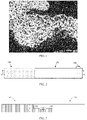
- FIG.1 shows that a blend containing primarily PBT, polycarbonate and glass fiber, but without TCDDM or TCDDM-modified polyester, i.e., C1, exhibits apparent phase separation under microscopy. This is indicative of the non-uniformity of micro-structure, and thereby non-uniform optical properties of C1.
- Comparative polyester resin which lacks TCDDM-modified polyester.
- Glass fiber at 30 wt% of the final composition, PBT resin at 69.1 wt% of the final composition, an antioxidant at 0.2 wt% of the final composition, a lubricant at 0.2 wt% of the final composition, and Na 2 CO 3 at 0.5 wt% of the final composition were placed in a mixing apparatus, such as a screw extruder, BRABENDER ® mixer, or a BANBURY ® mixer. The extrudate was cooled and pelleted.
- Comparative polyester resin which lacks TCDDM-modified polyester.
- Glass fiber at 30 wt% of the final composition, PBT resin at 69.6 wt% of the final composition, an antioxidant at 0.2 wt% of the final composition, and a lubricant at 0.2 wt% of the final composition were placed in a mixing apparatus, such as a screw extruder, BRABENDER ® mixer, or a BANBURY ® mixer. The extrudate was cooled and pelleted.
- Comparative polyester resin which lacks TCDDM-modified polyester.
- Glass fiber at 30 wt% of the final composition, PET resin at 69.6 wt% of the final composition, an antioxidant at 0.2 wt% of the final composition, and a lubricant at 0.2 wt% of the final composition were placed in a mixing apparatus, such as a screw extruder, BRABENDER ® mixer, or a BANBURY ® mixer. The extrudate was cooled and pelleted.
- INSTRON universal testing system 3366 was utilized to measure the bonding strength (or welding strength) of a laser welded assembly between each of the laser weldable compositions disclosed above and a laser absorbing joining part.
- INSTRON 3366 model has a force capacity of 10 kN (2,250 lbf), a maximum tensile speed at 500 mm/min, a vertical test space of 1193 mm and is equipped with a thermal cycle chamber.
- FIG. 2 and FIG. 3 demonstrate that a thin part (about 1.5 mm in thickness) of laser transmissive part 200 was placed in contact with a laser absorbing joining part 100, and the laser transmissive part 200 and the laser absorbing joining part 100 were laser welded to join together, leaving a seam 210 at the interface.
- the welded product was assayed with INSTRON 3366 in a tensile test, where tensile (pulling) force was applied at two ends - one end secured to the substrate for the laser transmissive part and the other end secured to the substrate for the laser absorbing part.
- the testing condition was accordingly to international standard ISO 527.
- LPKF TMG3 transmission tester was utilized to measure laser beam transmittance at various locations of each of compositions S1-S10 and comparative examples C1-C4, at a laser wavelength of 980 nm at a maximum laser power of 1 mW and a laser beam focus diameter of 1.2 mm.
- the LPKF TMG 3 transmission tester determines the amount of laser radiation transmitted through a sample of plastic pursuant to DVS Regulation 2243. The beam intensity measured without a sample in the beam path was set as 100% transmittance. A laser beam was then sent through the sample and its intensity was determined where the beam exits the sample.
- FIG. 3 depicts two spots 230 and 240 of a laser transmissive part for measurement of laser beam transmittance.
- Table 1 compares the bonding strengths and transmittance deviation of laser weldable compositions prepared with different content (S1-S10 and C1-C4).
- S10 and C4 are both PET-based compositions, but differ in the amount of TCDDM-derived polyester, wherein S10 has 16 wt% TCDDM-derived polyester B-4 and 53.6 wt% PET polyester in the composition whereas C4 does not have any TCDDM-derived polyester and all of its polyester is PET (taking up 69.6 wt%).
- the introduction of a comonomer that results in TCDDM residual to the polyester composition led to an improved bonding strength (14.73 MPa vs. 13.33 MPa) and a smaller laser transmittance deviation (4.5 vs. 6.2), thereby a more uniform microstructure and overall optical consistency.
- compositions of S1-S9 compared with compositions without the TCDDM copolymer (C1-C3), the compositions of S1-S9 have improved, uniform laser transmittance and bonding strength, thereby welded products including the compositions require stronger tensile strength to be torn apart.
- Table 1 Formula, analysis and measurements of ten sample compositions (S1-S10) and four comparative examples (C1-C4).
- the term “comprising” or “comprises” is used in reference to compositions, methods, and respective component(s) thereof, that are useful to an embodiment, yet open to the inclusion of unspecified elements, whether useful or not. It will be understood by those within the art that, in general, terms used herein are generally intended as “open” terms (e.g., the term “including” should be interpreted as “including but not limited to,” the term “having” should be interpreted as “having at least,” the term “includes” should be interpreted as “includes but is not limited to,” etc.).
- any numerical range recited herein is intended to include all sub-ranges subsumed therein.
- a range of "1 to 10" is intended to include all sub-ranges between and including the recited minimum value of 1 and the recited maximum value of 10; that is, having a minimum value equal to or greater than 1 and a maximum value of equal to or less than 10. Because the disclosed numerical ranges are continuous, they include every value between the minimum and maximum values.
Landscapes
- Engineering & Computer Science (AREA)
- Physics & Mathematics (AREA)
- Chemical & Material Sciences (AREA)
- Health & Medical Sciences (AREA)
- Mechanical Engineering (AREA)
- Optics & Photonics (AREA)
- Polymers & Plastics (AREA)
- Organic Chemistry (AREA)
- Chemical Kinetics & Catalysis (AREA)
- Medicinal Chemistry (AREA)
- Toxicology (AREA)
- Electromagnetism (AREA)
- Plasma & Fusion (AREA)
- Computer Networks & Wireless Communication (AREA)
- General Physics & Mathematics (AREA)
- Radar, Positioning & Navigation (AREA)
- Remote Sensing (AREA)
- Compositions Of Macromolecular Compounds (AREA)
Description
- The present disclosure relates to compositions with high and consistent laser transmissivity, and specifically polymeric laser weldable compositions and products.
- Laser welding is a technique in manufacturing whereby two or more pieces of material are joined together through the use of a laser beam. Metal and thermoplastics are two common types of material used in laser welding. Laser welding requires access to the weld zone from one side of the parts being welded, and the weld is formed as intense laser light rapidly heats the material. The beam of laser - light amplification by stimulated emission of radiation - is a single-phase light of a single wavelength with a low beam divergence and high energy content and thus will create heat when it strikes a surface. Therefore, laser welding allows for precise control of the welding area, aesthetically pleasing welding seams, and practically no damage to surrounding materials or sensitive electronics while no particulates are generated in the process.
- When plastic is being bonded using laser radiation, a focused laser beam passes through an upper, laser transmissive part to the interface of the two parts to be joined, and the laser light is turned into thermal energy as it is absorbed by the lower joining partner and some of the thermal energy is transferred to the upper layer in order for melting to occur in both parts. The heat created at the interface creates a molten weld seam and the two plastics are fused.
- Approaches to improving the transmittance of laser weldable materials include the additions of amorphous sections and nucleating agents in order to reduce scattering of laser beam. However, achieving high transmittance, therefore high bonding strength of the welded parts, while achieving uniformity of laser transmittance of the plastics has been challenging.
US 2019/337239 discloses laser weldable compositions based on a polyester like PET, a polyester modified by the use of a spiroglycol and glass fibers. - It is an objective of the present invention to provide new compositions which are laser weldable or laser transmissive. It is another objective of the present invention to provide new laser weldable compositions with improved, uniform laser transmittance and which affords strong welding strength. It is yet another objective of the present invention to provide laser welded products prepared from these compositions and uses thereof.
- Compositions are provided, which have improved, uniform laser transmissivity for a molded product prepared with the compositions, and the compositions include (1) one or more inorganic fillers, (2) one or more copolymers prepared with at least tricyclodecane dimethanol (TCDDM) or a compound of formula (I):

- In some embodiments, the one or more polyesters are a polyalkylene terephthalate-type polyester, and/or having a repeating unit of

- In some embodiments, the one or more inorganic fillers can be glass fiber, quartz, amorphous silica, colloidal silica, ceramics, zirconia, or a combination thereof.
- In some embodiments, the one or more copolymers is derived from at least TCDDM and terephthalic acid (PTA). Further embodiments of the one or more copolymers is derived from TCDDM, PTA and an alkanediol.
- Hence, some embodiments of the compositions include an inorganic filler, a TCDDM-modified polymer (e.g., a copolymer derived from TCDDM, PTA and 1,4-butanediol (BDO)), and a terephthalate-type polyester (e.g., PBT), wherein the content of TCDDM residual is between 1 wt% and 70 wt% in the composition.
- The compositions of the invention in various embodiments have a transmittance of not less than 10% at a wavelength of 800 nm to 1200 nm in terms of a thickness of 1.5 mm in a molded product comprising the compositions. Further embodiments provide the compositions have a transmittance at two or more locations of a product comprising the compositions being less than 12% difference. For example, the compositions have a transmittance of X1% at one location for a wavelength in terms of a thickness of 1.5 mm, and another transmittance of X2% at another location for the wavelength in terms of also a thickness of 1.5 mm, for a product comprising the compositions, and the difference in X1 and X2 is less than 12 such that the difference in transmittance of the wavelength at two locations is less than 12% of full transmittance.
- The above summary is not intended to represent every embodiment or every aspect of the present disclosure. Rather, the foregoing summary merely provides an example of some of the novel aspects and features set forth herein. Other features and advantages of the invention will become apparent from the following detailed description, taken in conjunction with the accompanying drawings, which illustrate, by way of example, various features of embodiments of the invention.
- Exemplary embodiments or comparative examples are illustrated in referenced figures. It is intended that the embodiments and figures disclosed herein are to be considered illustrative rather than restrictive.
-
FIG. 1 is a polarized light microscopic image of a comparative example ("C1" in Table 1 below) which was prepared with glass fiber (30 wt%), PBT resin (53.6 wt%), polycarbonate (15 wt%), an anti-oxidant (0.2 wt%) and a lubricant (0.2 wt%). The blend of PBT with polycarbonate in a composition shows apparent phase separation under microscopy, which indicates non-uniformity in at least the optical property of this composition. -
FIG. 2 and FIG. 3 are a plan view (from the top) and a sectional view (from the side), respectively, of a laser welded assembly having a laser absorbing joiningpart 100 on the left and a lasertransmissive part 200 made with the composition disclosed herein on the right. The plane upon which the sectional view (FIG. 3 ) is taken is indicated on the plan view (FIG. 2 ) from which the section is cut by a broken line. Awelding seam 210 is left at the interface between the lasertransmissive part 200 and the laser absorbing joiningpart 100. At a corner of the lasertransmissive part 200 is theinjection gate 220 for injecting melted composition into the mold. Separated by thewelding seam 210, alocation 230 closer to theinjection gate 220 is considered an initial position for testing the transmittance, "Ti"; and alocation 240 farther away from theinjection gate 220 is considered an ending position for testing the transmittance, "Te". The laser welded assembly will be tested for its welding strength in a universal testing machine (e.g., INSTRON 3366) by being pulled at one end of the laser absorbing joiningpart 100 and at another end of the lasertransmissive part 200 in opposite directions. - The term "polymer" generally includes homopolymers, copolymers (such as for example, block, graft, random and alternating copolymers), terpolymers, and blends and modifications thereof. Furthermore, unless otherwise specifically limited, the term "polymer" shall include all possible geometrical configurations of the material. These configurations include isotactic, syndiotactic and random symmetries.
- The term "polyester" is intended to embrace polymers wherein at least 85% of the recurring units are condensation products of dicarboxylic acids and dihydroxy alcohols with polymer linkages created by formation of an ester unit. This includes aromatic, aliphatic, saturated, and unsaturated di-acids and di-alcohols. The term "polyester" also includes copolymers (such as block, graft, random and alternating copolymers), blends, and modifications thereof. An example of a polyester is PBT which is a condensation product of BDO and PTA.
- The term "tricyclodecane dimethanol" (TCDDM) refers to a compound of formula (I):

- The term "terephthalic acid" refers to a compound of formula (II):

- Compositions are provided whose components include at least an inorganic filler, a copolymer, and a polyester. In some aspects, the compositions are a blend or mixture of the components. In some aspects, the compositions are laser transmissive. In some aspects, the compositions are in the form of a resin.
- Various embodiments provide that a copolymer in the composition is derived from or prepared from at least one, two, or three different (co-)monomers. In some embodiments, the monomers forming the copolymer include any one or more of compounds of formulae (I)-(III):

- In one embodiment, the copolymer is derived from comonomers represented by formula (I), formula (II) and formula (III). In some aspects, the copolymer comprises a repeating unit having a structure of


- In another embodiment the copolymer is derived from monomers represented by formula (I) and formula (II), without the compound of formula (III). In some aspects, the copolymer comprises a repeating unit having a structure of

- In one embodiment, the copolymer in the composition has one or more repeating units represented by one or more of formulae (IV)-(VI):


- In a further embodiment, the copolymer in the composition has a formula (VII):

- Further embodiments provide the copolymer is a polyester modified with one or more functional groups derived from a compound of formula (I) and the polyester before the modification can be the same or different from the polyester that is another component of the compositions.
- Various embodiments provide the fraction derived from the monomer represented by formula (I), or the content of TCDDM residual, in the copolymer is in an amount of about 1 wt%-5 wt%, 5 wt%-10 wt%, 10 wt%-15 wt%, 15 wt%-20 wt%, 20 wt%-25 wt%, 25 wt%-30 wt%, 30 wt%-40 wt%, 40 wt%-50 wt%, 50 wt%-60 wt%, 60 wt%-70 wt% relative to the copolymer. TCDDM residual in various embodiments refers to tricyclodecane dihydroxymethyl group and/or tricyclodecane methanol monohydroxymethyl end group in a polymer.
- Various aspects provide the composition is a polymer derived from comonomers containing a compound of formula (I), a compound of formula (II) and optionally a compound of formula (III), each independently optionally having one or more substitutions, in a molar ratio of compound of formula (I):compound of formula (II):compound of formula (III) (a:b:c), wherein a is a number greater than 0 and up to 10; b is a number greater than 0 and up to 10; and c is a number from 0 to 10. In one embodiment, c = 0 and a = b = 1. In one embodiment, b = a + c. In one embodiment, b > a. In one embodiment, c > b. In yet another embodiment, c > a, and c > b.
- In one embodiment, the composition comprises a copolymer derived from TCDDM, PTA and BDO. In a further embodiment, the composition comprises a copolymer derived from TCDDM, PTA and BDO, wherein the molar ratio of the TCDDM to the BDO is about 1:1, 1:2, 1:3, 1:4, 1:5, 1:6, 1:7, 1:8, 1:9, 1:10, 1:11, 1:12, 1:13, 1:14, or 1:15. In another embodiment, the composition comprises a copolymer derived from TCDDM, PTA and BDO, wherein the molar ratio of the TCDDM to the BDO is about 1:2. In another embodiment, the composition comprises a copolymer derived from TCDDM, PTA and BDO, wherein the molar ratio of the TCDDM to the BDO is about 1:4.98. Yet in another embodiment, the composition comprises a copolymer derived from TCDDM, PTA and BDO, wherein the molar ratio of the TCDDM to the BDO is about 1:14.02.
- In another embodiment, the composition comprises a copolymer derived from TCDDM and PTA, without BDO.
- Further embodiments provide the copolymer in a composition is in an amount between about 1 wt% to about 99 wt% relative to the composition. In some aspects, the copolymer in a composition is in an amount between about 10 wt% to about 70 wt% relative to the composition. In further aspects, the copolymer in a composition is in an amount between about 15 wt% to about 50 wt% relative to the composition. In one aspect, the copolymer in a composition is in an amount of about 11 wt%, 12 wt%, 13 wt%, 14 wt%, 15 wt%, 16 wt%, 17 wt%, 18 wt%, 19 wt% or 20 wt%. In another aspect the copolymer in a composition is in an amount of about 30 wt%. In yet another aspect the copolymer in a composition is in an amount of about 50 wt% relative to the composition.
- Various embodiments provide the content of TCDDM residual in a composition of the invention (the composition including at least an inorganic filler, a copolymer, and a polyester) is in an amount of about 0.1 wt%-1 wt%, 1 wt%-5 wt%, 5 wt%-10 wt%, 10 wt%-15 wt%, 15 wt%-20 wt%, 20 wt%-25 wt%, 25 wt%-30 wt%, 30 wt%-40 wt%, 40 wt%-50 wt%, 50 wt%-60 wt%, or 60 wt%-70 wt% relative to the composition. In one embodiment, the content of TCDDM residual is about 1 wt%, 2 wt%, 3 wt%, 4 wt%, 5 wt%, 6 wt%, 7 wt%, 8 wt%, 9 wt%, 10 wt%, 11 wt%, 12 wt%, 13 wt%, 14 wt%, 15 wt%, 16 wt%, 17 wt%, 18 wt%, 19 wt%, 20 wt%, 21 wt%, 22 wt%, 23 wt%, 24 wt%, 25 wt%, 26 wt%, 27 wt%, 28 wt%, 29 wt%, 30 wt%, 31 wt%, 32 wt%, 33 wt%, 34 wt%, or 35 wt%, or in a range between any two numbers listed, relative to the composition. In one embodiment, the content of TCDDM residual is about 1 wt%-7 wt% relative to the composition. In one embodiment, the content of TCDDM residual is about 7 wt%-14 wt% relative to the composition. In one embodiment, the content of TCDDM residual is about 14 wt%-20 wt% relative to the composition. In one embodiment, the content of TCDDM residual is about 20 wt%-35 wt% relative to the composition. In one embodiment, the content of TCDDM residual is about 35 wt%-50 wt% relative to the composition. In one embodiment, the content of TCDDM residual is about 50 wt%-70 wt% relative to the composition.
- Various embodiments provide that any one of the disclosed copolymers in the composition individually has an intrinsic viscosity of at least 0.6 dL/g, between about 0.7 dL/g and about 0.8 dL/g, or between about 0.6 dl/g and 1 dl/g. Further embodiments provide that any one of the disclosed copolymers in the composition individually has a melting temperature in a range from 225 °C to 150 °C, or about 225 °C, 220 °C, 215 °C, 210 °C, 205 °C, 200 °C, 195 °C, 190 °C, 185 °C, 180 °C, 175 °C, 170 °C, 165 °C, 160 °C, 155 °C, or 150 °C, or in a range between any of the two values. Without being bound by a theory, as the TCDDM residual amount increases in the copolymers, the melting point of the copolymers generally decreases, and the melting point of PBT itself is about 225 °C. Yet further embodiments provide that any one of the disclosed copolymers in the composition individually has a molecular weight of about 800-900 g/mol, 900-1000 g/mol, 1000-1100 g/mol, 1100-1200 g/mol, 1200-1300 g/mol, 1300-1400 g/mol, 1400-1500 g/mol, 1500-1600 g/mol, 1600-1700 g/mol, 1700-1800 g/mol, 1800-1900 g/mol, 1900-2000 g/mol, 2000-5000 g/mol, 5000-10000 g/mol, or greater. In some aspects, the copolymer and the polyester in the composition have similar molecular weights, e.g., difference being less than 10%, 20%, 30%, 40% or 50% compared to the larger molecular weight of the two.
- In one embodiment, the polyester is PBT. In another embodiment, the polyester is an aromatic polyester produced by polycondensing PTA or dimethyl terephthalate with BDO. Other embodiments provide the polyester is PET, PEI, PPT, PPI, PTT, PTI, PBT, PBI, a TPEE (e.g., polyethylene-p-phenylene ester ether, polyethylene-m-phenylene ester ether, polyethylene-o-phenylene ester ether, polytrimethylene-p-phenylene ester ether, polytrimethylene-m-phenylene ester ether, polytrimethylene-o-phenylene ester ether, polybutylene-p-phenylene ester ether, polybutylene-m-phenylene ester ether, polybutylene-o-phenylene ester ether), or a mixture or copolymer thereof. Yet other embodiments provide aliphatic polyesters that include the polyalkylene phenylene esters and polyalkylene phenylene ester ethers having a repeating unit represented by formula (VIII):

- Some embodiments provide the composition comprises a polyester of the above-mentioned structure and having an IV between 0.6 dL/g and 0.9 dL/g. Some embodiments provide the composition comprises a polyester of the above-mentioned structure and having an IV between 0.7 dL/g and 0.8 dL/g.
- Further embodiments provide that the composition comprises a polyester of the above-mentioned structure and having a carboxylic end group (CEG) content of no more than 15 meq/kg relative to the weight of the polyester. One embodiment provides that the composition comprises a polyester of the above-mentioned structure and having a CEG content of no more less than 14 meq/kg relative to the weight of the polyester. One embodiment provides that the composition comprises a polyester of the above-mentioned structure and having a CEG content of less than 13 meq/kg relative to the weight of the polyester. One embodiment provides that the composition comprises a polyester of the above-mentioned structure and having a CEG content of less than 12 meq/kg relative to the weight of the polyester. One embodiment provides that the composition comprises a polyester of the above-mentioned structure and having a CEG content of less than 11 meq/kg relative to the weight of the polyester. One embodiment provides that the composition comprises a polyester of the above-mentioned structure and having a CEG content of or less than 10 meq/kg relative to the weight of the polyester. In further aspects, a disclosed polyester has a CEG content in a range between 5 and 15 meq/kg, between 7 and 13 meq/kg, or between 8 and 12 meq/kg, relative to the weight of the polyester.
- In various embodiments, the polyester in a composition is in an amount of about 10 wt%-20 wt%, 20 wt%-30 wt%, 30 wt%-40 wt%, 40 wt%-50 wt%, 50 wt%-60 wt%, 60 wt%-70 wt%, 70 wt%-80 wt%, or 80 wt%-90 wt% relative to the composition. In one embodiment, the polyester in the composition is a polybutylene terephthalate in an amount of between about 15 wt% and 75 wt% relative to the composition. In another embodiment, the polyester in the composition is a polybutylene terephthalate in an amount of between about 35 wt% and 70 wt% relative to the composition.
- The compositions can contain, in addition to the above-described components, a fibrous, granular or platy filler depending on the purpose so as to obtain properties in the mechanical strength, thermal resistance, optional transmittance, dimensional stability (resistance to deformation and warp) and electric properties or to not have any adverse effects on the laser transmissivity. In various embodiments, a laser-transmitting filler or additive is preferred.
- Exemplary fibrous fillers as a component of the composition include a glass fiber, a silica fiber, an alumina fiber, a silica-alumina fiber, an aluminum silicate fiber, a zirconia fiber, a potassium titanate fiber, a whisker (e.g., a whisker of silicon carbide, alumina, boron nitride, or the like), and a wollastonite. Exemplary plate-like fillers include a talc, a mica, and a glass flake. Exemplary particulate fillers include a glass bead, a glass powder or a powdered glass, a milled fiber, a clay, an organized clay, a porcelain claim, potassium titanate, calcium carbonate, titanium oxide, a feldspathic mineral, and a graphite.
- In some embodiments, the compositions comprise, in addition to the above-mentioned components, an organic fiber, e.g., an aliphatic or aromatic polyamide, an aromatic polyester, an acrylic resin such as a polyacrylonitrile, a fiber formed from a rayon or the like, and/or a carbon fiber.
- Various embodiments provide the inorganic filler (e.g., glass fiber) is in an amount of about 0.1 wt%-1 wt%, 1 wt%-10 wt%, 10 wt%-20 wt%, 20 wt%-30 wt%, 30 wt%-40 wt%, 40 wt%-50 wt%, or 50 wt%-70 wt% in the composition. One embodiment provides the inorganic filler is in an amount of about 0.1 wt%-10 wt% in the composition. One embodiment provides the inorganic filler is in an amount of about 10 wt%-20 wt% in the composition. One embodiment provides the inorganic filler is in an amount of about 20 wt%-40 wt% in the composition. One embodiment provides the inorganic filler is in an amount of about 40 wt%-60 wt% in the composition. One embodiment provides the inorganic filler is in an amount of about 60 wt%-70 wt% in the composition.
- Various aspects of the compositions provide that each may further include one or more additives, modifiers or reinforcing agents to provide broad property profiles. Exemplary additives include stabilizers (e.g., ultraviolet absorbers), antioxidants (e.g., phosphites, phenols, quinones, phenothiazines), heat stabilizers, UV stabilizers, lubricants (e.g., nonionic lubricant such as emulsified or sulphonated mineral oil, cationic lubricant such as polyethylenimine salt, tetraethylenepentaamine, or a polyamine), mold release agents, catalyst deactivators, nucleating agent such as metal salts (e.g., sodium carbonate or sodium bicarbonate), crystallization accelerators or the like. In some embodiments, additives such as antioxidants, lubricant and nucleating agents are in combination in an amount of about 1%-5% in weight in the compositions.
- In further embodiments, the compositions disclosed herein each further include polycarbonate. In other embodiments, the compositions disclosed herein do not include polycarbonate. One embodiment provides a radar sensor comprising the composition, comprising:
- a. an inorganic filler
- b. a copolymer comprising a repeating unit derived from at least a monomer represented by formula (I) (TCCDM; tricyclodecane dimethanol) and c. a polyester,wherein the fraction derived from the monomer represented by formula (I) of the copolymer is between 1 % and 70 % in weight relative to the composition.
- Various embodiments provide a composition disclosed herein are in the form of a resin. The composition is typically prepared by mixing uniformly the components (e.g., a combination of at least the copolymers, the polyesters and inorganic fillers, and optionally other additives) in a controlled manner in a mixing machine, for instance a BANBURY® mixer, a BRABENDER® mixer, a roll mill, or an extruder (e.g., a screw extruder). In some aspects, the mixture is extruded, cooled and becomes a pellet; or is cut or molded into any shape (e.g., films, filaments, round, square, rectangle, particulates, microparticulates, or the like.) In some aspects to allow for even mixing, a mixing temperature is raised to about 150 °C-175 °C, 175 °C-200 °C, 200 °C-250 °C, 250 °C-300 °C, or 300 °C-350 °C. In one embodiment, the temperature for mixing is above the melting temperatures of the copolymer and of the polyester. In one embodiment, the temperature for mixing is above the melting temperature of the copolymer. In one embodiment, the temperature for mixing is above the melting temperature of the polyester. In yet another embodiment, the temperature for mixing is above the melting temperatures of the copolymer, of the polyester and of the inorganic filler.
- The copolymers are in various embodiments tricyclodecane dimethanol-modified polyesters. Tricyclodecane dimethanol-modified polyesters can be prepared by mixing the monomers (e.g., carboxylic acid-containing compounds, tricyclodecane dimethanol, and optionally another alcohol-containing compounds) optionally in the presence of a catalyst at a raised temperature to allow for esterification to proceed, e.g., between 180 °C-190 °C, 190 °C-200 °C, 200 °C-210 °C, 210 °C-220 °C, 220 °C-230 °C, 230 °C-240 °C, or 240 °C-250 °C, for a period of time. In various aspects, when esterification is about 85%, 86%, 87%, 88%, 89%, 90%, 91%, 92%, 93%, 94%, 95%, 96%, 97%, 98%, 99% or 100% completed (e.g., indicated by water content generated from the esterification reaction). The pressure in the reactor is reduced, e.g., to 0.1 mmHg. In various aspects, the esterification reaction is carried out in a controlled mixing environment whereby an intrinsic viscosity of the mixture (product) in a desirable range (e.g., at about 0.7 dL/g, or about 0.7-0.8 dL/g) is achieved by controlling the torque of the stirrer. An exemplary controlled manner in the mixing includes maintaining a controlled fluid level in the machine (e.g., no more than 35%, 30%, 25%, or 20%), a controlled viscosity of the mixture (e.g., no more than 75 Pa·s), and a controlled current for a continuous agitation of the reaction mixture.
- A product comprising or consisting of the compositions of the invention has a consistent light transmittance at different locations across the product, wherein the light transmittance for a wavelength between 800 nm and 1200 nm in terms of a product thickness of 1.5 mm is at most 12% difference at any two locations of the product comprising or consisting of the compositions of the invention. In some embodiments, a product made of the compositions of the invention has a light transmittance of X1% in one spot that is 1.5 mm in thickness or resulting in 1.5 mm path length for the light, and a second light transmittance of X2% in another spot that is 1.5 mm in thickness or resulting in 1.5 mm path length for the light, wherein the light is at a wavelength between 800 nm and 1200 nm, X1 ≥ 10, X2 ≥ 10, and |X1-X2| ≤ 12, and the two spot can be at least 1 mm apart, 2 mm apart, 3 mm apart, 4 mm apart, 5 mm apart, 6 mm apart, 7 mm apart, 8 mm apart, 9 mm apart, 1 cm apart, 2 cm apart, 3 cm apart, 4 cm apart, 5 cm apart, 10 cm apart, 20 cm apart, 30 cm apart, 40 cm apart, or 50 cm apart, or farther apart, hence the product made of the compositions of the invention can have a consistent (deviation |X1-X2| ≤ 12) light transmittance for a large area (volume). In another aspect, in terms of a composition of invention of 1.5 mm in thickness or resulting in 1.5 mm path length for a (e.g., laser) light wavelength, 20 ≤ X1 ≤ 35, 20 ≤ X2 ≤ 35, and |X1-X2| ≤ 12. Yet in another embodiment, in terms of a composition of invention of 1.5 mm in thickness or resulting in 1.5 mm path length for a (e.g., laser) light wavelength, the optical transmittance of the composition satisfies: (1) X1 is about any integer between 11 and 20 or in a range between any two integers from 11 to 20, X2 is about any integer between 11 and 20 or in a range between any two integers from 11 to 20, and |X1-X2| ≤ 5; (2) X1 is greater than 20 and smaller than 35, or in a range between any two integers from 21 to 34, X2 is greater than 20 and smaller than 35, or in a range between any two integers from 21 to 34, and |X1-X2| ≤ 12; or (3) X1 ≥ 35, X2 ≥ 35, and |X1-X2| ≤ 5. In another aspect, optical transmittance (X%) has a deviation |X1-X2| ≤ 5. In another aspect, optical transmittance (X%) has a deviation |X1-X2| ≤ 4. In another aspect, optical transmittance (X%) has a deviation |X1-X2| ≤ 3. In another aspect, optical transmittance (X%) has a deviation |X1-X2| ≤ 2. In another aspect, optical transmittance (X%) has a deviation |X1-X2| ≤ 1.
- In further embodiments, a product made of a composition of the invention may have different shapes or thicknesses, yet still consistent light transmittance at various spots/locations, taking into consideration the path length of light through the product. Optical transmittance is thickness dependent. For example, the absorbance of light through a thickness of a composition of the invention is proportional to the path length of the light through the composition. Transmittance (expressed in terms of percentage of light) is 100% minus absorbance (expressed in terms of percentage). Hence, a product made of a composition of the invention at various locations has light transmittance that is within 12% difference when comparing the normalized transmittance in terms of 1.5 mm thickness at the various locations.
- Various embodiments provide the compositions of the invention have a transmittance, Xi%, at a wavelength of 800 to 1200 nm in terms of a thickness of 1.5 mm in a molded product comprising the compositions, wherein X1 ≥ 10, and i = 1 indicates transmittance measurement at a first location, i = 2 indicates transmittance measurement at a second location, wherein |X1-X2| ≤ 12. In some embodiments, 10 ≤ X1 ≤ 75, 10 ≤ X2 ≤ 75, and |X1-X2| ≤ 12 for a wavelength of about 980 nm in terms of a thickness of 1.5 mm in a product comprising the compositions. In some embodiments, the compositions comprise an inorganic filler, a TCDDM-modified alkylene terephthalate-type polyester, and an alkylene terephthalate, and the compositions have a transmittance, Xi%, at a wavelength of about 980 nm in terms of a thickness of 1.5 mm in a molded product comprising the compositions, wherein 11 ≤ X1 ≤ 40, 11 ≤ X2 ≤ 40, and |X1-X2| ≤ 12. In some embodiments, the compositions comprise an inorganic filler, a TCDDM-modified alkylene terephthalate-type polyester, and an alkylene terephthalate, and the compositions have a transmittance, Xi%, at a wavelength of about 980 nm in terms of a thickness of 1.5 mm in a molded product comprising the compositions, wherein 11 ≤ X1 ≤ 20, 11 ≤ X2 ≤ 20, and |X1-X2| ≤ 5. In some embodiments, the compositions comprise an inorganic filler, a TCDDM-modified alkylene terephthalate-type polyester, and an alkylene terephthalate, and the compositions have a transmittance, Xi%, at a wavelength of about 980 nm in terms of a thickness of 1.5 mm in a molded product comprising the compositions, wherein 20 ≤ X1 ≤ 35, 20 ≤ X2 ≤ 35, and |X1-X2| ≤ 12. And in yet some embodiment, the compositions comprise an inorganic filler, a TCDDM-modified alkylene terephthalate-type polyester, and an alkylene terephthalate, and the compositions have a transmittance, Xi%, at a wavelength of about 980 nm in terms of a thickness of 1.5 mm in a molded product comprising the compositions, wherein 30 ≤ X1 ≤ 40, 30 ≤ X2 ≤ 40, and |X1-X2| ≤ 5.
- Further embodiments provide the transmittance at two or more positions of the molded product is within 5% variations and at each position not less than 10% for the wavelength of 800 to 1200 nm in terms of a thickness of 1.5 mm. For example, the compositions have a transmittance difference that is within a range of no more than 5% of total transmittance at various locations of a molded product comprising the compositions at a wavelength of about 980 nm in terms of a thickness of 1.5 mm, and the transmittance can range 10%-15%, 11%-16%, 12%-17%, 13%-18%, 14-19%, 15%-20%, 16%-21%, 17%-22%, 18%-23%, 19%-24%, 20%-25%, 21%-26%, 22%-27%, 23%-28%, 24%-29%, 25%-30%, 26%-31%, 27%-32%, 28%-33%, 29%-34%, 30%-35%, 31%-36%, 32%-37%, 33%-38%, 34%-39%, 35%-40%, 36%-41%, 37%-42%, 38%-43%, 39%-44%, 40%-45%, 41%-46%, 42%-47%, 43%-48%, 44%-49%, 45%-50%, 46%-51%, 47%-52%, 48%-53%, 49%-54%, 50%-55%, 51%-56%, 52%-57%, 53%-58%, 54%-59%, 55%-60%, 56%-61%, 57%-62%, 58%-63%, 59%-64%, 60%-65%, 61%-66%, 62%-67%, 63%-68%, 64%-69%, or 65%-70%. In other words, the compositions of the invention have a transmittance of not less than 10% at a wavelength of 800 to 1200 nm in terms of a thickness of 1.5 mm in a molded product comprising the compositions, and the transmittance, expressed in percentage, across the molded product is at most 1%, 2%, 3%, 4% or 5% transmittance different.
- The compositions in various embodiments comprise a TCDDM-modified copolymer, or a residual of TCDDM in the backbone and/or end group of the copolymer, and the copolymer is one component of the compositions. The TCDDM residual in the overall compositions of the invention is 1 wt% to 70 wt%. In some embodiment, the TCDDM residual in the overall compositions is 1 wt% to 10 wt%. In some embodiment, the TCDDM residual in the overall compositions is 10 wt% to 20 wt%. In some embodiment, the TCDDM residual in the overall compositions is 20 wt% to 30 wt%. In some embodiment, the TCDDM residual in the overall compositions is 30 wt% to 40 wt%. In some embodiment, the TCDDM residual in the overall compositions is 40 wt% to 50 wt%.
- Hence in one embodiment, a composition of the invention comprises (1) an inorganic filler, (2) a TCDDM-modified butylene terephthalate-type polyester, and (3) PBT, wherein the fraction derived from TCDDM (or TCDDM residual) is about 20 wt% (or between about 15 wt% and 25 wt%) in the TCDDM-modified butylene terephthalate-type polyester, and/or the TCDDM residual in the overall composition is about 1 wt% to 5 wt%, the compositions have a transmittance in the range between 13% and 20% at a wavelength of 800 to 1200 nm in terms of a thickness of 1.5 mm at any locations (e.g., across a distance of at least 1 cm, 2 cm, 3 cm, 4 cm, or 5 cm) in a molded product comprising the composition, wherein at two locations having a difference of about 3% to 4% in transmittance, and a laser welded product comprising a laser transmissive part made with the composition has a bonding strength of about 20 MPa or at least 20 MPa.
- In another embodiment, a composition of the invention comprises (1) an inorganic filler, (2) a TCDDM-modified butylene terephthalate-type polyester, and (3) PBT, wherein the fraction derived from TCDDM is about 8.5 wt% (or between about 5 wt% and 10 wt%) in the TCDDM-modified butylene terephthalate-type polyester, and/or the TCDDM residual in the overall composition is about 1.4 wt% (or between 0.5 wt% and 1.5 wt%), the compositions have a transmittance of about 12% (or between 11% and 13%) at a wavelength of 800 to 1200 nm in terms of a thickness of 1.5 mm at any locations (e.g., across a distance of at least 1 cm, 2 cm, 3 cm, 4 cm, or 5 cm) in a molded product comprising the composition, wherein at two locations having a difference of about 0.1% to 1% in transmittance, and a laser welded product comprising a laser transmissive part made with the composition has a bonding strength of about 20 MPa or at least 20 MPa.
- In another embodiment, a composition of the invention comprises (1) an inorganic filler, (2) a TCDDM-modified butylene terephthalate-type polyester, and (3) PBT, wherein the fraction derived from TCDDM is about 36 wt% (or between about 30 wt% and 40 wt%) in the TCDDM-modified butylene terephthalate-type polyester, and/or the TCDDM residual in the overall composition is about 5.7 wt% (or between 4 wt% and 7 wt%), the compositions have a transmittance of about 15% (or between 13% and 17% or at least 14%) at a wavelength of 800 to 1200 nm in terms of a thickness of 1.5 mm at any locations (e.g., across a distance of at least 1 cm, 2 cm, 3 cm, 4 cm, or 5 cm) in a molded product comprising the composition, wherein at two locations having a difference of about 2% to 3% in transmittance, and a laser welded product comprising a laser transmissive part made with the composition has a bonding strength of at least 20 MPa.
- In another embodiment, a composition of the invention comprises (1) an inorganic filler, (2) a TCDDM-modified butylene terephthalate-type polyester, and (3) PBT, wherein the fraction derived from TCDDM is about 60 wt% (or between about 50 wt% and 70 wt%) in the TCDDM-modified butylene terephthalate-type polyester, and/or the TCDDM residual in the overall composition is about 10 wt% (or at least 8 wt%), the compositions have a transmittance of about 11% (or at least 10%) at a wavelength of 800 to 1200 nm in terms of a thickness of 1.5 mm at any locations (e.g., across a distance of at least 1 cm, 2 cm, 3 cm, 4 cm, or 5 cm) in a molded product comprising the composition, wherein at two locations having a difference of about 0.5% (or less than 1%) in transmittance, and a laser welded product comprising a laser transmissive part made with the composition has a bonding strength of about 20 MPa or at least 17 MPa.
- In another embodiment, a composition of the invention comprises (1) an inorganic filler, (2) a TCDDM-modified butylene terephthalate-type polyester, and (3) PBT, wherein the fraction derived from TCDDM is about 60 wt% (or between about 50 wt% and 70 wt%) in the TCDDM-modified butylene terephthalate-type polyester, and/or the TCDDM residual in the overall composition is about 18 wt% (or at least 15 wt%), the compositions have a transmittance of about 12% (or at least 11%) at a wavelength of 800 to 1200 nm in terms of a thickness of 1.5 mm at any locations (e.g., across a distance of at least 1 cm, 2 cm, 3 cm, 4 cm, or 5 cm) in a molded product comprising the composition, wherein at two locations having a difference of about 0.1% (or less than 0.5%) in transmittance, and a laser welded product comprising a laser transmissive part made with the composition has a bonding strength of about 20 MPa or at least 17 MPa.
- In another embodiment, a composition of the invention comprises (1) an inorganic filler, (2) a TCDDM-modified butylene terephthalate-type polyester, and (3) PBT, wherein the fraction derived from TCDDM is about 60 wt% (or between about 50 wt% and 70 wt%) in the TCDDM-modified butylene terephthalate-type polyester, and/or the TCDDM residual in the overall composition is about 30 wt% (or at least 25 wt%), the compositions have a transmittance of about 38% (or at least 35%; or between 35% and 45%) at a wavelength of 800 to 1200 nm in terms of a thickness of 1.5 mm at any locations (e.g., across a distance of at least 1 cm, 2 cm, 3 cm, 4 cm, or 5 cm) in a molded product comprising the composition, wherein at two locations having a difference of about 0.3% (or less than 0.5%) in transmittance, and a laser welded product comprising a laser transmissive part made with the composition has a bonding strength of about 18 MPa or at least 17 MPa.
- In one embodiment, a composition of the invention comprises (1) an inorganic filler, (2) a TCDDM-modified butylene terephthalate-type polyester, and (3) PBT, wherein the fraction derived from TCDDM is about 20 wt% (or between about 15 wt% and 25 wt%) in the TCDDM-modified butylene terephthalate-type polyester, and/or the TCDDM residual in the overall composition is about 6 wt% (or between 4 wt% and 10 wt%), the compositions have a transmittance of at least 20% (or in the range between 20% and 40% at a wavelength of 800 to 1200 nm in terms of a thickness of 1.5 mm at any locations (e.g., across a distance of at least 1 cm, 2 cm, 3 cm, 4 cm, or 5 cm) in a molded product comprising the composition, wherein at two locations having a difference of about 11% (or less than 12%) in transmittance, and a laser welded product comprising a laser transmissive part made with the composition has a bonding strength of about 22 MPa or at least 20 MPa.
- In another embodiment, a composition of the invention comprises (1) an inorganic filler, at about 10 wt% in the overall composition, (2) a TCDDM-modified butylene terephthalate-type polyester, and (3) PBT, wherein the fraction derived from TCDDM is about 60 wt% (or between about 50 wt% and 70 wt%) in the TCDDM-modified butylene terephthalate-type polyester, and/or the TCDDM residual in the overall composition is about 10 wt% (or between about 5 wt% and 15 wt%), the compositions have a transmittance of about 12% (or between 10% and 15%) at a wavelength of 800 to 1200 nm in terms of a thickness of 1.5 mm at any locations (e.g., across a distance of at least 1 cm, 2 cm, 3 cm, 4 cm, or 5 cm) in a molded product comprising the composition, wherein at two locations having a difference of about 0.2% (or less than 0.5%) in transmittance, and a laser welded product comprising a laser transmissive part made with the composition has a bonding strength of about 19 MPa or at least 17 MPa.
- In another embodiment, a composition of the invention comprises (1) an inorganic filler, at about 50 wt% in the overall composition, (2) a TCDDM-modified butylene terephthalate-type polyester, and (3) PBT, wherein the fraction derived from TCDDM is about 60 wt% (or between about 50 wt% and 70 wt%) in the TCDDM-modified butylene terephthalate-type polyester, and/or the TCDDM residual in the overall composition is about 10 wt% (or between about 5 wt% and 15 wt%), the compositions have a transmittance of about 12% (or between 10% and 15%) at a wavelength of 800 to 1200 nm in terms of a thickness of 1.5 mm at any locations (e.g., across a distance of at least 1 cm, 2 cm, 3 cm, 4 cm, or 5 cm) in a molded product comprising the composition, wherein at two locations having a difference of about 0.3% (or less than 0.5%) in transmittance, and a laser welded product comprising a laser transmissive part made with the composition has a bonding strength of about 21 MPa or at least 19 MPa.
- In another embodiment, a composition of the invention comprises (1) an inorganic filler, (2) a TCDDM-modified butylene terephthalate-type polyester, and (3) PET, wherein the fraction derived from TCDDM is about 60 wt% (or between about 50 wt% and 70 wt%) in the TCDDM-modified butylene terephthalate-type polyester, and/or the TCDDM residual in the overall composition is about 10 wt% (or between about 5 wt% and 15 wt%), the compositions have a transmittance of about 70% (or at least 65%) at a wavelength of 800 to 1200 nm in terms of a thickness of 1.5 mm at any locations (e.g., across a distance of at least 1 cm, 2 cm, 3 cm, 4 cm, or 5 cm) in a molded product comprising the composition, wherein at two locations having a difference of about 4.5% (or less than 5%) in transmittance, and a laser welded product comprising a laser transmissive part made with the composition has a bonding strength of about 14 MPa or at least 12 MPa.
- Further preferable embodiments provide a molded product comprising the composition of the invention has a welding strength or bonding strength of at least 19 MPa, that is, a tensile strength of at least 19 MPa is required to break apart the molded product at the welding interface or seam. This is stronger compared to a molded product prepared from comparative example compositions (e.g., shown as C1-C4 in table 1) which do not include the TCDDM-modified polyester or which do not contain TCDDM or residual of TCDDM in the compositions, wherein the molded product has a bonding strength of less than 19 MPa.
- The compositions of the invention have various utilities, for instance in the form of a resin, as mechanical parts (e.g., cover of motor, housing for electric tool, impeller for pump, parts for motorcar), electric or electronic parts (e.g., connector, parts of hair dryer, flexible printed circuit, parts of color television, etc.), as helmets, baths, containers for drugs and foodstuffs, parts of cigarette lighters, or the like.
- In the description above and in the examples that follow, the following test methods were employed to determine various reported characteristics and properties. ASTM refers to the American Society for Testing and Materials, ISO stands for the International Organization for Standardization, and CNS refers to the National Standards of the Republic of China.
- Intrinsic Viscosity (IV) is a measure of the inherent resistance to flow for a polymer solution and was determined by ASTM D2857, which is hereby incorporated by reference, and is reported in dL/g. The solvent and temperature used to study the IV of the presently disclosed polyester (e.g., PBT) in a glass capillary viscometer was o-chlorophenol at a polymer concentration of 1g/dL (or 0.2 g polyester/20 mL solvent) at 35 °C.
- Carboxylic end group (CEG) content, also referred to as CEG concentration, was measured by titration. A solution of the polyester dissolved in o-cresol, including potassium chloride (KCl) at a concentration of 0.01 M in the solution, was titrated with ethanolic potassium hydroxide solution (potassium hydroxide concentration at 0.05 M).
- Strength, or grab tensile strength, is a measure of the breaking strength of a sheet of fibers and was determined by ASTM D5034 standard which is hereby incorporated by reference, and is reported in Newtons or in kilogram·force. On earth's surface, 1 kgf is about 9.8 N. The bonding strength, or welding strength, of welded products comprising the compositions disclosed herein is measured with INSTRON universal testing system 3366, where tensile (pulling) force was applied at two ends - one end secured to the substrate for the laser transmissive part and the other end secured to the substrate for the laser absorbing part. The testing condition was accordingly to international standard ISO 527.
- It should be understood within the scope of the present disclosure, the above-mentioned technical features and technical features mentioned below (such as examples) can be combined freely and mutually to form new or preferred technical solutions, which are omitted for brevity.
- The following examples are not intended to limit the scope of the claims to the invention, but are rather intended to be exemplary of certain embodiments. Any variations in the exemplified processes which occur to the skilled artisan are intended to fall within the scope of the invention.
- Step 1: prepare TCDDM-modified polyester. 900 g of PTA (molecular weight 166 g/mol; 5.42 moles, limiting reagent), 610 g of BDO (molecular weight 90.12 g/mol; 6.77 moles), and 267 g of TCDDM (molecular weight 196.28 g/mol; 1.36 moles) were placed in a reactor and heated to 200-230 °C in the presence of a titanium-based catalyst, while being stirred slowly under a nitrogen atmosphere. When collected at 95% theoretical water, the esterification was considered completed. Then the pressure was reduced to 0.1 mmHg and maintained at <0.1mmHg at 240-250°C. Excess amount of BDO (
boiling point 230 °C) was removed at this elevated temperature by applying low vacuum to reduce the pressure in the reactor. The intrinsic viscosity of polyester is controlled at 0.7 dL/g (or about 0.7-0.8 dL/g) by torque of the stirrer, whereby a TCDDM-derived polyester ("B-1") was obtained (containing 19.96 wt% TCDDM residual). TCDDM-derived polyester B-1 had an intrinsic viscosity between 0.7 dL/g and 0.8 dL/g, a glass transition temperature (Tg) of 54 ± 2 °C, and a melting temperature (Tm) of 170 ± 5 °C. - Step 2: incorporation of TCDDM-modified polyester B-1 and preparation of polyester resin sample 1 ("S1"). Glass fiber at 30 wt% of the final composition, TCDDM-derived polyester B-1 at 16 wt% of the final composition, PBT resin at 53.6 wt% of the final composition, an antioxidant at 0.2 wt% of the final composition, and a lubricant at 0.2 wt% of the final composition were placed in a mixing apparatus, such as a screw extruder, BRABENDER® mixer, or a BANBURY® mixer. The extrudate was cooled and pelleted. Alternatively, individual components could be premixed to form pellets, then the remaining components were individually added and/or after they were likewise mixed. The mixing temperatures were generally from 230 °C to 290 °C.
- Hence, the content of TCDDM residual in the final resin composition S1 was

- Step 1: prepare TCDDM-modified polyester. 900 g of PTA (5.42 moles, limiting reagent), 682.5 g of BDO (7.57 moles), and 106.8 g of TCDDM (0.54 moles) were placed in a reactor and heated to 200-230 °C in the presence of a titanium-based catalyst, while being stirred slowly under a nitrogen atmosphere. When collected at 95% theoretical water, the esterification was considered completed. Then the pressure was reduced to 0.1 mmHg and maintained at <0.1mmHg at 240-250°C. Excess amount of BDO (
boiling point 230 °C) was removed at this elevated temperature by applying low vacuum to reduce the pressure in the reactor. The intrinsic viscosity of polyester is controlled at 0.7 dL/g (or about 0.7-0.8 dL/g) by torque of the stirrer, whereby a TCDDM-derived polyester ("B-2", containing 8.53 wt% TCDDM residual) was obtained. - Step 2: incorporation of TCDDM-modified polyester B-2 and preparation of polyester resin sample 2 ("S2"). Glass fiber at 30 wt% of the final composition, TCDDM-derived polyester B-2 at 16 wt% of the final composition, PBT resin at 53.6 wt% of the final composition, an antioxidant at 0.2 wt% of the final composition, and a lubricant at 0.2 wt% of the final composition were placed in a mixing apparatus, such as a screw extruder, BRABENDER® mixer, or a BANBURY® mixer. The extrudate was cooled and pelleted. Alternatively, individual components could be premixed to form pellets, then the remaining components were individually added and/or after they were likewise mixed. The mixing temperatures were generally from 230 °C to 290 °C.
- Hence, the content of TCDDM residual in the final resin composition S2 was 8.53

- Step 1: prepare TCDDM-modified polyester. 900 g of PTA (5.42 moles, limiting reagent), 490 g of BDO (5.44 moles), and 534 g of TCDDM (2.72 moles) were placed in a reactor and heated to 200-230 °C in the presence of a titanium-based catalyst, while being stirred slowly under a nitrogen atmosphere. When collected at 95% theoretical water, the esterification was considered completed. Then the pressure was reduced to 0.1 mmHg and maintained at <0.1mmHg at 240-250°C. Excess amount of BDO (
boiling point 230 °C) was removed at this elevated temperature by applying low vacuum to reduce the pressure in the reactor. The intrinsic viscosity of polyester is controlled at 0.7 dL/g (or about 0.7-0.8 dL/g) by torque of the stirrer, whereby a TCDDM-derived polyester ("B-3", containing 36.03 wt% TCDDM residual) was obtained. - Step 2: incorporation of TCDDM-modified polyester B-3 and preparation of polyester resin sample 3 ("S3"). Glass fiber at 30 wt% of the final composition, TCDDM-derived polyester B-3 at 16 wt% of the final composition, PBT resin at 53.6 wt% of the final composition, an antioxidant at 0.2 wt% of the final composition, and a lubricant at 0.2 wt% of the final composition were placed in a mixing apparatus, such as a screw extruder, BRABENDER® mixer, or a BANBURY® mixer. The extrudate was cooled and pelleted. Alternatively, individual components could be premixed to form pellets, then the remaining components were individually added and/or after they were likewise mixed. The mixing temperatures were generally from 230 °C to 290 °C.
- Hence, the content of TCDDM residual in the final resin composition S3 was

- Step 1: prepare TCDDM-modified polyester. 900 g of PTA (5.42 moles, limiting reagent) and 1063 g of TCDDM (5.42 moles) were placed in a reactor and heated to 200-230 °C in the presence of a titanium-based catalyst, while being stirred slowly under a nitrogen atmosphere. When collected at 95% theoretical water, the esterification was considered completed. Then the pressure was reduced to 0.1 mmHg and maintained at <0.1mmHg at 240-250°C. The intrinsic viscosity of polyester is controlled at 0.7 dL/g (or about 0.7-0.8 dL/g) by torque of the stirrer, whereby a TCDDM-derived polyester ("B-4", containing 60.13 wt% TCDDM residual) was obtained.
- Step 2: incorporation of TCDDM-modified polyester B-4 and preparation of polyester resin sample 4 ("S4"). Glass fiber at 30 wt% of the final composition, TCDDM-derived polyester B-4 at 16 wt% of the final composition, PBT resin at 53.6 wt% of the final composition, an antioxidant at 0.2 wt% of the final composition, and a lubricant at 0.2 wt% of the final composition were placed in a mixing apparatus, such as a screw extruder, BRABENDER® mixer, or a BANBURY® mixer. The extrudate was cooled and pelleted. Alternatively, individual components could be premixed to form pellets, then the remaining components were individually added and/or after they were likewise mixed. The mixing temperatures were generally from 230 °C to 290 °C.
- Hence, the content of TCDDM residual in the final resin composition S4 was

- Incorporation of TCDDM-modified polyester B-4 (of Example 4) and preparation of polyester resin sample 5 ("S5"). Glass fiber at 30 wt% of the final composition, TCDDM-derived polyester B-4 at 30 wt% of the final composition, PBT resin at 39.6 wt% of the final composition, an antioxidant at 0.2 wt% of the final composition, and a lubricant at 0.2 wt% of the final composition were placed in a mixing apparatus, such as a screw extruder, BRABENDER® mixer, or a BANBURY® mixer. The extrudate was cooled and pelleted.
- Hence, the content of TCDDM residual in the final resin composition S5 was

- Incorporation of TCDDM-modified polyester B-4 (of Example 4) and preparation of polyester resin sample 6 ("S6"). Glass fiber at 30 wt% of the final composition, TCDDM-derived polyester B-4 at 50 wt% of the final composition, PBT resin at 19.6 wt% of the final composition, an antioxidant at 0.2 wt% of the final composition, and a lubricant at 0.2 wt% of the final composition were placed in a mixing apparatus, such as a screw extruder, BRABENDER® mixer, or a BANBURY® mixer. The extrudate was cooled and pelleted.
- Hence, the content of TCDDM residual in the final resin composition S6 was

- Incorporation of TCDDM-modified polyester B-1 (of Example 1) and preparation of polyester resin sample 7 ("S7"). Glass fiber at 30 wt% of the final composition, TCDDM-derived polyester B-1 at 30 wt% of the final composition, PBT resin at 39.6 wt% of the final composition, an antioxidant at 0.2 wt% of the final composition, and a lubricant at 0.2 wt% of the final composition were placed in a mixing apparatus, such as a screw extruder, BRABENDER® mixer, or a BANBURY® mixer. The extrudate was cooled and pelleted.
- Hence, the content of TCDDM residual in the final resin composition S7 was

- Incorporation of TCDDM-modified polyester B-4 (of Example 4) and preparation of polyester resin sample 8 ("S8"). Glass fiber at 10 wt% of the final composition, TCDDM-derived polyester B-4 at 16 wt% of the final composition, PBT resin at 73.6 wt% of the final composition, an antioxidant at 0.2 wt% of the final composition, and a lubricant at 0.2 wt% of the final composition were placed in a mixing apparatus, such as a screw extruder, BRABENDER® mixer, or a BANBURY® mixer. The extrudate was cooled and pelleted.
- Hence, the content of TCDDM residual in the final resin composition S8 was

- Incorporation of TCDDM-modified polyester B-4 (of Example 4) and preparation of polyester resin sample 9 ("S9"). Glass fiber at 50 wt% of the final composition, TCDDM-derived polyester B-4 at 16 wt% of the final composition, PBT resin at 33.6 wt% of the final composition, an antioxidant at 0.2 wt% of the final composition, and a lubricant at 0.2 wt% of the final composition were placed in a mixing apparatus, such as a screw extruder, BRABENDER® mixer, or a BANBURY® mixer. The extrudate was cooled and pelleted.
- Hence, the content of TCDDM residual in the final resin composition S9 was

- Incorporation of TCDDM-modified polyester B-4 (of Example 4) and preparation of polyester resin sample 10 ("S10"). Glass fiber at 30 wt% of the final composition, TCDDM-derived polyester B-4 at 16 wt% of the final composition, PET resin at 53.6 wt% of the final composition, an antioxidant at 0.2 wt% of the final composition, and a lubricant at 0.2 wt% of the final composition were placed in a mixing apparatus, such as a screw extruder, BRABENDER® mixer, or a BANBURY® mixer. The extrudate was cooled and pelleted.
- Hence, the content of TCDDM residual in the final resin composition S10 was

- Preparation of comparative polyester resin ("C1") which lacks TCDDM-modified polyester. Glass fiber at 30 wt% of the final composition, PBT resin at 53.6 wt% of the final composition, polycarbonate at 16 wt% of the final composition, an antioxidant at 0.2 wt% of the final composition, and a lubricant at 0.2 wt% of the final composition were placed in a mixing apparatus, such as a screw extruder, BRABENDER® mixer, or a BANBURY® mixer. The extrudate was cooled and pelleted.
-
FIG.1 shows that a blend containing primarily PBT, polycarbonate and glass fiber, but without TCDDM or TCDDM-modified polyester, i.e., C1, exhibits apparent phase separation under microscopy. This is indicative of the non-uniformity of micro-structure, and thereby non-uniform optical properties of C1. - Preparation of comparative polyester resin ("C2") which lacks TCDDM-modified polyester. Glass fiber at 30 wt% of the final composition, PBT resin at 69.1 wt% of the final composition, an antioxidant at 0.2 wt% of the final composition, a lubricant at 0.2 wt% of the final composition, and Na2CO3 at 0.5 wt% of the final composition were placed in a mixing apparatus, such as a screw extruder, BRABENDER® mixer, or a BANBURY® mixer. The extrudate was cooled and pelleted.
- Preparation of comparative polyester resin ("C3") which lacks TCDDM-modified polyester. Glass fiber at 30 wt% of the final composition, PBT resin at 69.6 wt% of the final composition, an antioxidant at 0.2 wt% of the final composition, and a lubricant at 0.2 wt% of the final composition were placed in a mixing apparatus, such as a screw extruder, BRABENDER® mixer, or a BANBURY® mixer. The extrudate was cooled and pelleted.
- Preparation of comparative polyester resin ("C4") which lacks TCDDM-modified polyester. Glass fiber at 30 wt% of the final composition, PET resin at 69.6 wt% of the final composition, an antioxidant at 0.2 wt% of the final composition, and a lubricant at 0.2 wt% of the final composition were placed in a mixing apparatus, such as a screw extruder, BRABENDER® mixer, or a BANBURY® mixer. The extrudate was cooled and pelleted.
- INSTRON universal testing system 3366 was utilized to measure the bonding strength (or welding strength) of a laser welded assembly between each of the laser weldable compositions disclosed above and a laser absorbing joining part. INSTRON 3366 model has a force capacity of 10 kN (2,250 lbf), a maximum tensile speed at 500 mm/min, a vertical test space of 1193 mm and is equipped with a thermal cycle chamber.
FIG. 2 and FIG. 3 demonstrate that a thin part (about 1.5 mm in thickness) of lasertransmissive part 200 was placed in contact with a laser absorbing joiningpart 100, and the lasertransmissive part 200 and the laser absorbing joiningpart 100 were laser welded to join together, leaving aseam 210 at the interface. The welded product was assayed with INSTRON 3366 in a tensile test, where tensile (pulling) force was applied at two ends - one end secured to the substrate for the laser transmissive part and the other end secured to the substrate for the laser absorbing part. The testing condition was accordingly to international standard ISO 527. - To measure the uniformity of laser beam transmittance, therefore microscopic uniformity in structure of the composition, LPKF TMG3 transmission tester was utilized to measure laser beam transmittance at various locations of each of compositions S1-S10 and comparative examples C1-C4, at a laser wavelength of 980 nm at a maximum laser power of 1 mW and a laser beam focus diameter of 1.2 mm. The
LPKF TMG 3 transmission tester determines the amount of laser radiation transmitted through a sample of plastic pursuant to DVS Regulation 2243. The beam intensity measured without a sample in the beam path was set as 100% transmittance. A laser beam was then sent through the sample and its intensity was determined where the beam exits the sample. The laser transmittance (T%) though a molded product prepared with any of the compositions disclosed herein was tested at least at two locations of the molded product. The difference between the two transmittance levels at two locations (or the difference between a highest and a lowest transmittance level if more than two locations were tested) was calculated as the laser transmittance deviation (T% deviation).FIG. 3 depicts twospots - Table 1 compares the bonding strengths and transmittance deviation of laser weldable compositions prepared with different content (S1-S10 and C1-C4).
- For example, S10 and C4 are both PET-based compositions, but differ in the amount of TCDDM-derived polyester, wherein S10 has 16 wt% TCDDM-derived polyester B-4 and 53.6 wt% PET polyester in the composition whereas C4 does not have any TCDDM-derived polyester and all of its polyester is PET (taking up 69.6 wt%). The introduction of a comonomer that results in TCDDM residual to the polyester composition led to an improved bonding strength (14.73 MPa vs. 13.33 MPa) and a smaller laser transmittance deviation (4.5 vs. 6.2), thereby a more uniform microstructure and overall optical consistency.
- Further, compared with compositions without the TCDDM copolymer (C1-C3), the compositions of S1-S9 have improved, uniform laser transmittance and bonding strength, thereby welded products including the compositions require stronger tensile strength to be torn apart.
Table 1. Formula, analysis and measurements of ten sample compositions (S1-S10) and four comparative examples (C1-C4). Formula of Compositions S1 S2 S3 S4 S5 S6 S7 S8 S9 S10 C1 C2 C3 C4 (A) Glass fiber (wt%) 30 30 30 30 30 30 30 10 50 30 30 30 30 30 (B-1) polyester containing 19.96wt% TCDDM residual 16 30 (B-2) polyester containing 8.53wt% TCDDM residual 16 (B-3) polyester containing 36.03wt% TCDDM residual 16 (B-4) polyester containing 60.13wt% TCDDM residual 16 30 50 16 16 16 (C-1) PBT resin (wt%) 53.6 53.6 53.6 53.6 39.6 19.6 39.6 73.6 33.6 53.6 69.1 69.6 (C-2) PET resin (wt%) 53.6 69.6 Polycarbonate (wt%) 16 Anti-Oxidant (wt%) 0.2 0.2 0.2 0.2 0.2 0.2 0.2 0.2 0.2 0.2 0.2 0.2 0.2 0.2 Lubricant (wt%) 0.2 0.2 0.2 0.2 0.2 0.2 0.2 0.2 0.2 0.2 0.2 0.2 0.2 0.2 Na2CO3 (wt%) 0.5 Content of TCDDM residual in final composition (wt%) 3.19 1.36 5.76 9.62 18.04 30.07 5.99 9.62 9.62 9.62 0 0 0 0 Measurement & Test result Bonding Strength (MPa) 21.7 20.84 23.01 19.23 20.65 18.89 22.8 19.42 21.34 14.73 18.94 17.65 2.59 13.33 Ti% at 1.5mm 14.90% 12.00% 14.40% 11.80% 12.80% 38.10% 23.40% 12.50% 12.60% 73.50% 23.60% 46.70% 10.30% 70.60% Te% at 1.5mm 18.20% 12.30% 16.90% 11.30% 12.90% 37.80% 34.90% 12.30% 12.90% 69.00% 55.60% 40.60% 11.00% 64.40% T% Deviation |Ti - Te| 3.3 0.3 2.5 0.5 0.1 0.3 11.5 0.2 0.3 4.5 32 6.1 0.7 6.2 - The foregoing description of various embodiments of the invention known to the applicant at this time of filing the application has been presented and is intended for the purposes of illustration and description. The present description is not intended to be exhaustive nor limit the invention to the precise form disclosed and many modifications and variations are possible in the light of the above teachings. The embodiments described serve to explain the principles of the invention and its practical application and to enable others skilled in the art to utilize the invention in various embodiments and with various modifications as are suited to the particular use contemplated. Therefore, it is intended that the invention not be limited to the particular embodiments disclosed for carrying out the invention.
- As used herein the term "comprising" or "comprises" is used in reference to compositions, methods, and respective component(s) thereof, that are useful to an embodiment, yet open to the inclusion of unspecified elements, whether useful or not. It will be understood by those within the art that, in general, terms used herein are generally intended as "open" terms (e.g., the term "including" should be interpreted as "including but not limited to," the term "having" should be interpreted as "having at least," the term "includes" should be interpreted as "includes but is not limited to," etc.). Although the open-ended term "comprising," as a synonym of terms such as including, containing, or having, is used herein to describe and claim the invention, the present invention, or embodiments thereof, may alternatively be described using alternative terms such as "consisting of' or "consisting essentially of."
- Unless otherwise indicated, all numbers expressing quantities should be understood as modified in all instances by the term "about." The term "about" when may mean ±5% (e.g., ±4%, ±3%, ±2%, ±1%) of the value being referred to.
- Where a range of values is provided, each numerical value between and including the upper and lower limits of the range is contemplated as disclosed herein. It should be understood that any numerical range recited herein is intended to include all sub-ranges subsumed therein. For example, a range of "1 to 10" is intended to include all sub-ranges between and including the recited minimum value of 1 and the recited maximum value of 10; that is, having a minimum value equal to or greater than 1 and a maximum value of equal to or less than 10. Because the disclosed numerical ranges are continuous, they include every value between the minimum and maximum values.
Claims (15)
- A composition, comprising:a. an inorganic filler,b. a copolymer comprising a repeating unit derived from at least a monomer represented by formula (I):
 c. a polyester,
wherein the fraction derived from the monomer represented by formula (I) of the copolymer is between 1 % and 70 % in weight relative to the composition. - The composition of claim 1, wherein the polyester comprises a phthalate-type repeating unit having a structure:

- The composition of claim 1 or 2, wherein the polyester is selected from the group consisting of polybutylene terephthalate (PBT), polybutylene isophthalate, polyethylene terephthalate, polyethylene isophthalate, polytrimethylene terephthalate, polytrimethylene isophthalate, a thermoplastic polyether-ester elastomer, and a combination thereof, preferably the polyester comprises PBT.
- The composition of any one of claims 1 to 3, wherein the inorganic filler is selected from the group consisting of glass fiber, quartz, amorphous silica, colloidal silica, ceramics, zirconia, and a combination thereof.
- The composition of any one of claims 1 to 4, wherein the copolymer is derived from monomers comprising the monomer represented by the formula (I) and a monomer represented by formula (II):


- The composition of claim 5, wherein the monomers that the copolymer derives from further comprises a monomer represented by formula (III):

- The composition of claim 6, wherein the copolymer comprises a repeating unit having a structure of


- The composition of claim 6, wherein the molar ratio of the monomer represented by formula (I) to the monomer represented by formula (III) is between 99:1 and 1:99 in forming the copolymer.
- The composition of any one of claims 1 to 8, further comprising an additive, preferably the additive is selected from the group consisting of an antioxidant, a lubricant, and a combination thereof.
- The composition of any one of claims 1 to 9, wherein the copolymer has an intrinsic viscosity in the range between 0.6 and 0.9 dL/g and/or the fraction derived from the monomer represented by formula (I) of the copolymer is between 1% and 50% in weight relative to the composition.
- The composition of any one of claims 1 to 10, which is configured for use in laser welding.
- A light-transmittable resin, comprising the composition of any one of claims 1 to 11.
- A molded product, comprising the composition of any one of claims 1 to 11.
- The molded product of claim 13, comprising two molded parts bonded to each other by laser welding, at least one molded part comprising the composition of any one of claims 1 to 11, wherein the molded product has a welding strength of 14 MPa or greater and/or the molded product having an average laser light transmittance (LLT) of about 10% or greater for a thickness of about 1.5 mm, wherein a difference in laser light transmittance at two or more positions of the molded product for a thickness of about 1.5 mm is less than 12%.
- A radar sensor, comprising the composition of any one of claims 1 to 11.
Applications Claiming Priority (1)
| Application Number | Priority Date | Filing Date | Title |
|---|---|---|---|
| US16/853,044 US11065724B1 (en) | 2020-04-20 | 2020-04-20 | Laser weldable compositions, products and uses thereof |
Publications (2)
| Publication Number | Publication Date |
|---|---|
| EP3901215A1 EP3901215A1 (en) | 2021-10-27 |
| EP3901215B1 true EP3901215B1 (en) | 2022-06-22 |
Family
ID=70802699
Family Applications (1)
| Application Number | Title | Priority Date | Filing Date |
|---|---|---|---|
| EP20175837.2A Active EP3901215B1 (en) | 2020-04-20 | 2020-05-20 | Laser weldable compositions, products and uses thereof |
Country Status (4)
| Country | Link |
|---|---|
| US (1) | US11065724B1 (en) |
| EP (1) | EP3901215B1 (en) |
| CN (1) | CN113150504B (en) |
| TW (1) | TWI765265B (en) |
Families Citing this family (3)
| Publication number | Priority date | Publication date | Assignee | Title |
|---|---|---|---|---|
| CN113681200B (en) * | 2021-09-27 | 2023-12-26 | 烟台佳隆纳米产业有限公司 | Cesium tungsten bronze heat absorber, preparation thereof and application thereof in transparent ABS infrared welding |
| CN115894878A (en) * | 2021-09-30 | 2023-04-04 | 长春人造树脂厂股份有限公司 | Polyester and Molded Products |
| CN114083233A (en) * | 2021-11-11 | 2022-02-25 | 南京聚隆科技股份有限公司 | Millimeter wave radar shell and preparation process thereof |
Family Cites Families (15)
| Publication number | Priority date | Publication date | Assignee | Title |
|---|---|---|---|---|
| US3361846A (en) * | 1964-07-09 | 1968-01-02 | Goodyear Tire & Rubber | Phenolic phosphate and phosphite esters as stabilizers for saturated polyester resins |
| US3671487A (en) * | 1971-05-05 | 1972-06-20 | Gen Electric | Glass reinforced polyester resins containing polytetrafluoroethylene and flame retardant additives |
| US5342819A (en) * | 1991-11-12 | 1994-08-30 | Dai Nippon Printing Co., Ltd. | Thermal transfer image-receiving sheet |
| FR2823163B1 (en) * | 2001-04-04 | 2003-07-04 | Plastic Omnium Cie | AUTOMOTIVE VEHICLE EXTERIOR ELEMENT, INCLUDING A CAPACITIVE SENSOR AND BODY PIECE COMPRISING SUCH AN EXTERNAL ELEMENT |
| AU2003251868A1 (en) * | 2002-07-12 | 2004-02-02 | E. I. Du Pont De Nemours And Company | A process for laser welding together articles of polyester resin compositions and related products |
| US20060004151A1 (en) * | 2004-06-30 | 2006-01-05 | General Electric Company | Copolymers containing indan moieties and blends thereof |
| JP5245265B2 (en) | 2006-09-27 | 2013-07-24 | 東レ株式会社 | Laser-welded polyester resin composition and composite molded body |
| CN101381510A (en) * | 2007-09-07 | 2009-03-11 | 帝人化成株式会社 | Thermoplastic resin compositions |
| WO2010077809A1 (en) * | 2008-12-15 | 2010-07-08 | E. I. Du Pont De Nemours And Company | Copolyesters with enhanced tear strength |
| EP2650317A1 (en) | 2010-12-10 | 2013-10-16 | Mitsubishi Gas Chemical Company, Inc. | Polyester resin and optical lens |
| TWI432480B (en) * | 2010-12-14 | 2014-04-01 | Ind Tech Res Inst | High thermal resistant transparent polyester film and fabrication thereof |
| TWI455956B (en) * | 2012-11-21 | 2014-10-11 | Ind Tech Res Inst | Amorphous copolyester, substrate, and optical film |
| KR102620985B1 (en) | 2015-12-08 | 2024-01-03 | 사빅 글로벌 테크놀러지스 비.브이. | Translucent laser weldable thermoplastic compositions and laser-weldable products |
| EP3315290B1 (en) * | 2016-10-28 | 2020-02-26 | Henkel AG & Co. KGaA | Method of welding a polyolefin plastic with another plastic |
| WO2019047832A1 (en) * | 2017-09-08 | 2019-03-14 | 东丽先端材料研究开发(中国)有限公司 | Bonded body of thermoplastic resin composition and metal and manufacturing method therefor |
-
2020
- 2020-04-20 US US16/853,044 patent/US11065724B1/en active Active
- 2020-05-13 TW TW109115887A patent/TWI765265B/en active
- 2020-05-14 CN CN202010409355.1A patent/CN113150504B/en active Active
- 2020-05-20 EP EP20175837.2A patent/EP3901215B1/en active Active
Also Published As
| Publication number | Publication date |
|---|---|
| TW202140609A (en) | 2021-11-01 |
| US11065724B1 (en) | 2021-07-20 |
| CN113150504B (en) | 2023-02-17 |
| TWI765265B (en) | 2022-05-21 |
| CN113150504A (en) | 2021-07-23 |
| EP3901215A1 (en) | 2021-10-27 |
Similar Documents
| Publication | Publication Date | Title |
|---|---|---|
| EP3901215A1 (en) | Laser weldable compositions, products and uses thereof | |
| CN101346429B (en) | Flame-retardant resin composition for transmission side member in laser welding | |
| JP7532753B2 (en) | Laser welding polybutylene terephthalate resin composition | |
| JP6765425B2 (en) | Translucent laser-welded thermoplastic compositions and laser-welded products | |
| EP3448657B1 (en) | Laser weldable compositions, articles formed therefrom, and methods of manufacture | |
| JP7658726B2 (en) | Thermoplastic resin composition and part, and method for producing part made of thermoplastic resin composition and method for improving mechanical strength | |
| JP2007505192A (en) | Flame retardant polyester resin composition | |
| JP2003292752A (en) | Laser welding resin composition and composite molded article using the same | |
| US20160053118A1 (en) | Composition Containing a Polyetherimide and Low Naphthenic Liquid Crystalline Polymer | |
| CN107250254A (en) | The acrylonitrile butadient styrene of high-modulus height flowing talcum filling with enhanced surface aesthetic | |
| JP5034217B2 (en) | Laser welding resin composition and composite molded body using the same | |
| WO2001025332A1 (en) | Flame-retardant polyester resin composition, molded article thereof, and method of molding the same | |
| EP1064328B1 (en) | Polyester compositions | |
| WO2021125205A1 (en) | Molded article for laser welding, and agent for suppressing variation in laser transmittance of molded article for laser welding | |
| JP3650557B2 (en) | Flame-retardant polyester resin composition, molded product thereof, and production method thereof | |
| JP2003020389A (en) | Thermoplastic resin composition | |
| JPH06306261A (en) | Liquid crystal polyester resin composition for blow molding or extrusion molding and molded article thereof | |
| KR20160072716A (en) | Polyester resin composition for laser welding, Molded resin article and Method for laser welding using same | |
| EP4402206A1 (en) | Laser transparent low warpage glass filled pbt compositions for laser welding | |
| EP0157426A2 (en) | Flame retardant thermoplastic polyester molding composition | |
| KR101857078B1 (en) | Poly (butylene terephthalate) ester compositions, methods of manufacture, and articles thereof | |
| JP2020180202A (en) | Laser welding polybutylene terephthalate resin composition | |
| JPH02248460A (en) | Highly crystalline polyester resin composition | |
| EP1624023A1 (en) | Injection molding produced from biodegradable aromatic polyester blend composition and process for producing the same | |
| WO2023223775A1 (en) | Laser light-transmitting resin composition, molded article, and composite molded article |
Legal Events
| Date | Code | Title | Description |
|---|---|---|---|
| PUAI | Public reference made under article 153(3) epc to a published international application that has entered the european phase |
Free format text: ORIGINAL CODE: 0009012 |
|
| STAA | Information on the status of an ep patent application or granted ep patent |
Free format text: STATUS: REQUEST FOR EXAMINATION WAS MADE |
|
| 17P | Request for examination filed |
Effective date: 20201105 |
|
| AK | Designated contracting states |
Kind code of ref document: A1 Designated state(s): AL AT BE BG CH CY CZ DE DK EE ES FI FR GB GR HR HU IE IS IT LI LT LU LV MC MK MT NL NO PL PT RO RS SE SI SK SM TR |
|
| B565 | Issuance of search results under rule 164(2) epc |
Effective date: 20200908 |
|
| RIC1 | Information provided on ipc code assigned before grant |
Ipc: C08G 63/199 20060101ALI20220201BHEP Ipc: C08G 63/183 20060101ALI20220201BHEP Ipc: B29K 509/02 20060101ALI20220201BHEP Ipc: B29K 105/16 20060101ALI20220201BHEP Ipc: B29C 65/00 20060101ALI20220201BHEP Ipc: B29K 509/00 20060101ALI20220201BHEP Ipc: B29C 65/82 20060101ALI20220201BHEP Ipc: C08K 7/14 20060101ALI20220201BHEP Ipc: C08K 3/013 20180101ALI20220201BHEP Ipc: B29C 65/16 20060101ALI20220201BHEP Ipc: C08L 67/02 20060101AFI20220201BHEP |
|
| GRAP | Despatch of communication of intention to grant a patent |
Free format text: ORIGINAL CODE: EPIDOSNIGR1 |
|
| STAA | Information on the status of an ep patent application or granted ep patent |
Free format text: STATUS: GRANT OF PATENT IS INTENDED |
|
| INTG | Intention to grant announced |
Effective date: 20220311 |
|
| GRAS | Grant fee paid |
Free format text: ORIGINAL CODE: EPIDOSNIGR3 |
|
| GRAA | (expected) grant |
Free format text: ORIGINAL CODE: 0009210 |
|
| STAA | Information on the status of an ep patent application or granted ep patent |
Free format text: STATUS: THE PATENT HAS BEEN GRANTED |
|
| AK | Designated contracting states |
Kind code of ref document: B1 Designated state(s): AL AT BE BG CH CY CZ DE DK EE ES FI FR GB GR HR HU IE IS IT LI LT LU LV MC MK MT NL NO PL PT RO RS SE SI SK SM TR |
|
| REG | Reference to a national code |
Ref country code: GB Ref legal event code: FG4D |
|
| REG | Reference to a national code |
Ref country code: CH Ref legal event code: EP |
|
| REG | Reference to a national code |
Ref country code: DE Ref legal event code: R096 Ref document number: 602020003624 Country of ref document: DE |
|
| REG | Reference to a national code |
Ref country code: AT Ref legal event code: REF Ref document number: 1499759 Country of ref document: AT Kind code of ref document: T Effective date: 20220715 |
|
| REG | Reference to a national code |
Ref country code: IE Ref legal event code: FG4D |
|
| REG | Reference to a national code |
Ref country code: LT Ref legal event code: MG9D |
|
| REG | Reference to a national code |
Ref country code: NL Ref legal event code: MP Effective date: 20220622 |
|
| PG25 | Lapsed in a contracting state [announced via postgrant information from national office to epo] |
Ref country code: SE Free format text: LAPSE BECAUSE OF FAILURE TO SUBMIT A TRANSLATION OF THE DESCRIPTION OR TO PAY THE FEE WITHIN THE PRESCRIBED TIME-LIMIT Effective date: 20220622 Ref country code: NO Free format text: LAPSE BECAUSE OF FAILURE TO SUBMIT A TRANSLATION OF THE DESCRIPTION OR TO PAY THE FEE WITHIN THE PRESCRIBED TIME-LIMIT Effective date: 20220922 Ref country code: LT Free format text: LAPSE BECAUSE OF FAILURE TO SUBMIT A TRANSLATION OF THE DESCRIPTION OR TO PAY THE FEE WITHIN THE PRESCRIBED TIME-LIMIT Effective date: 20220622 Ref country code: HR Free format text: LAPSE BECAUSE OF FAILURE TO SUBMIT A TRANSLATION OF THE DESCRIPTION OR TO PAY THE FEE WITHIN THE PRESCRIBED TIME-LIMIT Effective date: 20220622 Ref country code: GR Free format text: LAPSE BECAUSE OF FAILURE TO SUBMIT A TRANSLATION OF THE DESCRIPTION OR TO PAY THE FEE WITHIN THE PRESCRIBED TIME-LIMIT Effective date: 20220923 Ref country code: FI Free format text: LAPSE BECAUSE OF FAILURE TO SUBMIT A TRANSLATION OF THE DESCRIPTION OR TO PAY THE FEE WITHIN THE PRESCRIBED TIME-LIMIT Effective date: 20220622 Ref country code: BG Free format text: LAPSE BECAUSE OF FAILURE TO SUBMIT A TRANSLATION OF THE DESCRIPTION OR TO PAY THE FEE WITHIN THE PRESCRIBED TIME-LIMIT Effective date: 20220922 |
|
| REG | Reference to a national code |
Ref country code: AT Ref legal event code: MK05 Ref document number: 1499759 Country of ref document: AT Kind code of ref document: T Effective date: 20220622 |
|
| PG25 | Lapsed in a contracting state [announced via postgrant information from national office to epo] |
Ref country code: RS Free format text: LAPSE BECAUSE OF FAILURE TO SUBMIT A TRANSLATION OF THE DESCRIPTION OR TO PAY THE FEE WITHIN THE PRESCRIBED TIME-LIMIT Effective date: 20220622 Ref country code: LV Free format text: LAPSE BECAUSE OF FAILURE TO SUBMIT A TRANSLATION OF THE DESCRIPTION OR TO PAY THE FEE WITHIN THE PRESCRIBED TIME-LIMIT Effective date: 20220622 |
|
| PG25 | Lapsed in a contracting state [announced via postgrant information from national office to epo] |
Ref country code: NL Free format text: LAPSE BECAUSE OF FAILURE TO SUBMIT A TRANSLATION OF THE DESCRIPTION OR TO PAY THE FEE WITHIN THE PRESCRIBED TIME-LIMIT Effective date: 20220622 |
|
| PG25 | Lapsed in a contracting state [announced via postgrant information from national office to epo] |
Ref country code: SM Free format text: LAPSE BECAUSE OF FAILURE TO SUBMIT A TRANSLATION OF THE DESCRIPTION OR TO PAY THE FEE WITHIN THE PRESCRIBED TIME-LIMIT Effective date: 20220622 Ref country code: SK Free format text: LAPSE BECAUSE OF FAILURE TO SUBMIT A TRANSLATION OF THE DESCRIPTION OR TO PAY THE FEE WITHIN THE PRESCRIBED TIME-LIMIT Effective date: 20220622 Ref country code: RO Free format text: LAPSE BECAUSE OF FAILURE TO SUBMIT A TRANSLATION OF THE DESCRIPTION OR TO PAY THE FEE WITHIN THE PRESCRIBED TIME-LIMIT Effective date: 20220622 Ref country code: PT Free format text: LAPSE BECAUSE OF FAILURE TO SUBMIT A TRANSLATION OF THE DESCRIPTION OR TO PAY THE FEE WITHIN THE PRESCRIBED TIME-LIMIT Effective date: 20221024 Ref country code: ES Free format text: LAPSE BECAUSE OF FAILURE TO SUBMIT A TRANSLATION OF THE DESCRIPTION OR TO PAY THE FEE WITHIN THE PRESCRIBED TIME-LIMIT Effective date: 20220622 Ref country code: EE Free format text: LAPSE BECAUSE OF FAILURE TO SUBMIT A TRANSLATION OF THE DESCRIPTION OR TO PAY THE FEE WITHIN THE PRESCRIBED TIME-LIMIT Effective date: 20220622 Ref country code: CZ Free format text: LAPSE BECAUSE OF FAILURE TO SUBMIT A TRANSLATION OF THE DESCRIPTION OR TO PAY THE FEE WITHIN THE PRESCRIBED TIME-LIMIT Effective date: 20220622 Ref country code: AT Free format text: LAPSE BECAUSE OF FAILURE TO SUBMIT A TRANSLATION OF THE DESCRIPTION OR TO PAY THE FEE WITHIN THE PRESCRIBED TIME-LIMIT Effective date: 20220622 |
|
| PG25 | Lapsed in a contracting state [announced via postgrant information from national office to epo] |
Ref country code: PL Free format text: LAPSE BECAUSE OF FAILURE TO SUBMIT A TRANSLATION OF THE DESCRIPTION OR TO PAY THE FEE WITHIN THE PRESCRIBED TIME-LIMIT Effective date: 20220622 Ref country code: IS Free format text: LAPSE BECAUSE OF FAILURE TO SUBMIT A TRANSLATION OF THE DESCRIPTION OR TO PAY THE FEE WITHIN THE PRESCRIBED TIME-LIMIT Effective date: 20221022 |
|
| REG | Reference to a national code |
Ref country code: DE Ref legal event code: R097 Ref document number: 602020003624 Country of ref document: DE |
|
| PG25 | Lapsed in a contracting state [announced via postgrant information from national office to epo] |
Ref country code: AL Free format text: LAPSE BECAUSE OF FAILURE TO SUBMIT A TRANSLATION OF THE DESCRIPTION OR TO PAY THE FEE WITHIN THE PRESCRIBED TIME-LIMIT Effective date: 20220622 |
|
| PG25 | Lapsed in a contracting state [announced via postgrant information from national office to epo] |
Ref country code: DK Free format text: LAPSE BECAUSE OF FAILURE TO SUBMIT A TRANSLATION OF THE DESCRIPTION OR TO PAY THE FEE WITHIN THE PRESCRIBED TIME-LIMIT Effective date: 20220622 |
|
| PLBE | No opposition filed within time limit |
Free format text: ORIGINAL CODE: 0009261 |
|
| STAA | Information on the status of an ep patent application or granted ep patent |
Free format text: STATUS: NO OPPOSITION FILED WITHIN TIME LIMIT |
|
| 26N | No opposition filed |
Effective date: 20230323 |
|
| P01 | Opt-out of the competence of the unified patent court (upc) registered |
Effective date: 20230525 |
|
| REG | Reference to a national code |
Ref country code: CH Ref legal event code: PL |
|
| PG25 | Lapsed in a contracting state [announced via postgrant information from national office to epo] |
Ref country code: MC Free format text: LAPSE BECAUSE OF FAILURE TO SUBMIT A TRANSLATION OF THE DESCRIPTION OR TO PAY THE FEE WITHIN THE PRESCRIBED TIME-LIMIT Effective date: 20220622 |
|
| REG | Reference to a national code |
Ref country code: BE Ref legal event code: MM Effective date: 20230531 |
|
| PG25 | Lapsed in a contracting state [announced via postgrant information from national office to epo] |
Ref country code: MC Free format text: LAPSE BECAUSE OF FAILURE TO SUBMIT A TRANSLATION OF THE DESCRIPTION OR TO PAY THE FEE WITHIN THE PRESCRIBED TIME-LIMIT Effective date: 20220622 Ref country code: CH Free format text: LAPSE BECAUSE OF NON-PAYMENT OF DUE FEES Effective date: 20230531 Ref country code: LU Free format text: LAPSE BECAUSE OF NON-PAYMENT OF DUE FEES Effective date: 20230520 Ref country code: LI Free format text: LAPSE BECAUSE OF NON-PAYMENT OF DUE FEES Effective date: 20230531 |
|
| REG | Reference to a national code |
Ref country code: IE Ref legal event code: MM4A |
|
| PG25 | Lapsed in a contracting state [announced via postgrant information from national office to epo] |
Ref country code: IE Free format text: LAPSE BECAUSE OF NON-PAYMENT OF DUE FEES Effective date: 20230520 |
|
| PG25 | Lapsed in a contracting state [announced via postgrant information from national office to epo] |
Ref country code: IE Free format text: LAPSE BECAUSE OF NON-PAYMENT OF DUE FEES Effective date: 20230520 |
|
| PG25 | Lapsed in a contracting state [announced via postgrant information from national office to epo] |
Ref country code: BE Free format text: LAPSE BECAUSE OF NON-PAYMENT OF DUE FEES Effective date: 20230531 |
|
| PG25 | Lapsed in a contracting state [announced via postgrant information from national office to epo] |
Ref country code: BG Free format text: LAPSE BECAUSE OF FAILURE TO SUBMIT A TRANSLATION OF THE DESCRIPTION OR TO PAY THE FEE WITHIN THE PRESCRIBED TIME-LIMIT Effective date: 20220622 |
|
| PG25 | Lapsed in a contracting state [announced via postgrant information from national office to epo] |
Ref country code: BG Free format text: LAPSE BECAUSE OF FAILURE TO SUBMIT A TRANSLATION OF THE DESCRIPTION OR TO PAY THE FEE WITHIN THE PRESCRIBED TIME-LIMIT Effective date: 20220622 |
|
| GBPC | Gb: european patent ceased through non-payment of renewal fee |
Effective date: 20240520 |
|
| PG25 | Lapsed in a contracting state [announced via postgrant information from national office to epo] |
Ref country code: GB Free format text: LAPSE BECAUSE OF NON-PAYMENT OF DUE FEES Effective date: 20240520 |
|
| PGFP | Annual fee paid to national office [announced via postgrant information from national office to epo] |
Ref country code: DE Payment date: 20250303 Year of fee payment: 6 |
|
| PGFP | Annual fee paid to national office [announced via postgrant information from national office to epo] |
Ref country code: IT Payment date: 20250520 Year of fee payment: 6 |
|
| PG25 | Lapsed in a contracting state [announced via postgrant information from national office to epo] |
Ref country code: CY Free format text: LAPSE BECAUSE OF FAILURE TO SUBMIT A TRANSLATION OF THE DESCRIPTION OR TO PAY THE FEE WITHIN THE PRESCRIBED TIME-LIMIT; INVALID AB INITIO Effective date: 20200520 |
|
| PG25 | Lapsed in a contracting state [announced via postgrant information from national office to epo] |
Ref country code: HU Free format text: LAPSE BECAUSE OF FAILURE TO SUBMIT A TRANSLATION OF THE DESCRIPTION OR TO PAY THE FEE WITHIN THE PRESCRIBED TIME-LIMIT; INVALID AB INITIO Effective date: 20200520 |
|
| PG25 | Lapsed in a contracting state [announced via postgrant information from national office to epo] |
Ref country code: TR Free format text: LAPSE BECAUSE OF FAILURE TO SUBMIT A TRANSLATION OF THE DESCRIPTION OR TO PAY THE FEE WITHIN THE PRESCRIBED TIME-LIMIT Effective date: 20220622 |
|
| PG25 | Lapsed in a contracting state [announced via postgrant information from national office to epo] |
Ref country code: SI Free format text: LAPSE BECAUSE OF FAILURE TO SUBMIT A TRANSLATION OF THE DESCRIPTION OR TO PAY THE FEE WITHIN THE PRESCRIBED TIME-LIMIT Effective date: 20220622 |
|
| PGFP | Annual fee paid to national office [announced via postgrant information from national office to epo] |
Ref country code: FR Payment date: 20260226 Year of fee payment: 7 |