EP3901189B1 - Stable dispersant and application thereof in preparing copolymer polyols - Google Patents
Stable dispersant and application thereof in preparing copolymer polyols Download PDFInfo
- Publication number
- EP3901189B1 EP3901189B1 EP18943439.2A EP18943439A EP3901189B1 EP 3901189 B1 EP3901189 B1 EP 3901189B1 EP 18943439 A EP18943439 A EP 18943439A EP 3901189 B1 EP3901189 B1 EP 3901189B1
- Authority
- EP
- European Patent Office
- Prior art keywords
- dianhydride
- preparation
- polyol
- compound
- olefinically unsaturated
- Prior art date
- Legal status (The legal status is an assumption and is not a legal conclusion. Google has not performed a legal analysis and makes no representation as to the accuracy of the status listed.)
- Active
Links
Images

Classifications
-
- C—CHEMISTRY; METALLURGY
- C07—ORGANIC CHEMISTRY
- C07C—ACYCLIC OR CARBOCYCLIC COMPOUNDS
- C07C67/00—Preparation of carboxylic acid esters
- C07C67/24—Preparation of carboxylic acid esters by reacting carboxylic acids or derivatives thereof with a carbon-to-oxygen ether bond, e.g. acetal, tetrahydrofuran
- C07C67/26—Preparation of carboxylic acid esters by reacting carboxylic acids or derivatives thereof with a carbon-to-oxygen ether bond, e.g. acetal, tetrahydrofuran with an oxirane ring
-
- C—CHEMISTRY; METALLURGY
- C08—ORGANIC MACROMOLECULAR COMPOUNDS; THEIR PREPARATION OR CHEMICAL WORKING-UP; COMPOSITIONS BASED THEREON
- C08F—MACROMOLECULAR COMPOUNDS OBTAINED BY REACTIONS ONLY INVOLVING CARBON-TO-CARBON UNSATURATED BONDS
- C08F212/00—Copolymers of compounds having one or more unsaturated aliphatic radicals, each having only one carbon-to-carbon double bond, and at least one being terminated by an aromatic carbocyclic ring
- C08F212/02—Monomers containing only one unsaturated aliphatic radical
- C08F212/04—Monomers containing only one unsaturated aliphatic radical containing one ring
- C08F212/06—Hydrocarbons
- C08F212/08—Styrene
- C08F212/10—Styrene with nitriles
-
- C—CHEMISTRY; METALLURGY
- C08—ORGANIC MACROMOLECULAR COMPOUNDS; THEIR PREPARATION OR CHEMICAL WORKING-UP; COMPOSITIONS BASED THEREON
- C08F—MACROMOLECULAR COMPOUNDS OBTAINED BY REACTIONS ONLY INVOLVING CARBON-TO-CARBON UNSATURATED BONDS
- C08F220/00—Copolymers of compounds having one or more unsaturated aliphatic radicals, each having only one carbon-to-carbon double bond, and only one being terminated by only one carboxyl radical or a salt, anhydride ester, amide, imide or nitrile thereof
- C08F220/02—Monocarboxylic acids having less than ten carbon atoms; Derivatives thereof
- C08F220/42—Nitriles
- C08F220/44—Acrylonitrile
-
- C—CHEMISTRY; METALLURGY
- C08—ORGANIC MACROMOLECULAR COMPOUNDS; THEIR PREPARATION OR CHEMICAL WORKING-UP; COMPOSITIONS BASED THEREON
- C08F—MACROMOLECULAR COMPOUNDS OBTAINED BY REACTIONS ONLY INVOLVING CARBON-TO-CARBON UNSATURATED BONDS
- C08F283/00—Macromolecular compounds obtained by polymerising monomers on to polymers provided for in subclass C08G
- C08F283/06—Macromolecular compounds obtained by polymerising monomers on to polymers provided for in subclass C08G on to polyethers, polyoxymethylenes or polyacetals
-
- C—CHEMISTRY; METALLURGY
- C08—ORGANIC MACROMOLECULAR COMPOUNDS; THEIR PREPARATION OR CHEMICAL WORKING-UP; COMPOSITIONS BASED THEREON
- C08G—MACROMOLECULAR COMPOUNDS OBTAINED OTHERWISE THAN BY REACTIONS ONLY INVOLVING UNSATURATED CARBON-TO-CARBON BONDS
- C08G18/00—Polymeric products of isocyanates or isothiocyanates
- C08G18/06—Polymeric products of isocyanates or isothiocyanates with compounds having active hydrogen
- C08G18/08—Processes
- C08G18/0838—Manufacture of polymers in the presence of non-reactive compounds
- C08G18/0842—Manufacture of polymers in the presence of non-reactive compounds in the presence of liquid diluents
- C08G18/0861—Manufacture of polymers in the presence of non-reactive compounds in the presence of liquid diluents in the presence of a dispersing phase for the polymers or a phase dispersed in the polymers
- C08G18/0871—Manufacture of polymers in the presence of non-reactive compounds in the presence of liquid diluents in the presence of a dispersing phase for the polymers or a phase dispersed in the polymers the dispersing or dispersed phase being organic
- C08G18/0876—Manufacture of polymers in the presence of non-reactive compounds in the presence of liquid diluents in the presence of a dispersing phase for the polymers or a phase dispersed in the polymers the dispersing or dispersed phase being organic the dispersing or dispersed phase being a polyol
-
- C—CHEMISTRY; METALLURGY
- C08—ORGANIC MACROMOLECULAR COMPOUNDS; THEIR PREPARATION OR CHEMICAL WORKING-UP; COMPOSITIONS BASED THEREON
- C08G—MACROMOLECULAR COMPOUNDS OBTAINED OTHERWISE THAN BY REACTIONS ONLY INVOLVING UNSATURATED CARBON-TO-CARBON BONDS
- C08G18/00—Polymeric products of isocyanates or isothiocyanates
- C08G18/06—Polymeric products of isocyanates or isothiocyanates with compounds having active hydrogen
- C08G18/08—Processes
- C08G18/14—Manufacture of cellular products
-
- C—CHEMISTRY; METALLURGY
- C08—ORGANIC MACROMOLECULAR COMPOUNDS; THEIR PREPARATION OR CHEMICAL WORKING-UP; COMPOSITIONS BASED THEREON
- C08G—MACROMOLECULAR COMPOUNDS OBTAINED OTHERWISE THAN BY REACTIONS ONLY INVOLVING UNSATURATED CARBON-TO-CARBON BONDS
- C08G18/00—Polymeric products of isocyanates or isothiocyanates
- C08G18/06—Polymeric products of isocyanates or isothiocyanates with compounds having active hydrogen
- C08G18/08—Processes
- C08G18/16—Catalysts
- C08G18/18—Catalysts containing secondary or tertiary amines or salts thereof
-
- C—CHEMISTRY; METALLURGY
- C08—ORGANIC MACROMOLECULAR COMPOUNDS; THEIR PREPARATION OR CHEMICAL WORKING-UP; COMPOSITIONS BASED THEREON
- C08G—MACROMOLECULAR COMPOUNDS OBTAINED OTHERWISE THAN BY REACTIONS ONLY INVOLVING UNSATURATED CARBON-TO-CARBON BONDS
- C08G18/00—Polymeric products of isocyanates or isothiocyanates
- C08G18/06—Polymeric products of isocyanates or isothiocyanates with compounds having active hydrogen
- C08G18/08—Processes
- C08G18/16—Catalysts
- C08G18/22—Catalysts containing metal compounds
- C08G18/24—Catalysts containing metal compounds of tin
- C08G18/244—Catalysts containing metal compounds of tin tin salts of carboxylic acids
-
- C—CHEMISTRY; METALLURGY
- C08—ORGANIC MACROMOLECULAR COMPOUNDS; THEIR PREPARATION OR CHEMICAL WORKING-UP; COMPOSITIONS BASED THEREON
- C08G—MACROMOLECULAR COMPOUNDS OBTAINED OTHERWISE THAN BY REACTIONS ONLY INVOLVING UNSATURATED CARBON-TO-CARBON BONDS
- C08G18/00—Polymeric products of isocyanates or isothiocyanates
- C08G18/06—Polymeric products of isocyanates or isothiocyanates with compounds having active hydrogen
- C08G18/28—Polymeric products of isocyanates or isothiocyanates with compounds having active hydrogen characterised by the compounds used containing active hydrogen
- C08G18/30—Low-molecular-weight compounds
- C08G18/302—Water
-
- C—CHEMISTRY; METALLURGY
- C08—ORGANIC MACROMOLECULAR COMPOUNDS; THEIR PREPARATION OR CHEMICAL WORKING-UP; COMPOSITIONS BASED THEREON
- C08G—MACROMOLECULAR COMPOUNDS OBTAINED OTHERWISE THAN BY REACTIONS ONLY INVOLVING UNSATURATED CARBON-TO-CARBON BONDS
- C08G18/00—Polymeric products of isocyanates or isothiocyanates
- C08G18/06—Polymeric products of isocyanates or isothiocyanates with compounds having active hydrogen
- C08G18/28—Polymeric products of isocyanates or isothiocyanates with compounds having active hydrogen characterised by the compounds used containing active hydrogen
- C08G18/30—Low-molecular-weight compounds
- C08G18/32—Polyhydroxy compounds; Polyamines; Hydroxyamines
- C08G18/3271—Hydroxyamines
- C08G18/3275—Hydroxyamines containing two hydroxy groups
-
- C—CHEMISTRY; METALLURGY
- C08—ORGANIC MACROMOLECULAR COMPOUNDS; THEIR PREPARATION OR CHEMICAL WORKING-UP; COMPOSITIONS BASED THEREON
- C08G—MACROMOLECULAR COMPOUNDS OBTAINED OTHERWISE THAN BY REACTIONS ONLY INVOLVING UNSATURATED CARBON-TO-CARBON BONDS
- C08G18/00—Polymeric products of isocyanates or isothiocyanates
- C08G18/06—Polymeric products of isocyanates or isothiocyanates with compounds having active hydrogen
- C08G18/28—Polymeric products of isocyanates or isothiocyanates with compounds having active hydrogen characterised by the compounds used containing active hydrogen
- C08G18/40—High-molecular-weight compounds
- C08G18/48—Polyethers
- C08G18/4833—Polyethers containing oxyethylene units
- C08G18/4837—Polyethers containing oxyethylene units and other oxyalkylene units
-
- C—CHEMISTRY; METALLURGY
- C08—ORGANIC MACROMOLECULAR COMPOUNDS; THEIR PREPARATION OR CHEMICAL WORKING-UP; COMPOSITIONS BASED THEREON
- C08G—MACROMOLECULAR COMPOUNDS OBTAINED OTHERWISE THAN BY REACTIONS ONLY INVOLVING UNSATURATED CARBON-TO-CARBON BONDS
- C08G18/00—Polymeric products of isocyanates or isothiocyanates
- C08G18/06—Polymeric products of isocyanates or isothiocyanates with compounds having active hydrogen
- C08G18/28—Polymeric products of isocyanates or isothiocyanates with compounds having active hydrogen characterised by the compounds used containing active hydrogen
- C08G18/40—High-molecular-weight compounds
- C08G18/63—Block or graft polymers obtained by polymerising compounds having carbon-to-carbon double bonds on to polymers
- C08G18/632—Block or graft polymers obtained by polymerising compounds having carbon-to-carbon double bonds on to polymers onto polyethers
-
- C—CHEMISTRY; METALLURGY
- C08—ORGANIC MACROMOLECULAR COMPOUNDS; THEIR PREPARATION OR CHEMICAL WORKING-UP; COMPOSITIONS BASED THEREON
- C08G—MACROMOLECULAR COMPOUNDS OBTAINED OTHERWISE THAN BY REACTIONS ONLY INVOLVING UNSATURATED CARBON-TO-CARBON BONDS
- C08G65/00—Macromolecular compounds obtained by reactions forming an ether link in the main chain of the macromolecule
- C08G65/02—Macromolecular compounds obtained by reactions forming an ether link in the main chain of the macromolecule from cyclic ethers by opening of the heterocyclic ring
- C08G65/04—Macromolecular compounds obtained by reactions forming an ether link in the main chain of the macromolecule from cyclic ethers by opening of the heterocyclic ring from cyclic ethers only
- C08G65/06—Cyclic ethers having no atoms other than carbon and hydrogen outside the ring
- C08G65/14—Unsaturated oxiranes
-
- C—CHEMISTRY; METALLURGY
- C08—ORGANIC MACROMOLECULAR COMPOUNDS; THEIR PREPARATION OR CHEMICAL WORKING-UP; COMPOSITIONS BASED THEREON
- C08G—MACROMOLECULAR COMPOUNDS OBTAINED OTHERWISE THAN BY REACTIONS ONLY INVOLVING UNSATURATED CARBON-TO-CARBON BONDS
- C08G65/00—Macromolecular compounds obtained by reactions forming an ether link in the main chain of the macromolecule
- C08G65/02—Macromolecular compounds obtained by reactions forming an ether link in the main chain of the macromolecule from cyclic ethers by opening of the heterocyclic ring
- C08G65/26—Macromolecular compounds obtained by reactions forming an ether link in the main chain of the macromolecule from cyclic ethers by opening of the heterocyclic ring from cyclic ethers and other compounds
- C08G65/2603—Macromolecular compounds obtained by reactions forming an ether link in the main chain of the macromolecule from cyclic ethers by opening of the heterocyclic ring from cyclic ethers and other compounds the other compounds containing oxygen
- C08G65/2615—Macromolecular compounds obtained by reactions forming an ether link in the main chain of the macromolecule from cyclic ethers by opening of the heterocyclic ring from cyclic ethers and other compounds the other compounds containing oxygen the other compounds containing carboxylic acid, ester or anhydride groups
-
- C—CHEMISTRY; METALLURGY
- C08—ORGANIC MACROMOLECULAR COMPOUNDS; THEIR PREPARATION OR CHEMICAL WORKING-UP; COMPOSITIONS BASED THEREON
- C08G—MACROMOLECULAR COMPOUNDS OBTAINED OTHERWISE THAN BY REACTIONS ONLY INVOLVING UNSATURATED CARBON-TO-CARBON BONDS
- C08G65/00—Macromolecular compounds obtained by reactions forming an ether link in the main chain of the macromolecule
- C08G65/02—Macromolecular compounds obtained by reactions forming an ether link in the main chain of the macromolecule from cyclic ethers by opening of the heterocyclic ring
- C08G65/32—Polymers modified by chemical after-treatment
- C08G65/329—Polymers modified by chemical after-treatment with organic compounds
- C08G65/331—Polymers modified by chemical after-treatment with organic compounds containing oxygen
- C08G65/332—Polymers modified by chemical after-treatment with organic compounds containing oxygen containing carboxyl groups, or halides, or esters thereof
-
- C—CHEMISTRY; METALLURGY
- C08—ORGANIC MACROMOLECULAR COMPOUNDS; THEIR PREPARATION OR CHEMICAL WORKING-UP; COMPOSITIONS BASED THEREON
- C08G—MACROMOLECULAR COMPOUNDS OBTAINED OTHERWISE THAN BY REACTIONS ONLY INVOLVING UNSATURATED CARBON-TO-CARBON BONDS
- C08G65/00—Macromolecular compounds obtained by reactions forming an ether link in the main chain of the macromolecule
- C08G65/02—Macromolecular compounds obtained by reactions forming an ether link in the main chain of the macromolecule from cyclic ethers by opening of the heterocyclic ring
- C08G65/32—Polymers modified by chemical after-treatment
- C08G65/329—Polymers modified by chemical after-treatment with organic compounds
- C08G65/331—Polymers modified by chemical after-treatment with organic compounds containing oxygen
- C08G65/332—Polymers modified by chemical after-treatment with organic compounds containing oxygen containing carboxyl groups, or halides, or esters thereof
- C08G65/3322—Polymers modified by chemical after-treatment with organic compounds containing oxygen containing carboxyl groups, or halides, or esters thereof acyclic
-
- C—CHEMISTRY; METALLURGY
- C08—ORGANIC MACROMOLECULAR COMPOUNDS; THEIR PREPARATION OR CHEMICAL WORKING-UP; COMPOSITIONS BASED THEREON
- C08G—MACROMOLECULAR COMPOUNDS OBTAINED OTHERWISE THAN BY REACTIONS ONLY INVOLVING UNSATURATED CARBON-TO-CARBON BONDS
- C08G65/00—Macromolecular compounds obtained by reactions forming an ether link in the main chain of the macromolecule
- C08G65/02—Macromolecular compounds obtained by reactions forming an ether link in the main chain of the macromolecule from cyclic ethers by opening of the heterocyclic ring
- C08G65/32—Polymers modified by chemical after-treatment
- C08G65/329—Polymers modified by chemical after-treatment with organic compounds
- C08G65/331—Polymers modified by chemical after-treatment with organic compounds containing oxygen
- C08G65/332—Polymers modified by chemical after-treatment with organic compounds containing oxygen containing carboxyl groups, or halides, or esters thereof
- C08G65/3324—Polymers modified by chemical after-treatment with organic compounds containing oxygen containing carboxyl groups, or halides, or esters thereof cyclic
-
- C—CHEMISTRY; METALLURGY
- C09—DYES; PAINTS; POLISHES; NATURAL RESINS; ADHESIVES; COMPOSITIONS NOT OTHERWISE PROVIDED FOR; APPLICATIONS OF MATERIALS NOT OTHERWISE PROVIDED FOR
- C09J—ADHESIVES; NON-MECHANICAL ASPECTS OF ADHESIVE PROCESSES IN GENERAL; ADHESIVE PROCESSES NOT PROVIDED FOR ELSEWHERE; USE OF MATERIALS AS ADHESIVES
- C09J133/00—Adhesives based on homopolymers or copolymers of compounds having one or more unsaturated aliphatic radicals, each having only one carbon-to-carbon double bond, and at least one being terminated by only one carboxyl radical, or of salts, anhydrides, esters, amides, imides, or nitriles thereof; Adhesives based on derivatives of such polymers
- C09J133/04—Homopolymers or copolymers of esters
- C09J133/06—Homopolymers or copolymers of esters of esters containing only carbon, hydrogen and oxygen, the oxygen atom being present only as part of the carboxyl radical
- C09J133/062—Copolymers with monomers not covered by C09J133/06
- C09J133/066—Copolymers with monomers not covered by C09J133/06 containing -OH groups
-
- C—CHEMISTRY; METALLURGY
- C08—ORGANIC MACROMOLECULAR COMPOUNDS; THEIR PREPARATION OR CHEMICAL WORKING-UP; COMPOSITIONS BASED THEREON
- C08G—MACROMOLECULAR COMPOUNDS OBTAINED OTHERWISE THAN BY REACTIONS ONLY INVOLVING UNSATURATED CARBON-TO-CARBON BONDS
- C08G2101/00—Manufacture of cellular products
-
- C—CHEMISTRY; METALLURGY
- C08—ORGANIC MACROMOLECULAR COMPOUNDS; THEIR PREPARATION OR CHEMICAL WORKING-UP; COMPOSITIONS BASED THEREON
- C08G—MACROMOLECULAR COMPOUNDS OBTAINED OTHERWISE THAN BY REACTIONS ONLY INVOLVING UNSATURATED CARBON-TO-CARBON BONDS
- C08G2110/00—Foam properties
- C08G2110/0008—Foam properties flexible
-
- C—CHEMISTRY; METALLURGY
- C08—ORGANIC MACROMOLECULAR COMPOUNDS; THEIR PREPARATION OR CHEMICAL WORKING-UP; COMPOSITIONS BASED THEREON
- C08G—MACROMOLECULAR COMPOUNDS OBTAINED OTHERWISE THAN BY REACTIONS ONLY INVOLVING UNSATURATED CARBON-TO-CARBON BONDS
- C08G2110/00—Foam properties
- C08G2110/0083—Foam properties prepared using water as the sole blowing agent
Definitions
- the present disclosure relates to the technical field of the preparation of copolymer polyols and specifically, to the synthesis of a new stable dispersant and an application thereof in preparing copolymer polyols.
- the stability is mostly achieved by the stabilizing effect of grafted or addition products formed between the polymers of unsaturated compounds and the polyol molecules.
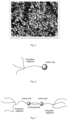
- the stabilizers used in the existing art are all single-active site ones, as shown in FIG. 6 .
- the common method is to introduce a small amount of unsaturation degree into the polyol.
- stable dispersants with specific reactive unsaturation degree are used for the preparation of copolymer polyols, but the solid contents of the prepared copolymer polyols are low.
- the later patents US5196476 and EP0786480 disclose the method of preparing POP by the preformed stabilizer method. In this method, a free radical polymerization initiator, a stable dispersant, and an ethylenically unsaturated monomer react to prepare a preformed stabilizer, and then, the preformed stabilizer continues to polymerize with the ethylenically unsaturated monomer in the presence of polyether to prepare POP.
- the present disclosure provides a new stable dispersant.
- the stable dispersant is particularly suitable for the application in preparing copolymer polyols.
- the stable dispersant also has more active sites and relatively low viscosity, and can be used to prepare copolymer polyols with relatively homogeneous particle size.
- the preparation method includes: 1) contacting a polyol with a dianhydride compound for reaction to prepare an adduct, wherein the reaction is specifically an anhydride ring-opening reaction; and 2) performing a ring-opening addition reaction between the adduct obtained in step 1) and an epoxy compound to prepare a stable dispersant; wherein the dianhydride compound does not contain a double bond that may copolymerize with an olefinically unsaturated monomer while the epoxy compound contains a double bond that may copolymerize with an olefinically unsaturated monomer, and the polyol is a polyester polyol and/or a polyether polyol, preferably a polyether polyol.
- the stable dispersant obtained by means of the above preparation method has a multi-active site anchoring function and is applied to the synthesis of copolymer polyols to obtain copolymer polyols with relatively homogeneous particle size.
- the stable dispersant also has great stable dispersity.
- the dianhydride compound preferably contains a cyclic structure other than an anhydride ring structure (cyclic structure called non-dianhydride ring).
- the dianhydride compound is selected from, but is not limited to, one or a combination of more than two of compounds of pyromellitic dianhydride, benzophenonetetracarboxylic dianhydride, biphenyltetracarboxylic dianhydride, tetracarboxydiphthalic ether dianhydride, hexafluorotetracarboxylic dianhydride, triphenylbiether tetracarboxylic dianhydride, 1,2,4,5-cyclohexenetetracarboxylic dianhydride, cyclobutanetetracarboxylic dianhydride, bisphenol A type diether tetracarboxylic dianhydride, naphthalene-1,4,5,8-tetracarboxylic dianhydride,
- the epoxy compound used in the preparation of the stable dispersant may be any epoxide containing a double bond (olefinic double bond) capable of polymerizing with an olefinically unsaturated monomer, preferably a 1,2-epoxide.
- the epoxy compound is selected from, but is not limited to, one or a combination of more than two of glycidyl ether, glycidyl acrylate and derivatives thereof, preferably one or a combination of more than two of allyl glycidyl ether, glycidyl methacrylate, and glycidyl acrylate, and more preferably glycidyl methacrylate.
- olefinically unsaturated monomers for example, various olefinically unsaturated monomers that can be suitable for the preparation of copolymer polyols.
- the molar ratio of the polyol, in particular polyether polyol, to the dianhydride compound is (0.2-4):1, preferably (1.5-2.5):1; and the molar ratio of the dianhydride compound to the epoxy compound is (0.1-2): 1, preferably (0.3-8): 1.
- a catalyst in the preparation of the stable dispersant, may be used in step 2) to facilitate the reaction.
- the amount of the catalyst is preferably 0.01% (w/w) to 0.5% (w/w) of the mass of the polyol.
- the catalyst is one or a combination of more than two of an organic phosphonic compound, an organic amine compound, and a tertiary amine.
- the organic phosphonic compound is selected from one or a combination of more than two of organic phosphorous halides and tetramethyl phosphine hydroxides
- the organic amine compound is selected from at least one of imidazole or imidazole derivatives
- the tertiary amine is selected from one or a combination of more than two of triethylamine, diethylenetriamine, tripropylamine, and tributylamine.
- the organic phosphorous halide is selected from one or a combination of more than two of a tetramethyl phosphine iodide, a tetramethyl phosphine bromide, a trimethyl benzyl phosphine bromide, a trimethyl benzyl phosphine chloride, an ethyl triphenyl phosphine iodide, an ethyltri(p-tolyl)phosphine bromide, and an ethyltri(p-tolyl)phosphine chloride.
- the number-average molecular weight is 2500 to 15000, preferably 5000 to 14000, and the average functionality is 2.0 or more, preferably 2.5 to 6.0.
- the polyol used in the preparation of the stable dispersant is preferably a polyether polyol (often also called a polyoxyalkylene polyol).
- a polyether polyol is obtained by reacting a starter compound with an active hydrogen atom with one or more epoxy compounds, wherein the epoxy compounds are one or more of an ethylene oxide, a propylene oxide, and a butylene oxide.
- step 1) and step 2) are performed in the presence or absence of a solvent.
- the solvent is a polar solvent free of protons, preferably the solvent is capable of dissolving the dianhydride compound and the epoxy compound, such as one or more of acetone, tetrahydrofuran, and methyl ethyl ketone.
- the temperatures of the reactions in step 1) and step 2) are 60 °C to 150 °C, more preferably 80 °C to 130 °C, respectively.
- the reactions in step 1) and step 2) are performed at atmospheric pressure.
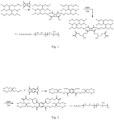
- the schematic diagram of the reaction for preparing the stable dispersant is shown in FIG. 1 .
- the schematic diagram of the reaction for preparing the stable dispersant is shown in FIG. 2 .
- the structural schematic diagram of the stable dispersant obtained in some embodiments is shown in FIG. 7 , and such a stable dispersant has dual active sites.
- the stable dispersant shown in FIG. 7 is the Gemini stable dispersant with dual polyether segments.
- the stable dispersant provided by the present disclosure is particularly suitable for the application in preparing copolymer polyols.
- the preparation of copolymer polyols is well known in the art, and the copolymer polyols are obtained by polymerizing at least one olefinically unsaturated monomer and a base polyether polyol in the presence of a stable dispersant under the initiation of an initiator.
- the reaction temperature is 80 °C to 150 °C, more preferably 90 °C to 120 °C
- the reaction pressure is 0 to 1 Mpa, preferably atmospheric pressure to 0.5 Mpa.
- the base polyether polyol used in the preparation of copolymer polyols is selected according to the end use of the copolymer polyols and can be specifically selected by those skilled in the art as needed. For example, if the copolymer polyols are used in the production of block polyurethane foam, the polyether polyol for general-purpose polyurethane foam is selected to be used, which is a tri-functional base polyether polyol with a general hydroxyl value of 54 mgKOH/g to 58 mgKOH/g.
- the polyether polyol for high resilient foam is selected to be used, which is a high-activity tri-functional base polyether polyol with a general hydroxyl value of 33.5 mgKOH/g to 36.5 mgKOH/g.
- the base polyether polyol used in the present disclosure is a tri-functional polyether polyol with a hydroxyl value of 54 mgKOH/g to 58 mgKOH/g.
- the amount of the stable dispersant is 0.3% to 10%, further preferably 2% to 5% of the total mass of the base polyether polyol and the olefinically unsaturated monomer.
- the olefinically unsaturated monomer used in the preparation of the copolymer polyols in the present disclosure may use various olefinically unsaturated monomers allowed in the art, which is not specifically limited thereto.
- the olefinically unsaturated monomer includes, but is not limited to, one or more of conjugated aliphatic dienes, vinyl aromatic compounds, ⁇ , ⁇ -olefinically unsaturated nitriles, ⁇ , ⁇ -olefinically unsaturated nitrile amides, ⁇ , ⁇ -olefinically unsaturated carboxylic acids, ⁇ , ⁇ -olefinically unsaturated carboxylic esters, vinyl esters, vinyl ethers, vinyl ketones, vinyl halides, and vinylidene halides, preferably vinyl aromatic compounds and ⁇ , ⁇ -olefinically unsaturated nitriles.
- the olefinically unsaturated monomer is one or two of styrene and acrylonitrile, and the molar ratio of styrene to acrylonitrile is preferably 50:50 to 100:0.
- the polymerization of the olefinically unsaturated monomer is performed under the initiation of the initiator.
- the amount of the initiator is 0.01wt% to 5wt% of the total mass of the base polyether polyol and the olefinically unsaturated monomer.
- the specific type of the initiator is not particularly limited, and the initiator may be any polymerization initiator commonly used in the art.
- the initiator is selected from one or a combination of more than two of peroxides and azo compounds.
- the copolymer polyols provided by the present disclosure are suitable for the synthesis of polyurethane foam materials.
- the polyurethane foam materials can foam a composition including the copolymer polyols obtained by the preparation method described above and polyisocyanates to obtain flexible polyurethane foams.
- the process for preparing polyurethane foams is known in the art.
- polyurethane catalysts, crosslinking agents, foaming agents, foam stabilizers, auxiliaries, and the like may be added as needed.
- the stable dispersant prepared according to the present disclosure does not need to be refined or separated and can be used directly in subsequent reactions.
- the process for preparing the stable dispersant in the present disclosure is an atmospheric reaction and does not involve the use of EO capping.
- the viscosity of the prepared stable dispersant is low, and in the preparation of the copolymer polyols, the operation of mixing the stable dispersant with the material(s) in the polymerization reaction system is simple and convenient.
- the stable dispersant provided by the present disclosure contains many active sites, the synthesized copolymer polyols have great stable dispersity, and thus the prepared copolymer polyols can obtain a relatively single particle size.
- the prepared copolymer polyols when applied to downstream foam articles, can make the downstream foam articles obtain excellent cell-opening performance and foam homogenizing property.
- Viscosity GB 12008.7-2010 Plastics-Polyether Polyols-Part 7: Determination of viscosity.
- Degree of unsaturation GB 12008.6-2010 Plastics-Polyether polyols-Part 6: Determination of degree of unsaturation.
- Polyether polyol A in the conditions that sorbitol was used as a starter, the concentration of the catalyst (KOH) was 0.3 wt% (w/w) of the mass of propylene oxide (PO), the reaction temperature was controlled to be about 110 ⁇ 5 °C, and the pressure was lower than 0.15 MPa, the reaction was carried out, and after PO was fed, PO was aged, and the reaction continued for 2 hours and the degasification was carried out for 1 hour. After the degasification, ethylene oxide (EO) was fed, and with the reaction temperature controlled at about 110 ⁇ 5 °C, the reaction was carried out at a pressure lower than 0.15 MPa.
- KOH concentration of the catalyst
- PO propylene oxide
- EO ethylene oxide
- the material was aged, and the reaction was continued for 2 hours and the degasification was carried out for 1 hour. At this time, the reaction stage ended.
- the temperature controlled at 85 °C to 90 °C soft water and phosphoric acid were added to neutralize the reaction product, and the neutralization product was dehydrated, filtered, and cooled to obtain the ejection.
- the mass ratio of sorbitol/EO/PO was 1.08/4.95/93.97
- the hydroxyl number was about 28 mgKOH/g
- the number-average molecular weight determined by GPC was 12001.
- Polyether polyol B in the conditions that trimethylolpropane was used as a starter, the concentration of the catalyst (KOH) was 0.3wt% (w/w) of the mass of propylene oxide (PO), the reaction temperature was controlled to be about 110 ⁇ 5 °C, and the pressure was lower than 0.15 MPa, the reaction was carried out, and after PO was fed, PO was aged, and the reaction continued for 2 hours and the degasification was carried out for 1 hour. After the degasification, ethylene oxide (EO) was fed, and with the reaction temperature controlled at about 110 + 5 °C, the reaction was carried out at a pressure lower than 0.15 MPa.
- KOH concentration of the catalyst
- PO propylene oxide
- the material was aged, and the reaction was continued for 2 hours and the degasification was carried out for 1 hour. At this time, the reaction stage ended.
- the temperature to be controlled at 85 °C to 90 °C soft water and phosphoric acid were added to neutralize the reaction product, and the neutralization product was dehydrated, filtered, and cooled to obtain the ejection.
- the mass ratio of trimethylolpropane/EO/PO was 1.91/9.81/88.26
- the hydroxyl number was about 24 mgKOH/g
- the viscosity was 858 cp (25 °C)
- the number-average molecular weight determined by GPC was 7003.
- Base polyol C conventional polyether polyol for soft foam, which was prepared by reacting glycerol with propylene oxide and ethylene oxide, available from Wanhua Chemical Group Co., Ltd., Brand No.: WANOL ® F3156.
- Comparative stabilizer 3000 g of polyether polyol B and 30.6 g of maleic anhydride were heated to 120 °C, and then reacted under the protection of nitrogen for 12 hours. 50 g of ethylene oxide (EO) was then added, and the reaction continued for 4 hours. Unreacted EO was removed to obtain a product which was a transparent brown-yellow liquid with a viscosity of 4100 cp (25 °C) and an unsaturation degree of 0.032 meq/g.
- EO ethylene oxide
- OA-12 dimethyldodecyl tertiary amine was oxidized, dehydrated, and dried to obtain a viscous liquid.
- WANNATE ® 8001 modified MDI (diphenylmethane diisocyanate), from Wanhua Chemical Group Co., Ltd.
- BiCAT ® 8106 organic bismuth catalyst, from the Shepherd Chemical Company.
- a four-necked bottle of 500 ml provided with a stirrer, a heating device, a temperature control device, and a feeder was used as the reactor.
- 55.4 g of base polyether polyol (from Wanhua, Brand No.: WANOL ® 3156) and 3.6 g of the stable dispersant 1 were added to the reactor.
- a top material (a mixed liquid of 10.47 g of isopropanol, 85.71 g of base polyether polyol WANOL ® 3156, 46.55 g of acrylonitrile, 69.83 g of styrene, and 1.21 g of azobisisobutyronitrile) was continuously added, and the temperature was controlled to be 115 °C to 120 °C.
- the mixed liquid was added dropwise within 100 minutes. Once the material feeding was completed, the reaction was aged for 1 hour and heated to 160 °C. The unreacted monomer was removed under vacuum for 2 hours to obtain the product. Then the product index was measured.
- Residual styrene/acrylonitrile/isopropanol was 2/2/4 ppm, the hydroxyl number was 29.8 mgKOH/g, the solid content was 44.9%, and the viscosity was 5329 cp (25 °C).
- a four-necked bottle of 500 ml provided with a stirrer, a heating device, a temperature control device, and a feeder was used as the reactor.
- 55.4 g of base polyether polyol (from Wanhua, Brand No.: WANOL ® 3156) and 3.4 g of the stable dispersant 2 were added to the reactor.
- a top material (a mixed liquid of 10.47 g of isopropanol, 85.71 g of base polyether polyol WANOL ® 3156, 46.55 g of acrylonitrile, 69.83 g of styrene, and 1.21 g of azobisisobutyronitrile) was continuously added, and the temperature was controlled to be 115 °C to 120 °C.
- the mixed liquid was added dropwise within 100 minutes. Once the material feeding was completed, the reaction was aged for 1 hour. The unreacted monomer was removed under vacuum for 2 hours to obtain the product. Then the product index was measured.
- Residual styrene/acrylonitrile/isopropanol was 2/1/3 ppm, the hydroxyl number was 30.4 mgKOH/g, the solid content was 44.8%, and the viscosity was 5698 cp (25 °C).
- a four-necked bottle of 500 ml provided with a stirrer, a heating device, a temperature control device, and a feeder was used as the reactor.
- 55.4 g of base polyether polyol (from Wanhua, Brand No.: WANOL ® 3156) and 5.6 g of the comparative stabilizer were added to the reactor.
- a top material (a mixed liquid of 10.47 g of isopropanol, 85.71 g of base polyether polyol WANOL ® 3156, 46.55 g of acrylonitrile, 69.83 g of styrene, and 1.21 g of azobisisobutyronitrile) was continuously added, and the temperature was controlled to be 115 °C to 120 °C.
- the mixed liquid was added dropwise within 100 minutes. Once the material feeding was completed, the reaction was aged for 1 hour. The unreacted monomer was removed under vacuum for 2 hours to obtain the product. Then the product index was measured.
- Residual styrene/acrylonitrile/isopropanol was 2/3/6 ppm, the hydroxyl number was 29.2 mgKOH/g, the solid content was 45.0%, and the viscosity was 5783 cp (25 °C). Compared with Examples 3-4, the viscosity of the copolymer polyol obtained in the Comparative Example is much higher when the stabilizer is used in a higher amount.
- copolymer polyols prepared in Examples 3 and 4 and Comparative Example were washed with ethanol and then centrifuged. The solids were collected and tested by SEM. The results of Examples 3 and 4 are shown in FIGs. 3 and 4 , respectively, and the result of Comparative Example is shown in FIG. 5 . It can be seen that the copolymer polyols prepared according to the present disclosure were homogeneous in particle size, fine in appearance, and showed no agglomeration.
- the polymer dispersion used in experiment 1# was the copolymer polyol prepared in Comparative Example, and the polymer dispersions used in experiments 2# and 3# were the copolymer polyols prepared in Examples 3 and 4, respectively.
Landscapes
- Chemical & Material Sciences (AREA)
- Organic Chemistry (AREA)
- Health & Medical Sciences (AREA)
- Chemical Kinetics & Catalysis (AREA)
- Medicinal Chemistry (AREA)
- Polymers & Plastics (AREA)
- General Chemical & Material Sciences (AREA)
- Dispersion Chemistry (AREA)
- Engineering & Computer Science (AREA)
- Manufacturing & Machinery (AREA)
- Polyurethanes Or Polyureas (AREA)
- Macromonomer-Based Addition Polymer (AREA)
Description
- The present disclosure relates to the technical field of the preparation of copolymer polyols and specifically, to the synthesis of a new stable dispersant and an application thereof in preparing copolymer polyols.
- Copolymer polyols are often used in the manufacture of polyurethane foams to improve bearing capacity and other properties of polyurethane foams. The copolymer polyols are dispersions of polymers in polyols. Commonly used types of copolymer polyols are vinyl polymer particle polyols (styrene-acrylonitrile dispersions), polyurea particle dispersions (PHD polyols), and polyisocyanate addition polymers (PIPA polyols, dispersions of polyurethane-polyurea particles). Currently, styrene/acrylonitrile copolymers are widely commercialized as dispersions in polyols (referred to as copolymer polyols or polymer dispersions, abbreviated as POP).
- Their stability is mostly achieved by the stabilizing effect of grafted or addition products formed between the polymers of unsaturated compounds and the polyol molecules. The stabilizers used in the existing art are all single-active site ones, as shown in
FIG. 6 . - The common method is to introduce a small amount of unsaturation degree into the polyol. As disclosed in
US3652639 andUS3823201 , stable dispersants with specific reactive unsaturation degree are used for the preparation of copolymer polyols, but the solid contents of the prepared copolymer polyols are low. The later patentsUS5196476 andEP0786480 disclose the method of preparing POP by the preformed stabilizer method. In this method, a free radical polymerization initiator, a stable dispersant, and an ethylenically unsaturated monomer react to prepare a preformed stabilizer, and then, the preformed stabilizer continues to polymerize with the ethylenically unsaturated monomer in the presence of polyether to prepare POP. This method has the defects of the usage of a large number of stable dispersants and high viscosity. Patent documentsEP1054918A1 andWO2005015309A2 both disclose a process for preparing a stabiliser precursor in a polymer polyol. - In view of the above, the present disclosure provides a new stable dispersant. The stable dispersant is particularly suitable for the application in preparing copolymer polyols. The stable dispersant also has more active sites and relatively low viscosity, and can be used to prepare copolymer polyols with relatively homogeneous particle size.
- To achieve the above objective, the present disclosure adopts the technical solutions described below.
- One aspect of the present disclosure provides a preparation method for a stable dispersant. The preparation method includes: 1) contacting a polyol with a dianhydride compound for reaction to prepare an adduct, wherein the reaction is specifically an anhydride ring-opening reaction; and 2) performing a ring-opening addition reaction between the adduct obtained in step 1) and an epoxy compound to prepare a stable dispersant;
wherein the dianhydride compound does not contain a double bond that may copolymerize with an olefinically unsaturated monomer while the epoxy compound contains a double bond that may copolymerize with an olefinically unsaturated monomer, and the polyol is a polyester polyol and/or a polyether polyol, preferably a polyether polyol. The stable dispersant obtained by means of the above preparation method has a multi-active site anchoring function and is applied to the synthesis of copolymer polyols to obtain copolymer polyols with relatively homogeneous particle size. The stable dispersant also has great stable dispersity. - In some preferred embodiments, the dianhydride compound preferably contains a cyclic structure other than an anhydride ring structure (cyclic structure called non-dianhydride ring). In some preferred embodiments, the dianhydride compound is selected from, but is not limited to, one or a combination of more than two of compounds of pyromellitic dianhydride, benzophenonetetracarboxylic dianhydride, biphenyltetracarboxylic dianhydride, tetracarboxydiphthalic ether dianhydride, hexafluorotetracarboxylic dianhydride, triphenylbiether tetracarboxylic dianhydride, 1,2,4,5-cyclohexenetetracarboxylic dianhydride, cyclobutanetetracarboxylic dianhydride, bisphenol A type diether tetracarboxylic dianhydride, naphthalene-1,4,5,8-tetracarboxylic dianhydride, 3,4,9,10-perylenetetracarboxylic dianhydride, 3,3',4,4'-triphenylbiether tetracarboxylic dianhydride, and 1,2,3,4-cyclopentanetetracarboxylic dianhydride, further preferably one or two of pyromellitic dianhydride and cyclobutanetetracarboxylic dianhydride.
- In the present disclosure, the epoxy compound used in the preparation of the stable dispersantmay be any epoxide containing a double bond (olefinic double bond) capable of polymerizing with an olefinically unsaturated monomer, preferably a 1,2-epoxide. In some preferred embodiments, the epoxy compound is selected from, but is not limited to, one or a combination of more than two of glycidyl ether, glycidyl acrylate and derivatives thereof, preferably one or a combination of more than two of allyl glycidyl ether, glycidyl methacrylate, and glycidyl acrylate, and more preferably glycidyl methacrylate. There is no limit to the specific type of olefinically unsaturated monomers, for example, various olefinically unsaturated monomers that can be suitable for the preparation of copolymer polyols.
- In some preferred embodiments, the molar ratio of the polyol, in particular polyether polyol, to the dianhydride compound is (0.2-4):1, preferably (1.5-2.5):1; and the molar ratio of the dianhydride compound to the epoxy compound is (0.1-2): 1, preferably (0.3-8): 1.
- In the present disclosure, in the preparation of the stable dispersant, a catalyst may be used in step 2) to facilitate the reaction. The amount of the catalyst is preferably 0.01% (w/w) to 0.5% (w/w) of the mass of the polyol. Preferably, the catalyst is one or a combination of more than two of an organic phosphonic compound, an organic amine compound, and a tertiary amine. Further preferably, the organic phosphonic compound is selected from one or a combination of more than two of organic phosphorous halides and tetramethyl phosphine hydroxides, the organic amine compound is selected from at least one of imidazole or imidazole derivatives, and the tertiary amine is selected from one or a combination of more than two of triethylamine, diethylenetriamine, tripropylamine, and tributylamine. Still further preferably, the organic phosphorous halide is selected from one or a combination of more than two of a tetramethyl phosphine iodide, a tetramethyl phosphine bromide, a trimethyl benzyl phosphine bromide, a trimethyl benzyl phosphine chloride, an ethyl triphenyl phosphine iodide, an ethyltri(p-tolyl)phosphine bromide, and an ethyltri(p-tolyl)phosphine chloride.
- In some preferred embodiments, in step 1), for the polyol, the number-average molecular weight is 2500 to 15000, preferably 5000 to 14000, and the average functionality is 2.0 or more, preferably 2.5 to 6.0.
- The polyol used in the preparation of the stable dispersant is preferably a polyether polyol (often also called a polyoxyalkylene polyol). Such a polyether polyol is obtained by reacting a starter compound with an active hydrogen atom with one or more epoxy compounds, wherein the epoxy compounds are one or more of an ethylene oxide, a propylene oxide, and a butylene oxide.
- The reactions in step 1) and step 2) are performed in the presence or absence of a solvent. Preferably, the solvent is a polar solvent free of protons, preferably the solvent is capable of dissolving the dianhydride compound and the epoxy compound, such as one or more of acetone, tetrahydrofuran, and methyl ethyl ketone.
- In the present disclosure, in the preparation of the stable dispersant, the temperatures of the reactions in step 1) and step 2) are 60 °C to 150 °C, more preferably 80 °C to 130 °C, respectively. The reactions in step 1) and step 2) are performed at atmospheric pressure.
- In the present disclosure, in the preparation of the stable dispersant, optionally, a polymerization inhibitor is further added in the reaction system of step 2) ("optionally" means that the polymerization inhibitor may or may not be added). For example, the polymerization inhibitor includes, but is not limited to, one or more of hydroquinone, p-t-butylcatechol, p-hydroxyanisole, methylhydroquinone, phenothiazine, and diphenylamine. The amount of the polymerization inhibitor is 0 to 1.5%, preferably 30 ppm to 2000 ppm of the total mass of the polyol.
- Specifically, in some embodiments, the schematic diagram of the reaction for preparing the stable dispersant is shown in
FIG. 1 . In other embodiments, the schematic diagram of the reaction for preparing the stable dispersant is shown inFIG. 2 . For ease of understanding, the structural schematic diagram of the stable dispersant obtained in some embodiments is shown inFIG. 7 , and such a stable dispersant has dual active sites. The stable dispersant shown inFIG. 7 is the Gemini stable dispersant with dual polyether segments. - The stable dispersant provided by the present disclosure is particularly suitable for the application in preparing copolymer polyols. The preparation of copolymer polyols is well known in the art, and the copolymer polyols are obtained by polymerizing at least one olefinically unsaturated monomer and a base polyether polyol in the presence of a stable dispersant under the initiation of an initiator. Preferably, the reaction temperature is 80 °C to 150 °C, more preferably 90 °C to 120 °C, and the reaction pressure is 0 to 1 Mpa, preferably atmospheric pressure to 0.5 Mpa.
- The base polyether polyol used in the preparation of copolymer polyols is selected according to the end use of the copolymer polyols and can be specifically selected by those skilled in the art as needed. For example, if the copolymer polyols are used in the production of block polyurethane foam, the polyether polyol for general-purpose polyurethane foam is selected to be used, which is a tri-functional base polyether polyol with a general hydroxyl value of 54 mgKOH/g to 58 mgKOH/g. If the copolymer polyols are used in the production of high resilient foam, the polyether polyol for high resilient foam is selected to be used, which is a high-activity tri-functional base polyether polyol with a general hydroxyl value of 33.5 mgKOH/g to 36.5 mgKOH/g. Preferably, the base polyether polyol used in the present disclosure is a tri-functional polyether polyol with a hydroxyl value of 54 mgKOH/g to 58 mgKOH/g.
- In some preferred embodiments, the amount of the olefinically unsaturated monomer is 20 wt% to 55 wt% of the total mass of the base polyether polyol, the olefinically unsaturated monomer, and the stable dispersant.
- In some preferred embodiments, the amount of the stable dispersant is 0.3% to 10%, further preferably 2% to 5% of the total mass of the base polyether polyol and the olefinically unsaturated monomer.
- The olefinically unsaturated monomer used in the preparation of the copolymer polyols in the present disclosure may use various olefinically unsaturated monomers allowed in the art, which is not specifically limited thereto. The olefinically unsaturated monomer includes, but is not limited to, one or more of conjugated aliphatic dienes, vinyl aromatic compounds, α,β-olefinically unsaturated nitriles, α,β-olefinically unsaturated nitrile amides, α,β-olefinically unsaturated carboxylic acids, α,β-olefinically unsaturated carboxylic esters, vinyl esters, vinyl ethers, vinyl ketones, vinyl halides, and vinylidene halides, preferably vinyl aromatic compounds and α,β-olefinically unsaturated nitriles. More preferably, the olefinically unsaturated monomer is one or two of styrene and acrylonitrile, and the molar ratio of styrene to acrylonitrile is preferably 50:50 to 100:0.
- In the preparation of the copolymer polyols, the polymerization of the olefinically unsaturated monomer is performed under the initiation of the initiator. In some preferred embodiments, the amount of the initiator is 0.01wt% to 5wt% of the total mass of the base polyether polyol and the olefinically unsaturated monomer. The specific type of the initiator is not particularly limited, and the initiator may be any polymerization initiator commonly used in the art. For example, the initiator is selected from one or a combination of more than two of peroxides and azo compounds. The peroxides, for example, include one or more of dibenzoyl peroxide, lauroyl peroxide, tert-butyl hydroperoxide, benzoyl peroxide, and di-tert-butyl peroxide. The azo compounds, for example, include one or more of azobisisobutyronitrile (AIBN), azoisovaleronitrile (AMBN), and dimethyl azobisisobutyrate (V601).
- In the present disclosure, the polymerization of the olefinically unsaturated monomer is preferably performed in the presence of a chain-transfer agent. The amount of the chain-transfer agent is 0.1 wt% to 6 wt%, further preferably 0.2 wt% to 5 wt% of the total mass of the base polyether polyol and the olefinically unsaturated monomer. The specific type of the chain-transfer agent is not particularly limited, and the chain-transfer agent, for example, is one or more of 1-butanol, 2-butanol, isopropanol, ethanol, methanol, water, cyclohexane, and thiol, such as one or more of dodecanethiol, ethanethiol, 1-heptanethiol, 2-octanethiol, and toluenethiol.
- Other compounds may also be used as needed in the process for preparing the copolymer polyols, such as compounds that promote the mixing of components, compounds that have a viscosity reducing effect, and/or compounds that can enable one or more of the components used to better dissolved in the reaction medium. The compound having a viscosity reducing effect and thus enabling the components to be better mixed, for example, is one or more of toluene or dichloromethane.
- In the present disclosure, the process for preparing the copolymer polyols may be carried out in an intermittent or continuous operation. After the preparation of the copolymer polyols, the copolymer polyols generally need to be subjected to the removal process of unreacted monomer and the chain transfer agent, which is well known in the art. Common removal means in the art include chemical unit operations such as distillation, flash evaporation, scraper, or thin-film evaporation, which will not be described in detail herein.
- The copolymer polyols provided by the present disclosure are suitable for the synthesis of polyurethane foam materials. The polyurethane foam materials can foam a composition including the copolymer polyols obtained by the preparation method described above and polyisocyanates to obtain flexible polyurethane foams. The process for preparing polyurethane foams is known in the art. In the foaming system of copolymer polyols and polyisocyanates, polyurethane catalysts, crosslinking agents, foaming agents, foam stabilizers, auxiliaries, and the like may be added as needed.
- In the preparation of the copolymer polyols, in some embodiments, the polyurethane catalyst used is, for example, an organometallic compound such as stannous octoate, stannous oleate, dibutyltin dilaurate, dibutyltin acetate, and dibutyltin diacetate; or the polyurethane catalyst is, for example, an organic amine catalyst such as bis(2,2'-dimethylamino)ethyl ether, trimethylamine, triethylamine, triethylenediamine, and dimethylethanolamine. In the preparation of the copolymer polyols, the foaming agent used include, for example, water, acetone, carbon dioxide, halogenated hydrocarbons, aliphatic alkanes, alicyclic alkanes, and the like. The suitable crosslinking agent is, for example, diethanolamine (DEOA) and the like. The suitable foam stabilizer is, for example, an organopolysiloxane surfactant and the like. In addition, the auxiliaries, such as flame retardants, fillers, light stabilizers, and antioxidants, are usually used in the process of preparing polyurethane foams.
- The technical solutions provided by the present disclosure have the following beneficial effects.
- The stable dispersant prepared according to the present disclosure does not need to be refined or separated and can be used directly in subsequent reactions. The process for preparing the stable dispersant in the present disclosure is an atmospheric reaction and does not involve the use of EO capping. In addition, the viscosity of the prepared stable dispersant is low, and in the preparation of the copolymer polyols, the operation of mixing the stable dispersant with the material(s) in the polymerization reaction system is simple and convenient. Meanwhile, because the stable dispersant provided by the present disclosure contains many active sites, the synthesized copolymer polyols have great stable dispersity, and thus the prepared copolymer polyols can obtain a relatively single particle size. The prepared copolymer polyols, when applied to downstream foam articles, can make the downstream foam articles obtain excellent cell-opening performance and foam homogenizing property.
-
-
FIG. 1 is a schematic diagram of the reaction for preparing a stable dispersant in one embodiment; -
FIG. 2 is a schematic diagram of the reaction for preparing a stable dispersant in another embodiment; -
FIG. 3 is a diagram showing the SEM detection result of the copolymer polyol obtained in Example 3; -
FIG. 4 is a diagram showing the SEM detection result of the copolymer polyol obtained in Example 4; -
FIG. 5 is a diagram showing the SEM detection result of the copolymer polyol obtained in Comparative Example; -
FIG. 6 is a structural schematic diagram of the stabilizer in the existing art; and -
FIG. 7 is a structural schematic diagram of the stable dispersant obtained in some embodiments. - For a better understanding of the technical solutions of the present disclosure, the content of the present disclosure will be further described below in conjunction with the following examples.
- The detection methods involved in the following examples and comparative example are described below.
- Hydroxyl number: GB 12008.3-2009 Plastics-Polyether Polyols-Part 3: Determination of hydroxyl number.
- Viscosity: GB 12008.7-2010 Plastics-Polyether Polyols-Part 7: Determination of viscosity. Degree of unsaturation: GB 12008.6-2010 Plastics-Polyether polyols-Part 6: Determination of degree of unsaturation.
- Solid content: GB/T 31062-2014 Polymeric Polyols.
- Unless otherwise specified, the reactions in the following examples were all performed at atmospheric pressure, and the processes involved in the reactions were all performed under nitrogen.
- Polyether polyol A: in the conditions that sorbitol was used as a starter, the concentration of the catalyst (KOH) was 0.3 wt% (w/w) of the mass of propylene oxide (PO), the reaction temperature was controlled to be about 110±5 °C, and the pressure was lower than 0.15 MPa, the reaction was carried out, and after PO was fed, PO was aged, and the reaction continued for 2 hours and the degasification was carried out for 1 hour. After the degasification, ethylene oxide (EO) was fed, and with the reaction temperature controlled at about 110 ± 5 °C, the reaction was carried out at a pressure lower than 0.15 MPa. After the material feeding was completed, the material was aged, and the reaction was continued for 2 hours and the degasification was carried out for 1 hour. At this time, the reaction stage ended. With the temperature controlled at 85 °C to 90 °C, soft water and phosphoric acid were added to neutralize the reaction product, and the neutralization product was dehydrated, filtered, and cooled to obtain the ejection. In the above process, the mass ratio of sorbitol/EO/PO was 1.08/4.95/93.97, the hydroxyl number was about 28 mgKOH/g, and the number-average molecular weight determined by GPC was 12001.
- Polyether polyol B: in the conditions that trimethylolpropane was used as a starter, the concentration of the catalyst (KOH) was 0.3wt% (w/w) of the mass of propylene oxide (PO), the reaction temperature was controlled to be about 110 ± 5 °C, and the pressure was lower than 0.15 MPa, the reaction was carried out, and after PO was fed, PO was aged, and the reaction continued for 2 hours and the degasification was carried out for 1 hour. After the degasification, ethylene oxide (EO) was fed, and with the reaction temperature controlled at about 110 + 5 °C, the reaction was carried out at a pressure lower than 0.15 MPa. After the material feeding was completed, the material was aged, and the reaction was continued for 2 hours and the degasification was carried out for 1 hour. At this time, the reaction stage ended. With the temperature to be controlled at 85 °C to 90 °C, soft water and phosphoric acid were added to neutralize the reaction product, and the neutralization product was dehydrated, filtered, and cooled to obtain the ejection. In the above process, the mass ratio of trimethylolpropane/EO/PO was 1.91/9.81/88.26, the hydroxyl number was about 24 mgKOH/g, the viscosity was 858 cp (25 °C), and the number-average molecular weight determined by GPC was 7003.
- Base polyol C: conventional polyether polyol for soft foam, which was prepared by reacting glycerol with propylene oxide and ethylene oxide, available from Wanhua Chemical Group Co., Ltd., Brand No.: WANOL®F3156.
- Comparative stabilizer: 3000 g of polyether polyol B and 30.6 g of maleic anhydride were heated to 120 °C, and then reacted under the protection of nitrogen for 12 hours. 50 g of ethylene oxide (EO) was then added, and the reaction continued for 4 hours. Unreacted EO was removed to obtain a product which was a transparent brown-yellow liquid with a viscosity of 4100 cp (25 °C) and an unsaturation degree of 0.032 meq/g.
- OA-12: dimethyldodecyl tertiary amine was oxidized, dehydrated, and dried to obtain a viscous liquid.
- WANNATE®8001: modified MDI (diphenylmethane diisocyanate), from Wanhua Chemical Group Co., Ltd.
- BiCAT®8106: organic bismuth catalyst, from the Shepherd Chemical Company.
- B-8715LF2: foam Stabilizer, from TMG Chemicals Co., Ltd.
- Other raw materials involved in the following examples were purchased from Aladdin Biochemical Technology Co., Ltd without otherwise specified.
- 3000 g of polyether polyol A, 40.3 g of cyclobutanetetracarboxylic dianhydride, and 180 g of acetone were mixed homogeneously, heated to 100 °C, and stirred and refluxed for 16 hours. 3.1 g of ethyl triphenyl phosphine iodide was added and stirred to dissolve, and then 40.3 g of glycidyl methacrylate (GMA) and 1.78 g of hydroquinone were added and reacted at 120 °C overnight. The obtained product was a transparent light-yellow liquid with a viscosity of 2580 mPa.s and an unsaturation degree of 0.076 meq/g. The obtained product was higher than the comparative stabilizer in terms of unsaturation degree, indicating that the obtained product had more active sites.
- 3000 g of polyether polyol B and 41.9 g of pyromellitic dianhydride were mixed homogeneously, heated to 120 °C, and then reacted under the protection of nitrogen for 18 hours. 3.0 g of ethyl triphenyl phosphine iodide (ETPPI) was added and stirred to dissolve, and then 36.1 g of glycidyl acrylate (GA) and 0.90 g of hydroquinone were added and reacted at 120 °C overnight. The obtained product was a transparent light-yellow liquid with a viscosity of 1780 mPa.s and an unsaturation degree of 0.092 meq/g. The obtained product was higher than the comparative stabilizer in terms of unsaturation degree, indicating that the obtained product had more active sites.
- A four-necked bottle of 500 ml provided with a stirrer, a heating device, a temperature control device, and a feeder was used as the reactor. 55.4 g of base polyether polyol (from Wanhua, Brand No.: WANOL®3156) and 3.6 g of the stable dispersant 1 were added to the reactor. After nitrogen replacement, the mixture was stirred and slowly heated to 110 °C, a top material (a mixed liquid of 10.47 g of isopropanol, 85.71 g of base polyether polyol WANOL®3156, 46.55 g of acrylonitrile, 69.83 g of styrene, and 1.21 g of azobisisobutyronitrile) was continuously added, and the temperature was controlled to be 115 °C to 120 °C. The mixed liquid was added dropwise within 100 minutes. Once the material feeding was completed, the reaction was aged for 1 hour and heated to 160 °C. The unreacted monomer was removed under vacuum for 2 hours to obtain the product. Then the product index was measured. Residual styrene/acrylonitrile/isopropanol was 2/2/4 ppm, the hydroxyl number was 29.8 mgKOH/g, the solid content was 44.9%, and the viscosity was 5329 cp (25 °C).
- A four-necked bottle of 500 ml provided with a stirrer, a heating device, a temperature control device, and a feeder was used as the reactor. 55.4 g of base polyether polyol (from Wanhua, Brand No.: WANOL®3156) and 3.4 g of the stable dispersant 2 were added to the reactor. After nitrogen replacement, the mixture was stirred and slowly heated to 110 °C, a top material (a mixed liquid of 10.47 g of isopropanol, 85.71 g of base polyether polyol WANOL®3156, 46.55 g of acrylonitrile, 69.83 g of styrene, and 1.21 g of azobisisobutyronitrile) was continuously added, and the temperature was controlled to be 115 °C to 120 °C. The mixed liquid was added dropwise within 100 minutes. Once the material feeding was completed, the reaction was aged for 1 hour. The unreacted monomer was removed under vacuum for 2 hours to obtain the product. Then the product index was measured. Residual styrene/acrylonitrile/isopropanol was 2/1/3 ppm, the hydroxyl number was 30.4 mgKOH/g, the solid content was 44.8%, and the viscosity was 5698 cp (25 °C).
- A four-necked bottle of 500 ml provided with a stirrer, a heating device, a temperature control device, and a feeder was used as the reactor. 55.4 g of base polyether polyol (from Wanhua, Brand No.: WANOL®3156) and 5.6 g of the comparative stabilizer were added to the reactor. After nitrogen replacement, the mixture was stirred and slowly heated to 110 °C, a top material (a mixed liquid of 10.47 g of isopropanol, 85.71 g of base polyether polyol WANOL®3156, 46.55 g of acrylonitrile, 69.83 g of styrene, and 1.21 g of azobisisobutyronitrile) was continuously added, and the temperature was controlled to be 115 °C to 120 °C. The mixed liquid was added dropwise within 100 minutes. Once the material feeding was completed, the reaction was aged for 1 hour. The unreacted monomer was removed under vacuum for 2 hours to obtain the product. Then the product index was measured. Residual styrene/acrylonitrile/isopropanol was 2/3/6 ppm, the hydroxyl number was 29.2 mgKOH/g, the solid content was 45.0%, and the viscosity was 5783 cp (25 °C). Compared with Examples 3-4, the viscosity of the copolymer polyol obtained in the Comparative Example is much higher when the stabilizer is used in a higher amount.
- The copolymer polyols prepared in Examples 3 and 4 and Comparative Example were washed with ethanol and then centrifuged. The solids were collected and tested by SEM. The results of Examples 3 and 4 are shown in
FIGs. 3 and 4 , respectively, and the result of Comparative Example is shown inFIG. 5 . It can be seen that the copolymer polyols prepared according to the present disclosure were homogeneous in particle size, fine in appearance, and showed no agglomeration. - The experiments 1#, 2#, and 3# were carried out according to the raw materials and parts by weight thereof shown in Table 1 to prepare combined materials. The combined material in each experiment and the isocyanate raw material were placed at a constant temperature of 22 °C for 3 hours. 100 g of each combined material was mixed with 60 g of WANOL®8001 component in a stirrer (rotational speed: 3000 rpm) for 6 seconds. The stirred mixture was then quickly poured into an aluminum open mold (size: 300 mm length, 300 mm width, and 50 mm thickness) previously heated to 60 °C to allow the mixture to foam. After 7 minutes, the foams were taken out from the mold to obtain polyurethane foams.
Table 1 Combined material formulation (parts by weight) Material 1# 2# 3# Polymer dispersion amount 33.70 33.70 33.70 WANOL®F3156 (polyether polyol) 59.46 59.46 59.46 Diethanolamine 0.50 0.50 0.50 Water 4.16 4.16 4.16 N,N-bis(dimethylaminopropyl)isopropanolamine 0.40 0.40 0.40 N,N,N'-trimethyl-N'-hydroxyethylbisaminoethylether 0.50 0.50 0.50 BiCAT 8106 (organic bismuth catalyst) 0.10 0.10 0.10 B-8715 LF2 (foam stabilizer) 1.19 1.19 1.19 - The polymer dispersion used in experiment 1# was the copolymer polyol prepared in Comparative Example, and the polymer dispersions used in experiments 2# and 3# were the copolymer polyols prepared in Examples 3 and 4, respectively.
- The performance indices and corresponding test criteria for testing the prepared polyurethane foams are shown in Table 2.
Table 2 Polyurethane foam performances Test item Test criteria 1# 2# 3# VOC VDA278 90 °C/0.5h 65 50 50 Smell, µgC/g VDA 270B3 80 °C/2h 5 3 2 Tensile strength, Kpa ISO1798 90 100 105 Elongation at break, Kpa ISO1798 75 80 85 - From the experimental results of Table 2, it can be seen that the copolymer polyols prepared using the novel stabilizer performed better in tensile strength and elongation at break.
Claims (11)
- A preparation method for a stable dispersant, comprising:1) contacting a polyol with a dianhydride compound for reaction to prepare an adduct; and2) performing a ring-opening addition reaction between the adduct obtained in step 1) and an epoxy compound to prepare a stable dispersant;wherein the dianhydride compound does not contain a double bond that may copolymerize with an olefinically unsaturated monomer while the epoxy compound contains a double bond that may copolymerize with an olefinically unsaturated monomer, and the polyol is a polyester polyol and/or a polyether polyol, preferably a polyether polyol.
- The preparation method according to claim 1, wherein the dianhydride compound is one selected from the group consisting of pyromellitic dianhydride, benzophenonetetracarboxylic dianhydride, biphenyltetracarboxylic dianhydride, tetracarboxydiphthalic ether dianhydride, hexafluorotetracarboxylic dianhydride, triphenylbiether tetracarboxylic dianhydride, 1,2,4,5-cyclohexenetetracarboxylic dianhydride, cyclobutanetetracarboxylic dianhydride, bisphenol A type diether tetracarboxylic dianhydride, naphthalene-1,4,5,8-tetracarboxylic dianhydride, 3,4,9,10-perylenetetracarboxylic dianhydride, 3,3',4,4'-triphenylbiether tetracarboxylic dianhydride, 1,2,3,4-cyclopentanetetracarboxylic dianhydride, and a combination of more than two selected therefrom, preferably one or two of pyromellitic dianhydride and cyclobutanetetracarboxylic dianhydride.
- The method according to claim 2, wherein the epoxy compound is one selected from the group consisting of glycidyl ether, glycidyl acrylate, derivatives thereof, and a combination of more than two selected therefrom, preferably one selected from the group consisting of allyl glycidyl ether, glycidyl methacrylate, glycidyl acrylate, and a combination of more than two selected therefrom, and more preferably glycidyl methacrylate.
- The method according to any one of claims 1 to 3, wherein the molar ratio of the polyol to the dianhydride compound is (0.2-4):1, preferably (1.5-2.5):1;
the molar ratio of the dianhydride compound to the epoxy compound is (0.1-2): 1, preferably (0.3-8): 1. - The preparation method according to any one of claims 1 to 4, wherein in step 2), the reaction is performed in the presence of a catalyst, and the amount of the catalyst is preferably 0.01% (w/w) to 0.5% (w/w) of the mass of the polyol;preferably, the catalyst is one selected from the group consisting of an organic phosphonic compound, an organic amine compound, a tertiary amine, and a combination of more than two selected therefrom;further preferably, the organic phosphonic compound is one selected from the group consisting of organic phosphorous halides, tetramethyl phosphine hydroxides, and a combination of more than two selected therefrom; the organic amine compound is at least one selected from the group consisting of imidazole and imidazole derivatives; and the tertiary amine is one selected from the group consisting of triethylamine, diethylenetriamine, tripropylamine, tributylamine, and a combination of more than two selected therefrom;still further preferably, the organic phosphorous halide is one selected from the group consisting of a tetramethyl phosphine iodide, a tetramethyl phosphine bromide, a trimethyl benzyl phosphine bromide, a trimethyl benzyl phosphine chloride, an ethyl triphenyl phosphine iodide, an ethyltri(p-tolyl)phosphine bromide, an ethyltri(p-tolyl)phosphine chloride, and a combination of more than two selected therefrom.
- The preparation method according to claim 1, wherein in step 1), for the polyol, the number-average molecular weight as determined by GPC is 2500 to 15000, preferably 5000 to 14000, and the average functionality is 2.0 or more, preferably 2.5 to 6.0.
- The preparation method according to claim 1, wherein the reactions in step 1) and step 2) are performed in the presence or absence of a solvent; preferably the solvent is a polar solvent free of protons and capable of dissolving the dianhydride compound and the epoxy compound;preferably, the temperatures of the reactions in step 1) and step 2) are 60 °C to 150 °C, more preferably 80 °C to 130 °C, respectively; the reactions in step 1) and step 2) are preferably performed at atmospheric pressure;optionally, a polymerization inhibitor is further added in step 2), and the amount of the polymerization inhibitor is 0 to 1.5%, preferably 30 ppm to 2000 ppm of the total mass of the polyol.
- A stable dispersant prepared by the preparation method according to any one of claims 1 to 7.
- A preparation method for copolymer polyols, comprising: polymerizing a base polyether polyol with at least one olefinically unsaturated monomer in the presence of an initiator and a stable dispersant to obtain the copolymer polyols; wherein the stable dispersant is the stable dispersant according to claim 8;preferably, for the preparation of the copolymer polyols, the reaction temperature is 80 °C to 150 °C, preferably 90 °C to 120 °C, and the reaction pressure is preferably 0 to 1 Mpa, more preferably atmospheric pressure to 0.5 Mpa;preferably, the amount of the olefinically unsaturated monomer is 20 wt% to 55 wt% of the total mass of the base polyether polyol, the olefinically unsaturated monomer, and the stable dispersant;preferably, the amount of the stable dispersant is 0.3% to 10%, further preferably 2% to 5% of the total mass of the base polyether polyol and the olefinically unsaturated monomer;preferably, the amount of the initiator is 0.01 wt% to 5 wt% of the total mass of the base polyether polyol and the olefinically unsaturated monomer; preferably, the initiator is one selected from the group consisting of peroxides, azo compounds, and a combination of more than two selected therefrom;preferably, a chain-transfer agent is further added in the reaction system for the preparation of the copolymer polyols, wherein the amount of the chain-transfer agent is 0.1 wt% to 6 wt%, further preferably 0.2 wt% to 5 wt% of the total mass of the base polyether polyol and the olefinically unsaturated monomer.
- The preparation method according to claim 9, wherein the olefinically unsaturated monomer is one selected from the group consisting of vinylaromatic compounds, olefinically unsaturated nitriles, and a combination of more than two selected therefrom, preferably one or two of styrene and acrylonitrile, wherein the molar ratio of styrene to acrylonitrile is preferably 50:50 to 100:0.
- An application of the copolymer polyols obtained by the preparation method according to any one of claims 9 to 10 in the preparation of polyurethane foam materials.
Applications Claiming Priority (2)
| Application Number | Priority Date | Filing Date | Title |
|---|---|---|---|
| CN201811569144.3A CN111349229B (en) | 2018-12-21 | 2018-12-21 | Stabilizing Dispersant and Its Application in the Preparation of Copolymer Polyols |
| PCT/CN2018/123934 WO2020124645A1 (en) | 2018-12-21 | 2018-12-26 | Stable dispersant and application thereof in preparing copolymer polyols |
Publications (3)
| Publication Number | Publication Date |
|---|---|
| EP3901189A1 EP3901189A1 (en) | 2021-10-27 |
| EP3901189A4 EP3901189A4 (en) | 2022-09-14 |
| EP3901189B1 true EP3901189B1 (en) | 2025-06-25 |
Family
ID=71100131
Family Applications (1)
| Application Number | Title | Priority Date | Filing Date |
|---|---|---|---|
| EP18943439.2A Active EP3901189B1 (en) | 2018-12-21 | 2018-12-26 | Stable dispersant and application thereof in preparing copolymer polyols |
Country Status (5)
| Country | Link |
|---|---|
| US (1) | US11945775B2 (en) |
| EP (1) | EP3901189B1 (en) |
| CN (1) | CN111349229B (en) |
| BR (1) | BR112021010779B1 (en) |
| WO (1) | WO2020124645A1 (en) |
Families Citing this family (3)
| Publication number | Priority date | Publication date | Assignee | Title |
|---|---|---|---|---|
| BR112021008686B1 (en) * | 2018-12-26 | 2023-04-18 | Wanhua Chemical Group Co., Ltd | METHOD FOR PREPARING A MACROMONOMERIC STABILIZER, MACROMONOMERIC STABILIZER, METHOD FOR PREPARING A POLYMERIC POLYOL, POLYMERIC POLYOL, FLEXIBLE POLYURETHANE FOAM AND MOLDED PRODUCT |
| CN115584116B (en) * | 2021-12-23 | 2024-10-25 | 上海涵点新材料有限公司 | Preparation method and application of environment-friendly inorganic powder dispersing agent |
| CN116410459B (en) * | 2021-12-31 | 2026-02-06 | 万华化学集团股份有限公司 | Preparation method and application of macromolecular stabilizer |
Citations (2)
| Publication number | Priority date | Publication date | Assignee | Title |
|---|---|---|---|---|
| EP1054918B1 (en) * | 1998-02-09 | 2004-12-29 | Shell Internationale Research Maatschappij B.V. | Macromer stabiliser precursor for polymer polyols |
| WO2012017019A1 (en) * | 2010-08-03 | 2012-02-09 | Shell Internationale Research Maatschappij B.V. | Process for preparing polymer polyols |
Family Cites Families (14)
| Publication number | Priority date | Publication date | Assignee | Title |
|---|---|---|---|---|
| BE759006A (en) | 1969-11-20 | 1971-05-17 | Marles Kuhlmann Wyandotte | COPOLYMERS GRAFTS AND PREPARATION OF POLYURETHANES |
| US3823201A (en) | 1972-12-04 | 1974-07-09 | Basf Wyandotte Corp | Highly-stable graft copolymer dispersions in polyols containing unsaturation and polyurethanes prepared therefrom |
| US5196476A (en) * | 1990-06-12 | 1993-03-23 | Arco Chemical Technology, L.P. | Polymer/polyol and preformed stabilizer systems |
| SE503559C2 (en) * | 1994-09-08 | 1996-07-08 | Inst Polymerutveckling Ab | Radiation curable hyperbranched polyester, its method of preparation and its use |
| JPH09309937A (en) | 1996-01-29 | 1997-12-02 | Shell Internatl Res Maatschappij Bv | Polymer polyol and method for producing polymer polyol |
| US6803414B2 (en) * | 1999-09-29 | 2004-10-12 | Mitsubishi Fuso Truck And Bus Corporation | Damping resin composition and damping resin article for structure using the resin composition |
| EP1942122B1 (en) * | 2000-10-05 | 2015-08-12 | Dow Global Technologies LLC | Dispersion of a preformed polymer in a polyol |
| ITMI20010861A1 (en) * | 2001-04-24 | 2002-10-24 | Enichem Spa | PROCEDURE FOR THE PREPARATION OF POLYOLIC BASED COMPOSITIONS CONTAINING A FINELY DIVIDED AND STABLE POLYMER CHARGE |
| WO2005015309A2 (en) | 2003-07-17 | 2005-02-17 | Cytec Surface Specialties, S.A. | Alkali-developable radiation curable composition |
| EP2041198A1 (en) | 2006-07-05 | 2009-04-01 | Dow Global Technologies Inc. | Copolymer polyols and a process for the production thereof |
| KR100839061B1 (en) * | 2006-12-15 | 2008-06-19 | 금호석유화학 주식회사 | Preparation Stabilizers for Polymer Polyols with Maleic Anhydride |
| BR112016024799A2 (en) * | 2014-04-30 | 2017-08-15 | Basf Se | stabilizer for polyol polymer production processes |
| WO2018018462A1 (en) * | 2016-07-27 | 2018-02-01 | Basf Se | Stabiliser for polyolefin-in-polyether polyol dispersions |
| CN108559033B (en) * | 2018-04-10 | 2021-02-26 | 长华化学科技股份有限公司 | Preparation method of macromolecule stabilizer prepolymer |
-
2018
- 2018-12-21 CN CN201811569144.3A patent/CN111349229B/en active Active
- 2018-12-26 WO PCT/CN2018/123934 patent/WO2020124645A1/en not_active Ceased
- 2018-12-26 EP EP18943439.2A patent/EP3901189B1/en active Active
- 2018-12-26 BR BR112021010779-7A patent/BR112021010779B1/en not_active IP Right Cessation
- 2018-12-26 US US17/294,102 patent/US11945775B2/en active Active
Patent Citations (2)
| Publication number | Priority date | Publication date | Assignee | Title |
|---|---|---|---|---|
| EP1054918B1 (en) * | 1998-02-09 | 2004-12-29 | Shell Internationale Research Maatschappij B.V. | Macromer stabiliser precursor for polymer polyols |
| WO2012017019A1 (en) * | 2010-08-03 | 2012-02-09 | Shell Internationale Research Maatschappij B.V. | Process for preparing polymer polyols |
Also Published As
| Publication number | Publication date |
|---|---|
| US20220017448A1 (en) | 2022-01-20 |
| EP3901189A4 (en) | 2022-09-14 |
| CN111349229B (en) | 2021-06-29 |
| US11945775B2 (en) | 2024-04-02 |
| EP3901189A1 (en) | 2021-10-27 |
| BR112021010779A2 (en) | 2021-09-28 |
| BR112021010779B1 (en) | 2023-11-21 |
| CN111349229A (en) | 2020-06-30 |
| WO2020124645A1 (en) | 2020-06-25 |
Similar Documents
| Publication | Publication Date | Title |
|---|---|---|
| US5814699A (en) | Continuous process for the preparation of highly stable, finely divided, low viscosity polymer polyols of small average particle size | |
| KR102115636B1 (en) | High functionality isocyanates as polymer polyol stabilizers and the polymer polyols prepared from these stabilizers | |
| MXPA96004686A (en) | Continuous process for finely divided, low viscosity, small average particle size, highly stable polymeric polyols preparation | |
| JP2007509207A (en) | New unsaturated macromers for preformed stabilizers and polymer polyols | |
| EP3568425B1 (en) | Polymer polyols comprising amine based polyether polyols and a process for preparing these polymer polyols | |
| CN111479839B (en) | Dithiocarbonate-Containing Polyols as Stabilizers for Polymer Polyols | |
| US11945775B2 (en) | Stable dispersant and application thereof in preparing copolymer polyols | |
| CN1280330C (en) | Process for preparing polymer polyols | |
| EP3904421B1 (en) | Modified polyether polyol and use thereof in polyurethane foam materials | |
| CN111363133A (en) | Macromolecular monomer stabilizer, preparation method thereof and method for preparing copolymer polyol by using macromolecular monomer stabilizer | |
| CN109796588B (en) | Modified polyether polyol and application thereof in polyurethane foam material | |
| CN109836538B (en) | Polymer polyol and preparation method thereof | |
| CN112708037B (en) | Polymer polyol with wide particle size distribution, and preparation method and application thereof | |
| CN109705305B (en) | Isocyanate biuret containing polyunsaturated group and preparation and application thereof | |
| CN114929768B (en) | Macromonomer and method for preparing polymer polyol | |
| CN109734896B (en) | A kind of "Gemini" type stable dispersant and its synthesis and application | |
| CN121609900A (en) | Dispersion stabilizer, preparation method thereof and high-activity polymer polyol | |
| JPH03207753A (en) | Production of modified polyol composition and polyurethane | |
| BR112021008689B1 (en) | METHOD FOR PREPARING A MODIFIED POLYETHER POLYOL, MODIFIED POLYETHER POLYOL, METHOD FOR PREPARING A POLYOL COPOLYMER, POLYURETHANE FOAM MATERIAL AND PRODUCT | |
| JP2008189915A (en) | Method for producing polymer polyol | |
| JP2013227492A (en) | Method for producing polymer polyol |
Legal Events
| Date | Code | Title | Description |
|---|---|---|---|
| STAA | Information on the status of an ep patent application or granted ep patent |
Free format text: STATUS: THE INTERNATIONAL PUBLICATION HAS BEEN MADE |
|
| PUAI | Public reference made under article 153(3) epc to a published international application that has entered the european phase |
Free format text: ORIGINAL CODE: 0009012 |
|
| STAA | Information on the status of an ep patent application or granted ep patent |
Free format text: STATUS: REQUEST FOR EXAMINATION WAS MADE |
|
| 17P | Request for examination filed |
Effective date: 20210416 |
|
| AK | Designated contracting states |
Kind code of ref document: A1 Designated state(s): AL AT BE BG CH CY CZ DE DK EE ES FI FR GB GR HR HU IE IS IT LI LT LU LV MC MK MT NL NO PL PT RO RS SE SI SK SM TR |
|
| DAV | Request for validation of the european patent (deleted) | ||
| DAX | Request for extension of the european patent (deleted) | ||
| A4 | Supplementary search report drawn up and despatched |
Effective date: 20220812 |
|
| RIC1 | Information provided on ipc code assigned before grant |
Ipc: C08G 18/40 20060101ALI20220808BHEP Ipc: C08G 18/32 20060101ALI20220808BHEP Ipc: C08G 18/08 20060101ALI20220808BHEP Ipc: C08F 283/00 20060101AFI20220808BHEP |
|
| GRAP | Despatch of communication of intention to grant a patent |
Free format text: ORIGINAL CODE: EPIDOSNIGR1 |
|
| STAA | Information on the status of an ep patent application or granted ep patent |
Free format text: STATUS: GRANT OF PATENT IS INTENDED |
|
| INTG | Intention to grant announced |
Effective date: 20250121 |
|
| GRAS | Grant fee paid |
Free format text: ORIGINAL CODE: EPIDOSNIGR3 |
|
| GRAA | (expected) grant |
Free format text: ORIGINAL CODE: 0009210 |
|
| STAA | Information on the status of an ep patent application or granted ep patent |
Free format text: STATUS: THE PATENT HAS BEEN GRANTED |
|
| AK | Designated contracting states |
Kind code of ref document: B1 Designated state(s): AL AT BE BG CH CY CZ DE DK EE ES FI FR GB GR HR HU IE IS IT LI LT LU LV MC MK MT NL NO PL PT RO RS SE SI SK SM TR |
|
| REG | Reference to a national code |
Ref country code: GB Ref legal event code: FG4D |
|
| REG | Reference to a national code |
Ref country code: CH Ref legal event code: EP |
|
| REG | Reference to a national code |
Ref country code: DE Ref legal event code: R096 Ref document number: 602018083071 Country of ref document: DE |
|
| REG | Reference to a national code |
Ref country code: CH Ref legal event code: EP |
|
| REG | Reference to a national code |
Ref country code: IE Ref legal event code: FG4D |
|
| REG | Reference to a national code |
Ref country code: NL Ref legal event code: FP |
|
| PG25 | Lapsed in a contracting state [announced via postgrant information from national office to epo] |
Ref country code: FI Free format text: LAPSE BECAUSE OF FAILURE TO SUBMIT A TRANSLATION OF THE DESCRIPTION OR TO PAY THE FEE WITHIN THE PRESCRIBED TIME-LIMIT Effective date: 20250625 |
|
| REG | Reference to a national code |
Ref country code: LT Ref legal event code: MG9D |
|
| PG25 | Lapsed in a contracting state [announced via postgrant information from national office to epo] |
Ref country code: NO Free format text: LAPSE BECAUSE OF FAILURE TO SUBMIT A TRANSLATION OF THE DESCRIPTION OR TO PAY THE FEE WITHIN THE PRESCRIBED TIME-LIMIT Effective date: 20250925 Ref country code: GR Free format text: LAPSE BECAUSE OF FAILURE TO SUBMIT A TRANSLATION OF THE DESCRIPTION OR TO PAY THE FEE WITHIN THE PRESCRIBED TIME-LIMIT Effective date: 20250926 |
|
| PG25 | Lapsed in a contracting state [announced via postgrant information from national office to epo] |
Ref country code: BG Free format text: LAPSE BECAUSE OF FAILURE TO SUBMIT A TRANSLATION OF THE DESCRIPTION OR TO PAY THE FEE WITHIN THE PRESCRIBED TIME-LIMIT Effective date: 20250625 |
|
| PG25 | Lapsed in a contracting state [announced via postgrant information from national office to epo] |
Ref country code: HR Free format text: LAPSE BECAUSE OF FAILURE TO SUBMIT A TRANSLATION OF THE DESCRIPTION OR TO PAY THE FEE WITHIN THE PRESCRIBED TIME-LIMIT Effective date: 20250625 |
|
| PG25 | Lapsed in a contracting state [announced via postgrant information from national office to epo] |
Ref country code: RS Free format text: LAPSE BECAUSE OF FAILURE TO SUBMIT A TRANSLATION OF THE DESCRIPTION OR TO PAY THE FEE WITHIN THE PRESCRIBED TIME-LIMIT Effective date: 20250925 |
|
| PG25 | Lapsed in a contracting state [announced via postgrant information from national office to epo] |
Ref country code: LV Free format text: LAPSE BECAUSE OF FAILURE TO SUBMIT A TRANSLATION OF THE DESCRIPTION OR TO PAY THE FEE WITHIN THE PRESCRIBED TIME-LIMIT Effective date: 20250625 |
|
| PG25 | Lapsed in a contracting state [announced via postgrant information from national office to epo] |
Ref country code: PT Free format text: LAPSE BECAUSE OF FAILURE TO SUBMIT A TRANSLATION OF THE DESCRIPTION OR TO PAY THE FEE WITHIN THE PRESCRIBED TIME-LIMIT Effective date: 20251027 |
|
| PGFP | Annual fee paid to national office [announced via postgrant information from national office to epo] |
Ref country code: NL Payment date: 20251127 Year of fee payment: 8 |
|
| REG | Reference to a national code |
Ref country code: AT Ref legal event code: MK05 Ref document number: 1806388 Country of ref document: AT Kind code of ref document: T Effective date: 20250625 |
|
| PG25 | Lapsed in a contracting state [announced via postgrant information from national office to epo] |
Ref country code: IS Free format text: LAPSE BECAUSE OF FAILURE TO SUBMIT A TRANSLATION OF THE DESCRIPTION OR TO PAY THE FEE WITHIN THE PRESCRIBED TIME-LIMIT Effective date: 20251025 |
|
| PG25 | Lapsed in a contracting state [announced via postgrant information from national office to epo] |
Ref country code: AT Free format text: LAPSE BECAUSE OF FAILURE TO SUBMIT A TRANSLATION OF THE DESCRIPTION OR TO PAY THE FEE WITHIN THE PRESCRIBED TIME-LIMIT Effective date: 20250625 Ref country code: SM Free format text: LAPSE BECAUSE OF FAILURE TO SUBMIT A TRANSLATION OF THE DESCRIPTION OR TO PAY THE FEE WITHIN THE PRESCRIBED TIME-LIMIT Effective date: 20250625 |
|
| PG25 | Lapsed in a contracting state [announced via postgrant information from national office to epo] |
Ref country code: CZ Free format text: LAPSE BECAUSE OF FAILURE TO SUBMIT A TRANSLATION OF THE DESCRIPTION OR TO PAY THE FEE WITHIN THE PRESCRIBED TIME-LIMIT Effective date: 20250625 |
|
| PG25 | Lapsed in a contracting state [announced via postgrant information from national office to epo] |
Ref country code: PL Free format text: LAPSE BECAUSE OF FAILURE TO SUBMIT A TRANSLATION OF THE DESCRIPTION OR TO PAY THE FEE WITHIN THE PRESCRIBED TIME-LIMIT Effective date: 20250625 |
|
| PG25 | Lapsed in a contracting state [announced via postgrant information from national office to epo] |
Ref country code: EE Free format text: LAPSE BECAUSE OF FAILURE TO SUBMIT A TRANSLATION OF THE DESCRIPTION OR TO PAY THE FEE WITHIN THE PRESCRIBED TIME-LIMIT Effective date: 20250625 |
|
| PG25 | Lapsed in a contracting state [announced via postgrant information from national office to epo] |
Ref country code: SK Free format text: LAPSE BECAUSE OF FAILURE TO SUBMIT A TRANSLATION OF THE DESCRIPTION OR TO PAY THE FEE WITHIN THE PRESCRIBED TIME-LIMIT Effective date: 20250625 |
|
| PG25 | Lapsed in a contracting state [announced via postgrant information from national office to epo] |
Ref country code: ES Free format text: LAPSE BECAUSE OF FAILURE TO SUBMIT A TRANSLATION OF THE DESCRIPTION OR TO PAY THE FEE WITHIN THE PRESCRIBED TIME-LIMIT Effective date: 20250625 |
|
| PG25 | Lapsed in a contracting state [announced via postgrant information from national office to epo] |
Ref country code: RO Free format text: LAPSE BECAUSE OF FAILURE TO SUBMIT A TRANSLATION OF THE DESCRIPTION OR TO PAY THE FEE WITHIN THE PRESCRIBED TIME-LIMIT Effective date: 20250625 |
|
| PG25 | Lapsed in a contracting state [announced via postgrant information from national office to epo] |
Ref country code: DK Free format text: LAPSE BECAUSE OF FAILURE TO SUBMIT A TRANSLATION OF THE DESCRIPTION OR TO PAY THE FEE WITHIN THE PRESCRIBED TIME-LIMIT Effective date: 20250625 |
|
| PGFP | Annual fee paid to national office [announced via postgrant information from national office to epo] |
Ref country code: DE Payment date: 20251231 Year of fee payment: 8 |
|
| PG25 | Lapsed in a contracting state [announced via postgrant information from national office to epo] |
Ref country code: IT Free format text: LAPSE BECAUSE OF FAILURE TO SUBMIT A TRANSLATION OF THE DESCRIPTION OR TO PAY THE FEE WITHIN THE PRESCRIBED TIME-LIMIT Effective date: 20250625 |
|
| PLBE | No opposition filed within time limit |
Free format text: ORIGINAL CODE: 0009261 |
|
| STAA | Information on the status of an ep patent application or granted ep patent |
Free format text: STATUS: NO OPPOSITION FILED WITHIN TIME LIMIT |
|
| REG | Reference to a national code |
Ref country code: CH Ref legal event code: L10 Free format text: ST27 STATUS EVENT CODE: U-0-0-L10-L00 (AS PROVIDED BY THE NATIONAL OFFICE) Effective date: 20260507 |