EP3899751B1 - Beseitigung von abfragefragmentduplikation in komplexen datenbankabfragen - Google Patents
Beseitigung von abfragefragmentduplikation in komplexen datenbankabfragen Download PDFInfo
- Publication number
- EP3899751B1 EP3899751B1 EP19836031.5A EP19836031A EP3899751B1 EP 3899751 B1 EP3899751 B1 EP 3899751B1 EP 19836031 A EP19836031 A EP 19836031A EP 3899751 B1 EP3899751 B1 EP 3899751B1
- Authority
- EP
- European Patent Office
- Prior art keywords
- query
- operator
- query operator
- tree
- implementations
- Prior art date
- Legal status (The legal status is an assumption and is not a legal conclusion. Google has not performed a legal analysis and makes no representation as to the accuracy of the status listed.)
- Active
Links
Images









Classifications
-
- G—PHYSICS
- G06—COMPUTING OR CALCULATING; COUNTING
- G06F—ELECTRIC DIGITAL DATA PROCESSING
- G06F16/00—Information retrieval; Database structures therefor; File system structures therefor
- G06F16/20—Information retrieval; Database structures therefor; File system structures therefor of structured data, e.g. relational data
- G06F16/24—Querying
- G06F16/245—Query processing
- G06F16/2453—Query optimisation
- G06F16/24534—Query rewriting; Transformation
- G06F16/24542—Plan optimisation
-
- G—PHYSICS
- G06—COMPUTING OR CALCULATING; COUNTING
- G06F—ELECTRIC DIGITAL DATA PROCESSING
- G06F16/00—Information retrieval; Database structures therefor; File system structures therefor
- G06F16/20—Information retrieval; Database structures therefor; File system structures therefor of structured data, e.g. relational data
- G06F16/24—Querying
- G06F16/245—Query processing
- G06F16/2453—Query optimisation
- G06F16/24534—Query rewriting; Transformation
- G06F16/24539—Query rewriting; Transformation using cached or materialised query results
-
- G—PHYSICS
- G06—COMPUTING OR CALCULATING; COUNTING
- G06F—ELECTRIC DIGITAL DATA PROCESSING
- G06F16/00—Information retrieval; Database structures therefor; File system structures therefor
- G06F16/20—Information retrieval; Database structures therefor; File system structures therefor of structured data, e.g. relational data
- G06F16/24—Querying
- G06F16/245—Query processing
- G06F16/2453—Query optimisation
- G06F16/24534—Query rewriting; Transformation
- G06F16/24537—Query rewriting; Transformation of operators
-
- G—PHYSICS
- G06—COMPUTING OR CALCULATING; COUNTING
- G06F—ELECTRIC DIGITAL DATA PROCESSING
- G06F16/00—Information retrieval; Database structures therefor; File system structures therefor
- G06F16/20—Information retrieval; Database structures therefor; File system structures therefor of structured data, e.g. relational data
- G06F16/24—Querying
- G06F16/245—Query processing
- G06F16/2453—Query optimisation
- G06F16/24534—Query rewriting; Transformation
- G06F16/2454—Optimisation of common expressions
Definitions
- the disclosed implementations relate generally to relational database systems, and more specifically to a method of retrieving data from a database, a database engine, and a non-transitory computer readable storage medium.
- a database engine receives queries, and retrieves data from one or more database tables to provide the data requested by the query.
- a database query is expressed in a specific query language, such as SQL.
- a database query specifies the desired data without specifying a detailed execution plan about how to retrieve the data.
- the query includes a SELECT clause, a FROM clause, and a WHERE clause, which specify the data columns desired, the tables that include the desired columns, and conditions on how the data is selected.
- SQL queries may also contain a GROUP By clause, a HAVING clause, and/or an ORDER BY clause. It is up to the database engine to parse each query, build an execution plan, and execute the plan to retrieve the requested results. This gives the database engine substantial flexibility.
- execution plans for the same query can have enormously different execution times to retrieve the results. For example, one execution plan may retrieve the results in less than a second, whereas a second plan may take minutes to retrieve exactly the same results.
- database engines typically include one or more optimization layers to improve execution performance.
- existing database engines have difficulty optimizing certain types of complex queries.
- US 2014/0258266 A1 discloses methods and apparatus of shared expression evaluation across RDBMS and storage layer.
- an SQL query When an SQL query is received by a database engine, the query is parsed and translated into an abstract syntax tree. Semantic analysis turns the syntax tree into an operator tree. Building the operator tree combines the syntax tree with schema information, resolves table and column names, and resolves internal references within the query. During logical optimization, the database engine applies constant folding, predicate pushdown, and join reordering, as well as other optimization techniques. The database engine described herein is able to remove duplicate subqueries, and thereby avoids executing redundant query operations.
- a method according to claim 1, a database engine according to claim 14, and a computer-readable medium according to claim 15 are disclosed that provide more efficient processing by removal or elimination of query fragment duplicates in complex database queries.
- a method for enhancing real-time data exploration through elimination of duplicate query fragments in complex database queries.
- the list of dependencies is updated to specify that the third query operator has dependencies so that the parent of the third query operator is not selected during the breadth-first post-order traversal.
- the database engine replaces the second query operator with the tree node only when the first query operator can be materialized.
- the database engine employs the heuristic that re-computation (or re-materialization) may be better than storing and retrieving a previously computed result because the concerned query operator (e.g., a join operator) produces a large result and storing and retrieving the large result would lead to memory and/or bandwidth related performance issues.
- the database engine replaces the second query operator when the first query operator is either a GROUPBy operator, a GROUPJOIN operator, a SORT operator, a WINDOW operator, or a TEMP operator.
- the tree node that the database engine uses to link to the first query operator reduces the number of execution instances of a portion of the optimized execution plan corresponding to the second query operator.
- the first traversal and the third traversal of the query operator are depth-first pre-order traversals of the query operator tree.
- the database engine performs a tree refactoring optimization pass before the deduplication optimization pass to refactor the query operator tree. This increases the number of duplicate query operators in the query operator tree. In other words, the refactoring increases opportunities for the deduplication optimization pass to remove duplicate or redundant query operators. In some implementations, the database engine turns off, suppresses, or does not run one or more optimization passes preceding the deduplication optimization pass that would inhibit the deduplication optimization pass (e.g., passes that would decrease the number of duplicate query operators in the query operator tree, reduce opportunities, or make finding duplicates difficult).
- the database engine determines if the first query operator is equivalent to the second query operator based on determining if the input operators of the first query operator and the second query operator are equivalent, and/or determining if the first query operator and the second query operator have equivalent properties (e.g., the operators are selection predicates, join conditions, or scanned tables). In some implementations, the database engine determines that the first query operator and the second query operator have equivalent properties based on information unit mapping (sometimes called IUMapping) of the input operators of the first query operator and the second query operator. In some implementations, the database engine takes into consideration commutativity, associativity, and similar algebraic properties of query operators in determining whether the first query operator is equivalent to the second query operator.
- the database engine ignores minor differences between the algebraic representations of the first query operator and the second query operator.
- the database engine while determining if the first query operator is equivalent to the second query operator, ignores one or more non-matching query operators (sometimes called "transparent" operators) in the sub-trees corresponding to the first query operator and the second query operator.
- the hash map is indexed by query operator signatures. In some implementations, the hash map is updated as query operators are visited during the second traversal of the query operator tree.
- the database engine merges query fragments by constructing a fourth query operator that subsumes the first query operator and the second query operator, and/or replacing, via the third traversal of the query operator tree, the first query operator and the second query operator with the fourth query operator.
- the database engine optimizes aggregation hierarchies in query operator trees by constructing a fifth query operator that subsumes the first query operator and the second query operator, constructing a sixth query operator that uses the result of the fifth query operator as an input, and/or replacing, via the third traversal of the query operator tree, the first query operator with the fifth query operator, and the second query operator with the sixth query operator.
- the database engine removes redundant joins. For example, in accordance with a determination that the first query operator and the second query operator are input operators of a parent join query operator, the database engine removes the parent join query operator in the query operator tree and replaces it with the first query operator, and deletes the second query operator from the query operator tree.
- the database engine recycles and/or caches intermediate results of execution by caching a first result of executing the first query operator using a caching mechanism.
- the database engine uses a LRU or a similar scheme that maximizes cache hit rate.
- the database engine uses a persistent cache (e.g., for packed workbooks) so that future loads or first impressions are fast.
- the database engine removes duplicate query operations across batch queries.
- the first query operator and the second query operator belong to different queries within a query batch, and the query operator tree includes one or more query operators (e.g., a UNIONALL operator) that combine different queries within the query batch.
- FIG 1 illustrates a context for a database system.
- a user 100 interacts with a personal device 102, such as a desktop computer, a laptop computer, a tablet computer, or a mobile computing device.
- a personal device 102 is an example of a computing device 200.
- the term "computing device” also includes server computers, which may be significantly more powerful than a personal device used by a single user, and are generally accessed by a user only indirectly.
- An example computing device 200 is described below with respect to Figure 2 , including various software programs or modules that execute on the device 200.
- the personal device 102 includes one or more desktop data sources 224 (e.g., CSV files or spreadsheet files).
- the personal device 102 includes a database engine 120, which provides access to one or more relational databases 122 (e.g., SQL databases).
- the personal device includes a data visualization application 222, which the user 100 uses to create data visualizations from the desktop data sources 224 and/or the relational databases 122. In this way, some implementations enable a user to visualize data that is stored locally on the personal device 102.
- the personal device 102 connects over one or more communications networks 108 to one or more external database servers 106 and/or a data visualization server 104.
- the communication networks 108 may include local area networks and/or wide area networks, such as the Internet.
- the data visualization server 104 provides a data visualization web application that runs within a web browser 220 on the personal device 102.
- data visualization functionality is provided by both a local application 222 and certain functions provided by the data visualization server 104.
- the data visualization server 104 may be used for resource intensive operations.
- the one or more database servers 106 include a database engine 120, which provides access to one or more databases 122 that are stored at the database server 106.
- a database engine 120 and corresponding databases 122 may reside on either a local personal device 102 or on a database server 106.
- the data visualization server 104 includes a database engine 120 and one or more databases 122.
- FIG. 2 is a block diagram illustrating a computing device 200.
- the term "computing device” includes both personal devices 102 and servers, such as a database server 106 or a data visualization server 104.
- the computing device 200 includes one or more processing units/cores (CPUs) 202 for executing modules, programs, and/or instructions stored in the memory 214 and thereby performing processing operations; one or more network or other communications interfaces 204; memory 214; and one or more communication buses 212 for interconnecting these components.
- the communication buses 212 may include circuitry that interconnects and controls communications between system components.
- the computing device 200 may include a user interface 206 comprising a display device 208 and one or more input devices or mechanisms 210.
- the input device/mechanism 210 includes a keyboard. In some implementations, the input device/mechanism includes a "soft" keyboard, which is displayed as needed on the display device 208, enabling a user to "press keys" that appear on the display 208. In some implementations, the display 208 and input device / mechanism 210 comprise a touch screen display (also called a touch sensitive display). In some implementations, the memory 214 includes high-speed random-access memory, such as DRAM, SRAM, DDR RAM, or other random access solid state memory devices. In some implementations, the memory 214 includes non-volatile memory, such as one or more magnetic disk storage devices, optical disk storage devices, flash memory devices, or other non-volatile solid-state storage devices.
- the memory 214 includes one or more storage devices remotely located from the CPU(s) 202.
- the memory 214 or alternatively the non-volatile memory device(s) within the memory 214, comprises a non-transitory computer readable storage medium.
- the memory 214, or the computer readable storage medium of the memory 214 stores the following programs, modules, and data structures, or a subset thereof:
- Each of the above identified executable modules, applications, or sets of procedures may be stored in one or more of the previously mentioned memory devices, and corresponds to a set of instructions for performing a function described above.
- the above identified modules or programs i.e., sets of instructions
- the memory 214 stores a subset of the modules and data structures identified above.
- the memory 214 stores additional modules or data structures not described above.
- Figure 2 shows a computing device 200
- Figure 2 is intended more as a functional description of the various features that may be present rather than as a structural schematic of the implementations described herein.
- items shown separately could be combined and some items could be separated.
- Standard relational database query engines rely on relational algebra trees (e.g., an operator tree 228) for evaluating logically optimized plans.
- a typical algebra tree 228 has the nice property that its leaves correspond to base relations and each node in the tree 228 can be evaluated based solely on nodes of its subtree.
- To evaluate a node in the tree a typical "iterator engine” works by pulling intermediate results from the subtrees corresponding to children of the node.
- Some database engines choose access paths as part of the logical optimization.
- the existence of an index on a joined column can enable the usage of index-nested loop joins and thereby influences the optimality of different join orders. Because of this, access paths are typically chosen as part of join reordering.
- the database engine chooses a physical implementation for each of the algebraic operators in the operator tree. In some implementations, during this phase, the database engine also chooses the appropriate access path and indices to retrieve the requested data as fast as possible.
- the optimized operator tree is compiled to native machine code, according to some implementations. This compiled code is then loaded and linked with the database engine at runtime and executed.
- the database engine functions essentially as an optimizing JIT compiler for database queries.
- implementations use a produce-consume execution model.
- this execution model the code for all operators is fused together, enabling the system to push one tuple at a time through the whole operator tree up to the next pipeline breaker.
- the database engine uses "Morsel-driven parallelism.”
- work is dynamically balanced between worker threads. Tuples are handed out to the worker threads in so-called morsels, which are chunks of a few thousand tuples. Worker threads take thread-locality into account when picking up morsels for processing.
- the database engine's optimizer and query engine are decoupled from the database storage layer. This enables the database engine to work on a large set of different storage formats.
- FIGS 3A and 3B are block diagrams of query execution systems implemented by a computer system 200.
- the execution system 300 includes a query parser 240, which receives database queries 226 (e.g., SQL queries).
- the query parser 240 parses each database query 226 to form a query operator tree 228.
- An optimizer 244 performs one or more optimization passes 308 (e.g., the passes 308-1, 308-D, and 308-N) to optimize the query operator tree 228 to produce an optimized query operator tree, according to some implementations.
- a deduplication optimization pass 308-D takes, as input, the optimized query operator tree output by one or more initial optimization passes 308-1, and removes one or more duplicate query operators, according to some implementations.
- one or more final optimization passes 308-N following the deduplication optimization pass 308-D further optimize the query operator tree output to produce an optimized execution plan 230.
- a compiler e.g., the query compiler 242 described above in reference to Figure 2
- the compiler includes the optimization passes 308 as part of an optimizer (e.g., the optimizer 244), and the compiler produces an optimized execution plan (sometimes herein called query execution plan or code).
- an execution module e.g., module 250 executes the code or optimized execution plan 230 to produce query results 314, according to some implementations.
- an intermediate compiler compiles the query operator tree output by the optimization passes 308 to form an intermediate representation, which is subsequently compiled to an optimized execution plan 230. This step typically includes some logical optimization as well.
- an execution selector is coupled to the intermediate compiler. The execution selector identifies one or more query characteristics and one or more database characteristics to determine how to execute the query. In some implementations, the execution selector selects one of a plurality of execution options to process the intermediate representation. In some implementations, the plurality of execution options includes direct interpretation without compilation, compilation with no or little code optimization (e.g., "cheap" optimizations), and compilation with a more significant level of code optimization. The plurality of execution options have trade-offs between the query compilation time and the query execution time.
- the execution selector implements a heuristic process to select an execution plan from the plurality of execution options.
- the heuristic process minimizes the sum of the query compilation time and the query execution time.
- the query compilation time is estimated based on the size of the intermediate representation.
- the query execution time is estimated based on the number of tuples (e.g., rows in the database 122) that will be accessed or touched for retrieving the result set corresponding to the database query 226.
- the database query 226 is segmented into a plurality of subqueries, each of which is translated into an execution block. In some implementations, the segments are based on execution pipelines.
- the execution selector mentioned above handles each execution block corresponding to one of the plurality of subqueries individually. That is, the execution selector receives each execution block from the intermediate compiler, and identifies one or more query characteristics for the respective execution block. The execution selector estimates a query execution time and a query compilation time for the respective execution block. Then, the estimated query execution time and the estimated query compilation time are analyzed to determine whether they satisfy one or more of the interpretation criterion, the compilation criterion, and the optimized compilation criterion.
- the execution selector then selects one of a plurality of execution options to process the respective execution block corresponding to one of the plurality of subqueries. In some implementations, even when the database query 226 is not segmented, the intermediate representation is broken into a plurality of execution blocks. The execution selector then handles each execution block individually as described above.
- the execution selector uses a similarity metric to compare new queries to previously executed queries when determining an execution option.
- the similarity metric uses time estimate data.
- the similarity metric compares characteristics of the tables accessed, such as identicality of the tables, table sizes, or the existence of indexes.
- the similarity metric compares query structure and/or complexity.
- FIG. 3B is a block diagram illustrating a query deduplication optimization pass 308-D in accordance with some implementations.
- the query deduplication optimization pass 308-D includes a depth-first pre-order tree traversal 316 of an input query operator tree 228 to produce a query operator list 318 (e.g., a list of all query operators in the input query operator tree 228).
- the invention defines that the optimization pass 308-D traverses the query operator tree 228 in breadth-first post-order 322, guided by a list of dependencies 320 and optionally a hash map 324 (e.g., indexed by the query operator signatures).
- the dependencies list 320 and/or a hash map 324 are updated during the course of the tree traversal 322.
- the tree traversal 322 produces a list of equivalent query operators 326.
- the deduplication optimization pass 308-D subsequently traverses the query operator tree 228 in depth-first pre-order 328, removing one or more tree equivalent or duplicate query operators from the query operator tree 228 to produce an optimized query operator tree 330, according to some implementations.
- operator refers to all query operators (e.g., SQL algebra operators), such as JOIN, SORT, SELECT, MAP and KMEANS. Operators operate on input sets and produce output sets.
- Expression refers to scalar expressions. Expressions take several scalar arguments and return another scalar value, and include conventional expressions, such as "+” and "-”. Expressions also include special SQL expressions, such as CaseExpressions, and implementation-specific expressions, such as the CachingExpressions. Furthermore, expressions also include expressions that take zero arguments, such as Constants and special functions such as CURRENT_USER.
- aggregates and “Information Units (IUs).” Aggregates are used (e.g., in GROUPBys and Window queries) to aggregate a set of tuples into a single value. Example aggregates include SUM, MIN, MAX, and AVG. Another concept used in the description is that of an IU.
- An IU identifies a particular scalar value within a tuple during query optimization or code generation time.
- An IU is identified through its identity (e.g., through its memory address).
- An IU stores type information within its member variables. IUs only exist during optimization or code generation time, according to some implementations.
- the IU abstraction gets removed and individual scalar values are identified by the registers in which they are living at the different points of query execution.
- CSE Common Sub-Expression Elimination
- CSE uses a getSignature function that returns an equivalence-aware hash of the expression tree. If the expression trees are equivalent, they will have the same signature. For example, expression trees "a+b" and "b+a" return the same signature.
- getSignature returns the same hash value for non-equivalent expressions is when there is a hash collision.
- Some implementations of CSE also use a function isEquivalent that checks equivalence for two expressions. This function is used because getSignature might return the same signature for non-equivalent expressions due to hash collisions.
- Example implementations or design choices for the deduplication algorithm are described herein. Some implementations only deduplicate operators that are materializing anyway, and do not introduce temp operators. Some implementations reuse results of a query operator tree by scanning a materialized representation of the data multiple times without streaming the results of a subtree to multiple upstream consumers. In such cases, deduplicating an operator (e.g., a JOIN operator) would require the introduction of a TEMP operator that materializes the JOIN result so that it can then be reused by multiple EXPLICITSCAN operators. Introducing such a TEMP operator, although possible, could incur overhead. For example, when the JOIN produces a large result set, the complete result set is materialized and kept in memory.
- just re-computing the JOIN result is less expensive than materializing and reading the JOIN result (e.g., due to memory bandwidth).
- Some implementations therefore, do not introduce TEMP operators, and only deduplicate operators that must materialize their complete result anyway, such as GROUPBy and GROUPJOIN.
- deduplicating a GROUPBy operator also deduplicates all other query operators below that GROUPBy (i.e., child operators of the GROUPBy operator), including non-materializing operators, such as JOINs.
- some implementations re-execute the non-materializing operator (the JOIN operator in the running example).
- materialized results are reusable, so the results of materializing operators are reused directly, rather than having to copy the results into a TEMP operator.
- Some implementations apply the deduplication optimization pass only for complex queries as defined by a predetermined threshold taking into account various factors (e.g., the number of query operators). Some implementations detect, as early as possible, if query deduplication does not apply for a given query and, in such cases, bail out early.
- deduplication optimization is one of several optimizer passes. In some implementations, the deduplication optimization pass is run after most other optimizations (e.g., a join reordering pass).
- query fragment deduplication (sometimes called query operator deduplication or query deduplication) includes detecting query subsumption (or equivalence) given two query fragments, efficiently traversing the query operator tree, and deduplicating all subsumed query fragments. Before eliminating a subtree by replacing it with the results of a different subtree, the eliminated subtree and the replacement subtree are verified to produce equivalent results.
- establishing the equivalence of two operator trees includes proving syntactic equivalence on the algebra level. Some implementations consider two operators as equivalent if and only if (i) the input operators are equivalent, and (ii) operator properties (e.g., selection predicates, join conditions, scanned tables) are equivalent.
- condition (i) above is trivially true.
- Condition (ii) should not evaluate to false just because a non-constant value is involved in any expression.
- Some implementations refer to all non-constant values through IUs and each operator produces its outputs under unique IUs. This is so that, for example, columns from the different join sides can be disambiguated after joining the results table scans on the same table. Because IUs are unique, some implementations keep track of IUs that are equivalent in order to determine equivalence between query fragments.
- Some implementations use an IUMapping and use a modified form of the two-fold condition specified above, finding two operators to be equivalent if and only if (i) the input operators are equivalent, and (ii) operator properties (e.g., selection predicates, join conditions, scanned tables) are equivalent, given the IUMapping of the concerned input operators. Since this definition of equivalence is recursive, each operator provides an output IUMapping mapping its own output IUs onto the output IUs of another equivalent operator. In some implementations, each operator combines the IUMappings of its input operators in some operator-dependent way to provide the output IUMapping.
- Figure 3C illustrates an example query tree incorporating the concept of IUMappings used in a query deduplication optimization pass, according to some implementations.
- the arrows 332, 334, 336, 338, and 340 indicate the IUMappings between the output of the various operators.
- the three table scans on T2 (the operators 342, 344, and 346) are equivalent.
- Some implementations only store two of the three IUMappings explicitly, and infer the third mapping by transitivity.
- the mappings for the scan on T1 (the operators 350, 354, and 358) and the respective parent SELECT operators (the operators 352, 356, and 360) are hidden for brevity.
- the three JOIN outputs 350, 352, and 354 are equivalent.
- the second GROUPBy operator 352 computes a different aggregate than the other two GROUPBy operators 350 and 354.
- IUMapping 332 between the first GROUPBy operator 360 and the third GROUPBy operator 362.
- Some implementations combine the three GROUPBy operators 360, 362, and 364, into one common GROUPBy operator computing both the MIN and MAX at the same time using query fragment merging.
- IUMappings map IUs from one tree fragment to another tree fragment.
- they are an unordered map that take IUs (or pointers to IUs) as arguments and have some utility functions.
- a function (e.g., a getSignature C++ function) provides a semantic-aware hash of the operator sub-tree, and use hash-based structures (an unordered map) to index operator trees.
- Some implementations use a function (e.g., a C++ function with the signature establishEquivalenceMapping (Operator& other)), which establishes an equivalence mapping between the output IUs of two operators (e.g., "this" operator and the "other" operator in the C++ example).
- Some implementations establish equivalence based on the operator's particular semantics and on the Iumappings for its input operators. Some implementations distinguish an empty IUMapping from a non-existing IUMapping.
- IUMapping means that equivalence for the operator tree could not be proven.
- An empty IUMapping means that both operator trees produce the same number of tuples, but none of their IUs map onto each other. Some implementations also handle transitivity of equivalence mappings.
- functions used to get signature and/or establish equivalence ignore minor differences between the algebraic representations. For example, in some implementations, the following query fragments:
- Some implementations optimize the getSignature or a similar function for speed. For example, some implementations do not include all parts of an operator that might influence the operator's equivalence with another operator. For example, the signature of the TableScan does not include the residuals and restrictions; it only includes the scanned relation id and the number of predicates. Although there will be hash collisions in some cases, the hash collisions don't influence the algorithm's correctness since other functions (e.g., the establishEquivalenceMapping function) filters the operators out. Some implementations trade off hash collisions for hashing speed. In some implementations, for most operator trees, the "cheap" hash is already sufficient to prove that there is no opportunity for query-deduplication. So by keeping the signature computation cheap, some implementations make the process of bailing out early even faster than without the cheap hash.
- operators such as Map and Select check if the contained expressions are equivalent.
- Some implementations use functions used by the CSE algorithm (e.g., the getSignature and isEquivalent functions described above in reference to CSE) for checking equivalence.
- Some implementations extend the functionality used in CSE to support IUMappings before reusing the extensions for checking equivalence.
- Some implementations take commutativity of operators into account when checking for equivalence.
- the operation (IU1+IU2)-IU3 is equivalent to (IU4+IU5)-IU6, given the mappings ⁇ IU1 -> IU4, IU2 -> IU5, IU3 -> IU6 ⁇ , or the mapping ⁇ IU1 -> IU5, IU2 -> IU4, IU3 -> IU6 ⁇ , but the two are not equivalent with the mappings ⁇ IU1 -> IU6, IU2 -> IU5, IU3 -> IU4 ⁇ , or ⁇ IU1 -> IU5, IU2 -> IU6, IU3 - > IU4 ⁇ .
- the second set of mappings leads to equivalence due to the commutativity of the "+" operator.
- the deduplication algorithm comprises three tree traversals, according to some implementations.
- a depth-first pre-order traversal of a query operator tree collects operators in the query operator tree (e.g., as a list) and dependencies among the operators (e.g., as a list of dependencies).
- a dependency-aware breadth-first post-order traversal of the query operator tree detects equivalent subtrees by utilizing a hash map indexed by the operators' signatures.
- a third depth-first pre-order traversal of the query operator tree removes detected duplicated query fragments detected in the previous step by introducing reference nodes (e.g., EXPLICITSCAN) over materializing operators, leaving non-materializing operators alone.
- reference nodes e.g., EXPLICITSCAN
- some implementations enumerate potentially duplicated sub-trees within a query.
- sub-trees are visited in a certain enumeration order: an operator is visited only after equivalences for all of its input operators are established.
- Each operator that might be potentially deduplicated is visited at least once, according to some implementations.
- each operator that might be potentially deduplicated is visited at most once.
- Some implementations skip as many ineligible operators (e.g., operators that are not candidates for the deduplication optimization pass) as possible.
- Some implementations detect query operator trees that are unlikely to benefit from the query deduplication optimization pass as early as possible, and aborting the search and replace process.
- the claimed invention defines that the query operator tree is enumerated in a breadth-first post-order traversal.
- a post-order traversal By using a post-order traversal, the claimed invention ensures that an operator is only visited after all its inputs were visited. For example, the IUMappings for the operator's inputs are available before visiting the operator itself.
- a breadth-first search is used over a depth-first search since a breadth-first search allows an implementation to stop the exploration of whole subtrees earlier. If the breadth-first search did not find an equivalence mapping for all inputs of an operator, there is no point in visiting the operator itself. In most queries, the algorithm can therefore already terminate after visiting only the leaf nodes, if it is not possible to find any equivalences for those leaf nodes.
- the breadth-first traversal is implemented by tracking a set of outstanding dependencies for each operator.
- the algorithm picks an operator from the list of outstanding operators that has no outstanding dependencies and visits that operator. If the visit was successful (i.e., if the algorithm found another operator that is equivalent to the given operator) the algorithm marks the dependency as fulfilled, thereby potentially unblocking operators that are dependent on the current operator. If the visit was not successful (i.e., if there was no other equivalent operator) the algorithm keeps the dependency blocked. Thereby, none of the parent operators get visited. With this methodology, the algorithm would not find an equivalent operator for the parent operators because the algorithm did not find an equivalence for the parent operators' input operator.
- the initial traversal of the tree takes additional dependencies of operators into account. For example, an EARLYPROBE tree node is not visited before the left side of a corresponding JOIN node or operator is visited. Some implementations ensure this traversal order by adding an artificial dependency between the EARLYPROBE tree node and the left side of the JOIN.
- the functionality of the first tree traversal is folded into or performed as part of the second tree traversal.
- some implementations combine the second and the third tree traversal into a single step. Combined tree traversals can still identify and replace some or all of the redundant duplicate query operators depending on the tree structure.
- Some implementations use a heuristic approach for deciding the type of tree traversals based on an initial identification of the query operator tree type (e.g., via pattern matching), and/or the application type.
- a hash map is kept containing all visited operators. This hash map is indexed by an operator's signature (e.g., the Operator::getSignature). By looking up the current operator in this hash map, the algorithm can quickly get all potentially equivalent operators. For each of those potentially equivalent operators, the algorithm checks whether it can establish an equivalence mapping. If such a mapping exists, the algorithm remembers that equivalence mapping and marks the corresponding dependency in the breadth-first traversal as fulfilled, according to some implementations. Example pseudo-code for this process is provided in Figure 6 .
- the algorithm has collected a list of equivalent operators (e.g., "equivalences" in the Figure 6 pseudo-code).
- Some implementations subsequently perform a depth-first pre-order traversal of the query operator tree. During this traversal, the algorithm deduplicates all duplicated operators the algorithm encounters by introducing EXPLICITSCAN operators, according to some implementations. Some implementations find other operators equivalent to the currently visited operator by using the "equivalences" established in the previous step. By eliminating equivalences top-down, some implementations ensure that the algorithm does not unnecessarily introduce ExplicitScan operators within subtrees that will be removed later because they can be deduplicated further up the tree.
- Some implementations eliminate “materializing” operators that materialize their whole result (e.g., GROUPBy, SORT, WINDOW, and TEMP). The results of these operators can be scanned multiple times without additional overhead. On the other hand, for non-materializing operators, a TEMP operator is introduced that keeps the temporary result around for reuse. When this is sub-optimal for performance, some implementations avoid keeping temporary results for reuse.
- introducing EXPLICITSCAN requires re-parenting the concerned IUs. This step implicitly invalidates the IUMappings established by the earlier step that established IUMappings (e.g., Operator::establishIUMapping in the previous phase). This invalidation is another reason why some implementations split detection and elimination of duplicated query fragments into two separate stages.
- Some implementations integrate the deduplication optimization pass within a join reordering pass and detect more instances of shared sub-trees than possible when the deduplication pass is implemented as a stand-alone pass.
- EARLYPROBE operator can interfere with query deduplication.
- EARLYPROBE operations are introduced depending on the estimates and thereby seemingly innocent changes to estimates can inhibit query deduplication.
- Some implementations deal with the aforementioned EARLYPROBE issue and similar inhibiting upstream transformations/optimizations by either tuning the respective upstream optimizations, or by turning off those optimizations, considering performance trade-offs.
- the algorithms and implementations described here support deduplication for a variety of query operator types, including ASSERTSINGLE, EARLYPROBE, EXPLICITSCAN, EXTERNALFORMATSCAN (various formats, also including TDEs), GROUPBy, JOIN (including all inner/outer/single variants), MAP, SELECT, all set operations (UNION [ALL], INTERSECT [ALL], and EXCEPT [ALL]), SORT (also including LIMIT without ORDER BY clause), TABLECONSTRUCTION, TABLESCAN, TEMP, and VIRTUALTABLE.
- query operator types including ASSERTSINGLE, EARLYPROBE, EXPLICITSCAN, EXTERNALFORMATSCAN (various formats, also including TDEs), GROUPBy, JOIN (including all inner/outer/single variants), MAP, SELECT, all set operations (UNION [ALL], INTERSECT [ALL], and EXCEPT [ALL]), SORT (also including LI
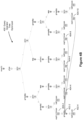
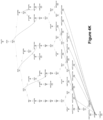
- Figures 4A - 4L illustrate several examples of query operator trees (sometimes called query graphs) optimized by the query deduplication optimization pass described herein in accordance with some implementations.
- Figure 4B is an optimized version of the query operator tree 400 shown in Figure 4A , in accordance with some implementations.
- the query operator 402-2 (a GROUPBy operator) with a child query operator 402-4 (a TABLESCAN operator) is seen duplicated several times (the operator 402-6 with the child operator 402-8, the operator 402-10 with the child operator 402-12, the operator 402-14 with the child operator 402-16, and the operator 402-18 with the child operator 402-20).
- the query operator 402-2 is replaced with a new query operator 404-2 (an EXPLICITSCAN operator) with the query operator 402-2 as its child operator.
- the other duplicate query operators (the operators 402-6, 402-10, 402-14, and 402-18) are replaced with new "explicitscan" query operators 404-4, 404-6, 404-8, and 404-10, which refer (as indicated by the lines) back to the first operator 402-2.
- the references are implemented using an extended query graph representations with cross-references. The cross-references decrease both compilation time and execution time of the affected queries.
- Query operator trees such as the tree shown in Figure 4A
- the identification and replacement or removal of duplicates queries include proving the equivalence of two different relational operator trees, a process that is implemented via query subsumption, according to some implementations.
- query subsumption is shared with other optimization passes, such as multi-query optimization, which optimizes query batches for dashboards, caching of query fragments across queries, query optimization in the presence of materialized views, and generation of optimal update plans for materialized views.
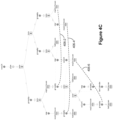
- Figure 4C illustrates an example query operator tree with several duplicate query operations, according to some implementations.
- the dashed lines 406-2, 406-4, and 406-6 from EXPLICITSCAN operators on the right hand-side of the query operator tree to the left-hand side of the query operator tree indicate the right sub-tree is mostly a duplicate of the left sub-tree of the query operator tree.
- Removing duplicate operations and replacing the operations with cross-references e.g., EXPLICITSCAN operators
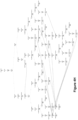
- Figure 4D illustrates another example query operator tree where duplicate GROUPBy operators are replaced with EXPLICITSCAN operator nodes.
- the nodes 408-4, 408-6, 408-8, and 408-10 are EXPLICITSCAN operator nodes that refer to the result of GROUPBy operator 408-2.
- the nodes 410-4, 410-6, 410-8, 410-10, 410-12, 410-14, 410-16, and 410-18 are EXPLICITSCAN operator nodes that refer to the result of GROUPBy operator 410-2.
- the tree could be further optimized, but the EARLYPROBE operators indicated by the lines 412-2, 412-4, 412-6, and 412-8 inhibit query fragment deduplication in the respective fragments.
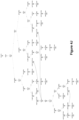
- Figures 4E-4K provide further illustrative examples of query fragment deduplication, according to some implementations.
- Figure 4F shows an operator tree that is an optimized version of the query operator tree shown in Figure 4E .
- the sub-tree 412-2 (a GROUPBy operator) with a child query operator (a TABLESCAN operator) is seen duplicated several times (in the sub-trees 412-4, 412-6, 412-8, and 412-10).
- the sub-trees 412-4, 412-6, 412-8, and 412-10 are replaced with EXPLICITSCAN operator nodes 412-12, 412-14, 412-16, and 412-18, with references to the sub-tree 412-2.
- Figure 4H shows an optimized version of the query operator tree shown in Figure 4G
- Figure 4J shows an optimized version of the query operator tree shown in Figure 4I , according to some implementations.
- Figure 4K shows an example optimized operator tree (the lines across the sub-trees show deduplicated operators) with redundant joins, according to some implementations.
- one or more GROUPBY operators are joined with itself, and the join condition turns this join into a Key-Key-Join. Since both sides of the JOIN operator are identical, the join is removed altogether in some implementations.
- some implementations construct subqueries that subsume both subqueries at hand and replace both scans by this combined query. For example, in the following query
- Some implementations recognize that it is cheaper to compute multiple aggregates with one table scan instead of computing them separately using multiple table scans. Besides being able to merge the aggregate lists of GROUPBy operators, some implementations use "transparent" operators that are transparent for the purpose of tree comparison (i.e., the presence of these operators would not cause the tree comparison to fail. For example, for the query:
- some implementations adjust tree traversals in order to discover additional opportunities (e.g., to handle recursive operations or nested GROUPBy operators) for query fragment merging and/or query fragment deduplication.
- Some implementations introduce aggregation hierarchies. For example, some implementations rewrite the query
- Some implementations use a hash table indexing the inputs of all GROUPBys and then merge GROUPBys that are applied on top of equivalent inputs.
- aggregate functions are annotated with information on how to compose/decompose them. For example, the optimizer knows that SUMs can be computed on top of other SUMs, but AVGs first need to be decomposed into SUM/COUNT.
- Some implementations cache intermediate results such as GROUPBy hash tables and SORT heaps and reuse them between queries. Some implementations persist this cache (for example to accommodate packed workbooks so that future loads and first impressions are fast). Some implementations separate how or where memory is allocated for HashTables or SORT operators from a query state. Some implementations use a caching strategy, such as an LRU algorithm, to cache intermediate results.
- Temp-Tables for result caching.
- temporary tables e.g., filter tables, group tables
- Some implementations prove that two temp tables across different session are equivalent.
- Some implementations do not prove this equivalence, and instead use other techniques to improve cache hit rate, such as crossDB temporary database, or non-persisted shared tables.
- Some implementations deduplicate subqueries across queries within a query batch. By construction, query batches tend to contain a lot of duplication. By deduplicating and/or merging query fragments across query boundaries, some implementations avoid duplicate computations. Some implementations turn a predefined operation (e.g., ExecutionTarget) into an algebra operator, and combine individual queries using a top-level operator (e.g., a UNIONALL operator). Some implementations manage (for example, using Postgres ® or a similar protocol) the sending of query batches and receipt of results in such a way so as to enable this inter-query optimization. Some implementations perform inter-query optimization for dashboard scenarios where all queries are available. Because all of the queries are available at the same time, some implementations merge GROUPBy operators (see the section above on "Query Fragment Merging").
- a predefined operation e.g., ExecutionTarget
- top-level operator e.g., a UNIONALL operator
- Some implementations manage (for example
- Some implementations avoid propagating errors between merged but otherwise unrelated queries. For example, if an exception occurs within a subtree only used by one of the merged queries, some implementations continue executing the other queries that might still finish successfully. When temporary tables (e.g., filter tables or group tables) are part of a query, some implementations prove that two temp tables across different session are equivalent, and other implementations avoid combining queries involving temp tables across sessions.
- temporary tables e.g., filter tables or group tables
- Some implementations use this feature by declaring one materialized view for each visualization (sometimes called a "viz") or filter in a dashboard. As soon as all views are in place, all views are refreshed at once. Thereby, the database server system can optimize all queries necessary for a workbook at once.
- Some implementations rely on Postgres ® representations for optimizations related to materialized views.
- Insert, Delete, or similar operations in algebra representations are used for materialized view optimizations.
- Some implementations use temporary tables ("Temp Tables”) for implementing these features.
- Some implementations apply query deduplication across the individual statements, factoring out common subqueries from ⁇ query1> and ⁇ query2>. Some implementations determine if the queries refer to tab1 or tab2 to ensure that both queries see the tables in the correct state.
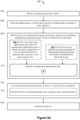
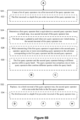
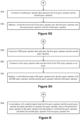
- Figures 5A - 5I provide a flowchart of a process 500 for building, optimizing, and executing a query operator tree to retrieve data from a database .
- the process 500 is performed at a database engine having one or more computing devices, each having one or more processors and memory.
- the memory stores one or more programs configured for execution by the one or more processors.
- the one or more programs execute to retrieve data from a database (e.g., an SQL database).
- the database engine 120 receives (502) a database query 226 from a client.
- the database engine 120 (or the query parser 240 within the database engine) parses (504) the database query 226 to build a query operator tree 228, which includes a plurality of query operators.
- the database engine performs (506) one or more optimization passes 308 on the query operator tree, including performing a deduplication optimization pass 308-D, to form an optimized execution plan 230.
- the deduplication optimization pass includes creating (520) a list of query operators 318 via a first traversal 316 of the query operator tree 228, determining (524) a first query operator that is equivalent to a second query operator, based on a hash map, via a second traversal (e.g., traversal 322) of the query operator tree 228, and replacing (532), via a third traversal (e.g., traversal 328) of the query operator tree 228, the second query operator with a tree node (e.g., an EXPLICITSCAN operator) that links to the first query operator.
- the database engine executes (514) the optimized execution plan to retrieve a result set from the database, and returns (518) the result set to the client.
- the database engine 120 computes (536) a list of dependencies 320 among the query operators in the list of query operators 318.
- the claimed invention defines that the second traversal comprises a breadth-first post-order traversal (e.g., traversal 322) of the query operator tree 228 based on the list of dependencies 320 so that the query operators that do not have dependencies are visited before the query operators with dependencies.
- the database engine 120 updates (538) the list of dependencies 320 to indicate that the third query operator has dependencies. In this way, the parent of the third query operator is not selected during the breadth-first post-order traversal.
- the database engine 120 replaces (548) the second query operator with the tree node only when the first query operator can be materialized.
- the database engine employs the heuristic that re-computation (or re-materialization) is better than storing and retrieving a previously computed result because the concerned query operator (e.g., a join operator) produces a large result and storing and retrieving the large result would lead to memory and bandwidth related performance issues.
- the database engine replaces (550) the second query operator when the first query operator is either a GROUPBy operator, a GROUP JOIN operator, a SORT operator, a WINDOW Operator, or a TEMP operator.
- the tree node e.g., EXPLICITSCAN operator
- the database engine 120 uses to link to the first query operator reduces (552) the number of execution instances of a portion of the optimized execution plan corresponding to the second query operator, in accordance with some implementations.
- the first traversal and the third traversal of the query operator are (522, 534) depth-first pre-order traversal of the query operator tree.
- the database engine 120 performs (508) a tree refactoring optimization pass before the deduplication optimization pass to refactor the query operator tree so as to increase the number of duplicate query operators in the query operator tree.
- the refactoring increases opportunities for the deduplication optimization pass to remove duplicate or redundant query operators.
- the database engine turns off, suppresses, or does not run (510) one or more optimization passes preceding the deduplication optimization pass that would inhibit the deduplication optimization pass (e.g., decrease the number of duplicate query operators in the query operator tree, reduce opportunities, or make finding duplicates difficult).
- the database engine 120 determines (524) if the first query operator is equivalent to the second query operator based on determining (540) if the respective input operators of the first query operator and the second query operator are equivalent, and/or determining (544) if the first query operator and the second query operator have equivalent properties (e.g., the operators are selection predicates, join conditions, or scanned tables). In some implementations, the database engine 120 determines (546) the first query operator to have equivalent properties as that of the second query operator based at least on information unit mapping (sometimes called IUMapping) of the input operators of the first query operator and the second query operator.
- IUMapping information unit mapping
- the database engine takes into consideration (542) commutativity, associativity, and similar algebraic properties of query operators for determining whether the first query operator is equivalent to the second query operator. While doing so, the database engine ignores minor differences between the algebraic representations of the first query operator and the second query operator.
- the database engine ignores (528) one or more non-matching query operators (sometimes called "transparent" operators) in the sub-trees corresponding to the first query operator and the second query operator.
- the hash map 324 is indexed by query operator signatures (e.g., using one of the signature compute functions). In some implementations, the hash map is updated (526) as query operators are visited during the second traversal of the query operator tree.
- the database engine 120 merges query fragments by constructing (554) a fourth query operator that subsumes the first query operator and the second query operator, and/or replacing (556), via the third traversal of the query operator tree, the first query operator and the second query operator with the fourth query operator.
- the database engine 120 optimizes aggregation hierarchies in query operator trees by constructing (558) a fifth query operator that subsumes the first query operator and the second query operator, constructing (560) a sixth query operator that uses the result of the fifth query operator as an input, and/or replacing (562), via the third traversal of the query operator tree, the first query operator with the fifth query operator, and the second query operator with the sixth query operator.
- the database engine 120 removes redundant joins, as indicated in Figure 5I . For example, in accordance with a determination that the first query operator and the second query operator are input operators of a parent join query operator, the database engine 120 removes (564) the parent join query operator in the query operator tree and replaces it with the first query operator, and deleting the second query operator from the query operator tree.
- the database engine 120 recycles and/or caches intermediate results of execution by caching (516) a first result of executing the first query operator using a caching mechanism.
- the database engine uses a LRU or a similar scheme that maximizes cache hit rate.
- the database engine uses a persistent cache (e.g., in packed workbooks) so that future loads or first impressions are fast.
- the database engine 120 removes (530) duplicate query operations across batch queries.
- the first query operator and the second query operator belong to different queries within a query batch, and the query operator tree comprises one or more query operators (e.g., a UNIONALL operator), which combine different queries within the query batch.
Landscapes
- Engineering & Computer Science (AREA)
- Theoretical Computer Science (AREA)
- Computational Linguistics (AREA)
- Data Mining & Analysis (AREA)
- Databases & Information Systems (AREA)
- Physics & Mathematics (AREA)
- General Engineering & Computer Science (AREA)
- General Physics & Mathematics (AREA)
- Operations Research (AREA)
- Information Retrieval, Db Structures And Fs Structures Therefor (AREA)
Claims (15)
- Verfahren zum Abrufen von Daten aus einer Datenbank, umfassend:
in einem Computersystem, das eine oder mehrere Rechnervorrichtungen (200) aufweist, wobei jede Rechnervorrichtung (200) einen oder mehrere Prozessoren (202) und Speicher (214) umfasst, der ein oder mehrere Programme speichert, die zum Ausführen durch den einen oder die mehreren Prozessoren (202) konfiguriert sind:Empfangen einer Datenbank-Anfrage (226) von einem Client;Parsen der Datenbank-Anfrage (226), um einen Anfrage-Operator-Baum (228) aufzubauen, wobei der Anfrage-Operator-Baum (228) eine Vielzahl von Anfrage-Operatoren umfasst;Durchführen eines oder mehrerer Optimierungsdurchläufe (308) an dem Anfrage-Operator-Baum (228), einschließlich eines Deduplizierungsoptimierungsdurchlaufs (308-D), um einen optimierten Ausführungsplan (230) zu bilden, wobei der Deduplizierungsoptimierungsdurchlauf (308-D) Folgendes umfasst:Erstellen einer Liste von Anfrage-Operatoren (318) über eine erste Traversierung des Anfrage-Operator-Baums (228);Berechnen einer Liste von Abhängigkeiten (320) unter den Anfrage-Operatoren in der Liste von Anfrage-Operatoren (318);Bestimmen eines ersten Anfrage-Operators, der äquivalent zu einem zweiten Anfrage-Operator ist, basierend auf einer Hash-Karte (324) über eine zweite Traversierung des Anfrage-Operator-Baums (228), wobei die zweite Traversierung eine Breiten-Nebenreihenfolge-Traversierung (322) des Anfrage-Operator-Baums (228) basierend auf der Liste von Abhängigkeiten (320) umfasst, sodass Anfrage-Operatoren, die keine Abhängigkeiten aufweisen, vor Anfrage-Operatoren mit Abhängigkeiten geprüft werden; und
Ersetzen des zweiten Anfrage-Operators durch einen Baumknoten, der mit dem ersten Anfrage-Operator verbunden ist, über eine dritte Traversierung des Anfrage-Operator-Baums (228);Ausführen des optimierten Ausführungsplans (230), um einen Ergebnissatz aus der Datenbank abzufragen; undRücksenden des Ergebnissatzes an den Client (314). - Verfahren nach Anspruch 1, das ferner Folgendes umfasst:
gemäß einer Bestimmung, dass ein dritter Anfrage-Operator keine äquivalenten Anfrage-Operatoren in dem Anfrage-Operator-Baum aufweist, Aktualisieren der Liste von Abhängigkeiten (320), um anzugeben, dass der dritte Anfrage-Operator Abhängigkeiten aufweist, sodass die Eltern des dritten Anfrage-Operators während der Breiten-Nebenreihenfolge-Traversierung (322) nicht ausgewählt wird. - Verfahren nach Anspruch 1, das ferner Folgendes umfasst:
Ersetzen des zweiten Anfrage-Operators nur dann durch den Baumknoten, wenn der erste Anfrage-Operator materialisiert werden kann. - Verfahren nach Anspruch 3, wobei der erste Anfrage-Operator einer aus Folgenden ist: ein GROUPBy-Operator, ein GROUPJOIN-Operator, ein SORT-Operator, ein WINDOW-Operator oder ein TEMP-Operator.
- Verfahren nach Anspruch 1, wobei der Baumknoten, der mit dem ersten Anfrage-Operator verbunden ist, eine Zählung von Ausführungsinstanzen eines Teils des optimierten Ausführungsplans entsprechend dem zweiten Anfrage-Operator reduziert.
- Verfahren nach Anspruch 1, wobei die erste Traversierung und die dritte Traversierung Tiefen-Hauptreihenfolge-Traversierungen (318, 328) des Anfrage-Operator-Baums (228) umfassen.
- Verfahren nach Anspruch 1, das ferner das Durchführen eines Baumrefaktorierungs-Optimierungsdurchlaufs vor dem Deduplizierungsoptimierungsdurchlauf (308-D) umfasst, um den Anfrage-Operator-Baum (228) so zu refaktorieren, um Duplikate von Anfrage-Operatoren in dem Anfrage-Operator-Baum (228) zu erhöhen.
- Verfahren nach Anspruch 1, das ferner das Abschalten eines oder mehrerer Optimierungsdurchläufe umfasst, die vor dem Deduplizierungsoptimierungsdurchlauf (308-D) erfolgen, die den Deduplizierungsoptimierungsdurchlauf (308-D) behindern.
- Verfahren nach Anspruch 1, wobei das Bestimmen, ob der erste Anfrage-Operator äquivalent zu dem zweiten Anfrage-Operator ist, Folgendes umfasst:Bestimmen, ob Eingabe-Operatoren des ersten Anfrage-Operators und des zweiten Anfrage-Operators äquivalent sind; undBestimmen, ob der erste Anfrage-Operator und der zweite Anfrage-Operator äquivalente Eigenschaften aufweisen.
- Verfahren nach Anspruch 1, wobei die Hash-Karte aktualisiert wird, wenn neue Anfrage-Operatoren während der zweiten Traversierung des Anfrage-Operator-Baums geprüft werden.
- Verfahren nach Anspruch 1, wobei das Bestimmen, ob der erste Anfrage-Operator äquivalent zu dem zweiten Anfrage-Operator ist, einen oder mehrere nicht passende Anfrage-Operatoren in den Subbäumen entsprechend dem ersten Anfrage-Operator und dem zweiten Anfrage-Operator ignoriert.
- Verfahren nach Anspruch 1, das ferner Folgendes umfasst:Entwerfen eines vierten Anfrage-Operators, der den ersten Anfrage-Operator und den zweiten Anfrage-Operator zusammenfasst; undErsetzen des ersten Anfrage-Operators und des zweiten Anfrage-Operators durch den vierten Anfrage-Operator über die dritte Traversierung des Anfrage-Operator-Baums (228).
- Verfahren nach Anspruch 1, das ferner Folgendes umfasst:
gemäß einer Bestimmung, dass der erste Anfrage-Operator und der zweite Anfrage-Operator Eingabe-Operatoren eines Eltern-JOIN-Anfrage-Operators sind, Entfernen des Eltern-JOIN-Anfrage-Operators in dem Anfrage-Operator-Baum (228), Ersetzen des Eltern-JOIN-Anfrage-Operators durch den ersten Anfrage-Operator und Löschen des zweiten Anfrage-Operators aus dem Anfrage-Operator-Baum. - Datenbank-Engine (120), die Folgendes umfasst:
eine oder mehrere Rechnervorrichtungen (200), von denen jede einen oder mehrere Prozessoren (202) und einen Speicher (214) aufweist, wobei der Speicher (214) ein oder mehrere Programme speichert, die zum Ausführen durch den einen oder die mehreren Prozessoren (202) konfiguriert sind, und wobei das eine oder die mehreren Programme Befehle zum Durchführen eines Verfahrens nach einem der Ansprüche 1 bis 13 umfassen. - Nichttransitorisches computerlesbares Speichermedium, das ein oder mehrere Programme speichert, die zum Ausführen durch ein Computersystem konfiguriert sind, das einen oder mehrere Prozessoren (202) und einen Speicher (214) aufweist, wobei das eine oder die mehreren Programme Befehle zum Durchführen eines Verfahrens nach einem der Ansprüche 1 bis 13 umfassen.
Applications Claiming Priority (2)
| Application Number | Priority Date | Filing Date | Title |
|---|---|---|---|
| US16/231,302 US10795888B2 (en) | 2018-12-21 | 2018-12-21 | Elimination of query fragment duplication in complex database queries |
| PCT/US2019/060226 WO2020131243A2 (en) | 2018-12-21 | 2019-11-07 | Elimination of query fragment duplication in complex database queries |
Publications (2)
| Publication Number | Publication Date |
|---|---|
| EP3899751A2 EP3899751A2 (de) | 2021-10-27 |
| EP3899751B1 true EP3899751B1 (de) | 2023-05-31 |
Family
ID=69160069
Family Applications (1)
| Application Number | Title | Priority Date | Filing Date |
|---|---|---|---|
| EP19836031.5A Active EP3899751B1 (de) | 2018-12-21 | 2019-11-07 | Beseitigung von abfragefragmentduplikation in komplexen datenbankabfragen |
Country Status (8)
| Country | Link |
|---|---|
| US (2) | US10795888B2 (de) |
| EP (1) | EP3899751B1 (de) |
| JP (1) | JP7079898B2 (de) |
| CN (1) | CN113228001B (de) |
| AU (2) | AU2019405137B2 (de) |
| BR (1) | BR112021010711A2 (de) |
| CA (1) | CA3120852C (de) |
| WO (1) | WO2020131243A2 (de) |
Families Citing this family (40)
| Publication number | Priority date | Publication date | Assignee | Title |
|---|---|---|---|---|
| US10255336B2 (en) | 2015-05-07 | 2019-04-09 | Datometry, Inc. | Method and system for transparent interoperability between applications and data management systems |
| US10594779B2 (en) | 2015-08-27 | 2020-03-17 | Datometry, Inc. | Method and system for workload management for data management systems |
| US11615083B1 (en) | 2017-11-22 | 2023-03-28 | Amazon Technologies, Inc. | Storage level parallel query processing |
| US11475001B1 (en) | 2018-12-19 | 2022-10-18 | Datometry, Inc. | Quantifying complexity of a database query |
| US11294869B1 (en) | 2018-12-19 | 2022-04-05 | Datometry, Inc. | Expressing complexity of migration to a database candidate |
| US11468043B1 (en) | 2018-12-20 | 2022-10-11 | Datometry, Inc. | Batching database queries for migration to a different database |
| US11068558B2 (en) * | 2018-12-21 | 2021-07-20 | Business Objects Software Ltd | Managing data for rendering visualizations |
| KR20210055761A (ko) * | 2019-02-14 | 2021-05-17 | 후아웨이 테크놀러지 컴퍼니 리미티드 | 소프트웨어 기반 근거리 데이터 처리(ndp) 기술로 관계형 데이터베이스에 대한 쿼리의 처리를 향상시키기 위한 시스템 및 방법 |
| US11650982B2 (en) * | 2019-04-01 | 2023-05-16 | Sap Se | Automatic selection of precompiled or code-generated operator variants |
| US11455305B1 (en) | 2019-06-28 | 2022-09-27 | Amazon Technologies, Inc. | Selecting alternate portions of a query plan for processing partial results generated separate from a query engine |
| US11860869B1 (en) | 2019-06-28 | 2024-01-02 | Amazon Technologies, Inc. | Performing queries to a consistent view of a data set across query engine types |
| US11068244B2 (en) * | 2019-10-01 | 2021-07-20 | Salesforce.Com, Inc. | Optimized transpilation |
| US11281721B2 (en) * | 2019-11-22 | 2022-03-22 | International Business Machines Corporation | Augmenting relational database engines with graph query capability |
| US11216462B1 (en) | 2020-08-14 | 2022-01-04 | Snowflake Inc. | Transient materialized view rewrite |
| US11475010B2 (en) * | 2020-09-09 | 2022-10-18 | Self Financial, Inc. | Asynchronous database caching |
| US20220075877A1 (en) | 2020-09-09 | 2022-03-10 | Self Financial, Inc. | Interface and system for updating isolated repositories |
| US11470037B2 (en) | 2020-09-09 | 2022-10-11 | Self Financial, Inc. | Navigation pathway generation |
| US11641665B2 (en) | 2020-09-09 | 2023-05-02 | Self Financial, Inc. | Resource utilization retrieval and modification |
| US11397826B2 (en) | 2020-10-29 | 2022-07-26 | Snowflake Inc. | Row-level security |
| US12380099B1 (en) * | 2020-12-09 | 2025-08-05 | Amazon Technologies, Inc. | Remote grouping operations to perform queries for distinct values |
| US11562095B2 (en) * | 2021-01-28 | 2023-01-24 | International Business Machines Corporation | Reinforcing SQL transactions dynamically to prevent injection attacks |
| EP4359949A4 (de) * | 2021-06-25 | 2025-03-12 | Microsoft Technology Licensing, LLC | Click-to-szipt-reflexion |
| US12475119B2 (en) * | 2021-08-11 | 2025-11-18 | Sap Se | Operator movement optimization technique for procedures |
| JP7708216B2 (ja) * | 2021-12-27 | 2025-07-15 | 日本電気株式会社 | コード変換装置、コード変換方法、及びプログラム |
| US11645231B1 (en) * | 2022-04-24 | 2023-05-09 | Morgan Stanley Services Group Inc. | Data indexing for distributed query execution and aggregation |
| US20240211437A1 (en) * | 2022-04-24 | 2024-06-27 | Morgan Stanley Services Group Inc. | Distributed query execution and aggregation across multiple datasets |
| US11803545B1 (en) * | 2022-06-24 | 2023-10-31 | Sap Se | Runtime statistics feedback for query plan cost estimation |
| US12554717B2 (en) | 2022-07-01 | 2026-02-17 | Microsoft Technology Licensing, Llc | Dynamically substituting a modified query based on performance analysis |
| WO2024023892A1 (ja) * | 2022-07-25 | 2024-02-01 | 日本電気株式会社 | コード変換装置、コード変換方法、及びコンピュータ読み取り可能な記録媒体 |
| CN115640315A (zh) * | 2022-10-24 | 2023-01-24 | 北京奥星贝斯科技有限公司 | 一种数据查询的方法、装置、电子设备及存储介质 |
| US12517904B2 (en) * | 2022-11-23 | 2026-01-06 | Snowflake Inc. | Dynamic changes to compilation based on query properties |
| CN116226228A (zh) * | 2022-12-30 | 2023-06-06 | 蚂蚁区块链科技(上海)有限公司 | 一种多表联合查询方法、装置、电子设备及存储介质 |
| CN116775644B (zh) * | 2023-04-27 | 2025-09-23 | 之江实验室 | 一种基于数据库配置的公式引擎测算方法、装置和介质 |
| CN116701429B (zh) * | 2023-05-19 | 2023-12-29 | 杭州云之重器科技有限公司 | 一种基于批量历史任务模糊化的公共查询方法 |
| CN116628036B (zh) * | 2023-06-16 | 2026-05-12 | 上海达梦数据库有限公司 | 一种执行计划生成方法、装置、设备及存储介质 |
| CN117312346B (zh) * | 2023-10-12 | 2025-07-15 | 北京火山引擎科技有限公司 | 一种数据查询调度死锁的检测方法、装置及设备 |
| US12210526B1 (en) * | 2023-10-23 | 2025-01-28 | Sap Se | Relational subtree matching for improved query performance |
| US12436950B1 (en) * | 2024-03-29 | 2025-10-07 | Microsoft Technology Licensing, Llc | Machine learning accelerated semantic equivalence detection |
| US20250371003A1 (en) * | 2024-05-29 | 2025-12-04 | Ocient Holdings LLC | Handling different schemas in maintaining a result set cache of a database system |
| CN118332009B (zh) * | 2024-06-12 | 2024-08-06 | 舟谱数据技术南京有限公司 | 一种sql数据库性能优化系统及其控制方法 |
Family Cites Families (28)
| Publication number | Priority date | Publication date | Assignee | Title |
|---|---|---|---|---|
| US5379422A (en) | 1992-01-16 | 1995-01-03 | Digital Equipment Corporation | Simple random sampling on pseudo-ranked hierarchical data structures in a data processing system |
| US5819255A (en) * | 1996-08-23 | 1998-10-06 | Tandem Computers, Inc. | System and method for database query optimization |
| US6275818B1 (en) * | 1997-11-06 | 2001-08-14 | International Business Machines Corporation | Cost based optimization of decision support queries using transient views |
| US6341281B1 (en) * | 1998-04-14 | 2002-01-22 | Sybase, Inc. | Database system with methods for optimizing performance of correlated subqueries by reusing invariant results of operator tree |
| US7574424B2 (en) * | 2004-10-13 | 2009-08-11 | Sybase, Inc. | Database system with methodology for parallel schedule generation in a query optimizer |
| US7882100B2 (en) * | 2005-01-24 | 2011-02-01 | Sybase, Inc. | Database system with methodology for generating bushy nested loop join trees |
| US8126870B2 (en) * | 2005-03-28 | 2012-02-28 | Sybase, Inc. | System and methodology for parallel query optimization using semantic-based partitioning |
| US8055600B2 (en) | 2006-11-15 | 2011-11-08 | International Business Machines Corporation | Systems and methods for applying evolutionary search to generate robust search strategies |
| US20100005077A1 (en) * | 2008-07-07 | 2010-01-07 | Kickfire, Inc. | Methods and systems for generating query plans that are compatible for execution in hardware |
| CN101620606A (zh) * | 2008-06-30 | 2010-01-06 | 国际商业机器公司 | 自动生成数据库查询的方法和系统 |
| US8898142B2 (en) | 2009-01-29 | 2014-11-25 | Hewlett-Packard Development Company, L.P. | Risk-premium-based database-query optimization |
| US8239847B2 (en) * | 2009-03-18 | 2012-08-07 | Microsoft Corporation | General distributed reduction for data parallel computing |
| US8332389B2 (en) | 2009-12-04 | 2012-12-11 | International Business Machines Corporation | Join order for a database query |
| US10838957B2 (en) | 2010-06-17 | 2020-11-17 | Microsoft Technology Licensing, Llc | Slicing relational queries using spool operators |
| US8306959B2 (en) * | 2010-08-06 | 2012-11-06 | Ianywhere Solutions, Inc. | Incremental maintenance of immediate materialized views with outerjoins |
| US8818989B2 (en) | 2010-11-30 | 2014-08-26 | International Business Machines Corporation | Memory usage query governor |
| US8898145B2 (en) * | 2011-06-15 | 2014-11-25 | Microsoft Corporation | Query optimization techniques for business intelligence systems |
| CN102880500B (zh) * | 2011-07-13 | 2016-06-15 | 阿里巴巴集团控股有限公司 | 一种任务树的优化方法和装置 |
| US9330141B2 (en) | 2011-09-29 | 2016-05-03 | Cirro, Inc. | Federated query engine for federation of data queries across structure and unstructured data |
| US9720967B2 (en) | 2012-09-28 | 2017-08-01 | Oracle International Corporation | Adaptive query optimization |
| US9773041B2 (en) * | 2013-03-06 | 2017-09-26 | Oracle International Corporation | Methods and apparatus of shared expression evaluation across RDBMS and storage layer |
| US10025823B2 (en) | 2015-05-29 | 2018-07-17 | Oracle International Corporation | Techniques for evaluating query predicates during in-memory table scans |
| US10204135B2 (en) | 2015-07-29 | 2019-02-12 | Oracle International Corporation | Materializing expressions within in-memory virtual column units to accelerate analytic queries |
| US10031940B2 (en) * | 2015-09-24 | 2018-07-24 | Futurewei Technologies, Inc. | System and method for database query |
| US10783146B2 (en) | 2016-07-19 | 2020-09-22 | Sap Se | Join operations in hybrid main memory systems |
| KR20180035035A (ko) * | 2016-09-28 | 2018-04-05 | 한국전자통신연구원 | 데이터 엔진에서의 질의 최적화 방법 및 장치 |
| US10049133B2 (en) | 2016-10-27 | 2018-08-14 | International Business Machines Corporation | Query governor across queries |
| US10956417B2 (en) * | 2017-04-28 | 2021-03-23 | Oracle International Corporation | Dynamic operation scheduling for distributed data processing |
-
2018
- 2018-12-21 US US16/231,302 patent/US10795888B2/en active Active
-
2019
- 2019-11-07 BR BR112021010711-8A patent/BR112021010711A2/pt unknown
- 2019-11-07 JP JP2021529388A patent/JP7079898B2/ja active Active
- 2019-11-07 WO PCT/US2019/060226 patent/WO2020131243A2/en not_active Ceased
- 2019-11-07 AU AU2019405137A patent/AU2019405137B2/en active Active
- 2019-11-07 EP EP19836031.5A patent/EP3899751B1/de active Active
- 2019-11-07 CA CA3120852A patent/CA3120852C/en active Active
- 2019-11-07 CN CN201980085284.XA patent/CN113228001B/zh active Active
-
2020
- 2020-10-06 US US17/064,490 patent/US11475005B2/en active Active
-
2022
- 2022-11-30 AU AU2022279452A patent/AU2022279452A1/en active Granted
Also Published As
| Publication number | Publication date |
|---|---|
| US10795888B2 (en) | 2020-10-06 |
| AU2022279452B1 (en) | 2023-02-02 |
| CA3120852A1 (en) | 2020-06-25 |
| CA3120852C (en) | 2023-09-26 |
| AU2019405137A1 (en) | 2021-06-24 |
| AU2022279452A1 (en) | 2023-02-09 |
| US20200201860A1 (en) | 2020-06-25 |
| CN113228001A (zh) | 2021-08-06 |
| US20210019319A1 (en) | 2021-01-21 |
| JP7079898B2 (ja) | 2022-06-02 |
| EP3899751A2 (de) | 2021-10-27 |
| AU2019405137B2 (en) | 2022-09-08 |
| US11475005B2 (en) | 2022-10-18 |
| WO2020131243A2 (en) | 2020-06-25 |
| WO2020131243A3 (en) | 2020-08-06 |
| JP2022507977A (ja) | 2022-01-18 |
| CN113228001B (zh) | 2022-07-19 |
| BR112021010711A2 (pt) | 2021-08-31 |
Similar Documents
| Publication | Publication Date | Title |
|---|---|---|
| CA3120852C (en) | Elimination of query fragment duplication in complex database queries | |
| US10901990B1 (en) | Elimination of common subexpressions in complex database queries | |
| US8943041B2 (en) | Query plan reformulation | |
| US20050210023A1 (en) | Query optimizer using implied predicates | |
| US11507579B2 (en) | Efficient compilation of graph queries involving long graph query patterns on top of SQL based relational engine | |
| US11281668B1 (en) | Optimizing complex database queries using query fusion | |
| US11314736B2 (en) | Group-by efficiency though functional dependencies and non-blocking aggregation functions | |
| US20210034616A1 (en) | Query optimization | |
| US12242487B2 (en) | Efficient compilation of bounded recursive graph queries on top of SQL based relational engine | |
| US11960479B2 (en) | Processing iterative query constructs in relational databases | |
| CN116964571A (zh) | 对rdbms中存储的聚合存储数据全面支持多值、多字段、多级别、多位置功能索引的技术 | |
| Kossmann et al. | Workload-driven, Lazy Discovery of Data Dependencies for Query Optimization. | |
| Fegaras et al. | Compile-time code generation for embedded data-intensive query languages | |
| US8312030B2 (en) | Efficient evaluation of XQuery and XPath full text extension | |
| Lee et al. | In-depth analysis of continuous subgraph matching in a common delta query compilation framework | |
| US20250147741A1 (en) | Evaluating path expressions on binary-encoded documents | |
| KR20250058696A (ko) | 개선된 질의 성능을 위한 관계형 서브트리 매칭 | |
| Kuzin et al. | Order in desbordante: Techniques for efficient implementation of order dependency discovery algorithms | |
| US11797520B2 (en) | ROWID elimination rewrite | |
| US20250307243A1 (en) | Unbounded Regular Path Queries In SQL | |
| Dong et al. | An SQL Frontend on top of OCaml for Data Analysis | |
| Bell | Query Optimization | |
| Stanchev et al. | Programming Embedded Computing Systems Using Static Embedded SQL. |
Legal Events
| Date | Code | Title | Description |
|---|---|---|---|
| STAA | Information on the status of an ep patent application or granted ep patent |
Free format text: STATUS: UNKNOWN |
|
| STAA | Information on the status of an ep patent application or granted ep patent |
Free format text: STATUS: THE INTERNATIONAL PUBLICATION HAS BEEN MADE |
|
| PUAI | Public reference made under article 153(3) epc to a published international application that has entered the european phase |
Free format text: ORIGINAL CODE: 0009012 |
|
| STAA | Information on the status of an ep patent application or granted ep patent |
Free format text: STATUS: REQUEST FOR EXAMINATION WAS MADE |
|
| 17P | Request for examination filed |
Effective date: 20210616 |
|
| AK | Designated contracting states |
Kind code of ref document: A2 Designated state(s): AL AT BE BG CH CY CZ DE DK EE ES FI FR GB GR HR HU IE IS IT LI LT LU LV MC MK MT NL NO PL PT RO RS SE SI SK SM TR |
|
| STAA | Information on the status of an ep patent application or granted ep patent |
Free format text: STATUS: EXAMINATION IS IN PROGRESS |
|
| DAV | Request for validation of the european patent (deleted) | ||
| DAX | Request for extension of the european patent (deleted) | ||
| 17Q | First examination report despatched |
Effective date: 20220325 |
|
| GRAP | Despatch of communication of intention to grant a patent |
Free format text: ORIGINAL CODE: EPIDOSNIGR1 |
|
| STAA | Information on the status of an ep patent application or granted ep patent |
Free format text: STATUS: GRANT OF PATENT IS INTENDED |
|
| INTG | Intention to grant announced |
Effective date: 20220808 |
|
| GRAJ | Information related to disapproval of communication of intention to grant by the applicant or resumption of examination proceedings by the epo deleted |
Free format text: ORIGINAL CODE: EPIDOSDIGR1 |
|
| STAA | Information on the status of an ep patent application or granted ep patent |
Free format text: STATUS: EXAMINATION IS IN PROGRESS |
|
| INTC | Intention to grant announced (deleted) | ||
| GRAP | Despatch of communication of intention to grant a patent |
Free format text: ORIGINAL CODE: EPIDOSNIGR1 |
|
| STAA | Information on the status of an ep patent application or granted ep patent |
Free format text: STATUS: GRANT OF PATENT IS INTENDED |
|
| INTG | Intention to grant announced |
Effective date: 20221209 |
|
| RAP3 | Party data changed (applicant data changed or rights of an application transferred) |
Owner name: TABLEAU SOFTWARE, INC. |
|
| GRAS | Grant fee paid |
Free format text: ORIGINAL CODE: EPIDOSNIGR3 |
|
| GRAA | (expected) grant |
Free format text: ORIGINAL CODE: 0009210 |
|
| STAA | Information on the status of an ep patent application or granted ep patent |
Free format text: STATUS: THE PATENT HAS BEEN GRANTED |
|
| AK | Designated contracting states |
Kind code of ref document: B1 Designated state(s): AL AT BE BG CH CY CZ DE DK EE ES FI FR GB GR HR HU IE IS IT LI LT LU LV MC MK MT NL NO PL PT RO RS SE SI SK SM TR |
|
| REG | Reference to a national code |
Ref country code: GB Ref legal event code: FG4D Ref country code: CH Ref legal event code: EP |
|
| REG | Reference to a national code |
Ref country code: AT Ref legal event code: REF Ref document number: 1571352 Country of ref document: AT Kind code of ref document: T Effective date: 20230615 Ref country code: DE Ref legal event code: R096 Ref document number: 602019029619 Country of ref document: DE |
|
| REG | Reference to a national code |
Ref country code: IE Ref legal event code: FG4D |
|
| P01 | Opt-out of the competence of the unified patent court (upc) registered |
Effective date: 20230528 |
|
| REG | Reference to a national code |
Ref country code: LT Ref legal event code: MG9D |
|
| REG | Reference to a national code |
Ref country code: NL Ref legal event code: MP Effective date: 20230531 |
|
| REG | Reference to a national code |
Ref country code: AT Ref legal event code: MK05 Ref document number: 1571352 Country of ref document: AT Kind code of ref document: T Effective date: 20230531 |
|
| PG25 | Lapsed in a contracting state [announced via postgrant information from national office to epo] |
Ref country code: SE Free format text: LAPSE BECAUSE OF FAILURE TO SUBMIT A TRANSLATION OF THE DESCRIPTION OR TO PAY THE FEE WITHIN THE PRESCRIBED TIME-LIMIT Effective date: 20230531 Ref country code: NO Free format text: LAPSE BECAUSE OF FAILURE TO SUBMIT A TRANSLATION OF THE DESCRIPTION OR TO PAY THE FEE WITHIN THE PRESCRIBED TIME-LIMIT Effective date: 20230831 Ref country code: ES Free format text: LAPSE BECAUSE OF FAILURE TO SUBMIT A TRANSLATION OF THE DESCRIPTION OR TO PAY THE FEE WITHIN THE PRESCRIBED TIME-LIMIT Effective date: 20230531 Ref country code: AT Free format text: LAPSE BECAUSE OF FAILURE TO SUBMIT A TRANSLATION OF THE DESCRIPTION OR TO PAY THE FEE WITHIN THE PRESCRIBED TIME-LIMIT Effective date: 20230531 |
|
| PG25 | Lapsed in a contracting state [announced via postgrant information from national office to epo] |
Ref country code: RS Free format text: LAPSE BECAUSE OF FAILURE TO SUBMIT A TRANSLATION OF THE DESCRIPTION OR TO PAY THE FEE WITHIN THE PRESCRIBED TIME-LIMIT Effective date: 20230531 Ref country code: PL Free format text: LAPSE BECAUSE OF FAILURE TO SUBMIT A TRANSLATION OF THE DESCRIPTION OR TO PAY THE FEE WITHIN THE PRESCRIBED TIME-LIMIT Effective date: 20230531 Ref country code: NL Free format text: LAPSE BECAUSE OF FAILURE TO SUBMIT A TRANSLATION OF THE DESCRIPTION OR TO PAY THE FEE WITHIN THE PRESCRIBED TIME-LIMIT Effective date: 20230531 Ref country code: LV Free format text: LAPSE BECAUSE OF FAILURE TO SUBMIT A TRANSLATION OF THE DESCRIPTION OR TO PAY THE FEE WITHIN THE PRESCRIBED TIME-LIMIT Effective date: 20230531 Ref country code: LT Free format text: LAPSE BECAUSE OF FAILURE TO SUBMIT A TRANSLATION OF THE DESCRIPTION OR TO PAY THE FEE WITHIN THE PRESCRIBED TIME-LIMIT Effective date: 20230531 Ref country code: IS Free format text: LAPSE BECAUSE OF FAILURE TO SUBMIT A TRANSLATION OF THE DESCRIPTION OR TO PAY THE FEE WITHIN THE PRESCRIBED TIME-LIMIT Effective date: 20230930 Ref country code: HR Free format text: LAPSE BECAUSE OF FAILURE TO SUBMIT A TRANSLATION OF THE DESCRIPTION OR TO PAY THE FEE WITHIN THE PRESCRIBED TIME-LIMIT Effective date: 20230531 Ref country code: GR Free format text: LAPSE BECAUSE OF FAILURE TO SUBMIT A TRANSLATION OF THE DESCRIPTION OR TO PAY THE FEE WITHIN THE PRESCRIBED TIME-LIMIT Effective date: 20230901 |
|
| PG25 | Lapsed in a contracting state [announced via postgrant information from national office to epo] |
Ref country code: FI Free format text: LAPSE BECAUSE OF FAILURE TO SUBMIT A TRANSLATION OF THE DESCRIPTION OR TO PAY THE FEE WITHIN THE PRESCRIBED TIME-LIMIT Effective date: 20230531 |
|
| PG25 | Lapsed in a contracting state [announced via postgrant information from national office to epo] |
Ref country code: SK Free format text: LAPSE BECAUSE OF FAILURE TO SUBMIT A TRANSLATION OF THE DESCRIPTION OR TO PAY THE FEE WITHIN THE PRESCRIBED TIME-LIMIT Effective date: 20230531 |
|
| PG25 | Lapsed in a contracting state [announced via postgrant information from national office to epo] |
Ref country code: SM Free format text: LAPSE BECAUSE OF FAILURE TO SUBMIT A TRANSLATION OF THE DESCRIPTION OR TO PAY THE FEE WITHIN THE PRESCRIBED TIME-LIMIT Effective date: 20230531 Ref country code: SK Free format text: LAPSE BECAUSE OF FAILURE TO SUBMIT A TRANSLATION OF THE DESCRIPTION OR TO PAY THE FEE WITHIN THE PRESCRIBED TIME-LIMIT Effective date: 20230531 Ref country code: RO Free format text: LAPSE BECAUSE OF FAILURE TO SUBMIT A TRANSLATION OF THE DESCRIPTION OR TO PAY THE FEE WITHIN THE PRESCRIBED TIME-LIMIT Effective date: 20230531 Ref country code: PT Free format text: LAPSE BECAUSE OF FAILURE TO SUBMIT A TRANSLATION OF THE DESCRIPTION OR TO PAY THE FEE WITHIN THE PRESCRIBED TIME-LIMIT Effective date: 20231002 Ref country code: EE Free format text: LAPSE BECAUSE OF FAILURE TO SUBMIT A TRANSLATION OF THE DESCRIPTION OR TO PAY THE FEE WITHIN THE PRESCRIBED TIME-LIMIT Effective date: 20230531 Ref country code: DK Free format text: LAPSE BECAUSE OF FAILURE TO SUBMIT A TRANSLATION OF THE DESCRIPTION OR TO PAY THE FEE WITHIN THE PRESCRIBED TIME-LIMIT Effective date: 20230531 Ref country code: CZ Free format text: LAPSE BECAUSE OF FAILURE TO SUBMIT A TRANSLATION OF THE DESCRIPTION OR TO PAY THE FEE WITHIN THE PRESCRIBED TIME-LIMIT Effective date: 20230531 |
|
| REG | Reference to a national code |
Ref country code: DE Ref legal event code: R097 Ref document number: 602019029619 Country of ref document: DE |
|
| PLBE | No opposition filed within time limit |
Free format text: ORIGINAL CODE: 0009261 |
|
| STAA | Information on the status of an ep patent application or granted ep patent |
Free format text: STATUS: NO OPPOSITION FILED WITHIN TIME LIMIT |
|
| PG25 | Lapsed in a contracting state [announced via postgrant information from national office to epo] |
Ref country code: SI Free format text: LAPSE BECAUSE OF FAILURE TO SUBMIT A TRANSLATION OF THE DESCRIPTION OR TO PAY THE FEE WITHIN THE PRESCRIBED TIME-LIMIT Effective date: 20230531 |
|
| 26N | No opposition filed |
Effective date: 20240301 |
|
| PG25 | Lapsed in a contracting state [announced via postgrant information from national office to epo] |
Ref country code: SI Free format text: LAPSE BECAUSE OF FAILURE TO SUBMIT A TRANSLATION OF THE DESCRIPTION OR TO PAY THE FEE WITHIN THE PRESCRIBED TIME-LIMIT Effective date: 20230531 Ref country code: IT Free format text: LAPSE BECAUSE OF FAILURE TO SUBMIT A TRANSLATION OF THE DESCRIPTION OR TO PAY THE FEE WITHIN THE PRESCRIBED TIME-LIMIT Effective date: 20230531 |
|
| REG | Reference to a national code |
Ref country code: CH Ref legal event code: PL |
|
| PG25 | Lapsed in a contracting state [announced via postgrant information from national office to epo] |
Ref country code: MC Free format text: LAPSE BECAUSE OF FAILURE TO SUBMIT A TRANSLATION OF THE DESCRIPTION OR TO PAY THE FEE WITHIN THE PRESCRIBED TIME-LIMIT Effective date: 20230531 |
|
| PG25 | Lapsed in a contracting state [announced via postgrant information from national office to epo] |
Ref country code: LU Free format text: LAPSE BECAUSE OF NON-PAYMENT OF DUE FEES Effective date: 20231107 |
|
| PG25 | Lapsed in a contracting state [announced via postgrant information from national office to epo] |
Ref country code: CH Free format text: LAPSE BECAUSE OF NON-PAYMENT OF DUE FEES Effective date: 20231130 |
|
| PG25 | Lapsed in a contracting state [announced via postgrant information from national office to epo] |
Ref country code: MC Free format text: LAPSE BECAUSE OF FAILURE TO SUBMIT A TRANSLATION OF THE DESCRIPTION OR TO PAY THE FEE WITHIN THE PRESCRIBED TIME-LIMIT Effective date: 20230531 Ref country code: LU Free format text: LAPSE BECAUSE OF NON-PAYMENT OF DUE FEES Effective date: 20231107 Ref country code: CH Free format text: LAPSE BECAUSE OF NON-PAYMENT OF DUE FEES Effective date: 20231130 |
|
| REG | Reference to a national code |
Ref country code: BE Ref legal event code: MM Effective date: 20231130 |
|
| REG | Reference to a national code |
Ref country code: IE Ref legal event code: MM4A |
|
| PG25 | Lapsed in a contracting state [announced via postgrant information from national office to epo] |
Ref country code: IE Free format text: LAPSE BECAUSE OF NON-PAYMENT OF DUE FEES Effective date: 20231107 |
|
| PG25 | Lapsed in a contracting state [announced via postgrant information from national office to epo] |
Ref country code: BE Free format text: LAPSE BECAUSE OF NON-PAYMENT OF DUE FEES Effective date: 20231130 |
|
| PG25 | Lapsed in a contracting state [announced via postgrant information from national office to epo] |
Ref country code: IE Free format text: LAPSE BECAUSE OF NON-PAYMENT OF DUE FEES Effective date: 20231107 Ref country code: BE Free format text: LAPSE BECAUSE OF NON-PAYMENT OF DUE FEES Effective date: 20231130 |
|
| PG25 | Lapsed in a contracting state [announced via postgrant information from national office to epo] |
Ref country code: BG Free format text: LAPSE BECAUSE OF FAILURE TO SUBMIT A TRANSLATION OF THE DESCRIPTION OR TO PAY THE FEE WITHIN THE PRESCRIBED TIME-LIMIT Effective date: 20230531 |
|
| PG25 | Lapsed in a contracting state [announced via postgrant information from national office to epo] |
Ref country code: BG Free format text: LAPSE BECAUSE OF FAILURE TO SUBMIT A TRANSLATION OF THE DESCRIPTION OR TO PAY THE FEE WITHIN THE PRESCRIBED TIME-LIMIT Effective date: 20230531 |
|
| PG25 | Lapsed in a contracting state [announced via postgrant information from national office to epo] |
Ref country code: CY Free format text: LAPSE BECAUSE OF FAILURE TO SUBMIT A TRANSLATION OF THE DESCRIPTION OR TO PAY THE FEE WITHIN THE PRESCRIBED TIME-LIMIT; INVALID AB INITIO Effective date: 20191107 |
|
| PG25 | Lapsed in a contracting state [announced via postgrant information from national office to epo] |
Ref country code: HU Free format text: LAPSE BECAUSE OF FAILURE TO SUBMIT A TRANSLATION OF THE DESCRIPTION OR TO PAY THE FEE WITHIN THE PRESCRIBED TIME-LIMIT; INVALID AB INITIO Effective date: 20191107 |
|
| PG25 | Lapsed in a contracting state [announced via postgrant information from national office to epo] |
Ref country code: TR Free format text: LAPSE BECAUSE OF FAILURE TO SUBMIT A TRANSLATION OF THE DESCRIPTION OR TO PAY THE FEE WITHIN THE PRESCRIBED TIME-LIMIT Effective date: 20230531 |
|
| PGFP | Annual fee paid to national office [announced via postgrant information from national office to epo] |
Ref country code: DE Payment date: 20251010 Year of fee payment: 7 |
|
| PGFP | Annual fee paid to national office [announced via postgrant information from national office to epo] |
Ref country code: GB Payment date: 20251027 Year of fee payment: 7 |
|
| PGFP | Annual fee paid to national office [announced via postgrant information from national office to epo] |
Ref country code: FR Payment date: 20251017 Year of fee payment: 7 |