EP3898356B1 - Compact system for abs which can be installed on a motorcycle and motorcycle comprising such a system - Google Patents
Compact system for abs which can be installed on a motorcycle and motorcycle comprising such a system Download PDFInfo
- Publication number
- EP3898356B1 EP3898356B1 EP19838958.7A EP19838958A EP3898356B1 EP 3898356 B1 EP3898356 B1 EP 3898356B1 EP 19838958 A EP19838958 A EP 19838958A EP 3898356 B1 EP3898356 B1 EP 3898356B1
- Authority
- EP
- European Patent Office
- Prior art keywords
- tube
- motorcycle
- pump
- dividing valve
- abs
- Prior art date
- Legal status (The legal status is an assumption and is not a legal conclusion. Google has not performed a legal analysis and makes no representation as to the accuracy of the status listed.)
- Active
Links
Images
Classifications
-
- B—PERFORMING OPERATIONS; TRANSPORTING
- B60—VEHICLES IN GENERAL
- B60T—VEHICLE BRAKE CONTROL SYSTEMS OR PARTS THEREOF; BRAKE CONTROL SYSTEMS OR PARTS THEREOF, IN GENERAL; ARRANGEMENT OF BRAKING ELEMENTS ON VEHICLES IN GENERAL; PORTABLE DEVICES FOR PREVENTING UNWANTED MOVEMENT OF VEHICLES; VEHICLE MODIFICATIONS TO FACILITATE COOLING OF BRAKES
- B60T8/00—Arrangements for adjusting wheel-braking force to meet varying vehicular or ground-surface conditions, e.g. limiting or varying distribution of braking force
- B60T8/32—Arrangements for adjusting wheel-braking force to meet varying vehicular or ground-surface conditions, e.g. limiting or varying distribution of braking force responsive to a speed condition, e.g. acceleration or deceleration
- B60T8/34—Arrangements for adjusting wheel-braking force to meet varying vehicular or ground-surface conditions, e.g. limiting or varying distribution of braking force responsive to a speed condition, e.g. acceleration or deceleration having a fluid pressure regulator responsive to a speed condition
- B60T8/36—Arrangements for adjusting wheel-braking force to meet varying vehicular or ground-surface conditions, e.g. limiting or varying distribution of braking force responsive to a speed condition, e.g. acceleration or deceleration having a fluid pressure regulator responsive to a speed condition including a pilot valve responding to an electromagnetic force
- B60T8/3615—Electromagnetic valves specially adapted for anti-lock brake and traction control systems
- B60T8/3675—Electromagnetic valves specially adapted for anti-lock brake and traction control systems integrated in modulator units
- B60T8/368—Electromagnetic valves specially adapted for anti-lock brake and traction control systems integrated in modulator units combined with other mechanical components, e.g. pump units, master cylinders
- B60T8/3685—Electromagnetic valves specially adapted for anti-lock brake and traction control systems integrated in modulator units combined with other mechanical components, e.g. pump units, master cylinders characterised by the mounting of the modulator unit onto the vehicle
-
- B—PERFORMING OPERATIONS; TRANSPORTING
- B62—LAND VEHICLES FOR TRAVELLING OTHERWISE THAN ON RAILS
- B62K—CYCLES; CYCLE FRAMES; CYCLE STEERING DEVICES; RIDER-OPERATED TERMINAL CONTROLS SPECIALLY ADAPTED FOR CYCLES; CYCLE AXLE SUSPENSIONS; CYCLE SIDECARS, FORECARS, OR THE LIKE
- B62K5/00—Cycles with handlebars, equipped with three or more main road wheels
- B62K5/02—Tricycles
- B62K5/05—Tricycles characterised by a single rear wheel
-
- B—PERFORMING OPERATIONS; TRANSPORTING
- B62—LAND VEHICLES FOR TRAVELLING OTHERWISE THAN ON RAILS
- B62L—BRAKES SPECIALLY ADAPTED FOR CYCLES
- B62L3/00—Brake-actuating mechanisms; Arrangements thereof
- B62L3/08—Mechanisms specially adapted for braking more than one wheel
-
- B—PERFORMING OPERATIONS; TRANSPORTING
- B60—VEHICLES IN GENERAL
- B60T—VEHICLE BRAKE CONTROL SYSTEMS OR PARTS THEREOF; BRAKE CONTROL SYSTEMS OR PARTS THEREOF, IN GENERAL; ARRANGEMENT OF BRAKING ELEMENTS ON VEHICLES IN GENERAL; PORTABLE DEVICES FOR PREVENTING UNWANTED MOVEMENT OF VEHICLES; VEHICLE MODIFICATIONS TO FACILITATE COOLING OF BRAKES
- B60T8/00—Arrangements for adjusting wheel-braking force to meet varying vehicular or ground-surface conditions, e.g. limiting or varying distribution of braking force
- B60T8/32—Arrangements for adjusting wheel-braking force to meet varying vehicular or ground-surface conditions, e.g. limiting or varying distribution of braking force responsive to a speed condition, e.g. acceleration or deceleration
- B60T8/321—Arrangements for adjusting wheel-braking force to meet varying vehicular or ground-surface conditions, e.g. limiting or varying distribution of braking force responsive to a speed condition, e.g. acceleration or deceleration deceleration
- B60T8/3225—Systems specially adapted for single-track vehicles, e.g. motorcycles
Definitions
- the present invention relates to the field of motorcycles and motor vehicles.
- the present invention relates to a compact system for ABS, comprising an ABS unit, at least one dividing valve and a compact support thereof.
- the present invention further relates to a motorcycle or motor vehicle comprising such a system.
- ABS Antiblock Braking System
- anti-locking systems have been known for decades. These are driving safety systems, designed to prevent the locking of the vehicle wheels ensuring their driveability while braking. Such systems have evolved over the years to the extent that they have considerably reduced the number of road accidents and have become mandatory for all vehicles, in almost all countries worldwide.
- Such systems basically comprise an electronic control unit, called ABS unit, capable of calculating the rotation speed of each vehicle wheel, by virtue of appropriate sensors and angle position transducers positioned on the wheels.
- ABS comprises toothed phonic wheels rigidly connected to the vehicle wheels and a proximity sensor which detects the passage of the teeth of the wheels.
- the control unit counts the number of teeth which pass in front of the sensor in a predetermined unit of time and calculates the rotation speed of each individual wheel.
- the control unit controls the hydraulic pump of the braking system in order to reduce the braking force and thus prevent the wheels from slipping if they are lock.
- the ABS reduces braking distances and maintains vehicle directionality, i.e. the possibility of controlling its direction.
- auxiliary safety systems such as EBD (Electronic Brakeforce Distribution), BAS (Brake Assistant System), ASR (Anti-Slip Regulation), ESP (Electronic Stability Program), or similar auxiliary systems, which require the presence of one or more dividing valves.
- EBD Electronic Brakeforce Distribution
- BAS Brake Assistant System
- ASR Anti-Slip Regulation
- ESP Electronic Stability Program
- the ABS unit i.e. the electronic control unit
- the ABS unit is positioned in a remote location with respect to the dividing valve and, in presence of two dividing valves, the second dividing valve is positioned in a further location, remote with respect to the first two.
- the ABS unit is usually located under the seat, the front valve is located at the handlebar and the rear valve is located at the pedal brake, when present.
- Such a configuration has a number of disadvantages, such as the need to use long connecting piping between the ABS unit, the valves and the brake calipers, between the valves and the pumps of the respective braking systems and possibly between the two valves.
- the system would preferably comprise two first connection tubes, one for each dividing valve.
- the two dividing valves are connected to each other by means of a branch on the second connection tube.
- said system is located at the front shield of the frame of the motorcycle or motor vehicle itself, even more preferably it is positioned below the handlebar.
- a position is particularly advantageous because it allows the connection piping between the valve and the pump of the front brake system, or the valves and the respective pumps of the front brake systems to be considerably reduced.
- an integrated ABS i.e. to an ABS (comprising an ABS unit and respective piping) and at least one dividing valve.
- reference numeral 1 indicates an ABS according to the present invention as a whole.
- the system 1 comprises an ABS unit 2 of known type and at least one dividing valve 3, 3' of known type.
- the system 1 of the present invention further comprises a support 4, which is intended to support the ABS unit 2 and said at least one dividing valve 3, 3'. Therefore, such a support 4 comprises a housing compartment 5 for the ABS unit 2 and at least one housing seat 6 for said at least one dividing valve 3, 3'.
- the housing seat 6 is positioned so that it is adjacent to the housing compartment 5. In other words, it may be located either by the side of the housing compartment 5 or to the front, rear, upper or lower thereof, provided that it is close to it so as to create a compact, space-saving system 1.
- the system 1 is provided with a single housing seat 6, which is located laterally to the housing compartment 5 and is adapted to accommodate two dividing valves 3, 3'.
- a housing seat 6 shares a wall 12 with the housing compartment 5 of the ABS unit 2.
- the system 1 may have a housing seat 6 for a first dividing valve 3 on one side of housing compartment 5 and a housing seat 6 for a second dividing valve 3' at the opposite side of housing compartment 5, so that, once the system 1 is assembled, the dividing valves 3, 3' are each arranged on one side of the ABS unit 2.
- the support 4 may be made of metal material, such as sheet metal or aluminum casting.
- FIG. 1-3 there are two dividing valves 3, 3' and they are both positioned in the same housing seat 6, but they could be each placed in a corresponding housing seat 6, as mentioned above.
- the number of dividing valves 3, 3' present in system 1 depends on the motor vehicle or motorcycle in which the ABS is to be fitted, or on the type of braking system chosen for the motor vehicle or motorcycle. Normally, in presence of two brake pumps 10, 11, 14, e.g. each at a relative brake lever 15, 16 of the handlebar, or one at a brake lever 15, 16 and one at the brake pedal 17, the presence of a single dividing valve 3, 3' is expected. While when the braking system of a vehicle comprises three brake pumps 10, 11, 14, e.g., one for each of the two brake levers 16, 15 and one for the brake pedal 17, the system 1 comprises two dividing valves 3, 3'. However, different cases could be provided.
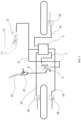
- FIG 4 shows an example of a diagram of a brake system with which the system 1 of the present invention may be used.
- a brake system comprises an ABS unit 2, a dividing valve 3, a first pump 10 at a right brake lever 16 and a second pump 11 at a left brake lever 15.
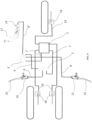
- FIG. 5 shows a further example of a diagram of a braking system with which the system 1 according to the present invention can be used.
- a brake system comprises an ABS unit 2, a dividing valve 3, a first pump 10 at a right brake lever 16 and a second pump 11 at a brake pedal 17.
- FIG. 6 shows a further example of a diagram of a braking system with which the system 1 according to the present invention can be used.
- a brake system is provided with an ABS unit 2, two dividing valves 3, 3', a first pump 10 at a right brake lever 16, a second pump 11 at a left brake lever 15 and a third pump 14 at a brake pedal 17.
- system 1 of the present invention can be used with basically all types of brake systems for motorcycles or motor vehicles available on the market.
- the support 4 is fixed to the frame of the vehicle on which it is mounted by means of screws, or equivalent means, inserted in holes 13.
- the system 1, further comprises at least a first connection tube 7, 7' between the ABS 2 unit and said at least one dividing valve 3, 3'.
- the system 1 comprises only one first tube 7, while in the embodiment shown in figures 3 and 6 , such first tubes 7, 7' are two, one for each dividing valve 3, 3'.
- a first tube 7 connects the first dividing valve 3 to the ABS unit 2 and a further first tube 7' connects the second dividing valve 3' to the ABS unit 2 itself.
- the first tubes 7, 7' are rigid tubes, preferably made of metal material, e.g. steel.
- the system 1 further comprises at least two second connection tubes 8, 8' between at least one dividing valve 3, 3' and at least two brake system pumps 10, 11, 14.
- the system 1 comprises a second tube 8 connecting the dividing valve 3 to a first pump 10 of a braking system and a second tube 8' connecting the dividing valve 3 itself to a second pump 11 of the braking system.
- the first pump 10 relates to the right brake lever 16, while the second pump 11 relates to the left brake lever 15.
- the system 1 comprises a second connection tube 8 between the dividing valve 3 and a first pump 10 of a braking system and a further second connection tube 8' between the dividing valve 3 itself and a second pump 11 of the braking system.
- the second pump 11 in figure 4 is the pump of a left brake lever 15, the second pump 11 in figure 4 is related to a brake pedal 17.
- the ABS unit 2 is then connected to the brake calipers 18 by means of further tubes 19.
- the latter are adapted to communicate with the ABS unit 2, the information which allows the ABS 2 unit itself to operate.
- the present invention further relates to a motorcycle or motor vehicle comprising a system 1 as described above.
- step b provides mounting a first dividing valve 3 and a second dividing valve 3' in the housing seat 6;
- step c provides connecting a first tube 7' between the ABS unit 2 and a first dividing valve 3 and a further first tube 7' between the ABS unit 2 and a second dividing valve 3';
- step d provides connecting a second connection tube 8 (intended to connect the first dividing valve 3 to the first pump 10 of the braking system) at said first valve 3 and a further second tube 8' (intended to connect the second dividing valve 3' to the second pump 11 of the braking system) at said second valve 3'.
- the method provides the implementation of a further step: e. connecting at least one third connection tube 9 between the two dividing valves 3, 3', at both ends.
Landscapes
- Engineering & Computer Science (AREA)
- Mechanical Engineering (AREA)
- Physics & Mathematics (AREA)
- Electromagnetism (AREA)
- Fluid Mechanics (AREA)
- Transportation (AREA)
- Regulating Braking Force (AREA)
- Ceramic Products (AREA)
Description
- The present invention relates to the field of motorcycles and motor vehicles. In particular, the present invention relates to a compact system for ABS, comprising an ABS unit, at least one dividing valve and a compact support thereof. The present invention further relates to a motorcycle or motor vehicle comprising such a system.
- ABS (Antiblock Braking System) or anti-locking systems have been known for decades. These are driving safety systems, designed to prevent the locking of the vehicle wheels ensuring their driveability while braking. Such systems have evolved over the years to the extent that they have considerably reduced the number of road accidents and have become mandatory for all vehicles, in almost all countries worldwide.
- Such systems basically comprise an electronic control unit, called ABS unit, capable of calculating the rotation speed of each vehicle wheel, by virtue of appropriate sensors and angle position transducers positioned on the wheels. In particular, the ABS comprises toothed phonic wheels rigidly connected to the vehicle wheels and a proximity sensor which detects the passage of the teeth of the wheels. The control unit counts the number of teeth which pass in front of the sensor in a predetermined unit of time and calculates the rotation speed of each individual wheel.
- In the event of sudden braking, the wheels lock and thus the calculated speed will be zero. In these conditions, the control unit controls the hydraulic pump of the braking system in order to reduce the braking force and thus prevent the wheels from slipping if they are lock. In such a manner, the ABS reduces braking distances and maintains vehicle directionality, i.e. the possibility of controlling its direction.
- Nowadays, in most cases, the ABS is integrated in, i.e. is supported by, auxiliary safety systems, such as EBD (Electronic Brakeforce Distribution), BAS (Brake Assistant System), ASR (Anti-Slip Regulation), ESP (Electronic Stability Program), or similar auxiliary systems, which require the presence of one or more dividing valves.
- In motorcycles and motor vehicles, the ABS unit, i.e. the electronic control unit, is positioned in a remote location with respect to the dividing valve and, in presence of two dividing valves, the second dividing valve is positioned in a further location, remote with respect to the first two. In particular, the ABS unit is usually located under the seat, the front valve is located at the handlebar and the rear valve is located at the pedal brake, when present.
- Such a configuration has a number of disadvantages, such as the need to use long connecting piping between the ABS unit, the valves and the brake calipers, between the valves and the pumps of the respective braking systems and possibly between the two valves.
- The location of the ABS unit with respect to the valves and of the first valve with respect to the second one, in addition to the length of the piping, and therefore the excessive volumetric expansion, implies the need to use flexible piping. Such piping, due to its nature, may deform, especially at given critical points, to the extent of being crushed, thereby compromising the operation of the entire system. Furthermore, such piping has filling problems, i.e. the normal flow of fluids contained therein is prevented where the piping is crushed.
- Moreover, flexible piping does not have a high degree of strength. Considering that the connection piping between ABS units and dividing valves takes on a high pressure of the fluids running through it, it can be understood that it constitutes a critical point of the structure, since its operation, and consequently that of the entire system, could be compromised.
- Additionally, the current arrangement of the ABS unit and of the dividing valves, and the length of the aforesaid piping create considerable problems during assembly. At present, the assembly operator must firstly mount the ABS unit and the valves on the motorcycle or motor vehicle and then connect the numerous, long pieces of connecting piping. In the case of a simple braking system, for example, there are five of such pieces of piping and each one is intended to be connected at two ends to connect two components, so that at least ten connections must be made. Therefore, serious connection mistakes may be committed if the installer or assembly operative is not particularly trained for the purpose and/or is not particularly experienced.
- Furthermore, even if completed without errors, such an assembly method is long and complex with obvious drawbacks from the point of view of productivity.
-
International patent document WO2018183452 discloses an example of a braking system provided with an anti-lock braking control module and a first brake master cylinder hydraulically coupled to the anti-lock braking control module. -
European patent document EP2263925 discloses another example of braking system provided with a brake control system that is received in a waterproof case and can be connected to hydraulic brakes through a plurality of brake pipes. -
European patent document EP2048051 discloses another example of braking system comprising a hydraulic brake device for braking of a front wheel and a rear wheel of a motorcycle. -
Japanese patent document JP2014148308 - The applicant of the present application has identified a need to develop an ABS to address the aforesaid problems.
- In particular, it is an object the present invention to provide an ABS which is compact and avoids critical issues.
- It is a further object of the present invention to create an ABS which achieves a simple and fast assembly process of the ABS unit, of the dividing valves and of the respective piping.
- It is a further object of the present invention to make available an ABS which allows using piping which is resistant to mechanical deformation and to high internal fluid pressures.
- These and other objects are achieved by means of a system the features of
claim 1. - Such a system is compact because the support comprises one or more valve housings, which are adjacent to the housing for the ABS unit. In other words, the ABS unit and the valves are positioned next to one another, in a single location and are no longer displaced, thus solving the above-mentioned problems. Indeed, such a configuration achieves a reduction in the length of the piping, with a consequent reduction in the overall dimensions and critical passages. Furthermore, the disclosed system allows reducing rigid connection piping, at least between the ABS unit and the dividing valves, thus avoiding the above-mentioned critical points. In particular, in addition to being more compact, the rigid piping also has improved resistance to mechanical deformation and is, therefore, are not subject to crushing. It is also highly resistant to operating pressures and therefore does not have the problem of hydraulic fluids.
- Above all, a system with the disclosed characteristics results in a simple and fast installation process of the ABS, of the valves and of the respective piping.
- Indeed, such a system allows pre-assembling various components (ABS units, dividing valves and some connecting piping), in a special station, outside the assembly line of the motorcycle or motor vehicle, with advantages in terms of time and simplicity of operation. In other words, such a system permits the installation on a workbench of ABS unit and valves on the support; connection piping between ABS unit and valves, connection piping between valves and braking system pumps at the valves, connecting piping between ABS unit and braking system calipers at the ABS unit and, if necessary, piping for connection between the valves, if there is more than one valve. In such a manner, it is sufficient to install a single piece, i.e. the support provided with the aforesaid components, in the assembly line of the vehicle and to connect the free ends of the aforesaid piping at the respective components (e.g. pumps and calipers, for a total of four connections for simple braking systems, i.e. two connections at the two pumps and two connections at the two calipers) to conclude the installation in line of the ABS. This allows avoiding the risk of pipe connection errors resulting in obvious advantages and reduces the degree of specialization and experience required of the installer, in addition to reducing the time and cost of the vehicle assembly line.
- Furthermore, the system of the present invention allows simplifying maintenance operations, and therefore reducing the costs, because it is sufficient, in case of need, to dismantle a single piece, i.e. the support, and therefore to remove only one part of the fairing, instead of dismantling the various displaced components and therefore remove the entire fairing.
- Preferably, the support is made in one piece, so as to be easily and cost-effectively manufactured by molding.
- In an embodiment, there are two dividing valves and they are both positioned in the same housing seat, or they are each positioned in a corresponding housing seat, depending on the construction requirements.
- According to preferred embodiments of the invention, the system further comprises at least a first connection tube between the ABS unit and said at least one dividing valve and said first tube is a rigid tube. This results in the above-mentioned advantages of compactness, mechanical strength and resistance to high pressures.
- If there were two valves, the system would preferably comprise two first connection tubes, one for each dividing valve.
- Advantageously, the system furthermore comprises at least two second connection tubes: a second connection tube between said at least one dividing valve and a first pump of a braking system and a further second connection tube between said at least one dividing valve and a second pump of the braking system.
- If there were two dividing valves, the system would further comprise at least one third connection tube between the two dividing valves.
- Alternatively, the two dividing valves are connected to each other by means of a branch on the second connection tube.
- According to an embodiment, the system comprises a single dividing valve which is:
- connected to the ABS unit by means of a first tube;
- connectable to a first pump of a right brake lever by means of a second tube; and
- connectable to a second pump of a left brake lever by means of a further second tube;
- According to a further embodiment, the system comprises a single dividing valve which is:
- connected to the ABS unit by means of a first tube;
- connectable to a first pump of a right brake lever by means of a second tube; and
- connectable to a second pump of a brake pedal by means of a further second tube;
- According to a further embodiment, the system comprises:
- a first dividing valve, which is:
- connected to the ABS unit by means of a first tube;
- connectable to a first pump of a right brake lever by means of a second tube; and
- connectable to a second dividing valve by means of a third tube;
- a second dividing valve, which is:
- connected to the ABS unit by means of a further first tube;
- connectable to a second pump of a left brake lever by means of a further second tube;
- connectable to a third pump of a brake pedal by means of a last second tube; and
- connectable to the first dividing valve by means of said third tube;
- In a second aspect, the invention relates to a motorcycle or motor vehicle comprising a system with the aforesaid characteristics.
- Preferably, said system is located at the front shield of the frame of the motorcycle or motor vehicle itself, even more preferably it is positioned below the handlebar. Such a position is particularly advantageous because it allows the connection piping between the valve and the pump of the front brake system, or the valves and the respective pumps of the front brake systems to be considerably reduced. In this context, when talking about the ABS, we are referring to an integrated ABS, i.e. to an ABS (comprising an ABS unit and respective piping) and at least one dividing valve.
- When talking about the system, we are referring to the system of the present invention.
- Further features and advantages of the invention will be more apparent from the examination of the following detailed description of some preferred, but not exclusive embodiments of the ABS, illustrated by way of non-limiting example, with reference to the accompanying drawings, in which:
-
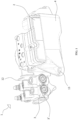
figure 1 shows a perspective view of the system of the present invention; -
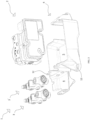
figure 2 shows an exploded view offigure 1 ; -
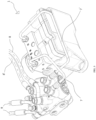
figure 3 shows a perspective view of a system according to a preferred embodiment of the present invention; and -
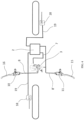
figure 4 shows an example of a diagram of an ABS brake system with a dividing valve on two pumps of corresponding brake levers; -
figure 5 shows an example of an ABS brake system diagram with a dividing valve on two pumps, respectively one of a brake lever and one of a brake pedal; and -
figure 6 shows an example of an ABS brake system with two dividing valves on three pumps, two corresponding brake levers and one brake pedal. - With reference to
figures 1-6 ,reference numeral 1 indicates an ABS according to the present invention as a whole. - The
system 1 comprises anABS unit 2 of known type and at least one dividingvalve 3, 3' of known type. Thesystem 1 of the present invention further comprises asupport 4, which is intended to support theABS unit 2 and said at least one dividingvalve 3, 3'. Therefore, such asupport 4 comprises ahousing compartment 5 for theABS unit 2 and at least onehousing seat 6 for said at least one dividingvalve 3, 3'. Thehousing seat 6 is positioned so that it is adjacent to thehousing compartment 5. In other words, it may be located either by the side of thehousing compartment 5 or to the front, rear, upper or lower thereof, provided that it is close to it so as to create a compact, space-savingsystem 1. - In the embodiments shown in
figures 1-3 , thesystem 1 is provided with asingle housing seat 6, which is located laterally to thehousing compartment 5 and is adapted to accommodate two dividingvalves 3, 3'. Such ahousing seat 6 shares awall 12 with thehousing compartment 5 of theABS unit 2. - Alternatively, the
system 1 may have ahousing seat 6 for afirst dividing valve 3 on one side ofhousing compartment 5 and ahousing seat 6 for a second dividing valve 3' at the opposite side ofhousing compartment 5, so that, once thesystem 1 is assembled, the dividingvalves 3, 3' are each arranged on one side of theABS unit 2. - Preferably, the
support 4 is made of a single piece, i.e. is a monolithic structure, preferably made of composite or plastic material. The composite material should preferably comprise polyamide or the like. - Alternatively, the
support 4 may be made of metal material, such as sheet metal or aluminum casting. - It is made by molding using methods and technologies of a known type.
- According to alternative embodiments, the
support 4 comprises two or more portions which are rigidly connected to one another. For example,housing compartment 5 andhousing seat 6 could be manufactured separately, even with different materials, and connected together by means of special mechanical connection means, so as to form a compact structure. - According to the preferred embodiment, shown in
figures 1-3 , there are two dividingvalves 3, 3' and they are both positioned in thesame housing seat 6, but they could be each placed in acorresponding housing seat 6, as mentioned above. - The number of dividing
valves 3, 3' present insystem 1, depends on the motor vehicle or motorcycle in which the ABS is to be fitted, or on the type of braking system chosen for the motor vehicle or motorcycle. Normally, in presence of two brake pumps 10, 11, 14, e.g. each at arelative brake lever brake lever brake pedal 17, the presence of asingle dividing valve 3, 3' is expected. While when the braking system of a vehicle comprises three brake pumps 10, 11, 14, e.g., one for each of the twobrake levers brake pedal 17, thesystem 1 comprises two dividingvalves 3, 3'. However, different cases could be provided. -
Figure 4 shows an example of a diagram of a brake system with which thesystem 1 of the present invention may be used. Such a brake system comprises anABS unit 2, a dividingvalve 3, afirst pump 10 at aright brake lever 16 and asecond pump 11 at aleft brake lever 15. -
Figure 5 shows a further example of a diagram of a braking system with which thesystem 1 according to the present invention can be used. Such a brake system comprises anABS unit 2, a dividingvalve 3, afirst pump 10 at aright brake lever 16 and asecond pump 11 at abrake pedal 17. -
Figure 6 shows a further example of a diagram of a braking system with which thesystem 1 according to the present invention can be used. Such a brake system is provided with anABS unit 2, two dividingvalves 3, 3', afirst pump 10 at aright brake lever 16, asecond pump 11 at aleft brake lever 15 and athird pump 14 at abrake pedal 17. - These are just examples because the
system 1 of the present invention can be used with basically all types of brake systems for motorcycles or motor vehicles available on the market. - The
support 4 is fixed to the frame of the vehicle on which it is mounted by means of screws, or equivalent means, inserted inholes 13. - The
system 1, according to preferred embodiments, further comprises at least afirst connection tube 7, 7' between theABS 2 unit and said at least one dividingvalve 3, 3'. In particular, in the cases shown infigures 4 and5 , thesystem 1 comprises only onefirst tube 7, while in the embodiment shown infigures 3 and6 , suchfirst tubes 7, 7' are two, one for each dividingvalve 3, 3'. In particular, afirst tube 7 connects thefirst dividing valve 3 to theABS unit 2 and a further first tube 7' connects the second dividing valve 3' to theABS unit 2 itself. As shown above all infigure 3 , thefirst tubes 7, 7' are rigid tubes, preferably made of metal material, e.g. steel. - The
system 1 further comprises at least twosecond connection tubes 8, 8' between at least one dividingvalve 3, 3' and at least two brake system pumps 10, 11, 14. In particular, in the case of the braking system shown infigure 4 , thesystem 1 comprises asecond tube 8 connecting the dividingvalve 3 to afirst pump 10 of a braking system and a second tube 8' connecting the dividingvalve 3 itself to asecond pump 11 of the braking system. Thefirst pump 10 relates to theright brake lever 16, while thesecond pump 11 relates to theleft brake lever 15. - Similarly, in the case of the braking system shown in
figure 5 , thesystem 1 comprises asecond connection tube 8 between the dividingvalve 3 and afirst pump 10 of a braking system and a further second connection tube 8' between the dividingvalve 3 itself and asecond pump 11 of the braking system. However, while thesecond pump 11 infigure 4 is the pump of aleft brake lever 15, thesecond pump 11 infigure 4 is related to abrake pedal 17. - In the case of the braking system shown in
figure 6 , instead, thesystem 1 comprises asecond tube 8 connecting thefirst dividing valve 3 to afirst pump 10 of a braking system, a further second connection tube 8' between said at least one dividing valve 3' and asecond pump 11 of a braking system and a furthersecond connection tube 8" between said at least one dividing valve 3' and asecond pump 14 of the braking system. In such a case, thefirst pump 10 relates to theright brake lever 16, thesecond pump 11 to theleft brake lever 15 and thethird pump 14 to thebrake pedal 17. - In
figures 3 and6 , it is also worth noting that thesystem 1, in such embodiments, further comprises at least one third connection tube 9 between the two dividingvalves 3, 3'. - As shown in
figures 4 ,5 and6 , theABS unit 2 is then connected to thebrake calipers 18 by means offurther tubes 19. The latter are adapted to communicate with theABS unit 2, the information which allows theABS 2 unit itself to operate. - In the example in
figure 4 , there are two of suchfurther tubes 19, one for eachbrake caliper 18 which are arranged at a front wheel and at a lower wheel of the motorcycle or motor vehicle, respectively. Instead, there are threefurther tubes 19 in the example infigure 5 : two tubes are adapted to connect twobrake calipers 18 of the same front wheel to theABS unit 2 and one tube is adapted to connect abrake caliper 18 of the rear wheel to theABS 2 unit itself. - Finally, there are three
further tubes 19 in the example infigure 6 ; two tubes are adapted to connect twobrake calipers 18 of two corresponding front wheels with theABS unit 2 and one tube is adapted to connect abrake caliper 18 of the rear wheel with theABS unit 2 itself. - The present invention further relates to a motorcycle or motor vehicle comprising a
system 1 as described above. - Advantageously, the
system 1 is positioned at the handlebar of the motorcycle or motorbike itself. Preferably, thesystem 1 is located at the front shield of the frame, below the handlebar of the vehicle, so as to achieve short piping and the respective advantages mentioned above. - An assembly method of an ABS on a motorcycle or motor vehicle according to the present invention will now be described.
- With a
system 1 for ABS as described above, it is possible to pre-assemble such asystem 1 and its piping, by implementing the following pre-steps off-line: - a. mounting an
ABS unit 2 in ahousing compartment 5 of asupport 4; - b. mounting at least one dividing
valve 3, 3' in aspecial housing seat 6 of thesupport 4 itself, adjacent to thehousing compartment 5; - c. connecting at least one
first connection tube 7, 7' between theABS unit 2 and said at least one dividingvalve 3, 3' at both its ends; - d. connecting at least two
second connection tubes 8, 8' between said at least one dividingvalve 3, 3' and at least twopumps valve 3, 3'. - In the embodiments shown in
figures 3 and6 , i.e. in presence of two dividingvalves 3, 3', step b provides mounting afirst dividing valve 3 and a second dividing valve 3' in thehousing seat 6; step c provides connecting a first tube 7' between theABS unit 2 and afirst dividing valve 3 and a further first tube 7' between theABS unit 2 and a second dividing valve 3'; step d provides connecting a second connection tube 8 (intended to connect thefirst dividing valve 3 to thefirst pump 10 of the braking system) at saidfirst valve 3 and a further second tube 8' (intended to connect the second dividing valve 3' to thesecond pump 11 of the braking system) at said second valve 3'. - Furthermore, in such an embodiment, the method provides the implementation of a further step:
e. connecting at least one third connection tube 9 between the two dividingvalves 3, 3', at both ends. - In such a manner, as explained above, it is possible to assemble in line only
system 1, pre-assembled by means of steps from a to e, on a motorcycle or motor vehicle and to connect the free ends of thesecond connection tubes 8, 8' and theadditional tubes 19, to complete the assembly of an ABS quickly and easily.
Claims (12)
- A system (1) comprising an ABS unit (2) for the wheels of a vehicle, at least one dividing valve (3, 3') and a support (4), comprising a housing compartment (5) for the ABS unit (2) and characterized by comprising at least one housing seat (6) for said at least one dividing valve (3), said at least one housing seat (6) being positioned to be adjacent to the housing compartment (5).
- The system (1) according to claim 1, wherein said support (4) is made in a single piece.
- The system (1) according to claim 1 or 2, wherein the dividing valves (3, 3') are two in number and are both positioned in the same housing seat (6), or each in a corresponding housing seat (6).
- The system (1) according to any one of the preceding claims, further comprising at least a first connection tube (7, 7') between the ABS unit (2) and said at least one dividing valve (3, 3'), wherein said first tube (7, 7') is a rigid tube.
- The system (1) according to claim 4, when depending on claim 3, wherein said first connection tubes (7, 7') are two in number, one for each dividing valve (3, 3').
- The system (1) according to any one of the preceding claims, further comprising at least two second connection tubes (8, 8'): a second connection tube (8) between said at least one dividing valve (3, 3') and first pump (10) of a braking system and a further second connection tube (8') between said at least one dividing valve (3, 3') and a second pump (11) of the braking system.
- The system (1) according to any one of the preceding claims, when depending on claim 3, further comprising at least a third connection tube (9) between the two dividing valves (3).
- The system (1) according to claim 1, 2 or 4, when depending on claim 1 or 2, comprising a single dividing valve (3), which is:- connected to the ABS unit (2) by means of a first tube (7);- connected to the first pump (10) of a right brake lever (16) by means of a second tube (8); and- connected to the second pump (11) of a left brake lever (15) by means of a further second tube (8');the ABS unit (2) being connected to a brake caliper (18) of a front wheel of a motorcycle or motor vehicle by means of a further tube (19) and to a brake caliper (18) of a rear wheel of a motorcycle or motor vehicle by means of a further tube (19).
- The system (1) according to claim 1, 2 or 4, when depending on claim 1 or 2, comprising a single dividing valve (3), which is:- connected to the ABS unit (2) by means of a first tube (7);- connected to the first pump (10) of a right brake lever (16) by means of a second tube (8); and- connected to the second pump (11) of a brake pedal (17) by means of a further second tube (8');the ABS unit (2) being connected to two brake calipers (18) of the same front wheel of a motorcycle or motor vehicle by means of two respective further tubes (19) and to a brake caliper (18) of a rear wheel of a motorcycle or motor vehicle by means of a further tube (19).
- The system (1) according to any one of the claims 1 - 5, comprising:• a first dividing valve (3), which is:- connected to the ABS unit (2) by means of a first tube (7);- connected to the first pump (10) of a right brake lever (16) by means of a second tube (8); and- connected to a second dividing valve (3') by means of a third tube (9);• a second dividing valve (3'), which is:the ABS unit (2) being connected to two brake calipers (18) of two corresponding front wheels of a motorcycle or motor vehicle by means of two respective further tubes (19) and to a brake caliper (18) of a rear wheel of a motorcycle or motor vehicle by means of a further tube (19).- connected to the ABS unit (2) by means of a further first tube (7');- connected to the second pump (11) of a left brake lever (15) by means of a further second tube (8');- connected to a third pump (14) of a brake pedal (17) by means of a last second tube (8"); and- connected to the first dividing valve (3) by means of said third tube (9);
- A motorcycle or motor vehicle comprising a system (1) according to one of the preceding claims.
- The motorcycle or motor vehicle according to claim 11, wherein said system (1) is positioned at the handlebar of the motorcycle or motor vehicle.
Applications Claiming Priority (2)
| Application Number | Priority Date | Filing Date | Title |
|---|---|---|---|
| IT102018000020347A IT201800020347A1 (en) | 2018-12-20 | 2018-12-20 | COMPACT SYSTEM FOR ABS INSTALLABLE ON A MOTORCYCLE AND MOTORCYCLE INCLUDING THIS SYSTEM |
| PCT/IB2019/061069 WO2020128930A1 (en) | 2018-12-20 | 2019-12-19 | Compact system for abs which can be installed on a motorcycle and motorcycle comprising such a system |
Publications (3)
| Publication Number | Publication Date |
|---|---|
| EP3898356A1 EP3898356A1 (en) | 2021-10-27 |
| EP3898356C0 EP3898356C0 (en) | 2025-07-09 |
| EP3898356B1 true EP3898356B1 (en) | 2025-07-09 |
Family
ID=66166291
Family Applications (1)
| Application Number | Title | Priority Date | Filing Date |
|---|---|---|---|
| EP19838958.7A Active EP3898356B1 (en) | 2018-12-20 | 2019-12-19 | Compact system for abs which can be installed on a motorcycle and motorcycle comprising such a system |
Country Status (5)
| Country | Link |
|---|---|
| EP (1) | EP3898356B1 (en) |
| CN (1) | CN113226875A (en) |
| IT (1) | IT201800020347A1 (en) |
| TW (1) | TWI833863B (en) |
| WO (1) | WO2020128930A1 (en) |
Citations (1)
| Publication number | Priority date | Publication date | Assignee | Title |
|---|---|---|---|---|
| JP2014148308A (en) * | 2014-04-23 | 2014-08-21 | Bosch Corp | Abs hydraulic unit for motorcycle |
Family Cites Families (12)
| Publication number | Priority date | Publication date | Assignee | Title |
|---|---|---|---|---|
| DE19919396A1 (en) * | 1998-04-28 | 1999-11-04 | Kelsey Hayes Co | Electromagnetic coil without coil carrier for vehicle antilock braking system |
| JP4184886B2 (en) * | 2003-08-19 | 2008-11-19 | 本田技研工業株式会社 | Mounting structure of ABS hydraulic unit assembly for motorcycle |
| JP4851717B2 (en) * | 2005-01-11 | 2012-01-11 | 本田技研工業株式会社 | ABS unit arrangement structure for motorcycles |
| JP2009090887A (en) * | 2007-10-10 | 2009-04-30 | Yamaha Motor Co Ltd | Saddle riding vehicle |
| ITTO20080032A1 (en) * | 2008-01-16 | 2009-07-17 | Vhit Spa | HYDRAULIC BRAKING DEVICE WITH SAFETY DEVICES, FOR AN AGRICULTURAL TRACTOR OR SIMILAR VEHICLE |
| JP5202070B2 (en) * | 2008-03-31 | 2013-06-05 | 本田技研工業株式会社 | Brake control device for vehicle |
| JP5109207B2 (en) * | 2008-09-24 | 2012-12-26 | 本田技研工業株式会社 | Motorcycle |
| JP5627112B2 (en) * | 2011-07-01 | 2014-11-19 | 本田技研工業株式会社 | Motorcycle |
| JP5751989B2 (en) * | 2011-08-27 | 2015-07-22 | 本田技研工業株式会社 | Motorcycle |
| TWI530426B (en) * | 2012-12-21 | 2016-04-21 | 山葉發動機股份有限公司 | Vehicle |
| CN106660535A (en) * | 2014-05-16 | 2017-05-10 | 罗伯特·博世有限公司 | ABS hydraulic unit |
| US10723334B2 (en) * | 2017-03-28 | 2020-07-28 | Polaris Industries Inc. | Anti-lock brake system for all-terrain vehicle |
-
2018
- 2018-12-20 IT IT102018000020347A patent/IT201800020347A1/en unknown
-
2019
- 2019-12-19 CN CN201980084185.XA patent/CN113226875A/en active Pending
- 2019-12-19 TW TW108146657A patent/TWI833863B/en active
- 2019-12-19 EP EP19838958.7A patent/EP3898356B1/en active Active
- 2019-12-19 WO PCT/IB2019/061069 patent/WO2020128930A1/en not_active Ceased
Patent Citations (1)
| Publication number | Priority date | Publication date | Assignee | Title |
|---|---|---|---|---|
| JP2014148308A (en) * | 2014-04-23 | 2014-08-21 | Bosch Corp | Abs hydraulic unit for motorcycle |
Also Published As
| Publication number | Publication date |
|---|---|
| TW202037509A (en) | 2020-10-16 |
| EP3898356A1 (en) | 2021-10-27 |
| CN113226875A (en) | 2021-08-06 |
| EP3898356C0 (en) | 2025-07-09 |
| WO2020128930A1 (en) | 2020-06-25 |
| TWI833863B (en) | 2024-03-01 |
| IT201800020347A1 (en) | 2020-06-20 |
Similar Documents
| Publication | Publication Date | Title |
|---|---|---|
| JP6623221B2 (en) | Brake device and brake control device | |
| CN104583032B (en) | ABS hydraulic pressure units | |
| US8392085B2 (en) | Method and device for controlling a motor vehicle comprising an electronically controlled brake system with driving dynamics control | |
| EP3786015B1 (en) | Hydraulic pressure control unit for saddle-type vehicle brake system and saddle-type vehicle brake system | |
| JP2008207662A (en) | Brake control device and brake control method | |
| US20180037203A1 (en) | Hydraulic Control Apparatus and Brake System | |
| EP3786014B1 (en) | Hydraulic pressure control unit for straddle-type vehicle brake system and straddle-type vehicle brake system | |
| GB2454064A (en) | Combination regenerative and friction braking | |
| EP3898356B1 (en) | Compact system for abs which can be installed on a motorcycle and motorcycle comprising such a system | |
| US20090273228A1 (en) | Motor vehicle braking installation | |
| US6338533B1 (en) | Brake assembly for a motorcycle | |
| US4955673A (en) | Arrangement of electronic antiskid brake system | |
| JP2006508844A (en) | Automobile with braking system and drive system | |
| US20120193974A1 (en) | Braking system for a vehicle | |
| JP7761885B2 (en) | Support device for supporting a bicycle disc brake caliper and ABS system | |
| JP5037463B2 (en) | Motorcycle with pressure sensor support structure | |
| EP1115601B1 (en) | Improvement in hydraulic braking systems for vehicles | |
| WO2022038620A1 (en) | A braking system for a motor vehicle | |
| JP2010502505A (en) | Automotive braking system | |
| EP3883829B1 (en) | A motor vehicle and a support member for a brake unit thereof | |
| EP4180309A1 (en) | A saddle type vehicle | |
| CN101208226B (en) | Brake control system for a vehicle | |
| US20040159505A1 (en) | Brake system for a motor vehicle | |
| WO2023206477A1 (en) | Brake control module, hydraulic control module, brake system, and vehicle | |
| EP0334722A2 (en) | Braking assembly comprising a failure indicator |
Legal Events
| Date | Code | Title | Description |
|---|---|---|---|
| STAA | Information on the status of an ep patent application or granted ep patent |
Free format text: STATUS: UNKNOWN |
|
| STAA | Information on the status of an ep patent application or granted ep patent |
Free format text: STATUS: THE INTERNATIONAL PUBLICATION HAS BEEN MADE |
|
| PUAI | Public reference made under article 153(3) epc to a published international application that has entered the european phase |
Free format text: ORIGINAL CODE: 0009012 |
|
| STAA | Information on the status of an ep patent application or granted ep patent |
Free format text: STATUS: REQUEST FOR EXAMINATION WAS MADE |
|
| 17P | Request for examination filed |
Effective date: 20210716 |
|
| AK | Designated contracting states |
Kind code of ref document: A1 Designated state(s): AL AT BE BG CH CY CZ DE DK EE ES FI FR GB GR HR HU IE IS IT LI LT LU LV MC MK MT NL NO PL PT RO RS SE SI SK SM TR |
|
| DAV | Request for validation of the european patent (deleted) | ||
| DAX | Request for extension of the european patent (deleted) | ||
| STAA | Information on the status of an ep patent application or granted ep patent |
Free format text: STATUS: EXAMINATION IS IN PROGRESS |
|
| 17Q | First examination report despatched |
Effective date: 20230301 |
|
| GRAP | Despatch of communication of intention to grant a patent |
Free format text: ORIGINAL CODE: EPIDOSNIGR1 |
|
| STAA | Information on the status of an ep patent application or granted ep patent |
Free format text: STATUS: GRANT OF PATENT IS INTENDED |
|
| INTG | Intention to grant announced |
Effective date: 20250314 |
|
| GRAS | Grant fee paid |
Free format text: ORIGINAL CODE: EPIDOSNIGR3 |
|
| GRAA | (expected) grant |
Free format text: ORIGINAL CODE: 0009210 |
|
| STAA | Information on the status of an ep patent application or granted ep patent |
Free format text: STATUS: THE PATENT HAS BEEN GRANTED |
|
| AK | Designated contracting states |
Kind code of ref document: B1 Designated state(s): AL AT BE BG CH CY CZ DE DK EE ES FI FR GB GR HR HU IE IS IT LI LT LU LV MC MK MT NL NO PL PT RO RS SE SI SK SM TR |
|
| REG | Reference to a national code |
Ref country code: GB Ref legal event code: FG4D |
|
| REG | Reference to a national code |
Ref country code: CH Ref legal event code: EP |
|
| REG | Reference to a national code |
Ref country code: IE Ref legal event code: FG4D |
|
| REG | Reference to a national code |
Ref country code: DE Ref legal event code: R096 Ref document number: 602019072393 Country of ref document: DE |
|
| U01 | Request for unitary effect filed |
Effective date: 20250805 |
|
| U07 | Unitary effect registered |
Designated state(s): AT BE BG DE DK EE FI FR IT LT LU LV MT NL PT RO SE SI Effective date: 20250814 |
|
| PG25 | Lapsed in a contracting state [announced via postgrant information from national office to epo] |
Ref country code: IS Free format text: LAPSE BECAUSE OF FAILURE TO SUBMIT A TRANSLATION OF THE DESCRIPTION OR TO PAY THE FEE WITHIN THE PRESCRIBED TIME-LIMIT Effective date: 20251109 |
|
| PG25 | Lapsed in a contracting state [announced via postgrant information from national office to epo] |
Ref country code: NO Free format text: LAPSE BECAUSE OF FAILURE TO SUBMIT A TRANSLATION OF THE DESCRIPTION OR TO PAY THE FEE WITHIN THE PRESCRIBED TIME-LIMIT Effective date: 20251009 |
|
| PG25 | Lapsed in a contracting state [announced via postgrant information from national office to epo] |
Ref country code: HR Free format text: LAPSE BECAUSE OF FAILURE TO SUBMIT A TRANSLATION OF THE DESCRIPTION OR TO PAY THE FEE WITHIN THE PRESCRIBED TIME-LIMIT Effective date: 20250709 |
|
| PG25 | Lapsed in a contracting state [announced via postgrant information from national office to epo] |
Ref country code: GR Free format text: LAPSE BECAUSE OF FAILURE TO SUBMIT A TRANSLATION OF THE DESCRIPTION OR TO PAY THE FEE WITHIN THE PRESCRIBED TIME-LIMIT Effective date: 20251010 |
|
| PG25 | Lapsed in a contracting state [announced via postgrant information from national office to epo] |
Ref country code: PL Free format text: LAPSE BECAUSE OF FAILURE TO SUBMIT A TRANSLATION OF THE DESCRIPTION OR TO PAY THE FEE WITHIN THE PRESCRIBED TIME-LIMIT Effective date: 20250709 |
|
| PG25 | Lapsed in a contracting state [announced via postgrant information from national office to epo] |
Ref country code: RS Free format text: LAPSE BECAUSE OF FAILURE TO SUBMIT A TRANSLATION OF THE DESCRIPTION OR TO PAY THE FEE WITHIN THE PRESCRIBED TIME-LIMIT Effective date: 20251009 |
|
| PG25 | Lapsed in a contracting state [announced via postgrant information from national office to epo] |
Ref country code: ES Free format text: LAPSE BECAUSE OF FAILURE TO SUBMIT A TRANSLATION OF THE DESCRIPTION OR TO PAY THE FEE WITHIN THE PRESCRIBED TIME-LIMIT Effective date: 20250709 |
|
| U20 | Renewal fee for the european patent with unitary effect paid |
Year of fee payment: 7 Effective date: 20251230 |
|
| PG25 | Lapsed in a contracting state [announced via postgrant information from national office to epo] |
Ref country code: SM Free format text: LAPSE BECAUSE OF FAILURE TO SUBMIT A TRANSLATION OF THE DESCRIPTION OR TO PAY THE FEE WITHIN THE PRESCRIBED TIME-LIMIT Effective date: 20250709 |
|
| PG25 | Lapsed in a contracting state [announced via postgrant information from national office to epo] |
Ref country code: CZ Free format text: LAPSE BECAUSE OF FAILURE TO SUBMIT A TRANSLATION OF THE DESCRIPTION OR TO PAY THE FEE WITHIN THE PRESCRIBED TIME-LIMIT Effective date: 20250709 |
|
| PG25 | Lapsed in a contracting state [announced via postgrant information from national office to epo] |
Ref country code: SK Free format text: LAPSE BECAUSE OF FAILURE TO SUBMIT A TRANSLATION OF THE DESCRIPTION OR TO PAY THE FEE WITHIN THE PRESCRIBED TIME-LIMIT Effective date: 20250709 |