EP3896307B1 - Clutch unit - Google Patents
Clutch unit Download PDFInfo
- Publication number
- EP3896307B1 EP3896307B1 EP20170113.3A EP20170113A EP3896307B1 EP 3896307 B1 EP3896307 B1 EP 3896307B1 EP 20170113 A EP20170113 A EP 20170113A EP 3896307 B1 EP3896307 B1 EP 3896307B1
- Authority
- EP
- European Patent Office
- Prior art keywords
- unit
- drive
- ring
- rings
- locking element
- Prior art date
- Legal status (The legal status is an assumption and is not a legal conclusion. Google has not performed a legal analysis and makes no representation as to the accuracy of the status listed.)
- Active
Links
Images




Classifications
-
- F—MECHANICAL ENGINEERING; LIGHTING; HEATING; WEAPONS; BLASTING
- F16—ENGINEERING ELEMENTS AND UNITS; GENERAL MEASURES FOR PRODUCING AND MAINTAINING EFFECTIVE FUNCTIONING OF MACHINES OR INSTALLATIONS; THERMAL INSULATION IN GENERAL
- F16D—COUPLINGS FOR TRANSMITTING ROTATION; CLUTCHES; BRAKES
- F16D41/00—Freewheels or freewheel clutches
- F16D41/12—Freewheels or freewheel clutches with hinged pawl co-operating with teeth, cogs, or the like
- F16D41/16—Freewheels or freewheel clutches with hinged pawl co-operating with teeth, cogs, or the like the action being reversible
-
- F—MECHANICAL ENGINEERING; LIGHTING; HEATING; WEAPONS; BLASTING
- F16—ENGINEERING ELEMENTS AND UNITS; GENERAL MEASURES FOR PRODUCING AND MAINTAINING EFFECTIVE FUNCTIONING OF MACHINES OR INSTALLATIONS; THERMAL INSULATION IN GENERAL
- F16D—COUPLINGS FOR TRANSMITTING ROTATION; CLUTCHES; BRAKES
- F16D25/00—Fluid-actuated clutches
- F16D25/10—Clutch systems with a plurality of fluid-actuated clutches
-
- B—PERFORMING OPERATIONS; TRANSPORTING
- B60—VEHICLES IN GENERAL
- B60K—ARRANGEMENT OR MOUNTING OF PROPULSION UNITS OR OF TRANSMISSIONS IN VEHICLES; ARRANGEMENT OR MOUNTING OF PLURAL DIVERSE PRIME-MOVERS IN VEHICLES; AUXILIARY DRIVES FOR VEHICLES; INSTRUMENTATION OR DASHBOARDS FOR VEHICLES; ARRANGEMENTS IN CONNECTION WITH COOLING, AIR INTAKE, GAS EXHAUST OR FUEL SUPPLY OF PROPULSION UNITS IN VEHICLES
- B60K1/00—Arrangement or mounting of electrical propulsion units
-
- B—PERFORMING OPERATIONS; TRANSPORTING
- B60—VEHICLES IN GENERAL
- B60K—ARRANGEMENT OR MOUNTING OF PROPULSION UNITS OR OF TRANSMISSIONS IN VEHICLES; ARRANGEMENT OR MOUNTING OF PLURAL DIVERSE PRIME-MOVERS IN VEHICLES; AUXILIARY DRIVES FOR VEHICLES; INSTRUMENTATION OR DASHBOARDS FOR VEHICLES; ARRANGEMENTS IN CONNECTION WITH COOLING, AIR INTAKE, GAS EXHAUST OR FUEL SUPPLY OF PROPULSION UNITS IN VEHICLES
- B60K17/00—Arrangement or mounting of transmissions in vehicles
- B60K17/02—Arrangement or mounting of transmissions in vehicles characterised by arrangement, location, or kind of clutch
-
- B—PERFORMING OPERATIONS; TRANSPORTING
- B60—VEHICLES IN GENERAL
- B60K—ARRANGEMENT OR MOUNTING OF PROPULSION UNITS OR OF TRANSMISSIONS IN VEHICLES; ARRANGEMENT OR MOUNTING OF PLURAL DIVERSE PRIME-MOVERS IN VEHICLES; AUXILIARY DRIVES FOR VEHICLES; INSTRUMENTATION OR DASHBOARDS FOR VEHICLES; ARRANGEMENTS IN CONNECTION WITH COOLING, AIR INTAKE, GAS EXHAUST OR FUEL SUPPLY OF PROPULSION UNITS IN VEHICLES
- B60K17/00—Arrangement or mounting of transmissions in vehicles
- B60K17/04—Arrangement or mounting of transmissions in vehicles characterised by arrangement, location or kind of gearing
- B60K17/16—Arrangement or mounting of transmissions in vehicles characterised by arrangement, location or kind of gearing of differential gearing
- B60K17/165—Arrangement or mounting of transmissions in vehicles characterised by arrangement, location or kind of gearing of differential gearing provided between independent half axles
-
- F—MECHANICAL ENGINEERING; LIGHTING; HEATING; WEAPONS; BLASTING
- F16—ENGINEERING ELEMENTS AND UNITS; GENERAL MEASURES FOR PRODUCING AND MAINTAINING EFFECTIVE FUNCTIONING OF MACHINES OR INSTALLATIONS; THERMAL INSULATION IN GENERAL
- F16D—COUPLINGS FOR TRANSMITTING ROTATION; CLUTCHES; BRAKES
- F16D23/00—Details of mechanically-actuated clutches not specific for one distinct type
- F16D23/12—Mechanical clutch-actuating mechanisms arranged outside the clutch as such
-
- F—MECHANICAL ENGINEERING; LIGHTING; HEATING; WEAPONS; BLASTING
- F16—ENGINEERING ELEMENTS AND UNITS; GENERAL MEASURES FOR PRODUCING AND MAINTAINING EFFECTIVE FUNCTIONING OF MACHINES OR INSTALLATIONS; THERMAL INSULATION IN GENERAL
- F16D—COUPLINGS FOR TRANSMITTING ROTATION; CLUTCHES; BRAKES
- F16D25/00—Fluid-actuated clutches
-
- F—MECHANICAL ENGINEERING; LIGHTING; HEATING; WEAPONS; BLASTING
- F16—ENGINEERING ELEMENTS AND UNITS; GENERAL MEASURES FOR PRODUCING AND MAINTAINING EFFECTIVE FUNCTIONING OF MACHINES OR INSTALLATIONS; THERMAL INSULATION IN GENERAL
- F16D—COUPLINGS FOR TRANSMITTING ROTATION; CLUTCHES; BRAKES
- F16D25/00—Fluid-actuated clutches
- F16D25/06—Fluid-actuated clutches in which the fluid actuates a piston incorporated in, i.e. rotating with the clutch
- F16D25/061—Fluid-actuated clutches in which the fluid actuates a piston incorporated in, i.e. rotating with the clutch the clutch having interengaging clutch members
-
- F—MECHANICAL ENGINEERING; LIGHTING; HEATING; WEAPONS; BLASTING
- F16—ENGINEERING ELEMENTS AND UNITS; GENERAL MEASURES FOR PRODUCING AND MAINTAINING EFFECTIVE FUNCTIONING OF MACHINES OR INSTALLATIONS; THERMAL INSULATION IN GENERAL
- F16D—COUPLINGS FOR TRANSMITTING ROTATION; CLUTCHES; BRAKES
- F16D25/00—Fluid-actuated clutches
- F16D25/12—Details not specific to one of the before-mentioned types
-
- F—MECHANICAL ENGINEERING; LIGHTING; HEATING; WEAPONS; BLASTING
- F16—ENGINEERING ELEMENTS AND UNITS; GENERAL MEASURES FOR PRODUCING AND MAINTAINING EFFECTIVE FUNCTIONING OF MACHINES OR INSTALLATIONS; THERMAL INSULATION IN GENERAL
- F16D—COUPLINGS FOR TRANSMITTING ROTATION; CLUTCHES; BRAKES
- F16D41/00—Freewheels or freewheel clutches
- F16D41/04—Freewheels or freewheel clutches combined with a clutch for locking the driving and driven members
-
- F—MECHANICAL ENGINEERING; LIGHTING; HEATING; WEAPONS; BLASTING
- F16—ENGINEERING ELEMENTS AND UNITS; GENERAL MEASURES FOR PRODUCING AND MAINTAINING EFFECTIVE FUNCTIONING OF MACHINES OR INSTALLATIONS; THERMAL INSULATION IN GENERAL
- F16H—GEARING
- F16H48/00—Differential gearings
- F16H48/12—Differential gearings without gears having orbital motion
- F16H48/16—Differential gearings without gears having orbital motion with freewheels
-
- F—MECHANICAL ENGINEERING; LIGHTING; HEATING; WEAPONS; BLASTING
- F16—ENGINEERING ELEMENTS AND UNITS; GENERAL MEASURES FOR PRODUCING AND MAINTAINING EFFECTIVE FUNCTIONING OF MACHINES OR INSTALLATIONS; THERMAL INSULATION IN GENERAL
- F16H—GEARING
- F16H48/00—Differential gearings
- F16H48/38—Constructional details
- F16H48/40—Constructional details characterised by features of the rotating cases
-
- B—PERFORMING OPERATIONS; TRANSPORTING
- B60—VEHICLES IN GENERAL
- B60K—ARRANGEMENT OR MOUNTING OF PROPULSION UNITS OR OF TRANSMISSIONS IN VEHICLES; ARRANGEMENT OR MOUNTING OF PLURAL DIVERSE PRIME-MOVERS IN VEHICLES; AUXILIARY DRIVES FOR VEHICLES; INSTRUMENTATION OR DASHBOARDS FOR VEHICLES; ARRANGEMENTS IN CONNECTION WITH COOLING, AIR INTAKE, GAS EXHAUST OR FUEL SUPPLY OF PROPULSION UNITS IN VEHICLES
- B60K1/00—Arrangement or mounting of electrical propulsion units
- B60K2001/001—Arrangement or mounting of electrical propulsion units one motor mounted on a propulsion axle for rotating right and left wheels of this axle
-
- F—MECHANICAL ENGINEERING; LIGHTING; HEATING; WEAPONS; BLASTING
- F16—ENGINEERING ELEMENTS AND UNITS; GENERAL MEASURES FOR PRODUCING AND MAINTAINING EFFECTIVE FUNCTIONING OF MACHINES OR INSTALLATIONS; THERMAL INSULATION IN GENERAL
- F16D—COUPLINGS FOR TRANSMITTING ROTATION; CLUTCHES; BRAKES
- F16D23/00—Details of mechanically-actuated clutches not specific for one distinct type
- F16D23/12—Mechanical clutch-actuating mechanisms arranged outside the clutch as such
- F16D2023/123—Clutch actuation by cams, ramps or ball-screw mechanisms
-
- F—MECHANICAL ENGINEERING; LIGHTING; HEATING; WEAPONS; BLASTING
- F16—ENGINEERING ELEMENTS AND UNITS; GENERAL MEASURES FOR PRODUCING AND MAINTAINING EFFECTIVE FUNCTIONING OF MACHINES OR INSTALLATIONS; THERMAL INSULATION IN GENERAL
- F16H—GEARING
- F16H48/00—Differential gearings
- F16H48/20—Arrangements for suppressing or influencing the differential action, e.g. locking devices
- F16H2048/202—Arrangements for suppressing or influencing the differential action, e.g. locking devices using freewheel clutches
-
- F—MECHANICAL ENGINEERING; LIGHTING; HEATING; WEAPONS; BLASTING
- F16—ENGINEERING ELEMENTS AND UNITS; GENERAL MEASURES FOR PRODUCING AND MAINTAINING EFFECTIVE FUNCTIONING OF MACHINES OR INSTALLATIONS; THERMAL INSULATION IN GENERAL
- F16H—GEARING
- F16H48/00—Differential gearings
- F16H48/06—Differential gearings with gears having orbital motion
- F16H48/08—Differential gearings with gears having orbital motion comprising bevel gears
-
- F—MECHANICAL ENGINEERING; LIGHTING; HEATING; WEAPONS; BLASTING
- F16—ENGINEERING ELEMENTS AND UNITS; GENERAL MEASURES FOR PRODUCING AND MAINTAINING EFFECTIVE FUNCTIONING OF MACHINES OR INSTALLATIONS; THERMAL INSULATION IN GENERAL
- F16H—GEARING
- F16H48/00—Differential gearings
- F16H48/20—Arrangements for suppressing or influencing the differential action, e.g. locking devices
- F16H48/30—Arrangements for suppressing or influencing the differential action, e.g. locking devices using externally-actuatable means
- F16H48/32—Arrangements for suppressing or influencing the differential action, e.g. locking devices using externally-actuatable means using fluid pressure actuators
-
- Y—GENERAL TAGGING OF NEW TECHNOLOGICAL DEVELOPMENTS; GENERAL TAGGING OF CROSS-SECTIONAL TECHNOLOGIES SPANNING OVER SEVERAL SECTIONS OF THE IPC; TECHNICAL SUBJECTS COVERED BY FORMER USPC CROSS-REFERENCE ART COLLECTIONS [XRACs] AND DIGESTS
- Y02—TECHNOLOGIES OR APPLICATIONS FOR MITIGATION OR ADAPTATION AGAINST CLIMATE CHANGE
- Y02T—CLIMATE CHANGE MITIGATION TECHNOLOGIES RELATED TO TRANSPORTATION
- Y02T10/00—Road transport of goods or passengers
- Y02T10/60—Other road transportation technologies with climate change mitigation effect
- Y02T10/62—Hybrid vehicles
Definitions
- the present invention relates to a clutch unit for a drive unit, a drive unit comprising such a clutch unit, a use of such a clutch unit in a drive unit, and a vehicle, in particular a vehicle with an electric drive, comprising such a drive unit.
- a clutch unit for a drive unit comprising: at least one outer ring and one inner ring, wherein the rings are mounted rotatably relative to each other, wherein the outer ring is configured to be in operative engagement with a first component of a drive unit of a vehicle and the inner ring is configured to be in operative engagement with a second component of a drive unit of a vehicle; at least one first locking element; at least one first displacement element; wherein the at least one first locking element is movably mounted on one of the rings and is movable by the displacement element in such a way that it engages in a corresponding recess of the other ring in such a way that a rotationally fixed connection of the two rings in at least a first direction of rotation is provided.
- the present invention provides an active controllable freewheel clutch, which can be placed between an input and an output element/component of a drive unit and by which a relative movement between the inner ring and the outer ring in a first direction can be permitted or prevented, depending on whether the locking element is arranged in the corresponding recess of the other ring.
- This allows a fast connection and disconnection of the inner ring and the outer ring, i.e. and of the respective components connected to them, in comparison to the commonly used spline clutches.
- the present solution can be implemented with less weight compared to a solution with spline clutches.
- the first component of the drive unit which can be operatively engaged with the outer ring
- the second component of the drive unit which can be operatively engaged with the inner ring
- the locking element can be provided as (clutch) pawl elements.
- a plurality of locking element e.g.
- pawl elements may be arranged on/at one of the rings in such a way that a respective locking element can be moved in a corresponding recess, i.e. each locking element can be move between a an active/engaged position and an inactive/retracted position.
- the displacement element can be provided by any movable means by which the locking element(s) can be moved between an active/engaged position and an inactive/retracted position.
- the present invention is not limited to such an application.
- the clutch unit further comprises: at least one second locking element; at least one second displacement element; wherein the at least one second locking element is movably mounted on one of the rings and is movable by the second displacement element in such a way that it engages in a corresponding recess of the other ring in such a way that a rotationally fixed connection of the two rings in a second direction of rotation opposite to the first direction of rotation is provided.
- the second locking elements and the second are provided similar to the first locking elements, e.g.
- first and the second locking elements are provided on one of the rings, e.g. the inner ring, and the corresponding recesses are provided on the other ring, e.g. the outer ring.
- the first and/or second displacement element comprises: at least one drive and return element; and at least one actuating element which is in operative engagement with the at least one locking element in order to move the at least one locking element; wherein the actuating element is arranged between the outer ring and the inner ring; wherein the drive and return element is operatively engaged with the actuating element such that the actuating element is movable into a first position and into a second position, wherein in one of the two positions of the actuating element the locking element is moved in a corresponding recess of the other ring and in the other position of the actuating element the locking element does not engage in the recess of the other ring.
- the actuating element of the first and/or second displacement element are provided by respective actuating rings arranged between the inner and outer rings in such a way that the can be moved between a first position in which they push/move the respective locking element into a respective recess.
- the two actuating rings are arranged between the inner ring and outer ring, wherein one actuating ring is assigned to the first locking element(s), i.e. to move the first locking element(s) between an active/engaged position and an inactive/retracted position, wherein the other actuating ring is assigned to the second locking element(s), i.e. to move the second locking element(s) between an active/engaged position and an inactive/retracted position.
- the at least one drive element is provided in the form of a hydraulic cylinder arrangement and the return element is provided in the form of a spring element; wherein the drive element is configured to move the actuating element into one of the two positions and the return element is configured to move the actuating element into the other position.
- the drive elements are provided by means of hydraulic cylinders, wherein each hydraulic cylinder is assigned to push one of the actuating rings in a first position where the locking elements are positioned in an inactive/retracted position, wherein a spring element pushed against the actuating ring such that the actuating rings are pushed in a second position where the locking element are positioned in an active/engaged position, once a respective hydraulic cylinder is set load-free.
- the drive element may be provided by means of electrical actuators or electromagnetic actuators.
- the drive element may be provided by means of only one actuator, wherein both actuating rings may be controlled via a single cam curve element.
- the displacement element comprises, preferably the actuating element of the displacement element, e.g. the actuating ring(s), at least one ramp-shaped cross-section for moving/pushing the locking element into the corresponding recess of a ring.
- the clutch unit comprises a first mode of operation in which no locking element engages a recess of a ring so that both rings are independently rotatably provided; and/or comprises a second mode of operation in which only the at least one first locking element engages a corresponding recess of a ring to provide a rotationally fixed connection of the two rings in at least the first direction of rotation, e.g.
- a counter clockwise direction comprises a third mode of operation in which only the at least one second locking element engages a corresponding recess of a ring to provide a rotationally fixed connection of the two rings in at least the second direction of rotation; and/or a fourth mode of operation in which the at least one first locking element and the at least one second locking element each engage corresponding recesses of a ring to provide a rotationally fixed connection of the two rings in the first direction of rotation and the second direction of rotation.
- the steps for regulating a clutch unit from a fully disconnected state i.e.
- a first mode of operation where one of the electric motors is disconnected from the drive line/load, into a fully connected state, i.e. a fourth mode of operation, may as following: (i) it is detected that needed power requires the 2 nd electric motor to be connected; (ii) the inverter is started up; (iii) the 2 nd electric motor speed ramp up; (iv) the clutch unit is set to the second operation mode; (v) the 2 nd electric motor reaches wheel speed and the first locking elements, e.g. counter clockwise pawl element(s) engage the outer ring such that the 2 nd electric motor may apply a positive torque; (vi) the clutch unit is set to the fourth mode such that the 2 nd electric motor may apply negative torque, i.e. can be operated in a regeneration mode.
- first locking elements and six second locking elements are distributed at/on one of the rings, e.g. the inner ring.
- the locking elements may be provided as pawl elements, wherein the pawl elements may be provided with chamfered or beveled edges.
- a drive unit for a vehicle comprising: at least one motor unit; at least one drive wheel operatively connected to and drivable by the motor unit; a differential gear with a housing unit which is driveable by the drive wheel; wherein the drive wheel and the housing unit are arranged around a common axis of rotation; wherein at least one clutch unit as described above is provided between the drive wheel and the housing unit.
- at least one motor unit comprising: at least one motor unit; at least one drive wheel operatively connected to and drivable by the motor unit; a differential gear with a housing unit which is driveable by the drive wheel; wherein the drive wheel and the housing unit are arranged around a common axis of rotation; wherein at least one clutch unit as described above is provided between the drive wheel and the housing unit.
- an inner ring of the clutch unit is arranged rotationally fixed to the housing unit of the differential gear; and an outer ring of the clutch unit is arranged rotationally fixed to the drive wheel/element, e.g. a planetary carrier.
- both rings can be connected directly or indirectly, e.g. via one or more gear wheels, with the differential housing or the drive wheel/planetary carrier.
- At least one drive element of the clutch unit e.g. a hydraulic cylinder arrangement
- the at least one drive element is connected to at least one actuating element by means of a bearing arrangement.
- both drive elements are arranged in the same housing, wherein each one of the drive elements may push one of the actuating rings.
- the drive wheel/planetary carrier at least partially encloses the housing unit of the differential gear.
- the drive unit has at least a first operating mode in which no torque is transmitted between the drive wheel and the differential housing; and/or a second operating mode in which torque is transmitted between the drive wheel and the differential housing in a first direction only; and/or a third mode of operation in which torque is transmitted in a second direction between the drive wheel and the differential housing in a second direction only; and/or a fourth mode of operation in which torque is transmitted in both directions between the drive wheel and the differential housing.
- the motor unit e.g. an electric motor
- the drive wheel are operatively connected by means of a gear wheel unit.
- a further aspect relates to a use of a clutch unit as described above in a drive unit as described above.
- a further aspect relates to a use of a differential gear comprising a housing unit arrangeable in a drive unit as described above.
- a further aspect relates to a vehicle, in particular a vehicle comprising an electric drive with at least one drive unit as described above.
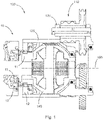
- Figure 1 shows a schematic view of a drive unit 100 comprising a clutch unit 10 according to a preferred embodiment of the present disclosure.
- the drive unit 100 comprises a motor unit 110, e.g. an electric motor unit 110, one drive wheel 120, e.g. a planetary carrier 120, which is operatively connected to and drivable by the motor unit 110 via a gear wheel 130.
- a differential gear with a housing unit 140 which is driveable by the drive wheel 120, wherein the drive wheel 120 and the housing unit 140 are arranged around a common axis of rotation 150.
- the clutch unit 10 is provided between the drive wheel/planetary carrier 120 and the differential housing unit 140.
- An inner ring 11 of the clutch unit 10 is arranged rotationally fixed to the differential housing unit 140 unit of the differential gear.
- An outer ring 12 of the clutch unit 10 is arranged rotationally fixed to the drive wheel/planetary carrier 120.
- both rings 11, 12 can be connected directly or indirectly, e.g. via one or more gear wheels, with the differential housing 140 or the drive wheel/planetary carrier 120.
- the clutch unit 10 further comprises first locking elements 13 and second locking elements 14 in form of (clutch) pawl elements 13, 14, wherein in the preferred embodiment, the first locking elements 13 provide counter clockwise locking (cf. figures 8 ) and the second locking elements provide a clockwise locking (cf. figures 9 ).
- a first displacement element and a second displacement element are provided for moving the first locking elements 13 and the second locking elements 14 between an active/engaged position, where the locking elements 13, 14 are moved into corresponding recesses 15, 16 provided in the outer ring 12, and an inactive/retracted position, where the locking elements 13, 14 are not arranged in the corresponding recesses 15, 16.
- the locking elements 13, 14 are arranged at the inner ring 10 and the corresponding recesses 15, 16 are arranged at the outer ring 12.
- the first displacement element and the second displacement element each comprise a drive element 17, 18, here in form of hydraulic cylinder arrangements 17, 18 and return elements 19, 20 in form of spring elements 19, 20.
- the drive elements 19, 20 are configured to move an actuating element 21, 22, here in form of two actuating rings 21, 22, of the displacement elements.
- Each hydraulic cylinder arrangement 17, 18 is assigned to push one of the actuating rings 21, 22 in a first position where the locking elements 13, 14 are positioned in an inactive/retracted position, wherein the spring elements 19, 20 pushed against the actuating ring 21, 22 such that the actuating rings are pushed in a second position where the locking elements 13, 14 are positioned in an active/ engaged position, once a respective hydraulic cylinder 17, 18 is set load-free.
- the drive element may be provided by means of electrical actuators.
- the drive elements 17, 18 may be provided by means of only one actuator, wherein both actuating rings may be controlled via a single cam curve element.
- the two actuating rings 21, 22 are arranged between the inner ring 11 and outer ring 12, wherein one actuating ring 21 is assigned to the first locking element(s) 13, i.e. to move the first locking element(s) 13 between an active/engaged position and an inactive/retracted position, wherein the other actuating ring 22 is assigned to the second locking element(s) 14, i.e. to move the second locking element(s) 14 between an active/engaged position and an inactive/retracted position.
- the actuating elements/actuating rings 21, 22 of the displacement elements may comprise ramp-shaped cross-sections for moving/pushing the locking elements 13, 14 into the corresponding recess of a respective ring 11, 12.
- the clutch unit 10 provides four different modes shown in figures 7 to 10 .
- a first mode of operation shown in figures 7 no locking element 13, 14 engages a recess 15, 16 of the outer ring 12 so that both rings 11, 12 are independently rotatably provided.
- first locking elements 13 and the second locking elements 14 engage corresponding recesses 15,16 of the outer ring 12 to provide a rotationally fixed connection of the two rings 11, 12 in the first direction of rotation and the second direction of rotation.
- the steps for regulating the clutch unit 10 from a fully disconnected state, i.e. the first mode of operation, where one of the electric motors is disconnected from the drive line/load, into a fully connected state, i.e. the fourth mode of operation may as following: (i) it is detected that the needed power requires the 2 nd electric motor 110 to be connected to the drive line; (ii) the inverter is started up; (iii) the 2 nd electric motor 110 speed ramp up; (iv) the clutch unit 10 is set to the second operation mode; (v) the 2 nd electric motor 110 reaches wheel speed and the first locking elements 13, e.g.
- the clutch unit 10 is set to the fourth mode such that the 2 nd electric motor 110 may apply negative torque, i.e. can be operated in a regeneration mode.
Landscapes
- Engineering & Computer Science (AREA)
- General Engineering & Computer Science (AREA)
- Mechanical Engineering (AREA)
- Chemical & Material Sciences (AREA)
- Combustion & Propulsion (AREA)
- Transportation (AREA)
- Arrangement And Mounting Of Devices That Control Transmission Of Motive Force (AREA)
- Retarders (AREA)
Description
- The present invention relates to a clutch unit for a drive unit, a drive unit comprising such a clutch unit, a use of such a clutch unit in a drive unit, and a vehicle, in particular a vehicle with an electric drive, comprising such a drive unit.
- In the prior art, it is known that in vehicle drive units, there are situations and applications in which transmission elements have to be separated from each other or where it is advantageous to be able to disconnect such transmission elements.
- For example, in battery-powered vehicles or vehicles with hybrid drives, it is of advantage to be able to disconnect an electric drive from a drive line, for example to avoid unnecessary rotating masses as far as possible. For this purpose, it is known in the prior art to use spline interfaces, e.g. spline clutches, to connect and disconnect two parts. However, such spline interfaces requires synchronization of the relative rotation speed, which may delay the availability of applying torque. Alternative types of clutches are exemplarily shown in
US 4,222,473 B1 andEP 1 873 416 A1 . - In view of this, it is found that a further need exists to provide a solution for coupling and decoupling input and output elements of a drive unit.
- In the view of the above, it is an object of the present invention to provide a solution for coupling and decoupling input and output elements of a drive unit.
- These and other objects, which become apparent upon reading the following description, are solved by the subject matter of the independent claims. The dependent claims refer to preferred embodiments of the invention.
- According to a first aspect, a clutch unit for a drive unit is provided, comprising: at least one outer ring and one inner ring, wherein the rings are mounted rotatably relative to each other, wherein the outer ring is configured to be in operative engagement with a first component of a drive unit of a vehicle and the inner ring is configured to be in operative engagement with a second component of a drive unit of a vehicle; at least one first locking element; at least one first displacement element; wherein the at least one first locking element is movably mounted on one of the rings and is movable by the displacement element in such a way that it engages in a corresponding recess of the other ring in such a way that a rotationally fixed connection of the two rings in at least a first direction of rotation is provided.
- In other words, the present invention provides an active controllable freewheel clutch, which can be placed between an input and an output element/component of a drive unit and by which a relative movement between the inner ring and the outer ring in a first direction can be permitted or prevented, depending on whether the locking element is arranged in the corresponding recess of the other ring. This allows a fast connection and disconnection of the inner ring and the outer ring, i.e. and of the respective components connected to them, in comparison to the commonly used spline clutches. Moreover, the present solution can be implemented with less weight compared to a solution with spline clutches.
- In an example, the first component of the drive unit, which can be operatively engaged with the outer ring, may be a planetary carrier element, which in turn may be driven by a motor unit, e.g. an electro motor unit. In an example, the second component of the drive unit, which can be operatively engaged with the inner ring, may be a housing of a differential assembly, which in turn may be operatively connected to a drive line. In such an example, a disconnecting being done between the planetary carrier element and the differential housing such that the otherwise rotating mass when the motor stops can be avoided. In an example, the locking element can be provided as (clutch) pawl elements. In an example, a plurality of locking element, e.g. pawl elements, may be arranged on/at one of the rings in such a way that a respective locking element can be moved in a corresponding recess, i.e. each locking element can be move between a an active/engaged position and an inactive/retracted position. The displacement element can be provided by any movable means by which the locking element(s) can be moved between an active/engaged position and an inactive/retracted position. However, in this context, it should be noted that the present invention is not limited to such an application.
- In an implementation, the clutch unit further comprises: at least one second locking element; at least one second displacement element; wherein the at least one second locking element is movably mounted on one of the rings and is movable by the second displacement element in such a way that it engages in a corresponding recess of the other ring in such a way that a rotationally fixed connection of the two rings in a second direction of rotation opposite to the first direction of rotation is provided. In an example, the second locking elements and the second are provided similar to the first locking elements, e.g. as pawl elements, arranged on/at one of the rings in such a way that a respective locking element can be moved in a corresponding recess by means of the second displacement element and can be moved between an active/engaged position and an inactive/retracted position. In this implementation, it is possible not only to block or allow relative movement of the inner ring and outer ring in one direction of rotation, but to provide such functionality in both directions of rotation. In an example, the first and the second locking elements are provided on one of the rings, e.g. the inner ring, and the corresponding recesses are provided on the other ring, e.g. the outer ring.
- According to the invention, the first and/or second displacement element comprises: at least one drive and return element; and at least one actuating element which is in operative engagement with the at least one locking element in order to move the at least one locking element; wherein the actuating element is arranged between the outer ring and the inner ring; wherein the drive and return element is operatively engaged with the actuating element such that the actuating element is movable into a first position and into a second position, wherein in one of the two positions of the actuating element the locking element is moved in a corresponding recess of the other ring and in the other position of the actuating element the locking element does not engage in the recess of the other ring. According to the invention, the actuating element of the first and/or second displacement element are provided by respective actuating rings arranged between the inner and outer rings in such a way that the can be moved between a first position in which they push/move the respective locking element into a respective recess. In an example, the two actuating rings are arranged between the inner ring and outer ring, wherein one actuating ring is assigned to the first locking element(s), i.e. to move the first locking element(s) between an active/engaged position and an inactive/retracted position, wherein the other actuating ring is assigned to the second locking element(s), i.e. to move the second locking element(s) between an active/engaged position and an inactive/retracted position.
- In an implementation, the at least one drive element is provided in the form of a hydraulic cylinder arrangement and the return element is provided in the form of a spring element; wherein the drive element is configured to move the actuating element into one of the two positions and the return element is configured to move the actuating element into the other position. In an example, the drive elements are provided by means of hydraulic cylinders, wherein each hydraulic cylinder is assigned to push one of the actuating rings in a first position where the locking elements are positioned in an inactive/retracted position, wherein a spring element pushed against the actuating ring such that the actuating rings are pushed in a second position where the locking element are positioned in an active/engaged position, once a respective hydraulic cylinder is set load-free. In a further example, the drive element may be provided by means of electrical actuators or electromagnetic actuators. In a further example, the drive element may be provided by means of only one actuator, wherein both actuating rings may be controlled via a single cam curve element.
- In an implementation, the displacement element comprises, preferably the actuating element of the displacement element, e.g. the actuating ring(s), at least one ramp-shaped cross-section for moving/pushing the locking element into the corresponding recess of a ring.
- In an implementation, the clutch unit comprises a first mode of operation in which no locking element engages a recess of a ring so that both rings are independently rotatably provided; and/or comprises a second mode of operation in which only the at least one first locking element engages a corresponding recess of a ring to provide a rotationally fixed connection of the two rings in at least the first direction of rotation, e.g. a counter clockwise direction; and/or comprises a third mode of operation in which only the at least one second locking element engages a corresponding recess of a ring to provide a rotationally fixed connection of the two rings in at least the second direction of rotation; and/or a fourth mode of operation in which the at least one first locking element and the at least one second locking element each engage corresponding recesses of a ring to provide a rotationally fixed connection of the two rings in the first direction of rotation and the second direction of rotation. In an example, e.g. in an all-wheel driving vehicle comprising two electric motors, the steps for regulating a clutch unit from a fully disconnected state, i.e. a first mode of operation, where one of the electric motors is disconnected from the drive line/load, into a fully connected state, i.e. a fourth mode of operation, may as following: (i) it is detected that needed power requires the 2nd electric motor to be connected; (ii) the inverter is started up; (iii) the 2nd electric motor speed ramp up; (iv) the clutch unit is set to the second operation mode; (v) the 2nd electric motor reaches wheel speed and the first locking elements, e.g. counter clockwise pawl element(s) engage the outer ring such that the 2nd electric motor may apply a positive torque; (vi) the clutch unit is set to the fourth mode such that the 2nd electric motor may apply negative torque, i.e. can be operated in a regeneration mode.
- Furthermore, in an example, six first locking elements and six second locking elements are distributed at/on one of the rings, e.g. the inner ring. In an example, there are more recesses provided in one of the rings than there are locking elements at/on the other ring. This can improve the synchronization process, since this allows the respective locking element to move into the next recess at a small differential speed between the two rings, so that higher forces can be avoided, if the motor accelerates even further. In an example, the locking elements may be provided as pawl elements, wherein the pawl elements may be provided with chamfered or beveled edges.
- According to a further aspect, a drive unit for a vehicle is provided, comprising: at least one motor unit; at least one drive wheel operatively connected to and drivable by the motor unit; a differential gear with a housing unit which is driveable by the drive wheel; wherein the drive wheel and the housing unit are arranged around a common axis of rotation; wherein at least one clutch unit as described above is provided between the drive wheel and the housing unit. In this respect, it is referred to the above described possible implementations and examples.
- In an implementation, an inner ring of the clutch unit is arranged rotationally fixed to the housing unit of the differential gear; and an outer ring of the clutch unit is arranged rotationally fixed to the drive wheel/element, e.g. a planetary carrier. In an example, both rings can be connected directly or indirectly, e.g. via one or more gear wheels, with the differential housing or the drive wheel/planetary carrier.
- In an implementation, at least one drive element of the clutch unit, e.g. a hydraulic cylinder arrangement, is provided in a housing unit and wherein the at least one drive element is connected to at least one actuating element by means of a bearing arrangement. In an example, both drive elements are arranged in the same housing, wherein each one of the drive elements may push one of the actuating rings.
- In an implementation, the drive wheel/planetary carrier at least partially encloses the housing unit of the differential gear. Thereby, a comparatively space-saving design can be provided.
- In an implementation, the drive unit has at least a first operating mode in which no torque is transmitted between the drive wheel and the differential housing; and/or a second operating mode in which torque is transmitted between the drive wheel and the differential housing in a first direction only; and/or a third mode of operation in which torque is transmitted in a second direction between the drive wheel and the differential housing in a second direction only; and/or a fourth mode of operation in which torque is transmitted in both directions between the drive wheel and the differential housing.
- In an implementation, the motor unit, e.g. an electric motor, and the drive wheel are operatively connected by means of a gear wheel unit.
- A further aspect relates to a use of a clutch unit as described above in a drive unit as described above. A further aspect relates to a use of a differential gear comprising a housing unit arrangeable in a drive unit as described above. Finally, a further aspect relates to a vehicle, in particular a vehicle comprising an electric drive with at least one drive unit as described above.
- In the following, the invention is described exemplarily with reference to the enclosed figure, in which
- Figure 1
- is a schematic view of a drive unit according to a preferred embodiment of the present disclosure;
- Figure 2
- is a schematic view of a clutch unit according to a preferred embodiment of the present disclosure,
- Figure 3
- is an enlarged schematic view the clutch unit shown in
figure 2 ; - Figure 4
- is an enlarged schematic view the clutch unit shown in
figure 2 ; - Figure 5
- is an enlarged schematic view the clutch unit shown in
figure 2 ; - Figure 6
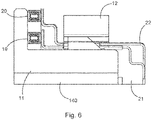
- is an enlarged cross-sectional view of a first and second displacement element;
- Figures 7
- are schematic views of the clutch unit in a first mode;
- Figures 8
- are schematic views of the clutch unit in a second mode;
- Figures 9
- are schematic views of the clutch unit in a third mode; and
- Figures 10
- are schematic views of the clutch unit in a fourth mode.
- Notably, the figures are merely schematic representations and serve only to illustrate the preferred embodiment of the present disclosure. Identical or equivalent elements are in principle provided with the same reference signs.
-
Figure 1 shows a schematic view of adrive unit 100 comprising aclutch unit 10 according to a preferred embodiment of the present disclosure. - The
drive unit 100 comprises amotor unit 110, e.g. anelectric motor unit 110, onedrive wheel 120, e.g. aplanetary carrier 120, which is operatively connected to and drivable by themotor unit 110 via agear wheel 130. A differential gear with ahousing unit 140 which is driveable by thedrive wheel 120, wherein thedrive wheel 120 and thehousing unit 140 are arranged around a common axis ofrotation 150. As can be taken formfigure 1 , theclutch unit 10 is provided between the drive wheel/planetary carrier 120 and thedifferential housing unit 140. - An
inner ring 11 of theclutch unit 10 is arranged rotationally fixed to thedifferential housing unit 140 unit of the differential gear. Anouter ring 12 of theclutch unit 10 is arranged rotationally fixed to the drive wheel/planetary carrier 120. Notably, in an alternative embodiment, bothrings differential housing 140 or the drive wheel/planetary carrier 120. - The
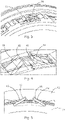
clutch unit 10 further comprises first lockingelements 13 andsecond locking elements 14 in form of (clutch)pawl elements first locking elements 13 provide counter clockwise locking (cf.figures 8 ) and the second locking elements provide a clockwise locking (cf.figures 9 ). A first displacement element and a second displacement element are provided for moving thefirst locking elements 13 and thesecond locking elements 14 between an active/engaged position, where the lockingelements recesses outer ring 12, and an inactive/retracted position, where the lockingelements figures 3 to 5 , in the shown embodiment, the lockingelements inner ring 10 and the corresponding recesses 15, 16 are arranged at theouter ring 12. - The first displacement element and the second displacement element each comprise a
drive element hydraulic cylinder arrangements elements spring elements drive elements actuating element hydraulic cylinder arrangement elements spring elements actuating ring elements hydraulic cylinder drive elements - In the shown embodiment, the two actuating rings 21, 22 are arranged between the
inner ring 11 andouter ring 12, wherein oneactuating ring 21 is assigned to the first locking element(s) 13, i.e. to move the first locking element(s) 13 between an active/engaged position and an inactive/retracted position, wherein theother actuating ring 22 is assigned to the second locking element(s) 14, i.e. to move the second locking element(s) 14 between an active/engaged position and an inactive/retracted position. - The actuating elements/actuating rings 21, 22 of the displacement elements, may comprise ramp-shaped cross-sections for moving/pushing the locking
elements respective ring - By the provided structure, the
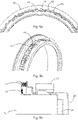
clutch unit 10 provides four different modes shown infigures 7 to 10 . In a first mode of operation shown infigures 7 , no lockingelement recess outer ring 12 so that both rings 11, 12 are independently rotatably provided. - In a second mode of operation shown in
figures 8 , only thefirst locking elements 13 engages acorresponding recess 15 of theouter ring 12 to provide a rotationally fixed connection of the tworings - In a third mode of operation shown in
figures 9 , only thesecond locking elements 14 engages acorresponding recess 16 of theouter ring 12 to provide a rotationally fixed connection of the tworings - In a fourth mode of operation sown in
figures 10 , thefirst locking elements 13 and thesecond locking elements 14 engage correspondingrecesses outer ring 12 to provide a rotationally fixed connection of the tworings - In an example, e.g. in an all-wheel driving vehicle comprising two electric motors, the steps for regulating the
clutch unit 10 from a fully disconnected state, i.e. the first mode of operation, where one of the electric motors is disconnected from the drive line/load, into a fully connected state, i.e. the fourth mode of operation, may as following: (i) it is detected that the needed power requires the 2 ndelectric motor 110 to be connected to the drive line; (ii) the inverter is started up; (iii) the 2ndelectric motor 110 speed ramp up; (iv) theclutch unit 10 is set to the second operation mode; (v) the 2ndelectric motor 110 reaches wheel speed and thefirst locking elements 13, e.g. counter clockwise pawl element(s) 13, engage theouter ring 12 such that the 2ndelectric motor 110 may apply a positive torque; (vi) theclutch unit 10 is set to the fourth mode such that the 2ndelectric motor 110 may apply negative torque, i.e. can be operated in a regeneration mode. - Other variations to the disclosed embodiment can be understood and effected by those skilled in the art in practicing the claimed subject-matter, from the study of the drawings, the disclosure, and the appended claims. In the claims, the word "comprising" does not exclude other elements or steps and the indefinite article "a" or "an" does not exclude a plurality. The mere fact that certain measures are recited in mutually different dependent claims does not indicate that a combination of these measures cannot be used to advantage. Any reference signs in the claims should not be construed as limiting the scope of the claims.
-
- 10
- clutch unit
- 11
- inner ring
- 12
- outer ring
- 13
- first locking elements/counter clockwise locking elements
- 14
- second locking elements/clockwise locking elements
- 15
- recesses for first locking elements
- 16
- recesses for the second locking elements
- 17
- first drive element/hydraulic cylinder arrangement
- 18
- second drive element/hydraulic cylinder arrangement
- 19
- first return element/spring element
- 20
- second return element/spring element
- 21
- first actuating element/actuating ring
- 22
- second actuating element/actuating ring
- 100
- drive unit
- 110
- motor unit/electric motor unit
- 120
- drive wheel/planetary carrier
- 130
- gearwheel
- 140
- differential housing unit
- 150
- axis of rotation
Claims (14)
- A clutch unit (10) for a drive unit (100), comprising:at least one outer ring (12) and one inner ring (11),wherein the rings (11, 12) are mounted rotatably relative to each other, the outer ring (12) being configured to be in operative engagement with a first component of a drive unit (100) of a vehicle and the inner ring (11) being configured to be in operative engagement with a second component of a drive unit (100) of a vehicle;at least one first locking element (13);at least one first displacement element;the at least one first locking element (13) being movably mounted on one of the rings (11, 12) and being movable by the first displacement element in order to engage in a corresponding recess (15) of the other ring (11, 12) a rotationally fixed connection of the two rings (11, 12) in at least a first direction of rotation being provided;wherein further the first displacement element comprises at least one drive and return element (17, 19) and at least one first actuating element (21) being in operative engagement with the at least one first locking element (13) in order to move the at least one first locking element (13); the first actuating element (21) being provided by an actuating ring (21) arranged between the outer ring (12) and the inner ring (11).
- A clutch unit (10) according to claim 1, further comprising:at least one second locking element (14);at least one second displacement element;the at least one second locking element (14) being movably mounted on one of the rings (11, 12) and being movable by the second displacement element in order to engage in a corresponding recess (16) of the other ring (11, 12) a rotationally fixed connection of the two rings (11, 12) in a second direction of rotation opposite to the first direction of rotation being provided;
wherein further the second displacement element comprises at least one drive and return element (18, 20) and at least one second actuating element (22) being in operative engagement with the at least one second locking element (14) in order to move the at least one second locking element (14); the second actuating element (22) being provided by an actuating ring (22) arranged between the outer ring (12) and the inner ring (11). - A clutch unit (10) according to claim 1 or claim 2, the at least one drive element (17, 18) being provided in the form of a hydraulic cylinder arrangement (17, 18) and the return element (19, 20) being provided in the form of a spring element (19, 20); the drive element (17, 18) being configured to move the actuating element (21, 22) into one of the two positions and the return element (19, 20) being configured to move the actuating element (21, 22) into the other position.
- A clutch unit (10) according to any one of the preceding claims, the actuating element (21, 22), is comprising at least one ramp-shaped cross-section for moving the locking element (13, 14) into the corresponding recess (15, 16) of a ring (11, 12).
- A clutch unit (10) according to any one of the preceding claims, the clutch unit (10) is comprising a first mode of operation in which no locking element (13, 14) is engaging a recess (15, 16) of a ring (11, 12) so that both rings (11, 12) being independently rotatably provided; and/orcomprising a second mode of operation in which only the at least one first locking element (13) is engaging a corresponding recess (15) of a ring (11, 12) providing a rotationally fixed connection of the two rings (11, 12) in at least the first direction of rotation; and/orcomprising a third mode of operation in which only the at least one second locking element (14) is engaging a corresponding recess (16) of a ring (11, 12) providing a rotationally fixed connection of the two rings (11, 12) in at least the second direction of rotation; and/orcomprising a fourth mode of operation in which the at least one first locking element (13) and the at least one second locking element (14) each engaging corresponding recesses (15, 16) of a ring (11, 12) providing a rotationally fixed connection of the two rings (11, 12) in the first direction of rotation and the second direction of rotation.
- A drive unit (100) for a vehicle, comprising:at least one motor unit (110);at least one drive wheel (120) being operatively connected to and drivable by the motor unit (110);a differential gear with a housing unit (140) being driveable by the drive wheel (120); the drive wheel (120) and the housing unit (140) being arranged around a common axis of rotation (150);at least one clutch unit (10) according to any one of the claims 1 to 5 being provided between the drive wheel (120) and the housing unit (140).
- A drive unit (100) for a vehicle according to claim 6, comprising:an inner ring (11) of the clutch unit (10) being arranged rotationally fixed to the housing unit (140) of the differential gear; andan outer ring (12) of the clutch unit (10) being arranged rotationally fixed to the drive wheel (120).
- A drive unit (100) for a vehicle according to claim 6 or claim 7, at least one drive element (17, 18) of the clutch unit (10) being provided in a housing unit and the at least one drive element (17, 18) being connected to at least one actuating element (21, 22) by means of a bearing arrangement.
- A drive unit (100) for a vehicle according to any one of the claims 6 to 8, the drive wheel (120) being at least partially enclosing the housing unit (140).
- A drive unit (100) for a vehicle according to any one of the claims 6 to 9,the drive unit (100) comprising at least a first operating mode in which no torque being transmitted between the drive wheel (120) and the housing unit; and/orcomprising a second operating mode in which torque being transmitted between the drive wheel (120) and the housing unit (140) in a first direction only; and/orcomprising a third mode of operation in which torque being transmitted in a second direction between the drive wheel (120) and the housing unit (140) in a second direction only; and/orcomprising a fourth mode of operation in which torque being transmitted in both directions between the drive wheel (120) and the housing unit (140).
- A drive unit (100) for a vehicle according to any one of the claims 6 to 10, the motor unit (110) and the drive wheel (120) being operatively connected by means of a gear wheel unit (130).
- Use of a clutch unit (10) according to any one of the claims 1 to 5 in a drive unit (100) according to any one of the claims 6 to 11.
- Use of a differential gear comprising a housing unit (140) being arranged in a drive unit (100) according to any one of the claims 6 to 11.
- A vehicle, in particular a vehicle comprising an electric drive, comprising at least one drive unit (100) according to any one of the claims 6 to 11.
Priority Applications (3)
| Application Number | Priority Date | Filing Date | Title |
|---|---|---|---|
| EP20170113.3A EP3896307B1 (en) | 2020-04-17 | 2020-04-17 | Clutch unit |
| US17/206,969 US11536325B2 (en) | 2020-04-17 | 2021-03-19 | Clutch unit |
| CN202110400073.XA CN113530999B (en) | 2020-04-17 | 2021-04-14 | Clutch unit |
Applications Claiming Priority (1)
| Application Number | Priority Date | Filing Date | Title |
|---|---|---|---|
| EP20170113.3A EP3896307B1 (en) | 2020-04-17 | 2020-04-17 | Clutch unit |
Publications (2)
| Publication Number | Publication Date |
|---|---|
| EP3896307A1 EP3896307A1 (en) | 2021-10-20 |
| EP3896307B1 true EP3896307B1 (en) | 2022-06-01 |
Family
ID=70295034
Family Applications (1)
| Application Number | Title | Priority Date | Filing Date |
|---|---|---|---|
| EP20170113.3A Active EP3896307B1 (en) | 2020-04-17 | 2020-04-17 | Clutch unit |
Country Status (3)
| Country | Link |
|---|---|
| US (1) | US11536325B2 (en) |
| EP (1) | EP3896307B1 (en) |
| CN (1) | CN113530999B (en) |
Families Citing this family (2)
| Publication number | Priority date | Publication date | Assignee | Title |
|---|---|---|---|---|
| US11892065B2 (en) | 2021-08-17 | 2024-02-06 | Means Industries, Inc. | Drivetrain component |
| DE102022001304A1 (en) | 2022-04-14 | 2023-10-19 | Borgwarner Inc. | Differential gear and drive train with such a differential gear |
Citations (1)
| Publication number | Priority date | Publication date | Assignee | Title |
|---|---|---|---|---|
| EP1873416B1 (en) * | 2006-06-30 | 2010-03-03 | Mazda Motor Corporation | Power coupling device |
Family Cites Families (14)
| Publication number | Priority date | Publication date | Assignee | Title |
|---|---|---|---|---|
| US2134405A (en) * | 1937-10-07 | 1938-10-25 | Ingersoll Rand Co | Controlling device |
| US3197001A (en) * | 1962-03-26 | 1965-07-27 | Sss Patents Ltd | Rotary synchronous clutches |
| US4222473A (en) * | 1979-03-05 | 1980-09-16 | General Motors Corporation | Four way pawl clutch |
| US5503602A (en) * | 1994-07-12 | 1996-04-02 | Dana Corporation | Clutch actuating device having pilot clutches for use in a vehicle interaxle differential |
| US5967277A (en) * | 1997-07-21 | 1999-10-19 | Warn Industries, Inc. | Pawl clutch |
| US7455156B2 (en) * | 2004-07-27 | 2008-11-25 | Ford Global Technologies, Llc | Overrunning clutch |
| US7699746B2 (en) * | 2007-06-28 | 2010-04-20 | Gm Global Technology Operations, Inc. | One way clutch and synchronizer assembly |
| CN101895171B (en) * | 2010-06-11 | 2015-05-20 | 深圳市琛玛华夏科技有限公司 | Two-speed motor for electric control variable speed electromobile |
| DE102014207846A1 (en) * | 2014-04-25 | 2015-10-29 | Schaeffler Technologies AG & Co. KG | freewheel |
| CN107636339B (en) * | 2015-04-24 | 2019-08-27 | 麦格纳动力系有限公司 | clutch assembly |
| CN108291639B (en) * | 2015-11-25 | 2020-01-07 | 敏思工业公司 | Electromechanical system for controlling the operating mode of the optional clutch assembly |
| CN107299943A (en) * | 2017-05-19 | 2017-10-27 | 重庆凯瑞电动汽车系统有限公司 | Double rolling key clutch with pusher dog |
| EP3456568B1 (en) * | 2017-09-14 | 2020-04-08 | Volvo Car Corporation | Modular electric drive axle |
| US11209053B2 (en) * | 2020-01-03 | 2021-12-28 | Ford Global Technologies, Llc | Electromagnetic actuator for wheel-end disconnect |
-
2020
- 2020-04-17 EP EP20170113.3A patent/EP3896307B1/en active Active
-
2021
- 2021-03-19 US US17/206,969 patent/US11536325B2/en active Active
- 2021-04-14 CN CN202110400073.XA patent/CN113530999B/en active Active
Patent Citations (1)
| Publication number | Priority date | Publication date | Assignee | Title |
|---|---|---|---|---|
| EP1873416B1 (en) * | 2006-06-30 | 2010-03-03 | Mazda Motor Corporation | Power coupling device |
Also Published As
| Publication number | Publication date |
|---|---|
| EP3896307A1 (en) | 2021-10-20 |
| US20210324923A1 (en) | 2021-10-21 |
| US11536325B2 (en) | 2022-12-27 |
| CN113530999B (en) | 2023-06-30 |
| CN113530999A (en) | 2021-10-22 |
Similar Documents
| Publication | Publication Date | Title |
|---|---|---|
| CN212685116U (en) | Electric drive axle | |
| EP4045820B1 (en) | A powertrain for a vehicle | |
| US11273701B2 (en) | Electric drive axle powerpath and the drive axle made therewith | |
| US9695885B2 (en) | Auxiliary drive wheel-side differential unit for four-wheel drive vehicle | |
| US8608611B2 (en) | AWD vehicle with disconnect system | |
| US10221899B2 (en) | Multiple-stage ball ramp actuator | |
| US10688858B2 (en) | Hybrid vehicle transmission assembly and drive system | |
| US11536325B2 (en) | Clutch unit | |
| US20180326844A1 (en) | Rear Drive Module Having A Ring Gear Disconnect And Synch-Lock Mechanism | |
| US20250083516A1 (en) | Electric Drive for a Vehicle | |
| CN207906392U (en) | Countershaft clutch pack and clutch pack | |
| RU2558403C2 (en) | Gearbox | |
| US20240424879A1 (en) | Electric drive system and method for minimizing mechanical losses in an auxiliary electric drive system thereof | |
| CN220816339U (en) | Disconnect module, power transmission system of vehicle and vehicle | |
| EP3733437B1 (en) | Transmission, single-clutch powertrain system, and method for operating a single-clutch powertrain system | |
| EP4332399B1 (en) | Electric propulson systems | |
| WO2021089128A1 (en) | Transmission assembly for a vehicle | |
| CN115949707A (en) | Double-speed-ratio speed reducer with power separation function and control method | |
| CN111946756B (en) | Decoupling system for vehicle transmission, vehicle transmission and vehicle | |
| US11994173B2 (en) | Clutch pack system for transmission | |
| EP4520989A1 (en) | Disconnect module, power transmission system for vehicle, and vehicle | |
| US20250109783A1 (en) | Axle assembly with differential and clutch | |
| EP4665988A1 (en) | Differential device with disconnect | |
| CN119554340A (en) | Disconnect the module, the vehicle's powertrain, and the vehicle |
Legal Events
| Date | Code | Title | Description |
|---|---|---|---|
| PUAI | Public reference made under article 153(3) epc to a published international application that has entered the european phase |
Free format text: ORIGINAL CODE: 0009012 |
|
| STAA | Information on the status of an ep patent application or granted ep patent |
Free format text: STATUS: REQUEST FOR EXAMINATION WAS MADE |
|
| 17P | Request for examination filed |
Effective date: 20200721 |
|
| AK | Designated contracting states |
Kind code of ref document: A1 Designated state(s): AL AT BE BG CH CY CZ DE DK EE ES FI FR GB GR HR HU IE IS IT LI LT LU LV MC MK MT NL NO PL PT RO RS SE SI SK SM TR |
|
| B565 | Issuance of search results under rule 164(2) epc |
Effective date: 20200602 |
|
| GRAP | Despatch of communication of intention to grant a patent |
Free format text: ORIGINAL CODE: EPIDOSNIGR1 |
|
| STAA | Information on the status of an ep patent application or granted ep patent |
Free format text: STATUS: GRANT OF PATENT IS INTENDED |
|
| INTG | Intention to grant announced |
Effective date: 20211213 |
|
| GRAS | Grant fee paid |
Free format text: ORIGINAL CODE: EPIDOSNIGR3 |
|
| GRAA | (expected) grant |
Free format text: ORIGINAL CODE: 0009210 |
|
| STAA | Information on the status of an ep patent application or granted ep patent |
Free format text: STATUS: THE PATENT HAS BEEN GRANTED |
|
| AK | Designated contracting states |
Kind code of ref document: B1 Designated state(s): AL AT BE BG CH CY CZ DE DK EE ES FI FR GB GR HR HU IE IS IT LI LT LU LV MC MK MT NL NO PL PT RO RS SE SI SK SM TR |
|
| REG | Reference to a national code |
Ref country code: GB Ref legal event code: FG4D |
|
| REG | Reference to a national code |
Ref country code: AT Ref legal event code: REF Ref document number: 1495557 Country of ref document: AT Kind code of ref document: T Effective date: 20220615 Ref country code: CH Ref legal event code: EP Ref country code: DE Ref legal event code: R096 Ref document number: 602020003330 Country of ref document: DE |
|
| REG | Reference to a national code |
Ref country code: IE Ref legal event code: FG4D |
|
| REG | Reference to a national code |
Ref country code: LT Ref legal event code: MG9D |
|
| REG | Reference to a national code |
Ref country code: NL Ref legal event code: MP Effective date: 20220601 |
|
| PG25 | Lapsed in a contracting state [announced via postgrant information from national office to epo] |
Ref country code: SE Free format text: LAPSE BECAUSE OF FAILURE TO SUBMIT A TRANSLATION OF THE DESCRIPTION OR TO PAY THE FEE WITHIN THE PRESCRIBED TIME-LIMIT Effective date: 20220601 Ref country code: NO Free format text: LAPSE BECAUSE OF FAILURE TO SUBMIT A TRANSLATION OF THE DESCRIPTION OR TO PAY THE FEE WITHIN THE PRESCRIBED TIME-LIMIT Effective date: 20220901 Ref country code: LT Free format text: LAPSE BECAUSE OF FAILURE TO SUBMIT A TRANSLATION OF THE DESCRIPTION OR TO PAY THE FEE WITHIN THE PRESCRIBED TIME-LIMIT Effective date: 20220601 Ref country code: HR Free format text: LAPSE BECAUSE OF FAILURE TO SUBMIT A TRANSLATION OF THE DESCRIPTION OR TO PAY THE FEE WITHIN THE PRESCRIBED TIME-LIMIT Effective date: 20220601 Ref country code: GR Free format text: LAPSE BECAUSE OF FAILURE TO SUBMIT A TRANSLATION OF THE DESCRIPTION OR TO PAY THE FEE WITHIN THE PRESCRIBED TIME-LIMIT Effective date: 20220902 Ref country code: FI Free format text: LAPSE BECAUSE OF FAILURE TO SUBMIT A TRANSLATION OF THE DESCRIPTION OR TO PAY THE FEE WITHIN THE PRESCRIBED TIME-LIMIT Effective date: 20220601 Ref country code: BG Free format text: LAPSE BECAUSE OF FAILURE TO SUBMIT A TRANSLATION OF THE DESCRIPTION OR TO PAY THE FEE WITHIN THE PRESCRIBED TIME-LIMIT Effective date: 20220901 |
|
| REG | Reference to a national code |
Ref country code: AT Ref legal event code: MK05 Ref document number: 1495557 Country of ref document: AT Kind code of ref document: T Effective date: 20220601 |
|
| PG25 | Lapsed in a contracting state [announced via postgrant information from national office to epo] |
Ref country code: RS Free format text: LAPSE BECAUSE OF FAILURE TO SUBMIT A TRANSLATION OF THE DESCRIPTION OR TO PAY THE FEE WITHIN THE PRESCRIBED TIME-LIMIT Effective date: 20220601 Ref country code: PL Free format text: LAPSE BECAUSE OF FAILURE TO SUBMIT A TRANSLATION OF THE DESCRIPTION OR TO PAY THE FEE WITHIN THE PRESCRIBED TIME-LIMIT Effective date: 20220601 Ref country code: LV Free format text: LAPSE BECAUSE OF FAILURE TO SUBMIT A TRANSLATION OF THE DESCRIPTION OR TO PAY THE FEE WITHIN THE PRESCRIBED TIME-LIMIT Effective date: 20220601 |
|
| PG25 | Lapsed in a contracting state [announced via postgrant information from national office to epo] |
Ref country code: NL Free format text: LAPSE BECAUSE OF FAILURE TO SUBMIT A TRANSLATION OF THE DESCRIPTION OR TO PAY THE FEE WITHIN THE PRESCRIBED TIME-LIMIT Effective date: 20220601 |
|
| PG25 | Lapsed in a contracting state [announced via postgrant information from national office to epo] |
Ref country code: SM Free format text: LAPSE BECAUSE OF FAILURE TO SUBMIT A TRANSLATION OF THE DESCRIPTION OR TO PAY THE FEE WITHIN THE PRESCRIBED TIME-LIMIT Effective date: 20220601 Ref country code: SK Free format text: LAPSE BECAUSE OF FAILURE TO SUBMIT A TRANSLATION OF THE DESCRIPTION OR TO PAY THE FEE WITHIN THE PRESCRIBED TIME-LIMIT Effective date: 20220601 Ref country code: RO Free format text: LAPSE BECAUSE OF FAILURE TO SUBMIT A TRANSLATION OF THE DESCRIPTION OR TO PAY THE FEE WITHIN THE PRESCRIBED TIME-LIMIT Effective date: 20220601 Ref country code: PT Free format text: LAPSE BECAUSE OF FAILURE TO SUBMIT A TRANSLATION OF THE DESCRIPTION OR TO PAY THE FEE WITHIN THE PRESCRIBED TIME-LIMIT Effective date: 20221003 Ref country code: ES Free format text: LAPSE BECAUSE OF FAILURE TO SUBMIT A TRANSLATION OF THE DESCRIPTION OR TO PAY THE FEE WITHIN THE PRESCRIBED TIME-LIMIT Effective date: 20220601 Ref country code: EE Free format text: LAPSE BECAUSE OF FAILURE TO SUBMIT A TRANSLATION OF THE DESCRIPTION OR TO PAY THE FEE WITHIN THE PRESCRIBED TIME-LIMIT Effective date: 20220601 Ref country code: CZ Free format text: LAPSE BECAUSE OF FAILURE TO SUBMIT A TRANSLATION OF THE DESCRIPTION OR TO PAY THE FEE WITHIN THE PRESCRIBED TIME-LIMIT Effective date: 20220601 Ref country code: AT Free format text: LAPSE BECAUSE OF FAILURE TO SUBMIT A TRANSLATION OF THE DESCRIPTION OR TO PAY THE FEE WITHIN THE PRESCRIBED TIME-LIMIT Effective date: 20220601 |
|
| PG25 | Lapsed in a contracting state [announced via postgrant information from national office to epo] |
Ref country code: IS Free format text: LAPSE BECAUSE OF FAILURE TO SUBMIT A TRANSLATION OF THE DESCRIPTION OR TO PAY THE FEE WITHIN THE PRESCRIBED TIME-LIMIT Effective date: 20221001 |
|
| REG | Reference to a national code |
Ref country code: DE Ref legal event code: R097 Ref document number: 602020003330 Country of ref document: DE |
|
| PG25 | Lapsed in a contracting state [announced via postgrant information from national office to epo] |
Ref country code: AL Free format text: LAPSE BECAUSE OF FAILURE TO SUBMIT A TRANSLATION OF THE DESCRIPTION OR TO PAY THE FEE WITHIN THE PRESCRIBED TIME-LIMIT Effective date: 20220601 |
|
| PLBE | No opposition filed within time limit |
Free format text: ORIGINAL CODE: 0009261 |
|
| STAA | Information on the status of an ep patent application or granted ep patent |
Free format text: STATUS: NO OPPOSITION FILED WITHIN TIME LIMIT |
|
| PG25 | Lapsed in a contracting state [announced via postgrant information from national office to epo] |
Ref country code: DK Free format text: LAPSE BECAUSE OF FAILURE TO SUBMIT A TRANSLATION OF THE DESCRIPTION OR TO PAY THE FEE WITHIN THE PRESCRIBED TIME-LIMIT Effective date: 20220601 |
|
| 26N | No opposition filed |
Effective date: 20230302 |
|
| REG | Reference to a national code |
Ref country code: CH Ref legal event code: PL |
|
| PG25 | Lapsed in a contracting state [announced via postgrant information from national office to epo] |
Ref country code: LU Free format text: LAPSE BECAUSE OF NON-PAYMENT OF DUE FEES Effective date: 20230417 |
|
| REG | Reference to a national code |
Ref country code: BE Ref legal event code: MM Effective date: 20230430 |
|
| P01 | Opt-out of the competence of the unified patent court (upc) registered |
Effective date: 20231212 |
|
| PG25 | Lapsed in a contracting state [announced via postgrant information from national office to epo] |
Ref country code: MC Free format text: LAPSE BECAUSE OF FAILURE TO SUBMIT A TRANSLATION OF THE DESCRIPTION OR TO PAY THE FEE WITHIN THE PRESCRIBED TIME-LIMIT Effective date: 20220601 |
|
| PG25 | Lapsed in a contracting state [announced via postgrant information from national office to epo] |
Ref country code: MC Free format text: LAPSE BECAUSE OF FAILURE TO SUBMIT A TRANSLATION OF THE DESCRIPTION OR TO PAY THE FEE WITHIN THE PRESCRIBED TIME-LIMIT Effective date: 20220601 Ref country code: LI Free format text: LAPSE BECAUSE OF NON-PAYMENT OF DUE FEES Effective date: 20230430 Ref country code: IT Free format text: LAPSE BECAUSE OF FAILURE TO SUBMIT A TRANSLATION OF THE DESCRIPTION OR TO PAY THE FEE WITHIN THE PRESCRIBED TIME-LIMIT Effective date: 20220601 Ref country code: CH Free format text: LAPSE BECAUSE OF NON-PAYMENT OF DUE FEES Effective date: 20230430 |
|
| REG | Reference to a national code |
Ref country code: IE Ref legal event code: MM4A |
|
| PG25 | Lapsed in a contracting state [announced via postgrant information from national office to epo] |
Ref country code: BE Free format text: LAPSE BECAUSE OF NON-PAYMENT OF DUE FEES Effective date: 20230430 |
|
| PG25 | Lapsed in a contracting state [announced via postgrant information from national office to epo] |
Ref country code: IE Free format text: LAPSE BECAUSE OF NON-PAYMENT OF DUE FEES Effective date: 20230417 |
|
| PG25 | Lapsed in a contracting state [announced via postgrant information from national office to epo] |
Ref country code: IE Free format text: LAPSE BECAUSE OF NON-PAYMENT OF DUE FEES Effective date: 20230417 |
|
| PG25 | Lapsed in a contracting state [announced via postgrant information from national office to epo] |
Ref country code: BG Free format text: LAPSE BECAUSE OF FAILURE TO SUBMIT A TRANSLATION OF THE DESCRIPTION OR TO PAY THE FEE WITHIN THE PRESCRIBED TIME-LIMIT Effective date: 20220601 |
|
| PG25 | Lapsed in a contracting state [announced via postgrant information from national office to epo] |
Ref country code: BG Free format text: LAPSE BECAUSE OF FAILURE TO SUBMIT A TRANSLATION OF THE DESCRIPTION OR TO PAY THE FEE WITHIN THE PRESCRIBED TIME-LIMIT Effective date: 20220601 |
|
| PGFP | Annual fee paid to national office [announced via postgrant information from national office to epo] |
Ref country code: DE Payment date: 20250319 Year of fee payment: 6 |
|
| PG25 | Lapsed in a contracting state [announced via postgrant information from national office to epo] |
Ref country code: CY Free format text: LAPSE BECAUSE OF FAILURE TO SUBMIT A TRANSLATION OF THE DESCRIPTION OR TO PAY THE FEE WITHIN THE PRESCRIBED TIME-LIMIT; INVALID AB INITIO Effective date: 20200417 |
|
| PG25 | Lapsed in a contracting state [announced via postgrant information from national office to epo] |
Ref country code: HU Free format text: LAPSE BECAUSE OF FAILURE TO SUBMIT A TRANSLATION OF THE DESCRIPTION OR TO PAY THE FEE WITHIN THE PRESCRIBED TIME-LIMIT; INVALID AB INITIO Effective date: 20200417 |
|
| PG25 | Lapsed in a contracting state [announced via postgrant information from national office to epo] |
Ref country code: TR Free format text: LAPSE BECAUSE OF FAILURE TO SUBMIT A TRANSLATION OF THE DESCRIPTION OR TO PAY THE FEE WITHIN THE PRESCRIBED TIME-LIMIT Effective date: 20220601 |
|
| PG25 | Lapsed in a contracting state [announced via postgrant information from national office to epo] |
Ref country code: SI Free format text: LAPSE BECAUSE OF FAILURE TO SUBMIT A TRANSLATION OF THE DESCRIPTION OR TO PAY THE FEE WITHIN THE PRESCRIBED TIME-LIMIT Effective date: 20220601 |
|
| PGFP | Annual fee paid to national office [announced via postgrant information from national office to epo] |
Ref country code: GB Payment date: 20260319 Year of fee payment: 7 |
|
| PGFP | Annual fee paid to national office [announced via postgrant information from national office to epo] |
Ref country code: FR Payment date: 20260320 Year of fee payment: 7 |