EP3896264B1 - Gas turbine engine with partial arc gutter - Google Patents
Gas turbine engine with partial arc gutter Download PDFInfo
- Publication number
- EP3896264B1 EP3896264B1 EP21168452.7A EP21168452A EP3896264B1 EP 3896264 B1 EP3896264 B1 EP 3896264B1 EP 21168452 A EP21168452 A EP 21168452A EP 3896264 B1 EP3896264 B1 EP 3896264B1
- Authority
- EP
- European Patent Office
- Prior art keywords
- seal plate
- radially
- seal
- section
- gutter
- Prior art date
- Legal status (The legal status is an assumption and is not a legal conclusion. Google has not performed a legal analysis and makes no representation as to the accuracy of the status listed.)
- Active
Links
Images


Classifications
-
- F—MECHANICAL ENGINEERING; LIGHTING; HEATING; WEAPONS; BLASTING
- F01—MACHINES OR ENGINES IN GENERAL; ENGINE PLANTS IN GENERAL; STEAM ENGINES
- F01D—NON-POSITIVE DISPLACEMENT MACHINES OR ENGINES, e.g. STEAM TURBINES
- F01D25/00—Component parts, details, or accessories, not provided for in, or of interest apart from, other groups
- F01D25/18—Lubricating arrangements
-
- F—MECHANICAL ENGINEERING; LIGHTING; HEATING; WEAPONS; BLASTING
- F01—MACHINES OR ENGINES IN GENERAL; ENGINE PLANTS IN GENERAL; STEAM ENGINES
- F01D—NON-POSITIVE DISPLACEMENT MACHINES OR ENGINES, e.g. STEAM TURBINES
- F01D25/00—Component parts, details, or accessories, not provided for in, or of interest apart from, other groups
- F01D25/18—Lubricating arrangements
- F01D25/183—Sealing means
-
- F—MECHANICAL ENGINEERING; LIGHTING; HEATING; WEAPONS; BLASTING
- F01—MACHINES OR ENGINES IN GENERAL; ENGINE PLANTS IN GENERAL; STEAM ENGINES
- F01D—NON-POSITIVE DISPLACEMENT MACHINES OR ENGINES, e.g. STEAM TURBINES
- F01D11/00—Preventing or minimising internal leakage of working-fluid, e.g. between stages
- F01D11/003—Preventing or minimising internal leakage of working-fluid, e.g. between stages by packing rings; Mechanical seals
-
- F—MECHANICAL ENGINEERING; LIGHTING; HEATING; WEAPONS; BLASTING
- F01—MACHINES OR ENGINES IN GENERAL; ENGINE PLANTS IN GENERAL; STEAM ENGINES
- F01D—NON-POSITIVE DISPLACEMENT MACHINES OR ENGINES, e.g. STEAM TURBINES
- F01D11/00—Preventing or minimising internal leakage of working-fluid, e.g. between stages
- F01D11/005—Sealing means between non relatively rotating elements
-
- F—MECHANICAL ENGINEERING; LIGHTING; HEATING; WEAPONS; BLASTING
- F02—COMBUSTION ENGINES; HOT-GAS OR COMBUSTION-PRODUCT ENGINE PLANTS
- F02C—GAS-TURBINE PLANTS; AIR INTAKES FOR JET-PROPULSION PLANTS; CONTROLLING FUEL SUPPLY IN AIR-BREATHING JET-PROPULSION PLANTS
- F02C7/00—Features, components parts, details or accessories, not provided for in, or of interest apart form groups F02C1/00 - F02C6/00; Air intakes for jet-propulsion plants
- F02C7/06—Arrangements of bearings; Lubricating
-
- F—MECHANICAL ENGINEERING; LIGHTING; HEATING; WEAPONS; BLASTING
- F02—COMBUSTION ENGINES; HOT-GAS OR COMBUSTION-PRODUCT ENGINE PLANTS
- F02C—GAS-TURBINE PLANTS; AIR INTAKES FOR JET-PROPULSION PLANTS; CONTROLLING FUEL SUPPLY IN AIR-BREATHING JET-PROPULSION PLANTS
- F02C7/00—Features, components parts, details or accessories, not provided for in, or of interest apart form groups F02C1/00 - F02C6/00; Air intakes for jet-propulsion plants
- F02C7/28—Arrangement of seals
-
- F—MECHANICAL ENGINEERING; LIGHTING; HEATING; WEAPONS; BLASTING
- F05—INDEXING SCHEMES RELATING TO ENGINES OR PUMPS IN VARIOUS SUBCLASSES OF CLASSES F01-F04
- F05D—INDEXING SCHEME FOR ASPECTS RELATING TO NON-POSITIVE-DISPLACEMENT MACHINES OR ENGINES, GAS-TURBINES OR JET-PROPULSION PLANTS
- F05D2220/00—Application
- F05D2220/30—Application in turbines
- F05D2220/32—Application in turbines in gas turbines
- F05D2220/323—Application in turbines in gas turbines for aircraft propulsion, e.g. jet engines
-
- F—MECHANICAL ENGINEERING; LIGHTING; HEATING; WEAPONS; BLASTING
- F05—INDEXING SCHEMES RELATING TO ENGINES OR PUMPS IN VARIOUS SUBCLASSES OF CLASSES F01-F04
- F05D—INDEXING SCHEME FOR ASPECTS RELATING TO NON-POSITIVE-DISPLACEMENT MACHINES OR ENGINES, GAS-TURBINES OR JET-PROPULSION PLANTS
- F05D2240/00—Components
- F05D2240/50—Bearings
-
- F—MECHANICAL ENGINEERING; LIGHTING; HEATING; WEAPONS; BLASTING
- F05—INDEXING SCHEMES RELATING TO ENGINES OR PUMPS IN VARIOUS SUBCLASSES OF CLASSES F01-F04
- F05D—INDEXING SCHEME FOR ASPECTS RELATING TO NON-POSITIVE-DISPLACEMENT MACHINES OR ENGINES, GAS-TURBINES OR JET-PROPULSION PLANTS
- F05D2240/00—Components
- F05D2240/55—Seals
-
- F—MECHANICAL ENGINEERING; LIGHTING; HEATING; WEAPONS; BLASTING
- F05—INDEXING SCHEMES RELATING TO ENGINES OR PUMPS IN VARIOUS SUBCLASSES OF CLASSES F01-F04
- F05D—INDEXING SCHEME FOR ASPECTS RELATING TO NON-POSITIVE-DISPLACEMENT MACHINES OR ENGINES, GAS-TURBINES OR JET-PROPULSION PLANTS
- F05D2240/00—Components
- F05D2240/55—Seals
- F05D2240/58—Piston ring seals
-
- F—MECHANICAL ENGINEERING; LIGHTING; HEATING; WEAPONS; BLASTING
- F05—INDEXING SCHEMES RELATING TO ENGINES OR PUMPS IN VARIOUS SUBCLASSES OF CLASSES F01-F04
- F05D—INDEXING SCHEME FOR ASPECTS RELATING TO NON-POSITIVE-DISPLACEMENT MACHINES OR ENGINES, GAS-TURBINES OR JET-PROPULSION PLANTS
- F05D2240/00—Components
- F05D2240/70—Slinger plates or washers
-
- F—MECHANICAL ENGINEERING; LIGHTING; HEATING; WEAPONS; BLASTING
- F05—INDEXING SCHEMES RELATING TO ENGINES OR PUMPS IN VARIOUS SUBCLASSES OF CLASSES F01-F04
- F05D—INDEXING SCHEME FOR ASPECTS RELATING TO NON-POSITIVE-DISPLACEMENT MACHINES OR ENGINES, GAS-TURBINES OR JET-PROPULSION PLANTS
- F05D2260/00—Function
- F05D2260/40—Transmission of power
- F05D2260/403—Transmission of power through the shape of the drive components
- F05D2260/4031—Transmission of power through the shape of the drive components as in toothed gearing
- F05D2260/40311—Transmission of power through the shape of the drive components as in toothed gearing of the epicyclical, planetary or differential type
-
- F—MECHANICAL ENGINEERING; LIGHTING; HEATING; WEAPONS; BLASTING
- F05—INDEXING SCHEMES RELATING TO ENGINES OR PUMPS IN VARIOUS SUBCLASSES OF CLASSES F01-F04
- F05D—INDEXING SCHEME FOR ASPECTS RELATING TO NON-POSITIVE-DISPLACEMENT MACHINES OR ENGINES, GAS-TURBINES OR JET-PROPULSION PLANTS
- F05D2260/00—Function
- F05D2260/60—Fluid transfer
- F05D2260/602—Drainage
-
- F—MECHANICAL ENGINEERING; LIGHTING; HEATING; WEAPONS; BLASTING
- F05—INDEXING SCHEMES RELATING TO ENGINES OR PUMPS IN VARIOUS SUBCLASSES OF CLASSES F01-F04
- F05D—INDEXING SCHEME FOR ASPECTS RELATING TO NON-POSITIVE-DISPLACEMENT MACHINES OR ENGINES, GAS-TURBINES OR JET-PROPULSION PLANTS
- F05D2260/00—Function
- F05D2260/60—Fluid transfer
- F05D2260/602—Drainage
- F05D2260/6022—Drainage of leakage having past a seal
-
- F—MECHANICAL ENGINEERING; LIGHTING; HEATING; WEAPONS; BLASTING
- F05—INDEXING SCHEMES RELATING TO ENGINES OR PUMPS IN VARIOUS SUBCLASSES OF CLASSES F01-F04
- F05D—INDEXING SCHEME FOR ASPECTS RELATING TO NON-POSITIVE-DISPLACEMENT MACHINES OR ENGINES, GAS-TURBINES OR JET-PROPULSION PLANTS
- F05D2260/00—Function
- F05D2260/98—Lubrication
-
- F—MECHANICAL ENGINEERING; LIGHTING; HEATING; WEAPONS; BLASTING
- F16—ENGINEERING ELEMENTS AND UNITS; GENERAL MEASURES FOR PRODUCING AND MAINTAINING EFFECTIVE FUNCTIONING OF MACHINES OR INSTALLATIONS; THERMAL INSULATION IN GENERAL
- F16C—SHAFTS; FLEXIBLE SHAFTS; ELEMENTS OR CRANKSHAFT MECHANISMS; ROTARY BODIES OTHER THAN GEARING ELEMENTS; BEARINGS
- F16C2360/00—Engines or pumps
- F16C2360/23—Gas turbine engines
Definitions
- the invention is directed to a gas turbine engine with a bearing compartment seal and a gutter, and to a method of operating the gas turbine engine
- a gas turbine engine typically includes a fan section, a compressor section, a combustor section, and a turbine section. Air entering the compressor section is compressed and delivered into the combustor section where it is mixed with fuel and ignited to generate a high-speed exhaust gas flow. The high-speed exhaust gas flow expands through the turbine section to drive the compressor and the fan section.
- the compressor section typically includes low and high pressure compressors, and the turbine section includes low and high pressure turbines.
- a gas turbine engine also includes bearings that support rotatable shafts.
- the bearings require lubricant.
- Various seals near the rotating shafts contain oil within bearing compartments, which include bearings and seals. During operation of the engine, the seals maintain compartment pressures and keep lubricating oil inside the various compartments.
- WO 2014/014791 A1 describes a turbocharger assembly that includes a centre housing that includes a compressor side, a turbine side, a bore that extends between the compressor side and the turbine side and a socket at the compressor side; a journal bearing disposed in the bore; and a lubricant deflector disposed at least partially in the socket.
- US 2019/368416 A1 describes an exhaust gas turbocharger which has a flow-through exhaust gas guide section, a flow-through fresh air guide section and a bearing section arranged between the exhaust gas guide section and the fresh air guide section. It has a rotor assembly, comprising a turbine wheel which is rotatably accommodated in the exhaust gas guide section, a compressor wheel which is rotatably accommodated in the fresh air guide section, and a shaft which non-rotatably connects the compressor wheel with the turbine wheel, wherein the shaft is rotatably supported in the bearing section, and wherein a lubricant supply system with an inlet channel and an outlet channel is formed in the bearing section, via which lubricant may be supplied to the bearing elements of the bearing of the shaft, and wherein a lubricant-rejecting element is implemented.
- the lubricant-rejecting element comprises baffle elements for diverting a rotating proportion of the lubricant flow.
- EP 3 385 511 A2 describes a seal assembly for a bearing compartment of a gas turbine engine including a seal carrier, a seal element, a seal plate, and a trough. At least a portion of the seal element is within the seal carrier.
- the seal plate is in contact with the seal element and is configured to rotate relative to the seal element.
- the trough extends around the seal plate and comprises an annular channel positioned to capture oil slung from the seal plate.
- EP 3 667 025 A1 representing state of the art in accordance with Article 54(3) EPC, describes a gas turbine engine which includes a first bearing compartment and a seal assembly within the first bearing compartment that includes a rotatable seal seat, and a gutter radially outward of the seal seat which is fixed against rotation.
- the gutter includes a channel on its radially inner face.
- a second bearing compartment is also included.
- a scavenge pump is in communication with a first supply line configured to supply the first bearing compartment and a second supply line configured to supply the second bearing compartment.
- the gutter is in communication with the scavenge pump through a gutter scavenge line.
- a valve between the scavenge pump and the second supply line is configured to close in response to a dry port event, such that closing the valve stops oil supply to the second supply line, while allowing oil supply to the first supply line.
- EP 3 647 633 A1 representing state of the art in accordance with Article 54(3) EPC, describes a seal system which has a first member, a seal carried by the first member and having a seal face, and a second member rotatable relative to the first member about an axis.
- the second member has a seat, the seat having a seat face in sliding sealing engagement with the seal face, and a circumferential array of passageway legs open to the seat face.
- the seal system also has an oil pump for delivering oil via one or more first outlets to the passageway legs in at least a first mode of operation.
- the oil pump is coupled to one or more second outlets to deliver oil to a backside of the seat in at least a second mode of operation.
- the gutter is at least partially radially outward of the seal plate.
- the inlet section includes at least one vane configured to encourage oil to flow into the main passageway.
- the inlet section has a radially-open cross-section and is concave in cross-section when viewed from an axis of rotation of the seal plate.
- the inlet section includes a first radially-extending wall, a second radially-extending wall spaced-apart from the first radially extending wall, and an axially-extending wall connecting radially-outer ends of first and second radially-extending walls.
- the inlet section is arcuate and follows a radius having an origin about the axis of rotation of the seal plate.
- the first circumferential location is spaced-apart from the second circumferential location by less than 180°.
- the first circumferential location is spaced-apart from the second circumferential location by about 90°.
- the main passageway begins at the second circumferential location, and the main passageway includes a radially-closed cross-section.
- the main passageway includes a first straight section extending from the second circumferential location to a third location.
- the main passageway includes a curved section between the third location and a fourth location spaced-apart circumferentially from the third location.
- the main passageway includes a second straight section between the fourth location and the outlet.
- the oil slung from the seal plate is captured by the inlet section of the gutter having a radially-open cross-section.
- the method includes directing oil from the inlet section to the main passageway of the gutter having a radially-closed cross-section.
- the method includes draining oil out the outlet of the gutter.
- FIG. 1 schematically illustrates a gas turbine engine 20.
- the gas turbine engine 20 is disclosed herein as a two-spool turbofan that generally incorporates a fan section 22, a compressor section 24, a combustor section 26 and a turbine section 28.
- the fan section 22 drives air along a bypass flow path B in a bypass duct defined within a nacelle 15, and also drives air along a core flow path C for compression and communication into the combustor section 26 then expansion through the turbine section 28.
- FIG. 1 schematically illustrates a gas turbine engine 20.
- the gas turbine engine 20 is disclosed herein as a two-spool turbofan that generally incorporates a fan section 22, a compressor section 24, a combustor section 26 and a turbine section 28.
- the fan section 22 drives air along a bypass flow path B in a bypass duct defined within a nacelle 15, and also drives air along a core flow path C for compression and communication into the combustor section 26 then expansion through the turbine section 28.
- FIG. 1 schematic
- the exemplary engine 20 generally includes a low speed spool 30 and a high speed spool 32 mounted for rotation about an engine central longitudinal axis A relative to an engine static structure 36 via several bearing systems 38. It should be understood that various bearing systems 38 at various locations may alternatively or additionally be provided, and the location of bearing systems 38 may be varied as appropriate to the application.
- the low speed spool 30 generally includes an inner shaft 40 that interconnects, a first (or low) pressure compressor 44 and a first (or low) pressure turbine 46.
- the inner shaft 40 is connected to the fan 42 through a speed change mechanism, which in exemplary gas turbine engine 20 is illustrated as a geared architecture 48 to drive a fan 42 at a lower speed than the low speed spool 30.
- the high speed spool 32 includes an outer shaft 50 that interconnects a second (or high) pressure compressor 52 and a second (or high) pressure turbine 54.
- a combustor 56 is arranged in exemplary gas turbine 20 between the high pressure compressor 52 and the high pressure turbine 54.
- a mid-turbine frame 57 of the engine static structure 36 may be arranged generally between the high pressure turbine 54 and the low pressure turbine 46.
- the mid-turbine frame 57 further supports bearing systems 38 in the turbine section 28.
- the inner shaft 40 and the outer shaft 50 are concentric and rotate via bearing systems 38 about the engine central longitudinal axis A which is colline
- the core airflow is compressed by the low pressure compressor 44 then the high pressure compressor 52, mixed and burned with fuel in the combustor 56, then expanded through the high pressure turbine 54 and low pressure turbine 46.
- the mid-turbine frame 57 includes airfoils 59 which are in the core airflow path C.
- the turbines 46, 54 rotationally drive the respective low speed spool 30 and high speed spool 32 in response to the expansion.
- gear system 48 may be located aft of the low pressure compressor, or aft of the combustor section 26 or even aft of turbine section 28, and fan 42 may be positioned forward or aft of the location of gear system 48.
- the engine 20 in one example is a high-bypass geared aircraft engine.
- the engine 20 bypass ratio is greater than about 6:1, with an example embodiment being greater than about 10:1
- the geared architecture 48 is an epicyclic gear train, such as a planetary gear system or other gear system, with a gear reduction ratio of greater than about 2.3:1 and the low pressure turbine 46 has a pressure ratio that is greater than about 5:1.
- the engine 20 bypass ratio is greater than about 10:1
- the fan diameter is significantly larger than that of the low pressure compressor 44
- the low pressure turbine 46 has a pressure ratio that is greater than about 5:1.
- the low pressure turbine 46 pressure ratio is pressure measured prior to the inlet of low pressure turbine 46 as related to the pressure at the outlet of the low pressure turbine 46 prior to an exhaust nozzle.
- the geared architecture 48 may be an epicycle gear train, such as a planetary gear system or other gear system, with a gear reduction ratio of greater than about 2.3:1 and less than about 5:1. It should be understood, however, that the above parameters are only exemplary of one embodiment of a geared architecture engine and that the present invention is applicable to other gas turbine engines including but not limited to direct drive turbofans, low bypass engines, and multi-stage fan engines.
- the fan section 22 of the engine 20 is designed for a particular flight condition -- typically cruise at about 0.8 Mach and about 35,000 feet (10,668 meters).
- the flight condition of 0.8 Mach and 35,000 ft (10,668 meters), with the engine at its best fuel consumption - also known as "bucket cruise Thrust Specific Fuel Consumption ('TSFC')" - is the industry standard parameter of lbm of fuel being burned divided by lbf of thrust the engine produces at that minimum point.
- "Low fan pressure ratio” is the pressure ratio across the fan blade alone, without a Fan Exit Guide Vane (“FEGV”) system.
- the low fan pressure ratio as disclosed herein according to one non-limiting embodiment is less than about 1.45:1.
- the "Low corrected fan tip speed” as disclosed herein according to one non-limiting embodiment is less than about 1150 ft / second (350.5 meters/second).
- Figure 2 is a perspective view of various components adjacent and/or within a bearing compartment 60 of the engine 20.
- Figure 2 illustrates a support assembly 62 and a seal assembly 64 configured to seal the bearing compartment 60 and maintain fluid pressure, particularly oil pressure, in the bearing compartment 60 during operation of the engine 20.
- the support assembly 62 may include various seal elements such as a static support, carbon elements, etc.
- the support assembly 62 is mounted relative to a shaft of the engine 20.
- the support assembly 62 may be an inter-shaft seal support connecting one shaft of the engine 20 to another shaft of the engine 20, such as connecting the inner shaft 40 and the outer shaft 50.
- the support and seal assemblies 62, 64 may be mounted about the engine central longitudinal axis A and act to seal oil in bearing compartment 60 adjacent the inner and/or outer shafts 40, 50, for example.
- the support and seal assemblies 62, 64 may also be used relative to other bearing compartments in the engine 20.
- the bearing compartment 60 is representative of any bearing compartment within the engine 20.
- Example bearing compartment locations are illustrated at 60A-60C in Figure 1 .
- This disclosure is not limited to any specific bearing compartment, and in particular is not limited to a forward or an aft bearing compartment. This disclosure is not limited to bearing compartments at any particular engine location.
- the seal assembly 64 includes a seal 66, such as a carbon face seal, and a seal plate 68 configured to cooperate with one another to establish a seal for the bearing compartment 60, and in particular to keep oil in the bearing compartment 60 and to maintain oil pressure in the bearing compartment 60.
- the seal 66 and the seal plate 68 are circular components and extend circumferentially around the engine central longitudinal axis A.
- the seal plate 68 includes a first axial face 70 and a second axial face 72 on an opposite axial side of the first axial face 70.
- the first axial face 70 lies in a plane inclined relative to the engine central longitudinal axis A at an angle between 0° and 90°.
- the second axial face 72 is in direct contact with the seal 66, and lies in a plane extending in a radial direction normal to the engine central longitudinal axis A.
- axially refers to a direction substantially parallel to the engine central longitudinal axis A, and “radially” refers to directions normal thereto.
- the radial direction R is labeled in Figure 2 for ease of reference.
- the seal 66 is mounted to a static structure, and therefore does not rotate during operation of the engine 20.
- the seal plate 68 is configured to rotate about an axis of rotation, which in this example is the engine central longitudinal axis A, during operation of the engine 20.
- the seal plate 68 in this example, is mechanically connected to a shaft of the engine 20, such as one of the shafts 40, 50, by way of an axially-extending lug 74 ( Figure 4 ) which projects axially from the first axial face 70.
- fluid F specifically oil
- the nozzle 76 is fluidly coupled to a circuit configured to direct fluid F to the nozzle 76 under pressure, and may include one or more conduits and/or pumps.
- the nozzle 76 is configured to spray, or jet, the fluid F against the seal plate 68 such that the fluid F impinges against the seal plate 68, and thereby absorbs heat from the seal plate 68 via the first axial face 70.
- this arrangement may be referred to as a direct jetted cooling arrangement.
- the engine 20 includes a gutter 78 configured to collect the slung fluid F and direct it to another location.
- the gutter 78 may be referred to as a trough.
- the gutter 78 prevents the slung fluid F from churning or moving around the bearing compartment 60, where it may enter a gear mesh, for example, causing heat generation and reducing engine efficiency.
- the gutter 78 in this example, is at least partially radially outward of the seal plate 68.
- the gutter 78 does not extend around the entire circumference of the seal plate 68. Rather, the gutter 78 extends only partially around the outer circumference of the seal plate 68. Thus, the gutter 78 may be referred to as a partial arc gutter. Despite not extending around the entire outer circumference of the seal plate 68, the gutter 78 is designed and arranged to collect a majority, if not a vast majority, of the slung fluid F. Because the gutter 78 does not extend around the entire outer circumference of the seal plate 68, the gutter 78 has advantages of reducing weight and cost. Further, fluid F collected by the gutter 78 is expelled from gutter 78 relatively faster than if the gutter extended about the entire outer circumference of the seal plate 68, which increases efficiency.
- the gutter 78 includes an inlet section 80, a main passageway 82, and an outlet 84.
- the gutter 78 is provided by a single piece of metallic material, in one example. In another example, the gutter 78 is provided by a plurality of pieces of metallic material which are fastened together, such as by welding.
- the inlet section 80 includes a radially-open cross-section such that the slung fluid F may enter the gutter 78 from a radially inner location.
- the inlet section 80 is configured to direct fluid F circumferentially into the main passageway 82, which has a radially-closed cross-section configured to retain fluid F therein and direct that fluid F to the outlet 84.
- the inlet section 80 extends circumferentially about the engine central longitudinal axis A from a first circumferential location 86 to a second circumferential location 88 spaced-apart from the first circumferential location 86 in a direction of rotation X of the seal plate 68, which, with reference to Figure 2 , is a clockwise direction.
- the nozzle 76 is circumferentially spaced-apart from the first circumferential location 86 in a direction opposite the direction of rotation X of the seal plate 68.
- the inlet section 80 is arcuate and follows a constant radius having an origin about the engine central longitudinal axis A.
- the inlet section 80 follows an arc parallel to the circumference of the seal plate 68, in one example.
- the first circumferential location 86 is spaced-apart from the second circumferential location 88 by less than 180° relative to the engine central longitudinal axis A.
- the first circumferential location 86 is spaced-apart from the second circumferential 88 location by about 90°.
- the inlet section 80 is radially-open, as mentioned above, and in particular is concave when viewed from the engine central longitudinal axis A.
- the gutter 78 includes a first radially-extending wall 90, a second radially-extending wall 92 axially spaced-apart from the first radially extending wall 90, and an axially-extending wall 94 connecting radially-outer ends of the first and second radially-extending walls 90, 92.
- the first and second radially-extending walls 90, 92 include chamfers or angled sections adjacent their radially-outer ends leading into the axially-extending wall 94.
- the first and second radially-extending walls 90, 92 could be curved in some examples.
- the first and second radially-extending walls 90, 92 are of a different dimension.
- the second radially-extending wall 92 is shorter in the radial direction than the first radially-extending wall 90.
- the first radially-extending wall 90 may be radially longer than the second radially-extending wall 92 to permit attachment to one or more mounting structures, such as mechanical fasteners.
- the first and second radially-extending walls 90, 92 may be of the same dimensions in other examples.
- each of the first and second radially-extending walls 90, 92 is radially outward of the seal plate 68.
- the first and second radially-extending walls may be partially radially aligned with the seal plate 68 with the axially-extending wall 94 radially outward of the seal plate 68.
- Fluid F entering the gutter 78 via the inlet section 80 tends to flow toward the axially-extending wall 94 and follow the curvature of the inlet section 80 toward the main passageway 82.
- the inlet section 80 includes one or more elements configured to encourage fluid F to remain in the gutter 78.
- a vane 96 projects axially from the first radially-extending wall 90 toward the second radially-extending wall 92.
- the vane 96 may be curved and/or airfoil shaped in cross-section and encourages fluid F to remain in the inlet section 80 and flow toward the main passageway 82.
- the vane 96 only extends partially between the first radially-extending wall 90 and the second radially-extending wall 92 in Figure 3 , the vane 96 could span the entire space between and directly contact both the first and second radially-extending walls 90, 92.
- the inlet section 80 may include one or more flaps, scoops, or splitters, as examples. The inlet section 80 does not require such elements in all examples.
- the main passageway 82 begins at the second circumferential location 88 and extends to the outlet 84.
- the main passageway 82 includes a first straight section 98 extending from the second circumferential location 88 to a third location 100.
- the third location is spaced-apart from the second circumferential location 88 along a first straight line L 1 extending normal to both the radial direction R and the axial direction A.
- the first straight line L 1 extends in a direction parallel to a tangent to an arc of the inlet section 80.
- the main passageway 82 includes a curved section 102 following a constant radius to a fourth location 104.
- the curved section 102 is configured such that main passageway 82 makes a substantially 90° turn.
- the main passageway 82 includes a second straight section 106 extending along a straight line L 2 .
- the second straight line L 2 extends in a direction parallel to the radial direction R in this example. While a specific configuration of the main passageway 82 has been mentioned, this disclosure extends to other arrangements.
- the main passageway 82 includes a radially-closed cross-section, and in a particular example includes first and second radially-extending walls 108, 110 ( Figure 4 ) axially-spaced apart from one another, a first axially-extending wall 112 connecting radially inner ends of the first and second radially-extending walls 108, 110, and a second axially-extending wall 114 connecting radially outer ends of the first and second radially-extending walls 108, 110.
- fluid F within the main passageway 82 is radially and axially bound.
- the main passageway 82 does not permit fluid F to radially enter the gutter 78, unlike the inlet section 80.
- fluid F that enters the main passageway 82 flows to the outlet 84, where the fluid F is drained out of the outlet 84 and flows toward a scavenge port of the bearing compartment 60.
- the scavenge port is located at a gravitational bottom, sometimes called a bottom dead center (BDC), of the bearing compartment 60.
- BDC bottom dead center
- the outlet 84 is arranged adjacent the gravitational bottom in one example. The fluid F is then recirculated within via a circuit to the nozzle 76.
- the gutter 78 may include contoured surfaces configured to interface with corresponding contoured surfaces of the seal assembly 64.
- the second radially-extending walls 92, 110 could include rounded radially-extending projections, which may be referred to as scallops, configured to fit within corresponding recesses in the seal assembly 64.
- the gutter 78 may have another shape configured to fit relative to other parts. Such arrangement may reduce spillage. Further, the width of the gutter 78 may be variable along its length. Additionally, while disclosed in the context of a gas turbine engine, the gutter 78 may have applicability in other contexts.
Landscapes
- Engineering & Computer Science (AREA)
- Mechanical Engineering (AREA)
- General Engineering & Computer Science (AREA)
- Chemical & Material Sciences (AREA)
- Combustion & Propulsion (AREA)
- Sealing Using Fluids, Sealing Without Contact, And Removal Of Oil (AREA)
- Turbine Rotor Nozzle Sealing (AREA)
Description
- The invention is directed to a gas turbine engine with a bearing compartment seal and a gutter, and to a method of operating the gas turbine engine
- A gas turbine engine typically includes a fan section, a compressor section, a combustor section, and a turbine section. Air entering the compressor section is compressed and delivered into the combustor section where it is mixed with fuel and ignited to generate a high-speed exhaust gas flow. The high-speed exhaust gas flow expands through the turbine section to drive the compressor and the fan section. The compressor section typically includes low and high pressure compressors, and the turbine section includes low and high pressure turbines.
- A gas turbine engine also includes bearings that support rotatable shafts. The bearings require lubricant. Various seals near the rotating shafts contain oil within bearing compartments, which include bearings and seals. During operation of the engine, the seals maintain compartment pressures and keep lubricating oil inside the various compartments.
-
WO 2014/014791 A1 describes a turbocharger assembly that includes a centre housing that includes a compressor side, a turbine side, a bore that extends between the compressor side and the turbine side and a socket at the compressor side; a journal bearing disposed in the bore; and a lubricant deflector disposed at least partially in the socket. -
US 2019/368416 A1 describes an exhaust gas turbocharger which has a flow-through exhaust gas guide section, a flow-through fresh air guide section and a bearing section arranged between the exhaust gas guide section and the fresh air guide section. It has a rotor assembly, comprising a turbine wheel which is rotatably accommodated in the exhaust gas guide section, a compressor wheel which is rotatably accommodated in the fresh air guide section, and a shaft which non-rotatably connects the compressor wheel with the turbine wheel, wherein the shaft is rotatably supported in the bearing section, and wherein a lubricant supply system with an inlet channel and an outlet channel is formed in the bearing section, via which lubricant may be supplied to the bearing elements of the bearing of the shaft, and wherein a lubricant-rejecting element is implemented. The lubricant-rejecting element comprises baffle elements for diverting a rotating proportion of the lubricant flow. -
EP 3 385 511 A2 describes a seal assembly for a bearing compartment of a gas turbine engine including a seal carrier, a seal element, a seal plate, and a trough. At least a portion of the seal element is within the seal carrier. The seal plate is in contact with the seal element and is configured to rotate relative to the seal element. The trough extends around the seal plate and comprises an annular channel positioned to capture oil slung from the seal plate. -
EP 3 667 025 A1 representing state of the art in accordance with Article 54(3) EPC, describes a gas turbine engine which includes a first bearing compartment and a seal assembly within the first bearing compartment that includes a rotatable seal seat, and a gutter radially outward of the seal seat which is fixed against rotation. The gutter includes a channel on its radially inner face. A second bearing compartment is also included. A scavenge pump is in communication with a first supply line configured to supply the first bearing compartment and a second supply line configured to supply the second bearing compartment. The gutter is in communication with the scavenge pump through a gutter scavenge line. A valve between the scavenge pump and the second supply line is configured to close in response to a dry port event, such that closing the valve stops oil supply to the second supply line, while allowing oil supply to the first supply line. -
EP 3 647 633 A1 representing state of the art in accordance with Article 54(3) EPC, describes a seal system which has a first member, a seal carried by the first member and having a seal face, and a second member rotatable relative to the first member about an axis. The second member has a seat, the seat having a seat face in sliding sealing engagement with the seal face, and a circumferential array of passageway legs open to the seat face. The seal system also has an oil pump for delivering oil via one or more first outlets to the passageway legs in at least a first mode of operation. The oil pump is coupled to one or more second outlets to deliver oil to a backside of the seat in at least a second mode of operation. - According to a first aspect of the present invention, there is provided a gas turbine engine as claimed in claim 1.
- In an embodiment of the above embodiment, the gutter is at least partially radially outward of the seal plate.
- In an embodiment of any of the above embodiments, the inlet section includes at least one vane configured to encourage oil to flow into the main passageway.
- In an embodiment of any of the above embodiments, the inlet section has a radially-open cross-section and is concave in cross-section when viewed from an axis of rotation of the seal plate.
- In an embodiment of any of the above embodiments, the inlet section includes a first radially-extending wall, a second radially-extending wall spaced-apart from the first radially extending wall, and an axially-extending wall connecting radially-outer ends of first and second radially-extending walls.
- In an embodiment of any of the above embodiments, the inlet section is arcuate and follows a radius having an origin about the axis of rotation of the seal plate.
- In an embodiment of any of the above embodiments, the first circumferential location is spaced-apart from the second circumferential location by less than 180°.
- In an embodiment of any of the above embodiments, the first circumferential location is spaced-apart from the second circumferential location by about 90°.
- In an embodiment of any of the above embodiments, the main passageway begins at the second circumferential location, and the main passageway includes a radially-closed cross-section.
- In an embodiment of any of the above embodiments, the main passageway includes a first straight section extending from the second circumferential location to a third location.
- In an embodiment of any of the above embodiments, the main passageway includes a curved section between the third location and a fourth location spaced-apart circumferentially from the third location.
- In an embodiment of any of the above embodiments, the main passageway includes a second straight section between the fourth location and the outlet.
- According to a second aspect of the present invention, there is provided a method of operating the gas turbine engine as claimed in claim 9.
- In an embodiment of the method of the above embodiment, the oil slung from the seal plate is captured by the inlet section of the gutter having a radially-open cross-section.
- In an embodiment of the method of any of the above embodiments, the method includes directing oil from the inlet section to the main passageway of the gutter having a radially-closed cross-section.
- In an embodiment of the method of any of the above embodiments, the method includes draining oil out the outlet of the gutter.
-
-
Figure 1 schematically illustrates a gas turbine engine. -
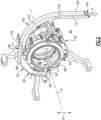
Figure 2 is a perspective view of a portion of the engine ofFigure 1 , and in particular illustrates an example of a gutter relative to a seal assembly according to the present invention. -
Figure 3 is a cross-sectional view taken along line 3-3 fromFigure 2 , and illustrates an example of an inlet section of the gutter according to the present invention. -
Figure 4 is a cross-sectional view taken along line 4-4 fromFigure 2 , and illustrates an example of a main passageway of the gutter according to the present invention. -
Figure 1 schematically illustrates agas turbine engine 20. Thegas turbine engine 20 is disclosed herein as a two-spool turbofan that generally incorporates afan section 22, acompressor section 24, acombustor section 26 and aturbine section 28. Thefan section 22 drives air along a bypass flow path B in a bypass duct defined within anacelle 15, and also drives air along a core flow path C for compression and communication into thecombustor section 26 then expansion through theturbine section 28. Although depicted as a two-spool turbofan gas turbine engine in the disclosed non-limiting embodiment, it should be understood that the concepts described herein are not limited to use with two-spool turbofans as the teachings may be applied to other types of turbine engines including but not limited to three-spool architectures. - The
exemplary engine 20 generally includes alow speed spool 30 and ahigh speed spool 32 mounted for rotation about an engine central longitudinal axis A relative to an enginestatic structure 36 viaseveral bearing systems 38. It should be understood thatvarious bearing systems 38 at various locations may alternatively or additionally be provided, and the location ofbearing systems 38 may be varied as appropriate to the application. - The
low speed spool 30 generally includes aninner shaft 40 that interconnects, a first (or low)pressure compressor 44 and a first (or low)pressure turbine 46. Theinner shaft 40 is connected to thefan 42 through a speed change mechanism, which in exemplarygas turbine engine 20 is illustrated as a gearedarchitecture 48 to drive afan 42 at a lower speed than thelow speed spool 30. Thehigh speed spool 32 includes anouter shaft 50 that interconnects a second (or high)pressure compressor 52 and a second (or high)pressure turbine 54. Acombustor 56 is arranged inexemplary gas turbine 20 between thehigh pressure compressor 52 and thehigh pressure turbine 54. Amid-turbine frame 57 of the enginestatic structure 36 may be arranged generally between thehigh pressure turbine 54 and thelow pressure turbine 46. Themid-turbine frame 57 further supports bearingsystems 38 in theturbine section 28. Theinner shaft 40 and theouter shaft 50 are concentric and rotate viabearing systems 38 about the engine central longitudinal axis A which is collinear with their longitudinal axes. - The core airflow is compressed by the
low pressure compressor 44 then thehigh pressure compressor 52, mixed and burned with fuel in thecombustor 56, then expanded through thehigh pressure turbine 54 andlow pressure turbine 46. Themid-turbine frame 57 includesairfoils 59 which are in the core airflow path C. Theturbines low speed spool 30 andhigh speed spool 32 in response to the expansion. It will be appreciated that each of the positions of thefan section 22,compressor section 24,combustor section 26,turbine section 28, and fandrive gear system 48 may be varied. For example,gear system 48 may be located aft of the low pressure compressor, or aft of thecombustor section 26 or even aft ofturbine section 28, andfan 42 may be positioned forward or aft of the location ofgear system 48. - The
engine 20 in one example is a high-bypass geared aircraft engine. In a further example, theengine 20 bypass ratio is greater than about 6:1, with an example embodiment being greater than about 10:1, the gearedarchitecture 48 is an epicyclic gear train, such as a planetary gear system or other gear system, with a gear reduction ratio of greater than about 2.3:1 and thelow pressure turbine 46 has a pressure ratio that is greater than about 5:1. In one disclosed embodiment, theengine 20 bypass ratio is greater than about 10:1, the fan diameter is significantly larger than that of thelow pressure compressor 44, and thelow pressure turbine 46 has a pressure ratio that is greater than about 5:1. Thelow pressure turbine 46 pressure ratio is pressure measured prior to the inlet oflow pressure turbine 46 as related to the pressure at the outlet of thelow pressure turbine 46 prior to an exhaust nozzle. The gearedarchitecture 48 may be an epicycle gear train, such as a planetary gear system or other gear system, with a gear reduction ratio of greater than about 2.3:1 and less than about 5:1. It should be understood, however, that the above parameters are only exemplary of one embodiment of a geared architecture engine and that the present invention is applicable to other gas turbine engines including but not limited to direct drive turbofans, low bypass engines, and multi-stage fan engines. - A significant amount of thrust is provided by the bypass flow B due to the high bypass ratio. The
fan section 22 of theengine 20 is designed for a particular flight condition -- typically cruise at about 0.8 Mach and about 35,000 feet (10,668 meters). The flight condition of 0.8 Mach and 35,000 ft (10,668 meters), with the engine at its best fuel consumption - also known as "bucket cruise Thrust Specific Fuel Consumption ('TSFC')" - is the industry standard parameter of lbm of fuel being burned divided by lbf of thrust the engine produces at that minimum point. "Low fan pressure ratio" is the pressure ratio across the fan blade alone, without a Fan Exit Guide Vane ("FEGV") system. The low fan pressure ratio as disclosed herein according to one non-limiting embodiment is less than about 1.45:1. "Low corrected fan tip speed" is the actual fan tip speed in ft/sec divided by an industry standard temperature correction of [(Tram °R) / (518.7 °R)]0.5 (where °R = K x 9/5). The "Low corrected fan tip speed" as disclosed herein according to one non-limiting embodiment is less than about 1150 ft / second (350.5 meters/second). -
Figure 2 is a perspective view of various components adjacent and/or within abearing compartment 60 of theengine 20. Specifically,Figure 2 illustrates asupport assembly 62 and aseal assembly 64 configured to seal thebearing compartment 60 and maintain fluid pressure, particularly oil pressure, in thebearing compartment 60 during operation of theengine 20. As is known in the art, thesupport assembly 62 may include various seal elements such as a static support, carbon elements, etc. Thesupport assembly 62 is mounted relative to a shaft of theengine 20. In particular, thesupport assembly 62 may be an inter-shaft seal support connecting one shaft of theengine 20 to another shaft of theengine 20, such as connecting theinner shaft 40 and theouter shaft 50. The support andseal assemblies compartment 60 adjacent the inner and/orouter shafts seal assemblies engine 20. - The
bearing compartment 60 is representative of any bearing compartment within theengine 20. Example bearing compartment locations are illustrated at 60A-60C inFigure 1 . This disclosure is not limited to any specific bearing compartment, and in particular is not limited to a forward or an aft bearing compartment. This disclosure is not limited to bearing compartments at any particular engine location. - With reference to
Figure 3 , theseal assembly 64 includes aseal 66, such as a carbon face seal, and aseal plate 68 configured to cooperate with one another to establish a seal for thebearing compartment 60, and in particular to keep oil in thebearing compartment 60 and to maintain oil pressure in thebearing compartment 60. Theseal 66 and theseal plate 68 are circular components and extend circumferentially around the engine central longitudinal axis A. - The
seal plate 68 includes a firstaxial face 70 and a secondaxial face 72 on an opposite axial side of the firstaxial face 70. The firstaxial face 70 lies in a plane inclined relative to the engine central longitudinal axis A at an angle between 0° and 90°. The secondaxial face 72 is in direct contact with theseal 66, and lies in a plane extending in a radial direction normal to the engine central longitudinal axis A. In this disclosure "axially" refers to a direction substantially parallel to the engine central longitudinal axis A, and "radially" refers to directions normal thereto. The radial direction R is labeled inFigure 2 for ease of reference. - The
seal 66 is mounted to a static structure, and therefore does not rotate during operation of theengine 20. Theseal plate 68, on the other hand, is configured to rotate about an axis of rotation, which in this example is the engine central longitudinal axis A, during operation of theengine 20. Theseal plate 68, in this example, is mechanically connected to a shaft of theengine 20, such as one of theshafts Figure 4 ) which projects axially from the firstaxial face 70. - To cool the
seal plate 68, and in turn theseal 66, fluid F, specifically oil, is directed onto the firstaxial face 70 of theseal plate 68 via one or more nozzles, which here is asingle nozzle 76. Thenozzle 76 is fluidly coupled to a circuit configured to direct fluid F to thenozzle 76 under pressure, and may include one or more conduits and/or pumps. Thenozzle 76 is configured to spray, or jet, the fluid F against theseal plate 68 such that the fluid F impinges against theseal plate 68, and thereby absorbs heat from theseal plate 68 via the firstaxial face 70. Thus, this arrangement may be referred to as a direct jetted cooling arrangement. While a direct jetted arrangement is shown inFigure 2 , this disclosure is not limited to direct jetted arrangements and extends to arrangements where theseal plate 68 includes internal passageways for the fluid F. However, this disclosure has particular advantages in the context of direct jetting because more fluid F is slung in locations concentrated near thenozzle 76. Further, this disclosure is not limited to seal plates and extends to seal runners as well. - As fluid F is directed onto the
seal plate 68, rotation of theseal plate 68 slings (i.e., rejects or flings) the fluid F radially outwardly, away from the engine central longitudinal axis A. The slung fluid F has a velocity with both radial and circumferential components According to the invention, theengine 20 includes agutter 78 configured to collect the slung fluid F and direct it to another location. Thegutter 78 may be referred to as a trough. In general, thegutter 78 prevents the slung fluid F from churning or moving around thebearing compartment 60, where it may enter a gear mesh, for example, causing heat generation and reducing engine efficiency. Thegutter 78, in this example, is at least partially radially outward of theseal plate 68. - Further, the
gutter 78 does not extend around the entire circumference of theseal plate 68. Rather, thegutter 78 extends only partially around the outer circumference of theseal plate 68. Thus, thegutter 78 may be referred to as a partial arc gutter. Despite not extending around the entire outer circumference of theseal plate 68, thegutter 78 is designed and arranged to collect a majority, if not a vast majority, of the slung fluid F. Because thegutter 78 does not extend around the entire outer circumference of theseal plate 68, thegutter 78 has advantages of reducing weight and cost. Further, fluid F collected by thegutter 78 is expelled fromgutter 78 relatively faster than if the gutter extended about the entire outer circumference of theseal plate 68, which increases efficiency. - With reference to
Figure 2 , thegutter 78 includes aninlet section 80, amain passageway 82, and anoutlet 84. Thegutter 78 is provided by a single piece of metallic material, in one example. In another example, thegutter 78 is provided by a plurality of pieces of metallic material which are fastened together, such as by welding. Theinlet section 80 includes a radially-open cross-section such that the slung fluid F may enter thegutter 78 from a radially inner location. Theinlet section 80 is configured to direct fluid F circumferentially into themain passageway 82, which has a radially-closed cross-section configured to retain fluid F therein and direct that fluid F to theoutlet 84. - The
inlet section 80 extends circumferentially about the engine central longitudinal axis A from a firstcircumferential location 86 to a secondcircumferential location 88 spaced-apart from the firstcircumferential location 86 in a direction of rotation X of theseal plate 68, which, with reference toFigure 2 , is a clockwise direction. By contrast, thenozzle 76 is circumferentially spaced-apart from the firstcircumferential location 86 in a direction opposite the direction of rotation X of theseal plate 68. Theinlet section 80 is arcuate and follows a constant radius having an origin about the engine central longitudinal axis A. Between the first and secondcircumferential locations inlet section 80 follows an arc parallel to the circumference of theseal plate 68, in one example. In an example, the firstcircumferential location 86 is spaced-apart from the secondcircumferential location 88 by less than 180° relative to the engine central longitudinal axis A. In a further example, such as in the example depicted inFigure 2 , the firstcircumferential location 86 is spaced-apart from the second circumferential 88 location by about 90°. - In cross-section, the
inlet section 80 is radially-open, as mentioned above, and in particular is concave when viewed from the engine central longitudinal axis A. With reference toFigure 3 , within theinlet section 80, thegutter 78 includes a first radially-extendingwall 90, a second radially-extendingwall 92 axially spaced-apart from the first radially extendingwall 90, and an axially-extendingwall 94 connecting radially-outer ends of the first and second radially-extendingwalls Figure 3 , the first and second radially-extendingwalls wall 94. The first and second radially-extendingwalls - In
Figure 3 , the first and second radially-extendingwalls wall 92 is shorter in the radial direction than the first radially-extendingwall 90. The first radially-extendingwall 90 may be radially longer than the second radially-extendingwall 92 to permit attachment to one or more mounting structures, such as mechanical fasteners. The first and second radially-extendingwalls walls seal plate 68. In other examples, the first and second radially-extending walls may be partially radially aligned with theseal plate 68 with the axially-extendingwall 94 radially outward of theseal plate 68. - Fluid F entering the
gutter 78 via theinlet section 80 tends to flow toward the axially-extendingwall 94 and follow the curvature of theinlet section 80 toward themain passageway 82. In an example, theinlet section 80 includes one or more elements configured to encourage fluid F to remain in thegutter 78. InFigure 3 , avane 96 projects axially from the first radially-extendingwall 90 toward the second radially-extendingwall 92. Thevane 96 may be curved and/or airfoil shaped in cross-section and encourages fluid F to remain in theinlet section 80 and flow toward themain passageway 82. While thevane 96 only extends partially between the first radially-extendingwall 90 and the second radially-extendingwall 92 inFigure 3 , thevane 96 could span the entire space between and directly contact both the first and second radially-extendingwalls inlet section 80 may include one or more flaps, scoops, or splitters, as examples. Theinlet section 80 does not require such elements in all examples. - With reference back to
Figure 2 , themain passageway 82 begins at the secondcircumferential location 88 and extends to theoutlet 84. Themain passageway 82 includes a firststraight section 98 extending from the secondcircumferential location 88 to athird location 100. The third location is spaced-apart from the secondcircumferential location 88 along a first straight line L1 extending normal to both the radial direction R and the axial direction A. The first straight line L1 extends in a direction parallel to a tangent to an arc of theinlet section 80. At thethird location 100, themain passageway 82 includes acurved section 102 following a constant radius to a fourth location 104. Thecurved section 102 is configured such thatmain passageway 82 makes a substantially 90° turn. Between the fourth location 104 and theoutlet 84, themain passageway 82 includes a secondstraight section 106 extending along a straight line L2. The second straight line L2 extends in a direction parallel to the radial direction R in this example. While a specific configuration of themain passageway 82 has been mentioned, this disclosure extends to other arrangements. - The
main passageway 82 includes a radially-closed cross-section, and in a particular example includes first and second radially-extendingwalls 108, 110 (Figure 4 ) axially-spaced apart from one another, a first axially-extendingwall 112 connecting radially inner ends of the first and second radially-extendingwalls wall 114 connecting radially outer ends of the first and second radially-extendingwalls main passageway 82 is radially and axially bound. Themain passageway 82 does not permit fluid F to radially enter thegutter 78, unlike theinlet section 80. - Thus, fluid F that enters the
main passageway 82 flows to theoutlet 84, where the fluid F is drained out of theoutlet 84 and flows toward a scavenge port of thebearing compartment 60. The scavenge port is located at a gravitational bottom, sometimes called a bottom dead center (BDC), of thebearing compartment 60. Theoutlet 84 is arranged adjacent the gravitational bottom in one example. The fluid F is then recirculated within via a circuit to thenozzle 76. - In another aspect of this disclosure, the
gutter 78 may include contoured surfaces configured to interface with corresponding contoured surfaces of theseal assembly 64. In particular, the second radially-extendingwalls seal assembly 64. Thegutter 78 may have another shape configured to fit relative to other parts. Such arrangement may reduce spillage. Further, the width of thegutter 78 may be variable along its length. Additionally, while disclosed in the context of a gas turbine engine, thegutter 78 may have applicability in other contexts. - It should be understood that terms such as "axial," "radial," and "circumferential" are used above with reference to the normal operational attitude of the
engine 20. Further, these terms have been used herein for purposes of explanation, and should not be considered otherwise limiting. Terms such as "generally," "substantially," and "about" are not intended to be boundaryless terms, and should be interpreted consistent with the way one skilled in the art would interpret those terms. - Although the different examples have the specific components shown in the illustrations, embodiments of this disclosure are not limited to those particular combinations. It is possible to use some of the components or features from one of the examples in combination with features or components from another one of the examples. In addition, the various figures accompanying this disclosure are not necessarily to scale, and some features may be exaggerated or minimized to show certain details of a particular component or arrangement.
- One of ordinary skill in this art would understand that the above-described embodiments are exemplary and non-limiting. That is, modifications of this disclosure would come within the scope of the claims. Accordingly, the following claims should be studied to determine their true scope and content.
Claims (12)
- A gas turbine engine (20), comprising:a bearing compartment (60);a seal assembly (64) configured to establish a seal of the bearing compartment (60), the seal assembly (64) including a seal (66) and a seal plate (68); anda gutter (78) configured to collect oil (F) slung from the seal plate (68);the seal (66) is mounted to a static structure and is in contact with an axial face (72) of the seal plate (68);the seal (66) and the seal plate (68) are circular components and extend circumferentially around the engine central longitudinal axis (A);a nozzle (76) is configured to spray a fluid against the seal plate (68); andthe seal plate (68) is mechanically connected to a shaft of the engine (20) and rotates together with the shaft, whereby rotation of the seal plate (68) slings the fluid radially outward, where it is collected by the gutter (78);characterized in thatthe gutter (78) extends only partially around the outer circumference of the seal plate (68) and not around the entire circumference of the seal plate (68);the gutter (78) includes an inlet section (80), a main passageway (82), and an outlet (84), wherein the inlet section (80) is configured to direct oil (F) slung from the seal plate (68) into the main passageway (82); wherein the inlet section (80) extends circumferentially about the axis of rotation of the seal plate (68) from a first circumferential location (86) to a second circumferential location (88) spaced-apart from the first circumferential location (86) in a direction of rotation of the seal plate (68);the nozzle (76) being circumferentially spaced-apart from said first location (86) in a direction opposite the direction of rotation (X) of the seal plate (68).
- The gas turbine engine (20) as recited in claim 1, wherein the gutter (78) is at least partially radially outward of the seal plate (68).
- The gas turbine engine (20) as recited in claim 1, wherein the inlet section (80) includes one or more of at least one vane (96) configured to encourage oil (F) to flow into the main passageway (82); and a radially-open cross-section and is concave in cross-section when viewed from an axis of rotation of the seal plate (68).
- The gas turbine engine (20) as recited in claim 1 to 3, wherein the inlet section (80) includes a first radially-extending wall (90), a second radially-extending wall (92) spaced-apart from the first radially extending wall (90), and an axially-extending wall (94) connecting radially-outer ends of first and second radially-extending walls (90, 92).
- The gas turbine engine (20) as recited in any of claims 1 to 4, wherein the inlet section (80) is arcuate and follows a radius having an origin about the axis of rotation of the seal plate (68).
- The gas turbine engine (20) as recited in claim 1, wherein the first circumferential location (86) is spaced-apart from the second circumferential location (88) by less than 180° or by about 90°.
- The gas turbine engine (20) as recited in claim 1 or 6 wherein:the main passageway (82) begins at the second circumferential location (88), andthe main passageway (82) includes a radially-closed cross-section.
- The gas turbine engine (20) as recited in claim 7, wherein the main passageway (82) includes one or more of a first straight section (98) extending from the second circumferential location (88) to a third location (100);a curved section (102) between the third location (100) and a fourth location (104) spaced-apart circumferentially from the third location (100); anda second straight section (106) between the fourth location (104) and the outlet (84).
- A method of operating the gas turbine engine (20) of claim 1, comprising:rotating the seal plate (68) of the seal assembly (64) for the bearing compartment (60) of the gas turbine engine (20);slinging oil from the seal plate (68);capturing the oil slung from the seal plate (68) in the gutter (78) extending only partially around the seal plate (68);the nozzle (76) being configured to spray a fluid against the seal plate (68);the nozzle (76) being circumferentially spaced-apart from a first location (86) in a direction opposite the direction of rotation (X) of the seal plate (68).
- The method as recited in claim 9, wherein the oil slung from the seal plate (68) is captured by the inlet section (80) of the gutter (78) having a radially-open cross-section.
- The method as recited in claim 10, further comprising directing oil from the inlet section (80) to the main passageway (82) of the gutter (78) having a radially-closed cross-section.
- The method as recited in claim 11, further comprising draining oil out the outlet (84) of the gutter (78).
Applications Claiming Priority (1)
| Application Number | Priority Date | Filing Date | Title |
|---|---|---|---|
| US16/849,562 US11293307B2 (en) | 2020-04-15 | 2020-04-15 | Partial arc gutter for gas turbine engine |
Publications (3)
| Publication Number | Publication Date |
|---|---|
| EP3896264A2 EP3896264A2 (en) | 2021-10-20 |
| EP3896264A3 EP3896264A3 (en) | 2021-11-10 |
| EP3896264B1 true EP3896264B1 (en) | 2024-02-14 |
Family
ID=75539090
Family Applications (1)
| Application Number | Title | Priority Date | Filing Date |
|---|---|---|---|
| EP21168452.7A Active EP3896264B1 (en) | 2020-04-15 | 2021-04-14 | Gas turbine engine with partial arc gutter |
Country Status (2)
| Country | Link |
|---|---|
| US (1) | US11293307B2 (en) |
| EP (1) | EP3896264B1 (en) |
Families Citing this family (5)
| Publication number | Priority date | Publication date | Assignee | Title |
|---|---|---|---|---|
| US12523176B2 (en) | 2022-06-22 | 2026-01-13 | General Electric Company | Gearbox assembly with lubricant extraction volume ratio |
| US12320418B2 (en) * | 2022-06-22 | 2025-06-03 | General Electric Company | Gearbox assembly with lubricant extraction volume ratio |
| US12421898B2 (en) | 2022-06-22 | 2025-09-23 | General Electric Company | Gearbox assembly with lubricant extraction volume ratio |
| US12326115B2 (en) * | 2022-06-22 | 2025-06-10 | General Electric Company | Gearbox assembly with lubricant extraction volume ratio |
| US12345201B2 (en) | 2022-06-22 | 2025-07-01 | General Electric Company | Gearbox assembly with lubricant extraction volume ratio |
Family Cites Families (17)
| Publication number | Priority date | Publication date | Assignee | Title |
|---|---|---|---|---|
| US4402514A (en) | 1981-09-10 | 1983-09-06 | General Electric Company | Fluid-cooled oil deflector |
| US4928978A (en) * | 1988-04-07 | 1990-05-29 | United Technologies Corporation | Rotating shaft seal |
| DE3813085A1 (en) | 1988-04-19 | 1989-11-02 | Elastonwerk Bayern Gmbh | METHOD FOR PRODUCING FILMS FROM VERY LOW DENSITY FROM LINEAR POLYETHYLENE |
| US5593165A (en) | 1994-09-20 | 1997-01-14 | Allison Engine Company, Inc. | Circumferential flow channel for carbon seal runner cooling |
| JP3755965B2 (en) | 1997-06-10 | 2006-03-15 | 株式会社日本自動車部品総合研究所 | Oil leakage prevention device for turbocharger |
| US6918746B2 (en) | 2003-04-25 | 2005-07-19 | Electro-Motive Diesel, Inc. | Diesel engine water pump with thrust bearing preload |
| EP2066886B1 (en) | 2006-09-29 | 2013-05-15 | BorgWarner Inc. | Sealing system between bearing and compressor housing |
| US7670056B2 (en) | 2007-03-22 | 2010-03-02 | Honeywell International Inc. | Stepped outer diameter semi-floating bearing |
| US8545106B2 (en) | 2009-07-08 | 2013-10-01 | Williams International Co., L.L.C. | System and method for isolating a rolling-element bearing |
| EP2872753B1 (en) | 2012-07-15 | 2019-03-20 | Garrett Transportation I Inc. | Turbocharger with lubricant deflector |
| WO2014130662A1 (en) * | 2013-02-20 | 2014-08-28 | United Technologies Corporation | Rolling element bearing configured with a gutter and one or more fluid passages |
| US9631508B2 (en) | 2013-06-13 | 2017-04-25 | Pratt & Whitney Canada Corp. | Internally cooled seal runner |
| US10655679B2 (en) | 2017-04-07 | 2020-05-19 | United Technologies Corporation | Oil control for seal plates |
| DE102017109351A1 (en) * | 2017-05-02 | 2018-11-08 | Ihi Charging Systems International Gmbh | turbocharger |
| US10174629B1 (en) | 2017-09-11 | 2019-01-08 | United Technologies Corporation | Phonic seal seat |
| US11209086B2 (en) | 2018-10-29 | 2021-12-28 | Raytheon Technologies Corporation | Wet-face/dry-face seal and methods of operation |
| US11401833B2 (en) | 2018-12-10 | 2022-08-02 | Raytheon Technologies Corporation | Seal oil systems |
-
2020
- 2020-04-15 US US16/849,562 patent/US11293307B2/en active Active
-
2021
- 2021-04-14 EP EP21168452.7A patent/EP3896264B1/en active Active
Also Published As
| Publication number | Publication date |
|---|---|
| US20210324762A1 (en) | 2021-10-21 |
| EP3896264A2 (en) | 2021-10-20 |
| EP3896264A3 (en) | 2021-11-10 |
| US11293307B2 (en) | 2022-04-05 |
Similar Documents
| Publication | Publication Date | Title |
|---|---|---|
| EP3896264B1 (en) | Gas turbine engine with partial arc gutter | |
| US11060417B2 (en) | Fluid collection gutter for a geared turbine engine | |
| EP3851653B1 (en) | Geared architecture gas turbine engine with planetary gear oil scavenge | |
| US11066945B2 (en) | Fluid collection gutter for a geared turbine engine | |
| US10247020B2 (en) | Fluid collection gutter for a geared turbine engine | |
| EP3623589B1 (en) | Bearing compartment oil auto-ignition mitigation | |
| EP3118414B1 (en) | Gas turbine engine airfoil | |
| EP3772571B1 (en) | Ducted oil scoop for gas turbine engine | |
| US12428970B2 (en) | Radial lift seal | |
| EP3708794B1 (en) | Dual radial scoop oil delivery system | |
| EP3643887B1 (en) | Gas turbine engine seal assemblies | |
| EP2998514B1 (en) | Reversibly mountable blade platform seal | |
| EP3712395B1 (en) | Seal assembly for a gas turbine engine | |
| EP3812555B1 (en) | Oil drainback arrangement for gas turbine engine |
Legal Events
| Date | Code | Title | Description |
|---|---|---|---|
| PUAI | Public reference made under article 153(3) epc to a published international application that has entered the european phase |
Free format text: ORIGINAL CODE: 0009012 |
|
| STAA | Information on the status of an ep patent application or granted ep patent |
Free format text: STATUS: THE APPLICATION HAS BEEN PUBLISHED |
|
| PUAL | Search report despatched |
Free format text: ORIGINAL CODE: 0009013 |
|
| AK | Designated contracting states |
Kind code of ref document: A2 Designated state(s): AL AT BE BG CH CY CZ DE DK EE ES FI FR GB GR HR HU IE IS IT LI LT LU LV MC MK MT NL NO PL PT RO RS SE SI SK SM TR |
|
| AK | Designated contracting states |
Kind code of ref document: A3 Designated state(s): AL AT BE BG CH CY CZ DE DK EE ES FI FR GB GR HR HU IE IS IT LI LT LU LV MC MK MT NL NO PL PT RO RS SE SI SK SM TR |
|
| RIC1 | Information provided on ipc code assigned before grant |
Ipc: F02C 7/06 20060101ALI20211004BHEP Ipc: F01D 11/00 20060101ALI20211004BHEP Ipc: F01D 25/18 20060101AFI20211004BHEP |
|
| STAA | Information on the status of an ep patent application or granted ep patent |
Free format text: STATUS: REQUEST FOR EXAMINATION WAS MADE |
|
| 17P | Request for examination filed |
Effective date: 20220504 |
|
| RBV | Designated contracting states (corrected) |
Designated state(s): AL AT BE BG CH CY CZ DE DK EE ES FI FR GB GR HR HU IE IS IT LI LT LU LV MC MK MT NL NO PL PT RO RS SE SI SK SM TR |
|
| RIC1 | Information provided on ipc code assigned before grant |
Ipc: F02C 7/06 20060101ALI20230807BHEP Ipc: F01D 11/00 20060101ALI20230807BHEP Ipc: F01D 25/18 20060101AFI20230807BHEP |
|
| GRAP | Despatch of communication of intention to grant a patent |
Free format text: ORIGINAL CODE: EPIDOSNIGR1 |
|
| STAA | Information on the status of an ep patent application or granted ep patent |
Free format text: STATUS: GRANT OF PATENT IS INTENDED |
|
| INTG | Intention to grant announced |
Effective date: 20230915 |
|
| RAP3 | Party data changed (applicant data changed or rights of an application transferred) |
Owner name: RTX CORPORATION |
|
| GRAS | Grant fee paid |
Free format text: ORIGINAL CODE: EPIDOSNIGR3 |
|
| GRAA | (expected) grant |
Free format text: ORIGINAL CODE: 0009210 |
|
| STAA | Information on the status of an ep patent application or granted ep patent |
Free format text: STATUS: THE PATENT HAS BEEN GRANTED |
|
| AK | Designated contracting states |
Kind code of ref document: B1 Designated state(s): AL AT BE BG CH CY CZ DE DK EE ES FI FR GB GR HR HU IE IS IT LI LT LU LV MC MK MT NL NO PL PT RO RS SE SI SK SM TR |
|
| REG | Reference to a national code |
Ref country code: GB Ref legal event code: FG4D |
|
| REG | Reference to a national code |
Ref country code: CH Ref legal event code: EP |
|
| REG | Reference to a national code |
Ref country code: DE Ref legal event code: R096 Ref document number: 602021009297 Country of ref document: DE |
|
| REG | Reference to a national code |
Ref country code: IE Ref legal event code: FG4D |
|
| REG | Reference to a national code |
Ref country code: LT Ref legal event code: MG9D |
|
| REG | Reference to a national code |
Ref country code: NL Ref legal event code: MP Effective date: 20240214 |
|
| PG25 | Lapsed in a contracting state [announced via postgrant information from national office to epo] |
Ref country code: IS Free format text: LAPSE BECAUSE OF FAILURE TO SUBMIT A TRANSLATION OF THE DESCRIPTION OR TO PAY THE FEE WITHIN THE PRESCRIBED TIME-LIMIT Effective date: 20240614 |
|
| PG25 | Lapsed in a contracting state [announced via postgrant information from national office to epo] |
Ref country code: LT Free format text: LAPSE BECAUSE OF FAILURE TO SUBMIT A TRANSLATION OF THE DESCRIPTION OR TO PAY THE FEE WITHIN THE PRESCRIBED TIME-LIMIT Effective date: 20240214 |
|
| PG25 | Lapsed in a contracting state [announced via postgrant information from national office to epo] |
Ref country code: GR Free format text: LAPSE BECAUSE OF FAILURE TO SUBMIT A TRANSLATION OF THE DESCRIPTION OR TO PAY THE FEE WITHIN THE PRESCRIBED TIME-LIMIT Effective date: 20240515 |
|
| REG | Reference to a national code |
Ref country code: AT Ref legal event code: MK05 Ref document number: 1657168 Country of ref document: AT Kind code of ref document: T Effective date: 20240214 |
|
| PG25 | Lapsed in a contracting state [announced via postgrant information from national office to epo] |
Ref country code: RS Free format text: LAPSE BECAUSE OF FAILURE TO SUBMIT A TRANSLATION OF THE DESCRIPTION OR TO PAY THE FEE WITHIN THE PRESCRIBED TIME-LIMIT Effective date: 20240514 Ref country code: NL Free format text: LAPSE BECAUSE OF FAILURE TO SUBMIT A TRANSLATION OF THE DESCRIPTION OR TO PAY THE FEE WITHIN THE PRESCRIBED TIME-LIMIT Effective date: 20240214 Ref country code: HR Free format text: LAPSE BECAUSE OF FAILURE TO SUBMIT A TRANSLATION OF THE DESCRIPTION OR TO PAY THE FEE WITHIN THE PRESCRIBED TIME-LIMIT Effective date: 20240214 |
|
| PG25 | Lapsed in a contracting state [announced via postgrant information from national office to epo] |
Ref country code: ES Free format text: LAPSE BECAUSE OF FAILURE TO SUBMIT A TRANSLATION OF THE DESCRIPTION OR TO PAY THE FEE WITHIN THE PRESCRIBED TIME-LIMIT Effective date: 20240214 |
|
| PG25 | Lapsed in a contracting state [announced via postgrant information from national office to epo] |
Ref country code: AT Free format text: LAPSE BECAUSE OF FAILURE TO SUBMIT A TRANSLATION OF THE DESCRIPTION OR TO PAY THE FEE WITHIN THE PRESCRIBED TIME-LIMIT Effective date: 20240214 |
|
| PG25 | Lapsed in a contracting state [announced via postgrant information from national office to epo] |
Ref country code: RS Free format text: LAPSE BECAUSE OF FAILURE TO SUBMIT A TRANSLATION OF THE DESCRIPTION OR TO PAY THE FEE WITHIN THE PRESCRIBED TIME-LIMIT Effective date: 20240514 Ref country code: NO Free format text: LAPSE BECAUSE OF FAILURE TO SUBMIT A TRANSLATION OF THE DESCRIPTION OR TO PAY THE FEE WITHIN THE PRESCRIBED TIME-LIMIT Effective date: 20240514 Ref country code: NL Free format text: LAPSE BECAUSE OF FAILURE TO SUBMIT A TRANSLATION OF THE DESCRIPTION OR TO PAY THE FEE WITHIN THE PRESCRIBED TIME-LIMIT Effective date: 20240214 Ref country code: LT Free format text: LAPSE BECAUSE OF FAILURE TO SUBMIT A TRANSLATION OF THE DESCRIPTION OR TO PAY THE FEE WITHIN THE PRESCRIBED TIME-LIMIT Effective date: 20240214 Ref country code: IS Free format text: LAPSE BECAUSE OF FAILURE TO SUBMIT A TRANSLATION OF THE DESCRIPTION OR TO PAY THE FEE WITHIN THE PRESCRIBED TIME-LIMIT Effective date: 20240614 Ref country code: HR Free format text: LAPSE BECAUSE OF FAILURE TO SUBMIT A TRANSLATION OF THE DESCRIPTION OR TO PAY THE FEE WITHIN THE PRESCRIBED TIME-LIMIT Effective date: 20240214 Ref country code: GR Free format text: LAPSE BECAUSE OF FAILURE TO SUBMIT A TRANSLATION OF THE DESCRIPTION OR TO PAY THE FEE WITHIN THE PRESCRIBED TIME-LIMIT Effective date: 20240515 Ref country code: FI Free format text: LAPSE BECAUSE OF FAILURE TO SUBMIT A TRANSLATION OF THE DESCRIPTION OR TO PAY THE FEE WITHIN THE PRESCRIBED TIME-LIMIT Effective date: 20240214 Ref country code: ES Free format text: LAPSE BECAUSE OF FAILURE TO SUBMIT A TRANSLATION OF THE DESCRIPTION OR TO PAY THE FEE WITHIN THE PRESCRIBED TIME-LIMIT Effective date: 20240214 Ref country code: BG Free format text: LAPSE BECAUSE OF FAILURE TO SUBMIT A TRANSLATION OF THE DESCRIPTION OR TO PAY THE FEE WITHIN THE PRESCRIBED TIME-LIMIT Effective date: 20240214 Ref country code: AT Free format text: LAPSE BECAUSE OF FAILURE TO SUBMIT A TRANSLATION OF THE DESCRIPTION OR TO PAY THE FEE WITHIN THE PRESCRIBED TIME-LIMIT Effective date: 20240214 |
|
| PG25 | Lapsed in a contracting state [announced via postgrant information from national office to epo] |
Ref country code: PT Free format text: LAPSE BECAUSE OF FAILURE TO SUBMIT A TRANSLATION OF THE DESCRIPTION OR TO PAY THE FEE WITHIN THE PRESCRIBED TIME-LIMIT Effective date: 20240614 Ref country code: PL Free format text: LAPSE BECAUSE OF FAILURE TO SUBMIT A TRANSLATION OF THE DESCRIPTION OR TO PAY THE FEE WITHIN THE PRESCRIBED TIME-LIMIT Effective date: 20240214 |
|
| PG25 | Lapsed in a contracting state [announced via postgrant information from national office to epo] |
Ref country code: SE Free format text: LAPSE BECAUSE OF FAILURE TO SUBMIT A TRANSLATION OF THE DESCRIPTION OR TO PAY THE FEE WITHIN THE PRESCRIBED TIME-LIMIT Effective date: 20240214 Ref country code: PT Free format text: LAPSE BECAUSE OF FAILURE TO SUBMIT A TRANSLATION OF THE DESCRIPTION OR TO PAY THE FEE WITHIN THE PRESCRIBED TIME-LIMIT Effective date: 20240614 Ref country code: PL Free format text: LAPSE BECAUSE OF FAILURE TO SUBMIT A TRANSLATION OF THE DESCRIPTION OR TO PAY THE FEE WITHIN THE PRESCRIBED TIME-LIMIT Effective date: 20240214 Ref country code: LV Free format text: LAPSE BECAUSE OF FAILURE TO SUBMIT A TRANSLATION OF THE DESCRIPTION OR TO PAY THE FEE WITHIN THE PRESCRIBED TIME-LIMIT Effective date: 20240214 |
|
| PG25 | Lapsed in a contracting state [announced via postgrant information from national office to epo] |
Ref country code: DK Free format text: LAPSE BECAUSE OF FAILURE TO SUBMIT A TRANSLATION OF THE DESCRIPTION OR TO PAY THE FEE WITHIN THE PRESCRIBED TIME-LIMIT Effective date: 20240214 |
|
| PG25 | Lapsed in a contracting state [announced via postgrant information from national office to epo] |
Ref country code: SM Free format text: LAPSE BECAUSE OF FAILURE TO SUBMIT A TRANSLATION OF THE DESCRIPTION OR TO PAY THE FEE WITHIN THE PRESCRIBED TIME-LIMIT Effective date: 20240214 |
|
| PG25 | Lapsed in a contracting state [announced via postgrant information from national office to epo] |
Ref country code: EE Free format text: LAPSE BECAUSE OF FAILURE TO SUBMIT A TRANSLATION OF THE DESCRIPTION OR TO PAY THE FEE WITHIN THE PRESCRIBED TIME-LIMIT Effective date: 20240214 Ref country code: CZ Free format text: LAPSE BECAUSE OF FAILURE TO SUBMIT A TRANSLATION OF THE DESCRIPTION OR TO PAY THE FEE WITHIN THE PRESCRIBED TIME-LIMIT Effective date: 20240214 |
|
| PG25 | Lapsed in a contracting state [announced via postgrant information from national office to epo] |
Ref country code: SK Free format text: LAPSE BECAUSE OF FAILURE TO SUBMIT A TRANSLATION OF THE DESCRIPTION OR TO PAY THE FEE WITHIN THE PRESCRIBED TIME-LIMIT Effective date: 20240214 |
|
| PG25 | Lapsed in a contracting state [announced via postgrant information from national office to epo] |
Ref country code: SM Free format text: LAPSE BECAUSE OF FAILURE TO SUBMIT A TRANSLATION OF THE DESCRIPTION OR TO PAY THE FEE WITHIN THE PRESCRIBED TIME-LIMIT Effective date: 20240214 Ref country code: SK Free format text: LAPSE BECAUSE OF FAILURE TO SUBMIT A TRANSLATION OF THE DESCRIPTION OR TO PAY THE FEE WITHIN THE PRESCRIBED TIME-LIMIT Effective date: 20240214 Ref country code: RO Free format text: LAPSE BECAUSE OF FAILURE TO SUBMIT A TRANSLATION OF THE DESCRIPTION OR TO PAY THE FEE WITHIN THE PRESCRIBED TIME-LIMIT Effective date: 20240214 Ref country code: EE Free format text: LAPSE BECAUSE OF FAILURE TO SUBMIT A TRANSLATION OF THE DESCRIPTION OR TO PAY THE FEE WITHIN THE PRESCRIBED TIME-LIMIT Effective date: 20240214 Ref country code: DK Free format text: LAPSE BECAUSE OF FAILURE TO SUBMIT A TRANSLATION OF THE DESCRIPTION OR TO PAY THE FEE WITHIN THE PRESCRIBED TIME-LIMIT Effective date: 20240214 Ref country code: CZ Free format text: LAPSE BECAUSE OF FAILURE TO SUBMIT A TRANSLATION OF THE DESCRIPTION OR TO PAY THE FEE WITHIN THE PRESCRIBED TIME-LIMIT Effective date: 20240214 |
|
| REG | Reference to a national code |
Ref country code: DE Ref legal event code: R097 Ref document number: 602021009297 Country of ref document: DE |
|
| PG25 | Lapsed in a contracting state [announced via postgrant information from national office to epo] |
Ref country code: MC Free format text: LAPSE BECAUSE OF FAILURE TO SUBMIT A TRANSLATION OF THE DESCRIPTION OR TO PAY THE FEE WITHIN THE PRESCRIBED TIME-LIMIT Effective date: 20240214 |
|
| PG25 | Lapsed in a contracting state [announced via postgrant information from national office to epo] |
Ref country code: MC Free format text: LAPSE BECAUSE OF FAILURE TO SUBMIT A TRANSLATION OF THE DESCRIPTION OR TO PAY THE FEE WITHIN THE PRESCRIBED TIME-LIMIT Effective date: 20240214 |
|
| REG | Reference to a national code |
Ref country code: CH Ref legal event code: PL |
|
| PG25 | Lapsed in a contracting state [announced via postgrant information from national office to epo] |
Ref country code: IT Free format text: LAPSE BECAUSE OF FAILURE TO SUBMIT A TRANSLATION OF THE DESCRIPTION OR TO PAY THE FEE WITHIN THE PRESCRIBED TIME-LIMIT Effective date: 20240214 |
|
| PG25 | Lapsed in a contracting state [announced via postgrant information from national office to epo] |
Ref country code: LU Free format text: LAPSE BECAUSE OF NON-PAYMENT OF DUE FEES Effective date: 20240414 |
|
| PLBE | No opposition filed within time limit |
Free format text: ORIGINAL CODE: 0009261 |
|
| STAA | Information on the status of an ep patent application or granted ep patent |
Free format text: STATUS: NO OPPOSITION FILED WITHIN TIME LIMIT |
|
| REG | Reference to a national code |
Ref country code: BE Ref legal event code: MM Effective date: 20240430 |
|
| PG25 | Lapsed in a contracting state [announced via postgrant information from national office to epo] |
Ref country code: LU Free format text: LAPSE BECAUSE OF NON-PAYMENT OF DUE FEES Effective date: 20240414 Ref country code: IT Free format text: LAPSE BECAUSE OF FAILURE TO SUBMIT A TRANSLATION OF THE DESCRIPTION OR TO PAY THE FEE WITHIN THE PRESCRIBED TIME-LIMIT Effective date: 20240214 |
|
| PG25 | Lapsed in a contracting state [announced via postgrant information from national office to epo] |
Ref country code: BE Free format text: LAPSE BECAUSE OF NON-PAYMENT OF DUE FEES Effective date: 20240430 |
|
| 26N | No opposition filed |
Effective date: 20241115 |
|
| PG25 | Lapsed in a contracting state [announced via postgrant information from national office to epo] |
Ref country code: BE Free format text: LAPSE BECAUSE OF NON-PAYMENT OF DUE FEES Effective date: 20240430 Ref country code: CH Free format text: LAPSE BECAUSE OF NON-PAYMENT OF DUE FEES Effective date: 20240430 |
|
| PG25 | Lapsed in a contracting state [announced via postgrant information from national office to epo] |
Ref country code: IE Free format text: LAPSE BECAUSE OF NON-PAYMENT OF DUE FEES Effective date: 20240414 |
|
| PG25 | Lapsed in a contracting state [announced via postgrant information from national office to epo] |
Ref country code: SI Free format text: LAPSE BECAUSE OF FAILURE TO SUBMIT A TRANSLATION OF THE DESCRIPTION OR TO PAY THE FEE WITHIN THE PRESCRIBED TIME-LIMIT Effective date: 20240214 |
|
| PGFP | Annual fee paid to national office [announced via postgrant information from national office to epo] |
Ref country code: DE Payment date: 20250319 Year of fee payment: 5 |
|
| PG25 | Lapsed in a contracting state [announced via postgrant information from national office to epo] |
Ref country code: CY Free format text: LAPSE BECAUSE OF FAILURE TO SUBMIT A TRANSLATION OF THE DESCRIPTION OR TO PAY THE FEE WITHIN THE PRESCRIBED TIME-LIMIT; INVALID AB INITIO Effective date: 20210414 |
|
| PG25 | Lapsed in a contracting state [announced via postgrant information from national office to epo] |
Ref country code: HU Free format text: LAPSE BECAUSE OF FAILURE TO SUBMIT A TRANSLATION OF THE DESCRIPTION OR TO PAY THE FEE WITHIN THE PRESCRIBED TIME-LIMIT; INVALID AB INITIO Effective date: 20210414 |
|
| PGFP | Annual fee paid to national office [announced via postgrant information from national office to epo] |
Ref country code: GB Payment date: 20260319 Year of fee payment: 6 |
|
| PGFP | Annual fee paid to national office [announced via postgrant information from national office to epo] |
Ref country code: FR Payment date: 20260320 Year of fee payment: 6 |