EP3896059B1 - Pan-kit kinase inhibitor having quinoline structure and application thereof - Google Patents
Pan-kit kinase inhibitor having quinoline structure and application thereof Download PDFInfo
- Publication number
- EP3896059B1 EP3896059B1 EP18942754.5A EP18942754A EP3896059B1 EP 3896059 B1 EP3896059 B1 EP 3896059B1 EP 18942754 A EP18942754 A EP 18942754A EP 3896059 B1 EP3896059 B1 EP 3896059B1
- Authority
- EP
- European Patent Office
- Prior art keywords
- compound
- cancer
- kit
- chloro
- phenyl
- Prior art date
- Legal status (The legal status is an assumption and is not a legal conclusion. Google has not performed a legal analysis and makes no representation as to the accuracy of the status listed.)
- Active
Links
Images



Classifications
-
- C—CHEMISTRY; METALLURGY
- C07—ORGANIC CHEMISTRY
- C07D—HETEROCYCLIC COMPOUNDS
- C07D215/00—Heterocyclic compounds containing quinoline or hydrogenated quinoline ring systems
- C07D215/02—Heterocyclic compounds containing quinoline or hydrogenated quinoline ring systems having no bond between the ring nitrogen atom and a non-ring member or having only hydrogen atoms or carbon atoms directly attached to the ring nitrogen atom
- C07D215/16—Heterocyclic compounds containing quinoline or hydrogenated quinoline ring systems having no bond between the ring nitrogen atom and a non-ring member or having only hydrogen atoms or carbon atoms directly attached to the ring nitrogen atom with hetero atoms or with carbon atoms having three bonds to hetero atoms with at the most one bond to halogen, e.g. ester or nitrile radicals, directly attached to ring carbon atoms
- C07D215/20—Oxygen atoms
- C07D215/22—Oxygen atoms attached in position 2 or 4
-
- A—HUMAN NECESSITIES
- A61—MEDICAL OR VETERINARY SCIENCE; HYGIENE
- A61K—PREPARATIONS FOR MEDICAL, DENTAL OR TOILETRY PURPOSES
- A61K31/00—Medicinal preparations containing organic active ingredients
- A61K31/33—Heterocyclic compounds
- A61K31/395—Heterocyclic compounds having nitrogen as a ring hetero atom, e.g. guanethidine or rifamycins
- A61K31/495—Heterocyclic compounds having nitrogen as a ring hetero atom, e.g. guanethidine or rifamycins having six-membered rings with two or more nitrogen atoms as the only ring heteroatoms, e.g. piperazine or tetrazines
- A61K31/496—Non-condensed piperazines containing further heterocyclic rings, e.g. rifampin, thiothixene or sparfloxacin
-
- A—HUMAN NECESSITIES
- A61—MEDICAL OR VETERINARY SCIENCE; HYGIENE
- A61K—PREPARATIONS FOR MEDICAL, DENTAL OR TOILETRY PURPOSES
- A61K31/00—Medicinal preparations containing organic active ingredients
- A61K31/33—Heterocyclic compounds
- A61K31/395—Heterocyclic compounds having nitrogen as a ring hetero atom, e.g. guanethidine or rifamycins
- A61K31/435—Heterocyclic compounds having nitrogen as a ring hetero atom, e.g. guanethidine or rifamycins having six-membered rings with one nitrogen as the only ring hetero atom
- A61K31/47—Quinolines; Isoquinolines
-
- A—HUMAN NECESSITIES
- A61—MEDICAL OR VETERINARY SCIENCE; HYGIENE
- A61K—PREPARATIONS FOR MEDICAL, DENTAL OR TOILETRY PURPOSES
- A61K31/00—Medicinal preparations containing organic active ingredients
- A61K31/33—Heterocyclic compounds
- A61K31/395—Heterocyclic compounds having nitrogen as a ring hetero atom, e.g. guanethidine or rifamycins
- A61K31/435—Heterocyclic compounds having nitrogen as a ring hetero atom, e.g. guanethidine or rifamycins having six-membered rings with one nitrogen as the only ring hetero atom
- A61K31/47—Quinolines; Isoquinolines
- A61K31/4709—Non-condensed quinolines and containing further heterocyclic rings
-
- A—HUMAN NECESSITIES
- A61—MEDICAL OR VETERINARY SCIENCE; HYGIENE
- A61K—PREPARATIONS FOR MEDICAL, DENTAL OR TOILETRY PURPOSES
- A61K31/00—Medicinal preparations containing organic active ingredients
- A61K31/33—Heterocyclic compounds
- A61K31/395—Heterocyclic compounds having nitrogen as a ring hetero atom, e.g. guanethidine or rifamycins
- A61K31/535—Heterocyclic compounds having nitrogen as a ring hetero atom, e.g. guanethidine or rifamycins having six-membered rings with at least one nitrogen and one oxygen as the ring hetero atoms, e.g. 1,2-oxazines
- A61K31/5375—1,4-Oxazines, e.g. morpholine
- A61K31/5377—1,4-Oxazines, e.g. morpholine not condensed and containing further heterocyclic rings, e.g. timolol
-
- A—HUMAN NECESSITIES
- A61—MEDICAL OR VETERINARY SCIENCE; HYGIENE
- A61P—SPECIFIC THERAPEUTIC ACTIVITY OF CHEMICAL COMPOUNDS OR MEDICINAL PREPARATIONS
- A61P1/00—Drugs for disorders of the alimentary tract or the digestive system
- A61P1/16—Drugs for disorders of the alimentary tract or the digestive system for liver or gallbladder disorders, e.g. hepatoprotective agents, cholagogues, litholytics
-
- A—HUMAN NECESSITIES
- A61—MEDICAL OR VETERINARY SCIENCE; HYGIENE
- A61P—SPECIFIC THERAPEUTIC ACTIVITY OF CHEMICAL COMPOUNDS OR MEDICINAL PREPARATIONS
- A61P13/00—Drugs for disorders of the urinary system
- A61P13/10—Drugs for disorders of the urinary system of the bladder
-
- A—HUMAN NECESSITIES
- A61—MEDICAL OR VETERINARY SCIENCE; HYGIENE
- A61P—SPECIFIC THERAPEUTIC ACTIVITY OF CHEMICAL COMPOUNDS OR MEDICINAL PREPARATIONS
- A61P15/00—Drugs for genital or sexual disorders; Contraceptives
- A61P15/02—Drugs for genital or sexual disorders; Contraceptives for disorders of the vagina
-
- A—HUMAN NECESSITIES
- A61—MEDICAL OR VETERINARY SCIENCE; HYGIENE
- A61P—SPECIFIC THERAPEUTIC ACTIVITY OF CHEMICAL COMPOUNDS OR MEDICINAL PREPARATIONS
- A61P15/00—Drugs for genital or sexual disorders; Contraceptives
- A61P15/08—Drugs for genital or sexual disorders; Contraceptives for gonadal disorders or for enhancing fertility, e.g. inducers of ovulation or of spermatogenesis
-
- A—HUMAN NECESSITIES
- A61—MEDICAL OR VETERINARY SCIENCE; HYGIENE
- A61P—SPECIFIC THERAPEUTIC ACTIVITY OF CHEMICAL COMPOUNDS OR MEDICINAL PREPARATIONS
- A61P17/00—Drugs for dermatological disorders
- A61P17/06—Antipsoriatics
-
- A—HUMAN NECESSITIES
- A61—MEDICAL OR VETERINARY SCIENCE; HYGIENE
- A61P—SPECIFIC THERAPEUTIC ACTIVITY OF CHEMICAL COMPOUNDS OR MEDICINAL PREPARATIONS
- A61P19/00—Drugs for skeletal disorders
- A61P19/02—Drugs for skeletal disorders for joint disorders, e.g. arthritis, arthrosis
-
- A—HUMAN NECESSITIES
- A61—MEDICAL OR VETERINARY SCIENCE; HYGIENE
- A61P—SPECIFIC THERAPEUTIC ACTIVITY OF CHEMICAL COMPOUNDS OR MEDICINAL PREPARATIONS
- A61P21/00—Drugs for disorders of the muscular or neuromuscular system
- A61P21/04—Drugs for disorders of the muscular or neuromuscular system for myasthenia gravis
-
- A—HUMAN NECESSITIES
- A61—MEDICAL OR VETERINARY SCIENCE; HYGIENE
- A61P—SPECIFIC THERAPEUTIC ACTIVITY OF CHEMICAL COMPOUNDS OR MEDICINAL PREPARATIONS
- A61P25/00—Drugs for disorders of the nervous system
-
- A—HUMAN NECESSITIES
- A61—MEDICAL OR VETERINARY SCIENCE; HYGIENE
- A61P—SPECIFIC THERAPEUTIC ACTIVITY OF CHEMICAL COMPOUNDS OR MEDICINAL PREPARATIONS
- A61P25/00—Drugs for disorders of the nervous system
- A61P25/28—Drugs for disorders of the nervous system for treating neurodegenerative disorders of the central nervous system, e.g. nootropic agents, cognition enhancers, drugs for treating Alzheimer's disease or other forms of dementia
-
- A—HUMAN NECESSITIES
- A61—MEDICAL OR VETERINARY SCIENCE; HYGIENE
- A61P—SPECIFIC THERAPEUTIC ACTIVITY OF CHEMICAL COMPOUNDS OR MEDICINAL PREPARATIONS
- A61P27/00—Drugs for disorders of the senses
- A61P27/02—Ophthalmic agents
-
- A—HUMAN NECESSITIES
- A61—MEDICAL OR VETERINARY SCIENCE; HYGIENE
- A61P—SPECIFIC THERAPEUTIC ACTIVITY OF CHEMICAL COMPOUNDS OR MEDICINAL PREPARATIONS
- A61P3/00—Drugs for disorders of the metabolism
- A61P3/08—Drugs for disorders of the metabolism for glucose homeostasis
- A61P3/10—Drugs for disorders of the metabolism for glucose homeostasis for hyperglycaemia, e.g. antidiabetics
-
- A—HUMAN NECESSITIES
- A61—MEDICAL OR VETERINARY SCIENCE; HYGIENE
- A61P—SPECIFIC THERAPEUTIC ACTIVITY OF CHEMICAL COMPOUNDS OR MEDICINAL PREPARATIONS
- A61P31/00—Antiinfectives, i.e. antibiotics, antiseptics, chemotherapeutics
- A61P31/12—Antivirals
- A61P31/20—Antivirals for DNA viruses
-
- A—HUMAN NECESSITIES
- A61—MEDICAL OR VETERINARY SCIENCE; HYGIENE
- A61P—SPECIFIC THERAPEUTIC ACTIVITY OF CHEMICAL COMPOUNDS OR MEDICINAL PREPARATIONS
- A61P35/00—Antineoplastic agents
-
- A—HUMAN NECESSITIES
- A61—MEDICAL OR VETERINARY SCIENCE; HYGIENE
- A61P—SPECIFIC THERAPEUTIC ACTIVITY OF CHEMICAL COMPOUNDS OR MEDICINAL PREPARATIONS
- A61P35/00—Antineoplastic agents
- A61P35/02—Antineoplastic agents specific for leukemia
-
- A—HUMAN NECESSITIES
- A61—MEDICAL OR VETERINARY SCIENCE; HYGIENE
- A61P—SPECIFIC THERAPEUTIC ACTIVITY OF CHEMICAL COMPOUNDS OR MEDICINAL PREPARATIONS
- A61P37/00—Drugs for immunological or allergic disorders
- A61P37/02—Immunomodulators
- A61P37/06—Immunosuppressants, e.g. drugs for graft rejection
-
- A—HUMAN NECESSITIES
- A61—MEDICAL OR VETERINARY SCIENCE; HYGIENE
- A61P—SPECIFIC THERAPEUTIC ACTIVITY OF CHEMICAL COMPOUNDS OR MEDICINAL PREPARATIONS
- A61P5/00—Drugs for disorders of the endocrine system
- A61P5/14—Drugs for disorders of the endocrine system of the thyroid hormones, e.g. T3, T4
-
- A—HUMAN NECESSITIES
- A61—MEDICAL OR VETERINARY SCIENCE; HYGIENE
- A61P—SPECIFIC THERAPEUTIC ACTIVITY OF CHEMICAL COMPOUNDS OR MEDICINAL PREPARATIONS
- A61P7/00—Drugs for disorders of the blood or the extracellular fluid
-
- A—HUMAN NECESSITIES
- A61—MEDICAL OR VETERINARY SCIENCE; HYGIENE
- A61P—SPECIFIC THERAPEUTIC ACTIVITY OF CHEMICAL COMPOUNDS OR MEDICINAL PREPARATIONS
- A61P7/00—Drugs for disorders of the blood or the extracellular fluid
- A61P7/02—Antithrombotic agents; Anticoagulants; Platelet aggregation inhibitors
-
- A—HUMAN NECESSITIES
- A61—MEDICAL OR VETERINARY SCIENCE; HYGIENE
- A61P—SPECIFIC THERAPEUTIC ACTIVITY OF CHEMICAL COMPOUNDS OR MEDICINAL PREPARATIONS
- A61P9/00—Drugs for disorders of the cardiovascular system
-
- C—CHEMISTRY; METALLURGY
- C07—ORGANIC CHEMISTRY
- C07D—HETEROCYCLIC COMPOUNDS
- C07D401/00—Heterocyclic compounds containing two or more hetero rings, having nitrogen atoms as the only ring hetero atoms, at least one ring being a six-membered ring with only one nitrogen atom
- C07D401/02—Heterocyclic compounds containing two or more hetero rings, having nitrogen atoms as the only ring hetero atoms, at least one ring being a six-membered ring with only one nitrogen atom containing two hetero rings
- C07D401/12—Heterocyclic compounds containing two or more hetero rings, having nitrogen atoms as the only ring hetero atoms, at least one ring being a six-membered ring with only one nitrogen atom containing two hetero rings linked by a chain containing hetero atoms as chain links
-
- C—CHEMISTRY; METALLURGY
- C07—ORGANIC CHEMISTRY
- C07D—HETEROCYCLIC COMPOUNDS
- C07D405/00—Heterocyclic compounds containing both one or more hetero rings having oxygen atoms as the only ring hetero atoms, and one or more rings having nitrogen as the only ring hetero atom
- C07D405/02—Heterocyclic compounds containing both one or more hetero rings having oxygen atoms as the only ring hetero atoms, and one or more rings having nitrogen as the only ring hetero atom containing two hetero rings
- C07D405/12—Heterocyclic compounds containing both one or more hetero rings having oxygen atoms as the only ring hetero atoms, and one or more rings having nitrogen as the only ring hetero atom containing two hetero rings linked by a chain containing hetero atoms as chain links
-
- C—CHEMISTRY; METALLURGY
- C07—ORGANIC CHEMISTRY
- C07D—HETEROCYCLIC COMPOUNDS
- C07D413/00—Heterocyclic compounds containing two or more hetero rings, at least one ring having nitrogen and oxygen atoms as the only ring hetero atoms
- C07D413/02—Heterocyclic compounds containing two or more hetero rings, at least one ring having nitrogen and oxygen atoms as the only ring hetero atoms containing two hetero rings
- C07D413/12—Heterocyclic compounds containing two or more hetero rings, at least one ring having nitrogen and oxygen atoms as the only ring hetero atoms containing two hetero rings linked by a chain containing hetero atoms as chain links
-
- Y—GENERAL TAGGING OF NEW TECHNOLOGICAL DEVELOPMENTS; GENERAL TAGGING OF CROSS-SECTIONAL TECHNOLOGIES SPANNING OVER SEVERAL SECTIONS OF THE IPC; TECHNICAL SUBJECTS COVERED BY FORMER USPC CROSS-REFERENCE ART COLLECTIONS [XRACs] AND DIGESTS
- Y02—TECHNOLOGIES OR APPLICATIONS FOR MITIGATION OR ADAPTATION AGAINST CLIMATE CHANGE
- Y02A—TECHNOLOGIES FOR ADAPTATION TO CLIMATE CHANGE
- Y02A50/00—TECHNOLOGIES FOR ADAPTATION TO CLIMATE CHANGE in human health protection, e.g. against extreme weather
- Y02A50/30—Against vector-borne diseases, e.g. mosquito-borne, fly-borne, tick-borne or waterborne diseases whose impact is exacerbated by climate change
Definitions
- the present application relates to KIT kinase inhibitors, especially compounds having an inhibitory activity against wild-type cKIT or various mutants thereof, pharmaceutical compositions containing such compounds, and methods and uses of inhibiting kinase activity using such compounds or compositions.
- GISTs Gastrointestinal stromal tumors
- the incidence of GISTs is about 1 in 100,000 to 200,000, accounting for 1-3% of all tumors in the digestive tract. This disease is more common in middle-aged and elderly people, with the median age of onset being 50 to 65 years old. It is rare before 40 years old, but it has also been reported in children.
- GISTs are considered to be tumors with potentially malignant behavior, and the biological behavior is difficult to predict.
- GISTs may occur in any part of the digestive tract: most common in stomach (60% ⁇ 70%), followed by small intestine (20% ⁇ 30%), less than 10% of an incidence in the esophagus, colon, and rectum, but also seen in the omentum and mesentery.
- cKIT mutant 80-85%
- PDGFR ⁇ mutant 5-10%
- cKIT wild-type GISTs 10%)
- the pathogenesis of gastrointestinal stromal tumors is associated with the activation of the cKIT protein (CD117) signaling pathway.
- the proto-oncogene cKIT is a homolog of the vKIT gene isolated from the feline fibrosarcoma virus. It is located on human chromosome 4 (4q12-13) with a length of about 90 kb and consisted of 21 exons and 20 introns, and it is highly conserved during evolution.
- cKIT protein is a receptor tyrosine kinase (RTK) located on cell membrane with a relative molecular mass of 145,000. It is named CD117 according to its cell surface antigenic determinant.
- cKIT protein belongs to the third type of RTK family and is consisted of five immunoglobulin-like domains (D1-D5), one transmembrane domain, and one cytoplasmic region containing a juxtamembrane domain (JMD) and a tyrosine kinase (TK) domain.
- JMD juxtamembrane domain
- TK tyrosine kinase domain
- the TK domain is further divided into adenosine triphosphate (ATP) domain (TK1) and phosphotransferase domain (TK2).
- the stem cell factor (SCF) ligand binds to the extracellular domain to form a dimer, leading to autophosphorylation of tyrosine in the TK domain of the cytoplasmic region, further causing autophosphorylation of various downstream effects, and realizing the transmission of various signals.
- the main signaling pathways include PI3K signaling pathway, JAK-STAT signaling pathway, Ras-Erk signaling pathway, Src family kinase signaling pathway and PLC ⁇ signaling pathway, which ultimately promote proliferation and division of cells and growth and survival of tissues.
- WO 2005/030140 A2 provides quinazolines and quinolines which inhibit, regulate and/or modulate kinase receptor, particularly c-Met, KDR, c-Kit, flt-3 and flt-4, signal transduction pathways related to the changes in cellular activities.
- the present invention provides a compound of Formula (I), or a pharmaceutically acceptable salt, or solvate thereof:
- R 1 is selected from hydrogen, fluoro, chloro, methyl, ethyl, propyl, or cyano; and either:
- the compound of the present invention is a compound of Formula (Ia), or a pharmaceutically acceptable salt, or solvate thereof: wherein R 1 , R 2 and R 3 are defined as above.
- R 1 is selected from hydrogen, fluoro, chloro, and methyl
- the present invention further relates to a pharmaceutical composition
- a pharmaceutical composition comprising the above compound or a pharmaceutically acceptable salt, or solvate thereof, a method and a use of the above compound or pharmaceutical composition for inhibiting tyrosine kinase (wild-type KIT and/or mutant KIT) activity, as well as a method and a use thereof for treatment, prevention or amelioration of diseases, disorders or conditions that are modulated or otherwise affected by kinase activity of wild-type KIT and/or mutant KIT or in which kinase activity of wild-type KIT and/or mutant KIT is implicated.
- alkyl refers to an aliphatic hydrocarbon group, which may have branched or straight chain. Depending on the structure, an alkyl group can be a monoradical or a diradical (i.e., an alkylene group). In the invention, the alkyl group is preferably an alkyl having 1 to 8 carbon atoms, more preferably a "lower alkyl” having 1 to 6 carbon atoms, and even more preferably an alkyl having 1 to 4 carbon atoms. Typical alkyl groups include, but are not limited to, methyl, ethyl, propyl, butyl, pentyl, hexyl, and the like.
- alkyl as mentioned herein encompasses all configurations and conformations that may exist of the alkyl, e.g., the "propyl” as mentioned herein intends to encompass n-propyl and isopropyl, the "butyl” encompasses n-butyl, isobutyl, and tertiary butyl, the "pentyl” encompasses n-pentyl, isopentyl, neopentyl, tert-pentyl, and pent-3-yl.
- alkoxy refers to a -O-alkyl group, where alkyl is as defined herein. Typical alkoxy groups include, but are not limited to, methoxy, ethoxy, propoxy, butoxy, pentyloxy, hexyloxy, and the like.
- cycloalkyl refers to a monocyclic or polycyclic radical that contains only carbon and hydrogen. Cycloalkyl groups include groups having from 3 to 12 ring atoms. Depending on the structure, a cycloalkyl group can be a monoradical or a diradical (e.g., a cycloalkylene group). In the invention, the cycloalkyl group is preferably a cycloalkyl having 3 to 8 carbon atoms, and more preferably a "lower cycloalkyl" having 3 to 6 carbon atoms.
- cycloalkyl examples include, but are not limited to, cyclopropyl, cyclobutyl, cyclopentyl, cyclohexyl, cycloheptyl, cyclooctyl, cyclopentenyl, cyclohexenyl, cycloheptenyl, and adamantyl.
- aromatic refers to a planar ring having a delocalized ⁇ -electron system containing 4n+2 ⁇ electrons, where n is an integer. Aromatic rings can be formed by five, six, seven, eight, nine, or more than nine atoms. Aromatics can be optionally substituted.
- aromatic includes both carbocyclic aryl (e.g., phenyl) and heterocyclic aryl (or “heteroaryl” or “heteroaromatic”) groups (e.g., pyridine).
- the term includes monocyclic or fused-ring polycyclic (i.e., rings which share adjacent pairs of carbon atoms) groups.
- aryl refers to an aromatic ring wherein each of the atoms forming the ring is a carbon atom.
- Aryl rings can be formed by five, six, seven, eight, nine, or more than nine carbon atoms.
- Aryl groups can be optionally substituted. Examples of aryl groups include, but are not limited to phenyl, naphthalenyl, phenanthrenyl, anthracenyl, fluorenyl, and indenyl.
- an aryl group can be a monoradical or a diradical (i.e., an arylene group).
- aryloxy refers to -O-aryl, wherein aryl is as defined herein.
- heteroaryl refers to an aryl group that includes one or more ring heteroatoms selected from nitrogen, oxygen and sulfur.
- An N-containing “heteroaryl” moiety refers to an aromatic group in which at least one of the skeletal atoms of the ring is a nitrogen atom.
- the heteroaryl group may be a monoradical or a diradical (i.e., a heteroarylene group).
- heteroaryl groups include, but are not limited to pyridinyl, imidazolyl, pyrimidinyl, pyrazolyl, triazolyl, pyrazinyl, tetrazolyl, furyl, thienyl, isoxazolyl, thiazolyl, oxazolyl, isothiazolyl, pyrrolyl, quinolinyl, isoquinolinyl, indolyl, benzimidazolyl, benzofuranyl, indazolyl, indolizinyl, phthalazinyl, pyridazinyl, isoindolyl, pteridinyl, purinyl, oxadiazolyl, thiadiazolyl, furazanyl, benzofurazanyl, benzothiophenyl, benzothiazolyl, benzoxazolyl, quinazolinyl, naphthyridinyl, furo
- heteroalkyl refers to an alkyl radical, as defined herein, in which one or more skeletal chain atoms is a heteroatom, e.g., oxygen, nitrogen, sulfur, silicon, phosphorus or combinations thereof.
- the heteroatom(s) may be placed at any interior position of the heteroalkyl group or at the position at which the heteroalkyl group is attached to the remainder of the molecule.
- heterocycloalkyl refers to a nonaromatic ring wherein one or more atoms forming the ring is a heteroatom selected from the group consisting of nitrogen, oxygen and sulfur.
- Heterocycloalkyl rings can be formed by three, four, five, six, seven, eight, nine, or more than nine atoms. Heterocycloalkyl rings can be optionally substituted.
- heterocycloalkyls include, but are not limited to, lactams, lactones, cyclic imides, cyclic thioimides, cyclic carbamates, tetrahydrothiopyran, 4H-pyran, tetrahydropyran, piperidine, 1,3-dioxin, 1,3-dioxane, 1,4-dioxin, 1,4-dioxane, piperazine, 1,3-oxathiane, 1,4-oxathiin, 1,4-oxathiane, tetrahydro-1,4-thiazine, 2H-1,2-oxazine, maleimide, succinimide, barbituric acid, thiobarbituric acid, dioxopiperazine, hydantoin, dihydrouracil, morpholine, trioxane, hexahydro-1,3,5-triazine, tetrahydrothiophene, t
- halo or halogen means fluoro, chloro, bromo and iodo.
- haloalkyl examples include alkyl, alkoxy or heteroalkyl structures in which at least one hydrogen is replaced with a halogen atom. In certain embodiments in which two or more hydrogen atoms are replaced with halogen atoms, the halogen atoms are the same or different as one another.
- hydroxy refers to an -OH group.
- cyano refers to a -CN group.
- ester group refers to a chemical moiety of the formula -COOR, wherein R is selected from alkyl, cycloalkyl, aryl, heteroaryl (connected via a ring carbon) and heterocyclyl (connected via a ring carbon).
- amino refers to an -NH 2 group.
- aminoacyl refers to a -CO-NH 2 group.
- amide or “acylamino” refers to -NR-CO-R', wherein R and R' is respectively independently hydrogen or alkyl.
- the term “optionally” means that the subsequently described event(s) may occur or may not occur, and includes both event(s), which occur, and events that do not occur.
- the term “optionally substituted” or “substituted” means that the referenced group may be substituted with one or more additional group(s) individually and independently selected from the group consisting of the group consisting of alkyl, cycloalkyl, aryl, heteroaryl, heterocyclyl, hydroxy, alkoxy, cyano, halo, amide, nitro, haloalkyl, amino, mesyl, alkylcarbonyl, alkoxycarbonyl, heteroarylalkyl, heterocycloalkylalkyl, aminoacyl, amino-protecting group and the like.
- the amino-protecting group is preferably selected from pivaloyl, tert-butoxycarbonyl, benzyloxycarbonyl, 9-fluorenylmethoxycarbonyl, benzyl, p-methoxybenzyl, allyloxycarbonyl, and trifluoroacetyl, etc.
- tyrosine protein kinase as used herein is a type of kinases that catalyze the transfer of the ⁇ -phosphate from adenosine triphosphate (ATP) to tyrosine residue on proteins and that is capable of catalyzing the phosphorylation of tyrosine residue of various protein substrates, and thus has an important effect in cell growth, proliferation and differentiation.
- inhibitors refer to inhibition of phosphotransferase activity.
- a “metabolite” of a compound disclosed herein is a derivative of that compound that is formed when the compound is metabolized.
- active metabolite refers to a biologically active derivative of a compound that is formed when the compound is metabolized.
- metabolism refers to the sum of the processes (including, but not limited to, hydrolysis reactions and reactions catalyzed by enzymes, such as, oxidation reactions) by which a particular substance is changed by an organism. Thus, enzymes may produce specific structural alterations to a compound.
- cytochrome P450 catalyzes a variety of oxidative and reductive reactions while uridine diphosphate glucuronyl transferases catalyze the transfer of an activated glucuronic acid molecule to aromatic alcohol, aliphatic alcohol, carboxylic acid, amine and free sulfhydryl group.
- uridine diphosphate glucuronyl transferases catalyze the transfer of an activated glucuronic acid molecule to aromatic alcohol, aliphatic alcohol, carboxylic acid, amine and free sulfhydryl group.
- Metabolites of the compounds disclosed herein can be identified either by administration of compounds to a host and analysis of tissue samples from the host, or by incubation of compounds with hepatic cells in vitro and analysis of the resulting compounds. Both methods are well known in the art.
- metabolites of a compound are formed by oxidative processes and correspond to the corresponding hydroxy-containing compound.
- a compound is metabolized to pharmacologically active metabolites.
- modulate means to interact with a target either directly or indirectly so as to alter the activity of the target, including, by way of example only, to enhance the activity of the target, to inhibit the activity of the target, to limit the activity of the target, or to extend the activity of the target.
- target protein refers to a protein molecule or a portion of a protein capable of being bound by a selective binding compound.
- a target protein is a tyrosine kinase KIT (wild-type, or various mutants or the combination thereof), ABL (wild-type, or various mutants or the combination thereof), EGFR (wild-type, or various mutants or the combination thereof), FLT3 (wild-type, or various mutants or the combination thereof), VEGFR2 (wild-type, or various mutants or the combination thereof), RET (wild-type, or various mutants or the combination thereof), PDGFR ⁇ (wild-type, or various mutants or the combination thereof), PDGFR ⁇ (wild-type, or various mutants or the combination thereof), FGFR1 (wild-type, or various mutants or the combination thereof), FGFR2 (wild-type, or various mutants or the combination thereof), FGFR3 (wild-type, or various mutants or the combination thereof), FGFR4 (
- IC 50 as used herein refers to an amount, concentration or dosage of a particular test compound that achieves a 50% inhibition of a maximal response, in an assay that measures such response.
- EC 50 as used herein refers to a dosage, concentration or amount of a test compound that elicits a dose-dependent response at 50% of maximal expression of a particular response that is induced, provoked or potentiated by the particular test compound.
- the GI 50 as used herein refers to a concentration of a medicament that is necessary for inhibiting 50% of cell proliferation, i.e., the medicament concentration at which the growth of cells such as cancer cells is inhibited or controlled by 50%.
- Novel kinase inhibitor of the present invention Novel kinase inhibitor of the present invention
- the present invention provides a compound of Formula (I) or a pharmaceutically acceptable salt, or solvate thereof:
- R 1 is selected from hydrogen, fluoro, chloro, methyl, ethyl, propyl, or cyano; and either:
- the compound of the present invention is a compound of Formula (Ia), or a pharmaceutically acceptable salt, or solvate thereof: wherein R 1 , R 2 and R 3 are defined as above.
- R 1 is selected from hydrogen, fluoro, chloro, and methyl; and either:
- the compound of the present invention is a compound of Table 1 as below or a pharmaceutically acceptable salt, or solvate thereof.
- novel kinase inhibitors Described herein are novel kinase inhibitors.
- the pharmaceutically acceptable salts, and solvates of these compounds are also described herein.
- compositions described herein may be formed as, and/or used as, pharmaceutically acceptable salts.
- pharmaceutical acceptable salts include, but are not limited to: (1) acid-addition salts, formed by reacting the free base form of the compound with a pharmaceutically acceptable inorganic acid such as hydrochloric acid, hydrobromic acid, sulfuric acid, nitric acid, phosphoric acid, metaphosphoric acid, and the like; or with an organic acid such as acetic acid, propionic acid, hexanoic acid, cyclopentanepropionic acid, glycolic acid, pyruvic acid, lactic acid, malonic acid, malic acid, citric acid, succinic acid, maleic acid, tartaric acid, fumaric acid, trifluoroacetic acid, benzoic acid, 3-(4-hydroxybenzoyl)benzoic acid, cinnamic acid, mandelic acid, methanesulfonic acid, ethanesulfonic acid, 1,2-ethanedisul
- organic bases include ethanolamine, diethanolamine, triethanolamine, trimethylamine, N-methylglucamine, and the like.
- Acceptable inorganic bases include aluminum hydroxide, calcium hydroxide, potassium hydroxide, sodium carbonate, sodium hydroxide, and the like.
- the corresponding counterions of the pharmaceutically acceptable salts may be analyzed and identified using various methods including, but not limited to, ion exchange chromatography, ion chromatography, capillary electrophoresis, inductively coupled plasma, atomic absorption spectroscopy, mass spectrometry, or any combination thereof.
- the salts are recovered by using at least one of the following techniques: filtration, precipitation with a non-solvent followed by filtration, evaporation of the solvent, or, in the case of aqueous solutions, lyophilization.
- the screening and characterization of the pharmaceutically acceptable salts, polymorphs and/or solvates may be accomplished using a variety of techniques including, but not limited to, thermal analysis, x-ray diffraction, spectroscopy, microscopy, and elemental analysis.
- the various spectroscopic techniques used include, but are not limited to, Raman, FTIR, UVIS, and NMR (liquid and solid state).
- the various microscopy techniques include, but are not limited to, IR microscopy and Raman microscopy.
- the present application also provides a pharmaceutical composition
- a pharmaceutical composition comprising at least one compound of Formula (I), or a pharmaceutically acceptable salt, or solvate of said compound, and a pharmaceutically acceptable carrier or excipient, and optionally other therapeutic agents.
- the medicament comprising a compound of the invention may be administered to a patient through at least one of injection, oral, inhalation, rectal and transdermal administration.
- Other therapeutic agents may be selected from the following: immunosuppressants (e.g., tacrolimus, cyclosporin, rapamycin, methotrexate, cyclophosphamide, azathioprine, mercaptopurine, mycophenolate, or FTY720), glucocorticoids (e.g., prednisone, cortisone acetate, prednisolone, methylprednisolone, dexamethasone, betamethasone, triamcinolone, fluoxyprednisolone, beclometasone, fludrocortisone acetate, deoxycorticosterone acetate, aldosterone), non-steroidal anti-inflammatory drugs (e.g., salicylates, arylalkanoic acids, 2-arylpropionic acids, N-arylanthranilic acids, oxicams, coxibs, or sulphonanilides), allergy vaccines, antihistamine
- the other therapeutic agents may also be Rapamycin, Crizotinib, Tamoxifen, Raloxifene, Anastrozole, Exemestane, Letrozole, Herceptin TM (Trastuzumab), Gleevec TM (Imatinib), Taxol TM (Paclitaxel), Cyclophosphamide, Lovastatin, Minosine, Cytarabine, 5-Fluorouracil (5-FU), Methotrexate (MTX), Taxotere TM (Docetaxel), Zoladex TM (Goserelin), Vincristine, Vinblastine, Nocodazole, Teniposide, Etoposide, Gemzar TM (Gemcitabine), Epothilone, Navelbine, Camptothecin, Daunonibicin, Dactinomycin, Mitoxantrone, Amsacrine, Doxorubicin (Adriamycin), Epirubicin or I
- other therapeutic agents may be cytokines such as G-CSF (Granulocyte-Colony Stimulating Factor).
- cytokines such as G-CSF (Granulocyte-Colony Stimulating Factor).
- other therapeutic agents may be, CMF (Cyclophosphamide, Methotrexate and 5-Fluorouracil), CAF (Cyclophosphamide, Adriamycin and 5-Fluorouracil), AC (Adriamycin and Cyclophosphamide), FEC (5-Fluorouracil, Epirubicin and Cyclophosphamide), ACT or ATC (Adriamycin, Cyclophosphamide and Paclitaxel) or CMFP (Cyclophosphamide, Methotrexate, 5-Fluorouracil and Prednisone).
- CMF Cyclophosphamide, Methotrexate and 5-Fluorouracil
- CAF Cyclo
- the amount of a given agent when a patient is treated in accordance with the invention, will vary depending upon factors such as the particular dosing regimen, the type of the disease or condition and its severity, the identity (e.g., weight) of the subject or host in need of treatment, but can be routinely determined in a manner known in the art according to the particular circumstances surrounding the case, including, e.g., the specific agent being administered, the route of administration, the condition being treated, and the subject or host being treated.
- doses employed for adult human treatment will typically be in the range of 0.02-5000 mg per day, such as from about 1-1500 mg per day.
- the desired dose may conveniently be presented in a single dose or as divided doses administered simultaneously (or over a short period of time) or at appropriate intervals, for example as two, three, four or more sub-doses per day. It will be appreciated by those skilled in the art that, although the above dosage ranges are given, the specific effective amounts may be appropriately adjusted depending on the condition of the patient and the judgment of the practitioner.
- the compound of formula (I), or a pharmaceutically acceptable salt, or solvate thereof, or a pharmaceutical composition comprising the same may be used for inhibiting the activity of tyrosine kinase KIT (wild-type or various mutants or the combination thereof).
- the compound of formula (I), or a pharmaceutically acceptable salt, or solvate thereof, or a pharmaceutical composition thereof may be used for the treatment, prevention or amelioration of one or more diseases selected from the group consisting of: solid tumors (including benign or especially malignant types), especially sarcoma, Gastrointestinal Stromal Tumor (GIST), colorectal cancer, Acute Myeloblastic Leukemia (AML), Chronic Myelogenous Leukemia (CML), neoplasia, thyroid carcinoma, systemic mastocytosis, eosinophilia syndrome, fibrosis, lupus erythematosus, graft versus host disease, neurofibromatosis, pulmonary hypertension, Alzheimer's disease, seminoma, dysgerminoma, mast cell tumors, lung cancer, bronchial carcinoma, testicular intraepithelial neoplasia, melanoma, breast cancer, neuroblastoma, papillary/follicular thyroid carcinoma, malignant
- GIST Gastrointestinal Stromal Tumor
- AML Acute Myeloblastic Leukemia
- CML Chronic Myelogenous Leukemia
- thyroid carcinoma or the like, or the combination thereof.
- the compound of formula (I), or a pharmaceutically acceptable salt, or solvate thereof, or a pharmaceutical composition thereof may be used for the treatment, prevention or amelioration of autoimmune diseases selected from the group consisting of: arthritis, rheumatic arthritis, osteoarthritis, lupus, rheumatoid arthritis, inflammatory bowel disease, psoriatic arthritis, osteoarthritis, Still's disease, Juvenile arthritis, diabetes, myasthenia gravis, Hashimoto's thyroiditis, Ord's hyroiditis, Graves' disease, Sjögren's syndrome, multiple sclerosis, Guillain-Barré syndrome, acute disseminated encephalomyelitis, Addison's disease, Opsoclonus-Myoclonus-Ataxia, ankylosing spondylitis, antiphospholipid syndrome, aplastic anemia, autoimmune hepatitis, coeliac disease, Goodpasture's syndrome, idiopathic thrombocytopenic
- the compound of formula (I), or a pharmaceutically acceptable salt, or solvate thereof, or a pharmaceutical composition thereof may be preferably used for the treatment, prevention or amelioration of the following hematological malignancies: myeloma, acute lymphocytic leukemia, acute myeloblastic leukemia, acute promyelocytic leukemia, chronic lymphocytic leukemia, chronic myeloblastic leukemia, chronic neutrophilic leukemia, acute undifferentiated leukemia, anaplastic large-cell lymphoma, adult T-cell acute lymphoblastic leukemia, acute myeloblastic leukemia with trilineage myelodysplasia, mixed lineage leukemia, myelodysplasia syndromes, myeloproliferative disorders, multiple myeloma, myeloid sarcoma or a combination thereof.
- myeloma acute lymphocytic leukemia, acute myeloblastic leukemia, acute promyeloc
- the present invention is more preferably useful in treating, preventing or ameliorating gastrointestinal stromal tumor, especially gastrointestinal stromal tumor associated with KIT mutation, more particularly gastrointestinal stromal tumor that is resistant to Imatinib and/or Suntinib caused by KIT mutation.
- the reactions can be employed in order to provide the compounds described herein or they may be used to synthesize fragments which are subsequently joined by the methods described herein and/or known in the art.
- provided herein are methods of making and methods of using tyrosine kinase inhibitor compounds described herein.
- compounds described herein can be synthesized using the following synthetic schemes. Compounds may be synthesized using methodologies analogous to those described below by the use of appropriate alternative starting materials.
- the starring materials used for the synthesis of the compounds described herein may be synthesized or can be obtained from commercial sources.
- the compounds described herein and other related compounds having different substituents can be synthesized using techniques and materials known to those of skill in the art.
- General methods for the preparation of compounds as disclosed herein may be derived from known reactions in the field, and the reactions may be modified by the use of appropriate reagents and conditions, as would be recognized by the skilled person, for the introduction of the various moieties into the molecules as provided herein.
- the products of the reactions may be isolated and purified, if desired, using conventional techniques, including, but not limited to, filtration, distillation, crystallization, chromatography and the like. Such products may be characterized using conventional means, including physical constants and spectral data.
- N-(6-((6,7-dimethoxyquinolin-4-yl)oxy)pyridin-3-yl)-2-phenylacetamide (Comparative Example Compound 1): to a round-bottom flask was added 6-((6,7-dimethoxyquinolin-4-yl)oxy)pyridin-3-amine (50 mg), followed by addition of N,N-dimethylformamide (2ml), HATU (96 mg), phenylacetic acid (34 mg) and N,N-diisopropylethylamine (66 mg). The reaction system was stirred overnight at room temperature.
- N-(3-(trifluoromethyl)benzyl)-4-((6,7-dimethoxyquinolin-4-yl)oxy)benzamide (Comparative Example Compound 3): to a round-bottom flask was added 4-((6,7-dimethoxyquinolin-4-yl)oxy)benzoic acid (20 mg), and followed by addition of N,N-dimethylformamide (2 ml), 3-trifluoromethylbenzylamine (13 mg), EDCI (17 mg), HOBT (12 mg) and triethylamine (12 mg). The reaction system was stirred overnight at room temperature.
- Compounds as provided herein were further evaluated for their inhibitory effects on proliferation of cancer cells by testing their effects on growth of cancer cells.
- the following cells were used: primary mouse B cells BaF3 (purchased from ATCC), GIST-T1 cells of the human gastrointestinal stromal tumor cell line (expressing wild-type KIT gene) (purchased from Cosmo Bio Co., Ltd. (Japan)).
- the present lab further constructed and used the following: mouse Tel-Kit-BaF3 (stably expressing KIT wild-type kinase), mouse Tel-Kit/T670I-BaF3 (stably expressing KIT T670I mutant kinase), mouse Tel-Kit/V559A-BaF3 (stably expressing KIT V559A mutant kinase), mouse Tel-Kit/V559D-BaF3 (stably expressing KIT V559D mutant kinase), mouse Tel-Kit/V559G-BaF3 (stably expressing KIT V559G mutant kinase), mouse Tel-Kit/V560D-BaF3 (stably expressing KIT V560D mutant kinase), mouse Tel-Kit/L576P-BaF3 (stably expressing KIT L576P mutant kinase), mouse Tel-Kit/V654A-BaF3 (stably expressing
- the above cell lines were constructed by: amplifying respectively the sequences of human KIT and various mutant kinase regions of KIT via PCR, inserting the fragments respectively into MSCV-Puro vectors having a N-terminal TEL fragment and/or a NPM fragment and/or a TPR fragment (purchased from Clontech), trasfecting mouse BaF3 cells with the vectors by means of retrovirus to obtain stably transfected cells, removing the growth factor IL-3, and thereby eventually obtaining cell lines that depend on the transferred protein KIT or various mutants of KIT.
- the GIST-T1-T670I (expressing C-KIT-T670I mutant gene) cell line was constructed by our laboratory as follows: designing sgRNA that targeted a region around T670 of the KIT gene with CRISPR Design Tool (website: crispr.mit.edu, Zhang Feng Lab), cloning it into pSpCas9(BB)-2A-Puro vector; co-transfecting cells with the resultant vector and a single-stranded oligonucleotide having T670I site mutation that is near to T670, subjecting the resultant to antibiotics screening, followed by dilution, and monocellular culture in a 96-well plate; validating the site T670 of the cells by sequence detection via Sanger sequencing.
- the above cells were added with the compounds of the present invention at different concentrations (0.000508 ⁇ M, 0.00152 ⁇ M, 0.00457 ⁇ M, 0.0137 ⁇ M, 0.0411 ⁇ M, 0.123 ⁇ M, 0.370 ⁇ M, 1.11 ⁇ M, 3.33 ⁇ M, 10 ⁇ M), imatinib (Imatinib, MedChem Express, China) and sunitinib (Sunitinib, MedChem Express, China) as prior art compounds, as well as Comparative Example Compounds 1-4, and incubated for 72 hours.
- CCK-8 purchased from MedChem Express, Shanghai, China
- cell viability assay kit (CCK-8 may be reduced by dehydrogenase in living cells to a highly water-soluble yellow formazan product, and the amount of the resultant formazan is proportional to the number of living cells), the number of living cells were quantified with a microplate reader, and GI 50 of the compounds and the control compounds were calculated (the results shown in Table 2 and Table 3).
- Comparative Example Compound 4 which contained a quinazoline backbone instead of the quinoline backbone of the present invention compounds, exhibited certain inhibitory activity but lower than that of the present invention compounds against cKIT and cKIT-T670I, and also a weaker selectivity against BaF3.
- the present invention compounds exhibited significant selective inhibition against wild-type KIT and mutant KIT-T670I relative to parent BaF3 cells, indicating that the present invention compounds had strong inhibitory effects to the target cKIT and the T670I mutant.
- Table 3 showed that Compound 1 and Compound 2 exhibited a strong inhibitory effect on KIT mutant cells which exhibited imitinib resistance and/or sunitinib resistance, indicating that the compounds of the present invention were useful in treating KIT mutation-caused diseases that are resistant to imitinib and/or sunitinib.
- the compounds of the present invention not only inhibited strong inhibitory effects against gastrointestinal stromal tumor cells that were sensitive to imatinib, but also strong inhibitory effects against GIST-T1-T670I which were resistant to imatinib. It demonstrated that the compounds of the present invention may be useful in treating gastrointestinal stromal tumor having KIT mutations.
- Compound 1 and Compound 2 were respectively tested in TEL-cKIT/T670I-BaF3, TEL-cKIT/Y823D-BaF3, TEL-cKIT/D820G-BaF3 and GIST-T1-T670I mouse models.
- Compound 1 and Compound 2 can effectively inhibit the growth of tumor in mice without significant influence on mice weight, suggesting that Compound 1 and Compound 2 may be applicable for administration in animals.
- the results in the TEL-cKIT/Y823D-BaF3 and TEL-cKIT/D820G-BaF3 models also confirmed that Compound 1 and Compound 2 of the present invention have potential therapeutical effects against diseases caused by KIT mutation that is resistant to Suntinib. Therefore, Compound 1 and Compound 2 may be used to treat gastrointestinal stromal tumor associated with KIT mutation.
- the present invention provides a selective KIT kinase inhibitor, which may be useful in inhibiting the activity of wild-type and/or mutant KIT kinase, and also useful in treating, preventing or ameliorating diseases, disorders or conditions that are modulated or otherwise affected by kinase activity of wild-type KIT and/or mutant KIT or in which kinase activity of wild-type KIT and/or mutant KIT is implicated.
- the compound of the present invention may be prepared into corresponding medicaments and has industrial applicability.
Landscapes
- Health & Medical Sciences (AREA)
- Chemical & Material Sciences (AREA)
- Organic Chemistry (AREA)
- Life Sciences & Earth Sciences (AREA)
- Veterinary Medicine (AREA)
- Medicinal Chemistry (AREA)
- Pharmacology & Pharmacy (AREA)
- Animal Behavior & Ethology (AREA)
- General Health & Medical Sciences (AREA)
- Public Health (AREA)
- General Chemical & Material Sciences (AREA)
- Chemical Kinetics & Catalysis (AREA)
- Nuclear Medicine, Radiotherapy & Molecular Imaging (AREA)
- Engineering & Computer Science (AREA)
- Bioinformatics & Cheminformatics (AREA)
- Diabetes (AREA)
- Epidemiology (AREA)
- Immunology (AREA)
- Hematology (AREA)
- Endocrinology (AREA)
- Neurology (AREA)
- Biomedical Technology (AREA)
- Reproductive Health (AREA)
- Neurosurgery (AREA)
- Virology (AREA)
- Orthopedic Medicine & Surgery (AREA)
- Oncology (AREA)
- Gynecology & Obstetrics (AREA)
- Physical Education & Sports Medicine (AREA)
- Pregnancy & Childbirth (AREA)
- Urology & Nephrology (AREA)
- Psychiatry (AREA)
- Hospice & Palliative Care (AREA)
- Rheumatology (AREA)
- Ophthalmology & Optometry (AREA)
- Communicable Diseases (AREA)
- Biotechnology (AREA)
- Molecular Biology (AREA)
- Dermatology (AREA)
- Cardiology (AREA)
Description
- The present application relates to KIT kinase inhibitors, especially compounds having an inhibitory activity against wild-type cKIT or various mutants thereof, pharmaceutical compositions containing such compounds, and methods and uses of inhibiting kinase activity using such compounds or compositions.
- Gastrointestinal stromal tumors (GISTs) are the most common mesenchymal tumor of the gastrointestinal tract. The incidence of GISTs is about 1 in 100,000 to 200,000, accounting for 1-3% of all tumors in the digestive tract. This disease is more common in middle-aged and elderly people, with the median age of onset being 50 to 65 years old. It is rare before 40 years old, but it has also been reported in children. Currently GISTs are considered to be tumors with potentially malignant behavior, and the biological behavior is difficult to predict. GISTs may occur in any part of the digestive tract: most common in stomach (60% ~ 70%), followed by small intestine (20% ~ 30%), less than 10% of an incidence in the esophagus, colon, and rectum, but also seen in the omentum and mesentery.
- According to clinical studies, the pathogenesis of gastrointestinal stromal tumors can be divided into three categories based on their genetic molecular profiling: cKIT mutant (80-85%), PDGFRα mutant (5-10%) and cKIT wild-type GISTs (10%). The pathogenesis of gastrointestinal stromal tumors is associated with the activation of the cKIT protein (CD117) signaling pathway. The proto-oncogene cKIT is a homolog of the vKIT gene isolated from the feline fibrosarcoma virus. It is located on human chromosome 4 (4q12-13) with a length of about 90 kb and consisted of 21 exons and 20 introns, and it is highly conserved during evolution. cKIT protein is a receptor tyrosine kinase (RTK) located on cell membrane with a relative molecular mass of 145,000. It is named CD117 according to its cell surface antigenic determinant. cKIT protein belongs to the third type of RTK family and is consisted of five immunoglobulin-like domains (D1-D5), one transmembrane domain, and one cytoplasmic region containing a juxtamembrane domain (JMD) and a tyrosine kinase (TK) domain. The TK domain is further divided into adenosine triphosphate (ATP) domain (TK1) and phosphotransferase domain (TK2). The stem cell factor (SCF) ligand binds to the extracellular domain to form a dimer, leading to autophosphorylation of tyrosine in the TK domain of the cytoplasmic region, further causing autophosphorylation of various downstream effects, and realizing the transmission of various signals. The main signaling pathways include PI3K signaling pathway, JAK-STAT signaling pathway, Ras-Erk signaling pathway, Src family kinase signaling pathway and PLCγ signaling pathway, which ultimately promote proliferation and division of cells and growth and survival of tissues.
- Currently surgery, as a traditional surgical therapeutic means, is still the main approach for treatment of gastrointestinal stromal tumors, and the emergence of targeted drugs in recent years has started a new stage in the treatment of GISTs. At present imatinib is a first-line clinical drug for the treatment of gastrointestinal stromal tumors, but generally after two years of administration, nearly 90% of patients will develop drug resistance and suffer from tumor recurrence. The main factor in drug resistance is associated with drug-resistant cKIT kinase mutation. Although currently there are sunitinib as a second-line inhibitor and regorafenib as a third-line inhibitor to clinically overcome the problem caused by drug-resistant cKIT kinase mutation, the clinical responsivity is low and many cKIT mutations were not sensitive to the medicaments. Therefore, there is still a significant demand in clinical for pan-cKIT mutant kinase inhibitors targeting multiple c-KIT targets of gastrointestinal stromal tumors.
-
WO 2005/030140 A2 provides quinazolines and quinolines which inhibit, regulate and/or modulate kinase receptor, particularly c-Met, KDR, c-Kit, flt-3 and flt-4, signal transduction pathways related to the changes in cellular activities. - The invention is set out in the appended set of claims.
- The present invention provides a compound of Formula (I), or a pharmaceutically acceptable salt, or solvate thereof:

- wherein Y is selected from

- A is phenyl;
- n is 1;
- R1 is selected from hydrogen, halo, C1-6alkyl, C1-6haloalkyl, C1-6alkoxy and cyano; and either:
- R2 is selected from halo, C1-6alkyl, C1-6haloalkyl, and C1-6alkoxy, and
- R3 is selected from hydrogen, halo, C1-6alkyl, C1-6haloalkyl, and C1-6alkoxy; or
- R2 is selected from hydrogen, halo, C1-6alkyl, C1-6haloalkyl, and C1-6alkoxy, and
- R3 is selected from halo, C1-6alkyl, C1-6haloalkyl, and C1-6alkoxy; or
- R2 and R3 together form a phenyl or 5-membered heterocyclyl.
- Further preferably, R1 is selected from hydrogen, fluoro, chloro, methyl, ethyl, propyl, or cyano; and either:
- R2 is selected from fluoro, chloro, methyl, ethyl, propyl, trifluoromethyl, difluoromethyl, trifluoroethyl, methoxy, ethoxy, and propoxy, and
- R3 is selected from hydrogen, fluoro, chloro, methyl, ethyl, propyl, trifluoromethyl, difluoromethyl, trifluoroethyl, methoxy, ethoxy, and propoxy; or
- R2 is selected from fluoro, chloro, methyl, ethyl, propyl, trifluoromethyl, difluoromethyl, trifluoroethyl, methoxy, ethoxy, and propoxy, and
- R3 is selected from hydrogen, fluoro, chloro, methyl, ethyl, propyl, trifluoromethyl, difluoromethyl, trifluoroethyl, methoxy, ethoxy, and propoxy; or
- R2 and R3 together form a phenyl or dioxolane.
- In a preferred embodiment, the compound of the present invention is a compound of Formula (Ia), or a pharmaceutically acceptable salt, or solvate thereof:

- More preferably, wherein R1 is selected from hydrogen, fluoro, chloro, and methyl; and either
- R2 is selected from fluoro, chloro, methyl, and trimethyl, and
- R3 is selected from hydrogen, fluoro, chloro, methyl, and trimethyl; or
- R2 is selected from hydrogen, fluoro, chloro, methyl, and trimethyl, and
- R3 is selected from fluoro, chloro, methyl, and trimethyl; or
- R2 and R3 together form a phenyl.
- The present invention further relates to a pharmaceutical composition comprising the above compound or a pharmaceutically acceptable salt, or solvate thereof, a method and a use of the above compound or pharmaceutical composition for inhibiting tyrosine kinase (wild-type KIT and/or mutant KIT) activity, as well as a method and a use thereof for treatment, prevention or amelioration of diseases, disorders or conditions that are modulated or otherwise affected by kinase activity of wild-type KIT and/or mutant KIT or in which kinase activity of wild-type KIT and/or mutant KIT is implicated.
-
-
Figures 1a-1c show the tumor inhibitory effects ofCompound 1 andCompound 2 in a tumor-grafted mouse model established with tel-cKIT/T6701-BaF3 cells. -
Figures 2a-2c show the tumor inhibitory effects ofCompound 1 andCompound 2 in a tumor-grafted mouse model established with tel-cKIT/Y823D-BaF3 cells. -
Figures 3a-3c show the tumor inhibitory effects ofCompound 1 andCompound 2 in a tumor-grafted mouse model established with tel-cKIT/D820G-BaF3 cells. -
Figures 4a-4c show the tumor inhibitory effects ofCompound 1 andCompound 2 in a tumor-grafted mouse model established with GIST-T1-T670I cells. - Unless defined otherwise, all technical and scientific terms used herein have the same meaning as is commonly understood by one of skill in the art to which the claimed subject matter belongs.
- Unless otherwise indicated, conventional methods of mass spectroscopy, NMR, HPLC, protein chemistry, biochemistry, recombinant DNA techniques and pharmacology, within the skill of the art are employed in the invention. Unless specific definitions are provided, the nomenclature employed in connection with, and the laboratory procedures and techniques of, analytical chemistry, synthetic organic chemistry, and medicinal and pharmaceutical chemistry described herein are those known in the art. The foregoing techniques and procedures can be generally performed of conventional methods well known in the art and as described in various general and more specific references that are cited and discussed throughout the present specification.
- The term "alkyl" refers to an aliphatic hydrocarbon group, which may have branched or straight chain. Depending on the structure, an alkyl group can be a monoradical or a diradical (i.e., an alkylene group). In the invention, the alkyl group is preferably an alkyl having 1 to 8 carbon atoms, more preferably a "lower alkyl" having 1 to 6 carbon atoms, and even more preferably an alkyl having 1 to 4 carbon atoms. Typical alkyl groups include, but are not limited to, methyl, ethyl, propyl, butyl, pentyl, hexyl, and the like. It should be understood that the "alkyl" as mentioned herein encompasses all configurations and conformations that may exist of the alkyl, e.g., the "propyl" as mentioned herein intends to encompass n-propyl and isopropyl, the "butyl" encompasses n-butyl, isobutyl, and tertiary butyl, the "pentyl" encompasses n-pentyl, isopentyl, neopentyl, tert-pentyl, and pent-3-yl.
- The term "alkoxy" refers to a -O-alkyl group, where alkyl is as defined herein. Typical alkoxy groups include, but are not limited to, methoxy, ethoxy, propoxy, butoxy, pentyloxy, hexyloxy, and the like.
- The term "cycloalkyl" refers to a monocyclic or polycyclic radical that contains only carbon and hydrogen. Cycloalkyl groups include groups having from 3 to 12 ring atoms. Depending on the structure, a cycloalkyl group can be a monoradical or a diradical (e.g., a cycloalkylene group). In the invention, the cycloalkyl group is preferably a cycloalkyl having 3 to 8 carbon atoms, and more preferably a "lower cycloalkyl" having 3 to 6 carbon atoms. Examples of cycloalkyl include, but are not limited to, cyclopropyl, cyclobutyl, cyclopentyl, cyclohexyl, cycloheptyl, cyclooctyl, cyclopentenyl, cyclohexenyl, cycloheptenyl, and adamantyl.
- The term "aromatic" refers to a planar ring having a delocalized π-electron system containing 4n+2 π electrons, where n is an integer. Aromatic rings can be formed by five, six, seven, eight, nine, or more than nine atoms. Aromatics can be optionally substituted. The term "aromatic" includes both carbocyclic aryl (e.g., phenyl) and heterocyclic aryl (or "heteroaryl" or "heteroaromatic") groups (e.g., pyridine). The term includes monocyclic or fused-ring polycyclic (i.e., rings which share adjacent pairs of carbon atoms) groups.
- As used herein, the term "aryl" refers to an aromatic ring wherein each of the atoms forming the ring is a carbon atom. Aryl rings can be formed by five, six, seven, eight, nine, or more than nine carbon atoms. Aryl groups can be optionally substituted. Examples of aryl groups include, but are not limited to phenyl, naphthalenyl, phenanthrenyl, anthracenyl, fluorenyl, and indenyl. Depending on the structure, an aryl group can be a monoradical or a diradical (i.e., an arylene group).
- The term "aryloxy" refers to -O-aryl, wherein aryl is as defined herein.
- The term "heteroaryl" refers to an aryl group that includes one or more ring heteroatoms selected from nitrogen, oxygen and sulfur. An N-containing "heteroaryl" moiety refers to an aromatic group in which at least one of the skeletal atoms of the ring is a nitrogen atom. Depending on the structure, the heteroaryl group may be a monoradical or a diradical (i.e., a heteroarylene group). Examples of heteroaryl groups include, but are not limited to pyridinyl, imidazolyl, pyrimidinyl, pyrazolyl, triazolyl, pyrazinyl, tetrazolyl, furyl, thienyl, isoxazolyl, thiazolyl, oxazolyl, isothiazolyl, pyrrolyl, quinolinyl, isoquinolinyl, indolyl, benzimidazolyl, benzofuranyl, indazolyl, indolizinyl, phthalazinyl, pyridazinyl, isoindolyl, pteridinyl, purinyl, oxadiazolyl, thiadiazolyl, furazanyl, benzofurazanyl, benzothiophenyl, benzothiazolyl, benzoxazolyl, quinazolinyl, naphthyridinyl, furopyridinyl, and the like.
- As used herein, the term "heteroalkyl" refers to an alkyl radical, as defined herein, in which one or more skeletal chain atoms is a heteroatom, e.g., oxygen, nitrogen, sulfur, silicon, phosphorus or combinations thereof. The heteroatom(s) may be placed at any interior position of the heteroalkyl group or at the position at which the heteroalkyl group is attached to the remainder of the molecule.
- As used herein, the term "heterocycloalkyl" or "heterocyclyl" refers to a nonaromatic ring wherein one or more atoms forming the ring is a heteroatom selected from the group consisting of nitrogen, oxygen and sulfur. Heterocycloalkyl rings can be formed by three, four, five, six, seven, eight, nine, or more than nine atoms. Heterocycloalkyl rings can be optionally substituted. Examples of heterocycloalkyls include, but are not limited to, lactams, lactones, cyclic imides, cyclic thioimides, cyclic carbamates, tetrahydrothiopyran, 4H-pyran, tetrahydropyran, piperidine, 1,3-dioxin, 1,3-dioxane, 1,4-dioxin, 1,4-dioxane, piperazine, 1,3-oxathiane, 1,4-oxathiin, 1,4-oxathiane, tetrahydro-1,4-thiazine, 2H-1,2-oxazine, maleimide, succinimide, barbituric acid, thiobarbituric acid, dioxopiperazine, hydantoin, dihydrouracil, morpholine, trioxane, hexahydro-1,3,5-triazine, tetrahydrothiophene, tetrahydrofuran, pyrroline, pyrrolidine, imidazolidine, pyrrolidone, pyrazoline, pyrazolidine, imidazoline, imidazolidine, 1,3-dioxole, 1,3-dioxolane, 1,3-dithiole, 1,3-dithiolane, isoxazoline, isoxazolidine, oxazoline, oxazolidine, oxazolidinone, thiazoline, thiazolidine, and 1,3-oxathiolane. Depending on the structure, a heterocycloalkyl group can be a monoradical or a diradical (i.e., a heterocycloalkylene group).
- The term "halo" or "halogen" means fluoro, chloro, bromo and iodo.
- The terms "haloalkyl", "haloalkoxy" and "haloheteroalkyl" include alkyl, alkoxy or heteroalkyl structures in which at least one hydrogen is replaced with a halogen atom. In certain embodiments in which two or more hydrogen atoms are replaced with halogen atoms, the halogen atoms are the same or different as one another.
- The term "hydroxy" refers to an -OH group.
- The term "cyano" refers to a -CN group.
- The term "ester group" refers to a chemical moiety of the formula -COOR, wherein R is selected from alkyl, cycloalkyl, aryl, heteroaryl (connected via a ring carbon) and heterocyclyl (connected via a ring carbon).
- The term "amino" refers to an -NH2 group.
- The term "aminoacyl" refers to a -CO-NH2 group.
- The term "amide" or "acylamino" refers to -NR-CO-R', wherein R and R' is respectively independently hydrogen or alkyl.
- The term "optionally" means that the subsequently described event(s) may occur or may not occur, and includes both event(s), which occur, and events that do not occur. The term "optionally substituted" or "substituted" means that the referenced group may be substituted with one or more additional group(s) individually and independently selected from the group consisting of the group consisting of alkyl, cycloalkyl, aryl, heteroaryl, heterocyclyl, hydroxy, alkoxy, cyano, halo, amide, nitro, haloalkyl, amino, mesyl, alkylcarbonyl, alkoxycarbonyl, heteroarylalkyl, heterocycloalkylalkyl, aminoacyl, amino-protecting group and the like. Wherein, the amino-protecting group is preferably selected from pivaloyl, tert-butoxycarbonyl, benzyloxycarbonyl, 9-fluorenylmethoxycarbonyl, benzyl, p-methoxybenzyl, allyloxycarbonyl, and trifluoroacetyl, etc.
- The term "tyrosine protein kinase (TPK)" as used herein is a type of kinases that catalyze the transfer of the γ-phosphate from adenosine triphosphate (ATP) to tyrosine residue on proteins and that is capable of catalyzing the phosphorylation of tyrosine residue of various protein substrates, and thus has an important effect in cell growth, proliferation and differentiation.
- The terms "inhibits", "inhibiting", or "inhibitor" of a kinase, as used herein, refer to inhibition of phosphotransferase activity.
- A "metabolite" of a compound disclosed herein is a derivative of that compound that is formed when the compound is metabolized. The term "active metabolite" refers to a biologically active derivative of a compound that is formed when the compound is metabolized. The term "metabolized" as used herein, refers to the sum of the processes (including, but not limited to, hydrolysis reactions and reactions catalyzed by enzymes, such as, oxidation reactions) by which a particular substance is changed by an organism. Thus, enzymes may produce specific structural alterations to a compound. For example, cytochrome P450 catalyzes a variety of oxidative and reductive reactions while uridine diphosphate glucuronyl transferases catalyze the transfer of an activated glucuronic acid molecule to aromatic alcohol, aliphatic alcohol, carboxylic acid, amine and free sulfhydryl group. Further information on metabolism may be obtained from The Pharmacological Basis of Therapeutics, 9th Edition, McGraw-Hill (1996). Metabolites of the compounds disclosed herein can be identified either by administration of compounds to a host and analysis of tissue samples from the host, or by incubation of compounds with hepatic cells in vitro and analysis of the resulting compounds. Both methods are well known in the art. In some embodiments, metabolites of a compound are formed by oxidative processes and correspond to the corresponding hydroxy-containing compound. In some embodiments, a compound is metabolized to pharmacologically active metabolites. The term "modulate" as used herein, means to interact with a target either directly or indirectly so as to alter the activity of the target, including, by way of example only, to enhance the activity of the target, to inhibit the activity of the target, to limit the activity of the target, or to extend the activity of the target.
- As used herein, the term "target protein" refers to a protein molecule or a portion of a protein capable of being bound by a selective binding compound. In certain embodiments, a target protein is a tyrosine kinase KIT (wild-type, or various mutants or the combination thereof), ABL (wild-type, or various mutants or the combination thereof), EGFR (wild-type, or various mutants or the combination thereof), FLT3 (wild-type, or various mutants or the combination thereof), VEGFR2 (wild-type, or various mutants or the combination thereof), RET (wild-type, or various mutants or the combination thereof), PDGFRα (wild-type, or various mutants or the combination thereof), PDGFRβ (wild-type, or various mutants or the combination thereof), FGFR1 (wild-type, or various mutants or the combination thereof), FGFR2 (wild-type, or various mutants or the combination thereof), FGFR3 (wild-type, or various mutants or the combination thereof), FGFR4 (wild-type, or various mutants or the combination thereof).
- IC50 as used herein refers to an amount, concentration or dosage of a particular test compound that achieves a 50% inhibition of a maximal response, in an assay that measures such response.
- EC50 as used herein refers to a dosage, concentration or amount of a test compound that elicits a dose-dependent response at 50% of maximal expression of a particular response that is induced, provoked or potentiated by the particular test compound.
- The GI50 as used herein refers to a concentration of a medicament that is necessary for inhibiting 50% of cell proliferation, i.e., the medicament concentration at which the growth of cells such as cancer cells is inhibited or controlled by 50%.
- The present invention provides a compound of Formula (I) or a pharmaceutically acceptable salt, or solvate thereof:
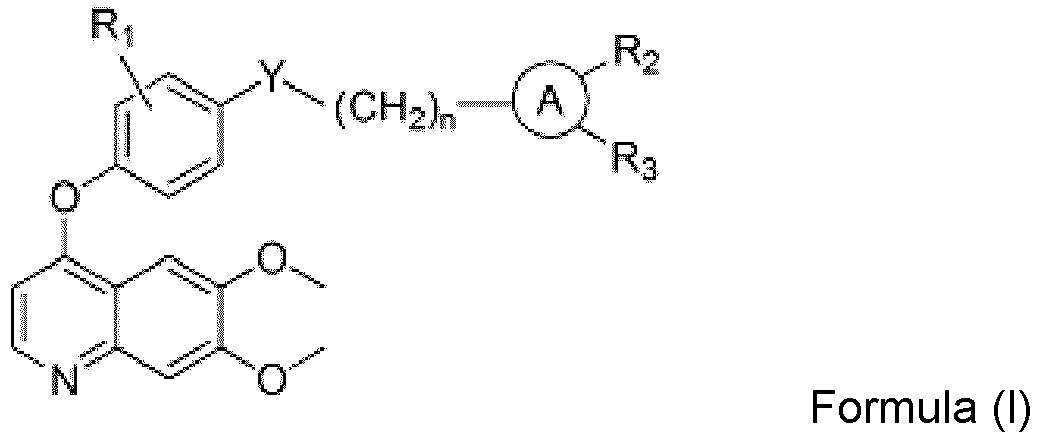
- wherein Y is selected from

- A is phenyl;
- n is 1;
- R1 is selected from hydrogen, halo, C1-6alkyl, C1-6haloalkyl, C1-6alkoxy and cyano; and either:
- R2 is selected from halo, C1-6alkyl, C1-6haloalkyl, and C1-6alkoxy, and
- R3 is selected from hydrogen, halo, C1-6alkyl, C1-6haloalkyl, and C1-6alkoxy; or
- R2 is selected from hydrogen, halo, C1-6alkyl, C1-6haloalkyl, and C1-6alkoxy, and
- R3 is selected from halo, C1-6alkyl, C1-6haloalkyl, and C1-6alkoxy; or
- R2 and R3 together form a phenyl or 5-membered heterocyclyl.
- Further preferably, R1 is selected from hydrogen, fluoro, chloro, methyl, ethyl, propyl, or cyano; and either:
- R2 is selected from fluoro, chloro, methyl, ethyl, propyl, trifluoromethyl, difluoromethyl, trifluoroethyl, methoxy, ethoxy, and propoxy, and
- R3 is selected from hydrogen, fluoro, chloro, methyl, ethyl, propyl, trifluoromethyl, difluoromethyl, trifluoroethyl, methoxy, ethoxy, and propoxy; or
- R2 is selected from hydrogen, fluoro, chloro, methyl, ethyl, propyl, trifluoromethyl, difluoromethyl, trifluoroethyl, methoxy, ethoxy, and propoxy, and
- R3 is selected from fluoro, chloro, methyl, ethyl, propyl, trifluoromethyl, difluoromethyl, trifluoroethyl, methoxy, ethoxy, and propoxy; or
- R2 and R3 together form a phenyl or dioxolane.
- In a preferred embodiment, the compound of the present invention is a compound of Formula (Ia), or a pharmaceutically acceptable salt, or solvate thereof:

- More preferably, wherein R1 is selected from hydrogen, fluoro, chloro, and methyl; and either:
- R2 is selected from fluoro, chloro, methyl, and trimethyl, and
- R3 is selected from hydrogen, fluoro, chloro, methyl, and trimethyl; or
- R2 is selected from hydrogen, fluoro, chloro, methyl, and trimethyl, and
- R3 is selected from fluoro, chloro, methyl, and trimethyl; or
- R2 and R3 together form a phenyl.
- In a preferred embodiment, the compound of the present invention is a compound of Table 1 as below or a pharmaceutically acceptable salt, or solvate thereof.
Table 1 No. Structure of Compound No. Structure of Compound 1 
2 
5 
6 
7 
8 
9 
10 
11 
12 
13 
14 
15 
16 
17 
18 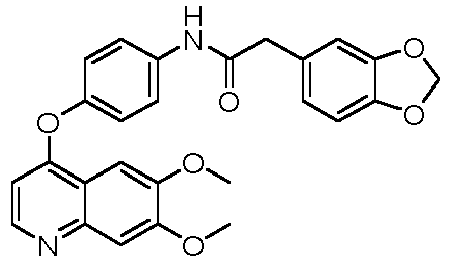
19 
20 
23 
24 
25 
26 
27 
36 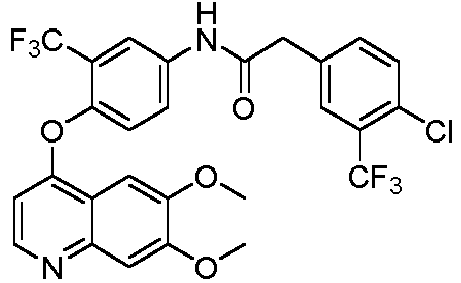
37 
38 
39 
40 
- Any combination of the groups described above for the various variables is contemplated herein. It is understood that substituents and substitution patterns on the compounds provided herein can be selected by one of ordinary skill in the art to provide compounds that are chemically stable and that can be synthesized by techniques known in the art, as well as those set forth herein.
- Described herein are novel kinase inhibitors. The pharmaceutically acceptable salts, and solvates of these compounds are also described herein.
- Compounds described herein may be formed as, and/or used as, pharmaceutically acceptable salts. The type of pharmaceutical acceptable salts, include, but are not limited to: (1) acid-addition salts, formed by reacting the free base form of the compound with a pharmaceutically acceptable inorganic acid such as hydrochloric acid, hydrobromic acid, sulfuric acid, nitric acid, phosphoric acid, metaphosphoric acid, and the like; or with an organic acid such as acetic acid, propionic acid, hexanoic acid, cyclopentanepropionic acid, glycolic acid, pyruvic acid, lactic acid, malonic acid, malic acid, citric acid, succinic acid, maleic acid, tartaric acid, fumaric acid, trifluoroacetic acid, benzoic acid, 3-(4-hydroxybenzoyl)benzoic acid, cinnamic acid, mandelic acid, methanesulfonic acid, ethanesulfonic acid, 1,2-ethanedisulfonic acid, 2-hydroxyethanesulfonic acid, benzenesulfonic acid, toluenesulfonic acid, 4-methylbicyclo-[2.2.2]oct-2-ene-1-carboxylic acid, 2-naphthalenesulfonic acid, tertiary butylacetic acid, glucoheptonic acid, 4,4'-methylenebis-(3-hydroxy-2-ene-1-carboxylic acid), 3-phenylpropionic acid, trimethylacetic acid, lauryl sulfuric acid, gluconic acid, glutamic acid, salicylic acid, hydroxynaphthoic acid, stearic acid, muconic acid, and the like; (2) base-addition salts formed when an acidic proton present in the parent compound either is replaced by a metal ion, e.g., an alkali metal ion (e.g. lithium, sodium, potassium), an alkaline earth ion (e.g. magnesium, or calcium), or an aluminum ion; or coordinates with an organic base or an inorganic base. Acceptable organic bases include ethanolamine, diethanolamine, triethanolamine, trimethylamine, N-methylglucamine, and the like. Acceptable inorganic bases include aluminum hydroxide, calcium hydroxide, potassium hydroxide, sodium carbonate, sodium hydroxide, and the like.
- The corresponding counterions of the pharmaceutically acceptable salts may be analyzed and identified using various methods including, but not limited to, ion exchange chromatography, ion chromatography, capillary electrophoresis, inductively coupled plasma, atomic absorption spectroscopy, mass spectrometry, or any combination thereof.
- The salts are recovered by using at least one of the following techniques: filtration, precipitation with a non-solvent followed by filtration, evaporation of the solvent, or, in the case of aqueous solutions, lyophilization.
- The screening and characterization of the pharmaceutically acceptable salts, polymorphs and/or solvates may be accomplished using a variety of techniques including, but not limited to, thermal analysis, x-ray diffraction, spectroscopy, microscopy, and elemental analysis. The various spectroscopic techniques used include, but are not limited to, Raman, FTIR, UVIS, and NMR (liquid and solid state). The various microscopy techniques include, but are not limited to, IR microscopy and Raman microscopy.
- The present application also provides a pharmaceutical composition comprising at least one compound of Formula (I), or a pharmaceutically acceptable salt, or solvate of said compound, and a pharmaceutically acceptable carrier or excipient, and optionally other therapeutic agents.
- In the course of treatment, it may be used alone or in combination with one or more other therapeutic agents according to the situation. The medicament comprising a compound of the invention may be administered to a patient through at least one of injection, oral, inhalation, rectal and transdermal administration. Other therapeutic agents may be selected from the following: immunosuppressants (e.g., tacrolimus, cyclosporin, rapamycin, methotrexate, cyclophosphamide, azathioprine, mercaptopurine, mycophenolate, or FTY720), glucocorticoids (e.g., prednisone, cortisone acetate, prednisolone, methylprednisolone, dexamethasone, betamethasone, triamcinolone, fluoxyprednisolone, beclometasone, fludrocortisone acetate, deoxycorticosterone acetate, aldosterone), non-steroidal anti-inflammatory drugs (e.g., salicylates, arylalkanoic acids, 2-arylpropionic acids, N-arylanthranilic acids, oxicams, coxibs, or sulphonanilides), allergy vaccines, antihistamines, antileukotrienes, β-agonists, theophylline, anticholinergics, or other selective kinase inhibitors (e.g., mTOR inhibitors, c-Met inhibitors) or her2 antibodies. In addition, the other therapeutic agents may also be Rapamycin, Crizotinib, Tamoxifen, Raloxifene, Anastrozole, Exemestane, Letrozole, Herceptin™ (Trastuzumab), Gleevec™ (Imatinib), Taxol™ (Paclitaxel), Cyclophosphamide, Lovastatin, Minosine, Cytarabine, 5-Fluorouracil (5-FU), Methotrexate (MTX), Taxotere™ (Docetaxel), Zoladex™ (Goserelin), Vincristine, Vinblastine, Nocodazole, Teniposide, Etoposide, Gemzar™ (Gemcitabine), Epothilone, Navelbine, Camptothecin, Daunonibicin, Dactinomycin, Mitoxantrone, Amsacrine, Doxorubicin (Adriamycin), Epirubicin or Idarubicin. Alternatively, other therapeutic agents may be cytokines such as G-CSF (Granulocyte-Colony Stimulating Factor). Alternatively, other therapeutic agents may be, CMF (Cyclophosphamide, Methotrexate and 5-Fluorouracil), CAF (Cyclophosphamide, Adriamycin and 5-Fluorouracil), AC (Adriamycin and Cyclophosphamide), FEC (5-Fluorouracil, Epirubicin and Cyclophosphamide), ACT or ATC (Adriamycin, Cyclophosphamide and Paclitaxel) or CMFP (Cyclophosphamide, Methotrexate, 5-Fluorouracil and Prednisone).
- In the embodiments of the invention, when a patient is treated in accordance with the invention, the amount of a given agent will vary depending upon factors such as the particular dosing regimen, the type of the disease or condition and its severity, the identity (e.g., weight) of the subject or host in need of treatment, but can be routinely determined in a manner known in the art according to the particular circumstances surrounding the case, including, e.g., the specific agent being administered, the route of administration, the condition being treated, and the subject or host being treated. In general, doses employed for adult human treatment will typically be in the range of 0.02-5000 mg per day, such as from about 1-1500 mg per day. The desired dose may conveniently be presented in a single dose or as divided doses administered simultaneously (or over a short period of time) or at appropriate intervals, for example as two, three, four or more sub-doses per day. It will be appreciated by those skilled in the art that, although the above dosage ranges are given, the specific effective amounts may be appropriately adjusted depending on the condition of the patient and the judgment of the practitioner.
- The compound of formula (I), or a pharmaceutically acceptable salt, or solvate thereof, or a pharmaceutical composition comprising the same may be used for inhibiting the activity of tyrosine kinase KIT (wild-type or various mutants or the combination thereof). The compound of formula (I), or a pharmaceutically acceptable salt, or solvate thereof, or a pharmaceutical composition thereof may be used for the treatment, prevention or amelioration of one or more diseases selected from the group consisting of: solid tumors (including benign or especially malignant types), especially sarcoma, Gastrointestinal Stromal Tumor (GIST), colorectal cancer, Acute Myeloblastic Leukemia (AML), Chronic Myelogenous Leukemia (CML), neoplasia, thyroid carcinoma, systemic mastocytosis, eosinophilia syndrome, fibrosis, lupus erythematosus, graft versus host disease, neurofibromatosis, pulmonary hypertension, Alzheimer's disease, seminoma, dysgerminoma, mast cell tumors, lung cancer, bronchial carcinoma, testicular intraepithelial neoplasia, melanoma, breast cancer, neuroblastoma, papillary/follicular thyroid carcinoma, malignant lymphoma, non-Hodgkin's lymphoma, multiple
endocrine neoplasia type 2, pheochromocytoma, thyroid carcinoma, parathyroid hyperplasia/adenoma, colon cancer, colorectal adenoma, ovarian cancer, prostate cancer, glioblastoma, brain tumor, malignant glioma, pancreatic cancer, malignant pleural endothelioma, hemangioblastoma, hemangioma, kidney cancer, liver cancer, adrenal carcinoma, bladder cancer, stomach cancer, rectal cancer, vaginal cancer, cervical cancer, endometrial cancer, multiple myeloma, neck and head tumors, as well as other proliferative conditions, or the like, or the combination thereof. It is especially preferred for the treatment of Gastrointestinal Stromal Tumor (GIST), colorectal cancer, Acute Myeloblastic Leukemia (AML), Chronic Myelogenous Leukemia (CML), thyroid carcinoma, or the like, or the combination thereof. - The compound of formula (I), or a pharmaceutically acceptable salt, or solvate thereof, or a pharmaceutical composition thereof may be used for the treatment, prevention or amelioration of autoimmune diseases selected from the group consisting of: arthritis, rheumatic arthritis, osteoarthritis, lupus, rheumatoid arthritis, inflammatory bowel disease, psoriatic arthritis, osteoarthritis, Still's disease, Juvenile arthritis, diabetes, myasthenia gravis, Hashimoto's thyroiditis, Ord's hyroiditis, Graves' disease, Sjögren's syndrome, multiple sclerosis, Guillain-Barré syndrome, acute disseminated encephalomyelitis, Addison's disease, Opsoclonus-Myoclonus-Ataxia, ankylosing spondylitis, antiphospholipid syndrome, aplastic anemia, autoimmune hepatitis, coeliac disease, Goodpasture's syndrome, idiopathic thrombocytopenic purpura, optic neuritis, scleroderma, primary biliary cirrhosis, Reiter's syndrome, Takayasu's arteritis, temporal arteritis, warm-type autoimmune hemolytic anemia, Wegener's granulomatosis, psoriasis, alopecia universalis, Behcet's disease, chronic fatigue, Familial dysautonomia, endometriosis, interstitial cystitis, neuromyotonia, scleroderma, vulvodynia or combination thereof.
- The compound of formula (I), or a pharmaceutically acceptable salt, or solvate thereof, or a pharmaceutical composition thereof may be preferably used for the treatment, prevention or amelioration of the following hematological malignancies: myeloma, acute lymphocytic leukemia, acute myeloblastic leukemia, acute promyelocytic leukemia, chronic lymphocytic leukemia, chronic myeloblastic leukemia, chronic neutrophilic leukemia, acute undifferentiated leukemia, anaplastic large-cell lymphoma, adult T-cell acute lymphoblastic leukemia, acute myeloblastic leukemia with trilineage myelodysplasia, mixed lineage leukemia, myelodysplasia syndromes, myeloproliferative disorders, multiple myeloma, myeloid sarcoma or a combination thereof.
- The present invention is more preferably useful in treating, preventing or ameliorating gastrointestinal stromal tumor, especially gastrointestinal stromal tumor associated with KIT mutation, more particularly gastrointestinal stromal tumor that is resistant to Imatinib and/or Suntinib caused by KIT mutation.
- Compounds of formula (I) may be synthesized using standard synthetic techniques known to those of skill in the art or using methods known in the art in combination with methods described herein. In additions, solvents, temperatures and other reaction conditions presented herein may vary according to those of skill in the art. As a further guide the following synthetic methods may also be utilized.
- The reactions can be employed in order to provide the compounds described herein or they may be used to synthesize fragments which are subsequently joined by the methods described herein and/or known in the art.
- In certain embodiments, provided herein are methods of making and methods of using tyrosine kinase inhibitor compounds described herein. In certain embodiments, compounds described herein can be synthesized using the following synthetic schemes. Compounds may be synthesized using methodologies analogous to those described below by the use of appropriate alternative starting materials.
- The starring materials used for the synthesis of the compounds described herein may be synthesized or can be obtained from commercial sources. The compounds described herein and other related compounds having different substituents can be synthesized using techniques and materials known to those of skill in the art. General methods for the preparation of compounds as disclosed herein may be derived from known reactions in the field, and the reactions may be modified by the use of appropriate reagents and conditions, as would be recognized by the skilled person, for the introduction of the various moieties into the molecules as provided herein.
- The products of the reactions may be isolated and purified, if desired, using conventional techniques, including, but not limited to, filtration, distillation, crystallization, chromatography and the like. Such products may be characterized using conventional means, including physical constants and spectral data.
- A non-limiting example of a synthetic approach for the preparation of a compound of formula (I) is shown in the following synthetic route.
-

- 4-((6,7-dimethoxyquinolin-4-yl)oxy)phenylamine (A2): to a round-bottom flask was added 4-hydroxyphenylamine (2.0 g), followed by dimethyl sulfoxide (30ml), and then by addition of sodium hydride (807 mg) dropwise in an ice bath. The reaction system was stirred for 30 min at room temperature. Next, 4-chloro-6,7-dimethoxyquinoline (4.1 g) was added, and the reaction system was allowed to react overnight at 90°C. After completion of the reaction, the system was added with water and filtered, with the solids subjected to washing with water and a small amount of methanol. The resultant brown solids were used directly in the next step.
- N-(4-((6,7-dimethoxyquinolin-4-yl)oxy)phenyl)-2-(4-methyl-3-(trifluoromethyl)phenyl)acetamide (1): to a round-bottom flask was added 4-((6,7-dimethoxyquinolin-4-yl)oxy)phenylamine (1 g), followed by N,N-dimethylformamide (10ml), HATU (1.92 g), 4-methyl-3-trifluoromethylphenylacetic acid (1.10 g) and N,N-diisopropylethylamine (0.87 g). The reaction system was stirred overnight at room temperature. After completion of the reaction, the system was added with water and extracted with ethyl acetate, with the organic phase subjected to drying over anhydrous sodium sulfate. The organic phase was filtered, the solvent was removed from the filtrate under reduced pressure, and the residue was purified via pressurized silica gel column chromatography to obtain the
Compound 1. LC/MS: M+H 497.1. -

- Synthesis of the compound of Example 2 was completed by using procedures similar to those of Example 1. MS(ESI) m/z(M+1)+: 517.11.
-

- Synthesis of the compound of Example 5 was completed by using procedures similar to those of Example 1. MS(ESI) m/z(M+1)+: 467.11.
-

- Synthesis of the compound of Example 6 was completed by using procedures similar to those of Example 1. MS(ESI) m/z(M+1)+: 517.11.
-

- Synthesis of the compound of Example 7 was completed by using procedures similar to those of Example 1. MS(ESI) m/z(M+1)+: 517.11.
-

- Synthesis of the compound of Example 8 was completed by using procedures similar to those of Example 1. MS(ESI) m/z(M+1)+: 483.15.
-

- Synthesis of the compound of Example 9 was completed by using procedures similar to those of Example 1. MS(ESI) m/z(M+1)+: 483.15.
-

- Synthesis of the compound of Example 10 was completed by using procedures similar to those of Example 1. MS(ESI) m/z(M+1)+: 475.18.
-

- Synthesis of the compound of Example 11 was completed by using procedures similar to those of Example 1. MS(ESI) m/z(M+1)+: 443.19.
-

- Synthesis of the compound of Example 12 was completed by using procedures similar to those of Example 1. MS(ESI) m/z(M+1)+: 451.14.
-

- Synthesis of the compound of Example 13 was completed by using procedures similar to those of Example 1. MS(ESI) m/z(M+1)+: 501.14.
-

- Synthesis of the compound of Example 14 was completed by using procedures similar to those of Example 1. MS(ESI) m/z(M+1)+: 451.14.
-

- Synthesis of the compound of Example 15 was completed by using procedures similar to those of Example 1. MS(ESI) m/z(M+1)+: 451.14.
-
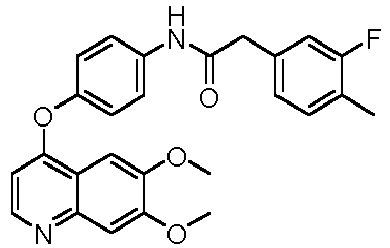
- Synthesis of the compound of Example 16 was completed by using procedures similar to those of Example 1. MS(ESI) m/z(M+1)+: 447.17.
-

- Synthesis of the compound of Example 17 was completed by using procedures similar to those of Example 1. MS(ESI) m/z(M+1)+: 483.08.
-

- Synthesis of the compound of Example 18 was completed by using procedures similar to those of Example 1. MS(ESI) m/z(M+1)+: 459.15.
-

- Synthesis of the compound of Example 19 was completed by using procedures similar to those of Example 1. MS(ESI) m/z(M+1)+: 465.18.
-

- Synthesis of the compound of Example 20 was completed by using procedures similar to those of Example 1. MS(ESI) m/z(M+1)+: 433.15.
-

- Synthesis of the compound of Example 23 was completed by using procedures similar to those of Example 1. MS(ESI) m/z(M+1)+: 551.07.
-

- Synthesis of the compound of Example 24 was completed by using procedures similar to those of Example 1. MS(ESI) m/z(M+1)+: 535.10.
-

- Synthesis of the compound of Example 25 was completed by using procedures similar to those of Example 1. MS(ESI) m/z(M+1)+: 535.10.
-

- Synthesis of the compound of Example 26 was completed by using procedures similar to those of Example 1. MS(ESI) m/z(M+1)+: 531.12.
-

- Synthesis of the compound of Example 27 was completed by using procedures similar to those of Example 1. MS(ESI) m/z(M+1)+: 531.12.
-

- Synthesis of the compound of Example 36 was completed by using procedures similar to those of Example 1. MS(ESI) m/z(M+1)+: 585.10.
-

- Synthesis of the compound of Example 37 was completed by using procedures similar to those of Example 1. MS(ESI) m/z(M+1)+: 547.12.
-

- Synthesis of the compound of Example 38 was completed by using procedures similar to those of Example 1. MS(ESI) m/z(M+1)+: 551.08.
-

- Synthesis of the compound of Example 39 was completed by using procedures similar to those of Example 1. MS(ESI) m/z(M+1)+: 542.11.
-

- Synthesis of the compound of Example 40 was completed by using procedures similar to those of Example 1. MS(ESI) m/z(M+1)+: 483.15.
-

- 6,7-dimethoxy-4-((5-nitropyridin-2-yl)oxy)quinoline (D2): to a round-bottom flask was added 4-hydroxy-6,7-dimethoxyquinoline (0.5 g), followed by addition of acetonitrile (10ml), and then by cesium carbonate (0.87 g). The mixture was stirred under room temperature for 5 minutes. Then 2-chloro-5-nitropyridine (0.42 g) was added and stirring was conducted overnight at room temperature. Filtering was conducted after completion of the reaction, the filtrate was concentrated and the residue was purified via pressurized silica gel column chromatography to obtain Compound D2.
- 6-((6,7-dimethoxyquinolin-4-yl)oxy)pyridin-3-amine (D3): to a round-bottom flask was added 6,7-dimethoxy-4-((5-nitropyridin-2-yl)oxy)quinoline (0.42 g), and followed by addition of methanol (10ml), palladium/carbon (0.11 g). Reaction was allowed to occur overnight under hydrogen atmosphere. Filtering was conducted after completion of the reaction, the filtrate was concentrated and the residue was purified via pressurized silica gel column chromatography to obtain Compound D3. LC/MS: M+H 298.11.
- N-(6-((6,7-dimethoxyquinolin-4-yl)oxy)pyridin-3-yl)-2-phenylacetamide (Comparative Example Compound 1): to a round-bottom flask was added 6-((6,7-dimethoxyquinolin-4-yl)oxy)pyridin-3-amine (50 mg), followed by addition of N,N-dimethylformamide (2ml), HATU (96 mg), phenylacetic acid (34 mg) and N,N-diisopropylethylamine (66 mg). The reaction system was stirred overnight at room temperature. After completion of the reaction, the system was added with water and extracted with ethyl acetate, with the organic phase subjected to drying over anhydrous sodium sulfate. The organic phase was filtered, the solvent was removed from the filtrate under reduced pressure, and the residue was purified via pressurized silica gel column chromatography to obtain
Comparative Example Compound 1. LC/MS: M+H 416.16. -

- Synthesis of the compound of Comparative Example 2 was completed by using procedures similar to those of Comparative Example 1. MS(ESI) m/z(M+1)+: 518.10.
-

- Methyl 4-((6,7-dimethoxyquinolin-4-yl)oxy)benzoate (E2): to a round-bottom flask was added 4-chloro-6,7-dimethoxyquinoline (1.0 g) and methyl 4-hydroxybenzoate (0.68 g), and the mixture was stirred overnight at 145°C. After completion of the reaction, the mixture was added with saturated sodium bicarbonate solution, extracted with ethyl acetate, and the organic phase was dried over anhydrous sodium sulfate and filtered. The filtrate was concentrated and the residue was purified via pressurized silica gel column chromatography to obtain Compound E2.
- 4-((6,7-dimethoxyquinolin-4-yl)oxy)benzoic acid (E3): to a round-bottom flask was added methyl 4-((6,7-dimethoxyquinolin-4-yl)oxy)benzoate (0.5 g), methanol/ tetrahydrofuran (5:1, 10ml), and lithium hydroxide (0.18 g). Reaction was allowed to occur overnight at room temperature. Concentration was conducted after completion of the reaction, and pH was adjusted to about 5 with concentrated hydrochloric acid. Filtering was conducted and the filter cake was washed with water to obtain the Compound E3. LC/MS: M+H 326.10.
- N-(3-(trifluoromethyl)benzyl)-4-((6,7-dimethoxyquinolin-4-yl)oxy)benzamide (Comparative Example Compound 3): to a round-bottom flask was added 4-((6,7-dimethoxyquinolin-4-yl)oxy)benzoic acid (20 mg), and followed by addition of N,N-dimethylformamide (2 ml), 3-trifluoromethylbenzylamine (13 mg), EDCI (17 mg), HOBT (12 mg) and triethylamine (12 mg). The reaction system was stirred overnight at room temperature. After completion of the reaction, the system was added with water and extracted with ethyl acetate, with the organic phase subjected to drying over anhydrous sodium sulfate. The organic phase was filtered and the solvent was removed from the filtrate under reduced pressure. The residue was purified via pressurized silica gel column chromatography to obtain
Comparative Example Compound 3. LC/MS: M+H 483.15. -

- Synthesis of the compound of Comparative Example 4 was completed by using procedures similar to those of Example 1. MS(ESI) m/z(M+1)+: 446.17.
- Compounds as provided herein were further evaluated for their inhibitory effects on proliferation of cancer cells by testing their effects on growth of cancer cells. In this example the following cells were used: primary mouse B cells BaF3 (purchased from ATCC), GIST-T1 cells of the human gastrointestinal stromal tumor cell line (expressing wild-type KIT gene) (purchased from Cosmo Bio Co., Ltd. (Japan)). The present lab further constructed and used the following: mouse Tel-Kit-BaF3 (stably expressing KIT wild-type kinase), mouse Tel-Kit/T670I-BaF3 (stably expressing KIT T670I mutant kinase), mouse Tel-Kit/V559A-BaF3 (stably expressing KIT V559A mutant kinase), mouse Tel-Kit/V559D-BaF3 (stably expressing KIT V559D mutant kinase), mouse Tel-Kit/V559G-BaF3 (stably expressing KIT V559G mutant kinase), mouse Tel-Kit/V560D-BaF3 (stably expressing KIT V560D mutant kinase), mouse Tel-Kit/L576P-BaF3 (stably expressing KIT L576P mutant kinase), mouse Tel-Kit/V654A-BaF3 (stably expressing KIT V654A mutant kinase), mouse Tel-Kit/V654A/V559D-BaF3 (stably expressing KIT V654A V559D mutant kinase), mouse Tel-Kit/T670E-BaF3 (stably expressing KIT T670E mutant kinase), mouse Tel-Kit/T670I/V559D-BaF3 (stably expressing KIT T670I V559D mutant kinase), mouse Tel-Kit/S709F-BaF3 (stably expressing KIT S709F mutant kinase), mouse Tel-Kit/D816E-BaF3 (stably expressing KIT D816E mutant kinase), mouse Tel-Kit/D816H-BaF3 (stably expressing KIT D816H mutant kinase), mouse Tel-Kit/D820E-BaF3 (stably expressing KIT D820E mutant kinase), mouse Tel-Kit/D820G-BaF3 (stably expressing KIT D820G mutant kinase), mouse Tel-Kit/D820Y-BaF3 (stably expressing KIT D820Y mutant kinase), mouse Tel-Kit/N822K-BaF3 (stably expressing KIT N822K mutant kinase), mouse Tel-Kit/Y823D-BaF3 (stably expressing KIT Y823D mutant kinase), mouse Tel-Kit/A829P-BaF3 (stably expressing KIT A829P mutant kinase), GIST-T1-T670I cells of the human gastrointestinal stromal tumor cell line (expressing KIT-T670I mutant gene). The above cell lines were constructed by: amplifying respectively the sequences of human KIT and various mutant kinase regions of KIT via PCR, inserting the fragments respectively into MSCV-Puro vectors having a N-terminal TEL fragment and/or a NPM fragment and/or a TPR fragment (purchased from Clontech), trasfecting mouse BaF3 cells with the vectors by means of retrovirus to obtain stably transfected cells, removing the growth factor IL-3, and thereby eventually obtaining cell lines that depend on the transferred protein KIT or various mutants of KIT. The GIST-T1-T670I (expressing C-KIT-T670I mutant gene) cell line was constructed by our laboratory as follows: designing sgRNA that targeted a region around T670 of the KIT gene with CRISPR Design Tool (website: crispr.mit.edu, Zhang Feng Lab), cloning it into pSpCas9(BB)-2A-Puro vector; co-transfecting cells with the resultant vector and a single-stranded oligonucleotide having T670I site mutation that is near to T670, subjecting the resultant to antibiotics screening, followed by dilution, and monocellular culture in a 96-well plate; validating the site T670 of the cells by sequence detection via Sanger sequencing.
- In the example the above cells were added with the compounds of the present invention at different concentrations (0.000508 µM, 0.00152 µM, 0.00457 µM, 0.0137 µM, 0.0411 µM, 0.123 µM, 0.370 µM, 1.11 µM, 3.33 µM, 10 µM), imatinib (Imatinib, MedChem Express, China) and sunitinib (Sunitinib, MedChem Express, China) as prior art compounds, as well as Comparative Example Compounds 1-4, and incubated for 72 hours. The cells after incubation were detected using CCK-8 (purchased from MedChem Express, Shanghai, China) cell viability assay kit (CCK-8 may be reduced by dehydrogenase in living cells to a highly water-soluble yellow formazan product, and the amount of the resultant formazan is proportional to the number of living cells), the number of living cells were quantified with a microplate reader, and GI50 of the compounds and the control compounds were calculated (the results shown in Table 2 and Table 3).
- The experimental results in Table 2 showed that, the compounds of the present invention exhibited certain inhibitory effects against both wild-type KIT and mutant KIT-T670I. As to Comparative Example Compounds 1 and 2, the structures of which were similar to the compounds of the preset invention but differed in that the phenyl ring in the middle of the compound backbone was substituted with a pyridine ring, it was found after testing that the Comparative Example Compounds 1 and 2 exhibited no significant inhibitory effects against wild-type KIT and mutant KIT-T670I. When the positions of the amino and the carbonyl in the backbone of the compound are changed, e.g.,
Comparative Example Compound 3, the activity against KIT and KIT-T670I substantially vanished.Comparative Example Compound 4, which contained a quinazoline backbone instead of the quinoline backbone of the present invention compounds, exhibited certain inhibitory activity but lower than that of the present invention compounds against cKIT and cKIT-T670I, and also a weaker selectivity against BaF3. In contrast, the present invention compounds exhibited significant selective inhibition against wild-type KIT and mutant KIT-T670I relative to parent BaF3 cells, indicating that the present invention compounds had strong inhibitory effects to the target cKIT and the T670I mutant. - Table 3 showed that
Compound 1 andCompound 2 exhibited a strong inhibitory effect on KIT mutant cells which exhibited imitinib resistance and/or sunitinib resistance, indicating that the compounds of the present invention were useful in treating KIT mutation-caused diseases that are resistant to imitinib and/or sunitinib. According to the tests on the GIST-T1 (a gastrointestinal stromal tumor cell line) and on the GIST-T1-T670I cell lines (constructed by our laboratory, having mutation that caused resistance to imaitinib), it was found that, the compounds of the present invention not only inhibited strong inhibitory effects against gastrointestinal stromal tumor cells that were sensitive to imatinib, but also strong inhibitory effects against GIST-T1-T670I which were resistant to imatinib. It demonstrated that the compounds of the present invention may be useful in treating gastrointestinal stromal tumor having KIT mutations.Table 2 GI50/µM BaF3 TEL-KIT-BaF3 TEL-KIT/T670I-BaF3 Example 1 7.26 0.017 0.014 Example 2 5.97 0.001 0.004 Example 8 1.89 0.02 0.001 Example 9 2.16 0.022 0.011 Example 11 6.42 0.027 0.015 Example 13 1.03 0.024 0.013 Example 24 3.21 0.049 0.018 Example 38 9.45 0.078 0.056 Comparative Example 1 >10 >10 >10 Comparative Example 2 7.1 >10 9.93 Comparative Example 3 10 2.35 4.61 Comparative Example 4 3.12 0.183 0.844 Table 3 GI50/µM Imatinib Sunitinib Compound 1 Compound 2 TEL-KIT/V559A-BaF3 0.905 0.02 0.016 0.021 TEL-KIT/V559D-BaF3 0.01 0.001 0.004 0.006 TEL-KIT/V559G-BaF3 0.008 0.004 <0.0003 <0.0003 TEL-KIT/V560D-BaF3 0.003 0.035 0.005 0.004 TEL-KIT/L576P-BaF3 0.085 0.006 0.002 0.001 TEL-KIT/V654A/V559D-BaF3 0.608 0.019 0.039 0.042 TEL-KIT/V654A-BaF3 1.41 0.005 0.11 0.32 TEL-KIT/T670E-BaF3 4.08 0.089 0.053 0.071 TEL-KIT/T670I-BaF3 >10 0.021 0.014 0.004 TEL-KIT/T670I/V559D-BaF3 >10 0.012 0.048 0.045 TEL-KIT/S709F-BaF3 0.115 0.028 0.011 0.017 TEL-KIT/D816E-BaF3 0.174 0.059 0.009 0.016 TEL-KIT/D816H-BaF3 0.651 0.315 0.058 0.097 TEL-KIT/D820E-BaF3 0.035 0.093 0.005 0.001 TEL-KIT/D820G-BaF3 0.337 0.389 0.009 0.009 TEL-KIT/D820Y-BaF3 0.435 0.172 0.006 0.003 TEL-KIT/N822K-BaF3 1.47 0.384 0.069 0.026 TEL-KIT/Y823D-BaF3 5.87 0.704 0.015 0.035 TEL-KIT/A829P-BaF3 0.58 0.18 0.008 0.022 GIST-T1 0.015 0.011 0.005 0.006 GIST-T1/T670I >10 0.004 0.016 0.011 - In this
example Compound 1 andCompound 2 were respectively tested in TEL-cKIT/T670I-BaF3, TEL-cKIT/Y823D-BaF3, TEL-cKIT/D820G-BaF3 and GIST-T1-T670I mouse models. - Experimental protocols were as follows.
- (1) Bal b/c female mice aged 4-6 weeks were purchased from Beijing Weitong Lihua Laboratory Animal Co., Ltd., and the mice were raised in an SPF laboratory. The drinking water and padding were sterilized by autoclaving. All operations on mice were conducted under aseptic conditions.
- (2) About 5×10⁶ TEL-cKIT/T670I-BaF3, TEL-cKIT/Y823D-BaF3, TEL-cKIT/D820G-BaF3 or GIST-T1-T670I cells were respectively injected subcutaneously onto the left back of all mice on
Day 0. - (3) From
Day 6, for the TEL-cKIT/T670I-BaF3 mouse model the corresponding mice were administrated orally every day with methylcellulose (HKI) as the vehicle (5 mice); withCompound 1 andCompound 2 at a dosage of 10 mg/kg, 20 mg/kg, 40 mg/kg, 100 mg/kg mouse weight (5 mice in each group); and with Sunitnib (purchased from MedChemExpress, China) at a dosage of 40 mg/kg mouse weight (5 mice). Fromday 6, for the TEL-cKIT/Y823D-BaF3 and TEL-cKIT/D820G-BaF3 mouse models the corresponding mice were administrated orally every day with methylcellulose (HKI) as the vehicle (5 mice); withCompound 1 andCompound 2 at a dosage of 40 mg/kg, 80 mg/kg mouse weight (5 mice in each group); and with Sunitnib (purchased from MedChemExpress, China) at a dosage of 40 mg/kg mouse weight (5 mice). From day 15, for the GIST-T1-T670I mouse model the corresponding mice were administrated orally every day with methylcellulose (HKI) as the vehicle (5 mice); withCompound 1 andCompound 2 at a dosage of 20 mg/kg, 40 mg/kg, 80mg/kg mouse weight (5 mice in each group); and with Sunitnib at a dosage of 40 mg/kg mouse weight (5 mice). - (4) From day 6 (TEL-cKIT/T670I-BaF3, TEL-cKIT/Y823D-BaF3, TEL-cKIT/D820G-BaF3 mouse model) and From day 15 (GIST-T1-T670I mouse model), respectively, the length / width of the subcutaneous tumor were measured with a vernier caliper every day and the body weight of the mouse was recorded every day so as to determine the effects of
Compound 1 andCompound 2 on the body weight and tumor size of the mice, respectively. - (5) The mice were sacrificed on
Day 11 after administration for the TEL-cKIT/T670I-BaF3 mouse model, onDay 9 after administration for the TEL-cKIT/Y823D-BaF3 and TEL-cKIT/D820G-BaF3 mouse models, and onDay 28 after administration for the GIST-T1-T670I mouse model. The subcutaneous tumors were taken out, and the tumors were weighed and compared. - (6) The growth trend of subcutaneous tumors was calculated and the tumor size was calculated according to: length × width × width /2 mm3.
- Experimental results were shown in
Figures 1a-1c ,2a-2c ,3a-3c , and4a-4c . In the mouse tumor models of TEL-cKIT/T670I-BaF3, TEL-cKIT/Y823D-BaF3, TEL-cKIT/D820G-BaF3 and GIST-T1-T670I,Compound 1 andCompound 2 showed excellent inhibitory effects against tumor in mice at a dosage of 40 mg/kg, andCompound 1 andCompound 2 exhibited more significant inhibitory effects against tumor in mice as the days of administration increased, especially, the tumor inhibition rate were all 80% or more whenCompound 2 was administrated at 40 mg/kg.Compound 1 andCompound 2 can effectively inhibit the growth of tumor in mice without significant influence on mice weight, suggesting thatCompound 1 andCompound 2 may be applicable for administration in animals. In addition, the results in the TEL-cKIT/Y823D-BaF3 and TEL-cKIT/D820G-BaF3 models also confirmed thatCompound 1 andCompound 2 of the present invention have potential therapeutical effects against diseases caused by KIT mutation that is resistant to Suntinib. Therefore,Compound 1 andCompound 2 may be used to treat gastrointestinal stromal tumor associated with KIT mutation. - The present invention provides a selective KIT kinase inhibitor, which may be useful in inhibiting the activity of wild-type and/or mutant KIT kinase, and also useful in treating, preventing or ameliorating diseases, disorders or conditions that are modulated or otherwise affected by kinase activity of wild-type KIT and/or mutant KIT or in which kinase activity of wild-type KIT and/or mutant KIT is implicated. Thus, the compound of the present invention may be prepared into corresponding medicaments and has industrial applicability.
Claims (9)
- A compound of Formula (I), or a pharmaceutically acceptable salt, or solvate thereof:
 wherein Y is
 A is phenyl;n is 1;R1 is selected from hydrogen, halo, C1-6alkyl, C1-6haloalkyl, C1-6alkoxy and cyano;and either:- R2 is selected from halo, C1-6alkyl, C1-6haloalkyl, and C1-6alkoxy, and- R3 is selected from hydrogen, halo, C1-6alkyl, C1-6haloalkyl, and C1-6alkoxy; or- R2 is selected from hydrogen, halo, C1-6alkyl, C1-6haloalkyl, and C1-6alkoxy, and- R3 is selected from halo, C1-6alkyl, C1-6haloalkyl, and C1-6alkoxy; or- R2 and R3 together form a phenyl or 5-membered heterocyclyl.
 - The compound of Formula (I), or a pharmaceutically acceptable salt, or solvate thereof of claim 1, wherein R1 is selected from hydrogen, fluoro, chloro, methyl, ethyl, propyl, or cyano; each of R2 and R3 is independently selected from fluoro, chloro, methyl, ethyl, propyl, trifluoromethyl, difluoromethyl, trifluoroethyl, methoxy, ethoxy, propoxy, or R2 and R3 together form a phenyl or dioxolane.
- The compound of Formula (I), or a pharmaceutically acceptable salt, or solvate thereof of claim 1, wherein the compound of Formula (I) is a compound of Formula (Ia):
 - R2 is selected from fluoro, chloro, methyl, and trimethyl, and- R3 is selected from hydrogen, fluoro, chloro, methyl, and trimethyl; or- R2 is selected from hydrogen, fluoro, chloro, methyl, and trimethyl, and R3 is selected from fluoro, chloro, methyl, and trimethyl; or- R2 and R3 together form a phenyl.
 - The compound of claim 1, selected from the compounds listed below or a pharmaceutically acceptable salt, or solvate thereof:
1 
2 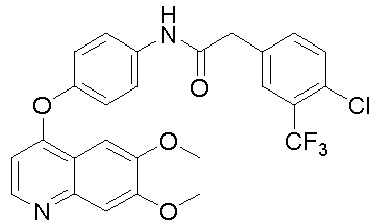
5 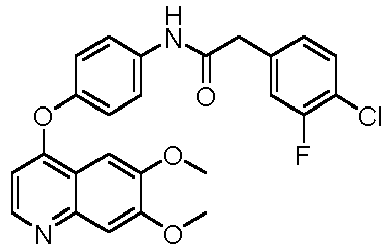
6 
7 
8 
9 
10 
11 
12 
13 
14 
15 
16 
17 
18 
19 
20 
23 
24 
25 
26 
27 
36 
37 
38 
39 
40 
- A pharmaceutical composition, comprising the compound or the pharmaceutically acceptable salt, or solvate thereof according to any one of claims 1-4 and a pharmaceutically acceptable carrier or excipient as well as optionally other therapeutic agents.
- The compound or the pharmaceutically acceptable salt, or solvate thereof according to any one of claims 1-4 for use in treatment, prevention or amelioration of diseases, disorders or conditions selected from the following proliferative diseases: solid tumors, sarcoma, gastrointestinal stromal tumor, colorectal cancer, acute myeloblastic leukemia, chronic myelogenous leukemia, thyroid carcinoma, systemic mastocytosis, eosinophilia syndrome, fibrosis, lupus erythematosus, graft versus host disease, neurofibromatosis, pulmonary hypertension, Alzheimer's disease, seminoma, dysgerminoma, mast cell tumors, lung cancer, bronchial carcinoma, testicular intraepithelial neoplasia, melanoma, breast cancer, neuroblastoma, papillary/follicular thyroid carcinoma, malignant lymphoma, non-Hodgkin's lymphoma, multiple endocrine neoplasia type 2, pheochromocytoma, thyroid carcinoma, parathyroid hyperplasia/adenoma, colon cancer, colorectal adenoma, ovarian cancer, prostate cancer, glioblastoma, brain tumor, malignant glioma, pancreatic cancer, malignant pleural endothelioma, hemangioblastoma, hemangioma, kidney cancer, liver cancer, adrenal carcinoma, bladder cancer, stomach cancer, rectal cancer, vaginal cancer, cervical cancer, endometrial cancer, multiple myeloma, neck and head tumors, neoplasia or a combination thereof.
- The compound or the pharmaceutically acceptable salt, or solvate thereof according to any one of claims 1-4 for use in treatment, prevention or amelioration of diseases, disorders or conditions selected from the following autoimmune diseases: arthritis, rheumatic arthritis, osteoarthritis, lupus, rheumatoid arthritis, inflammatory bowel disease, psoriatic arthritis, osteoarthritis, Still's disease, Juvenile arthritis, diabetes, myasthenia gravis, Hashimoto's thyroiditis, Ord's hyroiditis, Graves' disease, Sjögren's syndrome, multiple sclerosis, Guillain-Barré syndrome, acute disseminated encephalomyelitis, Addison's disease, Opsoclonus-Myoclonus-Ataxia, ankylosing spondylitis, antiphospholipid syndrome, aplastic anemia, autoimmune hepatitis, coeliac disease, Goodpasture's syndrome, idiopathic thrombocytopenic purpura, optic neuritis, scleroderma, primary biliary cirrhosis, Reiter's syndrome, Takayasu's arteritis, temporal arteritis, warm-type autoimmune hemolytic anemia, Wegener's granulomatosis, psoriasis, alopecia universalis, Behcet's disease, chronic fatigue, Familial dysautonomia, endometriosis, interstitial cystitis, neuromyotonia, scleroderma, vulvodynia or a combination thereof.
- The compound or the pharmaceutically acceptable salt, or solvate thereof according to any one of claims 1-4 for use in treatment, prevention or amelioration of diseases, disorders or conditions selected from the following hematological malignancies: myeloma, acute lymphocytic leukemia, acute myeloblastic leukemia, acute promyelocytic leukemia, chronic lymphocytic leukemia, chronic myeloblastic leukemia, chronic neutrophilic leukemia, acute undifferentiated leukemia, anaplastic large-cell lymphoma, adult T-cell acute lymphoblastic leukemia, acute myeloblastic leukemia with trilineage myelodysplasia, mixed lineage leukemia, myelodysplasia syndromes, myeloproliferative disorders, multiple myeloma, myeloid sarcoma or a combination thereof.
- The compound or the pharmaceutically acceptable salt, or solvate thereof for use according to claim 6, wherein the diseases, disorders or conditions are gastrointestinal stromal tumor, preferably gastrointestinal stromal tumor associated with KIT mutation, more preferably gastrointestinal stromal tumor that is resistant to Imatinib and/or Suntinib caused by KIT mutation.
Applications Claiming Priority (2)
| Application Number | Priority Date | Filing Date | Title |
|---|---|---|---|
| CN201811520008.5A CN111303024B (en) | 2018-12-12 | 2018-12-12 | Quinoline-structured pan-KIT kinase inhibitor and application thereof |
| PCT/CN2018/122307 WO2020118753A1 (en) | 2018-12-12 | 2018-12-20 | Pan-kit kinase inhibitor having quinoline structure and application thereof |
Publications (4)
| Publication Number | Publication Date |
|---|---|
| EP3896059A1 EP3896059A1 (en) | 2021-10-20 |
| EP3896059A4 EP3896059A4 (en) | 2022-08-17 |
| EP3896059C0 EP3896059C0 (en) | 2024-01-10 |
| EP3896059B1 true EP3896059B1 (en) | 2024-01-10 |
Family
ID=71076146
Family Applications (1)
| Application Number | Title | Priority Date | Filing Date |
|---|---|---|---|
| EP18942754.5A Active EP3896059B1 (en) | 2018-12-12 | 2018-12-20 | Pan-kit kinase inhibitor having quinoline structure and application thereof |
Country Status (10)
| Country | Link |
|---|---|
| US (1) | US12404244B2 (en) |
| EP (1) | EP3896059B1 (en) |
| JP (1) | JP7330542B2 (en) |
| KR (1) | KR102682516B1 (en) |
| CN (1) | CN111303024B (en) |
| AU (1) | AU2018453128B2 (en) |
| CA (1) | CA3122128C (en) |
| ES (1) | ES2971357T3 (en) |
| MX (1) | MX2021006876A (en) |
| WO (1) | WO2020118753A1 (en) |
Families Citing this family (1)
| Publication number | Priority date | Publication date | Assignee | Title |
|---|---|---|---|---|
| CN116763787A (en) * | 2022-03-08 | 2023-09-19 | 安徽中科拓苒药物科学研究有限公司 | New application of quinoline compound |
Family Cites Families (14)
| Publication number | Priority date | Publication date | Assignee | Title |
|---|---|---|---|---|
| GB9510757D0 (en) * | 1994-09-19 | 1995-07-19 | Wellcome Found | Therapeuticaly active compounds |
| WO1997017329A1 (en) | 1995-11-07 | 1997-05-15 | Kirin Beer Kabushiki Kaisha | Quinoline derivatives and quinazoline derivatives inhibiting autophosphorylation of growth factor receptor originating in platelet and pharmaceutical compositions containing the same |
| CA2361057C (en) * | 1999-01-22 | 2010-04-06 | Kazuo Kubo | Quinoline derivatives and quinazoline derivatives |
| SK3822002A3 (en) | 1999-09-21 | 2002-10-08 | Astrazeneca Ab | Quinazoline derivatives, process for the preparation thereof and their use |
| US7135466B2 (en) * | 1999-12-24 | 2006-11-14 | Kirin Beer Kabushiki Kaisha | Quinoline and quinazoline derivatives and drugs containing the same |
| EP1566379A4 (en) * | 2002-10-29 | 2005-11-09 | Kirin Brewery | QUINOLINE AND QUINAZOLINE DERIVATIVES INHIBITING THE AUTOPHOSPHORYLATION OF FLT3 AND MEDICAL COMPOSITIONS CONTAINING SAME |
| CA2744997A1 (en) * | 2003-09-26 | 2005-04-07 | Exelixis, Inc. | C-met modulators and method of use |
| JP2008537748A (en) | 2005-04-06 | 2008-09-25 | エクセリクシス、インコーポレイテッド | c-Met Modulator and Method of Use |
| JO2787B1 (en) * | 2005-04-27 | 2014-03-15 | امجين إنك, | Substituted Amid derivatives & methods of use |
| EP1964577B1 (en) * | 2005-05-05 | 2016-04-13 | GlaxoSmithKline Intellectual Property Development Limited | Alpha aminoacid ester-drug conjugates hydrolysable by carboxylesterase |
| GB0509227D0 (en) | 2005-05-05 | 2005-06-15 | Chroma Therapeutics Ltd | Intracellular enzyme inhibitors |
| US20110053931A1 (en) * | 2006-06-08 | 2011-03-03 | John Gaudino | Quinoline compounds and methods of use |
| AU2009246263B2 (en) * | 2008-05-14 | 2014-08-21 | Amgen Inc. | Combinations VEGF(R) inhibitors and hepatocyte growth factor (c-Met) inhibitors for the treatment of cancer |
| CN103405429A (en) * | 2013-08-22 | 2013-11-27 | 中国药科大学 | VEGFR-2 (Vascular Endothelial Growth Factor Receptor-2) inhibitors and use thereof |
-
2018
- 2018-12-12 CN CN201811520008.5A patent/CN111303024B/en active Active
- 2018-12-20 ES ES18942754T patent/ES2971357T3/en active Active
- 2018-12-20 US US17/312,667 patent/US12404244B2/en active Active
- 2018-12-20 KR KR1020217021858A patent/KR102682516B1/en active Active
- 2018-12-20 EP EP18942754.5A patent/EP3896059B1/en active Active
- 2018-12-20 JP JP2021533277A patent/JP7330542B2/en active Active
- 2018-12-20 MX MX2021006876A patent/MX2021006876A/en unknown
- 2018-12-20 WO PCT/CN2018/122307 patent/WO2020118753A1/en not_active Ceased
- 2018-12-20 AU AU2018453128A patent/AU2018453128B2/en active Active
- 2018-12-20 CA CA3122128A patent/CA3122128C/en active Active
Also Published As
| Publication number | Publication date |
|---|---|
| AU2018453128A1 (en) | 2021-06-24 |
| ES2971357T3 (en) | 2024-06-04 |
| EP3896059A4 (en) | 2022-08-17 |
| KR20210102388A (en) | 2021-08-19 |
| US20220064117A1 (en) | 2022-03-03 |
| WO2020118753A1 (en) | 2020-06-18 |
| KR102682516B1 (en) | 2024-07-09 |
| CN111303024A (en) | 2020-06-19 |
| EP3896059C0 (en) | 2024-01-10 |
| EP3896059A1 (en) | 2021-10-20 |
| CA3122128A1 (en) | 2020-06-18 |
| AU2018453128B2 (en) | 2022-03-17 |
| US12404244B2 (en) | 2025-09-02 |
| CN111303024B (en) | 2023-03-28 |
| CA3122128C (en) | 2025-02-18 |
| JP7330542B2 (en) | 2023-08-22 |
| MX2021006876A (en) | 2021-07-02 |
| JP2022512358A (en) | 2022-02-03 |
Similar Documents
| Publication | Publication Date | Title |
|---|---|---|
| CN107286077B (en) | A selective C-KIT kinase inhibitor | |
| JP6270713B2 (en) | 1- (Allylmethyl) quinazoline-2,4 (1H, 3H) -dione as a PARP inhibitor and uses thereof | |
| CN104844566B (en) | A kind of kinase inhibitor of new structure | |
| HUE029275T2 (en) | Phthalazinone ketone derivative, preparation method thereof, and pharmaceutical use thereof | |
| JP7311918B2 (en) | Novel pan-RAF kinase inhibitor and use thereof | |
| CA3122128C (en) | Pan-kit kinase inhibitor having quinoline structure and application thereof | |
| CN109942544B (en) | Novel indazole derivative kinase inhibitor | |
| EP3878841B1 (en) | Indazole kinase inhibitor and use thereof | |
| CN113350347B (en) | Use of indazoles | |
| RU2789405C2 (en) | Pan-kit kinase inhibitor having quinoline structure and its use | |
| CN110283160B (en) | A PDGFR kinase inhibitor | |
| HK40052071B (en) | Pan-kit kinase inhibitor having quinoline structure and application thereof | |
| HK40052071A (en) | Pan-kit kinase inhibitor having quinoline structure and application thereof | |
| JP2024511012A (en) | Small molecules for the treatment of kinase-related diseases | |
| RU2792626C1 (en) | New pan-raf kinase inhibitor and applications thereof | |
| CN107805240A (en) | A kind of new PDGFR kinase inhibitors and application thereof | |
| EP4491181A1 (en) | Novel use of quinoline compound |
Legal Events
| Date | Code | Title | Description |
|---|---|---|---|
| STAA | Information on the status of an ep patent application or granted ep patent |
Free format text: STATUS: THE INTERNATIONAL PUBLICATION HAS BEEN MADE |
|
| PUAI | Public reference made under article 153(3) epc to a published international application that has entered the european phase |
Free format text: ORIGINAL CODE: 0009012 |
|
| STAA | Information on the status of an ep patent application or granted ep patent |
Free format text: STATUS: REQUEST FOR EXAMINATION WAS MADE |
|
| 17P | Request for examination filed |
Effective date: 20210623 |
|
| AK | Designated contracting states |
Kind code of ref document: A1 Designated state(s): AL AT BE BG CH CY CZ DE DK EE ES FI FR GB GR HR HU IE IS IT LI LT LU LV MC MK MT NL NO PL PT RO RS SE SI SK SM TR |
|
| REG | Reference to a national code |
Ref country code: HK Ref legal event code: DE Ref document number: 40052071 Country of ref document: HK |
|
| DAV | Request for validation of the european patent (deleted) | ||
| DAX | Request for extension of the european patent (deleted) | ||
| A4 | Supplementary search report drawn up and despatched |
Effective date: 20220720 |
|
| RIC1 | Information provided on ipc code assigned before grant |
Ipc: A61P 35/00 20060101ALI20220714BHEP Ipc: A61K 31/47 20060101ALI20220714BHEP Ipc: C07D 413/12 20060101ALI20220714BHEP Ipc: C07D 405/12 20060101ALI20220714BHEP Ipc: C07D 401/12 20060101ALI20220714BHEP Ipc: C07D 215/22 20060101AFI20220714BHEP |
|
| GRAP | Despatch of communication of intention to grant a patent |
Free format text: ORIGINAL CODE: EPIDOSNIGR1 |
|
| STAA | Information on the status of an ep patent application or granted ep patent |
Free format text: STATUS: GRANT OF PATENT IS INTENDED |
|
| RIC1 | Information provided on ipc code assigned before grant |
Ipc: A61P 35/00 20060101ALI20230809BHEP Ipc: A61K 31/47 20060101ALI20230809BHEP Ipc: C07D 413/12 20060101ALI20230809BHEP Ipc: C07D 405/12 20060101ALI20230809BHEP Ipc: C07D 401/12 20060101ALI20230809BHEP Ipc: C07D 215/22 20060101AFI20230809BHEP |
|
| INTG | Intention to grant announced |
Effective date: 20230906 |
|
| GRAS | Grant fee paid |
Free format text: ORIGINAL CODE: EPIDOSNIGR3 |
|
| GRAA | (expected) grant |
Free format text: ORIGINAL CODE: 0009210 |
|
| STAA | Information on the status of an ep patent application or granted ep patent |
Free format text: STATUS: THE PATENT HAS BEEN GRANTED |
|
| AK | Designated contracting states |
Kind code of ref document: B1 Designated state(s): AL AT BE BG CH CY CZ DE DK EE ES FI FR GB GR HR HU IE IS IT LI LT LU LV MC MK MT NL NO PL PT RO RS SE SI SK SM TR |
|
| REG | Reference to a national code |
Ref country code: GB Ref legal event code: FG4D |
|
| REG | Reference to a national code |
Ref country code: CH Ref legal event code: EP |
|
| REG | Reference to a national code |
Ref country code: DE Ref legal event code: R096 Ref document number: 602018064161 Country of ref document: DE |
|
| REG | Reference to a national code |
Ref country code: IE Ref legal event code: FG4D |
|
| U01 | Request for unitary effect filed |
Effective date: 20240124 |
|
| U07 | Unitary effect registered |
Designated state(s): AT BE BG DE DK EE FI FR IT LT LU LV MT NL PT SE SI Effective date: 20240202 |
|
| REG | Reference to a national code |
Ref country code: ES Ref legal event code: FG2A Ref document number: 2971357 Country of ref document: ES Kind code of ref document: T3 Effective date: 20240604 |
|
| PG25 | Lapsed in a contracting state [announced via postgrant information from national office to epo] |
Ref country code: IS Free format text: LAPSE BECAUSE OF FAILURE TO SUBMIT A TRANSLATION OF THE DESCRIPTION OR TO PAY THE FEE WITHIN THE PRESCRIBED TIME-LIMIT Effective date: 20240510 |
|
| PG25 | Lapsed in a contracting state [announced via postgrant information from national office to epo] |
Ref country code: GR Free format text: LAPSE BECAUSE OF FAILURE TO SUBMIT A TRANSLATION OF THE DESCRIPTION OR TO PAY THE FEE WITHIN THE PRESCRIBED TIME-LIMIT Effective date: 20240411 |
|
| PG25 | Lapsed in a contracting state [announced via postgrant information from national office to epo] |
Ref country code: HR Free format text: LAPSE BECAUSE OF FAILURE TO SUBMIT A TRANSLATION OF THE DESCRIPTION OR TO PAY THE FEE WITHIN THE PRESCRIBED TIME-LIMIT Effective date: 20240110 Ref country code: RS Free format text: LAPSE BECAUSE OF FAILURE TO SUBMIT A TRANSLATION OF THE DESCRIPTION OR TO PAY THE FEE WITHIN THE PRESCRIBED TIME-LIMIT Effective date: 20240410 |
|
| PG25 | Lapsed in a contracting state [announced via postgrant information from national office to epo] |
Ref country code: RS Free format text: LAPSE BECAUSE OF FAILURE TO SUBMIT A TRANSLATION OF THE DESCRIPTION OR TO PAY THE FEE WITHIN THE PRESCRIBED TIME-LIMIT Effective date: 20240410 Ref country code: NO Free format text: LAPSE BECAUSE OF FAILURE TO SUBMIT A TRANSLATION OF THE DESCRIPTION OR TO PAY THE FEE WITHIN THE PRESCRIBED TIME-LIMIT Effective date: 20240410 Ref country code: IS Free format text: LAPSE BECAUSE OF FAILURE TO SUBMIT A TRANSLATION OF THE DESCRIPTION OR TO PAY THE FEE WITHIN THE PRESCRIBED TIME-LIMIT Effective date: 20240510 Ref country code: HR Free format text: LAPSE BECAUSE OF FAILURE TO SUBMIT A TRANSLATION OF THE DESCRIPTION OR TO PAY THE FEE WITHIN THE PRESCRIBED TIME-LIMIT Effective date: 20240110 Ref country code: GR Free format text: LAPSE BECAUSE OF FAILURE TO SUBMIT A TRANSLATION OF THE DESCRIPTION OR TO PAY THE FEE WITHIN THE PRESCRIBED TIME-LIMIT Effective date: 20240411 |
|
| PG25 | Lapsed in a contracting state [announced via postgrant information from national office to epo] |
Ref country code: PL Free format text: LAPSE BECAUSE OF FAILURE TO SUBMIT A TRANSLATION OF THE DESCRIPTION OR TO PAY THE FEE WITHIN THE PRESCRIBED TIME-LIMIT Effective date: 20240110 |
|
| PG25 | Lapsed in a contracting state [announced via postgrant information from national office to epo] |
Ref country code: PL Free format text: LAPSE BECAUSE OF FAILURE TO SUBMIT A TRANSLATION OF THE DESCRIPTION OR TO PAY THE FEE WITHIN THE PRESCRIBED TIME-LIMIT Effective date: 20240110 |
|
| REG | Reference to a national code |
Ref country code: DE Ref legal event code: R097 Ref document number: 602018064161 Country of ref document: DE |
|
| PG25 | Lapsed in a contracting state [announced via postgrant information from national office to epo] |
Ref country code: SM Free format text: LAPSE BECAUSE OF FAILURE TO SUBMIT A TRANSLATION OF THE DESCRIPTION OR TO PAY THE FEE WITHIN THE PRESCRIBED TIME-LIMIT Effective date: 20240110 |
|
| PG25 | Lapsed in a contracting state [announced via postgrant information from national office to epo] |
Ref country code: CZ Free format text: LAPSE BECAUSE OF FAILURE TO SUBMIT A TRANSLATION OF THE DESCRIPTION OR TO PAY THE FEE WITHIN THE PRESCRIBED TIME-LIMIT Effective date: 20240110 |
|
| PG25 | Lapsed in a contracting state [announced via postgrant information from national office to epo] |
Ref country code: SK Free format text: LAPSE BECAUSE OF FAILURE TO SUBMIT A TRANSLATION OF THE DESCRIPTION OR TO PAY THE FEE WITHIN THE PRESCRIBED TIME-LIMIT Effective date: 20240110 |
|
| PG25 | Lapsed in a contracting state [announced via postgrant information from national office to epo] |
Ref country code: SM Free format text: LAPSE BECAUSE OF FAILURE TO SUBMIT A TRANSLATION OF THE DESCRIPTION OR TO PAY THE FEE WITHIN THE PRESCRIBED TIME-LIMIT Effective date: 20240110 Ref country code: SK Free format text: LAPSE BECAUSE OF FAILURE TO SUBMIT A TRANSLATION OF THE DESCRIPTION OR TO PAY THE FEE WITHIN THE PRESCRIBED TIME-LIMIT Effective date: 20240110 Ref country code: RO Free format text: LAPSE BECAUSE OF FAILURE TO SUBMIT A TRANSLATION OF THE DESCRIPTION OR TO PAY THE FEE WITHIN THE PRESCRIBED TIME-LIMIT Effective date: 20240110 Ref country code: CZ Free format text: LAPSE BECAUSE OF FAILURE TO SUBMIT A TRANSLATION OF THE DESCRIPTION OR TO PAY THE FEE WITHIN THE PRESCRIBED TIME-LIMIT Effective date: 20240110 |
|
| PLBE | No opposition filed within time limit |
Free format text: ORIGINAL CODE: 0009261 |
|
| STAA | Information on the status of an ep patent application or granted ep patent |
Free format text: STATUS: NO OPPOSITION FILED WITHIN TIME LIMIT |
|
| 26N | No opposition filed |
Effective date: 20241011 |
|
| U20 | Renewal fee for the european patent with unitary effect paid |
Year of fee payment: 7 Effective date: 20241119 |
|
| PG25 | Lapsed in a contracting state [announced via postgrant information from national office to epo] |
Ref country code: MC Free format text: LAPSE BECAUSE OF FAILURE TO SUBMIT A TRANSLATION OF THE DESCRIPTION OR TO PAY THE FEE WITHIN THE PRESCRIBED TIME-LIMIT Effective date: 20240110 |
|
| REG | Reference to a national code |
Ref country code: CH Ref legal event code: PL |
|
| PG25 | Lapsed in a contracting state [announced via postgrant information from national office to epo] |
Ref country code: CH Free format text: LAPSE BECAUSE OF NON-PAYMENT OF DUE FEES Effective date: 20241231 |
|
| PG25 | Lapsed in a contracting state [announced via postgrant information from national office to epo] |
Ref country code: IE Free format text: LAPSE BECAUSE OF NON-PAYMENT OF DUE FEES Effective date: 20241220 |
|
| U20 | Renewal fee for the european patent with unitary effect paid |
Year of fee payment: 8 Effective date: 20251124 |
|
| PGFP | Annual fee paid to national office [announced via postgrant information from national office to epo] |
Ref country code: GB Payment date: 20251027 Year of fee payment: 8 |
|
| PGFP | Annual fee paid to national office [announced via postgrant information from national office to epo] |
Ref country code: ES Payment date: 20260119 Year of fee payment: 8 |
|
| PG25 | Lapsed in a contracting state [announced via postgrant information from national office to epo] |
Ref country code: CY Free format text: LAPSE BECAUSE OF FAILURE TO SUBMIT A TRANSLATION OF THE DESCRIPTION OR TO PAY THE FEE WITHIN THE PRESCRIBED TIME-LIMIT Effective date: 20240110 |