EP3895372B1 - Using virtual blockchain protocols to implement a fair electronic exchange - Google Patents
Using virtual blockchain protocols to implement a fair electronic exchange Download PDFInfo
- Publication number
- EP3895372B1 EP3895372B1 EP19856488.2A EP19856488A EP3895372B1 EP 3895372 B1 EP3895372 B1 EP 3895372B1 EP 19856488 A EP19856488 A EP 19856488A EP 3895372 B1 EP3895372 B1 EP 3895372B1
- Authority
- EP
- European Patent Office
- Prior art keywords
- computer device
- data payload
- recipient
- sender
- blockchain
- Prior art date
- Legal status (The legal status is an assumption and is not a legal conclusion. Google has not performed a legal analysis and makes no representation as to the accuracy of the status listed.)
- Active
Links
Images
Classifications
-
- H—ELECTRICITY
- H04—ELECTRIC COMMUNICATION TECHNIQUE
- H04L—TRANSMISSION OF DIGITAL INFORMATION, e.g. TELEGRAPHIC COMMUNICATION
- H04L9/00—Cryptographic mechanisms or cryptographic arrangements for secret or secure communications; Network security protocols
- H04L9/06—Cryptographic mechanisms or cryptographic arrangements for secret or secure communications; Network security protocols the encryption apparatus using shift registers or memories for block-wise or stream coding, e.g. DES systems or RC4; Hash functions; Pseudorandom sequence generators
- H04L9/0618—Block ciphers, i.e. encrypting groups of characters of a plain text message using fixed encryption transformation
- H04L9/0637—Modes of operation, e.g. cipher block chaining [CBC], electronic codebook [ECB] or Galois/counter mode [GCM]
-
- H—ELECTRICITY
- H04—ELECTRIC COMMUNICATION TECHNIQUE
- H04L—TRANSMISSION OF DIGITAL INFORMATION, e.g. TELEGRAPHIC COMMUNICATION
- H04L9/00—Cryptographic mechanisms or cryptographic arrangements for secret or secure communications; Network security protocols
- H04L9/06—Cryptographic mechanisms or cryptographic arrangements for secret or secure communications; Network security protocols the encryption apparatus using shift registers or memories for block-wise or stream coding, e.g. DES systems or RC4; Hash functions; Pseudorandom sequence generators
- H04L9/0643—Hash functions, e.g. MD5, SHA, HMAC or f9 MAC
-
- H—ELECTRICITY
- H04—ELECTRIC COMMUNICATION TECHNIQUE
- H04L—TRANSMISSION OF DIGITAL INFORMATION, e.g. TELEGRAPHIC COMMUNICATION
- H04L9/00—Cryptographic mechanisms or cryptographic arrangements for secret or secure communications; Network security protocols
- H04L9/08—Key distribution or management, e.g. generation, sharing or updating, of cryptographic keys or passwords
- H04L9/0816—Key establishment, i.e. cryptographic processes or cryptographic protocols whereby a shared secret becomes available to two or more parties, for subsequent use
- H04L9/0819—Key transport or distribution, i.e. key establishment techniques where one party creates or otherwise obtains a secret value, and securely transfers it to the other(s)
- H04L9/0825—Key transport or distribution, i.e. key establishment techniques where one party creates or otherwise obtains a secret value, and securely transfers it to the other(s) using asymmetric-key encryption or public key infrastructure [PKI], e.g. key signature or public key certificates
-
- H—ELECTRICITY
- H04—ELECTRIC COMMUNICATION TECHNIQUE
- H04L—TRANSMISSION OF DIGITAL INFORMATION, e.g. TELEGRAPHIC COMMUNICATION
- H04L9/00—Cryptographic mechanisms or cryptographic arrangements for secret or secure communications; Network security protocols
- H04L9/08—Key distribution or management, e.g. generation, sharing or updating, of cryptographic keys or passwords
- H04L9/0816—Key establishment, i.e. cryptographic processes or cryptographic protocols whereby a shared secret becomes available to two or more parties, for subsequent use
- H04L9/0838—Key agreement, i.e. key establishment technique in which a shared key is derived by parties as a function of information contributed by, or associated with, each of these
- H04L9/0847—Key agreement, i.e. key establishment technique in which a shared key is derived by parties as a function of information contributed by, or associated with, each of these involving identity based encryption [IBE] schemes
-
- H—ELECTRICITY
- H04—ELECTRIC COMMUNICATION TECHNIQUE
- H04L—TRANSMISSION OF DIGITAL INFORMATION, e.g. TELEGRAPHIC COMMUNICATION
- H04L9/00—Cryptographic mechanisms or cryptographic arrangements for secret or secure communications; Network security protocols
- H04L9/32—Cryptographic mechanisms or cryptographic arrangements for secret or secure communications; Network security protocols including means for verifying the identity or authority of a user of the system or for message authentication, e.g. authorization, entity authentication, data integrity or data verification, non-repudiation, key authentication or verification of credentials
- H04L9/3236—Cryptographic mechanisms or cryptographic arrangements for secret or secure communications; Network security protocols including means for verifying the identity or authority of a user of the system or for message authentication, e.g. authorization, entity authentication, data integrity or data verification, non-repudiation, key authentication or verification of credentials using cryptographic hash functions
- H04L9/3239—Cryptographic mechanisms or cryptographic arrangements for secret or secure communications; Network security protocols including means for verifying the identity or authority of a user of the system or for message authentication, e.g. authorization, entity authentication, data integrity or data verification, non-repudiation, key authentication or verification of credentials using cryptographic hash functions involving non-keyed hash functions, e.g. modification detection codes [MDCs], MD5, SHA or RIPEMD
-
- H—ELECTRICITY
- H04—ELECTRIC COMMUNICATION TECHNIQUE
- H04L—TRANSMISSION OF DIGITAL INFORMATION, e.g. TELEGRAPHIC COMMUNICATION
- H04L9/00—Cryptographic mechanisms or cryptographic arrangements for secret or secure communications; Network security protocols
- H04L9/32—Cryptographic mechanisms or cryptographic arrangements for secret or secure communications; Network security protocols including means for verifying the identity or authority of a user of the system or for message authentication, e.g. authorization, entity authentication, data integrity or data verification, non-repudiation, key authentication or verification of credentials
- H04L9/3247—Cryptographic mechanisms or cryptographic arrangements for secret or secure communications; Network security protocols including means for verifying the identity or authority of a user of the system or for message authentication, e.g. authorization, entity authentication, data integrity or data verification, non-repudiation, key authentication or verification of credentials involving digital signatures
-
- H—ELECTRICITY
- H04—ELECTRIC COMMUNICATION TECHNIQUE
- H04L—TRANSMISSION OF DIGITAL INFORMATION, e.g. TELEGRAPHIC COMMUNICATION
- H04L9/00—Cryptographic mechanisms or cryptographic arrangements for secret or secure communications; Network security protocols
- H04L9/50—Cryptographic mechanisms or cryptographic arrangements for secret or secure communications; Network security protocols using hash chains, e.g. blockchains or hash trees
Definitions
- This description relates generally to the use of virtual blockchain protocols to implement a fair electronic exchange (FEE).
- FEE fair electronic exchange
- a public ledger is a tamperproof sequence of data that can be read and augmented. Shared public ledgers can revolutionize the way a modem society operates. Traditional transactions -such as payments, asset transfers, and titling-can be secured in an order in which they occur. New transactions-such as cryptocurrencies and smart contracts can be enabled. Corruption can be reduced, intermediaries removed, and a new paradigm for trust can be ushered in.
- TECHNOLOGY (ICOICT), IEEE, pp. 435-440 , proposes a method for implementing a witness using block chains. Since conventional agreements use only digital signatures, the sender of the contract documents can be authenticated but there is still problem because both parties cannot perform mutual authentication and it cannot resolve a legal dispute. Therefore, a witness was required, to overcome the problems when legal dispute was occurred. For implementing the witness, block chaining is proposed. There are several works that have been proposed for realizing authentication, and one of them is using RSA proposed by Raji et al. Since RSA needs large complexity, then in this research, ECC and ECDSA is proposed. ECC and ECDSA is proposed because it has less complexity than RSA.
- WO 2018/200215 A1 proposes a method for combining multiple interactions into a single record entry.
- a data package can be created that represents a set of interactions, and each entity associated with an interaction can review the data package.
- Each entity can indicate agreement with the interactions by digitally signing the data package.
- the data package can be stored in a record such as a blockchain.
- a first computer device generates a public key and a corresponding private key.
- the public key is for transmitting a message from a sender to a recipient.
- the first computer device is associated with the sender.
- the first computer device encrypts the message using the public key and a cryptographic key of the recipient to generate a first data payload.
- the cryptographic key of the recipient indicates an identity of the recipient.
- the first computer device signs a data package using a cryptographic key of the sender to generate a second data payload.
- the cryptographic key of the sender indicates an identity of the sender.
- the data package includes the identity of the sender, the identity of the recipient, the public key, and a hash function of the first data payload.
- the first computer device transmits the first data payload and the second data payload to a second computer device associated with the recipient.
- the first computer device receives a signed version of the second data payload from the second computer device.
- the signed version of the second data payload is signed using the cryptographic key of the recipient.
- the first computer device determines that the signed version of the second data payload has been posted to a blockchain. Responsive to the determining that the signed version of the second data payload has been posted to the blockchain, the first computer device posts the private key to the blockchain for decrypting the cryptographic message by the recipient.
- the benefits and advantages of the embodiments disclosed herein include reduced computation effort compared to other techniques.
- the blockchain remains in the background and is used very rarely, if at all, in execution of the virtual blockchain protocol.
- FEE fair electronic exchange
- a party is denoted as being "honest,” if the party does not attempt to obtain a benefit of a transaction at the expense of another party.
- the second party can invoke the blockchain to restore the commercial equitability of the transaction.
- the virtual blockchain protocol provides commercially equitable exchange in a more efficient and more economical manner compared to other techniques.
- the blockchain intervenes very rarely in the virtual blockchain protocol. When both parties are honest, the transaction is conducted off-chain.
- the blockchain is utilized only when a commercially inequitable transaction occurs, to restore the commercial equitability of the transaction. Failure to perform is in fact discouraged because the advantages gained by failing to perform are reduced compared to other techniques.
- Transaction costs are reduced compared to other techniques because parties transact bilaterally by bypassing the blockchain, avoiding the payment of transaction fees for posting information in blocks and avoiding the wait for a new block to be generated.
- Cryptoasset and other transactions can be produced in a shorter time using virtual blockchain protocols compared to other techniques and transactions are finalized sooner. Further benefits and advantages include privacy and confidentiality for transactions.
- the virtual blockchain protocols can meet a regulatory regime they are subjected to for ensuring commercially equitable transactions. Virtual blockchain protocols can reduce the need for more complex and computationally expensive smart contracts.
- a trusted third party is sometimes used to secure a transaction, for example, transmission of certified e-mail, signing and delivering an electronically signed contract, or a cryptoasset transaction.
- a transaction involving a trusted third party can be inefficient or expensive because such a trusted third party can slow down the transaction and demand remuneration for its services.
- a blockchain can be used in place of a trusted third party in certain settings at a reduced cost.
- a blockchain can also incur costs in terms of processing time and monetary constraints.
- the embodiments disclosed herein provide virtual blockchain protocols to implement a fair electronic exchange (FEE).
- An FEE represents a set of transactions that includes certified e-mail, electronic contract signing, and other implementations.
- a virtual blockchain protocol is one that can be used to securely complete a two-party transaction in the presence of a blockchain, such that the blockchain is not used when both parties are honest and neither party incurs an additional expense. If a first party is not honest, the blockchain is minimally used by the virtual blockchain protocol, such that the second party is not disadvantaged.
- a virtual blockchain protocol is one in which the blockchain operates in the background and is not invoked unless a party acts in a commercially inequitable manner.
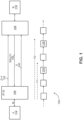
- FIG. 1 illustrates an example virtual blockchain protocol.
- the illustration of FIG. 1 includes a sender 112, a computer device 104, a recipient 116, a computer device 108, and a blockchain 120.
- the sender 112 is an entity that wishes to transmit a message M to the recipient 116 to perform a transaction, such as transmission of certified e-mail or a cryptoasset transaction.
- the sender 112 can represent a cryptoasset account, a company, a university, or a single person, etc.
- the computer device 104 is communicably coupled to the sender 112 and can be a smartphone, a tablet, a laptop, or another computer device implemented using the components illustrated and described in more detail with reference to FIG. 3 .
- the recipient 116 is an entity for whom the message M is intended.
- the recipient 116 can represent a cryptoasset account, a company, a university, or a single person, etc.
- the computer device 108 is communicably coupled to the recipient 116 and can be a smartphone, a tablet, a laptop, or another computer device implemented using the components illustrated and described in more detail with reference to FIG. 3 .
- the computer devices 104, 108 use a virtual blockchain protocol to transmit the message M from the sender 112 to the recipient 116.
- the virtual blockchain protocol enables bilateral transactions, such as used to implement an FEE.
- the sender 112 and recipient 116 are both honest parties, the blockchain 120 is in fact not used to perform the transaction.
- a party is denoted as being "honest,” if the party does not attempt to obtain a benefit of a transaction at the expense of another party. For example, consider a scenario in which the sender 112 has an automobile title and the recipient has an electronic address of a cryptoasset account. Neither party initially knows the other's asset, but will recognize it can access the asset. If the sender 112 is "honest,” it will not attempt to obtain the electronic address of the cryptoasset account while failing to transmit the automobile title to the recipient.
- the sender 112 and recipient 116 may each use the blockchain 120 once, to register information about themselves, and can then honestly interact with other honest parties without involving the blockchain 120.
- the registered information can include, for example, a public cryptographic key A of the sender 112 and a public cryptographic key B of the recipient 116.
- the public cryptographic keys A, B are also sometimes referred to as public keys or public encryption keys.
- a cryptographic key can be a public key and/or a private (secret) key that is used for digitally signing, encrypting, or decrypting data, such as a message.
- the virtual blockchain protocol resolves the problem by enabling posting of information on the blockchain 120, such that the honest party is not disadvantaged.
- the virtual blockchain protocol enables blocks (e.g., blocks 124, 128) of the blockchain 120 incorporate time information with a particular level of accuracy.
- the virtual blockchain protocol measures time in block units. For example, posting information Y on the blockchain 120 within a given amount of time from the appearance of the block 124 results in posting Y in one of the 25 blocks following block 124, for example, block 128.
- the computer device 104 generates a public key P and a corresponding private key S.
- the public key P is for transmitting the message M from the sender 112 to the recipient 116.
- the sender 112 has its own unique identifier A, for example, a public encryption key, a public signature key, or a public cryptographic key.
- the sender 112 also has its own corresponding secret key or private decryption key.
- the public cryptographic key A of the sender 112 can be posted on the blockchain 120 when the sender 112 enrolls in a certain system, for example, a certified e-mail system.
- the recipient 116 has a unique identifier B, for example, a public cryptographic key.
- the sender 112 can sign the message M to generate a signed message denoted by SIG A (M).
- the sender 112 can encrypt the message M to generate an encrypted message denoted by E A (M).
- the cryptographic key B of the recipient 116 indicates an identity of the recipient 116. Any user, for example, the recipient 116, can in fact encrypt the message M using the public cryptographic key A of the sender 112, but only the sender 112 can decrypt E A (M) as long as the sender 112 has its corresponding private decryption key.
- the digital signature and encryption methods disclosed herein are non-malleable and CCA-2 secure. CCA-2 security refers to a ciphertext indistinguishability standard for cryptographic security.
- the digital signature and encryption methods disclosed herein are provably decipherable without revealing the private decryption keys.
- the digital signature and encryption methods disclosed herein are secure against adaptive chosen message attacks.
- the encryption described by the embodiments disclosed herein is implemented in more than one phase.
- the computer device 104 can encrypt the message M using only the public key P to generate a data payload E P (A,B,M).
- the computer device 104 can encrypt the message M using the public key P as well as a one-time or temporary key O to generate a data payload E PO (A,B,M).
- the temporary key O is sometimes referred to as an ephemeral key.
- encrypting the message M using the public key P includes encrypting M in a private-key cryptosystem using a private key K and encrypting the private K using P.
- the digital signature and encryption methods disclosed herein implement joint encryption.
- P denotes a public encryption key and S denotes a corresponding private decryption key.
- X denotes another public encryption key and Sx denotes a corresponding secret key of X.
- the computer device 104 can compute, from P and X, a "joint" public encryption key PX, whose corresponding joint secret (private) key includes S and Sx.
- Z E PX (M).
- Z denotes a first data payload and identifies the sender 112 by A and the recipient 116 by B.
- the first data payload Z thus includes the cryptographic key B of the recipient and the cryptographic key A of the sender.
- the first data payload Z does not contain S.
- the first data payload Z thus excludes the private decryption key S needed by the recipient 116 to decrypt the first data payload E PB (A, B, M) and access the message M.
- the computer device 104 signs a data package (A, B, P, t, H(Z)) using the cryptographic key A of the sender 112 to generate a second data payload Y.
- the cryptographic key A of the sender 112 indicates an identity of the sender 112.
- the data package thus includes the identity of the sender 112, the identity of the recipient 116, the public key P, and a hash function H(Z) of the first data payload Z.
- t denotes a deadline for either the sender 112 or recipient 116 to perform a follow-on function.
- t can indicates a deadline for the computer device 104 to receive an acknowledgement of the second data payload Y from the second computer device 108.
- t specifies a future point in time after which the recipient 116 will be unable to restore the "fairness" of the transaction.
- An exchange or transaction is denoted as being "fair” if it is commercially equitable, such that a malicious entity does not benefit at the expense of a non-malicious entity.
- the sender 112 has an automobile title and the recipient has an electronic address of a cryptoasset account. Neither party initially knows the other's asset, but will recognize it can access the asset.
- the exchange protocol is denoted as "fair” if (without forcing an exchange against the parties' will) the protocol provides that the recipient 116 obtains the automobile title if and only if the sender 112 obtains the electronic address of the cryptoasset account.
- the protocol should have only two possible commercially equitable outcomes: (1) the sender 112 obtains the electronic address of the cryptoasset account and the recipient 116 obtains the automobile title, or (2) neither party obtains the other's asset.
- t can be omitted or set to a large value, such as infinity.
- the hash function H(Z) is used to encode Z, such that a first size of the first data payload Y is larger than a second size of the second data payload Z.
- the computer device 104 transmits data 132 (the first data payload Z and the second data payload Y) to the computer device 108 associated with the recipient 116.
- the computer device 108 determines whether the current time is sufficiently before the deadline t, such that the computer device 108 can restore the fairness of the transaction if needed.
- the computer device 108 digitally signs data Y to generate data 136 (SIG B (Y)).
- the data 136 is used as a receipt to indicate to the computer device 104 that the computer device 108 received data 132.
- the computer device 104 receives the signed version SIG B (Y) of the second data payload Y from the computer device 108.
- the signed version SIG B (Y) of the second data payload Y is signed using the cryptographic key B of the recipient 116.
- the data package (A, B, P, t, H(Z)) denotes a deadline (using the value of t) for the computer device 104 to receive the signed version of the second data payload Y from the computer device 108. For example, if t is violated, the transaction will be annulled or cancelled.
- the sender 112 When the sender 112 receives the properly signed receipt (the signed version SIG B (Y) of the second data payload Y) from the recipient 116, the sender 112 is supposed to send the data 140 (private key S) to the recipient 116.
- t denotes a time deadline by which the computer device 104 is to transmit the private key S to the computer device 108 after the computer device 104 has received the data 136. If the computer device 108 determines that it has received the private key S at a time sufficiently earlier than the deadline t, the virtual blockchain protocol successfully completes.
- the computer device 108 determines a failure of the computer device 108 to receive the private key S (data 140) from the computer device 104. In other embodiments, the computer device 108 determines that the computer device 104 did not transmit the private key S to the computer device 108 by the deadline t. The FEE can thus be violated.
- the sender 112 is an automobile seller, the recipient 116 is an automobile buyer, and C denotes an offer to sell an automobile by the sender 112.
- the sender 112 transmits data SIG A (C) to the recipient 116, but the recipient 116 never responds. In this event, the sender 112 may sell its automobile to another buyer after which the recipient 116 claims the automobile. A party can thus recognize that it has obtained desired information, and then force the exchange to remain incomplete.
- the computer device 108 posts a challenge to the blockchain 120.
- the challenge includes the signed version SIG B (Y) of the second data payload Y.
- the posting of the signed version SIG B (Y) to the blockchain 120 indicates, to the computer device 104, the failure of the computer device 108 to receive the private key S from the computer device 104.
- FIG. 1 illustrates that the computer device 108 posts the challenge in the block 124.
- t denotes a deadline for the computer device 108 to post the signed version of the second data payload Y to the blockchain 120.
- T1 The value of t (T1) allows the sender 112 to upper bound the time during which the transaction stays "open.”
- the recipient 116 can subjectively evaluate whether the recipient has time to react (by time T1) in case the computer device 104 does not transmit S to the recipient 116.
- the computer device 104 determines that the signed version SIG B (Y) of the second data payload Y has been posted to the blockchain 120. Responsive to determining that the signed version SIG B (Y) of the second data payload Y has been posted to the blockchain 120, the computer device 104 posts the private key S to the blockchain 120 for decrypting the message M by the recipient 116. For example, the private key S can be posted to the block 128. In some embodiments, the computer device 104 posts the private key S to the blockchain 120 responsive to determining that the signed version SIG B (Y) of the second data payload Y is posted to the blockchain 120 at a time earlier the deadline T1.
- t denotes a deadline T2 for the computer device 104 to post the private key S to the blockchain 120 after the signed version of the second data payload Y is posted to the blockchain 120 by the computer device 108.
- the computer device 104 is to, therefore, post S to block 128 before time T2.
- the computer device 108 determines that the private key S is posted to the blockchain 120 by the computer device 104.
- the computer device 108 decrypts the first data payload Z using the private key S to obtain the message M.
- the computer device 104 fails to post S to the blockchain 120 within the deadline T2 after the posting of the data SIG B (Y), this signifies that the sender 112 agrees that the recipient 116 has not received the message M committed to by the function H(Z).
- the sender 112 can, by releasing M and S, prove the content of the message for which SIG B (Y) is a receipt. Any entity can verify that S is the decryption key corresponding to P, and that the joint encryption of (A, B, M) relative to P and the cryptographic key B of the recipient 116 is indeed Z. Thus, any entity can verify that, given S, the recipient 116 can recover M. If the recipient 116 never received S, the computer device 108 is to timely post Y on the blockchain 120, such that the sender 112 is to publicly post S or publicly agree that the recipient 116 is "off the hook" relative to receiving the message M.
- the sender 112 can be caused to reimburse the recipient 116 for (at least some of) the transaction costs for posting Y to the blockchain 120.
- the sender 112 can use two (or more) encryptions to transmit M, relative to different public keys.
- the sender 112 can register multiple public encryption keys in the blockchain 120.
- the recipient 116 may not have any registered public encryption key, but can generate the one(s) needed when the sender 112 alerts the recipient 116 that the sender 112 will transmit a certified message, for example, M.
- the recipient 116 may possess only public signature key(s) and use them to authenticate any public encryption key the recipient 116 needs for the virtual blockchain protocol.
- the FEE is implemented when the sender 112 transmits the private key S. If the sender 112 does not transmit the private key S, then the computer device 108 is to timely post the receipt SIG B (Y) to the blockchain 120, essentially requesting the computer device 104 to timely post S to the blockchain 120.
- the virtual blockchain protocol disclosed herein is used to implement an electronic checks and transfers system (outside the blockchain 120).
- the recipient 116 is able to access the money from an electronic check if and only if the sender 112 receives a receipt that the recipient 116 received the check.
- the virtual blockchain protocol disclosed herein can be used to implement a system in which an agent has an obligation to inform another agent (for example, regarding a deadline to exercise an option). The system performs in a manner that proves the agent complied with their obligations (for example, to inform a board of directors to notify employees of their option deadlines).
- the virtual blockchain protocol disclosed herein is used to implement a subscription-based model.
- a subscription-based model an entity is required to pay a recurring price at regular intervals for access to a product or service.
- the sender 112 and recipient 116 may be required to pay a monthly or annual subscription fee, for example, by posting a transaction to the blockchain 120, specifying a particular string (that denotes the type of service sought) and paying a fee.
- the type of service can be certified e-mail, electronically signed contracts, etc.
- the fee can be (a) paid to an entity (for example, a company, a foundation, etc.) that is responsible for maintaining the blockchain 120, (b) incorporated in a pool of transactions fees to be distributed to users contributing to the maintenance of the blockchain 120, (c) paid to a particular entity or user E, or (d) a combination thereof. If, for example, the recipient 116 has not paid such a subscription fee, then it is not enabled to use the blockchain 120 to restore fairness.
- entity for example, a company, a foundation, etc.
- the advantages and benefits of the virtual blockchain protocol subscription-based model include the ability for users to perform multiple honest, fair exchanges at no additional cost.
- the company or foundation maintaining the blockchain 120 benefits from the subscription fees for providing a service that does not involve the company or foundation further in each transaction. If the subscription fees are incorporated into a transaction pool, the beneficiaries of the pool benefit further when a cheated user (for example, recipient 116) utilizes the blockchain 120 to post the data SIG B (Y) that restores the fairness of the transaction.
- a cheated user for example, recipient 116
- Y data SIG B
- a user agrees to pay a subscription fee a priori.
- An a posteriori transaction fee is paid only for transactions in which cheating occurs.
- a subscriber F in a virtual blockchain protocol subscription-based model can represent a set of users rather than a single user.
- F can represent a law firm and the subscription fee paid by F can be proportional to a numbers of users that use an FEE service implemented by the virtual blockchain protocol subscription-based model.
- F can act on behalf of all users.
- F can represent a computer server that provides receipts for messages addressed to some of its users, and then distributes the messages internally as needed.
- the computer server can be implemented using the components illustrated and described in more detail with reference to FIG. 3 .
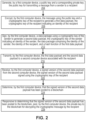
- FIG. 2 illustrates a process for virtual blockchain protocols.
- the process of FIG. 2 is performed by the computer device 104 illustrated and described in more detail with reference to FIG. 1 .
- Other entities perform some or all of the steps of the process in other embodiments.
- embodiments may include different and/or additional steps, or perform the steps in different orders.
- the computer device 104 generates 204 a public key P and a corresponding private key S.
- the public key P and private key S are illustrated and described in more detail with reference to FIG. 1 .
- the public key P is for transmitting a message M from a sender 112 to a recipient 116.
- the message M, sender 112, and recipient 116 are illustrated and described in more detail with reference to FIG. 1 .
- the computer device 104 is associated with the sender 112.
- the computer device 104 encrypts 208 the message M using the public key P and a cryptographic key B of the recipient 116 to generate a first data payload Z.
- the cryptographic key B of the recipient 116 indicates an identity of the recipient 116.
- the first data payload Z is expressed as E PB (A,B,M). Any user, for example, the recipient 116, can in fact encrypt the message M using the public cryptographic key A of the sender 112, but only the sender 112 can decrypt E A (M) as long as the sender 112 has its corresponding private decryption key.
- the computer device 104 signs 212 a data package (A, B, P, t, H(Z)) using a cryptographic key A of the sender 112 to generate a second data payload Y.
- the cryptographic key A of the sender 112 indicates an identity of the sender 112.
- the data package includes the identity of the sender 112, the identity of the recipient 116, the public key P, and a hash function H(Z) of the first data payload.
- t denotes a deadline for either the sender 112 or recipient 116 to perform a follow-on function.
- t can indicates a deadline for the computer device 104 to receive an acknowledgement of the second data payload Y from the second computer device 108.
- t specifies a future point in time after which the recipient 116 will be unable to restore the fairness of the transaction.
- the computer device 104 transmits 216 the first data payload Z and the second data payload Y to a computer device 108 associated with the recipient 116.
- the computer device 108 determines whether the current time is sufficiently before the deadline t, such that the computer device 108 can restore the fairness of the transaction if needed.
- the computer device 108 digitally signs data Y to generate data 136 (SIG B (Y)).
- the data 136 is used as a receipt to indicate to the computer device 104 that the computer device 108 received data 132.
- the data 132 and data 136 are illustrated and described in more detail with reference to FIG. 1 .
- the computer device 104 receives 220 the signed version SIG B (Y) of the second data payload Y from the computer device 108.
- the signed version SIG B (Y) of the second data payload Y is signed using the cryptographic key B of the recipient 116.
- the data package (A, B, P, t, H(Z)) denotes a deadline (using the value of t) for the computer device 104 to receive the signed version of the second data payload Y from the computer device 108. For example, if t is violated, the transaction will be annulled or cancelled.
- the computer device 104 determines 224 that the signed version SIG B (Y) of the second data payload Y has been posted to the blockchain 120 by the computer device 108.
- the sender 112 receives the properly signed receipt (the signed version SIG B (Y) of the second data payload Y) from the recipient 116, the sender 112 is supposed to send the data 140 (private key S) to the recipient 116.
- the data 140 is illustrated and described in more detail with reference to FIG. 1 .
- the computer device 108 determines a failure of the computer device 108 to receive the private key S (data 140) from the computer device 104, the computer device 108 posts the signed version SIG B (Y) of the second data payload Y to the blockchain 120.
- the computer device 104 posts 228 the private key S to the blockchain 120 for decrypting the message M by the recipient 116.
- t denotes a deadline T2 for the computer device 104 to post the private key S to the blockchain 120 after the signed version of the second data payload Y is posted to the blockchain 120 by the computer device 108.
- the computer device 104 is to, therefore, post S to block 128 before time T2.
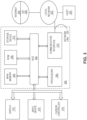
- FIG. 3 illustrates an example machine.
- the computer system 300 is a special purpose computing device.
- the special-purpose computing device is hard-wired to execute blockchain protocols, includes digital electronic devices such as one or more application-specific integrated circuits (ASICs) or field programmable gate arrays (FPGAs) that are persistently programmed to perform the techniques herein, or includes one or more general purpose hardware processors programmed to perform the techniques pursuant to program instructions in firmware, memory, other storage, or a combination.
- ASICs application-specific integrated circuits
- FPGAs field programmable gate arrays
- the special-purpose computing devices are desktop computer systems, portable computer systems, handheld devices, network devices or any other device that incorporates both hard-wired or program logic to implement the techniques.
- the computer system 300 includes a bus 302 or other communication mechanism for communicating information, and one or more computer hardware processors 304 coupled to the bus 302 for processing information.
- the hardware processors 304 are general-purpose microprocessors.
- the computer system 300 also includes a main memory 306, such as a random-access memory (RAM) or other dynamic storage device, coupled to the bus 302 for storing information and instructions to be executed by processors 304.
- the main memory 306 is used for storing temporary variables or other intermediate information during execution of instructions to be executed by the processors 304.
- Such instructions when stored in non-transitory storage media accessible to the processors 304, render the computer system 300 into a special-purpose machine customized to perform the operations specified in the instructions.
- the computer system 300 further includes a read only memory (ROM) 308 or other static storage device coupled to the bus 302 for storing static information and instructions for the processors 304.
- ROM read only memory
- the computer system 300 is coupled via the bus 302 to a display 310, such as a cathode ray tube (CRT), a liquid crystal display (LCD), plasma display, light emitting diode (LED) display, or an organic light emitting diode (OLED) display for displaying information to a computer user.
- a display 310 such as a cathode ray tube (CRT), a liquid crystal display (LCD), plasma display, light emitting diode (LED) display, or an organic light emitting diode (OLED) display for displaying information to a computer user.
- An input device 314, including alphanumeric and other keys, is coupled to bus 302 for communicating information and command selections to the processors 304.
- a cursor controller 316 such as a mouse, a trackball, a touch-enabled display, or cursor direction keys for communicating direction information and command selections to the processors 304 and for controlling cursor movement on the display 310.
- the techniques herein are performed by the computer system 300 in response to the processors 304 executing one or more sequences of one or more instructions contained in the main memory 306. Such instructions are read into the main memory 306 from another storage medium, such as the storage device 312. Execution of the sequences of instructions contained in the main memory 306 causes the processors 304 to perform the process steps described herein. In alternative implementations, hard-wired circuitry is used in place of or in combination with software instructions.
- Non-volatile media includes, such as optical disks, magnetic disks, solid-state drives, or three-dimensional cross point memory, such as the storage device 312.
- Common forms of storage media include, such as a floppy disk, a flexible disk, hard disk, solid-state drive, magnetic tape, or any other magnetic data storage medium, a CD-ROM, any other optical data storage medium, any physical medium with patterns of holes, a RAM, a PROM, and EPROM, a FLASH-EPROM, NV-RAM, or any other memory chip or cartridge.
- Storage media is distinct from but is used in conjunction with transmission media.
- Transmission media participates in transferring information between storage media. Transmission media includes coaxial cables, copper wire and fiber optics, including the wires that include the bus 302.
- various forms of media are involved in carrying one or more sequences of one or more instructions to the processors 304 for execution.
- the instructions are initially carried on a magnetic disk or solid-state drive of a remote computer.
- the remote computer loads the instructions into its dynamic memory and send the instructions over a telephone line using a modem.
- a modem local to the computer system 300 receives the data on the telephone line and use an infrared transmitter to convert the data to an infrared signal.
- An infrared detector receives the data carried in the infrared signal and appropriate circuitry places the data on the bus 302.
- the bus 302 carries the data to the main memory 306, from which processors 304 retrieves and executes the instructions.
- the instructions received by the main memory 306 are optionally stored on the storage device 312 either before or after execution by processors 304.
- the computer system 300 also includes a communication interface 318 coupled to the bus 302.
- the communication interface 318 provides a two-way data communication coupling to a network link 320 connected to a local network 322.
- the communication interface 318 is an integrated service digital network (ISDN) card, cable modem, satellite modem, or a modem to provide a data communication connection to a corresponding type of telephone line.
- ISDN integrated service digital network
- the communication interface 318 is a local area network (LAN) card to provide a data communication connection to a compatible LAN.
- LAN local area network
- wireless links are also implemented.
- the network link 320 typically provides data communication through one or more networks to other data devices.
- the network link 320 provides a connection through the local network 322 to a host computer 324 or to a cloud data center or equipment operated by an Internet Service Provider (ISP) 326.
- ISP Internet Service Provider
- the ISP 326 in turn provides data communication services through the world-wide packet data communication network now commonly referred to as the "Internet" 328.
- the local network 322 and Internet 328 both use electrical, electromagnetic or optical signals that carry digital data streams.
- connecting elements such as solid or dashed lines or arrows
- the absence of any such connecting elements is not meant to imply that no connection, relationship, or association can exist.
- some connections, relationships, or associations between elements are not shown in the drawings so as not to obscure the disclosure.
- a single connecting element is used to represent multiple connections, relationships or associations between elements.
- a connecting element represents a communication of signals, data, or instructions
- such element represents one or multiple signal paths (e.g., a bus), as may be needed, to affect the communication.
Landscapes
- Engineering & Computer Science (AREA)
- Computer Security & Cryptography (AREA)
- Computer Networks & Wireless Communication (AREA)
- Signal Processing (AREA)
- Power Engineering (AREA)
- Financial Or Insurance-Related Operations Such As Payment And Settlement (AREA)
- Information Transfer Between Computers (AREA)
- Exchange Systems With Centralized Control (AREA)
- Structure Of Telephone Exchanges (AREA)
- Electrophonic Musical Instruments (AREA)
- Computer And Data Communications (AREA)
- Storage Device Security (AREA)
- Data Exchanges In Wide-Area Networks (AREA)
Applications Claiming Priority (3)
| Application Number | Priority Date | Filing Date | Title |
|---|---|---|---|
| US201862777410P | 2018-12-10 | 2018-12-10 | |
| US201862778482P | 2018-12-12 | 2018-12-12 | |
| PCT/US2019/065524 WO2020123538A1 (en) | 2018-12-10 | 2019-12-10 | Using virtual blockchain protocols to implement a fair electronic exchange |
Publications (3)
| Publication Number | Publication Date |
|---|---|
| EP3895372A1 EP3895372A1 (en) | 2021-10-20 |
| EP3895372C0 EP3895372C0 (en) | 2024-11-13 |
| EP3895372B1 true EP3895372B1 (en) | 2024-11-13 |
Family
ID=69724039
Family Applications (1)
| Application Number | Title | Priority Date | Filing Date |
|---|---|---|---|
| EP19856488.2A Active EP3895372B1 (en) | 2018-12-10 | 2019-12-10 | Using virtual blockchain protocols to implement a fair electronic exchange |
Country Status (13)
| Country | Link |
|---|---|
| US (2) | US11405186B2 (enExample) |
| EP (1) | EP3895372B1 (enExample) |
| JP (2) | JP7369772B2 (enExample) |
| KR (1) | KR20210100660A (enExample) |
| CN (1) | CN113475037A (enExample) |
| AU (2) | AU2019396425B2 (enExample) |
| BR (1) | BR112021011165A2 (enExample) |
| CA (1) | CA3122537A1 (enExample) |
| ES (1) | ES3006025T3 (enExample) |
| IL (2) | IL282861B2 (enExample) |
| MX (1) | MX2021006820A (enExample) |
| SG (1) | SG11202104773QA (enExample) |
| WO (1) | WO2020123538A1 (enExample) |
Families Citing this family (2)
| Publication number | Priority date | Publication date | Assignee | Title |
|---|---|---|---|---|
| KR20210104604A (ko) * | 2020-02-17 | 2021-08-25 | 한국전자통신연구원 | 블록체인 시스템을 통해 서비스를 사용하는 방법 및 장치 |
| CN116894723A (zh) * | 2023-07-10 | 2023-10-17 | 中国工商银行股份有限公司 | 基于区块链的贷款授权额度的确定方法、装置及电子设备 |
Family Cites Families (21)
| Publication number | Priority date | Publication date | Assignee | Title |
|---|---|---|---|---|
| US6557134B2 (en) * | 1997-09-30 | 2003-04-29 | Glenayre Electronics, Inc. | ARQ method for wireless communication |
| US7010683B2 (en) * | 2000-01-14 | 2006-03-07 | Howlett-Packard Development Company, L.P. | Public key validation service |
| JP4614377B2 (ja) * | 2000-03-01 | 2011-01-19 | キヤノン株式会社 | 暗号化データ管理システム及び方法、記憶媒体 |
| JP2007058590A (ja) * | 2005-08-24 | 2007-03-08 | Nec Corp | 主体同一性判定システム、及びプログラム |
| US7885412B2 (en) * | 2005-09-29 | 2011-02-08 | International Business Machines Corporation | Pre-generation of generic session keys for use in communicating within communications environments |
| AU2016218981B2 (en) * | 2015-02-13 | 2020-03-05 | Visa International Service Association | Confidential communication management |
| US10402792B2 (en) * | 2015-08-13 | 2019-09-03 | The Toronto-Dominion Bank | Systems and method for tracking enterprise events using hybrid public-private blockchain ledgers |
| JP6452156B2 (ja) * | 2015-09-03 | 2019-01-16 | 日本電信電話株式会社 | 許諾情報管理システム、利用者端末、権利者端末、許諾情報管理方法、および、許諾情報管理プログラム |
| CN108885741B (zh) * | 2016-02-23 | 2023-05-16 | 区块链控股有限公司 | 一种实现区块链上交换的令牌化方法及系统 |
| JP6888673B2 (ja) * | 2016-10-27 | 2021-06-16 | 株式会社デンソー | デバイスを認証および認可するためのシステムおよび方法 |
| US10594702B2 (en) * | 2016-12-16 | 2020-03-17 | ULedger, Inc. | Electronic interaction authentication and verification, and related systems, devices, and methods |
| CN106790253A (zh) * | 2017-01-25 | 2017-05-31 | 中钞信用卡产业发展有限公司北京智能卡技术研究院 | 基于区块链的认证方法和装置 |
| CN107040383B (zh) * | 2017-04-24 | 2018-01-30 | 中山大学 | 一种基于区块链的盲可验证加密签名方法 |
| EP3616388B1 (en) * | 2017-04-26 | 2024-10-16 | Visa International Service Association | Systems and methods for recording data representing multiple interactions |
| GB201709760D0 (en) * | 2017-06-19 | 2017-08-02 | Nchain Holdings Ltd | Computer-Implemented system and method |
| WO2018235845A1 (ja) * | 2017-06-21 | 2018-12-27 | 日本電信電話株式会社 | 鍵交換システムおよび鍵交換方法 |
| GB201803815D0 (en) * | 2018-03-09 | 2018-04-25 | Nchain Holdings Ltd | Computer-implemented methods and systems |
| JP6907144B2 (ja) * | 2018-03-27 | 2021-07-21 | Kddi株式会社 | アクセス制限システム、アクセス制限方法及びアクセス制限プログラム |
| US11165756B2 (en) * | 2018-06-11 | 2021-11-02 | Fujitsu Limited | Delayed-access encryption for blockchain field |
| CN108833438B (zh) * | 2018-07-18 | 2020-04-14 | 电子科技大学 | 一种基于区块链的工业物联网信息安全存储方法 |
| JP6838260B2 (ja) * | 2018-11-14 | 2021-03-03 | カウリー株式会社 | ブロックチェーン制御方法 |
-
2019
- 2019-12-10 JP JP2021533296A patent/JP7369772B2/ja active Active
- 2019-12-10 US US16/709,719 patent/US11405186B2/en active Active
- 2019-12-10 EP EP19856488.2A patent/EP3895372B1/en active Active
- 2019-12-10 BR BR112021011165-4A patent/BR112021011165A2/pt unknown
- 2019-12-10 MX MX2021006820A patent/MX2021006820A/es unknown
- 2019-12-10 AU AU2019396425A patent/AU2019396425B2/en not_active Ceased
- 2019-12-10 ES ES19856488T patent/ES3006025T3/es active Active
- 2019-12-10 CN CN201980081455.1A patent/CN113475037A/zh not_active Withdrawn
- 2019-12-10 IL IL282861A patent/IL282861B2/en unknown
- 2019-12-10 IL IL301597A patent/IL301597A/en unknown
- 2019-12-10 CA CA3122537A patent/CA3122537A1/en active Pending
- 2019-12-10 KR KR1020217020390A patent/KR20210100660A/ko not_active Abandoned
- 2019-12-10 WO PCT/US2019/065524 patent/WO2020123538A1/en not_active Ceased
- 2019-12-10 SG SG11202104773QA patent/SG11202104773QA/en unknown
-
2022
- 2022-06-24 US US17/808,922 patent/US20230125327A1/en not_active Abandoned
-
2023
- 2023-06-14 AU AU2023203711A patent/AU2023203711A1/en not_active Abandoned
- 2023-10-16 JP JP2023178230A patent/JP2024003002A/ja active Pending
Also Published As
| Publication number | Publication date |
|---|---|
| KR20210100660A (ko) | 2021-08-17 |
| JP2024003002A (ja) | 2024-01-11 |
| JP7369772B2 (ja) | 2023-10-26 |
| IL282861B2 (en) | 2023-09-01 |
| EP3895372A1 (en) | 2021-10-20 |
| EP3895372C0 (en) | 2024-11-13 |
| WO2020123538A1 (en) | 2020-06-18 |
| AU2019396425A2 (en) | 2021-06-03 |
| IL282861A (en) | 2021-06-30 |
| ES3006025T3 (en) | 2025-03-17 |
| AU2019396425A1 (en) | 2021-05-20 |
| US20230125327A1 (en) | 2023-04-27 |
| IL282861B1 (en) | 2023-05-01 |
| US20200186334A1 (en) | 2020-06-11 |
| CA3122537A1 (en) | 2020-06-18 |
| SG11202104773QA (en) | 2021-06-29 |
| JP2022512220A (ja) | 2022-02-02 |
| US11405186B2 (en) | 2022-08-02 |
| AU2019396425B2 (en) | 2023-03-16 |
| BR112021011165A2 (pt) | 2021-08-31 |
| MX2021006820A (es) | 2021-07-02 |
| CN113475037A (zh) | 2021-10-01 |
| IL301597A (en) | 2023-05-01 |
| AU2023203711A1 (en) | 2023-07-06 |
Similar Documents
| Publication | Publication Date | Title |
|---|---|---|
| CN111418184B (zh) | 基于区块链的可信保函 | |
| US11321680B2 (en) | System and method for processing and management of transactions using electronic currency | |
| CN103903141B (zh) | 一种o2o安全支付方法、系统和一种pos终端 | |
| CN115119531B (zh) | 使用区块链事务的多因素认证 | |
| US10728219B2 (en) | Enhancing security of communications during execution of protocol flows | |
| CN116802661A (zh) | 基于令牌的链外交互授权 | |
| CN111433798B (zh) | 基于区块链的可信保函 | |
| US12373825B2 (en) | Payment encryption system | |
| AU2023203711A1 (en) | Using virtual blockchain protocols to implement a fair electronic exchange | |
| CN116664286A (zh) | 基于互联网的不动产预抵押系统及不动产预告登记抵押方法 | |
| CN118585991B (zh) | 数据处理方法、装置、设备及存储介质 | |
| WO2017012066A1 (zh) | 网上交易方法、装置和系统 | |
| US20140143147A1 (en) | Transaction fee negotiation for currency remittance | |
| HK40051110A (en) | Using virtual blockchain protocols to implement a fair electronic exchange | |
| CN112990927B (zh) | 支付验证方法、系统、设备、计算机系统及存储介质 | |
| Alaraj | Ownership transfer protocol | |
| WO2017012063A1 (zh) | 网上交易方法、装置和系统 | |
| WO2017012064A1 (zh) | 网上交易方法、装置和系统 | |
| CN102571716A (zh) | 适用于网上购物的安全通信方法 | |
| WO2017012065A1 (zh) | 网上交易方法、装置和系统 | |
| WO2017012068A1 (zh) | 网上交易方法、装置和系统 |
Legal Events
| Date | Code | Title | Description |
|---|---|---|---|
| REG | Reference to a national code |
Ref country code: HR Ref legal event code: TUEP Ref document number: P20241767T Country of ref document: HR |
|
| STAA | Information on the status of an ep patent application or granted ep patent |
Free format text: STATUS: UNKNOWN |
|
| STAA | Information on the status of an ep patent application or granted ep patent |
Free format text: STATUS: THE INTERNATIONAL PUBLICATION HAS BEEN MADE |
|
| PUAI | Public reference made under article 153(3) epc to a published international application that has entered the european phase |
Free format text: ORIGINAL CODE: 0009012 |
|
| STAA | Information on the status of an ep patent application or granted ep patent |
Free format text: STATUS: REQUEST FOR EXAMINATION WAS MADE |
|
| 17P | Request for examination filed |
Effective date: 20210706 |
|
| AK | Designated contracting states |
Kind code of ref document: A1 Designated state(s): AL AT BE BG CH CY CZ DE DK EE ES FI FR GB GR HR HU IE IS IT LI LT LU LV MC MK MT NL NO PL PT RO RS SE SI SK SM TR |
|
| DAV | Request for validation of the european patent (deleted) | ||
| DAX | Request for extension of the european patent (deleted) | ||
| REG | Reference to a national code |
Ref country code: HK Ref legal event code: DE Ref document number: 40062301 Country of ref document: HK |
|
| STAA | Information on the status of an ep patent application or granted ep patent |
Free format text: STATUS: EXAMINATION IS IN PROGRESS |
|
| 17Q | First examination report despatched |
Effective date: 20220609 |
|
| RAP1 | Party data changed (applicant data changed or rights of an application transferred) |
Owner name: ALGORAND LABS S.R.L. |
|
| RIC1 | Information provided on ipc code assigned before grant |
Ipc: H04L 9/00 20060101ALI20240430BHEP Ipc: H04L 9/08 20060101ALI20240430BHEP Ipc: H04L 9/32 20060101AFI20240430BHEP |
|
| GRAP | Despatch of communication of intention to grant a patent |
Free format text: ORIGINAL CODE: EPIDOSNIGR1 |
|
| STAA | Information on the status of an ep patent application or granted ep patent |
Free format text: STATUS: GRANT OF PATENT IS INTENDED |
|
| INTG | Intention to grant announced |
Effective date: 20240607 |
|
| GRAS | Grant fee paid |
Free format text: ORIGINAL CODE: EPIDOSNIGR3 |
|
| GRAA | (expected) grant |
Free format text: ORIGINAL CODE: 0009210 |
|
| STAA | Information on the status of an ep patent application or granted ep patent |
Free format text: STATUS: THE PATENT HAS BEEN GRANTED |
|
| AK | Designated contracting states |
Kind code of ref document: B1 Designated state(s): AL AT BE BG CH CY CZ DE DK EE ES FI FR GB GR HR HU IE IS IT LI LT LU LV MC MK MT NL NO PL PT RO RS SE SI SK SM TR |
|
| REG | Reference to a national code |
Ref country code: GB Ref legal event code: FG4D |
|
| REG | Reference to a national code |
Ref country code: CH Ref legal event code: EP |
|
| REG | Reference to a national code |
Ref country code: IE Ref legal event code: FG4D |
|
| REG | Reference to a national code |
Ref country code: DE Ref legal event code: R096 Ref document number: 602019062050 Country of ref document: DE |
|
| U01 | Request for unitary effect filed |
Effective date: 20241205 |
|
| RAP4 | Party data changed (patent owner data changed or rights of a patent transferred) |
Owner name: ALGORAND LABS S.R.L. |
|
| U07 | Unitary effect registered |
Designated state(s): AT BE BG DE DK EE FI FR IT LT LU LV MT NL PT RO SE SI Effective date: 20241216 |
|
| REG | Reference to a national code |
Ref country code: ES Ref legal event code: FG2A Ref document number: 3006025 Country of ref document: ES Kind code of ref document: T3 Effective date: 20250317 |
|
| PG25 | Lapsed in a contracting state [announced via postgrant information from national office to epo] |
Ref country code: GR Free format text: LAPSE BECAUSE OF FAILURE TO SUBMIT A TRANSLATION OF THE DESCRIPTION OR TO PAY THE FEE WITHIN THE PRESCRIBED TIME-LIMIT Effective date: 20250214 |
|
| REG | Reference to a national code |
Ref country code: HR Ref legal event code: OTEP Ref document number: P20241767T Country of ref document: HR |
|
| U21 | Renewal fee for the european patent with unitary effect paid with additional fee |
Year of fee payment: 6 Effective date: 20250407 |
|
| PG25 | Lapsed in a contracting state [announced via postgrant information from national office to epo] |
Ref country code: SM Free format text: LAPSE BECAUSE OF FAILURE TO SUBMIT A TRANSLATION OF THE DESCRIPTION OR TO PAY THE FEE WITHIN THE PRESCRIBED TIME-LIMIT Effective date: 20241113 |
|
| PG25 | Lapsed in a contracting state [announced via postgrant information from national office to epo] |
Ref country code: PL Free format text: LAPSE BECAUSE OF FAILURE TO SUBMIT A TRANSLATION OF THE DESCRIPTION OR TO PAY THE FEE WITHIN THE PRESCRIBED TIME-LIMIT Effective date: 20241113 |
|
| PG25 | Lapsed in a contracting state [announced via postgrant information from national office to epo] |
Ref country code: HR Free format text: LAPSE BECAUSE OF FAILURE TO SUBMIT A TRANSLATION OF THE DESCRIPTION OR TO PAY THE FEE WITHIN THE PRESCRIBED TIME-LIMIT Effective date: 20241224 |
|
| PG25 | Lapsed in a contracting state [announced via postgrant information from national office to epo] |
Ref country code: SK Free format text: LAPSE BECAUSE OF FAILURE TO SUBMIT A TRANSLATION OF THE DESCRIPTION OR TO PAY THE FEE WITHIN THE PRESCRIBED TIME-LIMIT Effective date: 20241113 |
|
| REG | Reference to a national code |
Ref country code: CH Ref legal event code: PL |
|
| PG25 | Lapsed in a contracting state [announced via postgrant information from national office to epo] |
Ref country code: MC Free format text: LAPSE BECAUSE OF FAILURE TO SUBMIT A TRANSLATION OF THE DESCRIPTION OR TO PAY THE FEE WITHIN THE PRESCRIBED TIME-LIMIT Effective date: 20241113 |
|
| PLBE | No opposition filed within time limit |
Free format text: ORIGINAL CODE: 0009261 |
|
| STAA | Information on the status of an ep patent application or granted ep patent |
Free format text: STATUS: NO OPPOSITION FILED WITHIN TIME LIMIT |
|
| PG25 | Lapsed in a contracting state [announced via postgrant information from national office to epo] |
Ref country code: NO Free format text: LAPSE BECAUSE OF NON-PAYMENT OF DUE FEES Effective date: 20250213 |
|
| PG25 | Lapsed in a contracting state [announced via postgrant information from national office to epo] |
Ref country code: CH Free format text: LAPSE BECAUSE OF NON-PAYMENT OF DUE FEES Effective date: 20241231 |
|
| 26N | No opposition filed |
Effective date: 20250814 |
|
| PG25 | Lapsed in a contracting state [announced via postgrant information from national office to epo] |
Ref country code: CZ Free format text: LAPSE BECAUSE OF FAILURE TO SUBMIT A TRANSLATION OF THE DESCRIPTION OR TO PAY THE FEE WITHIN THE PRESCRIBED TIME-LIMIT Effective date: 20241113 Ref country code: IE Free format text: LAPSE BECAUSE OF NON-PAYMENT OF DUE FEES Effective date: 20241210 |
|
| PGFP | Annual fee paid to national office [announced via postgrant information from national office to epo] |
Ref country code: GB Payment date: 20251229 Year of fee payment: 7 |
|
| PG25 | Lapsed in a contracting state [announced via postgrant information from national office to epo] |
Ref country code: RS Free format text: LAPSE BECAUSE OF THE APPLICANT RENOUNCES; INVALID AB INITIO Effective date: 20191210 |
|
| U20 | Renewal fee for the european patent with unitary effect paid |
Year of fee payment: 7 Effective date: 20251229 |
|
| PGFP | Annual fee paid to national office [announced via postgrant information from national office to epo] |
Ref country code: ES Payment date: 20260102 Year of fee payment: 7 |
|
| PG25 | Lapsed in a contracting state [announced via postgrant information from national office to epo] |
Ref country code: CY Free format text: LAPSE BECAUSE OF NON-PAYMENT OF DUE FEES Effective date: 20241210 |
|
| PG25 | Lapsed in a contracting state [announced via postgrant information from national office to epo] |
Ref country code: CY Free format text: LAPSE BECAUSE OF NON-PAYMENT OF DUE FEES Effective date: 20241211 |
|
| PG25 | Lapsed in a contracting state [announced via postgrant information from national office to epo] |
Ref country code: IS Free format text: LAPSE BECAUSE OF NON-PAYMENT OF DUE FEES Effective date: 20251003 |