EP3894693B1 - Wind turbine blade - Google Patents
Wind turbine blade Download PDFInfo
- Publication number
- EP3894693B1 EP3894693B1 EP19823772.9A EP19823772A EP3894693B1 EP 3894693 B1 EP3894693 B1 EP 3894693B1 EP 19823772 A EP19823772 A EP 19823772A EP 3894693 B1 EP3894693 B1 EP 3894693B1
- Authority
- EP
- European Patent Office
- Prior art keywords
- blade
- wind turbine
- portions
- interfaces
- spar
- Prior art date
- Legal status (The legal status is an assumption and is not a legal conclusion. Google has not performed a legal analysis and makes no representation as to the accuracy of the status listed.)
- Active
Links
Images




Classifications
-
- F—MECHANICAL ENGINEERING; LIGHTING; HEATING; WEAPONS; BLASTING
- F03—MACHINES OR ENGINES FOR LIQUIDS; WIND, SPRING, OR WEIGHT MOTORS; PRODUCING MECHANICAL POWER OR A REACTIVE PROPULSIVE THRUST, NOT OTHERWISE PROVIDED FOR
- F03D—WIND MOTORS
- F03D1/00—Wind motors with rotation axis substantially parallel to the air flow entering the rotor
- F03D1/06—Rotors
- F03D1/065—Rotors characterised by their construction elements
- F03D1/0675—Rotors characterised by their construction elements of the blades
- F03D1/0677—Longitudinally segmented blades; Connectors therefor
-
- F—MECHANICAL ENGINEERING; LIGHTING; HEATING; WEAPONS; BLASTING
- F03—MACHINES OR ENGINES FOR LIQUIDS; WIND, SPRING, OR WEIGHT MOTORS; PRODUCING MECHANICAL POWER OR A REACTIVE PROPULSIVE THRUST, NOT OTHERWISE PROVIDED FOR
- F03D—WIND MOTORS
- F03D1/00—Wind motors with rotation axis substantially parallel to the air flow entering the rotor
- F03D1/06—Rotors
- F03D1/065—Rotors characterised by their construction elements
- F03D1/0675—Rotors characterised by their construction elements of the blades
-
- F—MECHANICAL ENGINEERING; LIGHTING; HEATING; WEAPONS; BLASTING
- F03—MACHINES OR ENGINES FOR LIQUIDS; WIND, SPRING, OR WEIGHT MOTORS; PRODUCING MECHANICAL POWER OR A REACTIVE PROPULSIVE THRUST, NOT OTHERWISE PROVIDED FOR
- F03D—WIND MOTORS
- F03D1/00—Wind motors with rotation axis substantially parallel to the air flow entering the rotor
- F03D1/06—Rotors
- F03D1/065—Rotors characterised by their construction elements
- F03D1/0675—Rotors characterised by their construction elements of the blades
- F03D1/0679—Load carrying structures, e.g. beams
-
- F—MECHANICAL ENGINEERING; LIGHTING; HEATING; WEAPONS; BLASTING
- F05—INDEXING SCHEMES RELATING TO ENGINES OR PUMPS IN VARIOUS SUBCLASSES OF CLASSES F01-F04
- F05B—INDEXING SCHEME RELATING TO WIND, SPRING, WEIGHT, INERTIA OR LIKE MOTORS, TO MACHINES OR ENGINES FOR LIQUIDS COVERED BY SUBCLASSES F03B, F03D AND F03G
- F05B2240/00—Components
- F05B2240/20—Rotors
- F05B2240/30—Characteristics of rotor blades, i.e. of any element transforming dynamic fluid energy to or from rotational energy and being attached to a rotor
- F05B2240/302—Segmented or sectional blades
-
- F—MECHANICAL ENGINEERING; LIGHTING; HEATING; WEAPONS; BLASTING
- F05—INDEXING SCHEMES RELATING TO ENGINES OR PUMPS IN VARIOUS SUBCLASSES OF CLASSES F01-F04
- F05B—INDEXING SCHEME RELATING TO WIND, SPRING, WEIGHT, INERTIA OR LIKE MOTORS, TO MACHINES OR ENGINES FOR LIQUIDS COVERED BY SUBCLASSES F03B, F03D AND F03G
- F05B2260/00—Function
- F05B2260/30—Retaining components in desired mutual position
-
- Y—GENERAL TAGGING OF NEW TECHNOLOGICAL DEVELOPMENTS; GENERAL TAGGING OF CROSS-SECTIONAL TECHNOLOGIES SPANNING OVER SEVERAL SECTIONS OF THE IPC; TECHNICAL SUBJECTS COVERED BY FORMER USPC CROSS-REFERENCE ART COLLECTIONS [XRACs] AND DIGESTS
- Y02—TECHNOLOGIES OR APPLICATIONS FOR MITIGATION OR ADAPTATION AGAINST CLIMATE CHANGE
- Y02E—REDUCTION OF GREENHOUSE GAS [GHG] EMISSIONS, RELATED TO ENERGY GENERATION, TRANSMISSION OR DISTRIBUTION
- Y02E10/00—Energy generation through renewable energy sources
- Y02E10/70—Wind energy
- Y02E10/72—Wind turbines with rotation axis in wind direction
Definitions
- the present invention provides a wind turbine blade comprising: a first wind turbine blade portion having an upper shell half and a lower shell half that defines a suction side, pressure side, leading edge, and a trailing edge of the blade, the first blade portion further including a first blade interface at one end of the first blade portion; a second blade portion having an upper shell half and a lower shell half that defines a suction side, pressure side, leading edge, and a trailing edge of the blade, the second blade portion further including a second blade interface at one end of the second blade portion, wherein the first blade portion and the second blade portion are configured to be coupled together at the first and second blade interfaces; a connection joint for coupling the first and second blade portions together; a first spar cap associated with the upper shell half and a second spar cap associated with the lower shell half of each of the first and second blade portions; and a shear web extending between the first spar cap and the second spar cap of each of the first and second blade portions, wherein the shear webs of the first and second blade portions are terminated away
- the invention is advantageous in that the first and second blade portions can be coupled together without needing to also connect the shear webs across the joint. Time for assembly of the joint can be reduced, and personnel access to the interior of the blade may be limited to the vicinity of the blade shells or avoided altogether. The shear loads carried by the shear webs may be transferred into the spar caps away from the blade interfaces.
- the load bearing structure may be integrated into, or attached to, the upper and lower shell halves of the first and second blade portions.
- the first and second spar caps may be integrated into the upper and lower shell halves of the first and/or second blade portion.
- a width and/or thickness of the first and second spar caps may increase in the longitudinal direction toward the first and/or second blade interfaces of the first and/or second blade portions respectively.
- a shell thickness of the upper and lower shell halves of the first and second blade portions may increase in the longitudinal direction toward the first and second blade interfaces of the first and second blade portions respectively.
- the bending stiffness of the spar caps or the shell halves will increase. Due to this increased bending stiffness the stability of the blade portions is increased which can allow the shear web to be interrupted across the connection joint. In particular, the increased stiffness can prevent the blade from buckling at the connection joint where there is no direct web connection between the two blade portions.
- the termination of the shear web may be concave.
- the termination of the shear web may have a curved scallop shape.
- the shear web extending between the first spar cap and the second spar cap may be branched in the longitudinal direction toward the first and/or second blade interfaces of the first and/or second blade portions respectively.
- At least some of the shear web portions may be overlapping in the longitudinal direction.
- connection joint may comprise a plurality of connecting elements integrated into the first and second blade portions at the first and second blade interfaces.
- the connecting elements may form part of the load bearing structure of the first and second blade portions. Where the connecting elements form part of the load bearing structure, the connecting elements may contribute to the increasing cross section of the load bearing structure of the first and second blade portions toward the respective first and second blade interfaces.
- Each of the plurality of connecting elements may be wedge shaped.
- At least some of the wedge shaped connecting elements may be transitioned into the first and second spar caps.
- the first and second spar caps may each be associated with a respective group of the connecting elements.
- the group of connecting elements may be arranged chordwise and may have a group width.
- a width of the first and second spar caps may increase in the longitudinal direction toward the first and second blade interfaces of the first and second blade portions respectively.
- the width of the first and second spar caps adjacent the first and second blade interfaces may substantially equal the group width of the associated group of connecting elements.
- connection joint may further comprise at least one tension member for coupling to the connecting elements to join the first wind turbine blade portion to the second wind turbine blade portion.
- Each connecting element may have an eye that defines at least in part a bore that extends from an exterior to an interior of one of the first or second blade portions.
- connection joint may further comprise a plurality of cross pins configured to be inserted through respective eyes of the plurality of connecting elements which form the bores through the first and second blade portions.
- the cross pins may be received in the eyes.
- An exposed portion of the cross pins may be configured to extend away from at least one of an exterior surface and an interior surface of the first and second blade portions.
- the first and second blade interfaces may include respective plates configured to abut when the first blade portion and the second blade portion are coupled together by the connection joint.
- the branched shear web can increase the stability or stiffness of the blade or blade shell. Increasing the stability of the blade or blade shell by way of the branched shear web may be particularly beneficial where the first and second spar caps have a greater width. The branched shear web may also reduce stress concentrations where the shear loads are transferred into the spar caps. The branched shear web may be particularly beneficial where the shear webs of the first and second blade portions are terminated away from the respective first and second blade interfaces.
- leading edge trailing edge
- pressure surface suction surface
- thickness chord and planform
- leading edge is used to refer to an edge of the blade which will be at the front of the blade as the blade rotates in the normal rotation direction of the wind turbine rotor.
- trailing edge is used to refer to an edge of a wind turbine blade which will be at the back of the blade as the blade rotates in the normal rotation direction of the wind turbine rotor.
- chord of a blade is the straight line distance from the leading edge to the trailing edge in a given cross section perpendicular to the blade spanwise direction.
- a pressure surface (or windward surface) of a wind turbine blade is a surface between the leading edge and the trailing edge, which, when in use, has a higher pressure than a suction surface of the blade.
- a suction surface (or leeward surface) of a wind turbine blade is a surface between the leading edge and the trailing edge, which will have a lower pressure acting upon it than that of a pressure surface, when in use.
- the thickness of a wind turbine blade is measured perpendicularly to the chord of the blade and is the greatest distance between the pressure surface and the suction surface in a given cross section perpendicular to the blade spanwise direction.
- spanwise is used to refer to a direction from a root end of a wind turbine blade to a tip end of the blade, or vice versa.
- spanwise and radial directions will be substantially the same.
- a view which is perpendicular to both of the spanwise and chordwise directions is known as a planform view. This view looks along the thickness dimension of the blade.
- the term spar cap is used to refer to a longitudinal, generally spanwise extending, reinforcing member of the blade.
- the spar cap may be embedded in the blade shell, or may be attached to the blade shell.
- the spar caps of the windward and leeward sides of the blade may be joined by one or more shear webs extending through the interior hollow space of the blade.
- the blade may have more than one spar cap on each of the windward and leeward sides of the blade.
- the spar cap may form part of a longitudinal reinforcing spar or support member of the blade.
- the first and second spar caps may form part of the load bearing structure extending in the longitudinal direction that carries the flap-wise bending loads of the blade.
- Figure 1 shows a wind turbine 10 including a tower 12 and a nacelle 14 disposed at the apex of the tower 12.
- a rotor 16 is operatively coupled via a gearbox to a generator (not shown) housed inside the nacelle 14.
- the rotor 16 includes a central hub 18 and a plurality of rotor blades 20, which project outwardly from the central hub 18. While the embodiment shown in figure 1 has 3 blades, it will be realised by the skilled person that other numbers of blades are possible.
- each blade portion may each comprise a load bearing structure.
- each blade portion has a first reinforcing member in the form of a main spar 70 and a second reinforcing member in the form of a trailing edge spar 71.
- the reinforcing member may include a spar cap, associated with each of the upper and lower shell halves of each blade portion, and a shear web extending between the spar caps.
- the thickness of the upper and lower shell halves 44, 48, 46, 50 may increase. That is to say, the thickness, or height of the stack 80 of pultruded carbon is transitioned into the slab 82 which has an increasing thickness towards the connecting elements 62, before decreasing in thickness under the connecting elements 62, and the connecting elements 62 are generally wedge shaped such that the shell reaches a greater thickness adjacent the first and second blade interfaces 38, 42.
- Figure 7 shows a view from above of the joint 60 once the blade portions 22 and 24 have been joined together. While figure 4 shows the joint at one region or array of the connecting elements 62, it will be understood that a similar arrangement may be used at all or any other connecting elements of the blade.
- the connecting elements may alternatively be arranged as a plurality of threaded bushings formed in the spar caps.
- the spar caps of the first and second blade portions may have an increasing dimension (increasing width and/or thickness) toward the first and second blade interfaces.
- Threaded bushings may be formed, e.g. in a row or rows, in the ends of the spar caps at the first and second blade interfaces.
- An axially extended threaded rod may be used to connect respective pairs of the threaded bushings to join the first and second blade portions together.
- FIG. 8 A first example of a branched shear web is shown in figure 8 in which like reference numerals have been used to denote like parts with the preceding examples.
- the spar cap 72, 74 has a width which tapers outwardly towards the first and second blade interfaces 38, 42.
- the width of the spar cap 72, 74 increases, the distance between the lateral edge of the spar cap and the centre line of the shear web 76 increases towards the first and second blade interfaces 38, 42.
- this distance may lead to instability or insufficient stiffness of the blade 20 or the blade shell if the shear web 76 is not branched.
- the branched shear web forms a generally Y-shaped or bifurcated shear web in which the two shear web portions 73 split from a fork and diverge outwardly (i.e. in the blade chordwise direction) towards the respective first and second blade interfaces 38, 42.
- Figure 9 shows this second example of a branched shear web which shares many similarities to the first example of figure 8 and so like reference numerals have been used to denote like or similar parts.
- the main difference between the example in figure 9 and the example in figure 8 is that the shear web is divided into three discrete shear web portions 73 to form a trifurcated shear web, where each of the three discrete shear web portions diverge from a common fork.
- Figure 10 shows a third example of a branched shear web which again shares many similarities with the first and second examples of figures 10 and 11 and so like reference numerals have been used to denote like or similar parts.
- the main difference in the third example is that the branched shear web is divided to form a main web and two or more side webs so as to form the discrete shear web portions 73.
- the side webs are not directly connected to the main web and are connected via the spar caps 72, 74.
- the side webs may overlap with the main web in the longitudinal direction, or alternatively the side webs may commence where the main web terminates such that the side webs and the main web do not substantially overlap in the longitudinal direction.
- branched shear web configurations described above with reference to figures 10 to 12, or any of the various alternatives described, may be adopted in any of the examples described above with reference to figures 3 to 8 .
- the branched shear webs may be used advantageously in the main spar 70 described with reference to figures 4 to 6 .
- the branched shear webs may be used advantageously in the trailing edge spar 71 described with reference to figures 4 , 7 and 8 , e.g. where the discrete shear web portions 73 may each be scarfed into the connecting element 62.
- the termination 78 of the shear web 76 and/or the shear web portions 73 in the various examples of the branched shear web described above may have a concave termination 78 similar to that described above with reference to figure 5 .
- the termination may be substantially linear and aligned with the thickness direction of the blade.
- the termination 78 may taper to a point so that it may be scarfed into the connecting element 62 in the manner described above with reference to figure 7 .
- a removable inspection hatch may be provided in the blade outer surface covering the tension members to permit access to the tension members.
- the joint may be provided approximately in the mid span portion of the blade or may be provided nearer the root end or nearer the tip end of the blade. Where the blade comprises three or more blade portions the joints may be provided spaced approximately equidistantly or otherwise along the spanwise direction.
Landscapes
- Engineering & Computer Science (AREA)
- Life Sciences & Earth Sciences (AREA)
- Sustainable Development (AREA)
- Sustainable Energy (AREA)
- Chemical & Material Sciences (AREA)
- Combustion & Propulsion (AREA)
- Mechanical Engineering (AREA)
- General Engineering & Computer Science (AREA)
- Wind Motors (AREA)
Description
- The present invention relates to a wind turbine blade.
- It is known to construct wind turbine blades using separable spanwise blade portions, which are joined together in order to facilitate transport of large wind turbine blades. For example,
WO2018/121826 , which is incorporated herein by reference, describes such a 'split blade' for a wind turbine.US8449259 describes a modular wind turbine where a truss structure is arranged at the blade joint. - The present invention provides a wind turbine blade comprising: a first wind turbine blade portion having an upper shell half and a lower shell half that defines a suction side, pressure side, leading edge, and a trailing edge of the blade, the first blade portion further including a first blade interface at one end of the first blade portion; a second blade portion having an upper shell half and a lower shell half that defines a suction side, pressure side, leading edge, and a trailing edge of the blade, the second blade portion further including a second blade interface at one end of the second blade portion, wherein the first blade portion and the second blade portion are configured to be coupled together at the first and second blade interfaces; a connection joint for coupling the first and second blade portions together; a first spar cap associated with the upper shell half and a second spar cap associated with the lower shell half of each of the first and second blade portions; and a shear web extending between the first spar cap and the second spar cap of each of the first and second blade portions, wherein the shear webs of the first and second blade portions are terminated away from the respective first and second blade interfaces, and there is no shear web between the first and second spar caps extending in a longitudinal direction across the first and second blade interfaces when the first blade portion and the second blade portion are coupled together by the connection joint. The first and second spar caps form part of a load bearing structure extending in the longitudinal direction that carries flap-wise bending loads of the blade in use, and the load bearing structure of the first and second blade portions have a cross section that increases toward the respective first and second blade interfaces
- The invention is advantageous in that the first and second blade portions can be coupled together without needing to also connect the shear webs across the joint. Time for assembly of the joint can be reduced, and personnel access to the interior of the blade may be limited to the vicinity of the blade shells or avoided altogether. The shear loads carried by the shear webs may be transferred into the spar caps away from the blade interfaces.
- By having no shear web between the first and second spar caps extending in a longitudinal direction across the first and second blade interfaces means that the shear web is effectively interrupted across the connection joint. As such, there is no direct shear transfer between the shear web in the first blade portion and the shear web in the second blade portion.
- The load bearing structure may be integrated into, or attached to, the upper and lower shell halves of the first and second blade portions.
- The first and second spar caps may be integrated into the upper and lower shell halves of the first and/or second blade portion.
- A width and/or thickness of the first and second spar caps may increase in the longitudinal direction toward the first and/or second blade interfaces of the first and/or second blade portions respectively.
- A shell thickness of the upper and lower shell halves of the first and second blade portions may increase in the longitudinal direction toward the first and second blade interfaces of the first and second blade portions respectively.
- As the thickness of the spar caps or the shell halves increase, the bending stiffness of the spar caps or the shell halves will increase. Due to this increased bending stiffness the stability of the blade portions is increased which can allow the shear web to be interrupted across the connection joint. In particular, the increased stiffness can prevent the blade from buckling at the connection joint where there is no direct web connection between the two blade portions.
- The termination of the shear web may be concave. In particular, the termination of the shear web may have a curved scallop shape.
- The shear web extending between the first spar cap and the second spar cap may be branched in the longitudinal direction toward the first and/or second blade interfaces of the first and/or second blade portions respectively.
- The branched shear web extending between the first spar cap and the second spar cap may be divided into two or more discrete shear web portions.
- At least some of the shear web portions may be overlapping in the longitudinal direction.
- The connection joint may comprise a plurality of connecting elements integrated into the first and second blade portions at the first and second blade interfaces. The connecting elements may form part of the load bearing structure of the first and second blade portions. Where the connecting elements form part of the load bearing structure, the connecting elements may contribute to the increasing cross section of the load bearing structure of the first and second blade portions toward the respective first and second blade interfaces.
- Each of the plurality of connecting elements may be wedge shaped.
- At least some of the wedge shaped connecting elements may be transitioned into the first and second spar caps.
- The first and second spar caps may each be associated with a respective group of the connecting elements. The group of connecting elements may be arranged chordwise and may have a group width. A width of the first and second spar caps may increase in the longitudinal direction toward the first and second blade interfaces of the first and second blade portions respectively. The width of the first and second spar caps adjacent the first and second blade interfaces may substantially equal the group width of the associated group of connecting elements.
- The shear webs of the first and/or second blade portions may have their termination substantially coincident with a distal end of the connecting elements furthest from the respective first and second blade interfaces.
- The connection joint may further comprise at least one tension member for coupling to the connecting elements to join the first wind turbine blade portion to the second wind turbine blade portion.
- Each connecting element may have an eye that defines at least in part a bore that extends from an exterior to an interior of one of the first or second blade portions.
- The connection joint may further comprise a plurality of cross pins configured to be inserted through respective eyes of the plurality of connecting elements which form the bores through the first and second blade portions. The cross pins may be received in the eyes. An exposed portion of the cross pins may be configured to extend away from at least one of an exterior surface and an interior surface of the first and second blade portions.
- The first and second blade interfaces may include respective plates configured to abut when the first blade portion and the second blade portion are coupled together by the connection joint.
- A wind turbine may comprise: a tower; a nacelle positioned atop the tower; a rotor coupled to the nacelle and including at least one rotor blade including a first blade portion and a second blade portion coupled together by a connection joint, wherein the rotor blade has a shear web which is terminated away from a joint interface at which the first and second blade portions meet, and there is no shear web extending in a longitudinal direction across the joint interface.
- A wind turbine blade may comprise: a first wind turbine blade portion having an upper shell half and a lower shell half that defines a suction side, pressure side, leading edge, and a trailing edge of the blade, the first blade portion further including a first blade interface at one end of the first blade portion; a second blade portion having an upper shell half and a lower shell half that defines a suction side, pressure side, leading edge, and a trailing edge of the blade, the second blade portion further including a second blade interface at one end of the second blade portion, wherein the first blade portion and the second blade portion are configured to be coupled together at the first and second blade interfaces; a connection joint for coupling the first and second blade portions together; a first spar cap associated with the upper shell half and a second spar cap associated with the lower shell half of each of the first and second blade portions; and a shear web extending between the first spar cap and the second spar cap of each of the first and second blade portions, wherein the shear web extending between the first spar cap and the second spar cap is branched in the longitudinal direction toward the first and second blade interfaces of the first and second blade portions respectively.
- The branched shear web can increase the stability or stiffness of the blade or blade shell. Increasing the stability of the blade or blade shell by way of the branched shear web may be particularly beneficial where the first and second spar caps have a greater width. The branched shear web may also reduce stress concentrations where the shear loads are transferred into the spar caps. The branched shear web may be particularly beneficial where the shear webs of the first and second blade portions are terminated away from the respective first and second blade interfaces.
- Embodiments of the invention will now be described with reference to the accompanying drawings, in which:
-
Figure 1 shows a wind turbine; -
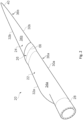
Figure 2 shows a wind turbine blade comprising separable wind turbine blade portions; -
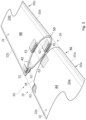
Figure 3 shows a view of two adjacent wind turbine blade portions; -
Figure 4 shows a schematic view of the interior of the blade (with one blade shell half removed for clarity) at the joint between two blade portions, showing the main and trailing edge shear webs terminating away from the joint; -
Figure 5 shows a schematic cross section view in the plane of the main shear web at the joint; -
Figure 6 shows a schematic top view of the main shear web at the joint; -
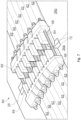
Figure 7 shows a view from above of a joint between two adjacent wind turbine blade portions; -
Figure 8 shows a schematic top view of first example of a branched shear web; -
Figure 9 shows a schematic top view of second example of a branched shear web; and -
Figure 10 shows a schematic top view of third example of a branched shear web. - In this specification, terms such as leading edge, trailing edge, pressure surface, suction surface, thickness, chord and planform are used. While these terms are well known and understood to a person skilled in the art, definitions are given below for the avoidance of doubt.
- The term leading edge is used to refer to an edge of the blade which will be at the front of the blade as the blade rotates in the normal rotation direction of the wind turbine rotor.
- The term trailing edge is used to refer to an edge of a wind turbine blade which will be at the back of the blade as the blade rotates in the normal rotation direction of the wind turbine rotor.
- The chord of a blade is the straight line distance from the leading edge to the trailing edge in a given cross section perpendicular to the blade spanwise direction.
- A pressure surface (or windward surface) of a wind turbine blade is a surface between the leading edge and the trailing edge, which, when in use, has a higher pressure than a suction surface of the blade.
- A suction surface (or leeward surface) of a wind turbine blade is a surface between the leading edge and the trailing edge, which will have a lower pressure acting upon it than that of a pressure surface, when in use.
- The thickness of a wind turbine blade is measured perpendicularly to the chord of the blade and is the greatest distance between the pressure surface and the suction surface in a given cross section perpendicular to the blade spanwise direction.
- The term spanwise is used to refer to a direction from a root end of a wind turbine blade to a tip end of the blade, or vice versa. When a wind turbine blade is mounted on a wind turbine hub, the spanwise and radial directions will be substantially the same.
- A view which is perpendicular to both of the spanwise and chordwise directions is known as a planform view. This view looks along the thickness dimension of the blade.
- The term spar cap is used to refer to a longitudinal, generally spanwise extending, reinforcing member of the blade. The spar cap may be embedded in the blade shell, or may be attached to the blade shell. The spar caps of the windward and leeward sides of the blade may be joined by one or more shear webs extending through the interior hollow space of the blade. The blade may have more than one spar cap on each of the windward and leeward sides of the blade. The spar cap may form part of a longitudinal reinforcing spar or support member of the blade. In particular, the first and second spar caps may form part of the load bearing structure extending in the longitudinal direction that carries the flap-wise bending loads of the blade.
- The term shear web is used to refer to a longitudinal, generally spanwise extending, reinforcing member of the blade that can transfer load from one of the windward and leeward sides of the blade to the other of the windward and leeward sides of the blade.
-
Figure 1 shows awind turbine 10 including atower 12 and anacelle 14 disposed at the apex of thetower 12. - A
rotor 16 is operatively coupled via a gearbox to a generator (not shown) housed inside thenacelle 14. Therotor 16 includes acentral hub 18 and a plurality ofrotor blades 20, which project outwardly from thecentral hub 18. While the embodiment shown infigure 1 has 3 blades, it will be realised by the skilled person that other numbers of blades are possible. - When wind blows against the
wind turbine 10, theblades 20 generate a lift force which causes therotor 16 to rotate, which in turn causes the generator within thenacelle 14 to generate electrical energy. -
Figure 2 illustrates a splitwind turbine blade 20 for use in such a wind turbine. Thewind turbine blade 20 includes a first windturbine blade portion 22 and a second windturbine blade portion 24, which may be connected at a joint interface to form theblade 20. - As will be described below, each wind
turbine blade portion blade 20 before each blade is mounted to thehub 18 to form therotor 16 of the wind turbine. Joining theblade portions - The
first blade portion 22 includes aroot end 28, aleading edge 30a, a trailingedge 32a, apressure side 34a and asuction side 36a. Similarly, thesecond blade portion 24 has atip end 40, aleading edge 30b, a trailingedge 32b, apressure side 34b and asuction side 36b. The two blade portions may be joined at a connection joint 26, which is covered by a faring 66. - While the example shown in
figure 2 has two blade portions, it will be understood that a blade may have three or more blade portions with a joint between adjacent blade portions. - While the first wind
turbine blade portion 22 is showing as being nearer the root of theblade 20 and second windturbine blade portion 24 is shown as being nearer the tip of thewind turbine blade 20, the labels "first" and "second" are not intended to be limiting and any specific property disclosed as being associated with the first or second wind turbine blade portion may be applied to the other wind turbine blade portion. -
Figure 3 shows the first and second windturbine blade portions figure 3 , it can be seen that the windturbine blade portions first blade portion 22 may have anupper shell half 44 and alower shell half 46. The shell halves 44, 46 may define thepressure side 34a,suction side 36a, theleading edge 30a, and the trailingedge 32a of thefirst blade portion 22. Similarly, thesecond blade portion 24 may have anupper shell half 48 and alower shell half 50. The shell halves 48, 50 may define thepressure side 34b,suction side 36b, theleading edge 30b, and the trailingedge 32b of thesecond blade portion 24. - The
first blade portion 22 may have afirst blade interface 38 at one end of the first blade portion, and thesecond blade portion 24 may have asecond blade interface 42 at one end of thesecond blade portion 24. The first andsecond blade portions attachments portions 62. - The
blade 20 shown infigure 3 has opposing pairs of first and second connectingelements 62 disposed on the upper and lower shell halves 44, 46 and disposed in two discrete positions, one nearer to theleading edge elements 62 may generally correspond to the location of reinforcing member(s), e.g. main spar and trailing edge spar or stringer, of the load bearing structure within the blade. - While the
blade portions blade portions - The
blade portions figure 4 , each blade portion has a first reinforcing member in the form of amain spar 70 and a second reinforcing member in the form of atrailing edge spar 71. In other examples, there may be a single reinforcing member in each blade portion. As shown infigure 4 , the reinforcing member may include a spar cap, associated with each of the upper and lower shell halves of each blade portion, and a shear web extending between the spar caps. Infigure 4 the upper shell halves 44, 48 have been removed for clarity and in combination withfigure 5 it can be seen that themain spar 70 has afirst spar cap 72 associated with theupper shell half second blade portions second spar cap 74 associated with thelower shell half second blade portions - A
shear web 76 extends between thefirst spar cap 72 and thesecond spar cap 74 of each of the first andsecond blade portions shear webs 76 of the first andsecond blade portions termination 78, which is away from the respective first and second blade interfaces 38, 42. As can be seen infigures 4 and5 , there is no shear web between the first and second spar caps 72, 74 which extends in a longitudinal direction across the first and second blade interfaces 38, 42, when thefirst blade portion 22 and thesecond blade portion 24 are coupled together by the connection joint 26. As theshear webs 76 approach the joint 60 the shear load is phased out of theshear web 76 and transferred into the spar caps 72, 74. The coupling of the first andsecond blade portions shear webs 76 across the joint 60. This simplifies access and time and therefore cost to couple the first andsecond blade portions - The first and second spar caps 72, 74 may be integrated into the respective upper and lower shell halves 44, 48, 46, 50 of the first and
second blade portions - The spar caps may include pre-cured, solid pultrusion strips for reinforcement or strengthening purposes. These pultrusions are often long, flat strips of carbon filament embedded in pure resin matrix. Pultrusions may extend along a significant portion of blade spanwise extent. Pultrusions may extend for a substantial length of the first and
second blade portions - As illustrated in
figure 6 , the connection joint 26 between the first andsecond blade portions blade 20 at the first and second blade interfaces 38, 42 includes a plurality of connectingelements 62 integrated into theblade portions element 62 may be integrated into the spar caps 72, 74 at their respective blade interfaces 38, 42. The connectingelements 62 may be distributed along a width of the spar caps 72, 74 (e.g. in a chordwise direction of the blade) and may be substantially embedded within the material that forms the spar caps 72, 74. - The spar caps 72, 74 may form part of the load bearing structure extending in the longitudinal direction that carries the flap-wise bending loads of the
blade 20. The load bearing structure of the first andsecond blade portions elements 62 may be overlaid on tapered end portions of aspar cap elements 62 may therefore also form part of the load bearing structure such that the connectingelements 62 may contribute to the increasing cross section of the load bearing structure of the first andsecond blade portions spar cap elements 62 may be overlaid on widened end portions of thespar cap - As best shown in
figure 6 , at some distance away from the blade interfaces 38, 42, thespar cap 74 includes a stack of pultruded carbon strips 80 of substantially constant width. The height of thestack 80 may vary along the length of theblade 20 according to the local load but the stack width may remain substantially constant along the length of the blade. Thestack 80 is transitioned into aslab portion 82 of thespar cap 74. Theslab 82 forms part of the longitudinal load bearing structure of the blade. Theslab 82 may include carbon or glass fibre reinforced material, e.g. in the form of carbon or glass pre-preg or infused carbon or glass fabric. - The
slab 82 may be interleaved with thepultruded carbon stack 80 so as to transition from thestack 80 into theslab 82. The width of theslab 82 may be substantially the same as that of the width of thestack 80 at the start of the transition furthest from the blade interfaces 38, 42. The strips of pultruded carbon in thestack 80 may be interleaved so as to form a scarf joint at the transition with theslab 82. It can therefore be seen that thepultruded carbon stack 80 terminates further away from the blade interfaces 38, 42 than does thetermination 78 of theshear web 76. Theslab 82 has a width which tapers outwardly towards the first and second blade interfaces 38, 42. The width of theslab 82 is increased up to approximately the same width as the group of connectingelements 62. - The connecting
elements 62 may comprise generally wedge shaped members. The connectingelement 62 may include carbon or glass fibre reinforced plastic material for example. The wedge shaped connectingelements 62 may be interleaved with the end of theslab 82 nearest the blade interfaces 38, 42. Alternatively, the wedge shaped connectingelement 62 may be laid on top of theslab 82 and bonded or co-cured with theslab 82. The connectingelements 62 are used to clamp together the first andsecond blade portions elements 62 are transferred into theslab 82 and into thestack 80 of the first and second spar caps 72, 74. Progressing along the longitudinal direction of theblade 20 towards the first or second blade interfaces 38, 42, the thickness of the upper and lower shell halves 44, 48, 46, 50 may increase. That is to say, the thickness, or height of thestack 80 of pultruded carbon is transitioned into theslab 82 which has an increasing thickness towards the connectingelements 62, before decreasing in thickness under the connectingelements 62, and the connectingelements 62 are generally wedge shaped such that the shell reaches a greater thickness adjacent the first and second blade interfaces 38, 42. - As best shown in
figures 4 and5 , thetermination 78 of theshear web 76 may be concave. In other words, thetermination 78 has a profile when viewed normal to the plane of the web which is cut back away from the respective first and second blade interfaces 38, 42. Theconcave termination 78 has a smooth curvature to avoid stress concentrations. Such curvature may have a constant radius, elliptical or other geometrical shape. Theshear web 76 has upper andlower flanges 77 by means of which theshear web 76 is attached, e.g. by co-curing or adhesive bonding to the first and second spar caps 72, 74. The height of theshear web 76 may reduce towards thetermination 78 to accommodate the reduced height between the first and second spar caps 72, 74 whose thickness increases towards the first and second blade interfaces 38, 42. - The trailing
edge spar 71 may have a similar arrangement to the main spar 70.All features and variants described above with reference to themain spar 70 may apply equally or similarly to thetrailing edge spar 71. - Of course, it will be apparent that the
blade 20 may have only a single spar, two spars, or more than two spars, or the connectingelements 62 may be positioned away from the spar locations. Instead of the trailing edge spar, a trailing edge stringer may instead be provided. The trailing edge stringers may be incorporated into the blade portions so as to form part of the outer shell of theblade portions - The connecting
elements 62 shown infigure 3 may be formed as a plurality of composite loops attached to the blade shell, having apertures therethrough in a thickness direction of the blade. However, the connecting elements could alternatively have other shapes and be made of other materials for providing anchoring of the tension members to the blade portions. The connecting elements may be embedded in the blade shell. Apertures through the connecting elements may extend through the blade shell. -
Figure 7 shows a view from above of the joint 60 once theblade portions figure 4 shows the joint at one region or array of the connectingelements 62, it will be understood that a similar arrangement may be used at all or any other connecting elements of the blade. - As can be seen from
figure 7 , the joint 60 comprises retention blocks 68 and connection members in the form of cross pins 69. The cross pins extend through apertures in the connectingelements 62 and the retention blocks act against the cross pins. This type of joint is described in applicant's co-pending applicationPCT/DK2017/050441 tension members 64 may pass. The tension members may be bolts or pins. The bolts or pins may be threaded and secured against the retention blocks 68 by nuts. When thetension members 64 are put under tension, the retention blocks 68 acts against the cross pins 69 such that theblade portions - It is also envisioned that this arrangement may be mirrored on the other side of the joint 60, such that there are tension members on both the interior and the exterior of the
blade portions edge connecting elements 62, although there the cross pins may extend from one side of the blade through to the other side of the blade, since the apertures in the connectingelements 62 at the trailing edge do not open into the interior of the blade but instead pass through from one side of the blade to the other side. - It is also envisioned that the joint 60 may comprise a generally U-shaped clamp having a base and legs extending from the base which pass through the apertures of the connecting
elements 62, and with a tension member (e.g. a bolt or pin) joining the free ends of the legs of the U-shaped clamp. Tensioning the tension member imparts a corresponding tension in the base of the U-shaped clamp. The base of the U-shaped clamp may therefore also be considered as a tension member. Such a joint configuration and others which may be used for joining blade portions is known from applicant's co-pending applicationPCT/DK2017/050441 - Regardless of the specific type of connecting elements and connecting members, the
tension members 64 may extend across the blade joint 60, and be coupled to connectingmembers 68 at both ends to anchor the tension members to the blade portions. - The connecting elements may alternatively be arranged as a plurality of threaded bushings formed in the spar caps. The spar caps of the first and second blade portions may have an increasing dimension (increasing width and/or thickness) toward the first and second blade interfaces. Threaded bushings may be formed, e.g. in a row or rows, in the ends of the spar caps at the first and second blade interfaces. An axially extended threaded rod may be used to connect respective pairs of the threaded bushings to join the first and second blade portions together.
- The shear web 76 (of the
main spar 70 or the trailing edge spar 71) may be branched in the longitudinal direction towards the first and/or second blade interfaces 38, 42 of the first and/orsecond blade portions shear web portions 73 towards thetermination 78. The branched shear web can increase the stability or stiffness of the blade or blade shell. - A first example of a branched shear web is shown in
figure 8 in which like reference numerals have been used to denote like parts with the preceding examples. As previously, thespar cap figures 6 and8 , it can be seen that as the width of thespar cap shear web 76 increases towards the first and second blade interfaces 38, 42. Depending on the dimensions of theblade 20 and the maximum width of the spar caps 72, 74 this distance may lead to instability or insufficient stiffness of theblade 20 or the blade shell if theshear web 76 is not branched. - By branching the
shear web 76 into two or more discreteshear web portions 73, as shown infigure 8 , the distance between the lateral edge of thespar cap shear web portions 73 is much reduced so that the branched shear web can increase the stability or stiffness of the blade or blade shell. In the example shown infigure 8 , the branched shear web forms a generally Y-shaped or bifurcated shear web in which the twoshear web portions 73 split from a fork and diverge outwardly (i.e. in the blade chordwise direction) towards the respective first and second blade interfaces 38, 42. -
Figure 9 shows this second example of a branched shear web which shares many similarities to the first example offigure 8 and so like reference numerals have been used to denote like or similar parts. The main difference between the example infigure 9 and the example infigure 8 is that the shear web is divided into three discreteshear web portions 73 to form a trifurcated shear web, where each of the three discrete shear web portions diverge from a common fork. -
Figure 10 shows a third example of a branched shear web which again shares many similarities with the first and second examples offigures 10 and 11 and so like reference numerals have been used to denote like or similar parts. The main difference in the third example is that the branched shear web is divided to form a main web and two or more side webs so as to form the discreteshear web portions 73. The side webs are not directly connected to the main web and are connected via the spar caps 72, 74. The side webs may overlap with the main web in the longitudinal direction, or alternatively the side webs may commence where the main web terminates such that the side webs and the main web do not substantially overlap in the longitudinal direction. The side webs may be orientated so as to diverge away from one another and away from the main web in the longitudinal direction towards the first and second blade interfaces 38, 42. The main web may be terminated further from the first and second blade interfaces 38, 42 as compared with the examples shown infigures 6 and8 . In a further example, the side webs may be oriented substantially parallel with the main web. - The branched shear web configurations described above with reference to
figures 10 to 12, or any of the various alternatives described, may be adopted in any of the examples described above with reference tofigures 3 to 8 . In particular, the branched shear webs may be used advantageously in themain spar 70 described with reference tofigures 4 to 6 . Additionally or alternatively the branched shear webs may be used advantageously in thetrailing edge spar 71 described with reference tofigures 4 ,7 and8 , e.g. where the discreteshear web portions 73 may each be scarfed into the connectingelement 62. - The
termination 78 of theshear web 76 and/or theshear web portions 73 in the various examples of the branched shear web described above may have aconcave termination 78 similar to that described above with reference tofigure 5 . Alternatively, the termination may be substantially linear and aligned with the thickness direction of the blade. Yet further alternatively, thetermination 78 may taper to a point so that it may be scarfed into the connectingelement 62 in the manner described above with reference tofigure 7 . - Whilst the
shear web 76 and/or the discreteshear web portions 73 of the branched shear web may be terminated away from the respective first and second blade interfaces 38, 42 such that there is no shear web between the first and second spar caps 72, 74 extending in a longitudinal direction across the first and second blade interfaces 38, 42 when thefirst blade portion 22 and thesecond blade portion 24 are coupled together by the connection joint 26, in an alternative configuration the discreteshear web portions 73 of the branched shear web may extend up to or across the first and second blade interfaces 38, 42 such that there is a shear web between the first and second spar caps extending in a longitudinal direction across the first and second blade interfaces when the first blade portion and the second blade portion are coupled together by the connection joint. Where the shear web or shear web portions extend across the blade interfaces, then the shear web or shear web portions may overlap such that they may be joined together in the vicinity of the joint 60. - A removable inspection hatch may be provided in the blade outer surface covering the tension members to permit access to the tension members.
- Where the blade comprises two blade portions, the joint may be provided approximately in the mid span portion of the blade or may be provided nearer the root end or nearer the tip end of the blade. Where the blade comprises three or more blade portions the joints may be provided spaced approximately equidistantly or otherwise along the spanwise direction.
- Although the invention has been described above with reference to one or more preferred embodiments, it will be appreciated that various changes or modifications may be made without departing from the scope of the invention as defined in the appended claims.
Claims (15)
- A wind turbine blade (20) comprising:a first wind turbine blade portion (22) having an upper shell half (44) and a lower shell half (46) that defines a suction side, pressure side, leading edge, and a trailing edge of the blade, the first blade portion further including a first blade interface (38) at one end of the first blade portion;a second blade portion (24) having an upper shell half (48) and a lower shell half (50) that defines a suction side, pressure side, leading edge, and a trailing edge of the blade, the second blade portion further including a second blade interface (42) at one end of the second blade portion, wherein the first blade portion and the second blade portion are configured to be coupled together at the first and second blade interfaces;a connection joint (26) for coupling the first and second blade portions (22, 24) together;a first spar cap (72) associated with the upper shell half (44, 48) and a second spar cap (74) associated with the lower shell half (46, 50) of each of the first and second blade portions (22, 24); anda shear web (76) extending between the first spar cap (72) and the second spar cap (74) of each of the first and second blade portions,wherein the shear webs (76) of the first and second blade portions (22, 24) are terminated away from the respective first and second blade interfaces (38, 42), and there is no shear web between the first and second spar caps (72, 74) extending in a longitudinal direction across the first and second blade interfaces when the first blade portion and the second blade portion are coupled together by the connection joint (26)characterised in that the first and second spar caps (72, 74) form part of a load bearing structure extending in the longitudinal direction that carries flap-wise bending loads of the blade in use, and the load bearing structure of the first and second blade (22, 24) portions have a cross section that increases toward the respective first and second blade interfaces (38, 42).
- A wind turbine blade according to claim 1, wherein the first and second spar caps (72, 74) are integrated into the upper and lower shell halves of the first and/or second blade portion (22, 24).
- A wind turbine blade according to claim 1 or claim 2, wherein a width and/or thickness of the first and second spar caps (72, 74) increases in the longitudinal direction toward the first and/or second blade interfaces (38, 42) of the first and/or second blade portions respectively.
- A wind turbine blade according to any preceding claim, wherein a shell thickness of the upper and lower shell halves of the first and second blade portions (22, 24) increases in the longitudinal direction toward the first and second blade interfaces (38, 42) of the first and second blade portions respectively.
- A wind turbine blade according to any preceding claim, wherein the termination (78) of the shear web (76) is concave.
- A wind turbine blade according to any preceding claim, wherein the shear web (76) extending between the first spar cap (72) and the second spar cap (74) is branched in the longitudinal direction toward the first and/or second blade interfaces (38, 42) of the first and/or second blade portions respectively.
- A wind turbine blade according to claim 6, wherein the branched shear web (76) extending between the first spar cap (72) and the second spar cap (74) is divided into two or more discrete shear web portions (73).
- A wind turbine blade according to claim 7, wherein at least some of the shear web portions (73) are overlapping in the longitudinal direction.
- A wind turbine blade according to any preceding claim, wherein the connection joint (26) comprises a plurality of connecting elements (62) integrated into the first and second blade portions at the first and second blade interfaces.
- A wind turbine blade according to claim 9, wherein each of the plurality of connecting elements (62) is wedge shaped.
- A wind turbine blade according to claim 9 or claim 10, wherein the first and second spar caps (72, 74) are each associated with a respective group of the connecting elements (62), wherein the group of connecting elements are arranged chordwise and have a group width, wherein a width of the first and second spar caps increases in the longitudinal direction toward the first and second blade interfaces (38, 42) of the first and second blade portions (22, 24) respectively, and wherein the width of the first and second spar caps adjacent the first and second blade interfaces substantially equals the group width of the associated group of connecting elements.
- A wind turbine blade according to any of claims 9 to 11, wherein the shear webs (76) of the first and/or second blade portions (22, 24) have their termination (78)) substantially coincident with a distal end of the connecting elements (62) furthest from the respective first and second blade interfaces.
- A wind turbine blade according to any of claims 9 to 12, wherein the connection joint (26) further comprises at least one tension member (64) for coupling to the connecting elements to join the first wind turbine blade portion to the second wind turbine blade portion.
- A wind turbine blade according to any of claims 9 to 13, wherein each connecting element (62) has an eye that defines at least in part a bore that extends from an exterior to an interior of one of the first or second blade portions.
- A wind turbine blade according to any preceding claim, wherein the first and second blade interfaces (38, 42) include respective plates configured to abut when the first blade portion (22) and the second blade portion (24) are coupled together by the connection joint.
Applications Claiming Priority (2)
| Application Number | Priority Date | Filing Date | Title |
|---|---|---|---|
| DKPA201870816 | 2018-12-14 | ||
| PCT/DK2019/050388 WO2020119874A1 (en) | 2018-12-14 | 2019-12-12 | Wind turbine blade |
Publications (3)
| Publication Number | Publication Date |
|---|---|
| EP3894693A1 EP3894693A1 (en) | 2021-10-20 |
| EP3894693C0 EP3894693C0 (en) | 2024-07-10 |
| EP3894693B1 true EP3894693B1 (en) | 2024-07-10 |
Family
ID=68944132
Family Applications (1)
| Application Number | Title | Priority Date | Filing Date |
|---|---|---|---|
| EP19823772.9A Active EP3894693B1 (en) | 2018-12-14 | 2019-12-12 | Wind turbine blade |
Country Status (4)
| Country | Link |
|---|---|
| US (1) | US11920556B2 (en) |
| EP (1) | EP3894693B1 (en) |
| CN (1) | CN113383159A (en) |
| WO (1) | WO2020119874A1 (en) |
Families Citing this family (8)
| Publication number | Priority date | Publication date | Assignee | Title |
|---|---|---|---|---|
| US11598318B2 (en) * | 2019-12-13 | 2023-03-07 | General Electric Company | Assembly and method for preventing exposure of personnel to an opening defined by a surface of a wind turbine |
| WO2022022791A1 (en) * | 2020-07-27 | 2022-02-03 | Vestas Wind Systems A/S | Wind turbine lightning protection system |
| CN117940663A (en) * | 2021-08-06 | 2024-04-26 | 纳布拉温德科技有限公司 | Transition portion of composite laminate for modular blade |
| EP4155530B1 (en) | 2021-09-23 | 2024-05-15 | Wobben Properties GmbH | Wind turbine rotor blade |
| EP4191052A1 (en) * | 2021-12-01 | 2023-06-07 | Siemens Gamesa Renewable Energy A/S | Wind turbine blade and method for manufacturing a wind turbine blade |
| CN115977866B (en) * | 2023-03-20 | 2023-05-23 | 新创碳谷集团有限公司 | Modularized wind power blade and connecting structure thereof |
| CN115977867B (en) * | 2023-03-20 | 2023-06-09 | 新创碳谷集团有限公司 | A segmented blade module structure and its forming method |
| WO2025131215A1 (en) * | 2023-12-21 | 2025-06-26 | Vestas Wind Systems A/S | A wind turbine blade |
Citations (13)
| Publication number | Priority date | Publication date | Assignee | Title |
|---|---|---|---|---|
| DE102009003421A1 (en) | 2008-02-05 | 2009-08-06 | General Electric Co. | Rotor blades of a wind turbine and method for producing the same |
| DE102009002637A1 (en) | 2009-04-24 | 2010-10-28 | Wobben, Aloys | Rotor blade for wind turbine, has support structure with belt, where belt has certain thickness and width, and width of belt is adapted at constant thickness along length of belt at load distribution |
| EP1761702B1 (en) | 2004-06-30 | 2011-11-23 | Vestas Wind Systems A/S | Wind turbine blades made of two separate sections |
| DE102011051172A1 (en) | 2011-06-17 | 2012-12-20 | Lars Kästner | Laminated rotor blade for wind turbine, has several pultrusion portions that are arranged at surface of insert portion, and are coated with fiber or woven fabric tube that is longer than that of insert portion |
| US8449259B1 (en) | 2012-05-15 | 2013-05-28 | Modular Wind Energy, Inc. | Lightning protection for wind turbine blades, and associated systems and methods |
| WO2014094780A1 (en) | 2012-12-20 | 2014-06-26 | Vestas Wind Systems A/S | Turbine blade shear web alignment |
| WO2016156184A1 (en) | 2015-03-31 | 2016-10-06 | Siemens Aktiengesellschaft | A fiber lay-up, a blade root for a wind turbine rotor blade, a wind turbine rotor blade and a method for producing a wind turbine rotor blade |
| EP3150848A1 (en) | 2014-05-29 | 2017-04-05 | Nabrawind Technologies SL | Screwed connection for a modular blade |
| EP3032092B1 (en) | 2014-12-10 | 2017-10-18 | General Electric Company | Spar cap for a wind turbine rotor blade |
| WO2018121824A1 (en) | 2016-12-28 | 2018-07-05 | Vestas Wind Systems A/S | Joint for connecting a wind turbine rotor blade to a rotor hub and associated methods |
| WO2018121826A1 (en) | 2016-12-28 | 2018-07-05 | Vestas Wind Systems A/S | Connection joint for a sectional wind turbine rotor blade and associated methods |
| EP1815137B1 (en) | 2004-11-24 | 2018-09-05 | Siemens Aktiengesellschaft | Windmill blade |
| WO2019228906A1 (en) | 2018-05-29 | 2019-12-05 | Wobben Properties Gmbh | Wind power plant rotor blade |
Family Cites Families (15)
| Publication number | Priority date | Publication date | Assignee | Title |
|---|---|---|---|---|
| US20110158788A1 (en) * | 2008-08-31 | 2011-06-30 | Vestas Wind Systems A/S | A sectional blade |
| US8510947B2 (en) * | 2008-11-14 | 2013-08-20 | General Electric Company | Turbine blade fabrication |
| JP4939640B2 (en) | 2010-10-22 | 2012-05-30 | 三菱重工業株式会社 | Wind turbine rotor |
| US7922454B1 (en) * | 2010-10-29 | 2011-04-12 | General Electric Company | Joint design for rotor blade segments of a wind turbine |
| US20130189114A1 (en) | 2011-12-09 | 2013-07-25 | Euros Entwicklungsgesellschaft Fur Windkraftan- Lagen Mbh | Method of manufacturing a wind turbine blade and a wind turbine blade |
| IN2012DE00573A (en) * | 2012-02-29 | 2015-06-05 | Gen Electric | |
| US9790919B2 (en) | 2014-02-25 | 2017-10-17 | General Electric Company | Joint assembly for rotor blade segments of a wind turbine |
| WO2015155079A1 (en) * | 2014-04-07 | 2015-10-15 | Wobben Properties Gmbh | Rotor blade for a wind turbine |
| GB201509155D0 (en) | 2015-05-28 | 2015-07-15 | Blade Dynamics Ltd | A wind turbine blade and method of assembling a wind turbine blade |
| US10760545B2 (en) | 2017-02-07 | 2020-09-01 | General Electric Company | Joint configuration for a segmented wind turbine rotor blade |
| CN108691728A (en) * | 2017-04-10 | 2018-10-23 | 远景能源(江苏)有限公司 | Wind turbine blade with spar caps and preparation method thereof and spar caps unit for the wind turbine blade |
| US10605227B2 (en) * | 2017-04-12 | 2020-03-31 | General Electric Company | Segmented wind turbine rotor blade with welded joint |
| US11499529B2 (en) * | 2018-07-20 | 2022-11-15 | Vestas Wind Systems A/S | Method of balancing turbine blades |
| US10830207B2 (en) * | 2018-08-28 | 2020-11-10 | General Electric Company | Spar configuration for jointed wind turbine rotor blades |
| DE102019128487A1 (en) * | 2019-10-18 | 2021-04-22 | Vensys Energy Ag | Connection between longitudinal segments of a rotor blade of the rotor of a wind turbine |
-
2019
- 2019-12-12 WO PCT/DK2019/050388 patent/WO2020119874A1/en not_active Ceased
- 2019-12-12 US US17/311,806 patent/US11920556B2/en active Active
- 2019-12-12 CN CN201980091328.XA patent/CN113383159A/en active Pending
- 2019-12-12 EP EP19823772.9A patent/EP3894693B1/en active Active
Patent Citations (13)
| Publication number | Priority date | Publication date | Assignee | Title |
|---|---|---|---|---|
| EP1761702B1 (en) | 2004-06-30 | 2011-11-23 | Vestas Wind Systems A/S | Wind turbine blades made of two separate sections |
| EP1815137B1 (en) | 2004-11-24 | 2018-09-05 | Siemens Aktiengesellschaft | Windmill blade |
| DE102009003421A1 (en) | 2008-02-05 | 2009-08-06 | General Electric Co. | Rotor blades of a wind turbine and method for producing the same |
| DE102009002637A1 (en) | 2009-04-24 | 2010-10-28 | Wobben, Aloys | Rotor blade for wind turbine, has support structure with belt, where belt has certain thickness and width, and width of belt is adapted at constant thickness along length of belt at load distribution |
| DE102011051172A1 (en) | 2011-06-17 | 2012-12-20 | Lars Kästner | Laminated rotor blade for wind turbine, has several pultrusion portions that are arranged at surface of insert portion, and are coated with fiber or woven fabric tube that is longer than that of insert portion |
| US8449259B1 (en) | 2012-05-15 | 2013-05-28 | Modular Wind Energy, Inc. | Lightning protection for wind turbine blades, and associated systems and methods |
| WO2014094780A1 (en) | 2012-12-20 | 2014-06-26 | Vestas Wind Systems A/S | Turbine blade shear web alignment |
| EP3150848A1 (en) | 2014-05-29 | 2017-04-05 | Nabrawind Technologies SL | Screwed connection for a modular blade |
| EP3032092B1 (en) | 2014-12-10 | 2017-10-18 | General Electric Company | Spar cap for a wind turbine rotor blade |
| WO2016156184A1 (en) | 2015-03-31 | 2016-10-06 | Siemens Aktiengesellschaft | A fiber lay-up, a blade root for a wind turbine rotor blade, a wind turbine rotor blade and a method for producing a wind turbine rotor blade |
| WO2018121826A1 (en) | 2016-12-28 | 2018-07-05 | Vestas Wind Systems A/S | Connection joint for a sectional wind turbine rotor blade and associated methods |
| WO2018121824A1 (en) | 2016-12-28 | 2018-07-05 | Vestas Wind Systems A/S | Joint for connecting a wind turbine rotor blade to a rotor hub and associated methods |
| WO2019228906A1 (en) | 2018-05-29 | 2019-12-05 | Wobben Properties Gmbh | Wind power plant rotor blade |
Non-Patent Citations (1)
| Title |
|---|
| "Windkraftanlagen Grundlagen -Technik Einsatz-Wirtschaftlichkei, 6. Auflage", 1 January 2016, SPRINGER BERLIN HEIDELBERG, ISBN: 978-3-662-53154-9, article HAU ERICH: "onstruktive Auslegung der Rotorblätte", pages: 312 - 313, XP093269654 |
Also Published As
| Publication number | Publication date |
|---|---|
| EP3894693A1 (en) | 2021-10-20 |
| WO2020119874A1 (en) | 2020-06-18 |
| US11920556B2 (en) | 2024-03-05 |
| US20220112875A1 (en) | 2022-04-14 |
| EP3894693C0 (en) | 2024-07-10 |
| CN113383159A (en) | 2021-09-10 |
Similar Documents
| Publication | Publication Date | Title |
|---|---|---|
| EP3894693B1 (en) | Wind turbine blade | |
| EP3155258B1 (en) | A tip system for a wind turbine blade | |
| US10619622B2 (en) | Wind turbine blade with hybrid spar cap and associated method for making | |
| EP3997332B1 (en) | Connection for split wind turbine blade | |
| EP3997331B1 (en) | Connection for split wind turbine blade | |
| US12049865B2 (en) | Wind turbine blade with a plurality of shear webs | |
| US20220018327A1 (en) | Manufacturing of segmented wind turbine blade | |
| CN111094740A (en) | Scarf joint connection of misaligned spar caps | |
| US20250137436A1 (en) | Winged spar cap configuration for a jointed wind turbine blade | |
| US12503996B2 (en) | Wind turbine blade with leeward reinforcement structures and windward reinforcement structures | |
| EP4174310B1 (en) | Segmented wind turbine blade | |
| EP4132776B1 (en) | Main laminate, wind turbine blade comprising such a main laminate and methods of manufacture. | |
| US11421647B2 (en) | Beam for a wind turbine blade, wind turbine blade, wind turbine, method for manufacturing a beam for a wind turbine blade and method for manufacturing a wind turbine blade | |
| US12503995B2 (en) | Modular wind turbine blade | |
| US12338788B2 (en) | Wind turbine blade | |
| WO2025131215A1 (en) | A wind turbine blade | |
| CN115038861A (en) | Wind turbine blade |
Legal Events
| Date | Code | Title | Description |
|---|---|---|---|
| STAA | Information on the status of an ep patent application or granted ep patent |
Free format text: STATUS: UNKNOWN |
|
| STAA | Information on the status of an ep patent application or granted ep patent |
Free format text: STATUS: THE INTERNATIONAL PUBLICATION HAS BEEN MADE |
|
| PUAI | Public reference made under article 153(3) epc to a published international application that has entered the european phase |
Free format text: ORIGINAL CODE: 0009012 |
|
| STAA | Information on the status of an ep patent application or granted ep patent |
Free format text: STATUS: REQUEST FOR EXAMINATION WAS MADE |
|
| 17P | Request for examination filed |
Effective date: 20210712 |
|
| AK | Designated contracting states |
Kind code of ref document: A1 Designated state(s): AL AT BE BG CH CY CZ DE DK EE ES FI FR GB GR HR HU IE IS IT LI LT LU LV MC MK MT NL NO PL PT RO RS SE SI SK SM TR |
|
| DAV | Request for validation of the european patent (deleted) | ||
| DAX | Request for extension of the european patent (deleted) | ||
| STAA | Information on the status of an ep patent application or granted ep patent |
Free format text: STATUS: EXAMINATION IS IN PROGRESS |
|
| 17Q | First examination report despatched |
Effective date: 20220908 |
|
| RIC1 | Information provided on ipc code assigned before grant |
Ipc: F03D 1/06 20060101AFI20231214BHEP |
|
| GRAP | Despatch of communication of intention to grant a patent |
Free format text: ORIGINAL CODE: EPIDOSNIGR1 |
|
| STAA | Information on the status of an ep patent application or granted ep patent |
Free format text: STATUS: GRANT OF PATENT IS INTENDED |
|
| INTG | Intention to grant announced |
Effective date: 20240209 |
|
| GRAS | Grant fee paid |
Free format text: ORIGINAL CODE: EPIDOSNIGR3 |
|
| GRAA | (expected) grant |
Free format text: ORIGINAL CODE: 0009210 |
|
| STAA | Information on the status of an ep patent application or granted ep patent |
Free format text: STATUS: THE PATENT HAS BEEN GRANTED |
|
| AK | Designated contracting states |
Kind code of ref document: B1 Designated state(s): AL AT BE BG CH CY CZ DE DK EE ES FI FR GB GR HR HU IE IS IT LI LT LU LV MC MK MT NL NO PL PT RO RS SE SI SK SM TR |
|
| REG | Reference to a national code |
Ref country code: CH Ref legal event code: EP |
|
| REG | Reference to a national code |
Ref country code: DE Ref legal event code: R096 Ref document number: 602019055075 Country of ref document: DE |
|
| U01 | Request for unitary effect filed |
Effective date: 20240719 |
|
| U07 | Unitary effect registered |
Designated state(s): AT BE BG DE DK EE FI FR IT LT LU LV MT NL PT SE SI Effective date: 20240801 |
|
| PG25 | Lapsed in a contracting state [announced via postgrant information from national office to epo] |
Ref country code: NO Free format text: LAPSE BECAUSE OF FAILURE TO SUBMIT A TRANSLATION OF THE DESCRIPTION OR TO PAY THE FEE WITHIN THE PRESCRIBED TIME-LIMIT Effective date: 20241010 |
|
| PG25 | Lapsed in a contracting state [announced via postgrant information from national office to epo] |
Ref country code: PL Free format text: LAPSE BECAUSE OF FAILURE TO SUBMIT A TRANSLATION OF THE DESCRIPTION OR TO PAY THE FEE WITHIN THE PRESCRIBED TIME-LIMIT Effective date: 20240710 Ref country code: GR Free format text: LAPSE BECAUSE OF FAILURE TO SUBMIT A TRANSLATION OF THE DESCRIPTION OR TO PAY THE FEE WITHIN THE PRESCRIBED TIME-LIMIT Effective date: 20241011 |
|
| PG25 | Lapsed in a contracting state [announced via postgrant information from national office to epo] |
Ref country code: IS Free format text: LAPSE BECAUSE OF FAILURE TO SUBMIT A TRANSLATION OF THE DESCRIPTION OR TO PAY THE FEE WITHIN THE PRESCRIBED TIME-LIMIT Effective date: 20241110 |
|
| PG25 | Lapsed in a contracting state [announced via postgrant information from national office to epo] |
Ref country code: HR Free format text: LAPSE BECAUSE OF FAILURE TO SUBMIT A TRANSLATION OF THE DESCRIPTION OR TO PAY THE FEE WITHIN THE PRESCRIBED TIME-LIMIT Effective date: 20240710 |
|
| PG25 | Lapsed in a contracting state [announced via postgrant information from national office to epo] |
Ref country code: ES Free format text: LAPSE BECAUSE OF FAILURE TO SUBMIT A TRANSLATION OF THE DESCRIPTION OR TO PAY THE FEE WITHIN THE PRESCRIBED TIME-LIMIT Effective date: 20240710 Ref country code: RS Free format text: LAPSE BECAUSE OF FAILURE TO SUBMIT A TRANSLATION OF THE DESCRIPTION OR TO PAY THE FEE WITHIN THE PRESCRIBED TIME-LIMIT Effective date: 20241010 |
|
| U20 | Renewal fee for the european patent with unitary effect paid |
Year of fee payment: 6 Effective date: 20241225 |
|
| PG25 | Lapsed in a contracting state [announced via postgrant information from national office to epo] |
Ref country code: RS Free format text: LAPSE BECAUSE OF FAILURE TO SUBMIT A TRANSLATION OF THE DESCRIPTION OR TO PAY THE FEE WITHIN THE PRESCRIBED TIME-LIMIT Effective date: 20241010 Ref country code: PL Free format text: LAPSE BECAUSE OF FAILURE TO SUBMIT A TRANSLATION OF THE DESCRIPTION OR TO PAY THE FEE WITHIN THE PRESCRIBED TIME-LIMIT Effective date: 20240710 Ref country code: NO Free format text: LAPSE BECAUSE OF FAILURE TO SUBMIT A TRANSLATION OF THE DESCRIPTION OR TO PAY THE FEE WITHIN THE PRESCRIBED TIME-LIMIT Effective date: 20241010 Ref country code: IS Free format text: LAPSE BECAUSE OF FAILURE TO SUBMIT A TRANSLATION OF THE DESCRIPTION OR TO PAY THE FEE WITHIN THE PRESCRIBED TIME-LIMIT Effective date: 20241110 Ref country code: HR Free format text: LAPSE BECAUSE OF FAILURE TO SUBMIT A TRANSLATION OF THE DESCRIPTION OR TO PAY THE FEE WITHIN THE PRESCRIBED TIME-LIMIT Effective date: 20240710 Ref country code: GR Free format text: LAPSE BECAUSE OF FAILURE TO SUBMIT A TRANSLATION OF THE DESCRIPTION OR TO PAY THE FEE WITHIN THE PRESCRIBED TIME-LIMIT Effective date: 20241011 Ref country code: ES Free format text: LAPSE BECAUSE OF FAILURE TO SUBMIT A TRANSLATION OF THE DESCRIPTION OR TO PAY THE FEE WITHIN THE PRESCRIBED TIME-LIMIT Effective date: 20240710 |
|
| PLBI | Opposition filed |
Free format text: ORIGINAL CODE: 0009260 |
|
| PG25 | Lapsed in a contracting state [announced via postgrant information from national office to epo] |
Ref country code: SM Free format text: LAPSE BECAUSE OF FAILURE TO SUBMIT A TRANSLATION OF THE DESCRIPTION OR TO PAY THE FEE WITHIN THE PRESCRIBED TIME-LIMIT Effective date: 20240710 |
|
| PG25 | Lapsed in a contracting state [announced via postgrant information from national office to epo] |
Ref country code: CZ Free format text: LAPSE BECAUSE OF FAILURE TO SUBMIT A TRANSLATION OF THE DESCRIPTION OR TO PAY THE FEE WITHIN THE PRESCRIBED TIME-LIMIT Effective date: 20240710 |
|
| PLAX | Notice of opposition and request to file observation + time limit sent |
Free format text: ORIGINAL CODE: EPIDOSNOBS2 |
|
| PG25 | Lapsed in a contracting state [announced via postgrant information from national office to epo] |
Ref country code: SK Free format text: LAPSE BECAUSE OF FAILURE TO SUBMIT A TRANSLATION OF THE DESCRIPTION OR TO PAY THE FEE WITHIN THE PRESCRIBED TIME-LIMIT Effective date: 20240710 |
|
| 26 | Opposition filed |
Opponent name: NORDEX ENERGY SE & CO. KG Effective date: 20250404 |
|
| PG25 | Lapsed in a contracting state [announced via postgrant information from national office to epo] |
Ref country code: MC Free format text: LAPSE BECAUSE OF FAILURE TO SUBMIT A TRANSLATION OF THE DESCRIPTION OR TO PAY THE FEE WITHIN THE PRESCRIBED TIME-LIMIT Effective date: 20240710 |
|
| REG | Reference to a national code |
Ref country code: CH Ref legal event code: PL |
|
| PLBB | Reply of patent proprietor to notice(s) of opposition received |
Free format text: ORIGINAL CODE: EPIDOSNOBS3 |
|
| PG25 | Lapsed in a contracting state [announced via postgrant information from national office to epo] |
Ref country code: CH Free format text: LAPSE BECAUSE OF NON-PAYMENT OF DUE FEES Effective date: 20241231 |
|
| PG25 | Lapsed in a contracting state [announced via postgrant information from national office to epo] |
Ref country code: IE Free format text: LAPSE BECAUSE OF NON-PAYMENT OF DUE FEES Effective date: 20241212 |
|
| PG25 | Lapsed in a contracting state [announced via postgrant information from national office to epo] |
Ref country code: RO Free format text: LAPSE BECAUSE OF FAILURE TO SUBMIT A TRANSLATION OF THE DESCRIPTION OR TO PAY THE FEE WITHIN THE PRESCRIBED TIME-LIMIT Effective date: 20240710 |
|
| PGFP | Annual fee paid to national office [announced via postgrant information from national office to epo] |
Ref country code: GB Payment date: 20251223 Year of fee payment: 7 |
|
| U20 | Renewal fee for the european patent with unitary effect paid |
Year of fee payment: 7 Effective date: 20251223 |