EP3894688B1 - Elektromagnetisch betätigbares dosierventil - Google Patents
Elektromagnetisch betätigbares dosierventil Download PDFInfo
- Publication number
- EP3894688B1 EP3894688B1 EP19813794.5A EP19813794A EP3894688B1 EP 3894688 B1 EP3894688 B1 EP 3894688B1 EP 19813794 A EP19813794 A EP 19813794A EP 3894688 B1 EP3894688 B1 EP 3894688B1
- Authority
- EP
- European Patent Office
- Prior art keywords
- valve
- closing element
- magnetic
- metering valve
- valve closing
- Prior art date
- Legal status (The legal status is an assumption and is not a legal conclusion. Google has not performed a legal analysis and makes no representation as to the accuracy of the status listed.)
- Active
Links
Images



Classifications
-
- F—MECHANICAL ENGINEERING; LIGHTING; HEATING; WEAPONS; BLASTING
- F02—COMBUSTION ENGINES; HOT-GAS OR COMBUSTION-PRODUCT ENGINE PLANTS
- F02M—SUPPLYING COMBUSTION ENGINES IN GENERAL WITH COMBUSTIBLE MIXTURES OR CONSTITUENTS THEREOF
- F02M63/00—Other fuel-injection apparatus having pertinent characteristics not provided for in groups F02M39/00 - F02M57/00 or F02M67/00; Details, component parts, or accessories of fuel-injection apparatus, not provided for in, or of interest apart from, the apparatus of groups F02M39/00 - F02M61/00 or F02M67/00; Combination of fuel pump with other devices, e.g. lubricating oil pump
- F02M63/0012—Valves
- F02M63/0031—Valves characterized by the type of valves, e.g. special valve member details, valve seat details, valve housing details
-
- F—MECHANICAL ENGINEERING; LIGHTING; HEATING; WEAPONS; BLASTING
- F02—COMBUSTION ENGINES; HOT-GAS OR COMBUSTION-PRODUCT ENGINE PLANTS
- F02M—SUPPLYING COMBUSTION ENGINES IN GENERAL WITH COMBUSTIBLE MIXTURES OR CONSTITUENTS THEREOF
- F02M51/00—Fuel-injection apparatus characterised by being operated electrically
- F02M51/06—Injectors peculiar thereto with means directly operating the valve needle
- F02M51/061—Injectors peculiar thereto with means directly operating the valve needle using electromagnetic operating means
- F02M51/0625—Injectors peculiar thereto with means directly operating the valve needle using electromagnetic operating means characterised by arrangement of mobile armatures
-
- F—MECHANICAL ENGINEERING; LIGHTING; HEATING; WEAPONS; BLASTING
- F02—COMBUSTION ENGINES; HOT-GAS OR COMBUSTION-PRODUCT ENGINE PLANTS
- F02M—SUPPLYING COMBUSTION ENGINES IN GENERAL WITH COMBUSTIBLE MIXTURES OR CONSTITUENTS THEREOF
- F02M21/00—Apparatus for supplying engines with non-liquid fuels, e.g. gaseous fuels stored in liquid form
- F02M21/02—Apparatus for supplying engines with non-liquid fuels, e.g. gaseous fuels stored in liquid form for gaseous fuels
- F02M21/0218—Details on the gaseous fuel supply system, e.g. tanks, valves, pipes, pumps, rails, injectors or mixers
- F02M21/0248—Injectors
- F02M21/0251—Details of actuators therefor
- F02M21/0254—Electric actuators, e.g. solenoid or piezoelectric
-
- F—MECHANICAL ENGINEERING; LIGHTING; HEATING; WEAPONS; BLASTING
- F02—COMBUSTION ENGINES; HOT-GAS OR COMBUSTION-PRODUCT ENGINE PLANTS
- F02M—SUPPLYING COMBUSTION ENGINES IN GENERAL WITH COMBUSTIBLE MIXTURES OR CONSTITUENTS THEREOF
- F02M21/00—Apparatus for supplying engines with non-liquid fuels, e.g. gaseous fuels stored in liquid form
- F02M21/02—Apparatus for supplying engines with non-liquid fuels, e.g. gaseous fuels stored in liquid form for gaseous fuels
- F02M21/0218—Details on the gaseous fuel supply system, e.g. tanks, valves, pipes, pumps, rails, injectors or mixers
- F02M21/0248—Injectors
- F02M21/0257—Details of the valve closing elements, e.g. valve seats, stems or arrangement of flow passages
-
- F—MECHANICAL ENGINEERING; LIGHTING; HEATING; WEAPONS; BLASTING
- F02—COMBUSTION ENGINES; HOT-GAS OR COMBUSTION-PRODUCT ENGINE PLANTS
- F02M—SUPPLYING COMBUSTION ENGINES IN GENERAL WITH COMBUSTIBLE MIXTURES OR CONSTITUENTS THEREOF
- F02M21/00—Apparatus for supplying engines with non-liquid fuels, e.g. gaseous fuels stored in liquid form
- F02M21/02—Apparatus for supplying engines with non-liquid fuels, e.g. gaseous fuels stored in liquid form for gaseous fuels
- F02M21/0218—Details on the gaseous fuel supply system, e.g. tanks, valves, pipes, pumps, rails, injectors or mixers
- F02M21/0248—Injectors
- F02M21/0257—Details of the valve closing elements, e.g. valve seats, stems or arrangement of flow passages
- F02M21/0272—Ball valves; Plate valves; Valves having deformable or flexible parts, e.g. membranes; Rotatable valves
-
- F—MECHANICAL ENGINEERING; LIGHTING; HEATING; WEAPONS; BLASTING
- F02—COMBUSTION ENGINES; HOT-GAS OR COMBUSTION-PRODUCT ENGINE PLANTS
- F02M—SUPPLYING COMBUSTION ENGINES IN GENERAL WITH COMBUSTIBLE MIXTURES OR CONSTITUENTS THEREOF
- F02M21/00—Apparatus for supplying engines with non-liquid fuels, e.g. gaseous fuels stored in liquid form
- F02M21/02—Apparatus for supplying engines with non-liquid fuels, e.g. gaseous fuels stored in liquid form for gaseous fuels
- F02M21/0218—Details on the gaseous fuel supply system, e.g. tanks, valves, pipes, pumps, rails, injectors or mixers
- F02M21/0248—Injectors
- F02M21/0278—Port fuel injectors for single or multipoint injection into the air intake system
-
- F—MECHANICAL ENGINEERING; LIGHTING; HEATING; WEAPONS; BLASTING
- F02—COMBUSTION ENGINES; HOT-GAS OR COMBUSTION-PRODUCT ENGINE PLANTS
- F02M—SUPPLYING COMBUSTION ENGINES IN GENERAL WITH COMBUSTIBLE MIXTURES OR CONSTITUENTS THEREOF
- F02M51/00—Fuel-injection apparatus characterised by being operated electrically
- F02M51/06—Injectors peculiar thereto with means directly operating the valve needle
- F02M51/061—Injectors peculiar thereto with means directly operating the valve needle using electromagnetic operating means
- F02M51/0625—Injectors peculiar thereto with means directly operating the valve needle using electromagnetic operating means characterised by arrangement of mobile armatures
- F02M51/0628—Injectors peculiar thereto with means directly operating the valve needle using electromagnetic operating means characterised by arrangement of mobile armatures having a stepped armature
-
- F—MECHANICAL ENGINEERING; LIGHTING; HEATING; WEAPONS; BLASTING
- F02—COMBUSTION ENGINES; HOT-GAS OR COMBUSTION-PRODUCT ENGINE PLANTS
- F02M—SUPPLYING COMBUSTION ENGINES IN GENERAL WITH COMBUSTIBLE MIXTURES OR CONSTITUENTS THEREOF
- F02M51/00—Fuel-injection apparatus characterised by being operated electrically
- F02M51/06—Injectors peculiar thereto with means directly operating the valve needle
- F02M51/061—Injectors peculiar thereto with means directly operating the valve needle using electromagnetic operating means
- F02M51/0625—Injectors peculiar thereto with means directly operating the valve needle using electromagnetic operating means characterised by arrangement of mobile armatures
- F02M51/0635—Injectors peculiar thereto with means directly operating the valve needle using electromagnetic operating means characterised by arrangement of mobile armatures having a plate-shaped or undulated armature not entering the winding
- F02M51/066—Injectors peculiar thereto with means directly operating the valve needle using electromagnetic operating means characterised by arrangement of mobile armatures having a plate-shaped or undulated armature not entering the winding the armature and the valve being allowed to move relatively to each other or not being attached to each other
-
- F—MECHANICAL ENGINEERING; LIGHTING; HEATING; WEAPONS; BLASTING
- F02—COMBUSTION ENGINES; HOT-GAS OR COMBUSTION-PRODUCT ENGINE PLANTS
- F02M—SUPPLYING COMBUSTION ENGINES IN GENERAL WITH COMBUSTIBLE MIXTURES OR CONSTITUENTS THEREOF
- F02M51/00—Fuel-injection apparatus characterised by being operated electrically
- F02M51/06—Injectors peculiar thereto with means directly operating the valve needle
- F02M51/061—Injectors peculiar thereto with means directly operating the valve needle using electromagnetic operating means
- F02M51/0625—Injectors peculiar thereto with means directly operating the valve needle using electromagnetic operating means characterised by arrangement of mobile armatures
- F02M51/0664—Injectors peculiar thereto with means directly operating the valve needle using electromagnetic operating means characterised by arrangement of mobile armatures having a cylindrically or partly cylindrically shaped armature, e.g. entering the winding; having a plate-shaped or undulated armature entering the winding
- F02M51/0667—Injectors peculiar thereto with means directly operating the valve needle using electromagnetic operating means characterised by arrangement of mobile armatures having a cylindrically or partly cylindrically shaped armature, e.g. entering the winding; having a plate-shaped or undulated armature entering the winding the armature acting as a valve or having a short valve body attached thereto
-
- F—MECHANICAL ENGINEERING; LIGHTING; HEATING; WEAPONS; BLASTING
- F02—COMBUSTION ENGINES; HOT-GAS OR COMBUSTION-PRODUCT ENGINE PLANTS
- F02M—SUPPLYING COMBUSTION ENGINES IN GENERAL WITH COMBUSTIBLE MIXTURES OR CONSTITUENTS THEREOF
- F02M61/00—Fuel-injectors not provided for in groups F02M39/00 - F02M57/00 or F02M67/00
- F02M61/16—Details not provided for in, or of interest apart from, the apparatus of groups F02M61/02 - F02M61/14
- F02M61/18—Injection nozzles, e.g. having valve seats; Details of valve member seated ends, not otherwise provided for
- F02M61/1886—Details of valve seats not covered by groups F02M61/1866 - F02M61/188
-
- F—MECHANICAL ENGINEERING; LIGHTING; HEATING; WEAPONS; BLASTING
- F02—COMBUSTION ENGINES; HOT-GAS OR COMBUSTION-PRODUCT ENGINE PLANTS
- F02M—SUPPLYING COMBUSTION ENGINES IN GENERAL WITH COMBUSTIBLE MIXTURES OR CONSTITUENTS THEREOF
- F02M61/00—Fuel-injectors not provided for in groups F02M39/00 - F02M57/00 or F02M67/00
- F02M61/16—Details not provided for in, or of interest apart from, the apparatus of groups F02M61/02 - F02M61/14
- F02M61/20—Closing valves mechanically, e.g. arrangements of springs or weights or permanent magnets; Damping of valve lift
-
- F—MECHANICAL ENGINEERING; LIGHTING; HEATING; WEAPONS; BLASTING
- F02—COMBUSTION ENGINES; HOT-GAS OR COMBUSTION-PRODUCT ENGINE PLANTS
- F02M—SUPPLYING COMBUSTION ENGINES IN GENERAL WITH COMBUSTIBLE MIXTURES OR CONSTITUENTS THEREOF
- F02M63/00—Other fuel-injection apparatus having pertinent characteristics not provided for in groups F02M39/00 - F02M57/00 or F02M67/00; Details, component parts, or accessories of fuel-injection apparatus, not provided for in, or of interest apart from, the apparatus of groups F02M39/00 - F02M61/00 or F02M67/00; Combination of fuel pump with other devices, e.g. lubricating oil pump
- F02M63/0012—Valves
- F02M63/007—Details not provided for in, or of interest apart from, the apparatus of the groups F02M63/0014 - F02M63/0059
- F02M63/0077—Valve seat details
-
- H—ELECTRICITY
- H01—ELECTRIC ELEMENTS
- H01F—MAGNETS; INDUCTANCES; TRANSFORMERS; SELECTION OF MATERIALS FOR THEIR MAGNETIC PROPERTIES
- H01F7/00—Magnets
- H01F7/06—Electromagnets; Actuators including electromagnets
- H01F7/08—Electromagnets; Actuators including electromagnets with armatures
- H01F7/081—Magnetic constructions
-
- F—MECHANICAL ENGINEERING; LIGHTING; HEATING; WEAPONS; BLASTING
- F02—COMBUSTION ENGINES; HOT-GAS OR COMBUSTION-PRODUCT ENGINE PLANTS
- F02M—SUPPLYING COMBUSTION ENGINES IN GENERAL WITH COMBUSTIBLE MIXTURES OR CONSTITUENTS THEREOF
- F02M2200/00—Details of fuel-injection apparatus, not otherwise provided for
- F02M2200/02—Fuel-injection apparatus having means for reducing wear
-
- F—MECHANICAL ENGINEERING; LIGHTING; HEATING; WEAPONS; BLASTING
- F02—COMBUSTION ENGINES; HOT-GAS OR COMBUSTION-PRODUCT ENGINE PLANTS
- F02M—SUPPLYING COMBUSTION ENGINES IN GENERAL WITH COMBUSTIBLE MIXTURES OR CONSTITUENTS THEREOF
- F02M2200/00—Details of fuel-injection apparatus, not otherwise provided for
- F02M2200/50—Arrangements of springs for valves used in fuel injectors or fuel injection pumps
-
- F—MECHANICAL ENGINEERING; LIGHTING; HEATING; WEAPONS; BLASTING
- F02—COMBUSTION ENGINES; HOT-GAS OR COMBUSTION-PRODUCT ENGINE PLANTS
- F02M—SUPPLYING COMBUSTION ENGINES IN GENERAL WITH COMBUSTIBLE MIXTURES OR CONSTITUENTS THEREOF
- F02M51/00—Fuel-injection apparatus characterised by being operated electrically
- F02M51/06—Injectors peculiar thereto with means directly operating the valve needle
- F02M51/061—Injectors peculiar thereto with means directly operating the valve needle using electromagnetic operating means
- F02M51/0625—Injectors peculiar thereto with means directly operating the valve needle using electromagnetic operating means characterised by arrangement of mobile armatures
- F02M51/0635—Injectors peculiar thereto with means directly operating the valve needle using electromagnetic operating means characterised by arrangement of mobile armatures having a plate-shaped or undulated armature not entering the winding
- F02M51/0639—Injectors peculiar thereto with means directly operating the valve needle using electromagnetic operating means characterised by arrangement of mobile armatures having a plate-shaped or undulated armature not entering the winding the armature acting as a valve
-
- H—ELECTRICITY
- H01—ELECTRIC ELEMENTS
- H01F—MAGNETS; INDUCTANCES; TRANSFORMERS; SELECTION OF MATERIALS FOR THEIR MAGNETIC PROPERTIES
- H01F7/00—Magnets
- H01F7/06—Electromagnets; Actuators including electromagnets
- H01F7/08—Electromagnets; Actuators including electromagnets with armatures
- H01F7/081—Magnetic constructions
- H01F2007/086—Structural details of the armature
-
- Y—GENERAL TAGGING OF NEW TECHNOLOGICAL DEVELOPMENTS; GENERAL TAGGING OF CROSS-SECTIONAL TECHNOLOGIES SPANNING OVER SEVERAL SECTIONS OF THE IPC; TECHNICAL SUBJECTS COVERED BY FORMER USPC CROSS-REFERENCE ART COLLECTIONS [XRACs] AND DIGESTS
- Y02—TECHNOLOGIES OR APPLICATIONS FOR MITIGATION OR ADAPTATION AGAINST CLIMATE CHANGE
- Y02T—CLIMATE CHANGE MITIGATION TECHNOLOGIES RELATED TO TRANSPORTATION
- Y02T10/00—Road transport of goods or passengers
- Y02T10/10—Internal combustion engine [ICE] based vehicles
- Y02T10/30—Use of alternative fuels, e.g. biofuels
Definitions
- the invention relates to an electromagnetically actuated metering valve for liquids and/or gases with the features of the preamble of claim 1.
- the preferred area of application of the proposed metering valve is the fuel supply to an internal combustion engine, which can in particular be a gas engine or a gas-diesel engine of a vehicle, for example a passenger vehicle, a commercial vehicle, a rail vehicle or a ship.
- an internal combustion engine which can in particular be a gas engine or a gas-diesel engine of a vehicle, for example a passenger vehicle, a commercial vehicle, a rail vehicle or a ship.
- the metering valve can also be used in stationary systems for energy production or generation.
- the metering valve can in particular be a CV gas valve, a “Large Engine Gas Valve” (LEGV), a “Multiport Injection Valve” (MPI) or a “Ported Fuel Injection” (PFI) valve.
- LGV Large Engine Gas Valve
- MPI Multiport Injection Valve
- PFI Portable Fuel Injection
- electromagnetically actuated valves are usually used to open a defined valve cross section. Gas flows via the open valve cross section under an inflow pressure p 1 into a combustion chamber or an intake tract upstream of the combustion chamber, in which a pressure p 2 prevails which is lower than the inflow pressure p 1 . Since the injected gas volume essentially depends on the pressure difference p 1 /p 2 and the opening duration of the valve, for volume control only the energization time of the electromagnetic actuator of the valve is varied in order to achieve a desired long or short opening duration.
- the required sealing is achieved via the sealing contact between a valve seat element and a valve closing element. However, this is exposed to high loads and therefore high levels of wear over the life of the valve. In order to meet the tightness requirements over the life of the valve, it is therefore important to minimize wear in the area of the sealing contact. Suitable measures provide, for example, guidance and/or centering of the valve closing element so that it is optimally aligned, in particular plane-parallel, with respect to the valve closing element. However, due to manufacturing and/or assembly tolerances, completely plane-parallel closing cannot always be guaranteed, so that shot/shot and/or copy/copy scatter occurs with regard to the tightness and thus the dosing accuracy.
- the DE 10 2014 219 019 A1 shows a gas valve with a spring-loaded impact body to reduce wear and DE 10 2015 206 207 A1 another gas valve with a magnet armature, which is acted upon by eccentrically arranged closing springs.
- the present invention is based on the object of specifying an electromagnetically actuated metering valve for liquids and/or gases which has the most defined opening and closing kinematics possible in order to reduce or avoid the disadvantages mentioned above.
- a metering valve should be created that is less subject to wear and therefore has a long service life and high metering accuracy over its service life.
- the proposed electromagnetically actuated metering valve for liquids and/or gases comprises a valve housing, a valve seat body connected to the valve housing, in which at least one outlet opening is formed, and a magnet armature which is movable relative to the valve seat body and which has a plate or plate-shaped valve closing element for releasing and closing which is firmly connected to or forms at least one outlet opening.
- the magnet armature and the valve closing element are designed as a component or at least as a structural unit.
- the proposed metering valve further comprises a magnetic core opposite the magnet armature at a working air gap and at least one spring biasing the magnet armature and the valve closing element in the closing direction. This means that the metering valve is designed as a normally closed valve.
- the metering valve is characterized in that the magnetic core has a shape that deviates from a rotationally symmetrical body and/or at least one eccentrically arranged recess or elevation, whereby the magnet armature and the valve closing element are specifically loaded asymmetrically.
- the asymmetrical load leads to a non-plane-parallel preferred position of the magnet armature and the valve closing element in relation to the respective end stop, in particular in relation to the valve seat body or the sealing seat.
- an undefined imperfection becomes a defined imperfection that can be calculated.
- the defined imperfection contributes to stable opening and closing behavior of the metering valve.
- the use of evaluation routines for software-based monitoring of the opening and closing behavior of the metering valve is simplified.
- the striking of the magnet armature and the valve closing element at the respective end stop in a non-plane-parallel preferred position also contributes to a temporal extension of the striking process, so that the maximum peak load that occurs at the time of impact is reduced.
- the impulse load on the relevant components decreases accordingly.
- the magnet armature and the valve closing element are preferably loaded asymmetrically in a targeted manner by magnetic and/or spring forces.
- the non-plane-parallel preferred position is therefore achieved by an asymmetric introduction of force, which can involve both magnetic forces and spring forces.
- asymmetric means that the magnet armature and the valve closing element are not loaded evenly or that the acting magnetic and/or spring forces are distributed unevenly over a force application surface. This causes the magnet armature and the valve closing element to assume a slight inclined position during a lifting movement.
- An asymmetrical load or introduction of force can be brought about, for example, by arranging the at least one spring eccentrically with respect to the magnet armature and the valve closing element. If several eccentrically arranged springs are provided, they are preferably arranged at different angular distances from one another and/or differ in terms of their spring force. By asymmetrically introducing the spring force of the at least one spring, both the opening and closing behavior of the lifting components can be influenced.
- the recess in the magnetic core can be, for example, an eccentrically arranged bore or an eccentrically arranged slot.
- the magnetic core can have an asymmetrically arranged shoulder, which leads to an asymmetrically arranged elevation.
- the elevation can also be formed by an eccentrically arranged plateau.
- the proposed design of the magnetic core leads to an asymmetrical load or introduction of force, whereby only the opening behavior of the lifting components can be influenced via an asymmetrical introduction of the magnetic force.
- the magnetic core can have a distance from the magnet armature and/or the valve closing element. This measure also leads to one asymmetric introduction of force, so that the advantages mentioned above are achieved.
- the magnet armature and/or the valve closing element can be shaped asymmetrically.
- the magnet armature and/or the valve closing element can have a shape that deviates from a rotationally symmetrical body and/or at least one eccentrically arranged recess or elevation.
- an asymmetrical shape of the lifting components By means of an asymmetrical shape of the lifting components, the center of gravity of the moving masses is shifted away from the center.
- an asymmetrical load is achieved, so that the lifting components assume an inclined position when opening and closing.
- the at least one eccentrically arranged recess can in turn be a bore or a slot.
- the elevation can be formed, for example, by an asymmetrical shoulder or an eccentrically arranged plateau.
- the magnet armature, the valve closing element and/or the magnet core can have a peripheral bevel.
- the magnet armature has a pole face which, in the closed position of the valve closing element, is inclined relative to a pole face formed on the magnetic core.
- the inclined position of the magnet armature in relation to the magnetic core is therefore already predetermined from the outset and does not only occur when the magnet armature is moved.
- this design of the magnet armature leads to an asymmetrical load or introduction of force, so that the inclined position increases further when opening.
- the measures proposed to solve the problem mentioned at the beginning can be used individually or in different combinations in principle for all valves on which high demands are placed on robustness and/or the number of load changes in combination with low permissible leakage values.
- the sealing edges can be made of a metallic material and/or plastic, at least in some areas. Alternatively or additionally, the sealing edges can be coated at least in some areas.
- a lifting magnet armature is acted upon, which is firmly connected to or forms a plate- or plate-shaped valve closing element for releasing and closing at least one outlet opening formed in a valve seat body.
- the valve closing element is biased in the closing direction by at least one spring.
- the magnet armature and the valve closing element are specifically loaded asymmetrically, so that during a lifting movement they assume a defined inclined position that deviates from a plane-parallel ideal position.
- the inclined position leads to a non-plane-parallel but defined preferred position in relation to the magnetic core (when opening) or in relation to the valve seat body (when closing), so that an undefined imperfection becomes a calculable, defined imperfection. Accordingly, countermeasures can be taken to reduce wear, with the inclined position leading to longer stop times at the respective end stops and thus to a reduction in the peak load when striking. Furthermore, the same advantages can be achieved that have already been described in detail in connection with the metering valve according to the invention, so reference is made to this part of the description.
- the magnet armature and the valve closing element are preferably loaded asymmetrically in a targeted manner by magnetic and/or spring forces. This means that the opening and closing behavior is influenced by the available forces, so that the process is easy to carry out.
- the asymmetrical loading or introduction of force can be supported by an asymmetrical, in particular non-rotationally symmetrical, shape of the magnet armature, the valve closing element and/or the magnet core.
- the electromagnetically actuated metering valve shown is used to inject a gaseous medium, in particular a gaseous fuel, into an intake tract of an internal combustion engine. It comprises a substantially hollow cylindrical valve housing 1, into which a plate-shaped valve seat body 2 is inserted. A plurality of concentrically arranged outlet openings 3 are formed in the valve seat body 2, through which the gaseous medium is blown into the intake tract when the valve is open.
- the metering valve is shown closed, with a magnetic coil 13 of a magnetic actuator being de-energized or de-energized.
- a lifting magnet armature 4 can be acted upon, which is connected to a plate-shaped valve closing element 5 for closing the outlet openings 3 formed in the valve seat body 2 is.
- the stroke of the magnet armature 4 and the valve closing element 5 is limited on the one hand by the valve seat body 2 and on the other hand by an annular stroke stop which surrounds a magnetic core 6 which lies opposite the magnet armature 4 at a working air gap 14.
- the valve closing element 5 and the magnet armature 4 are biased in the closing direction, that is, against the valve seat body 2, by several springs 7.
- the magnetic coil 13 is energized so that a magnetic field is formed, the magnetic force of which acts on the magnet armature 4 in such a way that it moves in the direction of the magnetic core 6 in order to close the working air gap 14.
- the valve closing element 5 carried along lifts off the valve seat body 2 and exposes the outlet openings 3.
- the current supply to the magnetic coil 13 is stopped, so that the spring forces of the springs 7 return the magnet armature 4 and the valve closing element 5 to their starting position.
- the lifting movements of the magnet armature 4 are specifically influenced, so that an imperfect, undefined movement becomes a movement that is still not perfect, but is defined and therefore calculable.
- the magnetic core 6 has a shape that deviates from a rotationally symmetrical body and/or at least one eccentrically arranged recess 8 or elevation 9, such as a peripheral bevel 10.
- a defined preferred situation can be supported by further measures that can be applied additionally or cumulatively. These measures can the magnet armature 4, the valve closing element 5 and / or the magnetic core 6 relate.
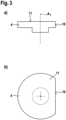
- the magnet armature 5 and/or the valve closing element 5 and/or the (not shown) magnetic core 6 can have a peripheral bevel 10.
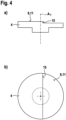
- the magnet armature 4 can have, in addition to the magnetic core 6, an asymmetrical shoulder 15, which leads to an eccentrically arranged elevation 9 in the area of a pole face 11 of the magnet armature 4 (or in the area of a pole face 12 of the magnetic core 6).
- a targeted de-axising can be carried out so that a longitudinal axis A 1 of the magnet armature 4 and a longitudinal axis A 2 of the magnetic core 6 do not coincide, but are spaced apart from one another at a distance x.
- This embodiment is exemplified in the Figures 5a and 5b shown.
- an inclined position of the magnet armature 4 in relation to the magnetic core 6 can already be predetermined by non-parallel pole surfaces 11, 12. This means that the working air gap 14 varies across the pole surfaces 11, 12. This embodiment is in the Fig. 6 shown.
- Springs 7 shown are arranged at uneven angular distances, so that the preload forces vary over the circumference of the valve closing element 5. Furthermore, the use of springs 7 of different strengths is possible.
Landscapes
- Engineering & Computer Science (AREA)
- Chemical & Material Sciences (AREA)
- Combustion & Propulsion (AREA)
- Mechanical Engineering (AREA)
- General Engineering & Computer Science (AREA)
- Electromagnetism (AREA)
- Physics & Mathematics (AREA)
- General Chemical & Material Sciences (AREA)
- Oil, Petroleum & Natural Gas (AREA)
- Chemical Kinetics & Catalysis (AREA)
- Analytical Chemistry (AREA)
- Power Engineering (AREA)
- Magnetically Actuated Valves (AREA)
- Valve Device For Special Equipments (AREA)
- Fluid-Driven Valves (AREA)
Description
- Die Erfindung betrifft ein elektromagnetisch betätigbares Dosierventil für Flüssigkeiten und/oder Gase mit den Merkmalen des Oberbegriffs des Anspruchs 1.
- Bevorzugter Einsatzbereich des vorgeschlagenen Dosierventils ist die Brennstoffversorgung einer Verbrennungskraftmaschine, wobei es sich insbesondere um einen Gasmotor oder einen Gas-Diesel-Motor eines Fahrzeugs, beispielsweise eines Personenkraftfahrzeugs, eines Nutzfahrzeugs, eines Schienenfahrzeugs oder eines Schiffs handeln kann. Neben mobilen Anwendungen ist auch der Einsatz des Dosierventils in stationären Anlagen zur Energiegewinnung oder Energieerzeugung möglich.
- Bei dem Dosierventil kann es sich insbesondere um ein CV-Gasventil, ein "Large Engine Gas Valve" (LEGV), ein "Multiport Injection Valve" (MPI) oder ein "Ported Fuel Injection" (PFI) Valve handeln.
- Zum Einblasen von Gas werden in der Regel elektromagnetisch betätigbare Ventile eingesetzt, um einen definierten Ventilquerschnitt zu öffnen. Über den geöffneten Ventilquerschnitt strömt Gas unter einem Zuströmdruck p1 in einen Brennraum oder einem dem Brennraum vorgelagerten Ansaugtrakt, in dem ein Druck p2 herrscht, der niedriger als der Zuströmdruck p1 ist. Da das eingeblasene Gasvolumen im Wesentlichen von der Druckdifferenz p1/p2 und der Öffnungsdauer des Ventils abhängt, wird zur Volumensteuerung lediglich die Bestromungszeit des elektromagnetischen Aktors des Ventils variiert, um eine gewünscht lange oder kurze Öffnungsdauer zu realisieren.
- Je größer die Druckdifferenz p1/p2 ist, desto höher sind die Dichtheitsanforderungen im geschlossenen Zustand des Ventils. Die erforderliche Abdichtung wird dabei über den Dichtkontakt zwischen einem Ventilsitzelement und einem Ventilschließelement bewirkt. Dieser ist jedoch über die Lebensdauer des Ventils einer hohen Belastung und damit einem hohen Verschleiß ausgesetzt. Um den Dichtheitsanforderungen über die Lebensdauer des Ventils zu genügen, gilt es daher den Verschleiß im Bereich des Dichtkontakts zu minimieren. Geeignete Maßnahmen sehen beispielsweise eine Führung und/oder Zentrierung des Ventilschließelements vor, damit dieses optimal, insbesondere planparallel, in Bezug auf das Ventilschließelement ausgerichtet ist. Aufgrund von Fertigungs- und/oder Montagetoleranzen kann jedoch ein völlig planparalleles Schließen nicht immer gewährleistet werden, so dass es hinsichtlich der Dichtheit und damit der Dosiergenauigkeit zu Schuss/Schuss und/oder Exemplar/Exemplar Streuungen kommt.
- Aus der
WO 94/19599 A1 DE 10 2014 219 019 A1 zeigt ein Gasventil mit einem federbeaufschlagten Prallkörper zur Verschleißminderung undDE 10 2015 206 207 A1 ein weiteres Gasventil mit einem Magnetanker, der von exzentrisch angeordneten Schließfedern beaufschlagt ist. - Der vorliegenden Erfindung liegt die Aufgabe zugrunde, ein elektromagnetisch betätigbares Dosierventil für Flüssigkeiten und/oder Gase anzugeben, das eine möglichst definierte Öffnungs- und Schließkinematik aufweist, um die vorstehend genannten Nachteile zu reduzieren bzw. zu vermeiden. Insbesondere soll ein Dosierventil geschaffen werden, das weniger verschleißbehaftet ist und demzufolge eine hohe Lebensdauer sowie eine hohe Dosiergenauigkeit über die Lebensdauer aufweist.
- Zur Lösung der Aufgabe wird das elektromagnetisch betätigbare Dosierventil mit den Merkmalen des Anspruchs 1 vorgeschlagen. Vorteilhafte Weiterbildungen der Erfindung sind den Unteransprüchen zu entnehmen.
- Das vorgeschlagene elektromagnetisch betätigbare Dosierventil für Flüssigkeiten und/oder Gase umfasst ein Ventilgehäuse, einen mit dem Ventilgehäuse verbundenen Ventilsitzkörper, in dem mindestens eine Auslassöffnung ausgebildet ist, sowie einen gegenüber dem Ventilsitzkörper hubbeweglichen Magnetanker, der mit einem platten- oder tellerförmigen Ventilschließelement zum Freigeben und Verschließen der mindestens einen Auslassöffnung fest verbunden ist oder dieses ausbildet. Das heißt, dass der Magnetanker und das Ventilschließelement als ein Bauteil oder zumindest als eine Baueinheit ausgeführt sind. Das vorgeschlagene Dosierventil umfasst ferner einen dem Magnetanker an einem Arbeitsluftspalt gegenüberliegenden Magnetkern sowie mindestens eine den Magnetanker und das Ventilschließelement in Schließrichtung vorspannende Feder. Das heißt, dass das Dosierventil als stromlos geschlossenes Ventil ausgebildet ist. Das Dosierventil zeichnet sich erfindungsgemäß dadurch aus, dass der Magnetkern eine von einem rotationssymmetrischen Körper abweichende Form und/oder mindestens eine exzentrisch angeordnete Ausnehmung oder Erhebung aufweist, wodurch der Magnetanker und das Ventilschließelement gezielt asymmetrisch belastet werden. Die asymmetrische Belastung führt bzw. führen beim Öffnen und Schließen des Dosierventils zu einer nicht planparallelen Vorzugslage des Magnetankers und des Ventilschließelements in Bezug auf den jeweiligen Endanschlag, insbesondere in Bezug auf den Ventilsitzkörper bzw. den Dichtsitz. Somit wird aus einer undefinierten Imperfektion eine definierte Imperfektion, die berechenbar ist. Dies wiederum ermöglicht das Ergreifen von Gegenmaßnahmen, um das Dosierventil exakter auf die Anforderungen hinsichtlich Verschleiß, Prellverhalten und/oder Mengendrift auszulegen. Ferner treten durch die definierte Imperfektion andere, nicht beeinflussbare Streuungen, wie beispielsweise Material- und/oder Montagestreuungen, in den Hintergrund, was dazu beiträgt, dass Unterschiede, insbesondere im Hinblick auf die Einblasmenge, zwischen einzelnen Exemplaren reduziert werden.
- Im Ergebnis trägt die definierte Imperfektion zu einem stabilen Öffnungs- und Schließverhalten des Dosierventils bei. Darüber hinaus wird die Anwendung von Auswerteroutinen zur softwareseitigen Überwachung des Öffnungs- und Schließverhaltens des Dosierventils vereinfacht. Das Anschlagen des Magnetankers und des Ventilschließelements am jeweiligen Endanschlag in einer nicht planparallelen Vorzugslage trägt zudem zu einer zeitlichen Ausdehnung des Anschlagvorgangs bei, so dass die maximal auftretende Belastungsspitze zum Anschlagzeitpunkt reduziert wird. Entsprechend sinkt die Impulsbelastung der betreffenden Bauteile.
- Bevorzugt werden der Magnetanker und das Ventilschließelement durch Magnet- und/oder Federkräfte gezielt asymmetrisch belastet. Die nicht planparallele Vorzugslage wird demnach durch eine asymmetrische Krafteinleitung erreicht, wobei es sich sowohl um Magnetkräfte, als auch um Federkräfte handeln kann. "Asymmetrisch" bedeutet in diesem Zusammenhang, dass der Magnetanker und das Ventilschließelement nicht gleichmäßig belastet werden bzw. die angreifenden Magnet- und/oder Federkräfte ungleichmäßig über eine Kraftangriffsfläche verteilt sind. Dies führt dazu, dass der Magnetanker und das Ventilschließelement bei einer Hubbewegung eine leichte Schräglage einnehmen.
- Eine asymmetrische Belastung bzw. Krafteinleitung kann beispielsweise dadurch bewirkt werden, dass die mindestens eine Feder exzentrisch in Bezug auf den Magnetanker und das Ventilschließelement angeordnet ist. Sofern mehrere exzentrisch angeordnete Federn vorgesehen sind, sind diese bevorzugt in unterschiedlichen Winkelabständen zueinander angeordnet und/oder unterscheiden sich hinsichtlich ihrer Federkraft. Über eine asymmetrische Einleitung der Federkraft der mindestens einen Feder kann sowohl das Öffnungs- als auch das Schließverhalten der hubbeweglichen Bauteile beeinflusst werden.
- Die Ausnehmung im Magnetkern kann beispielsweise eine exzentrisch angeordnete Bohrung oder ein exzentrisch angeordneter Schlitz sein. Ferner kann der Magnetkern einen asymmetrisch angeordneten Absatz aufweisen, der zu einer asymmetrisch angeordneten Erhebung führt. Die Erhebung kann zudem durch ein exzentrisch angeordnetes Plateau ausgebildet werden. Analog der mindestens einen exzentrisch angeordneten Feder führt die vorgeschlagene Ausführung des Magnetkerns zu einer asymmetrischen Belastung bzw. Krafteinleitung, wobei über eine asymmetrische Einleitung der Magnetkraft lediglich das Öffnungsverhalten der hubbeweglichen Bauteile beeinflussbar ist.
- Des Weiteren kann der Magnetkern eine Desachsierung gegenüber dem Magnetanker und/oder dem Ventilschließelement aufweisen. Auch diese Maßnahme führt zu einer asymmetrischen Krafteinleitung, so dass die vorstehend genannten Vorteile erreicht werden.
- Alternativ oder ergänzend zu einer asymmetrischen Krafteinleitung kann bzw. können der Magnetanker und/oder das Ventilschließelement asymmetrisch geformt sein. Insbesondere kann bzw. können der Magnetanker und/oder das Ventilschließelement eine von einem rotationssymmetrischen Körper abweichende Form und/oder mindestens eine exzentrisch angeordnete Ausnehmung oder Erhebung aufweisen. Mittels einer asymmetrischen Formgebung der hubbeweglichen Bauteile wird zum Einen eine Schwerpunktverlagerung der bewegten Massen aus der Mitte heraus bewirkt. Zum Anderen wird eine asymmetrische Belastung erzielt, so dass die hubbeweglichen Bauteile beim Öffnen und Schließen eine Schräglage einnehmen. Die mindestens eine exzentrisch angeordnete Ausnehmung kann wiederum eine Bohrung oder ein Schlitz sein. Die Erhebung kann beispielsweise durch einen asymmetrischen Absatz oder ein exzentrisch angeordnetes Plateau ausgebildet werden.
- Ferner kann bzw. können der Magnetanker, das Ventilschließelement und/oder der Magnetkern einen umfangseitigen Anschliff aufweisen.
- Alternativ oder ergänzend wird vorgeschlagen, dass der Magnetanker eine Polfläche aufweist, die in Schließstellung des Ventilschließelements gegenüber einer am Magnetkern ausgebildeten Polfläche geneigt ist. Die Schräglage des Magnetankers in Bezug auf den Magnetkern ist daher bereits von vornherein vorgegeben und stellt sich nicht erst bei einer Hubbewegung des Magnetankers ein. Zudem führt diese Ausgestaltung des Magnetankers zu einer asymmetrischen Belastung bzw. Krafteinleitung, so dass sich die Schräglage beim Öffnen weiter verstärkt.
- Die zur Lösung der eingangs genannten Aufgabe vorgeschlagen Maßnahmen können einzeln oder in unterschiedliche Kombinationen grundsätzlich bei allen Ventilen eingesetzt werden, an die hohe Anforderungen hinsichtlich Robustheit und/oder an die Zahl der Lastwechsel in Kombination mit geringen zulässigen Leckagewerten gestellt werden. Dies betrifft insbesondere Ventile, die zur Dosierung von gasförmigen Brennstoffen in Verbrennungskraftmaschinen eingesetzt werden. In der Regel handelt es sich hierbei um Schaltventile, mit Dichtkanten, wobei die Dichtkanten starken Belastungen ausgesetzt sind und/oder hohen Dichtheitsanforderungen unterliegen. Ferner können die Dichtkanten zumindest bereichsweise aus einem metallischen Werkstoff und/oder Kunststoff gefertigt sein. Alternativ oder ergänzend können die Dichtkanten zumindest bereichsweise beschichtet sein.
- Bei einem Verfahren zum Betreiben eines elektromagnetisch betätigbaren Dosierventils für Flüssigkeiten und/oder Gase wird auf einen hubbeweglichen Magnetanker eingewirkt, der zum Freigeben und Verschließen mindestens einer in einem Ventilsitzkörper ausgebildeten Auslassöffnung mit einem platten- oder tellerförmigen Ventilschließelement fest verbunden ist oder dieses ausbildet. Das Ventilschließelement ist dabei durch mindestens eine Feder in Schließrichtung vorgespannt. Erfindungsgemäß werden der Magnetanker und das Ventilschließelement gezielt asymmetrisch belastet, so dass sie bei einer Hubbewegung eine von einer planparallelen Ideallage abweichende definierte Schräglage einnehmen. Die Schräglage führt zu einer nicht planparallelen, aber definierten Vorzugslage in Bezug auf den Magnetkern (beim Öffnen) bzw. in Bezug auf den Ventilsitzkörper (beim Schließen), so dass aus einer undefinierten Imperfektion eine berechenbare definierte Imperfektion wird. Entsprechend können Gegenmaßnahmen ergriffen werden, die den Verschleiß reduzieren, wobei die Schräglage zu längeren Anschlagzeiten an den jeweiligen Endanschlägen und damit bereits zu einer Reduzierung der Spitzenbelastung beim Anschlagen führt. Im Übrigen sind die gleichen Vorteile erreichbar, die bereits zuvor in Verbindung mit dem erfindungsgemäßen Dosierventil ausführlich beschrieben wurden, so dass auf diesen Teil der Beschreibung verwiesen wird.
- Bevorzugt werden der Magnetanker und das Ventilschließelement durch Magnet- und/oder Federkräfte gezielt asymmetrisch belastet. Das heißt, dass das Öffnungs- und Schließverhalten mittels der verfügbaren Kräfte beeinflusst wird, so dass das Verfahren einfach durchzuführen ist. Die asymmetrische Belastung bzw. Krafteinleitung kann durch eine asymmetrische, insbesondere nicht rotationssymmetrische Formgebung des Magnetankers, des Ventilschließelements und/oder des Magnetkerns unterstützt werden.
- Bevorzugte Ausführungsformen der Erfindung werden nachfolgend anhand der beigefügten Zeichnungen näher erläutert. Diese zeigen:
-
Fig. 1 einen schematischen Längsschnitt durch ein Dosierventil, bei dem die Erfindung umgesetzt werden kann, -
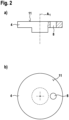
Fig. 2 a) einen schematischen Längsschnitt durch und b) eine Draufsicht auf den Magnetanker des Dosierventils derFig. 1 , -
Fig. 3 a) einen schematischen Längsschnitt durch und b) eine Draufsicht auf einen Magnetanker eines weiteren, nicht erfindungsgemäßen Dosierventils, -
Fig. 4 a) einen schematischen Längsschnitt durch und b) eine Draufsicht auf einen Magnetanker eines ebenfalls nicht erfindungsgemäßen Dosierventils, -
Fig. 5 a) einen schematischen Längsschnitt durch und b) eine Draufsicht auf einen Magnetanker und einen Magnetkern eines erfindungsgemäßen Dosierventils gemäß einer vierten bevorzugten Ausführungsform, -
Fig. 6 einen schematischen Längsschnitt durch einen Magnetanker und einen Magnetkern eines erfindungsgemäßen Dosierventils gemäß einer fünften bevorzugten Ausführungsform. - Das in der
Fig. 1 dargestellte elektromagnetisch betätigbare Dosierventil dient dem Einblasen eines gasförmigen Mediums, insbesondere eines gasförmigen Brennstoffs in einen Ansaugtrakt eines Verbrennungsmotors. Es umfasst ein im Wesentlichen hohlzylinderförmiges Ventilgehäuse 1, in das ein plattenförmiger Ventilsitzkörper 2 eingesetzt ist. Im Ventilsitzkörper 2 sind mehrere kreisbogenförmig verlaufende und konzentrisch angeordnete Auslassöffnungen 3 ausgebildet, über welche das gasförmige Medium bei geöffnetem Ventil in den Ansaugtrakt eingeblasen wird. In derFig. 1 ist das Dosierventil geschlossen dargestellt, wobei eine Magnetspule 13 eines Magnetaktor unbestromt bzw. stromlos ist. Mittels der Magnetspule 13 kann auf einen hubbeweglichen Magnetanker 4 eingewirkt werden, der mit einem plattenförmigen Ventilschließelement 5 zum Verschließen der im Ventilsitzkörper 2 ausgebildeten Auslassöffnungen 3 verbunden ist. Der Hub des Magnetankers 4 und des Ventilschließelements 5 wird dabei einerseits durch den Ventilsitzkörper 2, andererseits durch einen ringförmigen Hubanschlag begrenzt, der einen Magnetkern 6 umgibt, der dem Magnetanker 4 an einem Arbeitsluftspalt 14 gegenüberliegt. Das Ventilschließelement 5 und der Magnetanker 4 sind in Schließrichtung, das heißt gegen den Ventilsitzkörper 2, durch mehrere Federn 7 vorgespannt. - Zum Öffnen des Dosierventils wird die Magnetspule 13 bestromt, so dass ein Magnetfeld ausgebildet wird, dessen Magnetkraft auf den Magnetanker 4 in der Weise einwirkt, dass dieser sich in Richtung des Magnetkerns 6 bewegt, um den Arbeitsluftspalt 14 zu schließen. Das mitgeführte Ventilschließelement 5 hebt dabei vom Ventilsitzkörper 2 ab und gibt die Auslassöffnungen 3 frei. Zum Schließen des Dosierventils wird die Bestromung der Magnetspule 13 beendet, so dass die Federkräfte der Federn 7 den Magnetanker 4 und das Ventilschließelement 5 in ihre Ausgangslage zurückstellen.
- Beim Schließen des Dosierventils werden die am Ventilschließelement 5 und am Ventilsitzkörper 2 ausgebildeten Dichtflächen einer hohen Belastung und damit einem hohen Verschleiß ausgesetzt. Über die Lebensdauer des Dosierventils kann es somit zu Undichtigkeiten kommen, welche die Dosiergenauigkeit herabsetzen. Zugleich sinkt die Lebensdauer des Dosierventils.
- Um dem entgegenzuwirken werden die Hubbewegungen des Magnetankers 4 gezielt beeinflusst, so dass aus einer nicht perfekten undefinierten Bewegung eine zwar weiterhin nicht perfekte, aber definierte und damit berechenbare Bewegung wird. Dazu weist der Magnetkern 6 eine von einem rotationssymmetrischen Körper abweichende Form und/oder mindestens eine exzentrisch angeordnete Ausnehmung 8 oder Erhebung 9 auf, wie beispielsweise einen umfangseitigen Anschliff 10.
- Wie beispielhaft in den
Figuren 3a und 3b ,4a und4b ,5a und 5b sowie6 dargestellt, kann eine definierte Vorzugslage durch weitere Maßnahmen unterstützt werden, die zusätzlich oder kumulativ zur Anwendung gelangen können. Diese Maßnahmen können den Magnetanker 4, das Ventilschließelement 5 und/oder den Magnetkern 6 betreffen. - Wie beispielhaft in den
Figuren 3a und 3b dargestellt, kann der Magnetanker 5 und/oder das Ventilschließelement 5 und/oder der (nicht dargestellte) Magnetkern 6 einen umfangseitigen Anschliff 10 aufweisen. - Wie ferner beispielhaft in den
Figuren 4a und 4b dargestellt, kann der Magnetanker 4 zusätzlich zum Magnetkern 6 einen asymmetrischen Absatz 15 aufweisen, der zu einer exzentrisch angeordneten Erhebung 9 im Bereich einer Polfläche 11 des Magnetankers 4 (oder im Bereich einer Polfläche 12 des Magnetkerns 6) führt. - Alternativ oder ergänzend kann eine gezielte Desachsierung vorgenommen werden, so dass eine Längsachse A1 des Magnetankers 4 und eine Längsachse A2 des Magnetkerns 6 nicht zusammenfallen, sondern zueinander in einem Abstand x beabstandet sind. Diese Ausführungsform ist beispielhaft in den
Figuren 5a und 5b dargestellt. - Des Weiteren kann bereits eine Schräglage des Magnetankers 4 in Bezug auf den Magnetkern 6 durch nicht parallele Polflächen 11, 12 vorgegeben sein. Das heißt, dass der Arbeitsluftspalt 14 über die Polflächen 11, 12 hinweg variiert. Dieses Ausführungsbeispiel ist in der
Fig. 6 dargestellt. - Alternativ oder ergänzend können die in der
Fig. 1 dargestellten Federn 7 in ungleichmäßigen Winkelabständen angeordnet werden, so dass die Vorspannkräfte über den Umfang des Ventilschließelements 5 variieren. Ferner ist der Einsatz von unterschiedlich starken Federn 7 möglich.
Claims (7)
- Elektromagnetisch betätigbares Dosierventil für Flüssigkeiten und/oder Gase, umfassend ein Ventilgehäuse (1), einen mit dem Ventilgehäuse (1) verbundenen Ventilsitzkörper (2), in dem mindestens eine Auslassöffnung (3) ausgebildet ist, sowie einen gegenüber dem Ventilsitzkörper (2) hubbeweglichen Magnetanker (4), der mit einem platten- oder tellerförmigen Ventilschließelement (5) zum Freigeben und Verschließen der mindestens einen Auslassöffnung (3) fest verbunden ist oder dieses ausbildet, ferner umfassend einen dem Magnetanker (4) an einem Arbeitsluftspalt (14) gegenüberliegenden Magnetkern (6) sowie mindestens eine den Magnetanker (4) und das Ventilschließelement (5) in Schließrichtung vorspannende Feder (7),
dadurch gekennzeichnet, dass der Magnetkern (6) eine von einem rotationssymmetrischen Körper abweichende Form und/oder mindestens eine exzentrisch angeordnete Ausnehmung (8) oder Erhebung (9) aufweist, wodurch der Magnetanker (4) und das Ventilschließelement (5) asymmetrisch belastet werden. - Dosierventil nach Anspruch 1,
dadurch gekennzeichnet, dass der Magnetanker (4) und das Ventilschließelement (5) durch Magnet- und/oder Federkräfte gezielt asymmetrisch belastet werden. - Dosierventil nach Anspruch 1 oder 2,
dadurch gekennzeichnet, dass die mindestens eine Feder (7) exzentrisch in Bezug auf den Magnetanker (4) und das Ventilschließelement (5) angeordnet ist, wobei vorzugsweise mehrere Federn (7) in unterschiedlichen Winkelabständen zueinander angeordnet sind und/oder sich hinsichtlich ihrer Federkraft unterscheiden. - Dosierventil nach einem der vorhergehenden Ansprüche,
dadurch gekennzeichnet, dass der Magnetkern (6) eine Desachsierung gegenüber dem Magnetanker (4) und/oder dem Ventilschließelement (5) aufweist. - Dosierventil nach einem der vorhergehenden Ansprüche,
dadurch gekennzeichnet, dass der Magnetanker (4) und/oder das Ventilschließelement (5) eine von einem rotationssymmetrischen Körper abweichende Form und/oder mindestens eine exzentrisch angeordnete Ausnehmung (8) oder Erhebung (9) aufweist bzw. aufweisen. - Dosierventil nach einem der vorhergehenden Ansprüche,
dadurch gekennzeichnet, dass der Magnetanker (4), das Ventilschließelement (5) und/oder der Magnetkern (6) einen umfangseitigen Anschliff (10) aufweist bzw. aufweisen. - Dosierventil nach einem der vorhergehenden Ansprüche,
dadurch gekennzeichnet, dass der Magnetanker (4) eine Polfläche (11) aufweist, die in Schließstellung des Ventilschließelements (5) gegenüber einer am Magnetkern (6) ausgebildeten Polfläche (12) geneigt ist.
Applications Claiming Priority (2)
| Application Number | Priority Date | Filing Date | Title |
|---|---|---|---|
| DE102018221289.9A DE102018221289A1 (de) | 2018-12-10 | 2018-12-10 | Elektromagnetisch betätigbares Dosierventil, Verfahren zum Betreiben eines elektromagnetischen betätigbaren Dosierventils |
| PCT/EP2019/083241 WO2020120185A1 (de) | 2018-12-10 | 2019-12-02 | Elektromagnetisch betätigbares dosierventil, verfahren zum betreiben eines elektromagnetischen betätigbaren dosierventils |
Publications (2)
| Publication Number | Publication Date |
|---|---|
| EP3894688A1 EP3894688A1 (de) | 2021-10-20 |
| EP3894688B1 true EP3894688B1 (de) | 2024-02-14 |
Family
ID=68771655
Family Applications (1)
| Application Number | Title | Priority Date | Filing Date |
|---|---|---|---|
| EP19813794.5A Active EP3894688B1 (de) | 2018-12-10 | 2019-12-02 | Elektromagnetisch betätigbares dosierventil |
Country Status (5)
| Country | Link |
|---|---|
| US (1) | US20220042482A1 (de) |
| EP (1) | EP3894688B1 (de) |
| DE (1) | DE102018221289A1 (de) |
| FI (1) | FI3894688T3 (de) |
| WO (1) | WO2020120185A1 (de) |
Family Cites Families (4)
| Publication number | Priority date | Publication date | Assignee | Title |
|---|---|---|---|---|
| WO1994019599A1 (en) * | 1993-02-16 | 1994-09-01 | Siemens Automotive L.P. | Fuel injector |
| DE102014219019A1 (de) * | 2014-09-22 | 2016-03-24 | Robert Bosch Gmbh | Gasventil |
| DE102015206205A1 (de) * | 2015-04-08 | 2016-10-13 | Robert Bosch Gmbh | Gasventil |
| DE102015206207A1 (de) * | 2015-04-08 | 2016-10-13 | Robert Bosch Gmbh | Gasventil |
-
2018
- 2018-12-10 DE DE102018221289.9A patent/DE102018221289A1/de not_active Withdrawn
-
2019
- 2019-12-02 WO PCT/EP2019/083241 patent/WO2020120185A1/de not_active Ceased
- 2019-12-02 FI FIEP19813794.5T patent/FI3894688T3/fi active
- 2019-12-02 EP EP19813794.5A patent/EP3894688B1/de active Active
- 2019-12-02 US US17/312,560 patent/US20220042482A1/en not_active Abandoned
Also Published As
| Publication number | Publication date |
|---|---|
| WO2020120185A1 (de) | 2020-06-18 |
| FI3894688T3 (fi) | 2024-05-03 |
| EP3894688A1 (de) | 2021-10-20 |
| DE102018221289A1 (de) | 2020-06-10 |
| US20220042482A1 (en) | 2022-02-10 |
Similar Documents
| Publication | Publication Date | Title |
|---|---|---|
| EP2634412B1 (de) | Einspritzventil | |
| DE112016003860B4 (de) | Kraftstoffeinspritzvorrichtung | |
| EP0459999A1 (de) | Elektromagnetisches hochdruckeinspritzventil. | |
| WO2018007068A1 (de) | Ventil zum eindüsen von gasförmigem kraftstoff | |
| EP1576278A1 (de) | Brennstoffeinspritzventil | |
| EP3280901B1 (de) | Gasventil | |
| EP3894688B1 (de) | Elektromagnetisch betätigbares dosierventil | |
| EP1570170A1 (de) | Brennstoffeinspritzventil | |
| DE10046306A1 (de) | Brennstoffeinspritzventil | |
| EP2893182B1 (de) | Einspritzventil | |
| DE10345967B4 (de) | Brennstoffeinspritzventil | |
| DE10256661A1 (de) | Brennstoffeinspritzventil | |
| EP3545185B1 (de) | Ventil zum dosieren eines gases | |
| DE102015226769A1 (de) | Brennstoffeinspritzventil | |
| EP3497317B1 (de) | Elektromagnetisch betätigbares ventil zum einblasen von gas | |
| DE102015221790A1 (de) | Elektromagnetisch betätigbares Ventil und Verfahren zur Herstellung einer Ventilnadel für ein elektromagnetisch betätigbares Ventil | |
| DE102015223043A1 (de) | Kraftstoff-Injektor | |
| DE102012221713A1 (de) | Einspritzventil | |
| DE10051900A1 (de) | Brennstoffeinspritzventil | |
| DE102016225939A1 (de) | Elektromagnetisch betätigbares Ventil und Verfahren zur Herstellung einer Ventilnadel für ein elektromagnetisch betätigbares Ventil | |
| DE102018221086A1 (de) | Ventil zum Zumessen eines Fluids, insbesondere Brennstoffeinspritzventil | |
| DE102016210869A1 (de) | Zumesseinheit für eine Kraftstoffhochdruckpumpe | |
| DE102016214280A1 (de) | Ventilanordnung zum Zumessen von gasförmigem Kraftstoff und einem Mischroh | |
| DE102016202949A1 (de) | Elektromagnetisch ansteuerbares Saugventil, Hochdruckpumpe mit einem solchen Saugventil und Verfahren zur Ansteuerung des Saugventils | |
| DE102013210870A1 (de) | Magnetventil |
Legal Events
| Date | Code | Title | Description |
|---|---|---|---|
| STAA | Information on the status of an ep patent application or granted ep patent |
Free format text: STATUS: UNKNOWN |
|
| STAA | Information on the status of an ep patent application or granted ep patent |
Free format text: STATUS: THE INTERNATIONAL PUBLICATION HAS BEEN MADE |
|
| PUAI | Public reference made under article 153(3) epc to a published international application that has entered the european phase |
Free format text: ORIGINAL CODE: 0009012 |
|
| STAA | Information on the status of an ep patent application or granted ep patent |
Free format text: STATUS: REQUEST FOR EXAMINATION WAS MADE |
|
| 17P | Request for examination filed |
Effective date: 20210712 |
|
| AK | Designated contracting states |
Kind code of ref document: A1 Designated state(s): AL AT BE BG CH CY CZ DE DK EE ES FI FR GB GR HR HU IE IS IT LI LT LU LV MC MK MT NL NO PL PT RO RS SE SI SK SM TR |
|
| DAV | Request for validation of the european patent (deleted) | ||
| DAX | Request for extension of the european patent (deleted) | ||
| STAA | Information on the status of an ep patent application or granted ep patent |
Free format text: STATUS: EXAMINATION IS IN PROGRESS |
|
| 17Q | First examination report despatched |
Effective date: 20220615 |
|
| GRAP | Despatch of communication of intention to grant a patent |
Free format text: ORIGINAL CODE: EPIDOSNIGR1 |
|
| STAA | Information on the status of an ep patent application or granted ep patent |
Free format text: STATUS: GRANT OF PATENT IS INTENDED |
|
| INTG | Intention to grant announced |
Effective date: 20231128 |
|
| GRAS | Grant fee paid |
Free format text: ORIGINAL CODE: EPIDOSNIGR3 |
|
| GRAA | (expected) grant |
Free format text: ORIGINAL CODE: 0009210 |
|
| STAA | Information on the status of an ep patent application or granted ep patent |
Free format text: STATUS: THE PATENT HAS BEEN GRANTED |
|
| AK | Designated contracting states |
Kind code of ref document: B1 Designated state(s): AL AT BE BG CH CY CZ DE DK EE ES FI FR GB GR HR HU IE IS IT LI LT LU LV MC MK MT NL NO PL PT RO RS SE SI SK SM TR |
|
| REG | Reference to a national code |
Ref country code: GB Ref legal event code: FG4D Free format text: NOT ENGLISH |
|
| REG | Reference to a national code |
Ref country code: CH Ref legal event code: EP |
|
| REG | Reference to a national code |
Ref country code: DE Ref legal event code: R096 Ref document number: 502019010602 Country of ref document: DE |
|
| REG | Reference to a national code |
Ref country code: IE Ref legal event code: FG4D Free format text: LANGUAGE OF EP DOCUMENT: GERMAN |
|
| REG | Reference to a national code |
Ref country code: NL Ref legal event code: FP |
|
| REG | Reference to a national code |
Ref country code: FI Ref legal event code: FGE |
|
| REG | Reference to a national code |
Ref country code: LT Ref legal event code: MG9D |
|
| PG25 | Lapsed in a contracting state [announced via postgrant information from national office to epo] |
Ref country code: IS Free format text: LAPSE BECAUSE OF FAILURE TO SUBMIT A TRANSLATION OF THE DESCRIPTION OR TO PAY THE FEE WITHIN THE PRESCRIBED TIME-LIMIT Effective date: 20240614 |
|
| PG25 | Lapsed in a contracting state [announced via postgrant information from national office to epo] |
Ref country code: LT Free format text: LAPSE BECAUSE OF FAILURE TO SUBMIT A TRANSLATION OF THE DESCRIPTION OR TO PAY THE FEE WITHIN THE PRESCRIBED TIME-LIMIT Effective date: 20240214 |
|
| PG25 | Lapsed in a contracting state [announced via postgrant information from national office to epo] |
Ref country code: GR Free format text: LAPSE BECAUSE OF FAILURE TO SUBMIT A TRANSLATION OF THE DESCRIPTION OR TO PAY THE FEE WITHIN THE PRESCRIBED TIME-LIMIT Effective date: 20240515 |
|
| PG25 | Lapsed in a contracting state [announced via postgrant information from national office to epo] |
Ref country code: HR Free format text: LAPSE BECAUSE OF FAILURE TO SUBMIT A TRANSLATION OF THE DESCRIPTION OR TO PAY THE FEE WITHIN THE PRESCRIBED TIME-LIMIT Effective date: 20240214 Ref country code: RS Free format text: LAPSE BECAUSE OF FAILURE TO SUBMIT A TRANSLATION OF THE DESCRIPTION OR TO PAY THE FEE WITHIN THE PRESCRIBED TIME-LIMIT Effective date: 20240514 |
|
| PG25 | Lapsed in a contracting state [announced via postgrant information from national office to epo] |
Ref country code: ES Free format text: LAPSE BECAUSE OF FAILURE TO SUBMIT A TRANSLATION OF THE DESCRIPTION OR TO PAY THE FEE WITHIN THE PRESCRIBED TIME-LIMIT Effective date: 20240214 |
|
| PG25 | Lapsed in a contracting state [announced via postgrant information from national office to epo] |
Ref country code: RS Free format text: LAPSE BECAUSE OF FAILURE TO SUBMIT A TRANSLATION OF THE DESCRIPTION OR TO PAY THE FEE WITHIN THE PRESCRIBED TIME-LIMIT Effective date: 20240514 Ref country code: NO Free format text: LAPSE BECAUSE OF FAILURE TO SUBMIT A TRANSLATION OF THE DESCRIPTION OR TO PAY THE FEE WITHIN THE PRESCRIBED TIME-LIMIT Effective date: 20240514 Ref country code: LT Free format text: LAPSE BECAUSE OF FAILURE TO SUBMIT A TRANSLATION OF THE DESCRIPTION OR TO PAY THE FEE WITHIN THE PRESCRIBED TIME-LIMIT Effective date: 20240214 Ref country code: IS Free format text: LAPSE BECAUSE OF FAILURE TO SUBMIT A TRANSLATION OF THE DESCRIPTION OR TO PAY THE FEE WITHIN THE PRESCRIBED TIME-LIMIT Effective date: 20240614 Ref country code: HR Free format text: LAPSE BECAUSE OF FAILURE TO SUBMIT A TRANSLATION OF THE DESCRIPTION OR TO PAY THE FEE WITHIN THE PRESCRIBED TIME-LIMIT Effective date: 20240214 Ref country code: GR Free format text: LAPSE BECAUSE OF FAILURE TO SUBMIT A TRANSLATION OF THE DESCRIPTION OR TO PAY THE FEE WITHIN THE PRESCRIBED TIME-LIMIT Effective date: 20240515 Ref country code: ES Free format text: LAPSE BECAUSE OF FAILURE TO SUBMIT A TRANSLATION OF THE DESCRIPTION OR TO PAY THE FEE WITHIN THE PRESCRIBED TIME-LIMIT Effective date: 20240214 Ref country code: BG Free format text: LAPSE BECAUSE OF FAILURE TO SUBMIT A TRANSLATION OF THE DESCRIPTION OR TO PAY THE FEE WITHIN THE PRESCRIBED TIME-LIMIT Effective date: 20240214 |
|
| PG25 | Lapsed in a contracting state [announced via postgrant information from national office to epo] |
Ref country code: PT Free format text: LAPSE BECAUSE OF FAILURE TO SUBMIT A TRANSLATION OF THE DESCRIPTION OR TO PAY THE FEE WITHIN THE PRESCRIBED TIME-LIMIT Effective date: 20240614 Ref country code: PL Free format text: LAPSE BECAUSE OF FAILURE TO SUBMIT A TRANSLATION OF THE DESCRIPTION OR TO PAY THE FEE WITHIN THE PRESCRIBED TIME-LIMIT Effective date: 20240214 |
|
| PG25 | Lapsed in a contracting state [announced via postgrant information from national office to epo] |
Ref country code: SE Free format text: LAPSE BECAUSE OF FAILURE TO SUBMIT A TRANSLATION OF THE DESCRIPTION OR TO PAY THE FEE WITHIN THE PRESCRIBED TIME-LIMIT Effective date: 20240214 Ref country code: PT Free format text: LAPSE BECAUSE OF FAILURE TO SUBMIT A TRANSLATION OF THE DESCRIPTION OR TO PAY THE FEE WITHIN THE PRESCRIBED TIME-LIMIT Effective date: 20240614 Ref country code: PL Free format text: LAPSE BECAUSE OF FAILURE TO SUBMIT A TRANSLATION OF THE DESCRIPTION OR TO PAY THE FEE WITHIN THE PRESCRIBED TIME-LIMIT Effective date: 20240214 Ref country code: LV Free format text: LAPSE BECAUSE OF FAILURE TO SUBMIT A TRANSLATION OF THE DESCRIPTION OR TO PAY THE FEE WITHIN THE PRESCRIBED TIME-LIMIT Effective date: 20240214 |
|
| PG25 | Lapsed in a contracting state [announced via postgrant information from national office to epo] |
Ref country code: DK Free format text: LAPSE BECAUSE OF FAILURE TO SUBMIT A TRANSLATION OF THE DESCRIPTION OR TO PAY THE FEE WITHIN THE PRESCRIBED TIME-LIMIT Effective date: 20240214 |
|
| PG25 | Lapsed in a contracting state [announced via postgrant information from national office to epo] |
Ref country code: SM Free format text: LAPSE BECAUSE OF FAILURE TO SUBMIT A TRANSLATION OF THE DESCRIPTION OR TO PAY THE FEE WITHIN THE PRESCRIBED TIME-LIMIT Effective date: 20240214 |
|
| PG25 | Lapsed in a contracting state [announced via postgrant information from national office to epo] |
Ref country code: CZ Free format text: LAPSE BECAUSE OF FAILURE TO SUBMIT A TRANSLATION OF THE DESCRIPTION OR TO PAY THE FEE WITHIN THE PRESCRIBED TIME-LIMIT Effective date: 20240214 Ref country code: EE Free format text: LAPSE BECAUSE OF FAILURE TO SUBMIT A TRANSLATION OF THE DESCRIPTION OR TO PAY THE FEE WITHIN THE PRESCRIBED TIME-LIMIT Effective date: 20240214 |
|
| PG25 | Lapsed in a contracting state [announced via postgrant information from national office to epo] |
Ref country code: SK Free format text: LAPSE BECAUSE OF FAILURE TO SUBMIT A TRANSLATION OF THE DESCRIPTION OR TO PAY THE FEE WITHIN THE PRESCRIBED TIME-LIMIT Effective date: 20240214 |
|
| PG25 | Lapsed in a contracting state [announced via postgrant information from national office to epo] |
Ref country code: SM Free format text: LAPSE BECAUSE OF FAILURE TO SUBMIT A TRANSLATION OF THE DESCRIPTION OR TO PAY THE FEE WITHIN THE PRESCRIBED TIME-LIMIT Effective date: 20240214 Ref country code: SK Free format text: LAPSE BECAUSE OF FAILURE TO SUBMIT A TRANSLATION OF THE DESCRIPTION OR TO PAY THE FEE WITHIN THE PRESCRIBED TIME-LIMIT Effective date: 20240214 Ref country code: RO Free format text: LAPSE BECAUSE OF FAILURE TO SUBMIT A TRANSLATION OF THE DESCRIPTION OR TO PAY THE FEE WITHIN THE PRESCRIBED TIME-LIMIT Effective date: 20240214 Ref country code: EE Free format text: LAPSE BECAUSE OF FAILURE TO SUBMIT A TRANSLATION OF THE DESCRIPTION OR TO PAY THE FEE WITHIN THE PRESCRIBED TIME-LIMIT Effective date: 20240214 Ref country code: DK Free format text: LAPSE BECAUSE OF FAILURE TO SUBMIT A TRANSLATION OF THE DESCRIPTION OR TO PAY THE FEE WITHIN THE PRESCRIBED TIME-LIMIT Effective date: 20240214 Ref country code: CZ Free format text: LAPSE BECAUSE OF FAILURE TO SUBMIT A TRANSLATION OF THE DESCRIPTION OR TO PAY THE FEE WITHIN THE PRESCRIBED TIME-LIMIT Effective date: 20240214 |
|
| REG | Reference to a national code |
Ref country code: DE Ref legal event code: R097 Ref document number: 502019010602 Country of ref document: DE |
|
| PG25 | Lapsed in a contracting state [announced via postgrant information from national office to epo] |
Ref country code: IT Free format text: LAPSE BECAUSE OF FAILURE TO SUBMIT A TRANSLATION OF THE DESCRIPTION OR TO PAY THE FEE WITHIN THE PRESCRIBED TIME-LIMIT Effective date: 20240214 |
|
| PLBE | No opposition filed within time limit |
Free format text: ORIGINAL CODE: 0009261 |
|
| STAA | Information on the status of an ep patent application or granted ep patent |
Free format text: STATUS: NO OPPOSITION FILED WITHIN TIME LIMIT |
|
| PG25 | Lapsed in a contracting state [announced via postgrant information from national office to epo] |
Ref country code: IT Free format text: LAPSE BECAUSE OF FAILURE TO SUBMIT A TRANSLATION OF THE DESCRIPTION OR TO PAY THE FEE WITHIN THE PRESCRIBED TIME-LIMIT Effective date: 20240214 |
|
| 26N | No opposition filed |
Effective date: 20241115 |
|
| PG25 | Lapsed in a contracting state [announced via postgrant information from national office to epo] |
Ref country code: SI Free format text: LAPSE BECAUSE OF FAILURE TO SUBMIT A TRANSLATION OF THE DESCRIPTION OR TO PAY THE FEE WITHIN THE PRESCRIBED TIME-LIMIT Effective date: 20240214 |
|
| PG25 | Lapsed in a contracting state [announced via postgrant information from national office to epo] |
Ref country code: MC Free format text: LAPSE BECAUSE OF FAILURE TO SUBMIT A TRANSLATION OF THE DESCRIPTION OR TO PAY THE FEE WITHIN THE PRESCRIBED TIME-LIMIT Effective date: 20240214 |
|
| REG | Reference to a national code |
Ref country code: CH Ref legal event code: PL |
|
| PG25 | Lapsed in a contracting state [announced via postgrant information from national office to epo] |
Ref country code: LU Free format text: LAPSE BECAUSE OF NON-PAYMENT OF DUE FEES Effective date: 20241202 |
|
| GBPC | Gb: european patent ceased through non-payment of renewal fee |
Effective date: 20241202 |
|
| REG | Reference to a national code |
Ref country code: BE Ref legal event code: MM Effective date: 20241231 |
|
| PG25 | Lapsed in a contracting state [announced via postgrant information from national office to epo] |
Ref country code: GB Free format text: LAPSE BECAUSE OF NON-PAYMENT OF DUE FEES Effective date: 20241202 Ref country code: BE Free format text: LAPSE BECAUSE OF NON-PAYMENT OF DUE FEES Effective date: 20241231 |
|
| PG25 | Lapsed in a contracting state [announced via postgrant information from national office to epo] |
Ref country code: FR Free format text: LAPSE BECAUSE OF NON-PAYMENT OF DUE FEES Effective date: 20241231 |
|
| PG25 | Lapsed in a contracting state [announced via postgrant information from national office to epo] |
Ref country code: CH Free format text: LAPSE BECAUSE OF NON-PAYMENT OF DUE FEES Effective date: 20241231 |
|
| PG25 | Lapsed in a contracting state [announced via postgrant information from national office to epo] |
Ref country code: IE Free format text: LAPSE BECAUSE OF NON-PAYMENT OF DUE FEES Effective date: 20241202 |
|
| PGFP | Annual fee paid to national office [announced via postgrant information from national office to epo] |
Ref country code: AT Payment date: 20251215 Year of fee payment: 7 |
|
| PGFP | Annual fee paid to national office [announced via postgrant information from national office to epo] |
Ref country code: FI Payment date: 20251216 Year of fee payment: 7 |
|
| PGFP | Annual fee paid to national office [announced via postgrant information from national office to epo] |
Ref country code: NL Payment date: 20251217 Year of fee payment: 7 |
|
| PG25 | Lapsed in a contracting state [announced via postgrant information from national office to epo] |
Ref country code: CY Free format text: LAPSE BECAUSE OF FAILURE TO SUBMIT A TRANSLATION OF THE DESCRIPTION OR TO PAY THE FEE WITHIN THE PRESCRIBED TIME-LIMIT; INVALID AB INITIO Effective date: 20191202 |
|
| PGFP | Annual fee paid to national office [announced via postgrant information from national office to epo] |
Ref country code: DE Payment date: 20260223 Year of fee payment: 7 |