EP3893354B1 - Charger and charging method - Google Patents
Charger and charging method Download PDFInfo
- Publication number
- EP3893354B1 EP3893354B1 EP19893277.4A EP19893277A EP3893354B1 EP 3893354 B1 EP3893354 B1 EP 3893354B1 EP 19893277 A EP19893277 A EP 19893277A EP 3893354 B1 EP3893354 B1 EP 3893354B1
- Authority
- EP
- European Patent Office
- Prior art keywords
- battery
- charging
- contact
- voltage
- connection state
- Prior art date
- Legal status (The legal status is an assumption and is not a legal conclusion. Google has not performed a legal analysis and makes no representation as to the accuracy of the status listed.)
- Active
Links
Images


Classifications
-
- H—ELECTRICITY
- H02—GENERATION; CONVERSION OR DISTRIBUTION OF ELECTRIC POWER
- H02J—ELECTRIC POWER NETWORKS; CIRCUIT ARRANGEMENTS OR SYSTEMS FOR SUPPLYING OR DISTRIBUTING ELECTRIC POWER; SYSTEMS FOR STORING ELECTRIC ENERGY
- H02J7/00—Circuit arrangements for charging or discharging batteries or for supplying loads from batteries
- H02J7/90—Regulation of charging or discharging current or voltage
- H02J7/96—Regulation of charging or discharging current or voltage in response to battery voltage
-
- H—ELECTRICITY
- H01—ELECTRIC ELEMENTS
- H01M—PROCESSES OR MEANS, e.g. BATTERIES, FOR THE DIRECT CONVERSION OF CHEMICAL ENERGY INTO ELECTRICAL ENERGY
- H01M10/00—Secondary cells; Manufacture thereof
- H01M10/42—Methods or arrangements for servicing or maintenance of secondary cells or secondary half-cells
- H01M10/425—Structural combination with electronic components, e.g. electronic circuits integrated to the outside of the casing
-
- H—ELECTRICITY
- H01—ELECTRIC ELEMENTS
- H01M—PROCESSES OR MEANS, e.g. BATTERIES, FOR THE DIRECT CONVERSION OF CHEMICAL ENERGY INTO ELECTRICAL ENERGY
- H01M10/00—Secondary cells; Manufacture thereof
- H01M10/42—Methods or arrangements for servicing or maintenance of secondary cells or secondary half-cells
- H01M10/44—Methods for charging or discharging
-
- H—ELECTRICITY
- H01—ELECTRIC ELEMENTS
- H01M—PROCESSES OR MEANS, e.g. BATTERIES, FOR THE DIRECT CONVERSION OF CHEMICAL ENERGY INTO ELECTRICAL ENERGY
- H01M10/00—Secondary cells; Manufacture thereof
- H01M10/42—Methods or arrangements for servicing or maintenance of secondary cells or secondary half-cells
- H01M10/48—Accumulators combined with arrangements for measuring, testing or indicating the condition of cells, e.g. the level or density of the electrolyte
-
- H—ELECTRICITY
- H01—ELECTRIC ELEMENTS
- H01M—PROCESSES OR MEANS, e.g. BATTERIES, FOR THE DIRECT CONVERSION OF CHEMICAL ENERGY INTO ELECTRICAL ENERGY
- H01M50/00—Constructional details or processes of manufacture of the non-active parts of electrochemical cells other than fuel cells, e.g. hybrid cells
- H01M50/20—Mountings; Secondary casings or frames; Racks, modules or packs; Suspension devices; Shock absorbers; Transport or carrying devices; Holders
- H01M50/202—Casings or frames around the primary casing of a single cell or a single battery
-
- H—ELECTRICITY
- H01—ELECTRIC ELEMENTS
- H01M—PROCESSES OR MEANS, e.g. BATTERIES, FOR THE DIRECT CONVERSION OF CHEMICAL ENERGY INTO ELECTRICAL ENERGY
- H01M50/00—Constructional details or processes of manufacture of the non-active parts of electrochemical cells other than fuel cells, e.g. hybrid cells
- H01M50/20—Mountings; Secondary casings or frames; Racks, modules or packs; Suspension devices; Shock absorbers; Transport or carrying devices; Holders
- H01M50/269—Mechanical means for varying the arrangement of batteries or cells for different uses, e.g. for changing the number of batteries or for switching between series and parallel wiring
-
- H—ELECTRICITY
- H02—GENERATION; CONVERSION OR DISTRIBUTION OF ELECTRIC POWER
- H02J—ELECTRIC POWER NETWORKS; CIRCUIT ARRANGEMENTS OR SYSTEMS FOR SUPPLYING OR DISTRIBUTING ELECTRIC POWER; SYSTEMS FOR STORING ELECTRIC ENERGY
- H02J7/00—Circuit arrangements for charging or discharging batteries or for supplying loads from batteries
- H02J7/60—Circuit arrangements for charging or discharging batteries or for supplying loads from batteries including safety or protection arrangements
- H02J7/63—Circuit arrangements for charging or discharging batteries or for supplying loads from batteries including safety or protection arrangements against overdischarge
-
- H—ELECTRICITY
- H02—GENERATION; CONVERSION OR DISTRIBUTION OF ELECTRIC POWER
- H02J—ELECTRIC POWER NETWORKS; CIRCUIT ARRANGEMENTS OR SYSTEMS FOR SUPPLYING OR DISTRIBUTING ELECTRIC POWER; SYSTEMS FOR STORING ELECTRIC ENERGY
- H02J7/00—Circuit arrangements for charging or discharging batteries or for supplying loads from batteries
- H02J7/60—Circuit arrangements for charging or discharging batteries or for supplying loads from batteries including safety or protection arrangements
- H02J7/68—Circuit arrangements for charging or discharging batteries or for supplying loads from batteries including safety or protection arrangements using circuits for correcting or protecting against reverse-polarity
-
- H—ELECTRICITY
- H02—GENERATION; CONVERSION OR DISTRIBUTION OF ELECTRIC POWER
- H02J—ELECTRIC POWER NETWORKS; CIRCUIT ARRANGEMENTS OR SYSTEMS FOR SUPPLYING OR DISTRIBUTING ELECTRIC POWER; SYSTEMS FOR STORING ELECTRIC ENERGY
- H02J7/00—Circuit arrangements for charging or discharging batteries or for supplying loads from batteries
- H02J7/70—Circuit arrangements for charging or discharging batteries or for supplying loads from batteries characterised by the mechanical construction
- H02J7/751—Circuit arrangements for charging or discharging batteries or for supplying loads from batteries characterised by the mechanical construction concerning the insertion or the connection of the batteries
-
- H—ELECTRICITY
- H02—GENERATION; CONVERSION OR DISTRIBUTION OF ELECTRIC POWER
- H02J—ELECTRIC POWER NETWORKS; CIRCUIT ARRANGEMENTS OR SYSTEMS FOR SUPPLYING OR DISTRIBUTING ELECTRIC POWER; SYSTEMS FOR STORING ELECTRIC ENERGY
- H02J7/00—Circuit arrangements for charging or discharging batteries or for supplying loads from batteries
- H02J7/80—Circuit arrangements for charging or discharging batteries or for supplying loads from batteries including monitoring or indicating arrangements
-
- H—ELECTRICITY
- H01—ELECTRIC ELEMENTS
- H01M—PROCESSES OR MEANS, e.g. BATTERIES, FOR THE DIRECT CONVERSION OF CHEMICAL ENERGY INTO ELECTRICAL ENERGY
- H01M10/00—Secondary cells; Manufacture thereof
- H01M10/42—Methods or arrangements for servicing or maintenance of secondary cells or secondary half-cells
- H01M10/425—Structural combination with electronic components, e.g. electronic circuits integrated to the outside of the casing
- H01M2010/4271—Battery management systems including electronic circuits, e.g. control of current or voltage to keep battery in healthy state, cell balancing
-
- Y—GENERAL TAGGING OF NEW TECHNOLOGICAL DEVELOPMENTS; GENERAL TAGGING OF CROSS-SECTIONAL TECHNOLOGIES SPANNING OVER SEVERAL SECTIONS OF THE IPC; TECHNICAL SUBJECTS COVERED BY FORMER USPC CROSS-REFERENCE ART COLLECTIONS [XRACs] AND DIGESTS
- Y02—TECHNOLOGIES OR APPLICATIONS FOR MITIGATION OR ADAPTATION AGAINST CLIMATE CHANGE
- Y02E—REDUCTION OF GREENHOUSE GAS [GHG] EMISSIONS, RELATED TO ENERGY GENERATION, TRANSMISSION OR DISTRIBUTION
- Y02E60/00—Enabling technologies; Technologies with a potential or indirect contribution to GHG emissions mitigation
- Y02E60/10—Energy storage using batteries
Definitions
- the present invention relates to a charger and a charging method.
- Chargers are widely used as devices that enable secondary batteries to be repetitively used by charging the secondary batteries.
- a battery When a battery is mounted in such a charger, it is necessary to check the polarity of the battery. In other words, it is necessary to mount the battery in the charger in a correct connecting direction in which a positive electrode terminal comes into contact with a contact which the positive electrode terminal should contact, and a negative electrode terminal comes into contact with a contact which the negative electrode terminal should contact.
- chargers are often configured so as to prevent connection when the connecting direction is opposite, batteries may be mounted in an opposite direction to a correct connecting direction.
- the batteries When the batteries are mounted in the connecting direction opposite to the correct connecting direction in the charger, not only the batteries cannot be charged, but also the batteries may leak or the like, for example.
- JP 07-039076 discloses a charger in which the connecting direction of a battery is determined by a pair of photocouplers for detecting the presence or absence of current flowing from a positive electrode terminal and a negative electrode terminal of the battery, respectively.
- JP 2018-153034 discloses a charger which includes a pair of operational amplifiers for comparing the voltages of a positive electrode terminal and a negative electrode terminal of a battery, and determines the connecting direction of the battery based on the relationship in magnitude between the output voltages of the pair of operational amplifiers.
- Normal battery voltage ranges are defined for secondary batteries, and it is known that deterioration of a battery is promoted, for example, in a so-called over-discharged state in which the voltage of the battery falls below a discharge end voltage.
- secondary batteries for example, when a plurality of batteries having different battery capacities are connected in series and excessively discharged, a polarity inversion phenomenon in which the potential of a negative electrode terminal becomes higher than the potential of a positive electrode terminal may occur in a battery having a small battery capacity. It is known that a secondary battery in which the polarity inversion phenomenon has occurred can be restored to a normal polarity, for example, by pre-charging at a low charging rate. Therefore, the secondary battery in which the polarity inversion phenomenon has occurred is normally charged after the polarity is restored by a charger having a pre-charging function.
- the present invention has been made in view of such a situation, and has an object to provide a charger and a charging method that can charge even a secondary battery in which polarity inversion has occurred while performing polarity determination.
- a charger and a charging method that can charge even a secondary battery in which polarity inversion has occurred while performing polarity determination.
- FIG. 1 is a circuit diagram of a charger 1 according to the present invention.
- the charger 1 of the present embodiment includes a battery accommodating unit 2, a high-potential power supply line 3, a low-potential power supply line 4, a connection switching circuit 5, a charging switch 6, a control device 7, and a power supply input terminal T.
- the charger 1 determines the polarity of a battery BAT accommodated in the battery accommodating unit 2, that is, the connection direction of the battery BAT, thereby charging the battery BAT in an appropriate connecting direction.
- the battery accommodating unit 2 includes a first contact T1 and a second contact T2 to be respectively in contact with the electrode terminals of the battery BAT accommodated therein.
- first contact T1 and a second contact T2 to be respectively in contact with the electrode terminals of the battery BAT accommodated therein.
- the battery BAT is assumed to be a nickel-metal hydride secondary battery having a nominal voltage of 1.2 [V] in the present embodiment. Further, it is assumed that the battery BAT of the present embodiment has a discharge end voltage of 1.0 [V] and a charge end voltage of 1.3 [V], and normal charging/discharging is performed in this voltage range.
- the high-potential power supply line 3 and the low-potential power supply line 4 are connected to the two power supply input terminals T(+) and T(-) respectively to supply power for charging the battery BAT between both the power supply input terminals, and also supply power supply power to operate the control device 7.
- the connection switching circuit 5 is a circuit for switching the connection state of the battery accommodating unit 2 in which the battery BAT is accommodated between the high-potential power supply line 3 and the low-potential power supply line 4. More specifically, the connection switching circuit 5 includes, for example, a first switch SW1, a second switch SW2, a third switch SW3, and a fourth switch SW4 each of which includes a field effect transistor (FET). One end of the first switch SW1 is connected to the first contact T1, and the other end of the first switch SW1 is connected to the high-potential power supply line 3. One end of the second switch SW2 is connected to the second contact T2, and the other end of the second switch SW2 is connected to the low-potential power supply line 4.
- FET field effect transistor
- One end of the third switch SW3 is connected to the second contact T2, and the other end of the third switch SW3 is connected to the high-potential power supply line 3.
- One end of the fourth switch SW4 is connected to the first contact T1, and the other end of the fourth switch SW4 is connected to the low-potential power supply line 4.
- connection switching circuit 5 can switch between, for example, a first connection state in which the first contact T1 is connected to the high-potential power supply line 3 and the second contact T2 is connected to the low-potential power supply line 4, and a second connection state in which the second contact T2 is connected to the high-potential power supply line 3 and the first contact T1 is connected to the low-potential power supply line 4.
- each switch of the connection switching circuit 5 is controlled to be connected/disconnected by the control device 7.
- the charging switch 6 includes, for example, a field effect transistor, and is provided between the power supply input terminal T(+) and the high-potential power supply line 3. As described later, the charging switch 6 controls the charging power to the battery BAT by performing disconnection/connection control of power to be supplied from the outside of the charger 1 based on the control by the control device 7. Note that voltage conversion of charging power may be performed by using a DC-DC converter instead of the charging switch 6.
- the control device 7 includes, for example, a well-known microcomputer control circuit, and integrative controls the entire charger 1, which includes polarity determination of the battery BAT and charging control of the battery BAT as described in detail later. Further, the control device 7 of the present embodiment includes a built-in AD converter (not shown) that converts an analog voltage on the circuit into a digital voltage and reads in the digital voltage. The control device 7 receives the voltages of the high-potential power supply line 3 and the low-potential power supply line 4 through the built-in AD converter, respectively. Note that a resistance circuit may be appropriately provided on an electrically conductive path between the control device 7 and the high-potential power supply line 3 so that a voltage exceeding a specified absolute maximum rating is not input to the control device 7.
- FIG. 2 is a flowchart showing a charging method according to the first embodiment of the present invention.
- the control device 7 starts the control of FIG. 2 in a state where the battery BAT is accommodated in the battery accommodating unit 2. Note that at the start of the control, it is assumed that each switch of the connection switching circuit 5 and the charging switch 6 are all set to OFF.
- the control device 7 controls the first switch SW1 and the second switch SW2 to be set to ON, and controls the third switch SW3 and the fourth switch SW4 to be set to OFF (step S1, first connection step).
- the battery accommodating unit 2 is set to the foregoing first connection state in which the first contact T1 is connected to the high-potential power supply line 3 and the second contact T2 is connected to the low-potential power supply line 4.
- control device 7 assumes that the battery BAT has been accommodated in the battery accommodating unit 2 in a direction in which the positive electrode terminal of the battery BAT comes into contact with the first contact T1, and performs pre-charging on the battery BAT in a state where the connection switching circuit 5 is controlled to the first connection state (step S2, first pre-charging step). More specifically, the control device 7 controls the charging switch 6 to charge the battery BAT at a low charging rate for a predetermined time via the connection switching circuit 5, thereby determining whether it is possible to charge the battery BAT.
- the control device 7 checks whether the battery BAT accommodated in the battery accommodating unit 2 is a secondary battery and whether the battery accommodating unit 2 has broken down due to deterioration or the like. At this time, when polarity inversion has occurred in the battery BAT although the battery BAT is accommodated in the battery accommodating unit 2 in the direction in which the positive electrode terminal is in contact with the first contact T1, the polarity inversion is restored by performing pre-charging for a predetermined time, so that the battery BAT returns to a chargeable state. In other words, the duration of pre-charging is preset as a time in which the polarity inversion has been restored even when the polarity inversion is occurring in the battery BAT.
- the control device 7 compares the battery voltage V B of the battery BAT acquired via the connection switching circuit 5 and the high-potential power supply line 3 with a predetermined set voltage V S to determine whether the battery BAT is accommodated in the battery accommodating unit 2 in the direction in which the positive electrode terminal of the battery BAT is in contact with the first contact T1 (step S3).
- the predetermined set voltage V S is a threshold value which is preset to determine whether the battery voltage V B of the battery BAT is within a voltage range in which normal charging/discharging is performed.
- control device 7 can determine whether the battery BAT is accommodated in the battery accommodating unit 2 in the state where the positive electrode terminal is in contact with the first contact T1 by reading the voltage between the high-potential power supply line 3 and the low-potential power supply line 4 in the state where the connection switching circuit 5 is controlled to be set to the first connection state.
- step S3 When it is determined that the battery voltage V B exceeds the set voltage V S (Yes in step S3), the control device 7 performs normal charging on the battery BAT on the assumption that the battery BAT is in a chargeable state (step S4, normal charging step). In the normal charging, the charging rate does not matter.
- the control device 7 causes the charging switch 6 to stop supply of the charging current, and controls each switch of the connection switching circuit 5 to be set to OFF, thereby terminating the charging of the battery BAT and completing a series of control procedures. At this time, the control device 7 may notify the user of the normal end of charging.
- the control device 7 switches the first switch SW1 and the second switch SW2 to OFF, and switches the third switch SW3 and the fourth switch SW4 to ON (step S5, second connection step).
- the battery accommodating unit 2 is set to the above-mentioned second connection state in which the second contact T2 is connected to the high-potential power supply line 3 and the first contact T1 is connected to the low-potential power supply line 4.
- control device 7 assumes that the battery BAT has been accommodated in the battery accommodating unit 2 in a direction in which the positive electrode terminal of the battery BAT comes into contact with the second contact T2, and performs pre-charging on the battery BAT in a state where the connection switching circuit 5 is controlled to the second connection state (step S6, second pre-charging step).
- the control device 7 checks whether the battery BAT accommodated in the battery accommodating unit 2 is a secondary battery and whether the battery accommodating unit 2 has broken down due to deterioration or the like. At this time, when polarity inversion has occurred in the battery BAT although the battery BAT has been accommodated in the battery accommodating unit 2 in the direction in which the positive electrode terminal comes into contact with the second contact T2, the polarity inversion is restored by performing pre-charging for a predetermined time, and the battery BAT returns to a chargeable state.
- control device 7 compares the battery voltage V B of the battery BAT with the set voltage V S to determine whether the battery BAT has been accommodated in the battery accommodating unit 2 in the direction in which the positive electrode terminal of the battery BAT comes into contact with the second contact T2 (step S7).
- step S7 When it is determined that the battery voltage V B exceeds the set voltage V S (Yes in step S7), the control device 7 performs normal charging on the battery BAT on the assumption that the battery BAT is in a chargeable state in the second connection state (step S4, normal charging step).
- the control device 7 stops charging of the battery BAT on the assumption that the battery BAT has broken down. In other words, the control device 7 stops the supply of charging power by the charging switch 6, and controls each switch of the connection switching circuit 5 to be set to OFF, thereby terminating the charging of the battery BAT and completing a series of control procedures. At this time, the control device 7 may notify the user of the abnormal end of charging.
- control device 7 can perform normal charging on the battery BAT in an appropriate direction by switching to the first connection state or the second connection state so that the battery BAT is set to a chargeable state by pre-charging.
- FIG. 3 is a diagram showing an example of a change in the battery voltage V B when the polarity-inverted battery BAT is charged.
- the vertical axis of FIG. 3 represents the absolute potential of the positive electrode terminal with respect to the negative electrode terminal of the battery BAT, and shows a negative voltage in the polarity-inverted state.
- the value of a voltage read by the control device 7 is inverted in sign according to the connection state of the connection switching circuit 5. Further, it is hereinafter assumed that the battery BAT is accommodated in the battery accommodating unit 2 in the direction in which the positive electrode terminal comes into contact with the second contact T2 under a polarity-inverted state.
- the control device 7 first controls the connection switching circuit 5 to be set to the first connection state, and then starts pre-charging. At this time, although the battery BAT is accommodated in the battery accommodating unit 2 in the direction in which the positive electrode terminal comes into contact with the second contact T2, the voltage of the negative electrode terminal is higher than that of the positive electrode terminal due to polarity inversion. Therefore, in the state where the connection switching circuit 5 is controlled to set to the first connection state, the control device 7 receives a positive voltage via the high-potential power supply line 3.
- the control device 7 cannot identify the state where the absolute battery voltage V B of the battery BAT is positive and the state where the absolute battery voltage V B of the battery BAT is negative and there is polarity inversion phenomenon.
- the control device 7 assumes that the battery BAT is accommodated in the battery accommodating unit 2 in the direction in which the positive electrode terminal of the battery BAT comes into contact with the first contact T1, and performs pre-charging for only a predetermined time. Then, if the battery voltage V B does not exceed the set voltage V S , the control device 7 switches the first connection state to the second connection state (timing t1 in FIG. 3 ).
- the control device 7 restores the polarity inversion by performing pre-charging for only a predetermined time in the second connection state. Then, when the battery voltage V B exceeds the set voltage V S at a timing t2 when a predetermined time has elapsed from the timing t1, the control device 7 starts normal charging on the battery BAT in the second connection state (timing t2 of FIG. 3 ).
- the charger 1 when the battery voltage V B of the battery BAT which has been subjected to pre-charging in the first connection state does not exceed the set voltage V S , the charger 1 according to the first embodiment of the present invention switches the first connection state to the second connection state and performs pre-charging. However, when the battery voltage V B of the battery BAT exceeds the set voltage V S , the charger 1 performs normal charging on the battery BAT.
- the connection state of the connection switching circuit 5 is switched when the battery voltage V B of the battery BAT does not exceed a chargeable voltage, so that even a secondary battery in which polarity inversion has occurred can be charged while performing polarity determination.
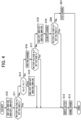
- FIG. 4 is a flowchart showing further details of the charging method according to the first embodiment of the present invention.
- the control device 7 starts the control of FIG. 4 in a state where the battery BAT is accommodated in the battery accommodating unit 2.
- each switch of the connection switching circuit 5 and the charging switch 6 are all set to OFF.
- the control device 7 controls the first switch SW1 and the second switch SW2 to be set to ON, and controls the third switch SW3 and the fourth switch SW4 to be set to OFF (step S10, first connection step).
- the battery accommodating unit 2 is set to the above-mentioned first connection state in which the first contact T1 is connected to the high-potential power supply line 3 and the second contact T2 is connected to the low-potential power supply line 4.
- the control device 7 determines whether the battery BAT is accommodated in the battery accommodating unit 2 in the direction in which the positive electrode terminal of the battery BAT comes into contact with the first contact T1, and additionally determines whether the battery BAT is in the over-discharged state (step S11).
- the control device 7 omits pre-charging on the battery BAT on the assumption that the battery BAT is accommodated in the battery accommodating unit 2 in the direction in which the positive electrode terminal of the battery BAT comes into contact with the first contact T1 because the battery voltage V B is positive in the first connection state, and additionally, that the battery BAT is not in the over-discharged state. Further, the control device 7 performs only a battery inspection for confirming that the battery BAT accommodated in the battery accommodating unit 2 is not a primary battery (step S12), and performs normal charging on the battery BAT (step S13, normal charging step). Here, when it is not necessary to consider the possibility that a primary battery is accommodated in the battery accommodating unit 2, the battery inspection may be omitted.
- the control device 7 determines whether the battery voltage V B is lower than the set voltage V S whose sign is inverted (step S14).
- the control device 7 omits the pre-charging on the battery BAT on the assumption that the battery BAT is accommodated in the battery accommodating unit 2 in the direction in which the positive electrode terminal of the battery BAT comes into contact with the second contact T2 because the battery voltage V B is negative in the first connection state, and additionally, that the battery BAT is not in the over-discharged state.
- control device 7 switches the connection switching circuit 5 from the first connection state to the second connection state (step S15), and performs normal charging on the battery BAT (step S13, normal charging step) after the battery inspection (step S12) is performed in the same manner as described above.
- the control device 7 performs normal charging without performing pre-charging.
- the control device 7 can confirm whether polarity inversion has occurred in the battery BAT at the start of charging, so that it is possible to omit pre-charging purposing to restore polarity inversion when no polarity inversion is confirmed, and thus shorten the charging time.
- the control device 7 switches the first connection state to the second connection state and performs pre-charging, but when the battery voltage V B of the battery BAT exceeds the set voltage V S , the control device 7 performs normal charging on the battery BAT.
- the charger 1 according to the first embodiment of the present invention can determine that the battery BAT is not in the polarity-inverted state or the over-discharged state in the case where the absolute value of the battery voltage V B has already exceeded the set voltage V S at the start of charging control, it is possible to perform normal charging without performing pre-charging by determining the polarity of the battery BAT based on the sign of the battery voltage V B acquired by the control device 7. As a result, according to the charger 1 of the first embodiment of the present invention, unnecessary pre-charging is not performed, so that the time required from the start to the end of the charging control can be shortened.
- the present invention is not limited to each of the embodiments described above.
- the battery voltage V B exceeds the set voltage V S after pre-charging is performed for a predetermined time
- the charger 1 can shorten the time required for the pre-charging according to the degree of over-discharging of the battery BAT.
- the control device 7 can perform abnormality determination even when the battery voltage V B of the battery BAT is higher than expected.
Landscapes
- Engineering & Computer Science (AREA)
- Chemical & Material Sciences (AREA)
- Chemical Kinetics & Catalysis (AREA)
- Electrochemistry (AREA)
- General Chemical & Material Sciences (AREA)
- Power Engineering (AREA)
- Manufacturing & Machinery (AREA)
- Microelectronics & Electronic Packaging (AREA)
- Charge And Discharge Circuits For Batteries Or The Like (AREA)
- Secondary Cells (AREA)
- Protection Of Static Devices (AREA)
Description
- The present invention relates to a charger and a charging method.
- Chargers are widely used as devices that enable secondary batteries to be repetitively used by charging the secondary batteries. When a battery is mounted in such a charger, it is necessary to check the polarity of the battery. In other words, it is necessary to mount the battery in the charger in a correct connecting direction in which a positive electrode terminal comes into contact with a contact which the positive electrode terminal should contact, and a negative electrode terminal comes into contact with a contact which the negative electrode terminal should contact.
- Although chargers are often configured so as to prevent connection when the connecting direction is opposite, batteries may be mounted in an opposite direction to a correct connecting direction. When the batteries are mounted in the connecting direction opposite to the correct connecting direction in the charger, not only the batteries cannot be charged, but also the batteries may leak or the like, for example.
- As an example of a conventional technique which has an object to solve such a problem, for example,
JP 07-039076 - Further, for example,
JP 2018-153034 - Normal battery voltage ranges are defined for secondary batteries, and it is known that deterioration of a battery is promoted, for example, in a so-called over-discharged state in which the voltage of the battery falls below a discharge end voltage. Further, in the case of secondary batteries, for example, when a plurality of batteries having different battery capacities are connected in series and excessively discharged, a polarity inversion phenomenon in which the potential of a negative electrode terminal becomes higher than the potential of a positive electrode terminal may occur in a battery having a small battery capacity. It is known that a secondary battery in which the polarity inversion phenomenon has occurred can be restored to a normal polarity, for example, by pre-charging at a low charging rate. Therefore, the secondary battery in which the polarity inversion phenomenon has occurred is normally charged after the polarity is restored by a charger having a pre-charging function.
- However, with respect to the conventional charger having the polarity determination function described above, since the direction of charging power to be supplied to a secondary battery is switched by comparing the potentials of the respective electrode terminals of the secondary battery, there is a case where an erroneous polarity determination is made for a secondary battery in which polarity inversion has occurred, and the secondary battery cannot be charged properly.
- The present invention has been made in view of such a situation, and has an object to provide a charger and a charging method that can charge even a secondary battery in which polarity inversion has occurred while performing polarity determination.
- In order to achieve the above object, there is provided a charger according to the
independent claim 1 and a corresponding charging method according to theindependent claim 4. - According to the present invention, there can be provided a charger and a charging method that can charge even a secondary battery in which polarity inversion has occurred while performing polarity determination.
-
-
FIG. 1 is a circuit diagram of a charger according to the present invention. -
FIG. 2 is a flowchart showing part of the charging method steps according to the present invention. -
Fig. 3 is a diagram showing an example of a change in battery voltage when a polarity-inverted battery is charged. -
FIG. 4 is a flowchart showing a charging method according to the present invention. - Hereinafter, embodiments of the present invention will be described in detail with reference to the drawings. The present invention is not limited to the contents described below, and can be arbitrarily modified and implemented without changing the gist thereof. Further, the drawings used for describing the embodiments are all schematically showing the constituent elements, are partially emphasized, enlarged, reduced, or omitted in order to deepen the understanding of the constituent elements, and may not accurately represent the scales, shapes, etc., of the constituent elements.
-
FIG. 1 is a circuit diagram of acharger 1 according to the present invention. Thecharger 1 of the present embodiment includes abattery accommodating unit 2, a high-potentialpower supply line 3, a low-potentialpower supply line 4, aconnection switching circuit 5, acharging switch 6, acontrol device 7, and a power supply input terminal T. Upon supply of power from the outside of thecharger 1 between the two power supply input terminals T(+) and T(-), thecharger 1 determines the polarity of a battery BAT accommodated in thebattery accommodating unit 2, that is, the connection direction of the battery BAT, thereby charging the battery BAT in an appropriate connecting direction. - The
battery accommodating unit 2 includes a first contact T1 and a second contact T2 to be respectively in contact with the electrode terminals of the battery BAT accommodated therein. In other words, when the battery BAT is accommodated in thebattery accommodating unit 2 while the positive electrode terminal is in contact with the first contact T1, the negative electrode terminal is in contact with the second contact T2, and when the battery BAT is accommodated in thebattery accommodating unit 2 while the negative electrode terminal is in contact with the first contact T1, the positive electrode terminal is in contact with the second contact T2. - Here, the battery BAT is assumed to be a nickel-metal hydride secondary battery having a nominal voltage of 1.2 [V] in the present embodiment. Further, it is assumed that the battery BAT of the present embodiment has a discharge end voltage of 1.0 [V] and a charge end voltage of 1.3 [V], and normal charging/discharging is performed in this voltage range.
- The high-potential
power supply line 3 and the low-potentialpower supply line 4 are connected to the two power supply input terminals T(+) and T(-) respectively to supply power for charging the battery BAT between both the power supply input terminals, and also supply power supply power to operate thecontrol device 7. - The
connection switching circuit 5 is a circuit for switching the connection state of thebattery accommodating unit 2 in which the battery BAT is accommodated between the high-potentialpower supply line 3 and the low-potentialpower supply line 4. More specifically, theconnection switching circuit 5 includes, for example, a first switch SW1, a second switch SW2, a third switch SW3, and a fourth switch SW4 each of which includes a field effect transistor (FET). One end of the first switch SW1 is connected to the first contact T1, and the other end of the first switch SW1 is connected to the high-potentialpower supply line 3. One end of the second switch SW2 is connected to the second contact T2, and the other end of the second switch SW2 is connected to the low-potentialpower supply line 4. One end of the third switch SW3 is connected to the second contact T2, and the other end of the third switch SW3 is connected to the high-potentialpower supply line 3. One end of the fourth switch SW4 is connected to the first contact T1, and the other end of the fourth switch SW4 is connected to the low-potentialpower supply line 4. - As a result, the
connection switching circuit 5 can switch between, for example, a first connection state in which the first contact T1 is connected to the high-potentialpower supply line 3 and the second contact T2 is connected to the low-potentialpower supply line 4, and a second connection state in which the second contact T2 is connected to the high-potentialpower supply line 3 and the first contact T1 is connected to the low-potentialpower supply line 4. Note that each switch of theconnection switching circuit 5 is controlled to be connected/disconnected by thecontrol device 7. - In the present embodiment, the
charging switch 6 includes, for example, a field effect transistor, and is provided between the power supply input terminal T(+) and the high-potentialpower supply line 3. As described later, thecharging switch 6 controls the charging power to the battery BAT by performing disconnection/connection control of power to be supplied from the outside of thecharger 1 based on the control by thecontrol device 7. Note that voltage conversion of charging power may be performed by using a DC-DC converter instead of thecharging switch 6. - The
control device 7 includes, for example, a well-known microcomputer control circuit, and integrative controls theentire charger 1, which includes polarity determination of the battery BAT and charging control of the battery BAT as described in detail later. Further, thecontrol device 7 of the present embodiment includes a built-in AD converter (not shown) that converts an analog voltage on the circuit into a digital voltage and reads in the digital voltage. Thecontrol device 7 receives the voltages of the high-potentialpower supply line 3 and the low-potentialpower supply line 4 through the built-in AD converter, respectively. Note that a resistance circuit may be appropriately provided on an electrically conductive path between thecontrol device 7 and the high-potentialpower supply line 3 so that a voltage exceeding a specified absolute maximum rating is not input to thecontrol device 7. - Next, an example of a control procedure of the
control device 7 for determining the polarity of the battery BAT accommodated in thebattery accommodating unit 2 and charging the battery BAT will be described.FIG. 2 is a flowchart showing a charging method according to the first embodiment of the present invention. Thecontrol device 7 starts the control ofFIG. 2 in a state where the battery BAT is accommodated in thebattery accommodating unit 2. Note that at the start of the control, it is assumed that each switch of theconnection switching circuit 5 and thecharging switch 6 are all set to OFF. - When the control operation is started, the
control device 7 controls the first switch SW1 and the second switch SW2 to be set to ON, and controls the third switch SW3 and the fourth switch SW4 to be set to OFF (step S1, first connection step). As a result, thebattery accommodating unit 2 is set to the foregoing first connection state in which the first contact T1 is connected to the high-potentialpower supply line 3 and the second contact T2 is connected to the low-potentialpower supply line 4. - Further, the
control device 7 assumes that the battery BAT has been accommodated in thebattery accommodating unit 2 in a direction in which the positive electrode terminal of the battery BAT comes into contact with the first contact T1, and performs pre-charging on the battery BAT in a state where theconnection switching circuit 5 is controlled to the first connection state (step S2, first pre-charging step). More specifically, thecontrol device 7 controls thecharging switch 6 to charge the battery BAT at a low charging rate for a predetermined time via theconnection switching circuit 5, thereby determining whether it is possible to charge the battery BAT. Here, in the pre-charging, even when the positive electrode terminal of the battery BAT is accommodated in thebattery accommodating unit 2 in the direction in which the positive electrode terminal of the battery BAT is in contact with the second contact T2, or when the battery BAT breaks down, a charging power which is low to the extent that safety is sufficient is supplied to the battery BAT. - As a result, the
control device 7 checks whether the battery BAT accommodated in thebattery accommodating unit 2 is a secondary battery and whether thebattery accommodating unit 2 has broken down due to deterioration or the like. At this time, when polarity inversion has occurred in the battery BAT although the battery BAT is accommodated in thebattery accommodating unit 2 in the direction in which the positive electrode terminal is in contact with the first contact T1, the polarity inversion is restored by performing pre-charging for a predetermined time, so that the battery BAT returns to a chargeable state. In other words, the duration of pre-charging is preset as a time in which the polarity inversion has been restored even when the polarity inversion is occurring in the battery BAT. - When the pre-charging in the first connection state is completed, the
control device 7 compares the battery voltage VB of the battery BAT acquired via theconnection switching circuit 5 and the high-potentialpower supply line 3 with a predetermined set voltage VS to determine whether the battery BAT is accommodated in thebattery accommodating unit 2 in the direction in which the positive electrode terminal of the battery BAT is in contact with the first contact T1 (step S3). Here, the predetermined set voltage VS is a threshold value which is preset to determine whether the battery voltage VB of the battery BAT is within a voltage range in which normal charging/discharging is performed. - When the battery BAT has been accommodated in the
battery accommodating unit 2 in a direction in which the positive electrode terminal of the battery BAT comes into contact with the first contact T1, a positive voltage is output between the high-potentialpower supply line 3 and the low-potentialpower supply line 4 by the battery voltage VB of the battery BAT connected in the forward direction under the first connection state unless no polarity inversion has occurred in the battery BAT. Further, when the battery BAT has been accommodated in thebattery accommodating unit 2 in a direction in which the positive electrode terminal of the battery BAT comes into contact with the second contact T2, a negative voltage is output between the high-potentialpower supply line 3 and the low-potentialpower supply line 4 by the battery voltage VB of the battery BAT connected in the reverse direction under the first connection state unless no polarity inversion has occurred in the battery BAT. - Therefore, the
control device 7 can determine whether the battery BAT is accommodated in thebattery accommodating unit 2 in the state where the positive electrode terminal is in contact with the first contact T1 by reading the voltage between the high-potentialpower supply line 3 and the low-potentialpower supply line 4 in the state where theconnection switching circuit 5 is controlled to be set to the first connection state. - When it is determined that the battery voltage VB exceeds the set voltage VS (Yes in step S3), the
control device 7 performs normal charging on the battery BAT on the assumption that the battery BAT is in a chargeable state (step S4, normal charging step). In the normal charging, the charging rate does not matter. - As a result, when the battery BAT has reached a fully charged state, the
control device 7 causes the chargingswitch 6 to stop supply of the charging current, and controls each switch of theconnection switching circuit 5 to be set to OFF, thereby terminating the charging of the battery BAT and completing a series of control procedures. At this time, thecontrol device 7 may notify the user of the normal end of charging. - On the other hand, when it is determined that the battery voltage VB has not exceeded the set voltage VS (No in step S3), the
control device 7 switches the first switch SW1 and the second switch SW2 to OFF, and switches the third switch SW3 and the fourth switch SW4 to ON (step S5, second connection step). As a result, thebattery accommodating unit 2 is set to the above-mentioned second connection state in which the second contact T2 is connected to the high-potentialpower supply line 3 and the first contact T1 is connected to the low-potentialpower supply line 4. - Further, the
control device 7 assumes that the battery BAT has been accommodated in thebattery accommodating unit 2 in a direction in which the positive electrode terminal of the battery BAT comes into contact with the second contact T2, and performs pre-charging on the battery BAT in a state where theconnection switching circuit 5 is controlled to the second connection state (step S6, second pre-charging step). - As a result, the
control device 7 checks whether the battery BAT accommodated in thebattery accommodating unit 2 is a secondary battery and whether thebattery accommodating unit 2 has broken down due to deterioration or the like. At this time, when polarity inversion has occurred in the battery BAT although the battery BAT has been accommodated in thebattery accommodating unit 2 in the direction in which the positive electrode terminal comes into contact with the second contact T2, the polarity inversion is restored by performing pre-charging for a predetermined time, and the battery BAT returns to a chargeable state. - When the pre-charging in the second connection state is completed, the
control device 7 compares the battery voltage VB of the battery BAT with the set voltage VS to determine whether the battery BAT has been accommodated in thebattery accommodating unit 2 in the direction in which the positive electrode terminal of the battery BAT comes into contact with the second contact T2 (step S7). - When it is determined that the battery voltage VB exceeds the set voltage VS (Yes in step S7), the
control device 7 performs normal charging on the battery BAT on the assumption that the battery BAT is in a chargeable state in the second connection state (step S4, normal charging step). - When the battery voltage VB of the battery BAT which has been subjected to pre-charging does not exceed the set voltage VS in both the first connection state and the second connection state (No in step S7), the
control device 7 stops charging of the battery BAT on the assumption that the battery BAT has broken down. In other words, thecontrol device 7 stops the supply of charging power by the chargingswitch 6, and controls each switch of theconnection switching circuit 5 to be set to OFF, thereby terminating the charging of the battery BAT and completing a series of control procedures. At this time, thecontrol device 7 may notify the user of the abnormal end of charging. - As described above, the
control device 7 can perform normal charging on the battery BAT in an appropriate direction by switching to the first connection state or the second connection state so that the battery BAT is set to a chargeable state by pre-charging. - Here, the control of charging in the case where polarity inversion has occurred in the battery BAT at the start of charging will be described together with an aspect of a change in the battery voltage VB.
FIG. 3 is a diagram showing an example of a change in the battery voltage VB when the polarity-inverted battery BAT is charged. The vertical axis ofFIG. 3 represents the absolute potential of the positive electrode terminal with respect to the negative electrode terminal of the battery BAT, and shows a negative voltage in the polarity-inverted state. However, the value of a voltage read by thecontrol device 7 is inverted in sign according to the connection state of theconnection switching circuit 5. Further, it is hereinafter assumed that the battery BAT is accommodated in thebattery accommodating unit 2 in the direction in which the positive electrode terminal comes into contact with the second contact T2 under a polarity-inverted state. - At the start of charging the battery BAT in the present embodiment, the
control device 7 first controls theconnection switching circuit 5 to be set to the first connection state, and then starts pre-charging. At this time, although the battery BAT is accommodated in thebattery accommodating unit 2 in the direction in which the positive electrode terminal comes into contact with the second contact T2, the voltage of the negative electrode terminal is higher than that of the positive electrode terminal due to polarity inversion. Therefore, in the state where theconnection switching circuit 5 is controlled to set to the first connection state, thecontrol device 7 receives a positive voltage via the high-potentialpower supply line 3. In other words, when the battery BAT is in the over-discharged state, thecontrol device 7 cannot identify the state where the absolute battery voltage VB of the battery BAT is positive and the state where the absolute battery voltage VB of the battery BAT is negative and there is polarity inversion phenomenon. - Therefore, in the present embodiment, the
control device 7 assumes that the battery BAT is accommodated in thebattery accommodating unit 2 in the direction in which the positive electrode terminal of the battery BAT comes into contact with the first contact T1, and performs pre-charging for only a predetermined time. Then, if the battery voltage VB does not exceed the set voltage VS, thecontrol device 7 switches the first connection state to the second connection state (timing t1 inFIG. 3 ). - Further, when the battery BAT is in the polarity-inverted state, the
control device 7 restores the polarity inversion by performing pre-charging for only a predetermined time in the second connection state. Then, when the battery voltage VB exceeds the set voltage VS at a timing t2 when a predetermined time has elapsed from the timing t1, thecontrol device 7 starts normal charging on the battery BAT in the second connection state (timing t2 ofFIG. 3 ). - As described above, when the battery voltage VB of the battery BAT which has been subjected to pre-charging in the first connection state does not exceed the set voltage VS, the
charger 1 according to the first embodiment of the present invention switches the first connection state to the second connection state and performs pre-charging. However, when the battery voltage VB of the battery BAT exceeds the set voltage VS, thecharger 1 performs normal charging on the battery BAT. As a result, according to thecharger 1 of the first embodiment of the present invention, even in the case where polarity inversion has occurred in a battery BAT before charging, the connection state of theconnection switching circuit 5 is switched when the battery voltage VB of the battery BAT does not exceed a chargeable voltage, so that even a secondary battery in which polarity inversion has occurred can be charged while performing polarity determination. -
FIG. 4 is a flowchart showing further details of the charging method according to the first embodiment of the present invention. - The
control device 7 starts the control ofFIG. 4 in a state where the battery BAT is accommodated in thebattery accommodating unit 2. Here, it is assumed that at the start of control, each switch of theconnection switching circuit 5 and the chargingswitch 6 are all set to OFF. - When the control operation is started, the
control device 7 controls the first switch SW1 and the second switch SW2 to be set to ON, and controls the third switch SW3 and the fourth switch SW4 to be set to OFF (step S10, first connection step). As a result, thebattery accommodating unit 2 is set to the above-mentioned first connection state in which the first contact T1 is connected to the high-potentialpower supply line 3 and the second contact T2 is connected to the low-potentialpower supply line 4. - By determining whether the battery voltage VB of the battery BAT exceeds the set voltage VS, the
control device 7 determines whether the battery BAT is accommodated in thebattery accommodating unit 2 in the direction in which the positive electrode terminal of the battery BAT comes into contact with the first contact T1, and additionally determines whether the battery BAT is in the over-discharged state (step S11). - When the battery voltage VB exceeds the set voltage VS (Yes in step S11), the
control device 7 omits pre-charging on the battery BAT on the assumption that the battery BAT is accommodated in thebattery accommodating unit 2 in the direction in which the positive electrode terminal of the battery BAT comes into contact with the first contact T1 because the battery voltage VB is positive in the first connection state, and additionally, that the battery BAT is not in the over-discharged state. Further, thecontrol device 7 performs only a battery inspection for confirming that the battery BAT accommodated in thebattery accommodating unit 2 is not a primary battery (step S12), and performs normal charging on the battery BAT (step S13, normal charging step). Here, when it is not necessary to consider the possibility that a primary battery is accommodated in thebattery accommodating unit 2, the battery inspection may be omitted. - When the battery voltage VB does not exceed the set voltage VS (No in step S11), the
control device 7 determines whether the battery voltage VB is lower than the set voltage VS whose sign is inverted (step S14). - When the battery voltage VB is lower than the set voltage VS whose sign is inverted (Yes in step S14), the
control device 7 omits the pre-charging on the battery BAT on the assumption that the battery BAT is accommodated in thebattery accommodating unit 2 in the direction in which the positive electrode terminal of the battery BAT comes into contact with the second contact T2 because the battery voltage VB is negative in the first connection state, and additionally, that the battery BAT is not in the over-discharged state. - Therefore, the
control device 7 switches theconnection switching circuit 5 from the first connection state to the second connection state (step S15), and performs normal charging on the battery BAT (step S13, normal charging step) after the battery inspection (step S12) is performed in the same manner as described above. - In other words, when the absolute value of the battery voltage VB has already exceeded the set voltage VS before pre-charging on the battery BAT is started, the
control device 7 performs normal charging without performing pre-charging. As a result, based on the state of theconnection switching circuit 5 and the read-in value of the battery voltage VB, thecontrol device 7 can confirm whether polarity inversion has occurred in the battery BAT at the start of charging, so that it is possible to omit pre-charging purposing to restore polarity inversion when no polarity inversion is confirmed, and thus shorten the charging time. - On the other hand, when the battery voltage VB is not lower than the set voltage VS whose sign is inverted (No in step S14), on the assumption that the battery BAT is in the polarity-inverted state or the over-discharged state, when the battery voltage VB of the battery BAT which has been subjected to pre-charging in the first connection state does not exceed the set voltage VS, the
control device 7 switches the first connection state to the second connection state and performs pre-charging, but when the battery voltage VB of the battery BAT exceeds the set voltage VS, thecontrol device 7 performs normal charging on the battery BAT. - As described above, since the
charger 1 according to the first embodiment of the present invention can determine that the battery BAT is not in the polarity-inverted state or the over-discharged state in the case where the absolute value of the battery voltage VB has already exceeded the set voltage VS at the start of charging control, it is possible to perform normal charging without performing pre-charging by determining the polarity of the battery BAT based on the sign of the battery voltage VB acquired by thecontrol device 7. As a result, according to thecharger 1 of the first embodiment of the present invention, unnecessary pre-charging is not performed, so that the time required from the start to the end of the charging control can be shortened. - The description of the embodiments is completed above, however, the present invention is not limited to each of the embodiments described above. For example, in each of the embodiments described above, when the battery voltage VB exceeds the set voltage VS after pre-charging is performed for a predetermined time, it is determined that the battery BAT becomes chargeable. However, when the battery voltage VB exceeds the set voltage VS during a period of time from the start of pre-charging until elapse of a predetermined time, normal charging may be started at that time point. As a result, the
charger 1 can shorten the time required for the pre-charging according to the degree of over-discharging of the battery BAT. - Further, it is determined that the voltage of the battery BAT is in a chargeable normal range based on the battery voltage VB exceeding the set voltage VS. However, it may be used as a condition for determination that the battery voltage VB is within a range from the set voltage VS to the charge end voltage. As a result, the
control device 7 can perform abnormality determination even when the battery voltage VB of the battery BAT is higher than expected. -
- 1
- charger
- 2
- battery accommodating unit
- 3
- high-potential power supply line
- 4
- low-potential power supply line
- 5
- connection switching circuit
- 6
- charging switch
- 7
- control device
- BAT
- battery
- T1 to T2
- first to second contacts
- T(+), T(-)
- power input terminals
Claims (6)
- A charger (1) comprising:a battery accommodating unit (2) including a first contact (T1) and a second contact (T2) configured to be respectively in contact with electrode terminals of a battery (BAT) accommodated therein;a high-potential power supply line (3) and a low-potential power supply line (4) to which power for charging the battery is supplied;a connection switching circuit (SW1-SW4) capable of switching between a first connection state in which the first contact is connected to the high-potential power supply line and the second contact is connected to the low-potential power supply line and a second connection state in which the second contact is connected to the high-potential power supply line and the first contact is connected to the low-potential power supply line; anda control device (7) for controlling the connection switching circuit to acquire a battery voltage of the battery and perform charging control on the battery,characterized in that the control device is configured to: determine whether the battery voltage of the battery exceeds a predetermined set voltage and perform normal charging without performing pre-charging when an absolute value of the battery voltage has already exceeded the set voltage before the pre-charging is started, and otherwise, to perform the pre-charging on the battery in the first connection state, and when the battery voltage does not exceed the predetermined set voltage, to switch the first connection state to the second connection state and perform the pre-charging on the battery, and when the battery voltage exceeds the set voltage, to perform the normal charging on the battery.
- The charger according to claim 1, wherein the control device is configured to stop charging when the battery voltage of the battery which has been subjected to the pre-charging does not exceed the set voltage in both the first connection state and the second connection state.
- The charger according to claim 1 or 2, wherein the control device is configured to start the normal charging when the battery voltage exceeds the set voltage in a period of time from start of the pre-charging until elapse of a predetermined time.
- A charging method comprising:a first connecting step of controlling to a first connection state in which a first contact out of the first contact and a second contact to be respectively in contact with electrode terminals of a battery is connected to a high-potential power supply line and the second contact is connected to a low-potential power supply line;determining whether a battery voltage of the battery exceeds a predetermined set voltage and performing normal charging without performing pre-charging when an absolute value of the battery voltage has already exceeded the set voltage before the pre-charging is started, and otherwise,a first pre-charging step of performing the pre-charging on the battery in the first connection state;a second connecting step of switching the first connection state to a second connection state in which the second contact is connected to the high-potential power supply line and the first contact is connected to the low-potential power supply line when the battery voltage of the battery does not exceed the predetermined set voltage in the first pre-charging step;a second pre-charging step of performing the pre-charging in the second connection state; anda normal charging step of performing the normal charging on the battery when the battery voltage exceeds the set voltage in the pre-charging.
- The charging method according to claim 4, wherein charging is stopped when the battery voltage of the battery which has been subjected to the pre-charging does not exceed the set voltage in both the first connection state and the second connection state.
- The charging method according to claim 4 or 5, wherein the normal charging is started when the battery voltage exceeds the set voltage in a period of time from start of the pre-charging until elapse of a predetermined time.
Applications Claiming Priority (2)
| Application Number | Priority Date | Filing Date | Title |
|---|---|---|---|
| JP2018230156A JP7084290B2 (en) | 2018-12-07 | 2018-12-07 | Charger and charging method |
| PCT/JP2019/036873 WO2020115991A1 (en) | 2018-12-07 | 2019-09-20 | Charger and charging method |
Publications (3)
| Publication Number | Publication Date |
|---|---|
| EP3893354A1 EP3893354A1 (en) | 2021-10-13 |
| EP3893354A4 EP3893354A4 (en) | 2022-08-24 |
| EP3893354B1 true EP3893354B1 (en) | 2023-11-08 |
Family
ID=70975021
Family Applications (1)
| Application Number | Title | Priority Date | Filing Date |
|---|---|---|---|
| EP19893277.4A Active EP3893354B1 (en) | 2018-12-07 | 2019-09-20 | Charger and charging method |
Country Status (5)
| Country | Link |
|---|---|
| US (1) | US11742685B2 (en) |
| EP (1) | EP3893354B1 (en) |
| JP (1) | JP7084290B2 (en) |
| CN (1) | CN113169568B (en) |
| WO (1) | WO2020115991A1 (en) |
Families Citing this family (2)
| Publication number | Priority date | Publication date | Assignee | Title |
|---|---|---|---|---|
| JP7773342B2 (en) | 2021-11-05 | 2025-11-19 | Fdk株式会社 | Battery bank unit, remaining charge time calculation method, and remaining charge time calculation program |
| JP7773343B2 (en) * | 2021-11-05 | 2025-11-19 | Fdk株式会社 | Battery bank unit, remaining charge time calculation method, and remaining charge time calculation program |
Family Cites Families (20)
| Publication number | Priority date | Publication date | Assignee | Title |
|---|---|---|---|---|
| JPH0739076A (en) | 1993-07-22 | 1995-02-07 | Brother Ind Ltd | Non-polar charger |
| JPH07298508A (en) * | 1994-04-25 | 1995-11-10 | Daihatsu Motor Co Ltd | Charging time controller for battery charger |
| JP3419122B2 (en) * | 1994-12-19 | 2003-06-23 | 日産自動車株式会社 | Battery protection device |
| CN1138768A (en) * | 1995-06-20 | 1996-12-25 | 明碁电脑股份有限公司 | battery charger |
| JP3322780B2 (en) * | 1995-10-25 | 2002-09-09 | 東芝電池株式会社 | Rechargeable battery charging circuit |
| JPH11275771A (en) * | 1998-03-24 | 1999-10-08 | Nippon Soken Inc | Power supply circuit |
| JP2001251771A (en) * | 2000-03-07 | 2001-09-14 | Hitachi Maxell Ltd | Rechargeable battery or rechargeable battery pack, electronic device having any of these |
| JP2002191136A (en) * | 2000-12-19 | 2002-07-05 | Sumitomonacco Materials Handling Co Ltd | Battery charger |
| JP2005110389A (en) * | 2003-09-30 | 2005-04-21 | Atsuaki Kumagai | Charger |
| CN100555825C (en) * | 2007-01-11 | 2009-10-28 | 鸿富锦精密工业(深圳)有限公司 | Electrode converting circuit |
| CN101222146A (en) * | 2007-01-12 | 2008-07-16 | 曹先国 | Integrated circuit of battery charger |
| CN201113409Y (en) * | 2007-09-20 | 2008-09-10 | 徐建华 | A polarity switching circuit for a charger |
| US8199024B2 (en) * | 2008-11-28 | 2012-06-12 | Energy Safe Technologies, Inc. | Low-voltage connection with safety circuit and method for determining proper connection polarity |
| JP5630832B2 (en) * | 2011-06-15 | 2014-11-26 | 富士通テレコムネットワークス株式会社 | Charge / discharge control device and operation method of charge / discharge control device |
| JP6196466B2 (en) * | 2013-05-10 | 2017-09-13 | Fdk株式会社 | Power supply |
| JP6674318B2 (en) * | 2016-05-16 | 2020-04-01 | 株式会社マキタ | Battery device |
| JP6966852B2 (en) * | 2017-03-14 | 2021-11-17 | Fdk株式会社 | Battery connection judgment circuit, charging device, electronic device |
| CN108494057A (en) * | 2017-11-05 | 2018-09-04 | 杨春晓 | Lead-acid accumulator or battery set charge/discharge device |
| JP6965830B2 (en) * | 2018-05-24 | 2021-11-10 | トヨタ自動車株式会社 | Vehicle power supply |
| JP7227445B2 (en) * | 2018-12-06 | 2023-02-22 | Fdk株式会社 | Battery polarity determination circuit, charger, and electronic device |
-
2018
- 2018-12-07 JP JP2018230156A patent/JP7084290B2/en active Active
-
2019
- 2019-09-20 CN CN201980080580.0A patent/CN113169568B/en active Active
- 2019-09-20 EP EP19893277.4A patent/EP3893354B1/en active Active
- 2019-09-20 US US17/309,390 patent/US11742685B2/en active Active
- 2019-09-20 WO PCT/JP2019/036873 patent/WO2020115991A1/en not_active Ceased
Also Published As
| Publication number | Publication date |
|---|---|
| CN113169568A (en) | 2021-07-23 |
| US20220029445A1 (en) | 2022-01-27 |
| CN113169568B (en) | 2024-10-01 |
| US11742685B2 (en) | 2023-08-29 |
| EP3893354A4 (en) | 2022-08-24 |
| JP7084290B2 (en) | 2022-06-14 |
| WO2020115991A1 (en) | 2020-06-11 |
| JP2020092566A (en) | 2020-06-11 |
| EP3893354A1 (en) | 2021-10-13 |
Similar Documents
| Publication | Publication Date | Title |
|---|---|---|
| EP2186181B1 (en) | Apparatus and method for balancing of battery cell's charge capacity | |
| JP5092812B2 (en) | Battery monitoring device and failure diagnosis method | |
| US20210344204A1 (en) | Power storage device and charging method | |
| CN102906581A (en) | Device and method for abnormal diagnosis of battery cell balancing circuit | |
| CN101828317A (en) | Battery pack and battery system | |
| JP6370137B2 (en) | Charge / discharge control circuit and battery device | |
| EP3893353B1 (en) | Battery polarity determination circuit, charger, and electronic device | |
| EP4266539A1 (en) | Power supply device | |
| EP3893354B1 (en) | Charger and charging method | |
| JPH09117072A (en) | Secondary battery protection circuit | |
| JP2009254165A (en) | Battery state detection circuit, battery pack, and charging system | |
| EP2216873A2 (en) | Battery state monitoring circuit and battery device | |
| JP3239794B2 (en) | Battery pack charger | |
| US20160156211A1 (en) | Battery charging method and battery pack using the same | |
| JP3249261B2 (en) | Battery pack | |
| US12255639B2 (en) | FET controlling apparatus and method | |
| JPH10290530A (en) | Secondary battery protection circuit | |
| JP2004229391A (en) | Battery pack | |
| JP3988797B2 (en) | Secondary battery protection device | |
| JPH1169641A (en) | Power circuit | |
| JP2004039333A (en) | Battery battery abnormality detection device |
Legal Events
| Date | Code | Title | Description |
|---|---|---|---|
| STAA | Information on the status of an ep patent application or granted ep patent |
Free format text: STATUS: THE INTERNATIONAL PUBLICATION HAS BEEN MADE |
|
| PUAI | Public reference made under article 153(3) epc to a published international application that has entered the european phase |
Free format text: ORIGINAL CODE: 0009012 |
|
| STAA | Information on the status of an ep patent application or granted ep patent |
Free format text: STATUS: REQUEST FOR EXAMINATION WAS MADE |
|
| 17P | Request for examination filed |
Effective date: 20210607 |
|
| AK | Designated contracting states |
Kind code of ref document: A1 Designated state(s): AL AT BE BG CH CY CZ DE DK EE ES FI FR GB GR HR HU IE IS IT LI LT LU LV MC MK MT NL NO PL PT RO RS SE SI SK SM TR |
|
| DAV | Request for validation of the european patent (deleted) | ||
| DAX | Request for extension of the european patent (deleted) | ||
| A4 | Supplementary search report drawn up and despatched |
Effective date: 20220726 |
|
| RIC1 | Information provided on ipc code assigned before grant |
Ipc: H02J 7/00 20060101AFI20220720BHEP |
|
| P01 | Opt-out of the competence of the unified patent court (upc) registered |
Effective date: 20230517 |
|
| GRAP | Despatch of communication of intention to grant a patent |
Free format text: ORIGINAL CODE: EPIDOSNIGR1 |
|
| RIC1 | Information provided on ipc code assigned before grant |
Ipc: H02J 7/00 20060101AFI20230519BHEP |
|
| STAA | Information on the status of an ep patent application or granted ep patent |
Free format text: STATUS: GRANT OF PATENT IS INTENDED |
|
| INTG | Intention to grant announced |
Effective date: 20230629 |
|
| GRAS | Grant fee paid |
Free format text: ORIGINAL CODE: EPIDOSNIGR3 |
|
| GRAA | (expected) grant |
Free format text: ORIGINAL CODE: 0009210 |
|
| STAA | Information on the status of an ep patent application or granted ep patent |
Free format text: STATUS: THE PATENT HAS BEEN GRANTED |
|
| AK | Designated contracting states |
Kind code of ref document: B1 Designated state(s): AL AT BE BG CH CY CZ DE DK EE ES FI FR GB GR HR HU IE IS IT LI LT LU LV MC MK MT NL NO PL PT RO RS SE SI SK SM TR |
|
| REG | Reference to a national code |
Ref country code: GB Ref legal event code: FG4D |
|
| REG | Reference to a national code |
Ref country code: CH Ref legal event code: EP |
|
| REG | Reference to a national code |
Ref country code: DE Ref legal event code: R096 Ref document number: 602019041262 Country of ref document: DE |
|
| REG | Reference to a national code |
Ref country code: IE Ref legal event code: FG4D |
|
| REG | Reference to a national code |
Ref country code: LT Ref legal event code: MG9D |
|
| REG | Reference to a national code |
Ref country code: NL Ref legal event code: MP Effective date: 20231108 |
|
| PG25 | Lapsed in a contracting state [announced via postgrant information from national office to epo] |
Ref country code: GR Free format text: LAPSE BECAUSE OF FAILURE TO SUBMIT A TRANSLATION OF THE DESCRIPTION OR TO PAY THE FEE WITHIN THE PRESCRIBED TIME-LIMIT Effective date: 20240209 |
|
| PG25 | Lapsed in a contracting state [announced via postgrant information from national office to epo] |
Ref country code: IS Free format text: LAPSE BECAUSE OF FAILURE TO SUBMIT A TRANSLATION OF THE DESCRIPTION OR TO PAY THE FEE WITHIN THE PRESCRIBED TIME-LIMIT Effective date: 20240308 |
|
| PG25 | Lapsed in a contracting state [announced via postgrant information from national office to epo] |
Ref country code: LT Free format text: LAPSE BECAUSE OF FAILURE TO SUBMIT A TRANSLATION OF THE DESCRIPTION OR TO PAY THE FEE WITHIN THE PRESCRIBED TIME-LIMIT Effective date: 20231108 |
|
| REG | Reference to a national code |
Ref country code: AT Ref legal event code: MK05 Ref document number: 1630518 Country of ref document: AT Kind code of ref document: T Effective date: 20231108 |
|
| PG25 | Lapsed in a contracting state [announced via postgrant information from national office to epo] |
Ref country code: NL Free format text: LAPSE BECAUSE OF FAILURE TO SUBMIT A TRANSLATION OF THE DESCRIPTION OR TO PAY THE FEE WITHIN THE PRESCRIBED TIME-LIMIT Effective date: 20231108 |
|
| PG25 | Lapsed in a contracting state [announced via postgrant information from national office to epo] |
Ref country code: AT Free format text: LAPSE BECAUSE OF FAILURE TO SUBMIT A TRANSLATION OF THE DESCRIPTION OR TO PAY THE FEE WITHIN THE PRESCRIBED TIME-LIMIT Effective date: 20231108 |
|
| PG25 | Lapsed in a contracting state [announced via postgrant information from national office to epo] |
Ref country code: ES Free format text: LAPSE BECAUSE OF FAILURE TO SUBMIT A TRANSLATION OF THE DESCRIPTION OR TO PAY THE FEE WITHIN THE PRESCRIBED TIME-LIMIT Effective date: 20231108 |
|
| PG25 | Lapsed in a contracting state [announced via postgrant information from national office to epo] |
Ref country code: NL Free format text: LAPSE BECAUSE OF FAILURE TO SUBMIT A TRANSLATION OF THE DESCRIPTION OR TO PAY THE FEE WITHIN THE PRESCRIBED TIME-LIMIT Effective date: 20231108 Ref country code: LT Free format text: LAPSE BECAUSE OF FAILURE TO SUBMIT A TRANSLATION OF THE DESCRIPTION OR TO PAY THE FEE WITHIN THE PRESCRIBED TIME-LIMIT Effective date: 20231108 Ref country code: IS Free format text: LAPSE BECAUSE OF FAILURE TO SUBMIT A TRANSLATION OF THE DESCRIPTION OR TO PAY THE FEE WITHIN THE PRESCRIBED TIME-LIMIT Effective date: 20240308 Ref country code: GR Free format text: LAPSE BECAUSE OF FAILURE TO SUBMIT A TRANSLATION OF THE DESCRIPTION OR TO PAY THE FEE WITHIN THE PRESCRIBED TIME-LIMIT Effective date: 20240209 Ref country code: ES Free format text: LAPSE BECAUSE OF FAILURE TO SUBMIT A TRANSLATION OF THE DESCRIPTION OR TO PAY THE FEE WITHIN THE PRESCRIBED TIME-LIMIT Effective date: 20231108 Ref country code: BG Free format text: LAPSE BECAUSE OF FAILURE TO SUBMIT A TRANSLATION OF THE DESCRIPTION OR TO PAY THE FEE WITHIN THE PRESCRIBED TIME-LIMIT Effective date: 20240208 Ref country code: AT Free format text: LAPSE BECAUSE OF FAILURE TO SUBMIT A TRANSLATION OF THE DESCRIPTION OR TO PAY THE FEE WITHIN THE PRESCRIBED TIME-LIMIT Effective date: 20231108 Ref country code: PT Free format text: LAPSE BECAUSE OF FAILURE TO SUBMIT A TRANSLATION OF THE DESCRIPTION OR TO PAY THE FEE WITHIN THE PRESCRIBED TIME-LIMIT Effective date: 20240308 |
|
| PG25 | Lapsed in a contracting state [announced via postgrant information from national office to epo] |
Ref country code: SE Free format text: LAPSE BECAUSE OF FAILURE TO SUBMIT A TRANSLATION OF THE DESCRIPTION OR TO PAY THE FEE WITHIN THE PRESCRIBED TIME-LIMIT Effective date: 20231108 Ref country code: RS Free format text: LAPSE BECAUSE OF FAILURE TO SUBMIT A TRANSLATION OF THE DESCRIPTION OR TO PAY THE FEE WITHIN THE PRESCRIBED TIME-LIMIT Effective date: 20231108 Ref country code: PL Free format text: LAPSE BECAUSE OF FAILURE TO SUBMIT A TRANSLATION OF THE DESCRIPTION OR TO PAY THE FEE WITHIN THE PRESCRIBED TIME-LIMIT Effective date: 20231108 Ref country code: NO Free format text: LAPSE BECAUSE OF FAILURE TO SUBMIT A TRANSLATION OF THE DESCRIPTION OR TO PAY THE FEE WITHIN THE PRESCRIBED TIME-LIMIT Effective date: 20240208 Ref country code: LV Free format text: LAPSE BECAUSE OF FAILURE TO SUBMIT A TRANSLATION OF THE DESCRIPTION OR TO PAY THE FEE WITHIN THE PRESCRIBED TIME-LIMIT Effective date: 20231108 Ref country code: HR Free format text: LAPSE BECAUSE OF FAILURE TO SUBMIT A TRANSLATION OF THE DESCRIPTION OR TO PAY THE FEE WITHIN THE PRESCRIBED TIME-LIMIT Effective date: 20231108 |
|
| PG25 | Lapsed in a contracting state [announced via postgrant information from national office to epo] |
Ref country code: DK Free format text: LAPSE BECAUSE OF FAILURE TO SUBMIT A TRANSLATION OF THE DESCRIPTION OR TO PAY THE FEE WITHIN THE PRESCRIBED TIME-LIMIT Effective date: 20231108 |
|
| PG25 | Lapsed in a contracting state [announced via postgrant information from national office to epo] |
Ref country code: CZ Free format text: LAPSE BECAUSE OF FAILURE TO SUBMIT A TRANSLATION OF THE DESCRIPTION OR TO PAY THE FEE WITHIN THE PRESCRIBED TIME-LIMIT Effective date: 20231108 |
|
| PG25 | Lapsed in a contracting state [announced via postgrant information from national office to epo] |
Ref country code: SK Free format text: LAPSE BECAUSE OF FAILURE TO SUBMIT A TRANSLATION OF THE DESCRIPTION OR TO PAY THE FEE WITHIN THE PRESCRIBED TIME-LIMIT Effective date: 20231108 |
|
| PG25 | Lapsed in a contracting state [announced via postgrant information from national office to epo] |
Ref country code: SM Free format text: LAPSE BECAUSE OF FAILURE TO SUBMIT A TRANSLATION OF THE DESCRIPTION OR TO PAY THE FEE WITHIN THE PRESCRIBED TIME-LIMIT Effective date: 20231108 Ref country code: SK Free format text: LAPSE BECAUSE OF FAILURE TO SUBMIT A TRANSLATION OF THE DESCRIPTION OR TO PAY THE FEE WITHIN THE PRESCRIBED TIME-LIMIT Effective date: 20231108 Ref country code: RO Free format text: LAPSE BECAUSE OF FAILURE TO SUBMIT A TRANSLATION OF THE DESCRIPTION OR TO PAY THE FEE WITHIN THE PRESCRIBED TIME-LIMIT Effective date: 20231108 Ref country code: IT Free format text: LAPSE BECAUSE OF FAILURE TO SUBMIT A TRANSLATION OF THE DESCRIPTION OR TO PAY THE FEE WITHIN THE PRESCRIBED TIME-LIMIT Effective date: 20231108 Ref country code: EE Free format text: LAPSE BECAUSE OF FAILURE TO SUBMIT A TRANSLATION OF THE DESCRIPTION OR TO PAY THE FEE WITHIN THE PRESCRIBED TIME-LIMIT Effective date: 20231108 Ref country code: DK Free format text: LAPSE BECAUSE OF FAILURE TO SUBMIT A TRANSLATION OF THE DESCRIPTION OR TO PAY THE FEE WITHIN THE PRESCRIBED TIME-LIMIT Effective date: 20231108 Ref country code: CZ Free format text: LAPSE BECAUSE OF FAILURE TO SUBMIT A TRANSLATION OF THE DESCRIPTION OR TO PAY THE FEE WITHIN THE PRESCRIBED TIME-LIMIT Effective date: 20231108 |
|
| REG | Reference to a national code |
Ref country code: DE Ref legal event code: R097 Ref document number: 602019041262 Country of ref document: DE |
|
| PLBE | No opposition filed within time limit |
Free format text: ORIGINAL CODE: 0009261 |
|
| STAA | Information on the status of an ep patent application or granted ep patent |
Free format text: STATUS: NO OPPOSITION FILED WITHIN TIME LIMIT |
|
| 26N | No opposition filed |
Effective date: 20240809 |
|
| PG25 | Lapsed in a contracting state [announced via postgrant information from national office to epo] |
Ref country code: SI Free format text: LAPSE BECAUSE OF FAILURE TO SUBMIT A TRANSLATION OF THE DESCRIPTION OR TO PAY THE FEE WITHIN THE PRESCRIBED TIME-LIMIT Effective date: 20231108 |
|
| PG25 | Lapsed in a contracting state [announced via postgrant information from national office to epo] |
Ref country code: SI Free format text: LAPSE BECAUSE OF FAILURE TO SUBMIT A TRANSLATION OF THE DESCRIPTION OR TO PAY THE FEE WITHIN THE PRESCRIBED TIME-LIMIT Effective date: 20231108 |
|
| PG25 | Lapsed in a contracting state [announced via postgrant information from national office to epo] |
Ref country code: MC Free format text: LAPSE BECAUSE OF FAILURE TO SUBMIT A TRANSLATION OF THE DESCRIPTION OR TO PAY THE FEE WITHIN THE PRESCRIBED TIME-LIMIT Effective date: 20231108 |
|
| REG | Reference to a national code |
Ref country code: CH Ref legal event code: PL |
|
| PG25 | Lapsed in a contracting state [announced via postgrant information from national office to epo] |
Ref country code: LU Free format text: LAPSE BECAUSE OF NON-PAYMENT OF DUE FEES Effective date: 20240920 |
|
| REG | Reference to a national code |
Ref country code: BE Ref legal event code: MM Effective date: 20240930 |
|
| PG25 | Lapsed in a contracting state [announced via postgrant information from national office to epo] |
Ref country code: BE Free format text: LAPSE BECAUSE OF NON-PAYMENT OF DUE FEES Effective date: 20240930 |
|
| PG25 | Lapsed in a contracting state [announced via postgrant information from national office to epo] |
Ref country code: CH Free format text: LAPSE BECAUSE OF NON-PAYMENT OF DUE FEES Effective date: 20240930 |
|
| PG25 | Lapsed in a contracting state [announced via postgrant information from national office to epo] |
Ref country code: IE Free format text: LAPSE BECAUSE OF NON-PAYMENT OF DUE FEES Effective date: 20240920 |
|
| PG25 | Lapsed in a contracting state [announced via postgrant information from national office to epo] |
Ref country code: FI Free format text: LAPSE BECAUSE OF FAILURE TO SUBMIT A TRANSLATION OF THE DESCRIPTION OR TO PAY THE FEE WITHIN THE PRESCRIBED TIME-LIMIT Effective date: 20231108 |
|
| PGFP | Annual fee paid to national office [announced via postgrant information from national office to epo] |
Ref country code: DE Payment date: 20250730 Year of fee payment: 7 |
|
| PGFP | Annual fee paid to national office [announced via postgrant information from national office to epo] |
Ref country code: GB Payment date: 20250731 Year of fee payment: 7 |
|
| PGFP | Annual fee paid to national office [announced via postgrant information from national office to epo] |
Ref country code: FR Payment date: 20250808 Year of fee payment: 7 |
|
| PG25 | Lapsed in a contracting state [announced via postgrant information from national office to epo] |
Ref country code: CY Free format text: LAPSE BECAUSE OF FAILURE TO SUBMIT A TRANSLATION OF THE DESCRIPTION OR TO PAY THE FEE WITHIN THE PRESCRIBED TIME-LIMIT; INVALID AB INITIO Effective date: 20190920 |
|
| PG25 | Lapsed in a contracting state [announced via postgrant information from national office to epo] |
Ref country code: HU Free format text: LAPSE BECAUSE OF FAILURE TO SUBMIT A TRANSLATION OF THE DESCRIPTION OR TO PAY THE FEE WITHIN THE PRESCRIBED TIME-LIMIT; INVALID AB INITIO Effective date: 20190920 |