EP3892768A1 - Washing control method and device for washing apparatus, apparatus, and storage medium - Google Patents
Washing control method and device for washing apparatus, apparatus, and storage medium Download PDFInfo
- Publication number
- EP3892768A1 EP3892768A1 EP20197267.6A EP20197267A EP3892768A1 EP 3892768 A1 EP3892768 A1 EP 3892768A1 EP 20197267 A EP20197267 A EP 20197267A EP 3892768 A1 EP3892768 A1 EP 3892768A1
- Authority
- EP
- European Patent Office
- Prior art keywords
- rotation velocity
- washing
- washing apparatus
- inner tub
- fluctuation value
- Prior art date
- Legal status (The legal status is an assumption and is not a legal conclusion. Google has not performed a legal analysis and makes no representation as to the accuracy of the status listed.)
- Pending
Links
- 238000005406 washing Methods 0.000 title claims abstract description 328
- 238000000034 method Methods 0.000 title claims abstract description 87
- 238000003860 storage Methods 0.000 title claims abstract description 17
- 238000004590 computer program Methods 0.000 claims description 10
- 230000001133 acceleration Effects 0.000 claims description 8
- 238000006073 displacement reaction Methods 0.000 description 7
- 238000010009 beating Methods 0.000 description 6
- 230000005291 magnetic effect Effects 0.000 description 5
- 238000001514 detection method Methods 0.000 description 4
- 238000010586 diagram Methods 0.000 description 4
- 230000001360 synchronised effect Effects 0.000 description 4
- 230000000694 effects Effects 0.000 description 3
- 230000005484 gravity Effects 0.000 description 3
- 238000009987 spinning Methods 0.000 description 3
- 238000004140 cleaning Methods 0.000 description 2
- 238000009826 distribution Methods 0.000 description 2
- 238000002474 experimental method Methods 0.000 description 2
- 230000003287 optical effect Effects 0.000 description 2
- 230000003068 static effect Effects 0.000 description 2
- 208000027418 Wounds and injury Diseases 0.000 description 1
- 238000004891 communication Methods 0.000 description 1
- 230000006378 damage Effects 0.000 description 1
- 235000019800 disodium phosphate Nutrition 0.000 description 1
- 238000001035 drying Methods 0.000 description 1
- 238000005516 engineering process Methods 0.000 description 1
- 230000005294 ferromagnetic effect Effects 0.000 description 1
- 230000006870 function Effects 0.000 description 1
- 208000014674 injury Diseases 0.000 description 1
- 238000010412 laundry washing Methods 0.000 description 1
- XLYOFNOQVPJJNP-UHFFFAOYSA-N water Substances O XLYOFNOQVPJJNP-UHFFFAOYSA-N 0.000 description 1
Images


Classifications
-
- D—TEXTILES; PAPER
- D06—TREATMENT OF TEXTILES OR THE LIKE; LAUNDERING; FLEXIBLE MATERIALS NOT OTHERWISE PROVIDED FOR
- D06F—LAUNDERING, DRYING, IRONING, PRESSING OR FOLDING TEXTILE ARTICLES
- D06F33/00—Control of operations performed in washing machines or washer-dryers
- D06F33/30—Control of washing machines characterised by the purpose or target of the control
- D06F33/32—Control of operational steps, e.g. optimisation or improvement of operational steps depending on the condition of the laundry
- D06F33/36—Control of operational steps, e.g. optimisation or improvement of operational steps depending on the condition of the laundry of washing
-
- D—TEXTILES; PAPER
- D06—TREATMENT OF TEXTILES OR THE LIKE; LAUNDERING; FLEXIBLE MATERIALS NOT OTHERWISE PROVIDED FOR
- D06F—LAUNDERING, DRYING, IRONING, PRESSING OR FOLDING TEXTILE ARTICLES
- D06F33/00—Control of operations performed in washing machines or washer-dryers
- D06F33/30—Control of washing machines characterised by the purpose or target of the control
- D06F33/48—Preventing or reducing imbalance or noise
-
- D—TEXTILES; PAPER
- D06—TREATMENT OF TEXTILES OR THE LIKE; LAUNDERING; FLEXIBLE MATERIALS NOT OTHERWISE PROVIDED FOR
- D06F—LAUNDERING, DRYING, IRONING, PRESSING OR FOLDING TEXTILE ARTICLES
- D06F33/00—Control of operations performed in washing machines or washer-dryers
- D06F33/50—Control of washer-dryers characterised by the purpose or target of the control
- D06F33/52—Control of the operational steps, e.g. optimisation or improvement of operational steps depending on the condition of the laundry
- D06F33/56—Control of the operational steps, e.g. optimisation or improvement of operational steps depending on the condition of the laundry of washing
-
- D—TEXTILES; PAPER
- D06—TREATMENT OF TEXTILES OR THE LIKE; LAUNDERING; FLEXIBLE MATERIALS NOT OTHERWISE PROVIDED FOR
- D06F—LAUNDERING, DRYING, IRONING, PRESSING OR FOLDING TEXTILE ARTICLES
- D06F33/00—Control of operations performed in washing machines or washer-dryers
- D06F33/50—Control of washer-dryers characterised by the purpose or target of the control
- D06F33/76—Preventing or reducing imbalance or noise
-
- D—TEXTILES; PAPER
- D06—TREATMENT OF TEXTILES OR THE LIKE; LAUNDERING; FLEXIBLE MATERIALS NOT OTHERWISE PROVIDED FOR
- D06F—LAUNDERING, DRYING, IRONING, PRESSING OR FOLDING TEXTILE ARTICLES
- D06F2103/00—Parameters monitored or detected for the control of domestic laundry washing machines, washer-dryers or laundry dryers
- D06F2103/24—Spin speed; Drum movements
-
- D—TEXTILES; PAPER
- D06—TREATMENT OF TEXTILES OR THE LIKE; LAUNDERING; FLEXIBLE MATERIALS NOT OTHERWISE PROVIDED FOR
- D06F—LAUNDERING, DRYING, IRONING, PRESSING OR FOLDING TEXTILE ARTICLES
- D06F2103/00—Parameters monitored or detected for the control of domestic laundry washing machines, washer-dryers or laundry dryers
- D06F2103/26—Imbalance; Noise level
-
- D—TEXTILES; PAPER
- D06—TREATMENT OF TEXTILES OR THE LIKE; LAUNDERING; FLEXIBLE MATERIALS NOT OTHERWISE PROVIDED FOR
- D06F—LAUNDERING, DRYING, IRONING, PRESSING OR FOLDING TEXTILE ARTICLES
- D06F2103/00—Parameters monitored or detected for the control of domestic laundry washing machines, washer-dryers or laundry dryers
- D06F2103/38—Time, e.g. duration
-
- D—TEXTILES; PAPER
- D06—TREATMENT OF TEXTILES OR THE LIKE; LAUNDERING; FLEXIBLE MATERIALS NOT OTHERWISE PROVIDED FOR
- D06F—LAUNDERING, DRYING, IRONING, PRESSING OR FOLDING TEXTILE ARTICLES
- D06F2105/00—Systems or parameters controlled or affected by the control systems of washing machines, washer-dryers or laundry dryers
- D06F2105/46—Drum speed; Actuation of motors, e.g. starting or interrupting
- D06F2105/48—Drum speed
Definitions
- the present application relates to the field of laundry washing, and more particularly to a washing control method and device for a washing apparatus, an apparatus, and a storage medium.
- the drum washing machine uses the lifting ribs provided on the inner tub to lift up the laundry from the bottom of the tub through the rotation of the inner tub. Under the action of gravity, the laundry falls from a high location to achieve beating washing, so as to clean the laundry.
- the rotation velocity of the inner tub is generally about 50 rpm.
- some washing machine products have begun to increase the rotation velocity.
- the laundry is clung to the wall of the inner tub and rotates with the rotation of the inner tub, thereby driving the laundry to be squeezed and flushed in the inner tub, to achieve high-speed rotary tub washing and improve the washing cleaning effect of the washing machine.
- the rotation velocity of the inner tub can reach 200 rpm or even higher.
- the center of gravity of the laundry is unstable, the phenomenon of large vibration or even displacement of the washing machine is prone to occur, which, on the one hand, affects the effect of the washing machine, and on the other hand, may also cause the falling off of the pipe, leak water, and even personal injury.
- the embodiments of the present application provide a washing control method and device for a washing apparatus, an apparatus, and a storage medium, aiming to improve the phenomenon of vibration and displacement of the washing apparatus in the washing process.
- the embodiments of the present application provide a washing control method for a washing apparatus, including:
- the embodiments of the present application also provide a washing control device of a washing apparatus, including:
- the embodiments of the present application further provide a washing apparatus, including a processor and a memory configured to store computer programs executable on the processor, wherein the processor is configured to perform steps of the method of any one of the embodiments of the present application when executing the computer programs.
- the embodiments of the present application further provide a storage medium having stored thereon computer programs that, when executed by a processor, performs steps of the method of any one of the embodiments of the present application.
- At least one rotation velocity fluctuation value in a process of increasing a rotation velocity of an inner tub of the washing apparatus to a first set rotation velocity is acquired; it is determined that the at least one rotation velocity fluctuation value is less than a corresponding rotation velocity fluctuation threshold, and an amount of eccentricity corresponding to the first set rotation velocity is acquired; it is determined that the amount of eccentricity is less than a first eccentricity threshold, and the washing apparatus is controlled to be switched to a first washing mode.
- the technical solutions provided by the embodiments of the present application may avoid the phenomenon of vibration and displacement of the washing apparatus in the first washing mode by judging the at least one rotation velocity fluctuation value in a process of increasing the rotation velocity to the first set rotation velocity as well as the amount of eccentricity corresponding to the first set rotation velocity, before switching the washing apparatus to the first washing mode (i.e. the washing mode of high-speed rotary tub washing). Therefore, it is possible to ensure effectively that the washing apparatus is switched to the first washing mode on the premise that the washing apparatus operates reliably and stably, thereby improving the washing efficiency.
- the embodiments of the present application provide a washing control method for a washing apparatus.
- the washing apparatus may be a washing machine or a washing and drying machine.
- the washing apparatus may be a drum type washing machine or a pulsator type washing machine.
- the method includes:
- step 101 at least one rotation velocity fluctuation value in a process of increasing a rotation velocity of an inner tub of the washing apparatus to a first set rotation velocity is acquired.
- the first set rotation velocity is greater than a critical rotation velocity at which laundry is tightly clung to an inner wall of the inner tub and rotates with a rotation of the inner tub.
- the inner tub of the washing apparatus is controlled to operate at a second set rotation velocity.
- the second set rotation velocity is greater than the first set rotation velocity, so that the laundry rotates with the rotation of the inner tub, to achieve high-speed washing.
- the washing apparatus often works in a second washing mode (also known as a beating washing mode).
- the second washing mode refers to a mode in which the inner tub of the washing apparatus is controlled to operate at a fourth set rotation velocity, which is less than the critical rotation velocity.
- the rotation velocity of the inner tub is generally about 50 rpm. Since the laundry is not tightly clung to the inner wall of the inner tub, it may be necessary to use the lifting ribs provided on the inner tub to lift up the laundry from the bottom of the inner tub. Under the action of gravity, the laundry falls from a high location to achieve beating washing. The washing efficiency is limited by the rotation velocity of the inner tub.
- the washing apparatus is often controlled to operate alternately in the first washing mode and in the second washing mode.
- the corresponding operating period for the first washing mode and the second washing mode may be set by programs, so as to achieve the alternate operation of the washing modes.
- the washing apparatus may acquire at least one rotation velocity fluctuation value in a process of increasing a rotation velocity of an inner tub to a first set rotation velocity.
- the washing apparatus may determine whether the washing apparatus needs to be switched to the first washing mode according to whether the operating period corresponding to the second washing mode ends. If the operating period for the second washing mode ends, it is determined that the washing apparatus needs to be switched to the first washing mode. At this time, the washing apparatus controls the inner tub to be accelerated, and acquires at least one rotation velocity fluctuation value in a process of increasing the rotation velocity of the inner tub of the washing apparatus to the first set rotation velocity.
- the washing apparatus may determine the rotation velocity fluctuation value by collecting a current signal and/or a voltage signal for reflecting the rotation velocity fluctuation of the motor.
- the washing apparatus controls the rotation velocity of the inner tub to be increased to the first set rotation velocity, and at least one rotation velocity increasing stage may be set.
- the rotation velocity of the inner tub is firstly controlled to be increased to a third set rotation velocity, and is maintained at the third set rotation velocity for a certain period of time, and the rotation velocity is then controlled to be increased from the third set rotation velocity to the first set rotation velocity.
- the third set rotation velocity is less than the first set rotation velocity.
- the rotation velocity fluctuation value may be the rotation velocity fluctuation value in the rotation velocity increasing process, or the rotation velocity fluctuation value in the rotation velocity maintaining stage.
- step 102 it is determined that the at least one rotation velocity fluctuation value is less than a corresponding rotation velocity fluctuation threshold, and an amount of eccentricity corresponding to the first set rotation velocity is acquired.
- the washing apparatus firstly controls the rotation velocity of the inner tub to be increased to the third set rotation velocity, and to be maintained at the third set rotation velocity for a certain period of time, and then controls the rotation velocity to be increased from the third set rotation velocity to the first set rotation velocity.
- the operation that at least one rotation velocity fluctuation value in the process of increasing the rotation velocity of the inner tub of the washing apparatus to the first set rotation velocity is acquired includes:
- the operation that it is determined that the at least one rotation velocity fluctuation value is less than the corresponding rotation velocity fluctuation threshold may include: it is determined that the first rotation velocity fluctuation value is less than the first rotation velocity fluctuation threshold; the second rotation velocity fluctuation value is less than the second rotation velocity fluctuation threshold; the third rotation velocity fluctuation value is less than the third rotation velocity fluctuation threshold; and the fourth rotation velocity fluctuation value is less than the fourth rotation velocity fluctuation threshold.
- the first rotation velocity fluctuation threshold, the second rotation velocity fluctuation threshold, the third rotation velocity fluctuation threshold and the fourth rotation velocity fluctuation threshold may be determined based on experiments.
- the process of increasing the rotation velocity of the inner tub of the washing apparatus to the first set rotation velocity may include one, two or even more rotation velocity increasing stages.
- the specific number of times of rotation velocity increasing stages may be set according to the capacity and structural strength of the washing apparatus, which is not specifically limited in the embodiments of the present application. It can be appreciated that the more the number of times of rotation velocity increasing stages, the more rotation velocity fluctuation values can be acquire, and the higher the reliability of control is, but the complexity of control also increases.
- the inner tub is controlled to stop rotating, and the operation of acquiring the at least one rotation velocity fluctuation value in the process of increasing the rotation velocity of the inner tub of the washing apparatus to the first set rotation velocity is returned, so as to continue trying to be switched to the first washing mode.
- the first rotation velocity fluctuation value in an acceleration process of increasing the rotation velocity of the inner tub of the washing apparatus to a third set rotation velocity is acquired. It is determined that the first rotation velocity fluctuation value is greater than or equal to the first rotation velocity fluctuation threshold.
- the rotation velocity of the inner tub is then controlled to be returned to zero, and re-controlled to be increased.
- the first rotation velocity fluctuation value in an acceleration process of increasing the rotation velocity to the third set rotation velocity is acquired, so as to continue trying to be switched to the first washing mode.
- the method further includes: the washing apparatus is controlled to disperse the laundry.
- the inner tub of the washing apparatus may be controlled to rotate in forward and reverse directions with a set number of rotations, so as to disperse the laundry in the inner tub. Then, the operation of acquiring the at least one rotation velocity fluctuation value in the process of increasing the rotation velocity of the inner tub of the washing apparatus to the first set rotation velocity is returned, so as to continue trying to be switched to the first washing mode. In this way, the success probability of switching the washing apparatus to the first washing mode may be increased.
- the method further includes:
- the number of times of controlling the inner tub to stop rotating may be counted by a counter. If the number of times reaches to the set value n (n is positive integer), the operation of trying to be switched to the first washing mode will be abandoned, that is, the corresponding first washing mode in the program will be skipped, and the subsequent second washing mode will be performed.
- the washing apparatus may also return to step 101 when it is determined that the washing apparatus needs to be switched to the first washing mode in the subsequent operation process.
- the washing apparatus may avoid trying to be switched to the first washing mode in several times, which results in an excessively long operating period.
- step 103 it is determined that the amount of eccentricity is less than a first eccentricity threshold, and the washing apparatus is controlled to be switched to a first washing mode.
- the washing apparatus is controlled whether the washing apparatus is switched to the first washing mode based on the comparison result between the amount of eccentricity of the washing apparatus at the first set rotation velocity and the first eccentricity threshold.
- the first eccentricity threshold may be determined based on experiments.
- the embodiments of the present application may avoid the phenomenon of vibration and displacement of the washing apparatus in the first washing mode by judging the at least one rotation velocity fluctuation value in a process of increasing the rotation velocity to the first set rotation velocity as well as the amount of eccentricity corresponding to the first set rotation velocity, before switching the washing apparatus to the first washing mode. Therefore, it is possible to ensure effectively that the washing apparatus is switched to the first washing mode on the premise that the washing apparatus operates reliably and stably, thereby improving the washing efficiency.
- the second set rotation velocity includes at least two rotation velocities greater than the first set rotation velocity.
- the operation that the washing apparatus is controlled to be switched to the first washing mode includes:
- each level has a preset eccentricity threshold interval.
- the washing apparatus may, determine the eccentricity threshold interval into which the amount of eccentricity is fallen, based on the acquired amount of eccentricity, and determine the operating rotation velocity of the washing apparatus in the first washing mode according to the level corresponding to the eccentricity threshold interval.
- the washing apparatus in the first washing mode, there may be two or more levels of rotation velocity to finely control the washing apparatus to operate at the corresponding level of rotation velocity, so as to effectively reduce the phenomenon of vibration and displacement in the washing process and improve washing efficiency.
- the method further includes: it is determined that the washing apparatus operates for a set period in the first washing mode, and the washing apparatus is controlled to be switched to a second washing mode.
- the inner tub is controlled to operate at a fourth set rotation velocity, which is less than the critical rotation velocity.
- the washing apparatus may operate alternately in the first washing mode and in the second washing mode, until the washing period of the washing apparatus is reached.
- the method further includes: it is determined that the washing period of the washing apparatus is reached, and the washing apparatus is controlled for rinsing and spinning.
- the washing period of the washing apparatus may be set by the user or determined according to the weight of the laundry or adopt a default period.
- the washing apparatus is controlled to perform subsequent rinsing and spinning, until the operation of washing apparatus ends.
- the washing apparatus is a drum washing machine.
- the washing apparatus has a low-speed beating washing stage and a high-speed washing stage which operate alternately.
- the low-speed beating washing stage is the aforementioned second washing mode, and the high-speed washing stage allows the washing apparatus to operate in the aforementioned first washing mode.
- the first washing mode includes a low level and a high level, in which the rotation velocity corresponding to the low level is lower than the rotation velocity corresponding to the high level.
- the control method in the high-speed washing stage includes the following steps.
- step 201 the rotation velocity of the inner tub of the washing apparatus is controlled to be increased to the rotation velocity r1 (i.e. the aforementioned third set rotation velocity), and the rotation velocity fluctuation value w1 in the increasing process is acquired.
- the rotation velocity r1 i.e. the aforementioned third set rotation velocity
- the rotation velocity of the inner tub of the washing apparatus is controlled to be increased to the rotation velocity r1, and the rotation velocity fluctuation value w1 in the process of increasing the rotation velocity to the rotation velocity r1 is acquired (i.e. the detection of the first rotation velocity fluctuation in FIG.3 ).
- the rotation velocity r1 is greater than the critical rotation velocity.
- the rotation velocity r1 may be 80 rpm (rpm/min).
- step 202 it is judged whether the rotation velocity fluctuation value w1 is less than the rotation velocity fluctuation threshold y1. If the rotation velocity fluctuation value w1 is less than the rotation velocity fluctuation threshold y1, step 203 is performed; if the rotation velocity fluctuation value w1 is not less than the rotation velocity fluctuation threshold y1, step 204 is performed.
- step 203 is performed; if the rotation velocity fluctuation value w1 is greater than or equal to the rotation velocity fluctuation threshold y1, it is indicated that the washing apparatus does not meet the condition for continuing to increase the rotation velocity, and step 204 is performed.
- step 203 the rotation velocity fluctuation value w2 in a stage of maintaining the rotation velocity of the inner tub at the rotation velocity r1 is acquired.
- the washing apparatus acquires the rotation velocity fluctuation value w2 in the process of maintaining the rotation velocity of the inner tub at the rotation velocity r1 for the first set period t1 (i.e. the detection of the second rotation velocity fluctuation in FIG.3 ).
- the first set period t1 may be set reasonably according to the rotation velocity r1.
- step 204 the rotation velocity of the inner tub is controlled to be returned to zero, the laundry is dispersed and organized, and step 201 is returned.
- the washing apparatus controls the inner tub to stop rotating, and controls the inner tub to rotate in forward and reverse directions with a set number of rotations, so as to disperse the laundry in the inner tub. Then, step 201 is returned to retry to be switched to the first washing mode.
- step 204 before returning to step 201, step 204 further includes the operation of counting the corresponding number of times that the rotation velocity is returned to zero and the laundry is dispersed and organized. If the number of times reaches the set maximum threshold n, the corresponding first washing mode in the washing process is skipped, and the subsequent second washing mode is performed.
- step 205 it is judged whether the rotation velocity fluctuation value w2 is less than the second rotation velocity fluctuation threshold y2. If the rotation velocity fluctuation value w2 is less than the second rotation velocity fluctuation threshold y2, step 206 is performed; if the rotation velocity fluctuation value w2 is not less than the second rotation velocity fluctuation threshold y2, step 204 is returned.
- step 206 the rotation velocity of the inner tub is controlled to be increased from the rotation velocity r1 to the rotation velocity r2 (i.e. the aforementioned first set rotation velocity).
- the rotation velocity of the inner tub is controlled to continue to be increased to the rotation velocity r2.
- r2 may be 95 rpm.
- step 207 the rotation velocity fluctuation value w3 in a stage of maintaining the rotation velocity of the inner tub at the rotation velocity r2 is acquired.
- the washing apparatus acquires the rotation velocity fluctuation value w3 in the process of maintaining the rotation velocity of the inner tub at the rotation velocity r2 for a second set period t2 (i.e. the detection of the third rotation velocity fluctuation in FIG.3 ).
- the second set period t2 may be set reasonably according to the rotation velocity r2.
- step 208 it is judged whether the rotation velocity fluctuation value w3 is less than the third rotation velocity fluctuation threshold y3. If the rotation velocity fluctuation value w3 is less than the third rotation velocity fluctuation threshold y3, step 209 is performed; if the rotation velocity fluctuation value w3 is not less than the third rotation velocity fluctuation threshold y3, step 204 is returned.
- step 209 the amount of eccentricity in the stage of maintaining the rotation velocity of the inner tub at the rotation velocity r2 is acquired.
- the washing apparatus After maintaining the washing apparatus at the rotation velocity r2 for the second set period t2, it is maintained for a third set period t3 to acquire the amount of eccentricity of the inner tub during the third set period t3 (i.e. the detection of the amount of eccentricity in FIG.3 ).
- the third set period t3 may be set reasonably according to the rotation velocity r2.
- Step 210 it is judged whether the amount of eccentricity is less than the first eccentricity threshold. If the amount of eccentricity is less than the first eccentricity threshold, step 211 is performed; if the amount of eccentricity is not less than the first eccentricity threshold, step 204 is returned.
- step 204 is returned. If the amount of eccentricity is less than the first eccentricity threshold LI, it may be necessary to select the low level or the high level in the first washing mode according to the amount of eccentricity, so as to determine the appropriate rotation velocity at which the washing apparatus operates.
- step 211 the rotation velocity of the washing apparatus in the first washing mode is determined based on the amount of eccentricity.
- the washing apparatus is controlled to operate at the rotation velocity (for example, 150 rpm) with the low level. If the amount of eccentricity is less than the second eccentricity threshold L2, the washing apparatus is controlled to operate at the rotation velocity (for example, 200 rpm) with the high level.
- L2 is less than L1.
- the operating period of the washing apparatus during high-speed washing reaches to the set period, it is switched to the second washing mode. After the washing apparatus operates in the second washing mode for a corresponding period, the aforementioned control method in the high-speed washing stage is then performed. The cycle is repeated until the washing period of the washing apparatus ends, and then the subsequent rinsing and spinning are performed to complete the washing process.
- the washing control method of the embodiments may avoid the phenomenon of vibration and displacement of the washing apparatus in the high-speed washing by judging the at least one rotation velocity fluctuation value in a process of increasing the rotation velocity to the first set rotation velocity as well as the amount of eccentricity corresponding to the first set rotation velocity, before the washing apparatus enters the high-speed washing (i.e. the first washing mode).
- the appropriate rotation velocity level is selected based on the amount of eccentricity, so that it is possible to reduce effectively the phenomenon of vibration and displacement during washing and improve the washing and cleaning effect.
- the embodiments of the present application further provide a washing control device of a washing apparatus.
- the washing control device of the washing apparatus corresponds to the aforementioned washing control method for the washing apparatus.
- the steps in the embodiments of aforementioned washing control method of the washing apparatus are fully applicable to the embodiments of the washing control device of the washing apparatus.
- the washing control device of the washing apparatus includes a first acquiring module 401, a second acquiring module 402 and an operating module 403.
- the first acquiring module 401 is configured to determine that the washing apparatus needs to be switched to the first washing mode, and to acquire at least one rotation velocity fluctuation value in a process of increasing a rotation velocity of an inner tub of the washing apparatus to a first set rotation velocity.
- the second acquiring module 402 is configured to determine that the at least one rotation velocity fluctuation value is less than a corresponding rotation velocity fluctuation threshold, and to acquire an amount of eccentricity corresponding to the first set rotation velocity.
- the operating module 403 is configured to determine that the amount of eccentricity is less than a first eccentricity threshold, and to control the washing apparatus to be switched to a first washing mode.
- the first set rotation velocity is greater than a critical rotation velocity at which laundry is tightly clung to an inner wall of the inner tub and rotates with a rotation of the inner tub.
- the inner tub of the washing apparatus is controlled to operate at a second set rotation velocity, which is greater than the first set rotation velocity, so that the laundry rotates with the rotation of the inner tub.
- the first acquiring module 401 is specifically configured to perform at least one of the following operations:
- the operating module 403 is further configured to perform the following operation: it is determined that one of the at least one rotation velocity fluctuation value is greater than or equal to the corresponding rotation velocity fluctuation threshold, the inner tub is controlled to stop rotating, and the operation of acquiring the at least one rotation velocity fluctuation value in the process of increasing the rotation velocity of the inner tub of the washing apparatus to the first set rotation velocity is returned, to continue trying to be switched to the first washing mode.
- the operating module 403 is further configured to perform the following operations:
- the operating module 403 is further configured to control the washing apparatus to disperse the laundry, after controlling the inner tub to stop rotating and/or before returning to the operation of acquiring the at least one rotation velocity fluctuation value in the process of increasing the rotation velocity of the inner tub of the washing apparatus to the first set rotation velocity.
- the second set rotation velocity includes at least two rotation velocities greater than the first set rotation velocity
- the operating module 403 is further configured to perform the following operations:
- the operating module 403 is further configured to perform the following operation: it is determined that the washing apparatus operates for a set period in the first washing mode, and the washing apparatus is controlled to be switched to a second washing mode.
- the inner tub is controlled to operate at a fourth set rotation velocity, which is less than the critical rotation velocity.
- the first acquiring module 401, the second acquiring module 402 and the operating module 403 may be implemented by a processor in the washing control device of the washing apparatus.
- the processor needs to execute computer programs in the memory to realize its functions.
- the washing control device of the washing apparatus when the washing control device of the washing apparatus provided in the above embodiments performs the washing control of the washing apparatus, only the division of the aforementioned program modules is used as an example. In practical applications, the above processing distribution may be completed by different program modules as required, that is, the internal structure of the device is divided into different program modules to complete all or part of the processing described above.
- the washing control device of the washing apparatus provided in the above embodiments and the embodiments of the washing control method of the washing apparatus belong to the same concept, and their specific implementation process is detailed in the embodiments of the method, the description of which is not repeated here.
- FIG.5 only shows an exemplary structure of the washing apparatus rather than the entire structure of the washing apparatus, and a part of structure or all the structure shown in FIG.5 may be implemented as required.
- the washing apparatus 500 provided in the embodiments of the present application includes at least one processor 501, a memory 502 and a user interface 504.
- the various components in the washing apparatus 500 are coupled together through a bus system 503.
- the bus system 503 is configured to implement the connection and communication between these components.
- the bus system 503 also includes a power bus, a control bus and a status signal bus.
- the various busses are illustrated as the bus system 503 in FIG. 5 .
- the user interface 504 may include a display, a keyboard, a mouse, a trackball, a click wheel, keys, buttons, a touch panel, a touch screen or the like.
- the memory 502 in the embodiments of the present application is configured to store various types of data to allow the operation of the washing apparatus.
- the examples of such data include any computer program executed on the washing apparatus.
- the washing control method for the washing apparatus disclosed in the embodiments of the present application may be applied to the processor 501 or implemented by the processor 501.
- the processor 501 may be an integrated circuit chip with signal processing capability. In the implementation process, the steps of the washing control method for the washing apparatus may be completed by the integrated logic circuit of hardware in the processor 501 or instructions in the form of software.
- the aforementioned processor 501 may be a general purpose processor, a Digital Signal Processor (DSP), or other programmable logic device, discrete gate or transistor logic devices, discrete hardware components and the like.
- DSP Digital Signal Processor
- the processor 501 may implement or perform various methods, steps and logical block diagrams disclosed in the embodiments of the present application.
- a general purpose processor may be a microprocessor or any conventional processor or the like.
- the steps of the method disclosed in the embodiments of the present application can be directly embodied as execution and completion by a hardware decoding processor, or by a combination of hardware and software modules in the decoding processor.
- the software module may be included in a storage medium, and the storage medium is included in the memory 502.
- the processor 501 reads the information in the memory 502, and completes the steps of the washing control method of the washing apparatus provided in the embodiments of the present application in combination with the hardware.
- the washing apparatus may be implemented by one or more Application Specific Integrated Circuits (ASICs), DSPs, Programmable Logic Devices (PLDs), Complex Programmable Logic Devices (CPLDs), FPGAs, general purpose processors, controllers, Micro Controller Units (MCUs), Microprocessors, or other electronic elements, for performing the aforementioned method.
- ASICs Application Specific Integrated Circuits
- DSPs Digital Signal processors
- PLDs Programmable Logic Devices
- CPLDs Complex Programmable Logic Devices
- FPGAs general purpose processors
- controllers controllers
- MCUs Micro Controller Units
- Microprocessors or other electronic elements, for performing the aforementioned method.
- the memory 502 may be volatile or nonvolatile memory, or may include both volatile memory and non-volatile memory.
- the non-volatile memory may be a Read Only Memory (ROM), a Programmable Read-Only Memory (PROM), an Erasable Programmable Read-Only Memory (EPROM), an Electrically Erasable Programmable Read-Only Memory (EEPROM), a Ferromagnetic Random Access Memory (FRAM), a Flash Memory, a magnetic surface storage, an optical disk, or a Compact Disc Read-Only Memory (CD-ROM); the magnetic surface storage may be a magnetic disk storage or a magnetic tape storage.
- the volatile memory may be a Random Access Memory (RAM), which is used as an external cache.
- RAM Random Access Memory
- SRAM Static Random Access Memory
- SSRAM Synchronous Static Random Access Memory
- DRAM Dynamic Random Access Memory
- SDRAM Synchronous Dynamic Random Access Memory
- DDRSDRAM Double Data Rate Synchronous Dynamic Random Access Memory
- ESDRAM Enhanced Synchronous Dynamic Random Access Memory
- SLDRAM SyncLink Dynamic Random Access Memory
- DRRAM Direct Rambus Random Access Memory
- the embodiments of the present application further provide a storage medium, that is, a computer storage medium, which may specifically be a computer-readable storage medium, for example a memory 502 storing computer programs.
- the computer programs described above may be executed by the processor 501 of the washing apparatus to complete the steps described in the method of the embodiments of the present application.
- the computer-readable storage medium may be a memory such as ROM, PROM, EPROM, EEPROM, Flash Memory, magnetic surface storage, optical disk, CD-ROM or the like.
Landscapes
- Engineering & Computer Science (AREA)
- Textile Engineering (AREA)
- Control Of Washing Machine And Dryer (AREA)
Abstract
A washing control method and device for a washing apparatus, an apparatus and a storage medium is provided. The method includes: acquiring (101) at least one rotation velocity fluctuation value in a process of increasing a rotation velocity of an inner tub of the washing apparatus to a first set rotation velocity; determining (102) that the at least one rotation velocity fluctuation value is less than a corresponding rotation velocity fluctuation threshold, and acquiring an amount of eccentricity corresponding to the first set rotation velocity; determining (103) that the amount of eccentricity is less than a first eccentricity threshold, and controlling the washing apparatus to be switched to a first washing mode.
Description
- The present application relates to the field of laundry washing, and more particularly to a washing control method and device for a washing apparatus, an apparatus, and a storage medium.
- In the related art, the drum washing machine uses the lifting ribs provided on the inner tub to lift up the laundry from the bottom of the tub through the rotation of the inner tub. Under the action of gravity, the laundry falls from a high location to achieve beating washing, so as to clean the laundry. In this washing mode of beating washing, the rotation velocity of the inner tub is generally about 50 rpm. With the advancement of the washing machine control technology, some washing machine products have begun to increase the rotation velocity. Through the high-speed rotation of the inner tub, the laundry is clung to the wall of the inner tub and rotates with the rotation of the inner tub, thereby driving the laundry to be squeezed and flushed in the inner tub, to achieve high-speed rotary tub washing and improve the washing cleaning effect of the washing machine. In this washing mode of the high-speed rotary tub washing, the rotation velocity of the inner tub can reach 200 rpm or even higher. In high-speed rotary tub washing, if the center of gravity of the laundry is unstable, the phenomenon of large vibration or even displacement of the washing machine is prone to occur, which, on the one hand, affects the effect of the washing machine, and on the other hand, may also cause the falling off of the pipe, leak water, and even personal injury.
- In view of this, the embodiments of the present application provide a washing control method and device for a washing apparatus, an apparatus, and a storage medium, aiming to improve the phenomenon of vibration and displacement of the washing apparatus in the washing process.
- The technical solutions of the embodiments of the present application are implemented as follows.
- The embodiments of the present application provide a washing control method for a washing apparatus, including:
- it is determined that the washing apparatus needs to be switched to a first washing mode, and at least one rotation velocity fluctuation value in a process of increasing a rotation velocity of an inner tub of the washing apparatus to a first set rotation velocity is acquired;
- it is determined that the at least one rotation velocity fluctuation value is less than a corresponding rotation velocity fluctuation threshold, and an amount of eccentricity corresponding to the first set rotation velocity is acquired;
- it is determined that the amount of eccentricity is less than a first eccentricity threshold, and the washing apparatus is controlled to be switched to the first washing mode;
- wherein the first set rotation velocity is greater than a critical rotation velocity at which laundry is tightly clung to an inner wall of the inner tub and rotates with a rotation of the inner tub; in the first washing mode, the inner tub of the washing apparatus is controlled to operate at a second set rotation velocity, which is greater than the first set rotation velocity, so that the laundry rotates with the rotation of the inner tub.
- The embodiments of the present application also provide a washing control device of a washing apparatus, including:
- a first acquiring module configured to determine that the washing apparatus needs to be switched to a first washing mode, and to acquire at least one rotation velocity fluctuation value in a process of increasing a rotation velocity of an inner tub of the washing apparatus to a first set rotation velocity;
- a second acquiring module configured to determine that the at least one rotation velocity fluctuation value is less than a corresponding rotation velocity fluctuation threshold, and to acquire an amount of eccentricity corresponding to the first set rotation velocity;
- an operating module configured to determine that the amount of eccentricity is less than a first eccentricity threshold, and to control the washing apparatus to be switched to the first washing mode;
- wherein the first set rotation velocity is greater than a critical rotation velocity at which laundry is tightly clung to an inner wall of the inner tub and rotates with a rotation of the inner tub; in the first washing mode, the inner tub of the washing apparatus is controlled to operate at a second set rotation velocity, which is greater than the first set rotation velocity, so that the laundry rotates with the rotation of the inner tub.
- The embodiments of the present application further provide a washing apparatus, including a processor and a memory configured to store computer programs executable on the processor, wherein the processor is configured to perform steps of the method of any one of the embodiments of the present application when executing the computer programs.
- The embodiments of the present application further provide a storage medium having stored thereon computer programs that, when executed by a processor, performs steps of the method of any one of the embodiments of the present application.
- According to the technical solutions provided by the embodiments of the present application, at least one rotation velocity fluctuation value in a process of increasing a rotation velocity of an inner tub of the washing apparatus to a first set rotation velocity is acquired; it is determined that the at least one rotation velocity fluctuation value is less than a corresponding rotation velocity fluctuation threshold, and an amount of eccentricity corresponding to the first set rotation velocity is acquired; it is determined that the amount of eccentricity is less than a first eccentricity threshold, and the washing apparatus is controlled to be switched to a first washing mode. The technical solutions provided by the embodiments of the present application may avoid the phenomenon of vibration and displacement of the washing apparatus in the first washing mode by judging the at least one rotation velocity fluctuation value in a process of increasing the rotation velocity to the first set rotation velocity as well as the amount of eccentricity corresponding to the first set rotation velocity, before switching the washing apparatus to the first washing mode (i.e. the washing mode of high-speed rotary tub washing). Therefore, it is possible to ensure effectively that the washing apparatus is switched to the first washing mode on the premise that the washing apparatus operates reliably and stably, thereby improving the washing efficiency.
-
-
FIG. 1 is a schematic flow chart of a washing control method for a washing apparatus of embodiments of the present application. -
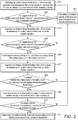
FIG. 2 is a schematic flow chart of a method for controlling, in a high-speed washing stage, of a washing apparatus of embodiments of the present application. -
FIG. 3 is a schematic diagram of the rotation velocity distribution of a washing apparatus of embodiments of the present application. -
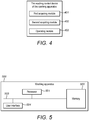
FIG. 4 is a schematic diagram of a washing control device of a washing apparatus of embodiments of the present application. -
FIG. 5 is a schematic diagram of a washing apparatus of embodiments of the present application. - Hereinafter, the present application will be further described in detail in combination with the accompanying drawings and embodiments.
- Unless defined otherwise, all technical and scientific terms used herein have the same meaning as commonly understood by those skilled in the art to which the present application belongs. The terminology used in the description of the present application herein is for the purpose of describing particular embodiments only and is not intended to limit the present application.
- The embodiments of the present application provide a washing control method for a washing apparatus. The washing apparatus may be a washing machine or a washing and drying machine. For example, the washing apparatus may be a drum type washing machine or a pulsator type washing machine. As shown in
FIG.1 , the method includes: - In
step 101, at least one rotation velocity fluctuation value in a process of increasing a rotation velocity of an inner tub of the washing apparatus to a first set rotation velocity is acquired. - The first set rotation velocity is greater than a critical rotation velocity at which laundry is tightly clung to an inner wall of the inner tub and rotates with a rotation of the inner tub. In the first washing mode, the inner tub of the washing apparatus is controlled to operate at a second set rotation velocity. The second set rotation velocity is greater than the first set rotation velocity, so that the laundry rotates with the rotation of the inner tub, to achieve high-speed washing.
- In practical applications, the washing apparatus often works in a second washing mode (also known as a beating washing mode). The second washing mode refers to a mode in which the inner tub of the washing apparatus is controlled to operate at a fourth set rotation velocity, which is less than the critical rotation velocity. At this time, the rotation velocity of the inner tub is generally about 50 rpm. Since the laundry is not tightly clung to the inner wall of the inner tub, it may be necessary to use the lifting ribs provided on the inner tub to lift up the laundry from the bottom of the inner tub. Under the action of gravity, the laundry falls from a high location to achieve beating washing. The washing efficiency is limited by the rotation velocity of the inner tub. In order to improve the washing efficiency, in the related art, the washing apparatus is often controlled to operate alternately in the first washing mode and in the second washing mode. For example, the corresponding operating period for the first washing mode and the second washing mode may be set by programs, so as to achieve the alternate operation of the washing modes.
- In the embodiments of the present application, when it is determined that the washing apparatus needs to be switched to the first washing mode, the washing apparatus may acquire at least one rotation velocity fluctuation value in a process of increasing a rotation velocity of an inner tub to a first set rotation velocity. The washing apparatus may determine whether the washing apparatus needs to be switched to the first washing mode according to whether the operating period corresponding to the second washing mode ends. If the operating period for the second washing mode ends, it is determined that the washing apparatus needs to be switched to the first washing mode. At this time, the washing apparatus controls the inner tub to be accelerated, and acquires at least one rotation velocity fluctuation value in a process of increasing the rotation velocity of the inner tub of the washing apparatus to the first set rotation velocity.
- Here, the washing apparatus may determine the rotation velocity fluctuation value by collecting a current signal and/or a voltage signal for reflecting the rotation velocity fluctuation of the motor.
- In practical applications, the washing apparatus controls the rotation velocity of the inner tub to be increased to the first set rotation velocity, and at least one rotation velocity increasing stage may be set. For example, the rotation velocity of the inner tub is firstly controlled to be increased to a third set rotation velocity, and is maintained at the third set rotation velocity for a certain period of time, and the rotation velocity is then controlled to be increased from the third set rotation velocity to the first set rotation velocity. The third set rotation velocity is less than the first set rotation velocity. The rotation velocity fluctuation value may be the rotation velocity fluctuation value in the rotation velocity increasing process, or the rotation velocity fluctuation value in the rotation velocity maintaining stage.
- In
step 102, it is determined that the at least one rotation velocity fluctuation value is less than a corresponding rotation velocity fluctuation threshold, and an amount of eccentricity corresponding to the first set rotation velocity is acquired. - In an example, the washing apparatus firstly controls the rotation velocity of the inner tub to be increased to the third set rotation velocity, and to be maintained at the third set rotation velocity for a certain period of time, and then controls the rotation velocity to be increased from the third set rotation velocity to the first set rotation velocity.
- Accordingly, the operation that at least one rotation velocity fluctuation value in the process of increasing the rotation velocity of the inner tub of the washing apparatus to the first set rotation velocity is acquired includes:
- a first rotation velocity fluctuation value in an acceleration process of increasing the rotation velocity of the inner tub of the washing apparatus to a third set rotation velocity is acquired, wherein the third set rotation velocity is greater than the critical rotation velocity and less than the first set rotation velocity;
- a second rotation velocity fluctuation value in a stage of maintaining the rotation velocity of the inner tub of the washing apparatus at the third set rotation velocity is acquired;
- a third rotation velocity fluctuation value in an acceleration process of increasing the rotation velocity of the inner tub of the washing apparatus from the third set rotation velocity to the first set rotation velocity is acquired;
- a fourth rotation velocity fluctuation value in a stage of maintaining the rotation velocity of the inner tub of the washing apparatus at the first set rotation velocity is acquired.
- The operation that it is determined that the at least one rotation velocity fluctuation value is less than the corresponding rotation velocity fluctuation threshold may include:
it is determined that the first rotation velocity fluctuation value is less than the first rotation velocity fluctuation threshold; the second rotation velocity fluctuation value is less than the second rotation velocity fluctuation threshold; the third rotation velocity fluctuation value is less than the third rotation velocity fluctuation threshold; and the fourth rotation velocity fluctuation value is less than the fourth rotation velocity fluctuation threshold. - Here, the first rotation velocity fluctuation threshold, the second rotation velocity fluctuation threshold, the third rotation velocity fluctuation threshold and the fourth rotation velocity fluctuation threshold may be determined based on experiments.
- In practical applications, it is possible to select whether the rotation velocity fluctuation value in the increasing process corresponding to each rotation velocity increasing stage and the rotation velocity fluctuation value in the rotation velocity maintaining stage are acquired according to the needs. For example, the operation of acquiring the aforementioned third rotation velocity fluctuation value may be omitted, and the process of judging based on the comparison between the third rotation velocity fluctuation value and the third rotation velocity fluctuation threshold is omitted accordingl y.
- In practical applications, the process of increasing the rotation velocity of the inner tub of the washing apparatus to the first set rotation velocity may include one, two or even more rotation velocity increasing stages. The specific number of times of rotation velocity increasing stages may be set according to the capacity and structural strength of the washing apparatus, which is not specifically limited in the embodiments of the present application. It can be appreciated that the more the number of times of rotation velocity increasing stages, the more rotation velocity fluctuation values can be acquire, and the higher the reliability of control is, but the complexity of control also increases.
- In some embodiments, it is determined that one of the at least one rotation velocity fluctuation value is greater than or equal to the corresponding rotation velocity fluctuation threshold, the inner tub is controlled to stop rotating, and the operation of acquiring the at least one rotation velocity fluctuation value in the process of increasing the rotation velocity of the inner tub of the washing apparatus to the first set rotation velocity is returned, so as to continue trying to be switched to the first washing mode.
- For example, the first rotation velocity fluctuation value in an acceleration process of increasing the rotation velocity of the inner tub of the washing apparatus to a third set rotation velocity is acquired. It is determined that the first rotation velocity fluctuation value is greater than or equal to the first rotation velocity fluctuation threshold. The rotation velocity of the inner tub is then controlled to be returned to zero, and re-controlled to be increased. The first rotation velocity fluctuation value in an acceleration process of increasing the rotation velocity to the third set rotation velocity is acquired, so as to continue trying to be switched to the first washing mode.
- In some embodiments, after controlling the inner tub to stop rotating and/or before returning to the operation of acquiring the at least one rotation velocity fluctuation value in the process of increasing the rotation velocity of the inner tub of the washing apparatus to the first set rotation velocity, the method further includes:
the washing apparatus is controlled to disperse the laundry. - Here, the inner tub of the washing apparatus may be controlled to rotate in forward and reverse directions with a set number of rotations, so as to disperse the laundry in the inner tub. Then, the operation of acquiring the at least one rotation velocity fluctuation value in the process of increasing the rotation velocity of the inner tub of the washing apparatus to the first set rotation velocity is returned, so as to continue trying to be switched to the first washing mode. In this way, the success probability of switching the washing apparatus to the first washing mode may be increased.
- In some embodiments, the method further includes:
- the number of times of controlling the inner tub to stop rotating is counted;
- it is determined that the counted number reaches a set value, and the washing apparatus is controlled to skip switching to the first washing mode.
- In an example, the number of times of controlling the inner tub to stop rotating may be counted by a counter. If the number of times reaches to the set value n (n is positive integer), the operation of trying to be switched to the first washing mode will be abandoned, that is, the corresponding first washing mode in the program will be skipped, and the subsequent second washing mode will be performed. In practical application, the washing apparatus may also return to step 101 when it is determined that the washing apparatus needs to be switched to the first washing mode in the subsequent operation process.
- In this way, the washing apparatus may avoid trying to be switched to the first washing mode in several times, which results in an excessively long operating period.
- In
step 103, it is determined that the amount of eccentricity is less than a first eccentricity threshold, and the washing apparatus is controlled to be switched to a first washing mode. - Here, it is controlled whether the washing apparatus is switched to the first washing mode based on the comparison result between the amount of eccentricity of the washing apparatus at the first set rotation velocity and the first eccentricity threshold. Here, the first eccentricity threshold may be determined based on experiments.
- The embodiments of the present application may avoid the phenomenon of vibration and displacement of the washing apparatus in the first washing mode by judging the at least one rotation velocity fluctuation value in a process of increasing the rotation velocity to the first set rotation velocity as well as the amount of eccentricity corresponding to the first set rotation velocity, before switching the washing apparatus to the first washing mode. Therefore, it is possible to ensure effectively that the washing apparatus is switched to the first washing mode on the premise that the washing apparatus operates reliably and stably, thereby improving the washing efficiency.
- In some embodiments, the second set rotation velocity includes at least two rotation velocities greater than the first set rotation velocity. The operation that the washing apparatus is controlled to be switched to the first washing mode includes:
- a corresponding rotation velocity of the washing apparatus is determined based on the amount of eccentricity;
- the washing apparatus is controlled to operate at the corresponding rotation velocity.
- Here, in the first washing mode, levels corresponding to different rotation velocities may be set, and each level has a preset eccentricity threshold interval. The washing apparatus may, determine the eccentricity threshold interval into which the amount of eccentricity is fallen, based on the acquired amount of eccentricity, and determine the operating rotation velocity of the washing apparatus in the first washing mode according to the level corresponding to the eccentricity threshold interval.
- Here, in the first washing mode, there may be two or more levels of rotation velocity to finely control the washing apparatus to operate at the corresponding level of rotation velocity, so as to effectively reduce the phenomenon of vibration and displacement in the washing process and improve washing efficiency.
- In some embodiments, the method further includes:
it is determined that the washing apparatus operates for a set period in the first washing mode, and the washing apparatus is controlled to be switched to a second washing mode. - In the second washing mode, the inner tub is controlled to operate at a fourth set rotation velocity, which is less than the critical rotation velocity.
- In this way, the washing apparatus may operate alternately in the first washing mode and in the second washing mode, until the washing period of the washing apparatus is reached.
- In some embodiments, the method further includes:
it is determined that the washing period of the washing apparatus is reached, and the washing apparatus is controlled for rinsing and spinning. - Here, the washing period of the washing apparatus may be set by the user or determined according to the weight of the laundry or adopt a default period. When it is determined that the washing period of the washing apparatus is reached, the washing apparatus is controlled to perform subsequent rinsing and spinning, until the operation of washing apparatus ends.
- The present application will be further described in detail in combination with embodiments.
- In the embodiments, the washing apparatus is a drum washing machine. The washing apparatus has a low-speed beating washing stage and a high-speed washing stage which operate alternately. The low-speed beating washing stage is the aforementioned second washing mode, and the high-speed washing stage allows the washing apparatus to operate in the aforementioned first washing mode. The first washing mode includes a low level and a high level, in which the rotation velocity corresponding to the low level is lower than the rotation velocity corresponding to the high level.
- As shown in
FIG.2 andFIG.3 , in the embodiments, the control method in the high-speed washing stage includes the following steps. - In
step 201, the rotation velocity of the inner tub of the washing apparatus is controlled to be increased to the rotation velocity r1 (i.e. the aforementioned third set rotation velocity), and the rotation velocity fluctuation value w1 in the increasing process is acquired. - Here, when the washing apparatus determines that the operating period in the current second washing mode ends, the rotation velocity of the inner tub of the washing apparatus is controlled to be increased to the rotation velocity r1, and the rotation velocity fluctuation value w1 in the process of increasing the rotation velocity to the rotation velocity r1 is acquired (i.e. the detection of the first rotation velocity fluctuation in
FIG.3 ). The rotation velocity r1 is greater than the critical rotation velocity. For example, the rotation velocity r1 may be 80 rpm (rpm/min). - In
step 202, it is judged whether the rotation velocity fluctuation value w1 is less than the rotation velocity fluctuation threshold y1. If the rotation velocity fluctuation value w1 is less than the rotation velocity fluctuation threshold y1,step 203 is performed; if the rotation velocity fluctuation value w1 is not less than the rotation velocity fluctuation threshold y1,step 204 is performed. - If the rotation velocity fluctuation value w1 is less than the rotation velocity fluctuation threshold y1,
step 203 is performed; if the rotation velocity fluctuation value w1 is greater than or equal to the rotation velocity fluctuation threshold y1, it is indicated that the washing apparatus does not meet the condition for continuing to increase the rotation velocity, and step 204 is performed. - In
step 203, the rotation velocity fluctuation value w2 in a stage of maintaining the rotation velocity of the inner tub at the rotation velocity r1 is acquired. - The washing apparatus acquires the rotation velocity fluctuation value w2 in the process of maintaining the rotation velocity of the inner tub at the rotation velocity r1 for the first set period t1 (i.e. the detection of the second rotation velocity fluctuation in
FIG.3 ). Here, the first set period t1 may be set reasonably according to the rotation velocity r1. - In
step 204, the rotation velocity of the inner tub is controlled to be returned to zero, the laundry is dispersed and organized, and step 201 is returned. - The washing apparatus controls the inner tub to stop rotating, and controls the inner tub to rotate in forward and reverse directions with a set number of rotations, so as to disperse the laundry in the inner tub. Then, step 201 is returned to retry to be switched to the first washing mode.
- In some embodiments, before returning to step 201, step 204 further includes the operation of counting the corresponding number of times that the rotation velocity is returned to zero and the laundry is dispersed and organized. If the number of times reaches the set maximum threshold n, the corresponding first washing mode in the washing process is skipped, and the subsequent second washing mode is performed.
- In
step 205, it is judged whether the rotation velocity fluctuation value w2 is less than the second rotation velocity fluctuation threshold y2.If the rotation velocity fluctuation value w2 is less than the second rotation velocity fluctuation threshold y2,step 206 is performed; if the rotation velocity fluctuation value w2 is not less than the second rotation velocity fluctuation threshold y2,step 204 is returned. - In
step 206, the rotation velocity of the inner tub is controlled to be increased from the rotation velocity r1 to the rotation velocity r2 (i.e. the aforementioned first set rotation velocity). - Here, the rotation velocity of the inner tub is controlled to continue to be increased to the rotation velocity r2. For example, r2 may be 95 rpm.
- In
step 207, the rotation velocity fluctuation value w3 in a stage of maintaining the rotation velocity of the inner tub at the rotation velocity r2 is acquired. - The washing apparatus acquires the rotation velocity fluctuation value w3 in the process of maintaining the rotation velocity of the inner tub at the rotation velocity r2 for a second set period t2 (i.e. the detection of the third rotation velocity fluctuation in
FIG.3 ). Here, the second set period t2 may be set reasonably according to the rotation velocity r2. - In
step 208, it is judged whether the rotation velocity fluctuation value w3 is less than the third rotation velocity fluctuation threshold y3. If the rotation velocity fluctuation value w3 is less than the third rotation velocity fluctuation threshold y3,step 209 is performed; if the rotation velocity fluctuation value w3 is not less than the third rotation velocity fluctuation threshold y3,step 204 is returned. - In
step 209, the amount of eccentricity in the stage of maintaining the rotation velocity of the inner tub at the rotation velocity r2 is acquired. - After maintaining the washing apparatus at the rotation velocity r2 for the second set period t2, it is maintained for a third set period t3 to acquire the amount of eccentricity of the inner tub during the third set period t3 (i.e. the detection of the amount of eccentricity in
FIG.3 ). Here, the third set period t3 may be set reasonably according to the rotation velocity r2. - In
Step 210, it is judged whether the amount of eccentricity is less than the first eccentricity threshold. If the amount of eccentricity is less than the first eccentricity threshold, step 211 is performed; if the amount of eccentricity is not less than the first eccentricity threshold,step 204 is returned. - Here, if the amount of eccentricity is greater than or equal to the first eccentricity threshold L1, it is indicated that the amount of eccentricity of the washing apparatus does not meet the condition for switching to the first washing mode, and step 204 is returned. If the amount of eccentricity is less than the first eccentricity threshold LI, it may be necessary to select the low level or the high level in the first washing mode according to the amount of eccentricity, so as to determine the appropriate rotation velocity at which the washing apparatus operates.
- In step 211, the rotation velocity of the washing apparatus in the first washing mode is determined based on the amount of eccentricity.
- Here, if the amount of eccentricity is greater than or equal to the second eccentricity threshold L2 and less than the first eccentricity threshold L1, the washing apparatus is controlled to operate at the rotation velocity (for example, 150 rpm) with the low level. If the amount of eccentricity is less than the second eccentricity threshold L2, the washing apparatus is controlled to operate at the rotation velocity (for example, 200 rpm) with the high level. Herein, L2 is less than L1.
- In practical application, when the operating period of the washing apparatus during high-speed washing reaches to the set period, it is switched to the second washing mode. After the washing apparatus operates in the second washing mode for a corresponding period, the aforementioned control method in the high-speed washing stage is then performed. The cycle is repeated until the washing period of the washing apparatus ends, and then the subsequent rinsing and spinning are performed to complete the washing process.
- The washing control method of the embodiments may avoid the phenomenon of vibration and displacement of the washing apparatus in the high-speed washing by judging the at least one rotation velocity fluctuation value in a process of increasing the rotation velocity to the first set rotation velocity as well as the amount of eccentricity corresponding to the first set rotation velocity, before the washing apparatus enters the high-speed washing (i.e. the first washing mode). The appropriate rotation velocity level is selected based on the amount of eccentricity, so that it is possible to reduce effectively the phenomenon of vibration and displacement during washing and improve the washing and cleaning effect.
- In order to implement the method of the embodiments of the present application, the embodiments of the present application further provide a washing control device of a washing apparatus. The washing control device of the washing apparatus corresponds to the aforementioned washing control method for the washing apparatus. The steps in the embodiments of aforementioned washing control method of the washing apparatus are fully applicable to the embodiments of the washing control device of the washing apparatus.
- As shown in
FIG.4 , the washing control device of the washing apparatus includes a first acquiringmodule 401, a second acquiringmodule 402 and anoperating module 403. Herein, the first acquiringmodule 401 is configured to determine that the washing apparatus needs to be switched to the first washing mode, and to acquire at least one rotation velocity fluctuation value in a process of increasing a rotation velocity of an inner tub of the washing apparatus to a first set rotation velocity. The second acquiringmodule 402 is configured to determine that the at least one rotation velocity fluctuation value is less than a corresponding rotation velocity fluctuation threshold, and to acquire an amount of eccentricity corresponding to the first set rotation velocity. Theoperating module 403 is configured to determine that the amount of eccentricity is less than a first eccentricity threshold, and to control the washing apparatus to be switched to a first washing mode. - Herein, the first set rotation velocity is greater than a critical rotation velocity at which laundry is tightly clung to an inner wall of the inner tub and rotates with a rotation of the inner tub. In the first washing mode, the inner tub of the washing apparatus is controlled to operate at a second set rotation velocity, which is greater than the first set rotation velocity, so that the laundry rotates with the rotation of the inner tub.
- In some embodiments, the first acquiring
module 401 is specifically configured to perform at least one of the following operations: - a first rotation velocity fluctuation value in an acceleration process of increasing the rotation velocity of the inner tub of the washing apparatus to a third set rotation velocity is acquired, wherein the third set rotation velocity is greater than the critical rotation velocity and less than the first set rotation velocity;
- a second rotation velocity fluctuation value in a stage of maintaining the rotation velocity of the inner tub of the washing apparatus at the third set rotation velocity is acquired;
- a third rotation velocity fluctuation value in an acceleration process of increasing the rotation velocity of the inner tub of the washing apparatus from the third set rotation velocity to the first set rotation velocity is acquired;
- a fourth rotation velocity fluctuation value in a stage of maintaining the rotation velocity of the inner tub of the washing apparatus at the first set rotation velocity is acquired.
- In some embodiments, the
operating module 403 is further configured to perform the following operation:
it is determined that one of the at least one rotation velocity fluctuation value is greater than or equal to the corresponding rotation velocity fluctuation threshold, the inner tub is controlled to stop rotating, and the operation of acquiring the at least one rotation velocity fluctuation value in the process of increasing the rotation velocity of the inner tub of the washing apparatus to the first set rotation velocity is returned, to continue trying to be switched to the first washing mode. - In some embodiments, the
operating module 403 is further configured to perform the following operations: - the number of times of controlling the inner tub to stop rotating is counted;
- it is determined that the counted number reaches a set value, and the washing apparatus is controlled to skip switching to the first washing mode.
- In some embodiments, the
operating module 403 is further configured to control the washing apparatus to disperse the laundry, after controlling the inner tub to stop rotating and/or before returning to the operation of acquiring the at least one rotation velocity fluctuation value in the process of increasing the rotation velocity of the inner tub of the washing apparatus to the first set rotation velocity. - In some embodiments, the second set rotation velocity includes at least two rotation velocities greater than the first set rotation velocity, and the
operating module 403 is further configured to perform the following operations: - a corresponding rotation velocity of the washing apparatus is determined based on the amount of eccentricity;
- the washing apparatus is controlled to operate at the corresponding rotation velocity.
- In some embodiments, the
operating module 403 is further configured to perform the following operation:
it is determined that the washing apparatus operates for a set period in the first washing mode, and the washing apparatus is controlled to be switched to a second washing mode. - Here, in the second washing mode, the inner tub is controlled to operate at a fourth set rotation velocity, which is less than the critical rotation velocity.
- In practical application, the first acquiring
module 401, the second acquiringmodule 402 and theoperating module 403 may be implemented by a processor in the washing control device of the washing apparatus. Of course, the processor needs to execute computer programs in the memory to realize its functions. - It should be noted that, when the washing control device of the washing apparatus provided in the above embodiments performs the washing control of the washing apparatus, only the division of the aforementioned program modules is used as an example. In practical applications, the above processing distribution may be completed by different program modules as required, that is, the internal structure of the device is divided into different program modules to complete all or part of the processing described above. In addition, the washing control device of the washing apparatus provided in the above embodiments and the embodiments of the washing control method of the washing apparatus belong to the same concept, and their specific implementation process is detailed in the embodiments of the method, the description of which is not repeated here.
- Based on the hardware implementation of the aforementioned program modules, and in order to implement the method in the embodiments of the present application, the embodiments of the present application further provide a washing apparatus.
FIG.5 only shows an exemplary structure of the washing apparatus rather than the entire structure of the washing apparatus, and a part of structure or all the structure shown inFIG.5 may be implemented as required. - As shown in
FIG.5 , thewashing apparatus 500 provided in the embodiments of the present application includes at least oneprocessor 501, amemory 502 and auser interface 504. The various components in thewashing apparatus 500 are coupled together through abus system 503. It can be appreciated that thebus system 503 is configured to implement the connection and communication between these components. In addition to a data bus, thebus system 503 also includes a power bus, a control bus and a status signal bus. However, for the sake of clarity, the various busses are illustrated as thebus system 503 inFIG. 5 . - Herein, the
user interface 504 may include a display, a keyboard, a mouse, a trackball, a click wheel, keys, buttons, a touch panel, a touch screen or the like. - The
memory 502 in the embodiments of the present application is configured to store various types of data to allow the operation of the washing apparatus. The examples of such data include any computer program executed on the washing apparatus. - The washing control method for the washing apparatus disclosed in the embodiments of the present application may be applied to the
processor 501 or implemented by theprocessor 501. Theprocessor 501 may be an integrated circuit chip with signal processing capability. In the implementation process, the steps of the washing control method for the washing apparatus may be completed by the integrated logic circuit of hardware in theprocessor 501 or instructions in the form of software. Theaforementioned processor 501 may be a general purpose processor, a Digital Signal Processor (DSP), or other programmable logic device, discrete gate or transistor logic devices, discrete hardware components and the like. Theprocessor 501 may implement or perform various methods, steps and logical block diagrams disclosed in the embodiments of the present application. A general purpose processor may be a microprocessor or any conventional processor or the like. The steps of the method disclosed in the embodiments of the present application can be directly embodied as execution and completion by a hardware decoding processor, or by a combination of hardware and software modules in the decoding processor. The software module may be included in a storage medium, and the storage medium is included in thememory 502. Theprocessor 501 reads the information in thememory 502, and completes the steps of the washing control method of the washing apparatus provided in the embodiments of the present application in combination with the hardware. - In the exemplary embodiments, the washing apparatus may be implemented by one or more Application Specific Integrated Circuits (ASICs), DSPs, Programmable Logic Devices (PLDs), Complex Programmable Logic Devices (CPLDs), FPGAs, general purpose processors, controllers, Micro Controller Units (MCUs), Microprocessors, or other electronic elements, for performing the aforementioned method.
- It can be appreciated that, the
memory 502 may be volatile or nonvolatile memory, or may include both volatile memory and non-volatile memory. Herein, the non-volatile memory may be a Read Only Memory (ROM), a Programmable Read-Only Memory (PROM), an Erasable Programmable Read-Only Memory (EPROM), an Electrically Erasable Programmable Read-Only Memory (EEPROM), a Ferromagnetic Random Access Memory (FRAM), a Flash Memory, a magnetic surface storage, an optical disk, or a Compact Disc Read-Only Memory (CD-ROM); the magnetic surface storage may be a magnetic disk storage or a magnetic tape storage. The volatile memory may be a Random Access Memory (RAM), which is used as an external cache. By way of exemplary but not restrictive description, many forms of RAM are available, such as Static Random Access Memory (SRAM), Synchronous Static Random Access Memory (SSRAM), Dynamic Random Access Memory (DRAM), Synchronous Dynamic Random Access Memory (SDRAM), Double Data Rate Synchronous Dynamic Random Access Memory (DDRSDRAM), Enhanced Synchronous Dynamic Random Access Memory (ESDRAM), SyncLink Dynamic Random Access Memory (SLDRAM), and Direct Rambus Random Access Memory (DRRAM). The memory described in the embodiments of the present application is intended to include, but is not limited to, these and any other suitable types of memory. - In the exemplary embodiments, the embodiments of the present application further provide a storage medium, that is, a computer storage medium, which may specifically be a computer-readable storage medium, for example a
memory 502 storing computer programs. The computer programs described above may be executed by theprocessor 501 of the washing apparatus to complete the steps described in the method of the embodiments of the present application. The computer-readable storage medium may be a memory such as ROM, PROM, EPROM, EEPROM, Flash Memory, magnetic surface storage, optical disk, CD-ROM or the like. - It should be noted that, the terms "first", "second" and the like are used for distinguishing between similar objects and not necessarily for describing a specific sequential or chronological order.
- In addition, the technical solutions recorded in the embodiments of the present application may be combined arbitrarily in case of no conflict.
Claims (10)
- A washing control method for a washing apparatus, characterized in that the washing control method comprises:acquiring (101) at least one rotation velocity fluctuation value in a process of increasing a rotation velocity of an inner tub of the washing apparatus to a first set rotation velocity;determining (102) that the at least one rotation velocity fluctuation value is less than a corresponding rotation velocity fluctuation threshold, and acquiring an amount of eccentricity corresponding to the first set rotation velocity;determining (103) that the amount of eccentricity is less than a first eccentricity threshold, and controlling the washing apparatus to be switched to a first washing mode;wherein the first set rotation velocity is greater than a critical rotation velocity at which laundry is tightly clung to an inner wall of the inner tub and rotates with a rotation of the inner tub; in the first washing mode, the inner tub of the washing apparatus is controlled to operate at a second set rotation velocity, the second set rotation velocity being greater than the first set rotation velocity, so that the laundry rotates with the rotation of the inner tub.
- The method of claim 1, wherein acquiring the at least one rotation velocity fluctuation value in the process of increasing the rotation velocity of the inner tub of the washing apparatus to the first set rotation velocity comprises at least one of the following:acquiring (201) a first rotation velocity fluctuation value in an acceleration process of increasing the rotation velocity of the inner tub of the washing apparatus to a third set rotation velocity, the third set rotation velocity being greater than the critical rotation velocity and less than the first set rotation velocity;acquiring (203) a second rotation velocity fluctuation value in a stage of maintaining the rotation velocity of the inner tub of the washing apparatus at the third set rotation velocity;acquiring (206) a third rotation velocity fluctuation value in an acceleration process of increasing the rotation velocity of the inner tub of the washing apparatus from the third set rotation velocity to the first set rotation velocity;acquiring (207) a fourth rotation velocity fluctuation value in a stage of maintaining the rotation velocity of the inner tub of the washing apparatus at the first set rotation velocity.
- The method of claim 1, wherein the method further comprises:
determining (202, 205, 208) that one of the at least one rotation velocity fluctuation value is greater than or equal to the corresponding rotation velocity fluctuation threshold, controlling (204) the inner tub to stop rotating, and returning to the operation (201) of acquiring the at least one rotation velocity fluctuation value in the process of increasing the rotation velocity of the inner tub of the washing apparatus to the first set rotation velocity, to continue trying to be switched to the first washing mode. - The method of claim 3, wherein the method further comprises:counting the number of times of controlling the inner tub to stop rotating;determining that the counted number reaches a set value, and controlling the washing apparatus to skip switching to the first washing mode.
- The method of claim 3, wherein after controlling the inner tub to stop rotating and/or before returning to the operation of acquiring the at least one rotation velocity fluctuation value in the process of increasing the rotation velocity of the inner tub of the washing apparatus to the first set rotation velocity, the method further comprises:
controlling the washing apparatus to disperse the laundry. - The method of claim 1, wherein the second set rotation velocity comprises at least two rotation velocities greater than the first set rotation velocity, and controlling (103) the washing apparatus to be switched to the first washing mode comprises:determining (211) a corresponding rotation velocity of the washing apparatus based on the amount of eccentricity;controlling (211) the washing apparatus to operate at the corresponding rotation velocity.
- The method of claim 1 or 6, wherein the method further comprises:determining that the washing apparatus operates for a set period in the first washing mode, and controlling the washing apparatus to be switched to a second washing mode;wherein in the second washing mode, the inner tub is controlled to operate at a fourth set rotation velocity, the fourth set rotation velocity being less than the critical rotation velocity.
- A washing control device of a washing apparatus (500), characterized in that the washing control device comprises:a first acquiring module (401) configured to acquire at least one rotation velocity fluctuation value in a process of increasing a rotation velocity of an inner tub of the washing apparatus to a first set rotation velocity;a second acquiring module (402) configured to determine that the at least one rotation velocity fluctuation value is less than a corresponding rotation velocity fluctuation threshold, and to acquire an amount of eccentricity corresponding to the first set rotation velocity;an operating module (403) configured to determine that the amount of eccentricity is less than a first eccentricity threshold, and to control the washing apparatus to be switched to a first washing mode;wherein the first set rotation velocity is greater than a critical rotation velocity at which laundry is tightly clung to an inner wall of the inner tub and rotates with a rotation of the inner tub; in the first washing mode, the inner tub of the washing apparatus is controlled to operate at a second set rotation velocity, the second set rotation velocity being greater than the first set rotation velocity, so that the laundry rotates with the rotation of the inner tub.
- A washing apparatus (500), characterized by comprising a processor (501) and a memory (502) configured to store computer programs executable on the processor, wherein
the processor (501) is configured to perform steps of the method of any one of claims 1 to 7 when executing the computer programs. - A storage medium (502) having stored thereon computer programs that when executed by a processor (501), performs steps of the method of any one of claims 1 to 7.
Applications Claiming Priority (1)
| Application Number | Priority Date | Filing Date | Title |
|---|---|---|---|
| CN202010277657.8A CN111501286B (en) | 2020-04-08 | 2020-04-08 | Washing control method, device, equipment and storage medium for washing equipment |
Publications (1)
| Publication Number | Publication Date |
|---|---|
| EP3892768A1 true EP3892768A1 (en) | 2021-10-13 |
Family
ID=71874659
Family Applications (1)
| Application Number | Title | Priority Date | Filing Date |
|---|---|---|---|
| EP20197267.6A Pending EP3892768A1 (en) | 2020-04-08 | 2020-09-21 | Washing control method and device for washing apparatus, apparatus, and storage medium |
Country Status (2)
| Country | Link |
|---|---|
| EP (1) | EP3892768A1 (en) |
| CN (1) | CN111501286B (en) |
Families Citing this family (2)
| Publication number | Priority date | Publication date | Assignee | Title |
|---|---|---|---|---|
| CN111501285B (en) * | 2020-04-09 | 2025-05-16 | 无锡小天鹅电器有限公司 | Washing control method, device, equipment and storage medium for washing equipment |
| CN113584803A (en) * | 2021-08-17 | 2021-11-02 | 长虹美菱股份有限公司 | Washing control method for drum washing machine |
Citations (3)
| Publication number | Priority date | Publication date | Assignee | Title |
|---|---|---|---|---|
| US20010054204A1 (en) * | 2000-06-26 | 2001-12-27 | Rosasio Ciancimino | Method and apparatus for detecting load unbalance in an appliance |
| US20150059416A1 (en) * | 2013-08-28 | 2015-03-05 | General Electric Company | Systems and Methods for Detecting an Imbalanced Load in a Washing Machine Appliance Having a Balancing Apparatus |
| EP3511462A1 (en) * | 2016-09-12 | 2019-07-17 | LG Electronics Inc. -1- | Method for controlling spin-drying operation of washing apparatus |
Family Cites Families (1)
| Publication number | Priority date | Publication date | Assignee | Title |
|---|---|---|---|---|
| CN111501285B (en) * | 2020-04-09 | 2025-05-16 | 无锡小天鹅电器有限公司 | Washing control method, device, equipment and storage medium for washing equipment |
-
2020
- 2020-04-08 CN CN202010277657.8A patent/CN111501286B/en active Active
- 2020-09-21 EP EP20197267.6A patent/EP3892768A1/en active Pending
Patent Citations (3)
| Publication number | Priority date | Publication date | Assignee | Title |
|---|---|---|---|---|
| US20010054204A1 (en) * | 2000-06-26 | 2001-12-27 | Rosasio Ciancimino | Method and apparatus for detecting load unbalance in an appliance |
| US20150059416A1 (en) * | 2013-08-28 | 2015-03-05 | General Electric Company | Systems and Methods for Detecting an Imbalanced Load in a Washing Machine Appliance Having a Balancing Apparatus |
| EP3511462A1 (en) * | 2016-09-12 | 2019-07-17 | LG Electronics Inc. -1- | Method for controlling spin-drying operation of washing apparatus |
Also Published As
| Publication number | Publication date |
|---|---|
| CN111501286B (en) | 2025-05-16 |
| CN111501286A (en) | 2020-08-07 |
Similar Documents
| Publication | Publication Date | Title |
|---|---|---|
| EP3892770B1 (en) | Washing control method, apparatus and device for washing device, and storage medium | |
| US20090300851A1 (en) | Washing machine and method of controlling a washing machine | |
| WO2021077535A1 (en) | Dehydration control method and device for laundry treatment device, and storage medium | |
| CN113737457B (en) | Laundry treating apparatus, dehydration control method and device thereof, and storage medium | |
| WO2021017159A1 (en) | Washing machine water removal control method and device, washing machine and storage medium | |
| EP1776498A2 (en) | Washing machine and method of controlling the same | |
| CN111501286B (en) | Washing control method, device, equipment and storage medium for washing equipment | |
| CN116024776A (en) | Laundry treating apparatus, control method and device thereof, and storage medium | |
| CN114250582B (en) | Drainage control method, device, equipment and storage medium | |
| EP3892769B1 (en) | Method and apparatus for detecting amount of laundry of washing device, device and storage medium | |
| CN115450004A (en) | Clothes treatment equipment, control method and device thereof and storage medium | |
| WO2022083390A1 (en) | Rinsing control method and apparatus, and washing device | |
| CN116590895B (en) | Clothing handling equipment, control methods, devices and storage media | |
| CN112323345B (en) | Clothes treatment device, washing control method and device thereof, and storage medium | |
| CN113605039B (en) | Drum washing machine, control method and device thereof, and storage medium | |
| WO2025082126A1 (en) | Laundry treatment device and rinsing method therefor | |
| CN116065337B (en) | Drum washing machine, control method and device thereof, and storage medium | |
| CN113123063B (en) | Washing machine, washing control method and device thereof and storage medium | |
| CN116065331A (en) | Drum washing machine and its control method, device and storage medium | |
| CN114000304B (en) | Control method, device, equipment and storage medium of clothes treatment equipment | |
| CN111945374B (en) | Clothes treatment equipment, foam detection method and device thereof and storage medium | |
| CN114108234B (en) | Control method, device and storage medium for dewatering of clothes treatment equipment | |
| CN118854613A (en) | Clothes processing equipment and control method, device and storage medium thereof | |
| CN120042026A (en) | Control method of clothes treatment equipment and clothes treatment equipment | |
| CN115595761A (en) | Control method, device and equipment of washing machine and storage medium |
Legal Events
| Date | Code | Title | Description |
|---|---|---|---|
| PUAI | Public reference made under article 153(3) epc to a published international application that has entered the european phase |
Free format text: ORIGINAL CODE: 0009012 |
|
| STAA | Information on the status of an ep patent application or granted ep patent |
Free format text: STATUS: REQUEST FOR EXAMINATION WAS MADE |
|
| 17P | Request for examination filed |
Effective date: 20200925 |
|
| AK | Designated contracting states |
Kind code of ref document: A1 Designated state(s): AL AT BE BG CH CY CZ DE DK EE ES FI FR GB GR HR HU IE IS IT LI LT LU LV MC MK MT NL NO PL PT RO RS SE SI SK SM TR |
|
| STAA | Information on the status of an ep patent application or granted ep patent |
Free format text: STATUS: EXAMINATION IS IN PROGRESS |
|
| 17Q | First examination report despatched |
Effective date: 20231127 |