EP3891618B1 - Techniques for updating files - Google Patents
Techniques for updating files Download PDFInfo
- Publication number
- EP3891618B1 EP3891618B1 EP19912771.3A EP19912771A EP3891618B1 EP 3891618 B1 EP3891618 B1 EP 3891618B1 EP 19912771 A EP19912771 A EP 19912771A EP 3891618 B1 EP3891618 B1 EP 3891618B1
- Authority
- EP
- European Patent Office
- Prior art keywords
- data
- file
- remote system
- dictionary
- version
- Prior art date
- Legal status (The legal status is an assumption and is not a legal conclusion. Google has not performed a legal analysis and makes no representation as to the accuracy of the status listed.)
- Active
Links
Images



Classifications
-
- G—PHYSICS
- G06—COMPUTING OR CALCULATING; COUNTING
- G06F—ELECTRIC DIGITAL DATA PROCESSING
- G06F16/00—Information retrieval; Database structures therefor; File system structures therefor
- G06F16/10—File systems; File servers
- G06F16/13—File access structures, e.g. distributed indices
-
- G—PHYSICS
- G06—COMPUTING OR CALCULATING; COUNTING
- G06F—ELECTRIC DIGITAL DATA PROCESSING
- G06F16/00—Information retrieval; Database structures therefor; File system structures therefor
- G06F16/10—File systems; File servers
- G06F16/17—Details of further file system functions
- G06F16/174—Redundancy elimination performed by the file system
- G06F16/1744—Redundancy elimination performed by the file system using compression, e.g. sparse files
-
- G—PHYSICS
- G06—COMPUTING OR CALCULATING; COUNTING
- G06F—ELECTRIC DIGITAL DATA PROCESSING
- G06F16/00—Information retrieval; Database structures therefor; File system structures therefor
- G06F16/10—File systems; File servers
- G06F16/18—File system types
- G06F16/1873—Versioning file systems, temporal file systems, e.g. file system supporting different historic versions of files
-
- G—PHYSICS
- G06—COMPUTING OR CALCULATING; COUNTING
- G06F—ELECTRIC DIGITAL DATA PROCESSING
- G06F8/00—Arrangements for software engineering
- G06F8/60—Software deployment
- G06F8/65—Updates
-
- G—PHYSICS
- G06—COMPUTING OR CALCULATING; COUNTING
- G06F—ELECTRIC DIGITAL DATA PROCESSING
- G06F8/00—Arrangements for software engineering
- G06F8/70—Software maintenance or management
- G06F8/71—Version control; Configuration management
-
- H—ELECTRICITY
- H04—ELECTRIC COMMUNICATION TECHNIQUE
- H04L—TRANSMISSION OF DIGITAL INFORMATION, e.g. TELEGRAPHIC COMMUNICATION
- H04L67/00—Network arrangements or protocols for supporting network services or applications
- H04L67/01—Protocols
- H04L67/06—Protocols specially adapted for file transfer, e.g. file transfer protocol [FTP]
-
- H—ELECTRICITY
- H04—ELECTRIC COMMUNICATION TECHNIQUE
- H04L—TRANSMISSION OF DIGITAL INFORMATION, e.g. TELEGRAPHIC COMMUNICATION
- H04L67/00—Network arrangements or protocols for supporting network services or applications
- H04L67/01—Protocols
- H04L67/10—Protocols in which an application is distributed across nodes in the network
- H04L67/1097—Protocols in which an application is distributed across nodes in the network for distributed storage of data in networks, e.g. transport arrangements for network file system [NFS], storage area networks [SAN] or network attached storage [NAS]
-
- H—ELECTRICITY
- H04—ELECTRIC COMMUNICATION TECHNIQUE
- H04L—TRANSMISSION OF DIGITAL INFORMATION, e.g. TELEGRAPHIC COMMUNICATION
- H04L67/00—Network arrangements or protocols for supporting network services or applications
- H04L67/34—Network arrangements or protocols for supporting network services or applications involving the movement of software or configuration parameters
-
- H—ELECTRICITY
- H04—ELECTRIC COMMUNICATION TECHNIQUE
- H04L—TRANSMISSION OF DIGITAL INFORMATION, e.g. TELEGRAPHIC COMMUNICATION
- H04L69/00—Network arrangements, protocols or services independent of the application payload and not provided for in the other groups of this subclass
- H04L69/04—Protocols for data compression, e.g. ROHC
Definitions
- a remote system may send files to electronic devices over networks, such as the Internet. At times, developers of these files may update these files and provide updated versions to the remote system. These updated files may then be provided to the electronic devices, either in response to requests from the devices or otherwise. However, as files have grown in complexity and size, sending the updated files to the electronic devices may require a great amount of network bandwidth and may take a relatively long amount of time to be stored on these devices.
- US 2007/0226320 A1 discloses using an algorithm to create a "delta" or patch between two versions of a file, a directory or a block.
- the file may be divided into a plurality of blocks.
- the delta is used to patch to the latest version of the file.
- US 6,216,175 B1 discloses generation of a patch file by pre-loading a dictionary of an LZ77-type compressor with a prior version of a file when compressing a later version of the file.
- a remote system may generate and/or receive data (referred to, in this example, as "first data") representing a first version of a file.
- the remote system stores the first data representing the first version of the file.
- the file may represent a game, a video, a document, and/or the like.
- the file may be provided to the remote system by a third party, such as a game developer or the like.
- the remote system may receive a request for the file from one or more electronic devices, such as personal computers, laptop computers, game consoles, tablet computers, or the like.
- the remote system may send the first data, representative of the first version of the file, to one or more electronic devices.
- the remote system may first partition the first data into contiguous portions, such as one megabyte portions. After partitioning the first data, the remote system may send the portions to the electronic devices one at a time.
- the remote system may additionally send a manifest to the one or more electronic devices, with the manifest defining an order for reassembling the portions of the first data on the electronic devices to generate the first version of the file.
- the electronic devices may generate the first versions of the file such that the devices may execute or otherwise render respective instances of the file.
- the remote system may generate and/or receive data (referred to, in this example, as "second data") representing a second, updated version of the file.
- second data data representing a second, updated version of the file.
- the remote system stores the second data representing the second version of the file.
- the remote system may then send the second data to the one or more electronic devices, which the one or more electronic devices may use to update the first version of the file to the second version of the file.
- the remote system may send a portion of the second data to the one or more electronic devices.
- the one or more electronic devices may then use the portion of the second data to "patch" the first data in order to update the first version of the file to the second version of the file.
- this patch file is pushed to electronic devices that store the first version of the file, while in other instances the patch file is sent to the electronic devices in response to the remote system receiving respective requests from these devices.
- the remote system may begin by partitioning portions of the second data into contiguous portions, which may be of the of the same or similar size of the contiguous portions of the first data (e.g., one megabyte).
- the remote system may then analyze the portions of the first data with respect to the portions of the second data to identify similarities between portion(s) of the first data and portion(s) of the second data. For instance, the remote system may "walk through" the second data to identify matching portions, such as a portion of the first data that matches a portion of the second data.
- the remote system may fingerprint or tag the portions.
- the remote system may utilize cyclic redundancy check (CRC) to generate first check values associated with the portions of the first data and second check values associated with the portions of the second data.
- CRC cyclic redundancy check
- the remote system may then compare the first check values to the second check values to identify first check value(s) that match the second check value(s). Based on identifying match(es), the remote system may identify portion(s) of the first data that correspond to (e.g., include the same data as) portion(s) of the second data.
- the remote system may utilize Secure Hash Algorithm 1 (SHA-1) to generate first hash values associated with the portions of the first data and second hash values associated with the portions of the second data.
- the remote system may then compare the first hash values to the second hash values to identify first hash value(s) that match the second hash value(s). Based on the matches, the remote system may identify portion(s) of the first data that correspond to portion(s) of the second value.
- SHA-1 Secure Hash Algorithm 1
- the remote system may then store unique portion(s) of the second data (e.g., portion(s) of the second data that do not correspond to portions of the first data). Additionally, the remote system may generate a manifest that indicates an order for reassembling the second version of the file using some portions of the first version of the file and the portions of the second version of the file that are new or unique to the second version. Stated otherwise, the manifest may define an order for reassembling (1) the portion(s) of the first data that correspond to portion(s) of the second data and (2) the unique portion(s) of the second data. The remote system may then send, to the one or more electronic devices, the unique portion(s) of the second data along with the manifest for reassembling the second version of the file.
- the manifest may define an order for reassembling (1) the portion(s) of the first data that correspond to portion(s) of the second data and (2) the unique portion(s) of the second data.
- the one or more electronic devices may then use the portion(s) of the first data that correspond to the portion(s) of the second data, which are stored on the one or more electronic devices, the received unique portion(s) of the second data, and the manifest to reassemble the second version of the file.
- the remote system instead of sending the one or more electronic devices the entirety of the second data, may send the unique portion(s) of the second data along with the manifest. This may reduce network bandwidth and lessen the amount of time it takes to update a client device from a first version of the file to the second version of the file.
- a unique portion of the second data may be similar enough to a portion of the first data that the unique portion of the second data can be converted to the portion of the first data with minimal instructions.
- the difference between the unique portion of the second data and the portion of the first data may include one or more bytes of data that were added to, removed from, or changed within the portion of the first data.
- the remote system may initially determine whether the unique portion(s) can be converted to one of the portions of the first data.
- the remote system may generate data representing instructions for converting the unique portion of the second data into the portion of the first data.
- the remote system may then perform a similar process for other unique portion(s) that can be converted to portions of the first data.
- the remote system may generate a patch file and send the patch file to the one or more electronic devices.
- the remote system identifies that a first portion of the first data corresponds to a first portion of the second data, for example using the processes described above.
- the remote system may then use the similarity to identify a second portion (e.g., unique portion) of the second data that may converted to a second portion of the first data.
- the remote system identifies the second portion of the second data as a "neighbor" to the first portion of the second data and identifies the second portion of the first data as a "neighbor" to the first portion of the first data.
- the second portion of the second data may include the portion of the second data that precedes the first portion of the second data
- the second portion of the first data may include the portion of the first data that precedes the first portion of the first data.
- the second portion of the second data may include the portion of the second data that is subsequent to the first portion of the second data
- the second portion of the first data may include the portion of the first data that is subsequent to the first portion of the first data.
- the remote system then generates data representing a difference between the second portion of the second data and the second portion of the first data. Based on determining that the difference does not satisfy a threshold difference, the remote system may determine that the second portion of the second data is not similar to the second portion of the first data. However, based on determining that the difference satisfies the threshold difference, the remote system may determine that the second portion of the second data is similar to the second portion of the first data. The remote system then stores the data representing the difference as at least part of the patch file for the second version of the file.
- the remote system may use compression to determine if the second portion of the second data is similar to the second portion of the first data.
- the remote system may use one or more algorithm(s) (e.g., Lempel-Ziv-Markov chain algorithm (LZMA)), Lempel-Ziv-Welch (LZW), British Telecom Lempel Ziv (BTLZ), LZ77, LZ78 etc.) to compress the second portion of the first data.
- LZMA Lempel-Ziv-Markov chain algorithm
- LZW Lempel-Ziv-Welch
- BTLZ British Telecom Lempel Ziv
- LZ77, LZ78 etc. LZ77, LZ78 etc.
- the remote system may use the algorithm(s) and the first compressed data to again compress the second portion of the second data. For instance, the remote system may use the first compressed data as a base to generate the third compressed data, where the third compressed data represents a difference between the second portion of the first data and the second portion of the second data.
- the remote system may then determine a difference between second compressed data and the third compressed data.
- the remote system may then determine if the difference satisfies a threshold difference.
- the remote system may determine a size difference between the second compressed data the third compressed data.
- the remote system may then determine if the size difference satisfies a size threshold. For instance, if the size difference is 0.5 megabytes, and the size threshold is 0.75 megabytes, then the remote system may determine that the size difference satisfies (e.g., is within) the size threshold.
- the remote system may determine a ratio (e.g., a difference) of the size of the third compressed data to the size to the second compressed data.
- the remote system may then determine if the ratio satisfies a threshold. For instance, if the second compressed data includes a size of 0.5 megabytes and the third compressed data includes a size of 0.8 megabytes, then the remote system may determine that the ratio of the size of the second compressed data to the size of the second compressed data is 0.625. If the threshold includes 0.8, then the remote system may determine that the ratio satisfies (e.g., is within) the threshold. For example, the remote system may determine that the ratio of 0.625 is within (e.g., less than) the threshold of 0.8. In some examples, the smaller the ratio, the more similar the second portion of the second data is to the second portion of the first data.
- the compressed data includes a dictionary and may include a reference.
- the remote system uses the algorithm(s) to compress the second portion of the first data. Based on the compression, the remote system generates a first dictionary and may generate a first reference (e.g., a first sequence of symbols and phrase references). The remote system uses the algorithm(s) to compress the second portion of the second data. Based on the compression, the remote system generates a second dictionary and may generate a second reference (e.g., a second sequence of symbols and phrase references). The remote system uses the algorithm(s) and the first dictionary to again compress the second portion of the second data.
- a first dictionary e.g., a first sequence of symbols and phrase references
- the remote system uses the algorithm(s) to compress the second portion of the second data.
- the remote system uses the first dictionary as a base to generate a third dictionary and may generate a third reference (e.g., a third sequence of symbols and phrase references), where the third dictionary and/or the third reference represents a difference between the second portion of the first data and the second portion of the second data.
- a third reference e.g., a third sequence of symbols and phrase references
- the third dictionary and/or the third reference will be deemed similar to the first dictionary and/or the third reference.
- the third dictionary and/or the third reference will not be deemed similar to the first dictionary and/or the first reference.
- the remote system may then determine a difference between second dictionary and the third dictionary.
- the remote system may then determine if the difference satisfies a threshold difference.
- the remote system may determine a size difference between the second dictionary and the third dictionary.
- the remote system may then determine if the size difference satisfies a size threshold. For instance, if the size difference is 0.5 megabytes, and the size threshold is 0.75 megabytes, then the remote system may determine that the size difference satisfies (e.g., is within) the size threshold.
- the remote system may determine a ratio (e.g., a difference) of the size of the third dictionary to the size to the second dictionary.
- the remote system may then determine if the ratio satisfies a threshold. For instance, if the second dictionary includes a size of 0.5 megabytes and the third dictionary includes a size of 0.8 megabytes, then the remote system may determine that the ratio of the size of the second dictionary to the size of the second dictionary is 0.625. If the threshold includes 0.8, then the remote system may determine that the ratio satisfies (e.g., is within) the threshold. For example, the remote system may determine that the ratio of 0.625 is within (e.g., less than) the threshold of 0.8. In some examples, the smaller the ratio, the more similar the second portion of the second data is to the second portion of the first data.
- the remote system may store the data representing the difference (e.g., at least a portion of the third compressed data, at least a portion of the third dictionary that differs from the first dictionary and/or the third reference, etc.) as part of the patch file for the second version of the file. Additionally, the remote system may perform similar processes to generate additional data representing difference(s) for one or more other portion(s) of the second data that the remote systems determines to be similar to portions of the first data. The remote system may then store the additional data as part on the patch file.
- the data representing the difference e.g., at least a portion of the third compressed data, at least a portion of the third dictionary that differs from the first dictionary and/or the third reference, etc.
- the remote system then sends, to the one or more electronic devices, the patch file instead of the unique portion(s) of the second data that the remote system determined to be similar to the portion(s) of the first data.
- the remote system may further save computing resources, such as network bandwidth.
- the remote system may perform similar processes for updating other versions of the file. For instance, the remote system may store data (referred to, in this example, as "third data") representing a third version of the file. The remote system may then identify portion(s) of the third data that correspond to portions(s) of the second data, generate patch fil(s) for unique portion(s) of the third data that are found to be similar to portion(s) for the second data, and identify portion(s) of the third data that are not similar to portion(s) of the second data.
- third data data representing a third version of the file.
- the remote system may then identify portion(s) of the third data that correspond to portions(s) of the second data, generate patch fil(s) for unique portion(s) of the third data that are found to be similar to portion(s) for the second data, and identify portion(s) of the third data that are not similar to portion(s) of the second data.
- the remote system may then send, to the one or more electronic devices, the patch file(s) for unique portion(s) of the third data that are found to be similar to portion(s) for the second data and the portion(s) of the third data that are not similar to portion(s) of the second data.
- the remote system may perform the processes above for one or more pairs of the versions of the file. For a first example, if there are four versions of the file, the remote system may perform the processes above for updating the first version to the second version, the first version to the third version, the first version to the fourth version, the second version to the third version, the second version to the fourth version, and/or the third version to the fourth version. For a second example, the remote system may perform the processes above for the most popular updates.
- the remote system may perform the processes above for updating the third version of the fourth version, but the remote system may not perform the processes above for updating the first version to the fourth version.
- the remote system may determine that the identified portion of the second data is similar to the identified portion of the first data. In such examples, the remote system may then determine that the identified portion of the second data corresponds to the identified portion of the first data. Additionally, the remote system may perform the processes described above using the "neighbors" of the identified portion of the second data and the identified portion of the first data.
- the remote system by performing the processes described above (e.g., using matching portion(s)), the remote system is able to more easily identify portion(s) of the first data that may correspond to portion(s) of the second data. This may reduce the need for the remote system to analyze each portion of the first data to each portion of the second data, which may reduce the amount of processing that is performed by the remote system. As such, by performing the processes described above, the remote system may require less computing resources when processing the first data and the second data.
- FIG. 1 is a diagram illustrating an example environment 100 that includes a remote system 102 configured to generate a patch file for updating a file from a first version 104 of the file to a second version 106 of the file.
- the file may correspond to a game.
- the first version 104 of the file may correspond to a first version of the game and the second version 106 of the file may correspond to an updated, second version of the game.
- the file may correspond to an application, a program, a document, a video, an image, and/or the like.
- the remote system 102 may receive the first version 104 of the file and/or the second version 106 from one or more computing devices associated with a developer of the file.
- the remote system 102 may send, over the network 108, first data 110 representing the first version 104 of the file to one or more electronic devices, such as a first electronic device 112(1), a second electronic device 112(2), and a third electronic device 112(3). While only three electronic devices 112(1)-(3) are illustrated for clarify purposes, in other example, the remote system 102 may send the first data 110 to any number of electronic devices.
- the remote system 102 may utilize a partition component 114 to identify portions 116(1)-(6) of the first data 110.
- the portions 116(1)-(6) may include contiguous sections of the first data 110.
- the portions 116(1)-(6) of the first data 110 may include any size.
- the portions 116(1)-(6) may include, but are not limited to, 500 Byte contiguous sections of the first data 110, 1 megabyte contiguous sections of the first data 110, 5 megabyte contiguous sections of the first data 110, and/or the like.
- the remote system 102 may then send the portions 116(1)-(6) of the first data 110 to the electronic devices 112(1)-(3).
- the remote system 102 may send data representing a manifest 118 to the electronic devices 112(1)-(3).
- the manifest 118 may define an order for reassembling the portions 116(1)-(6) of the first data 110 on the electronic devices 112(1)-(3) in order to generate the first version 104 of the file.
- the remote system 102 may generate and/or receive second data 120 representing the second version 106 of the file.
- the remote system 102 stores the second data 120.
- data may have been added to the first data 110, removed from the first data 110, changed within the first data 110, and/or the like.
- the remote system 102 uses the first data 110 and the second data 120 to generate a patch for updating the first version 104 of the file to the second version 106 of the file on the electronic devices 112(1)-(3).
- the remote system 102 may utilize the partition component 114 identify portions 116(1), 116(4), 116(6), and 116(7)-(9) of the second data 120.
- the portions 116(1), 116(4), 116(6), and 116(7)-(9) may include contiguous sections of the second data.
- the portions 116(1), 116(4), 116(6), and 116(7)-(9) of the second data 120 may include any size.
- the portions 116(1), 116(4), 116(6), and 116(7)-(9) may include, but are not limited to, 500 Byte contiguous sections of the first data 110, 1 megabyte contiguous sections of the first data 110, 5 megabyte contiguous sections of the first data 110, and/or the like.
- the remote system 102 may then utilize a matching component 122 to analyze the portions 116(1)-(6) of the first data 110 with respect to the portions 116(1), 116(4), 116(6), and 116(7)-(9) of the second data 120 to identify similarities between portion(s) of the first data 110 and portion(s) of the second data 120.
- the matching component 122 may fingerprint or tag the portions 116(1)-(9).
- the matching component 122 may utilize CRC to generate first check values 124 associated with the portions 116(1)-(6) of the first data 110 and second check values 124 associated with the portions 116(1), 116(4), 116(6), and 116(7)-(9) of the second data 120.
- the matching component 122 may then compare the first check values 124 to the second check values 124 to identify portion(s) of the first data 110 that correspond to (e.g., include the same data as) portion(s) of the second data 120.
- the matching component 122 may determine that the check value 124 associated with the portion 116(1) of the first data 110 matches the check value 124 associated with the portion 116(1) of the second data 120. As such, the matching component 122 may determine that the portion 116(1) of the first data 110 corresponds to the portion 116(1) of the second data 120. Additionally, the matching component 122 may determine that the check value 124 associated with the portion 116(4) of the first data 110 matches the check value 124 associated with the portion 116(4) of the second data 120. As such, the matching component 122 may determine that the portion 116(4) of the first data 110 corresponds to the portion 116(4) of the second data 120.
- the matching component 122 may determine that the check value 124 associated with the portion 116(6) of the first data 110 matches the check value 124 associated with the portion 116(6) of the second data 120. As such, the matching component 122 may determine that the portion 116(6) of the first data 110 corresponds to the portion 116(6) of the second data 120.
- the matching component 122 may utilize SHA-1 to generate first hash values 124 associated with the portions 116(1)-(6) of the first data 110 and second hash values 124 associated with the portions 116(1), 116(4), 116(6), and 116(7)-(9) of the second data 120. The matching component 122 may then compare the first hash values 124 to the second hash values 124 to identify portion(s) of the first data 110 that correspond to portion(s) of the second data 120.
- the matching component 122 may determine that the hash value 124 associated with the portion 116(1) of the first data 110 matches the hash value 124 associated with the portion 116(1) of the second data 120. As such, the matching component 122 may determine that the portion 116(1) of the first data 110 corresponds to the portion 116(1) of the second data 120. Additionally, the matching component 122 may determine that the hash value 124 associated with the portion 116(4) of the first data 110 matches the hash value 124 associated with the portion 116(4) of the second data 120. As such, the matching component 122 may determine that the portion 116(4) of the first data 110 corresponds to the portion 116(4) of the second data 120.
- the matching component 122 may determine that the hash value 124 associated with the portion 116(6) of the first data 110 matches the hash value 124 associated with the portion 116(6) of the second data 120. As such, the matching component 122 may determine that the portion 116(6) of the first data 110 corresponds to the portion 116(6) of the second data 120.
- the matching component 122 further identifies the unique portion(s) of the second data 120. For instance, and as shown in the example of FIG. 1 , the matching component 122 may determine that the check values 124 and/or the hash values 124 associated with the portions 116(7)-(9) of the second data 120 do not match the check values 124 and/or the hash values 124 associated with the portions 116(1)-(6) of the first data 110. As such, the matching component 122 may determine that the portions 116(7)-(9) of the second data 120 includes unique portions.
- the remote system 102 may send to the unique portions 116(7)-(9) of the second data 120 to the electronic device 112(1)-(3) along with data representing a manifest 118.
- the manifest 116 may define an order for generating the second version 106 of the file by reassembling the portions 116(1), 116(4), 116(6) of the first data 110 already stored on the electronic devices 112(1)-(3) and the unique portions 116(7)-(9) of the second data 120.
- a unique portion of the second data 120 may be similar enough to one of the portions 116(1)-(6) of the first data 110 that the unique portion of the second data 120 can be converted to the portion 116(1)-(6) of the first data 120 with minimal instructions.
- the difference between the unique portion of the second data 120 and the portion 116(1)-(6) of the first data 110 may include one or more bytes of data that were added to, removed from, or changed within the portion 116(1)-(6) of the first data 110.
- the remote system 102 may initially determine whether the unique portions 116(7)-(9) can be converted to one of the portions 116(1)-(6) of the first data 110. Based on determining that a unique portion of the second data 120 can be converted to a portion 116(1)-(6) of the first data 110, the remote system 102 may generate data representing instructions for converting the unique portion of the second data 120 into the portion 116(1)-(6) of the first data 110. The remote system 102 may then perform a similar process for other unique portion(s) that can be converted to portions 116(1)-(6) of the first data 110. Using this data, the remote system 102 may generate a patch file 126 and send the patch file 126 to the electronic devices 112(1)-(3).
- the matching component 122 may identify that the portion 116(4) of the first data 110 corresponds to the portion 116(4) of the second data 120. The matching component 122 may then use the similarity to identify a portion (e.g., unique portion) of the second data 120 that may be converted to a portion of the first data 110. In some examples, the matching component 122 identifies the portion of the second data 120 as a "neighbor" to the portion 116(4) of the second data 120 and identifies the portion of the first data 110 as a "neighbor” to the portion 116(4) of the first data 110.
- the matching component 122 may identify the portion 116(8) of the second data 120 that precedes the portion 116(4) of the second data 120 and the portion 116(3) of the first data 110 that precedes the portion 116(4) of the first data 110.
- the matching component 122 may identify the portion 116(9) of the second data 120 that is subsequent to the portion 116(4) of the second data 120 and the portion 116(5) of the first data 110 that is subsequent to the portion 116(4) of the first data 110.
- the remote system 102 may then generate data representing a difference between the identified portion of the second data 120 and the identified portion of the first data 110. Based on determining that the difference does not satisfy a threshold 130, the remote system 102 may determine that the identified portion of the second data 120 is not similar to the identified portion of the first data 110. However, based on determining that the difference satisfies the threshold difference, the remote system 102 may determine that the identified portion of the second data 120 is similar to the identified second portion of the first data 110. The remote system 102 may then store the data representing the difference in the patch file 126 for the second version 106 of the file.
- the remote system 102 may use compression to determine if the identified portion of the second data 120 is similar to the identified portion of the first data 110. For example, and using the subsequent portions of the first data 110 and the second data 120, the remote system 102 may utilize a compression component 128 to compress the portion 116(5) of the first data 110 and the portion 116(9) of the second data. For instance, the compression component 128 may use algorithm(s) (e.g., LZMA, LZW, BTLZ, LZ77, LZ78 etc.) to compress the portion 116(5) of the first data 110. Based on the compression, the compression component 128 may generate first compressed data for the portion 116(5) of the first data 110.
- algorithm(s) e.g., LZMA, LZW, BTLZ, LZ77, LZ78 etc.
- the compression component 128 may further use the algorithm(s) to compress the portion 116(9) of the second data 120. Based on the compression, the compression component 128 may generate second compressed data for the portion 116(9) of the second data 120. Additionally, the compression component 128 may use the algorithm(s) and the first compressed data to again compress the portion 116(9) of the second data 120. For instance, the compression component 128 may use the first compressed data as a base to generate the third compressed data, where the third compressed data represents a difference between the portion 116(5) of the first data 110 and the portion 116(9) of the second data 120.
- the remote system 102 may then determine a difference between second compressed data and the third compressed data.
- the analysis component 136 may then determine if the difference satisfies a threshold difference. For a first example, the analysis component 136 may determine a size difference between the second compressed data the third compressed data. The analysis component 136 may then determine if the size difference satisfies a size threshold. For instance, if the size difference is 0.5 megabytes, and the size threshold is 0.75 megabytes, then the analysis component 136 may determine that the size difference satisfies (e.g., is within) the size threshold. For a second example, the analysis component 136 may determine a ratio (e.g., a difference) of the size of the third compressed data to the size to the second compressed data.
- a ratio e.g., a difference
- the analysis component 136 may then determine if the ratio satisfies a threshold. For instance, if the second compressed data includes a size of 0.5 megabytes and the third compressed data includes a size of 0.8 megabytes, then the analysis component 136 may determine that the ratio of the size of the second compressed data to the size of the second compressed data is 0.625. If the threshold includes 0.8, then the analysis component 136 may determine that the ratio satisfies (e.g., is within) the threshold. For example, the analysis component 136 may determine that the ratio of 0.625 is within (e.g., less than) the threshold of 0.8. In some examples, the smaller the ratio, the more similar the second portion of the second data 120 is to the second portion of the first data 110.
- the compressed data may include a dictionary and/or a reference.
- the compression component 128 may use the algorithm(s) (e.g., LZMA, LZW, BTLZ, LZ77, LZ78 etc.) to compress the portion 116(5) of the first data 110.
- the compression component 128 may generate a first dictionary 132 and a first reference 134 (e.g., a first sequence of symbols and phrase references).
- the compression component 128 may further use the algorithm(s) to compress the portion 116(9) of the second data 120.
- the compression component 128 may generate a second dictionary 132 and a second reference 134 (e.g., a second sequence of symbols and phrase references).
- the compression component 128 may use the algorithm(s) and the first dictionary 132 to again compress the portion 116(9) of the second data 120. For instance, the compression component 128 may use the first dictionary 132 as a base to initially populate a third dictionary 132. The compression component 128 may then add additional data to the third dictionary, where the additional data represents the difference between the portion 116(5) of the first data 110 and the second portion 116(9) of the second data 120. Furthermore, the compression component 128 may generate the third reference 134 (e.g., a third sequence of symbols and phrase references) for the third dictionary 132.
- the third reference 134 e.g., a third sequence of symbols and phrase references
- the remote system 102 may then utilize an analysis component 136 determine a difference between the second dictionary 132 and the third dictionary 132.
- the analysis component 136 may then determine if the difference satisfies the threshold 130.
- the analysis component 136 may determine a size difference between the second dictionary 132 and the third dictionary 132.
- the analysis component 136 may then determine if the size difference satisfies a size threshold 130.
- the size threshold 130 may include, but is not limited to, 100 bytes, 250 bytes, 500 bytes, 1 megabyte, and/or any other size.
- the analysis component 136 may determine that the size difference satisfies (e.g., is within) the size threshold 130.
- the analysis component 136 may determine a ratio (e.g., a difference) of the size of the third dictionary 132 to the size to the second dictionary 132.
- the remote system may then determine if the ratio satisfies a threshold 130.
- the threshold 130 may include, but is not limited to, 0.1, 0.2, 0.5, 0.8, and/or any other threshold. For instance, if the second dictionary 132 includes a size of 0.5 megabytes and the third dictionary 132 includes a size of 0.8 megabytes, then the remote system 102 may determine that the ratio of the size of the second dictionary 132 to the size of the second dictionary 132 is 0.625.
- the remote system 102 may determine that the ratio satisfies (e.g., is within) the threshold. For example, the remote system 102 may determine that the ratio of 0.625 is within (e.g., less than) the threshold of 0.8
- the remote system 102 may utilize an update component 138 to generate the patch file 126 for the second version 106 of the file. For example, based on determining that the difference satisfies the threshold 130, the update component 138 may store conversion data 140 representing the difference between the portion 115(9) of the second data 120 and the portion 115(5) of the first data 110. In some examples, the conversion data 140 may represent the difference between the third dictionary 132 and the first dictionary 132. Additionally, the update component 138 may store data representing the third reference 134 generated for the third dictionary 132.
- the remote system 102 may then perform similar processes for each of the other unique portions 116(7)-(8) of the second data 120. For instance, the remote system 102 may analyze the portion 116(8) of the second data 120 with respect to the portion 116(3) of the first data 110. During the analysis, the update component 138 may determine that the difference between the portion 116(8) of the second data 120 and the portion 116(3) of the first data 110 satisfies the threshold 130. Based on the determination, the update component 138 may store conversion data 140 representing the difference between the portion 116(8) of the second data 120 and the portion 116(3) of the first data 110 in the patch file 126. Additionally, the update component 138 may store data representing a fourth reference 134 (e.g., a fourth sequence of symbols and phrase references) for a fourth dictionary 132 generated by the compression component 128 for the portion 116(8) of the second data 120.
- a fourth reference 134 e.g., a fourth sequence of symbols and phrase references
- the remote system 102 may determine that a unique portion of the second data 120 is not similar to one of the portions 116(1)-(6) of the first data 110. For example, the remote system 102 may analyze the portion 116(7) of the second data 120 with respect to the portion 116(2) of the first data 110. During the analysis, the update component 138 may determine that the difference between the portion 116(7) of the second data 120 with respect to the portion 116(2) of the first data 110 does not satisfy the threshold 130. In some examples, based on the determination, the update component 138 store portion data 142 representing the portion 116(7) of the second data 120 in the patch file 126. In some examples, the update component 138 may store data associating the portion 116(7) of the second data 120 with the second version 106 of the file.
- the remote system 102 then sends, over the network 108, the patch file 126 to the electronic devices 112(1)-(3).
- the remote system 102 may separately send the portion 116(7) of the second data 120 to the electronic device 112(1)-(3).
- the electronic devices 112(1)-(3) may then use the first data 110 for the first version 104 of the file, the patch file 126, and/or the dictionaries 132 associated with the portion 1 16(1)-(6) of the first data 110 to update the first version 104 of the file to the second version 106 of the file.
- the electronic device 112(1) uses the portions 116(1), 116(4), and 116(6) of the first data 110 that correspond to the portions 116(1), 116(4), 116(6) of the second data 120, where the portions 116(1), 116(4), and 116(6) of the first data 110 are already stored by the electronic device 112(1).
- the electronic device 112(1) uses the dictionary 132 associated with the portion 116(3) of the first data 110, and may use the conversation data 140 associated with the portion 116(8) of the second data 120 and/or the reference 134 associated with the portion 116(8) of the second data 120 to convert the portion 116(3) of the first data 110 to the portion 116(8) of the second data 120.
- the electronic device 112(1) uses the dictionary 132 associated with the portion 116(5) of the first data 110, and may use the conversation data 140 associated with the portion 116(9) of the second data 120 and/or the reference 134 associated with the portion 116(9) of the second data 120 to convert the portion 116(5) of the first data 110 to the portion 116(9) of the second data 120. Furthermore, the electronic device 112(1) may replace the portion 116(2) of the first data 110 with the portion 116(7) of the second data 120.
- the remote system 102 include processor(s) 144 and memory 148 and may include network interface(s) 146, and the electronic device 112(1) may include processor(s) 150, network interface(s) 152, and memory 154.
- a processor such as processor(s) 144 and processor(s) 150, may include multiple processors and/or a processor having multiple cores. Further, the processors may comprise one or more cores of different types. For example, the processors may include application processor units, graphic processing units, and so forth. In one implementation, the processor may comprise a microcontroller and/or a microprocessor.
- the processor(s) may include a graphics processing unit (GPU), a microprocessor, a digital signal processor or other processing units or components known in the art.
- the functionally described herein can be performed, at least in part, by one or more hardware logic components.
- illustrative types of hardware logic components include field-programmable gate arrays (FPGAs), application-specific integrated circuits (ASICs), application-specific standard products (ASSPs), system-on-a-chip systems (SOCs), complex programmable logic devices (CPLDs), etc.
- each of the processor(s) may possess its own local memory, which also may store program components, program data, and/or one or more operating systems.
- Memory such as the memory 148 and the memory 154, may include volatile and nonvolatile memory, removable and non-removable media implemented in any method or technology for storage of information, such as computer-readable instructions, data structures, program component, or other data.
- Such memory includes, but is not limited to, RAM, ROM, EEPROM, flash memory or other memory technology, CD-ROM, digital versatile disks (DVD) or other optical storage, magnetic cassettes, magnetic tape, magnetic disk storage or other magnetic storage devices, RAID storage systems, or any other medium which can be used to store the desired information and which can be accessed by a computing device.
- the memory may be implemented as computer-readable storage media (“CRSM”), which may be any available physical media accessible by the processor(s) to execute instructions stored on the memory.
- CRSM computer-readable storage media
- CRSM may include random access memory (“RAM”) and Flash memory.
- RAM random access memory
- CRSM may include, but is not limited to, read-only memory (“ROM”), electrically erasable programmable read-only memory (“EEPROM”), or any other tangible medium which can be used to store the desired information and which can be accessed by the processor(s).
- ROM read-only memory
- EEPROM electrically erasable programmable read-only memory
- each respective memory such as memory, discussed herein may include at least one operating system (OS) component that is configured to manage hardware resource devices such as the network interface(s), the I/O devices of the respective apparatuses, and so forth, and provide various services to applications or components executing on the processors.
- OS operating system
- Such OS component may implement a variant of the FreeBSD operating system as promulgated by the FreeBSD Project; other UNIX or UNIX-like variants; a variation of the Linux operating system as promulgated by Linus Torvalds; the FireOS operating system from Amazon.com Inc. of Seattle, Washington, USA; the Windows operating system from Microsoft Corporation of Redmond, Washington, USA; LynxOS as promulgated by Lynx Software Technologies, Inc. of San Jose, California; Operating System Embedded (Enea OSE) as promulgated by ENEA AB of Sweden; and so forth.
- Network interface(s) such as the network interface(s) 146 and the network interface(s) 152, may enable communications between the components and/or devices shown in environment 100 and/or with one or more other remote systems, as well as other networked devices.
- Such network interface(s) may include one or more network interface controllers (NICs) or other types of transceiver devices to send and receive communications over the network 108.
- NICs network interface controllers
- each of the network interface(s) may include a personal area network (PAN) component to enable communications over one or more short-range wireless communication channels.
- the PAN component may enable communications compliant with at least one of the following standards IEEE 802.15.4 (ZigBee), IEEE 802.15.1 (Bluetooth), IEEE 802.11 (WiFi), or any other PAN communication protocol.
- each of the network interface(s) may include a wide area network (WAN) component to enable communication over a wide area network.
- WAN wide area network
- FIG. 2 is an example of identifying portions of first data 202 representing a first version 204 of file that may be converted to portions of second data 206 representing a second version 208 of the file.
- the remote system 102 may analyze the portions 210(1)-(6) of the first data 202 with respect to the portions 210(3) and 212(1)-(5) of the second data 206 to identify portion(s) of the first data 202 that are similar to portion(s) of the second data 206.
- the remote system 102 may initially identify that the portion 210(3) of the first data 202 corresponds to the portion 210(3) of the second data 206, using the processes described herein (e.g., CRC, SHA-1, etc.).
- the remote system 102 may then use the portion 210(3) of the first data 202 and the portion 210(3) of the second data 206 as "anchor" portions for identifying the portion(s) of the first data 202 that are similar to the portion(s) of the second data 206.
- the remote system 102 may analyze the "neighbor" portions to the anchor portions to determine if the neighbor portions are similar to one another. For a first example, the remote system 102 may analyze the portion 210(2) of the first data 202 with respect to the portion 212(3) of the second data 206 to determine if the portion 210(2) of the first data 202 is similar to the portion 212(3) of the second data 206, using one or more of the processes described herein (e.g., LZMA, LZW, BTLZ, LZ77, LZ78 etc.).
- the processes described herein e.g., LZMA, LZW, BTLZ, LZ77, LZ78 etc.
- the remote system 102 may analyze the portion 210(4) of the first data 202 with respect to the portion 212(4) of the second data 206 to determine if the portion 210(4) of the first data 202 is similar to the portion 212(4) of the second data 206, using one or more of the processes described herein (e.g., LZMA, LZW, BTLZ, LZ77, LZ78 etc.).
- the processes described herein e.g., LZMA, LZW, BTLZ, LZ77, LZ78 etc.
- the remote system may continue to analyze the neighbor portions when the remote system 102 determines that two portions are similar to one another.
- the remote system 102 may have determine that the portion 210(4) of the first data 202 is similar to the portion 212(4) of the second data 206 (e.g., the difference between the portion 210(4) of the first data 202 and the portion 212(4) of the second data 206 satisfies a threshold).
- the remote system 102 may analyze the portion 210(5) of the first data 202 with respect to the portion 212(5) of the second data 206 to determine if the portion 210(5) of the first data 202 is similar to the portion 212(5) of the second data 206, using one or more of the processes described herein (e.g., LZMA, LZW, BTLZ, LZ77, LZ78 etc.).
- the processes described herein e.g., LZMA, LZW, BTLZ, LZ77, LZ78 etc.
- the remote system 102 may have determine that the portion 210(2) of the first data 202 is not similar to the portion 212(3) of the second data 206 (e.g., the difference between the portion 210(2) of the first data 202 and the portion 212(3) of the second data 206 does not satisfy the threshold). In some examples, and as illustrated in the example of FIG. 2 , based on the determination, the remote system 102 may determine not to analyze the portion 210(1) of the first data 202 with respect to the portion 212(2) of the second data 206.
- the remote system 102 may still analyze the portion 210(1) of the first data 202 with respect to the portion 212(2) of the second data 206 to determine if the portion 210(1) of the first data 202 is similar to the portion 212(2) of the second data 206, using one or more of the processes described herein (e.g., LZMA, LZW, BTLZ, LZ77, LZ78 etc.).
- the processes described herein e.g., LZMA, LZW, BTLZ, LZ77, LZ78 etc.
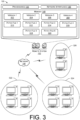
- FIG. 3 is an example of the remote system 102 generating patch files for various version of a file.
- the remote system 102 may store a first version 302 of a file, a second version 304 of the file, a third version 306 of the file, and a fourth version 308 of the file.
- the remote system 102 may generate a first patch file 310 for updating the first version 302 of the file to the second version 304 of the file, a second patch file 312 for updating the first version 302 of the file to the third version 306 of the file, a third patch file 314 for updating the first version 302 of the file to the fourth version 308 of the file, a fourth patch file 316 for updating the second version 304 of the file to the third version 306 of the file, a fifth patch file 318 for updating the second version 304 of the file to the fourth version 308 of the file, and/or a sixth patch file 320 for updating the third version 306 of the file to the fourth version 308 of the file.
- the remote system 102 may then send the patch files 310-320 to electronic devices based on the current versions of the file stored on the electronic devices.
- a first group of electronic devices 322 may be storing the third version 306 of the file.
- the remote system 102 may send the first group of electronic devices 322 the sixth patch file 320 for updating the third version 306 of the file to the fourth version 308 of the file.
- a second group of electronic devices 324 may be storing second version 304 of the file.
- the remote system 102 may send the second group of electronic devices 324 the fifth patch file 318 for updating the second version 304 of the file to the fourth version 308 of the file.
- a third group of electronic devices 326 may be storing the first version 302 of the file.
- the remote system 102 may send the third group of electronic devices 326 the first patch file 310 for updating the first version 302 of the file to the fourth version 308 of the file.
- the remote system 102 may generate patch files for the most popular updates of the file.
- the first group of electronic devices 322 includes four electronic devices updating the third version 306 of the file to the fourth version 308 of the file
- the second group of electronic devices 324 includes fourth electronic devices updating the second version 304 of the file to the fourth version 308 of the file
- the third group of electronic devices 326 includes two electronic devices updating the first version 302 of the file to the fourth version 308 of the file.
- the remote system 102 may only generate the fifth patch file 318 for updating the second version 304 of the file to the fourth version 308 of the file and the sixth patch file 320 for updating the third version 306 of the file to the fourth version 308 of the file since those are the most popular updates. However, since only two electronic devices are updating the first version 302 of the file to the fourth version 308 of the file, the remote system 102 may not generate the first patch file 310.
- the processes described herein are illustrated as a collection of blocks in a logical flow graph, which represent a sequence of operations that can be implemented in hardware, software, or a combination thereof.
- the blocks represent computer-executable instructions that, when executed by one or more processors, perform the recited operations.
- computer-executable instructions include routines, programs, objects, components, data structures, and the like that perform particular functions or implement particular abstract data types.
- the order in which the operations are described is not intended to be construed as a limitation, and any number of the described blocks can be combined in any order and/or in parallel to implement the processes.
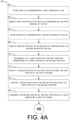
- FIG. 4 is a flow diagram of an example process 400 for generating data for updating a file from a version of the file to a second version of the file.
- the process 400 includes storing first data representing a first version of a file.
- the remote system 102 may store the first data representing the first data of the file.
- the file may be associated with a game.
- the remote system 102 may receive the first data from one or more computing devices associated with a developer of the file.
- the process 400 includes identifying first portions of the first data representing the first version of the file.
- the remote system 102 may identify the first portions of the first data representing the first version of the file.
- the first portions of the first data may include contiguous sections of the first data.
- the first portions of the first data may include, but are not limited to, 500 byte contiguous sections of the first data, 1 megabyte contiguous sections of the first data, 5 megabyte contiguous sections of the first data, and/or the like.
- the process 400 includes storing second data representing a second version of the file.
- the remote system 102 may store the second data representing the second version of the file.
- data may have been added to the first data, removed from the first data, changed within the first data, and/or the like.
- the remote system 102 may receive the second data from the one or more computing devices associated with a developer of the file.
- the process 400 includes identifying second portions of the second data representing the second version of the file.
- the remote system 102 may identify the second portions of the second data representing the second version of the file.
- the second portions of the second data may include contiguous sections of the second data.
- the second portions of the second data may include, but are not limited to, 500 byte contiguous sections of the second data, 1 megabyte contiguous sections of the second data, 5 megabyte contiguous sections of the second data, and/or the like.
- the second portions of the second data may include a similar size as the first portions of the first data.
- the process 400 includes determining that a first portion of the first portions corresponds to a first portion of the second portions.
- the remote system 102 may determine that the first portion of the first portions corresponds to the first portion of the second portions.
- the remote system 102 may use CRC to determine a first check value for the first portion of the first potions and a second check value for the first portion of the second portions. The remote system 102 may then determine that the first check value is the same as the second check value.
- the remote system 102 may use SHA-1 to determine a first hash value for the first portion of the first portions and a second hash value for the first portion of the second portions. The remote system 102 may then determine that the first hash value is the same as the second hash value.
- the process 400 includes identifying a second portion of the first portions using the first portion of the first portions.
- the remote system 102 may identify the second portion of the first portions using the first portion of the first portions.
- the remote system 102 may identify the second portion of the first portions as a portion of the first data that is subsequent to the first portion of the first portions.
- the remote system 102 may identify the second portion of the first portions as a portion of the first data that precedes the first portion of the first portions.
- the process 400 includes identifying a second portion of the second portions using the first portion of the second portions.
- the remote system 102 may identify the second portion of the second portions using the first portion of the second portions.
- the remote system 102 may identify the second portion of the second portions as a portion of the second data that is subsequent to the first portion of the second portions.
- the remote system 102 may identify the second portion of the second portions as a portion of the first data that precedes the first portion of the second portions.
- the process 400 includes compressing the second portion of the first portions by at least generating a first dictionary.
- the remote system 102 may compress the second portion of the first portions by at least generating the first dictionary.
- the remote system 102 compresses the second portion of the first portions using one or more algorithm associated with one or more compression techniques (e.g., LZMA, LZW, BTLZ, LZ77, LZ78 etc.).
- the remote system 102 compresses the second portion of the first portions using one or more other compression techniques.
- the process 400 includes compressing the second portion of the second portions by at least generating a second dictionary.
- the remote system 102 may compress the second portion of the second portions by at least generating the second dictionary.
- the remote system 102 compresses the second portion of the second portions using one or more algorithm associated with one or more compression techniques (e.g., LZMA, LZW, BTLZ, LZ77, LZ78 etc.).
- the remote system 102 compresses the second portion of the second portions using one or more other compression techniques.
- the process 400 includes compressing the second portion of the second portions by at least generating, using the first dictionary, a third dictionary and possibly a reference.
- the remote system 102 may compress the second portion of the first portions by at least generating the third dictionary and the reference using the first dictionary.
- the remote system 102 may use the first dictionary as a base.
- the remote system 102 may then add additional data, based on the first data included in the second portion of the second portions, additional data to the first dictionary in order to generate the third dictionary.
- the remote system 102 compresses the second portion of the second portions using one or more algorithms associated with one or more compression techniques (e.g., LZMA, LZW, BTLZ, LZ77, LZ78 etc.).
- the remote system 102 compresses the second portion of the second portions using one or more other compression techniques.
- the process 400 includes determining a difference between the second portion of the first portions and the second portion of the second portions, for instance using the second dictionary and the third dictionary.
- the remote system 102 may determine the difference between the second portion of the first portions and the second portion of the second portions using the second dictionary and the third dictionary.
- the remote system 102 may determine the difference as a size difference between the second dictionary and the third dictionary.
- the remote system 102 may determine the difference as a ratio between the second dictionary and the third dictionary.
- the process 400 includes determining whether the difference satisfies a threshold. For example, the remote system 102 may determine whether the difference satisfies the threshold difference. In some examples, when the difference includes the size difference, the remote system 102 may determine that the size difference satisfies the threshold when the size difference is within a size threshold. In some examples, when the difference includes a ratio, the remote system 102 may determine that the size difference satisfies the threshold when the ratio is within a ratio threshold.
- the process 400 may include determining that the second portion of the second portions is not similar to the second portion of the first portions. For example, if the remote system 102 determines that the difference does not satisfy the threshold, then the remote system 102 may determine that the second portion of the second portions is not similar to the second portion of the first portions. Additionally, in some examples, when the remote system 102 receives a request from an electronic device to update the first version of the file to the second version of the file, the remote system 102 may send, to the electronic device, the second portion of the second portions.
- the process 400 may include determining that the second portion of the second portions is similar to the second portion of the first portions. For example, if the remote system 102 determines that the difference satisfies the threshold, then the remote system 102 may determine that the second portion of the second portions is similar to the second portion of the first portions.
- the process 400 may include storing at least a portion of the third dictionary and/or the reference as a patch file for the second version of the file.
- the remote system 102 may store the at least the portion of the third dictionary and the reference as a patch file for the second version of the file.
- the remote system 102 may send, to the electronic device, the patch file rather than the second portion of the second portions.
- the remote system 102 may perform at least 410-430 for additional portions of the first data and the second data. Additionally, based on determining that additional portion(s) of the second data are similar to additional portion(s) of the first data, the remote system 102 may continue to add data to the patch file for the second version of the file.
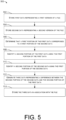
- FIG. 5 is a flowchart of an example process 500 for identifying a portion of first data that is similar to a portion of second data.
- the process 500 includes storing first data representing a first version of a file.
- the remote system 102 may store the first data representing the first data of the file.
- the file may be associated with a game.
- the remote system 102 may receive the first data from one or more computing devices associated with a developer of the file.
- the process 500 includes storing second data representing a second version of the file.
- the remote system 102 may store the second data representing the second version of the file.
- data may have been added to the first data, removed from the first data, changed within the first data, and/or the like.
- the remote system 102 may receive the second data from the one or more computing devices associated with a developer of the file.
- the process 500 includes determining that a first portion of the first data corresponds to a first portion of the second data.
- the remote system 102 may determine that the first portion of the first data corresponds to the first portion of the second data.
- the remote system 102 may use CRC to determine a first check value for the first portion of the first data and a second check value for the first portion of the second data. The remote system 102 may then determine that the first check value is the same as the second check value.
- the remote system 102 may use SHA-1 to determine a first hash value for the first portion of the first data and a second hash value for the first portion of the second data. The remote system 102 may then determine that the first hash value is the same as the second hash value.
- the process 500 includes identifying a second portion of the first data using the first portion of the first data.
- the remote system 102 may identify the second portion of the first data using the first portion of the first data.
- the remote system 102 may identify the second portion of the first data as a portion of the first data that is subsequent to the first portion of the first data.
- the remote system 102 may identify the second portion of the first data as a portion of the first data that precedes the first portion of the first data.
- the process 500 includes identifying a second portion of the second data using the first portion of the second data.
- the remote system 102 may identify the second portion of the second data using the first portion of the second data.
- the remote system 102 may identify the second portion of the second data as a portion of the second data that is subsequent to the first portion of the second data.
- the remote system 102 may identify the second portion of the second data as a portion of the first data that precedes the first portion of the second data.
- the process 500 includes generating third data representing a difference between the second portion of the second data and the second portion of the first data.
- the remote system 102 may generate the third data representing the difference between the second portion of the second data and the second portion of the first data.
- the difference may include a portion of a dictionary generated for the second portion of the second data, where the dictionary is generated using a dictionary associated with the second portion of the first data.
- the difference may include a reference associated with a dictionary generated for the second portion of the second data.
- the process 500 includes storing the third data in association with the file.
- the remote system 102 may store the third data in association with the file.
- the third data may then be used to convert the second portion of the first data to the second portion of the second data.
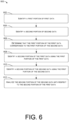
- FIG. 6 is a flowchart of a second example process 600 for identifying a portion of first data that is similar to a portion of second data.
- the process 600 includes identifying a first portion of first data.
- the remote system 102 may identify the first portion of the first data.
- the first data may represent a first version of a file.
- the remote system 102 may receive the first data from one or more computing devices associated with a developer of the file.
- the process 600 includes identifying a second portion of second data.
- the remote system 102 may identify the second portion of the second data.
- the second data may represent a second version of the file. For instance, to generate the second data, data may have been added to the first data, removed from the first data, changed within the first data, and/or the like.
- the remote system 102 may receive the second data from the one or more computing devices associated with a developer of the file.
- the process 600 includes determining that the first portion of the first data corresponds to the first portion of the second data.
- the remote system 102 may determine that the first portion of the first data corresponds to the first portion of the second data.
- the remote system 102 may use CRC to determine a first check value for the first portion of the first data and a second check value for the first portion of the second data. The remote system 102 may then determine that the first check value is the same as the second check value.
- the remote system 102 may use SHA-1 to determine a first hash value for the first portion of the first data and a second hash value for the first portion of the second data. The remote system 102 may then determine that the first hash value is the same as the second hash value.
- the process 600 includes identifying a second portion of the first data using the first portion of the first data.
- the remote system 102 may identify the second portion of the first data using the first portion of the first data.
- the remote system 102 may identify the second portion of the first data as a portion of the first data that is subsequent to the first portion of the first data.
- the remote system 102 may identify the second portion of the first data as a portion of the first data that precedes the first portion of the first data.
- the process 600 includes identifying a second portion of the second data using the first portion of the second data.
- the remote system 102 may identify the second portion of the second data using the first portion of the second data.
- the remote system 102 may identify the second portion of the second data as a portion of the second data that is subsequent to the first portion of the second data.
- the remote system 102 may identify the second portion of the second data as a portion of the first data that precedes the first portion of the second data.
- the process 600 may include analyzing the second portion of the second data with respect to the second portion of the first data.
- the remote system 102 may analyze the second portion of the second data with respect to the second portion of the first data.
- the remote system 102 may generate third data representing the difference between the second portion of the second data and the second portion of the first data.
- the difference may include a portion of a dictionary generated for the second portion of the second data, where the dictionary is generated using a dictionary associated with the second portion of the first data.
- the difference may include a reference associated with a dictionary generated for the second portion of the second data.
Landscapes
- Engineering & Computer Science (AREA)
- Theoretical Computer Science (AREA)
- General Engineering & Computer Science (AREA)
- General Physics & Mathematics (AREA)
- Physics & Mathematics (AREA)
- Computer Networks & Wireless Communication (AREA)
- Signal Processing (AREA)
- Data Mining & Analysis (AREA)
- Databases & Information Systems (AREA)
- Computer Security & Cryptography (AREA)
- Software Systems (AREA)
- Information Retrieval, Db Structures And Fs Structures Therefor (AREA)
- Information Transfer Between Computers (AREA)
- Stored Programmes (AREA)
Priority Applications (1)
| Application Number | Priority Date | Filing Date | Title |
|---|---|---|---|
| EP24195026.0A EP4440083B1 (en) | 2019-01-30 | 2019-12-24 | Techniques for updating files |
Applications Claiming Priority (2)
| Application Number | Priority Date | Filing Date | Title |
|---|---|---|---|
| US16/262,431 US11070618B2 (en) | 2019-01-30 | 2019-01-30 | Techniques for updating files |
| PCT/US2019/068488 WO2020159651A1 (en) | 2019-01-30 | 2019-12-24 | Techniques for updating files |
Related Child Applications (2)
| Application Number | Title | Priority Date | Filing Date |
|---|---|---|---|
| EP24195026.0A Division EP4440083B1 (en) | 2019-01-30 | 2019-12-24 | Techniques for updating files |
| EP24195026.0A Division-Into EP4440083B1 (en) | 2019-01-30 | 2019-12-24 | Techniques for updating files |
Publications (3)
| Publication Number | Publication Date |
|---|---|
| EP3891618A1 EP3891618A1 (en) | 2021-10-13 |
| EP3891618A4 EP3891618A4 (en) | 2022-06-22 |
| EP3891618B1 true EP3891618B1 (en) | 2024-11-06 |
Family
ID=71732926
Family Applications (2)
| Application Number | Title | Priority Date | Filing Date |
|---|---|---|---|
| EP19912771.3A Active EP3891618B1 (en) | 2019-01-30 | 2019-12-24 | Techniques for updating files |
| EP24195026.0A Active EP4440083B1 (en) | 2019-01-30 | 2019-12-24 | Techniques for updating files |
Family Applications After (1)
| Application Number | Title | Priority Date | Filing Date |
|---|---|---|---|
| EP24195026.0A Active EP4440083B1 (en) | 2019-01-30 | 2019-12-24 | Techniques for updating files |
Country Status (6)
| Country | Link |
|---|---|
| US (2) | US11070618B2 (enExample) |
| EP (2) | EP3891618B1 (enExample) |
| JP (2) | JP7494190B2 (enExample) |
| KR (2) | KR20250136937A (enExample) |
| CN (1) | CN113316773A (enExample) |
| WO (1) | WO2020159651A1 (enExample) |
Families Citing this family (8)
| Publication number | Priority date | Publication date | Assignee | Title |
|---|---|---|---|---|
| US10191925B1 (en) | 2011-10-27 | 2019-01-29 | Valve Corporation | Delivery of digital information to a remote device |
| US9667730B2 (en) * | 2013-03-14 | 2017-05-30 | Comcast Cable Communications, Llc | Systems and methods for abandonment detection and mitigation |
| US11070618B2 (en) | 2019-01-30 | 2021-07-20 | Valve Corporation | Techniques for updating files |
| US11886391B2 (en) | 2020-05-14 | 2024-01-30 | Valve Corporation | Efficient file-delivery techniques |
| CN113553090B (zh) * | 2021-07-26 | 2023-07-25 | 网易(杭州)网络有限公司 | 客户端应用程序的更新控制方法及装置 |
| US12293177B1 (en) * | 2022-06-27 | 2025-05-06 | Amazon Technologies, Inc. | Techniques for uploading network applications |
| US20250217134A1 (en) * | 2023-12-29 | 2025-07-03 | Google Llc | Software application patching |
| KR102836804B1 (ko) * | 2024-01-31 | 2025-07-18 | 김준엽 | 모바일 시뮬레이션 게임 개발 시스템 |
Family Cites Families (60)
| Publication number | Priority date | Publication date | Assignee | Title |
|---|---|---|---|---|
| US5822511A (en) * | 1996-09-03 | 1998-10-13 | Motorola, Inc. | Smart compare tool and method |
| US6216175B1 (en) | 1998-06-08 | 2001-04-10 | Microsoft Corporation | Method for upgrading copies of an original file with same update data after normalizing differences between copies created during respective original installations |
| US6493721B1 (en) * | 1999-03-31 | 2002-12-10 | Verizon Laboratories Inc. | Techniques for performing incremental data updates |
| US7028251B2 (en) * | 2000-03-02 | 2006-04-11 | Iora, Ltd. | System and method for reducing the size of data difference representations |
| US8903950B2 (en) * | 2000-05-05 | 2014-12-02 | Citrix Systems, Inc. | Personalized content delivery using peer-to-peer precaching |
| EP1337917A4 (en) | 2000-11-17 | 2009-04-08 | Hewlett Packard Development Co | SYSTEM AND METHOD FOR UPDATING AND DISTRIBUTING INFORMATION |
| US20030182414A1 (en) * | 2003-05-13 | 2003-09-25 | O'neill Patrick J. | System and method for updating and distributing information |
| US7260773B2 (en) * | 2002-03-28 | 2007-08-21 | Uri Zernik | Device system and method for determining document similarities and differences |
| US6925467B2 (en) | 2002-05-13 | 2005-08-02 | Innopath Software, Inc. | Byte-level file differencing and updating algorithms |
| US20040034849A1 (en) * | 2002-06-17 | 2004-02-19 | Microsoft Corporation | Volume image views and methods of creating volume images in which a file similar to a base file is stored as a patch of the base file |
| JP4360816B2 (ja) * | 2003-03-20 | 2009-11-11 | アルパイン株式会社 | 地図データ更新方法及びナビゲーション装置 |
| US7320009B1 (en) * | 2003-03-28 | 2008-01-15 | Novell, Inc. | Methods and systems for file replication utilizing differences between versions of files |
| JP2005128894A (ja) * | 2003-10-24 | 2005-05-19 | Sanyo Electric Co Ltd | 不揮発性メモリ書き換え装置 |
| WO2005043279A2 (en) | 2003-10-31 | 2005-05-12 | Disksites Research And Development Ltd. | Device, system and method for storage and access of computer files |
| JP4477947B2 (ja) * | 2004-06-17 | 2010-06-09 | 三菱電機株式会社 | 差分適用組込み機器システム及び格納データ変更方法 |
| US7664819B2 (en) * | 2004-06-29 | 2010-02-16 | Microsoft Corporation | Incremental anti-spam lookup and update service |
| US7640363B2 (en) | 2005-02-16 | 2009-12-29 | Microsoft Corporation | Applications for remote differential compression |
| US10127130B2 (en) * | 2005-03-18 | 2018-11-13 | Salesforce.Com | Identifying contributors that explain differences between a data set and a subset of the data set |
| RU2388045C2 (ru) | 2006-06-19 | 2010-04-27 | Самсунг Электроникс Ко., Лтд. | Система и способ обновления программы для переносного устройства с поддержкой ота |
| JP4907380B2 (ja) | 2007-02-21 | 2012-03-28 | 株式会社Access | データ生成方法、データ復元方法、データ生成装置およびデータ復元装置 |
| CN101382885B (zh) * | 2007-09-06 | 2012-05-09 | 联想(北京)有限公司 | 一种数据文件的多版本控制方法及装置 |
| JP5408128B2 (ja) * | 2008-05-15 | 2014-02-05 | 株式会社ニコン | 画像処理装置、画像処理方法、処理装置、およびプログラム |
| FR2933514B1 (fr) * | 2008-07-02 | 2012-10-19 | Canon Kk | Procedes et dispositifs de codage et de decodage par similarites pour documents de type xml |
| US8566362B2 (en) | 2009-01-23 | 2013-10-22 | Nasuni Corporation | Method and system for versioned file system using structured data representations |
| US20110029658A1 (en) * | 2009-07-24 | 2011-02-03 | Theodore Werth | System and methods for providing a multi-device, multi-service platform via a client agent |
| US8572218B2 (en) * | 2009-12-10 | 2013-10-29 | International Business Machines Corporation | Transport data compression based on an encoding dictionary patch |
| US9063968B2 (en) * | 2010-08-02 | 2015-06-23 | Cleversafe, Inc. | Identifying a compromised encoded data slice |
| CA2820758A1 (en) * | 2010-12-15 | 2012-06-21 | Microsoft Corporation | Intelligent code differencing using code clone detection |
| US8862555B1 (en) * | 2011-05-16 | 2014-10-14 | Trend Micro Incorporated | Methods and apparatus for generating difference files |
| US9009428B2 (en) * | 2011-07-08 | 2015-04-14 | Hewlett-Packard Development Company, L.P. | Data store page recovery |
| US9792355B2 (en) * | 2011-10-25 | 2017-10-17 | Intelligent Views Gmbh | Searches for similar documents |
| US8862556B2 (en) * | 2012-06-29 | 2014-10-14 | International Business Machines Corporation | Difference analysis in file sub-regions |
| US9110939B2 (en) * | 2012-10-05 | 2015-08-18 | Here Global B.V. | Method and apparatus for providing incremental database updates based on delta pages |
| US8909605B1 (en) * | 2013-02-28 | 2014-12-09 | Emc Corporation | Method and system for accelerating data movement using change information concerning difference between current and previous data movements |
| US9418072B2 (en) | 2013-03-04 | 2016-08-16 | Vmware, Inc. | Cross-file differential content synchronization |
| US9753987B1 (en) * | 2013-04-25 | 2017-09-05 | EMC IP Holding Company LLC | Identifying groups of similar data portions |
| US9747259B2 (en) * | 2013-07-03 | 2017-08-29 | Infinote Corporation | Searching, reviewing, comparing, modifying, and/or merging documents |
| RU2571378C2 (ru) * | 2013-12-18 | 2015-12-20 | Общество с ограниченной ответственностью "Аби Девелопмент" | Устройство и способ поиска различий в документах |
| US9576013B2 (en) | 2014-04-03 | 2017-02-21 | Sap Se | Optimizing update operations in in-memory database systems |
| US9542239B2 (en) * | 2014-04-30 | 2017-01-10 | International Business Machines Corporation | Resolving write request conflicts in a dispersed storage network |
| WO2015180052A1 (zh) * | 2014-05-28 | 2015-12-03 | 北京大学深圳研究生院 | 一种基于字典库的视频编解码方法及装置 |
| US10353918B2 (en) * | 2014-11-07 | 2019-07-16 | Amobee, Inc. | High availability and disaster recovery in large-scale data warehouse |
| US10725987B2 (en) * | 2014-11-25 | 2020-07-28 | Sap Se | Forced ordering of a dictionary storing row identifier values |
| US9891831B2 (en) * | 2014-11-25 | 2018-02-13 | Sap Se | Dual data storage using an in-memory array and an on-disk page structure |
| EP3252605B1 (en) * | 2015-01-26 | 2022-04-06 | Hitachi Astemo, Ltd. | Vehicle-mounted control device, program writing device, program generating device and program |
| US10459805B2 (en) * | 2015-04-03 | 2019-10-29 | Oath Inc. | Method and system for data recovery in a data system |
| US20170193230A1 (en) * | 2015-05-03 | 2017-07-06 | Microsoft Technology Licensing, Llc | Representing and comparing files based on segmented similarity |
| US10067757B2 (en) | 2015-11-20 | 2018-09-04 | Google Llc | Dynamic update of an application in compilation and deployment with hot-swapping |
| US10521117B2 (en) * | 2015-11-24 | 2019-12-31 | Sap Se | Unified table delta dictionary memory size and load time optimization |
| US10437854B2 (en) * | 2016-06-17 | 2019-10-08 | United States Of America As Represented By The Secretary Of The Navy | Method for reconciling similar data sets |
| US10191737B2 (en) * | 2016-06-29 | 2019-01-29 | Accenture Global Solutions Limited | Program code comparison and reporting |
| US11941344B2 (en) * | 2016-09-29 | 2024-03-26 | Dropbox, Inc. | Document differences analysis and presentation |
| US10453228B2 (en) * | 2017-03-08 | 2019-10-22 | Microsoft Technology Licensing, Llc | Difference visualization between data sets |
| JP6784636B2 (ja) * | 2017-04-13 | 2020-11-11 | 日立オートモティブシステムズ株式会社 | 制御装置、プログラム更新システム、プログラム更新方法 |
| US10209983B2 (en) * | 2017-04-19 | 2019-02-19 | Servicenow, Inc. | Distributed incremental updating of trays using a source control system |
| US10747723B2 (en) * | 2017-11-16 | 2020-08-18 | Verizon Digital Media Services Inc. | Caching with dynamic and selective compression of content |
| US10795688B2 (en) * | 2018-07-23 | 2020-10-06 | Datto, Inc. | System and method for performing an image-based update |
| US20200117893A1 (en) * | 2018-10-16 | 2020-04-16 | International Business Machines Corporation | Determining differences in documents to generate a visualization highlighting the differences between documents |
| US11070618B2 (en) | 2019-01-30 | 2021-07-20 | Valve Corporation | Techniques for updating files |
| US11886390B2 (en) | 2019-04-30 | 2024-01-30 | JFrog Ltd. | Data file partition and replication |
-
2019
- 2019-01-30 US US16/262,431 patent/US11070618B2/en active Active
- 2019-12-24 CN CN201980088368.9A patent/CN113316773A/zh active Pending
- 2019-12-24 EP EP19912771.3A patent/EP3891618B1/en active Active
- 2019-12-24 KR KR1020257029887A patent/KR20250136937A/ko active Pending
- 2019-12-24 EP EP24195026.0A patent/EP4440083B1/en active Active
- 2019-12-24 WO PCT/US2019/068488 patent/WO2020159651A1/en not_active Ceased
- 2019-12-24 KR KR1020217021277A patent/KR102858582B1/ko active Active
- 2019-12-24 JP JP2021544198A patent/JP7494190B2/ja active Active
-
2021
- 2021-06-25 US US17/358,759 patent/US12003580B2/en active Active
-
2024
- 2024-05-22 JP JP2024083003A patent/JP2024116161A/ja active Pending
Also Published As
| Publication number | Publication date |
|---|---|
| US20200244731A1 (en) | 2020-07-30 |
| JP2024116161A (ja) | 2024-08-27 |
| EP4440083B1 (en) | 2026-02-18 |
| JP7494190B2 (ja) | 2024-06-03 |
| US11070618B2 (en) | 2021-07-20 |
| CN113316773A (zh) | 2021-08-27 |
| US12003580B2 (en) | 2024-06-04 |
| KR102858582B1 (ko) | 2025-09-12 |
| US20210329071A1 (en) | 2021-10-21 |
| KR20210118073A (ko) | 2021-09-29 |
| EP3891618A4 (en) | 2022-06-22 |
| JP2022518932A (ja) | 2022-03-17 |
| KR20250136937A (ko) | 2025-09-16 |
| EP4440083A2 (en) | 2024-10-02 |
| EP3891618A1 (en) | 2021-10-13 |
| WO2020159651A1 (en) | 2020-08-06 |
| EP4440083A3 (en) | 2024-10-23 |
Similar Documents
| Publication | Publication Date | Title |
|---|---|---|
| EP3891618B1 (en) | Techniques for updating files | |
| JP4961126B2 (ja) | リモート差分圧縮のための候補オブジェクトを見つける効率のよいアルゴリズム | |
| CA2500894C (en) | Efficient algorithm and protocol for remote differential compression | |
| EP2198522B1 (en) | Optimized data stream compression using data-dependent chunking | |
| EP2348690A2 (en) | Methods and apparatus for compression and network transport of data in support of continuous availability of applications | |
| US20060047855A1 (en) | Efficient chunking algorithm | |
| EP2717476A1 (en) | Data processing method and data processing device | |
| US8902090B2 (en) | Compressing and decompressing signal data | |
| CN109993298A (zh) | 用于压缩神经网络的方法和装置 | |
| CN105553937A (zh) | 数据压缩的系统和方法 | |
| CN115699584A (zh) | 使用将未压缩/已压缩内容相关的索引的压缩/解压缩 | |
| CN108880559B (zh) | 数据压缩方法、数据解压缩方法、压缩设备及解压缩设备 | |
| US10817475B1 (en) | System and method for encoding-based deduplication | |
| US10963437B2 (en) | System and method for data deduplication | |
| US20210011894A1 (en) | System and method for hash-based entropy calculation | |
| US10990565B2 (en) | System and method for average entropy calculation | |
| CN121530385A (zh) | 数据处理方法、装置、系统及相关设备 | |
| US11138154B2 (en) | System and method for offset-based deduplication | |
| CN116360836A (zh) | 数据更新方法、装置、存储介质和电子设备 | |
| CN120447832A (zh) | 数据压缩方法、装置、电子设备、存储介质及程序产品 | |
| WO2016138619A1 (zh) | 一种数据增量更新方法 | |
| CN112990422A (zh) | 参数服务器、客户机、权值参数的处理方法及系统 |
Legal Events
| Date | Code | Title | Description |
|---|---|---|---|
| STAA | Information on the status of an ep patent application or granted ep patent |
Free format text: STATUS: THE INTERNATIONAL PUBLICATION HAS BEEN MADE |
|
| PUAI | Public reference made under article 153(3) epc to a published international application that has entered the european phase |
Free format text: ORIGINAL CODE: 0009012 |
|
| STAA | Information on the status of an ep patent application or granted ep patent |
Free format text: STATUS: REQUEST FOR EXAMINATION WAS MADE |
|
| 17P | Request for examination filed |
Effective date: 20210709 |
|
| AK | Designated contracting states |
Kind code of ref document: A1 Designated state(s): AL AT BE BG CH CY CZ DE DK EE ES FI FR GB GR HR HU IE IS IT LI LT LU LV MC MK MT NL NO PL PT RO RS SE SI SK SM TR |
|
| DAV | Request for validation of the european patent (deleted) | ||
| DAX | Request for extension of the european patent (deleted) | ||
| A4 | Supplementary search report drawn up and despatched |
Effective date: 20220520 |
|
| RIC1 | Information provided on ipc code assigned before grant |
Ipc: H04L 69/04 20220101ALI20220516BHEP Ipc: H04L 67/00 20220101ALI20220516BHEP Ipc: G06F 16/18 20190101ALI20220516BHEP Ipc: G06F 16/185 20190101ALI20220516BHEP Ipc: G06F 16/174 20190101ALI20220516BHEP Ipc: G06F 15/16 20060101AFI20220516BHEP |
|
| P01 | Opt-out of the competence of the unified patent court (upc) registered |
Effective date: 20230428 |
|
| STAA | Information on the status of an ep patent application or granted ep patent |
Free format text: STATUS: EXAMINATION IS IN PROGRESS |
|
| 17Q | First examination report despatched |
Effective date: 20231206 |
|
| REG | Reference to a national code |
Ref country code: DE Ref legal event code: R079 Free format text: PREVIOUS MAIN CLASS: G06F0015160000 Ref country code: DE Ref legal event code: R079 Ref document number: 602019061745 Country of ref document: DE Free format text: PREVIOUS MAIN CLASS: G06F0015160000 Ipc: H04L0067060000 |
|
| GRAP | Despatch of communication of intention to grant a patent |
Free format text: ORIGINAL CODE: EPIDOSNIGR1 |
|
| STAA | Information on the status of an ep patent application or granted ep patent |
Free format text: STATUS: GRANT OF PATENT IS INTENDED |
|
| RIC1 | Information provided on ipc code assigned before grant |
Ipc: H04L 69/04 20220101ALI20240524BHEP Ipc: H04L 67/04 20220101ALI20240524BHEP Ipc: H04L 67/00 20220101ALI20240524BHEP Ipc: G06F 16/18 20190101ALI20240524BHEP Ipc: G06F 16/174 20190101ALI20240524BHEP Ipc: H04L 67/06 20220101AFI20240524BHEP |
|
| INTG | Intention to grant announced |
Effective date: 20240606 |
|
| GRAS | Grant fee paid |
Free format text: ORIGINAL CODE: EPIDOSNIGR3 |
|
| GRAA | (expected) grant |
Free format text: ORIGINAL CODE: 0009210 |
|
| STAA | Information on the status of an ep patent application or granted ep patent |
Free format text: STATUS: THE PATENT HAS BEEN GRANTED |
|
| AK | Designated contracting states |
Kind code of ref document: B1 Designated state(s): AL AT BE BG CH CY CZ DE DK EE ES FI FR GB GR HR HU IE IS IT LI LT LU LV MC MK MT NL NO PL PT RO RS SE SI SK SM TR |
|
| REG | Reference to a national code |
Ref country code: GB Ref legal event code: FG4D |
|
| REG | Reference to a national code |
Ref country code: CH Ref legal event code: EP |
|
| REG | Reference to a national code |
Ref country code: DE Ref legal event code: R096 Ref document number: 602019061745 Country of ref document: DE |
|
| REG | Reference to a national code |
Ref country code: IE Ref legal event code: FG4D |
|
| REG | Reference to a national code |
Ref country code: LT Ref legal event code: MG9D |
|
| REG | Reference to a national code |
Ref country code: NL Ref legal event code: MP Effective date: 20241106 |
|
| PG25 | Lapsed in a contracting state [announced via postgrant information from national office to epo] |
Ref country code: HR Free format text: LAPSE BECAUSE OF FAILURE TO SUBMIT A TRANSLATION OF THE DESCRIPTION OR TO PAY THE FEE WITHIN THE PRESCRIBED TIME-LIMIT Effective date: 20241106 Ref country code: PT Free format text: LAPSE BECAUSE OF FAILURE TO SUBMIT A TRANSLATION OF THE DESCRIPTION OR TO PAY THE FEE WITHIN THE PRESCRIBED TIME-LIMIT Effective date: 20250306 Ref country code: IS Free format text: LAPSE BECAUSE OF FAILURE TO SUBMIT A TRANSLATION OF THE DESCRIPTION OR TO PAY THE FEE WITHIN THE PRESCRIBED TIME-LIMIT Effective date: 20250306 |
|
| PG25 | Lapsed in a contracting state [announced via postgrant information from national office to epo] |
Ref country code: FI Free format text: LAPSE BECAUSE OF FAILURE TO SUBMIT A TRANSLATION OF THE DESCRIPTION OR TO PAY THE FEE WITHIN THE PRESCRIBED TIME-LIMIT Effective date: 20241106 Ref country code: NL Free format text: LAPSE BECAUSE OF FAILURE TO SUBMIT A TRANSLATION OF THE DESCRIPTION OR TO PAY THE FEE WITHIN THE PRESCRIBED TIME-LIMIT Effective date: 20241106 |
|
| REG | Reference to a national code |
Ref country code: AT Ref legal event code: MK05 Ref document number: 1740640 Country of ref document: AT Kind code of ref document: T Effective date: 20241106 |
|
| PG25 | Lapsed in a contracting state [announced via postgrant information from national office to epo] |
Ref country code: BG Free format text: LAPSE BECAUSE OF FAILURE TO SUBMIT A TRANSLATION OF THE DESCRIPTION OR TO PAY THE FEE WITHIN THE PRESCRIBED TIME-LIMIT Effective date: 20241106 |
|
| PG25 | Lapsed in a contracting state [announced via postgrant information from national office to epo] |
Ref country code: ES Free format text: LAPSE BECAUSE OF FAILURE TO SUBMIT A TRANSLATION OF THE DESCRIPTION OR TO PAY THE FEE WITHIN THE PRESCRIBED TIME-LIMIT Effective date: 20241106 |
|
| PG25 | Lapsed in a contracting state [announced via postgrant information from national office to epo] |
Ref country code: NO Free format text: LAPSE BECAUSE OF FAILURE TO SUBMIT A TRANSLATION OF THE DESCRIPTION OR TO PAY THE FEE WITHIN THE PRESCRIBED TIME-LIMIT Effective date: 20250206 |
|
| PG25 | Lapsed in a contracting state [announced via postgrant information from national office to epo] |
Ref country code: GR Free format text: LAPSE BECAUSE OF FAILURE TO SUBMIT A TRANSLATION OF THE DESCRIPTION OR TO PAY THE FEE WITHIN THE PRESCRIBED TIME-LIMIT Effective date: 20250207 Ref country code: LV Free format text: LAPSE BECAUSE OF FAILURE TO SUBMIT A TRANSLATION OF THE DESCRIPTION OR TO PAY THE FEE WITHIN THE PRESCRIBED TIME-LIMIT Effective date: 20241106 Ref country code: AT Free format text: LAPSE BECAUSE OF FAILURE TO SUBMIT A TRANSLATION OF THE DESCRIPTION OR TO PAY THE FEE WITHIN THE PRESCRIBED TIME-LIMIT Effective date: 20241106 |
|
| PG25 | Lapsed in a contracting state [announced via postgrant information from national office to epo] |
Ref country code: PL Free format text: LAPSE BECAUSE OF FAILURE TO SUBMIT A TRANSLATION OF THE DESCRIPTION OR TO PAY THE FEE WITHIN THE PRESCRIBED TIME-LIMIT Effective date: 20241106 |
|
| PG25 | Lapsed in a contracting state [announced via postgrant information from national office to epo] |
Ref country code: RS Free format text: LAPSE BECAUSE OF FAILURE TO SUBMIT A TRANSLATION OF THE DESCRIPTION OR TO PAY THE FEE WITHIN THE PRESCRIBED TIME-LIMIT Effective date: 20250206 |
|
| PG25 | Lapsed in a contracting state [announced via postgrant information from national office to epo] |
Ref country code: SM Free format text: LAPSE BECAUSE OF FAILURE TO SUBMIT A TRANSLATION OF THE DESCRIPTION OR TO PAY THE FEE WITHIN THE PRESCRIBED TIME-LIMIT Effective date: 20241106 |
|
| PG25 | Lapsed in a contracting state [announced via postgrant information from national office to epo] |
Ref country code: DK Free format text: LAPSE BECAUSE OF FAILURE TO SUBMIT A TRANSLATION OF THE DESCRIPTION OR TO PAY THE FEE WITHIN THE PRESCRIBED TIME-LIMIT Effective date: 20241106 |
|
| PG25 | Lapsed in a contracting state [announced via postgrant information from national office to epo] |
Ref country code: EE Free format text: LAPSE BECAUSE OF FAILURE TO SUBMIT A TRANSLATION OF THE DESCRIPTION OR TO PAY THE FEE WITHIN THE PRESCRIBED TIME-LIMIT Effective date: 20241106 |
|
| PG25 | Lapsed in a contracting state [announced via postgrant information from national office to epo] |
Ref country code: RO Free format text: LAPSE BECAUSE OF FAILURE TO SUBMIT A TRANSLATION OF THE DESCRIPTION OR TO PAY THE FEE WITHIN THE PRESCRIBED TIME-LIMIT Effective date: 20241106 |
|
| PG25 | Lapsed in a contracting state [announced via postgrant information from national office to epo] |
Ref country code: SK Free format text: LAPSE BECAUSE OF FAILURE TO SUBMIT A TRANSLATION OF THE DESCRIPTION OR TO PAY THE FEE WITHIN THE PRESCRIBED TIME-LIMIT Effective date: 20241106 |
|
| PG25 | Lapsed in a contracting state [announced via postgrant information from national office to epo] |
Ref country code: CZ Free format text: LAPSE BECAUSE OF FAILURE TO SUBMIT A TRANSLATION OF THE DESCRIPTION OR TO PAY THE FEE WITHIN THE PRESCRIBED TIME-LIMIT Effective date: 20241106 |
|
| PG25 | Lapsed in a contracting state [announced via postgrant information from national office to epo] |
Ref country code: IT Free format text: LAPSE BECAUSE OF FAILURE TO SUBMIT A TRANSLATION OF THE DESCRIPTION OR TO PAY THE FEE WITHIN THE PRESCRIBED TIME-LIMIT Effective date: 20241106 |
|
| REG | Reference to a national code |
Ref country code: CH Ref legal event code: PL |
|
| REG | Reference to a national code |
Ref country code: DE Ref legal event code: R097 Ref document number: 602019061745 Country of ref document: DE |
|
| PG25 | Lapsed in a contracting state [announced via postgrant information from national office to epo] |
Ref country code: LU Free format text: LAPSE BECAUSE OF NON-PAYMENT OF DUE FEES Effective date: 20241224 |
|
| PG25 | Lapsed in a contracting state [announced via postgrant information from national office to epo] |
Ref country code: SE Free format text: LAPSE BECAUSE OF FAILURE TO SUBMIT A TRANSLATION OF THE DESCRIPTION OR TO PAY THE FEE WITHIN THE PRESCRIBED TIME-LIMIT Effective date: 20241106 |
|
| PLBE | No opposition filed within time limit |
Free format text: ORIGINAL CODE: 0009261 |
|
| STAA | Information on the status of an ep patent application or granted ep patent |
Free format text: STATUS: NO OPPOSITION FILED WITHIN TIME LIMIT |
|
| PG25 | Lapsed in a contracting state [announced via postgrant information from national office to epo] |
Ref country code: MC Free format text: LAPSE BECAUSE OF FAILURE TO SUBMIT A TRANSLATION OF THE DESCRIPTION OR TO PAY THE FEE WITHIN THE PRESCRIBED TIME-LIMIT Effective date: 20241106 |
|
| REG | Reference to a national code |
Ref country code: BE Ref legal event code: MM Effective date: 20241231 |
|
| 26N | No opposition filed |
Effective date: 20250807 |
|
| PG25 | Lapsed in a contracting state [announced via postgrant information from national office to epo] |
Ref country code: BE Free format text: LAPSE BECAUSE OF NON-PAYMENT OF DUE FEES Effective date: 20241231 |
|
| PG25 | Lapsed in a contracting state [announced via postgrant information from national office to epo] |
Ref country code: CH Free format text: LAPSE BECAUSE OF NON-PAYMENT OF DUE FEES Effective date: 20241231 |
|
| PG25 | Lapsed in a contracting state [announced via postgrant information from national office to epo] |
Ref country code: IE Free format text: LAPSE BECAUSE OF NON-PAYMENT OF DUE FEES Effective date: 20241224 |
|
| PGFP | Annual fee paid to national office [announced via postgrant information from national office to epo] |
Ref country code: DE Payment date: 20251127 Year of fee payment: 7 |
|
| PGFP | Annual fee paid to national office [announced via postgrant information from national office to epo] |
Ref country code: GB Payment date: 20251015 Year of fee payment: 7 |
|
| PGFP | Annual fee paid to national office [announced via postgrant information from national office to epo] |
Ref country code: FR Payment date: 20251230 Year of fee payment: 7 |