EP3890692B1 - Verfahren zur umformung von keratinfasern - Google Patents
Verfahren zur umformung von keratinfasern Download PDFInfo
- Publication number
- EP3890692B1 EP3890692B1 EP19812791.2A EP19812791A EP3890692B1 EP 3890692 B1 EP3890692 B1 EP 3890692B1 EP 19812791 A EP19812791 A EP 19812791A EP 3890692 B1 EP3890692 B1 EP 3890692B1
- Authority
- EP
- European Patent Office
- Prior art keywords
- range
- process according
- weight
- keratin fibers
- composition
- Prior art date
- Legal status (The legal status is an assumption and is not a legal conclusion. Google has not performed a legal analysis and makes no representation as to the accuracy of the status listed.)
- Active
Links
Classifications
-
- A—HUMAN NECESSITIES
- A61—MEDICAL OR VETERINARY SCIENCE; HYGIENE
- A61K—PREPARATIONS FOR MEDICAL, DENTAL OR TOILETRY PURPOSES
- A61K8/00—Cosmetics or similar toiletry preparations
- A61K8/18—Cosmetics or similar toiletry preparations characterised by the composition
- A61K8/19—Cosmetics or similar toiletry preparations characterised by the composition containing inorganic ingredients
-
- A—HUMAN NECESSITIES
- A61—MEDICAL OR VETERINARY SCIENCE; HYGIENE
- A61K—PREPARATIONS FOR MEDICAL, DENTAL OR TOILETRY PURPOSES
- A61K8/00—Cosmetics or similar toiletry preparations
- A61K8/18—Cosmetics or similar toiletry preparations characterised by the composition
- A61K8/30—Cosmetics or similar toiletry preparations characterised by the composition containing organic compounds
- A61K8/33—Cosmetics or similar toiletry preparations characterised by the composition containing organic compounds containing oxygen
- A61K8/34—Alcohols
- A61K8/345—Alcohols containing more than one hydroxy group
-
- A—HUMAN NECESSITIES
- A61—MEDICAL OR VETERINARY SCIENCE; HYGIENE
- A61K—PREPARATIONS FOR MEDICAL, DENTAL OR TOILETRY PURPOSES
- A61K8/00—Cosmetics or similar toiletry preparations
- A61K8/18—Cosmetics or similar toiletry preparations characterised by the composition
- A61K8/30—Cosmetics or similar toiletry preparations characterised by the composition containing organic compounds
- A61K8/40—Cosmetics or similar toiletry preparations characterised by the composition containing organic compounds containing nitrogen
- A61K8/41—Amines
-
- A—HUMAN NECESSITIES
- A61—MEDICAL OR VETERINARY SCIENCE; HYGIENE
- A61K—PREPARATIONS FOR MEDICAL, DENTAL OR TOILETRY PURPOSES
- A61K8/00—Cosmetics or similar toiletry preparations
- A61K8/18—Cosmetics or similar toiletry preparations characterised by the composition
- A61K8/30—Cosmetics or similar toiletry preparations characterised by the composition containing organic compounds
- A61K8/40—Cosmetics or similar toiletry preparations characterised by the composition containing organic compounds containing nitrogen
- A61K8/42—Amides
-
- A—HUMAN NECESSITIES
- A61—MEDICAL OR VETERINARY SCIENCE; HYGIENE
- A61K—PREPARATIONS FOR MEDICAL, DENTAL OR TOILETRY PURPOSES
- A61K8/00—Cosmetics or similar toiletry preparations
- A61K8/18—Cosmetics or similar toiletry preparations characterised by the composition
- A61K8/72—Cosmetics or similar toiletry preparations characterised by the composition containing organic macromolecular compounds
- A61K8/73—Polysaccharides
-
- A—HUMAN NECESSITIES
- A61—MEDICAL OR VETERINARY SCIENCE; HYGIENE
- A61K—PREPARATIONS FOR MEDICAL, DENTAL OR TOILETRY PURPOSES
- A61K8/00—Cosmetics or similar toiletry preparations
- A61K8/18—Cosmetics or similar toiletry preparations characterised by the composition
- A61K8/72—Cosmetics or similar toiletry preparations characterised by the composition containing organic macromolecular compounds
- A61K8/73—Polysaccharides
- A61K8/732—Starch; Amylose; Amylopectin; Derivatives thereof
-
- A—HUMAN NECESSITIES
- A61—MEDICAL OR VETERINARY SCIENCE; HYGIENE
- A61K—PREPARATIONS FOR MEDICAL, DENTAL OR TOILETRY PURPOSES
- A61K8/00—Cosmetics or similar toiletry preparations
- A61K8/18—Cosmetics or similar toiletry preparations characterised by the composition
- A61K8/72—Cosmetics or similar toiletry preparations characterised by the composition containing organic macromolecular compounds
- A61K8/81—Cosmetics or similar toiletry preparations characterised by the composition containing organic macromolecular compounds obtained by reactions involving only carbon-to-carbon unsaturated bonds
- A61K8/8141—Compositions of homopolymers or copolymers of compounds having one or more unsaturated aliphatic radicals, each having only one carbon-to-carbon double bond, and at least one being terminated by only one carboxyl radical, or of salts, anhydrides, esters, amides, imides or nitriles thereof; Compositions of derivatives of such polymers
- A61K8/8152—Homopolymers or copolymers of esters, e.g. (meth)acrylic acid esters; Compositions of derivatives of such polymers
-
- A—HUMAN NECESSITIES
- A61—MEDICAL OR VETERINARY SCIENCE; HYGIENE
- A61Q—SPECIFIC USE OF COSMETICS OR SIMILAR TOILETRY PREPARATIONS
- A61Q5/00—Preparations for care of the hair
- A61Q5/04—Preparations for permanent waving or straightening the hair
-
- A—HUMAN NECESSITIES
- A61—MEDICAL OR VETERINARY SCIENCE; HYGIENE
- A61K—PREPARATIONS FOR MEDICAL, DENTAL OR TOILETRY PURPOSES
- A61K2800/00—Properties of cosmetic compositions or active ingredients thereof or formulation aids used therein and process related aspects
- A61K2800/20—Chemical, physico-chemical or functional or structural properties of the composition as a whole
- A61K2800/30—Characterized by the absence of a particular group of ingredients
-
- A—HUMAN NECESSITIES
- A61—MEDICAL OR VETERINARY SCIENCE; HYGIENE
- A61K—PREPARATIONS FOR MEDICAL, DENTAL OR TOILETRY PURPOSES
- A61K2800/00—Properties of cosmetic compositions or active ingredients thereof or formulation aids used therein and process related aspects
- A61K2800/40—Chemical, physico-chemical or functional or structural properties of particular ingredients
- A61K2800/48—Thickener, Thickening system
-
- A—HUMAN NECESSITIES
- A61—MEDICAL OR VETERINARY SCIENCE; HYGIENE
- A61K—PREPARATIONS FOR MEDICAL, DENTAL OR TOILETRY PURPOSES
- A61K2800/00—Properties of cosmetic compositions or active ingredients thereof or formulation aids used therein and process related aspects
- A61K2800/80—Process related aspects concerning the preparation of the cosmetic composition or the storage or application thereof
- A61K2800/805—Corresponding aspects not provided for by any of codes A61K2800/81 - A61K2800/95
-
- A—HUMAN NECESSITIES
- A61—MEDICAL OR VETERINARY SCIENCE; HYGIENE
- A61K—PREPARATIONS FOR MEDICAL, DENTAL OR TOILETRY PURPOSES
- A61K2800/00—Properties of cosmetic compositions or active ingredients thereof or formulation aids used therein and process related aspects
- A61K2800/80—Process related aspects concerning the preparation of the cosmetic composition or the storage or application thereof
- A61K2800/88—Two- or multipart kits
Definitions
- the present invention relates to a process for reshaping keratin fibers and a kit-of-parts comprising a reshaping composition and a moisture barrier.
- the reducing step employs reducing agents, such as thioglycolic acid, in order to cleave disulphide bonds within the hair and to allow protein chain movement.
- an oxidizing composition typically comprising hydrogen peroxide.
- these well known processes include cold perming and hot perming techniques, whereas, especially in Asian countries, a digital perming as a specialty of the hot perming process is preferred.
- the temperature of the perm is controlled by an electronic device, often being equipped with a microprocessor.
- WO2011155076 and WO20111004505 disclose perming processes and compositions which do not make use of reducing or oxidizing agents, but of compositions comprising different alkalizing agents at alkaline pH.
- the documents are silent on the technical effect of a thickening polymer in combination with an organic solvent system.
- the first object of the present invention is a process for reshaping keratin fibers, preferably human keratin fibers, more preferably human hair characterized in that it comprises the steps of:
- the second object of the present invention is a kit-of-parts comprising in a separately packed container an alkaline composition as defined for step b) as defined above, and a moisture barrier as defined above for step c).
- composition having a pH in the range of 7 to 12 comprising an alkalizing agent as well as a thickening polymer and organic solvent used in a perming process in combination with a moisture barrier delivered superior, long-lasting curling results, and minimal risk of over-processing and low damage of the hair fibers.
- the term 'non-reducing' within the meaning of the present invention is to be understood that the composition of step b) is free of agents causing a reduction of disulfide bonds in the keratin fibers. The term does not exclude low amounts of reducing agents which may be necessary in the composition for stabilizing purposes.
- the term 'non-oxidizing' within the meaning of the present invention is to be understood that the composition of step b) is free of oxidizing agents causing an oxidation of disulfide bonds in the keratin fibers. The term does not exclude low amounts of oxidizing agents which may be necessary in the composition for stabilizing purposes.
- the composition comprises one or more alkalizing agent(s), from the viewpoint of achieving a sufficiently high pH and good curling result.
- the preferred pH range is 8 to 11 from the viewpoint of achieving a good curling result in combination with low hair damage.
- composition further comprises one or more alkalizing agent(s) selected from organic alkalizing agent(s) and/or their salts, and/or inorganic alkalizing agents and/or their salt(s).
- alkalizing agent(s) selected from organic alkalizing agent(s) and/or their salts, and/or inorganic alkalizing agents and/or their salt(s).
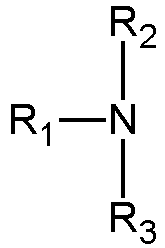
- the alkalizing agent of the alkaline composition of step b) is selected from ammonia and/or its salt(s), guanidine and/or its salt(s), and/or organic alkyl and/or alkanol amines according to the general structure
- the organic alkyl and/or alkanol amine according to the structure above may be selected from mono- and/or diethanolamine, butyl ethanolamine, butyl diethanolamine, dibutyl ethanolamine, methylethanolamine, triethanolamine, N-lauryl diethanolamine, diisopropanolamine, dimethyl isopropanolamine, isopropanolamine, triisopropanolamine, isobutanolamine, tris-(hydroxymethyl)-aminomethane, and/or aminomethyl propanol.
- salts of alkyl and/or alkanol amines with a counterion preferably selected from chloride and/or hydrogen chloride, nitrate, sulphate, phosphate, hydrogenphosphate, dihydrogenphosphate, citrate, acetate, sulphite, benzoate, salicylate.
- the alkalizing agent of the alkaline composition of step b) is selected from aminomethyl propanol and/or monoethanolamine, and/or diethanolamine, and/or tris-(hydroxymethyl)-aminomethane, and/or their salts.
- the alkalizing agent of the alkaline composition of step b) is ammonia and/or its salts.
- the composition of step b) comprises at least 2 different alkalizing agents.
- the first alkalizing agent of the alkaline composition of step b) is selected from ammonia and/or its salt(s) and the second alkalizing agent is selected from aminomethyl propanol and/or monoethanolamine, and/or diethanolamine, and/or their salts.
- the alkalizing agent is a mixture of one or more alkyl amine(s) and/or their salt(s) with ammonia and/or its salt(s).
- a preferred combination is, for example, monoethanolamine and/or its salt(s) and ammonia and/or its salt(s).
- Another preferred combination is aminomethyl propanol and/or its salt(s) and ammonia and/or its salt(s). The aforementioned combinations are preferred from the viewpoint of reducing ammonia smell while maintaining good curling performance, and minimal hair damage.
- the total concentration of alkalizing agent(s) of the alkaline composition of step b) is in the range of 0.1% to 10% by weight, more preferably in the range of 0.25% to 7.5% by weight, further more preferably in the range of 0.5% to 5% by weight, calculated to the total of the composition.
- the preferred total concentration of alkalizing agent(s) in the alkaline composition of step b) is in the range of 0.1% to 10% by weight, preferably in the range of 0.25% to 7.5% by weight, more preferably in the range of 0.5% to 5% by weight, calculated to the total of the composition of step b).
- the ammonium salts for buffering the composition of step b) may be used, preferably selected from inorganic and/or organic ammonium salts.
- Suitable inorganic ammonium salts are preferably selected from ammonium chloride, ammonium sulfate, ammonium carbonate, ammonium hydrogen carbonate, ammonium phosphates, ammonium hydrogen phosphates, ammonium dihydrogen phosphates, ammonium nitrate, ammonium bromide, ammonium iodide, ammonium thiosulfate, ammonium molybdate, ammonium vanadate, and/or their mixtures.
- Suitable organic ammonium salts are preferably selected from ammonium carbamate, ammonium sulfamate, ammonium citrate, ammonium salicylate, ammonium valerate, ammonium tartarate, ammonium benzoate, ammonium acetate, ammonium formiate, and ammonium lactate, ammonium salts of polymers, and/or their mixtures.
- the weight ratio of ammonia to ammonium salt(s) in the alkaline composition of step b) is in the range of 10 to 1.
- the polymeric thickener of the alkaline composition of step b) is selected from associative and/or non-associative thickening polymers, and/or their mixtures.
- Associative and/or non-associative thickening polymers or more thickening polymers may be anionic, nonionic, cationic or amphoteric polymers, and are preferably selected from polymers resulting in a solution and/or dispersion at pH between 8 and 10 with a viscosity of at least 500 mPa•s measured at a polymer concentration of 1% by weight in water and at 20°C with a Brookfield viscometer, such as at 10 rpm for 1 min, with an appropriate spindle.
- Suitable associative thickening polymers may be anionic thickening polymers, preferably selected from copolymers and/or crosspolymers which comprise an acrylate and/or methacrylate monomer unit and at least one more hydrophobic unit such as alkyl chains. Examples are acrylates/c10-30 alkyl acrylate crosspolymer, acrylates/steareth-20 methacrylate copolymer, acrylates/stearyl acrylate/dimethicone methacrylate copolymer, acrylates/beheneth-25 methacrylate copolymer, acrylates/lauryl acrylate/stearyl acrylate/ ethylamine oxide methacrylate copolymer.
- Suitable non-ionic associative thickening polymers are, for example, alkyl modified cellulose derivatives such as (C 2 -C 8 )-alkylcellulose.
- Suitable non-associative non-ionic thickening polymers are cellulose polymers, preferably methyl cellulose, ethyl cellulose, hydroxyethylcellulose, methylhydroxyethylcellulose, methylhydroxypropylcellulose, or starch based polymers such as vegetable starch and/or their synthetically modified derivatives such as hydroxypropyl starch phosphate.
- Suitable non-associative anionic polymers are carboxymethyl cellulose, alginic acids, sodium alginates, ammonium alginates, calcium alginates, gum arabic, guar gum or xanthan gum, dehydroxanthan gum or acrylic acid polymers known with the CTFA adopted name Carbomer and its derivatives.
- Suitable cationic non-associative polymers are Polyquaternium 6, Polyquaternium 16, and Polyquaternium 37.
- the associative thickening polymers of the alkaline composition of step b) are selected from acrylate copolymers being modified with alkyl and/or alkylene chains in the range of of C6 to C30.
- the non-associative thickening polymers of the alkaline composition of step b) are selected from xanthan gum, dehydroxanthan gum, starch, and hydrophobically modified starch, and/or their mixtures.
- the total concentration thickening polymers of the alkaline composition of step b) is in the range of 0.1% to 10% by weight, preferably 0.5% to 5% by weight, more preferably in the range of 1% to 3% by weight, calculated to the total of the alkaline composition of step b).
- the skilled person suitably selects the concentration of the thickening polymer to yield the viscosity of a thickened gel.
- the lower limit of viscosity suitably is 5,000 mPas or more, preferably 10,000 mPas or more to yield a sufficiently thickened product that does not drip from keratin fibers during processing.
- the upper limit of viscosity suitably is 50,000 mPas or less, preferably 40,000 mPas or less to yield a product which may easily be applied onto keratin fibers.
- the viscosity of the composition of step b) preferably is in the range of 5,000 mPas to 50,000 mPas, more preferably in the range of 10,000 mPas to 50,000 mPas, measured at 25°C with a Brookfield viscometer and an appropriate spindle under atmospheric conditions.
- the composition of step b) comprises one or more organic solvent(s) having two or more hydroxyl groups, from the viewpoint of softening/plasticizing the keratin fibers during heat processing as well as preventing too fast evaporation of the composition during the heating process.
- Suitable organic solvent(s) having two or more hydroxyl groups are ethylene glycol, propylene glycol (1,2-propandiol), butylene glycol, dexpanthenol, and/or glycerol.
- the composition of step b) comprises organic solvents at a total concentration in the range of 1% to 30% by weight, preferably 5% to 25% by weight, more preferably 7.5% to 20% by weight, calculated to the total of the composition of step b).
- the composition of step b) comprises 1,2-propandiol at a total concentration in the range of 1% to 30% by weight, preferably 5% to 25% by weight, more preferably 7.5% to 20% by weight, calculated to the total of the composition of step b).
- the non-reducing, non-oxidizing composition of step b) may comprise one or more surfactant(s) selected from non-ionic and/or anionic and/or cationic and/or zwitterionic and/or amphoteric surfactant(s), and/or their mixtures, from the viewpoint of emulsifying lipophilic compounds and/or enhancing spreadibility of the composition onto keratin fibers.
- surfactant(s) selected from non-ionic and/or anionic and/or cationic and/or zwitterionic and/or amphoteric surfactant(s), and/or their mixtures, from the viewpoint of emulsifying lipophilic compounds and/or enhancing spreadibility of the composition onto keratin fibers.
- Suitable anionic surfactants of the alkaline composition of step b) are selected from ethoxylated or non-ethoxylated alkyl ether sulfate surfactants, alkyl sulfates, ethoxylated and/or non-ethoxylated alkyl carboxylates, ethoxylated or non-ethoxylated amino acid surfactants, and/or their mixtures.
- Suitable alkyl sulfate or preferably ethoxylated alkyl ether sulfate surfactant or mixtures thereof have an alkyl chain length of C 10 to C 22 .
- Suitable example foaming surfactants are laureth sulfates, coceth sulfate, pareth sulfate, capryleth sulphate, myreth sulfate, oleth sulfate, deceth sulfate, trideceth sulfate, coco sulphate, C 10 -C 16 alkyl sulphate, C 11 -C 15 alkyl sulphate, C 12 -C 18 alkyl sulphate, C 12 -C 15 alkyl sulphate, C 12 -C 16 alkyl sulphate, C 12 -C 13 alkyl sulfate, lauryl sulphate, myrystyl sulphate, palm kernel sulphate, cetearyl sulfate, cetyl sulphate, decyl sulphate, oleyl sulphate, behenyl sulphate and/or their salts. All of the
- Cations for the surfactants may be selected from sodium, potassium, magnesium and/or ammonium.
- alkyl ether carboxylates derived from alkanols having 6 to 22 carbon atoms, preferably one satisfying the following formula: R 60 -O-(CH 2 CH 2 O) n15 -CH 2 COO- M+ wherein R 60 is an alkyl residue having 6 to 22 carbon atoms, n has a value in the range of 1 to 15, preferably 2 to 10, more preferably 2.5 to 7, and M+ is an appropriate cation, selected from the group consisting of an alkali metal, an alkaline earth metal, ammonium, an alkylammonium, an alkanolammonium or a glucammonium.
- R60 is an alkyl residue having 12 to 14 carbon atoms; n has a value in the range of 2.5 to 5 and M+ is an alkali metal cation such as sodium or potassium.
- Alkyl ether carboxylates are preferably used as liquid diluted aqueous solutions having a solid content lower than 30% by weight.
- Alkyl ether carboxylates are obtained by ethoxylation and subsequent carboxymethylation of fatty alcohols.
- alkyl ether carboxylate acid salts examples are marketed under the trade name AKYPO ® by Kao Chemicals GmbH.
- the most preferred anionic foaming surfactant is sodium lauryl sulfate.
- Suitable non-ionic surfactants of the alkaline composition of step b) are selected from alkyl polyglycosides, ethoxylated triglycerides, ethoxylated fatty alcohols, ethoxylated fatty acid esters, and/or their mixtures.
- Suitable nonionic surfactants are alkyl polyglycosides according to the general structure: R 23 O(R 24 O) t Z x
- Z denotes a carbohydrate with C 5 to C 6
- R 23 is an alkyl group with C 8 to C 18
- R 24 is methyl, ethyl or propyl
- t ranges from 0 to 10
- x ranges from 1 to 5.
- Suitable compounds according to this structure are C 9 -C 11 alkylpolyglycoside, the structures disclosed in EP-A 70 074 , and JP 2015-123019A .
- decyl glucoside lauryl glucoside, and coco glucoside
- decyl glucoside the most preferred one is decyl glucoside.
- non-ionic surfactants are N-alkylpolyhydroxyalkylamide type surfactants according to the following general formula: wherein R 16 is a linear or branched, saturated or unsaturated alkyl chain with C 11 to C 21 , R 17 is linear or branched alkyl, or linear or branched hydroxyalkyl with C 1 to C 4 , and R 18 is a linear or branched polyhydroxyalkyl chain with C 3 to C 12 and 3 to 10 hydroxyl groups.
- Such compounds are disclosed in cosmetic compositions in WO96/27366 and their synthesis is disclosed in US1985424 , US2016962 , US2703798 , and WO92/06984 .
- the preferred N-alkylpolyhydroxyalkylamide type surfactants have the following structure: where R 16 has the same denotation as above for the general structure of N-alkylpolyhydroxyalkylamide type surfactants.
- the preferred surfactants as displayed above are known as N-methyl-N-acylglucamides.
- N-alkylpolyhydroxyalkylamide type surfactants are selected from lauroyl/myristoyl methyl glucamide and coco methyl glucamide.
- non-ionic surfactants are ethoxylated fatty alcohol of the following general structure R 25 (OCH 2 CH 2 ) n4 OH wherein R 25 is straight or branched, saturated or unsaturated alkyl chain which may be synthetic or natural with a C chain length in the range of 8 to 40, preferably 9 to 30 and more preferably 9 to 24 and n4 is a number in the range of 5 to 40, preferably 9 to 30.
- Non-limiting suitable examples of the fatty alcohol ethoxylates are C9-11 Pareth-6, C9-11 Pareth-8, C9-15 Pareth-8, C11-13 Pareth-9, C11-13 Pareth-10, C11-15 Pareth-5, C11-15 Pareth-7, C11-15 Pareth-9, C11-15 Pareth-12, C11-15 Pareth-15, C11-15 Pareth-20, C11-15 Pareth-30, C11-15 Pareth-40, C11-21 Pareth-10, C12-13 Pareth-5, C12-13 Pareth-6, C12-13 Pareth-7, C12-13 Pareth-9, C12-13 Pareth-10, C12-13 Pareth-15, C12-13 Pareth-23, C12-14 Pareth-5, C12-14 Pareth-7, C12-14 Pareth-9, C12-14 Pareth-11, C12-14 Pareth-12, C12-15 Pareth-5, C12-15 Pareth-7, C12-15 Pareth-9, C12-15 Par
- nonionic surfactants are polypropylene glycol ethers of fatty alcohol according to general structure R 25 (OCH 2 -CH 2 -CH 2 ) n5 OH wherein R 25 is straight or branched, saturated or unsaturated fatty alcohol which may be synthetic or natural with a C chain length in the range of 8 to 40, preferably 9 to 30 and more preferably 9 to 24 and n5 is a number in the range of 1 to 40, preferably 3 to 30.
- Suitable non-limiting examples are PPG-3 Caprylyl ether, PPG-5 Caprylyl ether, PPG-10 Caprylyl ether, PPG-10 Cetyl ether, PPG-20 Cetyl ether, PPG-28 Cetyl ether, PPG-30 Cetyl ether, PPG-7 Lauryl ether, PPG-10 Lauryl ether, PPG-10 Oleyl ether, PPG-20 Oleyl ether, PPG-23 Oleyl ether, PPG-30 Oleyl ether, PPG-11 Stearyl ether and PPG-15 Stearyl ether.
- nonionic surfactants are polyethylene glycol fatty acid esters of the following general structure R 26 C(O)(OCH 2 CH 2 ) n6 OH wherein R 26 is straight or branched, saturated or unsaturated alkyl group which may be synthetic or natural with a C chain length in the range of 7 to 39, preferably 9 to 29 and more preferably 9 to 23 and n6 is a number in the range of 5 to 40, preferably 9 to 30.
- Suitable non-limiting examples are PEG-8 Behenate, PEG-8 Caprate, PEG-8 Caprylate, PEG-5 Cocoate, PEG-8 Cocoate, PEG-9 Cocoate, PEG-10 Cocoate, PEG-15 Cocoate, PEG-6 Isopalmitate, PEG-6 Isostearate, PEG-8 Isostearate, PEG-9 Isostearate, PEG-10 Isostearate, PEG-12 Isostearate, PEG-20 Isostearate, PEG-30 Isostearate, PEG-40 Isostearate, PEG-6 Laurate, PEG-8 Laurate, PEG-9 Laurate, PEG-10 Laurate, PEG-12 Laurate, PEG-14 Laurate, PEG-20 Laurate, PEG-30 Laurate, PEG-8 Myristate, PEG-20 Myristate, PEG-5 Oleate, PEG-6 Oleate, PEG-7 Oleate, PEG-8 Oleate, PEG-9 Oleate, PEG-10 Oleate, P
- nonionic surfactants are propoxylated fatty acid esters of the following general structure R 27 C(O)(OCH 2 -CH 2 -CH 2 ) n8 OH wherein R 27 is straight or branched, saturated or unsaturated alkyl group which may be synthetic or natural with a C chain length in the range of 7 to 39, preferably 9 to 29 and more preferably 9 to 23 and n8 is a number in the range of 1 to 40, preferably 9 to 30.
- Suitable non-limiting examples are PPG-15 Isostearate, PPG-9 Laurate, PPG-26 Oleate and PPG-36 Oleate.
- nonionic surfactants are ethoxylated and propoxylated fatty alcohols of the following general structure R 28 (OCH 2 -CH 2 -CH 2 ) n9 (OCH 2 CH 2 ) n10 OH wherein R 28 is straight or branched, saturated or unsaturated alkyl group which may be synthetic or natural with a C chain length in the range of 7 to 39, preferably 9 to 29 and more preferably 9 to 23 and n9 and n10 may be the same or different and are a number in the range of 1 to 40.
- R 28 is straight or branched, saturated or unsaturated alkyl group which may be synthetic or natural with a C chain length in the range of 7 to 39, preferably 9 to 29 and more preferably 9 to 23 and n9 and n10 may be the same or different and are a number in the range of 1 to 40.
- nonionic surfactants are ethoxylated triglycerides.
- ethoxylated castor oil such as PEG-40 hydrogenated castor oil or and PEG-60 hydrogenated castor oil.
- the preferred non-ionic surfactant(s) are selected from alkyl polyglycoside(s), ethoxylated and/or propoxylated fatty alcohols, ethoxylated and/or propoxylated triglycerides, ethoxylated and/or propoxylated fatty alcohols, ethoxylated or propoxylated fatty acid esters, N-alkylpolyhydroxyalkylamides, preferably they are selected from C 8 -C 22 alkyl polyglycoside(s), more preferably they are selected from decyl glucoside, lauryl glucoside, and coco glucoside, and further more preferably it is coco glucoside.
- Suitable cationic surfactants are of quaternary ammonium structure according to the following general structure where R 30 is a saturated or unsaturated, branched or linear alkyl chain with C 8 -C 22 or R 34 CONH(CH 2 ) n where R 34 is saturated or unsaturated, branched or linear alkyl chain with C 7 -C 21 atoms and n has typical value of 1-4 or R 35 COO(CH 2 ) n where R 35 is saturated or unsaturated, branched or linear alkyl chain with C 7 -C 21 atoms and n has typical value of 1-4, and R 31 is unsaturated or saturated, branched or linear alkyl chain with C 1 -C 22 atoms or R 5 CONH(CH 2 ) n or R 6 COO(CH 2 ) n where R 34 , R 35 and n are same as above.
- R 32 and R 33 have an alkyl chain with C 1 to C 4 , and X - is typically chloride, bromide, or methosulfate.
- Typical examples of those ingredients are cetyl trimethyl ammonium chloride, stearyl trimonium chloride, dipalmitoyl dimonium chloride, distearyl dimethyl ammonium chloride, stearamidopropyl trimethyl ammonium chloride, dioleoylethyl dimethyl ammonium methosulfate, dioleoylethyl hydroxyethylmonium methosulfate, behenyl trimethyl ammonium chloride, and/or their mixtures.
- Suitable cationizable surfactants are surfactants which carry one or more chemical group(s) that is/are at least at some point non-ionic at pH above 7, but which is/are positively charged at a pH under 7.
- groups are, for example, primary, secondary, and tertiary amino groups. It is well known to the skilled reader that the aforementioned groups are becoming ammonium groups at a pH below 7.
- Suitable cationizable surfactants are, for example, according to the following general structure where R 40 is a saturated or unsaturated, straight or branched alkyl chain, optionally modified with ethoxylate and/or propxylate groups, with C 12 to C 22 , R 41 is selected from H or straight or branched alkyl with C 1 to C 4 , and R 42 is selected from H or straight or branched alkyl with C 1 to C 4 .
- Suitable compounds according to this structure are, for example, dodecylamine, tridecylamine, tetradecylamine, pentadecylamine, stearylamine, octylamine, oleylamine, behenylamine, stearyl methylamine, stearyl dimethylamine, octyl methylamine, octyl dimethylamine, behenyl methylamine, behenyl dimethylamine, stearyl ethylamine, stearyl ethylamine, octyl ethylamine, octyl ethylamine, behenyl ethylamine, behenyl ethylamine, behenyl ethylamine, stearyl propylamine, stearyl dipropylamine, octyl propylamine, octyl dipropylamine, behenyl propylamine,
- alkyl amido alkyl amine surfactants are known as alkyl amido alkyl amine surfactants and/or their salt(s) and are according to the following general structure where R 11 is a saturated or unsaturated, straight or branched alkyl chain with C 11 to C 21 , R 12 is a straight or branched alkyl chain with C 1 to C 6 , R 13 and R 14 may be the same of different selected from H and straight or branched alkyl chain with C 1 to C 4 .
- Suitable compounds according to this definition are, for example, cocamidopropyl dimethylamine, stearamidopropyl dimethylamine, behenamidopropyl dimethylamine, and/or their salt(s).
- Suitable amphoteric/zwitterionic surfactants may be selected from compounds according to the general structure(s) wherein R 15 is a straight or branched, saturated or unsaturated, substituted or unsubstituted alkyl chain with a carbon number of C 10 to C 22 , preferably R 15 is a straight alkyl chain with a carbon number of C 10 to C 16 , A is a straight alkyl chain with a carbon number of C 1 to C 6 or a branched alkyl chain with a carbon number of C 3 to C 6 , preferably A is a linear alkyl chain with a carbon number of C 3 , and B is an amide or an ester group.
- Suitable compounds are known as hydroxysultaine surfactants, such as cocoamidopropyl hydroxysultaine, laurylamidopropyl hydroxysultaine, erucamidopropyl hydroxysultaine, lauryl hydroxysultaine, and cocoyl hydroxysultaine, and/or their salt(s).
- amphoteric/zwitterionic surfactants are of betaine type.
- Suitable compounds may be selected from alkyl betaines and/or alkylamido betaines.
- a preferred compound selected from alkyl betaines is lauryl betaine.
- a preferred compound selected from alkylamido betaines is cocamidopropyl betaine.
- the disclosure also relates to the salts of the compounds.
- amphoteric/zwitterionic surfactant(s) is/are selected from alkylamido betaines and/or alkylamidoalkyl betaine surfactants.
- the total lower concentration of surfactants in the alkaline composition of step c) is in the range of 0.1% by weight or more, preferably 0.5% by weight or more, more preferably 0.75% by weight or more, calculated to the total of the composition of step b), form the viewpoint of generating sufficient amount of foam.
- the total upper concentration of surfactants in the alkaline composition of step c) is in the range of 10% by weight or less, preferably 8% by weight or less, more preferably 5% by weight or less, calculated to the total of the composition of step c), from the viewpoint of generating a foam, which is dispensable from the foam dispenser.
- the total concentration of surfactants in the alkaline composition of step b) is in the range of 0.1% to 10% by weight, preferably 0.5% to 8% by weight, more preferably 0.75% to 5% by weight, calculated to the total of the composition of step c).
- the viscosity of the composition of step b) is in the range of 100 to 2,000 mPas, preferably 200 to 1,500 mPas, more preferably 500 to 1,000 mPas.
- the viscosity of the composition may be adjusted by all means available to the skilled person. Such means include the addition of a thickening polymer, preferably an acrylate-based thickening polymer, addition of organic solvents.
- the skilled person may also make use of all of the aforementioned options to adjust the viscosity of the composition.
- the moisture barrier of step c) is a foil or wrap impermeable for water vapor, or housing made of a material impermeable for water vapor, with the provision that the selected materials for the moisture barrier are heat resistant up to the selected process temperature.
- moisture barrier such as aluminum foil, plastic foil, and/or plastic device which enclose the curler and/or hair streak.
- plastic foil or plastic device which enclose the curler and/or hair streak.
- certain types of anti-flammable fabric is equally suitable.
- the purpose of the moisture barrier is to keep the hair moist over the total processing time of heating.
- Suitable examples are re-sealable zipper storage bags made of materials such a slow density polyethylene.
- the keratin fibers it is one aspect to cover the keratin fibers with the moisture barrier.
- the hair is not covered with a moisture barrier.
- step a) the hair is put under mechanical tension on a curler or roller having heating means.
- step d) the curler may then be connected to a digital perm machine for heating the curler and the hair.
- the hair is heating in step d) in the range of 80°C to 180°C, preferably 85°C to 140°C, more preferably 90°C to 120°C.
- the heating time of step d) preferably is in the range of 2 min to 45 min, preferably in the range of 5 min to 30 min, more preferably in the range of 5 min to 20 min.
- the non-reducing, non-oxidizing alkaline composition of step b) may further comprise cationic polymers, amino acids, UV filters, any type of hair dyes.
- cationic polymers such as the ones known under their CTFA name Polyquaternium, for example Polyquaternium 6, Polyquaternium 10, Polyquaternium 16, and Polyquaternium 37.
- the concentration of cationic polymers in the composition is in the range of 0.01% by weight to 1% by weight, calculated to the total weight of the composition.
- compositions were prepared by conventional formulation and mixing techniques: Ingredients Inventive comp. 1 [% by weight] Inventive comp. 2 [% by weight] Inventive comp. 3 [% by weight] Ammonia solution (25%) 10.0 10.0 10.0 1,2-propandiol 10.0 10.0 10.0 Carbopol 980 NF (acrylates homopolymer) 2.0 - - Natrosol 250 HX (Hydroxyethyl-celllose) - 2.0 - Cosmedia Ultragel 300 (Polyquaternium-37) - - 2.0 Water Ad 100.0
- compositions were 10.0.
- the viscosities ranged between 20,000 mPas and 40,000 mPas.
- Human hair streaks (Caucasian, 21 cm long, 2 g per bundle) were purchased from Fischbach + Miller Haar, Laupheim, Germany. The hair streaks were shampooed with a commercially available shampoo under the brand name Goldwell Deep Cleansing Shampoo. Then the streaks were towel dried. Then 1 g of the compositions from above was applied to the hair streaks with a brush. The streaks were then winded on perming rods possessing an electrical heating system. Prior to heating, each of the rods were covered with a plastic bag (commercial re-sealable zipper storage bag) made of low-density polyethylene. The rods were then heated to a temperature in the range of 90°C to 110°C for 20 min with a digital perming machine. Then the rods were allowed to cool down, the plastic bag was removed, and the hair was shampooed with the same shampoo from above. The streaks were then blow-dried.
- a plastic bag commercial re-sealable zipper storage bag
- the inventive compositions showed strong curling ratios. Moreover, the compositions were easy to apply and remained on the hair streak during processing.
- step b) The composition of step b) is as follows: % by weight Ammonia solution (25%) 2.5 1,2-propandiol 10.0 Acrylates copolymer* 0.5 Sodium laureth sulfate (1-5 EO) 3.0 Water ad 100.0 * Acrylates/c10-30 alkyl acrylate crosspolymer
- the pH of the composition is in the range of 8 to 10 and may be adjusted with HCl.
- step b) The composition of step b) is as follows: % by weight Ammonia solution (25%) 2.5 Monoethanolamine 0.25 1,2-propandiol 10.0 Hydroxypropyl starch 0.5 Coco glucoside 0.5 Water ad 100.0
- the pH of the composition is in the range of 8 to 11 and may be adjusted with HCl.
- step b) The composition of step b) is as follows: % by weight Ammonia (25%) 1.5 1,2-propandiol 5.0 Aminomethyl propanol 0.5 Cetrimoniumchloride 2.0 Cocoyl betaine 1.0 Xanthan gum 2.0 Water ad 100.0
- the pH of the composition is in the range of 9 to 10 and may be adjusted with HCl.
Landscapes
- Health & Medical Sciences (AREA)
- Life Sciences & Earth Sciences (AREA)
- Animal Behavior & Ethology (AREA)
- General Health & Medical Sciences (AREA)
- Public Health (AREA)
- Veterinary Medicine (AREA)
- Birds (AREA)
- Epidemiology (AREA)
- Chemical & Material Sciences (AREA)
- Inorganic Chemistry (AREA)
- Emergency Medicine (AREA)
- Cosmetics (AREA)
Claims (16)
- Verfahren zur Umformung von Keratinfasern, vorzugsweise menschlichen Keratinfasern, insbesondere menschlichem Haar, dadurch gekennzeichnet, dass es die folgenden Schritte umfasst:a) Keratinfasern unter mechanische Spannung setzen,b) Auftragen einer nicht reduzierenden, nicht oxidierenden alkalischen Zusammensetzung mit einem pH-Wert im Bereich von 7 bis 12, vorzugsweise im Bereich von 8 bis 11, auf Keratinfasern, umfassend:i) einem oder mehreren Alkalisierungsmittel(n),ii) ein oder mehrere verdickende(s) Polymer(e),iii) ein oder mehrere organische Lösungsmittel mit zwei oder mehr Hydroxylgruppen, c) optionales Abdecken der Keratinfasern mit einer Feuchtigkeitssperre,d) Erhitzen der Keratinfasern auf eine Temperatur im Bereich von 50°C bis 230°C,e) optionales Entfernen der Feuchtigkeitsbarriere von Keratinfasern,f) Lösen der Spannung von Keratinfasern,g) gegebenenfalls Abspülen der Keratinfasern,wobei die Verfahrensschritte a), b) und f), g) in beliebiger Reihenfolge ausgeführt werden können, undwobei die folgenden nicht reduzierenden, nicht oxidierenden alkalischen Zusammensetzungen von Schritt b) ausgeschlossen sind
Ex. 1 Ex. 2 Comp. Ex. 2 Comp. Ex. 3 Comp. Ex. 4 KOH 6.8 6.8 6.8 6.8 6.8 Taurine 15.4 15.4 15.4 15.4 15.4 Butylene Glycol 10 - - - - Pentylene Glycol - 10 - - - Glycerin - - 10 - - Propylene Glycol - - - 10 - Hexylene Glycol - - - - 10 Hydroxyethylcellulose 1.5 1.5 1.5 1.5 1.5 Polyquaternium-67 0.5 0.5 0.5 0.5 0.5 Dimethicone 0.2 0.2 0.2 0.2 0.2 Water qsp 100 qsp 100 qsp 100 qsp 100 qsp 100 pH 10.7 10.7 10.7 10.7 10.7 Ex. 3 Ex. 4 Ex. 5 NaOH 2.4 2.4 2.4 Monoethanolamine 3.6 3.6 3.6 Taurine 8.7 8.7 8.7 Magnesium Gluconate 0.125 0.125 0.125 Pentylene Glycol 10 7.5 5 Ethanol - 2.5 5 Hydroxyethylcellulose 1.5 1.5 1.5 Polyquaternium-67 0.5 0.5 0.5 Dimethicone 0.2 0.2 0.2 Mineral Oil 5 5 5 Steareth-2 2 2 2 Steareth-20 2 2 2 Water qsp 100 qsp 100 qsp 100 pH 10.7 10.7 10.7 - Verfahren nach Anspruch 1, dadurch gekennzeichnet, dass das Alkalisierungsmittel der alkalischen Zusammensetzung von Schritt b) ausgewählt ist aus Ammoniak und/oder dessen Salz(en), Guanidin und/oder dessen Salz(en), und/oder organischen Alkyl- und/oder Alkanolaminen gemäß der allgemeinen Struktur
- Verfahren nach Anspruch 1 und/oder 2, dadurch gekennzeichnet, dass das Alkalisierungsmittel der alkalischen Zusammensetzung von Schritt b) ausgewählt ist aus Aminomethylpropanol und/oder Monoethanolamin und/oder Diethanolamin und/oder Tris-(hydroxymethyl)-aminomethan und/oder deren Salzen.
- Verfahren nach einem der vorhergehenden Ansprüche, dadurch gekennzeichnet, dass das Alkalisierungsmittel der alkalischen Zusammensetzung von Schritt b) Ammoniak und/oder seine Salze ist.
- Verfahren nach einem der vorhergehenden Ansprüche, dadurch gekennzeichnet, dass die Gesamtkonzentration der Alkalisierungsmittel in der Zusammensetzung von Schritt b) im Bereich von 0.1 bis 10 Gew.-%, vorzugsweise im Bereich von 0.25 bis 7.5 Gew.-%, besonders bevorzugt im Bereich von 0.5 bis 5 Gew.-%, bezogen auf die gesamte alkalische Zusammensetzung von Schritt b), liegt.
- Verfahren nach einem der vorhergehenden Ansprüche, dadurch gekennzeichnet, dass das polymere Verdickungsmittel der alkalischen Zusammensetzung von Schritt b) ausgewählt ist aus assoziativen und/oder nicht-assoziativen nicht-cellulosehaltigen Verdickungspolymeren und/oder deren Mischungen.
- Verfahren nach einem der vorhergehenden Ansprüche, dadurch gekennzeichnet, dass das assoziativ verdickende Polymer der alkalischen Zusammensetzung von Schritt b) aus Acrylat-Copolymeren ausgewählt ist, die mit Alkyl- und/oder Alkylenketten von C6 bis C18 modifiziert sind.
- Verfahren nach einem der vorhergehenden Ansprüche, dadurch gekennzeichnet, dass das nicht-assoziative Verdickungspolymer der alkalischen Zusammensetzung von Schritt b) ausgewählt ist aus Xanthangummi, Dehydroxanthangummi, Stärke und hydrophob modifizierter Stärke und/oder deren Mischungen.
- Verfahren nach einem der vorhergehenden Ansprüche, dadurch gekennzeichnet, dass die Gesamtkonzentration der verdickenden Polymere der alkalischen Zusammensetzung von Schritt b) im Bereich von 0.1 bis 10 Gew.-%, vorzugsweise 0.5 bis 5 Gew.-%, besonders bevorzugt im Bereich von 1 bis 3 Gew.-%, bezogen auf die gesamte alkalische Zusammensetzung von Schritt b), liegt.
- Verfahren nach einem der vorhergehenden Ansprüche, dadurch gekennzeichnet, dass die alkalische Zusammensetzung von Schritt b) organische Lösungsmittel in einer Gesamtkonzentration im Bereich von 1 bis 30 Gew.-%, vorzugsweise 5 bis 25 Gew.-%, besonders bevorzugt 7.5 bis 20 Gew.-%, berechnet auf die Gesamtmenge der Zusammensetzung von Schritt b), enthält.
- Verfahren nach einem der vorhergehenden Ansprüche, dadurch gekennzeichnet, dass die alkalische Zusammensetzung von Schritt b) eine Viskosität im Bereich von 5.000 mPas bis 50.000 mPas, vorzugsweise im Bereich von 10.000 mPas bis 40.000 mPas, gemessen mit einem Brookfield-Viskosimeter und einer geeigneten Spindel bei 25°C unter atmosphärischen Bedingungen, aufweist.
- Verfahren nach einem der vorhergehenden Ansprüche, dadurch gekennzeichnet, dass Keratinfasern gemäß Schritt d) im Bereich von 80°C bis 180°C, vorzugsweise 85°C bis 140°C, noch bevorzugter 90°C bis 120°C, erhitzt werden.
- Verfahren nach einem der vorhergehenden Ansprüche, dadurch gekennzeichnet, dass die Erhitzungszeit von Schritt d) im Bereich von 2 min bis 45 min, vorzugsweise im Bereich von 5 min bis 30 min, besonders bevorzugt im Bereich von 5 min bis 20 min liegt.
- Verfahren nach einem der vorhergehenden Ansprüche, dadurch gekennzeichnet, dass für den Verfahrensschritt a) das Haar auf einem Lockenwickler oder einer Rolle mit Heizvorrichtung unter mechanischen Zug gesetzt wird.
- Verfahren nach einem der vorhergehenden Ansprüche, dadurch gekennzeichnet, dass die Feuchtigkeitsbarriere von Schritt c) eine wasserdampfundurchlässige Folie oder Hülle oder ein Gehäuse aus einem wasserdampfundurchlässigen Material ist, mit der Maßgabe, dass die ausgewählten Materialien für die Feuchtigkeitsbarriere bis zu der gewählten Prozesstemperatur hitzebeständig sind.
- Kit, das in einem separat verpackten Behälter eine alkalische Zusammensetzung, wie sie in den Ansprüchen 1 bis 14 für Schritt b) definiert ist, und eine Feuchtigkeitssperre, wie sie in Anspruch 15 für Schritt c) definiert ist, enthält.
Applications Claiming Priority (2)
| Application Number | Priority Date | Filing Date | Title |
|---|---|---|---|
| EP18210805.0A EP3662887A1 (de) | 2018-12-06 | 2018-12-06 | Verfahren zur umformung von keratinfasern |
| PCT/EP2019/083525 WO2020115060A1 (en) | 2018-12-06 | 2019-12-03 | Process for reshaping keratin fibers |
Publications (2)
| Publication Number | Publication Date |
|---|---|
| EP3890692A1 EP3890692A1 (de) | 2021-10-13 |
| EP3890692B1 true EP3890692B1 (de) | 2025-05-14 |
Family
ID=64664055
Family Applications (2)
| Application Number | Title | Priority Date | Filing Date |
|---|---|---|---|
| EP18210805.0A Withdrawn EP3662887A1 (de) | 2018-12-06 | 2018-12-06 | Verfahren zur umformung von keratinfasern |
| EP19812791.2A Active EP3890692B1 (de) | 2018-12-06 | 2019-12-03 | Verfahren zur umformung von keratinfasern |
Family Applications Before (1)
| Application Number | Title | Priority Date | Filing Date |
|---|---|---|---|
| EP18210805.0A Withdrawn EP3662887A1 (de) | 2018-12-06 | 2018-12-06 | Verfahren zur umformung von keratinfasern |
Country Status (4)
| Country | Link |
|---|---|
| US (1) | US12220472B2 (de) |
| EP (2) | EP3662887A1 (de) |
| CN (1) | CN113271915A (de) |
| WO (1) | WO2020115060A1 (de) |
Families Citing this family (2)
| Publication number | Priority date | Publication date | Assignee | Title |
|---|---|---|---|---|
| EP3871656A1 (de) * | 2020-02-28 | 2021-09-01 | Kao Germany GmbH | Umformungszusammensetzung für keratinfasern |
| US20240197595A1 (en) * | 2021-04-26 | 2024-06-20 | Kao Germany Gmbh | Reshaping composition for keratin fibers |
Family Cites Families (15)
| Publication number | Priority date | Publication date | Assignee | Title |
|---|---|---|---|---|
| US2016962A (en) | 1932-09-27 | 1935-10-08 | Du Pont | Process for producing glucamines and related products |
| US1985424A (en) | 1933-03-23 | 1934-12-25 | Ici Ltd | Alkylene-oxide derivatives of polyhydroxyalkyl-alkylamides |
| US2703798A (en) | 1950-05-25 | 1955-03-08 | Commercial Solvents Corp | Detergents from nu-monoalkyl-glucamines |
| GR76189B (de) | 1981-07-13 | 1984-08-03 | Procter & Gamble | |
| JPH06501688A (ja) | 1990-10-12 | 1994-02-24 | ザ、プロクター、エンド、ギャンブル、カンパニー | ヒドロキシ溶剤中におけるn−アルキルポリヒドロキシアミンおよびそれからの脂肪酸アミドの製造法 |
| DE19507531C2 (de) | 1995-03-03 | 1998-07-09 | Henkel Kgaa | Verwendung von Fettsäure-N-alkylpolyhydroxyalkylamiden |
| US20120141690A1 (en) | 2009-07-10 | 2012-06-07 | L'oreal | Process for permanent deformation of keratin fibers |
| WO2011155076A1 (en) | 2010-06-09 | 2011-12-15 | L'oreal | Compositions and process for treating keratin fibers |
| KR20130140003A (ko) * | 2010-10-15 | 2013-12-23 | 쿨웨이 인코포레이티드 | 케라틴 기재 섬유의 처리를 위한 조성물 및 방법 |
| CN104010623A (zh) * | 2011-12-13 | 2014-08-27 | 雅芳产品公司 | 在生物表面赋予记忆效应的方法和组合物 |
| US20140261517A1 (en) * | 2013-03-15 | 2014-09-18 | Coolway Inc. | Compositions and methods for treating keratin based fibers |
| EP3065831A1 (de) * | 2013-11-08 | 2016-09-14 | Lubrizol Advanced Materials, Inc. | Semipermanente haarkräftigungszusammensetzung und verfahren |
| JP6323940B2 (ja) | 2013-12-26 | 2018-05-16 | 花王株式会社 | アルキルポリグリコシドの製造方法 |
| EP3254670A1 (de) * | 2016-06-07 | 2017-12-13 | Kao Germany GmbH | Verfahren zur haarbehandlung |
| JP7139104B2 (ja) * | 2017-10-12 | 2022-09-20 | ロレアル | ケラチン繊維のためのプロセス、組成物、方法及び使用 |
-
2018
- 2018-12-06 EP EP18210805.0A patent/EP3662887A1/de not_active Withdrawn
-
2019
- 2019-12-03 CN CN201980080894.0A patent/CN113271915A/zh active Pending
- 2019-12-03 EP EP19812791.2A patent/EP3890692B1/de active Active
- 2019-12-03 WO PCT/EP2019/083525 patent/WO2020115060A1/en not_active Ceased
- 2019-12-03 US US17/299,208 patent/US12220472B2/en active Active
Also Published As
| Publication number | Publication date |
|---|---|
| EP3662887A1 (de) | 2020-06-10 |
| US12220472B2 (en) | 2025-02-11 |
| WO2020115060A1 (en) | 2020-06-11 |
| EP3890692A1 (de) | 2021-10-13 |
| US20220133613A1 (en) | 2022-05-05 |
| CN113271915A (zh) | 2021-08-17 |
Similar Documents
| Publication | Publication Date | Title |
|---|---|---|
| EP3311795B1 (de) | Haarreinigungszusammensetzung mit verbesserter farbstabilität auf vorgefärbten keratinfasern und verbesserten schaumstoffeigenschaften | |
| EP3659577A1 (de) | Keratinfaserglättungszusammensetzung, verfahren und teilekit | |
| EP3890692B1 (de) | Verfahren zur umformung von keratinfasern | |
| EP3710115B1 (de) | Verfahren zum dauerwellen von keratinfasern | |
| EP3890696B1 (de) | Verfahren zur umformung von keratinfasern | |
| EP3890693B1 (de) | Verfahren zur umformung von keratinfasern | |
| EP3890686A1 (de) | Verfahren zur umformung von keratinfasern | |
| EP4069376B1 (de) | Umformungszusammensetzung für keratinfasern | |
| EP4081180B1 (de) | Umformungszusammensetzung für keratinfasern | |
| EP4308066B1 (de) | Umformungszusammensetzung für keratinfasern | |
| EP4014952A1 (de) | Feste zusammensetzung für keratinfasern | |
| US20240197595A1 (en) | Reshaping composition for keratin fibers | |
| JP2025539613A (ja) | 離散粒子を有する透明頭皮用組成物 | |
| EP4119122A1 (de) | Verfahren zum dauerwellen von keratinfasern |
Legal Events
| Date | Code | Title | Description |
|---|---|---|---|
| STAA | Information on the status of an ep patent application or granted ep patent |
Free format text: STATUS: UNKNOWN |
|
| STAA | Information on the status of an ep patent application or granted ep patent |
Free format text: STATUS: THE INTERNATIONAL PUBLICATION HAS BEEN MADE |
|
| PUAI | Public reference made under article 153(3) epc to a published international application that has entered the european phase |
Free format text: ORIGINAL CODE: 0009012 |
|
| STAA | Information on the status of an ep patent application or granted ep patent |
Free format text: STATUS: REQUEST FOR EXAMINATION WAS MADE |
|
| 17P | Request for examination filed |
Effective date: 20210607 |
|
| AK | Designated contracting states |
Kind code of ref document: A1 Designated state(s): AL AT BE BG CH CY CZ DE DK EE ES FI FR GB GR HR HU IE IS IT LI LT LU LV MC MK MT NL NO PL PT RO RS SE SI SK SM TR |
|
| DAV | Request for validation of the european patent (deleted) | ||
| DAX | Request for extension of the european patent (deleted) | ||
| GRAP | Despatch of communication of intention to grant a patent |
Free format text: ORIGINAL CODE: EPIDOSNIGR1 |
|
| STAA | Information on the status of an ep patent application or granted ep patent |
Free format text: STATUS: GRANT OF PATENT IS INTENDED |
|
| GRAS | Grant fee paid |
Free format text: ORIGINAL CODE: EPIDOSNIGR3 |
|
| GRAA | (expected) grant |
Free format text: ORIGINAL CODE: 0009210 |
|
| STAA | Information on the status of an ep patent application or granted ep patent |
Free format text: STATUS: THE PATENT HAS BEEN GRANTED |
|
| INTG | Intention to grant announced |
Effective date: 20250320 |
|
| RAP3 | Party data changed (applicant data changed or rights of an application transferred) |
Owner name: KAO GERMANY GMBH |
|
| AK | Designated contracting states |
Kind code of ref document: B1 Designated state(s): AL AT BE BG CH CY CZ DE DK EE ES FI FR GB GR HR HU IE IS IT LI LT LU LV MC MK MT NL NO PL PT RO RS SE SI SK SM TR |
|
| REG | Reference to a national code |
Ref country code: GB Ref legal event code: FG4D |
|
| REG | Reference to a national code |
Ref country code: CH Ref legal event code: EP |
|
| REG | Reference to a national code |
Ref country code: DE Ref legal event code: R096 Ref document number: 602019070024 Country of ref document: DE |
|
| P01 | Opt-out of the competence of the unified patent court (upc) registered |
Free format text: CASE NUMBER: APP_19970/2025 Effective date: 20250425 |
|
| REG | Reference to a national code |
Ref country code: IE Ref legal event code: FG4D |
|
| REG | Reference to a national code |
Ref country code: NL Ref legal event code: MP Effective date: 20250514 |
|
| PG25 | Lapsed in a contracting state [announced via postgrant information from national office to epo] |
Ref country code: PT Free format text: LAPSE BECAUSE OF FAILURE TO SUBMIT A TRANSLATION OF THE DESCRIPTION OR TO PAY THE FEE WITHIN THE PRESCRIBED TIME-LIMIT Effective date: 20250915 Ref country code: FI Free format text: LAPSE BECAUSE OF FAILURE TO SUBMIT A TRANSLATION OF THE DESCRIPTION OR TO PAY THE FEE WITHIN THE PRESCRIBED TIME-LIMIT Effective date: 20250514 Ref country code: ES Free format text: LAPSE BECAUSE OF FAILURE TO SUBMIT A TRANSLATION OF THE DESCRIPTION OR TO PAY THE FEE WITHIN THE PRESCRIBED TIME-LIMIT Effective date: 20250514 |
|
| REG | Reference to a national code |
Ref country code: LT Ref legal event code: MG9D |
|
| PG25 | Lapsed in a contracting state [announced via postgrant information from national office to epo] |
Ref country code: NO Free format text: LAPSE BECAUSE OF FAILURE TO SUBMIT A TRANSLATION OF THE DESCRIPTION OR TO PAY THE FEE WITHIN THE PRESCRIBED TIME-LIMIT Effective date: 20250814 Ref country code: GR Free format text: LAPSE BECAUSE OF FAILURE TO SUBMIT A TRANSLATION OF THE DESCRIPTION OR TO PAY THE FEE WITHIN THE PRESCRIBED TIME-LIMIT Effective date: 20250815 |
|
| PG25 | Lapsed in a contracting state [announced via postgrant information from national office to epo] |
Ref country code: PL Free format text: LAPSE BECAUSE OF FAILURE TO SUBMIT A TRANSLATION OF THE DESCRIPTION OR TO PAY THE FEE WITHIN THE PRESCRIBED TIME-LIMIT Effective date: 20250514 Ref country code: NL Free format text: LAPSE BECAUSE OF FAILURE TO SUBMIT A TRANSLATION OF THE DESCRIPTION OR TO PAY THE FEE WITHIN THE PRESCRIBED TIME-LIMIT Effective date: 20250514 |
|
| REG | Reference to a national code |
Ref country code: AT Ref legal event code: MK05 Ref document number: 1794228 Country of ref document: AT Kind code of ref document: T Effective date: 20250514 |
|
| PG25 | Lapsed in a contracting state [announced via postgrant information from national office to epo] |
Ref country code: BG Free format text: LAPSE BECAUSE OF FAILURE TO SUBMIT A TRANSLATION OF THE DESCRIPTION OR TO PAY THE FEE WITHIN THE PRESCRIBED TIME-LIMIT Effective date: 20250514 |
|
| PG25 | Lapsed in a contracting state [announced via postgrant information from national office to epo] |
Ref country code: HR Free format text: LAPSE BECAUSE OF FAILURE TO SUBMIT A TRANSLATION OF THE DESCRIPTION OR TO PAY THE FEE WITHIN THE PRESCRIBED TIME-LIMIT Effective date: 20250514 |
|
| PG25 | Lapsed in a contracting state [announced via postgrant information from national office to epo] |
Ref country code: AT Free format text: LAPSE BECAUSE OF FAILURE TO SUBMIT A TRANSLATION OF THE DESCRIPTION OR TO PAY THE FEE WITHIN THE PRESCRIBED TIME-LIMIT Effective date: 20250514 |
|
| PG25 | Lapsed in a contracting state [announced via postgrant information from national office to epo] |
Ref country code: RS Free format text: LAPSE BECAUSE OF FAILURE TO SUBMIT A TRANSLATION OF THE DESCRIPTION OR TO PAY THE FEE WITHIN THE PRESCRIBED TIME-LIMIT Effective date: 20250814 |
|
| PG25 | Lapsed in a contracting state [announced via postgrant information from national office to epo] |
Ref country code: IS Free format text: LAPSE BECAUSE OF FAILURE TO SUBMIT A TRANSLATION OF THE DESCRIPTION OR TO PAY THE FEE WITHIN THE PRESCRIBED TIME-LIMIT Effective date: 20250914 |
|
| PG25 | Lapsed in a contracting state [announced via postgrant information from national office to epo] |
Ref country code: LV Free format text: LAPSE BECAUSE OF FAILURE TO SUBMIT A TRANSLATION OF THE DESCRIPTION OR TO PAY THE FEE WITHIN THE PRESCRIBED TIME-LIMIT Effective date: 20250514 |
|
| PGFP | Annual fee paid to national office [announced via postgrant information from national office to epo] |
Ref country code: GB Payment date: 20251218 Year of fee payment: 7 |
|
| PG25 | Lapsed in a contracting state [announced via postgrant information from national office to epo] |
Ref country code: DK Free format text: LAPSE BECAUSE OF FAILURE TO SUBMIT A TRANSLATION OF THE DESCRIPTION OR TO PAY THE FEE WITHIN THE PRESCRIBED TIME-LIMIT Effective date: 20250514 Ref country code: SM Free format text: LAPSE BECAUSE OF FAILURE TO SUBMIT A TRANSLATION OF THE DESCRIPTION OR TO PAY THE FEE WITHIN THE PRESCRIBED TIME-LIMIT Effective date: 20250514 |
|
| PGFP | Annual fee paid to national office [announced via postgrant information from national office to epo] |
Ref country code: FR Payment date: 20251217 Year of fee payment: 7 |
|
| PG25 | Lapsed in a contracting state [announced via postgrant information from national office to epo] |
Ref country code: CZ Free format text: LAPSE BECAUSE OF FAILURE TO SUBMIT A TRANSLATION OF THE DESCRIPTION OR TO PAY THE FEE WITHIN THE PRESCRIBED TIME-LIMIT Effective date: 20250514 |
|
| PG25 | Lapsed in a contracting state [announced via postgrant information from national office to epo] |
Ref country code: EE Free format text: LAPSE BECAUSE OF FAILURE TO SUBMIT A TRANSLATION OF THE DESCRIPTION OR TO PAY THE FEE WITHIN THE PRESCRIBED TIME-LIMIT Effective date: 20250514 |
|
| PG25 | Lapsed in a contracting state [announced via postgrant information from national office to epo] |
Ref country code: SK Free format text: LAPSE BECAUSE OF FAILURE TO SUBMIT A TRANSLATION OF THE DESCRIPTION OR TO PAY THE FEE WITHIN THE PRESCRIBED TIME-LIMIT Effective date: 20250514 Ref country code: RO Free format text: LAPSE BECAUSE OF FAILURE TO SUBMIT A TRANSLATION OF THE DESCRIPTION OR TO PAY THE FEE WITHIN THE PRESCRIBED TIME-LIMIT Effective date: 20250514 |
|
| PG25 | Lapsed in a contracting state [announced via postgrant information from national office to epo] |
Ref country code: IT Free format text: LAPSE BECAUSE OF FAILURE TO SUBMIT A TRANSLATION OF THE DESCRIPTION OR TO PAY THE FEE WITHIN THE PRESCRIBED TIME-LIMIT Effective date: 20250514 |
|
| PLBE | No opposition filed within time limit |
Free format text: ORIGINAL CODE: 0009261 |
|
| STAA | Information on the status of an ep patent application or granted ep patent |
Free format text: STATUS: NO OPPOSITION FILED WITHIN TIME LIMIT |