EP3890058B1 - Separator for lithium secondary battery and lithium secondary battery comprising same - Google Patents
Separator for lithium secondary battery and lithium secondary battery comprising same Download PDFInfo
- Publication number
- EP3890058B1 EP3890058B1 EP19889395.0A EP19889395A EP3890058B1 EP 3890058 B1 EP3890058 B1 EP 3890058B1 EP 19889395 A EP19889395 A EP 19889395A EP 3890058 B1 EP3890058 B1 EP 3890058B1
- Authority
- EP
- European Patent Office
- Prior art keywords
- separator
- porous substrate
- polyolefin
- based porous
- secondary battery
- Prior art date
- Legal status (The legal status is an assumption and is not a legal conclusion. Google has not performed a legal analysis and makes no representation as to the accuracy of the status listed.)
- Active
Links
Images

Classifications
-
- H—ELECTRICITY
- H01—ELECTRIC ELEMENTS
- H01M—PROCESSES OR MEANS, e.g. BATTERIES, FOR THE DIRECT CONVERSION OF CHEMICAL ENERGY INTO ELECTRICAL ENERGY
- H01M10/00—Secondary cells; Manufacture thereof
- H01M10/05—Accumulators with non-aqueous electrolyte
- H01M10/052—Li-accumulators
-
- H—ELECTRICITY
- H01—ELECTRIC ELEMENTS
- H01M—PROCESSES OR MEANS, e.g. BATTERIES, FOR THE DIRECT CONVERSION OF CHEMICAL ENERGY INTO ELECTRICAL ENERGY
- H01M10/00—Secondary cells; Manufacture thereof
- H01M10/05—Accumulators with non-aqueous electrolyte
- H01M10/052—Li-accumulators
- H01M10/0525—Rocking-chair batteries, i.e. batteries with lithium insertion or intercalation in both electrodes; Lithium-ion batteries
-
- H—ELECTRICITY
- H01—ELECTRIC ELEMENTS
- H01M—PROCESSES OR MEANS, e.g. BATTERIES, FOR THE DIRECT CONVERSION OF CHEMICAL ENERGY INTO ELECTRICAL ENERGY
- H01M10/00—Secondary cells; Manufacture thereof
- H01M10/42—Methods or arrangements for servicing or maintenance of secondary cells or secondary half-cells
- H01M10/4235—Safety or regulating additives or arrangements in electrodes, separators or electrolyte
-
- H—ELECTRICITY
- H01—ELECTRIC ELEMENTS
- H01M—PROCESSES OR MEANS, e.g. BATTERIES, FOR THE DIRECT CONVERSION OF CHEMICAL ENERGY INTO ELECTRICAL ENERGY
- H01M50/00—Constructional details or processes of manufacture of the non-active parts of electrochemical cells other than fuel cells, e.g. hybrid cells
- H01M50/40—Separators; Membranes; Diaphragms; Spacing elements inside cells
- H01M50/409—Separators, membranes or diaphragms characterised by the material
- H01M50/411—Organic material
- H01M50/414—Synthetic resins, e.g. thermoplastics or thermosetting resins
- H01M50/417—Polyolefins
-
- H—ELECTRICITY
- H01—ELECTRIC ELEMENTS
- H01M—PROCESSES OR MEANS, e.g. BATTERIES, FOR THE DIRECT CONVERSION OF CHEMICAL ENERGY INTO ELECTRICAL ENERGY
- H01M50/00—Constructional details or processes of manufacture of the non-active parts of electrochemical cells other than fuel cells, e.g. hybrid cells
- H01M50/40—Separators; Membranes; Diaphragms; Spacing elements inside cells
- H01M50/409—Separators, membranes or diaphragms characterised by the material
- H01M50/431—Inorganic material
-
- H—ELECTRICITY
- H01—ELECTRIC ELEMENTS
- H01M—PROCESSES OR MEANS, e.g. BATTERIES, FOR THE DIRECT CONVERSION OF CHEMICAL ENERGY INTO ELECTRICAL ENERGY
- H01M50/00—Constructional details or processes of manufacture of the non-active parts of electrochemical cells other than fuel cells, e.g. hybrid cells
- H01M50/40—Separators; Membranes; Diaphragms; Spacing elements inside cells
- H01M50/409—Separators, membranes or diaphragms characterised by the material
- H01M50/431—Inorganic material
- H01M50/434—Ceramics
-
- H—ELECTRICITY
- H01—ELECTRIC ELEMENTS
- H01M—PROCESSES OR MEANS, e.g. BATTERIES, FOR THE DIRECT CONVERSION OF CHEMICAL ENERGY INTO ELECTRICAL ENERGY
- H01M50/00—Constructional details or processes of manufacture of the non-active parts of electrochemical cells other than fuel cells, e.g. hybrid cells
- H01M50/40—Separators; Membranes; Diaphragms; Spacing elements inside cells
- H01M50/409—Separators, membranes or diaphragms characterised by the material
- H01M50/443—Particulate material
-
- H—ELECTRICITY
- H01—ELECTRIC ELEMENTS
- H01M—PROCESSES OR MEANS, e.g. BATTERIES, FOR THE DIRECT CONVERSION OF CHEMICAL ENERGY INTO ELECTRICAL ENERGY
- H01M50/00—Constructional details or processes of manufacture of the non-active parts of electrochemical cells other than fuel cells, e.g. hybrid cells
- H01M50/40—Separators; Membranes; Diaphragms; Spacing elements inside cells
- H01M50/409—Separators, membranes or diaphragms characterised by the material
- H01M50/446—Composite material consisting of a mixture of organic and inorganic materials
-
- H—ELECTRICITY
- H01—ELECTRIC ELEMENTS
- H01M—PROCESSES OR MEANS, e.g. BATTERIES, FOR THE DIRECT CONVERSION OF CHEMICAL ENERGY INTO ELECTRICAL ENERGY
- H01M50/00—Constructional details or processes of manufacture of the non-active parts of electrochemical cells other than fuel cells, e.g. hybrid cells
- H01M50/40—Separators; Membranes; Diaphragms; Spacing elements inside cells
- H01M50/409—Separators, membranes or diaphragms characterised by the material
- H01M50/449—Separators, membranes or diaphragms characterised by the material having a layered structure
-
- H—ELECTRICITY
- H01—ELECTRIC ELEMENTS
- H01M—PROCESSES OR MEANS, e.g. BATTERIES, FOR THE DIRECT CONVERSION OF CHEMICAL ENERGY INTO ELECTRICAL ENERGY
- H01M50/00—Constructional details or processes of manufacture of the non-active parts of electrochemical cells other than fuel cells, e.g. hybrid cells
- H01M50/40—Separators; Membranes; Diaphragms; Spacing elements inside cells
- H01M50/46—Separators, membranes or diaphragms characterised by their combination with electrodes
-
- H—ELECTRICITY
- H01—ELECTRIC ELEMENTS
- H01M—PROCESSES OR MEANS, e.g. BATTERIES, FOR THE DIRECT CONVERSION OF CHEMICAL ENERGY INTO ELECTRICAL ENERGY
- H01M50/00—Constructional details or processes of manufacture of the non-active parts of electrochemical cells other than fuel cells, e.g. hybrid cells
- H01M50/40—Separators; Membranes; Diaphragms; Spacing elements inside cells
- H01M50/463—Separators, membranes or diaphragms characterised by their shape
-
- H—ELECTRICITY
- H01—ELECTRIC ELEMENTS
- H01M—PROCESSES OR MEANS, e.g. BATTERIES, FOR THE DIRECT CONVERSION OF CHEMICAL ENERGY INTO ELECTRICAL ENERGY
- H01M50/00—Constructional details or processes of manufacture of the non-active parts of electrochemical cells other than fuel cells, e.g. hybrid cells
- H01M50/40—Separators; Membranes; Diaphragms; Spacing elements inside cells
- H01M50/489—Separators, membranes, diaphragms or spacing elements inside the cells, characterised by their physical properties, e.g. swelling degree, hydrophilicity or shut down properties
-
- H—ELECTRICITY
- H01—ELECTRIC ELEMENTS
- H01M—PROCESSES OR MEANS, e.g. BATTERIES, FOR THE DIRECT CONVERSION OF CHEMICAL ENERGY INTO ELECTRICAL ENERGY
- H01M50/00—Constructional details or processes of manufacture of the non-active parts of electrochemical cells other than fuel cells, e.g. hybrid cells
- H01M50/40—Separators; Membranes; Diaphragms; Spacing elements inside cells
- H01M50/489—Separators, membranes, diaphragms or spacing elements inside the cells, characterised by their physical properties, e.g. swelling degree, hydrophilicity or shut down properties
- H01M50/491—Porosity
-
- H—ELECTRICITY
- H01—ELECTRIC ELEMENTS
- H01M—PROCESSES OR MEANS, e.g. BATTERIES, FOR THE DIRECT CONVERSION OF CHEMICAL ENERGY INTO ELECTRICAL ENERGY
- H01M50/00—Constructional details or processes of manufacture of the non-active parts of electrochemical cells other than fuel cells, e.g. hybrid cells
- H01M50/40—Separators; Membranes; Diaphragms; Spacing elements inside cells
- H01M50/489—Separators, membranes, diaphragms or spacing elements inside the cells, characterised by their physical properties, e.g. swelling degree, hydrophilicity or shut down properties
- H01M50/494—Tensile strength
-
- Y—GENERAL TAGGING OF NEW TECHNOLOGICAL DEVELOPMENTS; GENERAL TAGGING OF CROSS-SECTIONAL TECHNOLOGIES SPANNING OVER SEVERAL SECTIONS OF THE IPC; TECHNICAL SUBJECTS COVERED BY FORMER USPC CROSS-REFERENCE ART COLLECTIONS [XRACs] AND DIGESTS
- Y02—TECHNOLOGIES OR APPLICATIONS FOR MITIGATION OR ADAPTATION AGAINST CLIMATE CHANGE
- Y02E—REDUCTION OF GREENHOUSE GAS [GHG] EMISSIONS, RELATED TO ENERGY GENERATION, TRANSMISSION OR DISTRIBUTION
- Y02E60/00—Enabling technologies; Technologies with a potential or indirect contribution to GHG emissions mitigation
- Y02E60/10—Energy storage using batteries
Definitions
- a separator for a lithium secondary battery and a lithium secondary battery including the same are disclosed.
- a separator for an electrochemical battery is an intermediate film that separates a positive electrode and a negative electrode in a battery, and maintains ion conductivity continuously to enable charge and discharge of a battery.
- a separator When a battery is exposed to a high temperature environment due to abnormal behavior, a separator may be mechanically shrinks or is damaged due to melting characteristics at a low temperature.
- the positive and negative electrodes contact each other and may cause an explosion of the battery.
- US 2016/268571 A1 relates to a separator composed of a composite film including a porous base material containing a thermoplastic resin and a heat-resistant porous layer provided on one surface of the porous base material and containing an organic binder and an inorganic filler.
- EP 3312221 A1 relates to a polyolefin micro porous film that includes at least one of polyethylene and polypropylene.
- a lithium secondary battery having improved safety and cycle-life characteristics by preventing overcharging is provided.
- a separator for a lithium secondary battery includes a polyolefin-based porous substrate; and a coating layer on at least one surface of the polyolefin-based porous substrate, wherein a coefficient of performance Q1 of the polyolefin-based porous substrate as represented by Equation 1 is greater than or equal to 1.2 (gf/nm ⁇ m), a coefficient of performance Q2 of the polyolefin-based porous substrate as represented by Equation 2 is greater than or equal to 0.25 (gf/nm ⁇ %), the coating layer includes a binder and inorganic particles, wherein a puncture strength standardized by the thickness of the polyolefin-based porous substrate is greater than or equal to 0.4 N/ ⁇ m.
- Q 1 P gf S nm ⁇ T ⁇ m
- Q 2 P gf S nm ⁇ R %
- P is a puncture strength of the polyolefin-based porous substrate, measured by preparing ten specimens by cutting the separator into a width of 50 mm ⁇ a length of 50 mm at 10 different points, placing on a 10 cm hole by using a KES-G5 equipment (Kato Tech Co., Ltd.), and then, measuring three times with respect to a force with which each specimen is punctuated, while pressed with a 1 mm probe, and the three measurements per specimen averaged
- S is an average pore diameter of the polyolefin-based porous substrate, measured according to ASTM F316-03
- T is a thickness of the polyolefin-based porous substrate
- R is a porosity of the polyolefin-based porous substrate, measured by obtaining a volume using a thickness and an area of the separator, measuring a weight thereof, and reflecting specific gravity (0.95 g/cm 3 ) of high density polyethylene and expressed as vol%.
- a lithium secondary battery in another embodiment as recited in Claim 8, includes a positive electrode, a negative electrode, and the aforementioned separator for a lithium secondary battery between the positive electrode and the negative electrode.
- FIG. 1 is an exploded perspective view of a lithium secondary battery according to an embodiment.
- a separator for a lithium secondary battery includes a polyolefin-based porous substrate, and a coating layer disposed on one surface or both surfaces of the polyolefin-based porous substrate.
- the polyolefin-based porous substrate may have a plurality of pores and may generally be a porous substrate used in an electrochemical device.
- the olefin used in the present invention may be, for example, ethylene, propylene, butene, hexene, and the like.
- Specific examples of the polyolefin may include any one polymer selected from a polyethylene-based resin, for example low-density polyethylene, linear polyethylene (ethylene- ⁇ -olefin copolymer), high-density polyethylene, and a polypropylene-based resin, or a copolymer or a mixture of two or more of them.
- the polypropylene and an ethylene-propylene copolymer, poly(4-methylpentene-1), poly(butene-1), and an ethylene-vinyl acetate copolymer may be included.
- the polyolefin-based porous substrate has an excellent shutdown function and may contribute to improving the safety of a battery.
- the polyolefin-based porous substrate may be, for example, selected from selected from a polyethylene single film, a polypropylene single film, a polyethylene/polypropylene double film, a polypropylene/polyethylene/polypropylene triple film, and a polyethylene/polypropylene/polyethylene triple film.
- the polyolefin resin may include a non-olefin resin in addition to the olefin resin, or may include a copolymer of an olefin and a non-olefin monomer.
- the polyolefin-based porous substrate according to the present invention may have a coefficient of performance optimized to realize excellent shutdown function to prevent overcharging and cycle-life characteristics, contributing to the safety and cycle-life improvement of a lithium secondary battery including the same.
- Puncture strengths, average pore diameters, porosities, and air permeability are physical properties that directly affect the safety and performance of the battery while affecting each other, so the coefficient of performance as the equations in which they are combined may be important indices determining the characteristics of the battery.
- the coefficient of performance is defined as a coefficient of performance Q1 represented by Equation 1, Q2 represented by Equation 2, and Q3 represented by Equation 3 according to a factor included in the equations.
- Q 1 P gf S nm ⁇ T ⁇ m
- Q 2 P gf S nm ⁇ R %
- Q 3 P gf G sec / 100 cc
- Equation 1 P is a puncture strength of the polyolefin-based porous substrate
- S is an average pore diameter of the polyolefin-based porous substrate
- T is a thickness of the polyolefin-based porous substrate
- R is a porosity of the polyolefin-based porous substrate
- G is air permeability of the polyolefin-based porous substrate.
- the puncture strength is measured as follows: ten specimens are prepared by cutting a separator into a width (MD) of 50 mm ⁇ a length (TD) of 50 mm at 10 different points, placed on a 10 cm hole by using a KES-G5 equipment made by Kato Tech Co., Ltd., and then, three times measured with respect to a force with which each specimen is punctuated, while pressed with a 1 mm probe, and the three measurements per specimen are averaged.
- the measured force is expressed by a unit of gf.
- the polyethylene-based porous substrate according to the present embodiment may have a puncture strength of greater than or equal to 350 gf, for example, 350 gf to 500 gf, 350 gf to 450 gf, or 350 gf to 420 gf.
- the average pore diameter is measured as follows: a mean pore size is determined in a half dry method according to ASTM F316-03.
- a capillary flow porometer (model name: CFP-1500-AEL, Porous Material Inc.) is used, and specimens are prepared to have a size of 3 cm ⁇ 3 cm and dipped in Galwick oil (surface tension: 15.9 dynes/cm) for 5 to 8 seconds and then, mounted on the equipment.
- a test type of wet up/dry up is selected among the test types of the capillary flow porometry.
- a wet curve is used to calculate a pore size distribution (calculated in the equipment), and a pressure where the wet curve meets a half dry curve is used to determine the mean pore size. (calculated from the equipment)
- a polyethylene-based porous substrate according to the present example embodiment may have an average pore diameter of greater than or equal to 50 nm, for example, 30 nm to 40 nm or 35 nm to 40 nm.
- the porosity is measured as follows: Porosity of a base film is calculated by using a thickness and an area of a separator to obtain a volume, measuring a weight thereof, and reflecting specific gravity (0.95 g/cm 3 ) of high density polyethylene and expressed as vol%.
- the polyethylene-based porous substrate according to the present embodiment may have a porosity of less than 40%, for example, 30% to 40%.
- Non-limiting examples of a method of measuring the air permeability is as follows: ten specimens are prepared by cutting a separator at ten different points, and an air permeability-measuring equipment (EG01-55-1MR, Asahi Seiko Co., Ltd.) is used to five times per specimen measure how long it takes for a circular separator with a diameter of 1 inch to transmit 100 cc of air, and the five measurements are averaged.
- EG01-55-1MR Asahi Seiko Co., Ltd.
- a polyethylene-based porous substrate according to the present example embodiment may have air permeability of less than or equal to 20 sec/100 cc ⁇ m per unit thickness. Within the range, sufficient ion conductivity is secured, improving battery characteristics.
- a coefficient of performance Q1 of the polyolefin-based porous substrate is greater than or equal to 1.2 (gf/nm ⁇ m), and a coefficient of performance Q2 thereof is greater than or equal to 0.25 (gf/nm ⁇ %).
- an electrolyte may be sufficiently impregnated into a separator formed as a thin film, strength of the separator may be improved, and a shutdown function of preventing an overcharge under external temperature/pressure conditions may be expressed, improving reliability and cycle-life characteristics of a lithium secondary battery.
- the Q1 may be, for example, greater than or equal to 1.2 (gf/nm ⁇ m) and less than 2 (gf/nm ⁇ m), and specifically 1.2 (gf/nm ⁇ m) to 1.7 (gf/nm ⁇ m).
- Mw weight average molecular weight
- the binder and the alumina were mixed in a weight ratio of 1:3 and stirred with a power mixer at 25 °C for 2 hours to prepare a coating liquid.
- Each coating liquid according to Examples 1 to 4 and Comparative Examples 1 to 8 was coated on both surfaces of a polyethylene-based porous substrate in a direct metering (direct quantification) method at 80 m/min and dried at 65 °C under an absolute water vapor amount (average value) of 17 g/m 3 to manufacture a separator with a coating layer.
- a coating amount of the coating layer was adjusted into 3.5 g/m 2 .
- An overcharge test for examining safety of the separator was performed in the following method.
- a cathode was manufactured by coating LiCoO 2 on both surfaces of an aluminum thin film, and an anode was manufactured by coating graphite on both surfaces of a copper.
- electrode tabs were welded to the cathode and the anode, and the cathode and the anode with the separator were wound to obtain a jelly-roll electrode assembly.
- the electrode assembly was inserted in a pouch and assembled, and then, an electrolyte solution was injected thereinto.
- the electrolyte solution injected into a battery cell was prepared by mixing ethylene carbonate, ethyl methyl carbonate, and diethyl carbonate in a volume ratio of 3:5:2 and dissolving 1.15 M of LiPF 6 therein, and after injecting it into the pouch cell, the cell was sealed to manufacture a lithium ion battery cell with capacity of 3000 mAh. All the process was performed in a dry room to prevent moisture penetration thereinto.
- a cell thickness was measured by rated-charging a cell after the rated discharge (rated-discharge condition: 0.2 C 2.75 V cut off, rated-charge condition: 0.2 C 4.40 V, 0.02 C cut off) and using PPG (500 g) having a resolution of 0.01 mm or less.
- the cells were charged at 0.02 C under 0.2 C-4.40 V and paused for 10 minutes and then, discharged under 0.2 C-2.75 V.
- discharge capacity was greater than or equal to 80%, compared with initial capacity, it was judged as OK, but when the discharge capacity was greater than or equal to less than 80%, it was judged as NG.
Landscapes
- Chemical & Material Sciences (AREA)
- Chemical Kinetics & Catalysis (AREA)
- Electrochemistry (AREA)
- General Chemical & Material Sciences (AREA)
- Engineering & Computer Science (AREA)
- Inorganic Chemistry (AREA)
- Manufacturing & Machinery (AREA)
- Materials Engineering (AREA)
- Composite Materials (AREA)
- Ceramic Engineering (AREA)
- Cell Separators (AREA)
- Secondary Cells (AREA)
Description
- A separator for a lithium secondary battery and a lithium secondary battery including the same are disclosed.
- A separator for an electrochemical battery is an intermediate film that separates a positive electrode and a negative electrode in a battery, and maintains ion conductivity continuously to enable charge and discharge of a battery. When a battery is exposed to a high temperature environment due to abnormal behavior, a separator may be mechanically shrinks or is damaged due to melting characteristics at a low temperature. Herein, the positive and negative electrodes contact each other and may cause an explosion of the battery.
- In this way, as the battery temperature increases, the separator melts and rapidly shrinks or breaks, thereby causing a short circuit again. In order to prevent this, development of a battery capable of expressing shutdown characteristics of closing pores of the separator at a high temperature is being made.
- When the shutdown characteristics are expressed under high temperature conditions, since a secondary battery is suppressed from additional exothermic conditions due to a high temperature such as an overcharge and the like, early shutdown of the separator in the high temperature state may improve safety of the secondary battery.
-
US 2016/268571 A1 relates to a separator composed of a composite film including a porous base material containing a thermoplastic resin and a heat-resistant porous layer provided on one surface of the porous base material and containing an organic binder and an inorganic filler. -
EP 3312221 A1 relates to a polyolefin micro porous film that includes at least one of polyethylene and polypropylene. - A lithium secondary battery having improved safety and cycle-life characteristics by preventing overcharging is provided.
- In an embodiment as recited in Claim 1, a separator for a lithium secondary battery includes a polyolefin-based porous substrate; and a coating layer on at least one surface of the polyolefin-based porous substrate, wherein a coefficient of performance Q1 of the polyolefin-based porous substrate as represented by Equation 1 is greater than or equal to 1.2 (gf/nm·µm), a coefficient of performance Q2 of the polyolefin-based porous substrate as represented by Equation 2 is greater than or equal to 0.25 (gf/nm·%), the coating layer includes a binder and inorganic particles, wherein a puncture strength standardized by the thickness of the polyolefin-based porous substrate is greater than or equal to 0.4 N/µm.
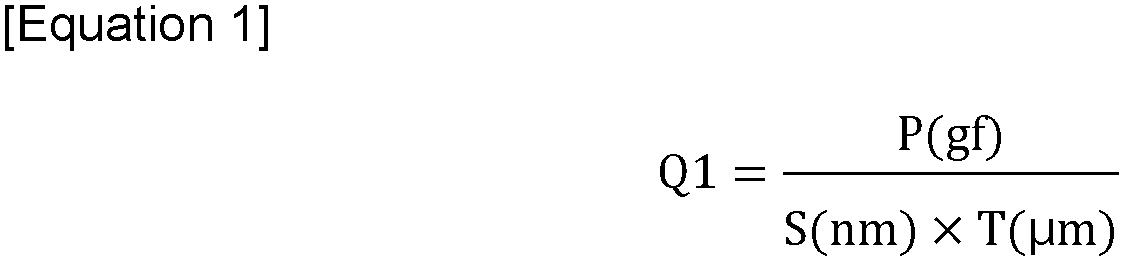
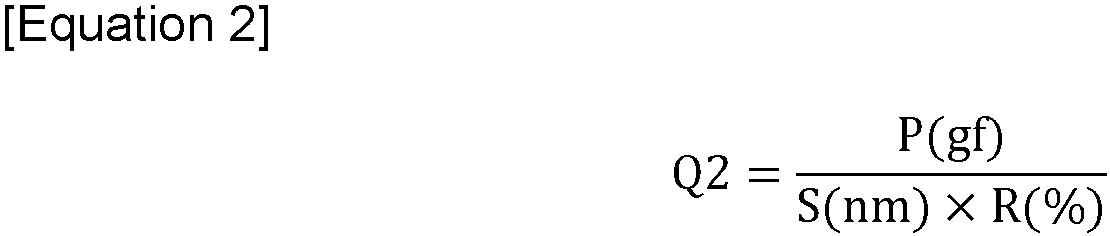
- In Equations 1 and 2, P is a puncture strength of the polyolefin-based porous substrate, measured by preparing ten specimens by cutting the separator into a width of 50 mm × a length of 50 mm at 10 different points, placing on a 10 cm hole by using a KES-G5 equipment (Kato Tech Co., Ltd.), and then, measuring three times with respect to a force with which each specimen is punctuated, while pressed with a 1 mm probe, and the three measurements per specimen averaged, S is an average pore diameter of the polyolefin-based porous substrate, measured according to ASTM F316-03, T is a thickness of the polyolefin-based porous substrate, and R is a porosity of the polyolefin-based porous substrate, measured by obtaining a volume using a thickness and an area of the separator, measuring a weight thereof, and reflecting specific gravity (0.95 g/cm3) of high density polyethylene and expressed as vol%.
- In another embodiment as recited in Claim 8, a lithium secondary battery includes a positive electrode, a negative electrode, and the aforementioned separator for a lithium secondary battery between the positive electrode and the negative electrode.
- By preventing overcharging, a lithium secondary battery with improved safety and excellent cycle-life characteristics may be implemented.
-
FIG. 1 is an exploded perspective view of a lithium secondary battery according to an embodiment. -
- 10: separator
- 40: positive electrode
- 50: negative electrode
- 60: electrode assembly
- 70: case
- 100: lithium secondary battery
- Hereinafter, embodiments of the present invention are described in detail. However, these embodiments are exemplary, the present invention is not limited thereto and the present invention is defined by the scope of claims.
- A separator for a lithium secondary battery according to an embodiment includes a polyolefin-based porous substrate, and a coating layer disposed on one surface or both surfaces of the polyolefin-based porous substrate.
- The polyolefin-based porous substrate may have a plurality of pores and may generally be a porous substrate used in an electrochemical device. The olefin used in the present invention may be, for example, ethylene, propylene, butene, hexene, and the like. Specific examples of the polyolefin may include any one polymer selected from a polyethylene-based resin, for example low-density polyethylene, linear polyethylene (ethylene-α-olefin copolymer), high-density polyethylene, and a polypropylene-based resin, or a copolymer or a mixture of two or more of them. For example, the polypropylene and an ethylene-propylene copolymer, poly(4-methylpentene-1), poly(butene-1), and an ethylene-vinyl acetate copolymer may be included.
- The polyolefin-based porous substrate has an excellent shutdown function and may contribute to improving the safety of a battery. The polyolefin-based porous substrate may be, for example, selected from selected from a polyethylene single film, a polypropylene single film, a polyethylene/polypropylene double film, a polypropylene/polyethylene/polypropylene triple film, and a polyethylene/polypropylene/polyethylene triple film. In addition, the polyolefin resin may include a non-olefin resin in addition to the olefin resin, or may include a copolymer of an olefin and a non-olefin monomer.
- The polyolefin-based porous substrate according to the present invention may have a coefficient of performance optimized to realize excellent shutdown function to prevent overcharging and cycle-life characteristics, contributing to the safety and cycle-life improvement of a lithium secondary battery including the same.
- Puncture strengths, average pore diameters, porosities, and air permeability are physical properties that directly affect the safety and performance of the battery while affecting each other, so the coefficient of performance as the equations in which they are combined may be important indices determining the characteristics of the battery. In the present invention, as shown below, the coefficient of performance is defined as a coefficient of performance Q1 represented by Equation 1, Q2 represented by Equation 2, and Q3 represented by Equation 3 according to a factor included in the equations.
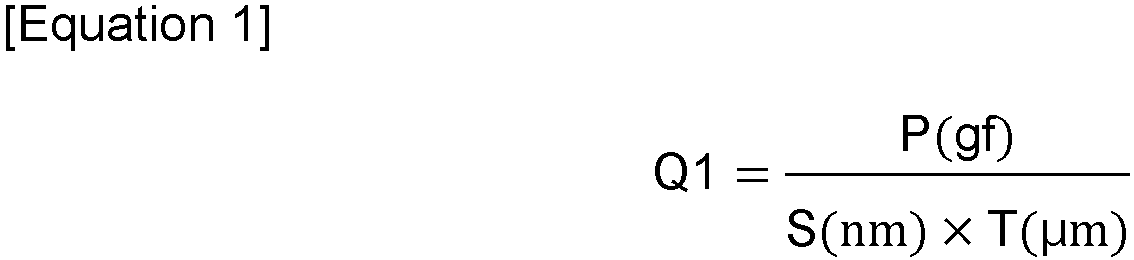


- In Equations 1 to 3, P is a puncture strength of the polyolefin-based porous substrate,
- S is an average pore diameter of the polyolefin-based porous substrate, T is a thickness of the polyolefin-based porous substrate, R is a porosity of the polyolefin-based porous substrate, and G is air permeability of the polyolefin-based porous substrate.
- For the measurement of each physical property, a method commonly used in the technical field of the present invention may be used.
- The puncture strength is measured as follows: ten specimens are prepared by cutting a separator into a width (MD) of 50 mm × a length (TD) of 50 mm at 10 different points, placed on a 10 cm hole by using a KES-G5 equipment made by Kato Tech Co., Ltd., and then, three times measured with respect to a force with which each specimen is punctuated, while pressed with a 1 mm probe, and the three measurements per specimen are averaged. Herein, the measured force is expressed by a unit of gf.
- The polyethylene-based porous substrate according to the present embodiment may have a puncture strength of greater than or equal to 350 gf, for example, 350 gf to 500 gf, 350 gf to 450 gf, or 350 gf to 420 gf.
- The puncture strength standardized by the thickness of the polyolefin-based porous substrate is greater than or equal to 0.4 N/µm, for example, greater than or equal to 0.5 N/µm.
- The average pore diameter is measured as follows: a mean pore size is determined in a half dry method according to ASTM F316-03. A capillary flow porometer (model name: CFP-1500-AEL, Porous Material Inc.) is used, and specimens are prepared to have a size of 3 cm × 3 cm and dipped in Galwick oil (surface tension: 15.9 dynes/cm) for 5 to 8 seconds and then, mounted on the equipment. A test type of wet up/dry up is selected among the test types of the capillary flow porometry. A wet curve is used to calculate a pore size distribution (calculated in the equipment), and a pressure where the wet curve meets a half dry curve is used to determine the mean pore size. (calculated from the equipment)
- A polyethylene-based porous substrate according to the present example embodiment may have an average pore diameter of greater than or equal to 50 nm, for example, 30 nm to 40 nm or 35 nm to 40 nm.
- The porosity is measured as follows:
Porosity of a base film is calculated by using a thickness and an area of a separator to obtain a volume, measuring a weight thereof, and reflecting specific gravity (0.95 g/cm3) of high density polyethylene and expressed as vol%. - The polyethylene-based porous substrate according to the present embodiment may have a porosity of less than 40%, for example, 30% to 40%.
- Non-limiting examples of a method of measuring the air permeability is as follows: ten specimens are prepared by cutting a separator at ten different points, and an air permeability-measuring equipment (EG01-55-1MR, Asahi Seiko Co., Ltd.) is used to five times per specimen measure how long it takes for a circular separator with a diameter of 1 inch to transmit 100 cc of air, and the five measurements are averaged.
- A polyethylene-based porous substrate according to the present example embodiment may have air permeability of less than or equal to 20 sec/100 cc·µm per unit thickness. Within the range, sufficient ion conductivity is secured, improving battery characteristics.
- In an embodiment, a coefficient of performance Q1 of the polyolefin-based porous substrate is greater than or equal to 1.2 (gf/nm·µm), and a coefficient of performance Q2 thereof is greater than or equal to 0.25 (gf/nm·%).
- When the coefficients of performance Q1 and Q2 are within the ranges, an electrolyte may be sufficiently impregnated into a separator formed as a thin film, strength of the separator may be improved, and a shutdown function of preventing an overcharge under external temperature/pressure conditions may be expressed, improving reliability and cycle-life characteristics of a lithium secondary battery.
- The Q1 may be, for example, greater than or equal to 1.2 (gf/nm·µm) and less than 2 (gf/nm·µm), and specifically 1.2 (gf/nm·µm) to 1.7 (gf/nm·µm).
- The Q2 may be, for example, 0.25 (gf/nm·%) to 0.3 (gf/nm·%).
- The coefficient of performance Q3 of the polyolefin-based porous substrate may be greater than or equal to 13 (gf/(sec/100 cc)), for example, 13 (gf/(sec/100 cc)) to 20 (gf/(sec/100 cc)).
- The polyolefin-based porous substrate may have a thickness of about 1 µm to 10 µm, for example, 3 µm to 10 µm, 5 µm to 10 µm, 5 µm to 9 µm, or 5 µm to 8 µm when applied to a high-capacity thin film battery.
- The coating layer includes a binder and inorganic particles.
- The binder may include, for example, a non-cross-linked binder. The non-cross-linked binder may be, for example, a polyvinylidene fluoride homopolymer, a polyvinylidene fluoride-hexafluoropropylene copolymer, a polyvinylidene fluoride-trichloroethylene copolymer, polymethylmethacrylate, polyacrylonitrile, polyvinylpyrrolidone, polyvinylacetate, polyvinyl alcohol, a polyethylene-vinylacetate copolymer, polyvinylether, polyethyleneoxide, polyimide, polyamic acid, polyamideimide, aramid, cellulose acetate, cellulose acetate butyrate, cellulose acetate propionate, cyanoethyl pullulan, cyanoethylpolyvinyl alcohol, cyanoethyl cellulose, cyanoethylsucrose, pullulan, carboxylmethyl cellulose, an acrylonitrile-styrene-butadiene copolymer, or a copolymer thereof, or a combination thereof.
- The binder may include, for example, a cross-linked binder. The cross-linked binder may be obtained from monomer, oligomer and/or polymer reactive to heat and/or light, for example, may be obtained from a multi-functional monomer, a multi-functional oligomer, and/or a multi-functional polymer having at least two curable functional groups. The curable functional group may include a vinyl group, a (meth)acrylate group, an epoxy group, an oxetane group, an ether group, a cyanate group, an isocyanate group, a hydroxy group, a carboxyl group, a thiol group, an amino group, an alkoxy group, or a combination thereof, but is not limited thereto.
- The cross-linked binder may be obtained by curing monomer, oligomer and/or polymer having at least two (meth)acrylate groups, which may be obtained by curing, for example, ethylene glycol di(meth)acrylate, propylene glycol di(meth)acrylate, polyethylene glycol di(meth)acrylate, polypropylene glycol di(meth)acrylate, butanediol di(meth)acrylate, hexamethylene glycol di(meth)acrylate, trimethylolpropane tri(meth)acrylate, glycerine tri(meth)acrylate, pentaerythritol tetra(meth)acrylate, diglycerine hexa(meth)acrylate, or a combination thereof.
- For example, the cross-linked binder may be obtained by curing monomer, oligomer and/or polymer having at least two epoxy groups, for example, by curing bisphenol A diglycidyl ether, bisphenol F diglycidyl ether, hexahydrophthalic glycidyl ester, or a combination thereof.
- For example, the cross-linked binder may be obtained by curing monomer, oligomer and/or polymer having at least two isocyanate groups, which may be obtained by curing, for example, diphenylmethane diisocyanate, 1,6-hexamethylene diisocyanate, 2,2,4(2,2,4)-trimethylhexamethylene diisocyanate, phenylene diisocyanate, 4,4'-dicyclohexylmethane diisocyanate, 3,3'-dimethyldiphenyl-4,4'-diisocyanate, xylene diisocyanate, naphthalene diisocyanate, 1,4-cyclohexyl diisocyanate, or a combination thereof.
- The coating layer may improve heat resistance by the inorganic particles and may prevent abrupt shrinkage or deformation of a separator due to increase of a temperature. The inorganic particles may include, for example, Al2O3, SiO2, TiO2, SnO2, CeO2, MgO, NiO, CaO, GaO, ZnO, ZrO2, Y2O3, SrTiO3, BaTiO3, Mg(OH)2, boehmite, or a combination thereof, but are not limited thereto. The inorganic particles may have a spherical, plate, cubic, or amorphous shape. An average particle diameter of the inorganic particle may range about 1 nm to 2500 nm, within the range, 100 nm to 2000 nm, or 200 nm to 1000 nm, for example about 300 nm to 800 nm. The average particle diameter of the inorganic particles may be particle size (D50) at a volume ratio of 50 % in a cumulative size-distribution curve. By using the inorganic particles having an average particle diameter within the ranges, the coating layer may have an appropriate strength, thereby improving heat resistance, durability, and stability of the separator.
- The inorganic particles may be included in an amount of 50 wt% to 99 wt% based on the coating layer. In an embodiment, the inorganic particles may be included in an amount of 70 wt% to 99 wt%, for example 80 wt% to 99 wt%, 85 wt% to 99 wt%, 90 wt% to 99 wt%, or 95 wt% to 99 wt% based on the coating layer. When the inorganic particles are included within the ranges, the separator for a lithium secondary battery according to an embodiment may exhibit improved heat resistance, durability, and stability.
- In the coating layer, the binder : inorganic particles may be included in a weight ratio of 1:1 to 1:7, and an appropriate weight ratio may be 1:2 to 1:6, and more desirably 1:3 to 1:5. When the binder and inorganic particles are included in the coating layer within the range, the separator may exhibit improved adherence and air permeability.
- The separator for a lithium secondary battery according to an embodiment may be manufactured by known various methods. For example, the separator for a lithium secondary battery may be formed by coating a composition for forming the coating layer on one surface or both surfaces of the porous substrate and then drying the same.
- The composition for forming the coating layer may include a solvent in addition to the aforementioned binder and inorganic particles. The solvent is not particularly limited if the solvent may dissolve or disperse the binder and the inorganic particles.
- The coating may be, for example, performed by spin coating, dip coating, bar coating, die coating, slit coating, roll coating, inkjet printing, and the like, but is not limited thereto.
- The drying may be, for example, performed through drying with warm air, hot air, or low humid air, vacuum-drying, or radiation of a far-infrared ray, an electron beam, and the like, but is not limited thereto. The drying process may be, for example, performed at a temperature of 25 °C to 120 °C.
- The separator for a lithium secondary battery may be manufactured by lamination, coextrusion, and the like besides the above method.
- In an embodiment, the air permeability of the separator for a lithium secondary battery may be less than or equal to 250 (sec/100 cc), for example, 230 (sec/100 cc) or 160 to 220 (sec/100 cc).
- In addition, the puncture strength of the separator for a lithium secondary battery may be greater than or equal to 350 gf, for example, 350 gf to 510 gf or 370 gf to 510 gf. In this case, the separator may contribute to improving battery performance by having an appropriate puncture strength.
- The methods of measuring the air permeability and puncture strength of the separator are the same as described above.
- Hereinafter, a lithium secondary battery including the separator for a lithium secondary battery will be described.
- A lithium secondary battery may be classified into a lithium ion battery, a lithium ion polymer battery, and a lithium polymer battery depending on kinds of a separator and an electrolyte and also may be classified to be cylindrical, prismatic, coin-type, pouch-type, and the like depending on shape. In addition, it may be bulk type and thin film type depending on sizes. Structures and manufacturing methods for lithium ion batteries pertaining to this disclosure are well known in the art.
- Herein, a prismatic lithium secondary battery as an example of a lithium secondary battery is explained.
FIG. 1 is an exploded perspective view of a lithium secondary battery according to an embodiment. Referring toFIG. 1 , a lithiumsecondary battery 100 according to an embodiment includes awound electrode assembly 60 including aseparator 10 interposed between apositive electrode 40 and anegative electrode 50, and acase 70 housing theelectrode assembly 60. - The
electrode assembly 60 is formed by interposing aseparator 10 between thepositive electrode 40 and thenegative electrode 50 and then winding them into a jelly-roll shape. - The
positive electrode 40, thenegative electrode 50, and theseparator 10 are impregnated in an electrolyte solution (not shown). - The
positive electrode 40 includes a positive current collector and a positive active material layer formed on the positive current collector. The positive active material layer includes a positive active material, a binder, and optionally a conductive material. - The positive current collector may use aluminum, nickel, and the like, but is not limited thereto.
- The positive active material may use a compound being capable of intercalating and deintercalating lithium. Specifically at least one of a composite oxide or a composite phosphate of a metal selected from cobalt, manganese, nickel, aluminum, iron, or a combination thereof and lithium may be used. For example, the positive active material may be lithium cobalt oxide, lithium nickel oxide, lithium manganese oxide, lithium nickel cobalt manganese oxide, lithium nickel cobalt aluminum oxide, lithium iron phosphate, or a combination thereof.
- The binder improves binding properties of positive active material particles with one another and with a current collector. Specific examples may be polyvinyl alcohol, carboxylmethyl cellulose, hydroxypropyl cellulose, diacetyl cellulose, polyvinylchloride, carboxylated polyvinylchloride, polyvinylfluoride, an ethylene oxide-containing polymer, polyvinylpyrrolidone, polyurethane, polytetrafluoroethylene, polyvinylidene fluoride, polyethylene, polypropylene, a styrene-butadiene rubber, an acrylated styrene-butadiene rubber, an epoxy resin, nylon, and the like, but are not limited thereto. These may be used alone or as a mixture of two or more.
- The conductive material improves conductivity of an electrode. Examples thereof may be natural graphite, artificial graphite, carbon black, a carbon fiber, a metal powder, a metal fiber, and the like, but are not limited thereto. These may be used alone or as a mixture of two or more. The metal powder and the metal fiber may use a metal of copper, nickel, aluminum, silver, and the like.
- The
negative electrode 50 includes a negative current collector and a negative active material layer formed on the negative current collector. - The negative current collector may use copper, gold, nickel, a copper alloy, and the like, but is not limited thereto.
- The negative active material layer may include a negative active material, a binder and optionally a conductive material. The negative active material may be a material that reversibly intercalates/deintercalates lithium ions, a lithium metal, a lithium metal alloy, a material being capable of doping and dedoping lithium, a transition metal oxide, or a combination thereof.
- The material that reversibly intercalates/deintercalates lithium ions may be a carbon material which is any generally-used carbon-based negative active material, and examples thereof may be crystalline carbon, amorphous carbon, or a combination thereof. Examples of the crystalline carbon may be graphite such as amorphous, plate, flake, spherical, or fiber-shaped natural graphite or artificial graphite. Examples of the amorphous carbon may be soft carbon or hard carbon, a mesophase pitch carbonized product, fired coke, and the like. The lithium metal alloy may be an alloy of lithium and a metal selected from Na, K, Rb, Cs, Fr, Be, Mg, Ca, Sr, Si, Sb, Pb, In, Zn, Ba, Ra, Ge, Al, and Sn. The material being capable of doping and dedoping lithium may be Si, SiOx (0<x<2), a Si-C composite, a Si-Y alloy, Sn, SnO2, a Sn-C composite, a Sn-Y, and the like, and at least one of these may be mixed with SiO2. Specific examples of the element Y may be selected from Mg, Ca, Sr, Ba, Ra, Sc, Y, Ti, Zr, Hf, Rf, V, Nb, Ta, Db, Cr, Mo, W, Sg, Tc, Re, Bh, Fe, Pb, Ru, Os, Hs, Rh, Ir, Pd, Pt, Cu, Ag, Au, Zn, Cd, B, Al, Ga, Sn, In, Tl, Ge, P, As, Sb, Bi, S, Se, Te, Po, and a combination thereof. The transition metal oxide may be vanadium oxide, lithium vanadium oxide, and the like.
- The binder and the conductive material used in the
negative electrode 50 may be the same as the binder and conductive material of thepositive electrode 40. - The
positive electrode 40 and thenegative electrode 50 may be manufactured by mixing each active material composition including each active material and a binder, and optionally a conductive material in a solvent, and coating the active material composition on each current collector. Herein, the solvent may be N-methylpyrrolidone, and the like, but is not limited thereto. The electrode manufacturing method is well known, and thus is not described in detail in the present specification. - The electrolyte solution includes an organic solvent and a lithium salt.
- The organic solvent serves as a medium for transmitting ions taking part in the electrochemical reaction of a battery. The organic solvent may include, for example, a carbonate-based, ester-based, ether-based, ketone-based, alcohol-based, or aprotic solvent. The carbonate-based solvent may be dimethyl carbonate, diethyl carbonate, dipropyl carbonate, methylpropyl carbonate, ethylpropyl carbonate, methylethyl carbonate, ethylene carbonate, propylene carbonate, butylene carbonate, and the like and the ester-based solvent may be methyl acetate, ethyl acetate, n-propyl acetate, 1,1-dimethylethyl acetate, methylpropionate, ethyl propionate, γ-butyrolactone, decanolide, valerolactone, mevalonolactone, caprolactone, and the like. The ether-based solvent may be dibutyl ether, tetraglyme, diglyme, dimethoxyethane, 2-methyltetrahydrofuran, tetrahydrofuran and the like, and the ketone-based solvent may be cyclohexanone, and the like. The alcohol-based solvent may be ethanol, isopropyl alcohol and the like, and the aprotic solvent may be nitriles such as R-CN (R is a C2 to C20 linear or branched or cyclic hydrocarbon group, an aromatic ring, or an ether bond), and the like, amides such as dimethyl formamide, and the like, dioxolanes such as 1,3-dioxolane, and the like, sulfolanes, and the like.
- The organic solvent may be used alone or in a mixture. When the organic solvent is used in a mixture, the mixture ratio can be controlled in accordance with a desirable battery performance.
- The lithium salt dissolved in an organic solvent supplies a battery with lithium ions, basically operates the lithium secondary battery, and improves transportation of the lithium ions between positive and negative electrodes. Examples of the lithium salt include at least one supporting salt selected from LiPF6, LiBF4, LiSbF6, LiAsF6, LiN(SO3C2F5)2, LiN(CF3SO2)2, LiC4F9SO3, LiClO4, LiAlO2, LiAlCl4, LiN(CxF2x+1SO2)(CyF2y+1SO2) wherein x and y are natural numbers, LiCl, Lil, LiB(C2O4)2, or a combination thereof, but are not limited thereto.
- The lithium salt may be used in a concentration ranging from 0.1 M to 2.0 M. When the lithium salt is included at the above concentration range, an electrolyte may have excellent performance and lithium ion mobility due to optimal electrolyte conductivity and viscosity.
- Hereinafter, the embodiments are illustrated in more detail with reference to examples. However, the examples described below are only for illustrating or explaining the present invention in detail, and the present invention is not limited thereto.
- High density polyethylene (HDPE) with a viscosity average molecular weight of 500,000 g/mol (Mitsui Chemical Inc.) was supplied to a twin-screw extruder, and liquid paraffin was injected into the twin-screw extruder in a weight ratio of 70 (liquid paraffin) to 30 (polyethylene) and then, extruded.
- After the extrusion, the gel obtained through the T-die was used to prepare a cast film in the form of a sheet using a cooling roll. Simultaneous elongating (elongation ratio: 7×7) was performed in the direction (Machine Direction, MD) and the width direction (Transverse Direction, TD) at 110 °C for the cast film.
- The elongated film was dipped in a water-methylene chloride zone in which methylene chloride and a water layer was formed on top of the methylene chloride to extract liquid paraffin, and then transferred to a drying roll and dried.
- Then, the dried film was subjected to heat setting of secondary elongating in a transverse direction (transverse elongation ratio: 1.0 → 1.4 → 1.2, elongation temperature of 128 °C) to manufacture a porous substrate having a thickness of 8 µm.
- 70 wt% of high density polyethylene (HDPE) with a viscosity average molecular weight of 350,000 g/mol (Mitsui Chemical Inc.) and 30 wt% of ultra high molecular weight polyethylene (UHMWPE) with a weight average molecular weight of 1,000,000 g/mol (Mitsui Chemical Inc.) were supplied to a twin-screw extruder, and liquid paraffin was injected into the twin-screw extruder in a weight ratio of 70 (liquid paraffin) to 30 (polyethylene) and then, extruded.
- After the extrusion, the gel obtained through the T-die was used to prepare a cast film in the form of a sheet using a cooling roll. The cast film was elongated in the machine direction (MD) at 90 °C and then elongated in the transverse direction (TD) at 110 °C (elongation ratio: 7×7).
- The elongated film was dipped in a water-methylene chloride zone in which methylene chloride and a water layer was formed on top of the methylene chloride to extract liquid paraffin, and then transferred to a drying roll and dried.
- Then, the dried film was subjected to heat setting of secondary elongating in a transverse direction (transverse elongation ratio: 1.0 → 1.4 → 1.2, elongation temperature of 128 °C) to manufacture porous substrates having each thickness of 8.5 µm, 7.5 µm, and 6.5 µm.
- High density polyethylene (HDPE) with a viscosity average molecular weight of 500,000 g/mol (Mitsui Chemical Inc.) was supplied to a twin-screw extruder, and liquid paraffin was injected into the twin-screw extruder in a weight ratio of 70 (liquid paraffin) to 30 (polyethylene) and then, extruded.
- After the extrusion, the gel obtained through the T-die was used to prepare a cast film in the form of a sheet using a cooling roll. Simultaneous elongating (elongation ratio: 7×7) was performed in the direction (Machine Direction, MD) and the width direction (Transverse Direction, TD) at 110 ° C for the cast film.
- The elongated film was dipped in a water-methylene chloride zone in which methylene chloride and a water layer was formed on top of the methylene chloride to extract liquid paraffin, and then transferred to a drying roll and dried.
- Then, the dried film was subjected to heat setting of secondary elongating in a transverse direction (transverse elongation ratio: 1.0 →1.3→1.1, elongation temperature 128 °C) to manufacture a porous substrate having a thickness of 9 µm.
- High density polyethylene (HDPE) with a viscosity average molecular weight of 500,000 g/mol (Mitsui Chemical Inc.) was supplied to a twin-screw extruder, and liquid paraffin was injected into the twin-screw extruder in a weight ratio of 70 (liquid paraffin) to 30 (polyethylene) and then, extruded.
- After the extrusion, the gel obtained through the T-die was used to prepare a cast film in the form of a sheet using a cooling roll. The cast film was elongated in the machine direction (MD) at 90° C and then elongated in the transverse direction (TD) at 110 °C (elongation ratio: 7×5).
- The elongated film was dipped in a water-methylene chloride zone in which methylene chloride and a water layer was formed on top of the methylene chloride to extract liquid paraffin, and then transferred to a drying roll and dried.
- Then, the dried film was subjected to heat setting of secondary elongating in a transverse direction (transverse elongation ratio: 1.0 → 1.4 → 1.2, elongation temperature of 128 °C) to manufacture a porous substrate having a thickness of 9 µm.
- High density polyethylene (HDPE) with a viscosity average molecular weight of 500,000 g/mol (Mitsui Chemical Inc.) was supplied to a twin-screw extruder, and liquid paraffin was injected into the twin-screw extruder in a weight ratio of 70 (liquid paraffin) to 30 (polyethylene) and then, extruded.
- After the extrusion, the gel obtained through the T-die was used to prepare a cast film in the form of a sheet using a cooling roll. The cast film was elongated in the machine direction (MD) at 90° C and then elongated in the transverse direction (TD) at 110 °C (elongation ratio: 7×8).
- The elongated film was dipped in a water-methylene chloride zone in which methylene chloride and a water layer was formed on top of the methylene chloride to extract liquid paraffin, and then transferred to a drying roll and dried.
- Then, the dried film was subjected to heat setting of secondary elongating in a transverse direction (transverse elongation ratio: 1.0 → 1.4 → 1.2, elongation temperature of 128 °C) to manufacture a porous substrate having a thickness of 7 µm.
- High density polyethylene (HDPE) with a viscosity average molecular weight of 500,000 g/mol (Mitsui Chemical Inc.) was supplied to a twin-screw extruder, and liquid paraffin was injected into the twin-screw extruder in a weight ratio of 70 (liquid paraffin) to 30 (polyethylene) and then, extruded.
- After the extrusion, the gel obtained through the T-die was used to prepare a cast film in the form of a sheet using a cooling roll. Simultaneous elongating (elongation ratio: 7×7) was performed in the direction (Machine Direction, MD) and the width direction (Transverse Direction, TD) at 110° C for the cast film.
- The elongated film was dipped in a water-methylene chloride zone in which methylene chloride and a water layer was formed on top of the methylene chloride to extract liquid paraffin, and then transferred to a drying roll and dried.
- Then, the dried film was subjected to heat setting of secondary elongating in a transverse direction (transverse elongation ratio: 1.0 →1.3→1.1, elongation temperature 128 °C) to manufacture porous substrates having each thickness of 7 µm and 6 µm.
- High density polyethylene (HDPE) with a viscosity average molecular weight of 500,000 g/mol (Mitsui Chemical Inc.) was supplied to a twin-screw extruder, and liquid paraffin was injected into the twin-screw extruder in a weight ratio of 70 (liquid paraffin) to 30 (polyethylene) and then, extruded.
- After the extrusion, the gel obtained through the T-die was used to prepare a cast film in the form of a sheet using a cooling roll. Simultaneous elongating (elongation ratio: 7×7) was performed in the direction (Machine Direction, MD) and the width direction (Transverse Direction, TD) at 110 ° C for the cast film.
- The elongated film was dipped in a water-methylene chloride zone in which methylene chloride and a water layer was formed on top of the methylene chloride to extract liquid paraffin, and then transferred to a drying roll and dried.
- Then, the dried film was subjected to heat setting of secondary elongating in a transverse direction (transverse elongation ratio: 1.0 → 1.4 → 1.2, elongation temperature of 128 °C) to manufacture a porous substrate having a thickness of 6 µm.
- High density polyethylene (HDPE) with a viscosity average molecular weight of 500,000 g/mol (Mitsui Chemical Inc.) was supplied to a twin-screw extruder, and liquid paraffin was injected into the twin-screw extruder in a weight ratio of 70 (liquid paraffin) to 30 (polyethylene) and then, extruded.
- After the extrusion, the gel obtained through the T-die was used to prepare a cast film in the form of a sheet using a cooling roll. The cast film was elongated in the machine direction (MD) at 90 ° C and then elongated in the transverse direction (TD) at 110 ° C (elongation ratio: 7×8).
- The elongated film was dipped in a water-methylene chloride zone in which methylene chloride and a water layer was formed on top of the methylene chloride to extract liquid paraffin, and then transferred to a drying roll and dried.
- Then, the dried film was subjected to heat setting of secondary elongating in a transverse direction (transverse elongation ratio: 1.0 → 1.4 → 1.2, elongation temperature of 128 °C) to manufacture a porous substrate having a thickness of 6 µm.
- High density polyethylene (HDPE) with a viscosity average molecular weight of 350,000 g/mol (Mitsui Chemical Inc.) was supplied to a twin-screw extruder, and liquid paraffin was injected into the twin-screw extruder in a weight ratio of 70 (liquid paraffin) to 30 (polyethylene) and then, extruded.
- After the extrusion, the gel obtained through the T-die was used to prepare a cast film in the form of a sheet using a cooling roll. Simultaneous elongating (elongation ratio: 6×6) was performed in the direction (Machine Direction, MD) and the width direction (Transverse Direction, TD) at 120 °C for the cast film.
- The elongated film was dipped in a water-methylene chloride zone in which methylene chloride and a water layer was formed on top of the methylene chloride to extract liquid paraffin, and then transferred to a drying roll and dried.
- Then, the dried film was subjected to heat setting of secondary elongating in a transverse direction (transverse elongation ratio: 1.0 →1.3→1.1, elongation temperature of 128 °C) to manufacture a porous substrate having a thickness of 6 µm.
- A PVdF-HFP polymer having a weight average molecular weight (Mw) of 1,000,000 g/mol (a mole ratio of PVdF:HFP = 9:1, a glass transition temperature: -30 °C, a melting point: 150 °C) as a fluorine-based binder was added at 10 wt% to acetone and then, stirred with a stirrer at 45 °C for 3 hours to prepare a binder solution. Subsequently, alumina (Al2O3) (AES-11, Sumitomo Corp.) was added at 25 wt% to the acetone and then, dispersed through milling with a beads mill at 25 °C for 4 hours to prepare inorganic dispersion. The binder and the alumina were mixed in a weight ratio of 1:3 and stirred with a power mixer at 25 °C for 2 hours to prepare a coating liquid. Each coating liquid according to Examples 1 to 4 and Comparative Examples 1 to 8 was coated on both surfaces of a polyethylene-based porous substrate in a direct metering (direct quantification) method at 80 m/min and dried at 65 °C under an absolute water vapor amount (average value) of 17 g/m3 to manufacture a separator with a coating layer. A coating amount of the coating layer was adjusted into 3.5 g/m2.
[Table 1] Polyolefin-based porous substrate Coated separator Thi ckn ess (µ m) Punc ture stren gth (gf) Punc ture stren gth (N/µ m) Air per mea bilit y (see /100 cc) Por osit y (vol %) Aver age pore dia met er (nm) Coeffi cient of perfor manc e Q1 Coef ficien t of perfo rman ce Q2 Coef ficien t of perfo rman ce Q3 Thic kne ss (µm ) Air per mea bilit y (sec /100 cc) Punc ture stren gth (gf) Ex.1 8.0 355 0.44 155 38.0 36 1.233 0.27 15.3 11.0 210 375 Ex.2 8.5 484 0.56 154 38.0 36 1.582 0.37 16.5 11.5 220 505 Ex.3 7.5 415 0.54 115 39.7 40 1.383 0.27 18.0 10.5 165 435 Ex.4 6.5 380 0.57 112 39.4 35 1.670 0.29 18.8 9.5 160 400 Comp . Ex.1 9.0 315 0.34 165 37.0 42 0.833 0.22 12.7 12.0 230 335 Comp . Ex.2 9.0 335 0.37 135 38.5 42 0.886 0.22 31.0 12.0 190 355 Comp . Ex.3 7.5 354 0.46 100 42.0 50 0.944 0.18 44.3 10.5 145 370 Comp . Ex.4 7.5 270 0.35 160 37.0 43 0.837 0.18 16.9 10.5 230 291 Comp . Ex.5 6.0 230 0.38 150 37.0 35 1.095 0.19 12.8 9.0 220 252 Comp . Ex.6 6.0 220 0.36 100 40.0 37 0.991 0.16 14.7 9.0 145 243 Comp . Ex.7 6.5 313 0.47 123 36.0 38 1.267 0.24 28.3 9.5 160 335 Comp . Ex.8 6.0 255 0.42 113 40.0 34 1.250 0.21 10.7 9.0 150 279 - An overcharge test for examining safety of the separator was performed in the following method. A cathode was manufactured by coating LiCoO2 on both surfaces of an aluminum thin film, and an anode was manufactured by coating graphite on both surfaces of a copper. Subsequently, electrode tabs were welded to the cathode and the anode, and the cathode and the anode with the separator were wound to obtain a jelly-roll electrode assembly. The electrode assembly was inserted in a pouch and assembled, and then, an electrolyte solution was injected thereinto. The electrolyte solution injected into a battery cell was prepared by mixing ethylene carbonate, ethyl methyl carbonate, and diethyl carbonate in a volume ratio of 3:5:2 and dissolving 1.15 M of LiPF6 therein, and after injecting it into the pouch cell, the cell was sealed to manufacture a lithium ion battery cell with capacity of 3000 mAh. All the process was performed in a dry room to prevent moisture penetration thereinto.
- The lithium ion battery cell manufactured in the above method was evaluated, after rated-discharged in standard environments and then, allowed to stand for 24 hours or more. The cell was charged at 3.0 C (maximum charge current 1.0 C*3 times) and 4.6 V for 2.5 hours. After a maximum temperature evaluation, safety of the cell against an overcharge was examined by observing occurrences and appearances. When overcharge characteristics are not insufficient, a cell may be exploded or ignited, which may even faster occur.
- When exploded or ignited within 150 minutes, it was evaluated as Fail, but when not exploded or ignited within 150 minutes, it was evaluated as Pass.
- Resistance was measured by applying DC 250 V to (+)/(-) tabs of a Jelly roll formed by stacking and welding cathode/separator/anode/separator in order and using a LCR meter. When the measurement value was less than 1.0 MΩ, it was marked as Fail, but when the measurement value was within the range of 1.0 MΩ to 2.9 MΩ, it was marked as Pass.
- A cell thickness was measured by rated-charging a cell after the rated discharge (rated-discharge condition: 0.2 C 2.75 V cut off, rated-charge condition: 0.2 C 4.40 V, 0.02 C cut off) and using PPG (500 g) having a resolution of 0.01 mm or less.
- ** Measurement method: Using PPG (500 g), the thickness of the cell was measured in the direction perpendicular to the tab. After the rated-discharge/rated-charge, compared with a shipping charge state of the cell, when the cell thickness increase was less than or equal to 3%, it was marked as OK, but when the cell thickness increase was greater than 3%, it was marked as NG.
- Rated-discharge capacity after 500 cycles was measured under the following conditions.
-
- charge condition: CC 0.8 C-4.40 V, Cut-off 0.02 C 23 °C
- discharge condition: CC 1.0 C to 3.0 V 23 °C
- After the 500 cycles, the cells were charged at 0.02 C under 0.2 C-4.40 V and paused for 10 minutes and then, discharged under 0.2 C-2.75 V. When discharge capacity was greater than or equal to 80%, compared with initial capacity, it was judged as OK, but when the discharge capacity was greater than or equal to less than 80%, it was judged as NG.
[Table 2] Overcharg e test Assemble process short circuit test Cell thicknes s State of Charge Example1 Pass Pass OK OK Example2 Pass Pass OK OK Example3 Pass Pass OK OK Example4 Pass Pass OK OK Comparative Example1 Pass Pass NG NG Comparative Example2 Fail Pass NG NG Comparative Example3 Fail Pass OK OK Comparative Example4 Pass Fail OK NG Comparative Example5 Pass Fail OK OK Comparative Example6 Pass Fail OK OK Comparative Example7 Pass Fail OK OK Comparative Example8 Pass Fail OK OK - While this invention has been described in connection with what is presently considered to be practical example embodiments, it is to be understood that the invention is not limited to the disclosed embodiments, but, on the contrary, is intended to cover various modifications and equivalent arrangements included within the scope of the appended claims. Therefore, the aforementioned embodiments should be understood to be exemplary but not limiting the present invention in any way.
Claims (8)
- A separator for a lithium secondary battery, comprisinga polyolefin-based porous substrate; anda coating layer on at least one surface of the polyolefin-based porous substrate,a coefficient of performance Q1 of the polyolefin-based porous substrate as represented by Equation 1 is greater than or equal to 1.2 (gf/nm·µm),a coefficient of performance Q2 of the polyolefin-based porous substrate as represented by Equation 2 is greater than or equal to 0.25 (gf/nm·%), andthe coating layer includes a binder and inorganic particles:

 wherein, in Equations 1 and 2,P is a puncture strength of the polyolefin-based porous substrate, measured by preparing ten specimens by cutting the separator into a width of 50 mm × a length of 50 mm at 10 different points, placing on a 10 cm hole by using a KES-G5 equipment (Kato Tech Co., Ltd.), and then, measuring three times with respect to a force with which each specimen is punctuated, while pressed with a 1 mm probe, and the three measurements per specimen averaged,S is an average pore diameter of the polyolefin-based porous substrate, measured according to ASTM F316-03,T is a thickness of the polyolefin-based porous substrate,R is a porosity of the polyolefin-based porous substrate, measured by obtaining a volume using a thickness and an area of the separator, measuring a weight thereof, and reflecting specific gravity (0.95 g/cm3) of high density polyethylene and expressed as vol%,wherein a puncture strength standardized by the thickness of the polyolefin-based porous substrate is greater than or equal to 0.4 N/µm.
 - The separator of claim 1, wherein the polyethylene-based porous substrate has a porosity of less than 40%.
- The separator of claim 1, wherein the polyolefin-based porous substrate has a thickness of 1 µm to 10 µm.
- The separator of claim 1, wherein the separator has an air permeability of less than or equal to 250 (sec/100cm3) [sec/100cc], measured by preparing ten specimens by cutting the separator at ten different points, and using an air permeability-measuring equipment (EG01-55-1MR, Asahi Seiko Co., Ltd.) to measure five times per specimen how long it takes for a circular separator with a diameter of 2.54 cm (1 inch) to transmit 100 cm3 (100 cc) of air, and the five measurements averaged.
- The separator of claim 1, wherein the separator has a puncture strength of greater than or equal to 350 gf.
- The separator of claim 1, wherein the inorganic particles comprise Al2O3, SiO2, TiO2, SnO2, CeO2, MgO, NiO, CaO, GaO, ZnO, ZrO2, Y2O3, SrTiO3, BaTiO3, Mg(OH)2, boehmite, or a combination thereof.
- The separator of claim 1, wherein the binder: inorganic particles are included in a weight ratio of 1:1 to 1:7.
- A lithium secondary battery, comprising
a positive electrode; a negative electrode; and the separator for a lithium secondary battery of any one of claim 1 to claim 7 between the positive electrode and the negative electrode.
Applications Claiming Priority (2)
| Application Number | Priority Date | Filing Date | Title |
|---|---|---|---|
| KR1020180152652A KR20200065814A (en) | 2018-11-30 | 2018-11-30 | Separator for rechargeable lithium battery and rechargeable lithium battery including the same |
| PCT/KR2019/010967 WO2020111457A1 (en) | 2018-11-30 | 2019-08-28 | Separator for lithium secondary battery and lithium secondary battery comprising same |
Publications (3)
| Publication Number | Publication Date |
|---|---|
| EP3890058A1 EP3890058A1 (en) | 2021-10-06 |
| EP3890058A4 EP3890058A4 (en) | 2023-06-28 |
| EP3890058B1 true EP3890058B1 (en) | 2025-03-12 |
Family
ID=70853048
Family Applications (1)
| Application Number | Title | Priority Date | Filing Date |
|---|---|---|---|
| EP19889395.0A Active EP3890058B1 (en) | 2018-11-30 | 2019-08-28 | Separator for lithium secondary battery and lithium secondary battery comprising same |
Country Status (6)
| Country | Link |
|---|---|
| US (2) | US12374758B2 (en) |
| EP (1) | EP3890058B1 (en) |
| KR (1) | KR20200065814A (en) |
| HU (1) | HUE071301T2 (en) |
| PL (1) | PL3890058T3 (en) |
| WO (1) | WO2020111457A1 (en) |
Families Citing this family (3)
| Publication number | Priority date | Publication date | Assignee | Title |
|---|---|---|---|---|
| KR102924512B1 (en) * | 2020-09-18 | 2026-02-06 | 주식회사 엘지에너지솔루션 | Method for protect secondary battery under overcharge state using separator insulation layer and secondary battery using the same |
| US12294111B2 (en) | 2022-02-23 | 2025-05-06 | Lg Energy Solution, Ltd. | Substrate for separator of electrochemical device, separator including same, and method of forming battery cell separator |
| JP2025536601A (en) * | 2023-03-17 | 2025-11-07 | 香港時代新能源科技有限公司 | Separators, secondary batteries and power consumption devices |
Citations (4)
| Publication number | Priority date | Publication date | Assignee | Title |
|---|---|---|---|---|
| EP1942000A1 (en) * | 2005-10-24 | 2008-07-09 | Tonen Chemical Corporation | Polyolefin multilayer microporous film, method for producing same and battery separator |
| EP2333876A2 (en) * | 2008-09-03 | 2011-06-15 | LG Chem, Ltd. | Separator with a porous coating layer and electrochemical device having the same |
| US20150372275A1 (en) * | 2014-06-24 | 2015-12-24 | Samsung Sdi Co., Ltd. | Separator, method of manufacturing the same and battery using the same |
| EP3200259A1 (en) * | 2014-09-26 | 2017-08-02 | Asahi Kasei Kabushiki Kaisha | Separator for electricity storage device |
Family Cites Families (15)
| Publication number | Priority date | Publication date | Assignee | Title |
|---|---|---|---|---|
| KR101122488B1 (en) | 2006-11-14 | 2012-02-29 | 아사히 가세이 케미칼즈 가부시키가이샤 | Separator for lithium ion secondary battery and method for manufacturing the separator |
| KR101657027B1 (en) | 2010-08-02 | 2016-09-12 | 셀가드 엘엘씨 | High melt temperature microporous lithium-ion rechargeable battery separators and methods of preparation and use |
| KR101886681B1 (en) | 2012-01-06 | 2018-08-08 | 에스케이이노베이션 주식회사 | Microporous polyolefin film and preparing method thereof |
| CN107053774A (en) * | 2012-03-28 | 2017-08-18 | 旭化成株式会社 | Perforated membrane and multilayer porous film |
| CN102942831B (en) * | 2012-11-21 | 2014-10-29 | 佛山市金辉高科光电材料有限公司 | Coating composite for lithium ion secondary battery membrane and method for manufacturing membrane |
| WO2015099190A1 (en) | 2013-12-26 | 2015-07-02 | 帝人株式会社 | Non-aqueous secondary cell separator and non-aqueous secondary cell |
| CN106575734B (en) * | 2014-06-20 | 2020-04-24 | 东丽株式会社 | Polyolefin microporous film, battery separator, and battery |
| KR101674988B1 (en) * | 2014-10-23 | 2016-11-11 | 삼성에스디아이 주식회사 | Method for manufacturing separator, the separator and battery using the separator |
| US11329349B2 (en) | 2015-06-19 | 2022-05-10 | Ube Industries, Ltd. | Polyolefin micro porous film, separator film for power-storage device, and power-storage device |
| JP6094711B2 (en) * | 2015-06-19 | 2017-03-15 | 宇部興産株式会社 | Polyolefin microporous membrane, separator film for electricity storage device, and electricity storage device |
| KR20170051736A (en) * | 2015-10-30 | 2017-05-12 | 더블유스코프코리아 주식회사 | Method for manufacturing high porosity support film, high porosity support film manufactured thereby and composite membranes comprising said high porosity support film |
| JP6025957B1 (en) * | 2015-11-30 | 2016-11-16 | 住友化学株式会社 | Production of non-aqueous electrolyte secondary battery separator, non-aqueous electrolyte secondary battery laminated separator, non-aqueous electrolyte secondary battery member, non-aqueous electrolyte secondary battery and non-aqueous electrolyte secondary battery separator Method |
| KR101940168B1 (en) | 2016-05-12 | 2019-01-18 | 삼성에스디아이 주식회사 | Lithium metal battery |
| EP3401281B1 (en) | 2016-09-09 | 2020-12-23 | Sumitomo Chemical Company, Limited | Alumina powder, alumina slurry, alumina-containing coating layer, multilayer separation membrane and secondary battery |
| US20200020908A1 (en) * | 2017-03-08 | 2020-01-16 | Toray Industries, Inc. | Polyolefin microporous membrane |
-
2018
- 2018-11-30 KR KR1020180152652A patent/KR20200065814A/en not_active Ceased
-
2019
- 2019-08-28 PL PL19889395.0T patent/PL3890058T3/en unknown
- 2019-08-28 EP EP19889395.0A patent/EP3890058B1/en active Active
- 2019-08-28 US US17/294,757 patent/US12374758B2/en active Active
- 2019-08-28 WO PCT/KR2019/010967 patent/WO2020111457A1/en not_active Ceased
- 2019-08-28 HU HUE19889395A patent/HUE071301T2/en unknown
-
2025
- 2025-07-25 US US19/280,661 patent/US20250357637A1/en active Pending
Patent Citations (4)
| Publication number | Priority date | Publication date | Assignee | Title |
|---|---|---|---|---|
| EP1942000A1 (en) * | 2005-10-24 | 2008-07-09 | Tonen Chemical Corporation | Polyolefin multilayer microporous film, method for producing same and battery separator |
| EP2333876A2 (en) * | 2008-09-03 | 2011-06-15 | LG Chem, Ltd. | Separator with a porous coating layer and electrochemical device having the same |
| US20150372275A1 (en) * | 2014-06-24 | 2015-12-24 | Samsung Sdi Co., Ltd. | Separator, method of manufacturing the same and battery using the same |
| EP3200259A1 (en) * | 2014-09-26 | 2017-08-02 | Asahi Kasei Kabushiki Kaisha | Separator for electricity storage device |
Also Published As
| Publication number | Publication date |
|---|---|
| US12374758B2 (en) | 2025-07-29 |
| KR20200065814A (en) | 2020-06-09 |
| US20250357637A1 (en) | 2025-11-20 |
| PL3890058T3 (en) | 2025-05-26 |
| US20220021078A1 (en) | 2022-01-20 |
| WO2020111457A1 (en) | 2020-06-04 |
| EP3890058A1 (en) | 2021-10-06 |
| EP3890058A4 (en) | 2023-06-28 |
| HUE071301T2 (en) | 2025-08-28 |
Similar Documents
| Publication | Publication Date | Title |
|---|---|---|
| KR102005869B1 (en) | Separator for rechargeable battery and rechargeable lithium battery including the same | |
| EP3905380B1 (en) | Separator for lithium secondary battery, and lithium secondary battery comprising same | |
| EP3902027B1 (en) | Separator for lithium secondary battery, and lithium secondary battery comprising same | |
| EP3246969B1 (en) | Separator for rechargeable battery and rechargeable lithium battery including the same | |
| EP1965454B1 (en) | Separator for electrochemical device and method for producing same, and electrochemical device and method for manufacturing same | |
| EP2631974B1 (en) | Lithium battery | |
| US8343388B2 (en) | Electrode having porous active coating layer, manufacturing method thereof and electrochemical device containing the same | |
| EP1826842B1 (en) | Separator for electrochemical cell and electrochemical cell | |
| US20190088958A1 (en) | Protective membrane for electrochemical cells | |
| EP1972017B1 (en) | Organic/ inorganic composite separator having morphology gradient, manufacturing method thereof and electrochemical device containing the same | |
| EP1777761B1 (en) | Lithium Rechargeable Battery | |
| US20250357637A1 (en) | Separator for lithium secondary battery and lithium secondary battery comprising same | |
| EP3696880B1 (en) | Separator and lithium battery including the same | |
| EP1619733A1 (en) | Non-aqueous electrolyte battery | |
| US20210234235A1 (en) | Separator comprising porous adhesive layer, and lithium secondary battery using same | |
| US20130149613A1 (en) | Ceramic Separator and Storage Device | |
| KR102138821B1 (en) | Separator for rechargeable battery and rechargeable lithium battery including the same | |
| KR20180063649A (en) | Separator for rechargeable battery and rechargeable battery including the same | |
| KR20200126820A (en) | Separator for rechargeable lithium battery and rechargeable lithium battery including the same | |
| EP4224567B1 (en) | Anode for a jelly-roll electrode arrangement of a secondary battery and jelly-roll electrode arrangement so that | |
| EP3905379B1 (en) | Separator for lithium secondary battery and lithium secondary battery comprising same | |
| US12374754B2 (en) | Separator for secondary battery and lithium secondary battery comprising same | |
| EP4651292A2 (en) | Separator for rechargeable lithium battery and rechargeable lithium battery including the same | |
| US20260005398A1 (en) | Separator for rechargeable lithium battery and rechargeable lithium battery including the same | |
| KR101677794B1 (en) | Organic/inorganic composite separator for secondary battery, method of manufacturing the same, and secondary battery using the same |
Legal Events
| Date | Code | Title | Description |
|---|---|---|---|
| STAA | Information on the status of an ep patent application or granted ep patent |
Free format text: STATUS: THE INTERNATIONAL PUBLICATION HAS BEEN MADE |
|
| PUAI | Public reference made under article 153(3) epc to a published international application that has entered the european phase |
Free format text: ORIGINAL CODE: 0009012 |
|
| STAA | Information on the status of an ep patent application or granted ep patent |
Free format text: STATUS: REQUEST FOR EXAMINATION WAS MADE |
|
| 17P | Request for examination filed |
Effective date: 20210512 |
|
| AK | Designated contracting states |
Kind code of ref document: A1 Designated state(s): AL AT BE BG CH CY CZ DE DK EE ES FI FR GB GR HR HU IE IS IT LI LT LU LV MC MK MT NL NO PL PT RO RS SE SI SK SM TR |
|
| DAV | Request for validation of the european patent (deleted) | ||
| DAX | Request for extension of the european patent (deleted) | ||
| REG | Reference to a national code |
Ref country code: DE Ref legal event code: R079 Free format text: PREVIOUS MAIN CLASS: H01M0002160000 Ipc: H01M0010420000 Ref document number: 602019067322 Country of ref document: DE |
|
| A4 | Supplementary search report drawn up and despatched |
Effective date: 20230526 |
|
| RIC1 | Information provided on ipc code assigned before grant |
Ipc: H01M 50/494 20210101ALI20230523BHEP Ipc: H01M 50/491 20210101ALI20230523BHEP Ipc: H01M 50/443 20210101ALI20230523BHEP Ipc: H01M 50/446 20210101ALI20230523BHEP Ipc: H01M 50/489 20210101ALI20230523BHEP Ipc: H01M 50/449 20210101ALI20230523BHEP Ipc: H01M 10/0525 20100101ALI20230523BHEP Ipc: H01M 50/434 20210101ALI20230523BHEP Ipc: H01M 50/417 20210101ALI20230523BHEP Ipc: H01M 10/052 20100101ALI20230523BHEP Ipc: H01M 10/42 20060101AFI20230523BHEP |
|
| STAA | Information on the status of an ep patent application or granted ep patent |
Free format text: STATUS: EXAMINATION IS IN PROGRESS |
|
| 17Q | First examination report despatched |
Effective date: 20240418 |
|
| GRAP | Despatch of communication of intention to grant a patent |
Free format text: ORIGINAL CODE: EPIDOSNIGR1 |
|
| STAA | Information on the status of an ep patent application or granted ep patent |
Free format text: STATUS: GRANT OF PATENT IS INTENDED |
|
| INTG | Intention to grant announced |
Effective date: 20241011 |
|
| GRAS | Grant fee paid |
Free format text: ORIGINAL CODE: EPIDOSNIGR3 |
|
| GRAA | (expected) grant |
Free format text: ORIGINAL CODE: 0009210 |
|
| STAA | Information on the status of an ep patent application or granted ep patent |
Free format text: STATUS: THE PATENT HAS BEEN GRANTED |
|
| AK | Designated contracting states |
Kind code of ref document: B1 Designated state(s): AL AT BE BG CH CY CZ DE DK EE ES FI FR GB GR HR HU IE IS IT LI LT LU LV MC MK MT NL NO PL PT RO RS SE SI SK SM TR |
|
| REG | Reference to a national code |
Ref country code: GB Ref legal event code: FG4D |
|
| REG | Reference to a national code |
Ref country code: CH Ref legal event code: EP |
|
| REG | Reference to a national code |
Ref country code: DE Ref legal event code: R096 Ref document number: 602019067322 Country of ref document: DE |
|
| REG | Reference to a national code |
Ref country code: IE Ref legal event code: FG4D |
|
| PG25 | Lapsed in a contracting state [announced via postgrant information from national office to epo] |
Ref country code: RS Free format text: LAPSE BECAUSE OF FAILURE TO SUBMIT A TRANSLATION OF THE DESCRIPTION OR TO PAY THE FEE WITHIN THE PRESCRIBED TIME-LIMIT Effective date: 20250612 |
|
| PG25 | Lapsed in a contracting state [announced via postgrant information from national office to epo] |
Ref country code: FI Free format text: LAPSE BECAUSE OF FAILURE TO SUBMIT A TRANSLATION OF THE DESCRIPTION OR TO PAY THE FEE WITHIN THE PRESCRIBED TIME-LIMIT Effective date: 20250312 |
|
| PG25 | Lapsed in a contracting state [announced via postgrant information from national office to epo] |
Ref country code: ES Free format text: LAPSE BECAUSE OF FAILURE TO SUBMIT A TRANSLATION OF THE DESCRIPTION OR TO PAY THE FEE WITHIN THE PRESCRIBED TIME-LIMIT Effective date: 20250312 |
|
| REG | Reference to a national code |
Ref country code: LT Ref legal event code: MG9D |
|
| PG25 | Lapsed in a contracting state [announced via postgrant information from national office to epo] |
Ref country code: NO Free format text: LAPSE BECAUSE OF FAILURE TO SUBMIT A TRANSLATION OF THE DESCRIPTION OR TO PAY THE FEE WITHIN THE PRESCRIBED TIME-LIMIT Effective date: 20250612 |
|
| PG25 | Lapsed in a contracting state [announced via postgrant information from national office to epo] |
Ref country code: HR Free format text: LAPSE BECAUSE OF FAILURE TO SUBMIT A TRANSLATION OF THE DESCRIPTION OR TO PAY THE FEE WITHIN THE PRESCRIBED TIME-LIMIT Effective date: 20250312 |
|
| REG | Reference to a national code |
Ref country code: NL Ref legal event code: MP Effective date: 20250312 |
|
| PG25 | Lapsed in a contracting state [announced via postgrant information from national office to epo] |
Ref country code: LV Free format text: LAPSE BECAUSE OF FAILURE TO SUBMIT A TRANSLATION OF THE DESCRIPTION OR TO PAY THE FEE WITHIN THE PRESCRIBED TIME-LIMIT Effective date: 20250312 |
|
| PG25 | Lapsed in a contracting state [announced via postgrant information from national office to epo] |
Ref country code: GR Free format text: LAPSE BECAUSE OF FAILURE TO SUBMIT A TRANSLATION OF THE DESCRIPTION OR TO PAY THE FEE WITHIN THE PRESCRIBED TIME-LIMIT Effective date: 20250613 Ref country code: BG Free format text: LAPSE BECAUSE OF FAILURE TO SUBMIT A TRANSLATION OF THE DESCRIPTION OR TO PAY THE FEE WITHIN THE PRESCRIBED TIME-LIMIT Effective date: 20250312 |
|
| REG | Reference to a national code |
Ref country code: AT Ref legal event code: MK05 Ref document number: 1775818 Country of ref document: AT Kind code of ref document: T Effective date: 20250312 |
|
| PG25 | Lapsed in a contracting state [announced via postgrant information from national office to epo] |
Ref country code: NL Free format text: LAPSE BECAUSE OF FAILURE TO SUBMIT A TRANSLATION OF THE DESCRIPTION OR TO PAY THE FEE WITHIN THE PRESCRIBED TIME-LIMIT Effective date: 20250312 |
|
| REG | Reference to a national code |
Ref country code: HU Ref legal event code: AG4A Ref document number: E071301 Country of ref document: HU |
|
| PG25 | Lapsed in a contracting state [announced via postgrant information from national office to epo] |
Ref country code: SE Free format text: LAPSE BECAUSE OF FAILURE TO SUBMIT A TRANSLATION OF THE DESCRIPTION OR TO PAY THE FEE WITHIN THE PRESCRIBED TIME-LIMIT Effective date: 20250312 |
|
| PGFP | Annual fee paid to national office [announced via postgrant information from national office to epo] |
Ref country code: HU Payment date: 20250828 Year of fee payment: 7 |
|
| PG25 | Lapsed in a contracting state [announced via postgrant information from national office to epo] |
Ref country code: SM Free format text: LAPSE BECAUSE OF FAILURE TO SUBMIT A TRANSLATION OF THE DESCRIPTION OR TO PAY THE FEE WITHIN THE PRESCRIBED TIME-LIMIT Effective date: 20250312 |
|
| PG25 | Lapsed in a contracting state [announced via postgrant information from national office to epo] |
Ref country code: PT Free format text: LAPSE BECAUSE OF FAILURE TO SUBMIT A TRANSLATION OF THE DESCRIPTION OR TO PAY THE FEE WITHIN THE PRESCRIBED TIME-LIMIT Effective date: 20250714 |
|
| PGFP | Annual fee paid to national office [announced via postgrant information from national office to epo] |
Ref country code: DE Payment date: 20250805 Year of fee payment: 7 |
|
| PG25 | Lapsed in a contracting state [announced via postgrant information from national office to epo] |
Ref country code: IT Free format text: LAPSE BECAUSE OF FAILURE TO SUBMIT A TRANSLATION OF THE DESCRIPTION OR TO PAY THE FEE WITHIN THE PRESCRIBED TIME-LIMIT Effective date: 20250312 |
|
| PGFP | Annual fee paid to national office [announced via postgrant information from national office to epo] |
Ref country code: PL Payment date: 20250812 Year of fee payment: 7 |
|
| PGFP | Annual fee paid to national office [announced via postgrant information from national office to epo] |
Ref country code: GB Payment date: 20250731 Year of fee payment: 7 |
|
| PG25 | Lapsed in a contracting state [announced via postgrant information from national office to epo] |
Ref country code: AT Free format text: LAPSE BECAUSE OF FAILURE TO SUBMIT A TRANSLATION OF THE DESCRIPTION OR TO PAY THE FEE WITHIN THE PRESCRIBED TIME-LIMIT Effective date: 20250312 |
|
| PGFP | Annual fee paid to national office [announced via postgrant information from national office to epo] |
Ref country code: FR Payment date: 20250808 Year of fee payment: 7 |
|
| PG25 | Lapsed in a contracting state [announced via postgrant information from national office to epo] |
Ref country code: EE Free format text: LAPSE BECAUSE OF FAILURE TO SUBMIT A TRANSLATION OF THE DESCRIPTION OR TO PAY THE FEE WITHIN THE PRESCRIBED TIME-LIMIT Effective date: 20250312 Ref country code: CZ Free format text: LAPSE BECAUSE OF FAILURE TO SUBMIT A TRANSLATION OF THE DESCRIPTION OR TO PAY THE FEE WITHIN THE PRESCRIBED TIME-LIMIT Effective date: 20250312 |
|
| PG25 | Lapsed in a contracting state [announced via postgrant information from national office to epo] |
Ref country code: RO Free format text: LAPSE BECAUSE OF FAILURE TO SUBMIT A TRANSLATION OF THE DESCRIPTION OR TO PAY THE FEE WITHIN THE PRESCRIBED TIME-LIMIT Effective date: 20250312 |
|
| PG25 | Lapsed in a contracting state [announced via postgrant information from national office to epo] |
Ref country code: SK Free format text: LAPSE BECAUSE OF FAILURE TO SUBMIT A TRANSLATION OF THE DESCRIPTION OR TO PAY THE FEE WITHIN THE PRESCRIBED TIME-LIMIT Effective date: 20250312 |
|
| PG25 | Lapsed in a contracting state [announced via postgrant information from national office to epo] |
Ref country code: IS Free format text: LAPSE BECAUSE OF FAILURE TO SUBMIT A TRANSLATION OF THE DESCRIPTION OR TO PAY THE FEE WITHIN THE PRESCRIBED TIME-LIMIT Effective date: 20250712 |
|
| REG | Reference to a national code |
Ref country code: DE Ref legal event code: R097 Ref document number: 602019067322 Country of ref document: DE |
|
| PG25 | Lapsed in a contracting state [announced via postgrant information from national office to epo] |
Ref country code: DK Free format text: LAPSE BECAUSE OF FAILURE TO SUBMIT A TRANSLATION OF THE DESCRIPTION OR TO PAY THE FEE WITHIN THE PRESCRIBED TIME-LIMIT Effective date: 20250312 |
|
| PLBE | No opposition filed within time limit |
Free format text: ORIGINAL CODE: 0009261 |
|
| STAA | Information on the status of an ep patent application or granted ep patent |
Free format text: STATUS: NO OPPOSITION FILED WITHIN TIME LIMIT |
|
| REG | Reference to a national code |
Ref country code: CH Ref legal event code: L10 Free format text: ST27 STATUS EVENT CODE: U-0-0-L10-L00 (AS PROVIDED BY THE NATIONAL OFFICE) Effective date: 20260121 |
|
| 26N | No opposition filed |
Effective date: 20251215 |
|
| REG | Reference to a national code |
Ref country code: CH Ref legal event code: H13 Free format text: ST27 STATUS EVENT CODE: U-0-0-H10-H13 (AS PROVIDED BY THE NATIONAL OFFICE) Effective date: 20260324 |
|
| PG25 | Lapsed in a contracting state [announced via postgrant information from national office to epo] |
Ref country code: MC Free format text: LAPSE BECAUSE OF FAILURE TO SUBMIT A TRANSLATION OF THE DESCRIPTION OR TO PAY THE FEE WITHIN THE PRESCRIBED TIME-LIMIT Effective date: 20250312 |
|
| PG25 | Lapsed in a contracting state [announced via postgrant information from national office to epo] |
Ref country code: LU Free format text: LAPSE BECAUSE OF NON-PAYMENT OF DUE FEES Effective date: 20250828 |
|
| PG25 | Lapsed in a contracting state [announced via postgrant information from national office to epo] |
Ref country code: CH Free format text: LAPSE BECAUSE OF NON-PAYMENT OF DUE FEES Effective date: 20250831 |