EP3889753B1 - Datenmigration - Google Patents
Datenmigration Download PDFInfo
- Publication number
- EP3889753B1 EP3889753B1 EP20166890.2A EP20166890A EP3889753B1 EP 3889753 B1 EP3889753 B1 EP 3889753B1 EP 20166890 A EP20166890 A EP 20166890A EP 3889753 B1 EP3889753 B1 EP 3889753B1
- Authority
- EP
- European Patent Office
- Prior art keywords
- data item
- synchronization
- destination
- source
- data
- Prior art date
- Legal status (The legal status is an assumption and is not a legal conclusion. Google has not performed a legal analysis and makes no representation as to the accuracy of the status listed.)
- Active
Links
Images

Classifications
-
- G—PHYSICS
- G06—COMPUTING OR CALCULATING; COUNTING
- G06F—ELECTRIC DIGITAL DATA PROCESSING
- G06F3/00—Input arrangements for transferring data to be processed into a form capable of being handled by the computer; Output arrangements for transferring data from processing unit to output unit, e.g. interface arrangements
- G06F3/06—Digital input from, or digital output to, record carriers, e.g. RAID, emulated record carriers or networked record carriers
- G06F3/0601—Interfaces specially adapted for storage systems
- G06F3/0602—Interfaces specially adapted for storage systems specifically adapted to achieve a particular effect
- G06F3/0614—Improving the reliability of storage systems
- G06F3/0617—Improving the reliability of storage systems in relation to availability
-
- G—PHYSICS
- G06—COMPUTING OR CALCULATING; COUNTING
- G06F—ELECTRIC DIGITAL DATA PROCESSING
- G06F3/00—Input arrangements for transferring data to be processed into a form capable of being handled by the computer; Output arrangements for transferring data from processing unit to output unit, e.g. interface arrangements
- G06F3/06—Digital input from, or digital output to, record carriers, e.g. RAID, emulated record carriers or networked record carriers
- G06F3/0601—Interfaces specially adapted for storage systems
- G06F3/0602—Interfaces specially adapted for storage systems specifically adapted to achieve a particular effect
- G06F3/0604—Improving or facilitating administration, e.g. storage management
- G06F3/0607—Improving or facilitating administration, e.g. storage management by facilitating the process of upgrading existing storage systems, e.g. for improving compatibility between host and storage device
-
- G—PHYSICS
- G06—COMPUTING OR CALCULATING; COUNTING
- G06F—ELECTRIC DIGITAL DATA PROCESSING
- G06F3/00—Input arrangements for transferring data to be processed into a form capable of being handled by the computer; Output arrangements for transferring data from processing unit to output unit, e.g. interface arrangements
- G06F3/06—Digital input from, or digital output to, record carriers, e.g. RAID, emulated record carriers or networked record carriers
- G06F3/0601—Interfaces specially adapted for storage systems
- G06F3/0628—Interfaces specially adapted for storage systems making use of a particular technique
- G06F3/0638—Organizing or formatting or addressing of data
-
- G—PHYSICS
- G06—COMPUTING OR CALCULATING; COUNTING
- G06F—ELECTRIC DIGITAL DATA PROCESSING
- G06F3/00—Input arrangements for transferring data to be processed into a form capable of being handled by the computer; Output arrangements for transferring data from processing unit to output unit, e.g. interface arrangements
- G06F3/06—Digital input from, or digital output to, record carriers, e.g. RAID, emulated record carriers or networked record carriers
- G06F3/0601—Interfaces specially adapted for storage systems
- G06F3/0628—Interfaces specially adapted for storage systems making use of a particular technique
- G06F3/0646—Horizontal data movement in storage systems, i.e. moving data in between storage devices or systems
- G06F3/0647—Migration mechanisms
-
- G—PHYSICS
- G06—COMPUTING OR CALCULATING; COUNTING
- G06F—ELECTRIC DIGITAL DATA PROCESSING
- G06F3/00—Input arrangements for transferring data to be processed into a form capable of being handled by the computer; Output arrangements for transferring data from processing unit to output unit, e.g. interface arrangements
- G06F3/06—Digital input from, or digital output to, record carriers, e.g. RAID, emulated record carriers or networked record carriers
- G06F3/0601—Interfaces specially adapted for storage systems
- G06F3/0668—Interfaces specially adapted for storage systems adopting a particular infrastructure
- G06F3/067—Distributed or networked storage systems, e.g. storage area networks [SAN], network attached storage [NAS]
-
- G—PHYSICS
- G06—COMPUTING OR CALCULATING; COUNTING
- G06F—ELECTRIC DIGITAL DATA PROCESSING
- G06F3/00—Input arrangements for transferring data to be processed into a form capable of being handled by the computer; Output arrangements for transferring data from processing unit to output unit, e.g. interface arrangements
- G06F3/06—Digital input from, or digital output to, record carriers, e.g. RAID, emulated record carriers or networked record carriers
- G06F3/0601—Interfaces specially adapted for storage systems
- G06F3/0668—Interfaces specially adapted for storage systems adopting a particular infrastructure
- G06F3/0671—In-line storage system
Definitions
- Various example embodiments relate to data migration of data items from a source storage system to a destination storage system.
- a data migration is to be performed, i.e., all data items on the source system needs to be copied to the destination system and, at some point in time, users need to be switched to the new destination system.
- an initial or baseline synchronization is performed between the source to the destination system.
- one or more incremental or intermediate synchronizations are performed.
- An incremental synchronization only considers differences between the source and destination system.
- the users may still be allowed access to the source storage system such that there is no interruption of business.
- the actual cutover or switchover is performed.
- the users are denied access from the storage systems or have read-only access and a last or cutover synchronizations is performed.
- the users are switched to the new destination storage system and can again access their migrated data.
- both source and destination are first scanned thereby obtaining a listing of data items together with some parameters such as size and timestamps. Then, the scan results are compared. From this comparison, a list of commands is generated to synchronize the destination storage system with the source storage system. Such commands may for example comprise a copy of a data item from source to destination, a deletion of a data item at the destination, an update of metadata of a data item at the destination.
- commands may be issued sequentially to synchronize a data item. For example, first a digest of a data item on both source and destination is made, then the digests are compared and, depending on the outcome, a copy of the data item is made.
- EP2996025A1 discloses a method for migrating data from a source storage system to a destination storage system comprising the following steps: in a first step, an initial copy is performed; in a second step, one or more incremental copies are performed and then a final cutover incremental copy is performed; the performing the one or more incremental copies further comprise excluding from a respective one of the one or more incremental copies first data portions of the data that are likely to change before this performing a final cutover incremental copy.
- each command takes an amount of time and, thus, increases the time of the synchronization and, hence the total time of the data migration. Further, the final stage or switchover can take still take very long due to final checks between source and destination and due to making digests of all copied data for reporting purpose.
- the size of the records is kept constant and the amount of status records is proportional to the amount of data items. This way, the solution scales linearly for larger data migrations.
- the status record of a data item comprises a source change timestamp indicative of a moment in time on which the data item was last changed on the source storage system; and a destination change timestamp indicative of a moment in time on which the data item was last changed on the destination storage system.
- a change timestamp associated with a data item is updated to the current time every time the data item is modified. Therefore, by recording such change timestamp in the status record, a good indicator for a change in a data item is obtained without the need for comparing the data item's content or metadata. Further, even when a data item is modified on the destination outside the data migration, the change timestamp will change and, hence, can still be detected.
- This change timestamp may then further be used during the generation of the commands by comparing the change timestamps from the data record with the change timestamps obtained from the source and destination data item list.
- the status record of a data item comprises at least one of: a message digest of the data item; a size of the data item; a type of the data item; an owner of the data item; access permissions of the data item; retention information of the data item; and a path or key to the data item.
- the status record of a data item may further comprise a synchronization status selectable from a group comprising: a first status option indicative of a valid synchronization of the respective data item; and a second status option indicative of a synchronization mismatch of the respective data item.
- the reason for the synchronization mismatch may be described in the status record, for example because the data item is deliberately excluded from the data migration.
- the status records are created during the initial or base synchronization of the data items by:
- the destination storage system already comprises data items before the data migration. Performing the initial synchronization then further comprises:
- the status records By the status records, a bootstrapping of a data migration is possible, for example when the destination system already comprises data items that were copied during another migration attempt.
- the status records it may be detected that a data item that is already on the destination is not migrated. If it wasn't migrated, then the state of that data item is unknown. Therefore, a command may be generated that will compare the data item on source and destination, and, if there is a difference, recopy it. If the data item is the same, an up-to-date status record may be created. By not copying data items that are already on the destination but only updating the status records considerable time savings can be made.
- the final cutover synchronization of data items is performed thereby obtaining final status records.
- the cutover synchronization or switchover is a final synchronization wherein the state of the source storage system is considered frozen, i.e. data items will no longer be changed.
- the final status records will automatically reflect the outcome or status of the complete data migration.
- a verification step of the data migration may be avoided because all information that is normally obtained by such verification is already present in the data records. A considerable time saving is achieved because a comparison between the source and destination storage system is no longer needed.
- Data storage system may support such WORM states for a data item for legal reasons, e.g. when certain data items must be retained for a certain period of time. As the data item becomes unalterable when applying the WORM state, mistakes must be avoided at all cost during a migration. Therefore, the WORM states are only applied near the end of the migration after applying the cutover synchronization. As the final status records already provide all the information needed for verifying WORM data items, the WORM commit is based on these final records. Based on the change timestamps, the integrity of the migrated data items can be assured.
- the disclosure relates to a controller comprising at least one processor and at least one memory including computer program code, the at least one memory and computer program code configured to, with the at least one processor, cause the controller to perform the method according the first example aspect.
- the disclosure relates to a computer program product comprising computer-executable instructions for causing an apparatus to perform at least the method according to the first example aspect.
- the disclosure relates to a computer readable storage medium comprising computer-executable instructions for performing the method according to the first example aspect when the program is run on a computer.
- the current disclosure relates to data migration between data storage systems and more particular the data migration from a source storage system to a destination storage system.
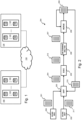
- Fig. 1 illustrates an exemplary embodiment of such a source 100 and destination 120 storage systems.
- the source storage system 100 comprises a plurality of storage servers 103 each housing one or more digital storage means 102.
- the destination system comprises a plurality of storage servers 123 each housing one or more digital storage means 122.
- the storage servers 103 and 123 may be housed in a same or different data centre inside or outside a company's data network.
- the storage systems 100 and 120 can offer data storage and access to users and services. Such access may be done over the network 130, e.g. the Internet or a private network.
- the data to be migrated from the system 100 to the system 120 typically comprises a set of data items that are individually accessible by a remote access protocol.
- a data item may for example correspond to a file system item such as a file or a directory within a hierarchical or structured file system.
- Various protocols may be used for accessing such file system items such as for example the Apple Filing Protocol (AFP), the Web Distributed Authoring and Versioning (WebDAV) protocol, the Server Message Block (SMB) protocol, the Common Internet File System (CIFS) protocol, the File Transfer Protocol (FTP), the Network File System (NFS) and the SSH file transfer protocol (SFTP).
- AFP Apple Filing Protocol
- WebDAV Web Distributed Authoring and Versioning
- SMB Server Message Block
- CIFS Common Internet File System
- FTP File Transfer Protocol
- NFS Network File System
- SSH file transfer protocol SSH file transfer protocol
- a data item may for example correspond to an object of an object addressable storage system.
- an object comprises a key and a value wherein the key serves as a unique identifier of the value which holds the actual data that is stored.
- Data can be retrieved from an object addressable storage system by providing the unique identifier upon which the associate data, i.e. value, is returned.
- an object addressable storage system stores data in an unstructured manner as opposed to for example a file system.
- the object addressable storage system may be a cloud based object addressable storage system that is interfaceable by a pre-defined application programming interface (API) over a computer network such as the Internet.
- API application programming interface
- An example of a cloud based object addressable storage system is Amazon S3 or Amazon Simple Storage Service as offered by Amazon Web Services (AWS) that provides such object addressable storage through a web-based API.
- AWS Amazon Web Services
- Google Cloud Storage offered by Google providing RESTful object storage on the Google Cloud Platform infrastructure.
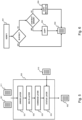
- Fig. 4 illustrates steps for performing a data migration 400 from a source storage system 100 to a destination storage system 120 according to an example embodiment. The steps are further illustrated with reference to the plot 300 in Fig. 3 where the transfer size and transfer duration of a synchronization 301-311 from the source storage system 100 to the destination storage system 120 are illustrated. The transfer size is then the amount of data that is transferred from source to destination while the transfer time is the amount of time it takes to perform the synchronization.
- a data migration is started. Before and during the migration data storage may still be provided from the source data storage system to users. During the migration the destination storage system is populated with copies of the data items. At the end of the migration, during the cutover or switchover, all user access is denied to both source and destination storage systems or the users have read-only access to the source storage system and the remaining unsynchronized data items are synchronized to the destination storage system. Then, all users are given access to the destination storage while the source storage system can be decommissioned. By the cutover during which access is denied, data integrity is guaranteed.
- a first step 401 an initial synchronization is performed.
- this initial synchronization is illustrated by the block 301 where its width represents the time it takes to perform the initial synchronization and its height represents the data size of the transfer between source and destination.
- the transfer time will also be restricted by the available bandwidth for transferring the data between the source 100 and destination 120.
- the initial synchronization 301 may comprise a copy of all data item on the source to the destination.
- all data items making up the data are thus copied from the source storage system 100 to the destination storage system 120.
- Data items that are likely to change before the cutover may also be excluded from the initial synchronization 301. As the data items are still likely to change, a new copy will anyhow have to be made before or during the cutover. Therefore, by excluding such a data portions from the initial copy, the initial copy will take less time to perform and network bandwidth is saved.
- one or more incremental synchronizations 302 to 306 are made until the start of the actual cutover.
- an incremental synchronization differences between the source and destination system 100 and 120 are identified. These differences are then translated to commands such that the destination is again synchronized with the source.
- the first incremental synchronization is illustrated by block 302. If a data item on the source has already a copy on the destination that was copied there during the initial copy 301 and was further left untouched, then the data item is not copied during the incremental synchronization. Therefore, the size of the incremental synchronization 302 will be smaller than the initial copy 301 as it is unlikely that all data items on the source storage system will have changed. Moreover, data items that are likely to change before the cutover may further be excluded from the incremental synchronization 302.
- the step 402 of performing the incremental synchronizations may be repeated several times until the cutover 404.
- Step 402 may be repeated at least until the transfer size of the incremental synchronizations has reached a steady state 403.
- the incremental copies 304, 305 and 306 have reached a steady state with regards to their transfer size.
- step 404 the actual cutover synchronization 311 is performed during a certain maintenance window 322, preferably after the steady state 403 is reached. During this maintenance window 322, all access to the data is denied or only read-only access is granted and a final cutover synchronization 311 is performed.
- Fig. 2 illustrates steps for performing a synchronization 204 between a source storage system 100 and a destination storage system 120 according to an example embodiment, for example for performing initial synchronization 401, an intermediate incremental synchronization 402 or a final cutover synchronization 404.
- a synchronization starts with performing a scan 200, 202 of the source and/or destination storage system thereby obtaining lists 201, 211 of data items on the source and destination, i.e., a source and destination file system data item list.
- Such a scan may be obtained by one or more listing commands executed on the source and destination storage system.
- Such a data item list at least uniquely identifies the data items on the storage system, allowing further handling or manipulation during the synchronization.
- the item list may comprise the file name, the file type, e.g. 'file', 'directory', and 'symbolic link', the file path, access permissions, the access timestamp, i.e. when the file item was last accessed, the modify timestamp, i.e. when the content was last changed, the change timestamp, i.e. when the file item's metadata was last changed, and the creation timestamp, i.e. when the file item was created.
- the item list may comprise the key value of the object, access permissions, the access timestamp, i.e. when the object was last accessed, the modify timestamp, i.e. when the data of the object was last changed, the change timestamp, i.e. when the object's metadata was last changed, and the creation timestamp, i.e. when the object item was created.
- the synchronization 204 then proceeds to a next step 203 wherein the source and destination data item list 201, 211 is compared with status records 210.
- These status records are stored as a list or report 209 and comprise information on the synchronization of the data items, i.e. information on the last known synchronization state of the file system items.
- a set of commands 204 is generated to perform the synchronization, i.e. commands that are to be executed on the source and/or destination storage system.
- a status record in the status report 209 may comprise the following fields:
- the above example is applicable for file system items. Similar fields may be defined for data items in object storage systems. In some situations, one or more fields may be undefined. For example, a file system item that has 'directory' as data item type may have no size or content digest.
- the data item path is the unique identifier of the data item and may for example correspond to the file system path relative to the root of the migration, i.e. relative to the highest directory in the migration.
- the status field is indicative of the status of the data item as it was known when last synchronized. According to an embodiment, the status field may take any of the values as shown in Table 1 below. Table 1: Possible values for the status field Status Description IN_SYNC The data item is synchronized between source and destination.
- EXCLUDED The data item is present on the source but excluded from the migration scope and deleted from the destination.
- EXCLUDED AND RETAINED The data item is excluded from the migration scope, but not deleted from the destination.
- RETAINED The data item is present on the destination, but not on the source, and it was not deleted.
- OUT OF SYNC The data item was synchronized at a certain point in time, but the source changed and for some reason the change was not propagated to the destination.
- UNKNOWN The synchronization state of the data item is unknown.
- a data record may provide further additional information about the item depending on the status in the 'information' field. For data items that are OUT OF SYNC it may give the reason why the item is out of sync, for example the destination storage system does not allow a data item having a specific name, e.g. a very long name, or one using special characters. For data items that are UNKNOWN it may comprise the reason why the item status is unknown, for example because there was a scan error on the source storage system.
- the data item type contains a value that defines the type of data item, for example 'FILE' for a file, 'DIRECTORY' for a directory, 'SYMBOLIC_LINK' for a symbolic link, 'PIPE' for named pipes, 'SOCKET' for a named Unix domain socket, 'BLOCK_DEVICE' for a block device file type that provides buffered access to hardware devices, 'CHAR_DEVICE' for a character special file or character device that provides unbuffered, direct access to a hardware device, and 'MOUNT_POINT' for a mount point or location in the storage system for accessing a partition of a storage device.
- 'FILE' for a file
- 'DIRECTORY' for a directory
- 'SYMBOLIC_LINK' for a symbolic link
- 'PIPE' for named pipes
- 'SOCKET' for a named Unix domain socket
- 'BLOCK_DEVICE' for a block device file
- the data item size corresponds to the number of bytes that would be returned when reading the data item from start to end.
- the data item content digest contains the digest of the content.
- a hashing algorithm may be used.
- the hashing algorithm may then also be used to verify migrated content during the last cutover synchronization.
- Different algorithms may be used such as for example MD5, SHA-1, SHA-256 and SHA-512 generating respectively 32, 40, 64 and 128 character long digest values.
- Table 2 below shows an illustrative example of possible combinations of a data item type, data item size and data item content digest.
- Table 2 Different data item types and related data item size and data item content digest
- Data item type Data item size data item content digest
- Symbolic link Nr of bytes in target path Digest of target path (substitute name on Windows), converted to UTF-8.2
- Named pipe (FIFO) Named unix domain socket Block device file Character device file Mount point
- the change timestamp in both source and destination is useful because the data item is mutable during the migration at both the source and destination.
- the change timestamp identifies which version of the data item was copied from source to destination and further allows detecting any subsequent changes to the source or destination data item outside the scope of the migration, i.e. apart from the changes done by generated commands 204.
- the change timestamp is updated by the filesystem itself every time the data of the data item or metadata of the data item is altered. Moreover, this updating is performed automatically and cannot be set by a user or user program. Timestamps may be formatted in a standard, relatively compact and human readable ISO 8601 format with second, millisecond or nanosecond resolution, depending on the protocol used.
- a command may be an action that is to be performed on the source or destination storage system, e.g. to delete a data item on the source and/or destination, to copy a date item from source to destination, to update metadata associated with a data item etc.
- a command may also be an action that does not directly change the status of the source or destination storage system, but that will update the status report 209 during a later step 208, i.e. update a status record of a data item.
- Table 3 below shows different types of commands 204 that may be generated by step 203 according to an example embodiment.
- Table 3 Possible commands generated from scan results and status records.
- Command Description COPY_NEW Copy a data item from source to destination for the first time.
- COPY Update a data item that already exists on the destination.
- COPY_METADATA Only copy or update the metadata associated with a data item on the destination.
- REPAIR Do everything necessary for synchronizing the data item from source to destination. VERIFY Verify the data item and report differences for that data item between source and destination.
- COPY_WORM Copies worm-related settings for the data item, e.g. the retention period and commit state.
- REPORT_ERROR Report an error so it can be propagated to the status list.
- REPORT_EXCLUDED Report a data item as excluded so it can be propagated to the status list.
- the method proceeds to the next step 523 wherein an initial set of intermediate commands is generated based on the classification step 522, e.g. COPY_NEW, COPY, COPY_METADATA, DELETE, REPLACE, EXCLUDE, VERIFY, COPY_WORM. Also, other parameters needed for the execution of the commands are provided. These commands are then further forwarded to the next step 524 wherein the intermediate commands are updated based on the retrieved status records 510. For example, when there is no command generated for a data item, then a REPAIR is generated if there is no status record or if there is a status record that is not IN_SYNC. Also, the COPY_METADATA is converted to a REPAIR command if there is no status record or the status record is not IN_SYNC.
- a COPY 603 or COPY_METADATA 604 command is issued to bring the data item in sync with the source.
- the result 602 of this command will then be used in step 208 to update the status record.
- the destination storage system 120 When performing a first synchronization, i.e. the base of initial synchronization, the destination storage system 120 will normally have no data items, and there will be no status list 209.
- the steps of Fig. 2 may be performed without the scanning 202 of the destination storage system 202 and without having any status records 210 during the generation 203 of the commands 204.
- the generated commands will mostly be COPY_NEW commands.
- this command will trigger the creation of a new status record for the status list 209.
- the initial synchronization will result in an initial copy of data items from source to destination and in the generation of the status list with the respective status records.
- a full synchronization will be performed.
- Fig. 2 when performing a first synchronization, there might already be data items present on the destination storage system 120. These data items may for example be the result of a previously failed data migration attempt.
- the steps of Fig. 2 may be performed with the scanning 200, 202 of both the source and destination but without having any status records 210 during the generation 203 of the commands 204.
- the difference with the previously described clean initial synchronization is that the command layer 523 may report that certain data items are already in sync while there is no status record associated to them. This situation will then be detected by the status layer 524 which will add a REPAIR command for this data item as further described with reference to Fig. 6 .
- the initial synchronization will result in an initial copy of data items from source to destination that were not already present but will keep the data items intact that were already present on the destination. Further, a status list with the respective status records is generated. During a next incremental synchronization, a full synchronization will be performed. In other words, the so-performed synchronization results in a bootstrapping of the data migration.
- the steps of Fig. 2 may again be performed including the updating of the status list 209.
- the status list 209 then forms a report of the data migration that may be used for verifying any later problems about the migrated content.
- the data items that need to protected from further changes may have a write once ready many, WORM, state assigned to them. This may be done based on the final status list 209 whereby the relevant data items are identified from this list it is verified whether the data item on the destination has not been altered. Then, the WORM state is updated for these data items on the destination storage thereby rendering them immutable.
- WORM write once ready many
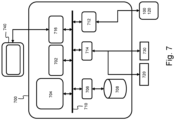
- Fig. 7 shows a suitable computing system 700 enabling to implement embodiments of the method for improving blocking effect avoidance in a wireless access node according to the invention.
- Computing system 700 may in general be formed as a suitable general-purpose computer and comprise a bus 710, a processor 702, a local memory 704, one or more optional input interfaces 714, one or more optional output interfaces 716, a communication interface 712, a storage element interface 706, and one or more storage elements 708.
- Bus 710 may comprise one or more conductors that permit communication among the components of the computing system 700.
- Processor 702 may include any type of conventional processor or microprocessor that interprets and executes programming instructions.
- Local memory 704 may include a random-access memory (RAM) or another type of dynamic storage device that stores information and instructions for execution by processor 702 and/or a read only memory (ROM) or another type of static storage device that stores static information and instructions for use by processor 702.
- Input interface 714 may comprise one or more conventional mechanisms that permit an operator or user to input information to the computing device 700, such as a keyboard 720, a mouse 730, a pen, voice recognition and/or biometric mechanisms, a camera, etc.
- Output interface 716 may comprise one or more conventional mechanisms that output information to the operator or user, such as a display 740, etc.
- Communication interface 712 may comprise any transceiver-like mechanism such as for example one or more Ethernet interfaces that enables computing system 700 to communicate with other devices and/or systems, for example with other computing devices 100, 120.
- the communication interface 712 of computing system 700 may be connected to such another computing system by means of a local area network (LAN) or a wide area network (WAN) such as for example the internet.
- LAN local area network
- WAN wide area network
- Storage element interface 706 may comprise a storage interface such as for example a Serial Advanced Technology Attachment (SATA) interface or a Small Computer System Interface (SCSI) for connecting bus 710 to one or more storage elements 708, such as one or more local disks, for example SATA disk drives, and control the reading and writing of data to and/or from these storage elements 708.
- SATA Serial Advanced Technology Attachment
- SCSI Small Computer System Interface
- the storage element(s) 708 above is/are described as a local disk, in general any other suitable computer-readable media such as a removable magnetic disk, optical storage media such as a CD or DVD, -ROM disk, solid state drives, flash memory cards, ... could be used.
- top, bottom, over, under, and the like are introduced for descriptive purposes and not necessarily to denote relative positions. It is to be understood that the terms so used are interchangeable under appropriate circumstances and embodiments of the invention are capable of operating according to the present invention in other sequences, or in orientations different from the one(s) described or illustrated above.
Landscapes
- Engineering & Computer Science (AREA)
- Theoretical Computer Science (AREA)
- Human Computer Interaction (AREA)
- Physics & Mathematics (AREA)
- General Engineering & Computer Science (AREA)
- General Physics & Mathematics (AREA)
- Information Retrieval, Db Structures And Fs Structures Therefor (AREA)
- Holo Graphy (AREA)
- Pharmaceuticals Containing Other Organic And Inorganic Compounds (AREA)
Claims (12)
- Computerimplementiertes Verfahren, das durchgeführt wird, während eine Datenmigration von einem Quellspeichersystem (100) zu einem Zielspeichersystem (120) durchgeführt wird; wobei das Verfahren ein Durchführen einer Anfangssynchronisation (204, 401), mindestens einer inkrementellen Zwischensynchronisation (204, 402) und einer Endumschaltsynchronisation (204, 404) von Datenelementen umfasst; und wobei die Anfangssynchronisation (204, 401) umfasst:- Scannen (200) des Quell- und des Zielspeichersystems, wodurch eine Anfangsquell- und Zieldatenelementeliste (201) erhalten wird;- Erzeugen (203) von Befehlen (204) zum Durchführen der Anfangssynchronisation auf der Basis des Scannens;- Ausführen (205) der Befehle;- Erhalten (206) von Ergebnissen (212) der ausgeführten Befehle und- Erzeugen (208) und Speichern von Statusdatensätzen (209, 210) der jeweiligen Datenelemente, die den Synchronisationsstatus der jeweiligen Datenelemente angeben, auf der Basis der Ergebnisse;und wobei jede von der mindestens einen inkrementellen Zwischensynchronisation (204, 402) und der Endumschaltsynchronisation (204, 404) umfasst:- Scannen (200, 202) des Quell- und des Zielspeichersystems, wodurch die Quell- und Zieldatenelementeliste (201, 211) erhalten wird;- Abrufen der gespeicherten Statusdatensätze (209, 210) der jeweiligen Datenelemente, die den letzten bekannten Synchronisationsstatus der jeweiligen Datenelemente angeben;- Erzeugen (203, 503) von Befehlen (204) zum Durchführen der inkrementellen Zwischensynchronisation auf der Basis der Quell- und Zieldatenelementeliste (201, 211) und der Statusdatensätze (210);- Ausführen (205) der Befehle (204);- Erhalten (206) von Ergebnissen (212) der ausgeführten Befehle als eine Ergebnisliste (212);- Bestimmen (206) einer Fusionsliste (207), die Aktualisierungen für die Statusdatensätze (209) umfasst, aus der Ergebnisliste und- Aktualisierung (208) der Statusdatensätze (209) auf der Basis der Fusionsliste;und wobei während der Endumschaltsynchronisation (204, 404) jeglicher Zugriff auf die Daten abgelehnt wird oder nur Nur-Lese-Zugriff gewährt wird.
- Verfahren nach Anspruch 1, wobei der Statusdatensatz eines Datenelements umfasst:- einen Quelländerungszeitstempel, der einen Zeitpunkt angibt, zu dem das Datenelement zuletzt in dem Quellspeichersystem geändert wurde; und- einen Zieländerungszeitstempel, der einen Zeitpunkt angibt, zu dem das Datenelement zuletzt in dem Zielspeichersystem geändert wurde.
- Verfahren nach Anspruch 2, wobei die Quell- und Zieldatenelementeliste den Änderungszeitstempel des Datenelements in dem jeweiligen Quell- und Zielspeichersystem umfasst und das Erzeugen der Befehle ein Vergleichen des Änderungszeitstempels von der Datenelementeliste mit dem Änderungszeitstempel von dem Statusdatensatz umfasst.
- Verfahren nach einem der Ansprüche 1 bis 3, wobei der Statusdatensatz eines Datenelements mindestens einen bzw. eine der folgenden umfasst:- einen Nachrichtendigest des Datenelements;- eine Größe des Datenelements;- einen Typ des Datenelements;- einen Eigentümer des Datenelements;- Zugriffsberechtigungen für das Datenelement und- Aufbewahrungsinformationen des Datenelements.
- Verfahren nach einem der Ansprüche 1 bis 4, wobei der Statusdatensatz eines Datenelements einen Synchronisationsstatus umfasst, der auswählbar ist aus einer Gruppe umfassend:- einer ersten Statusoption, die eine gültige Synchronisation des jeweiligen Datenelements angibt; und- einer zweiten Statusoption, die eine Synchronisationsfehlanpassung des jeweiligen Datenelements angibt.
- Verfahren nach Anspruch 5, wobei das Zielspeichersystem vor der Datenmigration bereits Datenelemente umfasst und wobei das Durchführen der Anfangssynchronisation weiterhin umfasst:- Scannen (200, 202) des Quell- und des Zielspeichersystems, wodurch eine Anfangsquell- und Anfangszieldatenelementeliste (201, 211) erhalten wird;- Erzeugen (203) von Befehlen (204) zum Durchführen der Anfangssynchronisation auf der Basis des Scannens;- Ausführen (205) der Befehle;- Erhalten (206) von Ergebnissen (212) der ausgeführten Befehle und- Erzeugen (208) der Statusdatensätze mit den Ergebnissen.
- Verfahren nach einem der Ansprüche 1 bis 6, wobei die Endumschaltsynchronisation (204, 404) von Datenelementen durchgeführt wird, wodurch Endstatusdatensätze (209) erhalten werden.
- Verfahren nach Anspruch 7, weiterhin umfassend einen Datenmigrationsverifizierungsschritt auf der Basis der Endstatusdatensätze (209).
- Verfahren nach Anspruch 7 oder 8, weiterhin umfassend:- Erhalten von Informationen zum Schützen eines oder mehrerer der Datenelemente durch einen Write-Once-Read-Many-Zustand, WORM-Zustand; und- Anwenden des WORM-Zustands auf das eine oder die mehreren Datenelemente in dem Zielspeichersystem auf der Basis der Endstatusdatensätze und der Datenelementelisten, die während der Endumschaltsynchronisation erhalten werden.
- Controller, umfassend mindestens einen Prozessor und mindestens einen Speicher, beinhaltend Computerprogrammcode, wobei der mindestens eine Speicher und der Computerprogrammcode dazu konfiguriert sind, mit dem mindestens einen Prozessor zu bewirken, dass der Controller das Verfahren nach einem der Ansprüche 1 bis 9 durchführt.
- Computerprogrammprodukt, umfassend computerausführbare Anweisungen, die, wenn das Programm durch einen Computer ausgeführt wird, bewirken, dass der Computer das Verfahren nach einem der Ansprüche 1 bis 9 ausführt.
- Computerlesbares Speichermedium, umfassend computerausführbare Anweisungen, die bei Ausführung durch einen Computer bewirken, dass der Computer das Verfahren nach einem der Ansprüche 1 bis 9 ausführt.
Priority Applications (5)
| Application Number | Priority Date | Filing Date | Title |
|---|---|---|---|
| EP20166890.2A EP3889753B1 (de) | 2020-03-30 | 2020-03-30 | Datenmigration |
| PCT/EP2021/056602 WO2021197830A1 (en) | 2020-03-30 | 2021-03-16 | Data migration |
| AU2021248108A AU2021248108A1 (en) | 2020-03-30 | 2021-03-16 | Data migration |
| CA3170220A CA3170220A1 (en) | 2020-03-30 | 2021-03-16 | Data migration |
| US17/915,267 US20230132830A1 (en) | 2020-03-30 | 2021-03-16 | Data migration |
Applications Claiming Priority (1)
| Application Number | Priority Date | Filing Date | Title |
|---|---|---|---|
| EP20166890.2A EP3889753B1 (de) | 2020-03-30 | 2020-03-30 | Datenmigration |
Publications (3)
| Publication Number | Publication Date |
|---|---|
| EP3889753A1 EP3889753A1 (de) | 2021-10-06 |
| EP3889753B1 true EP3889753B1 (de) | 2025-05-07 |
| EP3889753C0 EP3889753C0 (de) | 2025-05-07 |
Family
ID=70189665
Family Applications (1)
| Application Number | Title | Priority Date | Filing Date |
|---|---|---|---|
| EP20166890.2A Active EP3889753B1 (de) | 2020-03-30 | 2020-03-30 | Datenmigration |
Country Status (5)
| Country | Link |
|---|---|
| US (1) | US20230132830A1 (de) |
| EP (1) | EP3889753B1 (de) |
| AU (1) | AU2021248108A1 (de) |
| CA (1) | CA3170220A1 (de) |
| WO (1) | WO2021197830A1 (de) |
Families Citing this family (2)
| Publication number | Priority date | Publication date | Assignee | Title |
|---|---|---|---|---|
| US11934312B2 (en) | 2021-12-07 | 2024-03-19 | Capital One Services, Llc | On-demand scanning for changes in cloud object storage systems |
| CN114691777B (zh) * | 2022-03-08 | 2025-11-14 | 杭州数梦工场科技有限公司 | 增量数据同步方法、装置以及存储介质 |
Family Cites Families (9)
| Publication number | Priority date | Publication date | Assignee | Title |
|---|---|---|---|---|
| US7062541B1 (en) * | 2000-04-27 | 2006-06-13 | International Business Machines Corporation | System and method for transferring related data objects in a distributed data storage environment |
| US8452856B1 (en) * | 2010-08-04 | 2013-05-28 | Netapp, Inc. | Non-disruptive storage server migration |
| US20120278553A1 (en) * | 2011-04-28 | 2012-11-01 | Mudhiganti Devender R | System and method for migration of data clones |
| US9218407B1 (en) * | 2014-06-25 | 2015-12-22 | Pure Storage, Inc. | Replication and intermediate read-write state for mediums |
| DK2996025T3 (en) * | 2014-09-11 | 2018-06-18 | Datadobi Cvba | Data migration tool with intermediate incremental copies |
| US11100042B2 (en) * | 2017-05-18 | 2021-08-24 | Geoffrey Bourgeois | Methods and systems relating to network based storage |
| US20200034475A1 (en) * | 2018-07-30 | 2020-01-30 | Robin Systems, Inc. | Relocation Of A Primary Copy Of A Replicated Volume |
| US10970310B2 (en) * | 2018-08-02 | 2021-04-06 | Netapp Inc. | Synchronous replication based cutover engine |
| US11068188B2 (en) * | 2019-09-19 | 2021-07-20 | International Business Machines Corporation | Monitored migration of copies of volumes of data between clusters of a virtual tape library system |
-
2020
- 2020-03-30 EP EP20166890.2A patent/EP3889753B1/de active Active
-
2021
- 2021-03-16 WO PCT/EP2021/056602 patent/WO2021197830A1/en not_active Ceased
- 2021-03-16 AU AU2021248108A patent/AU2021248108A1/en active Pending
- 2021-03-16 US US17/915,267 patent/US20230132830A1/en not_active Abandoned
- 2021-03-16 CA CA3170220A patent/CA3170220A1/en active Pending
Also Published As
| Publication number | Publication date |
|---|---|
| EP3889753A1 (de) | 2021-10-06 |
| US20230132830A1 (en) | 2023-05-04 |
| WO2021197830A1 (en) | 2021-10-07 |
| AU2021248108A1 (en) | 2022-09-29 |
| CA3170220A1 (en) | 2021-10-07 |
| EP3889753C0 (de) | 2025-05-07 |
Similar Documents
| Publication | Publication Date | Title |
|---|---|---|
| US11500897B2 (en) | Allocation and reassignment of unique identifiers for synchronization of content items | |
| US11782886B2 (en) | Incremental virtual machine metadata extraction | |
| US11354059B2 (en) | Data migration between storage systems using different protocols | |
| EP3889753B1 (de) | Datenmigration | |
| EP2402861A1 (de) | Lagersystem | |
| US11496552B2 (en) | Intent tracking for asynchronous operations | |
| EP4002143A1 (de) | Speicherung von dateisystemelementen im zusammenhang mit einem versionierten schnappschuss eines verzeichnisbasierten dateisystems auf einem schlüsselobjektspeichersystem | |
| US12475083B2 (en) | Synchronizing file system items having a data and metadata portion between a source storage system and a destination storage system | |
| JP7703652B2 (ja) | 非同期動作のための意図トラッキング |
Legal Events
| Date | Code | Title | Description |
|---|---|---|---|
| PUAI | Public reference made under article 153(3) epc to a published international application that has entered the european phase |
Free format text: ORIGINAL CODE: 0009012 |
|
| STAA | Information on the status of an ep patent application or granted ep patent |
Free format text: STATUS: THE APPLICATION HAS BEEN PUBLISHED |
|
| AK | Designated contracting states |
Kind code of ref document: A1 Designated state(s): AL AT BE BG CH CY CZ DE DK EE ES FI FR GB GR HR HU IE IS IT LI LT LU LV MC MK MT NL NO PL PT RO RS SE SI SK SM TR |
|
| STAA | Information on the status of an ep patent application or granted ep patent |
Free format text: STATUS: REQUEST FOR EXAMINATION WAS MADE |
|
| 17P | Request for examination filed |
Effective date: 20220406 |
|
| RBV | Designated contracting states (corrected) |
Designated state(s): AL AT BE BG CH CY CZ DE DK EE ES FI FR GB GR HR HU IE IS IT LI LT LU LV MC MK MT NL NO PL PT RO RS SE SI SK SM TR |
|
| STAA | Information on the status of an ep patent application or granted ep patent |
Free format text: STATUS: EXAMINATION IS IN PROGRESS |
|
| 17Q | First examination report despatched |
Effective date: 20231002 |
|
| GRAP | Despatch of communication of intention to grant a patent |
Free format text: ORIGINAL CODE: EPIDOSNIGR1 |
|
| STAA | Information on the status of an ep patent application or granted ep patent |
Free format text: STATUS: GRANT OF PATENT IS INTENDED |
|
| INTG | Intention to grant announced |
Effective date: 20241022 |
|
| GRAS | Grant fee paid |
Free format text: ORIGINAL CODE: EPIDOSNIGR3 |
|
| GRAA | (expected) grant |
Free format text: ORIGINAL CODE: 0009210 |
|
| STAA | Information on the status of an ep patent application or granted ep patent |
Free format text: STATUS: THE PATENT HAS BEEN GRANTED |
|
| AK | Designated contracting states |
Kind code of ref document: B1 Designated state(s): AL AT BE BG CH CY CZ DE DK EE ES FI FR GB GR HR HU IE IS IT LI LT LU LV MC MK MT NL NO PL PT RO RS SE SI SK SM TR |
|
| REG | Reference to a national code |
Ref country code: GB Ref legal event code: FG4D |
|
| REG | Reference to a national code |
Ref country code: CH Ref legal event code: EP |
|
| REG | Reference to a national code |
Ref country code: DE Ref legal event code: R096 Ref document number: 602020050712 Country of ref document: DE |
|
| REG | Reference to a national code |
Ref country code: IE Ref legal event code: FG4D |
|
| U01 | Request for unitary effect filed |
Effective date: 20250523 |
|
| U07 | Unitary effect registered |
Designated state(s): AT BE BG DE DK EE FI FR IT LT LU LV MT NL PT RO SE SI Effective date: 20250602 |
|
| PG25 | Lapsed in a contracting state [announced via postgrant information from national office to epo] |
Ref country code: ES Free format text: LAPSE BECAUSE OF FAILURE TO SUBMIT A TRANSLATION OF THE DESCRIPTION OR TO PAY THE FEE WITHIN THE PRESCRIBED TIME-LIMIT Effective date: 20250507 |
|
| PG25 | Lapsed in a contracting state [announced via postgrant information from national office to epo] |
Ref country code: NO Free format text: LAPSE BECAUSE OF FAILURE TO SUBMIT A TRANSLATION OF THE DESCRIPTION OR TO PAY THE FEE WITHIN THE PRESCRIBED TIME-LIMIT Effective date: 20250807 Ref country code: GR Free format text: LAPSE BECAUSE OF FAILURE TO SUBMIT A TRANSLATION OF THE DESCRIPTION OR TO PAY THE FEE WITHIN THE PRESCRIBED TIME-LIMIT Effective date: 20250808 |
|
| PG25 | Lapsed in a contracting state [announced via postgrant information from national office to epo] |
Ref country code: PL Free format text: LAPSE BECAUSE OF FAILURE TO SUBMIT A TRANSLATION OF THE DESCRIPTION OR TO PAY THE FEE WITHIN THE PRESCRIBED TIME-LIMIT Effective date: 20250507 |
|
| PG25 | Lapsed in a contracting state [announced via postgrant information from national office to epo] |
Ref country code: HR Free format text: LAPSE BECAUSE OF FAILURE TO SUBMIT A TRANSLATION OF THE DESCRIPTION OR TO PAY THE FEE WITHIN THE PRESCRIBED TIME-LIMIT Effective date: 20250507 |
|
| PG25 | Lapsed in a contracting state [announced via postgrant information from national office to epo] |
Ref country code: RS Free format text: LAPSE BECAUSE OF FAILURE TO SUBMIT A TRANSLATION OF THE DESCRIPTION OR TO PAY THE FEE WITHIN THE PRESCRIBED TIME-LIMIT Effective date: 20250807 |
|
| PG25 | Lapsed in a contracting state [announced via postgrant information from national office to epo] |
Ref country code: IS Free format text: LAPSE BECAUSE OF FAILURE TO SUBMIT A TRANSLATION OF THE DESCRIPTION OR TO PAY THE FEE WITHIN THE PRESCRIBED TIME-LIMIT Effective date: 20250907 |