EP3889309A1 - Galvanized steel sheet having excellent plating adhesion and corrosion resistance, and manufacturing method therefor - Google Patents
Galvanized steel sheet having excellent plating adhesion and corrosion resistance, and manufacturing method therefor Download PDFInfo
- Publication number
- EP3889309A1 EP3889309A1 EP19888373.8A EP19888373A EP3889309A1 EP 3889309 A1 EP3889309 A1 EP 3889309A1 EP 19888373 A EP19888373 A EP 19888373A EP 3889309 A1 EP3889309 A1 EP 3889309A1
- Authority
- EP
- European Patent Office
- Prior art keywords
- steel sheet
- galvanized
- layer
- plating
- galvanized steel
- Prior art date
- Legal status (The legal status is an assumption and is not a legal conclusion. Google has not performed a legal analysis and makes no representation as to the accuracy of the status listed.)
- Pending
Links
- 238000007747 plating Methods 0.000 title claims abstract description 120
- 229910001335 Galvanized steel Inorganic materials 0.000 title claims abstract description 45
- 239000008397 galvanized steel Substances 0.000 title claims abstract description 45
- 230000007797 corrosion Effects 0.000 title claims abstract description 33
- 238000005260 corrosion Methods 0.000 title claims abstract description 33
- 238000004519 manufacturing process Methods 0.000 title claims abstract description 14
- 239000010410 layer Substances 0.000 claims description 123
- 229910000831 Steel Inorganic materials 0.000 claims description 44
- 239000010959 steel Substances 0.000 claims description 44
- 239000011777 magnesium Substances 0.000 claims description 33
- 238000001816 cooling Methods 0.000 claims description 32
- 230000005764 inhibitory process Effects 0.000 claims description 26
- 238000005246 galvanizing Methods 0.000 claims description 20
- 238000000034 method Methods 0.000 claims description 17
- 229910018084 Al-Fe Inorganic materials 0.000 claims description 14
- 229910018192 Al—Fe Inorganic materials 0.000 claims description 14
- 238000007598 dipping method Methods 0.000 claims description 14
- 239000012535 impurity Substances 0.000 claims description 11
- 229910052749 magnesium Inorganic materials 0.000 claims description 11
- 229910052782 aluminium Inorganic materials 0.000 claims description 10
- FYYHWMGAXLPEAU-UHFFFAOYSA-N Magnesium Chemical compound [Mg] FYYHWMGAXLPEAU-UHFFFAOYSA-N 0.000 claims description 8
- XAGFODPZIPBFFR-UHFFFAOYSA-N aluminium Chemical compound [Al] XAGFODPZIPBFFR-UHFFFAOYSA-N 0.000 claims description 8
- JBQYATWDVHIOAR-UHFFFAOYSA-N tellanylidenegermanium Chemical compound [Te]=[Ge] JBQYATWDVHIOAR-UHFFFAOYSA-N 0.000 claims description 8
- 230000003746 surface roughness Effects 0.000 claims description 5
- 239000002344 surface layer Substances 0.000 claims description 4
- 238000005507 spraying Methods 0.000 claims description 3
- 238000010828 elution Methods 0.000 abstract description 5
- XEEYBQQBJWHFJM-UHFFFAOYSA-N iron Substances [Fe] XEEYBQQBJWHFJM-UHFFFAOYSA-N 0.000 description 57
- 230000000052 comparative effect Effects 0.000 description 25
- 229910052742 iron Inorganic materials 0.000 description 16
- 230000000694 effects Effects 0.000 description 15
- 238000009792 diffusion process Methods 0.000 description 11
- 238000005452 bending Methods 0.000 description 9
- IJGRMHOSHXDMSA-UHFFFAOYSA-N Atomic nitrogen Chemical compound N#N IJGRMHOSHXDMSA-UHFFFAOYSA-N 0.000 description 8
- 239000000463 material Substances 0.000 description 8
- 239000000203 mixture Substances 0.000 description 7
- 239000007789 gas Substances 0.000 description 6
- 239000011701 zinc Substances 0.000 description 6
- 239000010953 base metal Substances 0.000 description 5
- 238000009751 slip forming Methods 0.000 description 5
- 229910045601 alloy Inorganic materials 0.000 description 4
- 239000000956 alloy Substances 0.000 description 4
- 238000005461 lubrication Methods 0.000 description 4
- 239000013521 mastic Substances 0.000 description 4
- 229910052757 nitrogen Inorganic materials 0.000 description 4
- 230000015556 catabolic process Effects 0.000 description 3
- 230000007423 decrease Effects 0.000 description 3
- 238000006731 degradation reaction Methods 0.000 description 3
- 238000007254 oxidation reaction Methods 0.000 description 3
- XKRFYHLGVUSROY-UHFFFAOYSA-N Argon Chemical compound [Ar] XKRFYHLGVUSROY-UHFFFAOYSA-N 0.000 description 2
- 229910000640 Fe alloy Inorganic materials 0.000 description 2
- FAPWRFPIFSIZLT-UHFFFAOYSA-M Sodium chloride Chemical compound [Na+].[Cl-] FAPWRFPIFSIZLT-UHFFFAOYSA-M 0.000 description 2
- XLOMVQKBTHCTTD-UHFFFAOYSA-N Zinc monoxide Chemical compound [Zn]=O XLOMVQKBTHCTTD-UHFFFAOYSA-N 0.000 description 2
- 230000015572 biosynthetic process Effects 0.000 description 2
- 239000012267 brine Substances 0.000 description 2
- 239000010960 cold rolled steel Substances 0.000 description 2
- 230000003247 decreasing effect Effects 0.000 description 2
- 239000007791 liquid phase Substances 0.000 description 2
- 230000003647 oxidation Effects 0.000 description 2
- 239000012071 phase Substances 0.000 description 2
- 230000000704 physical effect Effects 0.000 description 2
- BASFCYQUMIYNBI-UHFFFAOYSA-N platinum Chemical compound [Pt] BASFCYQUMIYNBI-UHFFFAOYSA-N 0.000 description 2
- 150000003839 salts Chemical class 0.000 description 2
- HPALAKNZSZLMCH-UHFFFAOYSA-M sodium;chloride;hydrate Chemical compound O.[Na+].[Cl-] HPALAKNZSZLMCH-UHFFFAOYSA-M 0.000 description 2
- 239000000243 solution Substances 0.000 description 2
- 239000007921 spray Substances 0.000 description 2
- 229910052725 zinc Inorganic materials 0.000 description 2
- 229910000838 Al alloy Inorganic materials 0.000 description 1
- 229910018134 Al-Mg Inorganic materials 0.000 description 1
- 229910018467 Al—Mg Inorganic materials 0.000 description 1
- OKTJSMMVPCPJKN-UHFFFAOYSA-N Carbon Chemical compound [C] OKTJSMMVPCPJKN-UHFFFAOYSA-N 0.000 description 1
- 229910000975 Carbon steel Inorganic materials 0.000 description 1
- 229910015392 FeAl3 Inorganic materials 0.000 description 1
- 229910001209 Low-carbon steel Inorganic materials 0.000 description 1
- 229910000617 Mangalloy Inorganic materials 0.000 description 1
- 229910009369 Zn Mg Inorganic materials 0.000 description 1
- 229910001297 Zn alloy Inorganic materials 0.000 description 1
- 229910007573 Zn-Mg Inorganic materials 0.000 description 1
- 239000002253 acid Substances 0.000 description 1
- 239000000853 adhesive Substances 0.000 description 1
- 230000001070 adhesive effect Effects 0.000 description 1
- 229910000905 alloy phase Inorganic materials 0.000 description 1
- 229910052786 argon Inorganic materials 0.000 description 1
- 229910052799 carbon Inorganic materials 0.000 description 1
- 239000010962 carbon steel Substances 0.000 description 1
- 150000001875 compounds Chemical class 0.000 description 1
- 230000007547 defect Effects 0.000 description 1
- 238000005516 engineering process Methods 0.000 description 1
- PCHJSUWPFVWCPO-UHFFFAOYSA-N gold Chemical compound [Au] PCHJSUWPFVWCPO-UHFFFAOYSA-N 0.000 description 1
- 229910052737 gold Inorganic materials 0.000 description 1
- 239000010931 gold Substances 0.000 description 1
- 230000001939 inductive effect Effects 0.000 description 1
- 239000011261 inert gas Substances 0.000 description 1
- 230000002401 inhibitory effect Effects 0.000 description 1
- JEIPFZHSYJVQDO-UHFFFAOYSA-N iron(III) oxide Inorganic materials O=[Fe]O[Fe]=O JEIPFZHSYJVQDO-UHFFFAOYSA-N 0.000 description 1
- 238000003754 machining Methods 0.000 description 1
- 238000002844 melting Methods 0.000 description 1
- 230000008018 melting Effects 0.000 description 1
- 230000003287 optical effect Effects 0.000 description 1
- 229910052697 platinum Inorganic materials 0.000 description 1
- 238000005096 rolling process Methods 0.000 description 1
- 229920006395 saturated elastomer Polymers 0.000 description 1
- 238000004904 shortening Methods 0.000 description 1
- 239000011780 sodium chloride Substances 0.000 description 1
- UGZADUVQMDAIAO-UHFFFAOYSA-L zinc hydroxide Chemical compound [OH-].[OH-].[Zn+2] UGZADUVQMDAIAO-UHFFFAOYSA-L 0.000 description 1
- 229940007718 zinc hydroxide Drugs 0.000 description 1
- 229910021511 zinc hydroxide Inorganic materials 0.000 description 1
- 239000011787 zinc oxide Substances 0.000 description 1
Images



Classifications
-
- C—CHEMISTRY; METALLURGY
- C23—COATING METALLIC MATERIAL; COATING MATERIAL WITH METALLIC MATERIAL; CHEMICAL SURFACE TREATMENT; DIFFUSION TREATMENT OF METALLIC MATERIAL; COATING BY VACUUM EVAPORATION, BY SPUTTERING, BY ION IMPLANTATION OR BY CHEMICAL VAPOUR DEPOSITION, IN GENERAL; INHIBITING CORROSION OF METALLIC MATERIAL OR INCRUSTATION IN GENERAL
- C23C—COATING METALLIC MATERIAL; COATING MATERIAL WITH METALLIC MATERIAL; SURFACE TREATMENT OF METALLIC MATERIAL BY DIFFUSION INTO THE SURFACE, BY CHEMICAL CONVERSION OR SUBSTITUTION; COATING BY VACUUM EVAPORATION, BY SPUTTERING, BY ION IMPLANTATION OR BY CHEMICAL VAPOUR DEPOSITION, IN GENERAL
- C23C2/00—Hot-dipping or immersion processes for applying the coating material in the molten state without affecting the shape; Apparatus therefor
- C23C2/04—Hot-dipping or immersion processes for applying the coating material in the molten state without affecting the shape; Apparatus therefor characterised by the coating material
- C23C2/06—Zinc or cadmium or alloys based thereon
-
- B—PERFORMING OPERATIONS; TRANSPORTING
- B32—LAYERED PRODUCTS
- B32B—LAYERED PRODUCTS, i.e. PRODUCTS BUILT-UP OF STRATA OF FLAT OR NON-FLAT, e.g. CELLULAR OR HONEYCOMB, FORM
- B32B15/00—Layered products comprising a layer of metal
- B32B15/01—Layered products comprising a layer of metal all layers being exclusively metallic
- B32B15/012—Layered products comprising a layer of metal all layers being exclusively metallic one layer being formed of an iron alloy or steel, another layer being formed of aluminium or an aluminium alloy
-
- B—PERFORMING OPERATIONS; TRANSPORTING
- B32—LAYERED PRODUCTS
- B32B—LAYERED PRODUCTS, i.e. PRODUCTS BUILT-UP OF STRATA OF FLAT OR NON-FLAT, e.g. CELLULAR OR HONEYCOMB, FORM
- B32B15/00—Layered products comprising a layer of metal
- B32B15/01—Layered products comprising a layer of metal all layers being exclusively metallic
- B32B15/013—Layered products comprising a layer of metal all layers being exclusively metallic one layer being formed of an iron alloy or steel, another layer being formed of a metal other than iron or aluminium
-
- B—PERFORMING OPERATIONS; TRANSPORTING
- B32—LAYERED PRODUCTS
- B32B—LAYERED PRODUCTS, i.e. PRODUCTS BUILT-UP OF STRATA OF FLAT OR NON-FLAT, e.g. CELLULAR OR HONEYCOMB, FORM
- B32B15/00—Layered products comprising a layer of metal
- B32B15/04—Layered products comprising a layer of metal comprising metal as the main or only constituent of a layer, which is next to another layer of the same or of a different material
-
- B—PERFORMING OPERATIONS; TRANSPORTING
- B32—LAYERED PRODUCTS
- B32B—LAYERED PRODUCTS, i.e. PRODUCTS BUILT-UP OF STRATA OF FLAT OR NON-FLAT, e.g. CELLULAR OR HONEYCOMB, FORM
- B32B15/00—Layered products comprising a layer of metal
- B32B15/04—Layered products comprising a layer of metal comprising metal as the main or only constituent of a layer, which is next to another layer of the same or of a different material
- B32B15/043—Layered products comprising a layer of metal comprising metal as the main or only constituent of a layer, which is next to another layer of the same or of a different material of metal
-
- B—PERFORMING OPERATIONS; TRANSPORTING
- B32—LAYERED PRODUCTS
- B32B—LAYERED PRODUCTS, i.e. PRODUCTS BUILT-UP OF STRATA OF FLAT OR NON-FLAT, e.g. CELLULAR OR HONEYCOMB, FORM
- B32B15/00—Layered products comprising a layer of metal
- B32B15/18—Layered products comprising a layer of metal comprising iron or steel
-
- C—CHEMISTRY; METALLURGY
- C22—METALLURGY; FERROUS OR NON-FERROUS ALLOYS; TREATMENT OF ALLOYS OR NON-FERROUS METALS
- C22C—ALLOYS
- C22C18/00—Alloys based on zinc
-
- C—CHEMISTRY; METALLURGY
- C22—METALLURGY; FERROUS OR NON-FERROUS ALLOYS; TREATMENT OF ALLOYS OR NON-FERROUS METALS
- C22C—ALLOYS
- C22C18/00—Alloys based on zinc
- C22C18/04—Alloys based on zinc with aluminium as the next major constituent
-
- C—CHEMISTRY; METALLURGY
- C22—METALLURGY; FERROUS OR NON-FERROUS ALLOYS; TREATMENT OF ALLOYS OR NON-FERROUS METALS
- C22C—ALLOYS
- C22C21/00—Alloys based on aluminium
- C22C21/10—Alloys based on aluminium with zinc as the next major constituent
-
- C—CHEMISTRY; METALLURGY
- C22—METALLURGY; FERROUS OR NON-FERROUS ALLOYS; TREATMENT OF ALLOYS OR NON-FERROUS METALS
- C22C—ALLOYS
- C22C30/00—Alloys containing less than 50% by weight of each constituent
- C22C30/06—Alloys containing less than 50% by weight of each constituent containing zinc
-
- C—CHEMISTRY; METALLURGY
- C23—COATING METALLIC MATERIAL; COATING MATERIAL WITH METALLIC MATERIAL; CHEMICAL SURFACE TREATMENT; DIFFUSION TREATMENT OF METALLIC MATERIAL; COATING BY VACUUM EVAPORATION, BY SPUTTERING, BY ION IMPLANTATION OR BY CHEMICAL VAPOUR DEPOSITION, IN GENERAL; INHIBITING CORROSION OF METALLIC MATERIAL OR INCRUSTATION IN GENERAL
- C23C—COATING METALLIC MATERIAL; COATING MATERIAL WITH METALLIC MATERIAL; SURFACE TREATMENT OF METALLIC MATERIAL BY DIFFUSION INTO THE SURFACE, BY CHEMICAL CONVERSION OR SUBSTITUTION; COATING BY VACUUM EVAPORATION, BY SPUTTERING, BY ION IMPLANTATION OR BY CHEMICAL VAPOUR DEPOSITION, IN GENERAL
- C23C2/00—Hot-dipping or immersion processes for applying the coating material in the molten state without affecting the shape; Apparatus therefor
- C23C2/04—Hot-dipping or immersion processes for applying the coating material in the molten state without affecting the shape; Apparatus therefor characterised by the coating material
-
- C—CHEMISTRY; METALLURGY
- C23—COATING METALLIC MATERIAL; COATING MATERIAL WITH METALLIC MATERIAL; CHEMICAL SURFACE TREATMENT; DIFFUSION TREATMENT OF METALLIC MATERIAL; COATING BY VACUUM EVAPORATION, BY SPUTTERING, BY ION IMPLANTATION OR BY CHEMICAL VAPOUR DEPOSITION, IN GENERAL; INHIBITING CORROSION OF METALLIC MATERIAL OR INCRUSTATION IN GENERAL
- C23C—COATING METALLIC MATERIAL; COATING MATERIAL WITH METALLIC MATERIAL; SURFACE TREATMENT OF METALLIC MATERIAL BY DIFFUSION INTO THE SURFACE, BY CHEMICAL CONVERSION OR SUBSTITUTION; COATING BY VACUUM EVAPORATION, BY SPUTTERING, BY ION IMPLANTATION OR BY CHEMICAL VAPOUR DEPOSITION, IN GENERAL
- C23C2/00—Hot-dipping or immersion processes for applying the coating material in the molten state without affecting the shape; Apparatus therefor
- C23C2/04—Hot-dipping or immersion processes for applying the coating material in the molten state without affecting the shape; Apparatus therefor characterised by the coating material
- C23C2/12—Aluminium or alloys based thereon
-
- C—CHEMISTRY; METALLURGY
- C23—COATING METALLIC MATERIAL; COATING MATERIAL WITH METALLIC MATERIAL; CHEMICAL SURFACE TREATMENT; DIFFUSION TREATMENT OF METALLIC MATERIAL; COATING BY VACUUM EVAPORATION, BY SPUTTERING, BY ION IMPLANTATION OR BY CHEMICAL VAPOUR DEPOSITION, IN GENERAL; INHIBITING CORROSION OF METALLIC MATERIAL OR INCRUSTATION IN GENERAL
- C23C—COATING METALLIC MATERIAL; COATING MATERIAL WITH METALLIC MATERIAL; SURFACE TREATMENT OF METALLIC MATERIAL BY DIFFUSION INTO THE SURFACE, BY CHEMICAL CONVERSION OR SUBSTITUTION; COATING BY VACUUM EVAPORATION, BY SPUTTERING, BY ION IMPLANTATION OR BY CHEMICAL VAPOUR DEPOSITION, IN GENERAL
- C23C2/00—Hot-dipping or immersion processes for applying the coating material in the molten state without affecting the shape; Apparatus therefor
- C23C2/14—Removing excess of molten coatings; Controlling or regulating the coating thickness
- C23C2/16—Removing excess of molten coatings; Controlling or regulating the coating thickness using fluids under pressure, e.g. air knives
- C23C2/18—Removing excess of molten coatings from elongated material
- C23C2/20—Strips; Plates
-
- C—CHEMISTRY; METALLURGY
- C23—COATING METALLIC MATERIAL; COATING MATERIAL WITH METALLIC MATERIAL; CHEMICAL SURFACE TREATMENT; DIFFUSION TREATMENT OF METALLIC MATERIAL; COATING BY VACUUM EVAPORATION, BY SPUTTERING, BY ION IMPLANTATION OR BY CHEMICAL VAPOUR DEPOSITION, IN GENERAL; INHIBITING CORROSION OF METALLIC MATERIAL OR INCRUSTATION IN GENERAL
- C23C—COATING METALLIC MATERIAL; COATING MATERIAL WITH METALLIC MATERIAL; SURFACE TREATMENT OF METALLIC MATERIAL BY DIFFUSION INTO THE SURFACE, BY CHEMICAL CONVERSION OR SUBSTITUTION; COATING BY VACUUM EVAPORATION, BY SPUTTERING, BY ION IMPLANTATION OR BY CHEMICAL VAPOUR DEPOSITION, IN GENERAL
- C23C2/00—Hot-dipping or immersion processes for applying the coating material in the molten state without affecting the shape; Apparatus therefor
- C23C2/26—After-treatment
-
- C—CHEMISTRY; METALLURGY
- C23—COATING METALLIC MATERIAL; COATING MATERIAL WITH METALLIC MATERIAL; CHEMICAL SURFACE TREATMENT; DIFFUSION TREATMENT OF METALLIC MATERIAL; COATING BY VACUUM EVAPORATION, BY SPUTTERING, BY ION IMPLANTATION OR BY CHEMICAL VAPOUR DEPOSITION, IN GENERAL; INHIBITING CORROSION OF METALLIC MATERIAL OR INCRUSTATION IN GENERAL
- C23C—COATING METALLIC MATERIAL; COATING MATERIAL WITH METALLIC MATERIAL; SURFACE TREATMENT OF METALLIC MATERIAL BY DIFFUSION INTO THE SURFACE, BY CHEMICAL CONVERSION OR SUBSTITUTION; COATING BY VACUUM EVAPORATION, BY SPUTTERING, BY ION IMPLANTATION OR BY CHEMICAL VAPOUR DEPOSITION, IN GENERAL
- C23C2/00—Hot-dipping or immersion processes for applying the coating material in the molten state without affecting the shape; Apparatus therefor
- C23C2/26—After-treatment
- C23C2/261—After-treatment in a gas atmosphere, e.g. inert or reducing atmosphere
-
- C—CHEMISTRY; METALLURGY
- C23—COATING METALLIC MATERIAL; COATING MATERIAL WITH METALLIC MATERIAL; CHEMICAL SURFACE TREATMENT; DIFFUSION TREATMENT OF METALLIC MATERIAL; COATING BY VACUUM EVAPORATION, BY SPUTTERING, BY ION IMPLANTATION OR BY CHEMICAL VAPOUR DEPOSITION, IN GENERAL; INHIBITING CORROSION OF METALLIC MATERIAL OR INCRUSTATION IN GENERAL
- C23C—COATING METALLIC MATERIAL; COATING MATERIAL WITH METALLIC MATERIAL; SURFACE TREATMENT OF METALLIC MATERIAL BY DIFFUSION INTO THE SURFACE, BY CHEMICAL CONVERSION OR SUBSTITUTION; COATING BY VACUUM EVAPORATION, BY SPUTTERING, BY ION IMPLANTATION OR BY CHEMICAL VAPOUR DEPOSITION, IN GENERAL
- C23C2/00—Hot-dipping or immersion processes for applying the coating material in the molten state without affecting the shape; Apparatus therefor
- C23C2/34—Hot-dipping or immersion processes for applying the coating material in the molten state without affecting the shape; Apparatus therefor characterised by the shape of the material to be treated
- C23C2/36—Elongated material
- C23C2/40—Plates; Strips
-
- C—CHEMISTRY; METALLURGY
- C23—COATING METALLIC MATERIAL; COATING MATERIAL WITH METALLIC MATERIAL; CHEMICAL SURFACE TREATMENT; DIFFUSION TREATMENT OF METALLIC MATERIAL; COATING BY VACUUM EVAPORATION, BY SPUTTERING, BY ION IMPLANTATION OR BY CHEMICAL VAPOUR DEPOSITION, IN GENERAL; INHIBITING CORROSION OF METALLIC MATERIAL OR INCRUSTATION IN GENERAL
- C23C—COATING METALLIC MATERIAL; COATING MATERIAL WITH METALLIC MATERIAL; SURFACE TREATMENT OF METALLIC MATERIAL BY DIFFUSION INTO THE SURFACE, BY CHEMICAL CONVERSION OR SUBSTITUTION; COATING BY VACUUM EVAPORATION, BY SPUTTERING, BY ION IMPLANTATION OR BY CHEMICAL VAPOUR DEPOSITION, IN GENERAL
- C23C28/00—Coating for obtaining at least two superposed coatings either by methods not provided for in a single one of groups C23C2/00 - C23C26/00 or by combinations of methods provided for in subclasses C23C and C25C or C25D
- C23C28/02—Coating for obtaining at least two superposed coatings either by methods not provided for in a single one of groups C23C2/00 - C23C26/00 or by combinations of methods provided for in subclasses C23C and C25C or C25D only coatings only including layers of metallic material
- C23C28/021—Coating for obtaining at least two superposed coatings either by methods not provided for in a single one of groups C23C2/00 - C23C26/00 or by combinations of methods provided for in subclasses C23C and C25C or C25D only coatings only including layers of metallic material including at least one metal alloy layer
-
- C—CHEMISTRY; METALLURGY
- C23—COATING METALLIC MATERIAL; COATING MATERIAL WITH METALLIC MATERIAL; CHEMICAL SURFACE TREATMENT; DIFFUSION TREATMENT OF METALLIC MATERIAL; COATING BY VACUUM EVAPORATION, BY SPUTTERING, BY ION IMPLANTATION OR BY CHEMICAL VAPOUR DEPOSITION, IN GENERAL; INHIBITING CORROSION OF METALLIC MATERIAL OR INCRUSTATION IN GENERAL
- C23C—COATING METALLIC MATERIAL; COATING MATERIAL WITH METALLIC MATERIAL; SURFACE TREATMENT OF METALLIC MATERIAL BY DIFFUSION INTO THE SURFACE, BY CHEMICAL CONVERSION OR SUBSTITUTION; COATING BY VACUUM EVAPORATION, BY SPUTTERING, BY ION IMPLANTATION OR BY CHEMICAL VAPOUR DEPOSITION, IN GENERAL
- C23C28/00—Coating for obtaining at least two superposed coatings either by methods not provided for in a single one of groups C23C2/00 - C23C26/00 or by combinations of methods provided for in subclasses C23C and C25C or C25D
- C23C28/02—Coating for obtaining at least two superposed coatings either by methods not provided for in a single one of groups C23C2/00 - C23C26/00 or by combinations of methods provided for in subclasses C23C and C25C or C25D only coatings only including layers of metallic material
- C23C28/023—Coating for obtaining at least two superposed coatings either by methods not provided for in a single one of groups C23C2/00 - C23C26/00 or by combinations of methods provided for in subclasses C23C and C25C or C25D only coatings only including layers of metallic material only coatings of metal elements only
-
- C—CHEMISTRY; METALLURGY
- C23—COATING METALLIC MATERIAL; COATING MATERIAL WITH METALLIC MATERIAL; CHEMICAL SURFACE TREATMENT; DIFFUSION TREATMENT OF METALLIC MATERIAL; COATING BY VACUUM EVAPORATION, BY SPUTTERING, BY ION IMPLANTATION OR BY CHEMICAL VAPOUR DEPOSITION, IN GENERAL; INHIBITING CORROSION OF METALLIC MATERIAL OR INCRUSTATION IN GENERAL
- C23C—COATING METALLIC MATERIAL; COATING MATERIAL WITH METALLIC MATERIAL; SURFACE TREATMENT OF METALLIC MATERIAL BY DIFFUSION INTO THE SURFACE, BY CHEMICAL CONVERSION OR SUBSTITUTION; COATING BY VACUUM EVAPORATION, BY SPUTTERING, BY ION IMPLANTATION OR BY CHEMICAL VAPOUR DEPOSITION, IN GENERAL
- C23C28/00—Coating for obtaining at least two superposed coatings either by methods not provided for in a single one of groups C23C2/00 - C23C26/00 or by combinations of methods provided for in subclasses C23C and C25C or C25D
- C23C28/02—Coating for obtaining at least two superposed coatings either by methods not provided for in a single one of groups C23C2/00 - C23C26/00 or by combinations of methods provided for in subclasses C23C and C25C or C25D only coatings only including layers of metallic material
- C23C28/023—Coating for obtaining at least two superposed coatings either by methods not provided for in a single one of groups C23C2/00 - C23C26/00 or by combinations of methods provided for in subclasses C23C and C25C or C25D only coatings only including layers of metallic material only coatings of metal elements only
- C23C28/025—Coating for obtaining at least two superposed coatings either by methods not provided for in a single one of groups C23C2/00 - C23C26/00 or by combinations of methods provided for in subclasses C23C and C25C or C25D only coatings only including layers of metallic material only coatings of metal elements only with at least one zinc-based layer
-
- C—CHEMISTRY; METALLURGY
- C23—COATING METALLIC MATERIAL; COATING MATERIAL WITH METALLIC MATERIAL; CHEMICAL SURFACE TREATMENT; DIFFUSION TREATMENT OF METALLIC MATERIAL; COATING BY VACUUM EVAPORATION, BY SPUTTERING, BY ION IMPLANTATION OR BY CHEMICAL VAPOUR DEPOSITION, IN GENERAL; INHIBITING CORROSION OF METALLIC MATERIAL OR INCRUSTATION IN GENERAL
- C23C—COATING METALLIC MATERIAL; COATING MATERIAL WITH METALLIC MATERIAL; SURFACE TREATMENT OF METALLIC MATERIAL BY DIFFUSION INTO THE SURFACE, BY CHEMICAL CONVERSION OR SUBSTITUTION; COATING BY VACUUM EVAPORATION, BY SPUTTERING, BY ION IMPLANTATION OR BY CHEMICAL VAPOUR DEPOSITION, IN GENERAL
- C23C28/00—Coating for obtaining at least two superposed coatings either by methods not provided for in a single one of groups C23C2/00 - C23C26/00 or by combinations of methods provided for in subclasses C23C and C25C or C25D
- C23C28/02—Coating for obtaining at least two superposed coatings either by methods not provided for in a single one of groups C23C2/00 - C23C26/00 or by combinations of methods provided for in subclasses C23C and C25C or C25D only coatings only including layers of metallic material
- C23C28/028—Including graded layers in composition or in physical properties, e.g. density, porosity, grain size
-
- C—CHEMISTRY; METALLURGY
- C23—COATING METALLIC MATERIAL; COATING MATERIAL WITH METALLIC MATERIAL; CHEMICAL SURFACE TREATMENT; DIFFUSION TREATMENT OF METALLIC MATERIAL; COATING BY VACUUM EVAPORATION, BY SPUTTERING, BY ION IMPLANTATION OR BY CHEMICAL VAPOUR DEPOSITION, IN GENERAL; INHIBITING CORROSION OF METALLIC MATERIAL OR INCRUSTATION IN GENERAL
- C23C—COATING METALLIC MATERIAL; COATING MATERIAL WITH METALLIC MATERIAL; SURFACE TREATMENT OF METALLIC MATERIAL BY DIFFUSION INTO THE SURFACE, BY CHEMICAL CONVERSION OR SUBSTITUTION; COATING BY VACUUM EVAPORATION, BY SPUTTERING, BY ION IMPLANTATION OR BY CHEMICAL VAPOUR DEPOSITION, IN GENERAL
- C23C30/00—Coating with metallic material characterised only by the composition of the metallic material, i.e. not characterised by the coating process
-
- C—CHEMISTRY; METALLURGY
- C23—COATING METALLIC MATERIAL; COATING MATERIAL WITH METALLIC MATERIAL; CHEMICAL SURFACE TREATMENT; DIFFUSION TREATMENT OF METALLIC MATERIAL; COATING BY VACUUM EVAPORATION, BY SPUTTERING, BY ION IMPLANTATION OR BY CHEMICAL VAPOUR DEPOSITION, IN GENERAL; INHIBITING CORROSION OF METALLIC MATERIAL OR INCRUSTATION IN GENERAL
- C23C—COATING METALLIC MATERIAL; COATING MATERIAL WITH METALLIC MATERIAL; SURFACE TREATMENT OF METALLIC MATERIAL BY DIFFUSION INTO THE SURFACE, BY CHEMICAL CONVERSION OR SUBSTITUTION; COATING BY VACUUM EVAPORATION, BY SPUTTERING, BY ION IMPLANTATION OR BY CHEMICAL VAPOUR DEPOSITION, IN GENERAL
- C23C30/00—Coating with metallic material characterised only by the composition of the metallic material, i.e. not characterised by the coating process
- C23C30/005—Coating with metallic material characterised only by the composition of the metallic material, i.e. not characterised by the coating process on hard metal substrates
-
- Y—GENERAL TAGGING OF NEW TECHNOLOGICAL DEVELOPMENTS; GENERAL TAGGING OF CROSS-SECTIONAL TECHNOLOGIES SPANNING OVER SEVERAL SECTIONS OF THE IPC; TECHNICAL SUBJECTS COVERED BY FORMER USPC CROSS-REFERENCE ART COLLECTIONS [XRACs] AND DIGESTS
- Y10—TECHNICAL SUBJECTS COVERED BY FORMER USPC
- Y10T—TECHNICAL SUBJECTS COVERED BY FORMER US CLASSIFICATION
- Y10T428/00—Stock material or miscellaneous articles
- Y10T428/12—All metal or with adjacent metals
- Y10T428/12493—Composite; i.e., plural, adjacent, spatially distinct metal components [e.g., layers, joint, etc.]
- Y10T428/12736—Al-base component
- Y10T428/1275—Next to Group VIII or IB metal-base component
- Y10T428/12757—Fe
-
- Y—GENERAL TAGGING OF NEW TECHNOLOGICAL DEVELOPMENTS; GENERAL TAGGING OF CROSS-SECTIONAL TECHNOLOGIES SPANNING OVER SEVERAL SECTIONS OF THE IPC; TECHNICAL SUBJECTS COVERED BY FORMER USPC CROSS-REFERENCE ART COLLECTIONS [XRACs] AND DIGESTS
- Y10—TECHNICAL SUBJECTS COVERED BY FORMER USPC
- Y10T—TECHNICAL SUBJECTS COVERED BY FORMER US CLASSIFICATION
- Y10T428/00—Stock material or miscellaneous articles
- Y10T428/12—All metal or with adjacent metals
- Y10T428/12493—Composite; i.e., plural, adjacent, spatially distinct metal components [e.g., layers, joint, etc.]
- Y10T428/12771—Transition metal-base component
- Y10T428/12785—Group IIB metal-base component
- Y10T428/12792—Zn-base component
- Y10T428/12799—Next to Fe-base component [e.g., galvanized]
-
- Y—GENERAL TAGGING OF NEW TECHNOLOGICAL DEVELOPMENTS; GENERAL TAGGING OF CROSS-SECTIONAL TECHNOLOGIES SPANNING OVER SEVERAL SECTIONS OF THE IPC; TECHNICAL SUBJECTS COVERED BY FORMER USPC CROSS-REFERENCE ART COLLECTIONS [XRACs] AND DIGESTS
- Y10—TECHNICAL SUBJECTS COVERED BY FORMER USPC
- Y10T—TECHNICAL SUBJECTS COVERED BY FORMER US CLASSIFICATION
- Y10T428/00—Stock material or miscellaneous articles
- Y10T428/12—All metal or with adjacent metals
- Y10T428/12493—Composite; i.e., plural, adjacent, spatially distinct metal components [e.g., layers, joint, etc.]
- Y10T428/12771—Transition metal-base component
- Y10T428/12861—Group VIII or IB metal-base component
- Y10T428/12951—Fe-base component
-
- Y—GENERAL TAGGING OF NEW TECHNOLOGICAL DEVELOPMENTS; GENERAL TAGGING OF CROSS-SECTIONAL TECHNOLOGIES SPANNING OVER SEVERAL SECTIONS OF THE IPC; TECHNICAL SUBJECTS COVERED BY FORMER USPC CROSS-REFERENCE ART COLLECTIONS [XRACs] AND DIGESTS
- Y10—TECHNICAL SUBJECTS COVERED BY FORMER USPC
- Y10T—TECHNICAL SUBJECTS COVERED BY FORMER US CLASSIFICATION
- Y10T428/00—Stock material or miscellaneous articles
- Y10T428/12—All metal or with adjacent metals
- Y10T428/12493—Composite; i.e., plural, adjacent, spatially distinct metal components [e.g., layers, joint, etc.]
- Y10T428/12771—Transition metal-base component
- Y10T428/12861—Group VIII or IB metal-base component
- Y10T428/12951—Fe-base component
- Y10T428/12958—Next to Fe-base component
-
- Y—GENERAL TAGGING OF NEW TECHNOLOGICAL DEVELOPMENTS; GENERAL TAGGING OF CROSS-SECTIONAL TECHNOLOGIES SPANNING OVER SEVERAL SECTIONS OF THE IPC; TECHNICAL SUBJECTS COVERED BY FORMER USPC CROSS-REFERENCE ART COLLECTIONS [XRACs] AND DIGESTS
- Y10—TECHNICAL SUBJECTS COVERED BY FORMER USPC
- Y10T—TECHNICAL SUBJECTS COVERED BY FORMER US CLASSIFICATION
- Y10T428/00—Stock material or miscellaneous articles
- Y10T428/12—All metal or with adjacent metals
- Y10T428/12493—Composite; i.e., plural, adjacent, spatially distinct metal components [e.g., layers, joint, etc.]
- Y10T428/12771—Transition metal-base component
- Y10T428/12861—Group VIII or IB metal-base component
- Y10T428/12951—Fe-base component
- Y10T428/12972—Containing 0.01-1.7% carbon [i.e., steel]
-
- Y—GENERAL TAGGING OF NEW TECHNOLOGICAL DEVELOPMENTS; GENERAL TAGGING OF CROSS-SECTIONAL TECHNOLOGIES SPANNING OVER SEVERAL SECTIONS OF THE IPC; TECHNICAL SUBJECTS COVERED BY FORMER USPC CROSS-REFERENCE ART COLLECTIONS [XRACs] AND DIGESTS
- Y10—TECHNICAL SUBJECTS COVERED BY FORMER USPC
- Y10T—TECHNICAL SUBJECTS COVERED BY FORMER US CLASSIFICATION
- Y10T428/00—Stock material or miscellaneous articles
- Y10T428/12—All metal or with adjacent metals
- Y10T428/12493—Composite; i.e., plural, adjacent, spatially distinct metal components [e.g., layers, joint, etc.]
- Y10T428/12771—Transition metal-base component
- Y10T428/12861—Group VIII or IB metal-base component
- Y10T428/12951—Fe-base component
- Y10T428/12972—Containing 0.01-1.7% carbon [i.e., steel]
- Y10T428/12979—Containing more than 10% nonferrous elements [e.g., high alloy, stainless]
-
- Y—GENERAL TAGGING OF NEW TECHNOLOGICAL DEVELOPMENTS; GENERAL TAGGING OF CROSS-SECTIONAL TECHNOLOGIES SPANNING OVER SEVERAL SECTIONS OF THE IPC; TECHNICAL SUBJECTS COVERED BY FORMER USPC CROSS-REFERENCE ART COLLECTIONS [XRACs] AND DIGESTS
- Y10—TECHNICAL SUBJECTS COVERED BY FORMER USPC
- Y10T—TECHNICAL SUBJECTS COVERED BY FORMER US CLASSIFICATION
- Y10T428/00—Stock material or miscellaneous articles
- Y10T428/12—All metal or with adjacent metals
- Y10T428/12993—Surface feature [e.g., rough, mirror]
-
- Y—GENERAL TAGGING OF NEW TECHNOLOGICAL DEVELOPMENTS; GENERAL TAGGING OF CROSS-SECTIONAL TECHNOLOGIES SPANNING OVER SEVERAL SECTIONS OF THE IPC; TECHNICAL SUBJECTS COVERED BY FORMER USPC CROSS-REFERENCE ART COLLECTIONS [XRACs] AND DIGESTS
- Y10—TECHNICAL SUBJECTS COVERED BY FORMER USPC
- Y10T—TECHNICAL SUBJECTS COVERED BY FORMER US CLASSIFICATION
- Y10T428/00—Stock material or miscellaneous articles
- Y10T428/24—Structurally defined web or sheet [e.g., overall dimension, etc.]
- Y10T428/24942—Structurally defined web or sheet [e.g., overall dimension, etc.] including components having same physical characteristic in differing degree
- Y10T428/2495—Thickness [relative or absolute]
-
- Y—GENERAL TAGGING OF NEW TECHNOLOGICAL DEVELOPMENTS; GENERAL TAGGING OF CROSS-SECTIONAL TECHNOLOGIES SPANNING OVER SEVERAL SECTIONS OF THE IPC; TECHNICAL SUBJECTS COVERED BY FORMER USPC CROSS-REFERENCE ART COLLECTIONS [XRACs] AND DIGESTS
- Y10—TECHNICAL SUBJECTS COVERED BY FORMER USPC
- Y10T—TECHNICAL SUBJECTS COVERED BY FORMER US CLASSIFICATION
- Y10T428/00—Stock material or miscellaneous articles
- Y10T428/24—Structurally defined web or sheet [e.g., overall dimension, etc.]
- Y10T428/24942—Structurally defined web or sheet [e.g., overall dimension, etc.] including components having same physical characteristic in differing degree
- Y10T428/2495—Thickness [relative or absolute]
- Y10T428/24959—Thickness [relative or absolute] of adhesive layers
-
- Y—GENERAL TAGGING OF NEW TECHNOLOGICAL DEVELOPMENTS; GENERAL TAGGING OF CROSS-SECTIONAL TECHNOLOGIES SPANNING OVER SEVERAL SECTIONS OF THE IPC; TECHNICAL SUBJECTS COVERED BY FORMER USPC CROSS-REFERENCE ART COLLECTIONS [XRACs] AND DIGESTS
- Y10—TECHNICAL SUBJECTS COVERED BY FORMER USPC
- Y10T—TECHNICAL SUBJECTS COVERED BY FORMER US CLASSIFICATION
- Y10T428/00—Stock material or miscellaneous articles
- Y10T428/24—Structurally defined web or sheet [e.g., overall dimension, etc.]
- Y10T428/24942—Structurally defined web or sheet [e.g., overall dimension, etc.] including components having same physical characteristic in differing degree
- Y10T428/2495—Thickness [relative or absolute]
- Y10T428/24967—Absolute thicknesses specified
-
- Y—GENERAL TAGGING OF NEW TECHNOLOGICAL DEVELOPMENTS; GENERAL TAGGING OF CROSS-SECTIONAL TECHNOLOGIES SPANNING OVER SEVERAL SECTIONS OF THE IPC; TECHNICAL SUBJECTS COVERED BY FORMER USPC CROSS-REFERENCE ART COLLECTIONS [XRACs] AND DIGESTS
- Y10—TECHNICAL SUBJECTS COVERED BY FORMER USPC
- Y10T—TECHNICAL SUBJECTS COVERED BY FORMER US CLASSIFICATION
- Y10T428/00—Stock material or miscellaneous articles
- Y10T428/26—Web or sheet containing structurally defined element or component, the element or component having a specified physical dimension
- Y10T428/263—Coating layer not in excess of 5 mils thick or equivalent
- Y10T428/264—Up to 3 mils
- Y10T428/265—1 mil or less
Definitions
- the present disclosure relates to a galvanized steel sheet, and more particularly, to a galvanized steel sheet having excellent plating adhesion and corrosion resistance, and a manufacturing method therefor.
- the existing hot-dip galvanized steel sheet includes an Fe-Al inhibition layer formed at an interface between a base steel sheet and a plating layer, and the inhibition layer is known to secure plating adhesion at the interface between the base steel sheet and the plating layer and inhibit Fe diffusion due to a concentration gradient from the base metal into the plating layer.
- the inhibition layer is not continuously formed at the interface between the base metal and the plating layer, Fe in the base metal may be eluted into the plating layer, which causes the plating layer to be peeled off due to a degradation of plating adhesion. Therefore, in order to secure plating adhesion of a certain level or higher, the inhibition layer has to be continuously formed.
- Patent document 1 Korean Patent Laid-Open publication No. 10-2015-0074882
- An aspect of the present disclosure may provide a galvanized steel sheet having excellent plating adhesion, having improved friction characteristics of the plating layer due to a certain level of Fe elution, and having excellent corrosion resistance, and a method of manufacturing the same.
- a galvanized steel sheet having excellent plating adhesion and corrosion resistance includes: a base steel sheet and a galvanized layer formed on at least one surface of the base steel sheet, wherein the galvanized layer includes, by wt%, 5.1% to 35.0% of aluminum (Al), 4.0% to 25.0% of magnesium (Mg), and the balance of zinc (Zn) and other inevitable impurities, and an interface between the base steel sheet and the galvanized layer includes an Al-Fe inhibition layer having a thickness of 0.01 ⁇ m to 15 ⁇ m.
- a method for manufacturing a galvanized steel sheet having excellent plating adhesion and corrosion resistance includes: preparing a galvanizing bath including, by wt%, 5.1% to 35.0% of aluminum (Al), 4.0% to 25.0% of magnesium (Mg), and the balance of zinc (Zn) and other inevitable impurities; dipping a base steel sheet in the galvanizing bath and performing plating to manufacture a galvanized steel sheet; and cooling the galvanized steel sheet,
- a temperature of the galvanizing bath is higher than 555°C and lower than 600°C, and a dipping temperature of the base steel sheet is higher than 565°C and lower than 600°C.
- a galvanized steel sheet having excellent plating adhesion, even if Fe elution from a base iron into a plating layer occurs, may be provided.
- the galvanized steel sheet of the present disclosure will not only have excellent corrosion resistance but also have an effect of inducing improved workability as friction characteristics of the plating layer are improved.
- the inventors thereof application studied in depth a method for improving friction characteristics and corrosion resistance of a plating layer, while maintaining plating adhesion of a galvanized steel sheet.
- a galvanized steel sheet having intended physical properties can be provided by configuring a plating layer such that Fe diffused from base iron has a concentration gradient in the plating layer by optimizing an alloy composition of a plating bath and plating conditions (different from the related art in which an Fe-Al alloy layer is formed in an interface between a base steel sheet (base iron) and a plating layer), and completed the present invention.
- a galvanized steel sheet having excellent plating adhesion and corrosion resistance may include a base steel sheet and a galvanized layer formed on at least one surface of the base steel sheet.
- the type of base steel sheet is not particularly limited, and for example, the base steel sheet may be a Fe-based base steel sheet, i.e., a hot-rolled steel sheet or a cold-rolled steel sheet, which is used as a base of a general galvanized steel sheet.
- a hot-rolled steel sheet have a large amount of oxidized scales on surfaces thereof, and these oxidized scales lower plating adhesion to deteriorate plating quality, and thus, a hot-rolled steel sheet from which the oxidized scales are removed in advance with an acid solution may be used as a base steel sheet.
- carbon steel, ultra-low carbon steel, and high manganese steel used as materials for automobiles may be used.
- the galvanized layer may be formed on one surface or both surfaces of the base steel sheet.
- the galvanized layer may include, by wt%, 5.1% to 35.0% of aluminum (Al), 4.0% to 25.0% of magnesium (Mg), and the balance of zinc (Zn) and other inevitable impurities, which may be formed from a plating bath including Al, Mg, and the balance of Zn and other inevitable impurities with the above contents.
- Mg in the galvanized layer is an element that plays a very important role in improving corrosion resistance of the plating layer.
- Mg contained in the plating layer inhibits the growth of a zinc oxide-based corrosion product having less effect of improving corrosion resistance in a severe corrosive environment and stabilizes a zinc hydroxide-based corrosion product which is dense and has a high effect of improving corrosion resistance, on the surface of the plating layer.
- the content of Mg is less than 4.0%, the effect of improving corrosion resistance by the formation of Zn-Mg-based compounds cannot be sufficiently obtained, whereas if the content of Mg exceeds 25.0%, the effect of improving corrosion resistance is saturated and Mg oxidizable dross may be excessively formed on a surface of the plating bath.
- Mg is preferably contained in an amount of 4.0% to 25.0% in the galvanized layer.
- Mg may be advantageously contained in an amount of 5.1% or more, and more advantageously in an amount of 9.0% or less.
- Al in the galvanized layer is added for the purpose of reducing dross caused due to Mg oxidation reaction in a hot-dip zinc alloy plating bath to which Mg is added, and Al is combined with Zn and Mg to advantageously improve corrosion resistance of the plated steel sheet.
- the Al content is less than 5.1%, the effect of preventing oxidation of a surface layer of the plating bath based on the addition of Mg is insufficient and the effect of improving corrosion resistance cannot be sufficiently obtained. Meanwhile, if the Al content exceeds 35.0%, the elution amount of Fe from the steel sheet dipped in the plating bath may increase rapidly to form Fe alloy dross, and further, a Zn/Al binary eutectoid phase is formed in the plating layer to degrade the effect of improving corrosion resistance of Mg with respect to a cross-sectional portion and a coated portion.
- Al is preferably contained in an amount of 5.1% to 35.0% of Al in the galvanized layer, and more advantageously in an amount of 11% to 15%.
- the galvanized layer may be referred to as a Zn-Al-Mg-based alloy plating layer that contains a certain amount of Al, Mg and Zn and inevitable impurities as the balance, and may have a thickness of 20 ⁇ m to 40 ⁇ m, preferably, a thickness of 20 ⁇ m to 35 ⁇ m.
- the galvanized steel sheet of the present disclosure may include an Al-Fe inhibition layer having a thickness of 0.01 ⁇ m to 15 ⁇ m at an interface between the base steel sheet and the galvanized layer, and the Al-Fe-based inhibition layer is preferably a FeAl 3 alloy phase.
- the Al-Fe-based inhibition layer may be interposed between the base iron and the plating layer and may serve to impart adhesion between the base iron and the alloy plating layer.
- the Al-Fe-based inhibition layer may prevent peeling of the plating layer, thereby further improving workability.
- the Al-Fe inhibition layer preferably satisfies a thickness variation of 0.01 ⁇ m to 3 ⁇ m. If the thickness variation of the Al-Fe inhibition layer exceeds 3 ⁇ m, the inhibition layer is formed to discontinuous and the effect of plating adhesion by the inhibition layer cannot be sufficiently obtained. It is most preferable that the thickness variation of the Al-Fe inhibition layer is 0, but in the present disclosure, Fe is diffused from the base iron into the plating layer as described later, and in consideration thereof, a lower limit of the thickness variation is limited to 0.01 ⁇ m.
- the galvanized layer of the present disclosure includes a first region having an Fe content of 40% to 95% therein and a second region having an Fe content of 0.01% or more to less than 40%, and mainly includes Fe diffused (eluted) from the base iron into the plating layer.
- the first region and the second region are formed on the Al-Fe inhibition layer, and the first region mainly exists adjacent to the base iron in the galvanized layer and the second region mainly exists adjacent to a surface of the galvanized layer. Accordingly, the second region may be formed in an area fraction of 0.01% to 40% on the surface layer portion of the galvanized layer.
- a portion continuously darkened at the interface between the base iron and the plating layer is the first region, and the remaining region up to a surface layer of the plating layer excluding the first region is the second region.
- the first region and the second region may be formed over the entire thickness of the plating layer, but a size, shape, and fraction (the fraction occupied in the cross-section or surface of the plating layer) are not particularly limited. It should be noted that, in the case of the plating conditions proposed in the present disclosure, the regions according to the Fe content are formed to be distinguished from each other as described above.
- the Al-Fe inhibition layer is continuously formed at the interface between the base iron and the plating layer, so that plating adhesion is excellent and surface characteristics of the plating layer may be improved by the Fe diffusion (elution) to have surface roughness (Ra) of 3 ⁇ m to 4 ⁇ m.
- the galvanized steel sheet of the present disclosure may be manufactured by a method including operations of preparing a galvanizing bath together with a base steel sheet; dipping the base steel sheet in the galvanizing bath and performing plating to prepare a galvanized steel sheet; and cooling the galvanized steel sheet.
- the galvanized layer may be formed on one side or both sides of the base steel sheet.
- the galvanizing bath may preferably include, by wt%, 5.1% to 35.0% of aluminum (Al), 4.0% to 25.0% of magnesium (Mg), and the balance of zinc (Zn) and other inevitable impurities.
- Al may be included in an amount of 11 ⁇ 15%.
- Mg may be included in an amount of 5.1% or more and may be included in an amount of 9.0% or less.
- a temperature of the galvanizing bath is higher than 555°C and lower than 600°C, and a dipping temperature of the base steel sheet is higher than 565°C and lower than 600°C.
- the temperature of the plating bath is controlled to a temperature above a melting point and not exceeding a maximum of 500°C, whereas, in the present disclosure, an intended plating layer may be formed by controlling the temperature of the galvanizing bath to be relatively high.
- the Al-Fe inhibition layer is formed at the interface between the base iron and the plating layer and, at the same time, Fe in the base iron can be diffused into the plating layer, which, however, cannot be achieved if the temperature of the galvanizing bath is controlled to 555°C or lower or if the dipping temperature of the base steel sheet is controlled to 565°C or lower. That is, in this case, the Al-Fe inhibition layer may be formed to be discontinuous or Fe diffusion into the plating layer does not occur sufficiently, so that a galvanized layer having intended physical properties cannot be obtained.
- the temperature of the galvanizing bath is 600°C or higher, there is a high possibility that the base steel sheet and the equipment inside the plating bath will be eroded, resulting in a shortening of the life of the equipment.
- the temperature of the galvanizing bath is too high or if the dipping temperature of the base steel sheet is 600°C or higher, the surface of the plated material is deteriorated due to an increase in Fe alloy dross.
- the dipping temperature of the base steel sheet may be controlled to be higher by 5°C to 20°C than the temperature of the galvanizing bath.
- plating may be performed with a plating amount of 130 to 180g/m 2 , from which a galvanized layer having a thickness of 20 ⁇ m to 40 ⁇ m may be obtained.
- the obtained plated material may be cooled, and in the present disclosure, in order to obtain the galvanized layer having the first region and the second region as described above, cooling may be performed by stages.
- the cooling includes a first cooling operation of cooling at a cooling rate of 0.01 to 5°C/s to 230°C to 270°C and a second cooling operation of cooling at a cooling rate of 0.05°C to 20°C/s to room temperature.
- a solid-liquid phase is appropriately formed while sufficiently solidifying a single phase through the first cooling process, and then the solid-liquid phase may be completely solidified by performing second cooling at a cooling rate higher than the cooling rate of the first cooling.
- a method of performing cooling including moisture is excluded, and cooling may be performed by spraying gas, preferably.
- the gas is sprayed into both front and rear surfaces of the plated material, and a desired cooling rate may be secured by adjusting pressure of the gas.
- a desired cooling rate may be secured by adjusting pressure of the gas.
- an inert gas such as nitrogen or argon may be used as the gas.
- the method may further include gas-wiping the plated material on which the plating layer is formed, prior to performing the cooling.
- the gas wiping is a process of adjusting the amount of plating, and a method thereof is not particularly limited.
- air or nitrogen may be used as gas to be used, and in this case, nitrogen is preferably used.
- nitrogen is preferably used. The reason is because when air is used, Mg oxidation first occurs on the surface of the plating layer, which may cause surface defects in the plating layer.
- the galvanized steel sheet according to one aspect of the present disclosure including a galvanized layer including the first region and the second region described above formed in the plating layer, while including the Al-Fe inhibition layer continuously formed at the interface between the base iron and the plating layer may be obtained.
- the galvanized steel sheet of the present disclosure has excellent plating adhesion and corrosion resistance, and in addition, since the galvanized steel sheet has improved friction characteristics on the surface of the plating layer, an effect of improving workability at the time of subsequent forming may also be obtained.
- a cold-rolled steel sheet (0.0016%C-0.081%Mn-0.002%Si-0.0091%P-0.0043%S-0.036%Sol.Al), as a base steel sheet, having a thickness of 1.0mm, a width of 110mm, and a length of 200mm was prepared as a plating test piece, on which plating was performed under the conditions shown in Table 1 below to manufacture each galvanized steel sheet.
- cooling after plating was performed by spraying nitrogen into front and rear surfaces of the steel sheet, first cooling was terminated at 250°C, and second cooling was performed to room temperature.
- Comparative Examples 3 and 4 had a low Mg content compared to Inventive Example, so corrosion resistance of the surface and cross-sectional portions was not good.
- FIG. 1 shows a photograph of observing the cross-section of the plating layer of Inventive Example 1 and Comparative Example 5 in an embodiment of the present disclosure.
- FIG. 1 is a view illustrating a portion of a region coated on the flat plate portion together.
- FIG. 2 shows the results of the sealer-bending test of Inventive Example 1 in an embodiment of the present disclosure and Comparative Example 5 (here, the scale bar is 2 mm).
- an adhesive was applied to the plating layer of a mastic sealer (purple) and the flat plating layer, the mastic sealer and the flat plating layer were attached, a flat plate portion was bent at 90°, and the degree of plating layer transferred to the mastic sealer portion at the bent portion was evaluated.
- a picture of the mastic sealer portion captured with an optical microscope is shown in FIG. 2 .
- FIG. 3 shows photographs of observing a shape of cracks at an outer coiling portion of Inventive Example 1 and Comparative Example 5 after a bending test according to an embodiment of the present disclosure.
- the photograph of the outer coiling portion captured with an electron scanning microscope after bending the plated material itself by 180 degrees in the bending test is shown in FIG. 3 .
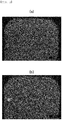
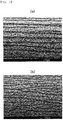
- FIG. 4 shows results of 3D roughness scanning of surfaces of Inventive Example 1 and Comparative Example 5 according to an embodiment of the present disclosure
- FIG. 5 shows photographs of surfaces after a salt spray test was conducted on the plated steel sheets of Inventive Example 1 and Comparative Example 5 according to an embodiment of the present disclosure.
- 5 vol.% of NaCl brine 35°C was placed in a chamber, the brine was sprayed onto each plated material (specimen having a size of 150 ⁇ 70 (mm 2 )) at 1.55 ml per hour, and corrosion resistance was evaluated based on a time at which red rust occurred.
Landscapes
- Chemical & Material Sciences (AREA)
- Engineering & Computer Science (AREA)
- Materials Engineering (AREA)
- Mechanical Engineering (AREA)
- Metallurgy (AREA)
- Organic Chemistry (AREA)
- Chemical Kinetics & Catalysis (AREA)
- Coating With Molten Metal (AREA)
Abstract
Description
- The present disclosure relates to a galvanized steel sheet, and more particularly, to a galvanized steel sheet having excellent plating adhesion and corrosion resistance, and a manufacturing method therefor.
- The existing hot-dip galvanized steel sheet includes an Fe-Al inhibition layer formed at an interface between a base steel sheet and a plating layer, and the inhibition layer is known to secure plating adhesion at the interface between the base steel sheet and the plating layer and inhibit Fe diffusion due to a concentration gradient from the base metal into the plating layer.
- If the inhibition layer is not continuously formed at the interface between the base metal and the plating layer, Fe in the base metal may be eluted into the plating layer, which causes the plating layer to be peeled off due to a degradation of plating adhesion. Therefore, in order to secure plating adhesion of a certain level or higher, the inhibition layer has to be continuously formed.
- Meanwhile, when Fe in the base metal diffuses into the plating layer, an effect of friction characteristics such as improvement of roughness and surface roughness of the plating layer may be obtained.
- However, when the inhibition layer is continuously formed at the interface between the base metal and the plating layer, diffusion of Fe is inhibited and there are many restrictions in using the effect of frictional characteristics.
- Thus, it is necessary to develop a technology for a method that may simultaneously obtain the effect of Fe diffusion, while maintaining plating adhesion.
- (Patent document 1)
Korean Patent Laid-Open publication No. 10-2015-0074882 - An aspect of the present disclosure may provide a galvanized steel sheet having excellent plating adhesion, having improved friction characteristics of the plating layer due to a certain level of Fe elution, and having excellent corrosion resistance, and a method of manufacturing the same.
- The subject of the present disclosure is not limited to the aforementioned contents. A person skilled in the art to which the present disclosure pertains may not have any difficulty in understanding an additional subject of the present disclosure from the contents throughout the present disclosure.
- According to an aspect of the present disclosure, a galvanized steel sheet having excellent plating adhesion and corrosion resistance includes: a base steel sheet and a galvanized layer formed on at least one surface of the base steel sheet, wherein the galvanized layer includes, by wt%, 5.1% to 35.0% of aluminum (Al), 4.0% to 25.0% of magnesium (Mg), and the balance of zinc (Zn) and other inevitable impurities, and an interface between the base steel sheet and the galvanized layer includes an Al-Fe inhibition layer having a thickness of 0.01 µm to 15 µm.
- According to another aspect of the present disclosure, a method for manufacturing a galvanized steel sheet having excellent plating adhesion and corrosion resistance includes: preparing a galvanizing bath including, by wt%, 5.1% to 35.0% of aluminum (Al), 4.0% to 25.0% of magnesium (Mg), and the balance of zinc (Zn) and other inevitable impurities; dipping a base steel sheet in the galvanizing bath and performing plating to manufacture a galvanized steel sheet; and cooling the galvanized steel sheet,
- wherein a temperature of the galvanizing bath is higher than 555°C and lower than 600°C, and a dipping temperature of the base steel sheet is higher than 565°C and lower than 600°C.
- According to the present disclosure, a galvanized steel sheet having excellent plating adhesion, even if Fe elution from a base iron into a plating layer occurs, may be provided.
- In addition, the galvanized steel sheet of the present disclosure will not only have excellent corrosion resistance but also have an effect of inducing improved workability as friction characteristics of the plating layer are improved.
-
-
FIG. 1 shows photographs of observing cross-sections of Inventive Example 1 and Comparative Example 5 according to an embodiment of the present disclosure. -
FIG. 2 shows results of a sealer-bending test of Inventive Example 1 and Comparative Example 5 according to an embodiment of the present disclosure (here, the scale bar is 2mm) . -
FIG. 3 shows photographs of observing a shape of cracks at an outer coiling portion of Inventive Example 1 and Comparative Example 5 after a bending test according to an embodiment of the present disclosure. -
FIG. 4 shows results of 3D roughness scanning of surfaces of Inventive Example 1 and Comparative Example 5 according to an embodiment of the present disclosure. -
FIG. 5 shows photographs of surfaces of Inventive Example 1 and Comparative Example 5 after a salt spray test according to an embodiment of the present disclosure. - The inventors thereof application studied in depth a method for improving friction characteristics and corrosion resistance of a plating layer, while maintaining plating adhesion of a galvanized steel sheet.
- As a result, the inventors thereof application found that a galvanized steel sheet having intended physical properties can be provided by configuring a plating layer such that Fe diffused from base iron has a concentration gradient in the plating layer by optimizing an alloy composition of a plating bath and plating conditions (different from the related art in which an Fe-Al alloy layer is formed in an interface between a base steel sheet (base iron) and a plating layer), and completed the present invention.
- Hereinafter, the present disclosure will be described in detail.
- A galvanized steel sheet having excellent plating adhesion and corrosion resistance according to an aspect of the present disclosure may include a base steel sheet and a galvanized layer formed on at least one surface of the base steel sheet.
- In the present disclosure, the type of base steel sheet is not particularly limited, and for example, the base steel sheet may be a Fe-based base steel sheet, i.e., a hot-rolled steel sheet or a cold-rolled steel sheet, which is used as a base of a general galvanized steel sheet. However, hot-rolled steel sheets have a large amount of oxidized scales on surfaces thereof, and these oxidized scales lower plating adhesion to deteriorate plating quality, and thus, a hot-rolled steel sheet from which the oxidized scales are removed in advance with an acid solution may be used as a base steel sheet. As an example, carbon steel, ultra-low carbon steel, and high manganese steel used as materials for automobiles may be used.
- Meanwhile, the galvanized layer may be formed on one surface or both surfaces of the base steel sheet.
- The galvanized layer may include, by wt%, 5.1% to 35.0% of aluminum (Al), 4.0% to 25.0% of magnesium (Mg), and the balance of zinc (Zn) and other inevitable impurities, which may be formed from a plating bath including Al, Mg, and the balance of Zn and other inevitable impurities with the above contents.
- Mg in the galvanized layer is an element that plays a very important role in improving corrosion resistance of the plating layer. Mg contained in the plating layer inhibits the growth of a zinc oxide-based corrosion product having less effect of improving corrosion resistance in a severe corrosive environment and stabilizes a zinc hydroxide-based corrosion product which is dense and has a high effect of improving corrosion resistance, on the surface of the plating layer.
- If the content of Mg is less than 4.0%, the effect of improving corrosion resistance by the formation of Zn-Mg-based compounds cannot be sufficiently obtained, whereas if the content of Mg exceeds 25.0%, the effect of improving corrosion resistance is saturated and Mg oxidizable dross may be excessively formed on a surface of the plating bath.
- Therefore, in the present disclosure, Mg is preferably contained in an amount of 4.0% to 25.0% in the galvanized layer. Mg may be advantageously contained in an amount of 5.1% or more, and more advantageously in an amount of 9.0% or less.
- Al in the galvanized layer is added for the purpose of reducing dross caused due to Mg oxidation reaction in a hot-dip zinc alloy plating bath to which Mg is added, and Al is combined with Zn and Mg to advantageously improve corrosion resistance of the plated steel sheet.
- If the Al content is less than 5.1%, the effect of preventing oxidation of a surface layer of the plating bath based on the addition of Mg is insufficient and the effect of improving corrosion resistance cannot be sufficiently obtained. Meanwhile, if the Al content exceeds 35.0%, the elution amount of Fe from the steel sheet dipped in the plating bath may increase rapidly to form Fe alloy dross, and further, a Zn/Al binary eutectoid phase is formed in the plating layer to degrade the effect of improving corrosion resistance of Mg with respect to a cross-sectional portion and a coated portion.
- Therefore, in the present disclosure, Al is preferably contained in an amount of 5.1% to 35.0% of Al in the galvanized layer, and more advantageously in an amount of 11% to 15%.
- As described above, in the present disclosure, the galvanized layer may be referred to as a Zn-Al-Mg-based alloy plating layer that contains a certain amount of Al, Mg and Zn and inevitable impurities as the balance, and may have a thickness of 20 µm to 40 µm, preferably, a thickness of 20 µm to 35 µm.
- The galvanized steel sheet of the present disclosure may include an Al-Fe inhibition layer having a thickness of 0.01 µm to 15 µm at an interface between the base steel sheet and the galvanized layer, and the Al-Fe-based inhibition layer is preferably a FeAl3 alloy phase.
- Specifically, the Al-Fe-based inhibition layer may be interposed between the base iron and the plating layer and may serve to impart adhesion between the base iron and the alloy plating layer. In particular, when the galvanized steel sheet is formed, the Al-Fe-based inhibition layer may prevent peeling of the plating layer, thereby further improving workability.
- Meanwhile, the Al-Fe inhibition layer preferably satisfies a thickness variation of 0.01 µm to 3 µm. If the thickness variation of the Al-Fe inhibition layer exceeds 3 µm, the inhibition layer is formed to discontinuous and the effect of plating adhesion by the inhibition layer cannot be sufficiently obtained. It is most preferable that the thickness variation of the Al-Fe inhibition layer is 0, but in the present disclosure, Fe is diffused from the base iron into the plating layer as described later, and in consideration thereof, a lower limit of the thickness variation is limited to 0.01 µm.
- The galvanized layer of the present disclosure includes a first region having an Fe content of 40% to 95% therein and a second region having an Fe content of 0.01% or more to less than 40%, and mainly includes Fe diffused (eluted) from the base iron into the plating layer.
- The first region and the second region are formed on the Al-Fe inhibition layer, and the first region mainly exists adjacent to the base iron in the galvanized layer and the second region mainly exists adjacent to a surface of the galvanized layer. Accordingly, the second region may be formed in an area fraction of 0.01% to 40% on the surface layer portion of the galvanized layer.
- Referring to
FIG. 1 , in the drawing illustrating an example of the Inventive Example, a portion continuously darkened at the interface between the base iron and the plating layer is the first region, and the remaining region up to a surface layer of the plating layer excluding the first region is the second region. - In the present disclosure, in the galvanized layer, the first region and the second region may be formed over the entire thickness of the plating layer, but a size, shape, and fraction (the fraction occupied in the cross-section or surface of the plating layer) are not particularly limited. It should be noted that, in the case of the plating conditions proposed in the present disclosure, the regions according to the Fe content are formed to be distinguished from each other as described above.
- As described above, in the galvanized layer of the present disclosure, despite the diffusion of Fe into the plating layer from the base iron, the Al-Fe inhibition layer is continuously formed at the interface between the base iron and the plating layer, so that plating adhesion is excellent and surface characteristics of the plating layer may be improved by the Fe diffusion (elution) to have surface roughness (Ra) of 3 µm to 4 µm.
- That is, since high surface roughness (Ra), compared to the existing galvanized material, is obtained, friction and lubrication properties may be improved, so that there is an advantageous effect in improving workability during subsequent machining.
- Hereinafter, a method of manufacturing a galvanized steel sheet having excellent plating adhesion and corrosion resistance according to another aspect of the present disclosure will be described in detail.
- The galvanized steel sheet of the present disclosure may be manufactured by a method including operations of preparing a galvanizing bath together with a base steel sheet; dipping the base steel sheet in the galvanizing bath and performing plating to prepare a galvanized steel sheet; and cooling the galvanized steel sheet.
- In this case, the galvanized layer may be formed on one side or both sides of the base steel sheet.
- As mentioned above, in order to obtain the galvanized layer intended in the present disclosure, the galvanizing bath may preferably include, by wt%, 5.1% to 35.0% of aluminum (Al), 4.0% to 25.0% of magnesium (Mg), and the balance of zinc (Zn) and other inevitable impurities. More advantageously, Al may be included in an amount of 11∼15%. In addition, more advantageously, Mg may be included in an amount of 5.1% or more and may be included in an amount of 9.0% or less.
- In the present disclosure, in performing plating by dipping the base steel sheet in the galvanizing bath having the aforementioned alloy composition, a temperature of the galvanizing bath is higher than 555°C and lower than 600°C, and a dipping temperature of the base steel sheet is higher than 565°C and lower than 600°C.
- In general, in the case of manufacturing a galvanized steel sheet, the temperature of the plating bath is controlled to a temperature above a melting point and not exceeding a maximum of 500°C, whereas, in the present disclosure, an intended plating layer may be formed by controlling the temperature of the galvanizing bath to be relatively high.
- Specifically, in the present disclosure, when plating is performed by dipping the base steel sheet in the galvanizing bath, it is necessary to provide sufficient thermal energy so that the Al-Fe inhibition layer is formed at the interface between the base iron and the plating layer and, at the same time, Fe in the base iron can be diffused into the plating layer, which, however, cannot be achieved if the temperature of the galvanizing bath is controlled to 555°C or lower or if the dipping temperature of the base steel sheet is controlled to 565°C or lower. That is, in this case, the Al-Fe inhibition layer may be formed to be discontinuous or Fe diffusion into the plating layer does not occur sufficiently, so that a galvanized layer having intended physical properties cannot be obtained.
- Meanwhile, if the temperature of the galvanizing bath is 600°C or higher, there is a high possibility that the base steel sheet and the equipment inside the plating bath will be eroded, resulting in a shortening of the life of the equipment. In addition, if the temperature of the galvanizing bath is too high or if the dipping temperature of the base steel sheet is 600°C or higher, the surface of the plated material is deteriorated due to an increase in Fe alloy dross.
- More preferably, the dipping temperature of the base steel sheet may be controlled to be higher by 5°C to 20°C than the temperature of the galvanizing bath.
- In the present disclosure, plating may be performed with a plating amount of 130 to 180g/m2, from which a galvanized layer having a thickness of 20 µm to 40 µm may be obtained.
- After plating is completed in the galvanizing bath as described above, the obtained plated material may be cooled, and in the present disclosure, in order to obtain the galvanized layer having the first region and the second region as described above, cooling may be performed by stages.
- Specifically, the cooling includes a first cooling operation of cooling at a cooling rate of 0.01 to 5°C/s to 230°C to 270°C and a second cooling operation of cooling at a cooling rate of 0.05°C to 20°C/s to room temperature.
- In the present disclosure, a solid-liquid phase is appropriately formed while sufficiently solidifying a single phase through the first cooling process, and then the solid-liquid phase may be completely solidified by performing second cooling at a cooling rate higher than the cooling rate of the first cooling.
- In the present disclosure, a method of performing cooling including moisture is excluded, and cooling may be performed by spraying gas, preferably.
- Here, the gas is sprayed into both front and rear surfaces of the plated material, and a desired cooling rate may be secured by adjusting pressure of the gas. For example, an inert gas such as nitrogen or argon may be used as the gas.
- Meanwhile, the method may further include gas-wiping the plated material on which the plating layer is formed, prior to performing the cooling. The gas wiping is a process of adjusting the amount of plating, and a method thereof is not particularly limited.
- Here, air or nitrogen may be used as gas to be used, and in this case, nitrogen is preferably used. The reason is because when air is used, Mg oxidation first occurs on the surface of the plating layer, which may cause surface defects in the plating layer.
- By completing the series of processes described above, the galvanized steel sheet according to one aspect of the present disclosure including a galvanized layer including the first region and the second region described above formed in the plating layer, while including the Al-Fe inhibition layer continuously formed at the interface between the base iron and the plating layer may be obtained.
- The galvanized steel sheet of the present disclosure has excellent plating adhesion and corrosion resistance, and in addition, since the galvanized steel sheet has improved friction characteristics on the surface of the plating layer, an effect of improving workability at the time of subsequent forming may also be obtained.
- Hereinafter, the present disclosure will be described in more detail through examples. However, it should be noted that the following examples are for illustrative purposes only and are not intended to limit the scope of the present disclosure. This is because the scope of the present disclosure is determined by matters described in the claims and matters reasonably inferred therefrom.
- A cold-rolled steel sheet (0.0016%C-0.081%Mn-0.002%Si-0.0091%P-0.0043%S-0.036%Sol.Al), as a base steel sheet, having a thickness of 1.0mm, a width of 110mm, and a length of 200mm was prepared as a plating test piece, on which plating was performed under the conditions shown in Table 1 below to manufacture each galvanized steel sheet. Here, cooling after plating was performed by spraying nitrogen into front and rear surfaces of the steel sheet, first cooling was terminated at 250°C, and second cooling was performed to room temperature.
[Table 1] Classification Composition of plating bath (wt%) Plating condition Thickness of plating layer (µm) Al Mg Temperature of plating bath (°C) Dipping temperature (°C) First cooling rate (°C/s) Second cooling rate (°C/s) Inventive Example 1 24 9 557 567 2.9 10 32 Inventive Example 2 24 4 557 567 2.9 10 28 Inventive Example 3 24 5.1 557 567 2.9 10 29 Comparative Example 1 24 4.5 545 560 2.9 10 34 Comparative Example 2 24 5.5 550 565 2.9 10 36 Comparative Example 3 24 3 557 567 2.9 10 25 Comparative Example 4 24 3.8 557 567 2.9 10 27 Comparative Example 5 24 3 555 565 2.9 10 29 Comparative Example 6 24 3.8 555 565 2.9 10 28 - (The balance of the composition of the plating bath in Table 1 is Zn and inevitable impurities.)
- For each galvanized steel sheet manufactured according to the above, plating adhesion, surface characteristics, and corrosion resistance were evaluated.
- First, in the case of Inventive Examples 1 to 3 in which not only the composition of the plating bath but also the plating steel sheet manufacturing process conditions satisfied the range of the present disclosure, it was possible to form a continuous Fe-Al inhibition layer at the interface between the base iron and the plating layer, it was possible to maintain friction/lubrication characteristics due to an increase in roughness, effectively inhibiting the plating layer from peeling off during forming and obtaining excellent corrosion resistance.
- Meanwhile, in the case of Comparative Examples 1 and 2 in which the composition of the plating bath was within the range of the present disclosure but the plating steel sheet manufacturing process conditions were outside the range of the present disclosure, it was difficult to form a continuous Fe-Al inhibition layer due to low thermal energy required for Fe diffusion of the base steel sheet because of a low plating bath and dipping temperature. Therefore, friction/lubrication characteristics of the plating layer decreased due to the decrease in roughness, resulting in cracks in the form of branches in the plating layer after forming and a degradation of corrosion resistance due to the peeling off of the plating layer.
- In addition, Comparative Examples 3 and 4 had a low Mg content compared to Inventive Example, so corrosion resistance of the surface and cross-sectional portions was not good.
- In addition, in the case of Comparative Example 6 in which not only the composition components of the plating bath but also the manufacturing process conditions were outside the range of the present disclosure, it was difficult to form a continuous Fe-Al inhibition layer because thermal energy required for Fe diffusion of the base steel sheet was low. As a result, the friction/lubrication characteristics of the plating layer decreased due to the decrease in roughness, resulting in cracks in the form of branches in the plating layer after forming and a degradation of corrosion resistance due to the peeling off of the plating layer. Furthermore, the amount of Mg-Zn eutectoid formation was small, so corrosion resistance of the surface and the cross-sectional portion of the plating layer was degraded.
- Meanwhile, in order to observe the cross-section of the galvanized steel sheet, the galvanized steel sheet was cut in a vertical direction (thickness direction) in a rolling direction, and then observed using a scanning electron microscope (SEM).
FIG. 1 shows a photograph of observing the cross-section of the plating layer of Inventive Example 1 and Comparative Example 5 in an embodiment of the present disclosure. - As shown in
FIG. 1 , it can be seen that, in both Inventive Example 1 and Comparative Example 5, an Fe-Al inhibition layer was present between the base iron and the plating layer, and Fe diffusion into the plating layer occurred. However, in the case of Comparative Example 5, as the Fe-Al inhibition layer was formed to be discontinuous simultaneously while diffusion of Fe occurred, it is predicted that plating adhesion decreases. - Meanwhile, in observing the cross-section of the galvanized steel sheet, a cut surface was subjected to focused in beam (FIB), and a flat plate portion was coated with platinum, gold or carbon in order to protect the formed portion.
FIG. 1 is a view illustrating a portion of a region coated on the flat plate portion together. - In addition, in order to evaluate plating adhesion of the galvanized steel sheet, a sealer-bending test was performed, and results thereof are shown in
FIG. 2. FIG. 2 shows the results of the sealer-bending test of Inventive Example 1 in an embodiment of the present disclosure and Comparative Example 5 (here, the scale bar is 2 mm). In the sealer-bending test, an adhesive was applied to the plating layer of a mastic sealer (purple) and the flat plating layer, the mastic sealer and the flat plating layer were attached, a flat plate portion was bent at 90°, and the degree of plating layer transferred to the mastic sealer portion at the bent portion was evaluated. In this case, a picture of the mastic sealer portion captured with an optical microscope is shown inFIG. 2 . - As shown in
FIG. 2 , in the case of Inventive Example 1, the plating layer was not peeled off, whereas, in Comparative Example 5, the plating layer was peeled off. - Also, after the bending test of the galvanized steel sheet was observed whether the occurrence of cracks in the outer coiling portion, the results are shown in
FIG. 3 shows photographs of observing a shape of cracks at an outer coiling portion of Inventive Example 1 and Comparative Example 5 after a bending test according to an embodiment of the present disclosure. In this case, the photograph of the outer coiling portion captured with an electron scanning microscope after bending the plated material itself by 180 degrees in the bending test is shown inFIG. 3 . - As shown in
FIG. 3 , in Inventive Example 1, cracks are formed in parallel in one direction, while, in Comparative Example 5, fracture and crack propagation behavior changing in a branch-type from a behavior formed in parallel in one direction can be observed. These results are expected to affect corrosion resistance of the formed portion. - In addition, in order to confirm the surface characteristics of the galvanized steel sheet, the galvanized steel sheet was scanned in 3D roughness, and the results are shown in
FIG. 4. FIG. 4 shows results of 3D roughness scanning of surfaces of Inventive Example 1 and Comparative Example 5 according to an embodiment of the present disclosure - As shown in
FIG. 4 , Fe diffusion occurred throughout the plating layer, and in the case of Inventive Example 1 in which layers were separated according to the Fe concentration gradient in the plating layer, roughness and surface roughness were significantly improved compared to Comparative Example 5. - Further,
FIG. 5 shows photographs of surfaces after a salt spray test was conducted on the plated steel sheets of Inventive Example 1 and Comparative Example 5 according to an embodiment of the present disclosure. Here, 5 vol.% of NaCl brine (35°C) was placed in a chamber, the brine was sprayed onto each plated material (specimen having a size of 150×70 (mm2)) at 1.55 ml per hour, and corrosion resistance was evaluated based on a time at which red rust occurred. - As shown in
FIG. 5 , it can be seen that Inventive Example 1 maintained corrosion resistance for 1200 hours in a corrosive environment, whereas, in Comparative Example 5, corrosion occurred significantly.
Claims (10)
- A galvanized steel sheet having excellent plating adhesion and corrosion resistance, the galvanized steel sheet comprising:a base steel sheet and a galvanized layer formed on at least one surface of the base steel sheet,wherein the galvanized layer includes, by wt%, 5.1% to 35.0% of aluminum (Al), 4.0% to 25.0% of magnesium (Mg), and the balance of zinc (Zn) and other inevitable impurities, and an interface between the base steel sheet and the galvanized layer includes an Al-Fe inhibition layer having a thickness of 0.01 µm to 15 µm.
- The galvanized steel sheet of claim 1, whereinthe galvanized layer includes a first region in which an Fe content is 40% to 95% and a second region in which an Fe content is 0.01% or more and less than 40%, andthe second region is formed by area fraction of 0.01% to 40% on a surface layer portion of the galvanized layer.
- The galvanized steel sheet of claim 1, wherein the galvanized layer includes, by wt%, 11% to 15% of aluminum (Al), 5.1% to 9.0% of magnesium (Mg), and the balance of zinc (Zn) and other inevitable impurities.
- The galvanized steel sheet of claim 1, wherein the galvanized layer has surface roughness (Ra) of 3 µm to 4 µm.
- A method for manufacturing a galvanized steel sheet having excellent plating adhesion and corrosion resistance, the method comprising:preparing a galvanizing bath including, by wt%, 5.1% to 35.0% of aluminum (Al), 4.0% to 25.0% of magnesium (Mg), and the balance of zinc (Zn) and other inevitable impurities;dipping a base steel sheet in the galvanizing bath and performing plating to manufacture a galvanized steel sheet; andcooling the galvanized steel sheet,wherein a temperature of the galvanizing bath is higher than 555°C and lower than 600°C, and a dipping temperature of the base steel sheet is higher than 565°C and lower than 600°C.
- The method of claim 5, wherein the dipping temperature of the base steel sheet is higher by 5°C to 20°C than a temperature of the galvanizing bath.
- The method of claim 5, wherein
the cooling of the galvanized steel sheet includes:cooling at a cooling rate of 0.01°C to 5°C/s up to 230°C to 270°C; andcooling at a cooling rate of 0.05°C to 20°C/s up to room temperature. - The method of claim 5, wherein the cooling is performed by spraying a gas.
- The method of claim 5, further comprising gas wiping the galvanized steel sheet before performing cooling.
- The method of claim 5, wherein the galvanizing bath includes, by wt%, 11% to 15% of aluminum (Al), 5.1% to 9.0% of magnesium (Mg), and the balance of zinc (Zn) and other inevitable impurities.
Applications Claiming Priority (3)
| Application Number | Priority Date | Filing Date | Title |
|---|---|---|---|
| KR20180150031 | 2018-11-28 | ||
| KR1020190150456A KR102276742B1 (en) | 2018-11-28 | 2019-11-21 | Galvanized steel sheet excellent coating adhesion and corrosion resistance properties and method for manufacturing thereof |
| PCT/KR2019/016475 WO2020111775A1 (en) | 2018-11-28 | 2019-11-27 | Galvanized steel sheet having excellent plating adhesion and corrosion resistance, and manufacturing method therefor |
Publications (2)
| Publication Number | Publication Date |
|---|---|
| EP3889309A1 true EP3889309A1 (en) | 2021-10-06 |
| EP3889309A4 EP3889309A4 (en) | 2021-12-15 |
Family
ID=71089011
Family Applications (1)
| Application Number | Title | Priority Date | Filing Date |
|---|---|---|---|
| EP19888373.8A Pending EP3889309A4 (en) | 2018-11-28 | 2019-11-27 | Galvanized steel sheet having excellent plating adhesion and corrosion resistance, and manufacturing method therefor |
Country Status (5)
| Country | Link |
|---|---|
| US (1) | US11618939B2 (en) |
| EP (1) | EP3889309A4 (en) |
| JP (1) | JP7244728B2 (en) |
| KR (1) | KR102276742B1 (en) |
| CN (1) | CN113195777B (en) |
Families Citing this family (7)
| Publication number | Priority date | Publication date | Assignee | Title |
|---|---|---|---|---|
| EP4036270A1 (en) | 2019-09-24 | 2022-08-03 | Posco | Plated steel sheet having excellent corrosion resistance, galling resistance, workability and surface property and method for manufacturing same |
| WO2021256906A1 (en) | 2020-06-19 | 2021-12-23 | 주식회사 포스코 | Plated steel sheet having excellent corrosion resistance, workability and surface quality and method for manufacturing same |
| KR102330812B1 (en) | 2020-06-30 | 2021-11-24 | 현대제철 주식회사 | Steel sheet for hot press and manufacturing method thereof |
| KR102513354B1 (en) | 2021-09-30 | 2023-03-23 | 주식회사 포스코 | Plated steel sheet having excellent corrosion resistance and bendability and method for manufacturing the same |
| CN115558877A (en) * | 2022-09-15 | 2023-01-03 | 首钢集团有限公司 | A kind of zinc-aluminum-magnesium coating, zinc-aluminum-magnesium coating steel plate |
| EP4640921A4 (en) * | 2022-12-19 | 2026-04-15 | Posco Co Ltd | CLATED STEEL SHEET WITH EXCELLENT DEGREASING PROPERTIES AND METHOD FOR MANUFACTURING IT |
| KR20250091725A (en) * | 2023-12-14 | 2025-06-23 | 주식회사 포스코 | Cooling composition for zinc alloy plated steel sheet, method for manufacturing zinc alloy plated steel sheet using same and zinc alloy plated steel sheet produced by the same |
Family Cites Families (25)
| Publication number | Priority date | Publication date | Assignee | Title |
|---|---|---|---|---|
| JPH0653920B2 (en) * | 1990-05-14 | 1994-07-20 | 新日本製鐵株式会社 | Zinc and zinc alloy hot-dip steel sheets with excellent sliding resistance |
| JPH07216525A (en) * | 1994-01-26 | 1995-08-15 | Tanaka Aen Mekki Kk | Alloy structure in hot dip zinc-aluminum alloy coating film in structural steel material |
| JP3273745B2 (en) * | 1997-05-09 | 2002-04-15 | 株式会社神戸製鋼所 | Zn-Al hot-dip galvanized steel with excellent surface appearance and blackening resistance |
| JP2002275611A (en) * | 2001-03-15 | 2002-09-25 | Nippon Steel Corp | Zinc alloy plated column material, method for producing the same, and flux used in the method |
| JP3547414B2 (en) * | 2001-08-17 | 2004-07-28 | 新日本製鐵株式会社 | Non-coating type lubricated plated steel sheet with excellent corrosion resistance and low environmental load |
| JP3546310B2 (en) * | 2001-12-10 | 2004-07-28 | Jfeスチール株式会社 | Manufacturing method of hot-dip galvanized steel sheet |
| JP4337653B2 (en) | 2004-06-25 | 2009-09-30 | 住友金属工業株式会社 | Hot-dip galvanized steel and method for producing the same |
| JP5556186B2 (en) * | 2010-01-15 | 2014-07-23 | 新日鐵住金株式会社 | High corrosion resistance hot-dip galvanized steel sheet |
| KR20120075235A (en) | 2010-12-28 | 2012-07-06 | 주식회사 포스코 | Hot dip zn alloy plated steel sheet having excellent anti-corrosion and method for manufacturing the steel sheet using the same |
| KR20120076111A (en) * | 2010-12-29 | 2012-07-09 | 동부제철 주식회사 | Hot-dip zinc plating bath providing excellent corrosion resistance, high formability and appearance, and steel plate plated with the same |
| AU2012224032B2 (en) | 2011-02-28 | 2017-03-16 | Nisshin Steel Co., Ltd. | Steel sheet hot-dip-coated with Zn-Al-Mg-based system, and process of manufacturing same |
| KR20130017414A (en) | 2011-08-10 | 2013-02-20 | 주식회사 포스코 | Galvanized steel sheet having excellent formability and corrosion resistance and method for manufacturing the same |
| KR20150051840A (en) * | 2013-11-05 | 2015-05-13 | 주식회사 포스코 | HOT DIP Zn-Al-Mg ALLOY PLATED STEEL SHEET HAVING EXCELLENT FORMABILITY AND ADHESION PROPERTY AND METHOD FOR MANUFACTURING THE SAME |
| KR101543876B1 (en) | 2013-12-06 | 2015-08-11 | 주식회사 포스코 | Manufacturing Method of High Strength Zn-Al-Mg Hot-dip Galvanized Steel Sheet Having Excellent Zn Adhesion Property |
| KR101639844B1 (en) | 2013-12-24 | 2016-07-14 | 주식회사 포스코 | Zinc alloy plating steel sheet having excellent weldability and method for manufacturing the same |
| KR101639843B1 (en) | 2013-12-24 | 2016-07-14 | 주식회사 포스코 | Steel for hot press forming and mmehtod for manufacturing the same |
| WO2016105163A1 (en) * | 2014-12-24 | 2016-06-30 | 주식회사 포스코 | Zinc alloy plated steel having excellent weldability and processing unit corrosion resistance and method for manufacturing same |
| KR101758529B1 (en) | 2014-12-24 | 2017-07-17 | 주식회사 포스코 | Zn ALLOY PLATED STEEL SHEET HAVING EXCELLENT PHOSPHATABILITY AND SPOT WELDABILITY AND METHOD FOR MANUFACTURING SAME |
| CN107223166A (en) * | 2014-12-24 | 2017-09-29 | Posco公司 | The galvanized alloy steel and its manufacture method of weldability and processing department corrosion resistance excellent |
| WO2016162982A1 (en) | 2015-04-08 | 2016-10-13 | 新日鐵住金株式会社 | Zn-Al-Mg-PLATED STEEL SHEET AND METHOD FOR MANUFACTURING Zn-Al-Mg-PLATED STEEL SHEET |
| JP6772724B2 (en) * | 2015-09-28 | 2020-10-21 | 日本製鉄株式会社 | Plated steel with excellent corrosion resistance |
| JP6528627B2 (en) * | 2015-09-29 | 2019-06-12 | 日本製鉄株式会社 | Plating steel |
| JP6787002B2 (en) * | 2015-09-29 | 2020-11-18 | 日本製鉄株式会社 | Al-Mg hot-dip galvanized steel |
| WO2017203310A1 (en) * | 2016-05-24 | 2017-11-30 | Arcelormittal | Method for producing a twip steel sheet having an austenitic microstructure |
| KR102235255B1 (en) | 2017-12-26 | 2021-04-02 | 주식회사 포스코 | Zinc alloy coated steel having excellent corrosion resistance and surface smoothness, and method for manufacturing the same |
-
2019
- 2019-11-21 KR KR1020190150456A patent/KR102276742B1/en active Active
- 2019-11-27 US US17/296,787 patent/US11618939B2/en active Active
- 2019-11-27 CN CN201980078052.1A patent/CN113195777B/en active Active
- 2019-11-27 JP JP2021529848A patent/JP7244728B2/en active Active
- 2019-11-27 EP EP19888373.8A patent/EP3889309A4/en active Pending
Also Published As
| Publication number | Publication date |
|---|---|
| US11618939B2 (en) | 2023-04-04 |
| JP7244728B2 (en) | 2023-03-23 |
| JP2022513143A (en) | 2022-02-07 |
| US20220010420A1 (en) | 2022-01-13 |
| KR102276742B1 (en) | 2021-07-13 |
| CN113195777A (en) | 2021-07-30 |
| EP3889309A4 (en) | 2021-12-15 |
| CN113195777B (en) | 2023-10-24 |
| KR20200063983A (en) | 2020-06-05 |
Similar Documents
| Publication | Publication Date | Title |
|---|---|---|
| EP3889309A1 (en) | Galvanized steel sheet having excellent plating adhesion and corrosion resistance, and manufacturing method therefor | |
| JP7798753B2 (en) | Zinc alloy plated steel material with excellent corrosion resistance after processing and its manufacturing method | |
| EP3561141B1 (en) | Hot dip aluminized steel material having excellent corrosion resistance and workability, and manuracturing method therefor | |
| EP3239346B1 (en) | Zn alloy plated steel sheet having excellent phosphatability and spot weldability and method for manufacturing same | |
| KR102297298B1 (en) | Galvanizing steel sheet having excelent bendability and corrosion resistance, and manufacturing method thereof | |
| EP3561135B1 (en) | Hot-dipped galvanized steel material having excellent weldability and press workability and manufacturing method therefor | |
| KR102384093B1 (en) | Steel sheet provided with a sacrificial cathodically protected coating comprising lanthane | |
| EP4079924A1 (en) | Hot-dip zn-al-mg-based alloy-plated steel material having excellent corrosion resistance of processed portion, and method for manufacturing same | |
| KR101647229B1 (en) | HOT DIP Zn ALLOY PLATED STEEL WIRE HAVING EXCELLENT ANTI-CORROSION AND METHOD FOR MANUFACTURING THE STEEL WIRE USING THE SAME | |
| JP2025183294A (en) | High-strength hot-dip galvanized steel sheet with excellent coating quality, steel sheet for coating, and manufacturing method thereof | |
| JP2025183299A (en) | High-strength hot-dip galvanized steel sheet with excellent coating quality, steel sheet for coating, and manufacturing method thereof | |
| KR101428151B1 (en) | Zn-coated hot rolled steel sheet having high mn and method for manufacturing the same | |
| EP3561136A1 (en) | Alloy-plated steel material having excellent crack resistance, and method for manufacturing same | |
| KR101657843B1 (en) | Zn ALLOY PLATED STEEL SHEET HAVING EXCELLENT WELDABILITY AND PROCESSED PART CORROSION RESISTANCE AND METHOD FOR MANUFACTURING THE SAME | |
| KR20190078330A (en) | Plated steel wire and manufacturing method for the same | |
| EP4538416A1 (en) | Plated steel sheet for hot press forming, having excellent plating quality, steel sheet and manufacturing method therefor | |
| KR102672418B1 (en) | Plated steel sheet and method of manufacturing the same | |
| KR102871473B1 (en) | Zinc alloy plated steel and its manufacturing method | |
| EP4538418A1 (en) | Plated steel sheet for hot press forming having excellent plating quality, steel sheet, and respective methods for manufacturing same | |
| EP4538420A1 (en) | Steel sheet having good plating quality and manufacturing method therefor | |
| JP7464012B2 (en) | Zn-Al-Mg alloy plated steel sheet and manufacturing method thereof | |
| EP4474516A1 (en) | Plated steel sheet for hot press forming having excellent surface properties and method for manufacturing same | |
| KR20250088301A (en) | Plated steel and method of manufacturing the same |
Legal Events
| Date | Code | Title | Description |
|---|---|---|---|
| STAA | Information on the status of an ep patent application or granted ep patent |
Free format text: STATUS: THE INTERNATIONAL PUBLICATION HAS BEEN MADE |
|
| PUAI | Public reference made under article 153(3) epc to a published international application that has entered the european phase |
Free format text: ORIGINAL CODE: 0009012 |
|
| STAA | Information on the status of an ep patent application or granted ep patent |
Free format text: STATUS: REQUEST FOR EXAMINATION WAS MADE |
|
| 17P | Request for examination filed |
Effective date: 20210609 |
|
| AK | Designated contracting states |
Kind code of ref document: A1 Designated state(s): AL AT BE BG CH CY CZ DE DK EE ES FI FR GB GR HR HU IE IS IT LI LT LU LV MC MK MT NL NO PL PT RO RS SE SI SK SM TR |
|
| A4 | Supplementary search report drawn up and despatched |
Effective date: 20211111 |
|
| RIC1 | Information provided on ipc code assigned before grant |
Ipc: C23C 2/26 20060101ALI20211105BHEP Ipc: C23C 28/02 20060101ALI20211105BHEP Ipc: C22C 18/04 20060101ALI20211105BHEP Ipc: C23C 2/20 20060101ALI20211105BHEP Ipc: C23C 2/06 20060101AFI20211105BHEP |
|
| DAV | Request for validation of the european patent (deleted) | ||
| DAX | Request for extension of the european patent (deleted) | ||
| RAP3 | Party data changed (applicant data changed or rights of an application transferred) |
Owner name: POSCO HOLDINGS INC. |
|
| TPAC | Observations filed by third parties |
Free format text: ORIGINAL CODE: EPIDOSNTIPA |
|
| RAP1 | Party data changed (applicant data changed or rights of an application transferred) |
Owner name: POSCO CO., LTD |