EP3889308A1 - Hot-dip galvanized steel sheet having excellent surface appearance and low-temperature bonding brittleness - Google Patents
Hot-dip galvanized steel sheet having excellent surface appearance and low-temperature bonding brittleness Download PDFInfo
- Publication number
- EP3889308A1 EP3889308A1 EP19889501.3A EP19889501A EP3889308A1 EP 3889308 A1 EP3889308 A1 EP 3889308A1 EP 19889501 A EP19889501 A EP 19889501A EP 3889308 A1 EP3889308 A1 EP 3889308A1
- Authority
- EP
- European Patent Office
- Prior art keywords
- steel sheet
- hot
- dip galvanized
- base steel
- low
- Prior art date
- Legal status (The legal status is an assumption and is not a legal conclusion. Google has not performed a legal analysis and makes no representation as to the accuracy of the status listed.)
- Granted
Links
Images


Classifications
-
- C—CHEMISTRY; METALLURGY
- C23—COATING METALLIC MATERIAL; COATING MATERIAL WITH METALLIC MATERIAL; CHEMICAL SURFACE TREATMENT; DIFFUSION TREATMENT OF METALLIC MATERIAL; COATING BY VACUUM EVAPORATION, BY SPUTTERING, BY ION IMPLANTATION OR BY CHEMICAL VAPOUR DEPOSITION, IN GENERAL; INHIBITING CORROSION OF METALLIC MATERIAL OR INCRUSTATION IN GENERAL
- C23C—COATING METALLIC MATERIAL; COATING MATERIAL WITH METALLIC MATERIAL; SURFACE TREATMENT OF METALLIC MATERIAL BY DIFFUSION INTO THE SURFACE, BY CHEMICAL CONVERSION OR SUBSTITUTION; COATING BY VACUUM EVAPORATION, BY SPUTTERING, BY ION IMPLANTATION OR BY CHEMICAL VAPOUR DEPOSITION, IN GENERAL
- C23C2/00—Hot-dipping or immersion processes for applying the coating material in the molten state without affecting the shape; Apparatus therefor
- C23C2/04—Hot-dipping or immersion processes for applying the coating material in the molten state without affecting the shape; Apparatus therefor characterised by the coating material
- C23C2/06—Zinc or cadmium or alloys based thereon
-
- B—PERFORMING OPERATIONS; TRANSPORTING
- B32—LAYERED PRODUCTS
- B32B—LAYERED PRODUCTS, i.e. PRODUCTS BUILT-UP OF STRATA OF FLAT OR NON-FLAT, e.g. CELLULAR OR HONEYCOMB, FORM
- B32B15/00—Layered products comprising a layer of metal
- B32B15/01—Layered products comprising a layer of metal all layers being exclusively metallic
- B32B15/013—Layered products comprising a layer of metal all layers being exclusively metallic one layer being formed of an iron alloy or steel, another layer being formed of a metal other than iron or aluminium
-
- B—PERFORMING OPERATIONS; TRANSPORTING
- B21—MECHANICAL METAL-WORKING WITHOUT ESSENTIALLY REMOVING MATERIAL; PUNCHING METAL
- B21B—ROLLING OF METAL
- B21B1/00—Metal-rolling methods or mills for making semi-finished products of solid or profiled cross-section; Sequence of operations in milling trains; Layout of rolling-mill plant, e.g. grouping of stands; Succession of passes or of sectional pass alternations
- B21B1/22—Metal-rolling methods or mills for making semi-finished products of solid or profiled cross-section; Sequence of operations in milling trains; Layout of rolling-mill plant, e.g. grouping of stands; Succession of passes or of sectional pass alternations for rolling plates, strips, bands or sheets of indefinite length
-
- B—PERFORMING OPERATIONS; TRANSPORTING
- B21—MECHANICAL METAL-WORKING WITHOUT ESSENTIALLY REMOVING MATERIAL; PUNCHING METAL
- B21B—ROLLING OF METAL
- B21B1/00—Metal-rolling methods or mills for making semi-finished products of solid or profiled cross-section; Sequence of operations in milling trains; Layout of rolling-mill plant, e.g. grouping of stands; Succession of passes or of sectional pass alternations
- B21B1/22—Metal-rolling methods or mills for making semi-finished products of solid or profiled cross-section; Sequence of operations in milling trains; Layout of rolling-mill plant, e.g. grouping of stands; Succession of passes or of sectional pass alternations for rolling plates, strips, bands or sheets of indefinite length
- B21B1/227—Surface roughening or texturing
-
- B—PERFORMING OPERATIONS; TRANSPORTING
- B21—MECHANICAL METAL-WORKING WITHOUT ESSENTIALLY REMOVING MATERIAL; PUNCHING METAL
- B21B—ROLLING OF METAL
- B21B1/00—Metal-rolling methods or mills for making semi-finished products of solid or profiled cross-section; Sequence of operations in milling trains; Layout of rolling-mill plant, e.g. grouping of stands; Succession of passes or of sectional pass alternations
- B21B1/22—Metal-rolling methods or mills for making semi-finished products of solid or profiled cross-section; Sequence of operations in milling trains; Layout of rolling-mill plant, e.g. grouping of stands; Succession of passes or of sectional pass alternations for rolling plates, strips, bands or sheets of indefinite length
- B21B1/24—Metal-rolling methods or mills for making semi-finished products of solid or profiled cross-section; Sequence of operations in milling trains; Layout of rolling-mill plant, e.g. grouping of stands; Succession of passes or of sectional pass alternations for rolling plates, strips, bands or sheets of indefinite length in a continuous or semi-continuous process
-
- B—PERFORMING OPERATIONS; TRANSPORTING
- B21—MECHANICAL METAL-WORKING WITHOUT ESSENTIALLY REMOVING MATERIAL; PUNCHING METAL
- B21B—ROLLING OF METAL
- B21B27/00—Rolls, roll alloys or roll fabrication; Lubricating, cooling or heating rolls while in use
-
- B—PERFORMING OPERATIONS; TRANSPORTING
- B21—MECHANICAL METAL-WORKING WITHOUT ESSENTIALLY REMOVING MATERIAL; PUNCHING METAL
- B21B—ROLLING OF METAL
- B21B27/00—Rolls, roll alloys or roll fabrication; Lubricating, cooling or heating rolls while in use
- B21B27/005—Rolls with a roughened or textured surface; Methods for making same
-
- B—PERFORMING OPERATIONS; TRANSPORTING
- B21—MECHANICAL METAL-WORKING WITHOUT ESSENTIALLY REMOVING MATERIAL; PUNCHING METAL
- B21B—ROLLING OF METAL
- B21B27/00—Rolls, roll alloys or roll fabrication; Lubricating, cooling or heating rolls while in use
- B21B27/02—Shape or construction of rolls
- B21B27/021—Rolls for sheets or strips
-
- B—PERFORMING OPERATIONS; TRANSPORTING
- B23—MACHINE TOOLS; METAL-WORKING NOT OTHERWISE PROVIDED FOR
- B23H—WORKING OF METAL BY THE ACTION OF A HIGH CONCENTRATION OF ELECTRIC CURRENT ON A WORKPIECE USING AN ELECTRODE WHICH TAKES THE PLACE OF A TOOL; SUCH WORKING COMBINED WITH OTHER FORMS OF WORKING OF METAL
- B23H1/00—Electrical discharge machining, i.e. removing metal with a series of rapidly recurring electrical discharges between an electrode and a workpiece in the presence of a fluid dielectric
-
- B—PERFORMING OPERATIONS; TRANSPORTING
- B23—MACHINE TOOLS; METAL-WORKING NOT OTHERWISE PROVIDED FOR
- B23K—SOLDERING OR UNSOLDERING; WELDING; CLADDING OR PLATING BY SOLDERING OR WELDING; CUTTING BY APPLYING HEAT LOCALLY, e.g. FLAME CUTTING; WORKING BY LASER BEAM
- B23K26/00—Working by laser beam, e.g. welding, cutting or boring
- B23K26/352—Working by laser beam, e.g. welding, cutting or boring for surface treatment
-
- B—PERFORMING OPERATIONS; TRANSPORTING
- B23—MACHINE TOOLS; METAL-WORKING NOT OTHERWISE PROVIDED FOR
- B23K—SOLDERING OR UNSOLDERING; WELDING; CLADDING OR PLATING BY SOLDERING OR WELDING; CUTTING BY APPLYING HEAT LOCALLY, e.g. FLAME CUTTING; WORKING BY LASER BEAM
- B23K26/00—Working by laser beam, e.g. welding, cutting or boring
- B23K26/36—Removing material
-
- B—PERFORMING OPERATIONS; TRANSPORTING
- B23—MACHINE TOOLS; METAL-WORKING NOT OTHERWISE PROVIDED FOR
- B23K—SOLDERING OR UNSOLDERING; WELDING; CLADDING OR PLATING BY SOLDERING OR WELDING; CUTTING BY APPLYING HEAT LOCALLY, e.g. FLAME CUTTING; WORKING BY LASER BEAM
- B23K26/00—Working by laser beam, e.g. welding, cutting or boring
- B23K26/36—Removing material
- B23K26/362—Laser etching
-
- B—PERFORMING OPERATIONS; TRANSPORTING
- B24—GRINDING; POLISHING
- B24C—ABRASIVE OR RELATED BLASTING WITH PARTICULATE MATERIAL
- B24C1/00—Methods for use of abrasive blasting for producing particular effects; Use of auxiliary equipment in connection with such methods
-
- B—PERFORMING OPERATIONS; TRANSPORTING
- B24—GRINDING; POLISHING
- B24C—ABRASIVE OR RELATED BLASTING WITH PARTICULATE MATERIAL
- B24C1/00—Methods for use of abrasive blasting for producing particular effects; Use of auxiliary equipment in connection with such methods
- B24C1/08—Methods for use of abrasive blasting for producing particular effects; Use of auxiliary equipment in connection with such methods for polishing surfaces, e.g. smoothing a surface by making use of liquid-borne abrasives
-
- B—PERFORMING OPERATIONS; TRANSPORTING
- B32—LAYERED PRODUCTS
- B32B—LAYERED PRODUCTS, i.e. PRODUCTS BUILT-UP OF STRATA OF FLAT OR NON-FLAT, e.g. CELLULAR OR HONEYCOMB, FORM
- B32B15/00—Layered products comprising a layer of metal
- B32B15/01—Layered products comprising a layer of metal all layers being exclusively metallic
- B32B15/012—Layered products comprising a layer of metal all layers being exclusively metallic one layer being formed of an iron alloy or steel, another layer being formed of aluminium or an aluminium alloy
-
- B—PERFORMING OPERATIONS; TRANSPORTING
- B32—LAYERED PRODUCTS
- B32B—LAYERED PRODUCTS, i.e. PRODUCTS BUILT-UP OF STRATA OF FLAT OR NON-FLAT, e.g. CELLULAR OR HONEYCOMB, FORM
- B32B15/00—Layered products comprising a layer of metal
- B32B15/04—Layered products comprising a layer of metal comprising metal as the main or only constituent of a layer, which is next to another layer of the same or of a different material
-
- B—PERFORMING OPERATIONS; TRANSPORTING
- B32—LAYERED PRODUCTS
- B32B—LAYERED PRODUCTS, i.e. PRODUCTS BUILT-UP OF STRATA OF FLAT OR NON-FLAT, e.g. CELLULAR OR HONEYCOMB, FORM
- B32B15/00—Layered products comprising a layer of metal
- B32B15/04—Layered products comprising a layer of metal comprising metal as the main or only constituent of a layer, which is next to another layer of the same or of a different material
- B32B15/043—Layered products comprising a layer of metal comprising metal as the main or only constituent of a layer, which is next to another layer of the same or of a different material of metal
-
- B—PERFORMING OPERATIONS; TRANSPORTING
- B32—LAYERED PRODUCTS
- B32B—LAYERED PRODUCTS, i.e. PRODUCTS BUILT-UP OF STRATA OF FLAT OR NON-FLAT, e.g. CELLULAR OR HONEYCOMB, FORM
- B32B15/00—Layered products comprising a layer of metal
- B32B15/18—Layered products comprising a layer of metal comprising iron or steel
-
- B—PERFORMING OPERATIONS; TRANSPORTING
- B32—LAYERED PRODUCTS
- B32B—LAYERED PRODUCTS, i.e. PRODUCTS BUILT-UP OF STRATA OF FLAT OR NON-FLAT, e.g. CELLULAR OR HONEYCOMB, FORM
- B32B3/00—Layered products comprising a layer with external or internal discontinuities or unevennesses, or a layer of non-planar shape; Layered products comprising a layer having particular features of form
- B32B3/26—Layered products comprising a layer with external or internal discontinuities or unevennesses, or a layer of non-planar shape; Layered products comprising a layer having particular features of form characterised by a particular shape of the outline of the cross-section of a continuous layer; characterised by a layer with cavities or internal voids ; characterised by an apertured layer
-
- B—PERFORMING OPERATIONS; TRANSPORTING
- B32—LAYERED PRODUCTS
- B32B—LAYERED PRODUCTS, i.e. PRODUCTS BUILT-UP OF STRATA OF FLAT OR NON-FLAT, e.g. CELLULAR OR HONEYCOMB, FORM
- B32B3/00—Layered products comprising a layer with external or internal discontinuities or unevennesses, or a layer of non-planar shape; Layered products comprising a layer having particular features of form
- B32B3/26—Layered products comprising a layer with external or internal discontinuities or unevennesses, or a layer of non-planar shape; Layered products comprising a layer having particular features of form characterised by a particular shape of the outline of the cross-section of a continuous layer; characterised by a layer with cavities or internal voids ; characterised by an apertured layer
- B32B3/263—Layered products comprising a layer with external or internal discontinuities or unevennesses, or a layer of non-planar shape; Layered products comprising a layer having particular features of form characterised by a particular shape of the outline of the cross-section of a continuous layer; characterised by a layer with cavities or internal voids ; characterised by an apertured layer characterised by a layer having non-uniform thickness
-
- B—PERFORMING OPERATIONS; TRANSPORTING
- B32—LAYERED PRODUCTS
- B32B—LAYERED PRODUCTS, i.e. PRODUCTS BUILT-UP OF STRATA OF FLAT OR NON-FLAT, e.g. CELLULAR OR HONEYCOMB, FORM
- B32B3/00—Layered products comprising a layer with external or internal discontinuities or unevennesses, or a layer of non-planar shape; Layered products comprising a layer having particular features of form
- B32B3/26—Layered products comprising a layer with external or internal discontinuities or unevennesses, or a layer of non-planar shape; Layered products comprising a layer having particular features of form characterised by a particular shape of the outline of the cross-section of a continuous layer; characterised by a layer with cavities or internal voids ; characterised by an apertured layer
- B32B3/30—Layered products comprising a layer with external or internal discontinuities or unevennesses, or a layer of non-planar shape; Layered products comprising a layer having particular features of form characterised by a particular shape of the outline of the cross-section of a continuous layer; characterised by a layer with cavities or internal voids ; characterised by an apertured layer characterised by a layer formed with recesses or projections, e.g. hollows, grooves, protuberances, ribs
-
- B—PERFORMING OPERATIONS; TRANSPORTING
- B32—LAYERED PRODUCTS
- B32B—LAYERED PRODUCTS, i.e. PRODUCTS BUILT-UP OF STRATA OF FLAT OR NON-FLAT, e.g. CELLULAR OR HONEYCOMB, FORM
- B32B7/00—Layered products characterised by the relation between layers; Layered products characterised by the relative orientation of features between layers, or by the relative values of a measurable parameter between layers, i.e. products comprising layers having different physical, chemical or physicochemical properties; Layered products characterised by the interconnection of layers
- B32B7/02—Physical, chemical or physicochemical properties
-
- C—CHEMISTRY; METALLURGY
- C21—METALLURGY OF IRON
- C21D—MODIFYING THE PHYSICAL STRUCTURE OF FERROUS METALS; GENERAL DEVICES FOR HEAT TREATMENT OF FERROUS OR NON-FERROUS METALS OR ALLOYS; MAKING METAL MALLEABLE, e.g. BY DECARBURISATION OR TEMPERING
- C21D1/00—General methods or devices for heat treatment, e.g. annealing, hardening, quenching or tempering
- C21D1/26—Methods of annealing
-
- C—CHEMISTRY; METALLURGY
- C21—METALLURGY OF IRON
- C21D—MODIFYING THE PHYSICAL STRUCTURE OF FERROUS METALS; GENERAL DEVICES FOR HEAT TREATMENT OF FERROUS OR NON-FERROUS METALS OR ALLOYS; MAKING METAL MALLEABLE, e.g. BY DECARBURISATION OR TEMPERING
- C21D1/00—General methods or devices for heat treatment, e.g. annealing, hardening, quenching or tempering
- C21D1/74—Methods of treatment in inert gas, controlled atmosphere, vacuum or pulverulent material
-
- C—CHEMISTRY; METALLURGY
- C21—METALLURGY OF IRON
- C21D—MODIFYING THE PHYSICAL STRUCTURE OF FERROUS METALS; GENERAL DEVICES FOR HEAT TREATMENT OF FERROUS OR NON-FERROUS METALS OR ALLOYS; MAKING METAL MALLEABLE, e.g. BY DECARBURISATION OR TEMPERING
- C21D7/00—Modifying the physical properties of iron or steel by deformation
- C21D7/02—Modifying the physical properties of iron or steel by deformation by cold working
- C21D7/04—Modifying the physical properties of iron or steel by deformation by cold working of the surface
-
- C—CHEMISTRY; METALLURGY
- C21—METALLURGY OF IRON
- C21D—MODIFYING THE PHYSICAL STRUCTURE OF FERROUS METALS; GENERAL DEVICES FOR HEAT TREATMENT OF FERROUS OR NON-FERROUS METALS OR ALLOYS; MAKING METAL MALLEABLE, e.g. BY DECARBURISATION OR TEMPERING
- C21D9/00—Heat treatment, e.g. annealing, hardening, quenching or tempering, adapted for particular articles; Furnaces therefor
- C21D9/46—Heat treatment, e.g. annealing, hardening, quenching or tempering, adapted for particular articles; Furnaces therefor for sheet metals
-
- C—CHEMISTRY; METALLURGY
- C23—COATING METALLIC MATERIAL; COATING MATERIAL WITH METALLIC MATERIAL; CHEMICAL SURFACE TREATMENT; DIFFUSION TREATMENT OF METALLIC MATERIAL; COATING BY VACUUM EVAPORATION, BY SPUTTERING, BY ION IMPLANTATION OR BY CHEMICAL VAPOUR DEPOSITION, IN GENERAL; INHIBITING CORROSION OF METALLIC MATERIAL OR INCRUSTATION IN GENERAL
- C23C—COATING METALLIC MATERIAL; COATING MATERIAL WITH METALLIC MATERIAL; SURFACE TREATMENT OF METALLIC MATERIAL BY DIFFUSION INTO THE SURFACE, BY CHEMICAL CONVERSION OR SUBSTITUTION; COATING BY VACUUM EVAPORATION, BY SPUTTERING, BY ION IMPLANTATION OR BY CHEMICAL VAPOUR DEPOSITION, IN GENERAL
- C23C2/00—Hot-dipping or immersion processes for applying the coating material in the molten state without affecting the shape; Apparatus therefor
- C23C2/02—Pretreatment of the material to be coated, e.g. for coating on selected surface areas
-
- C—CHEMISTRY; METALLURGY
- C23—COATING METALLIC MATERIAL; COATING MATERIAL WITH METALLIC MATERIAL; CHEMICAL SURFACE TREATMENT; DIFFUSION TREATMENT OF METALLIC MATERIAL; COATING BY VACUUM EVAPORATION, BY SPUTTERING, BY ION IMPLANTATION OR BY CHEMICAL VAPOUR DEPOSITION, IN GENERAL; INHIBITING CORROSION OF METALLIC MATERIAL OR INCRUSTATION IN GENERAL
- C23C—COATING METALLIC MATERIAL; COATING MATERIAL WITH METALLIC MATERIAL; SURFACE TREATMENT OF METALLIC MATERIAL BY DIFFUSION INTO THE SURFACE, BY CHEMICAL CONVERSION OR SUBSTITUTION; COATING BY VACUUM EVAPORATION, BY SPUTTERING, BY ION IMPLANTATION OR BY CHEMICAL VAPOUR DEPOSITION, IN GENERAL
- C23C2/00—Hot-dipping or immersion processes for applying the coating material in the molten state without affecting the shape; Apparatus therefor
- C23C2/02—Pretreatment of the material to be coated, e.g. for coating on selected surface areas
- C23C2/022—Pretreatment of the material to be coated, e.g. for coating on selected surface areas by heating
-
- C—CHEMISTRY; METALLURGY
- C23—COATING METALLIC MATERIAL; COATING MATERIAL WITH METALLIC MATERIAL; CHEMICAL SURFACE TREATMENT; DIFFUSION TREATMENT OF METALLIC MATERIAL; COATING BY VACUUM EVAPORATION, BY SPUTTERING, BY ION IMPLANTATION OR BY CHEMICAL VAPOUR DEPOSITION, IN GENERAL; INHIBITING CORROSION OF METALLIC MATERIAL OR INCRUSTATION IN GENERAL
- C23C—COATING METALLIC MATERIAL; COATING MATERIAL WITH METALLIC MATERIAL; SURFACE TREATMENT OF METALLIC MATERIAL BY DIFFUSION INTO THE SURFACE, BY CHEMICAL CONVERSION OR SUBSTITUTION; COATING BY VACUUM EVAPORATION, BY SPUTTERING, BY ION IMPLANTATION OR BY CHEMICAL VAPOUR DEPOSITION, IN GENERAL
- C23C2/00—Hot-dipping or immersion processes for applying the coating material in the molten state without affecting the shape; Apparatus therefor
- C23C2/14—Removing excess of molten coatings; Controlling or regulating the coating thickness
- C23C2/16—Removing excess of molten coatings; Controlling or regulating the coating thickness using fluids under pressure, e.g. air knives
-
- C—CHEMISTRY; METALLURGY
- C23—COATING METALLIC MATERIAL; COATING MATERIAL WITH METALLIC MATERIAL; CHEMICAL SURFACE TREATMENT; DIFFUSION TREATMENT OF METALLIC MATERIAL; COATING BY VACUUM EVAPORATION, BY SPUTTERING, BY ION IMPLANTATION OR BY CHEMICAL VAPOUR DEPOSITION, IN GENERAL; INHIBITING CORROSION OF METALLIC MATERIAL OR INCRUSTATION IN GENERAL
- C23C—COATING METALLIC MATERIAL; COATING MATERIAL WITH METALLIC MATERIAL; SURFACE TREATMENT OF METALLIC MATERIAL BY DIFFUSION INTO THE SURFACE, BY CHEMICAL CONVERSION OR SUBSTITUTION; COATING BY VACUUM EVAPORATION, BY SPUTTERING, BY ION IMPLANTATION OR BY CHEMICAL VAPOUR DEPOSITION, IN GENERAL
- C23C2/00—Hot-dipping or immersion processes for applying the coating material in the molten state without affecting the shape; Apparatus therefor
- C23C2/14—Removing excess of molten coatings; Controlling or regulating the coating thickness
- C23C2/16—Removing excess of molten coatings; Controlling or regulating the coating thickness using fluids under pressure, e.g. air knives
- C23C2/18—Removing excess of molten coatings from elongated material
-
- C—CHEMISTRY; METALLURGY
- C23—COATING METALLIC MATERIAL; COATING MATERIAL WITH METALLIC MATERIAL; CHEMICAL SURFACE TREATMENT; DIFFUSION TREATMENT OF METALLIC MATERIAL; COATING BY VACUUM EVAPORATION, BY SPUTTERING, BY ION IMPLANTATION OR BY CHEMICAL VAPOUR DEPOSITION, IN GENERAL; INHIBITING CORROSION OF METALLIC MATERIAL OR INCRUSTATION IN GENERAL
- C23C—COATING METALLIC MATERIAL; COATING MATERIAL WITH METALLIC MATERIAL; SURFACE TREATMENT OF METALLIC MATERIAL BY DIFFUSION INTO THE SURFACE, BY CHEMICAL CONVERSION OR SUBSTITUTION; COATING BY VACUUM EVAPORATION, BY SPUTTERING, BY ION IMPLANTATION OR BY CHEMICAL VAPOUR DEPOSITION, IN GENERAL
- C23C2/00—Hot-dipping or immersion processes for applying the coating material in the molten state without affecting the shape; Apparatus therefor
- C23C2/14—Removing excess of molten coatings; Controlling or regulating the coating thickness
- C23C2/16—Removing excess of molten coatings; Controlling or regulating the coating thickness using fluids under pressure, e.g. air knives
- C23C2/18—Removing excess of molten coatings from elongated material
- C23C2/20—Strips; Plates
-
- C—CHEMISTRY; METALLURGY
- C23—COATING METALLIC MATERIAL; COATING MATERIAL WITH METALLIC MATERIAL; CHEMICAL SURFACE TREATMENT; DIFFUSION TREATMENT OF METALLIC MATERIAL; COATING BY VACUUM EVAPORATION, BY SPUTTERING, BY ION IMPLANTATION OR BY CHEMICAL VAPOUR DEPOSITION, IN GENERAL; INHIBITING CORROSION OF METALLIC MATERIAL OR INCRUSTATION IN GENERAL
- C23C—COATING METALLIC MATERIAL; COATING MATERIAL WITH METALLIC MATERIAL; SURFACE TREATMENT OF METALLIC MATERIAL BY DIFFUSION INTO THE SURFACE, BY CHEMICAL CONVERSION OR SUBSTITUTION; COATING BY VACUUM EVAPORATION, BY SPUTTERING, BY ION IMPLANTATION OR BY CHEMICAL VAPOUR DEPOSITION, IN GENERAL
- C23C2/00—Hot-dipping or immersion processes for applying the coating material in the molten state without affecting the shape; Apparatus therefor
- C23C2/26—After-treatment
-
- C—CHEMISTRY; METALLURGY
- C23—COATING METALLIC MATERIAL; COATING MATERIAL WITH METALLIC MATERIAL; CHEMICAL SURFACE TREATMENT; DIFFUSION TREATMENT OF METALLIC MATERIAL; COATING BY VACUUM EVAPORATION, BY SPUTTERING, BY ION IMPLANTATION OR BY CHEMICAL VAPOUR DEPOSITION, IN GENERAL; INHIBITING CORROSION OF METALLIC MATERIAL OR INCRUSTATION IN GENERAL
- C23C—COATING METALLIC MATERIAL; COATING MATERIAL WITH METALLIC MATERIAL; SURFACE TREATMENT OF METALLIC MATERIAL BY DIFFUSION INTO THE SURFACE, BY CHEMICAL CONVERSION OR SUBSTITUTION; COATING BY VACUUM EVAPORATION, BY SPUTTERING, BY ION IMPLANTATION OR BY CHEMICAL VAPOUR DEPOSITION, IN GENERAL
- C23C2/00—Hot-dipping or immersion processes for applying the coating material in the molten state without affecting the shape; Apparatus therefor
- C23C2/34—Hot-dipping or immersion processes for applying the coating material in the molten state without affecting the shape; Apparatus therefor characterised by the shape of the material to be treated
- C23C2/36—Elongated material
- C23C2/40—Plates; Strips
-
- C—CHEMISTRY; METALLURGY
- C23—COATING METALLIC MATERIAL; COATING MATERIAL WITH METALLIC MATERIAL; CHEMICAL SURFACE TREATMENT; DIFFUSION TREATMENT OF METALLIC MATERIAL; COATING BY VACUUM EVAPORATION, BY SPUTTERING, BY ION IMPLANTATION OR BY CHEMICAL VAPOUR DEPOSITION, IN GENERAL; INHIBITING CORROSION OF METALLIC MATERIAL OR INCRUSTATION IN GENERAL
- C23C—COATING METALLIC MATERIAL; COATING MATERIAL WITH METALLIC MATERIAL; SURFACE TREATMENT OF METALLIC MATERIAL BY DIFFUSION INTO THE SURFACE, BY CHEMICAL CONVERSION OR SUBSTITUTION; COATING BY VACUUM EVAPORATION, BY SPUTTERING, BY ION IMPLANTATION OR BY CHEMICAL VAPOUR DEPOSITION, IN GENERAL
- C23C30/00—Coating with metallic material characterised only by the composition of the metallic material, i.e. not characterised by the coating process
-
- C—CHEMISTRY; METALLURGY
- C23—COATING METALLIC MATERIAL; COATING MATERIAL WITH METALLIC MATERIAL; CHEMICAL SURFACE TREATMENT; DIFFUSION TREATMENT OF METALLIC MATERIAL; COATING BY VACUUM EVAPORATION, BY SPUTTERING, BY ION IMPLANTATION OR BY CHEMICAL VAPOUR DEPOSITION, IN GENERAL; INHIBITING CORROSION OF METALLIC MATERIAL OR INCRUSTATION IN GENERAL
- C23C—COATING METALLIC MATERIAL; COATING MATERIAL WITH METALLIC MATERIAL; SURFACE TREATMENT OF METALLIC MATERIAL BY DIFFUSION INTO THE SURFACE, BY CHEMICAL CONVERSION OR SUBSTITUTION; COATING BY VACUUM EVAPORATION, BY SPUTTERING, BY ION IMPLANTATION OR BY CHEMICAL VAPOUR DEPOSITION, IN GENERAL
- C23C30/00—Coating with metallic material characterised only by the composition of the metallic material, i.e. not characterised by the coating process
- C23C30/005—Coating with metallic material characterised only by the composition of the metallic material, i.e. not characterised by the coating process on hard metal substrates
-
- C—CHEMISTRY; METALLURGY
- C23—COATING METALLIC MATERIAL; COATING MATERIAL WITH METALLIC MATERIAL; CHEMICAL SURFACE TREATMENT; DIFFUSION TREATMENT OF METALLIC MATERIAL; COATING BY VACUUM EVAPORATION, BY SPUTTERING, BY ION IMPLANTATION OR BY CHEMICAL VAPOUR DEPOSITION, IN GENERAL; INHIBITING CORROSION OF METALLIC MATERIAL OR INCRUSTATION IN GENERAL
- C23F—NON-MECHANICAL REMOVAL OF METALLIC MATERIAL FROM SURFACE; INHIBITING CORROSION OF METALLIC MATERIAL OR INCRUSTATION IN GENERAL; MULTI-STEP PROCESSES FOR SURFACE TREATMENT OF METALLIC MATERIAL INVOLVING AT LEAST ONE PROCESS PROVIDED FOR IN CLASS C23 AND AT LEAST ONE PROCESS COVERED BY SUBCLASS C21D OR C22F OR CLASS C25
- C23F4/00—Processes for removing metallic material from surfaces, not provided for in group C23F1/00 or C23F3/00
-
- C—CHEMISTRY; METALLURGY
- C21—METALLURGY OF IRON
- C21D—MODIFYING THE PHYSICAL STRUCTURE OF FERROUS METALS; GENERAL DEVICES FOR HEAT TREATMENT OF FERROUS OR NON-FERROUS METALS OR ALLOYS; MAKING METAL MALLEABLE, e.g. BY DECARBURISATION OR TEMPERING
- C21D2241/00—Treatments in a special environment
-
- Y—GENERAL TAGGING OF NEW TECHNOLOGICAL DEVELOPMENTS; GENERAL TAGGING OF CROSS-SECTIONAL TECHNOLOGIES SPANNING OVER SEVERAL SECTIONS OF THE IPC; TECHNICAL SUBJECTS COVERED BY FORMER USPC CROSS-REFERENCE ART COLLECTIONS [XRACs] AND DIGESTS
- Y10—TECHNICAL SUBJECTS COVERED BY FORMER USPC
- Y10T—TECHNICAL SUBJECTS COVERED BY FORMER US CLASSIFICATION
- Y10T428/00—Stock material or miscellaneous articles
- Y10T428/12—All metal or with adjacent metals
- Y10T428/12451—Macroscopically anomalous interface between layers
-
- Y—GENERAL TAGGING OF NEW TECHNOLOGICAL DEVELOPMENTS; GENERAL TAGGING OF CROSS-SECTIONAL TECHNOLOGIES SPANNING OVER SEVERAL SECTIONS OF THE IPC; TECHNICAL SUBJECTS COVERED BY FORMER USPC CROSS-REFERENCE ART COLLECTIONS [XRACs] AND DIGESTS
- Y10—TECHNICAL SUBJECTS COVERED BY FORMER USPC
- Y10T—TECHNICAL SUBJECTS COVERED BY FORMER US CLASSIFICATION
- Y10T428/00—Stock material or miscellaneous articles
- Y10T428/12—All metal or with adjacent metals
- Y10T428/12472—Microscopic interfacial wave or roughness
-
- Y—GENERAL TAGGING OF NEW TECHNOLOGICAL DEVELOPMENTS; GENERAL TAGGING OF CROSS-SECTIONAL TECHNOLOGIES SPANNING OVER SEVERAL SECTIONS OF THE IPC; TECHNICAL SUBJECTS COVERED BY FORMER USPC CROSS-REFERENCE ART COLLECTIONS [XRACs] AND DIGESTS
- Y10—TECHNICAL SUBJECTS COVERED BY FORMER USPC
- Y10T—TECHNICAL SUBJECTS COVERED BY FORMER US CLASSIFICATION
- Y10T428/00—Stock material or miscellaneous articles
- Y10T428/12—All metal or with adjacent metals
- Y10T428/12493—Composite; i.e., plural, adjacent, spatially distinct metal components [e.g., layers, joint, etc.]
- Y10T428/12736—Al-base component
- Y10T428/1275—Next to Group VIII or IB metal-base component
- Y10T428/12757—Fe
-
- Y—GENERAL TAGGING OF NEW TECHNOLOGICAL DEVELOPMENTS; GENERAL TAGGING OF CROSS-SECTIONAL TECHNOLOGIES SPANNING OVER SEVERAL SECTIONS OF THE IPC; TECHNICAL SUBJECTS COVERED BY FORMER USPC CROSS-REFERENCE ART COLLECTIONS [XRACs] AND DIGESTS
- Y10—TECHNICAL SUBJECTS COVERED BY FORMER USPC
- Y10T—TECHNICAL SUBJECTS COVERED BY FORMER US CLASSIFICATION
- Y10T428/00—Stock material or miscellaneous articles
- Y10T428/12—All metal or with adjacent metals
- Y10T428/12493—Composite; i.e., plural, adjacent, spatially distinct metal components [e.g., layers, joint, etc.]
- Y10T428/12771—Transition metal-base component
- Y10T428/12785—Group IIB metal-base component
- Y10T428/12792—Zn-base component
- Y10T428/12799—Next to Fe-base component [e.g., galvanized]
-
- Y—GENERAL TAGGING OF NEW TECHNOLOGICAL DEVELOPMENTS; GENERAL TAGGING OF CROSS-SECTIONAL TECHNOLOGIES SPANNING OVER SEVERAL SECTIONS OF THE IPC; TECHNICAL SUBJECTS COVERED BY FORMER USPC CROSS-REFERENCE ART COLLECTIONS [XRACs] AND DIGESTS
- Y10—TECHNICAL SUBJECTS COVERED BY FORMER USPC
- Y10T—TECHNICAL SUBJECTS COVERED BY FORMER US CLASSIFICATION
- Y10T428/00—Stock material or miscellaneous articles
- Y10T428/12—All metal or with adjacent metals
- Y10T428/12493—Composite; i.e., plural, adjacent, spatially distinct metal components [e.g., layers, joint, etc.]
- Y10T428/12771—Transition metal-base component
- Y10T428/12861—Group VIII or IB metal-base component
- Y10T428/12951—Fe-base component
-
- Y—GENERAL TAGGING OF NEW TECHNOLOGICAL DEVELOPMENTS; GENERAL TAGGING OF CROSS-SECTIONAL TECHNOLOGIES SPANNING OVER SEVERAL SECTIONS OF THE IPC; TECHNICAL SUBJECTS COVERED BY FORMER USPC CROSS-REFERENCE ART COLLECTIONS [XRACs] AND DIGESTS
- Y10—TECHNICAL SUBJECTS COVERED BY FORMER USPC
- Y10T—TECHNICAL SUBJECTS COVERED BY FORMER US CLASSIFICATION
- Y10T428/00—Stock material or miscellaneous articles
- Y10T428/12—All metal or with adjacent metals
- Y10T428/12493—Composite; i.e., plural, adjacent, spatially distinct metal components [e.g., layers, joint, etc.]
- Y10T428/12771—Transition metal-base component
- Y10T428/12861—Group VIII or IB metal-base component
- Y10T428/12951—Fe-base component
- Y10T428/12972—Containing 0.01-1.7% carbon [i.e., steel]
-
- Y—GENERAL TAGGING OF NEW TECHNOLOGICAL DEVELOPMENTS; GENERAL TAGGING OF CROSS-SECTIONAL TECHNOLOGIES SPANNING OVER SEVERAL SECTIONS OF THE IPC; TECHNICAL SUBJECTS COVERED BY FORMER USPC CROSS-REFERENCE ART COLLECTIONS [XRACs] AND DIGESTS
- Y10—TECHNICAL SUBJECTS COVERED BY FORMER USPC
- Y10T—TECHNICAL SUBJECTS COVERED BY FORMER US CLASSIFICATION
- Y10T428/00—Stock material or miscellaneous articles
- Y10T428/12—All metal or with adjacent metals
- Y10T428/12993—Surface feature [e.g., rough, mirror]
Definitions
- the present disclosure relates to a hot-dip galvanized steel sheet used in home appliances, automobiles, and the like, and more particularly, to a hot-dip galvanized steel sheet having excellent surface appearance and low-temperature bonding brittleness.
- the hot-dip galvanized steel sheet is a product in which metal zinc is plated on a steel sheet, and is a steel sheet with improved corrosion resistance through a sacrificial zinc method, and is widely used in home appliances, automobiles, or the like.
- Patent Document 1 a method of cooling by spraying droplets containing an endothermic reaction such as phosphate.
- This is a method of rapidly cooling a plating layer using heat of vaporization of liquid and an endothermic reaction of phosphate to refine the grains of the plating layer.
- This method is effective in miniaturizing the spangles, but an operation of a liquid spraying device is complicated, and there is a disadvantage that surface defects occur when droplets are sprayed unevenly.
- a method of reducing the spangles of a plating layer by artificially increasing a solidification rate of the plating layer has a disadvantage that a (0001) surface of zinc is uniformly arranged on the steel sheet, resulting in deteriorating low-temperature bonding brittleness. That is, zinc has a hexagonal closet packing (HCP) structure, and has a limited slip system, and when it is tensioned on a C-axis, even twin deformation does not occurs, so it is vulnerable to tension.
- HCP hexagonal closet packing
- Patent Document 1 Korean Patent Registration No. 10-0742832
- An aspect of the present disclosure is to provide a hot-dip galvanized steel sheet having an attractive surface by miniaturizing zinc grain after hot-dip galvanizing is performed through surface modification of a base steel sheet of the present disclosure, and having excellent low-temperature bonding brittleness and a method of manufacturing the same.
- a hot-dip galvanized steel sheet having excellent surface appearance and low-temperature bonding brittleness includes a base steel sheet; and a hot-dip galvanized layer formed on the base steel sheet, wherein a surface of the base steel sheet has a centerline average roughness (Ra) of 0.3 or more, a roughness skewness (Rsk) of -1 or less, and a roughness kurtosis (Rku) of 6 or more.
- Ra centerline average roughness
- Rsk roughness skewness
- Rku roughness kurtosis
- a method of manufacturing a hot-dip galvanized steel sheet having excellent surface appearance and low-temperature bonding brittleness includes operations of: preparing a base steel sheet; forming unevenness having a centerline average roughness (Ra) of 0.3 or more, a roughness skewness (Rsk) of -1 or less, and a roughness kurtosis (Rku) of 6 or more on a surface of the base steel sheet; and manufacturing a hot-dip galvanized steel sheet, by immersing the base steel sheet with the unevenness formed in a hot-dip galvanizing bath.
- Ra centerline average roughness
- Rsk roughness skewness
- Rku roughness kurtosis
- a hot-dip galvanized steel sheet of the present disclosure may have fine zinc grains (spangles) in the plating layer, so that an attractive surface appearance may be secured.
- a (0001) plane of the zinc grain is randomly oriented to have excellent low-temperature bonding brittleness.
- a separate quenching process or a droplet spraying device, or the like is not required, and a quality of the galvanized steel sheet can be improved simply and efficiently.
- the inventors of the present disclosure have found that in a process of manufacturing a hot-dip galvanized steel sheet, generation of nucleation of zinc changes according to a surface shape of the a base steel sheet. Accordingly, it has been recognized that zinc grains (spangles) of a plating layer can be controlled through surface modification of the base steel sheet without separate control of a cooling process after hot-dip galvanizing, thereby resulting in completion of the present disclosure.
- the hot-dip galvanized steel sheet of the present disclosure includes a base steel sheet and a hot-dip galvanized layer formed on the base steel sheet, and it is preferable that a surface of the base steel sheet has a centerline average roughness (Ra) of 0.3 or more, and a roughness skewness of -1 or less, and a roughness kurtosis (Rku) of 6 or more.
- Ra centerline average roughness
- Rku roughness kurtosis
- a method of measuring roughness may be measured according to a method prescribed by the International Organization for Standardization (ISO), and the centerline average roughness (Ra) is an arithmetic average value for the height of the surface, and can describe the roughness of the overall surface.
- roughness skewness (Rsk) is asymmetry of a roughness curve, and if the roughness skewness (Rsk) exceeds 0, referring to a case in which there are many sharp peaks, and if it is less than 0, referring to a form in which there are many valleys.
- Roughness kurtosis is a value representing sharpness of the roughness curve, and when the roughness kurtosis (Rku) is high based on 3, it means that it is sharply formed, and when it is lower than 3, it means a blunt shape.
- an average centerline average roughness of the surface of the base steel sheet may be limited to 0.3 or more, the preferred average roughness (Ra) of the centerline may be 0.4 or more.
- an upper limit of the average roughness (Ra) of the centerline of the surface of the base steel sheet is not particularly limited, but it is preferable that it does not exceed 2.7 depending on operating situations.
- the roughness skewness (Rsk) of the surface of the base steel sheet exceeds -1, a region that can act as an oil pocket, is small, so frictional force during processing may increase, thereby reducing workability. Accordingly, in the present disclosure, the roughness skewness (Rsk) of the surface of the base steel sheet may be limited to -1 or less, and a preferable roughness skewness (Rsk) may be -1.5 or less.
- a lower limit of the roughness skewness (Rsk) on the surface of the base steel sheet but when the roughness skewness (Rsk) value is less than -5, it is difficult to expect further effects, so it is preferable that the roughness skewness (Rsk) value is -5 or more.
- a more preferable lower limit of the roughness skewness (Rsk) may be -4.
- the roughness kurtosis (Rku) of a surface of the base steel sheet may be limited to 6 or more.
- a preferred roughness kurtosis (Rku) may be 7 or more.
- an upper limit of the roughness kurtosis (Rku) may not be particularly limited, but when the roughness kurtosis (Rku) value exceeds 50, it is difficult to expect any further effects, so the roughness kurtosis (Rku) is preferably 50 or less.
- the size of the zinc grains (spangles) in the plating layer is preferably 150 ⁇ m or less.
- the (0001) plane orientation of the zinc grains in the plating layer can be confirmed through an inverse pole figure (IPF) map analysis on the surface measured by EBSD (Electron Backscattered Diffraction). For example, it can be described through the attached (a) and (b) of FIG. 4 .
- (a) and (b) of FIG. 4 are photographs of EBSD IPF maps of Comparative Example 1 and Inventive Example 1 of Embodiments to be described later, respectively.
- As shown in (a) of FIG. 4 in Comparative Example 1, spangles are concentrated on the (0001) plane, but in Inventive Example 1 shown in (b), it can be confirmed that spangles are evenly distributed on the other side other than the (0001) plane.
- the type of the base steel sheet is not particularly limited, and a steel sheet to which hot-dip galvanization can be applied in the technical field to which the present disclosure belongs is sufficient. That is, the type or shape of the base steel sheet of the present disclosure is not particularly limited, such as mild steel, high-strength steel, a hot-rolled steel sheet, a cold-rolled steel sheet, a wire rod, and the like.
- a base steel sheet is prepared, and unevenness is formed on a surface of the base steel sheet. Thereafter, it is preferable to perform plating by immersing the base steel sheet on which the unevenness is formed in a hot-dip galvanizing bath.
- the unevenness is formed on the surface of the base steel sheet such that average roughness (Ra) is 0.3 or more, roughness skewness (Rsk) is -1 or less, and roughness kurtosis (Rku) is 6 or more.
- a method of forming the unevenness is not particularly limited, but as the method of forming the unevenness, there are methods of a method of directly forming the unevenness on the surface of the base steel sheet, a method of preparing a roll in which the unevenness of the above conditions are formed, and passing the base steel sheet between the rolls to transfer the roughness formed on the surface of the roll to the surface of the steel sheet, and the like.
- a technology for manufacturing the roll in which the irregularities are formed therein there may be a method of attaching a separate material having the unevenness formed on a surface of the roll, and there may be a method of directly forming unevenness on the surface of the roll.
- methods such as Shot Blasting Texturing (SBT), Laser Beam Texturing (LBT), Electrical Discharging Texturing (EDT), Electron Beam Texturing (EBT) may be used.
- SBT is a method of physically forming unevenness on the surface of the roll by spraying a fine grit, or the like, on the surface of the roll
- LBT or EBT is a method of forming unevenness on the surface of the roll by irradiating a laser beam or an electron beam.
- EDT is called electric discharge processing, and is a method of forming a high voltage potential between the roll and an external electrode to form unevenness due to electric sparks on the surface of the roll.
- a hot-dip galvanizing layer is formed on a surface of the base steel sheet on which the unevenness is formed as described above.
- a method of forming the hot-dip galvanizing layer a method of immersing the base steel sheet in a hot-dip galvanizing bath, and then adjusting an amount of plating and solidifying it, is preferable.
- the base steel sheet on which the unevenness is formed may be subject to an annealing heat treatment process for controlling a material of the steel sheet and removing oxides on the surface thereof.
- the annealing heat treatment is maintained at 750 to 950°C for 30 to 180 seconds in a nitrogen atmosphere containing 5 to 40% by volume of hydrogen, and then cooled to 450 to 550°C.
- the base steel sheet is immersed in a galvanizing bath, passing through a sink roll, and coming out of the galvanizing bath.
- liquid zinc on the surface of the base steel sheet is adjusted to a fixed adhesion amount by a flow amount and a flow rate of gas sprayed from an air knife, and is cooled to 300°C or less through a cooler installed at an upper end of the air knife.
- the plated steel sheet manufactured through the plating process may have fine spangles and secure random orientation.
- Low-carbon mild steel having a tensile strength of 300 MPa or less was prepared as a base steel sheet, and mirror polishing was performed so that there was no unevenness on a surface thereof for comparison of the surface conditions.
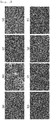
- FIG. 1 below is a view of the surface of the steel sheet after performing the surface modification with a scanning electron microscope (SEM).
- SEM scanning electron microscope
- Comparative example 5 below which shows a surface of a general steel sheet before the mirror polishing is performed.
- (a), (b), (c), and (d) of FIG. 1 are surface modified under the conditions of Comparative Examples 1 to 4 in Table 1, respectively, and (e), (f), and (g) are surface modified under the conditions of Inventive Examples 1 to 3, respectively.
- Hot-dip galvanizing was performed on a base steel sheet having roughness of Table 1.
- the hot-dip galvanizing was performed by immersing in a Zn plating bath containing 0.1 to 0.3 wt% of Al at a plating bath temperature of 440 to 480°C, and then by adjusting a plating amount to 160g/m' through an air knife, and by cooling it at a cooling rate of 7°C/s, such that a hot-dip galvanized steel sheet was prepared.
- the size of the sequins are all formed to be 150 ⁇ m or less, so that the surface is beautiful, and shows various orientations, so that it can be seen that low- temperature bonding brittleness is excellent.
Landscapes
- Chemical & Material Sciences (AREA)
- Engineering & Computer Science (AREA)
- Mechanical Engineering (AREA)
- Organic Chemistry (AREA)
- Materials Engineering (AREA)
- Metallurgy (AREA)
- Chemical Kinetics & Catalysis (AREA)
- Physics & Mathematics (AREA)
- Crystallography & Structural Chemistry (AREA)
- Thermal Sciences (AREA)
- Optics & Photonics (AREA)
- Plasma & Fusion (AREA)
- Geometry (AREA)
- Coating With Molten Metal (AREA)
Abstract
Description
- The present disclosure relates to a hot-dip galvanized steel sheet used in home appliances, automobiles, and the like, and more particularly, to a hot-dip galvanized steel sheet having excellent surface appearance and low-temperature bonding brittleness.
- A steel sheet used in automobiles, or the like, should have excellent resistance to external corrosive environments and have an attractive steel sheet surface. For this demand, a hot-dip galvanized steel sheet has emerged. The hot-dip galvanized steel sheet is a product in which metal zinc is plated on a steel sheet, and is a steel sheet with improved corrosion resistance through a sacrificial zinc method, and is widely used in home appliances, automobiles, or the like.
- Due to the characteristics of home appliances and automobile products, there should be no foreign matter on surfaces thereof, it should have an attractive appearance, and other stains or color differences should not appear on the surfaces thereof even after painting. This characteristic is determined by grains generated during a solidification process of zinc during a plating process of the hot-dip galvanized steel sheet. Unlike grains of other metals, zinc grains tend to develop a dendritic phase when solidified, and exhibit a geometric pattern. The grains of zinc are separately called spangles, and as the spangles are larger, a boundary between the grains and (other) grains becomes clear, a dendrite structure in each grain is strongly generated, resulting in poor surface appearance.
- Therefore, in order to improve the surface appearance of the plated product, it is necessary to reduce the size of the spangles. As a method for reducing the size of zinc grain, it is common to reduce the zinc grain on the surface by increasing a cooling rate of a strip immediately after plating.
- In order to increase the cooling rate, there is a method of adjusting a flow amount and a flow rate of a cooler located at an upper end of an air knife immediately after plating. However, although the size of the spangles is reduced with this method, strong external force is applied to non-solidified liquid zinc, so that the thickness of the plating layer may become uneven, and may cause defects such as flow patterns.
- Meanwhile, as a method for controlling the cooling rate, a method of cooling by spraying droplets containing an endothermic reaction such as phosphate (Patent Document 1). This is a method of rapidly cooling a plating layer using heat of vaporization of liquid and an endothermic reaction of phosphate to refine the grains of the plating layer. This method is effective in miniaturizing the spangles, but an operation of a liquid spraying device is complicated, and there is a disadvantage that surface defects occur when droplets are sprayed unevenly. In addition, a method of reducing the spangles of a plating layer by artificially increasing a solidification rate of the plating layer has a disadvantage that a (0001) surface of zinc is uniformly arranged on the steel sheet, resulting in deteriorating low-temperature bonding brittleness. That is, zinc has a hexagonal closet packing (HCP) structure, and has a limited slip system, and when it is tensioned on a C-axis, even twin deformation does not occurs, so it is vulnerable to tension. Moreover, depending on the temperature, activity of the destruction mechanisms of zinc metal varies, and at room temperature or higher, brittleness, grain boundary, and ductile fracture are mixed, but only brittleness (cleavage) fracturing mainly occurs at low temperatures, so that destruction by external impact may easily occur. When the zinc is uniformly arranged on the (0001) plane and parallel to the substrate, a tensile stress acts as the C-axis of the plating layer in a low-temperature bonding brittleness test, and a twin operation of zinc is difficult, so that there is a problem in which ductility of the plating layer is reduced and brittleness fracturing occurs significantly.
- (Patent Document 1)
Korean Patent Registration No. 10-0742832 - An aspect of the present disclosure is to provide a hot-dip galvanized steel sheet having an attractive surface by miniaturizing zinc grain after hot-dip galvanizing is performed through surface modification of a base steel sheet of the present disclosure, and having excellent low-temperature bonding brittleness and a method of manufacturing the same.
- Technical problems to be achieved in the present disclosure are not limited to the technical problems mentioned above, and other technical problems, not mentioned, will be clearly understood by those skilled in the art from the following description.
- According to an aspect of the present disclosure, a hot-dip galvanized steel sheet having excellent surface appearance and low-temperature bonding brittleness includes a base steel sheet; and a hot-dip galvanized layer formed on the base steel sheet, wherein a surface of the base steel sheet has a centerline average roughness (Ra) of 0.3 or more, a roughness skewness (Rsk) of -1 or less, and a roughness kurtosis (Rku) of 6 or more.
- According to another aspect of the present disclosure, a method of manufacturing a hot-dip galvanized steel sheet having excellent surface appearance and low-temperature bonding brittleness includes operations of: preparing a base steel sheet; forming unevenness having a centerline average roughness (Ra) of 0.3 or more, a roughness skewness (Rsk) of -1 or less, and a roughness kurtosis (Rku) of 6 or more on a surface of the base steel sheet; and manufacturing a hot-dip galvanized steel sheet, by immersing the base steel sheet with the unevenness formed in a hot-dip galvanizing bath.
- According to the present disclosure, a hot-dip galvanized steel sheet of the present disclosure may have fine zinc grains (spangles) in the plating layer, so that an attractive surface appearance may be secured. A (0001) plane of the zinc grain is randomly oriented to have excellent low-temperature bonding brittleness.
- Further, according to the present disclosure, a separate quenching process or a droplet spraying device, or the like, is not required, and a quality of the galvanized steel sheet can be improved simply and efficiently.
-
-
FIG. 1 is an SEM photograph of a surface of a base steel sheet of Comparative Examples and Examples disclosed in embodiments of the present disclosure. -
FIG. 2 is an SEM photograph of a surface of a plating layer after the base steel sheet ofFIG. 1 is subject to hot-dip galvanizing. -
FIG. 3 is an EBSD (Electron Backscattered Diffraction) photograph of Comparative Examples and Examples disclosed in embodiments of the present disclosure. -
FIGS. 4A and 4B are EBSD IPF map photographs of - The inventors of the present disclosure have found that in a process of manufacturing a hot-dip galvanized steel sheet, generation of nucleation of zinc changes according to a surface shape of the a base steel sheet. Accordingly, it has been recognized that zinc grains (spangles) of a plating layer can be controlled through surface modification of the base steel sheet without separate control of a cooling process after hot-dip galvanizing, thereby resulting in completion of the present disclosure.
- Hereinafter, the present disclosure will be described in detail. First, a hot-dip galvanized steel sheet of the present disclosure will be described in detail.
- The hot-dip galvanized steel sheet of the present disclosure includes a base steel sheet and a hot-dip galvanized layer formed on the base steel sheet, and it is preferable that a surface of the base steel sheet has a centerline average roughness (Ra) of 0.3 or more, and a roughness skewness of -1 or less, and a roughness kurtosis (Rku) of 6 or more.
- A method of measuring roughness may be measured according to a method prescribed by the International Organization for Standardization (ISO), and the centerline average roughness (Ra) is an arithmetic average value for the height of the surface, and can describe the roughness of the overall surface. Meanwhile, roughness skewness (Rsk) is asymmetry of a roughness curve, and if the roughness skewness (Rsk) exceeds 0, referring to a case in which there are many sharp peaks, and if it is less than 0, referring to a form in which there are many valleys. Roughness kurtosis (Rku) is a value representing sharpness of the roughness curve, and when the roughness kurtosis (Rku) is high based on 3, it means that it is sharply formed, and when it is lower than 3, it means a blunt shape.
- When average roughness (Ra) of a centerline of a surface of the base steel sheet is less than 0.3, surface friction is low and slipping occurs when driving a roll, negatively affecting operating conditions such as meandering. Accordingly, in the present disclosure, an average centerline average roughness of the surface of the base steel sheet may be limited to 0.3 or more, the preferred average roughness (Ra) of the centerline may be 0.4 or more. In the present disclosure, an upper limit of the average roughness (Ra) of the centerline of the surface of the base steel sheet is not particularly limited, but it is preferable that it does not exceed 2.7 depending on operating situations.
- When the roughness skewness (Rsk) of the surface of the base steel sheet exceeds -1, a region that can act as an oil pocket, is small, so frictional force during processing may increase, thereby reducing workability. Accordingly, in the present disclosure, the roughness skewness (Rsk) of the surface of the base steel sheet may be limited to -1 or less, and a preferable roughness skewness (Rsk) may be -1.5 or less. Meanwhile, in the present disclosure, a lower limit of the roughness skewness (Rsk) on the surface of the base steel sheet, but when the roughness skewness (Rsk) value is less than -5, it is difficult to expect further effects, so it is preferable that the roughness skewness (Rsk) value is -5 or more. A more preferable lower limit of the roughness skewness (Rsk) may be -4.
- When roughness kurtosis (Rku) of a surface of the base steel sheet is less than 6, the surface may be formed in a blunt form, and an effect as a nucleation site for miniaturizing spangles decreases, which is not preferable. Accordingly, in the present disclosure, the roughness kurtosis (Rku) of the surface of the base steel sheet may be limited to 6 or more. A preferred roughness kurtosis (Rku) may be 7 or more. Meanwhile, in the present disclosure, an upper limit of the roughness kurtosis (Rku) may not be particularly limited, but when the roughness kurtosis (Rku) value exceeds 50, it is difficult to expect any further effects, so the roughness kurtosis (Rku) is preferably 50 or less.
- In the hot-dip galvanized steel sheet of the present disclosure, the size of the zinc grains (spangles) in the plating layer is preferably 150 µm or less.
- The (0001) plane orientation of the zinc grains in the plating layer can be confirmed through an inverse pole figure (IPF) map analysis on the surface measured by EBSD (Electron Backscattered Diffraction). For example, it can be described through the attached (a) and (b) of
FIG. 4 . (a) and (b) ofFIG. 4 are photographs of EBSD IPF maps of Comparative Example 1 and Inventive Example 1 of Embodiments to be described later, respectively. As shown in (a) ofFIG. 4 , in Comparative Example 1, spangles are concentrated on the (0001) plane, but in Inventive Example 1 shown in (b), it can be confirmed that spangles are evenly distributed on the other side other than the (0001) plane. - When a crack location where brittleness fracturing of the plating layer occurs at low temperatures is observed, it is known that destruction of the plating layer occurs at a grain boundary of the plating layer or at an interface between base iron and the plating layer. The reason for which fracturing begins at the grain boundary or interface is that when zinc solidifies, solidification shrinkage may occur, resulting in a volume difference (about 8.3%), and thus voids may occur at the grain boundary after hot-dip plating. In this case, since a coefficient of thermal expansion in a C-axis direction is about 5 times larger than in an A-axis direction, a probability of occurrence of a misfit between the base iron and the plating layer increases as it is arranged on the (0001) plane. In addition, as preferred orientation is accumulated on the (0001) plane, a bulk modulus and a Young's modulus increase, and relatively high stress is applied to the interface between the plating layer and the base iron or the grain boundary accumulated on the (0001) plane, such that fracturing is likely to occur. Therefore, the smaller the spangles and the random orientation of the (0001) plane, the better the resistance to low-temperature bonding brittleness becomes, and the surface looks attractive.
- Meanwhile, the type of the base steel sheet is not particularly limited, and a steel sheet to which hot-dip galvanization can be applied in the technical field to which the present disclosure belongs is sufficient. That is, the type or shape of the base steel sheet of the present disclosure is not particularly limited, such as mild steel, high-strength steel, a hot-rolled steel sheet, a cold-rolled steel sheet, a wire rod, and the like.
- Next, an example of manufacturing the hot-dip galvanized steel sheet according to the present disclosure will be described in detail.
- In order to manufacture the hot-dip galvanized steel sheet of the present disclosure, a base steel sheet is prepared, and unevenness is formed on a surface of the base steel sheet. Thereafter, it is preferable to perform plating by immersing the base steel sheet on which the unevenness is formed in a hot-dip galvanizing bath. The unevenness is formed on the surface of the base steel sheet such that average roughness (Ra) is 0.3 or more, roughness skewness (Rsk) is -1 or less, and roughness kurtosis (Rku) is 6 or more. A method of forming the unevenness is not particularly limited, but as the method of forming the unevenness, there are methods of a method of directly forming the unevenness on the surface of the base steel sheet, a method of preparing a roll in which the unevenness of the above conditions are formed, and passing the base steel sheet between the rolls to transfer the roughness formed on the surface of the roll to the surface of the steel sheet, and the like. As a technology for manufacturing the roll in which the irregularities are formed therein, there may be a method of attaching a separate material having the unevenness formed on a surface of the roll, and there may be a method of directly forming unevenness on the surface of the roll. As the method of directly forming the unevenness on the surface of the roll, methods such as Shot Blasting Texturing (SBT), Laser Beam Texturing (LBT), Electrical Discharging Texturing (EDT), Electron Beam Texturing (EBT) may be used.
- SBT is a method of physically forming unevenness on the surface of the roll by spraying a fine grit, or the like, on the surface of the roll, and LBT or EBT is a method of forming unevenness on the surface of the roll by irradiating a laser beam or an electron beam. Meanwhile, EDT is called electric discharge processing, and is a method of forming a high voltage potential between the roll and an external electrode to form unevenness due to electric sparks on the surface of the roll.
- A hot-dip galvanizing layer is formed on a surface of the base steel sheet on which the unevenness is formed as described above. As a method of forming the hot-dip galvanizing layer, a method of immersing the base steel sheet in a hot-dip galvanizing bath, and then adjusting an amount of plating and solidifying it, is preferable.
- First, the base steel sheet on which the unevenness is formed may be subject to an annealing heat treatment process for controlling a material of the steel sheet and removing oxides on the surface thereof. The annealing heat treatment is maintained at 750 to 950°C for 30 to 180 seconds in a nitrogen atmosphere containing 5 to 40% by volume of hydrogen, and then cooled to 450 to 550°C.
- Thereafter, the base steel sheet is immersed in a galvanizing bath, passing through a sink roll, and coming out of the galvanizing bath. In this case, liquid zinc on the surface of the base steel sheet is adjusted to a fixed adhesion amount by a flow amount and a flow rate of gas sprayed from an air knife, and is cooled to 300°C or less through a cooler installed at an upper end of the air knife. The plated steel sheet manufactured through the plating process may have fine spangles and secure random orientation.
- Hereinafter, the present disclosure will be described in more detail through examples. However, it is necessary to note that the following examples are only intended to illustrate the present disclosure in more detail and are not intended to limit the scope of the present disclosure. This is because the scope of the present disclosure is determined by matters described in the claims and able to be reasonably inferred therefrom.
- Low-carbon mild steel having a tensile strength of 300 MPa or less was prepared as a base steel sheet, and mirror polishing was performed so that there was no unevenness on a surface thereof for comparison of the surface conditions.
- After the polishing was performed, surface irregularities were formed on the surface of the steel sheet so as to be Rsk, Rku, and Ra shown in Table 1 below to prepare a steel sheet. Surface modification of the steel sheet was performed by attaching a sandpaper between rolls and passing the steel sheet through the rolls.
-
FIG. 1 below is a view of the surface of the steel sheet after performing the surface modification with a scanning electron microscope (SEM). (h) ofFIG. 1 is Comparative example 5 below, which shows a surface of a general steel sheet before the mirror polishing is performed. (a), (b), (c), and (d) ofFIG. 1 are surface modified under the conditions of Comparative Examples 1 to 4 in Table 1, respectively, and (e), (f), and (g) are surface modified under the conditions of Inventive Examples 1 to 3, respectively.[Table 1] Classifica tion Roughness of base steel sheet Characteristic of plating layer Low-temperatur e bonding brittlenes s Rsk Rku Ra Size of spangle (0001) Oritentati on CE 1 0.43 2.68 0.09 928 Very strong Peeling CE 2 -1.51 5.89 6.75 192 Strong Peeling CE 3 -1.04 25.76 0.24 191 Intermedia te Partial peeling CE 4 -0.07 5.69 0.14 251 weak Partial peeling IE 1 -4.07 29.03 0.42 142 Random Non-peeling IE 2 -2.4 13.57 0.84 96 Random Non-peeling IE 3 -1.52 7.18 1.05 84 Random Non-peeling CE 5 -0.15 1. 95 1.25 293 strong Peeling - Hot-dip galvanizing was performed on a base steel sheet having roughness of Table 1. In this case, the hot-dip galvanizing was performed by immersing in a Zn plating bath containing 0.1 to 0.3 wt% of Al at a plating bath temperature of 440 to 480°C, and then by adjusting a plating amount to 160g/m' through an air knife, and by cooling it at a cooling rate of 7°C/s, such that a hot-dip galvanized steel sheet was prepared.
- A characteristic of a plating layer of the hot-dip galvanized steel sheet thus prepared were observed, and result thereof were shown together in Table 1 above. In the Table 1, a spangle size was measured through an optical microscope SEM. Meanwhile, an (0001) plane orientation was analyzed using EBSD (Electro Backscattered Diffraction).
- (a) to (h) of
FIG. 2 below are optical micrographs observing the surfaces of the plating layers of Comparative Examples 1 to 4, Inventive Examples 1 to 3, and Comparative Example 5, respectively. - (a) to (f) of
FIG. 3 are photographs obtained by measuring the surface of the plating layer with EBSD to confirm the orientation of Comparative Examples 1 to 3 and Inventive Examples 1 to 3, respectively, and a region having different shades on a photograph means a region having - In the Table 1, low-temperature bonding brittleness was evaluated using an Impact Peel Test. Specifically, after attaching the two specimens with an adhesive, and after forcibly removing the specimen by impact of the steel sheet under a condition of -45°C, if peeling occurs in the adhesive, it can be evaluated as "non-peeling", and if peeling occurs at the interface between the plating layer and base iron, it was evaluated as "peeling" or "partial peeling"
- As can be seen from the results of Table 1 and
FIGS. 2 to 4 , in Inventive Examples 1 to 3 satisfying the conditions presented in the present disclosure, the size of the sequins are all formed to be 150 µm or less, so that the surface is beautiful, and shows various orientations, so that it can be seen that low- temperature bonding brittleness is excellent. - In comparison thereto, in Comparative Examples 1 to 5, the roughness of the surface of the base steel sheet was out of the scope of the present disclosure, so that it can be confirmed that the size of the zinc grains was very coarse, and the orientation of the (0001) plane was strong, and it can be seen that the surface appearance and low-temperature bonding brittleness is poor.
Claims (6)
- A hot-dip galvanized steel sheet having excellent surface appearance and low-temperature bonding brittleness, comprising:a base steel sheet; anda hot-dip galvanized layer formed on the base steel sheet,wherein a surface of the base steel sheet has a centerline average roughness (Ra) of 0.3 or more, a roughness skewness (Rsk) of -1 or less, and a roughness kurtosis (Rku) of 6 or more.
- The hot-dip galvanized steel sheet having excellent surface appearance and low-temperature bonding brittleness of claim 1, wherein a zinc grain (spangle) size of the hot-dip galvanized layer is 150 µm or less.
- A method of manufacturing a hot-dip galvanized steel sheet having excellent surface appearance and low-temperature bonding brittleness, comprising operations of:preparing a base steel sheet;forming unevenness having a centerline average roughness (Ra) of 0.3 or more, a roughness skewness (Rsk) of -1 or less, and a roughness kurtosis (Rku) of 6 or more on a surface of the base steel sheet; andmanufacturing a hot-dip galvanized layer by immersing the base steel sheet with the unevenness formed in a hot-dip galvanizing bath.
- The method of manufacturing a hot-dip galvanized steel sheet having excellent surface appearance and low-temperature bonding brittleness of claim 3, wherein in the operation of forming the unevenness, it is formed by passing the base steel sheet between rolls on which the unevenness is formed.
- The method of manufacturing a hot-dip galvanized steel sheet having excellent surface appearance and low-temperature bonding brittleness of claim 4, wherein the unevenness formed on the roll is formed by any one of SBT (Shot Blasting Texturing), LBT (Laser Beam Texturing), EDT (Electrical Discharging Texturing), and EBT (Electron Beam Texturing).
- The method of manufacturing a hot-dip galvanized steel sheet having excellent surface appearance and low-temperature bonding brittleness of claim 3, further comprising an operation of performing annealing heat-treatment of the base steel sheet for 30 to 180 seconds at 750 to 950 °C in a nitrogen atmosphere containing 5 to 40 vol% of hydrogen, before being immersed in the hot-dip galvanizing bath.
Applications Claiming Priority (2)
| Application Number | Priority Date | Filing Date | Title |
|---|---|---|---|
| KR1020180151371A KR102178683B1 (en) | 2018-11-29 | 2018-11-29 | Hot-dip galvanized steel sheet having excellent surface appearance and low temperature bonding brittlness |
| PCT/KR2019/016526 WO2020111798A1 (en) | 2018-11-29 | 2019-11-28 | Hot-dip galvanized steel sheet having excellent surface appearance and low-temperature bonding brittleness |
Publications (4)
| Publication Number | Publication Date |
|---|---|
| EP3889308A1 true EP3889308A1 (en) | 2021-10-06 |
| EP3889308A4 EP3889308A4 (en) | 2022-01-12 |
| EP3889308C0 EP3889308C0 (en) | 2025-12-31 |
| EP3889308B1 EP3889308B1 (en) | 2025-12-31 |
Family
ID=70853570
Family Applications (1)
| Application Number | Title | Priority Date | Filing Date |
|---|---|---|---|
| EP19889501.3A Active EP3889308B1 (en) | 2018-11-29 | 2019-11-28 | Hot-dip galvanized steel sheet with excellent surface appearance and low-temperature bonding brittleness |
Country Status (6)
| Country | Link |
|---|---|
| US (1) | US11801665B2 (en) |
| EP (1) | EP3889308B1 (en) |
| JP (1) | JP7244727B2 (en) |
| KR (1) | KR102178683B1 (en) |
| CN (1) | CN113166907B (en) |
| WO (1) | WO2020111798A1 (en) |
Family Cites Families (19)
| Publication number | Priority date | Publication date | Assignee | Title |
|---|---|---|---|---|
| JPH11246957A (en) * | 1998-03-05 | 1999-09-14 | Kawasaki Steel Corp | Alloyed hot-dip galvanized steel sheet and method for producing the same |
| EP1327697A4 (en) * | 2000-10-19 | 2009-11-11 | Jfe Steel Corp | Zinc-plated steel sheet and method for preparation thereof, and method for manufacturing formed article by press working |
| JP3797478B2 (en) | 2001-11-01 | 2006-07-19 | Jfeスチール株式会社 | Alloy hot-dip galvanized steel sheet |
| MX2007007844A (en) | 2004-12-28 | 2008-02-19 | Posco | Galvanized steel-sheet without spangle, manufacturing method thereof and device used therefor. |
| JP2006193776A (en) | 2005-01-12 | 2006-07-27 | Nisshin Steel Co Ltd | STEEL SHEET PLATED WITH Zn-Al-Mg ALLOY SUPERIOR IN SLIDABILITY, AND SLIDING MEMBER |
| JP4919747B2 (en) * | 2006-09-15 | 2012-04-18 | 日新製鋼株式会社 | Manufacturing method of hot-dip galvanized steel sheet with suppressed spangle pattern |
| JP2009052080A (en) * | 2007-08-27 | 2009-03-12 | Jfe Steel Kk | Surface-treated steel sheet with excellent corrosion resistance and conductivity |
| CN101842518B (en) | 2007-10-31 | 2012-07-18 | 杰富意钢铁株式会社 | Surface-treated steel sheet, manufacturing method thereof, and resin-coated steel sheet |
| JP5195271B2 (en) * | 2008-10-21 | 2013-05-08 | Jfeスチール株式会社 | Tin-plated steel sheet and method for producing the same |
| JP5816703B2 (en) | 2011-01-20 | 2015-11-18 | ポスコ | Hot-dip galvanized steel sheet with excellent deep drawability and extremely low temperature joint brittleness resistance and method for producing the same |
| JP5523375B2 (en) * | 2011-03-01 | 2014-06-18 | 新日鐵住金株式会社 | Roll in molten metal plating bath and method for producing roll in molten metal plating bath |
| KR20130026131A (en) * | 2011-09-05 | 2013-03-13 | 주식회사 포스코 | Galvanized steel sheet and methdo for manufacturing the same |
| JP5355803B1 (en) | 2013-01-18 | 2013-11-27 | 日新製鋼株式会社 | Painted metal preform, composite, and production method thereof |
| JP5850005B2 (en) * | 2013-08-12 | 2016-02-03 | Jfeスチール株式会社 | Method for producing hot-dip galvanized steel sheet |
| KR101677390B1 (en) | 2015-09-23 | 2016-11-18 | 주식회사 포스코 | Method for manufacturing coated steel sheet having excellent surface quality and press moldability and coated steel sheet produced using the same |
| KR102098515B1 (en) * | 2015-12-22 | 2020-04-08 | 주식회사 포스코 | Hot-dip galvanized steel sheet with excellent surface quality and low-temperature brittle fracture resistance |
| KR102075182B1 (en) | 2015-12-24 | 2020-02-10 | 주식회사 포스코 | Hot dip zinc alloy plated high strength steel material having excellent plating property and method for manufacturing same |
| KR101830549B1 (en) | 2016-12-14 | 2018-02-20 | 주식회사 포스코 | Method for manufacturing galvanized steel sheet having excellent press moldability and image clarity and galvanized steel sheet produced using same |
| CN108559936B (en) * | 2018-04-23 | 2020-10-02 | 黄石山力科技股份有限公司 | Method for producing galvanized sheet by using substrate with patterns and galvanized sheet |
-
2018
- 2018-11-29 KR KR1020180151371A patent/KR102178683B1/en active Active
-
2019
- 2019-11-28 WO PCT/KR2019/016526 patent/WO2020111798A1/en not_active Ceased
- 2019-11-28 US US17/297,266 patent/US11801665B2/en active Active
- 2019-11-28 CN CN201980079329.2A patent/CN113166907B/en active Active
- 2019-11-28 EP EP19889501.3A patent/EP3889308B1/en active Active
- 2019-11-28 JP JP2021530079A patent/JP7244727B2/en active Active
Also Published As
| Publication number | Publication date |
|---|---|
| EP3889308C0 (en) | 2025-12-31 |
| KR102178683B1 (en) | 2020-11-13 |
| KR20200064814A (en) | 2020-06-08 |
| JP2022509656A (en) | 2022-01-21 |
| CN113166907B (en) | 2024-07-26 |
| EP3889308B1 (en) | 2025-12-31 |
| WO2020111798A1 (en) | 2020-06-04 |
| CN113166907A (en) | 2021-07-23 |
| US20220024181A1 (en) | 2022-01-27 |
| JP7244727B2 (en) | 2023-03-23 |
| US11801665B2 (en) | 2023-10-31 |
Similar Documents
| Publication | Publication Date | Title |
|---|---|---|
| CN103492605B (en) | The high-strength parts of the hot forming of corrosion resistance excellent and manufacture method thereof after application | |
| EP2794950B1 (en) | Hot-dip galvanized steel sheet having excellent adhesiveness at ultra-low temperatures and method of manufacturing the same | |
| JP3732141B2 (en) | Hot-dip galvanized-Al alloy-plated steel sheet with excellent corrosion resistance after processing and method for producing the same | |
| EP3396008B1 (en) | Hot-dip galvanized steel sheet with excellent surface quality and resistance to low temperature brittle fracture | |
| CN103429781B (en) | There is hot-dip galvanized steel sheet of excellent deep drawability and ultralow-temp adhesive fragility and preparation method thereof | |
| CN111511954B (en) | Hot-dip galvanized steel sheet having excellent low-temperature adhesion and workability, and method for producing same | |
| CN111094615B (en) | Steel sheet having excellent distinctness of image after coating and method for producing same | |
| EP3889308B1 (en) | Hot-dip galvanized steel sheet with excellent surface appearance and low-temperature bonding brittleness | |
| CN114829666B (en) | Aluminum-based alloy-plated steel sheet excellent in workability and corrosion resistance, and method for producing same | |
| KR101657843B1 (en) | Zn ALLOY PLATED STEEL SHEET HAVING EXCELLENT WELDABILITY AND PROCESSED PART CORROSION RESISTANCE AND METHOD FOR MANUFACTURING THE SAME | |
| KR101171449B1 (en) | Galvinized steel sheet having excellent deep drawing quality and ultra-low temperature bonding brittlness and method for manufacturing the same | |
| EP4079926A2 (en) | Aluminum alloy-plated steel sheet having excellent workability and corrosion resistance and method for manufacturing same | |
| JP3637702B2 (en) | Method for producing hot-dip galvanized steel sheet with excellent workability | |
| KR102871473B1 (en) | Zinc alloy plated steel and its manufacturing method |
Legal Events
| Date | Code | Title | Description |
|---|---|---|---|
| STAA | Information on the status of an ep patent application or granted ep patent |
Free format text: STATUS: THE INTERNATIONAL PUBLICATION HAS BEEN MADE |
|
| PUAI | Public reference made under article 153(3) epc to a published international application that has entered the european phase |
Free format text: ORIGINAL CODE: 0009012 |
|
| STAA | Information on the status of an ep patent application or granted ep patent |
Free format text: STATUS: REQUEST FOR EXAMINATION WAS MADE |
|
| 17P | Request for examination filed |
Effective date: 20210617 |
|
| AK | Designated contracting states |
Kind code of ref document: A1 Designated state(s): AL AT BE BG CH CY CZ DE DK EE ES FI FR GB GR HR HU IE IS IT LI LT LU LV MC MK MT NL NO PL PT RO RS SE SI SK SM TR |
|
| A4 | Supplementary search report drawn up and despatched |
Effective date: 20211210 |
|
| RIC1 | Information provided on ipc code assigned before grant |
Ipc: C23C 2/20 20060101ALI20211206BHEP Ipc: C23C 2/18 20060101ALI20211206BHEP Ipc: C23C 2/26 20060101ALI20211206BHEP Ipc: C23C 2/16 20060101ALI20211206BHEP Ipc: C21D 9/46 20060101ALI20211206BHEP Ipc: C21D 1/74 20060101ALI20211206BHEP Ipc: C23C 2/40 20060101ALI20211206BHEP Ipc: C23C 2/06 20060101ALI20211206BHEP Ipc: C23C 2/02 20060101AFI20211206BHEP |
|
| DAV | Request for validation of the european patent (deleted) | ||
| DAX | Request for extension of the european patent (deleted) | ||
| RAP3 | Party data changed (applicant data changed or rights of an application transferred) |
Owner name: POSCO HOLDINGS INC. |
|
| RAP1 | Party data changed (applicant data changed or rights of an application transferred) |
Owner name: POSCO CO., LTD |
|
| GRAP | Despatch of communication of intention to grant a patent |
Free format text: ORIGINAL CODE: EPIDOSNIGR1 |
|
| STAA | Information on the status of an ep patent application or granted ep patent |
Free format text: STATUS: GRANT OF PATENT IS INTENDED |
|
| RIC1 | Information provided on ipc code assigned before grant |
Ipc: C21D 1/26 20060101ALI20250527BHEP Ipc: C23C 2/20 20060101ALI20250527BHEP Ipc: C23C 2/18 20060101ALI20250527BHEP Ipc: C23C 2/26 20060101ALI20250527BHEP Ipc: C23C 2/16 20060101ALI20250527BHEP Ipc: C21D 9/46 20060101ALI20250527BHEP Ipc: C21D 1/74 20060101ALI20250527BHEP Ipc: C23C 2/40 20060101ALI20250527BHEP Ipc: C23C 2/06 20060101ALI20250527BHEP Ipc: C23C 2/02 20060101AFI20250527BHEP |
|
| INTG | Intention to grant announced |
Effective date: 20250624 |
|
| GRAS | Grant fee paid |
Free format text: ORIGINAL CODE: EPIDOSNIGR3 |
|
| GRAA | (expected) grant |
Free format text: ORIGINAL CODE: 0009210 |
|
| STAA | Information on the status of an ep patent application or granted ep patent |
Free format text: STATUS: THE PATENT HAS BEEN GRANTED |
|
| AK | Designated contracting states |
Kind code of ref document: B1 Designated state(s): AL AT BE BG CH CY CZ DE DK EE ES FI FR GB GR HR HU IE IS IT LI LT LU LV MC MK MT NL NO PL PT RO RS SE SI SK SM TR |
|
| REG | Reference to a national code |
Ref country code: CH Ref legal event code: F10 Free format text: ST27 STATUS EVENT CODE: U-0-0-F10-F00 (AS PROVIDED BY THE NATIONAL OFFICE) Effective date: 20251231 Ref country code: GB Ref legal event code: FG4D |
|
| REG | Reference to a national code |
Ref country code: DE Ref legal event code: R096 Ref document number: 602019079953 Country of ref document: DE |
|
| REG | Reference to a national code |
Ref country code: IE Ref legal event code: FG4D |
|
| U01 | Request for unitary effect filed |
Effective date: 20260128 |
|
| U07 | Unitary effect registered |
Designated state(s): AT BE BG DE DK EE FI FR IT LT LU LV MT NL PT RO SE SI Effective date: 20260203 |
|
| PG25 | Lapsed in a contracting state [announced via postgrant information from national office to epo] |
Ref country code: NO Free format text: LAPSE BECAUSE OF FAILURE TO SUBMIT A TRANSLATION OF THE DESCRIPTION OR TO PAY THE FEE WITHIN THE PRESCRIBED TIME-LIMIT Effective date: 20260331 |
|
| PG25 | Lapsed in a contracting state [announced via postgrant information from national office to epo] |
Ref country code: HR Free format text: LAPSE BECAUSE OF FAILURE TO SUBMIT A TRANSLATION OF THE DESCRIPTION OR TO PAY THE FEE WITHIN THE PRESCRIBED TIME-LIMIT Effective date: 20251231 |
|
| PG25 | Lapsed in a contracting state [announced via postgrant information from national office to epo] |
Ref country code: RS Free format text: LAPSE BECAUSE OF FAILURE TO SUBMIT A TRANSLATION OF THE DESCRIPTION OR TO PAY THE FEE WITHIN THE PRESCRIBED TIME-LIMIT Effective date: 20260331 |