EP3888923A1 - Conveyance control system, non-transitory computer-readable medium storing computer-readable instructions, and conveyance control device - Google Patents
Conveyance control system, non-transitory computer-readable medium storing computer-readable instructions, and conveyance control device Download PDFInfo
- Publication number
- EP3888923A1 EP3888923A1 EP21164885.2A EP21164885A EP3888923A1 EP 3888923 A1 EP3888923 A1 EP 3888923A1 EP 21164885 A EP21164885 A EP 21164885A EP 3888923 A1 EP3888923 A1 EP 3888923A1
- Authority
- EP
- European Patent Office
- Prior art keywords
- conveyance
- identification information
- printer
- processing device
- platen
- Prior art date
- Legal status (The legal status is an assumption and is not a legal conclusion. Google has not performed a legal analysis and makes no representation as to the accuracy of the status listed.)
- Granted
Links
Images




Classifications
-
- B—PERFORMING OPERATIONS; TRANSPORTING
- B41—PRINTING; LINING MACHINES; TYPEWRITERS; STAMPS
- B41J—TYPEWRITERS; SELECTIVE PRINTING MECHANISMS, i.e. MECHANISMS PRINTING OTHERWISE THAN FROM A FORME; CORRECTION OF TYPOGRAPHICAL ERRORS
- B41J3/00—Typewriters or selective printing or marking mechanisms characterised by the purpose for which they are constructed
- B41J3/407—Typewriters or selective printing or marking mechanisms characterised by the purpose for which they are constructed for marking on special material
- B41J3/4078—Printing on textile
-
- G—PHYSICS
- G06—COMPUTING OR CALCULATING; COUNTING
- G06K—GRAPHICAL DATA READING; PRESENTATION OF DATA; RECORD CARRIERS; HANDLING RECORD CARRIERS
- G06K15/00—Arrangements for producing a permanent visual presentation of the output data, e.g. computer output printers
- G06K15/02—Arrangements for producing a permanent visual presentation of the output data, e.g. computer output printers using printers
- G06K15/16—Means for paper feeding or form feeding
-
- B—PERFORMING OPERATIONS; TRANSPORTING
- B65—CONVEYING; PACKING; STORING; HANDLING THIN OR FILAMENTARY MATERIAL
- B65H—HANDLING THIN OR FILAMENTARY MATERIAL, e.g. SHEETS, WEBS, CABLES
- B65H7/00—Controlling article feeding, separating, pile-advancing, or associated apparatus, to take account of incorrect feeding, absence of articles, or presence of faulty articles
- B65H7/20—Controlling associated apparatus
-
- B—PERFORMING OPERATIONS; TRANSPORTING
- B41—PRINTING; LINING MACHINES; TYPEWRITERS; STAMPS
- B41J—TYPEWRITERS; SELECTIVE PRINTING MECHANISMS, i.e. MECHANISMS PRINTING OTHERWISE THAN FROM A FORME; CORRECTION OF TYPOGRAPHICAL ERRORS
- B41J11/00—Devices or arrangements of selective printing mechanisms, e.g. ink-jet printers or thermal printers, for supporting or handling copy material in sheet or web form
- B41J11/02—Platens
- B41J11/06—Flat page-size platens or smaller flat platens having a greater size than line-size platens
-
- B—PERFORMING OPERATIONS; TRANSPORTING
- B41—PRINTING; LINING MACHINES; TYPEWRITERS; STAMPS
- B41J—TYPEWRITERS; SELECTIVE PRINTING MECHANISMS, i.e. MECHANISMS PRINTING OTHERWISE THAN FROM A FORME; CORRECTION OF TYPOGRAPHICAL ERRORS
- B41J13/00—Devices or arrangements of selective printing mechanisms, e.g. ink-jet printers or thermal printers, specially adapted for supporting or handling copy material in short lengths, e.g. sheets
- B41J13/0009—Devices or arrangements of selective printing mechanisms, e.g. ink-jet printers or thermal printers, specially adapted for supporting or handling copy material in short lengths, e.g. sheets control of the transport of the copy material
-
- B—PERFORMING OPERATIONS; TRANSPORTING
- B41—PRINTING; LINING MACHINES; TYPEWRITERS; STAMPS
- B41J—TYPEWRITERS; SELECTIVE PRINTING MECHANISMS, i.e. MECHANISMS PRINTING OTHERWISE THAN FROM A FORME; CORRECTION OF TYPOGRAPHICAL ERRORS
- B41J13/00—Devices or arrangements of selective printing mechanisms, e.g. ink-jet printers or thermal printers, specially adapted for supporting or handling copy material in short lengths, e.g. sheets
- B41J13/009—Diverting sheets at a section where at least two sheet conveying paths converge, e.g. by a movable switching guide that blocks access to one conveying path and guides the sheet to another path, e.g. when a sheet conveying direction is reversed after printing on the front of the sheet has been finished and the sheet is guided to a sheet turning path for printing on the back
-
- G—PHYSICS
- G06—COMPUTING OR CALCULATING; COUNTING
- G06K—GRAPHICAL DATA READING; PRESENTATION OF DATA; RECORD CARRIERS; HANDLING RECORD CARRIERS
- G06K15/00—Arrangements for producing a permanent visual presentation of the output data, e.g. computer output printers
- G06K15/002—Interacting with the operator
-
- G—PHYSICS
- G06—COMPUTING OR CALCULATING; COUNTING
- G06K—GRAPHICAL DATA READING; PRESENTATION OF DATA; RECORD CARRIERS; HANDLING RECORD CARRIERS
- G06K15/00—Arrangements for producing a permanent visual presentation of the output data, e.g. computer output printers
- G06K15/02—Arrangements for producing a permanent visual presentation of the output data, e.g. computer output printers using printers
- G06K15/021—Adaptations for printing on specific media
Definitions
- the present invention relates to a conveyance control system, a non-transitory computer-readable medium storing computer-readable instructions, and a conveyance control device.
- Japanese Laid-Open Patent Publication No. 2015-183331 discloses a fabric printing device that includes a pretreatment agent application portion and a press portion that perform the pretreatment, a printing liquid ejection portion that performs printing, and a heater that performs the post-treatment.
- the fabric printing device conveys a tray, on which a medium to be printed is arranged, to the pretreatment agent application portion, the press portion, the printing liquid ejection portion, and the heater, in that order.
- the pretreatment agent application portion applies the pretreatment agent onto the medium to be printed.
- the press portion compresses the medium to be printed onto which the pretreatment agent has been applied, while heating the medium to be printed, and thus dries the pretreatment agent.
- the printing liquid ejection portion ejects the printing liquid onto the medium to be printed, and prints an image.
- the heater heats the medium to be printed onto which the printing liquid has been ejected.
- a system in which a plurality of processing devices are disposed latterly to a device that performs the pretreatment.
- it is required to convey the target object after the pretreatment to a processing device to be used for the processing, among the plurality of processing devices.
- conveyance paths are individually provided that can convey the target object after the pretreatment to each of the plurality of processing devices
- it is necessary for the system to select the conveyance path to convey the target object to the processing device to be used for the processing.
- the processing device it is necessary for the processing device to be used for the processing to be associated with the conveyance path that can convey the target object to the processing device to be used for the processing, and to be recognized.
- a conveyance control system includes a first conveyance portion and a second conveyance portion configured to convey a platen, a first printer provided in the first conveyance portion and configured to perform printing on a print medium held by the platen conveyed by the first conveyance portion, a second printer provided in the second conveyance portion and configured to perform printing on the print medium held by the platen conveyed by the second conveyance portion, a conveyance control portion communicably connected to the first printer and the second printer on the basis of a predetermined communication protocol, and configured to control the first conveyance portion and the second conveyance portion, and a storage portion configured to store first printer identification information and first conveyance identification information in association with each other, and to store second printer identification information and second conveyance identification information in association with each other, the first printer identification information being configured to identify the first printer on the basis of the communication protocol, the first conveyance identification information being configured to identify the first conveyance portion, the second printer identification information being configured to identify the second printer on the basis of the communication standard, and the second
- the conveyance control portion acquires, from the storage portion, the first conveyance identification information associated with the first printer identification information, and causes the first conveyance portion to convey the platen on the basis of the acquired first conveyance identification information.
- the conveyance control portion acquires, from the storage portion, the second conveyance identification information associated with the second printer identification information, and causes the second conveyance portion to convey the platen on the basis of the acquired second conveyance identification information.
- the conveyance control portion of the conveyance control system acquires, from the storage portion, the first conveyance identification information associated with the first printer identification information, and can convey the platen using the first conveyance portion, on the basis of the acquired first conveyance identification information.
- the conveyance control portion acquires, from the storage portion, the second conveyance identification information associated with the second printer identification information, and can convey the platen using the second conveyance portion, on the basis of the acquired second conveyance identification information.
- the conveyance control portion can convey a print medium to a printer to be used for the printing.
- the conveyance control system may include a first sensor configured to detect a presence of the platen in the first printer, and when the platen is detected by the first sensor, the first printer may transmit the first printer identification information to the conveyance control portion.
- the conveyance control portion can recognize that the printer provided in the first conveyance portion that has conveyed the platen is the first printer.
- the conveyance control portion of the conveyance control system may cause the first conveyance portion to convey the platen, and, after causing the first conveyance portion to convey the platen, the conveyance control portion may store, in the storage portion, the first printer identification information and the first conveyance identification information in association with each other, in accordance with receiving the first printer identification information from the first printer.
- the storage portion in the conveyance control system stores the first printer identification information and the first conveyance identification information in association with each other.
- the conveyance control portion can convey the platen using the first conveyance portion when the printing is next performed using the first printer.
- the conveyance control portion of the conveyance control system may cause the first conveyance portion to convey the platen, and, after causing the first conveyance portion to convey the platen, when the first printer identification information is received from the first printer, the conveyance control portion may compare the first printer identification information stored in the storage portion in association with the first conveyance identification information, with the first printer identification information received from the first printer.
- the conveyance control portion can compare the first printer identification information stored in the storage portion in association with the first conveyance identification information with the identification information of the first printer actually provided in the first conveyance portion, and can determine whether the two pieces of identification information match each other.
- the conveyance control system may include a second sensor configured to detect the presence of the platen in the second printer, and when the platen is detected by the second sensor, the second printer may transmit the second printer identification information to the conveyance control portion.
- the conveyance control portion can recognize that the printer provided in the second conveyance portion that has conveyed the platen is the second printer.
- the conveyance control system may further include a third conveyance portion, a printer being providable in the third conveyance portion, and the third conveyance portion being configured to convey the platen.
- the conveyance control portion may cause the third conveyance portion to convey the platen, and, after causing the third conveyance portion to convey the platen, when the printer identification information configured to identify the printer on the basis of the communication protocol is not received, the conveyance control portion may not store third conveyance identification information configured to identify the third conveyance portion in the storage portion in association with the printer identification information.
- the conveyance control portion can reduce a possibility that the relationship between the printer identification information and the conveyance identification information associated with each other and stored in the storage portion differs from the relationship between the printer actually provided in the conveyance portion and the conveyance portion.
- the conveyance control system may further include a display.
- the conveyance control portion may cause the display to display a related image, a first input area used to input the first printer identification information, and a second input area used to input the second printer identification information, the related image being an image in which a first printer image indicating the first printer is associated with a first conveyance image indicating the first conveyance portion and in which a second printer image indicating the second printer is associated with a second conveyance image indicating the second conveyance portion.
- the conveyance control portion may store, in the storage portion, the first printer identification information input to the first input area, in association with the first conveyance identification information.
- the conveyance control portion may store, in the storage portion, the second printer identification information input to the second input area, in association with the second conveyance identification information.
- the conveyance control portion causes the display to display the related image, the first input area, and the second input area.
- the conveyance control portion can store, in the storage portion, the first printer identification information input to the first input area in association with the first conveyance identification information, and the second printer identification information input to the second input area in association with the second conveyance identification information.
- the conveyance control portion of the conveyance control system may display the first input area in a first position at which a distance from the first printer image is shorter than a distance from the second printer image, and may display the second input area in a second position at which a distance from the second printer image is shorter than a distance from the first printer image.
- the conveyance control portion displays, on the display, the first input area closer to the first printer image than to the second printer image, and displays the second input area closer to the second printer image than to the first printer image.
- the conveyance control portion can display, the first input area to which the first printer identification information of the first printer is input and the second input area to which the second printer identification information of the second printer is input in an easily distinguishable manner.
- the conveyance control system may further include a pretreatment device configured to perform pretreatment on the print medium before printing by the printer.
- the storage portion may further store pretreatment device identification information configured to identify the pretreatment device on the basis of the communication protocol.
- a non-transitory computer-readable medium storing computer-readable instructions according to a second aspect of the present invention is a medium executed by a computer, the computer being communicably connected to a first processing device and a second processing device on the basis of a predetermined communication protocol, and controlling the first conveyance portion and the second conveyance portion, the first processing device being a processing device provided in a first conveyance portion conveying a holding portion holding a target object and being configured to perform processing on the target object held by the holding portion conveyed by the first conveyance portion, and the second processing device being the processing device provided in a second conveyance portion conveying the holding portion and being configured to perform processing on the target object held by the holding portion conveyed by the second conveyance portion, the instructions, when executed by the computer, causing the computer to perform processes including: acquiring, when the first processing device performs processing, first conveyance identification information associated with first processing device identification information, from a storage portion, and causing the first conveyance portion to convey the holding portion on the basis of the acquired first conveyance identification information,
- the non-transitory computer-readable medium storing the computer-readable instructions can cause the computer to acquire the first conveyance identification information associated with the first processing device identification information from the storage portion, and can cause the first conveyance portion to convey the holding portion on the basis of the acquired first conveyance identification information.
- the non-transitory computer-readable medium storing the computer-readable instructions can cause the computer to acquire the second conveyance identification information associated with the second processing device identification information from the storage portion, and can cause the second conveyance portion to convey the holding portion on the basis of the acquired second conveyance identification information.
- the computer can convey the target object to the processing device to be used for the processing.
- the non-transitory computer-readable medium storing computer-readable instructions may further store computer-readable instructions that cause the computer to perform processes including: causing the first conveyance portion to convey the holding portion; and, after causing the first conveyance portion to convey the holding portion, storing the first processing device identification information and the first conveyance identification information in association with each other in the storage portion, in accordance with receiving the first processing device identification information from the first processing device.
- the non-transitory computer-readable medium storing computer-readable instructions may further store computer-readable instructions that cause the computer to perform processes including: causing the first conveyance portion to convey the holding portion; and, after causing the first conveyance portion to convey the holding portion, when the first processing device identification information is received from the first processing device, comparing the first processing device identification information stored in the storage portion in association with the first conveyance identification information, with the first processing device identification information received from the first processing device.
- the non-transitory computer-readable medium storing computer-readable instructions may further store computer-readable instructions that cause the computer to perform a process including: causing a third conveyance portion to convey the holding portion, a processing device being providable in the third conveyance portion, and the third conveyance portion being configured to convey the holding portion. After causing the third conveyance portion to convey the holding portion, when the processing device identification information configured to identify the processing device on the basis of the communication protocol is not received, third conveyance identification information configured to identify the third conveyance portion is not stored in the storage portion in association with the processing device identification information.
- the non-transitory computer-readable medium storing computer-readable instructions may further store computer-readable instructions that cause the computer to perform processes including: displaying, on a display, a related image, a first input area used to input the first processing device identification information, and a second input area used to input the second processing device identification information, the related image being an image in which a first processing device image indicated the first processing device is associated with a first conveyance image indicating the first conveyance portion and in which a second processing device image indicating the second processing device is associated with a second conveyance image indicating the second conveyance portion; storing, in the storage portion, the first processing device identification information input to the first input area, in association with the first conveyance identification information; and storing, in the storage portion, the second processing device identification information input to the second input area, in association with the second conveyance identification information.
- the non-transitory computer-readable medium storing computer-readable instructions may further store computer-readable instructions that cause the computer to perform processes including: displaying the first input area in a first position at which a distance from the first processing device image is shorter than a distance from the second processing device image, and displaying the second input area in a second position at which a distance from the second processing device image is shorter than a distance from the first processing device image.
- a conveyance control device is a conveyance control device communicably connected to a first processing device and a second processing device on the basis of a predetermined communication protocol, and controls a first conveyance portion and a second conveyance portion, the first processing device being a processing device provided in the first conveyance portion conveying a holding portion holding a target object and being configured to perform processing on the target object held by the holding portion conveyed by the first conveyance portion, and the second processing device being the processing device provided in the second conveyance portion conveying the holding portion, and being configured to perform processing on the target object held by the holding portion conveyed by the second conveyance portion.
- the conveyance control device performs processes including: acquiring, when the first processing device performs processing, first conveyance identification information associated with first processing device identification information, from a storage portion, and causing the first conveyance portion to convey the holding portion on the basis of the acquired first conveyance identification information, the storage portion storing the first processing device identification information configured to identify the first processing device on the basis of the communication protocol in association with the first conveyance identification information configured to identify the first conveyance portion and storing second processing device identification information configured to identify the second processing device on the basis of the communication protocol in association with second conveyance identification information configured to identify the second conveyance portion; and acquiring, when the second processing device performs processing, the second conveyance identification information associated with the second processing device identification information, from the storage portion, and causing the second conveyance portion to convey the holding portion on the basis of the acquired second conveyance identification information.
- the conveyance control device can acquire the first conveyance identification information associated with the first processing device identification information from the storage portion, and can cause the first conveyance portion to convey the holding portion on the basis of the acquired first conveyance identification information.
- the conveyance control device can acquire the second conveyance identification information associated with the second processing device identification information from the storage portion, and can cause the second conveyance portion to convey the holding portion on the basis of the acquired second conveyance identification information.
- the conveyance control portion can convey the target obj ect to the processing device to be used for the processing.
- a conveyance control system 1 shown in FIG. 1 is a system that sequentially performs pretreatment, print processing, and post-treatment on a print medium held by a platen 50 as a holding portion while conveying the platen 50.
- An example of the print medium is a cloth P, such as a T-shirt.
- the material of the cloth P is cotton, polyester, a mixture of cotton and polyester, or the like.
- the conveyance control system 1 is provided with a platen conveyance mechanism 10, pretreatment devices 2A, 2B, 2C, and 2D (hereinafter, when they are not distinguished from each other, collectively referred to as a "pretreatment device 20" or “pretreatment devices 20"), printers 31A, 32A, 33A, 31B, 32B, 33B, 31C, 32C, 33C, 31D, 32D, and 33D (hereinafter, when they are not distinguished from each other, collectively referred to as a "printer 30" or “printers 30"), post-treatment devices 4A, 4B, 4C, and 4D (hereinafter, when they are not distinguished from each other, collectively referred to as a "post-treatment device 40" or “post-treatment devices 40"), and a PC 5.
- pretreatment device 20 or “pretreatment devices 20”
- printers 31A, 32A, 33A, 31B, 32B, 33B, 31C, 32C, 33C, 31D, 32D, and 33D herein
- the platen conveyance mechanism 10 is provided with at least lanes 81, 82, 83, and 84 (hereinafter, when they are not distinguished from each other, collectively referred to as "lanes 80"), a shipment line 201, return lines 204 and 205, and conveyance mechanisms 91A, 92A, 93A, 91B, 92B, 93B, 91C, 92C, 93C, 91D, 92D, and 93D (hereinafter, when they are not distinguished from each other, collectively referred to as "conveyance mechanisms 90").
- the shipment line 201 is positioned at the front of the conveyance control system 1 and extends in the left-right direction.
- the shipment line 201 conveys the platen 50 toward the lanes 81 to 84 to be described later.
- the shipment line 201 is provided with conveyance mechanisms 11, 12, 13, 22, and 23 in that order from the left side. Each of the conveyance mechanisms 11, 12, 13, 22, and 23 extends in the left-right direction.
- the conveyance mechanism 11 is provided with a preparation position 110.
- the preparation position 110 is a position at which the cloth P is set on the platen 50.
- the conveyance mechanisms 11, 12, 13, 22, and 23 each convey the platen 50 in the rightward direction.
- the return line 204 is positioned at the rear of the conveyance control system 1 and extends in the left-right direction.
- the return line 204 conveys the platen 50 received from each of the lanes 81 to 84.
- the return line 204 is provided with conveyance mechanisms 28, 27, 26, 25, and 24 in that order from the left side.
- Each of the conveyance mechanisms 28, 27, 26, 25, and 24 extends in the left-right direction and conveys the platen 50 in the leftward direction.
- the return line 205 is provided with a conveyance mechanism 29.
- the return line 205 conveys the platen 50 received from the return line 204 forward toward the left end of the shipment line 201.
- the front end of the lane 81 is disposed between the conveyance mechanisms 11 and 12, and the rear end of the lane 81 is disposed between the conveyance mechanisms 27 and 28.
- the front end of the lane 82 is disposed between the conveyance mechanisms 12 and 13, and the rear end of the lane 82 is disposed between the conveyance mechanisms 26 and 27.
- the front end of the lane 83 is disposed between the conveyance mechanisms 13 and 22, and the rear end of the lane 83 is disposed between the conveyance mechanisms 25 and 26.
- the front end of the lane 84 is disposed between the conveyance mechanisms 22 and 23, and the rear end of the lane 84 is disposed between the conveyance mechanisms 24 and 25.
- Each of the lanes 81 to 84 extends in the front-rear direction and conveys the platen 50 in the rearward direction.
- the printers 31A, 32A, and 33A are aligned in the front-rear direction to the left of the lane 81.
- the conveyance mechanisms 91A, 92A, and 93A that extend to the left from the lane 81 convey the platen 50 between the lane 81 and the printers 31A, 32A, and 33A.
- the printers 31B, 32B, and 33B are aligned in the front-rear direction to the right of the lane 82.
- the conveyance mechanisms 91B, 92B, and 93B that extend to the right from the lane 82 convey the platen 50 between the lane 82 and the printers 31B, 32B, and 33B.
- the printers 31C, 32C, and 33C are aligned in the front-rear direction to the left of the lane 83.
- the conveyance mechanisms 91C, 92C, and 93C that extend to the left from the lane 83 convey the platen 50 between the lane 83 and the printers 31C, 32C, and 33C.
- the printers 31D, 32D, and 33D are aligned in the front-rear direction to the right of the lane 84.
- the conveyance mechanisms 91D, 92D, and 93D that extend to the right from the lane 84 convey the platen 50 between the lane 84 and the printers 31D, 32D, and 33D.
- the printers 30 are inkjet printers that perform printing by ejecting ink from nozzles of a print head onto the cloth P after the pretreatment that is held by the platen 50.
- the pretreatment device 2A is disposed to the front of the lane 81, and the pretreatment device 2B is disposed to the front of the lane 82.
- the pretreatment device 2C is disposed to the front of the lane 83, and the pretreatment device 2D is disposed to the front of the lane 84.
- the pretreatment devices 2A to 2D are disposed on an upstream side in a conveyance direction when the platen 50 is conveyed by the lanes 81 to 84 to the conveyance mechanisms 91A to 93D and the printers 31A to 33D.
- the pretreatment devices 20 perform the pretreatment on the cloth P before the printing is performed by the printers 30.
- Each of the pretreatment devices 20 is provided with an application portion and a heat processing portion that are not shown in the drawings. Each of the pretreatment devices 20 need not necessarily be provided with the heat processing portion.
- the application portion sprays a pretreatment agent and applies the pretreatment agent to the cloth P held by the platen 50.
- the pretreatment agent is a base coat agent that is applied before the ink is ejected onto the cloth P by the printers 30.
- the pretreatment agent is, for example, an aqueous solution that contains resin components and a metal salt, such as CaCl2.
- the heat processing portion dries the pretreatment agent by heating the cloth P at a high temperature, and thus, the heat processing portion enhances fixing of the pretreatment agent on the cloth P, and improves image quality.
- the post-treatment device 4A is disposed to the rear of the lane 81
- the post-treatment device 4B is disposed to the rear of the lane 82
- the post-treatment device 4C is disposed to the rear of the lane 83
- the post-treatment device 4D is disposed to the rear of the lane 84.
- the post-treatment devices 4A to 4D are disposed on a downstream side in the conveyance direction when the platen 50 is conveyed by the lanes 81 to 84 to the conveyance mechanisms 91A to 93D and the printers 31A to 33D.
- the post-treatment devices 40 dry the ink by heating, at a high temperature, the cloth P onto which ink has been ejected by the printers 30, and thus fix the ink on the cloth P.
- a belt configuration of the platen conveyance mechanism 10 will be explained. Since the configuration of the conveyance mechanisms 11 to 13, and 22 to 28 is the same, the belt configuration of the conveyance mechanisms 11 and 12 will be explained, and an explanation of the belt configuration of the conveyance mechanisms 13, and 22 to 28 will be omitted. Since the belt configuration of the lanes 80 is the same, the belt configuration of the lane 82 will be explained, and an explanation of the belt configuration of the lanes 81, 83, and 84 will be omitted.
- the conveyance mechanisms 11 and 12 are respectively provided with a pair of lateral belts 11A, and a pair of lateral belts 12A.
- the pairs of lateral belts 11A and 12A are provided at both end portions of the conveyance mechanisms 11 and 12 in a direction orthogonal to the conveyance direction, and convey the platen 50 in the rightward direction.
- the lane 82 is provided with a pair of longitudinal belts 82A, and pairs of lateral lifting belts 82B and 82C.
- the pair of longitudinal belts 82A are provided at both end portions of the lane 82 in a direction orthogonal to the conveyance direction.
- the pair of longitudinal belts 82A convey the platen 50 in the rearward direction.
- the pairs of lateral lifting belts 82B and 82C are disposed between the pair of longitudinal belts 82A.
- the pair of lateral lifting belts 82B are provided at the front end portion of the lane 82 such that they can be raised and lowered.
- the pair of lateral lifting belts 82B convey the platen 50 in the rightward direction.
- the pair of lateral lifting belts 82C are provided on the left side of the conveyance mechanism 91B such that they can be raised and lowered.
- the pair of lateral lifting belts 82C convey the platen 50 in the left-right direction.
- the conveyance mechanism 91B is provided with a pair of lateral belts 91E.
- the pair of lateral belts 91E move the platen 50 in the left-right direction.
- the raising and lowering of the pairs of lateral lifting belts 82B and 82C may be performed by a conveyance motor 10B to be described later or by an actuator that is driven by compressed air.
- the lateral lifting belts 82B are lowered to be lower than the longitudinal belts 82A, and thus, the platen 50 is placed on the longitudinal belts 82A.
- the longitudinal belts 82A convey the platen 50 in the rearward direction.
- the platen 50 passes through the pretreatment device 2B and is conveyed further in the rearward direction.
- the platen 50 When the platen 50 reaches a position above the lateral lifting belts 82C, the driving of the longitudinal belts 82A is stopped, and the raising of the lateral lifting belts 82C is started.
- the lateral lifting belts 82C are raised to be higher than the longitudinal belts 82A, and are stopped at the same height position as the lateral belts 91E.
- the lateral belts 91E and the longitudinal lifting belts 82C are driven, and the platen 50 is transferred from the lateral lifting belts 82C to the lateral belts 91E.
- the lateral belts 91E are driven, and the platen 50 is conveyed in the rightward direction toward the printer 31B.
- a printing conveyance mechanism to be described later, of the printer 31B receives the platen 50, and conveys the platen 50 to a printable position in the printer 31B.
- the printer 31B performs printing on the cloth P set on the platen 50 conveyed to the printable position.
- the platen 50 is conveyed to the lateral belts 91E by the printing conveyance mechanism.
- the lateral belts 91E and the lateral lifting belts 82C are driven, and the platen 50 is conveyed in the leftward direction.
- the platen 50 is transferred from the lateral belts 91E to the lateral lifting belts 82C.
- the driving of the lateral belts 91E and the lateral lifting belts 82C is stopped.
- the lateral lifting belts 82C are lowered to be lower than the longitudinal belts 82A, and the platen 50 is transferred from the lateral lifting belts 82C to the longitudinal belts 82A.
- the longitudinal belts 82A are driven.
- the platen 50 is conveyed in the rearward direction by the longitudinal belts 82A.
- the platen 50 passes through the post-treatment device 4B and is conveyed further in the rearward direction.
- transfer operations are performed in the same manner as described above, and the platen 50 is conveyed to the conveyance mechanisms 27, 28, and 29 in that order, and returns to the preparation position 110.
- the PC 5 is provided in the vicinity of the preparation position 110.
- the PC 5 is electrically connected to the platen conveyance mechanism 10, and controls the conveyance of the platen 50 by the platen conveyance mechanism 10.
- the platen conveyance mechanism 10 conveys the platen 50 from the preparation position 110 to the printers 30 via the shipment line 201 and the lanes 80.
- the platen conveyance mechanism 10 conveys the platen 50, which holds the cloth P printed by the printers 30, via the lanes 80 and the return lines 204 and 205, and once more returns the platen 50 to the preparation position 110.
- the PC 5 is connected by a wired connection to the printers 30, the pretreatment devices 20, and the post-treatment devices 40, via a LAN 100.
- the PC 5 can communicate with the printers 30, the pretreatment devices 20, and the post-treatment devices 40 based on a TCP/IP protocol, and can transmit various commands to each of the devices via the LAN 100.
- the pretreatment device 20 performs the pretreatment on the cloth P held by the platen 50 that is conveyed by the platen conveyance mechanism 10.
- the printer 30 performs the printing on the cloth P held by the platen 50 that is conveyed by the platen conveyance mechanism 10.
- the post-treatment device 40 performs the post-treatment on the cloth P held by the platen 50 that is conveyed by the platen conveyance mechanism 10.
- the PC 5 is provided with a CPU 51, a ROM 52, a RAM 53, a storage portion 54, a display 55, an operation portion 56, an input/output portion 57, and a communication portion 58, which are each mutually connected via a bus.
- the CPU 51 controls operation of the PC 5.
- the ROM 52 stores setting values and the like.
- the RAM 53 temporarily stores various types of information.
- the storage portion 54 is a non-volatile flash memory, and stores programs, a table 54A (refer to FIG. 3 ), and the like.
- the display 55 is an LCD that can display an image and the like.
- the operation portion 56 is a keyboard and a mouse.
- the input-output portion 57 is an interface circuit connected to the platen conveyance mechanism 10.
- the communication portion 58 is an interface circuit that performs communication on the basis of the TCP/IP protocol.
- the platen conveyance mechanism 10 is provided with the conveyance motor 10B to convey the platen 50 along the lanes 80, the conveyance mechanisms 90, the shipment line 201, and the return lines 204 and 205, and with a drive circuit 10A to drive the conveyance motor 10B.
- the conveyance motor 10B may be configured by a plurality of motors.
- the drive circuit 10A is connected to the input/output portion 57 of the PC 5.
- the drive circuit 10A drives the conveyance motor 10B in accordance with a signal output from the input/output portion 57, and conveys the platen 50.
- the pretreatment devices 20, the printers 30, and the post-treatment devices 40 are each connected to the communication portion 58 of the PC 5, and can perform communication with the PC 5 based on the TCP/IP protocol.
- Each of the printers 30 is provided with a CPU 36, a storage portion 37, a print mechanism 38, and a sensor 39.
- the CPU 36 controls operation of the printer 30.
- the storage portion 37 is a non-volatile flash memory, and stores programs, printer identification information, print data, and the like.
- the print mechanism 38 includes the print head, the printing conveyance mechanism, and the like.
- the printing conveyance mechanism can convey the platen 50 in the left-right direction.
- the printing conveyance mechanism is provided with a platen support member, a ball screw, a pair of rails, a motor, and the like.
- the platen support member receives the platen 50 from the conveyance mechanisms 90, and supports the platen 50.
- the ball screw extends in the left-right direction.
- the pair of rails are provided at positions at which the ball screw is at the center between the pair of rails (namely, are provided to the front and to the rear of the ball screw), and extend in the left-right direction.
- a nut that is screwed into the ball screw is fixed to the platen support member. When a motor rotates the ball screw, the platen support member can move together with the nut along the ball screw.
- the sensor 39 can detect the platen 50 that is conveyed to the printers 30 via the conveyance mechanisms 90.
- a contact sensor or a proximity sensor can be used as the sensor 39.
- the contact sensor detects that the platen 50 transferred from the conveyance mechanism 90 comes into contact with a terminal, and outputs a detection signal to the CPU 36.
- the proximity sensor detects a magnetic field change or a capacitance that occurs when the platen 50 transferred from the conveyance mechanism 90 approaches the proximity sensor, and outputs a detection signal to the CPU 36.
- the table 54A that is stored in the storage portion 54 of the PC 5 will be explained with reference to FIG. 3 .
- An index, printer identification information, conveyance identification information, pretreatment device identification information, and post-treatment device identification information are associated with each other and stored in the table 54A.
- the printer identification information is identification information that can identify the printer 30 on the basis of the TCP/IP protocol. Specifically, the printer identification information is an IP address that is assigned to the printer 30.
- the conveyance identification information includes lane identification information and mechanism identification information.
- the lane identification information is identification information that can identify the lane 80.
- the mechanism identification information is identification information that can identify the conveyance mechanism 90.
- the pretreatment device identification information is identification information that can identify the pretreatment device 20 on the basis of the TCP/IP protocol.
- the post-treatment device identification information is identification information that can identify the post-treatment device 40 on the basis of the TCP/IP protocol.
- the pretreatment device identification information is an IP address assigned to the pretreatment device 20
- the post-treatment device identification information is an IP address assigned to the post-treatment device 40.
- the printer identification information, the conveyance identification information, the pretreatment device identification information, and the post-treatment device identification information that are associated with each other in the table 54A respectively correspond to the identification information of the lane 80, the conveyance mechanism 90, the pretreatment device 20 and the post treatment device 40, through which the platen 50 is conveyed when the printing is performed by the printer 30, and to the printer 30 in which the printing is to be performed.
- printer identification information "192.168.10.30” that identifies the printer 31A (refer to FIG. 1 )
- lane identification information "81” that identifies the lane 81 (refer to FIG. 1 )
- mechanism identification information "91A” that identifies the conveyance mechanism 91A (refer to FIG.
- pretreatment device identification information "192.168.10.50” that identifies the pretreatment device 2A (refer to FIG. 1 ), and post-treatment device identification information "192.168.10.60” that identifies the post-treatment device 4A (refer to FIG. 1 ) are stored in association with each other.
- the lane identification information, the mechanism identification information, the pretreatment device identification information, and the post-treatment device identification information are associated with each other and stored in advance, and the printer identification information is not stored in advance.
- the printer identification information is stored in the table 54A as a result of the CPU 51 (refer to FIG. 2 ) performing first registration processing (refer to FIG. 4 ) or second registration processing (refer to FIG. 5 ), to be described later.
- the first registration processing that associates the conveyance identification information with the printer identification information will be explained with reference to FIG. 4 .
- the conveyance control system 1 starts the first registration processing by the CPU 51 reading out and executing a first registration processing program stored in the storage portion 54. For example, when a first execution command to execute the first registration processing is input via the operation portion 56, the CPU 51 starts the first registration processing.
- the CPU 51 sets a variable i stored in the RAM 53 to 1 and performs initialization (step S11).
- the CPU 51 selects the conveyance identification information (the lane identification information and the mechanism identification information) included in the record for the index that is the same as the variable i in the table 54A (refer to FIG. 3 ).
- the CPU 51 drives the conveyance motor 10B by outputting a signal to the drive circuit 10A, and causes the platen 50 to be conveyed using the lane 80 identified by the selected lane identification information and the conveyance mechanism 90 identified by the mechanism identification information (step S13).
- the CPU 51 initializes and activates a timer. Using the timer, the CPU 51 can identify an elapsed time period from when the conveyance of the platen 50 is started.
- the CPU 51 determines whether the printer identification information transmitted from the printer 30 has been received (step S15). When the CPU 51 determines that the printer identification information has not been received (no at step S15), on the basis of a value of the timer, the CPU 51 determines whether the elapsed time period from when the conveyance of the platen 50 is started by the processing at step S13 is equal to or more than a predetermined time period (step S23). When the CPU 51 determines that the elapsed time period is not equal to or more than the predetermined time period (no at step S23), the CPU 51 returns the processing to step S15.
- step S15 When the CPU 51 determines that the printer identification information has been received (yes at step S15), the CPU 51 advances the processing to step S17.
- the CPU 51 stores the printer identification information received from the printer 30, in association with the conveyance identification information (the lane identification information and the mechanism identification information) included in the record for the index i of the table 54A (step S17).
- the CPU 51 determines whether the platen 50 has been conveyed to all the printers 30 included in the conveyance control system 1 (step S19). When the variable i is smaller than a maximum value of the index of the table 54A, the CPU 51 determines that the platen 50 has not been conveyed to all the printers 30 included in the conveyance control system 1 (no at step S19). The CPU 51 adds 1 to the variable i and updates the variable i (step S21), and returns the processing to step S13. The CPU 51 repeats the above-described processing on the basis of the updated variable i.
- the CPU 51 determines that the platen 50 has been conveyed to all the printers 30 included in the conveyance control system 1 (yes at step S19). At this time, the CPU 51 ends the first registration processing.
- step S13 After the conveyance of the platen 50 is started (step S13), when it is determined that the printer identification information has not been received from the printer 30 (no at step S15) and the elapsed time period is equal to or more than the predetermined time period (yes at step S23), the CPU 51 advances the processing to step S25. For example, when the lane 84 and the conveyance mechanism 93D (refer to FIG. 1 ) are selected and the platen 50 is conveyed, if the printer 33D is unable to transmit the printer identification information, since the printer identification information from the printer 33D is not received, the elapsed time period becomes equal to or more than the predetermined time period (yes at step S23).
- a time at which the printer 33D is unable to transmit the printer identification information is conceivably when the printer 33D is not provided in the conveyance mechanism 93D, when a power source of the printer 33D is turned off, or the like.
- the CPU 51 does not store the printer identification information in association with the conveyance identification information included in the record for the index i of the table 54A.
- the CPU 51 acquires the conveyance identification information (the lane identification information and the mechanism identification information) included in the record for the index i of the table 54A.
- the CPU 51 displays, on the display 55, the lane 80 identified by the acquired lane identification information and the conveyance mechanism 90 identified by the acquired mechanism identification information (step S25).
- the CPU 51 displays, on the display 55, an error message notifying that there is a possibility that the printer 30 is not provided in the displayed conveyance mechanism 90 or that the power supply of the printer 30 is turned off (step S25).
- the CPU51 advances the processing to step S19.
- the processing to associate the conveyance identification information and the printer identification information with each other is not limited to the first registration processing.
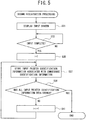
- the second registration processing will be explained with reference to FIG. 5 .
- the conveyance control system 1 starts the second registration processing by the CPU 51 reading out and executing a second registration processing program stored in the storage portion 54. For example, when a second execution command to execute the second registration processing is input via the operation portion 56, the CPU 51 starts the second first registration processing.
- the CPU 51 displays an input screen 55A (refer to FIG. 6 ) on the display 55 (step S31).
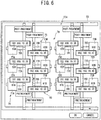
- FIG. 6 shows an example of the input screen 55A displayed on the display 55.
- the input screen 55 includes a related image 79, input areas 60, an OK button, and a cancel button.
- the CPU 51 displays, on the input screen 55A, printer images 71A, 72A, 73A, 71B, 72B, 73B, 71C, 72C, 73C, 71D, 72D, and 73D that respectively indicate the printers 31A, 32A, 33A, 31B, 32B, 33B, 31C, 32C, 33C, 31D, 32D, and 33D (refer to FIG. 1 ).
- the printer images 71A to 73D are not distinguished from each other, they are collectively referred to as a “printer image 70" or “printer images 70.”
- the CPU 51 displays, on the input screen 55A, conveyance images 76A, 77A, 78A, 76B, 77B, 78B, 76C, 77C, 78C, 76D, 77D, and 78D, that respectively indicate the conveyance mechanisms 91A, 92A, 93A, 91B, 92B, 93B, 91C, 92C, 93C, 91D, 92D, and 93D (refer to FIG. 1 ).
- the conveyance images 76A to 78D are not distinguished from each other, they are collectively referred to as a “conveyance image 75" or “conveyance images 75.”
- the CPU 51 displays the printer images 70 and the conveyance images 75 in association with each other, such as displaying them coupled together or the like.
- An image displayed in which the printer images 70 and the conveyance images 75 are associated with each other is defined as the related image 79.
- the CPU 51 further displays, on the input screen 55A, input areas 61A, 62A, 63A, 61B, 62B, 63B, 61C, 62C, 63C, 61D, 62D, and 63D that are used to input the printer identification information.
- input areas 61A to 63D are not distinguished from each other, they are collectively referred to as an "input image 60" or "input images 60.”
- the CPU 51 arranges the input area 60 such that a distance between the input area 60 and the corresponding printer image 70 is a shortest distance, compared to distances between the input area 60 and the printer images 70 that do not correspond thereto.
- the position in which the input area 60 is arranged is a first position.
- the position of the input area 60 partially overlaps with the corresponding printer image 70, for example.
- the printer identification information of the printer 30 indicated by the printer image 70 corresponding to the input area 60 can be input into the input area 60.
- the OK button is selected by a user when an input operation of the printer identification information with respect to the input area 60 is made valid.
- the cancel button is selected by the user when the printer identification information input to the input area 60 is made invalid.
- the CPU 51 receives an operation to input the printer identification information to the input area 60 via the operation portion 56.
- the CPU 51 stores the input printer identification information in the RAM 53.
- the CPU 51 identifies the conveyance image 75 associated with the printer image 70 for which the distance between the printer image 70 and the input area 60 to which the printer identification information has been input is shortest, associates the mechanism identification information that identifies the conveyance mechanism 90 indicated by the identified conveyance image 75 with the input printer identification information, and stores the associated information in the RAM 53.
- the CPU 51 advances the processing to step S35.
- the CPU 51 sets the variable i stored in the RAM 53 to 1 and performs the initialization (step S35).
- the CPU 51 extracts the mechanism identification information included in the record for the index that is the same as the variable i.
- the CPU 51 selects, from the printer identification information stored in the RAM 53, the printer identification information associated with the extracted mechanism identification information.
- the CPU 51 stores the selected printer identification information in the table 54A as the printer identification information of the record for the index that is the same as the variable i (step S37).
- the input printer identification information and the conveyance identification information are associated with each other in the table 54A.
- the CPU 51 stores nothing in the table 54A as the printer identification information of the record for the index that is the same as the variable i.
- the CPU 51 determines whether all the printer identification information input to the input areas 60 is stored in the table 54A (step S39). When the variable i is smaller than the maximum value of the index of the table 54A, the CPU 51 determines that all the printer identification information input to the input areas 60 is not stored in the table 54A (no at step S39). The CPU 51 adds 1 to the variable i and updates the variable i (step S41), and returns the processing to step S37. The CPU 51 repeats the processing on the basis of the updated variable i. When the maximum value of the index of the table 54A matches the variable i, the CPU 51 determines that all the printer identification information input to the input areas 60 is stored in the table 54A (yest at step S39). At this time, the CPU 51 ends the second registration processing.
- Confirmation processing will be explained with reference to FIG. 7 .
- the confirmation processing is started by the CPU 51 reading out and executing a confirmation processing program stored in the storage portion 54. For example, when a confirmation execution command to execute the confirmation processing is input via the operation portion 56, the CPU 51 starts the confirmation processing.
- the CPU 51 sets the variable i stored in the RAM 53 to 1 and performs the initialization (step S51).
- the CPU 51 selects the conveyance identification information (the lane identification information and the mechanism identification information) included in the record for the index that is the same as the variable i in the table 54A (refer to FIG. 3 ).
- the CPU 51 drives the conveyance motor 10B by outputting a signal to the drive circuit 10A, and causes the platen 50 to be conveyed using the lane 80 identified by the selected lane identification information and the conveyance mechanism 90 identified by the mechanism identification information (step S53).
- the CPU 51 determines whether the printer identification information transmitted from the printer 30 has been received (step S55). When the CPU 51 has not received the printer identification information (no at step S55), the CPU 51 determines whether the elapsed time period from when the conveyance of the platen 50 is started by the processing at step S53 is equal to or more than the predetermined time period (step S71). When the CPU 51 determines that the elapsed time period is not equal to or more than the predetermined time period (no at step S71), the CPU 51 returns the processing to step S55. When the CPU 51 determines that the printer identification information has been received (yes at step S55), the CPU 51 advances the processing to step S57.
- the CPU 51 acquires the printer identification information included in the record for the index i of the table 54A (step S57).
- the CPU 51 compares the acquired printer identification information with the printer identification information received from the printer 30 (step S59). When the CPU 51 determines that the two pieces of printer identification information match each other (yes at step S59), the CPU 51 advances the processing to step S65.
- the CPU 51 determines that the two pieces of printer identification information are different from each other (no at step S59). For example, when the new lane 80 is added to the conveyance control system 1, since the printer identification information is not stored in the table 54A, the CPU 51 determines that the printer identification information is different. Further, when the arrangement of the printer 30 that was once installed is changed, or when the printer identification information different from the printer identification information assigned to the printer 30 is mistakenly input to the input area 60 and stored in the table 54A by the second registration processing, the CPU 51 determines that the printer identification information is different.
- the CPU 51 displays, on the display 55, an error message notifying that the printer identification information stored in the table 54A and the printer identification information received from the printer 30 are different from each other (step S61).
- the CPU 51 associates the printer identification information received from the printer 30 with the lane identification information and the mechanism identification information corresponding to the index i of the table 54A, and stores the associated information (step S63).
- the CPU 51 advances the processing to step S65.
- the CPU 51 determines whether the platen 50 has been conveyed to all the printers 30 included in the conveyance control system 1 (step S65). When the variable i is smaller than the maximum value of the index of the table 54A, the CPU 51 determines that the platen 50 has not been conveyed to all the printers 30 included in the conveyance control system 1 (no at step S65). The CPU 51 adds 1 to the variable i and updates the variable i (step S67), and returns the processing to step S53. The CPU 51 repeats the above-described processing in the confirmation processing on the basis of the updated variable i. When the maximum value of the index matches the variable i, the CPU 51 determines that the platen 50 has been conveyed to all the printers 30 included in the conveyance control system 1 (yes at step S65). At this time, the CPU 51 ends the confirmation processing.
- step S53 From when the conveyance of the platen 50 is started (step S53), when the CPU 51 determines that the elapsed time period is equal to or more than the predetermined time period (yes at step S71), the CPU 51 advances the processing to step S73.
- the CPU 51 does not store the printer identification information in association with the conveyance identification information included in the record for the index i of the table 54A.
- the CPU 51 displays, on the display 55, the lane 80 identified by the lane identification information included in the record for the index I of the table 54A, and the conveyance mechanism 90 identified by the acquired mechanism identification information.
- the CPU 51 displays, on the display 55, the error message notifying that there is a possibility that the printer 30 is not provided in the displayed conveyance mechanism 90 or that the power supply of the printer 30 is turned off (step S73). At this time, it is preferable that the CPU 51 prohibit the printing using the printer 30 identified by the printer identification information, by deleting the printer identification information included in the record for the index i of the table 54A or the like. The CPU 51 advances the processing to step S65.
- Conveyance processing will be explained with reference to FIG. 8 .
- the conveyance control system 1 starts the printing on the cloth P by the printer 30, the conveyance processing is started by the CPU 51 reading out and executing a conveyance processing program stored in the storage portion 54. For example, when a print execution command to execute the print processing is input via the operation portion 56, the CPU 51 starts the conveyance processing.
- the CPU 51 determines, as the printer 30 to be used to execute the print processing, the printer 30 specified when the print execution command is input via the operation portion 56 (step S81). Referring to the table 54A, the CPU 51 acquires the conveyance identification information (the lane identification information and the mechanism identification information) corresponding to the printer identification information of the determined printer 30 (step S83). The CPU 51 drives the conveyance motor 10B by outputting a signal to the drive circuit 10A, and causes the platen 50 to be conveyed using the lane 80 identified by the acquired lane identification information and the conveyance mechanism 90 identified by the acquired mechanism identification information (step S85).
- the CPU 51 acquires the pretreatment device identification information associated with the printer identification information of the printer 30 determined by the processing at step S81.
- the CPU 51 transmits, to the pretreatment device 20 identified by the acquired pretreatment device identification information, the pretreatment command to execute the pretreatment.
- the CPU 51 causes the pretreatment device 20 to perform the pretreatment on the cloth P held by the platen 50 that is conveyed using the lane 80 (step S87).
- the CPU 51 transmits, to the printer 30 determined by the processing at step S81 as an address of the printer identification information of the determined printer 30, the print command to execute print processing.
- the CPU 51 causes the printer 30 to perform the print processing on the cloth P held by the platen 50 that is conveyed by the conveyance mechanism 90 (step S89).
- the CPU 51 acquires the post-treatment device identification information associated with the printer identification information of the printer 30 determined by the processing at step S81.
- the CPU 51 transmits, to the post-treatment device 40 identified by the acquired post-treatment device identification information, the post-treatment command to execute the post-treatment.
- the CPU 51 causes the post-treatment device 40 to perform the post-treatment on the cloth P held by the platen 50 that is conveyed using the lane 80 (step S91).
- the CPU 51 ends the conveyance processing.
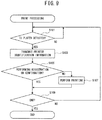
- the print processing will be explained with reference to FIG. 9 .
- the print processing is started by the CPU 36 reading out and executing a print processing program stored in the storage portion 37 of the printer 30.
- the CPU 36 determines whether the platen 50 that is conveyed by the conveyance mechanism 90 has been detected by the sensor 39 (step S101). When the CPU 36 determines that the sensor 39 has not detected the platen 50 (no at step S101), the CPU 36 returns the processing to step S101. When the CPU 36 determines that the sensor 39 has detected the platen 50 (yes at step S101), the CPU 36 reads out the printer identification information stored in the storage portion 37. The CPU 36 transmits the read printer identification information to the CPU 51 (step S103).
- the CPU 36 determines whether the first registration processing (refer to FIG. 4 ) or the confirmation processing (refer to FIG. 7 ) is being performed by the CPU 51 (Step S105). For example, when the CPU 36 has not received the print command transmitted from the CPU 51, the CPU 36 determines that the CPU 51 is performing the first registration processing or the confirmation processing (yes at step S105). At this time, it is not necessary to perform the printing on the cloth P held by the platen 50 that is conveyed, and thus the CPU 36 advances the processing to step S109.
- the CPU 36 determines that the CPU 51 is not performing the first registration processing or the confirmation processing (no at step S105). At this time, the conveyance processing (refer to FIG. 8 ) is being performed by the CPU 51, and the CPU 36 controls the print mechanism 38 on the basis of the print data stored in the storage portion 37, and performs the print processing on the cloth P held by the platen 50 that is conveyed (step S107). The CPU 36 advances the processing to step S109.
- the CPU 36 determines whether an end command to end the print processing has been input via an input portion (not shown in the drawings) (step S109). When the CPU 51 36 determines that the end command has not been input (no at step S109), the CPU 36 returns the processing to step S101. When the CPU 36 determines that the end command has been input (yes at step S109), the CPU 36 ends the print processing.
- the storage portion 54 stores the printer identification information and the conveyance identification information in association with each other.
- the CPU 51 of the PC 5 acquires, from the storage portion 54, the conveyance identification information associated with the printer identification information (step S83).
- the CPU 51 transports the platen 50 to the printer 30 using the corresponding lane 80 and conveyance mechanism 90.
- the CPU 51 can convey the cloth P to the printer 30 to be used for the printing.
- the printer 30 transmits the printer identification information to the CPU 51 (step S103).
- the CPU 51 can recognize it as the printer identification information of the printer 30 installed on the lane 80 and the conveyance mechanism 90 to which the platen 50 has been conveyed. Further, the CPU 51 can associate the conveyance identification information to identify the lane 80 and the conveyance mechanism 90 to which the platen 50 has been conveyed with the recognized printer identification information, and store the associated information in the table 54A.
- the CPU 51 can convey the platen 50 using the lane 80 and the conveyance mechanism 90.
- the CPU 51 compares the printer identification information that is associated with the conveyance identification information and stored in the table 54A, with the printer identification information received from the printer 30 (step S59). Thus, the CPU 51 can determine whether or not the printer identification information of the printer 30 that is actually installed on the conveyance mechanism 90 to which the platen 50 has been conveyed matches the printer identification information stored in the table 54A, when the two pieces of printer identification information are compared.
- the CPU 51 displays the error message on the display 55 (step S25), and does not store the conveyance identification information and the printer identification information in association with each other in the table 54A.
- the CPU 51 can reduce a possibility that the relationship between the printer identification information and the conveyance identification information associated with each other and stored in the table 54A differs from the relationship between the printer 30 actually provided in the conveyance mechanism 90 and the conveyance mechanism 90.
- the CPU 51 displays the input screen 55A on the display 55, and displays the related image 79 and the input areas 60 on the display 55.
- the CPU 51 associates the printer identification information input via the operation portion 56 with the conveyance identification information and stores the associated information in the table 54A.
- the CPU 51 can register the printer identification information and the conveyance identification information in the table 54A in association with each other.
- the CPU 51 displays the input area 60, to which the printer identification information of the printer 30 corresponding to a first printer image 70 can be input, in the first position, which is the position at which a distance between the input area 60 and the first printer image 70 is shorter than a distance between the input area 60 and a second printer image 70.
- the CPU51 can perform the display such that the user can easily distinguish between the input area 60 to which the user inputs the printer identification information of the printer 30 and the other input areas 60 to which the user inputs the printer identification information of the other printers 30.
- the user can easily ascertain the input are 60 to which the printer identification information is input, in accordance with the positional relationship of the printer images 70 and the input areas 60 displayed on the display 55.
- the pretreatment device identification information and the post-treatment device identification information are associated with the printer identification information, and are stored in the table 54A.
- the CPU 51 conveys the platen 50 to the pretreatment device 20 before conveying the platen 50 toward the printer 30, and causes the pretreatment device 20 to perform the pretreatment. Further, the CPU 51 causes the post-treatment device 40 to perform the post-treatment after the printing by the printer 30.
- the printer identification information that identifies the printer 30 is not limited to the IP address.
- an ID, a host name, and the like of the printer 30 may be used as the printer identification information.
- the connection medium to connect the printers 30 and the PC 5 is not limited to the LAN 100, and a public network, and a wireless network (a wireless LAN, Bluetooth, and the like) may be used.
- the printer 30 that performs printing using another printing method (a thermal sensitive type, a laser printer, laser marking, and the like) may be used as the printer 30.
- the print medium is not limited to the cloth P.
- a processing device that can perform processing on the target object may be used in place of the printer 30.
- Examples of the processing device include a sewing machine, a machine tool, and the like.
- An object other than the cloth P may be used as the target object.
- a machine tool is used as the processing device
- a work material may be used as the target object
- a table may be used as a holding portion to hold the work material in the same manner as the platen 50.
- an embroidery frame may be used as a holding portion to hold a cloth in the same manner as the platen 50.
- the holding portion is not limited to the platen 50, the table, or the embroidery frame, but may be anything that can hold the target object and can be conveyed by a conveyance mechanism.
- an IP address of a communication device provided in the machine tool, the sewing machine, or the like may be used as processing device identification information.
- the printer identification information of the printer 30 may be stored in the storage portion 37 using the following methods, for example.
- the printer identification information may be stored in the storage portion 37 when the printer identification information is input via an operation portion (not shown in the drawings) of the printer 30.
- the PC 5 may have a DHCP server function. At this time, the printer identification information may be automatically assigned to the printers 30 connected to the LAN 100 by the DHCP server function of the PC 5.
- the printer 30 may acquire the printer identification information assigned to itself from the PC 5, and may store the acquired printer identification information in the storage portion 37.
- the PC 5 may be a dedicated server integrated into the platen conveyance mechanism 10.
- the printer 30 that performs the print processing at step S81 may be selected as a result of the CPU 51 of the PC 5 automatically selecting the printer 30 that can perform the print processing, and determining the selected printer 30 to be the printer 30 that performs the print processing, for example.
- the CPU 51 may determine the printer 30 to perform the print processing in accordance with printer features (for example, a type of the ink that can be ejected, a printing speed, and a resolution) and print content (for example, the print data, and the type of the cloth P).
- the printer features may be received from the printer 30 together with the printer identification information and stored in the table 54 in association with the printer identification information.
- the print data for the printer 30 to perform the printing may be transmitted to the printer 30 at the same time that the print command is transmitted from the CPU 51 to the printer 30, or may be included in print command data and transmitted to the printer 30 via the LAN 100.
- the printer 30 may receive and store the print data in the storage portion 37.
- the printer 30 may transmit, to the CPU 51, an IP packet having a data portion in which a command indicating that the platen 50 has been detected is included.
- the IP address (the printer identification information) of the transmission source is stored in a header portion of the IP packet.
- the printer 30 need not necessarily include the printer identification information in the data portion of the IP packet.
- the CPU 51 may acquire, as the printer identification information of the printer 30, the IP address of the transmission source stored in the header portion of the IP packet.
- the CPU 51 may associate the acquired printer identification information with the conveyance identification information and store the associated information in the table 54A.
- the CPU 51 may store the printer identification information received from the printer 30 in the table 54A, in association with the lane 80 used to convey the platen 50 and the conveyance identification information of the conveyance mechanism 90, regardless of whether or not the printer identification information stored in the table 54A matches the printer identification information received from the printer 30. At this time, the CPU 51 need not necessarily perform the determination processing at step S59.
- the CPU 51 may display the input areas in association with the pretreatment devices 20 and the post-treatment devices 40. The user may input the pretreatment device identification information of the pretreatment devices 20 and the post-treatment device identification information of the post-treatment devices 40 to the input areas.
- the CPU 51 may store the input pretreatment device identification information and post-treatment device identification information in the table 54A.
- the printer image 70 and the input area 60 corresponding to the printer image 70 and to which the printer identification information of the printer 30 is input may be separated from each other.
- the printer image 70 and the input area 60 that correspond to each other may be connected using an arrow or the like.
- the pretreatment device 20 and the post-treatment device 40 may include a sensor, similar to the sensor 39.
- the CPU 51 may register the pretreatment device identification information of the pretreatment device 20 and the post-treatment device identification information of the post-treatment device 40.
- the sensor 39 may be provided independently from the printer 30. For example, when the platen 50 is detected by the sensor 39, the sensor 39 may communicates with the printer 30, and the CPU 36 of the printer 30 may transmit the IP address of the printer 30 to the CPU 51.
- the sensor may be provided independently from the pretreatment device 20 and the post-treatment device 40.
- the PC 5 need not necessarily have the built-in storage portion 54 in which the table 54A is stored.
- the table 54A may be stored in an external memory (a USB memory or an external SSD) that can be connected to the PC 5.
- the external memory may be connected to the PC 5 when the conveyance control system 1 is operated, such as performing the above-described first registration processing, the second registration processing, the confirmation processing, the conveyance processing, the print processing, or the like.
- the table 54A may be stored in a storage portion of another PC connected to the LAN 100. Of the storage portion of the other PC, an area in which the table 54A is stored may be set such that the area can be referred to from the outside.
- the CPU 51 may read out the table 54Afrom the storage portion of the other PC via the LAN 100.
- the table 54A may be stored in a storage portion of a storage server connected to a WAN on the outside of the LAN 100.
- the CPU 51 may acquire the table 54A by communicating with the storage server via the WAN.
- the conveyance mechanism 90 is an example of a first conveyance portion, a second conveyance portion, and a third conveyance portion of the present invention.
- the CPU 51 of the PC 5 is an example of a conveyance control portion of the present invention.
- the storage portion 54 in which the table 54A is stored is an example of a storage portion of the present invention.
- the sensor 39 is an example of a first sensor and a second sensor of the present invention.
- the printer 30 is an example of a first printer, a second printer, a first printing device, and a second printing device of the present invention.
Landscapes
- Engineering & Computer Science (AREA)
- General Engineering & Computer Science (AREA)
- Physics & Mathematics (AREA)
- General Physics & Mathematics (AREA)
- Theoretical Computer Science (AREA)
- Textile Engineering (AREA)
- Handling Of Sheets (AREA)
- Accessory Devices And Overall Control Thereof (AREA)
- Control Of Conveyors (AREA)
- Feeding Of Articles By Means Other Than Belts Or Rollers (AREA)
- Coloring (AREA)
- Ink Jet (AREA)
Abstract
Description
- The present invention relates to a conveyance control system, a non-transitory computer-readable medium storing computer-readable instructions, and a conveyance control device.
- When processing, such as printing, is performed on a target object, in some cases, pretreatment is performed in a preceding process of the processing or post-treatment is performed in a subsequent process of the processing. Japanese Laid-Open Patent Publication No.
2015-183331 - In order to efficiently perform the processing, such as the printing, on a plurality of target objects after the pretreatment, a system is conceivable in which a plurality of processing devices are disposed latterly to a device that performs the pretreatment. In this system, it is required to convey the target object after the pretreatment to a processing device to be used for the processing, among the plurality of processing devices. When conveyance paths are individually provided that can convey the target object after the pretreatment to each of the plurality of processing devices, it is necessary for the system to select the conveyance path to convey the target object to the processing device to be used for the processing. For this selection control, it is necessary for the processing device to be used for the processing to be associated with the conveyance path that can convey the target object to the processing device to be used for the processing, and to be recognized.
- It is an object of the present invention to provide a conveyance control system, a non-transitory computer-readable medium storing computer-readable instructions, and a conveyance control device that are capable of conveying a print medium to a printer to be used for printing, or capable of conveying a target object to a processing device to be used for processing.
- A conveyance control system according to a first aspect of the present invention includes a first conveyance portion and a second conveyance portion configured to convey a platen, a first printer provided in the first conveyance portion and configured to perform printing on a print medium held by the platen conveyed by the first conveyance portion, a second printer provided in the second conveyance portion and configured to perform printing on the print medium held by the platen conveyed by the second conveyance portion, a conveyance control portion communicably connected to the first printer and the second printer on the basis of a predetermined communication protocol, and configured to control the first conveyance portion and the second conveyance portion, and a storage portion configured to store first printer identification information and first conveyance identification information in association with each other, and to store second printer identification information and second conveyance identification information in association with each other, the first printer identification information being configured to identify the first printer on the basis of the communication protocol, the first conveyance identification information being configured to identify the first conveyance portion, the second printer identification information being configured to identify the second printer on the basis of the communication standard, and the second conveyance identification information being configured to identify the second conveyance portion. When the first printer performs the printing, the conveyance control portion acquires, from the storage portion, the first conveyance identification information associated with the first printer identification information, and causes the first conveyance portion to convey the platen on the basis of the acquired first conveyance identification information. When the second printer performs the printing, the conveyance control portion acquires, from the storage portion, the second conveyance identification information associated with the second printer identification information, and causes the second conveyance portion to convey the platen on the basis of the acquired second conveyance identification information.
- Thus, when the first printer performs the printing, the conveyance control portion of the conveyance control system acquires, from the storage portion, the first conveyance identification information associated with the first printer identification information, and can convey the platen using the first conveyance portion, on the basis of the acquired first conveyance identification information. Meanwhile, when the second printer performs the printing, the conveyance control portion acquires, from the storage portion, the second conveyance identification information associated with the second printer identification information, and can convey the platen using the second conveyance portion, on the basis of the acquired second conveyance identification information. As a result, the conveyance control portion can convey a print medium to a printer to be used for the printing.
- In the conveyance control system may include a first sensor configured to detect a presence of the platen in the first printer, and when the platen is detected by the first sensor, the first printer may transmit the first printer identification information to the conveyance control portion. Thus, by receiving the first printer identification information transmitted by the first printer, the conveyance control portion can recognize that the printer provided in the first conveyance portion that has conveyed the platen is the first printer.
- Further, the conveyance control portion of the conveyance control system may cause the first conveyance portion to convey the platen, and, after causing the first conveyance portion to convey the platen, the conveyance control portion may store, in the storage portion, the first printer identification information and the first conveyance identification information in association with each other, in accordance with receiving the first printer identification information from the first printer. Thus, the storage portion in the conveyance control system stores the first printer identification information and the first conveyance identification information in association with each other. As a result, the conveyance control portion can convey the platen using the first conveyance portion when the printing is next performed using the first printer.
- Further, the conveyance control portion of the conveyance control system may cause the first conveyance portion to convey the platen, and, after causing the first conveyance portion to convey the platen, when the first printer identification information is received from the first printer, the conveyance control portion may compare the first printer identification information stored in the storage portion in association with the first conveyance identification information, with the first printer identification information received from the first printer. Thus, the conveyance control portion can compare the first printer identification information stored in the storage portion in association with the first conveyance identification information with the identification information of the first printer actually provided in the first conveyance portion, and can determine whether the two pieces of identification information match each other.
- Further, in the conveyance control system may include a second sensor configured to detect the presence of the platen in the second printer, and when the platen is detected by the second sensor, the second printer may transmit the second printer identification information to the conveyance control portion. Thus, by receiving the second printer identification information transmitted from the second printer, the conveyance control portion can recognize that the printer provided in the second conveyance portion that has conveyed the platen is the second printer.
- Further, the conveyance control system may further include a third conveyance portion, a printer being providable in the third conveyance portion, and the third conveyance portion being configured to convey the platen. The conveyance control portion may cause the third conveyance portion to convey the platen, and, after causing the third conveyance portion to convey the platen, when the printer identification information configured to identify the printer on the basis of the communication protocol is not received, the conveyance control portion may not store third conveyance identification information configured to identify the third conveyance portion in the storage portion in association with the printer identification information. Thus, the conveyance control portion can reduce a possibility that the relationship between the printer identification information and the conveyance identification information associated with each other and stored in the storage portion differs from the relationship between the printer actually provided in the conveyance portion and the conveyance portion.
- The conveyance control system may further include a display. The conveyance control portion may cause the display to display a related image, a first input area used to input the first printer identification information, and a second input area used to input the second printer identification information, the related image being an image in which a first printer image indicating the first printer is associated with a first conveyance image indicating the first conveyance portion and in which a second printer image indicating the second printer is associated with a second conveyance image indicating the second conveyance portion. The conveyance control portion may store, in the storage portion, the first printer identification information input to the first input area, in association with the first conveyance identification information. The conveyance control portion may store, in the storage portion, the second printer identification information input to the second input area, in association with the second conveyance identification information. In the conveyance control system, the conveyance control portion causes the display to display the related image, the first input area, and the second input area. Thus, the conveyance control portion can store, in the storage portion, the first printer identification information input to the first input area in association with the first conveyance identification information, and the second printer identification information input to the second input area in association with the second conveyance identification information.
- Further, the conveyance control portion of the conveyance control system may display the first input area in a first position at which a distance from the first printer image is shorter than a distance from the second printer image, and may display the second input area in a second position at which a distance from the second printer image is shorter than a distance from the first printer image. Thus, in the conveyance control system, the conveyance control portion displays, on the display, the first input area closer to the first printer image than to the second printer image, and displays the second input area closer to the second printer image than to the first printer image. As a result, on the display, the conveyance control portion can display, the first input area to which the first printer identification information of the first printer is input and the second input area to which the second printer identification information of the second printer is input in an easily distinguishable manner.
- Further, the conveyance control system may further include a pretreatment device configured to perform pretreatment on the print medium before printing by the printer. The storage portion may further store pretreatment device identification information configured to identify the pretreatment device on the basis of the communication protocol. Thus, in the conveyance control system, by conveying the platen holding the print medium to the pretreatment device before conveying the platen toward the printer, the conveyance control portion can perform the printing on the print medium after the pretreatment has been performed.
- A non-transitory computer-readable medium storing computer-readable instructions according to a second aspect of the present invention is a medium executed by a computer, the computer being communicably connected to a first processing device and a second processing device on the basis of a predetermined communication protocol, and controlling the first conveyance portion and the second conveyance portion, the first processing device being a processing device provided in a first conveyance portion conveying a holding portion holding a target object and being configured to perform processing on the target object held by the holding portion conveyed by the first conveyance portion, and the second processing device being the processing device provided in a second conveyance portion conveying the holding portion and being configured to perform processing on the target object held by the holding portion conveyed by the second conveyance portion, the instructions, when executed by the computer, causing the computer to perform processes including: acquiring, when the first processing device performs processing, first conveyance identification information associated with first processing device identification information, from a storage portion, and causing the first conveyance portion to convey the holding portion on the basis of the acquired first conveyance identification information, the storage portion storing the first processing device identification information configured to identify the first processing device on the basis of the communication protocol in association with the first conveyance identification information configured to identify the first conveyance portion, and storing second processing device identification information configured to identify the second processing device on the basis of the communication protocol in association with second conveyance identification information configured to identify the second conveyance portion; and acquiring, when the second processing device performs processing, the second conveyance identification information associated with the second processing device identification information, from the storage portion, and causing the second conveyance portion to convey the holding portion on the basis of the acquired second conveyance identification information.
- Thus, when the first processing device performs the processing, the non-transitory computer-readable medium storing the computer-readable instructions can cause the computer to acquire the first conveyance identification information associated with the first processing device identification information from the storage portion, and can cause the first conveyance portion to convey the holding portion on the basis of the acquired first conveyance identification information. On the other hand, when the second processing device performs the processing, the non-transitory computer-readable medium storing the computer-readable instructions can cause the computer to acquire the second conveyance identification information associated with the second processing device identification information from the storage portion, and can cause the second conveyance portion to convey the holding portion on the basis of the acquired second conveyance identification information. Thus, the computer can convey the target object to the processing device to be used for the processing.
- The non-transitory computer-readable medium storing computer-readable instructions may further store computer-readable instructions that cause the computer to perform processes including: causing the first conveyance portion to convey the holding portion; and, after causing the first conveyance portion to convey the holding portion, storing the first processing device identification information and the first conveyance identification information in association with each other in the storage portion, in accordance with receiving the first processing device identification information from the first processing device.
- The non-transitory computer-readable medium storing computer-readable instructions may further store computer-readable instructions that cause the computer to perform processes including: causing the first conveyance portion to convey the holding portion; and, after causing the first conveyance portion to convey the holding portion, when the first processing device identification information is received from the first processing device, comparing the first processing device identification information stored in the storage portion in association with the first conveyance identification information, with the first processing device identification information received from the first processing device.
- The non-transitory computer-readable medium storing computer-readable instructions may further store computer-readable instructions that cause the computer to perform a process including: causing a third conveyance portion to convey the holding portion, a processing device being providable in the third conveyance portion, and the third conveyance portion being configured to convey the holding portion. After causing the third conveyance portion to convey the holding portion, when the processing device identification information configured to identify the processing device on the basis of the communication protocol is not received, third conveyance identification information configured to identify the third conveyance portion is not stored in the storage portion in association with the processing device identification information.
- The non-transitory computer-readable medium storing computer-readable instructions may further store computer-readable instructions that cause the computer to perform processes including: displaying, on a display, a related image, a first input area used to input the first processing device identification information, and a second input area used to input the second processing device identification information, the related image being an image in which a first processing device image indicated the first processing device is associated with a first conveyance image indicating the first conveyance portion and in which a second processing device image indicating the second processing device is associated with a second conveyance image indicating the second conveyance portion; storing, in the storage portion, the first processing device identification information input to the first input area, in association with the first conveyance identification information; and storing, in the storage portion, the second processing device identification information input to the second input area, in association with the second conveyance identification information.
- The non-transitory computer-readable medium storing computer-readable instructions may further store computer-readable instructions that cause the computer to perform processes including: displaying the first input area in a first position at which a distance from the first processing device image is shorter than a distance from the second processing device image, and displaying the second input area in a second position at which a distance from the second processing device image is shorter than a distance from the first processing device image.
- A conveyance control device according to a third aspect of the present invention is a conveyance control device communicably connected to a first processing device and a second processing device on the basis of a predetermined communication protocol, and controls a first conveyance portion and a second conveyance portion, the first processing device being a processing device provided in the first conveyance portion conveying a holding portion holding a target object and being configured to perform processing on the target object held by the holding portion conveyed by the first conveyance portion, and the second processing device being the processing device provided in the second conveyance portion conveying the holding portion, and being configured to perform processing on the target object held by the holding portion conveyed by the second conveyance portion. The conveyance control device performs processes including: acquiring, when the first processing device performs processing, first conveyance identification information associated with first processing device identification information, from a storage portion, and causing the first conveyance portion to convey the holding portion on the basis of the acquired first conveyance identification information, the storage portion storing the first processing device identification information configured to identify the first processing device on the basis of the communication protocol in association with the first conveyance identification information configured to identify the first conveyance portion and storing second processing device identification information configured to identify the second processing device on the basis of the communication protocol in association with second conveyance identification information configured to identify the second conveyance portion; and acquiring, when the second processing device performs processing, the second conveyance identification information associated with the second processing device identification information, from the storage portion, and causing the second conveyance portion to convey the holding portion on the basis of the acquired second conveyance identification information.
- Thus, when the first processing device performs the processing, the conveyance control device can acquire the first conveyance identification information associated with the first processing device identification information from the storage portion, and can cause the first conveyance portion to convey the holding portion on the basis of the acquired first conveyance identification information. On the other hand, when the second processing device performs the processing, the conveyance control device can acquire the second conveyance identification information associated with the second processing device identification information from the storage portion, and can cause the second conveyance portion to convey the holding portion on the basis of the acquired second conveyance identification information. As a result, the conveyance control portion can convey the target obj ect to the processing device to be used for the processing.
- Embodiments will be described below in detail with reference to the accompanying drawings in which:
-
FIG. 1 is a diagram showing an overview of aconveyance control system 1; -
FIG. 2 is a block diagram showing an electrical configuration of theconveyance control system 1; -
FIG. 3 is a diagram showing a table 54A; -
FIG. 4 is a flowchart of first registration processing; -
FIG. 5 is a flowchart of second registration processing; -
FIG. 6 is a diagram showing aninput screen 55A; -
FIG. 7 is a flowchart of confirmation processing; -
FIG. 8 is a flowchart of conveyance processing; and -
FIG. 9 is a flowchart of print processing. - Left and right and front and rear directions shown by arrows in the drawings are used in the following explanation. A
conveyance control system 1 shown inFIG. 1 is a system that sequentially performs pretreatment, print processing, and post-treatment on a print medium held by aplaten 50 as a holding portion while conveying theplaten 50. An example of the print medium is a cloth P, such as a T-shirt. The material of the cloth P is cotton, polyester, a mixture of cotton and polyester, or the like. - As shown in
FIG. 1 , theconveyance control system 1 is provided with aplaten conveyance mechanism 10,pretreatment devices pretreatment device 20" or "pretreatment devices 20"),printers printer 30" or "printers 30"),post-treatment devices post-treatment device 40" or "post-treatment devices 40"), and aPC 5. - The
platen conveyance mechanism 10 is provided with atleast lanes lanes 80"), ashipment line 201,return lines conveyance mechanisms conveyance mechanisms 90"). - The
shipment line 201 is positioned at the front of theconveyance control system 1 and extends in the left-right direction. Theshipment line 201 conveys theplaten 50 toward thelanes 81 to 84 to be described later. Theshipment line 201 is provided withconveyance mechanisms conveyance mechanisms conveyance mechanism 11 is provided with apreparation position 110. Thepreparation position 110 is a position at which the cloth P is set on theplaten 50. Theconveyance mechanisms platen 50 in the rightward direction. Thereturn line 204 is positioned at the rear of theconveyance control system 1 and extends in the left-right direction. Thereturn line 204 conveys theplaten 50 received from each of thelanes 81 to 84. Thereturn line 204 is provided withconveyance mechanisms conveyance mechanisms platen 50 in the leftward direction. Thereturn line 205 is provided with aconveyance mechanism 29. Thereturn line 205 conveys theplaten 50 received from thereturn line 204 forward toward the left end of theshipment line 201. - The front end of the
lane 81 is disposed between theconveyance mechanisms lane 81 is disposed between theconveyance mechanisms lane 82 is disposed between theconveyance mechanisms lane 82 is disposed between theconveyance mechanisms lane 83 is disposed between theconveyance mechanisms lane 83 is disposed between theconveyance mechanisms lane 84 is disposed between theconveyance mechanisms lane 84 is disposed between theconveyance mechanisms lanes 81 to 84 extends in the front-rear direction and conveys theplaten 50 in the rearward direction. - The
printers lane 81. Theconveyance mechanisms lane 81 convey theplaten 50 between thelane 81 and theprinters printers lane 82. Theconveyance mechanisms lane 82 convey theplaten 50 between thelane 82 and theprinters printers lane 83. Theconveyance mechanisms lane 83 convey theplaten 50 between thelane 83 and theprinters printers lane 84. Theconveyance mechanisms lane 84 convey theplaten 50 between thelane 84 and theprinters printers 30 are inkjet printers that perform printing by ejecting ink from nozzles of a print head onto the cloth P after the pretreatment that is held by theplaten 50. - The pretreatment device 2Ais disposed to the front of the
lane 81, and thepretreatment device 2B is disposed to the front of thelane 82. Thepretreatment device 2C is disposed to the front of thelane 83, and thepretreatment device 2D is disposed to the front of thelane 84. In other words, thepretreatment devices 2A to 2D are disposed on an upstream side in a conveyance direction when theplaten 50 is conveyed by thelanes 81 to 84 to theconveyance mechanisms 91A to 93D and theprinters 31A to 33D. Thepretreatment devices 20 perform the pretreatment on the cloth P before the printing is performed by theprinters 30. Each of thepretreatment devices 20 is provided with an application portion and a heat processing portion that are not shown in the drawings. Each of thepretreatment devices 20 need not necessarily be provided with the heat processing portion. Using a spray or an inkjet print head, the application portion sprays a pretreatment agent and applies the pretreatment agent to the cloth P held by theplaten 50. The pretreatment agent is a base coat agent that is applied before the ink is ejected onto the cloth P by theprinters 30. The pretreatment agent is, for example, an aqueous solution that contains resin components and a metal salt, such as CaCl2. The heat processing portion dries the pretreatment agent by heating the cloth P at a high temperature, and thus, the heat processing portion enhances fixing of the pretreatment agent on the cloth P, and improves image quality. - The
post-treatment device 4A is disposed to the rear of thelane 81, thepost-treatment device 4B is disposed to the rear of thelane 82, and the post-treatment device 4C is disposed to the rear of thelane 83. Thepost-treatment device 4D is disposed to the rear of thelane 84. In other words, thepost-treatment devices 4A to 4D are disposed on a downstream side in the conveyance direction when theplaten 50 is conveyed by thelanes 81 to 84 to theconveyance mechanisms 91A to 93D and theprinters 31A to 33D. Thepost-treatment devices 40 dry the ink by heating, at a high temperature, the cloth P onto which ink has been ejected by theprinters 30, and thus fix the ink on the cloth P. - A belt configuration of the
platen conveyance mechanism 10 will be explained. Since the configuration of theconveyance mechanisms 11 to 13, and 22 to 28 is the same, the belt configuration of theconveyance mechanisms conveyance mechanisms lanes 80 is the same, the belt configuration of thelane 82 will be explained, and an explanation of the belt configuration of thelanes conveyance mechanisms 90 is the same, the belt configuration of theconveyance mechanism 91B will be explained, and an explanation of the belt configuration of theconveyance mechanisms 91A to 93A, 92B, 93B, 91C to 93C, and 91D to 93D will be omitted. - The
conveyance mechanisms lateral belts 11A, and a pair oflateral belts 12A. The pairs oflateral belts conveyance mechanisms platen 50 in the rightward direction. Thelane 82 is provided with a pair oflongitudinal belts 82A, and pairs oflateral lifting belts longitudinal belts 82A are provided at both end portions of thelane 82 in a direction orthogonal to the conveyance direction. The pair oflongitudinal belts 82A convey theplaten 50 in the rearward direction. The pairs oflateral lifting belts longitudinal belts 82A. The pair oflateral lifting belts 82B are provided at the front end portion of thelane 82 such that they can be raised and lowered. The pair oflateral lifting belts 82B convey theplaten 50 in the rightward direction. The pair oflateral lifting belts 82C are provided on the left side of theconveyance mechanism 91B such that they can be raised and lowered. The pair oflateral lifting belts 82C convey theplaten 50 in the left-right direction. Theconveyance mechanism 91B is provided with a pair oflateral belts 91E. The pair oflateral belts 91E move theplaten 50 in the left-right direction. The raising and lowering of the pairs oflateral lifting belts conveyance motor 10B to be described later or by an actuator that is driven by compressed air. - An example of a platen conveyance operation by the
platen conveyance mechanism 10 will be explained. When thelateral belts platen 50 at thepreparation position 110 is conveyed in the rightward direction. At this time, thelateral lifting belts 82B are disposed at the same height position as thelateral belts 12A. Theplaten 50 is transferred from thelateral belts 12A to thelateral lifting belts 82B. After that, the driving of thelateral lifting belts 82B is stopped, and thelateral lifting belts 82B are lowered. At the same time, thelongitudinal belts 82A are driven. Thelateral lifting belts 82B are lowered to be lower than thelongitudinal belts 82A, and thus, theplaten 50 is placed on thelongitudinal belts 82A. Thelongitudinal belts 82A convey theplaten 50 in the rearward direction. Theplaten 50 passes through thepretreatment device 2B and is conveyed further in the rearward direction. - When the
platen 50 reaches a position above thelateral lifting belts 82C, the driving of thelongitudinal belts 82A is stopped, and the raising of thelateral lifting belts 82C is started. Thelateral lifting belts 82C are raised to be higher than thelongitudinal belts 82A, and are stopped at the same height position as thelateral belts 91E. Thelateral belts 91E and thelongitudinal lifting belts 82C are driven, and theplaten 50 is transferred from thelateral lifting belts 82C to thelateral belts 91E. Thelateral belts 91E are driven, and theplaten 50 is conveyed in the rightward direction toward theprinter 31B. When theplaten 50 reaches theprinter 31B, a printing conveyance mechanism, to be described later, of theprinter 31B receives theplaten 50, and conveys theplaten 50 to a printable position in theprinter 31B. Theprinter 31B performs printing on the cloth P set on theplaten 50 conveyed to the printable position. - After the printing by the
printer 31B, theplaten 50 is conveyed to thelateral belts 91E by the printing conveyance mechanism. Thelateral belts 91E and thelateral lifting belts 82C are driven, and theplaten 50 is conveyed in the leftward direction. Theplaten 50 is transferred from thelateral belts 91E to thelateral lifting belts 82C. When theplaten 50 reaches a position above thelateral lifting belts 82C, the driving of thelateral belts 91E and thelateral lifting belts 82C is stopped. Thelateral lifting belts 82C are lowered to be lower than thelongitudinal belts 82A, and theplaten 50 is transferred from thelateral lifting belts 82C to thelongitudinal belts 82A. At the same time, thelongitudinal belts 82A are driven. Theplaten 50 is conveyed in the rearward direction by thelongitudinal belts 82A. Theplaten 50 passes through thepost-treatment device 4B and is conveyed further in the rearward direction. - Although not described in detail, transfer operations are performed in the same manner as described above, and the
platen 50 is conveyed to theconveyance mechanisms preparation position 110. - The
PC 5 is provided in the vicinity of thepreparation position 110. ThePC 5 is electrically connected to theplaten conveyance mechanism 10, and controls the conveyance of theplaten 50 by theplaten conveyance mechanism 10. In accordance with the control by thePC 5, theplaten conveyance mechanism 10 conveys theplaten 50 from thepreparation position 110 to theprinters 30 via theshipment line 201 and thelanes 80. In accordance with the control by thePC 5, theplaten conveyance mechanism 10 conveys theplaten 50, which holds the cloth P printed by theprinters 30, via thelanes 80 and thereturn lines platen 50 to thepreparation position 110. - The
PC 5 is connected by a wired connection to theprinters 30, thepretreatment devices 20, and thepost-treatment devices 40, via aLAN 100. ThePC 5 can communicate with theprinters 30, thepretreatment devices 20, and thepost-treatment devices 40 based on a TCP/IP protocol, and can transmit various commands to each of the devices via theLAN 100. On the basis of a pretreatment command from thePC 5, thepretreatment device 20 performs the pretreatment on the cloth P held by theplaten 50 that is conveyed by theplaten conveyance mechanism 10. On the basis of a print command received from thePC 5, theprinter 30 performs the printing on the cloth P held by theplaten 50 that is conveyed by theplaten conveyance mechanism 10. On the basis of a post-treatment command received from thePC 5, thepost-treatment device 40 performs the post-treatment on the cloth P held by theplaten 50 that is conveyed by theplaten conveyance mechanism 10. - An electrical configuration of the
conveyance control system 1 will be explained with reference toFIG. 2 . ThePC 5 is provided with aCPU 51, aROM 52, aRAM 53, astorage portion 54, adisplay 55, anoperation portion 56, an input/output portion 57, and acommunication portion 58, which are each mutually connected via a bus. - The
CPU 51 controls operation of thePC 5. TheROM 52 stores setting values and the like. TheRAM 53 temporarily stores various types of information. Thestorage portion 54 is a non-volatile flash memory, and stores programs, a table 54A (refer toFIG. 3 ), and the like. Thedisplay 55 is an LCD that can display an image and the like. Theoperation portion 56 is a keyboard and a mouse. The input-output portion 57 is an interface circuit connected to theplaten conveyance mechanism 10. Thecommunication portion 58 is an interface circuit that performs communication on the basis of the TCP/IP protocol. - The
platen conveyance mechanism 10 is provided with theconveyance motor 10B to convey theplaten 50 along thelanes 80, theconveyance mechanisms 90, theshipment line 201, and thereturn lines drive circuit 10A to drive theconveyance motor 10B. Theconveyance motor 10B may be configured by a plurality of motors. Thedrive circuit 10A is connected to the input/output portion 57 of thePC 5. Thedrive circuit 10A drives theconveyance motor 10B in accordance with a signal output from the input/output portion 57, and conveys theplaten 50. - The
pretreatment devices 20, theprinters 30, and thepost-treatment devices 40 are each connected to thecommunication portion 58 of thePC 5, and can perform communication with thePC 5 based on the TCP/IP protocol. - Each of the
printers 30 is provided with aCPU 36, astorage portion 37, aprint mechanism 38, and asensor 39. TheCPU 36 controls operation of theprinter 30. Thestorage portion 37 is a non-volatile flash memory, and stores programs, printer identification information, print data, and the like. - Although not shown in the drawings, the
print mechanism 38 includes the print head, the printing conveyance mechanism, and the like. The printing conveyance mechanism can convey theplaten 50 in the left-right direction. Although not shown in the drawings, the printing conveyance mechanism is provided with a platen support member, a ball screw, a pair of rails, a motor, and the like. The platen support member receives theplaten 50 from theconveyance mechanisms 90, and supports theplaten 50. The ball screw extends in the left-right direction. The pair of rails are provided at positions at which the ball screw is at the center between the pair of rails (namely, are provided to the front and to the rear of the ball screw), and extend in the left-right direction. A nut that is screwed into the ball screw is fixed to the platen support member. When a motor rotates the ball screw, the platen support member can move together with the nut along the ball screw. - The
sensor 39 can detect theplaten 50 that is conveyed to theprinters 30 via theconveyance mechanisms 90. A contact sensor or a proximity sensor can be used as thesensor 39. The contact sensor detects that theplaten 50 transferred from theconveyance mechanism 90 comes into contact with a terminal, and outputs a detection signal to theCPU 36. The proximity sensor detects a magnetic field change or a capacitance that occurs when theplaten 50 transferred from theconveyance mechanism 90 approaches the proximity sensor, and outputs a detection signal to theCPU 36. - The table 54A that is stored in the
storage portion 54 of thePC 5 will be explained with reference toFIG. 3 . An index, printer identification information, conveyance identification information, pretreatment device identification information, and post-treatment device identification information are associated with each other and stored in the table 54A. The printer identification information is identification information that can identify theprinter 30 on the basis of the TCP/IP protocol. Specifically, the printer identification information is an IP address that is assigned to theprinter 30. The conveyance identification information includes lane identification information and mechanism identification information. The lane identification information is identification information that can identify thelane 80. The mechanism identification information is identification information that can identify theconveyance mechanism 90. The pretreatment device identification information is identification information that can identify thepretreatment device 20 on the basis of the TCP/IP protocol. The post-treatment device identification information is identification information that can identify thepost-treatment device 40 on the basis of the TCP/IP protocol. Specifically, the pretreatment device identification information is an IP address assigned to thepretreatment device 20, and the post-treatment device identification information is an IP address assigned to thepost-treatment device 40. - The printer identification information, the conveyance identification information, the pretreatment device identification information, and the post-treatment device identification information that are associated with each other in the table 54A respectively correspond to the identification information of the
lane 80, theconveyance mechanism 90, thepretreatment device 20 and thepost treatment device 40, through which theplaten 50 is conveyed when the printing is performed by theprinter 30, and to theprinter 30 in which the printing is to be performed. - For example, in
FIG. 1 , when the printing is performed by theprinter 31A, theplaten 50 passes through thelane 81, thepretreatment device 2A, theconveyance mechanism 91A, theprinter 31A, and thepost-treatment device 4A. Thus, as shown inFIG. 3 , in a record for an index "1" of the table 54A, printer identification information "192.168.10.30" that identifies theprinter 31A (refer toFIG. 1 ), lane identification information "81" that identifies the lane 81 (refer toFIG. 1 ), mechanism identification information "91A" that identifies theconveyance mechanism 91A (refer toFIG. 1 ), pretreatment device identification information "192.168.10.50" that identifies thepretreatment device 2A (refer toFIG. 1 ), and post-treatment device identification information "192.168.10.60" that identifies thepost-treatment device 4A (refer toFIG. 1 ) are stored in association with each other. - In table 54A, the lane identification information, the mechanism identification information, the pretreatment device identification information, and the post-treatment device identification information are associated with each other and stored in advance, and the printer identification information is not stored in advance. The printer identification information is stored in the table 54A as a result of the CPU 51 (refer to
FIG. 2 ) performing first registration processing (refer toFIG. 4 ) or second registration processing (refer toFIG. 5 ), to be described later. - The first registration processing that associates the conveyance identification information with the printer identification information will be explained with reference to
FIG. 4 . Before the start of the printing on the cloth P by theprinter 30, theconveyance control system 1 starts the first registration processing by theCPU 51 reading out and executing a first registration processing program stored in thestorage portion 54. For example, when a first execution command to execute the first registration processing is input via theoperation portion 56, theCPU 51 starts the first registration processing. - The
CPU 51 sets a variable i stored in theRAM 53 to 1 and performs initialization (step S11). TheCPU 51 selects the conveyance identification information (the lane identification information and the mechanism identification information) included in the record for the index that is the same as the variable i in the table 54A (refer toFIG. 3 ). TheCPU 51 drives theconveyance motor 10B by outputting a signal to thedrive circuit 10A, and causes theplaten 50 to be conveyed using thelane 80 identified by the selected lane identification information and theconveyance mechanism 90 identified by the mechanism identification information (step S13). TheCPU 51 initializes and activates a timer. Using the timer, theCPU 51 can identify an elapsed time period from when the conveyance of theplaten 50 is started. - The
CPU 51 determines whether the printer identification information transmitted from theprinter 30 has been received (step S15). When theCPU 51 determines that the printer identification information has not been received (no at step S15), on the basis of a value of the timer, theCPU 51 determines whether the elapsed time period from when the conveyance of theplaten 50 is started by the processing at step S13 is equal to or more than a predetermined time period (step S23). When theCPU 51 determines that the elapsed time period is not equal to or more than the predetermined time period (no at step S23), theCPU 51 returns the processing to step S15. - When the
CPU 51 determines that the printer identification information has been received (yes at step S15), theCPU 51 advances the processing to step S17. TheCPU 51 stores the printer identification information received from theprinter 30, in association with the conveyance identification information (the lane identification information and the mechanism identification information) included in the record for the index i of the table 54A (step S17). - The
CPU 51 determines whether theplaten 50 has been conveyed to all theprinters 30 included in the conveyance control system 1 (step S19). When the variable i is smaller than a maximum value of the index of the table 54A, theCPU 51 determines that theplaten 50 has not been conveyed to all theprinters 30 included in the conveyance control system 1 (no at step S19). TheCPU 51 adds 1 to the variable i and updates the variable i (step S21), and returns the processing to step S13. TheCPU 51 repeats the above-described processing on the basis of the updated variable i. When the maximum value of the index of the table 54A and the variable i match each other, theCPU 51 determines that theplaten 50 has been conveyed to all theprinters 30 included in the conveyance control system 1 (yes at step S19). At this time, theCPU 51 ends the first registration processing. - After the conveyance of the
platen 50 is started (step S13), when it is determined that the printer identification information has not been received from the printer 30 (no at step S15) and the elapsed time period is equal to or more than the predetermined time period (yes at step S23), theCPU 51 advances the processing to step S25. For example, when thelane 84 and theconveyance mechanism 93D (refer toFIG. 1 ) are selected and theplaten 50 is conveyed, if theprinter 33D is unable to transmit the printer identification information, since the printer identification information from theprinter 33D is not received, the elapsed time period becomes equal to or more than the predetermined time period (yes at step S23). A time at which theprinter 33D is unable to transmit the printer identification information is conceivably when theprinter 33D is not provided in theconveyance mechanism 93D, when a power source of theprinter 33D is turned off, or the like. When the elapsed time period is equal to or more than the predetermined time period (yes at step S23), theCPU 51 does not store the printer identification information in association with the conveyance identification information included in the record for the index i of the table 54A. TheCPU 51 acquires the conveyance identification information (the lane identification information and the mechanism identification information) included in the record for the index i of the table 54A. TheCPU 51 displays, on thedisplay 55, thelane 80 identified by the acquired lane identification information and theconveyance mechanism 90 identified by the acquired mechanism identification information (step S25). TheCPU 51 displays, on thedisplay 55, an error message notifying that there is a possibility that theprinter 30 is not provided in the displayedconveyance mechanism 90 or that the power supply of theprinter 30 is turned off (step S25). The CPU51 advances the processing to step S19. - The processing to associate the conveyance identification information and the printer identification information with each other is not limited to the first registration processing. The second registration processing will be explained with reference to
FIG. 5 . Before the start of the printing on the cloth P by theprinter 30, theconveyance control system 1 starts the second registration processing by theCPU 51 reading out and executing a second registration processing program stored in thestorage portion 54. For example, when a second execution command to execute the second registration processing is input via theoperation portion 56, theCPU 51 starts the second first registration processing. - The
CPU 51 displays aninput screen 55A (refer toFIG. 6 ) on the display 55 (step S31).FIG. 6 shows an example of theinput screen 55A displayed on thedisplay 55. Theinput screen 55 includes arelated image 79,input areas 60, an OK button, and a cancel button. - The
CPU 51 displays, on theinput screen 55A,printer images printers FIG. 1 ). Hereinafter, when theprinter images 71A to 73D are not distinguished from each other, they are collectively referred to as a "printer image 70" or "printer images 70." Further, theCPU 51 displays, on theinput screen 55A,conveyance images conveyance mechanisms FIG. 1 ). Hereinafter, when theconveyance images 76A to 78D are not distinguished from each other, they are collectively referred to as a "conveyance image 75" or "conveyance images 75." - The
CPU 51 displays theprinter images 70 and theconveyance images 75 in association with each other, such as displaying them coupled together or the like. An image displayed in which theprinter images 70 and theconveyance images 75 are associated with each other is defined as therelated image 79. - The
CPU 51 further displays, on theinput screen 55A,input areas input areas 61A to 63D are not distinguished from each other, they are collectively referred to as an "input image 60" or "input images 60." - The
CPU 51 arranges theinput area 60 such that a distance between theinput area 60 and the correspondingprinter image 70 is a shortest distance, compared to distances between theinput area 60 and theprinter images 70 that do not correspond thereto. The position in which theinput area 60 is arranged is a first position. The position of theinput area 60 partially overlaps with the correspondingprinter image 70, for example. - The printer identification information of the
printer 30 indicated by theprinter image 70 corresponding to theinput area 60 can be input into theinput area 60. - The OK button is selected by a user when an input operation of the printer identification information with respect to the
input area 60 is made valid. The cancel button is selected by the user when the printer identification information input to theinput area 60 is made invalid. - After the processing at step S31 shown in
FIG. 5 , theCPU 51 receives an operation to input the printer identification information to theinput area 60 via theoperation portion 56. When the printer identification information is input using theoperation portion 56, theCPU 51 stores the input printer identification information in theRAM 53. Further, theCPU 51 identifies theconveyance image 75 associated with theprinter image 70 for which the distance between theprinter image 70 and theinput area 60 to which the printer identification information has been input is shortest, associates the mechanism identification information that identifies theconveyance mechanism 90 indicated by the identifiedconveyance image 75 with the input printer identification information, and stores the associated information in theRAM 53. When the operation to select the OK button is detected (yes at step S33), theCPU 51 advances the processing to step S35. - The
CPU 51 sets the variable i stored in theRAM 53 to 1 and performs the initialization (step S35). Referring to the table 54A, theCPU 51 extracts the mechanism identification information included in the record for the index that is the same as the variable i. TheCPU 51 selects, from the printer identification information stored in theRAM 53, the printer identification information associated with the extracted mechanism identification information. TheCPU 51 stores the selected printer identification information in the table 54A as the printer identification information of the record for the index that is the same as the variable i (step S37). Thus, the input printer identification information and the conveyance identification information are associated with each other in the table 54A. When the printer identification information associated with the mechanism identification information included in the record for the index that is the same as the variable i is not stored in theRAM 53, theCPU 51 stores nothing in the table 54A as the printer identification information of the record for the index that is the same as the variable i. - The
CPU 51 determines whether all the printer identification information input to theinput areas 60 is stored in the table 54A (step S39). When the variable i is smaller than the maximum value of the index of the table 54A, theCPU 51 determines that all the printer identification information input to theinput areas 60 is not stored in the table 54A (no at step S39). TheCPU 51 adds 1 to the variable i and updates the variable i (step S41), and returns the processing to step S37. TheCPU 51 repeats the processing on the basis of the updated variable i. When the maximum value of the index of the table 54A matches the variable i, theCPU 51 determines that all the printer identification information input to theinput areas 60 is stored in the table 54A (yest at step S39). At this time, theCPU 51 ends the second registration processing. - Confirmation processing will be explained with reference to
FIG. 7 . After the printer identification information is stored in the table 54A by the first registration processing (refer toFIG. 4 ) or the second registration processing (refer toFIG. 5 ), the confirmation processing is started by theCPU 51 reading out and executing a confirmation processing program stored in thestorage portion 54. For example, when a confirmation execution command to execute the confirmation processing is input via theoperation portion 56, theCPU 51 starts the confirmation processing. - The
CPU 51 sets the variable i stored in theRAM 53 to 1 and performs the initialization (step S51). TheCPU 51 selects the conveyance identification information (the lane identification information and the mechanism identification information) included in the record for the index that is the same as the variable i in the table 54A (refer toFIG. 3 ). TheCPU 51 drives theconveyance motor 10B by outputting a signal to thedrive circuit 10A, and causes theplaten 50 to be conveyed using thelane 80 identified by the selected lane identification information and theconveyance mechanism 90 identified by the mechanism identification information (step S53). - The
CPU 51 determines whether the printer identification information transmitted from theprinter 30 has been received (step S55). When theCPU 51 has not received the printer identification information (no at step S55), theCPU 51 determines whether the elapsed time period from when the conveyance of theplaten 50 is started by the processing at step S53 is equal to or more than the predetermined time period (step S71). When theCPU 51 determines that the elapsed time period is not equal to or more than the predetermined time period (no at step S71), theCPU 51 returns the processing to step S55. When theCPU 51 determines that the printer identification information has been received (yes at step S55), theCPU 51 advances the processing to step S57. - The
CPU 51 acquires the printer identification information included in the record for the index i of the table 54A (step S57). TheCPU 51 compares the acquired printer identification information with the printer identification information received from the printer 30 (step S59). When theCPU 51 determines that the two pieces of printer identification information match each other (yes at step S59), theCPU 51 advances the processing to step S65. - When the
CPU 51 determines that the two pieces of printer identification information are different from each other (no at step S59), theCPU 51 advances the processing to step S61. For example, when thenew lane 80 is added to theconveyance control system 1, since the printer identification information is not stored in the table 54A, theCPU 51 determines that the printer identification information is different. Further, when the arrangement of theprinter 30 that was once installed is changed, or when the printer identification information different from the printer identification information assigned to theprinter 30 is mistakenly input to theinput area 60 and stored in the table 54A by the second registration processing, theCPU 51 determines that the printer identification information is different. At this time, theCPU 51 displays, on thedisplay 55, an error message notifying that the printer identification information stored in the table 54A and the printer identification information received from theprinter 30 are different from each other (step S61). TheCPU 51 associates the printer identification information received from theprinter 30 with the lane identification information and the mechanism identification information corresponding to the index i of the table 54A, and stores the associated information (step S63). TheCPU 51 advances the processing to step S65. - The
CPU 51 determines whether theplaten 50 has been conveyed to all theprinters 30 included in the conveyance control system 1 (step S65). When the variable i is smaller than the maximum value of the index of the table 54A, theCPU 51 determines that theplaten 50 has not been conveyed to all theprinters 30 included in the conveyance control system 1 (no at step S65). TheCPU 51 adds 1 to the variable i and updates the variable i (step S67), and returns the processing to step S53. TheCPU 51 repeats the above-described processing in the confirmation processing on the basis of the updated variable i. When the maximum value of the index matches the variable i, theCPU 51 determines that theplaten 50 has been conveyed to all theprinters 30 included in the conveyance control system 1 (yes at step S65). At this time, theCPU 51 ends the confirmation processing. - From when the conveyance of the
platen 50 is started (step S53), when theCPU 51 determines that the elapsed time period is equal to or more than the predetermined time period (yes at step S71), theCPU 51 advances the processing to step S73. TheCPU 51 does not store the printer identification information in association with the conveyance identification information included in the record for the index i of the table 54A. TheCPU 51 displays, on thedisplay 55, thelane 80 identified by the lane identification information included in the record for the index I of the table 54A, and theconveyance mechanism 90 identified by the acquired mechanism identification information. TheCPU 51 displays, on thedisplay 55, the error message notifying that there is a possibility that theprinter 30 is not provided in the displayedconveyance mechanism 90 or that the power supply of theprinter 30 is turned off (step S73). At this time, it is preferable that theCPU 51 prohibit the printing using theprinter 30 identified by the printer identification information, by deleting the printer identification information included in the record for the index i of the table 54A or the like. TheCPU 51 advances the processing to step S65. - Conveyance processing will be explained with reference to
FIG. 8 . When theconveyance control system 1 starts the printing on the cloth P by theprinter 30, the conveyance processing is started by theCPU 51 reading out and executing a conveyance processing program stored in thestorage portion 54. For example, when a print execution command to execute the print processing is input via theoperation portion 56, theCPU 51 starts the conveyance processing. - The
CPU 51 determines, as theprinter 30 to be used to execute the print processing, theprinter 30 specified when the print execution command is input via the operation portion 56 (step S81). Referring to the table 54A, theCPU 51 acquires the conveyance identification information (the lane identification information and the mechanism identification information) corresponding to the printer identification information of the determined printer 30 (step S83). TheCPU 51 drives theconveyance motor 10B by outputting a signal to thedrive circuit 10A, and causes theplaten 50 to be conveyed using thelane 80 identified by the acquired lane identification information and theconveyance mechanism 90 identified by the acquired mechanism identification information (step S85). - Referring to the table 54A, the
CPU 51 acquires the pretreatment device identification information associated with the printer identification information of theprinter 30 determined by the processing at step S81. TheCPU 51 transmits, to thepretreatment device 20 identified by the acquired pretreatment device identification information, the pretreatment command to execute the pretreatment. Thus, theCPU 51 causes thepretreatment device 20 to perform the pretreatment on the cloth P held by theplaten 50 that is conveyed using the lane 80 (step S87). - The
CPU 51 transmits, to theprinter 30 determined by the processing at step S81 as an address of the printer identification information of thedetermined printer 30, the print command to execute print processing. Thus, theCPU 51 causes theprinter 30 to perform the print processing on the cloth P held by theplaten 50 that is conveyed by the conveyance mechanism 90 (step S89). - Referring to the table 54A, the
CPU 51 acquires the post-treatment device identification information associated with the printer identification information of theprinter 30 determined by the processing at step S81. TheCPU 51 transmits, to thepost-treatment device 40 identified by the acquired post-treatment device identification information, the post-treatment command to execute the post-treatment. Thus, theCPU 51 causes thepost-treatment device 40 to perform the post-treatment on the cloth P held by theplaten 50 that is conveyed using the lane 80 (step S91). TheCPU 51 ends the conveyance processing. - The print processing will be explained with reference to
FIG. 9 . When the power supply of theprinter 30 is turned on, the print processing is started by theCPU 36 reading out and executing a print processing program stored in thestorage portion 37 of theprinter 30. - The
CPU 36 determines whether theplaten 50 that is conveyed by theconveyance mechanism 90 has been detected by the sensor 39 (step S101). When theCPU 36 determines that thesensor 39 has not detected the platen 50 (no at step S101), theCPU 36 returns the processing to step S101. When theCPU 36 determines that thesensor 39 has detected the platen 50 (yes at step S101), theCPU 36 reads out the printer identification information stored in thestorage portion 37. TheCPU 36 transmits the read printer identification information to the CPU 51 (step S103). - The
CPU 36 determines whether the first registration processing (refer toFIG. 4 ) or the confirmation processing (refer toFIG. 7 ) is being performed by the CPU 51 (Step S105). For example, when theCPU 36 has not received the print command transmitted from theCPU 51, theCPU 36 determines that theCPU 51 is performing the first registration processing or the confirmation processing (yes at step S105). At this time, it is not necessary to perform the printing on the cloth P held by theplaten 50 that is conveyed, and thus theCPU 36 advances the processing to step S109. - Meanwhile, for example, when the
CPU 36 receives the print command transmitted from theCPU 51, theCPU 36 determines that theCPU 51 is not performing the first registration processing or the confirmation processing (no at step S105). At this time, the conveyance processing (refer toFIG. 8 ) is being performed by theCPU 51, and theCPU 36 controls theprint mechanism 38 on the basis of the print data stored in thestorage portion 37, and performs the print processing on the cloth P held by theplaten 50 that is conveyed (step S107). TheCPU 36 advances the processing to step S109. - The
CPU 36 determines whether an end command to end the print processing has been input via an input portion (not shown in the drawings) (step S109). When theCPU 51 36 determines that the end command has not been input (no at step S109), theCPU 36 returns the processing to step S101. When theCPU 36 determines that the end command has been input (yes at step S109), theCPU 36 ends the print processing. - In the
conveyance control system 1, thestorage portion 54 stores the printer identification information and the conveyance identification information in association with each other. Thus, when theprinter 30 performs the printing, theCPU 51 of thePC 5 acquires, from thestorage portion 54, the conveyance identification information associated with the printer identification information (step S83). On the basis of the acquired conveyance identification information (the lane identification information and the mechanism identification information), theCPU 51 transports theplaten 50 to theprinter 30 using thecorresponding lane 80 andconveyance mechanism 90. Thus, by conveying theplaten 50 using thelane 80 and theconveyance mechanism 90, theCPU 51 can convey the cloth P to theprinter 30 to be used for the printing. - When the
platen 50 is detected by thesensor 39, theprinter 30 transmits the printer identification information to the CPU 51 (step S103). By receiving the printer identification information transmitted from the printer 30 (step S15), theCPU 51 can recognize it as the printer identification information of theprinter 30 installed on thelane 80 and theconveyance mechanism 90 to which theplaten 50 has been conveyed. Further, theCPU 51 can associate the conveyance identification information to identify thelane 80 and theconveyance mechanism 90 to which theplaten 50 has been conveyed with the recognized printer identification information, and store the associated information in the table 54A. Thus, when the print processing is performed next time using thesame printer 30, theCPU 51 can convey theplaten 50 using thelane 80 and theconveyance mechanism 90. - In the confirmation processing (refer to
FIG. 7 ), theCPU 51 compares the printer identification information that is associated with the conveyance identification information and stored in the table 54A, with the printer identification information received from the printer 30 (step S59). Thus, theCPU 51 can determine whether or not the printer identification information of theprinter 30 that is actually installed on theconveyance mechanism 90 to which theplaten 50 has been conveyed matches the printer identification information stored in the table 54A, when the two pieces of printer identification information are compared. - After the conveyance of the
platen 50 is started (step S13), when the printer identification information is not received even after the predetermined time period has elapsed (yes at step S23), theCPU 51 displays the error message on the display 55 (step S25), and does not store the conveyance identification information and the printer identification information in association with each other in the table 54A. Thus, theCPU 51 can reduce a possibility that the relationship between the printer identification information and the conveyance identification information associated with each other and stored in the table 54A differs from the relationship between theprinter 30 actually provided in theconveyance mechanism 90 and theconveyance mechanism 90. - The
CPU 51 displays theinput screen 55A on thedisplay 55, and displays therelated image 79 and theinput areas 60 on thedisplay 55. TheCPU 51 associates the printer identification information input via theoperation portion 56 with the conveyance identification information and stores the associated information in the table 54A. Thus, theCPU 51 can register the printer identification information and the conveyance identification information in the table 54A in association with each other. - On the
input screen 55A, theCPU 51 displays theinput area 60, to which the printer identification information of theprinter 30 corresponding to afirst printer image 70 can be input, in the first position, which is the position at which a distance between theinput area 60 and thefirst printer image 70 is shorter than a distance between theinput area 60 and asecond printer image 70. Thus, the CPU51 can perform the display such that the user can easily distinguish between theinput area 60 to which the user inputs the printer identification information of theprinter 30 and theother input areas 60 to which the user inputs the printer identification information of theother printers 30. As a result, the user can easily ascertain the input are 60 to which the printer identification information is input, in accordance with the positional relationship of theprinter images 70 and theinput areas 60 displayed on thedisplay 55. - The pretreatment device identification information and the post-treatment device identification information are associated with the printer identification information, and are stored in the table 54A. Thus, the
CPU 51 conveys theplaten 50 to thepretreatment device 20 before conveying theplaten 50 toward theprinter 30, and causes thepretreatment device 20 to perform the pretreatment. Further, theCPU 51 causes thepost-treatment device 40 to perform the post-treatment after the printing by theprinter 30. - The present invention is not limited to the above-described embodiment, and various modifications are possible. The printer identification information that identifies the
printer 30 is not limited to the IP address. For example, an ID, a host name, and the like of theprinter 30 may be used as the printer identification information. The connection medium to connect theprinters 30 and thePC 5 is not limited to theLAN 100, and a public network, and a wireless network (a wireless LAN, Bluetooth, and the like) may be used. Theprinter 30 that performs printing using another printing method (a thermal sensitive type, a laser printer, laser marking, and the like) may be used as theprinter 30. The print medium is not limited to the cloth P. A processing device that can perform processing on the target object may be used in place of theprinter 30. Examples of the processing device include a sewing machine, a machine tool, and the like. An object other than the cloth P may be used as the target object. For example, when a machine tool is used as the processing device, a work material may be used as the target object, and a table may be used as a holding portion to hold the work material in the same manner as theplaten 50. When a sewing machine is used as the processing device, an embroidery frame may be used as a holding portion to hold a cloth in the same manner as theplaten 50. The holding portion is not limited to theplaten 50, the table, or the embroidery frame, but may be anything that can hold the target object and can be conveyed by a conveyance mechanism. When the machine tool, the sewing machine, or the like is provided as the processing device, an IP address of a communication device provided in the machine tool, the sewing machine, or the like may be used as processing device identification information. - The printer identification information of the
printer 30 may be stored in thestorage portion 37 using the following methods, for example. The printer identification information may be stored in thestorage portion 37 when the printer identification information is input via an operation portion (not shown in the drawings) of theprinter 30. Further, thePC 5 may have a DHCP server function. At this time, the printer identification information may be automatically assigned to theprinters 30 connected to theLAN 100 by the DHCP server function of thePC 5. Theprinter 30 may acquire the printer identification information assigned to itself from thePC 5, and may store the acquired printer identification information in thestorage portion 37. - The
PC 5 may be a dedicated server integrated into theplaten conveyance mechanism 10. Theprinter 30 that performs the print processing at step S81 may be selected as a result of theCPU 51 of thePC 5 automatically selecting theprinter 30 that can perform the print processing, and determining the selectedprinter 30 to be theprinter 30 that performs the print processing, for example. TheCPU 51 may determine theprinter 30 to perform the print processing in accordance with printer features (for example, a type of the ink that can be ejected, a printing speed, and a resolution) and print content (for example, the print data, and the type of the cloth P). The printer features may be received from theprinter 30 together with the printer identification information and stored in the table 54 in association with the printer identification information. The print data for theprinter 30 to perform the printing may be transmitted to theprinter 30 at the same time that the print command is transmitted from theCPU 51 to theprinter 30, or may be included in print command data and transmitted to theprinter 30 via theLAN 100. Theprinter 30 may receive and store the print data in thestorage portion 37. - When the
printer 30 detects theplaten 50 using thesensor 39, theprinter 30 may transmit, to theCPU 51, an IP packet having a data portion in which a command indicating that theplaten 50 has been detected is included. At this time, the IP address (the printer identification information) of the transmission source is stored in a header portion of the IP packet. Thus, theprinter 30 need not necessarily include the printer identification information in the data portion of the IP packet. When theCPU 51 receives the command, theCPU 51 may acquire, as the printer identification information of theprinter 30, the IP address of the transmission source stored in the header portion of the IP packet. TheCPU 51 may associate the acquired printer identification information with the conveyance identification information and store the associated information in the table 54A. - In the confirmation processing (refer to
FIG. 7 ), theCPU 51 may store the printer identification information received from theprinter 30 in the table 54A, in association with thelane 80 used to convey theplaten 50 and the conveyance identification information of theconveyance mechanism 90, regardless of whether or not the printer identification information stored in the table 54A matches the printer identification information received from theprinter 30. At this time, theCPU 51 need not necessarily perform the determination processing at step S59. At step S31, on theinput screen 55A, theCPU 51 may display the input areas in association with thepretreatment devices 20 and thepost-treatment devices 40. The user may input the pretreatment device identification information of thepretreatment devices 20 and the post-treatment device identification information of thepost-treatment devices 40 to the input areas. TheCPU 51 may store the input pretreatment device identification information and post-treatment device identification information in the table 54A. - On the
input screen 55A, theprinter image 70 and theinput area 60 corresponding to theprinter image 70 and to which the printer identification information of theprinter 30 is input may be separated from each other. At this time, for example, theprinter image 70 and theinput area 60 that correspond to each other may be connected using an arrow or the like. - The
pretreatment device 20 and thepost-treatment device 40 may include a sensor, similar to thesensor 39. Using the same processing as the first registration processing or the second registration processing, theCPU 51 may register the pretreatment device identification information of thepretreatment device 20 and the post-treatment device identification information of thepost-treatment device 40. Thesensor 39 may be provided independently from theprinter 30. For example, when theplaten 50 is detected by thesensor 39, thesensor 39 may communicates with theprinter 30, and theCPU 36 of theprinter 30 may transmit the IP address of theprinter 30 to theCPU 51. In thepretreatment device 20 and thepost-treatment device 40 also, the sensor may be provided independently from thepretreatment device 20 and thepost-treatment device 40. - The
PC 5 need not necessarily have the built-instorage portion 54 in which the table 54A is stored. For example, the table 54A may be stored in an external memory (a USB memory or an external SSD) that can be connected to thePC 5. At this time, the external memory may be connected to thePC 5 when theconveyance control system 1 is operated, such as performing the above-described first registration processing, the second registration processing, the confirmation processing, the conveyance processing, the print processing, or the like. Further, for example, the table 54A may be stored in a storage portion of another PC connected to theLAN 100. Of the storage portion of the other PC, an area in which the table 54A is stored may be set such that the area can be referred to from the outside. When the information of the table 54A is needed, theCPU 51 may read out the table 54Afrom the storage portion of the other PC via theLAN 100. Alternatively, for example, the table 54A may be stored in a storage portion of a storage server connected to a WAN on the outside of theLAN 100. When the information of the table 54A is needed, theCPU 51 may acquire the table 54A by communicating with the storage server via the WAN. - The
conveyance mechanism 90 is an example of a first conveyance portion, a second conveyance portion, and a third conveyance portion of the present invention. TheCPU 51 of thePC 5 is an example of a conveyance control portion of the present invention. Thestorage portion 54 in which the table 54A is stored is an example of a storage portion of the present invention. Thesensor 39 is an example of a first sensor and a second sensor of the present invention. Theprinter 30 is an example of a first printer, a second printer, a first printing device, and a second printing device of the present invention.
Claims (16)
- A conveyance control system (1) comprising:a first conveyance portion (90) and a second conveyance portion (90) configured to convey a platen (50);a first printer (30) provided in the first conveyance portion and configured to perform printing on a print medium held by the platen conveyed by the first conveyance portion;a second printer (30) provided in the second conveyance portion and configured to perform printing on the print medium held by the platen conveyed by the second conveyance portion;a conveyance control portion (51) communicably connected to the first printer and the second printer on the basis of a predetermined communication protocol, and configured to control the first conveyance portion and the second conveyance portion; anda storage portion (54) configured to store first printer identification information and first conveyance identification information in association with each other, and to store second printer identification information and second conveyance identification information in association with each other, the first printer identification information being configured to identify the first printer on the basis of the communication protocol, the first conveyance identification information being configured to identify the first conveyance portion, the second printer identification information being configured to identify the second printer on the basis of the communication standard, and the second conveyance identification information being configured to identify the second conveyance portion,whereinwhen the first printer performs the printing, the conveyance control portion acquires, from the storage portion, the first conveyance identification information associated with the first printer identification information (S83), and causes the first conveyance portion to convey the platen on the basis of the acquired first conveyance identification information (S85), andwhen the second printer performs the printing, the conveyance control portion acquires, from the storage portion, the second conveyance identification information associated with the second printer identification information (S83), and causes the second conveyance portion to convey the platen on the basis of the acquired second conveyance identification information (S85).
- The conveyance control system according to claim 1, further comprising:a first sensor (39) configured to detect a presence of the platen in the first printer, whereinwhen the platen is detected by the first sensor (S101), the first printer transmits the first printer identification information to the conveyance control portion (S103).
- The conveyance control system according to claim 2, whereinthe conveyance control portion causes the first conveyance portion to convey the platen (S13), andafter causing the first conveyance portion to convey the platen, the conveyance control portion stores, in the storage portion, the first printer identification information and the first conveyance identification information in association with each other (S17), in accordance with receiving the first printer identification information from the first printer (S 15).
- The conveyance control system according to claim 2, whereinthe conveyance control portion causes the first conveyance portion to convey the platen (S53), andafter causing the first conveyance portion to convey the platen, when the first printer identification information is received from the first printer (S55), the conveyance control portion compares the first printer identification information stored in the storage portion in association with the first conveyance identification information, with the first printer identification information received from the first printer (S59).
- The conveyance control system according to any one of claims 1 to 4, further comprising:a second sensor (39) configured to detect the presence of the platen in the second printer includes,whereinwhen the platen is detected by the second sensor (S101), the second printer transmits the second printer identification information to the conveyance control portion (S103).
- The conveyance control system according to any one of claims 1 to 5, further comprising:a third conveyance portion (90), a printer being providable in the third conveyance portion, and the third conveyance portion being configured to convey the platen,whereinthe conveyance control portion causes the third conveyance portion to convey the platen (S13, S53), andafter causing the third conveyance portion to convey the platen, when the printer identification information configured to identify the printer on the basis of the communication protocol is not received (S15, S55), the conveyance control portion does not store third conveyance identification information configured to identify the third conveyance portion in the storage portion in association with the printer identification information.
- The conveyance control system according to any one of claims 1 to 6, further comprising:a display (55),whereinthe conveyance control portion causes the display to display (S31) a related image (79), a first input area (60) used to input the first printer identification information, and a second input area (60) used to input the second printer identification information, the related image being an image in which a first printer image (70) indicating the first printer is associated with a first conveyance image (75) indicating the first conveyance portion and in which a second printer image (70) indicating the second printer is associated with a second conveyance image (75) indicating the second conveyance portion,the conveyance control portion stores, in the storage portion, the first printer identification information input to the first input area, in association with the first conveyance identification information (S37) andthe conveyance control portion stores, in the storage portion, the second printer identification information input to the second input area, in association with the second conveyance identification information (S37).
- The conveyance control system according to claim 7, wherein
the conveyance control portion displays the first input area in a first position at which a distance from the first printer image is shorter than a distance from the second printer image (S31), and displays the second input area in a second position at which a distance from the second printer image is shorter than a distance from the first printer image (S31). - The conveyance control system according to any one of claims 1 to 8, further comprising:a pretreatment device configured to perform pretreatment on the print medium before printing by the printer,whereinthe storage portion further stores pretreatment device identification information configured to identify the pretreatment device on the basis of the communication protocol.
- A non-transitory computer-readable medium (54) storing computer-readable instructions executed by a computer (51), the computer being communicably connected to a first processing device (30) and a second processing device (30) on the basis of a predetermined communication protocol, and controlling the first conveyance portion and the second conveyance portion, the first processing device being a processing device provided in a first conveyance portion (90) conveying a holding portion (50) holding a target object and being configured to perform processing on the target object held by the holding portion conveyed by the first conveyance portion, and the second processing device being the processing device provided in a second conveyance portion (90) conveying the holding portion and being configured to perform processing on the target object held by the holding portion conveyed by the second conveyance portion, the instructions, when executed by the computer, causing the computer to perform processes comprising:acquiring, when the first processing device performs processing, first conveyance identification information associated with first processing device identification information (S83), from a storage portion (54), and causing the first conveyance portion to convey the holding portion on the basis of the acquired first conveyance identification information (S85), the storage portion storing the first processing device identification information configured to identify the first processing device on the basis of the communication protocol in association with the first conveyance identification information configured to identify the first conveyance portion, and storing second processing device identification information configured to identify the second processing device on the basis of the communication protocol in association with second conveyance identification information configured to identify the second conveyance portion; andacquiring, when the second processing device performs processing, the second conveyance identification information associated with the second processing device identification information (S83), from the storage portion, and causing the second conveyance portion to convey the holding portion on the basis of the acquired second conveyance identification information (S85).
- The non-transitory computer-readable medium storing computer-readable instructions according to claim 10, further storing computer-readable instructions that cause the computer to perform processes comprising:causing the first conveyance portion to convey the holding portion; andafter causing the first conveyance portion to convey the holding portion, storing the first processing device identification information and the first conveyance identification information in association with each other in the storage portion, in accordance with receiving the first processing device identification information from the first processing device.
- The non-transitory computer-readable medium storing computer-readable instructions according to claim 10, further storing computer-readable instructions that cause the computer to perform processes comprising:causing the first conveyance portion to convey the holding portion; andafter causing the first conveyance portion to convey the holding portion, when the first processing device identification information is received from the first processing device, comparing the first processing device identification information stored in the storage portion in association with the first conveyance identification information, with the first processing device identification information received from the first processing device.
- The non-transitory computer-readable medium storing computer-readable instructions according to any one of claims 10 to 12, further storing computer-readable instructions that cause the computer to perform a process comprising:causing a third conveyance portion to convey the holding portion, a processing device being providable in the third conveyance portion, and the third conveyance portion being configured to convey the holding portion,whereinafter causing the third conveyance portion to convey the holding portion, when the processing device identification information configured to identify the processing device on the basis of the communication protocol is not received, third conveyance identification information configured to identify the third conveyance portion is not stored in the storage portion in association with the processing device identification information.
- The non-transitory computer-readable medium storing computer-readable instructions according to any one of claims 10 to 13, further storing computer-readable instructions that cause the computer to perform processes comprising:displaying, on a display, a related image, a first input area used to input the first processing device identification information, and a second input area used to input the second processing device identification information, the related image being an image in which a first processing device image indicated the first processing device is associated with a first conveyance image indicating the first conveyance portion and in which a second processing device image indicating the second processing device is associated with a second conveyance image indicating the second conveyance portion;storing, in the storage portion, the first processing device identification information input to the first input area, in association with the first conveyance identification information; andstoring, in the storage portion, the second processing device identification information input to the second input area, in association with the second conveyance identification information.
- The non-transitory computer-readable medium storing computer-readable instructions according to claim 14, further storing computer-readable instructions that cause the computer to perform processes comprising:displaying the first input area in a first position at which a distance from the first processing device image is shorter than a distance from the second processing device image, anddisplaying the second input area in a second position at which a distance from the second processing device image is shorter than a distance from the first processing device image.
- A conveyance control device (5) communicably connected to a first processing device (30) and a second processing device (30) on the basis of a predetermined communication protocol, and controlling a first conveyance portion (90) and a second conveyance portion (90), the first processing device being a processing device provided in the first conveyance portion conveying a holding portion (50) holding a target object and being configured to perform processing on the target object held by the holding portion conveyed by the first conveyance portion, and the second processing device being the processing device provided in the second conveyance portion conveying the holding portion, and being configured to perform processing on the target object held by the holding portion conveyed by the second conveyance portion, the conveyance control device performing processes comprising:acquiring, when the first processing device performs processing, first conveyance identification information associated with first processing device identification information (S83), from a storage portion (54), and causing the first conveyance portion to convey the holding portion on the basis of the acquired first conveyance identification information (S85), the storage portion storing the first processing device identification information configured to identify the first processing device on the basis of the communication protocol in association with the first conveyance identification information configured to identify the first conveyance portion (S17, S37) and storing second processing device identification information configured to identify the second processing device on the basis of the communication protocol in association with second conveyance identification information configured to identify the second conveyance portion; andacquiring, when the second processing device performs processing, the second conveyance identification information associated with the second processing device identification information (S83), from the storage portion, and causing the second conveyance portion to convey the holding portion on the basis of the acquired second conveyance identification information (S85).
Applications Claiming Priority (1)
| Application Number | Priority Date | Filing Date | Title |
|---|---|---|---|
| JP2020059777A JP7384099B2 (en) | 2020-03-30 | 2020-03-30 | Conveyance control system, conveyance control program, conveyance control device, and conveyance control method |
Publications (2)
| Publication Number | Publication Date |
|---|---|
| EP3888923A1 true EP3888923A1 (en) | 2021-10-06 |
| EP3888923B1 EP3888923B1 (en) | 2023-12-13 |
Family
ID=75223169
Family Applications (1)
| Application Number | Title | Priority Date | Filing Date |
|---|---|---|---|
| EP21164885.2A Active EP3888923B1 (en) | 2020-03-30 | 2021-03-25 | Conveyance control system, non-transitory computer-readable medium storing computer-readable instructions, and conveyance control device |
Country Status (4)
| Country | Link |
|---|---|
| US (1) | US11443153B2 (en) |
| EP (1) | EP3888923B1 (en) |
| JP (1) | JP7384099B2 (en) |
| CN (1) | CN113460743B (en) |
Families Citing this family (3)
| Publication number | Priority date | Publication date | Assignee | Title |
|---|---|---|---|---|
| JP7129874B2 (en) * | 2018-10-11 | 2022-09-02 | 株式会社ミマキエンジニアリング | PRINTING SYSTEM AND PRINTING SYSTEM MANAGEMENT METHOD |
| JP7238763B2 (en) * | 2019-12-25 | 2023-03-14 | ブラザー工業株式会社 | TRANSPORT CONTROL DEVICE, TRANSPORT CONTROL METHOD, AND COMPUTER PROGRAM |
| CN115904027B (en) * | 2022-12-16 | 2026-03-17 | 哈哒科技(深圳)有限公司 | A novel computer architecture system and control method |
Citations (2)
| Publication number | Priority date | Publication date | Assignee | Title |
|---|---|---|---|---|
| JP2015183331A (en) | 2014-03-25 | 2015-10-22 | セイコーエプソン株式会社 | Textile printing equipment |
| US20190366740A1 (en) * | 2018-06-04 | 2019-12-05 | Brother Kogyo Kabushiki Kaisha | Processing device and platen |
Family Cites Families (17)
| Publication number | Priority date | Publication date | Assignee | Title |
|---|---|---|---|---|
| CN100468310C (en) * | 2005-06-06 | 2009-03-11 | 佳能株式会社 | Information processing device, information processing method, and host-based printer |
| IL172857A0 (en) * | 2005-12-28 | 2006-08-01 | Moshe Zach | A digital printing station in a multi-station discrete media printing system |
| JP4878864B2 (en) | 2006-02-20 | 2012-02-15 | 株式会社リコー | Display processing apparatus, display processing method, program, and recording medium |
| JP2009146050A (en) | 2007-12-12 | 2009-07-02 | Sharp Corp | Production facility optimum transport route information search device |
| JP2011177995A (en) * | 2010-02-26 | 2011-09-15 | Seiko Epson Corp | Recording device and recording method |
| JP2011209440A (en) * | 2010-03-29 | 2011-10-20 | Fuji Xerox Co Ltd | Image forming system, image forming apparatus and program |
| JP5701178B2 (en) * | 2011-08-10 | 2015-04-15 | 富士機械製造株式会社 | Solder printing system |
| JP5875406B2 (en) * | 2012-02-22 | 2016-03-02 | キヤノン株式会社 | Printing apparatus, control method therefor, and program |
| JP6062805B2 (en) * | 2013-05-31 | 2017-01-18 | 株式会社沖データ | Image forming apparatus and image forming control method |
| JP6111896B2 (en) * | 2013-06-27 | 2017-04-12 | セイコーエプソン株式会社 | Medium processing system, printing system, control method for medium processing system, and medium processing apparatus |
| JP6218485B2 (en) * | 2013-08-05 | 2017-10-25 | キヤノン株式会社 | Printing apparatus, printing apparatus control method, and program |
| JP2015212203A (en) * | 2014-04-16 | 2015-11-26 | キヤノン株式会社 | Image forming apparatus and image forming system |
| US9802778B2 (en) * | 2015-06-26 | 2017-10-31 | Canon Kabushiki Kaisha | Image forming apparatus for forming image on sheet |
| GB2550857B (en) * | 2016-05-25 | 2019-12-04 | Linx Printing Tech Limited | Printer |
| JP2019006004A (en) * | 2017-06-23 | 2019-01-17 | 東芝テック株式会社 | Printer and printer system |
| JP7031449B2 (en) | 2018-03-30 | 2022-03-08 | ブラザー工業株式会社 | Platen transfer device and platen transfer device |
| CN110271855A (en) * | 2019-06-14 | 2019-09-24 | 海安中科智能制造与信息感知应用研发中心 | System of processing and its control method based on Radio Frequency Identification Technology perception control |
-
2020
- 2020-03-30 JP JP2020059777A patent/JP7384099B2/en active Active
-
2021
- 2021-03-25 EP EP21164885.2A patent/EP3888923B1/en active Active
- 2021-03-25 US US17/212,807 patent/US11443153B2/en active Active
- 2021-03-26 CN CN202110324183.2A patent/CN113460743B/en active Active
Patent Citations (2)
| Publication number | Priority date | Publication date | Assignee | Title |
|---|---|---|---|---|
| JP2015183331A (en) | 2014-03-25 | 2015-10-22 | セイコーエプソン株式会社 | Textile printing equipment |
| US20190366740A1 (en) * | 2018-06-04 | 2019-12-05 | Brother Kogyo Kabushiki Kaisha | Processing device and platen |
Also Published As
| Publication number | Publication date |
|---|---|
| CN113460743A (en) | 2021-10-01 |
| CN113460743B (en) | 2022-07-08 |
| US11443153B2 (en) | 2022-09-13 |
| EP3888923B1 (en) | 2023-12-13 |
| JP2021155208A (en) | 2021-10-07 |
| US20210303942A1 (en) | 2021-09-30 |
| JP7384099B2 (en) | 2023-11-21 |
Similar Documents
| Publication | Publication Date | Title |
|---|---|---|
| EP3888923B1 (en) | Conveyance control system, non-transitory computer-readable medium storing computer-readable instructions, and conveyance control device | |
| EP3578368B1 (en) | Processing device and platen | |
| US8977782B2 (en) | Electronic device and control method thereof | |
| US10919318B2 (en) | Pretreatment device and pretreatment information setting method | |
| JP6809205B2 (en) | Server and control program | |
| US12508825B2 (en) | Conveyance control device, conveyance control method, and non-transitory computer-readable medium storing computer readable instructions | |
| US12229607B2 (en) | Pretreatment control apparatus | |
| US20220315349A1 (en) | Conveyance control device, conveyance control method, and non-transitory computer-readable medium storing computer-readable instructions | |
| US20100051682A1 (en) | Printing device and printing system | |
| US10457077B2 (en) | Printer | |
| US5954005A (en) | Operation status setting device for pattern sewing | |
| JPH05286128A (en) | Hot-melt type ink jet printer | |
| JP2001088408A (en) | Download method and portable printer used for this download method | |
| JP7087922B2 (en) | Printing system | |
| JP7056326B2 (en) | Printing equipment, nozzle status confirmation method, and confirmation medium | |
| WO2023153121A1 (en) | Printer, information processing method, and program | |
| JP4193002B2 (en) | Printer and error check method in printer | |
| JP2025088447A (en) | Image forming device | |
| CN115220667A (en) | Printing system, terminal device, computer-readable storage medium, and printing server | |
| JP4087598B2 (en) | Printer circuit connection self-diagnosis device | |
| EP1001362A1 (en) | A printer system | |
| JP2005059290A (en) | Scratch card printer | |
| JP2005262467A (en) | Printer | |
| JP2007062232A (en) | Printing apparatus and printing apparatus control method |
Legal Events
| Date | Code | Title | Description |
|---|---|---|---|
| PUAI | Public reference made under article 153(3) epc to a published international application that has entered the european phase |
Free format text: ORIGINAL CODE: 0009012 |
|
| STAA | Information on the status of an ep patent application or granted ep patent |
Free format text: STATUS: THE APPLICATION HAS BEEN PUBLISHED |
|
| AK | Designated contracting states |
Kind code of ref document: A1 Designated state(s): AL AT BE BG CH CY CZ DE DK EE ES FI FR GB GR HR HU IE IS IT LI LT LU LV MC MK MT NL NO PL PT RO RS SE SI SK SM TR |
|
| STAA | Information on the status of an ep patent application or granted ep patent |
Free format text: STATUS: REQUEST FOR EXAMINATION WAS MADE |
|
| 17P | Request for examination filed |
Effective date: 20220308 |
|
| RBV | Designated contracting states (corrected) |
Designated state(s): AL AT BE BG CH CY CZ DE DK EE ES FI FR GB GR HR HU IE IS IT LI LT LU LV MC MK MT NL NO PL PT RO RS SE SI SK SM TR |
|
| P01 | Opt-out of the competence of the unified patent court (upc) registered |
Effective date: 20230529 |
|
| GRAJ | Information related to disapproval of communication of intention to grant by the applicant or resumption of examination proceedings by the epo deleted |
Free format text: ORIGINAL CODE: EPIDOSDIGR1 |
|
| STAA | Information on the status of an ep patent application or granted ep patent |
Free format text: STATUS: GRANT OF PATENT IS INTENDED |
|
| GRAP | Despatch of communication of intention to grant a patent |
Free format text: ORIGINAL CODE: EPIDOSNIGR1 |
|
| INTG | Intention to grant announced |
Effective date: 20230914 |
|
| RIN1 | Information on inventor provided before grant (corrected) |
Inventor name: TAMAKI, SHUICHI Inventor name: WATANABE, TAKESHI |
|
| GRAS | Grant fee paid |
Free format text: ORIGINAL CODE: EPIDOSNIGR3 |
|
| GRAA | (expected) grant |
Free format text: ORIGINAL CODE: 0009210 |
|
| STAA | Information on the status of an ep patent application or granted ep patent |
Free format text: STATUS: THE PATENT HAS BEEN GRANTED |
|
| AK | Designated contracting states |
Kind code of ref document: B1 Designated state(s): AL AT BE BG CH CY CZ DE DK EE ES FI FR GB GR HR HU IE IS IT LI LT LU LV MC MK MT NL NO PL PT RO RS SE SI SK SM TR |
|
| REG | Reference to a national code |
Ref country code: GB Ref legal event code: FG4D |
|
| REG | Reference to a national code |
Ref country code: CH Ref legal event code: EP |
|
| REG | Reference to a national code |
Ref country code: DE Ref legal event code: R096 Ref document number: 602021007572 Country of ref document: DE |
|
| REG | Reference to a national code |
Ref country code: IE Ref legal event code: FG4D |
|
| PG25 | Lapsed in a contracting state [announced via postgrant information from national office to epo] |
Ref country code: GR Free format text: LAPSE BECAUSE OF FAILURE TO SUBMIT A TRANSLATION OF THE DESCRIPTION OR TO PAY THE FEE WITHIN THE PRESCRIBED TIME-LIMIT Effective date: 20240314 |
|
| REG | Reference to a national code |
Ref country code: LT Ref legal event code: MG9D |
|
| PG25 | Lapsed in a contracting state [announced via postgrant information from national office to epo] |
Ref country code: LT Free format text: LAPSE BECAUSE OF FAILURE TO SUBMIT A TRANSLATION OF THE DESCRIPTION OR TO PAY THE FEE WITHIN THE PRESCRIBED TIME-LIMIT Effective date: 20231213 |
|
| REG | Reference to a national code |
Ref country code: NL Ref legal event code: MP Effective date: 20231213 |
|
| PG25 | Lapsed in a contracting state [announced via postgrant information from national office to epo] |
Ref country code: ES Free format text: LAPSE BECAUSE OF FAILURE TO SUBMIT A TRANSLATION OF THE DESCRIPTION OR TO PAY THE FEE WITHIN THE PRESCRIBED TIME-LIMIT Effective date: 20231213 |
|
| PG25 | Lapsed in a contracting state [announced via postgrant information from national office to epo] |
Ref country code: LT Free format text: LAPSE BECAUSE OF FAILURE TO SUBMIT A TRANSLATION OF THE DESCRIPTION OR TO PAY THE FEE WITHIN THE PRESCRIBED TIME-LIMIT Effective date: 20231213 Ref country code: GR Free format text: LAPSE BECAUSE OF FAILURE TO SUBMIT A TRANSLATION OF THE DESCRIPTION OR TO PAY THE FEE WITHIN THE PRESCRIBED TIME-LIMIT Effective date: 20240314 Ref country code: ES Free format text: LAPSE BECAUSE OF FAILURE TO SUBMIT A TRANSLATION OF THE DESCRIPTION OR TO PAY THE FEE WITHIN THE PRESCRIBED TIME-LIMIT Effective date: 20231213 Ref country code: BG Free format text: LAPSE BECAUSE OF FAILURE TO SUBMIT A TRANSLATION OF THE DESCRIPTION OR TO PAY THE FEE WITHIN THE PRESCRIBED TIME-LIMIT Effective date: 20240313 |
|
| REG | Reference to a national code |
Ref country code: AT Ref legal event code: MK05 Ref document number: 1640158 Country of ref document: AT Kind code of ref document: T Effective date: 20231213 |
|
| PG25 | Lapsed in a contracting state [announced via postgrant information from national office to epo] |
Ref country code: NL Free format text: LAPSE BECAUSE OF FAILURE TO SUBMIT A TRANSLATION OF THE DESCRIPTION OR TO PAY THE FEE WITHIN THE PRESCRIBED TIME-LIMIT Effective date: 20231213 |
|
| PG25 | Lapsed in a contracting state [announced via postgrant information from national office to epo] |
Ref country code: SE Free format text: LAPSE BECAUSE OF FAILURE TO SUBMIT A TRANSLATION OF THE DESCRIPTION OR TO PAY THE FEE WITHIN THE PRESCRIBED TIME-LIMIT Effective date: 20231213 Ref country code: RS Free format text: LAPSE BECAUSE OF FAILURE TO SUBMIT A TRANSLATION OF THE DESCRIPTION OR TO PAY THE FEE WITHIN THE PRESCRIBED TIME-LIMIT Effective date: 20231213 Ref country code: NO Free format text: LAPSE BECAUSE OF FAILURE TO SUBMIT A TRANSLATION OF THE DESCRIPTION OR TO PAY THE FEE WITHIN THE PRESCRIBED TIME-LIMIT Effective date: 20240313 Ref country code: NL Free format text: LAPSE BECAUSE OF FAILURE TO SUBMIT A TRANSLATION OF THE DESCRIPTION OR TO PAY THE FEE WITHIN THE PRESCRIBED TIME-LIMIT Effective date: 20231213 Ref country code: LV Free format text: LAPSE BECAUSE OF FAILURE TO SUBMIT A TRANSLATION OF THE DESCRIPTION OR TO PAY THE FEE WITHIN THE PRESCRIBED TIME-LIMIT Effective date: 20231213 Ref country code: HR Free format text: LAPSE BECAUSE OF FAILURE TO SUBMIT A TRANSLATION OF THE DESCRIPTION OR TO PAY THE FEE WITHIN THE PRESCRIBED TIME-LIMIT Effective date: 20231213 |
|
| PG25 | Lapsed in a contracting state [announced via postgrant information from national office to epo] |
Ref country code: IS Free format text: LAPSE BECAUSE OF FAILURE TO SUBMIT A TRANSLATION OF THE DESCRIPTION OR TO PAY THE FEE WITHIN THE PRESCRIBED TIME-LIMIT Effective date: 20240413 |
|
| PG25 | Lapsed in a contracting state [announced via postgrant information from national office to epo] |
Ref country code: CZ Free format text: LAPSE BECAUSE OF FAILURE TO SUBMIT A TRANSLATION OF THE DESCRIPTION OR TO PAY THE FEE WITHIN THE PRESCRIBED TIME-LIMIT Effective date: 20231213 Ref country code: AT Free format text: LAPSE BECAUSE OF FAILURE TO SUBMIT A TRANSLATION OF THE DESCRIPTION OR TO PAY THE FEE WITHIN THE PRESCRIBED TIME-LIMIT Effective date: 20231213 |
|
| PG25 | Lapsed in a contracting state [announced via postgrant information from national office to epo] |
Ref country code: SK Free format text: LAPSE BECAUSE OF FAILURE TO SUBMIT A TRANSLATION OF THE DESCRIPTION OR TO PAY THE FEE WITHIN THE PRESCRIBED TIME-LIMIT Effective date: 20231213 |
|
| PG25 | Lapsed in a contracting state [announced via postgrant information from national office to epo] |
Ref country code: SM Free format text: LAPSE BECAUSE OF FAILURE TO SUBMIT A TRANSLATION OF THE DESCRIPTION OR TO PAY THE FEE WITHIN THE PRESCRIBED TIME-LIMIT Effective date: 20231213 Ref country code: SK Free format text: LAPSE BECAUSE OF FAILURE TO SUBMIT A TRANSLATION OF THE DESCRIPTION OR TO PAY THE FEE WITHIN THE PRESCRIBED TIME-LIMIT Effective date: 20231213 Ref country code: RO Free format text: LAPSE BECAUSE OF FAILURE TO SUBMIT A TRANSLATION OF THE DESCRIPTION OR TO PAY THE FEE WITHIN THE PRESCRIBED TIME-LIMIT Effective date: 20231213 Ref country code: IS Free format text: LAPSE BECAUSE OF FAILURE TO SUBMIT A TRANSLATION OF THE DESCRIPTION OR TO PAY THE FEE WITHIN THE PRESCRIBED TIME-LIMIT Effective date: 20240413 Ref country code: EE Free format text: LAPSE BECAUSE OF FAILURE TO SUBMIT A TRANSLATION OF THE DESCRIPTION OR TO PAY THE FEE WITHIN THE PRESCRIBED TIME-LIMIT Effective date: 20231213 Ref country code: CZ Free format text: LAPSE BECAUSE OF FAILURE TO SUBMIT A TRANSLATION OF THE DESCRIPTION OR TO PAY THE FEE WITHIN THE PRESCRIBED TIME-LIMIT Effective date: 20231213 Ref country code: AT Free format text: LAPSE BECAUSE OF FAILURE TO SUBMIT A TRANSLATION OF THE DESCRIPTION OR TO PAY THE FEE WITHIN THE PRESCRIBED TIME-LIMIT Effective date: 20231213 |
|
| PG25 | Lapsed in a contracting state [announced via postgrant information from national office to epo] |
Ref country code: PT Free format text: LAPSE BECAUSE OF FAILURE TO SUBMIT A TRANSLATION OF THE DESCRIPTION OR TO PAY THE FEE WITHIN THE PRESCRIBED TIME-LIMIT Effective date: 20240415 Ref country code: PL Free format text: LAPSE BECAUSE OF FAILURE TO SUBMIT A TRANSLATION OF THE DESCRIPTION OR TO PAY THE FEE WITHIN THE PRESCRIBED TIME-LIMIT Effective date: 20231213 |
|
| PG25 | Lapsed in a contracting state [announced via postgrant information from national office to epo] |
Ref country code: PT Free format text: LAPSE BECAUSE OF FAILURE TO SUBMIT A TRANSLATION OF THE DESCRIPTION OR TO PAY THE FEE WITHIN THE PRESCRIBED TIME-LIMIT Effective date: 20240415 Ref country code: PL Free format text: LAPSE BECAUSE OF FAILURE TO SUBMIT A TRANSLATION OF THE DESCRIPTION OR TO PAY THE FEE WITHIN THE PRESCRIBED TIME-LIMIT Effective date: 20231213 |
|
| REG | Reference to a national code |
Ref country code: DE Ref legal event code: R097 Ref document number: 602021007572 Country of ref document: DE |
|
| PG25 | Lapsed in a contracting state [announced via postgrant information from national office to epo] |
Ref country code: DK Free format text: LAPSE BECAUSE OF FAILURE TO SUBMIT A TRANSLATION OF THE DESCRIPTION OR TO PAY THE FEE WITHIN THE PRESCRIBED TIME-LIMIT Effective date: 20231213 |
|
| PLBE | No opposition filed within time limit |
Free format text: ORIGINAL CODE: 0009261 |
|
| STAA | Information on the status of an ep patent application or granted ep patent |
Free format text: STATUS: NO OPPOSITION FILED WITHIN TIME LIMIT |
|
| PG25 | Lapsed in a contracting state [announced via postgrant information from national office to epo] |
Ref country code: SI Free format text: LAPSE BECAUSE OF FAILURE TO SUBMIT A TRANSLATION OF THE DESCRIPTION OR TO PAY THE FEE WITHIN THE PRESCRIBED TIME-LIMIT Effective date: 20231213 |
|
| PG25 | Lapsed in a contracting state [announced via postgrant information from national office to epo] |
Ref country code: SI Free format text: LAPSE BECAUSE OF FAILURE TO SUBMIT A TRANSLATION OF THE DESCRIPTION OR TO PAY THE FEE WITHIN THE PRESCRIBED TIME-LIMIT Effective date: 20231213 Ref country code: DK Free format text: LAPSE BECAUSE OF FAILURE TO SUBMIT A TRANSLATION OF THE DESCRIPTION OR TO PAY THE FEE WITHIN THE PRESCRIBED TIME-LIMIT Effective date: 20231213 |
|
| REG | Reference to a national code |
Ref country code: CH Ref legal event code: PL |
|
| PG25 | Lapsed in a contracting state [announced via postgrant information from national office to epo] |
Ref country code: LU Free format text: LAPSE BECAUSE OF NON-PAYMENT OF DUE FEES Effective date: 20240325 |
|
| 26N | No opposition filed |
Effective date: 20240916 |
|
| PG25 | Lapsed in a contracting state [announced via postgrant information from national office to epo] |
Ref country code: MC Free format text: LAPSE BECAUSE OF FAILURE TO SUBMIT A TRANSLATION OF THE DESCRIPTION OR TO PAY THE FEE WITHIN THE PRESCRIBED TIME-LIMIT Effective date: 20231213 |
|
| PG25 | Lapsed in a contracting state [announced via postgrant information from national office to epo] |
Ref country code: MC Free format text: LAPSE BECAUSE OF FAILURE TO SUBMIT A TRANSLATION OF THE DESCRIPTION OR TO PAY THE FEE WITHIN THE PRESCRIBED TIME-LIMIT Effective date: 20231213 Ref country code: LU Free format text: LAPSE BECAUSE OF NON-PAYMENT OF DUE FEES Effective date: 20240325 |
|
| REG | Reference to a national code |
Ref country code: BE Ref legal event code: MM Effective date: 20240331 |
|
| PG25 | Lapsed in a contracting state [announced via postgrant information from national office to epo] |
Ref country code: BE Free format text: LAPSE BECAUSE OF NON-PAYMENT OF DUE FEES Effective date: 20240331 |
|
| PG25 | Lapsed in a contracting state [announced via postgrant information from national office to epo] |
Ref country code: IE Free format text: LAPSE BECAUSE OF NON-PAYMENT OF DUE FEES Effective date: 20240325 |
|
| PG25 | Lapsed in a contracting state [announced via postgrant information from national office to epo] |
Ref country code: IE Free format text: LAPSE BECAUSE OF NON-PAYMENT OF DUE FEES Effective date: 20240325 Ref country code: BE Free format text: LAPSE BECAUSE OF NON-PAYMENT OF DUE FEES Effective date: 20240331 Ref country code: CH Free format text: LAPSE BECAUSE OF NON-PAYMENT OF DUE FEES Effective date: 20240331 |
|
| PG25 | Lapsed in a contracting state [announced via postgrant information from national office to epo] |
Ref country code: CY Free format text: LAPSE BECAUSE OF FAILURE TO SUBMIT A TRANSLATION OF THE DESCRIPTION OR TO PAY THE FEE WITHIN THE PRESCRIBED TIME-LIMIT; INVALID AB INITIO Effective date: 20210325 |
|
| PG25 | Lapsed in a contracting state [announced via postgrant information from national office to epo] |
Ref country code: HU Free format text: LAPSE BECAUSE OF FAILURE TO SUBMIT A TRANSLATION OF THE DESCRIPTION OR TO PAY THE FEE WITHIN THE PRESCRIBED TIME-LIMIT; INVALID AB INITIO Effective date: 20210325 |
|
| PG25 | Lapsed in a contracting state [announced via postgrant information from national office to epo] |
Ref country code: FI Free format text: LAPSE BECAUSE OF FAILURE TO SUBMIT A TRANSLATION OF THE DESCRIPTION OR TO PAY THE FEE WITHIN THE PRESCRIBED TIME-LIMIT Effective date: 20231213 |
|
| PG25 | Lapsed in a contracting state [announced via postgrant information from national office to epo] |
Ref country code: TR Free format text: LAPSE BECAUSE OF FAILURE TO SUBMIT A TRANSLATION OF THE DESCRIPTION OR TO PAY THE FEE WITHIN THE PRESCRIBED TIME-LIMIT Effective date: 20231213 |
|
| PGFP | Annual fee paid to national office [announced via postgrant information from national office to epo] |
Ref country code: GB Payment date: 20260211 Year of fee payment: 6 |
|
| PGFP | Annual fee paid to national office [announced via postgrant information from national office to epo] |
Ref country code: DE Payment date: 20260213 Year of fee payment: 6 |
|
| PGFP | Annual fee paid to national office [announced via postgrant information from national office to epo] |
Ref country code: IT Payment date: 20260311 Year of fee payment: 6 |
|
| PGFP | Annual fee paid to national office [announced via postgrant information from national office to epo] |
Ref country code: FR Payment date: 20260209 Year of fee payment: 6 |