EP3887871B1 - Alternating crossed alignment object detection - Google Patents
Alternating crossed alignment object detection Download PDFInfo
- Publication number
- EP3887871B1 EP3887871B1 EP19820943.9A EP19820943A EP3887871B1 EP 3887871 B1 EP3887871 B1 EP 3887871B1 EP 19820943 A EP19820943 A EP 19820943A EP 3887871 B1 EP3887871 B1 EP 3887871B1
- Authority
- EP
- European Patent Office
- Prior art keywords
- seat
- entertainment attraction
- bracket
- attraction seat
- object detection
- Prior art date
- Legal status (The legal status is an assumption and is not a legal conclusion. Google has not performed a legal analysis and makes no representation as to the accuracy of the status listed.)
- Active
Links
Images




Classifications
-
- G—PHYSICS
- G01—MEASURING; TESTING
- G01V—GEOPHYSICS; GRAVITATIONAL MEASUREMENTS; DETECTING MASSES OR OBJECTS; TAGS
- G01V8/00—Prospecting or detecting by optical means
- G01V8/10—Detecting, e.g. by using light barriers
- G01V8/20—Detecting, e.g. by using light barriers using multiple transmitters or receivers
-
- A—HUMAN NECESSITIES
- A63—SPORTS; GAMES; AMUSEMENTS
- A63G—MERRY-GO-ROUNDS; SWINGS; ROCKING-HORSES; CHUTES; SWITCHBACKS; SIMILAR DEVICES FOR PUBLIC AMUSEMENT
- A63G31/00—Amusement arrangements
-
- B—PERFORMING OPERATIONS; TRANSPORTING
- B60—VEHICLES IN GENERAL
- B60N—SEATS SPECIALLY ADAPTED FOR VEHICLES; VEHICLE PASSENGER ACCOMMODATION NOT OTHERWISE PROVIDED FOR
- B60N2/00—Seats specially adapted for vehicles; Arrangement or mounting of seats in vehicles
- B60N2/002—Seats provided with an occupancy detection means mounted therein or thereon
- B60N2/0021—Seats provided with an occupancy detection means mounted therein or thereon characterised by the type of sensor or measurement
- B60N2/0024—Seats provided with an occupancy detection means mounted therein or thereon characterised by the type of sensor or measurement for identifying, categorising or investigation of the occupant or object on the seat
-
- B—PERFORMING OPERATIONS; TRANSPORTING
- B60—VEHICLES IN GENERAL
- B60N—SEATS SPECIALLY ADAPTED FOR VEHICLES; VEHICLE PASSENGER ACCOMMODATION NOT OTHERWISE PROVIDED FOR
- B60N2/00—Seats specially adapted for vehicles; Arrangement or mounting of seats in vehicles
- B60N2/002—Seats provided with an occupancy detection means mounted therein or thereon
- B60N2/0021—Seats provided with an occupancy detection means mounted therein or thereon characterised by the type of sensor or measurement
- B60N2/003—Seats provided with an occupancy detection means mounted therein or thereon characterised by the type of sensor or measurement characterised by the sensor mounting location in or on the seat
- B60N2/0031—Seats provided with an occupancy detection means mounted therein or thereon characterised by the type of sensor or measurement characterised by the sensor mounting location in or on the seat mounted on the frame
-
- G—PHYSICS
- G01—MEASURING; TESTING
- G01S—RADIO DIRECTION-FINDING; RADIO NAVIGATION; DETERMINING DISTANCE OR VELOCITY BY USE OF RADIO WAVES; LOCATING OR PRESENCE-DETECTING BY USE OF THE REFLECTION OR RERADIATION OF RADIO WAVES; ANALOGOUS ARRANGEMENTS USING OTHER WAVES
- G01S17/00—Systems using the reflection or reradiation of electromagnetic waves other than radio waves, e.g. lidar systems
- G01S17/02—Systems using the reflection of electromagnetic waves other than radio waves
- G01S17/04—Systems determining the presence of a target
-
- G—PHYSICS
- G01—MEASURING; TESTING
- G01S—RADIO DIRECTION-FINDING; RADIO NAVIGATION; DETERMINING DISTANCE OR VELOCITY BY USE OF RADIO WAVES; LOCATING OR PRESENCE-DETECTING BY USE OF THE REFLECTION OR RERADIATION OF RADIO WAVES; ANALOGOUS ARRANGEMENTS USING OTHER WAVES
- G01S17/00—Systems using the reflection or reradiation of electromagnetic waves other than radio waves, e.g. lidar systems
- G01S17/86—Combinations of lidar systems with systems other than lidar, radar or sonar, e.g. with direction finders
-
- G—PHYSICS
- G06—COMPUTING OR CALCULATING; COUNTING
- G06V—IMAGE OR VIDEO RECOGNITION OR UNDERSTANDING
- G06V20/00—Scenes; Scene-specific elements
- G06V20/50—Context or environment of the image
- G06V20/56—Context or environment of the image exterior to a vehicle by using sensors mounted on the vehicle
- G06V20/58—Recognition of moving objects or obstacles, e.g. vehicles or pedestrians; Recognition of traffic objects, e.g. traffic signs, traffic lights or roads
-
- B—PERFORMING OPERATIONS; TRANSPORTING
- B60—VEHICLES IN GENERAL
- B60N—SEATS SPECIALLY ADAPTED FOR VEHICLES; VEHICLE PASSENGER ACCOMMODATION NOT OTHERWISE PROVIDED FOR
- B60N2210/00—Sensor types, e.g. for passenger detection systems or for controlling seats
- B60N2210/10—Field detection presence sensors
- B60N2210/16—Electromagnetic waves
- B60N2210/22—Optical; Photoelectric; Lidar [Light Detection and Ranging]
Definitions
- the present disclosure relates generally to object detection. More specifically, certain embodiments of the present disclosure relate to alternating alignment of sensors for detection of objects.
- Amusement park rides are becoming increasingly sophisticated, providing more significant thrills and more intricate designs than ever before. Further, ride safety is of utmost importance. Unfortunately, thorough safety equipment oftentimes may hinder creative constraints that would improve aesthetics of the ride.
- US 6 140 921 A discloses a seat for a theater, auditorium or the like, comprising an object detection system for detecting the occupancy of the seat, using a pressure sensor or a thermal sensor, and indicating with a light above the seat whether the seat is occupied or not.
- EP 2 180 348 A1 discloses an object detection system comprising light emitters and receivers arranged such that light beams form an angled cross formation, and, based upon whether at least one of the light beams does not reach the expected receiver, detecting an object in the field of surveillance
- the invention relates to an entertainment attraction seat comprising an object detection system according to claim 1.
- the object detection systems provide extensive coverage area for object detection, while maintaining a low profile, such that the object detection systems may be implemented in a manner that minimizes hindrance to creative constraints.
- An alternating pair of through-beam sensors are positioned in a cross pattern. This configuration allows the sensors to completely cover a cross section of the curved seat, while allowing the devices to fit completely into a limited space in the armrest of a seat, resulting in increased aesthetics and coverage over traditional object detection systems.
- FIG. 1 is a schematic top-down view of a row 100 of seats 102A-G with installed object detection systems 104A-G, in accordance with embodiments of the present disclosure.
- each of the object detection systems 104A-G are installed in armrests 106 of the seats 102A-G.
- the object detection systems 104A-G each include sensors that are used to detect occupancy of a seat. As will be discussed in more detail below, such occupancy information may be useful to implement safety features of an attraction and/or may be useful to provide targeted attraction features to particular seats based upon occupancy status.
- the sensors include photoelectric sensors. More specifically, a through beam sensor arrangement of emitter and receiver pairs are used to discover the presence of an object in the seats. To do this, a sensor configuration of 2 emitters (E) and 2 receivers (R) is used to cover the relevant seating area, where object detection should occur. The emitters are directed in a manner such that light beams 108 are provided from the receivers in a cross formation 110 across each of the seats 102A-G. As will be illustrated in subsequent figures, the cross formation is also angled, such that the beams are not parallel to the seat bottoms. This allows for a wider range of seat coverage by the sensors.
- the receivers are in line-of-sight of the emitters.
- an object is detected. More specifically, when present, the object intersects the light beam between the emitter and receiver.
- the light beam may cover a larger area, resulting in increased area where an object can intersect the light beams 108.
- using such a formation may result in more accurate object detection over through sensors arranged in a different formation.
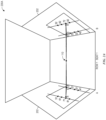
- FIGS. 2A-2B are schematic views of individual seats 200A and 200B of the row 100 of seats of FIG. 1 , in accordance with embodiments of the present disclosure.
- the emitter and receiver positions for these seats 200A and 200B are slightly skewed in comparison to one another.
- seat 200A illustrates emitters at points 11 and 12 and receivers at points 71 and 72.
- neighboring seat 200B in the row 100 is shown with emitters at points 21 and 22 and receivers at points 81 and 82.
- the emitters and receivers in seat 200B are moved slightly forward in comparison to the emitters and receivers in seat 200A.
- this is to allow for emitters and receivers for neighboring seats to be placed in a common armrest (e.g., armrests 202), despite the armrests being relatively narrow (e.g., and unable to support multiple emitters and/or receivers for two neighboring seats in a common position).
- each receiver and its corresponding emitter are at different horizontal and vertical positions, causing the angled cross formation 110, as discussed above.
- the angled cross formation 110 results in a significant coverage area for the through sensors, by generating larger light beams (and therefore larger areas between the emitters and receivers with which an object can intersect the light beam). This can be especially useful with seats that have a curved seating surface, as occupant positioning may dip down, requiring a wider range of detection coverage.
- the positioning of the emitters and receivers may alternate for each seat.
- seat three could have a sensor positioning similar to that of seat 1.
- Seat 4 could have a similar sensor positioning as seat 2.
- emitters and/or receivers may be supported for neighboring chairs in a common narrow armrest.
- the 2 emitters are shown in opposing armrests for a particular seat, resulting in the 2 receivers being in opposing armrests for the particular seat, it is important to note that both emitters could be in one armrest and both receivers in the opposing armrest.
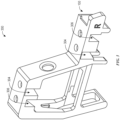
- FIG. 3 is a perspective view of a seat bracket 300 used to support the object detection system in the seat, in accordance with embodiments of the present disclosure.
- the bracket 300 includes a portion 302 for attaching the bracket 300 to a seat frame.
- voids 304 span the width of the bracket 300 and are sized to hold emitters, which can be oriented to either side of the bracket 300. This enables the bracket 300 to support emitters for two neighboring seats.
- Voids 306 span the width of the bracket 300 and are sized to hold receivers, which can be oriented to either side of the bracket 300. This enables the bracket 300 to support receivers for two neighboring seats.
- FIG. 4 is a perspective view of a seat 400 with an object detection system installed, in accordance with embodiments of the present disclosure.
- the seat 400 includes bracket 300 and an opposing bracket 300', which is a mirror of bracket 300.
- Portions 302 facilitate attachment of the brackets 300 and 300' to the seat frames 402.
- the voids 304 hold emitters, which emit light beams to the receivers held in voids 306.
- the emitters and their corresponding receivers are positioned at different horizontal and vertical positions, resulting in the angled cross formation 110, which spans a significant portion of the seating surface area of the seat.
- voids 404 are used to hold emitters and/or receivers for neighboring seats (e.g., the voids 404 of bracket 300 hold the emitters and/or receivers for the neighboring chair to the left, which the voids 404 of the bracket 300' hold the emitters and/or receivers for the neighboring chair on the right.
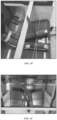
- FIGS. 5A-5G are prototype images, illustrating coverage of the object detection system, in accordance with embodiments of the present disclosure.
- white ropes are used to illustrate the light beams generated by the emitters held in the seat armrests.
- an armrest cover 500 covers the brackets and sensors, protecting the sensors and also providing improved aesthetics to the seat.
- a very small occupant of the seat e.g., with a rise of two inches from the seat bottom
- an occupant with very narrow legs e.g., 2-inch diameter
- FIG. 5B shows a close up view of the seat bottom and an object that rises two inches above the seat bottom. The object intersects the light beams 108, causing the occupant to be detected in the seat.
- FIG. 5C illustrates the same example from an overhead view.
- FIG. 5D illustrates the 2-inch diameter of the mock occupant in the seat.
- FIGS. 5E-G are alternative overhead views, illustrating the coverage of the angled cross formation of the through sensor light beams.
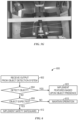
- FIG. 6 is a flowchart, illustrating a process 600 for ride control, performed by a control system, based upon outputs from the object detection system, in accordance with embodiments of the present disclosure.
- the process 600 begins by receiving an output from the object detection system (block 602).
- the output indicates a detected occupancy status of a particular seat in an entertainment attraction.
- the output could be an indication that seat 1 is occupied (e.g., an object is detected in seat 1) or, alternatively, that seat 1 is not occupied (e.g., an object is not detected in seat 1).
- the output may be provided by a processor of the objection detection system that generates the output based upon whether at least one of the light beams generated by the object detection system does not reach an expected receiver. In such a case, this may indicate that an object is detected (e.g., that a seat is occupied).
- optional targeted features may be triggered at occupied seats (block 606). For example, videos or other graphical content may be presented to one or more occupied seats, while not providing these features to unoccupied seats.
- an automated seat belt check can be performed by polling seat belt sensors for an indication of whether a seat belt is fastened for the occupied seat. Such a check could be limited to only occupied seats, resulting in a better understanding of whether guests are wearing seat belts, while reducing indications of unfastened seat belts for unoccupied seats.
- an object was expected e.g., occupancy was expected
- Process 600 is just one example of how the object detection system described herein could be used. Discussion of this process 600 is not intended to limit the scope of how the current object detection system is used. Indeed, there may be many other uses for occupancy detection with regard to a seat.
Landscapes
- Engineering & Computer Science (AREA)
- Physics & Mathematics (AREA)
- General Physics & Mathematics (AREA)
- Radar, Positioning & Navigation (AREA)
- Remote Sensing (AREA)
- Electromagnetism (AREA)
- Computer Networks & Wireless Communication (AREA)
- Mechanical Engineering (AREA)
- Transportation (AREA)
- Aviation & Aerospace Engineering (AREA)
- Life Sciences & Earth Sciences (AREA)
- General Life Sciences & Earth Sciences (AREA)
- Geophysics (AREA)
- Multimedia (AREA)
- Theoretical Computer Science (AREA)
- Geophysics And Detection Of Objects (AREA)
Description
- This application claims the benefit of
U.S. Provisional Application No. 62/774,123, entitled "ALTERNATING CROSSED ALIGNMENT OBJECT DETECTION," filed November 30, 2018 - The present disclosure relates generally to object detection. More specifically, certain embodiments of the present disclosure relate to alternating alignment of sensors for detection of objects.
- Amusement park rides are becoming increasingly sophisticated, providing more significant thrills and more intricate designs than ever before. Further, ride safety is of utmost importance. Unfortunately, thorough safety equipment oftentimes may hinder creative constraints that would improve aesthetics of the ride.
- This section is intended to introduce the reader to various aspects of art that may be related to various aspects of the present techniques, which are described and/or claimed below. This discussion is believed to be helpful in providing the reader with background information to facilitate a better understanding of the various aspects of the present disclosure. Accordingly, it should be understood that these statements are to be read in this light, and not as admissions of prior art.
-
US 6 140 921 A discloses a seat for a theater, auditorium or the like, comprising an object detection system for detecting the occupancy of the seat, using a pressure sensor or a thermal sensor, and indicating with a light above the seat whether the seat is occupied or not. -
EP 2 180 348 A1 - The invention relates to an entertainment attraction seat comprising an object detection system according to
claim 1. The object detection systems provide extensive coverage area for object detection, while maintaining a low profile, such that the object detection systems may be implemented in a manner that minimizes hindrance to creative constraints. An alternating pair of through-beam sensors are positioned in a cross pattern. This configuration allows the sensors to completely cover a cross section of the curved seat, while allowing the devices to fit completely into a limited space in the armrest of a seat, resulting in increased aesthetics and coverage over traditional object detection systems. - These and other features, aspects, and advantages of the present disclosure will become better understood when the following detailed description is read with reference to the accompanying drawings in which like characters represent like parts throughout the drawings, wherein:
-
FIG. 1 is a schematic view of a row of seats with an object detection system, in accordance with embodiments of the present disclosure; -
FIGS. 2A-2B are schematic views of individual seats of the row of seats ofFIG. 1 , in accordance with embodiments of the present disclosure; -
FIG. 3 is a perspective view of a seat bracket used to support the object detection system in the seat, in accordance with embodiments of the present disclosure; -
FIG. 4 is a perspective view of a seat with an object detection system installed, in accordance with embodiments of the present disclosure; -
FIGS. 5A-5G are prototype images, illustrating coverage of the object detection system, in accordance with embodiments of the present disclosure; and -
FIG. 6 is a flowchart, illustrating a process for ride control based upon outputs from the object detection system, in accordance with embodiments of the present disclosure. -
FIG. 1 is a schematic top-down view of arow 100 ofseats 102A-G with installedobject detection systems 104A-G, in accordance with embodiments of the present disclosure. As illustrated, each of theobject detection systems 104A-G are installed inarmrests 106 of theseats 102A-G. Theobject detection systems 104A-G each include sensors that are used to detect occupancy of a seat. As will be discussed in more detail below, such occupancy information may be useful to implement safety features of an attraction and/or may be useful to provide targeted attraction features to particular seats based upon occupancy status. - In the current arrangement, the sensors include photoelectric sensors. More specifically, a through beam sensor arrangement of emitter and receiver pairs are used to discover the presence of an object in the seats. To do this, a sensor configuration of 2 emitters (E) and 2 receivers (R) is used to cover the relevant seating area, where object detection should occur. The emitters are directed in a manner such that
light beams 108 are provided from the receivers in across formation 110 across each of theseats 102A-G. As will be illustrated in subsequent figures, the cross formation is also angled, such that the beams are not parallel to the seat bottoms. This allows for a wider range of seat coverage by the sensors. - With through beam sensors, the receivers are in line-of-sight of the emitters. When one or more of the
light beams 108 are blocked from reaching the receiver, an object is detected. More specifically, when present, the object intersects the light beam between the emitter and receiver. By using the cross formation of thelight beams 108, the light beam may cover a larger area, resulting in increased area where an object can intersect thelight beams 108. Thus, using such a formation may result in more accurate object detection over through sensors arranged in a different formation. -
FIGS. 2A-2B are schematic views ofindividual seats row 100 of seats ofFIG. 1 , in accordance with embodiments of the present disclosure. As illustrated, the emitter and receiver positions for theseseats seat 200A illustrates emitters atpoints 11 and 12 and receivers atpoints seat 200B in therow 100 is shown with emitters atpoints 21 and 22 and receivers atpoints seat 200B are moved slightly forward in comparison to the emitters and receivers inseat 200A. As will be discussed in more detail below, this is to allow for emitters and receivers for neighboring seats to be placed in a common armrest (e.g., armrests 202), despite the armrests being relatively narrow (e.g., and unable to support multiple emitters and/or receivers for two neighboring seats in a common position). - As may also be appreciated, each receiver and its corresponding emitter are at different horizontal and vertical positions, causing the
angled cross formation 110, as discussed above. Theangled cross formation 110 results in a significant coverage area for the through sensors, by generating larger light beams (and therefore larger areas between the emitters and receivers with which an object can intersect the light beam). This can be especially useful with seats that have a curved seating surface, as occupant positioning may dip down, requiring a wider range of detection coverage. - The positioning of the emitters and receivers may alternate for each seat. For example, seat three could have a sensor positioning similar to that of
seat 1. Seat 4 could have a similar sensor positioning asseat 2. By using these alternating sensor positionings, emitters and/or receivers may be supported for neighboring chairs in a common narrow armrest. Further, while the 2 emitters are shown in opposing armrests for a particular seat, resulting in the 2 receivers being in opposing armrests for the particular seat, it is important to note that both emitters could be in one armrest and both receivers in the opposing armrest. -
FIG. 3 is a perspective view of aseat bracket 300 used to support the object detection system in the seat, in accordance with embodiments of the present disclosure. Thebracket 300 includes aportion 302 for attaching thebracket 300 to a seat frame. Further,voids 304 span the width of thebracket 300 and are sized to hold emitters, which can be oriented to either side of thebracket 300. This enables thebracket 300 to support emitters for two neighboring seats.Voids 306 span the width of thebracket 300 and are sized to hold receivers, which can be oriented to either side of thebracket 300. This enables thebracket 300 to support receivers for two neighboring seats. -
FIG. 4 is a perspective view of aseat 400 with an object detection system installed, in accordance with embodiments of the present disclosure. As illustrated, theseat 400 includesbracket 300 and an opposing bracket 300', which is a mirror ofbracket 300.Portions 302 facilitate attachment of thebrackets 300 and 300' to the seat frames 402. As discussed above, thevoids 304 hold emitters, which emit light beams to the receivers held invoids 306. As may be appreciated, the emitters and their corresponding receivers are positioned at different horizontal and vertical positions, resulting in theangled cross formation 110, which spans a significant portion of the seating surface area of the seat. Further, voids 404 are used to hold emitters and/or receivers for neighboring seats (e.g., thevoids 404 ofbracket 300 hold the emitters and/or receivers for the neighboring chair to the left, which thevoids 404 of the bracket 300' hold the emitters and/or receivers for the neighboring chair on the right. -
FIGS. 5A-5G are prototype images, illustrating coverage of the object detection system, in accordance with embodiments of the present disclosure. For demonstration sake, white ropes are used to illustrate the light beams generated by the emitters held in the seat armrests. As illustrated inFIG. 5A , anarmrest cover 500 covers the brackets and sensors, protecting the sensors and also providing improved aesthetics to the seat. As illustrated, even a very small occupant of the seat (e.g., with a rise of two inches from the seat bottom) will be detected by using the angled cross formation for the through sensors. In other words, in the demonstrated example, an occupant with very narrow legs (e.g., 2-inch diameter) would cause an interruption in the angled cross formation of the light beams, causing an object to be detected in the seat.FIG. 5B shows a close up view of the seat bottom and an object that rises two inches above the seat bottom. The object intersects the light beams 108, causing the occupant to be detected in the seat.FIG. 5C illustrates the same example from an overhead view.FIG. 5D illustrates the 2-inch diameter of the mock occupant in the seat.FIGS. 5E-G are alternative overhead views, illustrating the coverage of the angled cross formation of the through sensor light beams. -
FIG. 6 is a flowchart, illustrating aprocess 600 for ride control, performed by a control system, based upon outputs from the object detection system, in accordance with embodiments of the present disclosure. Theprocess 600 begins by receiving an output from the object detection system (block 602). The output indicates a detected occupancy status of a particular seat in an entertainment attraction. For example, the output could be an indication thatseat 1 is occupied (e.g., an object is detected in seat 1) or, alternatively, thatseat 1 is not occupied (e.g., an object is not detected in seat 1). The output may be provided by a processor of the objection detection system that generates the output based upon whether at least one of the light beams generated by the object detection system does not reach an expected receiver. In such a case, this may indicate that an object is detected (e.g., that a seat is occupied). - At
decision block 604, if the output indicates that an object is detected, optional targeted features may be triggered at occupied seats (block 606). For example, videos or other graphical content may be presented to one or more occupied seats, while not providing these features to unoccupied seats. As another example, if occupancy is detected, an automated seat belt check can be performed by polling seat belt sensors for an indication of whether a seat belt is fastened for the occupied seat. Such a check could be limited to only occupied seats, resulting in a better understanding of whether guests are wearing seat belts, while reducing indications of unfastened seat belts for unoccupied seats. - If no object is detected (e.g., no seat occupancy is detected), at
decision block 608, a determination is made as to whether an object was expected (e.g., occupancy was expected). This can be determined by looking at temporal occupancy data to see if occupancy was previously detected during a current run of the attraction. If so, this may indicate that a guest should be in the seat, as occupancy should not change during an individual run of the attraction. In other words, in some embodiments, the occupancy status should not change between the beginning and the end of an entertainment attraction experience. If such an occupancy change occurs (e.g., an object is expected but not detected), safety safeguards may be implemented (block 612). For example, the attraction may halt until the disparity is solved. Otherwise, if there is no disparity (e.g., no object is detected, but no object is expected) normal attraction operation may be maintained (block 610). -
Process 600 is just one example of how the object detection system described herein could be used. Discussion of thisprocess 600 is not intended to limit the scope of how the current object detection system is used. Indeed, there may be many other uses for occupancy detection with regard to a seat. - The techniques presented and claimed herein are referenced and applied to material objects and concrete examples of a practical nature that demonstrably improve the present technical field and, as such, are not abstract, intangible or purely theoretical.
Claims (15)
- An entertainment attraction seat (102A-G; 200A-B; 400) comprising an object detection system (104A-G) for detecting occupancy of the entertainment attraction seat (102A-G; 200A-B; 400), characterized in that the object detection system (104A-G) comprises:a first sensor comprising a first emitter (E) and a first receiver (R);a second sensor comprising a second emitter (E) and a second receiver (R);wherein the first sensor and the second sensor are arranged such that light beams (108) generated by the first emitter (E) and the second emitter (E) form an angled cross formation (110);a processor configured to:wherein, for each of the first and second sensors, the emitter (E) and receiver (R) of the respective sensor are disposed in different horizontal and vertical positions in opposing armrests (106; 202) of the entertainment attraction seat (102A-G; 200A-B; 400).identify whether at least one of the light beams (108) does not reach an expected receiver of the first receiver (R) or the second receiver (R); andprovide an indication that an object is detected or that an object is not detected, based upon whether the at least one of the light beams (108) does not reach the expected receiver, to detect occupancy of the entertainment attraction seat (102A-G; 200A-B; 400),
- The entertainment attraction seat (102A-G; 200A-B; 400) of claim 1, wherein the first sensor, the second sensor, or both comprise a photoelectric sensor.
- The entertainment attraction seat (102A-G; 200A-B; 400) of claim 1, comprising a bracket (3 00, 3 00 ') configured to be disposed in each of the opposing armrests (106; 202), wherein each bracket (300, 300') comprises a portion (302) configured to attach to a seat frame (402) of the entertainment attraction seat (102A-G; 200A-B; 400).
- The entertainment attraction seat (102A-G; 200A-B; 400) of claim 1, comprising a bracket (3 00, 3 00 ') configured to be disposed in each of the opposing armrests (106; 202), wherein each bracket (300, 300') comprises voids (304, 306) configured to hold at least one emitter (E), at least one receiver (R) or both for the entertainment attraction seat (102A-G; 200A-B; 400).
- The entertainment attraction seat (102A-G; 200A-B; 400) of claim 4, each bracket (300, 300') comprising addition voids (404) configured to hold at least one second emitter (E), at least one second receiver (R), or both for a seat that neighbors the entertainment attraction seat (102A-G; 200A-B; 400).
- The entertainment attraction seat (102A-G; 200A-B; 400) of claim 1, comprising an object detection system bracket (300, 300') configured to:hold the first emitter (E) or first receiver (R) for the entertainment attraction seat (102A-G; 200A-B; 400); andhold a second emitter (E), second receiver (R), or both for a second seat neighboring the entertainment attraction seat (102A-G; 200A-B; 400);wherein the first emitter (E) or the first receiver (R) and the second emitter (E), second receiver (R), or both are held such that light beams (108) generated by the first emitter (E) and the second emitter (E) form an angled cross formation (110) with additional light beams provided by other emitters.
- The entertainment attraction seat (102A-G; 200A-B; 400) of claim 6, comprising a portion (302) configured to attach with a seat frame (402) of the entertainment attraction seat (102A-G; 200A-B; 400).
- The entertainment attraction seat (102A-G; 200A-B; 400) of claim 6, wherein the object detection system bracket (3 00, 300') is configured to be disposed in one of the opposing armrests (106; 202) of the entertainment attraction seat (102A-G; 200A-B; 400).
- The entertainment attraction seat (102A-G; 200A-B; 400) of claim 1, comprising a first bracket (3 00) disposed in a first armrest of the opposing armrests (106; 202), the first bracket (300) configured to support a portion of the sensors of the object detection system (104A-G) for the entertainment attraction seat (102A-G; 200A-B; 400).
- The entertainment attraction seat (102A-G; 200A-B; 400) of claim 9, wherein the first bracket (300) is configured to support a portion of sensors for a second object detection system (104A-G) of a seat neighboring the entertainment attraction seat (102A-G; 200A-B; 400).
- The entertainment attraction seat (102A-G; 200A-B; 400) of claim 10, wherein the first bracket (300) is configured to support the portion of sensors for the second object detection system (104A-G) at a skewed position from a position of the portion of the sensors of the object detection system (104A-G).
- The entertainment attraction seat (102A-G; 200A-B; 400) of claim 9, comprising a second bracket (300') disposed in a second armrest of the opposing armrests (106; 202), the second bracket (300') configured to support a second portion of the sensors of the object detection system (104A-G) for the entertainment attraction seat (102A-G; 200A-B; 400).
- The entertainment attraction seat (102A-G; 200A-B; 400) of claim 12, wherein the second bracket (3 00 ') is configured to support a portion of sensors for a second object detection system (104A-G) of a seat neighboring the entertainment attraction seat (102A-G; 200A-B; 400).
- The entertainment attraction seat (102A-G; 200A-B; 400) of claim 12, wherein the second bracket (300') is a mirrored version of the first bracket (300).
- The entertainment attraction seat (102A-G; 200A-B; 400) of claim 1, wherein the processor is configured to provide an indication of occupancy status of the entertainment attraction seat (102A-G; 200A-B; 400) to a control system configured to perform actions based upon the occupancy status.
Applications Claiming Priority (3)
| Application Number | Priority Date | Filing Date | Title |
|---|---|---|---|
| US201862774123P | 2018-11-30 | 2018-11-30 | |
| US16/601,372 US11250277B2 (en) | 2018-11-30 | 2019-10-14 | Alternating crossed alignment object detection |
| PCT/US2019/061985 WO2020112403A1 (en) | 2018-11-30 | 2019-11-18 | Alternating crossed alignment object detection |
Publications (2)
| Publication Number | Publication Date |
|---|---|
| EP3887871A1 EP3887871A1 (en) | 2021-10-06 |
| EP3887871B1 true EP3887871B1 (en) | 2025-01-01 |
Family
ID=68887135
Family Applications (1)
| Application Number | Title | Priority Date | Filing Date |
|---|---|---|---|
| EP19820943.9A Active EP3887871B1 (en) | 2018-11-30 | 2019-11-18 | Alternating crossed alignment object detection |
Country Status (10)
| Country | Link |
|---|---|
| US (1) | US11250277B2 (en) |
| EP (1) | EP3887871B1 (en) |
| JP (1) | JP7436479B2 (en) |
| KR (1) | KR102850518B1 (en) |
| CN (1) | CN113039460B (en) |
| CA (1) | CA3120585A1 (en) |
| ES (1) | ES3014618T3 (en) |
| MY (1) | MY208121A (en) |
| SG (1) | SG11202104589RA (en) |
| WO (1) | WO2020112403A1 (en) |
Families Citing this family (1)
| Publication number | Priority date | Publication date | Assignee | Title |
|---|---|---|---|---|
| KR102572974B1 (en) * | 2018-04-26 | 2023-08-31 | 엘지이노텍 주식회사 | Camera module and depth map extraction method of the same |
Citations (1)
| Publication number | Priority date | Publication date | Assignee | Title |
|---|---|---|---|---|
| US6140921A (en) * | 1999-05-07 | 2000-10-31 | Baron; Herbert Eduard | Seat occupancy indicator and seating area display system |
Family Cites Families (15)
| Publication number | Priority date | Publication date | Assignee | Title |
|---|---|---|---|---|
| SE8105051L (en) * | 1981-08-26 | 1982-08-30 | Kockumation Ab | PROCEDURE FOR INDICATING A PREVENTION OF A PREFERENCE IN A METZON AND DEVICE FOR IMPLEMENTATION OF THE PROCEDURE |
| JPH01263100A (en) * | 1988-04-15 | 1989-10-19 | Tanaka Kikinzoku Kogyo Kk | Production of metallic ornament with gem particles |
| JPH01314991A (en) * | 1988-06-15 | 1989-12-20 | Sharp Corp | Photoelectric switch |
| US5149921A (en) | 1991-07-10 | 1992-09-22 | Innovation Industries, Inc. | Self correcting infrared intrusion detection system |
| US8152198B2 (en) * | 1992-05-05 | 2012-04-10 | Automotive Technologies International, Inc. | Vehicular occupant sensing techniques |
| JPH1015250A (en) * | 1996-06-28 | 1998-01-20 | Sega Enterp Ltd | Game equipment |
| JPH1025052A (en) * | 1996-07-08 | 1998-01-27 | Nippon Conlux Co Ltd | No vacancy detecting method and device thereof in thin plate-like body accumulation device |
| JP2000063100A (en) * | 1998-08-25 | 2000-02-29 | Tcm Corp | Motor stopping device at the time of driver's absence |
| JP2001080404A (en) * | 1999-09-17 | 2001-03-27 | Aisin Seiki Co Ltd | Seating detection device |
| DE502008002633D1 (en) | 2008-10-22 | 2011-03-31 | Sick Ag | Safety light grid and corresponding method for monitoring a protected area |
| JP2011220763A (en) * | 2010-04-07 | 2011-11-04 | Yamatake Corp | Photoelectric sensor |
| ES2619422T3 (en) | 2014-08-15 | 2017-06-26 | Sick Ag | Light grid |
| US20180365550A1 (en) | 2016-01-11 | 2018-12-20 | Flow Lighting, Llc | Systems, and methods for detecting, counting, and tracking people and assets |
| CN207784722U (en) * | 2017-07-11 | 2018-08-31 | 中影数字巨幕(北京)有限公司 | Cinema townhouse seat and seating systems |
| US12130154B2 (en) * | 2019-10-02 | 2024-10-29 | Top Measure Instrument Company | Automatic electronic rangefinder |
-
2019
- 2019-10-14 US US16/601,372 patent/US11250277B2/en active Active
- 2019-11-18 EP EP19820943.9A patent/EP3887871B1/en active Active
- 2019-11-18 CA CA3120585A patent/CA3120585A1/en active Pending
- 2019-11-18 JP JP2021529797A patent/JP7436479B2/en active Active
- 2019-11-18 MY MYPI2021002456A patent/MY208121A/en unknown
- 2019-11-18 ES ES19820943T patent/ES3014618T3/en active Active
- 2019-11-18 CN CN201980078135.0A patent/CN113039460B/en active Active
- 2019-11-18 WO PCT/US2019/061985 patent/WO2020112403A1/en not_active Ceased
- 2019-11-18 SG SG11202104589RA patent/SG11202104589RA/en unknown
- 2019-11-18 KR KR1020217019789A patent/KR102850518B1/en active Active
Patent Citations (1)
| Publication number | Priority date | Publication date | Assignee | Title |
|---|---|---|---|---|
| US6140921A (en) * | 1999-05-07 | 2000-10-31 | Baron; Herbert Eduard | Seat occupancy indicator and seating area display system |
Also Published As
| Publication number | Publication date |
|---|---|
| CA3120585A1 (en) | 2020-06-04 |
| CN113039460B (en) | 2025-08-08 |
| MY208121A (en) | 2025-04-16 |
| JP7436479B2 (en) | 2024-02-21 |
| SG11202104589RA (en) | 2021-06-29 |
| WO2020112403A1 (en) | 2020-06-04 |
| KR102850518B1 (en) | 2025-08-25 |
| US20200175287A1 (en) | 2020-06-04 |
| EP3887871A1 (en) | 2021-10-06 |
| US11250277B2 (en) | 2022-02-15 |
| ES3014618T3 (en) | 2025-04-23 |
| JP2022510890A (en) | 2022-01-28 |
| CN113039460A (en) | 2021-06-25 |
| KR20210095919A (en) | 2021-08-03 |
Similar Documents
| Publication | Publication Date | Title |
|---|---|---|
| JP6420018B1 (en) | Amusement park element tracking system | |
| JP2017523393A5 (en) | ||
| EP3887871B1 (en) | Alternating crossed alignment object detection | |
| JP3819292B2 (en) | Person status discrimination device | |
| KR20220148874A (en) | Occupant monitoring using depth sensor | |
| JP2014184953A5 (en) | ||
| JP2003194528A5 (en) | ||
| ES3004958T3 (en) | Techniques for spatial data projection | |
| EP3187905B1 (en) | Human body security inspection system and method for human body security inspection performed by using the system | |
| KR20170002727U (en) | Posture correcting apparatus | |
| US7408123B2 (en) | Occupant sensing apparatus with load dispersion limiting | |
| HK40055619A (en) | Alternating crossed alignment object detection | |
| US12091190B2 (en) | Aircraft passenger service unit | |
| US20040247228A1 (en) | Fiber optic occupant or object classification system | |
| US20220193283A1 (en) | Spaced apart sterilization lights in an aircraft cabin | |
| JP2022510890A5 (en) | ||
| KR101009286B1 (en) | Shock absorber of the linked chair | |
| RU2021118421A (en) | OBJECT DETECTION USING ALTERNATING CROSS-EXPOSURE | |
| JP2006125852A (en) | Passenger sensor | |
| JP6671945B2 (en) | Chair | |
| JP2010100198A (en) | Sensor for vehicular seat | |
| CN102267428A (en) | Improved vehicle anti-overloading device | |
| JP6501067B2 (en) | Abnormality judgment device | |
| JP3762734B2 (en) | Crew seat detection device | |
| CN101926569A (en) | Improved chair |
Legal Events
| Date | Code | Title | Description |
|---|---|---|---|
| STAA | Information on the status of an ep patent application or granted ep patent |
Free format text: STATUS: UNKNOWN |
|
| STAA | Information on the status of an ep patent application or granted ep patent |
Free format text: STATUS: THE INTERNATIONAL PUBLICATION HAS BEEN MADE |
|
| PUAI | Public reference made under article 153(3) epc to a published international application that has entered the european phase |
Free format text: ORIGINAL CODE: 0009012 |
|
| STAA | Information on the status of an ep patent application or granted ep patent |
Free format text: STATUS: REQUEST FOR EXAMINATION WAS MADE |
|
| 17P | Request for examination filed |
Effective date: 20210614 |
|
| AK | Designated contracting states |
Kind code of ref document: A1 Designated state(s): AL AT BE BG CH CY CZ DE DK EE ES FI FR GB GR HR HU IE IS IT LI LT LU LV MC MK MT NL NO PL PT RO RS SE SI SK SM TR |
|
| DAV | Request for validation of the european patent (deleted) | ||
| DAX | Request for extension of the european patent (deleted) | ||
| STAA | Information on the status of an ep patent application or granted ep patent |
Free format text: STATUS: EXAMINATION IS IN PROGRESS |
|
| 17Q | First examination report despatched |
Effective date: 20230309 |
|
| GRAP | Despatch of communication of intention to grant a patent |
Free format text: ORIGINAL CODE: EPIDOSNIGR1 |
|
| GRAP | Despatch of communication of intention to grant a patent |
Free format text: ORIGINAL CODE: EPIDOSNIGR1 |
|
| STAA | Information on the status of an ep patent application or granted ep patent |
Free format text: STATUS: GRANT OF PATENT IS INTENDED |
|
| INTG | Intention to grant announced |
Effective date: 20240614 |
|
| GRAS | Grant fee paid |
Free format text: ORIGINAL CODE: EPIDOSNIGR3 |
|
| GRAA | (expected) grant |
Free format text: ORIGINAL CODE: 0009210 |
|
| STAA | Information on the status of an ep patent application or granted ep patent |
Free format text: STATUS: THE PATENT HAS BEEN GRANTED |
|
| AK | Designated contracting states |
Kind code of ref document: B1 Designated state(s): AL AT BE BG CH CY CZ DE DK EE ES FI FR GB GR HR HU IE IS IT LI LT LU LV MC MK MT NL NO PL PT RO RS SE SI SK SM TR |
|
| REG | Reference to a national code |
Ref country code: GB Ref legal event code: FG4D |
|
| REG | Reference to a national code |
Ref country code: CH Ref legal event code: EP |
|
| REG | Reference to a national code |
Ref country code: DE Ref legal event code: R096 Ref document number: 602019064341 Country of ref document: DE |
|
| REG | Reference to a national code |
Ref country code: IE Ref legal event code: FG4D |
|
| P01 | Opt-out of the competence of the unified patent court (upc) registered |
Free format text: CASE NUMBER: APP_7807/2025 Effective date: 20250214 |
|
| REG | Reference to a national code |
Ref country code: ES Ref legal event code: FG2A Ref document number: 3014618 Country of ref document: ES Kind code of ref document: T3 Effective date: 20250423 |
|
| REG | Reference to a national code |
Ref country code: LT Ref legal event code: MG9D |
|
| REG | Reference to a national code |
Ref country code: NL Ref legal event code: MP Effective date: 20250101 |
|
| PG25 | Lapsed in a contracting state [announced via postgrant information from national office to epo] |
Ref country code: NL Free format text: LAPSE BECAUSE OF FAILURE TO SUBMIT A TRANSLATION OF THE DESCRIPTION OR TO PAY THE FEE WITHIN THE PRESCRIBED TIME-LIMIT Effective date: 20250101 |
|
| PG25 | Lapsed in a contracting state [announced via postgrant information from national office to epo] |
Ref country code: FI Free format text: LAPSE BECAUSE OF FAILURE TO SUBMIT A TRANSLATION OF THE DESCRIPTION OR TO PAY THE FEE WITHIN THE PRESCRIBED TIME-LIMIT Effective date: 20250101 |
|
| PG25 | Lapsed in a contracting state [announced via postgrant information from national office to epo] |
Ref country code: PL Free format text: LAPSE BECAUSE OF FAILURE TO SUBMIT A TRANSLATION OF THE DESCRIPTION OR TO PAY THE FEE WITHIN THE PRESCRIBED TIME-LIMIT Effective date: 20250101 |
|
| PG25 | Lapsed in a contracting state [announced via postgrant information from national office to epo] |
Ref country code: IS Free format text: LAPSE BECAUSE OF FAILURE TO SUBMIT A TRANSLATION OF THE DESCRIPTION OR TO PAY THE FEE WITHIN THE PRESCRIBED TIME-LIMIT Effective date: 20250501 Ref country code: NO Free format text: LAPSE BECAUSE OF FAILURE TO SUBMIT A TRANSLATION OF THE DESCRIPTION OR TO PAY THE FEE WITHIN THE PRESCRIBED TIME-LIMIT Effective date: 20250401 |
|
| PG25 | Lapsed in a contracting state [announced via postgrant information from national office to epo] |
Ref country code: HR Free format text: LAPSE BECAUSE OF FAILURE TO SUBMIT A TRANSLATION OF THE DESCRIPTION OR TO PAY THE FEE WITHIN THE PRESCRIBED TIME-LIMIT Effective date: 20250101 |
|
| PG25 | Lapsed in a contracting state [announced via postgrant information from national office to epo] |
Ref country code: LV Free format text: LAPSE BECAUSE OF FAILURE TO SUBMIT A TRANSLATION OF THE DESCRIPTION OR TO PAY THE FEE WITHIN THE PRESCRIBED TIME-LIMIT Effective date: 20250101 Ref country code: PT Free format text: LAPSE BECAUSE OF FAILURE TO SUBMIT A TRANSLATION OF THE DESCRIPTION OR TO PAY THE FEE WITHIN THE PRESCRIBED TIME-LIMIT Effective date: 20250502 |
|
| PG25 | Lapsed in a contracting state [announced via postgrant information from national office to epo] |
Ref country code: GR Free format text: LAPSE BECAUSE OF FAILURE TO SUBMIT A TRANSLATION OF THE DESCRIPTION OR TO PAY THE FEE WITHIN THE PRESCRIBED TIME-LIMIT Effective date: 20250402 Ref country code: BG Free format text: LAPSE BECAUSE OF FAILURE TO SUBMIT A TRANSLATION OF THE DESCRIPTION OR TO PAY THE FEE WITHIN THE PRESCRIBED TIME-LIMIT Effective date: 20250101 |
|
| PG25 | Lapsed in a contracting state [announced via postgrant information from national office to epo] |
Ref country code: CZ Free format text: LAPSE BECAUSE OF FAILURE TO SUBMIT A TRANSLATION OF THE DESCRIPTION OR TO PAY THE FEE WITHIN THE PRESCRIBED TIME-LIMIT Effective date: 20250101 |
|
| PG25 | Lapsed in a contracting state [announced via postgrant information from national office to epo] |
Ref country code: SE Free format text: LAPSE BECAUSE OF FAILURE TO SUBMIT A TRANSLATION OF THE DESCRIPTION OR TO PAY THE FEE WITHIN THE PRESCRIBED TIME-LIMIT Effective date: 20250101 |
|
| REG | Reference to a national code |
Ref country code: DE Ref legal event code: R097 Ref document number: 602019064341 Country of ref document: DE |
|
| PG25 | Lapsed in a contracting state [announced via postgrant information from national office to epo] |
Ref country code: SM Free format text: LAPSE BECAUSE OF FAILURE TO SUBMIT A TRANSLATION OF THE DESCRIPTION OR TO PAY THE FEE WITHIN THE PRESCRIBED TIME-LIMIT Effective date: 20250101 |
|
| PG25 | Lapsed in a contracting state [announced via postgrant information from national office to epo] |
Ref country code: DK Free format text: LAPSE BECAUSE OF FAILURE TO SUBMIT A TRANSLATION OF THE DESCRIPTION OR TO PAY THE FEE WITHIN THE PRESCRIBED TIME-LIMIT Effective date: 20250101 |
|
| PG25 | Lapsed in a contracting state [announced via postgrant information from national office to epo] |
Ref country code: EE Free format text: LAPSE BECAUSE OF FAILURE TO SUBMIT A TRANSLATION OF THE DESCRIPTION OR TO PAY THE FEE WITHIN THE PRESCRIBED TIME-LIMIT Effective date: 20250101 |
|
| PG25 | Lapsed in a contracting state [announced via postgrant information from national office to epo] |
Ref country code: RO Free format text: LAPSE BECAUSE OF FAILURE TO SUBMIT A TRANSLATION OF THE DESCRIPTION OR TO PAY THE FEE WITHIN THE PRESCRIBED TIME-LIMIT Effective date: 20250101 |
|
| PG25 | Lapsed in a contracting state [announced via postgrant information from national office to epo] |
Ref country code: SK Free format text: LAPSE BECAUSE OF FAILURE TO SUBMIT A TRANSLATION OF THE DESCRIPTION OR TO PAY THE FEE WITHIN THE PRESCRIBED TIME-LIMIT Effective date: 20250101 |
|
| PLBE | No opposition filed within time limit |
Free format text: ORIGINAL CODE: 0009261 |
|
| STAA | Information on the status of an ep patent application or granted ep patent |
Free format text: STATUS: NO OPPOSITION FILED WITHIN TIME LIMIT |
|
| REG | Reference to a national code |
Ref country code: CH Ref legal event code: L10 Free format text: ST27 STATUS EVENT CODE: U-0-0-L10-L00 (AS PROVIDED BY THE NATIONAL OFFICE) Effective date: 20251112 |
|
| REG | Reference to a national code |
Ref country code: CH Ref legal event code: U11 Free format text: ST27 STATUS EVENT CODE: U-0-0-U10-U11 (AS PROVIDED BY THE NATIONAL OFFICE) Effective date: 20251201 |
|
| 26N | No opposition filed |
Effective date: 20251002 |
|
| PGFP | Annual fee paid to national office [announced via postgrant information from national office to epo] |
Ref country code: DE Payment date: 20251128 Year of fee payment: 7 |
|
| PGFP | Annual fee paid to national office [announced via postgrant information from national office to epo] |
Ref country code: GB Payment date: 20251127 Year of fee payment: 7 |
|
| PGFP | Annual fee paid to national office [announced via postgrant information from national office to epo] |
Ref country code: AT Payment date: 20251128 Year of fee payment: 7 |
|
| PGFP | Annual fee paid to national office [announced via postgrant information from national office to epo] |
Ref country code: IT Payment date: 20251119 Year of fee payment: 7 |
|
| PGFP | Annual fee paid to national office [announced via postgrant information from national office to epo] |
Ref country code: FR Payment date: 20251125 Year of fee payment: 7 |
|
| PGFP | Annual fee paid to national office [announced via postgrant information from national office to epo] |
Ref country code: CH Payment date: 20251201 Year of fee payment: 7 |
|
| PGFP | Annual fee paid to national office [announced via postgrant information from national office to epo] |
Ref country code: ES Payment date: 20251201 Year of fee payment: 7 |